EP3376369B1 - Verfahren, vorrichtung und aufzeichnungsmedium zur verarbeitung von divisionsrechnungen - Google Patents
Verfahren, vorrichtung und aufzeichnungsmedium zur verarbeitung von divisionsrechnungen Download PDFInfo
- Publication number
- EP3376369B1 EP3376369B1 EP16886558.2A EP16886558A EP3376369B1 EP 3376369 B1 EP3376369 B1 EP 3376369B1 EP 16886558 A EP16886558 A EP 16886558A EP 3376369 B1 EP3376369 B1 EP 3376369B1
- Authority
- EP
- European Patent Office
- Prior art keywords
- input
- data
- divisor
- dividend
- quotient
- Prior art date
- Legal status (The legal status is an assumption and is not a legal conclusion. Google has not performed a legal analysis and makes no representation as to the accuracy of the status listed.)
- Active
Links
Images






Classifications
-
- G—PHYSICS
- G06—COMPUTING OR CALCULATING; COUNTING
- G06F—ELECTRIC DIGITAL DATA PROCESSING
- G06F7/00—Methods or arrangements for processing data by operating upon the order or content of the data handled
- G06F7/38—Methods or arrangements for performing computations using exclusively denominational number representation, e.g. using binary, ternary, decimal representation
- G06F7/48—Methods or arrangements for performing computations using exclusively denominational number representation, e.g. using binary, ternary, decimal representation using non-contact-making devices, e.g. tube, solid state device; using unspecified devices
- G06F7/52—Multiplying; Dividing
- G06F7/535—Dividing only
Definitions
- the present disclosure relates to a method of processing a division, an apparatus for processing a division operation, and a computer-readable recording medium having recording thereon a program, which when executed by a computer, performs the method of processing a division operation.
- Patent publication US 5 828 591 A describes a method and apparatus for using a cache memory to store and retrieve intermediate and final results.
- Document XP010128516, ISBN: 978-0-8186-3862-6 by Eisig D. et al. describes the design of a 64-bit integer multiplier/divider unit.
- a method and an apparatus for processing a division operation by which the division operation can be more efficiently processed by selecting an appropriate operator capable of performing division by using input data on which the division is to be performed and a previous division result, and a recording medium.
- a division operation can be more efficiently processed by selecting an appropriate operator capable of performing the division by using a previous division result.
- the method may further include determining whether the detected reference data is used, based on whether an input divisor included in the input data corresponds to a reference divisor included in the reference data.
- the acquiring may include: calculating a difference value between an input dividend included in the input data and a reference dividend included in the reference data when the reference divisor is the same as the input divisor; when the calculated difference value is less than or equal to a preset threshold and the input divisor, comparing the reference dividend and the input dividend; and as a result of the comparison, when the reference dividend is greater than the input dividend, determining, as a quotient of the input data, a value obtained by subtracting 1 from a quotient included in the reference data, and when the reference dividend is less than or equal to the input dividend, determining the quotient of the reference data as the quotient of the input data.
- the acquiring may include: calculating a difference value between an input dividend included in the input data and a reference dividend included in the reference data when the reference divisor is the same as the input divisor; when the calculated difference value is less than a preset threshold and is greater than the input divisor, calculating a quotient and a remainder obtained by dividing a difference between the input dividend and the reference dividend by the input divisor; and when the calculated quotient is greater than or equal to 0, or the calculated remainder is 0, determining a quotient of the input data as a value obtained by adding the calculated quotient to a quotient of the reference data, and when the calculated quotient is less than 0, and the calculated remainder is not 0, determining the quotient of the input data as a value obtained by subtracting 1 from the value obtained by adding the calculated quotient to the quotient of the reference data.
- the acquiring may include performing division on an input dividend and the input divisor included in the input data when the reference divisor is different from the input divisor, or a difference value between the input dividend and a reference dividend is greater than a preset threshold.
- the plurality of operators may include a first divider and a second divider of which processable numbers of data bits of a quotient of a division operation are different from each other, and the selecting may include selecting any one of the first divider and the second divider by comparing the processable number of data bits of a quotient of a division operation in the first divider and an input divisor included in the input data when the input divisor is different from a reference divisor included in the reference data.
- the method may further include determining an index indicating a location in the cache memory based on at least one of an input divisor included in the acquired input data, an input dividend, and a size of the cache memory, wherein the detecting includes detecting the reference data from the cache memory by using the determined index.
- the method may further include storing the division result at the location in the cache memory, which is indicated by the determined index.
- an apparatus for processing a division operation as set out in the accompanying claims.
- the control unit may be further configured to determine whether the detected reference data is used, based on whether an input divisor included in the input data corresponds to a reference divisor included in the reference data.
- the calculation unit may be further configured to calculate a difference value between an input dividend included in the input data and a reference dividend included in the reference data when the reference divisor is the same as the input divisor, compare the reference dividend and the input dividend when the calculated difference value is less than or equal to a preset threshold and the input divisor, and as a result of the comparison, when the reference dividend is greater than the input dividend, determine, as a quotient of the input data, a value obtained by subtracting 1 from a quotient included in the reference data, and when the reference dividend is less than or equal to the input dividend, determine the quotient of the reference data as the quotient of the input data.
- the calculation unit may be further configured to calculate a difference value between an input dividend included in the input data and a reference dividend included in the reference data when the reference divisor is the same as the input divisor, calculate a quotient and a remainder obtained by dividing a difference between the input dividend and the reference dividend by the input divisor when the calculated difference value is less than a preset threshold and is greater than the input divisor, determine a quotient of the input data as a value obtained by adding the calculated quotient to a quotient of the reference data when the calculated quotient is greater than or equal to 0, or the calculated remainder is 0, and determine the quotient of the input data as a value obtained by subtracting 1 from the value obtained by adding the calculated quotient to the quotient of the reference data when the calculated quotient is less than 0, and the calculated remainder is not 0.
- the calculation unit may be further configured to perform division on an input dividend and the input divisor included in the input data when the reference divisor is different from the input divisor, or a difference value between the input dividend and a reference dividend is greater than a preset threshold.
- the plurality of operators may include a first divider and a second divider of which processable numbers of data bits of a quotient of a division operation are different from each other, and the control unit may select any one of the first divider and the second divider by comparing a threshold, which is the processable number of data bits of a quotient of a division in the first divider, and an input divisor included in the input data when the input divisor is different from a reference divisor included in the reference data.
- the control unit may be further configured to determine an index indicating a location in the cache memory based on at least one of an input divisor included in the acquired input data, an input dividend, and a size of the cache memory and detect the reference data from the cache memory by using the determined index.
- the control unit may store the division result at the location in the cache memory, which is indicated by the determined index.
- FIG. 1 is a block diagram of an apparatus 100 for processing a division operation, according to an embodiment.
- the apparatus 100 for processing a division operation (herein after, division processing apparatus 100) shown in FIG. 1 includes only components related to the present embodiment. Therefore, it should be understood by those of ordinary skill in the art that other general-use components besides the components shown in FIG. 1 may be further included.
- the division processing apparatus 100 may include an input unit 110, a control unit 120, a cache memory 130, a plurality of operators 140, and an output unit 150.
- the input unit 110 acquires input data.
- the input unit 110 may acquire input data on which division is to be performed from an external device connected to the division processing apparatus 100.
- the external device may include at least one of a memory (not shown), another operator (not shown) that performs another operation other than division, and a processor.
- the input unit 110 may include a plurality of slots so as to enable a division operation on a plurality of pieces of input data in a parallel manner.
- Input data may be allocated to each of the plurality of slots constituting the input unit 110.
- SIMD single instruction multiple data
- the input unit 110 may include a plurality of slots.
- the input unit 110 may not include a plurality of slots.
- the control unit 120 detects reference data related to a division operation corresponding to the acquired input data, from data related to a previous division operation, which is stored in the cache memory 130.
- the input data may include an input dividend and an input divisor.
- the reference data may include a reference dividend, a reference divisor, and at least one of a quotient and a remainder which are processing results of a division operation on the reference dividend and the reference divisor.
- control unit 120 may perform division on the input data by using the plurality of operators 140 without detecting the reference data.
- information regarding a result of the performed division and the input data may be stored in the cache memory 130.
- control unit 120 may determine an index indicating a location in the cache memory 130, from which the reference data is to be detected, based on at least one of the input dividend, the input divisor, and a size of the cache memory 130.
- control unit 120 may determine, as the index, a modulo operation result value between the input divisor and the size of the cache memory 130.
- control unit 120 may determine index information by adding a division result between the input divisor and the size of the cache memory 130 to a modulo operation result between the input divisor and the size of the cache memory 130.
- control unit 120 may determine the index information by adding partial data bits constituting the input dividend to the modulo operation result between the input divisor and the size of the cache memory 130.
- the control unit 120 may detect the reference data from the cache memory 130 by using the determined index.
- control unit 120 may compare the reference divisor and the reference dividend included in the reference data with the input divisor and the input dividend included in the input data, respectively. When a difference between the detected reference data and the input data is less than a preset value, the control unit 120 may determine a result of performing division on the reference data as a result of performing division on the input data. For example, both a difference between the reference divisor and the input divisor and a difference between the reference dividend and the input dividend are less than the preset value, the control unit 120 may pass the result of performing the division on the reference data, through a circuit 145 connected to the output unit 150.
- control unit 120 selects any one of the plurality of operators 140 capable of processing a division operation on the input data, based on the difference between the detected reference data and the input data.
- the plurality of operators 140 may be identified according to at least one of a processable number of data bits and a calculation type.
- the plurality of operators 140 may include at least one subtracter and a plurality of dividers.
- the plurality of dividers may be classified according to processable numbers of data bits.
- the processable number of data bits may be the maximum calculable number of data bits of a quotient of a division result.
- the plurality of operators may include a first divider and a second divider of which the maximum calculable numbers of data bits of a quotient of a division result are different from each other. The first divider and the second divider will be described in more detail below with reference to FIGS. 2A and 2B .
- the control unit 120 may select any one of the plurality of operators based on the difference between the input dividend and the reference dividend. For example, the control unit 120 may calculate a first value obtained by subtracting a remainder included in the reference data from the reference dividend, and select any one of the plurality of operators based on a result of comparing a second value, which is a difference value between the calculated first value and the input dividend, with the input divisor. The control unit 120 may select the subtracter when the second value is less than or equal to the input divisor, and select any one of the first divider and the second divider when the second value is greater than the input divisor.
- control unit 120 may select any one of the first divider and the second divider based on at least one of whether the calculated second value is less than the maximum calculable number of data bits of a quotient in the first divider (hereinafter, threshold) and whether the input divisor is less than the threshold. It is assumed that the number of data bits processable in the first divider is less than the number of data bits processable in the second divider.
- the control unit 120 may determine a condition for selecting any one of the plurality of operators by determining whether the input divisor is the same as the reference divisor.
- the control unit 120 may first compare the calculated second value and the input divisor. When the second value is less than or equal to the input divisor, the control unit 120 may select the subtracter. When the second value is greater than the input divisor and is less than the threshold, the control unit 120 may select the first divider. When the second value is greater than the input divisor and is greater than or equal to the threshold, the control unit 120 may select any one of the first divider and the second divider by comparing the input divisor and the threshold. In detail, when the second value is greater than the input divisor and is greater than or equal to the threshold, and the input divisor is greater than the threshold, the control unit 120 may select the first divider. In addition, when the second value is greater than the input divisor and is greater than or equal to the threshold, and the input divisor is less than or equal to the threshold, the control unit 120 may select the second divider.
- control unit 120 may select any one of the plurality of operators by comparing the input divisor and the threshold.
- the control unit 120 may select the first divider when the input divisor is greater than the threshold, and select the second divider when input divisor is less than or equal to the threshold.
- the cache memory 130 pre-stores data related to at least one division performed prior to the division on the input data.
- the result of performing the division on the input data may be stored at the location indicated by the determined index in the cache memory 130.
- the plurality of operators 140 include n operators capable of performing division on the input data.
- the plurality of operators 140 may include at least one subtracter, at least one first divider, and at least one second divider.
- the output unit 150 acquires the result of performing the division on the input data from the selected operator.
- the output unit 150 may include a plurality of slots so as to acquire a result of a division performed in a parallel manner for a plurality of pieces of input data, respectively.
- a result of a division on each of the plurality of pieces of input data may be allocated to each of the plurality of slots constituting the output unit 150.
- the output unit 150 may not include the plurality of slots.
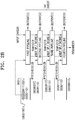
- FIGS. 2A and 2B illustrate a criterion of selecting a divider when division is performed on input data, according to an embodiment.
- a process by which the division processing apparatus 100 performs division by transforming each of 249 and 13 to a binary number is shown.
- a first divider may calculate a quotient of a division result up to four bits. Accordingly, the threshold may be determined as 4.
- a quotient When division is performed by transforming each of 249 and 13 to a binary number, a quotient includes eight bits, and thus the division cannot be performed using the first divider.
- the division processing apparatus 100 may select a second divider capable of calculating a quotient, which is a division result, up to eight bits.
- the second divider may include a plurality of first dividers.
- FIG. 2B a process by which the division processing apparatus 100 performs division by transforming each of 15 and 13 to a binary number is shown.
- a quotient has four bits, and thus the division may be performed using the first divider.
- the division processing apparatus 100 performs division processing on input data by using the second divider, a more resource may be consumed than when the division processing on the input data is performed by using the first divider.
- the division processing apparatus 100 may efficiently use a resource required for calculation, by selecting an operator capable of performing division on input data, based on a difference between the input data and reference data.
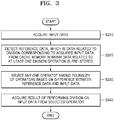
- FIG. 3 is a flowchart for describing a division processing method, according to an embodiment.
- the division processing apparatus 100 acquires input data.
- the division processing apparatus 100 may acquire input data on which division is to be performed from an external device connected to the division processing apparatus 100.
- the division processing apparatus 100 detects reference data related to a division operation corresponding to the acquired input data, from a cache memory in which data related to at least one division operation is pre-stored.
- the division processing apparatus 100 may determine an index indicating a location in the cache memory to detect the reference data, based on at least one of an input divisor, an input dividend, and a size of the cache memory. In addition, the division processing apparatus 100 may detect the reference data from the cache memory by using the determined index.
- the division processing apparatus 100 selects any one operator from among a plurality of operators identified according to at least one of the processable number of data bits and a calculation type, based on a difference between the detected reference data and the input data.
- the division processing apparatus 100 acquires a result of performing division on the input data from the selected operator.
- the division processing apparatus 100 may store the acquired division result at a location in the cache memory, which is indicated by an index determined based on the input data.
- FIG. 4 is a flowchart for describing in more detail a division processing method according to an embodiment.
- operation S410 the division processing apparatus 100 may acquire input data. Operation S410 may correspond to operation S310 described above with reference to FIG. 3 .
- the division processing apparatus 100 may detect reference data related to a division operation corresponding to the acquired input data, from a cache memory in which data related to at least one division operation is pre-stored.
- Operation S420 may correspond to operation S320 described above with reference to FIG. 3 .
- the division processing apparatus 100 may determine whether a divisor of the input data is the same as a divisor of the reference data.
- the division processing apparatus 100 may determine whether a difference between a dividend of the input data and a dividend of the reference data is less than or equal to the threshold.
- the division processing apparatus 100 may determine whether the difference between the dividend of the input data and the dividend of the reference data is less than or equal to the threshold when the divisor of the input data is the same as the divisor of the reference data.
- the division processing apparatus 100 may determine whether the difference between the dividend of the input data and the dividend of the reference data is less than or equal to the input divisor.
- the division processing apparatus 100 may determine whether the difference between the dividend of the input data and the dividend of the reference data is less than or equal to the input divisor when the difference between the dividend of the input data and the dividend of the reference data is less than or equal to the threshold.
- the division processing apparatus 100 may perform division on the input data according to a first mode.
- the division processing apparatus 100 may perform division on the input data according to the first mode when the difference between the dividend of the input data and the dividend of the reference data is less than or equal to the input divisor.
- the division processing apparatus 100 may acquire a result of performing the division on the input data from the reference data by using a subtracter or an adder without using a divider in the first mode. This will be described in more detail below with reference to FIG. 5 .
- the division processing apparatus 100 may perform division on the input data according to a second mode.
- the division processing apparatus 100 may perform division on the input data according to the second mode when the difference between the dividend of the input data and the dividend of the reference data is greater than the input divisor.
- the division processing apparatus 100 may acquire a result of performing the division on the input data by performing division based on the detected reference data in the second mode. This will be described in more detail below with reference to FIGS. 6A and 6B .
- the division processing apparatus 100 may perform division on the input data according to a third mode.
- the division processing apparatus 100 may perform division on the input data according to the third mode when the divisor of the input data is different from the divisor of the reference data. According to another embodiment, the division processing apparatus 100 may also perform division on the input data according to the third mode when the difference between the dividend of the input data and the dividend of the reference data is less than or equal to the threshold. The division processing apparatus 100 may directly perform division on the input data without using the reference data. This will be described in more detail below with reference to FIG. 7 .
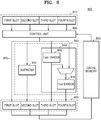
- FIG. 5 is a block diagram for describing a method by which a division processing apparatus performs division according to the first mode, according to an embodiment.
- a division processing apparatus 500 shown in FIG. 5 includes only components related to the present embodiment. Therefore, it should be understood by those of ordinary skill in the art that other general-use components besides the components shown in FIG. 5 may be further included.
- the division processing apparatus 500 may include an input unit 510, a control unit 520, a cache memory 530, a calculation unit 540, and an output unit 550.
- the calculation unit 540 may include a divider 541, a multiplexer 543, an adder 545, a subtracter 547, and a demultiplexer 549.
- the input unit 510 may acquire input data.
- the input unit 510 may acquire input data of which a dividend is 490 and a divisor is 33.
- the control unit 520 may determine an index of the acquired input data as 1 by performing a modulo operation on the divisor, 33, by using 32 which is a size of the cache memory 530. Accordingly, the control unit 520 may detect reference data corresponding to the index, 1, from the cache memory 530.
- a dividend of the detected reference data is 495, and a divisor thereof is 33.
- the calculation unit 540 may determine whether a difference between 490, which is the dividend of the input data, and 495, which is the dividend of the reference data, (hereinafter, difference value) is less than or equal to a threshold, Oxffff.
- the calculation unit 540 may compare the difference value with the divisor of the input data since it is determined that the difference value is less than or equal to the threshold, Oxffff.
- the control unit 520 may select the first mode among the plurality of modes since 5, which is the difference value calculated by the calculation unit 540, is less than 33 which is the divisor of the input data.
- the calculation unit 540 may compare the reference dividend with the input dividend. As a result of the comparison, when the reference dividend is greater than the input dividend, the calculation unit 540 may determine, as a quotient of the input data, a value obtained by subtracting 1 from a quotient included in the reference data. According to another example, when the reference dividend is less than or equal to the input dividend, the calculation unit 540 may determine the quotient of the reference data as the quotient of the input data.
- the calculation unit 540 may perform a subtraction for subtracting 1 from 15, which is the quotient of the reference data, through the subtracter 547.
- a calculation result may be delivered to the output unit 550 through the demultiplexer 549.
- the output unit 550 may receive and output the calculation result of the calculation unit 540.
- the calculation unit 540 may transmit the calculation result to the cache memory 530 such that the calculation result is updated in the cache memory 530.
- the division processing apparatus 500 may perform division on input data without using the divider 541 in the first mode.
- FIGS. 6A and 6B are block diagrams for describing a method by which a division processing apparatus performs division according to the second mode, according to an embodiment.
- a division processing apparatus 500 shown in FIGS. 6A and 6B may correspond to the division processing apparatus 500 described above with reference to FIG. 5 .
- the input unit 510 may acquire input data of which a dividend is 545 and a divisor is 33.
- the control unit 520 may determine an index of the acquired input data as 1 by performing a modulo operation on the divisor, 33, by using 32 which is the size of the cache memory 530. Accordingly, the control unit 520 may detect reference data corresponding to the index, 1, from the cache memory 530.
- a dividend of the detected reference data is 495, and a divisor thereof is 33.
- the calculation unit 540 may determine whether a difference between 545, which is the dividend of the input data, and 495, which is the dividend of the reference data, (hereinafter, difference value) is less than or equal to the threshold, Oxffff.
- the calculation unit 540 may compare the difference value with the divisor of the input data since it is determined that the difference value is less than or equal to the threshold, Oxffff.
- the control unit 520 may select the second mode among the plurality of modes since 50, which is the difference value calculated by the calculation unit 540, is greater than 33 which is the divisor of the input data.
- the calculation unit 540 may calculate a quotient and a remainder obtained by dividing a difference between the input dividend and the reference dividend by the input divisor.
- the calculation unit 540 may determine a quotient of the input data as a value obtained by adding the calculated quotient to a quotient of the reference data when the calculated quotient is greater than or equal to 0, or the calculated remainder is 0.
- the calculation unit 540 may determine the quotient of the input data as a value obtained by subtracting 1 from the value obtained by adding the calculated quotient to the quotient of the reference data when the calculated quotient is less than 0, and the calculated remainder is not 0.
- the divider 541 included in the calculation unit 540 may calculate a quotient, 1, and a remainder, 17, by dividing the reference value, 50, by the divisor, 33.
- the adder 545 included in the calculation unit 540 may determine the quotient of the input data as 16 by adding the calculated quotient, 1, to 15 which is the quotient of the reference data.
- a calculation result may be delivered to the output unit 550 through the demultiplexer 549.
- the output unit 550 may receive and output the calculation result of the calculation unit 540.
- the calculation unit 540 may transmit the calculation result to the cache memory 530 such that the calculation result is updated in the cache memory 530.
- the input unit 510 may acquire input data of which a dividend is 320 and a divisor is 33.
- the control unit 520 may determine an index of the acquired input data as 1 by performing a modulo operation on the divisor, 33, by using 32 which is the size of the cache memory 530. Accordingly, the control unit 520 may detect reference data corresponding to the index, 1, from the cache memory 530.
- a dividend of the detected reference data is 495, and a divisor thereof is 33.
- the calculation unit 540 may determine whether a difference between 320, which is the dividend of the input data, and 495, which is the dividend of the reference data, (hereinafter, difference value) is less than or equal to the threshold, Oxffff.
- the calculation unit 540 may compare the difference value with the divisor of the input data since it is determined that the difference value is less than or equal to the threshold, Oxffff.
- the control unit 520 may select the second mode among the plurality of modes since 175, which is the difference value calculated by the calculation unit 540, is greater than 33 which is the divisor of the input data.
- the calculation unit 540 may calculate a quotient of the input data by performing a division based on the reference data.
- the divider 541 included in the calculation unit 540 may calculate a quotient, -5, and a remainder, -10, by dividing the difference value, - 175, by the divisor, 33.
- the adder 545 included in the calculation unit 540 may add 15, which is a quotient of the reference data, to the calculated quotient, -5.
- the subtracter 547 included in the calculation unit 540 may perform a subtraction of subtracting 1 from an addition result of the adder 545. Accordingly, the calculation unit 540 may determine the quotient, which is calculated as a result of performing division on the input data, as 9.
- a calculation result may be delivered to the output unit 550 through the demultiplexer 549.
- the output unit 550 may receive and output the calculation result of the calculation unit 540.
- the calculation unit 540 may transmit the calculation result to the cache memory 530 such that the calculation result is updated in the cache memory 530.
- FIG. 7 is a block diagram for describing a method by which a division processing apparatus 500 performs division according to the third mode, according to an embodiment.
- division processing apparatus 500 shown in FIG. 7 may correspond to the division processing apparatus 500 described above with reference to FIG. 5 .
- the input unit 510 may acquire input data.
- the input unit 510 may acquire input data of which a dividend is 131072 and a divisor is 33.
- the control unit 520 may determine an index of the acquired input data as 1 by performing a modulo operation on the divisor, 33, by using 32 which is the size of the cache memory 530. Accordingly, the control unit 520 may detect reference data corresponding to the index, 1, from the cache memory 530.
- a dividend of the detected reference data is 495, and a divisor thereof is 33.
- the calculation unit 540 may determine whether a difference between 131072, which is the dividend of the input data, and 495, which is the dividend of the reference data, (hereinafter, difference value) is less than or equal to the threshold, Oxffff.
- difference value a difference between 131072, which is the dividend of the input data, and 495, which is the dividend of the reference data, (hereinafter, difference value) is less than or equal to the threshold, Oxffff.
- the control unit 520 may select the third mode since the difference value is greater than the threshold, Oxfffff.
- the calculation unit 540 may perform division on the input data by using the divider 541. As a result obtained by performing the division on the input data in the divider 541, a quotient of the input data may be determined as 3971. A calculation result may be delivered to the output unit 550 through the demultiplexer 549.
- the output unit 550 may receive and output the calculation result of the calculation unit 540.
- the calculation unit 540 may transmit the calculation result to the cache memory 530 such that the calculation result is updated in the cache memory 530.
- FIG. 8 is a block diagram for describing in more detail a division processing apparatus 800 according to another embodiment.
- the division processing apparatus 800 shown in FIG. 8 includes only components related to the present embodiment. Therefore, it should be understood by those of ordinary skill in the art that other general-use components besides the components shown in FIG. 8 may be further included.
- the division processing apparatus 800 may include an input unit 810, a control unit 820, a cache memory 830, a plurality of operators 840, and an output unit 850.
- the input unit 810 may acquire input data on which division is to be performed.
- the input unit 810 may include a plurality of slots to perform division on a plurality of pieces of input data in a parallel manner.
- the control unit 820 may detect reference data related to a division operation corresponding to the acquired input data, from the cache memory 830. When a difference between the input data and the reference data is less than a preset value, the control unit 820 may determine a result of performing division on the reference data as a result of performing division on the input data, through a circuit 825 connected to the output unit 850. When the difference between the input data and the reference data is greater than or equal to the preset value, the control unit 820 may select any one of the plurality of operators 840 based on the difference between the detected reference data and the input data.
- the cache memory 830 may store data related to at least one division result performed by the division processing apparatus 800.
- the cache memory 830 may store data related to another division result performed prior to division on the input data.
- the plurality of operators 840 may include a subtracter 842 and a plurality of first dividers 845 and 846.
- the plurality of first dividers 845 and 846 may be connected to each other to operate as a second divider 844.
- the control unit 820 selects a first divider, any one of a 1a st divider 845 and a 1b st divider 846 may be selected.
- the control unit 820 selects the second divider 844, the 1a st divider 845 and the 1b st divider 846 may be connected in series to operate as the second divider 844.
- the output unit 850 acquires a result of performing the division on the input data from the selected operator.
- the output unit 850 may include a plurality of slots so that a result of a division performed in a parallel manner on each of a plurality of pieces of input data can be acquired.
- FIG. 9 is a block diagram for describing in more detail a division processing apparatus 900 according to another embodiment.
- the division processing apparatus 900 shown in FIG. 9 includes only components related to the present embodiment. Therefore, it should be understood by those of ordinary skill in the art that other general-use components besides the components shown in FIG. 9 may be further included.
- the division processing apparatus 900 may include an input unit 910, a control unit 920, a cache memory 930, a plurality of operators 940, and an output unit 950.
- the input unit 910, the control unit 920, the cache memory 930, and the output unit 950 may correspond to the input unit 810, the control unit 820, the cache memory 830, and the output unit 850 described with reference to FIG. 8 .
- the control unit 820 may determine a result of performing division on the reference data as a result of performing division on the input data, through a circuit 925 connected to the output unit 950.
- the control unit 920 may calculate a result of performing the division on the input data by using any one of the plurality of operators 940.
- the plurality of operators 940 may include a second divider 942, a plurality of first dividers 944, and a subtracter 946.
- the dividers 942 and 944 included in the plurality of operators 940 and the subtracter 946 may be connected to each other in a parallel manner.
- FIG. 10 is a flowchart for describing a method by which the division processing apparatus 100 determines an index to detect reference data corresponding to input data, according to an embodiment.
- the division processing apparatus 100 may acquire input data.
- Operation S1010 may correspond to operation S310 described above with reference to FIG. 3 .
- the division processing apparatus 100 may determine an index indicating a location in the cache memory based on at least one of an input divisor included in the acquired input data, an input dividend, and a size of the cache memory.
- control unit 120 may determine, as the index, a modulo operation result value between the input divisor and the size of the cache memory (130).
- control unit 120 may determine index information by adding a division result between the input divisor and the size of the cache memory 130 to a modulo operation result between the input divisor and the size of the cache memory 130.
- control unit 120 may determine the index information by adding partial data bits constituting the input dividend to the modulo operation result between the input divisor and the size of the cache memory 130.
- the division processing apparatus 100 may detect reference data related to a division operation corresponding to the acquired input data, from the cache memory in which data related to at least one division operation is pre-stored.
- Operation S1030 may correspond to operation S320 described above with reference to FIG. 3 .
- the division processing apparatus 100 may select any one operator from among a plurality of operators based on a difference between the detected reference data and the input data.
- Operation S1040 may correspond to operation S330 described above with reference to FIG. 3 .
- the division processing apparatus 100 may acquire a result of performing division on the input data from the selected operator.
- Operation S1050 may correspond to operation S340 described above with reference to FIG. 3 .
- the division processing apparatus 100 may store the division result at a location in the cache memory, which is indicated by the determined index.
- FIG. 11 illustrates a method of determining an index when a difference between input divisors changed over time is a multiple of a size of a memory, according to an embodiment.
- an input divisor is changed from 32 to 64 and then 32 over time.
- 32 which is a difference between the changed input divisors may correspond to a multiple of 32 which is a size of a cache memory.
- the division processing apparatus 100 may determine an index indicating a location in the cache memory based on at least one of an input divisor included in acquired input data, an input dividend, and a size of the cache memory. For example, the division processing apparatus 100 may determine, as the index, a division result value of the input divisor and the size of the cache memory.
- the same index value may be determined in a case where the input divisor is 32 and a case where the input divisor is 64.
- the division processing apparatus 100 may detect 32, which is a reference divisor, by using an index determined based on the input divisor. In this case, a difference between 32 and 64 is relatively high, and thus it may be difficult to use a result of performing division on reference data when a division on 64 is performed.
- the division processing apparatus 100 may determine an index by adding a modulo operation result and a division result between an input divisor and the size of the cache memory. For example, when an input divisor is 32, and the size of the cache memory is 32, an index may be 1 obtained by adding 0 and 1. As another example, when an input divisor is 64, and the size of the cache memory is 32, an index may be 2 obtained by adding 0 and 2.
- the division processing apparatus 100 may more efficiently perform processing of a division by setting different indices for different input divisors between which a difference is relatively high, to prevent division results of the input divisors from being stored at the same location in the cache memory.
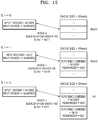
- FIG. 12 illustrates a method of determining an index when an input divisor is fixed, and an input dividend is changed over time, according to an embodiment.
- the input divisor is fixed to 0x5, and the input dividend is changed to 0x10020, 0x10, and 0x10020 over time.
- the division processing apparatus 100 may determine an index indicating a location in a cache memory based on at least one of an input divisor included in acquired input data, an input dividend, and a size of the cache memory. For example, the division processing apparatus 100 may determine, as the index, a division result value of the input divisor and the size of the cache memory.
- the same index value may be determined for different input dividends.
- the division processing apparatus 100 may determine an index by adding a portion of bits constituting an input divisor to a low bit location of an index determined based on a division result of the input divisor and the size of the cache memory.
- the division processing apparatus 100 may more efficiently perform processing of a division by setting different indices to prevent division results of different input divisions from being stored at the same location in the cache memory.
- An apparatus may include a processor, a memory for storing and executing program data, a permanent storage such as a disk drive, a communication port for performing communication with an external device, and a user interface, such as a touch panel, a key, and a button.
- Methods implemented with a software module or an algorithm may be stored in a computer-readable recording medium in the form of computer-readable codes or program instructions executable in the processor. Examples of the computer-readable recording medium include magnetic storage media (e.g., read-only memory (ROM), random-access memory (RAM), floppy disks, hard disks, etc.) and optical recording media (e.g., CD-ROMs, Digital Versatile Discs (DVDs), etc.).
- the computer-readable recording medium can also be distributed over network coupled computer systems so that the computer-readable code is stored and executed in a distributed fashion. The media can be read by a computer, stored in the memory, and executed by the processor.
- the present disclosure can be represented with functional blocks and various processing steps. These functional blocks can be implemented by various numbers of hardware and/or software configurations for executing specific functions. For example, the present disclosure may adopt direct circuit configurations, such as memory, processing, logic, and look-up table, for executing various functions under control of one or more processors or by other control devices. Like components of the present disclosure being able to execute the various functions with software programming or software elements, the present disclosure can be implemented by a programming or scripting language, such as C, C++, Java, or assembler, with various algorithms implemented by a combination of a data structure, processes, routines, and/or other programming components. Functional aspects can be implemented with algorithms executed in one or more processors.
- a programming or scripting language such as C, C++, Java, or assembler
- the present disclosure may adopt the prior art for electronic environment setup, signal processing and/or data processing.
- the terms such as “mechanism”, “element”, “means”, and “configuration”, can be widely used and are not delimited as mechanical and physical configurations.
- the terms may include the meaning of a series of routines of software in association with a processor.
- connections or connection members of lines between components shown in the drawings illustrate functional connections and/or physical or circuit connections, and the connections or connection members can be represented by replaceable or additional various functional connections, physical connections, or circuit connections in an actual apparatus.
- connections or connection members can be represented by replaceable or additional various functional connections, physical connections, or circuit connections in an actual apparatus.
Landscapes
- Physics & Mathematics (AREA)
- General Physics & Mathematics (AREA)
- Engineering & Computer Science (AREA)
- Computational Mathematics (AREA)
- Mathematical Analysis (AREA)
- Mathematical Optimization (AREA)
- Pure & Applied Mathematics (AREA)
- Theoretical Computer Science (AREA)
- Computing Systems (AREA)
- General Engineering & Computer Science (AREA)
- Memory System Of A Hierarchy Structure (AREA)
Claims (15)
- Verfahren zum Verarbeiten einer Divisionsoperation, wobei das Verfahren umfasst:Erfassen von Eingabedaten;Ermitteln von Referenzdaten, die sich auf eine den erfassten Eingabedaten entsprechende Divisionsoperation beziehen, aus einem Cache-Speicher, in dem Daten, die sich auf mindestens eine Divisionsoperation beziehen, vorab gespeichert sind;Bestimmen einer Differenz, die zwischen einem in den Eingabedaten enthaltenen Eingabezähler und einem in den Referenzdaten enthaltenen Referenzzähler als Reaktion auf einen in den Eingabedaten enthaltenen Eingabenenner, der einem in den Referenzdaten enthaltenen Referenznenner entspricht, berechnet wird;Auswählen eines Operators aus einer Vielzahl von Operatoren, die gemäß mindestens einem aus einer verarbeitbaren Anzahl von Datenbits und einem Berechnungstyp identifiziert werden, basierend auf der Differenz; undErfassen eines Ergebnisses der Durchführung der Divisionsoperation an den Eingabedaten des ausgewählten Operators.
- Verfahren nach Anspruch 1, ferner umfassend das Bestimmen, ob die erkannten Referenzdaten verwendet werden, basierend darauf, ob ein in den Eingabedaten enthaltener Eingabenenner einem in den Referenzdaten enthaltenen Referenznenner entspricht.
- Verfahren nach Anspruch 2, wobei das Erfassen umfasst:Berechnen eines Differenzwertes zwischen einem in den Eingabedaten enthaltenen Eingabezähler und einem in den Referenzdaten enthaltenen Referenzzähler, wenn der Referenznenner dem Eingabenenner entspricht;wenn der berechnete Differenzwert kleiner oder gleich einem voreingestellten Schwellenwert und dem Eingabenenner ist, Vergleichen des Referenzzählers und des Eingabezählers;und als Ergebnis des Vergleichs, wenn der Referenzzähler größer als der Eingabezähler ist, Bestimmen eines Wertes als Quotient der Eingabedaten, der durch Subtrahieren von 1 von einem in den Referenzdaten enthaltenen Quotienten erhalten wird, und wenn der Referenzzähler kleiner oder gleich dem Eingabezähler ist, Bestimmen des Quotienten der Referenzdaten als Quotient der Eingabedaten.
- Verfahren nach Anspruch 2, wobei das Erfassen umfasst:Berechnen eines Differenzwertes zwischen einem in den Eingabedaten enthaltenen Eingabezähler und einem in den Referenzdaten enthaltenen Referenzzähler, wenn der Referenznenner dem Eingabenenner entspricht;wenn der berechnete Differenzwert kleiner als ein voreingestellter Schwellenwert und größer als der Eingabenenner ist, Berechnen eines Quotienten und eines Rests, der durch Division einer Differenz zwischen dem Eingabezähler und dem Referenzzähler durch den Eingabenenner erhalten wird; undwenn der berechnete Quotient größer oder gleich 0 ist oder der berechnete Rest 0 ist, Bestimmen eines Quotienten der Eingabedaten als einen Wert, der durch Addieren des berechneten Quotienten zu einem Quotienten der Referenzdaten erhalten wird, und wenn der berechnete Quotient kleiner als 0 ist und der berechnete Rest nicht 0 ist, Bestimmen des Quotienten der Eingabedaten als einen Wert, der durch Subtrahieren von 1 von dem Wert erhalten wird, der durch Addieren des berechneten Quotienten zu dem Quotienten der Referenzdaten erhalten wird.
- Verfahren nach Anspruch 2, wobei das Erfassen umfasst:
Durchführen einer Division an einem Eingabezähler und dem in den Eingabedaten enthaltenen Eingabenenner, wenn sich der Referenznenner vom Eingabenenner unterscheidet oder ein Differenzwert zwischen dem Eingabezähler und einem Referenzzähler größer als ein voreingestellter Schwellenwert ist. - Verfahren nach Anspruch 1, wobei die Vielzahl von Operatoren einen ersten Teiler und einen zweiten Teiler umfasst, deren verarbeitbare Anzahlen von Datenbits eines Quotienten einer Divisionsoperation sich voneinander unterscheiden, und
das Auswählen umfasst:
Auswählen eines des ersten Teilers und des zweiten Teilers durch Vergleichen der verarbeitbaren Anzahl von Datenbits eines Quotienten einer Divisionsoperation im ersten Teiler und eines in den Eingabedaten enthaltenen Eingabenenners, wenn sich der Eingabenenner von einem in den Referenzdaten enthaltenen Referenznenner unterscheidet. - Verfahren nach Anspruch 1, ferner umfassend:Bestimmen eines Indexes, der eine Position im Cache-Speicher angibt, basierend auf mindestens einem von einem Eingabenenner, der in den erfassten Eingabedaten enthalten ist, einem Eingabezähler, der in den erfassten Eingabedaten enthalten ist, und einer Größe des Cache-Speichers,wobei das Ermitteln umfasst:
Ermitteln der Referenzdaten aus dem Cache-Speicher unter Verwendung des bestimmten Indexes. - Vorrichtung zum Verarbeiten einer Divisionsoperation, wobei die Vorrichtung umfasst: einen Cache-Speicher, in dem Daten, die sich auf mindestens eine Divisionsoperation beziehen, vorab gespeichert sind;
eine Eingabeeinheit, die dazu eingerichtet ist, Eingabedaten zu erfassen;
eine Berechnungseinheit, die eine Vielzahl von Operatoren enthält, die gemäß mindestens einem von einer verarbeitbaren Anzahl von Datenbits und einem Berechnungstyp identifiziert werden;
eine Steuereinheit, die dazu eingerichtet ist, Referenzdaten, die sich auf eine Divisionsoperation entsprechend den erfassten Eingabedaten beziehen, aus dem Cache-Speicher zu ermitteln, eine Differenz zu bestimmen, die zwischen einem in den Eingabedaten enthaltenen Eingabezähler und einem in den Referenzdaten enthaltenen Referenzzähler als Reaktion auf einen in den Eingabedaten enthaltenen Eingabenenner, der einem in den Referenzdaten enthaltenen Referenznenner entspricht, berechnet wird, und einen der Vielzahl von Operatoren basierend auf der Differenz auszuwählen; und
eine Ausgabeeinheit, die dazu eingerichtet ist, ein Ergebnis der Durchführung der Divisionsoperation an den Eingabedaten des ausgewählten Operators zu erfassen. - Vorrichtung nach Anspruch 8,
wobei die Steuereinheit ferner dazu eingerichtet ist, zu bestimmen, ob die ermittelten Referenzdaten verwendet werden, basierend darauf, ob ein in den Eingabedaten enthaltener Eingabenenner einem in den Referenzdaten enthaltenen Referenznenner entspricht. - Vorrichtung nach Anspruch 9, wobei die Berechnungseinheit ferner dazu eingerichtet ist, einen Differenzwert zwischen einem in den Eingabedaten enthaltenen Eingabezähler und einem in den Referenzdaten enthaltenen Referenzzähler zu berechnen, wenn der Referenznenner gleich dem Eingabenenner ist, und den Referenzzähler und den Eingabezähler zu vergleichen, wenn der berechnete Differenzwert kleiner oder gleich einem vorgegebenen Schwellenwert und dem Eingabezähler ist, und als Ergebnis des Vergleichs, wenn der Referenzzähler größer als der Eingabezähler ist, als Quotient der Eingabedaten einen Wert durch Subtrahieren von 1 von einem in den Referenzdaten enthaltenen Quotienten zu bestimmen, und wenn der Referenzzähler kleiner oder gleich dem Eingabezähler ist, den Quotienten der Referenzdaten als Quotient der Eingabedaten zu bestimmen.
- Vorrichtung nach Anspruch 9, wobei die Berechnungseinheit ferner dazu eingerichtet ist,
einen Differenzwert zwischen einem in den Eingabedaten enthaltenen Eingabezähler und einem in den Referenzdaten enthaltenen Referenzzähler zu berechnen, wenn der Referenznenner gleich dem Eingabenenner ist, einen Quotienten und einen Rest durch Dividieren einer Differenz zwischen dem Eingabezähler und dem Referenzzähler durch den Eingabezähler zu berechnen, wenn der berechnete Differenzwert kleiner als ein voreingestellter Schwellenwert und größer als der Eingabezähler ist, Bestimmen eines Quotienten der Eingabedaten als einen Wert, der durch Addieren des berechneten Quotienten zu einem Quotienten der Referenzdaten erhalten wird, wenn der berechnete Quotient größer oder gleich 0 ist oder der berechnete Rest 0 ist, und Bestimmen des Quotienten der Eingabedaten als einen Wert, der durch Subtrahieren von 1 von dem Wert erhalten wird, der durch Addieren des berechneten Quotienten zu dem Quotienten der Referenzdaten erhalten wird, wenn der berechnete Quotient kleiner als 0 ist und der berechnete Rest nicht 0 ist. - Vorrichtung nach Anspruch 9, wobei die Berechnungseinheit ferner dazu eingerichtet ist, eine Division an einem Eingabezähler und dem in den Eingabedaten enthaltenen Eingabenenner durchzuführen, wenn der Referenznenner vom Eingabezähler verschieden ist oder ein Differenzwert zwischen dem Eingabezähler und einem Referenzzähler größer als ein voreingestellter Schwellenwert ist.
- Vorrichtung nach Anspruch 8, wobei die Vielzahl von Operatoren einen ersten Teiler und einen zweiten Teiler umfasst, deren verarbeitbare Anzahlen von Datenbits eines Quotienten einer Divisionsoperation sich voneinander unterscheiden, und
die Steuereinheit ferner dazu eingerichtet ist,
einen des ersten Teilers und des zweiten Teilers durch Vergleichen eines Schwellenwertes, der die verarbeitbare Anzahl von Datenbits eines Quotienten einer Divisionsoperation im ersten Teiler ist, und eines in den Eingabedaten enthaltenen Eingabenenners, wenn sich der Eingabenenner von einem in den Referenzdaten enthaltenen Referenznenner unterscheidet, auszuwählen. - Vorrichtung nach Anspruch 8, wobei die Steuereinheit ferner dazu eingerichtet ist, einen Index zu bestimmen, der eine Position im Cache-Speicher angibt, basierend auf mindestens einem von einem in den erfassten Eingabedaten enthaltenen Eingabenenner, einem in den erfassten Eingabedaten enthaltenen Eingabezähler und einer Größe des Cache-Speichers, und die Referenzdaten aus dem Cache-Speicher unter Verwendung des bestimmten Index zu ermitteln.
- Nichtflüchtiges computerlesbares Aufzeichnungsmedium, auf dem ein Programm zum Durchführen des Verfahrens nach Anspruch 1 aufgezeichnet ist.
Applications Claiming Priority (1)
| Application Number | Priority Date | Filing Date | Title |
|---|---|---|---|
| PCT/KR2016/000598 WO2017126715A1 (ko) | 2016-01-20 | 2016-01-20 | 나눗셈 연산을 처리하는 방법, 장치 및 기록매체 |
Publications (3)
| Publication Number | Publication Date |
|---|---|
| EP3376369A1 EP3376369A1 (de) | 2018-09-19 |
| EP3376369A4 EP3376369A4 (de) | 2018-12-05 |
| EP3376369B1 true EP3376369B1 (de) | 2020-03-04 |
Family
ID=59362473
Family Applications (1)
| Application Number | Title | Priority Date | Filing Date |
|---|---|---|---|
| EP16886558.2A Active EP3376369B1 (de) | 2016-01-20 | 2016-01-20 | Verfahren, vorrichtung und aufzeichnungsmedium zur verarbeitung von divisionsrechnungen |
Country Status (4)
| Country | Link |
|---|---|
| US (1) | US10776077B2 (de) |
| EP (1) | EP3376369B1 (de) |
| KR (1) | KR102528467B1 (de) |
| WO (1) | WO2017126715A1 (de) |
Families Citing this family (2)
| Publication number | Priority date | Publication date | Assignee | Title |
|---|---|---|---|---|
| CN107943391A (zh) * | 2017-11-15 | 2018-04-20 | 宁波麦博韦尔移动电话有限公司 | 一种长按快速计算方法及系统 |
| KR102612588B1 (ko) * | 2023-05-15 | 2023-12-12 | 메티스엑스 주식회사 | 프로그램가능 반도체 소자, 이를 포함하는 전자 장치, 및 프로그램가능 반도체 소자에 의해 연산을 수행하는 방법 |
Family Cites Families (15)
| Publication number | Priority date | Publication date | Assignee | Title |
|---|---|---|---|---|
| US5272660A (en) | 1992-06-01 | 1993-12-21 | Motorola, Inc. | Method and apparatus for performing integer and floating point division using a single SRT divider in a data processor |
| US5828591A (en) * | 1992-11-02 | 1998-10-27 | Intel Corporation | Method and apparatus for using a cache memory to store and retrieve intermediate and final results |
| US6510493B1 (en) | 1999-07-15 | 2003-01-21 | International Business Machines Corporation | Method and apparatus for managing cache line replacement within a computer system |
| US6832294B2 (en) * | 2002-04-22 | 2004-12-14 | Sun Microsystems, Inc. | Interleaved n-way set-associative external cache |
| KR100433131B1 (ko) * | 2002-07-31 | 2004-05-28 | 학교법인연세대학교 | 작은 사이즈의 룩업 테이블을 갖는 파이프라인 나눗셈연산기 및 연산방법 |
| US20040249877A1 (en) * | 2003-06-05 | 2004-12-09 | International Business Machines Corporation | Fast integer division with minimum number of iterations in substraction-based hardware divide processor |
| JP4594666B2 (ja) * | 2004-07-12 | 2010-12-08 | 富士通株式会社 | 再構成可能な演算装置 |
| US20060129624A1 (en) * | 2004-12-09 | 2006-06-15 | Abdallah Mohammad A | Method and apparatus for performing a divide instruction |
| US20060294177A1 (en) | 2005-06-27 | 2006-12-28 | Simon Rubanovich | Method, system and apparatus of performing division operations |
| US8700862B2 (en) | 2008-12-03 | 2014-04-15 | Nvidia Corporation | Compression status bit cache and backing store |
| KR20100069240A (ko) * | 2008-12-16 | 2010-06-24 | 삼성전자주식회사 | 캐시 컨트롤을 위한 장치 및 방법 |
| US8271729B2 (en) | 2009-09-18 | 2012-09-18 | International Business Machines Corporation | Read and write aware cache storing cache lines in a read-often portion and a write-often portion |
| KR101770122B1 (ko) | 2010-12-30 | 2017-08-23 | 삼성전자주식회사 | Simd 프로세서를 이용하는 갈로아 필드 이진 다항식 제산 장치 및 방법 |
| US20130318138A1 (en) * | 2011-09-30 | 2013-11-28 | Huan Pan | Apparatus and method for performing decimal division |
| US20160313976A1 (en) * | 2015-04-21 | 2016-10-27 | Qualcomm Incorporated | High performance division and root computation unit |
-
2016
- 2016-01-20 KR KR1020187019708A patent/KR102528467B1/ko active Active
- 2016-01-20 WO PCT/KR2016/000598 patent/WO2017126715A1/ko not_active Ceased
- 2016-01-20 US US16/070,169 patent/US10776077B2/en not_active Expired - Fee Related
- 2016-01-20 EP EP16886558.2A patent/EP3376369B1/de active Active
Non-Patent Citations (1)
| Title |
|---|
| None * |
Also Published As
| Publication number | Publication date |
|---|---|
| US20190018652A1 (en) | 2019-01-17 |
| KR20180103885A (ko) | 2018-09-19 |
| EP3376369A4 (de) | 2018-12-05 |
| WO2017126715A1 (ko) | 2017-07-27 |
| KR102528467B1 (ko) | 2023-05-04 |
| EP3376369A1 (de) | 2018-09-19 |
| US10776077B2 (en) | 2020-09-15 |
Similar Documents
| Publication | Publication Date | Title |
|---|---|---|
| US9766900B2 (en) | Booting a multi-node computer system from a primary node dynamically selected based on security setting criteria | |
| EP3301567A1 (de) | Computerbefehlsverarbeitungsverfahren, -co-prozessor und -system | |
| CN107659498B (zh) | 一种报文转发方法和装置 | |
| US20250245383A1 (en) | Method for data protection, electronic device and computer-readable storage medium | |
| US20170017467A1 (en) | Integer/floating point divider and square root logic unit and associates methods | |
| EP3264274B1 (de) | Eingabeentdeckung für unbekannte programmbinärdateien | |
| CN105893857A (zh) | 一种文件加密方法、装置及设备 | |
| US20160232345A1 (en) | Method of modeling behavior pattern of instruction set in n-gram manner, computing device operating with the method, and program stored in storage medium to execute the method in computing device | |
| US20250232345A1 (en) | Programming verification rulesets visually | |
| EP3376369A1 (de) | Verfahren, vorrichtung und aufzeichnungsmedium zur verarbeitung von divisionsrechnungen | |
| CN106997284B (zh) | 实现浮点运算操作的方法和装置 | |
| US10474427B2 (en) | Comparison of wide data types | |
| US9959092B2 (en) | Accumulation of floating-point values | |
| US9154519B1 (en) | System and method for antivirus checking of objects from a plurality of virtual machines | |
| CN108196906B (zh) | 一种用户指令处理方法及嵌入式设备 | |
| KR102384345B1 (ko) | 스레드를 실행하는 방법, 프로세서 및 기록매체 | |
| EP3060981B1 (de) | Verfahren und prozessor zur ausführung von befehlen, verfahren und vorrichtung zur codierung von befehlen und aufzeichnungsmedium dafür | |
| US20160110199A1 (en) | Device and method for processing counter data | |
| CN113589987A (zh) | 一种文件夹的显示方法、装置及计算机设备 | |
| US20200192761A1 (en) | Load and Save Recovery Partition Using Mobile Device | |
| CN117472721A (zh) | 事件统计方法及装置 | |
| KR101988302B1 (ko) | 해쉬 기반의 콘텐츠 파일의 식별자 생성 장치 및 방법, 및 해쉬 코드 생성 방법 | |
| US9543963B2 (en) | Modulo-m binary counter | |
| US20180196668A1 (en) | Signal processing device and method | |
| US9996289B2 (en) | Assigning lock resources to objects |
Legal Events
| Date | Code | Title | Description |
|---|---|---|---|
| STAA | Information on the status of an ep patent application or granted ep patent |
Free format text: STATUS: THE INTERNATIONAL PUBLICATION HAS BEEN MADE |
|
| PUAI | Public reference made under article 153(3) epc to a published international application that has entered the european phase |
Free format text: ORIGINAL CODE: 0009012 |
|
| STAA | Information on the status of an ep patent application or granted ep patent |
Free format text: STATUS: REQUEST FOR EXAMINATION WAS MADE |
|
| 17P | Request for examination filed |
Effective date: 20180612 |
|
| AK | Designated contracting states |
Kind code of ref document: A1 Designated state(s): AL AT BE BG CH CY CZ DE DK EE ES FI FR GB GR HR HU IE IS IT LI LT LU LV MC MK MT NL NO PL PT RO RS SE SI SK SM TR |
|
| AX | Request for extension of the european patent |
Extension state: BA ME |
|
| A4 | Supplementary search report drawn up and despatched |
Effective date: 20181106 |
|
| RIC1 | Information provided on ipc code assigned before grant |
Ipc: G06F 7/52 20060101AFI20181029BHEP Ipc: G06F 7/535 20060101ALI20181029BHEP |
|
| DAV | Request for validation of the european patent (deleted) | ||
| DAX | Request for extension of the european patent (deleted) | ||
| GRAP | Despatch of communication of intention to grant a patent |
Free format text: ORIGINAL CODE: EPIDOSNIGR1 |
|
| STAA | Information on the status of an ep patent application or granted ep patent |
Free format text: STATUS: GRANT OF PATENT IS INTENDED |
|
| RIC1 | Information provided on ipc code assigned before grant |
Ipc: G06F 7/52 20060101AFI20190905BHEP Ipc: G06F 7/535 20060101ALI20190905BHEP |
|
| INTG | Intention to grant announced |
Effective date: 20190930 |
|
| GRAS | Grant fee paid |
Free format text: ORIGINAL CODE: EPIDOSNIGR3 |
|
| GRAA | (expected) grant |
Free format text: ORIGINAL CODE: 0009210 |
|
| STAA | Information on the status of an ep patent application or granted ep patent |
Free format text: STATUS: THE PATENT HAS BEEN GRANTED |
|
| AK | Designated contracting states |
Kind code of ref document: B1 Designated state(s): AL AT BE BG CH CY CZ DE DK EE ES FI FR GB GR HR HU IE IS IT LI LT LU LV MC MK MT NL NO PL PT RO RS SE SI SK SM TR |
|
| REG | Reference to a national code |
Ref country code: GB Ref legal event code: FG4D |
|
| REG | Reference to a national code |
Ref country code: CH Ref legal event code: EP |
|
| REG | Reference to a national code |
Ref country code: AT Ref legal event code: REF Ref document number: 1241171 Country of ref document: AT Kind code of ref document: T Effective date: 20200315 |
|
| REG | Reference to a national code |
Ref country code: DE Ref legal event code: R096 Ref document number: 602016031311 Country of ref document: DE |
|
| REG | Reference to a national code |
Ref country code: IE Ref legal event code: FG4D |
|
| REG | Reference to a national code |
Ref country code: NL Ref legal event code: FP |
|
| PG25 | Lapsed in a contracting state [announced via postgrant information from national office to epo] |
Ref country code: FI Free format text: LAPSE BECAUSE OF FAILURE TO SUBMIT A TRANSLATION OF THE DESCRIPTION OR TO PAY THE FEE WITHIN THE PRESCRIBED TIME-LIMIT Effective date: 20200304 Ref country code: NO Free format text: LAPSE BECAUSE OF FAILURE TO SUBMIT A TRANSLATION OF THE DESCRIPTION OR TO PAY THE FEE WITHIN THE PRESCRIBED TIME-LIMIT Effective date: 20200604 Ref country code: RS Free format text: LAPSE BECAUSE OF FAILURE TO SUBMIT A TRANSLATION OF THE DESCRIPTION OR TO PAY THE FEE WITHIN THE PRESCRIBED TIME-LIMIT Effective date: 20200304 |
|
| PG25 | Lapsed in a contracting state [announced via postgrant information from national office to epo] |
Ref country code: BG Free format text: LAPSE BECAUSE OF FAILURE TO SUBMIT A TRANSLATION OF THE DESCRIPTION OR TO PAY THE FEE WITHIN THE PRESCRIBED TIME-LIMIT Effective date: 20200604 Ref country code: GR Free format text: LAPSE BECAUSE OF FAILURE TO SUBMIT A TRANSLATION OF THE DESCRIPTION OR TO PAY THE FEE WITHIN THE PRESCRIBED TIME-LIMIT Effective date: 20200605 Ref country code: HR Free format text: LAPSE BECAUSE OF FAILURE TO SUBMIT A TRANSLATION OF THE DESCRIPTION OR TO PAY THE FEE WITHIN THE PRESCRIBED TIME-LIMIT Effective date: 20200304 Ref country code: LV Free format text: LAPSE BECAUSE OF FAILURE TO SUBMIT A TRANSLATION OF THE DESCRIPTION OR TO PAY THE FEE WITHIN THE PRESCRIBED TIME-LIMIT Effective date: 20200304 Ref country code: SE Free format text: LAPSE BECAUSE OF FAILURE TO SUBMIT A TRANSLATION OF THE DESCRIPTION OR TO PAY THE FEE WITHIN THE PRESCRIBED TIME-LIMIT Effective date: 20200304 |
|
| REG | Reference to a national code |
Ref country code: LT Ref legal event code: MG4D |
|
| PG25 | Lapsed in a contracting state [announced via postgrant information from national office to epo] |
Ref country code: SM Free format text: LAPSE BECAUSE OF FAILURE TO SUBMIT A TRANSLATION OF THE DESCRIPTION OR TO PAY THE FEE WITHIN THE PRESCRIBED TIME-LIMIT Effective date: 20200304 Ref country code: EE Free format text: LAPSE BECAUSE OF FAILURE TO SUBMIT A TRANSLATION OF THE DESCRIPTION OR TO PAY THE FEE WITHIN THE PRESCRIBED TIME-LIMIT Effective date: 20200304 Ref country code: PT Free format text: LAPSE BECAUSE OF FAILURE TO SUBMIT A TRANSLATION OF THE DESCRIPTION OR TO PAY THE FEE WITHIN THE PRESCRIBED TIME-LIMIT Effective date: 20200729 Ref country code: ES Free format text: LAPSE BECAUSE OF FAILURE TO SUBMIT A TRANSLATION OF THE DESCRIPTION OR TO PAY THE FEE WITHIN THE PRESCRIBED TIME-LIMIT Effective date: 20200304 Ref country code: CZ Free format text: LAPSE BECAUSE OF FAILURE TO SUBMIT A TRANSLATION OF THE DESCRIPTION OR TO PAY THE FEE WITHIN THE PRESCRIBED TIME-LIMIT Effective date: 20200304 Ref country code: LT Free format text: LAPSE BECAUSE OF FAILURE TO SUBMIT A TRANSLATION OF THE DESCRIPTION OR TO PAY THE FEE WITHIN THE PRESCRIBED TIME-LIMIT Effective date: 20200304 Ref country code: IS Free format text: LAPSE BECAUSE OF FAILURE TO SUBMIT A TRANSLATION OF THE DESCRIPTION OR TO PAY THE FEE WITHIN THE PRESCRIBED TIME-LIMIT Effective date: 20200704 Ref country code: RO Free format text: LAPSE BECAUSE OF FAILURE TO SUBMIT A TRANSLATION OF THE DESCRIPTION OR TO PAY THE FEE WITHIN THE PRESCRIBED TIME-LIMIT Effective date: 20200304 Ref country code: SK Free format text: LAPSE BECAUSE OF FAILURE TO SUBMIT A TRANSLATION OF THE DESCRIPTION OR TO PAY THE FEE WITHIN THE PRESCRIBED TIME-LIMIT Effective date: 20200304 |
|
| REG | Reference to a national code |
Ref country code: AT Ref legal event code: MK05 Ref document number: 1241171 Country of ref document: AT Kind code of ref document: T Effective date: 20200304 |
|
| REG | Reference to a national code |
Ref country code: DE Ref legal event code: R097 Ref document number: 602016031311 Country of ref document: DE |
|
| PLBE | No opposition filed within time limit |
Free format text: ORIGINAL CODE: 0009261 |
|
| STAA | Information on the status of an ep patent application or granted ep patent |
Free format text: STATUS: NO OPPOSITION FILED WITHIN TIME LIMIT |
|
| PG25 | Lapsed in a contracting state [announced via postgrant information from national office to epo] |
Ref country code: IT Free format text: LAPSE BECAUSE OF FAILURE TO SUBMIT A TRANSLATION OF THE DESCRIPTION OR TO PAY THE FEE WITHIN THE PRESCRIBED TIME-LIMIT Effective date: 20200304 Ref country code: AT Free format text: LAPSE BECAUSE OF FAILURE TO SUBMIT A TRANSLATION OF THE DESCRIPTION OR TO PAY THE FEE WITHIN THE PRESCRIBED TIME-LIMIT Effective date: 20200304 Ref country code: DK Free format text: LAPSE BECAUSE OF FAILURE TO SUBMIT A TRANSLATION OF THE DESCRIPTION OR TO PAY THE FEE WITHIN THE PRESCRIBED TIME-LIMIT Effective date: 20200304 |
|
| 26N | No opposition filed |
Effective date: 20201207 |
|
| PG25 | Lapsed in a contracting state [announced via postgrant information from national office to epo] |
Ref country code: PL Free format text: LAPSE BECAUSE OF FAILURE TO SUBMIT A TRANSLATION OF THE DESCRIPTION OR TO PAY THE FEE WITHIN THE PRESCRIBED TIME-LIMIT Effective date: 20200304 Ref country code: SI Free format text: LAPSE BECAUSE OF FAILURE TO SUBMIT A TRANSLATION OF THE DESCRIPTION OR TO PAY THE FEE WITHIN THE PRESCRIBED TIME-LIMIT Effective date: 20200304 |
|
| PGFP | Annual fee paid to national office [announced via postgrant information from national office to epo] |
Ref country code: NL Payment date: 20201222 Year of fee payment: 6 |
|
| PGFP | Annual fee paid to national office [announced via postgrant information from national office to epo] |
Ref country code: DE Payment date: 20201221 Year of fee payment: 6 |
|
| PG25 | Lapsed in a contracting state [announced via postgrant information from national office to epo] |
Ref country code: MC Free format text: LAPSE BECAUSE OF FAILURE TO SUBMIT A TRANSLATION OF THE DESCRIPTION OR TO PAY THE FEE WITHIN THE PRESCRIBED TIME-LIMIT Effective date: 20200304 |
|
| REG | Reference to a national code |
Ref country code: CH Ref legal event code: PL |
|
| PG25 | Lapsed in a contracting state [announced via postgrant information from national office to epo] |
Ref country code: LU Free format text: LAPSE BECAUSE OF NON-PAYMENT OF DUE FEES Effective date: 20210120 |
|
| REG | Reference to a national code |
Ref country code: BE Ref legal event code: MM Effective date: 20210131 |
|
| PG25 | Lapsed in a contracting state [announced via postgrant information from national office to epo] |
Ref country code: FR Free format text: LAPSE BECAUSE OF NON-PAYMENT OF DUE FEES Effective date: 20210131 |
|
| PG25 | Lapsed in a contracting state [announced via postgrant information from national office to epo] |
Ref country code: CH Free format text: LAPSE BECAUSE OF NON-PAYMENT OF DUE FEES Effective date: 20210131 Ref country code: LI Free format text: LAPSE BECAUSE OF NON-PAYMENT OF DUE FEES Effective date: 20210131 |
|
| PG25 | Lapsed in a contracting state [announced via postgrant information from national office to epo] |
Ref country code: IE Free format text: LAPSE BECAUSE OF NON-PAYMENT OF DUE FEES Effective date: 20210120 |
|
| PGFP | Annual fee paid to national office [announced via postgrant information from national office to epo] |
Ref country code: GB Payment date: 20211220 Year of fee payment: 7 |
|
| PG25 | Lapsed in a contracting state [announced via postgrant information from national office to epo] |
Ref country code: BE Free format text: LAPSE BECAUSE OF NON-PAYMENT OF DUE FEES Effective date: 20210131 |
|
| REG | Reference to a national code |
Ref country code: DE Ref legal event code: R119 Ref document number: 602016031311 Country of ref document: DE |
|
| REG | Reference to a national code |
Ref country code: NL Ref legal event code: MM Effective date: 20220201 |
|
| PG25 | Lapsed in a contracting state [announced via postgrant information from national office to epo] |
Ref country code: NL Free format text: LAPSE BECAUSE OF NON-PAYMENT OF DUE FEES Effective date: 20220201 Ref country code: DE Free format text: LAPSE BECAUSE OF NON-PAYMENT OF DUE FEES Effective date: 20220802 |
|
| PG25 | Lapsed in a contracting state [announced via postgrant information from national office to epo] |
Ref country code: CY Free format text: LAPSE BECAUSE OF FAILURE TO SUBMIT A TRANSLATION OF THE DESCRIPTION OR TO PAY THE FEE WITHIN THE PRESCRIBED TIME-LIMIT Effective date: 20200304 |
|
| PG25 | Lapsed in a contracting state [announced via postgrant information from national office to epo] |
Ref country code: HU Free format text: LAPSE BECAUSE OF FAILURE TO SUBMIT A TRANSLATION OF THE DESCRIPTION OR TO PAY THE FEE WITHIN THE PRESCRIBED TIME-LIMIT; INVALID AB INITIO Effective date: 20160120 |
|
| GBPC | Gb: european patent ceased through non-payment of renewal fee |
Effective date: 20230120 |
|
| PG25 | Lapsed in a contracting state [announced via postgrant information from national office to epo] |
Ref country code: GB Free format text: LAPSE BECAUSE OF NON-PAYMENT OF DUE FEES Effective date: 20230120 |
|
| PG25 | Lapsed in a contracting state [announced via postgrant information from national office to epo] |
Ref country code: MK Free format text: LAPSE BECAUSE OF FAILURE TO SUBMIT A TRANSLATION OF THE DESCRIPTION OR TO PAY THE FEE WITHIN THE PRESCRIBED TIME-LIMIT Effective date: 20200304 |
|
| PG25 | Lapsed in a contracting state [announced via postgrant information from national office to epo] |
Ref country code: TR Free format text: LAPSE BECAUSE OF FAILURE TO SUBMIT A TRANSLATION OF THE DESCRIPTION OR TO PAY THE FEE WITHIN THE PRESCRIBED TIME-LIMIT Effective date: 20200304 |
|
| PG25 | Lapsed in a contracting state [announced via postgrant information from national office to epo] |
Ref country code: MT Free format text: LAPSE BECAUSE OF FAILURE TO SUBMIT A TRANSLATION OF THE DESCRIPTION OR TO PAY THE FEE WITHIN THE PRESCRIBED TIME-LIMIT Effective date: 20200304 |