EP3375813A1 - Flame retardant particle, manufacturing method therefor, and flame retardant styrofoam using same - Google Patents
Flame retardant particle, manufacturing method therefor, and flame retardant styrofoam using same Download PDFInfo
- Publication number
- EP3375813A1 EP3375813A1 EP16864577.8A EP16864577A EP3375813A1 EP 3375813 A1 EP3375813 A1 EP 3375813A1 EP 16864577 A EP16864577 A EP 16864577A EP 3375813 A1 EP3375813 A1 EP 3375813A1
- Authority
- EP
- European Patent Office
- Prior art keywords
- flame retardant
- particle
- weight
- parts
- styrofoam
- Prior art date
- Legal status (The legal status is an assumption and is not a legal conclusion. Google has not performed a legal analysis and makes no representation as to the accuracy of the status listed.)
- Withdrawn
Links
- 239000003063 flame retardant Substances 0.000 title claims abstract description 312
- RNFJDJUURJAICM-UHFFFAOYSA-N 2,2,4,4,6,6-hexaphenoxy-1,3,5-triaza-2$l^{5},4$l^{5},6$l^{5}-triphosphacyclohexa-1,3,5-triene Chemical compound N=1P(OC=2C=CC=CC=2)(OC=2C=CC=CC=2)=NP(OC=2C=CC=CC=2)(OC=2C=CC=CC=2)=NP=1(OC=1C=CC=CC=1)OC1=CC=CC=C1 RNFJDJUURJAICM-UHFFFAOYSA-N 0.000 title claims abstract description 308
- 239000002245 particle Substances 0.000 title claims abstract description 245
- 229920006328 Styrofoam Polymers 0.000 title claims abstract description 91
- 239000008261 styrofoam Substances 0.000 title claims abstract description 91
- 238000004519 manufacturing process Methods 0.000 title claims abstract description 48
- 239000000203 mixture Substances 0.000 claims description 104
- 239000010954 inorganic particle Substances 0.000 claims description 56
- 239000004793 Polystyrene Substances 0.000 claims description 55
- 229920002223 polystyrene Polymers 0.000 claims description 55
- 229920000642 polymer Polymers 0.000 claims description 36
- 239000011230 binding agent Substances 0.000 claims description 34
- KPUWHANPEXNPJT-UHFFFAOYSA-N disiloxane Chemical class [SiH3]O[SiH3] KPUWHANPEXNPJT-UHFFFAOYSA-N 0.000 claims description 28
- 239000010410 layer Substances 0.000 claims description 28
- 238000000034 method Methods 0.000 claims description 28
- OKTJSMMVPCPJKN-UHFFFAOYSA-N Carbon Chemical compound [C] OKTJSMMVPCPJKN-UHFFFAOYSA-N 0.000 claims description 26
- 229910052799 carbon Inorganic materials 0.000 claims description 18
- NTHWMYGWWRZVTN-UHFFFAOYSA-N sodium silicate Chemical compound [Na+].[Na+].[O-][Si]([O-])=O NTHWMYGWWRZVTN-UHFFFAOYSA-N 0.000 claims description 16
- 239000012790 adhesive layer Substances 0.000 claims description 15
- 239000000919 ceramic Substances 0.000 claims description 15
- 239000000126 substance Substances 0.000 claims description 15
- GWEVSGVZZGPLCZ-UHFFFAOYSA-N Titan oxide Chemical compound O=[Ti]=O GWEVSGVZZGPLCZ-UHFFFAOYSA-N 0.000 claims description 14
- 239000002956 ash Substances 0.000 claims description 13
- 239000010881 fly ash Substances 0.000 claims description 13
- 239000004005 microsphere Substances 0.000 claims description 13
- 238000010298 pulverizing process Methods 0.000 claims description 13
- 239000000463 material Substances 0.000 claims description 12
- 238000005133 29Si NMR spectroscopy Methods 0.000 claims description 11
- 239000011734 sodium Substances 0.000 claims description 11
- 238000001228 spectrum Methods 0.000 claims description 11
- 239000007788 liquid Substances 0.000 claims description 9
- 239000004115 Sodium Silicate Substances 0.000 claims description 8
- 229910052911 sodium silicate Inorganic materials 0.000 claims description 7
- OGIDPMRJRNCKJF-UHFFFAOYSA-N titanium oxide Inorganic materials [Ti]=O OGIDPMRJRNCKJF-UHFFFAOYSA-N 0.000 claims description 7
- 229920001577 copolymer Polymers 0.000 claims description 5
- 229910004298 SiO 2 Inorganic materials 0.000 claims description 2
- 238000003756 stirring Methods 0.000 claims 1
- VYPSYNLAJGMNEJ-UHFFFAOYSA-N Silicium dioxide Chemical compound O=[Si]=O VYPSYNLAJGMNEJ-UHFFFAOYSA-N 0.000 description 48
- 229920005990 polystyrene resin Polymers 0.000 description 47
- 238000010438 heat treatment Methods 0.000 description 46
- 238000005187 foaming Methods 0.000 description 28
- OFBQJSOFQDEBGM-UHFFFAOYSA-N n-pentane Natural products CCCCC OFBQJSOFQDEBGM-UHFFFAOYSA-N 0.000 description 27
- 239000011324 bead Substances 0.000 description 26
- 229920005989 resin Polymers 0.000 description 26
- 239000011347 resin Substances 0.000 description 26
- 239000004925 Acrylic resin Substances 0.000 description 25
- 229920000178 Acrylic resin Polymers 0.000 description 25
- 239000011247 coating layer Substances 0.000 description 24
- 239000000377 silicon dioxide Substances 0.000 description 23
- UQSXHKLRYXJYBZ-UHFFFAOYSA-N Iron oxide Chemical compound [Fe]=O UQSXHKLRYXJYBZ-UHFFFAOYSA-N 0.000 description 18
- 238000002156 mixing Methods 0.000 description 18
- 229920002689 polyvinyl acetate Polymers 0.000 description 17
- 239000011118 polyvinyl acetate Substances 0.000 description 17
- IJGRMHOSHXDMSA-UHFFFAOYSA-N Atomic nitrogen Chemical compound N#N IJGRMHOSHXDMSA-UHFFFAOYSA-N 0.000 description 16
- 239000000395 magnesium oxide Substances 0.000 description 16
- CPLXHLVBOLITMK-UHFFFAOYSA-N magnesium oxide Inorganic materials [Mg]=O CPLXHLVBOLITMK-UHFFFAOYSA-N 0.000 description 16
- AXZKOIWUVFPNLO-UHFFFAOYSA-N magnesium;oxygen(2-) Chemical compound [O-2].[Mg+2] AXZKOIWUVFPNLO-UHFFFAOYSA-N 0.000 description 16
- TWNQGVIAIRXVLR-UHFFFAOYSA-N oxo(oxoalumanyloxy)alumane Chemical compound O=[Al]O[Al]=O TWNQGVIAIRXVLR-UHFFFAOYSA-N 0.000 description 16
- 239000003795 chemical substances by application Substances 0.000 description 14
- 239000004205 dimethyl polysiloxane Substances 0.000 description 13
- 235000013870 dimethyl polysiloxane Nutrition 0.000 description 13
- 230000000694 effects Effects 0.000 description 13
- 229920000435 poly(dimethylsiloxane) Polymers 0.000 description 13
- DIZPMCHEQGEION-UHFFFAOYSA-H aluminium sulfate (anhydrous) Chemical compound [Al+3].[Al+3].[O-]S([O-])(=O)=O.[O-]S([O-])(=O)=O.[O-]S([O-])(=O)=O DIZPMCHEQGEION-UHFFFAOYSA-H 0.000 description 12
- 239000011363 dried mixture Substances 0.000 description 12
- ODINCKMPIJJUCX-UHFFFAOYSA-N calcium oxide Inorganic materials [Ca]=O ODINCKMPIJJUCX-UHFFFAOYSA-N 0.000 description 11
- PPBRXRYQALVLMV-UHFFFAOYSA-N Styrene Chemical group C=CC1=CC=CC=C1 PPBRXRYQALVLMV-UHFFFAOYSA-N 0.000 description 10
- 230000000052 comparative effect Effects 0.000 description 10
- XUIMIQQOPSSXEZ-UHFFFAOYSA-N Silicon Chemical compound [Si] XUIMIQQOPSSXEZ-UHFFFAOYSA-N 0.000 description 9
- 239000006229 carbon black Substances 0.000 description 9
- 125000000524 functional group Chemical group 0.000 description 9
- 239000005011 phenolic resin Substances 0.000 description 9
- -1 polydimethylsiloxane Polymers 0.000 description 9
- 235000019353 potassium silicate Nutrition 0.000 description 9
- 229910052710 silicon Inorganic materials 0.000 description 9
- XEEYBQQBJWHFJM-UHFFFAOYSA-N Iron Chemical compound [Fe] XEEYBQQBJWHFJM-UHFFFAOYSA-N 0.000 description 8
- 229920002472 Starch Polymers 0.000 description 8
- XAGFODPZIPBFFR-UHFFFAOYSA-N aluminium Chemical compound [Al] XAGFODPZIPBFFR-UHFFFAOYSA-N 0.000 description 8
- 239000007864 aqueous solution Substances 0.000 description 8
- 239000001506 calcium phosphate Substances 0.000 description 8
- 229910000389 calcium phosphate Inorganic materials 0.000 description 8
- 235000011010 calcium phosphates Nutrition 0.000 description 8
- 238000000748 compression moulding Methods 0.000 description 8
- 239000010703 silicon Substances 0.000 description 8
- 235000012239 silicon dioxide Nutrition 0.000 description 8
- 239000008107 starch Substances 0.000 description 8
- 235000019698 starch Nutrition 0.000 description 8
- 239000002344 surface layer Substances 0.000 description 8
- QORWJWZARLRLPR-UHFFFAOYSA-H tricalcium bis(phosphate) Chemical compound [Ca+2].[Ca+2].[Ca+2].[O-]P([O-])([O-])=O.[O-]P([O-])([O-])=O QORWJWZARLRLPR-UHFFFAOYSA-H 0.000 description 8
- JEIPFZHSYJVQDO-UHFFFAOYSA-N iron(III) oxide Inorganic materials O=[Fe]O[Fe]=O JEIPFZHSYJVQDO-UHFFFAOYSA-N 0.000 description 7
- 229910052757 nitrogen Inorganic materials 0.000 description 7
- OAICVXFJPJFONN-UHFFFAOYSA-N Phosphorus Chemical compound [P] OAICVXFJPJFONN-UHFFFAOYSA-N 0.000 description 6
- 229910052782 aluminium Inorganic materials 0.000 description 6
- 229910052698 phosphorus Inorganic materials 0.000 description 6
- 239000011574 phosphorus Substances 0.000 description 6
- 238000001878 scanning electron micrograph Methods 0.000 description 6
- CPELXLSAUQHCOX-UHFFFAOYSA-M Bromide Chemical compound [Br-] CPELXLSAUQHCOX-UHFFFAOYSA-M 0.000 description 5
- 239000000654 additive Substances 0.000 description 5
- 229910052681 coesite Inorganic materials 0.000 description 5
- 229910052906 cristobalite Inorganic materials 0.000 description 5
- 230000003247 decreasing effect Effects 0.000 description 5
- 238000001035 drying Methods 0.000 description 5
- 229910052736 halogen Inorganic materials 0.000 description 5
- 150000002367 halogens Chemical class 0.000 description 5
- 229910052751 metal Inorganic materials 0.000 description 5
- 239000002184 metal Substances 0.000 description 5
- CXQXSVUQTKDNFP-UHFFFAOYSA-N octamethyltrisiloxane Chemical compound C[Si](C)(C)O[Si](C)(C)O[Si](C)(C)C CXQXSVUQTKDNFP-UHFFFAOYSA-N 0.000 description 5
- 238000004987 plasma desorption mass spectroscopy Methods 0.000 description 5
- 229920006327 polystyrene foam Polymers 0.000 description 5
- 239000002904 solvent Substances 0.000 description 5
- 229910052682 stishovite Inorganic materials 0.000 description 5
- 229910052905 tridymite Inorganic materials 0.000 description 5
- OYPRJOBELJOOCE-UHFFFAOYSA-N Calcium Chemical compound [Ca] OYPRJOBELJOOCE-UHFFFAOYSA-N 0.000 description 4
- CURLTUGMZLYLDI-UHFFFAOYSA-N Carbon dioxide Chemical compound O=C=O CURLTUGMZLYLDI-UHFFFAOYSA-N 0.000 description 4
- DGAQECJNVWCQMB-PUAWFVPOSA-M Ilexoside XXIX Chemical compound C[C@@H]1CC[C@@]2(CC[C@@]3(C(=CC[C@H]4[C@]3(CC[C@@H]5[C@@]4(CC[C@@H](C5(C)C)OS(=O)(=O)[O-])C)C)[C@@H]2[C@]1(C)O)C)C(=O)O[C@H]6[C@@H]([C@H]([C@@H]([C@H](O6)CO)O)O)O.[Na+] DGAQECJNVWCQMB-PUAWFVPOSA-M 0.000 description 4
- FYYHWMGAXLPEAU-UHFFFAOYSA-N Magnesium Chemical compound [Mg] FYYHWMGAXLPEAU-UHFFFAOYSA-N 0.000 description 4
- NINIDFKCEFEMDL-UHFFFAOYSA-N Sulfur Chemical compound [S] NINIDFKCEFEMDL-UHFFFAOYSA-N 0.000 description 4
- QVGXLLKOCUKJST-UHFFFAOYSA-N atomic oxygen Chemical compound [O] QVGXLLKOCUKJST-UHFFFAOYSA-N 0.000 description 4
- 239000012752 auxiliary agent Substances 0.000 description 4
- 239000011575 calcium Substances 0.000 description 4
- 229910052791 calcium Inorganic materials 0.000 description 4
- 239000002270 dispersing agent Substances 0.000 description 4
- 238000001879 gelation Methods 0.000 description 4
- 229910002804 graphite Inorganic materials 0.000 description 4
- 239000010439 graphite Substances 0.000 description 4
- 239000011256 inorganic filler Substances 0.000 description 4
- 229910003475 inorganic filler Inorganic materials 0.000 description 4
- 229910052742 iron Inorganic materials 0.000 description 4
- 239000011777 magnesium Substances 0.000 description 4
- 229910052749 magnesium Inorganic materials 0.000 description 4
- 239000001301 oxygen Substances 0.000 description 4
- 229910052760 oxygen Inorganic materials 0.000 description 4
- 229910052708 sodium Inorganic materials 0.000 description 4
- 239000011593 sulfur Substances 0.000 description 4
- 229910052717 sulfur Inorganic materials 0.000 description 4
- 238000010558 suspension polymerization method Methods 0.000 description 4
- 238000010557 suspension polymerization reaction Methods 0.000 description 4
- LWIHDJKSTIGBAC-UHFFFAOYSA-K tripotassium phosphate Chemical compound [K+].[K+].[K+].[O-]P([O-])([O-])=O LWIHDJKSTIGBAC-UHFFFAOYSA-K 0.000 description 4
- XLYOFNOQVPJJNP-UHFFFAOYSA-N water Substances O XLYOFNOQVPJJNP-UHFFFAOYSA-N 0.000 description 4
- YMWUJEATGCHHMB-UHFFFAOYSA-N Dichloromethane Chemical compound ClCCl YMWUJEATGCHHMB-UHFFFAOYSA-N 0.000 description 3
- RTZKZFJDLAIYFH-UHFFFAOYSA-N Diethyl ether Chemical compound CCOCC RTZKZFJDLAIYFH-UHFFFAOYSA-N 0.000 description 3
- 230000000996 additive effect Effects 0.000 description 3
- 239000000292 calcium oxide Substances 0.000 description 3
- 235000012255 calcium oxide Nutrition 0.000 description 3
- 238000013329 compounding Methods 0.000 description 3
- 239000011162 core material Substances 0.000 description 3
- 239000003431 cross linking reagent Substances 0.000 description 3
- 238000002474 experimental method Methods 0.000 description 3
- 239000007789 gas Substances 0.000 description 3
- 239000011810 insulating material Substances 0.000 description 3
- 238000009413 insulation Methods 0.000 description 3
- 230000001788 irregular Effects 0.000 description 3
- 238000000465 moulding Methods 0.000 description 3
- VLKZOEOYAKHREP-UHFFFAOYSA-N n-Hexane Chemical compound CCCCCC VLKZOEOYAKHREP-UHFFFAOYSA-N 0.000 description 3
- 238000002360 preparation method Methods 0.000 description 3
- 239000000047 product Substances 0.000 description 3
- 230000005855 radiation Effects 0.000 description 3
- KKCBUQHMOMHUOY-UHFFFAOYSA-N sodium oxide Chemical compound [O-2].[Na+].[Na+] KKCBUQHMOMHUOY-UHFFFAOYSA-N 0.000 description 3
- 229920005992 thermoplastic resin Polymers 0.000 description 3
- 239000004408 titanium dioxide Substances 0.000 description 3
- DEIGXXQKDWULML-UHFFFAOYSA-N 1,2,5,6,9,10-hexabromocyclododecane Chemical compound BrC1CCC(Br)C(Br)CCC(Br)C(Br)CCC1Br DEIGXXQKDWULML-UHFFFAOYSA-N 0.000 description 2
- XKRFYHLGVUSROY-UHFFFAOYSA-N Argon Chemical compound [Ar] XKRFYHLGVUSROY-UHFFFAOYSA-N 0.000 description 2
- VTYYLEPIZMXCLO-UHFFFAOYSA-L Calcium carbonate Chemical compound [Ca+2].[O-]C([O-])=O VTYYLEPIZMXCLO-UHFFFAOYSA-L 0.000 description 2
- HEDRZPFGACZZDS-UHFFFAOYSA-N Chloroform Chemical compound ClC(Cl)Cl HEDRZPFGACZZDS-UHFFFAOYSA-N 0.000 description 2
- RYGMFSIKBFXOCR-UHFFFAOYSA-N Copper Chemical compound [Cu] RYGMFSIKBFXOCR-UHFFFAOYSA-N 0.000 description 2
- LCGLNKUTAGEVQW-UHFFFAOYSA-N Dimethyl ether Chemical compound COC LCGLNKUTAGEVQW-UHFFFAOYSA-N 0.000 description 2
- IMNFDUFMRHMDMM-UHFFFAOYSA-N N-Heptane Chemical compound CCCCCCC IMNFDUFMRHMDMM-UHFFFAOYSA-N 0.000 description 2
- 238000005481 NMR spectroscopy Methods 0.000 description 2
- ATUOYWHBWRKTHZ-UHFFFAOYSA-N Propane Chemical compound CCC ATUOYWHBWRKTHZ-UHFFFAOYSA-N 0.000 description 2
- 239000004965 Silica aerogel Substances 0.000 description 2
- RTAQQCXQSZGOHL-UHFFFAOYSA-N Titanium Chemical compound [Ti] RTAQQCXQSZGOHL-UHFFFAOYSA-N 0.000 description 2
- 229910021536 Zeolite Inorganic materials 0.000 description 2
- PNEYBMLMFCGWSK-UHFFFAOYSA-N aluminium oxide Inorganic materials [O-2].[O-2].[O-2].[Al+3].[Al+3] PNEYBMLMFCGWSK-UHFFFAOYSA-N 0.000 description 2
- 238000004458 analytical method Methods 0.000 description 2
- BRPQOXSCLDDYGP-UHFFFAOYSA-N calcium oxide Chemical compound [O-2].[Ca+2] BRPQOXSCLDDYGP-UHFFFAOYSA-N 0.000 description 2
- 239000001569 carbon dioxide Substances 0.000 description 2
- 229910002092 carbon dioxide Inorganic materials 0.000 description 2
- 230000006835 compression Effects 0.000 description 2
- 238000007906 compression Methods 0.000 description 2
- 238000010276 construction Methods 0.000 description 2
- 229910052802 copper Inorganic materials 0.000 description 2
- 239000010949 copper Substances 0.000 description 2
- 238000004132 cross linking Methods 0.000 description 2
- 230000007423 decrease Effects 0.000 description 2
- SHFGJEQAOUMGJM-UHFFFAOYSA-N dialuminum dipotassium disodium dioxosilane iron(3+) oxocalcium oxomagnesium oxygen(2-) Chemical compound [O--].[O--].[O--].[O--].[O--].[O--].[O--].[O--].[Na+].[Na+].[Al+3].[Al+3].[K+].[K+].[Fe+3].[Fe+3].O=[Mg].O=[Ca].O=[Si]=O SHFGJEQAOUMGJM-UHFFFAOYSA-N 0.000 description 2
- 229910001873 dinitrogen Inorganic materials 0.000 description 2
- HNPSIPDUKPIQMN-UHFFFAOYSA-N dioxosilane;oxo(oxoalumanyloxy)alumane Chemical compound O=[Si]=O.O=[Al]O[Al]=O HNPSIPDUKPIQMN-UHFFFAOYSA-N 0.000 description 2
- 125000001033 ether group Chemical group 0.000 description 2
- 238000000349 field-emission scanning electron micrograph Methods 0.000 description 2
- 238000010304 firing Methods 0.000 description 2
- 239000006260 foam Substances 0.000 description 2
- 230000002209 hydrophobic effect Effects 0.000 description 2
- 238000005259 measurement Methods 0.000 description 2
- 239000010451 perlite Substances 0.000 description 2
- 235000019362 perlite Nutrition 0.000 description 2
- 229910000160 potassium phosphate Inorganic materials 0.000 description 2
- 235000011009 potassium phosphates Nutrition 0.000 description 2
- 239000011342 resin composition Substances 0.000 description 2
- 229910052814 silicon oxide Inorganic materials 0.000 description 2
- 229910001948 sodium oxide Inorganic materials 0.000 description 2
- 239000007787 solid Substances 0.000 description 2
- 229920001187 thermosetting polymer Polymers 0.000 description 2
- 239000010455 vermiculite Substances 0.000 description 2
- 235000019354 vermiculite Nutrition 0.000 description 2
- 229910052902 vermiculite Inorganic materials 0.000 description 2
- 125000000391 vinyl group Chemical group [H]C([*])=C([H])[H] 0.000 description 2
- 229920002554 vinyl polymer Polymers 0.000 description 2
- 239000010457 zeolite Substances 0.000 description 2
- KXGFMDJXCMQABM-UHFFFAOYSA-N 2-methoxy-6-methylphenol Chemical compound [CH]OC1=CC=CC([CH])=C1O KXGFMDJXCMQABM-UHFFFAOYSA-N 0.000 description 1
- 206010007269 Carcinogenicity Diseases 0.000 description 1
- PMPVIKIVABFJJI-UHFFFAOYSA-N Cyclobutane Chemical compound C1CCC1 PMPVIKIVABFJJI-UHFFFAOYSA-N 0.000 description 1
- XDTMQSROBMDMFD-UHFFFAOYSA-N Cyclohexane Chemical compound C1CCCCC1 XDTMQSROBMDMFD-UHFFFAOYSA-N 0.000 description 1
- 206010019851 Hepatotoxicity Diseases 0.000 description 1
- 239000004640 Melamine resin Substances 0.000 description 1
- 229920000877 Melamine resin Polymers 0.000 description 1
- XOBKSJJDNFUZPF-UHFFFAOYSA-N Methoxyethane Chemical compound CCOC XOBKSJJDNFUZPF-UHFFFAOYSA-N 0.000 description 1
- 239000004372 Polyvinyl alcohol Substances 0.000 description 1
- 125000003368 amide group Chemical group 0.000 description 1
- 125000003277 amino group Chemical group 0.000 description 1
- 239000012431 aqueous reaction media Substances 0.000 description 1
- 229910052786 argon Inorganic materials 0.000 description 1
- 125000000751 azo group Chemical group [*]N=N[*] 0.000 description 1
- 230000004641 brain development Effects 0.000 description 1
- 150000001649 bromium compounds Chemical class 0.000 description 1
- 239000004566 building material Substances 0.000 description 1
- 239000001273 butane Substances 0.000 description 1
- 229910000019 calcium carbonate Inorganic materials 0.000 description 1
- AXCZMVOFGPJBDE-UHFFFAOYSA-L calcium dihydroxide Chemical compound [OH-].[OH-].[Ca+2] AXCZMVOFGPJBDE-UHFFFAOYSA-L 0.000 description 1
- 239000000920 calcium hydroxide Substances 0.000 description 1
- 229910001861 calcium hydroxide Inorganic materials 0.000 description 1
- 125000004432 carbon atom Chemical group C* 0.000 description 1
- 125000002915 carbonyl group Chemical group [*:2]C([*:1])=O 0.000 description 1
- 231100000260 carcinogenicity Toxicity 0.000 description 1
- 230000007670 carcinogenicity Effects 0.000 description 1
- 239000003054 catalyst Substances 0.000 description 1
- 239000004568 cement Substances 0.000 description 1
- 229910010293 ceramic material Inorganic materials 0.000 description 1
- 238000006243 chemical reaction Methods 0.000 description 1
- NEHMKBQYUWJMIP-NJFSPNSNSA-N chloro(114C)methane Chemical compound [14CH3]Cl NEHMKBQYUWJMIP-NJFSPNSNSA-N 0.000 description 1
- HRYZWHHZPQKTII-UHFFFAOYSA-N chloroethane Chemical compound CCCl HRYZWHHZPQKTII-UHFFFAOYSA-N 0.000 description 1
- 239000003245 coal Substances 0.000 description 1
- 239000010883 coal ash Substances 0.000 description 1
- 238000002485 combustion reaction Methods 0.000 description 1
- 150000001875 compounds Chemical class 0.000 description 1
- 239000011258 core-shell material Substances 0.000 description 1
- 238000005520 cutting process Methods 0.000 description 1
- 238000011161 development Methods 0.000 description 1
- 230000018109 developmental process Effects 0.000 description 1
- 229960004132 diethyl ether Drugs 0.000 description 1
- 229940077445 dimethyl ether Drugs 0.000 description 1
- 239000006185 dispersion Substances 0.000 description 1
- 239000003822 epoxy resin Substances 0.000 description 1
- 125000004185 ester group Chemical group 0.000 description 1
- 229960003750 ethyl chloride Drugs 0.000 description 1
- 229920006248 expandable polystyrene Polymers 0.000 description 1
- 239000000945 filler Substances 0.000 description 1
- 239000012467 final product Substances 0.000 description 1
- 230000005484 gravity Effects 0.000 description 1
- 230000007686 hepatotoxicity Effects 0.000 description 1
- 231100000304 hepatotoxicity Toxicity 0.000 description 1
- 239000001257 hydrogen Substances 0.000 description 1
- 229910052739 hydrogen Inorganic materials 0.000 description 1
- 239000002440 industrial waste Substances 0.000 description 1
- 229910010272 inorganic material Inorganic materials 0.000 description 1
- 239000011147 inorganic material Substances 0.000 description 1
- 230000001535 kindling effect Effects 0.000 description 1
- 125000002496 methyl group Chemical group [H]C([H])([H])* 0.000 description 1
- 229940073584 methylene chloride Drugs 0.000 description 1
- 125000001570 methylene group Chemical group [H]C([H])([*:1])[*:2] 0.000 description 1
- IJDNQMDRQITEOD-UHFFFAOYSA-N n-butane Chemical compound CCCC IJDNQMDRQITEOD-UHFFFAOYSA-N 0.000 description 1
- 230000003287 optical effect Effects 0.000 description 1
- 229920001568 phenolic resin Polymers 0.000 description 1
- 229920001200 poly(ethylene-vinyl acetate) Polymers 0.000 description 1
- 229920000647 polyepoxide Polymers 0.000 description 1
- 229920001296 polysiloxane Polymers 0.000 description 1
- 229920002451 polyvinyl alcohol Polymers 0.000 description 1
- 239000011148 porous material Substances 0.000 description 1
- 239000000843 powder Substances 0.000 description 1
- 239000001294 propane Substances 0.000 description 1
- 238000004064 recycling Methods 0.000 description 1
- 238000011160 research Methods 0.000 description 1
- 235000019351 sodium silicates Nutrition 0.000 description 1
- 239000000243 solution Substances 0.000 description 1
- 238000003892 spreading Methods 0.000 description 1
- 229920002803 thermoplastic polyurethane Polymers 0.000 description 1
- 239000010936 titanium Substances 0.000 description 1
- 229910052719 titanium Inorganic materials 0.000 description 1
- 239000002341 toxic gas Substances 0.000 description 1
Images





Classifications
-
- C—CHEMISTRY; METALLURGY
- C08—ORGANIC MACROMOLECULAR COMPOUNDS; THEIR PREPARATION OR CHEMICAL WORKING-UP; COMPOSITIONS BASED THEREON
- C08K—Use of inorganic or non-macromolecular organic substances as compounding ingredients
- C08K3/00—Use of inorganic substances as compounding ingredients
- C08K3/18—Oxygen-containing compounds, e.g. metal carbonyls
- C08K3/20—Oxides; Hydroxides
- C08K3/22—Oxides; Hydroxides of metals
-
- C—CHEMISTRY; METALLURGY
- C08—ORGANIC MACROMOLECULAR COMPOUNDS; THEIR PREPARATION OR CHEMICAL WORKING-UP; COMPOSITIONS BASED THEREON
- C08J—WORKING-UP; GENERAL PROCESSES OF COMPOUNDING; AFTER-TREATMENT NOT COVERED BY SUBCLASSES C08B, C08C, C08F, C08G or C08H
- C08J9/00—Working-up of macromolecular substances to porous or cellular articles or materials; After-treatment thereof
- C08J9/0066—Use of inorganic compounding ingredients
-
- C—CHEMISTRY; METALLURGY
- C08—ORGANIC MACROMOLECULAR COMPOUNDS; THEIR PREPARATION OR CHEMICAL WORKING-UP; COMPOSITIONS BASED THEREON
- C08J—WORKING-UP; GENERAL PROCESSES OF COMPOUNDING; AFTER-TREATMENT NOT COVERED BY SUBCLASSES C08B, C08C, C08F, C08G or C08H
- C08J9/00—Working-up of macromolecular substances to porous or cellular articles or materials; After-treatment thereof
- C08J9/04—Working-up of macromolecular substances to porous or cellular articles or materials; After-treatment thereof using blowing gases generated by a previously added blowing agent
- C08J9/12—Working-up of macromolecular substances to porous or cellular articles or materials; After-treatment thereof using blowing gases generated by a previously added blowing agent by a physical blowing agent
- C08J9/14—Working-up of macromolecular substances to porous or cellular articles or materials; After-treatment thereof using blowing gases generated by a previously added blowing agent by a physical blowing agent organic
- C08J9/141—Hydrocarbons
-
- C—CHEMISTRY; METALLURGY
- C08—ORGANIC MACROMOLECULAR COMPOUNDS; THEIR PREPARATION OR CHEMICAL WORKING-UP; COMPOSITIONS BASED THEREON
- C08J—WORKING-UP; GENERAL PROCESSES OF COMPOUNDING; AFTER-TREATMENT NOT COVERED BY SUBCLASSES C08B, C08C, C08F, C08G or C08H
- C08J9/00—Working-up of macromolecular substances to porous or cellular articles or materials; After-treatment thereof
- C08J9/22—After-treatment of expandable particles; Forming foamed products
-
- C—CHEMISTRY; METALLURGY
- C08—ORGANIC MACROMOLECULAR COMPOUNDS; THEIR PREPARATION OR CHEMICAL WORKING-UP; COMPOSITIONS BASED THEREON
- C08J—WORKING-UP; GENERAL PROCESSES OF COMPOUNDING; AFTER-TREATMENT NOT COVERED BY SUBCLASSES C08B, C08C, C08F, C08G or C08H
- C08J9/00—Working-up of macromolecular substances to porous or cellular articles or materials; After-treatment thereof
- C08J9/22—After-treatment of expandable particles; Forming foamed products
- C08J9/224—Surface treatment
-
- C—CHEMISTRY; METALLURGY
- C08—ORGANIC MACROMOLECULAR COMPOUNDS; THEIR PREPARATION OR CHEMICAL WORKING-UP; COMPOSITIONS BASED THEREON
- C08J—WORKING-UP; GENERAL PROCESSES OF COMPOUNDING; AFTER-TREATMENT NOT COVERED BY SUBCLASSES C08B, C08C, C08F, C08G or C08H
- C08J9/00—Working-up of macromolecular substances to porous or cellular articles or materials; After-treatment thereof
- C08J9/22—After-treatment of expandable particles; Forming foamed products
- C08J9/228—Forming foamed products
-
- C—CHEMISTRY; METALLURGY
- C08—ORGANIC MACROMOLECULAR COMPOUNDS; THEIR PREPARATION OR CHEMICAL WORKING-UP; COMPOSITIONS BASED THEREON
- C08J—WORKING-UP; GENERAL PROCESSES OF COMPOUNDING; AFTER-TREATMENT NOT COVERED BY SUBCLASSES C08B, C08C, C08F, C08G or C08H
- C08J9/00—Working-up of macromolecular substances to porous or cellular articles or materials; After-treatment thereof
- C08J9/22—After-treatment of expandable particles; Forming foamed products
- C08J9/228—Forming foamed products
- C08J9/232—Forming foamed products by sintering expandable particles
-
- C—CHEMISTRY; METALLURGY
- C08—ORGANIC MACROMOLECULAR COMPOUNDS; THEIR PREPARATION OR CHEMICAL WORKING-UP; COMPOSITIONS BASED THEREON
- C08J—WORKING-UP; GENERAL PROCESSES OF COMPOUNDING; AFTER-TREATMENT NOT COVERED BY SUBCLASSES C08B, C08C, C08F, C08G or C08H
- C08J9/00—Working-up of macromolecular substances to porous or cellular articles or materials; After-treatment thereof
- C08J9/22—After-treatment of expandable particles; Forming foamed products
- C08J9/228—Forming foamed products
- C08J9/236—Forming foamed products using binding agents
-
- C—CHEMISTRY; METALLURGY
- C08—ORGANIC MACROMOLECULAR COMPOUNDS; THEIR PREPARATION OR CHEMICAL WORKING-UP; COMPOSITIONS BASED THEREON
- C08K—Use of inorganic or non-macromolecular organic substances as compounding ingredients
- C08K3/00—Use of inorganic substances as compounding ingredients
- C08K3/01—Use of inorganic substances as compounding ingredients characterized by their specific function
- C08K3/016—Flame-proofing or flame-retarding additives
-
- C—CHEMISTRY; METALLURGY
- C08—ORGANIC MACROMOLECULAR COMPOUNDS; THEIR PREPARATION OR CHEMICAL WORKING-UP; COMPOSITIONS BASED THEREON
- C08L—COMPOSITIONS OF MACROMOLECULAR COMPOUNDS
- C08L25/00—Compositions of, homopolymers or copolymers of compounds having one or more unsaturated aliphatic radicals, each having only one carbon-to-carbon double bond, and at least one being terminated by an aromatic carbocyclic ring; Compositions of derivatives of such polymers
- C08L25/02—Homopolymers or copolymers of hydrocarbons
- C08L25/04—Homopolymers or copolymers of styrene
- C08L25/06—Polystyrene
-
- C—CHEMISTRY; METALLURGY
- C09—DYES; PAINTS; POLISHES; NATURAL RESINS; ADHESIVES; COMPOSITIONS NOT OTHERWISE PROVIDED FOR; APPLICATIONS OF MATERIALS NOT OTHERWISE PROVIDED FOR
- C09K—MATERIALS FOR MISCELLANEOUS APPLICATIONS, NOT PROVIDED FOR ELSEWHERE
- C09K21/00—Fireproofing materials
- C09K21/02—Inorganic materials
-
- C—CHEMISTRY; METALLURGY
- C09—DYES; PAINTS; POLISHES; NATURAL RESINS; ADHESIVES; COMPOSITIONS NOT OTHERWISE PROVIDED FOR; APPLICATIONS OF MATERIALS NOT OTHERWISE PROVIDED FOR
- C09K—MATERIALS FOR MISCELLANEOUS APPLICATIONS, NOT PROVIDED FOR ELSEWHERE
- C09K21/00—Fireproofing materials
- C09K21/02—Inorganic materials
- C09K21/04—Inorganic materials containing phosphorus
-
- C—CHEMISTRY; METALLURGY
- C09—DYES; PAINTS; POLISHES; NATURAL RESINS; ADHESIVES; COMPOSITIONS NOT OTHERWISE PROVIDED FOR; APPLICATIONS OF MATERIALS NOT OTHERWISE PROVIDED FOR
- C09K—MATERIALS FOR MISCELLANEOUS APPLICATIONS, NOT PROVIDED FOR ELSEWHERE
- C09K21/00—Fireproofing materials
- C09K21/06—Organic materials
-
- C—CHEMISTRY; METALLURGY
- C09—DYES; PAINTS; POLISHES; NATURAL RESINS; ADHESIVES; COMPOSITIONS NOT OTHERWISE PROVIDED FOR; APPLICATIONS OF MATERIALS NOT OTHERWISE PROVIDED FOR
- C09K—MATERIALS FOR MISCELLANEOUS APPLICATIONS, NOT PROVIDED FOR ELSEWHERE
- C09K21/00—Fireproofing materials
- C09K21/14—Macromolecular materials
-
- C—CHEMISTRY; METALLURGY
- C08—ORGANIC MACROMOLECULAR COMPOUNDS; THEIR PREPARATION OR CHEMICAL WORKING-UP; COMPOSITIONS BASED THEREON
- C08J—WORKING-UP; GENERAL PROCESSES OF COMPOUNDING; AFTER-TREATMENT NOT COVERED BY SUBCLASSES C08B, C08C, C08F, C08G or C08H
- C08J2203/00—Foams characterized by the expanding agent
- C08J2203/14—Saturated hydrocarbons, e.g. butane; Unspecified hydrocarbons
-
- C—CHEMISTRY; METALLURGY
- C08—ORGANIC MACROMOLECULAR COMPOUNDS; THEIR PREPARATION OR CHEMICAL WORKING-UP; COMPOSITIONS BASED THEREON
- C08J—WORKING-UP; GENERAL PROCESSES OF COMPOUNDING; AFTER-TREATMENT NOT COVERED BY SUBCLASSES C08B, C08C, C08F, C08G or C08H
- C08J2325/00—Characterised by the use of homopolymers or copolymers of compounds having one or more unsaturated aliphatic radicals, each having only one carbon-to-carbon double bond, and at least one being terminated by an aromatic carbocyclic ring; Derivatives of such polymers
- C08J2325/02—Homopolymers or copolymers of hydrocarbons
- C08J2325/04—Homopolymers or copolymers of styrene
- C08J2325/06—Polystyrene
-
- C—CHEMISTRY; METALLURGY
- C08—ORGANIC MACROMOLECULAR COMPOUNDS; THEIR PREPARATION OR CHEMICAL WORKING-UP; COMPOSITIONS BASED THEREON
- C08J—WORKING-UP; GENERAL PROCESSES OF COMPOUNDING; AFTER-TREATMENT NOT COVERED BY SUBCLASSES C08B, C08C, C08F, C08G or C08H
- C08J2431/00—Characterised by the use of copolymers of compounds having one or more unsaturated aliphatic radicals, each having only one carbon-to-carbon double bond, and at least one being terminated by an acyloxy radical of a saturated carboxylic acid, or carbonic acid, or of a haloformic acid
- C08J2431/02—Characterised by the use of omopolymers or copolymers of esters of monocarboxylic acids
- C08J2431/04—Homopolymers or copolymers of vinyl acetate
-
- C—CHEMISTRY; METALLURGY
- C08—ORGANIC MACROMOLECULAR COMPOUNDS; THEIR PREPARATION OR CHEMICAL WORKING-UP; COMPOSITIONS BASED THEREON
- C08J—WORKING-UP; GENERAL PROCESSES OF COMPOUNDING; AFTER-TREATMENT NOT COVERED BY SUBCLASSES C08B, C08C, C08F, C08G or C08H
- C08J2433/00—Characterised by the use of homopolymers or copolymers of compounds having one or more unsaturated aliphatic radicals, each having only one carbon-to-carbon double bond, and only one being terminated by only one carboxyl radical, or of salts, anhydrides, esters, amides, imides, or nitriles thereof; Derivatives of such polymers
-
- C—CHEMISTRY; METALLURGY
- C08—ORGANIC MACROMOLECULAR COMPOUNDS; THEIR PREPARATION OR CHEMICAL WORKING-UP; COMPOSITIONS BASED THEREON
- C08J—WORKING-UP; GENERAL PROCESSES OF COMPOUNDING; AFTER-TREATMENT NOT COVERED BY SUBCLASSES C08B, C08C, C08F, C08G or C08H
- C08J2461/00—Characterised by the use of condensation polymers of aldehydes or ketones; Derivatives of such polymers
- C08J2461/04—Condensation polymers of aldehydes or ketones with phenols only
- C08J2461/06—Condensation polymers of aldehydes or ketones with phenols only of aldehydes with phenols
-
- C—CHEMISTRY; METALLURGY
- C08—ORGANIC MACROMOLECULAR COMPOUNDS; THEIR PREPARATION OR CHEMICAL WORKING-UP; COMPOSITIONS BASED THEREON
- C08J—WORKING-UP; GENERAL PROCESSES OF COMPOUNDING; AFTER-TREATMENT NOT COVERED BY SUBCLASSES C08B, C08C, C08F, C08G or C08H
- C08J2483/00—Characterised by the use of macromolecular compounds obtained by reactions forming in the main chain of the macromolecule a linkage containing silicon with or without sulfur, nitrogen, oxygen, or carbon only; Derivatives of such polymers
- C08J2483/04—Polysiloxanes
-
- C—CHEMISTRY; METALLURGY
- C08—ORGANIC MACROMOLECULAR COMPOUNDS; THEIR PREPARATION OR CHEMICAL WORKING-UP; COMPOSITIONS BASED THEREON
- C08K—Use of inorganic or non-macromolecular organic substances as compounding ingredients
- C08K2201/00—Specific properties of additives
- C08K2201/002—Physical properties
- C08K2201/003—Additives being defined by their diameter
Definitions
- the present invention relates to a flame retardant particle, a manufacturing method therefor, and flame retardant Styrofoam using the same. More particularly, the present invention relates to a flame retardant particle having excellent flame retardancy or moisture resistance, a manufacturing method therefor, and a flame retardant Styrofoam using the same.
- Styrofoam (EPS, expandable polystyrene) has an excellent insulation effect as a porous material and is light and easily molded and thus is widely used as an insulating material.
- EPS expandable polystyrene
- a so-called sandwich panel including Styrofoam as a core material and a metal plate attached to both sides thereof is light, inexpensive, and quickly installed and has an excellent insulation effect, and accordingly, is widely used as a building material.
- an exterior insulating and finishing system (EIFS) of attaching a Styrofoam insulating material to an outer wall of a building for finishing, called drivit construction, is easily and simply applied and thus shortens a construction period and is inexpensive, and accordingly is widely used for multi-household homes or residential-commercial complexes.
- EIFS exterior insulating and finishing system
- Styrofoam is very weak with respect to heat as it is a combustible material and thus has a problem of being deformed at 70 °C or higher, generating much toxic gas during a fire, and causes structural collapse.
- vertically installed Styrofoam may play a role of kindling a fire and thus spreading a flame.
- flame retardants are mostly halogen-based, but as for a non-halogen-based flame retardant, a phosphorus-based flame retardant and a nitrogen-based flame retardant are widely used.
- a halogen-based flame retardant a bromide flame retardant is inexpensive and has a high retardant effect and thus is widely used, and HBCD (hexabromocyclododecane) is most widely applied to Styrofoam among the bromide flame retardants.
- bromide flame retardants have been prohibited for a long time due to carcinogenicity and hepatotoxicity, and in addition, use of some currently used bromide flame retardants will be soon prohibited, as their harmful influence on brain development of children and the like are known.
- the present invention provides a flame retardant particle having excellent flame retardancy or moisture resistance.
- the present invention provides a method of manufacturing the flame retardant particle.
- the present invention provides a flame retardant Styrofoam using the flame retardant particle.
- a flame retardant particle includes a dry gel including at least one inorganic particle selected from cenospheres, fly ash, ceramic microspheres, cleaned ash, and unburned carbon, and includes a peak having a chemical shift of -91 ppm to -95 ppm in a 29 Si NMR spectrum.
- a method of manufacturing a flame retardant particle includes: heat-treating a flame retardant composition including at least one inorganic particle selected from cenospheres, fly ash, ceramic microspheres, cleaned ash, and unburned carbon, and an inorganic binder having viscosity at 20 °C of less than 100,000 cP, at a temperature of 60 °C to 200 °C; and pulverizing the resulting material after the heat-treating.
- a flame retardant Styrofoam including: a polystyrene foamed particle; and a flame retardant layer formed on the polystyrene foamed particle and including the flame retardant particle.
- a flame retardant particle includes a dry gel including at least one inorganic particle selected from cenospheres, fly ash, ceramic microspheres, cleaned ash, and unburned carbon, and includes a peak having a chemical shift of -91 ppm to -95 ppm in a 29 Si NMR spectrum.
- the present inventors confirmed that excellent flame retardancy may be realized by using the aforementioned particular flame retardant particle including a particular inorganic particle, and the flame retardancy effect may be maximized by increasing a contact area through pulverization into particles, and completed the present invention.
- the flame retardant particle according to the embodiment may include a dry gel including at least one inorganic particle selected from cenospheres, fly ash, ceramic microspheres, cleaned ash, and unburned carbon.
- the inorganic particle may include an oxide of at least one metal selected from sodium, silicon, aluminum, iron, calcium, and magnesium.
- the inorganic particle may include sodium oxide, silicon oxide, aluminum oxide, iron oxide, calcium oxide, magnesium oxide, or a mixture of two or more thereof.
- the flame retardant particle may be derived from an inorganic particle and an inorganic binder which will be described later, and is obtained by mixing the inorganic particle and the inorganic binder and then heat-treating and pulverizing the mixture.
- the dry gel may include a cross-linked (co)polymer of at least two inorganic particles.
- the (co)polymer all includes a polymer and a copolymer.
- a method of cross-linking the at least two ceramic compounds is not particularly limited, but may include, for example, cross-linking through a covalent bond or a molecular bond.
- the covalent bond may be formed by using a polyvalent functional group including at least one central element selected from carbon, silicon, nitrogen, oxygen, phosphorus, and sulfur as a medium.
- the polyvalent functional group is a functional group including at least two linking points, and when the number of linking points is two, the functional group becomes divalent, and when the number of linking points is three, the functional group becomes trivalent.
- one linking point of the polyvalent functional group including at least one central element selected from carbon, silicon, nitrogen, oxygen, phosphorus, and sulfur may form a bond with at least one metal selected from sodium, silicon, aluminum, iron, calcium, and magnesium included in one inorganic particle, and another linking point thereof may form a bond with at least one metal selected from sodium, silicon, aluminum, iron, calcium, and magnesium included in another inorganic particle.
- polyvalent functional group including at least one selected from carbon, silicon, nitrogen, oxygen, phosphorus, and sulfur
- polyvalent functional group including at least one selected from carbon, silicon, nitrogen, oxygen, phosphorus, and sulfur
- the polyvalent functional group including at least one selected from carbon, silicon, nitrogen, oxygen, phosphorus, and sulfur may be introduced by a cross-linking agent additionally added thereto or a functional group included in the inorganic particle.
- examples of the molecular bond may include a hydrogen bond, a dispersion force, and the like among the at least two inorganic particles.
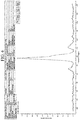
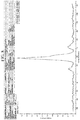
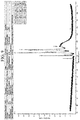
- the flame retardant particle may include a peak having a chemical shift of -91 ppm to -95 ppm, or -92 ppm to -93 ppm, in a 29 Si NMR spectrum.
- This particular chemical shift peak may be realized by the inorganic particle or a cross-linked (co)polymer of the aforementioned at least two inorganic particles included in the dry gel.
- the peak is a point where an instant variation ratio of intensity relative to the chemical shift becomes 0 in the 29 Si NMR spectrum of FIG. 6 having the chemical shift as a horizontal axis and intensity as a vertical axis, and specifically a point where the instant variation ratio of intensity relative to the chemical shift turns from a positive value into a negative value as the chemical shift increases toward the positive value.
- the flame retardant particle has a maximum diameter ranging from 0.01 ⁇ m to 1000 ⁇ m. In this way, as the flame retardant particle has a minute diameter, a volume decreases and a contact surface area increases, and accordingly a retardancy effect may be improved by including a relatively large amount of the flame retardant particle during the post-described manufacture of a flame retardant Styrofoam.
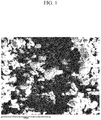
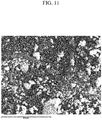
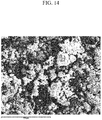
- a shape of the flame retardant particle is not particularly limited but may include a spherical shape, an oval shape, a polyhedral shape, and the like as shown in FIG. 1 , and a cross-section of the flame retardant particle may include a circle, an oval, and 3 to 50 polygons.
- the inorganic particle may include cenospheres, fly ash, ceramic microspheres, cleaned ash, unburned carbon, or a mixture of at least two thereof among coal ashes.
- the dry gel included in the flame retardant particle of the embodiment may further include 1 part by weight to 50 parts by weight of titanium oxide relative to 100 parts by weight of the inorganic particle.
- Specific examples of the titanium oxide may include titanium dioxide (TiO 2 ), and the titanium oxide works as a optical catalyst and has a bond with a silica (SiO 2 ) component included in an inorganic particle and the like, and thus may increase durability of the particle surface.
- the dry gel included in the flame retardant particle according to the embodiment may further include a siloxane-based polymer.
- a siloxane-based polymer may not only include a ceramic-based material and thus realize excellent flame retardancy, but may also include a siloxane-based polymer and thus improve resistance to moisture, and in addition, that flame retardancy and moisture resistance effects may be maximized as a contact area increases through pulverization into particles.
- the siloxane-based polymer is a polymer including a siloxane bond in a main chain, and may be hydrophobic and thus improve moisture resistance.
- the siloxane-based polymer may have a weight average molecular weight of 4000 g/mol to 10,000 g/mol or 5000 g/mol to 8000 g/mol.
- the weight average molecular weight denotes a polystyrene-reduced weight average molecular weight measured in a GPC method.
- a detector such as a generally-known analyzer, a refractive index detector, and the like and a column for analysis may be used, and in addition, a generally-applied temperature condition, solvent, and flow rate may be applied thereto.
- Specific examples of the measurement condition may be 30 °C, a chloroform solvent, and a flow rate of 1 mL/min.
- the siloxane-based polymer may include polydimethylsiloxane.
- the polydimethylsiloxane may include a polysiloxane polymer as a main chain and two methyl groups bound to a silicon atom as a branched chain. More specifically, the polydimethylsiloxane may be represented by Chemical Formula 1.
- n is an integer of 1 or greater.
- the siloxane-based polymer may have viscosity of 0.65 cps to 10,000 cps, 10 cps to 1000 cps, or 50 cps to 200 cps, which is measured at 20 °C.
- the siloxane-based polymer may be present as a mixture with the inorganic particle. Accordingly, the flame retardant particle may be hydrophobic by the siloxane-based polymer and thus realize excellent moisture resistance.
- the flame retardant particle may further include at least one additive selected from an inorganic filler, a flame retardant auxiliary agent, a hydrophobization agent, a curing agent, a dispersing agent, and a cross-linking agent.
- the additives are not particularly limited, and for example, the inorganic filler may include aluminum sulfate and the like.
- the aluminum sulfate may promote gelation of the inorganic binder and increase an amount of an aluminum component.
- the aluminum sulfate may be added in an aqueous solution state, and may be included in an amount of 1 part by weight to 20 parts by weight based on 100 parts by weight of the inorganic particle.
- the flame retardant auxiliary agent may include graphite, expanded graphite, carbon black, activated carbon, zeolite expanded vermiculite, diatomite, silica aerogel, perlite, copper, aluminum powder, and the like, and is preferably carbon black in terms of an increase of the amount of carbon atoms and a flexibility increase of the inorganic particle.
- the carbon black may be included in an amount of 1 part by weight to 50 parts by weight based on 100 parts by weight of the inorganic particle.
- the hydrophobization agent may include calcium phosphate, potassium phosphate, or the like, and may be used in an amount of 1 part by weight to 20 parts by weight based on 100 parts by weight of the inorganic particle.
- the curing agent may include quicklime, calcium hydroxide, calcium carbonate, and the like, and the dispersing agent may include a titanium-based dispersing agent including a titanium element.
- a method of manufacturing a flame retardant particle includes: heat-treating a flame retardant composition including at least one inorganic particle selected from cenospheres, fly ash, ceramic microspheres, cleaned ash, and unburned carbon, and an inorganic binder having viscosity at 20 °C of less than 100,000 cP, at a temperature of 60 °C to 200 °C; and pulverizing the resulting material after the heat-treating.
- the method of manufacturing a flame retardant particle may include heat-treating a flame retardant composition including at least one inorganic particle selected from cenospheres, fly ash, ceramic microspheres, cleaned ash, and unburned carbon, and an inorganic binder having viscosity at 20 °C of less than 100,000 cP, at a temperature of 60 °C to 200 °C.
- the flame retardant composition may include an inorganic binder having viscosity of less than 100,000 cP, greater than or equal to 100 cP and less than 100,000 cP, or greater than or equal to 5000 cP and less than 100,000 cP at 20 °C.
- the inorganic binder has flame retardancy and may secure ease of mixing with the inorganic particle through the viscosity.
- the viscosity denotes a tackiness degree of a liquid
- the inorganic binder included in the flame retardant composition satisfies viscosity of less than 100,000 cP and thus may be easily mixed with the inorganic particle.
- the inorganic binder When the inorganic binder has extremely increased viscosity of greater than or equal to 100,000 cP, it is difficult to mix the inorganic binder with the inorganic particle and thus may have a negative influence on preparing a flame retardant composition.
- the inorganic binder may include liquid sodium silicates.
- the liquid sodium silicate is also called waterglass, and when subjected to fire, the liquid sodium silicate may swell and exhibit flame retardancy.
- the liquid sodium silicate may have a mole ratio of greater than or equal to 2.25 or in a range of 2.25 to 4.50 or 2.25 to 2.6 according to Equation 1.
- Mole Ratio SiO 2 wt % / Na 2 O wt % * 1.032
- the liquid sodium silicate may, for example, include silicon dioxide (SiO 2 ) in an amount of 30 wt% to 40 wt% and sodium oxide (Na 2 O) in an amount of 10 wt% to 20 wt%, and their mole ratio according to Equation 1 may satisfy greater than or equal to 2.25.
- the liquid sodium silicate may be classified into KS standards 1 to 4, and the KS standards 2 to 4 excluding the KS standard 1 satisfies a mole ratio of greater than or equal to 2.25.
- the inorganic binder may be difficult to mix with the inorganic particle as viscosity of the inorganic binder increases, and thus may have a negative influence on preparation of a flame retardant composition.
- the flame retardant composition may include the inorganic particle.
- the inorganic particle may impart moisture resistance to the inorganic binder through a binding force with the inorganic binder in a state of being mixed with the inorganic binder in the flame retardant composition.
- the inorganic particle may include an oxide of at least one metal selected from sodium, silicon, aluminum, iron, calcium, and magnesium. That is, the inorganic particle may include sodium oxide, silicon oxide, aluminum oxide, iron oxide, calcium oxide, magnesium oxide, or a mixture of two or more thereof.
- the inorganic particle may be cenospheres, fly ash, ceramic microspheres, cleaned ash, unburned carbon, or a mixture of two or more thereof.
- the cenospheres may have a core-shell structure including a core including nitrogen gas or carbon dioxide gas and a shell including silica or alumina. Accordingly, since the external surface of the cenosphere particle is exposed with the ceramic material such as silica or alumina, the cenosphere particle has excellent miscibility with the inorganic binder and a strong binding force therewith.
- the cenospheres have a spherical shape produced during combustion of coal, and may have a diameter of 100 mesh to 1000 mesh, or 500 mesh to 1000 mesh.
- the cenosphere particle has an average diameter of 100 mesh to 400 mesh, and may be pulverized to have a diameter of 500 mesh to 1000 mesh. When the cenosphere particle has a smaller diameter of 500 mesh to 1000 mesh, an amount of the cenosphere particle is increased in the flame retardant composition and thus may secure excellent flame retardancy.
- the cenosphere is a porous inorganic material including silicon dioxide (SiO 2 ) at 40 wt% to 70 wt%, aluminum oxide (Al 2 O 3 ) at 10 wt% to 50 wt%, iron oxide (Fe 2 O 3 ) at 0.1 wt% to 10 wt%, calcium oxide (CaO) at 0.1 wt% to 10 wt%, and magnesium oxide (MgO) at 0.1 wt% to 10 wt%, and may have specific gravity of 0.5 to 1.0 by forming a hollow core internally including nitrogen gas and the like.
- the cenosphere may be inexpensively purchased by recycling industrial waste, the flame retardant composition is environmentally-friendly and inexpensive and thus is economical compared with a conventional non-halogen-based flame retardant.
- the flame retardant composition may further include 1 part by weight to 50 parts by weight of titanium oxide relative to 100 parts by weight of the inorganic particle.
- the flame retardant composition may further include a siloxane-based polymer.
- titanium oxide and the siloxane-based polymer included in the flame retardant composition are the same as aforementioned in the embodiment.
- the flame retardant composition may include 0.1 part by weight to 10 parts by weight of the siloxane-based polymer based on 100 parts by weight of the inorganic binder.
- the siloxane-based polymer is included in an amount of 0.1 part by weight based on 100 parts by weight of the inorganic binder, and if an amount of the siloxane-based polymer is excessively decreased, a moisture-resistance-improving effect of the siloxane-based polymer may be difficult to realize.
- the siloxane-based polymer when included in an amount of greater than 10 parts by weight based on 100 parts by weight of the inorganic binder, compatibility of the inorganic binder with the siloxane-based polymer is decreased, and thus the inorganic binder may be difficult to mix with the siloxane-based polymer.
- the flame retardant composition may include the inorganic particle in an amount of 10 parts by weight to 100 parts by weight, 10 parts by weight to 50 parts by weight, or 12 parts by weight to 30 parts by weight based on 100 parts by weight of the inorganic binder.
- the inorganic particle is included in an amount of 10 parts by weight based on 100 parts by weight of the inorganic binder, as an amount of the inorganic binder is excessively increased, the mixture may be difficult to dry.
- the inorganic particle when the inorganic particle is included in an amount of greater than 100 parts by weight based on 100 parts by weight of the inorganic binder, the inorganic binder may be difficult to mix with the inorganic particle.
- the flame retardant composition may further include at least one additive selected from an inorganic filler, a flame retardant auxiliary agent, a hydrophobization agent, a curing agent, a dispersing agent, and a cross-linking agent.
- the additives are not particularly limited, but, for example, the inorganic filler may be aluminum sulfate or the like.
- the aluminum sulfate may promote gelation of the inorganic binder and increase an amount of an aluminum component.
- the aluminum sulfate may be added in an aqueous solution state, and may be included in an amount of 1 part by weight to 20 parts by weight based on 100 parts by weight of the inorganic particle.
- the flame retardant auxiliary agent may include graphite, expanded graphite, carbon black, activated carbon, zeolite expanded vermiculite, diatomite, silica aerogel, perlite, copper, aluminum powder, and the like, and preferably carbon black in terms of an increase of the amount of carbon and a flexibility increase of the inorganic particle.
- the carbon black may be included in an amount of 1 part by weight to 50 parts by weight based on 100 parts by weight of the inorganic particle.
- the hydrophobization agent may be calcium phosphate, potassium phosphate, or the like, and may be included in an amount of 1 part by weight to 20 parts by weight based on 100 parts by weight of the inorganic particle.
- the flame retardant composition may be dried to remove a solvent such as water and the like included in the inorganic binder, and simultaneously, to lead a gelation reaction among internal components.
- the heat treatment of the flame retardant composition may be performed at 60 °C to 200 °C.
- the heat treatment is performed at less than 60 °C, the drying effect may be insufficient, and thus drying time may be extremely increased.
- the heat treatment is performed at greater than 200 °C, the surface alone may be extremely dried, and thus properties of a final product may be deteriorated.
- Specific examples of the heat-treatment are not particularly limited, but for example, may include use of infrared ray radiation, hot air, steam, microwave radiation, or ultraviolet ray radiation.
- the heat-treatment may be performed for 0.1 hours to 10 hours.
- the heat treatment of the flame retardant composition may be performed while the flame retardant composition is stirred at a speed of 100 rpm to 200 rpm. Accordingly, the flame retardant particle according to an embodiment may be easily formed.
- the method of manufacturing a flame retardant particle may include pulverizing the resulting material after heat-treating.
- the resulting material after the heat treatment has a minute diameter and thus a reduced volume as well as an increased contact surface area, and a relatively large amount of the flame retardant particle is included during manufacture of a flame retardant Styrofoam which will be described later, and an improved retardant effect may be realized.
- the flame retardant particle may be pulverized to have a diameter ranging from 0.01 ⁇ m to 1000 ⁇ m.
- the pulverization may use any method selected without a particular constitutional limit as long as it is used for general pulverization.
- the pulverization may be performed by using any pulverization device selected from a pin mill, a hammer mill, a screw mill, a roll mill, a ball mill, and the like.
- heat treatment of at least one inorganic particle selected from cenospheres, fly ash, ceramic microspheres, cleaned ash, and unburned carbon at 500 °C to 1000 °C may be further included.
- the inorganic particle may be softened while color-changed through the heat treatment.
- the inorganic particle may be heat-treated at 500 °C to 1000 °C for 1 minute to 20 minutes or 5 minutes to 15 minutes.
- a flame retardant Styrofoam including: a polystyrene foamed particle; and a flame retardant layer formed on the polystyrene foamed particle and including a flame retardant particle according to the embodiment.
- the flame retardant Styrofoam may be easily processed with a knife line or a heat line without a twist and have moisture resistance and flame retardancy and thus generate a small amount of gas, and when set on fire, the fire may not spread but may be extinguished.
- the flame retardant Styrofoam has flame retardancy that is higher than an original heat resistance temperature of a foam resin and thus may be used as a filler for molding a thermoplastic resin or a molding aid, and in addition, may be precisely mixed into a cement product to effectively apply lightness and insulation thereto, and may be used as a heat insulating material for building.
- the flame retardant Styrofoam may include polystyrene foamed particles.
- the polystyrene foamed particle is a spherically-shaped particle formed by foaming a polystyrene resin and internally impregnating a forming agent, and has a particle diameter ranging from 2 mm to 100 mm, 3 mm to 50 mm, or 3 mm to 10 mm.
- a flame retardant layer including a flame retardant particle according to the embodiment may be formed on the polystyrene foamed particle.
- the description of the flame retardant particle may be the same as illustrated in the embodiment.
- the flame retardant layer includes the flame retardant particle dispersed on the surface of the polystyrene foamed particle, and may have a thickness ranging from 0.01 ⁇ m to 100 mm.
- the flame retardant Styrofoam may be included in an amount of 10 parts by weight to 500 parts by weight based on 100 parts by weight of the polystyrene foamed particles.
- an amount of the flame retardant particles is excessively reduced to 10 parts by weight based on 100 parts by weight of the polystyrene foam, a flame-retardancy-improving effect of the flame retardant Styrofoam may be sufficiently realized due to the reduction of the number of flame retardant particles.
- the flame retardant Styrofoam may further include an adhesive layer between the polystyrene foamed particles and the flame retardant layer.
- the adhesive layer may include at least one resin selected from a thermosetting resin and a thermoplastic resin, and examples of the thermosetting resin are not particularly limited, but may include, for example, a phenolic resin, a urethane resin, an epoxy resin, and the like, and examples of the thermoplastic resin are also not particularly limited, but may include, for example, an acrylic resin, a vinyl-based resin, a melamine resin, and the like.
- Specific examples of the vinyl-based resin may include a polyvinyl acetate resin, a polyvinyl alcohol resin, a polyethylene vinyl acetate copolymer resin, and the like.
- the flame retardant Styrofoam may further include at least one other flame retardant layer on the flame retardant layer.
- the flame retardant layer is formed on the polystyrene foamed particles, and may further include an adhesive layer formed among a plurality of flame retardant layers.
- the adhesive layer may directly bind the plurality of flame retardant layers as a medium between the flame retardant layers.
- the flame retardant Styrofoam may include: a polystyrene foamed particle; a first adhesive layer on the polystyrene foamed particle; a first flame retardant layer on the first adhesive layer and including the flame retardant particle according to the embodiment; a second adhesive layer on the first flame retardant layer; and a second flame retardant layer on the first adhesive layer and including the flame retardant particle according to the embodiment.
- first flame retardant layer and the second flame retardant layer may be the same as or different from each other, and the first adhesive layer and the second adhesive layer also may be the same as or different from each other.
- the flame retardant Styrofoam may further include a surface layer formed on the outermost surface of the flame retardant Styrofoam and including a siloxane-based polymer.
- the flame retardant Styrofoam includes the surface layer and thus may realize excellent moisture resistance.
- the surface layer may include a siloxane-based polymer, and the siloxane-based polymer may include 0.1 part by weight to 20 parts by weight of the flame retardant particle based on 100 parts by weight of the polystyrene foamed particle.
- the siloxane-based polymer has the same specifications as illustrated in the embodiment.
- the surface layer may be formed on the outermost surface of the flame retardant Styrofoam.
- the outermost surface is positioned most outside from the center of the flame retardant Styrofoam, and may determine surface characteristics of the flame retardant Styrofoam.
- the surface layer may be formed on the flame retardant layer included in the flame retardant Styrofoam.
- the flame retardant Styrofoam may include: a polystyrene foamed particle; a flame retardant layer formed on the polystyrene foamed particle and including a flame retardant particle according to the embodiment; and a surface layer formed on the flame retardant layer and including a siloxane-based polymer.
- the surface layer may be formed on the outermost surface of a flame retardant layer present most outside.
- the flame retardant Styrofoam may include: a polystyrene foamed particle; a first adhesive layer formed on the polystyrene foamed particle; a first flame retardant layer formed on the first adhesive layer and including a flame retardant particle according to the embodiment; a second adhesive layer formed on the first flame retardant layer; a second flame retardant layer formed on the first adhesive layer and including a flame retardant particle according to the embodiment; and a surface layer formed on the second flame retardant layer and including a siloxane-based polymer.
- a method of forming the flame retardant layer on the polystyrene foamed particle is not particularly limited, but may include, for example, a method of mixing the polystyrene foamed particle and the flame retardant particle, a method of mixing an unfoamed polystyrene resin and the flame retardant particle and foaming the polystyrene resin, and the like.
- a method of manufacturing a flame retardant Styrofoam including heat-treatment of a mixture of the polystyrene foamed particle and the flame retardant particle.
- the flame retardant particle has the same specifications as illustrated in the embodiment.
- the polystyrene foamed particle is a spherically-shaped particle formed by foaming a polystyrene resin while internally impregnating a forming agent, and has a particle diameter of 2 mm to 100 mm, 3 mm to 50 mm, or 3 mm to 10 mm.
- the flame retardant Styrofoam-manufacturing method may further include foaming a foamable polystyrene resin before heat-treating the mixture of the polystyrene foamed particle and the flame retardant particle.
- the foamable polystyrene resin has the same specifications as illustrated in the flame retardant Styrofoam manufacturing method according to the previous embodiment.
- the foaming of the foamable polystyrene resin may include heat treatment of the foamable polystyrene resin at 50°C to 200 °C or 100°C to 110 °C. Specifically, the heat treatment of the foamable polystyrene resin may be performed for 20 seconds to 200 seconds. In the foaming, the foamable polystyrene resin may be foamed to have an expanded volume compared with that of the foamable polystyrene resin.
- the foaming of the foamable polystyrene resin may be performed under a pressure of 0.05 kg/cm 2 to 1 kg/cm 2 , 0.1 kg/cm 2 to 0.5 kg/cm 2 , or 0.1 kg/cm 2 to 0.4 kg/cm 2 .
- the foaming of the foamable polystyrene resin may be performed under a dry or wet condition, and preferably under the wet condition.
- the wet condition may include contacting a vapor, and specifically a vapor at 50 °C to 200 °C under a pressure of 0.05 kg/cm 2 to 1 kg/cm 2 , with the foamable polystyrene resin.
- the vapor are not particularly limited, but various materials that are widely used in a wet process may be used without a particular limit.
- drying for 1 hour to 2 hours may be further included.
- the mixture of the polystyrene foamed particle and the flame retardant particle may include 0.1 part by weight to 5 parts by weight or 0.3 parts by weight to 3 parts by weight of the flame retardant particle based on 1 part by weight of the polystyrene foamed particle.
- a flame retardancy-improving effect may be sufficiently realized due to the reduction of the flame retardant particle.
- the amount of the flame retardant particle is excessively increased to 5 parts by weight based on 1 part by weight of the polystyrene foamed particle, the polystyrene foamed particle is difficult to mix with the flame retardant particle, formability may be decreased in a process of mixing, foaming, compression-molding, and the like, and durability may be decreased, that is, a molded product may be broken and the like.
- Examples of mixing the polystyrene foamed particle and the flame retardant particle are not particularly limited, but may include various mixing methods that are widely used in an art related to mixing of a resin composition.
- the heat-treatment of the mixture may be performed at 80°C to 250 °C or 100 °C to 120 °C.
- the heat-treatment may be performed under a pressure of 1 kg/cm 2 to 50 kg/cm 2 , 5 kg/cm 2 to 20 kg/cm 2 , or 6 kg/cm 2 to 7 kg/cm 2 .
- the heat treatment may be performed for 20 seconds to 200 seconds.
- the foamed mixture may be compression-molded, and specifically, the mixture of the polystyrene foamed particle and the flame retardant particle is additionally foamed along with compression to manufacture a Styrofoam having a predetermined shape.
- a method of the compression molding is not particularly limited, but may include, for example, putting the foamed mixture in a molder having a predetermined shape and compressing it while heat-treating it.
- the heat-treatment of the mixture may also be performed at 80°C to 250 °C or 100°C to 120 °C under a dry or wet condition, but preferably, under the wet condition.
- the wet condition may include contacting a vapor, and specifically a vapor at 80°C to 250 °C under a pressure of 1 kg/cm 2 to 50 kg/cm 2 , with the mixture.
- the vapor are not particularly limited, but various materials that are widely used in a wet process may be used without a particular limit.
- drying for 40 hours to 80 hours may be further included.
- a method of manufacturing a flame retardant Styrofoam which includes foaming by heat-treating a mixture of a foamable polystyrene resin and a flame retardant particle according to the embodiment.
- the aforementioned flame retardant Styrofoam manufacturing method may allow reduction of a size of a mixing device and minimize an amount of the flame retardant particles, and may use conventional manufacture equipment by mixing a minute-sized polystyrene resin with the flame retardant particle before foaming the polystyrene resin, which is confirmed through an experiment to complete the present invention.
- the flame retardant particle strongly bonded on the surface of the polystyrene foam maintains durability even after foaming and compression-molding, and accordingly, moisture resistance and flame retardancy of a finally manufactured flame retardant Styrofoam may be improved.
- the flame retardant particle may have the same specifications as illustrated in the embodiment.
- the foamable polystyrene resin is a polystyrene resin before foaming, and includes a polystyrene resin and a forming agent impregnated therein and is foamed in the following foaming step.
- the foamable polystyrene resin may include 2 to 10 parts by weight of the forming agent based on 100 parts by weight of the polystyrene resin, and examples of the forming agent are not particularly limited, but may include, for example, propane, butane, hexane, pentane, heptane, cyclobutane, cyclohexane, methyl chloride, ethyl chloride, methylene chloride, dimethyl ether, diethyl ether, methylethyl ether, nitrogen, carbon dioxide, argon, or a mixture of two or more thereof.
- the foamable polystyrene resin may further include a flame retardant and the like as an additive.
- the foamable polystyrene resin may have a spherical polystyrene particle shape having a particle diameter of 0.5 mm to 1.5 mm.
- the spherical polystyrene particle having a particle diameter of 0.5 mm to 1.5 mm has a small particle diameter and thus may minimize a mixing amount of the flame retardant particle for bonding on the surface of the polystyrene particle and reduce a size of a mixing device.
- the foamable spherical polystyrene particle manufacturing method is not particularly limited, but may, for example, include a suspension polymerization method, a compounding method, or the like.
- the suspension polymerization method may include: a suspension polymerization method of a styrene monomer in an aqueous reaction medium or a suspension polymerization method including suspension polymerization of a styrene monomer with at least one comonomer; and adding a forming agent thereto before the suspension polymerization, during the suspension polymerization, or after the suspension polymerization.
- Examples of the compounding method may include: producing a styrene-based polymer particle by extruding and cutting a styrene-based polymer after compounding the styrene-based polymer; and adding a forming agent to the styrene-based polymer particle.
- the foamable polystyrene resin may have density ranging from 14 g/l to 20 g/l.
- a mixture of the foamable polystyrene resin and the flame retardant particle may include 0.0005 parts by weight to 0.5 parts by weight of the flame retardant particle based on 1 part by weight of the foamable polystyrene resin.
- a flame retardancy-improving effect may not be sufficiently realized due to the reduction of the amount of flame retardant particles.
- the foamable polystyrene resin when the amount of the foamable polystyrene resin is excessively increased to greater than 0.5 parts by weight based on 1 part by weight of the flame retardant particles, the foamable polystyrene resin may be difficult to mix with the flame retardant particles, formability in a process of mixing, foaming, compression-molding, and the like may decrease, and durability may be deteriorated, for example, a molded product may be broken and the like.
- foamable polystyrene resin and the flame retardant particle are not particularly limited, but may include various mixing methods that are widely used in an art related to mixing of a resin composition.
- the heat-treatment may be performed at 50°C to 200 °C or 100°C to 110 °C. Specifically, the heat treatment may be performed for 20 seconds to 200 seconds.
- the foamable polystyrene resin included in the mixture is foamed, and may produce a polystyrene foam having an expanded volume compared with that of the foamable polystyrene resin.
- the flame retardant particle may be bonded on the surface of the foamable polystyrene resin, and after the foaming, the bond may be maintained on the surface of the produced polystyrene foam.
- the foaming may be performed under a pressure of 0.05 kg/cm 2 to 1 kg/cm 2 , 0.1 kg/cm 2 to 0.5 kg/cm 2 , or 0.1 kg/cm 2 to 0.4 kg/cm 2 .
- the foaming through heat treatment of the mixture at 50°C to 200 °C or 100°C to 110 °C may be performed under a dry or wet condition, and preferably under the wet condition.
- the wet condition may include contacting a vapor, and specifically a vapor at 50°C to 200 °C under a pressure of 0.05 kg/cm 2 to 1 kg/cm 2 , with the mixture.
- the vapor are not particularly limited, but various materials that are widely used in a wet process may be used without a particular limit.
- the foam-treated mixture may be further dried for 1 hour to 2 hours.
- the foamed mixture may be further heat-treated at 80°C to 250 °C or 100°C to 120 °C. Specifically, the heat treatment may be performed for 20 seconds to 200 seconds. The additional heat-treatment may be performed under a pressure of 1 kg/cm 2 to 50 kg/cm 2 , 5 kg/cm 2 to 20 kg/cm 2 , or 6 kg/cm 2 to 7 kg/cm 2 .
- the foamed mixture may be compression-molded, and specifically, molded along with compression to have a predetermined shape as the mixture of the polystyrene foamed particle and the flame retardant particle is additionally foamed.
- the compression molding are not particularly limited, but may, for example, include a method of compressing the foamed mixture while heat-treating it after putting it in a molder having a predetermined shape.
- the heat treatment of the mixture may be performed at 80°C to 250 °C or 100 °C to 120 °C under a dry or wet condition, but preferably, under the wet condition.
- the wet condition may include contacting a vapor, and specifically a vapor at 80°C to 250 °C under a pressure of 1 kg/cm 2 to 50 kg/cm 2 , with the mixture.
- the vapor are not particularly limited, but various materials that are widely used in a wet process may be used without a particular limit.
- drying for 40 hours to 80 hours after the compression-molding under the wet condition may be further included.
- a flame retardant particle having excellent flame retardancy or moisture resistance and a manufacturing method therefor, and a flame retardant Styrofoam using the same, are provided.
- cenospheres silicon dioxide (SiO 2 ): about 60 wt%, aluminum oxide (Al 2 O 3 ): about 30 wt%, iron oxide (Fe 2 O 3 ): about 4 wt%, calcium oxide (CaO): about 4 wt%, and magnesium oxide particles (200 mesh) (MgO): about 2 wt%)
- 400 g of waterglass KS standard 2: Na 2 SiO 2 • nH 2 O
- 20 g of polydimethylsiloxane having viscosity of 100 cps at 20 °C (Element 14 PDMS 100 made by Momentive Chemicals Co.; weight average molecular weight: 6000 g/mol) were mixed, and the mixture was put in an approximately 100 °C hot-air agitator and then hot-air dried and gelated for about 1.5 hour, while being stirred at a speed of about 150 rpm.
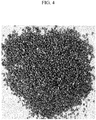
- the gelated mixture was pulverized with a grinder to obtain the flame retardant particle.
- cenospheres silicon dioxide (SiO 2 ): about 60 wt%, aluminum oxide (Al 2 O 3 ): about 30 wt%, iron oxide (Fe 2 O 3 ): about 4 wt%, calcium oxide (CaO): about 4 wt%, and magnesium oxide particles (200 mesh) (MgO): about 2 wt%), and 400 g of waterglass (KS standard 2: Na 2 SiO 2 • nH 2 O) were mixed, and the mixture was put in an approximately 100 °C hot-air agitator and then hot-air dried and gelated while being stirred at a speed of about 150 rpm. The gelated mixture was pulverized with a grinder to prepare the flame retardant particle.
- cenospheres silicon dioxide (SiO 2 ): about 60 wt%, aluminum oxide (Al 2 O 3 ): about 30 wt%, iron oxide (Fe 2 O 3 ): about 4 wt%, calcium oxide (CaO): about 4 wt%, and magnesium oxide particles (200 mesh) (MgO): about 2 wt%)
- 400 g of waterglass KS standard 2: Na 2 SiO 2 • nH 2 O
- 4 g of titanium dioxide 8 g of an aluminum sulfate aqueous solution (aluminum sulfate: 3 g), 6 g of a calcium phosphate aqueous solution (calcium phosphate: 2 g), 2 g of carbon black, and 20 g of polydimethylsiloxane having viscosity of 100 cps at 20 °C (Element 14 PDMS 100, Momentive Chemicals Co.; a weight average molecular weight: 6000 g/mol
- cenospheres silicon dioxide (SiO 2 ): about 60 wt%, aluminum oxide (Al 2 O 3 ): about 30 wt%, iron oxide (Fe 2 O 3 ): about 4 wt%, calcium oxide (CaO): about 4 wt%, and magnesium oxide particles (200 mesh) (MgO): about 2 wt%)
- 400 g of waterglass KS standard 2: Na 2 SiO 2 • nH 2 O
- 4 g of titanium dioxide, 8 g of an aluminum sulfate aqueous solution (3 g of aluminum sulfate), 6 g of a calcium phosphate aqueous solution (2 g of calcium phosphate), and 2 g of carbon black were mixed, and the mixture was put in an approximately 100 °C hot-air agitator and then hot-air dried and gelated while being stirred at a speed of about 150 rpm.
- the gelated mixture was pulverized with a grinder to prepare the flame retardant particle.
- the flame retardant particle was prepared according to the same method as Example 3, except for using a ceramic microsphere particle instead of the cenosphere particle.
- the flame retardant particle was prepared according to the same method as Example 3, except for using an unburned carbon particle instead of the cenosphere particle.
- the flame retardant particle was prepared according to the same method as Example 3, except for using a cleaned ash particle instead of the cenosphere particle.
- the flame retardant particle was prepared according to the same method as Example 3, except for using a fly ash particle instead of the cenosphere particle.
- the flame retardant particle was prepared according to the same method as Example 3, except for using cenosphere (silicon dioxide (SiO 2 ): about 60 wt%, aluminum oxide (Al 2 O 3 ): about 30 wt%, iron oxide (Fe 2 O 3 ): about 4 wt%, calcium oxide (CaO): about 4 wt%, and magnesium oxide particles (200 mesh) (MgO): about 2 wt%), and heat-treated at 800 °C for 10 minutes.
- cenosphere silicon dioxide (SiO 2 ): about 60 wt%, aluminum oxide (Al 2 O 3 ): about 30 wt%, iron oxide (Fe 2 O 3 ): about 4 wt%, calcium oxide (CaO): about 4 wt%, and magnesium oxide particles (200 mesh) (MgO): about 2 wt%), and heat-treated at 800 °C for 10 minutes.
- the dried mixture was put in a steam agitator and then primarily foamed through heat-treatment for 80 seconds with vapor at 105 °C under a pressure of 0.2 kg/cm 2 and dried in the air for one hour.
- the primarily-foamed and dried Styrofoam was put in a steam-molder and then secondarily compression-foamed through heat treatment with vapor at 120 °C under a pressure of 6.5 kg/cm 2 for 80 seconds, and then dried for about 2 days to manufacture a flame retardant Styrofoam.
- the dried mixture was put in a steam agitator and primarily foamed through heat treatment with vapor at 105 °C temperature under a pressure of 0.2 kg/cm 2 for 80 seconds and dried in the air for 1 hour.
- the primarily-foamed and dried Styrofoam was put in a steam molder and then secondarily compression-foamed with vapor at 120 °C under a pressure of 6.5 kg/cm 2 for 80 seconds, and then dried for about 2 days to manufacture a flame retardant Styrofoam.
- the dried mixture was put in a steam agitator and then primarily foamed through heat treatment with vapor at 105 °C under a pressure of 0.2 kg/cm 2 for 80 seconds and dried in the air for 1 hour.
- the primarily foamed and dried Styrofoam was put in a steam molder and then secondarily compression-foamed through heat treatment with vapor at 120 °C under a pressure of 6.5 kg/cm 2 for 80 seconds, and dried for about 2 days to manufacture a flame retardant Styrofoam.
- the dried mixture was put in a steam agitator and then primarily foamed through heat treatment with vapor at 105 °C under a pressure of 0.2 kg/cm 2 for 80 seconds, and dried in the air for 1 hour.
- the primarily foamed and dried Styrofoam was put in a steam molder and then secondarily compression-foamed through heat treatment with vapor at 120 °C under a pressure of 6.5 kg/cm 2 for 80 seconds, and dried for about 2 days to manufacture a flame retardant Styrofoam.
- the dried mixture was put in a steam agitator and then primarily foamed through heat treatment with vapor at 105 °C under a pressure of 0.2 kg/cm 2 for 80 seconds, and dried in the air for 1 hour.
- the primarily foamed and dried Styrofoam was put in a steam molder and then secondarily compression-foamed through heat treatment with vapor at 120 °C under a pressure of 6.5 kg/cm 2 for 80 seconds, and dried for about 2 days.
- the dried mixture was put in a steam agitator and then primarily foamed through heat treatment with vapor at 105 °C under a pressure of 0.2 kg/cm 2 for 80 seconds, and dried in the air for 1 hour.
- the primarily foamed and dried Styrofoam was put in a steam molder and then secondarily compression-foamed through heat treatment with vapor at 120 °C under a pressure of 6.5 kg/cm 2 for 80 seconds, and dried for about 2 days to form a flame retardant Styrofoam.
- the dried mixture was put in a steam agitator and then primarily foamed through heat treatment with vapor at 105 °C under a pressure of 0.2 kg/cm 2 for 80 seconds, and dried in the air for 1 hour.
- the primarily foamed and dried Styrofoam was put in a steam molder and then secondarily compression-foamed through heat treatment with vapor at 120 °C under a pressure of 6.5 kg/cm 2 for 80 seconds, and dried for about 2 days to manufacture a flame retardant Styrofoam.
- the dried mixture was put in a steam agitator and then primarily foamed through heat treatment with vapor at 105 °C under a pressure of 0.2 kg/cm 2 for 80 seconds, and dried in the air for 1 hour.
- the primarily foamed and dried Styrofoam was put in a steam molder and then secondarily compression-foamed through heat treatment with vapor at 120 °C under a pressure of 6.5 kg/cm 2 for 80 seconds, and dried for about 2 days to manufacture a flame retardant Styrofoam.
- the dried mixture was put in a steam agitator and then primarily foamed through heat treatment with vapor at 105 °C under a pressure of 0.2 kg/cm 2 for 80 seconds, and dried in the air for 1 hour.
- the primarily foamed and dried Styrofoam was put in a steam molder and then secondarily compression-foamed through heat treatment with vapor at 120 °C under a pressure of 6.5 kg/cm 2 for 80 seconds, and dried for about 2 days to manufacture a flame retardant Styrofoam.
- the dried mixture was put in a steam agitator and then primarily foamed through heat treatment with vapor at 105 °C under a pressure of 0.2 kg/cm 2 for 80 seconds, and dried in the air for 1 hour.
- the primarily foamed and dried Styrofoam was put in a steam molder and then secondarily compression-foamed through heat treatment with vapor at 120 °C under a pressure of 6.5 kg/cm 2 for 80 seconds, and dried for about 2 days to manufacture a flame retardant Styrofoam.
- the dried mixture was put in a steam agitator and then primarily foamed through heat treatment with vapor at 105 °C under a pressure of 0.2 kg/cm 2 for 80 seconds, and dried in the air for 1 hour.
- the primarily foamed and dried Styrofoam was put in a steam molder and then secondarily compression-foamed through heat treatment with vapor at 120 °C under a pressure of 6.5 kg/cm 2 for 80 seconds, and dried for about 2 days to manufacture a flame retardant Styrofoam.
- the dried mixture was put in a steam agitator and then primarily foamed through heat treatment with vapor at 105 °C under a pressure of 0.2 kg/cm 2 for 80 seconds, and dried in the air for 1 hour.
- the primarily foamed and dried Styrofoam was put in a steam molder and then secondarily compression-foamed through heat treatment with vapor at 120 °C under a pressure of 6.5 kg/cm 2 for 80 seconds, and dried for about 2 days to manufacture a flame retardant Styrofoam.
- cenospheres silicon dioxide (SiO 2 ): about 60 wt%, aluminum oxide (Al 2 O 3 ): about 30 wt%, iron oxide (Fe 2 O 3 ): about 4 wt%, calcium oxide (CaO): about 4 wt%, 100 g of magnesium oxide particles (200 mesh) (MgO): about 2 wt%), 400 g of waterglass (KS standard 2: Na 2 SiO 2 • nH 2 O), 4 g of titanium dioxide, 8 g of an aluminum sulfate aqueous solution (3 g of aluminum sulfate), 6 g of a calcium phosphate aqueous solution (2 g of calcium phosphate), 2 g of carbon black, and 20 g of polydimethylsiloxane having viscosity of 100 cps at 20 °C (Element 14 PDMS 100, Momentive Chemicals Co.; a weight average molecular weight: 6000 g/mol) were mixed
- a flame retardant Styrofoam was manufactured according to the same method as Example 10, except for using the flame retardant composition instead of the flame retardant particle according to the example.
- a flame retardant composition was prepared according to the same method as Comparative Example 1.
- a flame retardant Styrofoam was manufactured according to the same method as Example 16, except for using the flame retardant composition instead of the flame retardant particle according to the example.
- FIG. 1 An FE-SEM image of the flame retardant particles according to Example 1 is shown in FIG. 1 , and its camera-taken image is shown in FIG. 2 .
- FIG. 3 a camera-taken image of the flame retardant Styrofoam before foaming according to Example 10 is shown in FIG. 3
- FIG. 4 a camera-taken image of the flame retardant Styrofoam after foaming according to Example 10 is shown in FIG. 4
- FIG. 5 a camera-taken image of a final flame retardant Styrofoam after compression-molding is shown in FIG. 5 .
- the flame retardant particle of Example 1 had a maximum diameter of about 50 ⁇ m and showed an irregular shape.
- the flame retardant particle of Example 1 turned out to be a black powder.
- Example 10 showed that the flame retardant particle of Example 1 was formed on the surface.
- FIG. 7 An FE-SEM image of the flame retardant particle of Example 2 is shown in FIG. 7 .
- the flame retardant particle of Example 2 had a maximum diameter of about 50 ⁇ m and showed an irregular shape.
- the flame retardant particles according to Examples 5 to 8 showed a maximum diameter of about 50 ⁇ m and showed an irregular shape.
- a 29 Si NMR spectrum of the flame retardant particle of Example 1 was measured by using Solid 400 MHz WB NMR Spectrometer (79.51 MHz, a solvent condition of D 2 0), and the results are shown in FIG. 6 .
- the flame retardant particle of Example 1 showed a chemical shift at -92.27 ppm.
- a 29 Si NMR spectrum of the flame retardant particle of Example 2 was measured by using Solid 400 MHz WB NMR Spectrometer (79.51 MHz, a solvent condition of D 2 O), and the results are shown in FIG. 8 .
- the flame retardant particle according to Example 2 showed a chemical shift at -92.27 ppm.
- waterglass showed a chemical shift at -80.41 ppm, -88.57 ppm, -90.57 ppm, -96.52 ppm, -97.41 ppm, and -106.53 ppm
- cenospheres showed a chemical shift at -90.16 ppm and -108.9 ppm, which are different peaks from those of the flame retardant particles.
- the flame retardant particles are not a simple mixture of the waterglass and the cenospheres, but form a gelated polymer through heat-treating the mixture.
- the flame retardant Styrofoam according to Examples 10 to 21 and Comparative Examples 1 and 2 were used to make specimens each having a size of a width of 10 cm * a length of 10 cm * a thickness of 5 cm, and the specimens were heated with a gas torch for 5 minutes to evaluate flame retardancy.
- the flame retardant Styrofoam according to Examples 10 to 21 and Comparative Examples 1 to 2 were used to make specimens each having a size of a width of 10 cm * a length of 10 cm * a thickness of 5 cm, and the specimens were dipped in water to evaluate moisture resistance.
- Styrofoam manufactured by mixing the flame retardant particle according to Example 1 or 21 with a polystyrene bead showed excellent flame retardancy and moisture resistance.
- Styrofoam formed by simply adding a retardant-material-including composition without using a flame retardant particle prepared through a gelation and pulverizing process as shown in the examples failed in sufficiently realizing flame retardancy and moisture resistance, since a retardant material was sufficiently adhered on Styrofoam.
Landscapes
- Chemical & Material Sciences (AREA)
- Organic Chemistry (AREA)
- Engineering & Computer Science (AREA)
- Materials Engineering (AREA)
- Health & Medical Sciences (AREA)
- Chemical Kinetics & Catalysis (AREA)
- Medicinal Chemistry (AREA)
- Polymers & Plastics (AREA)
- Inorganic Chemistry (AREA)
- Compositions Of Macromolecular Compounds (AREA)
- Manufacture Of Porous Articles, And Recovery And Treatment Of Waste Products (AREA)
Abstract
Description
- The present invention relates to a flame retardant particle, a manufacturing method therefor, and flame retardant Styrofoam using the same. More particularly, the present invention relates to a flame retardant particle having excellent flame retardancy or moisture resistance, a manufacturing method therefor, and a flame retardant Styrofoam using the same.
- Styrofoam (EPS, expandable polystyrene) has an excellent insulation effect as a porous material and is light and easily molded and thus is widely used as an insulating material. Particularly, a so-called sandwich panel including Styrofoam as a core material and a metal plate attached to both sides thereof is light, inexpensive, and quickly installed and has an excellent insulation effect, and accordingly, is widely used as a building material. In addition, an exterior insulating and finishing system (EIFS) of attaching a Styrofoam insulating material to an outer wall of a building for finishing, called drivit construction, is easily and simply applied and thus shortens a construction period and is inexpensive, and accordingly is widely used for multi-household homes or residential-commercial complexes.
- However, Styrofoam is very weak with respect to heat as it is a combustible material and thus has a problem of being deformed at 70 °C or higher, generating much toxic gas during a fire, and causes structural collapse. Particularly, vertically installed Styrofoam may play a role of kindling a fire and thus spreading a flame.
- Accordingly, research on a flame retardant added to a raw resin and showing flame retardancy is being actively undertaken. Currently, flame retardants are mostly halogen-based, but as for a non-halogen-based flame retardant, a phosphorus-based flame retardant and a nitrogen-based flame retardant are widely used. As for the halogen-based flame retardant, a bromide flame retardant is inexpensive and has a high retardant effect and thus is widely used, and HBCD (hexabromocyclododecane) is most widely applied to Styrofoam among the bromide flame retardants.
- However, use of some of the bromide flame retardants has been prohibited for a long time due to carcinogenicity and hepatotoxicity, and in addition, use of some currently used bromide flame retardants will be soon prohibited, as their harmful influence on brain development of children and the like are known.
- In order to replace this bromide flame retardant, a nitrogen-based or phosphorus-based flame retardant and the like as the non-halogen-based flame retardant is being developed and applied, but shows much deteriorated flame retardancy and is expensive compared with the bromide flame retardant. Accordingly, development of a flame retardant having excellent flame retardancy and being safe and inexpensive is required.
- The present invention provides a flame retardant particle having excellent flame retardancy or moisture resistance.
- The present invention provides a method of manufacturing the flame retardant particle.
- The present invention provides a flame retardant Styrofoam using the flame retardant particle.
- In the present specification, a flame retardant particle includes a dry gel including at least one inorganic particle selected from cenospheres, fly ash, ceramic microspheres, cleaned ash, and unburned carbon, and includes a peak having a chemical shift of -91 ppm to -95 ppm in a 29Si NMR spectrum.
- In the present specification, a method of manufacturing a flame retardant particle includes: heat-treating a flame retardant composition including at least one inorganic particle selected from cenospheres, fly ash, ceramic microspheres, cleaned ash, and unburned carbon, and an inorganic binder having viscosity at 20 °C of less than 100,000 cP, at a temperature of 60 °C to 200 °C; and pulverizing the resulting material after the heat-treating.
- In the present specification, a flame retardant Styrofoam is provided, including: a polystyrene foamed particle; and a flame retardant layer formed on the polystyrene foamed particle and including the flame retardant particle.
- Hereinafter, the flame retardant particle, the method of manufacturing the same, and the flame retardant Styrofoam using the same according to a specific embodiment of the present invention are illustrated in detail.
- According to an embodiment of the invention, a flame retardant particle includes a dry gel including at least one inorganic particle selected from cenospheres, fly ash, ceramic microspheres, cleaned ash, and unburned carbon, and includes a peak having a chemical shift of -91 ppm to -95 ppm in a 29Si NMR spectrum.
- The present inventors confirmed that excellent flame retardancy may be realized by using the aforementioned particular flame retardant particle including a particular inorganic particle, and the flame retardancy effect may be maximized by increasing a contact area through pulverization into particles, and completed the present invention.
- Specifically, the flame retardant particle according to the embodiment may include a dry gel including at least one inorganic particle selected from cenospheres, fly ash, ceramic microspheres, cleaned ash, and unburned carbon.
- The inorganic particle may include an oxide of at least one metal selected from sodium, silicon, aluminum, iron, calcium, and magnesium. In other words, the inorganic particle may include sodium oxide, silicon oxide, aluminum oxide, iron oxide, calcium oxide, magnesium oxide, or a mixture of two or more thereof.
- The flame retardant particle may be derived from an inorganic particle and an inorganic binder which will be described later, and is obtained by mixing the inorganic particle and the inorganic binder and then heat-treating and pulverizing the mixture.
- The dry gel may include a cross-linked (co)polymer of at least two inorganic particles. The (co)polymer all includes a polymer and a copolymer. A method of cross-linking the at least two ceramic compounds is not particularly limited, but may include, for example, cross-linking through a covalent bond or a molecular bond.
- The covalent bond may be formed by using a polyvalent functional group including at least one central element selected from carbon, silicon, nitrogen, oxygen, phosphorus, and sulfur as a medium. The polyvalent functional group is a functional group including at least two linking points, and when the number of linking points is two, the functional group becomes divalent, and when the number of linking points is three, the functional group becomes trivalent.
- Specifically, one linking point of the polyvalent functional group including at least one central element selected from carbon, silicon, nitrogen, oxygen, phosphorus, and sulfur may form a bond with at least one metal selected from sodium, silicon, aluminum, iron, calcium, and magnesium included in one inorganic particle, and another linking point thereof may form a bond with at least one metal selected from sodium, silicon, aluminum, iron, calcium, and magnesium included in another inorganic particle.
- Specific examples of the polyvalent functional group including at least one selected from carbon, silicon, nitrogen, oxygen, phosphorus, and sulfur may include a methylene group, a carbonyl group, an ester group, an amide group, an ether group, an amino group, an azo group, and the like, and preferably an ether group.
- The polyvalent functional group including at least one selected from carbon, silicon, nitrogen, oxygen, phosphorus, and sulfur may be introduced by a cross-linking agent additionally added thereto or a functional group included in the inorganic particle.
- In addition, examples of the molecular bond may include a hydrogen bond, a dispersion force, and the like among the at least two inorganic particles.
- On the other hand, the flame retardant particle may include a peak having a chemical shift of -91 ppm to -95 ppm, or -92 ppm to -93 ppm, in a 29Si NMR spectrum. This particular chemical shift peak may be realized by the inorganic particle or a cross-linked (co)polymer of the aforementioned at least two inorganic particles included in the dry gel. The peak is a point where an instant variation ratio of intensity relative to the chemical shift becomes 0 in the 29Si NMR spectrum of
FIG. 6 having the chemical shift as a horizontal axis and intensity as a vertical axis, and specifically a point where the instant variation ratio of intensity relative to the chemical shift turns from a positive value into a negative value as the chemical shift increases toward the positive value. - The flame retardant particle has a maximum diameter ranging from 0.01 µm to 1000 µm. In this way, as the flame retardant particle has a minute diameter, a volume decreases and a contact surface area increases, and accordingly a retardancy effect may be improved by including a relatively large amount of the flame retardant particle during the post-described manufacture of a flame retardant Styrofoam.
- A shape of the flame retardant particle is not particularly limited but may include a spherical shape, an oval shape, a polyhedral shape, and the like as shown in
FIG. 1 , and a cross-section of the flame retardant particle may include a circle, an oval, and 3 to 50 polygons. - Specific examples of the inorganic particle may include cenospheres, fly ash, ceramic microspheres, cleaned ash, unburned carbon, or a mixture of at least two thereof among coal ashes.
- The dry gel included in the flame retardant particle of the embodiment may further include 1 part by weight to 50 parts by weight of titanium oxide relative to 100 parts by weight of the inorganic particle. Specific examples of the titanium oxide may include titanium dioxide (TiO2), and the titanium oxide works as a optical catalyst and has a bond with a silica (SiO2) component included in an inorganic particle and the like, and thus may increase durability of the particle surface.
- In addition, the dry gel included in the flame retardant particle according to the embodiment may further include a siloxane-based polymer. The present inventors found that the aforementioned particular flame retardant particle may not only include a ceramic-based material and thus realize excellent flame retardancy, but may also include a siloxane-based polymer and thus improve resistance to moisture, and in addition, that flame retardancy and moisture resistance effects may be maximized as a contact area increases through pulverization into particles.
- The siloxane-based polymer is a polymer including a siloxane bond in a main chain, and may be hydrophobic and thus improve moisture resistance. The siloxane-based polymer may have a weight average molecular weight of 4000 g/mol to 10,000 g/mol or 5000 g/mol to 8000 g/mol.
- The weight average molecular weight denotes a polystyrene-reduced weight average molecular weight measured in a GPC method. When the polystyrene-reduced weight average molecular weight is measured in the GPC method, a detector such as a generally-known analyzer, a refractive index detector, and the like and a column for analysis may be used, and in addition, a generally-applied temperature condition, solvent, and flow rate may be applied thereto. Specific examples of the measurement condition may be 30 °C, a chloroform solvent, and a flow rate of 1 mL/min.
- Specifically, the siloxane-based polymer may include polydimethylsiloxane. The polydimethylsiloxane may include a polysiloxane polymer as a main chain and two methyl groups bound to a silicon atom as a branched chain. More specifically, the polydimethylsiloxane may be represented by Chemical Formula 1.

- In Chemical Formula 1, n is an integer of 1 or greater.
- The siloxane-based polymer may have viscosity of 0.65 cps to 10,000 cps, 10 cps to 1000 cps, or 50 cps to 200 cps, which is measured at 20 °C.
- In the dry gel, the siloxane-based polymer may be present as a mixture with the inorganic particle. Accordingly, the flame retardant particle may be hydrophobic by the siloxane-based polymer and thus realize excellent moisture resistance.
- The flame retardant particle may further include at least one additive selected from an inorganic filler, a flame retardant auxiliary agent, a hydrophobization agent, a curing agent, a dispersing agent, and a cross-linking agent. Specific examples of the additives are not particularly limited, and for example, the inorganic filler may include aluminum sulfate and the like. The aluminum sulfate may promote gelation of the inorganic binder and increase an amount of an aluminum component. The aluminum sulfate may be added in an aqueous solution state, and may be included in an amount of 1 part by weight to 20 parts by weight based on 100 parts by weight of the inorganic particle.
- The flame retardant auxiliary agent may include graphite, expanded graphite, carbon black, activated carbon, zeolite expanded vermiculite, diatomite, silica aerogel, perlite, copper, aluminum powder, and the like, and is preferably carbon black in terms of an increase of the amount of carbon atoms and a flexibility increase of the inorganic particle. The carbon black may be included in an amount of 1 part by weight to 50 parts by weight based on 100 parts by weight of the inorganic particle.
- The hydrophobization agent may include calcium phosphate, potassium phosphate, or the like, and may be used in an amount of 1 part by weight to 20 parts by weight based on 100 parts by weight of the inorganic particle.
- The curing agent may include quicklime, calcium hydroxide, calcium carbonate, and the like, and the dispersing agent may include a titanium-based dispersing agent including a titanium element.
- On the other hand, according to another embodiment of the invention, a method of manufacturing a flame retardant particle includes: heat-treating a flame retardant composition including at least one inorganic particle selected from cenospheres, fly ash, ceramic microspheres, cleaned ash, and unburned carbon, and an inorganic binder having viscosity at 20 °C of less than 100,000 cP, at a temperature of 60 °C to 200 °C; and pulverizing the resulting material after the heat-treating.
- Specifically, the method of manufacturing a flame retardant particle may include heat-treating a flame retardant composition including at least one inorganic particle selected from cenospheres, fly ash, ceramic microspheres, cleaned ash, and unburned carbon, and an inorganic binder having viscosity at 20 °C of less than 100,000 cP, at a temperature of 60 °C to 200 °C.
- The flame retardant composition may include an inorganic binder having viscosity of less than 100,000 cP, greater than or equal to 100 cP and less than 100,000 cP, or greater than or equal to 5000 cP and less than 100,000 cP at 20 °C. As described above, the inorganic binder has flame retardancy and may secure ease of mixing with the inorganic particle through the viscosity.
- The viscosity denotes a tackiness degree of a liquid, and the inorganic binder included in the flame retardant composition satisfies viscosity of less than 100,000 cP and thus may be easily mixed with the inorganic particle.
- When the inorganic binder has extremely increased viscosity of greater than or equal to 100,000 cP, it is difficult to mix the inorganic binder with the inorganic particle and thus may have a negative influence on preparing a flame retardant composition.
- The inorganic binder may include liquid sodium silicates. The liquid sodium silicate is also called waterglass, and when subjected to fire, the liquid sodium silicate may swell and exhibit flame retardancy.
- The liquid sodium silicate may have a mole ratio of greater than or equal to 2.25 or in a range of 2.25 to 4.50 or 2.25 to 2.6 according to Equation 1.

- The liquid sodium silicate may, for example, include silicon dioxide (SiO2) in an amount of 30 wt% to 40 wt% and sodium oxide (Na2O) in an amount of 10 wt% to 20 wt%, and their mole ratio according to Equation 1 may satisfy greater than or equal to 2.25. The liquid sodium silicate may be classified into KS standards 1 to 4, and the KS standards 2 to 4 excluding the KS standard 1 satisfies a mole ratio of greater than or equal to 2.25.
- When the mole ratio according to Equation 1 is decreased to less than 2.25, the inorganic binder may be difficult to mix with the inorganic particle as viscosity of the inorganic binder increases, and thus may have a negative influence on preparation of a flame retardant composition.
- In addition, the flame retardant composition may include the inorganic particle. The inorganic particle may impart moisture resistance to the inorganic binder through a binding force with the inorganic binder in a state of being mixed with the inorganic binder in the flame retardant composition.
- The inorganic particle may include an oxide of at least one metal selected from sodium, silicon, aluminum, iron, calcium, and magnesium. That is, the inorganic particle may include sodium oxide, silicon oxide, aluminum oxide, iron oxide, calcium oxide, magnesium oxide, or a mixture of two or more thereof.
- Specific examples of the inorganic particle may be cenospheres, fly ash, ceramic microspheres, cleaned ash, unburned carbon, or a mixture of two or more thereof.
- Particularly, the cenospheres may have a core-shell structure including a core including nitrogen gas or carbon dioxide gas and a shell including silica or alumina. Accordingly, since the external surface of the cenosphere particle is exposed with the ceramic material such as silica or alumina, the cenosphere particle has excellent miscibility with the inorganic binder and a strong binding force therewith. The cenospheres have a spherical shape produced during combustion of coal, and may have a diameter of 100 mesh to 1000 mesh, or 500 mesh to 1000 mesh.
- The cenosphere particle has an average diameter of 100 mesh to 400 mesh, and may be pulverized to have a diameter of 500 mesh to 1000 mesh. When the cenosphere particle has a smaller diameter of 500 mesh to 1000 mesh, an amount of the cenosphere particle is increased in the flame retardant composition and thus may secure excellent flame retardancy.
- The cenosphere is a porous inorganic material including silicon dioxide (SiO2) at 40 wt% to 70 wt%, aluminum oxide (Al2O3) at 10 wt% to 50 wt%, iron oxide (Fe2O3) at 0.1 wt% to 10 wt%, calcium oxide (CaO) at 0.1 wt% to 10 wt%, and magnesium oxide (MgO) at 0.1 wt% to 10 wt%, and may have specific gravity of 0.5 to 1.0 by forming a hollow core internally including nitrogen gas and the like. In addition, since the cenosphere may be inexpensively purchased by recycling industrial waste, the flame retardant composition is environmentally-friendly and inexpensive and thus is economical compared with a conventional non-halogen-based flame retardant.
- The flame retardant composition may further include 1 part by weight to 50 parts by weight of titanium oxide relative to 100 parts by weight of the inorganic particle. In addition, the flame retardant composition may further include a siloxane-based polymer.
- Specifications of the titanium oxide and the siloxane-based polymer included in the flame retardant composition are the same as aforementioned in the embodiment.
- The flame retardant composition may include 0.1 part by weight to 10 parts by weight of the siloxane-based polymer based on 100 parts by weight of the inorganic binder. The siloxane-based polymer is included in an amount of 0.1 part by weight based on 100 parts by weight of the inorganic binder, and if an amount of the siloxane-based polymer is excessively decreased, a moisture-resistance-improving effect of the siloxane-based polymer may be difficult to realize. On the other hand, when the siloxane-based polymer is included in an amount of greater than 10 parts by weight based on 100 parts by weight of the inorganic binder, compatibility of the inorganic binder with the siloxane-based polymer is decreased, and thus the inorganic binder may be difficult to mix with the siloxane-based polymer.
- The flame retardant composition may include the inorganic particle in an amount of 10 parts by weight to 100 parts by weight, 10 parts by weight to 50 parts by weight, or 12 parts by weight to 30 parts by weight based on 100 parts by weight of the inorganic binder. When the inorganic particle is included in an amount of 10 parts by weight based on 100 parts by weight of the inorganic binder, as an amount of the inorganic binder is excessively increased, the mixture may be difficult to dry. On the other hand, when the inorganic particle is included in an amount of greater than 100 parts by weight based on 100 parts by weight of the inorganic binder, the inorganic binder may be difficult to mix with the inorganic particle.
- The flame retardant composition may further include at least one additive selected from an inorganic filler, a flame retardant auxiliary agent, a hydrophobization agent, a curing agent, a dispersing agent, and a cross-linking agent. Specific examples of the additives are not particularly limited, but, for example, the inorganic filler may be aluminum sulfate or the like. The aluminum sulfate may promote gelation of the inorganic binder and increase an amount of an aluminum component. The aluminum sulfate may be added in an aqueous solution state, and may be included in an amount of 1 part by weight to 20 parts by weight based on 100 parts by weight of the inorganic particle.
- The flame retardant auxiliary agent may include graphite, expanded graphite, carbon black, activated carbon, zeolite expanded vermiculite, diatomite, silica aerogel, perlite, copper, aluminum powder, and the like, and preferably carbon black in terms of an increase of the amount of carbon and a flexibility increase of the inorganic particle. The carbon black may be included in an amount of 1 part by weight to 50 parts by weight based on 100 parts by weight of the inorganic particle.
- The hydrophobization agent may be calcium phosphate, potassium phosphate, or the like, and may be included in an amount of 1 part by weight to 20 parts by weight based on 100 parts by weight of the inorganic particle.
- In heat-treatment of the flame retardant composition, the flame retardant composition may be dried to remove a solvent such as water and the like included in the inorganic binder, and simultaneously, to lead a gelation reaction among internal components.
- Specifically, the heat treatment of the flame retardant composition may be performed at 60 °C to 200 °C. When the heat treatment is performed at less than 60 °C, the drying effect may be insufficient, and thus drying time may be extremely increased. When the heat treatment is performed at greater than 200 °C, the surface alone may be extremely dried, and thus properties of a final product may be deteriorated. Specific examples of the heat-treatment are not particularly limited, but for example, may include use of infrared ray radiation, hot air, steam, microwave radiation, or ultraviolet ray radiation. The heat-treatment may be performed for 0.1 hours to 10 hours.
- In addition, the heat treatment of the flame retardant composition may be performed while the flame retardant composition is stirred at a speed of 100 rpm to 200 rpm. Accordingly, the flame retardant particle according to an embodiment may be easily formed.
- In addition, the method of manufacturing a flame retardant particle may include pulverizing the resulting material after heat-treating. In this way, the resulting material after the heat treatment has a minute diameter and thus a reduced volume as well as an increased contact surface area, and a relatively large amount of the flame retardant particle is included during manufacture of a flame retardant Styrofoam which will be described later, and an improved retardant effect may be realized.
- Specifically, in the pulverization, the flame retardant particle may be pulverized to have a diameter ranging from 0.01 µm to 1000 µm. The pulverization may use any method selected without a particular constitutional limit as long as it is used for general pulverization. For example, the pulverization may be performed by using any pulverization device selected from a pin mill, a hammer mill, a screw mill, a roll mill, a ball mill, and the like.
- On the other hand, before heat-treating the flame retardant composition at 60 °C to 200 °C, heat treatment of at least one inorganic particle selected from cenospheres, fly ash, ceramic microspheres, cleaned ash, and unburned carbon at 500 °C to 1000 °C may be further included. When the inorganic particle is heat-treated at 500 °C to 1000 °C, the inorganic particle may be softened while color-changed through the heat treatment. Specifically, the inorganic particle may be heat-treated at 500 °C to 1000 °C for 1 minute to 20 minutes or 5 minutes to 15 minutes.
- On the other hand, according to another embodiment of the present invention, a flame retardant Styrofoam is provided, including: a polystyrene foamed particle; and a flame retardant layer formed on the polystyrene foamed particle and including a flame retardant particle according to the embodiment.
- The flame retardant Styrofoam may be easily processed with a knife line or a heat line without a twist and have moisture resistance and flame retardancy and thus generate a small amount of gas, and when set on fire, the fire may not spread but may be extinguished.
- The flame retardant Styrofoam has flame retardancy that is higher than an original heat resistance temperature of a foam resin and thus may be used as a filler for molding a thermoplastic resin or a molding aid, and in addition, may be precisely mixed into a cement product to effectively apply lightness and insulation thereto, and may be used as a heat insulating material for building.
- The flame retardant Styrofoam may include polystyrene foamed particles. The polystyrene foamed particle is a spherically-shaped particle formed by foaming a polystyrene resin and internally impregnating a forming agent, and has a particle diameter ranging from 2 mm to 100 mm, 3 mm to 50 mm, or 3 mm to 10 mm.
- A flame retardant layer including a flame retardant particle according to the embodiment may be formed on the polystyrene foamed particle. The description of the flame retardant particle may be the same as illustrated in the embodiment. The flame retardant layer includes the flame retardant particle dispersed on the surface of the polystyrene foamed particle, and may have a thickness ranging from 0.01 µm to 100 mm.
- The flame retardant Styrofoam may be included in an amount of 10 parts by weight to 500 parts by weight based on 100 parts by weight of the polystyrene foamed particles. When an amount of the flame retardant particles is excessively reduced to 10 parts by weight based on 100 parts by weight of the polystyrene foam, a flame-retardancy-improving effect of the flame retardant Styrofoam may be sufficiently realized due to the reduction of the number of flame retardant particles.
- On the other hand, when an amount of the flame retardant particles is increased to greater than 500 parts by weight based on 100 parts by weight of the polystyrene foam, the flame retardant particles are excessively added and thus a loss of the flame retardant particles may be increased.
- On the other hand, the flame retardant Styrofoam may further include an adhesive layer between the polystyrene foamed particles and the flame retardant layer. The adhesive layer may include at least one resin selected from a thermosetting resin and a thermoplastic resin, and examples of the thermosetting resin are not particularly limited, but may include, for example, a phenolic resin, a urethane resin, an epoxy resin, and the like, and examples of the thermoplastic resin are also not particularly limited, but may include, for example, an acrylic resin, a vinyl-based resin, a melamine resin, and the like. Specific examples of the vinyl-based resin may include a polyvinyl acetate resin, a polyvinyl alcohol resin, a polyethylene vinyl acetate copolymer resin, and the like.
- The flame retardant Styrofoam may further include at least one other flame retardant layer on the flame retardant layer. In other words, the flame retardant layer is formed on the polystyrene foamed particles, and may further include an adhesive layer formed among a plurality of flame retardant layers.
- That is, the adhesive layer may directly bind the plurality of flame retardant layers as a medium between the flame retardant layers. Specific examples of the flame retardant Styrofoam may include: a polystyrene foamed particle; a first adhesive layer on the polystyrene foamed particle; a first flame retardant layer on the first adhesive layer and including the flame retardant particle according to the embodiment; a second adhesive layer on the first flame retardant layer; and a second flame retardant layer on the first adhesive layer and including the flame retardant particle according to the embodiment.
- Herein, the first flame retardant layer and the second flame retardant layer may be the same as or different from each other, and the first adhesive layer and the second adhesive layer also may be the same as or different from each other.
- The flame retardant Styrofoam may further include a surface layer formed on the outermost surface of the flame retardant Styrofoam and including a siloxane-based polymer. The flame retardant Styrofoam includes the surface layer and thus may realize excellent moisture resistance.
- The surface layer may include a siloxane-based polymer, and the siloxane-based polymer may include 0.1 part by weight to 20 parts by weight of the flame retardant particle based on 100 parts by weight of the polystyrene foamed particle. The siloxane-based polymer has the same specifications as illustrated in the embodiment.
- The surface layer may be formed on the outermost surface of the flame retardant Styrofoam. The outermost surface is positioned most outside from the center of the flame retardant Styrofoam, and may determine surface characteristics of the flame retardant Styrofoam.
- In other words, the surface layer may be formed on the flame retardant layer included in the flame retardant Styrofoam. That is, the flame retardant Styrofoam may include: a polystyrene foamed particle; a flame retardant layer formed on the polystyrene foamed particle and including a flame retardant particle according to the embodiment; and a surface layer formed on the flame retardant layer and including a siloxane-based polymer.
- When there is at least one flame retardant layer, the surface layer may be formed on the outermost surface of a flame retardant layer present most outside. Specific examples of the flame retardant Styrofoam may include: a polystyrene foamed particle; a first adhesive layer formed on the polystyrene foamed particle; a first flame retardant layer formed on the first adhesive layer and including a flame retardant particle according to the embodiment; a second adhesive layer formed on the first flame retardant layer; a second flame retardant layer formed on the first adhesive layer and including a flame retardant particle according to the embodiment; and a surface layer formed on the second flame retardant layer and including a siloxane-based polymer.
- A method of forming the flame retardant layer on the polystyrene foamed particle is not particularly limited, but may include, for example, a method of mixing the polystyrene foamed particle and the flame retardant particle, a method of mixing an unfoamed polystyrene resin and the flame retardant particle and foaming the polystyrene resin, and the like.
- Specifically, according to a first embodiment of manufacturing the flame retardant Styrofoam, a method of manufacturing a flame retardant Styrofoam is provided, including heat-treatment of a mixture of the polystyrene foamed particle and the flame retardant particle.
- The flame retardant particle has the same specifications as illustrated in the embodiment. The polystyrene foamed particle is a spherically-shaped particle formed by foaming a polystyrene resin while internally impregnating a forming agent, and has a particle diameter of 2 mm to 100 mm, 3 mm to 50 mm, or 3 mm to 10 mm.
- The flame retardant Styrofoam-manufacturing method may further include foaming a foamable polystyrene resin before heat-treating the mixture of the polystyrene foamed particle and the flame retardant particle. The foamable polystyrene resin has the same specifications as illustrated in the flame retardant Styrofoam manufacturing method according to the previous embodiment.
- The foaming of the foamable polystyrene resin may include heat treatment of the foamable polystyrene resin at 50°C to 200 °C or 100°C to 110 °C. Specifically, the heat treatment of the foamable polystyrene resin may be performed for 20 seconds to 200 seconds. In the foaming, the foamable polystyrene resin may be foamed to have an expanded volume compared with that of the foamable polystyrene resin.
- The foaming of the foamable polystyrene resin may be performed under a pressure of 0.05 kg/cm2 to 1 kg/cm2, 0.1 kg/cm2 to 0.5 kg/cm2, or 0.1 kg/cm2 to 0.4 kg/cm2.
- The foaming of the foamable polystyrene resin may be performed under a dry or wet condition, and preferably under the wet condition. Examples of the wet condition may include contacting a vapor, and specifically a vapor at 50 °C to 200 °C under a pressure of 0.05 kg/cm2 to 1 kg/cm2, with the foamable polystyrene resin. Examples of the vapor are not particularly limited, but various materials that are widely used in a wet process may be used without a particular limit.
- After foaming under the wet condition, drying for 1 hour to 2 hours may be further included.
- The mixture of the polystyrene foamed particle and the flame retardant particle may include 0.1 part by weight to 5 parts by weight or 0.3 parts by weight to 3 parts by weight of the flame retardant particle based on 1 part by weight of the polystyrene foamed particle. When an amount of the flame retardant particle is excessively reduced to 0.1 part by weight based on 1 part by weight of the polystyrene foamed particle, a flame retardancy-improving effect may be sufficiently realized due to the reduction of the flame retardant particle.
- On other hand, when the amount of the flame retardant particle is excessively increased to 5 parts by weight based on 1 part by weight of the polystyrene foamed particle, the polystyrene foamed particle is difficult to mix with the flame retardant particle, formability may be decreased in a process of mixing, foaming, compression-molding, and the like, and durability may be decreased, that is, a molded product may be broken and the like.
- Examples of mixing the polystyrene foamed particle and the flame retardant particle are not particularly limited, but may include various mixing methods that are widely used in an art related to mixing of a resin composition.
- The heat-treatment of the mixture may be performed at 80°C to 250 °C or 100 °C to 120 °C. In addition, the heat-treatment may be performed under a pressure of 1 kg/cm2 to 50 kg/cm2, 5 kg/cm2 to 20 kg/cm2, or 6 kg/cm2 to 7 kg/cm2. Furthermore, the heat treatment may be performed for 20 seconds to 200 seconds.
- Accordingly, the foamed mixture may be compression-molded, and specifically, the mixture of the polystyrene foamed particle and the flame retardant particle is additionally foamed along with compression to manufacture a Styrofoam having a predetermined shape. A method of the compression molding is not particularly limited, but may include, for example, putting the foamed mixture in a molder having a predetermined shape and compressing it while heat-treating it.
- The heat-treatment of the mixture may also be performed at 80°C to 250 °C or 100°C to 120 °C under a dry or wet condition, but preferably, under the wet condition. Examples of the wet condition may include contacting a vapor, and specifically a vapor at 80°C to 250 °C under a pressure of 1 kg/cm2 to 50 kg/cm2, with the mixture. Examples of the vapor are not particularly limited, but various materials that are widely used in a wet process may be used without a particular limit.
- After the compression-molding under the wet condition, drying for 40 hours to 80 hours may be further included.
- On the other hand, according to a second embodiment of manufacturing the flame retardant Styrofoam, a method of manufacturing a flame retardant Styrofoam is provided, which includes foaming by heat-treating a mixture of a foamable polystyrene resin and a flame retardant particle according to the embodiment.
- The aforementioned flame retardant Styrofoam manufacturing method may allow reduction of a size of a mixing device and minimize an amount of the flame retardant particles, and may use conventional manufacture equipment by mixing a minute-sized polystyrene resin with the flame retardant particle before foaming the polystyrene resin, which is confirmed through an experiment to complete the present invention.
- In addition, after mixing the minute-sized polystyrene resin with the flame retardant particle before the foaming, the flame retardant particle strongly bonded on the surface of the polystyrene foam maintains durability even after foaming and compression-molding, and accordingly, moisture resistance and flame retardancy of a finally manufactured flame retardant Styrofoam may be improved.
- The flame retardant particle may have the same specifications as illustrated in the embodiment.
- Specifically, the foamable polystyrene resin is a polystyrene resin before foaming, and includes a polystyrene resin and a forming agent impregnated therein and is foamed in the following foaming step.
- The foamable polystyrene resin may include 2 to 10 parts by weight of the forming agent based on 100 parts by weight of the polystyrene resin, and examples of the forming agent are not particularly limited, but may include, for example, propane, butane, hexane, pentane, heptane, cyclobutane, cyclohexane, methyl chloride, ethyl chloride, methylene chloride, dimethyl ether, diethyl ether, methylethyl ether, nitrogen, carbon dioxide, argon, or a mixture of two or more thereof. In addition, the foamable polystyrene resin may further include a flame retardant and the like as an additive.
- The foamable polystyrene resin may have a spherical polystyrene particle shape having a particle diameter of 0.5 mm to 1.5 mm. The spherical polystyrene particle having a particle diameter of 0.5 mm to 1.5 mm has a small particle diameter and thus may minimize a mixing amount of the flame retardant particle for bonding on the surface of the polystyrene particle and reduce a size of a mixing device.
- The foamable spherical polystyrene particle manufacturing method is not particularly limited, but may, for example, include a suspension polymerization method, a compounding method, or the like. Examples of the suspension polymerization method may include: a suspension polymerization method of a styrene monomer in an aqueous reaction medium or a suspension polymerization method including suspension polymerization of a styrene monomer with at least one comonomer; and adding a forming agent thereto before the suspension polymerization, during the suspension polymerization, or after the suspension polymerization.
- Examples of the compounding method may include: producing a styrene-based polymer particle by extruding and cutting a styrene-based polymer after compounding the styrene-based polymer; and adding a forming agent to the styrene-based polymer particle.
- The foamable polystyrene resin may have density ranging from 14 g/l to 20 g/l.
- A mixture of the foamable polystyrene resin and the flame retardant particle may include 0.0005 parts by weight to 0.5 parts by weight of the flame retardant particle based on 1 part by weight of the foamable polystyrene resin. When an amount of the flame retardant particles is excessively reduced to 0.0005 parts by weight based on 1 part by weight of the foamable polystyrene resin, a flame retardancy-improving effect may not be sufficiently realized due to the reduction of the amount of flame retardant particles.
- On the other hand, when the amount of the foamable polystyrene resin is excessively increased to greater than 0.5 parts by weight based on 1 part by weight of the flame retardant particles, the foamable polystyrene resin may be difficult to mix with the flame retardant particles, formability in a process of mixing, foaming, compression-molding, and the like may decrease, and durability may be deteriorated, for example, a molded product may be broken and the like.
- Mixing examples of the foamable polystyrene resin and the flame retardant particle are not particularly limited, but may include various mixing methods that are widely used in an art related to mixing of a resin composition.
- On the other hand, the heat-treatment may be performed at 50°C to 200 °C or 100°C to 110 °C. Specifically, the heat treatment may be performed for 20 seconds to 200 seconds. In the foaming, the foamable polystyrene resin included in the mixture is foamed, and may produce a polystyrene foam having an expanded volume compared with that of the foamable polystyrene resin.
- In the mixture before the foaming, the flame retardant particle may be bonded on the surface of the foamable polystyrene resin, and after the foaming, the bond may be maintained on the surface of the produced polystyrene foam.
- The foaming may be performed under a pressure of 0.05 kg/cm2 to 1 kg/cm2, 0.1 kg/cm2 to 0.5 kg/cm2, or 0.1 kg/cm2 to 0.4 kg/cm2.
- The foaming through heat treatment of the mixture at 50°C to 200 °C or 100°C to 110 °C may be performed under a dry or wet condition, and preferably under the wet condition. Examples of the wet condition may include contacting a vapor, and specifically a vapor at 50°C to 200 °C under a pressure of 0.05 kg/cm2 to 1 kg/cm2, with the mixture. Examples of the vapor are not particularly limited, but various materials that are widely used in a wet process may be used without a particular limit.
- In this way, after the foaming under the wet condition, the foam-treated mixture may be further dried for 1 hour to 2 hours.
- In addition, after the foaming, the foamed mixture may be further heat-treated at 80°C to 250 °C or 100°C to 120 °C. Specifically, the heat treatment may be performed for 20 seconds to 200 seconds. The additional heat-treatment may be performed under a pressure of 1 kg/cm2 to 50 kg/cm2, 5 kg/cm2 to 20 kg/cm2, or 6 kg/cm2 to 7 kg/cm2.
- Accordingly, the foamed mixture may be compression-molded, and specifically, molded along with compression to have a predetermined shape as the mixture of the polystyrene foamed particle and the flame retardant particle is additionally foamed. Examples of the compression molding are not particularly limited, but may, for example, include a method of compressing the foamed mixture while heat-treating it after putting it in a molder having a predetermined shape.
- The heat treatment of the mixture may be performed at 80°C to 250 °C or 100 °C to 120 °C under a dry or wet condition, but preferably, under the wet condition. Examples of the wet condition may include contacting a vapor, and specifically a vapor at 80°C to 250 °C under a pressure of 1 kg/cm2 to 50 kg/cm2, with the mixture. Examples of the vapor are not particularly limited, but various materials that are widely used in a wet process may be used without a particular limit.
- In this way, drying for 40 hours to 80 hours after the compression-molding under the wet condition may be further included.
- According to the present invention, a flame retardant particle having excellent flame retardancy or moisture resistance and a manufacturing method therefor, and a flame retardant Styrofoam using the same, are provided.
-
-
FIG. 1 is a surface SEM image showing flame retardant particles according to Example 1. -
FIG. 2 is a camera-taken image showing the flame retardant particles according to Example 1. -
FIG. 3 is a camera-taken image showing Styrofoam of Example 10 before foaming. -
FIG. 4 is a camera-taken image showing Styrofoam of Example 10 after foaming. -
FIG. 5 is a camera-taken image showing Styrofoam of Example 10 after molding. -
FIG. 6 shows a 29Si NMR spectrum of the flame retardant particles according to Example 1. -
FIG. 7 is a surface SEM image showing flame retardant particles according to Example 2. -
FIG. 8 shows a 29Si NMR spectrum of the flame retardant particles according to Example 2. -
FIG. 9 shows a 29Si NMR spectrum of waterglass as a reference example. -
FIG. 10 shows a 29Si NMR spectrum of cenosphere as a reference example. -
FIG. 11 is a surface SEM image showing flame retardant particles according to Example 5. -
FIG. 12 is a surface SEM image showing flame retardant particles according to Example 6. -
FIG. 13 is a surface SEM image showing flame retardant particles according to Example 7. -
FIG. 14 is a surface SEM image showing flame retardant particles according to Example 8. - Hereinafter, the present invention is described in detail with reference to examples. However, the following examples are only illustrative of the present invention, and do not limit the disclosure of the present invention in any way.
- 100 g of cenospheres (silicon dioxide (SiO2): about 60 wt%, aluminum oxide (Al2O3): about 30 wt%, iron oxide (Fe2O3): about 4 wt%, calcium oxide (CaO): about 4 wt%, and magnesium oxide particles (200 mesh) (MgO): about 2 wt%), 400 g of waterglass (KS standard 2: Na2SiO2 • nH2O), and 20 g of polydimethylsiloxane having viscosity of 100 cps at 20 °C (Element 14
PDMS 100 made by Momentive Chemicals Co.; weight average molecular weight: 6000 g/mol) were mixed, and the mixture was put in an approximately 100 °C hot-air agitator and then hot-air dried and gelated for about 1.5 hour, while being stirred at a speed of about 150 rpm. The gelated mixture was pulverized with a grinder to obtain the flame retardant particle. - 100 g of cenospheres (silicon dioxide (SiO2): about 60 wt%, aluminum oxide (Al2O3): about 30 wt%, iron oxide (Fe2O3): about 4 wt%, calcium oxide (CaO): about 4 wt%, and magnesium oxide particles (200 mesh) (MgO): about 2 wt%), and 400 g of waterglass (KS standard 2: Na2SiO2 • nH2O) were mixed, and the mixture was put in an approximately 100 °C hot-air agitator and then hot-air dried and gelated while being stirred at a speed of about 150 rpm. The gelated mixture was pulverized with a grinder to prepare the flame retardant particle.
- 100 g of cenospheres (silicon dioxide (SiO2): about 60 wt%, aluminum oxide (Al2O3): about 30 wt%, iron oxide (Fe2O3): about 4 wt%, calcium oxide (CaO): about 4 wt%, and magnesium oxide particles (200 mesh) (MgO): about 2 wt%), 400 g of waterglass (KS standard 2: Na2SiO2 • nH2O), 4 g of titanium dioxide, 8 g of an aluminum sulfate aqueous solution (aluminum sulfate: 3 g), 6 g of a calcium phosphate aqueous solution (calcium phosphate: 2 g), 2 g of carbon black, and 20 g of polydimethylsiloxane having viscosity of 100 cps at 20 °C (Element 14
PDMS 100, Momentive Chemicals Co.; a weight average molecular weight: 6000 g/mol) were mixed, and the mixture was put in an approximately 100 °C hot-air agitator and then hot-air dried and gelated while being stirred at a speed of about 150 rpm. The gelated mixture was pulverized with a grinder to prepare the flame retardant particle. - 100 g of cenospheres (silicon dioxide (SiO2): about 60 wt%, aluminum oxide (Al2O3): about 30 wt%, iron oxide (Fe2O3): about 4 wt%, calcium oxide (CaO): about 4 wt%, and magnesium oxide particles (200 mesh) (MgO): about 2 wt%), 400 g of waterglass (KS standard 2: Na2SiO2 • nH2O), 4 g of titanium dioxide, 8 g of an aluminum sulfate aqueous solution (3 g of aluminum sulfate), 6 g of a calcium phosphate aqueous solution (2 g of calcium phosphate), and 2 g of carbon black were mixed, and the mixture was put in an approximately 100 °C hot-air agitator and then hot-air dried and gelated while being stirred at a speed of about 150 rpm. The gelated mixture was pulverized with a grinder to prepare the flame retardant particle.
- The flame retardant particle was prepared according to the same method as Example 3, except for using a ceramic microsphere particle instead of the cenosphere particle.
- The flame retardant particle was prepared according to the same method as Example 3, except for using an unburned carbon particle instead of the cenosphere particle.
- The flame retardant particle was prepared according to the same method as Example 3, except for using a cleaned ash particle instead of the cenosphere particle.
- The flame retardant particle was prepared according to the same method as Example 3, except for using a fly ash particle instead of the cenosphere particle.
- The flame retardant particle was prepared according to the same method as Example 3, except for using cenosphere (silicon dioxide (SiO2): about 60 wt%, aluminum oxide (Al2O3): about 30 wt%, iron oxide (Fe2O3): about 4 wt%, calcium oxide (CaO): about 4 wt%, and magnesium oxide particles (200 mesh) (MgO): about 2 wt%), and heat-treated at 800 °C for 10 minutes.
- 70 g of polystyrene beads (SB 2,000 made by SH Energy & Chemical Co., Ltd.; particle diameter 1.1 mm) including 94 wt% of polystyrene resin and 6 wt% of pentane was mixed with 15 g of a polyvinyl acetate resin in an agitator to form a polyvinyl acetate resin coating layer on the bead surface, 80 g of the flame retardant particles according to Example 1 was added thereto in the agitator, and the mixture was mixed and dried.
- Subsequently, 20 g of an acrylic resin was added to the agitator to form an acrylic resin coating layer on the surface, 40 g of the flame retardant particle according to Example 1 was added thereto, and the obtained mixture was mixed and dried.
- Then, the dried mixture was put in a steam agitator and then primarily foamed through heat-treatment for 80 seconds with vapor at 105 °C under a pressure of 0.2 kg/cm2 and dried in the air for one hour. The primarily-foamed and dried Styrofoam was put in a steam-molder and then secondarily compression-foamed through heat treatment with vapor at 120 °C under a pressure of 6.5 kg/cm2 for 80 seconds, and then dried for about 2 days to manufacture a flame retardant Styrofoam.
- 70 g of polystyrene beads (SB 2,000 made by SH Energy & Chemical Co., Ltd.: particle diameter 1.1 mm) including 94 wt% of a polystyrene resin and 6 wt% of pentane was mixed with 15 g of a polyvinyl acetate resin in an agitator to form a polyvinyl acetate resin coating layer on the bead surface, 80 g of the flame retardant particles according to Example 1 was added to the agitator, and the mixture was mixed and dried.
- Subsequently, 20 g of an acrylic resin was added to the agitator to form an acrylic resin coating layer on the surface, 40 g of the flame retardant particles according to Example 1 was added thereto, and the obtained mixture was mixed and dried. Subsequently, 5 g of polydimethylsiloxane (Element 14
PDMS 100, Momentive Chemicals Co.; weight average molecular weight: 6000 g/mol) having viscosity of 100 cps at 20 °C was additionally added thereto, and the obtained mixture was dried. - The dried mixture was put in a steam agitator and primarily foamed through heat treatment with vapor at 105 °C temperature under a pressure of 0.2 kg/cm2 for 80 seconds and dried in the air for 1 hour. The primarily-foamed and dried Styrofoam was put in a steam molder and then secondarily compression-foamed with vapor at 120 °C under a pressure of 6.5 kg/cm2 for 80 seconds, and then dried for about 2 days to manufacture a flame retardant Styrofoam.
- 70 g of polystyrene beads (SB 2,000 made by SH Energy & Chemicals Co., Ltd.; particle diameter: 1.1 mm) including 94 wt% of polystyrene resin and 6 wt% of pentane was mixed with 20 g of an acrylic resin to form an acrylic resin coating layer on the bead surface, 40 g of the flame retardant particles according to Example1 was added to the agitator, and the mixture was mixed and dried.
- Subsequently, 15 g of a polyvinyl acetate resin was added to the agitator to form a polyvinyl acetate resin coating layer on the surface, 80 g of the flame retardant particles according to Example 1 was added thereto, and the mixture was mixed and dried.
- The dried mixture was put in a steam agitator and then primarily foamed through heat treatment with vapor at 105 °C under a pressure of 0.2 kg/cm2 for 80 seconds and dried in the air for 1 hour. The primarily foamed and dried Styrofoam was put in a steam molder and then secondarily compression-foamed through heat treatment with vapor at 120 °C under a pressure of 6.5 kg/cm2 for 80 seconds, and dried for about 2 days to manufacture a flame retardant Styrofoam.
- 70 g of polystyrene beads (SB 2,000 made by SH Energy & Chemicals Co., Ltd.; particle diameter: 1.1 mm) including 94 wt% of polystyrene resin and 6 wt% of pentane was mixed with 20 g of an acrylic resin in an agitator to form an acrylic resin coating layer on the bead surface, 40 g of the flame retardant particle according to Example 1 was added to the agitator, and the mixture was mixed and dried.
- Subsequently, 15 g of a polyvinyl acetate resin was added to the agitator to form a polyvinyl acetate resin coating layer on the surface, 80 g of the flame retardant particles according to Example 1 was added thereto, and the obtained mixture was mixed and dried. Then, 5 g of polydimethylsiloxane having viscosity of 100 cps (Element 14
PDMS 100, Momentive Chemicals Co.; weight average molecular weight: 6000 g/mol) was added thereto at 20 °C, and the obtained mixture was dried. - Then, the dried mixture was put in a steam agitator and then primarily foamed through heat treatment with vapor at 105 °C under a pressure of 0.2 kg/cm2 for 80 seconds, and dried in the air for 1 hour. The primarily foamed and dried Styrofoam was put in a steam molder and then secondarily compression-foamed through heat treatment with vapor at 120 °C under a pressure of 6.5 kg/cm2 for 80 seconds, and dried for about 2 days to manufacture a flame retardant Styrofoam.
- 70 g of polystyrene beads (SB 2,000 made by SH Energy and Chemicals Co., Ltd.; particle diameter: 1.1 mm) including 94 wt% of polystyrene resin and 6 wt% of pentane was mixed with 25 g of a starch-based acrylic resin in an agitator for about 1 minute to form a starch-based acrylic resin coating layer on the bead surface, 60 g of the flame retardant particles according to Example 1 was added thereto, and the mixture was mixed for about 1 minute and dried.
- Subsequently, 15 g of a phenol resin was added to the agitator and mixed for one minute to form a phenol resin coating layer on the surface, 40 g of the flame retardant particles according to Example 1 was added thereto, and the obtained mixture was mixed for 1 minute and dried with hot air of room temperature in an oven for about 1 hour.
- The dried mixture was put in a steam agitator and then primarily foamed through heat treatment with vapor at 105 °C under a pressure of 0.2 kg/cm2 for 80 seconds, and dried in the air for 1 hour. The primarily foamed and dried Styrofoam was put in a steam molder and then secondarily compression-foamed through heat treatment with vapor at 120 °C under a pressure of 6.5 kg/cm2 for 80 seconds, and dried for about 2 days.
- 70 g of polystyrene beads (SB 2,000 made by SH Energy and Chemicals Co., Ltd.; particle diameter: 1.1 mm) including 94 wt% of polystyrene resin and 6 wt% of pentane was mixed with 25 g of a phenol resin in an agitator for about 1 minute to form a phenol resin coating layer on the bead surface, 60 g of the flame retardant particles according to Example 1 was added thereto, and the mixture was mixed for about 1 minute and dried.
- Subsequently, 25 g of a starch-based acrylic resin was added to the agitator and mixed for one minute to form a starch-based acrylic resin coating layer on the surface, 40 g of the flame retardant particles according to Example 1 was added thereto, and the obtained mixture was mixed for 1 minute and dried with hot air of room temperature in an oven for about 1 hour.
- The dried mixture was put in a steam agitator and then primarily foamed through heat treatment with vapor at 105 °C under a pressure of 0.2 kg/cm2 for 80 seconds, and dried in the air for 1 hour. The primarily foamed and dried Styrofoam was put in a steam molder and then secondarily compression-foamed through heat treatment with vapor at 120 °C under a pressure of 6.5 kg/cm2 for 80 seconds, and dried for about 2 days to form a flame retardant Styrofoam.
- 70 g of polystyrene beads (SB 2,000 made by SH Energy and Chemicals Co., Ltd.; particle diameter: 1.1 mm) including 94 wt% of polystyrene resin and 6 wt% of pentane was mixed with 15 g of a polyvinyl acetate resin in an agitator for about 1 minute to form a polyvinyl acetate resin coating layer on the bead surface, 80 g of the flame retardant particles according to Example 2 was added thereto, and the mixture was mixed for about 1 minute and dried.
- Subsequently, 20 g of an acrylic resin was added to the agitator and mixed to form an acrylic resin coating layer on the surface, 40 g of the flame retardant particles according to Example 1 was added thereto, and the obtained mixture was mixed and dried.
- The dried mixture was put in a steam agitator and then primarily foamed through heat treatment with vapor at 105 °C under a pressure of 0.2 kg/cm2 for 80 seconds, and dried in the air for 1 hour. The primarily foamed and dried Styrofoam was put in a steam molder and then secondarily compression-foamed through heat treatment with vapor at 120 °C under a pressure of 6.5 kg/cm2 for 80 seconds, and dried for about 2 days to manufacture a flame retardant Styrofoam.
- 70 g of polystyrene beads (SB 2,000 made by SH Energy and Chemicals Co., Ltd.; particle diameter: 1.1 mm) including 94 wt% of polystyrene resin and 6 wt% of pentane was mixed with 20 g of an acrylic resin in an agitator for about 1 minute to form an acrylic resin coating layer on the bead surface, 40 g of the flame retardant particles according to Example 2 was added thereto, and the mixture was mixed for about 1 minute and dried.
- Subsequently, 15 g of a polyvinyl acetate resin was added to the agitator to form a polyvinyl acetate resin coating layer on the surface, 80 g of the flame retardant particles according to Example 2 was added thereto, and the obtained mixture was mixed and dried.
- The dried mixture was put in a steam agitator and then primarily foamed through heat treatment with vapor at 105 °C under a pressure of 0.2 kg/cm2 for 80 seconds, and dried in the air for 1 hour. The primarily foamed and dried Styrofoam was put in a steam molder and then secondarily compression-foamed through heat treatment with vapor at 120 °C under a pressure of 6.5 kg/cm2 for 80 seconds, and dried for about 2 days to manufacture a flame retardant Styrofoam.
- 70 g of polystyrene beads (SB 2,000 made by SH Energy and Chemicals Co., Ltd.; particle diameter: 1.1 mm) including 94 wt% of polystyrene resin and 6 wt% of pentane was mixed with 25 g of a starch-based acrylic resin in an agitator for about 1 minute to form a starch-based acrylic resin coating layer on the bead surface, 60 g of the flame retardant particles according to Example 2 was added thereto, and the mixture was mixed for about 1 minute and dried.
- Subsequently, 15 g of a phenol resin was added to the agitator and mixed for one minute to form a phenol resin coating layer on the surface, 40 g of the flame retardant particles according to Example 2 was added thereto, and the obtained mixture was mixed for 1 minute and dried with hot air of room temperature in an oven for about 1 hour.
- The dried mixture was put in a steam agitator and then primarily foamed through heat treatment with vapor at 105 °C under a pressure of 0.2 kg/cm2 for 80 seconds, and dried in the air for 1 hour. The primarily foamed and dried Styrofoam was put in a steam molder and then secondarily compression-foamed through heat treatment with vapor at 120 °C under a pressure of 6.5 kg/cm2 for 80 seconds, and dried for about 2 days to manufacture a flame retardant Styrofoam.
- 70 g of polystyrene beads (SB 2,000 made by SH Energy and Chemicals Co., Ltd.; particle diameter: 1.1 mm) including 94 wt% of polystyrene resin and 6 wt% of pentane was mixed with 25 g of a phenol resin in an agitator for about 1 minute to form a phenol resin coating layer on the bead surface, 60 g of the flame retardant particles according to Example 2 was added thereto, and the mixture was mixed for about 1 minute and dried.
- Subsequently, 25 g of a starch-based acrylic resin was added to the agitator and mixed for one minute to form a starch-based acrylic resin coating layer on the surface, 40 g of the flame retardant particles according to Example 2 was added thereto, and the obtained mixture was mixed for 1 minute and dried with hot air of room temperature in an oven for about 1 hour.
- The dried mixture was put in a steam agitator and then primarily foamed through heat treatment with vapor at 105 °C under a pressure of 0.2 kg/cm2 for 80 seconds, and dried in the air for 1 hour. The primarily foamed and dried Styrofoam was put in a steam molder and then secondarily compression-foamed through heat treatment with vapor at 120 °C under a pressure of 6.5 kg/cm2 for 80 seconds, and dried for about 2 days to manufacture a flame retardant Styrofoam.
- 70 g of polystyrene beads (SB 2,000 made by SH Energy and Chemicals Co., Ltd.; particle diameter: 1.1 mm) including 94 wt% of polystyrene resin and 6 wt% of pentane was mixed with 15 g of a polyvinyl acetate resin in an agitator for about 1 minute to form a polyvinyl acetate resin coating layer on the bead surface, 50 g of the flame retardant particles according to Example 3 was added thereto, and the mixture was mixed and dried.
- Subsequently, 20 g of an acrylic resin was added to the agitator to form an acrylic resin coating layer on the surface, 30 g of the flame retardant particles according to Example 3 was added thereto, and the obtained mixture was mixed and dried.
- The dried mixture was put in a steam agitator and then primarily foamed through heat treatment with vapor at 105 °C under a pressure of 0.2 kg/cm2 for 80 seconds, and dried in the air for 1 hour. The primarily foamed and dried Styrofoam was put in a steam molder and then secondarily compression-foamed through heat treatment with vapor at 120 °C under a pressure of 6.5 kg/cm2 for 80 seconds, and dried for about 2 days to manufacture a flame retardant Styrofoam.
- 70 g of polystyrene beads (SB 2,000 made by SH Energy and Chemicals Co., Ltd.; particle diameter: 1.1 mm) including 94 wt% of polystyrene resin and 6 wt% of pentane was mixed with 15 g of a polyvinyl acetate resin in an agitator for about 1 minute to form a polyvinyl acetate resin coating layer on the bead surface, 50 g of the flame retardant particles according to Example 4 was added thereto, and the mixture was mixed and dried.
- Subsequently, 20 g of an acrylic resin was added to the agitator and mixed for one minute to form an acrylic resin coating layer on the surface, 30 g of the flame retardant particles according to Example 4 was added thereto, and the obtained mixture was mixed and dried.
- The dried mixture was put in a steam agitator and then primarily foamed through heat treatment with vapor at 105 °C under a pressure of 0.2 kg/cm2 for 80 seconds, and dried in the air for 1 hour. The primarily foamed and dried Styrofoam was put in a steam molder and then secondarily compression-foamed through heat treatment with vapor at 120 °C under a pressure of 6.5 kg/cm2 for 80 seconds, and dried for about 2 days to manufacture a flame retardant Styrofoam.
- 100 g of cenospheres (silicon dioxide (SiO2): about 60 wt%, aluminum oxide (Al2O3): about 30 wt%, iron oxide (Fe2O3): about 4 wt%, calcium oxide (CaO): about 4 wt%, 100 g of magnesium oxide particles (200 mesh) (MgO): about 2 wt%), 400 g of waterglass (KS standard 2: Na2SiO2 • nH2O), 4 g of titanium dioxide, 8 g of an aluminum sulfate aqueous solution (3 g of aluminum sulfate), 6 g of a calcium phosphate aqueous solution (2 g of calcium phosphate), 2 g of carbon black, and 20 g of polydimethylsiloxane having viscosity of 100 cps at 20 °C (Element 14
PDMS 100, Momentive Chemicals Co.; a weight average molecular weight: 6000 g/mol) were mixed to prepare a flame retardant composition. - A flame retardant Styrofoam was manufactured according to the same method as Example 10, except for using the flame retardant composition instead of the flame retardant particle according to the example.
- A flame retardant composition was prepared according to the same method as Comparative Example 1.
- A flame retardant Styrofoam was manufactured according to the same method as Example 16, except for using the flame retardant composition instead of the flame retardant particle according to the example.
- Properties of the flame retardant particles and the flame retardant Styrofoam according to the examples and comparative examples were measured, and the results are shown in Table 1.
- An FE-SEM image of the flame retardant particles according to Example 1 is shown in
FIG. 1 , and its camera-taken image is shown inFIG. 2 . - In addition, a camera-taken image of the flame retardant Styrofoam before foaming according to Example 10 is shown in
FIG. 3 , a camera-taken image of the flame retardant Styrofoam after foaming according to Example 10 is shown inFIG. 4 , and a camera-taken image of a final flame retardant Styrofoam after compression-molding is shown inFIG. 5 . - As shown in
FIG. 1 , the flame retardant particle of Example 1 had a maximum diameter of about 50 µm and showed an irregular shape. In addition, as shown inFIG. 2 , the flame retardant particle of Example 1 turned out to be a black powder. - As shown in
FIG. 3 , since the flame retardant particle was formed on the polystyrene bead surface, the surface appeared black. - In addition, as shown in
FIGS. 4 and5 , the flame retardant Styrofoam of Example 10 showed that the flame retardant particle of Example 1 was formed on the surface. - An FE-SEM image of the flame retardant particle of Example 2 is shown in
FIG. 7 . - As shown in
FIG. 7 , the flame retardant particle of Example 2 had a maximum diameter of about 50 µm and showed an irregular shape. - In addition, as shown in
FIGS. 11 to 14 , the flame retardant particles according to Examples 5 to 8 showed a maximum diameter of about 50 µm and showed an irregular shape. - A 29Si NMR spectrum of the flame retardant particle of Example 1 was measured by using Solid 400 MHz WB NMR Spectrometer (79.51 MHz, a solvent condition of D20), and the results are shown in
FIG. 6 . - As shown in
FIG. 6 , the flame retardant particle of Example 1 showed a chemical shift at -92.27 ppm. - A 29Si NMR spectrum of the flame retardant particle of Example 2 was measured by using Solid 400 MHz WB NMR Spectrometer (79.51 MHz, a solvent condition of D2O), and the results are shown in
FIG. 8 . - As shown in
FIG. 8 , the flame retardant particle according to Example 2 showed a chemical shift at -92.27 ppm. - As a reference example, as shown in
FIG. 9 , waterglass showed a chemical shift at -80.41 ppm, -88.57 ppm, -90.57 ppm, -96.52 ppm, -97.41 ppm, and -106.53 ppm, and as shown inFIG. 10 , cenospheres showed a chemical shift at -90.16 ppm and -108.9 ppm, which are different peaks from those of the flame retardant particles. - In other words, the flame retardant particles are not a simple mixture of the waterglass and the cenospheres, but form a gelated polymer through heat-treating the mixture.
- The flame retardant Styrofoam according to Examples 10 to 21 and Comparative Examples 1 and 2 were used to make specimens each having a size of a width of 10 cm * a length of 10 cm * a thickness of 5 cm, and the specimens were heated with a gas torch for 5 minutes to evaluate flame retardancy.
- Specifically, when a specimen was neither set on fire nor smoked during 5 minutes of firing and greater than or equal to 70 % of Styrofoam particles remained, "excellent" was given, but when a specimen was set on fire and smoked during the 5 minutes of firing, and greater than or equal to 30 % of Styrofoam particles were combusted, "inferior" was given.
- The flame retardant Styrofoam according to Examples 10 to 21 and Comparative Examples 1 to 2 were used to make specimens each having a size of a width of 10 cm * a length of 10 cm * a thickness of 5 cm, and the specimens were dipped in water to evaluate moisture resistance.
- Specifically, when a specimen was dipped for 24 hours in 10 cm-deep water but not dissolved therein, "excellent" was given, but when a specimen was dipped for 24 hours in 10 cm-deep water but dissolved therein, "inferior" was given.
[Table 1] Experimental Example Results of Flame Retardant Styrofoam according to Examples and Comparative Examples Flame retardancy Moisture resistance Example 10 excellent excellent Example 11 excellent excellent Example 12 excellent excellent Example 13 excellent excellent Example 14 excellent excellent Example 15 excellent excellent Example 16 excellent excellent Example 17 excellent excellent Example 18 excellent excellent Example 19 excellent excellent Example 20 excellent excellent Example 21 excellent excellent Comparative Example 1 inferior inferior Comparative Example 2 inferior inferior - As shown in Table 1, Styrofoam manufactured by mixing the flame retardant particle according to Example 1 or 21 with a polystyrene bead showed excellent flame retardancy and moisture resistance.
- On the other hand, Styrofoam formed by simply adding a retardant-material-including composition without using a flame retardant particle prepared through a gelation and pulverizing process as shown in the examples failed in sufficiently realizing flame retardancy and moisture resistance, since a retardant material was sufficiently adhered on Styrofoam.
Claims (20)
- A flame retardant particle comprising a dry gel including at least one inorganic particle selected from cenospheres, fly ash, ceramic microspheres, cleaned ash, and unburned carbon, wherein the flame retardant particle includes a peak having a chemical shift of -91 ppm to -95 ppm in a 29Si NMR spectrum.
- The flame retardant particle of claim 1, wherein the flame retardant particle has a maximum diameter of 0.01 µm to 1000 µm.
- The flame retardant particle of claim 1, wherein the dry gel includes a cross-linked (co)polymer of at least two inorganic particles.
- The flame retardant particle of claim 1, wherein the dry gel further includes 1 part by weight to 50 parts by weight of titanium oxide relative to 100 parts by weight of the inorganic particle.
- The flame retardant particle of claim 1, wherein the dry gel further includes a siloxane-based polymer.
- The flame retardant particle of claim 5, wherein the siloxane-based polymer has viscosity measured at 20 °C of 0.65 cps to 10000 cps.
- The flame retardant particle of claim 5, wherein the siloxane-based polymer has a weight average molecular weight of 4000 g/mol to 10,000 g/mol.
- A method of manufacturing a flame retardant particle, comprising:heat-treating a flame retardant composition including at least one inorganic particle selected from cenospheres, fly ash, ceramic microspheres, cleaned ash, and unburned carbon, and an inorganic binder having viscosity at 20 °C of less than 100,000 cP, at a temperature of 60 °C to 200 °C; andpulverizing the resulting material after the heat-treating.
- The method of manufacturing a flame retardant particle of claim 8, wherein the flame retardant composition further includes 1 part by weight to 50 parts by weight of titanium oxide relative to 100 parts by weight of the inorganic particle.
- The method of manufacturing a flame retardant particle of claim 8, wherein the heat-treating of the flame retardant composition is performed while stirring the flame retardant composition at a speed of 100 rpm to 200 rpm.
- The method of manufacturing a flame retardant particle of claim 8, wherein the flame retardant composition further includes a siloxane-based polymer.
- The method of manufacturing a flame retardant particle of claim 11, wherein the flame retardant composition includes 0.1 part by weight to 10 parts by weight of the siloxane-based polymer based on 100 parts by weight of the inorganic binder.
- The method of manufacturing a flame retardant particle of claim 8, wherein the flame retardant composition includes 10 parts by weight to 100 parts by weight of the inorganic particle based on 100 parts by weight of the inorganic binder.
- The method of manufacturing a flame retardant particle of claim 8, wherein the inorganic binder includes liquid sodium silicate.
- The method of manufacturing a flame retardant particle of claim 14, wherein the liquid sodium silicate has a mole ratio of greater than or equal to 2.25 according to Equation 1:

- The method of manufacturing a flame retardant particle of claim 8, wherein the inorganic particle has a diameter of 100 mesh to 1000 mesh.
- The method of manufacturing a flame retardant particle of claim 8, wherein the method further includes,
before heat-treating the flame retardant composition at a temperature of 60 °C to 200 °C,
heat-treating at least one inorganic particle selected from cenospheres, fly ash, ceramic microspheres, cleaned ash, and unburned carbon at a temperature of 500 °C to 1000 °C. - A flame retardant Styrofoam comprising:a polystyrene foamed particle; anda flame retardant layer formed on the polystyrene foamed particle and including the flame retardant particle of claim 1.
- The flame retardant Styrofoam of claim 18, wherein 10 parts by weight to 500 parts by weight of the flame retardant particle is included based on 100 parts by weight of the polystyrene foamed particle.
- The flame retardant Styrofoam of claim 18, wherein
an adhesive layer is further formed between the polystyrene foamed particle and the flame retardant layer.
Applications Claiming Priority (4)
| Application Number | Priority Date | Filing Date | Title |
|---|---|---|---|
| KR20150159641 | 2015-11-13 | ||
| KR20150159642 | 2015-11-13 | ||
| KR1020160148925A KR101749281B1 (en) | 2015-11-13 | 2016-11-09 | Flame retardant particle, manufacturing method of the same, and flame retardant polystyrene foam |
| PCT/KR2016/012937 WO2017082651A1 (en) | 2015-11-13 | 2016-11-10 | Flame retardant particle, manufacturing method therefor, and flame retardant styrofoam using same |
Publications (2)
| Publication Number | Publication Date |
|---|---|
| EP3375813A1 true EP3375813A1 (en) | 2018-09-19 |
| EP3375813A4 EP3375813A4 (en) | 2019-03-20 |
Family
ID=59050321
Family Applications (1)
| Application Number | Title | Priority Date | Filing Date |
|---|---|---|---|
| EP16864577.8A Withdrawn EP3375813A4 (en) | 2015-11-13 | 2016-11-10 | Flame retardant particle, manufacturing method therefor, and flame retardant styrofoam using same |
Country Status (5)
| Country | Link |
|---|---|
| US (1) | US20180305620A1 (en) |
| EP (1) | EP3375813A4 (en) |
| JP (1) | JP2018538422A (en) |
| KR (2) | KR101749281B1 (en) |
| CN (1) | CN108350212A (en) |
Families Citing this family (9)
| Publication number | Priority date | Publication date | Assignee | Title |
|---|---|---|---|---|
| KR102047991B1 (en) * | 2018-02-12 | 2019-11-22 | (주)경안인더스트리 | Insulation·heat insulation board and manufacturingmethod thereof |
| KR102185932B1 (en) * | 2019-05-02 | 2020-12-03 | 박명노 | Insulation and method for preparing the same |
| KR102353720B1 (en) * | 2020-02-17 | 2022-01-19 | 이성준 | Flame retardant composition for post-coating treatment on digital printed matters |
| JP7440766B2 (en) * | 2020-06-17 | 2024-02-29 | 藤倉化成株式会社 | Water-based paint composition and coating method |
| JP7440767B2 (en) * | 2020-06-19 | 2024-02-29 | 藤倉化成株式会社 | water-based paint composition |
| CN111978587A (en) * | 2020-09-02 | 2020-11-24 | 安徽祥欣新材料科技有限公司 | Flame-retardant polystyrene material and preparation method thereof |
| CN112608101B (en) * | 2020-12-15 | 2022-07-22 | 安徽艾米伦特建材科技有限公司 | Low-volume-weight inorganic composite polyphenyl non-combustible heat insulation material and preparation method thereof |
| KR102662268B1 (en) * | 2020-12-31 | 2024-04-29 | 양세욱 | Flame retardant composition containing nano ceramic particles and preparation method thereof |
| CN115071244A (en) * | 2022-05-31 | 2022-09-20 | 苏州禧之龙新材料科技有限公司 | Fireproof heat-insulation board |
Family Cites Families (14)
| Publication number | Priority date | Publication date | Assignee | Title |
|---|---|---|---|---|
| JPS604235B2 (en) * | 1975-06-24 | 1985-02-02 | 石川 尭 | fire retardant |
| JP3715669B2 (en) | 1995-01-25 | 2005-11-09 | 積水化学工業株式会社 | Inorganic hardened material used for air purification under ultraviolet irradiation |
| JP3677090B2 (en) * | 1995-07-31 | 2005-07-27 | 太平洋セメント株式会社 | Cavity filling material |
| US6743509B2 (en) * | 2002-10-01 | 2004-06-01 | Dow Corning Corporation | Method of treating precipitated calcium carbonate fillers |
| KR100635832B1 (en) * | 2003-09-29 | 2006-10-18 | 최준한 | Non-combustible composition, non-combustible molded article for construction using the same and method for manufacturing same |
| KR20060103056A (en) * | 2005-05-06 | 2006-09-28 | 박희섭 | Water-resistant accelerator, silicic acid-based flame retardant containing the same, and flame-retardant styrofoam treated with flame retardant and method for producing same |
| WO2008091129A1 (en) * | 2007-01-25 | 2008-07-31 | Jungmac Ind R & D Ltd | Coating composition of flame retardant for foam resin, polystyrene foam comprising the same, and method for preparing the same foam |
| EP2158258A4 (en) * | 2007-05-30 | 2011-10-05 | Jae-Cheon Kim | Expandable polystyrene bead with superior adiabatic and flameproof effect and method for producing the same |
| BRPI1007572B1 (en) * | 2009-05-28 | 2020-01-28 | Dow Global Technologies Llc | composition of modified geopolymer and method for preparing an organic polymer substrate coated with geopolymer |
| JP5749949B2 (en) * | 2011-03-14 | 2015-07-15 | 株式会社Kri | Geopolymer and method for producing the same |
| EP2868637A1 (en) * | 2013-10-31 | 2015-05-06 | Construction Research & Technology GmbH | Geopolymer foam formulation |
| EP3087126B1 (en) * | 2013-12-27 | 2023-05-17 | Synthos Dwory 7 spolka z ograniczona odpowiedzialnoscia | Use of cenospheres for improving the self-extinguishing properties of polymer foam prepared from vinyl aromatic monomer and containing athermanous additive |
| CN103936387B (en) * | 2014-04-11 | 2015-12-02 | 武汉理工大学 | A kind of preparation method of light flyash base thermal insulation material |
| DK3245172T3 (en) * | 2015-01-14 | 2019-04-23 | Synthos Sa | EXPANDABLE VINYLAROMATIC POLYMER GRANULATE AND EXPANDED VINYLAROMATIC POLYMER FOAM COMPREHENSIVE GEOPOLYMER COMPOSITE AND ITS USE THEREOF |
-
2016
- 2016-11-09 KR KR1020160148925A patent/KR101749281B1/en not_active Expired - Fee Related
- 2016-11-10 US US15/766,177 patent/US20180305620A1/en not_active Abandoned
- 2016-11-10 JP JP2018540359A patent/JP2018538422A/en active Pending
- 2016-11-10 CN CN201680066379.3A patent/CN108350212A/en active Pending
- 2016-11-10 EP EP16864577.8A patent/EP3375813A4/en not_active Withdrawn
-
2017
- 2017-03-17 KR KR1020170034058A patent/KR101795749B1/en not_active Expired - Fee Related
Also Published As
| Publication number | Publication date |
|---|---|
| KR20170056481A (en) | 2017-05-23 |
| JP2018538422A (en) | 2018-12-27 |
| KR20170056448A (en) | 2017-05-23 |
| US20180305620A1 (en) | 2018-10-25 |
| KR101795749B1 (en) | 2017-11-08 |
| EP3375813A4 (en) | 2019-03-20 |
| CN108350212A (en) | 2018-07-31 |
| KR101749281B1 (en) | 2017-06-21 |
Similar Documents
| Publication | Publication Date | Title |
|---|---|---|
| US20180305620A1 (en) | Flame retardant particle, manufacturing method therefor, and flame retardant styrofoam using same | |
| AU2006283919B2 (en) | Method for producing foamed slabs | |
| AU2016208052B2 (en) | Geopolymer composite and expandable vinyl aromatic polymer granulate and expanded vinyl aromatic polymer foam comprising the same | |
| CN102712117A (en) | Coating composition for foam particles | |
| AU2008300762A1 (en) | Coating composition for foam particles, and method for the production of molded foam bodies | |
| JP2009506150A (en) | Foam plate manufacturing method | |
| US20100204350A1 (en) | Expandable polystyrene bead with superior adiabatic and flameproof effects and method of producing the same | |
| KR101431002B1 (en) | Non-flammable coating composition for expanded polystyrene foam | |
| KR20100124661A (en) | Expandable polystyrene beads having high thermal insulation property and manufacturing method thereof, and polystyrene foam manufactured by the beads | |
| JP2011518755A (en) | Flexible inorganic-organic hybrid foam | |
| CN113150235A (en) | Expandable graphite hard polyurethane composite thermal insulation material and preparation method thereof | |
| KR101489583B1 (en) | Non-Flammable composite for expanded polystyrene foam and manufacturing method thereof | |
| US20120032103A1 (en) | High-temperature-stable and moisture-stable materials which have improved insulation properties and are based on foams and disperse silicates | |
| KR101093995B1 (en) | Method for producing flame retardant foam polystyrene beads | |
| CN111500100B (en) | Flame-retardant coating composition, quasi-incombustible structure containing the same, and method for producing the same | |
| WO2017082651A1 (en) | Flame retardant particle, manufacturing method therefor, and flame retardant styrofoam using same | |
| CN105175918B (en) | A kind of polyphenylacetylene combination and its obtained heat-insulating composite panel | |
| KR101795750B1 (en) | Composition for flame retardant, flame retardant polystyrene foam and manufacturing method of the same | |
| KR101662546B1 (en) | manufacturing method of expandable polystyrene having improved insulation property | |
| CN105175919A (en) | Polystyrene composition, and flame retardation and heat insulation composite board produced by using composition | |
| KR20130052484A (en) | Expandable polystyrene having good thermal insulation and workability, method for preparing the same and foam thereof | |
| Gosz et al. | Physico‐mechanical properties and flammability of PUR/PIR foams containing expandable graphite core‐shell composite particles | |
| KR20130066455A (en) | High insulation flame-retardant expanded polystyrene bead manufacturing method | |
| KR20140117755A (en) | Method for preparing inorganic hollow body powder from water glass | |
| CN111154194B (en) | Novel modified hydromagnesite-EG-polystyrene composite flame retardant material and its preparation process |
Legal Events
| Date | Code | Title | Description |
|---|---|---|---|
| PUAI | Public reference made under article 153(3) epc to a published international application that has entered the european phase |
Free format text: ORIGINAL CODE: 0009012 |
|
| 17P | Request for examination filed |
Effective date: 20180410 |
|
| AK | Designated contracting states |
Kind code of ref document: A1 Designated state(s): AL AT BE BG CH CY CZ DE DK EE ES FI FR GB GR HR HU IE IS IT LI LT LU LV MC MK MT NL NO PL PT RO RS SE SI SK SM TR |
|
| AX | Request for extension of the european patent |
Extension state: BA ME |
|
| DAV | Request for validation of the european patent (deleted) | ||
| DAX | Request for extension of the european patent (deleted) | ||
| A4 | Supplementary search report drawn up and despatched |
Effective date: 20190214 |
|
| RIC1 | Information provided on ipc code assigned before grant |
Ipc: C08K 3/22 20060101AFI20190208BHEP Ipc: C09K 21/06 20060101ALI20190208BHEP Ipc: C08L 25/06 20060101ALI20190208BHEP Ipc: C08K 3/00 20180101ALI20190208BHEP Ipc: C08J 9/22 20060101ALI20190208BHEP Ipc: C09K 21/02 20060101ALI20190208BHEP |
|
| 17Q | First examination report despatched |
Effective date: 20191023 |
|
| STAA | Information on the status of an ep patent application or granted ep patent |
Free format text: STATUS: THE APPLICATION IS DEEMED TO BE WITHDRAWN |
|
| 18D | Application deemed to be withdrawn |
Effective date: 20200603 |