EP3373633A1 - Konfigurationsverfahren und vorrichtung für kanalzustandsmesspilotsignal sowie parsingverfahren und vorrichtung - Google Patents
Konfigurationsverfahren und vorrichtung für kanalzustandsmesspilotsignal sowie parsingverfahren und vorrichtung Download PDFInfo
- Publication number
- EP3373633A1 EP3373633A1 EP16861501.1A EP16861501A EP3373633A1 EP 3373633 A1 EP3373633 A1 EP 3373633A1 EP 16861501 A EP16861501 A EP 16861501A EP 3373633 A1 EP3373633 A1 EP 3373633A1
- Authority
- EP
- European Patent Office
- Prior art keywords
- port
- csi
- mode
- type
- code division
- Prior art date
- Legal status (The legal status is an assumption and is not a legal conclusion. Google has not performed a legal analysis and makes no representation as to the accuracy of the status listed.)
- Granted
Links
Images




Classifications
-
- H—ELECTRICITY
- H04—ELECTRIC COMMUNICATION TECHNIQUE
- H04L—TRANSMISSION OF DIGITAL INFORMATION, e.g. TELEGRAPHIC COMMUNICATION
- H04L5/00—Arrangements affording multiple use of the transmission path
- H04L5/003—Arrangements for allocating sub-channels of the transmission path
- H04L5/0048—Allocation of pilot signals, i.e. of signals known to the receiver
-
- H—ELECTRICITY
- H04—ELECTRIC COMMUNICATION TECHNIQUE
- H04L—TRANSMISSION OF DIGITAL INFORMATION, e.g. TELEGRAPHIC COMMUNICATION
- H04L5/00—Arrangements affording multiple use of the transmission path
- H04L5/003—Arrangements for allocating sub-channels of the transmission path
- H04L5/0048—Allocation of pilot signals, i.e. of signals known to the receiver
- H04L5/005—Allocation of pilot signals, i.e. of signals known to the receiver of common pilots, i.e. pilots destined for multiple users or terminals
-
- H—ELECTRICITY
- H04—ELECTRIC COMMUNICATION TECHNIQUE
- H04L—TRANSMISSION OF DIGITAL INFORMATION, e.g. TELEGRAPHIC COMMUNICATION
- H04L5/00—Arrangements affording multiple use of the transmission path
- H04L5/0091—Signalling for the administration of the divided path, e.g. signalling of configuration information
-
- H—ELECTRICITY
- H04—ELECTRIC COMMUNICATION TECHNIQUE
- H04L—TRANSMISSION OF DIGITAL INFORMATION, e.g. TELEGRAPHIC COMMUNICATION
- H04L5/00—Arrangements affording multiple use of the transmission path
- H04L5/0001—Arrangements for dividing the transmission path
- H04L5/0003—Two-dimensional division
- H04L5/0005—Time-frequency
- H04L5/0007—Time-frequency the frequencies being orthogonal, e.g. OFDM(A) or DMT
-
- H—ELECTRICITY
- H04—ELECTRIC COMMUNICATION TECHNIQUE
- H04L—TRANSMISSION OF DIGITAL INFORMATION, e.g. TELEGRAPHIC COMMUNICATION
- H04L5/00—Arrangements affording multiple use of the transmission path
- H04L5/0001—Arrangements for dividing the transmission path
- H04L5/0014—Three-dimensional division
- H04L5/0016—Time-frequency-code
-
- H—ELECTRICITY
- H04—ELECTRIC COMMUNICATION TECHNIQUE
- H04L—TRANSMISSION OF DIGITAL INFORMATION, e.g. TELEGRAPHIC COMMUNICATION
- H04L5/00—Arrangements affording multiple use of the transmission path
- H04L5/0001—Arrangements for dividing the transmission path
- H04L5/0014—Three-dimensional division
- H04L5/0023—Time-frequency-space
Definitions
- the present disclosure relates to the communications field, and in particular, relates to a method and device for configuring a channel state information reference signal, and a method and device for parsing a channel state information reference signal.
- LTE Long Term Evolution
- LTE-Advanced (LET-A) technology is a main trend of the 4th Generation mobile communication technology (4G).
- 4G 4th Generation mobile communication technology
- LTE / LTE-A is divided into the following two different division duplex modes: Frequency Division Duplex (FDD) and Time Division Duplex (TDD).
- FDD Frequency Division Duplex
- TDD Time Division Duplex
- a frame structure of FDD is referred to as Frame structure type 1
- TDD Time Division Duplex
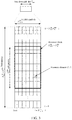
- FIG. 1 is a schematic diagram of the Frame structure type 1 in related art. As shown in FIG. 1 , the Frame structure type 1 is described below.
- a subframe is defined to include two consecutive slots, ie, a subframe i includes slots 2i and 2i+1.
- FDD Frequency Division Duplex
- 10 subframes are used for a downlink transmission
- 10 subframes are used for a uplink transmission
- the downlink transmission and the uplink transmission are performed at different frequencies respectively.
- a half-duplex FDD a user equipment (UE) cannot perform transmission and reception simultaneously.
- UE user equipment
- FIG. 2 is a schematic diagram of the Frame structure type 2 in related art. As shown in FIG. 2 , the Frame structure type 2 is described below.
- Each half-frame includes 5 subframes.
- Each subframe is defined to include two slots, ie, a subframe i includes slots 2i and 2i+1.
- Uplink-downlink transmission occurs on subframes of the frames.
- the uplink-downlink configuration of the current frame is obtained from high level signaling.
- the uplink-downlink configurations shown Table 1 have 7 types. For each subframe of a radio frame, "D” marks a downlink subframe for the downlink transmission. “U” marks an uplink subframe for the uplink transmission. “S” marks a special subframe. As shown in Table 1, the special subframe has three regions: a downlink pilot time slot (DwPTS), a guard period (GP), and a uplink pilot time slot (UpPTS).
- DwPTS downlink pilot time slot
- GP guard period
- UpPTS uplink pilot time slot
- the downlink transmission of the LTE /LTE-A technology uses an Orthogonal Frequency Division Multiplexing (OFDM) modulation technology.
- Data is modulated on the subcarrier of frequency domain, and then is converted to time domain and added with a cyclic prefix to form a complete OFDM symbol transmitted in time domain.
- the cyclic prefix (CP) is used for resisting a symbol interference in time domain and an inter-subcarrier interference in frequency domain which are generated by multipath.
- CP normal cyclic prefix
- ECP extended cyclic prefix
- the extended CP is used in a scenario where the multipath delay spread is greater.
- NCP normal cyclic prefix
- ECP extended cyclic prefix
- Each signal transmitted in the slot is represented by one or more resource grid.
- the resource grid is composed of N RB DL ⁇ N sc RB subcarriers and N symb DL OFDM symbols.
- N RB DL denotes the number of physical resource blocks (PRBs) or resource blocks (RBs).
- PRBs physical resource blocks
- RBs resource blocks
- N sc RB denotes the number of subcarriers in the resource blocks.
- N RB DL denotes the number of OFDM symbols in the slot.
- Parameters of the physical resource block are illustrated in Table 2.
- the number of subcarriers and the number of OFDM symbols in one RB are shown in Table 2.
- Parameters of the OFDM symbol are illustrated in Table 3.
- the length of the cyclic prefix is illustrated in Table 3.
- the number N RB DL of the physical resource blocks is determined by a downlink transmission bandwidth configured by a cell, and has a minimum value of 6 and a maximum value of 110.
- PRBs in two consecutive slots of a same subframe are a same one, and are referred to as a PRB pair.
- RE resource element
- k 0, ... , N RB DL ⁇ N sc RB ⁇ 1
- l 0, ... , N symb DL ⁇ 1.
- k denotes a sequence number of the subcarrier in the frequency domain
- l denotes a sequence number of the OFDM symbol in the time domain.
- the antenna port is defined as a channel through which a symbol transmitted via this antenna port passes.
- the antenna port can be inferred from the channel through which other symbols are transmitted via this same port.
- An antenna port also is defined with a corresponding sequence number for being distinguished from other antenna ports and for indexing the antenna port.
- the downlink physical channel corresponds to sets of resource elements for carrying information from upper layers.
- Downlink physical information includes: a Physical Downlink Shared Channel (PDSCH), a Physical Multicast Channel (PMCH), a Physical Broadcast Channel (PBCH), and a physical control format, a Physical Control Format Indicator Channel (PCFICH), a Physical Downlink Control Channel (PDCCH), a Physical Hybrid ARQ Indicator Channel (PHICH), and an enhancement Physical Downlink Control Channel (EPDCCH).
- PDSCH Physical Downlink Shared Channel
- PMCH Physical Multicast Channel
- PBCH Physical Broadcast Channel
- PCFICH Physical Control Format Indicator Channel
- PDCCH Physical Downlink Control Channel
- PHICH Physical Hybrid ARQ Indicator Channel
- EPDCCH Enhancement Physical Downlink Control Channel
- a downlink physical signal corresponds to a set of resource elements, and is used by a physical layer and is not used for carrying the information from upper layers.
- the downlink physical signal includes a reference signal (RS), a synchronization signal, and a discovery signal.
- the reference signal is also referred to as a pilot frequency, and is of the following types: a Cell-specific Reference Signal (CRS), a Multimedia Broadcast Single Frequency Network (MBSFN) reference signal (MBSFN reference signal), a UE-specific Reference Signal (Demodulation Reference Signal (DMRS)), a Positioning reference signal, and a Channel State Information (CSI) reference signal (CSI-RS).
- CRS Cell-specific Reference Signal
- MMSFN Multimedia Broadcast Single Frequency Network
- DMRS UE-specific Reference Signal
- CSI-RS Channel State Information
- the channel state information reference signal (CSI-RS) is used by a terminal for predicting the channel state.
- the CSI-RS transmitted with non-zero power is referred to a non-zero power CSI-RS (NZP CSI-RS).
- NZP CSI-RS non-zero power CSI-RS
- ZP CSI-RS zero power CSI-RS
- the corresponding set of resource elements is zero power CSI-RS resources.
- the CSI-RS is transmitted with zero power.
- the corresponding set of resource elements is referred to as Channel-State Information - Interference Measurement Resource (CSI-IM Resource).
- CSI-IM Resource Channel-State Information - Interference Measurement Resource
- the CSI reference signal configuration is used for indicating the RE mapped by the CSI-RS, that is, the RE used in the CSI-RS transmission.
- the sequence number of the CSI-RS configuration is used for distinguishing different CSI-RS configurations.
- the set of REs of the CSI-RS in a configuration in which one CSI-RS is transmitted or mapped is referred to as a CSI-RS resource pattern.
- the CSI reference signal subframe configuration is used to indicate the subframe where the CSI-RS transmission is located.
- a kind of CSI-RS configuration is a CSI-RS configuration with a certain number of antenna ports, for example, a CSI-RS configuration with an antenna port quantity of 8 and a configuration number of 0.
- a kind of CSI-RS resource pattern is a CSI-RS resource pattern with a certain number of antenna ports, for example, a CSI-RS resource pattern with an antenna port quantity of 8 and an index number of 0.
- the set of REs of CSI-RSs transmitting or mapping a part of ports in a CSI-RS configuration is referred to as a partial port pilot resource pattern, for example, a port pilot resource pattern with port number ⁇ 15, 16, 17, 18 ⁇ .
- An existing art supports CSI-RSs with a port quantity of 1, 2, 4, and 8, and the CSI-RS resource patterns with such port quantities are repeated on each PRB pair in the bandwidth range on the transmission subframe.
- the RE sets of the CSI-RS resource patterns with different port quantities in all configuration are the same, that is, the RE set of the CSI-RS resource pattern with the port quantity of 2 in all configuration is the same as the RE set of the CSI-RS resource pattern with the port quantity of 4 in all configuration.
- the RE sets of the CSI-RS resource patterns with different port quantities in all configuration are the same, and the number of REs on a PRB pair is 40.
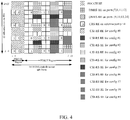
- FIG. 4 is a schematic diagram of a resource pattern of a CSI-RS with the number of ports being 4 on a RB pair in the related art.
- FIG. 5 is a schematic diagram of a resource pattern of a CSI-RS with the number of ports being 8 on a RB pair in the related art.
- the CSI-RSs of various ports are further divided into groups, that is, a group includes CSI-RSs of multiple ports, and there are one or more groups with different numbers.
- the CSI-RSs of each port in the group are mapped to a group of common REs in a code division multiplexing manner.
- the number of ports in the group is N
- the CSI-RS sequence is ⁇ r 0 ,r 1 ,...,r N-1 ⁇ .
- the CSI-RS sequence ⁇ r 0 ,r 1 ,...,r N-1 ⁇ modulates the sequence w 0 p , w 1 p , ... , w N ⁇ 1 p to obtain the CSI-RS sequence r 0 w 0 p , r 1 w 1 p , ... , r N ⁇ 1 w N ⁇ 1 p of the port p, which corresponds to a group of common REs, and each element in the CSI-RS sequence of the port p is mapped to the REs one by one, where N is the length of multiplexing.
- the CSI-RS multiplexing between ports is mapped to the RE in the following manner: ports are divided into groups, for example, ports are divided into four groups: ⁇ 15, 16 ⁇ , ⁇ 17, 18 ⁇ , ⁇ 19, 20 ⁇ , ⁇ 21, 22 ⁇ ; the frequency division manners among these four groups are multiplexed on RE, and the CSI-RSs on the ports in the groups multiplexed to the REs in the time domain by code division, for example, the CSI-RS of the port 15 and the CSI-RS of the port 16 are multiplexed in the time domain in code division manner.
- the base station informs the terminal of information of CSI-RS resource through upper layer signaling.
- the information includes CSI-RS resource configuration identity, the number of CSI-RS ports, CSI-RS configuration, and CSI-RS subframe configuration.
- the CRS can be used not only for the measurement of the channel state but also for receiving the estimation of the channel coefficient during demodulation.
- the overhead increases drastically. Therefore, when the number of ports is 8, the CRS is no longer used to measure the channel state, and the CSI-RS with low pilot density and low overhead is used instead.
- the sorting rule of the reference signal ports or the reference signal port numbers has a great influence on the performance of channel measurement feedback.
- the position relationship or polarization property relationship between the antenna ports is different, and the corresponding channel coefficient relationship characteristics are not the same.
- the relationship between the codeword elements reflects the relationship between the port channel coefficients and also reflects the position relationship or polarization property relationship between antenna ports.
- the present disclosure provides a method and device for configuring a channel state information reference signal, and a method and device for parsing a channel state information reference signal so as to at least solve the problem in the related art in the related art that the position relationships or the polarization property relationships between antenna ports are not the same.
- a method for configuring a channel state information reference signal includes: configuring configuration information of the CSI-RS by a base station; generating a signaling carrying the configuration information of the CSI-RS by the base station; and transmitting the signaling by the base station.
- the configuration information includes at least one of: a number of CSI-RS ports, a number K of components of a pilot resource pattern, a number N of ports of the components of the pilot resource pattern, and a CSI-RS port-sorting mode, where the CSI-RS port-sorting mode includes M types of candidate port-sorting mode, and M, K, and N are positive integers.
- (N, K) has Q candidate values
- the Q candidate values are divided into X sets
- a type of the CSI-RS port-sorting mode is selected based on one of the X sets to which the (N, K) belongs
- the (N, K) denotes a number pair composed of a value of N and a value of K
- Q and X are integers greater than 1.
- the X sets into which the Q candidate values are divided include: a first set using a first type of CSI-RI port-sorting mode, a second set using a second type of CSI-RS port-sorting mode, and a third set using the first type of CSI-RS port-sorting mode or the second type of CSI-RS port-sorting mode, and the first type of CSI-RS port-sorting mode is different from the second type of CSI-RS port-sorting mode.
- the configuration information further includes a code division multiplexing mode between ports, types of the code division multiplexing mode include: a first type of code division multiplexing mode and a second type of code division multiplexing mode, where the first type of code division multiplexing mode uses a first type of CSI-RS port-sorting mode, the second type of code division multiplexing mode uses a second type of CSI-RS port-sorting mode, the first type of code division multiplexing mode is different from the second type of code division multiplexing mode, and the first type of CSI-RS port-sorting mode is different from the second type of CSI-RS port-sorting mode.
- types of the code division multiplexing mode include: a first type of code division multiplexing mode and a second type of code division multiplexing mode, where the first type of code division multiplexing mode uses a first type of CSI-RS port-sorting mode, the second type of code division multiplexing mode uses a second type of CSI-RS port-sorting mode, the first type of code
- the first type of code division multiplexing mode is a code division multiplexing mode with a multiplexing length of 2
- the second type of code division multiplexing mode is a code division multiplexing mode with a multiplexing length of 4.
- the first type of code division multiplexing mode is a code division multiplexing mode in time domain
- the second type of code division multiplexing mode is a code division multiplexing mode in both of time domain and frequency domain.
- the first type of code division multiplexing mode is a code division multiplexing mode on consecutive subcarriers
- the second type of code division multiplexing mode is a code division multiplexing mode on separated subcarriers.
- the configuration information further includes: a grouping mode of code division multiplexed ports, the grouping mode of code division multiplexed ports includes U candidate modes, the U candidate modes are divided into Y sets, a type of the CSI-RS port-sorting mode is selected based one of the Y sets to which the grouping mode of code division multiplexed ports belongs, and U and Y are integers greater than 1.
- the Y sets include a first set using a first type of CSI-RS port-sorting mode, a second set using a second type of CSI-RS port-sorting mode, and a third set using the first type of CSI-RS port-sorting mode or the second type of CSI-RS port-sorting mode, and the first type of CSI-RS port-sorting mode is different from the second type of CSI-RS port-sorting mode.
- the candidate port-sorting modes include: N*K/2 ports whose port numbers are ahead correspond to N/2 ports in the components of the pilot resource pattern whose port numbers are ahead, and N*K/2 ports whose port numbers are latter correspond to N/2 ports in the components of the pilot resource pattern whose port numbers are latter.
- p Tport denotes a port number of a CSI-RS having T ports
- k denotes a sequence number of a component
- p Nport_k denotes a port number in a CSI-RS of a k th component
- the number of ports in the CSI-RS of the kth component is N
- the value of k ranges from 0 to N-1
- N is an integer greater than 1.
- the candidate port-sorting modes include: ports of each of the components are successively arranged in the aggregated CSI-RS.
- p Tport denotes a port number of a CSI-RS having T ports
- k denotes a sequence number of a component
- p Nport_k denotes a port number in a CSI-RS of the k th component
- the number of ports in the CSI-RS of the kth component is N
- the value of k ranges from 0 to N-1
- N is an integer greater than 1.
- the candidate port-sorting modes include: exchanging positions of a 17th port and a 19th port for each of the components, exchanging positions of a 18th port and a 20th port for each of the components, and arranging the components according to sequence numbers thereof in an ascending order.
- p Tport denotes a port number of a CSI-RS having T ports
- k denotes a sequence number of a component
- p Nport_k denotes a port number in a CSI-RS of the k th component, the number of ports in the CSI-RS of the k
- a port-sorting mode indicated by a value of (N, K) being (8, 2) is as follow: N*K/2 ports whose port numbers are ahead correspond to N/2 ports in the components of the pilot resource pattern whose port numbers are ahead, and N*K/2 ports whose port numbers are latter correspond to N/2 ports in the components of the pilot resource pattern whose port numbers are latter, where (N, K) denotes a number pair composed of values of N and K.
- p Tport denotes a port number of a CSI-RS having T ports
- k denotes a sequence number of a component
- p Nport_k denotes a port number in a CSI-RS of the k th component
- the number of ports in the CSI-RS of the kth component is N
- the value of k ranges from 0 to N-1
- N is an integer greater than 1.
- a port-sorting mode indicated by a value of (N, K) being (8, 2) or (2, 6) is as follow: ports of each of the components are successively arranged in an aggregated CSI-RS, where (N, K) denotes a number pair composed of values of N and K.
- p Tport denotes a port number of a CSI-RS having T ports
- k denotes a sequence number of a component
- p Nport_k denotes a port number in a CSI-RS of the k th component
- the number of ports in the CSI-RS of the kth component is N
- the value of k ranges from 0 to N-1
- N is an integer greater than 1.
- the configuration information further includes an inter-port code division multiplexing length, a type of candidate port-sorting mode indicated by an inter-port code division multiplexing length of 4 is as follow: exchanging positions of a 17th port and a 19th port for each of the components, exchanging positions of a 18th port and a 20th port for each of the components, and arranging the components according to sequence numbers thereof in an ascending order.
- p Tport denotes a port number of a CSI-RS having T ports
- k denotes a sequence number of a component
- p Nport_k denotes a port number in a CSI-RS of the k th component, the number of ports in the CSI-RS of the k
- the configuration information further includes: a grouping mode of code division multiplexed ports, the M types of CSI-RS-port-sorting mode are divided into E sets, a type of the grouping mode of code division multiplexed ports is selected based on one of the E sets to which a selected CSI-RS-port-sorting mode belongs, where E is an integer greater than 1.
- a number of the E sets of the M types of CSI-RS-port-sorting mode is 3, the 3 sets include: a first set using a first type of grouping mode of code division multiplexed ports, a second set using a second type of grouping mode of code division multiplexed ports, and a third set using the first type of grouping mode of code division multiplexed ports or the second type of grouping mode of code division multiplexed ports, where the first type of grouping mode of code division multiplexed ports is different from the second type of grouping mode of code division multiplexed ports.
- the configuration information further includes: a grouping mode of code division multiplexed ports, where a candidate type of the grouping mode of code division multiplexed ports includes: in a same group, differences between two port numbers which have maximum sequence numbers and two port numbers which have minimum sequence numbers are k ⁇ N 2 .
- the configuration information further includes: a grouping mode of code division multiplexed ports, where a candidate type of the grouping mode of code division multiplexed ports includes: in a same group, differences between two port numbers which have larger sequence numbers and two port numbers which have smaller sequence numbers are 4.
- a candidate type of the grouping mode of code division multiplexed ports includes: in a same group, one port number is:
- ⁇ (15,16),(15,16) + 4 ⁇ + m + k ⁇ N,m 0,2, where m is a sequence number for distinguishing different groups, k is a sequence number for distinguishing components of an aggregated CSI-RS, and a value of k is 1 or 0.
- the configuration information further includes: a grouping mode of code division multiplexed ports, the grouping mode of code division multiplexed ports includes a candidate type of the grouping mode of code division multiplexed ports, in which sequence numbers of ports in a same group are consecutive.
- a candidate grouping mode of code division multiplexed ports includes in a same group, one port number is:
- a method for parsing a channel state information reference signal includes: receiving, by a terminal, a signaling transmitted by a base station, where the signaling carries configuration information of the CSI-RS configured by the base station; and parsing the configuration information by the terminal.
- the configuration information includes at least one of: a number of CSI-RS ports, a number K of components of a pilot resource pattern, a number N of ports of the components of the pilot resource pattern, and a CSI-RS port-sorting mode.
- the CSI-RS port-sorting mode includes M types of candidate port-sorting mode, and M, K, and N are positive integers.
- (N, K) has Q candidate values
- the Q candidate values are divided into X sets
- a type of the CSI-RS port-sorting mode is selected based on one of the X sets to which the (N, K) belongs
- the (N, K) denotes a number pair composed of a value of N and a value of K
- Q and X are integers greater than 1.
- the X sets into which the Q candidate values are divided include: a first set using a first type of CSI-RI port-sorting mode, a second set using a second type of CSI-RS port-sorting mode, and a third set using the first type of CSI-RS port-sorting mode or the second type of CSI-RS port-sorting mode, and the first type of CSI-RS port-sorting mode is different from the second type of CSI-RS port-sorting mode.
- the configuration information further includes a code division multiplexing mode between ports, types of the code division multiplexing mode include: a first type of code division multiplexing mode and a second type of code division multiplexing mode, where the first type of code division multiplexing mode uses a first type of CSI-RS port-sorting mode, the second type of code division multiplexing mode uses a second type of CSI-RS port-sorting mode, the first type of code division multiplexing mode is different from the second type of code division multiplexing mode, and the first type of CSI-RS port-sorting mode is different from the second type of CSI-RS port-sorting mode.
- types of the code division multiplexing mode include: a first type of code division multiplexing mode and a second type of code division multiplexing mode, where the first type of code division multiplexing mode uses a first type of CSI-RS port-sorting mode, the second type of code division multiplexing mode uses a second type of CSI-RS port-sorting mode, the first type of code
- the first type of code division multiplexing mode is a code division multiplexing mode with a multiplexing length of 2
- the second type of code division multiplexing mode is a code division multiplexing mode with a multiplexing length of 4.
- the first type of code division multiplexing mode is a code division multiplexing mode in time domain
- the second type of code division multiplexing mode is a code division multiplexing mode in both of time domain and frequency domain.
- the first type of code division multiplexing mode is a code division multiplexing mode on consecutive subcarriers
- the second type of code division multiplexing mode is a code division multiplexing mode on separated subcarriers.
- the configuration information further includes: a grouping mode of code division multiplexed ports, the grouping mode of code division multiplexed ports includes U candidate modes, the U candidate modes are divided into Y sets, a type of the CSI-RS port-sorting mode is selected based one of the Y sets to which the grouping mode of code division multiplexed ports belongs, and U and Y are integers greater than 1.
- the Y sets include a first set using a first type of CSI-RS port-sorting mode, a second set using a second type of CSI-RS port-sorting mode, and a third set using the first type of CSI-RS port-sorting mode or the second type of CSI-RS port-sorting mode, and the first type of CSI-RS port-sorting mode is different from the second type of CSI-RS port-sorting mode.
- the candidate port-sorting modes include: N*K/2 ports whose port numbers are ahead correspond to N/2 ports in the components of the pilot resource pattern whose port numbers are ahead, and N*K/2 ports whose port numbers are latter correspond to N/2 ports in the components of the pilot resource pattern whose port numbers are latter.
- p Tport denotes a port number of a CSI-RS having T ports
- k denotes a sequence number of a component
- p Nport_k denotes a port number in a CSI-RS of a k th component
- the number of ports in the CSI-RS of the k th component is N
- the value of k ranges from 0 to N-1
- N is an integer greater than 1.
- the candidate port-sorting modes include: ports of each of the components are successively arranged in the aggregated CSI-RS.
- p Tport denotes a port number of a CSI-RS having T ports
- k denotes a sequence number of a component
- p Nport_k denotes a port number in a CSI-RS of the k th component
- the number of ports in the CSI-RS of the k th component is N
- the value of k ranges from 0 to N-1
- N is an integer greater than 1.
- the candidate port-sorting modes include: exchanging positions of a 17th port and a 19th port for each of the components, exchanging positions of a 18th port and a 20th port for each of the components, and arranging the components according to sequence numbers thereof in an ascending order.
- p Tport denotes a port number of a CSI-RS having T ports
- k denotes a sequence number of a component
- p Nport_k denotes a port number in a CSI-RS of the k th component, the number of ports in the CSI-RS of the k
- a port-sorting mode indicated by a value of (N, K) being (8, 2) is as follow: N*K/2 ports whose port numbers are ahead correspond to N/2 ports in the components of the pilot resource pattern whose port numbers are ahead, and N*K/2 ports whose port numbers are latter correspond to N/2 ports in the components of the pilot resource pattern whose port numbers are latter, where (N, K) denotes a number pair composed of values of N and K.
- p Tport denotes a port number of a CSI-RS having T ports
- k denotes a sequence number of a component
- p Nport_k denotes a port number in a CSI-RS of the k th component
- the number of ports in the CSI-RS of the k th component is N
- the value of k ranges from 0 to N-1
- N is an integer greater than 1.
- a port-sorting mode indicated by a value of (N, K) being (8, 2) or (2, 6) is as follow: ports of each of the components are successively arranged in an aggregated CSI-RS, where (N, K) denotes a number pair composed of values of N and K.
- p Tport denotes a port number of a CSI-RS having T ports
- k denotes a sequence number of a component
- p Nport_k denotes a port number in a CSI-RS of the k th component
- the number of ports in the CSI-RS of the k th component is N
- the value of k ranges from 0 to N-1
- N is an integer greater than 1.
- the configuration information further includes an inter-port code division multiplexing length, a type of candidate port-sorting mode indicated by an inter-port code division multiplexing length of 4 is as follow: exchanging positions of a 17th port and a 19th port for each of the components, exchanging a position of a 18th port and a 20th port for each of the components, and arranging the components according to sequence numbers thereof in an ascending order.
- p Tport denotes a port number of a CSI-RS having T ports
- k denotes a sequence number of a component
- p Nport_k denotes a port number in a CSI-RS of the k th component
- the configuration information further includes: a grouping mode of code division multiplexed ports, the M types of CSI-RS-port-sorting mode are divided into E sets, a type of the grouping mode of code division multiplexed ports is selected based on one of the E sets to which a selected CSI-RS-port-sorting mode belongs, where E is an integer greater than 1.
- a number of the E sets of the M types of CSI-RS-port-sorting modes is 3, the 3 sets include: a first set using a first type of grouping mode of code division multiplexed ports, a second set using a second type of grouping mode of code division multiplexed ports, and a third set using the first type of grouping mode of code division multiplexed ports or the second type of grouping mode of code division multiplexed ports, where the first type of grouping mode of code division multiplexed ports is different from the second type of grouping mode of code division multiplexed ports.
- the configuration information further includes: a grouping mode of code division multiplexed ports, where a candidate type of the grouping mode of code division multiplexed ports includes: in a same group, differences between two maximum port numbers and two minimum port numbers are k ⁇ N 2 .
- the configuration information further includes: a grouping mode of code division multiplexed ports, where a candidate type of the grouping mode of code division multiplexed ports includes: in a same group, differences between two larger port numbers and two smaller port numbers are 4.
- the candidate type of the grouping mode of code division multiplexed ports includes: in a same group, one port number is:
- ⁇ (15,16),(15,16) + 4 ⁇ + m + k ⁇ N,m 0,2, where m is a sequence number for distinguishing different groups, k is a sequence number for distinguishing components of an aggregated CSI-RS, and a value of k is 1 or 0.
- the configuration information further includes: a grouping mode of code division multiplexed ports, the grouping mode of code division multiplexed ports includes a candidate type of the grouping mode of code division multiplexed ports, in which port numbers in a same group are consecutive.
- the candidate grouping mode of code division multiplexed ports includes: in a same group, one port number is:
- a device for configuring a channel state information reference signal (CSI-RS) applied to a base station side includes: a configuration module configured to configure configuration information of the CSI-RS; a generation module configured to generate a signaling carrying the configuration information of the CSI-RS; and a transmission module configured to transmit the signaling.
- the configuration information includes at least one of: a number of CSI-RS ports, a number K of components of a pilot resource pattern, a number N of ports of the components of the pilot resource pattern, and a CSI-RS port-sorting mode.
- the CSI-RS port-sorting mode includes M types of candidate port-sorting mode, and M, K, and N are positive integers.
- (N, K) has Q candidate values
- the Q candidate values are divided into X sets
- a type of the CSI-RS port-sorting mode is selected based on one of the X sets to which the (N, K) belongs
- the (N, K) denotes a number pair composed of a value of N and a value of K
- Q and X are integers greater than 1.
- the X sets into which the Q candidate values are divided comprise: a first set using a first type of CSI-RI port-sorting mode, a second set using a second type of CSI-RS port-sorting mode, and a third set using the first type of CSI-RS port-sorting mode or the second type of CSI-RS port-sorting mode, and the first type of CSI-RS port-sorting mode is different from the second type of CSI-RS port-sorting mode.
- the configuration information further includes a code division multiplexing mode between ports, types of the code division multiplexing mode comprise: a first type of code division multiplexing mode and a second type of code division multiplexing mode.
- the first type of code division multiplexing mode uses a first type of CSI-RS port-sorting mode
- the second type of code division multiplexing mode uses a second type of CSI-RS port-sorting mode
- the first type of code division multiplexing mode is different from the second type of code division multiplexing mode
- the first type of CSI-RS port-sorting mode is different from the second type of CSI-RS port-sorting mode.
- the configuration information further includes: a grouping mode of code division multiplexed ports, the grouping mode of code division multiplexed ports includes U candidate modes, the U candidate modes are divided into Y sets, a type of the CSI-RS port-sorting mode is selected based one of the Y sets to which the grouping mode of code division multiplexed ports belongs, and U and Y are integers greater than 1.
- the Y sets comprise a first set using a first type of CSI-RS port-sorting mode, a second set using a second type of CSI-RS port-sorting mode, and a third set using the first type of CSI-RS port-sorting mode or the second type of CSI-RS port-sorting mode, and the first type of CSI-RS port-sorting mode is different from the second type of CSI-RS port-sorting mode.
- the candidate port-sorting modes comprise: N*K/2 ports whose port numbers are ahead correspond to N/2 ports in the components of the pilot resource pattern whose port numbers are ahead, and N*K/2 ports whose port numbers are latter correspond to N/2 ports in the components of the pilot resource pattern whose port numbers are latter.
- the candidate port-sorting modes comprise: ports of each of the components are successively arranged in the aggregated CSI-RS.
- the candidate port-sorting modes comprise: exchanging positions of a 17th port and a 19th port for each of the components, exchanging positions of a 18th port and a 20th port for each of the components, and arranging the components according to sequence numbers thereof in an ascending order.
- a port-sorting mode indicated by a value of (N, K) being (8, 2) is as follow: N*K/2 ports whose port numbers are ahead correspond to N/2 ports in the components of the pilot resource pattern whose port numbers are ahead, and N*K/2 ports whose port numbers are latter correspond to N/2 ports in the components of the pilot resource pattern whose port numbers are latter, where (N, K) denotes a number pair composed of values of N and K.
- a port-sorting mode indicated by a value of (N, K) being (8, 2) or (2, 6) is as follow: ports of each of the components are successively arranged in an aggregated CSI-RS, where (N, K) denotes a number pair composed of values of N and K.
- the configuration information further includes an inter-port code division multiplexing length, a type of candidate port-sorting mode indicated by an inter-port code division multiplexing length of 4 is as follow: exchanging positions of a 17th port and a 19th port for each of the components, exchanging a position of a 18th port and a 20th port for each of the components, and arranging the components according to sequence numbers thereof in an ascending order.
- the configuration information further includes: a grouping mode of code division multiplexed ports, the M types of CSI-RS-port-sorting mode are divided into E sets, a type of the grouping mode of code division multiplexed ports is selected based on one of the E sets to which a selected CSI-RS-port-sorting mode belongs, where E is an integer greater than 1.
- a number of the E sets of the M types of CSI-RS-port-sorting mode is 3, the 3 sets comprise: a first set using a first type of grouping mode of code division multiplexed ports, a second set using a second type of grouping mode of code division multiplexed ports, and a third set using the first type of grouping mode of code division multiplexed ports or the second type of grouping mode of code division multiplexed ports.
- the first type of grouping mode of code division multiplexed ports is different from the second type of grouping mode of code division multiplexed ports.
- the configuration information further includes: a grouping mode of code division multiplexed ports.
- a candidate type of the grouping mode of code division multiplexed ports includes: in a same group, differences between two port numbers which have maximum sequence numbers and two port numbers which have minimum sequence numbers are k ⁇ N 2 .
- the configuration information further includes: a grouping mode of code division multiplexed ports.
- the candidate type of the grouping mode of code division multiplexed ports includes: in a same group, differences between two port numbers which have larger sequence numbers and two port numbers which have smaller sequence numbers are 4.
- the configuration information further includes: a grouping mode of code division multiplexed ports, the grouping mode of code division multiplexed ports includes a candidate type of the grouping mode of code division multiplexed ports, in which sequence numbers of ports in a same group are consecutive.
- a device for parsing a channel state information reference signal (CSI-RS) applied to a terminal side includes: a reception module configured to receive a signaling that is transmitted by a base station, where the signaling carries configuration information of the CSI-RS that is configured by the base station; and a parsing module configured to parse the configuration information.
- the configuration information includes at least one of: a number of CSI-RS ports, a number K of components of a pilot resource pattern, a number N of ports of the components of the pilot resource pattern, and a CSI-RS port-sorting mode.
- the CSI-RS port-sorting mode includes M types of candidate port-sorting mode, and M, K, and N are positive integers.
- (N, K) has Q candidate values
- the Q candidate values are divided into X sets
- a type of the CSI-RS port-sorting mode is selected based on one of the X sets to which the (N, K) belongs
- the (N, K) denotes a number pair composed of a value of N and a value of K
- Q and X are integers greater than 1.
- the X sets into which the Q candidate values are divided comprise: a first set using a first type of CSI-RI port-sorting mode, a second set using a second type of CSI-RS port-sorting mode, and a third set using the first type of CSI-RS port-sorting mode or the second type of CSI-RS port-sorting mode, and the first type of CSI-RS port-sorting mode is different from the second type of CSI-RS port-sorting mode.
- the configuration information further includes a code division multiplexing mode between ports, types of the code division multiplexing mode comprise: a first type of code division multiplexing mode and a second type of code division multiplexing mode.
- the first type of code division multiplexing mode uses a first type of CSI-RS port-sorting mode
- the second type of code division multiplexing mode uses a second type of CSI-RS port-sorting mode
- the first type of code division multiplexing mode is different from the second type of code division multiplexing mode
- the first type of CSI-RS port-sorting mode is different from the second type of CSI-RS port-sorting mode.
- the configuration information further includes: a grouping mode of code division multiplexed ports, the grouping mode of code division multiplexed ports includes U candidate modes, the U candidate modes are divided into Y sets, a type of the CSI-RS port-sorting mode is selected based one of the Y sets to which the grouping mode of code division multiplexed ports belongs, and U and Y are integers greater than 1.
- the Y sets comprise a first set using a first type of CSI-RS port-sorting mode, a second set using a second type of CSI-RS port-sorting mode, and a third set using the first type of CSI-RS port-sorting mode or the second type of CSI-RS port-sorting mode, and the first type of CSI-RS port-sorting mode is different from the second type of CSI-RS port-sorting mode.
- the candidate port-sorting modes comprise: N*K/2 ports whose port numbers are ahead correspond to N/2 ports in the components of the pilot resource pattern whose port numbers are ahead, and N*K/2 ports whose port numbers are latter correspond to N/2 ports in the components of the pilot resource pattern whose port numbers are latter.
- the candidate port-sorting modes comprise: ports of each of the components are successively arranged in the aggregated CSI-RS.
- the candidate port-sorting modes comprise: exchanging positions of a 17th port and a 19th port for each of the components, exchanging positions of a 18th port and a 20th port for each of the components, and arranging the components according to sequence numbers thereof in an ascending order.
- a port-sorting mode indicated by a value of (N, K) being (8, 2) is as follow: N*K/2 ports whose port numbers are ahead correspond to N/2 ports in the components of the pilot resource pattern whose port numbers are ahead, and N*K/2 ports whose port numbers are latter correspond to N/2 ports in the components of the pilot resource pattern whose port numbers are latter, where (N, K) denotes a number pair composed of values of N and K.
- a port-sorting mode indicated by a value of (N, K) being (8, 2) or (2, 6) is as follow: ports of each of the components are successively arranged in an aggregated CSI-RS, where (N, K) denotes a number pair composed of values of N and K.
- the configuration information further includes an inter-port code division multiplexing length, a type of candidate port-sorting mode indicated by an inter-port code division multiplexing length of 4 is as follow: exchanging positions of a 17th port and a 19th port for each of the components, exchanging positions of a 18th port and a 20th port for each of the components, and arranging the components according to sequence numbers thereof in an ascending order.
- the configuration information further includes: a grouping mode of code division multiplexed ports, the M types of CSI-RS-port-sorting mode are divided into E sets, a type of the grouping mode of code division multiplexed ports is selected based on one of the E sets to which a selected CSI-RS-port-sorting mode belongs, where E is an integer greater than 1.
- a number of the E sets of the M types of CSI-RS-port-sorting mode is 3, the 3 sets comprise: a first set using a first type of grouping mode of code division multiplexed ports, a second set using a second type of grouping mode of code division multiplexed ports, and a third set using the first type of grouping mode of code division multiplexed ports or the second type of grouping mode of code division multiplexed ports.
- the first type of grouping mode of code division multiplexed ports is different from the second type of grouping mode of code division multiplexed ports.
- the configuration information further includes: a grouping mode of code division multiplexed ports.
- a candidate type of the grouping mode of code division multiplexed ports includes: in a same group, differences between two port numbers which have maximum sequence numbers and two port numbers which have minimum sequence numbers are k ⁇ N 2 .
- the configuration information further includes: a grouping mode of code division multiplexed ports.
- the candidate type of the grouping mode of code division multiplexed ports includes: in a same group, differences between two port numbers which have larger sequence numbers and two port numbers which have smaller sequence numbers are 4.
- the configuration information further includes: a grouping mode of code division multiplexed ports, the grouping mode of code division multiplexed ports includes a candidate type of the grouping mode of code division multiplexed ports, in which sequence numbers of ports in a same group are consecutive.
- the configured configuration information of the CSI-RS is transmitted by the base station through the signaling.
- the configuration information includes at least one of: the number of pilot ports after aggregation, a number K of components of a pilot resource pattern, a number N of ports of the components of the pilot resource pattern, and a CSI-RS port-sorting mode.
- the reference number of the port and the port position represented by the code-book element are consistent with the polarization property, thereby solving a problem in the related art that the serial numbers or the sequence of antenna ports are unable to reflect the positional relationship and polarization property relationship of antennas in actual topology relationships, thereby improving the feedback channel precision and making full use of the signal transmission power.
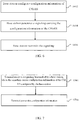
- FIG. 6 is a flowchart of the method for configuring a channel state information reference signal according to an embodiment of the present disclosure. As shown in FIG. 6 , the flow includes the following steps.
- step S602 a base station configures configuration information of the CSI-RS.
- step S604 the base station generates a signaling carrying the configuration information of the CSI-RS.
- step S606 the base station transmits the signaling.
- the configuration information comprises at least one of: a number of CSI-RS ports, a number K of components of a pilot resource pattern, a number N of ports of the components of the pilot resource pattern, and a CSI-RS port-sorting mode.
- the CSI-RS port-sorting mode has M types of candidate port-sorting mode, and M, K, and N are positive integers.
- the configured configuration information of the CSI-RS is transmitted by the base station through the signaling.
- the configuration information includes at least one of: the number of pilot ports after aggregation, a number K of components of a pilot resource pattern, a number N of ports of the components of the pilot resource pattern, and a CSI-RS port-sorting mode.
- the reference number of the port and the port position represented by the code-book element are consistent with the polarization property, thereby solving a problem in the related art that the serial numbers or the sequence of antenna ports are unable to reflect the positional relationship and polarization property relationship of antennas in actual topology relationships, thereby improving the feedback channel precision and making full use of the signal transmission power.
- a number pair composed of the value of N and the value of K is represented as (N, K).
- the (N, K) has Q candidate values, and the Q candidate values are divided into X sets.
- the type of the CSI-RS port-sorting mode is selected based on one of the X sets to which the (N, K) belongs.
- the (N, K) denotes the number pair composed of the value of N and the value of K, and Q and X are integers greater than 1. It should be noted that if two elements of one number pair are correspondingly the same as two elements of another number pair, the two number pairs have a same value. For example, (8, 2) and (8, 2) have a same value. However, (8, 2) and (2, 8) are two different number pairs, that is, (8, 2) and (2, 8) have two different values.
- the sets include: a first set using a first type of CSI-RI port-sorting mode, a second set using a second type of CSI-RS port-sorting mode, and a third set using the first type of CSI-RS port-sorting mode or the second type of CSI-RS port-sorting mode.
- the first type of CSI-RS port-sorting mode is different from the second type of CSI-RS port-sorting mode.
- the configuration information involved in this embodiment further includes a code division multiplexing mode between ports.
- Types of the code division multiplexing mode include: a first type of code division multiplexing mode and a second type of code division multiplexing mode.
- the first type of code division multiplexing mode uses a first type of CSI-RS port-sorting mode
- the second type of code division multiplexing mode uses a second type of CSI-RS port-sorting mode.
- the first type of code division multiplexing mode is different from the second type of code division multiplexing mode
- the first type of CSI-RS port-sorting mode is different from the second type of CSI-RS port-sorting mode.
- the first type of code division multiplexing mode is a code division multiplexing mode with a multiplexing length of 2
- the second type of code division multiplexing mode is a code division multiplexing mode with a multiplexing length of 4.
- the first type of code division multiplexing mode is a code division multiplexing mode in time domain
- the second type of code division multiplexing mode is a code division multiplexing mode in both of time domain and frequency domain.
- the first type of code division multiplexing mode is a code division multiplexing mode on consecutive subcarriers
- the second type of code division multiplexing mode is a code division multiplexing mode on separated subcarriers.
- code division multiplexing mode described above are merely illustrative examples, and do not constitute limitations on the present disclosure. Other types of code division multiplexing modes are also within the protection scope of the present disclosure and can be configured correspondingly according to actual conditions.
- the configuration information involved in this embodiment further includes a grouping mode of code division multiplexed ports.
- the grouping mode of code division multiplexed ports includes U candidate modes, and the U candidate modes are divided into Y sets.
- the type of the CSI-RS port-sorting mode is selected based one of the Y sets to which the grouping mode of code division multiplexed ports belongs, and U and Y are integers greater than 1.
- the Y sets includes a first set using a first type of CSI-RS port-sorting mode, a second set using a second type of CSI-RS port-sorting mode, and a third set using the first type of CSI-RS port-sorting mode or the second type of CSI-RS port-sorting mode.
- the first type of CSI-RS port-sorting mode is different from the second type of CSI-RS port-sorting mode.
- the candidate port-sorting modes may involve multiple types.
- the candidate port-sorting modes are described below through examples.
- p Tport denotes a port number of a CSI-RS having T ports
- k denotes a sequence number of a component
- p Nport_k denotes a port number in a CSI-RS of the k th component
- the number of ports in the CSI-RS of the k th component is N
- the value of k ranges from 0 to N-1
- N is an integer greater than 1.
- a port-sorting mode indicated by a value of (N, K) being (8, 2) is as follow: N*K/2 ports whose port numbers are ahead correspond to N/2 ports in the components of the pilot resource pattern whose port numbers are ahead, and N*K/2 ports whose port numbers are latter correspond to N/2 ports in the components of the pilot resource pattern whose port numbers are latter, where (N, K) denotes a number pair composed of values of N and K.
- p Tport denotes a port number of a CSI-RS having T ports
- k denotes a sequence number of a component
- p Nport_k denotes a port number in a CSI-RS of the k th component
- the number of ports in the CSI-RS of the k th component is N
- the value of k ranges from 0 to N-1
- N is an integer greater than 1.
- the port-sorting mode indicated by (N, K) the value of which is (8, 2) is the candidate port-sorting mode (1) in the first case in the above embodiments. That is, the N and K in the mentioned in the candidate port-sorting mode (1) in the first case in the above embodiments may have multiple values. However, when the value of (N, K) is (8, 2), the candidate port-sorting mode can only be the candidate port-sorting mode (1) in the first case.
- the case of the candidate port-sorting mode (2) in the second case is similar.
- the N and K in the mentioned in the candidate port-sorting mode (2) in the second case may have multiple values.
- the indicated candidate port-sorting mode can only be the candidate port-sorting mode (2) in the second case. That is, when the value of (N, K) is (2, 8) or (2, 6), the port-sorting mode is: ports of each of the components are successively arranged in an aggregated CSI-RS, where (N, K) denotes a number pair composed of values of N and K.
- p Tport denotes a port number of a CSI-RS having T ports
- k denotes a sequence number of a component
- p Nport_k denotes a port number in a CSI-RS of the k th component
- the number of ports in the CSI-RS of the k th component is N
- the value of k ranges from 0 to N-1
- N is an integer greater than 1.
- the case of the candidate port-sorting mode (3) in the third case is similar.
- the N and K in the mentioned in the candidate port-sorting mode (3) in the third case may have multiple values.
- the configuration information further includes an inter-port code division multiplexing length.
- the port-sorting mode indicated by the inter-port code division multiplexing length of 4 can only be the candidate port-sorting mode (3) in the third case. That is, the port-sorting mode having an inter-port code division multiplexing length of 4 is: exchanging positions of a 17th port and a 19th port for each of the components, exchanging a position of a 18th port and a 20th port for each of the components, and arranging the components according to sequence numbers thereof in an ascending order.
- p Tport denotes a port number of a CSI-RS having T ports
- k denotes a sequence number of a component
- p Nport_k denotes a port number in a CSI-RS of the kth component
- the number of ports in the CSI-RS of the kth component is N
- the value of k ranges from 0 to N-1
- N is an integer greater than 1.
- the configuration involved in this embodiment may further include a grouping mode of code division multiplexed ports.
- the M types of CSI-RS port-sorting mode are divided into E sets, and a type of the grouping mode of code division multiplexed ports is selected based on one of the E sets to which a selected CSI-RS-port-sorting mode belongs, where E is an integer greater than 1.
- the number of the E sets of the M types of CSI-RS port-sorting mode is 3, and the 3 sets include: a first set using a first type of grouping mode of code division multiplexed ports, a second set using a second type of grouping mode of code division multiplexed ports, and a third set using the first type of grouping mode of code division multiplexed ports or the second type of grouping mode of code division multiplexed ports.
- the first type of grouping mode of code division multiplexed ports is different from the second type of grouping mode of code division multiplexed ports.
- the configuration information involved in this embodiment may further include a grouping mode of code division multiplexed ports.
- a candidate type of the grouping mode of code division multiplexed ports includes: in a same group, differences between two maximum port numbers and two minimum port numbers are k ⁇ N 2 .
- the configuration information involved in this embodiment may further include a grouping mode of code division multiplexed ports.
- a candidate type of the grouping mode of code division multiplexed ports includes: in a same group, differences between two larger port numbers and two smaller port numbers are 4.
- the configuration information further includes a grouping mode of code division multiplexed ports, and a candidate type of the grouping mode of code division multiplexed ports includes: port numbers in a same group are consecutive.
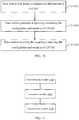
- FIG. 7 is a flowchart of a method for parsing a channel state information reference signal according to an embodiment of the present disclosure. As shown in FIG. 7 , the method includes the following steps.
- a terminal receives a signaling transmitted by a base station, and the signaling carries configuration information of the CSI-RS configured by the base station.
- step S704 the terminal parses the configuration information.
- the configuration information includes at least one of: a number of CSI-RS ports, a number K of components of a pilot resource pattern, a number N of ports of the components of the pilot resource pattern, and a CSI-RS port-sorting mode.
- the CSI-RS port-sorting mode includes M types of candidate port-sorting mode, and M, K, and N are positive integers.
- a number pair composed of the value of N and the value of K is represented as (N, K).
- the (N, K) has Q candidate values, and the Q candidate values are divided into X sets.
- the type of the CSI-RS port-sorting mode is selected based on one of the X sets to which the (N, K) belongs.
- the (N, K) denotes the number pair composed of the value of N and the value of K, and Q and X are integers greater than 1. It should be noted that if two elements of one number pair are correspondingly the same as two elements of another number pair, the two number pairs have a same value. For example, (8, 2) and (8, 2) have a same value. However, (8, 2) and (2, 8) are two different number pairs, that is, (8, 2) and (2, 8) have two different values.
- the sets include: a first set using a first type of CSI-RI port-sorting mode, a second set using a second type of CSI-RS port-sorting mode, and a third set using the first type of CSI-RS port-sorting mode or the second type of CSI-RS port-sorting mode.
- the first type of CSI-RS port-sorting mode is different from the second type of CSI-RS port-sorting mode.
- the configuration information involved in this embodiment further includes a code division multiplexing mode between ports.
- Types of the code division multiplexing mode include: a first type of code division multiplexing mode and a second type of code division multiplexing mode.
- the first type of code division multiplexing mode uses a first type of CSI-RS port-sorting mode
- the second type of code division multiplexing mode uses a second type of CSI-RS port-sorting mode.
- the first type of code division multiplexing mode is different from the second type of code division multiplexing mode
- the first type of CSI-RS port-sorting mode is different from the second type of CSI-RS port-sorting mode.
- the first type of code division multiplexing mode is a code division multiplexing mode with a multiplexing length of 2
- the second type of code division multiplexing mode is a code division multiplexing mode with a multiplexing length of 4.
- the first type of code division multiplexing mode is a code division multiplexing mode in time domain
- the second type of code division multiplexing mode is a code division multiplexing mode in both of time domain and frequency domain.
- the first type of code division multiplexing mode is a code division multiplexing mode on consecutive subcarriers
- the second type of code division multiplexing mode is a code division multiplexing mode on separated subcarriers.
- code division multiplexing mode described above are merely illustrative examples, and do not constitute limitations on the present disclosure. Other types of code division multiplexing modes are also within the protection scope of the present disclosure and can be configured correspondingly according to actual conditions.
- the configuration information involved in this embodiment further includes a grouping mode of code division multiplexed ports.
- the grouping mode of code division multiplexed ports includes U candidate modes, and the U candidate modes are divided into Y sets.
- the type of the CSI-RS port-sorting mode is selected based one of the Y sets to which the grouping mode of code division multiplexed ports belongs, and U and Y are integers greater than 1.
- the Y sets includes a first set using a first type of CSI-RS port-sorting mode, a second set using a second type of CSI-RS port-sorting mode, and a third set using the first type of CSI-RS port-sorting mode or the second type of CSI-RS port-sorting mode.
- the first type of CSI-RS port-sorting mode is different from the second type of CSI-RS port-sorting mode.
- the candidate port-sorting modes may involve multiple types.
- the candidate port-sorting modes are described below through examples.
- p Tport denotes a port number of a CSI-RS having T ports
- k denotes a sequence number of a component
- p Nport_k denotes a port number in a CSI-RS of the k th component
- the number of ports in the CSI-RS of the k th component is N
- the value of k ranges from 0 to N-1
- N is an integer greater than 1.
- a port-sorting mode indicated by a value of (N, K) being (8, 2) is as follow: N*K/2 ports whose port numbers are ahead correspond to N/2 ports in the components of the pilot resource pattern whose port numbers are ahead, and N*K/2 ports whose port numbers are latter correspond to N/2 ports in the components of the pilot resource pattern whose port numbers are latter, where (N, K) denotes a number pair composed of values of N and K.
- p Tport denotes a port number of a CSI-RS having T ports
- k denotes a sequence number of a component
- p Nport_k denotes a port number in a CSI-RS of the k th component
- the number of ports in the CSI-RS of the k th component is N
- the value of k ranges from 0 to N-1
- N is an integer greater than 1.
- the port-sorting mode indicated by (N, K) the value of which is (8, 2) is the candidate port-sorting mode (1) in the first case in the above embodiments. That is, the N and K mentioned in the candidate port-sorting mode (1) in the first case in the above embodiments may have multiple values. However, when the value of (N, K) is (8, 2), the candidate port-sorting mode can only be the candidate port-sorting mode (1) in the first case.
- the case of the candidate port-sorting mode (2) in the second case is similar.
- the N and K in the mentioned in the candidate port-sorting mode (2) in the second case may have multiple values.
- the indicated candidate port-sorting mode can only be the candidate port-sorting mode (2) in the second case. That is, when the value of (N, K) is (2, 8) or (2, 6), the port-sorting mode is: ports of each of the components are successively arranged in an aggregated CSI-RS, where (N, K) denotes a number pair composed of values of N and K.
- p Tport denotes a port number of a CSI-RS having T ports
- k denotes a sequence number of a component
- p Nport_k denotes a port number in a CSI-RS of the k th component
- the number of ports in the CSI-RS of the k th component is N
- the value of k ranges from 0 to N-1
- N is an integer greater than 1.
- the case of the candidate port-sorting mode (3) in the third case is similar.
- the N and K in the mentioned in the candidate port-sorting mode (3) in the third case may have multiple values.
- the configuration information further includes an inter-port code division multiplexing length.
- the port-sorting mode indicated by the inter-port code division multiplexing length of 4 can only be the candidate port-sorting mode (3) in the third case. That is, the port-sorting mode having an inter-port code division multiplexing length of 4 is: exchanging positions of a 17th port and a 19th port for each of the components, exchanging a position of a 18th port and a 20th port for each of the components, and arranging the components according to sequence numbers thereof in an ascending order.
- p Tport denotes a port number of a CSI-RS having T ports
- k denotes a sequence number of a component
- p Nport_k denotes a port number in a CSI-RS of the k th component
- the number of ports in the CSI-RS of the k th component is N
- the value of k ranges from 0 to N-1
- N is an integer greater than 1.
- the configuration involved in this embodiment may further include a grouping mode of code division multiplexed ports.
- the M types of CSI-RS port-sorting mode are divided into E sets, and a type of the grouping mode of code division multiplexed ports is selected based on one of the E sets to which a selected CSI-RS-port-sorting mode belongs, where E is an integer greater than 1.
- the number of the E sets of the M types of CSI-RS port-sorting mode is 3, and the 3 sets include: a first set using a first type of grouping mode of code division multiplexed ports, a second set using a second type of grouping mode of code division multiplexed ports, and a third set using the first type of grouping mode of code division multiplexed ports or the second type of grouping mode of code division multiplexed ports.
- the first type of grouping mode of code division multiplexed ports is different from the second type of grouping mode of code division multiplexed ports.
- the configuration information involved in this embodiment may further include a grouping mode of code division multiplexed ports.
- a candidate type of the grouping mode of code division multiplexed ports includes: in a same group, differences between two port numbers which have maximum sequence numbers and two port numbers which have minimum sequence numbers are k ⁇ N 2 .
- the configuration information involved in this embodiment may further include a grouping mode of code division multiplexed ports.
- a candidate type of the grouping mode of code division multiplexed ports includes: in a same group, differences between two port numbers which have larger sequence numbers and two port numbers which have smaller sequence numbers are 4.
- the configuration information further includes a grouping mode of code division multiplexed ports, and a candidate type of the grouping mode of code division multiplexed ports includes: sequence numbers of ports in a same group are consecutive.
- the computer software product is stored in a storage medium (such as ROM/RAM, magnetic disk, optical disk) including instructions for enabling a terminal device (which may be a mobile phone, a computer, a server, or a network device, etc.) to perform the methods described in the various embodiments of the present disclosure.
- a storage medium such as ROM/RAM, magnetic disk, optical disk
- a terminal device which may be a mobile phone, a computer, a server, or a network device, etc.
- Embodiments of the present disclosure further provide a device for a channel state information reference signal (CSI-RS).
- CSI-RS channel state information reference signal
- the device is used for implementing the above embodiments and preferred examples, contents which has been described will not be repeated below.
- the term "module” as used below may a combination of software and/or hardware capable of implementing a predetermined function.
- the device described in the following embodiments is preferably implemented in software, implementation of hardware or a combination of software and hardware is also possible and conceived.
- FIG. 8 is a structural block diagram of a device for configuring a channel state information reference signal according to an embodiment of the present disclosure.
- the device is applied at a base station side and includes a configuration module 82 configured to configure configuration information of the CSI-RS; a generation module 84 coupled to the configuration module 82 and configured to generate a signaling carrying the configuration information of the CSI-RS; and a transmission module 86 coupled with the generation module 84 and configured to transmit the signaling.
- the configuration information includes at least one of: a number of CSI-RS ports, a number K of components of a pilot resource pattern, a number N of ports of the components of the pilot resource pattern, and a CSI-RS port-sorting mode.
- the CSI-RS port-sorting mode includes M types of candidate port-sorting mode, and M, K, and N are positive integers.
- a number pair composed of the value of N and the value of K is represented as (N, K).
- the (N, K) has Q candidate values, and the Q candidate values are divided into X sets.
- the type of the CSI-RS port-sorting mode is selected based on one of the X sets to which the (N, K) belongs.
- the (N, K) denotes the number pair composed of the value of N and the value of K, and Q and X are integers greater than 1. It should be noted that if two elements of one number pair are correspondingly the same as two elements of another number pair, the two number pairs have a same value. For example, (8, 2) and (8, 2) have a same value. However, (8, 2) and (2, 8) are two different number pairs, that is, (8, 2) and (2, 8) have two different values.
- the sets include: a first set using a first type of CSI-RI port-sorting mode, a second set using a second type of CSI-RS port-sorting mode, and a third set using the first type of CSI-RS port-sorting mode or the second type of CSI-RS port-sorting mode.
- the first type of CSI-RS port-sorting mode is different from the second type of CSI-RS port-sorting mode.
- the configuration information involved in this embodiment further includes a code division multiplexing mode between ports.
- Types of the code division multiplexing mode include: a first type of code division multiplexing mode and a second type of code division multiplexing mode.
- the first type of code division multiplexing mode uses a first type of CSI-RS port-sorting mode
- the second type of code division multiplexing mode uses a second type of CSI-RS port-sorting mode.
- the first type of code division multiplexing mode is different from the second type of code division multiplexing mode
- the first type of CSI-RS port-sorting mode is different from the second type of CSI-RS port-sorting mode.
- the first type of code division multiplexing mode is a code division multiplexing mode with a multiplexing length of 2
- the second type of code division multiplexing mode is a code division multiplexing mode with a multiplexing length of 4.
- the first type of code division multiplexing mode is a code division multiplexing mode in time domain
- the second type of code division multiplexing mode is a code division multiplexing mode in both of time domain and frequency domain.
- the first type of code division multiplexing mode is a code division multiplexing mode on consecutive subcarriers
- the second type of code division multiplexing mode is a code division multiplexing mode on separated subcarriers.
- code division multiplexing mode described above are merely illustrative examples, and do not constitute limitations on the present disclosure. Other types of code division multiplexing modes are also within the protection scope of the present disclosure and can be configured correspondingly according to actual conditions.
- the configuration information involved in this embodiment further includes a grouping mode of code division multiplexed ports.
- the grouping mode of code division multiplexed ports includes U candidate modes, and the U candidate modes are divided into Y sets.
- the type of the CSI-RS port-sorting mode is selected based one of the Y sets to which the grouping mode of code division multiplexed ports belongs, and U and Y are integers greater than 1.
- the Y sets includes a first set using a first type of CSI-RS port-sorting mode, a second set using a second type of CSI-RS port-sorting mode, and a third set using the first type of CSI-RS port-sorting mode or the second type of CSI-RS port-sorting mode.
- the first type of CSI-RS port-sorting mode is different from the second type of CSI-RS port-sorting mode.
- the candidate port-sorting modes may involve multiple types.
- the candidate port-sorting modes are described below through examples.
- p Tport denotes a port number of a CSI-RS having T ports
- k denotes a sequence number of a component
- p Nport_k denotes a port number in a CSI-RS of the k th component
- the number of ports in the CSI-RS of the k th component is N
- the value of k ranges from 0 to N-1
- N is an integer greater than 1.
- a port-sorting mode indicated by a value of (N, K) being (8, 2) is as follow: N*K/2 ports whose port numbers are ahead correspond to N/2 ports in the components of the pilot resource pattern whose port numbers are ahead, and N*K/2 ports whose port numbers are latter correspond to N/2 ports in the components of the pilot resource pattern whose port numbers are latter, where (N, K) denotes a number pair composed of values of N and K.
- p Tport denotes a port number of a CSI-RS having T ports
- k denotes a sequence number of a component
- p Nport_k denotes a port number in a CSI-RS of the k th component
- the number of ports in the CSI-RS of the k th component is N
- the value of k ranges from 0 to N-1
- N is an integer greater than 1.
- the port-sorting mode indicated by (N, K) the value of which is (8, 2) is the candidate port-sorting mode (1) in the first case in the above embodiments. That is, the N and K in the mentioned in the candidate port-sorting mode (1) in the first case in the above embodiments may have multiple values. However, when the value of (N, K) is (8, 2), the candidate port-sorting mode can only be the candidate port-sorting mode (1) in the first case.
- the case of the candidate port-sorting mode (2) in the second case is similar.
- the N and K in the mentioned in the candidate port-sorting mode (2) in the second case may have multiple values.
- the indicated candidate port-sorting mode can only be the candidate port-sorting mode (2) in the second case. That is, when the value of (N, K) is (2, 8) or (2, 6), the port-sorting mode is: ports of each of the components are successively arranged in an aggregated CSI-RS, where (N, K) denotes a number pair composed of values of N and K.
- p Tport denotes a port number of a CSI-RS having T ports
- k denotes a sequence number of a component
- p Nport_k denotes a port number in a CSI-RS of the k th component
- the number of ports in the CSI-RS of the k th component is N
- the value of k ranges from 0 to N-1
- N is an integer greater than 1.
- the case of the candidate port-sorting mode (3) in the third case is similar.
- the N and K in the mentioned in the candidate port-sorting mode (3) in the third case may have multiple values.
- the configuration information further includes an inter-port code division multiplexing length.
- the port-sorting mode indicated by the inter-port code division multiplexing length of 4 can only be the candidate port-sorting mode (3) in the third case. That is, the port-sorting mode having an inter-port code division multiplexing length of 4 is: exchanging positions of a 17th port and a 19th port for each of the components, exchanging a position of a 18th port and a 20th port for each of the components, and arranging the components according to sequence numbers thereof in an ascending order.
- p Tport denotes a port number of a CSI-RS having T ports
- k denotes a sequence number of a component
- p Nport_k denotes a port number in a CSI-RS of the k th component
- the number of ports in the CSI-RS of the k th component is N
- the value of k ranges from 0 to N-1
- N is an integer greater than 1.
- the configuration involved in this embodiment may further include a grouping mode of code division multiplexed ports.
- the M types of CSI-RS port-sorting mode are divided into E sets, and a type of the grouping mode of code division multiplexed ports is selected based on one of the E sets to which a selected CSI-RS-port-sorting mode belongs, where E is an integer greater than 1.
- the number of the E sets of the M types of CSI-RS port-sorting mode is 3, and the 3 sets include: a first set using a first type of grouping mode of code division multiplexed ports, a second set using a second type of grouping mode of code division multiplexed ports, and a third set using the first type of grouping mode of code division multiplexed ports or the second type of grouping mode of code division multiplexed ports.
- the first type of grouping mode of code division multiplexed ports is different from the second type of grouping mode of code division multiplexed ports.
- the configuration information involved in this embodiment may further include a grouping mode of code division multiplexed ports.
- a candidate type of the grouping mode of code division multiplexed ports includes: in a same group, differences between two maximum port numbers and two minimum port numbers are k ⁇ N 2 .
- the configuration information involved in this embodiment may further include a grouping mode of code division multiplexed ports.
- a candidate type of the grouping mode of code division multiplexed ports includes: in a same group, differences between two port numbers which have larger sequence numbers and two port numbers which have smaller sequence numbers are 4.
- the port number in the same group in the candidate grouping mode of code division multiplexed ports is:
- ⁇ (15,16),(15,16) + 4 ⁇ + m + k ⁇ N,m 0,2
- m is a sequence number for distinguishing different groups
- k is a sequence number for distinguishing components of an aggregated CSI-RS
- a value of k is 0 or 1.
- the configuration information further includes a grouping mode of code division multiplexed ports, and a candidate type of the grouping mode of code division multiplexed ports includes: sequence numbers of ports in a same group are consecutive.
- FIG. 9 is a structural block diagram of a device for parsing a channel state information reference signal according to an embodiment of the present disclosure.
- the device is applied to a terminal side.
- the device includes: a reception module 92 configured to receive a signaling that is transmitted by a base station, where the signaling carries configuration information of the CSI-RS that is configured by the base station; and a parsing module 94 coupled to the reception module 92 and configured to parse the configuration information.
- the configuration information comprises at least one of: a number of CSI-RS ports, a number K of components of a pilot resource pattern, a number N of ports of the components of the pilot resource pattern, and a CSI-RS port-sorting mode.
- the CSI-RS port-sorting mode comprises M types of candidate port-sorting mode, and M, K, and N are positive integers.
- a number pair composed of the value of N and the value of K is represented as (N, K).
- the (N, K) has Q candidate values, and the Q candidate values are divided into X sets.
- the type of the CSI-RS port-sorting mode is selected based on one of the X sets to which the (N, K) belongs.
- the (N, K) denotes the number pair composed of the value of N and the value of K, and Q and X are integers greater than 1. It should be noted that if two elements of one number pair are correspondingly the same as two elements of another number pair, the two number pairs have a same value. For example, (8, 2) and (8, 2) have a same value. However, (8, 2) and (2, 8) are two different number pairs, that is, (8, 2) and (2, 8) have two different values.
- the sets include: a first set using a first type of CSI-RI port-sorting mode, a second set using a second type of CSI-RS port-sorting mode, and a third set using the first type of CSI-RS port-sorting mode or the second type of CSI-RS port-sorting mode.
- the first type of CSI-RS port-sorting mode is different from the second type of CSI-RS port-sorting mode.
- the configuration information involved in this embodiment further includes a code division multiplexing mode between ports.
- Types of the code division multiplexing mode include: a first type of code division multiplexing mode and a second type of code division multiplexing mode.
- the first type of code division multiplexing mode uses a first type of CSI-RS port-sorting mode
- the second type of code division multiplexing mode uses a second type of CSI-RS port-sorting mode.
- the first type of code division multiplexing mode is different from the second type of code division multiplexing mode
- the first type of CSI-RS port-sorting mode is different from the second type of CSI-RS port-sorting mode.
- the first type of code division multiplexing mode is a code division multiplexing mode with a multiplexing length of 2
- the second type of code division multiplexing mode is a code division multiplexing mode with a multiplexing length of 4.
- the first type of code division multiplexing mode is a code division multiplexing mode in time domain
- the second type of code division multiplexing mode is a code division multiplexing mode in both of time domain and frequency domain.
- the first type of code division multiplexing mode is a code division multiplexing mode on consecutive subcarriers
- the second type of code division multiplexing mode is a code division multiplexing mode on separated subcarriers.
- code division multiplexing mode described above are merely illustrative examples, and do not constitute limitations on the present disclosure. Other types of code division multiplexing modes are also within the protection scope of the present disclosure and can be configured correspondingly according to actual conditions.
- the configuration information involved in this embodiment further includes a grouping mode of code division multiplexed ports.
- the grouping mode of code division multiplexed ports includes U candidate modes, and the U candidate modes are divided into Y sets.
- the type of the CSI-RS port-sorting mode is selected based one of the Y sets to which the grouping mode of code division multiplexed ports belongs, and U and Y are integers greater than 1.
- the Y sets includes a first set using a first type of CSI-RS port-sorting mode, a second set using a second type of CSI-RS port-sorting mode, and a third set using the first type of CSI-RS port-sorting mode or the second type of CSI-RS port-sorting mode.
- the first type of CSI-RS port-sorting mode is different from the second type of CSI-RS port-sorting mode.
- the candidate port-sorting modes may involve multiple types.
- the candidate port-sorting modes are described below through examples.
- p Tport denotes a port number of a CSI-RS having T ports
- k denotes a sequence number of a component
- p Nport_k denotes a port number in a CSI-RS of the k th component
- the number of ports in the CSI-RS of the k th component is N
- the value of k ranges from 0 to N-1
- N is an integer greater than 1.
- a port-sorting mode indicated by a value of (N, K) being (8, 2) is as follow: N*K/2 ports whose port numbers are ahead correspond to N/2 ports in the components of the pilot resource pattern whose port numbers are ahead, and N*K/2 ports whose port numbers are latter correspond to N/2 ports in the components of the pilot resource pattern whose port numbers are latter, where (N, K) denotes a number pair composed of values of N and K.
- p Tport denotes a port number of a CSI-RS having T ports
- k denotes a sequence number of a component
- p Nport_k denotes a port number in a CSI-RS of the k th component
- the number of ports in the CSI-RS of the k th component is N
- the value of k ranges from 0 to N-1
- N is an integer greater than 1.
- the port-sorting mode indicated by (N, K) the value of which is (8, 2) is the candidate port-sorting mode (1) in the first case in the above embodiments. That is, the N and K in the mentioned in the candidate port-sorting mode (1) in the first case in the above embodiments may have multiple values. However, when the value of (N, K) is (8, 2), the candidate port-sorting mode can only be the candidate port-sorting mode (1) in the first case.
- the case of the candidate port-sorting mode (2) in the second case is similar.
- the N and K in the mentioned in the candidate port-sorting mode (2) in the second case may have multiple values.
- the indicated candidate port-sorting mode can only be the candidate port-sorting mode (2) in the second case. That is, when the value of (N, K) is (2, 8) or (2, 6), the port-sorting mode is: ports of each of the components are successively arranged in an aggregated CSI-RS, where (N, K) denotes a number pair composed of values of N and K.
- p Tport denotes a port number of a CSI-RS having T ports
- k denotes a sequence number of a component
- p Nport_k denotes a port number in a CSI-RS of the k th component
- the number of ports in the CSI-RS of the k th component is N
- the value of k ranges from 0 to N-1
- N is an integer greater than 1.
- the case of the candidate port-sorting mode (3) in the third case is similar.
- the N and K mentioned in the candidate port-sorting mode (3) in the third case may have multiple values.
- the configuration information further includes an inter-port code division multiplexing length.
- the port-sorting mode indicated by the inter-port code division multiplexing length of 4 can only be the candidate port-sorting mode (3) in the third case. That is, the port-sorting mode having an inter-port code division multiplexing length of 4 is: exchanging positions of a 17th port and a 19th port for each of the components, exchanging a position of a 18th port and a 20th port for each of the components, and arranging the components in an ascending order according to sequence numbers thereof.
- p Tport denotes a port number of a CSI-RS having T ports
- k denotes a sequence number of a component
- p Nport_k denotes a port number in a CSI-RS of the k th component
- the number of ports in the CSI-RS of the k th component is N
- the value of k ranges from 0 to N-1
- N is an integer greater than 1.
- the configuration involved in this embodiment may further include a grouping mode of code division multiplexed ports.
- the M types of CSI-RS port-sorting mode are divided into E sets, and a type of the grouping mode of code division multiplexed ports is selected based on one of the E sets to which a selected CSI-RS-port-sorting mode belongs, where E is an integer greater than 1.
- the number of the E sets of the M types of CSI-RS port-sorting mode is 3, and the 3 sets include: a first set using a first type of grouping mode of code division multiplexed ports, a second set using a second type of grouping mode of code division multiplexed ports, and a third set using the first type of grouping mode of code division multiplexed ports or the second type of grouping mode of code division multiplexed ports.
- the first type of grouping mode of code division multiplexed ports is different from the second type of grouping mode of code division multiplexed ports.
- the configuration information involved in this embodiment may further include a grouping mode of code division multiplexed ports.
- a candidate type of the grouping mode of code division multiplexed ports includes: in a same group, differences between two maximum port numbers and two minimum port numbers are k ⁇ N 2 .
- the configuration information involved in this embodiment may further include a grouping mode of code division multiplexed ports.
- a candidate type of the grouping mode of code division multiplexed ports includes: in a same group, differences between two large port numbers and two smaller port numbers are 4.
- the port number in the same group in the candidate grouping mode of code division multiplexed ports is:
- ⁇ (15,16),(15,16) + 4 ⁇ + m + k ⁇ N,m 0,2
- m is a sequence number for distinguishing different groups
- k is a sequence number for distinguishing components of an aggregated CSI-RS
- a value of k is 0 or 1.
- the configuration information further includes a grouping mode of code division multiplexed ports, and a candidate type of the grouping mode of code division multiplexed ports includes: sequence numbers of ports in a same group are consecutive.
- each of the above modules may be implemented by software or hardware.
- the above modules may be implemented in the following manner, but it is not limited thereto: the above modules are all in the same processor; or the above modules are respectively in multiple processor.
- FIG. 10 is a flowchart of a method for configuring a channel state information reference signal according to an alternative embodiment of the present disclosure. As shown in FIG. 10 , the method for configuring a channel state information reference signal provided by this alternative embodiment includes the following steps.
- step S1002 a base station determines configuration information of the CSI-RS.
- step S1004 the base station generates a signaling containing the configuration information of the CSI-RS.
- step S1006 the base station transmits the signaling containing the configuration information of the CSI-RS.
- the configuration information comprises at least one of: the number of CSI-RS ports, a number K of components of a pilot resource pattern, a number N of ports of the components of the pilot resource pattern, and a CSI-RS port-sorting mode.
- the CSI-RS port-sorting mode has M types of candidate port-sorting mode, and M, K, and N are positive integers.
- (N, K) has Q candidate values, and the Q candidate values are divided into X sets.
- Each of the X sets uses a type of CSI-RS port-sorting mode.
- the types of CSI-RS port-sorting mode used by different sets are different.
- Q and X are integers greater than 1.
- Different values of the (N, K) represent different aggregation manners of the CSI-RS, so the port-sorting modes after the aggregation are different so as to reflect the reflection of the port arrangement on the topology position and the polarization positon of the ports.
- the value of (N, K) may be (8, 2), (2, 8), and the like.
- the above-mentioned type of CSI-RS port sorting mode may be: N*K/2 ports whose port numbers are ahead correspond to N/2 ports in the components of the pilot resource pattern whose port numbers are ahead, and N*K/2 ports whose port numbers are latter correspond to N/2 ports in the components of the pilot resource pattern whose port numbers are latter.
- Another type of CSI-RS port sorting mode may be: ports of each of the components are successively arranged in the aggregated CSI-RS.
- the (N, K) has Q candidate values, and the Q candidate values are divided into 3 sets including a first set using a first type of CSI-RI port-sorting mode, a second set using a second type of CSI-RS port-sorting mode, and a third set using the first type of CSI-RS port-sorting mode or the second type of CSI-RS port-sorting mode.
- the first type of CSI-RS port-sorting mode is different from the second type of CSI-RS port-sorting mode.
- Different values of the (N, K) represent different aggregation manners of the CSI-RS, so the port-sorting modes after the aggregation are different so as to reflect the reflection of the port arrangement on the topology position and the polarization positon of the ports.
- the value of (N, K) may be (8, 2), (2, 8), (4, 3), etc.
- the configuration information further includes a code division multiplexing mode between ports.
- a first type of code division multiplexing mode uses the first type of CSI-RS port-sorting mode
- a second type of code division multiplexing mode uses a second type of CSI-RS port-sorting mode.
- the first type of code division multiplexing mode is different from the second type of code division multiplexing mode
- the first type of CSI-RS port-sorting mode is different from the second type of CSI-RS port-sorting mode.
- the code division multiplexing mode is also associated with the CSI-RS port-sorting mode.
- the code division multiplexing length may be 2, or may be 5.
- the code division multiplexing may be performed in time domain, or may be performed in both of time domain and the frequency domain. Therefore, the code division multiplexing mode also influences the port-sorting mode.
- the first code division multiplexing mode is a code division multiplexing mode having a multiplexing length of 2
- the second code division multiplexing mode is a code division multiplexing mode having a multiplexing length of 4.
- the first code division multiplexing mode is a code division multiplexing mode only in time domain
- the second code division multiplexing mode is a code division multiplexing mode in both of time domain and frequency domain.
- the first type of code division multiplexing mode is a code division multiplexing mode on consecutive subcarriers
- the second type of code division multiplexing mode is a code division multiplexing mode on separated subcarriers.
- the configuration information further includes: a grouping mode of code division multiplexed ports, and the grouping mode of code division multiplexed ports includes U candidate modes.
- the U candidate modes are divided into Y sets.
- Each of the Y sets uses a type of CSI-RS port-sorting mode, and CSI-RS port-sorting modes used by different sets are of different types.
- U and Y are integers greater than 1.
- the grouping mode of code division multiplexed ports may be: ports with consecutive port numbers are in a group. Alternatively, ports with alternate port numbers are in a group.
- the grouping mode of code division multiplexed ports may also be that differences between two port numbers which have larger sequence numbers and two port numbers which have smaller sequence numbers are a predetermined value. Different grouping modes influence the CSI_RS port-sorting mode.
- the configuration information further includes: a grouping mode of code division multiplexed ports.
- the grouping mode of code division multiplexed ports includes U candidate modes.
- the U candidate modes are divided into 3 sets.
- the first type of grouping mode of code division multiplexed ports is different from the second type of grouping mode of code division multiplexed ports.
- the candidate port-sorting modes at least include the following ones.
- N*K/2 ports whose port numbers are ahead correspond to N/2 ports in the components of the pilot resource pattern whose port numbers are ahead, where there are K components; and N*K/2 ports whose port numbers are latter correspond to N/2 ports in the components of the pilot resource pattern whose port numbers are latter, where there are K components. It should be noted that the ports of the first half of each component are arranged first, and then the ports of the second half of each component are arranged.
- p Tport denotes a port number of a CSI-RS having T ports
- k denotes a sequence number of a component
- p Nport_k denotes a port number in a CSI-RS of a k th component
- the number of ports in the CSI-RS of the k th component is N
- the value of k ranges from 0 to N-1
- N is an integer greater than 1.
- ports of each of the components are successively arranged in the aggregated CSI-RS.
- ports of one component are arranged, and then the ports of another component are arranged, and finally ports of all component are arranged.
- p Tport denotes a port number of a CSI-RS having T ports
- k denotes a sequence number of a component
- p Nport_k denotes a port number in a CSI-RS of the k th component
- the number of ports in the CSI-RS of the k th component is N
- the value of k ranges from 0 to N-1.
- A2 there exists a type of port-sorting mode: exchanging positions of a 17th port and a 19th port for each of the components, exchanging positions of a 18th port and a 20th port for each of the components, and arranging the components according to sequence numbers thereof in an ascending order. It should be noted that the positons of ports are exchanged in each of the components and the components are arranged in an ascending order.
- p Tport denotes a port number of a CSI-RS having T ports
- k denotes a sequence number of a component
- p Nport_k denotes a port number in a CSI-RS of the k th component
- the number of ports in the CSI-RS of the k th component is N
- the value of k ranges from 0 to N-1.
- the candidate port-sorting mode A1 is used.
- the candidate port-sorting mode A2 is used.
- the candidate port-sorting mode A3 is used.
- the configuration information further includes: a grouping mode of code division multiplexed ports.
- the M types of CSI-RS port-sorting mode are divided into E sets. Each of the E sets uses a type of the grouping mode of code division multiplexed ports, and grouping mode of code division multiplexed ports used by different sets are of different types. E is an integer greater than 1. It should be noted that the CSI-RS port-sorting mode also influences the grouping mode of code division multiplexed ports.
- the configuration information further includes: a grouping mode of code division multiplexed ports.
- the M types of CSI-RS port-sorting mode are divided into3 sets. A first set using a first type of grouping mode of code division multiplexed ports, a second set using a second type of grouping mode of code division multiplexed ports, and a third set using the first type of grouping mode of code division multiplexed ports or the second type of grouping mode of code division multiplexed ports.
- the first type of grouping mode of code division multiplexed ports is different from the second type of grouping mode of code division multiplexed ports.
- the configuration information further includes a grouping mode of code division multiplexed ports.
- a candidate type of the grouping mode of code division multiplexed ports in which, in a same group, differences between two larger port numbers and two smaller port numbers are k ⁇ N 2 .
- the configuration information further includes a grouping mode of code division multiplexed ports.
- the configuration information further includes a grouping mode of code division multiplexed ports.
- a candidate type of the grouping mode of code division multiplexed ports in which, differences between two port numbers which have larger sequence numbers and two port numbers which have smaller sequence numbers are 4.
- the configuration information further includes a grouping mode of code division multiplexed ports.
- the configuration information further includes a grouping mode of code division multiplexed ports.
- a candidate type of the grouping mode of code division multiplexed ports in which, port numbers in a same group are consecutive.
- the configuration information further includes a grouping mode of code division multiplexed ports.
- a candidate type of the grouping mode of code division multiplexed ports in which, port numbers in a same group are:
- FIG. 11 is a schematic diagram of a device for configuring a CSI-RS according to an alternative embodiment of the present disclosure.
- the device for configuring the CSI-RS provided by this embodiment is installed at a base station and includes a determination module 1102, a generation module 1104, and a transmission module 1106.
- the determination module 1102 is configured to determine the configuration information of the CSI-RS.
- the generation module 1104 is configured to generate a signaling containing the configuration information of the CSI-RS.
- the transmission module 1106 is configured to transmit the signaling containing the configuration information of the CSI-RS.
- the configuration information comprises at least one of: a number of CSI-RS ports, a number K of components of a pilot resource pattern, a number N of ports of the components of the pilot resource pattern, and a CSI-RS port-sorting mode.
- the CSI-RS port-sorting mode has M types of candidate port-sorting mode, and M, K, and N are positive integers.
- the base station determines the configuration information of the CSI-RS firstly, and then generates the signaling containing the configuration information of the CSI-RS, and finally transmits the signaling containing the configuration information of the CSI-RS.
- bit "a” is used for representing the port quantity information
- bit "b” is used for representing the number of components of the pilot resource pattern
- bit "c” is used for representing the number of ports of the components of the pilot resource pattern
- bit “a” may be used for representing the port quantity information
- bit “b” is a combination code used for representing the number of components of the pilot resource pattern and the number of ports of the components of the pilot resource pattern
- a bit "X" may be a combination code used for representing the port quantity information, the number of components of the pilot resource pattern, the number of ports of the components of the pilot resource pattern, and the type of the CSI-RS port-sorting mode.
- bit “a” may be used for representing the port quantity information
- bit “b” is used for representing the number of components of the pilot resource pattern, the number of ports of the components of the pilot resource pattern, and the type of the CSI-RS port-sorting mode.
- the port quantity may be a value selected from ⁇ 1, 2, 4, 8, 12, 16 ⁇ .
- the CSI-RS has M types of candidate port-sorting mode, where M is an integer greater than 1.
- (N, K) has Q candidate values, and the Q candidate values are divided into X sets. Each sets uses one of the M types of candidate port-sorting mode, and port-sorting modes used by different sets are of different types.
- Q and X are integers greater than 1.
- (8, 2), (2, 8) and (4, 3) are sets respectively.
- (8, 2) is one set
- (2, 8) and (2, 6) are another set.
- the (N, K) has Q candidate values, and the Q candidate values are divided into 3 sets.
- the first set uses the first type of CSI-RS port-sorting mode.
- the second set uses the second type of CSI-RS port-sorting mode.
- the third set uses the first type of CSI-RS port-sorting mode or the second type of CSI-RS port-sorting mode.
- the first type of CSI-RS port-sorting mode is different from the second type of CSI-RS port-sorting mode.
- the CSI-RS port-sorting mode of the first pattern set uses the sorting method A2, the CSI-RS port-sorting mode of the first pattern set uses the sorting method A4, and the CSI-RS port-sorting mode of the first pattern set use either A2 or A4; the CSI-RS port-sorting mode of the first pattern set uses the sorting method A4, the CSI-RS port-sorting mode of the first pattern set uses the sorting method A2, and the CSI-RS port-sorting mode of the first pattern set use either A2 or A4.
- the first type of code division multiplexing mode uses the first type of CSI-RS port-sorting mode
- the second type of code division multiplexing mode uses the second type of CSI-RS port-sorting mode.
- the first type of code division multiplexing mode is different from the second type of code division multiplexing mode.
- the first type of CSI-RS port-sorting mode is different from the second type of CSI-RS port-sorting mode.
- the code division multiplexing mode having a code division multiplexing length of 2 uses the sorting mode A3, and the code division multiplexing mode having a code division multiplexing length of 4 uses the sorting mode A2.
- the code division multiplexing mode only in time domain uses the sorting mode A1, and the code division multiplexing mode in both of the time domain and the frequency domain uses the sorting mode A5.
- the code division multiplexing mode on consecutive subcarriers uses the sorting mode A5, and the code division multiplexing mode on separated subcarriers uses the sorting mode A3.
- the grouping mode of code division multiplexed ports has U candidate modes, and the U candidate modes are divided into Y sets.
- Each of the Y sets uses a type of CSI-RS port-sorting mode, and CSI-RS port-sorting modes used by different sets are of different types.
- U and Y are integers greater than 1.
- the first set is ⁇ the grouping mode B1, the grouping mode B2 ⁇ using the sorting mode A1 and the second set is ⁇ the grouping mode B3, the grouping mode B4 ⁇ using the sorting mode A3.
- the first set is ⁇ the grouping mode B1, the grouping mode B2 ⁇ using the sorting mode A2
- the second set is ⁇ the grouping mode B3, the grouping mode B4 ⁇ using the sorting mode A4
- the third set is ⁇ the grouping mode B5, the grouping mode B6 ⁇ using the sorting mode A6.
- the grouping mode of code division multiplexed ports includes U candidate modes, and the U candidate modes are divided into 3 sets.
- the first set uses the first type of CSI-RS port-sorting mode
- the second set uses the second type of CSI-RS port-sorting mode
- the third set uses the first type of CSI-RS port-sorting mode or the second type of CSI-RS port-sorting mode.
- the first type of CSI-RS port-sorting mode is different from the second type of CSI-RS port-sorting mode.
- the first set is ⁇ the grouping mode B1 ⁇ and uses the sorting mode A1
- the second set is ⁇ the grouping mode B3 ⁇ and uses the sorting mode A3
- the third set is ⁇ the grouping mode B2, the grouping mode B4 ⁇ and uses the sorting mode A1 or the sorting mode A3.
- the first set is ⁇ the grouping mode B1, the grouping mode B2 ⁇ and uses the sorting mode A2
- the second set is ⁇ the grouping mode B3, the grouping mode B4 ⁇ and uses the sorting mode A4
- the third set is ⁇ the grouping mode B5, the grouping mode B6 ⁇ and uses the sorting mode A1 or the sorting mode A3.
- N*K/2 ports whose port numbers are ahead correspond to N/2 ports in the components of the pilot resource pattern whose port numbers are ahead, and there are K components; and N*K/2 ports whose port numbers are latter correspond to N/2 ports in the components of the pilot resource pattern whose port numbers are latter, there are K components.
- ports of the components are re-numbered according to the port sequence after the aggregation: the port numbers (15, 16, 17, 18) of the 0th component are re-numbered as (15, 16, 17, 18), the port numbers (15, 16, 17, 18) of the first component are re-numbered as (19, 20, 21, 22), the port numbers (19, 20, 21, 22) of the 0th component are re-numbered as (23, 24, 25, 26), and the port numbers (19, 20, 21, 22) of the first component are re-numbered as (27, 28, 29, 30).
- p Tport denotes a port number of a CSI-RS having T ports
- k denotes a sequence number of a component
- p Nport_k denotes a port number in a CSI-RS of a k th component
- the number of ports in the CSI-RS of the k th component is N
- the value of k ranges from 0 to N-1.
- a candidate port-sorting mode in which, ports of each of the components are successively arranged in the CSI-RS after aggregation.
- (N, K) (8, 2)
- the sorting is: the ports of the first component are (0, 1, 2, 3, 4, 5, 6, 7), and the ports of the second component are (0, 1, 2, 3, 4, 5, 6, 7);
- (N, K) (4, 3)
- the sorting is: the ports of the first component are (0, 1, 2, 3), the ports of the second component are (0, 1, 2, 3), and the ports of the third component are (0, 1, 2, 3).
- ports of the components are re-numbered according to the port sequence after the aggregation: the port numbers (15, 16, 17, 18, 19, 20, 21, 22) of the 0th component are re-numbered as (15, 16, 17, 18, 19, 20, 21, 22), and the port numbers (15, 16, 17, 18, 19, 20, 21, 22) of the first component are re-numbered as (23, 24, 25, 26, 27, 28, 29, 30).
- a candidate port-sorting mode exchanging positions of a 17th port and a 19th port for each of the components, exchanging positions of a 18th port and a 20th port for each of the components, and arranging the components according to sequence numbers thereof in an ascending order.
- the first component is (0, 1, 2, 3, 4, 5, 6, 7)
- the second component is (0, 1, 2, 3, 4, 5, 6, 7).
- the first component is (15, 16, 17, 18, 19, 20, 21, 22)
- the second component is (15, 16, 17, 18, 19, 20, 21, 22).
- ports of the components are re-numbered according to the port sequence after the aggregation: the port numbers (15, 16, 17, 18, 19, 20, 21, 22) of the 0th component are re-numbered as (15, 16, 17, 18, 19, 20, 21, 22), and the port numbers (15, 16, 17, 18, 19, 20, 21, 22) of the first component are re-numbered as (23, 24, 25, 26, 27, 28, 29, 30).
- the configuration information further includes: a grouping mode of code division multiplexed ports.
- the M types of CSI-RS port-sorting mode are divided into E sets.
- Each of the E sets uses a type of the grouping mode of code division multiplexed ports, and grouping modes of code division multiplexed ports used by different sets are of different types.
- E is an integer greater than 1.
- the first set is ⁇ the sorting A1, the sorting A2 ⁇ and uses the grouping mode B1
- the second set is ⁇ the sorting A3, the sorting A4 ⁇ and uses the grouping mode B3.
- the first set is ⁇ the sorting A1, the sorting A2 ⁇ and uses the grouping mode B2
- the second set is ⁇ the sorting A3, the sorting A4 ⁇ and uses the grouping mode B4
- the third set is ⁇ the sorting A5, the sorting A6 ⁇ and uses the grouping mode B6.
- the M types of CSI-RS port-sorting mode are divided into3 sets.
- the first type of grouping mode of code division multiplexed ports is different from the second type of grouping mode of code division multiplexed ports.
- the first set is ⁇ the sorting mode A1 ⁇ and uses the grouping mode B1
- the second set is ⁇ the sorting mode A3 ⁇ and uses the grouping mode B3
- the third set is ⁇ the sorting mode A2, the sorting mode A4 ⁇ and uses the grouping mode B1 or the grouping mode B3.
- the first set is ⁇ the sorting mode A1, the sorting mode A2 ⁇ and uses the grouping mode B2
- the second set is ⁇ the sorting mode A3, the sorting mode A4 ⁇ and uses the grouping mode B4
- the third set is ⁇ the sorting mode A5, the sorting mode A6 ⁇ and uses the grouping mode B1 or the grouping mode B3.
- differences between two port numbers which have larger sequence numbers and two port numbers which have smaller sequence numbers are k ⁇ N 2 .
- (N, K) (8, 2)
- port numbers in 4 groups are (15, 16, 22, 23), (17, 18, 25, 26), (19, 20, 27, 28), and (21, 22, 29, 30).
- (N, K) (8, 2)
- port numbers in 4 groups are (15, 16, 19, 20), (17, 18, 21, 22), (23, 24, 27, 28), and (25, 26, 29, 30).
- the port numbers in a same group are consecutive.
- (N, K) (8, 2)
- port numbers in 4 groups are (15, 16, 17, 18), (19, 20, 21, 22), (23, 24, 25, 26), and (27, 28, 29, 30).
- Embodiments of the present disclosure further provide a storage medium.
- the above storage medium can be used for storing program codes for executing the following steps.
- step S1 the base station configures the configuration information of the channel state information reference signal.
- step S2 the base station generates the signaling carrying the configuration information of the channel state information reference signal.
- step S3 the base station transmits the signaling carrying the configuration information of the channel state information reference signal.
- the configuration information includes at least one of: the number of CSI-RS ports, a number K of components of a pilot resource pattern, a number N of ports of the components of the pilot resource pattern, and a CSI-RS port-sorting mode.
- the CSI-RS port-sorting mode includes M types of candidate port-sorting mode, and M, K, and N are positive integers.
- each of the modules or each of the steps of the present disclosure described above can be implemented by a general-purpose computing device, which may be centralized on a single computing device or be distributed in a network composed of multiple computing devices.
- the modules or steps may be implemented with computing device executable program codes, so the program codes may be stored in the storage device and executed by the computing device, and in some cases, the illustrated or described steps may be performed in an order different from the order here.
- the modules or steps are made into integrated circuit modules.
- multiple modules or steps of them are made into a single integrated circuit module.
- the present disclosure is not limited to any specific combination of hardware and software.
- the configured configuration information of the CSI-RS is transmitted by the base station through the signaling.
- the configuration information includes at least one of: the number of pilot ports after aggregation, a number K of components of a pilot resource pattern, a number N of ports of the components of the pilot resource pattern, and a CSI-RS port-sorting mode.
- the reference number of the port and the port position represented by the code-book element are consistent with the polarization property, thereby solving a problem in the related art that the serial numbers or the sequence of antenna ports are unable to reflect the positional relationship and polarization property relationship of antennas in actual topology relationships, thereby improving the feedback channel precision and making full use of the signal transmission power.
Landscapes
- Engineering & Computer Science (AREA)
- Signal Processing (AREA)
- Computer Networks & Wireless Communication (AREA)
- Mobile Radio Communication Systems (AREA)
Applications Claiming Priority (2)
| Application Number | Priority Date | Filing Date | Title |
|---|---|---|---|
| CN201510753467.8A CN106685620B (zh) | 2015-11-06 | 2015-11-06 | 信道状态测量导频的配置方法及装置、解析方法及装置 |
| PCT/CN2016/103818 WO2017076233A1 (zh) | 2015-11-06 | 2016-10-28 | 信道状态测量导频的配置方法及装置、解析方法及装置 |
Publications (3)
| Publication Number | Publication Date |
|---|---|
| EP3373633A1 true EP3373633A1 (de) | 2018-09-12 |
| EP3373633A4 EP3373633A4 (de) | 2019-03-27 |
| EP3373633B1 EP3373633B1 (de) | 2025-11-05 |
Family
ID=58661637
Family Applications (1)
| Application Number | Title | Priority Date | Filing Date |
|---|---|---|---|
| EP16861501.1A Active EP3373633B1 (de) | 2015-11-06 | 2016-10-28 | Konfigurationsverfahren und vorrichtung für kanalzustandsmesspilotsignal sowie parsingverfahren und vorrichtung |
Country Status (4)
| Country | Link |
|---|---|
| US (3) | US10623154B2 (de) |
| EP (1) | EP3373633B1 (de) |
| CN (2) | CN112910622B (de) |
| WO (1) | WO2017076233A1 (de) |
Families Citing this family (11)
| Publication number | Priority date | Publication date | Assignee | Title |
|---|---|---|---|---|
| EP3520303B1 (de) * | 2016-09-28 | 2021-01-13 | NTT DoCoMo, Inc. | Drahtloskommunikationsverfahren zur übertragung einer referenzsignalressourcenanzeige |
| US10826670B2 (en) * | 2016-10-09 | 2020-11-03 | Huawei Technologies Co., Ltd. | Signal resource configuration method, terminal, and access network device |
| CN108418664B (zh) * | 2017-02-10 | 2020-02-21 | 华为技术有限公司 | 信息指示方法、设备及系统 |
| CN108111269B (zh) * | 2017-05-05 | 2023-01-10 | 中兴通讯股份有限公司 | 一种信道状态信息导频传输方法与装置 |
| CN108112079B (zh) | 2017-06-23 | 2022-04-29 | 中兴通讯股份有限公司 | 配置资源的发送、配置、接收方法及装置 |
| CN108111273B (zh) * | 2017-08-11 | 2021-11-02 | 中兴通讯股份有限公司 | 参考信号的传输方法及装置 |
| CN109586871B (zh) * | 2017-09-29 | 2020-12-08 | 电信科学技术研究院 | 一种csi-rs的传输方法及装置 |
| CN114244470B (zh) * | 2017-11-17 | 2023-11-21 | 中兴通讯股份有限公司 | 信道状态信息csi编码方法及装置、存储介质和处理器 |
| CN110048820B (zh) * | 2018-01-16 | 2021-11-19 | 中国移动通信有限公司研究院 | 一种信道状态信息的配置方法、反馈方法及装置 |
| CN110149129B (zh) * | 2018-02-11 | 2022-02-01 | 中兴通讯股份有限公司 | 确定波束赋型权值的方法、装置及设备 |
| WO2025065573A1 (zh) * | 2023-09-28 | 2025-04-03 | Oppo广东移动通信有限公司 | 无线通信的方法及通信设备 |
Family Cites Families (47)
| Publication number | Priority date | Publication date | Assignee | Title |
|---|---|---|---|---|
| US9686044B2 (en) * | 2007-03-27 | 2017-06-20 | Qualcomm Incorporated | Rate matching with multiple code block sizes |
| US7885176B2 (en) * | 2007-06-01 | 2011-02-08 | Samsung Electronics Co., Ltd. | Methods and apparatus for mapping modulation symbols to resources in OFDM systems |
| US8667357B2 (en) * | 2008-04-02 | 2014-03-04 | Lg Electronics Inc. | Method for conducting HARQ with a wireless communications system |
| KR101104965B1 (ko) * | 2008-12-19 | 2012-01-12 | 한국전자통신연구원 | 하향링크 제어채널 자원을 고려한 기지국에서의 스케줄링 방법 및 장치 |
| CN101505180B (zh) * | 2009-03-17 | 2013-12-04 | 中兴通讯股份有限公司 | 高级长期演进系统中csi参考信号的承载方法与装置 |
| CN101867949B (zh) * | 2009-04-20 | 2015-05-20 | 中兴通讯股份有限公司 | 信道测量导频与物理资源块的映射方法 |
| US8537750B2 (en) * | 2009-06-02 | 2013-09-17 | Futurewei Technologies, Inc. | System and method for transport block size design for multiple-input, multiple-output (MIMO) in a wireless communications system |
| EP2541797B1 (de) * | 2010-02-23 | 2018-12-19 | LG Electronics Inc. | Verfahren und vorrichtung zur bereitstellung von steuerungsinformationen in einem drahtlosen kommunikationssystem zur unterstützung von mehrantennen-uplink-übertragungen |
| US8654734B2 (en) * | 2010-06-01 | 2014-02-18 | Texas Instruments Incorporated | Multi-cell channel state information-reference symbol patterns for long term evolution extended cyclic prefix and code division multiplexing-time multiplexing |
| WO2011153264A2 (en) * | 2010-06-01 | 2011-12-08 | Zte (Usa) Inc. | Methods and systems for csi-rs resource allocation in lte-advance systems |
| KR101727579B1 (ko) * | 2010-06-11 | 2017-04-17 | 삼성전자 주식회사 | Csi-rs의 부분적 뮤팅을 이용하는 csi-rs 및 데이터 송수신 방법 및 장치 |
| CN102347817B (zh) * | 2010-08-02 | 2014-01-08 | 华为技术有限公司 | 通知参考信号配置信息的方法及设备 |
| CN102412940B (zh) * | 2010-09-17 | 2015-12-16 | 中兴通讯股份有限公司 | 一种小区间信道测量导频图样的通知方法和装置 |
| CN102437987B (zh) * | 2010-09-29 | 2015-09-16 | 中兴通讯股份有限公司 | 信道状态信息参考信号序列的生成和映射方法及装置 |
| KR101740371B1 (ko) * | 2010-11-22 | 2017-06-08 | 삼성전자 주식회사 | 셀룰라 이동 통신 시스템의 안테나 할당 장치 및 방법 |
| US9559820B2 (en) * | 2011-02-18 | 2017-01-31 | Qualcomm Incorporated | Feedback reporting based on channel state information reference signal (CSI-RS) groups |
| US9673945B2 (en) * | 2011-02-18 | 2017-06-06 | Qualcomm Incorporated | Implicitly linking aperiodic channel state information (A-CSI) reports to CSI-reference signal (CSI-RS) resources |
| CN106850468B (zh) * | 2011-05-13 | 2020-12-01 | Lg电子株式会社 | 在无线通信系统中基于csi-rs的信道评估方法及其装置 |
| CN103179664B (zh) * | 2011-12-20 | 2016-09-07 | 中兴通讯股份有限公司 | 端口映射、预编码矩阵和调制编码方式选择方法及装置 |
| WO2013109110A1 (ko) * | 2012-01-20 | 2013-07-25 | 엘지전자 주식회사 | 무선 통신 시스템에서 채널상태정보 피드백 방법 및 장치 |
| CN103220703B (zh) * | 2012-01-20 | 2017-06-16 | 华为技术有限公司 | 无线资源管理的测量方法、设备及系统 |
| US9729273B2 (en) * | 2012-03-30 | 2017-08-08 | Sharp Kabushiki Kaisha | Collision resolution among transmission schedules of uplink control information (UCI) |
| WO2013172654A1 (ko) * | 2012-05-15 | 2013-11-21 | 엘지전자 주식회사 | 하향링크 데이터 수신 방법 및 사용자기기와 하향링크 데이터 전송 방법 및 기지국 |
| CN103931226B (zh) * | 2012-10-15 | 2017-11-28 | 华为技术有限公司 | 配置信道状态信息参考信号的方法、基站及接入点 |
| CN103973399B (zh) * | 2013-01-31 | 2018-11-16 | 中兴通讯股份有限公司 | 一种生成载波配置信息的方法及网络侧设备及用户设备 |
| KR102019815B1 (ko) | 2013-02-05 | 2019-09-10 | 주식회사 팬택 | 단말, 단말의 채널 상태 정보를 위한 기준 신호 수신 방법, 기지국, 및 기지국의 채널 상태 정보를 위한 기준 신호 전송 방법 |
| JP6374510B2 (ja) * | 2013-09-11 | 2018-08-15 | 華為技術有限公司Huawei Technologies Co.,Ltd. | チャネル状態情報参照信号を構成するための方法、および基地局 |
| US9438451B2 (en) * | 2013-09-27 | 2016-09-06 | Intel Corporation | CSI-RS antenna ports extension and 3D codebook design |
| CN110519017B (zh) * | 2014-03-21 | 2022-05-31 | 株式会社Kt | 确定传输块大小的方法和其设备 |
| EP3161975B1 (de) * | 2014-06-27 | 2025-05-07 | Apple Inc. | Verfahren und vorrichtung für enb und mtc mit schmalbandigem einsatz |
| US9999053B2 (en) * | 2014-11-25 | 2018-06-12 | Electronics And Telecommunications Research Institute | Method and apparatus for configuring resources of random access channel in wireless communication system |
| US20160270038A1 (en) * | 2015-03-11 | 2016-09-15 | Samsung Electronics Co., Ltd | Transmissions of downlink control channels for low cost ues |
| CN106559199A (zh) * | 2015-09-25 | 2017-04-05 | 中兴通讯股份有限公司 | 一种配置信道状态测量导频的方法及装置 |
| EP3332487B1 (de) * | 2015-11-05 | 2020-01-15 | Telefonaktiebolaget LM Ericsson (publ) | Verfahren und systeme zur csi-rs-anschlussauswahl für csi-berichterstattung |
| US10231254B2 (en) * | 2016-08-05 | 2019-03-12 | Nokia Technologies Oy | 5G cloud RAN method for symbol by symbol bit streaming |
| KR102355797B1 (ko) * | 2016-08-09 | 2022-01-26 | 삼성전자 주식회사 | 무선 셀룰라 통신 시스템에서 채널 전송 방법 및 장치 |
| KR102570005B1 (ko) * | 2016-08-22 | 2023-08-23 | 삼성전자주식회사 | 무선 통신 시스템에서 전송 기법에 관련한 제어 정보의 시그널링 장치 및 방법 |
| WO2018064587A1 (en) * | 2016-09-29 | 2018-04-05 | Cohere Technologies | Transport block segmentation for multi-level codes |
| CN108289011B (zh) * | 2017-01-07 | 2023-11-21 | 华为技术有限公司 | 一种数据传输的方法和装置 |
| WO2018128873A1 (en) * | 2017-01-09 | 2018-07-12 | Intel IP Corporation | Systems, methods and devices for meeting cellular data turnaround time |
| CN112187403B (zh) * | 2017-02-04 | 2022-01-14 | 华为技术有限公司 | 信息处理的方法、装置、通信设备和通信系统 |
| US10116332B2 (en) * | 2017-03-14 | 2018-10-30 | Lg Electronics Inc. | Method for configuring circular buffer including outer code parity and apparatus therefor |
| CN114553368B (zh) * | 2017-03-22 | 2024-05-17 | 三星电子株式会社 | 在通信或广播系统中使用harq传输的装置和方法 |
| WO2018226019A1 (ko) * | 2017-06-05 | 2018-12-13 | 엘지전자 주식회사 | 행-직교 구조를 이용한 ldpc 코드 전송 방법 및 이를 위한 장치 |
| CN109586843B (zh) * | 2017-09-29 | 2024-05-03 | 华为技术有限公司 | 通信系统中冗余版本的设计方案 |
| EP3711209A1 (de) * | 2017-11-15 | 2020-09-23 | IDAC Holdings, Inc. | Polarcodiersystem |
| US11445481B2 (en) * | 2018-06-01 | 2022-09-13 | Apple Inc. | Early packet delivery to radio link control |
-
2015
- 2015-11-06 CN CN202110272419.2A patent/CN112910622B/zh active Active
- 2015-11-06 CN CN201510753467.8A patent/CN106685620B/zh active Active
-
2016
- 2016-10-28 US US15/774,090 patent/US10623154B2/en active Active
- 2016-10-28 WO PCT/CN2016/103818 patent/WO2017076233A1/zh not_active Ceased
- 2016-10-28 EP EP16861501.1A patent/EP3373633B1/de active Active
-
2020
- 2020-02-21 US US16/798,264 patent/US10992438B2/en active Active
-
2021
- 2021-03-24 US US17/211,708 patent/US11483117B2/en active Active
Also Published As
| Publication number | Publication date |
|---|---|
| EP3373633A4 (de) | 2019-03-27 |
| EP3373633B1 (de) | 2025-11-05 |
| CN106685620B (zh) | 2021-02-12 |
| US11483117B2 (en) | 2022-10-25 |
| US20210211255A1 (en) | 2021-07-08 |
| WO2017076233A1 (zh) | 2017-05-11 |
| US20200195403A1 (en) | 2020-06-18 |
| US20180316471A1 (en) | 2018-11-01 |
| CN112910622A (zh) | 2021-06-04 |
| CN106685620A (zh) | 2017-05-17 |
| CN112910622B (zh) | 2021-11-30 |
| US10623154B2 (en) | 2020-04-14 |
| US10992438B2 (en) | 2021-04-27 |
Similar Documents
| Publication | Publication Date | Title |
|---|---|---|
| US11483117B2 (en) | Method and device for configuring channel state information reference signal, and method and device for parsing configuring channel state information reference signal | |
| US12021778B2 (en) | Method and apparatus for receiving signal | |
| US9930651B2 (en) | Downlink control information configuration and acquisition method, base station and terminal | |
| US8867331B2 (en) | Methods and devices for sending positioning reference signals, for sending data and for receiving data | |
| CN106685503B (zh) | 信道状态测量导频csi-rs的配置方法及装置 | |
| CN117856996A (zh) | 通信方法和通信装置 | |
| KR101637060B1 (ko) | 채널 측정 참조신호 송신 방법 및 시스템 | |
| US20160028530A1 (en) | Method and Device for Sending ePHICH, and Method and Device for Receiving ePHICH | |
| CN103580834B (zh) | ePDCCH发送、接收方法及装置、基站、用户设备 | |
| WO2017167158A1 (zh) | 导频配置信息的传输方法、装置及系统 | |
| US11646775B2 (en) | Information processing method and device, and storage medium | |
| CN108400851B (zh) | 配置信息处理方法及装置、基站、终端 | |
| KR20160131857A (ko) | 하향링크 참조 신호를 전송하는 방법 및 장치 |
Legal Events
| Date | Code | Title | Description |
|---|---|---|---|
| STAA | Information on the status of an ep patent application or granted ep patent |
Free format text: STATUS: THE INTERNATIONAL PUBLICATION HAS BEEN MADE |
|
| PUAI | Public reference made under article 153(3) epc to a published international application that has entered the european phase |
Free format text: ORIGINAL CODE: 0009012 |
|
| STAA | Information on the status of an ep patent application or granted ep patent |
Free format text: STATUS: REQUEST FOR EXAMINATION WAS MADE |
|
| 17P | Request for examination filed |
Effective date: 20180605 |
|
| AK | Designated contracting states |
Kind code of ref document: A1 Designated state(s): AL AT BE BG CH CY CZ DE DK EE ES FI FR GB GR HR HU IE IS IT LI LT LU LV MC MK MT NL NO PL PT RO RS SE SI SK SM TR |
|
| AX | Request for extension of the european patent |
Extension state: BA ME |
|
| DAV | Request for validation of the european patent (deleted) | ||
| DAX | Request for extension of the european patent (deleted) | ||
| A4 | Supplementary search report drawn up and despatched |
Effective date: 20190225 |
|
| RIC1 | Information provided on ipc code assigned before grant |
Ipc: H04L 5/00 20060101ALI20190219BHEP Ipc: H04W 72/04 20090101ALN20190219BHEP Ipc: H04W 24/08 20090101AFI20190219BHEP |
|
| STAA | Information on the status of an ep patent application or granted ep patent |
Free format text: STATUS: EXAMINATION IS IN PROGRESS |
|
| 17Q | First examination report despatched |
Effective date: 20210203 |
|
| GRAP | Despatch of communication of intention to grant a patent |
Free format text: ORIGINAL CODE: EPIDOSNIGR1 |
|
| STAA | Information on the status of an ep patent application or granted ep patent |
Free format text: STATUS: GRANT OF PATENT IS INTENDED |
|
| RIC1 | Information provided on ipc code assigned before grant |
Ipc: H04W 72/04 20090101ALN20250602BHEP Ipc: H04L 5/00 20060101ALI20250602BHEP Ipc: H04W 24/08 20090101AFI20250602BHEP |
|
| RIC1 | Information provided on ipc code assigned before grant |
Ipc: H04W 24/08 20090101AFI20250611BHEP Ipc: H04L 5/00 20060101ALI20250611BHEP Ipc: H04W 72/04 20090101ALN20250611BHEP |
|
| INTG | Intention to grant announced |
Effective date: 20250624 |
|
| GRAS | Grant fee paid |
Free format text: ORIGINAL CODE: EPIDOSNIGR3 |
|
| GRAA | (expected) grant |
Free format text: ORIGINAL CODE: 0009210 |
|
| STAA | Information on the status of an ep patent application or granted ep patent |
Free format text: STATUS: THE PATENT HAS BEEN GRANTED |
|
| AK | Designated contracting states |
Kind code of ref document: B1 Designated state(s): AL AT BE BG CH CY CZ DE DK EE ES FI FR GB GR HR HU IE IS IT LI LT LU LV MC MK MT NL NO PL PT RO RS SE SI SK SM TR |
|
| REG | Reference to a national code |
Ref country code: CH Ref legal event code: F10 Free format text: ST27 STATUS EVENT CODE: U-0-0-F10-F00 (AS PROVIDED BY THE NATIONAL OFFICE) Effective date: 20251105 Ref country code: GB Ref legal event code: FG4D |
|
| REG | Reference to a national code |
Ref country code: DE Ref legal event code: R096 Ref document number: 602016094017 Country of ref document: DE |
|
| REG | Reference to a national code |
Ref country code: IE Ref legal event code: FG4D |
|
| REG | Reference to a national code |
Ref country code: NL Ref legal event code: MP Effective date: 20251105 |
|
| PG25 | Lapsed in a contracting state [announced via postgrant information from national office to epo] |
Ref country code: ES Free format text: LAPSE BECAUSE OF FAILURE TO SUBMIT A TRANSLATION OF THE DESCRIPTION OR TO PAY THE FEE WITHIN THE PRESCRIBED TIME-LIMIT Effective date: 20251105 |
|
| REG | Reference to a national code |
Ref country code: LT Ref legal event code: MG9D |
|
| PG25 | Lapsed in a contracting state [announced via postgrant information from national office to epo] |
Ref country code: NO Free format text: LAPSE BECAUSE OF FAILURE TO SUBMIT A TRANSLATION OF THE DESCRIPTION OR TO PAY THE FEE WITHIN THE PRESCRIBED TIME-LIMIT Effective date: 20260205 |
|
| PG25 | Lapsed in a contracting state [announced via postgrant information from national office to epo] |
Ref country code: FI Free format text: LAPSE BECAUSE OF FAILURE TO SUBMIT A TRANSLATION OF THE DESCRIPTION OR TO PAY THE FEE WITHIN THE PRESCRIBED TIME-LIMIT Effective date: 20251105 Ref country code: HR Free format text: LAPSE BECAUSE OF FAILURE TO SUBMIT A TRANSLATION OF THE DESCRIPTION OR TO PAY THE FEE WITHIN THE PRESCRIBED TIME-LIMIT Effective date: 20251105 Ref country code: AT Free format text: LAPSE BECAUSE OF FAILURE TO SUBMIT A TRANSLATION OF THE DESCRIPTION OR TO PAY THE FEE WITHIN THE PRESCRIBED TIME-LIMIT Effective date: 20251105 |
|
| REG | Reference to a national code |
Ref country code: AT Ref legal event code: MK05 Ref document number: 1855768 Country of ref document: AT Kind code of ref document: T Effective date: 20251105 |
|
| PG25 | Lapsed in a contracting state [announced via postgrant information from national office to epo] |
Ref country code: NL Free format text: LAPSE BECAUSE OF FAILURE TO SUBMIT A TRANSLATION OF THE DESCRIPTION OR TO PAY THE FEE WITHIN THE PRESCRIBED TIME-LIMIT Effective date: 20251105 |
|
| PG25 | Lapsed in a contracting state [announced via postgrant information from national office to epo] |
Ref country code: RS Free format text: LAPSE BECAUSE OF FAILURE TO SUBMIT A TRANSLATION OF THE DESCRIPTION OR TO PAY THE FEE WITHIN THE PRESCRIBED TIME-LIMIT Effective date: 20260205 |
|
| PG25 | Lapsed in a contracting state [announced via postgrant information from national office to epo] |
Ref country code: IS Free format text: LAPSE BECAUSE OF FAILURE TO SUBMIT A TRANSLATION OF THE DESCRIPTION OR TO PAY THE FEE WITHIN THE PRESCRIBED TIME-LIMIT Effective date: 20260305 |