EP3370455A1 - Basisstationsvorrichtung, endgerätevorrichtung, kommunikationsverfahren und programm - Google Patents
Basisstationsvorrichtung, endgerätevorrichtung, kommunikationsverfahren und programm Download PDFInfo
- Publication number
- EP3370455A1 EP3370455A1 EP16859602.1A EP16859602A EP3370455A1 EP 3370455 A1 EP3370455 A1 EP 3370455A1 EP 16859602 A EP16859602 A EP 16859602A EP 3370455 A1 EP3370455 A1 EP 3370455A1
- Authority
- EP
- European Patent Office
- Prior art keywords
- resource
- terminal apparatus
- acknowledgement
- base station
- station apparatus
- Prior art date
- Legal status (The legal status is an assumption and is not a legal conclusion. Google has not performed a legal analysis and makes no representation as to the accuracy of the status listed.)
- Granted
Links
Images



Classifications
-
- H—ELECTRICITY
- H04—ELECTRIC COMMUNICATION TECHNIQUE
- H04W—WIRELESS COMMUNICATION NETWORKS
- H04W72/00—Local resource management
- H04W72/20—Control channels or signalling for resource management
-
- H—ELECTRICITY
- H04—ELECTRIC COMMUNICATION TECHNIQUE
- H04L—TRANSMISSION OF DIGITAL INFORMATION, e.g. TELEGRAPHIC COMMUNICATION
- H04L1/00—Arrangements for detecting or preventing errors in the information received
- H04L1/12—Arrangements for detecting or preventing errors in the information received by using return channel
- H04L1/16—Arrangements for detecting or preventing errors in the information received by using return channel in which the return channel carries supervisory signals, e.g. repetition request signals
- H04L1/18—Automatic repetition systems, e.g. Van Duuren systems
- H04L1/1812—Hybrid protocols; Hybrid automatic repeat request [HARQ]
-
- H—ELECTRICITY
- H04—ELECTRIC COMMUNICATION TECHNIQUE
- H04L—TRANSMISSION OF DIGITAL INFORMATION, e.g. TELEGRAPHIC COMMUNICATION
- H04L1/00—Arrangements for detecting or preventing errors in the information received
- H04L1/12—Arrangements for detecting or preventing errors in the information received by using return channel
- H04L1/16—Arrangements for detecting or preventing errors in the information received by using return channel in which the return channel carries supervisory signals, e.g. repetition request signals
- H04L1/18—Automatic repetition systems, e.g. Van Duuren systems
- H04L1/1829—Arrangements specially adapted for the receiver end
- H04L1/1861—Physical mapping arrangements
-
- H—ELECTRICITY
- H04—ELECTRIC COMMUNICATION TECHNIQUE
- H04L—TRANSMISSION OF DIGITAL INFORMATION, e.g. TELEGRAPHIC COMMUNICATION
- H04L1/00—Arrangements for detecting or preventing errors in the information received
- H04L1/12—Arrangements for detecting or preventing errors in the information received by using return channel
- H04L1/16—Arrangements for detecting or preventing errors in the information received by using return channel in which the return channel carries supervisory signals, e.g. repetition request signals
- H04L1/18—Automatic repetition systems, e.g. Van Duuren systems
- H04L1/1829—Arrangements specially adapted for the receiver end
- H04L1/1864—ARQ related signaling
-
- H—ELECTRICITY
- H04—ELECTRIC COMMUNICATION TECHNIQUE
- H04L—TRANSMISSION OF DIGITAL INFORMATION, e.g. TELEGRAPHIC COMMUNICATION
- H04L1/00—Arrangements for detecting or preventing errors in the information received
- H04L1/12—Arrangements for detecting or preventing errors in the information received by using return channel
- H04L1/16—Arrangements for detecting or preventing errors in the information received by using return channel in which the return channel carries supervisory signals, e.g. repetition request signals
- H04L1/18—Automatic repetition systems, e.g. Van Duuren systems
- H04L1/1867—Arrangements specially adapted for the transmitter end
- H04L1/1893—Physical mapping arrangements
-
- H—ELECTRICITY
- H04—ELECTRIC COMMUNICATION TECHNIQUE
- H04L—TRANSMISSION OF DIGITAL INFORMATION, e.g. TELEGRAPHIC COMMUNICATION
- H04L1/00—Arrangements for detecting or preventing errors in the information received
- H04L1/12—Arrangements for detecting or preventing errors in the information received by using return channel
- H04L1/16—Arrangements for detecting or preventing errors in the information received by using return channel in which the return channel carries supervisory signals, e.g. repetition request signals
- H04L1/18—Automatic repetition systems, e.g. Van Duuren systems
- H04L1/1867—Arrangements specially adapted for the transmitter end
- H04L1/1896—ARQ related signaling
-
- H—ELECTRICITY
- H04—ELECTRIC COMMUNICATION TECHNIQUE
- H04L—TRANSMISSION OF DIGITAL INFORMATION, e.g. TELEGRAPHIC COMMUNICATION
- H04L5/00—Arrangements affording multiple use of the transmission path
- H04L5/003—Arrangements for allocating sub-channels of the transmission path
- H04L5/0053—Allocation of signalling, i.e. of overhead other than pilot signals
- H04L5/0055—Physical resource allocation for ACK/NACK
-
- H—ELECTRICITY
- H04—ELECTRIC COMMUNICATION TECHNIQUE
- H04W—WIRELESS COMMUNICATION NETWORKS
- H04W88/00—Devices specially adapted for wireless communication networks, e.g. terminals, base stations or access point devices
- H04W88/08—Access point devices
Definitions
- the present invention relates to a base station apparatus, a terminal apparatus, a communication method, and a program and, more particularly, to a technique of designating a resource to be used in a wireless communication system.
- a communication resource for transmitting the acknowledgement is required.
- a terminal apparatus determines a resource for transmitting an acknowledgement (HARQ-ACK) in accordance with a signal transmitted in a downlink by a base station apparatus (see NPL 1).
- the resource includes, for example, at least one of a frequency band (frequency channel), a time (time slot), and a code.
- the base station apparatus controls transmission in a PDSCH (Physical Downlink Shared Channel) by a PDCCH (Physical Downlink Control Channel).
- a PDSCH Physical Downlink Shared Channel
- PDCCH Physical Downlink Control Channel
- the terminal apparatus determines a code and a position on a frequency axis to be used to transmit an HARQ-ACK based on the start index of a CCE (Control Channel Element) for itself among CCEs included in the PDCCH.
- an HARQ-ACK is transmitted four subframes (4 ms) after a subframe in which a signal is transmitted/received.
- the terminal apparatus determines, in accordance with the index of a CCE assigned to itself, a code and the position of a resource block in a frequency direction in which the HARQ-ACK is to be transmitted, and transmits the HARQ-ACK using the code and the resource block of the determined position four subframes later.
- a time for four subframes is determined as the HARQ RTT, and a frequency and a code are determined by a CCE assigned to each terminal apparatus.
- NPL 1 3GPP TS36.213
- the HARQ RTT is shortened.
- the length of the RTT is different for each terminal apparatus, HARQ-ACKs transmitted in response to PDSCHs transmitted at different timings may be transmitted at the same timing.
- the start indices of CCEs, for different terminal apparatuses, included in the PDCCHs may coincide with each other. That is, although resources for transmission of HARQ-ACKs do not conflict in the conventional method, resources may conflict in the developed form.
- the present invention provides a method for avoiding a conflict between resources used by a plurality of communication apparatuses.
- a base station apparatus capable of transmitting a signal to a terminal apparatus and receiving an acknowledgement from the terminal apparatus includes transmission means for transmitting, to the terminal apparatus, information pertaining to a resource to be used to transmit the acknowledgement and determined in accordance with a length of a period from when the signal is transmitted to the terminal apparatus until the acknowledgement is received, and reception means for receiving the acknowledgement transmitted by the terminal apparatus using the resource by specifying the resource based on the information.
- a terminal apparatus capable of receiving a signal from a base station apparatus and transmitting an acknowledgement to the base station apparatus includes reception means for receiving, from the base station apparatus, information pertaining to a resource to be used to transmit the acknowledgement and determined in accordance with a length of a period from when the signal is received from the base station apparatus until the acknowledgement is transmitted, specifying means for specifying the resource based on the information, and transmission means for transmitting the acknowledgement using the specified resource.
- Fig. 1 shows an example of the configuration of a wireless communication system according to the embodiment.
- the wireless communication system includes an LTE (Long Term Evolution) base station apparatus and a plurality of terminal apparatuses.
- LTE Long Term Evolution
- terminal apparatuses Note that an arrangement and a procedure to be described below produce effects particularly when there are a plurality of terminal apparatuses, but they are not of a nature that is inapplicable when there is only one terminal apparatus. That is, even if only one terminal apparatus exists under the base station apparatus (the base station apparatus is connected as a serving base station), the following discussion is applicable.
- a plurality of base station apparatuses can exist, as in a normal cellular communication system.
- the base station apparatus transmits a data signal to the terminal apparatus mainly in a downlink, and the terminal apparatus transmits an acknowledgement (HARQ-ACK) in response to reception of the data signal.
- HARQ-ACK acknowledgement
- the technique according to this embodiment is usable in an arbitrary wireless communication system in which an acknowledgement is transmitted.
- the following discussion is also applicable to communication between terminals, and a case in which a data signal is transmitted in an uplink and an acknowledgement is transmitted in a downlink.
- the acknowledgement can be formed by at least one of a positive acknowledgement and a negative acknowledgement. That is, only one or both of a positive acknowledgement and a negative acknowledgement may be used.
- the RTT is fixed to 4 ms. Therefore, each terminal apparatus can prevent a resource conflict by determining a resource in accordance with the start index of a CCE (Control Channel Element) in a PDCCH (Physical Downlink Control Channel), which is control information included in a signal transmitted by the base station apparatus.
- a CCE Control Channel Element
- PDCCH Physical Downlink Control Channel
- the relationship between a conventional terminal apparatus that is, the terminal apparatus uses an RTT of 4 ms
- a terminal apparatus that uses an RTT of 3 ms and receives a signal in the (X+1)th subframe will be examined.
- CCEs assigned to these terminal apparatuses have different subframe numbers, and may thus have the same start index. Therefore, the codes and the positions on the frequency axis of the resource blocks to be used by the terminal apparatuses for HARQ-ACKs overlap each other, and times also overlap each other due to the different RTTs. As a result, two HARQ-ACKs may collide with each other, and the base station apparatus may not be able to correctly receive the acknowledgements.
- the positions of resources to be used for HARQ-ACKs are determined in accordance with the values of the RTTs used by the terminal apparatuses.
- the base station apparatus transmits, to the terminal apparatus, information pertaining to a resource (frequency position and code) to be used, which is determined in accordance with the length of the RTT.
- the terminal apparatus specifies the resource to be used for the HARQ-ACK based on the received information pertaining to the resource to be used and the start index of a CCE assigned to the self apparatus.
- the base station apparatus notifies the terminal apparatus of the value of an index corresponding to the RTT used by the terminal apparatus.
- the terminal apparatus specifies, as the index of a resource to be used to transmit an HARQ-ACK, a value obtained by adding the notified value of the index to the value of an index corresponding to a resource specified based on a CCE assigned to the self apparatus when the RTT is 4 ms.
- the terminal apparatus specifies an index h of a resource to be used to transmit an HARQ-ACK based on the index of the CCE assigned to the self apparatus when the RTT is 4 ms.
- the base station apparatus can know, at the time of, for example, connection establishment, the RTT used by each terminal apparatus. Therefore, the base station apparatus can notify each terminal apparatus of the index Npucch(x) corresponding to the RTT used by the terminal apparatus. Note that the base station apparatus may notify each terminal apparatus of the indices Npucch(x) corresponding to all values which x can take. Note also that the base station apparatus need not notify, of Npucch(x) (Npucch(4)) described above, the terminal apparatus that uses an RTT of 4 ms as in the conventional technique. That is, such terminal apparatus need only operate as in the conventional technique, and it is unnecessary to notify the terminal apparatus of information of Npucch(x).
- the terminal apparatus calculates Npucch_offset(x) + Npucch(4) by adding, to the notified difference value, the index Npucch(4) when the RTT is 4 ms, and adds h described above to the calculated value, thereby transmitting an HARQ-ACK using a resource corresponding to the addition result of Npucch_offset(x) + Npucch(4) + h.
- the terminal apparatus knows the index Npucch(4) when the RTT is 4 ms, as in the conventional technique.
- Npucch(x) - Npucch(4) and Npucch(x) are always positive, the difference value is always smaller than the value of Npucch(x), and thus a data amount associated with signaling becomes small.
- the terminal apparatus calculates Npucch_offset23 + Npucch_offset34 + Npucch(4), and adds h described above to the calculation result, thereby transmitting an HARQ-ACK using a resource corresponding to the addition result of Npucch_offset23 + Npucch_offset34 + Npucch(4) + h.
- Npucch_offset23 + Npucch_offset34 + Npucch(4) Npucch(2).
- the base station apparatus can notify the terminal apparatus of information including a plurality of difference values (for example, Npucch_offset23, Npucch_offset34, and the like) between the values of indices corresponding to the lengths of the plurality of RTTs and the values of indices corresponding to the lengths of other periods.
- a plurality of difference values for example, Npucch_offset23, Npucch_offset34, and the like
- the base station apparatus may notify the terminal apparatus of information of such value range as information of a set of indices. Then, the terminal apparatus specifies, from the set of indices, the index of a resource to be used to transmit an HARQ-ACK based on the value of the RTT used by itself and the index of a CCE assigned to itself.
- the base station apparatus can use a plurality of definition methods as a method of defining a resource for transmitting an HARQ-ACK.
- Each terminal apparatus can also support the plurality of definition methods. Therefore, at the time of sending information, the base station apparatus may notify the terminal apparatus of information indicating which of the definition methods is used for the information.
- the terminal apparatus transmits an HARQ-ACK using a different resource in accordance with the RTT used by itself. This can distribute resources to be used to transmit HARQ-ACKs by the plurality of terminal apparatuses that transmit the HARQ-ACKs at the same timing, and thus a resource conflict hardly occurs.
- Fig. 2 shows an example of the hardware arrangement of each of the base station apparatus and the terminal apparatus.
- each of the base station apparatus and the terminal apparatus has the hardware arrangement shown in Fig. 2 , and includes, for example, a CPU 201, a ROM 202, a RAM 203, an external storage device 204, and a communication device 205.
- the CPU 201 executes a program, recorded in one of the ROM 202, the RAM 203, and the external storage device 204, for implementing each function of each of the base station apparatus and the terminal apparatus, as described above.
- each of the base station apparatus and the terminal apparatus may include dedicated hardware for executing each function, or may execute some functions by hardware and execute the remaining functions by a computer for operating the program. Alternatively, all the functions may be executed by the computer and program.
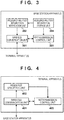
- Fig. 3 shows an example of the functional arrangement of the base station apparatus.
- the base station apparatus has a function of notifying the terminal apparatus of information for specifying a resource for transmitting an HARQ-ACK.
- the base station apparatus includes, for example, as functional components, a wireless communication unit 301, a resource-related information notification unit 302, and a retransmission control unit 303, and includes a resource-related information storage unit 304 in some cases. Note that this example shows only functional blocks related to notification control of resource-related information pertaining to an HARQ-ACK. However, the base station apparatus has a function as a base station apparatus for normal cellular communication, as a matter of course.
- the wireless communication unit 301 can receive a data signal and a control signal from the terminal apparatus, and transmit an HARQ-ACK to the data signal.
- the wireless communication unit 301 can also transmit/receive other various signals.
- the resource-related information notification unit 302 notifies, via the wireless communication unit 301, each terminal apparatus of information (to be referred to as "resource-related information" hereinafter) associated with a resource for transmitting an HARQ-ACK, that is different for each length of the HARQ RTT, as described above.
- each terminal apparatus may be notified of the same resource-related information or different resource-related information.
- the resource-related information is information based on which the terminal apparatus can specify a resource to be used to transmit an HARQ-ACK, and the resource includes a frequency position and a code, as described above. Note that a time is specified by the RTT used by each terminal apparatus.
- the resource-related information notification unit 302 may explicitly notify the terminal apparatus of both the value of the RTT and resource-related information corresponding to it, or need not notify the terminal apparatus of, for example, the value of the RTT. For example, since the base station apparatus knows the RTT to be used by the terminal apparatus, it need not notify the terminal apparatus of the value of the RTT. Furthermore, when notifying one terminal apparatus of pieces of resource-related information pertaining to the plurality of RTTs, an information field corresponding to each of the plurality of RTTs is prepared in a notification message, and the resource-related information is stored in the field, thereby making it possible to omit notification of the value of the RTT.
- the terminal apparatus can know the value of the corresponding RTT based on the field in which the resource-related information is stored.
- the resource-related information may be any information as long as the terminal apparatus can specify the resource designated by the base station apparatus based on the information. That is, the information may be, for example, the index of a predetermined resource or another value corresponding to the index.
- the value of the index specified by the resource-related information need not be an arbitrary value within a possible value range, and some representative values within the value range may be used. In a simple example, if the value range of the index includes integer values of 0 to 90, 7 bits are required to designate an arbitrary one of these values.
- the resource-related information notification unit 302 may send information stored in the resource-related information storage unit 304.
- the resource-related information storage unit 304 holds resource-related information in advance. That is, the resource-related information storage unit 304 stores resource-related information in association with each of the values of the plurality of RTTs.
- the resource-related information notification unit 302 may specify resource-related information and notify the terminal apparatus of the specified information every time. In this case, the resource-related information storage unit 304 may be omitted.
- the retransmission control unit 303 executes processing related to hybrid automatic retransmission control by HARQ. For example, the retransmission control unit 303 extracts a component of an HARQ-ACK from an uplink signal including the HARQ-ACK received via the wireless communication unit 301, and retransmits the data signal via the wireless communication unit 301, as appropriate. Note that the retransmission control unit 303 can specify in advance a resource to be used by each terminal apparatus to transmit an HARQ-ACK. That is, the retransmission control unit 303 knows the RTT used by each terminal apparatus and the start index of a CCE assigned to each terminal apparatus.
- the retransmission control unit 303 can know a specific resource to be used for an HARQ-ACK by the same method as that of specifying a resource by each terminal apparatus. Note that the retransmission control unit 303 can acquire the resource-related information from resource-related information storage unit 304 or the resource-related information notification unit 302 to specify a resource to be used by the terminal apparatus to transmit an HARQ-ACK.
- Fig. 4 shows an example of the functional arrangement of the terminal apparatus.
- the terminal apparatus includes, for example, as functional components, a wireless communication unit 401, a resource specifying unit 402, and a retransmission control unit 403. Note that this example shows only functional blocks related to retransmission control, especially, a resource specifying method at the time of transmission of an HARQ-ACK. However, the terminal apparatus has a function as a normal terminal apparatus, as a matter of course.
- the wireless communication unit 401 transmits a wireless signal to the base station apparatus, and receives a wireless signal from the base station apparatus.
- the wireless communication unit 401 can receive, for example, a signal including the above-described resource-related information.
- the resource-related information may be included in a PDCCH (Physical Downlink Control Channel) or a PDSCH (Physical Downlink Shared Channel). Note that if a plurality of terminal apparatuses are notified of common resource-related information, the resource-related information may be included in a broadcast signal such as an SIB (System Information Block).
- the wireless communication unit 401 can transmit an uplink signal including an HARQ-ACK.
- the wireless communication unit 401 can transmit a data signal based on a transmission schedule (uplink grant) designated from the base station apparatus, and receive an HARQ-ACK to the data signal from the base station apparatus.
- the procedure of processing executed in the wireless communication system according to this embodiment will be described with reference to Fig. 5 .
- the base station apparatus transmits resource-related information (S501). Examples of the resource-related information transmitted at this time will be described below with reference to Figs. 6 to 9 .
- the wireless communication system can selectively use a plurality of methods such as methods of Figs. 6 to 9 to be described below, and the base station apparatus can perform transmission by including, in the resource-related information in S501, information indicating a method in use.
- the following description assumes that there exist terminal apparatuses that respectively use HARQ RTTs of 2 ms, 3 ms, and 4 ms and transmission timings of HARQ-ACKs coincide with each other. However, for example, there may exist a terminal apparatus that uses an RTT of 1 ms, or a terminal apparatus that uses an RTT of 5 ms or longer. In either case, the following processing can be equally applied.
- the terminal apparatus is notified of the index Npucch(x) of the resource of a PUCCH as a reference for each HARQ RTT(x) where x represents the value of the RTT, and a unit is subframe or ms.
- Npucch(4) is shown in Fig. 6 but this is an index corresponding to the conventional RTT, and may not be sent.
- the terminal apparatus that uses an RTT of 2 ms specifies the index of a resource to be used by offsetting the index by a value determined in accordance with the start index of a CCE in the PDCCH with reference to Npucch(2).
- the terminal apparatus that uses an RTT of 3 ms specifies the index of a resource to be used by offsetting the index by a value determined in accordance with the start index of a CCE in the PDCCH with reference to Npucch(3).
- the index used as a reference index when specifying the index of a resource for transmission of an HARQ-ACK is different for each RTT. Therefore, it is possible to prevent a conflict between resources associated with HARQ-ACK transmission operations.
- Figs. 7 and 8 are the same as in Fig. 6 in terms of the basic principle but a reference index when specifying the index of a resource for transmission of an HARQ-ACK is changed.
- the terminal apparatus can specify the reference index Npucch(2) when the RTT is 2 ms by adding the index Npucch(4) corresponding to the conventional RTT to the difference value Npucch_offset(2).
- Npucch_offset23 Npucch(2) - Npucch(3)
- Npucch_offset34 Npucch(3) - Npucch(4).
- the terminal apparatus that uses an RTT of 2 ms can specify Npucch(2) by calculating Npucch_offset23 + Npucch_offset34 + Npucch(4).
- Npucch(3) can be calculated, in the same manner as in the example of Fig. 7 .
- a case in which a possible set of resource indices is defined for each RTT value and sent will be described.
- sets of resource indices are defined for RTTs of 2 ms and 3 ms so that the sets overlap each other but may be defined so that the sets do not overlap each other.
- an index range surrounded by a thick solid line is defined as a set of indices for an RTT of 3 ms
- an index range surrounded by a thick broken line is defined as a set of indices for an RTT of 2 ms.
- a possible set of resource indices for each RTT may be different for each notification target terminal apparatus, or may be the same. If a different set is set for each notification target terminal apparatus, information of the set may be sent by, for example, RRC (Radio Resource Control) signaling or another method. By setting different sets for the respective notification target terminal apparatuses, the indices of resources used by the plurality of terminal apparatuses can be distributed. Alternatively, if a common set is set for the notification target terminal apparatuses, information of the set may be sent by, for example, RRC signaling or a broadcast signal such as an SIB (System Information Block).
- SIB System Information Block
- the base station apparatus since the base station apparatus knows the value of the RTT used by each terminal apparatus, it selects a resource to be used by the terminal apparatus from the set of indices corresponding to the RTT, and notifies the terminal apparatus of the selection result through the PDCCH. That is, in the example shown in Fig. 9 , the terminal apparatus that uses an RTT of 2 ms receives, from the base station apparatus, designation indicating the use of the third resource from the bottom of the set of indices corresponding to an RTT of 2 ms, and specifies, in accordance with the designation, the resource to be used. Similarly, in the example shown in Fig.
- the terminal apparatus that uses an RTT of 3 ms receives, from the base station apparatus, designation indicating the use of the second resource from the bottom of the set of indices corresponding to an RTT of 3 ms, and specifies, in accordance with the designation, the resource to be used. Note that the base station apparatus need not make this notification to the terminal apparatus that uses an RTT of 4 ms.
- the terminal apparatus that uses an RTT of 4 ms can specify, in accordance with the start index of a CCE used in the PDCCH, the index of a resource to be used to transmit an HARQ-ACK, as in the conventional technique.
- the base station apparatus can designate an index to be used by 2 bits. That is, as compared with a case in which a resource to be used is designated by targeting all resource indices, signaling overhead for notification of a resource to be used can be reduced by defining the above-described sets. Furthermore, when the base station apparatus designates resource indices to be used by the respective terminal apparatuses, a resource conflict is prevented from occurring in at least the same cell. Note that the terminal apparatus can specify, within the range of the notified set, the index of a resource to be used to transmit an HARQ-ACK, in accordance with the start index of a CCE used in the PDCCH.
- the base station apparatus transmits a data signal (PDSCH) to the terminal apparatus (S502).
- a control signal (PDCCH) is transmitted.
- the terminal apparatus Based on the resource-related information received in S501 and the start index of the CCE included in the PDCCH, the terminal apparatus specifies a resource to be used to transmit an HARQ-ACK, as described with reference to Figs. 6 to 9 (S503). Then, the terminal apparatus transmits the HARQ-ACK to the base station apparatus using the specified resource (S504).
- the data signal reception-side apparatuses (the terminal apparatuses in the above example) transmit HARQ-ACKs with various RTTs, resources used for the HARQ-ACKs never conflict.
- the data signal transmission-side apparatus (the base station apparatus in the above example) can correctly receive acknowledgements, thereby preventing deterioration in efficiency of retransmission control.
- the resource-related information and the data signal may be transmitted at the same time.
- the resource-related information may be stored in the PDCCH transmitted together with the PDSCH in S502, and transmitted, or may be stored in the PDSCH and transmitted.
- the base station apparatus may notify the terminal apparatus of the resource-related information by RRC (Radio Resource Control) signaling at the time of, for example, connection establishment. If common resource-related information is used for the plurality of terminal apparatuses, the resource-related information may be broadcast.
- RRC Radio Resource Control
Landscapes
- Engineering & Computer Science (AREA)
- Signal Processing (AREA)
- Computer Networks & Wireless Communication (AREA)
- Mobile Radio Communication Systems (AREA)
Applications Claiming Priority (2)
| Application Number | Priority Date | Filing Date | Title |
|---|---|---|---|
| JP2015213306A JP6633889B2 (ja) | 2015-10-29 | 2015-10-29 | 基地局装置、端末装置、通信方法及びプログラム |
| PCT/JP2016/080550 WO2017073372A1 (ja) | 2015-10-29 | 2016-10-14 | 基地局装置、端末装置、通信方法及びプログラム |
Publications (3)
| Publication Number | Publication Date |
|---|---|
| EP3370455A1 true EP3370455A1 (de) | 2018-09-05 |
| EP3370455A4 EP3370455A4 (de) | 2018-11-14 |
| EP3370455B1 EP3370455B1 (de) | 2025-07-23 |
Family
ID=58630110
Family Applications (1)
| Application Number | Title | Priority Date | Filing Date |
|---|---|---|---|
| EP16859602.1A Active EP3370455B1 (de) | 2015-10-29 | 2016-10-14 | Basisstationsvorrichtung, endgerätevorrichtung, kommunikationsverfahren und programm |
Country Status (5)
| Country | Link |
|---|---|
| US (2) | US12052710B2 (de) |
| EP (1) | EP3370455B1 (de) |
| JP (1) | JP6633889B2 (de) |
| CN (2) | CN113206729B (de) |
| WO (1) | WO2017073372A1 (de) |
Families Citing this family (1)
| Publication number | Priority date | Publication date | Assignee | Title |
|---|---|---|---|---|
| US20240340870A1 (en) * | 2021-08-05 | 2024-10-10 | Panasonic Intellectual Property Corporation Of America | Terminal, base station, and communication method |
Family Cites Families (22)
| Publication number | Priority date | Publication date | Assignee | Title |
|---|---|---|---|---|
| WO2010053339A2 (ko) * | 2008-11-10 | 2010-05-14 | 엘지전자주식회사 | 무선통신 시스템의 harq 수행방법, 서브프레임 할당 방법 및 장치 |
| CN102739376B (zh) * | 2011-04-02 | 2018-11-16 | 中兴通讯股份有限公司 | 一种混合自动重传的处理方法及系统及一种终端 |
| US9374808B2 (en) * | 2011-09-23 | 2016-06-21 | Lg Electronics Inc. | Method for transmitting control information and apparatus for same |
| CN102316595B (zh) * | 2011-09-30 | 2017-04-12 | 中兴通讯股份有限公司 | 大带宽系统物理上行控制信道资源确定方法及装置 |
| CN103095433B (zh) * | 2011-11-04 | 2018-06-15 | 北京三星通信技术研究有限公司 | 一种发送harq-ack反馈信息的方法 |
| WO2013115690A1 (en) * | 2012-01-30 | 2013-08-08 | Telefonaktiebolaget L M Ericsson (Publ) | Methods and network nodes for scheduling transmission |
| US9538566B2 (en) * | 2012-02-21 | 2017-01-03 | Lg Electronics Inc. | Method and device for transmitting reception acknowledgement response in wireless communication system |
| US9674855B2 (en) * | 2012-03-29 | 2017-06-06 | Qualcomm Incorporated | H-ARQ timing determination under cross-carrier scheduling in LTE |
| CN103368709B (zh) * | 2012-04-09 | 2018-08-14 | 中兴通讯股份有限公司 | 一种混合自动重传请求确认应答信息发送方法及装置 |
| CN103378956B (zh) * | 2012-04-12 | 2019-03-01 | 北京三星通信技术研究有限公司 | Tdd系统的处理软缓存的方法及设备 |
| CN104620516B (zh) * | 2012-09-09 | 2018-05-15 | Lg 电子株式会社 | 发射和接收数据的方法和设备 |
| WO2014048472A1 (en) * | 2012-09-27 | 2014-04-03 | Huawei Technologies Co., Ltd. | Methods and nodes in a wireless communication system |
| US9706539B2 (en) * | 2012-09-27 | 2017-07-11 | Sun Patent Trust | Wireless communication terminal, base station device, and resource allocation method |
| US20160050706A1 (en) * | 2013-04-04 | 2016-02-18 | Intel IP Corporation | Dual connectivity for terminals supporting one uplink carrier |
| WO2015066645A1 (en) * | 2013-11-01 | 2015-05-07 | Samsung Electronics Co., Ltd. | Methods and apparatus for enhanced coverage transmission for lte advanced |
| JP6159672B2 (ja) * | 2014-01-30 | 2017-07-05 | 株式会社Nttドコモ | 基地局、送信方法、移動局及び再送制御方法 |
| US20170265207A1 (en) * | 2014-07-31 | 2017-09-14 | Ntt Docomo, Inc. | User terminal, radio base station and radio communication method |
| US11057921B2 (en) * | 2014-10-01 | 2021-07-06 | Samsung Electronics Co., Ltd. | System and method for improving spectral efficiency and coverage for user equipments |
| US10158473B2 (en) * | 2014-10-03 | 2018-12-18 | Intel IP Corporation | Methods, apparatuses, and systems for transmitting hybrid automatic repeat request transmissions using channels in an unlicensed shared medium |
| US10064165B2 (en) * | 2014-10-03 | 2018-08-28 | Qualcomm Incorporated | Downlink and uplink channel with low latency |
| US9935742B2 (en) * | 2014-10-20 | 2018-04-03 | Apple Inc. | Adaptive HARQ for half duplex operation for battery and antenna constrained devices |
| US20160192147A1 (en) * | 2014-12-31 | 2016-06-30 | Qualcomm Incorporated | Heat map generation with peer-to-peer mobile device network |
-
2015
- 2015-10-29 JP JP2015213306A patent/JP6633889B2/ja active Active
-
2016
- 2016-10-14 CN CN202110413914.0A patent/CN113206729B/zh active Active
- 2016-10-14 CN CN201680054288.8A patent/CN108141786B/zh active Active
- 2016-10-14 WO PCT/JP2016/080550 patent/WO2017073372A1/ja not_active Ceased
- 2016-10-14 EP EP16859602.1A patent/EP3370455B1/de active Active
-
2018
- 2018-03-16 US US15/923,157 patent/US12052710B2/en active Active
-
2024
- 2024-07-16 US US18/774,709 patent/US20240373427A1/en active Pending
Also Published As
| Publication number | Publication date |
|---|---|
| CN108141786B (zh) | 2021-05-11 |
| CN113206729B (zh) | 2024-03-26 |
| CN113206729A (zh) | 2021-08-03 |
| JP6633889B2 (ja) | 2020-01-22 |
| WO2017073372A1 (ja) | 2017-05-04 |
| JP2017085415A (ja) | 2017-05-18 |
| US12052710B2 (en) | 2024-07-30 |
| EP3370455A4 (de) | 2018-11-14 |
| US20240373427A1 (en) | 2024-11-07 |
| EP3370455B1 (de) | 2025-07-23 |
| CN108141786A (zh) | 2018-06-08 |
| US20180206220A1 (en) | 2018-07-19 |
Similar Documents
| Publication | Publication Date | Title |
|---|---|---|
| US11082968B2 (en) | Method and device for transmitting response information, and resource allocation for response information transmission according to transmission conditions in a wireless communication system | |
| US10587392B2 (en) | Systems and methods for frequency division duplex communication | |
| US12261698B2 (en) | Timer handling in multiple active grant configurations | |
| DK3123798T3 (en) | Semi-duplex FDD WTRU with single oscillator | |
| JP6388768B2 (ja) | ユーザ端末、無線基地局及び無線通信方法 | |
| US20170063516A1 (en) | Apparatus and method for data transmission | |
| US10567135B2 (en) | Network node and method in a wireless communications network | |
| KR20180133498A (ko) | 송신 타입 및 ue 처리 능력에 따른 송신 지연 | |
| EP2369774A2 (de) | Mobilstation und Basisstationsvorrichtung | |
| JP2020523841A (ja) | フィードバック情報の送受信方法、装置及び通信システム | |
| JP6343682B2 (ja) | ユーザ装置及び基地局 | |
| JP2016539561A (ja) | アップリンク制御情報送信方法、基地局、及びユーザ機器 | |
| JP2019522440A (ja) | メッセージ伝送方法、ユーザー装置、基地局及びコンピュータ記憶媒体 | |
| EP3089392B1 (de) | Vorrichtung und verfahren zur handhabung des harq-betriebs für nichtlizensiertes band | |
| US20240373427A1 (en) | Base station apparatus, terminal apparatus, communication method, and computer-readable storage medium | |
| WO2017073465A1 (ja) | 基地局装置、端末装置、通信方法及びプログラム | |
| KR102214648B1 (ko) | 이동 통신 시스템에서 스케줄링 및 피드백 방법 및 장치 | |
| EP4037401A1 (de) | Endgerät, basisstationsvorrichtung, steuerverfahren und programm zur ausführung eines zwei-schritt-direktzugriffsverfahrens | |
| JP6474500B2 (ja) | アップリンク制御情報送信方法、基地局、及びユーザ機器 |
Legal Events
| Date | Code | Title | Description |
|---|---|---|---|
| STAA | Information on the status of an ep patent application or granted ep patent |
Free format text: STATUS: THE INTERNATIONAL PUBLICATION HAS BEEN MADE |
|
| PUAI | Public reference made under article 153(3) epc to a published international application that has entered the european phase |
Free format text: ORIGINAL CODE: 0009012 |
|
| STAA | Information on the status of an ep patent application or granted ep patent |
Free format text: STATUS: REQUEST FOR EXAMINATION WAS MADE |
|
| 17P | Request for examination filed |
Effective date: 20180315 |
|
| AK | Designated contracting states |
Kind code of ref document: A1 Designated state(s): AL AT BE BG CH CY CZ DE DK EE ES FI FR GB GR HR HU IE IS IT LI LT LU LV MC MK MT NL NO PL PT RO RS SE SI SK SM TR |
|
| AX | Request for extension of the european patent |
Extension state: BA ME |
|
| A4 | Supplementary search report drawn up and despatched |
Effective date: 20181016 |
|
| RIC1 | Information provided on ipc code assigned before grant |
Ipc: H04W 28/04 20090101ALI20181010BHEP Ipc: H04L 1/18 20060101AFI20181010BHEP Ipc: H04W 72/04 20090101ALI20181010BHEP |
|
| DAV | Request for validation of the european patent (deleted) | ||
| DAX | Request for extension of the european patent (deleted) | ||
| STAA | Information on the status of an ep patent application or granted ep patent |
Free format text: STATUS: EXAMINATION IS IN PROGRESS |
|
| 17Q | First examination report despatched |
Effective date: 20210305 |
|
| GRAP | Despatch of communication of intention to grant a patent |
Free format text: ORIGINAL CODE: EPIDOSNIGR1 |
|
| STAA | Information on the status of an ep patent application or granted ep patent |
Free format text: STATUS: GRANT OF PATENT IS INTENDED |
|
| INTG | Intention to grant announced |
Effective date: 20250218 |
|
| GRAS | Grant fee paid |
Free format text: ORIGINAL CODE: EPIDOSNIGR3 |
|
| GRAA | (expected) grant |
Free format text: ORIGINAL CODE: 0009210 |
|
| STAA | Information on the status of an ep patent application or granted ep patent |
Free format text: STATUS: THE PATENT HAS BEEN GRANTED |
|
| AK | Designated contracting states |
Kind code of ref document: B1 Designated state(s): AL AT BE BG CH CY CZ DE DK EE ES FI FR GB GR HR HU IE IS IT LI LT LU LV MC MK MT NL NO PL PT RO RS SE SI SK SM TR |
|
| REG | Reference to a national code |
Ref country code: GB Ref legal event code: FG4D |
|
| REG | Reference to a national code |
Ref country code: CH Ref legal event code: EP |
|
| REG | Reference to a national code |
Ref country code: DE Ref legal event code: R096 Ref document number: 602016093002 Country of ref document: DE |
|
| REG | Reference to a national code |
Ref country code: IE Ref legal event code: FG4D |
|
| REG | Reference to a national code |
Ref country code: NL Ref legal event code: MP Effective date: 20250723 |
|
| PG25 | Lapsed in a contracting state [announced via postgrant information from national office to epo] |
Ref country code: PT Free format text: LAPSE BECAUSE OF FAILURE TO SUBMIT A TRANSLATION OF THE DESCRIPTION OR TO PAY THE FEE WITHIN THE PRESCRIBED TIME-LIMIT Effective date: 20251124 |
|
| PG25 | Lapsed in a contracting state [announced via postgrant information from national office to epo] |
Ref country code: NL Free format text: LAPSE BECAUSE OF FAILURE TO SUBMIT A TRANSLATION OF THE DESCRIPTION OR TO PAY THE FEE WITHIN THE PRESCRIBED TIME-LIMIT Effective date: 20250723 |
|
| REG | Reference to a national code |
Ref country code: AT Ref legal event code: MK05 Ref document number: 1817554 Country of ref document: AT Kind code of ref document: T Effective date: 20250723 |
|
| PG25 | Lapsed in a contracting state [announced via postgrant information from national office to epo] |
Ref country code: IS Free format text: LAPSE BECAUSE OF FAILURE TO SUBMIT A TRANSLATION OF THE DESCRIPTION OR TO PAY THE FEE WITHIN THE PRESCRIBED TIME-LIMIT Effective date: 20251123 |
|
| PGFP | Annual fee paid to national office [announced via postgrant information from national office to epo] |
Ref country code: DE Payment date: 20251021 Year of fee payment: 10 |
|
| PGFP | Annual fee paid to national office [announced via postgrant information from national office to epo] |
Ref country code: GB Payment date: 20251022 Year of fee payment: 10 |
|
| PG25 | Lapsed in a contracting state [announced via postgrant information from national office to epo] |
Ref country code: NO Free format text: LAPSE BECAUSE OF FAILURE TO SUBMIT A TRANSLATION OF THE DESCRIPTION OR TO PAY THE FEE WITHIN THE PRESCRIBED TIME-LIMIT Effective date: 20251023 |
|
| REG | Reference to a national code |
Ref country code: LT Ref legal event code: MG9D |
|
| PG25 | Lapsed in a contracting state [announced via postgrant information from national office to epo] |
Ref country code: AT Free format text: LAPSE BECAUSE OF FAILURE TO SUBMIT A TRANSLATION OF THE DESCRIPTION OR TO PAY THE FEE WITHIN THE PRESCRIBED TIME-LIMIT Effective date: 20250723 |
|
| PG25 | Lapsed in a contracting state [announced via postgrant information from national office to epo] |
Ref country code: FI Free format text: LAPSE BECAUSE OF FAILURE TO SUBMIT A TRANSLATION OF THE DESCRIPTION OR TO PAY THE FEE WITHIN THE PRESCRIBED TIME-LIMIT Effective date: 20250723 |
|
| PG25 | Lapsed in a contracting state [announced via postgrant information from national office to epo] |
Ref country code: HR Free format text: LAPSE BECAUSE OF FAILURE TO SUBMIT A TRANSLATION OF THE DESCRIPTION OR TO PAY THE FEE WITHIN THE PRESCRIBED TIME-LIMIT Effective date: 20250723 |
|
| PGFP | Annual fee paid to national office [announced via postgrant information from national office to epo] |
Ref country code: FR Payment date: 20251030 Year of fee payment: 10 |
|
| PG25 | Lapsed in a contracting state [announced via postgrant information from national office to epo] |
Ref country code: GR Free format text: LAPSE BECAUSE OF FAILURE TO SUBMIT A TRANSLATION OF THE DESCRIPTION OR TO PAY THE FEE WITHIN THE PRESCRIBED TIME-LIMIT Effective date: 20251024 |
|
| PG25 | Lapsed in a contracting state [announced via postgrant information from national office to epo] |
Ref country code: SE Free format text: LAPSE BECAUSE OF FAILURE TO SUBMIT A TRANSLATION OF THE DESCRIPTION OR TO PAY THE FEE WITHIN THE PRESCRIBED TIME-LIMIT Effective date: 20250723 |
|
| PG25 | Lapsed in a contracting state [announced via postgrant information from national office to epo] |
Ref country code: LV Free format text: LAPSE BECAUSE OF FAILURE TO SUBMIT A TRANSLATION OF THE DESCRIPTION OR TO PAY THE FEE WITHIN THE PRESCRIBED TIME-LIMIT Effective date: 20250723 |
|
| PG25 | Lapsed in a contracting state [announced via postgrant information from national office to epo] |
Ref country code: BG Free format text: LAPSE BECAUSE OF FAILURE TO SUBMIT A TRANSLATION OF THE DESCRIPTION OR TO PAY THE FEE WITHIN THE PRESCRIBED TIME-LIMIT Effective date: 20250723 Ref country code: PL Free format text: LAPSE BECAUSE OF FAILURE TO SUBMIT A TRANSLATION OF THE DESCRIPTION OR TO PAY THE FEE WITHIN THE PRESCRIBED TIME-LIMIT Effective date: 20250723 |
|
| PG25 | Lapsed in a contracting state [announced via postgrant information from national office to epo] |
Ref country code: RS Free format text: LAPSE BECAUSE OF FAILURE TO SUBMIT A TRANSLATION OF THE DESCRIPTION OR TO PAY THE FEE WITHIN THE PRESCRIBED TIME-LIMIT Effective date: 20251023 |
|
| PG25 | Lapsed in a contracting state [announced via postgrant information from national office to epo] |
Ref country code: ES Free format text: LAPSE BECAUSE OF FAILURE TO SUBMIT A TRANSLATION OF THE DESCRIPTION OR TO PAY THE FEE WITHIN THE PRESCRIBED TIME-LIMIT Effective date: 20250723 |
|
| PG25 | Lapsed in a contracting state [announced via postgrant information from national office to epo] |
Ref country code: RO Free format text: LAPSE BECAUSE OF FAILURE TO SUBMIT A TRANSLATION OF THE DESCRIPTION OR TO PAY THE FEE WITHIN THE PRESCRIBED TIME-LIMIT Effective date: 20250723 |
|
| PG25 | Lapsed in a contracting state [announced via postgrant information from national office to epo] |
Ref country code: SM Free format text: LAPSE BECAUSE OF FAILURE TO SUBMIT A TRANSLATION OF THE DESCRIPTION OR TO PAY THE FEE WITHIN THE PRESCRIBED TIME-LIMIT Effective date: 20250723 |
|
| PG25 | Lapsed in a contracting state [announced via postgrant information from national office to epo] |
Ref country code: DK Free format text: LAPSE BECAUSE OF FAILURE TO SUBMIT A TRANSLATION OF THE DESCRIPTION OR TO PAY THE FEE WITHIN THE PRESCRIBED TIME-LIMIT Effective date: 20250723 |
|
| PG25 | Lapsed in a contracting state [announced via postgrant information from national office to epo] |
Ref country code: IT Free format text: LAPSE BECAUSE OF FAILURE TO SUBMIT A TRANSLATION OF THE DESCRIPTION OR TO PAY THE FEE WITHIN THE PRESCRIBED TIME-LIMIT Effective date: 20250723 |
|
| PG25 | Lapsed in a contracting state [announced via postgrant information from national office to epo] |
Ref country code: CZ Free format text: LAPSE BECAUSE OF FAILURE TO SUBMIT A TRANSLATION OF THE DESCRIPTION OR TO PAY THE FEE WITHIN THE PRESCRIBED TIME-LIMIT Effective date: 20250723 |
|
| PG25 | Lapsed in a contracting state [announced via postgrant information from national office to epo] |
Ref country code: EE Free format text: LAPSE BECAUSE OF FAILURE TO SUBMIT A TRANSLATION OF THE DESCRIPTION OR TO PAY THE FEE WITHIN THE PRESCRIBED TIME-LIMIT Effective date: 20250723 Ref country code: SK Free format text: LAPSE BECAUSE OF FAILURE TO SUBMIT A TRANSLATION OF THE DESCRIPTION OR TO PAY THE FEE WITHIN THE PRESCRIBED TIME-LIMIT Effective date: 20250723 |