EP3369033B1 - System und verfahren zur bewahrung von sicherheitsetiketten und referenzzählungen für objekte in einem rechnerspeicher - Google Patents
System und verfahren zur bewahrung von sicherheitsetiketten und referenzzählungen für objekte in einem rechnerspeicher Download PDFInfo
- Publication number
- EP3369033B1 EP3369033B1 EP16861013.7A EP16861013A EP3369033B1 EP 3369033 B1 EP3369033 B1 EP 3369033B1 EP 16861013 A EP16861013 A EP 16861013A EP 3369033 B1 EP3369033 B1 EP 3369033B1
- Authority
- EP
- European Patent Office
- Prior art keywords
- objects
- security
- updating
- computer memory
- reference counts
- Prior art date
- Legal status (The legal status is an assumption and is not a legal conclusion. Google has not performed a legal analysis and makes no representation as to the accuracy of the status listed.)
- Active
Links
Images

Classifications
-
- G—PHYSICS
- G06—COMPUTING OR CALCULATING; COUNTING
- G06F—ELECTRIC DIGITAL DATA PROCESSING
- G06F21/00—Security arrangements for protecting computers, components thereof, programs or data against unauthorised activity
- G06F21/50—Monitoring users, programs or devices to maintain the integrity of platforms, e.g. of processors, firmware or operating systems
- G06F21/55—Detecting local intrusion or implementing counter-measures
- G06F21/56—Computer malware detection or handling, e.g. anti-virus arrangements
- G06F21/566—Dynamic detection, i.e. detection performed at run-time, e.g. emulation, suspicious activities
-
- G—PHYSICS
- G06—COMPUTING OR CALCULATING; COUNTING
- G06F—ELECTRIC DIGITAL DATA PROCESSING
- G06F16/00—Information retrieval; Database structures therefor; File system structures therefor
- G06F16/20—Information retrieval; Database structures therefor; File system structures therefor of structured data, e.g. relational data
- G06F16/23—Updating
-
- G—PHYSICS
- G06—COMPUTING OR CALCULATING; COUNTING
- G06F—ELECTRIC DIGITAL DATA PROCESSING
- G06F21/00—Security arrangements for protecting computers, components thereof, programs or data against unauthorised activity
- G06F21/50—Monitoring users, programs or devices to maintain the integrity of platforms, e.g. of processors, firmware or operating systems
- G06F21/52—Monitoring users, programs or devices to maintain the integrity of platforms, e.g. of processors, firmware or operating systems during program execution, e.g. stack integrity ; Preventing unwanted data erasure; Buffer overflow
- G06F21/54—Monitoring users, programs or devices to maintain the integrity of platforms, e.g. of processors, firmware or operating systems during program execution, e.g. stack integrity ; Preventing unwanted data erasure; Buffer overflow by adding security routines or objects to programs
-
- G—PHYSICS
- G06—COMPUTING OR CALCULATING; COUNTING
- G06F—ELECTRIC DIGITAL DATA PROCESSING
- G06F21/00—Security arrangements for protecting computers, components thereof, programs or data against unauthorised activity
- G06F21/50—Monitoring users, programs or devices to maintain the integrity of platforms, e.g. of processors, firmware or operating systems
- G06F21/57—Certifying or maintaining trusted computer platforms, e.g. secure boots or power-downs, version controls, system software checks, secure updates or assessing vulnerabilities
- G06F21/577—Assessing vulnerabilities and evaluating computer system security
-
- G—PHYSICS
- G06—COMPUTING OR CALCULATING; COUNTING
- G06F—ELECTRIC DIGITAL DATA PROCESSING
- G06F2221/00—Indexing scheme relating to security arrangements for protecting computers, components thereof, programs or data against unauthorised activity
- G06F2221/03—Indexing scheme relating to G06F21/50, monitoring users, programs or devices to maintain the integrity of platforms
- G06F2221/034—Test or assess a computer or a system
Definitions
- the present invention relates to a system and method for monitoring and enforcing information flow security in software systems and, more specifically, to a system for maintaining security tags and reference counts for objects in computer memory.
- Runtime monitoring is a computer system analysis technique that is based on extracting information from a running system and using such information to detect and react to observed behaviors that satisfy or violate specified properties, such as information flow security properties.
- Runtime monitor of information flow security is known to be extremely computationally intensive because it amounts to monitoring each program statement (or machine instruction) using several additional program statements (or machine instructions).
- runtime monitoring is an exercise of mirroring every aspect of program execution, which implies at least a 100% runtime overhead and most likely several times more than that.
- conventional runtime monitoring techniques mirror standard runtime environment operations such as automatic memory management and exceptional handling, which further multiplies the imposed overhead.
- DIFT dynamic information flow tracking
- Birgisson et al. developed a technique for enforcing Authorization Policies in multithreaded environments using transactional memory introspection. This technique relies on software transaction memory and is limited to enforcing authorization.
- Source code instrumentation was described in Literature No. 11. Their process applied a technique similar to dynamic binary instrumentation except at the source code level. This is essentially a kind of inlining of monitoring code. It is faster than dynamic binary instrumentation but does not apply to unmodified third-party software binaries. Moreover, it is unclear how this technique would apply to monitoring information across program boundaries.
- the system arbitrarily performs operations of updating a security tag for a first segment comprising at least part of a first object being modified in a computer memory; updating reference counts for a first set of objects that the first object pointed to immediately prior to modification; and updating reference counts for a second set of objects that the first object points to immediately after the modification.
- the system performs operations of examining one or more of the security tag for the first segment, the security tags for the first set of objects, the security tags for the second set of objects, and program counter security context. If the examination reveals a potential information flow security violation, the system perofrms a corrective action.
- a system and method for maintaining security tags and reference counts for objects in computer memory during program execution When an object or a portion of an object in the computer memory is being modified, the system preserves information to be able to perform additional operations at a later time during program execution. At a later time during program execution, the system arbitrarily performs additional operations of: updating a security tag for a first segment comprising at least part of a first object being modified in a computer memory; updating reference counts for a first set of objects that the first object pointed to immediately prior to modification; and updating reference counts for a second set of objects that the first object points to immediately after the modification.
- the present invention also includes a computer program product and a computer implemented method.
- the computer program product includes computer-readable instructions stored on a non-transitory computer-readable medium that are executable by a computer having at least one processor, such that upon execution of the instructions, the at least one processor performs the operations listed herein.
- the computer implemented method includes an act of causing a computer to execute such instructions and perform the resulting operations.
- the present invention relates to a system and method for monitoring and enforcing information flow security in software systems and, more specifically, to a system for maintaining security tags and reference counts for objects in computer memory.
- the following description is presented to enable one of ordinary skill in the art to make and use the invention and to incorporate it in the context of particular applications. Various modifications, as well as a variety of uses in different applications will be readily apparent to those skilled in the art, and the general principles defined herein may be applied to a wide range of aspects. Thus, the present invention is not intended to be limited to the aspects presented, but is to be accorded the widest scope consistent with the principles and novel features disclosed herein.
- any element in a claim that does not explicitly state "means for” performing a specified function, or “step for” performing a specific function, is not to be interpreted as a "means” or “step” clause as specified in 35 U.S.C. Section 112, Paragraph 6.
- the use of "step of” or “act of” in the claims herein is not intended to invoke the provisions of 35 U.S.C. 112, Paragraph 6.
- the first is a system and method for monitoring and enforcing information flow security in software systems.
- the system is typically in the form of a computer system operating software or in the form of a "hard-coded" instruction set. This system may be incorporated into a wide variety of devices that provide different functionalities.
- the second principal aspect is a method, typically in the form of software, operated using a data processing system (computer).
- the third principal aspect is a computer program product.
- the computer program product generally represents computer-readable instructions stored on a non-transitory computer-readable medium such as an optical storage device, e.g., a compact disc (CD) or digital versatile disc (DVD), or a magnetic storage device such as a floppy disk or magnetic tape.
- a non-transitory computer-readable medium such as an optical storage device, e.g., a compact disc (CD) or digital versatile disc (DVD), or a magnetic storage device such as a floppy disk or magnetic tape.
- a non-transitory computer-readable medium such as an optical storage device, e.g., a compact disc (CD) or digital versatile disc (DVD), or a magnetic storage device such as a floppy disk or magnetic tape.
- CD compact disc
- DVD digital versatile disc
- magnetic storage device such as a floppy disk or magnetic tape.
- Other, non-limiting examples of computer-readable media include hard disks, read-only memory (ROM), and flash-type memories.
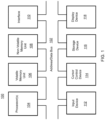
- FIG. 1 A block diagram depicting an example of a system (i.e., computer system 100) of the present invention is provided in FIG. 1 .
- the computer system 100 is configured to perform calculations, processes, operations, and/or functions associated with a program or algorithm.
- certain processes and steps discussed herein are realized as a series of instructions (e.g., software program) that reside within computer readable memory units and are executed by one or more processors of the computer system 100. When executed, the instructions cause the computer system 100 to perform specific actions and exhibit specific behavior, such as described herein.
- the computer system 100 may include an address/data bus 102 that is configured to communicate information. Additionally, one or more data processing units, such as a processor 104 (or processors), are coupled with the address/data bus 102.
- the processor 104 is configured to process information and instructions.
- the processor 104 is a microprocessor.
- the processor 104 may be a different type of processor such as a parallel processor, application-specific integrated circuit (ASIC), programmable logic array (PLA), complex programmable logic device (CPLD), or a field programmable gate array (FPGA).
- ASIC application-specific integrated circuit
- PLA programmable logic array
- CPLD complex programmable logic device
- FPGA field programmable gate array
- the computer system 100 is configured to utilize one or more data storage units.
- the computer system 100 may include a volatile memory unit 106 (e.g., random access memory (“RAM”), static RAM, dynamic RAM, etc.) coupled with the address/data bus 102, wherein a volatile memory unit 106 is configured to store information and instructions for the processor 104.
- RAM random access memory
- static RAM static RAM
- dynamic RAM dynamic RAM
- the computer system 100 further may include a non-volatile memory unit 108 (e.g., read-only memory (“ROM”), programmable ROM (“PROM”), erasable programmable ROM (“EPROM”), electrically erasable programmable ROM “EEPROM”), flash memory, etc.) coupled with the address/data bus 102, wherein the non-volatile memory unit 108 is configured to store static information and instructions for the processor 104.
- the computer system 100 may execute instructions retrieved from an online data storage unit such as in "Cloud” computing.
- the computer system 100 also may include one or more interfaces, such as an interface 110, coupled with the address/data bus 102.
- the one or more interfaces are configured to enable the computer system 100 to interface with other electronic devices and computer systems.
- the communication interfaces implemented by the one or more interfaces may include wireline (e.g., serial cables, modems, network adaptors, etc.) and/or wireless (e.g., wireless modems, wireless network adaptors, etc.) communication technology.
- the computer system 100 may include an input device 112 coupled with the address/data bus 102, wherein the input device 112 is configured to communicate information and command selections to the processor 100.
- the input device 112 is an alphanumeric input device, such as a keyboard, that may include alphanumeric and/or function keys.
- the input device 112 may be an input device other than an alphanumeric input device.
- the computer system 100 may include a cursor control device 114 coupled with the address/data bus 102, wherein the cursor control device 114 is configured to communicate user input information and/or command selections to the processor 100.
- the cursor control device 114 is implemented using a device such as a mouse, a track-ball, a track-pad, an optical tracking device, or a touch screen.
- a device such as a mouse, a track-ball, a track-pad, an optical tracking device, or a touch screen.
- the cursor control device 114 is directed and/or activated via input from the input device 112, such as in response to the use of special keys and key sequence commands associated with the input device 112.
- the cursor control device 114 is configured to be directed or guided by voice commands.
- the computer system 100 further may include one or more optional computer usable data storage devices, such as a storage device 116, coupled with the address/data bus 102.
- the storage device 116 is configured to store information and/or computer executable instructions.
- the storage device 116 is a storage device such as a magnetic or optical disk drive (e.g., hard disk drive (“HDD”), floppy diskette, compact disk read only memory (“CD-ROM”), digital versatile disk (“DVD”)).
- a display device 118 is coupled with the address/data bus 102, wherein the display device 118 is configured to display video and/or graphics.
- the display device 118 may include a cathode ray tube (“CRT”), liquid crystal display (“LCD”), field emission display (“FED”), plasma display, or any other display device suitable for displaying video and/or graphic images and alphanumeric characters recognizable to a user.
- CTR cathode ray tube
- LCD liquid crystal display
- FED field emission display
- plasma display or any other display device suitable for displaying video and/or graphic images and alphanumeric characters recognizable to a user.
- the computer system 1 00 presented herein is an example computing environment in accordance with an aspect.
- the non-limiting example of the computer system 100 is not strictly limited to being a computer system.
- an aspect provides that the computer system 100 represents a type of data processing analysis that may be used in accordance with various aspects described herein.
- other computing systems may also be implemented.
- the scope of the present technology is not limited to any single data processing environment.
- one or more operations of various aspects of the present technology are controlled or implemented using computer-executable instructions, such as program modules, being executed by a computer.
- program modules include routines, programs, objects, components and/or data structures that are configured to perform particular tasks or implement particular abstract data types.
- an aspect provides that one or more aspects of the present technology are implemented by utilizing one or more distributed computing environments, such as where tasks are performed by remote processing devices that are linked through a communications network, or such as where various program modules are located in both local and remote computer-storage media including memory-storage devices.
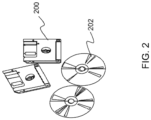
- FIG. 2 An illustrative diagram of a computer program product (i.e., storage device) embodying the present invention is depicted in FIG. 2 .
- the computer program product is depicted as floppy disk 200 or an optical disk 202 such as a CD or DVD.
- the computer program product generally represents computer-readable instructions stored on any compatible non-transitory computer-readable medium.
- the term "instructions” as used with respect to this invention generally indicates a set of operations to be performed on a computer, and may represent pieces of a whole program or individual, separable, software modules.
- Non-limiting examples of "instruction” include computer program code (source or object code) and "hard-coded" electronics (i.e. computer operations coded into a computer chip).
- the "instruction" is stored on any non-transitory computer-readable medium, such as in the memory of a computer or on a floppy disk, a CD-ROM, and a flash drive. In either event, the instructions are encoded on a non-transitory computer-readable medium.
- This disclosure is directed to a runtime monitoring technique for monitoring and enforcing information flow security in software systems that uses modified variants of standard reference counting and deferred reference counting automatic memory management systems, both of which have never been used before in the context of security monitoring.
- This approach gives rise to the unique concept of aggregating information flow security checks by deferring them while continuing the bookkeeping needed to ensure that all the necessary checks do eventually occur.
- this new approach utilizes the facilities of automatic memory management (of computer memory) to dramatically reduce the computational and memory overhead of information flow security monitoring.
- Runtime monitor of information flow security is known to be extremely computationally intensive because it amounts to monitoring each program statement (or machine instruction) using several additional program statements (or machine instructions).
- the technique of runtime monitoring with respect to the present disclosure which uses a runtime environment's own automatic memory management facility of reference counting, takes advantage of the fact that a runtime environment's memory management will be updating the same program objects (both stack and heap) as would information flow control.
- the system of the present disclosure benefits from spatial and temporal locality of access and potential fusion of instructions.
- the technique of the present disclosure further improves upon the state-of-the-art by leveraging a particular form of automatic memory management called deferred reference counting, which defers memory management updates until they can be performed in bulk.
- deferred reference counting which defers memory management updates until they can be performed in bulk.
- the system of the present disclosure can take advantage of the same mechanism to reduce frequency of information flow tracking updates and to consolidate multiples of such updates.
- an existing challenge is that when an object in computer memory is being mutated (that is, a new value is being written into a memory location where another value may have been previously written to), it is desirable to update the security tag of that object (including performing the information flow security check), and the reference count for that object.
- a unique aspect of the invention is that both updates are performed by a more efficient combined mechanism rather than less efficiently by two separate mechanisms.
- the system as described herein can be utilized for runtime monitoring of information flow to improve security and security analytics in high assurance environments and components.
- the present disclosure provides a runtime software security monitor (also known as a language runtime tracker). It is specifically designed to monitor the data and control flows within the confines of a single software program executing on a single processor computer. Runtime tracking and propagating of security tags for Information flow tracking (IFT) is often a high overhead activity in terms of execution time (updating tags for individual statements or instructions). With respect to the present system, a Runtime Environment Information Flow Tracker, a unique method has been devised for tracking and propagating security tags by instrumenting a standard reference counting (RC) garbage collector (GC) and a deferred reference counting (DRC) garbage collector.
- RC standard reference counting
- GC garbage collector
- DRC deferred reference counting
- a reference counting garbage collector a standard programming language runtime system technique for automatically managing memory allocations and deallocations, is comprised of a mutator/modified modifier and a collector.
- tracing GC do infrequent large collections by tracing the roots to live objects on the heap
- RC performs frequent small collections by "tracing" from the anti-roots of dead objects.
- the modifier To keep track of the number of references to objects allocated in heap memory, the modifier must update the reference count a heap object upon each access (i.e., creation or deletion of a reference). A deletion of the last reference to an object A will cause it to be scheduled for collection, but this leads to decrementing the reference counts of all the objects that A references, which may in turn lead to more collections and decrements.
- Combining RC GC and IFT has several advantages. This approach takes advantage of temporal and spatial locality of updating the reference count and information flow tags. This is because a reference count and tag for the same memory object will be updated in close proximity in terms of time and the in-memory representation of the reference count and information flow tag can be located in close proximity to each other spatially to take advantage of computer architecture-supported prefetching and caching behaviors implemented in the microprocessor. Further, by coupling RC GC and IFT, the IFT can enforce a strong form of tracking such that when an object is garbage collected, its contents can also be zeroed out to avoid unintentional leakage through the garbage collector. The architecture and components of the system are described in further detail below.
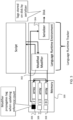
- the system is composed of three principal components, a modified allocator 300, a modified modifier 302 and a serializer 304.
- a modified collector There is a fourth optional component, a modified collector.
- the black rectangle 306 denotes a set security tag bit, while the white rectangles 308 denote a clear bit.
- the modified reference counting runtime extends the standard reference counting allocator 300, modifier 302, serializer 304, and collector to work with security tags.
- the modified modifier (“modifier”) 302 will directly manipulate heap memory of a running program. As with standard RC, all heap memory object carry along an associated reference count field, which is usually a machine word in length.
- the architecture of the present system further adds a security tag (a 1-bit tag indicating whether the memory is high or low integrity) preceding the corresponding reference count field.
- the security tag can be initialized as high integrity ("1") if the associated memory is zeroed out or low integrity ("0") if it is not.
- the security tag is updated to that of the program context of the allocator 300 (i.e., the least upper bound of the security tags of any conditional branches taken to reach this allocation point).
- a modifier takes three parameters: a destination memory location (an address) d, an offset index i into the destination, and a source memory location s.
- a destination memory location an address
- i an offset index
- i an offset index
- i an offset index
- the serializer 304 writes reference counted objects as a sequence of bytes on to durable mass storage (e.g., magnetic hard disk (HD), solid state disks (SSD), or nonvolatile RAM (NVRAM)).
- durable mass storage e.g., magnetic hard disk (HD), solid state disks (SSD), or nonvolatile RAM (NVRAM)
- the serializer 304 must write the security tag along with the rest of the reference counted object representation. Although reference count itself is not serialized, the security tag for each object must be serialized with the object. This enables the tag to be recovered when the object is deserialized. This mechanism is relevant for programs that utilize object serialization and deserialization to persist objects across runs of a program.
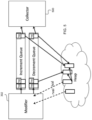
- FIG. 4 is an illustration of a serializer 304 as used in the system, which will prefix all serialized data 400 with a security tag byte prefix 402.
- An alternate design of the serializer 304' would aggregate all security tag bits 404 at the beginning of the file 406 to save on space after a word indicating the number of serialized objects 408.
- the amount of lost storage is merely the number of bits for byte or word alignment.
- the array 1 is high integrity 1 but array2 and array3 are 0, low integrity.
- the naive form of prefixing each serialized object with a security tag byte 402 wastes 7-bits per object and imposes a 1-byte overhead per memory object which would entail 25% overhead assuming an average object is only a single 32-bit machine word.
- the naive approach may also negate any alignment assumptions relied upon by programs since now all objects may be offset by a byte.
- a slightly better form forms a header in the serialized file to store the tag bits 404 of all the serialized objects 408 together. This reduces the maximum padding and overhead to 1-bit per object. For a file with 100 serialized objects (each a 32-bit machine word), this implies a 3% overhead (1-bit per 32-bit word) and 4-bits wasted (in order to align the bits to a byte alignment).
- the collector (shown in FIG. 5 as element 500) is responsible for traversing the object graph (i.e., dependents) of objects with a reference count of 0. It decrements the reference counts for any dependent objects and deallocates any object with reference count of 0. In deallocating the objects, it will interact with memory management to add the deallocated space to the free list.
- the collector 500 can apply a depth-first traversal to object graph. This approach does not by itself handle cycles as is the case with all standard reference counting techniques. Instead, the reference counting must be supplemented by a standard tracing garbage to collect cycles. In terms of tracking information flows, the collector 500 does not play a direct role except when modified to account for deferred reference counting as described in Section 4.3 to update (downgrade or upgrade) information flow security tags in bulk.
- Security tags are defined to be a partially ordered set of symbols. ⁇ is a relation on security tags.
- the updating operator : updates a reference cell containing a security tag with a new security tag.
- the ordering is further constrained such that there must exist a least upper bound (join ) and greatest lower bound (meet ) for each pair of elements in the set.
- FIG. 5 is an illustration of a modifier 302 as used in the system of the present disclosure, which checks information flow upon each update by comparing tag ( rval ) with tag ( lval t ) .
- the modifier 302 then performs the standard reference counting updates: The overwritten lval i will be enqueued on the decrement queue whereas the new rval will be enqueued on the increment queue.
- Each memory object A may have references (i.e., pointers) to multiple other memory objects B,C,D,.... B,C, and D are called dependencies of A.
- dependencies of A The main information property in this abstraction of standard programming languages is that the ith dependency of A, Ai must have a consistent security tag. In particular, one cannot update Ai to a pointer whose target has a tag ⁇ .
- signature primitives include: tag(x) projects out the security tag of an object denoted by x
- the primitives may be enriched.
- the key operation for IFT over RC is the update operation.
- the reference counting implementation in the runtime will have an update operation with the following type signature update :location ⁇ int ⁇ location ⁇ void where the first parameter is the memory location to an object A being updated, the second the index into an array with pointers to all the objects A depends on (i.e., references), and the third the memory location to the new object A should point to.
- the runtime system should flag a warning or take corrective action to address a potential information flow security violation.
- appropriate corrective actions in response to violation may include:
- the runtime environment can speculatively execute updates wrapped in XBEGIN and XEND to indicate the transaction scope (i.e., the critical section) and roll-back that update atomically with XABORT in the case the update fails to satisfy the above inequalities.
- the following algorithm is implemented:
- the modified modifier works as follows:
- DRC changes the semantics of IFT (for example, see FIG. 5 ). Instead of IFT immediately responding to an information flow security violation, it waits until a configurable number of mutations (i.e., the deferred reference count operation queue size). For a queue size of n, this means that the IFT is no more than n-1 information flow security violations behind. Moreover, for batch programs, the collector 500 can be called upon termination to guarantee that all violations will be responded to. For interactive programs (e.g., programs with event loops that run indefinitely), a period call to the collector 500 can guarantee that all violations are detected eventually and such detection is behind by no more than n-1 mutations or t time where t is the maximum duration between collections.
- a configurable number of mutations i.e., the deferred reference count operation queue size. For a queue size of n, this means that the IFT is no more than n-1 information flow security violations behind.
- the collector 500 can be called upon termination to guarantee that all violations will be responded to.
- the modified modifier 302 works as follows:
- the enqueue operations (for both increments and decrements) of the modifier 302 will check the respective queue size. If the queue is full, it will issue a collect operation and only after the collect operation is completed will it enqueue the pointer to the object that will be incremented or decremented.
- the modified collector 302 performs the following operations for reference counting collectors 500:
- the serializer in the DRC collector 500 must first flush any pending increment or decrement operations and by extension updates to security tags before constructing the serialized representation of the reference counted object to be written to mass storage. This is critical, because without such an operation, when the program is resumed or restarted, those pending reference counting operations will have been lost and therefore the reference counting state would be inconsistent.
Landscapes
- Engineering & Computer Science (AREA)
- Computer Security & Cryptography (AREA)
- Theoretical Computer Science (AREA)
- Software Systems (AREA)
- General Engineering & Computer Science (AREA)
- Computer Hardware Design (AREA)
- General Physics & Mathematics (AREA)
- Physics & Mathematics (AREA)
- Data Mining & Analysis (AREA)
- Databases & Information Systems (AREA)
- Computing Systems (AREA)
- Health & Medical Sciences (AREA)
- General Health & Medical Sciences (AREA)
- Virology (AREA)
- Storage Device Security (AREA)
Claims (9)
- Verfahren zum Beibehalten von Sicherheitstags und Referenzzählungen für Objekte in einem Computerspeicher, wobei das Verfahren einen Vorgang umfasst, aus:
Veranlassen wenigstens eines Prozessors Anweisungen auszuführen, welche auf einem nicht-transitorischen computerlesbaren Medium kodiert sind, sodass der wenigstens eine Prozessor bei der Ausführung Operationen durchführt, aus:Aktualisieren eines Sicherheitstags für ein erstes Segment, umfassend wenigstens einen Teil eines ersten Objekts, welches in einem Computerspeicher modifiziert wird;Aktualisieren von Referenzzählungen für eine erste Gruppe von Objekten, auf welche das erste Objekt unmittelbar vor der Modifizierung hingewiesen hat; undAktualisieren von Referenzzählungen für eine zweite Gruppe von Objekten, auf welche das erste Objekt unmittelbar nach der Modifizierung hingewiesen hat;Prüfen eines oder mehrerer aus dem Sicherheitstag für das erste Segment, der Sicherheitstags für die erste Gruppe von Objekten, der Sicherheitstags für die zweite Gruppe von Objekten und einem Programmzähler-Sicherheitskontext; undfalls die Prüfung eine potenzielle Informationsfluss-Sicherheitsverletzung ergibt, Durchführen einer Korrekturmaßnahme. - Verfahren nach Anspruch 1, ferner umfassend Operationen, aus:wenn das erste Objekt oder ein Teil des ersten Objekts in dem Computerspeicher modifiziert wird, Erhalten von Informationen, um dazu in der Lage zu sein, an einem späteren Zeitpunkt während einer Programmausführung zusätzliche Operationen durchzuführen;an einem späteren Zeitpunkt während einer Programmausführung, Durchführen zusätzlicher Operationen, aus:Aktualisieren des Sicherheitstags für das erste Segment, umfassend wenigstens einen Teil des ersten Objekts, welches in dem Computerspeicher modifiziert wird;Aktualisieren von Referenzzählungen für die erste Gruppe von Objekten, auf welche das erste Objekt unmittelbar vor der Modifizierung hingewiesen hat; undAktualisieren von Referenzzählungen für die zweite Gruppe von Objekten, auf welche das erste Objekt unmittelbar nach der Modifizierung hingewiesen hat.
- Verfahren nach Anspruch 1, ferner umfassend Operationen, aus:wenn das erste Objekt oder ein Teil des ersten Objekts in dem Computerspeicher modifiziert wird, Erhalten von Informationen, um dazu in der Lage zu sein, an einem späteren Zeitpunkt während einer Programmausführung zusätzliche Operationen durchzuführen;an einem späteren Zeitpunkt während einer Programmausführung, Durchführen zusätzlicher Operationen, aus:Aktualisieren des Sicherheitstags für das erste Segment, umfassend wenigstens einen Teil des ersten Objekts, welches in dem Computerspeicher modifiziert wird;Aktualisieren von Referenzzählungen für die erste Gruppe von Objekten, auf welche das erste Objekt unmittelbar vor der Modifizierung hingewiesen hat; undAktualisieren von Referenzzählungen für die zweite Gruppe von Objekten, auf welche das erste Objekt unmittelbar nach der Modifizierung hingewiesen hat.
- System zum Beibehalten von Sicherheitstags und Referenzzählungen für Objekte in einem Computerspeicher, wobei das System umfasst:
wenigstens einen Prozessor und einen Computerspeicher, wobei der Computerspeicher darauf kodierte Anweisungen aufweist, sodass, wenn ein Objekt oder ein Abschnitt eines Objekts in dem Computerspeicher modifiziert wird, das System Operationen beliebig durchführt, aus:Aktualisieren eines Sicherheitstags für ein erstes Segment, umfassend wenigstens einen Teil eines ersten Objekts, welches in einem Computerspeicher modifiziert wird;Aktualisieren von Referenzzählungen für eine erste Gruppe von Objekten, auf welche das erste Objekt unmittelbar vor der Modifizierung hingewiesen hat; undAktualisieren von Referenzzählungen für eine zweite Gruppe von Objekten, auf welche das erste Objekt unmittelbar nach der Modifizierung hingewiesen hat;Prüfen eines oder mehrerer aus dem Sicherheitstag für das erste Segment, der Sicherheitstags für die erste Gruppe von Objekten, der Sicherheitstags für die zweite Gruppe von Objekten und einem Programmzähler-Sicherheitskontext; undfalls die Prüfung eine potenzielle Informationsfluss-Sicherheitsverletzung ergibt, Durchführen einer Korrekturmaßnahme. - System nach Anspruch 4, ferner umfassend Operationen, aus:wenn das erste Objekt oder ein Teil des ersten Objekts in dem Computerspeicher modifiziert wird, Erhalten von Informationen, um dazu in der Lage zu sein, an einem späteren Zeitpunkt während einer Programmausführung zusätzliche Operationen durchzuführen;an einem späteren Zeitpunkt während einer Programmausführung, Durchführen zusätzlicher Operationen, aus:Aktualisieren des Sicherheitstags für das erste Segment, umfassend wenigstens einen Teil des ersten Objekts, welches in dem Computerspeicher modifiziert wird;Aktualisieren von Referenzzählungen für die erste Gruppe von Objekten, auf welche das erste Objekt unmittelbar vor der Modifizierung hingewiesen hat; undAktualisieren von Referenzzählungen für die zweite Gruppe von Objekten, auf welche das erste Objekt unmittelbar nach der Modifizierung hingewiesen hat.
- System nach Anspruch 4, ferner umfassend Operationen, aus:wenn das erste Objekt oder ein Teil des ersten Objekts in dem Computerspeicher modifiziert wird, Erhalten von Informationen, um dazu in der Lage zu sein, an einem späteren Zeitpunkt während einer Programmausführung zusätzliche Operationen durchzuführen;an einem späteren Zeitpunkt während einer Programmausführung, Durchführen zusätzlicher Operationen, aus:Aktualisieren des Sicherheitstags für das erste Segment, umfassend wenigstens einen Teil des ersten Objekts, welches in dem Computerspeicher modifiziert wird;Aktualisieren von Referenzzählungen für die erste Gruppe von Objekten, auf welche das erste Objekt unmittelbar vor der Modifizierung hingewiesen hat; undAktualisieren von Referenzzählungen für die zweite Gruppe von Objekten, auf welche das erste Objekt unmittelbar nach der Modifizierung hingewiesen hat.
- Computerprogrammprodukt zum Beibehalten von Sicherheitstags und Referenzzählungen für Objekte in einem Computerspeicher, wobei das Computerprogrammprodukt umfasst:
ein nicht-transitorisches computerlesbares Medium, welches darauf kodierte Anweisungen aufweist, sodass, bei einer Ausführung der Anweisungen durch wenigstens einen Prozessor, der wenigstens eine Prozessor Operationen durchführt, aus:Aktualisieren eines Sicherheitstags für ein erstes Segment, umfassend wenigstens einen Teil eines ersten Objekts, welches in einem Computerspeicher modifiziert wird;Aktualisieren von Referenzzählungen für eine erste Gruppe von Objekten, auf welche das erste Objekt unmittelbar vor der Modifizierung hingewiesen hat; undAktualisieren von Referenzzählungen für eine zweite Gruppe von Objekten, auf welche das erste Objekt unmittelbar nach der Modifizierung hingewiesen hat;Prüfen eines oder mehrerer aus dem Sicherheitstag für das erste Segment, der Sicherheitstags für die erste Gruppe von Objekten, der Sicherheitstags für die zweite Gruppe von Objekten und einem Programmzähler-Sicherheitskontext; undfalls die Prüfung eine potenzielle Informationsfluss-Sicherheitsverletzung ergibt, Durchführen einer Korrekturmaßnahme. - Computerprogrammprodukt nach Anspruch 7, ferner umfassend Anweisungen zum Veranlassen wenigstens eines Prozessors Operationen durchzuführen, aus:wenn das erste Objekt oder ein Teil des ersten Objekts in dem Computerspeicher modifiziert wird, Erhalten von Informationen, um dazu in der Lage zu sein, an einem späteren Zeitpunkt während einer Programmausführung zusätzliche Operationen durchzuführen;an einem späteren Zeitpunkt während einer Programmausführung, Durchführen zusätzlicher Operationen, aus:Aktualisieren des Sicherheitstags für das erste Segment, umfassend wenigstens einen Teil des ersten Objekts, welches in dem Computerspeicher modifiziert wird;Aktualisieren von Referenzzählungen für die erste Gruppe von Objekten, auf welche das erste Objekt unmittelbar vor der Modifizierung hingewiesen hat; undAktualisieren von Referenzzählungen für die zweite Gruppe von Objekten, auf welche das erste Objekt unmittelbar nach der Modifizierung hingewiesen hat.
- Computerprogrammprodukt nach Anspruch 7, ferner umfassend Anweisungen zum Veranlassen des wenigstens einen Prozessors Operationen durchzuführen, aus:wenn das erste Objekt oder ein Teil des ersten Objekts in dem Computerspeicher modifiziert wird, Erhalten von Informationen, um dazu in der Lage zu sein, an einem späteren Zeitpunkt während einer Programmausführung zusätzliche Operationen durchzuführen;an einem späteren Zeitpunkt während einer Programmausführung, Durchführen zusätzlicher Operationen, aus:Aktualisieren des Sicherheitstags für das erste Segment, umfassend wenigstens einen Teil des ersten Objekts, welches in dem Computerspeicher modifiziert wird;Aktualisieren von Referenzzählungen für die erste Gruppe von Objekten, auf welche das erste Objekt unmittelbar vor der Modifizierung hingewiesen hat; undAktualisieren von Referenzzählungen für die zweite Gruppe von Objekten, auf welche das erste Objekt unmittelbar nach der Modifizierung hingewiesen hat.
Applications Claiming Priority (2)
| Application Number | Priority Date | Filing Date | Title |
|---|---|---|---|
| US201562247460P | 2015-10-28 | 2015-10-28 | |
| PCT/US2016/059597 WO2017075546A1 (en) | 2015-10-28 | 2016-10-28 | System and method for maintaining security tags and reference counts for objects in computer memory |
Publications (3)
| Publication Number | Publication Date |
|---|---|
| EP3369033A1 EP3369033A1 (de) | 2018-09-05 |
| EP3369033A4 EP3369033A4 (de) | 2019-05-22 |
| EP3369033B1 true EP3369033B1 (de) | 2024-08-07 |
Family
ID=58631236
Family Applications (1)
| Application Number | Title | Priority Date | Filing Date |
|---|---|---|---|
| EP16861013.7A Active EP3369033B1 (de) | 2015-10-28 | 2016-10-28 | System und verfahren zur bewahrung von sicherheitsetiketten und referenzzählungen für objekte in einem rechnerspeicher |
Country Status (4)
| Country | Link |
|---|---|
| US (1) | US10430587B2 (de) |
| EP (1) | EP3369033B1 (de) |
| CN (1) | CN108140100B (de) |
| WO (1) | WO2017075546A1 (de) |
Families Citing this family (5)
| Publication number | Priority date | Publication date | Assignee | Title |
|---|---|---|---|---|
| US10904291B1 (en) * | 2017-05-03 | 2021-01-26 | Hrl Laboratories, Llc | Low-overhead software transformation to enforce information security policies |
| CN113448877B (zh) * | 2020-03-26 | 2025-02-07 | 伊姆西Ip控股有限责任公司 | 用于数据存储的方法、设备和计算机程序 |
| CN112580028A (zh) * | 2020-12-26 | 2021-03-30 | 重庆扬成大数据科技有限公司 | 通过分布式计算进行农业信息化数据安全优化方法 |
| US11870798B2 (en) * | 2021-04-23 | 2024-01-09 | Google Llc | Minimizing security scanning induced network disruptions |
| WO2023177446A1 (en) * | 2022-03-14 | 2023-09-21 | Futurewei Technologies, Inc. | Reducing reference count updates for stack variables |
Family Cites Families (29)
| Publication number | Priority date | Publication date | Assignee | Title |
|---|---|---|---|---|
| US7769791B2 (en) * | 2001-01-12 | 2010-08-03 | Oracle America, Inc. | Lightweight reference counting using single-target synchronization |
| JP4212797B2 (ja) * | 2001-10-12 | 2009-01-21 | 株式会社リコー | セキュリティシステム及びセキュリティ管理方法 |
| JP3939975B2 (ja) * | 2001-12-14 | 2007-07-04 | 松下電器産業株式会社 | ガベージコレクション装置、ガベージコレクション方法及びガベージコレクションプログラム |
| EP1527414A2 (de) * | 2002-02-01 | 2005-05-04 | John R. C. Fairweather | System und verfahren zur verwaltung von wissen |
| DE10320062A1 (de) * | 2003-05-06 | 2004-12-16 | Giesecke & Devrient Gmbh | Speicherverwaltung bei einem tragbaren Datenträger |
| US7613209B1 (en) * | 2004-03-30 | 2009-11-03 | Extreme Networks, Inc. | System and method for egress packet marking |
| US7512792B2 (en) * | 2005-12-15 | 2009-03-31 | International Business Machines Corporation | Reference monitor method for enforcing information flow policies |
| US7647630B2 (en) * | 2005-12-15 | 2010-01-12 | International Business Machines Corporation | Associating security information with information objects in a data processing system |
| GB0601849D0 (en) * | 2006-01-30 | 2006-03-08 | Ttp Communications Ltd | Method of maintaining software integrity |
| US8621607B2 (en) * | 2006-05-18 | 2013-12-31 | Vmware, Inc. | Computational system including mechanisms for tracking taint |
| US8510827B1 (en) * | 2006-05-18 | 2013-08-13 | Vmware, Inc. | Taint tracking mechanism for computer security |
| US20080307174A1 (en) * | 2007-06-08 | 2008-12-11 | Apple Inc. | Dual Use Memory Management Library |
| US8499137B2 (en) * | 2010-03-12 | 2013-07-30 | Lsi Corporation | Memory manager for a network communications processor architecture |
| US8819446B2 (en) * | 2009-06-26 | 2014-08-26 | International Business Machines Corporation | Support for secure objects in a computer system |
| US8478799B2 (en) * | 2009-06-26 | 2013-07-02 | Simplivity Corporation | Namespace file system accessing an object store |
| WO2011111115A1 (ja) * | 2010-03-12 | 2011-09-15 | 株式会社日立製作所 | ストレージシステム及びそのファイルアクセス判定方法 |
| US8689349B2 (en) * | 2010-05-05 | 2014-04-01 | Intel Corporation | Information flow tracking and protection |
| US8195619B2 (en) | 2010-08-17 | 2012-06-05 | Symantec Corporation | Extent reference count update system and method |
| CN102780718A (zh) * | 2011-05-10 | 2012-11-14 | 腾讯科技(北京)有限公司 | 一种新消息提示方法及系统 |
| US8346810B2 (en) * | 2011-05-13 | 2013-01-01 | Simplivity Corporation | Reference count propagation |
| US9836934B2 (en) * | 2011-09-30 | 2017-12-05 | SMTP Associates, LLC | Security tag for inventory and anti-theft alarm system |
| US8898780B2 (en) * | 2011-11-07 | 2014-11-25 | Qualcomm Incorporated | Encoding labels in values to capture information flows |
| US8914616B2 (en) * | 2011-12-02 | 2014-12-16 | Arm Limited | Exchanging physical to logical register mapping for obfuscation purpose when instruction of no operational impact is executed |
| CN102591735B (zh) * | 2011-12-31 | 2013-11-13 | 飞天诚信科技股份有限公司 | 一种智能卡处理cap文件的方法 |
| EP2823500B1 (de) * | 2012-03-05 | 2016-09-28 | Siemens Aktiengesellschaft | Verfahren und vorrichtung für eine selektive, mit einem magnetischen anker versehene, auslösevorrichtung eines schutzschalters |
| CN103714090B (zh) * | 2012-10-09 | 2018-04-10 | 阿里巴巴集团控股有限公司 | 多索引数据库事务处理方法及数据库 |
| CN102955849A (zh) * | 2012-10-29 | 2013-03-06 | 新浪技术(中国)有限公司 | 基于标签推荐文档的方法及文档推荐装置 |
| US8938795B2 (en) * | 2012-11-19 | 2015-01-20 | Owl Computing Technologies, Inc. | System for real-time cross-domain system packet filtering |
| US10185584B2 (en) * | 2013-08-20 | 2019-01-22 | Teleputers, Llc | System and method for self-protecting data |
-
2016
- 2016-10-28 EP EP16861013.7A patent/EP3369033B1/de active Active
- 2016-10-28 US US15/338,295 patent/US10430587B2/en active Active
- 2016-10-28 CN CN201680055250.2A patent/CN108140100B/zh active Active
- 2016-10-28 WO PCT/US2016/059597 patent/WO2017075546A1/en not_active Ceased
Also Published As
| Publication number | Publication date |
|---|---|
| CN108140100B (zh) | 2021-10-08 |
| EP3369033A1 (de) | 2018-09-05 |
| WO2017075546A1 (en) | 2017-05-04 |
| US10430587B2 (en) | 2019-10-01 |
| US20170300694A1 (en) | 2017-10-19 |
| CN108140100A (zh) | 2018-06-08 |
| EP3369033A4 (de) | 2019-05-22 |
Similar Documents
| Publication | Publication Date | Title |
|---|---|---|
| CN113383318B (zh) | 减少垃圾回收标记中的同步依赖 | |
| EP3369033B1 (de) | System und verfahren zur bewahrung von sicherheitsetiketten und referenzzählungen für objekte in einem rechnerspeicher | |
| US9530006B2 (en) | Method and system for performing a memory safety check of a program written in an unmanaged programming language | |
| Long et al. | Automatic runtime error repair and containment via recovery shepherding | |
| Tao et al. | Formal verification of a multiprocessor hypervisor on arm relaxed memory hardware | |
| US8972338B2 (en) | Sampling transactions from multi-level log file records | |
| US10725907B2 (en) | Information processing apparatus for specifying data region of garbage collection, information processing system and information processing method | |
| US20150370850A1 (en) | Addressing Cross-Allocated Blocks in a File System | |
| CN104714831B (zh) | 一种检测虚拟机中的寄生进程的方法和装置 | |
| US11681806B2 (en) | Protecting against out-of-bounds buffer references | |
| US9740597B2 (en) | Transactional execution of native methods | |
| Pellegrini et al. | Transparent and efficient shared-state management for optimistic simulations on multi-core machines | |
| US20150235025A1 (en) | Process to prevent malicious changes to electronic files on an electronic storage device | |
| WO2019018059A1 (en) | DISTRIBUTED FILE STRUCTURE THAT CAN BE UPDATED | |
| EP3853748B1 (de) | Protokollauslagerung aus einem protokollteil mit fixer grösse | |
| US11567866B2 (en) | Free detection with double free protection | |
| US20150242312A1 (en) | Method of managing memory, computer, and recording medium | |
| US8495309B2 (en) | Variable length data protected by seqlock | |
| US8484620B2 (en) | Implementing performance impact reduction of watched variables | |
| US20130326181A1 (en) | Providing usage statistics for virtual storage | |
| KR102546947B1 (ko) | 시대 기반 메모리 수집 기법과 포인터 기반 메모리 수집 기법 혼합을 위한 컴퓨터 시스템 및 그의 방법 | |
| US12141061B2 (en) | Use after free detection with double free protection | |
| US11816065B2 (en) | Event level retention management for data streams | |
| Garcia | Integrated Hardware Garbage Collection for Real-Time Embedded Systems | |
| Zhang | Designing Practical Software Bug Detectors Using Commodity Hardware and Common Programming Patterns |
Legal Events
| Date | Code | Title | Description |
|---|---|---|---|
| STAA | Information on the status of an ep patent application or granted ep patent |
Free format text: STATUS: THE INTERNATIONAL PUBLICATION HAS BEEN MADE |
|
| PUAI | Public reference made under article 153(3) epc to a published international application that has entered the european phase |
Free format text: ORIGINAL CODE: 0009012 |
|
| STAA | Information on the status of an ep patent application or granted ep patent |
Free format text: STATUS: REQUEST FOR EXAMINATION WAS MADE |
|
| 17P | Request for examination filed |
Effective date: 20180430 |
|
| AK | Designated contracting states |
Kind code of ref document: A1 Designated state(s): AL AT BE BG CH CY CZ DE DK EE ES FI FR GB GR HR HU IE IS IT LI LT LU LV MC MK MT NL NO PL PT RO RS SE SI SK SM TR |
|
| AX | Request for extension of the european patent |
Extension state: BA ME |
|
| DAV | Request for validation of the european patent (deleted) | ||
| DAX | Request for extension of the european patent (deleted) | ||
| A4 | Supplementary search report drawn up and despatched |
Effective date: 20190425 |
|
| RIC1 | Information provided on ipc code assigned before grant |
Ipc: G06F 21/12 20130101ALI20190417BHEP Ipc: G06F 21/71 20130101AFI20190417BHEP Ipc: G06F 21/55 20130101ALI20190417BHEP |
|
| STAA | Information on the status of an ep patent application or granted ep patent |
Free format text: STATUS: EXAMINATION IS IN PROGRESS |
|
| 17Q | First examination report despatched |
Effective date: 20210519 |
|
| P01 | Opt-out of the competence of the unified patent court (upc) registered |
Effective date: 20230525 |
|
| GRAP | Despatch of communication of intention to grant a patent |
Free format text: ORIGINAL CODE: EPIDOSNIGR1 |
|
| STAA | Information on the status of an ep patent application or granted ep patent |
Free format text: STATUS: GRANT OF PATENT IS INTENDED |
|
| INTG | Intention to grant announced |
Effective date: 20230920 |
|
| GRAJ | Information related to disapproval of communication of intention to grant by the applicant or resumption of examination proceedings by the epo deleted |
Free format text: ORIGINAL CODE: EPIDOSDIGR1 |
|
| STAA | Information on the status of an ep patent application or granted ep patent |
Free format text: STATUS: EXAMINATION IS IN PROGRESS |
|
| REG | Reference to a national code |
Ref country code: DE Ref legal event code: R079 Free format text: PREVIOUS MAIN CLASS: G06F0021710000 Ipc: G06F0021540000 Ref document number: 602016088820 Country of ref document: DE |
|
| GRAP | Despatch of communication of intention to grant a patent |
Free format text: ORIGINAL CODE: EPIDOSNIGR1 |
|
| STAA | Information on the status of an ep patent application or granted ep patent |
Free format text: STATUS: GRANT OF PATENT IS INTENDED |
|
| INTC | Intention to grant announced (deleted) | ||
| RIC1 | Information provided on ipc code assigned before grant |
Ipc: G06F 21/57 20130101ALI20240206BHEP Ipc: G06F 21/54 20130101AFI20240206BHEP |
|
| INTG | Intention to grant announced |
Effective date: 20240226 |
|
| GRAS | Grant fee paid |
Free format text: ORIGINAL CODE: EPIDOSNIGR3 |
|
| GRAA | (expected) grant |
Free format text: ORIGINAL CODE: 0009210 |
|
| STAA | Information on the status of an ep patent application or granted ep patent |
Free format text: STATUS: THE PATENT HAS BEEN GRANTED |
|
| AK | Designated contracting states |
Kind code of ref document: B1 Designated state(s): AL AT BE BG CH CY CZ DE DK EE ES FI FR GB GR HR HU IE IS IT LI LT LU LV MC MK MT NL NO PL PT RO RS SE SI SK SM TR |
|
| REG | Reference to a national code |
Ref country code: GB Ref legal event code: FG4D |
|
| REG | Reference to a national code |
Ref country code: CH Ref legal event code: EP |
|
| REG | Reference to a national code |
Ref country code: IE Ref legal event code: FG4D |
|
| REG | Reference to a national code |
Ref country code: DE Ref legal event code: R096 Ref document number: 602016088820 Country of ref document: DE |
|
| REG | Reference to a national code |
Ref country code: LT Ref legal event code: MG9D |
|
| REG | Reference to a national code |
Ref country code: NL Ref legal event code: MP Effective date: 20240807 |
|
| PG25 | Lapsed in a contracting state [announced via postgrant information from national office to epo] |
Ref country code: NO Free format text: LAPSE BECAUSE OF FAILURE TO SUBMIT A TRANSLATION OF THE DESCRIPTION OR TO PAY THE FEE WITHIN THE PRESCRIBED TIME-LIMIT Effective date: 20241107 |
|
| REG | Reference to a national code |
Ref country code: AT Ref legal event code: MK05 Ref document number: 1711727 Country of ref document: AT Kind code of ref document: T Effective date: 20240807 |
|
| PG25 | Lapsed in a contracting state [announced via postgrant information from national office to epo] |
Ref country code: FI Free format text: LAPSE BECAUSE OF FAILURE TO SUBMIT A TRANSLATION OF THE DESCRIPTION OR TO PAY THE FEE WITHIN THE PRESCRIBED TIME-LIMIT Effective date: 20240807 Ref country code: NL Free format text: LAPSE BECAUSE OF FAILURE TO SUBMIT A TRANSLATION OF THE DESCRIPTION OR TO PAY THE FEE WITHIN THE PRESCRIBED TIME-LIMIT Effective date: 20240807 Ref country code: GR Free format text: LAPSE BECAUSE OF FAILURE TO SUBMIT A TRANSLATION OF THE DESCRIPTION OR TO PAY THE FEE WITHIN THE PRESCRIBED TIME-LIMIT Effective date: 20241108 Ref country code: PL Free format text: LAPSE BECAUSE OF FAILURE TO SUBMIT A TRANSLATION OF THE DESCRIPTION OR TO PAY THE FEE WITHIN THE PRESCRIBED TIME-LIMIT Effective date: 20240807 Ref country code: PT Free format text: LAPSE BECAUSE OF FAILURE TO SUBMIT A TRANSLATION OF THE DESCRIPTION OR TO PAY THE FEE WITHIN THE PRESCRIBED TIME-LIMIT Effective date: 20241209 |
|
| PG25 | Lapsed in a contracting state [announced via postgrant information from national office to epo] |
Ref country code: BG Free format text: LAPSE BECAUSE OF FAILURE TO SUBMIT A TRANSLATION OF THE DESCRIPTION OR TO PAY THE FEE WITHIN THE PRESCRIBED TIME-LIMIT Effective date: 20240807 |
|
| PG25 | Lapsed in a contracting state [announced via postgrant information from national office to epo] |
Ref country code: LV Free format text: LAPSE BECAUSE OF FAILURE TO SUBMIT A TRANSLATION OF THE DESCRIPTION OR TO PAY THE FEE WITHIN THE PRESCRIBED TIME-LIMIT Effective date: 20240807 |
|
| PG25 | Lapsed in a contracting state [announced via postgrant information from national office to epo] |
Ref country code: IS Free format text: LAPSE BECAUSE OF FAILURE TO SUBMIT A TRANSLATION OF THE DESCRIPTION OR TO PAY THE FEE WITHIN THE PRESCRIBED TIME-LIMIT Effective date: 20241207 Ref country code: AT Free format text: LAPSE BECAUSE OF FAILURE TO SUBMIT A TRANSLATION OF THE DESCRIPTION OR TO PAY THE FEE WITHIN THE PRESCRIBED TIME-LIMIT Effective date: 20240807 |
|
| PG25 | Lapsed in a contracting state [announced via postgrant information from national office to epo] |
Ref country code: HR Free format text: LAPSE BECAUSE OF FAILURE TO SUBMIT A TRANSLATION OF THE DESCRIPTION OR TO PAY THE FEE WITHIN THE PRESCRIBED TIME-LIMIT Effective date: 20240807 |
|
| PG25 | Lapsed in a contracting state [announced via postgrant information from national office to epo] |
Ref country code: ES Free format text: LAPSE BECAUSE OF FAILURE TO SUBMIT A TRANSLATION OF THE DESCRIPTION OR TO PAY THE FEE WITHIN THE PRESCRIBED TIME-LIMIT Effective date: 20240807 Ref country code: RS Free format text: LAPSE BECAUSE OF FAILURE TO SUBMIT A TRANSLATION OF THE DESCRIPTION OR TO PAY THE FEE WITHIN THE PRESCRIBED TIME-LIMIT Effective date: 20241107 |
|
| PG25 | Lapsed in a contracting state [announced via postgrant information from national office to epo] |
Ref country code: RS Free format text: LAPSE BECAUSE OF FAILURE TO SUBMIT A TRANSLATION OF THE DESCRIPTION OR TO PAY THE FEE WITHIN THE PRESCRIBED TIME-LIMIT Effective date: 20241107 Ref country code: PT Free format text: LAPSE BECAUSE OF FAILURE TO SUBMIT A TRANSLATION OF THE DESCRIPTION OR TO PAY THE FEE WITHIN THE PRESCRIBED TIME-LIMIT Effective date: 20241209 Ref country code: PL Free format text: LAPSE BECAUSE OF FAILURE TO SUBMIT A TRANSLATION OF THE DESCRIPTION OR TO PAY THE FEE WITHIN THE PRESCRIBED TIME-LIMIT Effective date: 20240807 Ref country code: NO Free format text: LAPSE BECAUSE OF FAILURE TO SUBMIT A TRANSLATION OF THE DESCRIPTION OR TO PAY THE FEE WITHIN THE PRESCRIBED TIME-LIMIT Effective date: 20241107 Ref country code: NL Free format text: LAPSE BECAUSE OF FAILURE TO SUBMIT A TRANSLATION OF THE DESCRIPTION OR TO PAY THE FEE WITHIN THE PRESCRIBED TIME-LIMIT Effective date: 20240807 Ref country code: LV Free format text: LAPSE BECAUSE OF FAILURE TO SUBMIT A TRANSLATION OF THE DESCRIPTION OR TO PAY THE FEE WITHIN THE PRESCRIBED TIME-LIMIT Effective date: 20240807 Ref country code: IS Free format text: LAPSE BECAUSE OF FAILURE TO SUBMIT A TRANSLATION OF THE DESCRIPTION OR TO PAY THE FEE WITHIN THE PRESCRIBED TIME-LIMIT Effective date: 20241207 Ref country code: HR Free format text: LAPSE BECAUSE OF FAILURE TO SUBMIT A TRANSLATION OF THE DESCRIPTION OR TO PAY THE FEE WITHIN THE PRESCRIBED TIME-LIMIT Effective date: 20240807 Ref country code: GR Free format text: LAPSE BECAUSE OF FAILURE TO SUBMIT A TRANSLATION OF THE DESCRIPTION OR TO PAY THE FEE WITHIN THE PRESCRIBED TIME-LIMIT Effective date: 20241108 Ref country code: FI Free format text: LAPSE BECAUSE OF FAILURE TO SUBMIT A TRANSLATION OF THE DESCRIPTION OR TO PAY THE FEE WITHIN THE PRESCRIBED TIME-LIMIT Effective date: 20240807 Ref country code: ES Free format text: LAPSE BECAUSE OF FAILURE TO SUBMIT A TRANSLATION OF THE DESCRIPTION OR TO PAY THE FEE WITHIN THE PRESCRIBED TIME-LIMIT Effective date: 20240807 Ref country code: BG Free format text: LAPSE BECAUSE OF FAILURE TO SUBMIT A TRANSLATION OF THE DESCRIPTION OR TO PAY THE FEE WITHIN THE PRESCRIBED TIME-LIMIT Effective date: 20240807 Ref country code: AT Free format text: LAPSE BECAUSE OF FAILURE TO SUBMIT A TRANSLATION OF THE DESCRIPTION OR TO PAY THE FEE WITHIN THE PRESCRIBED TIME-LIMIT Effective date: 20240807 |
|
| PG25 | Lapsed in a contracting state [announced via postgrant information from national office to epo] |
Ref country code: DK Free format text: LAPSE BECAUSE OF FAILURE TO SUBMIT A TRANSLATION OF THE DESCRIPTION OR TO PAY THE FEE WITHIN THE PRESCRIBED TIME-LIMIT Effective date: 20240807 Ref country code: RO Free format text: LAPSE BECAUSE OF FAILURE TO SUBMIT A TRANSLATION OF THE DESCRIPTION OR TO PAY THE FEE WITHIN THE PRESCRIBED TIME-LIMIT Effective date: 20240807 Ref country code: SM Free format text: LAPSE BECAUSE OF FAILURE TO SUBMIT A TRANSLATION OF THE DESCRIPTION OR TO PAY THE FEE WITHIN THE PRESCRIBED TIME-LIMIT Effective date: 20240807 |
|
| PG25 | Lapsed in a contracting state [announced via postgrant information from national office to epo] |
Ref country code: EE Free format text: LAPSE BECAUSE OF FAILURE TO SUBMIT A TRANSLATION OF THE DESCRIPTION OR TO PAY THE FEE WITHIN THE PRESCRIBED TIME-LIMIT Effective date: 20240807 |
|
| PG25 | Lapsed in a contracting state [announced via postgrant information from national office to epo] |
Ref country code: CZ Free format text: LAPSE BECAUSE OF FAILURE TO SUBMIT A TRANSLATION OF THE DESCRIPTION OR TO PAY THE FEE WITHIN THE PRESCRIBED TIME-LIMIT Effective date: 20240807 |
|
| PG25 | Lapsed in a contracting state [announced via postgrant information from national office to epo] |
Ref country code: SK Free format text: LAPSE BECAUSE OF FAILURE TO SUBMIT A TRANSLATION OF THE DESCRIPTION OR TO PAY THE FEE WITHIN THE PRESCRIBED TIME-LIMIT Effective date: 20240807 |
|
| REG | Reference to a national code |
Ref country code: DE Ref legal event code: R097 Ref document number: 602016088820 Country of ref document: DE |
|
| REG | Reference to a national code |
Ref country code: CH Ref legal event code: PL |
|
| PLBE | No opposition filed within time limit |
Free format text: ORIGINAL CODE: 0009261 |
|
| STAA | Information on the status of an ep patent application or granted ep patent |
Free format text: STATUS: NO OPPOSITION FILED WITHIN TIME LIMIT |
|
| PG25 | Lapsed in a contracting state [announced via postgrant information from national office to epo] |
Ref country code: MC Free format text: LAPSE BECAUSE OF FAILURE TO SUBMIT A TRANSLATION OF THE DESCRIPTION OR TO PAY THE FEE WITHIN THE PRESCRIBED TIME-LIMIT Effective date: 20240807 |
|
| PG25 | Lapsed in a contracting state [announced via postgrant information from national office to epo] |
Ref country code: LU Free format text: LAPSE BECAUSE OF NON-PAYMENT OF DUE FEES Effective date: 20241028 Ref country code: BE Free format text: LAPSE BECAUSE OF NON-PAYMENT OF DUE FEES Effective date: 20241031 |
|
| 26N | No opposition filed |
Effective date: 20250508 |
|
| PG25 | Lapsed in a contracting state [announced via postgrant information from national office to epo] |
Ref country code: FR Free format text: LAPSE BECAUSE OF NON-PAYMENT OF DUE FEES Effective date: 20241031 |
|
| GBPC | Gb: european patent ceased through non-payment of renewal fee |
Effective date: 20241107 |
|
| PG25 | Lapsed in a contracting state [announced via postgrant information from national office to epo] |
Ref country code: CH Free format text: LAPSE BECAUSE OF NON-PAYMENT OF DUE FEES Effective date: 20241031 |
|
| REG | Reference to a national code |
Ref country code: BE Ref legal event code: MM Effective date: 20241031 |
|
| PG25 | Lapsed in a contracting state [announced via postgrant information from national office to epo] |
Ref country code: SE Free format text: LAPSE BECAUSE OF FAILURE TO SUBMIT A TRANSLATION OF THE DESCRIPTION OR TO PAY THE FEE WITHIN THE PRESCRIBED TIME-LIMIT Effective date: 20240807 |
|
| PG25 | Lapsed in a contracting state [announced via postgrant information from national office to epo] |
Ref country code: GB Free format text: LAPSE BECAUSE OF NON-PAYMENT OF DUE FEES Effective date: 20241107 |
|
| PG25 | Lapsed in a contracting state [announced via postgrant information from national office to epo] |
Ref country code: IE Free format text: LAPSE BECAUSE OF NON-PAYMENT OF DUE FEES Effective date: 20241028 |
|
| PGFP | Annual fee paid to national office [announced via postgrant information from national office to epo] |
Ref country code: DE Payment date: 20251029 Year of fee payment: 10 |