EP3368677B1 - Inhibition of bolting and flowering of a beta vulgaris plant - Google Patents
Inhibition of bolting and flowering of a beta vulgaris plant Download PDFInfo
- Publication number
- EP3368677B1 EP3368677B1 EP16790561.1A EP16790561A EP3368677B1 EP 3368677 B1 EP3368677 B1 EP 3368677B1 EP 16790561 A EP16790561 A EP 16790561A EP 3368677 B1 EP3368677 B1 EP 3368677B1
- Authority
- EP
- European Patent Office
- Prior art keywords
- sequence
- seq
- beta vulgaris
- plant
- exhibits
- Prior art date
- Legal status (The legal status is an assumption and is not a legal conclusion. Google has not performed a legal analysis and makes no representation as to the accuracy of the status listed.)
- Active
Links
Images




Classifications
-
- C—CHEMISTRY; METALLURGY
- C12—BIOCHEMISTRY; BEER; SPIRITS; WINE; VINEGAR; MICROBIOLOGY; ENZYMOLOGY; MUTATION OR GENETIC ENGINEERING
- C12N—MICROORGANISMS OR ENZYMES; COMPOSITIONS THEREOF; PROPAGATING, PRESERVING, OR MAINTAINING MICROORGANISMS; MUTATION OR GENETIC ENGINEERING; CULTURE MEDIA
- C12N15/00—Mutation or genetic engineering; DNA or RNA concerning genetic engineering, vectors, e.g. plasmids, or their isolation, preparation or purification; Use of hosts therefor
- C12N15/09—Recombinant DNA-technology
- C12N15/63—Introduction of foreign genetic material using vectors; Vectors; Use of hosts therefor; Regulation of expression
- C12N15/79—Vectors or expression systems specially adapted for eukaryotic hosts
- C12N15/82—Vectors or expression systems specially adapted for eukaryotic hosts for plant cells, e.g. plant artificial chromosomes (PACs)
- C12N15/8241—Phenotypically and genetically modified plants via recombinant DNA technology
- C12N15/8261—Phenotypically and genetically modified plants via recombinant DNA technology with agronomic (input) traits, e.g. crop yield
- C12N15/8262—Phenotypically and genetically modified plants via recombinant DNA technology with agronomic (input) traits, e.g. crop yield involving plant development
- C12N15/8265—Transgene containment, e.g. gene dispersal
-
- A—HUMAN NECESSITIES
- A01—AGRICULTURE; FORESTRY; ANIMAL HUSBANDRY; HUNTING; TRAPPING; FISHING
- A01H—NEW PLANTS OR NON-TRANSGENIC PROCESSES FOR OBTAINING THEM; PLANT REPRODUCTION BY TISSUE CULTURE TECHNIQUES
- A01H1/00—Processes for modifying genotypes ; Plants characterised by associated natural traits
- A01H1/12—Processes for modifying agronomic input traits, e.g. crop yield
- A01H1/121—Plant growth habits
- A01H1/1215—Flower development or morphology, e.g. flowering promoting factor [FPF]
-
- A—HUMAN NECESSITIES
- A01—AGRICULTURE; FORESTRY; ANIMAL HUSBANDRY; HUNTING; TRAPPING; FISHING
- A01H—NEW PLANTS OR NON-TRANSGENIC PROCESSES FOR OBTAINING THEM; PLANT REPRODUCTION BY TISSUE CULTURE TECHNIQUES
- A01H6/00—Angiosperms, i.e. flowering plants, characterised by their botanic taxonomy
- A01H6/02—Amaranthaceae or Chenopodiaceae, e.g. beet or spinach
- A01H6/024—Beta vulgaris [beet]
-
- C—CHEMISTRY; METALLURGY
- C07—ORGANIC CHEMISTRY
- C07K—PEPTIDES
- C07K14/00—Peptides having more than 20 amino acids; Gastrins; Somatostatins; Melanotropins; Derivatives thereof
- C07K14/415—Peptides having more than 20 amino acids; Gastrins; Somatostatins; Melanotropins; Derivatives thereof from plants
-
- C—CHEMISTRY; METALLURGY
- C12—BIOCHEMISTRY; BEER; SPIRITS; WINE; VINEGAR; MICROBIOLOGY; ENZYMOLOGY; MUTATION OR GENETIC ENGINEERING
- C12N—MICROORGANISMS OR ENZYMES; COMPOSITIONS THEREOF; PROPAGATING, PRESERVING, OR MAINTAINING MICROORGANISMS; MUTATION OR GENETIC ENGINEERING; CULTURE MEDIA
- C12N15/00—Mutation or genetic engineering; DNA or RNA concerning genetic engineering, vectors, e.g. plasmids, or their isolation, preparation or purification; Use of hosts therefor
- C12N15/09—Recombinant DNA-technology
- C12N15/63—Introduction of foreign genetic material using vectors; Vectors; Use of hosts therefor; Regulation of expression
- C12N15/79—Vectors or expression systems specially adapted for eukaryotic hosts
- C12N15/82—Vectors or expression systems specially adapted for eukaryotic hosts for plant cells, e.g. plant artificial chromosomes (PACs)
- C12N15/8216—Methods for controlling, regulating or enhancing expression of transgenes in plant cells
- C12N15/8218—Antisense, co-suppression, viral induced gene silencing [VIGS], post-transcriptional induced gene silencing [PTGS]
-
- C—CHEMISTRY; METALLURGY
- C12—BIOCHEMISTRY; BEER; SPIRITS; WINE; VINEGAR; MICROBIOLOGY; ENZYMOLOGY; MUTATION OR GENETIC ENGINEERING
- C12N—MICROORGANISMS OR ENZYMES; COMPOSITIONS THEREOF; PROPAGATING, PRESERVING, OR MAINTAINING MICROORGANISMS; MUTATION OR GENETIC ENGINEERING; CULTURE MEDIA
- C12N15/00—Mutation or genetic engineering; DNA or RNA concerning genetic engineering, vectors, e.g. plasmids, or their isolation, preparation or purification; Use of hosts therefor
- C12N15/09—Recombinant DNA-technology
- C12N15/63—Introduction of foreign genetic material using vectors; Vectors; Use of hosts therefor; Regulation of expression
- C12N15/79—Vectors or expression systems specially adapted for eukaryotic hosts
- C12N15/82—Vectors or expression systems specially adapted for eukaryotic hosts for plant cells, e.g. plant artificial chromosomes (PACs)
- C12N15/8216—Methods for controlling, regulating or enhancing expression of transgenes in plant cells
- C12N15/8222—Developmentally regulated expression systems, tissue, organ specific, temporal or spatial regulation
-
- C—CHEMISTRY; METALLURGY
- C12—BIOCHEMISTRY; BEER; SPIRITS; WINE; VINEGAR; MICROBIOLOGY; ENZYMOLOGY; MUTATION OR GENETIC ENGINEERING
- C12N—MICROORGANISMS OR ENZYMES; COMPOSITIONS THEREOF; PROPAGATING, PRESERVING, OR MAINTAINING MICROORGANISMS; MUTATION OR GENETIC ENGINEERING; CULTURE MEDIA
- C12N15/00—Mutation or genetic engineering; DNA or RNA concerning genetic engineering, vectors, e.g. plasmids, or their isolation, preparation or purification; Use of hosts therefor
- C12N15/09—Recombinant DNA-technology
- C12N15/63—Introduction of foreign genetic material using vectors; Vectors; Use of hosts therefor; Regulation of expression
- C12N15/79—Vectors or expression systems specially adapted for eukaryotic hosts
- C12N15/82—Vectors or expression systems specially adapted for eukaryotic hosts for plant cells, e.g. plant artificial chromosomes (PACs)
- C12N15/8241—Phenotypically and genetically modified plants via recombinant DNA technology
- C12N15/8261—Phenotypically and genetically modified plants via recombinant DNA technology with agronomic (input) traits, e.g. crop yield
- C12N15/8262—Phenotypically and genetically modified plants via recombinant DNA technology with agronomic (input) traits, e.g. crop yield involving plant development
- C12N15/827—Flower development or morphology, e.g. flowering promoting factor [FPF]
-
- C—CHEMISTRY; METALLURGY
- C12—BIOCHEMISTRY; BEER; SPIRITS; WINE; VINEGAR; MICROBIOLOGY; ENZYMOLOGY; MUTATION OR GENETIC ENGINEERING
- C12N—MICROORGANISMS OR ENZYMES; COMPOSITIONS THEREOF; PROPAGATING, PRESERVING, OR MAINTAINING MICROORGANISMS; MUTATION OR GENETIC ENGINEERING; CULTURE MEDIA
- C12N15/00—Mutation or genetic engineering; DNA or RNA concerning genetic engineering, vectors, e.g. plasmids, or their isolation, preparation or purification; Use of hosts therefor
- C12N15/09—Recombinant DNA-technology
- C12N15/63—Introduction of foreign genetic material using vectors; Vectors; Use of hosts therefor; Regulation of expression
- C12N15/79—Vectors or expression systems specially adapted for eukaryotic hosts
- C12N15/82—Vectors or expression systems specially adapted for eukaryotic hosts for plant cells, e.g. plant artificial chromosomes (PACs)
- C12N15/8241—Phenotypically and genetically modified plants via recombinant DNA technology
- C12N15/8261—Phenotypically and genetically modified plants via recombinant DNA technology with agronomic (input) traits, e.g. crop yield
- C12N15/8262—Phenotypically and genetically modified plants via recombinant DNA technology with agronomic (input) traits, e.g. crop yield involving plant development
- C12N15/8267—Seed dormancy, germination or sprouting
Definitions
- the present application relates to an isolated nucleic acid for inhibiting bolting (the first visible sign of reproductive transition in beets) and flowering of a Beta vulgaris plant, as well as the use thereof, a method for producing a transgenic Beta vulgaris plant or an non-transgenic Beta vulgaris plant in which bolting and flowering is inhibited after vernalization, vectors or mobile genetic elements, as well as a transgenic or non-transgenic Beta vulgaris in which bolting and flowering is inhibited after vernalization, and seeds as well as their parts.
- Beta vulgaris so far only very few genes have been characterized in detail. Therein it has been shown that for instances the gene BvFLC is not a key control gene for flowering or vernalization in Beta vulgaris ( Reeves, PA, He Y, Schmitz RJ, Amasino RM, Panella, LW, Richards CM (2007), Evolutionary FLOWERING LOCUS conservation of the C-mediated vernalization response: evidence from the sugar beet (Beta vulgaris), Genetics 176 (1): 295-307 ; Chia, T. Y. P., Mueller, A., Young, C., and Mutasa-Goettgens, E. S.
- Beta vulgaris plants are undesirable, since in the case of Beta vulgaris it is not the seeds or fruits, but rather the underground part of the plant, the storage root, that is used, and the energy stored in the root would be consumed during the bolting and flowering of the plant. Moreover, in some plants, which are called “bolters”, an unwanted emergence of shoots occurs in the first year of growing, which is very disadvantageous for harvesting and processing.
- nucleic acid for the inhibition of bolting and flowering of a Beta vulgaris plant, wherein the nucleic acid comprises at least one nucleotide sequence which a) exhibits a partial sequence of a gene encoding the AP1 protein of Beta vulgaris according to SEQ ID No.
- RNA 6 is complementary to a partial sequence of SEQ ID NO: 3 or 4, or C) exhibits in the antisense direction a partial sequence of SEQ ID NO: 3 or 4, or D) is at least 90% identical to a partial sequence of SEQ ID NO: 3 or 4, wherein the partial sequence is a sequence segment of consecutive nucleotides of the gene encoding the AP1 and/or FUL (FRUITFUL) protein of Beta vulgaris which is suitable for a miRNA or RNAi approach.
- FRUITFUL FUL
- the inventive nucleic acid can be used, for example by the RNA interference (RNAi) approach or micro-RNA (miRNA) interference approach ( Fire, A, Xu, S, Montgomery, M, Kostas, S, Driver, S, Mello, C. (1998).
- RNAi RNA interference
- miRNA micro-RNA
- Potent and specific genetic interference by double-stranded RNA in Caenorhabditis elegans, Nature 391 (6669): 806-811 to inhibit bolting and flowering of Beta vulgaris, and in particular, if possible, to completely prevent bolting and flowering, for example by inhibiting genes that encoded flowering inducers such as FT, Co, or VIN3.
- the nucleic acid is characterized especially by the fact that transgenic or non transgenic Beta vulgaris plants, with special characteristics can be produced with it: In beneficial manner they can be used for example for the following purposes or with the following benefits:
- Beta vulgaris is a biennial plant. After completion of the winter, and the vernalization resulting therefrom, Beta vulgaris usually bolts and flowers in the second year.
- genes can be inhibited and the effects of vernalization can be inhibited or completely prevented.
- Mechanisms and methods for inhibiting or switching off genes are known to the person of ordinary skill in the art, for example, under the term "gene silencing" and include the already mentioned and known to those skilled in the art RNAi or micro (mi) RNA processes, but are not limited thereto.
- sequences of SEQ ID NO: 19 to SEQ ID NO: 23 can, by molecular biology techniques known to the person skilled in the art, be introduced into a Beta vulgaris cell in the antisense orientation and under control of a suitable promoter be expressed there.
- the bolting and flowering of the plant can be completely eliminated.
- Seed of Beta vulgaris can be sown earlier, which ultimately leads to a longer growing season and thus leads to a higher biomass and a higher sugar yield.
- sugar beets for example, can be grown as so-called winter beets.
- seeding of sugar beets in August in the following spring they can already be harvested as spring beets. This allows the farmer an additional crop rotation.
- the sugar beet cultivation is usually from April to October / November. Since not all of the harvested sugar beets can be processed at the same time, they must be stored or intermediate stored. During storage, for example in piles, large losses in storage substance (sucrose losses) occur as a result of by cleavage of sucrose into glucose and fructose.
- sowing and harvest dates can be varied so that the total harvest (campaign) can be extended without loss of harvest. It can allow more sugar beets to be processed for a prolonged period with less loss of storage material.
- Beta vulgaris or " Beta vulgaris plant” is understood to refer to a plant of the genus Beta vulgaris, e.g. Beta vulgaris ssp. vulgaris v ⁇ r altissima (sugar beet in the narrow sense), Beta vulgaris ssp. maritima (sea beet), Beta vurlgaris ssp. vulgaris var vulgaris (Mangold beet), Beta vulgaris ssp. vulgaris var conditiva (red beetroot / beet), Beta vulgaris ssp. crassa vulgaris var / alba (fodder beet).
- plant includes whole plants or parts of such a whole plant.
- Whole plants preferably are seed plants, or a crop.
- Parts of a plant are e.g. shoot vegetative organs/structures, e.g., leaves, stems and tubers; roots, flowers and floral organs/structures, e.g. bracts, sepals, petals, stamens, carpels, anthers and ovules; seed, including embryo, endosperm, and seed coat; fruit and the mature ovary; plant tissue, e.g. vascular tissue, ground tissue, and the like; and cells, e.g. guard cells, egg cells, pollen, trichomes and the like; and progeny of the same.
- shoot vegetative organs/structures e.g., leaves, stems and tubers
- roots, flowers and floral organs/structures e.g. bracts, sepals, petals, stamens, carpels, anthers and ovules
- seed including
- isolated nucleic acid is understood to be a nucleic acid extracted from its natural or original environment. The term also includes a synthetic manufactured nucleic acid.
- an "inhibition of bolting and flowering" of a Beta vulgaris plant refers to a reduction in the proportion of bolting and possibly flower forming Beta vulgaris plants in comparison to a non-inventively modified Beta vulgaris plant of the same subspecies or variety in a comparable stage of development, particularly in the second year after passing through a corresponding cold period, i.e. after vernalization.
- the term encompasses a reduction of proportion of bolters to not more than 80%, preferably not more than 70%, 60%, 50%, 40%, 30%, 20% or 10%, more preferably not more than 5%, 4%, 3%, 2% , 1%, 0.5%, 0.4%, 0.3%, 0.2% or 0.1% of the percentage of bolting compared to control plants not according to the invention.
- Control plants are preferably plants of the same variety, but they are not modified according to the present invention, and exhibit for example a proportion of bolters of at most 0.01%.
- the term “suppression” or “complete suppression” of bolting and flowering is understood to mean inhibition of at least 99%, preferably at least 99.5%, more preferably at least 99.8%, or at least 99.9%, that is, a reduction of the proportion of bolters to not more than 1%, not more than 0.5%, not more than 0.2% or not more than 0.1%, especially in the second year after vernalization, compared to a non-inventively modified Beta vulgaris plant, for example, a bolting percentage of maximal 0.01%.
- the term of inhibition or the suppression of bolting and flowering comprises mainly the inhibition / suppression of bolting, regardless of whether it comes to a flowering of the plant or not.
- transgenic means genetically modified.
- the term includes also the case that a species-specific nucleic acid in a form, arrangement or quantity is introduced into a plant cell where the nucleic acid does not occur naturally in the cell.
- the gene, coding sequence or the regulatory element may be one normally found in the cell, it is called 'autologous' or 'endogenous'.
- a 'heterologous' gene, coding sequence or regulatory element may also be autologous to the cell but is, however, arranged in an order and/or orientation or in a genomic position or environment not normally found or occurring in the cell in which it is introduced.
- the term "homology” refers to identities or similarities in the nucleotide sequence of two nucleic acid molecules or the amino acid sequence of two proteins or peptides. The presence of homology between two nucleic acids or proteins can be detected by comparing each position in one sequence with the equivalent position in the other sequence and determining whether identical or similar residues are present here. Two compared sequences are homologous if there is a particular minimum level of identical or similar nucleotides. "Identical” means that when comparing two sequences at equivalent positions there is the same nucleotide or the same amino acid. It may be necessary to take into account gaps in sequence to achieve the best possible alignment comparison of sequences.
- nucleotides / amino acids are non-identical nucleotides / amino acids with the same or equivalent chemical and physical properties. Exchanging a nucleotide (an amino acid) with a different nucleotide (another amino acid) with the same or equivalent physical and chemical properties is called a "conservative exchange.” Examples of chemical and physical properties of an amino acid include, for example, the hydrophobicity or charge. In the context of nucleic acids there is also understood a conservative or a similar nucleotide exchange when replacing in a coding sequence a nucleotide in a codon by another, whereby due to e.g.
- nucleotide or amino acid exchange is a conservative exchange.
- a minimum length of 60 nucleotides or base pairs is assumed, preferably a minimum length of 70, 80, 90, 100, 110, 120, 140, 160, 180, 200, 250, 300, 350 or 400 nucleotides or base pairs, more preferably the full length of the compared nucleic acids, and in the case of proteins / peptides a minimum length of 20 amino acids is assumed, preferably a minimum length of 25, 30, 35, 40, 45, 50, 60, 80, 100, 150, 200, 250 or 300 amino acids, and more preferably the full length of the compared amino acid sequences.
- the level of similarity ("positives") or identity of two sequences can be determined using, for example, the computer program BLAST ( Altschul S.F. et al (1990), Basic Local Alignment Search Tool, J. Mol Biol 215: 403-410 ; see eg http: / / www.ncbi.nlm.nih.gov/BLAST/) with standard parameters.
- the determination of homology depends on the length of the compared sequences.
- a homology between two nucleic acid sequences whose length is at least 100 nucleotides, is understood if at least 70%, at least 75%, at least 80%, at least 85%, at least 90%, at least 95%, at least 97%, at least 98%, or at least 99% of nucleotides are identical and / or similar ("identities" or "positives” according to BLAST), and preferably are identical.
- a homology between sequences is understood if there is identity or similarity of at least 80%, preferably at least 85%, 86%, 87%, 88% or 89%, with a sequence length of 15-49 nucleotides with an identity or similarity of at least 90%, preferably at least 95%, 96%, 97%, 98% or 99%.
- proteins a homology is assumed, if using the computer program BLAST with standard parameters and the BLOSUM62 substitution matrix ( Henikoff, S., and Henikoff, J. Amino acid substitution matrices from protein blocks Proc.. Natl. Acad. Sci. USA 89:.
- identity an identity
- / or similarity positive
- identity preferably identity, at least 25%, at least 26%, at least 27%, at least 28%, at least 29% at least 30%, preferably at least 35%, at least 40%, at least 45%, at least 50%, at least 55%, at least 60%, at least 65%, at least 70%, at least 75%, at least 80%, at least 85%, at least 90%, at least 95%, at least 97%, at least 98%, or at least 99% is shown, preferably the entire length of the protein / peptide, which is compared with another protein, e.g.
- hybridizing means a process in which a single-stranded nucleic acid molecule attaches itself to a complementary nucleic acid strand, i.e. agrees with this base pairing. Standard procedures for hybridization are described, for example, in Sambrook et al. (Molecular Cloning. A Laboratory Manual, Cold Spring Harbor Laboratory Press, 3rd edition 2001 ).
- this will be understood to mean an at least 50%, more preferably at least 55%, 60%, 65%, 70%, 75%, 80% or 85%, more preferably 90%, 91%, 92%, 93%, 94%, 95%, 96%, 97%, 98% or 99% of the bases of the nucleic acid strand form base pairs with the complementary nucleic acid strand.
- the possibility of such binding depends on the stringency of the hybridization conditions.
- stringency refers to hybridization conditions. High stringency is if base pairing is more difficult, low stringency, when a base-pairing is facilitated.
- the stringency of hybridization conditions depends for example on the salt concentration or ionic strength and temperature.
- Stringency can be increased by increasing the temperature and / or decreasing salinity.
- Stringent hybridization conditions are defined as conditions in which hybridization occurs predominantly only between homologous nucleic acid molecules.
- hybridization conditions refers not only to the actual binding of the nucleic acids at the prevailing conditions, but also in the subsequent washing steps prevailing conditions.
- Stringent hybridization conditions are, for example, conditions under which predominantly only those nucleic acid molecules having at least 70%, preferably at least 75%, at least 80%, at least 85%, at least 90% or at least 95% sequence identity hybridize.
- Less stringent hybridization conditions include: hybridization in 4 ⁇ SSC at 37 ° C, followed by repeated washing in 1 ⁇ SSC at room temperature.
- Stringent hybridization conditions include: hybridization in 4 ⁇ SSC at 65 ° C, followed by repeated washing in 0.1 ⁇ SSC at 65 ° C for a total of about 1 hour.
- complementary refers to the ability of purine and pyrimidine nucleotides to form base pairs with each other via bridging hydrogen bonds.
- Complementary base pairs are, for example, guanine and cytosine, adenine and thymine and adenine and uracil.
- a complementary nucleic acid strand is accordingly a nucleic acid strand that can, by pairing with complementary bases of another nucleic acid strand, form a double strand.
- homozygous means a genetic condition existing when two alleles reside at a specific locus, but are positioned individually on corresponding pairs of homologous chromosomes in the cell and the two alleles are identical or at least identical for the one or more mutations.
- a “fragment” or a “partial sequence” of a nucleic acid is here understood to be a contiguous section of the nucleic acid, i.e. a sequence segment of consecutive nucleotides of the nucleic acid. Fragments can e.g. be used advantageously in a miRNA or RNAi approach, wherein the sequence can be used, for example, in anti-sense ("antisense") direction. "Anti-sense direction” or “antisense orientation” of a nucleic acid sequence, e.g.
- a DNA sequence means here, for example, that a transcription of the DNA sequence results in an mRNA whose nucleotide sequence is complementary to a natural (endogenous) mRNA, so that its translation is hindered or prevented by the attachment of the complementary RNA.
- An "antisense RNA” or “antisense RNA” is understood to mean one of a particular mRNA or other RNAs complementary to specific RNA.
- Anti-sense direction" or “antisense orientation" of an mRNA sequence therefore, means that the mRNA has a sequence that is complementary to an mRNA sequence, so that its translation may be hindered or prevented by attachment.
- Partial sequences which may be advantageously used in the context of the present invention, for example, in antisense orientation, are for example nucleic acids having a sequence shown in SEQ ID NO: 10, 11, 12 or 13 which is a segment of the nucleic acid according to SEQ ID NO: 1 or 2, and/or shown in SEQ ID NO: 14, 15, 16 or 17 which is a segment of the nucleic acid according to SEQ ID NO 3 or 4.
- any other nucleic acids with sequences or partial sequences of SEQ ID NOs: 1 or 2 and/or of SEQ ID NO: 3 or 4 can be used, for example, in the anti-sense direction.
- two or more partial sequences may be fused and advantageously used in the context of the present invention, for example, in antisense orientation.
- fused partial sequences are nucleic acids having a sequence shown in SEQ ID NO: 19, 20, 21 or 22, each of these sequences contains a segment of the nucleic acid according to SEQ ID NO: 1 or 2 as well as a segment of the nucleic acid according to SEQ ID NO: 3 or 4.
- two or more partial sequences may be fused and advantageously used in the context of the present invention, for example, in antisense orientation, whereby at least two fused partial sequences are derived from the same nucleic acid according to SEQ ID NO: 1, 2, 3 or 4.
- the fused partial sequences can be linked by a spacer sequence comprising at least 1, at least 2, at least 3, at least 4, at least 5, at least 6, at least 7, at least 8, at least 9, at least 10, at least 12, at least 14, at least 16, at least 18, at least 20, at least 25 or at least 30 nucleotides.
- the partial sequence preferably comprises a nucleic acid with at least 25, preferably at least 30, 35, 40, 45, 50, 60, 70, 80, 90, or at least 100 consecutive nucleotides, more preferably at least 150, 184, 200, 212, 250, 300, 350, 400 or 450 consecutive nucleotides.
- a part of a protein (see, e.g., letter f) or F) above) preferably comprises at least 5, preferably at least 10, 15, 20, 25, 30, 40 or 50, more preferably at least 60, 61, 70, 80, 90, or at least 100 consecutive amino acids of SEQ ID NO: 5 or 6.
- sequence segment of SEQ ID NO: 5 or 6 preferably comprises at least 50, 60, 61, 70, 80, 87 or 90, more preferably at least 100, 105, 120, 150, 200 or 250 consecutive amino acids of SEQ ID NO: 5 or 6.
- the necessary or useful length of the partial sequence of the nucleic acid or protein or the sequence segment can be selected by the person of ordinary skill in the art with the aid of his general technical skills and, where appropriate, by carrying out routine tests of the approach and the intended effect, without this requiring an inventive step.
- the nucleic acid is preferably at least 90%, 95%, 96%, 97%, 98% or 99%, more preferably at least 99.5%, 99.6%, 99.7%, 99.8% or 99.9% identical to a sequence or partial sequence of one of SEQ ID NO: 1-4.
- the nucleic acid according to the invention may include one of the sequences of SEQ ID NO: 10-17 or 19-22, preferably in the antisense orientation.
- a nucleic acid for the inhibition of bolting and flowering of a Beta vulgaris plant as described above comprises a further nucleic acid comprising a nucleotide sequence which (i) exhibits a sequence or partial sequence of SEQ ID NO: 7 or 8, or (ii) is complementary to a sequence or partial sequence of (i), or (iii) exhibits in the antisense direction a sequence or partial sequence of (i) or (ii), or (iv) is a homolog to a sequence or partial sequence of (i), or (v) at least 80% or 85%, preferably at least 90%, 95%, 96%, 97%, 98% or 99%, or more preferably at least 99.5%, 99, 6%, 99.7%, 99.8% or 99.9% identical to a sequence or partial sequence of (i), or (vi) encodes a protein or a part of the protein with the amino acid sequence of SEQ ID NO: 9, or (vii) encodes a protein with an amino acid sequence of Beta vulgaris which
- the present invention concerns the use of the inventive nucleic acids for the inhibition of bolting and flowering of a Beta vulgaris plant.
- the nucleic acid can be introduced into a Beta vulgaris plant, for example, in antisense orientation or in form of a hairpin construct, thereby causing an inhibition of the genes responsible for bolting and flowering.
- Methods which are suitable for introducing a nucleic acid in a Beta vulgaris cell are known to the skilled person, and include for example the Agrobacterium-mediated transformation ( Lindsey, K., and P. Gallois.
- nucleic acid in antisense orientation into a plant is only one of the known processes for the inhibition or suppression of gene activity (gene silencing).
- inventive nucleic acids can also be used advantageously in the context of other procedures or mechanisms that can cause an inhibition or suppression of bolting / flowering, e.g. suppression by co-expression, or as template for the generation of guide RNA (gRNA) in a CRISPR/Cas system.
- gRNA guide RNA
- the inventive nucleic acid may also be used as a probe to identify other factors, genes or gene products, which can be used to inhibit or suppress flowering and bolting of Beta vulgaris plants, or may also be used as molecular marker to detect or to identify in a mutagenized Beta vulgaris plant or a part thereof one or more mutations in an endogenous DNA sequence or a regulatory sequence of the endogenous DNA sequence, wherein the endogenous DNA sequence has a nucleic acid sequence identical to a sequence which (a) exhibits a sequence or partial sequence of SEQ ID NO: 1, or (b) is complementary to a sequence or partial sequence of (a), or (c) exhibits in the antisense direction a sequence or partial sequence of (a) or (b), or (d) is a homolog to a sequence or partial sequence of (a), or (e) at least 80% or 85%, preferably at least 90%, 95%, 96%, 97%, 98% or 99%, or more preferably at least 99.5%, 99, 6%
- the one or more mutations cause a reduced transcriptional or expressional rate or a reduced transcriptional or expressional level of the endogenous DNA sequence in the mutagenized plant compared to a non-mutagenized wildtype plant, or the mutation causes a reduction of the activity or stability of the protein or polypeptide encoded by the endogenous DNA sequence compared to a non-mutagenized wildtype plant. More preferably, at least one of the one or more mutations is selected from the group consisting of mutations listed in Table 1.
- the use of the one or more nucleic acids as described above includes in addition to the one or more nucleic acids a further nucleic acid comprising a nucleotide sequence which (i) exhibits a sequence or partial sequence of SEQ ID NO: 7 or 8, or (ii) is complementary to a sequence or partial sequence of (i), or (iii) exhibits in the antisense direction a sequence or partial sequence of (i) or (ii), or (iv) is a homolog to a sequence or partial sequence of (i), or (v) at least 80% or 85%, preferably at least 90%, 95%, 96%, 97%, 98% or 99%, or more preferably at least 99.5%, 99, 6%, 99.7%, 99.8% or 99.9% identical to a sequence or partial sequence of (i), or (vi) encodes a protein or a part of the protein with the amino acid sequence of SEQ ID NO: 9, or (vii) encodes a protein with an amino acid sequence of Beta vulgaris
- a protein with an amino acid sequence of SEQ ID NO: 5 or 6, or a protein having an amino acid sequence that contains a sequence segment of SEQ ID NO: 5 or 6, may comprise preferably at least 50, 60, 61, 70, 80 or 90, at least 100, 120, 150, 200 or 250 consecutive amino acids of SEQ ID NO: 5 or 6, or a thereto homologous protein from Beta vulgaris.
- the protein or any part thereof, or the corresponding amino acid sequences may / could for example be used as a probe at the amino acid level to identify other factors, genes or gene products which can be used to inhibit and / or suppress the flowering and bolting of a Beta vulgaris plants.
- a method for producing a transgenic Beta vulgaris plant comprises the steps of (a) transforming a Beta vulgaris cell with one or more inventive nucleic acids and (b) regenerating a Beta vulgaris plant from the transformed Beta vulgaris cell.
- the transformation of Beta vulgaris cell can occur, for example, using known vectors, e.g. a Ti-plasmid, and is known to the skilled person (Lindsey and Gallois, 1990).
- the disclosed nucleic acids may be found advantageous under the control of a suitable promoter in such a vector.
- the present invention relates to a method for producing a transgenic Beta vulgaris plant, wherein the bolting and flowering is inhibited after vernalization, comprises the following steps of:
- the invention also relates to a vector that includes the inventive nucleic acids.
- Vectors and mobile genetic elements are known in the art and include, for example, plasmids such as the Ti-plasmid.
- the vector can advantageously contain control/regulatory elements, e.g. a promoter, enhancer, intronic sequence, or terminator.
- the invention relates to a transgenic Beta vulgaris plant including the inventive nucleic acids as transgene, or said vector, in which bolting and flowering is inhibited, as well as seeds or parts of the transgenic Beta vulgaris plant transformed with the inventive nucleic acids or said vector.
- the present invention relates to a method for producing a Beta vulgaris plant, where the bolting and flowering is inhibited after vernalization, comprising the following steps:
- the step of mutagenizing may comprise the steps of: i) Subjecting pollen or seeds of a Beta vulgaris plant to a sufficient amount of the mutagen ethylmethane sulfonate (EMS) or other mutagenic chemicals or mutagenic radiation to obtain M1 plants, ii) optionally allowing sufficient production of M2 plants, and iii) isolating and analysing genomic DNA of M1 and / or M2 plants.
- EMS mutagen ethylmethane sulfonate
- the one or more mutations may result in a loss of function, i.e. the expression / transcription of the mutated DNA does not lead to the synthesis of a functional protein (e.g. functional AP1 protein or FUL protein, respectively).
- a functional protein e.g. functional AP1 protein or FUL protein, respectively.
- the one or more mutations may cause an alteration of the amino acid sequence of AP1 or FUL, in particular the one or more mutations can be a point mutation resulting in at least one amino acid exchange, the exchange of an amino acid coding codon to a codon carrying the stop signal of translation (stop codon), or the change of the start signal of translation (start codon).
- the techniques of introducing such mutations via mutagenizing are well-known to the person skilled in the art.
- the mutation may be effected via non-transgenic mutagenesis, transposon mutagenesis, in particular chemical mutagenesis, preferably via EMS (ethylmethane sulfonate)-induced TILLING or targeted genome editing (e.g. CRISPR/Cas, TALEN, Zinc Finger nucleases, etc.).
- EMS ethylmethane sulfonate
- targeted genome editing e.g. CRISPR/Cas, TALEN, Zinc Finger nucleases, etc.
- Table 1a and 1b show possible point mutations within the genomic DNA and cDNA of AP1 and FUL resulting in a nucleotide exchange from cytosine (c) to thymine (t) and thereby generating a stop codon.
- Such mutations can reduce the activity or stability of the corresponding protein or polypeptide encoded by the endogenous DNA sequence compared to a non-mutagenized wildtype plant, or can result in
- the one or more mutations may cause an alteration of the amino acid sequence of the AP 1 protein or FUL protein by an insertion or deletion of one or more amino acids, e.g. through a shift of the open reading frame.
- the insertion can be introduced for instances by transposon mutagenesis and deletion can be created for instances by genomic engineering. Insertion and deletion can occur in any nucleotide sequence encoding one of the above described proteins, in a nucleotide sequence of an intron or in a nucleotide sequence of the 5' untranslated region (UTR) or 3' UTR of the AP1 gene or FUL gene.
- UTR 5' untranslated region
- the insertion can have a length of at least 1 nucleotide, at least 2 nucleotides, at least 3 nucleotides, at least 4 nucleotides, at least 5 nucleotides, at least 6 nucleotides, at least 7 nucleotides, at least 8 nucleotides, at least 9 nucleotides, at least 10 nucleotides, at least 12 nucleotides, at least 14 nucleotides, at least 16 nucleotides, at least 18 nucleotides, at least 20 nucleotides, at least 25 nucleotides, at least 30 nucleotides, at least 40 nucleotides, at least 50 nucleotides, at least 75 nucleotides, at least 100 nucleotides, at least 200 nucleotides, at least 300 nucleotides, or at least 500 nucleotides.
- a regulatory element e.g. promotor
- the term "reduced expressional rate” or “reduced expressional level” means a reduction of the expressional rate or of the expressional level of one or more nucleic acid sequences by more than 25% or 30%, preferably by more than 40%, 45%, 50%, 55%, 60%, or 65%, more preferably by more than 70%, 75%, 80%, 85%, 90%, 92%, 94%, 96% or 98% compared to the given reference. It may be that the reduction of the expressional rate or of the expressional level is 100%, e.g. in case of knock-out mutants or loss of function mutants. Preferably the reduced expressional rate or expressional level results in an amended phenotype where the bolting and flowering is inhibited after vernalization.
- reduced transcriptional rate or “reduced transcriptional level” means a reduction of the transcriptional rate or of the transcriptional level of one or more nucleic acid sequences by more than 25% or 30%, preferably by more than 40%, 45%, 50%, 55%, 60%, or 65%, more preferably by more than 70%, 75%, 80%, 85%, 90%, 92%, 94%, 96% or 98% compared to the given reference. It may be that the reduction of the transcriptional rate or of the transcriptional level is 100%, e.g. in case of knock-out mutants or loss of function mutants. Preferably the reduced transcriptional rate or transcriptional level results in an amended phenotype where the bolting and flowering is inhibited after vernalization.
- Table 1a List of positions in genomic DNA and cDNA of BvAP1 where a point mutation causes a nucleotide exchange from cytosine (c) to thymine (t) generating a stop codon.
- Gene name Position in genomic DNA SEQ ID NO: 1
- Position in cDNA SEQ ID NO: 2
- BvAP1 52 BvAP1 151 151 BvAP1 6999 262
- BvAP1 7640 316 BvAP1 8573 343
- BvAP1 11826 463 BvAP1 21152 484 BvAP1 21313 541 BvAP1 21319 547 BvAP1 21322
- BvAP1 21340 568
- the present invention further relates to a Beta vulgaris plant, where the bolting and flowering is inhibited after vernalization, wherein the plant exhibits one or more mutations in a first endogenous DNA sequence and/or in a regulatory sequence thereof and exhibits one or more mutations in a second endogenous DNA sequence and/or in a regulatory sequence thereof, wherein the first endogenous DNA sequence exhibits the gene encoding the AP1 protein of Beta vulgaris according to SEQ ID No. 5;
- the one or more mutations may result in a loss of function, i.e. the expression / transcription of the mutated DNA does not lead to the synthesis of a functional protein (e.g. functional AP1 protein or FUL protein, respectively).
- a functional protein e.g. functional AP1 protein or FUL protein, respectively.
- the Beta vulgaris plant or a part thereof may be a Beta vulgaris plant or a part thereof as described above wherein the one or more mutations cause an alteration of the amino acid sequence of AP1 or FUL, in particular the one or more mutations is a point mutation resulting in at least one amino acid exchange, the exchange of an amino acid coding codon to a codon carrying the stop signal of translation (stop codon), or the change of the start signal of translation (start codon).
- the point mutation in the AP1 gene i.e. first endogenous DNA sequence
- second endogenous DNA sequence is selected from the group consisting of mutations listed in Table 1b or indicated by SEQ ID NO: 34 or SEQ ID NO: 38. Corresponding positions in allelic variants of AP1 and FUL are also included.
- the point mutation in the AP1 gene i.e. first endogenous DNA sequence
- second endogenous DNA sequence is a nucleotide exchange from cytosine (c) to thymine (t) at position 316 of SEQ ID NO: 4 or at position 19552 of SEQ ID NO: 3 or corresponding position in allelic variants of FUL. Consequently, the mutated AP1 gene (i.e. first endogenous DNA sequence) can have the sequence of SEQ ID NO: 39 leading to a cDNA according to SEQ ID NO: 35, and / or the mutated FUL gene (i.e. second endogenous DNA sequence) can have the sequence of SEQ ID NO: 40 leading to a cDNA according to SEQ ID NO: 36.
- transgenic or non-transgenic Beta vulgaris plant may be combined. That means for instances that only one of the first and second endogenous DNA sequences have been mutated by introducing one or more mutations and the expression of the other, non-mutated DNA sequence is suppressed or silenced using the transformation approach as described above.
- a further aspect of the invention is a Beta vulgaris plant or a part thereof produced or producible by the method for producing a Beta vulgaris plant as described above.
- RNAi constructs targeted to AP 1 and FUL and inhibition of bolting and flowering in sugar beet For the production of RNAi constructs the sequences of SEQ ID NO: 19 to 22 were synthesized. Sequence of SEQ ID NO: 19 includes a partial sequence of AP 1 according to SEQ ID NO 10 with a length of 184 bp and a partial sequence of FUL according to SEQ ID NO 14 with a length of 212 bp. Sequence of SEQ ID NO: 20 includes a partial sequence of AP1 according to SEQ ID NO 11 with a length of 150 bp and a partial sequence of FUL according to SEQ ID NO 15 with a length of 150 bp.
- Sequence of SEQ ID NO: 21 includes a partial sequence of AP1 according to SEQ ID NO 12 with a length of 100 bp and a partial sequence of FUL according to SEQ ID NO 16 with a length of 100 bp.
- Sequence of SEQ ID NO: 22 includes a partial sequence of AP1 according to SEQ ID NO 13 with a length of 50 bp and a partial sequence of FUL according to SEQ ID NO 17 with a length of 50 bp.
- sequences have been amplified by PCR using PCR Primers with Sail / SmaI restriction sites like primers according to SEQ ID NO: 25 (forward) and 26 (reverse) for the amplification of SEQ ID NO 19.
- the PCR was performed using 10 ng of genomic sugar beet DNA, a primer concentration of 0.2 micron at an "annealing" temperature of 55 ° C in a Multicycler PTC-200 (MJ Research, Watertown, USA).
- the PCR products were each integrated into the vector pAB70S-1 35S Ataap6 RNAi ( Fig. 1 ).
- the vector is designed for the production of "intron-spliced" hairpin structures.
- the vector contains the d35S promoter for constitutive expression, the ATAAP6 intron from Arabidopsis thaliana and one polyA terminator (nos-T).
- the ATAAP6 intron is flanked by the interfaces or cleavage sites XhoI/Ecl136II on the 5 'end or by the restriction cleavage sites Smal/SalI at the 3'-end.
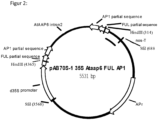
- the fragments Sal-SmaI and XhoI-SmaI- were each cut from the topovector by SalI/SmaI or XhoI/SmaI and then subsequently first ligated "in sense" with the SalI/SmaI or XhoI/Ecl136II cut pRTRNAi vector. Subsequently, the same fragments were religated for a second time in "antisense" in the compatible XhoI/Ecl136II or SalI/SmaI. The cloning resulted in, for example, pAB70S-1 35S Ataap6 FUL AP1 ( Fig. 2 ).
- the transgenicity of the plants was verified by PCR.
- the use of designed primers led to the amplification of a particular DNA fragment from the nptII gene.
- the PCR was performed using 10 ng genomic DNA, a primer concentration of 0.2 micron at an annealing temperature of 55 ° C in a Multicycler PTC-200 (MJ Research, Watertown, USA).
- RNAi constructs For each of the RNAi constructs five transgenic sugar beet lines were regenerated carrying the corresponding binary vector pZFN d35S RNAi FUL-AP1. The sugar beet plants were grown for several weeks in sterile culture media, propagated and then rooted together with non-transgenic isogenic controls. 7-9 plants per line and control were transferred to the greenhouse. The transgenic lines were grown in pots and then tested in different vernalization regimes to determine the bolting and flowering behavior. After an adjustment period, the plants were subjected to vernalization for three, four and six months at 8 ° C in a cooling chamber (winter simulation).
- the resulting transformants behaved like not-vernalized sugar beets. They neither developed shoots nor blooms. None of the plants showed deviations from the normal phenotype. The plants were cultivated further; they continued to develop to normal beets with normal beet bodies.
- RNAi construct comprising partial sequences of AP1 and FUL cDNA was extended by a third partial sequence of 399 bp based on cDNA of the BvVil1 gene from Beta vulgaris ( WO 2011/032537 ). VIL1 was chosen due to its involvement in flower formation.
- PCR product BvVil1 RNAi was amplified using a forward primer according to SEQ ID NO: 27 and a reverse primer according to SEQ ID NO: 28.
- BvVil1 cDNA was used as template.
- the amplification led to a VIL1 cDNA fragment according to SEQ ID NO: 29.
- PCR product BvFUL-AP1 was synthesized and amplified using primers according to SEQ ID NO: 25 and 26. Vector pZFN as described above was used as template.
- the amplification led to a FUL-AP1 cDNA fragment according to SEQ ID NO: 30.
- Both amplified DNAs were cloned into vector pAB70S-1 35S Ataap6 RNAi ( Fig. 1 ).
- PCR product BvVil1 RNAi was cloned using Ecl136II and XhoI.
- PCR product BvFUL-AP1 was added using XhoI and SmaI.
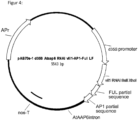
- the resulting intermediate pAB70s-1 d35S Ataap6 RNAi vil1-AP1-FUL LF ( Fig. 4 ) was used for another PCR step.
- the vector pAB70s-1 d35S Ataap6 RNAi vil1-AP1-FUL LF was used as template for forward primer according to SEQ ID NO: 31 and reverse primer according to SEQ ID NO: 32.
- the PCR product was an RNAi construct which then was cloned into the vector using Sail and SmaI.
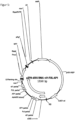
- the resulting vector was cut using SfiI and cloned into vector pZFN resulting in vector pZFN d35S RNAi vil1-FUL-AP1 ( Fig. 5 ).
- Vector pZFN d35S RNAi vil1-FUL-AP1 was used to transform Agrobacterium tumefaciens Gv3101 pmp90 which subsequently was used to generate transgenic sugar beet lines. Transgenicity was confirmed by PCR. After regeneration nine plants of one line were rooted as described above. After vernalization in the greenhouse none of the plants did bolt or flower.
- a sugar beet mutant population has been created by treatment with different EMS concentrations for different durations of incubation. From treated cells M1 plants could be regenerated. Through selfing of the M1 plants several thousands of M2 plants were grown.
- M2 plants were screened for knock out mutations in the BvAP1 gene and the BvFUL gene. For that, DNA was been extracted from collected leaf samples and analysed by use of designed primers. Thereby, point mutations in the genes which introduce additional stop codons into the coding sequence of the genes could be identified.
- One plant showed a point mutation in the AP1 gene which is a nucleotide exchange from cytosine (c) to thymine (t) at position 262 of the cDNA (SEQ ID NO: 2) or at position 6999 of the genomic DNA (SEQ ID NO: 1).
- a second identified plant contained a point mutation in the FUL gene which is a nucleotide exchange from cytosine (c) to thymine (t) at position 316 of the cDNA (SEQ ID NO: 4) or at position 19552 of the genomic DNA (SEQ ID NO: 3).
- Verification of the flowering and bolting behavior of single mutants Cells of the identified sugar beet mutants were cultured for several weeks in sterile culture media, propagated and then rooted together with non-mutated controls. 5 plants per mutant and control were transferred to the greenhouse. The mutant lines were grown in pots and then tested in different vernalization regimes to determine the bolting and flowering behavior. After an adjustment period, the plants were subjected to vernalization for three months at 8 ° C in a cooling chamber. Subsequently, they were transferred back into the greenhouse (25 ° C). Shortly after transfer, already after 11 days, the control plants as well as the mutant lines began to grow shoots. After 4 weeks all plants began to develop flowers.
- Verification of the flowering and bolting behavior of double mutants F 1 progenies of a cross of AP 1 mutants with FUL mutants have been analyzed for identification of plants carrying the mutated AP 1 gene and the mutated FUL gene. Two F1 plants could be detected which then were selfed to generate a F2 population. Selected plants of the F2 generation have been tested in greenhouse as described above. Shortly after transfer, already after 10 days, the control plants and most of the selected plants began to grow shoots. However, a few plants showed surprisingly no response to the shoot and flower induction by vernalization. These non-bolting plant were all homozygous for both of the identified point mutations in AP1 gene and FUL gene, except two of the plants which showed a heterozygous genotype for at least one of the mutation.
Landscapes
- Health & Medical Sciences (AREA)
- Life Sciences & Earth Sciences (AREA)
- Genetics & Genomics (AREA)
- Engineering & Computer Science (AREA)
- Chemical & Material Sciences (AREA)
- Organic Chemistry (AREA)
- Molecular Biology (AREA)
- Biomedical Technology (AREA)
- Wood Science & Technology (AREA)
- Bioinformatics & Cheminformatics (AREA)
- Zoology (AREA)
- General Engineering & Computer Science (AREA)
- Biotechnology (AREA)
- General Health & Medical Sciences (AREA)
- Biochemistry (AREA)
- Biophysics (AREA)
- Plant Pathology (AREA)
- Cell Biology (AREA)
- Physics & Mathematics (AREA)
- Microbiology (AREA)
- Botany (AREA)
- Physiology (AREA)
- Environmental Sciences (AREA)
- Developmental Biology & Embryology (AREA)
- Proteomics, Peptides & Aminoacids (AREA)
- Medicinal Chemistry (AREA)
- Gastroenterology & Hepatology (AREA)
- Natural Medicines & Medicinal Plants (AREA)
- Virology (AREA)
- Breeding Of Plants And Reproduction By Means Of Culturing (AREA)
- Micro-Organisms Or Cultivation Processes Thereof (AREA)
- Peptides Or Proteins (AREA)
Description
- The present application relates to an isolated nucleic acid for inhibiting bolting (the first visible sign of reproductive transition in beets) and flowering of a Beta vulgaris plant, as well as the use thereof, a method for producing a transgenic Beta vulgaris plant or an non-transgenic Beta vulgaris plant in which bolting and flowering is inhibited after vernalization, vectors or mobile genetic elements, as well as a transgenic or non-transgenic Beta vulgaris in which bolting and flowering is inhibited after vernalization, and seeds as well as their parts.
- It is possible to use molecular biological techniques or mutagenesis techniques to genetically modify crops in order to change their properties and thus to improve them. One property of importance in the cultivation and use of biennial plants such as Beta vulgaris is that bolting and subsequent flowering requires an induction by a longer period of cold weather, as regularly occurs in temperate latitudes in winter. This transition from the vegetative to the generative phase induced by a prolonged period of low temperature is referred to as vernalization.
- There are several metabolic pathways by which flowering is controlled. These include inter alia the photoperiodic metabolic pathway, an autonomous pathway, a gibberellic acid and a vernalization dependent pathway. A large number of genes involved in the regulation of flowering have been identified in recent years in model plants. In particular the control of the timing of flowering was extensively explored in the model plant Arabidopsis (Boss, PK, Bastow RM, Mylne, JS, and Dean, C. (2004) Multiple pathways in the decision to flower: enabling, promoting, and resetting, Plant Cell 16 Suppl: 18-31; He, Y. and Amasino, RM (2005) Role of chromatin modification in flowering-time control, Trends Plant Sci 10, 30-35; Baeurle, I. and Dean, C. (2006) The timing of developmental transitions in plants, Cell, 125 (4): 655-664). Primarily using Arabidopsis mutants many "early flowering" or "late-flowering" genes were identified (Gazzani S., Gendall, AR, Lister, C., and Dean, C. (2003) Analysis of the molecular basis of flowering time variation in Arabidopsis accessions, Plant Physiol 132:. 1107-1114; Geraldo, N., Bäurle, I., Kidou, S., Hu, X., and Dean, C. (2009), FRIGIDA Delays Flowering in Arabidopsis via a Mechanism Involving Cotranscriptional Direct Interaction with the Nuclear Cap-Binding Complex, Plant Physiology, July 1, 2009; 150 (3): 1611-1618; Michaels SD, Amasino, RM (2001) Loss of FLOWERING LOCUS C activity eliminates the late-flowering phenotype of FRIGIDA and autonomous pathway mutations but not responsiveness to vernalization, Plant Cell 13: 935-942; Yalovsky, Shaul, et al. "Prenylation of the floral transcription factor APETALA1 modulates its function." The Plant Cell 12.8 (2000): 1257-1266; Gu, Qing, et al. "The FRUITFULL MADS-box gene mediates cell differentiation during Arabidopsis fruit development." Development 125.8 (1998): 1509-1517).
- In Beta vulgaris so far only very few genes have been characterized in detail. Therein it has been shown that for instances the gene BvFLC is not a key control gene for flowering or vernalization in Beta vulgaris (Reeves, PA, He Y, Schmitz RJ, Amasino RM, Panella, LW, Richards CM (2007), Evolutionary FLOWERING LOCUS conservation of the C-mediated vernalization response: evidence from the sugar beet (Beta vulgaris), Genetics 176 (1): 295-307; Chia, T. Y. P., Mueller, A., Young, C., and Mutasa-Goettgens, E. S. (2008), Sugar beet contains a large CONSTANS-LIKE gene family including a CO homolog that is independent of the early-bolting (B) gene locus, J Exp Bot 59 (10): 2735-2748). In 2011 Kraus et al. showed that BvVil1 seems to have a more crucial role in controlling bolting activity after vernalization (
WO 2011/032537 ). - Bolting and flowering of Beta vulgaris plants is undesirable, since in the case of Beta vulgaris it is not the seeds or fruits, but rather the underground part of the plant, the storage root, that is used, and the energy stored in the root would be consumed during the bolting and flowering of the plant. Moreover, in some plants, which are called "bolters", an unwanted emergence of shoots occurs in the first year of growing, which is very disadvantageous for harvesting and processing.
- It is thus the object of the present invention to provide means to make it possible to inhibit bolting and/or flowering of Beta vulgaris plants, and even to completely prevent this.
- The present invention is defined by the features of the independent claims.
- According to the invention the problem is solved by means of an isolated nucleic acid for the inhibition of bolting and flowering of a Beta vulgaris plant, wherein the nucleic acid comprises at least one nucleotide sequence which a) exhibits a partial sequence of a gene encoding the AP1 protein of Beta vulgaris according to SEQ ID No. 5, or b) is complementary to a partial sequence of SEQ ID NO: 1 or 2, or c) exhibits in the antisense direction a partial sequence of SEQ ID NO: 1 or 2, or d) is at least 90% identical to a partial sequence of SEQ ID NO: 1 or 2; and at least one nucleotide sequence which A) exhibits a partial sequence of a gene encoding the FUL (FRUITFUL) protein of Beta vulgaris according to SEQ ID No. 6, or B) is complementary to a partial sequence of SEQ ID NO: 3 or 4, or C) exhibits in the antisense direction a partial sequence of SEQ ID NO: 3 or 4, or D) is at least 90% identical to a partial sequence of SEQ ID NO: 3 or 4, wherein the partial sequence is a sequence segment of consecutive nucleotides of the gene encoding the AP1 and/or FUL (FRUITFUL) protein of Beta vulgaris which is suitable for a miRNA or RNAi approach.
- The inventive nucleic acid can be used, for example by the RNA interference (RNAi) approach or micro-RNA (miRNA) interference approach (Fire, A, Xu, S, Montgomery, M, Kostas, S, Driver, S, Mello, C. (1998). Potent and specific genetic interference by double-stranded RNA in Caenorhabditis elegans, Nature 391 (6669): 806-811) to inhibit bolting and flowering of Beta vulgaris, and in particular, if possible, to completely prevent bolting and flowering, for example by inhibiting genes that encoded flowering inducers such as FT, Co, or VIN3.
- The nucleic acid is characterized especially by the fact that transgenic or non transgenic Beta vulgaris plants, with special characteristics can be produced with it: In beneficial manner they can be used for example for the following purposes or with the following benefits:
- Production of non-shoot emergent, non-flowering Beta vulgaris plants
- Production of a Beta vulgaris plant as winter beet
- Production of a Beta vulgaris plant as spring beet
- Increasing the biomass of the Beta vulgaris plant
- Increasing the sugar yield
- Avoiding Beta vulgaris bolters
- Extension of the Beta vulgaris harvesting campaign
- Avoidance of losses in Beta vulgaris storage material
- Utilization of the higher humidity in the fall
- Covering of soil and use of the stored nitrogen
- Protection for beneficial insects in the field.
- Beta vulgaris is a biennial plant. After completion of the winter, and the vernalization resulting therefrom, Beta vulgaris usually bolts and flowers in the second year. By means of, for example, a sequence shown in one of SEQ ID NOs: 19-23 or another novel sequence or partial sequence inserted using an RNAi or microRNA-approach, genes can be inhibited and the effects of vernalization can be inhibited or completely prevented. Mechanisms and methods for inhibiting or switching off genes are known to the person of ordinary skill in the art, for example, under the term "gene silencing" and include the already mentioned and known to those skilled in the art RNAi or micro (mi) RNA processes, but are not limited thereto. In an RNAi approach, for example, the sequences of SEQ ID NO: 19 to SEQ ID NO: 23 can, by molecular biology techniques known to the person skilled in the art, be introduced into a Beta vulgaris cell in the antisense orientation and under control of a suitable promoter be expressed there.
- In accordance with the present invention, the bolting and flowering of the plant can be completely eliminated. Seed of Beta vulgaris can be sown earlier, which ultimately leads to a longer growing season and thus leads to a higher biomass and a higher sugar yield. In combination with cold tolerance, sugar beets, for example, can be grown as so-called winter beets. In the case of seeding of sugar beets in August, in the following spring they can already be harvested as spring beets. This allows the farmer an additional crop rotation. By using the nucleic acid according to the invention, even in the case of prolonged cold spells on the field after sowing, there is no longer increased formation of bolters. Even the normal sugar beet bolters previously observed without prolonged cold spells can be prevented or at least significantly reduced. Using the present invention it can not only be accomplished that bolting and the subsequent flowering of sugar beet after an initial vernalization, but, i.e. in the second year, is inhibited or prevented, but the sugar beet can also be subjected to other cold periods without vernalization effects observed.
- The sugar beet cultivation is usually from April to October / November. Since not all of the harvested sugar beets can be processed at the same time, they must be stored or intermediate stored. During storage, for example in piles, large losses in storage substance (sucrose losses) occur as a result of by cleavage of sucrose into glucose and fructose. By means of the inventive nucleic acid, particularly when used in an RNAi approach, the sowing and harvest dates can be varied so that the total harvest (campaign) can be extended without loss of harvest. It can allow more sugar beets to be processed for a prolonged period with less loss of storage material.
- The term " Beta vulgaris " or " Beta vulgaris plant" is understood to refer to a plant of the genus Beta vulgaris, e.g. Beta vulgaris ssp. vulgaris vαr altissima (sugar beet in the narrow sense), Beta vulgaris ssp. maritima (sea beet), Beta vurlgaris ssp. vulgaris var vulgaris (Mangold beet), Beta vulgaris ssp. vulgaris var conditiva (red beetroot / beet), Beta vulgaris ssp. crassa vulgaris var / alba (fodder beet).
- The term "plant" according to the present invention includes whole plants or parts of such a whole plant. Whole plants preferably are seed plants, or a crop. "Parts of a plant" are e.g. shoot vegetative organs/structures, e.g., leaves, stems and tubers; roots, flowers and floral organs/structures, e.g. bracts, sepals, petals, stamens, carpels, anthers and ovules; seed, including embryo, endosperm, and seed coat; fruit and the mature ovary; plant tissue, e.g. vascular tissue, ground tissue, and the like; and cells, e.g. guard cells, egg cells, pollen, trichomes and the like; and progeny of the same.
- An "isolated nucleic acid" is understood to be a nucleic acid extracted from its natural or original environment. The term also includes a synthetic manufactured nucleic acid.
- An "inhibition of bolting and flowering" of a Beta vulgaris plant refers to a reduction in the proportion of bolting and possibly flower forming Beta vulgaris plants in comparison to a non-inventively modified Beta vulgaris plant of the same subspecies or variety in a comparable stage of development, particularly in the second year after passing through a corresponding cold period, i.e. after vernalization. In particular, the term encompasses a reduction of proportion of bolters to not more than 80%, preferably not more than 70%, 60%, 50%, 40%, 30%, 20% or 10%, more preferably not more than 5%, 4%, 3%, 2% , 1%, 0.5%, 0.4%, 0.3%, 0.2% or 0.1% of the percentage of bolting compared to control plants not according to the invention. "Control plants" are preferably plants of the same variety, but they are not modified according to the present invention, and exhibit for example a proportion of bolters of at most 0.01%. The term "suppression" or "complete suppression" of bolting and flowering is understood to mean inhibition of at least 99%, preferably at least 99.5%, more preferably at least 99.8%, or at least 99.9%, that is, a reduction of the proportion of bolters to not more than 1%, not more than 0.5%, not more than 0.2% or not more than 0.1%, especially in the second year after vernalization, compared to a non-inventively modified Beta vulgaris plant, for example, a bolting percentage of maximal 0.01%. The term of inhibition or the suppression of bolting and flowering comprises mainly the inhibition / suppression of bolting, regardless of whether it comes to a flowering of the plant or not.
- The term "transgenic", "transgene" or "heterologous" as used herein means genetically modified. The term includes also the case that a species-specific nucleic acid in a form, arrangement or quantity is introduced into a plant cell where the nucleic acid does not occur naturally in the cell. If the gene, coding sequence or the regulatory element may be one normally found in the cell, it is called 'autologous' or 'endogenous'. A 'heterologous' gene, coding sequence or regulatory element may also be autologous to the cell but is, however, arranged in an order and/or orientation or in a genomic position or environment not normally found or occurring in the cell in which it is introduced.
- The term "homology" refers to identities or similarities in the nucleotide sequence of two nucleic acid molecules or the amino acid sequence of two proteins or peptides. The presence of homology between two nucleic acids or proteins can be detected by comparing each position in one sequence with the equivalent position in the other sequence and determining whether identical or similar residues are present here. Two compared sequences are homologous if there is a particular minimum level of identical or similar nucleotides. "Identical" means that when comparing two sequences at equivalent positions there is the same nucleotide or the same amino acid. It may be necessary to take into account gaps in sequence to achieve the best possible alignment comparison of sequences. Similar nucleotides / amino acids are non-identical nucleotides / amino acids with the same or equivalent chemical and physical properties. Exchanging a nucleotide (an amino acid) with a different nucleotide (another amino acid) with the same or equivalent physical and chemical properties is called a "conservative exchange." Examples of chemical and physical properties of an amino acid include, for example, the hydrophobicity or charge. In the context of nucleic acids there is also understood a conservative or a similar nucleotide exchange when replacing in a coding sequence a nucleotide in a codon by another, whereby due to e.g. the degeneration of the genetic code, the same amino acid or a similar amino acid is encoded as in the equivalent codon in the compared sequence. The person skilled in the art knows which nucleotide or amino acid exchange is a conservative exchange. To determine the level of similarity or identity between two nucleic acids, a minimum length of 60 nucleotides or base pairs is assumed, preferably a minimum length of 70, 80, 90, 100, 110, 120, 140, 160, 180, 200, 250, 300, 350 or 400 nucleotides or base pairs, more preferably the full length of the compared nucleic acids, and in the case of proteins / peptides a minimum length of 20 amino acids is assumed, preferably a minimum length of 25, 30, 35, 40, 45, 50, 60, 80, 100, 150, 200, 250 or 300 amino acids, and more preferably the full length of the compared amino acid sequences. The level of similarity ("positives") or identity of two sequences can be determined using, for example, the computer program BLAST (Altschul S.F. et al (1990), Basic Local Alignment Search Tool, J. Mol Biol 215: 403-410; see eg http: / / www.ncbi.nlm.nih.gov/BLAST/) with standard parameters. The determination of homology depends on the length of the compared sequences. In the context of the present invention a homology between two nucleic acid sequences, whose length is at least 100 nucleotides, is understood if at least 70%, at least 75%, at least 80%, at least 85%, at least 90%, at least 95%, at least 97%, at least 98%, or at least 99% of nucleotides are identical and / or similar ("identities" or "positives" according to BLAST), and preferably are identical. In the case of a sequence length of 50-99 nucleotides a homology between sequences is understood if there is identity or similarity of at least 80%, preferably at least 85%, 86%, 87%, 88% or 89%, with a sequence length of 15-49 nucleotides with an identity or similarity of at least 90%, preferably at least 95%, 96%, 97%, 98% or 99%. In the case of proteins a homology is assumed, if using the computer program BLAST with standard parameters and the BLOSUM62 substitution matrix (Henikoff, S., and Henikoff, J. Amino acid substitution matrices from protein blocks Proc.. Natl. Acad. Sci. USA 89:. 10915-10919, 1992) an identity ("identities") and / or similarity ("positive"), preferably identity, at least 25%, at least 26%, at least 27%, at least 28%, at least 29% at least 30%, preferably at least 35%, at least 40%, at least 45%, at least 50%, at least 55%, at least 60%, at least 65%, at least 70%, at least 75%, at least 80%, at least 85%, at least 90%, at least 95%, at least 97%, at least 98%, or at least 99% is shown, preferably the entire length of the protein / peptide, which is compared with another protein, e.g. the length of 260 amino acids in the case of SEQ ID NO: 5 or the length of 245 amino acids in the case of SEQ ID NO: 6, is considered in determination. The person skilled in the art is able with his expert knowledge to use readily available BLAST programs (e.g. BLASTn, BLASTp, BLASTx, tBLASTn or tBLASTx) to determine the homology in question. In addition, there are other programs that the expert knows, and which he can use in the case in determining the homology of two or more comparative sequences or partial sequences. Such programs include those that can be found, for example on the website of the European Bioinformatics Institute (EMBL) (see, e.g. www.ebi.ac.uk/Tools/similarity.html).
- The term "hybridizing" or "hybridization" means a process in which a single-stranded nucleic acid molecule attaches itself to a complementary nucleic acid strand, i.e. agrees with this base pairing. Standard procedures for hybridization are described, for example, in Sambrook et al. (Molecular Cloning. A Laboratory Manual, Cold Spring Harbor Laboratory Press, 3rd edition 2001). Preferably this will be understood to mean an at least 50%, more preferably at least 55%, 60%, 65%, 70%, 75%, 80% or 85%, more preferably 90%, 91%, 92%, 93%, 94%, 95%, 96%, 97%, 98% or 99% of the bases of the nucleic acid strand form base pairs with the complementary nucleic acid strand. The possibility of such binding depends on the stringency of the hybridization conditions. The term "stringency" refers to hybridization conditions. High stringency is if base pairing is more difficult, low stringency, when a base-pairing is facilitated. The stringency of hybridization conditions depends for example on the salt concentration or ionic strength and temperature. Generally, the stringency can be increased by increasing the temperature and / or decreasing salinity. "Stringent hybridization conditions" are defined as conditions in which hybridization occurs predominantly only between homologous nucleic acid molecules. The term "hybridization conditions" refers not only to the actual binding of the nucleic acids at the prevailing conditions, but also in the subsequent washing steps prevailing conditions. Stringent hybridization conditions are, for example, conditions under which predominantly only those nucleic acid molecules having at least 70%, preferably at least 75%, at least 80%, at least 85%, at least 90% or at least 95% sequence identity hybridize. Less stringent hybridization conditions include: hybridization in 4 × SSC at 37 ° C, followed by repeated washing in 1 × SSC at room temperature. Stringent hybridization conditions include: hybridization in 4 × SSC at 65 ° C, followed by repeated washing in 0.1 × SSC at 65 ° C for a total of about 1 hour.
- The term "complementary" refers to the ability of purine and pyrimidine nucleotides to form base pairs with each other via bridging hydrogen bonds. Complementary base pairs are, for example, guanine and cytosine, adenine and thymine and adenine and uracil. A complementary nucleic acid strand is accordingly a nucleic acid strand that can, by pairing with complementary bases of another nucleic acid strand, form a double strand.
- As used herein, the term "homozygous" means a genetic condition existing when two alleles reside at a specific locus, but are positioned individually on corresponding pairs of homologous chromosomes in the cell and the two alleles are identical or at least identical for the one or more mutations.
- A "fragment" or a "partial sequence" of a nucleic acid is here understood to be a contiguous section of the nucleic acid, i.e. a sequence segment of consecutive nucleotides of the nucleic acid. Fragments can e.g. be used advantageously in a miRNA or RNAi approach, wherein the sequence can be used, for example, in anti-sense ("antisense") direction. "Anti-sense direction" or "antisense orientation" of a nucleic acid sequence, e.g. a DNA sequence, means here, for example, that a transcription of the DNA sequence results in an mRNA whose nucleotide sequence is complementary to a natural (endogenous) mRNA, so that its translation is hindered or prevented by the attachment of the complementary RNA. An "antisense RNA" or "antisense RNA" is understood to mean one of a particular mRNA or other RNAs complementary to specific RNA. "Anti-sense direction" or "antisense orientation" of an mRNA sequence, therefore, means that the mRNA has a sequence that is complementary to an mRNA sequence, so that its translation may be hindered or prevented by attachment. Partial sequences, which may be advantageously used in the context of the present invention, for example, in antisense orientation, are for example nucleic acids having a sequence shown in SEQ ID NO: 10, 11, 12 or 13 which is a segment of the nucleic acid according to SEQ ID NO: 1 or 2, and/or shown in SEQ ID NO: 14, 15, 16 or 17 which is a segment of the nucleic acid according to SEQ ID NO 3 or 4. However, any other nucleic acids with sequences or partial sequences of SEQ ID NOs: 1 or 2 and/or of SEQ ID NO: 3 or 4 can be used, for example, in the anti-sense direction. In addition, two or more partial sequences may be fused and advantageously used in the context of the present invention, for example, in antisense orientation. Examples of fused partial sequences are nucleic acids having a sequence shown in SEQ ID NO: 19, 20, 21 or 22, each of these sequences contains a segment of the nucleic acid according to SEQ ID NO: 1 or 2 as well as a segment of the nucleic acid according to SEQ ID NO: 3 or 4. In another embodiment two or more partial sequences may be fused and advantageously used in the context of the present invention, for example, in antisense orientation, whereby at least two fused partial sequences are derived from the same nucleic acid according to SEQ ID NO: 1, 2, 3 or 4. The fused partial sequences can be linked by a spacer sequence comprising at least 1, at least 2, at least 3, at least 4, at least 5, at least 6, at least 7, at least 8, at least 9, at least 10, at least 12, at least 14, at least 16, at least 18, at least 20, at least 25 or at least 30 nucleotides.
- The partial sequence preferably comprises a nucleic acid with at least 25, preferably at least 30, 35, 40, 45, 50, 60, 70, 80, 90, or at least 100 consecutive nucleotides, more preferably at least 150, 184, 200, 212, 250, 300, 350, 400 or 450 consecutive nucleotides. A part of a protein (see, e.g., letter f) or F)) above) preferably comprises at least 5, preferably at least 10, 15, 20, 25, 30, 40 or 50, more preferably at least 60, 61, 70, 80, 90, or at least 100 consecutive amino acids of SEQ ID NO: 5 or 6. The sequence segment of SEQ ID NO: 5 or 6 preferably comprises at least 50, 60, 61, 70, 80, 87 or 90, more preferably at least 100, 105, 120, 150, 200 or 250 consecutive amino acids of SEQ ID NO: 5 or 6. The necessary or useful length of the partial sequence of the nucleic acid or protein or the sequence segment can be selected by the person of ordinary skill in the art with the aid of his general technical skills and, where appropriate, by carrying out routine tests of the approach and the intended effect, without this requiring an inventive step.
- The nucleic acid is preferably at least 90%, 95%, 96%, 97%, 98% or 99%, more preferably at least 99.5%, 99.6%, 99.7%, 99.8% or 99.9% identical to a sequence or partial sequence of one of SEQ ID NO: 1-4.
- The nucleic acid according to the invention may include one of the sequences of SEQ ID NO: 10-17 or 19-22, preferably in the antisense orientation.
- As disclosed herein, a nucleic acid for the inhibition of bolting and flowering of a Beta vulgaris plant as described above comprises a further nucleic acid comprising a nucleotide sequence which (i) exhibits a sequence or partial sequence of SEQ ID NO: 7 or 8, or (ii) is complementary to a sequence or partial sequence of (i), or (iii) exhibits in the antisense direction a sequence or partial sequence of (i) or (ii), or (iv) is a homolog to a sequence or partial sequence of (i), or (v) at least 80% or 85%, preferably at least 90%, 95%, 96%, 97%, 98% or 99%, or more preferably at least 99.5%, 99, 6%, 99.7%, 99.8% or 99.9% identical to a sequence or partial sequence of (i), or (vi) encodes a protein or a part of the protein with the amino acid sequence of SEQ ID NO: 9, or (vii) encodes a protein with an amino acid sequence of Beta vulgaris which is a homolog to the sequence of F), or (viii) hybridizes under stringent conditions with a sequence or partial sequence of (i), (ii) or (iii).
- In a further aspect, the present invention concerns the use of the inventive nucleic acids for the inhibition of bolting and flowering of a Beta vulgaris plant. As already indicated above, the nucleic acid can be introduced into a Beta vulgaris plant, for example, in antisense orientation or in form of a hairpin construct, thereby causing an inhibition of the genes responsible for bolting and flowering. Methods which are suitable for introducing a nucleic acid in a Beta vulgaris cell are known to the skilled person, and include for example the Agrobacterium-mediated transformation (Lindsey, K., and P. Gallois. "Transformation of sugarbeet (Beta vulgaris) by Agrobacterium tumefaciens." Journal of experimental botany 41.5 (1990): 529-536). The introduction of a nucleic acid in antisense orientation into a plant is only one of the known processes for the inhibition or suppression of gene activity (gene silencing). The inventive nucleic acids can also be used advantageously in the context of other procedures or mechanisms that can cause an inhibition or suppression of bolting / flowering, e.g. suppression by co-expression, or as template for the generation of guide RNA (gRNA) in a CRISPR/Cas system.
- Furthermore, as disclosed herein, the inventive nucleic acid may also be used as a probe to identify other factors, genes or gene products, which can be used to inhibit or suppress flowering and bolting of Beta vulgaris plants, or may also be used as molecular marker to detect or to identify in a mutagenized Beta vulgaris plant or a part thereof one or more mutations in an endogenous DNA sequence or a regulatory sequence of the endogenous DNA sequence, wherein the endogenous DNA sequence has a nucleic acid sequence identical to a sequence which (a) exhibits a sequence or partial sequence of SEQ ID NO: 1, or (b) is complementary to a sequence or partial sequence of (a), or (c) exhibits in the antisense direction a sequence or partial sequence of (a) or (b), or (d) is a homolog to a sequence or partial sequence of (a), or (e) at least 80% or 85%, preferably at least 90%, 95%, 96%, 97%, 98% or 99%, or more preferably at least 99.5%, 99, 6%, 99.7%, 99.8% or 99.9% identical to a sequence or partial sequence of a), or (f) encodes a protein or a part of the protein with the amino acid sequence of SEQ ID NO: 5, or (g) encodes a protein with an amino acid sequence of Beta vulgaris which is a homolog to the sequence of (f), or (h) hybridizes under stringent conditions with a sequence or partial sequence of a), b) or c) and/or (A) exhibits a sequence or partial sequence of SEQ ID NO: 3, or (B) is complementary to a sequence or partial sequence of (A), or (C) exhibits in the antisense direction a sequence or partial sequence of (A) or (B), or (D) is a homolog to a sequence or partial sequence of (A), or (E) at least 80% or 85%, preferably at least 90%, 95%, 96%, 97%, 98% or 99%, or more preferably at least 99.5%, 99, 6%, 99.7%, 99.8% or 99.9% identical to a sequence or partial sequence of (A), or (F) encodes a protein or a part of the protein with the amino acid sequence of SEQ ID NO: 6, or (G) encodes a protein with an amino acid sequence of Beta vulgaris which is a homolog to the sequence of (F), or (H) hybridizes under stringent conditions with a sequence or partial sequence of (A), (B) or (C). Preferably, the one or more mutations cause a reduced transcriptional or expressional rate or a reduced transcriptional or expressional level of the endogenous DNA sequence in the mutagenized plant compared to a non-mutagenized wildtype plant, or the mutation causes a reduction of the activity or stability of the protein or polypeptide encoded by the endogenous DNA sequence compared to a non-mutagenized wildtype plant. More preferably, at least one of the one or more mutations is selected from the group consisting of mutations listed in Table 1.
- As disclosed in this application, the use of the one or more nucleic acids as described above includes in addition to the one or more nucleic acids a further nucleic acid comprising a nucleotide sequence which (i) exhibits a sequence or partial sequence of SEQ ID NO: 7 or 8, or (ii) is complementary to a sequence or partial sequence of (i), or (iii) exhibits in the antisense direction a sequence or partial sequence of (i) or (ii), or (iv) is a homolog to a sequence or partial sequence of (i), or (v) at least 80% or 85%, preferably at least 90%, 95%, 96%, 97%, 98% or 99%, or more preferably at least 99.5%, 99, 6%, 99.7%, 99.8% or 99.9% identical to a sequence or partial sequence of (i), or (vi) encodes a protein or a part of the protein with the amino acid sequence of SEQ ID NO: 9, or (vii) encodes a protein with an amino acid sequence of Beta vulgaris which is a homolog to the sequence of (vi), or (viii) hybridizes under stringent conditions with a sequence or partial sequence of (i), (ii) or (iii). These nucleic acids may be used for the inhibition of bolting and flowering of Beta vulgaris plant.
- As disclosed in this application, a protein with an amino acid sequence of SEQ ID NO: 5 or 6, or a protein having an amino acid sequence that contains a sequence segment of SEQ ID NO: 5 or 6, may comprise preferably at least 50, 60, 61, 70, 80 or 90, at least 100, 120, 150, 200 or 250 consecutive amino acids of SEQ ID NO: 5 or 6, or a thereto homologous protein from Beta vulgaris. The protein or any part thereof, or the corresponding amino acid sequences may / could for example be used as a probe at the amino acid level to identify other factors, genes or gene products which can be used to inhibit and / or suppress the flowering and bolting of a Beta vulgaris plants.
- As disclosed in this application, a method for producing a transgenic Beta vulgaris plant comprises the steps of (a) transforming a Beta vulgaris cell with one or more inventive nucleic acids and (b) regenerating a Beta vulgaris plant from the transformed Beta vulgaris cell. The transformation of Beta vulgaris cell can occur, for example, using known vectors, e.g. a Ti-plasmid, and is known to the skilled person (Lindsey and Gallois, 1990). The disclosed nucleic acids may be found advantageous under the control of a suitable promoter in such a vector.
- In another aspect the present invention relates to a method for producing a transgenic Beta vulgaris plant, wherein the bolting and flowering is inhibited after vernalization, comprises the following steps of:
- (I) Transforming a Beta vulgaris cell with a first nucleic acid as transgene and a second nucleic acid as transgene, wherein the Beta vulgaris cell is transformed with one construct comprising the first and the second nucleic acid or with a construct comprising the first nucleic acid and another construct comprising the second nucleic acid; and
- (II) regenerating a Beta vulgaris plant from the transformed Beta vulgaris cell, wherein the first nucleic acid as transgene comprises a nucleotide sequence which a) exhibits a partial sequence of a gene encoding the AP1 protein of Beta vulgaris according to SEQ ID No. 5, or b) is complementary to a partial sequence of SEQ ID NO: 1 or 2, or c) exhibits in the antisense direction a partial sequence of SEQ ID NO: 1 or 2, or d) is at least 90% identical to a partial sequence of SEQ ID NO: 1 or 2; and the second nucleic acid as transgene comprises a nucleotide sequence which A) exhibits a partial sequence of a gene encoding the FUL (FRUITFUL) protein of Beta vulgaris according to SEQ ID No. 6, or B) is complementary to a partial sequence of SEQ ID NO: 3 or 4, or C) exhibits in the antisense direction a partial sequence of SEQ ID NO: 3 or 4, or D) is at least 90% identical to a partial sequence of SEQ ID NO: 3 or 4, wherein the partial sequence is a sequence segment of consecutive nucleotides of the gene encoding the
AP 1 and/or FUL (FRUITFUL) protein of Beta vulgaris which is suitable for a miRNA or RNAi approach. - The invention also relates to a vector that includes the inventive nucleic acids. Vectors and mobile genetic elements are known in the art and include, for example, plasmids such as the Ti-plasmid. The vector can advantageously contain control/regulatory elements, e.g. a promoter, enhancer, intronic sequence, or terminator.
- Furthermore, the invention relates to a transgenic Beta vulgaris plant including the inventive nucleic acids as transgene, or said vector, in which bolting and flowering is inhibited, as well as seeds or parts of the transgenic Beta vulgaris plant transformed with the inventive nucleic acids or said vector.
- In a further aspect the present invention relates to a method for producing a Beta vulgaris plant, where the bolting and flowering is inhibited after vernalization, comprising the following steps:
- (I) Mutagenizing one or more parts of a Beta vulgaris plant and subsequently regenerating one or more Beta vulgaris plants from the one or more parts, or mutagenizing one or more Beta vulgaris plants,
- (II) identifying a plant of (I) which exhibits one or more mutations in a first endogenous DNA sequence and/or in a regulatory sequence thereof and exhibits one or more mutations in a second endogenous DNA sequence and/or in a regulatory sequence thereof,
- wherein the first endogenous DNA sequence exhibits the gene encoding the
AP 1 protein of Beta vulgaris according to SEQ ID No. 5, - wherein the second endogenous DNA sequence exhibits the gene encoding the FUL (FRUITFUL) protein of Beta vulgaris according to SEQ ID No. 6, and
- wherein the one or more mutations cause a reduced transcriptional or expressional rate or a reduced transcriptional or expressional level of the endogenous DNA sequences in the identified plant compared to a non-mutagenized wildtype plant, or the mutation causes a reduction of the activity or stability of the proteins or polypeptides encoded by the endogenous DNA sequences compared to a non-mutagenized wildtype plant.
- As disclosed in this application, the step of mutagenizing may comprise the steps of: i) Subjecting pollen or seeds of a Beta vulgaris plant to a sufficient amount of the mutagen ethylmethane sulfonate (EMS) or other mutagenic chemicals or mutagenic radiation to obtain M1 plants, ii) optionally allowing sufficient production of M2 plants, and iii) isolating and analysing genomic DNA of M1 and / or M2 plants.
- As disclosed in this application,, the one or more mutations may result in a loss of function, i.e. the expression / transcription of the mutated DNA does not lead to the synthesis of a functional protein (e.g. functional AP1 protein or FUL protein, respectively).
- The one or more mutations may cause an alteration of the amino acid sequence of AP1 or FUL, in particular the one or more mutations can be a point mutation resulting in at least one amino acid exchange, the exchange of an amino acid coding codon to a codon carrying the stop signal of translation (stop codon), or the change of the start signal of translation (start codon). The techniques of introducing such mutations via mutagenizing are well-known to the person skilled in the art. When the one or more mutations are effected in the
endogenous AP 1 gene or FUL gene, the obtained Beta vulgaris plant is non-transgenic. The mutation may be effected via non-transgenic mutagenesis, transposon mutagenesis, in particular chemical mutagenesis, preferably via EMS (ethylmethane sulfonate)-induced TILLING or targeted genome editing (e.g. CRISPR/Cas, TALEN, Zinc Finger nucleases, etc.). Exemplary, Table 1a and 1b show possible point mutations within the genomic DNA and cDNA of AP1 and FUL resulting in a nucleotide exchange from cytosine (c) to thymine (t) and thereby generating a stop codon. Such mutations can reduce the activity or stability of the corresponding protein or polypeptide encoded by the endogenous DNA sequence compared to a non-mutagenized wildtype plant, or can result in a loss of function of the corresponding protein. - Additionally, the one or more mutations may cause an alteration of the amino acid sequence of the
AP 1 protein or FUL protein by an insertion or deletion of one or more amino acids, e.g. through a shift of the open reading frame. The insertion can be introduced for instances by transposon mutagenesis and deletion can be created for instances by genomic engineering. Insertion and deletion can occur in any nucleotide sequence encoding one of the above described proteins, in a nucleotide sequence of an intron or in a nucleotide sequence of the 5' untranslated region (UTR) or 3' UTR of the AP1 gene or FUL gene. The insertion can have a length of at least 1 nucleotide, at least 2 nucleotides, at least 3 nucleotides, at least 4 nucleotides, at least 5 nucleotides, at least 6 nucleotides, at least 7 nucleotides, at least 8 nucleotides, at least 9 nucleotides, at least 10 nucleotides, at least 12 nucleotides, at least 14 nucleotides, at least 16 nucleotides, at least 18 nucleotides, at least 20 nucleotides, at least 25 nucleotides, at least 30 nucleotides, at least 40 nucleotides, at least 50 nucleotides, at least 75 nucleotides, at least 100 nucleotides, at least 200 nucleotides, at least 300 nucleotides, or at least 500 nucleotides. If such insertion or deletion occurs for instances in a regulatory element (e.g. promotor), that may reduce the transcriptional or expressional rate or a reduced transcriptional or expressional level of the corresponding endogenous DNA sequence in the Beta vulgaris plant cell. - As used herein, the term "reduced expressional rate" or "reduced expressional level" means a reduction of the expressional rate or of the expressional level of one or more nucleic acid sequences by more than 25% or 30%, preferably by more than 40%, 45%, 50%, 55%, 60%, or 65%, more preferably by more than 70%, 75%, 80%, 85%, 90%, 92%, 94%, 96% or 98% compared to the given reference. It may be that the reduction of the expressional rate or of the expressional level is 100%, e.g. in case of knock-out mutants or loss of function mutants. Preferably the reduced expressional rate or expressional level results in an amended phenotype where the bolting and flowering is inhibited after vernalization. The term "reduced transcriptional rate" or "reduced transcriptional level" means a reduction of the transcriptional rate or of the transcriptional level of one or more nucleic acid sequences by more than 25% or 30%, preferably by more than 40%, 45%, 50%, 55%, 60%, or 65%, more preferably by more than 70%, 75%, 80%, 85%, 90%, 92%, 94%, 96% or 98% compared to the given reference. It may be that the reduction of the transcriptional rate or of the transcriptional level is 100%, e.g. in case of knock-out mutants or loss of function mutants. Preferably the reduced transcriptional rate or transcriptional level results in an amended phenotype where the bolting and flowering is inhibited after vernalization.
Table 1a: List of positions in genomic DNA and cDNA of BvAP1 where a point mutation causes a nucleotide exchange from cytosine (c) to thymine (t) generating a stop codon. Gene name Position in genomic DNA (SEQ ID NO: 1) Position in cDNA (SEQ ID NO: 2) BvAP1 52 52 BvAP1 151 151 BvAP1 6999 262 BvAP1 7640 316 BvAP1 8573 343 BvAP1 8606 376 BvAP1 8618 388 BvAP1 8621 391 BvAP1 8648 418 BvAP1 11796 433 BvAP1 11826 463 BvAP1 21152 484 BvAP1 21313 541 BvAP1 21319 547 BvAP1 21322 550 BvAP1 21328 556 BvAP1 21334 562 BvAP1 21340 568 BvAP1 21346 574 BvAP1 21352 580 BvAP1 21358 586 BvAP1 21361 589 BvAP1 21364 592 BvAP1 21382 610 BvAP1 21391 619 BvAP1 21576 688 BvAP1 21582 694 Table 1b: List of positions in genomic DNA and cDNA of BvFUL where a point mutation causes a nucleotide exchange from cytosine (c) to thymin (t) generating a stop codon. Gene name Position in genomic DNA (SEQ ID NO: 3) Position in cDNA (SEQ ID NO: 4) BvFUL 19 19 BvFUL 52 52 BvFUL 19373 235 BvFUL 19552 316 BvFUL 19561 325 BvFUL 19689 376 BvFUL 19704 391 BvFUL) 28161 433 BvFUL 28185 457 BvFUL 28191 463 BvFUL 28194 466 BvFUL 28447 541 BvFUL 28450 544 BvFUL 28465 559 BvFUL 28468 562 BvFUL 28507 601 BvFUL 29166 664 BvFUL 29196 694 BvFUL 29217 715 BvFUL 29226 724 - The present invention further relates to a Beta vulgaris plant, where the bolting and flowering is inhibited after vernalization, wherein the plant exhibits one or more mutations in a first endogenous DNA sequence and/or in a regulatory sequence thereof and exhibits one or more mutations in a second endogenous DNA sequence and/or in a regulatory sequence thereof, wherein the first endogenous DNA sequence exhibits the gene encoding the AP1 protein of Beta vulgaris according to SEQ ID No. 5;
- wherein the second endogenous DNA sequence exhibits the gene encoding the FUL (FRUITFUL) protein of Beta vulgaris according to SEQ ID No. 6;
- wherein the one or more mutations cause a reduced transcriptional or expressional rate or a reduced transcriptional or expressional level of the endogenous DNA sequences in the identified plant compared to a non-mutagenized wildtype plant, or the mutation causes a reduction of the activity or stability of the proteins or polypeptides encoded by the endogenous DNA sequences compared to a non-mutagenized wildtype plant.
- As disclosed in this application, the one or more mutations may result in a loss of function, i.e. the expression / transcription of the mutated DNA does not lead to the synthesis of a functional protein (e.g. functional AP1 protein or FUL protein, respectively).
- As disclosed in this application, the Beta vulgaris plant or a part thereof may be a Beta vulgaris plant or a part thereof as described above wherein the one or more mutations cause an alteration of the amino acid sequence of AP1 or FUL, in particular the one or more mutations is a point mutation resulting in at least one amino acid exchange, the exchange of an amino acid coding codon to a codon carrying the stop signal of translation (stop codon), or the change of the start signal of translation (start codon). The point mutation in the AP1 gene (i.e. first endogenous DNA sequence) may be selected from the group consisting of mutations listed in Table 1a or indicated by SEQ ID NO: 33 or SEQ ID NO: 37 and/or the point mutation in the FUL gene (i.e. second endogenous DNA sequence) is selected from the group consisting of mutations listed in Table 1b or indicated by SEQ ID NO: 34 or SEQ ID NO: 38. Corresponding positions in allelic variants of AP1 and FUL are also included. The point mutation in the AP1 gene (i.e. first endogenous DNA sequence) is a nucleotide exchange from cytosine (c) to thymine (t) at position 262 of SEQ ID NO: 2 or at position 6999 of SEQ ID NO: 1 or corresponding position in allelic variants of AP1, and / or the point mutation in the FUL gene (i.e. second endogenous DNA sequence) is a nucleotide exchange from cytosine (c) to thymine (t) at position 316 of SEQ ID NO: 4 or at position 19552 of SEQ ID NO: 3 or corresponding position in allelic variants of FUL. Consequently, the mutated AP1 gene (i.e. first endogenous DNA sequence) can have the sequence of SEQ ID NO: 39 leading to a cDNA according to SEQ ID NO: 35, and / or the mutated FUL gene (i.e. second endogenous DNA sequence) can have the sequence of SEQ ID NO: 40 leading to a cDNA according to SEQ ID NO: 36.
- As disclosed in this application, the above described methods for producing a transgenic or non-transgenic Beta vulgaris plant may be combined. That means for instances that only one of the first and second endogenous DNA sequences have been mutated by introducing one or more mutations and the expression of the other, non-mutated DNA sequence is suppressed or silenced using the transformation approach as described above.
- A further aspect of the invention is a Beta vulgaris plant or a part thereof produced or producible by the method for producing a Beta vulgaris plant as described above.
- The examples and accompanying figures shown below are for illustrative purposes.
-
-
Fig. 1 : Schematic structure of cloning vector pAB70S-1 35S Ataap6 RNAi -
Fig. 2 : Schematic structure of cloning vector pAB70S-1 35S Ataap6 FUL AP1 including partial sequences ofAP 1 and FUL -
Fig. 3 : Schematic structure of binary Ti-plasmid pZFN d35S RNAi FUL-AP 1including partial sequences of AP1 (212 bp) and FUL (184 bp) used in Agrobacterium-mediated transformation -
Fig. 4 : Schematic representation of cloning vector pAB70s-1 d35S Ataap6 RNAi vil1-AP1-FUL LF including partial sequences ofAP 1, FUL and VIL1 -
Fig. 5 : Schematic representation of the binary Ti-plasmid pZFN d35S RNAi vil1-FUL-AP1 including partial sequences of AP1, FUL and VIL1 used in Agrobacterium-mediated transformation -
Fig. 6 : Alignment of the amino acid sequences of theprotein AP 1 from Beta vulgaris and from Arabidopsis thaliana based on the EMBOSS Needle algorithm; BvAP1 = Beta vulgaris AP1, AtAP1 = Arabidopsis thaliana AP1 -
Fig. 7 : Alignment of the amino acid sequence of the protein FUL from Beta vulgaris and from Arabidopsis thaliana based on the EMBOSS Needle algorithm; BvFUL = Beta vulgaris FUL, AtFUL = Arabidopsis thaliana FUL - Identification / isolation and characterization / annotation of complete cDNAs of sugar beet for inhibition of bolting and flowering:
By analysis within a specially created proprietary sugar beet EST database, the 780 base pairs (bp) long cDNA (SEQ ID NO: 2) of BvAP1 as well as the 735 bp long cDNA (SEQ ID NO: 4) of BvFUL have been identified. In addition, corresponding genomic DNA sequences could be identified. An alignment of genomic DNA with cDNA shows the structures of the entire DNAs.AP 1 consists of 8 exons and 7 introns, FUL of 8 exons and 7 introns. - A comparison of the resulting full-length DNA and the translated protein sequence shows only low sequence similarity with Arabidopsis homologs AtAP 1 and AtFUL. At protein level the identity over the entire sequence length to AtAP1 is at 65.6% (see also
Fig 6 ) and to AtFUL is at 57,3% (see alsoFig. 7 ), at cDNA level the identity AtAP1 is 71% and to AtFUL is 72% (see Table 2).Table 2: Sequence comparison of BvAP1 and BvFUL with Arabidopsis thaliana (At)-APl and -FUL-candidates based on the protein sequence and cDNA. Results given as sequence identity based on the EMBOSS Needle algorithm (www.ebi.ac.uk). AtAP1 protein AtFUL protein AtAP1 cDNA AtFUL cDNA BvAP1 protein 65.6% BvFUL protein 57.3 % BvAP1 cDNA 71% BvFUL cDNA 72% - Production of RNAi constructs targeted to
AP 1 and FUL and inhibition of bolting and flowering in sugar beet:
For the production of RNAi constructs the sequences of SEQ ID NO: 19 to 22 were synthesized. Sequence of SEQ ID NO: 19 includes a partial sequence ofAP 1 according to SEQ ID NO 10 with a length of 184 bp and a partial sequence of FUL according to SEQ ID NO 14 with a length of 212 bp. Sequence of SEQ ID NO: 20 includes a partial sequence of AP1 according to SEQ ID NO 11 with a length of 150 bp and a partial sequence of FUL according to SEQ ID NO 15 with a length of 150 bp. Sequence of SEQ ID NO: 21 includes a partial sequence of AP1 according to SEQ ID NO 12 with a length of 100 bp and a partial sequence of FUL according to SEQ ID NO 16 with a length of 100 bp. Sequence of SEQ ID NO: 22 includes a partial sequence of AP1 according to SEQ ID NO 13 with a length of 50 bp and a partial sequence of FUL according to SEQ ID NO 17 with a length of 50 bp. - For the further processing the sequences have been amplified by PCR using PCR Primers with Sail / SmaI restriction sites like primers according to SEQ ID NO: 25 (forward) and 26 (reverse) for the amplification of SEQ ID NO 19. The PCR was performed using 10 ng of genomic sugar beet DNA, a primer concentration of 0.2 micron at an "annealing" temperature of 55 ° C in a Multicycler PTC-200 (MJ Research, Watertown, USA).
- The PCR products were each integrated into the vector pAB70S-1 35S Ataap6 RNAi (
Fig. 1 ). The vector is designed for the production of "intron-spliced" hairpin structures. The vector contains the d35S promoter for constitutive expression, the ATAAP6 intron from Arabidopsis thaliana and one polyA terminator (nos-T). The ATAAP6 intron is flanked by the interfaces or cleavage sites XhoI/Ecl136II on the 5 'end or by the restriction cleavage sites Smal/SalI at the 3'-end. This enables the integration of identical fragments in a "sense" and "antisense", if these fragments have the compatible restriction sites XhoI or Sail, or are stumped on the other end ("blunt end"). For this the original PCR products were reamplified with new PCR primers extended beyond these restriction sites. For further use the PCR fragments were cloned into the TA cloning vector pCR2.1 (TOPO TA Cloning Kit (Invitrogen, Carlsbad, USA)) and transformed in E. coli. A blue-white selection enabled the identification of recombinant plasmids (Sambrook et al. 201, in Molecular Cloning. A Laboratory Manual, Cold Spring Harbor Laboratory Press, 3rd edition, New York). In the white colonies the expression of ss-galactosidase is suppressed by an insert, which results in white colonies, because the enzyme substrate added to the medium is no longer cleaved. After a subsequent sequencing with M13-fwd/rev-primers, the analysis and the alignment of the sequence data was performed using the program Vector NTI (Invitrogen, Carlsbad, USA). - The fragments Sal-SmaI and XhoI-SmaI- were each cut from the topovector by SalI/SmaI or XhoI/SmaI and then subsequently first ligated "in sense" with the SalI/SmaI or XhoI/Ecl136II cut pRTRNAi vector. Subsequently, the same fragments were religated for a second time in "antisense" in the compatible XhoI/Ecl136II or SalI/SmaI. The cloning resulted in, for example, pAB70S-1 35S Ataap6 FUL AP1 (
Fig. 2 ). - Production of transformation constructs and sugar beet transformation:
For plant transformation the binary vector pZFN was used. The expression cassettes were cut using SfiI to transfer it into the binary vector pZFN to create pZFN d35S RNAi FUL-AP1 - 212-184 (Fig. 3 ), pZFN d35S RNAi FUL-AP1 - 150-150, pZFN d35S RNAi FUL-AP1 - 100-100, and pZFN d35S RNAi FUL-AP1 - 50-50. Each of the binary vectors was transformed in Agrobacterium tumefaciens strain GV3101 pMP90 by a direct DNA transformation method (An, G. (1987), Ti binary vectors for plant transformation and promoter analysis, Methods Enzymol. 153, 292-305). The selection of recombinant A. tumefaciens clones was performed using the antibiotic streptomycin (50 mg / l). The transformation of sugar beet and regeneration were carried out according to Lindsey et al. (1990) and Lindsey et al. (1991, "Regeneration and transformation of sugar beet by Agrobacterium tumefaciens, Plant Tissue Culture Manual B7: 1-13, Kluwer Academic Publishers). - The transgenicity of the plants was verified by PCR. The use of designed primers led to the amplification of a particular DNA fragment from the nptII gene. The PCR was performed using 10 ng genomic DNA, a primer concentration of 0.2 micron at an annealing temperature of 55 ° C in a Multicycler PTC-200 (MJ Research, Watertown, USA).
- Verification of the flowering and bolting behavior of the transformants:
For each of the RNAi constructs five transgenic sugar beet lines were regenerated carrying the corresponding binary vector pZFN d35S RNAi FUL-AP1. The sugar beet plants were grown for several weeks in sterile culture media, propagated and then rooted together with non-transgenic isogenic controls. 7-9 plants per line and control were transferred to the greenhouse. The transgenic lines were grown in pots and then tested in different vernalization regimes to determine the bolting and flowering behavior. After an adjustment period, the plants were subjected to vernalization for three, four and six months at 8 ° C in a cooling chamber (winter simulation). Subsequently, the transformants, as well as identically treated non-transgenic control plants, were transferred back into the greenhouse (25 ° C). Shortly after transfer, already after 10 days, the control plants began to grow shoots. After 4 weeks the control plants began to bloom. In contrast, several transformants lines showed surprisingly no response to the shoot and flower induction by vernalization. Hereunder were lines of each used RNAi construct. - Thus, the resulting transformants behaved like not-vernalized sugar beets. They neither developed shoots nor blooms. None of the plants showed deviations from the normal phenotype. The plants were cultivated further; they continued to develop to normal beets with normal beet bodies.
- These lines were again tested in a greenhouse supplied with soil for optimal root growth without temperature control in two winters (2013/2014; 2014/2015). None of the plants did bolt or flower.
- Surprisingly, using the inventive approach, the vernalization or its effect, namely the bolting and flowering, were completely blocked in sugar beet.
- For this approach an RNAi construct comprising partial sequences of AP1 and FUL cDNA was extended by a third partial sequence of 399 bp based on cDNA of the BvVil1 gene from Beta vulgaris (
WO 2011/032537 ). VIL1 was chosen due to its involvement in flower formation. - PCR product BvVil1 RNAi was amplified using a forward primer according to SEQ ID NO: 27 and a reverse primer according to SEQ ID NO: 28. BvVil1 cDNA was used as template. The amplification led to a VIL1 cDNA fragment according to SEQ ID NO: 29. Additionally, PCR product BvFUL-AP1 was synthesized and amplified using primers according to SEQ ID NO: 25 and 26. Vector pZFN as described above was used as template. The amplification led to a FUL-AP1 cDNA fragment according to SEQ ID NO: 30.
- Both amplified DNAs were cloned into vector pAB70S-1 35S Ataap6 RNAi (
Fig. 1 ). PCR product BvVil1 RNAi was cloned using Ecl136II and XhoI. PCR product BvFUL-AP1 was added using XhoI and SmaI. The resulting intermediate pAB70s-1 d35S Ataap6 RNAi vil1-AP1-FUL LF (Fig. 4 ) was used for another PCR step. The vector pAB70s-1 d35S Ataap6 RNAi vil1-AP1-FUL LF was used as template for forward primer according to SEQ ID NO: 31 and reverse primer according to SEQ ID NO: 32. The PCR product was an RNAi construct which then was cloned into the vector using Sail and SmaI. The resulting vector was cut using SfiI and cloned into vector pZFN resulting in vector pZFN d35S RNAi vil1-FUL-AP1 (Fig. 5 ). - Vector pZFN d35S RNAi vil1-FUL-AP1 was used to transform Agrobacterium tumefaciens Gv3101 pmp90 which subsequently was used to generate transgenic sugar beet lines. Transgenicity was confirmed by PCR. After regeneration nine plants of one line were rooted as described above. After vernalization in the greenhouse none of the plants did bolt or flower.
- Mutagenization of sugar beet cells and identification of BvAP1 und BvFUL mutants:
A sugar beet mutant population has been created by treatment with different EMS concentrations for different durations of incubation. From treated cells M1 plants could be regenerated. Through selfing of the M1 plants several thousands of M2 plants were grown. - These M2 plants were screened for knock out mutations in the BvAP1 gene and the BvFUL gene. For that, DNA was been extracted from collected leaf samples and analysed by use of designed primers. Thereby, point mutations in the genes which introduce additional stop codons into the coding sequence of the genes could be identified. One plant showed a point mutation in the AP1 gene which is a nucleotide exchange from cytosine (c) to thymine (t) at position 262 of the cDNA (SEQ ID NO: 2) or at position 6999 of the genomic DNA (SEQ ID NO: 1). A second identified plant contained a point mutation in the FUL gene which is a nucleotide exchange from cytosine (c) to thymine (t) at position 316 of the cDNA (SEQ ID NO: 4) or at position 19552 of the genomic DNA (SEQ ID NO: 3).
- Verification of the flowering and bolting behavior of single mutants:
Cells of the identified sugar beet mutants were cultured for several weeks in sterile culture media, propagated and then rooted together with non-mutated controls. 5 plants per mutant and control were transferred to the greenhouse. The mutant lines were grown in pots and then tested in different vernalization regimes to determine the bolting and flowering behavior. After an adjustment period, the plants were subjected to vernalization for three months at 8 ° C in a cooling chamber. Subsequently, they were transferred back into the greenhouse (25 ° C). Shortly after transfer, already after 11 days, the control plants as well as the mutant lines began to grow shoots. After 4 weeks all plants began to develop flowers. - Verification of the flowering and bolting behavior of double mutants:
F 1 progenies of a cross ofAP 1 mutants with FUL mutants have been analyzed for identification of plants carrying themutated AP 1 gene and the mutated FUL gene. Two F1 plants could be detected which then were selfed to generate a F2 population. Selected plants of the F2 generation have been tested in greenhouse as described above. Shortly after transfer, already after 10 days, the control plants and most of the selected plants began to grow shoots. However, a few plants showed surprisingly no response to the shoot and flower induction by vernalization. These non-bolting plant were all homozygous for both of the identified point mutations in AP1 gene and FUL gene, except two of the plants which showed a heterozygous genotype for at least one of the mutation.
Claims (9)
- An isolated nucleic acid for the inhibition of bolting and flowering of a Beta vulgaris plant, wherein the nucleic acid comprises at least one nucleotide sequence whicha) exhibits a partial sequence of a gene encoding the AP1 protein of Beta vulgaris according to SEQ ID No. 5, orb) is complementary to a partial sequence of SEQ ID NO: 1 or 2, orc) exhibits in the antisense direction a partial sequence of SEQ ID NO: 1 or 2, ord) is at least 90% identical to a partial sequence of SEQ ID NO: 1 or 2;and at least one nucleotide sequence whichA) exhibits a partial sequence of a gene encoding the FUL (FRUITFUL) protein of Beta vulgaris according to SEQ ID No. 6, orB) is complementary to a partial sequence of SEQ ID NO: 3 or 4, orC) exhibits in the antisense direction a partial sequence of SEQ ID NO: 3 or 4, orD) is at least 90% identical to a partial sequence of SEQ ID NO: 3 or 4, wherein the partial sequence is a sequence segment of consecutive nucleotides of the gene encoding the AP1 and/or FUL (FRUITFUL) protein of Beta vulgaris which is suitable for a miRNA or RNAi approach.
- Use of the nucleic acid according to claim 1 for the inhibition of bolting and flowering of a Beta vulgaris plant.
- A vector, comprising the nucleic acid according to claim 1.
- A transgenic Beta vulgaris plant in which bolting and flowering is inhibited, comprising the nucleic acid according to claim 1 as transgene or the vector of claim 3.
- Seeds or parts of the transgenic Beta vulgaris plant according to claim 4, comprising one or more nucleic acids according to claim 1 as transgene or the vector of claim 3.
- A method for producing a transgenic Beta vulgaris plant, wherein the bolting and flowering is inhibited after vernalization, comprising the following steps of:(I) Transforming a Beta vulgaris cell with a first nucleic acid as transgene and a second nucleic acid as transgene, wherein the Beta vulgaris cell is transformed with one construct comprising the first and the second nucleic acid or with a construct comprising the first nucleic acid and another construct comprising the second nucleic acid; and(II) Regenerating a Beta vulgaris plant from the transformed Beta vulgaris cell, wherein the first nucleic acid as transgene comprises a nucleotide sequence whichwherein the second nucleic acid as transgene comprises a nucleotide sequence whicha) exhibits a partial sequence of a gene encoding the AP1 protein of Beta vulgaris according to SEQ ID No. 5, orb) is complementary to a partial sequence of SEQ ID NO: 1 or 2, orc) exhibits in the antisense direction a partial sequence of SEQ ID NO: 1 or 2, ord) is at least 90% identical to a partial sequence of SEQ ID NO: 1 or 2;A) exhibits a partial sequence of a gene encoding the FUL (FRUITFLTL) protein of Beta vulgaris according to SEQ ID No. 6, orB) is complementary to a partial sequence of SEQ ID NO: 3 or 4, orC) exhibits in the antisense direction a partial sequence of SEQ ID NO: 3 or 4, orD) is at least 90% identical to a partial sequence of SEQ ID NO: 3 or 4, wherein the partial sequence is a sequence segment of consecutive nucleotides of the gene encoding the AP 1 and/or FUL (FRUITFUL) protein of Beta vulgaris which is suitable for a miRNA or RNAi approach.
- A method for producing a Beta vulgaris plant, where the bolting and flowering is inhibited after vernalization, comprising the following steps of:(I) Mutagenizing one or more parts of a Beta vulgaris plant and subsequently regenerating one or more Beta vulgaris plants from the one or more parts, or mutagenizing one or more Beta vulgaris plants;(II) Identifying a plant of (I) which exhibits one or more mutations in a first endogenous DNA sequence and/or in a regulatory sequence thereof and exhibits one or more mutations in a second endogenous DNA sequence and/or in a regulatory sequence thereof;wherein the first endogenous DNA sequence exhibits the gene encoding the AP1 protein of Beta vulgaris according to SEQ ID No. 5,wherein the second endogenous DNA sequence exhibits the gene encoding the FUL (FRUITFLTL) protein of Beta vulgaris according to SEQ ID No. 6, andwherein the one or more mutations cause a reduced transcriptional or expressional rate or a reduced transcriptional or expressional level of the endogenous DNA sequences in the identified plant compared to a non-mutagenized wildtype plant, or the mutation causes a reduction of the activity or stability of the proteins or polypeptides encoded by the endogenous DNA sequences compared to a non-mutagenized wildtype plant.
- A Beta vulgaris plant, produced or producible by the method of claim 7, or a part thereof.
- A Beta vulgaris plant, where the bolting and flowering is inhibited after vernalization, wherein the plant exhibits one or more mutations in a first endogenous DNA sequence and/or in a regulatory sequence thereof and exhibits one or more mutations in a second endogenous DNA sequence and/or in a regulatory sequence thereof,wherein the first endogenous DNA sequence exhibits the gene encoding the AP1 protein of Beta vulgaris according to SEQ ID No. 5;wherein the second endogenous DNA sequence exhibits the gene encoding the FUL (FRUITFUL) protein of Beta vulgaris according to SEQ ID No. 6;wherein the one or more mutations cause a reduced transcriptional or expressional rate or a reduced transcriptional or expressional level of the endogenous DNA sequences in the identified plant compared to a non-mutagenized wildtype plant, or the mutation causes a reduction of the activity or stability of the proteins or polypeptides encoded by the endogenous DNA sequences compared to a non-mutagenized wildtype plant.
Applications Claiming Priority (2)
| Application Number | Priority Date | Filing Date | Title |
|---|---|---|---|
| EP15003108.6A EP3162897A1 (en) | 2015-10-30 | 2015-10-30 | Inhibition of bolting and flowering of a beta vulgaris plant |
| PCT/EP2016/076090 WO2017072304A1 (en) | 2015-10-30 | 2016-10-28 | Inhibition of bolting and flowering of a beta vulgaris plant |
Publications (2)
| Publication Number | Publication Date |
|---|---|
| EP3368677A1 EP3368677A1 (en) | 2018-09-05 |
| EP3368677B1 true EP3368677B1 (en) | 2023-06-07 |
Family
ID=54365925
Family Applications (2)
| Application Number | Title | Priority Date | Filing Date |
|---|---|---|---|
| EP15003108.6A Withdrawn EP3162897A1 (en) | 2015-10-30 | 2015-10-30 | Inhibition of bolting and flowering of a beta vulgaris plant |
| EP16790561.1A Active EP3368677B1 (en) | 2015-10-30 | 2016-10-28 | Inhibition of bolting and flowering of a beta vulgaris plant |
Family Applications Before (1)
| Application Number | Title | Priority Date | Filing Date |
|---|---|---|---|
| EP15003108.6A Withdrawn EP3162897A1 (en) | 2015-10-30 | 2015-10-30 | Inhibition of bolting and flowering of a beta vulgaris plant |
Country Status (3)
| Country | Link |
|---|---|
| US (2) | US11034971B2 (en) |
| EP (2) | EP3162897A1 (en) |
| WO (1) | WO2017072304A1 (en) |
Families Citing this family (3)
| Publication number | Priority date | Publication date | Assignee | Title |
|---|---|---|---|---|
| EP3162897A1 (en) * | 2015-10-30 | 2017-05-03 | Kws Saat Se | Inhibition of bolting and flowering of a beta vulgaris plant |
| EP3798301A1 (en) | 2019-09-25 | 2021-03-31 | KWS SAAT SE & Co. KGaA | Promoter repression |
| KR102261575B1 (en) * | 2021-01-15 | 2021-06-07 | 영 성 왕 | the edible plant growing apparatus for the yield maintenance and yield control and cultivation method |
Family Cites Families (6)
| Publication number | Priority date | Publication date | Assignee | Title |
|---|---|---|---|---|
| US20090205073A1 (en) * | 2006-04-21 | 2009-08-13 | Syngenta Participations Ag | Transgenic plants and methods for controlling bolting in sugar beet |
| UA108736C2 (en) * | 2008-09-02 | 2015-06-10 | CHIMERABLE CONSTRUCTION TO PROVIDE RESISTANCE TO ARROW IN SUGAR BEET | |
| CA2773488A1 (en) | 2009-09-15 | 2011-03-24 | Kws Saat Ag | Inhibition of bolting and flowering of a sugar beet plant |
| JP5798729B2 (en) | 2009-12-25 | 2015-10-21 | 花王株式会社 | Method for producing fatty acid-containing lipid using modified thioesterase |
| WO2015150412A1 (en) * | 2014-03-31 | 2015-10-08 | Consejo Superior De Investigaciones Cientificas | Transgenic plants with increased number of fruits and seeds and method for obtaining thereof |
| EP3162897A1 (en) * | 2015-10-30 | 2017-05-03 | Kws Saat Se | Inhibition of bolting and flowering of a beta vulgaris plant |
-
2015
- 2015-10-30 EP EP15003108.6A patent/EP3162897A1/en not_active Withdrawn
-
2016
- 2016-10-28 EP EP16790561.1A patent/EP3368677B1/en active Active
- 2016-10-28 US US15/771,873 patent/US11034971B2/en not_active Expired - Fee Related
- 2016-10-28 WO PCT/EP2016/076090 patent/WO2017072304A1/en not_active Ceased
-
2021
- 2021-05-11 US US17/316,793 patent/US20210269817A1/en not_active Abandoned
Also Published As
| Publication number | Publication date |
|---|---|
| US20190127750A1 (en) | 2019-05-02 |
| US11034971B2 (en) | 2021-06-15 |
| US20210269817A1 (en) | 2021-09-02 |
| EP3368677A1 (en) | 2018-09-05 |
| WO2017072304A1 (en) | 2017-05-04 |
| EP3162897A1 (en) | 2017-05-03 |
Similar Documents
| Publication | Publication Date | Title |
|---|---|---|
| US10982225B2 (en) | Flowering time-regulating genes and related constructs and applications thereof | |
| KR100892904B1 (en) | Regulator for flowering time, transgenic plant transformed with the same, and method for regulating flowering time | |
| ES2265956T3 (en) | MODIFIED PLANTS. | |
| US20210269817A1 (en) | Inhibition of bolting and flowering of a beta vulgaris plant | |
| JPH08508412A (en) | Plants with modified response to ethylene | |
| CN120329405A (en) | Rice OsDNG1 protein, its encoding gene and its application in regulating grain shape and weight | |
| WO2019129145A1 (en) | Flowering time-regulating gene cmp1 and related constructs and applications thereof | |
| CN108456683B (en) | Function and application of gene SID1 for regulating heading stage of rice | |
| US9222102B2 (en) | Inhibition of bolting and flowering of a sugar beet plant | |
| CN112342236B (en) | Application of rice histone methyltransferase in enhancing crop drought resistance and improving yield per plant | |
| CN112048488B (en) | OsPEAMT2 gene for improving heading stage maturing rate of paddy rice under high temperature stress, protein and application thereof | |
| WO2012039159A1 (en) | Method for production of stolon-forming plant having improved tuber production ability or stolon production ability compared with wild type, and stolon-forming plant produced by the method | |
| CN101921777B (en) | Application of rice leaf inclination control gene SAL1 | |
| CN112831509A (en) | Tomato SlOST1 gene and its application | |
| CA2296761A1 (en) | Process of producing transgenic plants in which flowering is inhibited, and dna sequences used in said process | |
| CN114990137B (en) | Arabidopsis Calcium Binding Protein Gene AtCAREF and Its Application | |
| CN113151295A (en) | Rice temperature-sensitive male sterile gene OsFMS1 and application thereof | |
| CN120366375B (en) | Application of StGAD gene in regulation and control of low-temperature resistance of potatoes | |
| CN104404060A (en) | Application of cotton steroid C22alpha-hydroxylase gene GhCYP90B1 to improvement of tomato quality | |
| CN115807027B (en) | Application of CDK8 gene in improving plant salt tolerance | |
| JP4685278B2 (en) | Flower control genes derived from Arabidopsis thaliana, proteins encoded by the same, and methods of use thereof | |
| CN117126859B (en) | A gene for regulating organ size in Arabidopsis thaliana and its application | |
| US20250382627A1 (en) | Engineering remontant flowering in rosaceae | |
| CN108795953A (en) | A kind of plane tree is bloomed controlling gene and its application in controlling flowering of plant | |
| WO2026034537A1 (en) | Nucleic acid for controlling number of florets per spikelet |
Legal Events
| Date | Code | Title | Description |
|---|---|---|---|
| STAA | Information on the status of an ep patent application or granted ep patent |
Free format text: STATUS: UNKNOWN |
|
| STAA | Information on the status of an ep patent application or granted ep patent |
Free format text: STATUS: THE INTERNATIONAL PUBLICATION HAS BEEN MADE |
|
| PUAI | Public reference made under article 153(3) epc to a published international application that has entered the european phase |
Free format text: ORIGINAL CODE: 0009012 |
|
| STAA | Information on the status of an ep patent application or granted ep patent |
Free format text: STATUS: REQUEST FOR EXAMINATION WAS MADE |
|
| 17P | Request for examination filed |
Effective date: 20180530 |
|
| AK | Designated contracting states |
Kind code of ref document: A1 Designated state(s): AL AT BE BG CH CY CZ DE DK EE ES FI FR GB GR HR HU IE IS IT LI LT LU LV MC MK MT NL NO PL PT RO RS SE SI SK SM TR |
|
| AX | Request for extension of the european patent |
Extension state: BA ME |
|
| DAV | Request for validation of the european patent (deleted) | ||
| DAX | Request for extension of the european patent (deleted) | ||
| RAP1 | Party data changed (applicant data changed or rights of an application transferred) |
Owner name: KWS SAAT SE & CO. KGAA |
|
| RIN1 | Information on inventor provided before grant (corrected) |
Inventor name: WURBS, DAVID Inventor name: DE MAAGD, RUDOLF, AART Inventor name: KRAUS, JOSEF Inventor name: VAN ARKEL, JEROEN Inventor name: ANGENENT, GERRIT, CORNELIS |
|
| STAA | Information on the status of an ep patent application or granted ep patent |
Free format text: STATUS: EXAMINATION IS IN PROGRESS |
|
| 17Q | First examination report despatched |
Effective date: 20201102 |
|
| GRAP | Despatch of communication of intention to grant a patent |
Free format text: ORIGINAL CODE: EPIDOSNIGR1 |
|
| STAA | Information on the status of an ep patent application or granted ep patent |
Free format text: STATUS: GRANT OF PATENT IS INTENDED |
|
| INTG | Intention to grant announced |
Effective date: 20221212 |
|
| GRAS | Grant fee paid |
Free format text: ORIGINAL CODE: EPIDOSNIGR3 |
|
| GRAA | (expected) grant |
Free format text: ORIGINAL CODE: 0009210 |
|
| STAA | Information on the status of an ep patent application or granted ep patent |
Free format text: STATUS: THE PATENT HAS BEEN GRANTED |
|
| AK | Designated contracting states |
Kind code of ref document: B1 Designated state(s): AL AT BE BG CH CY CZ DE DK EE ES FI FR GB GR HR HU IE IS IT LI LT LU LV MC MK MT NL NO PL PT RO RS SE SI SK SM TR |
|
| REG | Reference to a national code |
Ref country code: GB Ref legal event code: FG4D |
|
| REG | Reference to a national code |
Ref country code: CH Ref legal event code: EP Ref country code: AT Ref legal event code: REF Ref document number: 1575111 Country of ref document: AT Kind code of ref document: T Effective date: 20230615 Ref country code: DE Ref legal event code: R096 Ref document number: 602016080012 Country of ref document: DE |
|
| P01 | Opt-out of the competence of the unified patent court (upc) registered |
Effective date: 20230526 |
|
| REG | Reference to a national code |
Ref country code: LT Ref legal event code: MG9D |
|
| REG | Reference to a national code |
Ref country code: NL Ref legal event code: MP Effective date: 20230607 |
|
| PG25 | Lapsed in a contracting state [announced via postgrant information from national office to epo] |
Ref country code: SE Free format text: LAPSE BECAUSE OF FAILURE TO SUBMIT A TRANSLATION OF THE DESCRIPTION OR TO PAY THE FEE WITHIN THE PRESCRIBED TIME-LIMIT Effective date: 20230607 Ref country code: NO Free format text: LAPSE BECAUSE OF FAILURE TO SUBMIT A TRANSLATION OF THE DESCRIPTION OR TO PAY THE FEE WITHIN THE PRESCRIBED TIME-LIMIT Effective date: 20230907 Ref country code: ES Free format text: LAPSE BECAUSE OF FAILURE TO SUBMIT A TRANSLATION OF THE DESCRIPTION OR TO PAY THE FEE WITHIN THE PRESCRIBED TIME-LIMIT Effective date: 20230607 |
|
| REG | Reference to a national code |
Ref country code: AT Ref legal event code: MK05 Ref document number: 1575111 Country of ref document: AT Kind code of ref document: T Effective date: 20230607 |
|
| PG25 | Lapsed in a contracting state [announced via postgrant information from national office to epo] |
Ref country code: RS Free format text: LAPSE BECAUSE OF FAILURE TO SUBMIT A TRANSLATION OF THE DESCRIPTION OR TO PAY THE FEE WITHIN THE PRESCRIBED TIME-LIMIT Effective date: 20230607 Ref country code: NL Free format text: LAPSE BECAUSE OF FAILURE TO SUBMIT A TRANSLATION OF THE DESCRIPTION OR TO PAY THE FEE WITHIN THE PRESCRIBED TIME-LIMIT Effective date: 20230607 Ref country code: LV Free format text: LAPSE BECAUSE OF FAILURE TO SUBMIT A TRANSLATION OF THE DESCRIPTION OR TO PAY THE FEE WITHIN THE PRESCRIBED TIME-LIMIT Effective date: 20230607 Ref country code: LT Free format text: LAPSE BECAUSE OF FAILURE TO SUBMIT A TRANSLATION OF THE DESCRIPTION OR TO PAY THE FEE WITHIN THE PRESCRIBED TIME-LIMIT Effective date: 20230607 Ref country code: HR Free format text: LAPSE BECAUSE OF FAILURE TO SUBMIT A TRANSLATION OF THE DESCRIPTION OR TO PAY THE FEE WITHIN THE PRESCRIBED TIME-LIMIT Effective date: 20230607 Ref country code: GR Free format text: LAPSE BECAUSE OF FAILURE TO SUBMIT A TRANSLATION OF THE DESCRIPTION OR TO PAY THE FEE WITHIN THE PRESCRIBED TIME-LIMIT Effective date: 20230908 |
|
| PG25 | Lapsed in a contracting state [announced via postgrant information from national office to epo] |
Ref country code: FI Free format text: LAPSE BECAUSE OF FAILURE TO SUBMIT A TRANSLATION OF THE DESCRIPTION OR TO PAY THE FEE WITHIN THE PRESCRIBED TIME-LIMIT Effective date: 20230607 |
|
| PG25 | Lapsed in a contracting state [announced via postgrant information from national office to epo] |
Ref country code: SK Free format text: LAPSE BECAUSE OF FAILURE TO SUBMIT A TRANSLATION OF THE DESCRIPTION OR TO PAY THE FEE WITHIN THE PRESCRIBED TIME-LIMIT Effective date: 20230607 |
|
| PG25 | Lapsed in a contracting state [announced via postgrant information from national office to epo] |
Ref country code: IS Free format text: LAPSE BECAUSE OF FAILURE TO SUBMIT A TRANSLATION OF THE DESCRIPTION OR TO PAY THE FEE WITHIN THE PRESCRIBED TIME-LIMIT Effective date: 20231007 |
|
| PG25 | Lapsed in a contracting state [announced via postgrant information from national office to epo] |
Ref country code: SM Free format text: LAPSE BECAUSE OF FAILURE TO SUBMIT A TRANSLATION OF THE DESCRIPTION OR TO PAY THE FEE WITHIN THE PRESCRIBED TIME-LIMIT Effective date: 20230607 Ref country code: SK Free format text: LAPSE BECAUSE OF FAILURE TO SUBMIT A TRANSLATION OF THE DESCRIPTION OR TO PAY THE FEE WITHIN THE PRESCRIBED TIME-LIMIT Effective date: 20230607 Ref country code: RO Free format text: LAPSE BECAUSE OF FAILURE TO SUBMIT A TRANSLATION OF THE DESCRIPTION OR TO PAY THE FEE WITHIN THE PRESCRIBED TIME-LIMIT Effective date: 20230607 Ref country code: PT Free format text: LAPSE BECAUSE OF FAILURE TO SUBMIT A TRANSLATION OF THE DESCRIPTION OR TO PAY THE FEE WITHIN THE PRESCRIBED TIME-LIMIT Effective date: 20231009 Ref country code: IS Free format text: LAPSE BECAUSE OF FAILURE TO SUBMIT A TRANSLATION OF THE DESCRIPTION OR TO PAY THE FEE WITHIN THE PRESCRIBED TIME-LIMIT Effective date: 20231007 Ref country code: EE Free format text: LAPSE BECAUSE OF FAILURE TO SUBMIT A TRANSLATION OF THE DESCRIPTION OR TO PAY THE FEE WITHIN THE PRESCRIBED TIME-LIMIT Effective date: 20230607 Ref country code: CZ Free format text: LAPSE BECAUSE OF FAILURE TO SUBMIT A TRANSLATION OF THE DESCRIPTION OR TO PAY THE FEE WITHIN THE PRESCRIBED TIME-LIMIT Effective date: 20230607 Ref country code: AT Free format text: LAPSE BECAUSE OF FAILURE TO SUBMIT A TRANSLATION OF THE DESCRIPTION OR TO PAY THE FEE WITHIN THE PRESCRIBED TIME-LIMIT Effective date: 20230607 |
|
| PG25 | Lapsed in a contracting state [announced via postgrant information from national office to epo] |
Ref country code: PL Free format text: LAPSE BECAUSE OF FAILURE TO SUBMIT A TRANSLATION OF THE DESCRIPTION OR TO PAY THE FEE WITHIN THE PRESCRIBED TIME-LIMIT Effective date: 20230607 |
|
| REG | Reference to a national code |
Ref country code: DE Ref legal event code: R097 Ref document number: 602016080012 Country of ref document: DE |
|
| PLBE | No opposition filed within time limit |
Free format text: ORIGINAL CODE: 0009261 |
|
| STAA | Information on the status of an ep patent application or granted ep patent |
Free format text: STATUS: NO OPPOSITION FILED WITHIN TIME LIMIT |
|
| PG25 | Lapsed in a contracting state [announced via postgrant information from national office to epo] |
Ref country code: DK Free format text: LAPSE BECAUSE OF FAILURE TO SUBMIT A TRANSLATION OF THE DESCRIPTION OR TO PAY THE FEE WITHIN THE PRESCRIBED TIME-LIMIT Effective date: 20230607 |
|
| REG | Reference to a national code |
Ref country code: DE Ref legal event code: R119 Ref document number: 602016080012 Country of ref document: DE |
|
| PG25 | Lapsed in a contracting state [announced via postgrant information from national office to epo] |
Ref country code: SI Free format text: LAPSE BECAUSE OF FAILURE TO SUBMIT A TRANSLATION OF THE DESCRIPTION OR TO PAY THE FEE WITHIN THE PRESCRIBED TIME-LIMIT Effective date: 20230607 |
|
| 26N | No opposition filed |
Effective date: 20240308 |
|
| PG25 | Lapsed in a contracting state [announced via postgrant information from national office to epo] |
Ref country code: SI Free format text: LAPSE BECAUSE OF FAILURE TO SUBMIT A TRANSLATION OF THE DESCRIPTION OR TO PAY THE FEE WITHIN THE PRESCRIBED TIME-LIMIT Effective date: 20230607 Ref country code: IT Free format text: LAPSE BECAUSE OF FAILURE TO SUBMIT A TRANSLATION OF THE DESCRIPTION OR TO PAY THE FEE WITHIN THE PRESCRIBED TIME-LIMIT Effective date: 20230607 Ref country code: MC Free format text: LAPSE BECAUSE OF FAILURE TO SUBMIT A TRANSLATION OF THE DESCRIPTION OR TO PAY THE FEE WITHIN THE PRESCRIBED TIME-LIMIT Effective date: 20230607 |
|
| REG | Reference to a national code |
Ref country code: CH Ref legal event code: PL |
|
| REG | Reference to a national code |
Ref country code: BE Ref legal event code: MM Effective date: 20231031 |
|
| PG25 | Lapsed in a contracting state [announced via postgrant information from national office to epo] |
Ref country code: LU Free format text: LAPSE BECAUSE OF NON-PAYMENT OF DUE FEES Effective date: 20231028 |
|
| GBPC | Gb: european patent ceased through non-payment of renewal fee |
Effective date: 20231028 |
|
| PG25 | Lapsed in a contracting state [announced via postgrant information from national office to epo] |
Ref country code: LU Free format text: LAPSE BECAUSE OF NON-PAYMENT OF DUE FEES Effective date: 20231028 |
|
| PG25 | Lapsed in a contracting state [announced via postgrant information from national office to epo] |
Ref country code: GB Free format text: LAPSE BECAUSE OF NON-PAYMENT OF DUE FEES Effective date: 20231028 |
|
| PG25 | Lapsed in a contracting state [announced via postgrant information from national office to epo] |
Ref country code: CH Free format text: LAPSE BECAUSE OF NON-PAYMENT OF DUE FEES Effective date: 20231031 |
|
| PG25 | Lapsed in a contracting state [announced via postgrant information from national office to epo] |
Ref country code: GB Free format text: LAPSE BECAUSE OF NON-PAYMENT OF DUE FEES Effective date: 20231028 Ref country code: FR Free format text: LAPSE BECAUSE OF NON-PAYMENT OF DUE FEES Effective date: 20231031 Ref country code: DE Free format text: LAPSE BECAUSE OF NON-PAYMENT OF DUE FEES Effective date: 20240501 Ref country code: CH Free format text: LAPSE BECAUSE OF NON-PAYMENT OF DUE FEES Effective date: 20231031 |
|
| PG25 | Lapsed in a contracting state [announced via postgrant information from national office to epo] |
Ref country code: BE Free format text: LAPSE BECAUSE OF NON-PAYMENT OF DUE FEES Effective date: 20231031 |
|
| PG25 | Lapsed in a contracting state [announced via postgrant information from national office to epo] |
Ref country code: IE Free format text: LAPSE BECAUSE OF NON-PAYMENT OF DUE FEES Effective date: 20231028 |
|
| PG25 | Lapsed in a contracting state [announced via postgrant information from national office to epo] |
Ref country code: IE Free format text: LAPSE BECAUSE OF NON-PAYMENT OF DUE FEES Effective date: 20231028 |
|
| PG25 | Lapsed in a contracting state [announced via postgrant information from national office to epo] |
Ref country code: BG Free format text: LAPSE BECAUSE OF FAILURE TO SUBMIT A TRANSLATION OF THE DESCRIPTION OR TO PAY THE FEE WITHIN THE PRESCRIBED TIME-LIMIT Effective date: 20230607 |
|
| PG25 | Lapsed in a contracting state [announced via postgrant information from national office to epo] |
Ref country code: BG Free format text: LAPSE BECAUSE OF FAILURE TO SUBMIT A TRANSLATION OF THE DESCRIPTION OR TO PAY THE FEE WITHIN THE PRESCRIBED TIME-LIMIT Effective date: 20230607 |
|
| PG25 | Lapsed in a contracting state [announced via postgrant information from national office to epo] |
Ref country code: CY Free format text: LAPSE BECAUSE OF FAILURE TO SUBMIT A TRANSLATION OF THE DESCRIPTION OR TO PAY THE FEE WITHIN THE PRESCRIBED TIME-LIMIT; INVALID AB INITIO Effective date: 20161028 |
|
| PG25 | Lapsed in a contracting state [announced via postgrant information from national office to epo] |
Ref country code: HU Free format text: LAPSE BECAUSE OF FAILURE TO SUBMIT A TRANSLATION OF THE DESCRIPTION OR TO PAY THE FEE WITHIN THE PRESCRIBED TIME-LIMIT; INVALID AB INITIO Effective date: 20161028 |
|
| PG25 | Lapsed in a contracting state [announced via postgrant information from national office to epo] |
Ref country code: TR Free format text: LAPSE BECAUSE OF FAILURE TO SUBMIT A TRANSLATION OF THE DESCRIPTION OR TO PAY THE FEE WITHIN THE PRESCRIBED TIME-LIMIT Effective date: 20230607 |