EP3364098A1 - Illumination device - Google Patents
Illumination device Download PDFInfo
- Publication number
- EP3364098A1 EP3364098A1 EP16855446.7A EP16855446A EP3364098A1 EP 3364098 A1 EP3364098 A1 EP 3364098A1 EP 16855446 A EP16855446 A EP 16855446A EP 3364098 A1 EP3364098 A1 EP 3364098A1
- Authority
- EP
- European Patent Office
- Prior art keywords
- lenticular lens
- illumination device
- light source
- lens sheet
- angle range
- Prior art date
- Legal status (The legal status is an assumption and is not a legal conclusion. Google has not performed a legal analysis and makes no representation as to the accuracy of the status listed.)
- Granted
Links
- 238000005286 illumination Methods 0.000 title claims abstract description 75
- 239000011295 pitch Substances 0.000 claims description 13
- 239000000758 substrate Substances 0.000 description 5
- 238000010586 diagram Methods 0.000 description 4
- 238000009792 diffusion process Methods 0.000 description 4
- 230000000694 effects Effects 0.000 description 3
- 230000002093 peripheral effect Effects 0.000 description 3
- 239000003086 colorant Substances 0.000 description 1
- 238000009877 rendering Methods 0.000 description 1
Images






Classifications
-
- F—MECHANICAL ENGINEERING; LIGHTING; HEATING; WEAPONS; BLASTING
- F21—LIGHTING
- F21V—FUNCTIONAL FEATURES OR DETAILS OF LIGHTING DEVICES OR SYSTEMS THEREOF; STRUCTURAL COMBINATIONS OF LIGHTING DEVICES WITH OTHER ARTICLES, NOT OTHERWISE PROVIDED FOR
- F21V5/00—Refractors for light sources
- F21V5/04—Refractors for light sources of lens shape
- F21V5/048—Refractors for light sources of lens shape the lens being a simple lens adapted to cooperate with a point-like source for emitting mainly in one direction and having an axis coincident with the main light transmission direction, e.g. convergent or divergent lenses, plano-concave or plano-convex lenses
-
- F—MECHANICAL ENGINEERING; LIGHTING; HEATING; WEAPONS; BLASTING
- F21—LIGHTING
- F21S—NON-PORTABLE LIGHTING DEVICES; SYSTEMS THEREOF; VEHICLE LIGHTING DEVICES SPECIALLY ADAPTED FOR VEHICLE EXTERIORS
- F21S41/00—Illuminating devices specially adapted for vehicle exteriors, e.g. headlamps
- F21S41/10—Illuminating devices specially adapted for vehicle exteriors, e.g. headlamps characterised by the light source
- F21S41/14—Illuminating devices specially adapted for vehicle exteriors, e.g. headlamps characterised by the light source characterised by the type of light source
- F21S41/141—Light emitting diodes [LED]
- F21S41/143—Light emitting diodes [LED] the main emission direction of the LED being parallel to the optical axis of the illuminating device
-
- F—MECHANICAL ENGINEERING; LIGHTING; HEATING; WEAPONS; BLASTING
- F21—LIGHTING
- F21S—NON-PORTABLE LIGHTING DEVICES; SYSTEMS THEREOF; VEHICLE LIGHTING DEVICES SPECIALLY ADAPTED FOR VEHICLE EXTERIORS
- F21S41/00—Illuminating devices specially adapted for vehicle exteriors, e.g. headlamps
- F21S41/10—Illuminating devices specially adapted for vehicle exteriors, e.g. headlamps characterised by the light source
- F21S41/14—Illuminating devices specially adapted for vehicle exteriors, e.g. headlamps characterised by the light source characterised by the type of light source
- F21S41/141—Light emitting diodes [LED]
- F21S41/151—Light emitting diodes [LED] arranged in one or more lines
- F21S41/153—Light emitting diodes [LED] arranged in one or more lines arranged in a matrix
-
- F—MECHANICAL ENGINEERING; LIGHTING; HEATING; WEAPONS; BLASTING
- F21—LIGHTING
- F21S—NON-PORTABLE LIGHTING DEVICES; SYSTEMS THEREOF; VEHICLE LIGHTING DEVICES SPECIALLY ADAPTED FOR VEHICLE EXTERIORS
- F21S41/00—Illuminating devices specially adapted for vehicle exteriors, e.g. headlamps
- F21S41/20—Illuminating devices specially adapted for vehicle exteriors, e.g. headlamps characterised by refractors, transparent cover plates, light guides or filters
- F21S41/285—Refractors, transparent cover plates, light guides or filters not provided in groups F21S41/24 - F21S41/2805
-
- F—MECHANICAL ENGINEERING; LIGHTING; HEATING; WEAPONS; BLASTING
- F21—LIGHTING
- F21S—NON-PORTABLE LIGHTING DEVICES; SYSTEMS THEREOF; VEHICLE LIGHTING DEVICES SPECIALLY ADAPTED FOR VEHICLE EXTERIORS
- F21S43/00—Signalling devices specially adapted for vehicle exteriors, e.g. brake lamps, direction indicator lights or reversing lights
- F21S43/10—Signalling devices specially adapted for vehicle exteriors, e.g. brake lamps, direction indicator lights or reversing lights characterised by the light source
- F21S43/13—Signalling devices specially adapted for vehicle exteriors, e.g. brake lamps, direction indicator lights or reversing lights characterised by the light source characterised by the type of light source
- F21S43/14—Light emitting diodes [LED]
-
- F—MECHANICAL ENGINEERING; LIGHTING; HEATING; WEAPONS; BLASTING
- F21—LIGHTING
- F21S—NON-PORTABLE LIGHTING DEVICES; SYSTEMS THEREOF; VEHICLE LIGHTING DEVICES SPECIALLY ADAPTED FOR VEHICLE EXTERIORS
- F21S43/00—Signalling devices specially adapted for vehicle exteriors, e.g. brake lamps, direction indicator lights or reversing lights
- F21S43/20—Signalling devices specially adapted for vehicle exteriors, e.g. brake lamps, direction indicator lights or reversing lights characterised by refractors, transparent cover plates, light guides or filters
- F21S43/26—Refractors, transparent cover plates, light guides or filters not provided in groups F21S43/235 - F21S43/255
-
- F—MECHANICAL ENGINEERING; LIGHTING; HEATING; WEAPONS; BLASTING
- F21—LIGHTING
- F21V—FUNCTIONAL FEATURES OR DETAILS OF LIGHTING DEVICES OR SYSTEMS THEREOF; STRUCTURAL COMBINATIONS OF LIGHTING DEVICES WITH OTHER ARTICLES, NOT OTHERWISE PROVIDED FOR
- F21V5/00—Refractors for light sources
- F21V5/002—Refractors for light sources using microoptical elements for redirecting or diffusing light
- F21V5/004—Refractors for light sources using microoptical elements for redirecting or diffusing light using microlenses
-
- F—MECHANICAL ENGINEERING; LIGHTING; HEATING; WEAPONS; BLASTING
- F21—LIGHTING
- F21V—FUNCTIONAL FEATURES OR DETAILS OF LIGHTING DEVICES OR SYSTEMS THEREOF; STRUCTURAL COMBINATIONS OF LIGHTING DEVICES WITH OTHER ARTICLES, NOT OTHERWISE PROVIDED FOR
- F21V5/00—Refractors for light sources
- F21V5/008—Combination of two or more successive refractors along an optical axis
-
- G—PHYSICS
- G02—OPTICS
- G02B—OPTICAL ELEMENTS, SYSTEMS OR APPARATUS
- G02B3/00—Simple or compound lenses
- G02B3/0006—Arrays
- G02B3/0037—Arrays characterized by the distribution or form of lenses
- G02B3/005—Arrays characterized by the distribution or form of lenses arranged along a single direction only, e.g. lenticular sheets
-
- G—PHYSICS
- G02—OPTICS
- G02B—OPTICAL ELEMENTS, SYSTEMS OR APPARATUS
- G02B3/00—Simple or compound lenses
- G02B3/0006—Arrays
- G02B3/0037—Arrays characterized by the distribution or form of lenses
- G02B3/0062—Stacked lens arrays, i.e. refractive surfaces arranged in at least two planes, without structurally separate optical elements in-between
-
- G—PHYSICS
- G02—OPTICS
- G02B—OPTICAL ELEMENTS, SYSTEMS OR APPARATUS
- G02B5/00—Optical elements other than lenses
- G02B5/02—Diffusing elements; Afocal elements
- G02B5/0205—Diffusing elements; Afocal elements characterised by the diffusing properties
- G02B5/021—Diffusing elements; Afocal elements characterised by the diffusing properties the diffusion taking place at the element's surface, e.g. by means of surface roughening or microprismatic structures
- G02B5/0215—Diffusing elements; Afocal elements characterised by the diffusing properties the diffusion taking place at the element's surface, e.g. by means of surface roughening or microprismatic structures the surface having a regular structure
-
- G—PHYSICS
- G02—OPTICS
- G02B—OPTICAL ELEMENTS, SYSTEMS OR APPARATUS
- G02B5/00—Optical elements other than lenses
- G02B5/02—Diffusing elements; Afocal elements
- G02B5/0273—Diffusing elements; Afocal elements characterized by the use
- G02B5/0278—Diffusing elements; Afocal elements characterized by the use used in transmission
-
- B—PERFORMING OPERATIONS; TRANSPORTING
- B60—VEHICLES IN GENERAL
- B60Q—ARRANGEMENT OF SIGNALLING OR LIGHTING DEVICES, THE MOUNTING OR SUPPORTING THEREOF OR CIRCUITS THEREFOR, FOR VEHICLES IN GENERAL
- B60Q2900/00—Features of lamps not covered by other groups in B60Q
- B60Q2900/50—Arrangements to reconfigure features of lighting or signalling devices, or to choose from a list of pre-defined settings
-
- F—MECHANICAL ENGINEERING; LIGHTING; HEATING; WEAPONS; BLASTING
- F21—LIGHTING
- F21Y—INDEXING SCHEME ASSOCIATED WITH SUBCLASSES F21K, F21L, F21S and F21V, RELATING TO THE FORM OR THE KIND OF THE LIGHT SOURCES OR OF THE COLOUR OF THE LIGHT EMITTED
- F21Y2115/00—Light-generating elements of semiconductor light sources
- F21Y2115/10—Light-emitting diodes [LED]
-
- G—PHYSICS
- G02—OPTICS
- G02B—OPTICAL ELEMENTS, SYSTEMS OR APPARATUS
- G02B19/00—Condensers, e.g. light collectors or similar non-imaging optics
- G02B19/0004—Condensers, e.g. light collectors or similar non-imaging optics characterised by the optical means employed
- G02B19/0009—Condensers, e.g. light collectors or similar non-imaging optics characterised by the optical means employed having refractive surfaces only
- G02B19/0014—Condensers, e.g. light collectors or similar non-imaging optics characterised by the optical means employed having refractive surfaces only at least one surface having optical power
-
- G—PHYSICS
- G02—OPTICS
- G02B—OPTICAL ELEMENTS, SYSTEMS OR APPARATUS
- G02B19/00—Condensers, e.g. light collectors or similar non-imaging optics
- G02B19/0033—Condensers, e.g. light collectors or similar non-imaging optics characterised by the use
- G02B19/0047—Condensers, e.g. light collectors or similar non-imaging optics characterised by the use for use with a light source
- G02B19/0061—Condensers, e.g. light collectors or similar non-imaging optics characterised by the use for use with a light source the light source comprising a LED
-
- G—PHYSICS
- G02—OPTICS
- G02B—OPTICAL ELEMENTS, SYSTEMS OR APPARATUS
- G02B27/00—Optical systems or apparatus not provided for by any of the groups G02B1/00 - G02B26/00, G02B30/00
- G02B27/60—Systems using moiré fringes
-
- H—ELECTRICITY
- H10—SEMICONDUCTOR DEVICES; ELECTRIC SOLID-STATE DEVICES NOT OTHERWISE PROVIDED FOR
- H10H—INORGANIC LIGHT-EMITTING SEMICONDUCTOR DEVICES HAVING POTENTIAL BARRIERS
- H10H20/00—Individual inorganic light-emitting semiconductor devices having potential barriers, e.g. light-emitting diodes [LED]
- H10H20/80—Constructional details
- H10H20/85—Packages
- H10H20/855—Optical field-shaping means, e.g. lenses
Definitions
- the present invention relates to an illumination device that illuminates an inside of a room in which a lenticular lens sheet is used.
- an illumination device using a point light source such as a light emitting diode (LED) with high luminance and with low power consumption has come into wide use instead of an illumination device using an incandescent light bulb or a fluorescent lamp of the related art.
- an illumination device described in WO2012/147653A includes a plurality of LEDs arranged in a straight-line shape on a substrate and a diffusion sheet arranged so as to cover the LEDs on a front surface thereof.
- the diffusion sheet is a lenticular lens sheet in which a plurality of plano-convex cylindrical lenses is arranged in parallel, and diffuses and transmits light rays emitted from the LEDs.
- the lenticular lens sheet is used only for diffusing the light in an arrangement direction of the plurality of LEDs and a direction which is substantially perpendicular to the arrangement direction.
- monotonous illumination light rays diffusion light rays
- the illumination device described in WO2012/147653A is an illumination device that does not sufficiently use the lenticular lens sheet and is simply used for diffusing the light and lacks decorativeness.
- An object of the present invention is to provide a high-decorativeness illumination device using the lenticular lens sheet.
- An illumination device of the present invention comprises a first lenticular lens sheet, a second lenticular lens sheet, a third lenticular lens sheet, and at least one point light source.
- the second lenticular lens sheet is laminated on the first lenticular lens sheet such that an angle formed by the first direction and the second direction falls within a first angle range.
- the third lenticular lens sheet is laminated on the first and second lenticular lens sheets such that each of an angle formed by the first direction and the third direction and an angle formed by the second direction and the third direction is a second angle range.
- a lower limit of the second angle range is greater than an upper limit of the first angle range.
- first plano-convex cylindrical lenses which extends in a first direction is arranged in a direction perpendicular to the first direction.
- second plano-convex cylindrical lenses which extends in a second direction is arranged in a direction perpendicular to the second direction.
- third plano-convex cylindrical lenses which extends in a third direction is arranged in a direction perpendicular to the third direction.
- the point light source emits illumination light rays through the first to third lenticular lens sheets.
- the first angle range is an angle range in which rotation moire appears by the first and second lenticular lens sheets. It is preferable that the first angle range is a range which is greater than 0 degrees and is less than 30 degrees. It is preferable that the first and second lenticular lens sheets are laminated in contact with each other and the third lenticular lens sheet is arranged on a side of the first and second lenticular lens sheets facing the point light source or on a side of the first and second lenticular lens sheets opposite to the point light source.
- first and second lenticular lens sheets are laminated such that flat surfaces are in contact with each other. It is preferable that the second lenticular lens sheet is held so as to rotate around the first lenticular lens sheet.
- the illumination device further comprises a support member that supports the point light source and the first to third lenticular lens sheets. It is preferable that the support member has a cylindrical shape and the point light source is arranged on a central axis of the support member.
- an illumination device 10 includes first to third lenticular lens sheets 11 to 13, one LED light source 14, a casing 15, and a leg portion 16.
- the first to third lenticular lens sheets 11 to 13 have circular shapes, and have the same diameter D.
- the first to third lenticular lens sheets 11 to 13 are laminated.
- the casing 15 is a support member that supports the first to third lenticular lens sheets 11 to 13 and the LED light source 14, and includes a cylindrical portion 15A and a rear surface portion 15B.
- the cylindrical portion 15A has a cylindrical shape, and supports outer peripheral surfaces of the first to third lenticular lens sheets 11 to 13.
- a central axis CL of the cylindrical portion 15A passes through centers of the first to third lenticular lens sheets 11 to 13.
- the first to third lenticular lens sheets 11 to 13 are arranged in order on a front surface of the cylindrical portion 15A.
- the first lenticular lens sheet 11 located in the frontmost position is exposed to the front surface of the illumination device 10.
- a rear surface of the cylindrical portion 15A is blocked by the rear surface portion 15B.
- the LED light source 14 is provided on a substrate 20, and emits, for example, white light rays.
- the LED light source 14 is arranged as a light source of the illumination device 10 on the central axis CL of the cylindrical portion 15A.
- the substrate 20 is fixed to the rear surface portion 15B of the casing 15.
- the LED light source 14 is a so-called point light source of which a chip-like element portion emits light rays and a central portion emits strong light rays.
- a power supply unit (not shown) such as a battery that supplies power to the LED light source 14 is built in the casing 15.
- the LED light source 14 emits illumination light rays through the first to third lenticular lens sheets 11 to 13.
- the leg portion 16 includes support portions 16A and a bottom portion 16B.
- the support portions 16A are arranged on both side portions of the casing 15, and are coupled to the casing 15 so as to rotate through hinge portions 21.
- the bottom portion 16B is arranged on a bottom surface of the support portions 16A, and a bottom surface is formed in a flat shape.
- the illumination device 10 is provided on a floor or a table in a room such that the bottom portion 16B faces downwards and the first lenticular lens sheet 11 faces an observer.
- the illumination device 10 may change the orientation of the illumination light rays by rotating the casing 15 with respect to the leg portion 16 with the hinge portions 21 as a center.
- the first lenticular lens sheet 11 includes a plurality of first plano-convex cylindrical lenses 17.
- the leg portion 16 is not shown.
- Each first plano-convex cylindrical lens 17 has a semi-cylindrical convex portion 17A, and has a flat shape on a side opposite to the convex portion 17A.
- Each first plano-convex cylindrical lens 17 extends in a D1 direction (first direction), and a plurality of first plano-convex cylindrical lenses 17 is arranged such that adjacent first plano-convex cylindrical lenses are parallel to each other.
- the first plano-convex cylindrical lenses 17 are arranged in a direction perpendicular to the D1 direction at a regular pitch P (see Figs. 5 and 6 ) with no space therebetween. That is, a width of the first plano-convex cylindrical lens 17 in the direction perpendicular to the D1 direction is equal to the pitch P.
- the first lenticular lens sheet 11 has a flat surface 11A on a side opposite to the convex portion 17A.
- the second lenticular lens sheet 12 is laminated in contact with the first lenticular lens sheet 11.
- the second lenticular lens sheet 12 includes a plurality of second plano-convex cylindrical lenses 18.
- the second plano-convex cylindrical lenses 18 extend in a D2 direction (second direction) and are arranged in a direction perpendicular to the D2 direction at a regular pitch P with no space therebetween. That is, a width of the second plano-convex cylindrical lens 18 in the direction perpendicular to the D2 direction is equal to the pitch P.
- the second lenticular lens sheet 12 has a flat surface 12A on a side opposite to a convex portion 18A of the second plano-convex cylindrical lens 18.
- the first and second lenticular lens sheets 11 and 12 are laminated such that the flat surfaces 11A and 12A are in contact with each other.
- the third lenticular lens sheet 13 is arranged on a side of the first and second lenticular lens sheets 11 and 12 facing the LED light source 14. Similarly to the first and second lenticular lens sheets 11 and 12, the third lenticular lens sheet 13 includes a plurality of third plano-convex cylindrical lenses 19.
- the third plano-convex cylindrical lenses 19 extend in a D3 direction (third direction), and are arranged in a direction perpendicular to the D3 direction at a regular pitch P with no space. That is, a width of the third plano-convex cylindrical lens 19 in the direction perpendicular to the D3 direction is equal to the pitch P.
- the third lenticular lens sheet 13 has a flat surface 13A on a side opposite to a convex portion 19A of the third plano-convex cylindrical lens 19.
- the second and third lenticular lens sheets 12 and 13 are laminated in contact with the convex portions 18A and 19A.
- all the first to third plano-convex cylindrical lenses 17 to 19 have the same shape, and are arranged at the same pitch P with no space therebetween. All the widths of the first to third plano-convex cylindrical lenses 17 to 19 are the same.
- the second lenticular lens sheet 12 is laminated on the first lenticular lens sheet 11 such that an angle ⁇ 1 (0° ⁇ ⁇ 1 ⁇ 90°) formed by the D1 direction and the D2 direction falls within a first angle range.
- the first and second lenticular lens sheets 11 and 12 are arranged such that a bisector in the D1 direction and the D2 direction is parallel to a Y direction.
- the Y direction is perpendicular to an X direction.
- the first angle range is an angle range in which rotation moire appears by the first and second lenticular lens sheets 11 and 12.
- the rotation moire is a streak pattern (moire fringes) observed in a case where streak patterns regularly arranged as in the lenticular lens sheets are laminated such that one pattern is rotated around the other pattern.
- the moire fringes appear along a direction (X direction) which is substantially perpendicular to the D1 direction and the D2 direction.
- a cycle T of the moire fringe is acquired by Expression (1) using the pitch P and the angle ⁇ 1.
- T P / tan ⁇ 1
- the moire fringes appear from Expression (1) in a case where the angle ⁇ 1 is greater than 0°.
- a lower limit ⁇ min of the first angle range which is the angle range in which the rotation moire appears may be greater than at least 0° ( ⁇ min > 0). More specifically, since the cycle T of the moire fringe becomes larger as the angle ⁇ 1 becomes smaller, in a case where the angle ⁇ 1 is extremely small, the cycle T is greater than the size (diameter D) of the first and second lenticular lens sheets 11 and 12, and the moire fringes do not appear.
- the lower limit ⁇ min of the first angle range needs to be an angle that satisfies the relationship of "D > T". Accordingly, the lower limit ⁇ min is expressed by Expression (2).
- ⁇ min atan P / D
- an upper limit ⁇ max of the first angle range is about 30°.
- the first angle range is a range which is greater than 0° and is less than 30°, and it is preferable that the lower limit ⁇ min of the first angle range is a value calculated by Expression (2).
- the third lenticular lens sheet 13 is laminated on the first and second lenticular lens sheets 11 and 12 such that both an angle ⁇ 2 (0° ⁇ ⁇ 2 ⁇ 90°) formed by the D1 direction and the D3 direction and an angle ⁇ 3 (0° ⁇ ⁇ 3 ⁇ 90°) formed by the D2 direction and the D3 direction fall within a second angle range.
- the third lenticular lens sheet 13 is arranged such that the D3 direction is parallel to the Y direction.
- the second angle range is an angle range in which the rotation moire does not appear by two lenticular lens sheets. That is, the second angle range is out of the first angle range, and is, for example, an angle range which is equal to or greater than 30° and is equal to or less than 90°. A lower limit of the second angle range is greater than the upper limit of the first angle range. That is, moire does not appear between the third lenticular lens sheet 13 and the first and second lenticular lens sheets 11 and 12.
- the third lenticular lens sheet 13 has a function of diffusing the light rays emitted from the LED light source 14 in a direction (Y direction) perpendicular to the D3 direction. This is because the third plano-convex cylindrical lenses 19 diffuse and emit the light rays in the direction perpendicular to the D3 direction through a lens effect. That is, the third lenticular lens sheet 13 has a function of rendering point-shaped illumination light rays emitted from the LED light source 14 to line-shaped illumination light rays extending in the Y direction.
- the first lenticular lens sheet 11 has a function of diffusing the light rays in the direction perpendicular to the D1 direction through the lens effect
- the second lenticular lens sheet 12 has a function of diffusing the light rays in the direction perpendicular to the D2 direction through the lens effect. That is, the first and second lenticular lens sheets 11 and 12 have functions of diffusing the light rays in the direction (X direction) which are substantially perpendicular to the D1 direction and the D2 direction, and the moire fringes appear along the X direction.
- the first and second lenticular lens sheets 11 and 12 diffuse the line-shaped illumination light rays extending in the Y direction in the X direction by the third lenticular lens sheet 13.
- the moire fringes appear along the X direction which is the same direction as the diffusion direction of the illumination light rays, the moire fringes having high contrast are displayed by the illumination light rays as shown in Fig. 9 .
- the illumination device 10 can generate the streak illumination light rays by one LED light source 14, and can save power.
- the illumination device 10 can generate, not the monotonous illumination light rays as in the illumination device of the related art, but the streak illumination light rays having high contrast, and has excellent decorativeness.
- the second lenticular lens sheet 12 may rotate around the first lenticular lens sheet 11.
- Another configuration of the illumination device 30 is the same as the configuration of the illumination device 10 of the first embodiment.
- the illumination device 30 includes a frame member 31 fixed to the outer peripheral surface of the second lenticular lens sheet 12, and a knob portion 32.
- the frame member 31 is fit to an inner peripheral surface of the casing 15, and the frame member and the second lenticular lens sheet 12 are held so as to rotate.
- the knob portion 32 is integrally formed with the frame member 31. The knob portion passes through an opening portion 33 formed in the casing 15 so as to protrude, and is able to be operated from the outside.
- the present invention is not limited thereto.
- a rotation mechanism (not shown) that electrically rotates the second lenticular lens sheet 12 may be provided.
- a light source 40 of which color is variable is used instead of the LED light sources 14 of the embodiments, as shown in Fig. 12 .
- the light source 40 has a plurality of LED light sources 41A to 41D of which emission colors are different, and a substrate 42 on which the LED light sources 41A to 41D are formed. For example, red, green, blue, and white LED light sources are used as the LED light sources 41A to 41D.
- a driving unit 43 is connected to the substrate 42.
- the driving unit 43 changes the emission color of the light source 40 by changing the emission states (light emission intensity and duty) of the LED light sources 41A to 41D. Accordingly, it is possible to further increase decorativeness by changing the emission color of the light source 40 depending on a situation.
- Fig. 13 shows an example in which an illumination device 50 is attached to a vehicle 51.
- the illumination device 50 is attached so as to be embedded in a vehicle body 52 of the vehicle 51.
- the illumination device 50 has the same configuration as any of the illumination devices of the first to third embodiments except that the external appearance of the first to third lenticular lens sheets 11 to 13 has a rectangular shape.
- the illumination device 50 is attached to a rear part of the vehicle body 52, and is used as a tail lamp.
- the present invention is not limited thereto, and the illumination device 50 may be applied to a headlamp attached to a front part of the vehicle body 52.
- the streak pattern of the illumination light rays may be changed by rotating the second lenticular lens sheet 12 depending on an operation state (for example, a case where a brake is activated or the like) of the vehicle 51.
- the first to third lenticular lens sheets 11 to 13 are arranged in order on the front surface, this order is not limited. Although it has been described in the embodiments that the first and third lenticular lens sheets 11 and 13 are arranged such that the convex portions 17A and 19A face the front surface and the second lenticular lens sheet 12 is arranged such that the flat surface 12A faces the front surface, the present invention is not limited thereto. Any of the convex portion and the flat surface of each lenticular sheet may face the front surface.
- the first to third lenticular lens sheets 11 to 13 may generate the streak illumination light rays irrespective of the order or the orientation.
- the present invention is not limited thereto.
- the arrangement pitches and widths of the first to third plano-convex cylindrical lenses 17 to 19 may be different from one another.
- first to third lenticular lens sheets 11 to 13 are arranged in contact with one another, the present invention is not limited thereto.
- the first to third lenticular lens sheets 11 to 13 may be arranged so as to be separated from one another.
- the external appearance of the first to third lenticular lens sheets 11 to 13 has the circular shape or the rectangular shape
- the external appearance of the first to third lenticular lens sheets 11 to 13 may have any external shape.
- the LED light source is used as the light source
- the present invention is not limited thereto.
- a point light source other than the LED light source may be used.
- only one point light source is used, a plurality of point light sources may be used.
- the present invention is applied to the illumination device in the room or the illumination device attached to the interior equipment of the vehicle, the present invention is not limited thereto.
- the present invention may be applied to an illumination device to be used in commercial facilities such as amusement parks or entertainment machines such as game machines or an illumination device attached to motorcycles.
Landscapes
- Physics & Mathematics (AREA)
- Engineering & Computer Science (AREA)
- General Engineering & Computer Science (AREA)
- Optics & Photonics (AREA)
- General Physics & Mathematics (AREA)
- Microelectronics & Electronic Packaging (AREA)
- Mathematical Physics (AREA)
- Planar Illumination Modules (AREA)
- Non-Portable Lighting Devices Or Systems Thereof (AREA)
- Illuminated Signs And Luminous Advertising (AREA)
- Securing Globes, Refractors, Reflectors Or The Like (AREA)
Abstract
Description
- The present invention relates to an illumination device that illuminates an inside of a room in which a lenticular lens sheet is used.
- An illumination device using a point light source such as a light emitting diode (LED) with high luminance and with low power consumption has come into wide use instead of an illumination device using an incandescent light bulb or a fluorescent lamp of the related art. For example, an illumination device described in
WO2012/147653A includes a plurality of LEDs arranged in a straight-line shape on a substrate and a diffusion sheet arranged so as to cover the LEDs on a front surface thereof. The diffusion sheet is a lenticular lens sheet in which a plurality of plano-convex cylindrical lenses is arranged in parallel, and diffuses and transmits light rays emitted from the LEDs. - In the illumination device described in
WO2012/147653A , the lenticular lens sheet is used only for diffusing the light in an arrangement direction of the plurality of LEDs and a direction which is substantially perpendicular to the arrangement direction. Thus, only monotonous illumination light rays (diffusion light rays) which are emitted from the plurality of LEDs and are transmitted through the lenticular lens sheet are emitted from the illumination device described inWO2012/147653A . As stated above, there are problems that the illumination device described inWO2012/147653A is an illumination device that does not sufficiently use the lenticular lens sheet and is simply used for diffusing the light and lacks decorativeness. - An object of the present invention is to provide a high-decorativeness illumination device using the lenticular lens sheet.
- An illumination device of the present invention comprises a first lenticular lens sheet, a second lenticular lens sheet, a third lenticular lens sheet, and at least one point light source. The second lenticular lens sheet is laminated on the first lenticular lens sheet such that an angle formed by the first direction and the second direction falls within a first angle range. The third lenticular lens sheet is laminated on the first and second lenticular lens sheets such that each of an angle formed by the first direction and the third direction and an angle formed by the second direction and the third direction is a second angle range. A lower limit of the second angle range is greater than an upper limit of the first angle range. In the first lenticular lens sheet, a plurality of first plano-convex cylindrical lenses which extends in a first direction is arranged in a direction perpendicular to the first direction. In the second lenticular lens sheet, a plurality of second plano-convex cylindrical lenses which extends in a second direction is arranged in a direction perpendicular to the second direction. In the third lenticular lens sheet, a plurality of third plano-convex cylindrical lenses which extends in a third direction is arranged in a direction perpendicular to the third direction. The point light source emits illumination light rays through the first to third lenticular lens sheets.
- It is preferable that the first angle range is an angle range in which rotation moire appears by the first and second lenticular lens sheets. It is preferable that the first angle range is a range which is greater than 0 degrees and is less than 30 degrees. It is preferable that the first and second lenticular lens sheets are laminated in contact with each other and the third lenticular lens sheet is arranged on a side of the first and second lenticular lens sheets facing the point light source or on a side of the first and second lenticular lens sheets opposite to the point light source.
- It is preferable that the first and second lenticular lens sheets are laminated such that flat surfaces are in contact with each other. It is preferable that the second lenticular lens sheet is held so as to rotate around the first lenticular lens sheet.
- It is preferable that the illumination device further comprises a support member that supports the point light source and the first to third lenticular lens sheets. It is preferable that the support member has a cylindrical shape and the point light source is arranged on a central axis of the support member.
- It is preferable that the first to third lenticular lens sheets have circular shapes and in a case where a diameter of the circle is D and arrangement pitches of the first and second plano-convex cylindrical lenses are P, a lower limit of the first angle range is αmin calculated by αmin = atan(P/D). It is preferable that color of the point light source is variable. It is preferable that the point light source is an LED light source.
- According to the present invention, it is possible to provide a high-decorativeness illumination device using the lenticular lens sheet.
-
-
Fig. 1 is a perspective view of an illumination device of the present invention in front view. -
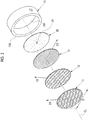
Fig. 2 is an exploded perspective view of the illumination device. -
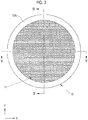
Fig. 3 is a front view of the illumination device. -
Fig. 4 is a cross-sectional view taken along line IV-IV ofFig. 3 . -
Fig. 5 is a cross-sectional view taken along line V-V ofFig. 3 . -
Fig. 6 is an explanatory diagram for describing rotation moire appearing due to first and second lenticular lens sheets. -
Fig. 7 is an explanatory diagram showing an angle position relationship between first to third plano-convex cylindrical lenses. -
Fig. 8 is an explanatory diagram for describing an action of a third lenticular lens sheet. -
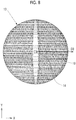
Fig. 9 is an explanatory diagram showing an emission state of the illumination device. -
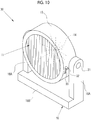
Fig. 10 is a perspective view of an illumination device of a second embodiment in front view. -
Fig. 11 is an exploded perspective view showing a configuration of the illumination device of the second embodiment. -
Fig. 12 is a perspective view showing a light source used in an illumination device of a third embodiment. -
Fig. 13 is a perspective view showing an example in which the present invention is applied to an illumination device of a vehicle. - In
Figs. 1 and2 , anillumination device 10 includes first to thirdlenticular lens sheets 11 to 13, oneLED light source 14, acasing 15, and aleg portion 16. The first to thirdlenticular lens sheets 11 to 13 have circular shapes, and have the same diameter D. The first to thirdlenticular lens sheets 11 to 13 are laminated. - The
casing 15 is a support member that supports the first to thirdlenticular lens sheets 11 to 13 and theLED light source 14, and includes acylindrical portion 15A and arear surface portion 15B. Thecylindrical portion 15A has a cylindrical shape, and supports outer peripheral surfaces of the first to thirdlenticular lens sheets 11 to 13. A central axis CL of thecylindrical portion 15A passes through centers of the first to thirdlenticular lens sheets 11 to 13. The first to thirdlenticular lens sheets 11 to 13 are arranged in order on a front surface of thecylindrical portion 15A. The firstlenticular lens sheet 11 located in the frontmost position is exposed to the front surface of theillumination device 10. A rear surface of thecylindrical portion 15A is blocked by therear surface portion 15B. - The
LED light source 14 is provided on asubstrate 20, and emits, for example, white light rays. TheLED light source 14 is arranged as a light source of theillumination device 10 on the central axis CL of thecylindrical portion 15A. Thesubstrate 20 is fixed to therear surface portion 15B of thecasing 15. TheLED light source 14 is a so-called point light source of which a chip-like element portion emits light rays and a central portion emits strong light rays. A power supply unit (not shown) such as a battery that supplies power to theLED light source 14 is built in thecasing 15. - The
LED light source 14 emits illumination light rays through the first to thirdlenticular lens sheets 11 to 13. - The
leg portion 16 includessupport portions 16A and abottom portion 16B. Thesupport portions 16A are arranged on both side portions of thecasing 15, and are coupled to thecasing 15 so as to rotate throughhinge portions 21. Thebottom portion 16B is arranged on a bottom surface of thesupport portions 16A, and a bottom surface is formed in a flat shape. For example, theillumination device 10 is provided on a floor or a table in a room such that thebottom portion 16B faces downwards and the firstlenticular lens sheet 11 faces an observer. Theillumination device 10 may change the orientation of the illumination light rays by rotating thecasing 15 with respect to theleg portion 16 with thehinge portions 21 as a center. - As shown in
Figs. 3 to 5 , the firstlenticular lens sheet 11 includes a plurality of first plano-convexcylindrical lenses 17. InFigs. 3 to 5 , theleg portion 16 is not shown. Each first plano-convexcylindrical lens 17 has a semi-cylindricalconvex portion 17A, and has a flat shape on a side opposite to theconvex portion 17A. Each first plano-convexcylindrical lens 17 extends in a D1 direction (first direction), and a plurality of first plano-convexcylindrical lenses 17 is arranged such that adjacent first plano-convex cylindrical lenses are parallel to each other. Specifically, the first plano-convexcylindrical lenses 17 are arranged in a direction perpendicular to the D1 direction at a regular pitch P (seeFigs. 5 and6 ) with no space therebetween. That is, a width of the first plano-convexcylindrical lens 17 in the direction perpendicular to the D1 direction is equal to the pitch P. The firstlenticular lens sheet 11 has aflat surface 11A on a side opposite to theconvex portion 17A. - The second
lenticular lens sheet 12 is laminated in contact with the firstlenticular lens sheet 11. Similarly to the firstlenticular lens sheet 11, the secondlenticular lens sheet 12 includes a plurality of second plano-convexcylindrical lenses 18. The second plano-convexcylindrical lenses 18 extend in a D2 direction (second direction) and are arranged in a direction perpendicular to the D2 direction at a regular pitch P with no space therebetween. That is, a width of the second plano-convexcylindrical lens 18 in the direction perpendicular to the D2 direction is equal to the pitch P. - The second
lenticular lens sheet 12 has aflat surface 12A on a side opposite to aconvex portion 18A of the second plano-convexcylindrical lens 18. The first and secondlenticular lens sheets flat surfaces - The third
lenticular lens sheet 13 is arranged on a side of the first and secondlenticular lens sheets LED light source 14. Similarly to the first and secondlenticular lens sheets lenticular lens sheet 13 includes a plurality of third plano-convexcylindrical lenses 19. The third plano-convexcylindrical lenses 19 extend in a D3 direction (third direction), and are arranged in a direction perpendicular to the D3 direction at a regular pitch P with no space. That is, a width of the third plano-convexcylindrical lens 19 in the direction perpendicular to the D3 direction is equal to the pitch P. - The third
lenticular lens sheet 13 has aflat surface 13A on a side opposite to aconvex portion 19A of the third plano-convexcylindrical lens 19. The second and thirdlenticular lens sheets convex portions - In the present embodiment, all the first to third plano-convex
cylindrical lenses 17 to 19 have the same shape, and are arranged at the same pitch P with no space therebetween. All the widths of the first to third plano-convexcylindrical lenses 17 to 19 are the same. - In
Fig. 6 , the secondlenticular lens sheet 12 is laminated on the firstlenticular lens sheet 11 such that an angle θ1 (0° ≤ θ1 ≤ 90°) formed by the D1 direction and the D2 direction falls within a first angle range. As shown inFig. 7 , the first and secondlenticular lens sheets - The first angle range is an angle range in which rotation moire appears by the first and second
lenticular lens sheets 
- In principle, the moire fringes appear from Expression (1) in a case where the angle θ1 is greater than 0°. Thus, a lower limit αmin of the first angle range which is the angle range in which the rotation moire appears may be greater than at least 0° (αmin > 0). More specifically, since the cycle T of the moire fringe becomes larger as the angle θ1 becomes smaller, in a case where the angle θ1 is extremely small, the cycle T is greater than the size (diameter D) of the first and second
lenticular lens sheets 
- Meanwhile, since the cycle T of the moire fringe becomes smaller as the angle θ1 becomes larger, in a case where the angle θ1 is extremely large, an interval between the moire fringes is narrow, and the streaks are integrated. As a result, the moire fringes are not able to be visually perceived. In the present embodiment, in a case where the pitch P is about 0.01 mm and the angle θ1 is equal to or greater than about 30°, the moire fringes are not able to be visually perceived. Accordingly, an upper limit αmax of the first angle range is about 30°.
- That is, it is preferable that the first angle range is a range which is greater than 0° and is less than 30°, and it is preferable that the lower limit αmin of the first angle range is a value calculated by Expression (2).
- As shown in
Fig. 7 , the thirdlenticular lens sheet 13 is laminated on the first and secondlenticular lens sheets lenticular lens sheet 13 is arranged such that the D3 direction is parallel to the Y direction. - The second angle range is an angle range in which the rotation moire does not appear by two lenticular lens sheets. That is, the second angle range is out of the first angle range, and is, for example, an angle range which is equal to or greater than 30° and is equal to or less than 90°. A lower limit of the second angle range is greater than the upper limit of the first angle range. That is, moire does not appear between the third
lenticular lens sheet 13 and the first and secondlenticular lens sheets - As shown in
Fig. 8 , the thirdlenticular lens sheet 13 has a function of diffusing the light rays emitted from the LEDlight source 14 in a direction (Y direction) perpendicular to the D3 direction. This is because the third plano-convexcylindrical lenses 19 diffuse and emit the light rays in the direction perpendicular to the D3 direction through a lens effect. That is, the thirdlenticular lens sheet 13 has a function of rendering point-shaped illumination light rays emitted from the LEDlight source 14 to line-shaped illumination light rays extending in the Y direction. - The first
lenticular lens sheet 11 has a function of diffusing the light rays in the direction perpendicular to the D1 direction through the lens effect, and the secondlenticular lens sheet 12 has a function of diffusing the light rays in the direction perpendicular to the D2 direction through the lens effect. That is, the first and secondlenticular lens sheets - Accordingly, the first and second
lenticular lens sheets lenticular lens sheet 13. In this case, since the moire fringes appear along the X direction which is the same direction as the diffusion direction of the illumination light rays, the moire fringes having high contrast are displayed by the illumination light rays as shown inFig. 9 . - As stated above, the
illumination device 10 can generate the streak illumination light rays by oneLED light source 14, and can save power. Theillumination device 10 can generate, not the monotonous illumination light rays as in the illumination device of the related art, but the streak illumination light rays having high contrast, and has excellent decorativeness. - In
Figs. 10 and11 , in anillumination device 30 of the second embodiment, the secondlenticular lens sheet 12 may rotate around the firstlenticular lens sheet 11. Another configuration of theillumination device 30 is the same as the configuration of theillumination device 10 of the first embodiment. - The
illumination device 30 includes aframe member 31 fixed to the outer peripheral surface of the secondlenticular lens sheet 12, and aknob portion 32. Theframe member 31 is fit to an inner peripheral surface of thecasing 15, and the frame member and the secondlenticular lens sheet 12 are held so as to rotate. Theknob portion 32 is integrally formed with theframe member 31. The knob portion passes through an openingportion 33 formed in thecasing 15 so as to protrude, and is able to be operated from the outside. - With such a configuration, in a case where the second
lenticular lens sheet 12 is rotated by operating theknob portion 32, since the angle θ1 is changed, the cycle T of the moire appearing due to the first and secondlenticular lens sheets - Although it has been described in the example shown in
Figs. 10 and11 that the secondlenticular lens sheet 12 is able to manually rotate around the firstlenticular lens sheet 11, the present invention is not limited thereto. A rotation mechanism (not shown) that electrically rotates the secondlenticular lens sheet 12 may be provided. - In the third embodiment, a
light source 40 of which color is variable is used instead of theLED light sources 14 of the embodiments, as shown inFig. 12 . Thelight source 40 has a plurality ofLED light sources 41A to 41D of which emission colors are different, and asubstrate 42 on which theLED light sources 41A to 41D are formed. For example, red, green, blue, and white LED light sources are used as theLED light sources 41A to 41D. A drivingunit 43 is connected to thesubstrate 42. - The driving
unit 43 changes the emission color of thelight source 40 by changing the emission states (light emission intensity and duty) of theLED light sources 41A to 41D. Accordingly, it is possible to further increase decorativeness by changing the emission color of thelight source 40 depending on a situation. -
Fig. 13 shows an example in which anillumination device 50 is attached to avehicle 51. For example, theillumination device 50 is attached so as to be embedded in avehicle body 52 of thevehicle 51. Theillumination device 50 has the same configuration as any of the illumination devices of the first to third embodiments except that the external appearance of the first to thirdlenticular lens sheets 11 to 13 has a rectangular shape. For example, theillumination device 50 is attached to a rear part of thevehicle body 52, and is used as a tail lamp. The present invention is not limited thereto, and theillumination device 50 may be applied to a headlamp attached to a front part of thevehicle body 52. - In a case where the illumination device of the second embodiment is attached to the
vehicle 51, the streak pattern of the illumination light rays may be changed by rotating the secondlenticular lens sheet 12 depending on an operation state (for example, a case where a brake is activated or the like) of thevehicle 51. - Although it has been described in the embodiments that the first to third
lenticular lens sheets 11 to 13 are arranged in order on the front surface, this order is not limited. Although it has been described in the embodiments that the first and thirdlenticular lens sheets convex portions lenticular lens sheet 12 is arranged such that theflat surface 12A faces the front surface, the present invention is not limited thereto. Any of the convex portion and the flat surface of each lenticular sheet may face the front surface. The first to thirdlenticular lens sheets 11 to 13 may generate the streak illumination light rays irrespective of the order or the orientation. - Although it has been described in the embodiments that the arrangement pitches and widths of the first to third plano-convex
cylindrical lenses 17 to 19 are the same, the present invention is not limited thereto. The arrangement pitches and widths of the first to third plano-convexcylindrical lenses 17 to 19 may be different from one another. - Although it has been described in the embodiments that the first to third
lenticular lens sheets 11 to 13 are arranged in contact with one another, the present invention is not limited thereto. The first to thirdlenticular lens sheets 11 to 13 may be arranged so as to be separated from one another. - Although it has been described in the embodiments that the external appearance of the first to third
lenticular lens sheets 11 to 13 has the circular shape or the rectangular shape, the external appearance of the first to thirdlenticular lens sheets 11 to 13 may have any external shape. Although it has been described in the embodiments that the LED light source is used as the light source, the present invention is not limited thereto. A point light source other than the LED light source may be used. Although it has been described in the embodiments that only one point light source is used, a plurality of point light sources may be used. - Although it has been described in the embodiments that the present invention is applied to the illumination device in the room or the illumination device attached to the interior equipment of the vehicle, the present invention is not limited thereto. The present invention may be applied to an illumination device to be used in commercial facilities such as amusement parks or entertainment machines such as game machines or an illumination device attached to motorcycles.
-
- 10, 20, 30, 50: illumination device
- 11: first lenticular lens sheet
- 12: second lenticular lens sheet
- 13: third lenticular lens sheet
- 14: LED light source
- 15: casing (support member)
- 17: first plano-convex cylindrical lens
- 18: second plano-convex cylindrical lens
- 19: third plano-convex cylindrical lens
Claims (11)
- An illumination device comprising:a first lenticular lens sheet in which a plurality of first plano-convex cylindrical lenses which extends in a first direction is arranged in a direction perpendicular to the first direction;a second lenticular lens sheet in which a plurality of second plano-convex cylindrical lenses which extends in a second direction is arranged in a direction perpendicular to the second direction;a third lenticular lens sheet in which a plurality of third plano-convex cylindrical lenses which extends in a third direction is arranged in a direction perpendicular to the third direction; andat least one point light source that emits illumination light rays through the first to third lenticular lens sheets,wherein the second lenticular lens sheet is laminated on the first lenticular lens sheet such that an angle formed by the first direction and the second direction falls within a first angle range,the third lenticular lens sheet is laminated on the first and second lenticular lens sheets such that each of an angle formed by the first direction and the third direction and an angle formed by the second direction and the third direction is a second angle range, anda lower limit of the second angle range is greater than an upper limit of the first angle range.
- The illumination device according to claim 1,
wherein the first angle range is an angle range in which rotation moire appears by the first and second lenticular lens sheets. - The illumination device according to claim 2,
wherein the first angle range is a range which is greater than 0 degrees and is less than 30 degrees. - The illumination device according to any one of claims 1 to 3,
wherein the first and second lenticular lens sheets are laminated in contact with each other, and
the third lenticular lens sheet is arranged on a side of the first and second lenticular lens sheets facing the point light source or on a side of the first and second lenticular lens sheets opposite to the point light source. - The illumination device according to claim 4,
wherein the first and second lenticular lens sheets are laminated such that flat surfaces are in contact with each other. - The illumination device according to any one of claims 1 to 5,
wherein the second lenticular lens sheet is held so as to rotate around the first lenticular lens sheet. - The illumination device according to any one of claims 1 to 6, further comprising:
a support member that supports the point light source and the first to third lenticular lens sheets. - The illumination device according to claim 7,
wherein the support member has a cylindrical shape, and
the point light source is arranged on a central axis of the support member. - The illumination device according to claim 8,
wherein the first to third lenticular lens sheets have circular shapes, and
in a case where a diameter of the circle is D and arrangement pitches of the first and second plano-convex cylindrical lenses are P, a lower limit of the first angle range is αmin calculated by αmin = atan(P/D). - The illumination device according to any one of claims 1 to 9,
wherein color of the point light source is variable. - The illumination device according to any one of claims 1 to 10,
wherein the point light source is an LED light source.
Applications Claiming Priority (2)
| Application Number | Priority Date | Filing Date | Title |
|---|---|---|---|
| JP2015204455 | 2015-10-16 | ||
| PCT/JP2016/080303 WO2017065193A1 (en) | 2015-10-16 | 2016-10-13 | Illumination device |
Publications (3)
| Publication Number | Publication Date |
|---|---|
| EP3364098A1 true EP3364098A1 (en) | 2018-08-22 |
| EP3364098A4 EP3364098A4 (en) | 2018-12-05 |
| EP3364098B1 EP3364098B1 (en) | 2020-05-06 |
Family
ID=58518202
Family Applications (1)
| Application Number | Title | Priority Date | Filing Date |
|---|---|---|---|
| EP16855446.7A Active EP3364098B1 (en) | 2015-10-16 | 2016-10-13 | Illumination device |
Country Status (5)
| Country | Link |
|---|---|
| US (1) | US10520162B2 (en) |
| EP (1) | EP3364098B1 (en) |
| JP (1) | JP6475357B2 (en) |
| CN (1) | CN108139046B (en) |
| WO (1) | WO2017065193A1 (en) |
Cited By (4)
| Publication number | Priority date | Publication date | Assignee | Title |
|---|---|---|---|---|
| EP3453952A1 (en) * | 2017-09-08 | 2019-03-13 | Valeo Vision | Light distribution element for light emitting device and light emitting device |
| EP3453945A1 (en) * | 2017-09-08 | 2019-03-13 | Valeo Vision | Light patterning device, vehicle lamp comprising the same and motor vehicle |
| WO2021078915A1 (en) * | 2019-10-24 | 2021-04-29 | Valeo Vision | Grating structure, optical structure and corresponding vehicle lamp and vehicle |
| WO2022207726A1 (en) * | 2021-03-30 | 2022-10-06 | Marelli Automotive Lighting France | Light device for a motor vehicle capable of creating an optical effect known as moiré |
Families Citing this family (9)
| Publication number | Priority date | Publication date | Assignee | Title |
|---|---|---|---|---|
| US10345647B2 (en) * | 2015-07-30 | 2019-07-09 | Nichia Corporation | Surface light source device and transmission display device |
| ES2797258T3 (en) * | 2016-11-14 | 2020-12-01 | Signify Holding Bv | Led beam shaping |
| DE102017003036A1 (en) * | 2017-03-29 | 2018-10-04 | Singulus Technologies Ag | illuminant |
| CN109459447B (en) * | 2018-11-23 | 2023-09-12 | 菲特(天津)检测技术有限公司 | Luminous light source structure, cylindrical workpiece detection device and detection method |
| KR102778016B1 (en) * | 2019-01-29 | 2025-03-10 | 현대자동차주식회사 | Lighting device for a vehicle |
| KR102351936B1 (en) * | 2019-08-08 | 2022-01-17 | 정순기 | Lighting device using perforated plate |
| KR102939190B1 (en) * | 2020-10-23 | 2026-03-12 | 현대자동차주식회사 | Lighting apparatus for vehicle |
| KR20230155711A (en) * | 2022-05-04 | 2023-11-13 | 현대모비스 주식회사 | Lamp for vehicle |
| US12072070B2 (en) * | 2024-03-05 | 2024-08-27 | Robe Lighting S.R.O. | Lighting effect system |
Family Cites Families (17)
| Publication number | Priority date | Publication date | Assignee | Title |
|---|---|---|---|---|
| USRE26506E (en) * | 1968-12-17 | Multilayer lenticular light polarizing device | ||
| US3213753A (en) * | 1962-01-24 | 1965-10-26 | Polaroid Corp | Multilayer lenticular light polarizing device |
| JPH0668208U (en) * | 1993-03-05 | 1994-09-22 | 株式会社小糸製作所 | Variable light distribution vehicle lighting |
| US5598280A (en) * | 1993-03-23 | 1997-01-28 | Dai Nippon Printing Co., Ltd. | Film lens and a surface light source using the same |
| JP3969252B2 (en) * | 2002-08-27 | 2007-09-05 | 日本電気株式会社 | Stereoscopic image plane image switching display device and portable terminal device |
| US7186004B2 (en) * | 2002-12-31 | 2007-03-06 | Karlton David Powell | Homogenizing optical sheet, method of manufacture, and illumination system |
| TW200508707A (en) * | 2003-08-29 | 2005-03-01 | Ind Tech Res Inst | High brightness diffusing sheet |
| JP3984950B2 (en) * | 2003-11-12 | 2007-10-03 | キヤノン株式会社 | Illumination optical system and exposure apparatus having the same |
| US8023193B2 (en) * | 2007-08-31 | 2011-09-20 | Young Optics Inc. | Illumination system |
| JP4901656B2 (en) * | 2007-09-04 | 2012-03-21 | 三洋電機株式会社 | Illumination device and projection display device |
| JP5347399B2 (en) * | 2008-06-30 | 2013-11-20 | 富士通株式会社 | Lighting device and electronic device |
| KR20110074953A (en) * | 2008-09-22 | 2011-07-05 | 소니 주식회사 | Optical element stack, manufacturing method thereof, backlight and liquid crystal display device |
| EP2293140A1 (en) * | 2009-08-01 | 2011-03-09 | Bayer MaterialScience AG | Multi-layer lighting device with improved characteristics and application thereof |
| WO2012020597A1 (en) * | 2010-08-12 | 2012-02-16 | 日本応用光学株式会社 | Illumination device |
| TW201211459A (en) * | 2010-09-08 | 2012-03-16 | Jin Zhan Prec Industry Co Ltd | Illumination light beam shaping system |
| JP6018569B2 (en) * | 2011-04-25 | 2016-11-02 | 五洋紙工株式会社 | Diffusion sheet for LED lighting and LED lighting apparatus using the same |
| TWI529020B (en) * | 2013-12-02 | 2016-04-11 | 財團法人工業技術研究院 | Beam diffusing module and beam generating system |
-
2016
- 2016-10-13 WO PCT/JP2016/080303 patent/WO2017065193A1/en not_active Ceased
- 2016-10-13 JP JP2017545444A patent/JP6475357B2/en not_active Expired - Fee Related
- 2016-10-13 CN CN201680060295.9A patent/CN108139046B/en active Active
- 2016-10-13 EP EP16855446.7A patent/EP3364098B1/en active Active
-
2018
- 2018-04-11 US US15/950,494 patent/US10520162B2/en active Active
Cited By (6)
| Publication number | Priority date | Publication date | Assignee | Title |
|---|---|---|---|---|
| EP3453952A1 (en) * | 2017-09-08 | 2019-03-13 | Valeo Vision | Light distribution element for light emitting device and light emitting device |
| EP3453945A1 (en) * | 2017-09-08 | 2019-03-13 | Valeo Vision | Light patterning device, vehicle lamp comprising the same and motor vehicle |
| US10605435B2 (en) | 2017-09-08 | 2020-03-31 | Valeo Vision | Light distribution element for light emitting device and light emitting device |
| WO2021078915A1 (en) * | 2019-10-24 | 2021-04-29 | Valeo Vision | Grating structure, optical structure and corresponding vehicle lamp and vehicle |
| WO2022207726A1 (en) * | 2021-03-30 | 2022-10-06 | Marelli Automotive Lighting France | Light device for a motor vehicle capable of creating an optical effect known as moiré |
| FR3121500A1 (en) * | 2021-03-30 | 2022-10-07 | Marelli Automotive Lighting France | Luminous device for a motor vehicle capable of creating an optical effect known as moiré. |
Also Published As
| Publication number | Publication date |
|---|---|
| EP3364098A4 (en) | 2018-12-05 |
| EP3364098B1 (en) | 2020-05-06 |
| JP6475357B2 (en) | 2019-02-27 |
| WO2017065193A1 (en) | 2017-04-20 |
| US20180231210A1 (en) | 2018-08-16 |
| JPWO2017065193A1 (en) | 2018-07-12 |
| US10520162B2 (en) | 2019-12-31 |
| CN108139046B (en) | 2021-02-26 |
| CN108139046A (en) | 2018-06-08 |
Similar Documents
| Publication | Publication Date | Title |
|---|---|---|
| EP3364098B1 (en) | Illumination device | |
| CN104541319A (en) | Decorative lamps for physical and mental relaxation | |
| JP2014120400A (en) | Led lighting device | |
| US10371955B2 (en) | Illumination device having a lenticular lens sheet that is formed in a concave manner having a plano-convex cylindrical convex surface with a light source disposed within the convex surface | |
| JP6240492B2 (en) | Decorative lighting equipment | |
| TWM455385U (en) | Light emitting shoe sole | |
| JP5531302B2 (en) | Lighting device | |
| KR101768412B1 (en) | LED clock | |
| KR20160089802A (en) | Lighting device for LED lamp | |
| TWM454495U (en) | Lamp capable of displaying specific totems | |
| JP3148022U (en) | Illumination device whose luminous point cannot be seen from the outside | |
| JP2019087427A (en) | Light emitting device | |
| KR101118631B1 (en) | Down light for light direction | |
| JP3176787U (en) | Fluorescent lamp type LED lighting tube | |
| JP4353501B2 (en) | Indicator light | |
| KR101241574B1 (en) | Lighting apparatus | |
| JP2023048402A (en) | Illumination lamp and lighting device | |
| JP2020077459A (en) | Mobile light | |
| TWM460804U (en) | Automobile third brake light structure | |
| KR20180003176U (en) | Led lighting apparatus | |
| JP4029870B2 (en) | Lighting structure | |
| TWI625489B (en) | Integrated Lamp | |
| JP6314540B2 (en) | Light source unit and lighting fixture | |
| JP3129470U (en) | Amusement machine lighting equipment | |
| JP3163310U (en) | Photo frame with message board function |
Legal Events
| Date | Code | Title | Description |
|---|---|---|---|
| STAA | Information on the status of an ep patent application or granted ep patent |
Free format text: STATUS: THE INTERNATIONAL PUBLICATION HAS BEEN MADE |
|
| PUAI | Public reference made under article 153(3) epc to a published international application that has entered the european phase |
Free format text: ORIGINAL CODE: 0009012 |
|
| STAA | Information on the status of an ep patent application or granted ep patent |
Free format text: STATUS: REQUEST FOR EXAMINATION WAS MADE |
|
| 17P | Request for examination filed |
Effective date: 20180413 |
|
| AK | Designated contracting states |
Kind code of ref document: A1 Designated state(s): AL AT BE BG CH CY CZ DE DK EE ES FI FR GB GR HR HU IE IS IT LI LT LU LV MC MK MT NL NO PL PT RO RS SE SI SK SM TR |
|
| AX | Request for extension of the european patent |
Extension state: BA ME |
|
| A4 | Supplementary search report drawn up and despatched |
Effective date: 20181107 |
|
| RIC1 | Information provided on ipc code assigned before grant |
Ipc: G02B 3/06 20060101ALI20181031BHEP Ipc: G02B 27/09 20060101ALI20181031BHEP Ipc: G02B 19/00 20060101ALI20181031BHEP Ipc: F21V 5/00 20180101ALI20181031BHEP Ipc: F21S 43/20 20180101ALI20181031BHEP Ipc: F21S 41/143 20180101ALI20181031BHEP Ipc: H01L 33/58 20100101ALI20181031BHEP Ipc: F21S 8/04 20060101ALI20181031BHEP Ipc: F21S 41/63 20180101ALI20181031BHEP Ipc: F21S 43/14 20180101ALI20181031BHEP Ipc: G02B 3/00 20060101AFI20181031BHEP Ipc: F21S 43/00 20180101ALI20181031BHEP Ipc: F21Y 115/10 20160101ALI20181031BHEP Ipc: F21S 41/20 20180101ALI20181031BHEP Ipc: G02B 5/02 20060101ALI20181031BHEP Ipc: G02B 27/60 20060101ALI20181031BHEP Ipc: F21V 5/04 20060101ALI20181031BHEP |
|
| DAV | Request for validation of the european patent (deleted) | ||
| DAX | Request for extension of the european patent (deleted) | ||
| REG | Reference to a national code |
Ref country code: DE Ref legal event code: R079 Ref document number: 602016036157 Country of ref document: DE Free format text: PREVIOUS MAIN CLASS: F21S0008040000 Ipc: G02B0003000000 |
|
| RIC1 | Information provided on ipc code assigned before grant |
Ipc: F21V 5/00 20180101ALI20190524BHEP Ipc: G02B 3/06 20060101ALI20190524BHEP Ipc: G02B 19/00 20060101ALI20190524BHEP Ipc: F21S 43/20 20180101ALI20190524BHEP Ipc: G02B 27/60 20060101ALI20190524BHEP Ipc: G02B 3/00 20060101AFI20190524BHEP Ipc: F21S 43/14 20180101ALI20190524BHEP Ipc: F21Y 115/10 20160101ALI20190524BHEP Ipc: F21S 43/00 20180101ALI20190524BHEP Ipc: F21S 41/143 20180101ALI20190524BHEP Ipc: H01L 33/58 20100101ALI20190524BHEP Ipc: G02B 5/02 20060101ALI20190524BHEP Ipc: F21S 41/20 20180101ALI20190524BHEP Ipc: F21V 5/04 20060101ALI20190524BHEP Ipc: F21S 8/04 20060101ALI20190524BHEP Ipc: F21S 41/63 20180101ALI20190524BHEP Ipc: G02B 27/09 20060101ALI20190524BHEP |
|
| GRAP | Despatch of communication of intention to grant a patent |
Free format text: ORIGINAL CODE: EPIDOSNIGR1 |
|
| STAA | Information on the status of an ep patent application or granted ep patent |
Free format text: STATUS: GRANT OF PATENT IS INTENDED |
|
| INTG | Intention to grant announced |
Effective date: 20191216 |
|
| GRAS | Grant fee paid |
Free format text: ORIGINAL CODE: EPIDOSNIGR3 |
|
| GRAA | (expected) grant |
Free format text: ORIGINAL CODE: 0009210 |
|
| STAA | Information on the status of an ep patent application or granted ep patent |
Free format text: STATUS: THE PATENT HAS BEEN GRANTED |
|
| AK | Designated contracting states |
Kind code of ref document: B1 Designated state(s): AL AT BE BG CH CY CZ DE DK EE ES FI FR GB GR HR HU IE IS IT LI LT LU LV MC MK MT NL NO PL PT RO RS SE SI SK SM TR |
|
| REG | Reference to a national code |
Ref country code: GB Ref legal event code: FG4D |
|
| REG | Reference to a national code |
Ref country code: CH Ref legal event code: EP Ref country code: AT Ref legal event code: REF Ref document number: 1267685 Country of ref document: AT Kind code of ref document: T Effective date: 20200515 |
|
| REG | Reference to a national code |
Ref country code: IE Ref legal event code: FG4D |
|
| REG | Reference to a national code |
Ref country code: DE Ref legal event code: R096 Ref document number: 602016036157 Country of ref document: DE |
|
| REG | Reference to a national code |
Ref country code: LT Ref legal event code: MG4D |
|
| REG | Reference to a national code |
Ref country code: NL Ref legal event code: MP Effective date: 20200506 |
|
| PG25 | Lapsed in a contracting state [announced via postgrant information from national office to epo] |
Ref country code: NO Free format text: LAPSE BECAUSE OF FAILURE TO SUBMIT A TRANSLATION OF THE DESCRIPTION OR TO PAY THE FEE WITHIN THE PRESCRIBED TIME-LIMIT Effective date: 20200806 Ref country code: GR Free format text: LAPSE BECAUSE OF FAILURE TO SUBMIT A TRANSLATION OF THE DESCRIPTION OR TO PAY THE FEE WITHIN THE PRESCRIBED TIME-LIMIT Effective date: 20200807 Ref country code: FI Free format text: LAPSE BECAUSE OF FAILURE TO SUBMIT A TRANSLATION OF THE DESCRIPTION OR TO PAY THE FEE WITHIN THE PRESCRIBED TIME-LIMIT Effective date: 20200506 Ref country code: SE Free format text: LAPSE BECAUSE OF FAILURE TO SUBMIT A TRANSLATION OF THE DESCRIPTION OR TO PAY THE FEE WITHIN THE PRESCRIBED TIME-LIMIT Effective date: 20200506 Ref country code: IS Free format text: LAPSE BECAUSE OF FAILURE TO SUBMIT A TRANSLATION OF THE DESCRIPTION OR TO PAY THE FEE WITHIN THE PRESCRIBED TIME-LIMIT Effective date: 20200906 Ref country code: PT Free format text: LAPSE BECAUSE OF FAILURE TO SUBMIT A TRANSLATION OF THE DESCRIPTION OR TO PAY THE FEE WITHIN THE PRESCRIBED TIME-LIMIT Effective date: 20200907 Ref country code: LT Free format text: LAPSE BECAUSE OF FAILURE TO SUBMIT A TRANSLATION OF THE DESCRIPTION OR TO PAY THE FEE WITHIN THE PRESCRIBED TIME-LIMIT Effective date: 20200506 |
|
| PG25 | Lapsed in a contracting state [announced via postgrant information from national office to epo] |
Ref country code: LV Free format text: LAPSE BECAUSE OF FAILURE TO SUBMIT A TRANSLATION OF THE DESCRIPTION OR TO PAY THE FEE WITHIN THE PRESCRIBED TIME-LIMIT Effective date: 20200506 Ref country code: HR Free format text: LAPSE BECAUSE OF FAILURE TO SUBMIT A TRANSLATION OF THE DESCRIPTION OR TO PAY THE FEE WITHIN THE PRESCRIBED TIME-LIMIT Effective date: 20200506 Ref country code: RS Free format text: LAPSE BECAUSE OF FAILURE TO SUBMIT A TRANSLATION OF THE DESCRIPTION OR TO PAY THE FEE WITHIN THE PRESCRIBED TIME-LIMIT Effective date: 20200506 Ref country code: BG Free format text: LAPSE BECAUSE OF FAILURE TO SUBMIT A TRANSLATION OF THE DESCRIPTION OR TO PAY THE FEE WITHIN THE PRESCRIBED TIME-LIMIT Effective date: 20200806 |
|
| REG | Reference to a national code |
Ref country code: AT Ref legal event code: MK05 Ref document number: 1267685 Country of ref document: AT Kind code of ref document: T Effective date: 20200506 |
|
| PG25 | Lapsed in a contracting state [announced via postgrant information from national office to epo] |
Ref country code: NL Free format text: LAPSE BECAUSE OF FAILURE TO SUBMIT A TRANSLATION OF THE DESCRIPTION OR TO PAY THE FEE WITHIN THE PRESCRIBED TIME-LIMIT Effective date: 20200506 Ref country code: AL Free format text: LAPSE BECAUSE OF FAILURE TO SUBMIT A TRANSLATION OF THE DESCRIPTION OR TO PAY THE FEE WITHIN THE PRESCRIBED TIME-LIMIT Effective date: 20200506 |
|
| PG25 | Lapsed in a contracting state [announced via postgrant information from national office to epo] |
Ref country code: CZ Free format text: LAPSE BECAUSE OF FAILURE TO SUBMIT A TRANSLATION OF THE DESCRIPTION OR TO PAY THE FEE WITHIN THE PRESCRIBED TIME-LIMIT Effective date: 20200506 Ref country code: IT Free format text: LAPSE BECAUSE OF FAILURE TO SUBMIT A TRANSLATION OF THE DESCRIPTION OR TO PAY THE FEE WITHIN THE PRESCRIBED TIME-LIMIT Effective date: 20200506 Ref country code: RO Free format text: LAPSE BECAUSE OF FAILURE TO SUBMIT A TRANSLATION OF THE DESCRIPTION OR TO PAY THE FEE WITHIN THE PRESCRIBED TIME-LIMIT Effective date: 20200506 Ref country code: DK Free format text: LAPSE BECAUSE OF FAILURE TO SUBMIT A TRANSLATION OF THE DESCRIPTION OR TO PAY THE FEE WITHIN THE PRESCRIBED TIME-LIMIT Effective date: 20200506 Ref country code: EE Free format text: LAPSE BECAUSE OF FAILURE TO SUBMIT A TRANSLATION OF THE DESCRIPTION OR TO PAY THE FEE WITHIN THE PRESCRIBED TIME-LIMIT Effective date: 20200506 Ref country code: SM Free format text: LAPSE BECAUSE OF FAILURE TO SUBMIT A TRANSLATION OF THE DESCRIPTION OR TO PAY THE FEE WITHIN THE PRESCRIBED TIME-LIMIT Effective date: 20200506 Ref country code: AT Free format text: LAPSE BECAUSE OF FAILURE TO SUBMIT A TRANSLATION OF THE DESCRIPTION OR TO PAY THE FEE WITHIN THE PRESCRIBED TIME-LIMIT Effective date: 20200506 Ref country code: ES Free format text: LAPSE BECAUSE OF FAILURE TO SUBMIT A TRANSLATION OF THE DESCRIPTION OR TO PAY THE FEE WITHIN THE PRESCRIBED TIME-LIMIT Effective date: 20200506 |
|
| REG | Reference to a national code |
Ref country code: DE Ref legal event code: R097 Ref document number: 602016036157 Country of ref document: DE |
|
| PG25 | Lapsed in a contracting state [announced via postgrant information from national office to epo] |
Ref country code: SK Free format text: LAPSE BECAUSE OF FAILURE TO SUBMIT A TRANSLATION OF THE DESCRIPTION OR TO PAY THE FEE WITHIN THE PRESCRIBED TIME-LIMIT Effective date: 20200506 Ref country code: PL Free format text: LAPSE BECAUSE OF FAILURE TO SUBMIT A TRANSLATION OF THE DESCRIPTION OR TO PAY THE FEE WITHIN THE PRESCRIBED TIME-LIMIT Effective date: 20200506 |
|
| PLBE | No opposition filed within time limit |
Free format text: ORIGINAL CODE: 0009261 |
|
| STAA | Information on the status of an ep patent application or granted ep patent |
Free format text: STATUS: NO OPPOSITION FILED WITHIN TIME LIMIT |
|
| 26N | No opposition filed |
Effective date: 20210209 |
|
| RAP4 | Party data changed (patent owner data changed or rights of a patent transferred) |
Owner name: FUJIFILM CORPORATION |
|
| PG25 | Lapsed in a contracting state [announced via postgrant information from national office to epo] |
Ref country code: SI Free format text: LAPSE BECAUSE OF FAILURE TO SUBMIT A TRANSLATION OF THE DESCRIPTION OR TO PAY THE FEE WITHIN THE PRESCRIBED TIME-LIMIT Effective date: 20200506 |
|
| REG | Reference to a national code |
Ref country code: CH Ref legal event code: PL |
|
| GBPC | Gb: european patent ceased through non-payment of renewal fee |
Effective date: 20201013 |
|
| PG25 | Lapsed in a contracting state [announced via postgrant information from national office to epo] |
Ref country code: MC Free format text: LAPSE BECAUSE OF FAILURE TO SUBMIT A TRANSLATION OF THE DESCRIPTION OR TO PAY THE FEE WITHIN THE PRESCRIBED TIME-LIMIT Effective date: 20200506 Ref country code: LU Free format text: LAPSE BECAUSE OF NON-PAYMENT OF DUE FEES Effective date: 20201013 |
|
| REG | Reference to a national code |
Ref country code: BE Ref legal event code: MM Effective date: 20201031 |
|
| PG25 | Lapsed in a contracting state [announced via postgrant information from national office to epo] |
Ref country code: FR Free format text: LAPSE BECAUSE OF NON-PAYMENT OF DUE FEES Effective date: 20201031 |
|
| PG25 | Lapsed in a contracting state [announced via postgrant information from national office to epo] |
Ref country code: BE Free format text: LAPSE BECAUSE OF NON-PAYMENT OF DUE FEES Effective date: 20201031 Ref country code: CH Free format text: LAPSE BECAUSE OF NON-PAYMENT OF DUE FEES Effective date: 20201031 Ref country code: GB Free format text: LAPSE BECAUSE OF NON-PAYMENT OF DUE FEES Effective date: 20201013 Ref country code: LI Free format text: LAPSE BECAUSE OF NON-PAYMENT OF DUE FEES Effective date: 20201031 |
|
| PG25 | Lapsed in a contracting state [announced via postgrant information from national office to epo] |
Ref country code: IE Free format text: LAPSE BECAUSE OF NON-PAYMENT OF DUE FEES Effective date: 20201013 |
|
| PG25 | Lapsed in a contracting state [announced via postgrant information from national office to epo] |
Ref country code: TR Free format text: LAPSE BECAUSE OF FAILURE TO SUBMIT A TRANSLATION OF THE DESCRIPTION OR TO PAY THE FEE WITHIN THE PRESCRIBED TIME-LIMIT Effective date: 20200506 Ref country code: MT Free format text: LAPSE BECAUSE OF FAILURE TO SUBMIT A TRANSLATION OF THE DESCRIPTION OR TO PAY THE FEE WITHIN THE PRESCRIBED TIME-LIMIT Effective date: 20200506 Ref country code: CY Free format text: LAPSE BECAUSE OF FAILURE TO SUBMIT A TRANSLATION OF THE DESCRIPTION OR TO PAY THE FEE WITHIN THE PRESCRIBED TIME-LIMIT Effective date: 20200506 |
|
| PG25 | Lapsed in a contracting state [announced via postgrant information from national office to epo] |
Ref country code: MK Free format text: LAPSE BECAUSE OF FAILURE TO SUBMIT A TRANSLATION OF THE DESCRIPTION OR TO PAY THE FEE WITHIN THE PRESCRIBED TIME-LIMIT Effective date: 20200506 |
|
| P01 | Opt-out of the competence of the unified patent court (upc) registered |
Effective date: 20230515 |
|
| PGFP | Annual fee paid to national office [announced via postgrant information from national office to epo] |
Ref country code: DE Payment date: 20240828 Year of fee payment: 9 |