EP3361392A1 - Method and device for analyzing address - Google Patents
Method and device for analyzing address Download PDFInfo
- Publication number
- EP3361392A1 EP3361392A1 EP16853101.0A EP16853101A EP3361392A1 EP 3361392 A1 EP3361392 A1 EP 3361392A1 EP 16853101 A EP16853101 A EP 16853101A EP 3361392 A1 EP3361392 A1 EP 3361392A1
- Authority
- EP
- European Patent Office
- Prior art keywords
- address
- morphemes
- morpheme
- correlation
- correlation values
- Prior art date
- Legal status (The legal status is an assumption and is not a legal conclusion. Google has not performed a legal analysis and makes no representation as to the accuracy of the status listed.)
- Withdrawn
Links
Images
Classifications
-
- G—PHYSICS
- G06—COMPUTING OR CALCULATING; COUNTING
- G06F—ELECTRIC DIGITAL DATA PROCESSING
- G06F40/00—Handling natural language data
- G06F40/30—Semantic analysis
-
- G—PHYSICS
- G06—COMPUTING OR CALCULATING; COUNTING
- G06F—ELECTRIC DIGITAL DATA PROCESSING
- G06F40/00—Handling natural language data
- G06F40/20—Natural language analysis
- G06F40/268—Morphological analysis
-
- G—PHYSICS
- G06—COMPUTING OR CALCULATING; COUNTING
- G06F—ELECTRIC DIGITAL DATA PROCESSING
- G06F40/00—Handling natural language data
- G06F40/40—Processing or translation of natural language
- G06F40/53—Processing of non-Latin text
Definitions
- the present application relates to the field of computer technologies, and in particular, to a method and an apparatus for address analysis.
- the two English addresses can be directly used as two long strings, and the correlation between the two English addresses can be analyzed by calculating an edit distance between the two long strings.
- the two English addresses can be pre-processed first. During pre-processing, words in each English address can be sorted based on their initials, and repeated words are deleted. Then, the pre-processed two English addresses are used as two long strings, and an edit distance between the two long strings is calculated. Finally, the correlation between the two English addresses is analyzed based on the edit distance.
- the first method depends greatly on the positions of words in English addresses. Once a sequence reversal or repetition of the words occurs in the English addresses, the edit distance would be increased, affecting the accuracy of address analysis.
- the second method can reduce the impact of the sequence and repetition of the words, its dependence on the initials of words renders it inapplicable to English addresses containing non-native English contents, because a non-English word may have several different counterparts in English (for example, Hlinka and Glinka are both common English spellings of H ⁇ a in Russian).
- Embodiments of the present application provide a method and an apparatus for address analysis, which can improve the accuracy and applicability of address analysis.
- a method for address analysis which includes:
- an apparatus for address analysis which includes an input unit, a determination unit, an acquisition unit, and an analysis unit; the input unit is configured to input a first address and a second address, the first address including n morphemes and the second address including m morphemes, wherein the morpheme is the smallest semantic unit in the address, and n and m are both natural numbers; the determination unit is configured to determine first correlation values between the n morphemes and the m morphemes; the acquisition unit is configured to obtain a second correlation value between the first address and the second address based on the first correlation values determined by the determination unit and a preset algorithm; and the analysis unit is configured to analyze a correlation between the first address and the second address based on the second correlation value obtained by the acquisition unit.
- first correlation values between n morphemes in a first address and m morphemes in a second address are determined; a second correlation value between the first address and the second address is obtained based on the first correlation values and a preset algorithm; and a correlation between the first address and the second address is analyzed based on the second correlation value. That is, in the present application, first correlation values between morphemes in two addresses are determined first, a second correlation value between the two addresses is then obtained based on the first correlation values and a preset algorithm, and finally the addresses are analyzed based on the second correlation value.
- the dependence on single words in the prior art where two addresses are used as two strings and an edit distance between the two strings is calculated to analyze a correlation between the addresses can be avoided. Therefore, the accuracy and applicability of address analysis can be improved.
- a method and an apparatus for address analysis according to the embodiments of the present application are applied to scenarios where a correlation between addresses is analyzed.
- the correlation here can include difference and similarity.
- the method and the apparatus for address analysis can be used to analyze a correlation between addresses in an e-commerce transaction of physical goods.
- the analysis result of the correlation between addresses can be the foundation for cluster analysis, term frequency analysis, address standardization, and the like.
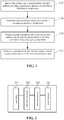
- FIG. 1 is a flowchart of a method for address analysis according to an embodiment of the present application.
- the method can be performed by a device having a processing capability, e.g., a server, a system, or an apparatus. As shown in FIG. 1 , the method can specifically include the following steps.
- Step 110 A first address and a second address are input, the first address including n morphemes and the second address including m morphemes, wherein the morpheme is the smallest semantic unit in the address, and n and m are both natural numbers.
- the first address and the second address have the same definition.
- the first address can include a Chinese address, an English address, or the like.
- a Chinese address standardization needs to be performed first. For example, traditional Chinese characters are converted into simplified Chinese characters. Then, the standardized Chinese address is segmented into n terms, and the n terms are used as n morphemes.
- n words included in the first address can be directly used as n morphemes.
- first address or the second address is a Chinese address
- first address or the second address is an English address
- first word can be used as one morpheme
- Step 120 First correlation values between the n morphemes and the m morphemes are determined.
- the first correlation value includes a difference value and a similarity value.
- the difference value can include an edit distance value.
- the similarity value can include a hamming distance value, a Jaccard distance value, an N-Gram distance value, a Jaro-Winkler (JW) distance value, or a cosine distance value.
- the first correlation value is an edit distance value.
- the edit distance value indicates an edit distance between two morphemes, and refers to the number of edit transformations (including delete transformation, insert transformation, replace transformation, and so on) required for changing one morpheme into another morpheme.
- It can be calculated based on a classic edit distance algorithm, or calculated based on an adjusted edit distance algorithm (for example, increase the difference of replace transformation or reduce the difference of lack of vowel or the like). For example, assuming that one morpheme is cafe and another morpheme is coffee, a process of changing cafe into coffee is: cafe ⁇ caffe ⁇ coffe ⁇ coffee, that is, three edit transformations are required. Therefore, an edit distance value between cafe and coffee is 3.
- each morpheme (i.e., term) in the first address can be transformed into phonetic alphabets or strokes. That is, the processed first address can include n groups of phonetic alphabets or n groups of strokes. Then, first correlation values between the n groups of phonetic alphabets included in the first address and m groups of phonetic alphabets included in the second address are determined, or first correlation values between the n groups of strokes included in the first address and m groups of strokes included in the second address are determined.
- the determination method is similar to the method for determining the first correlation values between n words included in the first address and m words included in the second address, which is not repeated in the present application.
- Step 120 can specifically include: First correlation values between each of the n morphemes and the m morphemes are determined to obtain n ⁇ m first correlation values.
- Step 120 can also be described as the following steps:
- both the first address and the second address are English addresses. That is, the first address includes n words, and the second address includes m words. Assume that n is 3, and 3 words included in the first address are respectively X, Y, and Z. Assume that m is 4, and 4 words included in the second address are respectively A, B, C, and D. First correlation values between X and the four morphemes A, B, C, and D are determined respectively; first correlation values between Y and the four morphemes A, B, C, and D are determined respectively; and first correlation values between Z and the four morphemes A, B, C, and D are determined respectively. Finally, 3 ⁇ 4 first correlation values are obtained.
- the obtained 3 ⁇ 4 first correlation values can be as shown in Table 1.
- Table 1 A B C D X d(A, X) d(B, X) d(C, X) d(D, X) Y d(A, Y) d(B, Y) d(C, Y) d(D, Y) Z d(A, Z) d(B, Z) d(C, Z) d(D, Z)
- Step 130 A second correlation value between the first address and the second address is obtained based on the first correlation values and a preset algorithm.
- the preset algorithm can include a Hungary algorithm, an exhaustion algorithm, or the like.
- the preset algorithm is a Hungary algorithm.
- Step 130 can specifically include: Step A: A second morpheme best matching with a first morpheme in the n morphemes is selected from the m morphemes based on the n ⁇ m first correlation values and the preset algorithm, and a target correlation value between the first morpheme and the second morpheme is recorded until n target correlation values are recorded.
- the first morpheme is any morpheme in the first address. It can be understood that when the first address includes n morphemes, the number of the first morphemes is n, and the number of the second morphemes matching with the first morphemes is n. Therefore, the number of recorded target correlation values is also n.
- That a second morpheme best matching with a first morpheme in the n morphemes is selected from the m morphemes based on the n ⁇ m first correlation values and the preset algorithm in step A can further include:
- the process of selecting a second morpheme best matching with a first morpheme is solving the optimal matching problem of the edit distance value. That is, it is ensured that a corresponding word can be found in the second address for each word in the first address, and the overall difference value is the minimum.
- the pre-processing can include subtracting the smallest element of each row in a matrix from this row of elements and/or subtracting the smallest element of each column from this column of elements, and so on.
- the underlined 0 is an independent zero element marked in the pre-processed matrix. It can be seen from Table 2 that when the first morpheme is X, the second morpheme best matching with the first morpheme is C, and a target correlation value d(C, X) between X and C is recorded. When the first morpheme is Y, the second morpheme best matching with the first morpheme is A, and a target correlation value d(A, Y) between Y and A is recorded. When the first morpheme is Z, the second morpheme best matching with the first morpheme is B, and a target correlation value d(B, Z) between Z and B is recorded. That is, 3 target correlation values can be recorded.
- Step B A second correlation value between the first address and the second address is obtained based on the n target correlation values.
- the n target correlation values can be summed, and the sum of the n target correlation values is used as a second correlation value between the first address and the second address.
- 1, 4, and 2 are obtained based on Table 1.
- Step 140 A correlation between the first address and the second address is analyzed based on the second correlation value.
- the second correlation value can also include a difference value and a similarity value.
- the second correlation value determined in step 130 is a difference value
- a greater second correlation value between the first address and the second address can indicate a smaller similarity between these two addresses.
- the second correlation value determined in step 130 is a similarity value
- the first address and the second address are more similar to each other if the similarity value between these two addresses is closer to 1
- the first address and the second address are less similar to each other if the similarity value between these two addresses is closer to 0.
- the similarity value can be converted into a difference value by calculating the log of the similarity value and obtaining a negative value of the log.
- analysis result of the correlation in the present application can be the foundation for cluster analysis, term frequency analysis, address standardization, and the like.
- first correlation values between n morphemes in a first address and m morphemes in a second address are determined; a second correlation value between the first address and the second address is obtained based on the first correlation values and a preset algorithm; and a correlation between the first address and the second address is analyzed based on the second correlation value.
- an embodiment of the present application further provides an apparatus for address analysis.
- the apparatus includes: an input unit 201, a determination unit 202, an acquisition unit 203, and an analysis unit 204.
- the input unit 201 is configured to input a first address and a second address, the first address including n morphemes and the second address including m morphemes, wherein the morpheme is the smallest semantic unit in the address, and n and m are both natural numbers.
- the determination unit 202 is configured to determine first correlation values between the n morphemes and the m morphemes.
- the determination unit 202 is specifically configured to: determine first correlation values between each of the n morphemes and the m morphemes to obtain n ⁇ m first correlation values.
- the first correlation value includes: an edit distance value, a hamming distance value, a Jaccard distance value, an N-Gram distance value, a JW distance value, or a cosine distance value.
- the acquisition unit 203 is configured to obtain a second correlation value between the first address and the second address based on the first correlation values determined by the determination unit 202 and a preset algorithm.
- the acquisition unit 203 is specifically configured to:
- the step of selecting a second morpheme best matching with a first morpheme in the n morphemes from the m morphemes based on the n ⁇ m first correlation values and the preset algorithm includes:
- the analysis unit 204 is configured to analyze a correlation between the first address and the second address based on the second correlation value obtained by the acquisition unit 203.
- the input unit 201 is configured to input a first address and a second address, the first address including n morphemes and the second address including m morphemes, wherein the morpheme is the smallest semantic unit in the address, and n and m are both natural numbers;
- the determination unit 202 is configured to determine first correlation values between the n morphemes and the m morphemes;
- the acquisition unit 203 is configured to obtain a second correlation value between the first address and the second address based on the determined first correlation values and a preset algorithm;
- the analysis unit 204 is configured to analyze a correlation between the first address and the second address based on the second correlation value.
- Steps of the method or algorithm described with reference to the embodiments disclosed in this specification can be implemented by hardware, a software module executed by a processor, or a combination thereof.
- the software module can be stored in a random access memory (RAM), a memory, a read-only memory (ROM), an electrically programmable ROM, an electrically erasable programmable ROM, a register, a hard drive, a removable disk, a CD-ROM, or any other form of storage medium commonly known in the art.
Landscapes
- Engineering & Computer Science (AREA)
- Theoretical Computer Science (AREA)
- Health & Medical Sciences (AREA)
- Artificial Intelligence (AREA)
- Audiology, Speech & Language Pathology (AREA)
- Computational Linguistics (AREA)
- General Health & Medical Sciences (AREA)
- Physics & Mathematics (AREA)
- General Engineering & Computer Science (AREA)
- General Physics & Mathematics (AREA)
- Information Retrieval, Db Structures And Fs Structures Therefor (AREA)
- Machine Translation (AREA)
Abstract
Description
- The present application claims priority to Chinese Patent Application No.
201510652677.8, filed on October 10, 2015 - The present application relates to the field of computer technologies, and in particular, to a method and an apparatus for address analysis.
- In conventional technologies, during address analysis, for example, when a correlation between two English addresses is analyzed, the two English addresses can be directly used as two long strings, and the correlation between the two English addresses can be analyzed by calculating an edit distance between the two long strings. Alternatively, the two English addresses can be pre-processed first. During pre-processing, words in each English address can be sorted based on their initials, and repeated words are deleted. Then, the pre-processed two English addresses are used as two long strings, and an edit distance between the two long strings is calculated. Finally, the correlation between the two English addresses is analyzed based on the edit distance.
- However, the first method depends greatly on the positions of words in English addresses. Once a sequence reversal or repetition of the words occurs in the English addresses, the edit distance would be increased, affecting the accuracy of address analysis. Although the second method can reduce the impact of the sequence and repetition of the words, its dependence on the initials of words renders it inapplicable to English addresses containing non-native English contents, because a non-English word may have several different counterparts in English (for example, Hlinka and Glinka are both common English spellings ofHκa in Russian).

- Embodiments of the present application provide a method and an apparatus for address analysis, which can improve the accuracy and applicability of address analysis.
- In a first aspect, a method for address analysis is provided, which includes:
- inputting a first address and a second address, the first address including n morphemes and the second address including m morphemes, wherein the morpheme is the smallest semantic unit in the address, and n and m are both natural numbers;
- determining first correlation values between the n morphemes and the m morphemes;
- obtaining a second correlation value between the first address and the second address based on the first correlation values and a preset algorithm; and
- analyzing a correlation between the first address and the second address based on the second correlation value.
- In a second aspect, an apparatus for address analysis is provided, which includes an input unit, a determination unit, an acquisition unit, and an analysis unit;
the input unit is configured to input a first address and a second address, the first address including n morphemes and the second address including m morphemes, wherein the morpheme is the smallest semantic unit in the address, and n and m are both natural numbers;
the determination unit is configured to determine first correlation values between the n morphemes and the m morphemes;
the acquisition unit is configured to obtain a second correlation value between the first address and the second address based on the first correlation values determined by the determination unit and a preset algorithm; and
the analysis unit is configured to analyze a correlation between the first address and the second address based on the second correlation value obtained by the acquisition unit. - According to the method and the apparatus for address analysis disclosed in the present application, first correlation values between n morphemes in a first address and m morphemes in a second address are determined; a second correlation value between the first address and the second address is obtained based on the first correlation values and a preset algorithm; and a correlation between the first address and the second address is analyzed based on the second correlation value. That is, in the present application, first correlation values between morphemes in two addresses are determined first, a second correlation value between the two addresses is then obtained based on the first correlation values and a preset algorithm, and finally the addresses are analyzed based on the second correlation value. Thus, the dependence on single words in the prior art where two addresses are used as two strings and an edit distance between the two strings is calculated to analyze a correlation between the addresses can be avoided. Therefore, the accuracy and applicability of address analysis can be improved.
-
-
FIG. 1 is a flowchart of a method for address analysis according to an embodiment of the present application; and -
FIG. 2 is a schematic diagram of an apparatus for address analysis according to another embodiment of the present application. - In order to make the objectives, technical solutions, and advantages of the embodiments of the present application more comprehensible, the technical solutions in the embodiments of the present application will be clearly and fully described below with reference to the accompanying drawings in the embodiments of the present application. It is apparent that the embodiments to be described are merely some of rather than all the embodiments of the present application. Based on the embodiments of the present application, all other embodiments derived by those of ordinary skill in the art without creative efforts should fall within the protection scope of the present application.
- To facilitate understanding the embodiments of the present application, further explanations are provided below by using specific embodiments with reference to the accompanying drawings. The embodiments do not pose any limitation to the embodiments of the present application.
- A method and an apparatus for address analysis according to the embodiments of the present application are applied to scenarios where a correlation between addresses is analyzed. The correlation here can include difference and similarity. For example, the method and the apparatus for address analysis can be used to analyze a correlation between addresses in an e-commerce transaction of physical goods.
- It should be noted that the analysis result of the correlation between addresses can be the foundation for cluster analysis, term frequency analysis, address standardization, and the like.
-
FIG. 1 is a flowchart of a method for address analysis according to an embodiment of the present application. The method can be performed by a device having a processing capability, e.g., a server, a system, or an apparatus. As shown inFIG. 1 , the method can specifically include the following steps. - Step 110: A first address and a second address are input, the first address including n morphemes and the second address including m morphemes, wherein the morpheme is the smallest semantic unit in the address, and n and m are both natural numbers.
- Here, the first address and the second address have the same definition. For example, the first address can include a Chinese address, an English address, or the like. For a Chinese address, standardization needs to be performed first. For example, traditional Chinese characters are converted into simplified Chinese characters. Then, the standardized Chinese address is segmented into n terms, and the n terms are used as n morphemes. For an English address, n words included in the first address can be directly used as n morphemes.
- It can be understood that when the first address or the second address is a Chinese address, one term can be used as one morpheme; and when the first address or the second address is an English address, one word can be used as one morpheme.
- Step 120: First correlation values between the n morphemes and the m morphemes are determined.
- Here, the first correlation value includes a difference value and a similarity value. The difference value can include an edit distance value. The similarity value can include a hamming distance value, a Jaccard distance value, an N-Gram distance value, a Jaro-Winkler (JW) distance value, or a cosine distance value. In this specification, for example, the first correlation value is an edit distance value. The edit distance value indicates an edit distance between two morphemes, and refers to the number of edit transformations (including delete transformation, insert transformation, replace transformation, and so on) required for changing one morpheme into another morpheme. It can be calculated based on a classic edit distance algorithm, or calculated based on an adjusted edit distance algorithm (for example, increase the difference of replace transformation or reduce the difference of lack of vowel or the like). For example, assuming that one morpheme is cafe and another morpheme is coffee, a process of changing cafe into coffee is: cafe → caffe → coffe → coffee, that is, three edit transformations are required. Therefore, an edit distance value between cafe and coffee is 3.
- It should be noted that when the first address or the second address is a Chinese address, before
step 120 is performed, morphemes included in the first address or the second address can also be processed as follows:
By using the first address as an example, each morpheme (i.e., term) in the first address can be transformed into phonetic alphabets or strokes. That is, the processed first address can include n groups of phonetic alphabets or n groups of strokes. Then, first correlation values between the n groups of phonetic alphabets included in the first address and m groups of phonetic alphabets included in the second address are determined, or first correlation values between the n groups of strokes included in the first address and m groups of strokes included in the second address are determined. The determination method is similar to the method for determining the first correlation values between n words included in the first address and m words included in the second address, which is not repeated in the present application. - Step 120 can specifically include:
First correlation values between each of the n morphemes and the m morphemes are determined to obtain n×m first correlation values. - Step 120 can also be described as the following steps:
- 1) an ith morpheme in the n morphemes is obtained in sequence, where i=1, 2, ..., n;
- 2) a jth morpheme in the m morphemes is obtained in sequence, where j=1, 2, ..., m;
- 3) a first correlation value between the ith morpheme and the jth morpheme is calculated; and
- 4) all the n morphemes and all the m morphemes are traversed to obtain n×m first correlation values.
- For example, both the first address and the second address are English addresses. That is, the first address includes n words, and the second address includes m words. Assume that n is 3, and 3 words included in the first address are respectively X, Y, and Z. Assume that m is 4, and 4 words included in the second address are respectively A, B, C, and D. First correlation values between X and the four morphemes A, B, C, and D are determined respectively; first correlation values between Y and the four morphemes A, B, C, and D are determined respectively; and first correlation values between Z and the four morphemes A, B, C, and D are determined respectively. Finally, 3×4 first correlation values are obtained. When the first correlation value between X and A can be indicated as d(A, X), the obtained 3×4 first correlation values can be as shown in Table 1.
Table 1 A B C D X d(A, X) d(B, X) d(C, X) d(D, X) Y d(A, Y) d(B, Y) d(C, Y) d(D, Y) Z d(A, Z) d(B, Z) d(C, Z) d(D, Z) - Step 130: A second correlation value between the first address and the second address is obtained based on the first correlation values and a preset algorithm.
- Here, the preset algorithm can include a Hungary algorithm, an exhaustion algorithm, or the like. In this specification, the preset algorithm is a Hungary algorithm.
- Step 130 can specifically include:
Step A: A second morpheme best matching with a first morpheme in the n morphemes is selected from the m morphemes based on the n×m first correlation values and the preset algorithm, and a target correlation value between the first morpheme and the second morpheme is recorded until n target correlation values are recorded. - Here, the first morpheme is any morpheme in the first address. It can be understood that when the first address includes n morphemes, the number of the first morphemes is n, and the number of the second morphemes matching with the first morphemes is n. Therefore, the number of recorded target correlation values is also n.
- That a second morpheme best matching with a first morpheme in the n morphemes is selected from the m morphemes based on the n×m first correlation values and the preset algorithm in step A can further include:
- an n×m matrix is constructed based on the n×m first correlation values;
- the n×m matrix is pre-processed based on the preset algorithm; and
- the second morpheme best matching with the first morpheme in the n morphemes is selected from the m morphemes based on the pre-processed n×m matrix.
- It should be noted that when the first correlation value is an edit distance value, the process of selecting a second morpheme best matching with a first morpheme is solving the optimal matching problem of the edit distance value. That is, it is ensured that a corresponding word can be found in the second address for each word in the first address, and the overall difference value is the minimum.
- When the optimal matching problem of the edit distance value is solved, the pre-processing can include subtracting the smallest element of each row in a matrix from this row of elements and/or subtracting the smallest element of each column from this column of elements, and so on.
- Specifically, if the first correlation value between the ith morpheme and the jth morpheme is used as an element in the ith row, the jth column of a matrix, a matrix constructed by the 3×4 first correlation values in the foregoing example is shown as follows:

- Moreover, after the matrix is pre-processed based on a preset algorithm, the following matrix is obtained:

- It should be noted that the process of pre-processing the matrix belongs to the prior art and is not described in detail here. In addition, an independent zero element in each row is marked in the matrix finally obtained. That is, 0 in the first row, the third column is marked, 0 in the second row, the first column is marked, and 0 in the third row, the second column is marked, so that an optimal matching combination between morphemes in two addresses can be obtained. Table 1 can be updated to Table 2 based on the pre-processed matrix and the marked independent zero elements.
Table 2 A B C D X 1 4 0 1 Y 0 0 2 0 Z 1 0 0 2 - The underlined 0 is an independent zero element marked in the pre-processed matrix. It can be seen from Table 2 that when the first morpheme is X, the second morpheme best matching with the first morpheme is C, and a target correlation value d(C, X) between X and C is recorded. When the first morpheme is Y, the second morpheme best matching with the first morpheme is A, and a target correlation value d(A, Y) between Y and A is recorded. When the first morpheme is Z, the second morpheme best matching with the first morpheme is B, and a target correlation value d(B, Z) between Z and B is recorded. That is, 3 target correlation values can be recorded.
- Step B: A second correlation value between the first address and the second address is obtained based on the n target correlation values.
- In an example, the n target correlation values can be summed, and the sum of the n target correlation values is used as a second correlation value between the first address and the second address. As in the foregoing example, the second correlation value between the first address and the second address = d(C, X) + d(A, Y) + d(B, Z) = 1+4+2 = 7. Here, 1, 4, and 2 are obtained based on Table 1.
- Step 140: A correlation between the first address and the second address is analyzed based on the second correlation value.
- It can be understood that the second correlation value can also include a difference value and a similarity value.
- It should be noted that when the second correlation value determined in
step 130 is a difference value, a greater second correlation value between the first address and the second address can indicate a smaller similarity between these two addresses. When the second correlation value determined instep 130 is a similarity value, the first address and the second address are more similar to each other if the similarity value between these two addresses is closer to 1, and the first address and the second address are less similar to each other if the similarity value between these two addresses is closer to 0. In addition, when the second correlation value determined instep 130 is a similarity value, the similarity value can be converted into a difference value by calculating the log of the similarity value and obtaining a negative value of the log. - In addition, the analysis result of the correlation in the present application can be the foundation for cluster analysis, term frequency analysis, address standardization, and the like.
- According to the method for address analysis disclosed in the present application, first correlation values between n morphemes in a first address and m morphemes in a second address are determined; a second correlation value between the first address and the second address is obtained based on the first correlation values and a preset algorithm; and a correlation between the first address and the second address is analyzed based on the second correlation value. Thus, the accuracy and applicability of address analysis can be improved.
- In summary, for offshore transaction orders for physical goods in e-commerce transactions, a subtle distinction in spelling, a habit of writing order, and other current conditions of a delivery address written in English, especially a delivery address in a non-native English speaking region, bring a great challenge to the analysis of address correlation. Therefore, the method for address analysis disclosed in the present application is necessary.
- Corresponding to the method for address analysis, an embodiment of the present application further provides an apparatus for address analysis. As shown in
FIG. 2 , the apparatus includes: aninput unit 201, adetermination unit 202, anacquisition unit 203, and ananalysis unit 204. - The
input unit 201 is configured to input a first address and a second address, the first address including n morphemes and the second address including m morphemes, wherein the morpheme is the smallest semantic unit in the address, and n and m are both natural numbers. - The
determination unit 202 is configured to determine first correlation values between the n morphemes and the m morphemes. - The
determination unit 202 is specifically configured to:
determine first correlation values between each of the n morphemes and the m morphemes to obtain n×m first correlation values. - The first correlation value includes: an edit distance value, a hamming distance value, a Jaccard distance value, an N-Gram distance value, a JW distance value, or a cosine distance value.
- The
acquisition unit 203 is configured to obtain a second correlation value between the first address and the second address based on the first correlation values determined by thedetermination unit 202 and a preset algorithm. - The
acquisition unit 203 is specifically configured to: - select a second morpheme best matching with a first morpheme in the n morphemes from the m morphemes based on the n×m first correlation values and the preset algorithm, and record a target correlation value between the first morpheme and the second morpheme until n target correlation values are recorded; and
- obtain a second correlation value between the first address and the second address based on the n target correlation values.
- The step of selecting a second morpheme best matching with a first morpheme in the n morphemes from the m morphemes based on the n×m first correlation values and the preset algorithm includes:
- constructing an n×m matrix based on the n×m first correlation values;
- pre-processing the n×m matrix based on the preset algorithm; and
- selecting the second morpheme best matching with the first morpheme in the n morphemes from the m morphemes based on the pre-processed n×m matrix.
- The
analysis unit 204 is configured to analyze a correlation between the first address and the second address based on the second correlation value obtained by theacquisition unit 203. - In the apparatus for address analysis according to the embodiment of the present application, the
input unit 201 is configured to input a first address and a second address, the first address including n morphemes and the second address including m morphemes, wherein the morpheme is the smallest semantic unit in the address, and n and m are both natural numbers; thedetermination unit 202 is configured to determine first correlation values between the n morphemes and the m morphemes; theacquisition unit 203 is configured to obtain a second correlation value between the first address and the second address based on the determined first correlation values and a preset algorithm; theanalysis unit 204 is configured to analyze a correlation between the first address and the second address based on the second correlation value. Thus, the accuracy and applicability of address analysis can be improved. - Those skilled in the art should also be aware that units and algorithm steps in examples described with reference to the embodiments disclosed in this specification can be implemented by an electronic hardware, a computer software, or a combination of both. To clearly illustrate the interchangeability between hardware and software, the composition and steps of each example have been described in general according to functions in the foregoing description. Whether these functions are implemented by using hardware or software depends on a specific application and design constraint conditions of the technical solution. For each specific application, those skilled in the art can use different methods to implement the described functions. However, such implementation should not be considered as exceeding the scope of the present application.
- Steps of the method or algorithm described with reference to the embodiments disclosed in this specification can be implemented by hardware, a software module executed by a processor, or a combination thereof. The software module can be stored in a random access memory (RAM), a memory, a read-only memory (ROM), an electrically programmable ROM, an electrically erasable programmable ROM, a register, a hard drive, a removable disk, a CD-ROM, or any other form of storage medium commonly known in the art.
- The foregoing specific implementations provide further detailed descriptions of the objectives, technical solutions, and beneficial effects of the present application. It should be understood that the contents described above are merely specific implementations of the present application, which are not intended to limit the protection scope of the present application. Any modifications, equivalent replacements, improvements, and the like made within the spirit and principle of the present application shall be included in the protection scope of the present application.
Claims (10)
- A method for address analysis, comprising:inputting a first address and a second address, the first address comprising n morphemes and the second address comprising m morphemes, wherein the morpheme is the smallest semantic unit in the address, and n and m are both natural numbers;determining first correlation values between the n morphemes and the m morphemes;obtaining a second correlation value between the first address and the second address based on the first correlation values and a preset algorithm; andanalyzing a correlation between the first address and the second address based on the second correlation value.
- The method of claim 1, wherein the step of determining first correlation values between the n morphemes and the m morphemes comprises:
determining first correlation values between each of the n morphemes and the m morphemes to obtain n×m first correlation values. - The method of claim 2, wherein the step of obtaining a second correlation value between the first address and the second address based on the first correlation values and a preset algorithm comprises:selecting a second morpheme best matching with a first morpheme in the n morphemes from the m morphemes based on the n×m first correlation values and the preset algorithm, and recording a target correlation value between the first morpheme and the second morpheme until n target correlation values are recorded; andobtaining a second correlation value between the first address and the second address based on the n target correlation values.
- The method of claim 3, wherein the step of selecting a second morpheme best matching with a first morpheme in the n morphemes from the m morphemes based on the n×m first correlation values and the preset algorithm comprises:constructing an n×m matrix based on the n×m first correlation values;pre-processing the n×m matrix based on the preset algorithm; andselecting the second morpheme best matching with the first morpheme in the n morphemes from the m morphemes based on the pre-processed n×m matrix.
- The method of any of claims 1 to 4, wherein the first correlation value comprises:
an edit distance value, a hamming distance value, a Jaccard distance value, an N-Gram distance value, a JW distance value, or a cosine distance value. - An apparatus for address analysis, comprising an input unit, a determination unit, an acquisition unit, and an analysis unit;
wherein the input unit is configured to input a first address and a second address, the first address comprising n morphemes and the second address comprising m morphemes, wherein the morpheme is the smallest semantic unit in the address, and n and m are both natural numbers;
the determination unit is configured to determine first correlation values between the n morphemes and the m morphemes;
the acquisition unit is configured to obtain a second correlation value between the first address and the second address based on the first correlation values determined by the determination unit and a preset algorithm; and
the analysis unit is configured to analyze a correlation between the first address and the second address based on the second correlation value obtained by the acquisition unit. - The apparatus of claim 6, wherein the determination unit is specifically configured to:
determine first correlation values between each of the n morphemes and the m morphemes to obtain n×m first correlation values. - The apparatus of claim 7, wherein the acquisition unit is specifically configured to:select a second morpheme best matching with a first morpheme in the n morphemes from the m morphemes based on the n×m first correlation values and the preset algorithm, and record a target correlation value between the first morpheme and the second morpheme until n target correlation values are recorded; andobtain a second correlation value between the first address and the second address based on the n target correlation values.
- The apparatus of claim 8, wherein the step of selecting a second morpheme best matching with a first morpheme in the n morphemes from the m morphemes based on the n×m first correlation values and the preset algorithm comprises:constructing an n×m matrix based on the n×m first correlation values;pre-processing the n×m matrix based on the preset algorithm; andselecting the second morpheme best matching with the first morpheme in the n morphemes from the m morphemes based on the pre-processed n×m matrix.
- The apparatus of any of claims 6 to 9, wherein the first correlation value comprises:
an edit distance value, a hamming distance value, a Jaccard distance value, an N-Gram distance value, a JW distance value, or a cosine distance value.
Applications Claiming Priority (2)
| Application Number | Priority Date | Filing Date | Title |
|---|---|---|---|
| CN201510652677.8A CN106569994B (en) | 2015-10-10 | 2015-10-10 | Address analysis method and device |
| PCT/CN2016/101447 WO2017059797A1 (en) | 2015-10-10 | 2016-10-08 | Method and device for analyzing address |
Publications (2)
| Publication Number | Publication Date |
|---|---|
| EP3361392A1 true EP3361392A1 (en) | 2018-08-15 |
| EP3361392A4 EP3361392A4 (en) | 2018-11-21 |
Family
ID=58487353
Family Applications (1)
| Application Number | Title | Priority Date | Filing Date |
|---|---|---|---|
| EP16853101.0A Withdrawn EP3361392A4 (en) | 2015-10-10 | 2016-10-08 | Method and device for analyzing address |
Country Status (5)
| Country | Link |
|---|---|
| US (1) | US11113474B2 (en) |
| EP (1) | EP3361392A4 (en) |
| CN (1) | CN106569994B (en) |
| SG (1) | SG11201802898PA (en) |
| WO (1) | WO2017059797A1 (en) |
Families Citing this family (4)
| Publication number | Priority date | Publication date | Assignee | Title |
|---|---|---|---|---|
| CN109255564B (en) * | 2017-07-13 | 2022-09-06 | 菜鸟智能物流控股有限公司 | Pick-up point address recommendation method and device |
| CN107492021A (en) * | 2017-08-28 | 2017-12-19 | 武汉奇米网络科技有限公司 | Order source analysis method and device |
| CN108960645B (en) * | 2018-07-10 | 2020-11-13 | 创新先进技术有限公司 | A risk prevention and control method, system and terminal device |
| CN111159974A (en) * | 2019-12-30 | 2020-05-15 | 北京明略软件系统有限公司 | Address information standardization method and device, storage medium and electronic equipment |
Family Cites Families (18)
| Publication number | Priority date | Publication date | Assignee | Title |
|---|---|---|---|---|
| US5423032A (en) * | 1991-10-31 | 1995-06-06 | International Business Machines Corporation | Method for extracting multi-word technical terms from text |
| US6522330B2 (en) * | 1997-02-17 | 2003-02-18 | Justsystem Corporation | Character processing system and method |
| JP2004030323A (en) * | 2002-06-26 | 2004-01-29 | P To Pa:Kk | Information transmission system, information transmission method, and program |
| JP2007241764A (en) * | 2006-03-09 | 2007-09-20 | Fujitsu Ltd | Syntax analysis program, syntax analysis method, syntax analysis device, and computer-readable recording medium on which syntax analysis program is recorded |
| KR100691400B1 (en) * | 2006-03-31 | 2007-03-12 | 엔에이치엔(주) | A method for analyzing a morpheme using additional information and a morpheme analyzer for performing the method |
| US8290961B2 (en) * | 2009-01-13 | 2012-10-16 | Sandia Corporation | Technique for information retrieval using enhanced latent semantic analysis generating rank approximation matrix by factorizing the weighted morpheme-by-document matrix |
| CN103425640A (en) * | 2012-05-14 | 2013-12-04 | 华为技术有限公司 | Multimedia questioning-answering system and method |
| CN103399907A (en) * | 2013-07-31 | 2013-11-20 | 深圳市华傲数据技术有限公司 | Method and device for calculating similarity of Chinese character strings on the basis of edit distance |
| TWI601081B (en) | 2013-12-30 | 2017-10-01 | 國立台灣科技大學 | Method and system for estimating commercialization of creative culture design |
| IN2014MU00789A (en) * | 2014-03-07 | 2015-09-25 | Tata Consultancy Services Ltd | |
| US20160147943A1 (en) * | 2014-11-21 | 2016-05-26 | Argo Data Resource Corporation | Semantic Address Parsing Using a Graphical Discriminative Probabilistic Model |
| US9646061B2 (en) * | 2015-01-22 | 2017-05-09 | International Business Machines Corporation | Distributed fuzzy search and join with edit distance guarantees |
| CN104679728B (en) * | 2015-02-06 | 2018-08-31 | 中国农业大学 | A kind of text similarity detection method |
| CN104699668B (en) * | 2015-03-26 | 2017-09-26 | 小米科技有限责任公司 | Determine the method and device of Words similarity |
| KR20180104593A (en) | 2015-09-09 | 2018-09-21 | 이준성 | Copyright database and copyright transaction method on the Internet |
| CN107086920A (en) | 2017-06-20 | 2017-08-22 | 无锡井通网络科技有限公司 | Copyright based on block chain really weighs method |
| CN107358551A (en) | 2017-07-03 | 2017-11-17 | 重庆小犀智能科技有限公司 | Notarization system and method based on block chain |
| CN107705114A (en) | 2017-08-31 | 2018-02-16 | 中链科技有限公司 | Copyright data processing method, system and storage medium based on block chain technology |
-
2015
- 2015-10-10 CN CN201510652677.8A patent/CN106569994B/en active Active
-
2016
- 2016-10-08 WO PCT/CN2016/101447 patent/WO2017059797A1/en not_active Ceased
- 2016-10-08 EP EP16853101.0A patent/EP3361392A4/en not_active Withdrawn
- 2016-10-08 SG SG11201802898PA patent/SG11201802898PA/en unknown
-
2018
- 2018-04-03 US US15/944,569 patent/US11113474B2/en active Active
Also Published As
| Publication number | Publication date |
|---|---|
| US11113474B2 (en) | 2021-09-07 |
| SG11201802898PA (en) | 2018-05-30 |
| US20180225282A1 (en) | 2018-08-09 |
| CN106569994A (en) | 2017-04-19 |
| WO2017059797A1 (en) | 2017-04-13 |
| EP3361392A4 (en) | 2018-11-21 |
| CN106569994B (en) | 2019-02-26 |
Similar Documents
| Publication | Publication Date | Title |
|---|---|---|
| US9367541B1 (en) | Terminological adaptation of statistical machine translation system through automatic generation of phrasal contexts for bilingual terms | |
| US7774192B2 (en) | Method for extracting translations from translated texts using punctuation-based sub-sentential alignment | |
| EP1691299A2 (en) | Efficient language identification | |
| US20070021956A1 (en) | Method and apparatus for generating ideographic representations of letter based names | |
| US20120166942A1 (en) | Using parts-of-speech tagging and named entity recognition for spelling correction | |
| KR101495240B1 (en) | Method and system for statistical context-sensitive spelling correction using confusion set | |
| JPH079655B2 (en) | Spelling error detection and correction method and apparatus | |
| US8661341B1 (en) | Simhash based spell correction | |
| EP3361392A1 (en) | Method and device for analyzing address | |
| US20140297261A1 (en) | Synonym determination among n-grams | |
| US10180940B2 (en) | Method and system of performing a translation | |
| Mon et al. | SymSpell4Burmese: Symmetric delete spelling correction algorithm (SymSpell) for burmese spelling checking | |
| CN113076748A (en) | Method, device and equipment for processing bullet screen sensitive words and storage medium | |
| Kashani et al. | Automatic transliteration of proper nouns from Arabic to English | |
| US20120265520A1 (en) | Text processor and method of text processing | |
| US10042843B2 (en) | Method and system for searching words in documents written in a source language as transcript of words in an origin language | |
| US10565195B2 (en) | Records based on bit-shifting | |
| KR20190060227A (en) | Apparatus for refining parallel corpus anf method for the same | |
| Naemi et al. | Informal-to-formal word conversion for persian language using natural language processing techniques | |
| CN117454880A (en) | Webpage text verification method, device, equipment and storage medium | |
| Han et al. | unimelb: Spanish Text Normalisation. | |
| WO2021051600A1 (en) | Method, apparatus and device for identifying new word based on information entropy, and storage medium | |
| CN112182448A (en) | Page information processing method, device and device | |
| KR101747924B1 (en) | Method of correcting korean utterance and apparatus perfroming the same | |
| WO2003003241A1 (en) | Predictive cascading algorithm for multi-parser architecture |
Legal Events
| Date | Code | Title | Description |
|---|---|---|---|
| PUAI | Public reference made under article 153(3) epc to a published international application that has entered the european phase |
Free format text: ORIGINAL CODE: 0009012 |
|
| 17P | Request for examination filed |
Effective date: 20180509 |
|
| AK | Designated contracting states |
Kind code of ref document: A1 Designated state(s): AL AT BE BG CH CY CZ DE DK EE ES FI FR GB GR HR HU IE IS IT LI LT LU LV MC MK MT NL NO PL PT RO RS SE SI SK SM TR |
|
| AX | Request for extension of the european patent |
Extension state: BA ME |
|
| A4 | Supplementary search report drawn up and despatched |
Effective date: 20181022 |
|
| RIC1 | Information provided on ipc code assigned before grant |
Ipc: G06F 17/27 20060101AFI20181016BHEP |
|
| DAV | Request for validation of the european patent (deleted) | ||
| DAX | Request for extension of the european patent (deleted) | ||
| STAA | Information on the status of an ep patent application or granted ep patent |
Free format text: STATUS: THE APPLICATION IS DEEMED TO BE WITHDRAWN |
|
| 18D | Application deemed to be withdrawn |
Effective date: 20190521 |