EP3360302B1 - Techniken zur erzeugung eines virtuellen privaten behälters - Google Patents
Techniken zur erzeugung eines virtuellen privaten behälters Download PDFInfo
- Publication number
- EP3360302B1 EP3360302B1 EP16775444.9A EP16775444A EP3360302B1 EP 3360302 B1 EP3360302 B1 EP 3360302B1 EP 16775444 A EP16775444 A EP 16775444A EP 3360302 B1 EP3360302 B1 EP 3360302B1
- Authority
- EP
- European Patent Office
- Prior art keywords
- data
- virtual container
- customer
- vpc
- virtual
- Prior art date
- Legal status (The legal status is an assumption and is not a legal conclusion. Google has not performed a legal analysis and makes no representation as to the accuracy of the status listed.)
- Active
Links
Images



Classifications
-
- H—ELECTRICITY
- H04—ELECTRIC COMMUNICATION TECHNIQUE
- H04L—TRANSMISSION OF DIGITAL INFORMATION, e.g. TELEGRAPHIC COMMUNICATION
- H04L63/00—Network architectures or network communication protocols for network security
- H04L63/08—Network architectures or network communication protocols for network security for authentication of entities
-
- G—PHYSICS
- G06—COMPUTING OR CALCULATING; COUNTING
- G06F—ELECTRIC DIGITAL DATA PROCESSING
- G06F21/00—Security arrangements for protecting computers, components thereof, programs or data against unauthorised activity
- G06F21/60—Protecting data
- G06F21/62—Protecting access to data via a platform, e.g. using keys or access control rules
-
- G—PHYSICS
- G06—COMPUTING OR CALCULATING; COUNTING
- G06F—ELECTRIC DIGITAL DATA PROCESSING
- G06F21/00—Security arrangements for protecting computers, components thereof, programs or data against unauthorised activity
- G06F21/50—Monitoring users, programs or devices to maintain the integrity of platforms, e.g. of processors, firmware or operating systems
- G06F21/52—Monitoring users, programs or devices to maintain the integrity of platforms, e.g. of processors, firmware or operating systems during program execution, e.g. stack integrity ; Preventing unwanted data erasure; Buffer overflow
- G06F21/53—Monitoring users, programs or devices to maintain the integrity of platforms, e.g. of processors, firmware or operating systems during program execution, e.g. stack integrity ; Preventing unwanted data erasure; Buffer overflow by executing in a restricted environment, e.g. sandbox or secure virtual machine
-
- G—PHYSICS
- G06—COMPUTING OR CALCULATING; COUNTING
- G06F—ELECTRIC DIGITAL DATA PROCESSING
- G06F21/00—Security arrangements for protecting computers, components thereof, programs or data against unauthorised activity
- G06F21/60—Protecting data
- G06F21/62—Protecting access to data via a platform, e.g. using keys or access control rules
- G06F21/6218—Protecting access to data via a platform, e.g. using keys or access control rules to a system of files or objects, e.g. local or distributed file system or database
-
- G—PHYSICS
- G06—COMPUTING OR CALCULATING; COUNTING
- G06F—ELECTRIC DIGITAL DATA PROCESSING
- G06F9/00—Arrangements for program control, e.g. control units
- G06F9/06—Arrangements for program control, e.g. control units using stored programs, i.e. using an internal store of processing equipment to receive or retain programs
- G06F9/44—Arrangements for executing specific programs
- G06F9/455—Emulation; Interpretation; Software simulation, e.g. virtualisation or emulation of application or operating system execution engines
- G06F9/45533—Hypervisors; Virtual machine monitors
- G06F9/45558—Hypervisor-specific management and integration aspects
-
- H—ELECTRICITY
- H04—ELECTRIC COMMUNICATION TECHNIQUE
- H04L—TRANSMISSION OF DIGITAL INFORMATION, e.g. TELEGRAPHIC COMMUNICATION
- H04L63/00—Network architectures or network communication protocols for network security
- H04L63/10—Network architectures or network communication protocols for network security for controlling access to devices or network resources
-
- G—PHYSICS
- G06—COMPUTING OR CALCULATING; COUNTING
- G06F—ELECTRIC DIGITAL DATA PROCESSING
- G06F9/00—Arrangements for program control, e.g. control units
- G06F9/06—Arrangements for program control, e.g. control units using stored programs, i.e. using an internal store of processing equipment to receive or retain programs
- G06F9/44—Arrangements for executing specific programs
- G06F9/455—Emulation; Interpretation; Software simulation, e.g. virtualisation or emulation of application or operating system execution engines
- G06F9/45533—Hypervisors; Virtual machine monitors
- G06F9/45558—Hypervisor-specific management and integration aspects
- G06F2009/45587—Isolation or security of virtual machine instances
-
- G—PHYSICS
- G06—COMPUTING OR CALCULATING; COUNTING
- G06F—ELECTRIC DIGITAL DATA PROCESSING
- G06F9/00—Arrangements for program control, e.g. control units
- G06F9/06—Arrangements for program control, e.g. control units using stored programs, i.e. using an internal store of processing equipment to receive or retain programs
- G06F9/44—Arrangements for executing specific programs
- G06F9/455—Emulation; Interpretation; Software simulation, e.g. virtualisation or emulation of application or operating system execution engines
- G06F9/45533—Hypervisors; Virtual machine monitors
- G06F9/45558—Hypervisor-specific management and integration aspects
- G06F2009/45591—Monitoring or debugging support
-
- G—PHYSICS
- G06—COMPUTING OR CALCULATING; COUNTING
- G06F—ELECTRIC DIGITAL DATA PROCESSING
- G06F9/00—Arrangements for program control, e.g. control units
- G06F9/06—Arrangements for program control, e.g. control units using stored programs, i.e. using an internal store of processing equipment to receive or retain programs
- G06F9/44—Arrangements for executing specific programs
- G06F9/455—Emulation; Interpretation; Software simulation, e.g. virtualisation or emulation of application or operating system execution engines
- G06F9/45533—Hypervisors; Virtual machine monitors
- G06F9/45558—Hypervisor-specific management and integration aspects
- G06F2009/45595—Network integration; Enabling network access in virtual machine instances
-
- G—PHYSICS
- G06—COMPUTING OR CALCULATING; COUNTING
- G06F—ELECTRIC DIGITAL DATA PROCESSING
- G06F21/00—Security arrangements for protecting computers, components thereof, programs or data against unauthorised activity
- G06F21/30—Authentication, i.e. establishing the identity or authorisation of security principals
- G06F21/31—User authentication
-
- G—PHYSICS
- G06—COMPUTING OR CALCULATING; COUNTING
- G06F—ELECTRIC DIGITAL DATA PROCESSING
- G06F21/00—Security arrangements for protecting computers, components thereof, programs or data against unauthorised activity
- G06F21/60—Protecting data
-
- H—ELECTRICITY
- H04—ELECTRIC COMMUNICATION TECHNIQUE
- H04L—TRANSMISSION OF DIGITAL INFORMATION, e.g. TELEGRAPHIC COMMUNICATION
- H04L63/00—Network architectures or network communication protocols for network security
- H04L63/14—Network architectures or network communication protocols for network security for detecting or protecting against malicious traffic
-
- H—ELECTRICITY
- H04—ELECTRIC COMMUNICATION TECHNIQUE
- H04L—TRANSMISSION OF DIGITAL INFORMATION, e.g. TELEGRAPHIC COMMUNICATION
- H04L63/00—Network architectures or network communication protocols for network security
- H04L63/14—Network architectures or network communication protocols for network security for detecting or protecting against malicious traffic
- H04L63/1408—Network architectures or network communication protocols for network security for detecting or protecting against malicious traffic by monitoring network traffic
-
- H—ELECTRICITY
- H04—ELECTRIC COMMUNICATION TECHNIQUE
- H04L—TRANSMISSION OF DIGITAL INFORMATION, e.g. TELEGRAPHIC COMMUNICATION
- H04L67/00—Network arrangements or protocols for supporting network services or applications
- H04L67/01—Protocols
- H04L67/10—Protocols in which an application is distributed across nodes in the network
- H04L67/1097—Protocols in which an application is distributed across nodes in the network for distributed storage of data in networks, e.g. transport arrangements for network file system [NFS], storage area networks [SAN] or network attached storage [NAS]
Definitions
- the present disclosure relates generally to data analytics and, more particularly, to techniques for generating a virtual private container.
- US 2004/205101 A1 relates to aligning service containers in a system environment.
- US 2011/047597 A1 relates to security data collection and analysis.
- US 2013/036213 A1 relates to providing a virtual private cloud in a multi-tenant environment.
- the techniques may be realized as a virtual container defining a self-contained software environment, comprising one or more analytic components configured to carry out specified analytic functions on data within the container, wherein the one or more analytic components are isolated to run within the self-contained software environment of the container; an interface configured to identify and authenticate a particular user and provide analysis results generated by the one or more analytic components; and a gateway configured to receive data from one or more secure data sources external to the virtual container and associated with the particular user for use by the one or more analytic components.
- Embodiments of the present disclosure describe an automated service for providing secure, customized access to sensitive telemetric data.
- the provider can submit a specification to the data aggregator for a virtual private container (VPC) meeting all of the necessary requirements for the service's data analytics.
- VPC virtual private container
- a data contributor who wishes to use the service can provide authorization to the data aggregator, resulting in a VPC with the requested specifications having secure access to the user's data.
- the data enters the VPC, which in turn communicates results to the customer.
- the VPC includes restrictions on data egress so that the VPC cannot be improperly used as a means for bypassing data access restrictions and copying or re-transmitting the data.
- the system receives a specification for an application which includes a complete list of environment requirements, including a software-defined network layout, a list of virtual machine (VM) images that make up the app, VM memory and CPU specifications for each required VM, storage requirements (direct or object storage), a detailed list of the specific telemetric schema types (e.g., FW schema, AV schema) to which the app needs access along with whether the app needs streaming and/or batch access to this data.
- VM virtual machine
- storage requirements direct or object storage
- a detailed list of the specific telemetric schema types e.g., FW schema, AV schema
- FIG. 1 shows a block diagram depicting a network architecture 100 in accordance with an embodiment of the present disclosure.
- Figure 1 is a simplified view of network architecture 100, which may include additional elements that are not depicted.
- Network architecture 100 may contain client systems 110, 120 and 130, as well as servers 140A-140N (one or more of each of which may be implemented using computer system 200 shown in Figure 2 ).
- Client systems 110, 120 and 130 may be communicatively coupled to a network 150.
- Server 140A may be communicatively coupled to storage devices 160A(1)-(N)
- server 140B may be communicatively coupled to storage devices 160B(1)-(N).
- Servers 140A and 140B may be communicatively coupled to a SAN (Storage Area Network) fabric 170.
- SAN fabric 170 may support access to storage devices 180(1)-(N) by servers 140A and 140B, and by client systems 110, 120 and 130 via network 150.
- SAN Storage Area Network
- modem 247, network interface 248, or some other method may be used to provide connectivity from one or more of client systems 110, 120 and 130 to network 150.
- Client systems 110, 120 and 130 may access information on server 140A or 140B using, for example, a web browser or other client software (not shown).
- client software not shown
- Such a client may allow client systems 110, 120 and 130 to access data hosted by server 140A or 140B or one of storage devices 160A(1)-(N), 160B(1)-(N), and/or 180(1)-(N).
- Networks 150 and 190 may be local area networks (LANs), wide area networks (WANs), the Internet, cellular networks, satellite networks, or other networks that permit communication between clients 110, 120, 130, servers 140, and other devices communicatively coupled to networks 150 and 190.
- Networks 150 and 190 may further include one, or any number, of the exemplary types of networks mentioned above operating as a stand-alone network or in cooperation with each other.
- Networks 150 and 190 may utilize one or more protocols of one or more clients or servers to which they are communicatively coupled.
- Networks 150 and 190 may translate to or from other protocols to one or more protocols of network devices.
- networks 150 and 190 are each depicted as one network, it should be appreciated that according to one or more embodiments, networks 150 and 190 may each comprise a plurality of interconnected networks.
- Storage devices 160A(1)-(N.), 160B(1)-(N), and/or 180(1)-(N) may be network accessible storage and may be local, remote, or a combination thereof to server 140A or 140B.
- Storage devices 160A(1)-(N), 160B(1)-(N), and/or 180(1)-(N) may utilize a redundant array of inexpensive disks ("RAID”), magnetic tape, disk, a storage area network ("SAN"), an internet small computer systems interface (“iSCSI”) SAN, a Fibre Channel SAN, a common Internet File System (“CIFS”), network attached storage (“NAS”), a network file system (“NFS”), optical based storage, or other computer accessible storage.
- RAID redundant array of inexpensive disks
- SAN storage area network
- iSCSI internet small computer systems interface
- CIFS Internet File System
- NAS network attached storage
- NFS network file system
- optical based storage optical based storage
- Storage devices 160A(1)-(N), 160B(1)-(N), and/or 180(1)-(N) may be used for backup or archival purposes. Further, storage devices 160A(1)-(N), 160B(1)-(N), and/or 180(1)-(-N) may be implemented as part of a multi-tier storage environment.
- clients 110, 120, and 130 may be smartphones, PDAs, desktop computers, laptop computers, servers, other computers, or other devices coupled via a wireless or wired connection to network 150.
- Clients 110, 120, and 130 may receive data from user input, a database, a file, a web service, and/or an application programming interface.
- clients 110, 120, and 130 may specifically be network-capable mobile devices such as smartphones or tablets.
- Servers 140A and 140B may be application servers, archival platforms, backup servers, network storage devices, media servers, email servers, document management platforms, enterprise search servers, or other devices communicatively coupled to network 150. Servers 140A and 140B may utilize one of storage devices 160A(1)-(N), 160B(1)-(N), and/or 180(1)-(N) for the storage of application data, backup data, or other data. Servers 140A and 140B may be hosts, such as an application server, which may process data traveling between clients 110, 120, and 130 and a backup platform, a backup process, and/or storage. According to some embodiments, servers 140A and 140B may be platforms used for backing up and/or archiving data. One or more portions of data may be backed up or archived based on a backup policy and/or an archive applied, attributes associated with the data source, space available for backup, space available at the data source, or other factors.
- a VPC generation module 156 can reside at a network centric location such as server 140A.
- server 140A may be a server, a firewall, a gateway, or other network element that may perform one or more actions to support management of system and network security elements.
- network 190 may be an external network (e.g., the Internet) and server 140A may be a gateway or firewall between one or more internal components and clients and the external network.
- analysis and approval of resource references including the VPC generation module 156 and virtual private containers generated thereby may be implemented as part of a cloud computing environment.
- FIG. 2 shows a block diagram of a computer system 200 in accordance with an embodiment of the present disclosure.
- Computer system 200 is suitable for implementing techniques in accordance with the present disclosure.
- Computer system 200 may include a bus 212 which may interconnect major subsystems of computer system 200, such as a central processor 214, a system memory 217 (e.g.
- RAM Random Access Memory
- ROM Read Only Memory
- flash RAM or the like
- I/O controller 2118 an external audio device, such as a speaker system 220 via an audio output interface 222, an external device, such as a display screen 224 via display adapter 226, serial ports 228 and 230, a keyboard 232 (interfaced via a keyboard controller 233), a storage interface 234, a printer 237 operative to receive data and/or images for printing, a host bus adapter (HBA) interface card 235A operative to connect with a Fibre Channel network 290, a host bus adapter (HBA) interface card 235B operative to connect to a SCSI bus 239, and an optical disk drive 240 operative to receive an optical disk 242.
- HBA host bus adapter
- HBA host bus adapter
- HBA host bus adapter
- mouse 246 or other point- and-click device, coupled to bus 212 via serial port 228), a modem 247 (coupled to bus 212 via serial port 230), network interface 248 (coupled directly to bus 212), power manager 250, and battery 252.
- Bus 212 allows data communication between central processor 214 and system memory 217, which may include read-only memory (ROM) or flash memory (neither shown), and random access memory (RAM) (not shown), as previously noted.
- the RAM may be the main memory into which the operating system and application programs may be loaded.
- the ROM or flash memory can contain, among other code, the Basic Input-Output system (BIOS) which controls basic hardware operation such as the interaction with peripheral components.
- BIOS Basic Input-Output system
- Applications resident with computer system 200 may be stored on and accessed via a computer readable medium, such as a hard disk drive (e.g., fixed disk 244), an optical drive (e.g., optical drive 240), a printer 237, a removable disk unit (e.g., Universal Serial Bus drive), or other storage medium.
- a VPC generation module 156 may be resident in system memory 217.
- Storage interface 23 can connect to a standard computer readable medium for storage and/or retrieval of information, such as a fixed disk drive 244.
- Fixed disk drive 244 may be a part of computer system 200 or may be separate and accessed through other interface systems.
- Modem 247 may provide a direct connection to a remote server via a telephone link or to the Internet via an internet service provider (ISP).
- ISP internet service provider
- Network interface 248 may provide a direct connection to a remote server via a direct network link to the Internet via a POP (point of presence).
- Network interface 248 may provide such connection using wireless techniques, including digital cellular telephone connection, Cellular Digital Packet Data (CDPD) connection, digital satellite data connection or the like.
- CDPD Cellular Digital Packet Data
- Code to implement the present disclosure may be stored in computer-readable storage media such as one or more of system memory 217, fixed disk 244 or optical disk 242. Code to implement the present disclosure may also be received via one or more interfaces and stored in memory.
- the operating system provided on computer system 200 may be MS-DOS®, MS-WINDOWS®, OS/2®, OS X®, UNIX®, Linux®, or another known operating system.
- Power manager 250 may monitor a power level of battery 252.
- Power manager 250 may provide one or more APIs (Application Programming Interfaces) to allow determination of a power level, of a time window remaining prior to shutdown of computer system 200, a power consumption rate, an indicator of whether computer system is on mains (e.g., AC Power) or battery power, and other power related information.
- APIs of power manager 250 may be accessible remotely (e.g., accessible to a remote backup management module via a network connection).
- battery 252 may be an Uninterruptable Power Supply (UPS) located either local to or remote from computer system 200.
- UPS Uninterruptable Power Supply
- FIG. 3 illustrates an example of the VPC generation module 156 configured to automatically administrate the generation of VPCs in accordance with specified requirements.
- the VPC generation module 156 can include both user and automated request management modules 302 which receives specifications and instantiation requests (of those specifications) from users or other computer systems regarding the disposition of various VPCs.
- the VPC generation module 156 may receive requests for the generation of new VPCs but may also receive requests to modify and delete VPCs as necessary.
- VPC requests may come from users through manual communication, by automated processes interconnected with the generation module 156, and as automated requests made by means of API or other standardized functions.
- a specification for a VPC may include at least a software-defined network layout, a list of virtual machine images that make up the app, VM memory and CPU specifications for each required VM, storage requirements (direct or object storage), a detailed list of the specific telemetric schema types (e.g., FW schema, AV schema) to which the app needs access along with whether the app needs streaming or batch access to this data.
- VPC specifications may primarily come from service providers interested in selling their services to customers.
- the request management module 302 Upon receiving a VPC specification from a service provider, the request management module 302 will generate and run instances of the specified module as requested in accordance with the provider's specifications and the data management system's policies.
- a VPC generation module 304 provisions the network connectivity, virtual machines, and storage specified by a request to instantiate and spin up a new VPC. Each VPC instance may only be allowed if it is associated with an approved specification.
- a customer Before a VPC is granted access to any data (or for that matter provisioned on behalf of a customer), a customer must first subscribe to the third-party service associated with the VPC and agree to grant the third-party service access to one or more classes of data held by the data aggregator.
- An authorization management module 306 operated by the data aggregator will require the customer to subscribe to the third-party service. Once subscription is complete, this will then result in (possible) instantiation of a new VPC instance provided by the third-party service provider, and provisioning access of the new/existing VPC to the subscribing customer's data.
- the VPC will then have streaming and/or batch access to the specific categories of data to which the customer has granted access.
- each successful authorization by a new customer may result in a new VPC instance being generated.
- the new instance may have access only to the data associated with the authorizing customer.
- a successful authorization by a new customer will result in an existing VPC instance being granted additional data access privileges, enabling a single VPC instance to serve the new customer in addition to any previous customers being served by the instance.
- the VPC may provide the results of its analytics via its own user interface (e.g., via HTML), or via programmatic web services or another communications mechanisms to an external application which renders the analytic results of the VPC.
- An example might be a Java Swing application which communications with the VPC over REST web services to obtain analytic data to display via an HTML front-end.
- the client of the VPC generation module 156 When a VPC instance is generated, the client of the VPC generation module 156 must provide an identity for the VPC. The VPC must then provide this identity along with all subsequent requests to obtain data from external systems (e.g., HDFS stores). These external systems will then check this identity against a permission list to determine what data (if any) the VPC is permitted access to, and therefore what data should be provided to the VPC. In a similar fashion, each time a new VPC is instantiated, should it have indicated the need for access to streaming telemetry, the identity of the VPC will be registered with the streaming subsystem to ensure that permissible telemetry is made available to the VPC system in a streaming fashion.
- external systems e.g., HDFS stores
- a repository access module 308 may configure the access control policy for all relevant repositories that hold data that may be needed by a given VPC. This configuration will specify the specific classes of data that may be retrieved by the VPC (e.g., Firewall data, Antivirus data) as well as from which customers (e.g., Ford) and administrative domains (e.g., USA-EAST, USA-WEST, EMEA, APAC) the VPC should be granted access to. So for example, the repository access module 308 may contact a repository and instruct it to grant a given VPC (with a given pre-provisioned identity) access to Ford's Firewall and AntiVirus telemetry from its USA-EAST and EMEA offices.
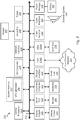
- FIG. 4 illustrates an exemplary virtual private container 400 generated according to embodiments of the present disclosure.
- the VPC 400 includes a plurality of virtual machines 402a,b, each of which is generated in accordance with the received VPC request specification. Data is manipulated and results displayed by instructions from a customer interface 404, which can control access to the VPC from any client device 110, 120 that connects to the VPC. As shown, clients 110,120 may connect to the VPC by means of client applications communicating with an application server, which may in turn communicate with the VPC.
- only output consistent with the results of analysis calculations of the virtual machines 402 may be provided as output to the customer though the interface 404.
- only well-defined user input submitted through the user interface 404 may be passed on as instructions to the machines 402a,b.
- the customer interface 404 may not permit the upload or download of data to or from the VPC 400.
- the virtual machines 402a,b can analyze and manipulate telemetry data 406 stored in the memory resources 408 allocated to the container 400, and then display the results of the analysis to customers 110,120,130 through the customer interface 404. Data required for these analyses can be accessed through the repository interface 410.
- the VPC may receive streaming data from repositories and may maintain that data only long enough to provide analysis at the user's request - analytics provided "on demand.”
- the repository interface 410 may restrict access to the data repositories 420a-c to only that data which is explicitly allowed to be imported into the VPC 400.
- the arrows between the repository interface and the various data repositories 420a-c are shown as one-way because, in some implementations, the VPC has no mechanism to upload data to the repositories 420a-c or modify data stored therein. Data generally flows into, not out of, the VPC 400; although results may be displayed via the customer interface 404, large data downloads out of the VPC 400 are generally not permitted.
- FIG. 5 illustrates a method 500 for automatically generating and managing VPCs in accordance with some embodiments of the disclosure. It will be understood that a variety of methods are possible within the scope of what has been described, and the following method 500 is given for illustrative purposes only. The steps described may be performed by any appropriate remote or cloud-based system such as a VPC generation module 156 as described above.
- a VPC specification (that is request to define a VPC template) is received (502).
- a VPC specification may include at least a software-defined network layout, a list of VM images that make up the application, VM memory and CPU specifications for each required VM, storage requirements (direct or object storage), and a detailed list of the specific telemetric schema types to which the virtual machines need access along with whether streaming or batch access is needed for each.
- a request for a particular instance of the VPC is received and can be processed (504).
- the instance may, for example, be received on behalf of a customer that has chosen to use a third party service associated with the VPC specification.
- the instance request might not come directly from the customer; in some implementations, it may come through an automated system controlled by the third party, or by means of an application server that in turn manages an application provided to the customer.
- the VPC may be configured such that bulk data export is not possible - the data is accessible only within the structure of the container itself. If analysis needs to be performed outside of the parameters allowed by the existing virtual machines, then appropriate modifications to the VPC (or the construction of a new VPC with different parameters) may be requested from the system, but the constraints of the container themselves are intentional and not to be arbitrarily bypassed.
- the system generates virtual machines subject to the expressed security constraints - that is, not including the ability to leak data or carry out arbitrary save/write functions outside the container itself. Other constraints, such as constraints on resources, may also be applied to limit the generation of virtual machines.
- the system may also authenticate the customer (508) and arrange corresponding access to the customer's data to the VPC (510). Which data is made available and under what conditions may depend on the VPC specification as well as on constraints established by particular customers.
- a new VPC instance is not requested or needed for each individual customer. Instead, multiple customers may be served by a single VPC as specified by the third party. In these embodiments, a new customer may still result in an authorization process and access to new data, but the new data may be provided to an existing VPC which may then include access to data from multiple customers.
- the system populates a VPC instance with the appropriate resources, interfaces, and virtual machines and provides it to the customer, or to the third party for data management on the customer's behalf.
- the constraints of the VPC prohibit the service provider that designed the VPC from using it to access prohibited data, from monopolizing central system resources, from arbitrarily exporting data outside the established constraints of the system, or from corrupting any repository data either inadvertently or deliberately.
- VPCs running on behalf of multiple customers can potentially access telemetry data from these multiple competing customers without any risk of those customers having data shared within their own systems.
- Each generated VPC is intentionally isolated from all other VPCs and from any alterations to the underlying data.
- VPC generation in accordance with the present disclosure as described above may involve the processing of input data and the generation of output data to some extent.
- This input data processing and output data generation may be implemented in hardware or software.
- specific electronic components may be employed in cloud computing systems, virtual private containers, or similar or related circuitry for implementing the functions associated with VPC generation in accordance with the present disclosure as described above.
- one or more processors operating in accordance with instructions may implement the functions associated with VPC generation in accordance with the present disclosure as described above.
- Such instructions may be stored on one or more non-transitory processor readable storage media (e.g., a magnetic disk or other storage medium), or transmitted to one or more processors via one or more signals embodied in one or more carrier waves.
- processor readable storage media e.g., a magnetic disk or other storage medium
Landscapes
- Engineering & Computer Science (AREA)
- Theoretical Computer Science (AREA)
- Computer Security & Cryptography (AREA)
- Software Systems (AREA)
- General Engineering & Computer Science (AREA)
- Computer Hardware Design (AREA)
- Physics & Mathematics (AREA)
- General Physics & Mathematics (AREA)
- Computing Systems (AREA)
- Computer Networks & Wireless Communication (AREA)
- Signal Processing (AREA)
- Health & Medical Sciences (AREA)
- Bioethics (AREA)
- General Health & Medical Sciences (AREA)
- Databases & Information Systems (AREA)
- Data Exchanges In Wide-Area Networks (AREA)
- Information Retrieval, Db Structures And Fs Structures Therefor (AREA)
- Computer And Data Communications (AREA)
- Storage Device Security (AREA)
Claims (15)
- Ein Verfahren, aufweisend:Empfangen (502), über einen Anwendung Server (432), eine Spezifikation für einen virtuellen Container (400) von einem Dienstanbieter, wobei die Spezifikation einschließt analytische Komponenten, Dateneingang Parameter und Konfiguration Information, wobei der Anwendung Server (432) getrennt ist von dem virtuellen Container (400), wobei die Konfiguration Information aufweist ein Software-definiertes Netzwerklayout und eine Speicheranforderung;Generieren (506), basierend auf der empfangenen Spezifikation, einen virtuellen Container (400) aufweisend die analytischen Komponenten, wobei der virtuelle Container (400) konfiguriert ist, um zuzugreifen auf Daten gemäß den Dateneingang Parametern, wobei der Container (400) ferner konfiguriert ist gemäß den spezifizierten Konfiguration Information;Authentifizieren (508) eines ersten Benutzers für Dienste assoziiert mit dem Dienstanbieter; undin Erwiderung auf das Authentifizieren des ersten Benutzers, Autorisieren (510) des virtuellen Containers (400) zum Empfangen von sicheren Daten von einem ersten Daten Behälter, assoziiert mit dem ersten Benutzer, wobei der virtuelle Container (400) konfiguriert ist, um zu beschränken den Zugriff auf und von unautorisierten Systemen, so dass die sicheren Daten empfangen werden können in dem virtuellen Container (400) zur Analyse darin, aber nicht aus dem virtuellen Container (400) heraus übermittelt werden können.
- Das Verfahren gemäß Anspruch 1, wobei die Dateneingang Parameter spezifizieren eine Batch Daten Übermittlung oder eine Streaming Daten Übermittlung.
- Das Verfahren gemäß Anspruch 1, ferner aufweisend:Authentifizieren eines zweiten Benutzers für Dienste assoziiert mit dem Dienstanbieter; undin Erwiderung auf das Authentifizieren des zweiten Benutzer, Autorisieren eines zweiten virtuellen Container zum Empfangen von zweiten sicheren Daten von einem zweiten Daten Behälter assoziiert mit dem zweiten Benutzer, wobei der zweite virtuelle Container konfiguriert ist, so dass die zweiten sichern Daten empfangen werden können in dem zweiten virtuellen Container zur Analyse darin, aber nicht verschoben werden können zwischen dem zweiten virtuellen Container und dem virtuellen Container (400).
- Das Verfahren gemäß Anspruch 1, wobei die analytischen Komponenten virtuelle Maschinen sind.
- Das Verfahren gemäß Anspruch 1, wobei die Konfiguration Informationen einschließt Netzwerk Konfiguration zwischen den analytischen Komponenten.
- Das Verfahren gemäß Anspruch 1, wobei:die Spezifikation ferner spezifiziert Ressourcen und der generierte virtuelle Container (400) einschließt die spezifizierten Ressourcen; unddie Spezifikation einschließt einen Behälter innerhalb des virtuellen Containers (400) zum Speichern von Daten.
- Das Verfahren gemäß Anspruch 1, wobei der virtuellen Container (400) konfiguriert ist, um zu empfangen sichere Daten von dem ersten Daten Behälter, aber nicht konfiguriert ist, um zu übermitteln Daten an den ersten Daten Behälter zum Speichern in dem ersten Daten Behälter.
- Ein Fertigungsgegenstand, aufweisend:zumindest ein nicht-transitorisches Prozessor lesbares Speichermedium; undInstruktionen gespeichert auf dem zumindest einem nicht-transitorischen Prozessor lesbaren Speichermedium, wobei die Instruktionen konfiguriert sind, um lesbar zu sein von dem zumindest einem nicht-transitorischen Prozessor lesbaren Speichermedium von zumindest einem Prozessor und dabei den zumindest einen Prozessor zu veranlassen, auszuführen, so dass er:empfängt (502), über einen Anwendung Server (432), eine Spezifikation für einen virtuellen Container (400) von einem Dienstanbieter, wobei die Spezifikation einschließt analytische Komponenten, Dateneingang Parameter und Konfiguration Information, wobei der Anwendung Server (432) getrennt ist von dem virtuellen Container (400), wobei die Konfiguration Information aufweist ein Software definiertes Netzwerk Layout und eine Speicher Anforderung;generiert (506), basierend auf der empfangenen Spezifikation, eines virtuellen Containers (400), aufweisend die analytischen Komponenten, wobei der virtuelle Container (400) konfiguriert ist, um zuzugreifen auf Daten gemäß den Dateneingang Parametern, wobei der Container (400) ferner konfiguriert ist gemäß den spezifizierten Konfiguration Information;authentifiziert (508) einen ersten Benutzer für Dienste assoziiert mit dem Dienstanbieter; undin Erwiderung auf das Authentifizieren das ersten Benutzer, autorisiert (510) den virtuellen Container (400) zum Empfangen von sicheren Daten von einem ersten Daten Behälter assoziiert mit dem ersten Benutzer, wobei der virtuelle Container (400) konfiguriert ist, um zu beschränken den Zugriff auf und von unautorisierten Systemen, so dass die sicheren Daten empfangen werden können in dem virtuellen Container (400) zur Analyse darin, aber nicht übermittelt werden können aus dem virtuellen Container (400) heraus.
- Der Fertigungsgegenstand gemäß Anspruch 8, wobei die Dateneingang Parameter spezifizieren eine Batch Daten Übermittlung oder eine Streaming Daten Übermittlung.
- Der Fertigungsgegenstand gemäß Anspruch 8, wobei die Instruktionen ferner konfiguriert sind, den mindestens einen Prozessor zu veranlassen, so zu arbeiten, dass er:authentifiziert einen zweiten Benutzer für Dienste assoziiert mit dem Dienstanbieter; undin Erwiderung auf das Authentifizieren des zweiten Benutzer, autorisiert einen zweiten virtuellen Container, zum Empfangen von zweiten sicheren Daten von einem zweiten Daten Behälter assoziiert mit dem zweiten Benutzer, wobei der zweite virtuelle Container konfiguriert ist, so dass die zweiten sichern Daten empfangen werden können in dem zweiten virtuellen Container zur Analyse darin, aber nicht verschoben werden können zwischen dem zweiten virtuellen Container und dem virtuellen Container (400).
- Der Fertigungsgegenstand gemäß Anspruch 8, wobei die analytischen Komponenten virtuelle Maschinen sind.
- Der Fertigungsgegenstand gemäß Anspruch 8, wobei die Konfiguration Information einschließt eine Netzwerk Konfiguration zwischen den analytischen Komponenten.
- Der Fertigungsgegenstand gemäß Anspruch 8,
wobei die Spezifikation ferner spezifiziert Ressourcen und der generierte virtuelle Container (400) einschließt die spezifizierten Ressourcen. - Der Fertigungsgegenstand gemäß Anspruch 13,
wobei die Spezifikation einschließt einen Behälter innerhalb des virtuellen Containers (400) zum Speichern von Daten. - Der Fertigungsgegenstand gemäß Anspruch 8,
wobei der virtuelle Container (400) konfiguriert ist, zum Empfangen von sicheren Daten von dem ersten Daten Behälter, aber nicht konfiguriert ist, um zu übermitteln Daten an den ersten Daten Behälter zum Speichern in dem ersten Daten Behälter.
Applications Claiming Priority (2)
| Application Number | Priority Date | Filing Date | Title |
|---|---|---|---|
| US14/876,403 US9940470B2 (en) | 2015-10-06 | 2015-10-06 | Techniques for generating a virtual private container |
| PCT/US2016/053963 WO2017062230A1 (en) | 2015-10-06 | 2016-09-27 | Techniques for generating a virtual private container |
Publications (2)
| Publication Number | Publication Date |
|---|---|
| EP3360302A1 EP3360302A1 (de) | 2018-08-15 |
| EP3360302B1 true EP3360302B1 (de) | 2021-08-11 |
Family
ID=57047362
Family Applications (1)
| Application Number | Title | Priority Date | Filing Date |
|---|---|---|---|
| EP16775444.9A Active EP3360302B1 (de) | 2015-10-06 | 2016-09-27 | Techniken zur erzeugung eines virtuellen privaten behälters |
Country Status (5)
| Country | Link |
|---|---|
| US (1) | US9940470B2 (de) |
| EP (1) | EP3360302B1 (de) |
| JP (1) | JP6576551B2 (de) |
| CN (1) | CN108353087B (de) |
| WO (1) | WO2017062230A1 (de) |
Families Citing this family (14)
| Publication number | Priority date | Publication date | Assignee | Title |
|---|---|---|---|---|
| US9396251B1 (en) | 2016-01-07 | 2016-07-19 | International Business Machines Corporation | Detecting and tracking virtual containers |
| US10666443B2 (en) * | 2016-10-18 | 2020-05-26 | Red Hat, Inc. | Continued verification and monitoring of application code in containerized execution environment |
| US10346189B2 (en) * | 2016-12-05 | 2019-07-09 | Red Hat, Inc. | Co-locating containers based on source to improve compute density |
| US20180309843A1 (en) * | 2017-04-25 | 2018-10-25 | Poshmark, Inc. | Managing Content of Virtual Containers |
| CN108234215B (zh) * | 2018-01-12 | 2019-12-31 | 平安科技(深圳)有限公司 | 一种网关的创建方法、装置、计算机设备及存储介质 |
| EP3644206A1 (de) | 2018-10-22 | 2020-04-29 | Koninklijke Philips N.V. | Container-builder für individualisierte netzwerkdienste |
| TWI679580B (zh) * | 2018-11-23 | 2019-12-11 | 中華電信股份有限公司 | 快速提供容器化軟體服務之系統及其方法 |
| CN109995759B (zh) * | 2019-03-04 | 2022-10-28 | 平安科技(深圳)有限公司 | 一种物理机接入vpc的方法及相关装置 |
| CN110224902B (zh) * | 2019-05-31 | 2021-03-16 | 烽火通信科技股份有限公司 | 一种基于容器的虚拟家庭网关实现方法及系统 |
| US12355729B2 (en) | 2019-11-01 | 2025-07-08 | Google Llc | VPC auto-peering |
| US12056511B2 (en) * | 2020-11-09 | 2024-08-06 | International Business Machines Corporation | Container image creation and deployment using a manifest |
| CN113067803B (zh) * | 2021-03-12 | 2023-05-05 | 北京金山云网络技术有限公司 | 一种资源隔离系统、请求处理方法及请求处理装置 |
| US20230015789A1 (en) * | 2021-07-08 | 2023-01-19 | Vmware, Inc. | Aggregation of user authorizations from different providers in a hybrid cloud environment |
| US12160426B2 (en) * | 2022-12-04 | 2024-12-03 | Asad Hasan | Human system operator identity associated audit trail of containerized network application with prevention of privilege escalation, online black-box testing, and related systems and methods |
Family Cites Families (25)
| Publication number | Priority date | Publication date | Assignee | Title |
|---|---|---|---|---|
| US20030229794A1 (en) * | 2002-06-07 | 2003-12-11 | Sutton James A. | System and method for protection against untrusted system management code by redirecting a system management interrupt and creating a virtual machine container |
| US7284054B2 (en) | 2003-04-11 | 2007-10-16 | Sun Microsystems, Inc. | Systems, methods, and articles of manufacture for aligning service containers |
| US8191063B2 (en) * | 2007-09-30 | 2012-05-29 | Symantex Corporation | Method for migrating a plurality of virtual machines by associating files and state information with a single logical container |
| CN101296243B (zh) * | 2008-06-26 | 2013-02-20 | 阿里巴巴集团控股有限公司 | 一种服务集成平台系统及提供互联网服务的方法 |
| US8533844B2 (en) | 2008-10-21 | 2013-09-10 | Lookout, Inc. | System and method for security data collection and analysis |
| JP5457564B2 (ja) * | 2010-03-05 | 2014-04-02 | インターデイジタル パテント ホールディングス インコーポレイテッド | 機器にセキュリティを提供する方法および装置 |
| WO2011149558A2 (en) * | 2010-05-28 | 2011-12-01 | Abelow Daniel H | Reality alternate |
| EP2630580A4 (de) * | 2010-10-19 | 2014-04-02 | Hewlett Packard Development Co | Verahren und systeme zur erzeugung von autorisierten virtuellen geräten |
| US8713566B2 (en) * | 2011-01-31 | 2014-04-29 | International Business Machines Corporation | Method and system for delivering and executing virtual container on logical partition of target computing device |
| CN102323879A (zh) * | 2011-06-07 | 2012-01-18 | 北京大学 | 完整网络中间件运行支撑平台及异构中间件的集成方法 |
| US20130036213A1 (en) | 2011-08-02 | 2013-02-07 | Masum Hasan | Virtual private clouds |
| US9378035B2 (en) * | 2012-12-28 | 2016-06-28 | Commvault Systems, Inc. | Systems and methods for repurposing virtual machines |
| US8606599B1 (en) * | 2013-01-03 | 2013-12-10 | Medidata Solutions, Inc. | Apparatus and method for executing tasks |
| JP5945512B2 (ja) * | 2013-02-13 | 2016-07-05 | 株式会社日立製作所 | 計算機システム、及び仮想計算機管理方法 |
| US20140280595A1 (en) * | 2013-03-15 | 2014-09-18 | Polycom, Inc. | Cloud Based Elastic Load Allocation for Multi-media Conferencing |
| US20140377731A1 (en) * | 2013-06-21 | 2014-12-25 | Google Inc. | Test Platform for Wrist-Mounted Physiologic Measurement Device |
| US9123072B2 (en) * | 2013-08-16 | 2015-09-01 | Mdsave Inc. | Network-based marketplace service for facilitating purchases of services and products |
| CA2899996C (en) * | 2013-12-11 | 2020-04-14 | Intralinks, Inc. | Customizable secure data exchange environment |
| US9613190B2 (en) * | 2014-04-23 | 2017-04-04 | Intralinks, Inc. | Systems and methods of secure data exchange |
| US9223966B1 (en) * | 2014-05-04 | 2015-12-29 | Symantec Corporation | Systems and methods for replicating computing system environments |
| US9756030B2 (en) * | 2014-08-08 | 2017-09-05 | Eurotech S.P.A. | Secure cloud based multi-tier provisioning |
| US9531814B2 (en) * | 2014-09-23 | 2016-12-27 | Nuvem Networks, Inc. | Virtual hosting device and service to provide software-defined networks in a cloud environment |
| US9256467B1 (en) * | 2014-11-11 | 2016-02-09 | Amazon Technologies, Inc. | System for managing and scheduling containers |
| US9398017B1 (en) * | 2015-05-01 | 2016-07-19 | Parallels IP Holdings GmbH | Isolation of objects representng server resources in browser using iframes |
| US9948518B2 (en) * | 2015-07-22 | 2018-04-17 | International Business Machines Corporation | Low latency flow cleanup of openflow configuration changes |
-
2015
- 2015-10-06 US US14/876,403 patent/US9940470B2/en active Active
-
2016
- 2016-09-27 EP EP16775444.9A patent/EP3360302B1/de active Active
- 2016-09-27 WO PCT/US2016/053963 patent/WO2017062230A1/en not_active Ceased
- 2016-09-27 CN CN201680067959.4A patent/CN108353087B/zh active Active
- 2016-09-27 JP JP2018517163A patent/JP6576551B2/ja active Active
Also Published As
| Publication number | Publication date |
|---|---|
| JP2018531459A (ja) | 2018-10-25 |
| US20170098092A1 (en) | 2017-04-06 |
| CN108353087B (zh) | 2021-01-01 |
| EP3360302A1 (de) | 2018-08-15 |
| JP6576551B2 (ja) | 2019-09-18 |
| WO2017062230A1 (en) | 2017-04-13 |
| CN108353087A (zh) | 2018-07-31 |
| US9940470B2 (en) | 2018-04-10 |
Similar Documents
| Publication | Publication Date | Title |
|---|---|---|
| EP3360302B1 (de) | Techniken zur erzeugung eines virtuellen privaten behälters | |
| US11089474B2 (en) | Unified provisioning of applications on devices in an enterprise system | |
| US20250007959A1 (en) | Dynamic security policy management | |
| US10848520B2 (en) | Managing access to resources | |
| JP2018531459A6 (ja) | 仮想プライベートコンテナを生成する技法 | |
| AU2017251702B2 (en) | Use of freeform metadata for access control | |
| US8869244B1 (en) | Techniques for providing role-based access control using dynamic shared accounts | |
| EP3005213B1 (de) | Dynamische registrierung einer anwendung mit einem unternehmenssystem | |
| US10341281B2 (en) | Access control policies associated with freeform metadata | |
| US9778952B1 (en) | Migration of computer system images through a customer interface | |
| US11310034B2 (en) | Systems and methods for securing offline data | |
| US20170372080A1 (en) | Dynamically provisioning virtual machines | |
| KR101973361B1 (ko) | 컴퓨팅 환경 선택 기술 | |
| EP2862318B1 (de) | Verfahren zur bereitstellung einer dynamischen konten- und vorrichtungsverwaltung | |
| US9794258B1 (en) | Techniques for managing authorization | |
| US11057442B2 (en) | System and method for workspace sharing |
Legal Events
| Date | Code | Title | Description |
|---|---|---|---|
| STAA | Information on the status of an ep patent application or granted ep patent |
Free format text: STATUS: THE INTERNATIONAL PUBLICATION HAS BEEN MADE |
|
| PUAI | Public reference made under article 153(3) epc to a published international application that has entered the european phase |
Free format text: ORIGINAL CODE: 0009012 |
|
| STAA | Information on the status of an ep patent application or granted ep patent |
Free format text: STATUS: REQUEST FOR EXAMINATION WAS MADE |
|
| 17P | Request for examination filed |
Effective date: 20180503 |
|
| AK | Designated contracting states |
Kind code of ref document: A1 Designated state(s): AL AT BE BG CH CY CZ DE DK EE ES FI FR GB GR HR HU IE IS IT LI LT LU LV MC MK MT NL NO PL PT RO RS SE SI SK SM TR |
|
| AX | Request for extension of the european patent |
Extension state: BA ME |
|
| DAV | Request for validation of the european patent (deleted) | ||
| DAX | Request for extension of the european patent (deleted) | ||
| RAP1 | Party data changed (applicant data changed or rights of an application transferred) |
Owner name: CA, INC. |
|
| GRAP | Despatch of communication of intention to grant a patent |
Free format text: ORIGINAL CODE: EPIDOSNIGR1 |
|
| STAA | Information on the status of an ep patent application or granted ep patent |
Free format text: STATUS: GRANT OF PATENT IS INTENDED |
|
| RIC1 | Information provided on ipc code assigned before grant |
Ipc: G06F 9/455 20180101ALI20210129BHEP Ipc: G06F 21/53 20130101ALI20210129BHEP Ipc: G06F 21/60 20130101ALI20210129BHEP Ipc: G06F 21/62 20130101ALI20210129BHEP Ipc: H04L 29/06 20060101AFI20210129BHEP Ipc: G06F 21/31 20130101ALI20210129BHEP Ipc: H04L 29/08 20060101ALI20210129BHEP |
|
| INTG | Intention to grant announced |
Effective date: 20210225 |
|
| GRAS | Grant fee paid |
Free format text: ORIGINAL CODE: EPIDOSNIGR3 |
|
| GRAA | (expected) grant |
Free format text: ORIGINAL CODE: 0009210 |
|
| STAA | Information on the status of an ep patent application or granted ep patent |
Free format text: STATUS: THE PATENT HAS BEEN GRANTED |
|
| AK | Designated contracting states |
Kind code of ref document: B1 Designated state(s): AL AT BE BG CH CY CZ DE DK EE ES FI FR GB GR HR HU IE IS IT LI LT LU LV MC MK MT NL NO PL PT RO RS SE SI SK SM TR |
|
| REG | Reference to a national code |
Ref country code: CH Ref legal event code: EP |
|
| REG | Reference to a national code |
Ref country code: DE Ref legal event code: R096 Ref document number: 602016062052 Country of ref document: DE |
|
| REG | Reference to a national code |
Ref country code: IE Ref legal event code: FG4D Ref country code: AT Ref legal event code: REF Ref document number: 1420560 Country of ref document: AT Kind code of ref document: T Effective date: 20210915 |
|
| REG | Reference to a national code |
Ref country code: NL Ref legal event code: FP |
|
| REG | Reference to a national code |
Ref country code: DE Ref legal event code: R079 Ref document number: 602016062052 Country of ref document: DE Free format text: PREVIOUS MAIN CLASS: H04L0029060000 Ipc: H04L0065000000 |
|
| REG | Reference to a national code |
Ref country code: LT Ref legal event code: MG9D |
|
| REG | Reference to a national code |
Ref country code: AT Ref legal event code: MK05 Ref document number: 1420560 Country of ref document: AT Kind code of ref document: T Effective date: 20210811 |
|
| PG25 | Lapsed in a contracting state [announced via postgrant information from national office to epo] |
Ref country code: RS Free format text: LAPSE BECAUSE OF FAILURE TO SUBMIT A TRANSLATION OF THE DESCRIPTION OR TO PAY THE FEE WITHIN THE PRESCRIBED TIME-LIMIT Effective date: 20210811 Ref country code: SE Free format text: LAPSE BECAUSE OF FAILURE TO SUBMIT A TRANSLATION OF THE DESCRIPTION OR TO PAY THE FEE WITHIN THE PRESCRIBED TIME-LIMIT Effective date: 20210811 Ref country code: PT Free format text: LAPSE BECAUSE OF FAILURE TO SUBMIT A TRANSLATION OF THE DESCRIPTION OR TO PAY THE FEE WITHIN THE PRESCRIBED TIME-LIMIT Effective date: 20211213 Ref country code: NO Free format text: LAPSE BECAUSE OF FAILURE TO SUBMIT A TRANSLATION OF THE DESCRIPTION OR TO PAY THE FEE WITHIN THE PRESCRIBED TIME-LIMIT Effective date: 20211111 Ref country code: HR Free format text: LAPSE BECAUSE OF FAILURE TO SUBMIT A TRANSLATION OF THE DESCRIPTION OR TO PAY THE FEE WITHIN THE PRESCRIBED TIME-LIMIT Effective date: 20210811 Ref country code: ES Free format text: LAPSE BECAUSE OF FAILURE TO SUBMIT A TRANSLATION OF THE DESCRIPTION OR TO PAY THE FEE WITHIN THE PRESCRIBED TIME-LIMIT Effective date: 20210811 Ref country code: FI Free format text: LAPSE BECAUSE OF FAILURE TO SUBMIT A TRANSLATION OF THE DESCRIPTION OR TO PAY THE FEE WITHIN THE PRESCRIBED TIME-LIMIT Effective date: 20210811 Ref country code: LT Free format text: LAPSE BECAUSE OF FAILURE TO SUBMIT A TRANSLATION OF THE DESCRIPTION OR TO PAY THE FEE WITHIN THE PRESCRIBED TIME-LIMIT Effective date: 20210811 Ref country code: AT Free format text: LAPSE BECAUSE OF FAILURE TO SUBMIT A TRANSLATION OF THE DESCRIPTION OR TO PAY THE FEE WITHIN THE PRESCRIBED TIME-LIMIT Effective date: 20210811 Ref country code: BG Free format text: LAPSE BECAUSE OF FAILURE TO SUBMIT A TRANSLATION OF THE DESCRIPTION OR TO PAY THE FEE WITHIN THE PRESCRIBED TIME-LIMIT Effective date: 20211111 |
|
| PG25 | Lapsed in a contracting state [announced via postgrant information from national office to epo] |
Ref country code: PL Free format text: LAPSE BECAUSE OF FAILURE TO SUBMIT A TRANSLATION OF THE DESCRIPTION OR TO PAY THE FEE WITHIN THE PRESCRIBED TIME-LIMIT Effective date: 20210811 Ref country code: LV Free format text: LAPSE BECAUSE OF FAILURE TO SUBMIT A TRANSLATION OF THE DESCRIPTION OR TO PAY THE FEE WITHIN THE PRESCRIBED TIME-LIMIT Effective date: 20210811 Ref country code: GR Free format text: LAPSE BECAUSE OF FAILURE TO SUBMIT A TRANSLATION OF THE DESCRIPTION OR TO PAY THE FEE WITHIN THE PRESCRIBED TIME-LIMIT Effective date: 20211112 |
|
| PG25 | Lapsed in a contracting state [announced via postgrant information from national office to epo] |
Ref country code: DK Free format text: LAPSE BECAUSE OF FAILURE TO SUBMIT A TRANSLATION OF THE DESCRIPTION OR TO PAY THE FEE WITHIN THE PRESCRIBED TIME-LIMIT Effective date: 20210811 |
|
| REG | Reference to a national code |
Ref country code: DE Ref legal event code: R097 Ref document number: 602016062052 Country of ref document: DE |
|
| REG | Reference to a national code |
Ref country code: CH Ref legal event code: PL |
|
| REG | Reference to a national code |
Ref country code: BE Ref legal event code: MM Effective date: 20210930 |
|
| PG25 | Lapsed in a contracting state [announced via postgrant information from national office to epo] |
Ref country code: SM Free format text: LAPSE BECAUSE OF FAILURE TO SUBMIT A TRANSLATION OF THE DESCRIPTION OR TO PAY THE FEE WITHIN THE PRESCRIBED TIME-LIMIT Effective date: 20210811 Ref country code: SK Free format text: LAPSE BECAUSE OF FAILURE TO SUBMIT A TRANSLATION OF THE DESCRIPTION OR TO PAY THE FEE WITHIN THE PRESCRIBED TIME-LIMIT Effective date: 20210811 Ref country code: RO Free format text: LAPSE BECAUSE OF FAILURE TO SUBMIT A TRANSLATION OF THE DESCRIPTION OR TO PAY THE FEE WITHIN THE PRESCRIBED TIME-LIMIT Effective date: 20210811 Ref country code: MC Free format text: LAPSE BECAUSE OF FAILURE TO SUBMIT A TRANSLATION OF THE DESCRIPTION OR TO PAY THE FEE WITHIN THE PRESCRIBED TIME-LIMIT Effective date: 20210811 Ref country code: EE Free format text: LAPSE BECAUSE OF FAILURE TO SUBMIT A TRANSLATION OF THE DESCRIPTION OR TO PAY THE FEE WITHIN THE PRESCRIBED TIME-LIMIT Effective date: 20210811 Ref country code: CZ Free format text: LAPSE BECAUSE OF FAILURE TO SUBMIT A TRANSLATION OF THE DESCRIPTION OR TO PAY THE FEE WITHIN THE PRESCRIBED TIME-LIMIT Effective date: 20210811 Ref country code: AL Free format text: LAPSE BECAUSE OF FAILURE TO SUBMIT A TRANSLATION OF THE DESCRIPTION OR TO PAY THE FEE WITHIN THE PRESCRIBED TIME-LIMIT Effective date: 20210811 |
|
| PLBE | No opposition filed within time limit |
Free format text: ORIGINAL CODE: 0009261 |
|
| STAA | Information on the status of an ep patent application or granted ep patent |
Free format text: STATUS: NO OPPOSITION FILED WITHIN TIME LIMIT |
|
| 26N | No opposition filed |
Effective date: 20220512 |
|
| GBPC | Gb: european patent ceased through non-payment of renewal fee |
Effective date: 20211111 |
|
| PG25 | Lapsed in a contracting state [announced via postgrant information from national office to epo] |
Ref country code: LU Free format text: LAPSE BECAUSE OF NON-PAYMENT OF DUE FEES Effective date: 20210927 Ref country code: IT Free format text: LAPSE BECAUSE OF FAILURE TO SUBMIT A TRANSLATION OF THE DESCRIPTION OR TO PAY THE FEE WITHIN THE PRESCRIBED TIME-LIMIT Effective date: 20210811 Ref country code: IE Free format text: LAPSE BECAUSE OF NON-PAYMENT OF DUE FEES Effective date: 20210927 Ref country code: BE Free format text: LAPSE BECAUSE OF NON-PAYMENT OF DUE FEES Effective date: 20210930 |
|
| PG25 | Lapsed in a contracting state [announced via postgrant information from national office to epo] |
Ref country code: SI Free format text: LAPSE BECAUSE OF FAILURE TO SUBMIT A TRANSLATION OF THE DESCRIPTION OR TO PAY THE FEE WITHIN THE PRESCRIBED TIME-LIMIT Effective date: 20210811 Ref country code: LI Free format text: LAPSE BECAUSE OF NON-PAYMENT OF DUE FEES Effective date: 20210930 Ref country code: CH Free format text: LAPSE BECAUSE OF NON-PAYMENT OF DUE FEES Effective date: 20210930 |
|
| PG25 | Lapsed in a contracting state [announced via postgrant information from national office to epo] |
Ref country code: GB Free format text: LAPSE BECAUSE OF NON-PAYMENT OF DUE FEES Effective date: 20211111 |
|
| PG25 | Lapsed in a contracting state [announced via postgrant information from national office to epo] |
Ref country code: CY Free format text: LAPSE BECAUSE OF FAILURE TO SUBMIT A TRANSLATION OF THE DESCRIPTION OR TO PAY THE FEE WITHIN THE PRESCRIBED TIME-LIMIT Effective date: 20210811 |
|
| PG25 | Lapsed in a contracting state [announced via postgrant information from national office to epo] |
Ref country code: HU Free format text: LAPSE BECAUSE OF FAILURE TO SUBMIT A TRANSLATION OF THE DESCRIPTION OR TO PAY THE FEE WITHIN THE PRESCRIBED TIME-LIMIT; INVALID AB INITIO Effective date: 20160927 |
|
| PG25 | Lapsed in a contracting state [announced via postgrant information from national office to epo] |
Ref country code: MK Free format text: LAPSE BECAUSE OF FAILURE TO SUBMIT A TRANSLATION OF THE DESCRIPTION OR TO PAY THE FEE WITHIN THE PRESCRIBED TIME-LIMIT Effective date: 20210811 |
|
| PG25 | Lapsed in a contracting state [announced via postgrant information from national office to epo] |
Ref country code: MT Free format text: LAPSE BECAUSE OF FAILURE TO SUBMIT A TRANSLATION OF THE DESCRIPTION OR TO PAY THE FEE WITHIN THE PRESCRIBED TIME-LIMIT Effective date: 20210811 |
|
| PGFP | Annual fee paid to national office [announced via postgrant information from national office to epo] |
Ref country code: NL Payment date: 20250820 Year of fee payment: 10 |
|
| PGFP | Annual fee paid to national office [announced via postgrant information from national office to epo] |
Ref country code: DE Payment date: 20250910 Year of fee payment: 10 |
|
| PGFP | Annual fee paid to national office [announced via postgrant information from national office to epo] |
Ref country code: FR Payment date: 20250820 Year of fee payment: 10 |
|
| PG25 | Lapsed in a contracting state [announced via postgrant information from national office to epo] |
Ref country code: TR Free format text: LAPSE BECAUSE OF FAILURE TO SUBMIT A TRANSLATION OF THE DESCRIPTION OR TO PAY THE FEE WITHIN THE PRESCRIBED TIME-LIMIT Effective date: 20210811 |