EP3358898A1 - Apparatuses, methods and computer programs for allocating transmission resources and for a mobile transceiver - Google Patents
Apparatuses, methods and computer programs for allocating transmission resources and for a mobile transceiver Download PDFInfo
- Publication number
- EP3358898A1 EP3358898A1 EP17154947.0A EP17154947A EP3358898A1 EP 3358898 A1 EP3358898 A1 EP 3358898A1 EP 17154947 A EP17154947 A EP 17154947A EP 3358898 A1 EP3358898 A1 EP 3358898A1
- Authority
- EP
- European Patent Office
- Prior art keywords
- resource pool
- transceiver
- resources
- mobile
- mobile transceiver
- Prior art date
- Legal status (The legal status is an assumption and is not a legal conclusion. Google has not performed a legal analysis and makes no representation as to the accuracy of the status listed.)
- Granted
Links
Images

Classifications
-
- H—ELECTRICITY
- H04—ELECTRIC COMMUNICATION TECHNIQUE
- H04L—TRANSMISSION OF DIGITAL INFORMATION, e.g. TELEGRAPHIC COMMUNICATION
- H04L1/00—Arrangements for detecting or preventing errors in the information received
-
- H—ELECTRICITY
- H04—ELECTRIC COMMUNICATION TECHNIQUE
- H04W—WIRELESS COMMUNICATION NETWORKS
- H04W4/00—Services specially adapted for wireless communication networks; Facilities therefor
- H04W4/30—Services specially adapted for particular environments, situations or purposes
- H04W4/40—Services specially adapted for particular environments, situations or purposes for vehicles, e.g. vehicle-to-pedestrians [V2P]
- H04W4/44—Services specially adapted for particular environments, situations or purposes for vehicles, e.g. vehicle-to-pedestrians [V2P] for communication between vehicles and infrastructures, e.g. vehicle-to-cloud [V2C] or vehicle-to-home [V2H]
-
- H—ELECTRICITY
- H04—ELECTRIC COMMUNICATION TECHNIQUE
- H04W—WIRELESS COMMUNICATION NETWORKS
- H04W28/00—Network traffic management; Network resource management
- H04W28/16—Central resource management; Negotiation of resources or communication parameters, e.g. negotiating bandwidth or QoS [Quality of Service]
-
- H—ELECTRICITY
- H04—ELECTRIC COMMUNICATION TECHNIQUE
- H04L—TRANSMISSION OF DIGITAL INFORMATION, e.g. TELEGRAPHIC COMMUNICATION
- H04L1/00—Arrangements for detecting or preventing errors in the information received
- H04L1/0001—Systems modifying transmission characteristics according to link quality, e.g. power backoff
- H04L1/0009—Systems modifying transmission characteristics according to link quality, e.g. power backoff by adapting the channel coding
-
- H—ELECTRICITY
- H04—ELECTRIC COMMUNICATION TECHNIQUE
- H04L—TRANSMISSION OF DIGITAL INFORMATION, e.g. TELEGRAPHIC COMMUNICATION
- H04L1/00—Arrangements for detecting or preventing errors in the information received
- H04L1/004—Arrangements for detecting or preventing errors in the information received by using forward error control
-
- H—ELECTRICITY
- H04—ELECTRIC COMMUNICATION TECHNIQUE
- H04W—WIRELESS COMMUNICATION NETWORKS
- H04W28/00—Network traffic management; Network resource management
- H04W28/02—Traffic management, e.g. flow control or congestion control
- H04W28/04—Error control
-
- H—ELECTRICITY
- H04—ELECTRIC COMMUNICATION TECHNIQUE
- H04W—WIRELESS COMMUNICATION NETWORKS
- H04W4/00—Services specially adapted for wireless communication networks; Facilities therefor
- H04W4/30—Services specially adapted for particular environments, situations or purposes
- H04W4/40—Services specially adapted for particular environments, situations or purposes for vehicles, e.g. vehicle-to-pedestrians [V2P]
- H04W4/46—Services specially adapted for particular environments, situations or purposes for vehicles, e.g. vehicle-to-pedestrians [V2P] for vehicle-to-vehicle communication [V2V]
-
- H—ELECTRICITY
- H04—ELECTRIC COMMUNICATION TECHNIQUE
- H04W—WIRELESS COMMUNICATION NETWORKS
- H04W72/00—Local resource management
- H04W72/12—Wireless traffic scheduling
-
- H—ELECTRICITY
- H04—ELECTRIC COMMUNICATION TECHNIQUE
- H04W—WIRELESS COMMUNICATION NETWORKS
- H04W72/00—Local resource management
- H04W72/20—Control channels or signalling for resource management
-
- H—ELECTRICITY
- H04—ELECTRIC COMMUNICATION TECHNIQUE
- H04W—WIRELESS COMMUNICATION NETWORKS
- H04W72/00—Local resource management
- H04W72/20—Control channels or signalling for resource management
- H04W72/23—Control channels or signalling for resource management in the downlink direction of a wireless link, i.e. towards a terminal
-
- H—ELECTRICITY
- H04—ELECTRIC COMMUNICATION TECHNIQUE
- H04W—WIRELESS COMMUNICATION NETWORKS
- H04W72/00—Local resource management
- H04W72/50—Allocation or scheduling criteria for wireless resources
- H04W72/53—Allocation or scheduling criteria for wireless resources based on regulatory allocation policies
-
- H—ELECTRICITY
- H04—ELECTRIC COMMUNICATION TECHNIQUE
- H04W—WIRELESS COMMUNICATION NETWORKS
- H04W72/00—Local resource management
- H04W72/04—Wireless resource allocation
- H04W72/044—Wireless resource allocation based on the type of the allocated resource
- H04W72/0453—Resources in frequency domain, e.g. a carrier in FDMA
-
- H—ELECTRICITY
- H04—ELECTRIC COMMUNICATION TECHNIQUE
- H04W—WIRELESS COMMUNICATION NETWORKS
- H04W88/00—Devices specially adapted for wireless communication networks, e.g. terminals, base stations or access point devices
- H04W88/02—Terminal devices
Definitions
- the present invention relates to apparatuses, methods and computer programs for allocating transmission resources, and for a mobile transceiver, more particularly, but not exclusively to a concept for resource management in a mobile communication system for vehicular communication.
- Direct communication between potable devices and vehicles is a feature of some mobile communication systems. Future cars may include communications systems which allow for direct data transmission between the vehicles.
- One very prominent example is direct transmission according to the IEEE (Institute of Electrical and Electronics Engineers) 802.11p standard (and the corresponding upper layer standards).
- IEEE Institute of Electrical and Electronics Engineers 802.11p standard
- a common use for such a vehicular connectivity standard is to broadcast information to neighboring vehicles. This can be status information, which would be transmitted regularly or event-driven messages such as emergency information.
- IEEE 802.11p An alternative to IEEE 802.11p is under standardization by the industry consortium 3GPP (Third Generation Partnership Project). This consortium develops cellular communications technology and proposes a direct communication standard for vehicles, called C-V2X (Cellular Vehicle to Everything). This concept has efficient methods for transmitting status information in a regular pattern.
- 3GPP Third Generation Partnership Project
- Embodiments are based on the finding that there are different natures of messages communicated between mobile transceivers, e.g. mobile phones or vehicles.
- One type of message is for example a status message, which is reported periodically.
- Another type of message is an event-driven message, for example, an emergency or warning message.
- event-driven messages may be broadcast with an intention to enable their reception by as many receivers as possible, e.g. in a direct proximity of a vehicle.
- a rateless code can be used to encode a message. Rateless codes may enable to receive a message although erasures (reception gaps, packet losses, bit errors, block errors, bursty errors, etc.) occur, e.g.
- Embodiments provide an apparatus for a mobile transceiver of a mobile communication system.
- the apparatus comprises a transceiver module configured to receive control information from a base station transceiver of the mobile communication system and to communicate with another mobile transceiver of the mobile communication system.
- the apparatus further comprises a control module configured to control the transceiver module and to receive information related to a first resource pool and information related to a second resource pool using the transceiver module.
- the control module is further configured to communicate with the other mobile transceiver using the transceiver module and using a rateless code to encode data for transmission on resources of the second resource pool.
- Embodiments may enable direct communication between mobile transceivers using multiple resource pools, the resources of one of which are used for rateless encoded data.
- Embodiments also provide an apparatus for allocating transmission resources to a mobile transceiver of a mobile communication system for direct communication with another mobile transceiver.
- the apparatus comprises an interface configured to communicate with the mobile transceiver and a control module configured to control the interface.
- the control module is further configured to determine a first resource pool and a second resource pool, wherein the second resource pool comprises resources for transmissions using a rateless code to encode data.
- the control module is further configured to provide information related to the first and second resource pools to the mobile transceiver using the interface.
- Embodiments enable a configuration of a mobile transceiver of a mobile communication system with two resource pools. Having different resource pools enables enhanced radio resource management, as resource utilization can be adapted to the nature or the type of the information to be communicated.
- control module may be configured to receive data from the other mobile transceiver using resources from the first and/or the second resource pool.
- resources from the first and/or the second resource pool may be used for direct device-to-device data transmission and/or reception.
- the two resource pools enable indirect control for the network being enabled to determine which kind of information is communicated on which one of the resource pools.
- control module may be configured to transmit and/or receive periodic data using the first resource pool and to transmit and/or receive event-driven data using the second resource pool.
- Embodiments may provide separate resource pools for communication of periodic data, e.g. status information, and for communication of event-driven data, e.g. emergency or warning messages. An improved resource management and higher efficiency may be achieved using separate resource pools for different message types.
- control module is configured to transmit data and receive data at different time resources.
- control module or a transceiver unit of the mobile transceiver may be implemented in a way that simultaneous transmission and reception is not possible, hence when transmitting on resources of the first resource pool, reception on other resources, e.g. the ones of the second resource pool, is not possible.
- This limitation is commonly known as the "half-duplex problem". Consequently, data receptions are missed out on the resources of the second resource pool during transmission.
- the rateless encoding however, enables an efficient scheme to combat the packet loss or the interrupted reception.
- the control module may be configured to apply the rateless coding to application layer data packets. An application executed at a mobile transceiver may then be able to overcome packet loss due to discontinuous reception or other phenomena.
- the rateless code may be a forward error correction code, an erasure correcting code, a network code, a Fountain code, or a Raptor code, for example.
- the control module may be configured to use resources of the second resource pool for broadcast transmissions using the transceiver module. Broadcast direct device-to-device messages may be application layer encoded using the rateless code. Therewith receiving mobile transceivers may be able to efficiently receive broadcast messages although some data packet losses may occur.
- the second resource pool comprises an interrupted pattern of time resources. A bandwidth of resources of the first resource pool may be wider than a bandwidth of the resources of the second resource pool. Time interruptions during which no resources for transmission are available may be longer in the first resource pool than in the second resource pool.
- At least one of the mobile transceivers may be comprised by a vehicle.
- Embodiments also provide a vehicle comprising the above described apparatus.
- Embodiments also provide a method for a mobile transceiver of a mobile communication system.
- the method comprises receiving information related to a first resource pool and information related to a second resource pool.
- the method further comprises communicating with the other mobile transceiver using a rateless code to encode data for transmission on resources of the second resource pool.
- Embodiments further provide a method for allocating transmission resources to a mobile transceiver of a mobile communication system for direct communication with another mobile transceiver.
- the method comprises determining a first resource pool and a second resource pool, wherein the second resource pool comprises resources for transmissions using a rateless code to encode data.
- the method further comprises providing information related to the first and second resource pools to the mobile transceiver.
- Embodiments further provide a computer program having a program code for performing one or more of the above described methods, when the computer program is executed on a computer, processor, or programmable hardware component.
- a further embodiment is a computer readable storage medium storing instructions which, when executed by a computer, processor, or programmable hardware component, cause the computer to implement one of the methods described herein.
- the term, "or” refers to a non-exclusive or, unless otherwise indicated (e.g., “or else” or “or in the alternative”).
- words used to describe a relationship between elements should be broadly construed to include a direct relationship or the presence of intervening elements unless otherwise indicated. For example, when an element is referred to as being “connected” or “coupled” to another element, the element may be directly connected or coupled to the other element or intervening elements may be present. In contrast, when an element is referred to as being “directly connected” or “directly coupled” to another element, there are no intervening elements present. Similarly, words such as “between”, “adjacent”, and the like should be interpreted in a like fashion.
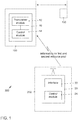
- Fig. 1 illustrates an embodiment of an apparatus 10 for a mobile transceiver 100 of a mobile communication system 300.
- the apparatus 10 comprises a transceiver module 12 configured to receive control information from a base station transceiver 200 of the mobile communication system 300 and to communicate with another mobile transceiver 150 of the mobile communication system 300.
- the mobile transceiver apparatus 10 further comprises a control module 14 configured to control the transceiver module 12.
- the control module 14 is further configured to receive information related to a first resource pool and information related to a second resource pool using the transceiver module 12.
- the control module is further configured to communicate with the other mobile transceiver 150 using the transceiver module 12 using a rateless code to encode data for transmission on resources of the second resource pool.
- Embodiments also provide a mobile transceiver 100 comprising an embodiment of the apparatus 10.
- Embodiments also provide a vehicle, e.g. a car, a bus, a train, a bike or motorbike, a boat or ship, an airplane, etc., comprising an embodiment of the mobile transceiver 100.
- the control module 14 is coupled to the transceiver module 12. At least one of the mobile transceivers 100, 150 may be comprised by a vehicle.
- embodiments also provide an apparatus 20 for allocating transmission resources to a mobile transceiver 100 of a mobile communication system 300 for direct communication with another mobile transceiver 150.
- a network component e.g. a base station transceiver 200, a network controller, a network node, etc., comprising an embodiment of the apparatus 20.
- the apparatus 20 comprises an interface 22 configured to communicate with the mobile transceiver 100.
- the apparatus 20 further comprises a control module 24 configured to control the interface 22.
- the control module 24 is further configured to determine a first resource pool and a second resource pool.
- the second resource pool comprises resources for transmissions using a rateless code to encode data.
- the apparatus 20 is further configured to provide information related to the first and second resource pools to the mobile transceiver 100 using the interface 22.
- the control module 24 is coupled to the interface 22.
- the mobile communication system 300 may, for example, correspond to one of the Third Generation Partnership Project (3GPP)-standardized mobile communication networks, where the term mobile communication system 300 is used synonymously to mobile communication network.
- the mobile or wireless communication system 300 may correspond to a mobile communication system of the 5th Generation (5G) and may use mm-Wave technology.
- the mobile communication system 300 may correspond to or comprise, for example, a Long-Term Evolution (LTE), an LTE-Advanced (LTE-A), High Speed Packet Access (HSPA), a Universal Mobile Telecommunication System (UMTS) or a UMTS Terrestrial Radio Access Network (UTRAN), an evolved-UTRAN (e-UTRAN), a Global System for Mobile communication (GSM) or Enhanced Data rates for GSM Evolution (EDGE) network, a GSM/EDGE Radio Access Network (GERAN), or mobile communication networks with different standards, for example, a Worldwide Inter-operability for Microwave Access (WIMAX) network IEEE 802.16 or Wireless Local Area Network (WLAN) IEEE 802.11, generally an Orthogonal Frequency Division Multiple Access (OFDMA) network, a Time Division Multiple Access (TDMA) network, a Code Division Multiple Access (CDMA) network, a Wideband-CDMA (WCDMA) network, a Frequency Division Multiple Access (FDMA) network, a Spatial Division Multiple Access (SDMA) network,
- a base station transceiver 200 can be operable or configured to communicate with one or more active mobile transceivers 100 and a base station transceiver 200 can be located in or adjacent to a coverage area of another base station transceiver, e.g. a macro cell base station transceiver or small cell base station transceiver.
- a mobile communication system 300 comprising one or more mobile transceivers 100, 150 and one or more base station transceivers 200, wherein the base station transceivers 200 may establish macro cells or small cells, as e.g. pico-, metro-, or femto cells.
- a mobile transceiver 100 may correspond to a smartphone, a cell phone, user equipment, a laptop, a notebook, a personal computer, a Personal Digital Assistant (PDA), a Universal Serial Bus (USB) -stick, a car, a vehicle etc.
- PDA Personal Digital Assistant
- USB Universal Serial Bus
- a mobile transceiver 100 may also be referred to as User Equipment (UE) or mobile in line with the 3GPP terminology.
- UE User Equipment
- a base station transceiver 200 can be located in the fixed or stationary part of the network or system.
- a base station transceiver 200 may correspond to a remote radio head, a transmission point, an access point, a macro cell, a small cell, a micro cell, a femto cell, a metro cell etc.
- a base station transceiver 200 can be a wireless interface of a wired network, which enables transmission of radio signals to a UE or mobile transceiver 100.
- Such a radio signal may comply with radio signals as, for example, standardized by 3GPP or, generally, in line with one or more of the above listed systems.
- a base station transceiver 200 may correspond to a NodeB, an eNodeB, a Base Transceiver Station (BTS), an access point, a remote radio head, a relay station, a transmission point etc., which may be further subdivided in a remote unit and a central unit.
- BTS Base Transceiver Station
- a mobile transceiver 100 can be associated with a base station transceiver 200 or cell.
- the term cell refers to a coverage area of radio services provided by a base station transceiver, e.g. a NodeB (NB), an eNodeB (eNB), a remote radio head, a transmission point, etc.
- NB NodeB
- eNB eNodeB
- a base station transceiver may operate one or more cells on one or more frequency layers, in some embodiments a cell may correspond to a sector. For example, sectors can be achieved using sector antennas, which provide a characteristic for covering an angular section around a remote unit or base station transceiver.
- a base station transceiver may, for example, operate three or six cells covering sectors of 120° (in case of three cells), 60° (in case of six cells) respectively.
- a base station transceiver may operate multiple sectorized antennas.
- a cell may represent an according base station transceiver generating the cell or, likewise, a base station transceiver may represent a cell the base station transceiver generates.
- the mobile communication system may correspond to a HetNet, which utilizes different cell types, i.e. Closed Subscriber Group (CSG) cells and open cells, and cells of different sizes, as, for example, macro cells and small cells, where the coverage area of a small cell is smaller than the coverage area of a macro cell.
- a small cell may correspond to a metro cell, a micro cell, a pico cell, a femto cell, etc.
- Such cells are established by base station transceivers for which their coverage areas are determined by their transmission power and interference condition.
- a small cell's coverage area can at least partly be surrounded by the coverage area of a macro cell established by another base station transceiver.
- a metro cell may therefore be used to cover a smaller area than a macro cell, e.g. a metro cell may cover a street or a section in a metropolitan area.
- a macro cell the coverage area may have a diameter in the order of one or more kilometers, for a micro cell the coverage area may have a diameter below a kilometer, and for a pico cell the coverage area may have a diameter below a 100m.
- a femto cell may be the smallest cell and it may be used to cover a household or gate section at the airport, i.e. its coverage area may have a diameter below 50m.
- a base station transceiver may also be referred to as cell.
- mobile transceivers 100,150 may communicate directly with each other, i.e. without involving any base station transceiver 200, which is also referred to as Device-to-Device (D2D) communication.
- D2D Device-to-Device
- An example of D2D is direct communication between vehicles, also referred to as Vehicle-to-Vehicle communication (V2V).
- radio resources e.g. frequency, time, code, and/or spatial resources, which may as well be used for wireless communication with a base station transceiver. The assignment of the radio resources will be described in the sequel, i.e. the determination which resources are used for D2D and which are not.
- radio resources of the respective components may correspond to any radio resources conceivable on radio carriers and they may use the same or different granularities on the respective carriers.
- the radio resources may correspond to a Resource Block (RB as in LTE/LTE-A/LTE-unlicensed (LTE-U)), one or more carriers, sub-carriers, one or more radio frames, radio sub-frames, radio slots, one or more code sequences potentially with a respective spreading factor, one or more spatial resources, such as spatial sub-channels, spatial precoding vectors, any combination thereof, etc.
- a control module e.g. the control modules 14 and/or 24, may be implemented using one or more processing units, one or more processing devices, any means for processing, such as a processor, a computer or a programmable hardware component being operable with accordingly adapted software.
- the described function of the control module 14, 24 may as well be implemented in software, which is then executed on one or more programmable hardware components.
- Such hardware components may comprise a general purpose processor, a Digital Signal Processor (DSP), a micro-controller, etc.
- DSP Digital Signal Processor
- the transceiver module 12 may comprise typical transceiver components, such as one or more Low-Noise Amplifiers (LNAs), one or more Power-Amplifiers (PAs), one or more duplexers, one or more diplexers, one or more filters or filter circuitry, one or more converters, one or more mixers, accordingly adapted radio frequency components, etc.
- LNAs Low-Noise Amplifiers
- PAs Power-Amplifiers
- duplexers one or more diplexers
- filters or filter circuitry one or more converters, one or more mixers, accordingly adapted radio frequency components, etc.
- the antennas may correspond to any transmit and/or receive antennas, such as horn antennas, dipole antennas, patch antennas, sector antennas etc.
- the antennas may be arranged in a defined geometrical setting, such as a uniform array, a linear array, a circular array, a triangular array, a uniform field, a field array, combinations thereof, etc.
- the interface 22 of the apparatus 20 for allocating radio resources may be a connector, a pin, a plug, a register, etc. that is configured to provide and/or to determine signals from other network components.
- the interface 22 may be configured to provide and/or determine analog or digital signals, signals of a transmission band, an intermediate band, or in the base band. Between the interface 22 and the other components there may be intermediate links, wired or wireless connections, interfaces, etc.
- the interface 22, in some embodiments one or more interfaces 22, is configured or adapted such that corresponding information or signaling can be exchanged between the apparatus 20 and the respective other network components, e.g. the transceiver module 12 in case the apparatus 20 is implemented in a base station transceiver 200.
- the interface 22 may correspond to a transceiver module 12, i.e. it may be implemented in line with the transceiver module 12 according to the above description.
- control module 14 of the apparatus 10 can be configured to receive data from the other mobile transceiver 150 using resources from the first and/or the second resource pool. Hence, there can be a data exchange, transmission and reception, between the two mobile transceivers 100, 150 using the resource of the second resource pool.
- C-V2X direct Cellular Vehicle-to-Anything
- V2X includes at least V2V, V2-Infrastructure (V2I), etc.
- transmission according to 3GPP Release 14 can be managed by infrastructure (so-called mode 3) or run in a User Equipment (UE) Autonomous mode (UEA), (so-called mode 4).
- UE User Equipment
- UAA User Equipment Autonomous mode
- mode 4 mode 4
- mode 4 is considered of higher interest for the automotive industry, but embodiments may as well be applied to mode 3 (distributed scheduling in which the information on the resource pools may be indirectly provided by the network, e.g. by setting mode 3).
- Reasons include independence from mobile network operators and operational costs.
- Mode 4 assumes that channel access by each vehicle or UE will be given by Semi-Persistent Scheduling with sensing (SPS with sensing).
- SPS Semi-Persistent Scheduling with sensing
- Each vehicle or UE may use a recurring pattern to place its information into time-frequency resource grid. In time instants, e.g. all time instants, in which the vehicle is not transmitting, it may sense for transmissions by others. Once resource reselection happens, the vehicle or UE may pick the resource on which a low or even the lowest energy has been sensed. While this concept lends itself to efficient transmission of regular status data, it might not be amenable to transmitting event-driven data, which may be enabled with embodiments.
- the control module 14 is configured to transmit and/or receive periodic data using the first resource pool and to transmit and/or receive event-driven data using the second resource pool.
- the control module 14 may be configured to transmit data and receive data at different time resources. As at least some transceivers, e.g. in some vehicles, cannot listen while they actively transmit (half-duplex), the usage of one resource pool may prevent simultaneous use of the other resource pool. This may effectively divide the capacity of the system.
- FEC Forward Error Correction
- Erasure correcting codes are specifically used to correct erasures in the transmission.
- Rateless codes are used in broadcast scenarios where the number of erasures significantly varies between different receivers. Prominent examples are the class of Fountain codes, including Raptor codes.
- the rateless code is a forward error correction code, an erasure correcting code, a network code, or a Fountain code.
- the rateless code may use erasure correcting codes and the second resource pool to provide independent channel access and to overcome the inefficiencies of the half-duplex constraint (i.e. a mobile transceiver not being able to transmit and receive at the same time).
- rateless may be understood in a way that the code rate can be configured, i.e. after a limited number of transmissions, broadcasting of ratelessly encoded packets is stopped, hence the code rate is not zero, but can be adapted to the circumstances or communication scenario.
- Fountain Codes are used to protect the information in the second resource pool against erasures. These erasures occur when a vehicle or UE, which is supposed to hear the information in the second resource pool, is transmitting on the first resource pool.
- the fountain will be kept active such that surrounding vehicles, despite their own transmission activities, can successfully decode the information from the second resource pool.
- the Fountain or rateless code also takes care of the message retransmissions that are usually sent out for an emergency message. The additional redundancy that comes from a retransmission is provided by keeping the fountain active a little longer.
- Fig. 2 illustrates first and second resource pools in an embodiment.
- Fig. 2 shows a time-frequency grid (time on the abscissa and frequency on the ordinate).
- the overall system resources are determined by time-frequency resource blocks (RBs) and the overall resource set (system bandwidth and time pattern) is indicated by the box 500 in Fig. 2 .
- the overall resource set 500 can be subdivided by a grid of frequency and time resources, e.g. in an LTE system a grid of subsets of subcarriers and time resource such as 12 subcarriers (180kHz in LTE) and two time slots (one subframe, i.e. 1 ms in LTE).
- Resources of the first resource pool are indicated by 510 and resources of the second resource block are indicated by 520 in Fig. 2 .
- a Fontain code is used to encode data packets transmitted on the resources of the second resource pool 520.
- the control module 14 is configured to apply the rateless/Fountain coding to application layer data packets.
- the assignment of the respective lower layer packets to the accordingly configured radio bearers/radio access bearer is also carried out by the control module 14, likewise by a control module implemented at the receiving mobile transceiver.
- control module 14 may be configured to use resources of the second resource pool for broadcast transmissions (via the transceiver module 12).
- the second resource pool 520 comprises an interrupted pattern of time resources.
- a bandwidth of resources of the first resource pool 510 is wider than a bandwidth of the resources of the second resource pool 520 as indicated by the height of the bars in Fig. 2 .
- time interruptions, during which no resources for transmission are available are longer in the first resource pool 510 than in the second resource pool 520 as also indicated by Fig. 2 .
- Embodiments may accommodate multiple transmissions in the second resource pool.
- the transmission of the Fountain encoded data on resources of the second resource pool may include a gap pattern such that other messages and users can mingle into the stream.
- the Fountain code approach may use common knowledge at a sender/transmitter and all receivers of a generator matrix. In a vehicular setup, this can be achieved using a pseudo-random generator, e.g. based on Global Navigation Satellite System (GNSS) time. A time stamped derived from the GNSS time would then be used to generate a seed input into a pseudo-random generator.
- the Fountain encoding can be applied on the application layer. This means that every resource block in the second resource pool 520 may be decoded separately.
- the erasure correction code may experience erasures coming in bursts, but this does not impair its decoding capabilities.
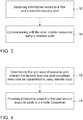
- Fig. 3 shows a block diagram of a flow chart of an embodiment of a method for a mobile transceiver 100 of a mobile communication system 300.
- the method comprises receiving 32 information related to a first resource pool and information related to a second resource pool.
- the method further comprises communicating 34 with the other mobile transceiver 150 using a rateless code to encode data for transmission on resources of the second resource pool.
- Fig. 4 shows a block diagram of a flow chart of an embodiment of a method for allocating transmission resources to a mobile transceiver 100 of a mobile communication system 300 for direct communication with another mobile transceiver 150.
- the method comprises determining 42 a first resource pool and a second resource pool.
- the second resource pool comprises resources for transmissions using a rateless code to encode data.
- the method further comprises providing 44 information related to the first and second resource pools to the mobile transceiver 100.
- Another embodiment is a computer program having a program code for performing at least one of the above methods, when the computer program is executed on a computer, a processor, or a programmable hardware component.
- a further embodiment is a computer readable storage medium storing instructions which, when executed by a computer, processor, or programmable hardware component, cause the computer to implement one of the methods described herein.
- some embodiments are also intended to cover program storage devices, e.g., digital data storage media, which are machine or computer readable and encode machine-executable or computer-executable programs of instructions where said instructions perform some or all of the steps of methods described herein.
- the program storage devices may be, e.g., digital memories, magnetic storage media such as magnetic disks and magnetic tapes, hard drives, or optically readable digital data storage media.
- the embodiments are also intended to cover computers programmed to perform said steps of methods described herein or (field) programmable logic arrays ((F)PLAs) or (field) programmable gate arrays ((F)PGAs), programmed to perform said steps of the above-described methods.
- processor When provided by a processor, the functions may be provided by a single dedicated processor, by a single shared processor, or by a plurality of individual processors, some of which may be shared.
- explicit use of the term "processor” or “controller” should not be construed to refer exclusively to hardware capable of executing software, and may implicitly include, without limitation, Digital Signal Processor (DSP) hardware, network processor, application specific integrated circuit (ASIC), field programmable gate array (FPGA), read only memory (ROM) for storing software, random access memory (RAM), and non-volatile storage. Other hardware, conventional or custom, may also be included. Their function may be carried out through the operation of program logic, through dedicated logic, through the interaction of program control and dedicated logic, or even manually, the particular technique being selectable by the implementer as more specifically understood from the context.
- DSP Digital Signal Processor
- ASIC application specific integrated circuit
- FPGA field programmable gate array
- ROM read only memory
- RAM random access memory
- non-volatile storage Other hardware
- any block diagrams herein represent conceptual views of illustrative circuitry embodying the principles of the invention.
- any flow charts, flow diagrams, state transition diagrams, pseudo code, and the like represent various processes which may be substantially represented in computer readable medium and so executed by a computer or processor, whether or not such computer or processor is explicitly shown.
- each claim may stand on its own as a separate embodiment. While each claim may stand on its own as a separate embodiment, it is to be noted that - although a dependent claim may refer in the claims to a specific combination with one or more other claims - other embodiments may also include a combination of the dependent claim with the subject matter of each other dependent claim. Such combinations are proposed herein unless it is stated that a specific combination is not intended. Furthermore, it is intended to include also features of a claim to any other independent claim even if this claim is not directly made dependent to the independent claim.
Landscapes
- Engineering & Computer Science (AREA)
- Computer Networks & Wireless Communication (AREA)
- Signal Processing (AREA)
- Quality & Reliability (AREA)
- Mobile Radio Communication Systems (AREA)
- Detection And Prevention Of Errors In Transmission (AREA)
Abstract
Description
- The present invention relates to apparatuses, methods and computer programs for allocating transmission resources, and for a mobile transceiver, more particularly, but not exclusively to a concept for resource management in a mobile communication system for vehicular communication.
- Direct communication between potable devices and vehicles is a feature of some mobile communication systems. Future cars may include communications systems which allow for direct data transmission between the vehicles. One very prominent example is direct transmission according to the IEEE (Institute of Electrical and Electronics Engineers) 802.11p standard (and the corresponding upper layer standards). A common use for such a vehicular connectivity standard is to broadcast information to neighboring vehicles. This can be status information, which would be transmitted regularly or event-driven messages such as emergency information.
- An alternative to IEEE 802.11p is under standardization by the industry consortium 3GPP (Third Generation Partnership Project). This consortium develops cellular communications technology and proposes a direct communication standard for vehicles, called C-V2X (Cellular Vehicle to Everything). This concept has efficient methods for transmitting status information in a regular pattern.
- There is a demand for an improved concept for direct communication in a mobile communication system. The independent claims provide an improved concept for direct communication.
- Embodiments are based on the finding that there are different natures of messages communicated between mobile transceivers, e.g. mobile phones or vehicles. One type of message is for example a status message, which is reported periodically. Another type of message is an event-driven message, for example, an emergency or warning message. It is a further finding that event-driven messages may be broadcast with an intention to enable their reception by as many receivers as possible, e.g. in a direct proximity of a vehicle. Based on this finding a rateless code can be used to encode a message. Rateless codes may enable to receive a message although erasures (reception gaps, packet losses, bit errors, block errors, bursty errors, etc.) occur, e.g. due to interference, disadvantageous radio channel conditions or discontinuous reception. These codes allow for different receivers to recover the transmitted message, independent of the amount of packets lost, while causing only small coding overhead. If discontinuous reception stems from the receiver's own transmission activity, this scheme can serve users with different activity schemes simultaneously.
- Embodiments provide an apparatus for a mobile transceiver of a mobile communication system. The apparatus comprises a transceiver module configured to receive control information from a base station transceiver of the mobile communication system and to communicate with another mobile transceiver of the mobile communication system. The apparatus further comprises a control module configured to control the transceiver module and to receive information related to a first resource pool and information related to a second resource pool using the transceiver module. The control module is further configured to communicate with the other mobile transceiver using the transceiver module and using a rateless code to encode data for transmission on resources of the second resource pool. Embodiments may enable direct communication between mobile transceivers using multiple resource pools, the resources of one of which are used for rateless encoded data.
- Embodiments also provide an apparatus for allocating transmission resources to a mobile transceiver of a mobile communication system for direct communication with another mobile transceiver. The apparatus comprises an interface configured to communicate with the mobile transceiver and a control module configured to control the interface. The control module is further configured to determine a first resource pool and a second resource pool, wherein the second resource pool comprises resources for transmissions using a rateless code to encode data. The control module is further configured to provide information related to the first and second resource pools to the mobile transceiver using the interface. Embodiments enable a configuration of a mobile transceiver of a mobile communication system with two resource pools. Having different resource pools enables enhanced radio resource management, as resource utilization can be adapted to the nature or the type of the information to be communicated.
- In further embodiments the control module may be configured to receive data from the other mobile transceiver using resources from the first and/or the second resource pool. In embodiments resources from the first and/or the second resource pool may be used for direct device-to-device data transmission and/or reception. Therewith the two resource pools enable indirect control for the network being enabled to determine which kind of information is communicated on which one of the resource pools. In some embodiments the control module may be configured to transmit and/or receive periodic data using the first resource pool and to transmit and/or receive event-driven data using the second resource pool. Embodiments may provide separate resource pools for communication of periodic data, e.g. status information, and for communication of event-driven data, e.g. emergency or warning messages. An improved resource management and higher efficiency may be achieved using separate resource pools for different message types.
- Some embodiments may consider that the control module is configured to transmit data and receive data at different time resources. For example, the control module or a transceiver unit of the mobile transceiver may be implemented in a way that simultaneous transmission and reception is not possible, hence when transmitting on resources of the first resource pool, reception on other resources, e.g. the ones of the second resource pool, is not possible. This limitation is commonly known as the "half-duplex problem". Consequently, data receptions are missed out on the resources of the second resource pool during transmission. The rateless encoding, however, enables an efficient scheme to combat the packet loss or the interrupted reception.
- The control module may be configured to apply the rateless coding to application layer data packets. An application executed at a mobile transceiver may then be able to overcome packet loss due to discontinuous reception or other phenomena. The rateless code may be a forward error correction code, an erasure correcting code, a network code, a Fountain code, or a Raptor code, for example. The control module may be configured to use resources of the second resource pool for broadcast transmissions using the transceiver module. Broadcast direct device-to-device messages may be application layer encoded using the rateless code. Therewith receiving mobile transceivers may be able to efficiently receive broadcast messages although some data packet losses may occur. For example, the second resource pool comprises an interrupted pattern of time resources. A bandwidth of resources of the first resource pool may be wider than a bandwidth of the resources of the second resource pool. Time interruptions during which no resources for transmission are available may be longer in the first resource pool than in the second resource pool.
- In some embodiments at least one of the mobile transceivers may be comprised by a vehicle. Embodiments also provide a vehicle comprising the above described apparatus.
- Embodiments also provide a method for a mobile transceiver of a mobile communication system. The method comprises receiving information related to a first resource pool and information related to a second resource pool. The method further comprises communicating with the other mobile transceiver using a rateless code to encode data for transmission on resources of the second resource pool.
- Embodiments further provide a method for allocating transmission resources to a mobile transceiver of a mobile communication system for direct communication with another mobile transceiver. The method comprises determining a first resource pool and a second resource pool, wherein the second resource pool comprises resources for transmissions using a rateless code to encode data. The method further comprises providing information related to the first and second resource pools to the mobile transceiver.
- Embodiments further provide a computer program having a program code for performing one or more of the above described methods, when the computer program is executed on a computer, processor, or programmable hardware component. A further embodiment is a computer readable storage medium storing instructions which, when executed by a computer, processor, or programmable hardware component, cause the computer to implement one of the methods described herein.
- Some other features or aspects will be described using the following non-limiting embodiments of apparatuses or methods or computer programs or computer program products by way of example only, and with reference to the accompanying figures, in which:
-
Fig. 1 illustrates an embodiment of an apparatus for a mobile transceiver and an embodiment of an apparatus for allocating resources; -
Fig. 2 illustrates first and second resource pools in an embodiment; -
Fig. 3 shows a block diagram of a flow chart of an embodiment of a method for a mobile transceiver; and -
Fig. 4 shows a block diagram of a flow chart of an embodiment of a method for allocating transmission resources. - Various example embodiments will now be described more fully with reference to the accompanying drawings in which some example embodiments are illustrated. In the figures, the thicknesses of lines, layers or regions may be exaggerated for clarity. Optional components may be illustrated using broken, dashed or dotted lines.
- Accordingly, while example embodiments are capable of various modifications and alternative forms, embodiments thereof are shown by way of example in the figures and will herein be described in detail. It should be understood, however, that there is no intent to limit example embodiments to the particular forms disclosed, but on the contrary, example embodiments are to cover all modifications, equivalents, and alternatives falling within the scope of the invention. Like numbers refer to like or similar elements throughout the description of the figures.
- As used herein, the term, "or" refers to a non-exclusive or, unless otherwise indicated (e.g., "or else" or "or in the alternative"). Furthermore, as used herein, words used to describe a relationship between elements should be broadly construed to include a direct relationship or the presence of intervening elements unless otherwise indicated. For example, when an element is referred to as being "connected" or "coupled" to another element, the element may be directly connected or coupled to the other element or intervening elements may be present. In contrast, when an element is referred to as being "directly connected" or "directly coupled" to another element, there are no intervening elements present. Similarly, words such as "between", "adjacent", and the like should be interpreted in a like fashion.
- The terminology used herein is for the purpose of describing particular embodiments only and is not intended to be limiting of example embodiments. As used herein, the singular forms "a," "an" and "the" are intended to include the plural forms as well, unless the context clearly indicates otherwise. It will be further understood that the terms "comprises," "comprising," "includes" or "including," when used herein, specify the presence of stated features, integers, steps, operations, elements or components, but do not preclude the presence or addition of one or more other features, integers, steps, operations, elements, components or groups thereof.
- Unless otherwise defined, all terms (including technical and scientific terms) used herein have the same meaning as commonly understood by one of ordinary skill in the art to which example embodiments belong. It will be further understood that terms, e.g., those defined in commonly used dictionaries, should be interpreted as having a meaning that is consistent with their meaning in the context of the relevant art and will not be interpreted in an idealized or overly formal sense unless expressly so defined herein.
- In the Figures optional features are shown using broken lines.
Fig. 1 illustrates an embodiment of anapparatus 10 for amobile transceiver 100 of amobile communication system 300. Theapparatus 10 comprises atransceiver module 12 configured to receive control information from abase station transceiver 200 of themobile communication system 300 and to communicate with anothermobile transceiver 150 of themobile communication system 300. Themobile transceiver apparatus 10 further comprises acontrol module 14 configured to control thetransceiver module 12. Thecontrol module 14 is further configured to receive information related to a first resource pool and information related to a second resource pool using thetransceiver module 12. The control module is further configured to communicate with the othermobile transceiver 150 using thetransceiver module 12 using a rateless code to encode data for transmission on resources of the second resource pool. Embodiments also provide amobile transceiver 100 comprising an embodiment of theapparatus 10. Embodiments also provide a vehicle, e.g. a car, a bus, a train, a bike or motorbike, a boat or ship, an airplane, etc., comprising an embodiment of themobile transceiver 100. Thecontrol module 14 is coupled to thetransceiver module 12. At least one of themobile transceivers - As further shown in
Fig. 1 , embodiments also provide anapparatus 20 for allocating transmission resources to amobile transceiver 100 of amobile communication system 300 for direct communication with anothermobile transceiver 150. Embodiments also provide a network component, e.g. abase station transceiver 200, a network controller, a network node, etc., comprising an embodiment of theapparatus 20. Theapparatus 20 comprises aninterface 22 configured to communicate with themobile transceiver 100. Theapparatus 20 further comprises acontrol module 24 configured to control theinterface 22. Thecontrol module 24 is further configured to determine a first resource pool and a second resource pool. The second resource pool comprises resources for transmissions using a rateless code to encode data. Theapparatus 20 is further configured to provide information related to the first and second resource pools to themobile transceiver 100 using theinterface 22. Thecontrol module 24 is coupled to theinterface 22. - The
mobile communication system 300 may, for example, correspond to one of the Third Generation Partnership Project (3GPP)-standardized mobile communication networks, where the termmobile communication system 300 is used synonymously to mobile communication network. The mobile orwireless communication system 300 may correspond to a mobile communication system of the 5th Generation (5G) and may use mm-Wave technology. Themobile communication system 300 may correspond to or comprise, for example, a Long-Term Evolution (LTE), an LTE-Advanced (LTE-A), High Speed Packet Access (HSPA), a Universal Mobile Telecommunication System (UMTS) or a UMTS Terrestrial Radio Access Network (UTRAN), an evolved-UTRAN (e-UTRAN), a Global System for Mobile communication (GSM) or Enhanced Data rates for GSM Evolution (EDGE) network, a GSM/EDGE Radio Access Network (GERAN), or mobile communication networks with different standards, for example, a Worldwide Inter-operability for Microwave Access (WIMAX) network IEEE 802.16 or Wireless Local Area Network (WLAN) IEEE 802.11, generally an Orthogonal Frequency Division Multiple Access (OFDMA) network, a Time Division Multiple Access (TDMA) network, a Code Division Multiple Access (CDMA) network, a Wideband-CDMA (WCDMA) network, a Frequency Division Multiple Access (FDMA) network, a Spatial Division Multiple Access (SDMA) network, etc. - A
base station transceiver 200 can be operable or configured to communicate with one or more activemobile transceivers 100 and abase station transceiver 200 can be located in or adjacent to a coverage area of another base station transceiver, e.g. a macro cell base station transceiver or small cell base station transceiver. Hence, embodiments may provide amobile communication system 300 comprising one or moremobile transceivers base station transceivers 200, wherein thebase station transceivers 200 may establish macro cells or small cells, as e.g. pico-, metro-, or femto cells. Amobile transceiver 100 may correspond to a smartphone, a cell phone, user equipment, a laptop, a notebook, a personal computer, a Personal Digital Assistant (PDA), a Universal Serial Bus (USB) -stick, a car, a vehicle etc. Amobile transceiver 100 may also be referred to as User Equipment (UE) or mobile in line with the 3GPP terminology. - A
base station transceiver 200 can be located in the fixed or stationary part of the network or system. Abase station transceiver 200 may correspond to a remote radio head, a transmission point, an access point, a macro cell, a small cell, a micro cell, a femto cell, a metro cell etc. Abase station transceiver 200 can be a wireless interface of a wired network, which enables transmission of radio signals to a UE ormobile transceiver 100. Such a radio signal may comply with radio signals as, for example, standardized by 3GPP or, generally, in line with one or more of the above listed systems. Thus, abase station transceiver 200 may correspond to a NodeB, an eNodeB, a Base Transceiver Station (BTS), an access point, a remote radio head, a relay station, a transmission point etc., which may be further subdivided in a remote unit and a central unit. - A
mobile transceiver 100 can be associated with abase station transceiver 200 or cell. The term cell refers to a coverage area of radio services provided by a base station transceiver, e.g. a NodeB (NB), an eNodeB (eNB), a remote radio head, a transmission point, etc. A base station transceiver may operate one or more cells on one or more frequency layers, in some embodiments a cell may correspond to a sector. For example, sectors can be achieved using sector antennas, which provide a characteristic for covering an angular section around a remote unit or base station transceiver. In some embodiments, a base station transceiver may, for example, operate three or six cells covering sectors of 120° (in case of three cells), 60° (in case of six cells) respectively. A base station transceiver may operate multiple sectorized antennas. In the following a cell may represent an according base station transceiver generating the cell or, likewise, a base station transceiver may represent a cell the base station transceiver generates. - In other words, in embodiments the mobile communication system may correspond to a HetNet, which utilizes different cell types, i.e. Closed Subscriber Group (CSG) cells and open cells, and cells of different sizes, as, for example, macro cells and small cells, where the coverage area of a small cell is smaller than the coverage area of a macro cell. A small cell may correspond to a metro cell, a micro cell, a pico cell, a femto cell, etc. Such cells are established by base station transceivers for which their coverage areas are determined by their transmission power and interference condition. In some embodiments a small cell's coverage area can at least partly be surrounded by the coverage area of a macro cell established by another base station transceiver. The small cells can be deployed to extend the capacity of the network. A metro cell may therefore be used to cover a smaller area than a macro cell, e.g. a metro cell may cover a street or a section in a metropolitan area. For a macro cell the coverage area may have a diameter in the order of one or more kilometers, for a micro cell the coverage area may have a diameter below a kilometer, and for a pico cell the coverage area may have a diameter below a 100m. A femto cell may be the smallest cell and it may be used to cover a household or gate section at the airport, i.e. its coverage area may have a diameter below 50m. Thus, a base station transceiver may also be referred to as cell.
- Moreover, mobile transceivers 100,150 may communicate directly with each other, i.e. without involving any
base station transceiver 200, which is also referred to as Device-to-Device (D2D) communication. An example of D2D is direct communication between vehicles, also referred to as Vehicle-to-Vehicle communication (V2V). In order to do so radio resources are used, e.g. frequency, time, code, and/or spatial resources, which may as well be used for wireless communication with a base station transceiver. The assignment of the radio resources will be described in the sequel, i.e. the determination which resources are used for D2D and which are not. Here and in the following radio resources of the respective components may correspond to any radio resources conceivable on radio carriers and they may use the same or different granularities on the respective carriers. The radio resources may correspond to a Resource Block (RB as in LTE/LTE-A/LTE-unlicensed (LTE-U)), one or more carriers, sub-carriers, one or more radio frames, radio sub-frames, radio slots, one or more code sequences potentially with a respective spreading factor, one or more spatial resources, such as spatial sub-channels, spatial precoding vectors, any combination thereof, etc. - In embodiments a control module, e.g. the
control modules 14 and/or 24, may be implemented using one or more processing units, one or more processing devices, any means for processing, such as a processor, a computer or a programmable hardware component being operable with accordingly adapted software. In other words, the described function of thecontrol module - In embodiments the
transceiver module 12 may comprise typical transceiver components, such as one or more Low-Noise Amplifiers (LNAs), one or more Power-Amplifiers (PAs), one or more duplexers, one or more diplexers, one or more filters or filter circuitry, one or more converters, one or more mixers, accordingly adapted radio frequency components, etc. The antennas may correspond to any transmit and/or receive antennas, such as horn antennas, dipole antennas, patch antennas, sector antennas etc. The antennas may be arranged in a defined geometrical setting, such as a uniform array, a linear array, a circular array, a triangular array, a uniform field, a field array, combinations thereof, etc. - In embodiments the
interface 22 of theapparatus 20 for allocating radio resources may be a connector, a pin, a plug, a register, etc. that is configured to provide and/or to determine signals from other network components. In some embodiments theinterface 22 may be configured to provide and/or determine analog or digital signals, signals of a transmission band, an intermediate band, or in the base band. Between theinterface 22 and the other components there may be intermediate links, wired or wireless connections, interfaces, etc. Theinterface 22, in some embodiments one ormore interfaces 22, is configured or adapted such that corresponding information or signaling can be exchanged between theapparatus 20 and the respective other network components, e.g. thetransceiver module 12 in case theapparatus 20 is implemented in abase station transceiver 200. In such an embodiment theinterface 22 may correspond to atransceiver module 12, i.e. it may be implemented in line with thetransceiver module 12 according to the above description. - In embodiments the
control module 14 of theapparatus 10 can be configured to receive data from the othermobile transceiver 150 using resources from the first and/or the second resource pool. Hence, there can be a data exchange, transmission and reception, between the twomobile transceivers - For example, direct Cellular Vehicle-to-Anything (C-V2X), where V2X includes at least V2V, V2-Infrastructure (V2I), etc., transmission according to
3GPP Release 14 can be managed by infrastructure (so-called mode 3) or run in a User Equipment (UE) Autonomous mode (UEA), (so-called mode 4). In the following focus will be on mode 4 as this mode is considered of higher interest for the automotive industry, but embodiments may as well be applied to mode 3 (distributed scheduling in which the information on the resource pools may be indirectly provided by the network, e.g. by setting mode 3). Reasons include independence from mobile network operators and operational costs. - Mode 4 assumes that channel access by each vehicle or UE will be given by Semi-Persistent Scheduling with sensing (SPS with sensing). Each vehicle or UE may use a recurring pattern to place its information into time-frequency resource grid. In time instants, e.g. all time instants, in which the vehicle is not transmitting, it may sense for transmissions by others. Once resource reselection happens, the vehicle or UE may pick the resource on which a low or even the lowest energy has been sensed. While this concept lends itself to efficient transmission of regular status data, it might not be amenable to transmitting event-driven data, which may be enabled with embodiments. For example, the
control module 14 is configured to transmit and/or receive periodic data using the first resource pool and to transmit and/or receive event-driven data using the second resource pool. - If one needs to transmit data outside of the current pattern, this may interfere with other users' patterns. Partitioning the resource pool in the frequency domain may solve this problem, but it may lead to inefficiencies due to the half-duplex constraint. The
control module 14 may be configured to transmit data and receive data at different time resources. As at least some transceivers, e.g. in some vehicles, cannot listen while they actively transmit (half-duplex), the usage of one resource pool may prevent simultaneous use of the other resource pool. This may effectively divide the capacity of the system. - Forward Error Correction (FEC) may be used to correct transmission errors. Erasure correcting codes are specifically used to correct erasures in the transmission. Rateless codes are used in broadcast scenarios where the number of erasures significantly varies between different receivers. Prominent examples are the class of Fountain codes, including Raptor codes. In embodiments the rateless code is a forward error correction code, an erasure correcting code, a network code, or a Fountain code. The rateless code may use erasure correcting codes and the second resource pool to provide independent channel access and to overcome the inefficiencies of the half-duplex constraint (i.e. a mobile transceiver not being able to transmit and receive at the same time). The term rateless may be understood in a way that the code rate can be configured, i.e. after a limited number of transmissions, broadcasting of ratelessly encoded packets is stopped, hence the code rate is not zero, but can be adapted to the circumstances or communication scenario.
- In an embodiment Fountain Codes are used to protect the information in the second resource pool against erasures. These erasures occur when a vehicle or UE, which is supposed to hear the information in the second resource pool, is transmitting on the first resource pool. The fountain will be kept active such that surrounding vehicles, despite their own transmission activities, can successfully decode the information from the second resource pool. Furthermore, the Fountain or rateless code also takes care of the message retransmissions that are usually sent out for an emergency message. The additional redundancy that comes from a retransmission is provided by keeping the fountain active a little longer.
-
Fig. 2 illustrates first and second resource pools in an embodiment.Fig. 2 shows a time-frequency grid (time on the abscissa and frequency on the ordinate). In this embodiment the overall system resources are determined by time-frequency resource blocks (RBs) and the overall resource set (system bandwidth and time pattern) is indicated by thebox 500 inFig. 2 . The overall resource set 500 can be subdivided by a grid of frequency and time resources, e.g. in an LTE system a grid of subsets of subcarriers and time resource such as 12 subcarriers (180kHz in LTE) and two time slots (one subframe, i.e. 1 ms in LTE). Resources of the first resource pool are indicated by 510 and resources of the second resource block are indicated by 520 inFig. 2 . A Fontain code is used to encode data packets transmitted on the resources of thesecond resource pool 520. In this embodiment thecontrol module 14 is configured to apply the rateless/Fountain coding to application layer data packets. The assignment of the respective lower layer packets to the accordingly configured radio bearers/radio access bearer is also carried out by thecontrol module 14, likewise by a control module implemented at the receiving mobile transceiver. - For example, the
control module 14 may be configured to use resources of the second resource pool for broadcast transmissions (via the transceiver module 12). AsFig. 2 further indicates thesecond resource pool 520 comprises an interrupted pattern of time resources. In some embodiments a bandwidth of resources of thefirst resource pool 510 is wider than a bandwidth of the resources of thesecond resource pool 520 as indicated by the height of the bars inFig. 2 . Furthermore, in some embodiments time interruptions, during which no resources for transmission are available, are longer in thefirst resource pool 510 than in thesecond resource pool 520 as also indicated byFig. 2 . - Embodiments may accommodate multiple transmissions in the second resource pool. To this end, the transmission of the Fountain encoded data on resources of the second resource pool may include a gap pattern such that other messages and users can mingle into the stream. The Fountain code approach may use common knowledge at a sender/transmitter and all receivers of a generator matrix. In a vehicular setup, this can be achieved using a pseudo-random generator, e.g. based on Global Navigation Satellite System (GNSS) time. A time stamped derived from the GNSS time would then be used to generate a seed input into a pseudo-random generator. The Fountain encoding can be applied on the application layer. This means that every resource block in the
second resource pool 520 may be decoded separately. The erasure correction code may experience erasures coming in bursts, but this does not impair its decoding capabilities. -
Fig. 3 shows a block diagram of a flow chart of an embodiment of a method for amobile transceiver 100 of amobile communication system 300. The method comprises receiving 32 information related to a first resource pool and information related to a second resource pool. The method further comprises communicating 34 with the othermobile transceiver 150 using a rateless code to encode data for transmission on resources of the second resource pool. -
Fig. 4 shows a block diagram of a flow chart of an embodiment of a method for allocating transmission resources to amobile transceiver 100 of amobile communication system 300 for direct communication with anothermobile transceiver 150. The method comprises determining 42 a first resource pool and a second resource pool. The second resource pool comprises resources for transmissions using a rateless code to encode data. The method further comprises providing 44 information related to the first and second resource pools to themobile transceiver 100. - Another embodiment is a computer program having a program code for performing at least one of the above methods, when the computer program is executed on a computer, a processor, or a programmable hardware component. A further embodiment is a computer readable storage medium storing instructions which, when executed by a computer, processor, or programmable hardware component, cause the computer to implement one of the methods described herein. A person of skill in the art would readily recognize that steps of various above-described methods can be performed by programmed computers, for example, positions of slots may be determined or calculated. Herein, some embodiments are also intended to cover program storage devices, e.g., digital data storage media, which are machine or computer readable and encode machine-executable or computer-executable programs of instructions where said instructions perform some or all of the steps of methods described herein. The program storage devices may be, e.g., digital memories, magnetic storage media such as magnetic disks and magnetic tapes, hard drives, or optically readable digital data storage media. The embodiments are also intended to cover computers programmed to perform said steps of methods described herein or (field) programmable logic arrays ((F)PLAs) or (field) programmable gate arrays ((F)PGAs), programmed to perform said steps of the above-described methods.
- The description and drawings merely illustrate the principles of the invention. It will thus be appreciated that those skilled in the art will be able to devise various arrangements that, although not explicitly described or shown herein, embody the principles of the invention and are included within its spirit and scope. Furthermore, all examples recited herein are principally intended expressly to be only for pedagogical purposes to aid the reader in understanding the principles of the invention and the concepts contributed by the inventor(s) to furthering the art, and are to be construed as being without limitation to such specifically recited examples and conditions. Moreover, all statements herein reciting principles, aspects, and embodiments of the invention, as well as specific examples thereof, are intended to encompass equivalents thereof. When provided by a processor, the functions may be provided by a single dedicated processor, by a single shared processor, or by a plurality of individual processors, some of which may be shared. Moreover, explicit use of the term "processor" or "controller" should not be construed to refer exclusively to hardware capable of executing software, and may implicitly include, without limitation, Digital Signal Processor (DSP) hardware, network processor, application specific integrated circuit (ASIC), field programmable gate array (FPGA), read only memory (ROM) for storing software, random access memory (RAM), and non-volatile storage. Other hardware, conventional or custom, may also be included. Their function may be carried out through the operation of program logic, through dedicated logic, through the interaction of program control and dedicated logic, or even manually, the particular technique being selectable by the implementer as more specifically understood from the context.
- It should be appreciated by those skilled in the art that any block diagrams herein represent conceptual views of illustrative circuitry embodying the principles of the invention. Similarly, it will be appreciated that any flow charts, flow diagrams, state transition diagrams, pseudo code, and the like represent various processes which may be substantially represented in computer readable medium and so executed by a computer or processor, whether or not such computer or processor is explicitly shown.
- Furthermore, the following claims are hereby incorporated into the detailed description, where each claim may stand on its own as a separate embodiment. While each claim may stand on its own as a separate embodiment, it is to be noted that - although a dependent claim may refer in the claims to a specific combination with one or more other claims - other embodiments may also include a combination of the dependent claim with the subject matter of each other dependent claim. Such combinations are proposed herein unless it is stated that a specific combination is not intended. Furthermore, it is intended to include also features of a claim to any other independent claim even if this claim is not directly made dependent to the independent claim.
- It is further to be noted that methods disclosed in the specification or in the claims may be implemented by a device having means for performing each of the respective steps of these methods.
-
- 10
- mobile transceiver apparatus
- 12
- transceiver module
- 14
- control module
- 20
- apparatus for allocating resource
- 22
- interface
- 24
- control module
- 32
- receiving information related to a first and a second resource pool
- 34
- communicating with the other mobile transceiver using a rateless code
- 42
- determining first and second resource pool, wherein the second resource pool comprises resources for transmissions using rateless code
- 44
- providing information related to first and second resource pools to a mobile transceiver
- 100
- mobile transceiver
- 150
- other mobile transceiver
- 200
- base station transceiver
- 300
- mobile communication system
- 500
- system set of resources
- 510
- first resource pool
- 520
- second resource pool
Claims (15)
- An apparatus (10) for a mobile transceiver (100) of a mobile communication system (300), the apparatus (10) comprising
a transceiver module (12) configured to receive control information from a base station transceiver (200) of the mobile communication system (300) and to communicate with another mobile transceiver (150) of the mobile communication system (300); and
a control module (14) configured to
control the transceiver module (12),
receive information related to a first resource pool and information related to a second resource pool using the transceiver module (12), and
communicate with the other mobile transceiver (150) using the transceiver module (12) using a rateless code to encode data for transmission on resources of the second resource pool. - The apparatus (10) of claim 1, wherein the control module (14) is configured to receive data from the other mobile transceiver (150) using resources from the first and/or the second resource pool.
- The apparatus (10) of one of the claims 1 or 2, wherein the control module (14) is configured to transmit and/or receive periodic data using the first resource pool and to transmit and/or receive event-driven data using the second resource pool.
- The apparatus (10) of one of the claims 1 to 3, wherein the control module (14) is configured to transmit data and receive data at different time resources.
- The apparatus (10) of one of the claims 1 to 4, wherein the control module (14) is configured to apply the rateless coding to application layer data packets.
- The apparatus (10) of one of the claims 1 to 5, wherein the rateless code is a forward error correction code, an erasure correcting code, a network code, or a Fountain code.
- The apparatus (10) of one of the claims 1 to 6, wherein the control module (14) is configured to use resources of the second resource pool for broadcast transmissions using the transceiver module (12).
- The apparatus (10) of one of claims 1 to 7, wherein the second resource pool comprises an interrupted pattern of time resources.
- A vehicle comprising the apparatus (10) of one of the claims 1 to 8.
- An apparatus (20) for allocating transmission resources to a mobile transceiver (100) of a mobile communication system (300) for direct communication with another mobile transceiver (150), the apparatus (20) comprising
an interface (22) configured to communicate with the mobile transceiver (100); and
a control module (24) configured to
control the interface (22),
determine a first resource pool and a second resource pool, wherein the second resource pool comprises resources for transmissions using a rateless code to encode data, and provide information related to the first and second resource pools to the mobile transceiver (100) using the interface (22). - The apparatus (20) of claim 10, wherein a bandwidth of resources of the first resource pool is wider than a bandwidth of the resources of the second resource pool, and/or wherein time interruptions, during which no resources for transmission are available, are longer in the first resource pool than in the second resource pool.
- The apparatus (20) of one of the claims 10 or 11, wherein at least one of the mobile transceivers (100; 150) is comprised by a vehicle.
- A method for a mobile transceiver (100) of a mobile communication system (300), the method comprising
receiving (32) information related to a first resource pool and information related to a second resource pool; and
communicating (34) with the other mobile transceiver (150) using a rateless code to encode data for transmission on resources of the second resource pool. - A method for allocating transmission resources to a mobile transceiver (100) of a mobile communication system (300) for direct communication with another mobile transceiver (150), the method comprising
determining (42) a first resource pool and a second resource pool, wherein the second resource pool comprises resources for transmissions using a rateless code to encode data; and
providing (44) information related to the first and second resource pools to the mobile transceiver (100). - A computer program having a program code for performing the method of at least one of the claims 13 or 14, when the computer program is executed on a computer, a processor, or a programmable hardware component.
Priority Applications (4)
| Application Number | Priority Date | Filing Date | Title |
|---|---|---|---|
| EP17154947.0A EP3358898B1 (en) | 2017-02-07 | 2017-02-07 | Apparatuses, methods and computer programs for allocating transmission resources and for a mobile transceiver |
| US15/877,455 US10609599B2 (en) | 2017-02-07 | 2018-01-23 | Apparatuses, methods, and computer programs for allocating transmission resources and for a mobile transceiver |
| JP2018019385A JP6827967B2 (en) | 2017-02-07 | 2018-02-06 | Equipment, methods and computer programs for transmission resource allocation and mobile transceivers |
| CN201810122406.5A CN108401242B (en) | 2017-02-07 | 2018-02-07 | Apparatus, method and computer medium for allocating transmission resources and mobile transceivers |
Applications Claiming Priority (1)
| Application Number | Priority Date | Filing Date | Title |
|---|---|---|---|
| EP17154947.0A EP3358898B1 (en) | 2017-02-07 | 2017-02-07 | Apparatuses, methods and computer programs for allocating transmission resources and for a mobile transceiver |
Publications (2)
| Publication Number | Publication Date |
|---|---|
| EP3358898A1 true EP3358898A1 (en) | 2018-08-08 |
| EP3358898B1 EP3358898B1 (en) | 2021-04-28 |
Family
ID=58046493
Family Applications (1)
| Application Number | Title | Priority Date | Filing Date |
|---|---|---|---|
| EP17154947.0A Active EP3358898B1 (en) | 2017-02-07 | 2017-02-07 | Apparatuses, methods and computer programs for allocating transmission resources and for a mobile transceiver |
Country Status (4)
| Country | Link |
|---|---|
| US (1) | US10609599B2 (en) |
| EP (1) | EP3358898B1 (en) |
| JP (1) | JP6827967B2 (en) |
| CN (1) | CN108401242B (en) |
Cited By (3)
| Publication number | Priority date | Publication date | Assignee | Title |
|---|---|---|---|---|
| CN110891258A (en) * | 2018-09-10 | 2020-03-17 | 现代自动车株式会社 | V2V communication method and device using the same |
| CN113259406A (en) * | 2020-02-11 | 2021-08-13 | 大众汽车股份公司 | Vehicle, network entity, apparatus, method and computer program for communicating messages with other vehicles and adapting physical layer configuration |
| US11711101B2 (en) | 2019-02-13 | 2023-07-25 | Sony Group Corporation | Communication device and communication method |
Families Citing this family (7)
| Publication number | Priority date | Publication date | Assignee | Title |
|---|---|---|---|---|
| US10517021B2 (en) | 2016-06-30 | 2019-12-24 | Evolve Cellular Inc. | Long term evolution-primary WiFi (LTE-PW) |
| CN108633001B (en) * | 2017-03-24 | 2019-12-13 | 电信科学技术研究院 | Resource allocation method and equipment |
| EP3579443B1 (en) * | 2018-06-07 | 2025-08-20 | Volkswagen Aktiengesellschaft | Vehicle, apparatus, method and computer program for communicating in multiple mobile communication systems |
| US10686558B1 (en) | 2019-02-26 | 2020-06-16 | At&T Intellectual Property I, L.P. | Forward error correction adjustments for C-V2X communications |
| EP3709759B1 (en) * | 2019-03-13 | 2025-09-17 | Volkswagen Aktiengesellschaft | Coordination of radio resources for inter-operator direct communication links |
| EP3816944B1 (en) * | 2019-10-29 | 2024-02-28 | Volkswagen AG | Method, computer program, apparatus, vehicle, and traffic entity for updating an environmental model of a vehicle |
| CN116097587A (en) * | 2020-07-14 | 2023-05-09 | 高通股份有限公司 | Internet of vehicles communication using relay-assisted network decoding |
Citations (3)
| Publication number | Priority date | Publication date | Assignee | Title |
|---|---|---|---|---|
| WO2016017099A1 (en) * | 2014-07-30 | 2016-02-04 | Sony Corporation | Device |
| WO2016159712A1 (en) * | 2015-04-02 | 2016-10-06 | Samsung Electronics Co., Ltd. | Methods and apparatus for resource pool design for vehicular communications |
| US20160294512A1 (en) * | 2015-04-06 | 2016-10-06 | Lg Electronics Inc. | Method and apparatus for encoding or decoding channel code in a wireless communication system |
Family Cites Families (20)
| Publication number | Priority date | Publication date | Assignee | Title |
|---|---|---|---|---|
| US20080317243A1 (en) | 2007-03-30 | 2008-12-25 | Ramprashad Sean A | Low complexity encryption method for content that is coded by a rateless code |
| WO2009088937A2 (en) * | 2008-01-02 | 2009-07-16 | Interdigital Technology Corporation | Method and apparatus for cooperative wireless communications |
| US8473821B2 (en) * | 2010-11-09 | 2013-06-25 | Qualcomm, Incorporated | Packet-level erasure protection coding in aggregated packet transmissions |
| KR101153520B1 (en) | 2010-11-30 | 2012-06-11 | 한국전자통신연구원 | Methods of packetizing encoded symbol and apparatus for using the same |
| US9213605B2 (en) * | 2012-01-23 | 2015-12-15 | Intel Corporation | IP multimedia subsystem and method for MBMS file repair using HTTP servers |
| US9378065B2 (en) * | 2013-03-15 | 2016-06-28 | Advanced Elemental Technologies, Inc. | Purposeful computing |
| EP3017626B1 (en) | 2013-07-03 | 2020-11-18 | Harman International Industries, Incorporated | Communicating a high priority message in a communication channel of a wireless communication network based on a tdma protocol |
| EP2827555A1 (en) | 2013-07-15 | 2015-01-21 | Alcatel Lucent | Proxy Node and Method |
| CN105101458B (en) * | 2014-05-08 | 2021-05-07 | 夏普株式会社 | Configuration of different CP Length coexistence in D2D communication |
| US10225810B2 (en) * | 2014-08-06 | 2019-03-05 | Samsung Electronics Co., Ltd. | Method and apparatus for transmitting/receiving synchronization signal in device-to-device communication system |
| EP3213440B1 (en) * | 2014-11-18 | 2019-02-27 | Sony Corporation | Communications devices and methods |
| EP3026939B1 (en) * | 2014-11-27 | 2017-08-16 | Rohde & Schwarz GmbH & Co. KG | Traffic control system |
| US10638478B2 (en) | 2015-04-01 | 2020-04-28 | Huawei Technologies Co., Ltd. | Method and system for distributed resource management in vehicular ad-hoc networks |
| CN106332032B (en) * | 2015-06-26 | 2021-03-26 | 中兴通讯股份有限公司 | Processing method and device for Internet of vehicles service |
| EP3323211B1 (en) | 2015-07-13 | 2021-03-24 | Nokia Solutions and Networks Oy | Contention based radio resource management for small packet transmission |
| CN105188045B (en) * | 2015-09-08 | 2018-11-06 | 宇龙计算机通信科技(深圳)有限公司 | D2D for vehicle communication has found method, apparatus and terminal |
| WO2017078477A1 (en) * | 2015-11-04 | 2017-05-11 | 엘지전자 주식회사 | Method for transmitting data of v2x terminal in wireless communication system and device |
| CN105517168B (en) * | 2015-12-16 | 2019-04-19 | 东莞酷派软件技术有限公司 | A D2D data packet transmission method, transmission resource allocation method and device |
| CN109314953B (en) * | 2016-03-30 | 2021-08-31 | 华为技术有限公司 | D2D communication method and device |
| CN106376088B (en) * | 2016-11-29 | 2019-05-31 | 重庆邮电大学 | Resource pool resource allocation methods in truck traffic based on channel competition |
-
2017
- 2017-02-07 EP EP17154947.0A patent/EP3358898B1/en active Active
-
2018
- 2018-01-23 US US15/877,455 patent/US10609599B2/en active Active
- 2018-02-06 JP JP2018019385A patent/JP6827967B2/en active Active
- 2018-02-07 CN CN201810122406.5A patent/CN108401242B/en active Active
Patent Citations (3)
| Publication number | Priority date | Publication date | Assignee | Title |
|---|---|---|---|---|
| WO2016017099A1 (en) * | 2014-07-30 | 2016-02-04 | Sony Corporation | Device |
| WO2016159712A1 (en) * | 2015-04-02 | 2016-10-06 | Samsung Electronics Co., Ltd. | Methods and apparatus for resource pool design for vehicular communications |
| US20160294512A1 (en) * | 2015-04-06 | 2016-10-06 | Lg Electronics Inc. | Method and apparatus for encoding or decoding channel code in a wireless communication system |
Cited By (5)
| Publication number | Priority date | Publication date | Assignee | Title |
|---|---|---|---|---|
| CN110891258A (en) * | 2018-09-10 | 2020-03-17 | 现代自动车株式会社 | V2V communication method and device using the same |
| US11711101B2 (en) | 2019-02-13 | 2023-07-25 | Sony Group Corporation | Communication device and communication method |
| CN113259406A (en) * | 2020-02-11 | 2021-08-13 | 大众汽车股份公司 | Vehicle, network entity, apparatus, method and computer program for communicating messages with other vehicles and adapting physical layer configuration |
| EP3866497A1 (en) * | 2020-02-11 | 2021-08-18 | Volkswagen Ag | Vehicle, network entity, apparatuses, methods, and computer programs for communicating messages with other vehicles and for adapting a physical layer configuration |
| US11457342B2 (en) | 2020-02-11 | 2022-09-27 | Volkswagen Aktiengesellschaft | Vehicle, network entity, apparatuses, methods, and computer programs for communicating messages with other vehicles and for adapting a physical layer configuration |
Also Published As
| Publication number | Publication date |
|---|---|
| CN108401242A (en) | 2018-08-14 |
| US20180227802A1 (en) | 2018-08-09 |
| CN108401242B (en) | 2021-10-26 |
| EP3358898B1 (en) | 2021-04-28 |
| JP6827967B2 (en) | 2021-02-10 |
| US10609599B2 (en) | 2020-03-31 |
| JP2018129801A (en) | 2018-08-16 |
Similar Documents
| Publication | Publication Date | Title |
|---|---|---|
| US10609599B2 (en) | Apparatuses, methods, and computer programs for allocating transmission resources and for a mobile transceiver | |
| CN109150387B (en) | Method for transmitting reference signal, method for receiving reference signal and communication device | |
| JP6995114B2 (en) | Variable physical uplink control channel (PUCCH) signaling and transmission | |
| CN113994618A (en) | Coexistence of legacy and low-bandwidth CORESET-0 | |
| CN114391236A (en) | Time-domain bundling of reference signals based on Transmission Configuration Indicator (TCI) status | |
| CN115462113A (en) | Early Channel State Information Reporting in Random Access Channel | |
| CN102652402A (en) | A method for downlink communication by means of a downlink superimposed radio signal, a base station and a user terminal therefor | |
| JP2011520315A (en) | Communication method in mobile network | |
| WO2022027215A1 (en) | Third stage sidelink control information design | |
| KR20150065807A (en) | Apparatuses, methods, and computer programs for a receiver and a transmitter of a wireless system | |
| CN108847918B (en) | Resource allocation method, base station and the terminal device of control channel | |
| WO2023019463A1 (en) | Wireless communication method and device | |
| KR20230144011A (en) | Improvements to network coding for handover | |
| US20220338213A1 (en) | Parameter(s) for relaying operation | |
| EP3062582B1 (en) | Apparatuses, methods and computer programs for a backhaul modem and an access base station transceiver of a relay station transceiver | |
| CN116746250A (en) | A wireless communication method, device, equipment and storage medium | |
| CN115842598B (en) | Communication method and equipment | |
| US20240080085A1 (en) | Channel tracking over sidelink | |
| US12088332B2 (en) | Apparatuses, methods, and computer programs for a mobile transceiver and for a network entity, mobile transceiver, network entity, mobile communication system | |
| EP3700109B1 (en) | Vehicle, system, apparatuses, methods, and computer programs for user equipment and a network component of a mobile communication system | |
| US12095699B2 (en) | Apparatuses, methods and computer programs for a first and a second mobile transceiver to obtain a physical data channel configuration for direct communication | |
| US20250141728A1 (en) | Scrambling for probabilistic shaping |
Legal Events
| Date | Code | Title | Description |
|---|---|---|---|
| PUAI | Public reference made under article 153(3) epc to a published international application that has entered the european phase |
Free format text: ORIGINAL CODE: 0009012 |
|
| STAA | Information on the status of an ep patent application or granted ep patent |
Free format text: STATUS: THE APPLICATION HAS BEEN PUBLISHED |
|
| AK | Designated contracting states |
Kind code of ref document: A1 Designated state(s): AL AT BE BG CH CY CZ DE DK EE ES FI FR GB GR HR HU IE IS IT LI LT LU LV MC MK MT NL NO PL PT RO RS SE SI SK SM TR |
|
| AX | Request for extension of the european patent |
Extension state: BA ME |
|
| STAA | Information on the status of an ep patent application or granted ep patent |
Free format text: STATUS: REQUEST FOR EXAMINATION WAS MADE |
|
| 17P | Request for examination filed |
Effective date: 20190208 |
|
| RBV | Designated contracting states (corrected) |
Designated state(s): AL AT BE BG CH CY CZ DE DK EE ES FI FR GB GR HR HU IE IS IT LI LT LU LV MC MK MT NL NO PL PT RO RS SE SI SK SM TR |
|
| STAA | Information on the status of an ep patent application or granted ep patent |
Free format text: STATUS: EXAMINATION IS IN PROGRESS |
|
| 17Q | First examination report despatched |
Effective date: 20190731 |
|
| GRAP | Despatch of communication of intention to grant a patent |
Free format text: ORIGINAL CODE: EPIDOSNIGR1 |
|
| STAA | Information on the status of an ep patent application or granted ep patent |
Free format text: STATUS: GRANT OF PATENT IS INTENDED |
|
| INTG | Intention to grant announced |
Effective date: 20201126 |
|
| GRAS | Grant fee paid |
Free format text: ORIGINAL CODE: EPIDOSNIGR3 |
|
| GRAA | (expected) grant |
Free format text: ORIGINAL CODE: 0009210 |
|
| STAA | Information on the status of an ep patent application or granted ep patent |
Free format text: STATUS: THE PATENT HAS BEEN GRANTED |
|
| AK | Designated contracting states |
Kind code of ref document: B1 Designated state(s): AL AT BE BG CH CY CZ DE DK EE ES FI FR GB GR HR HU IE IS IT LI LT LU LV MC MK MT NL NO PL PT RO RS SE SI SK SM TR |
|
| REG | Reference to a national code |
Ref country code: GB Ref legal event code: FG4D |
|
| REG | Reference to a national code |
Ref country code: CH Ref legal event code: EP |
|
| REG | Reference to a national code |
Ref country code: DE Ref legal event code: R096 Ref document number: 602017037412 Country of ref document: DE |
|
| REG | Reference to a national code |
Ref country code: AT Ref legal event code: REF Ref document number: 1388567 Country of ref document: AT Kind code of ref document: T Effective date: 20210515 |
|
| REG | Reference to a national code |
Ref country code: IE Ref legal event code: FG4D |
|
| REG | Reference to a national code |
Ref country code: SE Ref legal event code: TRGR |
|
| REG | Reference to a national code |
Ref country code: LT Ref legal event code: MG9D |
|
| REG | Reference to a national code |
Ref country code: AT Ref legal event code: MK05 Ref document number: 1388567 Country of ref document: AT Kind code of ref document: T Effective date: 20210428 |
|
| PG25 | Lapsed in a contracting state [announced via postgrant information from national office to epo] |
Ref country code: NL Free format text: LAPSE BECAUSE OF FAILURE TO SUBMIT A TRANSLATION OF THE DESCRIPTION OR TO PAY THE FEE WITHIN THE PRESCRIBED TIME-LIMIT Effective date: 20210428 Ref country code: AT Free format text: LAPSE BECAUSE OF FAILURE TO SUBMIT A TRANSLATION OF THE DESCRIPTION OR TO PAY THE FEE WITHIN THE PRESCRIBED TIME-LIMIT Effective date: 20210428 Ref country code: BG Free format text: LAPSE BECAUSE OF FAILURE TO SUBMIT A TRANSLATION OF THE DESCRIPTION OR TO PAY THE FEE WITHIN THE PRESCRIBED TIME-LIMIT Effective date: 20210728 Ref country code: HR Free format text: LAPSE BECAUSE OF FAILURE TO SUBMIT A TRANSLATION OF THE DESCRIPTION OR TO PAY THE FEE WITHIN THE PRESCRIBED TIME-LIMIT Effective date: 20210428 Ref country code: FI Free format text: LAPSE BECAUSE OF FAILURE TO SUBMIT A TRANSLATION OF THE DESCRIPTION OR TO PAY THE FEE WITHIN THE PRESCRIBED TIME-LIMIT Effective date: 20210428 Ref country code: LT Free format text: LAPSE BECAUSE OF FAILURE TO SUBMIT A TRANSLATION OF THE DESCRIPTION OR TO PAY THE FEE WITHIN THE PRESCRIBED TIME-LIMIT Effective date: 20210428 |
|
| PG25 | Lapsed in a contracting state [announced via postgrant information from national office to epo] |
Ref country code: LV Free format text: LAPSE BECAUSE OF FAILURE TO SUBMIT A TRANSLATION OF THE DESCRIPTION OR TO PAY THE FEE WITHIN THE PRESCRIBED TIME-LIMIT Effective date: 20210428 Ref country code: IS Free format text: LAPSE BECAUSE OF FAILURE TO SUBMIT A TRANSLATION OF THE DESCRIPTION OR TO PAY THE FEE WITHIN THE PRESCRIBED TIME-LIMIT Effective date: 20210828 Ref country code: GR Free format text: LAPSE BECAUSE OF FAILURE TO SUBMIT A TRANSLATION OF THE DESCRIPTION OR TO PAY THE FEE WITHIN THE PRESCRIBED TIME-LIMIT Effective date: 20210729 Ref country code: RS Free format text: LAPSE BECAUSE OF FAILURE TO SUBMIT A TRANSLATION OF THE DESCRIPTION OR TO PAY THE FEE WITHIN THE PRESCRIBED TIME-LIMIT Effective date: 20210428 Ref country code: PT Free format text: LAPSE BECAUSE OF FAILURE TO SUBMIT A TRANSLATION OF THE DESCRIPTION OR TO PAY THE FEE WITHIN THE PRESCRIBED TIME-LIMIT Effective date: 20210830 Ref country code: PL Free format text: LAPSE BECAUSE OF FAILURE TO SUBMIT A TRANSLATION OF THE DESCRIPTION OR TO PAY THE FEE WITHIN THE PRESCRIBED TIME-LIMIT Effective date: 20210428 Ref country code: NO Free format text: LAPSE BECAUSE OF FAILURE TO SUBMIT A TRANSLATION OF THE DESCRIPTION OR TO PAY THE FEE WITHIN THE PRESCRIBED TIME-LIMIT Effective date: 20210728 |
|
| REG | Reference to a national code |
Ref country code: NL Ref legal event code: MP Effective date: 20210428 |
|
| PG25 | Lapsed in a contracting state [announced via postgrant information from national office to epo] |
Ref country code: DK Free format text: LAPSE BECAUSE OF FAILURE TO SUBMIT A TRANSLATION OF THE DESCRIPTION OR TO PAY THE FEE WITHIN THE PRESCRIBED TIME-LIMIT Effective date: 20210428 Ref country code: CZ Free format text: LAPSE BECAUSE OF FAILURE TO SUBMIT A TRANSLATION OF THE DESCRIPTION OR TO PAY THE FEE WITHIN THE PRESCRIBED TIME-LIMIT Effective date: 20210428 Ref country code: EE Free format text: LAPSE BECAUSE OF FAILURE TO SUBMIT A TRANSLATION OF THE DESCRIPTION OR TO PAY THE FEE WITHIN THE PRESCRIBED TIME-LIMIT Effective date: 20210428 Ref country code: ES Free format text: LAPSE BECAUSE OF FAILURE TO SUBMIT A TRANSLATION OF THE DESCRIPTION OR TO PAY THE FEE WITHIN THE PRESCRIBED TIME-LIMIT Effective date: 20210428 Ref country code: RO Free format text: LAPSE BECAUSE OF FAILURE TO SUBMIT A TRANSLATION OF THE DESCRIPTION OR TO PAY THE FEE WITHIN THE PRESCRIBED TIME-LIMIT Effective date: 20210428 Ref country code: SK Free format text: LAPSE BECAUSE OF FAILURE TO SUBMIT A TRANSLATION OF THE DESCRIPTION OR TO PAY THE FEE WITHIN THE PRESCRIBED TIME-LIMIT Effective date: 20210428 Ref country code: SM Free format text: LAPSE BECAUSE OF FAILURE TO SUBMIT A TRANSLATION OF THE DESCRIPTION OR TO PAY THE FEE WITHIN THE PRESCRIBED TIME-LIMIT Effective date: 20210428 |
|
| REG | Reference to a national code |
Ref country code: DE Ref legal event code: R097 Ref document number: 602017037412 Country of ref document: DE |
|
| PLBE | No opposition filed within time limit |
Free format text: ORIGINAL CODE: 0009261 |
|
| STAA | Information on the status of an ep patent application or granted ep patent |
Free format text: STATUS: NO OPPOSITION FILED WITHIN TIME LIMIT |
|
| 26N | No opposition filed |
Effective date: 20220131 |
|
| PG25 | Lapsed in a contracting state [announced via postgrant information from national office to epo] |
Ref country code: IS Free format text: LAPSE BECAUSE OF FAILURE TO SUBMIT A TRANSLATION OF THE DESCRIPTION OR TO PAY THE FEE WITHIN THE PRESCRIBED TIME-LIMIT Effective date: 20210828 Ref country code: AL Free format text: LAPSE BECAUSE OF FAILURE TO SUBMIT A TRANSLATION OF THE DESCRIPTION OR TO PAY THE FEE WITHIN THE PRESCRIBED TIME-LIMIT Effective date: 20210428 |
|
| PG25 | Lapsed in a contracting state [announced via postgrant information from national office to epo] |
Ref country code: IT Free format text: LAPSE BECAUSE OF FAILURE TO SUBMIT A TRANSLATION OF THE DESCRIPTION OR TO PAY THE FEE WITHIN THE PRESCRIBED TIME-LIMIT Effective date: 20210428 |
|
| PG25 | Lapsed in a contracting state [announced via postgrant information from national office to epo] |
Ref country code: MC Free format text: LAPSE BECAUSE OF FAILURE TO SUBMIT A TRANSLATION OF THE DESCRIPTION OR TO PAY THE FEE WITHIN THE PRESCRIBED TIME-LIMIT Effective date: 20210428 |
|
| REG | Reference to a national code |
Ref country code: CH Ref legal event code: PL |
|
| REG | Reference to a national code |
Ref country code: BE Ref legal event code: MM Effective date: 20220228 |
|
| PG25 | Lapsed in a contracting state [announced via postgrant information from national office to epo] |
Ref country code: LU Free format text: LAPSE BECAUSE OF NON-PAYMENT OF DUE FEES Effective date: 20220207 |
|
| PG25 | Lapsed in a contracting state [announced via postgrant information from national office to epo] |
Ref country code: LI Free format text: LAPSE BECAUSE OF NON-PAYMENT OF DUE FEES Effective date: 20220228 Ref country code: IE Free format text: LAPSE BECAUSE OF NON-PAYMENT OF DUE FEES Effective date: 20220207 Ref country code: CH Free format text: LAPSE BECAUSE OF NON-PAYMENT OF DUE FEES Effective date: 20220228 |
|
| PG25 | Lapsed in a contracting state [announced via postgrant information from national office to epo] |
Ref country code: BE Free format text: LAPSE BECAUSE OF NON-PAYMENT OF DUE FEES Effective date: 20220228 |
|
| P01 | Opt-out of the competence of the unified patent court (upc) registered |
Effective date: 20230523 |
|
| PG25 | Lapsed in a contracting state [announced via postgrant information from national office to epo] |
Ref country code: HU Free format text: LAPSE BECAUSE OF FAILURE TO SUBMIT A TRANSLATION OF THE DESCRIPTION OR TO PAY THE FEE WITHIN THE PRESCRIBED TIME-LIMIT; INVALID AB INITIO Effective date: 20170207 |
|
| PG25 | Lapsed in a contracting state [announced via postgrant information from national office to epo] |
Ref country code: MK Free format text: LAPSE BECAUSE OF FAILURE TO SUBMIT A TRANSLATION OF THE DESCRIPTION OR TO PAY THE FEE WITHIN THE PRESCRIBED TIME-LIMIT Effective date: 20210428 Ref country code: CY Free format text: LAPSE BECAUSE OF FAILURE TO SUBMIT A TRANSLATION OF THE DESCRIPTION OR TO PAY THE FEE WITHIN THE PRESCRIBED TIME-LIMIT Effective date: 20210428 |
|
| PG25 | Lapsed in a contracting state [announced via postgrant information from national office to epo] |
Ref country code: TR Free format text: LAPSE BECAUSE OF FAILURE TO SUBMIT A TRANSLATION OF THE DESCRIPTION OR TO PAY THE FEE WITHIN THE PRESCRIBED TIME-LIMIT Effective date: 20210428 |
|
| PG25 | Lapsed in a contracting state [announced via postgrant information from national office to epo] |
Ref country code: MT Free format text: LAPSE BECAUSE OF FAILURE TO SUBMIT A TRANSLATION OF THE DESCRIPTION OR TO PAY THE FEE WITHIN THE PRESCRIBED TIME-LIMIT Effective date: 20210428 |
|
| PGFP | Annual fee paid to national office [announced via postgrant information from national office to epo] |
Ref country code: SE Payment date: 20260223 Year of fee payment: 10 |
|
| PGFP | Annual fee paid to national office [announced via postgrant information from national office to epo] |
Ref country code: GB Payment date: 20260223 Year of fee payment: 10 |
|
| PGFP | Annual fee paid to national office [announced via postgrant information from national office to epo] |
Ref country code: DE Payment date: 20260228 Year of fee payment: 10 |
|
| PGFP | Annual fee paid to national office [announced via postgrant information from national office to epo] |
Ref country code: FR Payment date: 20260224 Year of fee payment: 10 |