EP3357804A1 - Drive control by self-load of transport means having two or more motor-driven wheels - Google Patents
Drive control by self-load of transport means having two or more motor-driven wheels Download PDFInfo
- Publication number
- EP3357804A1 EP3357804A1 EP16851958.5A EP16851958A EP3357804A1 EP 3357804 A1 EP3357804 A1 EP 3357804A1 EP 16851958 A EP16851958 A EP 16851958A EP 3357804 A1 EP3357804 A1 EP 3357804A1
- Authority
- EP
- European Patent Office
- Prior art keywords
- wheel
- motor
- motorcycle
- transportation
- speed
- Prior art date
- Legal status (The legal status is an assumption and is not a legal conclusion. Google has not performed a legal analysis and makes no representation as to the accuracy of the status listed.)
- Withdrawn
Links
Images


Classifications
-
- B—PERFORMING OPERATIONS; TRANSPORTING
- B62—LAND VEHICLES FOR TRAVELLING OTHERWISE THAN ON RAILS
- B62K—CYCLES; CYCLE FRAMES; CYCLE STEERING DEVICES; RIDER-OPERATED TERMINAL CONTROLS SPECIALLY ADAPTED FOR CYCLES; CYCLE AXLE SUSPENSIONS; CYCLE SIDECARS, FORECARS, OR THE LIKE
- B62K5/00—Cycles with handlebars, equipped with three or more main road wheels
- B62K5/01—Motorcycles with four or more wheels
-
- B—PERFORMING OPERATIONS; TRANSPORTING
- B60—VEHICLES IN GENERAL
- B60L—PROPULSION OF ELECTRICALLY-PROPELLED VEHICLES; SUPPLYING ELECTRIC POWER FOR AUXILIARY EQUIPMENT OF ELECTRICALLY-PROPELLED VEHICLES; ELECTRODYNAMIC BRAKE SYSTEMS FOR VEHICLES IN GENERAL; MAGNETIC SUSPENSION OR LEVITATION FOR VEHICLES; MONITORING OPERATING VARIABLES OF ELECTRICALLY-PROPELLED VEHICLES; ELECTRIC SAFETY DEVICES FOR ELECTRICALLY-PROPELLED VEHICLES
- B60L15/00—Methods, circuits, or devices for controlling the traction-motor speed of electrically-propelled vehicles
- B60L15/20—Methods, circuits, or devices for controlling the traction-motor speed of electrically-propelled vehicles for control of the vehicle or its driving motor to achieve a desired performance, e.g. speed, torque, programmed variation of speed
-
- B—PERFORMING OPERATIONS; TRANSPORTING
- B62—LAND VEHICLES FOR TRAVELLING OTHERWISE THAN ON RAILS
- B62K—CYCLES; CYCLE FRAMES; CYCLE STEERING DEVICES; RIDER-OPERATED TERMINAL CONTROLS SPECIALLY ADAPTED FOR CYCLES; CYCLE AXLE SUSPENSIONS; CYCLE SIDECARS, FORECARS, OR THE LIKE
- B62K11/00—Motorcycles, engine-assisted cycles or motor scooters with one or two wheels
-
- B—PERFORMING OPERATIONS; TRANSPORTING
- B62—LAND VEHICLES FOR TRAVELLING OTHERWISE THAN ON RAILS
- B62K—CYCLES; CYCLE FRAMES; CYCLE STEERING DEVICES; RIDER-OPERATED TERMINAL CONTROLS SPECIALLY ADAPTED FOR CYCLES; CYCLE AXLE SUSPENSIONS; CYCLE SIDECARS, FORECARS, OR THE LIKE
- B62K11/00—Motorcycles, engine-assisted cycles or motor scooters with one or two wheels
- B62K11/007—Automatic balancing machines with single main ground engaging wheel or coaxial wheels supporting a rider
-
- B—PERFORMING OPERATIONS; TRANSPORTING
- B62—LAND VEHICLES FOR TRAVELLING OTHERWISE THAN ON RAILS
- B62K—CYCLES; CYCLE FRAMES; CYCLE STEERING DEVICES; RIDER-OPERATED TERMINAL CONTROLS SPECIALLY ADAPTED FOR CYCLES; CYCLE AXLE SUSPENSIONS; CYCLE SIDECARS, FORECARS, OR THE LIKE
- B62K5/00—Cycles with handlebars, equipped with three or more main road wheels
- B62K5/02—Tricycles
- B62K5/027—Motorcycles with three wheels
-
- B—PERFORMING OPERATIONS; TRANSPORTING
- B62—LAND VEHICLES FOR TRAVELLING OTHERWISE THAN ON RAILS
- B62M—RIDER PROPULSION OF WHEELED VEHICLES OR SLEDGES; POWERED PROPULSION OF SLEDGES OR SINGLE-TRACK CYCLES; TRANSMISSIONS SPECIALLY ADAPTED FOR SUCH VEHICLES
- B62M23/00—Transmissions characterised by use of other elements; Other transmissions
-
- Y—GENERAL TAGGING OF NEW TECHNOLOGICAL DEVELOPMENTS; GENERAL TAGGING OF CROSS-SECTIONAL TECHNOLOGIES SPANNING OVER SEVERAL SECTIONS OF THE IPC; TECHNICAL SUBJECTS COVERED BY FORMER USPC CROSS-REFERENCE ART COLLECTIONS [XRACs] AND DIGESTS
- Y02—TECHNOLOGIES OR APPLICATIONS FOR MITIGATION OR ADAPTATION AGAINST CLIMATE CHANGE
- Y02T—CLIMATE CHANGE MITIGATION TECHNOLOGIES RELATED TO TRANSPORTATION
- Y02T10/00—Road transport of goods or passengers
- Y02T10/60—Other road transportation technologies with climate change mitigation effect
- Y02T10/72—Electric energy management in electromobility
Definitions
- the present invention relates to a method for automatically controlling differences in speed of each wheel, which are caused due to distances between each wheel and the center of a radius of gyration when a means of transportation runs in a curved section, without a separate control device by means of unique features of a motor and physical phenomena that take place when the means of transportation runs in a curved section.
- the present invention relates to a method for improving mobility and energy efficiency by using a plurality of motors rather than one motor when the means of transportation needs great power to be started and to climb up an incline.
- means of transportation such as an electric automobile, an electric motorcycle etc. attract public attention as an environmentally friendly means of transportation, thereby helping prevent air pollution because such means of transportation do not use fossil fuels.
- a plurality of small and medium-sized motors may be used as a means to solve the above-described problems, thereby helping improve energy efficiency.
- a rotational speed of a wheel disposed on an inner side and a rotational speed of a wheel disposed on an outer side from the center of a radius of gyration, as illustrated in FIG. 3 are different depending on differences in a radius of gyration when a means of transportation runs in a curved section. Accordingly, this causes differences in centrifugal force and in loads of each wheel. In particular, controlling the speed of the wheel is important in ensuring driving stability. To this end, while means of transportation such as conventional automobiles use differential gears, means of transportation, which are driven by electricity and have independent drive motors, must link each of the drive motors to control (synchronize) them.
- a means of transportation in relation to the present invention is configured to be a motorcycle realized through the invention of "Korean Patent Number 10-0873537 titled a two-wheel moving body and a motorcycle having the same" and a means of transportation (a motorcycle, an automobile etc.) which is driven by electricity and has two or more independent drive wheels at a front wheel and/or a rear wheel, and is configured to be equipped with independently driven electric motors at each wheel or two or more independently driven electric motors.
- the drive wheels are driven by means of motors equipped outside or inside each of the drive wheels.
- motors equipped outside or inside each of the drive wheels.
- a loss of energy in the process of transmitting power may be avoidable by means of a simplified power transmission system.
- a rotational speed of a wheel disposed at an outer side from the center of a curve radius must be higher than a rotational speed of a wheel disposed at an inner side depending on differences in the radius of gyration. Accordingly, controlling the speed of each motor to make changes in the speed depending on the circumstances is important in ensuring driving stability.
- the wheel disposed at an outer side from the center of a radius of gyration has a higher load due to centrifugal force generated by rotation.
- a motorcycle realized through the invention of Korean Patent Number 10-0873537 titled a two-wheel moving body and a motorcycle having the same and ordinary motorcycles tilt the bodies thereof toward the center of the radius of gyration so as not to be affected by centrifugal force, thereby ensuring stability.
- the center of gravity moves close to the radius of gyration, and the wheel disposed close to the center of the radius of gyration has a higher load.
- the present invention may ensure easy control and stability without a separate controller by associating centrifugal force naturally exerted on each wheel and differences in loads at each wheel which are caused by the center of weight displaced not to be affected by centrifugal force and to ensure stability with unique features (a higher load leading to a lower speed and a lower load leading to a higher speed) of a motor.
- BLDC motors are expensive relative to other motors.
- BLDC motors are excellent in that a voltage is proportionate to rotation frequency per minute and that current is proportionate to load (torque) - i.e. speed to torque.
- V voltage A constant ⁇ rpm ( rotation per minute , rotation speed )
- Load torque B constant ⁇ I current
- BLDC motors have no brush, no electrical noise (flame), no mechanical noise and no abrasion, while having great reliability and a long life span. Accordingly, BLDC motors are appropriate for a high-speed rotation.
- the same amount of power is supplied to motors installed at the wheels of a means of transportation such as a motorcycle etc., which are disposed at an inner side and disposed at an outer side from the center of a radius of gyration, as described above.
- motors with the same power are used and the same amount of power is supplied to a motor controller of each wheel.
- distances in speed and loads of each wheel, which are caused at the time of a drive in a curved section may be controlled without a separate control device by means of unique features of a motor and physical phenomena taking place at the time of a drive in a curved section.
- a means of transportation according to the present invention shows the same pattern of energy consumption.
- the means of transportation shows improvement in energy efficiency. That is, under the same situation, the means of transportation driven by using two or more motors rather than one motor consumes less energy.
- an electric motorcycle may be a two-wheel motorcycle or a multi-wheel motorcycle such as a three or more-wheel motorcycle. Additionally, like an ordinary electric motorcycle, the electric motorcycle has a rechargeable battery. The battery will not be described herein because the battery is identical with a batter that is commonly used.
- a means of transportation with three or more wheels such as a motorcycle realized through the invention of "Korean Patent Number 10-0873537 titled a two-wheel moving body and a motorcycle having the same" is configured to have two or more wheels out of the entire wheels, which are driven by independent motors. To be sure, the entire wheels may be configured to be driven by independent wheels.
- each of the independent motor-driven wheels of a motorcycle is preferably configured to be a wheel with a built-in motor - a wheel into which an electric motor is built.
- Wheels with built-in motors used for this embodiment will not be described because the wheels with built-in motors are substantially the same as those that are commonly used.
- An electric motor cycle according to the present invention shows the same pattern of energy consumption. However, when driven by using wheels equipped with two independent drive motors rather than one motor ( FIG. 2 ), the motorcycle consumes less energy as illustrated in FIG. 2 . That is, in the event that the motorcycle is driven by using two or more independent drive wheels (equipped with motors), the total amount of energy consumed by all the motors of each of the wheels is less than the amount of energy consumed by a motor under the same situation (see. formula in FIG. 2 ).
- each element described as a unified one may be embodied as a separate one and each element described as a separate one may be embodied as a combined one.
Landscapes
- Engineering & Computer Science (AREA)
- Mechanical Engineering (AREA)
- Transportation (AREA)
- Power Engineering (AREA)
- Chemical & Material Sciences (AREA)
- Combustion & Propulsion (AREA)
- Electric Propulsion And Braking For Vehicles (AREA)
- Motorcycle And Bicycle Frame (AREA)
Abstract
Description
- In relation to a means of transportation realized through the invention of "Korean Patent Number
10-0873537 - Additionally, the present invention relates to a method for improving mobility and energy efficiency by using a plurality of motors rather than one motor when the means of transportation needs great power to be started and to climb up an incline.
- In general, means of transportation such as an electric automobile, an electric motorcycle etc. attract public attention as an environmentally friendly means of transportation, thereby helping prevent air pollution because such means of transportation do not use fossil fuels.
- However, the question is that how far these electric automobiles and electric motorcycles that are driven by electricity travel once the batteries are charged. The range of electric vehicles is closely connected to battery capacity together with the efficiency of the electricity-driven system.
- In general, when means of transportation run in a curved section, speed and loads of each wheel differs depending on a radius of gyration and centrifugal force. To solve this problem, means of transportation driven by the engine use the differential gear. However, if means of transportation driven by electricity use the differential gear, energy efficiency may not be achieved. Further, in the case of a motorcycle, there is no enough room to apply the differential gear.
- A plurality of small and medium-sized motors may be used as a means to solve the above-described problems, thereby helping improve energy efficiency.
- The problem is that when an electric motor is applied to drive a motorcycle realized through the invention of "Korean Patent Number
10-0873537 - Additionally, in general, a rotational speed of a wheel disposed on an inner side and a rotational speed of a wheel disposed on an outer side from the center of a radius of gyration, as illustrated in
FIG. 3 , are different depending on differences in a radius of gyration when a means of transportation runs in a curved section. Accordingly, this causes differences in centrifugal force and in loads of each wheel. In particular, controlling the speed of the wheel is important in ensuring driving stability. To this end, while means of transportation such as conventional automobiles use differential gears, means of transportation, which are driven by electricity and have independent drive motors, must link each of the drive motors to control (synchronize) them. - Accordingly, in terms of means of transportation driven by electricity, motor control technologies are necessary to solve the above-described problems. Additionally, the durability and stability of the control device should be ensured considering that in general, the condition of a means of transportation is heavily dependent on the driver's habits.
- A means of transportation in relation to the present invention is configured to be a motorcycle realized through the invention of "Korean Patent Number
10-0873537 - In the event that large capacity motors necessary for means of transportation may not be used due to the problems of space limitations etc. with the above-described means of transportation, a plurality of small and medium capacity motors rather than one large capacity motor are used for each drive wheel in an independent drive form as a means to solve the problem of space limitations, thereby improving mobility and energy efficiency.
- In this case, the drive wheels are driven by means of motors equipped outside or inside each of the drive wheels. In particular, in the case of a wheel with a built-in motor - a wheel into which a motor is built, a loss of energy in the process of transmitting power may be avoidable by means of a simplified power transmission system.
- Further, as illustrated in
FIG. 3 , when the above-described means of transportation runs in a curved section, a rotational speed of a wheel disposed at an outer side from the center of a curve radius must be higher than a rotational speed of a wheel disposed at an inner side depending on differences in the radius of gyration. Accordingly, controlling the speed of each motor to make changes in the speed depending on the circumstances is important in ensuring driving stability. - Additionally, the wheel disposed at an outer side from the center of a radius of gyration has a higher load due to centrifugal force generated by rotation. However, when running in a curved section, a motorcycle realized through the invention of Korean Patent Number
10-0873537 - The present invention may ensure easy control and stability without a separate controller by associating centrifugal force naturally exerted on each wheel and differences in loads at each wheel which are caused by the center of weight displaced not to be affected by centrifugal force and to ensure stability with unique features (a higher load leading to a lower speed and a lower load leading to a higher speed) of a motor.
- Brushless DC (BLDC) motors are expensive relative to other motors. However, BLDC motors are excellent in that a voltage is proportionate to rotation frequency per minute and that current is proportionate to load (torque) - i.e. speed to torque.

- Additionally, BLDC motors have no brush, no electrical noise (flame), no mechanical noise and no abrasion, while having great reliability and a long life span. Accordingly, BLDC motors are appropriate for a high-speed rotation.
- The above-described features of BLDC motors in combination with physical phenomena are applied to a means of transportation according to the present invention. Above all, power of each motor is made the same and power is supplied to a controller by using one power supply device such that the amount of power supplied to each motor remains the same. Additionally, correlation between speed and loads in the above-described state is used such that the motor may control itself, thereby ensuring easy control and stability.
- More precisely, the same amount of power is supplied to motors installed at the wheels of a means of transportation such as a motorcycle etc., which are disposed at an inner side and disposed at an outer side from the center of a radius of gyration, as described above.
- Additionally, when the means of transportation runs in a curved section, the displacement of the center of weight leads the wheel disposed in the inner side to have a higher load. Accordingly, the motor installed at the wheel needs more current to secure more power.

- Then, according to
formula 2, more current leads to lower voltages. Additionally, according to formula 1, lower voltages lead to lower speed. - In conclusion, motors with the same power are used and the same amount of power is supplied to a motor controller of each wheel. As a result, distances in speed and loads of each wheel, which are caused at the time of a drive in a curved section, may be controlled without a separate control device by means of unique features of a motor and physical phenomena taking place at the time of a drive in a curved section.
-
- 1. In general, when a motorcycle and a means of transportation with three more wheels realized through the invention of "Korean Patent Number
10-0873537 - 2. In general, energy consumption per hour of electric vehicles shows the same pattern as in
FIG. 2 . That is, electric vehicles rapidly consume a large amount of energy from the moment they are started to the moment their speed reaches a certain level. However, electric vehicles consume less energy when the speed reaches a certain level and a stable level (steady state). - A means of transportation according to the present invention shows the same pattern of energy consumption. When applying motors at each wheel and using two or more wheels rather than one large motor, the means of transportation shows improvement in energy efficiency. That is, under the same situation, the means of transportation driven by using two or more motors rather than one motor consumes less energy.
-
-
FIG.1 is a side view illustrating a structure of an electric motorcycle according to an embodiment of the present invention. -
FIG. 2 is a graph illustrating energy consumption of an electric motorcycle according to an embodiment of the present invention. -
FIG. 3 is a view illustrating the difference in a radius of gyration and the difference in centrifugal force when an electric motorcycle runs in a curved section. -
FIG. 4 is a view illustrating the displacement of the center of gravity on the basis of rotation. -
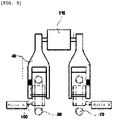
FIG. 5 is a view illustrating an example of a rear wheel of a means of transportation with an independent motor installed inside each wheel. - Below, embodiments of the present invention will be described in detail with reference to the accompanying drawings such that those skilled in the art to which the present invention pertains can easily embody the present invention. However, the invention may be embodied in various different forms, and should not be construed as being limited to the embodiment set forth herein.
- In order to describe the present invention in detail, in the drawings, those that are not associated with the description of the present invention will be omitted. Like reference numerals denote like elements throughout the specification.
- Throughout the specification, when one element comprises another element, it implies the inclusion of another element but not the exclusion of any other element unless otherwise described.
- As illustrated in
FIG. 1 , an electric motorcycle according to this embodiment may be a two-wheel motorcycle or a multi-wheel motorcycle such as a three or more-wheel motorcycle. Additionally, like an ordinary electric motorcycle, the electric motorcycle has a rechargeable battery. The battery will not be described herein because the battery is identical with a batter that is commonly used. - Next, the structure in which the wheels are arranged and connected with the main body, the steering system, the shock absorption system etc. will not be described herein because the structure, the steering system, the shock absorption system etc. are substantially similar to those that are commonly used for a motorcycle.
- However, a means of transportation with three or more wheels such as a motorcycle realized through the invention of "Korean Patent Number
10-0873537 - Additionally, each of the independent motor-driven wheels of a motorcycle according to this embodiment is preferably configured to be a wheel with a built-in motor - a wheel into which an electric motor is built.
- Wheels with built-in motors used for this embodiment will not be described because the wheels with built-in motors are substantially the same as those that are commonly used.
- i) When the above-described means of transportation with two or three or more wheels runs in straight sections, each of the wheels has the same speed, but when the above-described means of transportation with two or three or more wheels runs in curved sections, each of the wheels have different speeds.
The reason is that the distances between each of the wheels and the center of a curve radius, as illustrated inFIG. 3 , are different, when a means of transportation runs in a curved section. This means that a rotational speed of a wheel disposed at an outer side from the center of a curve must be higher than a rotational speed of a wheel disposed at an inner side according to a greater radius of curvature (circumference = 2 πr, r = radius of gyration). Accordingly, controlling the speed of the wheel, disposed at the outer side, and the wheel, disposed at the inner side to make changes in the speed depending on the circumstances, is important in ensuring driving stability. To this end, it is necessary to precisely control (synchronize) each motor.
Further, the durability and stability of the control device is an important factor considering that in general, the condition of a means of transportation is heavily dependent on the driver's driving habits and driving environment.
To this end, the present invention uses physical load generated by a means of transportation itself instead of a separate controller and uses a BLDC motor among other motors so as to make use of the unique features of a BLDC motor.
Additionally, when it comes to a means of transportation applied in this embodiment, easy control and stability may be ensured by using correlation between speed and load, in the same state in which power of each motor is made the same and power is supplied to a motor controller by using the same supply line, such that the motor may control itself.
To be precise, as in formula 1, under the assumption that power is supplied to each motor controller through one supply line, in the event that the features of a BLDC motor that a voltage is proportionate to rotation frequency of a motor and that current intensity is proportionate to load are used, load leads to a reduction in speed and accordingly, more power is needed.
From physics perspectives, (formula 3) kinetic energy (E) = 1/2 × mv2, v2 (speed) = 2 × kinetic energy (E) / m (mass, weight) may be obtained. According to formula 3, in the event that the kinetic energy remains constant (fixed value), weight is inversely proportionate to the square of speed.
Additionally, as inFIG. 3 , when a means of transportation such as a motorcycle etc. realized through the invention of "Korean Patent Number10-0873537 FIG. 4 , the center of gravity of the means of transportation moves towards the center of the radius of gyration, and more weight is exerted to a wheel disposed close to the center of the radius of gyration. That is, the means of transportation has a higher load. If so, the speed of the wheel disposed at an inner side of the radius of gyration is lowered because of a greater weight (load) according to the unique features of BLCD motors.
That is, when the means of transportation runs a curved section, the speed of the wheel disposed at the inner side is naturally lowered without a separate control device because of the unique features of BLDC motors and the physical phenomena. On the contrary, when the means of transportation runs a curved section, the speed of the wheel disposed at the outer side goes up because of a lower load resulting from the displacement of the center of weight caused by centrifugal force. - ii) In general, the energy consumption of a means of transportation driven by a motor is indicated as in
FIG.2 . That is, a high load is provided to the motor of a means of transportation from the moment that the means of transportation is started to the moment that the speed of the means of transportation reaches a certain level, and the means of transportation rapidly consumes a large amount of energy. However, the means of transportation consumes less energy when the speed of the means of transportation reaches a certain level and a stable level (steady state). - An electric motor cycle according to the present invention shows the same pattern of energy consumption. However, when driven by using wheels equipped with two independent drive motors rather than one motor (
FIG. 2 ), the motorcycle consumes less energy as illustrated inFIG. 2 . That is, in the event that the motorcycle is driven by using two or more independent drive wheels (equipped with motors), the total amount of energy consumed by all the motors of each of the wheels is less than the amount of energy consumed by a motor under the same situation (see. formula inFIG. 2 ). - It should be understood that the embodiments are provided as examples and the present invention should not be limited to the embodiments set forth herein. For instance, each element described as a unified one may be embodied as a separate one and each element described as a separate one may be embodied as a combined one.
- The present invention should be considered as limited only by the scope of the appended claims and all the changes and modifications derived from the meaning and scope of the appended claims and equivalents thereof should be construed as being included in the scope of the present invention.
-
- Two-wheel motorcycle body
- Battery
- Front wheel equipped with a motor
- Rear wheel equipped with a motor
- Curve of energy consumption when using one motor
- Curve of energy consumption when using two motors
Claims (4)
- A method of control in relation to differences between speed and in loads of each drive wheel, which are caused when a motorcycle realized through the invention of "Korean Patent Number 10-0873537 titled a two-wheel moving body and a motorcycle having the same" and a means of transportation (motorcycle etc.) with two or more independent drive wheels which are independently driven by electricity at a front wheel and/or a rear wheel run in a curved section,
if power of each motor applied to a wheel at the same side at a front side and a rear side is made the same and one power supply device is used to supply the same amount of power to each motor controller, speed and loads may be controlled without a separate control device in a stable manner by means of unique features of a motor (a higher load leading to a lower speed, a lower load leading to a higher speed) and physical phenomena (a phenomenon in which a means of transportation must displace the center of gravity not to affected by centrifugal force generated when running in a curved section thereby ensuring stability) affecting each wheel of a means of transportation at the time of a drive in a rotation section. - The method according to claim 1,
brushless DC (BLDC) motors, which have little electrical noises (flames), little mechanical noises and little abrasion and have great durability and stability, are used to maximize effectiveness when the motor is selected to be applied to each wheel of the means of transportation because BLDC motors are excellent in features of speed to loads and do not apply brushes. - The method according to claims 1 and 2,
the independent drive wheel is configured to be a wheel with a built-in motor - a wheel into which a motor is built to improve energy efficiency. - A means of transportation driven by electricity such as an electric motorcycle with two or more wheels etc. shows less energy consumption and improvement in energy efficiency when using two or more motors rather than one motor depending on the circumstances.
Applications Claiming Priority (2)
| Application Number | Priority Date | Filing Date | Title |
|---|---|---|---|
| KR1020150137225A KR20150117626A (en) | 2015-09-30 | 2015-09-30 | Driving control by self-load for transportation with more than two electro-motion wheel. |
| PCT/KR2016/003217 WO2017057810A1 (en) | 2015-09-30 | 2016-03-29 | Drive control by self-load of transport means having two or more motor-driven wheels |
Publications (2)
| Publication Number | Publication Date |
|---|---|
| EP3357804A1 true EP3357804A1 (en) | 2018-08-08 |
| EP3357804A4 EP3357804A4 (en) | 2019-05-15 |
Family
ID=54399916
Family Applications (1)
| Application Number | Title | Priority Date | Filing Date |
|---|---|---|---|
| EP16851958.5A Withdrawn EP3357804A4 (en) | 2015-09-30 | 2016-03-29 | SELF-LOADING TRANSMISSION CONTROL OF A TRANSPORT MEANS HAVING AT LEAST TWO MOTOR-DRIVEN WHEELS |
Country Status (3)
| Country | Link |
|---|---|
| EP (1) | EP3357804A4 (en) |
| KR (1) | KR20150117626A (en) |
| WO (1) | WO2017057810A1 (en) |
Family Cites Families (7)
| Publication number | Priority date | Publication date | Assignee | Title |
|---|---|---|---|---|
| JPH09207856A (en) * | 1996-01-31 | 1997-08-12 | Tadashi Ishihara | Two rear wheel suspension device of tricycle having two rear wheels which travels in the same way as two wheels |
| ITMI20060976A1 (en) * | 2006-05-17 | 2007-11-18 | Piaggio & C Spa | 4-WHEEL ROLLER VEHICLE WITH ELECTRIC TRACTION |
| KR20080015972A (en) * | 2006-08-17 | 2008-02-21 | 고려대학교 산학협력단 | Stability control device using wheeled motor, vehicle with wheeled motor, stability control method using wheeled motor and recording medium |
| KR20070113170A (en) * | 2007-10-11 | 2007-11-28 | 권용범 | motorcycle |
| KR20120063118A (en) * | 2010-12-07 | 2012-06-15 | 현대자동차주식회사 | Electric 4 wheel drive systen |
| KR101034814B1 (en) * | 2010-12-22 | 2011-05-16 | 오봉석 | Electric four-wheeled motorcycle |
| KR101548914B1 (en) * | 2013-09-09 | 2015-09-11 | 덕원이엔티 주식회사 | Electric vehicle |
-
2015
- 2015-09-30 KR KR1020150137225A patent/KR20150117626A/en not_active Ceased
-
2016
- 2016-03-29 EP EP16851958.5A patent/EP3357804A4/en not_active Withdrawn
- 2016-03-29 WO PCT/KR2016/003217 patent/WO2017057810A1/en not_active Ceased
Also Published As
| Publication number | Publication date |
|---|---|
| WO2017057810A1 (en) | 2017-04-06 |
| KR20150117626A (en) | 2015-10-20 |
| EP3357804A4 (en) | 2019-05-15 |
Similar Documents
| Publication | Publication Date | Title |
|---|---|---|
| US8627914B2 (en) | Energy recovery drive system and vehicle with energy recovery drive system | |
| US8181548B2 (en) | Power transmission apparatus | |
| US8089168B2 (en) | Tire actuated generator for use on cars | |
| CN103373342B (en) | Distinguish the system and method for the moment of torsion between wheel | |
| JP3170663U (en) | Electric vehicle power generator | |
| EP1671832B1 (en) | Electric wheel drive apparatus | |
| CN109789802B (en) | Vehicle power assist system | |
| JPWO2007141841A1 (en) | Generator / drive motor that enables hybrid function | |
| MX2014000549A (en) | Wheel assembly defining a motor/generator. | |
| CN201900980U (en) | Novel electric sports car with front powder driver and rear power driver | |
| CN214728160U (en) | Vehicle drive device equipped with reduction gear | |
| CN204190553U (en) | The wheel hub motor of the automobile-used variable deceleration ratio of electrical salf-walking | |
| CN201296158Y (en) | Self-charging electromechanical double power electric automobile | |
| CN105202131A (en) | Automobile generator transmission and control method thereof | |
| CN201070977Y (en) | Electric car | |
| EP3357804A1 (en) | Drive control by self-load of transport means having two or more motor-driven wheels | |
| KR101224441B1 (en) | Bicycle motor having transmission function with two motors | |
| KR20160080607A (en) | HYBRID CAR HAVING Li-Po BATTERY | |
| KR20140083554A (en) | Electric vehicle | |
| JP5895819B2 (en) | Power generation system using an electric vehicle | |
| JP3273172B2 (en) | Electric vehicle using rotary inertia | |
| KR102038580B1 (en) | Driving control method by self-load for transportation with more than two electro-motion wheel. | |
| CN101638059A (en) | Self-powered electric car | |
| CN205707144U (en) | A kind of hybrid power system used on motorcycle | |
| CN101670788A (en) | Self-generating uncharged electric motor car |
Legal Events
| Date | Code | Title | Description |
|---|---|---|---|
| STAA | Information on the status of an ep patent application or granted ep patent |
Free format text: STATUS: THE INTERNATIONAL PUBLICATION HAS BEEN MADE |
|
| PUAI | Public reference made under article 153(3) epc to a published international application that has entered the european phase |
Free format text: ORIGINAL CODE: 0009012 |
|
| STAA | Information on the status of an ep patent application or granted ep patent |
Free format text: STATUS: REQUEST FOR EXAMINATION WAS MADE |
|
| 17P | Request for examination filed |
Effective date: 20180427 |
|
| AK | Designated contracting states |
Kind code of ref document: A1 Designated state(s): AL AT BE BG CH CY CZ DE DK EE ES FI FR GB GR HR HU IE IS IT LI LT LU LV MC MK MT NL NO PL PT RO RS SE SI SK SM TR |
|
| AX | Request for extension of the european patent |
Extension state: BA ME |
|
| DAV | Request for validation of the european patent (deleted) | ||
| DAX | Request for extension of the european patent (deleted) | ||
| A4 | Supplementary search report drawn up and despatched |
Effective date: 20190415 |
|
| RIC1 | Information provided on ipc code assigned before grant |
Ipc: B62M 23/00 20060101ALI20190409BHEP Ipc: B62K 5/027 20130101AFI20190409BHEP Ipc: B62K 11/00 20060101ALI20190409BHEP Ipc: B60L 15/20 20060101ALI20190409BHEP Ipc: B62K 5/01 20130101ALI20190409BHEP |
|
| STAA | Information on the status of an ep patent application or granted ep patent |
Free format text: STATUS: EXAMINATION IS IN PROGRESS |
|
| 17Q | First examination report despatched |
Effective date: 20200602 |
|
| STAA | Information on the status of an ep patent application or granted ep patent |
Free format text: STATUS: THE APPLICATION IS DEEMED TO BE WITHDRAWN |
|
| 18D | Application deemed to be withdrawn |
Effective date: 20231125 |