EP3354360A1 - Method for manufacturing plated steel sheet having excellent surface quality and press formability, and plated steel sheet manufactured thereby - Google Patents
Method for manufacturing plated steel sheet having excellent surface quality and press formability, and plated steel sheet manufactured thereby Download PDFInfo
- Publication number
- EP3354360A1 EP3354360A1 EP16849031.6A EP16849031A EP3354360A1 EP 3354360 A1 EP3354360 A1 EP 3354360A1 EP 16849031 A EP16849031 A EP 16849031A EP 3354360 A1 EP3354360 A1 EP 3354360A1
- Authority
- EP
- European Patent Office
- Prior art keywords
- steel sheet
- plated steel
- range
- skin pass
- roughness
- Prior art date
- Legal status (The legal status is an assumption and is not a legal conclusion. Google has not performed a legal analysis and makes no representation as to the accuracy of the status listed.)
- Granted
Links
Images
Classifications
-
- B—PERFORMING OPERATIONS; TRANSPORTING
- B21—MECHANICAL METAL-WORKING WITHOUT ESSENTIALLY REMOVING MATERIAL; PUNCHING METAL
- B21B—ROLLING OF METAL
- B21B1/00—Metal-rolling methods or mills for making semi-finished products of solid or profiled cross-section; Sequence of operations in milling trains; Layout of rolling-mill plant, e.g. grouping of stands; Succession of passes or of sectional pass alternations
- B21B1/22—Metal-rolling methods or mills for making semi-finished products of solid or profiled cross-section; Sequence of operations in milling trains; Layout of rolling-mill plant, e.g. grouping of stands; Succession of passes or of sectional pass alternations for rolling plates, strips, bands or sheets of indefinite length
- B21B1/227—Surface roughening or texturing
-
- B—PERFORMING OPERATIONS; TRANSPORTING
- B21—MECHANICAL METAL-WORKING WITHOUT ESSENTIALLY REMOVING MATERIAL; PUNCHING METAL
- B21B—ROLLING OF METAL
- B21B1/00—Metal-rolling methods or mills for making semi-finished products of solid or profiled cross-section; Sequence of operations in milling trains; Layout of rolling-mill plant, e.g. grouping of stands; Succession of passes or of sectional pass alternations
- B21B1/22—Metal-rolling methods or mills for making semi-finished products of solid or profiled cross-section; Sequence of operations in milling trains; Layout of rolling-mill plant, e.g. grouping of stands; Succession of passes or of sectional pass alternations for rolling plates, strips, bands or sheets of indefinite length
-
- B—PERFORMING OPERATIONS; TRANSPORTING
- B32—LAYERED PRODUCTS
- B32B—LAYERED PRODUCTS, i.e. PRODUCTS BUILT-UP OF STRATA OF FLAT OR NON-FLAT, e.g. CELLULAR OR HONEYCOMB, FORM
- B32B15/00—Layered products comprising a layer of metal
- B32B15/01—Layered products comprising a layer of metal all layers being exclusively metallic
- B32B15/012—Layered products comprising a layer of metal all layers being exclusively metallic one layer being formed of an iron alloy or steel, another layer being formed of aluminium or an aluminium alloy
-
- B—PERFORMING OPERATIONS; TRANSPORTING
- B32—LAYERED PRODUCTS
- B32B—LAYERED PRODUCTS, i.e. PRODUCTS BUILT-UP OF STRATA OF FLAT OR NON-FLAT, e.g. CELLULAR OR HONEYCOMB, FORM
- B32B15/00—Layered products comprising a layer of metal
- B32B15/01—Layered products comprising a layer of metal all layers being exclusively metallic
- B32B15/013—Layered products comprising a layer of metal all layers being exclusively metallic one layer being formed of an iron alloy or steel, another layer being formed of a metal other than iron or aluminium
-
- C—CHEMISTRY; METALLURGY
- C22—METALLURGY; FERROUS OR NON-FERROUS ALLOYS; TREATMENT OF ALLOYS OR NON-FERROUS METALS
- C22C—ALLOYS
- C22C38/00—Ferrous alloys, e.g. steel alloys
- C22C38/002—Ferrous alloys, e.g. steel alloys containing In, Mg, or other elements not provided for in one single group C22C38/001 - C22C38/60
-
- C—CHEMISTRY; METALLURGY
- C22—METALLURGY; FERROUS OR NON-FERROUS ALLOYS; TREATMENT OF ALLOYS OR NON-FERROUS METALS
- C22C—ALLOYS
- C22C38/00—Ferrous alloys, e.g. steel alloys
- C22C38/02—Ferrous alloys, e.g. steel alloys containing silicon
-
- C—CHEMISTRY; METALLURGY
- C22—METALLURGY; FERROUS OR NON-FERROUS ALLOYS; TREATMENT OF ALLOYS OR NON-FERROUS METALS
- C22C—ALLOYS
- C22C38/00—Ferrous alloys, e.g. steel alloys
- C22C38/04—Ferrous alloys, e.g. steel alloys containing manganese
-
- C—CHEMISTRY; METALLURGY
- C22—METALLURGY; FERROUS OR NON-FERROUS ALLOYS; TREATMENT OF ALLOYS OR NON-FERROUS METALS
- C22C—ALLOYS
- C22C38/00—Ferrous alloys, e.g. steel alloys
- C22C38/06—Ferrous alloys, e.g. steel alloys containing aluminium
-
- C—CHEMISTRY; METALLURGY
- C23—COATING METALLIC MATERIAL; COATING MATERIAL WITH METALLIC MATERIAL; CHEMICAL SURFACE TREATMENT; DIFFUSION TREATMENT OF METALLIC MATERIAL; COATING BY VACUUM EVAPORATION, BY SPUTTERING, BY ION IMPLANTATION OR BY CHEMICAL VAPOUR DEPOSITION, IN GENERAL; INHIBITING CORROSION OF METALLIC MATERIAL OR INCRUSTATION IN GENERAL
- C23C—COATING METALLIC MATERIAL; COATING MATERIAL WITH METALLIC MATERIAL; SURFACE TREATMENT OF METALLIC MATERIAL BY DIFFUSION INTO THE SURFACE, BY CHEMICAL CONVERSION OR SUBSTITUTION; COATING BY VACUUM EVAPORATION, BY SPUTTERING, BY ION IMPLANTATION OR BY CHEMICAL VAPOUR DEPOSITION, IN GENERAL
- C23C2/00—Hot-dipping or immersion processes for applying the coating material in the molten state without affecting the shape; Apparatus therefor
- C23C2/04—Hot-dipping or immersion processes for applying the coating material in the molten state without affecting the shape; Apparatus therefor characterised by the coating material
- C23C2/06—Zinc or cadmium or alloys based thereon
-
- C—CHEMISTRY; METALLURGY
- C23—COATING METALLIC MATERIAL; COATING MATERIAL WITH METALLIC MATERIAL; CHEMICAL SURFACE TREATMENT; DIFFUSION TREATMENT OF METALLIC MATERIAL; COATING BY VACUUM EVAPORATION, BY SPUTTERING, BY ION IMPLANTATION OR BY CHEMICAL VAPOUR DEPOSITION, IN GENERAL; INHIBITING CORROSION OF METALLIC MATERIAL OR INCRUSTATION IN GENERAL
- C23C—COATING METALLIC MATERIAL; COATING MATERIAL WITH METALLIC MATERIAL; SURFACE TREATMENT OF METALLIC MATERIAL BY DIFFUSION INTO THE SURFACE, BY CHEMICAL CONVERSION OR SUBSTITUTION; COATING BY VACUUM EVAPORATION, BY SPUTTERING, BY ION IMPLANTATION OR BY CHEMICAL VAPOUR DEPOSITION, IN GENERAL
- C23C2/00—Hot-dipping or immersion processes for applying the coating material in the molten state without affecting the shape; Apparatus therefor
- C23C2/04—Hot-dipping or immersion processes for applying the coating material in the molten state without affecting the shape; Apparatus therefor characterised by the coating material
- C23C2/12—Aluminium or alloys based thereon
-
- C—CHEMISTRY; METALLURGY
- C23—COATING METALLIC MATERIAL; COATING MATERIAL WITH METALLIC MATERIAL; CHEMICAL SURFACE TREATMENT; DIFFUSION TREATMENT OF METALLIC MATERIAL; COATING BY VACUUM EVAPORATION, BY SPUTTERING, BY ION IMPLANTATION OR BY CHEMICAL VAPOUR DEPOSITION, IN GENERAL; INHIBITING CORROSION OF METALLIC MATERIAL OR INCRUSTATION IN GENERAL
- C23C—COATING METALLIC MATERIAL; COATING MATERIAL WITH METALLIC MATERIAL; SURFACE TREATMENT OF METALLIC MATERIAL BY DIFFUSION INTO THE SURFACE, BY CHEMICAL CONVERSION OR SUBSTITUTION; COATING BY VACUUM EVAPORATION, BY SPUTTERING, BY ION IMPLANTATION OR BY CHEMICAL VAPOUR DEPOSITION, IN GENERAL
- C23C2/00—Hot-dipping or immersion processes for applying the coating material in the molten state without affecting the shape; Apparatus therefor
- C23C2/26—After-treatment
-
- C—CHEMISTRY; METALLURGY
- C25—ELECTROLYTIC OR ELECTROPHORETIC PROCESSES; APPARATUS THEREFOR
- C25D—PROCESSES FOR THE ELECTROLYTIC OR ELECTROPHORETIC PRODUCTION OF COATINGS; ELECTROFORMING; APPARATUS THEREFOR
- C25D3/00—Electroplating: Baths therefor
- C25D3/02—Electroplating: Baths therefor from solutions
- C25D3/22—Electroplating: Baths therefor from solutions of zinc
-
- B—PERFORMING OPERATIONS; TRANSPORTING
- B21—MECHANICAL METAL-WORKING WITHOUT ESSENTIALLY REMOVING MATERIAL; PUNCHING METAL
- B21B—ROLLING OF METAL
- B21B1/00—Metal-rolling methods or mills for making semi-finished products of solid or profiled cross-section; Sequence of operations in milling trains; Layout of rolling-mill plant, e.g. grouping of stands; Succession of passes or of sectional pass alternations
- B21B1/22—Metal-rolling methods or mills for making semi-finished products of solid or profiled cross-section; Sequence of operations in milling trains; Layout of rolling-mill plant, e.g. grouping of stands; Succession of passes or of sectional pass alternations for rolling plates, strips, bands or sheets of indefinite length
- B21B2001/228—Metal-rolling methods or mills for making semi-finished products of solid or profiled cross-section; Sequence of operations in milling trains; Layout of rolling-mill plant, e.g. grouping of stands; Succession of passes or of sectional pass alternations for rolling plates, strips, bands or sheets of indefinite length skin pass rolling or temper rolling
-
- B—PERFORMING OPERATIONS; TRANSPORTING
- B21—MECHANICAL METAL-WORKING WITHOUT ESSENTIALLY REMOVING MATERIAL; PUNCHING METAL
- B21B—ROLLING OF METAL
- B21B2261/00—Product parameters
- B21B2261/14—Roughness
-
- B—PERFORMING OPERATIONS; TRANSPORTING
- B21—MECHANICAL METAL-WORKING WITHOUT ESSENTIALLY REMOVING MATERIAL; PUNCHING METAL
- B21B—ROLLING OF METAL
- B21B2267/00—Roll parameters
- B21B2267/10—Roughness of roll surface
-
- C—CHEMISTRY; METALLURGY
- C21—METALLURGY OF IRON
- C21D—MODIFYING THE PHYSICAL STRUCTURE OF FERROUS METALS; GENERAL DEVICES FOR HEAT TREATMENT OF FERROUS OR NON-FERROUS METALS OR ALLOYS; MAKING METAL MALLEABLE, e.g. BY DECARBURISATION OR TEMPERING
- C21D9/00—Heat treatment, e.g. annealing, hardening, quenching or tempering, adapted for particular articles; Furnaces therefor
- C21D9/46—Heat treatment, e.g. annealing, hardening, quenching or tempering, adapted for particular articles; Furnaces therefor for sheet metals
-
- C—CHEMISTRY; METALLURGY
- C23—COATING METALLIC MATERIAL; COATING MATERIAL WITH METALLIC MATERIAL; CHEMICAL SURFACE TREATMENT; DIFFUSION TREATMENT OF METALLIC MATERIAL; COATING BY VACUUM EVAPORATION, BY SPUTTERING, BY ION IMPLANTATION OR BY CHEMICAL VAPOUR DEPOSITION, IN GENERAL; INHIBITING CORROSION OF METALLIC MATERIAL OR INCRUSTATION IN GENERAL
- C23C—COATING METALLIC MATERIAL; COATING MATERIAL WITH METALLIC MATERIAL; SURFACE TREATMENT OF METALLIC MATERIAL BY DIFFUSION INTO THE SURFACE, BY CHEMICAL CONVERSION OR SUBSTITUTION; COATING BY VACUUM EVAPORATION, BY SPUTTERING, BY ION IMPLANTATION OR BY CHEMICAL VAPOUR DEPOSITION, IN GENERAL
- C23C2/00—Hot-dipping or immersion processes for applying the coating material in the molten state without affecting the shape; Apparatus therefor
- C23C2/34—Hot-dipping or immersion processes for applying the coating material in the molten state without affecting the shape; Apparatus therefor characterised by the shape of the material to be treated
- C23C2/36—Elongated material
- C23C2/40—Plates; Strips
Definitions
- the present disclosure relates to a plated steel sheet for applications such as an automotive outer panel, and more particularly, to a method for manufacturing a plated steel sheet having excellent surface qualities and press formability, and a plated steel sheet manufactured by the method.
- Steel sheets plated with materials such as zinc or aluminum have high corrosion resistance, weldability, and paintability, and are thus widely used as steel sheets for automotive outer panels.
- Such steel sheets used for automotive outer panels are required to have a good aesthetic appearance and high formability in press forming processes as well.
- plating layers of plated steel sheets for example, plating layers of hot-dip galvanized steel sheets are pure zinc (eta ( ⁇ ) phase) layers, and thus after a plating process, the plating layers are flat and soft and have low melting point features, thereby easily causing a galling phenomenon in which cohesion between a plating layer and a press die results in separation of the plating layer during a press forming process.
- Galling refers to a phenomenon in which a portion of a coating layer peels off and sticks to a surface of a die as in a cold pressure welding process, causing scratches on a surface of a new material or separation of the plating layer from the surface of the die together with a portion of the die when the new material is formed in the die.
- This galling phenomenon occurring when a hot-dip galvanized steel sheet is press formed, is a factor that increases press forming process costs because of significant effects on the lifespan of dies and the surface quality of products manufactured by press forming a plated steel sheet.
- plated steel sheets for automotive outer panels are processed to have fine concave-convex portions on surfaces thereof so as to prevent galling during a press forming process.
- Fine concave-convex portions formed on surfaces of plates steel sheets have a function of reducing a contact area with a die during a press forming process and function as oil pockets retaining oils such as press oil, lubricants, or rust preventive oil to reduce sliding friction resistance and damage to dies, thereby preventing galling.
- Patent Document 1 discloses a method of improving press formability by projecting solid particles onto a surface of a galvanized steel sheet to adjust the mean roughness Ra of the galvanized steel sheet surface to be within the range of 0.3 ⁇ m to 3.0 ⁇ m, the peak count PPI of the galvanized steel sheet surface to be within the range of 250 or greater (RPc of 98 or greater), and the mean waviness Wca of the galvanized steel sheet surface to be 0.8 ⁇ m
- Patent Document 2 discloses a method of improving galling and image clarity by rolling a galvanized steel sheet using skin pass rolls having regular concave-convex portions formed by laser texturing so as to adjust the sum of volumes of concave portions per unit area of the galvanized steel sheet to be within the range of 0.0001 mm 2 to 0.01 mm 2
- Patent Document 3 discloses a method of preventing cohesion by reducing friction between a plating layer and a die using a lubrication layer formed by electroplating a hot-
- the mean surface roughness Ra and surface peak number RPc of a plated steel sheet on which fine concave-convex portions are formed are maintained within the ranges as described in Patent Document 1, or the sum of volumes of concave portions per unit area of a galvanized steel sheet is adjusted to be a certain value or greater as described in Patent Document 2, the amount of oil retention and frictional characteristics of the steel sheets vary with the shape of surface concave-convex portions, resulting in markedly different galling behaviors during a press forming process.
- Patent Document 3 is not economical because an addition expensive lubrication process is required to improve friction characteristics and press formability of a plated steel sheet. In addition, the method disclosed in Patent document 3 deteriorates weldability, adhesiveness, etc.
- aspects of the present disclosure may provide a method for improving the press formability of a plated steel sheet by reducing a contact area with a press die and increasing an oil pocket effect to decrease sliding friction when a press forming process is performed on the plated steel sheet, and a plated steel sheet manufactured by the method and having excellent surface qualities and press formability.
- a method for manufacturing a plated steel sheet having excellent surface qualities and press formability may include: manufacturing a plated steel sheet by plating a base steel sheet; and performing a skin pass rolling process on the plated steel sheet by inserting the plated steel sheet into a skin pass mill, wherein the skin pass rolling process may be performed using rolls having roughness skewness Rsk within a range of -0.15 or less.
- a plated steel sheet having excellent surface qualities and press formability may be manufactured by the method and may include a base steel sheet and a plating layer formed on the base steel sheet, wherein the plated steel sheet may have roughness skewness Rsk within a range of -0.8 or greater and an oil pocket area V2 within a range of 300 nm 2 or greater.
- the present disclosure provides a plated steel sheet having effectively reduced sliding friction resistance with respect to a press die to prevent a galling phenomenon in which a plating layer is separated from the plated steel sheet during a press forming process.
- the plated steel sheet of the present disclosure has excellent surface qualities and press formability, the plated steel sheet may be usefully used as a material for automotive outer panels.
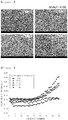
- FIG. 1 illustrates surface shapes of hot-dip galvanized steel sheets having similar mean surface roughness Ra and peak numbers per unit area RPc.
- FIG. 2 illustrates coefficients of friction ⁇ measured from hot-dip galvanized steel sheets having different roughness skewness values Rsk.
- a method of properly adjusting surface roughness indexes of a plated steel sheet such as mean roughness Ra, a peak number per unit length RPc, and the sum of volumes of concave portions per unit area has been proposed to prevent galling when a press forming process is performed on a plated steel sheet for an automotive outer panel.
- surface roughness indexes of a plated steel sheet such as mean roughness Ra, a peak number per unit length RPc, and the sum of volumes of concave portions per unit area
- the inventors have carefully studied the amount of oil retention, the coefficient of repetitive friction, and the degree of machining defect formation of a plated steel sheet in connection with fine concave-convex portions formed on the plated steel sheet, so as to propose a method of preventing galling when a press forming process is performed on a plated steel sheet for an automotive outer panel.
- the plated steel sheets may have very different surface shapes as illustrated in FIG. 1 . That is, although plated steel sheets have similar surface roughness indexes such as mean roughness Ra, a peak number per unit length RPc, and the sum of volumes of concave portions per unit area, characteristics of the plated steel sheets such as the amount of oil retention, the coefficient of repetitive friction, and the formation of machining defects were markedly different, and it can be seen that the amount of oil retention, the coefficient of repetitive friction, and the degree of machining defect formation of a plated steel sheet are determined by the shape of fine concave-convex portions formed on a surface of the plated steel sheet.
- the coefficient of friction of plated steel sheets varies largely with the increase of the coefficient of repetitive friction of the plated steel sheets according to the roughness skewness Rsk of the plated steel sheets.
- the roughness skewness Rsk is similar to the ratio of a peak height and a valley depth (peak height/valley depth). When the roughness skewness Rsk has a positive (+) value, the peak height is greater than the valley depth, and when the roughness skewness Rsk has a negative (-) value, the peak height is less than the valley depth.
- V2 is a shape factor indicating a profile area of fine concave-convex portions in which oil such as a lubricant may remain.
- the roughness skewness Rsk of fine concave-convex portions formed on a surface of a plated steel sheet through a skin pass rolling process has a positive (+) value
- the area of the plated steel sheet making contact with a die decreases and V2 functioning as a lubricant reservoir increases during a forming process.
- the roughness skewness Rsk has a negative (-) value
- the contact area with a die increases, and thus V2 decreases.
- the present disclosure proposes a method of increasing the roughness skewness Rsk of fine concave-convex portions formed on a plated steel sheet through a skin pass rolling process and thus increasing V2 which is an oil pocket area in which a lubricant may remain, so as to prevent galling and improve press formability when a press forming process is performed on the plated steel sheet.
- a method for manufacturing a plated steel sheet having excellent surface qualities and press formability may include manufacturing a plated steel sheet by plating a base steel sheet; and performing a skin pass rolling process on the plated steel sheet by inserting the plated steel sheet into a skin pass mill.
- a plated steel sheet may be manufactured by plating a base steel sheet by any plating method without limitations.
- a hot-dip galvanizing method or an electroplating method may be used.
- the plated steel sheet may be, for example, a hot-dip galvanized steel sheet, a hot-dip aluminized steel sheet, or an aluminum alloy plated steel sheet, or may be a hot-dip galvannealed steel sheet obtained by performing an alloying process on the hot-dip galvanized steel sheet.
- the plated steel sheet may be, for example, an electro-galvanized steel sheet or an electro-galvannealed steel sheet.
- the base steel sheet is not limited to a particular steel sheet as long as the base steel sheet can be plated.
- a cold-rolled steel sheet may be used as the base steel sheet.
- the plated steel sheet manufactured as described above may be inserted into a skin pass mill to perform a skin pass rolling process on the plated steel sheet, and in the present disclosure, shape factors of rolls used in the skin pass rolling process are controlled.
- the skin pass rolling process may be a key process to attain objectives of the present disclosure, and the surface quality and press formability of the plated steel sheet may be finally improved by performing the skin pass rolling process under optimized conditions to be described later.
- V2 may be less than 300 nm 2 , and the amount of oil retention may decrease. In this case, during a press forming process, sufficient lubrication may not be obtained, thereby increasing sliding friction resistance and leading to separation of a plating layer and galling.
- the roughness skewness Rsk of the skin pass rolls may be controlled to adjust the roughness skewness Rsk of the plated steel sheet to be -0.8 or greater and V2 of the plated steel sheet to be 300 nm 2 or greater.
- the roughness skewness Rsk of the skin pass rolls may be the opposite of the roughness skewness Rsk of the fine concave-convex portions of the plated steel sheet.
- the roughness skewness Rsk of the plated steel sheet may be -0.8 or greater, particularly to be positive (+). It may be preferable that the roughness skewness Rsk of the rolls be negative (-) within the range of -0.15 or less, more preferably within the range of -0.15 to -0.5.
- the roughness skewness Rsk of the rolls is less than -0.5, the roughness skewness Rsk and V2 of the fine concave-convex portions of the plated steel sheet may be increased.
- rolling force may preferably be 150 tons or greater.
- the fine concave-convex portions of the skin pass rolls may not be sufficiently transferred to the surface of the plated steel sheet, and thus it may be difficult to guarantee roughness skewness Rsk of -0.8 or greater.
- rolling force may preferably be 150 tons or greater. However, if rolling force is greater than 500 tons, transferring of fine concave-convex portions may affect the base steel sheet, and thus it may be difficult to obtain desired material characteristics.
- the rolling force may be adjusted to be within the range of 150 tons to 500 tons, and more preferably within the range of 150 tons to 300 tons.
- the plated steel sheet after the plated steel sheet is processed through the skin pass rolling process, the plated steel sheet may have surface roughness Ra and a peak number per unit length RPc equal to or similar to those of general plated steel sheets for automotive outer panels, preferably within the range of 0.8 ⁇ m to 1.5 ⁇ m and the range of 75/cm or greater, respectively.
- RPc peak number per unit length
- the plated steel sheet of the present disclosure includes a base steel sheet and a plating layer formed on the base steel sheet and may preferably have roughness skewness Rsk of -0.8 or greater and an oil pocket area V2 of 300 nm 2 or greater.
- the plating layer may be a zinc plating layer, an aluminum plating layer, a zinc alloy plating layer, or an aluminum alloy plating layer.
- the plating layer is not limited thereto.
- the plated steel sheet of the present disclosure is manufactured by the above-described method particularly using rolls having roughness skewness Rsk of -0.15 or less in a skin pass rolling process so as to adjust the roughness skewness Rsk and the oil pocket area V2 of the plated steel sheet to be -0.8 or greater and 300 nm 2 or greater, respectively, and thus the plated steel sheet may have excellent surface qualities and press formability.
- the coefficient of repetitive friction of the plated steel sheet may be low at 0.2 or less with respect to a press die, thereby preventing a galling phenomenon occurring when a press forming process is performed on existing plated steel sheets for automotive outer panels.
- Cold-rolled steel sheets having a composition of 0.002%C-0.003%Si-0.08%Mn-0.028%Al-0.0114%P-0.0052%S were prepared as base steel sheets, and a hot-dip galvanizing process was performed on the cold-rolled steel sheets to obtain hot-dip galvanized steel sheets having a plating weight of 60 g/m 2 on each side thereof.
- a skin pass rolling process was performed on the hot-dip galvanized steel sheets while varying rolling force within the range of 100 tons to 300 tons by using skin pass work rolls prepared by electro discharge texturing (EDT) or EDT and superfinishing, and TopoChrom texturing (TCT) and having mean roughness Ra of 2.4 ⁇ m to 2.7 ⁇ m, a peak number per unit length RPc of 110/cm to 142/cm, and roughness skewness Rsk of -0.5 to 0.176, so as to transfer fine concave-convex portions to surfaces of the hot-dip galvanized steel sheets.
- EDT electro discharge texturing
- TCT TopoChrom texturing
- the oil retention of the hot-dip galvanized steel sheets was measured by cutting the hot-dip galvanized steel sheets to prepare 30 mm x 30 mm samples, drying and weighing the samples, dipping the samples into lubricant P-340N, stacking 15 samples, pressing the stacked samples using a pressing machine with a force of 35 tons for 10 minutes so as to remove the lubricant from the samples except for concave portions of the samples, weighing the samples, and dividing measured weights by an evaluation area.
- galling characteristics were evaluated by measuring a coefficient of repetitive friction and counting the number of rubbings at which a plating layer was separated during a repetitive friction test.
- the coefficient of repetitive friction was measured by measuring the coefficient of friction of the hot-dip galvanized steel sheets using a plane repetitive friction coefficient tester after rubbing a length of 250 mm of each of the hot-dip galvanized steel sheets 15 times with a 25 mm x 35 mm tip under a load of 6.1 MPa at a rate of 120 mm/s.
- hot-dip galvanized steel sheets (Inventive Examples 1 to 9), on which the skin pass rolling process was performed using rolls having roughness skewness Rsk within the range of -0.15 to -0.5 with rolling force of 150 tons to 300 tons, had shape indexes, that is, roughness skewness Rsk and V2 within the range of -0.8 or greater and the range of 300 nm 2 or greater, respectively, and thus, oil retention within the range of 0.7 g/m 2 or greater and a coefficient of repetitive friction within the range of 0.2 or less.
- the hot-dip galvanized steel sheets had low sliding friction resistance and good galling characteristics because separation of a plating layer was not observed after 15 rubbings.
- hot-dip galvanized steel sheets had roughness skewness Rsk within the range of less than -0.8, V2 within the range of less than 300 nm 2 , an oil retention within the range of less than 0.7 g/m 2 , and a coefficient of repetitive friction within the range of 0.21 or greater, and poor galling characteristics because separation of a plating layer occurred before rubbing was performed 15 times.
Landscapes
- Chemical & Material Sciences (AREA)
- Engineering & Computer Science (AREA)
- Mechanical Engineering (AREA)
- Materials Engineering (AREA)
- Metallurgy (AREA)
- Organic Chemistry (AREA)
- Chemical Kinetics & Catalysis (AREA)
- Electrochemistry (AREA)
- Metal Rolling (AREA)
- Coating With Molten Metal (AREA)
- Physics & Mathematics (AREA)
- Geometry (AREA)
Abstract
Description
- The present disclosure relates to a plated steel sheet for applications such as an automotive outer panel, and more particularly, to a method for manufacturing a plated steel sheet having excellent surface qualities and press formability, and a plated steel sheet manufactured by the method.
- Steel sheets plated with materials such as zinc or aluminum have high corrosion resistance, weldability, and paintability, and are thus widely used as steel sheets for automotive outer panels. Such steel sheets used for automotive outer panels are required to have a good aesthetic appearance and high formability in press forming processes as well.
- However, unlike plating layers of hot-dip galvannealed steel sheets having a fine concave-convex surface feature formed during galvannealing, plating layers of plated steel sheets, for example, plating layers of hot-dip galvanized steel sheets are pure zinc (eta (η) phase) layers, and thus after a plating process, the plating layers are flat and soft and have low melting point features, thereby easily causing a galling phenomenon in which cohesion between a plating layer and a press die results in separation of the plating layer during a press forming process.
- Galling refers to a phenomenon in which a portion of a coating layer peels off and sticks to a surface of a die as in a cold pressure welding process, causing scratches on a surface of a new material or separation of the plating layer from the surface of the die together with a portion of the die when the new material is formed in the die.
- This galling phenomenon, occurring when a hot-dip galvanized steel sheet is press formed, is a factor that increases press forming process costs because of significant effects on the lifespan of dies and the surface quality of products manufactured by press forming a plated steel sheet.
- Thus, plated steel sheets for automotive outer panels are processed to have fine concave-convex portions on surfaces thereof so as to prevent galling during a press forming process.
- Fine concave-convex portions formed on surfaces of plates steel sheets have a function of reducing a contact area with a die during a press forming process and function as oil pockets retaining oils such as press oil, lubricants, or rust preventive oil to reduce sliding friction resistance and damage to dies, thereby preventing galling.
- For example, Patent Document 1 discloses a method of improving press formability by projecting solid particles onto a surface of a galvanized steel sheet to adjust the mean roughness Ra of the galvanized steel sheet surface to be within the range of 0.3 µm to 3.0 µm, the peak count PPI of the galvanized steel sheet surface to be within the range of 250 or greater (RPc of 98 or greater), and the mean waviness Wca of the galvanized steel sheet surface to be 0.8 µm, and Patent Document 2 discloses a method of improving galling and image clarity by rolling a galvanized steel sheet using skin pass rolls having regular concave-convex portions formed by laser texturing so as to adjust the sum of volumes of concave portions per unit area of the galvanized steel sheet to be within the range of 0.0001 mm2 to 0.01 mm2 In addition, Patent Document 3 discloses a method of preventing cohesion by reducing friction between a plating layer and a die using a lubrication layer formed by electroplating a hot-dip galvannealed steel sheet with a phosphate solution containing manganese (Mn) and nickel (Ni).
- Although the mean surface roughness Ra and surface peak number RPc of a plated steel sheet on which fine concave-convex portions are formed are maintained within the ranges as described in Patent Document 1, or the sum of volumes of concave portions per unit area of a galvanized steel sheet is adjusted to be a certain value or greater as described in Patent Document 2, the amount of oil retention and frictional characteristics of the steel sheets vary with the shape of surface concave-convex portions, resulting in markedly different galling behaviors during a press forming process.
- That is, although fine concave-convex portions are formed on a galvanized steel sheet by using skin pass rolls processed by shot blasting, electro discharge texturing, laser texturing, electro beam texturing, TopoChrom texturing, or the like, or surface roughness indexes such as Ra or RPc and the sum of volumes of concave portions per unit area of a galvanized steel sheet are adjusted to be within the above-mentioned ranges by directly projecting solid spherical particles onto the galvanized steel sheet to form indentations, these methods only have a function of retaining an excessive lubricant and do not have a function of providing lubrication and reducing friction between a die and the galvanized steel sheet.
- In addition, the method disclosed in Patent Document 3 is not economical because an addition expensive lubrication process is required to improve friction characteristics and press formability of a plated steel sheet. In addition, the method disclosed in Patent document 3 deteriorates weldability, adhesiveness, etc.
- (Patent Document 1) Korean Patent Application Laid-open Publication No.
2002-0068525 - (Patent Document 2) Japanese Patent Application Laid-open Publication No.
1995-136701 - (Patent Document 3) Korean Patent Application Laid-open Publication No.
2007-0087723 - Aspects of the present disclosure may provide a method for improving the press formability of a plated steel sheet by reducing a contact area with a press die and increasing an oil pocket effect to decrease sliding friction when a press forming process is performed on the plated steel sheet, and a plated steel sheet manufactured by the method and having excellent surface qualities and press formability.
- According to an aspect of the present disclosure, a method for manufacturing a plated steel sheet having excellent surface qualities and press formability may include: manufacturing a plated steel sheet by plating a base steel sheet; and performing a skin pass rolling process on the plated steel sheet by inserting the plated steel sheet into a skin pass mill, wherein the skin pass rolling process may be performed using rolls having roughness skewness Rsk within a range of -0.15 or less.
- According to another aspect of the present disclosure, a plated steel sheet having excellent surface qualities and press formability may be manufactured by the method and may include a base steel sheet and a plating layer formed on the base steel sheet, wherein the plated steel sheet may have roughness skewness Rsk within a range of -0.8 or greater and an oil pocket area V2 within a range of 300 nm2 or greater.
- The present disclosure provides a plated steel sheet having effectively reduced sliding friction resistance with respect to a press die to prevent a galling phenomenon in which a plating layer is separated from the plated steel sheet during a press forming process.
- In addition, since the plated steel sheet of the present disclosure has excellent surface qualities and press formability, the plated steel sheet may be usefully used as a material for automotive outer panels.
-
FIG. 1 illustrates surface shapes of hot-dip galvanized steel sheets having similar mean surface roughness Ra and peak numbers per unit area RPc. -
FIG. 2 illustrates coefficients of friction µ measured from hot-dip galvanized steel sheets having different roughness skewness values Rsk. - A method of properly adjusting surface roughness indexes of a plated steel sheet such as mean roughness Ra, a peak number per unit length RPc, and the sum of volumes of concave portions per unit area has been proposed to prevent galling when a press forming process is performed on a plated steel sheet for an automotive outer panel. However, it has been confirmed that sliding friction between a die and a plated steel sheet is not effectively reduced by adjusting only such roughness indexes.
- Thus, the inventors have carefully studied the amount of oil retention, the coefficient of repetitive friction, and the degree of machining defect formation of a plated steel sheet in connection with fine concave-convex portions formed on the plated steel sheet, so as to propose a method of preventing galling when a press forming process is performed on a plated steel sheet for an automotive outer panel.
- As a result, it has been found that although plated steel sheets have similar mean surface roughness Ra and peak numbers per unit length RPc, the plated steel sheets may have very different surface shapes as illustrated in
FIG. 1 . That is, although plated steel sheets have similar surface roughness indexes such as mean roughness Ra, a peak number per unit length RPc, and the sum of volumes of concave portions per unit area, characteristics of the plated steel sheets such as the amount of oil retention, the coefficient of repetitive friction, and the formation of machining defects were markedly different, and it can be seen that the amount of oil retention, the coefficient of repetitive friction, and the degree of machining defect formation of a plated steel sheet are determined by the shape of fine concave-convex portions formed on a surface of the plated steel sheet. - In particular, it has been found that the coefficient of repetitive friction and galling characteristics of a plated steel sheet are markedly dependent on a lubricant filled profile valley area V2 functioning as a lubricant reservoir and roughness skewness indicating the sizes and shape of peak and valleys of fine concave-convex portions of the plated steel sheet.
- In particular, as shown in
FIG. 2 , the coefficient of friction of plated steel sheets varies largely with the increase of the coefficient of repetitive friction of the plated steel sheets according to the roughness skewness Rsk of the plated steel sheets. - The roughness skewness Rsk is similar to the ratio of a peak height and a valley depth (peak height/valley depth). When the roughness skewness Rsk has a positive (+) value, the peak height is greater than the valley depth, and when the roughness skewness Rsk has a negative (-) value, the peak height is less than the valley depth.
- In addition, V2 is a shape factor indicating a profile area of fine concave-convex portions in which oil such as a lubricant may remain.
- Therefore, if the roughness skewness Rsk of fine concave-convex portions formed on a surface of a plated steel sheet through a skin pass rolling process has a positive (+) value, the area of the plated steel sheet making contact with a die decreases and V2 functioning as a lubricant reservoir increases during a forming process. However, if the roughness skewness Rsk has a negative (-) value, the contact area with a die increases, and thus V2 decreases.
- Thus, the present disclosure proposes a method of increasing the roughness skewness Rsk of fine concave-convex portions formed on a plated steel sheet through a skin pass rolling process and thus increasing V2 which is an oil pocket area in which a lubricant may remain, so as to prevent galling and improve press formability when a press forming process is performed on the plated steel sheet.
- Hereinafter, aspects of the present disclosure will be described in detail.
- According to an aspect of the present disclosure, a method for manufacturing a plated steel sheet having excellent surface qualities and press formability may include manufacturing a plated steel sheet by plating a base steel sheet; and performing a skin pass rolling process on the plated steel sheet by inserting the plated steel sheet into a skin pass mill.
- In the method for manufacturing a plated steel sheet of the present disclosure, a plated steel sheet may be manufactured by plating a base steel sheet by any plating method without limitations.
- For example, a hot-dip galvanizing method or an electroplating method may be used.
- If the hot-dip plating method is used, the plated steel sheet may be, for example, a hot-dip galvanized steel sheet, a hot-dip aluminized steel sheet, or an aluminum alloy plated steel sheet, or may be a hot-dip galvannealed steel sheet obtained by performing an alloying process on the hot-dip galvanized steel sheet.
- In addition, if the electroplating method is used, the plated steel sheet may be, for example, an electro-galvanized steel sheet or an electro-galvannealed steel sheet.
- In addition, the base steel sheet is not limited to a particular steel sheet as long as the base steel sheet can be plated. For example, a cold-rolled steel sheet may be used as the base steel sheet.
- The plated steel sheet manufactured as described above may be inserted into a skin pass mill to perform a skin pass rolling process on the plated steel sheet, and in the present disclosure, shape factors of rolls used in the skin pass rolling process are controlled.
- In the present disclosure, the skin pass rolling process may be a key process to attain objectives of the present disclosure, and the surface quality and press formability of the plated steel sheet may be finally improved by performing the skin pass rolling process under optimized conditions to be described later.
- In particular, the plated steel sheet having excellent surface qualities and press formability of the present disclosure may preferably have roughness skewness Rsk within the range of -0.8 or greater, V2 indicating an oil pocket area within the range of 300 nm2 or greater, an oil retention amount of 0.7 g/m2 or greater, and a coefficient of repetitive friction µ (= frictional force/load) indicating sliding friction with a press die within the range of 0.2 or less, and thus galling may not occur.
- If the roughness skewness Rsk of fine concave-convex portions of the plated steel sheet is less than -0.8, V2 may be less than 300 nm2, and the amount of oil retention may decrease. In this case, during a press forming process, sufficient lubrication may not be obtained, thereby increasing sliding friction resistance and leading to separation of a plating layer and galling.
- Thus, the roughness skewness Rsk of the skin pass rolls may be controlled to adjust the roughness skewness Rsk of the plated steel sheet to be -0.8 or greater and V2 of the plated steel sheet to be 300 nm2 or greater.
- In more detail, since fine concave-convex portions are formed on the plated steel sheet by transferring (copying) concave-convex portions formed on the surfaces of the skin pass rolls to the surface of the plated steel sheet, the roughness skewness Rsk of the skin pass rolls may be the opposite of the roughness skewness Rsk of the fine concave-convex portions of the plated steel sheet.
- In particular, as described above, so as to adjust the roughness skewness Rsk of the plated steel sheet to be -0.8 or greater, particularly to be positive (+), it may be preferable that the roughness skewness Rsk of the rolls be negative (-) within the range of -0.15 or less, more preferably within the range of -0.15 to -0.5.
- If rolls having a positive (+) roughness skewness value greater than -0.15 are used in the skin pass rolling process, although rolling force is increased, it may be impossible to adjust the roughness skewness Rsk of the fine concave-convex portions of the plated steel sheet to be -0.8 or greater and V2 to be 300 nm2 or greater.
- However, if the roughness skewness Rsk of the rolls is less than -0.5, the roughness skewness Rsk and V2 of the fine concave-convex portions of the plated steel sheet may be increased. In this case, however, it may be impossible to adjust the roughness skewness Rsk of the rolls to be less than -0.5 by a general method of forming fine concave-convex portions on skin pass rolls such as electro discharge texturing (EDT), laser texturing (LT), electro beam texturing (EBT), and TopoChrom texturing, and thus an additional process such as superfinishing may be required to control convex portions of the concave-convex portions. That is, a plurality of processes may have to be repeated to adjust the roughness skewness Rsk of the skin pass rolls to be less than -0.5, thereby incurring more time and costs and leading to uneconomical results.
- When the skin pass rolling process is performed using the rolls having roughness skewness Rsk adjusted as described above, rolling force may preferably be 150 tons or greater.
- If rolling force is less than 150 tons, the fine concave-convex portions of the skin pass rolls may not be sufficiently transferred to the surface of the plated steel sheet, and thus it may be difficult to guarantee roughness skewness Rsk of -0.8 or greater.
- Therefore, rolling force may preferably be 150 tons or greater. However, if rolling force is greater than 500 tons, transferring of fine concave-convex portions may affect the base steel sheet, and thus it may be difficult to obtain desired material characteristics.
- Therefore, in the present disclosure, preferably, the rolling force may be adjusted to be within the range of 150 tons to 500 tons, and more preferably within the range of 150 tons to 300 tons.
- In addition, according to the present disclosure, after the plated steel sheet is processed through the skin pass rolling process, the plated steel sheet may have surface roughness Ra and a peak number per unit length RPc equal to or similar to those of general plated steel sheets for automotive outer panels, preferably within the range of 0.8 µm to 1.5 µm and the range of 75/cm or greater, respectively. Hereinafter, a plated steel sheet will be described in detail according to another aspect of the present disclosure.
- The plated steel sheet of the present disclosure includes a base steel sheet and a plating layer formed on the base steel sheet and may preferably have roughness skewness Rsk of -0.8 or greater and an oil pocket area V2 of 300 nm2 or greater.
- The plating layer may be a zinc plating layer, an aluminum plating layer, a zinc alloy plating layer, or an aluminum alloy plating layer. However, the plating layer is not limited thereto.
- The plated steel sheet of the present disclosure is manufactured by the above-described method particularly using rolls having roughness skewness Rsk of -0.15 or less in a skin pass rolling process so as to adjust the roughness skewness Rsk and the oil pocket area V2 of the plated steel sheet to be -0.8 or greater and 300 nm2 or greater, respectively, and thus the plated steel sheet may have excellent surface qualities and press formability.
- In particular, when a press forming process is performed on the plated steel sheet of the present disclosure, the coefficient of repetitive friction of the plated steel sheet may be low at 0.2 or less with respect to a press die, thereby preventing a galling phenomenon occurring when a press forming process is performed on existing plated steel sheets for automotive outer panels.
- Hereinafter, the present disclosure will be described more specifically through examples. However, the following examples should be considered in a descriptive sense only and not for purposes of limitation. The scope of the present invention is defined by the appended claims, and modifications and variations may be reasonably made therefrom.
- Cold-rolled steel sheets having a composition of 0.002%C-0.003%Si-0.08%Mn-0.028%Al-0.0114%P-0.0052%S were prepared as base steel sheets, and a hot-dip galvanizing process was performed on the cold-rolled steel sheets to obtain hot-dip galvanized steel sheets having a plating weight of 60 g/m2 on each side thereof. Thereafter, a skin pass rolling process was performed on the hot-dip galvanized steel sheets while varying rolling force within the range of 100 tons to 300 tons by using skin pass work rolls prepared by electro discharge texturing (EDT) or EDT and superfinishing, and TopoChrom texturing (TCT) and having mean roughness Ra of 2.4 µm to 2.7 µm, a peak number per unit length RPc of 110/cm to 142/cm, and roughness skewness Rsk of -0.5 to 0.176, so as to transfer fine concave-convex portions to surfaces of the hot-dip galvanized steel sheets.
- After the skin pass rolling process, roughness indexes such as mean roughness Ra and a peak number per unit area RPc, and shape indexes such as roughness skewness Rsk and V2 of the fine concave-convex portions formed on the hot-dip galvanized steel sheets were measured using a surface roughness gauge (NT8000 by Veeco), and results of the measurement are shown in Table 1 below.
- In this case, the oil retention of the hot-dip galvanized steel sheets was measured by cutting the hot-dip galvanized steel sheets to prepare 30 mm x 30 mm samples, drying and weighing the samples, dipping the samples into lubricant P-340N, stacking 15 samples, pressing the stacked samples using a pressing machine with a force of 35 tons for 10 minutes so as to remove the lubricant from the samples except for concave portions of the samples, weighing the samples, and dividing measured weights by an evaluation area.
- In addition, galling characteristics were evaluated by measuring a coefficient of repetitive friction and counting the number of rubbings at which a plating layer was separated during a repetitive friction test. The coefficient of repetitive friction was measured by measuring the coefficient of friction of the hot-dip galvanized steel sheets using a plane repetitive friction coefficient tester after rubbing a length of 250 mm of each of the hot-dip galvanized
steel sheets 15 times with a 25 mm x 35 mm tip under a load of 6.1 MPa at a rate of 120 mm/s. - In addition, press formability was evaluated by observing separation of a plating layer with a scanning electron microscope (SEM) according to the number of rubbings in the repetitive friction test.
[Table 1] No Skin pass rolls Surface roughness Surface shape indexes Oil retention (g/m2) Coefficient of repetitive friction Press forming defects Examples * Ra (µm) RPc (/cm ) Rsk Rolli ng force (tons ) Ra (µm) RPc (/cm) Rsk V2 (nm2 ) Number of rubbings Defects 1 2.7 110 0.144 150 1.29 78 -0.97 250 0.44 0.268 7 Yes ** CE1 2 2.7 110 0.125 150 1.29 78 -1.38 233 0.34 0.279 7 Yes CE2 3 2.7 110 0.108 150 1.26 78 -1.42 220 0.33 0.337 5 Yes CE3 4 2.4 123 0.152 150 1.09 85 -1.21 316 0.36 0.252 2 Yes CE4 5 2.4 135 0.176 150 0.93 87 -1.34 263 0.33 0.252 2 Yes CE5 6 2.4 142 0.168 150 1.01 90 -1.27 295 0.38 0.244 2 Yes CE6 7 2.7 120 -0.10 150 1.65 75.6 -0.92 295 0.61 0.234 13 Yes CE7 8 2.7 120 -0.15 150 1.46 77.4 -0.76 318 0.77 0.200 15 No *** IE1 9 2.7 120 -0.205 150 1.45 78.7 -0.6 347 0.78 0.194 15 No IE2 10 2.7 120 -0.29 150 1.44 78.6 -0.48 375 0.86 0.189 15 No IE3 11 2.7 120 -0.325 150 1.44 78.3 -0.37 415 1.00 0.184 15 No IE4 12 2.7 120 -0.29 150 1.38 79.1 -0.27 408 1.05 0.182 15 No IE5 13 2.7 120 -0.5 150 1.34 95.6 -0.05 567 1.23 0.152 15 No IE6 14 2.7 110 0.125 100 0.97 85 -1.54 198 0.33 0.337 7 Yes CE8 15 2.7 110 0.125 200 1.29 87 -1.34 229 0.43 0.260 13 Yes CE9 16 2.7 110 0.125 300 1.53 90 -1.05 269 0.46 0.243 13 Yes CE10 17 2.4 142 0.168 100 0.86 90 -1.44 253 0.28 0.272 2 Yes CE11 18 2.4 142 0.168 200 1.12 115 -1.37 367 0.31 0.258 7 Yes CE12 19 2.4 142 0.168 300 1.31 128 -0.98 340 0.33 0.260 7 Yes CE13 20 2.7 120 -0.15 100 1.45 76.2 -0.84 284 0.57 0.224 13 Yes CE14 21 2.7 120 -0.15 200 1.45 78.6 -0.54 434 0.89 0.186 15 No IE7 22 2.7 120 -0.15 250 1.46 80.3 -0.45 407 1.05 0.183 15 No IE8 23 2.7 120 -0.15 300 1.48 93.4 -0.24 519 1.16 0.171 15 No IE9 *Ra: Mean Roughness, **CE: Comparative Example, ***IE: Inventive Example - As shown in Table 1 above, hot-dip galvanized steel sheets (Inventive Examples 1 to 9), on which the skin pass rolling process was performed using rolls having roughness skewness Rsk within the range of -0.15 to -0.5 with rolling force of 150 tons to 300 tons, had shape indexes, that is, roughness skewness Rsk and V2 within the range of -0.8 or greater and the range of 300 nm2 or greater, respectively, and thus, oil retention within the range of 0.7 g/m2 or greater and a coefficient of repetitive friction within the range of 0.2 or less. Thus, the hot-dip galvanized steel sheets had low sliding friction resistance and good galling characteristics because separation of a plating layer was not observed after 15 rubbings.
- However, in the case of using skin pass rolls having roughness skewness Rsk within the range of less than -0.15 (Comparative Examples 1 to 13) or the case in which rolling force was less than 150 tons even though the roughness skewness Rsk of rolls was -0.15 or greater (Comparative Example 14), hot-dip galvanized steel sheets had roughness skewness Rsk within the range of less than -0.8, V2 within the range of less than 300 nm2, an oil retention within the range of less than 0.7 g/m2, and a coefficient of repetitive friction within the range of 0.21 or greater, and poor galling characteristics because separation of a plating layer occurred before rubbing was performed 15 times.
Claims (6)
- A method for manufacturing a plated steel sheet having excellent surface qualities and press formability, the method comprising: manufacturing a plated steel sheet by plating a base steel sheet; and performing a skin pass rolling process on the plated steel sheet by inserting the plated steel sheet into a skin pass mill,
wherein the skin pass rolling process is performed using rolls having roughness skewness Rsk within a range of -0.15 or less. - The method of claim 1, wherein the skin pass rolling process is performed with rolling force of 150 tons or greater.
- The method of claim 1, wherein after the skin pass rolling process is performed on the plated steel sheet, the plated steel sheet has roughness skewness Rsk within a range of -0.8 or greater and an oil pocket area V2 within a range of 300 nm2 or greater.
- The method of any one of claims 1 to 3, wherein the plated steel sheet is one of a hot-dip galvanized steel sheet, a hot-dip aluminized steel sheet, an aluminum alloy plated steel sheet, an electro-galvanized steel sheet, an electro-galvannealed steel sheet, and a hot-dip galvannealed steel sheet.
- A plated steel sheet having excellent surface qualities and press formability, the plated steel sheet comprising a base steel sheet and a plating layer formed on the base steel sheet,
wherein the plated steel sheet has roughness skewness Rsk within a range of -0.8 or greater and an oil pocket area V2 within a range of 300 nm2 or greater. - The plated steel sheet of claim 5, wherein the plated steel sheet has a coefficient of repetitive friction within a range of 0.2 or less.
Applications Claiming Priority (2)
| Application Number | Priority Date | Filing Date | Title |
|---|---|---|---|
| KR1020150134771A KR101677390B1 (en) | 2015-09-23 | 2015-09-23 | Method for manufacturing coated steel sheet having excellent surface quality and press moldability and coated steel sheet produced using the same |
| PCT/KR2016/010714 WO2017052306A1 (en) | 2015-09-23 | 2016-09-23 | Method for manufacturing plated steel sheet having excellent surface quality and press formability, and plated steel sheet manufactured thereby |
Publications (3)
| Publication Number | Publication Date |
|---|---|
| EP3354360A4 EP3354360A4 (en) | 2018-08-01 |
| EP3354360A1 true EP3354360A1 (en) | 2018-08-01 |
| EP3354360B1 EP3354360B1 (en) | 2020-07-29 |
Family
ID=57537671
Family Applications (1)
| Application Number | Title | Priority Date | Filing Date |
|---|---|---|---|
| EP16849031.6A Active EP3354360B1 (en) | 2015-09-23 | 2016-09-23 | Method for manufacturing plated steel sheet having excellent surface quality and press formability, and plated steel sheet manufactured thereby |
Country Status (5)
| Country | Link |
|---|---|
| US (1) | US20180345339A1 (en) |
| EP (1) | EP3354360B1 (en) |
| KR (1) | KR101677390B1 (en) |
| CN (1) | CN108136454B (en) |
| WO (1) | WO2017052306A1 (en) |
Cited By (4)
| Publication number | Priority date | Publication date | Assignee | Title |
|---|---|---|---|---|
| WO2021052809A1 (en) | 2019-09-17 | 2021-03-25 | Thyssenkrupp Steel Europe Ag | Sheet steel having a deterministic surface structure |
| WO2021144192A1 (en) * | 2020-01-13 | 2021-07-22 | Thyssenkrupp Steel Europe Ag | Method for producing a surface-treated and surface-conditioned steel sheet |
| EP4067530A4 (en) * | 2019-11-29 | 2022-11-02 | Baoshan Iron & Steel Co., Ltd. | THERMOFORMED COMPONENT HAVING EXCELLENT COATING ADHESION AND METHOD OF MANUFACTURING IT |
| US12233442B2 (en) | 2019-09-17 | 2025-02-25 | Thyssenkrupp Steel Europe Ag | Sheet steel having a deterministic surface structure |
Families Citing this family (20)
| Publication number | Priority date | Publication date | Assignee | Title |
|---|---|---|---|---|
| KR101839245B1 (en) * | 2016-12-14 | 2018-03-15 | 주식회사 포스코 | Rolling roll for plated steel sheet manufactured thereby |
| KR101830549B1 (en) * | 2016-12-14 | 2018-02-20 | 주식회사 포스코 | Method for manufacturing galvanized steel sheet having excellent press moldability and image clarity and galvanized steel sheet produced using same |
| KR20190075479A (en) * | 2017-12-21 | 2019-07-01 | 주식회사 포스코 | Rolling roll, method for treating surface of rolling roll, and coated steel sheet manufactured by rolling roll |
| KR101999009B1 (en) * | 2017-12-22 | 2019-07-10 | 주식회사 포스코 | Rolling roll and coated steel sheet manufactured thereby |
| WO2019132412A1 (en) * | 2017-12-26 | 2019-07-04 | 주식회사 포스코 | Zinc alloy-plated steel having excellent corrosion resistance and surface smoothness, and manufacturing method therefor |
| KR102235255B1 (en) | 2017-12-26 | 2021-04-02 | 주식회사 포스코 | Zinc alloy coated steel having excellent corrosion resistance and surface smoothness, and method for manufacturing the same |
| KR102178683B1 (en) * | 2018-11-29 | 2020-11-13 | 주식회사 포스코 | Hot-dip galvanized steel sheet having excellent surface appearance and low temperature bonding brittlness |
| KR20200076467A (en) * | 2018-12-19 | 2020-06-29 | 주식회사 포스코 | Skin pass roll for hot dip aluminum coated steel sheet having excellent surface appearance and image clarity after painting, method of manufacturing hot dip aluminum coated steel sheet using skin pass roll and hot dip aluminum coated steel sheet |
| KR102196211B1 (en) * | 2019-02-20 | 2020-12-30 | 포스코강판 주식회사 | Coated steel sheets with high fusion resistance and the method for the same |
| CN109926458B (en) * | 2019-03-19 | 2020-09-15 | 首钢集团有限公司 | A kind of thin strip steel with stable surface oil film and production method thereof |
| JP7063430B1 (en) * | 2021-01-22 | 2022-05-09 | Jfeスチール株式会社 | A method for manufacturing a hot pressed member, a coated member, a steel plate for hot pressing, and a method for manufacturing a hot pressed member and a method for manufacturing a painted member. |
| EP4317483A4 (en) * | 2021-04-02 | 2024-04-10 | Nippon Steel Corporation | STEEL SHEET AND ITS PRODUCTION METHOD |
| KR20230096381A (en) * | 2021-12-23 | 2023-06-30 | 주식회사 포스코 | A plated steel sheet having superior paint adhesion and corrosion resistance after hot press forming, a method for producing the same and a hot press formed member |
| DE102022114930A1 (en) | 2022-06-14 | 2023-12-14 | Thyssenkrupp Steel Europe Ag | Tempered, hot-dip coated steel sheet |
| CN115254981A (en) * | 2022-07-18 | 2022-11-01 | 首钢京唐钢铁联合有限责任公司 | Galvanized strip steel and control method and device for surface appearance of galvanized strip steel |
| DE102022123741A1 (en) | 2022-09-16 | 2024-03-21 | Thyssenkrupp Steel Europe Ag | FAL-coated steel sheet for hot forming |
| JP2025027963A (en) * | 2023-08-16 | 2025-02-28 | Jfeスチール株式会社 | Rolling work roll, manufacturing method for rolling work roll, temper rolling method for metal strip, and manufacturing method for metal strip |
| JP2025027964A (en) * | 2023-08-16 | 2025-02-28 | Jfeスチール株式会社 | Rolling work roll, manufacturing method for rolling work roll, temper rolling method for metal strip, and manufacturing method for metal strip |
| WO2025126545A1 (en) * | 2023-12-14 | 2025-06-19 | 日本製鉄株式会社 | Plated steel sheet and method for manufacturing same |
| CN121653783A (en) * | 2024-09-12 | 2026-03-13 | 宝山钢铁股份有限公司 | High-peak-number thick zinc layer electrogalvanized steel plate and manufacturing method thereof |
Family Cites Families (18)
| Publication number | Priority date | Publication date | Assignee | Title |
|---|---|---|---|---|
| JP2520061B2 (en) * | 1991-07-09 | 1996-07-31 | 新日本製鐵株式会社 | Method for producing hot dip zinc-iron alloy plated steel sheet with excellent press formability and sharpness |
| JP2704070B2 (en) * | 1991-10-30 | 1998-01-26 | 川崎製鉄株式会社 | Alloyed hot-dip galvanized steel sheet with excellent press mold sliding properties |
| JPH05154504A (en) * | 1991-12-02 | 1993-06-22 | Nkk Corp | Method for controlling surface roughness of rolled material |
| JP2792393B2 (en) * | 1993-06-03 | 1998-09-03 | 住友金属工業株式会社 | Alloyed hot-dip galvanized steel sheet for automobiles and manufacturing method thereof |
| CN2183225Y (en) * | 1993-08-12 | 1994-11-23 | 中国科学院力学研究所 | Leveling roll for improving cold-rolled thin steel plate use-performance |
| JP2718627B2 (en) | 1993-11-18 | 1998-02-25 | 株式会社神戸製鋼所 | Galvanized steel sheet with excellent slidability and paint clarity |
| JP3721675B2 (en) * | 1996-11-22 | 2005-11-30 | Jfeスチール株式会社 | Plated steel sheet |
| JP3797478B2 (en) * | 2001-11-01 | 2006-07-19 | Jfeスチール株式会社 | Alloy hot-dip galvanized steel sheet |
| KR100451244B1 (en) | 2002-11-06 | 2004-10-13 | 엘지전자 주식회사 | Electrical cooker |
| KR100797289B1 (en) | 2005-07-29 | 2008-01-23 | 주식회사 포스코 | Alloyed hot-dip galvanized steel sheet with excellent workability and its manufacturing method |
| KR100868457B1 (en) * | 2007-05-31 | 2008-11-11 | 주식회사 포스코 | Alloyed hot-dip galvanized steel sheet with excellent plating adhesion and manufacturing method |
| JP5114746B2 (en) * | 2008-04-07 | 2013-01-09 | 新日鐵住金株式会社 | Method for producing hot-dip aluminized steel sheet with pear skin surface |
| JP5195271B2 (en) * | 2008-10-21 | 2013-05-08 | Jfeスチール株式会社 | Tin-plated steel sheet and method for producing the same |
| CN102381878B (en) * | 2010-08-31 | 2013-12-25 | 宝山钢铁股份有限公司 | Manufacturing method of flat roller with self-texturing feature |
| JP5703815B2 (en) * | 2011-02-16 | 2015-04-22 | Jfeスチール株式会社 | Surface-treated steel sheet, electromagnetic wave shielding member, and electromagnetic wave shielding housing |
| CN102764789A (en) * | 2012-07-30 | 2012-11-07 | 首钢总公司 | Method for producing outer plate of automobile |
| CN103898430B (en) * | 2012-12-26 | 2016-03-16 | 攀钢集团攀枝花钢钒有限公司 | A kind of method of hot-rolled steel sheet hot-dip aluminizing zinc |
| CN103769431B (en) * | 2013-12-30 | 2015-11-25 | 首钢总公司 | A kind of production method of automobile exterior panel |
-
2015
- 2015-09-23 KR KR1020150134771A patent/KR101677390B1/en active Active
-
2016
- 2016-09-23 CN CN201680055354.3A patent/CN108136454B/en active Active
- 2016-09-23 WO PCT/KR2016/010714 patent/WO2017052306A1/en not_active Ceased
- 2016-09-23 US US15/761,633 patent/US20180345339A1/en not_active Abandoned
- 2016-09-23 EP EP16849031.6A patent/EP3354360B1/en active Active
Cited By (4)
| Publication number | Priority date | Publication date | Assignee | Title |
|---|---|---|---|---|
| WO2021052809A1 (en) | 2019-09-17 | 2021-03-25 | Thyssenkrupp Steel Europe Ag | Sheet steel having a deterministic surface structure |
| US12233442B2 (en) | 2019-09-17 | 2025-02-25 | Thyssenkrupp Steel Europe Ag | Sheet steel having a deterministic surface structure |
| EP4067530A4 (en) * | 2019-11-29 | 2022-11-02 | Baoshan Iron & Steel Co., Ltd. | THERMOFORMED COMPONENT HAVING EXCELLENT COATING ADHESION AND METHOD OF MANUFACTURING IT |
| WO2021144192A1 (en) * | 2020-01-13 | 2021-07-22 | Thyssenkrupp Steel Europe Ag | Method for producing a surface-treated and surface-conditioned steel sheet |
Also Published As
| Publication number | Publication date |
|---|---|
| US20180345339A1 (en) | 2018-12-06 |
| WO2017052306A1 (en) | 2017-03-30 |
| KR101677390B1 (en) | 2016-11-18 |
| EP3354360A4 (en) | 2018-08-01 |
| CN108136454B (en) | 2020-11-24 |
| EP3354360B1 (en) | 2020-07-29 |
| CN108136454A (en) | 2018-06-08 |
Similar Documents
| Publication | Publication Date | Title |
|---|---|---|
| EP3354360B1 (en) | Method for manufacturing plated steel sheet having excellent surface quality and press formability, and plated steel sheet manufactured thereby | |
| KR101830549B1 (en) | Method for manufacturing galvanized steel sheet having excellent press moldability and image clarity and galvanized steel sheet produced using same | |
| CA2961427C (en) | Cold-rolled and recrystallization annealed flat steel product, and method for the production thereof | |
| EP3354359B1 (en) | Method for manufacturing plated steel sheet having excellent clarity of image after coating | |
| US20190176198A1 (en) | Planishing roll, method for planishing a flat product therewith and flat product therefrom | |
| EP3556482A1 (en) | Rolling roll and plated steel sheet produced thereby | |
| RU2636217C1 (en) | Method of manufacturing details with low side strain of electro-galvanized metal sheet and relevant detail and vehicle | |
| US4071657A (en) | Metal sheet for drawing | |
| KR950009444B1 (en) | Galvanized Steel Sheet with Excellent Mobility Sliding Press Mold | |
| EP3889311A1 (en) | Hot press-formed part, and manufacturing method thereof | |
| US11898252B2 (en) | Aluminum-based alloy-plated steel sheet having excellent workability and corrosion resistance, and manufacturing method therefor | |
| JP3068938B2 (en) | Method for producing galvannealed steel sheet with excellent formability | |
| KR102281203B1 (en) | Roll for skin pass rolling having excellent press formability and image clarity and manufacturing method of coated steel sheet using the same | |
| EP3733925A1 (en) | Zinc alloy plated steel sheet having excellent corrosion resistance, weldability and lubricity, and manufacturing method therefor | |
| KR100910451B1 (en) | Alloyed hot-dip galvanized steel sheet with excellent flaking resistance and manufacturing method | |
| KR20180073386A (en) | Skin pass rolling mill and pass rolling method using the same | |
| KR20230079833A (en) | Roll for skin pass rolling having excellent press formability and image clarity, coated steel sheet using therof, and manufacturing method of coated steel sheet | |
| KR20250092546A (en) | Rolling roll, and method for the same | |
| JPH0691305A (en) | Zinc plated steel sheet excellent in deep-drawability, resistance to die galling and corrosion resistance | |
| JP4122643B2 (en) | Alloyed hot-dip galvanized steel sheet with excellent sliding properties during press forming and press-forming method of alloyed hot-dip galvanized steel sheet | |
| WO2023171143A1 (en) | Steel sheet, plated steel sheet, press-molded article, processed member, production method for press-molded article, and production method for processed member |
Legal Events
| Date | Code | Title | Description |
|---|---|---|---|
| STAA | Information on the status of an ep patent application or granted ep patent |
Free format text: STATUS: THE INTERNATIONAL PUBLICATION HAS BEEN MADE |
|
| PUAI | Public reference made under article 153(3) epc to a published international application that has entered the european phase |
Free format text: ORIGINAL CODE: 0009012 |
|
| STAA | Information on the status of an ep patent application or granted ep patent |
Free format text: STATUS: REQUEST FOR EXAMINATION WAS MADE |
|
| 17P | Request for examination filed |
Effective date: 20180417 |
|
| A4 | Supplementary search report drawn up and despatched |
Effective date: 20180620 |
|
| AK | Designated contracting states |
Kind code of ref document: A1 Designated state(s): AL AT BE BG CH CY CZ DE DK EE ES FI FR GB GR HR HU IE IS IT LI LT LU LV MC MK MT NL NO PL PT RO RS SE SI SK SM TR |
|
| AX | Request for extension of the european patent |
Extension state: BA ME |
|
| DAV | Request for validation of the european patent (deleted) | ||
| DAX | Request for extension of the european patent (deleted) | ||
| RIC1 | Information provided on ipc code assigned before grant |
Ipc: B21B 27/02 20060101ALI20191211BHEP Ipc: B21B 1/22 20060101AFI20191211BHEP Ipc: C22C 38/00 20060101ALI20191211BHEP Ipc: B32B 15/01 20060101ALI20191211BHEP Ipc: C23C 2/26 20060101ALI20191211BHEP Ipc: C22C 38/02 20060101ALI20191211BHEP Ipc: C22C 38/06 20060101ALI20191211BHEP Ipc: C22C 38/04 20060101ALI20191211BHEP Ipc: C21D 9/46 20060101ALN20191211BHEP Ipc: C23C 2/12 20060101ALI20191211BHEP Ipc: C23C 2/06 20060101ALI20191211BHEP |
|
| GRAP | Despatch of communication of intention to grant a patent |
Free format text: ORIGINAL CODE: EPIDOSNIGR1 |
|
| STAA | Information on the status of an ep patent application or granted ep patent |
Free format text: STATUS: GRANT OF PATENT IS INTENDED |
|
| INTG | Intention to grant announced |
Effective date: 20200124 |
|
| GRAS | Grant fee paid |
Free format text: ORIGINAL CODE: EPIDOSNIGR3 |
|
| GRAJ | Information related to disapproval of communication of intention to grant by the applicant or resumption of examination proceedings by the epo deleted |
Free format text: ORIGINAL CODE: EPIDOSDIGR1 |
|
| GRAL | Information related to payment of fee for publishing/printing deleted |
Free format text: ORIGINAL CODE: EPIDOSDIGR3 |
|
| STAA | Information on the status of an ep patent application or granted ep patent |
Free format text: STATUS: REQUEST FOR EXAMINATION WAS MADE |
|
| GRAR | Information related to intention to grant a patent recorded |
Free format text: ORIGINAL CODE: EPIDOSNIGR71 |
|
| STAA | Information on the status of an ep patent application or granted ep patent |
Free format text: STATUS: GRANT OF PATENT IS INTENDED |
|
| GRAA | (expected) grant |
Free format text: ORIGINAL CODE: 0009210 |
|
| STAA | Information on the status of an ep patent application or granted ep patent |
Free format text: STATUS: THE PATENT HAS BEEN GRANTED |
|
| INTC | Intention to grant announced (deleted) | ||
| RIC1 | Information provided on ipc code assigned before grant |
Ipc: B21B 27/02 20060101ALI20200605BHEP Ipc: C22C 38/04 20060101ALI20200605BHEP Ipc: B32B 15/01 20060101ALI20200605BHEP Ipc: C22C 38/02 20060101ALI20200605BHEP Ipc: C21D 9/46 20060101ALN20200605BHEP Ipc: C23C 2/26 20060101ALI20200605BHEP Ipc: C23C 2/12 20060101ALI20200605BHEP Ipc: C22C 38/00 20060101ALI20200605BHEP Ipc: B21B 1/22 20060101AFI20200605BHEP Ipc: C22C 38/06 20060101ALI20200605BHEP Ipc: C23C 2/06 20060101ALI20200605BHEP |
|
| AK | Designated contracting states |
Kind code of ref document: B1 Designated state(s): AL AT BE BG CH CY CZ DE DK EE ES FI FR GB GR HR HU IE IS IT LI LT LU LV MC MK MT NL NO PL PT RO RS SE SI SK SM TR |
|
| INTG | Intention to grant announced |
Effective date: 20200619 |
|
| REG | Reference to a national code |
Ref country code: CH Ref legal event code: EP |
|
| REG | Reference to a national code |
Ref country code: AT Ref legal event code: REF Ref document number: 1295190 Country of ref document: AT Kind code of ref document: T Effective date: 20200815 |
|
| REG | Reference to a national code |
Ref country code: IE Ref legal event code: FG4D |
|
| REG | Reference to a national code |
Ref country code: DE Ref legal event code: R096 Ref document number: 602016041035 Country of ref document: DE |
|
| REG | Reference to a national code |
Ref country code: LT Ref legal event code: MG4D |
|
| REG | Reference to a national code |
Ref country code: NL Ref legal event code: MP Effective date: 20200729 |
|
| REG | Reference to a national code |
Ref country code: AT Ref legal event code: MK05 Ref document number: 1295190 Country of ref document: AT Kind code of ref document: T Effective date: 20200729 |
|
| PG25 | Lapsed in a contracting state [announced via postgrant information from national office to epo] |
Ref country code: ES Free format text: LAPSE BECAUSE OF FAILURE TO SUBMIT A TRANSLATION OF THE DESCRIPTION OR TO PAY THE FEE WITHIN THE PRESCRIBED TIME-LIMIT Effective date: 20200729 Ref country code: SE Free format text: LAPSE BECAUSE OF FAILURE TO SUBMIT A TRANSLATION OF THE DESCRIPTION OR TO PAY THE FEE WITHIN THE PRESCRIBED TIME-LIMIT Effective date: 20200729 Ref country code: PT Free format text: LAPSE BECAUSE OF FAILURE TO SUBMIT A TRANSLATION OF THE DESCRIPTION OR TO PAY THE FEE WITHIN THE PRESCRIBED TIME-LIMIT Effective date: 20201130 Ref country code: HR Free format text: LAPSE BECAUSE OF FAILURE TO SUBMIT A TRANSLATION OF THE DESCRIPTION OR TO PAY THE FEE WITHIN THE PRESCRIBED TIME-LIMIT Effective date: 20200729 Ref country code: FI Free format text: LAPSE BECAUSE OF FAILURE TO SUBMIT A TRANSLATION OF THE DESCRIPTION OR TO PAY THE FEE WITHIN THE PRESCRIBED TIME-LIMIT Effective date: 20200729 Ref country code: GR Free format text: LAPSE BECAUSE OF FAILURE TO SUBMIT A TRANSLATION OF THE DESCRIPTION OR TO PAY THE FEE WITHIN THE PRESCRIBED TIME-LIMIT Effective date: 20201030 Ref country code: LT Free format text: LAPSE BECAUSE OF FAILURE TO SUBMIT A TRANSLATION OF THE DESCRIPTION OR TO PAY THE FEE WITHIN THE PRESCRIBED TIME-LIMIT Effective date: 20200729 Ref country code: BG Free format text: LAPSE BECAUSE OF FAILURE TO SUBMIT A TRANSLATION OF THE DESCRIPTION OR TO PAY THE FEE WITHIN THE PRESCRIBED TIME-LIMIT Effective date: 20201029 Ref country code: NO Free format text: LAPSE BECAUSE OF FAILURE TO SUBMIT A TRANSLATION OF THE DESCRIPTION OR TO PAY THE FEE WITHIN THE PRESCRIBED TIME-LIMIT Effective date: 20201029 Ref country code: AT Free format text: LAPSE BECAUSE OF FAILURE TO SUBMIT A TRANSLATION OF THE DESCRIPTION OR TO PAY THE FEE WITHIN THE PRESCRIBED TIME-LIMIT Effective date: 20200729 |
|
| PG25 | Lapsed in a contracting state [announced via postgrant information from national office to epo] |
Ref country code: PL Free format text: LAPSE BECAUSE OF FAILURE TO SUBMIT A TRANSLATION OF THE DESCRIPTION OR TO PAY THE FEE WITHIN THE PRESCRIBED TIME-LIMIT Effective date: 20200729 Ref country code: RS Free format text: LAPSE BECAUSE OF FAILURE TO SUBMIT A TRANSLATION OF THE DESCRIPTION OR TO PAY THE FEE WITHIN THE PRESCRIBED TIME-LIMIT Effective date: 20200729 Ref country code: LV Free format text: LAPSE BECAUSE OF FAILURE TO SUBMIT A TRANSLATION OF THE DESCRIPTION OR TO PAY THE FEE WITHIN THE PRESCRIBED TIME-LIMIT Effective date: 20200729 Ref country code: IS Free format text: LAPSE BECAUSE OF FAILURE TO SUBMIT A TRANSLATION OF THE DESCRIPTION OR TO PAY THE FEE WITHIN THE PRESCRIBED TIME-LIMIT Effective date: 20201129 |
|
| PG25 | Lapsed in a contracting state [announced via postgrant information from national office to epo] |
Ref country code: NL Free format text: LAPSE BECAUSE OF FAILURE TO SUBMIT A TRANSLATION OF THE DESCRIPTION OR TO PAY THE FEE WITHIN THE PRESCRIBED TIME-LIMIT Effective date: 20200729 |
|
| PG25 | Lapsed in a contracting state [announced via postgrant information from national office to epo] |
Ref country code: CZ Free format text: LAPSE BECAUSE OF FAILURE TO SUBMIT A TRANSLATION OF THE DESCRIPTION OR TO PAY THE FEE WITHIN THE PRESCRIBED TIME-LIMIT Effective date: 20200729 Ref country code: DK Free format text: LAPSE BECAUSE OF FAILURE TO SUBMIT A TRANSLATION OF THE DESCRIPTION OR TO PAY THE FEE WITHIN THE PRESCRIBED TIME-LIMIT Effective date: 20200729 Ref country code: RO Free format text: LAPSE BECAUSE OF FAILURE TO SUBMIT A TRANSLATION OF THE DESCRIPTION OR TO PAY THE FEE WITHIN THE PRESCRIBED TIME-LIMIT Effective date: 20200729 Ref country code: EE Free format text: LAPSE BECAUSE OF FAILURE TO SUBMIT A TRANSLATION OF THE DESCRIPTION OR TO PAY THE FEE WITHIN THE PRESCRIBED TIME-LIMIT Effective date: 20200729 Ref country code: SM Free format text: LAPSE BECAUSE OF FAILURE TO SUBMIT A TRANSLATION OF THE DESCRIPTION OR TO PAY THE FEE WITHIN THE PRESCRIBED TIME-LIMIT Effective date: 20200729 |
|
| REG | Reference to a national code |
Ref country code: CH Ref legal event code: PL Ref country code: DE Ref legal event code: R097 Ref document number: 602016041035 Country of ref document: DE |
|
| PG25 | Lapsed in a contracting state [announced via postgrant information from national office to epo] |
Ref country code: AL Free format text: LAPSE BECAUSE OF FAILURE TO SUBMIT A TRANSLATION OF THE DESCRIPTION OR TO PAY THE FEE WITHIN THE PRESCRIBED TIME-LIMIT Effective date: 20200729 |
|
| PLBE | No opposition filed within time limit |
Free format text: ORIGINAL CODE: 0009261 |
|
| STAA | Information on the status of an ep patent application or granted ep patent |
Free format text: STATUS: NO OPPOSITION FILED WITHIN TIME LIMIT |
|
| REG | Reference to a national code |
Ref country code: BE Ref legal event code: MM Effective date: 20200930 |
|
| GBPC | Gb: european patent ceased through non-payment of renewal fee |
Effective date: 20201029 |
|
| PG25 | Lapsed in a contracting state [announced via postgrant information from national office to epo] |
Ref country code: LU Free format text: LAPSE BECAUSE OF NON-PAYMENT OF DUE FEES Effective date: 20200923 Ref country code: SK Free format text: LAPSE BECAUSE OF FAILURE TO SUBMIT A TRANSLATION OF THE DESCRIPTION OR TO PAY THE FEE WITHIN THE PRESCRIBED TIME-LIMIT Effective date: 20200729 |
|
| 26N | No opposition filed |
Effective date: 20210430 |
|
| PG25 | Lapsed in a contracting state [announced via postgrant information from national office to epo] |
Ref country code: SI Free format text: LAPSE BECAUSE OF FAILURE TO SUBMIT A TRANSLATION OF THE DESCRIPTION OR TO PAY THE FEE WITHIN THE PRESCRIBED TIME-LIMIT Effective date: 20200729 Ref country code: GB Free format text: LAPSE BECAUSE OF NON-PAYMENT OF DUE FEES Effective date: 20201029 Ref country code: LI Free format text: LAPSE BECAUSE OF NON-PAYMENT OF DUE FEES Effective date: 20200930 Ref country code: IE Free format text: LAPSE BECAUSE OF NON-PAYMENT OF DUE FEES Effective date: 20200923 Ref country code: CH Free format text: LAPSE BECAUSE OF NON-PAYMENT OF DUE FEES Effective date: 20200930 Ref country code: BE Free format text: LAPSE BECAUSE OF NON-PAYMENT OF DUE FEES Effective date: 20200930 |
|
| PG25 | Lapsed in a contracting state [announced via postgrant information from national office to epo] |
Ref country code: TR Free format text: LAPSE BECAUSE OF FAILURE TO SUBMIT A TRANSLATION OF THE DESCRIPTION OR TO PAY THE FEE WITHIN THE PRESCRIBED TIME-LIMIT Effective date: 20200729 Ref country code: MT Free format text: LAPSE BECAUSE OF FAILURE TO SUBMIT A TRANSLATION OF THE DESCRIPTION OR TO PAY THE FEE WITHIN THE PRESCRIBED TIME-LIMIT Effective date: 20200729 Ref country code: CY Free format text: LAPSE BECAUSE OF FAILURE TO SUBMIT A TRANSLATION OF THE DESCRIPTION OR TO PAY THE FEE WITHIN THE PRESCRIBED TIME-LIMIT Effective date: 20200729 |
|
| PG25 | Lapsed in a contracting state [announced via postgrant information from national office to epo] |
Ref country code: MK Free format text: LAPSE BECAUSE OF FAILURE TO SUBMIT A TRANSLATION OF THE DESCRIPTION OR TO PAY THE FEE WITHIN THE PRESCRIBED TIME-LIMIT Effective date: 20200729 Ref country code: MC Free format text: LAPSE BECAUSE OF FAILURE TO SUBMIT A TRANSLATION OF THE DESCRIPTION OR TO PAY THE FEE WITHIN THE PRESCRIBED TIME-LIMIT Effective date: 20200729 |
|
| REG | Reference to a national code |
Ref country code: DE Ref legal event code: R081 Ref document number: 602016041035 Country of ref document: DE Owner name: POSCO CO., LTD, POHANG-SI, KR Free format text: FORMER OWNER: POSCO, POHANG-SI, GYEONGSANGBUK-DO, KR Ref country code: DE Ref legal event code: R081 Ref document number: 602016041035 Country of ref document: DE Owner name: POSCO CO., LTD, POHANG- SI, KR Free format text: FORMER OWNER: POSCO, POHANG-SI, GYEONGSANGBUK-DO, KR Ref country code: DE Ref legal event code: R081 Ref document number: 602016041035 Country of ref document: DE Owner name: POSCO HOLDINGS INC., KR Free format text: FORMER OWNER: POSCO, POHANG-SI, GYEONGSANGBUK-DO, KR |
|
| REG | Reference to a national code |
Ref country code: DE Ref legal event code: R081 Ref document number: 602016041035 Country of ref document: DE Owner name: POSCO CO., LTD, POHANG-SI, KR Free format text: FORMER OWNER: POSCO HOLDINGS INC., SEOUL, KR Ref country code: DE Ref legal event code: R081 Ref document number: 602016041035 Country of ref document: DE Owner name: POSCO CO., LTD, POHANG- SI, KR Free format text: FORMER OWNER: POSCO HOLDINGS INC., SEOUL, KR |
|
| PGFP | Annual fee paid to national office [announced via postgrant information from national office to epo] |
Ref country code: DE Payment date: 20250721 Year of fee payment: 10 |
|
| PGFP | Annual fee paid to national office [announced via postgrant information from national office to epo] |
Ref country code: IT Payment date: 20250722 Year of fee payment: 10 |
|
| PGFP | Annual fee paid to national office [announced via postgrant information from national office to epo] |
Ref country code: FR Payment date: 20250725 Year of fee payment: 10 |