EP3353979B1 - Verfahren und systeme zur authentifizierung mithilfe von zero-knowledge-code - Google Patents
Verfahren und systeme zur authentifizierung mithilfe von zero-knowledge-code Download PDFInfo
- Publication number
- EP3353979B1 EP3353979B1 EP16763203.3A EP16763203A EP3353979B1 EP 3353979 B1 EP3353979 B1 EP 3353979B1 EP 16763203 A EP16763203 A EP 16763203A EP 3353979 B1 EP3353979 B1 EP 3353979B1
- Authority
- EP
- European Patent Office
- Prior art keywords
- sequence
- seed
- accessory
- trusted accessory
- access
- Prior art date
- Legal status (The legal status is an assumption and is not a legal conclusion. Google has not performed a legal analysis and makes no representation as to the accuracy of the status listed.)
- Active
Links
Images





Classifications
-
- G—PHYSICS
- G06—COMPUTING OR CALCULATING; COUNTING
- G06F—ELECTRIC DIGITAL DATA PROCESSING
- G06F21/00—Security arrangements for protecting computers, components thereof, programs or data against unauthorised activity
- G06F21/30—Authentication, i.e. establishing the identity or authorisation of security principals
- G06F21/31—User authentication
-
- G—PHYSICS
- G06—COMPUTING OR CALCULATING; COUNTING
- G06F—ELECTRIC DIGITAL DATA PROCESSING
- G06F21/00—Security arrangements for protecting computers, components thereof, programs or data against unauthorised activity
-
- G—PHYSICS
- G06—COMPUTING OR CALCULATING; COUNTING
- G06F—ELECTRIC DIGITAL DATA PROCESSING
- G06F21/00—Security arrangements for protecting computers, components thereof, programs or data against unauthorised activity
- G06F21/30—Authentication, i.e. establishing the identity or authorisation of security principals
- G06F21/31—User authentication
- G06F21/36—User authentication by graphic or iconic representation
-
- H—ELECTRICITY
- H04—ELECTRIC COMMUNICATION TECHNIQUE
- H04L—TRANSMISSION OF DIGITAL INFORMATION, e.g. TELEGRAPHIC COMMUNICATION
- H04L47/00—Traffic control in data switching networks
- H04L47/70—Admission control; Resource allocation
-
- H—ELECTRICITY
- H04—ELECTRIC COMMUNICATION TECHNIQUE
- H04L—TRANSMISSION OF DIGITAL INFORMATION, e.g. TELEGRAPHIC COMMUNICATION
- H04L63/00—Network architectures or network communication protocols for network security
- H04L63/08—Network architectures or network communication protocols for network security for authentication of entities
-
- H—ELECTRICITY
- H04—ELECTRIC COMMUNICATION TECHNIQUE
- H04L—TRANSMISSION OF DIGITAL INFORMATION, e.g. TELEGRAPHIC COMMUNICATION
- H04L63/00—Network architectures or network communication protocols for network security
- H04L63/10—Network architectures or network communication protocols for network security for controlling access to devices or network resources
-
- H—ELECTRICITY
- H04—ELECTRIC COMMUNICATION TECHNIQUE
- H04L—TRANSMISSION OF DIGITAL INFORMATION, e.g. TELEGRAPHIC COMMUNICATION
- H04L9/00—Cryptographic mechanisms or cryptographic arrangements for secret or secure communications; Network security protocols
- H04L9/32—Cryptographic mechanisms or cryptographic arrangements for secret or secure communications; Network security protocols including means for verifying the identity or authority of a user of the system or for message authentication, e.g. authorization, entity authentication, data integrity or data verification, non-repudiation, key authentication or verification of credentials
- H04L9/3218—Cryptographic mechanisms or cryptographic arrangements for secret or secure communications; Network security protocols including means for verifying the identity or authority of a user of the system or for message authentication, e.g. authorization, entity authentication, data integrity or data verification, non-repudiation, key authentication or verification of credentials using proof of knowledge, e.g. Fiat-Shamir, GQ, Schnorr, ornon-interactive zero-knowledge proofs
-
- H—ELECTRICITY
- H04—ELECTRIC COMMUNICATION TECHNIQUE
- H04L—TRANSMISSION OF DIGITAL INFORMATION, e.g. TELEGRAPHIC COMMUNICATION
- H04L9/00—Cryptographic mechanisms or cryptographic arrangements for secret or secure communications; Network security protocols
- H04L9/32—Cryptographic mechanisms or cryptographic arrangements for secret or secure communications; Network security protocols including means for verifying the identity or authority of a user of the system or for message authentication, e.g. authorization, entity authentication, data integrity or data verification, non-repudiation, key authentication or verification of credentials
- H04L9/3271—Cryptographic mechanisms or cryptographic arrangements for secret or secure communications; Network security protocols including means for verifying the identity or authority of a user of the system or for message authentication, e.g. authorization, entity authentication, data integrity or data verification, non-repudiation, key authentication or verification of credentials using challenge-response
-
- H—ELECTRICITY
- H04—ELECTRIC COMMUNICATION TECHNIQUE
- H04W—WIRELESS COMMUNICATION NETWORKS
- H04W12/00—Security arrangements; Authentication; Protecting privacy or anonymity
- H04W12/06—Authentication
-
- H—ELECTRICITY
- H04—ELECTRIC COMMUNICATION TECHNIQUE
- H04W—WIRELESS COMMUNICATION NETWORKS
- H04W12/00—Security arrangements; Authentication; Protecting privacy or anonymity
- H04W12/08—Access security
-
- G—PHYSICS
- G06—COMPUTING OR CALCULATING; COUNTING
- G06F—ELECTRIC DIGITAL DATA PROCESSING
- G06F2221/00—Indexing scheme relating to security arrangements for protecting computers, components thereof, programs or data against unauthorised activity
- G06F2221/21—Indexing scheme relating to G06F21/00 and subgroups addressing additional information or applications relating to security arrangements for protecting computers, components thereof, programs or data against unauthorised activity
- G06F2221/2103—Challenge-response
Definitions
- a zero-trust-required authentication means for initializing a connection between a device (e.g., an untrusted device) and an accessory (e.g., a trusted accessory).
- This disclosure describes systems and methods for authentication using zero-knowledge code. Such systems and methods are useful for scenarios in which a trusted accessory forms a connection with an untrusted device, or vice versa.
- the present systems and methods facilitate improved security by preventing the untrusted device from obtaining any indication of an access sequence of the trusted accessory (e.g., unique PIN, color sequence, security image, etc.).
- the trusted accessory may be an accessory in which data passing through it, received by it, or transmitted by it is considered to be secure.
- the untrusted device may be a device in which data passing through it is not considered to be secure.
- One embodiment of the systems and methods disclosed herein takes the form of a process.
- the process includes detecting an accessory-access-request event associated with a trusted accessory.
- the process also includes generating a seed sequence having a first number of seed-sequence elements.
- the process also includes outputting an indication of at least one seed-sequence element via a user interface of the trusted accessory.
- the process also includes receiving at least one seed-sequence-element-modifier signal for at least one of the seed-sequence elements.
- the process also includes modifying the generated seed sequence in accordance with the at least one received seed-sequence-element-modifier signal.
- the process also includes comparing the modified seed sequence with a stored access sequence.
- the process also includes granting operational access to the trusted accessory when the modified seed sequence matches the stored access sequence.
- the process also includes denying operational access to the trusted accessory when the modified seed sequence does not match the stored access sequence.
- Another embodiment takes the form of a system that includes a communication interface, a processor, and data storage containing instructions executable by the processor for causing the system to carry out at least the functions described in the preceding paragraph.
- any of the variations and permutations described in the ensuing paragraphs and anywhere else in this disclosure can be implemented with respect to any embodiments, including with respect to any method embodiments and with respect to any system embodiments. Furthermore, this flexibility and cross-applicability of embodiments is present in spite of the use of slightly different language (e.g., process, method, steps, functions, set of functions, and the like) to describe and or characterize such embodiments.
- the trusted accessory is selected from the group consisting of (i) an audio-output accessory, (ii) a visual-output accessory, and (iii) a haptic-output accessory.
- detecting the accessory-access-request event comprises, detecting via a communication interface of the trusted accessory.
- detecting the accessory-access-request event comprises, detecting via a user interface of the trusted accessory.
- each seed-sequence element is part of an unordered set.
- at least one seed-sequence element is an element selected from the group consisting of (i) a number, (ii) an alphabetical character, (iii) a color in an unordered set of colors, (iv) an image in an unordered set of images, and (v) a sound in an unordered set of sounds.
- each seed-sequence element is part of an ordered set.
- at least one seed-sequence element is an element selected from the group consisting of (i) a number, (ii) an alphabetical character, (iii) a color in an ordered set of colors, (iv) an image in an ordered set of images, and (v) a sound in an ordered set of sounds.
- At least one of the seed-sequence-element-modifier signals comprises an increment-seed-sequence-element command.
- modifying the generated seed sequence in accordance with a received increment-seed-sequence-element command comprises incrementing a corresponding seed-sequence element.
- At least one of the seed-sequence-element-modifier signals comprises a decrement-seed-sequence-element command.
- modifying the generated seed sequence in accordance with a received decrement-seed-sequence-element command comprises decrementing a corresponding seed-sequence element.
- At least one of the seed-sequence-element-modifier signals comprises an output-different-element command.
- modifying the generated seed sequence in accordance with a received output-different-element command comprises outputting an indication of a random seed-sequence element.
- modifying the generated seed sequence comprises modifying the generated seed sequence on an element-by-element basis.
- outputting the indication of the at least one seed-sequence element via the user interface of the trusted accessory comprises outputting an audible indication of the at least one seed-sequence element.
- outputting the indication of the at least one seed-sequence element via the user interface of the trusted accessory comprises outputting a visual indication of the at least one seed-sequence element.
- outputting the indication of the at least one seed-sequence element via the user interface of the trusted accessory comprises outputting a haptic indication of the at least one seed-sequence element.
- outputting the indication of the at least one seed-sequence element via the user interface of the trusted accessory comprises outputting the indication of each and every seed-sequence element prior to receiving any seed-sequence-element-modifier signal.
- outputting the indication of the at least one seed-sequence element via the user interface of the trusted accessory comprises alternating between outputting a respective seed-sequence element and receiving a corresponding seed-sequence-element-modifier signal.
- the process further comprises outputting an indication of an updated value of a seed-sequence element as modified in response to a received seed-sequence-element-modifier signal.
- comparing the modified seed sequence with the stored access sequence comprises comparing the modified seed sequence with the stored access sequence in response to modifying the generated seed sequence.
- comparing the modified seed sequence with the stored access sequence comprises comparing the modified seed sequence with the stored access sequence in response to receiving a validate-modified-seed-sequence command.
- receiving the at least one seed-sequence-element-modifier signal comprises receiving via a communication interface of the trusted accessory.
- the at least one received seed-sequence-element-modifier signal is sent from a communication interface of an untrusted device. In at least one such embodiment, the at least one received seed-sequence-element-modifier signal is sent in response to an input to a user interface of the untrusted device.
- the user interface of the untrusted device includes a touchscreen. In at least one embodiment, the user interface of the untrusted device includes at least one physical button.
- the systems and processes described herein use intelligent processing techniques in order to securely authenticate and permit an operational connection with a trusted accessory.
- the operational connection is between the trusted accessory and an untrusted device.
- At least part of the motivation behind the systems and processes described herein is to establish that a device A is used by its genuine owner OA. This is because an owner OB of a device B is wants to ensure that he is actually talking with owner OA (i.e., the owner OB is not satisfied with knowing that he is communicating with device A, he wants to know that he is talking with owner OA).
- At least one issue mitigated by the systems and process disclosed herein is the threat of a device being stolen and being used by someone who's not its genuine owner so as to impersonate the original owner (e.g., OA).
- an untrusted device attempts to connect to a trusted accessory.
- a seed sequence of the trusted accessory must be modified, via signaling from the untrusted device, to match a stored access sequence of the trusted accessory.
- the untrusted device is unaware (i.e., has zero knowledge) of contents (e.g., a particular sequence of specific seed-sequence elements) of the seed sequence nor contents of the stored access sequence, however a user of the trusted accessory is made cognizant, via various outputted sensory indications, of such.
- the user may then cause transmission of seed-sequence-element-modifier commands to the trusted accessory via operation of a user interface of the untrusted device.
- a seed-sequence-element-modifier command does not directly indicate a particular new seed-sequence element, as that paradigm would generate knowledge regarding the new seed-sequence, and potentially the stored access sequence, at the untrusted device.
- a seed-sequence-element-modifier command may indicate an offset amount by which the seed-sequence element is to be adjusted. For example, if the seed sequence is initialized to be the number 5 and the stored access sequence is the number 8, a seed-sequence-element-modifier command may indicate an offset amount of 3.
- the untrusted device is still unable to determine that the initial seed sequence was 5 and the stored access sequence is 8. With such an implementation, the untrusted device is only able to determine a difference between the initial seed sequence and the stored access sequence.
- a seed-sequence-element-modifier command may indicate a select-random-seed-sequence-element command which causes a given seed-sequence element to become a randomly selected seed-sequence element. For example, if the seed sequence is initialized to be the number 5 and the stored access sequence is the number 8, a seed-sequence-element-modifier command may indicate a random-seed-sequence-element command.
- the updated seed-sequence element may be selected (by the trusted accessory) to be 4 and an indication of such is outputted via a user interface of the trusted accessory.
- a user operating the trusted accessory is made aware of the state of the modified seed-sequence element via the outputted indication and realizes that the modified seed-sequence element still does not match the stored access sequence.
- the user may activate further random-seed-sequence-element commands and be made aware of the updated states of the modified seed-sequence element via outputted indications of such. Given sufficient iterations of the previous technique the updated seed-sequence element will eventually match the stored access sequence.
- the untrusted device is still unable to determine that the initial seed sequence was 5 and the stored access sequence is 8. With such an implementation, the untrusted device is only able to determine a number of seed-sequence-element modifications.
- FIG. 1 depicts an example process, in accordance with at least one embodiment.
- FIG. 1 depicts an example process 100 that includes elements 102-116.
- elements 102-116 Although primarily depicted and described as being performed serially, at least a portion of the elements (steps) of the process 100 may be performed contemporaneously, or in a different order than is depicted in and described in connection with FIG. 1 .
- the process 100 is repeated, at some point in time, after any of the elements 102-116 are completed. Additionally, repetition of the process 100 may or may not include performance of each element in the process 100, and may commence at any of the elements 102-116.
- the process 100 is further described below.
- the process 100 includes detecting an accessory-access-request event associated with a trusted accessory.
- the process 100 also includes generating a seed sequence having a first number of seed-sequence elements.
- the process 100 also includes outputting an indication of at least one seed-sequence element via a user interface of the trusted accessory.
- the process 100 also includes receiving, via a communication interface of the trusted accessory, at least one seed-sequence-element-modifier signal for at least one of the seed-sequence elements.
- the process 100 also includes modifying the generated seed sequence in accordance with the at least one received seed-sequence-element-modifier signal.
- the process 100 also includes comparing the modified seed sequence with a stored access sequence.
- the process 100 also includes granting operational access to the trusted accessory when the modified seed sequence matches the stored access sequence.
- the process 100 also includes denying operational access to the trusted accessory when the modified seed sequence does not match the stored access sequence.
- the process 100, or a further embodiment of the process 100 is carried out by the trusted accessory.
- the trusted accessory may take the form of an accessory that is capable of providing some form of sensory feedback to a user of the trusted accessory.
- the trusted accessory (and/or the untrusted device) may take the form of a computing and communication device 1500 as described with respect to FIG. 15 .
- Common examples of trusted accessories include (i) an audio-output accessory, (ii) a visual-output accessory, and (iii) a haptic-output accessory.
- An audio-output accessory e.g., a Bluetooth headset, a virtual-reality headset, and of course other audio-output accessories could be listed as well
- an audio-output module e.g., a speaker driver, an electrostatic transducer, a high-velocity-folded-ribbon transducer, and the like.
- a visual-output accessory e.g., an augmented-reality headset, a virtual-reality headset, a personal monitor, a smart TV, and of course other visual-output accessories could be listed as well
- a visual-output module e.g., a television panel, a smart-glass-wearable display, a smart-watch-wearable display, a virtual-reality-headset display, an augmented-reality-headset display, and the like.
- a haptic-output accessory e.g., a smartwatch, a vibration-enabled wearable device, a vibration-enabled headset, and of course other haptic-output accessories could be listed as well
- a haptic-output module e.g., an asymmetrically weighted disc attached to a motor - commonly found in smartphones, a pad array of pins, where the pins vibrate to simulate a surface being touched, and the like).
- the process 100 includes detecting an accessory-access-request event associated with a trusted accessory.
- An accessory-accesses-request event is an event that signals to the trusted accessory that a device is going to attempt to pair with it.
- detecting the accessory-access-request event comprises, detecting via a communication interface of the trusted accessory.
- an access-request signal is sent from an untrusted device to the trusted accessory.
- detecting the accessory-access-request event comprises, detecting via a user interface of the trusted accessory.
- a prepare-for-pairing signal is triggered through the act of a user operating a user interface of the trusted accessory.
- a further illustration of this embodiment is provided in the description of FIG. 3 .
- the process 100 includes generating a seed sequence having a first number of seed-sequence elements.
- the seed sequence may comprise one or more seed sequence elements.
- the seed sequence may be randomly or pseudo-randomly generated by the trusted accessory. It is important that an untrusted device does not have knowledge of what the state of the seed sequence is at any point in time.
- a seed sequence element may be part of an ordered set of elements or an unordered set of elements.
- Examples of an ordered set of elements are an ordered set of numbers going from lowest to highest, an ordered set of letters going from "a"-"z", an ordered set of sounds going from lowest pitch to highest pitch, an ordered set of colors going from lowest frequency to highest frequency, an ordered set of images wherein the order is arbitrary yet defined, and other examples could of course be listed as well.
- Examples of an unordered set of elements are an unordered set of numbers, an unordered set of punctuation marks and operators, an unordered set of sounds, an unordered set of vibrational patterns, an unordered set of images, and other examples could of course be listed as well.
- Various combinations of the above listed examples may be implemented as well, for example an unordered set of sounds and images. In such a scenario, the seed sequence would be a sequence of sounds and images.
- the process 100 includes outputting an indication of at least one seed-sequence element via a user interface of the trusted accessory.
- outputting an indication of at least one seed-sequence element via a user interface of the trusted accessory comprises outputting an indication of each and every seed-sequence element via the user interface of the trusted accessory.
- the user interface of the trusted accessory may include an audio-output module, a visual-output module, a haptic-output module, and the like.
- the exact form of the indication is dependent on the form of the seed-sequence elements. If a seed-sequence element is an image the indication is a visual indication outputted via a visual-output module. If the seed sequence element is a number the indication may a visual indication of the number (e.g., a visual-output module displaying the number 2), an audible indication of the number (e.g., an audio-output module outputting the sound "two" or "t"-"w”-”o"), a haptic indication of the number (e.g., a haptic-output module vibrating twice), and other means for indication could be listed as well. It would be obvious to one of skill in the relevant art how to output an indication of any possible seed-sequence element. Furthermore, it is clearly evident that different indication types may be deployed for a single given seed-sequence element as illustrated in the examples above.
- outputting the indication of at least one seed-sequence element via the user interface of the trusted accessory comprises outputting the indication of each and every seed-sequence element prior to receiving any seed-sequence-element-modifier signal.
- the user would be made aware of the entire seed sequence prior to sending any seed-sequence-element-modifier signal.
- outputting the indication of at least one seed-sequence element via the user interface of the trusted accessory comprises alternating between outputting an indication of a respective seed-sequence element and receiving a corresponding seed-sequence-element-modifier signal.
- the user would be made aware of a single seed-sequence element at a time and would transmit any corresponding seed-sequence-element-modifier signals for that seed-sequence element prior to receiving any indications of any other seed-sequence elements.
- the process 100 includes receiving at least one seed-sequence-element-modifier signal for at least one of the seed-sequence elements.
- receiving the at least one seed-sequence-element-modifier signal comprises receiving via a communication interface of the trusted accessory.
- Receiving via the communication interface of the trusted accessory may comprise receiving via at least one of a Bluetooth connection, a WiFi connection, an Infrared connection, a NFC connection, an LTE connection, a 3G connection, a wired connection and the like.
- the at least one received seed-sequence-element-modifier signal is sent from a communication interface of an untrusted device.
- the at least one received seed-sequence-element-modifier signal is sent in response to an input to a user interface of the untrusted device.
- the user interface of the untrusted device comprises at least one of a capacitive touchscreen, a resistive touchscreen, a physical button, a pressure sensor, a physical toggle, a rotatable dial, and of course many other input means could be listed as well.
- Seed-sequence-element-modifier signals may take a plurality of forms, each form causing a different response to take place at element 110 of the process 100.
- seed-sequence-element-modifier signals are relevant when the seed-sequence elements are part of an ordered set. Because the seed-sequence elements are part of an ordered set it is valid to refer to incrementing to a "next" element in the set, decrementing to a "previous” element in the set, incrementing by a certain amount, decrementing by a certain amount, and other "directional" commands.
- At least one of the seed-sequence-element-modifier signals comprises an increment-seed-sequence-element command.
- An increment-seed-sequence-element command is a command to modify a seed-sequence element by changing it to a next seed-sequence element as defined by the ordered set.
- At least one of the seed-sequence-element-modifier signals comprises a decrement-seed-sequence-element command.
- a decrement-seed-sequence-element command is a command to modify a seed-sequence element by changing it to a previous seed-sequence element as defined by the ordered set.
- At least one of the seed-sequence-element-modifier signals comprises an increment-seed-sequence-element-by-offset command.
- An increment-seed-sequence-element-by-offset command is a command to modify a seed-sequence element by changing it to a seed-sequence element that is the indicated offset amount ahead of the current element as defined by the ordered set.
- At least one of the seed-sequence-element-modifier signals comprises a decrement-seed-sequence-element-by-offset command.
- a decrement-seed-sequence-element-by-offset command is a command to modify a seed-sequence element by changing it to a seed-sequence element that is the indicated offset amount behind the current element as defined by the ordered set.
- seed-sequence-element-modifier signal is relevant when the seed-sequence elements are part of an unordered set yet still applies when the seed-sequence elements are part of an ordered set.
- seed-sequence elements are part of an unordered set it is invalid to refer to incrementing to a "next" element in the set, decrementing to a "previous” element in the set, incrementing by a certain amount, decrementing by a certain amount, and other "directional" commands.
- At least one of the seed-sequence-element-modifier signals comprises an output-different-element command.
- An output-different-element command is a command to modify a seed-sequence element by changing it to randomly or pseudo-randomly determined seed-sequence element that is part of the set of elements.
- a user must (in order to acquire operational access at the untrusted device) cause transmission of the output-different-element command until, by chance, the randomly or pseudo-randomly determined seed-sequence element matches a corresponding access-sequence element.
- the process 100 includes modifying the generated seed sequence in accordance with the at least one received seed-sequence-element-modifier signal.
- modifying the generated seed sequence comprises modifying the generated seed sequence on an element-by-element basis.
- a single element in the seed-sequence of elements is modified in accordance with received seed-sequence-element-modifier signals.
- a user may determine that they are done causing modifications of that seed-sequence element.
- the trusted accessory receives a terminate-modifying-element command and responsively terminates modification of that seed sequence element (and direct future seed-sequence-element-modifier signals towards a next element of the seed sequence).
- the process 100 may carry out such a step for each element in the seed sequence.
- modifying the generated seed sequence in accordance with a received increment-seed-sequence-element command comprises incrementing a corresponding seed-sequence element.
- modifying the generated seed sequence in accordance with a received increment-seed-sequence-element-by-offset command comprises incrementing a corresponding seed-sequence element by the indicated offset.
- modifying the generated seed sequence in accordance with a received decrement-seed-sequence-element command comprises decrementing a corresponding seed-sequence element.
- modifying the generated seed sequence in accordance with a received decrement-seed-sequence-element-by-offset command comprises decrementing a corresponding seed-sequence element by the indicated offset.
- modifying the generated seed sequence in accordance with a received output-different-element command comprises changing a corresponding seed-sequence element to be a random seed-sequence element.
- the process 100 further comprises outputting an indication of an updated value of a seed-sequence element as modified in response to a received seed-sequence-element-modifier signal.
- the process 100 may include receiving an output-current-seed-sequence-element command.
- the command may be sent from the untrusted device or activated via a user interface of the trusted accessory.
- an indication of a current seed-sequence element as modified by any prior received seed-sequence-element-modifier signal is outputted via the user interface of the trusted accessory.
- receiving an output-current-seed-sequence-element command comprises receiving the output-current-seed-sequence-element command via a communication interface (not depicted) of the trusted accessory 202.
- Receiving, via the communication interface, the output-current-seed-sequence-element command may comprise receiving via at least one of a Bluetooth connection, a WiFi connection, an Infrared connection, a NFC connection, an LTE connection, a 3G connection, a wired connection and the like.
- the process 100 may include receiving an output-current-seed-sequence command.
- the command may be sent from the untrusted device or activated via a user interface of the trusted accessory.
- an indication of the entire seed sequence as modified by any prior received seed-sequence-element-modifier signal is outputted via the user interface of the trusted accessory.
- receiving an output-current-seed-sequence command comprises receiving the output-current-seed-sequence command via a communication interface (not depicted) of the trusted accessory 202.
- Receiving, via the communication interface, the output-current-seed-sequence command may comprise receiving via at least one of a Bluetooth connection, a WiFi connection, an Infrared connection, a NFC connection, an LTE connection, a 3G connection, a wired connection and the like.
- the process 100 includes comparing the modified seed sequence with a stored access sequence.
- comparing the modified seed sequence with the stored access sequence comprises comparing the modified seed sequence with the stored access sequence in response to modifying the generated seed sequence.
- comparing the modified seed sequence with the stored access sequence comprises comparing the modified seed sequence with the stored access sequence in response to receiving a validate-modified-seed-sequence command.
- the validate-modified-seed-sequence command may be sent from an untrusted device.
- the stored access sequence is a particular sequence of specific seed-sequence elements selected from a set of seed-sequence elements that matches the length of the seed sequence.
- a user of the trusted accessory may have preexisting knowledge of the access sequence for the trusted device.
- a new access sequence is generated by the trusted accessory in response to detecting the accessory-access-request event.
- the generated access sequence should be random or pseudo-random, unknown to the untrusted device, and hard, if not impossible, to guess.
- the process 100 further includes generating the stored access sequence.
- the process 100 includes granting operational access to the trusted accessory when the modified seed sequence matches the stored access sequence. Granting operation access means that the untrusted device may now transmit and receive signals from the trusted accessory for the purpose of performing standard tasks.
- the trusted accessory being a Bluetooth headset
- the untrusted device being a smart phone
- the smartphone is enabled to use the Bluetooth headset to send and receive calls.
- standard tasks include outputting video of a movie to a headset and of course many other examples could be listed as well.
- the process 100 includes denying operational access to the trusted accessory when the modified seed sequence does not match the stored access sequence.
- FIG. 2 depicts a first graphic overview of a trusted accessory detecting an accessory-access-request event.
- FIG. 2 depicts a graphic overview 200 which portrays a trusted accessory 202 that comprises an audio output 204.
- the trusted accessory 202 is an audio-output accessory.
- the trusted accessory 202 is configured to carry out the process 100 or a further embodiment of the process 100.
- the graphic overview 200 further portrays an access sequence 206, a seed sequence 208, and an ordered set of seed-sequence elements 210.
- the graphic overview 200 portrays the trusted accessory 202 detecting an accessory-access-request event in the form of an access request 212.
- detecting an accessory-access-request event comprises receiving an access request signal (e.g., a request to pair a Bluetooth headset with a smartphone) via a communication interface (not depicted) of the trusted accessory 202.
- Receiving, via the communication interface, the access request signal may comprise receiving via at least one of a Bluetooth connection, a WiFi connection, an Infrared connection, a NFC connection, an LTE connection, a 3G connection, a wired connection and the like.
- an untrusted device 214 transmits the access request 212 to the trusted accessory 202.
- the untrusted device 214 is depicted as being a smartphone, however it may take the form of any device capable of transmitting at least one seed-sequence-element-modifier signal to the trusted accessory 202.
- the trusted accessory 202 After detecting the accessory-access-request event in the form of receiving the access request 212, the trusted accessory 202 outputs an indication of at least one seed-sequence element via a user interface of the trusted accessory 202. More specifically, the trusted accessory 202 outputs an indication of the entire seed sequence 208 via the audio output 204 of the trusted accessory 202.
- the seed sequence is a sequence of numbers (i.e., the sequence "7-4-1-8").
- a user of the trusted accessory (who has knowledge of the access sequence 206 as well as the ordered set of seed-sequence elements 210) has been made aware of the current (i.e., original) state of the seed sequence 208.
- the user may next use a user interface of the untrusted device 214 to modify the seed sequence 208 so as to replicate (ie., mimic, match, etc.) the access sequence 206.
- the access sequence 206, the seed sequence 208, and the ordered set of seed-sequence elements 210 are depicted as being outside of the trusted accessory 202, these elements in most embodiments are located in a data storage of the trusted accessory 202. Furthermore, in the balance of this disclosure, analogous elements are depicted as being located outside of a trusted accessory. This depiction is purely for the sake of visual simplicity and it is made clear that said analogous elements may be located in a data storage of the trusted accessory.
- FIG. 3 depicts a second graphic overview of a trusted accessory detecting an accessory-access-request event.
- FIG. 3 depicts a graphic overview 300.
- the graphic overview 300 portrays the same trusted accessory 202, audio output 204, access sequence 206, seed sequence 208, and ordered set of seed-sequence elements 210 as the graphic overview 200 of FIG. 2 .
- the graphic overview 300 further depicts an accessory-pairing-activation button 302.
- the accessory-pairing-activation button 302 is part of a user interface of the trusted accessory 202.
- detecting the accessory-access-request event comprises detecting that the accessory-pairing-activation button 302 is pressed.
- the trusted accessory 202 After detecting the accessory-access-request event in the form of the depression of the accessory-pairing-activation button 302, the trusted accessory 202 outputs an indication of at least one seed-sequence element via a user interface of the trusted accessory 202. More specifically, the trusted accessory 202 outputs an indication of the entire seed sequence 208 via the audio output 204 of the trusted accessory 202.
- the seed sequence is a sequence of numbers (i.e., the sequence "7-4-1-8").
- a user of the trusted accessory (who has knowledge of the access sequence 206 as well as the ordered set of seed-sequence elements 210) has been made aware of the current (i.e., original) state of the seed sequence 208. The user may next use a user interface of an untrusted device to modify the seed sequence 208 so as to replicate (i.e., mimic, match, etc.) the access sequence 206.
- FIG. 4 depicts a third graphic overview of a trusted accessory detecting an accessory-access-request event.
- FIG. 4 depicts a graphic overview 400 which portrays a trusted accessory 402 that comprises a visual output 404.
- the trusted accessory 402 is a visual-output accessory.
- the trusted accessory 402 is configured to carry out the process 100 or a further embodiment of the process 100.
- the graphic overview 400 further portrays an access sequence 406, a seed sequence 408, and an unordered set of seed-sequence elements 410.
- a user 412 is depicted wearing the trusted accessory 402. The user 412 can see the visual output 404 while wearing the trusted accessory 402.
- the content outputted by the visual output 404 is visible for the sake of clarity even though the trusted accessory 402 may not have a translucent housing.
- the graphic overview 400 portrays the trusted accessory 402 detecting an accessory-access-request event in the form of an access request 212.
- detecting an accessory-access-request event comprises receiving an access request signal (e.g., a request to pair a virtual reality headset with a smartphone) via a communication interface (not depicted) of the trusted accessory 402.
- Receiving, via the communication interface, the access request signal may comprise receiving via at least one of a Bluetooth connection, a WiFi connection, an Infrared connection, a NFC connection, an LTE connection, a 3G connection, a wired connection and the like.
- an untrusted device 214 transmits the access request 212 to the trusted accessory 402.
- the untrusted device 214 is depicted as being a smartphone, however it may take the form of any device (e.g., a smartwatch, a laptop, and the like) capable of transmitting at least one seed-sequence-element-modifier signal to the trusted accessory 402.
- the trusted accessory 402 After detecting the accessory-access-request event in the form of receiving the access request 212, the trusted accessory 402 outputs an indication of at least one seed-sequence element via a user interface of the trusted accessory 402. More specifically, the trusted accessory 402 outputs an indication of a first seed sequence element of the seed sequence 208 via the visual output 404 of the trusted accessory 402.
- the seed sequence is a sequence of visual patterns comprising horizontal lines, small dots, small dots, and a crisscross pattern.
- a user of the trusted accessory (who has knowledge of the access sequence 406 as well as the ordered set of seed-sequence elements 410) has been made aware of the current (i.e., original) state of the first element of the seed sequence 408.
- the user may next use a user interface of the untrusted device 214 to modify the first element of the seed sequence 408 so as to replicate (i.e., mimic, match, etc.) the first element of the access sequence 406.
- a variety of techniques may be employed for alerting the trusted accessory 402 that modifications to the first element of the seed sequence 408 are complete and the process can progress to executing modifications to a next (e.g. the second) element of the seed sequence 408. These techniques would be well known by those with skill in the relevant art.
- a first example of one method for alerting the trusted accessory 402 that modifications to a given element of the seed sequence 408 are complete would include receiving a "done-with-element" indication from the untrusted device 214.
- the indication can be sent in response to a user input to a user interface of the untrusted device 214 and instructs the trusted accessory 402 that modifications to that given seed sequence element are complete. Responsively, the trusted accessory 402 will move on to modifying other seed sequence elements (i.e., elements in different positions of the seed sequence) and not return to modifying that given seed sequence element.
- a second example would include receiving "next-element-position" and/or "previous-element-position” commands from the untrusted device 214.
- a third example would comprise the seed-sequence-element-modifier signals including an indication of which seed sequence position the modification command is to be applied to. Further descriptions of the above functionality is provided with respect to FIGs. 11-14 .
- FIG. 5 depicts a fourth graphic overview of a trusted accessory detecting an accessory-access-request event.
- FIG. 5 depicts a graphic overview 500 which portrays a trusted accessory 502 that comprises a haptic output 504.
- the trusted accessory 502 is a haptic-output accessory.
- the trusted accessory 502 is configured to carry out the process 100 or a further embodiment of the process 100.
- the graphic overview 500 further portrays an access sequence 506, a seed sequence 508, and an ordered set of seed-sequence elements 510.
- detecting an accessory-access-request event comprises receiving an access request signal (e.g., a request to pair a smartwatch with a smartphone) via a communication interface (not depicted) of the trusted accessory 502.
- Receiving, via the communication interface, the access request signal may comprise receiving via at least one of a Bluetooth connection, a WiFi connection, an Infrared connection, a NFC connection, an LTE connection, a 3G connection, a wired connection and the like.
- an untrusted device 214 transmits the access request 212 to the trusted accessory 502.
- the untrusted device 214 is depicted as being a smartphone, however it may take the form of any device (e.g., a smartwatch, a laptop, and the like) capable of transmitting at least one seed-sequence-element-modifier signal to the trusted accessory 502.
- the trusted accessory 502 After detecting the accessory-access-request event in the form of receiving the access request 212, the trusted accessory 502 outputs an indication of at least one seed-sequence element via a user interface of the trusted accessory 502. More specifically, the trusted accessory 502 outputs an indication of a first seed sequence element of the seed sequence 208 via the haptic output 504 of the trusted accessory 502.
- the seed sequence is a sequence of vibrational patterns comprising a double short buzz, a triple short buzz, and a single short buzz.
- a user of the trusted accessory (who has knowledge of the access sequence 506 as well as the ordered set of seed-sequence elements 510) has been made aware of the current (i.e., original) state of the seed sequence 508.
- the user may next use a user interface of the untrusted device 214 to modify the elements of the seed sequence 508 so as to replicate (ie., mimic, match, etc.) the elements of the access sequence 506.
- FIGs. 6-9 together illustrate an example sequence of receiving seed-sequence-element-modifier signals and modifying the seed sequence in accordance with the received seed-sequence-element-modifier signals.
- FIGs. 6-9 illustrate an example with respect to the trusted accessory 202 of FIG. 2 , however it would be obvious to those with skill in the art how an analogous example would be carried out with respect to the trusted accessory 402 of FIG. 4 or the trusted accessory 502 of FIG. 5 .
- FIG. 6 depicts the trusted accessory of FIG. 2 receiving a seed-sequence-element-modifier signal and modifying the seed sequence accordingly.
- FIG. 6 depicts the trusted accessory 202 receiving a seed-sequence-element-modifier signal in the form of an element-modifier signal 602.
- the element-modifier signal 602 is sent from the untrusted device 214.
- the element-modifier signal 602 conveys a decrement-seed-sequence-element command associated with a first seed-sequence-element position.
- the trusted accessory 202 modifies the seed-sequence element in the first seed-sequence-element position accordingly.
- the modified seed sequence 604 is updated to be "6-4-1-8".
- the trusted accessory 202 outputs an indication of the first seed-sequence element as modified, in response to receiving the element-modifier signal 602.
- FIG. 7 depicts the trusted accessory of FIG. 6 receiving a seed-sequence-element-modifier signal and modifying the seed sequence accordingly.
- FIG. 7 depicts the trusted accessory 202 receiving a seed-sequence-element-modifier signal in the form of an element-modifier signal 702.
- the element-modifier signal 702 is sent from the untrusted device 214.
- the element-modifier signal 702 conveys a decrement-seed-sequence-element command associated with the first seed-sequence-element position.
- the trusted accessory 202 modifies the seed-sequence element in the first seed-sequence-element position accordingly.
- the modified seed sequence 704 is updated to be "5-4-1-8".
- the trusted accessory 202 outputs an indication of the entire seed-sequence as modified, in response to receiving the element-modifier signal 602.
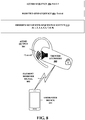
- FIG. 8 depicts the trusted accessory of FIG. 7 receiving a seed-sequence-element-modifier signal and modifying the seed sequence accordingly.
- FIG. 8 depicts the trusted accessory 202 receiving a seed-sequence-element-modifier signal in the form of an element-modifier signal 802.
- the element-modifier signal 802 is sent from the untrusted device 214.
- the element-modifier signal 802 conveys an increment-seed-sequence-element command associated with a third seed-sequence-element position.
- the trusted accessory 202 modifies the seed-sequence element in the third seed-sequence-element position accordingly.
- the modified seed sequence 804 is updated to be "5-4-2-8".
- the trusted accessory 202 outputs an indication of the modified seed sequence 804, in response to receiving the element-modifier signal 602.
- FIG. 9 depicts the trusted accessory of FIG. 8 receiving a seed-sequence-element-modifier signal and modifying the seed sequence accordingly.
- FIG. 9 depicts the trusted accessory 202 receiving a seed-sequence-element-modifier signal in the form of an element-modifier signal 902.
- the element-modifier signal 902 is sent from the untrusted device 214.
- the element-modifier signal 902 conveys an increment-seed-sequence-element-by-offset command associated with a fourth seed-sequence-element position.
- the indicated offset is 5 (incrementing from 9 results in wrapping around to 0).
- the trusted accessory 202 modifies the seed-sequence element in the fourth seed-sequence-element position accordingly.
- the modified seed sequence 904 is updated to be "5-4-2-3".
- the trusted accessory 202 outputs an indication of the fourth seed-sequence element as modified, in response to receiving the element-modifier signal 902.
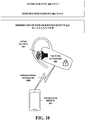
- FIG. 10 depicts the trusted accessory of FIG. 9 comparing the modified seed sequence with a stored access sequence and responsively granting operational access to the trusted accessory.
- the modified seed sequence 904 is compared with the access sequence 206.
- the modified seed sequence 904 matches the access sequence 206.
- Operation access to the trusted accessory 202 is granted for the untrusted device 214.
- operational signaling 1002 may commence.
- the operational signaling 1002 may take the form of any standard or encrypted signaling between a device and an accessory that takes place after pairing is completed.
- FIG. 11 depicts a first example user interface of an untrusted device.
- FIG. 11 depicts an untrusted device 1102.
- the untrusted device 1102 may take the form of a computing and communication device as described below with respect to FIG. 15 .
- the untrusted device 1102 includes a user interface 1104.
- the user interface 1104 includes a touchscreen.
- the user interface 1104 is programed to responsively transmit to a trusted accessory, via a communication interface, communication signals upon detecting user input.
- the trusted accessory may take the form of a computing and communication device 1500 as described with respect to FIG. 15 , the trusted accessory 202 of FIG. 2 , and/or any of the various embodiments of trusted accessories disclosed herein.
- a given communication signal may take the form of an accessory-login request, a seed-sequence-element modifier signal, a seed-sequence-position-modifier signal, an output-indication-of-current-seed-sequence-element signal, an output-current-indication-of-seed-sequence signal, an output-indication-of-current-access-sequence-element signal, an output-indication-of-current-access-sequence signal, a verify-seed-sequence-element signal, a verify-seed-sequence signal, a standard operational signal (i.e., operation signaling), and of course many other forms of communication signals could be listed as well.
- a standard operational signal i.e., operation signaling
- the user interface 1104 includes a first offset-selection slider 1106, a second offset-selection slider 1108, a third offset-selection slider 1110, a fourth offset-selection slider 1112, an output-current-seed-sequence button 1114, and a verify-seed-sequence button 1116.
- Each of the various offset-selection sliders 1106-1112 are configured activate transmissions of various seed-sequence-element modifier signals.
- the offset-selection slider 1106 is configured to activate transmission of a seed-sequence-element modifier signal associated with a first seed-sequence position.
- the offset-selection slider 1108 is configured to activate transmission of a seed-sequence-element modifier signal associated with a second seed-sequence position.
- the offset-selection slider 1110 is configured to activate transmission of a seed-sequence-element modifier signal associated with a third seed-sequence position.
- the offset-selection slider 1112 is configured to activate transmission of a seed-sequence-element modifier signal associated with a fourth seed-sequence position.
- Each offset-selection slider 1106-1112 is configured to activate transmission of a seed-sequence-element modifier signal in the form of a modify-seed-sequence-element-by-offset command.
- the value of the corresponding offsets indicated via the various commands are based on the respective positions of the respective offset-selection sliders 1106-1112.
- the output-current-seed-sequence button 1114 is configured to activate transmission of an output-current-indication-of-seed-sequence signal to a trusted accessory. Responsive to detection of the transmitted output-current-indication-of-seed-sequence signal, the trusted accessory outputs an indication of the current seed sequence via a user interface of the trusted accessory.
- the verify-seed-sequence button 1116 is configured to activate transmission of a verify-seed-sequence signal to a trusted accessory. Responsive to detection of the transmitted verify-seed-sequence signal, the trusted accessory compares the current seed sequence with a stored access sequence. If the current seed sequence matches the stored access sequence the trusted accessory grants operational access to the untrusted device 1102. If the current seed sequence does not the stored access sequence the trusted accessory denies operational access to the untrusted device 1102.
- each offset-selection slider 1106-1112 is configured to modify and store respective seed-sequence-element offset values, based on the respective positions of the respective offset-selection sliders 1106-1112, in a data storage of the untrusted device 1102.
- the values of the corresponding offsets indicated via respective positions of the respective offset-selection sliders 1106-1112 are compiled into a single modify-seed-sequence signal before or upon activation of the verify-seed-sequence button 1116.
- the verify-seed-sequence button 1116 is configured to activate transmission of the single modify-seed-sequence signal as well as a verify-seed-sequence signal to a trusted accessory. Responsive to detection of the transmitted modify-seed-sequence signal, the trusted accessory modifies the seed sequence accordingly. Next, responsive to detection of the transmitted verify-seed-sequence signal, the trusted accessory compares the modified seed sequence with a stored access sequence. If the modified seed sequence matches the stored access sequence the trusted accessory grants operational access to the untrusted device 1102. If the modified seed sequence does not the stored access sequence the trusted accessory denies operational access to the untrusted device 1102.
- FIG. 12 depicts a second example user interface of an untrusted device.
- FIG. 12 depicts an untrusted device 1202.
- the untrusted device 1202 may take the form of a computing and communication device as described below with respect to FIG. 15 .
- the untrusted device 1202 includes a user interface 1204.
- the user interface 1204 includes a touchscreen.
- the user interface 1204 is programed to responsively transmit to a trusted accessory, via a communication interface, communication signals upon detecting user input.
- the trusted accessory may take the form of a computing and communication device 1500 as described with respect to FIG. 15 , the trusted accessory 202 of FIG. 2 , and/or any of the various embodiments of trusted accessories disclosed herein.
- a given communication signal may take the form of an accessory-login request, a seed-sequence-element modifier signal, a seed-sequence-position-modifier signal, an output-indication-of-current-seed-sequence-element signal, an output-current-indication-of-seed-sequence signal, an output-indication-of-current-access-sequence-element signal, an output-indication-of-current-access-sequence signal, a verify-seed-sequence-element signal, a verify-seed-sequence signal, a standard operational signal (i.e., operation signaling), and of course many other forms of communication signals could be listed as well.
- a standard operational signal i.e., operation signaling
- the user interface 1204 includes a verify-seed-sequence button 1206, an increment-seed-sequence-element button 1208, a decrement-seed-sequence-element button 1210, and a next-seed-sequence-position button 1212.
- the verify-seed-sequence button 1206 is configured to activate transmission of a verify-seed-sequence signal to a trusted accessory. Responsive to detection of the transmitted verify-seed-sequence signal, the trusted accessory compares the current seed sequence with a stored access sequence. If the current seed sequence matches the stored access sequence the trusted accessory grants operational access to the untrusted device 1202. If the current seed sequence does not the stored access sequence the trusted accessory denies operational access to the untrusted device 1202.
- the increment-seed-sequence-element button 1208 is configured to activate transmission of an increment-seed-sequence-element signal to a trusted accessory. Responsive to detection of the transmitted increment-seed-sequence-element signal, the trusted accessory modifies a corresponding seed-sequence element to be a next seed-sequence element as defined by an ordered set of seed-sequence elements. In at least one embodiment, the next-seed-sequence-position button 1212 is disabled until after utilization of at least one of the increment-seed-sequence-element button 1208 and the decrement-seed-sequence-element button 1210.
- the increment-seed-sequence-element button 1208 and the decrement-seed-sequence-element button 1210 will modify a seed-sequence element in a first position of the seed sequence.
- the decrement-seed-sequence-element button 1210 is configured to activate transmission of a decrement-seed-sequence-element signal to a trusted accessory. Responsive to detection of the transmitted decrement-seed-sequence-element signal, the trusted accessory modifies a corresponding seed-sequence element to be a previous seed-sequence element as defined by the ordered set of seed-sequence elements.
- the next-seed-sequence-position button 1212 is configured to activate transmission of a seed-sequence-position-modifier signal to a trusted accessory.
- the seed-sequence-position-modifier signal takes the form of an increment-seed-sequence-position signal.
- the trusted accessory selects a seed-sequence element in the next position of the seed sequence to be the seed-sequence element that is modified by future increment-seed-sequence-element signals and decrement-seed-sequence-element signals.
- FIG. 13 depicts a third example user interface of an untrusted device.
- FIG. 13 depicts an untrusted device 1302.
- the untrusted device 1302 may take the form of a computing and communication device as described below with respect to FIG. 15 .
- the untrusted device 1302 includes a user interface 1304.
- the user interface 1304 includes a touchscreen.
- the user interface 1304 is programed to responsively transmit to a trusted accessory, via a communication interface, communication signals upon detecting user input.
- the trusted accessory may take the form of a computing and communication device 1500 as described with respect to FIG. 15 , the trusted accessory 202 of FIG. 2 , and/or any of the various embodiments of trusted accessories disclosed herein.
- a given communication signal may take the form of an accessory-login request, a seed-sequence-element modifier signal, a seed-sequence-position-modifier signal, an output-indication-of-current-seed-sequence-element signal, an output-current-indication-of-seed-sequence signal, an output-indication-of-current-access-sequence-element signal, an output-indication-of-current-access-sequence signal, a verify-seed-sequence-element signal, a verify-seed-sequence signal, a standard operational signal (i.e., operation signaling), and of course many other forms of communication signals could be listed as well.
- a standard operational signal i.e., operation signaling
- the user interface 1304 includes a verify-seed-sequence button 1306, a modify-seed-sequence-element dial 1308, and a next-seed-sequence-position button 1312.
- the verify-seed-sequence button 1306 is configured to activate transmission of a verify-seed-sequence signal to a trusted accessory. Responsive to detection of the transmitted verify-seed-sequence signal, the trusted accessory compares the current seed sequence with a stored access sequence. If the current seed sequence matches the stored access sequence the trusted accessory grants operational access to the untrusted device 1302. If the current seed sequence does not the stored access sequence the trusted accessory denies operational access to the untrusted device 1302.
- the modify-seed-sequence-element dial 1308 is configured to activate transmission of a modify-seed-sequence-element signal (e.g., either an increment-seed-sequence-element-by-offset signal to a trusted accessory or a decrement-seed-sequence-element-by-offset signal to the trusted accessory based on a position of the modify-seed-sequence-element dial 1308).
- the value of the offset indicated via the transmitted modify-seed-sequence-element signal is based on the position of the modify-seed-sequence-element dial 1308.
- modify-seed-sequence-element dial 1308 When the position of the modify-seed-sequence-element dial 1308 is adjusted via utilization of the user interface 1304 a new modify-seed-sequence-element signal is transmitted to the trusted accessory.
- the new modify-seed-sequence-element signal indicates the value of the new corresponding offset.
- the trusted accessory modifies a corresponding seed-sequence element to reflect changes indicated by the offset.
- the next-seed-sequence-position button 1310 is disabled until after utilization of the modify-seed-sequence-element dial 1308.
- the modify-seed-sequence-element dial 1308 will modify a seed-sequence element in a first position of the seed sequence.
- the next-seed-sequence-position button 1310 is configured to activate transmission of a seed-sequence-position-modifier signal to a trusted accessory.
- the seed-sequence-position-modifier signal takes the form of an increment-seed-sequence-position signal.
- the trusted accessory selects a seed-sequence element in the next position of the seed sequence to be the seed-sequence element that is modified by future increment-seed-sequence-element signals and decrement-seed-sequence-element signals.
- FIG. 14 depicts a fourth example user interface of an untrusted device.
- FIG. 14 depicts an untrusted device 1402.
- the untrusted device 1402 may take the form of a computing and communication device as described below with respect to FIG. 15 .
- the untrusted device 1402 includes a user interface 1404.
- the user interface 1404 includes a plurality of physical buttons.
- the user interface 1404 is programed to responsively transmit to a trusted accessory, via a communication interface, communication signals upon detecting user input.
- the trusted accessory may take the form of a computing and communication device 1500 as described with respect to FIG. 15 , the trusted accessory 202 of FIG. 2 , and/or any of the various embodiments of trusted accessories disclosed herein.
- a given communication signal may take the form of an accessory-login request, a seed-sequence-element modifier signal, a seed-sequence-position-modifier signal, an output-indication-of-current-seed-sequence-element signal, an output-current-indication-of-seed-sequence signal, an output-indication-of-current-access-sequence-element signal, an output-indication-of-current-access-sequence signal, a verify-seed-sequence-element signal, a verify-seed-sequence signal, a standard operational signal (i.e., operation signaling), and of course many other forms of communication signals could be listed as well.
- a standard operational signal i.e., operation signaling
- the user interface 1404 includes a new-seed-sequence-element button 1406, a previous-seed-sequence-position button 1408, and a next-seed-sequence-position button 1410.
- the new-seed-sequence-element button 1406 is configured to activate transmission of a seed-sequence-element modifier signal to a trusted accessory.
- the seed-sequence-element modifier signal takes the form of a select-random-seed-sequence-element signal.
- the trusted accessory modifies the current seed-sequence element to be a random or pseudo-random seed-sequence element selected from a set of seed-sequence elements.
- the previous-seed-sequence-position button 1408 is configured to activate transmission of a seed-sequence-position-modifier signal to a trusted accessory.
- the seed-sequence-position-modifier signal takes the form of a decrement-seed-sequence-position signal.
- the trusted accessory selects a seed-sequence element in the previous position of the seed sequence to be the seed-sequence element that is modified by future seed-sequence-element modifier signals.
- the next-seed-sequence-position button 1410 is configured to activate transmission of a seed-sequence-position-modifier signal to a trusted accessory.
- the seed-sequence-position-modifier signal takes the form of an increment-seed-sequence-position signal.
- the trusted accessory selects a seed-sequence element in the next position of the seed sequence to be the seed-sequence element that is modified by future seed-sequence-element modifier signals.
- a verify-seed-sequence button is absent from the user interface 1404.
- the trusted accessory compares the current seed sequence as modified by a received seed-sequence-element-modifier signal in response to receipt of the received seed-sequence-element-modifier signal. In this manner, after any seed-sequence-element-modifier signal is received by the trusted device, the trusted device compares the modified seed sequence with a stored access sequence and makes a determination with regard to whether or not to grant or to deny operational access based on the comparison.
- FIG. 15 depicts an example computing and communication device (CCD), in accordance with an embodiment.
- an example CCD 1500 includes a communication interface 1502, a processor 1504, and data storage 1506 containing instructions 1508 executable by the processor 1504 for causing the CCD 1500 to carry out a set of functions, which may include those functions described above in connection with FIG. 1 and other functions described herein.
- the example CCD 1500 is presented as an example system that could be programmed and configured to carry out the functions described herein.
- the communication interface 1502 may include one or more wireless-communication interfaces (for communicating according to, e.g., APCO P25, TETRA, DMR, LTE, Wi-Fi, NFC, Bluetooth, and/or one or more other wireless-communication protocols) and/or one or more wired-communication interfaces (for communicating according to, e.g., Ethernet, USB, eSATA, IEEE 1394, and/or one or more other wired-communication protocols).
- the communication interface 1502 may include any necessary hardware (e.g., chipsets, antennas, Ethernet cards, etc.), any necessary firmware, and any necessary software for conducting one or more forms of communication with one or more other entities as described herein.
- the processor 1504 may include one or more processors of any type deemed suitable by those of skill in the relevant art, some examples including a general-purpose microprocessor and a dedicated digital signal processor (DSP).
- DSP dedicated digital signal processor
- the data storage 1506 may take the form of any non-transitory computer-readable medium or combination of such media, some examples including flash memory, read-only memory (ROM), and random-access memory (RAM) to name but a few, as any one or more types of non-transitory data-storage technology deemed suitable by those of skill in the relevant art could be used.
- the data storage 1506 contains program instructions 1508 executable by the processor 1504 for carrying out various functions, and also contains operational data 1510, which could include any one or more types of data stored and/or accessed by the example CCD 1500 during operation.
- the program instructions 1508 are executable by the processor 1504 for carrying out those functions; in instances where other entities described herein have a structure similar to that of the example CCD 1500, the respective program instructions 1508 for those respective devices are executable by their respective processors 1504 to carry out functions respectively performed by those devices.
- the user interface 1512 may include one or more input devices (a.k.a. components and the like) and/or one or more output devices (a.k.a. components and the like).
- the user interface 1512 may include one or more touchscreens, buttons, switches, microphones, and the like.
- the user interface 1512 may include one or more displays, speakers, light emitting diodes (LEDs), and the like.
- one or more components e.g., an interactive touchscreen-and-display component
- the CCD 1500 may include one or more video cameras, depth cameras, 3-D cameras, infrared-visible cameras, light-field cameras or a combination thereof.
- relational terms such as first and second, top and bottom, and the like may be used solely to distinguish one entity or action from another entity or action without necessarily requiring or implying any actual such relationship or order between such entities or actions.
- the terms “comprises,” “comprising,” “has,” “having,” “includes,” “including,” “contains,” “containing,” or any other variation thereof, are intended to cover a non-exclusive inclusion, such that a process, method, article, or apparatus that comprises, has, includes, contains a list of elements does not include only those elements but may include other elements not expressly listed or inherent to such process, method, article, or apparatus.
- processors such as microprocessors, digital signal processors, customized processors and field programmable gate arrays (FPGAs) and unique stored program instructions (including both software and firmware) that control the one or more processors to implement, in conjunction with certain non-processor circuits, some, most, or all of the functions of the method and/or apparatus described herein.
- processors or “processing devices”
- FPGAs field programmable gate arrays
- unique stored program instructions including both software and firmware
- an embodiment can be implemented as a computer-readable storage medium having computer readable code stored thereon for programming a computer (e.g., comprising a processor) to perform a method as described and claimed herein.
- Examples of such computer-readable storage mediums include, but are not limited to, a hard disk, a CD-ROM, an optical storage device, a magnetic storage device, a ROM (Read Only Memory), a PROM (Programmable Read Only Memory), an EPROM (Erasable Programmable Read Only Memory), an EEPROM (Electrically Erasable Programmable Read Only Memory) and a Flash memory.
Landscapes
- Engineering & Computer Science (AREA)
- Computer Security & Cryptography (AREA)
- Computer Networks & Wireless Communication (AREA)
- Signal Processing (AREA)
- Theoretical Computer Science (AREA)
- General Engineering & Computer Science (AREA)
- Computer Hardware Design (AREA)
- Software Systems (AREA)
- Physics & Mathematics (AREA)
- General Physics & Mathematics (AREA)
- Computing Systems (AREA)
- Information Transfer Between Computers (AREA)
- User Interface Of Digital Computer (AREA)
- Mobile Radio Communication Systems (AREA)
- Storage Device Security (AREA)
Claims (15)
- Verfahren zum Erlauben oder Verweigern eines Betriebszugangs zu einem vertrauenswürdigen Zubehör (202, 402, 502) von einer nicht vertrauenswürdigen Vorrichtung (214) aus, über die Herstellung einer sicheren Verbindung zwischen dem vertrauenswürdigen Zubehör und der nicht vertrauenswürdigen Vorrichtung, wobei das Verfahren, das von dem vertrauenswürdigen Zubehör umgesetzt wird, umfasst:Erkennen eines Anfrageereignisses für einen Zubehörzugang, das von einem Benutzer ausgelöst wird, der versucht, die sichere Verbindung zwischen dem vertrauenswürdigen Zubehör (202, 402, 502) und der nicht vertrauenswürdigen Vorrichtung (214) herzustellen;Erzeugen einer Startsequenz, die eine erste Anzahl von Startsequenzelementen aufweist;Ausgeben eines sensorischen Hinweises, der von dem Benutzer wahrnehmbar ist, auf die erzeugte erste Anzahl von Startsequenzelementen über eine Benutzeroberfläche des vertrauenswürdigen Zubehörs;Empfangen, von der nicht vertrauenswürdigen Vorrichtung (214), über den Betrieb des Benutzers auf einer Benutzeroberfläche auf der nicht vertrauenswürdigen Vorrichtung (214), mindestens eines Änderungssignals für Startsequenzelemente, um die erzeugte erste Anzahl von Startsequenzelementen zu ändern;Ändern der erzeugten Startsequenz in Übereinstimmung mit dem mindestens einen, empfangenen Änderungssignal für Startsequenzelemente;Vergleichen der geänderten Startsequenz mit einer Zugangssequenz, die in dem vertrauenswürdigen Zubehör (202, 402, 502) gespeichert ist; undGewähren eines Betriebszugangs von der nicht vertrauenswürdigen Vorrichtung (214) zu dem vertrauenswürdigen Zubehör, wenn die geänderte Startsequenz mit der gespeicherten Zugangssequenz übereinstimmt; undVerweigern des Betriebszugangs von der nicht vertrauenswürdigen Vorrichtung (214) zu dem vertrauenswürdigen Zubehör, wenn die geänderte Startsequenz mit der gespeicherten Zugangssequenz nicht übereinstimmt.
- Verfahren nach Anspruch 1, wobei jedes Startsequenzelement Teil einer geordneten Menge ist.
- Verfahren nach einem der Ansprüche 1 bis 2, wobei mindestens ein Startsequenzelement ein Element ist, ausgewählt aus der Gruppe bestehend aus (i) einer Zahl, (ii) einem alphabetischen Zeichen, (iii) einer Farbe in einer geordneten Menge von Farben, (iv) einem Bild in einer geordneten Menge von Bildern und (v) einem Ton in einer geordneten Menge von Tönen.
- Verfahren nach einem der Ansprüche 1 bis 3, wobei:mindestens eines der Änderungssignale für Startsequenzelemente einen Erhöhungsbefehl für Startsequenzelemente umfasst; unddas Ändern der erzeugten Startsequenz in Übereinstimmung mit einem empfangenen Erhöhungsbefehl für Startsequenzelemente das Erhöhen eines entsprechenden Startsequenzelements umfasst.
- Verfahren nach einem der Ansprüche 1 bis 4, wobei:mindestens eines der Änderungssignale für Startsequenzelemente einen Verringerungsbefehl für Startsequenzelemente umfasst; unddas Ändern der erzeugten Startsequenz in Übereinstimmung mit einem empfangenen Verringerungsbefehl für Startsequenzelemente das Verringern eines entsprechenden Startsequenzelements umfasst.
- Verfahren nach einem der Ansprüche 1 bis 5, wobei:mindestens eines der Änderungssignale für Startsequenzelemente einen Befehl zum Ausgeben eines anderen Elements umfasst; unddas Ändern der erzeugten Startsequenz in Übereinstimmung mit einem empfangenen Befehl zum Ausgeben eines anderen Elements das Ausgeben eines Hinweises auf ein zufälliges Startsequenzelement umfasst.
- Verfahren nach einem der Ansprüche 1 bis 6, wobei das Ändern der erzeugten Startsequenz das Ändern der erzeugten Startsequenz auf einer Element-durch-Element-Basis umfasst.
- Verfahren nach einem der Ansprüche 1 bis 7, wobei das Ausgeben des Hinweises auf jedes Startsequenzelement über die Benutzeroberfläche des vertrauenswürdigen Zubehörs das Ausgeben von einem oder beiden aus einem hörbaren Hinweis auf jedes Startsequenzelement und einem visuellen Hinweis auf jedes Startsequenzelement umfasst.
- Verfahren nach einem der Ansprüche 1 bis 8, wobei das Ausgeben des Hinweises auf jedes Startsequenzelement über die Benutzeroberfläche des vertrauenswürdigen Zubehörs das Ausgeben des Hinweises auf jedes Startsequenzelement vor dem Empfangen jeglichen Änderungssignals für Startsequenzelemente umfasst.
- Verfahren nach einem der Ansprüche 1 bis 8, wobei das Ausgeben des Hinweises auf jedes Startsequenzelement über die Benutzeroberfläche des vertrauenswürdigen Zubehörs das Abwechseln zwischen dem Ausgeben jedes jeweiligen Startsequenzelements und dem Empfangen des entsprechenden Änderungssignals für Startsequenzelemente umfasst.
- Verfahren nach einem der Ansprüche 1 bis 10, weiter umfassend das Ausgeben eines Hinweises auf einen aktualisierten Wert eines Startsequenzelements, da es in Antwort auf ein empfangenes Änderungssignal für Startsequenzelemente geändert wurde.
- Verfahren nach einem der Ansprüche 1 bis 11, wobei das Vergleichen der geänderten Startsequenz mit der gespeicherten Zugangssequenz das Vergleichen der geänderten Startsequenz mit der gespeicherten Zugangssequenz in Antwort auf das Ändern der erzeugten Startsequenz umfasst.
- Verfahren nach einem der Ansprüche 1 bis 11, wobei das Vergleichen der geänderten Startsequenz mit der gespeicherten Zugangssequenz das Vergleichen der geänderten Startsequenz mit der gespeicherten Zugangssequenz in Antwort auf das Empfangen eines Validierbefehls für eine geänderte Startsequenz umfasst.
- Verfahren nach einem der Ansprüche 1 bis 14, wobei das mindestens eine, empfangene Änderungssignal für Startsequenzelemente von einer Kommunikationsschnittstelle einer nicht vertrauenswürdigen Vorrichtung gesendet wird.
- Vertrauenswürdiges Zubehör (202, 402, 502), umfassend einen Prozessor, der ausgestaltet ist, das Verfahren nach Anspruch 1 auszuführen.
Applications Claiming Priority (2)
| Application Number | Priority Date | Filing Date | Title |
|---|---|---|---|
| US14/861,776 US10192041B2 (en) | 2015-09-22 | 2015-09-22 | Methods and systems for authentication using zero-knowledge code |
| PCT/EP2016/069363 WO2017050488A1 (en) | 2015-09-22 | 2016-08-16 | Methods and systems for authentication using zero-knowledge code |
Publications (2)
| Publication Number | Publication Date |
|---|---|
| EP3353979A1 EP3353979A1 (de) | 2018-08-01 |
| EP3353979B1 true EP3353979B1 (de) | 2020-06-24 |
Family
ID=56893927
Family Applications (1)
| Application Number | Title | Priority Date | Filing Date |
|---|---|---|---|
| EP16763203.3A Active EP3353979B1 (de) | 2015-09-22 | 2016-08-16 | Verfahren und systeme zur authentifizierung mithilfe von zero-knowledge-code |
Country Status (8)
| Country | Link |
|---|---|
| US (1) | US10192041B2 (de) |
| EP (1) | EP3353979B1 (de) |
| CN (1) | CN108028844B (de) |
| CA (1) | CA2998977C (de) |
| ES (1) | ES2815756T3 (de) |
| MX (1) | MX2018002940A (de) |
| WO (1) | WO2017050488A1 (de) |
| ZA (1) | ZA201801349B (de) |
Families Citing this family (2)
| Publication number | Priority date | Publication date | Assignee | Title |
|---|---|---|---|---|
| US10869194B2 (en) * | 2017-12-22 | 2020-12-15 | Dish Network L.L.C. | Devices, systems, and processes for authenticating devices |
| US12513525B2 (en) * | 2023-07-21 | 2025-12-30 | Lenovo (Singapore) Pte. Ltd. | Device modification state validation |
Family Cites Families (10)
| Publication number | Priority date | Publication date | Assignee | Title |
|---|---|---|---|---|
| US20040073795A1 (en) * | 2002-10-10 | 2004-04-15 | Jablon David P. | Systems and methods for password-based connection |
| US20070150415A1 (en) * | 2005-12-22 | 2007-06-28 | Bundy Ross E | Method and apparatus for creating and entering a PIN code |
| US7813715B2 (en) * | 2006-08-30 | 2010-10-12 | Apple Inc. | Automated pairing of wireless accessories with host devices |
| US8412938B2 (en) * | 2009-08-31 | 2013-04-02 | Apple Inc. | Zero-knowledge based authentication method, system, and apparatus |
| US8750799B2 (en) * | 2010-09-30 | 2014-06-10 | Apple Inc. | Wireless accessory device pairing determination for multiple host devices |
| EP3413222B1 (de) | 2012-02-24 | 2020-01-22 | Nant Holdings IP, LLC | Inhaltsaktivierung über interaktionsbasierte authentifizierung, systeme und verfahren |
| US9390256B2 (en) * | 2012-03-06 | 2016-07-12 | Paypal, Inc. | System and methods for secure entry of a personal identification number (PIN) |
| US20130276103A1 (en) * | 2012-04-13 | 2013-10-17 | Abine Limited | Methods and systems for enabling a secure password entry using a non-secure device |
| CN103020671B (zh) * | 2012-11-20 | 2015-08-19 | 南京邮电大学 | 一种基于哈希函数的无线射频识别双向认证方法 |
| US9480096B1 (en) * | 2015-08-25 | 2016-10-25 | Motorola Solutions, Inc. | Method, device, and system for fast wireless accessory devices pairing |
-
2015
- 2015-09-22 US US14/861,776 patent/US10192041B2/en active Active
-
2016
- 2016-08-16 MX MX2018002940A patent/MX2018002940A/es unknown
- 2016-08-16 EP EP16763203.3A patent/EP3353979B1/de active Active
- 2016-08-16 WO PCT/EP2016/069363 patent/WO2017050488A1/en not_active Ceased
- 2016-08-16 CA CA2998977A patent/CA2998977C/en active Active
- 2016-08-16 ES ES16763203T patent/ES2815756T3/es active Active
- 2016-08-16 CN CN201680055101.6A patent/CN108028844B/zh active Active
-
2018
- 2018-02-27 ZA ZA2018/01349A patent/ZA201801349B/en unknown
Non-Patent Citations (1)
| Title |
|---|
| None * |
Also Published As
| Publication number | Publication date |
|---|---|
| MX2018002940A (es) | 2018-06-18 |
| US10192041B2 (en) | 2019-01-29 |
| CA2998977A1 (en) | 2017-03-30 |
| EP3353979A1 (de) | 2018-08-01 |
| CA2998977C (en) | 2020-12-22 |
| ES2815756T3 (es) | 2021-03-30 |
| WO2017050488A1 (en) | 2017-03-30 |
| US20170083690A1 (en) | 2017-03-23 |
| ZA201801349B (en) | 2019-07-31 |
| CN108028844A (zh) | 2018-05-11 |
| CN108028844B (zh) | 2021-04-13 |
Similar Documents
| Publication | Publication Date | Title |
|---|---|---|
| US10361857B2 (en) | Electronic stamp system for security intensification, control method thereof, and non-transitory computer readable storage medium having computer program recorded thereon | |
| US9183373B2 (en) | Secure input via a touchscreen | |
| JP6374010B2 (ja) | 情報交信方法、装置および電子機器 | |
| EP3291126B1 (de) | Datenverifizierung über unabhängigen prozessoren einer vorrichtung | |
| EP3531659B1 (de) | Elektronische vorrichtung und verfahren zur gemeinsamen nutzung von bildschirmdaten | |
| CN101631104B (zh) | 通信装置、通信系统、通知方法和程序产品 | |
| CN107079031B (zh) | 经由与第二设备的通信对第一设备的基于用户认证的批准 | |
| KR102632548B1 (ko) | Uwb 트랜잭션을 위한 방법 및 전자 장치 | |
| US10831816B2 (en) | Method for controlling electronic picture frame, electronic picture frame, electronic picture frame cloud platform and mobile terminal | |
| WO2016074586A1 (zh) | 权限验证的方法及装置 | |
| JP6126755B2 (ja) | 端末検証方法、装置、プログラム、及び記録媒体 | |
| CN106060098B (zh) | 验证码的处理方法、处理装置及处理系统 | |
| EP2927834A1 (de) | Informationsverarbeitungsvorrichtung, informationsverarbeitungsverfahren und aufzeichnungsmedium | |
| EP3353979B1 (de) | Verfahren und systeme zur authentifizierung mithilfe von zero-knowledge-code | |
| US9392637B1 (en) | Peer-to-peer proximity pairing of electronic devices with cameras and see-through heads-up displays | |
| US20150074795A1 (en) | One-time password generation apparatus and method using virtual input means | |
| CN103984913A (zh) | 具有指纹感应辨识的装置及其方法 | |
| US11184763B2 (en) | Hands free access management and credential protection | |
| US20210377241A1 (en) | Hands free access management and credential protection | |
| JP6181588B2 (ja) | 情報通信システム及び情報通信方法 | |
| KR102594097B1 (ko) | 사용자 장치, 서비스 제공 장치, 그를 포함하는 결제 시스템, 그의 제어 방법 및 컴퓨터 프로그램이 기록된 기록매체 | |
| US20180052986A1 (en) | Gesture based captcha test | |
| KR102505964B1 (ko) | 보안 강화를 위한 전자 도장 시스템, 그의 제어 방법 및 컴퓨터 프로그램이 기록된 기록매체 | |
| KR102534032B1 (ko) | 지문 인식을 이용한 보안 강화를 위한 전자 도장 시스템, 그의 제어 방법 및 컴퓨터 프로그램이 기록된 기록매체 | |
| US9426144B1 (en) | Single sign-on service security protections |
Legal Events
| Date | Code | Title | Description |
|---|---|---|---|
| STAA | Information on the status of an ep patent application or granted ep patent |
Free format text: STATUS: THE INTERNATIONAL PUBLICATION HAS BEEN MADE |
|
| PUAI | Public reference made under article 153(3) epc to a published international application that has entered the european phase |
Free format text: ORIGINAL CODE: 0009012 |
|
| STAA | Information on the status of an ep patent application or granted ep patent |
Free format text: STATUS: REQUEST FOR EXAMINATION WAS MADE |
|
| 17P | Request for examination filed |
Effective date: 20180302 |
|
| AK | Designated contracting states |
Kind code of ref document: A1 Designated state(s): AL AT BE BG CH CY CZ DE DK EE ES FI FR GB GR HR HU IE IS IT LI LT LU LV MC MK MT NL NO PL PT RO RS SE SI SK SM TR |
|
| AX | Request for extension of the european patent |
Extension state: BA ME |
|
| DAV | Request for validation of the european patent (deleted) | ||
| DAX | Request for extension of the european patent (deleted) | ||
| REG | Reference to a national code |
Ref country code: DE Ref legal event code: R079 Ref document number: 602016038753 Country of ref document: DE Free format text: PREVIOUS MAIN CLASS: H04L0029060000 Ipc: G06F0021310000 |
|
| GRAP | Despatch of communication of intention to grant a patent |
Free format text: ORIGINAL CODE: EPIDOSNIGR1 |
|
| STAA | Information on the status of an ep patent application or granted ep patent |
Free format text: STATUS: GRANT OF PATENT IS INTENDED |
|
| RIC1 | Information provided on ipc code assigned before grant |
Ipc: H04L 9/32 20060101ALI20200306BHEP Ipc: H04L 12/911 20130101ALI20200306BHEP Ipc: G06F 21/31 20130101AFI20200306BHEP Ipc: H04W 12/06 20090101ALI20200306BHEP Ipc: H04W 12/08 20090101ALI20200306BHEP Ipc: H04L 29/06 20060101ALI20200306BHEP Ipc: G06F 21/36 20130101ALI20200306BHEP |
|
| INTG | Intention to grant announced |
Effective date: 20200325 |
|
| RAP1 | Party data changed (applicant data changed or rights of an application transferred) |
Owner name: NAGRAVISION S.A. |
|
| GRAS | Grant fee paid |
Free format text: ORIGINAL CODE: EPIDOSNIGR3 |
|
| GRAA | (expected) grant |
Free format text: ORIGINAL CODE: 0009210 |
|
| STAA | Information on the status of an ep patent application or granted ep patent |
Free format text: STATUS: THE PATENT HAS BEEN GRANTED |
|
| AK | Designated contracting states |
Kind code of ref document: B1 Designated state(s): AL AT BE BG CH CY CZ DE DK EE ES FI FR GB GR HR HU IE IS IT LI LT LU LV MC MK MT NL NO PL PT RO RS SE SI SK SM TR |
|
| REG | Reference to a national code |
Ref country code: GB Ref legal event code: FG4D |
|
| REG | Reference to a national code |
Ref country code: CH Ref legal event code: EP |
|
| REG | Reference to a national code |
Ref country code: DE Ref legal event code: R096 Ref document number: 602016038753 Country of ref document: DE |
|
| REG | Reference to a national code |
Ref country code: AT Ref legal event code: REF Ref document number: 1284613 Country of ref document: AT Kind code of ref document: T Effective date: 20200715 |
|
| REG | Reference to a national code |
Ref country code: IE Ref legal event code: FG4D |
|
| REG | Reference to a national code |
Ref country code: NL Ref legal event code: FP |
|
| PG25 | Lapsed in a contracting state [announced via postgrant information from national office to epo] |
Ref country code: NO Free format text: LAPSE BECAUSE OF FAILURE TO SUBMIT A TRANSLATION OF THE DESCRIPTION OR TO PAY THE FEE WITHIN THE PRESCRIBED TIME-LIMIT Effective date: 20200924 Ref country code: LT Free format text: LAPSE BECAUSE OF FAILURE TO SUBMIT A TRANSLATION OF THE DESCRIPTION OR TO PAY THE FEE WITHIN THE PRESCRIBED TIME-LIMIT Effective date: 20200624 Ref country code: FI Free format text: LAPSE BECAUSE OF FAILURE TO SUBMIT A TRANSLATION OF THE DESCRIPTION OR TO PAY THE FEE WITHIN THE PRESCRIBED TIME-LIMIT Effective date: 20200624 Ref country code: SE Free format text: LAPSE BECAUSE OF FAILURE TO SUBMIT A TRANSLATION OF THE DESCRIPTION OR TO PAY THE FEE WITHIN THE PRESCRIBED TIME-LIMIT Effective date: 20200624 Ref country code: GR Free format text: LAPSE BECAUSE OF FAILURE TO SUBMIT A TRANSLATION OF THE DESCRIPTION OR TO PAY THE FEE WITHIN THE PRESCRIBED TIME-LIMIT Effective date: 20200925 |
|
| REG | Reference to a national code |
Ref country code: LT Ref legal event code: MG4D |
|
| PG25 | Lapsed in a contracting state [announced via postgrant information from national office to epo] |
Ref country code: RS Free format text: LAPSE BECAUSE OF FAILURE TO SUBMIT A TRANSLATION OF THE DESCRIPTION OR TO PAY THE FEE WITHIN THE PRESCRIBED TIME-LIMIT Effective date: 20200624 Ref country code: LV Free format text: LAPSE BECAUSE OF FAILURE TO SUBMIT A TRANSLATION OF THE DESCRIPTION OR TO PAY THE FEE WITHIN THE PRESCRIBED TIME-LIMIT Effective date: 20200624 Ref country code: HR Free format text: LAPSE BECAUSE OF FAILURE TO SUBMIT A TRANSLATION OF THE DESCRIPTION OR TO PAY THE FEE WITHIN THE PRESCRIBED TIME-LIMIT Effective date: 20200624 Ref country code: BG Free format text: LAPSE BECAUSE OF FAILURE TO SUBMIT A TRANSLATION OF THE DESCRIPTION OR TO PAY THE FEE WITHIN THE PRESCRIBED TIME-LIMIT Effective date: 20200924 |
|
| REG | Reference to a national code |
Ref country code: AT Ref legal event code: MK05 Ref document number: 1284613 Country of ref document: AT Kind code of ref document: T Effective date: 20200624 |
|
| PG25 | Lapsed in a contracting state [announced via postgrant information from national office to epo] |
Ref country code: AL Free format text: LAPSE BECAUSE OF FAILURE TO SUBMIT A TRANSLATION OF THE DESCRIPTION OR TO PAY THE FEE WITHIN THE PRESCRIBED TIME-LIMIT Effective date: 20200624 |
|
| PG25 | Lapsed in a contracting state [announced via postgrant information from national office to epo] |
Ref country code: PT Free format text: LAPSE BECAUSE OF FAILURE TO SUBMIT A TRANSLATION OF THE DESCRIPTION OR TO PAY THE FEE WITHIN THE PRESCRIBED TIME-LIMIT Effective date: 20201026 Ref country code: EE Free format text: LAPSE BECAUSE OF FAILURE TO SUBMIT A TRANSLATION OF THE DESCRIPTION OR TO PAY THE FEE WITHIN THE PRESCRIBED TIME-LIMIT Effective date: 20200624 Ref country code: SM Free format text: LAPSE BECAUSE OF FAILURE TO SUBMIT A TRANSLATION OF THE DESCRIPTION OR TO PAY THE FEE WITHIN THE PRESCRIBED TIME-LIMIT Effective date: 20200624 Ref country code: AT Free format text: LAPSE BECAUSE OF FAILURE TO SUBMIT A TRANSLATION OF THE DESCRIPTION OR TO PAY THE FEE WITHIN THE PRESCRIBED TIME-LIMIT Effective date: 20200624 Ref country code: RO Free format text: LAPSE BECAUSE OF FAILURE TO SUBMIT A TRANSLATION OF THE DESCRIPTION OR TO PAY THE FEE WITHIN THE PRESCRIBED TIME-LIMIT Effective date: 20200624 Ref country code: CZ Free format text: LAPSE BECAUSE OF FAILURE TO SUBMIT A TRANSLATION OF THE DESCRIPTION OR TO PAY THE FEE WITHIN THE PRESCRIBED TIME-LIMIT Effective date: 20200624 |
|
| PG25 | Lapsed in a contracting state [announced via postgrant information from national office to epo] |
Ref country code: PL Free format text: LAPSE BECAUSE OF FAILURE TO SUBMIT A TRANSLATION OF THE DESCRIPTION OR TO PAY THE FEE WITHIN THE PRESCRIBED TIME-LIMIT Effective date: 20200624 Ref country code: SK Free format text: LAPSE BECAUSE OF FAILURE TO SUBMIT A TRANSLATION OF THE DESCRIPTION OR TO PAY THE FEE WITHIN THE PRESCRIBED TIME-LIMIT Effective date: 20200624 Ref country code: IS Free format text: LAPSE BECAUSE OF FAILURE TO SUBMIT A TRANSLATION OF THE DESCRIPTION OR TO PAY THE FEE WITHIN THE PRESCRIBED TIME-LIMIT Effective date: 20201024 |
|
| REG | Reference to a national code |
Ref country code: DE Ref legal event code: R097 Ref document number: 602016038753 Country of ref document: DE |
|
| REG | Reference to a national code |
Ref country code: ES Ref legal event code: FG2A Ref document number: 2815756 Country of ref document: ES Kind code of ref document: T3 Effective date: 20210330 |
|
| PG25 | Lapsed in a contracting state [announced via postgrant information from national office to epo] |
Ref country code: MC Free format text: LAPSE BECAUSE OF FAILURE TO SUBMIT A TRANSLATION OF THE DESCRIPTION OR TO PAY THE FEE WITHIN THE PRESCRIBED TIME-LIMIT Effective date: 20200624 |
|
| REG | Reference to a national code |
Ref country code: CH Ref legal event code: PL |
|
| PG25 | Lapsed in a contracting state [announced via postgrant information from national office to epo] |
Ref country code: DK Free format text: LAPSE BECAUSE OF FAILURE TO SUBMIT A TRANSLATION OF THE DESCRIPTION OR TO PAY THE FEE WITHIN THE PRESCRIBED TIME-LIMIT Effective date: 20200624 Ref country code: CH Free format text: LAPSE BECAUSE OF NON-PAYMENT OF DUE FEES Effective date: 20200831 Ref country code: LI Free format text: LAPSE BECAUSE OF NON-PAYMENT OF DUE FEES Effective date: 20200831 Ref country code: LU Free format text: LAPSE BECAUSE OF NON-PAYMENT OF DUE FEES Effective date: 20200816 |
|
| PLBE | No opposition filed within time limit |
Free format text: ORIGINAL CODE: 0009261 |
|
| STAA | Information on the status of an ep patent application or granted ep patent |
Free format text: STATUS: NO OPPOSITION FILED WITHIN TIME LIMIT |
|
| REG | Reference to a national code |
Ref country code: BE Ref legal event code: MM Effective date: 20200831 |
|
| 26N | No opposition filed |
Effective date: 20210325 |
|
| PG25 | Lapsed in a contracting state [announced via postgrant information from national office to epo] |
Ref country code: BE Free format text: LAPSE BECAUSE OF NON-PAYMENT OF DUE FEES Effective date: 20200831 Ref country code: SI Free format text: LAPSE BECAUSE OF FAILURE TO SUBMIT A TRANSLATION OF THE DESCRIPTION OR TO PAY THE FEE WITHIN THE PRESCRIBED TIME-LIMIT Effective date: 20200624 Ref country code: IE Free format text: LAPSE BECAUSE OF NON-PAYMENT OF DUE FEES Effective date: 20200816 |
|
| PG25 | Lapsed in a contracting state [announced via postgrant information from national office to epo] |
Ref country code: TR Free format text: LAPSE BECAUSE OF FAILURE TO SUBMIT A TRANSLATION OF THE DESCRIPTION OR TO PAY THE FEE WITHIN THE PRESCRIBED TIME-LIMIT Effective date: 20200624 Ref country code: MT Free format text: LAPSE BECAUSE OF FAILURE TO SUBMIT A TRANSLATION OF THE DESCRIPTION OR TO PAY THE FEE WITHIN THE PRESCRIBED TIME-LIMIT Effective date: 20200624 Ref country code: CY Free format text: LAPSE BECAUSE OF FAILURE TO SUBMIT A TRANSLATION OF THE DESCRIPTION OR TO PAY THE FEE WITHIN THE PRESCRIBED TIME-LIMIT Effective date: 20200624 |
|
| PG25 | Lapsed in a contracting state [announced via postgrant information from national office to epo] |
Ref country code: MK Free format text: LAPSE BECAUSE OF FAILURE TO SUBMIT A TRANSLATION OF THE DESCRIPTION OR TO PAY THE FEE WITHIN THE PRESCRIBED TIME-LIMIT Effective date: 20200624 |
|
| PGFP | Annual fee paid to national office [announced via postgrant information from national office to epo] |
Ref country code: NL Payment date: 20250723 Year of fee payment: 10 |
|
| PGFP | Annual fee paid to national office [announced via postgrant information from national office to epo] |
Ref country code: ES Payment date: 20250901 Year of fee payment: 10 |
|
| PGFP | Annual fee paid to national office [announced via postgrant information from national office to epo] |
Ref country code: DE Payment date: 20250724 Year of fee payment: 10 |
|
| PGFP | Annual fee paid to national office [announced via postgrant information from national office to epo] |
Ref country code: IT Payment date: 20250723 Year of fee payment: 10 |
|
| PGFP | Annual fee paid to national office [announced via postgrant information from national office to epo] |
Ref country code: GB Payment date: 20250725 Year of fee payment: 10 |
|
| PGFP | Annual fee paid to national office [announced via postgrant information from national office to epo] |
Ref country code: FR Payment date: 20250725 Year of fee payment: 10 |