EP3350195B9 - The method of synthesis and purification of a nucleoside and/or a nucleotide, a modified nucleoside and/or nucleotide, a dna molecule and an oligonucleotide library comprising said modified nucleoside and/or nucleotide and the use of said oligonucleotide library - Google Patents
The method of synthesis and purification of a nucleoside and/or a nucleotide, a modified nucleoside and/or nucleotide, a dna molecule and an oligonucleotide library comprising said modified nucleoside and/or nucleotide and the use of said oligonucleotide library Download PDFInfo
- Publication number
- EP3350195B9 EP3350195B9 EP16846944.3A EP16846944A EP3350195B9 EP 3350195 B9 EP3350195 B9 EP 3350195B9 EP 16846944 A EP16846944 A EP 16846944A EP 3350195 B9 EP3350195 B9 EP 3350195B9
- Authority
- EP
- European Patent Office
- Prior art keywords
- nucleotide
- synthesis
- modified
- compound
- nucleotides
- Prior art date
- Legal status (The legal status is an assumption and is not a legal conclusion. Google has not performed a legal analysis and makes no representation as to the accuracy of the status listed.)
- Active
Links
- 0 *[C@@](C1)[C@@](CO*)O[C@]1N(C=C(*)C(N1)=O)C1=O Chemical compound *[C@@](C1)[C@@](CO*)O[C@]1N(C=C(*)C(N1)=O)C1=O 0.000 description 2
- LGAYKKUJODVMNB-UHFFFAOYSA-N [N-]=[NH+][N-]CCCCC(O)=O Chemical compound [N-]=[NH+][N-]CCCCC(O)=O LGAYKKUJODVMNB-UHFFFAOYSA-N 0.000 description 1
Images



Classifications
-
- C—CHEMISTRY; METALLURGY
- C40—COMBINATORIAL TECHNOLOGY
- C40B—COMBINATORIAL CHEMISTRY; LIBRARIES, e.g. CHEMICAL LIBRARIES
- C40B40/00—Libraries per se, e.g. arrays, mixtures
- C40B40/04—Libraries containing only organic compounds
- C40B40/06—Libraries containing nucleotides or polynucleotides, or derivatives thereof
-
- C—CHEMISTRY; METALLURGY
- C07—ORGANIC CHEMISTRY
- C07H—SUGARS; DERIVATIVES THEREOF; NUCLEOSIDES; NUCLEOTIDES; NUCLEIC ACIDS
- C07H19/00—Compounds containing a hetero ring sharing one ring hetero atom with a saccharide radical; Nucleosides; Mononucleotides; Anhydro-derivatives thereof
- C07H19/02—Compounds containing a hetero ring sharing one ring hetero atom with a saccharide radical; Nucleosides; Mononucleotides; Anhydro-derivatives thereof sharing nitrogen
- C07H19/04—Heterocyclic radicals containing only nitrogen atoms as ring hetero atom
- C07H19/06—Pyrimidine radicals
- C07H19/073—Pyrimidine radicals with 2-deoxyribosyl as the saccharide radical
-
- C—CHEMISTRY; METALLURGY
- C07—ORGANIC CHEMISTRY
- C07H—SUGARS; DERIVATIVES THEREOF; NUCLEOSIDES; NUCLEOTIDES; NUCLEIC ACIDS
- C07H1/00—Processes for the preparation of sugar derivatives
-
- C—CHEMISTRY; METALLURGY
- C07—ORGANIC CHEMISTRY
- C07H—SUGARS; DERIVATIVES THEREOF; NUCLEOSIDES; NUCLEOTIDES; NUCLEIC ACIDS
- C07H1/00—Processes for the preparation of sugar derivatives
- C07H1/06—Separation; Purification
-
- C—CHEMISTRY; METALLURGY
- C07—ORGANIC CHEMISTRY
- C07H—SUGARS; DERIVATIVES THEREOF; NUCLEOSIDES; NUCLEOTIDES; NUCLEIC ACIDS
- C07H19/00—Compounds containing a hetero ring sharing one ring hetero atom with a saccharide radical; Nucleosides; Mononucleotides; Anhydro-derivatives thereof
- C07H19/02—Compounds containing a hetero ring sharing one ring hetero atom with a saccharide radical; Nucleosides; Mononucleotides; Anhydro-derivatives thereof sharing nitrogen
- C07H19/04—Heterocyclic radicals containing only nitrogen atoms as ring hetero atom
- C07H19/06—Pyrimidine radicals
-
- C—CHEMISTRY; METALLURGY
- C07—ORGANIC CHEMISTRY
- C07H—SUGARS; DERIVATIVES THEREOF; NUCLEOSIDES; NUCLEOTIDES; NUCLEIC ACIDS
- C07H19/00—Compounds containing a hetero ring sharing one ring hetero atom with a saccharide radical; Nucleosides; Mononucleotides; Anhydro-derivatives thereof
- C07H19/02—Compounds containing a hetero ring sharing one ring hetero atom with a saccharide radical; Nucleosides; Mononucleotides; Anhydro-derivatives thereof sharing nitrogen
- C07H19/04—Heterocyclic radicals containing only nitrogen atoms as ring hetero atom
- C07H19/06—Pyrimidine radicals
- C07H19/10—Pyrimidine radicals with the saccharide radical esterified by phosphoric or polyphosphoric acids
-
- C—CHEMISTRY; METALLURGY
- C07—ORGANIC CHEMISTRY
- C07H—SUGARS; DERIVATIVES THEREOF; NUCLEOSIDES; NUCLEOTIDES; NUCLEIC ACIDS
- C07H21/00—Compounds containing two or more mononucleotide units having separate phosphate or polyphosphate groups linked by saccharide radicals of nucleoside groups, e.g. nucleic acids
- C07H21/04—Compounds containing two or more mononucleotide units having separate phosphate or polyphosphate groups linked by saccharide radicals of nucleoside groups, e.g. nucleic acids with deoxyribosyl as saccharide radical
-
- C—CHEMISTRY; METALLURGY
- C12—BIOCHEMISTRY; BEER; SPIRITS; WINE; VINEGAR; MICROBIOLOGY; ENZYMOLOGY; MUTATION OR GENETIC ENGINEERING
- C12N—MICROORGANISMS OR ENZYMES; COMPOSITIONS THEREOF; PROPAGATING, PRESERVING, OR MAINTAINING MICROORGANISMS; MUTATION OR GENETIC ENGINEERING; CULTURE MEDIA
- C12N15/00—Mutation or genetic engineering; DNA or RNA concerning genetic engineering, vectors, e.g. plasmids, or their isolation, preparation or purification; Use of hosts therefor
- C12N15/09—Recombinant DNA-technology
- C12N15/10—Processes for the isolation, preparation or purification of DNA or RNA
- C12N15/1034—Isolating an individual clone by screening libraries
- C12N15/1048—SELEX
-
- C—CHEMISTRY; METALLURGY
- C12—BIOCHEMISTRY; BEER; SPIRITS; WINE; VINEGAR; MICROBIOLOGY; ENZYMOLOGY; MUTATION OR GENETIC ENGINEERING
- C12N—MICROORGANISMS OR ENZYMES; COMPOSITIONS THEREOF; PROPAGATING, PRESERVING, OR MAINTAINING MICROORGANISMS; MUTATION OR GENETIC ENGINEERING; CULTURE MEDIA
- C12N15/00—Mutation or genetic engineering; DNA or RNA concerning genetic engineering, vectors, e.g. plasmids, or their isolation, preparation or purification; Use of hosts therefor
- C12N15/09—Recombinant DNA-technology
- C12N15/11—DNA or RNA fragments; Modified forms thereof; Non-coding nucleic acids having a biological activity
- C12N15/115—Aptamers, i.e. nucleic acids binding a target molecule specifically and with high affinity without hybridising therewith ; Nucleic acids binding to non-nucleic acids, e.g. aptamers
-
- C—CHEMISTRY; METALLURGY
- C12—BIOCHEMISTRY; BEER; SPIRITS; WINE; VINEGAR; MICROBIOLOGY; ENZYMOLOGY; MUTATION OR GENETIC ENGINEERING
- C12N—MICROORGANISMS OR ENZYMES; COMPOSITIONS THEREOF; PROPAGATING, PRESERVING, OR MAINTAINING MICROORGANISMS; MUTATION OR GENETIC ENGINEERING; CULTURE MEDIA
- C12N2310/00—Structure or type of the nucleic acid
- C12N2310/10—Type of nucleic acid
- C12N2310/16—Aptamers
Definitions
- the subject of the present invention is a method of synthesis and purification of a nucleotide, a modified nucleotide, a DNA molecule and an oligonucleotide library comprising said modified nucleotide and use of said oligonucleotide library.
- the objects of the invention can be applied in in vitro selection of aptamers used as therapeutic molecules and also as basic components of molecular diagnostic tools.
- Aptamers are oligonucleotides - single-stranded fragments of ribonucleic acid or deoxyribonucleic acid (RNA or DNA), usually from over ten to several tens of nucleotides in length, whose defined sequence allows them to conform a three-dimensional structure fitting to the molecular structure of the ligand and to bind said ligand with high sensitivity and selectivity.
- Aptamers present very numerous applications in biotechnology and medicine, both as therapeutic molecules and as basic components of molecular diagnostic tools. This leads to aptamers being often compared with widely used antibodies. However, the scope of potential ligands, towards which working aptamers have already been selected, is much broader than mostly protein-based partners of antibodies.
- Aptamers ligands also include low molecular weight compounds of almost any structure, such as e.g. metal ions, alkaloids, organic dyes, amino acids, nucleosides, nucleotides, porfirins or sugars [1-3].
- Other aptamers advantages, which place them above antibodies in many applications, include: small size (the smallest selected working aptamer is 15 nucleotides in length[4], which corresponds to the mass of about 4600 g/mol); low or zero immunogenicity; cheap and efficient chemical synthesis, which also provides 100% homogenic preparation; the possibility of introducing various chemical modifications; strong resistance to non-physiological conditions and the ability of spontaneous renaturation, and relatively fast process of aptamers selection towards chosen molecular target.
- Aptamers are obtained in a process of " in vitro evolution" called the SELEX method (Systematic Evolution of Ligands by EXponential enrichment). It is based on repetitive binding of a pool of oligonucleotide molecules with different sequences (usually 10 12 -10 14 molecules in the first round of selection) with a chosen molecular target, and subsequent physical partitioning of the molecules which have bound the target from the unbound molecules. After the partitioning the oligonucleotides binding the target are enzymatically amplified and the process is repeated, usually with more stringent conditions in order to select molecules of desired target binding parameters[5,6].
- SELEX method Systematic Evolution of Ligands by EXponential enrichment
- Aptamers obtained in such a way are subjected to sequencing - knowledge of the nucleotide sequence allows to chemically synthesize a pure aptamer for further use or for further optimization, comprising for example of introducing modifications or trimming of the oligonucleotide.
- the libraries are sets of single-stranded nucleic acid molecules comprising in theirs sequences a region of random nucleotide sequence.
- sequences (clones) selected from the library are those sequences which exert the ability to bind a chosen molecular target, towards which the selection is being performed.
- Each nucleic acid molecule in the library has the same structure - two primer regions at both ends which enable the amplification of the library with Polymerase Chain Reaction (PCR), and a region with random sequence in the middle.
- PCR Polymerase Chain Reaction
- RNA and DNA are susceptible to digestion by nucleolytic enzymes.
- nucleases e.g. cell lysates
- aptamers are hindered due to the degradation of nucleic acids by those enzymes.
- sugar-phosphate backbone of aptamers have been proposed, for example substituting the hydroxide group at 2' carbon with an amine group, or a substitution of one of the oxygen atoms in the phosphodiester bond with a sulfur atom (thioaptamers).
- Another examples of methods reducing nucleic acids susceptibility to enzymatic digestion can be the introduction of "aptmers” - oligonucleotides whose sugar backbone is composed of L-ribose isomer instead of naturally occurring D-isomer; or the employment of LNA (Locked Nucleic Acid) - an analogue in which ribose molecules have an additional bond connecting 4' carbon and 2' oxygen (thus closing the ribose in 3'-endo conformation, which also influences the hybridization properties of the oligonucleotide).
- LNA Locked Nucleic Acid
- a separate problem is a poor repertoire of monomers (nucleotides) of which the nucleic acids strands are formed in nature.
- the composition of naturally occurring nucleic acids includes only four different nucleobase molecules: adenine, guanine, cytosine and thymine (or uracil in the case of RNA), having only a few chemical groups which can take part in potential binding of the molecular target. It has generated a need of enriching the oligonucleotide libraries used for SELEX process with new unnatural nucleotides and chemical groups - analogues of naturally occurring nucleotides, which can help in selecting aptamers with better target binding properties. To meet this challenge many research groups have worked on enzymatic incorporation of modified nucleotides into the libraries and their use for selection[7-9].
- modified nucleotides are obtained by advanced organic synthesis methods, often long and multistep processes with poor yield, not accessible for laboratories without special organic synthesis equipment[8-11]. Therefore, there is a need for easier, more efficient and quicker method of synthesis of modified nucleotides which may be further incorporated into nucleic acids using enzymatic methods, and said method will be useful in selection of new modified aptamers with better parameters than aptamers comprising only naturally occurring nucleotides.
- Huisgen's Copper(I)-catalyzed Azide-Alkyne Cycloaddition enables a highly selective, efficient (often yields over 90%), quick (conjugation time can be less than an hour), run in mild-conditions (room temperature, normal pressure, broad selection of possible solvents including water, pH around 4 to 12), one-step conjugation of two compounds, one of which comprises a free azide group (-N 3 ), and the other a terminal alkyne (-C ⁇ CH).
- the reaction is performed in the presence of copper (I) ions (a catalizator) and the resulting stable covalent triazol bond has always the same regioisometry[12,13]. For these reasons this reaction is classified as an example of so called “Click Chemistry” - a simple and “click”-like efficient conjugation chemistry with a broad application spectrum[14,15].
- oligonucleotide aptamers selectively binding a target glycosylated polypeptide or protein, and having biased affinity for the glycan through a boronic acid linked to a nucleosidic base of a nucleotide(s).
- the disclosure encompasses methods for isolating an aptamer(s) selectively binding a target glycosylated polypeptide, where, from a population of randomized oligonucleotides that have at least one nucleotide having a boronic acid label linked to a base, is selected a first subpopulation of aptamers binding to the target glycosylated polypeptide or protein.
- This subpopulation is then amplified without using boronic acid-modified TTP, and amplification products not binding to a target glycosylated polypeptide or protein are selected.
- the second subpopulation of aptamers is then amplified using boronic acid-modified TTP to provide a population of boronic acid-modified aptamers capable of selectively binding to a glycosylation site of a target polypeptide or protein.
- Other aspects of the disclosure encompass methods for the use of the modified aptamers to detect glycosylated species of a polypeptide or protein.
- XPO55160640 discloses the synthesis of four boronic acid-modified thymidine triphosphate (TTP) analogues.
- TTP thymidine triphosphate
- the synthesis of certain analogues was through the use of a single dialkyne tether for both the Sonogashira coupling with thymidine and the later Cu-mediated [3+2] cycloaddition for linking the boronic acid moiety. All analogues showed very good stability under polymerase chain reaction (PCR) conditions and were recognized as a substrate by DNA polymerase, and thus incorporated into DNA.
- PCR polymerase chain reaction
- Both conformers participate in hydrogen-bond formation and exhibit identical patterns resulting in three-dimensional networks. Intermolecular hydrogen bonds are formed with neighbouring molecules of different and identical conformations (N-H...N, N-H... O, O-H...N and O-H...O).
- N -(3-Azidopropyl)vinylsulfonamide was presented N -(3-Azidopropyl)vinylsulfonamide as a new bifunctional bioconjugation reagent suitable for the cross-linking of biomolecules through copper (I)-catalyzed azide-alkyne cycloaddition and thiol Michael addition reactions under biorthogonal conditions.
- the reagent is easily clicked to an acetylene-containing DNA or protein and then reacts with cysteine-containing peptides or proteins to form covalent cross-links.
- modified nucleotides require multiple reagents, specialized equipment for organic synthesis, they also characterize in low yield and multiple steps, which elongates the time of the preparation of the desired final compound.
- the technical problem to be solved by the present invention is to propose such a method of synthesis of modified nucleotides, which would provide modified nucleotides that can be incorporated into nucleic acids by enzymatical methods, and thus they would be useful for selection of new modified aptamers with better parameters than aptamers comprising only naturally occurring nucleotides, wherein said method would not require using complicated and expensive specialized laboratory equipment and would be a process of high yield not requiring a prior substrate manipulation, and wherein said method would be relatively simple and quick, and the obtained product would be characterized by high purity level.
- aforementioned technical problems and aims were provided by the present invention.
- the first object of the invention is a method of synthesis and purification of a nucleotide, of which the substrate of structure 1 is a mono-, di- or triphosphate, characterized in that that a copper - catalyzed Huisgen's azide-alkyne cycloaddition reaction is being performed using a compound of structure 1: with a compound of structure 2 or with a compound of structure 3 or with a compound of structure 4 or with a compound of structure 5 wherein reaction mixture solvents comprise TEAA buffer ie triethylamine-acetic acid, sodium ascorbate and DMSO, wherein the synthesis is performed at temperature of 40°C for 2 hours is essential for obtaining compound with a structure 6: from structure 2 and temperature 40-55°C for 1-6 hours is essential for obtaining compound with a: or from the corresponding azides of structures 3-5, and wherein the direct one-step purification of the synthesis product is performed using reversed-phase chromatography.
- the second object of the invention is a modified a nucleotide being a mono-, di- or triphosphate, comprising cytosine or uracil as its nucleobase, which at position 5 of the heterocyclic ring has a 1,2,3-triazol group or an alkane or alkyne chain having a terminal 1,2,3-triazol group, and has a substituent at position 1 of said 1,2,3-triazol group which is a derivative of one of the compounds from the group of structures 2 to 5, and said modified nucleotide being of structure 10: where:
- the third object of the invention is a DNA molecule comprising a single- or double-stranded DNA chain, characterized in that it comprises in one or more positions of the sequence of any or of both strands one or more modified nucleotides, as described in the second object of the invention.
- the position of one or more modified nucleotides in the sequence is unrestricted.
- the DNA molecule has been prepared by an enzymatic reaction (PCR, PER) or by chemical synthesis of oligonucleotides.
- the fourth object of the invention is an oligonucleotide library having in its sequence a random sequence region of at least 10 nucleotides in length, and two flanking regions of constant sequences of at least 10 nucleotides in length, or deprived of flanking regions, characterized in that it comprises in one or more positions of the sequence one or more modified nucleotides, as described in the second object of the invention.
- the position of one or more modified nucleotides in the sequence is unrestricted.
- the oligonucleotide library has been prepared by an enzymatic reaction (PCR, PER) or by chemical synthesis of oligonucleotides.
- the fifth object of the invention is the use of the oligonucleotide library, as described in the fourth object of the invention, to obtain aptamers by SELEX technique and its derivatives.
- the method of synthesis and purification of modified nucleotides according to the present invention allows preparing modified nucleotides, which can be incorporated into nucleic acids by enzymatic methods, thanks to which it is possible to use them in selection of new modified aptamers with better parameters than aptamers comprising only naturally occurring nucleotides.
- Presented method allowed to limit the number of steps of synthesis and purification in order to prepare modified nucleotides, wherein it didn't require the use of complex laboratory equipment. Synthesis and purification are characterized by high efficiency of the process, don't require prior substrate manipulation, are quick, and obtained products are characterized by high purity level.
- Oligonucleotides described in the third object of the invention comprising modified nucleotides in their sequence are also characterized in that they can act as a template for PER or PCR, during which by the use of naturally occurring nucleotides there occurs a synthesis of unmodified oligonucleotides with sequences complementary to that of the template modified oligonucleotides - this requirement is necessary to be able to use the modified library for the selection of aptamers by SELEX technique and its derivatives, as described in the fifth object of the invention.
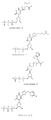
- Fig. 1 presents an overall scheme of the Huisgen's copper-catalyzed azide-alkyne cycloaddition reaction
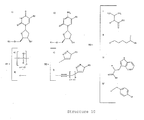
- Fig. 2 presents schemes of reactions according to the present invention
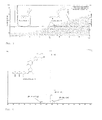
- Fig. 3 presents a chromatogram of the nucleotide of structure 6 prepared by reversed-phase chromatography
- Fig. 4 presents a representative mass spectrum of the nucleotide of structure 6 obtained by mass analysis with MS-TOF (Mass Spectrometry - Time Of Flight)
- MS-TOF Mass Spectrometry - Time Of Flight
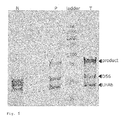
- Fig. 5 presents the electrophoretic analysis result (an electropherogram) of the product of the enzymatic synthesis of an oligonucleotide comprising modified nucleotides of structure 9 in its sequence
- Fig. 6 presents the electrophoretic analysis result of the product of the enzymatic synthesis of an unmodified oligonucleotide, for which the template during the synthesis reaction was an oligonucleotide comprising modified nucleotides of structure 6 in its sequence.
- nucleotide of structure 6 was prepared in 200 ⁇ l. To 4.0 ⁇ l of 100 mM EdUTP (5-ethynyl 2'-deoxyuridine 5'-triphosphate - structure 1.a).c).e); 400 nmol), 20 ⁇ l 10x TEAA buffer (triethylamine-acetic acid 500 mM pH 7.0) and 30 ⁇ l of DMSO-dissolved (S)-2-azido-3-methylbutyric acid (structure 2) at 200 mM concentration (6.0 ⁇ mol, 15 molar equivalents of EdUTP) were added.
- EdUTP 5-ethynyl 2'-deoxyuridine 5'-triphosphate - structure 1.a).c).e
- 400 nmol 20 ⁇ l 10x TEAA buffer (triethylamine-acetic acid 500 mM pH 7.0)
- 30 ⁇ l of DMSO-dissolved (S)-2-azido-3-methylbutyric acid (structure 2) at 200
- nucleotide of structure 7 detected mass 634.04 Da, calculated mass 634.30 Da
- nucleotide of structure 8 detected mass 721.0 Da, calculated mass 721.38 Da
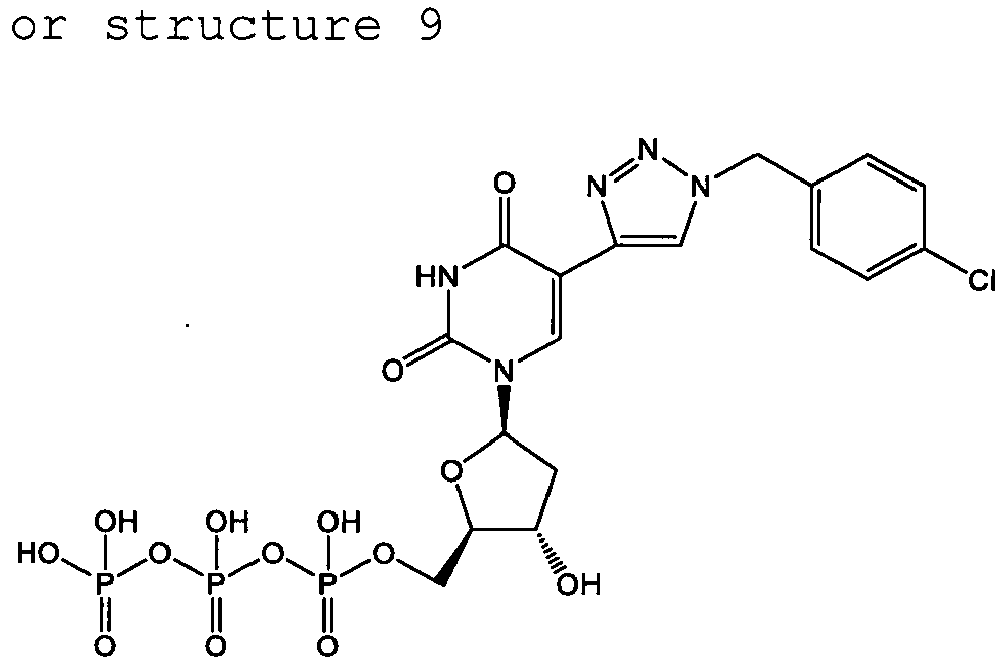
- nucleotide of structure 9 detected mass 658.50 Da, calculated mass 658.75 Da.
- oligonucleotide comprising modified nucleotides of structure 9 in its sequence was performed in 10 ⁇ l volume using single-stranded template D56 (SEQ ID NO: 1) and primer LHAb (SEQ ID NO: 2; a polyA chain attached to 5'-end of the primer allows to discriminate the template from the product by mass) in a PER process.
- the reaction mixture was prepared, containing D56 at 2 ⁇ M concentration, LHAb at 4 ⁇ M concentration, Pwo polymerase 0.5 U, 1x concentrated buffer with magnesium supplied by the polymerase vendor, deionized water, and nucleotide triphosphates: dATP, dCTP and dGTP at final 200 ⁇ M concentration each.
- sample N did not contain any other nucleotides
- positive control contained additionally TTP at 100 ⁇ M concentration
- test sample contained additionally the nucleotide of structure 9 (prepared as in Example 2) in 10x dilution.
- the reaction mixtures were incubated for one minute in 95°C, two minutes in 50°C and 30 minutes in 70°C. After the reaction the samples were subjected to electrophoresis in a denaturing (7 M urea) 10% polyacrylamide gel (acrylamide 19:1 bis-acrylamide) heated to 55°C with constant voltage of 300 V. The gel was visualized using Midori Green stain (Nippon Genetics) - Figure 5 .
- Example 4 Enzymatic synthesis of single-stranded DNA library comprising modified nucleotides in its random region
- Single-stranded library comprising modified nucleotide or nucleotides of structures 6, 7, 8, or 9 was prepared by separating the strands of double-stranded product using magnetic microbeads coated with streptavidin, accordingly with previous reports[9], and its purity was assessed by electrophoresis (as in Example 3).
- Another method to obtain single-stranded library comprising modified nucleotide or nucleotides of structures 6, 7, 8, or 9, is to separate the strands of double-stranded product in a denaturing (7 M urea) 10% polyacrylamide gel (acrylamide 19:1 bis-acrylamide) heated to 55°C with constant voltage of 300 V. The gel was visualized using Midori Green stain, next the bands corresponding to the modified strand were cut out and they were subjected to purification procedure according to standard protocols.
- Example 5 Enzymatic synthesis of unmodified single-stranded DNA using a template comprising modified nucleotides in its sequence
- a purified single-stranded oligonucleotide complementary to SEQ ID NO: 1 as a template which comprised modified nucleotides of structure 6 in its sequence (prepared as in Example 3 and purified from a polyacrylamide gel according to standard protocols)
- enzymatic synthesis of unmodified single-stranded DNA was performed (the product of the reaction is a reconstructed oligonucleotide D56 of SEQ ID NO: 1).
- the reaction was performed in 20 ⁇ l using a template described above and L4 primer (SEQ ID NO: 4) in a PER process.
- the reaction mixture was prepared, containing template at 0.1-2.0 ⁇ M concentration, L4 at 2-5 ⁇ M concentration, DeepVent polymerase 1 U or Pwo polymerase 1 U, 1x concentrated buffer supplied by the polymerase vendor (adequate to the polymerase used), magnesium sulfate at 2.0 mM, nucleotide triphosphates TTP, dATP, dCTP and dGTP at final 400 ⁇ M concentration each, and deionized water.
- the negative control (sample N) was not subjected to incubation (incubated at 4°C).
- the test sample 1 (sample T1) was incubated for one minute in 95°C, one minute in 50°C and 60 minutes in 70°C.
- the test sample 2 (sample T2) was subjected to 10 incubation cycles: for one minute in 95°C, one minute in 50°C and 20 minutes in 70°C.
Landscapes
- Chemical & Material Sciences (AREA)
- Organic Chemistry (AREA)
- Life Sciences & Earth Sciences (AREA)
- Health & Medical Sciences (AREA)
- Engineering & Computer Science (AREA)
- Genetics & Genomics (AREA)
- Molecular Biology (AREA)
- Biochemistry (AREA)
- Biotechnology (AREA)
- General Health & Medical Sciences (AREA)
- Biomedical Technology (AREA)
- Zoology (AREA)
- Wood Science & Technology (AREA)
- General Engineering & Computer Science (AREA)
- Bioinformatics & Cheminformatics (AREA)
- Physics & Mathematics (AREA)
- Plant Pathology (AREA)
- Biophysics (AREA)
- Microbiology (AREA)
- Crystallography & Structural Chemistry (AREA)
- Bioinformatics & Computational Biology (AREA)
- Chemical Kinetics & Catalysis (AREA)
- General Chemical & Material Sciences (AREA)
- Medicinal Chemistry (AREA)
- Preparation Of Compounds By Using Micro-Organisms (AREA)
- Measuring Or Testing Involving Enzymes Or Micro-Organisms (AREA)
- Saccharide Compounds (AREA)
Description
- The subject of the present invention is a method of synthesis and purification of a nucleotide, a modified nucleotide, a DNA molecule and an oligonucleotide library comprising said modified nucleotide and use of said oligonucleotide library. The objects of the invention can be applied in in vitro selection of aptamers used as therapeutic molecules and also as basic components of molecular diagnostic tools.
- Aptamers are oligonucleotides - single-stranded fragments of ribonucleic acid or deoxyribonucleic acid (RNA or DNA), usually from over ten to several tens of nucleotides in length, whose defined sequence allows them to conform a three-dimensional structure fitting to the molecular structure of the ligand and to bind said ligand with high sensitivity and selectivity. Aptamers present very numerous applications in biotechnology and medicine, both as therapeutic molecules and as basic components of molecular diagnostic tools. This leads to aptamers being often compared with widely used antibodies. However, the scope of potential ligands, towards which working aptamers have already been selected, is much broader than mostly protein-based partners of antibodies. Aptamers ligands also include low molecular weight compounds of almost any structure, such as e.g. metal ions, alkaloids, organic dyes, amino acids, nucleosides, nucleotides, porfirins or sugars [1-3]. Other aptamers advantages, which place them above antibodies in many applications, include: small size (the smallest selected working aptamer is 15 nucleotides in length[4], which corresponds to the mass of about 4600 g/mol); low or zero immunogenicity; cheap and efficient chemical synthesis, which also provides 100% homogenic preparation; the possibility of introducing various chemical modifications; strong resistance to non-physiological conditions and the ability of spontaneous renaturation, and relatively fast process of aptamers selection towards chosen molecular target.
- Aptamers are obtained in a process of "in vitro evolution" called the SELEX method (Systematic Evolution of Ligands by EXponential enrichment). It is based on repetitive binding of a pool of oligonucleotide molecules with different sequences (usually 1012-1014 molecules in the first round of selection) with a chosen molecular target, and subsequent physical partitioning of the molecules which have bound the target from the unbound molecules. After the partitioning the oligonucleotides binding the target are enzymatically amplified and the process is repeated, usually with more stringent conditions in order to select molecules of desired target binding parameters[5,6]. Aptamers obtained in such a way are subjected to sequencing - knowledge of the nucleotide sequence allows to chemically synthesize a pure aptamer for further use or for further optimization, comprising for example of introducing modifications or trimming of the oligonucleotide.
- The libraries are sets of single-stranded nucleic acid molecules comprising in theirs sequences a region of random nucleotide sequence. During the SELEX process the sequences (clones) selected from the library are those sequences which exert the ability to bind a chosen molecular target, towards which the selection is being performed. Each nucleic acid molecule in the library has the same structure - two primer regions at both ends which enable the amplification of the library with Polymerase Chain Reaction (PCR), and a region with random sequence in the middle.
- Both DNA and RNA are susceptible to digestion by nucleolytic enzymes. The use of aptamers in vivo or even in vitro in samples comprising nucleases (e.g. cell lysates) is hindered due to the degradation of nucleic acids by those enzymes. To overcome this problem many modifications to sugar-phosphate backbone of aptamers have been proposed, for example substituting the hydroxide group at 2' carbon with an amine group, or a substitution of one of the oxygen atoms in the phosphodiester bond with a sulfur atom (thioaptamers). Another examples of methods reducing nucleic acids susceptibility to enzymatic digestion can be the introduction of "spiegelmers" - oligonucleotides whose sugar backbone is composed of L-ribose isomer instead of naturally occurring D-isomer; or the employment of LNA (Locked Nucleic Acid) - an analogue in which ribose molecules have an additional bond connecting 4' carbon and 2' oxygen (thus closing the ribose in 3'-endo conformation, which also influences the hybridization properties of the oligonucleotide).
- A separate problem is a poor repertoire of monomers (nucleotides) of which the nucleic acids strands are formed in nature. The composition of naturally occurring nucleic acids includes only four different nucleobase molecules: adenine, guanine, cytosine and thymine (or uracil in the case of RNA), having only a few chemical groups which can take part in potential binding of the molecular target. It has generated a need of enriching the oligonucleotide libraries used for SELEX process with new unnatural nucleotides and chemical groups - analogues of naturally occurring nucleotides, which can help in selecting aptamers with better target binding properties. To meet this challenge many research groups have worked on enzymatic incorporation of modified nucleotides into the libraries and their use for selection[7-9].
- In the state of art modified nucleotides are obtained by advanced organic synthesis methods, often long and multistep processes with poor yield, not accessible for laboratories without special organic synthesis equipment[8-11]. Therefore, there is a need for easier, more efficient and quicker method of synthesis of modified nucleotides which may be further incorporated into nucleic acids using enzymatic methods, and said method will be useful in selection of new modified aptamers with better parameters than aptamers comprising only naturally occurring nucleotides.
- Huisgen's Copper(I)-catalyzed Azide-Alkyne Cycloaddition (CuACC) enables a highly selective, efficient (often yields over 90%), quick (conjugation time can be less than an hour), run in mild-conditions (room temperature, normal pressure, broad selection of possible solvents including water, pH around 4 to 12), one-step conjugation of two compounds, one of which comprises a free azide group (-N3), and the other a terminal alkyne (-C≡CH). The reaction is performed in the presence of copper (I) ions (a catalizator) and the resulting stable covalent triazol bond has always the same regioisometry[12,13]. For these reasons this reaction is classified as an example of so called "Click Chemistry" - a simple and "click"-like efficient conjugation chemistry with a broad application spectrum[14,15].
- Authors of
US patent 6,175,001 (Barbas and Kandasamy, 2001) [10] describe preparation and use for DNA synthesis of nucleoside triphosphates bearing a modification inposition 5 of deoxyuracil pyrimidine ring - it comprises a linker in the form of allylamine (prop-2-ene-1-amine) and a functional group attached to the linker through an amid bond. The functional groups used included benzoic acid, imidazole, pyridine, benzylamine or phenol. A series of organic synthesis reactions, in which from the initial compound 5-iododeoxyuridine the authors obtained a precursor for other modifications - 5-(3-aminepropene)-deoxyuridine triphosphate, reached a yield of 24%. Next, the authors used this precursor compound to prepare modified nucleoside triphosphates with reactions, whose yield was 58-73%. - A publication "Expanding the chemistry of DNA for in vitro selection", Vaught et al., JACS 2010, 132, 4141-4151[9] discloses structures and a method of preparation of modified nucleoside triphosphates. The authors used 5-iododeoxyuridine in a palladium-catalyzed carboxyamidation reaction to prepare derivatives, whose functional groups (comprising benzyl, isobutane, methylnaphthalene, imidazol-4-ethane or (1H-indole-3-)ethane) are attached to
carbon number 5 of pyrimidine ring with an amid bond. The conjugation reaction itself requires one step but lasts for 48-72 hours. It further requires prior substrate manipulation by introducing protective groups for hydroxyl groups in several reactions. The yield of the process has been presented by the authors as medium to good - from 30 to 60%. Next the authors have performed tests, in which they have shown that modified nucleotides are incorporated into DNA in a Primer Extension Reaction (PER) by DNA-dependent DNA polymerases (KOD XL, Pfu (exo-), D. Vent (exo-), Tth, Taq, KF (exo-)), and that the oligonucleotides comprising said modified nucleotides in their sequence can be also used as a template for PER. Modified nucleotides however couldn't be successfully used in a PCR. - In another publication "Synthesis of Deoxynucleoside Triphosphates that Include Proline, Urea, or Sulfonamide Groups and Their Polymerase Incorporation into DNA", Marcel Hollenstein, Chem. Eur. J. 2012, 18, 13320-13330[16] the author presents synthesis and subsequent incorporation into DNA molecules of nucleotides enriched with complex functional groups (comprising proline residues, urea group, sulfamid group) attached to
carbon number 5 of pyrimidine ring with a linker in the form of allylamine (prop-2-ene-1-amine) and an amid bond. Preparation of intermediate precursor from 5-iodouridine was performed with 31% yield. Next the precursor was used to synthesize five different nucleoside triphosphates - the series of synthesis reactions with the highest yield provided app. 23% conversion of the precursor into the product. - In the
PCT application WO2009012363A2 were disclosed oligonucleotide aptamers selectively binding a target glycosylated polypeptide or protein, and having biased affinity for the glycan through a boronic acid linked to a nucleosidic base of a nucleotide(s).The disclosure encompasses methods for isolating an aptamer(s) selectively binding a target glycosylated polypeptide, where, from a population of randomized oligonucleotides that have at least one nucleotide having a boronic acid label linked to a base, is selected a first subpopulation of aptamers binding to the target glycosylated polypeptide or protein. This subpopulation is then amplified without using boronic acid-modified TTP, and amplification products not binding to a target glycosylated polypeptide or protein are selected. The second subpopulation of aptamers is then amplified using boronic acid-modified TTP to provide a population of boronic acid-modified aptamers capable of selectively binding to a glycosylation site of a target polypeptide or protein. Other aspects of the disclosure encompass methods for the use of the modified aptamers to detect glycosylated species of a polypeptide or protein. - A publication "Design, Synthesis, and Polymerase-CatalyzedIncorporation of Click-Modified Boronic Acid- TTP Analogues", CHEMISTRY -AN ASIAN JOURNAL, vol. 6, 2011, pages 2747-2752, XPO55160640 discloses the synthesis of four boronic acid-modified thymidine triphosphate (TTP) analogues. The synthesis of certain analogues was through the use of a single dialkyne tether for both the Sonogashira coupling with thymidine and the later Cu-mediated [3+2] cycloaddition for linking the boronic acid moiety. All analogues showed very good stability under polymerase chain reaction (PCR) conditions and were recognized as a substrate by DNA polymerase, and thus incorporated into DNA.
- In a publication "A Versatile Approach Towards Nucleobase-Modified Aptamers", ANGEWANDTE CHEMIE, INTERNATIONAL EDITION, vol. 54, no. 37, 23 July 2015, pages 10971-10974, XPO55589969 was presented a novel and versatile method for modular expansion of the chemical space of nucleic acid libraries, thus enabling the generation of nucleobase-modified aptamers with unprecedented recognition properties. Reintroduction of the modification after enzymatic replication gives broad access to many chemical modifications.
- Another publication "Site-Specifically Arraying Small Molecules or Proteins on DNA Using An Expanded Genetic Alphabet", CHEMISTRY - A EUROPEAN JOURNAL, vol. 19, no. 42, 11 October 2013 (2013-10-11), pages 14205-14209, XP055590293 & "Supporting Information", XPO55590282 disclosed a class of replicable unnatural DNA base pairs formed between d5SICS and either dMMO2 , dDMO , or dNaM, which were. The synthesis of a variety of derivatives bearing propynyl groups, an analysis of their polymerase-mediated replication, and subsequent site-specific modification of the amplified DNA by Click chemistry is disclosed. With the d5SICS scaffold a propynyl ether linker is accommodated better than its aliphatic analogue, but not as well as the protected propargyl amine linker explored previously. It was also found that with the dMMO2 and dDMO analogues, the dMMO2 position para to the glycosidic linkage is best suited for linker attachment and that although aliphatic and ether-based linkers are similarly accommodated, the direct attachment of an ethynyl group to the nucleobase core is most well tolerated. To demonstrate the utility of these analogues, a variety of them were used to site-selectively attach a biotin tag to the amplified DNA. Finally, the use of d5SICSco -dNaM to couple one or two proteins to amplified DNA, with the double labeled product was visualized by atomic force microscopy. The ability to encode the spatial relationships of arrayed molecules in PCR amplifiable DNA should have important applications, ranging from SELEX with functionalities not naturally present in DNA to the production, and perhaps "evolution" of nanomaterials.
- Following publication "C5-Modified nucleosides exhibiting anticanceractivity", BIOORGANIC & MEDICINAL CHEMISTRY LETTERS, vol. 19, no.16, 15 August 2009 (2009-08-15), pages 4688-4691, XP026419057 describes a simple method for the synthesis of C5-modified nucleosides from 5-iodo-2'-deoxyuridine and (ii) their activity against six types of human cancer cell lines (HCT15, MM231, NCI-H23, NUGC-3, PC-3, ACHN). It shows nitrile oxides in situ from oximes using a commercial bleaching agent; their cycloadditions with 5-ethynyl-2'-deoxyuridine yielded isoxazole derivatives possessing activity against the cancer cell lines. Several azides was synthesized from benzylic bromides and their click reactions with 5-ethynyl-2'-deoxyuridine provided triazole derivatives.
- In another publication "A 2'-deoxycytidine long-linker click adduct forming two conformers in the asymmetric unit", ACTA CRYSTALLOGRAPHICA, SECTION C: CRYSTAL STRUCTURE COMMUNICATIONS, vol. 68, no. 4, 2012, pages 1-17, XPO55519073 disclosed a compound, which systematic nameis: 4-amino-1-(2-deoxy-β-D -erythro-pentofuranosyl) -5-[6-(1-benzyl-1H-1, 2, 3-triazol-4-yl) hex-1-ynyl]pyrimidin-2 (1H)-one} , C24H28N6O4, shows two conformations in the crystalline state, viz. (I-1) and (1-2). The pyrimidine groups and side chains of the two conformers are almost superimposable, while the greatest differences between them are observed for the sugar groups. The N-glycosylic bonds of both conformers adopt similar anti conformations, with χ = -168.02 (12)° for conformer (I-1) and χ = -159.08 (12)° for conformer (I-2). The sugar residue of (I-1) shows an N-type (C3'-endo) conformation, with P = 33.1 (2)° and τm = 29.5 (1)°, while the conformation of the 2'-deoxyribofuranosyl group of (1-2) is S-type (C3'-exo), with P = 204.5 (2)° and τm = 33.8 (1)°. Both conformers participate in hydrogen-bond formation and exhibit identical patterns resulting in three-dimensional networks. Intermolecular hydrogen bonds are formed with neighbouring molecules of different and identical conformations (N-H...N, N-H... O, O-H...N and O-H...O).
- In a publication "AZIDOPROPYLVINYLSULFONAMIDE AS A NEW BIFUNCTIONAL CLICK REAGENT FOR BIOORTHOGONAL CONJUGATIONS: APPLICATION FOR DNA-PROTEIN CROSS-LINKING", CHEMISTRY-A EUROPEAN JOJRNAL, vol. 21, no. 45, 2 November 2015 (2015-11-02), pages 16091-16102, XP055519078 was presented N-(3-Azidopropyl)vinylsulfonamide as a new bifunctional bioconjugation reagent suitable for the cross-linking of biomolecules through copper (I)-catalyzed azide-alkyne cycloaddition and thiol Michael addition reactions under biorthogonal conditions. The reagent is easily clicked to an acetylene-containing DNA or protein and then reacts with cysteine-containing peptides or proteins to form covalent cross-links. Several examples of bioconjugations of ethynyl- or octadiynyl-modified DNA with peptides, p53 protein, or alkyne-modified human carbonic anhydrase with peptides are given.
- A publication "Cross-Linked DNA: Site-Selective "Click" Ligation in Duplexes with Bis-Azides and Stability Changes Caused by Internal Cross-Links", BIOCONJUGATE CHEMISTRY, vol. 23, no. 6, 1 January 2012 (2012-01-01), pages 1230-1243, XP055519081 showed a heterodimeric interstrand cross-linked DNA constructed by the "bis-click" reaction carried out on preformed oligonucleotide duplexes with the bis-
azide 1. For this, alkynylated 8-aza-7-deazapurine or corresponding 5-substituted pyrimidine nucleosides were synthesized. Cross-linking resulted in chemoselective formation of heterodimeric duplexes while homodimers were suppressed. For product identification, heterodimeric DNA was prepared by the "stepwise click" reaction, while noncomplementary homodimers were accessible by "bis-click" chemistry, unequivocally. Studies on duplex melting of complementary cross-linked duplexes (heterodimers) revealed significantly increased Tm values compared to the non-cross-linked congeners. The stability of this cross-linked DNA depends on the linker length and the site of modification. Cross-linked homodimers hybridized with single-stranded complementary oligonucleotides show much lower stability. - Presented methods of preparation of modified nucleotides require multiple reagents, specialized equipment for organic synthesis, they also characterize in low yield and multiple steps, which elongates the time of the preparation of the desired final compound.
- The technical problem to be solved by the present invention is to propose such a method of synthesis of modified nucleotides, which would provide modified nucleotides that can be incorporated into nucleic acids by enzymatical methods, and thus they would be useful for selection of new modified aptamers with better parameters than aptamers comprising only naturally occurring nucleotides, wherein said method would not require using complicated and expensive specialized laboratory equipment and would be a process of high yield not requiring a prior substrate manipulation, and wherein said method would be relatively simple and quick, and the obtained product would be characterized by high purity level. Surprisingly, aforementioned technical problems and aims were provided by the present invention.
- The first object of the invention is a method of synthesis and purification of a nucleotide, of which the substrate of
structure 1 is a mono-, di- or triphosphate, characterized in that that a copper - catalyzed Huisgen's azide-alkyne cycloaddition reaction is being performed using a compound of structure 1:
structure 2
structure 3
structure 4
structure 5

structure 2 and temperature 40-55°C for 1-6 hours is essential for obtaining compound with a:


- The second object of the invention is a modified a nucleotide being a mono-, di- or triphosphate, comprising cytosine or uracil as its nucleobase, which at
position 5 of the heterocyclic ring has a 1,2,3-triazol group or an alkane or alkyne chain having aterminal position 1 of said 1,2,3-triazol group which is a derivative of one of the compounds from the group ofstructures 2 to 5, and said modified nucleotide being of structure 10:

- The third object of the invention is a DNA molecule comprising a single- or double-stranded DNA chain, characterized in that it comprises in one or more positions of the sequence of any or of both strands one or more modified nucleotides, as described in the second object of the invention. In a preferred embodiment of the invention the position of one or more modified nucleotides in the sequence is unrestricted. In another preferred embodiment the DNA molecule has been prepared by an enzymatic reaction (PCR, PER) or by chemical synthesis of oligonucleotides.
- The fourth object of the invention is an oligonucleotide library having in its sequence a random sequence region of at least 10 nucleotides in length, and two flanking regions of constant sequences of at least 10 nucleotides in length, or deprived of flanking regions, characterized in that it comprises in one or more positions of the sequence one or more modified nucleotides, as described in the second object of the invention. In a preferred embodiment of the invention the position of one or more modified nucleotides in the sequence is unrestricted. In another embodiment of the invention the oligonucleotide library has been prepared by an enzymatic reaction (PCR, PER) or by chemical synthesis of oligonucleotides.
- The fifth object of the invention is the use of the oligonucleotide library, as described in the fourth object of the invention, to obtain aptamers by SELEX technique and its derivatives.
- The method of synthesis and purification of modified nucleotides according to the present invention allows preparing modified nucleotides, which can be incorporated into nucleic acids by enzymatic methods, thanks to which it is possible to use them in selection of new modified aptamers with better parameters than aptamers comprising only naturally occurring nucleotides. Presented method allowed to limit the number of steps of synthesis and purification in order to prepare modified nucleotides, wherein it didn't require the use of complex laboratory equipment. Synthesis and purification are characterized by high efficiency of the process, don't require prior substrate manipulation, are quick, and obtained products are characterized by high purity level. The enzymatic incorporation of the modified nucleotides into oligonucleotides is characterized by high efficiency, similar to the incorporation of naturally occurring nucleotides. Oligonucleotides described in the third object of the invention comprising modified nucleotides in their sequence are also characterized in that they can act as a template for PER or PCR, during which by the use of naturally occurring nucleotides there occurs a synthesis of unmodified oligonucleotides with sequences complementary to that of the template modified oligonucleotides - this requirement is necessary to be able to use the modified library for the selection of aptamers by SELEX technique and its derivatives, as described in the fifth object of the invention.
- Example embodiments of the invention are presented by Examples and in the Figures, wherein
Fig. 1 presents an overall scheme of the Huisgen's copper-catalyzed azide-alkyne cycloaddition reaction,Fig. 2 presents schemes of reactions according to the present invention,Fig. 3 presents a chromatogram of the nucleotide ofstructure 6 prepared by reversed-phase chromatography,Fig. 4 presents a representative mass spectrum of the nucleotide ofstructure 6 obtained by mass analysis with MS-TOF (Mass Spectrometry - Time Of Flight),Fig. 5 presents the electrophoretic analysis result (an electropherogram) of the product of the enzymatic synthesis of an oligonucleotide comprising modified nucleotides ofstructure 9 in its sequence, andFig. 6 presents the electrophoretic analysis result of the product of the enzymatic synthesis of an unmodified oligonucleotide, for which the template during the synthesis reaction was an oligonucleotide comprising modified nucleotides ofstructure 6 in its sequence. - The synthesis reaction of nucleotide of
structure 6 was prepared in 200 µl. To 4.0 µl of 100 mM EdUTP (5-ethynyl 2'-deoxyuridine 5'-triphosphate - structure 1.a).c).e); 400 nmol), 20 µl 10x TEAA buffer (triethylamine-acetic acid 500 mM pH 7.0) and 30 µl of DMSO-dissolved (S)-2-azido-3-methylbutyric acid (structure 2) at 200 mM concentration (6.0 µmol, 15 molar equivalents of EdUTP) were added. Next, 10 µl of previously prepared Cu-TBTA mixture (10 mM CuSO4, 25 mM TBTA (tris[(1-benzyl-1H-1,2,3-triazol-4-yl)methyl]amine), 50% DMSO, 16,6% tert-butanol) was added to final copper concentration in the reaction of 0.5 mM (0.25 molar equivalents of EdUTP). The mixture was filled up to 180 µl using DMSO, mixed, and 20 µl of sodium ascorbate at 200 mM concentration was added (to final concentration of 20 mM, 10 molar equivalents of EdUTP), thus initiating the reaction by reducing the copper to I oxidation state, and the tube cap was tightly closed. A parallel negative control was prepared in 20 µl volume while maintaining the concentrations as in the positive sample, but with sodium ascorbate being replaced with deionized water. The reaction was conducted in a closed tube for 2 hours in 40°C with vigorous shaking. - Next the product was purified by reversed-phase chromatography, using
TEAA 100 mM buffer and methanol as mobile phase (Bio-Rad's NGC chromatography system, Water's column AccQ-Tag, 60Å, 4 µm, 3,9 mm x 150 mm). The chromatogram of the analysis both from the negative control and the positive sample is presented inFigure 3 . Collected fractions containing the purified nucleotide ofstructure 6 were combined, dried in a vacuum concentrator (Labconco's CentriVap Benchtop Centrifugal Vacuum Concentrator) and dissolved in known volume of 25% DMSO. Next the sample was analyzed by MS-TOF (Water's Xevo G2-XS QTof spectrometer) in negative mode electrospray ionization: detected mass 634.04 Da, calculated mass 634.30 Da. A representative mass spectrum is presented inFigure 4 . - The synthesis reaction of nucleotides of structures 7-9 were performed analogically to the synthesis of compound of structure 6 (Example 1) using corresponding azides of structures 3-5 instead of compound of
structure 2. Reaction temperature 40-55°C, reaction time 1-6 hours. - Mass analysis of products of structures 7-9: nucleotide of structure 7: detected mass 634.04 Da, calculated mass 634.30 Da; nucleotide of structure 8: detected mass 721.0 Da, calculated mass 721.38 Da; nucleotide of structure 9: detected mass 658.50 Da, calculated mass 658.75 Da.
- The enzymatic synthesis of an oligonucleotide comprising modified nucleotides of
structure 9 in its sequence was performed in 10 µl volume using single-stranded template D56 (SEQ ID NO: 1) and primer LHAb (SEQ ID NO: 2; a polyA chain attached to 5'-end of the primer allows to discriminate the template from the product by mass) in a PER process. The reaction mixture was prepared, containing D56 at 2 µM concentration, LHAb at 4 µM concentration, Pwo polymerase 0.5 U, 1x concentrated buffer with magnesium supplied by the polymerase vendor, deionized water, and nucleotide triphosphates: dATP, dCTP and dGTP at final 200 µM concentration each. The negative control (sample N) did not contain any other nucleotides, the positive control (sample P) contained additionally TTP at 100 µM concentration, and the test sample (sample T) contained additionally the nucleotide of structure 9 (prepared as in Example 2) in 10x dilution. The reaction mixtures were incubated for one minute in 95°C, two minutes in 50°C and 30 minutes in 70°C. After the reaction the samples were subjected to electrophoresis in a denaturing (7 M urea) 10% polyacrylamide gel (acrylamide 19:1 bis-acrylamide) heated to 55°C with constant voltage of 300 V. The gel was visualized using Midori Green stain (Nippon Genetics) -Figure 5 . - Analogical experiments were performed for nucleotides of structures 6-8 confirming their proper incorporation into DNA by PER reaction. Obtaining of the product was also confirmed with other polymerase - DeepVent(exo-), as well as with different templates than D56 oligonucleotide.
- The capability of DNA synthesis by Pwo polymerase on a biotinylated template immobilized on magnetic microbeads coated with streptavidin was also confirmed, accordingly with previous reports[9].
- The synthesis of single-stranded DNA library was performed with PER reaction analogically to Example 3, with explicit changes: unmodified library (SEQ ID NO: 3) was used as template, L4 primer was used as primer (SEQ ID NO: 4).
- Single-stranded library comprising modified nucleotide or nucleotides of
structures - Another method to obtain single-stranded library comprising modified nucleotide or nucleotides of
structures - Using a purified single-stranded oligonucleotide complementary to SEQ ID NO: 1 as a template which comprised modified nucleotides of
structure 6 in its sequence (prepared as in Example 3 and purified from a polyacrylamide gel according to standard protocols), enzymatic synthesis of unmodified single-stranded DNA was performed (the product of the reaction is a reconstructed oligonucleotide D56 of SEQ ID NO: 1). The reaction was performed in 20 µl using a template described above and L4 primer (SEQ ID NO: 4) in a PER process. The reaction mixture was prepared, containing template at 0.1-2.0 µM concentration, L4 at 2-5 µM concentration, DeepVent polymerase 1 U or Pwo polymerase 1 U, 1x concentrated buffer supplied by the polymerase vendor (adequate to the polymerase used), magnesium sulfate at 2.0 mM, nucleotide triphosphates TTP, dATP, dCTP and dGTP at final 400 µM concentration each, and deionized water. The negative control (sample N) was not subjected to incubation (incubated at 4°C). The test sample 1 (sample T1) was incubated for one minute in 95°C, one minute in 50°C and 60 minutes in 70°C. The test sample 2 (sample T2) was subjected to 10 incubation cycles: for one minute in 95°C, one minute in 50°C and 20 minutes in 70°C. - After the reaction the samples were subjected to electrophoresis in a denaturing (7 M urea) 10% polyacrylamide gel (acrylamide 19:1 bis-acrylamide) heated to 55°C with constant voltage of 300 V. The gel was visualized using Midori Green stain -
Figure 6 . - Analogical experiments were performed with oligonucleotide templates comprising modified nucleotides of
structure -
- 1. Famulok, M. Oligonucleotide aptamers that recognize small molecules. Curr. Opin. Struct. Biol. 1999, 9, 324-329.
- 2. Mayer, G. The Chemical Biology of Aptamers. Angew. Chem. Int. Ed. 2009, 48, 2672-2689.
- 3. Radom, F.; Jurek, P. M.; Mazurek, M. P.; Otlewski, J.; Jeleń, F. Aptamers: Molecules of great potential. Biotechnol. Adv. 2013 .
- 4. Bock, L. C.; Griffin, L. C.; Latham, J. A.; Vermaas, E. H.; Toole, J. J. Selection of single-stranded DNA molecules that bind and inhibit human thrombin. Nature 1992, 355, 564-566.
- 5. Klug, S. J.; Famulok, M. All you wanted to know about SELEX. Mol. Biol. Rep. 1994, 20, 97-107.
- 6. Gold, L.; Tuerk, C. Nucleic Acid Ligands 1995.
- 7. Capek, P.; Cahová, H.; Pohl, R.; Hocek, M.; Gloeckner, C.; Marx, A. An efficient method for the construction of functionalized DNA bearing amino acid groups through cross-coupling reactions of nucleoside triphosphates followed by primer extension or PCR. Chem. Weinh. Bergstr. Ger. 2007, 13, 6196-6203.
- 8. Schoetzau, T.; Langner, J.; Moyroud, E.; Roehl, I.; Vonhoff, S.; Klussmann, S. Aminomodified Nucleobases: Functionalized Nucleoside Triphosphates Applicable for SELEX. Bioconjug. Chem. 2003, 14, 919-926.
- 9. Vaught, J. D.; Bock, C.; Carter, J.; Fitzwater, T.; Otis, M.; Schneider, D.; Rolando, J.; Waugh, S.; Wilcox, S. K.; Eaton, B. E. Expanding the chemistry of DNA for in vitro selection. J. Am. Chem. Soc. 2010, 132, 4141-4151.
- 10. Barbas, C. F.; Kandasamy, S. Functionalized pyrimidine nucleosides and nucleotides and DNA's incorporating same 2001.
- 11. Gourlain, T.; Sidorov, A.; Mignet, N.; Thorpe, S. J.; Lee, S. E.; Grasby, J. A.; Williams, D. M. Enhancing the catalytic repertoire of nucleic acids. II. Simultaneous incorporation of amino and imidazolyl functionalities by two modified triphosphates during PCR. Nucleic Acids Res. 2001, 29, 1898-1905.
- 12. Himo, F.; Lovell, T.; Hilgraf, R.; Rostovtsev, V. V.; Noodleman, L.; Sharpless, K. B.; Fokin, V. V. Copper(I)-Catalyzed Synthesis of Azoles. DFT Study Predicts Unprecedented Reactivity and Intermediates. J. Am. Chem. Soc. 2005, 127, 210-216.
- 13. Rostovtsev, V. V.; Green, L. G.; Fokin, V. V.; Sharpless, K. B. A stepwise huisgen cycloaddition process: copper(I)-catalyzed regioselective "ligation" of azides and terminal alkynes. Angew. Chem. Int. Ed Engl. 2002, 41, 2596-2599.
- 14. Kolb, H. C.; Sharpless, K. B. The growing impact of click chemistry on drug discovery. Drug Discov. .
- 15. Kolb, H. C.; Finn, M. G.; Sharpless, K. B. Click Chemistry: Diverse Chemical Function from a Few Good Reactions. Angew. Chem. Int. Ed Engl. 2001, 40, 2004-2021.
- 16. Hollenstein, M. Synthesis of deoxynucleoside triphosphates that include proline, urea, or sulfonamide groups and their polymerase incorporation into DNA. Chem. Weinh. Bergstr. Ger. 2012, 18, 13320-13330.
-
- SEQ ID NO: 1 - D56

-
SEQ ID NO: 2 - LHAb primer

- SEQ ID NO: 4 - L4 primer
5'-GTATACCTGCAGCTGAGG-3'
Claims (9)
- A method of synthesis and purification of a nucleotide being a mono-, di- or triphosphate, characterized in that a copper - catalyzed Huisgen's azide-alkyne cycloaddition reaction is performed comprising using compound of structure 1:


wherein the synthesis is performed at temperature of 40°C for 2 hours is essential for obtaining compound with a structure 6:


and wherein the direct one-step purification of the synthesis product is performed using reversed-phase chromatography. - A modified nucleotide being a mono-, di- or triphosphate, comprising cytosine or uracil as its nucleobase, which at position 5 of the heterocyclic ring has a 1,2,3-triazol group or an alkane or alkyne chain having a terminal 1,2,3-triazol group, and has a substituent R3 at position 1 of said 1,2,3-triazol group which is a derivative of one of the compounds from the group of structures 2 to 5 as defined in claim1, and said modified nucleotide is of structure 10:


- A DNA molecule composed of a single- or double-stranded DNA chain, characterized in that it comprises in one or more positions of the sequence of any or both of the strands one or more modified nucleotides of claim 2.
- A DNA molecule according to claim 3, characterized in that the position of one or more modified nucleotides is unrestricted.
- A DNA molecule according to claim 3 or 4, characterized in that it has been prepared by an enzymatic reaction PCR, PER, or by the means of chemical synthesis of oligonucleotides.
- A library of oligonucleotides comprising in its sequence a region with a random sequence at least 10 nucleotides in length, and two flanking regions with constant sequences at least 10 nucleotides in length, or deprived of the flanking regions, characterized in that it comprises in one or more positions of the sequence one or more modified nucleotides of claim 2.
- A library according to claim 6, characterized in that the position of one or more modified nucleotides in the sequence is unrestricted.
- A library according to claim 6 or 7, characterized in that it has been prepared by an enzymatic reaction PCR, PER, or by the means of chemical synthesis of oligonucleotides.
- The use of the oligonucleotide library according to claim 6 or 7 to produce aptamers by the SELEX technique or its derivatives.
Priority Applications (2)
| Application Number | Priority Date | Filing Date | Title |
|---|---|---|---|
| SI201631318T SI3350195T1 (en) | 2015-09-17 | 2016-09-13 | The method of synthesis and purification of a nucleoside and/or a nucleotide, a modified nucleoside and/or nucleotide, a dna molecule and an oligonucleotide library comprising said modified nucleoside and/or nucleotide and the use of said oligonucleotide library |
| PL16846944T PL3350195T3 (en) | 2015-09-17 | 2016-09-13 | The method of synthesis and purification of a nucleoside and/or a nucleotide, a modified nucleoside and/or nucleotide, a dna molecule and an oligonucleotide library comprising said modified nucleoside and/or nucleotide and the use of said oligonucleotide library |
Applications Claiming Priority (2)
| Application Number | Priority Date | Filing Date | Title |
|---|---|---|---|
| PL413941A PL239946B1 (en) | 2015-09-17 | 2015-09-17 | Method for synthesis and purification of nucleoside and/or nucleotide, the modified nucleoside and/or nucleotide, DNA particle and the oligonucleotides library containing the modified nucleoside and/or nucleotide and the application of the oligonucleotides library |
| PCT/PL2016/050038 WO2017048147A1 (en) | 2015-09-17 | 2016-09-13 | The method of synthesis and purification of a nucleoside and/or a nucleotide, a modified nucleoside and/or nucleotide, a dna molecule and an oligonucleotide library comprising said modified nucleoside and/or nucleotide and the use of said oligonucleotide library |
Publications (4)
| Publication Number | Publication Date |
|---|---|
| EP3350195A1 EP3350195A1 (en) | 2018-07-25 |
| EP3350195A4 EP3350195A4 (en) | 2019-07-03 |
| EP3350195B1 EP3350195B1 (en) | 2021-06-02 |
| EP3350195B9 true EP3350195B9 (en) | 2021-09-29 |
Family
ID=58289513
Family Applications (1)
| Application Number | Title | Priority Date | Filing Date |
|---|---|---|---|
| EP16846944.3A Active EP3350195B9 (en) | 2015-09-17 | 2016-09-13 | The method of synthesis and purification of a nucleoside and/or a nucleotide, a modified nucleoside and/or nucleotide, a dna molecule and an oligonucleotide library comprising said modified nucleoside and/or nucleotide and the use of said oligonucleotide library |
Country Status (10)
| Country | Link |
|---|---|
| US (1) | US10450673B2 (en) |
| EP (1) | EP3350195B9 (en) |
| DK (1) | DK3350195T3 (en) |
| ES (1) | ES2885824T3 (en) |
| HU (1) | HUE055954T2 (en) |
| LT (1) | LT3350195T (en) |
| PL (2) | PL239946B1 (en) |
| PT (1) | PT3350195T (en) |
| SI (1) | SI3350195T1 (en) |
| WO (1) | WO2017048147A1 (en) |
Families Citing this family (1)
| Publication number | Priority date | Publication date | Assignee | Title |
|---|---|---|---|---|
| PL442186A1 (en) * | 2022-09-02 | 2024-03-04 | Pure Biologics Spółka Akcyjna | Method of synthesis and purification of a nucleotide and/or nucleoside, modified nucleotide and/or nucleoside, DNA molecule containing a single- or double-stranded chain of oligonucleotides, oligonucleotide library, use of an oligonucleotide library |
Family Cites Families (2)
| Publication number | Priority date | Publication date | Assignee | Title |
|---|---|---|---|---|
| US6175001B1 (en) | 1998-10-16 | 2001-01-16 | The Scripps Research Institute | Functionalized pyrimidine nucleosides and nucleotides and DNA's incorporating same |
| EP2176277B1 (en) * | 2007-07-19 | 2016-02-24 | Georgia State University Research Foundation, Inc. | Nucleotides and aptamers containing boronic acid groups having biased binding to glycosylated proteins, and uses thereof |
-
2015
- 2015-09-17 PL PL413941A patent/PL239946B1/en unknown
-
2016
- 2016-09-13 WO PCT/PL2016/050038 patent/WO2017048147A1/en not_active Ceased
- 2016-09-13 US US15/760,915 patent/US10450673B2/en active Active
- 2016-09-13 PT PT168469443T patent/PT3350195T/en unknown
- 2016-09-13 DK DK16846944.3T patent/DK3350195T3/en active
- 2016-09-13 HU HUE16846944A patent/HUE055954T2/en unknown
- 2016-09-13 EP EP16846944.3A patent/EP3350195B9/en active Active
- 2016-09-13 SI SI201631318T patent/SI3350195T1/en unknown
- 2016-09-13 PL PL16846944T patent/PL3350195T3/en unknown
- 2016-09-13 ES ES16846944T patent/ES2885824T3/en active Active
- 2016-09-13 LT LTEPPCT/PL2016/050038T patent/LT3350195T/en unknown
Also Published As
| Publication number | Publication date |
|---|---|
| ES2885824T3 (en) | 2021-12-15 |
| PL239946B1 (en) | 2022-01-31 |
| LT3350195T (en) | 2021-09-10 |
| HUE055954T2 (en) | 2022-01-28 |
| PT3350195T (en) | 2021-09-06 |
| EP3350195A4 (en) | 2019-07-03 |
| WO2017048147A1 (en) | 2017-03-23 |
| SI3350195T1 (en) | 2021-11-30 |
| EP3350195B1 (en) | 2021-06-02 |
| EP3350195A1 (en) | 2018-07-25 |
| US10450673B2 (en) | 2019-10-22 |
| PL3350195T3 (en) | 2021-10-11 |
| DK3350195T3 (en) | 2021-08-30 |
| PL413941A1 (en) | 2017-03-27 |
| US20180265862A1 (en) | 2018-09-20 |
Similar Documents
| Publication | Publication Date | Title |
|---|---|---|
| AU2023200611B2 (en) | A method for the site-specific enzymatic labelling of nucleic acids in vitro by incorporation of unnatural nucleotides | |
| US6808897B2 (en) | Method of nucleic acid sequencing | |
| EP0695305B1 (en) | Method of forming oligonucleotides | |
| JPH06511492A (en) | Oligonucleotides with chiral phosphorus bonds | |
| WO1995006752A1 (en) | A method of nucleic acid sequencing | |
| JPH10510433A (en) | Oligonucleotides with high chiral purity phosphorothioate linkages | |
| WO1998011120A1 (en) | A method of nucleic acid sequencing | |
| Cowart et al. | A novel combined chemical-enzymic synthesis of crosslinked DNA using a nucleoside triphosphate analog | |
| Herrlein et al. | Selective chemical autoligation on a double-stranded DNA template | |
| EP3350195B1 (en) | The method of synthesis and purification of a nucleoside and/or a nucleotide, a modified nucleoside and/or nucleotide, a dna molecule and an oligonucleotide library comprising said modified nucleoside and/or nucleotide and the use of said oligonucleotide library | |
| US20210032282A1 (en) | Nucleic acid complex, method for forming nucleic acid hybridization, pharmaceutical composition, nucleic acid probe, and complementary-strand nucleic acid complex | |
| JP2004514440A (en) | Nucleotide sequencing methods and biologically active nucleic acids | |
| US20260043018A1 (en) | Nucleic acid purification | |
| WO2024049312A2 (en) | A method for the synthesis and purification of a nucleotide and/or a nucleoside, a modified nucleotide and/or a nucleoside, a dna molecule containing a single- or double-stranded oligonucleotide chain, an oligonucleotide library, use of the oligonucleotide library | |
| HK40082715A (en) | A method for the site-specific enzymatic labelling of nucleic acids in vitro by incorporation of unnatural nucleotides | |
| HK40027466A (en) | A method for the site-specific enzymatic labelling of nucleic acids in vitro by incorporation of unnatural nucleotides | |
| Ohmichi et al. | A nano-circular single-stranded DNA as a novel tool for SNPs detection | |
| Jaziri et al. | Transliteration of a short genetic message from deoxyxylose (dXyloNA) to deoxyribose (DNA) in Escherichia coli |
Legal Events
| Date | Code | Title | Description |
|---|---|---|---|
| STAA | Information on the status of an ep patent application or granted ep patent |
Free format text: STATUS: THE INTERNATIONAL PUBLICATION HAS BEEN MADE |
|
| PUAI | Public reference made under article 153(3) epc to a published international application that has entered the european phase |
Free format text: ORIGINAL CODE: 0009012 |
|
| STAA | Information on the status of an ep patent application or granted ep patent |
Free format text: STATUS: REQUEST FOR EXAMINATION WAS MADE |
|
| 17P | Request for examination filed |
Effective date: 20180417 |
|
| AK | Designated contracting states |
Kind code of ref document: A1 Designated state(s): AL AT BE BG CH CY CZ DE DK EE ES FI FR GB GR HR HU IE IS IT LI LT LU LV MC MK MT NL NO PL PT RO RS SE SI SK SM TR |
|
| AX | Request for extension of the european patent |
Extension state: BA ME |
|
| DAV | Request for validation of the european patent (deleted) | ||
| DAX | Request for extension of the european patent (deleted) | ||
| A4 | Supplementary search report drawn up and despatched |
Effective date: 20190603 |
|
| RIC1 | Information provided on ipc code assigned before grant |
Ipc: C40B 40/06 20060101ALI20190527BHEP Ipc: C07H 21/04 20060101ALI20190527BHEP Ipc: C07H 1/00 20060101ALI20190527BHEP Ipc: C07H 19/10 20060101AFI20190527BHEP Ipc: C07H 19/073 20060101ALI20190527BHEP |
|
| STAA | Information on the status of an ep patent application or granted ep patent |
Free format text: STATUS: EXAMINATION IS IN PROGRESS |
|
| 17Q | First examination report despatched |
Effective date: 20200205 |
|
| GRAP | Despatch of communication of intention to grant a patent |
Free format text: ORIGINAL CODE: EPIDOSNIGR1 |
|
| STAA | Information on the status of an ep patent application or granted ep patent |
Free format text: STATUS: GRANT OF PATENT IS INTENDED |
|
| INTG | Intention to grant announced |
Effective date: 20210129 |
|
| GRAS | Grant fee paid |
Free format text: ORIGINAL CODE: EPIDOSNIGR3 |
|
| GRAA | (expected) grant |
Free format text: ORIGINAL CODE: 0009210 |
|
| STAA | Information on the status of an ep patent application or granted ep patent |
Free format text: STATUS: THE PATENT HAS BEEN GRANTED |
|
| REG | Reference to a national code |
Ref country code: CH Ref legal event code: EP |
|
| AK | Designated contracting states |
Kind code of ref document: B1 Designated state(s): AL AT BE BG CH CY CZ DE DK EE ES FI FR GB GR HR HU IE IS IT LI LT LU LV MC MK MT NL NO PL PT RO RS SE SI SK SM TR |
|
| REG | Reference to a national code |
Ref country code: GB Ref legal event code: FG4D |
|
| REG | Reference to a national code |
Ref country code: AT Ref legal event code: REF Ref document number: 1398357 Country of ref document: AT Kind code of ref document: T Effective date: 20210615 |
|
| REG | Reference to a national code |
Ref country code: IE Ref legal event code: FG4D |
|
| REG | Reference to a national code |
Ref country code: DE Ref legal event code: R096 Ref document number: 602016058947 Country of ref document: DE |
|
| REG | Reference to a national code |
Ref country code: NL Ref legal event code: FP |
|
| REG | Reference to a national code |
Ref country code: FI Ref legal event code: FGE |
|
| REG | Reference to a national code |
Ref country code: DK Ref legal event code: T3 Effective date: 20210827 |
|
| REG | Reference to a national code |
Ref country code: PT Ref legal event code: SC4A Ref document number: 3350195 Country of ref document: PT Date of ref document: 20210906 Kind code of ref document: T Free format text: AVAILABILITY OF NATIONAL TRANSLATION Effective date: 20210830 |
|
| REG | Reference to a national code |
Ref country code: SE Ref legal event code: TRGR |
|
| REG | Reference to a national code |
Ref country code: CH Ref legal event code: PK Free format text: BERICHTIGUNG B9 |
|
| REG | Reference to a national code |
Ref country code: GR Ref legal event code: EP Ref document number: 20210402208 Country of ref document: GR Effective date: 20210915 |
|
| REG | Reference to a national code |
Ref country code: SK Ref legal event code: T3 Ref document number: E 37954 Country of ref document: SK |
|
| REG | Reference to a national code |
Ref country code: EE Ref legal event code: FG4A Ref document number: E021262 Country of ref document: EE Effective date: 20210823 |
|
| REG | Reference to a national code |
Ref country code: NO Ref legal event code: T2 Effective date: 20210602 |
|
| PG25 | Lapsed in a contracting state [announced via postgrant information from national office to epo] |
Ref country code: BG Free format text: LAPSE BECAUSE OF FAILURE TO SUBMIT A TRANSLATION OF THE DESCRIPTION OR TO PAY THE FEE WITHIN THE PRESCRIBED TIME-LIMIT Effective date: 20210902 Ref country code: HR Free format text: LAPSE BECAUSE OF FAILURE TO SUBMIT A TRANSLATION OF THE DESCRIPTION OR TO PAY THE FEE WITHIN THE PRESCRIBED TIME-LIMIT Effective date: 20210602 |
|
| REG | Reference to a national code |
Ref country code: EE Ref legal event code: LD4A Ref document number: E021262 Country of ref document: EE |
|
| PG25 | Lapsed in a contracting state [announced via postgrant information from national office to epo] |
Ref country code: RS Free format text: LAPSE BECAUSE OF FAILURE TO SUBMIT A TRANSLATION OF THE DESCRIPTION OR TO PAY THE FEE WITHIN THE PRESCRIBED TIME-LIMIT Effective date: 20210602 |
|
| REG | Reference to a national code |
Ref country code: ES Ref legal event code: FG2A Ref document number: 2885824 Country of ref document: ES Kind code of ref document: T3 Effective date: 20211215 |
|
| REG | Reference to a national code |
Ref country code: HU Ref legal event code: AG4A Ref document number: E055954 Country of ref document: HU |
|
| PG25 | Lapsed in a contracting state [announced via postgrant information from national office to epo] |
Ref country code: RO Free format text: LAPSE BECAUSE OF FAILURE TO SUBMIT A TRANSLATION OF THE DESCRIPTION OR TO PAY THE FEE WITHIN THE PRESCRIBED TIME-LIMIT Effective date: 20210602 Ref country code: SM Free format text: LAPSE BECAUSE OF FAILURE TO SUBMIT A TRANSLATION OF THE DESCRIPTION OR TO PAY THE FEE WITHIN THE PRESCRIBED TIME-LIMIT Effective date: 20210602 |
|
| REG | Reference to a national code |
Ref country code: DE Ref legal event code: R097 Ref document number: 602016058947 Country of ref document: DE |
|
| PLBE | No opposition filed within time limit |
Free format text: ORIGINAL CODE: 0009261 |
|
| STAA | Information on the status of an ep patent application or granted ep patent |
Free format text: STATUS: NO OPPOSITION FILED WITHIN TIME LIMIT |
|
| 26N | No opposition filed |
Effective date: 20220303 |
|
| PG25 | Lapsed in a contracting state [announced via postgrant information from national office to epo] |
Ref country code: MC Free format text: LAPSE BECAUSE OF FAILURE TO SUBMIT A TRANSLATION OF THE DESCRIPTION OR TO PAY THE FEE WITHIN THE PRESCRIBED TIME-LIMIT Effective date: 20210602 Ref country code: AL Free format text: LAPSE BECAUSE OF FAILURE TO SUBMIT A TRANSLATION OF THE DESCRIPTION OR TO PAY THE FEE WITHIN THE PRESCRIBED TIME-LIMIT Effective date: 20210602 |
|
| PG25 | Lapsed in a contracting state [announced via postgrant information from national office to epo] |
Ref country code: CY Free format text: LAPSE BECAUSE OF FAILURE TO SUBMIT A TRANSLATION OF THE DESCRIPTION OR TO PAY THE FEE WITHIN THE PRESCRIBED TIME-LIMIT Effective date: 20210602 |
|
| REG | Reference to a national code |
Ref country code: AT Ref legal event code: UEP Ref document number: 1398357 Country of ref document: AT Kind code of ref document: T Effective date: 20210602 |
|
| PG25 | Lapsed in a contracting state [announced via postgrant information from national office to epo] |
Ref country code: MK Free format text: LAPSE BECAUSE OF FAILURE TO SUBMIT A TRANSLATION OF THE DESCRIPTION OR TO PAY THE FEE WITHIN THE PRESCRIBED TIME-LIMIT Effective date: 20210602 |
|
| PG25 | Lapsed in a contracting state [announced via postgrant information from national office to epo] |
Ref country code: MT Free format text: LAPSE BECAUSE OF FAILURE TO SUBMIT A TRANSLATION OF THE DESCRIPTION OR TO PAY THE FEE WITHIN THE PRESCRIBED TIME-LIMIT Effective date: 20210602 |
|
| REG | Reference to a national code |
Ref country code: DE Ref legal event code: R081 Ref document number: 602016058947 Country of ref document: DE Owner name: NANOGROUP S. A., PL Free format text: FORMER OWNER: PURE BIOLOGICS SPOLKA AKCYJNA, WROCLAW, PL |
|
| REG | Reference to a national code |
Ref country code: CH Ref legal event code: U11 Free format text: ST27 STATUS EVENT CODE: U-0-0-U10-U11 (AS PROVIDED BY THE NATIONAL OFFICE) Effective date: 20251001 |
|
| PGFP | Annual fee paid to national office [announced via postgrant information from national office to epo] |
Ref country code: FI Payment date: 20250909 Year of fee payment: 10 Ref country code: PT Payment date: 20250903 Year of fee payment: 10 |
|
| PGFP | Annual fee paid to national office [announced via postgrant information from national office to epo] |
Ref country code: LT Payment date: 20250908 Year of fee payment: 10 Ref country code: DK Payment date: 20250923 Year of fee payment: 10 |
|
| PGFP | Annual fee paid to national office [announced via postgrant information from national office to epo] |
Ref country code: GR Payment date: 20250925 Year of fee payment: 10 Ref country code: NO Payment date: 20250923 Year of fee payment: 10 |
|
| PGFP | Annual fee paid to national office [announced via postgrant information from national office to epo] |
Ref country code: TR Payment date: 20250904 Year of fee payment: 10 Ref country code: NL Payment date: 20250922 Year of fee payment: 10 Ref country code: PL Payment date: 20250904 Year of fee payment: 10 Ref country code: LU Payment date: 20250915 Year of fee payment: 10 Ref country code: IT Payment date: 20250903 Year of fee payment: 10 |
|
| PGFP | Annual fee paid to national office [announced via postgrant information from national office to epo] |
Ref country code: HU Payment date: 20250924 Year of fee payment: 10 Ref country code: BE Payment date: 20250918 Year of fee payment: 10 Ref country code: GB Payment date: 20250916 Year of fee payment: 10 |
|
| PGFP | Annual fee paid to national office [announced via postgrant information from national office to epo] |
Ref country code: FR Payment date: 20250916 Year of fee payment: 10 Ref country code: AT Payment date: 20250926 Year of fee payment: 10 |
|
| PGFP | Annual fee paid to national office [announced via postgrant information from national office to epo] |
Ref country code: SE Payment date: 20250923 Year of fee payment: 10 |
|
| PGFP | Annual fee paid to national office [announced via postgrant information from national office to epo] |
Ref country code: EE Payment date: 20250911 Year of fee payment: 10 Ref country code: CZ Payment date: 20250905 Year of fee payment: 10 Ref country code: IE Payment date: 20250923 Year of fee payment: 10 |
|
| PGFP | Annual fee paid to national office [announced via postgrant information from national office to epo] |
Ref country code: SK Payment date: 20250905 Year of fee payment: 10 |
|
| PGFP | Annual fee paid to national office [announced via postgrant information from national office to epo] |
Ref country code: LV Payment date: 20250905 Year of fee payment: 10 |
|
| PGFP | Annual fee paid to national office [announced via postgrant information from national office to epo] |
Ref country code: SI Payment date: 20250903 Year of fee payment: 10 |
|
| PGFP | Annual fee paid to national office [announced via postgrant information from national office to epo] |
Ref country code: DE Payment date: 20250929 Year of fee payment: 10 |
|
| PGFP | Annual fee paid to national office [announced via postgrant information from national office to epo] |
Ref country code: CH Payment date: 20251001 Year of fee payment: 10 |
|
| PGFP | Annual fee paid to national office [announced via postgrant information from national office to epo] |
Ref country code: ES Payment date: 20251001 Year of fee payment: 10 |
|
| REG | Reference to a national code |
Ref country code: CH Ref legal event code: R14 Free format text: ST27 STATUS EVENT CODE: U-0-0-R10-R14 (AS PROVIDED BY THE NATIONAL OFFICE) Effective date: 20260320 |
|
| REG | Reference to a national code |
Ref country code: LU Ref legal event code: PD Owner name: NANOGROUP SPOLKA AKCYJNA; PL Free format text: FORMER OWNER: PURE BIOLOGICS SPOLKA AKCYJNA Effective date: 20260318 |
|
| REG | Reference to a national code |
Ref country code: NL Ref legal event code: PD Owner name: NANOGROUP S.A.; PL Free format text: DETAILS ASSIGNMENT: CHANGE OF OWNER(S), ASSIGNMENT; FORMER OWNER NAME: PURE BIOLOGICS SPOLKA AKCYJNA Effective date: 20260326 |
|
| REG | Reference to a national code |
Ref country code: FI Ref legal event code: PCE Owner name: NANOGROUP S.A., PL |