EP3349580B1 - Hepatitis b core protein modulators - Google Patents
Hepatitis b core protein modulators Download PDFInfo
- Publication number
- EP3349580B1 EP3349580B1 EP16847295.9A EP16847295A EP3349580B1 EP 3349580 B1 EP3349580 B1 EP 3349580B1 EP 16847295 A EP16847295 A EP 16847295A EP 3349580 B1 EP3349580 B1 EP 3349580B1
- Authority
- EP
- European Patent Office
- Prior art keywords
- compound
- alkyl
- compounds
- reaction
- viral
- Prior art date
- Legal status (The legal status is an assumption and is not a legal conclusion. Google has not performed a legal analysis and makes no representation as to the accuracy of the status listed.)
- Active
Links
- MAQWCDYCXJXWQU-UHFFFAOYSA-N COC(c(cc1)cc([N+]([O-])=O)c1Sc(cccc1)c1C(OC)=O)=O Chemical compound COC(c(cc1)cc([N+]([O-])=O)c1Sc(cccc1)c1C(OC)=O)=O MAQWCDYCXJXWQU-UHFFFAOYSA-N 0.000 description 1
- OIGXONKOISMWPP-UHFFFAOYSA-M O=C(c(cc1)cc(N2)c1Sc(cccc1)c1C2=O)N[AlH2] Chemical compound O=C(c(cc1)cc(N2)c1Sc(cccc1)c1C2=O)N[AlH2] OIGXONKOISMWPP-UHFFFAOYSA-M 0.000 description 1
- LBJVBJYMZKEREY-UHFFFAOYSA-N O=C(c(cc1)cc(NC(c2ccccc22)=O)c1S2(=O)=O)NCc1cnc(C(F)(F)F)[s]1 Chemical compound O=C(c(cc1)cc(NC(c2ccccc22)=O)c1S2(=O)=O)NCc1cnc(C(F)(F)F)[s]1 LBJVBJYMZKEREY-UHFFFAOYSA-N 0.000 description 1
- OAXKROVRBSKYFV-UHFFFAOYSA-N OC(c(cc1)cc(N2)c1Sc1ccccc1C2=O)=O Chemical compound OC(c(cc1)cc(N2)c1Sc1ccccc1C2=O)=O OAXKROVRBSKYFV-UHFFFAOYSA-N 0.000 description 1
Classifications
-
- A—HUMAN NECESSITIES
- A61—MEDICAL OR VETERINARY SCIENCE; HYGIENE
- A61K—PREPARATIONS FOR MEDICAL, DENTAL OR TOILETRY PURPOSES
- A61K45/00—Medicinal preparations containing active ingredients not provided for in groups A61K31/00 - A61K41/00
- A61K45/06—Mixtures of active ingredients without chemical characterisation, e.g. antiphlogistics and cardiaca
-
- C—CHEMISTRY; METALLURGY
- C07—ORGANIC CHEMISTRY
- C07D—HETEROCYCLIC COMPOUNDS
- C07D417/00—Heterocyclic compounds containing two or more hetero rings, at least one ring having nitrogen and sulfur atoms as the only ring hetero atoms, not provided for by group C07D415/00
- C07D417/02—Heterocyclic compounds containing two or more hetero rings, at least one ring having nitrogen and sulfur atoms as the only ring hetero atoms, not provided for by group C07D415/00 containing two hetero rings
- C07D417/12—Heterocyclic compounds containing two or more hetero rings, at least one ring having nitrogen and sulfur atoms as the only ring hetero atoms, not provided for by group C07D415/00 containing two hetero rings linked by a chain containing hetero atoms as chain links
-
- A—HUMAN NECESSITIES
- A61—MEDICAL OR VETERINARY SCIENCE; HYGIENE
- A61K—PREPARATIONS FOR MEDICAL, DENTAL OR TOILETRY PURPOSES
- A61K31/00—Medicinal preparations containing organic active ingredients
- A61K31/33—Heterocyclic compounds
- A61K31/395—Heterocyclic compounds having nitrogen as a ring hetero atom, e.g. guanethidine or rifamycins
- A61K31/55—Heterocyclic compounds having nitrogen as a ring hetero atom, e.g. guanethidine or rifamycins having seven-membered rings, e.g. azelastine, pentylenetetrazole
- A61K31/553—Heterocyclic compounds having nitrogen as a ring hetero atom, e.g. guanethidine or rifamycins having seven-membered rings, e.g. azelastine, pentylenetetrazole having at least one nitrogen and one oxygen as ring hetero atoms, e.g. loxapine, staurosporine
-
- A—HUMAN NECESSITIES
- A61—MEDICAL OR VETERINARY SCIENCE; HYGIENE
- A61K—PREPARATIONS FOR MEDICAL, DENTAL OR TOILETRY PURPOSES
- A61K31/00—Medicinal preparations containing organic active ingredients
- A61K31/33—Heterocyclic compounds
- A61K31/395—Heterocyclic compounds having nitrogen as a ring hetero atom, e.g. guanethidine or rifamycins
- A61K31/55—Heterocyclic compounds having nitrogen as a ring hetero atom, e.g. guanethidine or rifamycins having seven-membered rings, e.g. azelastine, pentylenetetrazole
- A61K31/554—Heterocyclic compounds having nitrogen as a ring hetero atom, e.g. guanethidine or rifamycins having seven-membered rings, e.g. azelastine, pentylenetetrazole having at least one nitrogen and one sulfur as ring hetero atoms, e.g. clothiapine, diltiazem
-
- A—HUMAN NECESSITIES
- A61—MEDICAL OR VETERINARY SCIENCE; HYGIENE
- A61P—SPECIFIC THERAPEUTIC ACTIVITY OF CHEMICAL COMPOUNDS OR MEDICINAL PREPARATIONS
- A61P31/00—Antiinfectives, i.e. antibiotics, antiseptics, chemotherapeutics
-
- A—HUMAN NECESSITIES
- A61—MEDICAL OR VETERINARY SCIENCE; HYGIENE
- A61P—SPECIFIC THERAPEUTIC ACTIVITY OF CHEMICAL COMPOUNDS OR MEDICINAL PREPARATIONS
- A61P31/00—Antiinfectives, i.e. antibiotics, antiseptics, chemotherapeutics
- A61P31/12—Antivirals
- A61P31/20—Antivirals for DNA viruses
-
- A—HUMAN NECESSITIES
- A61—MEDICAL OR VETERINARY SCIENCE; HYGIENE
- A61P—SPECIFIC THERAPEUTIC ACTIVITY OF CHEMICAL COMPOUNDS OR MEDICINAL PREPARATIONS
- A61P31/00—Antiinfectives, i.e. antibiotics, antiseptics, chemotherapeutics
- A61P31/12—Antivirals
- A61P31/20—Antivirals for DNA viruses
- A61P31/22—Antivirals for DNA viruses for herpes viruses
-
- C—CHEMISTRY; METALLURGY
- C07—ORGANIC CHEMISTRY
- C07D—HETEROCYCLIC COMPOUNDS
- C07D243/00—Heterocyclic compounds containing seven-membered rings having two nitrogen atoms as the only ring hetero atoms
- C07D243/06—Heterocyclic compounds containing seven-membered rings having two nitrogen atoms as the only ring hetero atoms having the nitrogen atoms in positions 1 and 4
- C07D243/10—Heterocyclic compounds containing seven-membered rings having two nitrogen atoms as the only ring hetero atoms having the nitrogen atoms in positions 1 and 4 condensed with carbocyclic rings or ring systems
- C07D243/38—[b, e]- or [b, f]-condensed with six-membered rings
-
- C—CHEMISTRY; METALLURGY
- C07—ORGANIC CHEMISTRY
- C07D—HETEROCYCLIC COMPOUNDS
- C07D267/00—Heterocyclic compounds containing rings of more than six members having one nitrogen atom and one oxygen atom as the only ring hetero atoms
- C07D267/02—Seven-membered rings
- C07D267/08—Seven-membered rings having the hetero atoms in positions 1 and 4
- C07D267/12—Seven-membered rings having the hetero atoms in positions 1 and 4 condensed with carbocyclic rings or ring systems
- C07D267/16—Seven-membered rings having the hetero atoms in positions 1 and 4 condensed with carbocyclic rings or ring systems condensed with two six-membered rings
- C07D267/20—[b, f]-condensed
-
- C—CHEMISTRY; METALLURGY
- C07—ORGANIC CHEMISTRY
- C07D—HETEROCYCLIC COMPOUNDS
- C07D281/00—Heterocyclic compounds containing rings of more than six members having one nitrogen atom and one sulfur atom as the only ring hetero atoms
- C07D281/02—Seven-membered rings
- C07D281/04—Seven-membered rings having the hetero atoms in positions 1 and 4
- C07D281/08—Seven-membered rings having the hetero atoms in positions 1 and 4 condensed with carbocyclic rings or ring systems
- C07D281/12—Seven-membered rings having the hetero atoms in positions 1 and 4 condensed with carbocyclic rings or ring systems condensed with two six-membered rings
- C07D281/16—[b, f]-condensed
-
- C—CHEMISTRY; METALLURGY
- C07—ORGANIC CHEMISTRY
- C07D—HETEROCYCLIC COMPOUNDS
- C07D401/00—Heterocyclic compounds containing two or more hetero rings, having nitrogen atoms as the only ring hetero atoms, at least one ring being a six-membered ring with only one nitrogen atom
- C07D401/02—Heterocyclic compounds containing two or more hetero rings, having nitrogen atoms as the only ring hetero atoms, at least one ring being a six-membered ring with only one nitrogen atom containing two hetero rings
- C07D401/12—Heterocyclic compounds containing two or more hetero rings, having nitrogen atoms as the only ring hetero atoms, at least one ring being a six-membered ring with only one nitrogen atom containing two hetero rings linked by a chain containing hetero atoms as chain links
-
- C—CHEMISTRY; METALLURGY
- C07—ORGANIC CHEMISTRY
- C07D—HETEROCYCLIC COMPOUNDS
- C07D403/00—Heterocyclic compounds containing two or more hetero rings, having nitrogen atoms as the only ring hetero atoms, not provided for by group C07D401/00
- C07D403/02—Heterocyclic compounds containing two or more hetero rings, having nitrogen atoms as the only ring hetero atoms, not provided for by group C07D401/00 containing two hetero rings
- C07D403/12—Heterocyclic compounds containing two or more hetero rings, having nitrogen atoms as the only ring hetero atoms, not provided for by group C07D401/00 containing two hetero rings linked by a chain containing hetero atoms as chain links
-
- C—CHEMISTRY; METALLURGY
- C07—ORGANIC CHEMISTRY
- C07D—HETEROCYCLIC COMPOUNDS
- C07D413/00—Heterocyclic compounds containing two or more hetero rings, at least one ring having nitrogen and oxygen atoms as the only ring hetero atoms
- C07D413/02—Heterocyclic compounds containing two or more hetero rings, at least one ring having nitrogen and oxygen atoms as the only ring hetero atoms containing two hetero rings
- C07D413/12—Heterocyclic compounds containing two or more hetero rings, at least one ring having nitrogen and oxygen atoms as the only ring hetero atoms containing two hetero rings linked by a chain containing hetero atoms as chain links
-
- C—CHEMISTRY; METALLURGY
- C07—ORGANIC CHEMISTRY
- C07D—HETEROCYCLIC COMPOUNDS
- C07D417/00—Heterocyclic compounds containing two or more hetero rings, at least one ring having nitrogen and sulfur atoms as the only ring hetero atoms, not provided for by group C07D415/00
- C07D417/14—Heterocyclic compounds containing two or more hetero rings, at least one ring having nitrogen and sulfur atoms as the only ring hetero atoms, not provided for by group C07D415/00 containing three or more hetero rings
-
- C—CHEMISTRY; METALLURGY
- C07—ORGANIC CHEMISTRY
- C07D—HETEROCYCLIC COMPOUNDS
- C07D453/00—Heterocyclic compounds containing quinuclidine or iso-quinuclidine ring systems, e.g. quinine alkaloids
- C07D453/02—Heterocyclic compounds containing quinuclidine or iso-quinuclidine ring systems, e.g. quinine alkaloids containing not further condensed quinuclidine ring systems
-
- C—CHEMISTRY; METALLURGY
- C07—ORGANIC CHEMISTRY
- C07D—HETEROCYCLIC COMPOUNDS
- C07D471/00—Heterocyclic compounds containing nitrogen atoms as the only ring hetero atoms in the condensed system, at least one ring being a six-membered ring with one nitrogen atom, not provided for by groups C07D451/00 - C07D463/00
- C07D471/02—Heterocyclic compounds containing nitrogen atoms as the only ring hetero atoms in the condensed system, at least one ring being a six-membered ring with one nitrogen atom, not provided for by groups C07D451/00 - C07D463/00 in which the condensed system contains two hetero rings
- C07D471/04—Ortho-condensed systems
Definitions
- Hepatitis B causes viral Hepatitis that can further lead to chronic liver disease and increase the risk of liver cirrhosis and liver cancer (hepatocellular carcinoma).
- WHO World Health Organization
- HBV can be spread by body fluids: from mother to child, by sex, and via blood products. Children born to HBV -positive mothers may also be infected, unless vaccinated at birth.
- the virus particle is composed of a lipid enveloped studded with surface protein (HBsAg) that surrounds the viral core.
- the core is composed of a protein shell, or capsid, built of 120 core protein (Cp) dimers, which in turn contains the relaxed circular DNA (rcDNA) viral genome as well as viral and host proteins.
- Cp core protein
- rcDNA relaxed circular DNA
- cccDNA covalently closed circular DNA
- the cccDNA is the template for viral RNAs and thus viral proteins.
- Cp assembles around a complex of full-length viral RNA (the so-called pregenomic RNA or pgRNA and viral polymerase (P).
- nucleos(t)ide analogs e.g. entecavir
- nucleos(t)ide therapy may lead to the emergence of antiviral drug resistance (Deres and Rubsamen-Waigmann, 1999; Tennant et al., 1998; Zhang et al., 2003) and - in rare patients- adverse events have been reported (Ayoub and Keeffe , 2011).
- interferon ⁇ or pegylated interferon ⁇ The only FDA approved alternative to nucleos(t)ide analogs is treatment with interferon ⁇ or pegylated interferon ⁇ .
- interferon ⁇ or pegylated interferon ⁇ the adverse event incidence and profile of interferon ⁇ can result in poor tolerability, and many patients are unable to complete therapy.
- only a small percentage of patients are considered appropriate for interferon therapy, as only a small subset of patients are likely to have a sustained clinical response to a course of interferon therapy.
- interferon based therapies are used in only a small percentage of all diagnosed patients who elect for treatment.
- WO2013/006394A1 discloses the use of sulfamoylbenzamide derivaties in the treatment of Hepatitis B virus.
- WO2015/138895A1 discloses compounds having allosteric effector properties against Hepatitis B virus.
- the present disclosure is directed in part to compounds having allosteric effector properties against Hepatitis B virus Cp, a protein found as a dimer, a multimer, and as the protein shell of the HBV core.
- disclosed compounds may ultimately target multimerization of viral core proteins, which is central to HBV infection, where the core protein multimerizes into shell, or capsid, and/or disclosed compounds may for example, ultimately target interaction of viral core proteins with other macromolecules, such as host or viral nucleic acid, host proteins, or other viral proteins.
- disclosed compounds may be considered CpAM - core protein allosteric modifiers.
- CpAM interaction with core protein can allosterically favor an assembly-active form of Cp dimer and lead to viral capsid assembly at an inappropriate time or place or lead to non-standard intersubunit interactions, all resulting in defective capsids.
- CpAMs may additionally or alternatively affect steps of "upstream" of capsid assembly by altering the concentrations or nature of Cp available as dimer as compared to capsid or other multimeric forms.
- Disclosed compounds or CpAMs may noticeably affect functions upstream of viral assembly such as modulation of cccDNA transcription, RNA stability and/or protein-protein interactions.
- the present invention relates to a compound represented by: or pharmaceutically acceptable salts thereof.
- the present invention relates to a pharmaceutically acceptable composition
- a pharmaceutically acceptable composition comprising a compound of the first aspect of the invention.
- the present invention relates to a compound of the first aspect of the invention for use in a method of treating a hepatitis B infection.
- an assembly effector can include one or more such effectors.
- alkyl refers to a saturated straight or branched hydrocarbon.
- exemplary alkyl groups include, but are not limited to, straight or branched hydrocarbons of 1-6, 1-4, or 1-3 carbon atoms, referred to herein as C 1-6 alkyl, C 1-4 alkyl, and C 1-3 alkyl, respectively.
- Exemplary alkyl groups include, but are not limited to, methyl, ethyl, propyl, isopropyl, 2-methyl-1-butyl, 3-methyl-2-butyl, 2-methyl-1-pentyl, 3-methyl-1-pentyl, 4-methyl-1-pentyl, 2-methyl-2-pentyl, 3-methyl-2-pentyl, 4-methyl-2-pentyl, 2,2-dimethyl-1-butyl, 3,3-dimethyl-1-butyl, 2-ethyl-1-butyl, butyl, isobutyl, t-butyl, pentyl, isopentyl, neopentyl, hexyl, etc.
- alkenyl refers to an unsaturated straight or branched hydrocarbon having at least one carbon-carbon double bond.
- alkenyl groups include, but are not limited to, a straight or branched group of 2-6 or 3-4 carbon atoms, referred to herein as C 2-6 alkenyl, and C 3-4 alkenyl, respectively.
- alkenyl groups include, but are not limited to, vinyl, allyl, butenyl, pentenyl, etc.
- alkoxy refers to a straight or branched alkyl group attached to oxygen (alkyl-O-).
- exemplary alkoxy groups include, but are not limited to, alkoxy groups of 1-6 or 2-6 carbon atoms, referred to herein as C 1-6 alkoxy, and C 2-6 alkoxy, respectively.
- Exemplary alkoxy groups include, but are not limited to methoxy, ethoxy, isopropoxy, etc.
- alkynyl refers to an unsaturated straight or branched hydrocarbon having at least one carbon-carbon triple bond.
- exemplary alkynyl groups include, but are not limited to, straight or branched groups of 2-6, or 3-6 carbon atoms, referred to herein as C 2-6 alkynyl, and C 3-6 alkynyl, respectively.
- exemplary alkynyl groups include, but are not limited to, ethynyl, propynyl, butynyl, pentynyl, hexynyl, methylpropynyl, etc.
- cycloalkyl or a “carbocyclic group” as used herein refers to a saturated or partially unsaturated hydrocarbon group of, for example, 3-6, or 4-6 carbons, referred to herein as C 3-6 cycloalkyl or C 4-6 cycloalkyl, respectively.
- exemplary cycloalkyl groups include, but are not limited to, cyclohexyl, cyclopentyl, cyclopentenyl, cyclobutyl or cyclopropyl.
- halo or halogen as used herein refer to F, Cl, Br, or I.
- heteroaryl or “heteroaromatic group” as used herein refers to a monocyclic aromatic 5-6 membered ring system containing one or more heteroatoms, for example one to three heteroatoms, such as nitrogen, oxygen, and sulfur. Where possible, said heteroaryl ring may be linked to the adjacent radical though carbon or nitrogen. Examples of heteroaryl rings include but are not limited to furan, thiophene, pyrrole, thiazole, oxazole, isothiazole, isoxazole, imidazole, pyrazole, triazole, pyridine or pyrimidine etc.
- heterocyclyl or “heterocyclic group” are art-recognized and refer to saturated or partially unsaturated 4-7 membered ring structures, whose ring structures include one to three heteroatoms, such as nitrogen, oxygen, and sulfur. Where possible, heterocyclyl rings may be linked to the adjacent radical through carbon or nitrogen.
- heterocyclyl groups include, but are not limited to, pyrrolidine, piperidine, morpholine, thiomorpholine, piperazine, oxetane, azetidine, tetrahydrofuran or dihydrofuran etc
- hydroxy and "hydroxyl” as used herein refers to the radical -OH.
- Treatment includes the alleviation, prevention, reversal, amelioration or control of a pathology, disease, disorder, process, condition or event, including viral infection.
- treatment is further to be understood as embracing the use of a drug to inhibit, block, reverse, restrict or control progression of viral infection.
- composition refers to compositions of matter comprising at least one pharmaceutical compound and optionally a pharmaceutically acceptable carrier.
- the term "pharmaceutical compound” or “drug” refers to a free compound, its therapeutically suitable salts, solvates such as hydrates, specific crystal forms of the compound or its salts, or therapeutically suitable prodrugs of the compound.
- compositions that do not produce an adverse, allergic or other untoward reaction when administered to an animal, or a human, as appropriate.
- preparations should meet sterility, pyrogenicity, and general safety and purity standards as required by FDA Office of Biologics standards.
- compositions may also contain other active compounds providing supplemental, additional, or enhanced therapeutic functions.
- the compounds of the disclosure may contain one or more chiral centers and, therefore, exist as stereoisomers.
- stereoisomers when used herein consist of all enantiomers or diastereomers. These compounds may be designated by the symbols “(+),” “(-),” “R” or “S,” depending on the configuration of substituents around the stereogenic carbon atom, but the skilled artisan will recognize that a structure may denote a chiral center implicitly.
- the present disclosure encompasses various stereoisomers of these compounds and mixtures thereof. Mixtures of enantiomers or diastereomers may be designated "( ⁇ )" in nomenclature, but the skilled artisan will recognize that a structure may denote a chiral center implicitly.
- the compounds of the disclosure may contain one or more double bonds and, therefore, exist as geometric isomers resulting from the arrangement of substituents around a carbon-carbon double bond.
- the symbol denotes a bond that may be a single, double or triple bond as described herein.
- Substituents around a carbon-carbon double bond are designated as being in the " Z " or " E " configuration wherein the terms " Z " and “ E “ are used in accordance with IUPAC standards. Unless otherwise specified, structures depicting double bonds encompass both the " E “ and " Z " isomers.
- Substituents around a carbon-carbon double bond alternatively can be referred to as "cis” or "trans,” where “cis” represents substituents on the same side of the double bond and “trans” represents substituents on opposite sides of the double bond.
- Compounds of the disclosure may contain a carbocyclic or heterocyclic ring and therefore, exist as geometric isomers resulting from the arrangement of substituents around the ring.
- the arrangement of substituents around a carbocyclic or heterocyclic ring are designated as being in the " Z " or " E " configuration wherein the terms " Z " and “ E “ are used in accordance with IUPAC standards. Unless otherwise specified, structures depicting carbocyclic or heterocyclic rings encompass both " Z " and " E “ isomers.
- Individual enantiomers and diastereomers of compounds of the present disclosure can be prepared synthetically from commercially available starting materials that contain asymmetric or stereogenic centers, or by preparation of racemic mixtures followed by resolution methods well known to those of ordinary skill in the art. These methods of resolution are exemplified by (1) attachment of a mixture of enantiomers to a chiral auxiliary, separation of the resulting mixture of diastereomers by recrystallization or chromatography and liberation of the optically pure product from the auxiliary, (2) salt formation employing an optically active resolving agent, (3) direct separation of the mixture of optical enantiomers on chiral liquid chromatographic columns or (4) kinetic resolution using stereoselective chemical or enzymatic reagents.
- Racemic mixtures can also be resolved into their component enantiomers by well-known methods, such as chiral-phase liquid chromatography or crystallizing the compound in a chiral solvent.
- Stereoselective syntheses a chemical or enzymatic reaction in which a single reactant forms an unequal mixture of stereoisomers during the creation of a new stereocenter or during the transformation of a pre-existing one, are well known in the art.
- Stereoselective syntheses encompass both enantio- and diastereoselective transformations, and may involve the use of chiral auxiliaries. For examples, see Carreira and Kvaerno, Classics in Stereoselective Synthesis, Wiley-VCH: Weinheim, 2009 .
- the compounds disclosed herein can exist in solvated as well as unsolvated forms with pharmaceutically acceptable solvents such as water, ethanol, and the like, and it is intended that the disclosure embrace both solvated and unsolvated forms.
- the compound is amorphous.
- the compound is a single polymorph.
- the compound is a mixture of polymorphs.
- the compound is in a crystalline form.
- the disclosure also embraces isotopically labeled compounds of the disclosure which are identical to those recited herein, except that one or more atoms are replaced by an atom having an atomic mass or mass number different from the atomic mass or mass number usually found in nature.
- isotopes that can be incorporated into compounds of the disclosure include isotopes of hydrogen, carbon, nitrogen, oxygen, phosphorus, sulfur, fluorine and chlorine, such as 2 H, 3 H, 13 C, 14 C, 15 N, 18 O, 17 O, 31 P, 32 P, 35 S, 18 F, and 36 Cl, respectively.
- a compound of the disclosure may have one or more H atom replaced with deuterium.
- isotopically-labeled disclosed compounds are useful in compound and/or substrate tissue distribution assays.
- Tritiated (i.e., 3 H) and carbon-14 (i . e ., 14 C) isotopes are particularly preferred for their ease of preparation and detectability.
- substitution with heavier isotopes such as deuterium (i.e., 2 H) may afford certain therapeutic advantages resulting from greater metabolic stability (e.g., increased in vivo half-life or reduced dosage requirements) and hence may be preferred in some circumstances.
- Isotopically labeled compounds of the disclosure can generally be prepared by following procedures analogous to those disclosed in the examples herein by substituting an isotopically labeled reagent for a non-isotopically labeled reagent.
- terapéuticaally suitable salt refers to salts or zwitterions of pharmaceutical compounds which are water or oil-soluble or dispersible, suitable for treatment of disorders and effective for their intended use.
- the salts may be prepared, for instance, during the final isolation and purification of the compounds or separately by reacting an amino group of the compounds with a suitable acid.
- a compound may be dissolved in a suitable solvent, such as but not limited to methanol and water, and treated with at least one equivalent of an acid, for instance hydrochloric acid.
- the resulting salt may precipitate out and be isolated by filtration and dried under reduced pressure. Alternatively, the solvent and excess acid may be removed under reduced pressure to provide the salt.
- Representative salts include acetate, adipate, alginate, citrate, aspartate, benzoate, benzenesulfonate, bisulfate, butyrate, camphorate, camphorsulfonate, digluconate, glycerophosphate, hemisulfate, heptanoate, hexanoate, form ate, isethionate, fumarate, lactate, maleate, methanesulfonate, naphthylenesulfonate, nicotinate, oxalate, pamoate, pectinate, persulfate, 3-phenylpropionate, picrate, oxalate, maleate, pivalate, propionate, succinate, tartrate, trichloroacetate, trifluoroacetate, glutamate, para-toluenesulfonate, undecanoate, hydrochloric, hydrobromic, sulfuric, phosphoric, and the like.
- amino groups of a compound may also be quaternized with alkyl chlorides, bromides, and iodides such as methyl, ethyl, propyl, isopropyl, butyl, lauryl, myristyl, stearyl, and the like.
- Basic addition salts may be prepared, for instance, during the final isolation and purification of pharmaceutical compounds by reaction of a carboxyl group with a suitable base such as the hydroxide, carbonate, or bicarbonate of a metal cation such as lithium, sodium, potassium, calcium, magnesium, or aluminum, or an organic primary, secondary, or tertiary amine.
- a suitable base such as the hydroxide, carbonate, or bicarbonate of a metal cation such as lithium, sodium, potassium, calcium, magnesium, or aluminum, or an organic primary, secondary, or tertiary amine.
- Quaternary amine salts may be derived, for example, from methylamine, dimethylamine, trimethylamine, triethylamine, diethylamine, ethylamine, tributylamine, pyridine, N,N-dimethylaniline, N-methylpiperidine, N-methylmorpholine, dicyclohexylamine, procaine, dibenzylamine, N,N-dibenzylphenethylamine, 1-ephenamine, and N,N'-dibenzylethylenediamine, ethylenediamine, ethanolamine, diethanolamine, piperidine, piperazine, and the like.
- prodrug refers to those prodrugs or zwitterions which are suitable for use in contact with the tissues of subjects and are effective for their intended use.
- prodrug refers to compounds that are transformed in vivo to a pharmaceutical compound, for example, by hydrolysis in blood.
- prodrug refers to compounds that contain, but are not limited to, substituents known as “therapeutically suitable esters.”
- therapeuticically suitable ester refers to alkoxycarbonyl groups appended to the parent molecule on an available carbon atom. More specifically, a “therapeutically suitable ester,” refers to alkoxycarbonyl groups appended to the parent molecule on one or more available aryl, cycloalkyl and/or heterocycle groups.
- prodrug ester groups include pivaloyloxymethyl, acetoxymethyl, phthalidyl, indanyl and methoxymethyl, as well as other such groups known in the art.
- Other examples of prodrug ester groups are found in T. Higuchi and V. Stella, Pro-drugs as Novel Delivery Systems, Vol. 14 of the A.C.S. Symposium Series , and in Edward B. Roche, ed., Bioreversible Carriers in Drug Design, American Pharmaceutical Association and Pergamon Press, 1987 , both of which are incorporated herein by reference.
- ⁇ refers to an amount of a pharmaceutical formulation that will elicit the desired therapeutic effect or response when administered in accordance with the desired treatment regimen.
- US2011/0144086 describes the use of some diabenzothiazepine molecules (DBTs) as anti-malarial “inhibitors of the plasmodial surface anion channel.” However, no study of DBT molecules as anti-virals has yet been reported.
- DBTs diabenzothiazepine molecules
- the present disclosure also provides, in part, a compound selected from the group consisting a compound described in the Examples below and pharmaceutically acceptable salts thereof.
- the present disclosure provides a pharmaceutically acceptable composition comprising a disclosed compound, and a pharmaceutically acceptable excipient.
- a compound of the first aspect of the invention for use in a method of treating a hepatitis B infection.
- a method for treating a hepatitis B infection in a patient in need thereof comprising administering to a subject or patient an effective amount of a disclosed compound, and/or administering a first disclosed compound and optionally, and additional, different disclosed compound(s).
- a method for treating a hepatitis B infection in a patient in need thereof comprising administering to a subject or patient a therapeutically effective amount of a pharmaceutical composition comprising a disclosed compound, or two or more disclosed compounds.
- an indicated administration dose may be in the range between about 0.1 to about 1000 ⁇ g/kg body weight.
- the administration dose of the compound may be less than 400 ⁇ g/kg body weight.
- the administration dose may be less than 200 ⁇ g/kg body weight.
- the administration dose may be in the range between about 0.1 to about 100 ⁇ g/kg body weight.
- the dose may be conveniently administered once daily, or in divided doses up to, for example, four times a day or in sustained release form.
- a compound may be administered by any conventional route, in particular: enterally, topically, orally, nasally, e.g. in the form of tablets or capsules, via suppositories, or parenterally, e.g. in the form of injectable solutions or suspensions, for intravenous, intramuscular, sub-cutaneous, or intra-peritoneal injection.
- Suitable formulations and pharmaceutical compositions will include those formulated in a conventional manner using one or more physiologically acceptable carriers or excipients, and any of those known and commercially available and currently employed in the clinical setting.
- the compounds may be formulated for oral, buccal, topical, parenteral, rectal or transdermal administration or in a form suitable for administration by inhalation or insufflation (either orally or nasally).
- compositions may take the form of, for example, tablets or capsules prepared by conventional means with pharmaceutically acceptable excipients such as binding agents (e.g. pregelatinised maize starch, polyvinylpyrrolidone or hydroxypropyl methylcellulose); fillers (e.g. lactose, microcrystalline cellulose or calcium hydrogen phosphate); lubricants (e.g. magnesium stearate, talc or silica); disintegrants (e.g. potato starch or sodium starch glycollate); or wetting agents (e.g. sodium lauryl sulphate). Tablets may be coated by methods well known in the art.
- pharmaceutically acceptable excipients such as binding agents (e.g. pregelatinised maize starch, polyvinylpyrrolidone or hydroxypropyl methylcellulose); fillers (e.g. lactose, microcrystalline cellulose or calcium hydrogen phosphate); lubricants (e.g. magnesium stearate, talc or silica); disintegr
- Liquid preparations for oral administration may take the form of, for example, solutions, syrups or suspensions, or they may be presented as a dry product for constitution with water or other suitable vehicle before use.
- Such liquid preparations may be prepared by conventional means with pharmaceutically acceptable additives such as suspending agents (e.g. sorbitol syrup, cellulose derivatives or hydrogenated edible fats); emulsifying agents (e.g. lecithin or acacia); non-aqueous vehicles (e.g. almond oil, oily esters, ethyl alcohol or fractionated vegetable oils); and preservatives (e.g. methyl or propyl-p-hydroxybenzoates or sorbic acid). Preparations may also contain buffer salts, flavoring, coloring and sweetening agents as appropriate.
- suspending agents e.g. sorbitol syrup, cellulose derivatives or hydrogenated edible fats
- emulsifying agents e.g. lecithin or acacia
- non-aqueous vehicles e
- compositions for oral administration may also be suitably formulated to give controlled-release or sustained release of the active compound(s) over an extended period.
- compositions may take the form of tablets or lozenges formulated in a conventional manner known to the skilled artisan.
- a disclosed compound may also be formulated for parenteral administration by injection e.g. by bolus injection or continuous infusion.
- Formulations for injection may be presented in unit dosage form e.g. in ampoules or in multi-dose containers, with an added preservative.
- the compositions may take such forms as suspensions, solutions or emulsions in oily or aqueous vehicles, and may contain additives such as suspending, stabilizing and/or dispersing agents.
- the compound may be in powder form for constitution with a suitable vehicle, e.g. sterile pyrogen-free water, before use.
- Compounds may also be formulated for rectal administration as suppositories or retention enemas, e.g. containing conventional suppository bases such as cocoa butter or other glycerides.
- a disclosed compound may be administered as part of a combination therapy in conjunction with one or more antivirals.
- Example antivirals include nucleoside analogs, interferon ⁇ , and other assembly effectors, for instance heteroaryldihydropyrimidines (HAPs) such as methyl 4-(2-chloro-4-fluorophenyl)-6-methyl-2-(pyridin-2-yl)-1,4-dihydropyrimidine-5-carboxylate (HAP-1).
- HAPs heteroaryldihydropyrimidines
- a method of treating patient suffering from hepatitis B comprising administering to a subject a first amount of a disclosed compound and a second amount of an antiviral, or other anti HBV agent, for example a second amount of a second compound selected from the group consisting of: another HBV caspid assembly promoter (such as certain compounds disclosed herein or for example, GLS4, BAY 41-4109, AT-130, DVR-23 (e.g., as depicted below), NVR 3-778, NVR1221 (by code); and N890 (as depicted below): other CpAMs such as those disclosed in the following patent applications hereby incorporated by reference: WO2014037480 , WO2014184328 , WO2013006394 , WO2014089296 , WO2014106019 , WO2013102655 , WO2014184350 , WO2014184365 , WO2014161888 , WO2014131847 , WO2014033176
- HBsAg secretion inhibitors such as REP 9AC' and related nucleic acid-based amphipathic polymers, HBF-0529 (PBHBV-001), PBHBV-2-15 as depicted below: : and BM601 as depicted below: disruptors of nucleocapsid formation or integrity such as NZ-4/W28F: cccDNA formation inhibitors: such as BSBI-25, CCC-0346, CCC-0975 (as depicted below): HBc directed transbodies such as those described in Wang Y, et al, Transbody against hepatitis B virus core protein inhibits hepatitis B virus replication in vitro, Int.
- RNAi for example ALN-HBV, ARC-520, TKM-HBV, ddRNAi
- antisense ISIS-HBV
- nucleic acid based polymer (REP 2139-Ca)
- immunostimulants such as Interferon alpha 2a (Roferon), Intron A (interferon alpha 2b), Pegasys (peginterferon alpha 2a), Pegylated IFN 2b, IFN lambda 1a and PEG IFN lambda 1a, Wellferon
- OICR-9429 OICR-9429
- PARP inhibitors APE inhibitors, DNMT inhibitors, LSD1 inhibitors, JMJD HDM inhibitors, and Bromodomain antagonists
- kinase inhibitors such as TKB1 antagonists, PLK1 inhibitors, SRPK inhibitors, CDK2 inhibitors, ATM & ATR kinase inhibitors
- STING Agonists Ribavirin; N-acetyl cysteine ; NOV-205 (BAM205); Nitazoxanide (Alinia), Tizoxanide; SB 9200 Small Molecule Nucleic Acid Hybrid (SMNH); DV-601; Arbidol; FXR agonists (such as GW 4064 and Fexaramin); antibodies, therapeutic proteins, gene therapy, and biologics directed against viral components or interacting host proteins.
- the disclosure provides a method of treating a hepatitis B infection in a patient in need thereof, comprising administering a first compound selected from any one of the disclosed compounds, and one or more other HBV agents each selected from the group consisting of HBV capsid assembly promoters, HBF viral polymerase interfering nucleosides, viral entry inhibitors, HBsAg secretion inhibitors, disruptors of nucleocapsid formation, cccDNA formation inhibitors, antiviral core protein mutant, HBc directed transbodies, RNAi targeting HBV RNA, immunostimulants, TLR-7/9 agonists, cyclophilin inhibitors, HBV vaccines, SMAC mimetics, epigenetic modulators, kinase inhibitors, and STING agonists.
- the disclosure provides a method of treating a hepatitis B infection in a patient in need thereof, comprising administering an amount of a disclosed compound, and administering another HBV capsid assembly
- the first and second amounts together comprise a pharmaceutically effective amount.
- the first amount, the second amount, or both may be the same, more, or less than effective amounts of each compound administered as monotherapies.
- Therapeutically effective amounts of a disclosed compound and antiviral may be co-administered to the subject, i.e., administered to the subject simultaneously or separately, in any given order and by the same or different routes of administration. In some instances, it may be advantageous to initiate administration of a disclosed compound first, for example one or more days or weeks prior to initiation of administration of the antiviral. Moreover, additional drugs may be given in conjunction with the above combination therapy.
- a disclosed compound may be conjugated (e.g., covalently bound directly or through molecular linker to a free carbon, nitrogen (e.g. an amino group), or oxygen (e.g. an active ester) of a disclosed compound), with a detection moiety, e.g. a fluorophore moiety (such a moiety may for example re-emit a certain light frequency upon binding to a virus and/or upon photon excitation.
- a detection moiety e.g. a fluorophore moiety (such a moiety may for example re-emit a certain light frequency upon binding to a virus and/or upon photon excitation.
- Contemplated fluorophores include AlexaFluor® 488 (Invitrogen) and BODIPY FL (Invitrogen), as well as fluorescein, rhodamine, cyanine, indocarbocyanine, anthraquinones, fluorescent proteins, aminocoumarin, methoxycoumarin, hydroxycoumarin, Cy2, Cy3, and the like.
- a detection moiety may be used in e.g. a method for detecting HBV or biological pathways of HBV infection, e.g., in vitro or in vivo; and/or methods of assessing new compounds for biological activity.
- the compounds described herein can be prepared in a number of ways based on the teachings contained herein and synthetic procedures known in the art.
- synthetic procedures known in the art.
- all proposed reaction conditions including choice of solvent, reaction atmosphere, reaction temperature, duration of the experiment and workup procedures, can be chosen to be the conditions standard for that reaction, unless otherwise indicated.
- the functionality present on various portions of the molecule should be compatible with the reagents and reactions proposed.
- Substituents not compatible with the reaction conditions will be apparent to one skilled in the art, and alternate methods are therefore indicated.
- the starting materials for the examples are either commercially available or are readily prepared by standard methods from known materials.
- reaction was monitored by TLC; after completion of the reaction, the reaction mixture was cooled to 0 °C, quenched with ice-cold water (5 mL), followed by 10% aqueous sodium hydroxide solution (3 mL), filtered through celite and washed with THF (10 mL). The filtrate was dried over sodium sulfate, filtered and concentrated in vacuo to afford compound 253 (300 mg, 73%) as pale yellow liquid.
- AD38 cells grown in a 175 cm flask with "Growth Medium” (DMEM/F12 (1:1) (cat# SH30023.01, Hyclone, IX Pen/step (cat#: 30-002-CL, Mediatech, Inc), 10% FBS (cat#: 101, Tissue Culture Biologics), 250 ⁇ g/mL G418 (cat#: 30-234-CR, Mediatech, Inc), 1 ⁇ g/mL Tetracycline (cat#: T3325, Teknova)) were detached with 0.25% trypsin.
- Tetracycline-free "treatment medium” 15 mL DMEM/F12 (1:1) (cat# SH30023.01, Hyclone, 1x Pen/step (cat#: 30-002-CL, Mediatech, Inc), with 2% FBS, Tet-system approved (cat#: 631106, Clontech) were then added to mix and spun at 1300 rpm for 5 min. Pelleted cells were then re-suspended/washed with 50 mL of IX PBS 2 times and 10 mL Treatment Medium one time. AD38 cells were then re-suspended with 10 mL of Treatment Medium and counted.
- Viral load production was assayed by quantitative PCR of the core sequence. Briefly, 5 ⁇ L of clarified supernatant was added to a PCR reaction mixture that contained forward primers HBV-f 5'-CTGTGCCTTGGGTGGCTTT-3', Reverse primers HBV-r 5'-AAGGAAAGAAGTCAGAAGGCAAAA-3' and Fluorescent TaqManTM Probes HBV-probe 5'-FAM/AGCTCCAAA/ZEN/TTCTTTATAAGGGTCGATGTCCATG/3IABkFQ -3' in Quanta Biosciences PerfeCTa® qPCR Toughmix®, and was subsequently on an Applied Biosystems VIIA7 in a final volume of 20 ⁇ L.
- Viral load in the supernatant from wells with treated cells were compared against viral load in supernatant from DMSO control wells ( ⁇ 3 per plate).
Landscapes
- Chemical & Material Sciences (AREA)
- Organic Chemistry (AREA)
- Health & Medical Sciences (AREA)
- Life Sciences & Earth Sciences (AREA)
- Veterinary Medicine (AREA)
- Medicinal Chemistry (AREA)
- Pharmacology & Pharmacy (AREA)
- Animal Behavior & Ethology (AREA)
- General Health & Medical Sciences (AREA)
- Public Health (AREA)
- Virology (AREA)
- Epidemiology (AREA)
- Chemical Kinetics & Catalysis (AREA)
- General Chemical & Material Sciences (AREA)
- Nuclear Medicine, Radiotherapy & Molecular Imaging (AREA)
- Oncology (AREA)
- Communicable Diseases (AREA)
- Engineering & Computer Science (AREA)
- Biotechnology (AREA)
- Molecular Biology (AREA)
- Pharmaceuticals Containing Other Organic And Inorganic Compounds (AREA)
- Medicines That Contain Protein Lipid Enzymes And Other Medicines (AREA)
- Peptides Or Proteins (AREA)
- Plural Heterocyclic Compounds (AREA)
- Nitrogen Condensed Heterocyclic Rings (AREA)
- Heterocyclic Carbon Compounds Containing A Hetero Ring Having Nitrogen And Oxygen As The Only Ring Hetero Atoms (AREA)
- Medicines Containing Antibodies Or Antigens For Use As Internal Diagnostic Agents (AREA)
- Measuring Or Testing Involving Enzymes Or Micro-Organisms (AREA)
- Nitrogen- Or Sulfur-Containing Heterocyclic Ring Compounds With Rings Of Six Or More Members (AREA)
- Acyclic And Carbocyclic Compounds In Medicinal Compositions (AREA)
Description
- Hepatitis B (HBV) causes viral Hepatitis that can further lead to chronic liver disease and increase the risk of liver cirrhosis and liver cancer (hepatocellular carcinoma). Worldwide, about 2 billion people have been infected with HBV, around 360 million people are chronically infected, and every year HBV infection causes more than one half million deaths (2009; WHO, 2009). HBV can be spread by body fluids: from mother to child, by sex, and via blood products. Children born to HBV -positive mothers may also be infected, unless vaccinated at birth.
- The virus particle is composed of a lipid enveloped studded with surface protein (HBsAg) that surrounds the viral core. The core is composed of a protein shell, or capsid, built of 120 core protein (Cp) dimers, which in turn contains the relaxed circular DNA (rcDNA) viral genome as well as viral and host proteins. In an infected cell, the genome is found as a covalently closed circular DNA (cccDNA) in the host cell nucleus. The cccDNA is the template for viral RNAs and thus viral proteins. In the cytoplasm, Cp assembles around a complex of full-length viral RNA (the so-called pregenomic RNA or pgRNA and viral polymerase (P). After assembly, P reverse transcribes the pgRNA to rcDNA within the confines of the capsid to generate the DNA-filled viral core. For convenience, we divide the assembly process at the point of capsid assembly and pgRNA-packaging. Steps preceding this event are "upstream"; steps following RNA-packaging are "downstream".
- At present, chronic HBV is primarily treated with nucleos(t)ide analogs (e.g. entecavir) that suppress the virus while the patient remains on treatment but do not eliminate the infection, even after many years of treatment. Once a patient starts taking nucleotide analogs most must continue taking them or risk the possibility of a life threatening immune response to viral rebound. Further, nucleos(t)ide therapy may lead to the emergence of antiviral drug resistance (Deres and Rubsamen-Waigmann, 1999; Tennant et al., 1998; Zhang et al., 2003) and - in rare patients- adverse events have been reported (Ayoub and Keeffe , 2011).
- The only FDA approved alternative to nucleos(t)ide analogs is treatment with interferon α or pegylated interferon α. Unfortunately, the adverse event incidence and profile of interferon α can result in poor tolerability, and many patients are unable to complete therapy. Moreover, only a small percentage of patients are considered appropriate for interferon therapy, as only a small subset of patients are likely to have a sustained clinical response to a course of interferon therapy. As a result, interferon based therapies are used in only a small percentage of all diagnosed patients who elect for treatment.
- Thus, current HBV treatments can range from palliative to watchful waiting. Nucleos(t)ide analogs suppress virus production, treating the symptom, but leave the infection intact. Interferon α has severe side effects and less tolerability among patients and is successful as a finite treatment strategy in only a small minority of patients. There is a clear on-going need for more effective treatments for HBV infections.
-
WO2013/006394A1 discloses the use of sulfamoylbenzamide derivaties in the treatment of Hepatitis B virus.WO2015/138895A1 discloses compounds having allosteric effector properties against Hepatitis B virus. - Disclosed herein are compounds that can have properties such as those described below, where the compounds described herein may be represented by:

R4, R5, R6, R7, R8, R9, R10, Rc, Rm, Rm', R77, R78, RZ and Y are defined herein. Also disclosed herein are methods of treating viral infections, such as hepatitis B, comprising administering to patient a disclosed compound. - For example, the present disclosure is directed in part to compounds having allosteric effector properties against Hepatitis B virus Cp, a protein found as a dimer, a multimer, and as the protein shell of the HBV core. Without being bound by theory, disclosed compounds may ultimately target multimerization of viral core proteins, which is central to HBV infection, where the core protein multimerizes into shell, or capsid, and/or disclosed compounds may for example, ultimately target interaction of viral core proteins with other macromolecules, such as host or viral nucleic acid, host proteins, or other viral proteins. For example, disclosed compounds may be considered CpAM - core protein allosteric modifiers. CpAM interaction with core protein can allosterically favor an assembly-active form of Cp dimer and lead to viral capsid assembly at an inappropriate time or place or lead to non-standard intersubunit interactions, all resulting in defective capsids. CpAMs may additionally or alternatively affect steps of "upstream" of capsid assembly by altering the concentrations or nature of Cp available as dimer as compared to capsid or other multimeric forms. Disclosed compounds or CpAMs may noticeably affect functions upstream of viral assembly such as modulation of cccDNA transcription, RNA stability and/or protein-protein interactions.
- In a first aspect, the present invention relates to a compound represented by:

- In a second aspect, the present invention relates to a pharmaceutically acceptable composition comprising a compound of the first aspect of the invention.
- In a third aspect, the present invention relates to a compound of the first aspect of the invention for use in a method of treating a hepatitis B infection.
- The features and other details of the disclosure will now be more particularly described. Before further description of the disclosure, certain terms employed in the specification, examples and appended claims are collected here. These definitions should be read in light of the remainder of the disclosure and as understood by a person of skill in the art. Unless defined otherwise, all technical and scientific terms used herein have the same meaning as commonly understood by a person of ordinary skill in the art.
- As intended herein, the terms "a" and "an" include singular as well as plural references unless the context clearly dictates otherwise. For example, the term "an assembly effector" can include one or more such effectors.
- The term "alkyl" as used herein refers to a saturated straight or branched hydrocarbon. Exemplary alkyl groups include, but are not limited to, straight or branched hydrocarbons of 1-6, 1-4, or 1-3 carbon atoms, referred to herein as C1-6alkyl, C1-4alkyl, and C1-3alkyl, respectively. Exemplary alkyl groups include, but are not limited to, methyl, ethyl, propyl, isopropyl, 2-methyl-1-butyl, 3-methyl-2-butyl, 2-methyl-1-pentyl, 3-methyl-1-pentyl, 4-methyl-1-pentyl, 2-methyl-2-pentyl, 3-methyl-2-pentyl, 4-methyl-2-pentyl, 2,2-dimethyl-1-butyl, 3,3-dimethyl-1-butyl, 2-ethyl-1-butyl, butyl, isobutyl, t-butyl, pentyl, isopentyl, neopentyl, hexyl, etc.
- The term "alkenyl" as used herein refers to an unsaturated straight or branched hydrocarbon having at least one carbon-carbon double bond. Exemplary alkenyl groups include, but are not limited to, a straight or branched group of 2-6 or 3-4 carbon atoms, referred to herein as C2-6alkenyl, and C3-4alkenyl, respectively. Exemplary alkenyl groups include, but are not limited to, vinyl, allyl, butenyl, pentenyl, etc.
- The term "alkoxy" as used herein refers to a straight or branched alkyl group attached to oxygen (alkyl-O-). Exemplary alkoxy groups include, but are not limited to, alkoxy groups of 1-6 or 2-6 carbon atoms, referred to herein as C1-6alkoxy, and C2-6alkoxy, respectively. Exemplary alkoxy groups include, but are not limited to methoxy, ethoxy, isopropoxy, etc.
- The term "alkynyl" as used herein refers to an unsaturated straight or branched hydrocarbon having at least one carbon-carbon triple bond. Exemplary alkynyl groups include, but are not limited to, straight or branched groups of 2-6, or 3-6 carbon atoms, referred to herein as C2-6alkynyl, and C3-6alkynyl, respectively. Exemplary alkynyl groups include, but are not limited to, ethynyl, propynyl, butynyl, pentynyl, hexynyl, methylpropynyl, etc.
- The terms "cycloalkyl" or a "carbocyclic group" as used herein refers to a saturated or partially unsaturated hydrocarbon group of, for example, 3-6, or 4-6 carbons, referred to herein as C3-6cycloalkyl or C4-6cycloalkyl, respectively. Exemplary cycloalkyl groups include, but are not limited to, cyclohexyl, cyclopentyl, cyclopentenyl, cyclobutyl or cyclopropyl.
- The terms "halo" or "halogen" as used herein refer to F, Cl, Br, or I.
- The terms "heteroaryl" or "heteroaromatic group" as used herein refers to a monocyclic aromatic 5-6 membered ring system containing one or more heteroatoms, for example one to three heteroatoms, such as nitrogen, oxygen, and sulfur. Where possible, said heteroaryl ring may be linked to the adjacent radical though carbon or nitrogen. Examples of heteroaryl rings include but are not limited to furan, thiophene, pyrrole, thiazole, oxazole, isothiazole, isoxazole, imidazole, pyrazole, triazole, pyridine or pyrimidine etc.
- The terms "heterocyclyl" or "heterocyclic group" are art-recognized and refer to saturated or partially unsaturated 4-7 membered ring structures, whose ring structures include one to three heteroatoms, such as nitrogen, oxygen, and sulfur. Where possible, heterocyclyl rings may be linked to the adjacent radical through carbon or nitrogen. Examples of heterocyclyl groups include, but are not limited to, pyrrolidine, piperidine, morpholine, thiomorpholine, piperazine, oxetane, azetidine, tetrahydrofuran or dihydrofuran etc
- The terms "hydroxy" and "hydroxyl" as used herein refers to the radical -OH.
- "Treatment" as used herein includes the alleviation, prevention, reversal, amelioration or control of a pathology, disease, disorder, process, condition or event, including viral infection. In this context, the term "treatment" is further to be understood as embracing the use of a drug to inhibit, block, reverse, restrict or control progression of viral infection.
- As used herein, the term "pharmaceutical composition" refers to compositions of matter comprising at least one pharmaceutical compound and optionally a pharmaceutically acceptable carrier.
- As used herein, the term "pharmaceutical compound" or "drug" refers to a free compound, its therapeutically suitable salts, solvates such as hydrates, specific crystal forms of the compound or its salts, or therapeutically suitable prodrugs of the compound.
- Pharmaceutically or pharmacologically acceptable" include molecular entities and compositions that do not produce an adverse, allergic or other untoward reaction when administered to an animal, or a human, as appropriate. For human administration, preparations should meet sterility, pyrogenicity, and general safety and purity standards as required by FDA Office of Biologics standards.
- The term "pharmaceutically acceptable carrier" or "pharmaceutically acceptable excipient" as used herein refers to any and all solvents, dispersion media, coatings, isotonic and absorption delaying agents, and the like, that are compatible with pharmaceutical administration. The use of such media and agents for pharmaceutically active substances is well known in the art. The compositions may also contain other active compounds providing supplemental, additional, or enhanced therapeutic functions.
- The compounds of the disclosure may contain one or more chiral centers and, therefore, exist as stereoisomers. The term "stereoisomers" when used herein consist of all enantiomers or diastereomers. These compounds may be designated by the symbols "(+)," "(-)," "R" or "S," depending on the configuration of substituents around the stereogenic carbon atom, but the skilled artisan will recognize that a structure may denote a chiral center implicitly. The present disclosure encompasses various stereoisomers of these compounds and mixtures thereof. Mixtures of enantiomers or diastereomers may be designated "(±)" in nomenclature, but the skilled artisan will recognize that a structure may denote a chiral center implicitly.
- The compounds of the disclosure may contain one or more double bonds and, therefore, exist as geometric isomers resulting from the arrangement of substituents around a carbon-carbon double bond. The symboldenotes a bond that may be a single, double or triple bond as described herein. Substituents around a carbon-carbon double bond are designated as being in the "Z" or "E" configuration wherein the terms "Z" and "E" are used in accordance with IUPAC standards. Unless otherwise specified, structures depicting double bonds encompass both the "E" and "Z" isomers. Substituents around a carbon-carbon double bond alternatively can be referred to as "cis" or "trans," where "cis" represents substituents on the same side of the double bond and "trans" represents substituents on opposite sides of the double bond.

- Compounds of the disclosure may contain a carbocyclic or heterocyclic ring and therefore, exist as geometric isomers resulting from the arrangement of substituents around the ring. The arrangement of substituents around a carbocyclic or heterocyclic ring are designated as being in the "Z" or "E" configuration wherein the terms "Z" and "E" are used in accordance with IUPAC standards. Unless otherwise specified, structures depicting carbocyclic or heterocyclic rings encompass both "Z" and "E" isomers. Substituents around a carbocyclic or heterocyclic rings may also be referred to as "cis" or "trans", where the term "cis" represents substituents on the same side of the plane of the ring and the term "trans" represents substituents on opposite sides of the plane of the ring. Mixtures of compounds wherein the substituents are disposed on both the same and opposite sides of plane of the ring are designated "cis/trans."
- Individual enantiomers and diastereomers of compounds of the present disclosure can be prepared synthetically from commercially available starting materials that contain asymmetric or stereogenic centers, or by preparation of racemic mixtures followed by resolution methods well known to those of ordinary skill in the art. These methods of resolution are exemplified by (1) attachment of a mixture of enantiomers to a chiral auxiliary, separation of the resulting mixture of diastereomers by recrystallization or chromatography and liberation of the optically pure product from the auxiliary, (2) salt formation employing an optically active resolving agent, (3) direct separation of the mixture of optical enantiomers on chiral liquid chromatographic columns or (4) kinetic resolution using stereoselective chemical or enzymatic reagents. Racemic mixtures can also be resolved into their component enantiomers by well-known methods, such as chiral-phase liquid chromatography or crystallizing the compound in a chiral solvent. Stereoselective syntheses, a chemical or enzymatic reaction in which a single reactant forms an unequal mixture of stereoisomers during the creation of a new stereocenter or during the transformation of a pre-existing one, are well known in the art. Stereoselective syntheses encompass both enantio- and diastereoselective transformations, and may involve the use of chiral auxiliaries. For examples, see Carreira and Kvaerno, Classics in Stereoselective Synthesis, Wiley-VCH: Weinheim, 2009.
- The compounds disclosed herein can exist in solvated as well as unsolvated forms with pharmaceutically acceptable solvents such as water, ethanol, and the like, and it is intended that the disclosure embrace both solvated and unsolvated forms. In one embodiment, the compound is amorphous. In one embodiment, the compound is a single polymorph. In another embodiment, the compound is a mixture of polymorphs. In another embodiment, the compound is in a crystalline form.
- The disclosure also embraces isotopically labeled compounds of the disclosure which are identical to those recited herein, except that one or more atoms are replaced by an atom having an atomic mass or mass number different from the atomic mass or mass number usually found in nature. Examples of isotopes that can be incorporated into compounds of the disclosure include isotopes of hydrogen, carbon, nitrogen, oxygen, phosphorus, sulfur, fluorine and chlorine, such as 2H, 3H, 13C, 14C, 15N, 18O, 17O, 31P, 32P, 35S, 18F, and 36Cl, respectively. For example, a compound of the disclosure may have one or more H atom replaced with deuterium.
- Certain isotopically-labeled disclosed compounds (e.g., those labeled with 3H and 14C) are useful in compound and/or substrate tissue distribution assays. Tritiated (i.e., 3H) and carbon-14 (i.e., 14C) isotopes are particularly preferred for their ease of preparation and detectability. Further, substitution with heavier isotopes such as deuterium (i.e., 2H) may afford certain therapeutic advantages resulting from greater metabolic stability (e.g., increased in vivo half-life or reduced dosage requirements) and hence may be preferred in some circumstances. Isotopically labeled compounds of the disclosure can generally be prepared by following procedures analogous to those disclosed in the examples herein by substituting an isotopically labeled reagent for a non-isotopically labeled reagent.
- The term "therapeutically suitable salt," refers to salts or zwitterions of pharmaceutical compounds which are water or oil-soluble or dispersible, suitable for treatment of disorders and effective for their intended use. The salts may be prepared, for instance, during the final isolation and purification of the compounds or separately by reacting an amino group of the compounds with a suitable acid. For example, a compound may be dissolved in a suitable solvent, such as but not limited to methanol and water, and treated with at least one equivalent of an acid, for instance hydrochloric acid. The resulting salt may precipitate out and be isolated by filtration and dried under reduced pressure. Alternatively, the solvent and excess acid may be removed under reduced pressure to provide the salt. Representative salts include acetate, adipate, alginate, citrate, aspartate, benzoate, benzenesulfonate, bisulfate, butyrate, camphorate, camphorsulfonate, digluconate, glycerophosphate, hemisulfate, heptanoate, hexanoate, form ate, isethionate, fumarate, lactate, maleate, methanesulfonate, naphthylenesulfonate, nicotinate, oxalate, pamoate, pectinate, persulfate, 3-phenylpropionate, picrate, oxalate, maleate, pivalate, propionate, succinate, tartrate, trichloroacetate, trifluoroacetate, glutamate, para-toluenesulfonate, undecanoate, hydrochloric, hydrobromic, sulfuric, phosphoric, and the like. The amino groups of a compound may also be quaternized with alkyl chlorides, bromides, and iodides such as methyl, ethyl, propyl, isopropyl, butyl, lauryl, myristyl, stearyl, and the like.
- Basic addition salts may be prepared, for instance, during the final isolation and purification of pharmaceutical compounds by reaction of a carboxyl group with a suitable base such as the hydroxide, carbonate, or bicarbonate of a metal cation such as lithium, sodium, potassium, calcium, magnesium, or aluminum, or an organic primary, secondary, or tertiary amine. Quaternary amine salts may be derived, for example, from methylamine, dimethylamine, trimethylamine, triethylamine, diethylamine, ethylamine, tributylamine, pyridine, N,N-dimethylaniline, N-methylpiperidine, N-methylmorpholine, dicyclohexylamine, procaine, dibenzylamine, N,N-dibenzylphenethylamine, 1-ephenamine, and N,N'-dibenzylethylenediamine, ethylenediamine, ethanolamine, diethanolamine, piperidine, piperazine, and the like.
- The term "therapeutically suitable prodrug," refers to those prodrugs or zwitterions which are suitable for use in contact with the tissues of subjects and are effective for their intended use. The term "prodrug" refers to compounds that are transformed in vivo to a pharmaceutical compound, for example, by hydrolysis in blood. The term "prodrug," refers to compounds that contain, but are not limited to, substituents known as "therapeutically suitable esters." The term "therapeutically suitable ester," refers to alkoxycarbonyl groups appended to the parent molecule on an available carbon atom. More specifically, a "therapeutically suitable ester," refers to alkoxycarbonyl groups appended to the parent molecule on one or more available aryl, cycloalkyl and/or heterocycle groups. Compounds containing therapeutically suitable esters are an example, but are not intended to limit the scope of compounds considered to be prodrugs. Examples of prodrug ester groups include pivaloyloxymethyl, acetoxymethyl, phthalidyl, indanyl and methoxymethyl, as well as other such groups known in the art. Other examples of prodrug ester groups are found in T. Higuchi and V. Stella, Pro-drugs as Novel Delivery Systems, Vol. 14 of the A.C.S. Symposium Series, and in Edward B. Roche, ed., Bioreversible Carriers in Drug Design, American Pharmaceutical Association and Pergamon Press, 1987, both of which are incorporated herein by reference.
- The terms "pharmaceutically effective amount" and "effective amount", as used herein, refer to an amount of a pharmaceutical formulation that will elicit the desired therapeutic effect or response when administered in accordance with the desired treatment regimen.
US2011/0144086 describes the use of some diabenzothiazepine molecules (DBTs) as anti-malarial "inhibitors of the plasmodial surface anion channel." However, no study of DBT molecules as anti-virals has yet been reported. - In a first aspect, provided herein is a compound represented by:


- Y is selected from the group consisting of S(O)y, C=O, C(R11)2, NRY and O wherein y is 0, 1, or 2;
- R11, for each occurrence, is selected from the group consisting of H, halogen, and C1-6alkyl (optionally substituted with one, two, or three halogens);
- RY is selected from the group consisting of H, methyl, ethyl, propyl, propenyl, butyl, phenyl and benzyl, wherein RY when not H may be optionally substituted by hydroxyl;
- RZ is selected from the group consisting of H, methyl, ethyl, propyl, phenyl and benzyl;
- Rm' and Rm are each independently selected from the group consisting of H, C1-6alkyl (optionally substituted by one, two or three substituents each independently selected from halogen and hydroxyl), and C2-6alkenyl (optionally substituted by one, two or three substituents each independently selected from halogen and hydroxyl);
- Rc is selected from the group consisting of H, C1-6alkyl and C2-6alkenyl;
- R77 is selected from the group consisting of H, halogen, cyano, and C1-6alkyl;
- R78 is selected from the group consisting of H, halogen, cyano, C1-6alkyl, carboxy,-C(O)-O- C1-6alkyl; C3-6cycloalkyl, -NR'R"; phenyl (optionally substituted with one, two, three or four substituents each independently selected from the group consisting of R73); benzyl (optionally substituted with one or more substituents each independently selected from the group consisting of R73), 4-7 membered heterocycle (optionally substituted with one or more substituents each independently selected from the group consisting of R73); 4-6 membered monocyclic heteroaryl (optionally substituted with one or more substituents each independently selected from the group consisting of R73); 9-10 membered bicyclic heteroaryl (optionally substituted with one or more substituents each independently selected from the group consisting of R73), X2-R79, and X2-C1-6alkylene-R79;
- X2 is selected from the group consisting of S(O)w (wherein w is 0,1, or 2), O, -C(O)- and NR';
- R79 is selected from the group consisting of H, hydroxyl, halogen, C1-6alkyl, -C(O)-O-C1-6alkyl, heterocycle (optionally substituted by one or more substituents selected from the group consisting of halogen, NR'R', -C(O)-O-C1-6alkyl, carboxy and C1-6alkyl), -C(O)-NR'R", -C (=NH)-NR'R", heteroaryl, phenyl (optionally substituted by one or more substituents selected from the group consisting of halogen, NR'R', -C(O)-O-C1-6alkyl, carboxy, C1-6alkoxy, and C1-6alkyl), C2-6alkenyl, C2-6alkynyl, C1-6alkoxy, carboxy, NR'R", -C(O)-C1-6alkyl, C3-6cycloalkyl, -NR'-C(O)- C1-6alkyl, NR'-C(O)- O-C1-6alkyl, -S(O)w-C1-6alkyl (where w is 0, 1 or 2), -S(O)w-NR'R" (where w is 0, 1 or 2), and -NR' -S(O)w- C1-6alkyl (where w is 0, 1 or 2));
- R73 is selected from the group consisting of H, halogen, hydroxyl, nitro, cyano, carboxy, oxo, C1-6alkyl, -C(O)-O-C1-6alkyl, heterocycle (optionally substituted by one or more substituents selected from the group consisting of halogen, hydroxyl, oxo, NR'R', -C(O)-O-C1-6alkyl, carboxy and C1-6alkyl), -C(O)-NR'-C1-6alkyl, -C (=NH)-NR'R", heteroaryl, phenyl, C2-6alkenyl, C2-6alkynyl, C1-6alkoxy, carboxy, oxo, NR'R", -C(O)-C1-6alkyl, - C3-6cycloalkyl, NR'-C(O)- C1-6alkyl, NR'-C(O)- O-C1-6alkyl, -S(O)w,-C1-6alkyl (where w is 0, 1 or 2), -S(O)w-NR'R" (where w is 1, 2 or 3), -NR'-S(O)w-C1-6alkyl (where w is 0, 1 or 2), C(O)-NR'- C1-6alkyl, C(O)-C1-3alkylene-NR'- C(O)-O- C1-6alkyl, X2- R79; and X2-C1-6alkylene-R79;
- R' is selected, independently for each occurrence, from H, methyl, ethyl, cyclopropyl, cyclobutyl, and propyl;
- R" is selected, independently for each occurrence, from H, methyl, ethyl, propyl, (optionally substituted by hydroxyl), butyl (optionally substituted by hydroxyl), -C(O)-methyl and -C(O)-ethyl, or R' and R" taken together with the nitrogen to which they are attached may form a 4-7 membered heterocycle optionally substituted by one, two or more substituents selected from the group consisting of halogen, hydroxyl, NH2, -C(O)-O-C1-3alkyl, -C(O)-C1-3alkyl, carboxy, oxo, and C1-3alkyl;
- each of moieties R4, R5, R6, R7, R8, R9, and R10 is independently selected for each occurrence from the group consisting of hydrogen, C1-6alkyl, C1-6alkoxy, C2-6alkynyl, C2-6alkenyl, halogen, hydroxyl, nitro, cyano, and NR'R";
- wherein for each occurrence, C1-6alkyl, C2-6alkenyl or C2-6alkynyl may be optionally substituted with one, two, three or more substituents selected from the group consisting of halogen, hydroxyl, nitro, cyano, carboxy, C3-6cycloalkyl, C2-4alkenyl, C2-4alkynyl, C1-3alkoxy, NR'R", -NR'-S(O)w-C1-2alkyl (where w is 0, 1 or 2), NR'-C(O)-C1-3alkyl, NR'-C(O)- O-C1-3alkyl , and S(O)w-NR'R" (where w is 0, 1 or 2); C1-6alkoxy may be optionally substituted with one, two, three or more substituents selected from the group consisting of halogen, hydroxyl, nitro, cyano, carboxy, C1-3alkyl, NR'R", -NR'-S(O)w-C1-2alkyl (where w is 0, 1 or 2), and S(O)w-NR'R" (where w is 0, 1 or 2); C1-6alkylene may be optionally substituted by a substituent selected from the group consisting of C3-6cycloalkyl, hydroxyl, cyano, and halogen;
- and pharmaceutically acceptable salts and N-oxides thereof.
- For example, the present disclosure also provides, in part, a compound selected from the group consisting a compound described in the Examples below and pharmaceutically acceptable salts thereof. In an embodiment, the present disclosure provides a pharmaceutically acceptable composition comprising a disclosed compound, and a pharmaceutically acceptable excipient.
- In a further aspect, provided herein is a compound of the first aspect of the invention for use in a method of treating a hepatitis B infection. Also disclosed herein is a method for treating a hepatitis B infection in a patient in need thereof is provided, comprising administering to a subject or patient an effective amount of a disclosed compound, and/or administering a first disclosed compound and optionally, and additional, different disclosed compound(s). Also disclosed herein is a method for treating a hepatitis B infection in a patient in need thereof is provided, comprising administering to a subject or patient a therapeutically effective amount of a pharmaceutical composition comprising a disclosed compound, or two or more disclosed compounds.
- For use in accordance with this aspect, the appropriate dosage is expected to vary depending on, for example, the particular compound employed, the mode of administration, and the nature and severity of the infection to be treated as well as the specific infection to be treated and is within the purview of the treating physician. Usually, an indicated administration dose may be in the range between about 0.1 to about 1000 µg/kg body weight. In some cases, the administration dose of the compound may be less than 400 µg/kg body weight. In other cases, the administration dose may be less than 200 µg/kg body weight. In yet other cases, the administration dose may be in the range between about 0.1 to about 100 µg/kg body weight. The dose may be conveniently administered once daily, or in divided doses up to, for example, four times a day or in sustained release form.
- A compound may be administered by any conventional route, in particular: enterally, topically, orally, nasally, e.g. in the form of tablets or capsules, via suppositories, or parenterally, e.g. in the form of injectable solutions or suspensions, for intravenous, intramuscular, sub-cutaneous, or intra-peritoneal injection. Suitable formulations and pharmaceutical compositions will include those formulated in a conventional manner using one or more physiologically acceptable carriers or excipients, and any of those known and commercially available and currently employed in the clinical setting. Thus, the compounds may be formulated for oral, buccal, topical, parenteral, rectal or transdermal administration or in a form suitable for administration by inhalation or insufflation (either orally or nasally).
- For oral administration, pharmaceutical compositions may take the form of, for example, tablets or capsules prepared by conventional means with pharmaceutically acceptable excipients such as binding agents (e.g. pregelatinised maize starch, polyvinylpyrrolidone or hydroxypropyl methylcellulose); fillers (e.g. lactose, microcrystalline cellulose or calcium hydrogen phosphate); lubricants (e.g. magnesium stearate, talc or silica); disintegrants (e.g. potato starch or sodium starch glycollate); or wetting agents (e.g. sodium lauryl sulphate). Tablets may be coated by methods well known in the art. Liquid preparations for oral administration may take the form of, for example, solutions, syrups or suspensions, or they may be presented as a dry product for constitution with water or other suitable vehicle before use. Such liquid preparations may be prepared by conventional means with pharmaceutically acceptable additives such as suspending agents (e.g. sorbitol syrup, cellulose derivatives or hydrogenated edible fats); emulsifying agents (e.g. lecithin or acacia); non-aqueous vehicles (e.g. almond oil, oily esters, ethyl alcohol or fractionated vegetable oils); and preservatives (e.g. methyl or propyl-p-hydroxybenzoates or sorbic acid). Preparations may also contain buffer salts, flavoring, coloring and sweetening agents as appropriate.
- Preparations for oral administration may also be suitably formulated to give controlled-release or sustained release of the active compound(s) over an extended period. For buccal administration the compositions may take the form of tablets or lozenges formulated in a conventional manner known to the skilled artisan.
- A disclosed compound may also be formulated for parenteral administration by injection e.g. by bolus injection or continuous infusion. Formulations for injection may be presented in unit dosage form e.g. in ampoules or in multi-dose containers, with an added preservative. The compositions may take such forms as suspensions, solutions or emulsions in oily or aqueous vehicles, and may contain additives such as suspending, stabilizing and/or dispersing agents. Alternatively, the compound may be in powder form for constitution with a suitable vehicle, e.g. sterile pyrogen-free water, before use. Compounds may also be formulated for rectal administration as suppositories or retention enemas, e.g. containing conventional suppository bases such as cocoa butter or other glycerides.
- In some cases, a disclosed compound may be administered as part of a combination therapy in conjunction with one or more antivirals. Example antivirals include nucleoside analogs, interferon α, and other assembly effectors, for instance heteroaryldihydropyrimidines (HAPs) such as methyl 4-(2-chloro-4-fluorophenyl)-6-methyl-2-(pyridin-2-yl)-1,4-dihydropyrimidine-5-carboxylate (HAP-1). For example, provided herein is a method of treating patient suffering from hepatitis B comprising administering to a subject a first amount of a disclosed compound and a second amount of an antiviral, or other anti HBV agent, for example a second amount of a second compound selected from the group consisting of: another HBV caspid assembly promoter (such as certain compounds disclosed herein or for example, GLS4, BAY 41-4109, AT-130, DVR-23 (e.g., as depicted below),


WO2014037480 ,WO2014184328 ,WO2013006394 ,WO2014089296 ,WO2014106019 ,WO2013102655 ,WO2014184350 ,WO2014184365 ,WO2014161888 ,WO2014131847 ,WO2014033176 ,WO2014033167 , andWO2014033170 ; Nucleoside analogs interfering with viral polymerase, such as entecavir (Baraclude), Lamivudine, (Epivir-HBV), Telbivudine (Tyzeka, Sebivo), Adefovir dipivoxil (Hepsera), Tenofovir (Viread), Tenofovir alafenamide fumarate (TAF), prodrugs of tenofavir (e.g. AGX-1009), L-FMAU (Clevudine), LB80380 (Besifovir) and:


WO/2013/010069 ,WO2014/074906 each incorporated by reference); inhibitors of HBx-interactions such as RNAi, antisense and nucleic acid based polymers targeting HBV RNA;, e.g., RNAi (for example ALN-HBV, ARC-520, TKM-HBV, ddRNAi), antisense (ISIS-HBV), or nucleic acid based polymer: (REP 2139-Ca); immunostimulants such as Interferon alpha 2a (Roferon), Intron A (interferon alpha 2b), Pegasys (peginterferon alpha 2a), Pegylated IFN 2b, IFN lambda 1a and PEG IFN lambda 1a, Wellferon, Roferon, Infergen, lymphotoxin beta agonists such as CBE11 and BS1); Non-Interferon Immune enhancers such as Thymosin alpha-1 (Zadaxin) and Interleukin-7 (CYT107); TLR-7/9 agonists such as GS-9620, CYT003, Resiquimod; Cyclophilin Inhibitors such as NVP018; OCB-030; SCY-635; Alisporivir; NIM811 and related cyclosporine analogs; vaccines such as GS-4774, TG1050, Core antigen vaccine; SMAC mimetics such as birinapant and other IAP-antagonists; Epigenetic modulators such as KMT inhibitors (EZH1/2, G9a, SETD7, Suv39 inhibitors), PRMT inhibitors, HDAC inhibitors, SIRT agonists, HAT inhibitors, WD antagonists (e.g. OICR-9429), PARP inhibitors, APE inhibitors, DNMT inhibitors, LSD1 inhibitors, JMJD HDM inhibitors, and Bromodomain antagonists; kinase inhibitors such as TKB1 antagonists, PLK1 inhibitors, SRPK inhibitors, CDK2 inhibitors, ATM & ATR kinase inhibitors; STING Agonists; Ribavirin; N-acetyl cysteine ; NOV-205 (BAM205); Nitazoxanide (Alinia), Tizoxanide; SB 9200 Small Molecule Nucleic Acid Hybrid (SMNH); DV-601; Arbidol; FXR agonists (such as GW 4064 and Fexaramin); antibodies, therapeutic proteins, gene therapy, and biologics directed against viral components or interacting host proteins. - In some embodiments, the disclosure provides a method of treating a hepatitis B infection in a patient in need thereof, comprising administering a first compound selected from any one of the disclosed compounds, and one or more other HBV agents each selected from the group consisting of HBV capsid assembly promoters, HBF viral polymerase interfering nucleosides, viral entry inhibitors, HBsAg secretion inhibitors, disruptors of nucleocapsid formation, cccDNA formation inhibitors, antiviral core protein mutant, HBc directed transbodies, RNAi targeting HBV RNA, immunostimulants, TLR-7/9 agonists, cyclophilin inhibitors, HBV vaccines, SMAC mimetics, epigenetic modulators, kinase inhibitors, and STING agonists. In some embodiments, the disclosure provides a method of treating a hepatitis B infection in a patient in need thereof, comprising administering an amount of a disclosed compound, and administering another HBV capsid assembly promoter.
- In some embodiments, the first and second amounts together comprise a pharmaceutically effective amount. The first amount, the second amount, or both may be the same, more, or less than effective amounts of each compound administered as monotherapies. Therapeutically effective amounts of a disclosed compound and antiviral may be co-administered to the subject, i.e., administered to the subject simultaneously or separately, in any given order and by the same or different routes of administration. In some instances, it may be advantageous to initiate administration of a disclosed compound first, for example one or more days or weeks prior to initiation of administration of the antiviral. Moreover, additional drugs may be given in conjunction with the above combination therapy.
- In another embodiment, a disclosed compound may be conjugated (e.g., covalently bound directly or through molecular linker to a free carbon, nitrogen (e.g. an amino group), or oxygen (e.g. an active ester) of a disclosed compound), with a detection moiety, e.g. a fluorophore moiety (such a moiety may for example re-emit a certain light frequency upon binding to a virus and/or upon photon excitation. Contemplated fluorophores include AlexaFluor® 488 (Invitrogen) and BODIPY FL (Invitrogen), as well as fluorescein, rhodamine, cyanine, indocarbocyanine, anthraquinones, fluorescent proteins, aminocoumarin, methoxycoumarin, hydroxycoumarin, Cy2, Cy3, and the like. Such disclosed compounds conjugated to a detection moiety may be used in e.g. a method for detecting HBV or biological pathways of HBV infection, e.g., in vitro or in vivo; and/or methods of assessing new compounds for biological activity.
- The compounds described herein can be prepared in a number of ways based on the teachings contained herein and synthetic procedures known in the art. In the description of the synthetic methods described below, it is to be understood that all proposed reaction conditions, including choice of solvent, reaction atmosphere, reaction temperature, duration of the experiment and workup procedures, can be chosen to be the conditions standard for that reaction, unless otherwise indicated. It is understood by one skilled in the art of organic synthesis that the functionality present on various portions of the molecule should be compatible with the reagents and reactions proposed. Substituents not compatible with the reaction conditions will be apparent to one skilled in the art, and alternate methods are therefore indicated. The starting materials for the examples are either commercially available or are readily prepared by standard methods from known materials.
-

-

- To a stirring solution of methyl 4-fluoro-3-nitrobenzoate 2 (30 g, 150.67 mmol) in DMF (300 mL) under inert atmosphere were added cesium carbonate (58.76 g, 180.8 mmol) and methyl 2-mercaptobenzoate 1 (22.6 mL, 165.47 mmol) at RT; heated to 55-60 °C and stirred for 2 h. The reaction was monitored by TLC; after completion of the reaction, the reaction mixture was diluted with water (1500 mL) and the precipitated solid was filtered to obtain the crude. The crude was washed with water (500 mL), hexane (200 mL) and dried in vacuo to afford compound 3 (48.8 g, 93%) as yellow solid. TLC: 20% EtOAc/ hexanes (R ƒ: 0.4); 1H NMR (CDCl3, 400 MHz): δ 8.85 (s, 1H), 7.99-7.92 (m, 2H), 7.66-7.56 (m, 3H), 6.93 (d, J = 8.6 Hz, 1H), 3.94 (s, 3H), 3.79 (s, 3H).
-

- To a stirring solution of compound 3 (48 g, 138.32 mmol) in MeOH (1000 mL) under inert atmosphere was added 10% Pd/C (20 g, wet) at RT under hydrogen atmosphere in an autoclave (100 psi pressure) and stirred for 24 h. The reaction was monitored by TLC; after completion of the reaction, the reaction mixture was filtered through celite, washed with 50% MeOH/ CH2Cl2 (500 mL). The filtrate was removed in vacuo to obtain the crude which as triturated with diethyl ether (200 mL), washed with hexane (200 mL) and dried in vacuo to afford compound 4 (40 g, 91%) as yellow solid. TLC: 10% EtOAc/ hexanes (Rƒ : 0.3); 1H NMR (DMSO-d6 , 400 MHz): δ 7.95 (dd, J = 7.8, 1.4 Hz, 1H), 7.48-7.35 (m, 3H), 7.23 (td, J = 7.5, 1.1 Hz, 1H), 7.15 (dd, J = 8.0, 1.8 Hz, 1H), 6.66 (dd, J = 8.2, 0.8 Hz, 1H), 5.67 (br s, 2H), 3.88 (s, 3H), 3.84 (s, 3H).
-
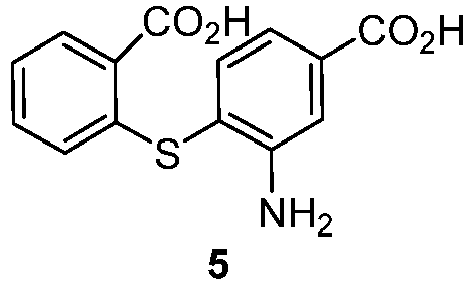
- To a stirring solution of compound 4 (40 g, 126.18 mmol) in THF: H2O (5: 1, 400 mL) was added lithium hydroxide monohydrate (26 g, 619.0 mmol) at 0 °C; warmed to RT and stirred for 48 h. The reaction was monitored by TLC; after completion of the reaction, the volatiles were removed in vacuo. The pH of the residue was acidified with 2 N HCl to ~2. The precipitated solid was filtered and dried in vacuo to afford compound 5 (34.6 g, 95%) as an off-white solid. TLC: 30% EtOAc/ hexanes (Rƒ : 0.1); 1H NMR (DMSO-d6 , 500 MHz): δ 13.00 (br s, 2H), 7.93 (dd, J = 7.7, 1.0 Hz, 1H), 7.42 (s, 1H), 7.40-7.31 (m, 2H), 7.18 (t, J = 7.4 Hz, 1H), 7.13 (dd, J = 8.0, 1.6 Hz, 1H), 6.61 (d, J = 7.8 Hz, 1H), 5.55 (br s, 2H).
-

- To a stirring solution of compound 5 (31 g, 107.26 mmol) in THF (600 mL) under inert atmosphere was added CDI (86.88 g, 536.29 mmol) at 0 °C; warmed to RT and stirred for 16 h. The reaction was monitored by TLC; after completion of the reaction, the reaction mixture was acidified with 2 N HCl to pH∼4. The obtained solid was filtered and further dried by using toluene (2 x 200 mL) to afford compound 6 (26 g, 90%) as white solid. TLC: 10% MeOH/ CH2Cl2 (Rƒ : 0.3); 1H NMR (DMSO-d6 , 400 MHz): δ 13.22 (br s, 1H), 10.81 (s, 1H), 7.78 (s, 1H), 7.72-7.64 (m, 3H), 7.57-7.44 (m, 3H).
-

-

- To a stirring solution of 6 (500 mg, 1.84 mmol) in MeOH: CH2Cl2 (1: 1, 20 mL) under argon atmosphere was added CH2N2 (insitu prepared using N-nitrosomethyl urea (0.95 g, 9.2 mmol) + KOH (0.51 g, 9.22 mmol) at 0 °C; warmed to RT and stirred for 1 h. The reaction was monitored by TLC; after completion of the reaction, the volatiles were removed in vacuo to obtain the crude. The crude was purified through silica gel column chromatography using 20% EtOAc/ hexanes to afford compound 90 (450 mg, 86%) as white solid. TLC: 30% EtOAc/ hexanes (Rƒ : 0.5); 1H-NMR (DMSO-d6 , 500 MHz): δ 10.82 (s, 1H), 7.82 (s, 1H), 7.75-7.69 (m, 3H), 7.58-7.63 (m, 3H), 3.82 (s, 3H).
-

- To a stirring solution of 90 (5 g, 17.54 mmol) in acetic acid (25 mL) was added 30% aqueous hydrogen peroxide (100 mL) at 0 °C; warmed to 50 °C and stirred for 72 h. The reaction was monitored by TLC; after completion of the reaction, the obtained solid was filtered, washed with water (100 mL), 10% EtOAc/ hexanes (100 mL) and dried in vacuo to afford compound 91 (3.5 g, 64%) as white solid. TLC: 5% MeOH/ CH2Cl2 (Rƒ : 0.3); 1H NMR (DMSO-d6 , 500 MHz): δ 11.58 (s, 1H), 8.09 (d, J = 8.4 Hz, 1H), 8.01-7.95 (m, 3H), 7.93-7.83 (m, 3H), 3.88 (s, 3H);
-

- To a stirring solution of compound 91 (3.5 g, 11.04 mmol) in a mixture of THF: MeOH: H2O (2: 2: 1, 25 mL) was added lithium hydroxide monohydrate (1.3 g, 33.12 mmol) portion wise for 10 min at 0 °C; warmed to RT and stirred for 3 h. The reaction was monitored by TLC; after completion of the reaction, the volatiles were removed in vacuo. The residue was diluted with water (20 mL) and acidified with 1 N HCl to pH∼2. The obtained solid was filtered, washed with isopropyl alcohol (15 mL) and dried in vacuo to obtain compound 92 (2.8 g, 84%) as white solid. TLC: 5% MeOH/ CH2Cl2 (Rƒ : 0.1); 1H NMR (DMSO-d6 , 400 MHz): δ 13.65 (br s, 1H), 11.55 (s, 1H), 8.07 (d, J = 8.3 Hz, 1H), 8.03-7.82 (m, 6H).
-

- Synthesis of (2-(trifluoromethyl) thiazol-5-yl) methanol (253): To a stirring solution of ethyl 2-(trifluoromethyl) thiazole-5-carboxylate 252 (500 mg, 2.22 mmol) in THF (25 mL) under inert atmosphere was added lithium aluminium hydride (126 mg, 3.33 mmol) at 0 °C; warmed to RT and stirred for 3 h. The reaction was monitored by TLC; after completion of the reaction, the reaction mixture was cooled to 0 °C, quenched with ice-cold water (5 mL), followed by 10% aqueous sodium hydroxide solution (3 mL), filtered through celite and washed with THF (10 mL). The filtrate was dried over sodium sulfate, filtered and concentrated in vacuo to afford compound 253 (300 mg, 73%) as pale yellow liquid. 1H NMR (DMSO-d6 , 400 MHz): δ 7.98 (s, 1H), 5.90 (t, J = 5.7 Hz, 2H), 4.79 (d, J = 5.6 Hz, 3H).Synthesis of (2-(trifluoromethyl) thiazol-5-yl) methyl methanesulfonate (254): To a stirring solution of compound 253 (200 mg, 1.09 mmol) in CH2Cl2 (10 mL) under inert atmosphere were added triethyl amine (0.47 mL, 3.27 mmol), methanesulfonyl chloride (0.16 mL, 2.18 mmol) at 0 °C; warmed to RT and stirred for 16 h. The reaction was monitored by TLC; after completion of the reaction, the reaction mixture was diluted with CH2Cl2 (100 mL), washed with 10% NaHCO3 solution (50 mL). The organic extract was dried over sodium sulfate, filtered and concentrated in vacuo to afford crude compound 254 (200 mg) as yellow liquid. TLC: 40% EtOAc/ hexanes (Rƒ : 0.2); LC-MS: 24.48%; 261.8 (M++1); (column; Ascentis Express C18, (50 × 3.0 mm, 2.7 µm); RT 2.29 min. 0.025% Aq. TFA + 5% ACN: ACN + 5% 0.025% Aq. TFA, 1.2 mL/min).
- Synthesis of (2-(trifluoromethyl) thiazol-5-yl) methanamine (255): To a stirring solution of compound 254 (200 mg, crude) in EtOH (10 mL) was added aqueous ammonia (10 mL) at 0 °C; heated to 100 °C and stirred for 16 h in a sealed tube. The reaction was monitored by TLC; after completion of the reaction, the volatiles were removed in vacuo to obtain the crude. The crude was purified through silica gel column chromatography using 10% MeOH/ CH2Cl2 to afford compound 255 (56 mg) as pale yellow sticky solid. 1H NMR (DMSO-d6 , 400 MHz): δ 7.92 (s, 1H), 6.80 (br s, 2H), 4.01 (s, 2H).
-

- To a stirring solution of compound 6 (100 mg, 0.36 mmol) in DMF (5 mL) under inert atmosphere were added EDCI.HCl (105 mg, 0.55 mmol), HOBt (75 mg, 0.55 mmol), compound 255 (80 mg, 0.44 mmol) and diisopropylethylamine (0.19 mL, 1.10 mmol) at 0 °C warmed to RT and stirred for 16 h. The reaction was monitored by TLC; after completion of the reaction, the volatiles were removed in vacuo to obtain the crude. The crude was either directly dried in vacuo or triturated or purified through silica gel column chromatography to afford the desired compound.
Table 1: Synthesis from compound 92 and synthesized amine 255. Example Structure Proc edur e, Inte rme diat e, ami ne Rx. Yiel d (%) Mass Spec. Found Mass Spec. Calculated 1H-NMR 1553 
A, 92, 255 16 468.3 (M++1) ; 467.02 for C19H12F3N3 O4S2 1H-NMR (DMSO-d6 , 400 MHz): δ 11.50 (s, 1H), 9.56 (t, J = 5.6 Hz, 1H), 8.08-8.04 (m, 2H), 7.98 (td, J = 7.7, 0.9 Hz, 2H), 7.94-7.83 (m, 3H), 7.81 (dd, J = 8.2, 1.4 Hz, 1H), 4.75 (d, J = 5.5 Hz, 2H); - AD38 cells grown in a 175 cm flask with "Growth Medium" (DMEM/F12 (1:1) (cat# SH30023.01, Hyclone, IX Pen/step (cat#: 30-002-CL, Mediatech, Inc), 10% FBS (cat#: 101, Tissue Culture Biologics), 250 µg/mL G418 (cat#: 30-234-CR, Mediatech, Inc), 1 µg/mL Tetracycline (cat#: T3325, Teknova)) were detached with 0.25% trypsin. Tetracycline-free "treatment medium" (15 mL DMEM/F12 (1:1) (cat# SH30023.01, Hyclone, 1x Pen/step (cat#: 30-002-CL, Mediatech, Inc), with 2% FBS, Tet-system approved (cat#: 631106, Clontech) were then added to mix and spun at 1300 rpm for 5 min. Pelleted cells were then re-suspended/washed with 50 mL of IX PBS 2 times and 10 mL Treatment Medium one time. AD38 cells were then re-suspended with 10 mL of Treatment Medium and counted. Wells of a collagen coated 96-well NUNC microtiter plate were seeded at 50,000/well in 180 µL of Treatment Medium, and 20 µL of in treatment media with either 10% DMSO (Control) or a 10X solution of compound in 10% DMSO was added. Plates were incubated for 6 days at 37 °C.
- Viral load production was assayed by quantitative PCR of the core sequence. Briefly, 5 µL of clarified supernatant was added to a PCR reaction mixture that contained forward primers HBV-f 5'-CTGTGCCTTGGGTGGCTTT-3', Reverse primers HBV-r 5'-AAGGAAAGAAGTCAGAAGGCAAAA-3' and Fluorescent TaqMan™ Probes HBV-probe 5'-FAM/AGCTCCAAA/ZEN/TTCTTTATAAGGGTCGATGTCCATG/3IABkFQ -3' in Quanta Biosciences PerfeCTa® qPCR Toughmix®, and was subsequently on an Applied Biosystems VIIA7 in a final volume of 20 µL. The PCR mixture was incubated at 45 °C for 5 minutes, then 95 °C for 10 min, followed by 40 cycles of 10 seconds at 95 °C and 20 seconds at 60 °C. Viral load was quantitated against known standards by using ViiA™ 7 Software. Viral load in the supernatant from wells with treated cells were compared against viral load in supernatant from DMSO control wells (≥ 3 per plate).
- At the end of compound treatment period cell viability was assessed using a Promega CellTiter-Glo protocol. All supernatant was removed the previously treated 96-well microtiter plate, and 50 µL Tetracycline-free treatment medium (DMEM/F12 (1:1), 1x Pen/step (cat#: 30-002-CL, Mediatech, Inc), with 2% FBS, Tet-system approved (cat#: 631106, Clontech), and 1% DMSO was added back to each well. Another 50 µL of CellTiter-Glo reagent solution (Promega, G7573) was then added at room temperature and the contents mixed for 2 minutes on an orbital shaker to induce cell lysis. This was followed by incubation at room temperature for 10 minutes to stabilize the luminescent signal. The luminescence was recorded for 0.2 seconds per well on a Tecan multimode platereader (Infinite M1000 pro). The luminescent signal from each well was normalized against that of untreated (DMSO) control wells. All results were reported percent viability (with controls being 100%).
Table 2 - Compounds and Biological activity Example AD38 Viral Load (%) (VL with cmpd/VL in DMSO control) at 10 µM AD38 Viability Normalized Result (cmpd/DMSO %) at 10 µM 1553 0.5 107 - While specific embodiments of the subject invention have been discussed, the above specification is illustrative and not restrictive. Many variations of the invention will become apparent to those skilled in the art upon review of this specification. The full scope of the invention should be determined by reference to the claims, along with their full scope of equivalents, and the specification, along with such variations.
- Unless otherwise indicated, all numbers expressing quantities of ingredients, reaction conditions, and so forth used in the specification and claims are to be understood as being modified in all instances by the term "about." Accordingly, unless indicated to the contrary, the numerical parameters set forth in this specification and attached claims are approximations that may vary depending upon the desired properties sought to be obtained by the present invention.
Claims (3)
- A compound represented by

- A pharmaceutically acceptable composition comprising the compound of claim 1.
- The compound of claim 1 for use in a method of treating a hepatitis B infection.
Priority Applications (5)
| Application Number | Priority Date | Filing Date | Title |
|---|---|---|---|
| SM20200630T SMT202000630T1 (en) | 2015-09-15 | 2016-09-15 | Hepatitis b core protein modulators |
| HRP20201812TT HRP20201812T1 (en) | 2015-09-15 | 2016-09-15 | Hepatitis b core protein modulators |
| EP20185808.1A EP3782626A1 (en) | 2015-09-15 | 2016-09-15 | Hepatitis b core protein modulators |
| SI201630982T SI3349580T1 (en) | 2015-09-15 | 2016-09-15 | Hepatitis b core protein modulators |
| RS20201384A RS61064B1 (en) | 2015-09-15 | 2016-09-15 | Hepatitis b core protein modulators |
Applications Claiming Priority (2)
| Application Number | Priority Date | Filing Date | Title |
|---|---|---|---|
| US201562218815P | 2015-09-15 | 2015-09-15 | |
| PCT/US2016/051934 WO2017048950A1 (en) | 2015-09-15 | 2016-09-15 | Hepatitis b core protein modulators |
Related Child Applications (2)
| Application Number | Title | Priority Date | Filing Date |
|---|---|---|---|
| EP20185808.1A Division-Into EP3782626A1 (en) | 2015-09-15 | 2016-09-15 | Hepatitis b core protein modulators |
| EP20185808.1A Division EP3782626A1 (en) | 2015-09-15 | 2016-09-15 | Hepatitis b core protein modulators |
Publications (3)
| Publication Number | Publication Date |
|---|---|
| EP3349580A1 EP3349580A1 (en) | 2018-07-25 |
| EP3349580A4 EP3349580A4 (en) | 2019-05-15 |
| EP3349580B1 true EP3349580B1 (en) | 2020-08-19 |
Family
ID=58289869
Family Applications (4)
| Application Number | Title | Priority Date | Filing Date |
|---|---|---|---|
| EP16847305.6A Not-in-force EP3349581B8 (en) | 2015-09-15 | 2016-09-15 | Hepatitis b core protein modulators |
| EP16847295.9A Active EP3349580B1 (en) | 2015-09-15 | 2016-09-15 | Hepatitis b core protein modulators |
| EP20185808.1A Withdrawn EP3782626A1 (en) | 2015-09-15 | 2016-09-15 | Hepatitis b core protein modulators |
| EP16847298.3A Not-in-force EP3349761B1 (en) | 2015-09-15 | 2016-09-15 | Hepatitis b core protein modulators |
Family Applications Before (1)
| Application Number | Title | Priority Date | Filing Date |
|---|---|---|---|
| EP16847305.6A Not-in-force EP3349581B8 (en) | 2015-09-15 | 2016-09-15 | Hepatitis b core protein modulators |
Family Applications After (2)
| Application Number | Title | Priority Date | Filing Date |
|---|---|---|---|
| EP20185808.1A Withdrawn EP3782626A1 (en) | 2015-09-15 | 2016-09-15 | Hepatitis b core protein modulators |
| EP16847298.3A Not-in-force EP3349761B1 (en) | 2015-09-15 | 2016-09-15 | Hepatitis b core protein modulators |
Country Status (31)
| Country | Link |
|---|---|
| US (6) | US10766890B2 (en) |
| EP (4) | EP3349581B8 (en) |
| JP (4) | JP2018531919A (en) |
| KR (3) | KR20180050406A (en) |
| CN (4) | CN108347942B (en) |
| AR (3) | AR106041A1 (en) |
| AU (4) | AU2016323305A1 (en) |
| CA (3) | CA2998741C (en) |
| CL (2) | CL2018000684A1 (en) |
| CY (1) | CY1123570T1 (en) |
| DK (1) | DK3349580T3 (en) |
| DO (1) | DOP2018000074A (en) |
| EA (3) | EA201890731A1 (en) |
| ES (2) | ES2905950T3 (en) |
| HK (2) | HK1258697A1 (en) |
| HR (1) | HRP20201812T1 (en) |
| HU (1) | HUE051872T2 (en) |
| IL (3) | IL258097A (en) |
| LT (1) | LT3349580T (en) |
| MX (4) | MX2018003206A (en) |
| MY (1) | MY198974A (en) |
| PH (3) | PH12018500571B1 (en) |
| PL (1) | PL3349580T3 (en) |
| PT (1) | PT3349580T (en) |
| RS (1) | RS61064B1 (en) |
| SG (1) | SG10202011103UA (en) |
| SI (1) | SI3349580T1 (en) |
| SM (1) | SMT202000630T1 (en) |
| TW (4) | TWI721016B (en) |
| WO (3) | WO2017048950A1 (en) |
| ZA (1) | ZA201802456B (en) |
Families Citing this family (71)
| Publication number | Priority date | Publication date | Assignee | Title |
|---|---|---|---|---|
| CN110437153A (en) | 2014-03-13 | 2019-11-12 | 美国印第安纳大学研究和技术公司 | Hepatitis B Core Protein Allosteric Modulator |
| TWI721016B (en) * | 2015-09-15 | 2021-03-11 | 美商艾森伯利生物科學公司 | Hepatitis b core protein modulators |
| CA3037151A1 (en) * | 2016-09-15 | 2018-03-22 | Assembly Biosciences, Inc. | Hepatitis b core protein modulators |
| FI3526323T3 (en) | 2016-10-14 | 2023-06-06 | Prec Biosciences Inc | Engineered meganucleases specific for recognition sequences in the hepatitis b virus genome |
| CN116751200A (en) | 2016-11-07 | 2023-09-15 | 爱彼特生物制药公司 | Tricyclic compounds containing substituted pyridones and methods of using the same |
| LT3587420T (en) * | 2017-02-23 | 2021-07-12 | Fujian Cosunter Pharmaceutical Co., Ltd. | TRICYCLE COMPOUND AND ITS USE |
| AU2018227811A1 (en) | 2017-03-02 | 2019-09-19 | Assembly Biosciences, Inc. | Cyclic sulfamide compounds and methods of using same |
| SG11201908475RA (en) | 2017-03-13 | 2019-10-30 | Assembly Biosciences Inc | Process for making hepatitis b core protein modulators |
| US11098010B2 (en) | 2017-03-21 | 2021-08-24 | Arbutus Biopharma Corporation | Substituted dihydroindene-4-carboxamides and analogs thereof, and methods using same |
| BR112020008765A2 (en) | 2017-11-02 | 2020-10-20 | Aicuris Gmbh & Co. Kg | indole-2-carboxamides pyrazolo-piperidine substituted highly active innovative active against the hepatitis b virus (hbv) |
| GEAP202115351A (en) | 2017-11-02 | 2021-12-10 | Aicuris Gmbh & Co Kg | Novel, highly active amino-thiazole substituted indole-2-carboxamides active against the hepatitis b virus (hbv) |
| JP7098748B2 (en) | 2017-12-20 | 2022-07-11 | インスティチュート オブ オーガニック ケミストリー アンド バイオケミストリー エーエスシーアール,ヴイ.ヴイ.アイ. | 2'3'cyclic dinucleotide with phosphonate binding that activates the STING adapter protein |
| KR102492187B1 (en) | 2017-12-20 | 2023-01-27 | 인스티튜트 오브 오가닉 케미스트리 앤드 바이오케미스트리 에이에스 씨알 브이.브이.아이. | 3'3' cyclic dinucleotides with phosphonate linkages that activate STING adapter proteins |
| KR102526964B1 (en) | 2018-02-26 | 2023-04-28 | 길리애드 사이언시즈, 인코포레이티드 | Substituted pyrrolizine compounds as HBV replication inhibitors |
| US10870691B2 (en) | 2018-04-05 | 2020-12-22 | Gilead Sciences, Inc. | Antibodies and fragments thereof that bind hepatitis B virus protein X |
| TW202005654A (en) | 2018-04-06 | 2020-02-01 | 捷克科學院有機化學與生物化學研究所 | 2'2'-cyclic dinucleotides |
| TWI818007B (en) | 2018-04-06 | 2023-10-11 | 捷克科學院有機化學與生物化學研究所 | 2'3'-cyclic dinucleotides |
| TWI833744B (en) | 2018-04-06 | 2024-03-01 | 捷克科學院有機化學與生物化學研究所 | 3'3'-cyclic dinucleotides |
| TW201945388A (en) | 2018-04-12 | 2019-12-01 | 美商精密生物科學公司 | Optimized engineered meganucleases having specificity for a recognition sequence in the hepatitis B virus genome |
| US12318393B2 (en) * | 2018-05-03 | 2025-06-03 | Emory University | Modulators of orphan nuclear receptors for NASH and other metabolic disorders |
| US20190359645A1 (en) | 2018-05-03 | 2019-11-28 | Institute Of Organic Chemistry And Biochemistry Ascr, V.V.I. | 2'3'-cyclic dinucleotides comprising carbocyclic nucleotide |
| TWI815887B (en) * | 2018-05-15 | 2023-09-21 | 美商愛彼特生物製藥股份有限公司 | Substituted 2,2'-bipyrimidinyl compounds, analogues thereof, and methods using same |
| TWI826492B (en) | 2018-07-27 | 2023-12-21 | 加拿大商愛彼特生物製藥公司 | Substituted tetrahydrocyclopenta[c]pyrroles, substituted dihydropyrrolizines, analogues thereof, and methods using same |
| WO2020028097A1 (en) | 2018-08-01 | 2020-02-06 | Gilead Sciences, Inc. | Solid forms of (r)-11-(methoxymethyl)-12-(3-methoxypropoxy)-3,3-dimethyl-8-0x0-2,3,8,13b-tetrahydro-1h-pyrido[2,1-a]pyrrolo[1,2-c] phthalazine-7-c arboxylic acid |
| EP3846793B1 (en) | 2018-09-07 | 2024-01-24 | PIC Therapeutics, Inc. | Eif4e inhibitors and uses thereof |
| PE20211655A1 (en) | 2018-10-31 | 2021-08-24 | Gilead Sciences Inc | 6-AZABENZIMIDAZOLE COMPOUNDS SUBSTITUTED AS HPK1 INHIBITORS |
| WO2020092528A1 (en) | 2018-10-31 | 2020-05-07 | Gilead Sciences, Inc. | Substituted 6-azabenzimidazole compounds having hpk1 inhibitory activity |
| UY38436A (en) | 2018-11-02 | 2020-05-29 | Aicuris Gmbh & Co Kg | NEW 6,7-DIHYDRO-4H-PYRAZOLE [1,5-A] PYRAZININDOL-2-CARBOXAMIDES ACTIVE AGAINST THE HEPATITIS B VIRUS (HBV) |
| PY1991608A (en) | 2018-11-02 | 2022-02-10 | Aicuris Gmbh & Co Kg | NEW UREA 6,7-DIHYDRO-4H-PYRAZOLO [1,5-A] PYRAZINE ACTIVE AGAINST HEPATITIS B VIRUS (HBV) |
| PY1991611A (en) | 2018-11-02 | 2022-03-14 | Aicuris Gmbh & Co Kg | NEW UREA 6,7-DIHYDRO-4H-PYRAZOLE [1,5-A] PYRAZINES ACTIVE AGAINST HEPATITIS B VIRUS (HBV) |
| TW202031666A (en) | 2018-11-02 | 2020-09-01 | 德商艾庫瑞斯公司 | Novel urea 6,7-dihydro-4h-thiazolo[5,4-c]pyridines active against the hepatitis b virus (hbv) |
| PY1991601A (en) | 2018-11-02 | 2020-11-02 | Aicuris Gmbh & Co Kg | NEW 6,7-DIHYDRO-4H-PYRAZOLE [1,5-A]PYRAZINE INDOLE-2-CARBOXAMIDES ACTIVE AGAINST HEPATITIS B VIRUS (HBV) |
| PY1991606A (en) | 2018-11-02 | 2022-02-10 | Aicuris Gmbh & Co Kg | NEW UREA 6,7-DIHYDRO-4H-PYRAZOLE [4,3-C] PYRIDINES ACTIVE AGAINST HEPATITIS B VIRUS (HBV) |
| TW202415643A (en) | 2018-12-12 | 2024-04-16 | 加拿大商愛彼特生物製藥公司 | Substituted arylmethylureas and heteroarylmethylureas, analogues thereof, and methods using same |
| US20220213049A1 (en) * | 2019-01-17 | 2022-07-07 | Hoffmann-La Roche Inc. | Substituted chromen-4-one for the treatment and prophylaxis of hepatitis b virus infection |
| CN113543851B (en) | 2019-03-07 | 2025-03-18 | 捷克共和国有机化学与生物化学研究所 | 2'3'-Cyclic dinucleotides and prodrugs thereof |
| WO2020178770A1 (en) | 2019-03-07 | 2020-09-10 | Institute Of Organic Chemistry And Biochemistry Ascr, V.V.I. | 3'3'-cyclic dinucleotides and prodrugs thereof |
| WO2020178768A1 (en) | 2019-03-07 | 2020-09-10 | Institute Of Organic Chemistry And Biochemistry Ascr, V.V.I. | 3'3'-cyclic dinucleotide analogue comprising a cyclopentanyl modified nucleotide as sting modulator |
| TW202210480A (en) | 2019-04-17 | 2022-03-16 | 美商基利科學股份有限公司 | Solid forms of a toll-like receptor modulator |
| TW202212339A (en) | 2019-04-17 | 2022-04-01 | 美商基利科學股份有限公司 | Solid forms of a toll-like receptor modulator |
| WO2020221826A1 (en) | 2019-04-30 | 2020-11-05 | Aicuris Gmbh & Co. Kg | Novel indole-2-carboxamides active against the hepatitis b virus (hbv) |
| CU20210090A7 (en) | 2019-04-30 | 2022-06-06 | Aicuris Gmbh & Co Kg | COMPOUNDS DERIVED FROM OXALIL PIPERAZINES ACTIVE AGAINST HEPATITIS B VIRUS (HBV) |
| CN113748113A (en) | 2019-04-30 | 2021-12-03 | 艾库里斯有限及两合公司 | Novel indolizine-2-carboxamides having activity against Hepatitis B Virus (HBV) |
| EP3962912A1 (en) | 2019-04-30 | 2022-03-09 | AiCuris GmbH & Co. KG | Novel phenyl and pyridyl ureas active against the hepatitis b virus (hbv) |
| TWI826690B (en) | 2019-05-23 | 2023-12-21 | 美商基利科學股份有限公司 | Substituted eneoxindoles and uses thereof |
| SG11202112590WA (en) * | 2019-05-24 | 2021-12-30 | Assembly Biosciences Inc | Pharmaceutical compositions for the treatment of hbv |
| AU2020301161B2 (en) | 2019-06-25 | 2023-10-26 | Gilead Sciences, Inc. | FLT3L-Fc fusion proteins and methods of use |
| WO2021034804A1 (en) | 2019-08-19 | 2021-02-25 | Gilead Sciences, Inc. | Pharmaceutical formulations of tenofovir alafenamide |
| EP4458975A3 (en) | 2019-09-30 | 2025-02-12 | Gilead Sciences, Inc. | Hbv vaccines and methods treating hbv |
| CN114728973B (en) * | 2019-11-22 | 2024-06-28 | 正大天晴药业集团股份有限公司 | Crystal form of a nucleoprotein inhibitor and its application |
| ES3022990T3 (en) | 2019-12-06 | 2025-05-29 | Prec Biosciences Inc | Optimized engineered meganucleases having specificity for a recognition sequence in the hepatitis b virus genome |
| MX2022010944A (en) | 2020-03-03 | 2022-11-09 | Pic Therapeutics Inc | Eif4e inhibitors and uses thereof. |
| US12162851B2 (en) | 2020-03-11 | 2024-12-10 | Nocion Therapeutics, Inc. | Charged ion channel blockers and methods for use |
| JP7708777B2 (en) * | 2020-03-11 | 2025-07-15 | ノシオン セラピューティクス,インコーポレイテッド | Charged ion channel blockers and methods of use - Patents.com |
| CA3169348A1 (en) | 2020-03-20 | 2021-09-23 | Gilead Sciences, Inc. | Prodrugs of 4'-c-substituted-2-halo-2'-deoxyadenosine nucleosides and methods of making and using the same |
| CN115843294B (en) * | 2020-04-22 | 2026-02-10 | 组装生物科学股份有限公司 | Five-membered heteroarylformamide compounds used to treat HBV |
| CN113929648A (en) * | 2020-07-14 | 2022-01-14 | 浙江晖石药业有限公司 | A kind of preparation method of cyclobutane-1,2-dicarboxylic acid anhydride and intermediate thereof |
| ES3054072T3 (en) | 2020-08-07 | 2026-01-29 | Gilead Sciences Inc | Prodrugs of phosphonamide nucleotide analogues and their pharmaceutical use |
| TW202406932A (en) | 2020-10-22 | 2024-02-16 | 美商基利科學股份有限公司 | Interleukin-2-fc fusion proteins and methods of use |
| AU2022274607A1 (en) | 2021-05-13 | 2023-11-16 | Gilead Sciences, Inc. | COMBINATION OF A TLR8 MODULATING COMPOUND AND ANTI-HBV siRNA THERAPEUTICS |
| WO2022271650A1 (en) | 2021-06-23 | 2022-12-29 | Gilead Sciences, Inc. | Diacylglyercol kinase modulating compounds |
| US11932634B2 (en) | 2021-06-23 | 2024-03-19 | Gilead Sciences, Inc. | Diacylglycerol kinase modulating compounds |
| EP4359415A1 (en) | 2021-06-23 | 2024-05-01 | Gilead Sciences, Inc. | Diacylglyercol kinase modulating compounds |
| WO2022271659A1 (en) | 2021-06-23 | 2022-12-29 | Gilead Sciences, Inc. | Diacylglyercol kinase modulating compounds |
| TW202315621A (en) | 2021-08-25 | 2023-04-16 | 美商皮克醫療公司 | Eif4e inhibitors and uses thereof |
| JP2024532276A (en) | 2021-08-25 | 2024-09-05 | ピク セラピューティクス, インコーポレイテッド | eIF4E inhibitors and uses thereof |
| CN115521238B (en) * | 2022-07-02 | 2024-05-31 | 甘肃瀚聚药业有限公司 | Preparation method of N-methyl-2- (2-chloroethyl) pyrrolidine |
| WO2025240243A1 (en) | 2024-05-13 | 2025-11-20 | Gilead Sciences, Inc. | Combination therapies with bulevirtide and an inhibitory nucleic acid targeting hepatitis b virus |
| WO2025240242A1 (en) | 2024-05-13 | 2025-11-20 | Gilead Sciences, Inc. | Combination therapies with ribavirin |
| WO2025240246A1 (en) | 2024-05-13 | 2025-11-20 | Gilead Sciences, Inc. | Combination therapies with ribavirin |
| WO2025240244A1 (en) | 2024-05-13 | 2025-11-20 | Gilead Sciences, Inc. | Combination therapies comprising bulevirtide and lonafarnib for use in the treatment of hepatitis d virus infection |
Family Cites Families (38)
| Publication number | Priority date | Publication date | Assignee | Title |
|---|---|---|---|---|
| US688762A (en) * | 1901-06-19 | 1901-12-10 | Charles Weber | Toy. |
| GB1480553A (en) | 1976-06-03 | 1977-07-20 | Pfizer Ltd | Tricyclic sulphonamides |
| JPS58225074A (en) | 1982-06-25 | 1983-12-27 | Chugai Pharmaceut Co Ltd | Dibenzoazepine derivative |
| GB9109557D0 (en) * | 1991-05-02 | 1991-06-26 | Wellcome Found | Chemical compounds |
| US5512563A (en) | 1993-07-29 | 1996-04-30 | American Cyanamid Company | Tricyclic benzazepine vasopressin antagonists |
| DE19624659A1 (en) * | 1996-06-20 | 1998-01-08 | Klinge Co Chem Pharm Fab | New pyridylalkene and pyridylalkanoic acid amides |
| DE102004004928A1 (en) | 2004-01-31 | 2005-08-18 | Bayer Healthcare Ag | Dibenzoxazepine II |
| EP1937677A1 (en) | 2005-10-17 | 2008-07-02 | Arcadia Pharmaceuticals Inc. | Cb-1 modulating compounds and their use |
| US20070105835A1 (en) * | 2005-11-07 | 2007-05-10 | Kazantsev Aleksey G | Compositions and methods for modulating poly(ADP-ribose) polymerase activity |
| JP4042065B1 (en) | 2006-03-10 | 2008-02-06 | 健治 吉田 | Input processing system for information processing device |
| WO2008036139A2 (en) * | 2006-06-07 | 2008-03-27 | The Regents Of The University Of California | Inhibitors of mshc and homologs thereof, and methods of identifying same |
| WO2008118141A2 (en) | 2006-10-17 | 2008-10-02 | Acadia Pharmaceuticals Inc. | Use of cannabinoid modulating compounds in combination with other therapeutic compounds for adjunctive therapy |
| WO2010011537A1 (en) * | 2008-07-23 | 2010-01-28 | The United States Of America, As Represented By The Secretary, Department Of Health And Human Services | Inhibitors of the plasmodial surface anion channel as antimalarials |
| CN106336400A (en) * | 2008-12-08 | 2017-01-18 | 萌蒂制药国际有限公司 | Compositions of protein receptor tyrosine kinase inhibitors |
| WO2011075607A1 (en) * | 2009-12-18 | 2011-06-23 | Intermune, Inc. | Novel inhibitors of hepatitis c virus replication |
| WO2012045194A1 (en) | 2010-10-09 | 2012-04-12 | Abbott Laboratories | Benzodiazepinones as fak inhibitors for treatment of cancer |
| JP5977347B2 (en) * | 2011-07-01 | 2016-08-24 | バルーク エス.ブルームバーグ インスティテュート | Sulfamoylbenzamide derivatives as antiviral agents against HBV infection |
| WO2013010069A1 (en) | 2011-07-13 | 2013-01-17 | Indiana University Research And Technology Corporation | Modified viral structural protein with antiviral activity |
| AU2013207205B2 (en) | 2012-01-06 | 2017-02-02 | Janssen Sciences Ireland Uc | 4,4-disubstituted-1,4-dihydropyrimidines and the use thereof as medicaments for the treatment of Hepatitis B |
| CN104797561B (en) | 2012-08-28 | 2017-03-01 | 爱尔兰詹森科学公司 | Fused bicyclic sulfamoyl derivatives and their use as medicines for the treatment of hepatitis B |
| UY34993A (en) | 2012-08-28 | 2014-02-28 | Janssen R & D Ireland | SULFAMOILARILAMIDAS AND ITS USE AS MEDICINES FOR THE TREATMENT OF HEPATITIS B |
| MX2015002954A (en) | 2012-09-10 | 2015-06-05 | Hoffmann La Roche | 6-amino acid heteroaryldihydropyrimidines for the treatment and prophylaxis of hepatitis b virus infection. |
| RU2015121940A (en) | 2012-11-09 | 2016-12-27 | Индиана Юниверсити Рисерч Энд Текнолоджи Корпорейшн | ALTERNATIVE APPLICATIONS OF HEPATITIS B VIRUS (HBV) ASSEMBLY EFFECTORS |
| AU2013355220B2 (en) | 2012-12-06 | 2018-08-02 | Baruch S. Blumberg Institute | Functionalized benzamide derivatives as antiviral agents against HBV infection |
| CA2896554C (en) | 2012-12-27 | 2019-11-05 | Drexel University | Novel antiviral agents against hbv infection |
| RU2519546C1 (en) | 2013-01-16 | 2014-06-10 | Общество С Ограниченной Ответственностью "Биоинтегратор" (Ооо "Биоинтегратор") | CONJUGATES AND SMALL MOLECULES, INTERACTING WITH CD16a RECEPTOR |
| WO2014131847A1 (en) | 2013-02-28 | 2014-09-04 | Janssen R&D Ireland | Sulfamoyl-arylamides and the use thereof as medicaments for the treatment of hepatitis b |
| AR095426A1 (en) | 2013-03-14 | 2015-10-14 | Onyx Therapeutics Inc | TRIPEPTIDE INHIBITORS OF PROTEASA EPOXYCETONE |
| CA2907243C (en) | 2013-03-15 | 2021-12-28 | Celgene Avilomics Research, Inc. | Substituted dihydropyrimidopyrimidinone compounds and pharmaceutical compositions thereof use fgfr4 inhibitor |
| JP6419155B2 (en) | 2013-04-03 | 2018-11-07 | ヤンセン・サイエンシズ・アイルランド・ユーシー | N-phenyl-carboxamide derivatives and their use as pharmaceuticals for treating hepatitis B |
| HRP20181863T1 (en) | 2013-05-17 | 2018-12-28 | Janssen Sciences Ireland Uc | Sulphamoylthiophenamide derivatives and the use thereof as medicaments for the treatment of hepatitis b |
| EA201592126A1 (en) | 2013-05-17 | 2016-05-31 | Ф. Хоффманн-Ля Рош Аг | 6-BRIDGED HETEROARYDYDYDROPYRIMIDIDES FOR THE TREATMENT AND PREVENTION OF HEPATITIS B VIRUS INFECTION |
| JO3583B1 (en) | 2013-05-17 | 2020-07-05 | Janssen Sciences Ireland Uc | Sulphamoylpyrrolamide derivatives and the use thereof as medicaments for the treatment of hepatitis b |
| WO2014205138A1 (en) | 2013-06-19 | 2014-12-24 | Seragon Pharmaceuticals, Inc. | Estrogen receptor modulator and uses thereof |
| US9550742B2 (en) * | 2013-07-29 | 2017-01-24 | The United States Of America, As Represented By The Secretary, Department Of Health And Human Services | 11-OXO-10,11-dihydrodibenzo[B,F][1,4]thiazepine S-oxide derivatives and their use as dopamine D2 receptor antagonists |
| CN110437153A (en) * | 2014-03-13 | 2019-11-12 | 美国印第安纳大学研究和技术公司 | Hepatitis B Core Protein Allosteric Modulator |
| KR20170018898A (en) | 2014-06-10 | 2017-02-20 | 바스프 에스이 | Substituted [1,2,4]triazole and imidazole compounds as fungicides |
| TWI721016B (en) | 2015-09-15 | 2021-03-11 | 美商艾森伯利生物科學公司 | Hepatitis b core protein modulators |
-
2016
- 2016-09-14 TW TW105130074A patent/TWI721016B/en not_active IP Right Cessation
- 2016-09-14 TW TW110118046A patent/TWI786639B/en not_active IP Right Cessation
- 2016-09-14 TW TW105130078A patent/TWI730985B/en not_active IP Right Cessation
- 2016-09-14 TW TW105130076A patent/TW201720802A/en unknown
- 2016-09-15 MX MX2018003206A patent/MX2018003206A/en unknown
- 2016-09-15 US US15/760,387 patent/US10766890B2/en active Active
- 2016-09-15 MX MX2018003207A patent/MX2018003207A/en unknown
- 2016-09-15 PT PT168472959T patent/PT3349580T/en unknown
- 2016-09-15 EP EP16847305.6A patent/EP3349581B8/en not_active Not-in-force
- 2016-09-15 AR ARP160102820A patent/AR106041A1/en unknown
- 2016-09-15 EA EA201890731A patent/EA201890731A1/en unknown
- 2016-09-15 AU AU2016323305A patent/AU2016323305A1/en not_active Abandoned
- 2016-09-15 WO PCT/US2016/051934 patent/WO2017048950A1/en not_active Ceased
- 2016-09-15 CN CN201680065139.1A patent/CN108347942B/en not_active Expired - Fee Related
- 2016-09-15 JP JP2018513789A patent/JP2018531919A/en active Pending
- 2016-09-15 CA CA2998741A patent/CA2998741C/en active Active
- 2016-09-15 WO PCT/US2016/051940 patent/WO2017048954A1/en not_active Ceased
- 2016-09-15 MX MX2018003198A patent/MX392309B/en unknown
- 2016-09-15 HK HK19101078.2A patent/HK1258697A1/en unknown
- 2016-09-15 HR HRP20201812TT patent/HRP20201812T1/en unknown
- 2016-09-15 AR ARP160102816A patent/AR106037A1/en unknown
- 2016-09-15 AR ARP160102819A patent/AR106040A1/en unknown
- 2016-09-15 SM SM20200630T patent/SMT202000630T1/en unknown
- 2016-09-15 ES ES16847305T patent/ES2905950T3/en active Active
- 2016-09-15 SG SG10202011103UA patent/SG10202011103UA/en unknown
- 2016-09-15 CN CN202010540566.9A patent/CN112094264A/en active Pending
- 2016-09-15 ES ES16847295T patent/ES2831333T3/en active Active
- 2016-09-15 PH PH1/2018/500571A patent/PH12018500571B1/en unknown
- 2016-09-15 SI SI201630982T patent/SI3349580T1/en unknown
- 2016-09-15 KR KR1020187010462A patent/KR20180050406A/en not_active Withdrawn
- 2016-09-15 KR KR1020187010461A patent/KR20180050405A/en not_active Withdrawn
- 2016-09-15 CA CA2998793A patent/CA2998793A1/en not_active Abandoned
- 2016-09-15 HU HUE16847295A patent/HUE051872T2/en unknown
- 2016-09-15 AU AU2016323297A patent/AU2016323297A1/en not_active Abandoned
- 2016-09-15 JP JP2018513782A patent/JP7023838B2/en not_active Expired - Fee Related
- 2016-09-15 PL PL16847295.9T patent/PL3349580T3/en unknown
- 2016-09-15 AU AU2016323293A patent/AU2016323293B2/en not_active Ceased
- 2016-09-15 KR KR1020187010455A patent/KR20180053363A/en not_active Ceased
- 2016-09-15 EP EP16847295.9A patent/EP3349580B1/en active Active
- 2016-09-15 US US15/760,284 patent/US10377748B2/en active Active
- 2016-09-15 CN CN201680065785.8A patent/CN108347943B/en not_active Expired - Fee Related
- 2016-09-15 HK HK19101106.8A patent/HK1259141A1/en unknown
- 2016-09-15 EA EA201890736A patent/EA201890736A1/en unknown
- 2016-09-15 LT LTEP16847295.9T patent/LT3349580T/en unknown
- 2016-09-15 WO PCT/US2016/051949 patent/WO2017048962A1/en not_active Ceased
- 2016-09-15 US US15/760,343 patent/US10392379B2/en not_active Expired - Fee Related
- 2016-09-15 EP EP20185808.1A patent/EP3782626A1/en not_active Withdrawn
- 2016-09-15 EA EA201890735A patent/EA201890735A1/en unknown
- 2016-09-15 DK DK16847295.9T patent/DK3349580T3/en active
- 2016-09-15 CN CN201680065137.2A patent/CN108348529A/en active Pending
- 2016-09-15 RS RS20201384A patent/RS61064B1/en unknown
- 2016-09-15 EP EP16847298.3A patent/EP3349761B1/en not_active Not-in-force
- 2016-09-15 MY MYPI2018000361A patent/MY198974A/en unknown
- 2016-09-15 CA CA2998803A patent/CA2998803A1/en not_active Abandoned
- 2016-09-15 JP JP2018513837A patent/JP2018531921A/en active Pending
-
2018
- 2018-03-13 IL IL258097A patent/IL258097A/en unknown
- 2018-03-13 IL IL258099A patent/IL258099A/en unknown
- 2018-03-14 IL IL258124A patent/IL258124B/en active IP Right Grant
- 2018-03-14 MX MX2022005899A patent/MX2022005899A/en unknown
- 2018-03-15 CL CL2018000684A patent/CL2018000684A1/en unknown
- 2018-03-15 PH PH12018500573A patent/PH12018500573A1/en unknown
- 2018-03-15 PH PH12018500572A patent/PH12018500572A1/en unknown
- 2018-03-15 DO DO2018000074A patent/DOP2018000074A/en unknown
- 2018-04-13 ZA ZA2018/02456A patent/ZA201802456B/en unknown
-
2019
- 2019-05-28 CL CL2019001433A patent/CL2019001433A1/en unknown
- 2019-05-30 US US16/426,727 patent/US10968211B2/en not_active Expired - Fee Related
-
2020
- 2020-11-16 CY CY20201101088T patent/CY1123570T1/en unknown
-
2021
- 2021-01-04 US US17/140,800 patent/US11814376B2/en active Active
- 2021-01-18 JP JP2021005706A patent/JP7150903B2/en active Active
- 2021-04-01 AU AU2021202065A patent/AU2021202065B2/en not_active Ceased
-
2023
- 2023-09-01 US US18/460,337 patent/US20240025890A1/en not_active Abandoned
Non-Patent Citations (1)
| Title |
|---|
| None * |
Also Published As
Similar Documents
| Publication | Publication Date | Title |
|---|---|---|
| EP3349761B1 (en) | Hepatitis b core protein modulators | |
| EP3116316B1 (en) | Hepatitis b core protein allosteric modulators | |
| US10987360B2 (en) | Hepatitis B core protein modulators | |
| HK1258761B (en) | Hepatitis b core protein modulators | |
| HK40072544A (en) | Hepatitis b core protein allosteric modulators | |
| HK40023225A (en) | Hepatitis b core protein allosteric modulators | |
| HK1231697B (en) | Hepatitis b core protein allosteric modulators | |
| HK1231697A1 (en) | Hepatitis b core protein allosteric modulators |
Legal Events
| Date | Code | Title | Description |
|---|---|---|---|
| STAA | Information on the status of an ep patent application or granted ep patent |
Free format text: STATUS: THE INTERNATIONAL PUBLICATION HAS BEEN MADE |
|
| PUAI | Public reference made under article 153(3) epc to a published international application that has entered the european phase |
Free format text: ORIGINAL CODE: 0009012 |
|
| STAA | Information on the status of an ep patent application or granted ep patent |
Free format text: STATUS: REQUEST FOR EXAMINATION WAS MADE |
|
| 17P | Request for examination filed |
Effective date: 20180329 |
|
| AK | Designated contracting states |
Kind code of ref document: A1 Designated state(s): AL AT BE BG CH CY CZ DE DK EE ES FI FR GB GR HR HU IE IS IT LI LT LU LV MC MK MT NL NO PL PT RO RS SE SI SK SM TR |
|
| AX | Request for extension of the european patent |
Extension state: BA ME |
|
| DAV | Request for validation of the european patent (deleted) | ||
| DAX | Request for extension of the european patent (deleted) | ||
| REG | Reference to a national code |
Ref country code: DE Ref legal event code: R079 Ref document number: 602016042488 Country of ref document: DE Free format text: PREVIOUS MAIN CLASS: A01N0057000000 Ipc: C07D0401120000 |
|
| A4 | Supplementary search report drawn up and despatched |
Effective date: 20190415 |
|
| RIC1 | Information provided on ipc code assigned before grant |
Ipc: C07D 413/12 20060101ALI20190409BHEP Ipc: A61K 31/553 20060101ALI20190409BHEP Ipc: C07D 453/02 20060101ALI20190409BHEP Ipc: C07D 417/12 20060101ALI20190409BHEP Ipc: C07D 267/20 20060101ALI20190409BHEP Ipc: C07D 243/38 20060101ALI20190409BHEP Ipc: A61K 31/551 20060101ALI20190409BHEP Ipc: A61P 31/20 20060101ALI20190409BHEP Ipc: C07D 417/14 20060101ALI20190409BHEP Ipc: A61K 31/554 20060101ALI20190409BHEP Ipc: C07D 281/16 20060101ALI20190409BHEP Ipc: C07D 401/12 20060101AFI20190409BHEP Ipc: C07D 471/04 20060101ALI20190409BHEP |
|
| REG | Reference to a national code |
Ref country code: HK Ref legal event code: DE Ref document number: 1258761 Country of ref document: HK |
|
| RIN1 | Information on inventor provided before grant (corrected) |
Inventor name: ARNOLD, LEE, DANIEL Inventor name: TURNER, WILLIAM Inventor name: FRANCIS, SAMSON Inventor name: LI, LEPING Inventor name: MAAG, HANS Inventor name: HAYDAR, SIMON Inventor name: BURES, MARK |
|
| GRAP | Despatch of communication of intention to grant a patent |
Free format text: ORIGINAL CODE: EPIDOSNIGR1 |
|
| STAA | Information on the status of an ep patent application or granted ep patent |
Free format text: STATUS: GRANT OF PATENT IS INTENDED |
|
| INTG | Intention to grant announced |
Effective date: 20200309 |
|
| GRAS | Grant fee paid |
Free format text: ORIGINAL CODE: EPIDOSNIGR3 |
|
| GRAA | (expected) grant |
Free format text: ORIGINAL CODE: 0009210 |
|
| STAA | Information on the status of an ep patent application or granted ep patent |
Free format text: STATUS: THE PATENT HAS BEEN GRANTED |
|
| AK | Designated contracting states |
Kind code of ref document: B1 Designated state(s): AL AT BE BG CH CY CZ DE DK EE ES FI FR GB GR HR HU IE IS IT LI LT LU LV MC MK MT NL NO PL PT RO RS SE SI SK SM TR |
|
| REG | Reference to a national code |
Ref country code: CH Ref legal event code: EP |
|
| REG | Reference to a national code |
Ref country code: DE Ref legal event code: R096 Ref document number: 602016042488 Country of ref document: DE |
|
| REG | Reference to a national code |
Ref country code: AT Ref legal event code: REF Ref document number: 1303789 Country of ref document: AT Kind code of ref document: T Effective date: 20200915 |
|
| REG | Reference to a national code |
Ref country code: IE Ref legal event code: FG4D |
|
| REG | Reference to a national code |
Ref country code: RO Ref legal event code: EPE |
|
| REG | Reference to a national code |
Ref country code: HR Ref legal event code: TUEP Ref document number: P20201812T Country of ref document: HR |
|
| REG | Reference to a national code |
Ref country code: DK Ref legal event code: T3 Effective date: 20201112 |
|
| REG | Reference to a national code |
Ref country code: FI Ref legal event code: FGE |
|
| REG | Reference to a national code |
Ref country code: PT Ref legal event code: SC4A Ref document number: 3349580 Country of ref document: PT Date of ref document: 20201124 Kind code of ref document: T Free format text: AVAILABILITY OF NATIONAL TRANSLATION Effective date: 20201118 |
|
| REG | Reference to a national code |
Ref country code: NO Ref legal event code: T2 Effective date: 20200819 |
|
| REG | Reference to a national code |
Ref country code: NL Ref legal event code: FP |
|
| REG | Reference to a national code |
Ref country code: SE Ref legal event code: TRGR |
|
| REG | Reference to a national code |
Ref country code: HR Ref legal event code: ODRP Ref document number: P20201812T Country of ref document: HR Payment date: 20201117 Year of fee payment: 5 |
|
| REG | Reference to a national code |
Ref country code: SK Ref legal event code: T3 Ref document number: E 35706 Country of ref document: SK |
|
| REG | Reference to a national code |
Ref country code: EE Ref legal event code: FG4A Ref document number: E020063 Country of ref document: EE Effective date: 20201117 |
|
| REG | Reference to a national code |
Ref country code: HR Ref legal event code: T1PR Ref document number: P20201812 Country of ref document: HR |
|
| REG | Reference to a national code |
Ref country code: HU Ref legal event code: AG4A Ref document number: E051872 Country of ref document: HU |
|
| REG | Reference to a national code |
Ref country code: DE Ref legal event code: R097 Ref document number: 602016042488 Country of ref document: DE |
|
| REG | Reference to a national code |
Ref country code: ES Ref legal event code: FG2A Ref document number: 2831333 Country of ref document: ES Kind code of ref document: T3 Effective date: 20210608 |
|
| PLBE | No opposition filed within time limit |
Free format text: ORIGINAL CODE: 0009261 |
|
| STAA | Information on the status of an ep patent application or granted ep patent |
Free format text: STATUS: NO OPPOSITION FILED WITHIN TIME LIMIT |
|
| REG | Reference to a national code |
Ref country code: AT Ref legal event code: UEP Ref document number: 1303789 Country of ref document: AT Kind code of ref document: T Effective date: 20200819 |
|
| 26N | No opposition filed |
Effective date: 20210520 |
|
| REG | Reference to a national code |
Ref country code: HR Ref legal event code: ODRP Ref document number: P20201812 Country of ref document: HR Payment date: 20210902 Year of fee payment: 6 |
|
| REG | Reference to a national code |
Ref country code: LU Ref legal event code: HC Owner name: INDIANA UNIVERSITY RESEARCH AND TECHNOLOGY; US Free format text: FORMER OWNER: INDIANA UNIVERSITY RESEARCH AND TECHNOLOGY CORPORATION Effective date: 20220620 |
|
| REG | Reference to a national code |
Ref country code: SK Ref legal event code: TE4A Ref document number: E 35706 Country of ref document: SK Owner name: INDIANA UNIVERSITY RESEARCH AND TECHNOLOGY COR, US Effective date: 20220729 Ref country code: SK Ref legal event code: TE4A Ref document number: E 35706 Country of ref document: SK Owner name: ASSEMBLY BIOSCIENCES, INC., SOUTH SAN FRANCISC, US Effective date: 20220729 |
|
| REG | Reference to a national code |
Ref country code: HR Ref legal event code: ODRP Ref document number: P20201812 Country of ref document: HR Payment date: 20220824 Year of fee payment: 7 |
|
| P01 | Opt-out of the competence of the unified patent court (upc) registered |
Effective date: 20230507 |
|
| REG | Reference to a national code |
Ref country code: HR Ref legal event code: ODRP Ref document number: P20201812 Country of ref document: HR Payment date: 20230821 Year of fee payment: 8 |
|
| PGFP | Annual fee paid to national office [announced via postgrant information from national office to epo] |
Ref country code: TR Payment date: 20230824 Year of fee payment: 8 Ref country code: SM Payment date: 20230829 Year of fee payment: 8 Ref country code: RO Payment date: 20230821 Year of fee payment: 8 Ref country code: NO Payment date: 20230927 Year of fee payment: 8 Ref country code: NL Payment date: 20230926 Year of fee payment: 8 Ref country code: MC Payment date: 20230822 Year of fee payment: 8 Ref country code: LU Payment date: 20230927 Year of fee payment: 8 Ref country code: IT Payment date: 20230921 Year of fee payment: 8 Ref country code: IE Payment date: 20230927 Year of fee payment: 8 Ref country code: GB Payment date: 20230927 Year of fee payment: 8 Ref country code: FI Payment date: 20230925 Year of fee payment: 8 Ref country code: EE Payment date: 20230821 Year of fee payment: 8 Ref country code: CZ Payment date: 20230823 Year of fee payment: 8 Ref country code: CY Payment date: 20230822 Year of fee payment: 8 Ref country code: BG Payment date: 20230907 Year of fee payment: 8 Ref country code: AT Payment date: 20230821 Year of fee payment: 8 |
|
| PGFP | Annual fee paid to national office [announced via postgrant information from national office to epo] |
Ref country code: SK Payment date: 20230818 Year of fee payment: 8 Ref country code: SI Payment date: 20230817 Year of fee payment: 8 Ref country code: SE Payment date: 20230927 Year of fee payment: 8 Ref country code: RS Payment date: 20230818 Year of fee payment: 8 Ref country code: PT Payment date: 20230831 Year of fee payment: 8 Ref country code: PL Payment date: 20230822 Year of fee payment: 8 Ref country code: IS Payment date: 20230828 Year of fee payment: 8 Ref country code: HU Payment date: 20230829 Year of fee payment: 8 Ref country code: HR Payment date: 20230821 Year of fee payment: 8 Ref country code: GR Payment date: 20230928 Year of fee payment: 8 Ref country code: DK Payment date: 20230927 Year of fee payment: 8 Ref country code: DE Payment date: 20230927 Year of fee payment: 8 Ref country code: BE Payment date: 20230927 Year of fee payment: 8 |
|
| PGFP | Annual fee paid to national office [announced via postgrant information from national office to epo] |
Ref country code: MT Payment date: 20230818 Year of fee payment: 8 Ref country code: LV Payment date: 20230818 Year of fee payment: 8 Ref country code: LT Payment date: 20230821 Year of fee payment: 8 |
|
| PGFP | Annual fee paid to national office [announced via postgrant information from national office to epo] |
Ref country code: ES Payment date: 20231002 Year of fee payment: 8 |
|
| PGFP | Annual fee paid to national office [announced via postgrant information from national office to epo] |
Ref country code: FR Payment date: 20231227 Year of fee payment: 8 Ref country code: CH Payment date: 20231004 Year of fee payment: 8 |
|
| PGFP | Annual fee paid to national office [announced via postgrant information from national office to epo] |
Ref country code: AL Payment date: 20230905 Year of fee payment: 8 |
|
| PGFP | Annual fee paid to national office [announced via postgrant information from national office to epo] |
Ref country code: MK Payment date: 20230821 Year of fee payment: 8 |
|
| REG | Reference to a national code |
Ref country code: HR Ref legal event code: PBON Ref document number: P20201812 Country of ref document: HR Effective date: 20240915 |
|
| REG | Reference to a national code |
Ref country code: DE Ref legal event code: R119 Ref document number: 602016042488 Country of ref document: DE |
|
| REG | Reference to a national code |
Ref country code: LT Ref legal event code: MM4D Effective date: 20240915 |
|
| PG25 | Lapsed in a contracting state [announced via postgrant information from national office to epo] |
Ref country code: PT Free format text: LAPSE BECAUSE OF NON-PAYMENT OF DUE FEES Effective date: 20250317 |
|
| PG25 | Lapsed in a contracting state [announced via postgrant information from national office to epo] |
Ref country code: RO Free format text: LAPSE BECAUSE OF NON-PAYMENT OF DUE FEES Effective date: 20240915 Ref country code: FI Free format text: LAPSE BECAUSE OF NON-PAYMENT OF DUE FEES Effective date: 20240915 |
|
| REG | Reference to a national code |
Ref country code: EE Ref legal event code: MM4A Ref document number: E020063 Country of ref document: EE Effective date: 20240930 |
|
| PG25 | Lapsed in a contracting state [announced via postgrant information from national office to epo] |
Ref country code: BG Free format text: LAPSE BECAUSE OF NON-PAYMENT OF DUE FEES Effective date: 20240915 |
|
| REG | Reference to a national code |
Ref country code: DK Ref legal event code: EBP Effective date: 20240930 |
|
| PG25 | Lapsed in a contracting state [announced via postgrant information from national office to epo] |
Ref country code: MC Free format text: LAPSE BECAUSE OF NON-PAYMENT OF DUE FEES Effective date: 20240930 Ref country code: LV Free format text: LAPSE BECAUSE OF NON-PAYMENT OF DUE FEES Effective date: 20240915 |
|
| PG25 | Lapsed in a contracting state [announced via postgrant information from national office to epo] |
Ref country code: CZ Free format text: LAPSE BECAUSE OF NON-PAYMENT OF DUE FEES Effective date: 20240915 |
|
| PG25 | Lapsed in a contracting state [announced via postgrant information from national office to epo] |
Ref country code: CY Free format text: LAPSE BECAUSE OF NON-PAYMENT OF DUE FEES Effective date: 20240915 |
|
| REG | Reference to a national code |
Ref country code: SE Ref legal event code: EUG |
|
| REG | Reference to a national code |
Ref country code: CH Ref legal event code: PL |
|
| REG | Reference to a national code |
Ref country code: NL Ref legal event code: MM Effective date: 20241001 Ref country code: SK Ref legal event code: MM4A Ref document number: E 35706 Country of ref document: SK Effective date: 20240915 |
|
| REG | Reference to a national code |
Ref country code: AT Ref legal event code: MM01 Ref document number: 1303789 Country of ref document: AT Kind code of ref document: T Effective date: 20240915 |
|
| PG25 | Lapsed in a contracting state [announced via postgrant information from national office to epo] |
Ref country code: LU Free format text: LAPSE BECAUSE OF NON-PAYMENT OF DUE FEES Effective date: 20240915 |
|
| GBPC | Gb: european patent ceased through non-payment of renewal fee |
Effective date: 20240915 |
|
| PG25 | Lapsed in a contracting state [announced via postgrant information from national office to epo] |
Ref country code: RS Free format text: LAPSE BECAUSE OF NON-PAYMENT OF DUE FEES Effective date: 20240915 |
|
| PG25 | Lapsed in a contracting state [announced via postgrant information from national office to epo] |
Ref country code: NL Free format text: LAPSE BECAUSE OF NON-PAYMENT OF DUE FEES Effective date: 20241001 |
|
| PG25 | Lapsed in a contracting state [announced via postgrant information from national office to epo] |
Ref country code: SM Free format text: LAPSE BECAUSE OF NON-PAYMENT OF DUE FEES Effective date: 20250407 |
|
| PG25 | Lapsed in a contracting state [announced via postgrant information from national office to epo] |
Ref country code: DE Free format text: LAPSE BECAUSE OF NON-PAYMENT OF DUE FEES Effective date: 20250401 |
|
| PG25 | Lapsed in a contracting state [announced via postgrant information from national office to epo] |
Ref country code: GB Free format text: LAPSE BECAUSE OF NON-PAYMENT OF DUE FEES Effective date: 20240915 |
|
| REG | Reference to a national code |
Ref country code: BE Ref legal event code: MM Effective date: 20240930 |
|
| PG25 | Lapsed in a contracting state [announced via postgrant information from national office to epo] |
Ref country code: LT Free format text: LAPSE BECAUSE OF NON-PAYMENT OF DUE FEES Effective date: 20240915 |
|
| PG25 | Lapsed in a contracting state [announced via postgrant information from national office to epo] |
Ref country code: HU Free format text: LAPSE BECAUSE OF NON-PAYMENT OF DUE FEES Effective date: 20240916 Ref country code: NO Free format text: LAPSE BECAUSE OF NON-PAYMENT OF DUE FEES Effective date: 20240930 |
|
| PG25 | Lapsed in a contracting state [announced via postgrant information from national office to epo] |
Ref country code: BE Free format text: LAPSE BECAUSE OF NON-PAYMENT OF DUE FEES Effective date: 20240930 Ref country code: IT Free format text: LAPSE BECAUSE OF NON-PAYMENT OF DUE FEES Effective date: 20240915 |
|
| PG25 | Lapsed in a contracting state [announced via postgrant information from national office to epo] |
Ref country code: HR Free format text: LAPSE BECAUSE OF NON-PAYMENT OF DUE FEES Effective date: 20240915 |
|
| PG25 | Lapsed in a contracting state [announced via postgrant information from national office to epo] |
Ref country code: FR Free format text: LAPSE BECAUSE OF NON-PAYMENT OF DUE FEES Effective date: 20240930 Ref country code: EE Free format text: LAPSE BECAUSE OF NON-PAYMENT OF DUE FEES Effective date: 20240930 |
|
| PG25 | Lapsed in a contracting state [announced via postgrant information from national office to epo] |
Ref country code: GR Free format text: LAPSE BECAUSE OF NON-PAYMENT OF DUE FEES Effective date: 20250407 |
|
| PG25 | Lapsed in a contracting state [announced via postgrant information from national office to epo] |
Ref country code: CH Free format text: LAPSE BECAUSE OF NON-PAYMENT OF DUE FEES Effective date: 20240930 |
|
| PG25 | Lapsed in a contracting state [announced via postgrant information from national office to epo] |
Ref country code: AT Free format text: LAPSE BECAUSE OF NON-PAYMENT OF DUE FEES Effective date: 20240915 |
|
| PG25 | Lapsed in a contracting state [announced via postgrant information from national office to epo] |
Ref country code: SK Free format text: LAPSE BECAUSE OF NON-PAYMENT OF DUE FEES Effective date: 20240915 |
|
| PG25 | Lapsed in a contracting state [announced via postgrant information from national office to epo] |
Ref country code: IE Free format text: LAPSE BECAUSE OF NON-PAYMENT OF DUE FEES Effective date: 20240915 |
|
| PG25 | Lapsed in a contracting state [announced via postgrant information from national office to epo] |
Ref country code: DK Free format text: LAPSE BECAUSE OF NON-PAYMENT OF DUE FEES Effective date: 20240930 |
|
| PG25 | Lapsed in a contracting state [announced via postgrant information from national office to epo] |
Ref country code: SE Free format text: LAPSE BECAUSE OF NON-PAYMENT OF DUE FEES Effective date: 20240916 |
|
| REG | Reference to a national code |
Ref country code: ES Ref legal event code: FD2A Effective date: 20251031 |
|
| PG25 | Lapsed in a contracting state [announced via postgrant information from national office to epo] |
Ref country code: ES Free format text: LAPSE BECAUSE OF NON-PAYMENT OF DUE FEES Effective date: 20240916 |
|
| PG25 | Lapsed in a contracting state [announced via postgrant information from national office to epo] |
Ref country code: PL Free format text: LAPSE BECAUSE OF NON-PAYMENT OF DUE FEES Effective date: 20240915 |