EP3348638A1 - Method for converting genome sequence of gram-positive bacterium by specifically converting nucleic acid base of targeted dna sequence, and molecular complex used in same - Google Patents
Method for converting genome sequence of gram-positive bacterium by specifically converting nucleic acid base of targeted dna sequence, and molecular complex used in same Download PDFInfo
- Publication number
- EP3348638A1 EP3348638A1 EP16844517.9A EP16844517A EP3348638A1 EP 3348638 A1 EP3348638 A1 EP 3348638A1 EP 16844517 A EP16844517 A EP 16844517A EP 3348638 A1 EP3348638 A1 EP 3348638A1
- Authority
- EP
- European Patent Office
- Prior art keywords
- nucleic acid
- sequence
- gram
- dna
- double stranded
- Prior art date
- Legal status (The legal status is an assumption and is not a legal conclusion. Google has not performed a legal analysis and makes no representation as to the accuracy of the status listed.)
- Granted
Links
Images

Classifications
-
- C—CHEMISTRY; METALLURGY
- C12—BIOCHEMISTRY; BEER; SPIRITS; WINE; VINEGAR; MICROBIOLOGY; ENZYMOLOGY; MUTATION OR GENETIC ENGINEERING
- C12N—MICROORGANISMS OR ENZYMES; COMPOSITIONS THEREOF; PROPAGATING, PRESERVING, OR MAINTAINING MICROORGANISMS; MUTATION OR GENETIC ENGINEERING; CULTURE MEDIA
- C12N15/00—Mutation or genetic engineering; DNA or RNA concerning genetic engineering, vectors, e.g. plasmids, or their isolation, preparation or purification; Use of hosts therefor
- C12N15/09—Recombinant DNA-technology
- C12N15/10—Processes for the isolation, preparation or purification of DNA or RNA
- C12N15/102—Mutagenizing nucleic acids
-
- C—CHEMISTRY; METALLURGY
- C07—ORGANIC CHEMISTRY
- C07K—PEPTIDES
- C07K14/00—Peptides having more than 20 amino acids; Gastrins; Somatostatins; Melanotropins; Derivatives thereof
- C07K14/195—Peptides having more than 20 amino acids; Gastrins; Somatostatins; Melanotropins; Derivatives thereof from bacteria
- C07K14/24—Peptides having more than 20 amino acids; Gastrins; Somatostatins; Melanotropins; Derivatives thereof from bacteria from Enterobacteriaceae (F), e.g. Citrobacter, Serratia, Proteus, Providencia, Morganella, Yersinia
- C07K14/245—Escherichia (G)
-
- C—CHEMISTRY; METALLURGY
- C07—ORGANIC CHEMISTRY
- C07K—PEPTIDES
- C07K19/00—Hybrid peptides, i.e. peptides covalently bound to nucleic acids, or non-covalently bound protein-protein complexes
-
- C—CHEMISTRY; METALLURGY
- C12—BIOCHEMISTRY; BEER; SPIRITS; WINE; VINEGAR; MICROBIOLOGY; ENZYMOLOGY; MUTATION OR GENETIC ENGINEERING
- C12N—MICROORGANISMS OR ENZYMES; COMPOSITIONS THEREOF; PROPAGATING, PRESERVING, OR MAINTAINING MICROORGANISMS; MUTATION OR GENETIC ENGINEERING; CULTURE MEDIA
- C12N1/00—Microorganisms; Compositions thereof; Processes of propagating, maintaining or preserving microorganisms or compositions thereof; Processes of preparing or isolating a composition containing a microorganism; Culture media therefor
- C12N1/20—Bacteria; Culture media therefor
-
- C—CHEMISTRY; METALLURGY
- C12—BIOCHEMISTRY; BEER; SPIRITS; WINE; VINEGAR; MICROBIOLOGY; ENZYMOLOGY; MUTATION OR GENETIC ENGINEERING
- C12N—MICROORGANISMS OR ENZYMES; COMPOSITIONS THEREOF; PROPAGATING, PRESERVING, OR MAINTAINING MICROORGANISMS; MUTATION OR GENETIC ENGINEERING; CULTURE MEDIA
- C12N15/00—Mutation or genetic engineering; DNA or RNA concerning genetic engineering, vectors, e.g. plasmids, or their isolation, preparation or purification; Use of hosts therefor
- C12N15/09—Recombinant DNA-technology
-
- C—CHEMISTRY; METALLURGY
- C12—BIOCHEMISTRY; BEER; SPIRITS; WINE; VINEGAR; MICROBIOLOGY; ENZYMOLOGY; MUTATION OR GENETIC ENGINEERING
- C12N—MICROORGANISMS OR ENZYMES; COMPOSITIONS THEREOF; PROPAGATING, PRESERVING, OR MAINTAINING MICROORGANISMS; MUTATION OR GENETIC ENGINEERING; CULTURE MEDIA
- C12N15/00—Mutation or genetic engineering; DNA or RNA concerning genetic engineering, vectors, e.g. plasmids, or their isolation, preparation or purification; Use of hosts therefor
- C12N15/09—Recombinant DNA-technology
- C12N15/10—Processes for the isolation, preparation or purification of DNA or RNA
-
- C—CHEMISTRY; METALLURGY
- C12—BIOCHEMISTRY; BEER; SPIRITS; WINE; VINEGAR; MICROBIOLOGY; ENZYMOLOGY; MUTATION OR GENETIC ENGINEERING
- C12N—MICROORGANISMS OR ENZYMES; COMPOSITIONS THEREOF; PROPAGATING, PRESERVING, OR MAINTAINING MICROORGANISMS; MUTATION OR GENETIC ENGINEERING; CULTURE MEDIA
- C12N9/00—Enzymes; Proenzymes; Compositions thereof; Processes for preparing, activating, inhibiting, separating or purifying enzymes
- C12N9/14—Hydrolases (3)
- C12N9/16—Hydrolases (3) acting on ester bonds (3.1)
- C12N9/22—Ribonucleases [RNase]; Deoxyribonucleases [DNase]
-
- C—CHEMISTRY; METALLURGY
- C12—BIOCHEMISTRY; BEER; SPIRITS; WINE; VINEGAR; MICROBIOLOGY; ENZYMOLOGY; MUTATION OR GENETIC ENGINEERING
- C12N—MICROORGANISMS OR ENZYMES; COMPOSITIONS THEREOF; PROPAGATING, PRESERVING, OR MAINTAINING MICROORGANISMS; MUTATION OR GENETIC ENGINEERING; CULTURE MEDIA
- C12N9/00—Enzymes; Proenzymes; Compositions thereof; Processes for preparing, activating, inhibiting, separating or purifying enzymes
- C12N9/14—Hydrolases (3)
- C12N9/78—Hydrolases (3) acting on carbon to nitrogen bonds other than peptide bonds (3.5)
-
- C—CHEMISTRY; METALLURGY
- C07—ORGANIC CHEMISTRY
- C07K—PEPTIDES
- C07K2319/00—Fusion polypeptide
- C07K2319/80—Fusion polypeptide containing a DNA binding domain, e.g. Lacl or Tet-repressor
-
- C—CHEMISTRY; METALLURGY
- C12—BIOCHEMISTRY; BEER; SPIRITS; WINE; VINEGAR; MICROBIOLOGY; ENZYMOLOGY; MUTATION OR GENETIC ENGINEERING
- C12N—MICROORGANISMS OR ENZYMES; COMPOSITIONS THEREOF; PROPAGATING, PRESERVING, OR MAINTAINING MICROORGANISMS; MUTATION OR GENETIC ENGINEERING; CULTURE MEDIA
- C12N2310/00—Structure or type of the nucleic acid
- C12N2310/10—Type of nucleic acid
- C12N2310/20—Type of nucleic acid involving clustered regularly interspaced short palindromic repeats [CRISPR]
-
- C—CHEMISTRY; METALLURGY
- C12—BIOCHEMISTRY; BEER; SPIRITS; WINE; VINEGAR; MICROBIOLOGY; ENZYMOLOGY; MUTATION OR GENETIC ENGINEERING
- C12Y—ENZYMES
- C12Y305/00—Hydrolases acting on carbon-nitrogen bonds, other than peptide bonds (3.5)
- C12Y305/04—Hydrolases acting on carbon-nitrogen bonds, other than peptide bonds (3.5) in cyclic amidines (3.5.4)
- C12Y305/04005—Cytidine deaminase (3.5.4.5)
-
- Y—GENERAL TAGGING OF NEW TECHNOLOGICAL DEVELOPMENTS; GENERAL TAGGING OF CROSS-SECTIONAL TECHNOLOGIES SPANNING OVER SEVERAL SECTIONS OF THE IPC; TECHNICAL SUBJECTS COVERED BY FORMER USPC CROSS-REFERENCE ART COLLECTIONS [XRACs] AND DIGESTS
- Y02—TECHNOLOGIES OR APPLICATIONS FOR MITIGATION OR ADAPTATION AGAINST CLIMATE CHANGE
- Y02E—REDUCTION OF GREENHOUSE GAS [GHG] EMISSIONS, RELATED TO ENERGY GENERATION, TRANSMISSION OR DISTRIBUTION
- Y02E50/00—Technologies for the production of fuel of non-fossil origin
- Y02E50/10—Biofuels, e.g. bio-diesel
Definitions
- the present invention relates to a modification method of a genome sequence, which enables modification of a nucleic acid base in a particular region of a genome of gram-positive bacterium, without cleaving double-stranded DNA (no cleavage or single strand cleavage), or inserting a foreign DNA fragment, and a complex of a nucleic acid sequence-recognizing module and a nucleic acid base converting enzyme to be used therefor.
- Gram-positive bacterium is a generic name for bacteria that are stained in iron blue or purple by gram-staining and includes many useful bacteria such as lactobacillus, actinomycetes and the like utilized in traditional fermentation production and new biotechnology. Unlike gram negative bacteria such as Escherichia coli and the like, they do not have an outer membrane. Thus, they have high secretional ability on proteins and the like. In addition, since they do not produce endotoxin, they are also suitable for the production of heterologous proteins. For this reason, many attempts have been made to further improve the properties of useful bacteria by modifying the genes of gram-positive bacteria.
- Clostridium e.g., Clostridium saccharoperbutylacetonicum etc.
- Clostridium saccharoperbutylacetonicum etc. have long been utilized as industrial butanol-fermenting bacteria.
- studies are ongoing with the aim to reduce by-products (acetone, ethanol, organic acid and the like) by gene recombination.
- Corynebacterium glutamicum has been used for more than 50 years as a bacterium for industrial production of amino acids, including glutamic acid and lysine, for food, feed or medicine.
- the production of glutamic acid can be increased by deficiency of the pknG gene that controls the activity of ODHC which catalyzes the conversion of 2-oxoglutaric acid to succinyl-CoA in the TCA cycle.
- Brevibacillus choshinensis has reduced extracellular proteolytic activity and is used as a high secretion production system of heterologous proteins.
- the extracellular proteolytic activity can be further reduced by deleting the emp gene encoding the extracellular protease.
- a method of performing recombination at a target gene locus in DNA in a plant cell or insect cell as a host, by using a zinc finger nuclease (ZFN) wherein a zinc finger DNA binding domain and a non-specific DNA cleavage domain are linked (patent document 1), a method of cleaving or modifying a target gene in a particular nucleotide sequence or a site adjacent thereto by using TALEN wherein a transcription activator-like (TAL) effector which is a DNA binding module that the plant pathogenic bacteria Xanthomonas has, and a DNA endonuclease are linked (patent document 2), a method utilizing CRISPR-Cas9 system wherein DNA sequence CRISPR (Clustered Regularly interspaced short palindromic repeats) that functions in an acquired immune system possessed by eubacterium and archaebacterium, and nuclease Cas (CRISPR-associated) protein family having an important function along with CRISPR
- the genome editing techniques heretofore basically presuppose double-stranded DNA breaks (DSB) by nuclease. This is because the genome editing technique is based on an idea that a foreign gene may be more easily inserted into the desired region if a particular region in the genome can be cleaved, which stems from the finding that DSB promotes homologous recombination.
- DSB double-stranded DNA breaks
- DSB includes unexpected genome modifications, side effects such as strong cytotoxicity, chromosomal rearrangement and the like occur, and it has problems of extremely small number of surviving cells and difficulty in genetic modification itself in unicellular microorganisms.
- non-patent document 1 Kelvin M Esvelt, Harris H Wang (2013) Genome-scale engineering for systems and synthetic biology, Molecular Systems Biology 9: 641
- An object of the present invention is to provide a novel method of genome editing for modifying a nucleic acid base of a particular sequence of a genome gene of gram-positive bacterium without DSB or insertion of foreign DNA fragment, i.e., by non-cleavage of a double stranded DNA or single strand cleavage, and without relying on the insertion of foreign DNA fragment or deletion of genome DNA fragment, and a complex of a nucleic acid sequence-recognizing module and a nucleic acid base converting enzyme therefor.
- the present inventors have conducted intensive studies in an attempt to solve the above-mentioned problems and took note of adopting base conversion by a conversion reaction of DNA base, without accompanying DSB and insertion and/or deletion of DNA fragment.
- the base conversion reaction by a deamination reaction of DNA base is already known; however, targeting any site by recognizing a particular sequence of DNA, and specifically modifying the targeted DNA by base conversion of DNA bases has not been realized yet.
- deaminase that catalyzes a deamination reaction was used as an enzyme for such conversion of nucleic acid bases, and a genome sequence was modified by nucleic acid base conversion in a region containing a particular DNA sequence of three kinds of gram-positive bacteria, by forming a complex of the enzyme and a molecule having a DNA sequence recognition ability (nucleic acid sequence-recognizing module).
- CRISPR-Cas system CRISPR-mutant Cas
- a DNA encoding a chimeric RNA molecule (guide RNA) wherein genome specific CRISPR-RNA:crRNA (gRNA) containing a sequence (targeting sequence) complementary to a target nucleotide sequence of a gene to be modified is linked to an RNA (trans-activating crRNA: tracrRNA) for recruiting Cas protein was produced, a DNA wherein a DNA encoding a mutant Cas protein (dCas) wherein cleavage ability of both strands of a double stranded DNA is inactivated and a deaminase gene are linked was produced, and these DNAs were introduced into gram-positive bacteria by using an expression vector functionable in each host cell.
- the desired base in the target nucleotide sequence could be successfully substituted by other base.
- the present inventor have conducted further studies based on these findings and completed the present invention.
- the technique since it does not accompany insertion of a foreign DNA or double-stranded DNA breaks, the technique is superior in safety, and has no small possibility of affording a solution to cases causing biological or legal disputes on conventional methods as relating to gene recombination microorganism. For example, reduction of the facility costs and waste disposal cost can be expected in industrial fermentative production using gram-positive bacteria, and therefore, the technique is economically advantageous.
- Fig. 1 schematically shows the structure of Malawi plasmid for disruption.
- the present invention provides a method of modifying a targeted site of a double stranded DNA in gram-positive bacterium by converting the target nucleotide sequence and nucleotides in the vicinity thereof in the double stranded DNA to other nucleotides, without cleaving at least one strand of the double stranded DNA to be modified (hereinafter sometimes to be also referred to as "the method of the present invention").
- the method characteristically contains a step of contacting a complex wherein a nucleic acid sequence-recognizing module that specifically binds to the target nucleotide sequence in the double stranded DNA and a nucleic acid base converting enzyme are bonded with the double stranded DNA in the host gram-positive bacterium to convert the targeted site, i.e., the target nucleotide sequence and nucleotides in the vicinity thereof, to other nucleotides, or the like.
- the gram-positive bacterium usable for the method of the present invention is not particularly limited as long as it is positive to gram-staining and a vector replicatable in the bacterial cell thereof is available. It is preferably a useful bacterium utilized for traditional fermentative production and new biotechnology. For example, bacteria belonging to the genus Clostridium, genus Bacillus, genus Streptomyces, genus Corynebacterium, genus Brevibacillus, genus Bifidobacterium, genus Lactococcus, genus Enterococcus, genus Pediococcus, genus Leuconostoc, genus Streptomyces and the like, and the like can be mentioned.
- bacterium belonging to a genus other than the genus Bacillus More preferably, bacteria belonging to the genus Clostridium, genus Brevibacillus, genus Corynebacterium can be mentioned.
- bacteria belonging to the genus Clostridium include Clostridium saccharoperbutylacetonicum and the like
- examples of the bacterium belonging to the genus Brevibacillus include Brevibacillus choshinensis and the like
- examples of the bacterium belonging to the genus Corynebacterium include Corynebacterium glutamicum and the like.
- the "modification" of a double stranded DNA means that a nucleotide (e.g., dC) on a DNA strand is converted to other nucleotide (e.g., dT, dA or dG), or deleted, or a nucleotide or a nucleotide sequence is inserted between certain nucleotides on a DNA strand.
- a nucleotide e.g., dC
- dT dT, dA or dG
- deleted e.g., a nucleotide or a nucleotide sequence is inserted between certain nucleotides on a DNA strand.
- the double stranded DNA to be modified is not particularly limited as long as it is a double stranded DNA present in the host cell, it is preferably a genomic DNA.
- target site of a double stranded DNA means the whole or partial "target nucleotide sequence", which a nucleic acid sequence-recognizing module specifically recognizes and binds to, or the vicinity of the target nucleotide sequence (one or both of 5' upstream and 3' downstream).
- target nucleotide sequence means a sequence to which a nucleic acid sequence-recognizing module in the double stranded DNA binds.
- nucleic acid sequence-recognizing module means a molecule or molecule complex having an ability to specifically recognize and bind to a particular nucleotide sequence (i.e., target nucleotide sequence) on a DNA strand. Binding of the nucleic acid sequence-recognizing module to a target nucleotide sequence enables a nucleic acid base converting enzyme linked to the module to specifically act on a targeted site of a double stranded DNA.
- nucleic acid base converting enzyme means an enzyme capable of converting a target nucleotide to other nucleotide by catalyzing a reaction for converting a substituent on a purine or pyrimidine ring on a DNA base to other group or atom, without cleaving the DNA strand.
- nucleic acid-modifying enzyme complex means a molecular complex comprising a complex comprising the above-mentioned nucleic acid sequence-recognizing module and nucleic acid base converting enzyme are connected, and having nucleic acid base converting enzyme activity and imparted with a particular nucleotide sequence recognition ability.
- the “complex” here encompasses not only one constituted of multiple molecules, but also one having a nucleic acid sequence-recognizing module and a nucleic acid base converting enzyme in a single molecule, like a fusion protein.
- the nucleic acid base converting enzyme to be used in the method of the present invention is not particularly limited as long as it can catalyze the above-mentioned reaction, and examples thereof include deaminase belonging to the nucleic acid/nucleotide deaminase superfamily, which catalyzes a deamination reaction that converts an amino group to a carbonyl group.
- cytidine deaminase capable of converting cytosine or 5-methylcytosine to uracil or thymine, respectively, adenosine deaminase capable of converting adenine to hypoxanthine, guanosine deaminase capable of converting guanine to xanthine and the like.
- adenosine deaminase capable of converting adenine to hypoxanthine
- guanosine deaminase capable of converting guanine to xanthine and the like.
- AID activation-induced cytidine deaminase
- nucleic acid base converting enzyme is not particularly limited, in the case of cytidine deaminase, for example, PmCDA1 derived from Petromyzon marinus (Petromyzon marinus cytosine deaminase 1) or AID (Activation-induced cytidine deaminase; AICDA) derived from vertebrata (e.g., mammal such as human, swine, bovine, dog, chimpanzee and the like, birds such as chicken and the like, amphibian such as xenopus and the like, fish such as zebrafish, sweetfish, channel catfish and the like, and the like) can be used.
- PmCDA1 derived from Petromyzon marinus
- AID Activation-induced cytidine deaminase
- vertebrata e.g., mammal such as human, swine, bovine, dog, chimpanzee and the like, birds such as chicken and the
- a target nucleotide sequence in a double stranded DNA to be recognized by the nucleic acid sequence-recognizing module in the nucleic acid-modifying enzyme complex of the present invention is not particularly limited as long as the module specifically binds to, and may be any sequence in the double stranded DNA.
- the length of the target nucleotide sequence only needs to be sufficient for specific binding of the nucleic acid sequence-recognizing module. It is, for example, not less than 12 nucleotides, preferably not less than 15 nucleotides, more preferably not less than 18 nucleotides, according to the genome size of gram-positive bacterium. While the upper limit of the length is not particularly limited, it is preferably not more than 25 nucleotides, more preferably not more than 22 nucleotides.
- CRISPR-Cas system wherein at least one DNA cleavage ability of Cas is inactivated (CRISPR-mutant Cas), zinc finger motif, TAL effector and PPR motif and the like, as well as a fragment containing a DNA binding domain of a protein that specifically binds to DNA, such as restriction enzyme, transcription factor, RNA polymerase and the like, and free of a DNA double strand cleavage ability and the like can be used, but the module is not limited thereto.
- CRISPR-mutant Cas, zinc finger motif, TAL effector, PPR motif and the like can be mentioned.
- a zinc finger motif is constituted by linkage of 3 - 6 different Cys2His2 type zinc finger units (1 finger recognizes about 3 bases), and can recognize a target nucleotide sequence of 9 - 18 bases.
- a zinc finger motif can be produced by a known method such as Modular assembly method ( Nat Biotechnol (2002) 20: 135-141 ), OPEN method ( Mol Cell (2008) 31: 294-301 ), CoDA method ( Nat Methods (2011) 8: 67-69 ), Escherichia coli one-hybrid method ( Nat Biotechnol (2008) 26:695-701 ) and the like.
- the above-mentioned patent document 1 can be referred to as for the detail of the zinc finger motif production.
- a TAL effector has a module repeat structure with about 34 amino acids as a unit, and the 12th and 13th amino acid residues (called RVD) of one module determine the binding stability and base specificity. Since each module is highly independent, TAL effector specific to a target nucleotide sequence can be produced by simply connecting the module.
- TAL effector a production method utilizing an open resource (REAL method ( Curr Protoc Mol Biol (2012) Chapter 12: Unit 12.15 ), FLASH method ( Nat Biotechnol (2012) 30: 460-465 ), and Golden Gate method ( Nucleic Acids Res (2011) 39: e82 ) etc.) have been established, and a TAL effector for a target nucleotide sequence can be designed comparatively conveniently.
- the above-mentioned patent document 2 can be referred to as for the detail of the production of TAL effector.
- PPR motif is constituted such that a particular nucleotide sequence is recognized by a continuation of PPR motifs each consisting of 35 amino acids and recognizing one nucleic acid base, and recognizes a target base only by 1, 4 and ii(-2) amino acids of each motif. Motif constitution has no dependency, and is free of interference of motifs on both sides. Therefore, like TAL effector, a PPR protein specific to the target nucleotide sequence can be produced by simply connecting PPR motifs.
- the above-mentioned patent document 4 can be referred to as for the detail of the production of PPR motif.
- nucleic acid sequence-recognizing module can be provided as a fusion protein with the above-mentioned nucleic acid base converting enzyme, or a protein binding domain such as SH3 domain, PDZ domain, GK domain, GB domain and the like and a binding partner thereof may be fused with a nucleic acid sequence-recognizing module and a nucleic acid base converting enzyme, respectively, and provided as a protein complex via an interaction of the domain and a binding partner thereof.
- a nucleic acid sequence-recognizing module and a nucleic acid base converting enzyme may be each fused with intein, and they can be linked by ligation after protein synthesis.
- the nucleic acid-modifying enzyme complex of the present invention containing a complex (including fusion protein) wherein a nucleic acid sequence-recognizing module and a nucleic acid base converting enzyme are bonded may be contacted with a double stranded DNA by introducing a nucleic acid encoding the complex into gram-positive bacterium having the object double stranded DNA (e.g., genomic DNA).
- the nucleic acid sequence-recognizing module and the nucleic acid base converting enzyme are prepared as a nucleic acid encoding a fusion protein thereof, or in a form capable of forming a complex in a host cell after translation into a protein by utilizing a binding domain, intein and the like, or as a nucleic acid encoding each of them.
- the nucleic acid here may be a DNA or an RNA.
- it is preferably a double stranded DNA, and provided in the form of an expression vector disposed under regulation of a functional promoter in a host cell.
- it is an RNA it is preferably a single strand RNA.
- the complex of the present invention wherein a nucleic acid sequence-recognizing module and a nucleic acid base converting enzyme are bonded does not accompany double-stranded DNA breaks (DSB), genome editing with low toxicity is possible, and the genetic modification method of the present invention can be applied to a wide range of gram-positive bacteria in general.
- DSB double-stranded DNA breaks
- a DNA encoding a nucleic acid sequence-recognizing module such as zinc finger motif, TAL effector, PPR motif and the like can be obtained by any method mentioned above for each module.
- a DNA encoding a sequence-recognizing module of restriction enzyme, transcription factor, RNA polymerase and the like can be cloned by, for example, synthesizing an oligoDNA primer covering a region encoding a desired part of the protein (part containing DNA binding domain) based on the cDNA sequence information thereof, and amplifying by the RT-PCR method using, as a template, the total RNA or mRNA fraction prepared from the protein-producing cells.
- a DNA encoding a nucleic acid base converting enzyme can also be cloned similarly by synthesizing an oligoDNA primer based on the cDNA sequence information thereof, and amplifying by the RT-PCR method using, as a template, the total RNA or mRNA fraction prepared from the enzyme-producing cells.
- a DNA encoding PmCDA1 of Petromyzon marinus can be cloned by designing suitable primers for the upstream and downstream of CDS based on the cDNA sequence (accession No. EF094822) registered in the NCBI database, and cloning from Petromyzon marinus-derived mRNA by the RT-PCR method.
- a DNA encoding human AID can be cloned by designing suitable primers for the upstream and downstream of CDS based on the cDNA sequence (accession No. AB040431) registered in the NCBI database, and cloning from, for example, human lymph node-derived mRNA by the RT-PCR method.
- AID homologue derived from other vertebrata can also be cloned in the same manner as in the above and based on known cDNA sequence information (e.g., swine (accession No. CU582981), bovine (accession No. NM_110138682), dog (accession No. NM_001003380), chimpanzee (accession No.
- NM_001071809 chicken (accession No. NM_001243222), xenopus (accession No. NM_001095712), zebrafish (accession No. AAI62573), sweetfish (accession No. AB619797), channel catfish (accession No. NM_001200185) etc.).
- the cloned DNA may be directly, or after digestion with a restriction enzyme when desired, or after addition of a suitable linker, ligated with a DNA encoding a nucleic acid sequence-recognizing module to prepare a DNA encoding a fusion protein.
- a DNA encoding a nucleic acid sequence-recognizing module, and a DNA encoding a nucleic acid base converting enzyme may be each fused with a DNA encoding a binding domain or a binding partner thereof, or both DNAs may be fused with a DNA encoding a separation intein, whereby the nucleic acid sequence-recognizing conversion module and the nucleic acid base converting enzyme are translated in a host cell to form a complex.
- a linker can be linked to a suitable position of one of or both DNAs when desired.
- a DNA encoding a nucleic acid sequence-recognizing module and a DNA encoding a nucleic acid base converting enzyme can be obtained by chemically synthesizing the DNA strand, or by connecting synthesized partly overlapping oligoDNA short strands by utilizing the PCR method and the Gibson Assembly method to construct a DNA encoding the full length thereof.
- the advantage of constructing a full-length DNA by chemical synthesis or a combination of PCR method or Gibson Assembly method is that the codon to be used can be designed in CDS full-length according to the host into which the DNA is introduced.
- the protein expression level is expected to increase by converting the DNA sequence thereof to a codon highly frequently used in the host organism.
- codon use frequency in host to be used for example, the genetic code use frequency database (http://www.kazusa.or.jp/codon/index.html) disclosed in the home page of Kazusa DNA Research Institute can be used, or documents showing the codon use frequency in each host may be referred to.
- codons showing low use frequency in the host from among those used for the DNA sequence may be converted to a codon coding the same amino acid and showing high use frequency.
- An expression vector containing a DNA encoding a nucleic acid sequence-recognizing module and/or a nucleic acid base converting enzyme can be produced, for example, by linking the DNA to the downstream of a promoter in a suitable expression vector.
- a shuttle vector of Escherichia coli and the genus Clostridium is convenient.
- pKNT19 derived from pIM13 ( Journal of General Microbiology, 138, 1371-1378 (1992 )
- pJIR756 and pNAK1 can be mentioned.
- pUB110 derived from Brevibacillus brevis
- pCG100-pHSG398 hybrid plasmid derived from Corynebacterium glutamicum
- pLAB1000 derived from Lactobacillus lactis and the like can be mentioned.
- any promoter appropriate for a host to be used for gene expression can be used.
- a conventional method using DSB since the survival rate of the host cell sometimes decreases markedly due to the toxicity, it is desirable to increase the number of cells by the start of the induction by using an inductive promoter.
- a constitution promoter can also be used without limitation.
- the expression vector can contained, when desired, a terminator, a repressor, a selection marker such as drug resistance gene, auxotrophic complementary gene and the like, replication origin functionable in Escherichia coli etc., and the like.
- RNA encoding a nucleic acid sequence-recognizing module and/or a nucleic acid base converting enzyme can be prepared by, for example, transcription to mRNA in a vitro transcription system known per se by using a vector encoding DNA encoding the above-mentioned nucleic acid sequence-recognizing module and/or a nucleic acid base converting enzyme as a template.
- a complex of a nucleic acid sequence-recognizing module and a nucleic acid base converting enzyme can be intracellularly expressed by introducing an expression vector containing a DNA encoding a nucleic acid sequence-recognizing module and/or a nucleic acid base converting enzyme into a host cell, and culturing the host cell.
- An expression vector can be introduced by a known method (e.g., lysozyme method, competent method, PEG method, CaCl 2 coprecipitation method, electroporation method, the microinjection method, the particle gun method, lipofection method, Agrobacterium method and the like) according to the kind of the host.
- a known method e.g., lysozyme method, competent method, PEG method, CaCl 2 coprecipitation method, electroporation method, the microinjection method, the particle gun method, lipofection method, Agrobacterium method and the like
- a gram-positive bacterium introduced with a vector can be cultured according to a known method according to the kind thereof.
- a liquid medium is preferable as a medium to be used for the culture.
- the medium preferably contains a carbon source, nitrogen source, inorganic substance and the like necessary for the growth of the transformant.
- the carbon source include glucose, dextrin, soluble starch, sucrose and the like
- examples of the nitrogen source include inorganic or organic substances such as ammonium salts, nitrate salts, corn steep liquor, peptone, casein, meat extract, soybean cake, potato extract and the like
- examples of the inorganic substance include calcium chloride, sodium dihydrogen phosphate, magnesium chloride and the like.
- the medium may contain yeast extract, vitamins, growth promoting factor and the like.
- the pH of the medium is preferably about 5 - about 8.
- Gram-positive bacteria are cultured generally at about 30 - about 40°C. Where necessary, aeration and stirring may also be performed.
- nucleic acid sequence-recognizing module a complex of a nucleic acid sequence-recognizing module and a nucleic acid base converting enzyme, i.e., nucleic acid-modifying enzyme complex, can be expressed intracellularly.
- RNA encoding the nucleic acid sequence-recognizing module and/or nucleic acid base converting enzyme can be introduced into gram-positive bacterium by a method known per se.
- the introduction of RNA can be performed once or repeated multiple times (e.g., 2 - 5 times) at suitable intervals.
- the nucleic acid sequence-recognizing module specifically recognizes and binds to a target nucleotide sequence in the double stranded DNA (e.g., genomic DNA) of interest and, due to the action of the nucleic acid base converting enzyme linked to the nucleic acid sequence-recognizing module, base conversion occurs in the sense strand or antisense strand of the targeted site (whole or partial target nucleotide sequence or the vicinity thereof) and a mismatch occurs in the double stranded DNA (e.g., when cytidine deaminase such as PmCDA1, AID and the like is used as a nucleic acid base converting enzyme, cytosine on the sense strand or antisense strand at the targeted site is converted to uracil to cause U:G or G:U mismatch).
- a target nucleotide sequence in the double stranded DNA e.g., genomic DNA
- base conversion occurs in the sense strand or antisense strand of the targeted site (whole
- zinc finger motif As for zinc finger motif, production of many actually functionable zinc finger motifs is not easy, since production efficiency of a zinc finger that specifically binds to a target nucleotide sequence is not high and selection of a zinc finger having high binding specificity is complicated. While TAL effector and PPR motif have a high degree of freedom of target nucleic acid sequence recognition as compared to zinc finger motif, a problem remains in the efficiency since a large protein needs to be designed and constructed every time according to the target nucleotide sequence.
- any sequence can be targeted by simply synthesizing an oligoDNA capable of specifically forming a hybrid with the target nucleotide sequence.
- a CRISPR-Cas system wherein at least one DNA cleavage ability of Cas is inactivated (CRISPR-mutant Cas), a zinc finger motif, a TAL effector and a PPR motif is used as a nucleic acid sequence-recognizing module.
- the nucleic acid sequence-recognizing module of the present invention using CRISPR-mutant Cas is provided as a complex of a chimeric RNA (guide RNA) consisting of a CRISPR-RNA (crRNA) comprising a sequence complementary to the target nucleotide sequence and trans-activating RNA (tracrRNA) necessary for recruiting mutant Cas protein, and a mutant Cas protein.
- guide RNA chimeric RNA
- crRNA CRISPR-RNA
- tracrRNA trans-activating RNA
- the Cas protein to be used in the present invention is not particularly limited as long as it forms a complex with guide RNA and can recognize and bind to the target nucleotide sequence in the object gene and a protospacer adjacent motif (PAM) adjacent thereto, it is preferably Cas9.
- Cas9 examples include, but are not limited to, Cas9 (SpCas9) derived from Streptococcus pyogenes; PAM sequence NGG (N is A, G, T or C, hereinafter the same)), Cas9 (StCas9; PAM sequence NNAGAAW) derived from Streptococcus thermophilus, Cas9 (MmCas9; PAM sequence NNNNGATT) derived from Neisseria meningitidis and the like. Preferred is SpCas9 with less restriction by PAM (substantially 2 bases, and can target theoretically any site on the genome).
- any of Cas wherein the cleavage ability of the both strands of the double stranded DNA is inactivated and one having nickase activity wherein at least one cleavage ability of one strand alone is inactivated can be used.
- a D10A mutant wherein the 10th Asp residue is converted to an Ala residue and lacking cleavage ability of a strand opposite to the strand forming a complementary strand with a guide RNA or H840A mutant wherein the 840th His residue is converted to an Ala residue and lacking cleavage ability of strand complementary to guide RNA, or a double mutant thereof can be used, and other mutant Cas can be used similarly.
- the nucleic acid base converting enzyme is provided as a complex with mutant Cas by a method similar to the coupling scheme with the above-mentioned zinc finger and the like.
- a nucleic acid base converting enzyme and mutant Cas can also be bound by utilizing RNA aptamers MS2F6, PP7 and the like and RNA scaffold by binding proteins thereto.
- the targeting sequence in the guide RNA forms a complementary strand with the target nucleotide sequence, mutant Cas is recruited by the tracrRNA attached and mutant Cas recognizes PAM.
- One or both DNAs cannot be cleaved and, due to the action of the nucleic acid base converting enzyme linked to the mutant Cas, base conversion occurs in the targeted site (appropriately adjusted within several hundred bases including whole or partial target nucleotide sequence) and a mismatch occurs in the double stranded DNA.
- the mismatch is not correctly repaired, and when repaired such that a base of the opposite strand forms a pair with a base of the converted strand, or when other nucleotide is further converted or when one to several dozen bases are deleted or inserted during repair, various mutations are introduced.
- nucleic acid sequence-recognizing module Even when CRISPR-mutant Cas is used as a nucleic acid sequence-recognizing module, a nucleic acid sequence-recognizing module and a nucleic acid base converting enzyme are desirably introduced, in the form of a nucleic acid encoding same, into gram-positive bacterium having a double stranded DNA of interest, similar to when zinc finger and the like are used as a nucleic acid sequence-recognizing module.
- a DNA encoding Cas can be cloned by a method similar to the above-mentioned method for a DNA encoding a nucleic acid base converting enzyme, from a cell producing the enzyme.
- a mutant Cas can be obtained by introducing a mutation to convert an amino acid residue of the part important for the DNA cleavage activity (e.g., 10th Asp residue and 840th His residue for Cas9, though not limited thereto) to other amino acid, into a DNA encoding cloned Cas, by a site specific mutation induction method known per se.
- a DNA encoding mutant Cas can also be constructed as a DNA showing codon usage suitable for expression in a host cell to be used, by a method similar to those mentioned above for a DNA encoding a nucleic acid sequence-recognizing module and a DNA encoding a nucleic acid base converting enzyme, and by a combination of chemical synthesis or PCR method or Gibson Assembly method.
- a DNA encoding a mutant Cas and a DNA encoding a nucleic acid base converting enzyme may be linked to allow for expression as a fusion protein, or designed to be separately expressed using a binding domain, intein and the like, and form a complex in a host cell via protein-protein interaction and protein ligation.
- the obtained DNA encoding a mutant Cas and/or a nucleic acid base converting enzyme can be inserted into the downstream of a promoter of an expression vector similar to the one mentioned above, according to the host.
- a DNA encoding a guide RNA can be chemically synthesized by designing an oligoDNA sequence in which a crRNA sequence containing a nucleotide sequence (also referred to as “targeting sequence") complementary to a "targeted strand" of the target nucleotide sequence, and a known tracrRNA sequence (e.g., gttttagagctagaaatagcaagttaaaataaggctagtccgttatcaacttgaaaaagtggc accgagtcggtggtgctttt; SEQ ID NO: 1) are linked, and using a DNA/RNA synthesizer.
- a crRNA sequence containing a nucleotide sequence also referred to as "targeting sequence”
- a known tracrRNA sequence e.g., gttttagagctagaaatagcaagttaaaataaggctagtccgtt
- targeted strand here means a strand forming a hybrid with crRNA of the target nucleotide sequence, and an opposite strand thereof that becomes single-stranded by hybridization to the targeted strand and crRNA is referred to as a "non-targeted strand". Since the nucleic acid base conversion reaction is generally assumed to frequently occur on a single stranded non-targeted strand, when the target nucleotide sequence is to be expressed by one of the strands (e.g., when PAM sequence is indicated, when positional relationship of target nucleotide sequence and PAM is shown etc.), it is represented by a sequence of the non-targeted strand.
- the length of the targeting sequence is not particularly limited as long as it can specifically bind to a target nucleotide sequence, for example, it is 15 - 30 nucleotides, preferably 18 - 25 nucleotides.
- the selection of the target nucleotide sequence is restricted by the presence of an adjacent PAM on the 3'-side of the sequence. According to the system of the present invention in which CRISPR-mutated Cas and cytidine deaminase are combined, mutation is easily introduced into C at a position within 7 nucleotides from the 5'-end thereof irrespective of the length of the target nucleotide sequence.
- the site of a base into which a mutation can be introduced can be shifted.
- restriction by PAM NMG in SpCas9
- the degree of freedom of mutation introduction becomes higher.
- a targeting sequence can be designed, for example, using a guide RNA design website open to public (CRISPR Design Tool, CRISPRdirect etc.) by listing up 20 mer sequences having PAM (e.g., NGG) adjacent to the 3'-side from the CDS sequences of the object gene, and selecting a sequence that causes an amino acid change in the protein encoded by the target gene when C within 7 nucleotides from the 5' end is converted to T. Furthermore, a sequence having C that similarly causes, when the length of the targeting sequence is changed, for example, within the range of 18 - 25 nucleotides, an amino acid change by base conversion to T within 7 nucleotides from the 5' end thereof is selected.
- CRISPR Design Tool CRISPRdirect etc.
- a candidate sequence having a small number of off-target sites in the object gram-positive bacterial genome can be used as a targeting sequence.
- CRISPR Design Tool and CRISPRdirect currently do not have a function to search off-target sites of gram-positive bacteria.
- Off-target sites can be searched by applying a Blast search to the genome of the gram-positive bacterium serving as a host, for example, 8 - 12 nucleotides on the 3'-side of the candidate sequence (seed sequence with high discrimination ability of target nucleotide sequence).
- a DNA encoding guide RNA can also be inserted into an expression vector similar to the one mentioned above, according to the host.
- pol III system promoter e.g., SNR6, SNR52, SCR1, RPR1, U6, H1 promoter etc.
- terminator e.g., T 6 sequence
- RNA encoding mutant Cas and/or a nucleic acid base converting enzyme can be prepared by, for example, transcription to mRNA in a vitro transcription system known per se by using a vector encoding the above-mentioned mutant Cas and/or DNA encoding a nucleic acid base converting enzyme as a template.
- crRNA-tracrRNA can be obtained by designing an oligoDNA sequence linking a sequence complementary to the targeted strand of the target nucleotide sequence and known tracrRNA sequence and chemically synthesizing using a DNA/RNA synthesizer.
- a DNA or RNA encoding mutant Cas and/or a nucleic acid base converting enzyme, guide RNA (crRNA-tracrRNA) or a DNA encoding same can be introduced into a gram-positive bacterium by a method similar to the above, according to the host.
- the modification of the double stranded DNA in the present invention does not prevent occurrence of cleavage of the double stranded DNA in a site other than the targeted site (appropriately adjusted within several hundred bases including whole or partial target nucleotide sequence).
- one of the greatest advantages of the present invention is avoidance of toxicity by off-target cleavage, which is generally applicable to any species.
- the modification of the double stranded DNA in the present invention does not accompany cleavage of DNA strand not only in a targeted site of a given double stranded DNA but in a site other than same.
- double mutant Cas9 is used, and the present inventors found that when other microorganism such as budding yeast, Escherichia coli and the like is used as a host and Cas having a nickase activity capable of cleaving only one of the strands of the double stranded DNA is used as a mutant Cas, the mutation introduction efficiency increases as compared to mutant Cas incapable of cleaving both strands.
- other microorganism such as budding yeast, Escherichia coli and the like is used as a host and Cas having a nickase activity capable of cleaving only one of the strands of the double stranded DNA is used as a mutant Cas
- the mutation introduction efficiency can be improved while avoiding the strong toxicity of DSB.
- a comparison of the effects of mutant Cas having two kinds of nickase activity of cleaving different strand confirmed mutated sites gathering near the center of the target nucleotide sequence in one of them and various mutations randomly introduced into region of several hundred bases from the target nucleotide sequence in the other.
- a mutation can be introduced into a particular nucleotide or nucleotide region of the double stranded DNA of gram-positive bacterium at a pinpoint, or various mutations can be randomly introduced into a comparatively wide range, which can be property adopted according to the object.
- the present inventors also confirmed using a budding yeast that when sequence-recognizing modules are produced corresponding to the adjacent multiple target nucleotide sequences, and simultaneously used, the mutation introduction efficiency drastically increases than using a single nucleotide sequence as a target.
- similarly mutation induction is realized even when both target nucleotide sequences partly overlap or when the both are apart by about 600 bp. It can occur both when the target nucleotide sequences are in the same direction (targeted strand is the same strand), and when they are opposed (both strands of double stranded DNA are targeted strands).
- the present inventors also confirmed using a budding yeast that the genome sequence modification method of the present invention can introduce mutation into almost all cells in which the nucleic acid-modifying enzyme complex of the present invention has been expressed, by selecting a suitable target nucleotide sequence.
- insertion and selection of a selection marker gene which are essential in the conventional genome editing, are not necessary. This dramatically facilitates and simplifies gene manipulation and enlarges the applicability to molecule breeding of useful microorganism and the like since a recombinant microorganism with foreign DNA is not produced.
- nucleic acid sequence-recognizing modules that specifically bind to different target nucleotide sequences (which may be present in one object gene, or two or more different object genes) can be used.
- each one of these nucleic acid sequence-recognizing modules and nucleic acid base converting enzyme form a nucleic acid-modifying enzyme complex.
- a common nucleic acid base converting enzyme can be used.
- CRISPR-Cas system when CRISPR-Cas system is used as a nucleic acid sequence-recognizing module, a common complex (including fusion protein) of a Cas protein and a nucleic acid base converting enzyme is used, and two or more kinds of chimeric RNAs of tracrRNA and each of two or more crRNAs that respectively form a complementary strand with a different target nucleotide sequence are produced and used as guide RNA (crRNA-tracrRNA).
- crRNA-tracrRNA guide RNA
- a nucleic acid base converting enzyme can be fused with a nucleic acid sequence-recognizing module that specifically binds to a different target nucleotide.
- an expression vector containing a DNA encoding the nucleic acid-modifying enzyme complex, or an RNA encoding the nucleic acid-modifying enzyme complex is introduced into gram-positive bacterium.
- an expression vector plasmid etc. autonomously replicatable in a host cell.
- the plasmid etc. are foreign DNAs, they are preferably removed rapidly after successful introduction of mutation.
- the previously introduced plasmid needs to be removed before introduction of the plasmid at a later stage. Therefore, though subject to change depending on the kind of host cell and the like, for example, the introduced plasmid is desirably removed from the host cell after a lapse of 6 hr - 2 days from the introduction of an expression vector by using various plasmid removal methods well known in the art.
- nucleic acid-modifying enzyme complex which is sufficient for the introduction of mutation, is obtained, it is preferable to introduce mutation into the object double stranded DNA by transient expression by using an expression vector without autonomous replicatability in a host cell (e.g., vector etc. lacking replication origin that functions in host cell and/or gene encoding protein necessary for replication) or RNA.
- target gene is suppressed while the nucleic acid-modifying enzyme complex of the present invention is expressed in gram-positive bacterium to perform a nucleic acid base conversion reaction. Therefore, it was difficult to directly edit a gene essential for the survival of the host cell as a target gene (due to side effects such as growth inhibition of host, unstable mutation introduction efficiency, mutation of site different from target and the like).
- direct editing of an essential gene can be realized efficiently by causing a nucleic acid base conversion reaction in a desired stage, and transiently expressing the nucleic acid-modifying enzyme complex of the present invention in a host cell for a period necessary for fixing the modification of the targeted site.
- the expression induction period of the a nucleic acid encoding the nucleic acid-modifying enzyme complex of the present invention may be extended beyond the above-mentioned "period necessary for fixing the modification of the targeted site" as long as the host cell is free of side effects.
- a method including producing a construct (expression vector) containing a nucleic acid (a DNA encoding a guide RNA and a DNA encoding a mutant Cas and nucleic acid base converting enzyme in the CRISPR-Cas system) encoding the nucleic acid-modifying enzyme complex, in a form capable of controlling the expression period, introducing the construct into gram-positive bacterium can be mentioned.
- the "form capable of controlling the expression period" is specifically, for example, a nucleic acid encoding the nucleic acid-modifying enzyme complex of the present invention placed under regulation of an inducible regulatory region.
- the "inducible regulatory region” is not particularly limited, it is, for example, an operon of a temperature sensitive (ts) mutation repressor and an operator regulated thereby.
- ts mutation repressor include, but are not limited to, ts mutation of Aphage-derived cI repressor.
- ⁇ phage cI repressor it is bound to an operator to suppress expression of gene in the downstream at not more than 30°C (e.g., 28°C).
- a high temperature of not less than 37°C e.g., 42°C
- it is dissociated from the operator to allow for induction of gene expression.
- the period when the expression of the target gene is suppressed can be minimized by culturing a host cell introduced with a nucleic acid encoding nucleic acid-modifying enzyme complex generally at not more than 30°C, raising the temperature to not less than 37°C at an appropriate stage, performing culture for a given period to carry out a nucleic acid base conversion reaction and, after introduction of mutation into the target gene, rapidly lowering the temperature to not more than 30°C.
- an essential gene for the host cell it can be efficiently edited while suppressing the side effects.
- a temperature sensitive mutant of a protein necessary for autonomous replication of a vector is mounted on a vector containing a DNA encoding the nucleic acid-modifying enzyme complex of the present invention.
- autonomous replication cannot occur rapidly after expression of the nucleic acid-modifying enzyme complex, and the vector naturally falls off along with the cell division. Therefore, a combined use with cI repressor (ts) of the above-mentioned ⁇ phage simultaneously enables transient expression of the nucleic acid-modifying enzyme complex of the present invention, and removal of the plasmid.
- a vector plasmid for disruption was constructed by inserting the following necessary gene sequence between the cleavage sites of the restriction enzymes BamHI and KpnI of plasmid pKNT19 replicatable in Escherichia coli and microorganisms of the genus Clostridium.
- Amino acid mutation of D10A and H840A was introduced into Streptococcus pyogenes Cas9 gene containing bidirectional promoter region to give dCas9, and a construct to be expressed as a fusion protein with PmCDA1 was constructed via a linker sequence and, additionally, chimeric gRNA encoding a sequence (targeting sequence) complementary to the target nucleotide sequence of pta genes (SEQ ID NOs: 2 and 3) of C. saccharoperbutylacetonicum was mounted together therewith on a plasmid (full-length nucleotide sequence is shown in SEQ ID NO: 4 and each targeting sequence is inserted into the site of n 20 (nucleotide Nos. 5560-5579) in the sequence) ( Fig. 1 ).
- 11757 or 1269+AatII was used to transform C. saccharoperbutylacetonicum ATCC27021 strain and ATCC27021 ⁇ ptb1 strain (see Example 1 of JP-A-2014-207885 ).
- the targeting sequences and the like of the vector plasmid for disruption 11757, 1269+AatII are shown in Table 1.
- TYA medium As a preculture, a glycerol stock (0.5 mL) of C. saccharoperbutylacetonicum ATCC 27021 strain or ATCC 27021 ⁇ ptb1 strain was inoculated to TYA medium (5 mL), and the cells were cultured at 30°C for 24 hr.
- the composition of the TYA medium is shown in Table 2.
- Table 2 TYA medium composition glucose 40 g yeast extract 2 g tryptone • peptone 6 g CH 3 COONH 4 3 g KH 2 PO 4 0.5 g MgSO 4 ⁇ 7H 2 O 0.3 g FeSO 4 ⁇ 7H 2 O 0.01 g distilled water 1 L
- MOPS buffer was removed by centrifugation and bacteria pellets were resuspended in ice-cooled 0.3 M sucrose (100 ⁇ L) to give a competent cell.
- the competent cell (50 ⁇ L) was charged in an Eppendorf tube and mixed with the plasmid (1 ⁇ g). It was placed in an ice-cooled cell for electroporation and the cell was impressed at Exponential dcay mode, 2.5 kV/cm, 25 ⁇ F, 350 ⁇ .
- the electroporation apparatus used was Gene pulser xcell (Bio-rad). Thereafter, the total amount was inoculated to 5 mL of TYA medium and recovery cultured at 30°C for about 2 hr.
- the recovered culture medium was applied on an MASS solid medium containing erythromycin (10 ppm), cultured at 30°C for several days, culture was selected from the emerged colonies, and an erythromycin resistant strain introduced with the plasmid was obtained. Then, it was confirmed that the plasmid was maintained in the obtained strain.
- Four colonies each were inoculated in a TYA medium containing erythromycin (10 ppm), a region peculiar to the plasmid was amplified by PCR using a culture medium derived from the grown transformant colony as the template, the amplified product was analyzed by electrophoresis, and the presence or absence of plasmid retention was confirmed.
- vector plasmid for disruption Using the vector plasmid for disruption, the DNA sequence of the pta gene of butanol fermentation bacteria was converted. Since vector plasmid for disruption does not have a control mechanism in the destructive tool, it functions by simply forming generations.
- the single colonies (8 colonies) were picked from 11757/ATCC 27021 ⁇ ptb1 strain and 1269+AatII/ATCC 27021 strain and 16 colonies were taken from 1269+AatII/ATCC 27021 ⁇ ptb1 and, using them as the templates, the full-length pta gene on the genome was amplified.
- PCR composition (in one sample) 2 ⁇ KODFX buffer 25 ⁇ L 2 mM dNTPS 10 ⁇ L 20 ⁇ M F primer 0.75 ⁇ L (NS-150414-i02) 20 ⁇ M R primer 0.75 ⁇ L (NS-150304-i04) D.W. 11.5 ⁇ L KODFX 1 ⁇ L sequence of NS-150414-i02 5'-GCCCTTTATGAAAGGGATTATATTCAG-3' (SEQ ID NO: 7) sequence of NS-150304-i04 5'-GCTTGTACAGCAGTTAATGCAAC-3' (SEQ ID NO: 8)
- sequence reaction composition (for one sample) Terminator Ready Reaction Mix 1 ⁇ L 5 ⁇ Sequencing buffer 3.5 ⁇ L 3.2 pmol primer 1 ⁇ L Template DNA 0.35 ⁇ L D.W. 14.15 ⁇ L
- PCR of the above-mentioned composition was performed under the following conditions. 96°C 1 min 96°C 10 sec ⁇ 50°C 5 sec ⁇ 60°C 4 min ⁇ 25 cycles 10°C hold
- vector plasmid 11757 functions as a destructive tool plasmid for Clostridium saccharoperbutylacetonicum.
- 6 strains were c.932G>A (932nd base G of pta gene was modified to A) mutation strains, 1 strain was c.934G>A, and 1 strain was c.932G>A, c.934G>A and c.935G>A mutation strain.
- the 311th amino acid arginine (encoded by AGA) of the PTA protein becomes lysine (encoded by AAA) and similarly becomes G312K by the mutation of c.934G>A and c.935G>A.
- R311 is assumed to be activity center of PTA, and a drastic decrease in the enzyme activity by the mutation of c.932G>A was expected.
- a pCG100 plasmid derived from C. glutamicum ATCC13058 strain was obtained according to the method described in Example 1 of WO 2007/013695 .
- pCG100 was digested with restriction enzyme BglII, and pHSG398 was digested with BamHI and dephosphorylated to prevent self ligation.
- pCG100 digested with BglII
- pHSG398 digested with BamHI
- PstI site was added to the both terminals of the DNA fragment (about 6 kbp HindIII-XhoI fragment of SEQ ID NO: 18) of modification CRISPR and inserted into the pCG100-pHSG398 plasmid at the site of cleavage with PstI to produce a modification CRISPR plasmid that functions in C. glutamicum.
- the targeting sequences (Table 6) for modification of the pknG gene (SEQ ID NO: 19 and 20) of C. glutamicum were designed, and Nos.
- the pknG gene modification plasmid produced in (2) was introduced into C. glutamicum ATCC 13032 strain according to the method described in Example 2 of WO 2007/013695 . After transformation, colonies were formed in LBCm 60 ppm agar medium. The colonies were inoculated into LBCm 60 ppm liquid medium and subcultured twice, diluted and colonies were formed in the LB agar medium.
- PCR primer F atgaaggataatgaagatttcgatccagattcac (SEQ ID NO: 41)
- PCR primer R gaaccaactcagtggccgc (SEQ ID NO: 42)
- PCR primer F cagcaaccgaagctgttgcc (SEQ ID NO: 72)
- PCR primer R gccatcagcaactgggcg SEQ ID NO: 73
- a pBIC1 plasmid usable in B. choshinensis was cleaved with restriction enzymes XhoI and HindIII, between which cleavage sites a necessary DNA fragment (about 6 kbp HindIII-XhoI fragment of the aforementioned SEQ ID NO: 18) of modification CRISPR was inserted to transform B. choshinensis to give a functionable modification CRISPR plasmid.
- the targeting sequences (Table 7) for modification of the emp gene (SEQ ID NO: 43 and 44) of B. choshinensis were designed, and Nos.
- PCR primer F gggacatgattcgccggttg SEQ ID NO: 59
- PCR primer R gcgtccatcgtagtaccagatc SEQ ID NO: 60
- PCR primer F ccggaagccatacaggtaagatc
- PCR primer R cctgagtcgacatcaatcacgttc
- 11757/ATCC27021 which is the 11757-carrying strain produced in Example 1(2)
- the DNA sequence of the pta gene of the ATCC27021 strain was converted. Then, for the production of a strain having multiple destroyed genes, plasmid 11757 was removed from the obtained mutation strain R311K (932nd base G of pta gene was modified to A) and G312R (934th base G of pta gene was modified to A).
- 11757/ATCC27021 which is the 11757-carrying strain produced in Example 1(2)
- conversion of DNA sequence and sequence analysis of the pta gene was performed by a method similar to that in Example 1(3).
- the mutation strain R311K (932nd base G of pta gene was modified to A) and G312R (934th base G of pta gene was modified to A) obtained as a result of the sequence analysis were cultured in a TYA medium free of antibiotics and dilution applied to a solid medium.
- the single colony grown therein as a template the presence or absence of the plasmid retention was confirmed by the method shown in Example 1(2) and colonies free of an amplification product of the region peculiar to the plasmid were selected.
- PCR composition (for one sample) 2 ⁇ KODFX buffer 25 ⁇ L 2 mM dNTPS 10 ⁇ L 20 ⁇ M F primer 0.75 ⁇ L (NS-150410-i01) 20 ⁇ M R primer 0.75 ⁇ L (NS-150410-i02) D.W. 11.5 ⁇ L KODFX 1 ⁇ L sequence of NS-150410-i01 5'-CCGATAGCTAAGCCTATTGAG-3' (SEQ ID NO: 61) sequence of NS-150410-i02 5'-TCATCCTGTGGAGCTTAGTAG-3' (SEQ ID NO: 62)
- the obtained PCR products were electrophoresed and colonies derived from respective mutated strain (R311K and G312R) and free of an amplification product of the region peculiar to the plasmid were used respectively used as 11757 fall off strains, ATCC 27021R311K and ATCC 27021G312R.
- ptb1 vector plasmids for disruption 64G>A, 655G>A, 442C>T and 745G>A in which the targeting sequence portion [n 20 portion (nucleotide No. 5560-5579) of the nucleotide sequence shown in SEQ ID NO: 4; corresponding to "Target" in Fig. 1 ] of the vector plasmid for disruption produced in Example 1(1) was substituted by a sequence complementary to each target nucleotide sequence in the ptb1 gene (SEQ ID NO: 63 and 64) of C. saccharoperbutylacetonicum, were constructed.
- the targeting sequences and the like of these vector plasmids for disruption are shown in Table 8.
- 64G>A mutation of 64G>A and/or 66G>A and/or 67G>A was introduced into the target gene ptb1, and mutation of V22I or V22 and/or A23T was introduced at the amino acid level.
- 442C>T is a vector for disruption that mutates P148 to L or S. It is known that proline is an imino acid, which locally decreases the degree of freedom of protein. When it is changed to leucine, retention of the structure becomes difficult and reduction or loss of activity is expected.
- 655G>A is a vector for disruption that mutates A219 to T
- 745G>A mutates A249 to T.
- Mutation of nonpolar alanine having a small side chain to polar threonine having a bulky side chain changes the structure of PTB1 protein and is expected to reduce or eliminate the activity.
- 745G>A can also introduce mutation into 751G>A (V251 to I).
- vector plasmid for disruption Using the vector plasmid for disruption, the DNA sequence of the ptb1 gene of butanol fermentation bacterium was converted. Since vector plasmid for disruption does not have a control mechanism in the destructive tool, it functions by simply forming generations.
- the PCR product was purified by Wizard (registered trade mark) SV Gel and PCR Clean-Up System, and a sequence reaction was performed using the purified product as the template.
- the present invention makes it possible to safely introduce site specific mutation into any gram-positive bacteria without accompanying insertion of a foreign DNA or double-stranded DNA breaks. Since the thus-obtained genetically modified strain is considered to not fall under a gene recombinant microorganism, reduction of the facility costs and waste disposal cost can be expected in industrial fermentative production using gram-positive bacteria, and the strain is extremely useful in that it enables reduction of the production costs.
Landscapes
- Chemical & Material Sciences (AREA)
- Health & Medical Sciences (AREA)
- Life Sciences & Earth Sciences (AREA)
- Genetics & Genomics (AREA)
- Organic Chemistry (AREA)
- Engineering & Computer Science (AREA)
- Wood Science & Technology (AREA)
- Zoology (AREA)
- Bioinformatics & Cheminformatics (AREA)
- Biotechnology (AREA)
- Biochemistry (AREA)
- General Engineering & Computer Science (AREA)
- Biomedical Technology (AREA)
- Molecular Biology (AREA)
- General Health & Medical Sciences (AREA)
- Microbiology (AREA)
- Medicinal Chemistry (AREA)
- Biophysics (AREA)
- Physics & Mathematics (AREA)
- Plant Pathology (AREA)
- Crystallography & Structural Chemistry (AREA)
- Proteomics, Peptides & Aminoacids (AREA)
- Gastroenterology & Hepatology (AREA)
- Virology (AREA)
- Tropical Medicine & Parasitology (AREA)
- Enzymes And Modification Thereof (AREA)
- Micro-Organisms Or Cultivation Processes Thereof (AREA)
- Peptides Or Proteins (AREA)
- Measuring Or Testing Involving Enzymes Or Micro-Organisms (AREA)
- Chemical Kinetics & Catalysis (AREA)
- Immunology (AREA)
Abstract
Description
- The present invention relates to a modification method of a genome sequence, which enables modification of a nucleic acid base in a particular region of a genome of gram-positive bacterium, without cleaving double-stranded DNA (no cleavage or single strand cleavage), or inserting a foreign DNA fragment, and a complex of a nucleic acid sequence-recognizing module and a nucleic acid base converting enzyme to be used therefor.
- Gram-positive bacterium is a generic name for bacteria that are stained in iron blue or purple by gram-staining and includes many useful bacteria such as lactobacillus, actinomycetes and the like utilized in traditional fermentation production and new biotechnology. Unlike gram negative bacteria such as Escherichia coli and the like, they do not have an outer membrane. Thus, they have high secretional ability on proteins and the like. In addition, since they do not produce endotoxin, they are also suitable for the production of heterologous proteins. For this reason, many attempts have been made to further improve the properties of useful bacteria by modifying the genes of gram-positive bacteria.
- For example, certain kinds of bacteria of the genus Clostridium (e.g., Clostridium saccharoperbutylacetonicum etc.) have long been utilized as industrial butanol-fermenting bacteria. To improve butanol yield, studies are ongoing with the aim to reduce by-products (acetone, ethanol, organic acid and the like) by gene recombination.
- Corynebacterium glutamicum has been used for more than 50 years as a bacterium for industrial production of amino acids, including glutamic acid and lysine, for food, feed or medicine. The production of glutamic acid can be increased by deficiency of the pknG gene that controls the activity of ODHC which catalyzes the conversion of 2-oxoglutaric acid to succinyl-CoA in the TCA cycle.
- Furthermore, Brevibacillus choshinensis has reduced extracellular proteolytic activity and is used as a high secretion production system of heterologous proteins. The extracellular proteolytic activity can be further reduced by deleting the emp gene encoding the extracellular protease.
- In genetic modification in conventional methods, however, since the object gene is degraded by inserting a foreign gene by homologous recombination and deleting the genome gene, the obtained microorganism falls under a gene recombinant microorganism. To secure safety, therefore, the facility costs and waste disposal costs become large, and the production costs become problematically high.
- In recent years, genome editing is attracting attention as a technique for modifying the object gene and genome region in various species. Conventionally, as a method of genome editing, a method utilizing an artificial nuclease comprising a molecule having a sequence-independent DNA cleavage ability and a molecule having a sequence recognition ability in combination has been proposed (non-patent document 1).
- For example, a method of performing recombination at a target gene locus in DNA in a plant cell or insect cell as a host, by using a zinc finger nuclease (ZFN) wherein a zinc finger DNA binding domain and a non-specific DNA cleavage domain are linked (patent document 1), a method of cleaving or modifying a target gene in a particular nucleotide sequence or a site adjacent thereto by using TALEN wherein a transcription activator-like (TAL) effector which is a DNA binding module that the plant pathogenic bacteria Xanthomonas has, and a DNA endonuclease are linked (patent document 2), a method utilizing CRISPR-Cas9 system wherein DNA sequence CRISPR (Clustered Regularly interspaced short palindromic repeats) that functions in an acquired immune system possessed by eubacterium and archaebacterium, and nuclease Cas (CRISPR-associated) protein family having an important function along with CRISPR are combined (patent document 3) and the like have been reported. Furthermore, a method of cleaving a target gene in the vicinity of a particular sequence, by using artificial nuclease wherein a PPR protein constituted to recognize a particular nucleotide sequence by a continuation of PPR motifs each consisting of 35 amino acids and recognizing one nucleic acid base, and nuclease are linked (patent document 4) has also been reported.
- The genome editing techniques heretofore been proposed basically presuppose double-stranded DNA breaks (DSB) by nuclease. This is because the genome editing technique is based on an idea that a foreign gene may be more easily inserted into the desired region if a particular region in the genome can be cleaved, which stems from the finding that DSB promotes homologous recombination.
- However, since DSB includes unexpected genome modifications, side effects such as strong cytotoxicity, chromosomal rearrangement and the like occur, and it has problems of extremely small number of surviving cells and difficulty in genetic modification itself in unicellular microorganisms.
-
- patent document 1:
JP-B-4968498 - patent document 2: National Publication of International Patent Application No.
2013-513389 - patent document 3: National Publication of International Patent Application No.
2010-519929 - patent document 4:
JP-A-2013-128413 - non-patent document 1: Kelvin M Esvelt, Harris H Wang (2013) Genome-scale engineering for systems and synthetic biology, Molecular Systems Biology 9: 641
- An object of the present invention is to provide a novel method of genome editing for modifying a nucleic acid base of a particular sequence of a genome gene of gram-positive bacterium without DSB or insertion of foreign DNA fragment, i.e., by non-cleavage of a double stranded DNA or single strand cleavage, and without relying on the insertion of foreign DNA fragment or deletion of genome DNA fragment, and a complex of a nucleic acid sequence-recognizing module and a nucleic acid base converting enzyme therefor.
- The present inventors have conducted intensive studies in an attempt to solve the above-mentioned problems and took note of adopting base conversion by a conversion reaction of DNA base, without accompanying DSB and insertion and/or deletion of DNA fragment. The base conversion reaction by a deamination reaction of DNA base is already known; however, targeting any site by recognizing a particular sequence of DNA, and specifically modifying the targeted DNA by base conversion of DNA bases has not been realized yet.
- Therefore, deaminase that catalyzes a deamination reaction was used as an enzyme for such conversion of nucleic acid bases, and a genome sequence was modified by nucleic acid base conversion in a region containing a particular DNA sequence of three kinds of gram-positive bacteria, by forming a complex of the enzyme and a molecule having a DNA sequence recognition ability (nucleic acid sequence-recognizing module).
- To be specific, CRISPR-Cas system (CRISPR-mutant Cas) was used. That is, a DNA encoding a chimeric RNA molecule (guide RNA) wherein genome specific CRISPR-RNA:crRNA (gRNA) containing a sequence (targeting sequence) complementary to a target nucleotide sequence of a gene to be modified is linked to an RNA (trans-activating crRNA: tracrRNA) for recruiting Cas protein was produced, a DNA wherein a DNA encoding a mutant Cas protein (dCas) wherein cleavage ability of both strands of a double stranded DNA is inactivated and a deaminase gene are linked was produced, and these DNAs were introduced into gram-positive bacteria by using an expression vector functionable in each host cell. As a result, the desired base in the target nucleotide sequence could be successfully substituted by other base.
- The present inventor have conducted further studies based on these findings and completed the present invention.
- Accordingly, the present invention is as described below.
- [1] A method of modifying a targeted site in a double stranded DNA of a gram-positive bacterium, comprising a step of contacting a complex wherein a nucleic acid sequence-recognizing module that specifically binds to a target nucleotide sequence in a given double stranded DNA and a nucleic acid base converting enzyme are bonded, with said double stranded DNA, to convert one or more nucleotides in the targeted site to other one or more nucleotides or delete one or more nucleotides, or insert one or more nucleotides into said targeted site, without cleaving at least one strand of said double stranded DNA in the targeted site, wherein the double stranded DNA is contacted with the complex by introducing the nucleic acid encoding the complex into the gram-positive bacterium.
- [2] The method of the above-mentioned [1], wherein the aforementioned nucleic acid sequence-recognizing module is selected from the group consisting of a CRISPR-Cas system wherein at least one DNA cleavage ability of Cas is inactivated, a zinc finger motif, a TAL effector and a PPR motif.
- [3] The method of the above-mentioned [1], wherein the aforementioned nucleic acid sequence-recognizing module is a CRISPR-Cas system wherein at least one DNA cleavage ability of Cas is inactivated.
- [4] The method of any of the above-mentioned [1] to [3], which uses two or more kinds of nucleic acid sequence-recognizing modules respectively specifically binding to different target nucleotide sequences.
- [5] The method of the above-mentioned [4], wherein the aforementioned different target nucleotide sequence is present in a different gene.
- [6] The method of any of the above-mentioned [1] to [5], wherein the aforementioned nucleic acid base converting enzyme is deaminase.
- [7] The method of the above-mentioned [6], wherein the aforementioned deaminase is cytidine deaminase.
- [8] The method of any one of the above-mentioned [1] to [7], wherein the aforementioned gram-positive bacterium is a microorganism other than the genus Bacillus.
- [9] The method of the above-mentioned [8], wherein the aforementioned gram-positive bacterium is a microorganism belonging to the genus Clostridium, the genus Brevibacillus or the genus Corynebacterium.
- [10] The method of the above-mentioned [9], wherein the microorganism belonging to the genus Clostridium is Clostridium saccharoperbutylacetonicum.
- [11] The method of the above-mentioned [9], wherein the microorganism belonging to the genus Brevibacillus is Brevibacillus chosinensis.
- [12] The method of the above-mentioned [9], wherein the microorganism belonging to the genus Corynebacterium is Corynebacterium glutamicum.
- [13] The method of any of the above-mentioned [1] to [12], comprising a step of introducing an expression vector comprising a nucleic acid encoding the aforementioned complex in a form permitting control of an expression period into the aforementioned gram-positive bacterium, and a step of inducing expression of the nucleic acid for a period necessary for fixing the modification of the targeted site in the double stranded DNA.
- [14] A nucleic acid-modifying enzyme complex of a nucleic acid sequence-recognizing module that specifically binds to a target nucleotide sequence in a double stranded DNA of a gram-positive bacterium and a nucleic acid base converting enzyme bonded to each other, which complex converts one or more nucleotides in the targeted site to other one or more nucleotides or deletes one or more nucleotides, or inserts one or more nucleotides into said targeted site, without cleaving at least one strand of said double stranded DNA in the targeted site and is functionable in the gram-positive bacterium.
- [15] A nucleic acid encoding the nucleic acid-modifying enzyme complex of the above-mentioned [14].
- According to the genome editing technique of the present invention, since it does not accompany insertion of a foreign DNA or double-stranded DNA breaks, the technique is superior in safety, and has no small possibility of affording a solution to cases causing biological or legal disputes on conventional methods as relating to gene recombination microorganism. For example, reduction of the facility costs and waste disposal cost can be expected in industrial fermentative production using gram-positive bacteria, and therefore, the technique is economically advantageous.
-
Fig. 1 schematically shows the structure of avector plasmid for disruption. - The present invention provides a method of modifying a targeted site of a double stranded DNA in gram-positive bacterium by converting the target nucleotide sequence and nucleotides in the vicinity thereof in the double stranded DNA to other nucleotides, without cleaving at least one strand of the double stranded DNA to be modified (hereinafter sometimes to be also referred to as "the method of the present invention"). The method characteristically contains a step of contacting a complex wherein a nucleic acid sequence-recognizing module that specifically binds to the target nucleotide sequence in the double stranded DNA and a nucleic acid base converting enzyme are bonded with the double stranded DNA in the host gram-positive bacterium to convert the targeted site, i.e., the target nucleotide sequence and nucleotides in the vicinity thereof, to other nucleotides, or the like.
- The gram-positive bacterium usable for the method of the present invention is not particularly limited as long as it is positive to gram-staining and a vector replicatable in the bacterial cell thereof is available. It is preferably a useful bacterium utilized for traditional fermentative production and new biotechnology. For example, bacteria belonging to the genus Clostridium, genus Bacillus, genus Streptomyces, genus Corynebacterium, genus Brevibacillus, genus Bifidobacterium, genus Lactococcus, genus Enterococcus, genus Pediococcus, genus Leuconostoc, genus Streptomyces and the like, and the like can be mentioned. Preferably, it is a bacterium belonging to a genus other than the genus Bacillus. More preferably, bacteria belonging to the genus Clostridium, genus Brevibacillus, genus Corynebacterium can be mentioned. Examples of the bacterium belonging to the genus Clostridium include Clostridium saccharoperbutylacetonicum and the like, examples of the bacterium belonging to the genus Brevibacillus include Brevibacillus choshinensis and the like, and examples of the bacterium belonging to the genus Corynebacterium include Corynebacterium glutamicum and the like.
- In the present invention, the "modification" of a double stranded DNA means that a nucleotide (e.g., dC) on a DNA strand is converted to other nucleotide (e.g., dT, dA or dG), or deleted, or a nucleotide or a nucleotide sequence is inserted between certain nucleotides on a DNA strand. While the double stranded DNA to be modified is not particularly limited as long as it is a double stranded DNA present in the host cell, it is preferably a genomic DNA. The "targeted site" of a double stranded DNA means the whole or partial "target nucleotide sequence", which a nucleic acid sequence-recognizing module specifically recognizes and binds to, or the vicinity of the target nucleotide sequence (one or both of 5' upstream and 3' downstream). In addition, the "target nucleotide sequence" means a sequence to which a nucleic acid sequence-recognizing module in the double stranded DNA binds.
- In the present invention, the "nucleic acid sequence-recognizing module" means a molecule or molecule complex having an ability to specifically recognize and bind to a particular nucleotide sequence (i.e., target nucleotide sequence) on a DNA strand. Binding of the nucleic acid sequence-recognizing module to a target nucleotide sequence enables a nucleic acid base converting enzyme linked to the module to specifically act on a targeted site of a double stranded DNA.
- In the present invention, the "nucleic acid base converting enzyme" means an enzyme capable of converting a target nucleotide to other nucleotide by catalyzing a reaction for converting a substituent on a purine or pyrimidine ring on a DNA base to other group or atom, without cleaving the DNA strand.
- In the present invention, the "nucleic acid-modifying enzyme complex" means a molecular complex comprising a complex comprising the above-mentioned nucleic acid sequence-recognizing module and nucleic acid base converting enzyme are connected, and having nucleic acid base converting enzyme activity and imparted with a particular nucleotide sequence recognition ability. The "complex" here encompasses not only one constituted of multiple molecules, but also one having a nucleic acid sequence-recognizing module and a nucleic acid base converting enzyme in a single molecule, like a fusion protein.
- The nucleic acid base converting enzyme to be used in the method of the present invention is not particularly limited as long as it can catalyze the above-mentioned reaction, and examples thereof include deaminase belonging to the nucleic acid/nucleotide deaminase superfamily, which catalyzes a deamination reaction that converts an amino group to a carbonyl group. Preferable examples thereof include cytidine deaminase capable of converting cytosine or 5-methylcytosine to uracil or thymine, respectively, adenosine deaminase capable of converting adenine to hypoxanthine, guanosine deaminase capable of converting guanine to xanthine and the like. As cytidine deaminase, more preferred is activation-induced cytidine deaminase (hereinafter to be also referred to as AID) which is an enzyme that introduces a mutation into an immunoglobulin gene in the acquired immunity of vertebrata or the like.
- While the derivation of nucleic acid base converting enzyme is not particularly limited, in the case of cytidine deaminase, for example, PmCDA1 derived from Petromyzon marinus (Petromyzon marinus cytosine deaminase 1) or AID (Activation-induced cytidine deaminase; AICDA) derived from vertebrata (e.g., mammal such as human, swine, bovine, dog, chimpanzee and the like, birds such as chicken and the like, amphibian such as xenopus and the like, fish such as zebrafish, sweetfish, channel catfish and the like, and the like) can be used.
- A target nucleotide sequence in a double stranded DNA to be recognized by the nucleic acid sequence-recognizing module in the nucleic acid-modifying enzyme complex of the present invention is not particularly limited as long as the module specifically binds to, and may be any sequence in the double stranded DNA. The length of the target nucleotide sequence only needs to be sufficient for specific binding of the nucleic acid sequence-recognizing module. It is, for example, not less than 12 nucleotides, preferably not less than 15 nucleotides, more preferably not less than 18 nucleotides, according to the genome size of gram-positive bacterium. While the upper limit of the length is not particularly limited, it is preferably not more than 25 nucleotides, more preferably not more than 22 nucleotides.
- As the nucleic acid sequence-recognizing module in the nucleic acid-modifying enzyme complex of the present invention, CRISPR-Cas system wherein at least one DNA cleavage ability of Cas is inactivated (CRISPR-mutant Cas), zinc finger motif, TAL effector and PPR motif and the like, as well as a fragment containing a DNA binding domain of a protein that specifically binds to DNA, such as restriction enzyme, transcription factor, RNA polymerase and the like, and free of a DNA double strand cleavage ability and the like can be used, but the module is not limited thereto. Preferably, CRISPR-mutant Cas, zinc finger motif, TAL effector, PPR motif and the like can be mentioned.
- A zinc finger motif is constituted by linkage of 3 - 6 different Cys2His2 type zinc finger units (1 finger recognizes about 3 bases), and can recognize a target nucleotide sequence of 9 - 18 bases. A zinc finger motif can be produced by a known method such as Modular assembly method (Nat Biotechnol (2002) 20: 135-141), OPEN method (Mol Cell (2008) 31: 294-301), CoDA method (Nat Methods (2011) 8: 67-69), Escherichia coli one-hybrid method (Nat Biotechnol (2008) 26:695-701) and the like. The above-mentioned patent document 1 can be referred to as for the detail of the zinc finger motif production.
- A TAL effector has a module repeat structure with about 34 amino acids as a unit, and the 12th and 13th amino acid residues (called RVD) of one module determine the binding stability and base specificity. Since each module is highly independent, TAL effector specific to a target nucleotide sequence can be produced by simply connecting the module. For TAL effector, a production method utilizing an open resource (REAL method (Curr Protoc Mol Biol (2012) Chapter 12: Unit 12.15), FLASH method (Nat Biotechnol (2012) 30: 460-465), and Golden Gate method (Nucleic Acids Res (2011) 39: e82) etc.) have been established, and a TAL effector for a target nucleotide sequence can be designed comparatively conveniently. The above-mentioned patent document 2 can be referred to as for the detail of the production of TAL effector.
- PPR motif is constituted such that a particular nucleotide sequence is recognized by a continuation of PPR motifs each consisting of 35 amino acids and recognizing one nucleic acid base, and recognizes a target base only by 1, 4 and ii(-2) amino acids of each motif. Motif constitution has no dependency, and is free of interference of motifs on both sides. Therefore, like TAL effector, a PPR protein specific to the target nucleotide sequence can be produced by simply connecting PPR motifs. The above-mentioned patent document 4 can be referred to as for the detail of the production of PPR motif.
- When a fragment of restriction enzyme, transcription factor, RNA polymerase and the like is used, since the DNA binding domains of these proteins are well known, a fragment containing the domain and free of a DNA double strand cleavage ability can be easily designed and constructed.
- Any of the above-mentioned nucleic acid sequence-recognizing module can be provided as a fusion protein with the above-mentioned nucleic acid base converting enzyme, or a protein binding domain such as SH3 domain, PDZ domain, GK domain, GB domain and the like and a binding partner thereof may be fused with a nucleic acid sequence-recognizing module and a nucleic acid base converting enzyme, respectively, and provided as a protein complex via an interaction of the domain and a binding partner thereof. Alternatively, a nucleic acid sequence-recognizing module and a nucleic acid base converting enzyme may be each fused with intein, and they can be linked by ligation after protein synthesis.
- The nucleic acid-modifying enzyme complex of the present invention containing a complex (including fusion protein) wherein a nucleic acid sequence-recognizing module and a nucleic acid base converting enzyme are bonded may be contacted with a double stranded DNA by introducing a nucleic acid encoding the complex into gram-positive bacterium having the object double stranded DNA (e.g., genomic DNA).
- Therefore, the nucleic acid sequence-recognizing module and the nucleic acid base converting enzyme are prepared as a nucleic acid encoding a fusion protein thereof, or in a form capable of forming a complex in a host cell after translation into a protein by utilizing a binding domain, intein and the like, or as a nucleic acid encoding each of them. The nucleic acid here may be a DNA or an RNA. When it is a DNA, it is preferably a double stranded DNA, and provided in the form of an expression vector disposed under regulation of a functional promoter in a host cell. When it is an RNA, it is preferably a single strand RNA.
- Since the complex of the present invention wherein a nucleic acid sequence-recognizing module and a nucleic acid base converting enzyme are bonded does not accompany double-stranded DNA breaks (DSB), genome editing with low toxicity is possible, and the genetic modification method of the present invention can be applied to a wide range of gram-positive bacteria in general.
- A DNA encoding a nucleic acid sequence-recognizing module such as zinc finger motif, TAL effector, PPR motif and the like can be obtained by any method mentioned above for each module. A DNA encoding a sequence-recognizing module of restriction enzyme, transcription factor, RNA polymerase and the like can be cloned by, for example, synthesizing an oligoDNA primer covering a region encoding a desired part of the protein (part containing DNA binding domain) based on the cDNA sequence information thereof, and amplifying by the RT-PCR method using, as a template, the total RNA or mRNA fraction prepared from the protein-producing cells.
- A DNA encoding a nucleic acid base converting enzyme can also be cloned similarly by synthesizing an oligoDNA primer based on the cDNA sequence information thereof, and amplifying by the RT-PCR method using, as a template, the total RNA or mRNA fraction prepared from the enzyme-producing cells. For example, a DNA encoding PmCDA1 of Petromyzon marinus can be cloned by designing suitable primers for the upstream and downstream of CDS based on the cDNA sequence (accession No. EF094822) registered in the NCBI database, and cloning from Petromyzon marinus-derived mRNA by the RT-PCR method. A DNA encoding human AID can be cloned by designing suitable primers for the upstream and downstream of CDS based on the cDNA sequence (accession No. AB040431) registered in the NCBI database, and cloning from, for example, human lymph node-derived mRNA by the RT-PCR method. AID homologue derived from other vertebrata can also be cloned in the same manner as in the above and based on known cDNA sequence information (e.g., swine (accession No. CU582981), bovine (accession No. NM_110138682), dog (accession No. NM_001003380), chimpanzee (accession No. NM_001071809), chicken (accession No. NM_001243222), xenopus (accession No. NM_001095712), zebrafish (accession No. AAI62573), sweetfish (accession No. AB619797), channel catfish (accession No. NM_001200185) etc.).
- The cloned DNA may be directly, or after digestion with a restriction enzyme when desired, or after addition of a suitable linker, ligated with a DNA encoding a nucleic acid sequence-recognizing module to prepare a DNA encoding a fusion protein. Alternatively, a DNA encoding a nucleic acid sequence-recognizing module, and a DNA encoding a nucleic acid base converting enzyme may be each fused with a DNA encoding a binding domain or a binding partner thereof, or both DNAs may be fused with a DNA encoding a separation intein, whereby the nucleic acid sequence-recognizing conversion module and the nucleic acid base converting enzyme are translated in a host cell to form a complex. In these cases, a linker can be linked to a suitable position of one of or both DNAs when desired.
- A DNA encoding a nucleic acid sequence-recognizing module and a DNA encoding a nucleic acid base converting enzyme can be obtained by chemically synthesizing the DNA strand, or by connecting synthesized partly overlapping oligoDNA short strands by utilizing the PCR method and the Gibson Assembly method to construct a DNA encoding the full length thereof. The advantage of constructing a full-length DNA by chemical synthesis or a combination of PCR method or Gibson Assembly method is that the codon to be used can be designed in CDS full-length according to the host into which the DNA is introduced. In the expression of a heterologous DNA, the protein expression level is expected to increase by converting the DNA sequence thereof to a codon highly frequently used in the host organism. As the data of codon use frequency in host to be used, for example, the genetic code use frequency database (http://www.kazusa.or.jp/codon/index.html) disclosed in the home page of Kazusa DNA Research Institute can be used, or documents showing the codon use frequency in each host may be referred to. By reference to the obtained data and the DNA sequence to be introduced, codons showing low use frequency in the host from among those used for the DNA sequence may be converted to a codon coding the same amino acid and showing high use frequency.
- An expression vector containing a DNA encoding a nucleic acid sequence-recognizing module and/or a nucleic acid base converting enzyme can be produced, for example, by linking the DNA to the downstream of a promoter in a suitable expression vector.
- For example, as a vector replicatable in the genus Clostridium, a shuttle vector of Escherichia coli and the genus Clostridium is convenient. For example, pKNT19 derived from pIM13 (Journal of General Microbiology, 138, 1371-1378 (1992)), pJIR756 and pNAK1 can be mentioned. In addition, as a vector replicatable in the genus Brevibacillus, pUB110 derived from Brevibacillus brevis can be mentioned and as a vector replicatable in the genus Corynebacterium, pCG100-pHSG398 hybrid plasmid derived from Corynebacterium glutamicum can be mentioned. Furthermore, as a vector replicatable in the genus Lactobacillus, pLAB1000 derived from Lactobacillus lactis and the like can be mentioned.
- As the promoter, any promoter appropriate for a host to be used for gene expression can be used. In a conventional method using DSB, since the survival rate of the host cell sometimes decreases markedly due to the toxicity, it is desirable to increase the number of cells by the start of the induction by using an inductive promoter. However, since sufficient cell proliferation can also be afforded by expressing the nucleic acid-modifying enzyme complex of the present invention, a constitution promoter can also be used without limitation.
- The expression vector can contained, when desired, a terminator, a repressor, a selection marker such as drug resistance gene, auxotrophic complementary gene and the like, replication origin functionable in Escherichia coli etc., and the like.
- An RNA encoding a nucleic acid sequence-recognizing module and/or a nucleic acid base converting enzyme can be prepared by, for example, transcription to mRNA in a vitro transcription system known per se by using a vector encoding DNA encoding the above-mentioned nucleic acid sequence-recognizing module and/or a nucleic acid base converting enzyme as a template.
- A complex of a nucleic acid sequence-recognizing module and a nucleic acid base converting enzyme can be intracellularly expressed by introducing an expression vector containing a DNA encoding a nucleic acid sequence-recognizing module and/or a nucleic acid base converting enzyme into a host cell, and culturing the host cell.
- An expression vector can be introduced by a known method (e.g., lysozyme method, competent method, PEG method, CaCl2 coprecipitation method, electroporation method, the microinjection method, the particle gun method, lipofection method, Agrobacterium method and the like) according to the kind of the host.
- A gram-positive bacterium introduced with a vector can be cultured according to a known method according to the kind thereof. A liquid medium is preferable as a medium to be used for the culture. The medium preferably contains a carbon source, nitrogen source, inorganic substance and the like necessary for the growth of the transformant. Examples of the carbon source include glucose, dextrin, soluble starch, sucrose and the like; examples of the nitrogen source include inorganic or organic substances such as ammonium salts, nitrate salts, corn steep liquor, peptone, casein, meat extract, soybean cake, potato extract and the like; and examples of the inorganic substance include calcium chloride, sodium dihydrogen phosphate, magnesium chloride and the like. The medium may contain yeast extract, vitamins, growth promoting factor and the like. The pH of the medium is preferably about 5 - about 8.
- Gram-positive bacteria are cultured generally at about 30 - about 40°C. Where necessary, aeration and stirring may also be performed.
- As mentioned above, a complex of a nucleic acid sequence-recognizing module and a nucleic acid base converting enzyme, i.e., nucleic acid-modifying enzyme complex, can be expressed intracellularly.
- An RNA encoding the nucleic acid sequence-recognizing module and/or nucleic acid base converting enzyme can be introduced into gram-positive bacterium by a method known per se. The introduction of RNA can be performed once or repeated multiple times (e.g., 2 - 5 times) at suitable intervals.
- When a complex of a nucleic acid sequence-recognizing module and a nucleic acid base converting enzyme is expressed by an expression vector or RNA molecule introduced into the cell, the nucleic acid sequence-recognizing module specifically recognizes and binds to a target nucleotide sequence in the double stranded DNA (e.g., genomic DNA) of interest and, due to the action of the nucleic acid base converting enzyme linked to the nucleic acid sequence-recognizing module, base conversion occurs in the sense strand or antisense strand of the targeted site (whole or partial target nucleotide sequence or the vicinity thereof) and a mismatch occurs in the double stranded DNA (e.g., when cytidine deaminase such as PmCDA1, AID and the like is used as a nucleic acid base converting enzyme, cytosine on the sense strand or antisense strand at the targeted site is converted to uracil to cause U:G or G:U mismatch). When the mismatch is not correctly repaired, and when repaired such that a base of the opposite strand forms a pair with a base of the converted strand (T-A or A-T in the above-mentioned example), or when other nucleotide is further substituted (e.g., U→A, G) or when one to several dozen bases are deleted or inserted during repair, various mutations are introduced.
- As for zinc finger motif, production of many actually functionable zinc finger motifs is not easy, since production efficiency of a zinc finger that specifically binds to a target nucleotide sequence is not high and selection of a zinc finger having high binding specificity is complicated. While TAL effector and PPR motif have a high degree of freedom of target nucleic acid sequence recognition as compared to zinc finger motif, a problem remains in the efficiency since a large protein needs to be designed and constructed every time according to the target nucleotide sequence.
- In contrast, since the CRISPR-Cas system recognizes the object double stranded DNA sequence by a guide RNA complementary to the target nucleotide sequence, any sequence can be targeted by simply synthesizing an oligoDNA capable of specifically forming a hybrid with the target nucleotide sequence.
- Therefore, in a more preferable embodiment of the present invention, a CRISPR-Cas system wherein at least one DNA cleavage ability of Cas is inactivated (CRISPR-mutant Cas), a zinc finger motif, a TAL effector and a PPR motif is used as a nucleic acid sequence-recognizing module.
- The nucleic acid sequence-recognizing module of the present invention using CRISPR-mutant Cas is provided as a complex of a chimeric RNA (guide RNA) consisting of a CRISPR-RNA (crRNA) comprising a sequence complementary to the target nucleotide sequence and trans-activating RNA (tracrRNA) necessary for recruiting mutant Cas protein, and a mutant Cas protein.
- While the Cas protein to be used in the present invention is not particularly limited as long as it forms a complex with guide RNA and can recognize and bind to the target nucleotide sequence in the object gene and a protospacer adjacent motif (PAM) adjacent thereto, it is preferably Cas9. Examples of Cas9 include, but are not limited to, Cas9 (SpCas9) derived from Streptococcus pyogenes; PAM sequence NGG (N is A, G, T or C, hereinafter the same)), Cas9 (StCas9; PAM sequence NNAGAAW) derived from Streptococcus thermophilus, Cas9 (MmCas9; PAM sequence NNNNGATT) derived from Neisseria meningitidis and the like. Preferred is SpCas9 with less restriction by PAM (substantially 2 bases, and can target theoretically any site on the genome). As a mutant Cas to be used in the present invention, any of Cas wherein the cleavage ability of the both strands of the double stranded DNA is inactivated and one having nickase activity wherein at least one cleavage ability of one strand alone is inactivated can be used. For example, in the case of SpCas9, a D10A mutant wherein the 10th Asp residue is converted to an Ala residue and lacking cleavage ability of a strand opposite to the strand forming a complementary strand with a guide RNA, or H840A mutant wherein the 840th His residue is converted to an Ala residue and lacking cleavage ability of strand complementary to guide RNA, or a double mutant thereof can be used, and other mutant Cas can be used similarly.
- The nucleic acid base converting enzyme is provided as a complex with mutant Cas by a method similar to the coupling scheme with the above-mentioned zinc finger and the like. Alternatively, a nucleic acid base converting enzyme and mutant Cas can also be bound by utilizing RNA aptamers MS2F6, PP7 and the like and RNA scaffold by binding proteins thereto. The targeting sequence in the guide RNA forms a complementary strand with the target nucleotide sequence, mutant Cas is recruited by the tracrRNA attached and mutant Cas recognizes PAM. One or both DNAs cannot be cleaved and, due to the action of the nucleic acid base converting enzyme linked to the mutant Cas, base conversion occurs in the targeted site (appropriately adjusted within several hundred bases including whole or partial target nucleotide sequence) and a mismatch occurs in the double stranded DNA. When the mismatch is not correctly repaired, and when repaired such that a base of the opposite strand forms a pair with a base of the converted strand, or when other nucleotide is further converted or when one to several dozen bases are deleted or inserted during repair, various mutations are introduced.
- Even when CRISPR-mutant Cas is used as a nucleic acid sequence-recognizing module, a nucleic acid sequence-recognizing module and a nucleic acid base converting enzyme are desirably introduced, in the form of a nucleic acid encoding same, into gram-positive bacterium having a double stranded DNA of interest, similar to when zinc finger and the like are used as a nucleic acid sequence-recognizing module.
- A DNA encoding Cas can be cloned by a method similar to the above-mentioned method for a DNA encoding a nucleic acid base converting enzyme, from a cell producing the enzyme. A mutant Cas can be obtained by introducing a mutation to convert an amino acid residue of the part important for the DNA cleavage activity (e.g., 10th Asp residue and 840th His residue for Cas9, though not limited thereto) to other amino acid, into a DNA encoding cloned Cas, by a site specific mutation induction method known per se.
- Alternatively, a DNA encoding mutant Cas can also be constructed as a DNA showing codon usage suitable for expression in a host cell to be used, by a method similar to those mentioned above for a DNA encoding a nucleic acid sequence-recognizing module and a DNA encoding a nucleic acid base converting enzyme, and by a combination of chemical synthesis or PCR method or Gibson Assembly method.
- A DNA encoding a mutant Cas and a DNA encoding a nucleic acid base converting enzyme may be linked to allow for expression as a fusion protein, or designed to be separately expressed using a binding domain, intein and the like, and form a complex in a host cell via protein-protein interaction and protein ligation.
- The obtained DNA encoding a mutant Cas and/or a nucleic acid base converting enzyme can be inserted into the downstream of a promoter of an expression vector similar to the one mentioned above, according to the host.
- On the other hand, a DNA encoding a guide RNA can be chemically synthesized by designing an oligoDNA sequence in which a crRNA sequence containing a nucleotide sequence (also referred to as "targeting sequence") complementary to a "targeted strand" of the target nucleotide sequence, and a known tracrRNA sequence (e.g., gttttagagctagaaatagcaagttaaaataaggctagtccgttatcaacttgaaaaagtggc accgagtcggtggtgctttt; SEQ ID NO: 1) are linked, and using a DNA/RNA synthesizer.
- The "targeted strand" here means a strand forming a hybrid with crRNA of the target nucleotide sequence, and an opposite strand thereof that becomes single-stranded by hybridization to the targeted strand and crRNA is referred to as a "non-targeted strand". Since the nucleic acid base conversion reaction is generally assumed to frequently occur on a single stranded non-targeted strand, when the target nucleotide sequence is to be expressed by one of the strands (e.g., when PAM sequence is indicated, when positional relationship of target nucleotide sequence and PAM is shown etc.), it is represented by a sequence of the non-targeted strand.
- While the length of the targeting sequence is not particularly limited as long as it can specifically bind to a target nucleotide sequence, for example, it is 15 - 30 nucleotides, preferably 18 - 25 nucleotides. The selection of the target nucleotide sequence is restricted by the presence of an adjacent PAM on the 3'-side of the sequence. According to the system of the present invention in which CRISPR-mutated Cas and cytidine deaminase are combined, mutation is easily introduced into C at a position within 7 nucleotides from the 5'-end thereof irrespective of the length of the target nucleotide sequence. Therefore, by appropriately determining the length of the target nucleotide sequence (targeting sequence as a complementary strand thereof), the site of a base into which a mutation can be introduced can be shifted. As a result, restriction by PAM (NGG in SpCas9) can be removed at least partially, and the degree of freedom of mutation introduction becomes higher.
- A targeting sequence can be designed, for example, using a guide RNA design website open to public (CRISPR Design Tool, CRISPRdirect etc.) by listing up 20 mer sequences having PAM (e.g., NGG) adjacent to the 3'-side from the CDS sequences of the object gene, and selecting a sequence that causes an amino acid change in the protein encoded by the target gene when C within 7 nucleotides from the 5' end is converted to T. Furthermore, a sequence having C that similarly causes, when the length of the targeting sequence is changed, for example, within the range of 18 - 25 nucleotides, an amino acid change by base conversion to T within 7 nucleotides from the 5' end thereof is selected. A candidate sequence having a small number of off-target sites in the object gram-positive bacterial genome can be used as a targeting sequence. CRISPR Design Tool and CRISPRdirect currently do not have a function to search off-target sites of gram-positive bacteria. Off-target sites can be searched by applying a Blast search to the genome of the gram-positive bacterium serving as a host, for example, 8 - 12 nucleotides on the 3'-side of the candidate sequence (seed sequence with high discrimination ability of target nucleotide sequence).
- While a DNA encoding guide RNA can also be inserted into an expression vector similar to the one mentioned above, according to the host. As the promoter, pol III system promoter (e.g., SNR6, SNR52, SCR1, RPR1, U6, H1 promoter etc.) and terminator (e.g., T6 sequence) are preferably used. When a pol III system promoter is used, a nucleotide sequence having four or more consecutive T's should not be selected as a targeting sequence.
- An RNA encoding mutant Cas and/or a nucleic acid base converting enzyme can be prepared by, for example, transcription to mRNA in a vitro transcription system known per se by using a vector encoding the above-mentioned mutant Cas and/or DNA encoding a nucleic acid base converting enzyme as a template.
- Guide RNA (crRNA-tracrRNA) can be obtained by designing an oligoDNA sequence linking a sequence complementary to the targeted strand of the target nucleotide sequence and known tracrRNA sequence and chemically synthesizing using a DNA/RNA synthesizer.
- A DNA or RNA encoding mutant Cas and/or a nucleic acid base converting enzyme, guide RNA (crRNA-tracrRNA) or a DNA encoding same can be introduced into a gram-positive bacterium by a method similar to the above, according to the host.
- Since conventional artificial nuclease accompanies Double-stranded DNA breaks (DSB), inhibition of growth and cell death assumedly caused by disordered cleavage of chromosome (off-target cleavage) occur by targeting a sequence in the genome. The effect thereof is particularly fatal for many microorganisms and prokaryotes, and prevents applicability. In the present invention, mutation is introduced not by DNA cleavage but by a conversion reaction of the substituent on the DNA base (particularly deamination reaction), and therefore, drastic reduction of toxicity can be realized.
- The modification of the double stranded DNA in the present invention does not prevent occurrence of cleavage of the double stranded DNA in a site other than the targeted site (appropriately adjusted within several hundred bases including whole or partial target nucleotide sequence). However, one of the greatest advantages of the present invention is avoidance of toxicity by off-target cleavage, which is generally applicable to any species. In preferable one embodiment, therefore, the modification of the double stranded DNA in the present invention does not accompany cleavage of DNA strand not only in a targeted site of a given double stranded DNA but in a site other than same.
- In the below-mentioned Examples, double mutant Cas9 is used, and the present inventors found that when other microorganism such as budding yeast, Escherichia coli and the like is used as a host and Cas having a nickase activity capable of cleaving only one of the strands of the double stranded DNA is used as a mutant Cas, the mutation introduction efficiency increases as compared to mutant Cas incapable of cleaving both strands. Therefore, for example, when a protein having a nickase activity is further linked in addition to a nucleic acid sequence-recognizing module and a nucleic acid base converting enzyme and only a DNA single strand is cleaved in the vicinity of the target nucleotide sequence, the mutation introduction efficiency can be improved while avoiding the strong toxicity of DSB. Furthermore, a comparison of the effects of mutant Cas having two kinds of nickase activity of cleaving different strand confirmed mutated sites gathering near the center of the target nucleotide sequence in one of them and various mutations randomly introduced into region of several hundred bases from the target nucleotide sequence in the other. Therefore, also in the present invention, by selecting a strand to be cleaved by the nickase, a mutation can be introduced into a particular nucleotide or nucleotide region of the double stranded DNA of gram-positive bacterium at a pinpoint, or various mutations can be randomly introduced into a comparatively wide range, which can be property adopted according to the object.
- The present inventors also confirmed using a budding yeast that when sequence-recognizing modules are produced corresponding to the adjacent multiple target nucleotide sequences, and simultaneously used, the mutation introduction efficiency drastically increases than using a single nucleotide sequence as a target. As the effect thereof, similarly mutation induction is realized even when both target nucleotide sequences partly overlap or when the both are apart by about 600 bp. It can occur both when the target nucleotide sequences are in the same direction (targeted strand is the same strand), and when they are opposed (both strands of double stranded DNA are targeted strands).
- The present inventors also confirmed using a budding yeast that the genome sequence modification method of the present invention can introduce mutation into almost all cells in which the nucleic acid-modifying enzyme complex of the present invention has been expressed, by selecting a suitable target nucleotide sequence. Thus, insertion and selection of a selection marker gene, which are essential in the conventional genome editing, are not necessary. This dramatically facilitates and simplifies gene manipulation and enlarges the applicability to molecule breeding of useful microorganism and the like since a recombinant microorganism with foreign DNA is not produced.
- Since the genome sequence modification method of the present invention shows extremely high mutation introduction efficiency, and does not require selection by markers, modification of multiple DNA regions at completely different positions as targets can be performed. Therefore, in one preferable embodiment of the present invention, two or more kinds of nucleic acid sequence-recognizing modules that specifically bind to different target nucleotide sequences (which may be present in one object gene, or two or more different object genes) can be used. In this case, each one of these nucleic acid sequence-recognizing modules and nucleic acid base converting enzyme form a nucleic acid-modifying enzyme complex. Here, a common nucleic acid base converting enzyme can be used. For example, when CRISPR-Cas system is used as a nucleic acid sequence-recognizing module, a common complex (including fusion protein) of a Cas protein and a nucleic acid base converting enzyme is used, and two or more kinds of chimeric RNAs of tracrRNA and each of two or more crRNAs that respectively form a complementary strand with a different target nucleotide sequence are produced and used as guide RNA (crRNA-tracrRNA). On the other hand, when zinc finger motif, TAL effector and the like are used as nucleic acid sequence-recognizing modules, for example, a nucleic acid base converting enzyme can be fused with a nucleic acid sequence-recognizing module that specifically binds to a different target nucleotide.
- To express the nucleic acid-modifying enzyme complex of the present invention in a host cell, as mentioned above, an expression vector containing a DNA encoding the nucleic acid-modifying enzyme complex, or an RNA encoding the nucleic acid-modifying enzyme complex is introduced into gram-positive bacterium. For efficient introduction of mutation, it is desirable to maintain an expression of nucleic acid-modifying enzyme complex of a given level or above for not less than a given period. From such aspect, it is ensuring to introduce an expression vector (plasmid etc.) autonomously replicatable in a host cell. However, since the plasmid etc. are foreign DNAs, they are preferably removed rapidly after successful introduction of mutation. Alternatively, when multiple target genes are to be successively modified and when usable one or more plasmids are incompatible, the previously introduced plasmid needs to be removed before introduction of the plasmid at a later stage. Therefore, though subject to change depending on the kind of host cell and the like, for example, the introduced plasmid is desirably removed from the host cell after a lapse of 6 hr - 2 days from the introduction of an expression vector by using various plasmid removal methods well known in the art.
- Alternatively, as long as expression of a nucleic acid-modifying enzyme complex, which is sufficient for the introduction of mutation, is obtained, it is preferable to introduce mutation into the object double stranded DNA by transient expression by using an expression vector without autonomous replicatability in a host cell (e.g., vector etc. lacking replication origin that functions in host cell and/or gene encoding protein necessary for replication) or RNA.
- Expression of target gene is suppressed while the nucleic acid-modifying enzyme complex of the present invention is expressed in gram-positive bacterium to perform a nucleic acid base conversion reaction. Therefore, it was difficult to directly edit a gene essential for the survival of the host cell as a target gene (due to side effects such as growth inhibition of host, unstable mutation introduction efficiency, mutation of site different from target and the like). In the present invention, direct editing of an essential gene can be realized efficiently by causing a nucleic acid base conversion reaction in a desired stage, and transiently expressing the nucleic acid-modifying enzyme complex of the present invention in a host cell for a period necessary for fixing the modification of the targeted site. While a period necessary for a nucleic acid base conversion reaction and fixing the modification of the targeted site varies depending on the kind of the host cell, culture conditions and the like, 2 - 20 generations are generally considered to be necessary. Those of ordinary skill in the art can appropriately determine a preferable expression induction period based on the doubling time of the host cell under culture conditions to be used. The expression induction period of the a nucleic acid encoding the nucleic acid-modifying enzyme complex of the present invention may be extended beyond the above-mentioned "period necessary for fixing the modification of the targeted site" as long as the host cell is free of side effects.
- As a means for transiently expressing the nucleic acid-modifying enzyme complex of the present invention at a desired stage for a desired period, a method including producing a construct (expression vector) containing a nucleic acid (a DNA encoding a guide RNA and a DNA encoding a mutant Cas and nucleic acid base converting enzyme in the CRISPR-Cas system) encoding the nucleic acid-modifying enzyme complex, in a form capable of controlling the expression period, introducing the construct into gram-positive bacterium can be mentioned. The "form capable of controlling the expression period" is specifically, for example, a nucleic acid encoding the nucleic acid-modifying enzyme complex of the present invention placed under regulation of an inducible regulatory region. While the "inducible regulatory region" is not particularly limited, it is, for example, an operon of a temperature sensitive (ts) mutation repressor and an operator regulated thereby. Examples of the ts mutation repressor include, but are not limited to, ts mutation of Aphage-derived cI repressor. In the case of λphage cI repressor (ts), it is bound to an operator to suppress expression of gene in the downstream at not more than 30°C (e.g., 28°C). At a high temperature of not less than 37°C (e.g., 42°C), it is dissociated from the operator to allow for induction of gene expression. Therefore, the period when the expression of the target gene is suppressed can be minimized by culturing a host cell introduced with a nucleic acid encoding nucleic acid-modifying enzyme complex generally at not more than 30°C, raising the temperature to not less than 37°C at an appropriate stage, performing culture for a given period to carry out a nucleic acid base conversion reaction and, after introduction of mutation into the target gene, rapidly lowering the temperature to not more than 30°C. Thus, even when an essential gene for the host cell is targeted, it can be efficiently edited while suppressing the side effects.
- When temperature sensitive mutation is utilized, for example, a temperature sensitive mutant of a protein necessary for autonomous replication of a vector is mounted on a vector containing a DNA encoding the nucleic acid-modifying enzyme complex of the present invention. As a result, autonomous replication cannot occur rapidly after expression of the nucleic acid-modifying enzyme complex, and the vector naturally falls off along with the cell division. Therefore, a combined use with cI repressor (ts) of the above-mentioned λphage simultaneously enables transient expression of the nucleic acid-modifying enzyme complex of the present invention, and removal of the plasmid.
- The present invention is explained in the following by referring to Examples, which are not to be construed as limitative.
- A vector plasmid for disruption was constructed by inserting the following necessary gene sequence between the cleavage sites of the restriction enzymes BamHI and KpnI of plasmid pKNT19 replicatable in Escherichia coli and microorganisms of the genus Clostridium.
- Amino acid mutation of D10A and H840A was introduced into Streptococcus pyogenes Cas9 gene containing bidirectional promoter region to give dCas9, and a construct to be expressed as a fusion protein with PmCDA1 was constructed via a linker sequence and, additionally, chimeric gRNA encoding a sequence (targeting sequence) complementary to the target nucleotide sequence of pta genes (SEQ ID NOs: 2 and 3) of C. saccharoperbutylacetonicum was mounted together therewith on a plasmid (full-length nucleotide sequence is shown in SEQ ID NO: 4 and each targeting sequence is inserted into the site of n20 (nucleotide Nos. 5560-5579) in the sequence) (
Fig. 1 ). - Of the vector plasmids for disruption produced in the above-mentioned (1), 11757 or 1269+AatII was used to transform C. saccharoperbutylacetonicum ATCC27021 strain and ATCC27021Δptb1 strain (see Example 1 of
JP-A-2014-207885 Table 1 Outline of vector plasmids for disruption 11757, 1269+AatII vector for disruption targeting sequence a) (bold underline shows introduction site of mutation) position of target nucleotide sequence in pta gene main position of mutation introduction 11757 c t c ttgataaatcatttat (5) 916-934 of ptab) 932G>A, 934G>A 1269+AatII gctgc cc atatttttttcata (6) 9-29 of pta 24G>A, 25G>A a) number in parenthesis shows SEQ ID NO.
b) see SEQ ID NO: 2 for nucleotide sequence of pta gene - As a preculture, a glycerol stock (0.5 mL) of C. saccharoperbutylacetonicum ATCC 27021 strain or ATCC 27021Δptb1 strain was inoculated to TYA medium (5 mL), and the cells were cultured at 30°C for 24 hr. The composition of the TYA medium is shown in Table 2.
Table 2 TYA medium composition glucose 40 g yeast extract 2 g tryptone • peptone 6 g CH3COONH4 3 g KH2PO4 0.5 g MgSO4 · 7H2O 0.3 g FeSO4 · 7H2O 0.01 g distilled water 1 L - The preculture medium was inoculated to TYA medium (10 mL) at OD=0.1 and incubated in a 15 mL-falcon tube at 37°C. At OD=0.6, the fermentation solution was centrifuged, the supernatant was removed, ice-cooled 65 mM MOPS buffer (pH 6.5) (10 mL) was added, and the mixture was resuspended by pipetting and centrifuged. Washing with MOPS buffer was repeated twice. MOPS buffer was removed by centrifugation and bacteria pellets were resuspended in ice-cooled 0.3 M sucrose (100 µL) to give a competent cell. The competent cell (50 µL) was charged in an Eppendorf tube and mixed with the plasmid (1 µg). It was placed in an ice-cooled cell for electroporation and the cell was impressed at Exponential dcay mode, 2.5 kV/cm, 25 µF, 350 Ω. The electroporation apparatus used was Gene pulser xcell (Bio-rad). Thereafter, the total amount was inoculated to 5 mL of TYA medium and recovery cultured at 30°C for about 2 hr. Thereafter, the recovered culture medium was applied on an MASS solid medium containing erythromycin (10 ppm), cultured at 30°C for several days, culture was selected from the emerged colonies, and an erythromycin resistant strain introduced with the plasmid was obtained. Then, it was confirmed that the plasmid was maintained in the obtained strain. Four colonies each were inoculated in a TYA medium containing erythromycin (10 ppm), a region peculiar to the plasmid was amplified by PCR using a culture medium derived from the grown transformant colony as the template, the amplified product was analyzed by electrophoresis, and the presence or absence of plasmid retention was confirmed.
- All amplified products of the region peculiar to the plasmid were obtained. Therefore, it was clarified that a vector plasmid for disruption was maintained in the butanol fermentation bacteria.
- Using the vector plasmid for disruption, the DNA sequence of the pta gene of butanol fermentation bacteria was converted. Since vector plasmid for disruption does not have a control mechanism in the destructive tool, it functions by simply forming generations.
- The 11757/ATCC 27021Δptb1 strain as a 11757-carrying strain, 1269+AatII/ATCC 27021Δptb1 and 1269+AatII/ATCC 27021 strains as 1269+AatII-carrying strain, produced in the above-mentioned (2), were inoculated and cultured in TYA medium containing erythromycin (10 ppm), and dilution applied to TYA solid medium containing erythromycin (10 ppm) to give a single colony. The single colonies (8 colonies) were picked from 11757/ATCC 27021Δptb1 strain and 1269+AatII/ATCC 27021 strain and 16 colonies were taken from 1269+AatII/ATCC 27021Δptb1 and, using them as the templates, the full-length pta gene on the genome was amplified.
- PCR composition (in one sample)
2×KODFX buffer 25 µL
2 mM dNTPS 10 µL
20 µM F primer 0.75 µL (NS-150414-i02)
20 µM R primer 0.75 µL (NS-150304-i04)
D.W. 11.5 µL
KODFX 1 µL
sequence of NS-150414-i02 5'-GCCCTTTATGAAAGGGATTATATTCAG-3' (SEQ ID NO: 7)
sequence of NS-150304-i04 5'-GCTTGTACAGCAGTTAATGCAAC-3' (SEQ ID NO: 8) - 49 µL each was dispensed, a single colony suspension (1 µL) was added as the template, and PCR was performed under the following conditions.
94°C 2 min
98°C 10 sec → 50°C 30 sec → 68°C 2 min × 30 cycles 10°C hold - Then, the PCR product was purified by Wizard (registered trade mark) SV Gel and PCR Clean-Up System, and a sequence reaction was performed using the purified product as the template.
sequence reaction composition (for one sample)
Terminator Ready Reaction Mix 1 µL
5×Sequencing buffer 3.5 µL
3.2 pmol primer 1 µL
Template DNA 0.35 µL
D.W. 14.15 µL - Template DNA and the primer were combined as follows.
1269+AatII-carrying strain
F side NS-150414-i02/R side NS-150304-i04
11753-carrying strain
F side NS-150525-i01/R side NS-150304-i04
sequence of NS-150525-i01 5'-GGTGTTACAGGAAATGTTGCAG-3' (SEQ ID NO: 9) - PCR of the above-mentioned composition was performed under the following conditions.
96°C 1 min
96°C 10 sec → 50°C 5 sec → 60°C 4 min × 25 cycles 10°C hold - After completion of the reaction, the sequence of the reaction product was analyzed by a DNA sequencer ABI PRISM3101.
- In the sequence analysis results of a colony derived from 11757/ATCC27021Δptb1, the 916 - 935th DNA sequence of the pta gene is shown in Table 3.
Table 3 sequence analysis results of colony derived from 11757/ATCC27021Δtb1 sample sequence a) bold underline shows introduction site of mutation position of mutation original sequence ataaatgatttatcaagagg (10) - - - #1 ataaatgatttatcaa a agg (11) c.932G>A - - #2 ataaatgatttatcaa a agg (11) c.932G>A - - #3 ataaatgatttatcaaga a g (12) - c.934G>A - #4 ataaatgatttatcaa a agg (11) c.932G>A - - #5 ataaatgatttatcaa a agg (11) c.932G>A - - #6 ataaatgatttatcaa a a aa (13) c.932G>A c.934G>A c.935G>A #7 ataaatgatttatcaa a agg (11) c.932G>A - - #8 ataaatgatttatcaa a agg (11) c.932G>A - - a) number in parenthesis shows SEQ ID NO. - As a result, some mutation was introduced into all 8 strain whose sequences could be analyzed. From these results, it was confirmed that vector plasmid 11757 functions as a destructive tool plasmid for Clostridium saccharoperbutylacetonicum. As the position of mutation introduction, 6 strains were c.932G>A (932nd base G of pta gene was modified to A) mutation strains, 1 strain was c.934G>A, and 1 strain was c.932G>A, c.934G>A and c.935G>A mutation strain. By the mutation introduction of c.932G>A, the 311th amino acid arginine (encoded by AGA) of the PTA protein becomes lysine (encoded by AAA) and similarly becomes G312K by the mutation of c.934G>A and c.935G>A. Particularly, R311 is assumed to be activity center of PTA, and a drastic decrease in the enzyme activity by the mutation of c.932G>A was expected.
- In the sequence analysis results of the colonies derived from 1269+AatII/ATCC27021 and 1269+AatII/ATCC27021Δptb1, the results of the 6 - 30th DNA sequence of the pta gene are respectively shown in Tables 4 and 5.
[Table 4] sequence analysis results of colony derived from 1269+AatII/ATCC27021 sample sequence a) bold underline shows introduction site of mutation position of mutation original sequence ccttatgaaaaaaatatgggcagca (14) #1 caaaaaaaaaaaaatatgg a ca a ca (15) c.25G>A c.28G>A #2 ctataaaaaaaaaatctttagataa (14) - - #3 ccttatgaaaaaaatatg aa cagca (16) c.24G>A c.25G>A #4 ccttatgaaaaaaatatgg a ca a ca (15) c.25G>A c.28G>A #5 ccttatgaaaaaaatatgg a cagca (17) c.25G>A #6 ccttatgaaaaaaatatgg a cagca (17) c.25G>A #7 ccttatgaaaaaaatatgg a ca a ca (15) c.25G>A c.28G>A #8 ccttatgaaaaaaatatgg a ca a ca (15) c.25G>A c.28G>A a) number in parenthesis shows SEQ ID NO. [Table 5] sequence analysis results of colony derived from 1269+AatII/ATCC27021Δptb1 sample sequence a) bold underline shows introduction site of mutation position of mutation original sequence ccttatgaaaaaaatatgggcagca (14) #1 ccttatgaaaaaaatatgg a ca a ca (15) c.25G>A c.28G>A #2 ccttatgaaaaaaatatgg a cagca (17) c.25G>A #3 ccttatgaaaaaaatatgg a cagca (17) c.25G>A #4 ccttatgaaaaaaatatg aa cagca (16) c.24G>A c.25G>A #5 ccttatgaaaaaaatatgg a cagca (17) c.25G>A #6 ccttatgaaaaaaatatgg a cagca (17) c.25G>A #7 ccttatgaaaaaaatatgg a cagca (17) c.25G>A #8 ccttatgaaaaaaatatgg a cagca (17) c.25G>A #9 ccttatgaaaaaaatatgg a cagca (17) c.25G>A #10 analysis not possible #11 ccttatgaaaaaaatatgg a ca a ca (15) c.25G>A c.28G>A #12 analysis not possible #13 ccttatgaaaaaaatatgg a cagca (17) c.25G>A #14 ccttatgaaaaaaatatgg a cagca (17) c.25G>A #15 ccttatgaaaaaaatatgg a ca a ca (15) c.25G>A c.28G>A #16 ccttatgaaaaaaatatgg a ca a ca (15) c.25G>A c.28G>A a) number in parenthesis shows SEQ ID NO. - Some mutation was introduced into all 21 strains out of 22 strains whose sequences could be analyzed. From these results, it was confirmed that 1269+AatII functions as a destructive tool plasmid for Clostridium saccharoperbutylacetonicum. As the position of mutation introduction, the 25th G of the pta gene was changed to A in all strains with mutation introduction, and multiple strains had mutation of c.24G>A or c.28G>A. By the mutation introduction of c.24G>A, the 8th amino acid tryptophan (encoded by UGG) of the PTA protein changed to a stop codon (encoded by UGA), and the function is expected to be lost here since the protein synthesis is discontinued.
- A pCG100 plasmid derived from C. glutamicum ATCC13058 strain was obtained according to the method described in Example 1 of
WO 2007/013695 . - For ligation with pHSG398, pCG100 was digested with restriction enzyme BglII, and pHSG398 was digested with BamHI and dephosphorylated to prevent self ligation. pCG100 (digested with BglII) and pHSG398 (digested with BamHI) were ligated and introduced into Escherichia coli.
- PstI site was added to the both terminals of the DNA fragment (about 6 kbp HindIII-XhoI fragment of SEQ ID NO: 18) of modification CRISPR and inserted into the pCG100-pHSG398 plasmid at the site of cleavage with PstI to produce a modification CRISPR plasmid that functions in C. glutamicum. The targeting sequences (Table 6) for modification of the pknG gene (SEQ ID NO: 19 and 20) of C. glutamicum were designed, and Nos. 6, 7, 8 and 10 therefrom were inserted into the targeting sequence insertion site (n20) (8773-8492nd nucleotides of SEQ ID NO: 18) of the modification CRISPR plasmid to give pknG gene modification plasmids.
[Table 6] No. 20 base targeting sequence a) change on genome c (bold, underlined) changes to t a) base change amino acid change 1 gcgagccacccaaggtcaaa (21) g c gagccacccaaggtcaaa tgg (22) c196t R66X 2 cacccaaggtcaaatggtgg (23) cacc c aaggtcaaatggtgg tgg (24) c205t Q69X 3 caatcccgcccagttgctga (25) c aatcccgcccagttgctga tgg (26) c376t Q126X 4 caatcttccgttcaagacca (27) c aatcttccgttcaagacca agg (28) c628t Q210X 5 caagttaaactcatcgacct (29) c aagttaaactcatcgacct cgg (30) c937t Q313X 6 caatcaatcgagatccccct (31) c aatcaatcgagatccccct cgg (32) c1561t Q521X 7 gtccgagccctccttgacct (33) gtc c gagccctccttgacct agg (34) c1591t R531X 8 ccaatggctcgaaaccctag (35) c c aatggctcgaaaccctag agg (36) c1630t Q544X 9 caatggctcgaaaccctaga (37) c aatggctcgaaaccctaga ggg (38) c1630t Q544X 10 tggcgacacaaatggttctc (39) tgg c gacacaaatggttctc cgg (40) c1672t R558X X: termination codon
a) number in parenthesis shows SEQ ID NO. - The pknG gene modification plasmid produced in (2) was introduced into C. glutamicum ATCC 13032 strain according to the method described in Example 2 of
WO 2007/013695 . After transformation, colonies were formed in LBCm 60 ppm agar medium. The colonies were inoculated into LBCm 60 ppm liquid medium and subcultured twice, diluted and colonies were formed in the LB agar medium. - The colonies grown were cultured in the LB medium, pknG gene segments were amplified by PCR using the following primers, and the sequences thereof were analyzed. As a result, it could be confirmed that a stop codon was introduced into the assumed sites.
PCR primer F atgaaggataatgaagatttcgatccagattcac (SEQ ID NO: 41)
PCR primer R gaaccaactcagtggccgc (SEQ ID NO: 42) - In addition, the other targeting sequences described in Table 6 were inserted into a targeting sequence insertion site of the modification CRISPR plasmid of the above-mentioned (2) to give a pknG gene modification plasmid, and C. glutamicum ATCC 13032 strain was transformed by a method similar to that in the above-mentioned (3) to form a colony.
- The colonies grown were cultured in the LB medium, pknG gene segments were amplified by PCR using the following primers, and the sequences thereof were analyzed. When the targeting sequence of No. 2 was used, a strain in which the 203rd C was changed to T and the encoding amino acid was changed from threonine to isoleucine, even though it was not formation of a stop codon, could be obtained.
PCR primer F cagcaaccgaagctgttgcc (SEQ ID NO: 72)
PCR primer R gccatcagcaactgggcg (SEQ ID NO: 73) - A pBIC1 plasmid usable in B. choshinensis was cleaved with restriction enzymes XhoI and HindIII, between which cleavage sites a necessary DNA fragment (about 6 kbp HindIII-XhoI fragment of the aforementioned SEQ ID NO: 18) of modification CRISPR was inserted to transform B. choshinensis to give a functionable modification CRISPR plasmid. The targeting sequences (Table 7) for modification of the emp gene (SEQ ID NO: 43 and 44) of B. choshinensis were designed, and Nos. 5, 6 and 7 therefrom were inserted into the targeting sequence insertion site (n20) (8773-8792nd nucleotides of SEQ ID NO: 18) of the modification CRISPR plasmid to give emp gene modification plasmid.
[Table 7] No. 20 base targeting sequence a) change on genome c (bold, underlined) changes to t a) base change amino acid change 1 agcaagtgcgcgcttccaag (45) gatgaca ag c aagtgcgcgcttccaag cgg (46) C364T R122X 2 gcaagtgcgcgcttccaagc (47) atgacaa g c aagtgcgcgcttccaagc ggg (48) C364T R122X 3 acaaagcgattccttgtgga (49) tgccaaa a c aaagcgattccttgtgga cgg (50) C454T Q152X 4 cagcctgaagatggcgcacc (51) catgatt c agcctgaagatggcgcacc cgg (52) C958T Q320X 5 aagcaggcttcgctctacga (53) acggaaa aag c aggcttcgctctacga tgg (54) C1228T Q410X 6 gcaagtagagaagacaccgc (55) atatgcc g c aagtagagaagacaccgc cgg (56) C1294T Q432X 7 gaccagaagtttgatctgga (57) agaaggc gac c agaagtttgatctgga tgg (58) C1708T R510X X: termination codon
a) number in parenthesis shows SEQ ID NO. -
- B. choshinensis was transformed based on TAKARA Brevibacillus Expression system HB300. After transformation, colonies were formed in an MTNm 50 ppm plate. The colonies were inoculated into MTNm 50 ppm liquid medium and subcultured twice, diluted and colonies were formed in the MT plate.
Medium
MTNm plate
MT medium added with neomycin (50 ppm)
MT medium
glucose 10 g/L
Phytone peptone 10 g/L
Erlich bonito extract 5 g/L
powder yeast extract S 2 g/L
FeSO4·7H2O 10 mg/L
MnSO4·4H2O 10 mg/L
ZnSO4·7H2O 1 mg/L
adjusted to pH 7.0 - The colonies grown were cultured in the MT liquid medium, emp gene segments were amplified by PCR using the following primers, and the sequences thereof were analyzed. As a result, it could be confirmed that a modification corresponding to the introduction of stop codon could be confirmed.
PCR primer F gggacatgattcgccggttg (SEQ ID NO: 59)
PCR primer R gcgtccatcgtagtaccagatc (SEQ ID NO: 60) - In addition, the other targeting sequences described in Table 7 were inserted into a targeting sequence insertion site of the modification CRISPR plasmid of the above-mentioned (1) to give a emp gene modification plasmid, and B. choshinensis was transformed by a method similar to that in the above-mentioned (2) to form a colony.
- The colonies grown were cultured in the MT liquid medium, emp gene segments were amplified by PCR using the following primers, and the sequences thereof were analyzed. When the targeting sequence of No. 3 was used, a strain in which the 454th C was changed to T and glutamine was changed to stop codon could be obtained.
PCR primer F ccggaagccatacaggtaagatc (SEQ ID NO: 74)
PCR primer R cctgagtcgacatcaatcacgttc (SEQ ID NO: 75) - From the above results, it was shown that the method of the present invention enables wide genetic modification of gram-positive bacteria without accompanying insertion, deletion or DSB of the gene.
- Using 11757/ATCC27021, which is the 11757-carrying strain produced in Example 1(2), the DNA sequence of the pta gene of the ATCC27021 strain was converted. Then, for the production of a strain having multiple destroyed genes, plasmid 11757 was removed from the obtained mutation strain R311K (932nd base G of pta gene was modified to A) and G312R (934th base G of pta gene was modified to A).
- Using 11757/ATCC27021, which is the 11757-carrying strain produced in Example 1(2), conversion of DNA sequence and sequence analysis of the pta gene was performed by a method similar to that in Example 1(3). The mutation strain R311K (932nd base G of pta gene was modified to A) and G312R (934th base G of pta gene was modified to A) obtained as a result of the sequence analysis were cultured in a TYA medium free of antibiotics and dilution applied to a solid medium. Using the single colony grown therein as a template, the presence or absence of the plasmid retention was confirmed by the method shown in Example 1(2) and colonies free of an amplification product of the region peculiar to the plasmid were selected.
- PCR composition (for one sample)
2×KODFX buffer 25 µL
2 mM dNTPS 10 µL
20 µM F primer 0.75 µL (NS-150410-i01)
20 µM R primer 0.75 µL (NS-150410-i02)
D.W. 11.5 µL
KODFX 1 µL
sequence of NS-150410-i01 5'-CCGATAGCTAAGCCTATTGAG-3' (SEQ ID NO: 61)
sequence of NS-150410-i02 5'-TCATCCTGTGGAGCTTAGTAG-3' (SEQ ID NO: 62) - 49 µL each was dispensed, a single colony suspension (1 µL) was added as the template, and PCR was performed under the following conditions.
94°C 2 min
98°C 10 sec → 50°C 30 sec → 68°C 2 min × 30 cycles 10°C hold - The obtained PCR products were electrophoresed and colonies derived from respective mutated strain (R311K and G312R) and free of an amplification product of the region peculiar to the plasmid were used respectively used as 11757 fall off strains, ATCC 27021R311K and ATCC 27021G312R.
- Four kinds of ptb1 vector plasmids for disruption 64G>A, 655G>A, 442C>T and 745G>A in which the targeting sequence portion [n20 portion (nucleotide No. 5560-5579) of the nucleotide sequence shown in SEQ ID NO: 4; corresponding to "Target" in
Fig. 1 ] of the vector plasmid for disruption produced in Example 1(1) was substituted by a sequence complementary to each target nucleotide sequence in the ptb1 gene (SEQ ID NO: 63 and 64) of C. saccharoperbutylacetonicum, were constructed. The targeting sequences and the like of these vector plasmids for disruption are shown in Table 8.[Table 8] Outline of vector plasmids for disruption 64G>A, 442C>T, 655G>A, 745G>A vector for disruption targeting sequence a) (bold underline shows introduction site of mutation) position of target nucleotide sequence in ptb1 gene main position of mutation introduction 64G>A g cc a c tgccactttctttgt (65) 49-68 of ptb1b) 64G>A, 66G>A, 67G>A 442C>T cc agaattaaaggataaagt (66) 442-461 of ptb1 442C>T, 443C>T 655G>A attg c attatctaaagcaaa (67) 640-659 of ptb1 655G>A 745G>A a c atttg c tgtttctatatt (68) 733-752 of ptb1 745G>A, 751G>A a) number in parenthesis shows SEQ ID NO.
b) see SEQ ID NO: 63 for nucleotide sequence of ptb1 gene - In 64G>A, mutation of 64G>A and/or 66G>A and/or 67G>A was introduced into the target gene ptb1, and mutation of V22I or V22 and/or A23T was introduced at the amino acid level. 442C>T is a vector for disruption that mutates P148 to L or S. It is known that proline is an imino acid, which locally decreases the degree of freedom of protein. When it is changed to leucine, retention of the structure becomes difficult and reduction or loss of activity is expected. 655G>A is a vector for disruption that mutates A219 to T, 745G>A mutates A249 to T. Mutation of nonpolar alanine having a small side chain to polar threonine having a bulky side chain changes the structure of PTB1 protein and is expected to reduce or eliminate the activity. 745G>A can also introduce mutation into 751G>A (V251 to I).
-
- C. saccharoperbutylacetonicum ATCC 27021 strain, and ATCC 27021R311K and ATCC 27021G312 strain produced in the above-mentioned (1) were transformed with the above-mentioned ptb1 vector plasmid for disruption 64G>A, 442C>T, 655G>A or 745G>A. Introduction of the vector plasmid for disruption and plasmid maintenance were confirmed by the method shown in Example 1(2).
- As a result of the plasmid maintenance confirmation PCR using the obtained strain as templates, amplification products in the region peculiar to the plasmid were obtained in all hosts, and they were confirmed to be transformants.
- Using the vector plasmid for disruption, the DNA sequence of the ptb1 gene of butanol fermentation bacterium was converted. Since vector plasmid for disruption does not have a control mechanism in the destructive tool, it functions by simply forming generations.
- The 64G>A/ATCC 27021 strain as 64G>A-carrying strain, 442C>T/ATCC 27021 strain, 442C>T/ATCC 27021R311K strain and 442C>T/ATCC 27021G312 strain as 64G>A/ATCC 27021R312K strain and 64G>A/ATCC 27021G312 strain, 442C>T-carrying strain, 655G>A/ATCC 27021 strain as 655G>A-carrying strain, and 745G>A/ATCC 27021 strain, 745G>A/ATCC 27021R311K strain and 745G>A/ATCC 27021G312R strain as 655G>A/ATCC 27021R311K strain and 655G>A/ATCC 27021G312R strain, 745G>A-carrying strain, which were produced in the above-mentioned (2), were inoculated and cultured in TYA medium containing erythromycin (10 ppm), and dilution applied to TYA solid medium containing erythromycin (10 ppm) to give a single colony. The single colonies were picked and, using them as the templates, the full-length ptb1 gene on the genome was amplified.
- The PCR composition and conditions followed those in Example 1(3) except that the primers used were NS-150819-i01 and NS-150819-i02 for ptb1.
sequence of NS-150819-i01 5'-GCAAGAAATGAGCAAAAACTTTGACG-3' (SEQ ID NO: 69)
sequence of NS-150819-i02 5'-GCTGCAACTAATGCTGCTAAAGC-3' (SEQ ID NO: 70) - Then, the PCR product was purified by Wizard (registered trade mark) SV Gel and PCR Clean-Up System, and a sequence reaction was performed using the purified product as the template.
- The PCR composition and conditions followed those in Example 1(3) except that the primer used was NS-150819-i01 (SEQ ID NO: 69) for the 64G>A-carrying strain and NS-150324-i01 for others.
sequence of NS-150324-i01 5'-CTCTGACTGTGCAGTTAACC-3' (SEQ ID NO: 71) - As a result of the sequence analysis of the colonies derived from the 64G>A-carrying strain, a strain showing introduction of mutation of 64G>A and/or 67G>A in the ptb1 gene was obtained. A strain that became V22I and/or A23T as PTB1 protein by the mutation of 64G>A and/or 67G>A was obtained. a strain showing introduction of V22M mutation was not found in the analysis at this time. As a result of the sequence analysis of the colonies derived from the 442C>T-carrying strain, a strain showing introduction of mutation into 442C>T and/or 443C>T was obtained. By the mutation of 442C>T and/or 443C>T, a strain having P148L or P148S as PTB1 protein was obtained. As a result of the sequence analysis of the colonies derived from the 655G>A-carrying strain was obtained. By the mutation of 655G>A, a strain having A219T as PTB1 protein was obtained. As a result of the sequence analysis of the colonies derived from the 745G>A-carrying strain, a strain showing introduction of mutation into 745G>A and/or 751G>A was obtained. By the mutation of 745G>A and/or 751G>A, a strain having A249T and/or V251I as PTB1 protein was obtained.
- The present invention makes it possible to safely introduce site specific mutation into any gram-positive bacteria without accompanying insertion of a foreign DNA or double-stranded DNA breaks. Since the thus-obtained genetically modified strain is considered to not fall under a gene recombinant microorganism, reduction of the facility costs and waste disposal cost can be expected in industrial fermentative production using gram-positive bacteria, and the strain is extremely useful in that it enables reduction of the production costs.
- This application is based on a patent application No.
2015-178022 filed in Japan (filing date: September 9, 2015), the contents of which are incorporated in full herein.


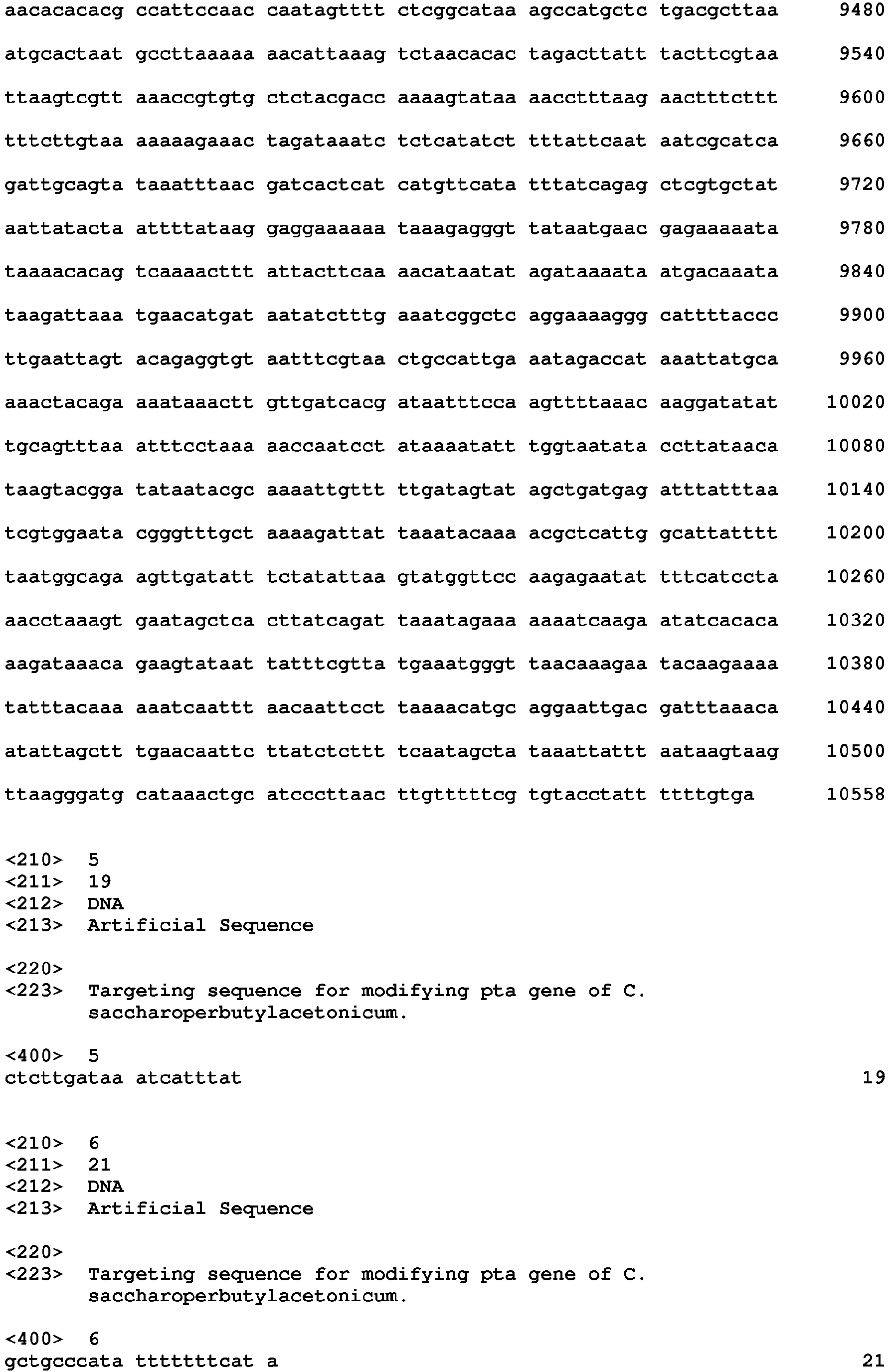


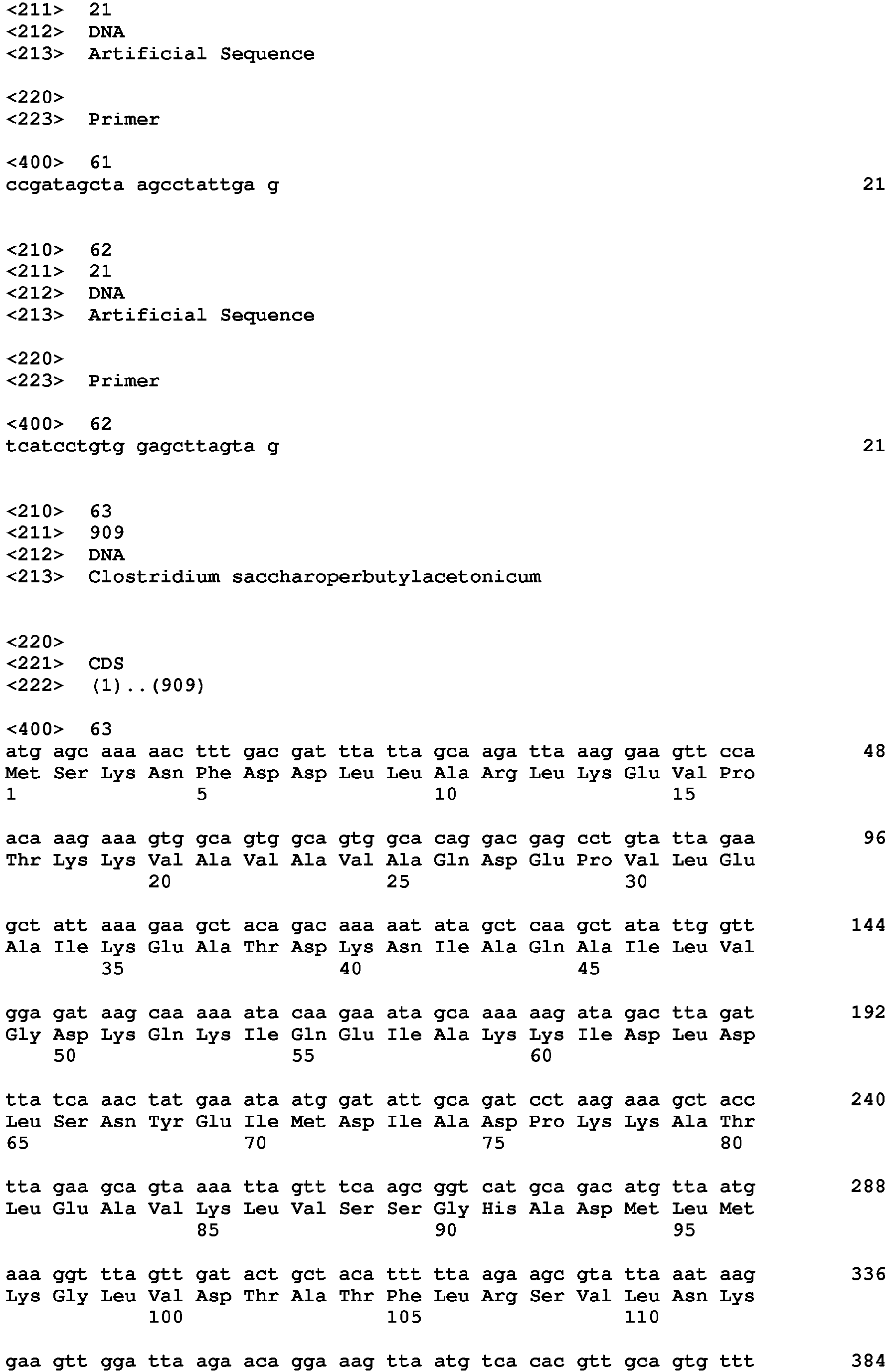


Claims (15)
- A method of modifying a targeted site in a double stranded DNA of a gram-positive bacterium, comprising a step of contacting a complex wherein a nucleic acid sequence-recognizing module that specifically binds to a target nucleotide sequence in a given double stranded DNA and a nucleic acid base converting enzyme are bonded, with said double stranded DNA, to convert one or more nucleotides in the targeted site to other one or more nucleotides or delete one or more nucleotides, or insert one or more nucleotides into said targeted site, without cleaving at least one strand of said double stranded DNA in the targeted site, wherein the double stranded DNA is contacted with the complex by introducing the nucleic acid encoding the complex into the gram-positive bacterium.
- The method according to claim 1, wherein said nucleic acid sequence-recognizing module is selected from the group consisting of a CRISPR-Cas system wherein at least one DNA cleavage ability of Cas is inactivated, a zinc finger motif, a TAL effector and a PPR motif.
- The method according to claim 1, wherein said nucleic acid sequence-recognizing module is a CRISPR-Cas system wherein at least one DNA cleavage ability of Cas is inactivated.
- The method according to any one of claims 1 to 3, which uses two or more kinds of nucleic acid sequence-recognizing modules respectively specifically binding to different target nucleotide sequences.
- The method according to claim 4, wherein said different target nucleotide sequence is present in a different gene.
- The method according to any one of claims 1 to 5, wherein said nucleic acid base converting enzyme is deaminase.
- The method according to claim 6, wherein said deaminase is cytidine deaminase.
- The method according to any one of claims 1 to 7, wherein said gram-positive bacterium is a microorganism other than the genus Bacillus.
- The method according to claim 8, wherein said gram-positive bacterium is a microorganism belonging to the genus Clostridium, the genus Brevibacillus or the genus Corynebacterium.
- The method according to claim 9, wherein the microorganism belonging to the genus Clostridium is Clostridium saccharoperbutylacetonicum.
- The method according to claim 9, wherein the microorganism belonging to the genus Brevibacillus is Brevibacillus chosinensis.
- The method according to claim 9, wherein the microorganism belonging to the genus Corynebacterium is Corynebacterium glutamicum.
- The method according to any one of claims 1 to 12, comprising a step of introducing an expression vector comprising a nucleic acid encoding said complex in a form permitting control of an expression period into said gram-positive bacterium, and a step of inducing expression of the nucleic acid for a period necessary for fixing the modification of the targeted site in the double stranded DNA.
- A nucleic acid-modifying enzyme complex of a nucleic acid sequence-recognizing module that specifically binds to a target nucleotide sequence in a double stranded DNA of a gram-positive bacterium and a nucleic acid base converting enzyme bonded to each other, which complex converts one or more nucleotides in the targeted site to other one or more nucleotides or deletes one or more nucleotides, or inserts one or more nucleotides into said targeted site, without cleaving at least one strand of said double stranded DNA in the targeted site and is functionable in the gram-positive bacterium.
- A nucleic acid encoding the nucleic acid-modifying enzyme complex according to claim 14.
Applications Claiming Priority (2)
| Application Number | Priority Date | Filing Date | Title |
|---|---|---|---|
| JP2015178022 | 2015-09-09 | ||
| PCT/JP2016/076711 WO2017043656A1 (en) | 2015-09-09 | 2016-09-09 | Method for converting genome sequence of gram-positive bacterium by specifically converting nucleic acid base of targeted dna sequence, and molecular complex used in same |
Publications (3)
| Publication Number | Publication Date |
|---|---|
| EP3348638A1 true EP3348638A1 (en) | 2018-07-18 |
| EP3348638A4 EP3348638A4 (en) | 2019-03-13 |
| EP3348638B1 EP3348638B1 (en) | 2022-12-14 |
Family
ID=58239975
Family Applications (1)
| Application Number | Title | Priority Date | Filing Date |
|---|---|---|---|
| EP16844517.9A Active EP3348638B1 (en) | 2015-09-09 | 2016-09-09 | Method for converting genome sequence of gram-positive bacterium by specifically converting nucleic acid base of targeted dna sequence, and molecular complex used in same |
Country Status (7)
| Country | Link |
|---|---|
| US (1) | US10767173B2 (en) |
| EP (1) | EP3348638B1 (en) |
| JP (1) | JP6664693B2 (en) |
| CN (1) | CN108271384B (en) |
| DK (1) | DK3348638T3 (en) |
| ES (1) | ES2938623T3 (en) |
| WO (1) | WO2017043656A1 (en) |
Cited By (1)
| Publication number | Priority date | Publication date | Assignee | Title |
|---|---|---|---|---|
| WO2021046155A1 (en) | 2019-09-03 | 2021-03-11 | Voyager Therapeutics, Inc. | Vectorized editing of nucleic acids to correct overt mutations |
Families Citing this family (39)
| Publication number | Priority date | Publication date | Assignee | Title |
|---|---|---|---|---|
| WO2013066438A2 (en) | 2011-07-22 | 2013-05-10 | President And Fellows Of Harvard College | Evaluation and improvement of nuclease cleavage specificity |
| GB201315475D0 (en) | 2013-08-30 | 2013-10-16 | Green Biologics Ltd | Solvent production |
| US20150044192A1 (en) | 2013-08-09 | 2015-02-12 | President And Fellows Of Harvard College | Methods for identifying a target site of a cas9 nuclease |
| US9359599B2 (en) | 2013-08-22 | 2016-06-07 | President And Fellows Of Harvard College | Engineered transcription activator-like effector (TALE) domains and uses thereof |
| US9388430B2 (en) | 2013-09-06 | 2016-07-12 | President And Fellows Of Harvard College | Cas9-recombinase fusion proteins and uses thereof |
| US9340799B2 (en) | 2013-09-06 | 2016-05-17 | President And Fellows Of Harvard College | MRNA-sensing switchable gRNAs |
| US9526784B2 (en) | 2013-09-06 | 2016-12-27 | President And Fellows Of Harvard College | Delivery system for functional nucleases |
| US20150166984A1 (en) | 2013-12-12 | 2015-06-18 | President And Fellows Of Harvard College | Methods for correcting alpha-antitrypsin point mutations |
| WO2016022363A2 (en) | 2014-07-30 | 2016-02-11 | President And Fellows Of Harvard College | Cas9 proteins including ligand-dependent inteins |
| SG10202104041PA (en) | 2015-10-23 | 2021-06-29 | Harvard College | Nucleobase editors and uses thereof |
| WO2017090761A1 (en) | 2015-11-27 | 2017-06-01 | 国立大学法人神戸大学 | Method for converting monocot plant genome sequence in which nucleic acid base in targeted dna sequence is specifically converted, and molecular complex used therein |
| CN109312329B (en) * | 2016-04-21 | 2023-11-21 | 国立大学法人神户大学 | Methods for improving mutation introduction efficiency in genome sequence modification technology, and molecular complexes used therefor |
| KR20250103795A (en) | 2016-08-03 | 2025-07-07 | 프레지던트 앤드 펠로우즈 오브 하바드 칼리지 | Adenosine nucleobase editors and uses thereof |
| US11661590B2 (en) | 2016-08-09 | 2023-05-30 | President And Fellows Of Harvard College | Programmable CAS9-recombinase fusion proteins and uses thereof |
| WO2018039438A1 (en) | 2016-08-24 | 2018-03-01 | President And Fellows Of Harvard College | Incorporation of unnatural amino acids into proteins using base editing |
| SG11201903089RA (en) | 2016-10-14 | 2019-05-30 | Harvard College | Aav delivery of nucleobase editors |
| WO2018119359A1 (en) | 2016-12-23 | 2018-06-28 | President And Fellows Of Harvard College | Editing of ccr5 receptor gene to protect against hiv infection |
| US11898179B2 (en) | 2017-03-09 | 2024-02-13 | President And Fellows Of Harvard College | Suppression of pain by gene editing |
| EP3592381A1 (en) | 2017-03-09 | 2020-01-15 | President and Fellows of Harvard College | Cancer vaccine |
| WO2018165629A1 (en) | 2017-03-10 | 2018-09-13 | President And Fellows Of Harvard College | Cytosine to guanine base editor |
| WO2018176009A1 (en) | 2017-03-23 | 2018-09-27 | President And Fellows Of Harvard College | Nucleobase editors comprising nucleic acid programmable dna binding proteins |
| WO2018209320A1 (en) | 2017-05-12 | 2018-11-15 | President And Fellows Of Harvard College | Aptazyme-embedded guide rnas for use with crispr-cas9 in genome editing and transcriptional activation |
| CN111801345A (en) | 2017-07-28 | 2020-10-20 | 哈佛大学的校长及成员们 | Methods and compositions for evolutionary base editors using phage-assisted sequential evolution (PACE) |
| EP3676376B1 (en) | 2017-08-30 | 2025-01-15 | President and Fellows of Harvard College | High efficiency base editors comprising gam |
| US11795443B2 (en) | 2017-10-16 | 2023-10-24 | The Broad Institute, Inc. | Uses of adenosine base editors |
| WO2019118949A1 (en) | 2017-12-15 | 2019-06-20 | The Broad Institute, Inc. | Systems and methods for predicting repair outcomes in genetic engineering |
| CN111148833B (en) * | 2018-03-26 | 2021-04-02 | 国立大学法人神户大学 | Method for changing target site of double-stranded DNA possessed by cell |
| US12157760B2 (en) | 2018-05-23 | 2024-12-03 | The Broad Institute, Inc. | Base editors and uses thereof |
| EP3820495A4 (en) | 2018-07-09 | 2022-07-20 | The Broad Institute Inc. | RNA PROGRAMMABLE EPIGENETIC RNA MODIFIERS AND THEIR USES |
| JP7126403B2 (en) * | 2018-08-06 | 2022-08-26 | 株式会社日本触媒 | Genetically modified Clostridium saccharoperbutylacetonicum species microorganisms |
| AU2019317066A1 (en) * | 2018-08-07 | 2021-02-18 | Modalis Therapeutics Corporation | Novel transcription activator |
| WO2020092453A1 (en) | 2018-10-29 | 2020-05-07 | The Broad Institute, Inc. | Nucleobase editors comprising geocas9 and uses thereof |
| US12351837B2 (en) | 2019-01-23 | 2025-07-08 | The Broad Institute, Inc. | Supernegatively charged proteins and uses thereof |
| EP3942043A2 (en) | 2019-03-19 | 2022-01-26 | The Broad Institute, Inc. | Methods and compositions for editing nucleotide sequences |
| WO2020214842A1 (en) | 2019-04-17 | 2020-10-22 | The Broad Institute, Inc. | Adenine base editors with reduced off-target effects |
| CN110343689B (en) * | 2019-08-23 | 2021-11-05 | 四川大学 | A Streptomyces trypsin GM2938 and its heterologous expression in Bacillus subtilis |
| US12435330B2 (en) | 2019-10-10 | 2025-10-07 | The Broad Institute, Inc. | Methods and compositions for prime editing RNA |
| BR112022022603A2 (en) | 2020-05-08 | 2023-01-17 | Broad Inst Inc | METHODS AND COMPOSITIONS FOR SIMULTANEOUS EDITING OF BOTH DUAL-STRANDED NUCLEOTIDE TARGET SEQUENCE STRAINS |
| KR102767511B1 (en) * | 2024-05-29 | 2025-02-17 | 충북대학교 산학협력단 | Lactic acid bacteria and gram-positive bacteria genetic recombination method using the CRISPR/Cas system |
Family Cites Families (24)
| Publication number | Priority date | Publication date | Assignee | Title |
|---|---|---|---|---|
| AU2003251286B2 (en) | 2002-01-23 | 2007-08-16 | The University Of Utah Research Foundation | Targeted chromosomal mutagenesis using zinc finger nucleases |
| PT2126130E (en) | 2007-03-02 | 2015-08-03 | Dupont Nutrition Biosci Aps | Cultures with improved phage resistance |
| WO2010132092A2 (en) | 2009-05-12 | 2010-11-18 | The Scripps Research Institute | Cytidine deaminase fusions and related methods |
| US20110104787A1 (en) * | 2009-11-05 | 2011-05-05 | President And Fellows Of Harvard College | Fusion Peptides That Bind to and Modify Target Nucleic Acid Sequences |
| NO2510096T3 (en) | 2009-12-10 | 2015-03-21 | ||
| JP2013128413A (en) | 2010-03-11 | 2013-07-04 | Kyushu Univ | Method for modifying rna-binding protein using ppr motif |
| WO2013058404A1 (en) | 2011-10-21 | 2013-04-25 | 国立大学法人九州大学 | Design method for rna-binding protein using ppr motif, and use thereof |
| GB201122458D0 (en) | 2011-12-30 | 2012-02-08 | Univ Wageningen | Modified cascade ribonucleoproteins and uses thereof |
| DK2828384T3 (en) * | 2012-03-23 | 2018-07-16 | Cellectis | PROCEDURE FOR SURVIVING SENSITIVITY TO CHEMICAL DNA MODIFICATIONS OF CONSTRUCTED SPEECH DNA BINDING DOMAINS |
| JP6559063B2 (en) * | 2012-05-07 | 2019-08-14 | サンガモ セラピューティクス, インコーポレイテッド | Methods and compositions for nuclease-mediated targeted integration of transgenes |
| LT3401400T (en) | 2012-05-25 | 2019-06-10 | The Regents Of The University Of California | Methods and compositions for rna-directed target dna modification and for rna-directed modulation of transcription |
| WO2014071235A1 (en) | 2012-11-01 | 2014-05-08 | Massachusetts Institute Of Technology | Genetic device for the controlled destruction of dna |
| CN114634950A (en) | 2012-12-12 | 2022-06-17 | 布罗德研究所有限公司 | CRISPR-CAS component systems, methods, and compositions for sequence manipulation |
| US8697359B1 (en) | 2012-12-12 | 2014-04-15 | The Broad Institute, Inc. | CRISPR-Cas systems and methods for altering expression of gene products |
| JP2016504026A (en) | 2012-12-12 | 2016-02-12 | ザ・ブロード・インスティテュート・インコーポレイテッド | Engineering systems, methods and optimization guide compositions for sequence manipulation |
| RU2723130C2 (en) | 2013-04-05 | 2020-06-08 | ДАУ АГРОСАЙЕНСИЗ ЭлЭлСи | Methods and compositions for embedding an exogenous sequence into a plant genome |
| US11414695B2 (en) | 2013-05-29 | 2022-08-16 | Agilent Technologies, Inc. | Nucleic acid enrichment using Cas9 |
| US9526784B2 (en) | 2013-09-06 | 2016-12-27 | President And Fellows Of Harvard College | Delivery system for functional nucleases |
| US20150166984A1 (en) | 2013-12-12 | 2015-06-18 | President And Fellows Of Harvard College | Methods for correcting alpha-antitrypsin point mutations |
| EP3115457B1 (en) * | 2014-03-05 | 2019-10-02 | National University Corporation Kobe University | Genomic sequence modification method for specifically converting nucleic acid bases of targeted dna sequence, and molecular complex for use in same |
| EP3216867B1 (en) | 2014-11-04 | 2020-04-15 | National University Corporation Kobe University | Method for modifying genome sequence to introduce specific mutation to targeted dna sequence by base-removal reaction, and molecular complex used therein |
| US20190024098A1 (en) | 2015-09-09 | 2019-01-24 | National University Corporation Kobe University | Method for modifying genome sequence that specifically converts nucleobase of targeted dna sequence, and molecular complex used in said method |
| SG10202104041PA (en) | 2015-10-23 | 2021-06-29 | Harvard College | Nucleobase editors and uses thereof |
| WO2017090761A1 (en) | 2015-11-27 | 2017-06-01 | 国立大学法人神戸大学 | Method for converting monocot plant genome sequence in which nucleic acid base in targeted dna sequence is specifically converted, and molecular complex used therein |
-
2016
- 2016-09-09 DK DK16844517.9T patent/DK3348638T3/en active
- 2016-09-09 CN CN201680065297.7A patent/CN108271384B/en not_active Expired - Fee Related
- 2016-09-09 WO PCT/JP2016/076711 patent/WO2017043656A1/en not_active Ceased
- 2016-09-09 ES ES16844517T patent/ES2938623T3/en active Active
- 2016-09-09 JP JP2017538558A patent/JP6664693B2/en active Active
- 2016-09-09 EP EP16844517.9A patent/EP3348638B1/en active Active
- 2016-09-09 US US15/757,243 patent/US10767173B2/en active Active
Cited By (1)
| Publication number | Priority date | Publication date | Assignee | Title |
|---|---|---|---|---|
| WO2021046155A1 (en) | 2019-09-03 | 2021-03-11 | Voyager Therapeutics, Inc. | Vectorized editing of nucleic acids to correct overt mutations |
Also Published As
| Publication number | Publication date |
|---|---|
| US10767173B2 (en) | 2020-09-08 |
| EP3348638A4 (en) | 2019-03-13 |
| HK1253544A1 (en) | 2019-06-21 |
| BR112018004636A2 (en) | 2018-10-30 |
| CN108271384A (en) | 2018-07-10 |
| US20190203198A1 (en) | 2019-07-04 |
| WO2017043656A1 (en) | 2017-03-16 |
| ES2938623T3 (en) | 2023-04-13 |
| DK3348638T3 (en) | 2023-02-13 |
| JPWO2017043656A1 (en) | 2018-06-21 |
| EP3348638B1 (en) | 2022-12-14 |
| CN108271384B (en) | 2022-04-15 |
| JP6664693B2 (en) | 2020-03-13 |
Similar Documents
| Publication | Publication Date | Title |
|---|---|---|
| EP3348638B1 (en) | Method for converting genome sequence of gram-positive bacterium by specifically converting nucleic acid base of targeted dna sequence, and molecular complex used in same | |
| US11220693B2 (en) | Method for converting monocot plant genome sequence in which nucleic acid base in targeted DNA sequence is specifically converted, and molecular complex used therein | |
| KR20010071226A (en) | Heteroduplex mutational vectors and use thereof in bacteria | |
| EP3613854A1 (en) | Genomic sequence modification method for specifically converting nucleic acid bases of targeted dna sequence, and molecular complex for use in same | |
| FI120741B (en) | DNA amplification | |
| US20240384303A1 (en) | Genome editing method based on crispr/cas9 system and use thereof | |
| KR102626503B1 (en) | Target sequence-specific modification technology using nucleotide target recognition | |
| CN110592084B (en) | Recombinant strain transformed by rhtA gene promoter, construction method and application thereof | |
| KR102118705B1 (en) | Method of Preparing Corynebacterium Variant Based on CRISPR/Cas System, Recombinase, and ssODN | |
| US4803165A (en) | Nif promoter of fast-growing rhizobium japonicum | |
| JP2024509048A (en) | CRISPR-related transposon system and its usage | |
| US12473527B2 (en) | Optimized genetic tool for modifying bacteria | |
| KR20180128864A (en) | Gene editing composition comprising sgRNAs with matched 5' nucleotide and gene editing method using the same | |
| EP4117714A1 (en) | Compositions and methods for modifying a target nucleic acid | |
| KR102026067B1 (en) | Shuttle vector for regulation of target gene expression in escherichia coli and corynebacterium glutamicum | |
| HK1253544B (en) | Method for converting genome sequence of gram-positive bacterium by specifically converting nucleic acid base of targeted dna sequence, and molecular complex used in same | |
| JP6940262B2 (en) | Gene-modified Clostridium saccharoperbutylacetonicum species microorganism whose genome sequence has been specifically converted, its production method and its use | |
| KR20240141024A (en) | Gene editing system using E1347A DddAtox mutant-TnpB fusion protein | |
| IE58915B1 (en) | New expression control sequence | |
| US4585739A (en) | Plasmid for foreign gene expression in B. subtilis | |
| Zh et al. | Design and study on characteristics of auto-and smoothly regulated genetic element O3/PlacUV5/Olac→ lacI | |
| EP3992294A1 (en) | Escherichia coli-based recombinant strain and construction method therefor and application thereof | |
| BR112018004636B1 (en) | METHOD FOR MODIFYING A TARGETED SITE IN A DOUBLE-STRANDED DNA OF A GRAM-POSITIVE BACTERIA, NUCLEIC ACID MODIFYING ENZYME COMPLEX, NUCLEIC ACID, AND, COMBINATION | |
| JP7125727B1 (en) | Compositions for modifying nucleic acid sequences and methods for modifying target sites in nucleic acid sequences | |
| CN111662932A (en) | Method for improving homologous recombination repair efficiency in CRISPR-Cas9 gene editing |
Legal Events
| Date | Code | Title | Description |
|---|---|---|---|
| STAA | Information on the status of an ep patent application or granted ep patent |
Free format text: STATUS: THE INTERNATIONAL PUBLICATION HAS BEEN MADE |
|
| PUAI | Public reference made under article 153(3) epc to a published international application that has entered the european phase |
Free format text: ORIGINAL CODE: 0009012 |
|
| STAA | Information on the status of an ep patent application or granted ep patent |
Free format text: STATUS: REQUEST FOR EXAMINATION WAS MADE |
|
| 17P | Request for examination filed |
Effective date: 20180315 |
|
| AK | Designated contracting states |
Kind code of ref document: A1 Designated state(s): AL AT BE BG CH CY CZ DE DK EE ES FI FR GB GR HR HU IE IS IT LI LT LU LV MC MK MT NL NO PL PT RO RS SE SI SK SM TR |
|
| AX | Request for extension of the european patent |
Extension state: BA ME |
|
| RAP1 | Party data changed (applicant data changed or rights of an application transferred) |
Owner name: NATIONAL UNIVERSITY CORPORATION KOBE UNIVERSITY |
|
| DAV | Request for validation of the european patent (deleted) | ||
| DAX | Request for extension of the european patent (deleted) | ||
| A4 | Supplementary search report drawn up and despatched |
Effective date: 20190212 |
|
| RIC1 | Information provided on ipc code assigned before grant |
Ipc: C07K 19/00 20060101ALI20190206BHEP Ipc: C12N 15/10 20060101ALI20190206BHEP Ipc: C07K 14/245 20060101ALI20190206BHEP Ipc: C12N 9/22 20060101ALI20190206BHEP Ipc: C12N 9/78 20060101ALI20190206BHEP Ipc: C12N 15/09 20060101AFI20190206BHEP |
|
| REG | Reference to a national code |
Ref country code: HK Ref legal event code: DE Ref document number: 1253544 Country of ref document: HK |
|
| STAA | Information on the status of an ep patent application or granted ep patent |
Free format text: STATUS: EXAMINATION IS IN PROGRESS |
|
| 17Q | First examination report despatched |
Effective date: 20191121 |
|
| GRAP | Despatch of communication of intention to grant a patent |
Free format text: ORIGINAL CODE: EPIDOSNIGR1 |
|
| STAA | Information on the status of an ep patent application or granted ep patent |
Free format text: STATUS: GRANT OF PATENT IS INTENDED |
|
| INTG | Intention to grant announced |
Effective date: 20220624 |
|
| GRAS | Grant fee paid |
Free format text: ORIGINAL CODE: EPIDOSNIGR3 |
|
| GRAA | (expected) grant |
Free format text: ORIGINAL CODE: 0009210 |
|
| STAA | Information on the status of an ep patent application or granted ep patent |
Free format text: STATUS: THE PATENT HAS BEEN GRANTED |
|
| AK | Designated contracting states |
Kind code of ref document: B1 Designated state(s): AL AT BE BG CH CY CZ DE DK EE ES FI FR GB GR HR HU IE IS IT LI LT LU LV MC MK MT NL NO PL PT RO RS SE SI SK SM TR |
|
| REG | Reference to a national code |
Ref country code: GB Ref legal event code: FG4D |
|
| REG | Reference to a national code |
Ref country code: CH Ref legal event code: EP |
|
| REG | Reference to a national code |
Ref country code: DE Ref legal event code: R096 Ref document number: 602016076930 Country of ref document: DE |
|
| REG | Reference to a national code |
Ref country code: IE Ref legal event code: FG4D |
|
| REG | Reference to a national code |
Ref country code: AT Ref legal event code: REF Ref document number: 1537677 Country of ref document: AT Kind code of ref document: T Effective date: 20230115 |
|
| REG | Reference to a national code |
Ref country code: DK Ref legal event code: T3 Effective date: 20230209 |
|
| REG | Reference to a national code |
Ref country code: NL Ref legal event code: FP |
|
| REG | Reference to a national code |
Ref country code: SE Ref legal event code: TRGR |
|
| REG | Reference to a national code |
Ref country code: LT Ref legal event code: MG9D |
|
| REG | Reference to a national code |
Ref country code: ES Ref legal event code: FG2A Ref document number: 2938623 Country of ref document: ES Kind code of ref document: T3 Effective date: 20230413 |
|
| PG25 | Lapsed in a contracting state [announced via postgrant information from national office to epo] |
Ref country code: NO Free format text: LAPSE BECAUSE OF FAILURE TO SUBMIT A TRANSLATION OF THE DESCRIPTION OR TO PAY THE FEE WITHIN THE PRESCRIBED TIME-LIMIT Effective date: 20230314 Ref country code: LT Free format text: LAPSE BECAUSE OF FAILURE TO SUBMIT A TRANSLATION OF THE DESCRIPTION OR TO PAY THE FEE WITHIN THE PRESCRIBED TIME-LIMIT Effective date: 20221214 Ref country code: FI Free format text: LAPSE BECAUSE OF FAILURE TO SUBMIT A TRANSLATION OF THE DESCRIPTION OR TO PAY THE FEE WITHIN THE PRESCRIBED TIME-LIMIT Effective date: 20221214 |
|
| REG | Reference to a national code |
Ref country code: AT Ref legal event code: MK05 Ref document number: 1537677 Country of ref document: AT Kind code of ref document: T Effective date: 20221214 |
|
| PG25 | Lapsed in a contracting state [announced via postgrant information from national office to epo] |
Ref country code: RS Free format text: LAPSE BECAUSE OF FAILURE TO SUBMIT A TRANSLATION OF THE DESCRIPTION OR TO PAY THE FEE WITHIN THE PRESCRIBED TIME-LIMIT Effective date: 20221214 Ref country code: LV Free format text: LAPSE BECAUSE OF FAILURE TO SUBMIT A TRANSLATION OF THE DESCRIPTION OR TO PAY THE FEE WITHIN THE PRESCRIBED TIME-LIMIT Effective date: 20221214 Ref country code: HR Free format text: LAPSE BECAUSE OF FAILURE TO SUBMIT A TRANSLATION OF THE DESCRIPTION OR TO PAY THE FEE WITHIN THE PRESCRIBED TIME-LIMIT Effective date: 20221214 Ref country code: GR Free format text: LAPSE BECAUSE OF FAILURE TO SUBMIT A TRANSLATION OF THE DESCRIPTION OR TO PAY THE FEE WITHIN THE PRESCRIBED TIME-LIMIT Effective date: 20230315 |
|
| P01 | Opt-out of the competence of the unified patent court (upc) registered |
Effective date: 20230425 |
|
| PG25 | Lapsed in a contracting state [announced via postgrant information from national office to epo] |
Ref country code: SM Free format text: LAPSE BECAUSE OF FAILURE TO SUBMIT A TRANSLATION OF THE DESCRIPTION OR TO PAY THE FEE WITHIN THE PRESCRIBED TIME-LIMIT Effective date: 20221214 Ref country code: RO Free format text: LAPSE BECAUSE OF FAILURE TO SUBMIT A TRANSLATION OF THE DESCRIPTION OR TO PAY THE FEE WITHIN THE PRESCRIBED TIME-LIMIT Effective date: 20221214 Ref country code: PT Free format text: LAPSE BECAUSE OF FAILURE TO SUBMIT A TRANSLATION OF THE DESCRIPTION OR TO PAY THE FEE WITHIN THE PRESCRIBED TIME-LIMIT Effective date: 20230414 Ref country code: EE Free format text: LAPSE BECAUSE OF FAILURE TO SUBMIT A TRANSLATION OF THE DESCRIPTION OR TO PAY THE FEE WITHIN THE PRESCRIBED TIME-LIMIT Effective date: 20221214 Ref country code: CZ Free format text: LAPSE BECAUSE OF FAILURE TO SUBMIT A TRANSLATION OF THE DESCRIPTION OR TO PAY THE FEE WITHIN THE PRESCRIBED TIME-LIMIT Effective date: 20221214 Ref country code: AT Free format text: LAPSE BECAUSE OF FAILURE TO SUBMIT A TRANSLATION OF THE DESCRIPTION OR TO PAY THE FEE WITHIN THE PRESCRIBED TIME-LIMIT Effective date: 20221214 |
|
| PG25 | Lapsed in a contracting state [announced via postgrant information from national office to epo] |
Ref country code: SK Free format text: LAPSE BECAUSE OF FAILURE TO SUBMIT A TRANSLATION OF THE DESCRIPTION OR TO PAY THE FEE WITHIN THE PRESCRIBED TIME-LIMIT Effective date: 20221214 Ref country code: PL Free format text: LAPSE BECAUSE OF FAILURE TO SUBMIT A TRANSLATION OF THE DESCRIPTION OR TO PAY THE FEE WITHIN THE PRESCRIBED TIME-LIMIT Effective date: 20221214 Ref country code: IS Free format text: LAPSE BECAUSE OF FAILURE TO SUBMIT A TRANSLATION OF THE DESCRIPTION OR TO PAY THE FEE WITHIN THE PRESCRIBED TIME-LIMIT Effective date: 20230414 Ref country code: AL Free format text: LAPSE BECAUSE OF FAILURE TO SUBMIT A TRANSLATION OF THE DESCRIPTION OR TO PAY THE FEE WITHIN THE PRESCRIBED TIME-LIMIT Effective date: 20221214 |
|
| REG | Reference to a national code |
Ref country code: DE Ref legal event code: R097 Ref document number: 602016076930 Country of ref document: DE |
|
| PLBE | No opposition filed within time limit |
Free format text: ORIGINAL CODE: 0009261 |
|
| STAA | Information on the status of an ep patent application or granted ep patent |
Free format text: STATUS: NO OPPOSITION FILED WITHIN TIME LIMIT |
|
| 26N | No opposition filed |
Effective date: 20230915 |
|
| PG25 | Lapsed in a contracting state [announced via postgrant information from national office to epo] |
Ref country code: SI Free format text: LAPSE BECAUSE OF FAILURE TO SUBMIT A TRANSLATION OF THE DESCRIPTION OR TO PAY THE FEE WITHIN THE PRESCRIBED TIME-LIMIT Effective date: 20221214 |
|
| REG | Reference to a national code |
Ref country code: DE Ref legal event code: R119 Ref document number: 602016076930 Country of ref document: DE |
|
| REG | Reference to a national code |
Ref country code: DK Ref legal event code: EBP Effective date: 20230930 |
|
| REG | Reference to a national code |
Ref country code: CH Ref legal event code: PL Ref country code: SE Ref legal event code: EUG |
|
| REG | Reference to a national code |
Ref country code: NL Ref legal event code: MM Effective date: 20231001 |
|
| PG25 | Lapsed in a contracting state [announced via postgrant information from national office to epo] |
Ref country code: LU Free format text: LAPSE BECAUSE OF NON-PAYMENT OF DUE FEES Effective date: 20230909 |
|
| REG | Reference to a national code |
Ref country code: BE Ref legal event code: MM Effective date: 20230930 |
|
| GBPC | Gb: european patent ceased through non-payment of renewal fee |
Effective date: 20230909 |
|
| PG25 | Lapsed in a contracting state [announced via postgrant information from national office to epo] |
Ref country code: LU Free format text: LAPSE BECAUSE OF NON-PAYMENT OF DUE FEES Effective date: 20230909 Ref country code: MC Free format text: LAPSE BECAUSE OF FAILURE TO SUBMIT A TRANSLATION OF THE DESCRIPTION OR TO PAY THE FEE WITHIN THE PRESCRIBED TIME-LIMIT Effective date: 20221214 |
|
| PG25 | Lapsed in a contracting state [announced via postgrant information from national office to epo] |
Ref country code: NL Free format text: LAPSE BECAUSE OF NON-PAYMENT OF DUE FEES Effective date: 20231001 |
|
| PG25 | Lapsed in a contracting state [announced via postgrant information from national office to epo] |
Ref country code: NL Free format text: LAPSE BECAUSE OF NON-PAYMENT OF DUE FEES Effective date: 20231001 |
|
| REG | Reference to a national code |
Ref country code: IE Ref legal event code: MM4A |
|
| PG25 | Lapsed in a contracting state [announced via postgrant information from national office to epo] |
Ref country code: IE Free format text: LAPSE BECAUSE OF NON-PAYMENT OF DUE FEES Effective date: 20230909 |
|
| PG25 | Lapsed in a contracting state [announced via postgrant information from national office to epo] |
Ref country code: GB Free format text: LAPSE BECAUSE OF NON-PAYMENT OF DUE FEES Effective date: 20230909 |
|
| PG25 | Lapsed in a contracting state [announced via postgrant information from national office to epo] |
Ref country code: CH Free format text: LAPSE BECAUSE OF NON-PAYMENT OF DUE FEES Effective date: 20230930 |
|
| PG25 | Lapsed in a contracting state [announced via postgrant information from national office to epo] |
Ref country code: IE Free format text: LAPSE BECAUSE OF NON-PAYMENT OF DUE FEES Effective date: 20230909 Ref country code: GB Free format text: LAPSE BECAUSE OF NON-PAYMENT OF DUE FEES Effective date: 20230909 Ref country code: FR Free format text: LAPSE BECAUSE OF NON-PAYMENT OF DUE FEES Effective date: 20230930 Ref country code: DE Free format text: LAPSE BECAUSE OF NON-PAYMENT OF DUE FEES Effective date: 20240403 Ref country code: CH Free format text: LAPSE BECAUSE OF NON-PAYMENT OF DUE FEES Effective date: 20230930 |
|
| PG25 | Lapsed in a contracting state [announced via postgrant information from national office to epo] |
Ref country code: SE Free format text: LAPSE BECAUSE OF NON-PAYMENT OF DUE FEES Effective date: 20230910 Ref country code: BE Free format text: LAPSE BECAUSE OF NON-PAYMENT OF DUE FEES Effective date: 20230930 |
|
| PG25 | Lapsed in a contracting state [announced via postgrant information from national office to epo] |
Ref country code: DK Free format text: LAPSE BECAUSE OF NON-PAYMENT OF DUE FEES Effective date: 20230930 |
|
| REG | Reference to a national code |
Ref country code: ES Ref legal event code: FD2A Effective date: 20241029 |
|
| PG25 | Lapsed in a contracting state [announced via postgrant information from national office to epo] |
Ref country code: DK Free format text: LAPSE BECAUSE OF NON-PAYMENT OF DUE FEES Effective date: 20230930 |
|
| PG25 | Lapsed in a contracting state [announced via postgrant information from national office to epo] |
Ref country code: BG Free format text: LAPSE BECAUSE OF FAILURE TO SUBMIT A TRANSLATION OF THE DESCRIPTION OR TO PAY THE FEE WITHIN THE PRESCRIBED TIME-LIMIT Effective date: 20221214 |
|
| PG25 | Lapsed in a contracting state [announced via postgrant information from national office to epo] |
Ref country code: BG Free format text: LAPSE BECAUSE OF FAILURE TO SUBMIT A TRANSLATION OF THE DESCRIPTION OR TO PAY THE FEE WITHIN THE PRESCRIBED TIME-LIMIT Effective date: 20221214 |
|
| PG25 | Lapsed in a contracting state [announced via postgrant information from national office to epo] |
Ref country code: IT Free format text: LAPSE BECAUSE OF NON-PAYMENT OF DUE FEES Effective date: 20230909 |
|
| PG25 | Lapsed in a contracting state [announced via postgrant information from national office to epo] |
Ref country code: IT Free format text: LAPSE BECAUSE OF NON-PAYMENT OF DUE FEES Effective date: 20230909 |
|
| PG25 | Lapsed in a contracting state [announced via postgrant information from national office to epo] |
Ref country code: ES Free format text: LAPSE BECAUSE OF NON-PAYMENT OF DUE FEES Effective date: 20230910 |
|
| PG25 | Lapsed in a contracting state [announced via postgrant information from national office to epo] |
Ref country code: ES Free format text: LAPSE BECAUSE OF NON-PAYMENT OF DUE FEES Effective date: 20230910 |
|
| PG25 | Lapsed in a contracting state [announced via postgrant information from national office to epo] |
Ref country code: CY Free format text: LAPSE BECAUSE OF FAILURE TO SUBMIT A TRANSLATION OF THE DESCRIPTION OR TO PAY THE FEE WITHIN THE PRESCRIBED TIME-LIMIT; INVALID AB INITIO Effective date: 20160909 |
|
| PG25 | Lapsed in a contracting state [announced via postgrant information from national office to epo] |
Ref country code: HU Free format text: LAPSE BECAUSE OF FAILURE TO SUBMIT A TRANSLATION OF THE DESCRIPTION OR TO PAY THE FEE WITHIN THE PRESCRIBED TIME-LIMIT; INVALID AB INITIO Effective date: 20160909 |
|
| PG25 | Lapsed in a contracting state [announced via postgrant information from national office to epo] |
Ref country code: TR Free format text: LAPSE BECAUSE OF FAILURE TO SUBMIT A TRANSLATION OF THE DESCRIPTION OR TO PAY THE FEE WITHIN THE PRESCRIBED TIME-LIMIT Effective date: 20221214 |