EP3346448B1 - Grafikverarbeitungsverfahren und -system - Google Patents
Grafikverarbeitungsverfahren und -system Download PDFInfo
- Publication number
- EP3346448B1 EP3346448B1 EP17198986.6A EP17198986A EP3346448B1 EP 3346448 B1 EP3346448 B1 EP 3346448B1 EP 17198986 A EP17198986 A EP 17198986A EP 3346448 B1 EP3346448 B1 EP 3346448B1
- Authority
- EP
- European Patent Office
- Prior art keywords
- tile
- primitive
- tiles
- graphics processing
- visibility
- Prior art date
- Legal status (The legal status is an assumption and is not a legal conclusion. Google has not performed a legal analysis and makes no representation as to the accuracy of the status listed.)
- Active
Links
Images





Classifications
-
- G—PHYSICS
- G06—COMPUTING OR CALCULATING; COUNTING
- G06T—IMAGE DATA PROCESSING OR GENERATION, IN GENERAL
- G06T1/00—General purpose image data processing
- G06T1/20—Processor architectures; Processor configuration, e.g. pipelining
-
- G—PHYSICS
- G06—COMPUTING OR CALCULATING; COUNTING
- G06T—IMAGE DATA PROCESSING OR GENERATION, IN GENERAL
- G06T15/00—Three-dimensional [3D] image rendering
- G06T15/005—General purpose rendering architectures
-
- G—PHYSICS
- G06—COMPUTING OR CALCULATING; COUNTING
- G06T—IMAGE DATA PROCESSING OR GENERATION, IN GENERAL
- G06T1/00—General purpose image data processing
- G06T1/60—Memory management
-
- G—PHYSICS
- G06—COMPUTING OR CALCULATING; COUNTING
- G06T—IMAGE DATA PROCESSING OR GENERATION, IN GENERAL
- G06T11/00—Two-dimensional [2D] image generation
- G06T11/40—Filling planar surfaces by adding surface attributes, e.g. adding colours or textures
-
- G—PHYSICS
- G06—COMPUTING OR CALCULATING; COUNTING
- G06T—IMAGE DATA PROCESSING OR GENERATION, IN GENERAL
- G06T15/00—Three-dimensional [3D] image rendering
- G06T15/04—Texture mapping
-
- G—PHYSICS
- G06—COMPUTING OR CALCULATING; COUNTING
- G06T—IMAGE DATA PROCESSING OR GENERATION, IN GENERAL
- G06T15/00—Three-dimensional [3D] image rendering
- G06T15/10—Geometric effects
- G06T15/40—Hidden part removal
-
- G—PHYSICS
- G06—COMPUTING OR CALCULATING; COUNTING
- G06T—IMAGE DATA PROCESSING OR GENERATION, IN GENERAL
- G06T7/00—Image analysis
- G06T7/50—Depth or shape recovery
-
- G—PHYSICS
- G06—COMPUTING OR CALCULATING; COUNTING
- G06T—IMAGE DATA PROCESSING OR GENERATION, IN GENERAL
- G06T7/00—Image analysis
- G06T7/50—Depth or shape recovery
- G06T7/55—Depth or shape recovery from multiple images
-
- G—PHYSICS
- G06—COMPUTING OR CALCULATING; COUNTING
- G06T—IMAGE DATA PROCESSING OR GENERATION, IN GENERAL
- G06T7/00—Image analysis
- G06T7/60—Analysis of geometric attributes
-
- G—PHYSICS
- G09—EDUCATION; CRYPTOGRAPHY; DISPLAY; ADVERTISING; SEALS
- G09G—ARRANGEMENTS OR CIRCUITS FOR CONTROL OF INDICATING DEVICES USING STATIC MEANS TO PRESENT VARIABLE INFORMATION
- G09G5/00—Control arrangements or circuits for visual indicators common to cathode-ray tube indicators and other visual indicators
- G09G5/36—Control arrangements or circuits for visual indicators common to cathode-ray tube indicators and other visual indicators characterised by the display of a graphic pattern, e.g. using an all-points-addressable [APA] memory
- G09G5/363—Graphics controllers
-
- G—PHYSICS
- G06—COMPUTING OR CALCULATING; COUNTING
- G06T—IMAGE DATA PROCESSING OR GENERATION, IN GENERAL
- G06T2200/00—Indexing scheme for image data processing or generation, in general
- G06T2200/28—Indexing scheme for image data processing or generation, in general involving image processing hardware
-
- G—PHYSICS
- G06—COMPUTING OR CALCULATING; COUNTING
- G06T—IMAGE DATA PROCESSING OR GENERATION, IN GENERAL
- G06T2210/00—Indexing scheme for image generation or computer graphics
- G06T2210/08—Bandwidth reduction
Definitions
- the present disclosure relates to a graphics processing method and to a a graphics processing system.
- TBR tile-based rendering
- TBR may enhance rendering performance through tile-based deferred rendering (TBDR) which minimizes the amount of overdraw in which covered fragments are rendered, and renders only visible fragments. For example, overdraw may be reduced via hidden surface removal (HSR).
- HSR hidden surface removal
- TBDR tile-based deferred rendering
- HSR hidden surface removal
- a method to determine a mode for graphics processing may result in a reduction in power consumption under certain conditions.
- US 6,525 726 B1 discloses a data processing system providing high performance three-dimensional graphics includes at least one system processor, chipset core logic, a graphics processor, and a Z-buffer.
- an adaptive hierarchical visibility (AHV) method performs occlusion-culling in a tiled 3D graphics hardware architecture. Polygon bins for each tile are bucket-sorted in order of increasing depth Z. Polygon bins are rendered starting with the bin closest to the viewer. After some number of bins are rendered, a single layer, hierarchical Z-buffer (HZ) may be constructed from the Z-buffer thus far accumulated for the rendered bins, if it would be cost effective to do so.
- HZ hierarchical Z-buffer
- Subsequent bins are rendered by first testing their polygons against the HZ buffer to see if they are hidden. Also described are an integrated circuit for implementing the AHV algorithm, and a computer-readable medium storing a data structure for implementing the AHV method and apparatus.
- US 2016 0117855 A1 discloses a rendering apparatus including a tile binning unit configured to determine a plurality of tiles including at least one primitive, and configured to generate tile data associated with the plurality of tiles.
- the rendering apparatus includes a visibility test unit configured to perform a visibility test on the at least one primitive included in the plurality of tiles, based on the tile data.
- the rendering apparatus further includes a rendering unit configured to perform rendering on a visible primitive among the at least one primitive as a result of the visibility test.
- the present invention henceforth also referred to as "the inventive concept", provides graphics processing methods and systems.
- Embodiments of the present invention comprise a graphics processing method according to claim 1, and a graphics processing system according to claim 10;
- a preferred embodiment of the present invention comprises a method of graphics processing operable by a graphics processing unit (GPU) according to claim 15.
- FIG. 1 illustrates an example of an image rendering process.
- the image rendering process includes operations 110 through 150.
- Operation 110 is an operation of shading vertices. Prior to shading, vertices are generated to indicate objects included in an image. A vertex shader may perform shading on the vertices by assigning colors to the vertices.
- Operation 120 is an operation of generating primitives.
- the term 'primitive' indicates a polygon formed of points, lines, or vertices.
- primitives may be triangles formed by connecting vertices.
- primitives are not limited to being formed as triangles.
- Operation 130 is an operation of rasterizing a primitive.
- the primitive When the primitive is rasterized, the primitive is divided into a plurality of fragments.
- the term 'fragment' refers to a portion of a primitive and may be a basic unit for performing image processing.
- a primitive includes only information about vertices. Accordingly, interpolation is performed when fragments between vertices are generated during a rasterization operation.
- Operation 140 is an operation of shading pixels. Although shading is performed in units of pixels in FIG. 1 , shading may be also performed in units of fragments. For example, when pixels or fragments are shaded, colors of the pixels or the fragments are assigned to pixels or fragments, respectively.
- a raster operation is performed.
- color blending, a depth test, or the like may be performed so as to generate raster images (pixels or samples) based on information about shaded pixels.
- a raster image generated as described above is output to a frame buffer to be stored. Subsequently, a frame stored in the frame buffer may be displayed via a display device.
- FIG. 2 is a flowchart of a graphics processing method according to an example embodiment of the inventive concept.
- a graphics processing system estimates a depth complexity of a tile generated by dividing a frame.
- Depth complexity refers to an amount to which fragments, which are generated by rendering each object, overlap with each other according to a depth value.
- the graphics processing system may divide a frame to be processed into a plurality of tiles, and drive a binning pass during which primitives of the frame are classified according to which tile they belong to and a bin-stream regarding the classification is stored in a memory.
- a binning pass may be operated using a binning unit.
- the graphics processing system may estimate a depth complexity of a generated tile by driving a binning pass.
- depth complexity is determined by calculating the number of times that fragments of primitives included in a tile overlap at given coordinates, in operation 150 of FIG. 1 .
- depth complexity cannot be calculated before performing rendering.
- graphics processing on a predetermined tile is substantially completed.
- a processing method may be adaptively modified according to circumstances during graphics processing of a tile, in which a depth complexity of a tile is estimated before (rather than calculated) a rendering operation so as to be used later.
- the graphics processing system may calculate an amount of overlap between a tile and at least one primitive included in the tile, and may estimate a depth complexity of the tile based on the amount of overlap.
- the graphics processing system may estimate a depth complexity of a tile, corresponding to the above tile, in a frame previous to a current frame as a depth complexity of the above tile. This operation will be described in further detail herein after.
- the graphics processing system selectively conducts visibility calculations of at least one primitive included in the tile based on the estimated depth complexity.
- the graphics processing system compares the depth complexity estimated in operation 210 with a preset threshold value, and if the estimated depth complexity is greater than the preset threshold value, the graphics processing system may perform visibility calculations on the at least one primitive included in the tile.
- the graphics processing system may not perform visibility calculations on the at least one primitive included in the tile. In the case where visibility calculations are not performed, the graphics processing system may immediately execute operation 230 and perform rendering on the tile.
- the graphics processing system may drive a depth prepass of reading a bin stream indicating to which tile a primitive on a frame belongs, from a memory, extracting, for example, only a visible primitive including a fragment visible on a screen and storing the visible primitive in the memory.
- the depth prepass is used to remove overdraws associated with rendering covered fragments on the screen, e.g., non-displayed fragments.
- visibility of the fragments may be calculated based on a depth value of the fragments. Then, a visibility relationship between fragments is determined, and finally, only visible fragments are transferred to a rendering operation. By performing visibility calculations prior to rendering the tile, graphics processing performance may be enhanced by minimizing overdraws.
- calculating visibility prior to rendering may not result in an enhanced performance. For example, if a frame is to be processed as a low depth complexity frame, the cost due to overdraw, e.g., the cost of rendering covered fragments, may not be high, and the cost for driving an operation to calculate a visibility, e.g., the cost due to hardware operations and pipeline execution may be increased correspondingly.
- a visibility relationship may not be determined just based on a depth value, and thus, performing visibility calculations prior to performing rendering may not significantly impact an amount of overdraws.
- a translucent property for example, shows an object behind it, but also obscures the object behind it.
- a translucent property will cause a reflection of some light that strikes it, which makes a material having a translucent property to be visible. Accordingly, if a primitive placed at the front has a translucent property, even a primitive placed thereafter has visibility due to their passing through the front primitive.
- a processing method may be adaptively modified according to circumstances.
- the graphics processing system performs rendering on the tile.
- the graphics processing system may drive a rendering pass in which rendering is performed on the primitives.
- the graphics processing system performs rendering on the tile based on a visibility of at least one primitive included in the tile. If visibility calculations are omitted, according to an embodiment of the inventive concept all primitives included in the tile may be rendered, and visibility of the primitives is determined based on a result of the rendering.
- the graphics processing system may divide a tile into a plurality of sub-tiles, and may determine an amount of overlap based on the number of times that each sub-tile and at least one primitive included in the sub-tile overlap each other. Through this determining operation, although an exact average amount of overlap up to the fragment level may not be calculated, a depth complexity at an approximate level to the level of sub-tiles may be estimated.
- a method of determining an amount of overlap may be similar to a function of a binning unit. For example, a binning unit may be used for classifying to which tiles the primitives belong.
- a binning pipeline datapath of the binning unit may be used when determining an amount of overlap of primitives of the sub-tiles without change to the binning unit to minimize hardware costs. The operation of calculating an amount of overlap will be described in more detail with reference to FIG. 3 .
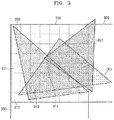
- FIG. 3 illustrates an operation of calculating an amount of overlap of at least one primitive included in a tile, according to an example embodiment of the inventive concept.
- a frame is divided into tiles 310, 320, 330 and so on.
- a graphics processing system may divide the tile 310 into smaller portions, namely, sub-tiles 311, 312, 313, 314 and so on.
- the number of sub-tiles may be appropriately determined based on a trade-off between accuracy of a final approximate value and calculation costs (for example, 4x4 or 8x8).
- one tile is divided into 8x8 sub-tiles, e.g., 64 sub-tiles.
- the quantity of sub-tiles is not limited to 4x4 or 8x8.
- Each sub-tile (in this case of the 64 sub-tiles) may be overlapped with at least one of the primitives 301, 302, and 303 or may not be overlapped at all.
- the graphics processing system may determine an amount of overlap based on the number of times that each sub-tile and the primitives 301, 302, and 303 overlap each other.
- the amount of overlap may be determined based on a sum or an average of the number of times that each sub-tile and at least one primitive included in the sub-tile overlap each other.
- the sum of the number of times of overlapping may be calculated by counting the number of times whenever each sub-tile and a primitive overlap each other.
- the average of the number of times that each sub-tile and at least one primitive included in the sub-tile overlap each other may be calculated by dividing the calculated sum of the number of overlapping times by the total number of sub-tiles.
- the value calculated as above is a relative value and not an absolute value, and thus, the depth complexity of a tile may be estimated by determining a relative amount of overlap of the tile.
- a coverage table may be used. This will be described with reference to FIG. 4 .
- FIG. 4 illustrates a coverage table that may be used to calculate an amount of overlap of at least one primitive included in a sub-tile according to an example embodiment of the inventive concept.
- each value of the coverage table denotes the number of times that a sub-tile at a corresponding location overlaps with a primitive.
- the sub-tile 311 of FIG. 3 has no overlapping primitive and thus has a value of 0 in a table space 411 of the coverage table of FIG. 4 .
- the sub-tile 312 of FIG. 3 overlaps once with the primitive 303, and thus has a value of 1 in a table space 412 of the coverage table of FIG. 4 .
- the sub-tile 314 of FIG. 3 overlaps three times, with the primitives 301, 302, and 303, and thus has a value of 3 in a table space 414 of the coverage table of FIG. 4 .
- the graphics processing system may increase a value (e.g., a count) of a corresponding table space of the coverage table at a corresponding location to update the coverage table.
- a value e.g., a count
- all values may be added to calculate a sum, and an average may be calculated based on the sum.
- a summed area table may also be used.
- the graphics processing system may calculate a relative area in which a tile and at least one primitive overlap each other, and may determine an amount of overlap based on the calculated relative area.
- the depth complexity indicates an amount that the fragments overlap each other.
- a depth complexity may be estimated based on the relative ratio.
- a substantially rectangular bounding box surrounding at least one primitive may be generated, and a relative area in which a tile and at least one primitive overlap each other may be calculated by calculating an overlapping area between the tile and the bounding box.
- an overlapping area between the tile and the bounding box may be divided by two so as to calculate an overlapping area between the tile and at least one primitive. In this manner, an overlapping area between the tile and the primitive may be calculated relatively accurately.
- a common area may be easily extracted through comparative operation between minimum and maximum coordinates of two rectangles, e.g., a tile and a bounding box, and thus, an overlapping area may be easily calculated. This procedure will now be described with reference to FIG. 5 .
- FIG. 5 illustrates an operation of calculating an overlapping area between a tile and a primitive according to an example embodiment of the inventive concept.
- a frame is divided into tiles 510, 520, 530 and so on, and three primitives 501, 502, and 503 overlap with a tile 510.
- Substantially rectangular bounding boxes 541, 542, and 543 may surround the primitives 501, 502, and 503 respectively.
- a bounding box may be easily obtained based on minimum and maximum values of coordinates of a primitive.
- the calculated bounding box may be used without modification.
- a relative area where a tile and a primitive overlap each other may be calculated by using a bounding box with respect to the primitives included in the tiles 510, 520, and 530.
- the relative area obtained as described above includes relative values and not absolute values, and thus, a depth complexity of a tile may be estimated by determining a relative amount of overlap of the tile.
- a more accurate relative area where a tile and primitives included in the tile overlap each other may be calculated.
- an area of a triangle corresponds to half of an area of a rectangle surrounding the triangle, and thus, an area of a primitive may be calculated by calculating an area corresponding to the half of the bounding box. The calculation may be conducted through a shift right operation, at relatively low costs. Accordingly, if a primitive has a triangular shape, an overlapping area between a tile and a bounding box may be calculated, and the overlapping area may be divided by two so as to calculate a more accurate relative area.
- a relative area where a tile and at least one primitive overlap each other may be calculated, and an amount of overlap between the tile and the at least one primitive may be determined based on the relative area.
- the amount of overlap may also be determined by dividing the relative area by a tile area.
- a tile area corresponds to an exponent of 2 (for example, 32x32 or 16x16), and thus, may be calculated through a shift right operation without having to use a hardware divider.
- a division may be performed at low costs by using a reciprocal unit.
- the graphics processing system may estimate a depth complexity of a tile from a previous frame for use as a depth complexity of the tile in a current frame.
- a depth complexity of a tile is calculated in a raster operation, which is a final operation of rendering.
- the calculated depth complexity is estimated as a depth complexity of a next frame in an operation of rendering the next frame.
- a frame to frame coherence which is a conventional property, may be used. Rendering results are often highly similar between continuous frames, geometrically (object space) or in terms of image space. Therefore, a depth complexity calculated from a previous frame may be used as a depth complexity with respect to a current frame.
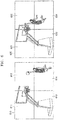
- FIG. 6 is a view illustrating an operation of estimating a depth complexity of a tile of a previous frame as a depth complexity of a tile of a current frame, according to an example embodiment of the inventive concept.
- frames 610 and 620 are consecutive frames. As shown in FIG. 6 , the frames 610 and 620 are very similar. Accordingly, tiles 611, 612, 613, and 614 constituting a frame 610 and tiles 621, 622, 623, and 624 constituting a frame 620 also have similarity with each other. Accordingly, a depth complexity of a tile from a previous frame may also be estimated as a depth complexity of the tile in a current frame. The similarity between frames may have a highest correlation when the previous frame and the current frame are consecutive.
- an accurate depth complexity is calculated in a raster operation in which a depth test is conducted on each fragment, and the depth complexity is recorded (written) in a tile buffer for each tile.
- a depth complexity of each tile is stored in a memory.
- the memory may store depth complexities of all tiles of the previous frame.
- the graphics processing system may calculate a depth complexity of the tile and store the same.
- a rendering sequence abruptly changes due to conversion of a context of an image, a similarity between frames is discontinued, and thus, it is difficult to use information of a previous frame.
- whether there is no similarity between frames may be determined in advance to reset previous frame information, and a coherency mechanism is started again.
- the graphics processing system may determine whether a primitive that has translucent properties, the primitive being analyzed is selected from among at least one primitive included in a tile, is to be processed prior to the occurrence of a preset point of time.
- rendering on the tile may be performed without estimating a depth complexity of the tile, or calculating a visibility of the at least one primitive included in the tile.
- a depth complexity of a tile up to a point prior to processing a primitive having translucent properties may be estimated, and visibility calculations of the at least one primitive included in the tile may be selectively performed based on the estimated depth complexity.
- the occurrence of the preset point of time may be determined from when a translucent primitive is input.
- a visibility calculation is not performed after a point of time when the primitive is processed.
- a primitive having translucent properties is generated, it may be difficult to determine a visibility relationship between primitives just based on a depth value of the primitive, and thus, calculating a visibility of the primitive before performing rendering may not significantly impact the display of a frame.
- a graphics processing performance may vary according to when a primitive having translucent properties is processed.
- the graphics processing system receives a primitive stream via a drawcall command of an Application Programming Interface (API) in a device driver.
- API Application Programming Interface
- a processing order may result in the visibility calculation being performed or not performed.
- a primitive having translucent properties is located in a back portion of a primitive stream, the number of primitives that are to be transmitted and processed prior to the primitive having translucent properties may be large and the gain realized by performing a visibility calculation may be high.
- the number of primitives that are to be transmitted and processed before the primitive having translucent properties being processed may be small, and the costs associated with performing a visibility calculation may be greater than gain realized.
- a method of processing primitives may be adaptively modified by selectively conducting a visibility calculation with respect to primitives according to a processing point of a primitive having translucent properties.
- FIG. 7 is a structural diagram of a graphics processing apparatus 700 according to an example embodiment of the inventive concept.
- the graphics processing apparatus 700 includes a binning unit 710, a visibility testing unit 720, and a rendering unit 730.
- the binning unit 710 may divide a two-dimensional frame into a plurality of tiles, and perform binning on the tiles.
- Tile binning refers to determining tiles that include at least one primitive.
- the binning unit 710 may determine to which of a plurality of tiles constituting a two-dimensional frame a primitive belongs, based on information about primitives included in an object. For example, as illustrated in FIG. 3 , a two-dimensional frame may include 64 tiles, and which tiles of the 64 tiles includes a particular primitive.
- the binning unit 710 may be configured to estimate a depth complexity of tiles that are generated by dividing a frame. According to an example embodiment, the binning unit 710 may calculate an amount of overlap between a tile and at least one primitive included in the tile, and may estimate a depth complexity of the tile based on the amount of overlap. The binning unit 710 may further divide a tile into a plurality of sub-tiles, and may determine an amount of overlap based on the number of times that each sub-tile and at least one primitive included in the sub-tile overlap each other. The binning unit 710 may calculate an average or a sum of the number of times that each sub-tile and at least one primitive included in the sub-tile overlap each other.
- the binning unit 710 may be configured to calculate a relative area where a tile and at least one primitive overlap each other, and may determine an amount of overlap based on the relative area. According to an example embodiment, the binning unit 710 may generate a substantially rectangular bounding box surrounding at least one primitive, and calculate an overlapping area between a tile and the bounding box, and divide the overlapping area between the tile and the bounding box by two so as to calculate an overlapping area between the tile and the primitive.
- the binning unit 710 may be configured to estimate a depth complexity of a tile of a previous frame as a depth complexity of the tile in a current frame. According to an example embodiment, if there is no similarity between a current frame and a previous frame thereto, the binning unit 710 may perform rendering on a tile, and calculate a depth complexity of the tile and store the calculated depth complexity.
- the binning unit 710 may determine whether a primitive having translucent properties, from among at least one primitive input to a tile, is input prior to the occurrence of a preset point of time.
- the visibility testing unit 720 may perform a visibility test on primitives included in each of a plurality of tiles. According to an example embodiment, the visibility testing unit 720 may operate a ray tracing method to perform a visibility test on primitives respectively included in the tiles. However, the visibility testing unit 720 may also perform a visibility test by using other methods. A test result obtained by the visibility testing unit 720 may be used in an operation of rendering a primitive, subsequently performed by the rendering unit 730.
- the visibility testing unit 720 may selectively perform visibility calculation on at least one primitive included in a tile based on an estimated depth complexity.
- the visibility testing unit 720 may omit estimating a depth complexity of a tile, or visibility calculation, with respect to at least one primitive included in the tile. If a primitive having translucent properties is processed subsequent to the occurrence of the preset point in time, the visibility testing unit 720 may estimate a depth complexity of a tile prior to processing the primitive having translucent properties, and may selectively conduct visibility calculation on at least one primitive included in the tile based on an estimated depth complexity.
- the visibility testing unit 720 may be configured to compare the estimated depth complexity with a preset threshold value, and if the estimated depth complexity is greater than the preset threshold value, the visibility testing unit 720 may conduct a visibility calculation on at least one primitive included in the tile. In addition, if the estimated depth complexity is smaller than the preset threshold value, the visibility testing unit 720 may not conduct a visibility calculation on at least one primitive included in the tile.
- the rendering unit 730 may be configured to perform rendering on a tile.
- the rendering unit 730 may perform rendering on at least one primitive included in the tile.
- the rendering unit 730 may perform rendering on a tile based on a visibility with respect to at least one primitive.
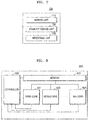
- FIG. 8 illustrates an internal structure of a graphics processing apparatus 800 according to an example embodiment of the inventive concept.
- the graphics processing apparatus 800 may include a memory 810, at least one core, e.g., cores 821, 822, ..., 82K and a controller 830.
- the memory 810 is accessible by the at least one core 821, 822, ..., 82K.
- the memory 810 stores data read from an external memory or data processed by the at least one core 821, 822, ..., 82K.
- the memory 810 outputs data stored in the external memory and the at least one core 821, 822, ..., 82K.
- the memory 810 may store data to be rendered.
- intermediate data processed during rendering or final data may be stored in the memory 810.
- the at least one core 821, 822, ..., 82K reads and processes data.
- the graphics processing apparatus 800 may read and process data from the memory 810, and may store a resultant value of the processing again in the memory 810.
- Each core may also process a plurality of threads.
- the at least one core which includes the cores 821, 822, .., 82K, may include at least one functional unit processing a thread and an internal memory.
- a functional block processes actual operations and may include an adder.
- the controller 830 is configured to control an overall operation on data processing of the graphics processing apparatus 800 including the memory 810 and the at least one core 821, 822, ..., 82K.
- the controller 830 may control the memory 810 and the at least one core 821, 822, ..., 82K to estimate a depth complexity of tiles generated by dividing a frame, selectively conduct visibility calculation on at least one primitive included in the tiles based on the estimated depth complexity, and perform rendering on the tiles.
- FIG. 9 is a flowchart illustrating operation of a graphics processing method according to an embodiment of the inventive concept.
- a graphics processing apparatus for example, a GPU, may be configured to execute the operations of the flowchart of FIG. 9 .
- a stream of primitives of at least one object is received via a drawcall command send through an Application Programming Interface (API).
- the stream of primitives may be sent in an order associated with a display of the at least one object (e.g. one object may partially block/hide the display of another object.
- FIG. 6 shows two consecutive images divided into four tiles.
- Each of the objects in each tile may be presented by a plurality of primitives of points, lines, triangles, rectangles, etc.
- the embodiments construct primitives in triangles, the inventive concept is not limited to the use of triangles.
- lines or rectangles are two possible non-limiting examples of primitive construction.
- a depth complexity of each of the plurality of tiles may be estimated. As the estimated of depth complexity has been discussed herein above, a repetition is omitted herein.
- At operation 915 there is a determination as to whether at least one primitive of the primitive stream includes translucent properties. If the graphics processing apparatus determines there are no such primitives, then at operation 917, visibility calculations may be performed, followed by the rendering of the tiles. Such visibility calculations may be made, for example, in a tile based deferred rendering (TBDR) mode, such that the graphics processing apparatus reduces or eliminates an amount of overdraw of items that may not be displayed in whole or in part because other items obstruct their view.
- TBDR tile based deferred rendering
- the visibility calculation is performed at operation 917 prior to rendering the tiles.
- the tiles may be rendered at operation 920 without performing the visibility calculation (e.g. operation 917 is omitted).
- the number of primitives that may be transmitted and processed before the primitive with translucent properties located in a front portion of a primitive stream may be relatively small. Accordingly, in such a case, the costs of conducting visibility calculation may be greater than a gain from conducting the visibility calculation when the primitive with translucent properties is located in a front portion of the primitive stream.
- FIG. 10 is a flowchart illustrating operation of the graphics processing apparatus such as shown in FIG. 7 .
- a person of ordinary skill in the art should understand and appreciate that configurations other than shown in FIG. 7 are also within the inventive concept.
- the graphics processing apparatus may include circuitry such as the binning circuit (e.g. binning unit), visibility testing circuit (e.g. visibility testing unit) and rendering circuit (e.g. rendering unit).
- the components may be, for example, part of a graphics processing unit (GPU) and may be comprised of integrated circuitry configured with executable code.
- the binning unit may estimate a depth complexity of one or more of a plurality of tiles.
- the binning unit may be configured to divide a frame into a plurality of tiles, and perform binning (e.g. determining which tiles of the plurality of tiles include at least one primitive).
- the binning unit may further divide the tiles into a plurality of sub-tiles, and determinations may be made regarding which primitives are at least partially included one or more respective sub-tiles.
- a visibility testing unit may conduct visibility testing of at least one of the tiles based on the estimated depth complexity.
- the visibility calculation can be selectively performed based on whether a primitive in one or more of the particular tiles has translucent properties. For example, visibility testing may be omitted (e.g. skipped) based on whether the estimated depth complexity is smaller than a preset threshold value.
- a comparator may be used to compare the estimated depth complexity with the preset threshold value.
- the rendering unit may render the tiles in view or the visibility calculations, or without performing the visibility calculations, as discussed herein above.
- the GPU may operate in a TBDR mode or a TBR mode according to a depth complexity of the current tile under consideration.
- the TBDR mode selectively operates, rather than, for example, the GPU being switch to the TBR mode if there is a primitive within a primitive stream identified as having translucent properties.
- the device described herein may include a processor, a memory for storing program data and execution, a permanent storage device such as a disk drive, a communications port for handling communications with external devices, and user interface devices, including a display, a keyboard, etc.
- software modules When software modules are involved, these software modules may be stored as program instructions or computer readable codes executable by the processor on a computer-readable media such as magnetic storage media (e.g., read-only memory (ROM), random-access memory (RAM), floppy disks, hard disks, etc.) and optical recording media (e.g., CD-ROMs, DVDs, etc.).
- the computer readable recording medium can also be distributed over network coupled computer systems so that the computer readable code is stored and executed in a distributed fashion. This media can be read by the computer, stored in the memory, and executed by the processor.
- inventive concept may be described in terms of functional block components and various processing steps. Such functional blocks may be realized by any number of hardware and/or software components configured to perform the specified functions.
- inventive concept may employ various integrated circuit components, e.g., memory elements, processing elements, logic elements, look-up tables, and the like, which may carry out a variety of functions under the control of one or more microprocessors or other control devices.
- the inventive concept may be implemented with any programming or scripting language such as C, C++, Java, assembler, or the like, with the various algorithms being implemented with any combination of data structures, objects, processes, routines or other programming elements.
- inventive concept may be implemented in algorithms that are executed by one or more processors.
- inventive concept may employ any number of various configurations, signal processing and/or control, data processing and the like.
- means and “element” are used broadly and are not limited to mechanical or physical embodiments, but can include software routines in conjunction with processors, etc.
Landscapes
- Engineering & Computer Science (AREA)
- Physics & Mathematics (AREA)
- General Physics & Mathematics (AREA)
- Theoretical Computer Science (AREA)
- Computer Graphics (AREA)
- Geometry (AREA)
- Computer Vision & Pattern Recognition (AREA)
- Computer Hardware Design (AREA)
- Image Generation (AREA)
Claims (16)
- Grafikverarbeitungsverfahren, aufweisend:Teilen eines Frames in eine Mehrzahl an Kacheln (310, 320, 330, 340; 510, 520, 530, 540);einen Schätzschritt zum Schätzen einer Tiefenkomplexität einer Kachel (310; 510) der Mehrzahl an Kacheln (310, 320, 330, 340; 510, 520, 530, 540) auf Basis einer Überlappung zwischen der Kachel und zumindest einem Grundelement (301, 302, 303; 501, 502, 503), das in dem Frame enthalten ist;selektives Durchführen von Sichtbarkeitsberechnungen im Verhältnis zu dem zumindest einen Grundelement (301, 302, 303; 501, 502, 503), das in der Kachel (310; 510) enthalten ist auf Basis der geschätzten Tiefenkomplexität der Kachel (310; 510); undDurchführen eines Renderings bei der Kachel (310; 510),wobei das Verfahren ferner dadurch gekennzeichnet ist, dass es ferner die folgenden Schritte aufweist:Bestimmen, bei dem zumindest einen Grundelement (301,302,303; 501, 502, 503), das in der Kachel (310; 510) enthalten ist, ob ein Grundelement, das lichtdurchlässige Eigenschaften aufweist, verarbeitet werden soll, bevor ein voreingestellter Zeitpunkt im Verhältnis dazu, wenn das Grundelement, das lichtdurchlässige Eigenschaften aufweist, eingegeben wird, erreicht wird;wenn das Grundelement von dem zumindest einen Grundelement (301, 302, 303; 501, 502, 503), das in der Kachel (310; 510) enthalten ist und das die lichtdurchlässigen Eigenschaften aufweist, vor dem Erreichen des voreingestellten Zeitpunkts verarbeitet wird, Durchführen eines Renderns der Kachel ohne Schätzen einer Tiefenkomplexität der Kachel oder ohne Durchführen von Sichtbarkeitsberechnungen im Verhältnis zu zumindest einem Grundelement (301, 302, 303; 501, 502, 503), das in der Kachel (310; 510) enthalten ist; undwenn das Grundelement mit lichtdurchlässigen Eigenschaften nach dem Erreichen des voreingestellten Zeitpunkts verarbeitet wird, Schätzen einer Tiefenkomplexität der Kachel bis zu einem Punkt eines Verarbeitens eines Grundelements mit lichtdurchlässigen Eigenschaften, und selektives Durchführen von Sichtbarkeitsberechnungen im Verhältnis zu zumindest einem Grundelement (301, 302, 303; 501, 502, 503), das in der Kachel (310; 510) enthalten ist.
- Grafikverarbeitungsverfahren nach Anspruch 1, wobei der Schätzschritt aufweist:Berechnen einer Überlappungsmenge zwischen der Kachel (310; 510) und dem zumindest einen Grundelement (301, 302, 303; 501, 502, 503), das in der Kachel (310; 510) enthalten ist; undSchätzen der Tiefenkomplexität der Kachel (310; 510) auf Basis der Überlappungsmenge.
- Grafikverarbeitungsverfahren nach Anspruch 2, wobei das Berechnen der Überlappungsmenge zwischen der Kachel (310) und dem zumindest einen Grundelement (301, 302, 303), das in der Kachel (310) enthalten ist, aufweist:Teilen der Kachel (310) in eine Mehrzahl an Unterkacheln (311, 312, 313, 314); undBestimmen der Überlappungsmenge auf Basis einer Anzahl von Malen, dass jede Unterkachel (311, 312, 313, 314) und das zumindest eine Grundelement (301, 302, 303), das in jeder Unterkachel (311, 312, 313, 314) enthalten ist, einander überlappen.
- Grafikverarbeitungsverfahren nach Anspruch 3, wobei das Bestimmen der Überlappungsmenge auf Basis der Anzahl von Malen, dass jede Unterkachel (311, 312, 313, 314) und das zumindest eine Grundelement (301, 302, 303), das in jeder Unterkachel (311, 312, 313, 314) enthalten ist, einander überlappen, ein Berechnen eines Durchschnitts oder einer Summe der Anzahl von Malen aufweist, dass jede Unterkachel (311, 312, 313, 314) der Mehrzahl an Unterkacheln (311, 312, 313, 314) und zumindest ein Grundelement (301, 302, 303), das in jeder Unterkachel (311, 312, 313, 314) enthalten ist, einander überlappen.
- Grafikverarbeitungsverfahren nach Anspruch 2, wobei das Berechnen einer Überlappungsmenge zwischen der Kachel (510) und dem zumindest einen Grundelement (501, 502, 503), das in der Kachel enthalten ist, aufweist:Berechnen eines relativen Bereichs, wo die Kachel (510) und das zumindest eine Grundelement (501, 502, 503) einander überlappen; undBestimmen der Überlappungsmenge auf Basis des relativen Bereichs.
- Grafikverarbeitungsverfahren nach Anspruch 5, wobei das Berechnen des relativen Bereichs, an dem die Kachel (510) und das zumindest eine Grundelement (501, 502, 503) einander überlappen, aufweist:Erzeugen eines im Wesentlichen rechtwinkligen Berandungsquaders (541, 542, 543), der das zumindest eine Grundelement (501, 502, 503) umgibt; undBerechnen eines Überlappungsbereichs zwischen der Kachel (510) und des im Wesentlichen rechtwinkligen Berandungsquaders (541, 542, 543).
- Grafikverarbeitungsverfahren nach Anspruch 6, wobei das Berechnen des relativen Bereichs, an dem die Kachel (510) und das zumindest eine Grundelement (501, 502, 503) einander überlappen, ein Berechnen eines Überlappungsbereichs zwischen der Kachel (510) und dem zumindest einen Grundelement (501, 502, 503) aufweist, indem der Überlappungsbereich zwischen der Kachel (510) und dem im Wesentlichen rechtwinkligen Berandungsquader (541, 542, 543) durch zwei geteilt wird.
- Grafikverarbeitungsverfahren nach einem der Ansprüche 1 bis 7, wobei das Teilen des Rahmens in eine Mehrzahl an Kacheln ein Teilen eines aktuellen Frames (620) in eine Mehrzahl an Kacheln (621, 622, 623, 624) aufweist, und das Schätzen der Tiefenkomplexität der Kachel ein Schätzen einer Tiefenkomplexität einer entsprechenden Kachel (611, 612, 613, 614) aus einem entsprechenden vorherigen Frame (610) als einer Tiefenkomplexität der Kachel (621, 622, 623, 624) in dem aktuellen Frame (620) aufweist.
- Grafikverarbeitungsverfahren nach Anspruch 8, ferner aufweisend ein Berechnen und Speichern einer Tiefenkomplexität der Kachel, falls nach der Durchführung des Renderings der Kachel keine Ähnlichkeit zwischen dem aktuellen Frame (620) und dem vorherigen Frame (610) vorliegt.
- Grafikverarbeitungssystem, aufweisend:eine Klasseneinteilungseinheit (710), die so konfiguriert ist, dass sie einen Schätzschritt des Schätzens einer Tiefenkomplexität einer Kachel, die durch das Teilen eines aktuellen Frames erzeugt wird, durchführt;eine Sichtbarkeitstesteinheit (720), die so konfiguriert ist, dass sie Sichtbarkeitsberechnungen im Verhältnis zu zumindest einem Grundelement, das in der Kachel enthalten ist, auf Basis der geschätzten Tiefenkomplexität der Kachel selektiv durchführt; undeine Renderingeinheit (730), die so konfiguriert ist, dass sie ein Rendering bei der Kachel durchführt, wobei die Klasseneinteilungseinheit (710) so konfiguriert ist, dass sie den Schätzschritt nach einem der Ansprüche 2 bis 8 durchführt.
- Grafikverarbeitungssystem nach Anspruch 10, wobei die Klasseneinteilungseinheit (710) bestimmt, ob ein Grundelement mit lichtdurchlässigen Eigenschaften von dem zumindest einen Grundelement, das in der Kachel enthalten ist, vor dem Erreichen eines voreingestellten Zeitpunkts im Verhältnis zu dem Zeitpunkt der Eingabe des Grundelements mit lichtdurchlässigen Eigenschaften verarbeitet werden soll; und
wobei, falls das Grundelement mit lichtdurchlässigen Eigenschaften vor dem Erreichen des voreingestellten Zeitpunkts verarbeitet wird, die Sichtbarkeitstesteinheit (720) ein Schätzen der Tiefenkomplexität der Kachel und ein Durchführen von Sichtbarkeitsberechnungen im Verhältnis zu dem zumindest einen in der Kachel enthaltenen Grundelement auslässt. - Grafikverarbeitungssystem nach Anspruch 11, wobei, falls das Grundelement mit lichtdurchlässigen Eigenschaften nach dem voreingestellten Zeitpunkt verarbeitet wird, die Sichtbarkeitstesteinheit (720) eine Tiefenkomplexität der Kachel schätzt, bevor das Grundelement mit lichtdurchlässigen Eigenschaften verarbeitet wird, und im Verhältnis zu zumindest einem Grundelement, das in der Kachel enthalten ist, auf Basis der geschätzten Tiefenkomplexität Sichtbarkeitsberechnungen selektiv durchführt.
- Grafikverarbeitungssystem nach Anspruch 10, wobei die Sichtbarkeitstesteinheit (720) eine Schaltung beinhaltet, die so konfiguriert ist, dass sie die geschätzte Tiefenkomplexität mit einem voreingestellten Schwellenwert vergleicht, und falls die geschätzte Tiefenkomplexität größer ist als der voreingestellte Schwellenwert, die Sichtbarkeitstesteinheit (720) Sichtbarkeitsberechnungen im Verhältnis zu dem zumindest einen Grundelement, das in der Kachel enthalten ist, durchführt,
wobei die Renderingeinheit (730) ein Rendering bei der Kachel auf Basis einer Sichtbarkeit des zumindest einen Grundelements durchführt. - Grafikverarbeitungssystem nach Anspruch 13, wobei die Sichtbarkeitstesteinheit (720) so konfiguriert ist, dass sie ein Durchführen von Sichtbarkeitsberechnungen im Verhältnis zu dem zumindest einen Grundelement, das in der Kachel enthalten ist, auslässt, falls die geschätzte Tiefenkomplexität geringer ist als der voreingestellte Schwellenwert.
- Grafikverarbeitungsverfahren nach Anspruch 1, durchführbar mit einer Grafikprozessoreinheit (GPU), wobei das Verfahren ferner aufweist:Empfangen eines Grundelementstreams, der eine Mehrzahl an Grundelementen aufweist, über einen Drawcall-Befehl von einem Application Programming Interface (API);Bestimmen einer Mehrzahl an Kacheln der Mehrzahl an Kacheln (310, 320, 330, 340; 510, 520, 530, 540) des Frames einschließlich zumindest eines Abschnitts von einem oder mehreren Grundelementen des Grundelementstreams;Schätzen einer Tiefenkomplexität von jeder der Mehrzahl an Kacheln auf Basis eines Überlappens jeder Kachel und dem zumindest einen Abschnitt von einem oder mehreren Grundelementen;Bestimmen, wenn zumindest ein Grundelement des Grundelementstreams lichtdurchlässige Eigenschaften aufweist, ob sich das zumindest eine Grundelement mit lichtdurchlässigen Eigenschaften an einem Vorderabschnitt oder einem Hinterabschnitt des Grundelementstreams befindet, wobei der Vorderabschnitt vor dem Hinterabschnitt empfangen und verarbeitet wird;Durchführen einer Sichtbarkeitsberechnung bei der Mehrzahl an Kacheln, wenn sich das zumindest eine Grundelement mit lichtdurchlässigen Eigenschaften an dem Hinterabschnitt des Grundelementstreams befindet, und Rendern der Mehrzahl an Kacheln; oderRendering der Mehrzahl an Kacheln ohne Durchführen einer Sichtbarkeitsberechnung, wenn sich das zumindest eine Grundelement mit lichtdurchlässigen Eigenschaften an dem Vorderabschnitt des Grundelementstreams befindet.
- Verfahren nach Anspruch 15, wobei die GPU in einem Tile-based-deferred-Rendering-Modus (TBDR) arbeitet, um eine oder mehrere entsprechende Kacheln der Mehrzahl an Kacheln zu rendern, wenn die geschätzte Tiefenkomplexität der Mehrzahl an Kacheln größer ist als eine vorgegebene Schwelle, und die GPU in einem Tile-based-Rendering-Modus (TBR) zum Rendern eines Rests der Mehrzahl an Kacheln arbeitet, wenn die geschätzte Tiefenkomplexität geringer ist als eine vorgegebene Schwelle.
Applications Claiming Priority (1)
| Application Number | Priority Date | Filing Date | Title |
|---|---|---|---|
| KR1020170001314A KR102637736B1 (ko) | 2017-01-04 | 2017-01-04 | 그래픽스 처리 방법 및 시스템 |
Publications (2)
| Publication Number | Publication Date |
|---|---|
| EP3346448A1 EP3346448A1 (de) | 2018-07-11 |
| EP3346448B1 true EP3346448B1 (de) | 2020-04-08 |
Family
ID=60244880
Family Applications (1)
| Application Number | Title | Priority Date | Filing Date |
|---|---|---|---|
| EP17198986.6A Active EP3346448B1 (de) | 2017-01-04 | 2017-10-27 | Grafikverarbeitungsverfahren und -system |
Country Status (4)
| Country | Link |
|---|---|
| US (1) | US10497085B2 (de) |
| EP (1) | EP3346448B1 (de) |
| KR (1) | KR102637736B1 (de) |
| CN (1) | CN108280867B (de) |
Families Citing this family (21)
| Publication number | Priority date | Publication date | Assignee | Title |
|---|---|---|---|---|
| GB2561807B (en) * | 2017-01-12 | 2019-09-25 | Imagination Tech Ltd | Computing systems and methods for processing graphics data using cost indications for sets of tiles of a rendering space |
| US10409614B2 (en) | 2017-04-24 | 2019-09-10 | Intel Corporation | Instructions having support for floating point and integer data types in the same register |
| US10838599B2 (en) * | 2019-02-25 | 2020-11-17 | Snap Inc. | Custom media overlay system |
| CN112534405A (zh) | 2019-03-15 | 2021-03-19 | 英特尔公司 | 用于脉动阵列上的块稀疏操作的架构 |
| US12066975B2 (en) | 2019-03-15 | 2024-08-20 | Intel Corporation | Cache structure and utilization |
| US11080928B2 (en) * | 2019-04-01 | 2021-08-03 | Qualcomm Incorporated | Methods and apparatus for visibility stream management |
| US11861761B2 (en) | 2019-11-15 | 2024-01-02 | Intel Corporation | Graphics processing unit processing and caching improvements |
| US11663746B2 (en) | 2019-11-15 | 2023-05-30 | Intel Corporation | Systolic arithmetic on sparse data |
| US12154224B2 (en) * | 2020-06-22 | 2024-11-26 | Advanced Micro Devices, Inc. | Fine grained replay control in binning hardware |
| US11321806B2 (en) * | 2020-07-22 | 2022-05-03 | Samsung Electronics Co., Ltd. | Enhanced early coverage discard using opportunistic bypassing and dynamic queue resizing |
| CN116615757B (zh) | 2020-11-18 | 2025-11-18 | 高通股份有限公司 | 用于选择渲染模式的方法和装置 |
| CN116670719A (zh) * | 2020-12-27 | 2023-08-29 | 华为技术有限公司 | 一种图形处理方法、装置及电子设备 |
| CN112614042B (zh) * | 2020-12-29 | 2022-09-27 | 完美世界(北京)软件科技发展有限公司 | 贴图延迟渲染的数据驱动方法及装置 |
| EP4272174A4 (de) * | 2020-12-30 | 2024-11-27 | Advanced Micro Devices, Inc. | Systeme und verfahren zur verteilten wiedergabe unter verwendung von zweistufigem binning |
| EP4033449B1 (de) * | 2021-01-26 | 2023-12-06 | Imagination Technologies Limited | Verfahren und system zur sicherheitskritischen darstellung eines bildes |
| US20220319091A1 (en) * | 2021-03-31 | 2022-10-06 | Advanced Micro Devices, Inc. | Post-depth visibility collection with two level binning |
| US12272000B2 (en) * | 2022-06-29 | 2025-04-08 | Advanced Micro Devices, Inc. | Hierarchical depth data generation using primitive fusion |
| US11961160B2 (en) * | 2022-07-01 | 2024-04-16 | Arm Limited | Method of and apparatus for defining bounding boxes |
| US20240169619A1 (en) * | 2022-11-17 | 2024-05-23 | Arm Limited | Graphics processors |
| US12499622B2 (en) * | 2023-03-23 | 2025-12-16 | Microsoft Technology Licensing, Llc. | Late stage reprojection using tessellated mesh |
| CN116894906A (zh) * | 2023-09-11 | 2023-10-17 | 瀚博半导体(上海)有限公司 | 图形渲染方法和处理器硬件架构 |
Family Cites Families (34)
| Publication number | Priority date | Publication date | Assignee | Title |
|---|---|---|---|---|
| US6771264B1 (en) | 1998-08-20 | 2004-08-03 | Apple Computer, Inc. | Method and apparatus for performing tangent space lighting and bump mapping in a deferred shading graphics processor |
| US6525726B1 (en) * | 1999-11-02 | 2003-02-25 | Intel Corporation | Method and apparatus for adaptive hierarchical visibility in a tiled three-dimensional graphics architecture |
| GB2378108B (en) | 2001-07-24 | 2005-08-17 | Imagination Tech Ltd | Three dimensional graphics system |
| US7242400B2 (en) * | 2002-11-13 | 2007-07-10 | Ati Technologies Ulc | Compression and decompression of data using plane equations |
| GB2404316B (en) | 2003-07-25 | 2005-11-30 | Imagination Tech Ltd | Three-Dimensional computer graphics system |
| GB0723536D0 (en) | 2007-11-30 | 2008-01-09 | Imagination Tech Ltd | Multi-core geometry processing in a tile based rendering system |
| GB2473513B (en) | 2009-09-14 | 2012-02-01 | Sony Comp Entertainment Europe | A method and apparatus for determining processor performance |
| US8988441B2 (en) | 2011-02-10 | 2015-03-24 | Edward A. Hutchins | Reconfigurable 3D graphics processor |
| US8982136B2 (en) | 2011-05-16 | 2015-03-17 | Qualcomm Incorporated | Rendering mode selection in graphics processing units |
| US9342322B2 (en) | 2011-09-12 | 2016-05-17 | Microsoft Technology Licensing, Llc | System and method for layering using tile-based renderers |
| US9547930B2 (en) | 2011-11-30 | 2017-01-17 | Qualcomm Incorporated | Hardware switching between direct rendering and binning in graphics processing |
| KR101953133B1 (ko) | 2012-02-27 | 2019-05-22 | 삼성전자주식회사 | 렌더링 장치 및 그 방법 |
| US10242481B2 (en) * | 2012-03-15 | 2019-03-26 | Qualcomm Incorporated | Visibility-based state updates in graphical processing units |
| US9087410B2 (en) * | 2013-01-17 | 2015-07-21 | Qualcomm Incorporated | Rendering graphics data using visibility information |
| US9483861B2 (en) | 2013-03-15 | 2016-11-01 | Qualcomm Incorporated | Tile-based rendering |
| US9767595B2 (en) | 2013-05-02 | 2017-09-19 | Arm Limited | Graphics processing systems |
| KR102116708B1 (ko) * | 2013-05-24 | 2020-05-29 | 삼성전자 주식회사 | 그래픽스 프로세싱 유닛 |
| US10204391B2 (en) * | 2013-06-04 | 2019-02-12 | Arm Limited | Method of and apparatus for processing graphics |
| US9501859B2 (en) * | 2013-07-19 | 2016-11-22 | Adobe Systems Incorporated | Triangle rasterization |
| US10134160B2 (en) * | 2013-09-26 | 2018-11-20 | Intel Corporation | Anti-aliasing for graphics hardware |
| KR102122454B1 (ko) * | 2013-10-02 | 2020-06-12 | 삼성전자주식회사 | 이전 타일의 이미지를 이용하여 현재 프레임을 렌더링하는 방법 및 장치 |
| GB2518902B (en) | 2013-10-07 | 2020-07-01 | Advanced Risc Mach Ltd | Early depth testing in graphics processing |
| KR102101834B1 (ko) | 2013-10-08 | 2020-04-17 | 삼성전자 주식회사 | 영상 처리 장치 및 방법 |
| GB2520365B (en) * | 2013-12-13 | 2015-12-09 | Imagination Tech Ltd | Primitive processing in a graphics processing system |
| GB2517809B (en) * | 2014-02-13 | 2015-07-22 | Imagination Tech Ltd | Processing of primitive blocks in parallel tiling engine pipes |
| US9495606B2 (en) * | 2014-02-28 | 2016-11-15 | Ricoh Co., Ltd. | Method for product recognition from multiple images |
| GB2524120B (en) | 2014-06-17 | 2016-03-02 | Imagination Tech Ltd | Assigning primitives to tiles in a graphics processing system |
| US9589367B2 (en) | 2014-06-27 | 2017-03-07 | Samsung Electronics Co., Ltd. | Reconstruction of missing data point from sparse samples during graphics processing using cubic spline polynomials |
| GB2530996B (en) * | 2014-10-06 | 2016-09-14 | Imagination Tech Ltd | Depth forwarding in a graphics processing system |
| KR20160047316A (ko) | 2014-10-22 | 2016-05-02 | 삼성전자주식회사 | 렌더링 장치 및 방법 |
| KR20160051155A (ko) | 2014-10-31 | 2016-05-11 | 삼성전자주식회사 | 렌더링 장치 및 방법 |
| US9361697B1 (en) | 2014-12-23 | 2016-06-07 | Mediatek Inc. | Graphic processing circuit with binning rendering and pre-depth processing method thereof |
| GB2534567B (en) | 2015-01-27 | 2017-04-19 | Imagination Tech Ltd | Processing primitives which have unresolved fragments in a graphics processing system |
| US10482648B2 (en) * | 2016-12-13 | 2019-11-19 | Qualcomm Incorporated | Scene-based foveated rendering of graphics content |
-
2017
- 2017-01-04 KR KR1020170001314A patent/KR102637736B1/ko active Active
- 2017-09-07 US US15/698,010 patent/US10497085B2/en active Active
- 2017-10-27 CN CN201711025944.4A patent/CN108280867B/zh active Active
- 2017-10-27 EP EP17198986.6A patent/EP3346448B1/de active Active
Non-Patent Citations (1)
| Title |
|---|
| None * |
Also Published As
| Publication number | Publication date |
|---|---|
| CN108280867B (zh) | 2022-12-23 |
| CN108280867A (zh) | 2018-07-13 |
| EP3346448A1 (de) | 2018-07-11 |
| US10497085B2 (en) | 2019-12-03 |
| KR102637736B1 (ko) | 2024-02-19 |
| US20180189925A1 (en) | 2018-07-05 |
| KR20180080517A (ko) | 2018-07-12 |
Similar Documents
| Publication | Publication Date | Title |
|---|---|---|
| EP3346448B1 (de) | Grafikverarbeitungsverfahren und -system | |
| US6259461B1 (en) | System and method for accelerating the rendering of graphics in a multi-pass rendering environment | |
| US8379013B2 (en) | Method, medium and apparatus rendering 3D graphic data | |
| US12159347B2 (en) | Method and system for multisample antialiasing | |
| KR101609266B1 (ko) | 타일 기반의 랜더링 장치 및 방법 | |
| US10134160B2 (en) | Anti-aliasing for graphics hardware | |
| CN110140151B (zh) | 用于生成光强度图像的装置和方法 | |
| US20170372509A1 (en) | Culling objects from a 3-d graphics pipeline using hierarchical z buffers | |
| CN111557021B (zh) | 加速遮挡运算 | |
| JP6333840B2 (ja) | 最適化ポリゴンに基づいたシェルメッシュを形成する方法 | |
| KR20140144688A (ko) | 장면에서의 불투명도 레벨을 추정하는 방법, 및 이에 대응하는 디바이스 | |
| KR20230073222A (ko) | 깊이 버퍼 프리-패스 | |
| KR102674511B1 (ko) | 그래픽 처리 시스템 | |
| EP3924941B1 (de) | Vorrichtung und verfahren zur erzeugung eines lichtintensitätsbildes | |
| US20200051313A1 (en) | Systems and methods for rendering reflections | |
| US10621774B2 (en) | Systems and methods for rendering reflections | |
| US9430818B2 (en) | Analytical motion blur rasterization with compression | |
| US9286714B2 (en) | Apparatus and method for processing graphics primitives | |
| KR20150042094A (ko) | 객체를 렌더링하는 방법, 장치 및 기록매체 | |
| EP1926052B1 (de) | Verfahren, Mittel und System zur Wiedergabe von dreidimensionalen Grafikdaten unter Berücksichtigung des Nebeleffekts | |
| WO2006021899A2 (en) | 3d-graphics |
Legal Events
| Date | Code | Title | Description |
|---|---|---|---|
| PUAI | Public reference made under article 153(3) epc to a published international application that has entered the european phase |
Free format text: ORIGINAL CODE: 0009012 |
|
| STAA | Information on the status of an ep patent application or granted ep patent |
Free format text: STATUS: THE APPLICATION HAS BEEN PUBLISHED |
|
| AK | Designated contracting states |
Kind code of ref document: A1 Designated state(s): AL AT BE BG CH CY CZ DE DK EE ES FI FR GB GR HR HU IE IS IT LI LT LU LV MC MK MT NL NO PL PT RO RS SE SI SK SM TR |
|
| AX | Request for extension of the european patent |
Extension state: BA ME |
|
| STAA | Information on the status of an ep patent application or granted ep patent |
Free format text: STATUS: REQUEST FOR EXAMINATION WAS MADE |
|
| 17P | Request for examination filed |
Effective date: 20190102 |
|
| RBV | Designated contracting states (corrected) |
Designated state(s): AL AT BE BG CH CY CZ DE DK EE ES FI FR GB GR HR HU IE IS IT LI LT LU LV MC MK MT NL NO PL PT RO RS SE SI SK SM TR |
|
| GRAP | Despatch of communication of intention to grant a patent |
Free format text: ORIGINAL CODE: EPIDOSNIGR1 |
|
| STAA | Information on the status of an ep patent application or granted ep patent |
Free format text: STATUS: GRANT OF PATENT IS INTENDED |
|
| INTG | Intention to grant announced |
Effective date: 20191024 |
|
| GRAS | Grant fee paid |
Free format text: ORIGINAL CODE: EPIDOSNIGR3 |
|
| GRAA | (expected) grant |
Free format text: ORIGINAL CODE: 0009210 |
|
| STAA | Information on the status of an ep patent application or granted ep patent |
Free format text: STATUS: THE PATENT HAS BEEN GRANTED |
|
| AK | Designated contracting states |
Kind code of ref document: B1 Designated state(s): AL AT BE BG CH CY CZ DE DK EE ES FI FR GB GR HR HU IE IS IT LI LT LU LV MC MK MT NL NO PL PT RO RS SE SI SK SM TR |
|
| REG | Reference to a national code |
Ref country code: CH Ref legal event code: EP Ref country code: AT Ref legal event code: REF Ref document number: 1255400 Country of ref document: AT Kind code of ref document: T Effective date: 20200415 |
|
| REG | Reference to a national code |
Ref country code: DE Ref legal event code: R096 Ref document number: 602017014303 Country of ref document: DE |
|
| REG | Reference to a national code |
Ref country code: IE Ref legal event code: FG4D |
|
| REG | Reference to a national code |
Ref country code: NL Ref legal event code: MP Effective date: 20200408 |
|
| REG | Reference to a national code |
Ref country code: LT Ref legal event code: MG4D |
|
| PG25 | Lapsed in a contracting state [announced via postgrant information from national office to epo] |
Ref country code: SE Free format text: LAPSE BECAUSE OF FAILURE TO SUBMIT A TRANSLATION OF THE DESCRIPTION OR TO PAY THE FEE WITHIN THE PRESCRIBED TIME-LIMIT Effective date: 20200408 Ref country code: NL Free format text: LAPSE BECAUSE OF FAILURE TO SUBMIT A TRANSLATION OF THE DESCRIPTION OR TO PAY THE FEE WITHIN THE PRESCRIBED TIME-LIMIT Effective date: 20200408 Ref country code: PT Free format text: LAPSE BECAUSE OF FAILURE TO SUBMIT A TRANSLATION OF THE DESCRIPTION OR TO PAY THE FEE WITHIN THE PRESCRIBED TIME-LIMIT Effective date: 20200817 Ref country code: FI Free format text: LAPSE BECAUSE OF FAILURE TO SUBMIT A TRANSLATION OF THE DESCRIPTION OR TO PAY THE FEE WITHIN THE PRESCRIBED TIME-LIMIT Effective date: 20200408 Ref country code: NO Free format text: LAPSE BECAUSE OF FAILURE TO SUBMIT A TRANSLATION OF THE DESCRIPTION OR TO PAY THE FEE WITHIN THE PRESCRIBED TIME-LIMIT Effective date: 20200708 Ref country code: IS Free format text: LAPSE BECAUSE OF FAILURE TO SUBMIT A TRANSLATION OF THE DESCRIPTION OR TO PAY THE FEE WITHIN THE PRESCRIBED TIME-LIMIT Effective date: 20200808 Ref country code: LT Free format text: LAPSE BECAUSE OF FAILURE TO SUBMIT A TRANSLATION OF THE DESCRIPTION OR TO PAY THE FEE WITHIN THE PRESCRIBED TIME-LIMIT Effective date: 20200408 Ref country code: GR Free format text: LAPSE BECAUSE OF FAILURE TO SUBMIT A TRANSLATION OF THE DESCRIPTION OR TO PAY THE FEE WITHIN THE PRESCRIBED TIME-LIMIT Effective date: 20200709 |
|
| REG | Reference to a national code |
Ref country code: AT Ref legal event code: MK05 Ref document number: 1255400 Country of ref document: AT Kind code of ref document: T Effective date: 20200408 |
|
| PG25 | Lapsed in a contracting state [announced via postgrant information from national office to epo] |
Ref country code: LV Free format text: LAPSE BECAUSE OF FAILURE TO SUBMIT A TRANSLATION OF THE DESCRIPTION OR TO PAY THE FEE WITHIN THE PRESCRIBED TIME-LIMIT Effective date: 20200408 Ref country code: RS Free format text: LAPSE BECAUSE OF FAILURE TO SUBMIT A TRANSLATION OF THE DESCRIPTION OR TO PAY THE FEE WITHIN THE PRESCRIBED TIME-LIMIT Effective date: 20200408 Ref country code: BG Free format text: LAPSE BECAUSE OF FAILURE TO SUBMIT A TRANSLATION OF THE DESCRIPTION OR TO PAY THE FEE WITHIN THE PRESCRIBED TIME-LIMIT Effective date: 20200708 Ref country code: HR Free format text: LAPSE BECAUSE OF FAILURE TO SUBMIT A TRANSLATION OF THE DESCRIPTION OR TO PAY THE FEE WITHIN THE PRESCRIBED TIME-LIMIT Effective date: 20200408 |
|
| PG25 | Lapsed in a contracting state [announced via postgrant information from national office to epo] |
Ref country code: AL Free format text: LAPSE BECAUSE OF FAILURE TO SUBMIT A TRANSLATION OF THE DESCRIPTION OR TO PAY THE FEE WITHIN THE PRESCRIBED TIME-LIMIT Effective date: 20200408 |
|
| REG | Reference to a national code |
Ref country code: DE Ref legal event code: R097 Ref document number: 602017014303 Country of ref document: DE |
|
| PG25 | Lapsed in a contracting state [announced via postgrant information from national office to epo] |
Ref country code: RO Free format text: LAPSE BECAUSE OF FAILURE TO SUBMIT A TRANSLATION OF THE DESCRIPTION OR TO PAY THE FEE WITHIN THE PRESCRIBED TIME-LIMIT Effective date: 20200408 Ref country code: IT Free format text: LAPSE BECAUSE OF FAILURE TO SUBMIT A TRANSLATION OF THE DESCRIPTION OR TO PAY THE FEE WITHIN THE PRESCRIBED TIME-LIMIT Effective date: 20200408 Ref country code: CZ Free format text: LAPSE BECAUSE OF FAILURE TO SUBMIT A TRANSLATION OF THE DESCRIPTION OR TO PAY THE FEE WITHIN THE PRESCRIBED TIME-LIMIT Effective date: 20200408 Ref country code: EE Free format text: LAPSE BECAUSE OF FAILURE TO SUBMIT A TRANSLATION OF THE DESCRIPTION OR TO PAY THE FEE WITHIN THE PRESCRIBED TIME-LIMIT Effective date: 20200408 Ref country code: AT Free format text: LAPSE BECAUSE OF FAILURE TO SUBMIT A TRANSLATION OF THE DESCRIPTION OR TO PAY THE FEE WITHIN THE PRESCRIBED TIME-LIMIT Effective date: 20200408 Ref country code: SM Free format text: LAPSE BECAUSE OF FAILURE TO SUBMIT A TRANSLATION OF THE DESCRIPTION OR TO PAY THE FEE WITHIN THE PRESCRIBED TIME-LIMIT Effective date: 20200408 Ref country code: DK Free format text: LAPSE BECAUSE OF FAILURE TO SUBMIT A TRANSLATION OF THE DESCRIPTION OR TO PAY THE FEE WITHIN THE PRESCRIBED TIME-LIMIT Effective date: 20200408 Ref country code: ES Free format text: LAPSE BECAUSE OF FAILURE TO SUBMIT A TRANSLATION OF THE DESCRIPTION OR TO PAY THE FEE WITHIN THE PRESCRIBED TIME-LIMIT Effective date: 20200408 |
|
| PLBE | No opposition filed within time limit |
Free format text: ORIGINAL CODE: 0009261 |
|
| STAA | Information on the status of an ep patent application or granted ep patent |
Free format text: STATUS: NO OPPOSITION FILED WITHIN TIME LIMIT |
|
| PG25 | Lapsed in a contracting state [announced via postgrant information from national office to epo] |
Ref country code: PL Free format text: LAPSE BECAUSE OF FAILURE TO SUBMIT A TRANSLATION OF THE DESCRIPTION OR TO PAY THE FEE WITHIN THE PRESCRIBED TIME-LIMIT Effective date: 20200408 Ref country code: SK Free format text: LAPSE BECAUSE OF FAILURE TO SUBMIT A TRANSLATION OF THE DESCRIPTION OR TO PAY THE FEE WITHIN THE PRESCRIBED TIME-LIMIT Effective date: 20200408 |
|
| 26N | No opposition filed |
Effective date: 20210112 |
|
| PG25 | Lapsed in a contracting state [announced via postgrant information from national office to epo] |
Ref country code: SI Free format text: LAPSE BECAUSE OF FAILURE TO SUBMIT A TRANSLATION OF THE DESCRIPTION OR TO PAY THE FEE WITHIN THE PRESCRIBED TIME-LIMIT Effective date: 20200408 |
|
| REG | Reference to a national code |
Ref country code: CH Ref legal event code: PL |
|
| PG25 | Lapsed in a contracting state [announced via postgrant information from national office to epo] |
Ref country code: LU Free format text: LAPSE BECAUSE OF NON-PAYMENT OF DUE FEES Effective date: 20201027 Ref country code: MC Free format text: LAPSE BECAUSE OF FAILURE TO SUBMIT A TRANSLATION OF THE DESCRIPTION OR TO PAY THE FEE WITHIN THE PRESCRIBED TIME-LIMIT Effective date: 20200408 |
|
| REG | Reference to a national code |
Ref country code: BE Ref legal event code: MM Effective date: 20201031 |
|
| PG25 | Lapsed in a contracting state [announced via postgrant information from national office to epo] |
Ref country code: FR Free format text: LAPSE BECAUSE OF NON-PAYMENT OF DUE FEES Effective date: 20201031 |
|
| PG25 | Lapsed in a contracting state [announced via postgrant information from national office to epo] |
Ref country code: CH Free format text: LAPSE BECAUSE OF NON-PAYMENT OF DUE FEES Effective date: 20201031 Ref country code: BE Free format text: LAPSE BECAUSE OF NON-PAYMENT OF DUE FEES Effective date: 20201031 Ref country code: LI Free format text: LAPSE BECAUSE OF NON-PAYMENT OF DUE FEES Effective date: 20201031 |
|
| PG25 | Lapsed in a contracting state [announced via postgrant information from national office to epo] |
Ref country code: IE Free format text: LAPSE BECAUSE OF NON-PAYMENT OF DUE FEES Effective date: 20201027 |
|
| PG25 | Lapsed in a contracting state [announced via postgrant information from national office to epo] |
Ref country code: TR Free format text: LAPSE BECAUSE OF FAILURE TO SUBMIT A TRANSLATION OF THE DESCRIPTION OR TO PAY THE FEE WITHIN THE PRESCRIBED TIME-LIMIT Effective date: 20200408 Ref country code: MT Free format text: LAPSE BECAUSE OF FAILURE TO SUBMIT A TRANSLATION OF THE DESCRIPTION OR TO PAY THE FEE WITHIN THE PRESCRIBED TIME-LIMIT Effective date: 20200408 Ref country code: CY Free format text: LAPSE BECAUSE OF FAILURE TO SUBMIT A TRANSLATION OF THE DESCRIPTION OR TO PAY THE FEE WITHIN THE PRESCRIBED TIME-LIMIT Effective date: 20200408 |
|
| GBPC | Gb: european patent ceased through non-payment of renewal fee |
Effective date: 20211027 |
|
| PG25 | Lapsed in a contracting state [announced via postgrant information from national office to epo] |
Ref country code: MK Free format text: LAPSE BECAUSE OF FAILURE TO SUBMIT A TRANSLATION OF THE DESCRIPTION OR TO PAY THE FEE WITHIN THE PRESCRIBED TIME-LIMIT Effective date: 20200408 |
|
| PG25 | Lapsed in a contracting state [announced via postgrant information from national office to epo] |
Ref country code: GB Free format text: LAPSE BECAUSE OF NON-PAYMENT OF DUE FEES Effective date: 20211027 |
|
| P01 | Opt-out of the competence of the unified patent court (upc) registered |
Effective date: 20230520 |
|
| PGFP | Annual fee paid to national office [announced via postgrant information from national office to epo] |
Ref country code: DE Payment date: 20250902 Year of fee payment: 9 |