EP3345875A1 - Method for manufacturing glass chopped strand and method for manufacturing glass chopped strand mat - Google Patents
Method for manufacturing glass chopped strand and method for manufacturing glass chopped strand mat Download PDFInfo
- Publication number
- EP3345875A1 EP3345875A1 EP16841540.4A EP16841540A EP3345875A1 EP 3345875 A1 EP3345875 A1 EP 3345875A1 EP 16841540 A EP16841540 A EP 16841540A EP 3345875 A1 EP3345875 A1 EP 3345875A1
- Authority
- EP
- European Patent Office
- Prior art keywords
- glass
- strands
- cakes
- strand
- glass chopped
- Prior art date
- Legal status (The legal status is an assumption and is not a legal conclusion. Google has not performed a legal analysis and makes no representation as to the accuracy of the status listed.)
- Granted
Links
Images
Classifications
-
- C—CHEMISTRY; METALLURGY
- C03—GLASS; MINERAL OR SLAG WOOL
- C03B—MANUFACTURE, SHAPING, OR SUPPLEMENTARY PROCESSES
- C03B37/00—Manufacture or treatment of flakes, fibres, or filaments from softened glass, minerals, or slags
- C03B37/10—Non-chemical treatment
- C03B37/16—Cutting or severing
-
- D—TEXTILES; PAPER
- D04—BRAIDING; LACE-MAKING; KNITTING; TRIMMINGS; NON-WOVEN FABRICS
- D04H—MAKING TEXTILE FABRICS, e.g. FROM FIBRES OR FILAMENTARY MATERIAL; FABRICS MADE BY SUCH PROCESSES OR APPARATUS, e.g. FELTS, NON-WOVEN FABRICS; COTTON-WOOL; WADDING ; NON-WOVEN FABRICS FROM STAPLE FIBRES, FILAMENTS OR YARNS, BONDED WITH AT LEAST ONE WEB-LIKE MATERIAL DURING THEIR CONSOLIDATION
- D04H1/00—Non-woven fabrics formed wholly or mainly of staple fibres or like relatively short fibres
- D04H1/40—Non-woven fabrics formed wholly or mainly of staple fibres or like relatively short fibres from fleeces or layers composed of fibres without existing or potential cohesive properties
- D04H1/42—Non-woven fabrics formed wholly or mainly of staple fibres or like relatively short fibres from fleeces or layers composed of fibres without existing or potential cohesive properties characterised by the use of certain kinds of fibres insofar as this use has no preponderant influence on the consolidation of the fleece
- D04H1/4209—Inorganic fibres
- D04H1/4218—Glass fibres
-
- D—TEXTILES; PAPER
- D10—INDEXING SCHEME ASSOCIATED WITH SUBLASSES OF SECTION D, RELATING TO TEXTILES
- D10B—INDEXING SCHEME ASSOCIATED WITH SUBLASSES OF SECTION D, RELATING TO TEXTILES
- D10B2101/00—Inorganic fibres
- D10B2101/02—Inorganic fibres based on oxides or oxide ceramics, e.g. silicates
- D10B2101/06—Glass
Definitions
- the present invention relates to a method for manufacturing glass chopped strands by cutting, into a predetermined length, a doubled glass strand that combines a plurality of glass strands and to a method for manufacturing a glass chopped strand mat by matting the glass chopped strands.
- glass chopped strands As a method for manufacturing glass chopped strands, it is known to combine glass strands drawn from a plurality of cakes to form a doubled glass strand and cut the doubled glass strand to obtain glass chopped strands.
- the glass chopped strands are, for example, deposited into a sheet and bound by a binder to be formed into a glass chopped strand mat (see, for example, Patent Document 1).
- a doubled glass strand, formed in advance from a plurality of cakes is wound to form a roving (see, for example, Patent Document 2) and glass chopped strands or a glass chopped strand mat is obtained from the doubled glass strand unwound from the roving.
- the present invention has been made to solve the above problem and an object thereof is to provide a method for manufacturing glass chopped strands having a satisfactory dispersibility and a method for manufacturing a glass chopped strand mat without unevenness in the density of the glass chopped strands.
- a method for manufacturing glass chopped strands includes cutting, into a predetermined length, a doubled glass strand that combines glass strands drawn from cakes each of which is formed by winding one of the glass strands.
- the doubled glass strand, from which the glass chopped strands are manufactured is formed by combining a first glass strand or strands that are twisted clockwise when drawn from some of the cakes and a second glass strand or strands that are twisted counterclockwise when drawn from the rest of the cakes.
- the doubled glass strand is put in a state where the glass strands having the two different types of twist of clockwise and counterclockwise coexist together.
- the percentage of the number of the first glass strand or strands with respect to the total number of the first glass strand or strands and the second glass strand or strands in the doubled glass strand prefferably be 25 to 75%.
- the glass strands having the two different types of twist coexist together at appropriate proportions in the doubled glass strand, therefore contributing to improvement of the dispersibility when the doubled glass strand is subsequently cut into the glass chopped strands.
- the cakes In the method for manufacturing glass chopped strands, it is preferable for the cakes to be divided filament cakes.
- cakes there are a cake (hereinafter referred to as single filament cake) formed by winding, around a single collet, a glass strand that is formed by combining, into a single strand, a plurality of glass monofilaments drawn from a single bushing having several dozen to several thousand nozzles and a divided filament cake, formed by winding, around a single collet, glass strands that are formed by combining, into a plurality of strands, a plurality of glass monofilaments drawn from a single bushing.
- single filament cake formed by winding, around a single collet, a glass strand that is formed by combining, into a single strand, a plurality of glass monofilaments drawn from a single bushing.
- the variation of length among the glass monofilaments constituting a single glass strand wound in a divided filament cake is small in comparison to the variation of length among the glass monofilaments that constitute the single glass strand wound in a single filament cake. Therefore, with a divided filament cake, there is little entanglement of glass monofilaments with each other.
- the doubled glass strand obtained from the divided filament cakes is cut and therefore the glass chopped strands are improved in dispersibility.
- a method for manufacturing a glass chopped strand mat includes depositing the glass chopped strands manufactured by the above-described method into a sheet and then binding the glass chopped strands to each other to manufacture the glass chopped strand mat.
- the glass chopped strand mat is manufactured using the glass chopped strands manufactured from the doubled glass strand in which the glass strands having the two different types of twist of clockwise and counterclockwise coexist and are combined, it is possible to obtain a glass chopped strand mat of high uniformity without unevenness in the density of the glass chopped strands.
- glass chopped strands having an improved dispersibility can be obtained, and with the method for manufacturing a glass chopped strand mat according to the present invention, a glass chopped strand mat that is without unevenness in density can be obtained.
- each of the cakes C1 to C8 is a so-called divided filament cake in which sixteen glass strands GS are wound.
- Each divided filament cake is manufactured as follows. First, molten glass is drawn from a bushing nozzle having several dozen to several thousand nozzles to form glass monofilaments corresponding to the number of nozzles. Next, sixteen glass strands are prepared, each by combining one-sixteenth of the total number of glass monofilaments and applying a sizing agent, and the sixteen glass strands are wound around a single collet. Lastly, the collet is pulled out.
- a drawing portion 11 is provided at one end of the winding shaft of each of the cakes C1 to C8, and a glass strand S1, in which the sixteen glass strands GS are made into one, is drawn from each drawing portion 11.
- cakes C1 to C4 are first cakes in which the glass strands GS are wound clockwise as viewed from the drawing portion 11 side (that is, the glass strands GS are drawn clockwise from the inner circumference) and cakes C5 to C8 are second cakes in which the glass strands GS are wound counterclockwise as viewed from the drawing portion 11 side (that is, the glass strands GS are drawn counterclockwise from the inner circumference).
- the glass strands GS that are drawn and twisted from the first cakes shall be denoted as first glass strands and the glass strands GS that are drawn and twisted from the second cakes shall be denoted as second glass strands. That is, since although twisting is applied to the glass strand S1 drawn from each of the cakes C1 to C8, the direction of winding as viewed from the drawing portion 11 side differs between the cakes C1 to C4 and the cakes C5 to C8, glass strands (first glass strands and second glass strands) that differ in twist direction coexist together.
- the glass strands S1 which have been drawn and twisted from the respective cakes C1 to C8 through the drawing portions 11, are combined into a doubled glass strand S2 and guided to a cutting apparatus 13.
- the doubled glass strand S2 is put in between blade portions of a cutter roll 13a and an outer peripheral surface of an elastic roll 13b to cut the doubled glass strand S2 into glass chopped strands CS with a length of 10 to 100 mm.
- the winding direction (drawing direction) as viewed from the drawing portion 11 side differs between the cakes C1 to C4 and the cakes C5 to C8 and therefore glass strands S1 having two different types of twist, that is, glass strands (first glass strands) twisted in the clockwise direction and glass strands (second glass strands) twisted in the counterclockwise direction coexist together in the doubled glass strand S2. Consequently, the glass chopped strands CS, obtained by cutting the doubled glass strand S2, are satisfactory in dispersibility. This is presumed to be because the glass strands S1 differ mutually in twist direction and the dispersibility of the glass chopped strands CS is thus improved by actions of forces in directions in which twist is released after cutting.
- the glass chopped strands CS are then formed into a glass chopped strand mat CM by undergoing a process of, for example, spraying a binder, while being conveyed downstream by a conveying apparatus 14.
- a process of, for example, spraying a binder while being conveyed downstream by a conveying apparatus 14.
- the rate of occurrence of defective dispersion was 20%.
- the rate of occurrence of defective dispersion was not more than 5%, which was a significant decrease.
- a method by which a doubled glass strand is formed from cakes, a roving is formed by winding the doubled glass strand, and glass chopped strands and a glass chopped strand mat are manufactured from the roving will now be described.
- the method of the present embodiment includes the forming of a roving R. That is, glass strands S1 are drawn from cakes C1 to C4, which are first cakes in which glass strands GS are wound clockwise as viewed from a drawing portion 11 side, and cakes C5 to C8, which are second cakes in which glass strands GS are wound counterclockwise as viewed from the drawing portion 11 side, and formed into a single doubled glass strand S2 via guide portions 12 and then wound.
- the wound body thus obtained is the roving R.
- the doubled glass strand S2, which is wound and forms the roving R, is in a state where the glass strands S1 having the two different types of twist of clockwise and counterclockwise coexist together.
- the doubled glass strand S2 is drawn from the roving R and guided via guide portions 12 to a cutting apparatus 13 to manufacture glass chopped strands CS and a glass chopped strand mat CM in the same manner as in the first embodiment.
- the roving R formed by winding the doubled glass strand S2, in which the glass strands S1 having the two different types of twist coexist together, the dispersibility of the glass chopped strands CS is satisfactory and the uniformity of the glass chopped strand mat CM is also satisfactory as in the first embodiment.
- C1 to C4 cake (first cake), C5 to C8: cake (second cake), GS: glass strand, S1: glass strand, S2: doubled glass strand, CS: glass chopped strands, CM: glass chopped strand mat.
Landscapes
- Chemical & Material Sciences (AREA)
- Engineering & Computer Science (AREA)
- Materials Engineering (AREA)
- Geochemistry & Mineralogy (AREA)
- Manufacturing & Machinery (AREA)
- General Life Sciences & Earth Sciences (AREA)
- Life Sciences & Earth Sciences (AREA)
- Organic Chemistry (AREA)
- Inorganic Chemistry (AREA)
- Textile Engineering (AREA)
- Nonwoven Fabrics (AREA)
- Yarns And Mechanical Finishing Of Yarns Or Ropes (AREA)
- Manufacture, Treatment Of Glass Fibers (AREA)
Abstract
Description
- The present invention relates to a method for manufacturing glass chopped strands by cutting, into a predetermined length, a doubled glass strand that combines a plurality of glass strands and to a method for manufacturing a glass chopped strand mat by matting the glass chopped strands.
- Conventionally, as a method for manufacturing glass chopped strands, it is known to combine glass strands drawn from a plurality of cakes to form a doubled glass strand and cut the doubled glass strand to obtain glass chopped strands. The glass chopped strands are, for example, deposited into a sheet and bound by a binder to be formed into a glass chopped strand mat (see, for example, Patent Document 1). There is also a method where a doubled glass strand, formed in advance from a plurality of cakes, is wound to form a roving (see, for example, Patent Document 2) and glass chopped strands or a glass chopped strand mat is obtained from the doubled glass strand unwound from the roving.
-
- Patent Document 1: Japanese Laid-Open Patent Publication No.
2011-99190 - Patent Document 2: Japanese Laid-Open Patent Publication No.
S58-36863 - When glass chopped strands obtained by cutting a doubled glass strand become lumped (bundled), the dispersibility of the glass chopped strands is lowered. That is, in manufacturing a glass chopped strand mat, unevenness arises in the density of the glass chopped strands, and the uniformity of the mat is thereby lowered.
- The present invention has been made to solve the above problem and an object thereof is to provide a method for manufacturing glass chopped strands having a satisfactory dispersibility and a method for manufacturing a glass chopped strand mat without unevenness in the density of the glass chopped strands.
- In order to solve the above problem and in accordance with one aspect of the present invention, a method for manufacturing glass chopped strands is provided that includes cutting, into a predetermined length, a doubled glass strand that combines glass strands drawn from cakes each of which is formed by winding one of the glass strands. The doubled glass strand, from which the glass chopped strands are manufactured, is formed by combining a first glass strand or strands that are twisted clockwise when drawn from some of the cakes and a second glass strand or strands that are twisted counterclockwise when drawn from the rest of the cakes.
- With the present method, by combining the first glass strand or strands that are twisted clockwise and the second glass strand or strands that are twisted counterclockwise, the doubled glass strand is put in a state where the glass strands having the two different types of twist of clockwise and counterclockwise coexist together. The glass chopped strands, obtained by subsequently cutting the doubled glass strand into the predetermined length, thus have a satisfactory dispersibility.
- In the method for manufacturing glass chopped strands, it is preferable for the percentage of the number of the first glass strand or strands with respect to the total number of the first glass strand or strands and the second glass strand or strands in the doubled glass strand to be 25 to 75%.
- With the present method, the glass strands having the two different types of twist coexist together at appropriate proportions in the doubled glass strand, therefore contributing to improvement of the dispersibility when the doubled glass strand is subsequently cut into the glass chopped strands.
- In the method for manufacturing glass chopped strands, it is preferable for the cakes to be divided filament cakes.
- Among cakes, there are a cake (hereinafter referred to as single filament cake) formed by winding, around a single collet, a glass strand that is formed by combining, into a single strand, a plurality of glass monofilaments drawn from a single bushing having several dozen to several thousand nozzles and a divided filament cake, formed by winding, around a single collet, glass strands that are formed by combining, into a plurality of strands, a plurality of glass monofilaments drawn from a single bushing. The variation of length among the glass monofilaments constituting a single glass strand wound in a divided filament cake is small in comparison to the variation of length among the glass monofilaments that constitute the single glass strand wound in a single filament cake. Therefore, with a divided filament cake, there is little entanglement of glass monofilaments with each other. By the present method, the doubled glass strand obtained from the divided filament cakes is cut and therefore the glass chopped strands are improved in dispersibility.
- In accordance with another aspect of the present invention, a method for manufacturing a glass chopped strand mat is provided that includes depositing the glass chopped strands manufactured by the above-described method into a sheet and then binding the glass chopped strands to each other to manufacture the glass chopped strand mat.
- With the present method, since the glass chopped strand mat is manufactured using the glass chopped strands manufactured from the doubled glass strand in which the glass strands having the two different types of twist of clockwise and counterclockwise coexist and are combined, it is possible to obtain a glass chopped strand mat of high uniformity without unevenness in the density of the glass chopped strands.
- With the method for manufacturing glass chopped strands according to the present invention, glass chopped strands having an improved dispersibility can be obtained, and with the method for manufacturing a glass chopped strand mat according to the present invention, a glass chopped strand mat that is without unevenness in density can be obtained.
- Other aspects and merits of the present invention shall be made clear from the following description together with the drawings that illustrate an example of the technical ideas of the present invention.
-
-
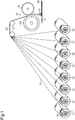
Fig. 1 is a schematic view for describing a method for manufacturing glass chopped strands (mat) according to a first embodiment. -
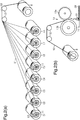
Fig. 2(a) is a schematic view for describing a method for manufacturing glass chopped strands (mat) according to a second embodiment and shows a pre-process before manufacturing a roving,Fig. 2 (b) is similarly a schematic view for describing the method for manufacturing glass chopped strands (mat) according to the second embodiment and shows a post-process after the manufacture of the roving. -
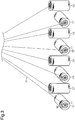
Fig. 3 is a schematic view for describing forming of a doubled glass strand according to another embodiment. - Methods for manufacturing glass chopped strands and a glass chopped strand mat will now be described.
- As shown in
Fig. 1 , eight cylindrical cakes C1 to C8 are used in manufacturing glass chopped strands CS and a glass chopped strand mat CM of the present embodiment. The cakes C1 to C8 have winding shafts extending parallel to a floor surface, that is, in a horizontal direction and are arranged so as to be parallel to each other. Each of the cakes C1 to C8 is a so-called divided filament cake in which sixteen glass strands GS are wound. - Each divided filament cake is manufactured as follows. First, molten glass is drawn from a bushing nozzle having several dozen to several thousand nozzles to form glass monofilaments corresponding to the number of nozzles. Next, sixteen glass strands are prepared, each by combining one-sixteenth of the total number of glass monofilaments and applying a sizing agent, and the sixteen glass strands are wound around a single collet. Lastly, the collet is pulled out.
- Sixteen glass strands GS are drawn at the same time from the inner part of each of the cakes C1 to C8. A
drawing portion 11 is provided at one end of the winding shaft of each of the cakes C1 to C8, and a glass strand S1, in which the sixteen glass strands GS are made into one, is drawn from eachdrawing portion 11. - With the present embodiment, the winding direction of some of the cakes C1 to C8 differs from the winding direction of the rest of the cakes. Specifically, cakes C1 to C4 are first cakes in which the glass strands GS are wound clockwise as viewed from the
drawing portion 11 side (that is, the glass strands GS are drawn clockwise from the inner circumference) and cakes C5 to C8 are second cakes in which the glass strands GS are wound counterclockwise as viewed from thedrawing portion 11 side (that is, the glass strands GS are drawn counterclockwise from the inner circumference). In the present description, the glass strands GS that are drawn and twisted from the first cakes shall be denoted as first glass strands and the glass strands GS that are drawn and twisted from the second cakes shall be denoted as second glass strands. That is, since although twisting is applied to the glass strand S1 drawn from each of the cakes C1 to C8, the direction of winding as viewed from thedrawing portion 11 side differs between the cakes C1 to C4 and the cakes C5 to C8, glass strands (first glass strands and second glass strands) that differ in twist direction coexist together. - At guide portions 12, the glass strands S1, which have been drawn and twisted from the respective cakes C1 to C8 through the
drawing portions 11, are combined into a doubled glass strand S2 and guided to acutting apparatus 13. At thecutting apparatus 13, the doubled glass strand S2 is put in between blade portions of a cutter roll 13a and an outer peripheral surface of anelastic roll 13b to cut the doubled glass strand S2 into glass chopped strands CS with a length of 10 to 100 mm. - The winding direction (drawing direction) as viewed from the
drawing portion 11 side differs between the cakes C1 to C4 and the cakes C5 to C8 and therefore glass strands S1 having two different types of twist, that is, glass strands (first glass strands) twisted in the clockwise direction and glass strands (second glass strands) twisted in the counterclockwise direction coexist together in the doubled glass strand S2. Consequently, the glass chopped strands CS, obtained by cutting the doubled glass strand S2, are satisfactory in dispersibility. This is presumed to be because the glass strands S1 differ mutually in twist direction and the dispersibility of the glass chopped strands CS is thus improved by actions of forces in directions in which twist is released after cutting. - The glass chopped strands CS are then formed into a glass chopped strand mat CM by undergoing a process of, for example, spraying a binder, while being conveyed downstream by a conveying
apparatus 14. With the present embodiment, due to the improvement of the dispersibility of the glass chopped strands CS, there is no unevenness in the density of the glass chopped strand mat CM and improvement of uniformity is achieved. - Incidentally, with a comparative example of glass chopped strands CS in which all eight cakes C1 to C8 are first cakes (cakes with the winding direction of the glass strands GS as viewed from the
drawing portion 11 side being clockwise), the rate of occurrence of defective dispersion was 20%. On the other hand, with the present embodiment, the rate of occurrence of defective dispersion was not more than 5%, which was a significant decrease. - Next, characteristic effects of the present embodiment will be described.
- (1) By combining the first glass strands that are drawn and twisted from the cakes C1 to C4 (first cakes) and the second glass strands that are drawn and twisted from the cakes C5 to C8 (second cakes), the doubled glass strand S2 is put in a state where the glass strands S1 having the two different types of twist of clockwise and counterclockwise coexist together. The glass chopped strands CS, obtained by subsequently cutting the doubled glass strand S2 into a predetermined length, thus have a satisfactory dispersibility. Also, the glass chopped strand mat CM, manufactured using the glass chopped strands CS, is high in uniformity.
- (2) Due to the number of the first glass strands and the number of the second glass strands in the doubled glass strand S2 being the same as each other, the glass strands S1 having the two different types of twist of clockwise and counterclockwise coexist together at appropriate proportions in the doubled glass strand S2, therefore contributing to improvement of the dispersibility when the doubled glass strand S2 is subsequently formed into the glass chopped strands CS.
- A method by which a doubled glass strand is formed from cakes, a roving is formed by winding the doubled glass strand, and glass chopped strands and a glass chopped strand mat are manufactured from the roving will now be described.
- As shown in
Fig. 2 (a) , the method of the present embodiment includes the forming of a roving R. That is, glass strands S1 are drawn from cakes C1 to C4, which are first cakes in which glass strands GS are wound clockwise as viewed from a drawingportion 11 side, and cakes C5 to C8, which are second cakes in which glass strands GS are wound counterclockwise as viewed from the drawingportion 11 side, and formed into a single doubled glass strand S2 via guide portions 12 and then wound. The wound body thus obtained is the roving R. The doubled glass strand S2, which is wound and forms the roving R, is in a state where the glass strands S1 having the two different types of twist of clockwise and counterclockwise coexist together. - Subsequently, as shown in
Fig. 2 (b) , the doubled glass strand S2 is drawn from the roving R and guided via guide portions 12 to acutting apparatus 13 to manufacture glass chopped strands CS and a glass chopped strand mat CM in the same manner as in the first embodiment. By using the roving R, formed by winding the doubled glass strand S2, in which the glass strands S1 having the two different types of twist coexist together, the dispersibility of the glass chopped strands CS is satisfactory and the uniformity of the glass chopped strand mat CM is also satisfactory as in the first embodiment. - Next, characteristic effects of the present embodiment will be described.
- (1) The glass chopped strands CS having a satisfactory dispersibility can be obtained and the glass chopped strand mat CM that is without unevenness in density and is high in uniformity can also be obtained because the roving R is manufactured from the doubled glass strand S2, in which the glass strands S1 having the two different types of twist coexist together, and the glass chopped strands CS are manufactured from the doubled glass strand S2 drawn from the roving R.
- (2) Due to being of a mode of using the roving R formed by winding the doubled glass strand S2, a pre-process before the manufacture of the roving R and a post-process after the manufacture of the roving R can be arranged at separate, independent manufacturing lines.
- The embodiments described above may be changed as follows.
- Although in each of the embodiments described above, all of the cakes C1 to C8 are laid out so that the winding shafts extend in the horizontal direction, the layout is not restricted thereto. For example, all of the cakes C1 to C8 may be laid out so that the winding shafts extend in a vertical direction. Alternatively, the direction may be oblique instead of being horizontal or vertical.
Alternatively, as shown inFig. 3 , the cakes C1 to C8 may be laid out so that winding shafts extending in the horizontal direction and those extending in the vertical direction alternate. That is, the directions in which the winding shafts of the cakes C1 to C8 extend do not have to be aligned in a single direction. - Although the glass chopped strands CS are manufactured from the eight cakes C1 to C8 in the first embodiment described above and the roving R (and thereafter the glass chopped strands CS) is manufactured from the eight cakes C1 to C8 in the second embodiment described above, the number of cakes may be less than eight or may be greater than eight.
- Although in each of the embodiments described above, each of the cakes C1 to C8 is a divided filament cake, in which sixteen glass strands GS are wound, the number of glass strands GS wound in each of the cakes C1 to C8 may be greater than sixteen or may be less than sixteen.
- Although in each of the embodiments described above, the first cakes (cakes C1 to C4) and the second cakes (cakes C5 to C8) are equal to each other in number, these do not have to be equal in number. However, it is preferable for the number of either of the first and second cakes to be 25 to 75% of the total number of first and second cakes.
- Although in each of the embodiments described above, the layout is such that four juxtaposed first cakes (cakes C1 to C4) are positioned next to four juxtaposed second cakes (cakes C5 to C8), the layout is not restricted thereto. For example, the first cakes and the second cakes may be laid out alternately.
- Although in each of the embodiments described above, the drawing
portions 11 are installed, the drawingportions 11 do not have to be installed. In this case, with the cakes C1 to C4, the glass strands GS are drawn clockwise when the cakes are viewed from the side at which the glass strands GS are drawn, and with the cakes C5 to C8, the glass strands GS are drawn counterclockwise when the cakes are viewed from the side at which the glass strands GS are drawn. At the guide portions 12, the glass strands GS are combined into the doubled glass strand S2 and guided to the cuttingapparatus 13. - The present invention is not limited to the examples disclosed. For example, the exemplified features should not be understood as being essential to the present invention, and rather, the subject matter of the present invention may exist in fewer features than all features of a specific embodiment disclosed. The present invention is defined by the claims and intended to cover all modifications within the scope of the claims and the scope of equivalents.
- 11: drawing portion, C1 to C4: cake (first cake), C5 to C8: cake (second cake), GS: glass strand, S1: glass strand, S2: doubled glass strand, CS: glass chopped strands, CM: glass chopped strand mat.
Claims (4)
- A method for manufacturing glass chopped strands by cutting, into a predetermined length, a doubled glass strand that combines glass strands drawn from cakes each of which is formed by winding one of the glass strands,
wherein the doubled glass strand, from which the glass chopped strands are manufactured, is formed by combining a first glass strand or strands that are twisted clockwise when drawn from some of the cakes and a second glass strand or strands that are twisted counterclockwise when drawn from the rest of the cakes. - The method according to claim 1, wherein the percentage of the number of the first glass strand or strands with respect to the total number of the first glass strand or strands and the second glass strand or strands in the doubled glass strand is 25 to 75%.
- The method according to claim 1 or 2, wherein the cakes are divided filament cakes.
- A method for manufacturing a glass chopped strand mat, comprising depositing the glass chopped strands manufactured by the method according to any one of claims 1 to 3 into a sheet and then binding the glass chopped strands to each other to manufacture the glass chopped strand mat.
Applications Claiming Priority (2)
| Application Number | Priority Date | Filing Date | Title |
|---|---|---|---|
| JP2015174026A JP2017048093A (en) | 2015-09-03 | 2015-09-03 | Production method of glass chopped strand, and production method of glass chopped strand mat |
| PCT/JP2016/074245 WO2017038508A1 (en) | 2015-09-03 | 2016-08-19 | Method for manufacturing glass chopped strand and method for manufacturing glass chopped strand mat |
Publications (3)
| Publication Number | Publication Date |
|---|---|
| EP3345875A1 true EP3345875A1 (en) | 2018-07-11 |
| EP3345875A4 EP3345875A4 (en) | 2019-04-10 |
| EP3345875B1 EP3345875B1 (en) | 2022-10-05 |
Family
ID=58187501
Family Applications (1)
| Application Number | Title | Priority Date | Filing Date |
|---|---|---|---|
| EP16841540.4A Active EP3345875B1 (en) | 2015-09-03 | 2016-08-19 | Method for manufacturing glass chopped strands and method for manufacturing glass chopped strand mat |
Country Status (5)
| Country | Link |
|---|---|
| US (1) | US20180237332A1 (en) |
| EP (1) | EP3345875B1 (en) |
| JP (1) | JP2017048093A (en) |
| CN (1) | CN108025945B (en) |
| WO (1) | WO2017038508A1 (en) |
Families Citing this family (1)
| Publication number | Priority date | Publication date | Assignee | Title |
|---|---|---|---|---|
| JP2023074133A (en) * | 2021-11-17 | 2023-05-29 | 日本電気硝子株式会社 | Manufacturing method of doubling roving, doubling roving, and glass fiber reinforced resin molding |
Family Cites Families (21)
| Publication number | Priority date | Publication date | Assignee | Title |
|---|---|---|---|---|
| JPS5836863A (en) * | 1981-08-26 | 1983-03-03 | Asahi Fiber Glass Co Ltd | Manufacture process of cut glass fiber bundle |
| JPS58213650A (en) * | 1982-06-07 | 1983-12-12 | Fuji Fiber Glass Kk | Chopped glass strand and preparation thereof |
| DE3518769C2 (en) * | 1985-05-24 | 1987-04-30 | Glaswerk Schuller Gmbh, 6980 Wertheim | Device for the production of nonwovens, mats, yarns and rovings from glass fibres and method for their operation |
| JPH0350125Y2 (en) * | 1986-02-24 | 1991-10-25 | ||
| JP3743098B2 (en) * | 1997-02-16 | 2006-02-08 | 日東紡績株式会社 | Glass fiber roving package, shrink package, and manufacturing method thereof |
| JPH10297932A (en) * | 1997-04-22 | 1998-11-10 | Nippon Electric Glass Co Ltd | Glass roving |
| JPH10296868A (en) * | 1997-04-22 | 1998-11-10 | Nippon Electric Glass Co Ltd | Glass roving |
| JPH10296867A (en) * | 1997-04-22 | 1998-11-10 | Nippon Electric Glass Co Ltd | Glass roving |
| JP3671601B2 (en) * | 1997-04-22 | 2005-07-13 | 日本電気硝子株式会社 | How to unwind glass roving |
| JP3819206B2 (en) * | 2000-02-23 | 2006-09-06 | 日本板硝子株式会社 | Chopped strand manufacturing method and apparatus, and chopped strand manufactured by the manufacturing method |
| JP4131368B2 (en) * | 2002-01-04 | 2008-08-13 | 日本電気硝子株式会社 | Glass roving for spray molded GRC |
| WO2007074743A1 (en) * | 2005-12-28 | 2007-07-05 | Ocv Intellectual Capital, Llc | Chopped strand and fiber-reinforced crystalline polyester resin molding material containing the same |
| CN100457995C (en) * | 2005-12-29 | 2009-02-04 | 中材科技股份有限公司 | Method of preparing fiber reinforcement thermoplastic plastics felt premixed material by stitch-bonding method |
| JP2008308768A (en) * | 2007-06-12 | 2008-12-25 | Nippon Electric Glass Co Ltd | Glass chopped strand mat, method for producing the same, and automotive molded ceiling material |
| JP4756479B2 (en) * | 2007-10-16 | 2011-08-24 | 日本電気硝子株式会社 | Glass roving manufacturing method and glass roving |
| JP5543140B2 (en) * | 2009-06-18 | 2014-07-09 | ニューマンパワーサービス株式会社 | Glass chopped strand drying apparatus and method for producing glass chopped strand |
| JP5429687B2 (en) * | 2009-09-07 | 2014-02-26 | 日本電気硝子株式会社 | Manufacturing method of glass chopped strand mat |
| JP2013007139A (en) * | 2011-06-27 | 2013-01-10 | Sanyo Chem Ind Ltd | Method for producing glass chopped strand mat |
| EP2796601A4 (en) * | 2011-12-20 | 2015-09-16 | Nippon Electric Glass Co | GLASS MAT, PRODUCTION METHOD, AUTOMOTIVE MOLDED CEILING ELEMENT AND METHOD FOR PRODUCING SAME |
| WO2013094401A1 (en) * | 2011-12-20 | 2013-06-27 | 日本電気硝子株式会社 | Method for producing glass chopped strand mat, and method for producing automotive molded ceiling material |
| JP5598622B1 (en) * | 2014-03-10 | 2014-10-01 | 日東紡績株式会社 | Glass chopped strand mat, glass chopped strand mat roll, method of manufacturing glass chopped strand mat, and automobile molded ceiling material |
-
2015
- 2015-09-03 JP JP2015174026A patent/JP2017048093A/en active Pending
-
2016
- 2016-08-19 CN CN201680049992.4A patent/CN108025945B/en active Active
- 2016-08-19 WO PCT/JP2016/074245 patent/WO2017038508A1/en not_active Ceased
- 2016-08-19 EP EP16841540.4A patent/EP3345875B1/en active Active
- 2016-08-19 US US15/752,175 patent/US20180237332A1/en not_active Abandoned
Also Published As
| Publication number | Publication date |
|---|---|
| US20180237332A1 (en) | 2018-08-23 |
| WO2017038508A1 (en) | 2017-03-09 |
| CN108025945B (en) | 2021-04-09 |
| EP3345875A4 (en) | 2019-04-10 |
| JP2017048093A (en) | 2017-03-09 |
| CN108025945A (en) | 2018-05-11 |
| EP3345875B1 (en) | 2022-10-05 |
Similar Documents
| Publication | Publication Date | Title |
|---|---|---|
| EP3431242B1 (en) | Fiber-reinforced resin molding material and production method therefor | |
| JP5569708B2 (en) | Manufacturing method of sheet molding compound | |
| RU2409511C2 (en) | Versions of carbon fibre package and versions of methods of winding said package | |
| US9067375B2 (en) | Device for guiding and texturing a plurality of synthetic threads | |
| DE2911223A1 (en) | BUNCHED YARN AND METHOD OF MANUFACTURING THEREOF | |
| JP6276897B2 (en) | Tow band manufacturing method, tow band manufacturing apparatus and cigarette filter manufacturing method | |
| EP3345875B1 (en) | Method for manufacturing glass chopped strands and method for manufacturing glass chopped strand mat | |
| EP3919425B1 (en) | Fiber package | |
| JP5640090B2 (en) | Filter manufacturing apparatus, filter manufacturing method, and filter | |
| JP5179810B2 (en) | Manufacturing method of steel cord for reinforcing rubber articles | |
| JP2010094896A (en) | Method for manufacturing long-fiber-reinforced resin pellet | |
| CN103137254B (en) | A kind of Aeronautical cable protective sleeve | |
| CN219824480U (en) | Spiral buncher for drawing frame | |
| KR101669697B1 (en) | Method for producing multiple fiber strips in parallel and apparatus for executing said method | |
| JP2016108684A (en) | Method and apparatus for producing carbon fiber sliver, and method for producing carbon fiber spun yarn | |
| US11982355B2 (en) | Yarn and gland packing | |
| CN103014973B (en) | A kind of more than 6 strands glassfiber strand are also twisted as the production method of 1 strand | |
| JP2022167250A (en) | Manufacturing method of rope having untwisted structure | |
| JP2005290195A (en) | Long fiber reinforced resin molding material and method for producing the same | |
| JP2004256981A (en) | Method for producing cut fiber | |
| JP2019181786A (en) | Rubber sheet production apparatus and production method | |
| JP2004012888A (en) | Method and apparatus for manufacturing flat cord-assembled optical cable | |
| JP2012518725A5 (en) | ||
| JPS5923408A (en) | Conductor stranding method |
Legal Events
| Date | Code | Title | Description |
|---|---|---|---|
| STAA | Information on the status of an ep patent application or granted ep patent |
Free format text: STATUS: THE INTERNATIONAL PUBLICATION HAS BEEN MADE |
|
| PUAI | Public reference made under article 153(3) epc to a published international application that has entered the european phase |
Free format text: ORIGINAL CODE: 0009012 |
|
| STAA | Information on the status of an ep patent application or granted ep patent |
Free format text: STATUS: REQUEST FOR EXAMINATION WAS MADE |
|
| 17P | Request for examination filed |
Effective date: 20180220 |
|
| AK | Designated contracting states |
Kind code of ref document: A1 Designated state(s): AL AT BE BG CH CY CZ DE DK EE ES FI FR GB GR HR HU IE IS IT LI LT LU LV MC MK MT NL NO PL PT RO RS SE SI SK SM TR |
|
| AX | Request for extension of the european patent |
Extension state: BA ME |
|
| DAV | Request for validation of the european patent (deleted) | ||
| DAX | Request for extension of the european patent (deleted) | ||
| A4 | Supplementary search report drawn up and despatched |
Effective date: 20190308 |
|
| RIC1 | Information provided on ipc code assigned before grant |
Ipc: C03B 37/16 20060101AFI20190304BHEP Ipc: D04H 1/4218 20120101ALI20190304BHEP |
|
| STAA | Information on the status of an ep patent application or granted ep patent |
Free format text: STATUS: EXAMINATION IS IN PROGRESS |
|
| 17Q | First examination report despatched |
Effective date: 20210813 |
|
| GRAP | Despatch of communication of intention to grant a patent |
Free format text: ORIGINAL CODE: EPIDOSNIGR1 |
|
| STAA | Information on the status of an ep patent application or granted ep patent |
Free format text: STATUS: GRANT OF PATENT IS INTENDED |
|
| INTG | Intention to grant announced |
Effective date: 20220719 |
|
| RIN1 | Information on inventor provided before grant (corrected) |
Inventor name: SUGIMOTO, KIYOMASA Inventor name: KIJIMA, AKIO |
|
| GRAS | Grant fee paid |
Free format text: ORIGINAL CODE: EPIDOSNIGR3 |
|
| GRAA | (expected) grant |
Free format text: ORIGINAL CODE: 0009210 |
|
| STAA | Information on the status of an ep patent application or granted ep patent |
Free format text: STATUS: THE PATENT HAS BEEN GRANTED |
|
| AK | Designated contracting states |
Kind code of ref document: B1 Designated state(s): AL AT BE BG CH CY CZ DE DK EE ES FI FR GB GR HR HU IE IS IT LI LT LU LV MC MK MT NL NO PL PT RO RS SE SI SK SM TR |
|
| REG | Reference to a national code |
Ref country code: GB Ref legal event code: FG4D |
|
| REG | Reference to a national code |
Ref country code: CH Ref legal event code: EP |
|
| REG | Reference to a national code |
Ref country code: AT Ref legal event code: REF Ref document number: 1522663 Country of ref document: AT Kind code of ref document: T Effective date: 20221015 |
|
| REG | Reference to a national code |
Ref country code: IE Ref legal event code: FG4D |
|
| REG | Reference to a national code |
Ref country code: DE Ref legal event code: R096 Ref document number: 602016075504 Country of ref document: DE |
|
| REG | Reference to a national code |
Ref country code: LT Ref legal event code: MG9D |
|
| REG | Reference to a national code |
Ref country code: NL Ref legal event code: MP Effective date: 20221005 |
|
| REG | Reference to a national code |
Ref country code: AT Ref legal event code: MK05 Ref document number: 1522663 Country of ref document: AT Kind code of ref document: T Effective date: 20221005 |
|
| PG25 | Lapsed in a contracting state [announced via postgrant information from national office to epo] |
Ref country code: NL Free format text: LAPSE BECAUSE OF FAILURE TO SUBMIT A TRANSLATION OF THE DESCRIPTION OR TO PAY THE FEE WITHIN THE PRESCRIBED TIME-LIMIT Effective date: 20221005 |
|
| PG25 | Lapsed in a contracting state [announced via postgrant information from national office to epo] |
Ref country code: SE Free format text: LAPSE BECAUSE OF FAILURE TO SUBMIT A TRANSLATION OF THE DESCRIPTION OR TO PAY THE FEE WITHIN THE PRESCRIBED TIME-LIMIT Effective date: 20221005 Ref country code: PT Free format text: LAPSE BECAUSE OF FAILURE TO SUBMIT A TRANSLATION OF THE DESCRIPTION OR TO PAY THE FEE WITHIN THE PRESCRIBED TIME-LIMIT Effective date: 20230206 Ref country code: NO Free format text: LAPSE BECAUSE OF FAILURE TO SUBMIT A TRANSLATION OF THE DESCRIPTION OR TO PAY THE FEE WITHIN THE PRESCRIBED TIME-LIMIT Effective date: 20230105 Ref country code: LT Free format text: LAPSE BECAUSE OF FAILURE TO SUBMIT A TRANSLATION OF THE DESCRIPTION OR TO PAY THE FEE WITHIN THE PRESCRIBED TIME-LIMIT Effective date: 20221005 Ref country code: FI Free format text: LAPSE BECAUSE OF FAILURE TO SUBMIT A TRANSLATION OF THE DESCRIPTION OR TO PAY THE FEE WITHIN THE PRESCRIBED TIME-LIMIT Effective date: 20221005 Ref country code: ES Free format text: LAPSE BECAUSE OF FAILURE TO SUBMIT A TRANSLATION OF THE DESCRIPTION OR TO PAY THE FEE WITHIN THE PRESCRIBED TIME-LIMIT Effective date: 20221005 Ref country code: AT Free format text: LAPSE BECAUSE OF FAILURE TO SUBMIT A TRANSLATION OF THE DESCRIPTION OR TO PAY THE FEE WITHIN THE PRESCRIBED TIME-LIMIT Effective date: 20221005 |
|
| PG25 | Lapsed in a contracting state [announced via postgrant information from national office to epo] |
Ref country code: RS Free format text: LAPSE BECAUSE OF FAILURE TO SUBMIT A TRANSLATION OF THE DESCRIPTION OR TO PAY THE FEE WITHIN THE PRESCRIBED TIME-LIMIT Effective date: 20221005 Ref country code: PL Free format text: LAPSE BECAUSE OF FAILURE TO SUBMIT A TRANSLATION OF THE DESCRIPTION OR TO PAY THE FEE WITHIN THE PRESCRIBED TIME-LIMIT Effective date: 20221005 Ref country code: LV Free format text: LAPSE BECAUSE OF FAILURE TO SUBMIT A TRANSLATION OF THE DESCRIPTION OR TO PAY THE FEE WITHIN THE PRESCRIBED TIME-LIMIT Effective date: 20221005 Ref country code: IS Free format text: LAPSE BECAUSE OF FAILURE TO SUBMIT A TRANSLATION OF THE DESCRIPTION OR TO PAY THE FEE WITHIN THE PRESCRIBED TIME-LIMIT Effective date: 20230205 Ref country code: HR Free format text: LAPSE BECAUSE OF FAILURE TO SUBMIT A TRANSLATION OF THE DESCRIPTION OR TO PAY THE FEE WITHIN THE PRESCRIBED TIME-LIMIT Effective date: 20221005 Ref country code: GR Free format text: LAPSE BECAUSE OF FAILURE TO SUBMIT A TRANSLATION OF THE DESCRIPTION OR TO PAY THE FEE WITHIN THE PRESCRIBED TIME-LIMIT Effective date: 20230106 |
|
| REG | Reference to a national code |
Ref country code: DE Ref legal event code: R097 Ref document number: 602016075504 Country of ref document: DE |
|
| PG25 | Lapsed in a contracting state [announced via postgrant information from national office to epo] |
Ref country code: SM Free format text: LAPSE BECAUSE OF FAILURE TO SUBMIT A TRANSLATION OF THE DESCRIPTION OR TO PAY THE FEE WITHIN THE PRESCRIBED TIME-LIMIT Effective date: 20221005 Ref country code: RO Free format text: LAPSE BECAUSE OF FAILURE TO SUBMIT A TRANSLATION OF THE DESCRIPTION OR TO PAY THE FEE WITHIN THE PRESCRIBED TIME-LIMIT Effective date: 20221005 Ref country code: EE Free format text: LAPSE BECAUSE OF FAILURE TO SUBMIT A TRANSLATION OF THE DESCRIPTION OR TO PAY THE FEE WITHIN THE PRESCRIBED TIME-LIMIT Effective date: 20221005 Ref country code: DK Free format text: LAPSE BECAUSE OF FAILURE TO SUBMIT A TRANSLATION OF THE DESCRIPTION OR TO PAY THE FEE WITHIN THE PRESCRIBED TIME-LIMIT Effective date: 20221005 Ref country code: CZ Free format text: LAPSE BECAUSE OF FAILURE TO SUBMIT A TRANSLATION OF THE DESCRIPTION OR TO PAY THE FEE WITHIN THE PRESCRIBED TIME-LIMIT Effective date: 20221005 |
|
| PLBE | No opposition filed within time limit |
Free format text: ORIGINAL CODE: 0009261 |
|
| STAA | Information on the status of an ep patent application or granted ep patent |
Free format text: STATUS: NO OPPOSITION FILED WITHIN TIME LIMIT |
|
| PG25 | Lapsed in a contracting state [announced via postgrant information from national office to epo] |
Ref country code: SK Free format text: LAPSE BECAUSE OF FAILURE TO SUBMIT A TRANSLATION OF THE DESCRIPTION OR TO PAY THE FEE WITHIN THE PRESCRIBED TIME-LIMIT Effective date: 20221005 Ref country code: AL Free format text: LAPSE BECAUSE OF FAILURE TO SUBMIT A TRANSLATION OF THE DESCRIPTION OR TO PAY THE FEE WITHIN THE PRESCRIBED TIME-LIMIT Effective date: 20221005 |
|
| 26N | No opposition filed |
Effective date: 20230706 |
|
| PG25 | Lapsed in a contracting state [announced via postgrant information from national office to epo] |
Ref country code: SI Free format text: LAPSE BECAUSE OF FAILURE TO SUBMIT A TRANSLATION OF THE DESCRIPTION OR TO PAY THE FEE WITHIN THE PRESCRIBED TIME-LIMIT Effective date: 20221005 |
|
| PG25 | Lapsed in a contracting state [announced via postgrant information from national office to epo] |
Ref country code: MC Free format text: LAPSE BECAUSE OF FAILURE TO SUBMIT A TRANSLATION OF THE DESCRIPTION OR TO PAY THE FEE WITHIN THE PRESCRIBED TIME-LIMIT Effective date: 20221005 |
|
| REG | Reference to a national code |
Ref country code: CH Ref legal event code: PL |
|
| PG25 | Lapsed in a contracting state [announced via postgrant information from national office to epo] |
Ref country code: MC Free format text: LAPSE BECAUSE OF FAILURE TO SUBMIT A TRANSLATION OF THE DESCRIPTION OR TO PAY THE FEE WITHIN THE PRESCRIBED TIME-LIMIT Effective date: 20221005 |
|
| PG25 | Lapsed in a contracting state [announced via postgrant information from national office to epo] |
Ref country code: LU Free format text: LAPSE BECAUSE OF NON-PAYMENT OF DUE FEES Effective date: 20230819 |
|
| GBPC | Gb: european patent ceased through non-payment of renewal fee |
Effective date: 20230819 |
|
| PG25 | Lapsed in a contracting state [announced via postgrant information from national office to epo] |
Ref country code: LU Free format text: LAPSE BECAUSE OF NON-PAYMENT OF DUE FEES Effective date: 20230819 Ref country code: CH Free format text: LAPSE BECAUSE OF NON-PAYMENT OF DUE FEES Effective date: 20230831 |
|
| REG | Reference to a national code |
Ref country code: BE Ref legal event code: MM Effective date: 20230831 |
|
| REG | Reference to a national code |
Ref country code: IE Ref legal event code: MM4A |
|
| PG25 | Lapsed in a contracting state [announced via postgrant information from national office to epo] |
Ref country code: IT Free format text: LAPSE BECAUSE OF FAILURE TO SUBMIT A TRANSLATION OF THE DESCRIPTION OR TO PAY THE FEE WITHIN THE PRESCRIBED TIME-LIMIT Effective date: 20221005 |
|
| PG25 | Lapsed in a contracting state [announced via postgrant information from national office to epo] |
Ref country code: IE Free format text: LAPSE BECAUSE OF NON-PAYMENT OF DUE FEES Effective date: 20230819 |
|
| PG25 | Lapsed in a contracting state [announced via postgrant information from national office to epo] |
Ref country code: GB Free format text: LAPSE BECAUSE OF NON-PAYMENT OF DUE FEES Effective date: 20230819 |
|
| PG25 | Lapsed in a contracting state [announced via postgrant information from national office to epo] |
Ref country code: IE Free format text: LAPSE BECAUSE OF NON-PAYMENT OF DUE FEES Effective date: 20230819 Ref country code: GB Free format text: LAPSE BECAUSE OF NON-PAYMENT OF DUE FEES Effective date: 20230819 Ref country code: FR Free format text: LAPSE BECAUSE OF NON-PAYMENT OF DUE FEES Effective date: 20230831 |
|
| PG25 | Lapsed in a contracting state [announced via postgrant information from national office to epo] |
Ref country code: BE Free format text: LAPSE BECAUSE OF NON-PAYMENT OF DUE FEES Effective date: 20230831 |
|
| PG25 | Lapsed in a contracting state [announced via postgrant information from national office to epo] |
Ref country code: BG Free format text: LAPSE BECAUSE OF FAILURE TO SUBMIT A TRANSLATION OF THE DESCRIPTION OR TO PAY THE FEE WITHIN THE PRESCRIBED TIME-LIMIT Effective date: 20221005 |
|
| PG25 | Lapsed in a contracting state [announced via postgrant information from national office to epo] |
Ref country code: BG Free format text: LAPSE BECAUSE OF FAILURE TO SUBMIT A TRANSLATION OF THE DESCRIPTION OR TO PAY THE FEE WITHIN THE PRESCRIBED TIME-LIMIT Effective date: 20221005 |
|
| PG25 | Lapsed in a contracting state [announced via postgrant information from national office to epo] |
Ref country code: CY Free format text: LAPSE BECAUSE OF FAILURE TO SUBMIT A TRANSLATION OF THE DESCRIPTION OR TO PAY THE FEE WITHIN THE PRESCRIBED TIME-LIMIT; INVALID AB INITIO Effective date: 20160819 |
|
| PG25 | Lapsed in a contracting state [announced via postgrant information from national office to epo] |
Ref country code: HU Free format text: LAPSE BECAUSE OF FAILURE TO SUBMIT A TRANSLATION OF THE DESCRIPTION OR TO PAY THE FEE WITHIN THE PRESCRIBED TIME-LIMIT; INVALID AB INITIO Effective date: 20160819 |
|
| PGFP | Annual fee paid to national office [announced via postgrant information from national office to epo] |
Ref country code: DE Payment date: 20250828 Year of fee payment: 10 |
|
| PG25 | Lapsed in a contracting state [announced via postgrant information from national office to epo] |
Ref country code: TR Free format text: LAPSE BECAUSE OF FAILURE TO SUBMIT A TRANSLATION OF THE DESCRIPTION OR TO PAY THE FEE WITHIN THE PRESCRIBED TIME-LIMIT Effective date: 20221005 |