EP3344659B1 - Molekulare konstrukte zur verhinderung der bildung von blutgerinnseln und/oder zur behandlung von thrombosen - Google Patents
Molekulare konstrukte zur verhinderung der bildung von blutgerinnseln und/oder zur behandlung von thrombosen Download PDFInfo
- Publication number
- EP3344659B1 EP3344659B1 EP16840684.1A EP16840684A EP3344659B1 EP 3344659 B1 EP3344659 B1 EP 3344659B1 EP 16840684 A EP16840684 A EP 16840684A EP 3344659 B1 EP3344659 B1 EP 3344659B1
- Authority
- EP
- European Patent Office
- Prior art keywords
- group
- center core
- linker unit
- linker
- linked
- Prior art date
- Legal status (The legal status is an assumption and is not a legal conclusion. Google has not performed a legal analysis and makes no representation as to the accuracy of the status listed.)
- Active
Links
Images





Classifications
-
- A—HUMAN NECESSITIES
- A61—MEDICAL OR VETERINARY SCIENCE; HYGIENE
- A61K—PREPARATIONS FOR MEDICAL, DENTAL OR TOILETRY PURPOSES
- A61K47/00—Medicinal preparations characterised by the non-active ingredients used, e.g. carriers or inert additives; Targeting or modifying agents chemically bound to the active ingredient
- A61K47/50—Medicinal preparations characterised by the non-active ingredients used, e.g. carriers or inert additives; Targeting or modifying agents chemically bound to the active ingredient the non-active ingredient being chemically bound to the active ingredient, e.g. polymer-drug conjugates
- A61K47/51—Medicinal preparations characterised by the non-active ingredients used, e.g. carriers or inert additives; Targeting or modifying agents chemically bound to the active ingredient the non-active ingredient being chemically bound to the active ingredient, e.g. polymer-drug conjugates the non-active ingredient being a modifying agent
- A61K47/56—Medicinal preparations characterised by the non-active ingredients used, e.g. carriers or inert additives; Targeting or modifying agents chemically bound to the active ingredient the non-active ingredient being chemically bound to the active ingredient, e.g. polymer-drug conjugates the non-active ingredient being a modifying agent the modifying agent being an organic macromolecular compound, e.g. an oligomeric, polymeric or dendrimeric molecule
-
- A—HUMAN NECESSITIES
- A61—MEDICAL OR VETERINARY SCIENCE; HYGIENE
- A61K—PREPARATIONS FOR MEDICAL, DENTAL OR TOILETRY PURPOSES
- A61K31/00—Medicinal preparations containing organic active ingredients
- A61K31/13—Amines
- A61K31/135—Amines having aromatic rings, e.g. ketamine, nortriptyline
- A61K31/137—Arylalkylamines, e.g. amphetamine, epinephrine, salbutamol, ephedrine or methadone
-
- A—HUMAN NECESSITIES
- A61—MEDICAL OR VETERINARY SCIENCE; HYGIENE
- A61K—PREPARATIONS FOR MEDICAL, DENTAL OR TOILETRY PURPOSES
- A61K31/00—Medicinal preparations containing organic active ingredients
- A61K31/33—Heterocyclic compounds
- A61K31/395—Heterocyclic compounds having nitrogen as a ring hetero atom, e.g. guanethidine or rifamycins
- A61K31/435—Heterocyclic compounds having nitrogen as a ring hetero atom, e.g. guanethidine or rifamycins having six-membered rings with one nitrogen as the only ring hetero atom
- A61K31/4353—Heterocyclic compounds having nitrogen as a ring hetero atom, e.g. guanethidine or rifamycins having six-membered rings with one nitrogen as the only ring hetero atom ortho- or peri-condensed with heterocyclic ring systems
- A61K31/436—Heterocyclic compounds having nitrogen as a ring hetero atom, e.g. guanethidine or rifamycins having six-membered rings with one nitrogen as the only ring hetero atom ortho- or peri-condensed with heterocyclic ring systems the heterocyclic ring system containing a six-membered ring having oxygen as a ring hetero atom, e.g. rapamycin
-
- A—HUMAN NECESSITIES
- A61—MEDICAL OR VETERINARY SCIENCE; HYGIENE
- A61K—PREPARATIONS FOR MEDICAL, DENTAL OR TOILETRY PURPOSES
- A61K31/00—Medicinal preparations containing organic active ingredients
- A61K31/33—Heterocyclic compounds
- A61K31/395—Heterocyclic compounds having nitrogen as a ring hetero atom, e.g. guanethidine or rifamycins
- A61K31/435—Heterocyclic compounds having nitrogen as a ring hetero atom, e.g. guanethidine or rifamycins having six-membered rings with one nitrogen as the only ring hetero atom
- A61K31/44—Non condensed pyridines; Hydrogenated derivatives thereof
- A61K31/445—Non condensed piperidines, e.g. piperocaine
- A61K31/4523—Non condensed piperidines, e.g. piperocaine containing further heterocyclic ring systems
- A61K31/4545—Non condensed piperidines, e.g. piperocaine containing further heterocyclic ring systems containing a six-membered ring with nitrogen as a ring hetero atom, e.g. pipamperone, anabasine
-
- A—HUMAN NECESSITIES
- A61—MEDICAL OR VETERINARY SCIENCE; HYGIENE
- A61K—PREPARATIONS FOR MEDICAL, DENTAL OR TOILETRY PURPOSES
- A61K38/00—Medicinal preparations containing peptides
- A61K38/04—Peptides having up to 20 amino acids in a fully defined sequence; Derivatives thereof
- A61K38/05—Dipeptides
-
- A—HUMAN NECESSITIES
- A61—MEDICAL OR VETERINARY SCIENCE; HYGIENE
- A61K—PREPARATIONS FOR MEDICAL, DENTAL OR TOILETRY PURPOSES
- A61K39/00—Medicinal preparations containing antigens or antibodies
- A61K39/395—Antibodies; Immunoglobulins; Immune serum, e.g. antilymphocytic serum
- A61K39/44—Antibodies bound to carriers
-
- A—HUMAN NECESSITIES
- A61—MEDICAL OR VETERINARY SCIENCE; HYGIENE
- A61K—PREPARATIONS FOR MEDICAL, DENTAL OR TOILETRY PURPOSES
- A61K47/00—Medicinal preparations characterised by the non-active ingredients used, e.g. carriers or inert additives; Targeting or modifying agents chemically bound to the active ingredient
- A61K47/50—Medicinal preparations characterised by the non-active ingredients used, e.g. carriers or inert additives; Targeting or modifying agents chemically bound to the active ingredient the non-active ingredient being chemically bound to the active ingredient, e.g. polymer-drug conjugates
- A61K47/51—Medicinal preparations characterised by the non-active ingredients used, e.g. carriers or inert additives; Targeting or modifying agents chemically bound to the active ingredient the non-active ingredient being chemically bound to the active ingredient, e.g. polymer-drug conjugates the non-active ingredient being a modifying agent
- A61K47/54—Medicinal preparations characterised by the non-active ingredients used, e.g. carriers or inert additives; Targeting or modifying agents chemically bound to the active ingredient the non-active ingredient being chemically bound to the active ingredient, e.g. polymer-drug conjugates the non-active ingredient being a modifying agent the modifying agent being an organic compound
- A61K47/55—Medicinal preparations characterised by the non-active ingredients used, e.g. carriers or inert additives; Targeting or modifying agents chemically bound to the active ingredient the non-active ingredient being chemically bound to the active ingredient, e.g. polymer-drug conjugates the non-active ingredient being a modifying agent the modifying agent being an organic compound the modifying agent being also a pharmacologically or therapeutically active agent, i.e. the entire conjugate being a codrug
-
- A—HUMAN NECESSITIES
- A61—MEDICAL OR VETERINARY SCIENCE; HYGIENE
- A61K—PREPARATIONS FOR MEDICAL, DENTAL OR TOILETRY PURPOSES
- A61K47/00—Medicinal preparations characterised by the non-active ingredients used, e.g. carriers or inert additives; Targeting or modifying agents chemically bound to the active ingredient
- A61K47/50—Medicinal preparations characterised by the non-active ingredients used, e.g. carriers or inert additives; Targeting or modifying agents chemically bound to the active ingredient the non-active ingredient being chemically bound to the active ingredient, e.g. polymer-drug conjugates
- A61K47/51—Medicinal preparations characterised by the non-active ingredients used, e.g. carriers or inert additives; Targeting or modifying agents chemically bound to the active ingredient the non-active ingredient being chemically bound to the active ingredient, e.g. polymer-drug conjugates the non-active ingredient being a modifying agent
- A61K47/62—Medicinal preparations characterised by the non-active ingredients used, e.g. carriers or inert additives; Targeting or modifying agents chemically bound to the active ingredient the non-active ingredient being chemically bound to the active ingredient, e.g. polymer-drug conjugates the non-active ingredient being a modifying agent the modifying agent being a protein, peptide or polyamino acid
- A61K47/65—Peptidic linkers, binders or spacers, e.g. peptidic enzyme-labile linkers
-
- A—HUMAN NECESSITIES
- A61—MEDICAL OR VETERINARY SCIENCE; HYGIENE
- A61K—PREPARATIONS FOR MEDICAL, DENTAL OR TOILETRY PURPOSES
- A61K47/00—Medicinal preparations characterised by the non-active ingredients used, e.g. carriers or inert additives; Targeting or modifying agents chemically bound to the active ingredient
- A61K47/50—Medicinal preparations characterised by the non-active ingredients used, e.g. carriers or inert additives; Targeting or modifying agents chemically bound to the active ingredient the non-active ingredient being chemically bound to the active ingredient, e.g. polymer-drug conjugates
- A61K47/51—Medicinal preparations characterised by the non-active ingredients used, e.g. carriers or inert additives; Targeting or modifying agents chemically bound to the active ingredient the non-active ingredient being chemically bound to the active ingredient, e.g. polymer-drug conjugates the non-active ingredient being a modifying agent
- A61K47/68—Medicinal preparations characterised by the non-active ingredients used, e.g. carriers or inert additives; Targeting or modifying agents chemically bound to the active ingredient the non-active ingredient being chemically bound to the active ingredient, e.g. polymer-drug conjugates the non-active ingredient being a modifying agent the modifying agent being an antibody, an immunoglobulin or a fragment thereof, e.g. an Fc-fragment
- A61K47/6835—Medicinal preparations characterised by the non-active ingredients used, e.g. carriers or inert additives; Targeting or modifying agents chemically bound to the active ingredient the non-active ingredient being chemically bound to the active ingredient, e.g. polymer-drug conjugates the non-active ingredient being a modifying agent the modifying agent being an antibody, an immunoglobulin or a fragment thereof, e.g. an Fc-fragment the modifying agent being an antibody or an immunoglobulin bearing at least one antigen-binding site
- A61K47/6843—Medicinal preparations characterised by the non-active ingredients used, e.g. carriers or inert additives; Targeting or modifying agents chemically bound to the active ingredient the non-active ingredient being chemically bound to the active ingredient, e.g. polymer-drug conjugates the non-active ingredient being a modifying agent the modifying agent being an antibody, an immunoglobulin or a fragment thereof, e.g. an Fc-fragment the modifying agent being an antibody or an immunoglobulin bearing at least one antigen-binding site the antibody targeting a material from animals or humans
-
- C—CHEMISTRY; METALLURGY
- C07—ORGANIC CHEMISTRY
- C07K—PEPTIDES
- C07K14/00—Peptides having more than 20 amino acids; Gastrins; Somatostatins; Melanotropins; Derivatives thereof
- C07K14/435—Peptides having more than 20 amino acids; Gastrins; Somatostatins; Melanotropins; Derivatives thereof from animals; from humans
- C07K14/705—Receptors; Cell surface antigens; Cell surface determinants
- C07K14/70503—Immunoglobulin superfamily
- C07K14/70521—CD28, CD152
-
- C—CHEMISTRY; METALLURGY
- C07—ORGANIC CHEMISTRY
- C07K—PEPTIDES
- C07K14/00—Peptides having more than 20 amino acids; Gastrins; Somatostatins; Melanotropins; Derivatives thereof
- C07K14/435—Peptides having more than 20 amino acids; Gastrins; Somatostatins; Melanotropins; Derivatives thereof from animals; from humans
- C07K14/705—Receptors; Cell surface antigens; Cell surface determinants
- C07K14/70503—Immunoglobulin superfamily
- C07K14/70532—B7 molecules, e.g. CD80, CD86
-
- C—CHEMISTRY; METALLURGY
- C07—ORGANIC CHEMISTRY
- C07K—PEPTIDES
- C07K16/00—Immunoglobulins [IG], e.g. monoclonal or polyclonal antibodies
- C07K16/18—Immunoglobulins [IG], e.g. monoclonal or polyclonal antibodies against material from animals or humans
- C07K16/28—Immunoglobulins [IG], e.g. monoclonal or polyclonal antibodies against material from animals or humans against receptors, cell surface antigens or cell surface determinants
- C07K16/2803—Immunoglobulins [IG], e.g. monoclonal or polyclonal antibodies against material from animals or humans against receptors, cell surface antigens or cell surface determinants against the immunoglobulin superfamily
- C07K16/2833—Immunoglobulins [IG], e.g. monoclonal or polyclonal antibodies against material from animals or humans against receptors, cell surface antigens or cell surface determinants against the immunoglobulin superfamily against MHC-molecules, e.g. HLA-molecules
-
- C—CHEMISTRY; METALLURGY
- C07—ORGANIC CHEMISTRY
- C07K—PEPTIDES
- C07K16/00—Immunoglobulins [IG], e.g. monoclonal or polyclonal antibodies
- C07K16/18—Immunoglobulins [IG], e.g. monoclonal or polyclonal antibodies against material from animals or humans
- C07K16/28—Immunoglobulins [IG], e.g. monoclonal or polyclonal antibodies against material from animals or humans against receptors, cell surface antigens or cell surface determinants
- C07K16/2866—Immunoglobulins [IG], e.g. monoclonal or polyclonal antibodies against material from animals or humans against receptors, cell surface antigens or cell surface determinants against receptors for cytokines, lymphokines, interferons
-
- C—CHEMISTRY; METALLURGY
- C07—ORGANIC CHEMISTRY
- C07K—PEPTIDES
- C07K16/00—Immunoglobulins [IG], e.g. monoclonal or polyclonal antibodies
- C07K16/18—Immunoglobulins [IG], e.g. monoclonal or polyclonal antibodies against material from animals or humans
- C07K16/36—Immunoglobulins [IG], e.g. monoclonal or polyclonal antibodies against material from animals or humans against blood coagulation factors
-
- C—CHEMISTRY; METALLURGY
- C07—ORGANIC CHEMISTRY
- C07K—PEPTIDES
- C07K7/00—Peptides having 5 to 20 amino acids in a fully defined sequence; Derivatives thereof
- C07K7/04—Linear peptides containing only normal peptide links
- C07K7/08—Linear peptides containing only normal peptide links having 12 to 20 amino acids
-
- C—CHEMISTRY; METALLURGY
- C12—BIOCHEMISTRY; BEER; SPIRITS; WINE; VINEGAR; MICROBIOLOGY; ENZYMOLOGY; MUTATION OR GENETIC ENGINEERING
- C12N—MICROORGANISMS OR ENZYMES; COMPOSITIONS THEREOF; PROPAGATING, PRESERVING, OR MAINTAINING MICROORGANISMS; MUTATION OR GENETIC ENGINEERING; CULTURE MEDIA
- C12N9/00—Enzymes; Proenzymes; Compositions thereof; Processes for preparing, activating, inhibiting, separating or purifying enzymes
- C12N9/14—Hydrolases (3)
- C12N9/48—Hydrolases (3) acting on peptide bonds (3.4)
- C12N9/50—Proteinases, e.g. Endopeptidases (3.4.21-3.4.25)
- C12N9/64—Proteinases, e.g. Endopeptidases (3.4.21-3.4.25) derived from animal tissue
- C12N9/6421—Proteinases, e.g. Endopeptidases (3.4.21-3.4.25) derived from animal tissue from mammals
- C12N9/6424—Serine endopeptidases (3.4.21)
- C12N9/6456—Plasminogen activators
- C12N9/6459—Plasminogen activators t-plasminogen activator (3.4.21.68), i.e. tPA
-
- C—CHEMISTRY; METALLURGY
- C12—BIOCHEMISTRY; BEER; SPIRITS; WINE; VINEGAR; MICROBIOLOGY; ENZYMOLOGY; MUTATION OR GENETIC ENGINEERING
- C12Y—ENZYMES
- C12Y304/00—Hydrolases acting on peptide bonds, i.e. peptidases (3.4)
- C12Y304/21—Serine endopeptidases (3.4.21)
- C12Y304/21068—Tissue plasminogen activator (3.4.21.68), i.e. tPA
-
- C—CHEMISTRY; METALLURGY
- C07—ORGANIC CHEMISTRY
- C07K—PEPTIDES
- C07K2317/00—Immunoglobulins specific features
- C07K2317/20—Immunoglobulins specific features characterized by taxonomic origin
-
- C—CHEMISTRY; METALLURGY
- C07—ORGANIC CHEMISTRY
- C07K—PEPTIDES
- C07K2317/00—Immunoglobulins specific features
- C07K2317/30—Immunoglobulins specific features characterized by aspects of specificity or valency
- C07K2317/31—Immunoglobulins specific features characterized by aspects of specificity or valency multispecific
-
- C—CHEMISTRY; METALLURGY
- C07—ORGANIC CHEMISTRY
- C07K—PEPTIDES
- C07K2317/00—Immunoglobulins specific features
- C07K2317/50—Immunoglobulins specific features characterized by immunoglobulin fragments
- C07K2317/52—Constant or Fc region; Isotype
-
- C—CHEMISTRY; METALLURGY
- C07—ORGANIC CHEMISTRY
- C07K—PEPTIDES
- C07K2317/00—Immunoglobulins specific features
- C07K2317/50—Immunoglobulins specific features characterized by immunoglobulin fragments
- C07K2317/52—Constant or Fc region; Isotype
- C07K2317/524—CH2 domain
-
- C—CHEMISTRY; METALLURGY
- C07—ORGANIC CHEMISTRY
- C07K—PEPTIDES
- C07K2317/00—Immunoglobulins specific features
- C07K2317/50—Immunoglobulins specific features characterized by immunoglobulin fragments
- C07K2317/52—Constant or Fc region; Isotype
- C07K2317/526—CH3 domain
-
- C—CHEMISTRY; METALLURGY
- C07—ORGANIC CHEMISTRY
- C07K—PEPTIDES
- C07K2317/00—Immunoglobulins specific features
- C07K2317/50—Immunoglobulins specific features characterized by immunoglobulin fragments
- C07K2317/55—Fab or Fab'
-
- C—CHEMISTRY; METALLURGY
- C07—ORGANIC CHEMISTRY
- C07K—PEPTIDES
- C07K2317/00—Immunoglobulins specific features
- C07K2317/50—Immunoglobulins specific features characterized by immunoglobulin fragments
- C07K2317/56—Immunoglobulins specific features characterized by immunoglobulin fragments variable (Fv) region, i.e. VH and/or VL
-
- C—CHEMISTRY; METALLURGY
- C07—ORGANIC CHEMISTRY
- C07K—PEPTIDES
- C07K2317/00—Immunoglobulins specific features
- C07K2317/60—Immunoglobulins specific features characterized by non-natural combinations of immunoglobulin fragments
- C07K2317/62—Immunoglobulins specific features characterized by non-natural combinations of immunoglobulin fragments comprising only variable region components
- C07K2317/622—Single chain antibody (scFv)
-
- C—CHEMISTRY; METALLURGY
- C07—ORGANIC CHEMISTRY
- C07K—PEPTIDES
- C07K2317/00—Immunoglobulins specific features
- C07K2317/90—Immunoglobulins specific features characterized by (pharmaco)kinetic aspects or by stability of the immunoglobulin
- C07K2317/92—Affinity (KD), association rate (Ka), dissociation rate (Kd) or EC50 value
-
- C—CHEMISTRY; METALLURGY
- C07—ORGANIC CHEMISTRY
- C07K—PEPTIDES
- C07K2319/00—Fusion polypeptide
-
- C—CHEMISTRY; METALLURGY
- C07—ORGANIC CHEMISTRY
- C07K—PEPTIDES
- C07K2319/00—Fusion polypeptide
- C07K2319/01—Fusion polypeptide containing a localisation/targetting motif
- C07K2319/035—Fusion polypeptide containing a localisation/targetting motif containing a signal for targeting to the external surface of a cell, e.g. to the outer membrane of Gram negative bacteria, GPI- anchored eukaryote proteins
-
- C—CHEMISTRY; METALLURGY
- C07—ORGANIC CHEMISTRY
- C07K—PEPTIDES
- C07K2319/00—Fusion polypeptide
- C07K2319/30—Non-immunoglobulin-derived peptide or protein having an immunoglobulin constant or Fc region, or a fragment thereof, attached thereto
-
- C—CHEMISTRY; METALLURGY
- C07—ORGANIC CHEMISTRY
- C07K—PEPTIDES
- C07K2319/00—Fusion polypeptide
- C07K2319/70—Fusion polypeptide containing domain for protein-protein interaction
- C07K2319/74—Fusion polypeptide containing domain for protein-protein interaction containing a fusion for binding to a cell surface receptor
Definitions
- the present disclosure relates to the field of pharmaceuticals; more particularly, to multi-functional molecular constructs, e.g., those having targeting and effector elements for delivering the effector (e.g., therapeutic drug) to targeted sites.
- multi-functional molecular constructs e.g., those having targeting and effector elements for delivering the effector (e.g., therapeutic drug) to targeted sites.
- antibodies can neutralize or trap disease-causing mediators, which may be cytokines or immune components present in the blood circulation, interstitial space, or in the lymph nodes.
- the neutralizing activity inhibits the interaction of the disease-causing mediators with their receptors.
- fusion proteins of the soluble receptors or the extracellular portions of receptors of cytokines and the Fc portion of IgG which act by neutralizing the cytokines or immune factors in a similar fashion as neutralizing antibodies, have also been developed as therapeutic agents.
- Fc-mediated mechanisms such as antibody-dependent cellular cytotoxicity (ADCC) and complement-mediated cytolysis (CMC), are not the intended mechanisms for the antibodies.
- Some therapeutic antibodies bind to certain surface antigens on target cells and render Fc-mediated functions and other mechanisms on the target cells.
- the most important Fc-mediated mechanisms are antibody-dependent cellular cytotoxicity (ADCC) and complement-mediated cytolysis (CMC), which both will cause the lysis of the antibody-bound target cells.
- ADCC antibody-dependent cellular cytotoxicity
- CMC complement-mediated cytolysis
- Some antibodies binding to certain cell surface antigens can induce apoptosis of the bound target cells.
- the bi-valent or multivalent antibodies may contain two or more antigen-binding sites.
- a number of methods have been reported for preparing multivalent antibodies by covalently linking three or four Fab fragments via a connecting structure.
- antibodies have been engineered to express tandem three or four Fab repeats.
- Peter K et al. discloses a fusion protein comprising an anti-fibrin scFv and an inhibitor of thrombin, wherein the anti-fibrin scFv and the inhibitor of thrombin are linked by a linker (G 4 S) 3 through the formation of amide bonds.
- Document WO 2008/017122 A1 teaches a dendrimer comprising lysine residues for attaching functional moieties; and document WO 2013/123591 A1 teaches a multimer of a single domain antibody (sdAb), wherein the sdAb has binding affinity to prothrombin, and is linked together by one or more disulfide bonds.
- sdAb single domain antibody
- the present disclosure is directed to a linker unit that has at least two different functional elements linked thereto.
- the linker unit may have linked thereto two different effector elements, one targeting element and one effector element, or one effector element and a polyethylene glycol (PEG) chain for prolonging the circulation time of the linker unit.
- PEG polyethylene glycol
- the present linker unit is designed to have at least two different functional groups such that the functional elements can be linked thereto by reacting with the respective functional groups. Accordingly, the present linker unit can serve as a platform for preparing a molecular construct with two or more functional elements.
- a linker unit as defined in claim 1 comprises a center core and a plurality of linking arms.
- the center core is a polypeptide core comprising a plurality of lysine (K) resides, in which each K residue and a next K residue are separated by a filler sequence comprising glycine (G) and serine (S) residues, and the number of K residues ranges from 2 to 15.
- the filler sequence consists of 2 to 20 amino acid residues.
- the filler sequence may have the sequence of GS, GGS, GSG, or SEQ ID NOs: 1-16.
- the center core comprises 2-15 units of the sequence of G 1-5 SK; preferably, the center core comprises the sequence of (GSK) 2-15 .
- Each of the linking arms is linked to the K residues of the center core.
- the amino acid residue at the N- or C-terminus of the center core has an azide group or an alkyne group; alternatively or additionally, the amino acid residue at the N- or C-terminus of the center core is a cysteine (C) residue, in which the thiol group of the amino acid residue is linked with a coupling arm having an azide group, an alkyne group, a tetrazine group, a cyclooctene group, or a cyclooctyne group at the free terminus of the coupling arm.
- the linker unit further comprises a plurality of first elements.
- the linker unit is produced by linking the plurality of first elements to the plurality of linking arms, in which each of the first elements is linked to one of the linking arms via forming an amide bound between the linking arm and the first element.
- the linker unit is produced by linking the plurality of first elements to the plurality of linking arms, in which each of the first elements is linked to one of the linking arms via thiol-maleimide reaction, copper catalyzed azide-alkyne cycloaddition (CuAAC) reaction, strained-promoted azide-alkyne click chemistry (SPAAC) reaction, or inverse electron demand Diels-Alder (iEDDA) reaction occurred between the linking arm and the first element.
- CuAAC copper catalyzed azide-alkyne cycloaddition
- SPAAC strained-promoted azide-alkyne click chemistry
- iEDDA inverse electron demand Diels-Alder
- the linking arm is a PEG chain having 2 to 20 repeats of EG units and the coupling linking arm is a PEG chain having 2 to 12 repeats of EG units.
- amino acid residues having the alkyne group include L-homopropargylglycine (L-HPG), D-homopropargylglycine (D-HPG), and beta-homopropargylglycine ( ⁇ -HPG).
- L-HPG L-homopropargylglycine
- D-HPG D-homopropargylglycine
- ⁇ -HPG beta-homopropargylglycine
- the cyclooctene group at the free terminus of the coupling arm may be, a trans-cyclooctene (TCO) group, while the cyclooctyne group at the free terminus of the coupling arm may be a dibenzocyclooctyne (DBCO), difluorinated cyclooctyne (DIFO), bicyclononyne (BCN), or dibenzocyclooctyne (DICO) group.
- TCO trans-cyclooctene
- DBCO dibenzocyclooctyne
- DIFO difluorinated cyclooctyne
- BCN bicyclononyne
- DICO dibenzocyclooctyne
- the tetrazine group at the free terminus of the coupling arm includes, but is not limited to, 1,2,3,4-tetrazine, 1,2,3,5-tetrazine, and 1,2,4,5-tetrazine, and derivatives thereof, such as, 6-methyl tetrazine.
- the first element is a single-chain variable fragment (scFv) specific for fibrin.
- the linker unit further comprises a second element that is different from the first elements.
- the linker unit is produced by linking the second element to the center core, in which the second element has an azide or alkyne group, so that it is linked to the center core or the coupling arm by coupling with the corresponding alkyne or azide group of the center core or the coupling arm via CuAAC reaction.
- the linker unit is produced by linking the second element to the center core, in which the second element having an azide or cyclooctyne group is linked to the center core or the coupling arm by coupling with the corresponding cyclooctyne or azide group of the center core or the coupling arm via SPAAC reaction.
- the linker unit is produced by linking the second element to the center core, in which the second element having a tetrazine or cyclooctene group is linked to the center core or the coupling arm by coupling with the corresponding cyclooctene or tetrazine group of the center core or the coupling arm via iEDDA reaction.
- the second element is a tissue plasminogen activator or an inhibitor of Factor Xa or thrombin.
- the tissue plasminogen activators include, alteplase, reteplase, tenecteplase, and lanoteplase.
- the inhibitor of Factor Xa is selected from the group consisting of, apixaban, edoxaban, and rivaroxaban.
- the inhibitor of thrombin can be argatroban or melagatran.
- the present disclosure is further directed to a molecular construct comprising two linker units coupling to each other either directly or indirectly, in which the core of one linker unit is configured to be linked with at least one targeting element while the core of the other linker unit is configured to be linked with at least one effector element.
- the present molecular construct is advantageous in that the two linker units are coupled to each other via an iEDDA reaction, a SPAAC reaction, or a CuAAC reaction. This design allows for a facile synthesis of a molecular construct with a complex structure.
- the two linker units respectively carrying different numbers and/or types of functional elements can be independently prepared, and then conjugated together.
- a molecular construct as defined in claim 10 comprises a first linker unit and a second linker unit.
- the first linker unit comprises (1) a first center core, (2) one or more linking arms (hereinafter, the first linking arms) linked to the first center core, (3) one or more elements (hereinafter, the first elements) linked to the first linking arm(s), and (4) optionally a coupling arm (hereinafter, the first coupling arm) linked to the first center core;
- the second linker unit comprises (1) a second center core, (2) one or more linking arms (hereinafter, the second linking arms) linked to the second center core, (3) one or more elements (hereinafter, the second elements) linked to the second linking arm(s), and (4) optionally a coupling arm (hereinafter, the second coupling arm) linked to the second center core.
- the first and second linker units are coupled to each other via iEDDA, SPAAC, or CuAAC reaction occurred between any of the followings: the first and second center cores, the first coupling arm and the second center core, the first and second coupling arms, or the first center core and the second coupling arm.
- both the first and second center cores have a plurality of lysine (K) residues.
- Each of the linking arms is linked to K residues of the center core.
- the linking arm After being linked to the center core, the linking arm thus has an NHS, a maleimide, an azide, an alkyne, a tetrazine, a cyclooctene, or a cyclooctyne group at the free terminus thereof.
- the first element and the second element are respectively linked to the first and second linking arms via forming an amide bond between the element (i.e., the first element and the second element) and the linking arm (i.e., the first linking arm or the second linking arm).
- the linking arm has a maleimide, an azide, an alkyne, a tetrazine, a cyclooctene, or a cyclooctyne group at its free terminus
- the first element and the second element are respectively linked to the first and second linking arms via the thiol-maleimide, CuAAC, iEDDA, or SPAAC reaction occurred between the element (i.e., the first element and the second element) and the linking arm (i.e., the first linking arm or the second linking arm).
- each of the linking arms is a PEG chain having 2-20 repeats of EG units; and each of the coupling arms is a PEG chain having 2-12 repeats of EG units.
- the present polypeptide core comprises a plurality of lysine (K) residues; optionally, 2 to 15 K residues. Also, each K residue and the next K residue are separated by a filler sequence comprising glycine (G) and serine (S) residues; optionally, the filler sequence consists of 2 to 20 amino acid residues.
- the filler sequence may have the sequence of GS, GGS, GSG, or SEQ ID NOs: 1-16.
- the polypeptide comprises 2-15 units of the sequence of G 1-5 SK, for example, (GSK) 2-15 .
- the center core may comprise a cysteine residue at its N- or C-terminus.
- the coupling arm is linked to the cysteine residue of the center core via the thiol-maleimide reaction.
- the coupling arm linked to the cysteine residue has an azide, an alkyne, a cyclooctene, a cyclooctyne, or a tetrazine group at the free-terminus thereof.
- the first and second linker units may be coupled via various configurations, which are described in detail below, depending on the presence or absence of the first and second coupling arms..
- first and second linker units respectively comprise the coupling arms
- one of the coupling arms say, for example, the first coupling arm
- the other coupling arm in this case, the second coupling arm
- the two linker units are coupled via the iEDDA reaction occurred between the two coupling arms (i.e., the first and second coupling arms).
- the tetrazine group is 1,2,3,4-tetrazine, 1,2,3,5-tetrazine, and 1,2,4,5-tetrazine, or derivatives thereof, such as, 6-methyl tetrazine; and the cyclooctene group is TCO.
- the free termini of both coupling arms respectively have an azide group and an alkyne group; in this instance, the two linker units are coupled via the CuAAC reaction occurred between the two coupling arms (i.e., the first and second coupling arms).
- one of the coupling arms (for example, the first coupling arm) has an azide group
- the other coupling arm in this case, the second coupling arm
- the two coupling arm can be coupled via the SPAAC reaction.
- the center core of the other linker unit is a polypeptide core.
- the first amino acid residue at the N- or C-terminus of one of the second center core is an amino acid residue having an azide group or an alkyne group.
- the amino acid residue having the azide or alkyne group would undergo CuAAC reaction with the corresponding alkyne or azide group of the first coupling arm of the first linker unit, thereby coupling the first and second linker units.
- the first amino acid residue at the N- or C-terminus of one of the second center core is an amino acid residue having an azide group, which can be linked to the coupling arm of the first linker unit having a cyclooctyne group (preferably, DBCO, DIFO, BCN, or DICO) at the free-terminus via the SPAAC reaction.
- a cyclooctyne group preferably, DBCO, DIFO, BCN, or DICO
- first and second linker units are coupled without the presence of any coupling arms (that is, the first and second coupling arms).
- the first and second coupling arms are directly linked with each other.
- This configuration mostly occurs between two polypeptide cores.
- one of the two center cores (say, for example, the first center core) has an amino acid residue having an azide group at the N- or C-terminus thereof, while the other center core (such as the second center core) has an amino acid residue having an alkyne group at the N- or C-terminus thereof.
- the azide group of the first center core reacts with the alkyne group of the second center core, thereby coupling the first and second linker units.
- Non-limiting examples of amino acid residues having the azide group include, L-azidohomoalanine (AHA), 4-azido-L-phenylalanine, 4-azido-D-phenylalanine, 3-azido-L-alanine, 3-azido-D-alanine, 4-azido-L-homoalanine, 4-azido-D-homoalanine, 5-azido-L-ornithine, 5-azido-d-ornithine, 6-azido-L-lysine, and 6-azido-D-lysine.
- AHA L-azidohomoalanine
- AHA 4-azido-L-phenylalanine
- 4-azido-D-phenylalanine 4-azido-D-phenylalanine
- 3-azido-L-alanine 3-azido-D-alanine
- amino acid residues having the alkyne group include, but are not limited to, L-homopropargylglycine (L-HPG), D-homopropargylglycine (D-HPG), and beta-homopropargylglycine ( ⁇ -HPG).
- L-HPG L-homopropargylglycine
- D-HPG D-homopropargylglycine
- ⁇ -HPG beta-homopropargylglycine
- the first and second center cores may be the same or different.
- the first element is an scFv specific for fibrin
- the second element is the inhibitor of Factor Xa or thrombin.
- the inhibitor of Factor Xa is selected from the group consisting of, apixaban, edoxaban, and rivaroxaban.
- the inhibitor of thrombin can be argatroban or melagatran.
- the linker units comprise an scFv specific for fibrin as the first element, and a tissue plasminogen activator as the second element.
- tissue plasminogen activators include, alteplase, reteplase, tenecteplase, and lanoteplase.
- phrases "at least one of A, B, and C”, “at least one of A, B, or C” and “at least one of A, B and/or C,” as use throughout this specification and the appended claims, are intended to cover A alone, B alone, C alone, A and B together, B and C together, A and C together, as well as A, B, and C together.
- each molecular construct comprises a targeting element (T) and an effector element (E), and these molecular constructs are sometimes referred to as "T-E molecules", “T-E pharmaceuticals” or “T-E drugs” in this document.
- the term "targeting element” refers to the portion of a molecular construct that directly or indirectly binds to a target of interest (e.g., a receptor on a cell surface or a protein in a tissue) thereby facilitates the transportation of the present molecular construct into the interested target.
- the targeting element may direct the molecular construct to the proximity of the target cell.
- the targeting element specifically binds to a molecule present on the target cell surface or to a second molecule that specifically binds a molecule present on the cell surface.
- the targeting element may be internalized along with the present molecular construct once it is bound to the interested target, hence is relocated into the cytosol of the target cell.
- a targeting element may be an antibody or a ligand for a cell surface receptor, or it may be a molecule that binds such antibody or ligand, thereby indirectly targeting the present molecular construct to the target site (e.g., the surface of the cell of choice).
- the localization of the effector (therapeutic agent) in the diseased site will be enhanced or favored with the present molecular constructs as compared to the therapeutic without a targeting function.
- the localization is a matter of degree or relative proportion; it is not meant for absolute or total localization of the effector to the diseased site.
- the term "effector element” refers to the portion of a molecular construct that elicits a biological activity (e.g., inducing immune responses, exerting cytotoxic effects and the like) or other functional activity (e.g., recruiting other hapten tagged therapeutic molecules), once the molecular construct is directed to its target site.
- the "effect” can be therapeutic or diagnostic.
- the effector elements encompass those that bind to cells and/or extracellular immunoregulatory factors.
- the effector element comprises agents such as proteins, nucleic acids, lipids, carbohydrates, glycopeptides, drug moieties (both small molecule drug and biologics), compounds, elements, and isotopes, and fragments thereof.
- first, second, third, etc. may be used herein to describe various elements, components, regions, and/or sections, these elements (as well as components, regions, and/or sections) are not to be limited by these terms. Also, the use of such ordinal numbers does not imply a sequence or order unless clearly indicated by the context. Rather, these terms are simply used to distinguish one element from another. Thus, a first element, discussed below, could be termed a second element without departing from the teachings of the examples.
- link refers to any means of connecting two components either via direct linkage or via indirect linkage between two components.
- polypeptide refers to a polymer having at least two amino acid residues. Typically, the polypeptide comprises amino acid residues ranging in length from 2 to about 200 residues; preferably, 2 to 50 residues. Where an amino acid sequence is provided herein, L-, D-, or beta amino acid versions of the sequence are also contemplated. Polypeptides also include amino acid polymers in which one or more amino acid residues are an artificial chemical analogue of a corresponding naturally occurring amino acid, as well as to naturally occurring amino acid polymers.
- conservative substitutions of the amino acids comprising any of the sequences described herein are contemplated.
- one, two, three, four, or five different residues are substituted.
- the term "conservative substitution” is used to reflect amino acid substitutions that do not substantially alter the activity (e.g., biological or functional activity and/or specificity) of the molecule.
- conservative amino acid substitutions involve substitution one amino acid for another amino acid with similar chemical properties (e.g., charge or hydrophobicity).
- Certain conservative substitutions include "analog substitutions" where a standard amino acid is replaced by a non-standard (e.g., rare, synthetic, etc.) amino acid differing minimally from the parental residue. Amino acid analogs are considered to be derived synthetically from the standard amino acids without sufficient change to the structure of the parent, are isomers, or are metabolite precursors.
- polypeptides comprising at least 80%, preferably at least 85% or 90%, and more preferably at least 95% or 98% sequence identity with any of the sequences described herein are also contemplated.
- Percentage (%) amino acid sequence identity with respect to the polypeptide sequences identified herein is defined as the percentage of polypeptide residues in a candidate sequence that are identical with the amino acid residues in the specific polypeptide sequence, after aligning the sequences and introducing gaps, if necessary, to achieve the maximum percent sequence identity, and not considering any conservative substitutions as part of the sequence identity. Alignment for purposes of determining percentage sequence identity can be achieved in various ways that are within the skill in the art, for instance, using publicly available computer software such as BLAST, BLAST-2, ALIGN or Megalign (DNASTAR) software. Those skilled in the art can determine appropriate parameters for measuring alignment, including any algorithms needed to achieve maximal alignment over the full length of the sequences being compared.
- sequence comparison between two polypeptide sequences was carried out by computer program Blastp (protein-protein BLAST) provided online by National Center for Biotechnology Information (NCBI).
- the percentage amino acid sequence identity of a given polypeptide sequence A to a given polypeptide sequence B is calculated by the formula as follows: X Y ⁇ 100 % where X is the number of amino acid residues scored as identical matches by the sequence alignment program BLAST in that program's alignment of A and B, and where Y is the total number of amino acid residues in A or B, whichever is shorter.
- terminal refers to an amino acid residue at the N- or C- end of the polypeptide.
- terminal refers to a constitutional unit of the polymer (e.g., the polyethylene glycol of the present disclosure) that is positioned at the end of the polymeric backbone.
- free terminus is used to mean the terminal amino acid residue or constitutional unit is not chemically bound to any other molecular.
- antigen or "Ag” as used herein is defined as a molecule that elicits an immune response. This immune response may involve a secretory, humoral, and/or cellular antigen-specific response.
- the term “antigen” can be any of a protein, a polypeptide (including mutants or biologically active fragments thereof), a polysaccharide, a glycoprotein, a glycolipid, a nucleic acid, or a combination thereof.
- an “antibody” refers to a protein consisting of one or more polypeptides substantially encoded by immunoglobulin genes or fragments of immunoglobulin genes.
- the well-known immunoglobulin genes include the kappa, lambda, alpha, gamma, delta, epsilon, and mu constant region genes, as well as myriad immunoglobulin variable region genes.
- Light chains are classified as either kappa or lambda.
- Heavy chains are classified as gamma, mu, alpha, delta, or epsilon, which in turn define the immunoglobulin classes, IgG, IgM, IgA, IgD, and IgE, respectively.
- a typical immunoglobulin (antibody) structural unit is known to comprise a tetramer.
- Each tetramer is composed of two identical pairs of polypeptide chains, with each pair having one "light” chain (about 25 kDa) and one "heavy” chain (about 50-70 kDa).
- the N-terminus of each chain defines a variable region of about 100 to 110 or more amino acids primarily responsible for antigen recognition.
- the terms variable light chain (V L ) and variable heavy chain (V H ) refer to these light and heavy chains, respectively.
- the antibody fragment can be produced by modifying the nature antibody or by de novo synthesis using recombinant DNA methodologies.
- the antibody and/or antibody fragment can be bispecific, and can be in various configurations.
- bispecific antibodies may comprise two different antigen binding sites (variable regions).
- bispecific antibodies can be produced by hybridoma technique or recombinant DNA technique.
- bispecific antibodies have binding specificities for at least two different epitopes.
- the term "specifically binds" as used herein, refers to the ability of an antibody or an antigen-binding fragment thereof, to bind to an antigen with a dissociation constant (Kd) of no more than about 1 ⁇ 10 -6 M, 1 ⁇ 10 -7 M, 1 ⁇ 10 -6 M, 1 ⁇ 10 -9 M, 1 ⁇ 10 -10 M, 1 ⁇ 10 -11 M, 1 ⁇ 10 -12 M, and/or to bind to an antigen with an affinity that is at least two-folds greater than its affinity to a nonspecific antigen.
- Kd dissociation constant
- the present disclosure is based, at least on the construction of the T-E pharmaceuticals that can be delivered to target cells, target tissues or organs at increased proportions relative to the blood circulation, lymphoid system, and other cells, tissues or organs.
- the therapeutic effect of the pharmaceuticals is increased, while the scope and severity of the side effects and toxicity is decreased.
- a therapeutic effector is administered at a lower dosage in the form of a T-E molecule, than in a form without a targeting component. Therefore, the therapeutic effector can be administered at lower dosages without losing potency, while lowering side effects and toxicity.
- the present disclosure pertains to a linker unit that comprises, (1) a center core that comprises 2-15 lysine (K) residues, and (2) 2-15 linking arms respectively linked to the K residues of the center core.
- the present center core is characterized in having or being linked with an azide group, an alkyne group, a tetrazine group, or a strained alkyne group at its N- or C-terminus.
- a PEG chain having a N-hydroxysuccinimidyl (NHS) group at one terminus and a functional group (e.g., an NHS, a maleimide, an azide, an alkyne, a tetrazine, or a strained alkyne group) at the other terminus is linked to the K residue of the center core by forming an amide bond between the NHS group of the PEG chain and the amine group of the K residue.
- the PEG chain linked to the K residue is referred to as a linking arm, which has a functional group at the free-terminus thereof.
- the center core is a polypeptide that has 8-120 amino acid residues in length and comprises 2 to 15 lysine (K) residues, in which each K residue and the next K residue are separated by a filler sequence.
- the filler sequence comprises glycine (G) and serine (S) residues; preferably, the filler sequence consists of 2-15 residues selected from G, S, and a combination thereof.
- the filler sequence can be,
- the filler sequence placed between two lysine residues may be variations of glycine and serine residues in somewhat random sequences and/or lengths. Longer fillers may be used for a polypeptide with fewer lysine residues, and shorter fillers for a polypeptide with more lysine residues. Hydrophilic amino acid residues, such as aspartic acid and histidine, may be inserted into the filler sequences together with glycine and serine. As alternatives for filler sequences made up with glycine and serine residues, filler sequences may also be adopted from flexible, soluble loops in common human serum proteins, such as albumin and immunoglobulins.
- the filler sequences between lysine residues cover peptides with glycine and serine residues. However, they can alternatively be peptides composed of amino acids excluding one with amine group in its side chain. Those amino acids are predominantly, but not necessarily entirely hydrophilic amino acids. The amino acids are not necessarily naturally occurring amino acids.
- the center core comprises 2-15 units of the sequence of G 1-5 SK.
- the polypeptide comprises the sequence of (GSK) 2-15 ; that is, the polypeptide comprises at least two consecutive units of the sequence of GSK.
- the present center core may comprise the amino acid sequence of the following,
- the present center core is characterized in having or being linked with an azide group, an alkyne group, a tetrazine group, or a strained alkyne group at its N- or C-terminus.
- the present center core comprises, at its N- or C-terminus, an amino acid residue having an azide group or an alkyne group.
- the amino acid residue having an azide group can be, L-azidohomoalanine (AHA), 4-azido-L-phenylalanine, 4-azido-D-phenylalanine, 3-azido-L-alanine, 3-azido-D-alanine, 4-azido-L-homoalanine, 4-azido-D-homoalanine, 5-azido-L-ornithine, 5-azido-d-ornithine, 6-azido-L-lysine, or 6-azido-D-lysine.
- the present center core may have the sequence of,
- Exemplary amino acid having an alkyne group includes, but is not limited to, L-homopropargylglycine (L-HPG), D-homopropargylglycine (D-HPG), or beta-homopropargylglycine ( ⁇ -HPG).
- L-HPG L-homopropargylglycine
- D-HPG D-homopropargylglycine
- ⁇ -HPG beta-homopropargylglycine
- the present center core may have the sequence of,
- amino acids containing an azide or alkyne group in their side chains and PEGylated amino acids are available commercially in t-boc (tert-butyloxycarbonyl)- or Fmoc (9-fluorenylmethyloxycarbonyl)-protected forms, which are readily applicable in solid-phase peptide synthesis.
- the center core may comprise the sequence of,
- the present center core is linked with a coupling arm, which has a functional group (e.g., an azide group, an alkyne group, a tetrazine group, or a strained alkyne group) at the free-terminus thereof (that is, the terminus that is not linked to the center core).
- a functional group e.g., an azide group, an alkyne group, a tetrazine group, or a strained alkyne group
- the present center core comprises a cysteine residue at its N- or C-terminus.
- a PEG chain having a maleimide group at one terminus and a functional group at the other terminus is linked to the cysteine residue of the center core via thiol-maleimide reaction occurred between the maleimide group of the PEG chain and the thiol group of the cysteine residue.
- the PEG chain linked to the cysteine residue of the center core is referred to as the coupling arm, which has a functional group at the free-terminus thereof.
- the coupling arm has a tetrazine group or a strained alkyne group (e.g., a cyclooctene or cyclooctyne group) at the free-terminus thereof.
- a tetrazine group e.g., 1,2,3,4-tetrazine, 1,2,3,5-tetrazine, 1,2,4,5-tetrazine, or derivatives thereof.
- the strained alkyne group may be a cyclooctene or a cyclooctyne group.
- the cyclooctene group is a trans-cyclooctene (TCO) group;
- TCO trans-cyclooctene
- cyclooctyne group includes, but is not limited to, dibenzocyclooctyne (DBCO), difluorinated cyclooctyne (DIFO), bicyclononyne (BCN), and dibenzocyclooctyne (DICO).
- the tetrazine group is 6-methyl-tetrazine.
- the center core has an azide or alkyne group at one terminus and a coupling arm with tetrazine or strained alkyne group at the other terminus.
- the polypeptide may also be synthesized using recombinant technology by expressing designed gene segments in bacterial or mammalian host cells. It is preferable to prepare the polypeptide as recombinant proteins if the core has high numbers of lysine residues with considerable lengths. As the length of a polypeptide increases, the number of errors increases, while the purity and/or the yield of the product decrease, if solid-phase synthesis was adopted.
- a filler sequence ranges from a few amino acid residues to 10-20 residues may be placed between two K residues.
- the N-terminal or C-terminal residue for those recombinant polypeptides is cysteine.
- the terminal cysteine residue is then reacted with short bifunctional cross-linkers, which have maleimide group at one end, which reacts with SH group of cysteine residue, and alkyne, azide, tetrazine, or strained alkyne at the other end.
- PEGylated amino acids with varying lengths (i.e., numbers of repeated ethylene glycol units) may be employed, offering flexibility for solubility and spacing between adjacent amino groups of lysine residues.
- the center cores may also be constructed to comprise artificial amino acids, such as D-form amino acids, homo-amino acids, N-methyl amino acids, etc.
- the PEGylated amino acids with varying lengths of polyethylene glycol (PEG) are used to construct the center core, because the PEG moieties contained in the amino acid molecules provide conformational flexibility and adequate spacing between conjugating groups, enhance aqueous solubility, and are generally weakly immunogenic.
- PEG polyethylene glycol
- the present center core has an acetyl group to block the amino group at its N-terminus.
- the number of the linking arms linked to the center core is mainly determined by the number of lysine resides comprised in the center core. Since there are at least two lysine residues comprised in the present center core, the present linker unit may comprise a plurality of linking arms.
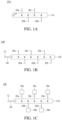
- the linker unit 10A comprises a center core 11a comprising one HPG (G HP ) residue and four lysine (K) residues respectively separated by filler sequences (denoted by the dots throughout the drawings).
- the filler sequences between the HPG residue and K residue or between any two K residues may comprise the same or different amino acid sequences.
- four linking arms 20a-20d are linked to the lysine residues by forming an amide linkage between the NHS group and the amine group of the lysine residue, respectively.
- linker unit 10A or any other following linker units are common to other linker units disclosed herein, and hence some or all of these features are also applicable in the following examples, unless it is contradictory to the context of a specific example. However, for the sake of brevity, these common features may not be explicitly repeated below.
- Figure 1B provides a linker unit 10B according to another example of the present disclosure.
- the center core 11b comprises one cysteine (C) residue and six lysine (K) residues respectively separated by the filler sequences.
- the linker unit 10B comprises six linking arms 20a-20f that are respectively linked to the lysine residues.
- the linking arm is a PEG chain having 2-20 repeats of EG units.
- the linker unit 1B further comprises a coupling arm 60.
- a PEG chain having a maleimide group at one end and a functional group at the other end is used to form the coupling arm 60.
- the coupling arm 60 is linked to the cysteine residue of the center core 11b via thiol-maleimide reaction.
- the functional group at the free terminus of the coupling arm 60 is a tetrazine group 72.
- the coupling arm is a PEG chain having 2-12 repeats of EG units.
- the linking arm linked to the K residue of the center core has a functional group (i.e., a maleimide, an NHS, an azide, an alkyne, a tetrazine, or a strained alkyne group) at its free terminus.
- a functional group i.e., a maleimide, an NHS, an azide, an alkyne, a tetrazine, or a strained alkyne group
- the free terminus of the linking arm is an azide, alkyne, or cyclooctyne group
- the amino acid residue at the N- or C-terminus of the center core is a cysteine residue
- the free terminus of the coupling arm is a tetrazine or cyclooctene group.
- the amino acid residue at the N- or C-terminus of the center core has an azide or alkyne group, or the amino acid residue at the N- or C-terminus of the center core is a cysteine residue, and the free terminus of the coupling arm is an azide, the alkyne, or the cyclooctyne group
- a functional group i.e., a maleimide, an NHS, an azide, an alkyne, a tetrazine, or a strained alkyne group
- a functional element such as, a targeting element, an effector element, or an element for improving the pharmacokinetic property
- the CuAAC reaction yields 1,5 di-substituted 1,2,3-triazole.
- the reaction between alkyne and azide is very selective and there are no alkyne and azide groups in natural biomolecules. Furthermore, the reaction is quick and pH-insensitive. It has been suggested that instead of using copper (I), such as cuprous bromide or cuprous iodide, for catalyzing the click reaction, it is better to use a mixture of copper (II) and a reducing agent, such as sodium ascorbate to produce copper (I) in situ in the reaction mixture.
- copper (I) such as cuprous bromide or cuprous iodide
- the second element can be linked to the N- or C-terminus of the present center core via a copper-free reaction, in which pentamethylcyclopentadienyl ruthenium chloride complex is used as the catalyst to catalyze the azide-alkyne cycloaddition.
- the functional elements linked to the linking arms are referred to as the first elements.
- the number of the first elements carried by the present linker unit depends on the number of K residues of the center core (and thus, the number of the linking arms). Accordingly, one of ordinary skill in the art may adjust the number of the first elements of the linker unit as necessary, for example, to achieve the desired targeting or therapeutic effect.
- FIG. 1C An example of a linker unit 10C having the first elements is illustrated Figure 1C .
- Figure 1C is quite similar to Figure 1B .
- Second, the linker unit 10C has five first elements 30a-30e linked to each of the linking arms 20a-20e.
- the optional tetrazine group 72 allows for the conjugation with an additional functional element, another molecular construct (see, Part II below).
- the present linker unit may further comprise a second element in addition to the first element.
- the second element can be either a targeting element or an effector element.
- the first element is an effector element, while the second element may be another effector element, which works additively or synergistically with or independently of the first element.
- the first and second elements exhibit different properties; for example, the first element is a targeting element, and the second element is an effector element, and vice versa.
- the first element is an effector element
- the second element is an element capable of improving the pharmacokinetic property of the linker unit, such as solubility, clearance, half-life, and bioavailability.
- the choice of a particular first element and/or second element depends on the intended application in which the present linker unit (or multi-arm linker) is to be used. Examples of these functional elements are discussed below in Part I-(iii) of this specification.
- the second element is linked to the azide, alkyne, tetrazine, or strained alkyne group at the N- or C-terminus of the center core.
- the second element may be optionally conjugated with a short PEG chain (preferably having 2-12 repeats of EG units) and then linked to the N- or C-terminal amino acid residue having an azide group or an alkyne group (e.g., AHA residue or HPG residue).
- the second element may be optionally conjugated with the short PEG chain and then linked to the coupling arm of the center core.
- the center core comprises an amino acid having an azide group (e.g., the AHA residue) at its N- or C-terminus; and accordingly, a second element having an alkyne group is linked to the N- or C-terminus of the center core via the CuAAC reaction.
- the center core comprises an amino acid having an alkyne group (e.g., the HPG residue) at its N- or C-terminus; and a second element having an azide group is thus capable of being linked to the N- or C-terminus of the center core via the CuAAC reaction.
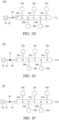
- Figure 1D provides an example of the present linker unit 10D carrying a plurality of first elements and one second element.
- the center core 11c comprises one HPG (G HP ) residue and five lysine (K) residues.
- Five linking arms 20a-20e are respectively linked to the five K residues of the center core 11c; and five first elements 30a-30e are respectively linked to said five linking arms 20a-20e via the thiol-maleimide reaction.
- the linker unit 10D further comprises one second element 50 that is linked to one end of a short PEG chain 62. Before being conjugated with the center core 11c, the other end of the short PEG chain 62 has an azide group.
- the azide group may react with the HPG residue that having an alkyne group via CuAAC reaction, so that the second element 50 is linked to the center core 11c.
- the solid dot 40 depicted in Figure 1D represents the chemical bond resulted from the CuAAC reaction occurred between the HPG residue and the azide group.
- the second element is linked to the center core via a coupling arm.
- the coupling arm has a tetrazine group, which can be efficiently linked to a second element having a TCO group via the iEDDA reaction.
- the coupling arm has a TCO group, which is capable of being linked to a second element having a tetrazine group via the iEDDA reaction.
- the strained cyclooctene that possess remarkably decreased activation energy in contrast to terminal alkynes is employed, and thus eliminates the need of an exogenous catalyst.
- the center core 11d of the linker unit 10E comprises a terminal cysteine (C) residue and five lysine (K) residues.
- C cysteine
- K lysine
- five linking arms 20a-20e are respectively linked to the five K residue of the center core 11d, and then five first elements 30a-30e are respectively linked to the five linking arms 20a-20e via thiol-maleimide reactions.
- the cysteine residue is linked to the coupling arm 60, which, before being conjugated with the second element, comprises a tetrazine group or a TCO group at its free-terminus.
- the coupling arm before the conjugation with a second element, has an azide group.
- the coupling arm can be linked to the second element having a strained alkyne group (e.g., the DBCO, DIFO, BCN, or DICO group) at the free-terminus of a short PEG chain via SPAAC reaction (see, scheme 3), and vice versa.
- a strained alkyne group e.g., the DBCO, DIFO, BCN, or DICO group
- the linker unit 10F has a structure similar to the linker unit 10E of Figure 1E , except that the coupling arm 60 comprises an azide or a strained alkyne group (e.g., the DBCO, DIFO, BCN, or DICO group), instead of the tetrazine or TCO group.
- the second element 50 linked with a short PEG chain 62 may have a corresponding strained alkyne (e.g., DBCO, DIFO, BCN, or DICO) or azide group, so that it can be linked to the coupling arm 60 via the SPAAC reaction.
- the diamond 90 as depicted in Figure 1F represents the chemical bond resulted from the SPAAC reaction occurred between the coupling arm 60 and the short PEG chain 62.
- Scheme 4 is an exemplary illustration of the process of preparing the present linker unit.
- the center core comprising the amino acid sequence of (GSK) 3 and a L-azidohomoalanine (AHA) residue at the C-terminus thereof is prepared.
- three linking arms are respectively linked to the lysine (K) residues of the center core via forming an amide bond between the NHS group and the amine group; the linking arm linked to the center core has a maleimide (Mal) group at the free-terminus thereof.
- three anti-fibrin scFvs (scFv ⁇ fibrin) as the first element are respectively linked to the linking arms via the thiol-maleimide reaction.
- step 4 one tPA analogue as the second element is linked with a short PEG chain that has 4 repeats of EG units and a DBCO group at the free terminus.
- step 5 the second element is linked to the AHA residue of the center core via the SPAAC reaction.
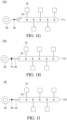
- Figure 1G provides an alternative example of the present linker unit (linker unit 10G), in which five first elements 30 are respectively linked to the lysine residues via the linking arms 20, and the AHA (A AH ) residue of the center core 11e is linked with a PEG chain 80 via the CuAAC reaction.
- the solid dot 40 depicted in Figure 1G represents the chemical bond resulted from the CuAAC reaction occurred between the AHA residue and the PEG chain 80.
- Figure 1H provides another example of the present disclosure, in which the N-terminus of the center core 11d is a cysteine residue that is linked to a coupling arm 60.
- a PEG chain 80 can be efficiently linked to the coupling arm 60 via the iEDDA reaction.
- the ellipse 70 of the linker unit 10H represents the chemical bond resulted from the iEDDA reaction occurred between the coupling arm 60 and the PEG chain 80.
- Figure 1I provides an alternative example of the present linker unit, in which the linker unit 101 has a structure similar to the linker unit 10G of Figure 1G , except that the PEG chain 80 is linked to the coupling arm 60 via the SPAAC reaction.
- the diamond 90 depicted in Figure 1I represents the chemical bond resulted from the SPAAC reaction occurred between the coupling arm 60 and the PEG chain 80.
- the linking arms have a maleimide group in the free terminus for conjugating with first elements having the sulfhydryl group via the thiol-maleimide reaction. Also, there is one cysteine residue or an amino acid residue with an azide or alkyne group at a terminus of the peptide core for attaching a coupling arm for linking a second element.
- a conjugating group, other than maleimide, such as azide, alkyne, tetrazine, or strained alkyne may be used for the free terminus of the linking arms, for linking with first elements with a CuAAC, iEDDA, or SPAAC reaction.
- the cysteine residue (or an amino acid residue with an azide or alkyne group) of the peptide core needs not to be at the N- or C-terminus.
- two or more of such residues may be incorporated in the peptide core to attach multiple coupling arms for linking a plural of second elements.
- the linker unit (or multi-arm linker) comprises only the first element but not the second element(s)
- the first element is an effector element that may elicit a therapeutic effect in a subject.
- the present linker unit comprises two elements, then one of the elements is an effector element, while the other may be another effector element, a targeting element, or an element capable of enhancing one or more pharmacokinetic properties of the linker unit (e.g., solubility, clearance, half-life, and bioavailability).
- the linker unit may have two different kinds of effector element, or one effector element and one targeting element or one pharmacokinetic property-enhancing element.
- the present linker unit is useful in preventing the formation of blood clot.
- the present linker unit comprises the first element of an scFv specific for fibrin as the targeting element, and the second element of Factor Xa inhibitors or thrombin inhibitors as the effector element.
- the inhibitor of Factor Xa is selected from the group consisting of, apixaban, edoxaban, and rivaroxaban; and the inhibitor of thrombin is argatroban or melagatran.
- Linker units for use in the treatment of thrombosis may comprise the first element of an scFv specific for fibrin as the targeting element, and the second element of tissue plasminogen activators (such as alteplase, reteplase, tenecteplase and lanoteplase) used as the effector element.
- tissue plasminogen activators such as alteplase, reteplase, tenecteplase and lanoteplase
- a single copy of a targeting or effector element can be used to avoid unwanted effects due to overly tight binding.
- This consideration is relevant, when the scFv has a relatively high affinity for the targeted antigen and when the targeted antigen is a cell surface antigen on normal cells, which are not targeted diseased cells.
- scFv specific for CD3 or CD16a to recruit T cells or NK cells to kill targeted cells, such as thyroid gland cells in patients with Grave's disease, a single copy of the scFv specific for CD3 or CD16a is desirable, so that unwanted effects due to cross-linking of the CD3 or CD16a may be avoided.
- scFv specific for CD32 or CD16b to recruit phagocytic neutrophils and macrophages to clear antibody-bound viral or bacterial particles or their products
- a single copy of scFv may be desirable.
- scFv specific for transferrin receptor to carry effector drug molecules to the BBB for treating CNS diseases
- a single copy of scFv specific for transferrin receptor is desirable.
- the present disclosure further pertains to a molecular construct comprising two linker units, in which one linker unit carries one or more targeting element, whereas the other linker unit carries one or more effector elements or pharmacokinetic property-enhancing elements.
- molecular constructs with both the targeting and effector moieties are referred to as joint-linker molecular constructs.
- each of the linker unit comprised in such joint-linker molecular constructs is a peptide core-based multi-arm linkers discussed above in Part I of the present disclosure.
- the molecular construct comprises two linker units, and the linker units are coupled to each other via either the CuAAC reaction (using copper or pentamethylcyclopentadienyl ruthenium chloride complex as catalyst), the SPAAC reaction, or the iEDDA reaction.
- the linker units is linked with a plurality of first elements, which act as the targeting elements, and the other of the linker units is linked with a plurality of second elements, which act as the effector elements.
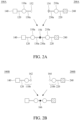
- Figure 2A-2D respectively depicts the linkage between the two linker units.
- Figure 2A depicts a molecular construct comprising two linker units (100A, 200A), which are coupled to each other via the iEDDA reaction.
- the first linker unit 100A comprises a first center core 110a, a linking arm 120 (as the first linking arm), and a coupling arm 130a (as the first coupling arm), in which the linking and coupling arms are respectively linked to the first center core 110a at one ends.
- the second linker unit 200A comprises a second center core 210a, a linking arm 220 (as the second linking arm), and a coupling arm 230a (as the second coupling arm), in which the linking and coupling arms are respectively linked to the second center core 210a at one ends.
- One of the coupling arms 130a, 230a has a tetrazine group at its free terminus, while the other of the coupling arms 130a, and 230a has a TCO group.
- the coupling arm 130a has a tetrazine group 152 at its free terminus (i.e., the terminus not connected to the first center core 110a), then the coupling arm 230a would have a TCO group 154 at its free terminus (i.e., the terminus not connected to the second center core 210a), and vice versa.
- the two linker units (100A, 200A) are coupled to each other via the iEDDA reaction occurred between the respective free ends of the coupling arms 130a, 230a.
- the ellipse 156 as depicted in Figure 2A represents the chemical bond resulted from the iEDDA reaction occurred between the coupling arms 130a, 230a.
- each of the linking arms 120, 220 has a maleimide group at its free terminus. Accordingly, a first targeting element 140 and a first effector element 240, each has a thiol group are respectively linked to the linking arms 120, 220 via the thiol-maleimide reaction.
- Figure 2B provides an alternative example of the present disclosure, in which both the first and second center cores 110b, 210b are polypeptide cores, and are respectively linked to a first targeting element 140 and a first effector element 240 via the linking arms 120, 220.
- one of the center cores 110b, 210b comprises an amino acid residue having an azide group (e.g., the AHA residue) at it N- or C-terminus
- the other of the center cores 110b, 210b comprises an amino acid residue having an alkyne group (e.g., the HPG residue) at it N- or C-terminus
- such configuration allows the center cores 110a, 210a to be directly linked to each other, that is, without connecting through any coupling arms as that depicted in Figure 2A .
- the center core 110b comprises the amino acid residue having the azide group 162 at its N- or C-terminus
- the center core 210b would comprises the amino acid residue having the alkyne group 164 at its N- or C-terminus, and vice versa.
- the linker units 100B, 200B can couple together directly via the CuAAC reaction occurred between the N- or C-terminal amino acid residues of the center cores 110b, 210b.
- the solid dot 166 as depicted in Figure 2B represents the chemical bond formed between the N- or C-terminal amino acid residues.
- Figure 2C is another example of the present disclosure.
- the linker units 100C, 200C have the similar structures as the linker units 100A, 200A, except that the coupling arms 130b, 230b respectively have an azide group 162 and a DBCO group 172, instead of the azide group 152 and the alkyne group 154 as depicted in the linker units 100A, 200A of Figure 2A .
- the center core 110a is linked with a coupling arm 130b (as the first coupling arm) having an azide group 162 at its free-terminus; and the center core 210a is linked with a coupling arm 230b (as the second coupling arm) having a DBCO group 172 at its free-terminus.
- the linker units 100C, 200C are then coupled via the SPAAC reaction occurred between the coupling arms 130b, 230b; and forming the chemical bond 182, depicted as a diamond.
- two linker units can be coupled to each other via the CuAAC reaction occurred between the center core and the coupling arm.
- the center core 110b comprises a N- or C-terminal amino acid residue that has an azide group 162 (e.g., the AHA residue)
- the center core 210a is linked with a coupling arm 230b having a TCO group 172 at its free-terminus.
- the linker units 100B and 200C can be coupled via the SPAAC reaction occurred between the center core 110b and the coupling arm 230b; and forming the chemical bond 182.
- linker units 100B, 200C depicted in Figure 2D respectively comprise polypeptide cores.
- the linker unit 200B that comprises a N- or C-terminal amino acid residue having an alkyne group 160b (e.g., the HPG residue), and the linker unit 100C comprising the coupling arm 130b with an azide group 160a at its free-terminus can be coupled together via the azide-alkyne cycloaddition occurred between the center core 210b and the coupling arm 130b.
- alkyne group 160b e.g., the HPG residue
- the present molecular construct is advantageous in at least the three following aspects:
- Libraries 1-6 respectively comprise a plurality of linker units 300A, 300B, 300C, 400A, 400B, and 400C that are linked with functional elements.
- Each linker units 300A, 300B, and 300C are similar in structures; in which each of the linker units 300A, 300B, and 300C comprises one center core 310, one coupling arm 330 linked thereto and has a tetrazine group 350 at its free terminus, and a specified number of the linking arm 320.
- Linker unit 300A comprises four linking arms 320, and accordingly, four targeting elements 340a can be respectively linked to the four linking arms 320.
- two targeting elements 340b and five targeting elements 340c can be respectively linked to the linker units 300B and 300C.
- the targeting elements 340a, 340b, and 340c can be the same or different.
- each of these linker units comprises one center core 410, one coupling arm 430 linked thereto and has a strained alkyne group 450 at its free terminus, and a specified number of the linking arm 420.
- three effector elements 440a, five effector elements 440b, and eight effector elements 440c can be respectively linked to the linker units 400A, 400B, and 400C.
- the effector elements 440a, 440b, and 440c can be the same or different.
- the Libraries 1-6 may be prepared independently. One skilled artisan may select the first linker unit from Libraries 1, 2 and 3, and the second linker unit from Libraries 4, 5, and 6, then proceed to couple the first and second linker units via the iEDDA reaction occurred between the tetrazine group 350 and the strained alkyne group 450 so as to produce the molecular construct with the specified number of targeting and effector elements.
- FIG. 4A provides an example of the present molecular construct, in which each of the first and second center cores (310, 410) is linked with three linking arms (320, 420) and one coupling arm (330, 340). Three of the first targeting elements 340 are respectively linked to the linking arms 320; and three of the first effector elements 440 are respectively linked to the linking arms 420.
- the two linker units are coupled to each other via the iEDDA reaction occurred between two coupling arms 330, 430, and forming the chemical bond 356.
- Figure 4B provides another example of the present molecular construct, in which the first and second center cores respectively contain different numbers of amine groups (e.g., lysine residues), and accordingly, the molecular construct contains non-equal numbers of targeting and effector elements.
- the first center core 310 is linked to one coupling arm 330, and two linking arms 320.
- the second center core 410 is linked to one coupling arm 430, and five linking arms 420.
- two targeting elements 340 are respectively linked to the linking arms 320; and five effector elements 440 are respectively linked to the linking arms 420.
- the ellipse 356 in Figure 4B represents the linkage between two coupling arms 330, 430.
- a linker unit may comprise a plurality of linking arms, which can be linked to a plurality of functional elements.
- a linker unit may comprise 5-12 linking arms, which can be linked to 5-12 functional elements. This is especially useful when the functional elements are small molecules, such as cytotoxic drugs or toll-like receptor agonists.
- the linker unit carrying multiple molecules of a cytotoxic drug is herein referred to as a drug bundle.
- the coupling arm of the present molecular construct described in above examples of the present disclosure that has an azide, alkyne, tetrazine, or strained alkyne group at the terminus is designed as a PEG chain having 2-12 repeats of EG units.
- the linking arm is designed as a PEG chain having 2-20 repeats of EG units.
- Adopting a polypeptide as the center core provides versatility in the present molecular construct, in which multiple copies or types of targeting/effector elements may be present in one construct, accordingly, enhanced specificity of drug delivery and potency in the intended target sites are achieved.
- a large number of configurations can be adopted by employing the molecular construct comprising multiple linker units.
- a few examples are: a first linker unit carrying three scFvs targeting elements, and a second linker unit carrying 5 cytotoxic drugs; a first linker unit carrying three scFvs targeting elements, and a second linker unit carrying three scFvs effector elements; or a first linker unit carrying 2 bi-scFv targeting elements, and a second linker unit carrying two scFvs effector elements.
- Schemes 5-7 provide several working example respectively depicting the coupling and preparation of specified linker units.
- Scheme 5 is a schematic diagram depicting the preparation of the present molecular construct in accordance with one example of the present disclosure, in which NHS represents NHS ester, Mal represents maleimide group, A AH represents L-azidohomoalanine (AHA) residue, AAH represents homopropargylglycine (HPG) residue, Ac represents acetyl group, and scFv represent single-chain variable fragment.
- NHS represents NHS ester
- Mal represents maleimide group
- a AH represents L-azidohomoalanine (AHA) residue
- AAH represents homopropargylglycine (HPG) residue
- Ac represents acetyl group
- scFv represent single-chain variable fragment.
- step 1 the first center core comprising the amino acid sequence of (GSK) 3 and a L-azidohomoalanine (AHA) residue at the C-terminus thereof; and the second center core comprising the amino acid sequence of (GSK) 5 and a homopropargylglycine (HPG) residue at the C-terminus thereof, are respectively prepared.
- the N-terminuses of the first and second center cores are respectively modified with an acetyl group.
- step 2 the linking arms are respectively linked to the lysine residues in the first and second center cores via forming an amide linkage there between; the linked arm linked to the center core has a maleimide group at the free-terminus.
- the first targeting element such as an scFv specific for fibrin
- a thiol group e.g., a cysteine residue
- the effector element i.e., the drug, such as a Factor Xa inhibitor or thrombin inhibitor
- the two linker units are coupled via a CuAAC reaction occurred between the AHA and HPG residues.
- the targeting/effector element can be linked to the center core in an alternative method.
- Scheme 6 is a scheme illustrating the coupling of the effector element with the polypeptide core, in which the linking arm is first linked to the center core, and then the effector element (i.e., the drug) is linked to the linking arm via the thiol-maleimide reaction.
- the effector element i.e., the drug
- the linking arm so as to produce a linking arm-effector conjugate (i.e., PEG-drug); next, the linking arm-effector conjugate is linked to the center core via forming an amide linkage between the lysine residues and the NHS esters.
- linking arms for the joint-linker configuration may also be used to link bispecific scFv, which act as targeting elements or effector elements. These configurations will increase the specificity of targeting and/or the potency of the effector mechanisms.
- a molecular construct with a total of six scFvs has a molecular weight of about 170,000 Daltons.
- a molecular construct with seven scFvs has a molecular weight of about 200,000 Daltons, and a molecular construct with eight scFvs has a molecular weight of about 230,000 Daltons.
- Most of the molecular constructs of this invention have molecular weights smaller than 200,000 Daltons, and a few molecular constructs have molecular weights in 200,000-250,000 Daltons.
- bi-scFv bi-specific scFv
- scFv1-scFv2 the linker unit carrying a joined single-chain, bi-specific scFv
- scFv3 and scFv4 the linker unit carrying one scFv
- V L 1-V H 1-V L 2-V H 2 or V H 1-V L 1-V H 2-V L 2 is arranged; in the "diabody” configuration, V L 2-V L 1-V H 1-V H 2 or V H 2-V H 1-V L 1-V L 2 is arranged.
- Proper linkers with GGGGS (SEQ ID NO: 6) repeats or other sequences are placed between the immunoglobulin domains.
- each linker unit is prepared freshly and independently, and processed to connecting the targeting or effector elements onto the linker units, and the coupling of the linker units through click reaction without delay.
- the targeting elements and effector elements are both conjugated to linker units with alkyne groups, and the alkyne group in one of the linker units is then converted to azide with a short homo-bifunctional linker with azide at both ends. The linker units, one with alkyne and the other with azide, are then coupled via a click reaction.
- the present joint-linker comprises two linker units, in which the first linker unit carries one or more targeting elements, and the second linker unit carries one or more effector elements, and vice versa.
- joint-linker molecular constructs for treating diseases/conditions associated with blood clots, one may use an scFv specific for fibrin as the targeting element.
- the present joint-linker molecular constructs may use Factor Xa inhibitors or thrombin inhibitors as the effector element.
- Factor Xa inhibitors include apixaban, edoxaban, and rivaroxaban.
- thrombin inhibitors include argatroban and melagatran.
- tissue plasminogen activators such as alteplase, reteplase, tenecteplase, and lanoteplase, can be used as the effector element.
- Example 1 Synthesis of peptide 1 (SEQ ID NO: 18) as peptide core, and conjugation of SH group of cysteine residue with maleimide-PEG 4 -tetrazine as conjugating arm
- the synthesized peptide 1 (Chinapeptide Inc., Shanghai, China) was dissolved in 100 mM sodium phosphate buffer (pH 7.0) containing 50 mM NaCl and 5 mM EDTA at 2 mM final concentration. The dissolved peptide was reduced by 1 mM TCEP at 25°C for 2 hours.
- maleimide-PEG 4 -tetrazine Conju-probe Inc.
- the peptide and maleimide-PEG 4 -tetrazine were mixed at a 1/5 ratio and incubated at pH 7.0 and 4°C for 24 hours.
- Tetrazine-conjugated peptides were purified by reverse phase HPLC on a Supelco C18 column (250 mm X 10 mm; 5 ⁇ m), using a mobile phase of acetonitrile and 0.1% trifluoroacetic acid, a linear gradient of 0% to 100% acetonitrile over 30 minutes, at a flow rate of 1.0 mL/min and a column temperature of 25°C.
- Example 2 Synthesis of peptide 2 (SEQ ID NO: 26) as peptide core, and conjugation of the SH group of cysteine residue with maleimide-PEG 3 -transcyclooctene (TCO) as a coupling arm
- the synthesized peptide 2 (Chinapeptide Inc., Shanghai, China) was processed similarly. Briefly, the peptide was dissolved in 100 mM sodium phosphate buffer (pH 7.0) containing 50 mM NaCl and 5 mM EDTA at a final concentration of 2 mM. The dissolved peptide was reduced by 1 mM tris (2-carboxyethyl)phosphine (TCEP) at 25°C for 2 hours.
- TCEP (2-carboxyethyl)phosphine
- TCO-conjugated peptides were purified by reverse phase HPLC on a Supelco C18 column (250 mm X 10 mm; 5 ⁇ m), using a mobile phase of acetonitrile and 0.1% trifluoroacetic acid, a linear gradient of 0% to 100% acetonitrile over 30 minutes, at a flow rate of 1.0 mL/min and a column temperature of 25°C.
- the identification of the synthesized TCO-peptide was carried out by MALDI-TOF mass spectrometry. Mass spectrometry analyses were performed by the Mass Core Facility at the Institute of Molecular Biology (IMB), Academia Sinica, Taipei, Taiwan. Measurements were performed on a Bruker Autoflex III MALDI-TOF/TOF mass spectrometer (Bruker Daltonics, Bremen, Germany).
- the thus-synthesized TCO-peptide 2 as illustrated below, had a m.w. of 2, 020.09 Daltons.
- PEG 12 -maleimide Three linking arms of PEG 12 -maleimide were attached to the peptide core tetrazine-peptide 1.
- the crosslinker, NHS-PEG 12 -maleimide (succinimidyl-[(N-maleimido-propionamido)-dodecaethyleneglycol] ester, was purchased from Conju-probe Inc.
- the conjugation procedure was performed per the manufacturer's instruction; the peptide with lysine residues was dissolved in the conjugation buffer, phosphate buffered saline (PBS, pH 7.5) at 100 mM.
- PBS phosphate buffered saline
- PEG 12 -maleimide crosslinker was added to the dissolved peptide at 1 mM final concentration (10-fold molar excess over 0.1 mM peptide solution). The reaction mixtures were incubated for 18 hours at room temperature.
- PEG 12 -maleimide-conjugated tetrazine-peptide 1 was purified by reverse phase HPLC on a Supelco C18 column (250 mm X 4.6 mm; 5 ⁇ m), using a mobile phase of acetonitrile and 0.1% trifluoroacetic acid, a linear gradient of 0% to 100% acetonitrile over 30 minutes, at a flow rate of 1.0 ml/min and a column temperature of 25°C.
- the present PEG 12 -maleimide-conjugated tetrazine-peptide 1 carried one coupling arm with a tetrazine group and three PEG linking arms with maleimide groups; it had a m.w. of 4,461 Daltons.
- the present PEG 6 -maleimide-conjugated peptide 2 had a m.w. of 4,478 Daltons; it was a peptide core-based linker unit carrying one TCO group and five PEG linking arms with maleimide groups ( Figure 5 ).
- Example 5 Conjugation of apixaban carboxylic acid molecule with NH 2 -PEG 3 -S-S-PEG 3 -NH 2 crosslinker
- Apixaban carboxylic acid was purchased from KM3 Scientific Inc. (New Taipei City, Taiwan). The activated carboxyl group of apixaban carboxylic acid molecule was reacted with a homo-bifunctional cleavable crosslinker, NH 2 -PEG 3 -S-S-PEG 3 -NH 2 as shown in scheme 8.
- Apixaban carboxylic acid was dissolved in 100% DMSO at a final concentration of 20 mM, and NH 2 -PEG 3 -S-S-PEG 3 -NH 2 , a homo-bifunctional cleavable crosslinker, was dissolved in PBS at a 10 mM final concentration.
- PBS a homo-bifunctional cleavable crosslinker
- the activated apixaban carboxylic acid solution was added to the NH 2 -PEG 3 -S-S-PEG 3 -NH 2 crosslinker at a 2 mM final concentration (5-fold molar excess over 0.4 mM NH 2 -PEG 3 -S-S-PEG 3 -NH 2 crosslinker solution). The reaction mixture was incubated for 3 hours at room temperature.
- Apixaban-PEG 3 -S-S-PEG 3 -apixaban was purified by reverse phase HPLC on a Supelco C18 column (250 mm X 4.6 mm; 5 ⁇ m), using a mobile phase of acetonitrile and 0.1% trifluoroacetic acid, a linear gradient of 0% to 100% acetonitrile over 30 minutes, at a flow rate of 1.0 ml/min and a column temperature of 25°C.
- Example 6 Conjugation of two argatroban molecules to an NH 2 -PEG 3 -S-S-PEG 3 -NH 2 crosslinker
- Argatroban was purchased from KM3 Scientific Inc. (New Taipei City, Taiwan). The procedure for conjugating NH 2 -PEG 3 -S-S-PEG 3 -NH 2 to COOH groups of argatroban molecule was performed similarly as described in the previous Example. Briefly, argatroban was dissolved in 100% DMSO at a final concentration of 20 mM. EDC solution was added to the argatroban solution to activate COOH group of argatroban and then incubated for 15 minutes.
- the activated argatroban solution was added to NH 2 -PEG 3 -S-S-PEG 3 -NH 2 crosslinker solution at a 2 mM final concentration (5-fold molar excess over 0.4 mM NH 2 -PEG 3 -S-S-PEG 3 -NH 2 crosslinker solution) (see, scheme 9).
- Example 7 Conjugation of apixaban-PEG 3 -SH and argatroban-PEG 3 -SH to maleimide-PEGs-conjugated TCO-peptide 2
- apixaban-PEG 3 -S-S-PEG 3 -apixaban and argatroban-PEG 8 -S-S-PEG 8 -argatroban were incubated with 4 mM TCEP at a molar ratio of 3:1 ([TCEP]:[drug-linker]) at room temperature for 90 minutes with gentle shaking to generate the apixaban-PEG 3 -SH and argatroban-PEG 3 -SH molecule with a free sulfhydryl group.
- the thus-synthesized drug bundle was composed of a linker unit with a free TCO functional group and a set of five apixaban molecules as effector elements.
- the present molecular construct had a m.w. of 7,713 Daltons, corresponding to [M+H] + .
- Another thus-synthesized drug bundle was composed of a linker unit with a free TCO functional group and a set of five argatroban molecules as effector elements.
- the present molecular construct had a m.w. of 8,112.8 Daltons, corresponding to [M+H] + .
- Example 8 Production of mouse scFv of mAb specific for human fibrin by Expi293F overexpression system
- the V L and V H of the scFv specific for human fibrin were from mouse monoclonal antibody 102-10 ( Japanese Patent Application Publication No.2012-72 ).
- the scFv derived from this antibody was designed to contain a flexible linker of GGGGSGGGGS and a terminal cysteine residue at the C-terminus.
- the cysteine residue provides a sulfhydryl group for conjugation with maleimide group present at the free ends of liking arms in various linker units.
- To produce the scFv of mAb specific for human fibrin we used the V H and V L DNA sequences of mAb 102-10 with further codon optimization.
- DNA sequences encoding V L -GSTSGSGKPGSGEGSTKG-V H -(GGGGS) 2 -C were synthesized.
- the amino acid sequence of the scFv of mAb 102-10 prepared for the experiments in the present invention is set forth in SEQ ID NO: 27.
- Expi293F TM cell line For preparing scFv proteins using a mammalian expression system, we used the overexpression system based on Expi293F TM cell line for experimentation.
- the system employed ExpiFectamine TM 293 transfection kit (Life Technologies, Carlsbad, USA) consisting of the Expi293F TM cell line, the cationic lipid-based ExpiFectamine TM 293 Reagent and ExpiFectamine TM 293 transfection Enhancers 1 and 2, and the medium (Gibco, New York, USA).
- Expi293F cells were seeded at a density of 2.0 ⁇ 10 6 viable cells/ml in Expi293F expression medium and maintained for 18 to 24 hours prior to transfection to ensure that the cells were actively dividing at the time of transfection.
- 7.5 ⁇ 10 8 cells in 255ml medium in a 2-liter Erlenmeyer shaker flask were transfected by ExpiFectamine TM 293 transfection reagent.
- FIGS. 8A and 8B respectively show the results of SDS-PAGE and Mass spectrometric analysis of purified scFv of mAb specific for human fibrin.
- the scFv of mAb specific for human fibrin in SDS-PAGE migrated in two major bands of 26 and 30 kDa.
- the same protein solution was further analyzed by MALDI-TOF and showed that the 102-10 scFv specific for human fibrin had only the molecular weight of 26,838 Daltons, which is consistent with the calculated molecular weight.
- Example 9 ELISA analysis of purified mouse scFvs specific for human fibrin
- each plate was prepared according to procedures described in US patent application publication 2016/0011217A1 . Briefly, 100 ⁇ l of human fibrinogen (Sigma) in PBS was added to 96-well flat-bottom plates (Nunc) at 1 ⁇ g/well, and the plate was sealed and allowed to stand at 4°C overnight.
- the fibrin plate was prepared as follows. The fibrinogen solution was removed and then 100 ⁇ L of TBS containing 0.05 U/ml thrombin (Sigma), 2 mM CaCl 2 and 7 mM L-cysteine (Sigma) was added to the wells. The thrombin-treated plate was incubated at 37°C for 1 hour to allow fibrin formation. The thrombin solution was then removed and blocked with 10% skim milk at room temperature for 1 hour.
- Figure 8C shows the ELISA result, indicating that the purified 102-10 scFv bound specifically to human fibrin, but not to fibrinogen.
- Example 10 Construction and selection of phage-displayed human scFvs specific for human fibrin
- the phage clones carrying the human scFv specific for human fibrin were obtained through a contractual arrangement with Dr. An-Suei Yang's laboratory at the Genomics Research Center, Academia Sinica, Taipei, Taiwan.
- the framework sequence of the GH2 scFv library was derived from a human IgG antibody fragment, G6 anti-VEGF Fab (Protein Bank Code 2FJG) and cloned into restriction sites Sfil and Notl of phagemid vector pCANTAB5E (GE Healthcare), carrying an ampicillin resistance, a lacZ promotor, a pelB leader sequence for secretion of scFv fragments into culture supernatants, and an E-tag applicable for detection.
- V H and V L domains of the scFv template were diversified separately based on the oligonucleotide-directed mutagenesis procedure; the three CDRs in each of the variable domains were diversified simultaneously.
- the scFv library of over 10 9 clones was used for selections on human fibrin.
- the thrombin-treated fibrin plates (1 ⁇ g/100 ⁇ l per well) were prepared as described in the preceding Examples.
- the fibrin plates were used for panning anti-fibrin antibodies.
- the fibrin-coated wells were treated with blocking buffer (5% skim milk in PBST (phosphate buffered saline with 0.1% tween-20)) for 1 hour at room temperature.
- Recombinant phages in the blocking buffer diluted to 8 ⁇ 10 11 CFU/ml was added to the fibrin-coated wells for 1 hour with gentle shaking; CFU stands for colony-forming unit.
- the wells were then washed vigorously 10 times with PBST, followed by 6 times with PBS to remove nonspecific binding phages.
- the amplified phages were precipitated in PEG/NaCl, and then resuspended in PBS for the next selection-amplification cycle. A total of three consecutive panning rounds were performed on human fibrin by repeating this selection-amplification procedure.
- Phage-infected ER2738 colonies were enumerated by serial dilution series were counted and phage titers were calculated, yielding the output titer/ml (CFU/ml) per panning round.
- a 1000-fold increase in phage output title from 2.5E+06 CFU/well to 4.3E+09 CFU/well was obtained after three rounds of panning.
- the phage output/input titer ratios from each round are shown in Figure 9A .
- the phage output/input titer ratios are given on the y-axis. There was clear enrichment of the positive clones over the three rounds of panning.
- the third panning round resulted in a 500-fold on the ratios of phage output/input titer over the first round, as the binding clones became the dominant population in the library.
- Example 11 Single colony ELISA analysis of human phage-displayed scFvs specific for human fibrin
- E. coli strain ER2738 infected with single-clonal phages each harboring a selected scFv gene in its phagemid was grown in the mid-log phase in 2YT broth (16 g/L tryptone, 10 g/l yeast extract, 5 g/l NaCl, pH 7.0) with 100 ⁇ g/ml ampicillin in deep well at 37 °C with shaking. After broth reaching an OD600 of 1.0, IPTG was added to final concentration of 1 ⁇ g/ml. The plates were incubated at 37 °C overnight with rigorously shaking. After overnight incubation at 37°C with vigorous shaking, the plates were centrifuged at 4,000 g for 15 minutes at 4°C.
- ELISA soluble scFv binding test
- 96-well Maxisorp 96-well plate (Nunc) was coated with fibrin (1 ⁇ g/100 ⁇ l PBS per well) or a negative control antigen human fibrinogen for 18 hours with shaking at 4°C.
- 100 ⁇ l of secreted scFv in the supernatant was mixed with 100 ⁇ l of blocking buffer and then added to the coated plate for another 1 hour.
- Goat anti-E-tag antibody conjuggated with HRP, 1:4000, Cat. No. AB19400, Abcam
- TMB substrate 50 ⁇ l per well
- the absorbance at 450 nm was measured after reactions were stopped by adding 1N HCl (50 ⁇ l per well).
- FIG. 9B shows the ELISA result of an scFv clone D10.
- SEQ ID NO: 29 The amino acid sequence of an scFV clone D10, which binds to human fibrin with an OD450 of 1.09, is shown in as SEQ ID NO: 29.
- Example 12 Production of recombinant reteplase by Expi293F overexpression system
- the amino acid sequence of reteplase was from DrugBank.
- the recombinant protein was designed to contain a flexible linker of GGGGSGGGGS and a terminal cysteine residue at the C-terminus.
- the cysteine residue provides a sulfhydryl group for conjugation with maleimide group present at the free ends of linking arms in various linker units.
- the amino acid sequences of reteplase prepared for the experiments of the invention are set forth in SEQ ID NO: 28.
- the gene-encoding sequence was placed in pcDNA3 expression cassette.
- Figures 10A and 10B respectively show results of SDS-PAGE and mass spectrometric analyses of purified reteplase.
- the recombinant reteplase in SDS-PAGE migrated in two major bands of 43 and 48 kDa.
- the same protein solution was further analyzed by MALDI-TOF and showed that the recombinant reteplase had only a molecular weight of 43,415 Daltons, which is consistent with the calculated molecular weight.
- Example 14 Conjugation of three scFvs specific for human fibrin to the three maleimide-PEG 12 linking arms based on tetrazine-peptide 1
- the DNA sequence encoding SEQ ID NO: 27 was synthesized and expressed as in the above Examples. Prior to conjugation with the tetrazine-peptide 1 that had three PEG 12 -maleimide linking arms, the cysteine residue at the C-terminal end of the purified 102-10 scFv of mAb specific for human fibrin was reduced by incubating with 5 mM DTT at a molar ratio of 2:1 ([DTT]:[scFv]) at room temperature for 4 hours with gentle shaking.
- the buffer of the reduced 102-10 scFv was exchanged to maleimide-SH coupling reaction buffer (100 mM sodium phosphate, pH 7.0, 50 mM NaCl and 5 mM EDTA) by using an NAP-10 Sephadex G-25 column (GE Healthcare).
- maleimide-SH coupling reaction buffer 100 mM sodium phosphate, pH 7.0, 50 mM NaCl and 5 mM EDTA
- NAP-10 Sephadex G-25 column GE Healthcare
- the reaction mixture was applied to a size exclusion chromatography column S75.
- the PEG 12 -maleimide-conjugated tetrazine-peptide 1 conjugated with three 102-10 scFvs specific for human fibrin was separated from the free scFv, free PEG 12 -maleimide-conjugated tetrazine-peptide 1 and the PEG 12 -maleimide-conjugated tetrazine-peptide 1 conjugated with one and two 102-10 scFvs specific for human fibrin by size exclusion chromatography column S75.
- the product i.e., the PEG 12 -maleimide-conjugated tetrazine-peptide 1 having a free tetrazine functional group and being conjugated with a set of three 102-10 scFvs specific for human fibrin
- the product was purified and shown in the 10% SDS-PAGE analysis shown in Figure 12 .
- Example 15 Analysis of a targeting linker unit containing three scFvs specific for human fibrin linked to the three maleimide-PEG 12 linking arms based on tetrazine-peptide 1 by MALDI-TOF
- the sample of the targeting linker unit of three102-10 scFvs specific human fibrin linked to the three maleimide-PEG 12 linking arms based on tetrazine-peptide 1 was analyzed by MALDI-TOF.
- the median of the experimental molecular weight was consistent with the median of theoretical molecular weight of three 102-10 scFvs specific for human fibrin conjugated to tetrazine-peptide 1 with three maleimide-PEG 12 linking arms.
- the synthesized targeting linker unit had the median molecular weight of 84,974 Daltons.
- the synthesized targeting linker unit that was composed of a linker unit with a free tetrazine functional group and a set of three 102-10 scFvs specific for human fibrin as targeting elements.
- the targeting linker unit of the preceding examples and a TCO-conjugated reteplase protein was coupled via a tetrazine-TCO iEDDA reaction.
- the targeting linker unit had three 102-10 scFvs specific for human fibrin and one free tetrazine group.
- tetrazine-TCO ligation was performed per the manufacturer's instructions (Jena Bioscience GmbH, Jena, Germany). Briefly, 100 ⁇ l of the targeting linker unit (0.3 mg/ml) was added to the solution containing the effector element at a molar ratio of 1:1.2 ([tetrazine]:[TCO]). The reaction mixture was incubated for 1 hour at room temperature.
- a joint-linker molecular construct with three 102-10 scFvs specific for human fibrin and a drug bundle of five apixaban molecules was constructed.
- the molecular construct was made by a TCO-tetrazine iEDDA reaction as described in the preceding Examples. Briefly, 100 ⁇ l of the targeting linker unit (0.3 mg/ml) was added to the solution containing the effector element at a molar ratio of 1:1.2 ([tetrazine]:[TCO]). The reaction mixture was incubated for 1 hour at room temperature.
- the resultant joint-linker molecular construct had three 102-10 scFvs specific for human fibrin as targeting elements and with a drug bundle of five apixaban molecules as effector elements. In 10% SDS-PAGE analysis of the reaction mixture, a band of about 160 kDa in size was observed.
- Example 18 Inhibition assay of apixaban-PEG 3 -SH molecule
- Factor Xa catalyzes the conversion of inactive prothrombin to active thrombin.
- Apixaban has been used as a Factor Xa inhibitor, indirectly to decrease clot formation induced by thrombin.
- the synthesis of the modified apixaban molecule (apixaban-PEG 3 -SH) has been shown in the preceding examples.
- Factor Xa inhibition assay (BioVision, Milpitas, USA) was performed.
- the Factor Xa inhibition assay utilizes the ability of Factor Xa to cleave a synthetic substrate thereby releasing a fluorophore, which can be detected by a fluorescence reader. In the presence of a Factor Xa inhibitor, the extent of cleavage reaction catalyzed by Factor Xa is reduced or completely abolished.
- Figure 14 shows the assay results of the inhibitory activity of apixaban-PEG 3 -SH.
- Factor Xa activity was measured in the absence of Factor Xa inhibitor (substrate only). The result indicates that the apixaban molecule conjugated with a connecting arm had a similar biological activity to inhibit action of factor Xa as the unmodified apixaban carboxylic acid.
- a Factor Xa inhibitor (GGACK Dihydrochloride, provided by manufacturer) is used as the control inhibitor.
- Reteplase is a recombinant human tissue plasminogen activator that catalyzes the conversion of plasminogen to plasmin; this process is involved in breakdown of blood clots.
- a chromogenic assay in 96-well flat-bottom plate was performed.
- the recombinant reteplase catalyzes plasminogen to form plasmin, which in turn cleaves the chromogenic substrate to release yellow colored p-Nitroanilide, which was measured at 405 nm by a plate reader.
- Example 20 Construction of a gene segment encoding 2-chain IgG4.Fc fusion protein containing reteplase
- the reteplase-CH2-CH3 (human ⁇ 4) recombinant chain was configured by fusing reteplase to the N-terminal of CH2 domain of IgG4.Fc through a flexible hinge region.
- the sequence of the recombinant chain in the IgG4.Fc fusion protein molecular construct is shown as SEQ ID NO: 30.
- Example 21 Expression and purification of recombinant 2-chain IgG4.Fc fusion protein containing reteplase
- Expi293F cells were seeded at a density of 2.0 ⁇ 10 6 viable cells/ml in Expi293F expression medium and maintained for 18 to 24 hours prior to transfection to ensure that the cells were actively dividing at the time of transfection.
- 7.5 ⁇ 10 8 cells in 255-ml medium in a 2-liter Erlenmeyer shaker flask were transfected by ExpiFectamine TM 293 transfection reagent.
- the transfected cells were incubated at 37°C for 16 to 18 hours post-transfection in an orbital shaker (125 rpm) and the cells were added ExpiFectamine TM 293 transfection enhancer 1 and enhancer 2 to the shaker flask, and incubated for 7 days.
- Culture supernatants were harvested and recombinant 2-chain (reteplase)-hlgG4.Fc fusion protein in the media was purified using Protein A chromatography. Following buffer exchange to PBS, the concentration of (reteplase)-hlgG4.Fc protein was determined and analyzed by 8% SDS-PAGE shown in Figure 15 .
- the Fc-fusion molecular construct was revealed as the major band at about 74 kDa, consistent with the expected size.
- Example 22 Construction of a gene segment encoding 2-chain IgG4.Fc fusion protein containing reteplase and scFv specific for human fibrin
- the reteplase-CH2-CH3-scFv (human ⁇ 4) recombinant chain was configured by fusing reteplase to the N-terminal of CH2 domain of IgG4.Fc through a flexible hinge region, and the 102-10 scFv specific for human fibrin was fused to the C-terminal of CH3 domain through a flexible linker, (GGGGS) 3 .
- the scFvs had an orientation of V L -linker-V H .
- the V L and V H in the scFv were connected by a hydrophilic linker, GSTSGSGKPGSGEGSTKG.
- the sequence of the recombinant chain in the IgG4.Fc fusion protein molecular construct is shown as SEQ ID NO: 31.
- the expression of the constructed gene in Expi293F cells and the purification of the expressed fusion protein were performed as in preceding Examples. Characterization of the new construct was performed with SDS-PAGE. The 8% SDA-PAGE results in Figure 16 shows that the recombinant chain of the new construct has a size of about 100 kDa, consistent with the expected size.
- Example 23 Construction of a gene segment encoding fusion protein containing reteplase and scFv specific for human fibrin
- the (reteplase)-scFv recombinant chain was configured by fusing reteplase to the N-terminal of the 102-10 scFv specific for human fibrin through a flexible linker, (GGGGS) 3 .
- the scFv had an orientation of V L -linker-V H .
- the V L and V H in the scFv were connected by a hydrophilic linker, GSTSGSGKPGSGEGSTKG.
- the sequence of the recombinant fusion protein molecular construct is shown as SEQ ID NO: 32. Characterization of the new construct was performed with SDS-PAGE. The 8% SDA-PAGE results in Figure 17 shows that the recombinant chain of the new construct has a size of about 72 kDa, consistent with the expected size.
- Example 24 Construction of a gene segment encoding 2-chain IgG4.Fc fusion protein containing tenecteplase (TNK-tPA)
- the (TNK-tPA)-CH2-CH3 (human ⁇ 4) recombinant chain was configured by fusing TNK-tPA to the N-terminal of CH2 domain of IgG4.Fc through a flexible hinge region.
- the sequence of the recombinant chain in the IgG4.Fc fusion protein molecular construct is shown as SEQ ID NO: 33.
- the 8% SDA-PAGE assay results in Figure 18 shows that the recombinant chain of the new construct has a size of about 98 kDa, consistent with the expected size.
- Example 25 Construction of a gene segment encoding 2-chain IgG4.Fc fusion protein containing TNK-tPA and human scFv specific for human fibrin
- the (TNK-tPA)-CH2-CH3-scFv (human ⁇ 4) recombinant chain was configured by fusing TNK-tPA to the N-terminal of CH2 domain of IgG4.Fc through a flexible hinge region, and the human scFv D10 specific for human fibrin was fused to the C-terminal of CH3 domain through a flexible linker, (GGGGS) 3 .
- the scFvs had an orientation of V L -linker-V H .
- the V L and V H in the scFv were connected by a hydrophilic linker, GSTSGSGKPGSGEGSTKG.
- the sequence of the recombinant chain in the IgG4.Fc fusion protein molecular construct is shown as SEQ ID NO: 34.
- the m/z values of two protein fragments in MS/MS spectrum were matched to the amino acid sequences of two TNK-tPA fragments, VYTAQNPSAQALGLGK and QYSQPQFR.
- the m/z value of a protein fragment in MS/MS spectrum corresponding to 830.4496 Daltons, was matched to the amino acid sequence of a peptide fragment in the human IgG4.Fc region, GLPSSIEK.
- Example 26 Construction of a gene segment encoding fusion protein containing TNK-tPA and scFv specific for human fibrin
- the (TNK-tPA)-(scFv ⁇ fibrin) recombinant chain was configured by fusing TNK-tPA to the N-terminal of the human scFv D10 specific for human fibrin through a flexible linker, (GGGGS) 3 .
- the scFvs had an orientation of V L -linker-V H .
- the V L and V H in the scFv were connected by a hydrophilic linker, GSTSGSGKPGSGEGSTKG.
- the sequence of the recombinant fusion protein molecular construct is shown as SEQ ID NO: 35.
- Example 27 Assay of biological activity of fusion protein containing reteplase and scFv specific for human fibrin
- Reteplase is a recombinant human tissue plasminogen activator involved in breakdown of blood clots.
- reteplase-containing proteins fused with scFv 102-10 specific for human fibrin.
- a chromogenic assay in fibrin-coated plate was performed (scheme 10).
- fibrinogen plate 100 ⁇ l of human fibrinogen (Sigma) in PBS was added 96-well flat-bottom plates (Nunc) at 10 ⁇ g/well; the plate was then sealed and allowed to stand at 4°C overnight.
- the fibrin plate was prepared as follows. The fibrinogen solution was removed, and then 100 ⁇ L of TBS containing 0.05 U/ml thrombin (Sigma), 2 mM CaCl 2 and 7 mM L-cysteine (Sigma) was added to the wells. The thrombin-treated plate was incubated at 37°C for 1 hour to allow fibrin formation. The thrombin solution was removed and blocked with 10% skim milk at room temperature for 1 hour.
- Figure 19 shows that recombinant 2-chain (reteplase)-hlgG4.Fc, 2-chain (reteplase)-hlgG4.Fc-(scFv ⁇ fibrin) and (reteplase)-(scFv ⁇ fibrin) showed protease activity as positive control proteins, recombinant reteplase and commercially available tPA protein (Cat. No.T0831, Sigma).
- the hlgG4.Fc and anti-fibrin 102-10 scFv were used as negative controls.
- the binding assay shows that both TPA and reteplase bind to fibrin.
- the fusion protein of reteplase and scFv specific for fibrin in particular the one with the G 4 S linker, exhibited better binding activity.
Landscapes
- Health & Medical Sciences (AREA)
- Chemical & Material Sciences (AREA)
- Life Sciences & Earth Sciences (AREA)
- General Health & Medical Sciences (AREA)
- Medicinal Chemistry (AREA)
- Organic Chemistry (AREA)
- Immunology (AREA)
- Pharmacology & Pharmacy (AREA)
- Epidemiology (AREA)
- Public Health (AREA)
- Animal Behavior & Ethology (AREA)
- Veterinary Medicine (AREA)
- Engineering & Computer Science (AREA)
- Genetics & Genomics (AREA)
- Proteomics, Peptides & Aminoacids (AREA)
- Bioinformatics & Cheminformatics (AREA)
- Biochemistry (AREA)
- Molecular Biology (AREA)
- Biophysics (AREA)
- Zoology (AREA)
- Gastroenterology & Hepatology (AREA)
- Wood Science & Technology (AREA)
- Toxicology (AREA)
- Cell Biology (AREA)
- Hematology (AREA)
- Emergency Medicine (AREA)
- General Engineering & Computer Science (AREA)
- Biomedical Technology (AREA)
- Microbiology (AREA)
- Biotechnology (AREA)
- Mycology (AREA)
- Peptides Or Proteins (AREA)
- Medicinal Preparation (AREA)
Claims (12)
- Linker-Einheit, die einen zentralen Kern, eine Vielzahl von Verbindungsarmen, eine Vielzahl von ersten Elementen und optional einen Koppelungsarm umfasst, wobeider zentrale Kern ein erstes Polypeptid umfasst, das eine Vielzahl von Lysin (K)-Resten umfasst, wobei jeder K-Rest und sein nächster K-Rest durch eine Füllsequenz getrennt sind, die Glycin (G)- und Serin (S)-Reste umfasst, und die Anzahl der K-Reste zwischen 2 und 15 beträgt;die Vielzahl von Verbindungsarmen jeweils mit den K-Resten des zentralen Kerns verbunden sind, wobei jeder der Verbindungsarme eine PEG-Kette mit 2-20 Wiederholungen von EG-Einheiten ist;die Vielzahl von ersten Elementen entsprechend mit der Vielzahl von Verbindungsarmen verbunden sind, wobei jedes der ersten Elemente ein einkettiges variables Fragment (scFv) ist, das für Fibrin spezifisch ist; undder Aminosäurerest an dem N- oder C-Terminus des zentralen Kerns eine Azid- oder Alkingruppe aufweist; oder der Aminosäurerest an dem N- oder C-Terminus des zentralen Kerns ein Cysteinrest ist und die Thiolgruppe des Cysteinrests mit dem Koppelungsarm verbunden ist, der eine Azid-, Alkin-, Tetrazin-, Cycloocten-, oder Cyclooctin-Gruppe an dem freien Ende des Koppelungsarms aufweist, wobei der Koppelungsarm eine PEG-Kette mit 2-12 Wiederholungen von EG-Einheiten ist;wobei die Linker-Einheit durch Verknüpfung der Vielzahl von ersten Elementen mit der Vielzahl von Verbindungsarmen durch Bildung einer Amidbindung dazwischen, oder über eine Thiol-Maleimid-Reaktion, eine kupferkatalysierte Azid-Alkin-Cycloadditions (CuAAC)-Reaktion, spannungsunterstützte Azid-Alkin-Klick-Chemie (SPAAC)-Reaktion oder eine inverse Elektronenbedarfs-Diels-Alder (iEDDA)-Reaktion hergestellt wird.
- Linker-Einheit nach Anspruch 1, bei welcher
der Aminosäurerest, der die Azid-Gruppe aufweist, L-Azidohomoalanin (AHA), 4-Azido-L-Phenylalanin, 4-Azido-D-Phenylalanin, 3-Azido-L-Alanin, 3-Azido-D-Alanin, 4-Azido-L-Homoalanin, 4-Azido-D-Homoalanin, 5-Azido-L-Ornithin, 5-Azido-D-Ornithin, 6-Azido -L-Lysin oder 6-Azido-D-Lysin ist. - Linker-Einheit nach Anspruch 1, bei welcher
der Aminosäurerest, der die Alkin-Gruppe aufweist, L-Homopropargylglycin (L-HPG), D-Homopropargylglycin (D-HPG) oder Beta-Homopropargylglycin (β-HPG) ist. - Linker-Einheit nach Anspruch 1, bei welcher
die Cycloocten-Gruppe trans-Cycloocten (TCO) ist; und die Cyclooctin-Gruppe Dibenzocyclooctin (DBCO), difluoriertes Cyclooctin (DIFO), Bicyclononyn (BCN) oder Dibenzocyclooctin (DICO) ist. - Linker-Einheit nach Anspruch 1, bei welcher
die Tetrazin-Gruppe 1,2,3,4-Tetrazin, 1,2,3,5-Tetrazin oder 1,2,4,5-Tetrazin oder ein Derivat davon ist. - Linker-Einheit nach Anspruch 1, welche ferner ein zweites Element umfasst, das mit dem zentralen Kern verbunden ist, und die Linker-Einheit durch Verbinden des zweiten Elements mit dem zentralen Kern über eine der folgenden Reaktionen hergestellt ist,CuAAC - Reaktion, die zwischen der Azid- oder Alkingruppe und dem zweiten Element stattgefunden hat;SPAAC - Reaktion, die zwischen der Azid- oder Cyclooctin-Gruppe und dem zweiten Element stattgefunden hat; undiEDDA - Reaktion, die zwischen der Cycloocten- oder Tetrazin-Gruppe und dem zweiten Element stattgefunden hat.
- Linker-Einheit nach Anspruch 6, bei welcher
das zweite Element ein Gewebeplasminogenaktivator oder ein Inhibitor von Faktor Xa oder Thrombin ist. - Linker-Einheit nach Anspruch 7, bei welcher
der Gewebeplasminogenaktivator Alteplase, Reteplase, Tenecteplase, oder Lanoteplase ist. - Linker-Einheit nach Anspruch 7, bei welcher der Inhibitor von Faktor Xa Apixaban, Edoxaban, oder Rivaroxaban ist; und
der Inhibitor von Thrombin Argatroban oder Melagatran ist. - Molekulares Konstrukt, welches eine erste Linker-Einheit und eine zweite Linker-Einheit umfasst, wobeidie erste Linker-Einheit die Linker-Einheit nach Anspruch 1 ist;die zweite Linker-Einheit umfassteinen zweiten zentralen Kern, der ein zweites Polypeptid umfasst, das eine Vielzahl von Lysin (K)-Resten umfasst, wobei jeder K-Rest und sein nächster K-Rest durch eine Füllsequenz getrennt sind, die Glycin (G)- und Serin (S)-Reste umfasst, und die Anzahl der K-Reste zwischen 2 und 15 beträgt,eine Vielzahl von zweiten Verbindungsarmen, die jeweils mit den K-Resten des zweiten zentralen Kerns verbunden sind, wobei jeder der zweiten Verbindungsarme eine PEG-Kette mit 2-20 Wiederholungen von EG-Einheiten ist,eine Vielzahl von zweiten Elementen, die entsprechend mit der Vielzahl von zweiten Verbindungsarmen verbunden sind, undoptional, einen zweiten Koppelungsarm, der mit dem zweiten zentralen Kern verbunden ist, wobei der zweite Koppelungsarm eine PEG-Kette mit 2-12 Wiederholungen von EG-Einheiten ist;wobei der Aminosäurerest an dem N- oder C-Terminus des zweiten zentralen Kerns die Azid- oder Alkingruppe aufweist; oder der Aminosäurerest an dem N- oder C-Terminus des zweiten zentralen Kerns ein Cysteinrest ist und die Thiolgruppe des Cysteinrests mit dem zweiten Koppelungsarm verbunden ist, der die Azid-, die Alkin-, die Tetrazin-, die Cycloocten-, oder die Cyclooctin-Gruppe an dem freien Ende des zweiten Koppelungsarms aufweist; unddie zweite Linker-Einheit durch Verknüpfung der Vielzahl von zweiten Elementen mit der Vielzahl von zweiten Verbindungsarmen durch Bildung einer Amidbindung dazwischen, oder über eine Thiol-Maleimid-Reaktion, kupferkatalysierte Azid-Alkin-Cycloadditions (CuAAC)-Reaktion, spannungsunterstützte Azid-Alkin-Klick-Chemie (SPAAC)-Reaktion oder inverse Elektronenbedarfs-Diels-Alder (iEDDA)-Reaktion hergestellt wird;wobei das molekulare Konstrukt durch Kopplung der ersten und der zweiten Linker-Einheit mittels einer chemischen Bindung zwischen der Azid-Gruppe, Alkin-Gruppe, Cycloocten-Gruppe, Cyclooctin-Gruppe oder Tetrazin-Gruppe des zentralen Kerns oder des Koppelungsarms der ersten Linker-Einheit und derjenigen des zweiten zentralen Kerns oder des zweiten Koppelungsarms der zweiten Linker-Einheit hergestellt wird; unddas zweite Element ein Gewebeplasminogenaktivator oder ein Inhibitor von Faktor Xa oder Thrombin ist.
- Molekulares Konstrukt nach Anspruch 10, bei welchem
der Gewebeplasminogenaktivator Alteplase, Reteplase, Tenecteplase, oder Lanoteplase ist. - Molekulares Konstrukt nach Anspruch 10, bei welchemder Inhibitor von Faktor Xa Apixaban, Edoxaban, oder Rivaroxaban ist; undder Inhibitor von Thrombin Argatroban oder Melagatran ist.
Applications Claiming Priority (4)
| Application Number | Priority Date | Filing Date | Title |
|---|---|---|---|
| US201561213012P | 2015-09-01 | 2015-09-01 | |
| PCT/CN2016/071184 WO2016112870A1 (en) | 2015-01-16 | 2016-01-18 | Molecular constructs with targeting and effector elements |
| US201662308349P | 2016-03-15 | 2016-03-15 | |
| PCT/CN2016/090296 WO2017036255A1 (en) | 2015-09-01 | 2016-07-18 | Molecular constructs for preventing the formation of blood clot and/or treating thrombosis |
Publications (3)
| Publication Number | Publication Date |
|---|---|
| EP3344659A1 EP3344659A1 (de) | 2018-07-11 |
| EP3344659A4 EP3344659A4 (de) | 2019-06-19 |
| EP3344659B1 true EP3344659B1 (de) | 2025-03-26 |
Family
ID=62292348
Family Applications (1)
| Application Number | Title | Priority Date | Filing Date |
|---|---|---|---|
| EP16840684.1A Active EP3344659B1 (de) | 2015-09-01 | 2016-07-18 | Molekulare konstrukte zur verhinderung der bildung von blutgerinnseln und/oder zur behandlung von thrombosen |
Country Status (2)
| Country | Link |
|---|---|
| EP (1) | EP3344659B1 (de) |
| ES (1) | ES3035058T3 (de) |
Citations (1)
| Publication number | Priority date | Publication date | Assignee | Title |
|---|---|---|---|---|
| WO2016112870A1 (en) * | 2015-01-16 | 2016-07-21 | Tse-Wen Chang | Molecular constructs with targeting and effector elements |
Family Cites Families (2)
| Publication number | Priority date | Publication date | Assignee | Title |
|---|---|---|---|---|
| WO2011029008A2 (en) * | 2009-09-04 | 2011-03-10 | Arizona Board Of Regents Acting For And On Behalf Of Arizona State University | Synbodies to akt1 |
| EP2488208B1 (de) * | 2009-10-14 | 2018-11-21 | The Governors of the University of Alberta | Verbindungen mit peptiden, die an knochen bindenden einheiten konjugiert sind und verfahren zur herstellung und verwendung davon |
-
2016
- 2016-07-18 ES ES16840684T patent/ES3035058T3/es active Active
- 2016-07-18 EP EP16840684.1A patent/EP3344659B1/de active Active
Patent Citations (1)
| Publication number | Priority date | Publication date | Assignee | Title |
|---|---|---|---|---|
| WO2016112870A1 (en) * | 2015-01-16 | 2016-07-21 | Tse-Wen Chang | Molecular constructs with targeting and effector elements |
Also Published As
| Publication number | Publication date |
|---|---|
| EP3344659A1 (de) | 2018-07-11 |
| EP3344659A4 (de) | 2019-06-19 |
| ES3035058T3 (en) | 2025-08-28 |
Similar Documents
| Publication | Publication Date | Title |
|---|---|---|
| US10383947B2 (en) | Pharmaceuticals in joint-linker configurations for treating pathological blood clots | |
| US9623118B2 (en) | Multi-arm linker constructs for treating pathological blood clots | |
| EP3297670B1 (de) | Verbindungselemente mit targeting- und effektorfunktionen | |
| AU2016225810B2 (en) | Modified Antibody Compositions, Methods of Making and Using Thereof | |
| EP4058486A1 (de) | Antikörper-nutzlast-konjugate mit verbesserter abgabedomäne und deren verwendungen | |
| JP2015535523A (ja) | アプロチニン由来ポリペプチド−抗体コンジュゲート | |
| CN119731205A (zh) | 新型多肽 | |
| KR20110039274A (ko) | 기능화 폴리펩티드 | |
| CN119998326A (zh) | 具有新型二硫键的超稳定抗体片段 | |
| ES3035058T3 (en) | Molecular constructs for preventing the formation of blood clot and/or treating thrombosis | |
| HK1254280B (en) | Molecular constructs for preventing the formation of blood clot and/or treating thrombosis | |
| HK1164341B (en) | Modified antibody compositions, methods of making and using thereof |
Legal Events
| Date | Code | Title | Description |
|---|---|---|---|
| STAA | Information on the status of an ep patent application or granted ep patent |
Free format text: STATUS: THE INTERNATIONAL PUBLICATION HAS BEEN MADE |
|
| PUAI | Public reference made under article 153(3) epc to a published international application that has entered the european phase |
Free format text: ORIGINAL CODE: 0009012 |
|
| STAA | Information on the status of an ep patent application or granted ep patent |
Free format text: STATUS: REQUEST FOR EXAMINATION WAS MADE |
|
| 17P | Request for examination filed |
Effective date: 20180314 |
|
| AK | Designated contracting states |
Kind code of ref document: A1 Designated state(s): AL AT BE BG CH CY CZ DE DK EE ES FI FR GB GR HR HU IE IS IT LI LT LU LV MC MK MT NL NO PL PT RO RS SE SI SK SM TR |
|
| AX | Request for extension of the european patent |
Extension state: BA ME |
|
| DAV | Request for validation of the european patent (deleted) | ||
| DAX | Request for extension of the european patent (deleted) | ||
| RIC1 | Information provided on ipc code assigned before grant |
Ipc: A61K 47/60 20170101ALI20190130BHEP Ipc: A61P 7/02 20060101ALI20190130BHEP Ipc: C07K 19/00 20060101AFI20190130BHEP Ipc: C07K 16/18 20060101ALI20190130BHEP Ipc: A61K 39/44 20060101ALI20190130BHEP Ipc: C07K 7/08 20060101ALI20190130BHEP |
|
| A4 | Supplementary search report drawn up and despatched |
Effective date: 20190517 |
|
| RIC1 | Information provided on ipc code assigned before grant |
Ipc: A61P 7/02 20060101ALI20190513BHEP Ipc: C07K 19/00 20060101AFI20190513BHEP Ipc: A61K 39/44 20060101ALI20190513BHEP Ipc: C07K 16/18 20060101ALI20190513BHEP Ipc: A61K 47/60 20170101ALI20190513BHEP Ipc: C07K 7/08 20060101ALI20190513BHEP |
|
| STAA | Information on the status of an ep patent application or granted ep patent |
Free format text: STATUS: EXAMINATION IS IN PROGRESS |
|
| 17Q | First examination report despatched |
Effective date: 20200610 |
|
| GRAP | Despatch of communication of intention to grant a patent |
Free format text: ORIGINAL CODE: EPIDOSNIGR1 |
|
| STAA | Information on the status of an ep patent application or granted ep patent |
Free format text: STATUS: GRANT OF PATENT IS INTENDED |
|
| INTG | Intention to grant announced |
Effective date: 20241030 |
|
| GRAS | Grant fee paid |
Free format text: ORIGINAL CODE: EPIDOSNIGR3 |
|
| GRAA | (expected) grant |
Free format text: ORIGINAL CODE: 0009210 |
|
| STAA | Information on the status of an ep patent application or granted ep patent |
Free format text: STATUS: THE PATENT HAS BEEN GRANTED |
|
| AK | Designated contracting states |
Kind code of ref document: B1 Designated state(s): AL AT BE BG CH CY CZ DE DK EE ES FI FR GB GR HR HU IE IS IT LI LT LU LV MC MK MT NL NO PL PT RO RS SE SI SK SM TR |
|
| REG | Reference to a national code |
Ref country code: GB Ref legal event code: FG4D |
|
| REG | Reference to a national code |
Ref country code: CH Ref legal event code: EP |
|
| REG | Reference to a national code |
Ref country code: DE Ref legal event code: R096 Ref document number: 602016091702 Country of ref document: DE |
|
| REG | Reference to a national code |
Ref country code: IE Ref legal event code: FG4D |
|
| PG25 | Lapsed in a contracting state [announced via postgrant information from national office to epo] |
Ref country code: RS Free format text: LAPSE BECAUSE OF FAILURE TO SUBMIT A TRANSLATION OF THE DESCRIPTION OR TO PAY THE FEE WITHIN THE PRESCRIBED TIME-LIMIT Effective date: 20250626 |
|
| PG25 | Lapsed in a contracting state [announced via postgrant information from national office to epo] |
Ref country code: FI Free format text: LAPSE BECAUSE OF FAILURE TO SUBMIT A TRANSLATION OF THE DESCRIPTION OR TO PAY THE FEE WITHIN THE PRESCRIBED TIME-LIMIT Effective date: 20250326 |
|
| REG | Reference to a national code |
Ref country code: LT Ref legal event code: MG9D |
|
| PG25 | Lapsed in a contracting state [announced via postgrant information from national office to epo] |
Ref country code: NO Free format text: LAPSE BECAUSE OF FAILURE TO SUBMIT A TRANSLATION OF THE DESCRIPTION OR TO PAY THE FEE WITHIN THE PRESCRIBED TIME-LIMIT Effective date: 20250626 |
|
| PG25 | Lapsed in a contracting state [announced via postgrant information from national office to epo] |
Ref country code: HR Free format text: LAPSE BECAUSE OF FAILURE TO SUBMIT A TRANSLATION OF THE DESCRIPTION OR TO PAY THE FEE WITHIN THE PRESCRIBED TIME-LIMIT Effective date: 20250326 |
|
| PG25 | Lapsed in a contracting state [announced via postgrant information from national office to epo] |
Ref country code: LV Free format text: LAPSE BECAUSE OF FAILURE TO SUBMIT A TRANSLATION OF THE DESCRIPTION OR TO PAY THE FEE WITHIN THE PRESCRIBED TIME-LIMIT Effective date: 20250326 |
|
| PG25 | Lapsed in a contracting state [announced via postgrant information from national office to epo] |
Ref country code: GR Free format text: LAPSE BECAUSE OF FAILURE TO SUBMIT A TRANSLATION OF THE DESCRIPTION OR TO PAY THE FEE WITHIN THE PRESCRIBED TIME-LIMIT Effective date: 20250627 Ref country code: BG Free format text: LAPSE BECAUSE OF FAILURE TO SUBMIT A TRANSLATION OF THE DESCRIPTION OR TO PAY THE FEE WITHIN THE PRESCRIBED TIME-LIMIT Effective date: 20250326 |
|
| REG | Reference to a national code |
Ref country code: NL Ref legal event code: MP Effective date: 20250326 |
|
| PG25 | Lapsed in a contracting state [announced via postgrant information from national office to epo] |
Ref country code: NL Free format text: LAPSE BECAUSE OF FAILURE TO SUBMIT A TRANSLATION OF THE DESCRIPTION OR TO PAY THE FEE WITHIN THE PRESCRIBED TIME-LIMIT Effective date: 20250326 |
|
| REG | Reference to a national code |
Ref country code: ES Ref legal event code: FG2A Ref document number: 3035058 Country of ref document: ES Kind code of ref document: T3 Effective date: 20250828 |
|
| PG25 | Lapsed in a contracting state [announced via postgrant information from national office to epo] |
Ref country code: SE Free format text: LAPSE BECAUSE OF FAILURE TO SUBMIT A TRANSLATION OF THE DESCRIPTION OR TO PAY THE FEE WITHIN THE PRESCRIBED TIME-LIMIT Effective date: 20250326 |
|
| REG | Reference to a national code |
Ref country code: AT Ref legal event code: MK05 Ref document number: 1778952 Country of ref document: AT Kind code of ref document: T Effective date: 20250326 |
|
| PG25 | Lapsed in a contracting state [announced via postgrant information from national office to epo] |
Ref country code: SM Free format text: LAPSE BECAUSE OF FAILURE TO SUBMIT A TRANSLATION OF THE DESCRIPTION OR TO PAY THE FEE WITHIN THE PRESCRIBED TIME-LIMIT Effective date: 20250326 |
|
| PG25 | Lapsed in a contracting state [announced via postgrant information from national office to epo] |
Ref country code: PT Free format text: LAPSE BECAUSE OF FAILURE TO SUBMIT A TRANSLATION OF THE DESCRIPTION OR TO PAY THE FEE WITHIN THE PRESCRIBED TIME-LIMIT Effective date: 20250728 |
|
| PG25 | Lapsed in a contracting state [announced via postgrant information from national office to epo] |
Ref country code: PL Free format text: LAPSE BECAUSE OF FAILURE TO SUBMIT A TRANSLATION OF THE DESCRIPTION OR TO PAY THE FEE WITHIN THE PRESCRIBED TIME-LIMIT Effective date: 20250326 |
|
| PG25 | Lapsed in a contracting state [announced via postgrant information from national office to epo] |
Ref country code: AT Free format text: LAPSE BECAUSE OF FAILURE TO SUBMIT A TRANSLATION OF THE DESCRIPTION OR TO PAY THE FEE WITHIN THE PRESCRIBED TIME-LIMIT Effective date: 20250326 |
|
| PG25 | Lapsed in a contracting state [announced via postgrant information from national office to epo] |
Ref country code: EE Free format text: LAPSE BECAUSE OF FAILURE TO SUBMIT A TRANSLATION OF THE DESCRIPTION OR TO PAY THE FEE WITHIN THE PRESCRIBED TIME-LIMIT Effective date: 20250326 |
|
| PG25 | Lapsed in a contracting state [announced via postgrant information from national office to epo] |
Ref country code: RO Free format text: LAPSE BECAUSE OF FAILURE TO SUBMIT A TRANSLATION OF THE DESCRIPTION OR TO PAY THE FEE WITHIN THE PRESCRIBED TIME-LIMIT Effective date: 20250326 |
|
| PG25 | Lapsed in a contracting state [announced via postgrant information from national office to epo] |
Ref country code: SK Free format text: LAPSE BECAUSE OF FAILURE TO SUBMIT A TRANSLATION OF THE DESCRIPTION OR TO PAY THE FEE WITHIN THE PRESCRIBED TIME-LIMIT Effective date: 20250326 |
|
| PG25 | Lapsed in a contracting state [announced via postgrant information from national office to epo] |
Ref country code: IS Free format text: LAPSE BECAUSE OF FAILURE TO SUBMIT A TRANSLATION OF THE DESCRIPTION OR TO PAY THE FEE WITHIN THE PRESCRIBED TIME-LIMIT Effective date: 20250726 |
|
| REG | Reference to a national code |
Ref country code: CH Ref legal event code: U11 Free format text: ST27 STATUS EVENT CODE: U-0-0-U10-U11 (AS PROVIDED BY THE NATIONAL OFFICE) Effective date: 20251115 |
|
| REG | Reference to a national code |
Ref country code: DE Ref legal event code: R097 Ref document number: 602016091702 Country of ref document: DE |
|
| PGFP | Annual fee paid to national office [announced via postgrant information from national office to epo] |
Ref country code: DE Payment date: 20251107 Year of fee payment: 10 |
|
| PGFP | Annual fee paid to national office [announced via postgrant information from national office to epo] |
Ref country code: GB Payment date: 20251106 Year of fee payment: 10 |
|
| PG25 | Lapsed in a contracting state [announced via postgrant information from national office to epo] |
Ref country code: DK Free format text: LAPSE BECAUSE OF FAILURE TO SUBMIT A TRANSLATION OF THE DESCRIPTION OR TO PAY THE FEE WITHIN THE PRESCRIBED TIME-LIMIT Effective date: 20250326 |
|
| PGFP | Annual fee paid to national office [announced via postgrant information from national office to epo] |
Ref country code: IT Payment date: 20251121 Year of fee payment: 10 |
|
| PGFP | Annual fee paid to national office [announced via postgrant information from national office to epo] |
Ref country code: FR Payment date: 20251106 Year of fee payment: 10 |
|
| PGFP | Annual fee paid to national office [announced via postgrant information from national office to epo] |
Ref country code: CH Payment date: 20251115 Year of fee payment: 10 |
|
| PG25 | Lapsed in a contracting state [announced via postgrant information from national office to epo] |
Ref country code: CZ Free format text: LAPSE BECAUSE OF FAILURE TO SUBMIT A TRANSLATION OF THE DESCRIPTION OR TO PAY THE FEE WITHIN THE PRESCRIBED TIME-LIMIT Effective date: 20250326 |
|
| PGFP | Annual fee paid to national office [announced via postgrant information from national office to epo] |
Ref country code: ES Payment date: 20251209 Year of fee payment: 10 |
|
| PLBE | No opposition filed within time limit |
Free format text: ORIGINAL CODE: 0009261 |
|
| STAA | Information on the status of an ep patent application or granted ep patent |
Free format text: STATUS: NO OPPOSITION FILED WITHIN TIME LIMIT |
|
| REG | Reference to a national code |
Ref country code: CH Ref legal event code: L10 Free format text: ST27 STATUS EVENT CODE: U-0-0-L10-L00 (AS PROVIDED BY THE NATIONAL OFFICE) Effective date: 20260211 |
|
| 26N | No opposition filed |
Effective date: 20260105 |
|
| PG25 | Lapsed in a contracting state [announced via postgrant information from national office to epo] |
Ref country code: LU Free format text: LAPSE BECAUSE OF NON-PAYMENT OF DUE FEES Effective date: 20250718 |
|
| REG | Reference to a national code |
Ref country code: BE Ref legal event code: MM Effective date: 20250731 |
|
| PG25 | Lapsed in a contracting state [announced via postgrant information from national office to epo] |
Ref country code: BE Free format text: LAPSE BECAUSE OF NON-PAYMENT OF DUE FEES Effective date: 20250731 |