EP3343175A1 - In-vehicle device and route information presentation system - Google Patents
In-vehicle device and route information presentation system Download PDFInfo
- Publication number
- EP3343175A1 EP3343175A1 EP17205094.0A EP17205094A EP3343175A1 EP 3343175 A1 EP3343175 A1 EP 3343175A1 EP 17205094 A EP17205094 A EP 17205094A EP 3343175 A1 EP3343175 A1 EP 3343175A1
- Authority
- EP
- European Patent Office
- Prior art keywords
- feeling
- information
- user
- vehicle
- map
- Prior art date
- Legal status (The legal status is an assumption and is not a legal conclusion. Google has not performed a legal analysis and makes no representation as to the accuracy of the status listed.)
- Withdrawn
Links
Images



Classifications
-
- G—PHYSICS
- G01—MEASURING; TESTING
- G01C—MEASURING DISTANCES, LEVELS OR BEARINGS; SURVEYING; NAVIGATION; GYROSCOPIC INSTRUMENTS; PHOTOGRAMMETRY OR VIDEOGRAMMETRY
- G01C21/00—Navigation; Navigational instruments not provided for in groups G01C1/00 - G01C19/00
- G01C21/26—Navigation; Navigational instruments not provided for in groups G01C1/00 - G01C19/00 specially adapted for navigation in a road network
- G01C21/34—Route searching; Route guidance
- G01C21/3453—Special cost functions, i.e. other than distance or default speed limit of road segments
- G01C21/3484—Personalized, e.g. from learned user behaviour or user-defined profiles
-
- G—PHYSICS
- G01—MEASURING; TESTING
- G01C—MEASURING DISTANCES, LEVELS OR BEARINGS; SURVEYING; NAVIGATION; GYROSCOPIC INSTRUMENTS; PHOTOGRAMMETRY OR VIDEOGRAMMETRY
- G01C21/00—Navigation; Navigational instruments not provided for in groups G01C1/00 - G01C19/00
- G01C21/26—Navigation; Navigational instruments not provided for in groups G01C1/00 - G01C19/00 specially adapted for navigation in a road network
- G01C21/34—Route searching; Route guidance
-
- G—PHYSICS
- G01—MEASURING; TESTING
- G01C—MEASURING DISTANCES, LEVELS OR BEARINGS; SURVEYING; NAVIGATION; GYROSCOPIC INSTRUMENTS; PHOTOGRAMMETRY OR VIDEOGRAMMETRY
- G01C21/00—Navigation; Navigational instruments not provided for in groups G01C1/00 - G01C19/00
- G01C21/26—Navigation; Navigational instruments not provided for in groups G01C1/00 - G01C19/00 specially adapted for navigation in a road network
- G01C21/34—Route searching; Route guidance
- G01C21/3407—Route searching; Route guidance specially adapted for specific applications
- G01C21/343—Calculating itineraries
-
- G—PHYSICS
- G01—MEASURING; TESTING
- G01C—MEASURING DISTANCES, LEVELS OR BEARINGS; SURVEYING; NAVIGATION; GYROSCOPIC INSTRUMENTS; PHOTOGRAMMETRY OR VIDEOGRAMMETRY
- G01C21/00—Navigation; Navigational instruments not provided for in groups G01C1/00 - G01C19/00
- G01C21/26—Navigation; Navigational instruments not provided for in groups G01C1/00 - G01C19/00 specially adapted for navigation in a road network
- G01C21/34—Route searching; Route guidance
- G01C21/3453—Special cost functions, i.e. other than distance or default speed limit of road segments
- G01C21/3461—Preferred or disfavoured areas, e.g. dangerous zones, toll or emission zones, intersections, manoeuvre types or segments such as motorways, toll roads or ferries
-
- G—PHYSICS
- G01—MEASURING; TESTING
- G01C—MEASURING DISTANCES, LEVELS OR BEARINGS; SURVEYING; NAVIGATION; GYROSCOPIC INSTRUMENTS; PHOTOGRAMMETRY OR VIDEOGRAMMETRY
- G01C21/00—Navigation; Navigational instruments not provided for in groups G01C1/00 - G01C19/00
- G01C21/26—Navigation; Navigational instruments not provided for in groups G01C1/00 - G01C19/00 specially adapted for navigation in a road network
- G01C21/34—Route searching; Route guidance
- G01C21/36—Input/output arrangements for on-board computers
- G01C21/3602—Input other than that of destination using image analysis, e.g. detection of road signs, lanes, buildings, real preceding vehicles using a camera
-
- G—PHYSICS
- G01—MEASURING; TESTING
- G01C—MEASURING DISTANCES, LEVELS OR BEARINGS; SURVEYING; NAVIGATION; GYROSCOPIC INSTRUMENTS; PHOTOGRAMMETRY OR VIDEOGRAMMETRY
- G01C21/00—Navigation; Navigational instruments not provided for in groups G01C1/00 - G01C19/00
- G01C21/26—Navigation; Navigational instruments not provided for in groups G01C1/00 - G01C19/00 specially adapted for navigation in a road network
- G01C21/34—Route searching; Route guidance
- G01C21/36—Input/output arrangements for on-board computers
- G01C21/3605—Destination input or retrieval
- G01C21/3608—Destination input or retrieval using speech input, e.g. using speech recognition
-
- G—PHYSICS
- G01—MEASURING; TESTING
- G01C—MEASURING DISTANCES, LEVELS OR BEARINGS; SURVEYING; NAVIGATION; GYROSCOPIC INSTRUMENTS; PHOTOGRAMMETRY OR VIDEOGRAMMETRY
- G01C21/00—Navigation; Navigational instruments not provided for in groups G01C1/00 - G01C19/00
- G01C21/26—Navigation; Navigational instruments not provided for in groups G01C1/00 - G01C19/00 specially adapted for navigation in a road network
- G01C21/34—Route searching; Route guidance
- G01C21/36—Input/output arrangements for on-board computers
- G01C21/3605—Destination input or retrieval
- G01C21/3617—Destination input or retrieval using user history, behaviour, conditions or preferences, e.g. predicted or inferred from previous use or current movement
-
- G—PHYSICS
- G01—MEASURING; TESTING
- G01C—MEASURING DISTANCES, LEVELS OR BEARINGS; SURVEYING; NAVIGATION; GYROSCOPIC INSTRUMENTS; PHOTOGRAMMETRY OR VIDEOGRAMMETRY
- G01C21/00—Navigation; Navigational instruments not provided for in groups G01C1/00 - G01C19/00
- G01C21/26—Navigation; Navigational instruments not provided for in groups G01C1/00 - G01C19/00 specially adapted for navigation in a road network
- G01C21/34—Route searching; Route guidance
- G01C21/36—Input/output arrangements for on-board computers
- G01C21/3605—Destination input or retrieval
- G01C21/3623—Destination input or retrieval using a camera or code reader, e.g. for optical or magnetic codes
-
- G—PHYSICS
- G01—MEASURING; TESTING
- G01C—MEASURING DISTANCES, LEVELS OR BEARINGS; SURVEYING; NAVIGATION; GYROSCOPIC INSTRUMENTS; PHOTOGRAMMETRY OR VIDEOGRAMMETRY
- G01C21/00—Navigation; Navigational instruments not provided for in groups G01C1/00 - G01C19/00
- G01C21/26—Navigation; Navigational instruments not provided for in groups G01C1/00 - G01C19/00 specially adapted for navigation in a road network
- G01C21/34—Route searching; Route guidance
- G01C21/36—Input/output arrangements for on-board computers
- G01C21/3626—Details of the output of route guidance instructions
- G01C21/3641—Personalized guidance, e.g. limited guidance on previously travelled routes
-
- G—PHYSICS
- G01—MEASURING; TESTING
- G01C—MEASURING DISTANCES, LEVELS OR BEARINGS; SURVEYING; NAVIGATION; GYROSCOPIC INSTRUMENTS; PHOTOGRAMMETRY OR VIDEOGRAMMETRY
- G01C21/00—Navigation; Navigational instruments not provided for in groups G01C1/00 - G01C19/00
- G01C21/26—Navigation; Navigational instruments not provided for in groups G01C1/00 - G01C19/00 specially adapted for navigation in a road network
- G01C21/34—Route searching; Route guidance
- G01C21/36—Input/output arrangements for on-board computers
- G01C21/3664—Details of the user input interface, e.g. buttons, knobs or sliders, including those provided on a touch screen; remote controllers; input using gestures
-
- G—PHYSICS
- G01—MEASURING; TESTING
- G01C—MEASURING DISTANCES, LEVELS OR BEARINGS; SURVEYING; NAVIGATION; GYROSCOPIC INSTRUMENTS; PHOTOGRAMMETRY OR VIDEOGRAMMETRY
- G01C21/00—Navigation; Navigational instruments not provided for in groups G01C1/00 - G01C19/00
- G01C21/26—Navigation; Navigational instruments not provided for in groups G01C1/00 - G01C19/00 specially adapted for navigation in a road network
- G01C21/34—Route searching; Route guidance
- G01C21/36—Input/output arrangements for on-board computers
- G01C21/3667—Display of a road map
-
- G—PHYSICS
- G01—MEASURING; TESTING
- G01C—MEASURING DISTANCES, LEVELS OR BEARINGS; SURVEYING; NAVIGATION; GYROSCOPIC INSTRUMENTS; PHOTOGRAMMETRY OR VIDEOGRAMMETRY
- G01C21/00—Navigation; Navigational instruments not provided for in groups G01C1/00 - G01C19/00
- G01C21/26—Navigation; Navigational instruments not provided for in groups G01C1/00 - G01C19/00 specially adapted for navigation in a road network
- G01C21/34—Route searching; Route guidance
- G01C21/36—Input/output arrangements for on-board computers
- G01C21/3697—Output of additional, non-guidance related information, e.g. low fuel level
-
- G—PHYSICS
- G06—COMPUTING OR CALCULATING; COUNTING
- G06V—IMAGE OR VIDEO RECOGNITION OR UNDERSTANDING
- G06V40/00—Recognition of biometric, human-related or animal-related patterns in image or video data
- G06V40/10—Human or animal bodies, e.g. vehicle occupants or pedestrians; Body parts, e.g. hands
- G06V40/16—Human faces, e.g. facial parts, sketches or expressions
- G06V40/174—Facial expression recognition
-
- G—PHYSICS
- G06—COMPUTING OR CALCULATING; COUNTING
- G06V—IMAGE OR VIDEO RECOGNITION OR UNDERSTANDING
- G06V40/00—Recognition of biometric, human-related or animal-related patterns in image or video data
- G06V40/10—Human or animal bodies, e.g. vehicle occupants or pedestrians; Body parts, e.g. hands
- G06V40/16—Human faces, e.g. facial parts, sketches or expressions
- G06V40/174—Facial expression recognition
- G06V40/175—Static expression
-
- G—PHYSICS
- G06—COMPUTING OR CALCULATING; COUNTING
- G06V—IMAGE OR VIDEO RECOGNITION OR UNDERSTANDING
- G06V40/00—Recognition of biometric, human-related or animal-related patterns in image or video data
- G06V40/20—Movements or behaviour, e.g. gesture recognition
-
- G—PHYSICS
- G08—SIGNALLING
- G08G—TRAFFIC CONTROL SYSTEMS
- G08G1/00—Traffic control systems for road vehicles
-
- G—PHYSICS
- G10—MUSICAL INSTRUMENTS; ACOUSTICS
- G10L—SPEECH ANALYSIS TECHNIQUES OR SPEECH SYNTHESIS; SPEECH RECOGNITION; SPEECH OR VOICE PROCESSING TECHNIQUES; SPEECH OR AUDIO CODING OR DECODING
- G10L25/00—Speech or voice analysis techniques not restricted to a single one of groups G10L15/00 - G10L21/00
- G10L25/48—Speech or voice analysis techniques not restricted to a single one of groups G10L15/00 - G10L21/00 specially adapted for particular use
- G10L25/51—Speech or voice analysis techniques not restricted to a single one of groups G10L15/00 - G10L21/00 specially adapted for particular use for comparison or discrimination
- G10L25/63—Speech or voice analysis techniques not restricted to a single one of groups G10L15/00 - G10L21/00 specially adapted for particular use for comparison or discrimination for estimating an emotional state
Definitions
- the present invention relates to a technical field of an in-vehicle device and a route information presentation system that accumulate information relating to a user of a vehicle and present a traveling route based on the accumulated information.
- a device that extracts a preference corresponding to a current traveling purpose of a driver, detects a feature of each of a plurality of traveling routes from a current location to a destination, and selects a traveling route having a feature conforming to the extracted preference has been suggested (see Japanese Unexamined Patent Application Publication No. 2015-227785 ( JP 2015-227785 A )).
- a device that searches for a traveling route from a current location to a destination using a Dijkstra's algorithm and sets a calculation reference of a cost value such that a traveling route according to a preference of a user is searched has been suggested (see Japanese Unexamined Patent Application Publication No.
- a preference of a user is estimated from a feature (for example, a traveling time, the presence or absence of use of a toll road, the number of lanes, the number of traffic signals, or the like) of a traveling route included in a traveling history.
- a feature for example, a traveling time, the presence or absence of use of a toll road, the number of lanes, the number of traffic signals, or the like
- a traveling route included in a traveling history.
- a road that has road classification or a structure, such as the number of lanes, similar to a road (that is, a road likely to be estimated that the user prefers) with a comparatively high traveling frequency does not always conform to the preference of the user according to a surrounding environment, such as the number of parked vehicles or pedestrians or circumstances of buildings or roadside trees around a road. That is, there is room for improvement in the above-described related art in which a preference of a user is estimated from a feature of a road and a traveling route is suggested based
- the invention provides an in-vehicle device and a route information presentation system capable of presenting an appropriate traveling route to a user.
- a first aspect of the invention relates to an in-vehicle device including a recognition unit, an acquisition unit, a transmission unit, a reception unit, and a presentation unit.
- the recognition unit is configured to recognize a user on a host vehicle as a host vehicle user.
- the acquisition unit is configured to acquire a current location and a destination of the host vehicle.
- the transmission unit is configured to transmit a first signal indicating the host vehicle user, the current location, and the destination to an external device outside the host vehicle.
- the reception unit is configured to receive a second signal indicating a traveling route from the current location to the destination from the external device. The traveling route is searched using i) a first feeling map and ii) a second feeling map in the external device.
- the first feeling map is information generated based on feeling information corresponding to the host vehicle user among a plurality of kinds of feeling information corresponding to a plurality of users and indicating a feeling state at each of a plurality of points on a road and map information, and is information with a feeling state of the host vehicle user at each of the points on the road indicated by the feeling information corresponding to the host vehicle user associated with the map information.
- the second feeling map is information generated based on at least a part of the feeling information and the map information, and is information with a feeling state of each of the users at each of the points on the road indicated by at least a part of the feeling information associated with the map information.
- the presentation unit is configured to present the traveling route indicated by the second signal.
- the "first feeling map” is information with a feeling (for example, joy, anger, grief, or pleasure) of the host vehicle user at each of the points on the road associated with the map information, and as a concept, for example, information indicating a distribution of feelings of the host vehicle user on a map.
- the "second feeling map” is information with a feeling of each of the users at each of the points on the road associated with the map information, and as a concept, for example, information indicating a distribution of feelings of the users on a map.
- the second feeling map may be information with a feeling of each user extracted according to arbitrary conditions of, for example, a time zone, a day of the week, a season, user age, and sex associated with the map information.
- the traveling route from the current location to the destination searched using the first feeling map and the second feeling map is expected to be a traveling route preferable to the host vehicle user. Accordingly, with the in-vehicle device, it is possible to present an appropriate traveling route to the host vehicle user.
- the in-vehicle device may further include a feeling state estimation unit configured to detect a biological information of the host vehicle user and estimate a feeling state of the host vehicle user based on the detected biological information.
- the transmission unit may be configured to further transmit a third signal indicating the estimated feeling state and information with a position of the host vehicle and the host vehicle user associated with each other to the external device.
- the feeling state is estimated based on, for example, expression, motion, or speech, as the biological information.
- the in-vehicle device may further include an in-vehicle camera configured to image the inside of a vehicle cabin of the host vehicle.
- the feeling state estimation unit may be configured to detect a user from an image captured by the in-vehicle camera.
- the biological information may include face information of the user.
- the feeling state estimation unit may be configured to recognize a facial expression of the detected user and estimate a feeling state of the host vehicle user based on a feature of the recognized facial expression.
- the biological information may include a gesture of the user.
- the feeling state estimation unit may be configured to recognize a gesture of the detected user and estimate a feeling state of the host vehicle user based on a feature of the recognized gesture.
- the in-vehicle device may further include a microphone configured to detect sound inside a vehicle cabin of the host vehicle.
- the biological information may include speech of the user.
- the feeling state estimation unit may be configured to recognize speech from sound inside the vehicle cabin detected by the microphone and estimate a feeling state of the host vehicle user based on a feature of the recognized speech.
- the second feeling map may be information with a feeling of each of the users extracted according to arbitrary conditions of a time zone, a day of the week, a season, user age, and sex associated with the map information.
- a second aspect of the invention relates to a route information presentation system including an in-vehicle device, and an external device provided outside a vehicle in which the in-vehicle device is mounted.
- the in-vehicle device is configured to recognize a user in the vehicle as a host vehicle user, acquire a current location and a destination of the vehicle, and transmit a first signal indicating the host vehicle user, the current location, and the destination to the external device.
- the external device includes a feeling database configured to store a plurality of kinds of feeling information corresponding to a plurality of users and indicating a feeling state at each of a plurality of points on a road, and a map database configured to store map information.
- the external device is configured to generate a first feeling map based on feeling information corresponding to the host vehicle user indicated by the first signal among the stored feeling information and the stored map information, the first feeling map being information with a feeling state of the host vehicle user at each of the points on the road indicated by the feeling information corresponding to the host vehicle user associated with the stored map information, generate a second feeling map based on at least a part of the stored feeling information and the stored map information, the second feeling map being information with a feeling state of each of the users at each of the points on the road indicated by at least a part of the stored feeling information associated with the stored map information, search for a traveling route from the current location indicated by the first signal to the destination indicated by the first signal using the first feeling map and the second feeling map, and transmit a second signal indicated by the searched traveling route to the vehicle.
- the in-vehicle device is further configured to present the traveling route indicated by received second signal.
- the second feeling map may be generated based on feeling information (that is, a part of the feeling information) extracted according to arbitrary conditions of, for example, a time zone, a day of the week, a season, user age, and sex among the feeling information.
- the in-vehicle device may be configured to detect biological information of the host vehicle user and estimate feeling state of the host vehicle user based on the detected biological information and transmit a third signal indicating information with the estimated feeling state associated with a position of the host vehicle and the host vehicle user to the external device.
- the feeling database may be constructed or updated by information indicated by the third signal. According to the second aspect of the invention, it is possible to comparatively easily collect the feeling states of the host vehicle user at each point when the vehicle travels, and to construct or update the feeling database with the collected feeling states.
- the route information presentation system may further include an in-vehicle camera configured to image the inside of a vehicle cabin of the host vehicle.
- the in-vehicle device may be configured to detect a user from an image captured by the in-vehicle camera.
- the biological information may be face information of the user.
- the in-vehicle device may be configured to recognize a facial expression of the detected user and estimate a feeling state of the host vehicle user based on a feature of the recognized facial expression.
- the biological information may be a gesture of the user.
- the in-vehicle device may be configured to recognize a gesture of the detected user and estimate a feeling state of the host vehicle user based on a feature of the recognized gesture.
- the route information presentation system may further include a microphone configured to detect sound inside a vehicle cabin of the host vehicle.
- the biological information may be speech of the user.
- the in-vehicle device may be configured to recognize speech from sound inside the vehicle cabin detected by the microphone and estimate a feeling state of the host vehicle user based on a feature of the recognized speech.
- the second feeling map may be information with a feeling of each of the users extracted according to arbitrary conditions of a time zone, a day of the week, a season, user age, and sex associated with the map information.
- a route information presentation system will be described referring to FIGS. 1 to 7B .
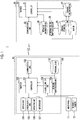
- FIG. 1 is a block diagram showing the configuration of the route information presentation system according to the embodiment.
- the route information presentation system 1 includes a navigation device 100 mounted in a vehicle 10, and a center 20 provided outside the vehicle 10.
- the vehicle 10 includes, in addition to the navigation device 100, a microphone 11 that detects sound inside a vehicle cabin, and an in-vehicle camera 12 that images the inside of the vehicle cabin.
- the "navigation device 100" and the “center 20" according to the embodiment are examples of an “in-vehicle device” and an “external device", respectively.
- the navigation device 100 includes a controller 101, a communication unit 102, a timepiece 103, a display unit 104, a speech output unit 105, an operating unit 106, a global positioning system (GPS) reception unit 107, a feeling estimation unit 108, a personal identification unit 109, and a personal ID database 110.
- the center 20 includes a controller 21, a communication unit 22, a timepiece 23, a map database 24, a general feeling database 25, a personal information database 26, a general feeling map database 27, and a personal feeling map analysis unit 28.
- the feeling estimation unit 108 of the navigation device 100 estimates a feeling of the user based on a facial expression, a gesture, and a tone of the user who is on the vehicle 10.
- the feeling estimation unit 108 detects a user (detects at least a face area of the user) from an image captured by the in-vehicle camera 12 and recognizes a facial expression of the detected user.
- the feeling estimation unit 108 calculates the degree of each of a plurality of feelings (for example, “neutral”, “happy”, “anger”, “fear”, “fatigue”, and the like) based on a feature (for example, a feature of a shape of each of both eyes, an eyebrow, and a mouth) of the recognized facial expression.
- the feeling estimation unit 108 detects a user from an image captured by the in-vehicle camera 12 and recognizes a gesture (that is, motion) of the detected user.
- the feeling estimation unit 108 calculates the degree of each of the feelings based on a feature (for example, a facial expression, a positional relationship between a face and a hand, a line of sight or a face direction, or the like) of the recognized gesture.
- a feature for example, a facial expression, a positional relationship between a face and a hand, a line of sight or a face direction, or the like
- the feeling estimation unit 108 recognizes speech from sound inside the vehicle cabin detected by the microphone 11 and calculates the degree of each of the feelings based on a feature (for example, a frequency distribution or the like) of the recognized speech (that is, a tone). It is desirable that the microphone 11 is a directional microphone. Then, it is desirable that a plurality of microphones 11 are provided in the vehicle 10. With such a configuration, since it is possible to specify a generation source (that is, a sound source) of speech from the directivity of the microphones, even in a case where a plurality of people is on the vehicle 10 or a case where a car audio is operated, it is possible to recognize the speech of the user.
- a generation source that is, a sound source
- the reason that the feeling estimation unit 108 is configured to calculate the degree of each of the feelings is because, in a case where a feeling is actually evoked, a single feeling rarely appears and a mixed feeling in which several basic feelings are mixed often appears.
- the feeling estimation unit 108 obtains the overall degree of each of the feelings by taking, for example, a simple average of (i) the degree of each of the feelings based on the facial expression, (ii) the degree of each of the feelings based on the gesture, and (iii) the degree of each of the feelings based on the tone or taking a weighted average using weights learned in advance.
- the feeling estimation unit 108 obtains (i) the overall degree of each of the feelings in a comparatively short first period (for example, one second or the like) and (ii) the overall degree of each of the feelings in a second period (for example, 30 seconds or the like) longer than the first period in order to focus on temporal change in feeling.
- the feeling estimation unit 108 finally estimates the feeling of the user based on the degree of each of the feelings in the first period and the degree of each of the feelings in the second period. At this time, the feeling estimation unit 108 digitalizes the feeling of the user based on the degree of each of the feelings as well as feeling classification (for example, in a case where digitalization is made in a range of 0 to 100, "joy 50" or the like).
- the feeling estimation unit 108 estimates the feeling classification as follows. That is, for example, in a case where the degree of "fear" is the highest in the first period and the degree of "happy” is the highest in the second period, the feeling estimation unit 108 estimates the feeling of the user as "fear” (i) under a condition that the degree of "fear” in the first period is greater than a predetermined threshold and estimates the feeling of the user as "happy” (ii) under a condition that the degree of "fear” in the first period is equal or less than the predetermined threshold.
- the controller 101 of the navigation device 100 acquires the feeling of the user estimated by the feeling estimation unit 108 and an ID of the user specified by the personal identification unit 109.
- the personal identification unit 109 identifies the user on the vehicle 10 based on the image captured by the in-vehicle camera 12 and specifies the ID of the identified user with reference to the personal ID database.
- the controller 101 acquires a position of the vehicle 10 based on a GPS signal received by the GPS reception unit 107 and acquires a time from the timepiece 103. Subsequently, the controller 101 associates the feeling of the user, the ID of the user, the position, and the time with one another (Step S111). The position of the vehicle 10 and the time may be corrected in consideration of a time of estimation in the feeling estimation unit 108.
- the controller 101 transmits a signal indicating the feeling of the user, the ID of the user, the position, and the time associated with one another to the center 20 through the communication unit 102 (Step S112). Thereafter, the controller 101 performs the processing of Step S111 again after a first predetermined time elapses.
- the feeling estimation unit 108 may perform feeling estimation for all occupants of the vehicle 10, or may perform feeling estimation for a driver among the occupants of the vehicle 10.
- the feeling estimation unit 108 may estimate the feeling of the user from, for example, a blood pressure or a pulse, in addition to the facial expression, the gesture, and the tone.
- the "facial expression”, the “gesture”, and the “tone (speech)" according to the embodiment are an example of "biological information”.
- the controller 21 of the center 20 sequentially acquires the feeling of the user, the ID of the user, the position, and the time associated with one another from each of a plurality of vehicles including the vehicle 10.
- the controller 21 accumulates the feeling of the user, the ID of the user, the position, and the time associated with one another for each ID of the user, thereby constructing the general feeling database 25. That is, it can be said that the general feeling database 25 is a collection of the feeling databases for the users.
- the controller 21 may classify the feelings by time (or time zone) and may accumulate the feeling of the user, or may obtain (i) a simplified value, (ii) a sum of products, (iii) an average, or (iv) a normalized value of the digitalized feelings and may accumulate the obtained value as the feeling of the user.
- the controller 21 determines whether or not data (that is, the feeling of the user, the ID of the user, the position, and the time associated with one another) indicating the feeling is received from an arbitrary vehicle including the vehicle 10 (Step S121). In a case where the above-described determination is made that data indicating the feeling is not received (Step S121: No), the controller 21 performs the determination of Step S121 again after a second predetermined time elapses.
- Step S121 In a case where the determination of Step S121 is made that data indicating the feeling is received (Step S121: Yes), the controller 21 constructs or updates the general feeling database 25 based on the received data indicating the feeling (Step S122).
- FIGS. 3A to 7B a search and presentation method of a traveling route in the route information presentation system 1 will be described referring to FIGS. 3A to 7B , in addition to FIG. 1 .
- the map database 24 of the center 20 stores, in addition to the map information, information of destination candidates (for example, stations, hospitals, hotels, resorts, shops, offices, and the like) and feature information (for example, seaside, good scenery, a small gradient, school zones, and the like) of roads.
- the personal information database 26 stores the ID of the user in association with a profile (for example, age, sex, or the like) of the user.
- the personal feeling map analysis unit 28 generates a personal feeling map from a feeling database related to an arbitrary user (for example, a user indicated by the controller 21) accumulated in the general feeling database 25 and the map information stored in the map database 24.
- the personal feeling map is information with the feeling of the user at each of a plurality of points on a road associated with the map information.
- the personal feeling map analysis unit 28 performs profiling of the user corresponding to the personal feeling map based on the generated personal feeling map. As a result of the profiling, comparatively frequent feelings, preferences, desirable destination candidates, and the like of the user are specified or estimated. For example, in a case where the feeling "happy” is associated with a mountain road in a night time zone, "a preference for a mountain road at night” is estimated as a preference. Alternatively, in a case where the intensity of the feeling "happy" is comparatively large around a baseball park, the “baseball park” is estimated as a desirable destination candidate.
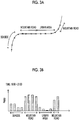
- FIG. 3A a solid line indicates a traveling route along which the vehicle 10 travels in a period of 19:00 to 21:00.
- a symbol "x" of FIG. 3A indicates a point (that is, a position associated with a feeling) where the feeling of the user of the vehicle 10 is estimated.
- FIG. 3A is an example of a personal feeling map with a traveling route (that is, a map) associated with feeling data of the user of the vehicle 10.
- FIG. 3B shows change in the degree of feeling (in this case, "happy") of the user when the vehicle 10 travels along the traveling route shown in FIG. 3A .
- the personal feeling map analysis unit 28 extracts feeling data related to the user of the vehicle 10 in a certain time zone (in FIGS. 3A and 3B , 19:00 to 21:00) from the general feeling database 25 and generates the personal feeling map shown in FIG. 3A from the map information stored in the map database 24.
- the personal feeling map analysis unit 28 calculates, for example, an average value of the feeling of the user of the vehicle 10 for each feature of a road based on the feature information (in FIGS. 3A and 3B , "seaside", “mountain road”, “urban area”) of the roads included in the map information.
- the feature information in FIGS. 3A and 3B , "seaside", “mountain road”, “urban area” of the roads included in the map information.
- FIG. 3B it is assumed that an average value of "feeling” on the "seaside” is 30, an average value of "happy” on the "mountain road” is 80, and an average value of "happy" in the "urban area” is 10.
- the personal feeling map analysis unit 28 performs profiling of the user of the vehicle 10 with reference to, for example, the average value of the feeling for each feature of the road.
- the personal feeling map analysis unit 28 estimates, for example, "a preference for a mountain road at night” as a preference for the user of the vehicle 10.
- the personal feeling map analysis unit 28 transmits the result of the profiling to the controller 21 in association with the ID of the user who is subjected to the profiling.
- the controller 21 updates the profile stored in the personal information database 26 and associated with the ID of the user based on the ID of the user and the result of the profiling.
- the personal feeling map analysis unit 28 may generate the personal feeling map of the user again regularly or irregularly in consideration of an update frequency or the like of the feeling database (as a part of the general feeling database 25) related to a certain user and may perform profiling.
- the controller 21 of the center 20 acquires the profile of the user from the personal information database 26 based on the ID of the user indicated by the received signal.
- the analysis that is, the profiling of the user
- the personal feeling map analysis unit 28 in addition to age or sex, for example, a preference, a desirable destination candidate, and the like are included in the profile acquired from the personal information database 26.
- the controller 21 generates one or a plurality of general feeling maps from the general feeling database 25 and the map information stored in the map database 24 based on the profile acquired from the personal information database 26 and a current time acquired from the timepiece 23.
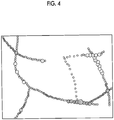
- the general feeling map is information with the feeling of each of a plurality of users at each of the points on the road associated with the map information (see FIG. 4 ).
- a dark halftone circle and a light halftone circle represent different feelings from each other.
- the size of a halftone circle represents the intensity (degree) of the feeling.
- the controller 21 can generate a general feeling map under arbitrary conditions.
- the controller 21 extracts, for example, a feeling of a man in his twenties at 19:00 to 20:00 from the general feeling database 25 and a position associated with the feeling, and generates a general feeling map from the extracted feeling and position and the map information.
- the controller 21 extracts, for example, a feeling of a woman at 9:00 to 10:00 and a position associated with the feeling from the general feeling database 25, and generates a general feeling map from the extracted feeling and position and the map information.
- the controller 21 calculates a traveling route from a current location of the vehicle 10 to a destination based on the acquired profile and the generated one or a plurality of general feeling maps. At this time, the controller 21 may calculate one traveling route or may calculate a plurality of traveling routes from one general feeling map. Alternatively, the controller 21 may calculate one traveling route from a plurality of general feeling maps.
- the controller 21 calculates a traveling route from a current location of the vehicle 10 to a destination such that a comparatively large number of points associated with, for example, a positive feeling, such as "happy", indicated by the general feeling map generated under the above-described conditions of "twenties, man” and “19:20” are included, or no or not many points associated with, for example, a negative feeling, such as "anger", are included.
- a feeling is primarily considered.
- the controller 21 calculates a traveling route from a current location of the vehicle 10 to a destination such that a comparatively large number of points corresponding to a mountain road among points associated with, for example, a positive feeling indicated by the general feeling map generated under the above-described conditions of "a preference for traveling on a mountain road” and "9:50" are included.
- a traveling route from a current location of the vehicle 10 to a destination such that a comparatively large number of points corresponding to a mountain road among points associated with, for example, a positive feeling indicated by the general feeling map generated under the above-described conditions of "a preference for traveling on a mountain road” and "9:50" are included.
- a traveling route from a current location of the vehicle 10 to a destination such that a comparatively large number of points corresponding to a mountain road among points associated with, for example, a positive feeling indicated by the general feeling map generated under the above-described conditions of "a preference for traveling on a mountain road” and "9:50" are included.
- FIG. 5A it is assumed that a black circle indicates the current location of the vehicle 10, and a black triangle indicates the destination of the vehicle 10.
- An "A route” and a “B route” are candidates of a traveling route from the current location of the vehicle 10 to the destination.
- FIG. 5B shows (i) change in the degree of feeling (in this case, "happy") in a case of traveling along the A route (upper side) and (ii) change in the degree of feeling in a case of traveling along the B route (lower side) extracted from the general feeling map.
- the controller 21 generates a general feeling map from the general feeling database 25 and the map information based on the profile related to the user of the vehicle 10 and the current time acquired from the timepiece 23.
- the controller 21 calculates traveling route candidates from the current location of the vehicle 10 to the destination based on the map information in parallel with the generation of the general feeling map.
- the controller 21 obtains feeling features related to the traveling route candidates.
- an average value of "happy” is 45, a maximum value of "happy” is 60, and the number of points where the degree of "happy” is equal to or greater than, for example, 70 is zero.
- an average value of "happy” is 70
- a maximum value of "happy” is 90
- the number of points where the degree of "happy” is equal to or greater than, for example, 70 is six.
- the controller 21 sets a traveling route candidate suitable for the user of the vehicle 10 as a traveling route based on the feeling feature related to the traveling route candidates.
- the controller 21 since the B route is superior to the A route in "happy", the controller 21 sets the B route as the traveling route.
- superiority is determined in the average value, the maximum value, and the number of points. Instead of or in addition to the average value, the maximum value, and the number of points, other indexes may be used in determining a traveling route.
- the controller 21 transmits a signal indicating route information including the calculated traveling route to the vehicle 10 through the communication unit 22.
- the controller 101 of the navigation device 100 of the vehicle 10 displays information related to the traveling route indicated by the received signal on the display unit 104.
- “information related to the traveling route” is not limited to the traveling route itself, and may be a document or the like (see FIG. 6 ) indicating the feature of the traveling route (or a reference used in calculating the traveling route).
- the controller 21 may generate, for example, a general feeling map with comparatively high versatility, such as a general feeling map by age, in advance, and may store the general feeling map in the general feeling map database 27. In addition, the controller 21 may update the general feeling map stored in the general feeling map database 27 regularly or irregularly.
- the "general feeling database 25", the "personal feeling map”, and the “general feeling map” according to the embodiment are examples, of a “feeling database”, a “first feeling map”, and a “second feeling map”, respectively.
- the controller 101 of the navigation device 100 determines whether or not there is a destination setting (Step S211). In a case where a destination is set through the operating unit 106 as a user interface, the controller 101 determines that there is a destination setting.
- Step S211 the controller 101 transmits a signal indicating the ID of the user specified by the personal identification unit 109, the position of the vehicle 10 specified based on the GPS signal received by the GPS reception unit 107, and the destination to the center 20 through the communication unit 102 (Step S212).
- Step S213 determines whether or not the signal indicating the route information is received from the center 20 (Step S213). In a case where the above-described determination is made that the signal indicating the route information is not received (Step S213: No), the controller 101 performs the determination of Step S213 again (that is, the controller 101 is in a standby state until the signal indicating the route information is received). Even when a third predetermined time has elapsed after the signal indicating the ID of the user and the like is transmitted in the processing of Step S212, in a case where the signal indicating the route information is not received, the controller 101 may temporarily end the processing shown in FIG. 7A .
- Step S213 In a case where the determination of Step S213 is made that the signal indicating the route information is received (Step S213: Yes), the controller 101 displays information related to the traveling route indicated by the received signal on the display unit 104 (for example, see “1. [feeling] from your preference", “2. [feeling] from person like you", “3. [feeling] present recommendation” of FIG. 6 ) (Step S214).
- a traveling route of "1. [feeling] from your preference” of FIG. 6 is a traveling route calculated from a general feeling map in consideration of, for example, "a preference for traveling on a mountain road” or a preference for traveling on a seaside road” included in a profile, such as "a preference for traveling on a mountain road, woman” or "a preference for traveling on a seaside road, man”.
- a traveling route of "2. [feeling] from person like you” of FIG. 6 is a traveling route calculated from, for example, a general feeling map by age or a general feeling map generated when a feeling of a user having the same preference, such as "a preference for traveling on a seaside road” is extracted from the general feeling database 25.
- a traveling route of "3. [feeling] present recommendation" of FIG. 6 is a traveling route calculated from, for example, a general feeling map by time zone or a general feeling map generated when a feeling for the last 30 minutes is extracted from the general feeling database 25.
- the controller 101 may calculate the traveling route from the current location of the vehicle 10 to the destination based on map information (not shown) in the navigation device 100 in parallel with the processing shown in FIG. 7A . Then, in the processing of Step S214, the controller 101 may display information related to the calculated traveling route on the display unit 104 (for example, see "4. shortest", “5. priority to open road” of FIG. 6 ), in addition to information related to the traveling route indicated by the received signal.
- the controller 101 when information of the traveling route shown in FIG. 6 is displayed on the display unit 104, in a case where one traveling route is selected by the user of the vehicle 10 through the operating unit 106, the controller 101 performs appropriate control such that the display unit 104 and the speech output unit 105 guide the vehicle 10 to the selected traveling route.
- Step S211 In a case where the determination of Step S211 is made that a destination is not set (Step S211: No), the controller 101 transmits the signal indicating the ID of the user specified by the personal identification unit 109 and the position of the vehicle 10 specified based on the GPS signal received by the GPS reception unit 107 to the center 20 through the communication unit 102 (Step S215).
- the controller 101 determines whether or not a signal indicating destination information is received from the center 20 (Step S216).
- the "destination information” is information indicating a point (so-called dropping destination) by which the vehicle is recommended to pass and/or a route (so-called dropping route) along which the vehicle is recommended to travel.
- Step S216 In a case where the determination of Step S216 is made that the signal indicating the destination information is not received (Step S216: No), the controller 101 performs the determination of Step S216 again (that is, the controller 101 is in a standby state until the signal indicating the destination information is received). Even when a fourth predetermined time has been elapsed after the signal indicating the ID of the user and the like is transmitted in the processing of Step S215, in a case where the signal indicating the destination information is not received, the controller 101 may temporarily end the processing shown in FIG. 7A .
- Step S216 the controller 101 displays information related to the destination indicated by the received signal on the display unit 104, thereby suggesting the destination (Step S217).
- the controller 21 of the center 20 determines whether or not a vehicle signal including at least an ID of a user and a position of a vehicle is received from an arbitrary vehicle including the vehicle 10 (Step S221). In a case where the above-described determination is made that the vehicle signal is not received (Step S211: No), the controller 21 performs the determination of Step S221 again after a fifth predetermined time elapses.
- Step S221 determines whether or not a personal feeling map corresponding to the ID of the user included in the vehicle signal is analyzed (Step S222).
- Step S222 determines whether the personal feeling map is analyzed.
- Step S222: Yes determines whether the personal feeling map is analyzed.
- Step S222: No determines whether the personal feeling map is not analyzed yet.
- the controller 21 generates a personal feeling map corresponding to the ID of the user included in the vehicle signal and performs control such that the personal feeling map analysis unit 28 analyzes the generated personal feeling map (Step S223).
- the controller 21 determines whether or not a destination is included in the vehicle signal (Step S224). In a case where the above-described determination is made that a destination is included (Step S224: Yes), the controller 21 acquires a profile corresponding to the ID of the user included in the vehicle signal from the personal information database 26, and acquires the current time from the timepiece 23. The controller 21 generates one or a plurality of general feeling maps from the general feeling database 25 and the map information stored in the map database 24 based on the acquired profile and current time (Step S225).
- the controller 21 calculates a traveling route from the current location of the vehicle 10 to the destination based on the acquired profile and the generated general feeling map (Step S226).
- the controller 21 a signal indicating the route information including the calculated traveling route to the vehicle 10 through the communication unit 22 (Step S227).
- Step S224 the controller 21 extracts a feeling for the last 30 minutes and a position associated with the feeling from the general feeling database 25, and generates a general feeling map from the extracted feeling and position and the map information stored in the map database 24.
- the controller 21 may extract, for example, a feeling of a user having the same preference as the preference included in the acquired profile and a position associated with the feeling from the general feeling database 25, and generates a general feeling map from the extracted feeling and position and the map information (Step S228).
- the controller 21 searches for a point associated with a specific feeling (for example, a positive feeling, such as "happy", or a negative feeling, such as "anger") or a point where the intensity of the specific feeling is comparatively large from the generated general feeling map while referring to the acquired profile, and determines a point by which the vehicle is recommended to pass and/or a route along which the vehicle is recommended to travel (Step S229).
- a specific feeling for example, a positive feeling, such as "happy", or a negative feeling, such as "anger”
- a point where the intensity of the specific feeling is comparatively large from the generated general feeling map while referring to the acquired profile
- the controller 21 transmits a signal indicating the destination information including the point, by which the vehicle is recommended to pass, and/or the route, along which the vehicle is recommended to travel, to the vehicle 10 through the communication unit 22 (Step S230).
- the "controller 101", the "display unit 104", the "personal identification unit 109", and the “personal feeling map analysis unit 28" according to the embodiment are examples of an “acquisition unit”, a “presentation unit”, a “recognition unit”, and a “first generation unit”, respectively.
- the "communication unit 102" according to the embodiment is an example of a “transmission unit” and a “reception unit”.
- the "controller 21" according to the embodiment is an example of a "second generation unit” and a "search unit”.
- the preference of the user or the like is estimated from the personal feeling map related to the user of the vehicle 10, and the traveling route according to the profile of the user is searched from the general feeling map generated based on the profile or the like including the estimated preference or the like. That is, in the route information presentation system 1, the traveling route from the current location of the vehicle 10 to the destination is searched using the personal feeling map and the general feeling map.
- a feeling of an occupant on a vehicle is provoked according to the quality of scenery or traffic circumstances of a road on which the vehicle travels or in a case where the vehicle travels near a place of memories or with a special feeling. That is, it can be said that there is a causal relationship between the feeling of the occupant on the vehicle and the road (or the traveling route). For this reason, the traveling route from the current location of the vehicle 10 to the destination searched as described above is expected to be a preferred traveling route for the user of the vehicle 10. Accordingly, with the route information presentation system 1, it is possible to present an appropriate traveling route to the user of the vehicle 10.
- the controller 21 of the center 20 may transmit, to the vehicle 10, a signal indicating the general feeling map generated from the feeling for the last 30 minutes, the position associated with the feeling, and the map information, instead of or in addition to the destination information.
- the controller 101 of the navigation device 100 of the vehicle 10 may display the general feeling map on the display unit 104, instead of or in addition to suggesting the destination.
- the user himself or herself of the vehicle 10 can drive the vehicle 10 while selecting a point associated with a specific feeling (for example, a positive feeling).
- a specific feeling for example, a positive feeling
- An in-vehicle device (100) includes a recognition unit (109) configured to recognize a host vehicle user, an acquisition unit (101) configured to acquire a current location and a destination of the host vehicle, a transmission unit configured to transmit a first signal indicating the host vehicle user, the current location, and the destination to an external device (20) outside the host vehicle, a reception unit configured to receive a second signal indicating a traveling route from the current location to the destination from the external device, the traveling route being searched using i) a first feeling map and ii) a second feeling map in the external device, and a presentation unit (104) configured to present the traveling route indicated by the second signal.
Landscapes
- Engineering & Computer Science (AREA)
- Radar, Positioning & Navigation (AREA)
- Remote Sensing (AREA)
- Physics & Mathematics (AREA)
- General Physics & Mathematics (AREA)
- Automation & Control Theory (AREA)
- Health & Medical Sciences (AREA)
- General Health & Medical Sciences (AREA)
- Human Computer Interaction (AREA)
- Social Psychology (AREA)
- Multimedia (AREA)
- Computer Vision & Pattern Recognition (AREA)
- Audiology, Speech & Language Pathology (AREA)
- Acoustics & Sound (AREA)
- Theoretical Computer Science (AREA)
- Artificial Intelligence (AREA)
- Psychiatry (AREA)
- Oral & Maxillofacial Surgery (AREA)
- Child & Adolescent Psychology (AREA)
- Signal Processing (AREA)
- Computational Linguistics (AREA)
- Hospice & Palliative Care (AREA)
- Navigation (AREA)
- Traffic Control Systems (AREA)
- Instructional Devices (AREA)
Abstract
Description
- The present invention relates to a technical field of an in-vehicle device and a route information presentation system that accumulate information relating to a user of a vehicle and present a traveling route based on the accumulated information.
- As this kind of device, for example, a device that extracts a preference corresponding to a current traveling purpose of a driver, detects a feature of each of a plurality of traveling routes from a current location to a destination, and selects a traveling route having a feature conforming to the extracted preference has been suggested (see Japanese Unexamined Patent Application Publication No.
2015-227785 JP 2015-227785 A 2016-180600 JP 2016-180600 A 2016-186461 JP 2016-186461 A - According to the above-described related art, a preference of a user is estimated from a feature (for example, a traveling time, the presence or absence of use of a toll road, the number of lanes, the number of traffic signals, or the like) of a traveling route included in a traveling history. However, for example, even a road that has road classification or a structure, such as the number of lanes, similar to a road (that is, a road likely to be estimated that the user prefers) with a comparatively high traveling frequency does not always conform to the preference of the user according to a surrounding environment, such as the number of parked vehicles or pedestrians or circumstances of buildings or roadside trees around a road. That is, there is room for improvement in the above-described related art in which a preference of a user is estimated from a feature of a road and a traveling route is suggested based on the estimated preference.
- The invention provides an in-vehicle device and a route information presentation system capable of presenting an appropriate traveling route to a user.
- A first aspect of the invention relates to an in-vehicle device including a recognition unit, an acquisition unit, a transmission unit, a reception unit, and a presentation unit. The recognition unit is configured to recognize a user on a host vehicle as a host vehicle user. The acquisition unit is configured to acquire a current location and a destination of the host vehicle. The transmission unit is configured to transmit a first signal indicating the host vehicle user, the current location, and the destination to an external device outside the host vehicle. The reception unit is configured to receive a second signal indicating a traveling route from the current location to the destination from the external device. The traveling route is searched using i) a first feeling map and ii) a second feeling map in the external device. The first feeling map is information generated based on feeling information corresponding to the host vehicle user among a plurality of kinds of feeling information corresponding to a plurality of users and indicating a feeling state at each of a plurality of points on a road and map information, and is information with a feeling state of the host vehicle user at each of the points on the road indicated by the feeling information corresponding to the host vehicle user associated with the map information. The second feeling map is information generated based on at least a part of the feeling information and the map information, and is information with a feeling state of each of the users at each of the points on the road indicated by at least a part of the feeling information associated with the map information. The presentation unit is configured to present the traveling route indicated by the second signal.
- The "first feeling map" is information with a feeling (for example, joy, anger, grief, or pleasure) of the host vehicle user at each of the points on the road associated with the map information, and as a concept, for example, information indicating a distribution of feelings of the host vehicle user on a map. Similarly, the "second feeling map" is information with a feeling of each of the users at each of the points on the road associated with the map information, and as a concept, for example, information indicating a distribution of feelings of the users on a map. The second feeling map may be information with a feeling of each user extracted according to arbitrary conditions of, for example, a time zone, a day of the week, a season, user age, and sex associated with the map information.
- It is possible to estimate a road that the host vehicle user will prefer and a road that the host vehicle user should avoid from a distribution of positive feelings (for example, "joy", "pleasure") indicated by the first feeling map and a distribution of negative feelings (for example, "anger", "grief") indicated by the first feeling map. Furthermore, it is possible to estimate a road that the host vehicle user will generally prefer and a road that the host vehicle user should avoid from a distribution of positive feelings indicated by the second feeling map and a distribution of negative feelings indicated by the second feeling map. For this reason, the traveling route from the current location to the destination searched using the first feeling map and the second feeling map is expected to be a traveling route preferable to the host vehicle user. Accordingly, with the in-vehicle device, it is possible to present an appropriate traveling route to the host vehicle user.
- The in-vehicle device according to the first aspect of the invention may further include a feeling state estimation unit configured to detect a biological information of the host vehicle user and estimate a feeling state of the host vehicle user based on the detected biological information. The transmission unit may be configured to further transmit a third signal indicating the estimated feeling state and information with a position of the host vehicle and the host vehicle user associated with each other to the external device. According to the first aspect of the invention, it is possible to collect the feeling states of the host vehicle user at each point when the host vehicle travels, and to accumulate information indicating the feeling of the host vehicle user in the external device. The feeling state is estimated based on, for example, expression, motion, or speech, as the biological information.
- The in-vehicle device according to the first aspect of the invention may further include an in-vehicle camera configured to image the inside of a vehicle cabin of the host vehicle. The feeling state estimation unit may be configured to detect a user from an image captured by the in-vehicle camera.
- In the in-vehicle device according to the first aspect of the invention, the biological information may include face information of the user. The feeling state estimation unit may be configured to recognize a facial expression of the detected user and estimate a feeling state of the host vehicle user based on a feature of the recognized facial expression.
- In the in-vehicle device according to the first aspect of the invention, the biological information may include a gesture of the user. The feeling state estimation unit may be configured to recognize a gesture of the detected user and estimate a feeling state of the host vehicle user based on a feature of the recognized gesture.
- The in-vehicle device according to the first aspect of the invention may further include a microphone configured to detect sound inside a vehicle cabin of the host vehicle. The biological information may include speech of the user. The feeling state estimation unit may be configured to recognize speech from sound inside the vehicle cabin detected by the microphone and estimate a feeling state of the host vehicle user based on a feature of the recognized speech.
- In the in-vehicle device according to the first aspect of the invention, the second feeling map may be information with a feeling of each of the users extracted according to arbitrary conditions of a time zone, a day of the week, a season, user age, and sex associated with the map information.
- A second aspect of the invention relates to a route information presentation system including an in-vehicle device, and an external device provided outside a vehicle in which the in-vehicle device is mounted. The in-vehicle device is configured to recognize a user in the vehicle as a host vehicle user, acquire a current location and a destination of the vehicle, and transmit a first signal indicating the host vehicle user, the current location, and the destination to the external device. The external device includes a feeling database configured to store a plurality of kinds of feeling information corresponding to a plurality of users and indicating a feeling state at each of a plurality of points on a road, and a map database configured to store map information. The external device is configured to generate a first feeling map based on feeling information corresponding to the host vehicle user indicated by the first signal among the stored feeling information and the stored map information, the first feeling map being information with a feeling state of the host vehicle user at each of the points on the road indicated by the feeling information corresponding to the host vehicle user associated with the stored map information, generate a second feeling map based on at least a part of the stored feeling information and the stored map information, the second feeling map being information with a feeling state of each of the users at each of the points on the road indicated by at least a part of the stored feeling information associated with the stored map information, search for a traveling route from the current location indicated by the first signal to the destination indicated by the first signal using the first feeling map and the second feeling map, and transmit a second signal indicated by the searched traveling route to the vehicle. The in-vehicle device is further configured to present the traveling route indicated by received second signal.
- With the route information presentation system according to the second aspect of the invention, similarly to the in-vehicle device according to the first aspect of the invention, it is possible to present an appropriate traveling route to the host vehicle user. In particular, the second feeling map may be generated based on feeling information (that is, a part of the feeling information) extracted according to arbitrary conditions of, for example, a time zone, a day of the week, a season, user age, and sex among the feeling information.
- In the route information presentation system according to the second aspect of the invention, the in-vehicle device may be configured to detect biological information of the host vehicle user and estimate feeling state of the host vehicle user based on the detected biological information and transmit a third signal indicating information with the estimated feeling state associated with a position of the host vehicle and the host vehicle user to the external device. The feeling database may be constructed or updated by information indicated by the third signal. According to the second aspect of the invention, it is possible to comparatively easily collect the feeling states of the host vehicle user at each point when the vehicle travels, and to construct or update the feeling database with the collected feeling states.
- The route information presentation system according to the second aspect of the invention may further include an in-vehicle camera configured to image the inside of a vehicle cabin of the host vehicle. The in-vehicle device may be configured to detect a user from an image captured by the in-vehicle camera.
- In the route information presentation system according to the second aspect of the invention, the biological information may be face information of the user. The in-vehicle device may be configured to recognize a facial expression of the detected user and estimate a feeling state of the host vehicle user based on a feature of the recognized facial expression.
- In the route information presentation system according to the second aspect of the invention, the biological information may be a gesture of the user. The in-vehicle device may be configured to recognize a gesture of the detected user and estimate a feeling state of the host vehicle user based on a feature of the recognized gesture.
- The route information presentation system according to the second aspect of the invention may further include a microphone configured to detect sound inside a vehicle cabin of the host vehicle. The biological information may be speech of the user. The in-vehicle device may be configured to recognize speech from sound inside the vehicle cabin detected by the microphone and estimate a feeling state of the host vehicle user based on a feature of the recognized speech.
- In the route information presentation system according to the second aspect of the invention, the second feeling map may be information with a feeling of each of the users extracted according to arbitrary conditions of a time zone, a day of the week, a season, user age, and sex associated with the map information.
- The operation and other advantages of the invention will become apparent from an embodiment described below.
- Features, advantages, and technical and industrial significance of exemplary embodiments of the invention will be described below with reference to the accompanying drawings, in which like numerals denote like elements, and wherein:
-
FIG. 1 is a block diagram showing the configuration of a route information presentation system according to an embodiment; -
FIG. 2A is a flowchart showing a feeling estimation operation according to the embodiment; -
FIG. 2B is a flowchart showing a construction operation of a general feeling database according to the embodiment; -
FIG. 3A is a diagram showing an example of a profiling method of a user according to the embodiment; -
FIG. 3B is a diagram showing an example of the profiling method of the user according to the embodiment; -
FIG. 4 is a diagram showing an example of a general feeling map according to the embodiment; -
FIG. 5A is a diagram showing an example of a calculation method of a traveling route according to the embodiment; -
FIG. 5B is a diagram showing an example of the calculation method of the traveling route according to the embodiment; -
FIG. 6 is a diagram showing an example of a display screen of a traveling route according to the embodiment; -
FIG. 7A is a flowchart showing a traveling route search and presentation operation according to the embodiment; and -
FIG. 7B is a flowchart showing the traveling route search and presentation operation according to the embodiment. - A route information presentation system according to an embodiment will be described referring to
FIGS. 1 to 7B . - The configuration of the route information presentation system according to the embodiment will be described referring to
FIG. 1. FIG. 1 is a block diagram showing the configuration of the route information presentation system according to the embodiment. - In
FIG. 1 , the routeinformation presentation system 1 includes anavigation device 100 mounted in avehicle 10, and acenter 20 provided outside thevehicle 10. Thevehicle 10 includes, in addition to thenavigation device 100, amicrophone 11 that detects sound inside a vehicle cabin, and an in-vehicle camera 12 that images the inside of the vehicle cabin. The "navigation device 100" and the "center 20" according to the embodiment are examples of an "in-vehicle device" and an "external device", respectively. - The
navigation device 100 includes acontroller 101, acommunication unit 102, atimepiece 103, adisplay unit 104, aspeech output unit 105, anoperating unit 106, a global positioning system (GPS)reception unit 107, a feelingestimation unit 108, apersonal identification unit 109, and apersonal ID database 110. - The
center 20 includes acontroller 21, acommunication unit 22, atimepiece 23, amap database 24, ageneral feeling database 25, apersonal information database 26, a generalfeeling map database 27, and a personal feelingmap analysis unit 28. - Next, an estimation method of a feeling of a user of the
vehicle 10 that is performed on thevehicle 10 side and a construction method of thegeneral feeling database 25 that is performed on thecenter 20 side will be described referring to flowcharts ofFIGS. 2A and 2B , in addition to theFIG. 1 . - The feeling
estimation unit 108 of thenavigation device 100 estimates a feeling of the user based on a facial expression, a gesture, and a tone of the user who is on thevehicle 10. - Specifically, the feeling
estimation unit 108 detects a user (detects at least a face area of the user) from an image captured by the in-vehicle camera 12 and recognizes a facial expression of the detected user. The feelingestimation unit 108 calculates the degree of each of a plurality of feelings (for example, "neutral", "happy", "anger", "fear", "fatigue", and the like) based on a feature (for example, a feature of a shape of each of both eyes, an eyebrow, and a mouth) of the recognized facial expression. The feelingestimation unit 108 detects a user from an image captured by the in-vehicle camera 12 and recognizes a gesture (that is, motion) of the detected user. The feelingestimation unit 108 calculates the degree of each of the feelings based on a feature (for example, a facial expression, a positional relationship between a face and a hand, a line of sight or a face direction, or the like) of the recognized gesture. - The feeling
estimation unit 108 recognizes speech from sound inside the vehicle cabin detected by themicrophone 11 and calculates the degree of each of the feelings based on a feature (for example, a frequency distribution or the like) of the recognized speech (that is, a tone). It is desirable that themicrophone 11 is a directional microphone. Then, it is desirable that a plurality ofmicrophones 11 are provided in thevehicle 10. With such a configuration, since it is possible to specify a generation source (that is, a sound source) of speech from the directivity of the microphones, even in a case where a plurality of people is on thevehicle 10 or a case where a car audio is operated, it is possible to recognize the speech of the user. - The reason that the feeling
estimation unit 108 is configured to calculate the degree of each of the feelings is because, in a case where a feeling is actually evoked, a single feeling rarely appears and a mixed feeling in which several basic feelings are mixed often appears. - The feeling
estimation unit 108 obtains the overall degree of each of the feelings by taking, for example, a simple average of (i) the degree of each of the feelings based on the facial expression, (ii) the degree of each of the feelings based on the gesture, and (iii) the degree of each of the feelings based on the tone or taking a weighted average using weights learned in advance. - The feeling
estimation unit 108 obtains (i) the overall degree of each of the feelings in a comparatively short first period (for example, one second or the like) and (ii) the overall degree of each of the feelings in a second period (for example, 30 seconds or the like) longer than the first period in order to focus on temporal change in feeling. - When a person undergoes change in feeling (mental state), the person often shows change in feeling (mental state) with a facial expression, a gesture, or a tone consciously or unconsciously. For this reason, the overall degree of each of the feelings in the comparatively short first period is obtained, whereby a complicated feeling or a true feeling of the user is expected to be estimated. On the other hand, the overall degree of each of the feelings in the comparatively long second period is obtained, whereby noise is reduced and reliability of estimation by the feeling
estimation unit 108 can be further improved. - The feeling
estimation unit 108 finally estimates the feeling of the user based on the degree of each of the feelings in the first period and the degree of each of the feelings in the second period. At this time, the feelingestimation unit 108 digitalizes the feeling of the user based on the degree of each of the feelings as well as feeling classification (for example, in a case where digitalization is made in a range of 0 to 100, "joy 50" or the like). - The feeling
estimation unit 108 estimates the feeling classification as follows. That is, for example, in a case where the degree of "fear" is the highest in the first period and the degree of "happy" is the highest in the second period, the feelingestimation unit 108 estimates the feeling of the user as "fear" (i) under a condition that the degree of "fear" in the first period is greater than a predetermined threshold and estimates the feeling of the user as "happy" (ii) under a condition that the degree of "fear" in the first period is equal or less than the predetermined threshold. The reason is because, in a case where the degree of "fear" in the first period is greater than the predetermined threshold, there is a high possibility that "fear" is a true feeling of the user that appears for an instant, and in a case where the degree of "fear" in the first period is equal to or less than the predetermined threshold, there is a high possibility that "fear" is noise. - Now, in the flowchart shown in
FIG. 2A , thecontroller 101 of thenavigation device 100 acquires the feeling of the user estimated by the feelingestimation unit 108 and an ID of the user specified by thepersonal identification unit 109. Thepersonal identification unit 109 identifies the user on thevehicle 10 based on the image captured by the in-vehicle camera 12 and specifies the ID of the identified user with reference to the personal ID database. - In addition, the
controller 101 acquires a position of thevehicle 10 based on a GPS signal received by theGPS reception unit 107 and acquires a time from thetimepiece 103. Subsequently, thecontroller 101 associates the feeling of the user, the ID of the user, the position, and the time with one another (Step S111). The position of thevehicle 10 and the time may be corrected in consideration of a time of estimation in the feelingestimation unit 108. - The
controller 101 transmits a signal indicating the feeling of the user, the ID of the user, the position, and the time associated with one another to thecenter 20 through the communication unit 102 (Step S112). Thereafter, thecontroller 101 performs the processing of Step S111 again after a first predetermined time elapses. - The feeling
estimation unit 108 may perform feeling estimation for all occupants of thevehicle 10, or may perform feeling estimation for a driver among the occupants of thevehicle 10. The feelingestimation unit 108 may estimate the feeling of the user from, for example, a blood pressure or a pulse, in addition to the facial expression, the gesture, and the tone. The "facial expression", the "gesture", and the "tone (speech)" according to the embodiment are an example of "biological information". - The
controller 21 of thecenter 20 sequentially acquires the feeling of the user, the ID of the user, the position, and the time associated with one another from each of a plurality of vehicles including thevehicle 10. Thecontroller 21 accumulates the feeling of the user, the ID of the user, the position, and the time associated with one another for each ID of the user, thereby constructing thegeneral feeling database 25. That is, it can be said that thegeneral feeling database 25 is a collection of the feeling databases for the users. - In a case where a feeling of a certain user at a certain point is estimated multiple times, the
controller 21 may classify the feelings by time (or time zone) and may accumulate the feeling of the user, or may obtain (i) a simplified value, (ii) a sum of products, (iii) an average, or (iv) a normalized value of the digitalized feelings and may accumulate the obtained value as the feeling of the user. - Now, in the flowchart shown in
FIG. 2B , thecontroller 21 determines whether or not data (that is, the feeling of the user, the ID of the user, the position, and the time associated with one another) indicating the feeling is received from an arbitrary vehicle including the vehicle 10 (Step S121). In a case where the above-described determination is made that data indicating the feeling is not received (Step S121: No), thecontroller 21 performs the determination of Step S121 again after a second predetermined time elapses. - In a case where the determination of Step S121 is made that data indicating the feeling is received (Step S121: Yes), the
controller 21 constructs or updates thegeneral feeling database 25 based on the received data indicating the feeling (Step S122). - Next, a search and presentation method of a traveling route in the route
information presentation system 1 will be described referring toFIGS. 3A to 7B , in addition toFIG. 1 . - The
map database 24 of thecenter 20 stores, in addition to the map information, information of destination candidates (for example, stations, hospitals, hotels, resorts, shops, offices, and the like) and feature information (for example, seaside, good scenery, a small gradient, school zones, and the like) of roads. Thepersonal information database 26 stores the ID of the user in association with a profile (for example, age, sex, or the like) of the user. - The personal feeling
map analysis unit 28 generates a personal feeling map from a feeling database related to an arbitrary user (for example, a user indicated by the controller 21) accumulated in thegeneral feeling database 25 and the map information stored in themap database 24. The personal feeling map is information with the feeling of the user at each of a plurality of points on a road associated with the map information. - The personal feeling
map analysis unit 28 performs profiling of the user corresponding to the personal feeling map based on the generated personal feeling map. As a result of the profiling, comparatively frequent feelings, preferences, desirable destination candidates, and the like of the user are specified or estimated. For example, in a case where the feeling "happy" is associated with a mountain road in a night time zone, "a preference for a mountain road at night" is estimated as a preference. Alternatively, in a case where the intensity of the feeling "happy" is comparatively large around a baseball park, the "baseball park" is estimated as a desirable destination candidate. - The profiling by the personal feeling
map analysis unit 28 will be further described referring toFIGS. 3A and 3B . InFIG. 3A , a solid line indicates a traveling route along which thevehicle 10 travels in a period of 19:00 to 21:00. A symbol "x" ofFIG. 3A indicates a point (that is, a position associated with a feeling) where the feeling of the user of thevehicle 10 is estimated. It can be said thatFIG. 3A is an example of a personal feeling map with a traveling route (that is, a map) associated with feeling data of the user of thevehicle 10.FIG. 3B shows change in the degree of feeling (in this case, "happy") of the user when thevehicle 10 travels along the traveling route shown inFIG. 3A . - The personal feeling
map analysis unit 28 extracts feeling data related to the user of thevehicle 10 in a certain time zone (inFIGS. 3A and 3B , 19:00 to 21:00) from thegeneral feeling database 25 and generates the personal feeling map shown inFIG. 3A from the map information stored in themap database 24. - Next, the personal feeling
map analysis unit 28 calculates, for example, an average value of the feeling of the user of thevehicle 10 for each feature of a road based on the feature information (inFIGS. 3A and 3B , "seaside", "mountain road", "urban area") of the roads included in the map information. In the example shown inFIG. 3B , it is assumed that an average value of "feeling" on the "seaside" is 30, an average value of "happy" on the "mountain road" is 80, and an average value of "happy" in the "urban area" is 10. - Next, the personal feeling
map analysis unit 28 performs profiling of the user of thevehicle 10 with reference to, for example, the average value of the feeling for each feature of the road. In the example shown inFIGS. 3A and 3B , since the average value of "happy" on the "mountain road" projects from and are greater than other average values, the personal feelingmap analysis unit 28 estimates, for example, "a preference for a mountain road at night" as a preference for the user of thevehicle 10. - The personal feeling
map analysis unit 28 transmits the result of the profiling to thecontroller 21 in association with the ID of the user who is subjected to the profiling. Thecontroller 21 updates the profile stored in thepersonal information database 26 and associated with the ID of the user based on the ID of the user and the result of the profiling. - The personal feeling
map analysis unit 28 may generate the personal feeling map of the user again regularly or irregularly in consideration of an update frequency or the like of the feeling database (as a part of the general feeling database 25) related to a certain user and may perform profiling. - In a case where the signal indicating the ID of the user and the current location and the destination of the
vehicle 10 is received from thevehicle 10, thecontroller 21 of thecenter 20 acquires the profile of the user from thepersonal information database 26 based on the ID of the user indicated by the received signal. In a case where the analysis (that is, the profiling of the user) of the personal feeling map is already performed by the personal feelingmap analysis unit 28, in addition to age or sex, for example, a preference, a desirable destination candidate, and the like are included in the profile acquired from thepersonal information database 26. - The
controller 21 generates one or a plurality of general feeling maps from thegeneral feeling database 25 and the map information stored in themap database 24 based on the profile acquired from thepersonal information database 26 and a current time acquired from thetimepiece 23. Similarly to the above-described personal feeling map, the general feeling map is information with the feeling of each of a plurality of users at each of the points on the road associated with the map information (seeFIG. 4 ). InFIG. 4 , a dark halftone circle and a light halftone circle represent different feelings from each other. The size of a halftone circle represents the intensity (degree) of the feeling. - The
controller 21 can generate a general feeling map under arbitrary conditions. In a case where the profile acquired from thepersonal information database 26 is, for example, "twenties, man", and the current time is "19:20", thecontroller 21 extracts, for example, a feeling of a man in his twenties at 19:00 to 20:00 from thegeneral feeling database 25 and a position associated with the feeling, and generates a general feeling map from the extracted feeling and position and the map information. In a case where the profile acquired from thepersonal information database 26 is, for example, "a preference for traveling on a mountain road, woman", and the current time is "9:50", thecontroller 21 extracts, for example, a feeling of a woman at 9:00 to 10:00 and a position associated with the feeling from thegeneral feeling database 25, and generates a general feeling map from the extracted feeling and position and the map information. - The
controller 21 calculates a traveling route from a current location of thevehicle 10 to a destination based on the acquired profile and the generated one or a plurality of general feeling maps. At this time, thecontroller 21 may calculate one traveling route or may calculate a plurality of traveling routes from one general feeling map. Alternatively, thecontroller 21 may calculate one traveling route from a plurality of general feeling maps. - Specifically, the
controller 21 calculates a traveling route from a current location of thevehicle 10 to a destination such that a comparatively large number of points associated with, for example, a positive feeling, such as "happy", indicated by the general feeling map generated under the above-described conditions of "twenties, man" and "19:20" are included, or no or not many points associated with, for example, a negative feeling, such as "anger", are included. In this case, since there is no condition (that is, a profile) other than "twenties, man", in calculating the traveling route, a feeling is primarily considered. - Alternatively, the
controller 21 calculates a traveling route from a current location of thevehicle 10 to a destination such that a comparatively large number of points corresponding to a mountain road among points associated with, for example, a positive feeling indicated by the general feeling map generated under the above-described conditions of "a preference for traveling on a mountain road" and "9:50" are included. In this case, since there is the condition of "a preference for traveling on a mountain road, woman", in calculating the traveling route, in addition to a feeling, topography is considered. - The calculation of the traveling route by the
controller 21 will be further described referring toFIGS. 5A and 5B . InFIG. 5A , it is assumed that a black circle indicates the current location of thevehicle 10, and a black triangle indicates the destination of thevehicle 10. An "A route" and a "B route" are candidates of a traveling route from the current location of thevehicle 10 to the destination.FIG. 5B shows (i) change in the degree of feeling (in this case, "happy") in a case of traveling along the A route (upper side) and (ii) change in the degree of feeling in a case of traveling along the B route (lower side) extracted from the general feeling map. - The
controller 21 generates a general feeling map from thegeneral feeling database 25 and the map information based on the profile related to the user of thevehicle 10 and the current time acquired from thetimepiece 23. Thecontroller 21 calculates traveling route candidates from the current location of thevehicle 10 to the destination based on the map information in parallel with the generation of the general feeling map. - Next, the
controller 21 obtains feeling features related to the traveling route candidates. In the example shown inFIG. 5B , in regard to the A route, it is assumed that an average value of "happy" is 45, a maximum value of "happy" is 60, and the number of points where the degree of "happy" is equal to or greater than, for example, 70 is zero. In regard to the B route, it is assumed that an average value of "happy" is 70, a maximum value of "happy" is 90, and the number of points where the degree of "happy" is equal to or greater than, for example, 70 is six. - Next, the
controller 21 sets a traveling route candidate suitable for the user of thevehicle 10 as a traveling route based on the feeling feature related to the traveling route candidates. In the examples shown inFIGS. 5A and 5B , since the B route is superior to the A route in "happy", thecontroller 21 sets the B route as the traveling route. It should be noted that superiority is determined in the average value, the maximum value, and the number of points. Instead of or in addition to the average value, the maximum value, and the number of points, other indexes may be used in determining a traveling route. - The
controller 21 transmits a signal indicating route information including the calculated traveling route to thevehicle 10 through thecommunication unit 22. In a case where the signal indicating the route information is received from thecenter 20, thecontroller 101 of thenavigation device 100 of thevehicle 10 displays information related to the traveling route indicated by the received signal on thedisplay unit 104. Here, "information related to the traveling route" is not limited to the traveling route itself, and may be a document or the like (seeFIG. 6 ) indicating the feature of the traveling route (or a reference used in calculating the traveling route). - The
controller 21 may generate, for example, a general feeling map with comparatively high versatility, such as a general feeling map by age, in advance, and may store the general feeling map in the generalfeeling map database 27. In addition, thecontroller 21 may update the general feeling map stored in the generalfeeling map database 27 regularly or irregularly. - The "
general feeling database 25", the "personal feeling map", and the "general feeling map" according to the embodiment are examples, of a "feeling database", a "first feeling map", and a "second feeling map", respectively. - Now, in
FIG. 7A , thecontroller 101 of thenavigation device 100 determines whether or not there is a destination setting (Step S211). In a case where a destination is set through theoperating unit 106 as a user interface, thecontroller 101 determines that there is a destination setting. - In a case where the determination of Step S211 is made that there is the destination setting (Step S211: Yes), the
controller 101 transmits a signal indicating the ID of the user specified by thepersonal identification unit 109, the position of thevehicle 10 specified based on the GPS signal received by theGPS reception unit 107, and the destination to thecenter 20 through the communication unit 102 (Step S212). - Next, the
controller 101 determines whether or not the signal indicating the route information is received from the center 20 (Step S213). In a case where the above-described determination is made that the signal indicating the route information is not received (Step S213: No), thecontroller 101 performs the determination of Step S213 again (that is, thecontroller 101 is in a standby state until the signal indicating the route information is received). Even when a third predetermined time has elapsed after the signal indicating the ID of the user and the like is transmitted in the processing of Step S212, in a case where the signal indicating the route information is not received, thecontroller 101 may temporarily end the processing shown inFIG. 7A . - In a case where the determination of Step S213 is made that the signal indicating the route information is received (Step S213: Yes), the
controller 101 displays information related to the traveling route indicated by the received signal on the display unit 104 (for example, see "1. [feeling] from your preference", "2. [feeling] from person like you", "3. [feeling] present recommendation" ofFIG. 6 ) (Step S214). - A traveling route of "1. [feeling] from your preference" of
FIG. 6 is a traveling route calculated from a general feeling map in consideration of, for example, "a preference for traveling on a mountain road" or a preference for traveling on a seaside road" included in a profile, such as "a preference for traveling on a mountain road, woman" or "a preference for traveling on a seaside road, man". A traveling route of "2. [feeling] from person like you" ofFIG. 6 is a traveling route calculated from, for example, a general feeling map by age or a general feeling map generated when a feeling of a user having the same preference, such as "a preference for traveling on a seaside road" is extracted from thegeneral feeling database 25. A traveling route of "3. [feeling] present recommendation" ofFIG. 6 is a traveling route calculated from, for example, a general feeling map by time zone or a general feeling map generated when a feeling for the last 30 minutes is extracted from thegeneral feeling database 25. - The
controller 101 may calculate the traveling route from the current location of thevehicle 10 to the destination based on map information (not shown) in thenavigation device 100 in parallel with the processing shown inFIG. 7A . Then, in the processing of Step S214, thecontroller 101 may display information related to the calculated traveling route on the display unit 104 (for example, see "4. shortest", "5. priority to open road" ofFIG. 6 ), in addition to information related to the traveling route indicated by the received signal. - For example, when information of the traveling route shown in
FIG. 6 is displayed on thedisplay unit 104, in a case where one traveling route is selected by the user of thevehicle 10 through theoperating unit 106, thecontroller 101 performs appropriate control such that thedisplay unit 104 and thespeech output unit 105 guide thevehicle 10 to the selected traveling route. - In a case where the determination of Step S211 is made that a destination is not set (Step S211: No), the
controller 101 transmits the signal indicating the ID of the user specified by thepersonal identification unit 109 and the position of thevehicle 10 specified based on the GPS signal received by theGPS reception unit 107 to thecenter 20 through the communication unit 102 (Step S215). - Next, the
controller 101 determines whether or not a signal indicating destination information is received from the center 20 (Step S216). The "destination information" is information indicating a point (so-called dropping destination) by which the vehicle is recommended to pass and/or a route (so-called dropping route) along which the vehicle is recommended to travel. - In a case where the determination of Step S216 is made that the signal indicating the destination information is not received (Step S216: No), the
controller 101 performs the determination of Step S216 again (that is, thecontroller 101 is in a standby state until the signal indicating the destination information is received). Even when a fourth predetermined time has been elapsed after the signal indicating the ID of the user and the like is transmitted in the processing of Step S215, in a case where the signal indicating the destination information is not received, thecontroller 101 may temporarily end the processing shown inFIG. 7A . - In a case where the determination of Step S216 is made that the signal indicating the destination information is received (Step S216: Yes), the
controller 101 displays information related to the destination indicated by the received signal on thedisplay unit 104, thereby suggesting the destination (Step S217). - In
FIG. 7B , thecontroller 21 of thecenter 20 determines whether or not a vehicle signal including at least an ID of a user and a position of a vehicle is received from an arbitrary vehicle including the vehicle 10 (Step S221). In a case where the above-described determination is made that the vehicle signal is not received (Step S211: No), thecontroller 21 performs the determination of Step S221 again after a fifth predetermined time elapses. - In a case where the determination of Step S221 is made that the vehicle signal is received (Step S221: Yes), the
controller 21 determines whether or not a personal feeling map corresponding to the ID of the user included in the vehicle signal is analyzed (Step S222). - In a case where the determination of Step S222 is made that the personal feeling map is analyzed (Step S222: Yes), the
controller 21 performs processing of Step S224 described below. In a case where the determination of Step S222 is made that the personal feeling map is not analyzed yet (Step S222: No), thecontroller 21 generates a personal feeling map corresponding to the ID of the user included in the vehicle signal and performs control such that the personal feelingmap analysis unit 28 analyzes the generated personal feeling map (Step S223). - Next, the
controller 21 determines whether or not a destination is included in the vehicle signal (Step S224). In a case where the above-described determination is made that a destination is included (Step S224: Yes), thecontroller 21 acquires a profile corresponding to the ID of the user included in the vehicle signal from thepersonal information database 26, and acquires the current time from thetimepiece 23. Thecontroller 21 generates one or a plurality of general feeling maps from thegeneral feeling database 25 and the map information stored in themap database 24 based on the acquired profile and current time (Step S225). - Next, the
controller 21 calculates a traveling route from the current location of thevehicle 10 to the destination based on the acquired profile and the generated general feeling map (Step S226). Next, the controller 21 a signal indicating the route information including the calculated traveling route to thevehicle 10 through the communication unit 22 (Step S227). - In a case where the determination of Step S224 is made that a destination is not included (Step S224: No), the
controller 21 extracts a feeling for the last 30 minutes and a position associated with the feeling from thegeneral feeling database 25, and generates a general feeling map from the extracted feeling and position and the map information stored in themap database 24. Alternatively, thecontroller 21 may extract, for example, a feeling of a user having the same preference as the preference included in the acquired profile and a position associated with the feeling from thegeneral feeling database 25, and generates a general feeling map from the extracted feeling and position and the map information (Step S228). Next, thecontroller 21 searches for a point associated with a specific feeling (for example, a positive feeling, such as "happy", or a negative feeling, such as "anger") or a point where the intensity of the specific feeling is comparatively large from the generated general feeling map while referring to the acquired profile, and determines a point by which the vehicle is recommended to pass and/or a route along which the vehicle is recommended to travel (Step S229). - Next, the
controller 21 transmits a signal indicating the destination information including the point, by which the vehicle is recommended to pass, and/or the route, along which the vehicle is recommended to travel, to thevehicle 10 through the communication unit 22 (Step S230). - The "
controller 101", the "display unit 104", the "personal identification unit 109", and the "personal feelingmap analysis unit 28" according to the embodiment are examples of an "acquisition unit", a "presentation unit", a "recognition unit", and a "first generation unit", respectively. The "communication unit 102" according to the embodiment is an example of a "transmission unit" and a "reception unit". The "controller 21" according to the embodiment is an example of a "second generation unit" and a "search unit". - In the route
information presentation system 1, the preference of the user or the like is estimated from the personal feeling map related to the user of thevehicle 10, and the traveling route according to the profile of the user is searched from the general feeling map generated based on the profile or the like including the estimated preference or the like. That is, in the routeinformation presentation system 1, the traveling route from the current location of thevehicle 10 to the destination is searched using the personal feeling map and the general feeling map. - A feeling of an occupant on a vehicle is provoked according to the quality of scenery or traffic circumstances of a road on which the vehicle travels or in a case where the vehicle travels near a place of memories or with a special feeling. That is, it can be said that there is a causal relationship between the feeling of the occupant on the vehicle and the road (or the traveling route). For this reason, the traveling route from the current location of the
vehicle 10 to the destination searched as described above is expected to be a preferred traveling route for the user of thevehicle 10. Accordingly, with the routeinformation presentation system 1, it is possible to present an appropriate traveling route to the user of thevehicle 10. - In a case where a so-called dropping destination or dropping route is suggested because the user does not set a destination (see Steps S215 to S217 and S228 to S230), for example, the
controller 21 of thecenter 20 may transmit, to thevehicle 10, a signal indicating the general feeling map generated from the feeling for the last 30 minutes, the position associated with the feeling, and the map information, instead of or in addition to the destination information. In this case, thecontroller 101 of thenavigation device 100 of thevehicle 10 may display the general feeling map on thedisplay unit 104, instead of or in addition to suggesting the destination. - With such a configuration, the user (driver) himself or herself of the
vehicle 10 can drive thevehicle 10 while selecting a point associated with a specific feeling (for example, a positive feeling). - The invention is not limited to the above-described embodiment, and can be changed, if desired, without departing from the essence of the invention that can be read from the claims and the entire specification. An in-vehicle device and a route information presentation system including such changes are also intended to be within the technical scope of the invention.
- An in-vehicle device (100) includes a recognition unit (109) configured to recognize a host vehicle user, an acquisition unit (101) configured to acquire a current location and a destination of the host vehicle, a transmission unit configured to transmit a first signal indicating the host vehicle user, the current location, and the destination to an external device (20) outside the host vehicle, a reception unit configured to receive a second signal indicating a traveling route from the current location to the destination from the external device, the traveling route being searched using i) a first feeling map and ii) a second feeling map in the external device, and a presentation unit (104) configured to present the traveling route indicated by the second signal.
Claims (14)
- An in-vehicle device (100) comprising:a recognition unit (109) configured to recognize a user on a host vehicle (10) as a host vehicle user ;an acquisition unit (101) configured to acquire a current location and a destination of the host vehicle (10);a transmission unit configured to transmit a first signal indicating the host vehicle user, the current location, and the destination to an external device (20) outside the host vehicle (10);a reception unit configured to receive a second signal indicating a traveling route from the current location to the destination from the external device (20),the traveling route being searched using i) a first feeling map and ii) a second feeling map in the external device (20),the first feeling map being information generated based on feeling information corresponding to the host vehicle user among a plurality of kinds of feeling information corresponding to a plurality of users and indicating a feeling state at each of a plurality of points on a road and map information, and being information with a feeling state of the host vehicle user at each of the points on the road indicated by the feeling information corresponding to the host vehicle user associated with the map information, andthe second feeling map being information generated based on at least a part of the feeling information and the map information, and being information with a feeling state of each of the users at each of the points on the road indicated by at least a part of the feeling information associated with the map information; anda presentation unit (104) configured to present the traveling route indicated by the second signal.
- The in-vehicle device (100) according to claim 1, further comprising a feeling state estimation unit configured to detect a biological information of the host vehicle user and estimate a feeling state of the host vehicle user based on the detected biological information,
wherein the transmission unit is configured to further transmit a third signal indicating the estimated feeling state and information with a position of the host vehicle (10) and the host vehicle user associated with each other to the external device (20). - The in-vehicle device (100) according to claim 2, further comprising an in-vehicle camera configured to image the inside of a vehicle cabin of the host vehicle,
wherein the feeling state estimation unit is configured to detect a user from an image captured by the in-vehicle camera. - The in-vehicle device (100) according to claim 3, wherein:the biological information includes face information of the user; andthe feeling state estimation unit is configured to recognize a facial expression of the detected user and estimate a feeling state of the host vehicle user based on a feature of the recognized facial expression.
- The in-vehicle device (100) according to claim 3 or 4, wherein:the biological information includes a gesture of the user; andthe feeling state estimation unit is configured to recognize a gesture of the detected user and estimate a feeling state of the host vehicle user based on a feature of the recognized gesture.
- The in-vehicle device (100) according to any one of claims 2 to 5, further comprising a microphone configured to detect sound inside a vehicle cabin of the host vehicle, wherein:the biological information includes speech of the user; andthe feeling state estimation unit is configured to recognize speech from sound inside the vehicle cabin detected by the microphone and estimate a feeling state of the host vehicle user based on a feature of the recognized speech.
- The in-vehicle device (100) according to any one of claims 1 to 6, wherein the second feeling map is information with a feeling of each of the users extracted according to arbitrary conditions of a time zone, a day of the week, a season, user age, and sex associated with the map information.
- A route information presentation system (1) comprising:an in-vehicle device (100); andan external device (20) provided outside a vehicle in which the in-vehicle device (100) is mounted, wherein:the in-vehicle device (100) is configured torecognize a user in the vehicle as a host vehicle user,acquire a current location and a destination of the vehicle, andtransmit a first signal indicating the host vehicle user, the current location, and the destination to the external device (20);the external device (20) includes
a feeling database configured to store a plurality of kinds of feeling information corresponding to a plurality of users and indicating a feeling state at each of a plurality of points on a road, and a map database configured to store map information;the external device (20) is configured togenerate a first feeling map based on feeling information corresponding to the host vehicle user indicated by the first signal among the stored feeling information and the stored map information, the first feeling map being information with a feeling state of the host vehicle user at each of the points on the road indicated by the feeling information corresponding to the host vehicle user associated with the stored map information,generate a second feeling map based on at least a part of the stored feeling information and the stored map information, the second feeling map being information with a feeling state of each of the users at each of the points on the road indicated by at least a part of the stored feeling information associated with the stored map information,search for a traveling route from the current location indicated by the first signal to the destination indicated by the first signal using the first feeling map and the second feeling map, andtransmit a second signal indicated by the searched traveling route to the vehicle; andthe in-vehicle device (100) is further configured to present the traveling route indicated by received second signal. - The route information presentation system (1) according to claim 8, wherein:the in-vehicle device (100) is configured to:detect biological information of the host vehicle user and estimate feeling state of the host vehicle user based on the detected biological information andtransmit a third signal indicating information with the estimated feeling state associated with a position of the host vehicle (10) and the host vehicle user to the external device (20); andthe feeling database is constructed or updated by information indicated by the third signal.
- The route information presentation system (1) according to claim 9, further comprising an in-vehicle camera configured to image the inside of a vehicle cabin of the host vehicle,
wherein the in-vehicle device (100) is configured to detect a user from an image captured by the in-vehicle camera. - The route information presentation system (1) according to claim 10, wherein:the biological information is face information of the user; andthe in-vehicle device (100) is configured to recognize a facial expression of the detected user and estimate a feeling state of the host vehicle user based on a feature of the recognized facial expression.
- The route information presentation system (1) according to claim 10 or 11, wherein:the biological information is a gesture of the user; andthe in-vehicle device (100) is configured to recognize a gesture of the detected user and estimate a feeling state of the host vehicle user based on a feature of the recognized gesture.
- The route information presentation system (1) according to any one of claims 9 to 12, further comprising a microphone configured to detect sound inside a vehicle cabin of the host vehicle, wherein:the biological information is speech of the user; andthe in-vehicle device (100) is configured to recognize speech from sound inside the vehicle cabin detected by the microphone and estimate a feeling state of the host vehicle user based on a feature of the recognized speech.
- The route information presentation system (1) according to any one of claims 9 to 13, wherein the second feeling map is information with a feeling of each of the users extracted according to arbitrary conditions of a time zone, a day of the week, a season, user age, and sex associated with the map information.
Applications Claiming Priority (1)
| Application Number | Priority Date | Filing Date | Title |
|---|---|---|---|
| JP2016248118A JP2018100936A (en) | 2016-12-21 | 2016-12-21 | In-vehicle device and route information presentation system |
Publications (1)
| Publication Number | Publication Date |
|---|---|
| EP3343175A1 true EP3343175A1 (en) | 2018-07-04 |
Family
ID=60569775
Family Applications (1)
| Application Number | Title | Priority Date | Filing Date |
|---|---|---|---|
| EP17205094.0A Withdrawn EP3343175A1 (en) | 2016-12-21 | 2017-12-04 | In-vehicle device and route information presentation system |
Country Status (8)
| Country | Link |
|---|---|
| US (1) | US20180172464A1 (en) |
| EP (1) | EP3343175A1 (en) |
| JP (1) | JP2018100936A (en) |
| KR (1) | KR20180072543A (en) |
| CN (1) | CN108225366A (en) |
| BR (1) | BR102017027622A2 (en) |
| RU (1) | RU2681429C1 (en) |
| TW (1) | TW201830350A (en) |
Families Citing this family (23)
| Publication number | Priority date | Publication date | Assignee | Title |
|---|---|---|---|---|
| JP6513069B2 (en) * | 2016-12-27 | 2019-05-15 | 本田技研工業株式会社 | Driving support device and driving support method |
| JP6499682B2 (en) * | 2017-01-31 | 2019-04-10 | 本田技研工業株式会社 | Information provision system |
| KR102485441B1 (en) * | 2018-09-03 | 2023-01-06 | 현대자동차주식회사 | Vehicle and vehicle system |
| US11042619B2 (en) * | 2019-01-17 | 2021-06-22 | Toyota Motor North America, Inc. | Vehicle occupant tracking and trust |
| JP7195161B2 (en) * | 2019-01-22 | 2022-12-23 | 本田技研工業株式会社 | Guidance system, guidance method and program |
| JP2020148613A (en) * | 2019-03-13 | 2020-09-17 | いすゞ自動車株式会社 | Information processing device |
| GB2583960A (en) * | 2019-05-16 | 2020-11-18 | Continental Automotive Gmbh | Method and system using mapped emotions |
| JP7620547B2 (en) * | 2019-06-14 | 2025-01-23 | 株式会社半導体エネルギー研究所 | Portable information terminal device and information processing method |
| CN110517085B (en) * | 2019-08-27 | 2022-06-07 | 新华网股份有限公司 | Display report generation method and device, electronic equipment and storage medium |
| CN110826436A (en) * | 2019-10-23 | 2020-02-21 | 上海能塔智能科技有限公司 | Emotion data transmission and processing method and device, terminal device and cloud platform |
| CN111415679B (en) * | 2020-03-25 | 2023-02-28 | Oppo广东移动通信有限公司 | Site identification method, device, terminal and storage medium |
| CN113532456B (en) * | 2020-04-21 | 2025-01-07 | 百度在线网络技术(北京)有限公司 | Method and device for generating navigation route |
| KR102702773B1 (en) * | 2020-06-24 | 2024-09-05 | 현대자동차주식회사 | Vehicle and control method for the same |
| JP2022054820A (en) | 2020-09-28 | 2022-04-07 | マツダ株式会社 | Traveling route setting apparatus |
| JP7453889B2 (en) * | 2020-10-02 | 2024-03-21 | フォルシアクラリオン・エレクトロニクス株式会社 | Computing equipment and programs |
| CN114445020A (en) * | 2020-11-05 | 2022-05-06 | 腾讯科技(深圳)有限公司 | Commuting reminder method, device, medium and electronic device |
| WO2022180770A1 (en) * | 2021-02-26 | 2022-09-01 | 享 山中 | Program, information processing device, and information processing method |
| US12055404B2 (en) * | 2021-05-04 | 2024-08-06 | At&T Intellectual Property I, L.P. | Sentiment-based navigation |
| JP7632351B2 (en) * | 2022-03-09 | 2025-02-19 | トヨタ自動車株式会社 | Information processing device, vehicle system, information processing method, and program |
| IT202200012131A1 (en) * | 2022-06-08 | 2023-12-08 | Ferrari Spa | DRIVING ROUTING DEVICE FOR USE IN A MOTOR VEHICLE AND METHOD FOR CALCULATING DRIVING ROUTES |
| KR102864881B1 (en) * | 2022-11-24 | 2025-09-29 | 주식회사 피씨엔 | User emotion interaction method and system for extended reality based on non-verbal elements |
| KR102695356B1 (en) * | 2022-12-26 | 2024-08-16 | 한국자동차연구원 | Ai-based drive course recommendation system based on passenger recognition results and method for recommending ai-based drive course using thereof |
| US12613104B2 (en) * | 2023-06-23 | 2026-04-28 | Adeia Guides Inc. | Vehicle navigation methods to maximize operator's intent |
Citations (6)
| Publication number | Priority date | Publication date | Assignee | Title |
|---|---|---|---|---|
| US20040204844A1 (en) * | 2003-01-24 | 2004-10-14 | Yonglong Xu | Navigational device |
| WO2015162949A1 (en) * | 2014-04-21 | 2015-10-29 | ソニー株式会社 | Communication system, control method, and storage medium |
| JP2015227785A (en) | 2014-05-30 | 2015-12-17 | 日産自動車株式会社 | Route information presentation system |
| WO2016121174A1 (en) * | 2015-01-30 | 2016-08-04 | ソニー株式会社 | Information processing system and control method |
| JP2016180600A (en) | 2015-03-23 | 2016-10-13 | アイシン・エィ・ダブリュ株式会社 | Route search system, route search method and computer program |
| JP2016186461A (en) | 2015-03-27 | 2016-10-27 | アイシン・エィ・ダブリュ株式会社 | Facility guide system, facility guide method and facility guide program |
Family Cites Families (3)
| Publication number | Priority date | Publication date | Assignee | Title |
|---|---|---|---|---|
| GB0520576D0 (en) * | 2005-10-10 | 2005-11-16 | Applied Generics Ltd | Using traffic monitoring information to provide better driver route planning |
| RU103415U1 (en) * | 2010-04-19 | 2011-04-10 | Общество с ограниченной ответственностью "Производственная компания "АТПП" | DIGITAL ELECTRONIC DEVICE FOR MONITORING AND REGISTRATION OF MOTION OF A VEHICLE AND LABOR AND REST MODES OF A DRIVER |
| US8364395B2 (en) * | 2010-12-14 | 2013-01-29 | International Business Machines Corporation | Human emotion metrics for navigation plans and maps |
-
2016
- 2016-12-21 JP JP2016248118A patent/JP2018100936A/en active Pending
-
2017
- 2017-11-30 US US15/827,673 patent/US20180172464A1/en not_active Abandoned
- 2017-11-30 TW TW106141737A patent/TW201830350A/en unknown
- 2017-12-01 KR KR1020170164287A patent/KR20180072543A/en not_active Ceased
- 2017-12-04 EP EP17205094.0A patent/EP3343175A1/en not_active Withdrawn
- 2017-12-04 RU RU2017142093A patent/RU2681429C1/en active
- 2017-12-20 BR BR102017027622-8A patent/BR102017027622A2/en not_active IP Right Cessation
- 2017-12-21 CN CN201711397933.9A patent/CN108225366A/en active Pending
Patent Citations (8)
| Publication number | Priority date | Publication date | Assignee | Title |
|---|---|---|---|---|
| US20040204844A1 (en) * | 2003-01-24 | 2004-10-14 | Yonglong Xu | Navigational device |
| WO2015162949A1 (en) * | 2014-04-21 | 2015-10-29 | ソニー株式会社 | Communication system, control method, and storage medium |
| EP3136055A1 (en) * | 2014-04-21 | 2017-03-01 | Sony Corporation | Communication system, control method, and storage medium |
| JP2015227785A (en) | 2014-05-30 | 2015-12-17 | 日産自動車株式会社 | Route information presentation system |
| WO2016121174A1 (en) * | 2015-01-30 | 2016-08-04 | ソニー株式会社 | Information processing system and control method |
| US20170370744A1 (en) * | 2015-01-30 | 2017-12-28 | Sony Corporation | Information processing system and control method |
| JP2016180600A (en) | 2015-03-23 | 2016-10-13 | アイシン・エィ・ダブリュ株式会社 | Route search system, route search method and computer program |
| JP2016186461A (en) | 2015-03-27 | 2016-10-27 | アイシン・エィ・ダブリュ株式会社 | Facility guide system, facility guide method and facility guide program |
Also Published As
| Publication number | Publication date |
|---|---|
| RU2681429C1 (en) | 2019-03-06 |
| US20180172464A1 (en) | 2018-06-21 |
| KR20180072543A (en) | 2018-06-29 |
| TW201830350A (en) | 2018-08-16 |
| JP2018100936A (en) | 2018-06-28 |
| CN108225366A (en) | 2018-06-29 |
| BR102017027622A2 (en) | 2018-08-14 |
Similar Documents
| Publication | Publication Date | Title |
|---|---|---|
| EP3343175A1 (en) | In-vehicle device and route information presentation system | |
| CN107209019B (en) | Information processing system and control method | |
| CN106293032B (en) | Portable terminal equipment and its control method and device | |
| US8718926B1 (en) | Electronic direction technology | |
| JP4231884B2 (en) | Gaze object detection device and gaze object detection method | |
| US20150241235A1 (en) | Display of estimated time to arrival at upcoming personalized route waypoints | |
| US11460309B2 (en) | Control apparatus, control method, and storage medium storing program | |
| US20210209713A1 (en) | Method and apparatus for providing a ride-hailing service based on user diability data | |
| JP6500139B1 (en) | Visual support device | |
| JP2014202560A (en) | Navigation device, server and road width information updating method | |
| WO2016148204A1 (en) | Route search device, route search method, and computer program | |
| JP2010117278A (en) | Device and system for searching route, device for providing route information, onboard unit, and method and program for searching route | |
| Gintner et al. | Improving reverse geocoding: Localization of blind pedestrians using conversational ui | |
| JP2013011483A (en) | Driving support device | |
| CA2986992A1 (en) | In-vehicle device and route information presentation system | |
| KR102507001B1 (en) | Bus information exchange system providing user interface means for the transportation vulnerable and method for providing user interface means for the transportation vulnerable | |
| JP7715028B2 (en) | Information providing device and information providing method | |
| WO2020188626A1 (en) | Vision assistance device | |
| JP2023136194A (en) | Information processing device, moving body, control method thereof, program, and storage medium | |
| JP7762036B2 (en) | Server device, audio output method, program, and storage medium | |
| US20250155252A1 (en) | Stopover recommendation method based on fatigue status and navigation system for performing the same | |
| Feng | From Door to Door: Exploring Multi-Stage Navigation Technologies for People With Blindness and Low Vision | |
| JP2026012724A (en) | Audio output device, audio output method, program, and storage medium | |
| CN120063314A (en) | Vehicle navigation method, device, storage medium and electronic equipment | |
| JP2023143847A (en) | System, information processing device, vehicle and method |
Legal Events
| Date | Code | Title | Description |
|---|---|---|---|
| PUAI | Public reference made under article 153(3) epc to a published international application that has entered the european phase |
Free format text: ORIGINAL CODE: 0009012 |
|
| 17P | Request for examination filed |
Effective date: 20171204 |
|
| AK | Designated contracting states |
Kind code of ref document: A1 Designated state(s): AL AT BE BG CH CY CZ DE DK EE ES FI FR GB GR HR HU IE IS IT LI LT LU LV MC MK MT NL NO PL PT RO RS SE SI SK SM TR |
|
| AX | Request for extension of the european patent |
Extension state: BA ME |
|
| RIC1 | Information provided on ipc code assigned before grant |
Ipc: G01C 21/34 20060101ALI20190220BHEP Ipc: G01C 21/36 20060101ALI20190220BHEP Ipc: G06K 9/00 20060101AFI20190220BHEP |
|
| GRAP | Despatch of communication of intention to grant a patent |
Free format text: ORIGINAL CODE: EPIDOSNIGR1 |
|
| RIC1 | Information provided on ipc code assigned before grant |
Ipc: G01C 21/34 20060101AFI20190412BHEP Ipc: G01C 21/36 20060101ALI20190412BHEP |
|
| INTG | Intention to grant announced |
Effective date: 20190513 |
|
| RAP1 | Party data changed (applicant data changed or rights of an application transferred) |
Owner name: TOYOTA JIDOSHA KABUSHIKI KAISHA |
|
| STAA | Information on the status of an ep patent application or granted ep patent |
Free format text: STATUS: THE APPLICATION IS DEEMED TO BE WITHDRAWN |
|
| 18D | Application deemed to be withdrawn |
Effective date: 20190924 |