EP3337174A1 - Method and device for transmission of content - Google Patents
Method and device for transmission of content Download PDFInfo
- Publication number
- EP3337174A1 EP3337174A1 EP16382599.5A EP16382599A EP3337174A1 EP 3337174 A1 EP3337174 A1 EP 3337174A1 EP 16382599 A EP16382599 A EP 16382599A EP 3337174 A1 EP3337174 A1 EP 3337174A1
- Authority
- EP
- European Patent Office
- Prior art keywords
- media stream
- content
- frames
- marking data
- selecting
- Prior art date
- Legal status (The legal status is an assumption and is not a legal conclusion. Google has not performed a legal analysis and makes no representation as to the accuracy of the status listed.)
- Granted
Links
Images
Classifications
-
- H—ELECTRICITY
- H04—ELECTRIC COMMUNICATION TECHNIQUE
- H04N—PICTORIAL COMMUNICATION, e.g. TELEVISION
- H04N21/00—Selective content distribution, e.g. interactive television or video on demand [VOD]
- H04N21/40—Client devices specifically adapted for the reception of or interaction with content, e.g. set-top-box [STB]; Operations thereof
- H04N21/43—Processing of content or additional data, e.g. demultiplexing additional data from a digital video stream; Elementary client operations, e.g. monitoring of home network or synchronising decoder's clock; Client middleware
- H04N21/44—Processing of video elementary streams, e.g. splicing a video clip retrieved from local storage with an incoming video stream or rendering scenes according to encoded video stream scene graphs
- H04N21/44008—Processing of video elementary streams, e.g. splicing a video clip retrieved from local storage with an incoming video stream or rendering scenes according to encoded video stream scene graphs involving operations for analysing video streams, e.g. detecting features or characteristics in the video stream
-
- H—ELECTRICITY
- H04—ELECTRIC COMMUNICATION TECHNIQUE
- H04N—PICTORIAL COMMUNICATION, e.g. TELEVISION
- H04N21/00—Selective content distribution, e.g. interactive television or video on demand [VOD]
- H04N21/40—Client devices specifically adapted for the reception of or interaction with content, e.g. set-top-box [STB]; Operations thereof
- H04N21/43—Processing of content or additional data, e.g. demultiplexing additional data from a digital video stream; Elementary client operations, e.g. monitoring of home network or synchronising decoder's clock; Client middleware
- H04N21/44—Processing of video elementary streams, e.g. splicing a video clip retrieved from local storage with an incoming video stream or rendering scenes according to encoded video stream scene graphs
- H04N21/44004—Processing of video elementary streams, e.g. splicing a video clip retrieved from local storage with an incoming video stream or rendering scenes according to encoded video stream scene graphs involving video buffer management, e.g. video decoder buffer or video display buffer
Definitions
- the present invention relates to the field of telecommunication.
- the present invention relates to methods and devices for transmission of multimedia content.
- the live lag that is the time between when the audio and video were captured and when they are displayed on the user device, may be of the order a few seconds.
- the live lag may be of the order of tens of seconds or even more than a minute. In most cases, however, a long live lag is not a real problem: watching a news program or a concert one minute later than when they were transmitted is not a disadvantage.
- the live lag in a video delivery platform can be reduced by minimizing the lag introduced by each element in the chain: encoding delay, ABR segmentation delay, buffering at server, propagation delay (routers, CDNs, access network, etc.) and, very important, buffering at the client device.
- encoding delay ABR segmentation delay
- buffering at server ABR segmentation delay
- propagation delay routing, CDNs, access network, etc.
- Fast channel change techniques improve quality of experience by reducing the "zapping" time, but typically increase the buffering at the client device and thus the live lag.
- a known solution for reducing the live lag after a fast channel change comprises reducing buffering at the client device by temporarily playing the received content faster than real time, e.g. by skipping frames. However, this may reduce quality of the displayed content.
- embodiments relate to a method for transmission of media content, executed by a content transmission device, comprising:
- the method may comprise:
- the method may comprise determining a marked media stream by combining the obtained media stream and the marking data.
- the media stream comprises successive video frames, the method comprising at least one of:
- the media stream comprises successive audio frames, the method comprising selecting an audio frame having a sound level below a sound level threshold.
- embodiments relate to a content transmission device comprising means configured for performing the method above.
- the method may comprise sending a request for said media stream to the content transmission device, and in response to said request, receiving a portion of said media stream in unicast, and said media stream in multicast.
- the method may comprise skipping frames until the receiving buffer reaches a predefined threshold.
- the media stream comprises video stream and audio stream, the method comprising determining a lip-sync value and playing back selected frames in response to determining that the lip-sync value reaches a lip-sync threshold.
- embodiments relate to a content consumption device comprising means configured for performing the method above.
- Embodiments also relate to a computer program comprising instructions for performing the one of the methods mentioned before when said instructions are executed by a computer.
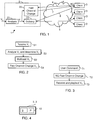
- Figure 1 is a block diagram of a system 1 for transmission of media content.
- the system 1 comprises a content transmission device 2 and a plurality of content consumption devices 3 connected by a network 4.
- the system 1 is configured for transmission of one or more media streams, for example a plurality of television channels, from the content transmission device 2 to the content consumption devices 3.
- the content transmission device 2 is for example a head end in the video platform of an IPTV operator.
- the content transmission device 2 comprises an analysis module 21, a delivery module 22 and a Fast Channel Change module 23.
- the content transmission device 2 obtains one or more media streams to be transmitted to the client consumption devices 3.
- a media stream may be for example a video and/or an audio stream, and comprises successive frames.
- a video stream comprises successive video frames and an audio stream comprises successive audio frames.
- a video stream may include intra-coded frames (e.g. I-frames) and inter-coded frames (e.g. P and/or B frames).
- a media stream may be obtained from an external content provider, for example the producer of a television channel.
- Figure 1 illustrates a media stream V 0 received by the content transmission device 2 and the functioning of the content transmission device 2 is described hereafter with reference to the media stream V 0 .
- the analysis module 21 analyses the media stream V 0 and selects frames of the media stream V 0 which meet a selection criterion. This may include video frames and/or audio frames.
- the analysis module 21 determines marking data which specifies the selected frames.
- the analysis module 21 may generate a media stream V 1 by combining the media stream V 0 and the marking data. For example, in the media stream V 1 , each frame header includes a field specifying whether the frame has been selected or not, and the case may be additional information.
- the selection criteria for selecting a frame are chosen in order to minimize the perception effect of skipping the selected frames during playback of the media stream V 1 .
- examples include:
- examples include selecting intervals of silence or quasi-silence.
- the delivery module 22 transmits the media stream V 1 by multicast to a plurality of content consumption devices 3 currently watching this television channel.
- the delivery module 22 manages a multicast tree 5 from the content transmission device 2 to the content consumption devices 3.
- the Fast Channel Change module 23 implements a Fast Channel Change technique (also refer to as Fast Start technique). For this, the Fast Channel Change module 23 buffers a recent portion of the media stream V 1 .
- a content consumption device 3 is a device operated by a user for playback of a media stream received from the content transmission device 2, such as a Set-Top-Box, a TV, a personal computer, a tablet, a smartphone...
- the content consumption device 3 may join a multicast tree 5 associated with the desired media stream.
- the content consumption device 3 buffers the received media stream V 1 in a receiving buffer and plays back the content from the receiving buffer.
- the receiving buffer allows absorbing jitter and bandwidth fluctuation in the network 4, but introduce a delay which results in live lag in case of a television channel transmitting a live event, for example a sport game.
- a content consumption device 3 When changing from a media stream to another (typically zapping between television channels in response to a user command), a content consumption device 3 interacts with the Fast Channel Change module 23 to implement a Fast Channel Change technique. For this, the content consumption device 3 sends a channel change request RQ (arrow 6) to the content transmission device 2. In response to the request RQ, the Fast Channel Change module 23 sends a buffered portion of the media stream V 1 . The buffered portion of the media stream V 1 is sent in a burst (arrow 7), that is at a retrieval rate faster than consumption rate, and starts with a key frame (for example an intra-coded video frame) located in the past with respect to the transmission of the multicast tree 5.
- a key frame for example an intra-coded video frame
- the content consumption device 3 also joins the multicast tree 5 of the new media stream V 1 (arrow 8).
- the content consumption device 3 reduces the receiving buffer by skipping frames during the decoding and playback, based on the marking data included in the media stream V 1 . Since the frames specified by the marking data have been selected based on the selection criteria mentioned above, skipping the selected frames during decoding/playback does not significantly reduce Quality of Experience. Skipping selected media frames is continued until the receiving buffer reaches a specified threshold value.
- the content consumption device 3 may skip video frames and audio frames independently of each other. This allows starting skipping video frames as soon as a selected video frame is received when playback starts and, whenever sound level is low enough, also audio frames. However, this may result in lip-sync issues. Thus, the content consumption device 3 may play selected video frame in response to determining that lip-sync has reach an unacceptable value, until enough selected audio frames can be skipped to reduce the lip-sync issues (or the other way around).
- the use of a fast start of fast channel change technique improve the Quality of Experience by reducing the time between a user command and the start of the playback of a desired media stream. Moreover, live lag after such fast start of fast channel change technique is reduced by skipping frames. Since the skipped frame have been selected based on selection criteria chosen to reduce the perceptual impact of skipping, undesirable visual or audio effects may be avoided or reduced.
- Figure 2 is a flowchart of a method for transmission of media content, executed by the content transmission device 2.
- the content transmission device 2 receives a media stream V 0 (step S) and determines the media stream V 1 (step S2) by content-aware analysis and marking the selected frames.
- the content transmission device 2 transmits the media stream V 1 to a plurality of content consumption devices 3 by multicast (step S3). In response to a request from a content consumption device 3, the content transmission device 2 sends a buffered portion of the media stream V 1 to content consumption device 3 (step S4).
- Steps S1 to S4 are illustrated as consecutive steps, but they may be executed in parallel or in another order.
- Figure 3 is a flowchart of a method for consumption of media content, executed by a content consumption device 3.
- the content consumption device 3 In response to a user command (step T1), the content consumption device 3 interacts with the content transmission device 2 (step T2) to implement a Fast Channel Change technique and starts receiving and buffering the requested media stream V 1 . Then, the content consumption device 3 decodes and plays back the buffered media stream V 1 (step T3), while skipping frames specified by the marking data.
- Steps T1 to T3 are illustrated as consecutive steps, but they may be executed in parallel or in another order.
- the content transmission device 2 is a video platform of an Over The Top video service provider, and may not include the Fast Channel Change module 23.
- the media stream V 1 is sent to content consumption devices 3 by using an Adaptive Bitrate technique, for example DASH. This introduce a buffering delay at the content consumption device 3.
- a content consumption device 3 reduces the buffering delay by skipping the specified frames.
- Figure 4 is a structural view of device, which may be the content transmission device 2 or a content consumption device 3.
- the device of Figure 4 comprises a processor 9 and a memory 10.
- the memory 10 stores a computer program P which, when executed by the processor 9, causes the device to execute the method described above with reference to Figure 2 or 3 .
- processor When provided by a processor, the functions may be provided by a single dedicated processor, by a single shared processor, or by a plurality of individual processors, some of which may be shared, for example in a cloud computing architecture.
- explicit use of the term "processor” should not be construed to refer exclusively to hardware capable of executing software, and may implicitly include, without limitation, digital signal processor (DSP) hardware, network processor, application specific integrated circuit (ASIC), field programmable gate array (FPGA), read only memory (ROM) for storing software, random access memory (RAM), and non-volatile storage.
- DSP digital signal processor
- ASIC application specific integrated circuit
- FPGA field programmable gate array
- ROM read only memory
- RAM random access memory
- non-volatile storage Other hardware, conventional and/or custom, may also be included.
- Their function may be carried out through the operation of program logic, through dedicated logic, through the interaction of program control and dedicated logic, or even manually, the particular technique being selectable by the implementer as more specifically understood
- any block diagrams herein represent conceptual views of illustrative circuitry embodying the principles of the invention.
- any flow charts represent various processes which may be substantially represented in computer readable medium and so executed by a computer or processor, whether or not such computer or processor is explicitly shown.
- Embodiments of the method can be performed by means of dedicated hardware and/or software or any combination of both.
Landscapes
- Engineering & Computer Science (AREA)
- Multimedia (AREA)
- Signal Processing (AREA)
- Two-Way Televisions, Distribution Of Moving Picture Or The Like (AREA)
Abstract
- obtaining (S1) a media stream (V0) comprising a plurality of successive frames,
- selecting (52) one or more of said frames which meet a selection criterion, and determining (52) marking data specifying the selected frames,
- sending (53) said media stream and said marking data to a plurality of content consumption devices (3) by multicast,
- buffering (54) a portion of the media stream and the marking data and, in response to a request from one content consumption device (3), sending (54) the buffered portion to said content consumption device (3) in unicast.
Description
- The present invention relates to the field of telecommunication. In particular, the present invention relates to methods and devices for transmission of multimedia content.
- All data transport mechanisms introduce a delay in the transmission of the information. In IPTV video delivery platforms, the live lag, that is the time between when the audio and video were captured and when they are displayed on the user device, may be of the order a few seconds. In Over the Top scenario providing video service with Adaptive Bitrate, the live lag may be of the order of tens of seconds or even more than a minute. In most cases, however, a long live lag is not a real problem: watching a news program or a concert one minute later than when they were transmitted is not a disadvantage. The main issue arises with sports, in particular when the same event is being transmitted through other chains with a significantly lower lag: nobody wants to "hear" a football score (in the radio or simply from neighbors) one minute before it appears on the screen. While this is only a very specific use case, its commercial importance makes the live lag a very relevant parameter to be optimized in video delivery platforms.
- The live lag in a video delivery platform can be reduced by minimizing the lag introduced by each element in the chain: encoding delay, ABR segmentation delay, buffering at server, propagation delay (routers, CDNs, access network, etc.) and, very important, buffering at the client device. When all these delays are minimized the video and audio displayed are as close to the real live event as it is possible.
- Fast channel change techniques improve quality of experience by reducing the "zapping" time, but typically increase the buffering at the client device and thus the live lag. A known solution for reducing the live lag after a fast channel change comprises reducing buffering at the client device by temporarily playing the received content faster than real time, e.g. by skipping frames. However, this may reduce quality of the displayed content.
- It is thus an object of embodiments of the present invention to propose methods and devices for transmission of content, which do not show the inherent shortcomings of the prior art.
- Accordingly, embodiments relate to a method for transmission of media content, executed by a content transmission device, comprising:
- obtaining a media stream comprising a plurality of successive frames,
- selecting one or more of said frames which meet a selection criterion, and determining marking data specifying the selected frames,
- sending said media stream and said marking data to at least one content consumption device.
- The method may comprise:
- sending said media stream and said marking data to a plurality of content consumption devices by multicast,
- buffering a portion of the media stream and the marking data and, in response to a request from one content consumption device, sending the buffered portion to said content consumption device in unicast.
- The method may comprise determining a marked media stream by combining the obtained media stream and the marking data.
- In some embodiments, the media stream comprises successive video frames, the method comprising at least one of:
- selecting a video frame having a luminance below a luminance threshold,
- selecting a video frame of a still scene,
- selecting a video frame of a changing scene,
- selecting a video frame of a scene change.
- In some embodiments, the media stream comprises successive audio frames, the method comprising selecting an audio frame having a sound level below a sound level threshold.
- Correspondingly, embodiments relate to a content transmission device comprising means configured for performing the method above.
- Other embodiments relate to a method for consumption of media content, executed by a content consumption device, comprising:
- receiving, from a content transmission device, a media stream and marking data specifying selected frames of said media stream,
- buffering the received media stream and marking data in a receiving buffer,
- during play back of the media stream from said receiving buffer, skipping frames specified by the marking data.
- The method may comprise sending a request for said media stream to the content transmission device, and in response to said request, receiving a portion of said media stream in unicast, and said media stream in multicast.
- The method may comprise skipping frames until the receiving buffer reaches a predefined threshold.
- In some embodiments, the media stream comprises video stream and audio stream, the method comprising determining a lip-sync value and playing back selected frames in response to determining that the lip-sync value reaches a lip-sync threshold.
- Correlatively, embodiments relate to a content consumption device comprising means configured for performing the method above.
- Embodiments also relate to a computer program comprising instructions for performing the one of the methods mentioned before when said instructions are executed by a computer.
- The above and other objects and features of the invention will become more apparent and the invention itself will be best understood by referring to the following description of embodiments taken in conjunction with the accompanying drawings wherein:
-
Figure 1 is a block diagram of a system for transmission of media content, -
Figures 2 and 3 are flowcharts of methods used in the system ofFigure 1 , and -
Figure 4 is a structural view of a content transmission device. -
Figure 1 is a block diagram of asystem 1 for transmission of media content. Thesystem 1 comprises acontent transmission device 2 and a plurality ofcontent consumption devices 3 connected by a network 4. Thesystem 1 is configured for transmission of one or more media streams, for example a plurality of television channels, from thecontent transmission device 2 to thecontent consumption devices 3. - The
content transmission device 2 is for example a head end in the video platform of an IPTV operator. Thecontent transmission device 2 comprises ananalysis module 21, adelivery module 22 and a FastChannel Change module 23. - The
content transmission device 2 obtains one or more media streams to be transmitted to theclient consumption devices 3. A media stream may be for example a video and/or an audio stream, and comprises successive frames. For example, a video stream comprises successive video frames and an audio stream comprises successive audio frames. A video stream may include intra-coded frames (e.g. I-frames) and inter-coded frames (e.g. P and/or B frames). A media stream may be obtained from an external content provider, for example the producer of a television channel.Figure 1 illustrates a media stream V0 received by thecontent transmission device 2 and the functioning of thecontent transmission device 2 is described hereafter with reference to the media stream V0. - The
analysis module 21 analyses the media stream V0 and selects frames of the media stream V0 which meet a selection criterion. This may include video frames and/or audio frames. Theanalysis module 21 determines marking data which specifies the selected frames. Theanalysis module 21 may generate a media stream V1 by combining the media stream V0 and the marking data. For example, in the media stream V1, each frame header includes a field specifying whether the frame has been selected or not, and the case may be additional information. - The selection criteria for selecting a frame are chosen in order to minimize the perception effect of skipping the selected frames during playback of the media stream V1. For video, examples include:
- Selecting very dark scenes. This can be analyzed with a fairly simple calculation on the frame luminance.
- Selecting still scenes: if there are many consecutive frames with no motion at all a frame (or more) can be safely removed. Note this should be zero move; skipping a frame from a slow (or even very slow) motion scene may produce a very bad effect. The motion vectors used in the encoding process may be of help to detect this kind of scenes.
- Selecting very fast scenes: when consecutive frames are very different due to source content containing fast scenes the effect of skipping a frame is less noticeable. Again, the encoding parameters may help detecting this scenario.
- Selecting scene change: skipping frames at the end or the beginning of a sequence may be done in some cases without noticeable effect, but that also depends on the surrounding frames before and after, so the analysis is a bit more complex.
- For audio, examples include selecting intervals of silence or quasi-silence.
- The
delivery module 22 transmits the media stream V1 by multicast to a plurality ofcontent consumption devices 3 currently watching this television channel. Thedelivery module 22 manages amulticast tree 5 from thecontent transmission device 2 to thecontent consumption devices 3. - The Fast
Channel Change module 23 implements a Fast Channel Change technique (also refer to as Fast Start technique). For this, the FastChannel Change module 23 buffers a recent portion of the media stream V1. - A
content consumption device 3 is a device operated by a user for playback of a media stream received from thecontent transmission device 2, such as a Set-Top-Box, a TV, a personal computer, a tablet, a smartphone... Thecontent consumption device 3 may join amulticast tree 5 associated with the desired media stream. Thecontent consumption device 3 buffers the received media stream V1 in a receiving buffer and plays back the content from the receiving buffer. The receiving buffer allows absorbing jitter and bandwidth fluctuation in the network 4, but introduce a delay which results in live lag in case of a television channel transmitting a live event, for example a sport game. - When changing from a media stream to another (typically zapping between television channels in response to a user command), a
content consumption device 3 interacts with the FastChannel Change module 23 to implement a Fast Channel Change technique. For this, thecontent consumption device 3 sends a channel change request RQ (arrow 6) to thecontent transmission device 2. In response to the request RQ, the FastChannel Change module 23 sends a buffered portion of the media stream V1. The buffered portion of the media stream V1 is sent in a burst (arrow 7), that is at a retrieval rate faster than consumption rate, and starts with a key frame (for example an intra-coded video frame) located in the past with respect to the transmission of themulticast tree 5. This allows thecontent consumption device 3 to start playing the media stream V1 without having to wait for the first key frame of themulticast tree 5. However, this increases the size of the receiving buffer and thus the live lag. Thecontent consumption device 3 also joins themulticast tree 5 of the new media stream V1 (arrow 8). - After a fast channel change, the
content consumption device 3 reduces the receiving buffer by skipping frames during the decoding and playback, based on the marking data included in the media stream V1. Since the frames specified by the marking data have been selected based on the selection criteria mentioned above, skipping the selected frames during decoding/playback does not significantly reduce Quality of Experience. Skipping selected media frames is continued until the receiving buffer reaches a specified threshold value. - The
content consumption device 3 may skip video frames and audio frames independently of each other. This allows starting skipping video frames as soon as a selected video frame is received when playback starts and, whenever sound level is low enough, also audio frames. However, this may result in lip-sync issues. Thus, thecontent consumption device 3 may play selected video frame in response to determining that lip-sync has reach an unacceptable value, until enough selected audio frames can be skipped to reduce the lip-sync issues (or the other way around). - In the
system 1, the use of a fast start of fast channel change technique improve the Quality of Experience by reducing the time between a user command and the start of the playback of a desired media stream. Moreover, live lag after such fast start of fast channel change technique is reduced by skipping frames. Since the skipped frame have been selected based on selection criteria chosen to reduce the perceptual impact of skipping, undesirable visual or audio effects may be avoided or reduced. -
Figure 2 is a flowchart of a method for transmission of media content, executed by thecontent transmission device 2. - The
content transmission device 2 receives a media stream V0 (step S) and determines the media stream V1 (step S2) by content-aware analysis and marking the selected frames. - The
content transmission device 2 transmits the media stream V1 to a plurality ofcontent consumption devices 3 by multicast (step S3). In response to a request from acontent consumption device 3, thecontent transmission device 2 sends a buffered portion of the media stream V1 to content consumption device 3 (step S4). - Steps S1 to S4 are illustrated as consecutive steps, but they may be executed in parallel or in another order.
-
Figure 3 is a flowchart of a method for consumption of media content, executed by acontent consumption device 3. - In response to a user command (step T1), the
content consumption device 3 interacts with the content transmission device 2 (step T2) to implement a Fast Channel Change technique and starts receiving and buffering the requested media stream V1. Then, thecontent consumption device 3 decodes and plays back the buffered media stream V1 (step T3), while skipping frames specified by the marking data. - Steps T1 to T3 are illustrated as consecutive steps, but they may be executed in parallel or in another order.
- In another embodiment, the
content transmission device 2 is a video platform of an Over The Top video service provider, and may not include the FastChannel Change module 23. The media stream V1 is sent tocontent consumption devices 3 by using an Adaptive Bitrate technique, for example DASH. This introduce a buffering delay at thecontent consumption device 3. Acontent consumption device 3 reduces the buffering delay by skipping the specified frames. -
Figure 4 is a structural view of device, which may be thecontent transmission device 2 or acontent consumption device 3. The device ofFigure 4 comprises aprocessor 9 and amemory 10. Thememory 10 stores a computer program P which, when executed by theprocessor 9, causes the device to execute the method described above with reference toFigure 2 or 3 . - It is to be remarked that the functions of the various elements shown in the figures may be provided through the use of dedicated hardware as well as hardware capable of executing software in association with appropriate software. When provided by a processor, the functions may be provided by a single dedicated processor, by a single shared processor, or by a plurality of individual processors, some of which may be shared, for example in a cloud computing architecture. Moreover, explicit use of the term "processor" should not be construed to refer exclusively to hardware capable of executing software, and may implicitly include, without limitation, digital signal processor (DSP) hardware, network processor, application specific integrated circuit (ASIC), field programmable gate array (FPGA), read only memory (ROM) for storing software, random access memory (RAM), and non-volatile storage. Other hardware, conventional and/or custom, may also be included. Their function may be carried out through the operation of program logic, through dedicated logic, through the interaction of program control and dedicated logic, or even manually, the particular technique being selectable by the implementer as more specifically understood from the context.
- It should be further appreciated by those skilled in the art that any block diagrams herein represent conceptual views of illustrative circuitry embodying the principles of the invention. Similarly, it will be appreciated that any flow charts represent various processes which may be substantially represented in computer readable medium and so executed by a computer or processor, whether or not such computer or processor is explicitly shown.
- Embodiments of the method can be performed by means of dedicated hardware and/or software or any combination of both.
- While the principles of the invention have been described above in connection with specific embodiments, it is to be clearly understood that this description is made only by way of example and not as a limitation on the scope of the invention, as defined in the appended claims.
Claims (13)
- Method for transmission of media content, executed by a content transmission device (2), comprising:- obtaining (S) a media stream (V0) comprising a plurality of successive frames,- selecting (S2) one or more of said frames which meet a selection criterion, and determining (S2) marking data specifying the selected frames,- sending (S3) said media stream and said marking data to at least one content consumption device (3).
- Method according to claim 1, comprising:- sending (S3) said media stream and said marking data to a plurality of content consumption devices (3) by multicast,- buffering (S4) a portion of the media stream and the marking data and, in response to a request from one content consumption device (3), sending (S4) the buffered portion to said content consumption device (3) in unicast.
- Method according to claim 1 or 2, comprising determining a marked media stream (V1) by combining the obtained media stream (V0) and the marking data.
- Method according to claim 1 to 3, wherein the media stream comprises successive video frames, the method comprising at least one of:- selecting a video frame having a luminance below a luminance threshold,- selecting a video frame of a still scene,- selecting a video frame of a changing scene,- selecting a video frame of a scene change.
- Method according to one of claims 1 to 4, wherein the media stream comprises successive audio frames, the method comprising selecting an audio frame having a sound level below a sound level threshold.
- Content transmission device (2) comprising means (9, 10, P) configured for performing the method of one of claims 1 to 5.
- Method for consumption of media content, executed by a content consumption device (3), comprising:- receiving, from a content transmission device (2), a media stream and marking data specifying selected frames of said media stream,- buffering the received media stream and marking data in a receiving buffer,- during play back (T3) of the media stream from said receiving buffer, skipping frames specified by the marking data.
- Method according to claim 7, comprising:- sending (T2) a request for said media stream to the content transmission device (2), and in response to said request, receiving a portion of said media stream in unicast, and said media stream in multicast.
- Method according to claim 7 or 8, comprising skipping frames until the receiving buffer reaches a predefined threshold.
- Method according to one of claims 7 to 9, wherein the media stream comprises video stream and audio stream, the method comprising determining a lip-sync value and playing back selected frames when the lip-sync value reaches a lip-sync threshold.
- Content consumption device (3) comprising means configured for performing the method of one of claims 7 to 10.
- Computer program (P) comprising instructions for performing the method of one of claims 1 to 5 and 7 to 10 when said instructions are executed by a computer.
- System comprising a content transmission device (2) according to claim 6 and one or more content consumption devices (3) according to claim 11.
Priority Applications (1)
| Application Number | Priority Date | Filing Date | Title |
|---|---|---|---|
| EP16382599.5A EP3337174B1 (en) | 2016-12-14 | 2016-12-14 | Method and device for transmission of content |
Applications Claiming Priority (1)
| Application Number | Priority Date | Filing Date | Title |
|---|---|---|---|
| EP16382599.5A EP3337174B1 (en) | 2016-12-14 | 2016-12-14 | Method and device for transmission of content |
Publications (2)
| Publication Number | Publication Date |
|---|---|
| EP3337174A1 true EP3337174A1 (en) | 2018-06-20 |
| EP3337174B1 EP3337174B1 (en) | 2021-04-07 |
Family
ID=57755162
Family Applications (1)
| Application Number | Title | Priority Date | Filing Date |
|---|---|---|---|
| EP16382599.5A Active EP3337174B1 (en) | 2016-12-14 | 2016-12-14 | Method and device for transmission of content |
Country Status (1)
| Country | Link |
|---|---|
| EP (1) | EP3337174B1 (en) |
Citations (7)
| Publication number | Priority date | Publication date | Assignee | Title |
|---|---|---|---|---|
| US20040227856A1 (en) * | 2003-05-16 | 2004-11-18 | Cooper J. Carl | Method and apparatus for determining relative timing of image and associated information |
| US20070160128A1 (en) * | 2005-10-17 | 2007-07-12 | Qualcomm Incorporated | Method and apparatus for shot detection in video streaming |
| EP2693767A2 (en) * | 2012-07-31 | 2014-02-05 | Samsung Electronics Co., Ltd | Image processing apparatus and image processing method thereof |
| US20140241415A1 (en) * | 2013-02-27 | 2014-08-28 | Apple Inc. | Adaptive streaming techniques |
| US20150092109A1 (en) * | 2013-08-29 | 2015-04-02 | Google Inc. | Video Stitching System and Method |
| EP2941001A1 (en) * | 2014-04-28 | 2015-11-04 | Comcast Cable Communications, LLC | Video management |
| US9232249B1 (en) * | 2013-08-29 | 2016-01-05 | Amazon Technologies, Inc. | Video presentation using repeated video frames |
Family Cites Families (5)
| Publication number | Priority date | Publication date | Assignee | Title |
|---|---|---|---|---|
| US6493872B1 (en) * | 1998-09-16 | 2002-12-10 | Innovatv | Method and apparatus for synchronous presentation of video and audio transmissions and their interactive enhancement streams for TV and internet environments |
| US7788393B2 (en) * | 2005-02-23 | 2010-08-31 | Cisco Technology, Inc. | Switching a client from unicasting to multicasting by increasing the unicast stream rate to the client |
| US8335873B2 (en) * | 2006-09-14 | 2012-12-18 | Opentv, Inc. | Method and systems for data transmission |
| US8934762B2 (en) * | 2011-12-09 | 2015-01-13 | Advanced Micro Devices, Inc. | Apparatus and methods for altering video playback speed |
| US9508390B2 (en) * | 2013-07-12 | 2016-11-29 | Apple Inc. | Trick play in digital video streaming |
-
2016
- 2016-12-14 EP EP16382599.5A patent/EP3337174B1/en active Active
Patent Citations (7)
| Publication number | Priority date | Publication date | Assignee | Title |
|---|---|---|---|---|
| US20040227856A1 (en) * | 2003-05-16 | 2004-11-18 | Cooper J. Carl | Method and apparatus for determining relative timing of image and associated information |
| US20070160128A1 (en) * | 2005-10-17 | 2007-07-12 | Qualcomm Incorporated | Method and apparatus for shot detection in video streaming |
| EP2693767A2 (en) * | 2012-07-31 | 2014-02-05 | Samsung Electronics Co., Ltd | Image processing apparatus and image processing method thereof |
| US20140241415A1 (en) * | 2013-02-27 | 2014-08-28 | Apple Inc. | Adaptive streaming techniques |
| US20150092109A1 (en) * | 2013-08-29 | 2015-04-02 | Google Inc. | Video Stitching System and Method |
| US9232249B1 (en) * | 2013-08-29 | 2016-01-05 | Amazon Technologies, Inc. | Video presentation using repeated video frames |
| EP2941001A1 (en) * | 2014-04-28 | 2015-11-04 | Comcast Cable Communications, LLC | Video management |
Also Published As
| Publication number | Publication date |
|---|---|
| EP3337174B1 (en) | 2021-04-07 |
Similar Documents
| Publication | Publication Date | Title |
|---|---|---|
| US11317171B2 (en) | Viewer importance adaptive bit rate delivery | |
| TWI596933B (en) | Codec techniques for fast switching | |
| CN101917389B (en) | Network television direct broadcasting system | |
| US9756369B2 (en) | Method and apparatus for streaming media data segments of different lengths wherein the segment of different length comprising data not belonging to the actual segment and beginning with key frames or containing key frames only | |
| CN109792547B (en) | Method for delivering video content from a server to a client device | |
| CN105075273B (en) | Adaptive Streaming Technology | |
| CN105359544A (en) | Trick Play in Digital Video Streaming | |
| CN111866526B (en) | A kind of live broadcast service processing method and device | |
| JP5043096B2 (en) | Channel changing method and digital video apparatus | |
| US10349105B2 (en) | Channel change processing using stored content | |
| US20070217505A1 (en) | Adaptive Decoding Of Video Data | |
| US11968426B2 (en) | Systems, devices, and methods for selecting TV user interface transitions | |
| EP3386194A1 (en) | Method of delivery audiovisual content and corresponding device | |
| US12556764B2 (en) | Systems, devices, and methods for selecting TV user interface transitions | |
| US11871079B2 (en) | Client and a method for managing, at the client, a streaming session of a multimedia content | |
| CN111064698B (en) | Method and device for playing multimedia stream data | |
| EP3337174B1 (en) | Method and device for transmission of content | |
| US12513371B2 (en) | Playback of media content during dual mode trick play operations | |
| US20100121970A1 (en) | method and an apparatus for streaming data containing trick play streaming modes | |
| US11997366B2 (en) | Method and apparatus for processing adaptive multi-view streaming | |
| US11172238B1 (en) | Multiple view streaming | |
| EP3732888B1 (en) | Reducing latency for streaming video | |
| CA3050636C (en) | Reducing latency for streaming video | |
| WO2016002497A1 (en) | Information processing device and method, distribution system, and program |
Legal Events
| Date | Code | Title | Description |
|---|---|---|---|
| PUAI | Public reference made under article 153(3) epc to a published international application that has entered the european phase |
Free format text: ORIGINAL CODE: 0009012 |
|
| STAA | Information on the status of an ep patent application or granted ep patent |
Free format text: STATUS: THE APPLICATION HAS BEEN PUBLISHED |
|
| AK | Designated contracting states |
Kind code of ref document: A1 Designated state(s): AL AT BE BG CH CY CZ DE DK EE ES FI FR GB GR HR HU IE IS IT LI LT LU LV MC MK MT NL NO PL PT RO RS SE SI SK SM TR |
|
| AX | Request for extension of the european patent |
Extension state: BA ME |
|
| STAA | Information on the status of an ep patent application or granted ep patent |
Free format text: STATUS: REQUEST FOR EXAMINATION WAS MADE |
|
| 17P | Request for examination filed |
Effective date: 20181220 |
|
| RBV | Designated contracting states (corrected) |
Designated state(s): AL AT BE BG CH CY CZ DE DK EE ES FI FR GB GR HR HU IE IS IT LI LT LU LV MC MK MT NL NO PL PT RO RS SE SI SK SM TR |
|
| STAA | Information on the status of an ep patent application or granted ep patent |
Free format text: STATUS: EXAMINATION IS IN PROGRESS |
|
| 17Q | First examination report despatched |
Effective date: 20190820 |
|
| GRAP | Despatch of communication of intention to grant a patent |
Free format text: ORIGINAL CODE: EPIDOSNIGR1 |
|
| STAA | Information on the status of an ep patent application or granted ep patent |
Free format text: STATUS: GRANT OF PATENT IS INTENDED |
|
| INTG | Intention to grant announced |
Effective date: 20210113 |
|
| GRAS | Grant fee paid |
Free format text: ORIGINAL CODE: EPIDOSNIGR3 |
|
| GRAA | (expected) grant |
Free format text: ORIGINAL CODE: 0009210 |
|
| STAA | Information on the status of an ep patent application or granted ep patent |
Free format text: STATUS: THE PATENT HAS BEEN GRANTED |
|
| AK | Designated contracting states |
Kind code of ref document: B1 Designated state(s): AL AT BE BG CH CY CZ DE DK EE ES FI FR GB GR HR HU IE IS IT LI LT LU LV MC MK MT NL NO PL PT RO RS SE SI SK SM TR |
|
| REG | Reference to a national code |
Ref country code: GB Ref legal event code: FG4D |
|
| REG | Reference to a national code |
Ref country code: AT Ref legal event code: REF Ref document number: 1381231 Country of ref document: AT Kind code of ref document: T Effective date: 20210415 Ref country code: CH Ref legal event code: EP |
|
| REG | Reference to a national code |
Ref country code: DE Ref legal event code: R096 Ref document number: 602016055579 Country of ref document: DE |
|
| REG | Reference to a national code |
Ref country code: IE Ref legal event code: FG4D |
|
| REG | Reference to a national code |
Ref country code: LT Ref legal event code: MG9D |
|
| REG | Reference to a national code |
Ref country code: NL Ref legal event code: MP Effective date: 20210407 Ref country code: AT Ref legal event code: MK05 Ref document number: 1381231 Country of ref document: AT Kind code of ref document: T Effective date: 20210407 |
|
| PG25 | Lapsed in a contracting state [announced via postgrant information from national office to epo] |
Ref country code: BG Free format text: LAPSE BECAUSE OF FAILURE TO SUBMIT A TRANSLATION OF THE DESCRIPTION OR TO PAY THE FEE WITHIN THE PRESCRIBED TIME-LIMIT Effective date: 20210707 Ref country code: AT Free format text: LAPSE BECAUSE OF FAILURE TO SUBMIT A TRANSLATION OF THE DESCRIPTION OR TO PAY THE FEE WITHIN THE PRESCRIBED TIME-LIMIT Effective date: 20210407 Ref country code: HR Free format text: LAPSE BECAUSE OF FAILURE TO SUBMIT A TRANSLATION OF THE DESCRIPTION OR TO PAY THE FEE WITHIN THE PRESCRIBED TIME-LIMIT Effective date: 20210407 Ref country code: FI Free format text: LAPSE BECAUSE OF FAILURE TO SUBMIT A TRANSLATION OF THE DESCRIPTION OR TO PAY THE FEE WITHIN THE PRESCRIBED TIME-LIMIT Effective date: 20210407 Ref country code: LT Free format text: LAPSE BECAUSE OF FAILURE TO SUBMIT A TRANSLATION OF THE DESCRIPTION OR TO PAY THE FEE WITHIN THE PRESCRIBED TIME-LIMIT Effective date: 20210407 Ref country code: NL Free format text: LAPSE BECAUSE OF FAILURE TO SUBMIT A TRANSLATION OF THE DESCRIPTION OR TO PAY THE FEE WITHIN THE PRESCRIBED TIME-LIMIT Effective date: 20210407 |
|
| PG25 | Lapsed in a contracting state [announced via postgrant information from national office to epo] |
Ref country code: IS Free format text: LAPSE BECAUSE OF FAILURE TO SUBMIT A TRANSLATION OF THE DESCRIPTION OR TO PAY THE FEE WITHIN THE PRESCRIBED TIME-LIMIT Effective date: 20210807 Ref country code: GR Free format text: LAPSE BECAUSE OF FAILURE TO SUBMIT A TRANSLATION OF THE DESCRIPTION OR TO PAY THE FEE WITHIN THE PRESCRIBED TIME-LIMIT Effective date: 20210708 Ref country code: LV Free format text: LAPSE BECAUSE OF FAILURE TO SUBMIT A TRANSLATION OF THE DESCRIPTION OR TO PAY THE FEE WITHIN THE PRESCRIBED TIME-LIMIT Effective date: 20210407 Ref country code: SE Free format text: LAPSE BECAUSE OF FAILURE TO SUBMIT A TRANSLATION OF THE DESCRIPTION OR TO PAY THE FEE WITHIN THE PRESCRIBED TIME-LIMIT Effective date: 20210407 Ref country code: RS Free format text: LAPSE BECAUSE OF FAILURE TO SUBMIT A TRANSLATION OF THE DESCRIPTION OR TO PAY THE FEE WITHIN THE PRESCRIBED TIME-LIMIT Effective date: 20210407 Ref country code: PT Free format text: LAPSE BECAUSE OF FAILURE TO SUBMIT A TRANSLATION OF THE DESCRIPTION OR TO PAY THE FEE WITHIN THE PRESCRIBED TIME-LIMIT Effective date: 20210809 Ref country code: NO Free format text: LAPSE BECAUSE OF FAILURE TO SUBMIT A TRANSLATION OF THE DESCRIPTION OR TO PAY THE FEE WITHIN THE PRESCRIBED TIME-LIMIT Effective date: 20210707 Ref country code: PL Free format text: LAPSE BECAUSE OF FAILURE TO SUBMIT A TRANSLATION OF THE DESCRIPTION OR TO PAY THE FEE WITHIN THE PRESCRIBED TIME-LIMIT Effective date: 20210407 Ref country code: ES Free format text: LAPSE BECAUSE OF FAILURE TO SUBMIT A TRANSLATION OF THE DESCRIPTION OR TO PAY THE FEE WITHIN THE PRESCRIBED TIME-LIMIT Effective date: 20210407 |
|
| REG | Reference to a national code |
Ref country code: DE Ref legal event code: R097 Ref document number: 602016055579 Country of ref document: DE |
|
| PG25 | Lapsed in a contracting state [announced via postgrant information from national office to epo] |
Ref country code: RO Free format text: LAPSE BECAUSE OF FAILURE TO SUBMIT A TRANSLATION OF THE DESCRIPTION OR TO PAY THE FEE WITHIN THE PRESCRIBED TIME-LIMIT Effective date: 20210407 Ref country code: EE Free format text: LAPSE BECAUSE OF FAILURE TO SUBMIT A TRANSLATION OF THE DESCRIPTION OR TO PAY THE FEE WITHIN THE PRESCRIBED TIME-LIMIT Effective date: 20210407 Ref country code: CZ Free format text: LAPSE BECAUSE OF FAILURE TO SUBMIT A TRANSLATION OF THE DESCRIPTION OR TO PAY THE FEE WITHIN THE PRESCRIBED TIME-LIMIT Effective date: 20210407 Ref country code: DK Free format text: LAPSE BECAUSE OF FAILURE TO SUBMIT A TRANSLATION OF THE DESCRIPTION OR TO PAY THE FEE WITHIN THE PRESCRIBED TIME-LIMIT Effective date: 20210407 Ref country code: SK Free format text: LAPSE BECAUSE OF FAILURE TO SUBMIT A TRANSLATION OF THE DESCRIPTION OR TO PAY THE FEE WITHIN THE PRESCRIBED TIME-LIMIT Effective date: 20210407 Ref country code: SM Free format text: LAPSE BECAUSE OF FAILURE TO SUBMIT A TRANSLATION OF THE DESCRIPTION OR TO PAY THE FEE WITHIN THE PRESCRIBED TIME-LIMIT Effective date: 20210407 |
|
| PLBE | No opposition filed within time limit |
Free format text: ORIGINAL CODE: 0009261 |
|
| STAA | Information on the status of an ep patent application or granted ep patent |
Free format text: STATUS: NO OPPOSITION FILED WITHIN TIME LIMIT |
|
| 26N | No opposition filed |
Effective date: 20220110 |
|
| PG25 | Lapsed in a contracting state [announced via postgrant information from national office to epo] |
Ref country code: IS Free format text: LAPSE BECAUSE OF FAILURE TO SUBMIT A TRANSLATION OF THE DESCRIPTION OR TO PAY THE FEE WITHIN THE PRESCRIBED TIME-LIMIT Effective date: 20210807 Ref country code: AL Free format text: LAPSE BECAUSE OF FAILURE TO SUBMIT A TRANSLATION OF THE DESCRIPTION OR TO PAY THE FEE WITHIN THE PRESCRIBED TIME-LIMIT Effective date: 20210407 |
|
| PG25 | Lapsed in a contracting state [announced via postgrant information from national office to epo] |
Ref country code: MC Free format text: LAPSE BECAUSE OF FAILURE TO SUBMIT A TRANSLATION OF THE DESCRIPTION OR TO PAY THE FEE WITHIN THE PRESCRIBED TIME-LIMIT Effective date: 20210407 Ref country code: IT Free format text: LAPSE BECAUSE OF FAILURE TO SUBMIT A TRANSLATION OF THE DESCRIPTION OR TO PAY THE FEE WITHIN THE PRESCRIBED TIME-LIMIT Effective date: 20210407 |
|
| REG | Reference to a national code |
Ref country code: CH Ref legal event code: PL |
|
| REG | Reference to a national code |
Ref country code: BE Ref legal event code: MM Effective date: 20211231 |
|
| PG25 | Lapsed in a contracting state [announced via postgrant information from national office to epo] |
Ref country code: LU Free format text: LAPSE BECAUSE OF NON-PAYMENT OF DUE FEES Effective date: 20211214 Ref country code: IE Free format text: LAPSE BECAUSE OF NON-PAYMENT OF DUE FEES Effective date: 20211214 |
|
| PG25 | Lapsed in a contracting state [announced via postgrant information from national office to epo] |
Ref country code: FR Free format text: LAPSE BECAUSE OF NON-PAYMENT OF DUE FEES Effective date: 20211231 Ref country code: BE Free format text: LAPSE BECAUSE OF NON-PAYMENT OF DUE FEES Effective date: 20211231 |
|
| PG25 | Lapsed in a contracting state [announced via postgrant information from national office to epo] |
Ref country code: LI Free format text: LAPSE BECAUSE OF NON-PAYMENT OF DUE FEES Effective date: 20211231 Ref country code: CH Free format text: LAPSE BECAUSE OF NON-PAYMENT OF DUE FEES Effective date: 20211231 |
|
| PG25 | Lapsed in a contracting state [announced via postgrant information from national office to epo] |
Ref country code: HU Free format text: LAPSE BECAUSE OF FAILURE TO SUBMIT A TRANSLATION OF THE DESCRIPTION OR TO PAY THE FEE WITHIN THE PRESCRIBED TIME-LIMIT; INVALID AB INITIO Effective date: 20161214 |
|
| PG25 | Lapsed in a contracting state [announced via postgrant information from national office to epo] |
Ref country code: CY Free format text: LAPSE BECAUSE OF FAILURE TO SUBMIT A TRANSLATION OF THE DESCRIPTION OR TO PAY THE FEE WITHIN THE PRESCRIBED TIME-LIMIT Effective date: 20210407 |
|
| PG25 | Lapsed in a contracting state [announced via postgrant information from national office to epo] |
Ref country code: MK Free format text: LAPSE BECAUSE OF FAILURE TO SUBMIT A TRANSLATION OF THE DESCRIPTION OR TO PAY THE FEE WITHIN THE PRESCRIBED TIME-LIMIT Effective date: 20210407 |
|
| PG25 | Lapsed in a contracting state [announced via postgrant information from national office to epo] |
Ref country code: TR Free format text: LAPSE BECAUSE OF FAILURE TO SUBMIT A TRANSLATION OF THE DESCRIPTION OR TO PAY THE FEE WITHIN THE PRESCRIBED TIME-LIMIT Effective date: 20210407 |
|
| PG25 | Lapsed in a contracting state [announced via postgrant information from national office to epo] |
Ref country code: MT Free format text: LAPSE BECAUSE OF FAILURE TO SUBMIT A TRANSLATION OF THE DESCRIPTION OR TO PAY THE FEE WITHIN THE PRESCRIBED TIME-LIMIT Effective date: 20210407 |
|
| PGFP | Annual fee paid to national office [announced via postgrant information from national office to epo] |
Ref country code: DE Payment date: 20251104 Year of fee payment: 10 |
|
| PGFP | Annual fee paid to national office [announced via postgrant information from national office to epo] |
Ref country code: GB Payment date: 20251030 Year of fee payment: 10 |