EP3336952A1 - Liquid electrolyte for battery - Google Patents
Liquid electrolyte for battery Download PDFInfo
- Publication number
- EP3336952A1 EP3336952A1 EP17208234.9A EP17208234A EP3336952A1 EP 3336952 A1 EP3336952 A1 EP 3336952A1 EP 17208234 A EP17208234 A EP 17208234A EP 3336952 A1 EP3336952 A1 EP 3336952A1
- Authority
- EP
- European Patent Office
- Prior art keywords
- crown
- metal halide
- complex
- fluoride
- ether
- Prior art date
- Legal status (The legal status is an assumption and is not a legal conclusion. Google has not performed a legal analysis and makes no representation as to the accuracy of the status listed.)
- Withdrawn
Links
- VKOLRPNWPLEZSW-TWGQIWQCSA-N CCOCCOc(cccc1)c1OCCOCCOC(/C=C\C=C)=C Chemical compound CCOCCOc(cccc1)c1OCCOCCOC(/C=C\C=C)=C VKOLRPNWPLEZSW-TWGQIWQCSA-N 0.000 description 1
Images


Classifications
-
- H—ELECTRICITY
- H01—ELECTRIC ELEMENTS
- H01M—PROCESSES OR MEANS, e.g. BATTERIES, FOR THE DIRECT CONVERSION OF CHEMICAL ENERGY INTO ELECTRICAL ENERGY
- H01M10/00—Secondary cells; Manufacture thereof
- H01M10/05—Accumulators with non-aqueous electrolyte
- H01M10/056—Accumulators with non-aqueous electrolyte characterised by the materials used as electrolytes, e.g. mixed inorganic/organic electrolytes
- H01M10/0564—Accumulators with non-aqueous electrolyte characterised by the materials used as electrolytes, e.g. mixed inorganic/organic electrolytes the electrolyte being constituted of organic materials only
- H01M10/0566—Liquid materials
- H01M10/0569—Liquid materials characterised by the solvents
-
- H—ELECTRICITY
- H01—ELECTRIC ELEMENTS
- H01M—PROCESSES OR MEANS, e.g. BATTERIES, FOR THE DIRECT CONVERSION OF CHEMICAL ENERGY INTO ELECTRICAL ENERGY
- H01M10/00—Secondary cells; Manufacture thereof
- H01M10/05—Accumulators with non-aqueous electrolyte
- H01M10/056—Accumulators with non-aqueous electrolyte characterised by the materials used as electrolytes, e.g. mixed inorganic/organic electrolytes
- H01M10/0564—Accumulators with non-aqueous electrolyte characterised by the materials used as electrolytes, e.g. mixed inorganic/organic electrolytes the electrolyte being constituted of organic materials only
- H01M10/0566—Liquid materials
- H01M10/0567—Liquid materials characterised by the additives
-
- H—ELECTRICITY
- H01—ELECTRIC ELEMENTS
- H01M—PROCESSES OR MEANS, e.g. BATTERIES, FOR THE DIRECT CONVERSION OF CHEMICAL ENERGY INTO ELECTRICAL ENERGY
- H01M10/00—Secondary cells; Manufacture thereof
- H01M10/05—Accumulators with non-aqueous electrolyte
-
- H—ELECTRICITY
- H01—ELECTRIC ELEMENTS
- H01M—PROCESSES OR MEANS, e.g. BATTERIES, FOR THE DIRECT CONVERSION OF CHEMICAL ENERGY INTO ELECTRICAL ENERGY
- H01M10/00—Secondary cells; Manufacture thereof
- H01M10/05—Accumulators with non-aqueous electrolyte
- H01M10/052—Li-accumulators
- H01M10/0525—Rocking-chair batteries, i.e. batteries with lithium insertion or intercalation in both electrodes; Lithium-ion batteries
-
- H—ELECTRICITY
- H01—ELECTRIC ELEMENTS
- H01M—PROCESSES OR MEANS, e.g. BATTERIES, FOR THE DIRECT CONVERSION OF CHEMICAL ENERGY INTO ELECTRICAL ENERGY
- H01M10/00—Secondary cells; Manufacture thereof
- H01M10/05—Accumulators with non-aqueous electrolyte
- H01M10/056—Accumulators with non-aqueous electrolyte characterised by the materials used as electrolytes, e.g. mixed inorganic/organic electrolytes
- H01M10/0564—Accumulators with non-aqueous electrolyte characterised by the materials used as electrolytes, e.g. mixed inorganic/organic electrolytes the electrolyte being constituted of organic materials only
- H01M10/0566—Liquid materials
- H01M10/0568—Liquid materials characterised by the solutes
-
- H—ELECTRICITY
- H01—ELECTRIC ELEMENTS
- H01M—PROCESSES OR MEANS, e.g. BATTERIES, FOR THE DIRECT CONVERSION OF CHEMICAL ENERGY INTO ELECTRICAL ENERGY
- H01M2300/00—Electrolytes
- H01M2300/0017—Non-aqueous electrolytes
- H01M2300/0025—Organic electrolyte
-
- Y—GENERAL TAGGING OF NEW TECHNOLOGICAL DEVELOPMENTS; GENERAL TAGGING OF CROSS-SECTIONAL TECHNOLOGIES SPANNING OVER SEVERAL SECTIONS OF THE IPC; TECHNICAL SUBJECTS COVERED BY FORMER USPC CROSS-REFERENCE ART COLLECTIONS [XRACs] AND DIGESTS
- Y02—TECHNOLOGIES OR APPLICATIONS FOR MITIGATION OR ADAPTATION AGAINST CLIMATE CHANGE
- Y02E—REDUCTION OF GREENHOUSE GAS [GHG] EMISSIONS, RELATED TO ENERGY GENERATION, TRANSMISSION OR DISTRIBUTION
- Y02E60/00—Enabling technologies; Technologies with a potential or indirect contribution to GHG emissions mitigation
- Y02E60/10—Energy storage using batteries
Definitions
- lithium ion batteries have become widely used for a range of electronics applications, including portable electronic devices, and in a variety of fields, including information technology, communications, biomedical engineering, sensing, military, and lighting. Although lithium has several beneficial properties, lithium ion batteries also suffer from several disadvantages.
- Fluoride shuttle batteries Fluoride ions generated at the anode can travel through the electrolyte to the cathode, and this process can be made reversible, for a rechargeable battery.
- fluoride shuttle batteries may have higher energy density than lithium ion batteries.
- fluoride shuttle systems described to date are limited in scope. For example, only a narrow scope of solvents has been available for use in the electrolyte, because of the need to solubilize the fluoride salt. In addition, these batteries require a relatively high minimum concentration of the fluoride salt. Accordingly there is a need for a fluoride shuttle battery that can operate using a lower salt concentration and with a wider range of solvents.
- the present disclosure is directed to a method of making an electrolyte composition, the method comprising dissolving a crown ether and a metal halide in a solvent; reacting the crown ether and the metal halide to form a crown ether-metal halide complex; isolating the crown ether-metal halide complex; and adding the crown ether-metal halide complex into an electrolyte so as to generate halide ions in the electrolyte.
- the present disclosure is directed to an electrochemical cell comprising an anode; a cathode; and an electrolyte composition, wherein the electrolyte composition comprises a solvent and a crown ether-metal halide complex present in a concentration of about 0.01 M to about 1 M, wherein the crown ether-metal halide complex is at least partially present in a dissolved state in the electrolyte composition, such that halide ions are present in the electrolyte composition.
- the present disclosure is directed to an electrochemical cell comprising an anode; a cathode; and an electrolyte composition, wherein the electrolyte composition comprises a non-aqueous solvent and a crown ether-metal fluoride complex including one or more fluoride ions, wherein the crown ether-metal fluoride complex is at least partially dissolved and the concentration of the fluoride ions dissolved in the electrolyte composition is about 0.01 M to about 1 M.
- Electrochemical cell refers to devices and/or device components that convert chemical energy into electrical energy or vice versa. Electrochemical cells have two or more electrodes (e.g., positive and negative electrodes) and an electrolyte, wherein electrode reactions occurring at the electrode surfaces result in charge transfer processes. Electrochemical cells include, but are not limited to, primary batteries, secondary batteries, and electrolysis systems. General cell and/or battery construction is known in the art (see, e.g., Oxtoby et al., Principles of Modern Chemistry (1999), pp. 401-443 ).
- Electrode refers to an electrical conductor where ions and electrons are exchanged with an electrolyte and an outer circuit.
- Positive electrode and “cathode” are used synonymously in the present description and refer to the electrode having the higher electrode potential in an electrochemical cell (i.e. higher than the negative electrode).
- Negative electrode and “anode” are used synonymously in the present description and refer to the electrode having the lower electrode potential in an electrochemical cell (i.e. lower than the positive electrode).
- Cathodic reduction refers to a gain of electron(s) of a chemical species
- anodic oxidation refers to the loss of electron(s) of a chemical species.
- Positive and negative electrodes of the present disclosure may be provided in a range of useful configurations and form factors as known in the art of electrochemistry and battery science, including thin electrode designs, such as thin film electrode configurations. Electrodes are manufactured as known in the art, including as disclosed in, for example, U.S. Pat. No. 4,052,539 , and Oxtoby et al., Principles of Modern Chemistry (1999), pp. 401-443 .
- Electrode refers to an ionic conductor which can be in the solid state, the liquid state (most common), or more rarely a gas (e.g., plasma).
- the electrolyte is preferably present in the liquid state.
- the present disclosure is directed to a method of making an electrolyte composition, the method comprising dissolving a crown ether and a metal halide in a solvent; reacting the crown ether and the metal halide to form a crown ether-metal halide complex; isolating the crown ether-metal halide complex; and adding the crown ether-metal halide complex into an electrolyte so as to generate halide ions in the electrolyte.
- the present disclosure is directed to an electrochemical cell comprising an anode; a cathode; and an electrolyte composition, wherein the electrolyte composition comprises a solvent and a crown ether-metal halide complex present in a concentration of about 0.01 M to about 1 M, wherein the crown ether-metal halide complex is at least partially present in a dissolved state in the electrolyte composition, such that halide ions are present in the electrolyte composition. All aspects described apply with equal force to the method and to the apparatus.
- a "metal halide” is a salt comprising at least one metal ion and at least one halide ion.
- a “crown ether” is a cyclic ether containing at least carbon and oxygen atoms, with two or more carbon atoms between oxygen atoms.
- the metal ion is at least partially ligated by a crown ether. Accordingly, the metal ions may be at least partially dissociated from the halide ions.
- the crown ether-metal halide complex is at least partially present in a dissolved state in the electrolyte, and the halide ions are at least partially dissociated from the metal ions, which are at least partially ligated by crown ethers.
- complexation of a metal halide to a crown ether may increase the solubility of the metal halide, the component metal ions, and/or the component halide ions in a given solvent, especially an organic solvent.
- Crown ethers are macrocyclic polyether compounds that are capable of selectively forming complexes with a variety of different cationic species. Izatt et al., Chem. Rev. 85:271 (1985 ), Bajaj et al., Coord. Chem. Rev. 87:55 (1988 ) and Lamb et al., Journal of Chromatography 482:367-380 (1989 ). These compounds are referred to as “crowns” because their chemical structures resemble the shape of the regal crown and because of their ability to "crown" cationic species by complexation.
- the crown ethers may include one or more substituents which are aromatic, such as benzo- or dibenzo-crown ethers, heteroaromatic, particularly derivatives of pyridine, heterocyclic nonaromatic cyclic rings containing oxygen, sulfur or nitrogen, such as tetrahydrofuran, piperidine and pyrrolidine, alicyclic substituents, saturated carbon rings such as cyclopentane and cyclohexane, aliphatic substituents, and the like.
- aromatic such as benzo- or dibenzo-crown ethers
- heteroaromatic particularly derivatives of pyridine
- alicyclic substituents saturated carbon rings such as cyclopentane and cyclohexane, aliphatic substituents, and the like.
- the crown ether comprises one or more of 18-crown-6, dibenzo-18-crown-6, 15-crown-5, 12-crown-4, 4,13-diaza-18-crown-6, 1,7-diaza-12-crown-4, dicyclohexano-18-crown-6, 1-aza-18-crown-6, 4',4"(5")-di-tertbutyldicyclohexano-18-crown-6, 2-hydroxymethyl-18-crown-6, 2-hydroxymethyl-12-crown-4, 2,3-naphtho-15-crown-5, 2-hydroxymethyl-15-crown-5, 4'-amino-5'-nitrobenzo-15-crown-5, 4-tert-butylcyclohexano-15-crown-5, 1-aza-15-crown-5, 4'-aminobenzo-15-crown-5, 2-aminomethyl-18-crown-6, 1-aza-12-crown-4, 4'---d
- the metal halide comprises a metal ion selected from the group consisting of potassium, sodium, lithium, magnesium, and calcium ions.
- the metal halide comprises a halide ion selected from the group consisting of fluoride, chloride, and bromide ions.
- the metal halide is a metal fluoride. More preferably, the metal halide is potassium fluoride.
- the crown ether complex is the reaction product of a potassium halide and an 18-crown-6 ether, a dibenzo-18-crown-6 ether, or a 15-crown-5 ether.
- the potassium halide is potassium bromide, potassium chloride, or potassium fluoride.
- the crown ether complex is the reaction product of a sodium halide and a 15-crown-5 ether.
- the sodium halide is sodium bromide, sodium chloride, or sodium fluoride.
- the crown ether complex is the reaction product of a lithium halide and a 12-crown-4 ether.
- the lithium halide is lithium fluoride.
- the crown ether complex is the reaction product of a magnesium halide, such as magnesium fluoride, and a 4,13-diaza-18-crown-6 ether.
- the crown ether complex is the reaction product of a calcium halide and a 4,13-diaza-18-crown-6 ether or a 18-crown-6 ether.
- the calcium halide is calcium bromide, calcium chloride, or calcium fluoride.
- the crown ether complex is the reaction product of 18-crown-6 ether and a metal fluoride characterized by the formula: wherein M is Na, K, or Ca.
- the electrolyte is a nonaqueous electrolyte that comprises one or more organic solvents.
- an "organic solvent” is defined as a carbon-containing solvent.
- the organic solvent is selected from the group consisting of propanenitrile (PN), 2,6-difluoropyridine (2,6-DFP), 2-fluorobenzonitrile (2-FBN), N-methyl-N-propylpiperidnium bis((trifluoromethyl)sulfonyl)amide (MPPyTFSI), and bis(trifluoroethyl)ether (BTFE).
- PN propanenitrile
- 2-fluorobenzonitrile (2-FBN
- MPPyTFSI N-methyl-N-propylpiperidnium bis((trifluoromethyl)sulfonyl)amide
- BTFE bis(trifluoroethyl)ether
- the crown ether-metal halide complex comprises 18-crown-6-potassium fluoride complex ([18-crown-6K][F]), 12-crown-4(lithium fluoride), or 15-crown-5(sodium fluoride).
- the crown-ether metal halide complex comprises a complex of a metal bromide or a metal chloride with a crown ether which comprises 18-crown-6, 12-crown-4, or 15-crown-5.
- the electrolyte comprises one or more solvents, and one or more crown ether-metal halide complexes.
- one or more crown ether-metal halide complex is added to the electrolyte up to a concentration of about 0.01 M to about 1 M. In some aspects, the crown ether-metal halide complex is added to the electrolyte up to a concentration of about 0.01 M to about 0.5 M. In some aspects, the crown ether-metal halide complex is added to the electrolyte in a concentration of greater than 0.08M, optionally from 0.08M to 0.20M, optionally greater than 0.10 M, optionally greater than 0.115 M, optionally from 0.115 M to 0.20 M, and optionally from 0.115 M to 0.18 M.
- the crown ether and the metal halide may be reacted to form a crown ether-metal halide complex by any suitable procedure known in the art.
- the complex may be formed by the methods described in Jadhav et al., Chemical Engineering Journal (2015) 270:36-40 , which is herein incorporated by reference in its entirety.
- the reaction may be carried out in any solvent in which both the crown ether and the metal halide are soluble, including but not limited to water.
- the reaction may be carried out at any temperature, for any length of time, and under any other conditions needed to form the complex; complex formation may be verified by analytical and/or spectroscopic methods known to those of skill in the art, including NMR spectroscopy.
- the crown ether-metal halide complex may be isolated by any suitable procedure known in the art.
- room temperature refers to the ambient temperature of the room wherein the reaction is performed. According to some aspects, room temperature may be a temperature from about 21 to about 27 °C, such as about 23 °C.
- Organic solvents suitable for use in electrolytes and electrolyte compositions of the present disclosure include those recited above and those known to persons of ordinary skill in the art. Suitable organic solvents include those in which the crown ether-metal halide complex is soluble and has ion mobility. As used herein, the "ion mobility" or “ionic conductivity" in a solvent or electrolyte is a measure of the movement or conduction of ions in the solvent or electrolyte. Table 1 shows solubility and ion mobility data for 18-crown-6-potassium fluoride complex ([18-crown-6K][F]) in various solvents.
- the anode and cathode may each, independently of the other, comprise a metal, a metal fluoride, or graphite. In some aspects, the anode and cathode may each, independently of the other, comprise metal or metal fluoride where the metal comprises lithium, sodium, potassium, rubidium, cesium, beryllium, calcium, strontium, barium, scandium, yttrium, lanthanum, or cerium.
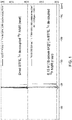
- Fig. 1 (bottom) shows the 1 H decoupled 19 F NMR spectrum (400 MHz) of [18-crown-6K][F] in BTFE, where the complex is present at a concentration of 0.15 M.
- Fig. 1 (top) shows the 1 H decoupled 19 F NMR spectrum (400 MHz) of dried BTFE (neat).
- the spectrum of [18-crown-6K][F] shows a new peak at " -81 ppm, corresponding to free fluoride ion.
- Fig. 2 shows the cyclic voltammogram from the reaction.
- a PbF 2 structure was evolved at about -1.4 V.
- De-fluorination from PbF 2 was observed at about - 2.3 V.
- Fig. 3 shows the Pb plate over the course of reaction. A gradual staining of the plate is observed over 1 hour, indicating the formation of PbF 2 .
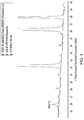
- Fig. 4 shows the XRD spectrum after 1 hour of the fluorination reaction.
- the peak at about 26 °2 ⁇ corresponds to PbF 2 .
- Example is used herein to mean “serving as an example, instance, or illustration.” Any aspect described herein as “example” is not necessarily to be construed as preferred or advantageous over other aspects. Unless specifically stated otherwise, the term “some” refers to one or more. Combinations such as “at least one of A, B, or C,” “at least one of A, B, and C,” and “A, B, C, or any combination thereof' include any combination of A, B, and/or C, and may include multiples of A, multiples of B, or multiples of C.
- combinations such as “at least one of A, B, or C,” “at least one of A, B, and C,” and “A, B, C, or any combination thereof' may be A only, B only, C only, A and B, A and C, B and C, or A and B and C, where any such combinations may contain one or more member or members of A, B, or C.
- Nothing disclosed herein is intended to be dedicated to the public regardless of whether such disclosure is explicitly recited in the claims.
- the present disclosure relates to an electrochemical cell which may be used, for example, in a rechargeable battery based on the reversible transfer of halide anions, and a method for making an electrolyte composition for use in the same.
- the electrochemical cell includes a positive electrode, a negative electrode, and an electrolyte composition positioned between the two electrodes, where the electrolyte composition contains a crown ether-metal halide complex in a solvent.
Landscapes
- Chemical & Material Sciences (AREA)
- Engineering & Computer Science (AREA)
- Manufacturing & Machinery (AREA)
- Chemical Kinetics & Catalysis (AREA)
- Electrochemistry (AREA)
- General Chemical & Material Sciences (AREA)
- Physics & Mathematics (AREA)
- Condensed Matter Physics & Semiconductors (AREA)
- General Physics & Mathematics (AREA)
- Inorganic Chemistry (AREA)
- Materials Engineering (AREA)
- Secondary Cells (AREA)
Abstract
Description
- In recent years, lithium ion batteries have become widely used for a range of electronics applications, including portable electronic devices, and in a variety of fields, including information technology, communications, biomedical engineering, sensing, military, and lighting. Although lithium has several beneficial properties, lithium ion batteries also suffer from several disadvantages.
- Researchers have begun to explore alternatives, including fluoride shuttle batteries. Fluoride ions generated at the anode can travel through the electrolyte to the cathode, and this process can be made reversible, for a rechargeable battery. Such fluoride shuttle batteries may have higher energy density than lithium ion batteries.
- However, fluoride shuttle systems described to date are limited in scope. For example, only a narrow scope of solvents has been available for use in the electrolyte, because of the need to solubilize the fluoride salt. In addition, these batteries require a relatively high minimum concentration of the fluoride salt. Accordingly there is a need for a fluoride shuttle battery that can operate using a lower salt concentration and with a wider range of solvents.
- In some embodiments, the present disclosure is directed to a method of making an electrolyte composition, the method comprising dissolving a crown ether and a metal halide in a solvent; reacting the crown ether and the metal halide to form a crown ether-metal halide complex; isolating the crown ether-metal halide complex; and adding the crown ether-metal halide complex into an electrolyte so as to generate halide ions in the electrolyte.
- In other embodiments, the present disclosure is directed to an electrochemical cell comprising an anode; a cathode; and an electrolyte composition, wherein the electrolyte composition comprises a solvent and a crown ether-metal halide complex present in a concentration of about 0.01 M to about 1 M, wherein the crown ether-metal halide complex is at least partially present in a dissolved state in the electrolyte composition, such that halide ions are present in the electrolyte composition.
- In other embodiments, the present disclosure is directed to an electrochemical cell comprising an anode; a cathode; and an electrolyte composition, wherein the electrolyte composition comprises a non-aqueous solvent and a crown ether-metal fluoride complex including one or more fluoride ions, wherein the crown ether-metal fluoride complex is at least partially dissolved and the concentration of the fluoride ions dissolved in the electrolyte composition is about 0.01 M to about 1 M.
-
-
Fig. 1 shows 19F NMR spectra of an electrolyte according to the present disclosure, before and after addition of a crown ether-metal halide complex. -
Fig. 2 shows the results of an electrochemical test of a Pb plate fluorination reaction with an electrolyte according to the present disclosure. -
Fig. 3 shows images of the Pb plate over the course of 1 hour of fluorination reaction. -
Fig. 4 shows an XRD spectrum of the fluorination reaction after 1 hour. - The term "electrochemical cell" refers to devices and/or device components that convert chemical energy into electrical energy or vice versa. Electrochemical cells have two or more electrodes (e.g., positive and negative electrodes) and an electrolyte, wherein electrode reactions occurring at the electrode surfaces result in charge transfer processes. Electrochemical cells include, but are not limited to, primary batteries, secondary batteries, and electrolysis systems. General cell and/or battery construction is known in the art (see, e.g., Oxtoby et al., Principles of Modern Chemistry (1999), pp. 401-443).
- The term "electrode" refers to an electrical conductor where ions and electrons are exchanged with an electrolyte and an outer circuit. "Positive electrode" and "cathode" are used synonymously in the present description and refer to the electrode having the higher electrode potential in an electrochemical cell (i.e. higher than the negative electrode). "Negative electrode" and "anode" are used synonymously in the present description and refer to the electrode having the lower electrode potential in an electrochemical cell (i.e. lower than the positive electrode). Cathodic reduction refers to a gain of electron(s) of a chemical species, and anodic oxidation refers to the loss of electron(s) of a chemical species. Positive and negative electrodes of the present disclosure may be provided in a range of useful configurations and form factors as known in the art of electrochemistry and battery science, including thin electrode designs, such as thin film electrode configurations. Electrodes are manufactured as known in the art, including as disclosed in, for example,
U.S. Pat. No. 4,052,539 , and Oxtoby et al., Principles of Modern Chemistry (1999), pp. 401-443. - "Electrolyte" refers to an ionic conductor which can be in the solid state, the liquid state (most common), or more rarely a gas (e.g., plasma). The electrolyte is preferably present in the liquid state.
- "Cation" refers to a positively charged ion, and "anion" refers to a negatively charged ion.
- In some embodiments, the present disclosure is directed to a method of making an electrolyte composition, the method comprising dissolving a crown ether and a metal halide in a solvent; reacting the crown ether and the metal halide to form a crown ether-metal halide complex; isolating the crown ether-metal halide complex; and adding the crown ether-metal halide complex into an electrolyte so as to generate halide ions in the electrolyte.
- In other embodiments, the present disclosure is directed to an electrochemical cell comprising an anode; a cathode; and an electrolyte composition, wherein the electrolyte composition comprises a solvent and a crown ether-metal halide complex present in a concentration of about 0.01 M to about 1 M, wherein the crown ether-metal halide complex is at least partially present in a dissolved state in the electrolyte composition, such that halide ions are present in the electrolyte composition. All aspects described apply with equal force to the method and to the apparatus.
- As used herein, a "metal halide" is a salt comprising at least one metal ion and at least one halide ion. As used herein, a "crown ether" is a cyclic ether containing at least carbon and oxygen atoms, with two or more carbon atoms between oxygen atoms. Without wishing to be bound by any theory, in a crown ether-metal halide complex, the metal ion is at least partially ligated by a crown ether. Accordingly, the metal ions may be at least partially dissociated from the halide ions. In a preferred aspect of the present disclosure, the crown ether-metal halide complex is at least partially present in a dissolved state in the electrolyte, and the halide ions are at least partially dissociated from the metal ions, which are at least partially ligated by crown ethers. Without wishing to be bound by any theory, complexation of a metal halide to a crown ether may increase the solubility of the metal halide, the component metal ions, and/or the component halide ions in a given solvent, especially an organic solvent.
- Crown ethers are macrocyclic polyether compounds that are capable of selectively forming complexes with a variety of different cationic species. Izatt et al., Chem. Rev. 85:271 (1985), Bajaj et al., Coord. Chem. Rev. 87:55 (1988) and Lamb et al., Journal of Chromatography 482:367-380 (1989). These compounds are referred to as "crowns" because their chemical structures resemble the shape of the regal crown and because of their ability to "crown" cationic species by complexation. The crown ethers may include one or more substituents which are aromatic, such as benzo- or dibenzo-crown ethers, heteroaromatic, particularly derivatives of pyridine, heterocyclic nonaromatic cyclic rings containing oxygen, sulfur or nitrogen, such as tetrahydrofuran, piperidine and pyrrolidine, alicyclic substituents, saturated carbon rings such as cyclopentane and cyclohexane, aliphatic substituents, and the like. In some aspects, the crown ether comprises one or more of 18-crown-6, dibenzo-18-crown-6, 15-crown-5, 12-crown-4, 4,13-diaza-18-crown-6, 1,7-diaza-12-crown-4, dicyclohexano-18-crown-6, 1-aza-18-crown-6, 4',4"(5")-di-tertbutyldicyclohexano-18-crown-6, 2-hydroxymethyl-18-crown-6, 2-hydroxymethyl-12-crown-4, 2,3-naphtho-15-crown-5, 2-hydroxymethyl-15-crown-5, 4'-amino-5'-nitrobenzo-15-crown-5, 4-tert-butylcyclohexano-15-crown-5, 1-aza-15-crown-5, 4'-aminobenzo-15-crown-5, 2-aminomethyl-18-crown-6, 1-aza-12-crown-4, 4'-aminobenzo-18-crown-6, dibenzo-24-crown-8, 2-aminomethyl-15-crown-5, 4'-aminodibenzo-18-crown-6, benzo-15-crown-5, benzo-18-crown-6, 4'-carboxybenzo-15-crown-5, dibenzo-30-crown-10, dibenzo-21-crown-7, dibenzo-15-crown-5, 4'-formylbenzo-15-crown-5, 4'-nitrobenzo-15-crown-5, 1,10-diaza-18-crown-6, 1,10-Dibenzyl-1,10-diaza-18-crown-6, and dinitrodibenzo-18-crown-6. Preferably, the crown ether is 18-crown-6. Selected, non-limiting examples of crown ethers are shown below:

- In some aspects, the metal halide comprises a metal ion selected from the group consisting of potassium, sodium, lithium, magnesium, and calcium ions.
- In some aspects, the metal halide comprises a halide ion selected from the group consisting of fluoride, chloride, and bromide ions. Preferably, the metal halide is a metal fluoride. More preferably, the metal halide is potassium fluoride.
- In some aspects, the crown ether complex is the reaction product of a potassium halide and an 18-crown-6 ether, a dibenzo-18-crown-6 ether, or a 15-crown-5 ether. In a non-limiting example, the potassium halide is potassium bromide, potassium chloride, or potassium fluoride. In some aspects, the crown ether complex is the reaction product of a sodium halide and a 15-crown-5 ether. In a non-limiting example, the sodium halide is sodium bromide, sodium chloride, or sodium fluoride. In some aspects, the crown ether complex is the reaction product of a lithium halide and a 12-crown-4 ether. In a non-limiting example, the lithium halide is lithium fluoride. In some aspects, the crown ether complex is the reaction product of a magnesium halide, such as magnesium fluoride, and a 4,13-diaza-18-crown-6 ether. In some aspects, the crown ether complex is the reaction product of a calcium halide and a 4,13-diaza-18-crown-6 ether or a 18-crown-6 ether. In a non-limiting example, the calcium halide is calcium bromide, calcium chloride, or calcium fluoride.
- In some aspects, the crown ether complex is the reaction product of 18-crown-6 ether and a metal fluoride characterized by the formula:

- In some aspects, the electrolyte is a nonaqueous electrolyte that comprises one or more organic solvents. As used herein, an "organic solvent" is defined as a carbon-containing solvent.
- In some aspects, the organic solvent is selected from the group consisting of propanenitrile (PN), 2,6-difluoropyridine (2,6-DFP), 2-fluorobenzonitrile (2-FBN), N-methyl-N-propylpiperidnium bis((trifluoromethyl)sulfonyl)amide (MPPyTFSI), and bis(trifluoroethyl)ether (BTFE).
- In some aspects, the crown ether-metal halide complex comprises 18-crown-6-potassium fluoride complex ([18-crown-6K][F]), 12-crown-4(lithium fluoride), or 15-crown-5(sodium fluoride). In some aspects, the crown-ether metal halide complex comprises a complex of a metal bromide or a metal chloride with a crown ether which comprises 18-crown-6, 12-crown-4, or 15-crown-5. In some aspects, the electrolyte comprises one or more solvents, and one or more crown ether-metal halide complexes.
- In some aspects, one or more crown ether-metal halide complex is added to the electrolyte up to a concentration of about 0.01 M to about 1 M. In some aspects, the crown ether-metal halide complex is added to the electrolyte up to a concentration of about 0.01 M to about 0.5 M. In some aspects, the crown ether-metal halide complex is added to the electrolyte in a concentration of greater than 0.08M, optionally from 0.08M to 0.20M, optionally greater than 0.10 M, optionally greater than 0.115 M, optionally from 0.115 M to 0.20 M, and optionally from 0.115 M to 0.18 M.
- The crown ether and the metal halide may be reacted to form a crown ether-metal halide complex by any suitable procedure known in the art. For example, the complex may be formed by the methods described in Jadhav et al., Chemical Engineering Journal (2015) 270:36-40, which is herein incorporated by reference in its entirety. The reaction may be carried out in any solvent in which both the crown ether and the metal halide are soluble, including but not limited to water. The reaction may be carried out at any temperature, for any length of time, and under any other conditions needed to form the complex; complex formation may be verified by analytical and/or spectroscopic methods known to those of skill in the art, including NMR spectroscopy. The crown ether-metal halide complex may be isolated by any suitable procedure known in the art.
- According to some aspects, one or more of the steps of the method according to the present disclosure may be performed at room temperature. As used herein, the term "room temperature" refers to the ambient temperature of the room wherein the reaction is performed. According to some aspects, room temperature may be a temperature from about 21 to about 27 °C, such as about 23 °C.
- Organic solvents suitable for use in electrolytes and electrolyte compositions of the present disclosure include those recited above and those known to persons of ordinary skill in the art. Suitable organic solvents include those in which the crown ether-metal halide complex is soluble and has ion mobility. As used herein, the "ion mobility" or "ionic conductivity" in a solvent or electrolyte is a measure of the movement or conduction of ions in the solvent or electrolyte. Table 1 shows solubility and ion mobility data for 18-crown-6-potassium fluoride complex ([18-crown-6K][F]) in various solvents.
- In some aspects, the anode and cathode may each, independently of the other, comprise a metal, a metal fluoride, or graphite. In some aspects, the anode and cathode may each, independently of the other, comprise metal or metal fluoride where the metal comprises lithium, sodium, potassium, rubidium, cesium, beryllium, calcium, strontium, barium, scandium, yttrium, lanthanum, or cerium.
- The following examples are put forth so as to provide those of ordinary skill in the art with a complete disclosure and description of how to make and use the present invention, and are not intended to limit the scope of what the inventors regard as their invention nor are they intended to represent that the experiments below are all or the only experiments performed. Efforts have been made to ensure accuracy with respect to numbers used (e.g. amounts, dimensions, etc.) but some experimental errors and deviations should be accounted for.
- A solution of potassium fluoride (1.16 g, 20 mmol, 1 equiv) and 18-crown-6 (5.28 g, 20 mmol, 1 equiv) was stirred in de-ionized water (30 mL) for 24 h at 23 °C. The water was removed under reduced pressure, yielding a white solid, and was further dried under vacuum until no water remained. This generated 6.38 g (19.8 mmol, 99%) of the 18-crown-6 potassium fluoride complex [18-crown-6K][F]. Spectroscopic data corresponded with that in the literature. 1H NMR (400 MHz, CDCl3) 3.70 (s, 24 H).
-
Fig. 1 (bottom) shows the 1H decoupled 19F NMR spectrum (400 MHz) of [18-crown-6K][F] in BTFE, where the complex is present at a concentration of 0.15 M. For comparison purposes,Fig. 1 (top) shows the 1H decoupled 19F NMR spectrum (400 MHz) of dried BTFE (neat). Relative to the reference spectrum of neat BTFE, the spectrum of [18-crown-6K][F] shows a new peak at " -81 ppm, corresponding to free fluoride ion. - The 18-crown-6 potassium fluoride complex [18-crown-6K][F] prepared in Example 1 was dissolved in various organic solvents. The solubility of the 18-crown-6 potassium fluoride complex in each solvent is shown in Table 1.
TABLE 1 - Solubility and Ion Mobility of [18-Crown-6K][F] in Various Organic Solvents Solvent 0.1M [18-Crown-6-K][F] Solvent weight (g) Fluoride Ion Solubility (M) [18-crown-6-K][F] Ion mobility (uS/cm) PN 0.192 3.505 0.131 38.7 2,6-DFP 0.161 7.894 0.080 17.31 2-FBN 0.190 3.74 0.176 97.6 MPPyTFSI 0.194 7.341 0.115 4700 BTFE 0.178 5.218 0.149 270 -
Fig. 2 shows the cyclic voltammogram from the reaction. A PbF2 structure was evolved at about -1.4 V. De-fluorination from PbF2 was observed at about - 2.3 V. -
Fig. 3 shows the Pb plate over the course of reaction. A gradual staining of the plate is observed over 1 hour, indicating the formation of PbF2. -
Fig. 4 shows the XRD spectrum after 1 hour of the fluorination reaction. The peak at about 26 °2θ corresponds to PbF2. - While the aspects described herein have been described in conjunction with the example aspects outlined above, various alternatives, modifications, variations, improvements, and/or substantial equivalents, whether known or that are or may be presently unforeseen, may become apparent to those having at least ordinary skill in the art. Accordingly, the example aspects, as set forth above, are intended to be illustrative, not limiting. Various changes may be made without departing from the spirit and scope of the disclosure. Therefore, the disclosure is intended to embrace all known or later-developed alternatives, modifications, variations, improvements, and/or substantial equivalents.
- Thus, the claims are not intended to be limited to the aspects shown herein, but are to be accorded the full scope consistent with the language of the claims, wherein reference to an element in the singular is not intended to mean "one and only one" unless specifically so stated, but rather "one or more." All structural and functional equivalents to the elements of the various aspects described throughout this disclosure that are known or later come to be known to those of ordinary skill in the art are expressly incorporated herein by reference and are intended to be encompassed by the claims. Moreover, nothing disclosed herein is intended to be dedicated to the public regardless of whether such disclosure is explicitly recited in the claims. No claim element is to be construed as a means plus function unless the element is expressly recited using the phrase "means for."
- Further, the word "example" is used herein to mean "serving as an example, instance, or illustration." Any aspect described herein as "example" is not necessarily to be construed as preferred or advantageous over other aspects. Unless specifically stated otherwise, the term "some" refers to one or more. Combinations such as "at least one of A, B, or C," "at least one of A, B, and C," and "A, B, C, or any combination thereof' include any combination of A, B, and/or C, and may include multiples of A, multiples of B, or multiples of C. Specifically, combinations such as "at least one of A, B, or C," "at least one of A, B, and C," and "A, B, C, or any combination thereof' may be A only, B only, C only, A and B, A and C, B and C, or A and B and C, where any such combinations may contain one or more member or members of A, B, or C. Nothing disclosed herein is intended to be dedicated to the public regardless of whether such disclosure is explicitly recited in the claims.
- Moreover, all references throughout this application, for example patent documents including issued or granted patents or equivalents; patent application publications; and non-patent literature documents or other source material; are hereby incorporated by reference herein in their entireties, as though individually incorporated by reference.
- The present disclosure relates to an electrochemical cell which may be used, for example, in a rechargeable battery based on the reversible transfer of halide anions, and a method for making an electrolyte composition for use in the same. The electrochemical cell includes a positive electrode, a negative electrode, and an electrolyte composition positioned between the two electrodes, where the electrolyte composition contains a crown ether-metal halide complex in a solvent.
- 1. The following items are disclosed in the present patent application:
- A method of making an electrolyte composition, the method comprising:
- (a) dissolving a crown ether and a metal halide in a solvent;
- (b) reacting the crown ether and the metal halide to form a crown ether-metal halide complex;
- (c) isolating the crown ether-metal halide complex; and
- (d) adding the crown ether-metal halide complex into a non-aqueous electrolyte solution including at least one organic solvent to provide one or more halide ions in the electrolyte solution.
- A method of making an electrolyte composition, the method comprising:
- 2. The method of
item 1, wherein the metal halide comprises a metal ion selected from the group consisting of potassium, sodium, lithium, magnesium, and calcium ions. - 3. The method of
item 1, wherein the metal halide is a metal fluoride. - 4. The method of
item 1, wherein the metal halide is potassium fluoride. - 5. The method of item 4, wherein the crown ether is selected from the group consisting of 18-crown-6, dibenzo-18-crown-6, and 15-crown-5.
- 6. The method of item 5, wherein the crown ether is 18-crown-6.
- 7. The method of
item 1, wherein the electrolyte comprises an organic solvent. - 8. The method of item 7, wherein the crown ether is 18-crown-6, the metal halide is potassium fluoride, the crown ether-metal halide complex is 18-crown-6 potassium fluoride complex, and the concentration of the fluoride ions dissolved in the electrolyte solution is from 0.08 to 0.20M.
- 9. The method of item 7, wherein the organic solvent is selected from the group consisting of propanenitrile, 2,6-difluoropyridine, 2-fluorobenzonitrile, N-methyl-N-propylpiperidnium bis((trifluoromethyl)sulfonyl)amide, and bis(trifluoroethyl)ether.
- 10. The method of
item 1, wherein the concentration of said halide ions dissolved in the electrolyte solution is from 0.01 M to 1 M. - 11. An electrochemical cell comprising:
- an anode;
- a cathode; and
- an electrolyte composition, wherein the electrolyte composition comprises a non-aqueous solvent and a crown ether-metal halide complex including one or more halide ions, wherein the crown ether-metal halide complex is at least partially dissolved and the concentration of the halide ions dissolved in the electrolyte composition is 0.01 M to 1 M.
- 12. The electrochemical cell of
item 11, wherein the metal halide comprises a metal ion selected from the group consisting of potassium, sodium, lithium, magnesium, and calcium ions. - 13. The electrochemical cell of
item 11, wherein the metal halide is a metal fluoride. - 14. The electrochemical cell of
item 11, wherein the metal halide is potassium fluoride. - 15. The electrochemical cell of item 14, wherein the crown ether is selected from the group consisting of 18-crown-6, dibenzo-18-crown-6, and 15-crown-5.
- 16. The electrochemical cell of item 15, wherein the crown ether is 18-crown-6.
- 17. The electrochemical cell of
item 11, wherein the electrolyte composition comprises an organic solvent selected from the group consisting of propanenitrile, 2,6-difluoropyridine, 2-fluorobenzonitrile, N-methyl-N-propylpiperidnium bis((trifluoromethyl)sulfonyl)amide, and bis(trifluoroethyl)ether. - 18. The electrochemical cell of
item 11, wherein the crown ether-metal halide complex is present in a concentration of 0.08 M to 0.20 M. - 19. An electrochemical cell comprising:
- an anode;
- a cathode; and
- an electrolyte composition, wherein the electrolyte composition comprises a non-aqueous solvent and a crown ether-metal fluoride complex including one or more fluoride ions, wherein the crown ether-metal fluoride complex is at least partially dissolved and the concentration of the fluoride ions dissolved in the electrolyte composition is 0.01 M to 1 M.
- 20. The electrochemical cell of item 19, wherein the crown ether is 18-crown-6, the metal fluoride is potassium fluoride, and the crown ether-metal fluoride complex is 18-crown-6 potassium fluoride complex.
Claims (15)
- A method of making an electrolyte composition, the method comprising:(a) dissolving a crown ether and a metal halide in a solvent;(b) reacting the crown ether and the metal halide to form a crown ether-metal halide complex;(c) isolating the crown ether-metal halide complex; and(d) adding the crown ether-metal halide complex into a non-aqueous electrolyte solution including at least one organic solvent to provide one or more halide ions in the electrolyte solution.
- The method of claim 1, wherein the metal halide comprises a metal ion selected from the group consisting of potassium, sodium, lithium, magnesium, and calcium ions.
- The method of claim 1 or 2, wherein the metal halide is a metal fluoride, preferably potassium fluoride.
- The method of anyone of claims 1 to 3, wherein the crown ether is selected from the group consisting of 18-crown-6, dibenzo-18-crown-6, and 15-crown-5, and preferably is 18-crown-6.
- The method of anyone of claims 1 to 4, wherein the electrolyte comprises an organic solvent which preferably is selected from the group consisting of propanenitrile, 2,6-difluoropyridine, 2-fluorobenzonitrile, N-methyl-N-propylpiperidnium bis((trifluoromethyl)sulfonyl)amide, and bis(trifluoroethyl)ether.
- The method of anyone of claims 1 to 5, wherein the crown ether is 18-crown-6, the metal halide is potassium fluoride, the crown ether-metal halide complex is 18-crown-6 potassium fluoride complex, and the concentration of the fluoride ions dissolved in the electrolyte solution is from 0.08 to 0.20M.
- The method of anyone of claims 1 to 3, wherein the concentration of said halide ions dissolved in the electrolyte solution is from 0.01 M to 1 M.
- An electrochemical cell comprising:an anode;a cathode; andan electrolyte composition, wherein the electrolyte composition comprises a non-aqueous solvent and a crown ether-metal halide complex including one or more halide ions, wherein the crown ether-metal halide complex is at least partially dissolved and the concentration of the halide ions dissolved in the electrolyte composition is 0.01 M to 1 M.
- The electrochemical cell of claim 8, wherein the metal halide comprises a metal ion selected from the group consisting of potassium, sodium, lithium, magnesium, and calcium ions.
- The electrochemical cell of claim 8 or 9, wherein the metal halide is a metal fluoride, preferably potassium fluoride.
- The electrochemical cell of anyone of claims 8 to 10, wherein the crown ether is selected from the group consisting of 18-crown-6, dibenzo-18-crown-6, and 15-crown-5, and preferably is 18-crown-6.
- The electrochemical cell of anyone of claims 8 to 11, wherein the electrolyte composition comprises an organic solvent selected from the group consisting of propanenitrile, 2,6-difluoropyridine, 2-fluorobenzonitrile, N-methyl-N-propylpiperidnium bis((trifluoromethyl)sulfonyl)amide, and bis(trifluoroethyl)ether.
- The electrochemical cell of anyone of claims 8 to 12, wherein the crown ether-metal halide complex is present in a concentration of 0.08 M to 0.20 M.
- An electrochemical cell comprising:an anode;a cathode; andan electrolyte composition, wherein the electrolyte composition comprises a non-aqueous solvent and a crown ether-metal fluoride complex including one or more fluoride ions, wherein the crown ether-metal fluoride complex is at least partially dissolved and the concentration of the fluoride ions dissolved in the electrolyte composition is 0.01 M to 1 M.
- The electrochemical cell of claim 14, wherein the crown ether is 18-crown-6, the metal fluoride is potassium fluoride, and the crown ether-metal fluoride complex is 18-crown-6 potassium fluoride complex.
Applications Claiming Priority (2)
| Application Number | Priority Date | Filing Date | Title |
|---|---|---|---|
| US201662436302P | 2016-12-19 | 2016-12-19 | |
| US15/421,136 US10950893B2 (en) | 2016-12-19 | 2017-01-31 | Liquid electrolyte for battery |
Publications (1)
| Publication Number | Publication Date |
|---|---|
| EP3336952A1 true EP3336952A1 (en) | 2018-06-20 |
Family
ID=60673888
Family Applications (1)
| Application Number | Title | Priority Date | Filing Date |
|---|---|---|---|
| EP17208234.9A Withdrawn EP3336952A1 (en) | 2016-12-19 | 2017-12-18 | Liquid electrolyte for battery |
Country Status (4)
| Country | Link |
|---|---|
| US (2) | US10950893B2 (en) |
| EP (1) | EP3336952A1 (en) |
| JP (1) | JP6980508B2 (en) |
| CN (1) | CN108206301B (en) |
Cited By (1)
| Publication number | Priority date | Publication date | Assignee | Title |
|---|---|---|---|---|
| US20220271350A1 (en) * | 2021-02-22 | 2022-08-25 | Honda Motor Co., Ltd. | Fluoride ion battery (fib) electrode material coating |
Families Citing this family (5)
| Publication number | Priority date | Publication date | Assignee | Title |
|---|---|---|---|---|
| US12136735B2 (en) * | 2018-12-05 | 2024-11-05 | Honda Motor Co., Ltd. | Electroactive materials modified with molecular thin film shell |
| US10950893B2 (en) * | 2016-12-19 | 2021-03-16 | Honda Motor Co., Ltd. | Liquid electrolyte for battery |
| CN111293356A (en) * | 2018-12-10 | 2020-06-16 | 张家港市国泰华荣化工新材料有限公司 | Crown ether electrolyte and application thereof |
| JP7493180B2 (en) * | 2020-06-12 | 2024-05-31 | 時空化学株式会社 | Battery electrolyte and lithium batteries |
| CN116368958A (en) * | 2021-10-28 | 2023-06-30 | 京东方科技集团股份有限公司 | Quantum dot light-emitting device and its preparation method, display substrate and display device |
Citations (5)
| Publication number | Priority date | Publication date | Assignee | Title |
|---|---|---|---|---|
| US4052539A (en) | 1977-01-17 | 1977-10-04 | Exxon Research And Engineering Company | Electrochemical cell with a grahite intercalation compound cathode |
| US20080131785A1 (en) * | 2006-11-30 | 2008-06-05 | Na-Rae Park | Electrolyte for lithium secondary battery and lithium secondary battery including the same |
| US20080171268A1 (en) * | 2006-08-11 | 2008-07-17 | Rachid Yazami | Dissociating agents, formulations and methods providing enhanced solubility of fluorides |
| JP2012069576A (en) * | 2010-09-21 | 2012-04-05 | Taiyo Yuden Co Ltd | Nonaqueous electrolytic solution and electrochemical device using the same |
| WO2012087414A2 (en) * | 2010-12-22 | 2012-06-28 | Contour Energy Systems, Inc. | Fluoride ion battery compositions |
Family Cites Families (28)
| Publication number | Priority date | Publication date | Assignee | Title |
|---|---|---|---|---|
| JPS59151779A (en) * | 1983-02-19 | 1984-08-30 | Hitachi Maxell Ltd | Lithium organic secondary battery |
| DE3406472A1 (en) | 1984-02-23 | 1985-08-29 | Basf Ag, 6700 Ludwigshafen | ELECTROCHEMICAL CELL OR BATTERY |
| US5130211A (en) | 1990-10-24 | 1992-07-14 | Her Majesty The Queen In Right Of The Provence Of British Columbia | Electrolyte solution sequestering agents for electrochemical cells having carbonaceous electrodes |
| US5491041A (en) | 1994-10-14 | 1996-02-13 | Eic Laboratories, Inc. | Solid-state secondary batteries with graphite anodes |
| JP2000195548A (en) | 1998-10-19 | 2000-07-14 | Shin Kobe Electric Mach Co Ltd | Non-aqueous electrolyte secondary battery |
| EP1058331A4 (en) | 1998-12-22 | 2004-07-07 | Mitsubishi Electric Corp | ELECTROLYTIC SOLUTION FOR CELLS AND CELLS MADE WITH SUCH A SOLUTION |
| US6489055B1 (en) | 1999-06-25 | 2002-12-03 | Sanyo Electric Co., Ltd. | Lithium secondary battery |
| JP2001172268A (en) * | 1999-12-15 | 2001-06-26 | Canon Inc | Cyclic polyether compound and electrolyte |
| JP3831599B2 (en) | 2000-11-13 | 2006-10-11 | 三洋電機株式会社 | Lithium secondary battery |
| JP4679819B2 (en) | 2001-11-09 | 2011-05-11 | ヤードニー、テクニカル、プロダクツ、インコーポレーテッド | Non-aqueous electrolytes for lithium electrochemical cells |
| KR100502357B1 (en) | 2003-08-29 | 2005-07-20 | 삼성에스디아이 주식회사 | Positive electrode having polymer film and lithium-sulfer battery employing the positive electrode |
| US20140030559A1 (en) | 2005-10-05 | 2014-01-30 | Rachid Yazami | Lithium ion fluoride electrochemical cell |
| AU2007217054A1 (en) | 2006-02-17 | 2007-08-30 | Monsanto Technology Llc | Transition metal-containing catalysts and processes for their preparation and use as fuel cell catalysts |
| JP5615497B2 (en) * | 2006-03-03 | 2014-10-29 | カリフォルニア・インスティテュート・オブ・テクノロジーCalifornia Institute Oftechnology | Fluoride ion electrochemical cell |
| WO2008013409A1 (en) | 2006-07-28 | 2008-01-31 | Lg Chem, Ltd. | Secondary batteries comprising eutectic mixture and preparation method thereof |
| WO2008105916A2 (en) * | 2006-08-11 | 2008-09-04 | California Institute Of Technology | Dissociating agents, formulations and methods providing enhanced solubility of fluorides |
| CN101523644A (en) * | 2006-08-11 | 2009-09-02 | 加州理工学院 | Dissociating agents, formulations and methods for enhancing fluoride solubility |
| EP2250700B1 (en) | 2008-02-12 | 2014-09-17 | 3M Innovative Properties Company | Redox shuttles for high voltage cathodes |
| WO2011072166A1 (en) * | 2009-12-11 | 2011-06-16 | Contour Energy Systems, Inc. | Fluoride ion battery electrolyte compositions |
| US8785054B2 (en) | 2009-12-18 | 2014-07-22 | GM Global Technology Operations LLC | Lithium ion battery |
| KR20120063163A (en) | 2010-12-07 | 2012-06-15 | 삼성전자주식회사 | Lithium air battery |
| DE102011004094A1 (en) | 2011-02-15 | 2012-08-16 | Robert Bosch Gmbh | Polymer-ionophore Separator |
| JP5669098B2 (en) * | 2011-03-02 | 2015-02-12 | 国立大学法人広島大学 | Ion conductive crystal and solid electrolyte using the same, battery separator, battery |
| CA2899251A1 (en) * | 2013-01-24 | 2014-07-31 | Adven Solutions Inc. | Electrochemical cell and method of manufacture |
| JP6181771B2 (en) * | 2013-12-18 | 2017-08-16 | トヨタ自動車株式会社 | Method for producing fluoride ion conductive electrolyte and method for producing fluoride ion battery |
| KR101708463B1 (en) * | 2014-07-25 | 2017-03-08 | 한국과학기술연구원 | Electrolyte for magnesium battery and preparation method thereof |
| US10950893B2 (en) * | 2016-12-19 | 2021-03-16 | Honda Motor Co., Ltd. | Liquid electrolyte for battery |
| US20220271350A1 (en) * | 2021-02-22 | 2022-08-25 | Honda Motor Co., Ltd. | Fluoride ion battery (fib) electrode material coating |
-
2017
- 2017-01-31 US US15/421,136 patent/US10950893B2/en active Active
- 2017-12-12 JP JP2017237645A patent/JP6980508B2/en active Active
- 2017-12-18 EP EP17208234.9A patent/EP3336952A1/en not_active Withdrawn
- 2017-12-18 CN CN201711368777.3A patent/CN108206301B/en active Active
-
2021
- 2021-02-10 US US17/172,760 patent/US11824161B2/en active Active
Patent Citations (5)
| Publication number | Priority date | Publication date | Assignee | Title |
|---|---|---|---|---|
| US4052539A (en) | 1977-01-17 | 1977-10-04 | Exxon Research And Engineering Company | Electrochemical cell with a grahite intercalation compound cathode |
| US20080171268A1 (en) * | 2006-08-11 | 2008-07-17 | Rachid Yazami | Dissociating agents, formulations and methods providing enhanced solubility of fluorides |
| US20080131785A1 (en) * | 2006-11-30 | 2008-06-05 | Na-Rae Park | Electrolyte for lithium secondary battery and lithium secondary battery including the same |
| JP2012069576A (en) * | 2010-09-21 | 2012-04-05 | Taiyo Yuden Co Ltd | Nonaqueous electrolytic solution and electrochemical device using the same |
| WO2012087414A2 (en) * | 2010-12-22 | 2012-06-28 | Contour Energy Systems, Inc. | Fluoride ion battery compositions |
Non-Patent Citations (6)
| Title |
|---|
| BAJAJ ET AL., COORD. CHEM. REV., vol. 87, 1988, pages 55 |
| IZATT ET AL., CHEM. REV., vol. 85, 1985, pages 271 |
| JADHAV ET AL., CHEMICAL ENGINEERING JOURNAL, vol. 270, 2015, pages 36 - 40 |
| JADHAV VINOD H ET AL: "Crown ether metal complex fluoride salt as a facile and low hygroscopic fluoride source for nucleophilic fluorination", CHEMICAL ENGINEERING JOURNAL, ELSEVIER SEQUOIA, LAUSANNE, CH, vol. 270, 10 February 2015 (2015-02-10), pages 36 - 40, XP029583668, ISSN: 1385-8947, DOI: 10.1016/J.CEJ.2015.01.087 * |
| LAMB ET AL., JOURNAL OF CHROMATOGRAPHY, vol. 482, 1989, pages 367 - 380 |
| OXTOBY ET AL., PRINCIPLES OF MODERN CHEMISTRY, 1999, pages 401 - 443 |
Cited By (1)
| Publication number | Priority date | Publication date | Assignee | Title |
|---|---|---|---|---|
| US20220271350A1 (en) * | 2021-02-22 | 2022-08-25 | Honda Motor Co., Ltd. | Fluoride ion battery (fib) electrode material coating |
Also Published As
| Publication number | Publication date |
|---|---|
| US10950893B2 (en) | 2021-03-16 |
| JP6980508B2 (en) | 2021-12-15 |
| US20180175448A1 (en) | 2018-06-21 |
| CN108206301A (en) | 2018-06-26 |
| US20210167422A1 (en) | 2021-06-03 |
| CN108206301B (en) | 2022-10-14 |
| US11824161B2 (en) | 2023-11-21 |
| JP2018101621A (en) | 2018-06-28 |
Similar Documents
| Publication | Publication Date | Title |
|---|---|---|
| US11824161B2 (en) | Liquid electrolyte for battery | |
| US11830983B2 (en) | Non-aqueous fluoride salts, solutions, and their uses | |
| Lee et al. | Ionic liquids containing an ester group as potential electrolytes | |
| EP2090565B1 (en) | Ionic liquids of quaternary ammonium salts | |
| Miroshnikov et al. | Made from henna! a fast-charging, high-capacity, and recyclable tetrakislawsone cathode material for lithium ion batteries | |
| Reiter et al. | Physicochemical properties of N-methoxyethyl-N-methylpyrrolidinum ionic liquids with perfluorinated anions | |
| US10967295B2 (en) | Processes for removing reactive solvent from lithium bis(fluorosulfonyl)imide (LiFSI) using organic solvents that are stable toward anodes in lithium-ion and lithium-metal batteries | |
| EP3466871A1 (en) | Method for producing bis(fluorosulfonyl)imide alkali metal salt and bis(fluorosulfonyl)imide alkali metal salt composition | |
| WO2020100115A1 (en) | Processes for removing reactive solvent from lithium bis(fluorosulfonyl)imide (lifsi) using organic solvents that are stable toward anodes in lithium-ion and lithium-metal batteries | |
| US20140147330A1 (en) | Method for preparing metallic lithium using electrolysis in non-aqueous electrolyte | |
| CN106030891B (en) | Method for producing fluoride ion conductive electrolytic solution and method for producing fluoride ion battery | |
| CN102208682A (en) | Additive and solvent of lithium secondary battery electrolyte | |
| CN109689936A (en) | Electrochemical conversion system of carbon dioxide | |
| Xiong et al. | Ionic liquids endowed with novel hybrid anions for supercapacitors | |
| Chen et al. | A poorly soluble organic electrode material for high energy density lithium primary batteries based on a multi-electron reduction | |
| JP2016033117A (en) | Ionic liquid, redox flow secondary battery electrolyte, redox flow secondary battery and salt | |
| Cao et al. | Ester modified pyrrolidinium based ionic liquids as electrolyte component candidates in rechargeable lithium batteries | |
| Tot et al. | Tuning of molecular water organization in water-in-salt electrolytes by addition of chaotropic ionic liquids | |
| Izutsu | History of the use of nonaqueous media in electrochemistry | |
| Qiao et al. | Solid Polymer Electrolytes Comprising Camphor-Derived Chiral Salts for Solid-State Batteries | |
| KR101517870B1 (en) | Electrode active materials containing heterocyclic compounds for lithium secondary batteries, and lithium secondary batteries containing the same | |
| Chen et al. | Electrophilic fluoroalkyl radical-intermediates enabled organic sulfinate electrolyte additives for sodium-ion supply | |
| Downing | The Characterization and Incorporation of the Novel Ionic Liquid 1-Ethyl-3-Methylimidazolium Mesyl Urea Into a Poly (Ethylene) Glycol-Based Polymer Electrolyte | |
| Wright et al. | New Route to Battery Grade NaPF6 for Na-Ion Batteries: Expanding the Accessible Concentration | |
| Maloney et al. | Structure-Property Relationships of Naphthalene Diimide Based Organic Electrodes |
Legal Events
| Date | Code | Title | Description |
|---|---|---|---|
| PUAI | Public reference made under article 153(3) epc to a published international application that has entered the european phase |
Free format text: ORIGINAL CODE: 0009012 |
|
| STAA | Information on the status of an ep patent application or granted ep patent |
Free format text: STATUS: REQUEST FOR EXAMINATION WAS MADE |
|
| 17P | Request for examination filed |
Effective date: 20171218 |
|
| AK | Designated contracting states |
Kind code of ref document: A1 Designated state(s): AL AT BE BG CH CY CZ DE DK EE ES FI FR GB GR HR HU IE IS IT LI LT LU LV MC MK MT NL NO PL PT RO RS SE SI SK SM TR |
|
| AX | Request for extension of the european patent |
Extension state: BA ME |
|
| STAA | Information on the status of an ep patent application or granted ep patent |
Free format text: STATUS: EXAMINATION IS IN PROGRESS |
|
| 17Q | First examination report despatched |
Effective date: 20190520 |
|
| GRAP | Despatch of communication of intention to grant a patent |
Free format text: ORIGINAL CODE: EPIDOSNIGR1 |
|
| STAA | Information on the status of an ep patent application or granted ep patent |
Free format text: STATUS: GRANT OF PATENT IS INTENDED |
|
| INTG | Intention to grant announced |
Effective date: 20230526 |
|
| RIN1 | Information on inventor provided before grant (corrected) |
Inventor name: MCKENNEY, RYAN Inventor name: BROOKS, CHRISTOPHER Inventor name: OMICHI, KAORU |
|
| STAA | Information on the status of an ep patent application or granted ep patent |
Free format text: STATUS: THE APPLICATION IS DEEMED TO BE WITHDRAWN |
|
| 18D | Application deemed to be withdrawn |
Effective date: 20231006 |