EP3336723B1 - Multi-level verzeichnisbaum mit festen superblock- und blockgrössen für select-operationen auf bit-vektoren - Google Patents
Multi-level verzeichnisbaum mit festen superblock- und blockgrössen für select-operationen auf bit-vektoren Download PDFInfo
- Publication number
- EP3336723B1 EP3336723B1 EP17206121.0A EP17206121A EP3336723B1 EP 3336723 B1 EP3336723 B1 EP 3336723B1 EP 17206121 A EP17206121 A EP 17206121A EP 3336723 B1 EP3336723 B1 EP 3336723B1
- Authority
- EP
- European Patent Office
- Prior art keywords
- bit
- select
- level
- superblock
- bit vector
- Prior art date
- Legal status (The legal status is an assumption and is not a legal conclusion. Google has not performed a legal analysis and makes no representation as to the accuracy of the status listed.)
- Active
Links
Images





Classifications
-
- G—PHYSICS
- G06—COMPUTING OR CALCULATING; COUNTING
- G06F—ELECTRIC DIGITAL DATA PROCESSING
- G06F16/00—Information retrieval; Database structures therefor; File system structures therefor
- G06F16/20—Information retrieval; Database structures therefor; File system structures therefor of structured data, e.g. relational data
- G06F16/22—Indexing; Data structures therefor; Storage structures
- G06F16/2228—Indexing structures
- G06F16/2237—Vectors, bitmaps or matrices
-
- G—PHYSICS
- G06—COMPUTING OR CALCULATING; COUNTING
- G06F—ELECTRIC DIGITAL DATA PROCESSING
- G06F16/00—Information retrieval; Database structures therefor; File system structures therefor
- G06F16/30—Information retrieval; Database structures therefor; File system structures therefor of unstructured textual data
- G06F16/33—Querying
- G06F16/3331—Query processing
- G06F16/334—Query execution
- G06F16/3347—Query execution using vector based model
-
- G—PHYSICS
- G06—COMPUTING OR CALCULATING; COUNTING
- G06F—ELECTRIC DIGITAL DATA PROCESSING
- G06F16/00—Information retrieval; Database structures therefor; File system structures therefor
- G06F16/30—Information retrieval; Database structures therefor; File system structures therefor of unstructured textual data
- G06F16/31—Indexing; Data structures therefor; Storage structures
- G06F16/316—Indexing structures
- G06F16/322—Trees
Definitions
- the subject matter described herein relates to a multi-level directory tree with fixed superblock and block sizes for select operations on bit vectors.
- the present disclosure relates to a computer-implemented method and a respective system for generating a select operator directory tree for performing select operations in bit vectors as recited in claim 1 and 6, respectively.
- the present disclosure further relates to a computer-implemented method and a respective system as recited in claims 3 and 5, respectively.
- a bit vector having a bit vector length is accessed.
- a select operator directory tree is generated using the bit vector.
- the select operator directory tree includes a first level of superblocks including large superblocks and small superblocks, a second level of blocks including large blocks and small blocks, each block associated with one of the superblocks, and a third level of sub-blocks, each sub-block associated with a block.
- the large superblocks each have a length greater than a first constant that is independent of the bit vector length and the large blocks each have a length greater than a second constant that is independent of the bit vector length.
- the select operator directory tree is stored.
- data characterizing a bit vector and a bit-select value is received.
- a select operator directory tree is searched for a position of a bit-select value occurrence of a bit-type.
- the select operator directory tree includes a first level of superblocks including large superblocks and small superblocks, a second level of blocks including large blocks and small blocks, each block associated with one of the superblocks, and a third level of sub-blocks, each sub-block associated with a block.
- the large superblocks each have a length greater than a first constant that is independent of a bit vector length and the large blocks each have a length greater than a second constant that is independent of the bit vector length.
- the position of the bit-select value occurrence of the bit-type is provided.
- Blocks associated with large superblocks characterize explicit positions of a bit-type of the bit vector.
- Blocks associated with small superblocks characterize locations of sub-blocks.
- the sub-blocks associated with the large blocks characterize explicit positions of the bit-type of the bit vector.
- Sub-blocks associated with small blocks characterize a cumulative number of occurring bit-types in a portion of the bit vector.
- the first level of superblocks is represented as at least a first level array storing a location of a predetermined occurrence of a bit-type in the bit vector.
- the second level of blocks are represented as at least a plurality of second level arrays.
- the third level of sub-blocks are represented as at least a plurality of third level arrays.
- Generating the select operator directory tree includes: determining a boundary of each superblock in the bit vector as a predetermined occurrence of a bit-type in the bit vector; determining whether each superblock is large or small based on whether a given superblock has a length greater than the first constant that is independent of the bit vector length; storing explicit positions of the bit-type of each large superblock in each associated block; determining a boundary of each block associated with a small superblock in the bit vector; determining whether each block associated with the small superblocks is large or small based on whether a given block has a length greater than the second constant that is independent of the bit vector length; storing explicit positions of the bit-type of each large block in each associated sub-block; and storing, in each respective sub-block associated with each respective large block, a cumulative number of occurring bit-types in an associated portion of the bit vector.
- the predetermined occurrence of the bit-type in the bit vector defining the boundary of each superblock can be 2 12 .
- the first constant that is independent of the bit vector length can be equal to 2 20 .
- the second constant that is independent of the bit vector length can be equal to 2 14 .
- the bit-type is 0 bit or a 1 bit.
- the bit vector is an array of 0 and 1 bits.
- the searching includes: determining if the bit-select value is contained in the first level array; determining, using the first level array, a superblock having the bit-select value occurrence of the bit-type; determining one of the plurality of second level arrays associated with the determined superblock; determining if the bit-select value is contained in the determined one of the plurality of second level arrays; determining one of the plurality of the third level arrays associated with the determined second level array having the bit-select value occurrence of the bit-type; and determining a position of the bit-select value occurrence of the bit-type from the determined one of the plurality of the third level arrays.
- a bit-select operation can be performed during a text search engine operation.
- Non-transitory computer program products i.e., physically embodied computer program products
- store instructions which when executed by one or more data processors of one or more computing systems, causes at least one data processor to perform operations herein.
- computer systems are also described that may include one or more data processors and memory coupled to the one or more data processors. The memory may temporarily or permanently store instructions that cause at least one processor to perform one or more of the operations described herein.
- methods can be implemented by one or more data processors either within a single computing system or distributed among two or more computing systems.
- Such computing systems can be connected and can exchange data and/or commands or other instructions or the like via one or more connections, including a connection over a network (e.g. the Internet, a wireless wide area network, a local area network, a wide area network, a wired network, or the like), via a direct connection between one or more of the multiple computing systems, etc.
- a network e.g. the Internet, a wireless wide area network, a local area network,
- the current subject matter relates to a multi-level directory tree with fixed superblock and block sizes for select operations on bit vectors.
- the multi-level directory tree is three levels and includes superblocks, blocks, and sub-blocks.
- a superblock is considered large when its length (e.g., the number of bits it contains) is greater than a constant value that is independent of the bit vector length.
- blocks can be considered large when its length is greater than a second constant value that is independent of the bit vector length.
- Creating a select operation directory tree using definitions of large/small superblocks and large/small blocks that are fixed and independent of the length of the bit vector reduces the used space ( e.g., overhead) of the directory tree data structure.
- the directory tree data structure can enable a select query having constant time per query.
- FIG. 1 is a diagram illustrating an example directory tree 100 for select operations that reduces overhead and enables constant time queries.
- a select operation on a bit vector B (denoted Select c (B,i)) returns the position in the sequence B of the i th occurrence of character c.
- Select 1 (B,i) finds the position in the bit vector B of the i th 1-bit.
- Such a select operation is often simply written as Select(B,i).
- the directory tree 100 according to the current subject matter enables efficient select operations in that the select operation can be performed in constant time per query ( e.g., the time to execute the query does not increase with the length of bit vector B) and reduces the required overhead for storing the directory tree 100 data structure.
- the directory tree 100 includes a top level to store a relatively short array but with large values. Then, at a second level, a longer array is used with smaller values compared to the top level. Finally, at the third level an even longer array is stored with very small values.
- the current subject matter can provide a useful tradeoff between the length of an array at each level and the size of its values.
- the select operator directory tree includes a first level 105 that divides the bit vector B of length n in superblocks by storing the position of every i th occurrence of a 1-bit.
- the variable i is a predetermined occurrence of a bit-type in the bit vector.
- Select queries can be answered for every i th 1-bit directly.
- the value of i may be configured but is constant within a given directory tree.
- the specific superblock, block sub-block sizes and other values illustrated in FIG. 1 are provided as examples and other values are possible.
- a superblock is large if it contains more than a constant value of bits (e.g., sparse) and is small otherwise (e.g., dense).
- the constant value of bits that defines whether a superblock is large or small can be independent of a length of the bit vector.
- the constant value can be 2 20 .
- This definition of large/small blocks is in contrast to one based on a function of the bit vector length such as (log 2 n) 2 .
- superblock lengths can vary, each superblock contains the same number of 1-bits. For example, each superblock can contain exactly 2 12 (4096) 1-bits.
- the directory tree 100 includes a second level of blocks (110 L and 110 S ). For each large superblock, an associated second level block 110 L stores explicitly the positions of each 1-bit of the superblock with a local index (in the superblock). These blocks are leaves within the directory tree 100. If the superblock is small, then the second level blocks 110 S can store the position of each 2 7 -th 1-bit in the first level 105 (superblock) using local (and thus smaller) indexes.
- a second level block is considered large if its length is greater than a constant value of bits (e.g., sparse) and is small otherwise ( e.g., dense).
- the constant value of bits can be independent of the bit vector length. For example, a block can be considered large when its length is greater than 2 14 , otherwise the block is considered small.
- the directory tree 100 includes a third level of sub-block (115 L and 115 S ). For every large block, the positions in the block of each 1-bit can be stored explicitly at the third level 115 L using local coordinates ( e.g., a local index). If the block is small, the cumulative number of 1-bits in the block (e.g., portion of the bit vector) up to the beginning of each sub-block of a fixed length, for example 25, can be stored at the third level 115 S .
- the directory tree 100 data structure includes a first level of superblock including large superblocks and small superblocks.
- the directory tree 100 data structure includes a second level of blocks include large blocks and small blocks with each block associated with one of the superblocks.
- a block When a block is associated with a large superblock, it stores the explicit positions of a bit-type (e.g., 1 or 0) of the bit vector using a local index.
- the directory tree 100 data structure includes a third level of sub-blocks where each sub-block is associated with a small block.
- Blocks associated with small superblocks store positions or boundaries of sub-blocks.
- Sub-blocks associated with large blocks store the explicit positions of a bit-type (e.g., 1 or 0) of the bit vector using a local index.
- the sub-blocks associated with small blocks stores the cumulative number of occurring bit-types (e.g., 1's or 0's) in a position of the bit vector.
- the directory tree 100 can be represented using arrays where the first level is a first array representing the superblocks, the second level includes multiple arrays representing the blocks, and the third level includes multiple arrays representing the sub-blocks.
- FIG. 2 is a process flow diagram of a method 200 of creating a directory tree 100 data structure for select operations according to the current subject matter.
- the directory tree 100 can use definitions of large/small superblocks and large/small blocks that are fixed and independent of the length of the bit vector reduces the used space ( e.g., overhead) of the directory tree data structure.
- the directory tree data structure can enable a select query having constant time per query.
- a bit vector is accessed.
- the bit vector can be accessed from memory.
- the select operator directory tree is generated using the bit vector.
- the select operator directory tree includes the data structure as described with reference to FIG. 1 .
- the select operator directory tree is stored.
- the select operator directory tree can be stored into memory for access to process a select operator query.
- FIG. 3 is a process flow diagram illustrating a method 300 of generating the select operator directory tree.
- a boundary of each super block in the bit vector is determined.
- the boundary of each superblock can be a predetermined occurrence of a bit-type (e.g., 1-bit or 0-bit) in the bit vector.
- the predetermined occurrence can be, for example, a constant such as 2 12 .
- the superblock boundaries can be stored in a first level array.
- whether each superblock is large or small can be determined based on whether a given super block has a length greater than a constant that is independent of the bit vector length.
- the constant can be 2 20 . This determination is in contrast to determining whether each superblock is large or small based on a function of the bit vector length such as (log 2 n) 2 .
- explicit positions of the bit-type of each large superblock can be stored.
- the explicit positions can be stored using a local index.
- the explicit positions can be stored in a second level array.
- a boundary of each block associated with a small superblock in the bit vector can be determined.
- the boundary of each block can be a predetermined occurrence of a bit-type (e.g., 1-bit or 0-bit) in the superblock.
- the predetermined occurrence can be, for example, a constant such as 2 7 .
- each block associated with the small superblocks is large or small can be determined.
- the determination can be based on whether a given block has a length greater than a constant that is independent of the bit vector length.
- the constant can be 2 14 . This determination is in contrast to determining whether each superblock is large or small based on a function of the bit vector length such as (log 2 n) 4 .
- explicit positions of the bit-type of each large block can be stored.
- the explicit positions can be stored using a local index.
- the explicit positions can be stored in a third level array.
- a cumulative number of occurring bit-types in an associated portion of the bit vector can be stored.
- the cumulative number can be a count of the occurrence of a bit-type (e.g., 1-bit or 0-bit) in a portion of the small block.
- the cumulative number can be the number of 1-bits in every 2 5 (32) bits.
- the cumulative number of occurring bit-types can be stored in a third level array.
- the directory tree 100 can be utilized during a select query to provide a result in constant time.
- a query provides a bit-select value (e.g., i ) as input and requires the position of the bit-select value ( i th ) occurrence in the bit vector as output.
- To execute the query one, two or three levels of the directory tree 100 are accessed.
- the worst e.g., slowest
- a binary search in the counters of the sub-blocks and a linear scan in the sub-block of 2 5 bits are performed.
- the number of counters in the search is at most 2 9 when the constant to determine if a block is large is 2 14 and sub-blocks have 2 5 bits.
- FIG. 4 is a process flow diagram illustrating a method 400 of executing a select operation query using a directory tree 100 of the current subject matter.
- the directory tree 100 can use definitions of large/small superblocks and large/small blocks that are fixed and independent of the length of the bit vector reduces the used space ( e.g., overhead) of the directory tree data structure.
- data is received characterizing a bit vector and a bit-select value.
- the data can be received as a function call within a search engine, for example, a bit-select operation can be performed during a text search engine operation.
- Bit-type e.g., 0 or 1
- a select operator directory tree 100 can be accessed from memory.
- the select operator directory tree can be searched for a position of the bit-select value occurrence of a bit-type.
- the select operator directory tree includes the data structure as described with reference to FIG. 1 .
- the position of the bit-select value occurrence of the bit-type can be provided.
- the providing can include persisting, processing, transmitting and displaying the position.
- FIG. 5 is a process flow diagram illustrating a method 500 of searching a select operator directory tree 100 providing constant time per query.
- the first level in the directory tree 100 is accessed to determine if the superblock boundaries include the bit-select value.
- a superblock including the bit-select value occurrence of the bit-type is determined using the first level array (for example by determining whether the bit-select value falls between the superblock boundaries stored in the first level array).
- one of the second level arrays associated with the determined superblock is determined.
- the determined second level array is a child of the determined superblock.
- bit-select value is contained in the determined one of the plurality of second level arrays. The determination may be performed by, for example, examining whether the bit-select value appears as an entry in the array or falls between values in the array.
- one of the third level arrays associated with the determined second level array having the bit-select value occurrence of the bit-type is determined.
- a position of the bit-select value occurrence of the bit-type from the determined one of the third level arrays is determined.
- the select operator directory tree 100 described herein can be implemented as a data structure for efficiently enabling a select operation in a text search engine.
- the search engine can search in database tables and in file document collections, for example, of an enterprise database system.
- Such a system can include the SAP HANA Vora, which is an in-memory query engine providing enriched interactive analytics on stored data. It leverages and extends the Apache Spark execution framework to provide enriched interactive analytics on enterprise and Hadoop data.
- a search engine is a system that solves this problem efficiently. It can use an index of the document collection.
- An index in this context is a set of data structures that enables the efficient retrieval of documents that match a search criterion.
- the search engine should retrieve as many relevant documents as possible while avoiding retrieving non-relevant documents.
- the relevance of a document can be defined in different ways. Also, the documents included in the result can be sorted by relevance.
- An inverted index includes a vocabulary (the set of words that are indexed and that can be part of a query) and a posting or document list for each word in the vocabulary.
- a posting list of a word is a list of document ids corresponding to documents in which the word appears (more information can appear together with the document id, for example: position within the document, weight, or others).
- a common type of query is a conjunctive query. This is a query including one or more words and seeks to obtain the relevant documents that contain all the words in the query. To resolve this query, an inverted index retrieves the lists for each word and intersects them to obtain the list of documents that contain all words. This list can be further processed or sorted to reflect ranking or relevance.
- Inverted indices generally require that the data can be parsed into words and that the vocabulary remains of reasonable size. Furthermore, in general they only allow for queries to full words. Because of this, they may not be suitable for use with text in some languages as well as for non-natural language databases (e.g., DNA, MIDI, source code).
- Suffix-based indices are built on all suffixes of a text, and therefore do not require the concept of word and allow searching for arbitrary substrings in the text.
- Several types of indices fall in this category.
- CSA Compressed Suffix Array
- BWT Burrows-Wheeler-Transform
- Wavelet Trees Wavelet Trees.
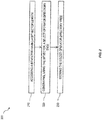
- FIG. 6 is a system block diagram illustrating the document retrieval problem
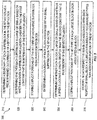
- FIG. 7 is a system block diagram illustrating text indexes in a database query system.
- the inverted index is a library extracted from HANA and can be used directly from VORA.
- the suffix-based index can be implemented in terms of different data structures.
- a Suffix Tree is a data structure that encodes information about all suffixes of a text.
- a Generalized Suffix Tree encodes information about the suffix of all texts in a document collection. For each suffix in the text collection there exists a path in the tree that leads to a node indicating the location of the suffix in the text.
- a search for a pattern is carried out by following the path from the root according to each character, until either no path can be followed (the pattern is not in the collection), the pattern ends at an internal node (the pattern occurs at all locations in the subtree rooted in the node), or a leaf is reached before finishing the pattern (the occurrence of the pattern can be verified in the text at the location indicated in the leaf).
- a Suffix Array stores the locations of each suffix of the collection sorted lexicographically.
- a search is done simulating the search in the suffix tree following each branch by binary searching in the array the interval corresponding to the each character.
- the Document Listing Problem relates to enumerating the IDs of documents that contain a pattern given a query consisting of a string (the pattern). Due to the high practical space requirements of suffix trees and suffix arrays several compressed versions of these structures have been devised, yielding various space-time trade-offs. Given a query, a search is carried out in the Suffix Array representation, identifying an interval of occurrences. Then, the document reporting structures allow the efficient identification of the documents that correspond to the suffixes in the interval.
- Suffix Array Representations can take several forms, such as, for example, the plain Suffix Array implementation described above as well as a Compressed Suffix Array (CSA) and an FM-Index.
- CSA Compressed Suffix Array
- FM-Index an FM-Index
- the CSA contains the same information as the initial Suffix Array, and it is constructed from the Suffix Array recursively using ⁇ lg lg n lg ⁇ ⁇ levels, where n is the length of the text and ⁇ is the size of the alphabet.
- the data structure indexes half of the elements of the previous level.
- SA SA
- SA is the Suffix Array of length n for the entire text.
- 0 ⁇ k ⁇ lglgn transform SA k into a more succinct representation storing instead a bit vector B k with a data structure allowing rank operation on it, the function ⁇ k and SA k +1 of half size of SA k .
- SA k is stored explicitly using n bits in total.
- BWT Burrows-Wheeler Transform
- LF last to first mapping
- LF [ i ] can be represented as the sum of the number of characters in T BWT that are alphabetically smaller than the character T BWT [ i ] and the number of times the character T BWT [ i ] appears in T BWT until position i.
- search queries consist in finding the interval [s, e] in the Suffix Array such that all corresponding suffixes from the interval have the pattern as their prefix in the text.
- the next step is to efficiently enumerate the distinct document IDs in which the pattern occurs at least once.
- a first solution uses a document array D, in which element D [ i ] contains the ID of the document to which the suffix at SA [ i ] belongs.
- the document listing problem is then reduced to enumerating all the different values of elements in D [ s.. e].
- another array can be introduced, called predecessor array C. This array links each position in D to the previous occurrence of the same document ID or to 0, if this is the first occurrence of the document ID in D.
- the solution is based on the following observation. If an ID of a document occurs in D [ s..e ], then its leftmost occurrence p is the one where it holds C [ p ] ⁇ s.
- Another solution reduces the space of the previous solution and can be used for compressed full-text indexes (like Compressed Suffix Array or FM-Index).
- the document array and the predecessor array are replaced by more succinct data structures.
- RMQ queries can be used recursively on predecessor array without accessing the array, which means it can be discarded.
- a bitmap to mark with 1 the document IDs that were already reported can be used.
- a rank operation usually refers to Rank 1 ( B, i ), i.e., finding the number of 1-bits in B [1 ..i ], and is often written simply as Rank ( B, i ).
- Rank operations on bit vectors we implemented the following data structure can be used.
- the data structure stores two levels of precomputed rank values: blocks and superblocks.
- R b [ k ] Rank ( B, k ⁇ b ) - Rank ( B,j ⁇ s ) representing the number of 1-bits from the beginning of the superblock j until the beginning of block k.
- Rank B i R s i div s + R s i div b + Rank ( B i div b ⁇ b + 1 ... i div b ⁇ b + b ] , i mod b .
- a constant select on bitmaps can be provided as described above.
- the bit vector A of size n ⁇ can be divided into n blocks of size ⁇ each.
- the number of 1-bits in each block can be counted and stored in a new array C of length n.
- C[i] is the rank of block i .
- Observe that the sum of all elements in C is n.
- a bit vector B representing the unary code of the sequence C is a smaller bit vector B of length 2 n can be obtained. It suffices to find the relation between Rank/Select on B and Rank/Select on A .
- the current subject matter can include determining in constant time the interval [ s , e ] in E corresponding to the block, and searching for the two consecutive elements E [ p ] and E [ r ] of E [ s..e ] such that E [ p ] ⁇ i ⁇ E [ r ] .
- RMQ Range Minimum Query
- RMQ includes: given an array C of length n, construct a data structure that allows finding the position of the minimum element in any interval C [ s .. e ] that takes constant time per query. First, reduce RMQ on an arbitrary array C to an RMQ on a special type of arrays, denoted RMQ ⁇ . Then solve RMQ ⁇ .
- the Cartesian tree is a binary tree where each node of the tree corresponds to an element of C and contains the index of the element in C.
- the root of the tree corresponds to minimum element in the array (say at index i ) and its left and right subtrees are the Cartesian trees of in C [1.. i - 1] and C [ i + 1.. n ] , respectively.
- the parenthesis array P can be stored as a bit vector with 0 corresponding to '(' and 1 corresponding to ')'.
- P' [ i ] is defined as the difference between the number of '(' in P [1.. i ] and the number of ')' in P [1 ..i ] minus 1, which can be calculated using constant rank operations on the bitmap P.
- the RMQ i on C [ s .. e ] is reduced to the following:
- One or more aspects or features of the subject matter described herein can be realized in digital electronic circuitry, integrated circuitry, specially designed application specific integrated circuits (ASICs), field programmable gate arrays (FPGAs) computer hardware, firmware, software, and/or combinations thereof.
- ASICs application specific integrated circuits
- FPGAs field programmable gate arrays
- These various aspects or features can include implementation in one or more computer programs that are executable and/or interpretable on a programmable system including at least one programmable processor, which can be special or general purpose, coupled to receive data and instructions from, and to transmit data and instructions to, a storage system, at least one input device, and at least one output device.
- the programmable system or computing system may include clients and servers.
- a client and server are generally remote from each other and typically interact through a communication network. The relationship of client and server arises by virtue of computer programs running on the respective computers and having a client-server relationship to each other.
- machine-readable signal refers to any signal used to provide machine instructions and/or data to a programmable processor.
- the machine-readable medium can store such machine instructions non-transitorily, such as for example as would a non-transient solid-state memory or a magnetic hard drive or any equivalent storage medium.
- the machine-readable medium can alternatively or additionally store such machine instructions in a transient manner, such as for example as would a processor cache or other random access memory associated with one or more physical processor cores.
- one or more aspects or features of the subject matter described herein can be implemented on a computer having a display device, such as for example a cathode ray tube (CRT) or a liquid crystal display (LCD) or a light emitting diode (LED) monitor for displaying information to the user and a keyboard and a pointing device, such as for example a mouse or a trackball, by which the user may provide input to the computer.
- a display device such as for example a cathode ray tube (CRT) or a liquid crystal display (LCD) or a light emitting diode (LED) monitor for displaying information to the user and a keyboard and a pointing device, such as for example a mouse or a trackball, by which the user may provide input to the computer.
- CTR cathode ray tube
- LCD liquid crystal display
- LED light emitting diode
- keyboard and a pointing device such as for example a mouse or a trackball
- Other kinds of devices can be used to provide
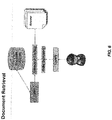
- the current subject matter can be configured to be implemented in a system 800, as shown in FIG. 8 .
- the system 800 can include one or more of a processor 810, a memory 820, a storage device 830, and an input/output device 840. Each of the components 810, 820, 830 and 840 can be interconnected using a system bus 850.
- the processor 810 can be configured to process instructions for execution within the system 800. In some implementations, the processor 810 can be a single-threaded processor. In alternate implementations, the processor 810 can be a multi-threaded processor.
- the processor 810 can be further configured to process instructions stored in the memory 820 or on the storage device 830, including receiving or sending information through the input/output device 840.
- the memory 820 can store information within the system 800.
- the memory 820 can be a computer-readable medium.
- the memory 820 can be a volatile memory unit.
- the memory 820 can be a non-volatile memory unit.
- the storage device 830 can be capable of providing mass storage for the system 800.
- the storage device 830 can be a computer-readable medium.
- the storage device 830 can be a floppy disk device, a hard disk device, an optical disk device, a tape device, non-volatile solid state memory, or any other type of storage device.
- the input/output device 840 can be configured to provide input/output operations for the system 800.
- the input/output device 840 can include a keyboard and/or pointing device.
- the input/output device 840 can include a display unit for displaying graphical user interfaces.
- phrases such as "at least one of” or “one or more of” may occur followed by a conjunctive list of elements or features.
- the term “and/or” may also occur in a list of two or more elements or features. Unless otherwise implicitly or explicitly contradicted by the context in which it is used, such a phrase is intended to mean any of the listed elements or features individually or any of the recited elements or features in combination with any of the other recited elements or features.
- the phrases “at least one of A and B;” “one or more of A and B;” and “A and/or B” are each intended to mean "A alone, B alone, or A and B together.”
- a similar interpretation is also intended for lists including three or more items.
- phrases “at least one of A, B, and C;” “one or more of A, B, and C;” and “A, B, and/or C” are each intended to mean “A alone, B alone, C alone, A and B together, A and C together, B and C together, or A and B and C together.”
- use of the term “based on,” above and in the claims is intended to mean, “based at least in part on,” such that an unrecited feature or element is also permissible.
Landscapes
- Engineering & Computer Science (AREA)
- Theoretical Computer Science (AREA)
- Data Mining & Analysis (AREA)
- Databases & Information Systems (AREA)
- Physics & Mathematics (AREA)
- General Engineering & Computer Science (AREA)
- General Physics & Mathematics (AREA)
- Software Systems (AREA)
- Computational Linguistics (AREA)
- Information Retrieval, Db Structures And Fs Structures Therefor (AREA)
Claims (6)
- Ein computerimplementiertes Verfahren zur Erzeugung eines Select-Operator-Verzeichnisbaums zur Durchführung von Select-Operationen in BitVektoren, das Folgendes umfasst:Zugreifen (210) auf einen Bit-Vektor mit einer Bit-Vektorlänge, wobei der genannte Bit-Vektor ein Array aus 0 und 1 Bit ist;Erzeugen (220), unter Verwendung des Bitvektors, eines Select-Operator-Verzeichnisbaums (100); undSpeichern (230) des Select-Operator-Verzeichnisbaums (100),wobei der Select-Operator-Verzeichnisbaum (100) Folgendes enthält:eine Vielzahl von Arrays, die eine Vielzahl von Blöcken repräsentieren, die Folgendes beinhaltet:ein Array der ersten Ebene, das eine erste Ebene (105) von Superblöcken (superblocks) darstellt, wobei jeder Superblock einem Abschnitt des Bitvektors entspricht, der die gleiche Anzahl eines Bittyps enthält, wobei die Superblöcke große Superblöcke und kleine Superblöcke umfassen und der Bittyp 0-Bit oder 1-Bit ist;eine Vielzahl von Arrays der zweiten Ebene, die eine zweite Ebene von Blöcken (110L, 110S) darstellen, die große Blöcke und kleine Blöcke enthält, wobei jeder Block einem der Superblöcke zugeordnet ist;eine Vielzahl von Arrays der dritten Ebene, die eine dritte Ebene von Unterblöcken (115L, 115S) darstellen, wobei jeder Unterblock einem Block (110L, 110S) zugeordnet ist;wobei die großen Superblöcke jeweils eine Länge aufweisen, die größer ist als eine erste Konstante, die von der Bitvektorlänge unabhängig ist, und wobei die großen Blöcke jeweils eine Länge aufweisen, die größer ist als eine zweite Konstante, die von der Bitvektorlänge unabhängig ist; undwobei das Erzeugen des Select-Operator-Verzeichnisbaums (100) Folgendes beinhaltet:Aufteilen des Bitvektors in die Superblöcke durch das Bestimmen (310) der Grenzen jedes Superblocks im Bitvektor als jedes i-te Vorkommen des Bittyps im Bitvektor, und Speichern der Position jedes i-ten Vorkommens des Bittyps im Array der ersten Ebene;für jeden Superblock:Bestimmen (320), ob der Superblock groß oder klein ist, basierend darauf, ob der gegebene Superblock eine Länge hat, die größer als die erste Konstante ist, die unabhängig von der Bitvektorlänge ist;falls der Superblock groß ist, Speichern (330) der expliziten Positionen des Bittyps im Abschnitt des Bitvektors, der dem großen Superblock entspricht, in einem zugehörigen Array der zweiten Ebene (110L) mit einem lokalen Index im Superblock;falls der Superblock klein ist, Teilen des kleinen Superblocks in Blöcke durch das Bestimmen (340) der Grenzen der dem kleinen Superblock zugeordneten Blöcke in dem Bitvektor als jedes j-te Vorkommen des Bittyps im Abschnitt des Bitvektors, der dem kleinen Superblock entspricht, und Speichern der Positionen jedes j-ten Vorkommens des Bittyps in einem zugeordneten Array zweiter Ebene (110S) unter Verwendung eines lokalen Index;
für jeden Block:Bestimmen (350), ob der dem kleinen Superblock zugeordnete Block groß oder klein ist, basierend darauf, ob der gegebene Block eine Länge größer als die zweite Konstante hat, die unabhängig von der Bitvektorlänge ist;falls der Block groß ist, Speichern der expliziten Positionen des Bit-Typs im Abschnitt des Bit-Vektors, der dem großen Block entspricht, in einem zugehörigen Array der dritten Ebene (115L) unter Verwendung eines lokalen Index; undfalls der Block klein ist, Unterteilen des kleinen Blocks in eine Vielzahl von Abschnitten mit einer festen Anzahl von Bits, und Speichern, in einem jeweiligen Array (115S) der dritten Ebene, das dem jeweiligen kleinen Block zugeordnet ist, der Anzahl der Vorkommnisse des Bit-Typs in jedem Abschnitt des kleinen Blocks mit einer festen Anzahl von Bits. - Das Verfahren nach Anspruch 1 oder 2, wobei das vorbestimmte Vorkommen des Bit-Typs im Bit-Vektor, der die Grenze jedes Superblocks definiert, 212 beträgt, die erste Konstante, die unabhängig von der Bit-Vektorlänge ist, gleich 220 ist und die zweite Konstante, die unabhängig von der Bit-Vektorlänge ist, gleich 214 ist.
- Ein Verfahren zum Ausführen von Select-Operationen in Bitvektoren, das Folgendes umfasst:Empfangen (410) eines Bit-Vektors und eines Bit-Select-Wertes, wobei der genannte Bit-Select-Wert das k-te Vorkommen eines Bit-Typs in dem Bit-Vektor ist, wobei der genannte Bit-Vektor ein Array von 0 und 1 Bit ist, und wobei der genannte Bit-Typ 0-Bit oder 1-Bit ist;Durchsuchen (420) eines Select-Operator-Verzeichnisbaums (100) nach der Position des Bit-Select-Wertes, undBereitstellen (430) der Position des Bit-Select-Wertes,wobei das Empfangen (410), das Durchsuchen (420) und das Bereitstellen (430) von mindestens einem Datenprozessor durchgeführt wird, der Teil mindestens eines Computersystems ist; wobei der Select-Operator-Verzeichnisbaums auf der Grundlage des Bitvektors gemäß dem Verfahren nach Anspruch 1 oder 2 erzeugt wird; undwobei das Durchsuchen (420) Folgendes umfasst:Bestimmen (510), ob der Bit-Select-Wert im Array der ersten Ebene enthalten ist;falls der Bit-Select-Wert einer der Einträge im Array der ersten Ebene ist, Bestimmen der Position des Bit-Select-Wertes aus dem Array der ersten Ebene;falls der Bit-Select-Wert nicht einer der Einträge im Array der ersten Ebene ist, Bestimmen (520), unter Verwendung des Arrays der ersten Ebene, eines Superblocks mit dem Bit-Select-Wert, indem man bestimmt, ob der Bit-Select-Wert innerhalb der im Array der ersten Ebene gespeicherten Grenzen liegt; und Bestimmen (530) eines der mehreren Arrays der zweiten Ebene, das dem bestimmten Superblock zugeordnet ist;Bestimmen (540), ob der Bit-Select-Wert einer der Einträge im bestimmten Array aus der Vielzahl von Arrays der zweiten Ebene ist;falls der Bit-Select-Wert einer der Einträge im bestimmten Array aus der Vielzahl von Arrays der zweiten Ebene ist, Bestimmen der Position des Bit-Select-Wertes aus dem bestimmten Array aus der Vielzahl von Arrays der zweiten Ebene;falls der Bit-Select-Wert nicht einer der Einträge im bestimmten Array aus der Vielzahl von Arrays der zweiten Ebene ist, Bestimmen (550) eines der mehreren Arrays der dritten Ebene, das dem bestimmten Array der zweiten Ebene mit dem Bit-Select-Wert zugeordnet ist; und Bestimmen (560) einer Position des Vorkommens des Bit-Select-Wertes des Bit-Typs aus dem bestimmten Array aus der Vielzahl der Arrays der dritten Ebene.
- Das Verfahren nach Anspruch 3, wobei eine Bit-Select-Operation während einer Textsuchmaschinen-Operation durchgeführt wird.
- Ein System, das Folgendes umfasst: mindestens einen Datenprozessor; und einen Speicher, der Anweisungen speichert, die, wenn sie von dem mindestens einen Datenprozessor ausgeführt werden, Operationen implementieren, um ein Verfahren nach irgendeinem der Ansprüche 3 oder 4 durchzuführen.
- Ein System, das Folgendes umfasst: mindestens einen Datenprozessor; und einen Speicher, der Anweisungen speichert, die, wenn sie von dem mindestens einen Datenprozessor ausgeführt werden, Operationen implementieren, um ein Verfahren nach irgendeinem der Ansprüche 1 oder 2 durchzuführen.
Applications Claiming Priority (1)
| Application Number | Priority Date | Filing Date | Title |
|---|---|---|---|
| US15/380,970 US10984029B2 (en) | 2016-12-15 | 2016-12-15 | Multi-level directory tree with fixed superblock and block sizes for select operations on bit vectors |
Publications (2)
| Publication Number | Publication Date |
|---|---|
| EP3336723A1 EP3336723A1 (de) | 2018-06-20 |
| EP3336723B1 true EP3336723B1 (de) | 2020-05-20 |
Family
ID=60673127
Family Applications (1)
| Application Number | Title | Priority Date | Filing Date |
|---|---|---|---|
| EP17206121.0A Active EP3336723B1 (de) | 2016-12-15 | 2017-12-08 | Multi-level verzeichnisbaum mit festen superblock- und blockgrössen für select-operationen auf bit-vektoren |
Country Status (2)
| Country | Link |
|---|---|
| US (1) | US10984029B2 (de) |
| EP (1) | EP3336723B1 (de) |
Families Citing this family (9)
| Publication number | Priority date | Publication date | Assignee | Title |
|---|---|---|---|---|
| US10650312B2 (en) | 2016-11-16 | 2020-05-12 | Catalog Technologies, Inc. | Nucleic acid-based data storage |
| ES2979182T3 (es) | 2016-11-16 | 2024-09-24 | Catalog Tech Inc | Almacenamiento de datos basado en ácidos nucleicos |
| KR20200132921A (ko) | 2018-03-16 | 2020-11-25 | 카탈로그 테크놀로지스, 인크. | 핵산-기반 데이터를 저장하기 위한 화학적 방법들 |
| KR102956991B1 (ko) | 2018-05-16 | 2026-04-24 | 카탈로그 테크놀로지스, 인크. | 핵산-기반 데이터를 저장하기 위한 조성물 및 방법 |
| KR20210053292A (ko) | 2018-08-03 | 2021-05-11 | 카탈로그 테크놀로지스, 인크. | 오류 방지 기능을 갖춘 핵산 기반 데이터 저장 및 판독 시스템 및 방법 |
| WO2020227718A1 (en) * | 2019-05-09 | 2020-11-12 | Catalog Technologies, Inc. | Data structures and operations for searching, computing, and indexing in dna-based data storage |
| JP7726874B2 (ja) | 2019-10-11 | 2025-08-20 | カタログ テクノロジーズ, インコーポレイテッド | 核酸セキュリティーおよび認証 |
| EP4150622B1 (de) | 2020-05-11 | 2024-09-25 | Catalog Technologies, Inc. | Programme und funktionen in dna-basierter datenspeicherung |
| US12061637B2 (en) * | 2022-09-11 | 2024-08-13 | Microsoft Technology Licensing, Llc | Heuristic identification of shared substrings between text documents |
Family Cites Families (9)
| Publication number | Priority date | Publication date | Assignee | Title |
|---|---|---|---|---|
| US5276874A (en) * | 1989-08-11 | 1994-01-04 | Digital Equipment Corporation | Method for creating a directory tree in main memory using an index file in secondary memory |
| US5828876A (en) * | 1996-07-31 | 1998-10-27 | Ncr Corporation | File system for a clustered processing system |
| US5799300A (en) * | 1996-12-12 | 1998-08-25 | International Business Machines Corporations | Method and system for performing range-sum queries on a data cube |
| US6278992B1 (en) * | 1997-03-19 | 2001-08-21 | John Andrew Curtis | Search engine using indexing method for storing and retrieving data |
| US6098066A (en) * | 1997-06-13 | 2000-08-01 | Sun Microsystems, Inc. | Method and apparatus for searching for documents stored within a document directory hierarchy |
| US7054927B2 (en) * | 2001-01-29 | 2006-05-30 | Adaptec, Inc. | File system metadata describing server directory information |
| JP5912714B2 (ja) * | 2012-03-21 | 2016-04-27 | 任天堂株式会社 | データ構造、データ構造生成方法、情報処理装置、情報処理システム、及び情報処理プログラム |
| KR101977575B1 (ko) * | 2012-09-28 | 2019-05-13 | 삼성전자 주식회사 | 디렉토리 엔트리 조회 장치, 그 방법 및 디렉토리 엔트리 조회 프로그램이 기록된 기록 매체 |
| US20160378803A1 (en) * | 2015-06-23 | 2016-12-29 | Microsoft Technology Licensing, Llc | Bit vector search index |
-
2016
- 2016-12-15 US US15/380,970 patent/US10984029B2/en active Active
-
2017
- 2017-12-08 EP EP17206121.0A patent/EP3336723B1/de active Active
Non-Patent Citations (1)
| Title |
|---|
| None * |
Also Published As
| Publication number | Publication date |
|---|---|
| US10984029B2 (en) | 2021-04-20 |
| US20180173710A1 (en) | 2018-06-21 |
| EP3336723A1 (de) | 2018-06-20 |
Similar Documents
| Publication | Publication Date | Title |
|---|---|---|
| US10984029B2 (en) | Multi-level directory tree with fixed superblock and block sizes for select operations on bit vectors | |
| US10417208B2 (en) | Constant range minimum query | |
| Navarro | Spaces, trees, and colors: The algorithmic landscape of document retrieval on sequences | |
| US20210182328A1 (en) | System and method for hierarchically organizing documents based on document portions | |
| Barbay et al. | Efficient fully-compressed sequence representations | |
| Hon et al. | Space-efficient frameworks for top-k string retrieval | |
| US20130246386A1 (en) | Identifying key phrases within documents | |
| CN105760418B (zh) | 用于对关系数据库表进行交叉列搜索的方法和系统 | |
| CN103365992B (zh) | 一种基于一维线性空间实现Trie树的词典检索方法 | |
| US20140082021A1 (en) | Hierarchical ordering of strings | |
| US11520763B2 (en) | Automated optimization for in-memory data structures of column store databases | |
| CN104346331A (zh) | Xml数据库的检索方法及系统 | |
| Tsur | Top-k document retrieval in optimal space | |
| CN110688593A (zh) | 一种社交媒体账号识别方法及系统 | |
| CN108388635A (zh) | 数据搜索方法、装置、介质和计算设备 | |
| Charalampopoulos et al. | Internal dictionary matching | |
| CN106503195A (zh) | 一种基于搜索引擎的翻译词库检索方法及系统 | |
| US11132345B2 (en) | Real time indexing | |
| US8140546B2 (en) | Computer system for performing aggregation of tree-structured data, and method and computer program product therefor | |
| US8392433B2 (en) | Self-indexer and self indexing system | |
| Belazzougui et al. | A framework for space-efficient string kernels | |
| Neuburger et al. | Succinct 2D dictionary matching | |
| Mishra et al. | Fast pattern matching in compressed text using wavelet tree | |
| He et al. | Data structures for path queries | |
| Belazzougui et al. | Compressed string dictionary search with edit distance one |
Legal Events
| Date | Code | Title | Description |
|---|---|---|---|
| PUAI | Public reference made under article 153(3) epc to a published international application that has entered the european phase |
Free format text: ORIGINAL CODE: 0009012 |
|
| STAA | Information on the status of an ep patent application or granted ep patent |
Free format text: STATUS: THE APPLICATION HAS BEEN PUBLISHED |
|
| AK | Designated contracting states |
Kind code of ref document: A1 Designated state(s): AL AT BE BG CH CY CZ DE DK EE ES FI FR GB GR HR HU IE IS IT LI LT LU LV MC MK MT NL NO PL PT RO RS SE SI SK SM TR |
|
| AX | Request for extension of the european patent |
Extension state: BA ME |
|
| STAA | Information on the status of an ep patent application or granted ep patent |
Free format text: STATUS: REQUEST FOR EXAMINATION WAS MADE |
|
| 17P | Request for examination filed |
Effective date: 20181129 |
|
| RBV | Designated contracting states (corrected) |
Designated state(s): AL AT BE BG CH CY CZ DE DK EE ES FI FR GB GR HR HU IE IS IT LI LT LU LV MC MK MT NL NO PL PT RO RS SE SI SK SM TR |
|
| STAA | Information on the status of an ep patent application or granted ep patent |
Free format text: STATUS: EXAMINATION IS IN PROGRESS |
|
| 17Q | First examination report despatched |
Effective date: 20190116 |
|
| REG | Reference to a national code |
Ref country code: DE Ref legal event code: R079 Ref document number: 602017016988 Country of ref document: DE Free format text: PREVIOUS MAIN CLASS: G06F0017300000 Ipc: G06F0016220000 |
|
| GRAP | Despatch of communication of intention to grant a patent |
Free format text: ORIGINAL CODE: EPIDOSNIGR1 |
|
| STAA | Information on the status of an ep patent application or granted ep patent |
Free format text: STATUS: GRANT OF PATENT IS INTENDED |
|
| RIC1 | Information provided on ipc code assigned before grant |
Ipc: G06F 16/22 20190101AFI20191107BHEP |
|
| INTG | Intention to grant announced |
Effective date: 20191206 |
|
| GRAS | Grant fee paid |
Free format text: ORIGINAL CODE: EPIDOSNIGR3 |
|
| GRAA | (expected) grant |
Free format text: ORIGINAL CODE: 0009210 |
|
| STAA | Information on the status of an ep patent application or granted ep patent |
Free format text: STATUS: THE PATENT HAS BEEN GRANTED |
|
| AK | Designated contracting states |
Kind code of ref document: B1 Designated state(s): AL AT BE BG CH CY CZ DE DK EE ES FI FR GB GR HR HU IE IS IT LI LT LU LV MC MK MT NL NO PL PT RO RS SE SI SK SM TR |
|
| REG | Reference to a national code |
Ref country code: GB Ref legal event code: FG4D |
|
| REG | Reference to a national code |
Ref country code: CH Ref legal event code: EP |
|
| REG | Reference to a national code |
Ref country code: DE Ref legal event code: R096 Ref document number: 602017016988 Country of ref document: DE |
|
| REG | Reference to a national code |
Ref country code: AT Ref legal event code: REF Ref document number: 1273056 Country of ref document: AT Kind code of ref document: T Effective date: 20200615 |
|
| REG | Reference to a national code |
Ref country code: LT Ref legal event code: MG4D |
|
| REG | Reference to a national code |
Ref country code: NL Ref legal event code: MP Effective date: 20200520 |
|
| PG25 | Lapsed in a contracting state [announced via postgrant information from national office to epo] |
Ref country code: LT Free format text: LAPSE BECAUSE OF FAILURE TO SUBMIT A TRANSLATION OF THE DESCRIPTION OR TO PAY THE FEE WITHIN THE PRESCRIBED TIME-LIMIT Effective date: 20200520 Ref country code: SE Free format text: LAPSE BECAUSE OF FAILURE TO SUBMIT A TRANSLATION OF THE DESCRIPTION OR TO PAY THE FEE WITHIN THE PRESCRIBED TIME-LIMIT Effective date: 20200520 Ref country code: FI Free format text: LAPSE BECAUSE OF FAILURE TO SUBMIT A TRANSLATION OF THE DESCRIPTION OR TO PAY THE FEE WITHIN THE PRESCRIBED TIME-LIMIT Effective date: 20200520 Ref country code: GR Free format text: LAPSE BECAUSE OF FAILURE TO SUBMIT A TRANSLATION OF THE DESCRIPTION OR TO PAY THE FEE WITHIN THE PRESCRIBED TIME-LIMIT Effective date: 20200821 Ref country code: NO Free format text: LAPSE BECAUSE OF FAILURE TO SUBMIT A TRANSLATION OF THE DESCRIPTION OR TO PAY THE FEE WITHIN THE PRESCRIBED TIME-LIMIT Effective date: 20200820 Ref country code: IS Free format text: LAPSE BECAUSE OF FAILURE TO SUBMIT A TRANSLATION OF THE DESCRIPTION OR TO PAY THE FEE WITHIN THE PRESCRIBED TIME-LIMIT Effective date: 20200920 Ref country code: PT Free format text: LAPSE BECAUSE OF FAILURE TO SUBMIT A TRANSLATION OF THE DESCRIPTION OR TO PAY THE FEE WITHIN THE PRESCRIBED TIME-LIMIT Effective date: 20200921 |
|
| PG25 | Lapsed in a contracting state [announced via postgrant information from national office to epo] |
Ref country code: HR Free format text: LAPSE BECAUSE OF FAILURE TO SUBMIT A TRANSLATION OF THE DESCRIPTION OR TO PAY THE FEE WITHIN THE PRESCRIBED TIME-LIMIT Effective date: 20200520 Ref country code: LV Free format text: LAPSE BECAUSE OF FAILURE TO SUBMIT A TRANSLATION OF THE DESCRIPTION OR TO PAY THE FEE WITHIN THE PRESCRIBED TIME-LIMIT Effective date: 20200520 Ref country code: RS Free format text: LAPSE BECAUSE OF FAILURE TO SUBMIT A TRANSLATION OF THE DESCRIPTION OR TO PAY THE FEE WITHIN THE PRESCRIBED TIME-LIMIT Effective date: 20200520 Ref country code: BG Free format text: LAPSE BECAUSE OF FAILURE TO SUBMIT A TRANSLATION OF THE DESCRIPTION OR TO PAY THE FEE WITHIN THE PRESCRIBED TIME-LIMIT Effective date: 20200820 |
|
| REG | Reference to a national code |
Ref country code: AT Ref legal event code: MK05 Ref document number: 1273056 Country of ref document: AT Kind code of ref document: T Effective date: 20200520 |
|
| PG25 | Lapsed in a contracting state [announced via postgrant information from national office to epo] |
Ref country code: AL Free format text: LAPSE BECAUSE OF FAILURE TO SUBMIT A TRANSLATION OF THE DESCRIPTION OR TO PAY THE FEE WITHIN THE PRESCRIBED TIME-LIMIT Effective date: 20200520 Ref country code: NL Free format text: LAPSE BECAUSE OF FAILURE TO SUBMIT A TRANSLATION OF THE DESCRIPTION OR TO PAY THE FEE WITHIN THE PRESCRIBED TIME-LIMIT Effective date: 20200520 |
|
| PG25 | Lapsed in a contracting state [announced via postgrant information from national office to epo] |
Ref country code: ES Free format text: LAPSE BECAUSE OF FAILURE TO SUBMIT A TRANSLATION OF THE DESCRIPTION OR TO PAY THE FEE WITHIN THE PRESCRIBED TIME-LIMIT Effective date: 20200520 Ref country code: CZ Free format text: LAPSE BECAUSE OF FAILURE TO SUBMIT A TRANSLATION OF THE DESCRIPTION OR TO PAY THE FEE WITHIN THE PRESCRIBED TIME-LIMIT Effective date: 20200520 Ref country code: IT Free format text: LAPSE BECAUSE OF FAILURE TO SUBMIT A TRANSLATION OF THE DESCRIPTION OR TO PAY THE FEE WITHIN THE PRESCRIBED TIME-LIMIT Effective date: 20200520 Ref country code: RO Free format text: LAPSE BECAUSE OF FAILURE TO SUBMIT A TRANSLATION OF THE DESCRIPTION OR TO PAY THE FEE WITHIN THE PRESCRIBED TIME-LIMIT Effective date: 20200520 Ref country code: DK Free format text: LAPSE BECAUSE OF FAILURE TO SUBMIT A TRANSLATION OF THE DESCRIPTION OR TO PAY THE FEE WITHIN THE PRESCRIBED TIME-LIMIT Effective date: 20200520 Ref country code: EE Free format text: LAPSE BECAUSE OF FAILURE TO SUBMIT A TRANSLATION OF THE DESCRIPTION OR TO PAY THE FEE WITHIN THE PRESCRIBED TIME-LIMIT Effective date: 20200520 Ref country code: SM Free format text: LAPSE BECAUSE OF FAILURE TO SUBMIT A TRANSLATION OF THE DESCRIPTION OR TO PAY THE FEE WITHIN THE PRESCRIBED TIME-LIMIT Effective date: 20200520 Ref country code: AT Free format text: LAPSE BECAUSE OF FAILURE TO SUBMIT A TRANSLATION OF THE DESCRIPTION OR TO PAY THE FEE WITHIN THE PRESCRIBED TIME-LIMIT Effective date: 20200520 |
|
| REG | Reference to a national code |
Ref country code: DE Ref legal event code: R097 Ref document number: 602017016988 Country of ref document: DE |
|
| PG25 | Lapsed in a contracting state [announced via postgrant information from national office to epo] |
Ref country code: SK Free format text: LAPSE BECAUSE OF FAILURE TO SUBMIT A TRANSLATION OF THE DESCRIPTION OR TO PAY THE FEE WITHIN THE PRESCRIBED TIME-LIMIT Effective date: 20200520 Ref country code: PL Free format text: LAPSE BECAUSE OF FAILURE TO SUBMIT A TRANSLATION OF THE DESCRIPTION OR TO PAY THE FEE WITHIN THE PRESCRIBED TIME-LIMIT Effective date: 20200520 |
|
| PLBE | No opposition filed within time limit |
Free format text: ORIGINAL CODE: 0009261 |
|
| STAA | Information on the status of an ep patent application or granted ep patent |
Free format text: STATUS: NO OPPOSITION FILED WITHIN TIME LIMIT |
|
| 26N | No opposition filed |
Effective date: 20210223 |
|
| PG25 | Lapsed in a contracting state [announced via postgrant information from national office to epo] |
Ref country code: SI Free format text: LAPSE BECAUSE OF FAILURE TO SUBMIT A TRANSLATION OF THE DESCRIPTION OR TO PAY THE FEE WITHIN THE PRESCRIBED TIME-LIMIT Effective date: 20200520 |
|
| REG | Reference to a national code |
Ref country code: CH Ref legal event code: PL |
|
| PG25 | Lapsed in a contracting state [announced via postgrant information from national office to epo] |
Ref country code: MC Free format text: LAPSE BECAUSE OF FAILURE TO SUBMIT A TRANSLATION OF THE DESCRIPTION OR TO PAY THE FEE WITHIN THE PRESCRIBED TIME-LIMIT Effective date: 20200520 |
|
| REG | Reference to a national code |
Ref country code: BE Ref legal event code: MM Effective date: 20201231 |
|
| PG25 | Lapsed in a contracting state [announced via postgrant information from national office to epo] |
Ref country code: IE Free format text: LAPSE BECAUSE OF NON-PAYMENT OF DUE FEES Effective date: 20201208 Ref country code: LU Free format text: LAPSE BECAUSE OF NON-PAYMENT OF DUE FEES Effective date: 20201208 |
|
| PG25 | Lapsed in a contracting state [announced via postgrant information from national office to epo] |
Ref country code: LI Free format text: LAPSE BECAUSE OF NON-PAYMENT OF DUE FEES Effective date: 20201231 Ref country code: CH Free format text: LAPSE BECAUSE OF NON-PAYMENT OF DUE FEES Effective date: 20201231 |
|
| PG25 | Lapsed in a contracting state [announced via postgrant information from national office to epo] |
Ref country code: TR Free format text: LAPSE BECAUSE OF FAILURE TO SUBMIT A TRANSLATION OF THE DESCRIPTION OR TO PAY THE FEE WITHIN THE PRESCRIBED TIME-LIMIT Effective date: 20200520 Ref country code: MT Free format text: LAPSE BECAUSE OF FAILURE TO SUBMIT A TRANSLATION OF THE DESCRIPTION OR TO PAY THE FEE WITHIN THE PRESCRIBED TIME-LIMIT Effective date: 20200520 Ref country code: CY Free format text: LAPSE BECAUSE OF FAILURE TO SUBMIT A TRANSLATION OF THE DESCRIPTION OR TO PAY THE FEE WITHIN THE PRESCRIBED TIME-LIMIT Effective date: 20200520 |
|
| PG25 | Lapsed in a contracting state [announced via postgrant information from national office to epo] |
Ref country code: MK Free format text: LAPSE BECAUSE OF FAILURE TO SUBMIT A TRANSLATION OF THE DESCRIPTION OR TO PAY THE FEE WITHIN THE PRESCRIBED TIME-LIMIT Effective date: 20200520 |
|
| PG25 | Lapsed in a contracting state [announced via postgrant information from national office to epo] |
Ref country code: BE Free format text: LAPSE BECAUSE OF NON-PAYMENT OF DUE FEES Effective date: 20201231 |
|
| PGFP | Annual fee paid to national office [announced via postgrant information from national office to epo] |
Ref country code: DE Payment date: 20251211 Year of fee payment: 9 |
|
| PGFP | Annual fee paid to national office [announced via postgrant information from national office to epo] |
Ref country code: GB Payment date: 20251219 Year of fee payment: 9 |
|
| PGFP | Annual fee paid to national office [announced via postgrant information from national office to epo] |
Ref country code: FR Payment date: 20251229 Year of fee payment: 9 |