EP3336719A1 - Zukunftsszenarioerzeugungsvorrichtung und -verfahren und computerprogramm - Google Patents
Zukunftsszenarioerzeugungsvorrichtung und -verfahren und computerprogramm Download PDFInfo
- Publication number
- EP3336719A1 EP3336719A1 EP16835000.7A EP16835000A EP3336719A1 EP 3336719 A1 EP3336719 A1 EP 3336719A1 EP 16835000 A EP16835000 A EP 16835000A EP 3336719 A1 EP3336719 A1 EP 3336719A1
- Authority
- EP
- European Patent Office
- Prior art keywords
- causality
- phrase
- community
- network
- future
- Prior art date
- Legal status (The legal status is an assumption and is not a legal conclusion. Google has not performed a legal analysis and makes no representation as to the accuracy of the status listed.)
- Withdrawn
Links
Images



Classifications
-
- G—PHYSICS
- G06—COMPUTING OR CALCULATING; COUNTING
- G06F—ELECTRIC DIGITAL DATA PROCESSING
- G06F16/00—Information retrieval; Database structures therefor; File system structures therefor
- G06F16/30—Information retrieval; Database structures therefor; File system structures therefor of unstructured textual data
- G06F16/33—Querying
- G06F16/332—Query formulation
- G06F16/3329—Natural language query formulation
-
- G—PHYSICS
- G06—COMPUTING OR CALCULATING; COUNTING
- G06F—ELECTRIC DIGITAL DATA PROCESSING
- G06F16/00—Information retrieval; Database structures therefor; File system structures therefor
-
- G—PHYSICS
- G06—COMPUTING OR CALCULATING; COUNTING
- G06F—ELECTRIC DIGITAL DATA PROCESSING
- G06F16/00—Information retrieval; Database structures therefor; File system structures therefor
- G06F16/20—Information retrieval; Database structures therefor; File system structures therefor of structured data, e.g. relational data
- G06F16/24—Querying
- G06F16/245—Query processing
- G06F16/2457—Query processing with adaptation to user needs
- G06F16/24578—Query processing with adaptation to user needs using ranking
-
- G—PHYSICS
- G06—COMPUTING OR CALCULATING; COUNTING
- G06F—ELECTRIC DIGITAL DATA PROCESSING
- G06F40/00—Handling natural language data
- G06F40/20—Natural language analysis
- G06F40/279—Recognition of textual entities
- G06F40/289—Phrasal analysis, e.g. finite state techniques or chunking
-
- G—PHYSICS
- G06—COMPUTING OR CALCULATING; COUNTING
- G06F—ELECTRIC DIGITAL DATA PROCESSING
- G06F40/00—Handling natural language data
- G06F40/30—Semantic analysis
-
- G—PHYSICS
- G06—COMPUTING OR CALCULATING; COUNTING
- G06N—COMPUTING ARRANGEMENTS BASED ON SPECIFIC COMPUTATIONAL MODELS
- G06N5/00—Computing arrangements using knowledge-based models
- G06N5/04—Inference or reasoning models
-
- G—PHYSICS
- G16—INFORMATION AND COMMUNICATION TECHNOLOGY [ICT] SPECIALLY ADAPTED FOR SPECIFIC APPLICATION FIELDS
- G16Z—INFORMATION AND COMMUNICATION TECHNOLOGY [ICT] SPECIALLY ADAPTED FOR SPECIFIC APPLICATION FIELDS, NOT OTHERWISE PROVIDED FOR
- G16Z99/00—Subject matter not provided for in other main groups of this subclass
-
- G—PHYSICS
- G06—COMPUTING OR CALCULATING; COUNTING
- G06Q—INFORMATION AND COMMUNICATION TECHNOLOGY [ICT] SPECIALLY ADAPTED FOR ADMINISTRATIVE, COMMERCIAL, FINANCIAL, MANAGERIAL OR SUPERVISORY PURPOSES; SYSTEMS OR METHODS SPECIALLY ADAPTED FOR ADMINISTRATIVE, COMMERCIAL, FINANCIAL, MANAGERIAL OR SUPERVISORY PURPOSES, NOT OTHERWISE PROVIDED FOR
- G06Q10/00—Administration; Management
- G06Q10/40—Business processes related to social networking or social networking services
Definitions
- the present invention relates to a technique for generating, from information in a huge amount of documents, information consisting of chained causalities promoting decision making taking every risk and chance into consideration, in a scope of coverage exceeding the extent of information in the documents.
- a computer is a powerful tool reinforcing one's ability.
- computers have decided superiority in memorizing information over an individual's ability.
- highly advanced techniques of natural language processing have been developed.
- Question-answering systems making full use of such information storage ability and the natural language processing techniques have been realized, and now they can provide, with high accuracy, correct answers to questions formulated in natural languages.
- Patent Literature 1 proposes a solution to such a problem, for predicting events that could happen in the future, considering every risk and chance using computer power. Practical application of such a device would be helpful for better decision making by people. According to Patent Literature 1, information referred to as a "social scenario” consisting of chained causalities is generated for such a prediction.
- Fig. 1 is a schematic illustration of the question-answering system disclosed in Patent Literature 1.
- a user 30 enters to a social scenario output unit 36 a "what-if" type question 32, i.e., "What if smartphones achieve widespread use?"
- Social scenario output unit 36 is connected to a social scenario DB 34 including a huge number of social scenarios generated from causality phrase pairs (as will be described later) collected beforehand from the Internet.
- Social scenario output unit 36 retrieves a number of social scenarios starting from the causality having a cause corresponding to the question 32, among the social scenarios stored in social scenario DB 34, scores the retrieved social scenarios and then displays social scenarios 38 in descending order of scores.
- User 30 can follow a tree of causality providing an answer of interest, from the displayed social scenarios 38.
- the causality phrase pair as used herein refers to a set of a phrase (cause phrase) describing some event or action as a cause, and a phrase (result phrase) describing its resultant event or action.
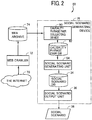
- a social scenario generating system 60 generating social scenarios 38 shown in Fig. 1 has such a configuration as follows.
- Social scenario generating system 60 includes: a WEB crawler 72 collecting a huge number of documents from the Internet 70; a WEB archive 74 storing the collected documents in a computer readable format; and a social scenario generating device 76 for generating social scenarios 38 from WEB archive 74.
- Social scenario generating device 76 includes: a causality phrase pair collecting device 90 for collecting causality phrase pairs from the documents stored in WEB archive 74; causality phrase pair DB 92 storing the causality phrase pairs collected by causality phrase pair collecting device 90 in such a manner that any phrase pair can be accessed and retrieved at least by using its cause phrase as a key; a social scenario generating unit 94 generating a large number of social scenarios by successively linking, among the large number of causality phrase pairs stored in causality phrase pair DB 92, a certain causality phrase pair with another causality phrase pair having as a cause phrase the result phrase of the certain phrase pair; a social scenario DB 34 storing the social scenarios generated by social scenario generating unit 94; and social scenario output unit 36 responsive to a question from a user for extracting social scenarios 38 appropriate as answers from social scenario DB 34, and ranking and outputting the same.
- Causality phrase pair collecting device 90 collects a huge number of causality phrase pairs from WEB archive 74 and stores them in causality phrase pair DB 92.
- Social scenario generating unit 94 generates a social scenario having causality chain, by repetitively linking, among causality phrase pairs stored in causality phrase pair DB 92, a certain causality phrase pair to another causality phrase pair having a cause phrase that can be linked to (i.e., has causal consistency with) the result phrase of the certain phrase pair.
- social scenario output unit 36 When a user poses some question to social scenario output unit 36, social scenario output unit 36 generates a cause phrase from the contents of the question, retrieves social scenarios 38 having the cause phrase as a start point from social scenario DB 34, and presents them to the user. At this time, the presented social scenarios are scored based on a relation with the question, and presented to the user in descending order of scores.
- NPL 1 Gergely Palla, Imre Derenyi, Illes Farkas, and Tamas Vicsek, 2005, Uncovering the overlapping community structure of complex networks in nature and society. Nature, 435:814-818 .
- Patent Literature 1 By the technique described in Patent Literature 1 above, we can obtain a huge number of social scenarios. Very useful social scenarios are often contained therein. When the number of documents stored in WEB archive 74 increases, however, the number of social scenarios we obtain increases. Therefore, there arises a problem that the social scenarios tend to include practically impossible or meaningless scenarios.
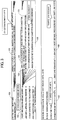
- a plurality of answers including an answer 152 is obtained in response to a question 150, i.e., "What if smartphones achieve widespread use?"
- answers 154, 156, 158, 160 and 162 are obtained as a chain following the answer 152.
- answer 160 "when congestion becomes severe,” “speed decreases,” which leads to a social scenario that "traffic jam occurs” as described in answer 162.”
- the conclusion is that when smartphones achieve widespread use, traffic jam occurs. This context cannot be a reasonable inference and considering the causality chain shown in Fig. 3 , it cannot be a correct inference.
- Patent Literature 1 has the effect that results of inference not expected by humans can be obtained as it provides a huge number of social scenarios. On the other hand, it also provides a huge number of irrelevant scenarios such as described above, posing a serious problem when using the social scenarios.
- an object of the present invention is to provide a future scenario generating device and method that can generate a huge number of appropriate future scenarios, as well as to provide a computer program for that purpose.
- the present invention provides a future scenario generating device, including: phrase pair storage means for storing a large number of causality phrase pairs; causality network building means for building a causality network, by linking, among the phrases stored in the phrase pair storage unit, phrases connectable as causality; community detecting means for detecting a community in the causality network built by the causality network building means; initial phrase selecting means for selecting any phrase as an initial phrase; and future scenario generating means for generating a future scenario, by linking, using the initial phrase selected by the initial phrase selecting means as a start point, causality pairs belonging to the same community as the initial phrase until a predetermined end condition is satisfied.
- the community detecting means includes means for detecting a community in the causality network applying clique percolation method (CPM) on the causality network.
- CPM clique percolation method
- the initial phrase selecting means includes means for selecting, based on a question sentence input by a user, a phrase having causal consistency with a main part of the question sentence as the initial phrase.
- the present invention provides a future scenario generating method, including the steps of: a computer storing a large number of causality phrase pairs in phrase pair storage means; a computer generating a causality network by linking, among the phrases stored in the phrase pair storage unit, phrases connectable as causality; a computer detecting a community in the causality network; a computer selecting any phrase stored in the storage means as an initial phrase; and a computer generating a future scenario, by linking, using the initial phrase as a start point, phrases connectable as causality and belonging to the same community as the initial phrase in the causality network until a predetermined end condition is satisfied.
- the present invention provides a computer program causing a computer to function as all means of any of the future scenario generating devices described above.
- a node 200 corresponds to the question 32 shown in Fig. 1 .
- a causality phrase pair having question 32 in the cause phrase there is an edge from node 200 to a node 202 ("congestion becomes severe"), and that from a causality phrase pair having "congestion becomes severe" in the cause phrase, there is an edge from node 202 to a node 204 ("speed decreases").
- Patent Literature 1 focuses only on the text of causality phrases and, therefore, social scenarios will be generated as well from causality phrases unrelated to the original question 32. This is the reason why causality chains unrelated to the original question slip into the social scenarios generated in accordance with Patent Literature 1.
- Non-Patent Literature 1 a technique for finding an undetected lower level unit forming a network in SNS (Social Networking Service) described in Non-Patent Literature 1, which is directed to a technical field not related to the generation of future scenarios for which the present invention is aiming.
- This technique is mainly used for finding a community in a network in SNS, or for classifying proteins focusing on structural similarities among various proteins.
- Fig. 5 in a certain SNS network 220, it is possible by the method disclosed in Non-Patent Literature 1 to find groups 230, 232, 234 and the like formed by some persons more tightly knitted with each other than others. Such groups are referred to as communities.
- a community is also referred to as a cluster, a group or a module.
- nodes are classified into a community 250 comprised of causality phrases related to smartphones and communities 252, 254 and others each comprised of causality phrases related to other topics, as shown in Fig. 6 .
- a community 250 comprised of causality phrases related to smartphones and communities 252, 254 and others each comprised of causality phrases related to other topics, as shown in Fig. 6 .
- future scenarios are to be generated from causality phrase pairs, and future scenarios are to be generated from a certain starting causality phrase pairs, only those causality phrase pairs in that community to which the start point pair belongs are used.
- one node may belong to a plurality of communities.
- a future scenario generating system 270 in accordance with a first embodiment of the present invention includes a future scenario generating device 272 that generates future scenarios roughly in accordance with the same method as described in Patent Literature 1 based on WEB archive 74, but from only those causality phrase pairs belonging to the same community.
- Future scenario generating device 272 includes: causality phrase pair collecting device 90 and causality phrase pair DB 92 similar to those shown in Fig. 2 ; a question input unit 280 for receiving a question input from a user by interaction through an input/output device 274; a causality network building device 290 for building a causality network (graph) from the causality phrase pairs stored in causality phrase pair DB 92 using a phrase having causal consistency with the main part of the question received by the question input unit 280 as an initial phrase, such that the causality network has nodes corresponding to the cause and result phrases in the causality relations, and edges corresponding to lines connecting nodes representing two phrases coupled by causality relation; and a causality network DB 292 for storing data describing the causality network built by causality network building device 290.
- each node serves as a result phrase with reference to the node in the preceding stage connected thereto, while it serves as a cause phrase with reference to the node in the succeeding stage connected thereto.
- causality network building device 290 evaluates causal consistency between the result phrase of one pair and the cause phrase of the other, and links causality phrase pairs having causal consistency.
- phrases having the same noun and having predicate templates representing the structure of the phrase of the same polarity are regarded as synonymous phrases having causal consistency.
- Predicate templates are classified as simple predicate templates or complex predicate templates.
- a combination of a particle and a predicate (example: ⁇ o, taberu> (eat XX)), connecting one particle with one predicate will be referred to as a "simple predicate template.”
- Examples may include "ga shinko suru (something proceeds),” “o fusegu (prevent something),” “ga kengen suru (something emerges).”
- a sentence immediately preceding the particle forming a simple predicate template, a subject, an object or the like of the predicate is positioned.
- Polarity is a concept introduced to represent the characteristics of a predicate template.
- three polarities that is, excitatory, inhibitory and neutral, are used.
- Excitatory refers to the polarity of a predicate template that describes an event exhibiting or promoting a function, effect or the like of an object indicated by a subject, object or the like of the noun positioned immediately preceding the particle at the head of the predicate template in a sentence.
- Inhibitory refers to the polarity of a predicate template that describes an event that prevents exhibition of a function, effect or the like of an object.
- Neutral refers to the polarity of a predicate template to which the definition of neither excitatory nor inhibitory applies.
- phrase pairs having the same nouns and having the same evaluation polarities of the entire phrases, and phrase pairs having the same nouns and having templates appearing the similar contexts in a huge amount of documents are regarded as synonymous phrases having causal consistency. Whether or not the contexts of appearance are similar is determined by calculating in advance distribution similarities of templates.
- the method of joining phrases is not limited to the above-described use of causal consistency between the two phrases.
- causal consistency may be established if there is a semantic relation bridging a certain phrase to another phrase, though there is no causal consistency between the two phrases.
- one phrase is "sunlight is blocked” and the other phrase is "photosynthesis is prevented.”
- a phrase of "sunlight is blocked” and a cause phrase of "photosynthesis is prevented” may be linked.
- Future scenario generating device 272 further includes: a community detecting device 294 for detecting a community in a causality network stored in causality network DB 292, by the method described in Non-Patent Literature 1, and for forming and outputting a new network (referred to as a causality network) by adding an identifier of a community to phrases corresponding to nodes forming the community; a causality community DB 296 storing the causality network; a future scenario generating unit 298 for generating a huge amount of future scenarios by tracking only the phrases belonging to the same community as that of the main part of the question received by question input unit 280, from the nodes corresponding to various phrases stored in causality community DB 296; a future scenario DB 300 for storing the future scenarios generated by future scenario generating unit 298; and a future scenario output unit 302 for ranking the future scenarios stored in future scenario DB 300 and outputting the results as answers to the question.
- a community detecting device 294 for detecting a community in a causality network stored
- CPM clique percolation method
- a community as used herein is a sub-graph comprised of a set of k-cliques reachable to each other via several adjacent k-cliques. This definition means that two communities can share a node or nodes, as described above.
- Non-Patent Literature 1 Basic algorithms for community detection are disclosed in Non-Patent Literature 1 and its appended document. The appended document is available at http://nature.com/nature/journal/v435/n7043/suppinfo/nature03607.html
- CPM is implemented as various programs. For Example, some are distributed at the following URLs:
- the causality network in accordance with the present embodiment is a directed graph.
- the causality network is regarded as an undirected graph, to apply CPM.
- Algorithms known for community detection include the following examples. Some of these are applicable not only to undirected graphs but also to directed graphs. Some allow one node belonging to a plurality of communities, while others do not. Any of the following examples may be used for detecting a community in a network (graph) in accordance with the present embodiment.
- future scenario generating unit 298 includes: a causality sub-network reading unit 310 for separately reading sub-networks consisting only of phrases having the same community identifiers, from causality networks having community identifiers added, stored in causality community DB 296; a communitywise causality sub-network DB 312 for storing, separate from each other, the causality sub-networks read by causality sub-network reading unit 310; a future scenario candidate generating unit 314 for generating and outputting a plurality of future scenario candidates by linking phrases that can be linked based on causality, using an initial phrase selected by question input unit 280 as a start point, for each sub-network stored in communitywise causality sub-network DB 312, while changing the initial phrases; and a future scenario ranking unit 316 for storing the future scenario candidates output from future scenario candidate generating unit 314, ranking the same in accordance with prescribed scores representing relevance as a future scenario, and outputting the results to future scenario DB 300.
- Each sub-network reading unit 310 for
- future scenario candidate generating unit 3114 the process of generating each future scenario from the initial phrase is terminated when a prescribed condition is satisfied. For example, when the number of phrases linked from the initial phrase reaches a prescribed number, generation of the future scenario may be finished. Alternatively, the process may be terminated when a phrase to be linked can no longer be found in the community.
- future scenario generating system 270 in accordance with the first embodiment operates in the following manner.
- WEB crawler 72 collects a huge amount of documents from sites on the Internet 70, and stores them in WEB archive 74.
- causality phrase pair collecting device 90 collects a huge amount of causality phrase pairs from the documents stored in WEB archive 74.
- the method is as described in Patent Literature 1.
- the collected causality phrase pairs are stored in causality phrase pair DB 92.
- Causality network building device 290 searches the causality phrase pairs stored in causality phrase pair DB 92 for any two pairs where the result phrase of the pair and the cause phrase of the other pair has causal consistency with each other, links these pairs, and by repeating this operation for every causality, generates a causality network and stores it in causality network DB 292.
- Community detecting device 294 detects communities, in the causality network described by the information stored in causality network DB 292, using CPM realizing the method described in Non-Patent Literature 1, generates information describing a new causality network (causality community) by adding, to each causality phrase pair, an identifier indicating the community to which it belongs, and stores the results to causality community DB 296.
- causality sub-network reading unit 310 reads sub-networks consisting of causality phrase pairs belonging to each community from causality community DB 296, and stores them in respective sub-networks, in communitywise causality sub-network DB 312.
- Future scenario candidate generating unit 314 generates a large number of future scenario candidates by successively linking, for each of the communitywise sub-networks stored in communitywise causality sub-network DB 312, phrases in the sub-network in accordance with the presence/absence of causality, and applies the generated candidates to future scenario ranking unit 316. Since this process is executed for each sub-network, a large number of future scenarios, in which only the phrases belonging to each community are linked, are generated.
- Future scenario ranking unit 316 stores the generated future scenarios. When generation of all future scenarios ends, future scenario ranking unit 316 ranks these in accordance with prescribed scores, generates a future scenario display image having scenarios of higher ranks arranged near the root and allowing tracking of each causality, and displays it on a display device, not shown. The display device is controlled such that a requested future scenario is displayed in response to a user's instruction.
- a causality network is built from the causality phrase pairs, and from the causality network, communities are detected.
- Future scenario candidates are generated only from the phrases belonging to the same community. Therefore, there is little possibility that phrases belonging to different communities are erroneously mixed in a generated future scenario, and hence, we can obtain only the future scenarios semantically consistent.
- Detection of a community is determined only by the topology of the network. The text forming the causality phrase pairs are not used. Therefore, this method can provide useful future scenarios regardless of the languages in which the causality phrase pairs are described.
- a community is detected from a causality network stored in causality network DB 292, a new DB (causality community DB) is formed in which each causality phrase pair has a community identifier added thereto, and from here, sub-networks are built community by community.
- the present invention is not limited to such an embodiment.
- a field for storing a community identifier may be provided for each record in the causality network, and if a community to which the causality phrase pair corresponding to each record is found, its identifier may be stored in this field.
- the second embodiment is directed to such an approach.
- future scenario generating system 320 in accordance with the second embodiment includes a future scenario generating device 330 in place of future scenario generating device 272 shown in Fig. 7 .
- Future scenario generating device 330 is different from future scenario generating device 272 in that it does not include causality network DB 292, community detecting device 294 or causality community DB 296 of Fig. 7 , and in place of these it includes a causality network DB 340 comprised of records of causality networks, each having a field for community identifier provided in advance, as described above.
- Future scenario generating device 330 is also different from future scenario generating device 272 in that it includes a community detecting device 342, which detects communities from the causality network represented by information stored in causality network DB 340, sets the identifier field of the record of each causality phrase pair to the identifier of the community to which the causality phrase pair belongs, and updates the record.
- the second embodiment is characterized in that in place of newly building causality community DB 296 from causality network DB 292, causality sub-network reading unit 310 is updated and thereby information similar to that of causality community DB 296 is obtained. Except for this point, the configuration and operation are the same as the configuration and operation of the first embodiment.
- causality community DB 296 is built from causality network DB 292.
- causality network DB 340 is updated by the community identifier, so that causality network DB 340 has the information similar to that of causality community DB 296.
- the present invention is not limited to such embodiments.
- the causality network DB itself is unchanged, and a list of communities and causality phrase pairs belonging to the communities (referred to as a community list) is saved as a separate file.
- a future scenario generating system 350 in accordance with the third embodiment is different from future scenario generating system 270 shown in Fig. 7 in that it includes a future scenario generating device 360 in place of future scenario generating device 272.
- future scenario generating device 360 includes, in place of community detecting device 294, causality community DB 296 and future scenario generating unit 298 of Fig. 7 , a community detecting device 370 detecting communities from the causality network described by the information stored in causality network DB 292, and outputting, for each community, a community list comprised of an identifier of the community and a list of identifiers of causality phrase pairs belonging to the community, a community list storage unit 372 storing the community lists, and a future scenario generating unit 374 generating and outputting future scenarios for each community, with reference to the community lists stored in community list storage unit 372.
- community detecting device 370 detects communities of a causality network based on the information stored in causality network DB 292, and stores, for each community, a community list in community list storage unit 372.
- Future scenario generating unit 374 reads the community list stored in community list storage unit 372, and for each community, reads causality phrase pairs forming the community from causality network DB 292, generates a future scenario and outputs it to future scenario DB 300.
- future scenario generating device 360 every time the future scenario generating device 360 generates a community list related to a certain community and outputs it to community list storage unit 372, it is possible for future scenario generating unit 374 to perform processing related to that community. Specifically, community detection by future scenario generating device 360 and generation of future scenario by future scenario generating unit 374 can be executed in a simultaneous and parallel manner.
- future scenario generating device 360 are the same as those of future scenario generating device 272 shown in Fig. 7 .
- the future scenario generating systems in accordance with the embodiments above all build a causality network after receiving a question and generate future scenarios from the built causality network.
- the present invention is not limited to such embodiments.
- causality phrase pair DB 92 For example, for each phrase stored beforehand in causality phrase pair DB 92, an overall causality network may be built so that a causality network having that phrase as a start point can be obtained, and community detection may be done in advance.
- community detection may be done in advance.
- determination is made as to which community a phrase semantically the same as the question belongs, and future scenarios may be generated only from the phrases belonging to this community.
- each future scenario is adapted to store an identifier of the community to which the phrase used for generating the future scenario belongs.
- a future scenario having as a start point a phrase having the same meaning as the question, and having the same community identifier is searched and output. In this manner, a future scenario appropriate for the question can be selected and displayed.
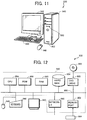
- Fig. 11 shows an appearance of computer system 930
- Fig. 12 shows an internal configuration of computer system 930.
- computer system 930 includes a computer 940 having a memory port 952 and a DVD (Digital Versatile Disk) drive 950, a keyboard 946, a mouse 948, and a monitor 942.
- DVD Digital Versatile Disk
- computer 940 includes, in addition to memory port 952 and DVD drive 950, a CPU (Central Processing Unit) 956, a bus 966 connected to CPU 956, memory port 952 and DVD drive 950, a read only memory (ROM) 958 storing a boot-up program and the like, and a random access memory (RAM) 960 connected to bus 966, storing program instructions, a system program and work data.
- Computer system 930 further includes a network interface (I/F) 944 providing the computer 940 with the connection to a network allowing communication with another terminal.
- Network I/F 944 may be connected to the Internet 70.
- the computer program causing computer system 930 to function as each of the functioning sections of the system in accordance with each of the embodiments above is stored in a DVD 962 or a removable memory 964 loaded to DVD drive 950 or to memory port 952, and transferred to hard disk 954.
- the program may be transmitted to computer 940 through a network, not shown, and stored in hard disk 954.
- the program is loaded to RAM 960.
- the program may be directly loaded from DVD 962, removable memory 964 or through a network to RAM 960.
- the program includes a plurality of instructions to cause computer 940 to operate as functioning sections of the system in accordance with each of the embodiments above. Some of the basic functions necessary to realize the operation are provided by the operating system (OS) running on computer 940, by a third party program, or by a module of various programming tool kits installed in computer 940. Therefore, the program may not necessarily include all of the functions necessary to realize the system and method of the present embodiment.
- the program has only to include instructions to realize the functions of the above-described system by calling appropriate functions or appropriate program tools in a program tool kit in a manner controlled to attain desired results.
- the operation of computer system 930 is well known and, therefore, description thereof will not be given here.
- the present invention is applicable to provide decision making services considering risks and chances such as question-answering services; risk assessment services; auxiliary services for marketing research; and prediction of market trend in every industry, as well as to manufacturing of devices for that purpose.
Landscapes
- Engineering & Computer Science (AREA)
- Theoretical Computer Science (AREA)
- Physics & Mathematics (AREA)
- General Engineering & Computer Science (AREA)
- General Physics & Mathematics (AREA)
- Computational Linguistics (AREA)
- Artificial Intelligence (AREA)
- Mathematical Physics (AREA)
- Data Mining & Analysis (AREA)
- Databases & Information Systems (AREA)
- Evolutionary Computation (AREA)
- Computing Systems (AREA)
- Software Systems (AREA)
- Health & Medical Sciences (AREA)
- Audiology, Speech & Language Pathology (AREA)
- General Health & Medical Sciences (AREA)
- Human Computer Interaction (AREA)
- Information Retrieval, Db Structures And Fs Structures Therefor (AREA)
- Management, Administration, Business Operations System, And Electronic Commerce (AREA)
Applications Claiming Priority (2)
| Application Number | Priority Date | Filing Date | Title |
|---|---|---|---|
| JP2015159376A JP6653499B2 (ja) | 2015-08-12 | 2015-08-12 | 未来シナリオ生成装置及び方法、並びにコンピュータプログラム |
| PCT/JP2016/072362 WO2017026303A1 (ja) | 2015-08-12 | 2016-07-29 | 未来シナリオ生成装置及び方法、並びにコンピュータプログラム |
Publications (2)
| Publication Number | Publication Date |
|---|---|
| EP3336719A1 true EP3336719A1 (de) | 2018-06-20 |
| EP3336719A4 EP3336719A4 (de) | 2019-01-09 |
Family
ID=57984521
Family Applications (1)
| Application Number | Title | Priority Date | Filing Date |
|---|---|---|---|
| EP16835000.7A Withdrawn EP3336719A4 (de) | 2015-08-12 | 2016-07-29 | Zukunftsszenarioerzeugungsvorrichtung und -verfahren und computerprogramm |
Country Status (6)
| Country | Link |
|---|---|
| US (1) | US20200202233A1 (de) |
| EP (1) | EP3336719A4 (de) |
| JP (1) | JP6653499B2 (de) |
| KR (1) | KR102793455B1 (de) |
| CN (1) | CN108027824B (de) |
| WO (1) | WO2017026303A1 (de) |
Families Citing this family (5)
| Publication number | Priority date | Publication date | Assignee | Title |
|---|---|---|---|---|
| CN107704572B (zh) * | 2017-09-30 | 2021-07-13 | 北京奇虎科技有限公司 | 人物实体的创作角度挖掘方法及装置 |
| JP6467678B1 (ja) * | 2018-10-08 | 2019-02-13 | モンド・ラボ株式会社 | 質問応答システム、装置、方法、サーバ装置及びプログラム |
| JP2022122029A (ja) * | 2021-02-09 | 2022-08-22 | 株式会社東芝 | データ処理装置、データ処理方法及びデータ処理プログラム |
| US12456072B2 (en) | 2021-03-22 | 2025-10-28 | International Business Machines Corporation | Method and system for automating scenario planning |
| JP7626440B2 (ja) * | 2021-04-12 | 2025-02-04 | 国立大学法人 東京大学 | 情報処理システム、情報処理方法及びプログラム |
Family Cites Families (14)
| Publication number | Priority date | Publication date | Assignee | Title |
|---|---|---|---|---|
| US20060106788A1 (en) * | 2004-10-29 | 2006-05-18 | Microsoft Corporation | Computer-implemented system and method for providing authoritative answers to a general information search |
| JP5002963B2 (ja) * | 2006-01-17 | 2012-08-15 | オムロン株式会社 | 要因推定装置、要因推定プログラム、要因推定プログラムを記録した記録媒体、および要因推定方法 |
| JP2009059323A (ja) * | 2007-09-04 | 2009-03-19 | Omron Corp | 知識生成システム |
| GB2463515A (en) * | 2008-04-23 | 2010-03-24 | British Telecomm | Classification of online posts using keyword clusters derived from existing posts |
| US8060513B2 (en) * | 2008-07-01 | 2011-11-15 | Dossierview Inc. | Information processing with integrated semantic contexts |
| US8010537B2 (en) * | 2008-08-27 | 2011-08-30 | Yahoo! Inc. | System and method for assisting search requests with vertical suggestions |
| CN101685455B (zh) * | 2008-09-28 | 2012-02-01 | 华为技术有限公司 | 数据检索的方法和系统 |
| JP5382651B2 (ja) * | 2009-09-09 | 2014-01-08 | 独立行政法人情報通信研究機構 | 単語対取得装置、単語対取得方法、およびプログラム |
| JP5682448B2 (ja) * | 2011-05-20 | 2015-03-11 | 日本電気株式会社 | 因果単語対抽出装置、因果単語対抽出方法および因果単語対抽出用プログラム |
| JP5834883B2 (ja) * | 2011-12-20 | 2015-12-24 | 日本電気株式会社 | 因果関係要約方法、因果関係要約装置及び因果関係要約プログラム |
| JP5924666B2 (ja) * | 2012-02-27 | 2016-05-25 | 国立研究開発法人情報通信研究機構 | 述語テンプレート収集装置、特定フレーズペア収集装置、及びそれらのためのコンピュータプログラム |
| CN104239286A (zh) * | 2013-06-24 | 2014-12-24 | 阿里巴巴集团控股有限公司 | 同义短语的挖掘方法和装置及搜索相关内容的方法和装置 |
| US10424016B2 (en) * | 2013-12-19 | 2019-09-24 | International Business Machines Corporation | Modeling asset transfer flow relationships discovered in unstructured data |
| JP5904559B2 (ja) * | 2013-12-20 | 2016-04-13 | 国立研究開発法人情報通信研究機構 | シナリオ生成装置、及びそのためのコンピュータプログラム |
-
2015
- 2015-08-12 JP JP2015159376A patent/JP6653499B2/ja active Active
-
2016
- 2016-07-29 CN CN201680047214.1A patent/CN108027824B/zh active Active
- 2016-07-29 WO PCT/JP2016/072362 patent/WO2017026303A1/ja not_active Ceased
- 2016-07-29 US US15/751,594 patent/US20200202233A1/en not_active Abandoned
- 2016-07-29 KR KR1020187003167A patent/KR102793455B1/ko active Active
- 2016-07-29 EP EP16835000.7A patent/EP3336719A4/de not_active Withdrawn
Also Published As
| Publication number | Publication date |
|---|---|
| KR20180040578A (ko) | 2018-04-20 |
| CN108027824A (zh) | 2018-05-11 |
| US20200202233A1 (en) | 2020-06-25 |
| JP2017037544A (ja) | 2017-02-16 |
| JP6653499B2 (ja) | 2020-02-26 |
| WO2017026303A1 (ja) | 2017-02-16 |
| CN108027824B (zh) | 2022-05-03 |
| KR102793455B1 (ko) | 2025-04-09 |
| EP3336719A4 (de) | 2019-01-09 |
Similar Documents
| Publication | Publication Date | Title |
|---|---|---|
| US10725836B2 (en) | Intent-based organisation of APIs | |
| CN109635296B (zh) | 新词挖掘方法、装置计算机设备和存储介质 | |
| JP5904559B2 (ja) | シナリオ生成装置、及びそのためのコンピュータプログラム | |
| US20200097601A1 (en) | Identification of an entity representation in unstructured data | |
| CN112365171A (zh) | 基于知识图谱的风险预测方法、装置、设备及存储介质 | |
| EP3336719A1 (de) | Zukunftsszenarioerzeugungsvorrichtung und -verfahren und computerprogramm | |
| CN112165462A (zh) | 基于画像的攻击预测方法、装置、电子设备及存储介质 | |
| CN112084781B (zh) | 一种标准术语确定方法、装置及存储介质 | |
| WO2015093540A1 (ja) | フレーズペア収集装置、及びそのためのコンピュータプログラム | |
| WO2016200667A1 (en) | Identifying relationships using information extracted from documents | |
| WO2015093539A1 (ja) | 複雑述語テンプレート収集装置、及びそのためのコンピュータプログラム | |
| CN116468130A (zh) | 基于联邦学习的样本选择方法、系统、电子设备及介质 | |
| CN107729569B (zh) | 一种融合网络结构和文本信息的社交关系预测方法 | |
| Quelle et al. | Why academics are leaving twitter for bluesky | |
| Giri et al. | Automated and interpretable fake news detection with explainable artificial intelligence | |
| Tao et al. | A traffic accident morphology diagnostic model based on a rough set decision tree | |
| CN111968753A (zh) | 疫情监控方法、装置、计算机设备和存储介质 | |
| CN115700518A (zh) | 一种基于二阶层论的事件推演方法、装置及设备 | |
| Murthy et al. | Examining hurricane–related social media topics longitudinally and at scale: A transformer-based approach | |
| CN113505889B (zh) | 图谱化知识库的处理方法、装置、计算机设备和存储介质 | |
| JP2024507029A (ja) | ウェブページ識別方法、装置、電子機器、媒体およびコンピュータプログラム | |
| CN113157871B (zh) | 应用人工智能的新闻舆情文本处理方法、服务器及介质 | |
| Janssen et al. | Nonuniform distribution of nodes in the spatial preferential attachment model | |
| CN114697108A (zh) | 基于集成学习的系统日志异常检测方法 | |
| Aziz et al. | Social network analytics: natural disaster analysis through twitter |
Legal Events
| Date | Code | Title | Description |
|---|---|---|---|
| PUAI | Public reference made under article 153(3) epc to a published international application that has entered the european phase |
Free format text: ORIGINAL CODE: 0009012 |
|
| 17P | Request for examination filed |
Effective date: 20180301 |
|
| AK | Designated contracting states |
Kind code of ref document: A1 Designated state(s): AL AT BE BG CH CY CZ DE DK EE ES FI FR GB GR HR HU IE IS IT LI LT LU LV MC MK MT NL NO PL PT RO RS SE SI SK SM TR |
|
| AX | Request for extension of the european patent |
Extension state: BA ME |
|
| RAP1 | Party data changed (applicant data changed or rights of an application transferred) |
Owner name: NATIONAL INSTITUTE OF INFORMATION AND COMMUNICATIO |
|
| DAV | Request for validation of the european patent (deleted) | ||
| DAX | Request for extension of the european patent (deleted) | ||
| A4 | Supplementary search report drawn up and despatched |
Effective date: 20181211 |
|
| RIC1 | Information provided on ipc code assigned before grant |
Ipc: G06F 17/30 20060101AFI20181205BHEP Ipc: G06F 19/00 20180101ALI20181205BHEP Ipc: G06N 5/04 20060101ALI20181205BHEP |
|
| STAA | Information on the status of an ep patent application or granted ep patent |
Free format text: STATUS: THE APPLICATION IS DEEMED TO BE WITHDRAWN |
|
| 18D | Application deemed to be withdrawn |
Effective date: 20190719 |