EP3335485B1 - Verfahren, vorrichtungen und system für das senden einer verbindungsaufbau-anfragenachricht in einem drahtlosen kommunikationssystem - Google Patents
Verfahren, vorrichtungen und system für das senden einer verbindungsaufbau-anfragenachricht in einem drahtlosen kommunikationssystem Download PDFInfo
- Publication number
- EP3335485B1 EP3335485B1 EP16754500.3A EP16754500A EP3335485B1 EP 3335485 B1 EP3335485 B1 EP 3335485B1 EP 16754500 A EP16754500 A EP 16754500A EP 3335485 B1 EP3335485 B1 EP 3335485B1
- Authority
- EP
- European Patent Office
- Prior art keywords
- terminal device
- base station
- connection request
- request message
- communications resource
- Prior art date
- Legal status (The legal status is an assumption and is not a legal conclusion. Google has not performed a legal analysis and makes no representation as to the accuracy of the status listed.)
- Not-in-force
Links
Images





Classifications
-
- H—ELECTRICITY
- H04—ELECTRIC COMMUNICATION TECHNIQUE
- H04W—WIRELESS COMMUNICATION NETWORKS
- H04W68/00—User notification, e.g. alerting and paging, for incoming communication, change of service or the like
- H04W68/005—Transmission of information for alerting of incoming communication
-
- H—ELECTRICITY
- H04—ELECTRIC COMMUNICATION TECHNIQUE
- H04W—WIRELESS COMMUNICATION NETWORKS
- H04W72/00—Local resource management
- H04W72/20—Control channels or signalling for resource management
- H04W72/21—Control channels or signalling for resource management in the uplink direction of a wireless link, i.e. towards the network
-
- H—ELECTRICITY
- H04—ELECTRIC COMMUNICATION TECHNIQUE
- H04W—WIRELESS COMMUNICATION NETWORKS
- H04W52/00—Power management, e.g. Transmission Power Control [TPC] or power classes
- H04W52/02—Power saving arrangements
- H04W52/0209—Power saving arrangements in terminal devices
- H04W52/0225—Power saving arrangements in terminal devices using monitoring of external events, e.g. the presence of a signal
- H04W52/0229—Power saving arrangements in terminal devices using monitoring of external events, e.g. the presence of a signal where the received signal is a wanted signal
-
- H—ELECTRICITY
- H04—ELECTRIC COMMUNICATION TECHNIQUE
- H04W—WIRELESS COMMUNICATION NETWORKS
- H04W68/00—User notification, e.g. alerting and paging, for incoming communication, change of service or the like
-
- H—ELECTRICITY
- H04—ELECTRIC COMMUNICATION TECHNIQUE
- H04W—WIRELESS COMMUNICATION NETWORKS
- H04W68/00—User notification, e.g. alerting and paging, for incoming communication, change of service or the like
- H04W68/02—Arrangements for increasing efficiency of notification or paging channel
-
- H—ELECTRICITY
- H04—ELECTRIC COMMUNICATION TECHNIQUE
- H04W—WIRELESS COMMUNICATION NETWORKS
- H04W72/00—Local resource management
- H04W72/20—Control channels or signalling for resource management
- H04W72/23—Control channels or signalling for resource management in the downlink direction of a wireless link, i.e. towards a terminal
-
- H—ELECTRICITY
- H04—ELECTRIC COMMUNICATION TECHNIQUE
- H04W—WIRELESS COMMUNICATION NETWORKS
- H04W74/00—Wireless channel access
- H04W74/002—Transmission of channel access control information
- H04W74/006—Transmission of channel access control information in the downlink, i.e. towards the terminal
-
- H—ELECTRICITY
- H04—ELECTRIC COMMUNICATION TECHNIQUE
- H04W—WIRELESS COMMUNICATION NETWORKS
- H04W76/00—Connection management
- H04W76/10—Connection setup
-
- H—ELECTRICITY
- H04—ELECTRIC COMMUNICATION TECHNIQUE
- H04W—WIRELESS COMMUNICATION NETWORKS
- H04W74/00—Wireless channel access
- H04W74/08—Non-scheduled access, e.g. ALOHA
- H04W74/0833—Random access procedures, e.g. with 4-step access
-
- H—ELECTRICITY
- H04—ELECTRIC COMMUNICATION TECHNIQUE
- H04W—WIRELESS COMMUNICATION NETWORKS
- H04W76/00—Connection management
- H04W76/10—Connection setup
- H04W76/11—Allocation or use of connection identifiers
-
- H—ELECTRICITY
- H04—ELECTRIC COMMUNICATION TECHNIQUE
- H04W—WIRELESS COMMUNICATION NETWORKS
- H04W88/00—Devices specially adapted for wireless communication networks, e.g. terminals, base stations or access point devices
- H04W88/02—Terminal devices
-
- H—ELECTRICITY
- H04—ELECTRIC COMMUNICATION TECHNIQUE
- H04W—WIRELESS COMMUNICATION NETWORKS
- H04W88/00—Devices specially adapted for wireless communication networks, e.g. terminals, base stations or access point devices
- H04W88/08—Access point devices
Definitions
- This disclosure relates to wireless telecommunications.
- LC-MTC Low Complexity MTC (Machine Type Communication) UE (user equipment)
- 3GPP 3 rd Generation Partnership Project
- LC-MTC UE user equipment
- 3GPP 3 rd Generation Partnership Project
- a technique to reduce complexity and cost for LC-MTC UE is to restrict the UE to operate within 6 PRBs (Physical Resource Blocks).
- the system bandwidth is therefore divided into multiple 6 PRB narrowbands and the LC-MTC UE is expected to be able to tune into any of these narrowbands.
- CE coverage enhancement
- the coverage for LC-MTC is extended by 15 dB (decibels) relative to that of a so-called Cat-1 UE.
- the main technique for CE is via numerous repetitions of the same message, with the received versions being combined in order to improve the signal to noise ratio of the combination as compared to that of any individual instance of the message. Numerous repetition of the same message would significantly decrease the spectral efficiency. Therefore, for operation in CE mode, multiple coverage enhancement levels (CE levels) or repetition levels are introduced such that the appropriate number of repetitions is used at each CE level.
- the network pages a UE in idle mode to initiate the UE to start a Radio Resource Control (RRC) connection.
- the UE would then start a RACH (Random Access Channel) process, which consists of transmitting a Physical Random Access Channel (PRACH) preamble and receiving a RAR (Random Access Response) from the eNB (e-NodeB). Since more than one UE may access the network using PRACH within the same time, the RAR would indicate which PRACH preamble the network responds to.
- the RAR also provides an uplink grant that schedules the subsequent Message 3 where the UE would send a RRC Connection Request message.
- the PRACH (preamble) needs to be repeated numerous times. It has been agreed in 3GPP that there will be 3 CE levels for PRACH, each CE level representing a greater number of repetitions (and so, at least in principle, the ability to cope with a greater range and thus a worse signal to noise ratio).
- the LC-MTC UE would perform several PRACH attempts in each CE level and if it fails after the maximum number of attempts is reached, it will move to the next CE level and start a further set of PRACH attempts.
- the RAR would also be sent in a repetitive manner.
- a RAR time window may also be used in order to spread the load of the RAR and the LC-MTC UE would need to decode each MAC PDU within the time window.
- the present disclosure can address or mitigates the problems discussed above.
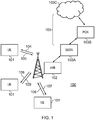
- Figure 1 provides a schematic diagram of a mobile telecommunications system 100, where the system includes mobile communications terminals (such as UEs) 101, infrastructure equipment 102 and a core network 103.
- mobile communications terminals such as UEs
- the infrastructure equipment may also be referred to as a base station, network element, enhanced Node B (eNodeB or eNB) or a coordinating entity for example, and provides a wireless access interface to the one or more communications terminals within a coverage area or cell.
- the one or more mobile communications terminals may communicate data via the transmission and reception of signals representing data using the wireless access interface.
- the infrastructure equipment 102 is communicatively linked to core network components such as a serving gateway support node (SGSN) 103A, a packet gateway node 103B and an external network 103C, which may be connected to one or more other communications systems or networks which have a similar structure to that formed from communications terminals 101 and infrastructure equipment 102.
- SGSN serving gateway support node
- 103B packet gateway node
- external network 103C external network
- the core network 103 may also provide functionality including authentication, mobility management, charging and so on for the communications terminals served by the network entity.
- the mobile communications terminals 101 of Figure 1 may also be referred to as communications terminals, user equipment (UE), terminal devices and so forth, and are configured to communicate with one or more other communications terminals served by the same or a different coverage area via the infrastructure equipment. These communications may be performed by transmitting and receiving signals representing data using the wireless access interface over the two way communications links represented by lines 104 to 109, where 104, 106 and 108 represent downlink communications from the infrastructure equipment to the communications terminals and 105, 107 and 109 represent uplink communications from the communications terminals to the infrastructure equipment.
- the telecommunications system 100 may operate in accordance with a telecommunications protocol. For instance in some examples the system 100 may generally operate in accordance with a 3GPP Long Term Evolution (LTE) standard where the network entity and communications terminals are commonly referred to as eNodeB and UEs, respectively.
- LTE 3GPP
- Mobile telecommunications systems such as those arranged in accordance with the 3GPP defined Long Term Evolution (LTE) architecture use an orthogonal frequency division modulation (OFDM) based wireless access interface for the radio downlink (so-called OFDMA) and a single carrier frequency division multiple access scheme (SC-FDMA) on the radio uplink.
- OFDM orthogonal frequency division modulation
- SC-FDMA single carrier frequency division multiple access scheme
- FIG 2 provides a simplified schematic diagram of the structure of a downlink of a wireless access interface that may be provided by or in association with the base station of Figure 1 when the communications system is operating in accordance with the LTE standard.
- the wireless access interface of the downlink from a base station to a UE is based upon an orthogonal frequency division multiplexing (OFDM) access radio interface.
- OFDM orthogonal frequency division multiplexing
- an OFDM interface the resources of the available bandwidth are divided in frequency into a plurality of orthogonal subcarriers and data is transmitted in parallel on a plurality of orthogonal subcarriers, where bandwidths between 1.4MHZ and 20MHz bandwidth may be divided into orthogonal subcarriers.
- the number of subcarriers varies between 72 subcarriers (1.4MHz) and 1200 subcarriers (20MHz).
- the subcarriers are grouped on a basis of 2 n , for example 128 to 2048, so that both a transmitter and a receiver can use an inverse and a forward Fast Fourier Transform to convert the sub-carriers from the frequency domain to the time domain and from the time domain to the frequency domain respectively.
- Each subcarrier bandwidth may take any value but in LTE it is fixed at 15kHz.
- the resources of the wireless access interface are also temporally divided into frames where a frame 200 lasts 10ms and is subdivided into 10 subframes 201 each with a duration of 1ms.
- Each subframe 201 is formed from 14 OFDM symbols and is divided into two slots 220, 222 each of which comprise six or seven OFDM symbols depending on whether a normal or extended cyclic prefix is being utilised between OFDM symbols for the reduction of inter symbol interference.
- the resources within a slot may be divided into resources blocks 203 each comprising 12 subcarriers for the duration of one slot and the resources blocks further divided into resource elements 204 which span one subcarrier for one OFDM symbol, where each rectangle 204 represents a resource element.
- the downlink control channel referred to as the physical downlink control channel (PDCCH) and a shared channel of resources for transmitting data to UEs which is the physical downlink shared channel (PDSCH).
- PDCCH physical downlink control channel
- PDSCH physical downlink shared channel
- Figure 3 provides a simplified schematic diagram of the structure of an uplink of an LTE wireless access interface that may be provided by or in association with the base station of Figure 1 .
- the uplink wireless access interface is based upon a single carrier frequency division multiplexing FDM (SC-FDM) interface and downlink and uplink wireless access interfaces may be provided by frequency division duplexing (FDD) or time division duplexing (TDD), where in TDD implementations subframes switch between uplink and downlink subframes in accordance with predefined patterns.
- FDD frequency division duplexing
- TDD time division duplexing
- a common uplink frame structure is utilised.
- the simplified structure of Figure 3 illustrates such an uplink frame in an FDD implementation.
- a frame 300 is divided in to 10 subframes 301 of 1ms duration where each subframe 301 comprises two slots 302 of 0.5ms duration. Each slot is then formed from seven OFDM symbols 303 where a cyclic prefix 304 is inserted between each symbol in a manner equivalent to that in downlink subframes.
- the LTE data or datagram is transmitted on the PDSCH on the downlink and on the PUSCH in the uplink.
- the resources on the PDSCH and the PUSCH are allocated to the terminal device by the base station.
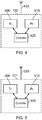
- FIG. 4 schematically illustrates a base station 102 in more detail.
- the base station 102 includes a transmitter (Tx) 400 for transmitting signals via a wireless access interface (and via an antenna 430) to the one or more communications devices or UEs, and a receiver (Rx) 410 to receive signals from the one or more UEs within the coverage area of the base station.
- a controller 420 controls the transmitter 400 and the receiver 410 to transmit and receive the signals via the wireless access interface.
- the transmitter 400 and receiver 410 together form a transceiver.
- the controller 420 may perform a function of controlling the allocation of communications resource elements of the wireless access interface and may in some examples include a scheduler for scheduling transmissions via the wireless access interface for both an uplink and the downlink.
- Figure 4 therefore provides an example of a base station for use in a wireless telecommunications system, the base station comprising a transceiver 400, 410 configured to perform wireless communication with a terminal device; and a controller 420 configured to control the transceiver to send a wireless paging signal to the terminal device.
- FIG. 5 schematically illustrates a UE 101 in more detail.
- the UE 101 includes a transmitter 500 associated with an antenna 530 for transmitting signals on the uplink of the wireless access interface to the base station 102 and a receiver 510 for receiving signals transmitted by the base station 102 on the downlink via the wireless access interface.
- the transmitter 500 and the receiver 510 are controlled by a controller 520.
- the transmitter 500 and receiver 510 together form a transceiver. Operations of a UE discussed in connection with the description below may be undertaken or overseen, at least in part, by the controller 520.
- the UE 101 is a so-called Low Complexity Machine Type Communication (LC-MTC) terminal device.
- LC-MTC Low Complexity Machine Type Communication
- Figure 5 therefore provides an example of a terminal device for use in a wireless telecommunications system, the terminal device comprising: a transceiver 500, 510 configured to perform wireless communication with a base station; and a controller 520 configured to control the transceiver to detect a wireless paging signal from the base station.
- Figure 6 schematically illustrates a previously proposed RACH (random access channel) process.
- the network pages a terminal device in idle mode to initiate the terminal device to start a Radio Resource Control (RRC) connection.
- the terminal device starts a RACH (Random Access Channel) process, which consists of transmitting a Physical Random Access Channel (PRACH) preamble 600 and receiving a RAR (Random Access Response) 610 from the base station. Since more than one terminal device may access the network using PRACH within the same time, the RAR can indicate which PRACH preamble the network responds to.
- the RAR also provides an uplink grant that schedules the subsequent Message 3 (620) by which the terminal device sends a RRC Connection Request message.
- RARs can be multiplexed into a MAC PDU (Medium Access Control Protocol Data Unit) and this MAC PDU is transmitted within a RAR time window, 3 subframes after the transmission of the PRACH preamble.
- the RAR time window size can be 2 to 10 subframes, which is to say that up to 10 MAC PDUs (containing RARs) can be sent within the RAR time window.
- the terminal device decodes each MAC PDU within the RAR time window until it finds its RAR. This is followed by the base station transmitting a Message 4 (RRC Connection Setup) 630 and the terminal device transmitting a Message 5 (RRC Connection Setup Complete) 640 to complete the RRC connection.
- a Message 4 RRC Connection Setup
- a Message 5 RRC Connection Setup Complete
- the information which the base station provides to the terminal device in the RAR (Random Access Response) message 610 may include one or more of the following:
- a communications resource provided by the base station comprises one or more of: one or more radio frequency band; a temporary radio network identifier, a timing advance parameter and one or more transmission time slots.
- more than one radio frequency band can be defined as the communications resource if a frequency hopping or similar arrangement is in use.
- plural time slots can be defined as the communications resource if repetition is used (which is to say, the plural time slots relating the repeated transmissions can be defined by a single allocation of uplink resources.
- the present disclosure recognizes that for operation in coverage enhanced (CE) mode, which makes use of message repetition to provide more robust communications in poor signal strength or noisy environments, the PRACH (preamble) needs to be repeated numerous times. The number of repetitions depends upon the so-called CE level or mode.
- a terminal device according to LC-MTC potentially performs several PRACH attempts in each CE level and if it fails after the maximum number of attempts is reached, it will move to the next higher CE level (representing a next higher number of repetitions) and restart a further set of PRACH attempts.
- the RAR response is also sent in a repetitive manner.
- both of these factors could lead to the consumption of significant amounts of battery power in an example LC-MTC terminal device, and could also tie up radio resources over an extended period.
- Embodiments of the present disclosure relate to techniques to alleviate these problems, based around providing additional information as part of a paging operation.
- Figure 7 is a schematic flow chart of a paging operation, which includes the start of a paging cycle at a step 700.
- Paging is used for network-initiated communication with a terminal device and involves, at the start of a paging cycle, the terminal device waking up in order to detect paging information being transmitted.
- the paging cycles occur from time to time (for example, periodically) so a terminal device can remain in a quiescent or idle state except when the paging cycle is taking place.
- the terminal device detects whether any paging messages are directed to that terminal device. It may well be that in any particular paging cycle, there might be no messages directed to that terminal device. However, in the schematic example of Figure 7 , the base station is in fact paging that particular terminal device at a step 730.
- the terminal device In response to detection of a paging message directed to that terminal device, the terminal device initiates wireless communication with the base station at a step 740, as an example of the controller of the terminal device controlling the transceiver to establish wireless communication with the base station by sending the connection request message using the allocated communications resource.
- some information is provided as part of or in association with the paging transmission to allow message 3 ( Figure 6 ) to be sent directly at the step 740, or in other words avoiding the need for the PRACH (preamble) and the RAR response.
- the paging process itself can provide the necessary information for the terminal device to send the RRC connection request at message 3. This can therefore reduce the need for, or remove, the first two steps of the RACH process shown in Figure 6 . In turn, this provides potential improvements in power consumption and/or network usage.
- the two steps removed or reduced with respect to the RACH process of Figure 6 require multiple PRACH repetitions, ramping up to higher numbers of repetitions if successful transmission is not achieved, blind decoding for MPDCCH messages that schedule the RAR and also a blind decoding for an RAR within an RAR window. These can consume significant amounts of battery power compared to the remaining steps (message 3 onwards) where RRC connection messages are exchanged.
- the present technique can also reduce or eliminate contention at the preamble stage since the LC-MTC terminal device is provided with an uplink grant and therefore information such as the so-called Backoff Indicator that is in the MAC PDU (carrying the RAR) are not required. Since the base station knows specifically which LC-MTC terminal device it is providing the uplink grant for, information such as that indicating which preamble the base station is responding to is also not required.
- the information required for the LC-MTC terminal device to transmit message 3 contains at least the uplink grant and temporary RNTI.
- Figure 8 is a schematic timing diagram illustrating a part of a paging operation in which message 3 grant information (the information defined above, or in other words, a communications resource provided by the base station comprising one or more of: a radio frequency band, a temporary radio network identifier and a transmission time slot) which is required for the terminal device to go straight to issuing message 3 without the need for the PRACH (preamble) and RAR response is contained in the DCI (MPDCCH) 800 which schedules the paging message 810, and/or in the paging message 810 itself (carried by the PDSCH).
- message 3 grant information the information defined above, or in other words, a communications resource provided by the base station comprising one or more of: a radio frequency band, a temporary radio network identifier and a transmission time slot
- MPDCCH DCI
- the message 3 grant information is in the paging message 810
- the message 3 grant information is in the DCI 800
- a so-called paging occasion is defined, for example, on a periodic basis, as a time t 0 where the terminal device wakes up from a quiescent "DRX" (discontinuous reception) mode and monitors the MPDCCH search space for a possible DCI (downlink control information) which schedules the paging message.
- the terminal device detects an MPDCCH 800 and decodes it.
- the decoded MPDCCH 800 provides scheduling information to allow the terminal device to detect and decode the PDSCH containing the paging message at time t 2 .
- the paging messaging 810 contains not only the identifier for the particular terminal device such as an IMSI (international mobile subscriber identity) but also the message 3 grant information (an uplink grant and a temporary RNTI) to allow message 3 to be sent without the need for the PRACH (preamble) and RAR response. Using this information, the terminal device sends message 3 820 using the PUSCH resource provided in the message 3 grant.
- IMSI international mobile subscriber identity
- message 3 grant information an uplink grant and a temporary RNTI
- the message 3 grant information in the paging message 810 it is instead (or even, in some examples, as well) included in the DCI 800 that schedules the paging message.
- This arrangement can be useful when the number of terminal devices to be paged at a current paging cycle is small or even one.
- the DCI 800 can contain part of the message 3 grant information that is common to all currently paged terminal devices, and the paging message 810 contains the remaining (terminal device-specific) information.
- the DCI 800 may contain a reference (base) narrowband where the PUSCH for message 3 is to be transmitted, and the paging message 810 contains an offset to this reference narrowband to pinpoint an exact narrowband PRB (physical resource block) for transmission of the PUSCH message 3.
- the base station transmits a paging message at a time t 0 in a subframe n to the terminal device. Because of propagation delays the terminal device receives the paging message a short time ( ⁇ T ms) later at a time t 1 .
- the same propagation delay ⁇ T means that it would arrive at the base station at a time t 4 .
- the corresponding subframe n+4 at the base station started at a time t 2 .
- message 3 is the first uplink transmission by the terminal device, instead of the PRACH preamble. Message 3 is therefore not timing advanced to arrive at the subframe boundary, because timing advance information has not yet been provided by the base station (in turn, because the RAR response has been omitted).
- Example embodiments allow the base station to cope with this delay
- Figure 10 is a schematic flowchart relating to such a process.
- a step 1000 of Figure 10 relates to the sending of the downlink paging information, as an example of a base station controller being configured to control the transceiver to send a wireless paging signal to the terminal device, the paging signal comprising information defining an allocation of a communications resource for use by the terminal device to send a connection request message to the base station; and to control the transceiver to establish wireless communication with the terminal device by receiving the connection request message using the allocated communications resource.
- an uplink message (message 3) is detected during the sub frame n+4 (relative to the subframe n at which the paging message was sent).
- a step 1020 relates to the base station continuing to detect the uplink message during one or more further subframes following the subframe n+4.
- the number of subframes to be reserved in this way can depend upon the repetition level. If the number of repetitions for message 3 (according to the CE mode in use) is R, then the base station would reserve the subframe n+4 and R additional uplink subframes for the message 3 transmission.
- This provides a base station being configured to selectively operate at multiple coverage enhancement (CE) modes for communication with the terminal device, each CE mode corresponding to a different respective number of repetitions of wireless data signals to or from the terminal device; and the controller of the base station being configured to control the transceiver to receive the connection request message in the defined subframe and a number of temporally following subframes dependent upon the number of repetitions used in the CE mode applicable to communications from the terminal device.
- the number of temporally following subframes is equal to the number of repetitions.
- the timing advance information to align uplink messages with subframe boundaries was sent in the MAC PDU containing the RAR response and also transmitted during connection from the MAC layer.
- the timing advance information can instead be transmitted to the terminal device by one or more of the following:
- the base station could use the PRACH preamble to detect the delay timing due to the propagation delay, by using a correlator function on the preamble.
- the PRACH preamble is not sent, but in example embodiments a preamble can be transmitted by the terminal device, for example prior to transmission of message 3. That preamble, and/or the requirement for that preamble, and/or the RACH resource to be used for that preamble, can be indicated by the base station in the DCI which schedules the paging message or the paging message itself. This preamble can be different from those used for PRACH preamble.
- CE levels relate to the terminal device being configured to selectively operate at multiple coverage enhancement (CE) modes, each CE mode corresponding to a different respective number of repetitions of wireless data signals to or from the terminal device.
- CE coverage enhancement
- an LC-MTC terminal device in idle or quiescent mode does not inform the network if there is a change in CE level. Therefore, a base station is not necessarily aware of the terminal device's current CE level. In examples, a consequence of this is that message 3 is transmitted at the highest CE level (that is to say, the CE level or mode corresponding to a highest number of repetitions).
- the paging message be targeted at a different CE level or mode, where an arrangement is used in which the DCI which schedules the paging message (that is to say, the MPDCCH search space) and the paging message itself can occupy different communication resources (for example, a different narrowband and/or a different time period). Therefore, in example embodiments, where a paging message occupies a different CE level (different to the maximum CE level or different to the CE level currently in use by the terminal device), the paging message will provide message 3 grant using resources that correspond to that CE level.
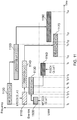
- a paging cycle starts at a time t 0 , and three different DCIs, corresponding to three different MPDCCH search spaces, are provided to schedule three respective paging messages.
- the three different DCIs 1100, 1110, 1120 relate to respective CE levels 1, 2, 3, where CE level 3 represents a higher number of repetitions than CE level 2, which in turn represents a higher number of repetitions than CE level 1.
- Each of these DCIs schedules a respective paging message 1130, 1140, 1150, again at CE levels 1, 2 and 3 respectively.
- This provides an example of the base station controller being configured to control the transceiver to send multiple paging signals at different respective CE modes, each paging signal defining a respective communications resource for use by the terminal device.
- the terminal device may be able to detect the paging message at CE level 1, in which case the terminal device uses CE level 1 and the resources defined by the paging message 1130 for its uplink transmission of message 3 (a transmission 1160). If not, then if the terminal device can detect the paging message 1140 at CE level 2, it uses the resources defined by that paging message for its uplink message 3 1170 at CE level 2. If not, then assuming the terminal device can detect the paging message 1150 at CE level 3, it uses the resources defined by that paging message 1150 to send its uplink message 3 1180 at CE level 3.
- different system resources are used to transmit respective pairs of DCIs which schedule paging messages (DCIs 1100, 1110, 1120) and different resources are used to provide the respective paging messages at the different respective CE levels (1130, 1140, 1150).
- the terminal device responds to the lowest one of these CE level paging messages which it can successfully detect, and transmits an uplink message 1160, 1170 or 1180 using the resources defined by the respective paging message.
- the terminal device sends only one of the uplink message 3s (1160, 1170, 1180), being the one instance of message 3 at the CE level defined by the lowest CE level paging message successfully decoded by the terminal device.
- This provides an example of the controller of the terminal device being configured to set a CE mode according to the CE mode of a detected paging signal.
- the paging message and/or the DCI which schedules the paging message are not in fact differentiated by CE level. That is to say, in these further examples, a single paging message and/or a single DCI which schedules the paging message is used.
- the LC-MTC terminal device can transmit the first message 3 transmission at the highest CE level (corresponding to the greatest number of repetitions) the base station can then adjust the CE level (if appropriate) using information provided with the HARQ DCI. In this way, a second HARQ re-transmission can be transmitted at a different (lower) repetition level corresponding to a different (lower) CE level specified as part of the HARQ response.
- This provides a terminal device configured to perform wireless communication with the base station using the allocated communications resource by sending the connection request message using a predetermined CE mode, and to receive information from the base station, in response to that connection request message, indicating a required CE mode.
- the paging message and/or the DCI which schedules the paging message are not differentiated by CE level.
- the terminal device can perform early termination of its message 3 repetition based on its own CE level. So, for example, the arrangement shown schematically in Figure 12 may be used, in which a single DCI 1200 schedules a single paging message 1210 at CE level 3.
- the paging message defines resources for use by the terminal device in transmitting its message 3 1220.
- the resources define sufficient time (from t 4 through to t 7 ) to allow the terminal device to transmit the message 3 1220 at CE level 3, the highest level of repetition in this example.
- the terminal device is aware of its own CE level and is therefore aware that there is no need to transmit message 3 at a higher repetition level than the repetition level defined by the terminal device's own CE level. Therefore, if the CE level of the terminal device lower than level 3, the terminal device can terminate transmission of message 3 early, which is to say, at a lower number of repetitions than those available using the scheduled resources provided by the paging message 1210.
- This provides an example of a terminal device configured to receive the paging signal using a predetermined CE mode and to perform wireless communication using a CE mode associated with the terminal device.
- the message 3 transmission can be terminated after a number of repetitions corresponding to CE level 1, at a time t 5 . If the terminal device has a CE level of 2, the transmission of the message 3 can be terminated by the terminal device at a time t 6 corresponding to a number of repetitions at least equal to those applicable to CE level 2.
- the time points at which termination takes place can be predefined by the network or by specification known to both the base station and the terminal device.
- the base station is aware of the termination points and is able to send its HARQ response at the appropriate time conforming to the normal HARQ timing constraints.
- the DCI of the HARQ can provide information to the terminal device amending the CE level to be used by the base station, potentially to match that of the terminal device.
- the DCI which schedules the paging message, and/or the paging message itself can indicate whether or not a reduced RACH process (where the PRACH and/or the RAR are omitted) is to be used.
- This information can be provided explicitly as a flag or data field, or can be provided implicitly, in that the absence of message 3 grant information in the paging message can indicate that a full RACH process should be used.
- This arrangement can provide improved flexibility for the scheduling algorithms used at the base station.
- the detection of a presence or absence of the grant information in the paging message provides an example of detecting whether the paging signal comprises information defining an allocation of a communications resource for use by the terminal device to send a connection request message to the base station.
- the controller of the terminal device can control the transceiver to perform a radio channel allocation (RACH) procedure with the base station in order for the terminal device to be allocated the communications resource.
- RACH radio channel allocation
- the base station can additionally indicate in the paging message and/or in the DCI scheduling the paging message, the RACH resource to be used for the PRACH preamble. That is to say, the base station can reserve an RACH resource for that particular terminal device to use for its PRACH preamble, which can reduce its use of collision.
- the terminal device could re-try by performing the full RACH process, for example at the same CE level as that used for the failed message 3.
- the CE level could be ramped up.
- the terminal device fails even to detect the presence of the uplink allocation in the paging message, it will revert to the full RACH procedure.
- This is an example of a base station in which, for a terminal device from which the base station does not receive a connection request message in response to a paging signal directed to that terminal device, the controller (of the base station) is configured to follow a radio channel allocation procedure with that terminal device.
- the operations of the terminal device and the base station as described may be carried out by the respective controller interacting with the transmitter and receiver (which collectively provide a respective transceiver).
- the functions may be performed (in examples) at least in part by computer software, such as computer software stored on a non-transitory machine-readable storage medium (such as a magnetic or optical disk) being run by (or used to control operations of) a computer.
- Figure 13 is a schematic flowchart summarizing a method of operation of terminal device for use in a wireless telecommunications system and configured to perform wireless communication with a base station; the method comprising:
- Figure 14 is a schematic diagram summarizing a method of operation of a base station for use in a wireless telecommunications system and configured to perform wireless communication with a terminal device; the method comprising:
Landscapes
- Engineering & Computer Science (AREA)
- Computer Networks & Wireless Communication (AREA)
- Signal Processing (AREA)
- Mobile Radio Communication Systems (AREA)
Claims (15)
- Endgerät (101) zur Verwendung in einem Drahtlos-Telekommunikationssystem, wobei das Endgerät umfasst:einen Sender-Empfänger (500, 510), der dafür ausgelegt ist, Drahtloskommunikation mit einer Basisstation (102) durchzuführen; undeine Steuerung (520), die für folgende Vorgänge ausgelegt ist:Steuern des Sender-Empfängers zum Erfassen (1300) eines Drahtlos-Rufsignals von der Basisstation;Erfassen (1310), ob das Rufsignal Informationen umfasst, die eine Zuweisung einer Kommunikationsressource zur Verwendung durch das Endgerät zum Senden einer Verbindungsanforderungsnachricht an die Basisstation definieren;Steuern (1320) des Sender-Empfängers, als Reaktion auf eine Erfassung, dass das Rufsignal keine Informationen umfasst, die die Zuweisung der Kommunikationsressource definieren, zum Durchführen eines Funkkanalzuweisungsverfahrens mit der Basisstation, damit dem Endgerät die Kommunikationsressource zugewiesen wird; undSteuern (1330) des Sender-Empfängers zum Aufbau von Drahtloskommunikation mit der Basisstation durch Senden der Verbindungsanforderungsnachricht unter Verwendung der zugewiesenen Kommunikationsressource;wobei:das Endgerät dafür ausgelegt ist, selektiv in mehreren "Coverage Enhancement"-, CE, -Modi betrieben zu werden, wobei jeder CE-Modus einer unterschiedlichen jeweiligen Anzahl von Wiederholungen von Drahtlos-Datensignalen zum oder vom Endgerät entspricht; unddas Endgerät dafür ausgelegt ist, Drahtloskommunikation mit der Basisstation unter Verwendung der zugewiesenen Kommunikationsressource durch Senden der Verbindungsanforderungsnachricht unter Verwendung eines vorbestimmten CE-Modus durchzuführen und als Antwort auf diese Verbindungsanforderungsnachricht Informationen von der Basisstation zu empfangen, die einen erforderlichen CE-Modus angeben.
- Endgerät nach Anspruch 1, wobei die Kommunikationsressource eines oder mehrere der folgenden Elemente umfasst: ein oder mehrere Funkfrequenzbänder; eine temporäre Funknetzkennung und einen oder mehrere Übertragungszeitschlitze.
- Endgerät nach Anspruch 1 oder Anspruch 2, wobei das Rufsignal ein Datenfeld umfasst, das die Kommunikationsressource definiert.
- Endgerät nach einem der Ansprüche 1 bis 3, wobei das Rufsignal einen ersten Abschnitt und einen zweiten Abschnitt umfasst, wobei der erste Abschnitt Zeitplanungsdaten umfasst, die die Übertragung des zweiten Abschnitts planen, wobei der erste Abschnitt ein Datenfeld umfasst, das die Kommunikationsressource definiert.
- Endgerät nach einem der Ansprüche 1 bis 3, wobei das Rufsignal einen ersten Abschnitt und einen zweiten Abschnitt umfasst, wobei der erste Abschnitt Zeitplanungsdaten umfasst, die die Übertragung des zweiten Abschnitts planen, wobei der zweite Abschnitt ein Datenfeld umfasst, das die Kommunikationsressource definiert.
- Endgerät nach Anspruch 1, wobei die Steuerung dafür ausgelegt ist, einen CE-Modus entsprechend dem CE-Modus eines erfassten Rufsignals einzustellen.
- Endgerät nach Anspruch 1, das dafür ausgelegt ist, das Rufsignal unter Verwendung eines vorbestimmten CE-Modus zu empfangen und Drahtloskommunikation unter Verwendung eines dem Endgerät zugeordneten CE-Modus durchzuführen.
- Endgerät nach Anspruch 7, wobei, wenn die Steuerung erfasst, dass die Basisstation eine Verbindungsanforderungsnachricht, die als Reaktion auf ein an dieses Endgerät gerichtetes Rufsignal gesendet wurde, nicht bestätigt hat, die Steuerung dafür ausgelegt ist, einem Funkkanalzuweisungsverfahren mit der Basisstation zu folgen.
- Endgerät nach Anspruch 8, wobei die Steuerung dafür ausgelegt ist, einem Funkkanalzuweisungsverfahren unter Verwendung des CE-Modus zu folgen, in dem die Verbindungsnachricht gesendet wurde.
- Basisstation (102) zur Verwendung in einem Drahtlos-Telekommunikationssystem, wobei die Basisstation umfasst:einen Sender-Empfänger (400, 410), der dafür ausgelegt ist, Drahtloskommunikation mit einem Endgerät (101) durchzuführen; undeine Steuerung (420), die für folgende Vorgänge ausgelegt ist:Steuern des Sender-Empfängers zum Senden (1400) eines Drahtlos-Rufsignals an das Endgerät, wobei das Rufsignal Informationen umfasst, die eine Zuweisung einer Kommunikationsressource zur Verwendung durch das Endgerät zum Senden einer Verbindungsanforderungsnachricht an die Basisstation definieren; undSteuern des Sender-Empfängers zum Aufbau (1410) von Drahtloskommunikation mit dem Endgerät durch Empfangen der Verbindungsanforderungsnachricht unter Verwendung der zugewiesenen Kommunikationsressource;wobei:die Basisstation dafür ausgelegt ist, selektiv in mehreren "Coverage Enhancement"-, CE, -Modi zur Kommunikation mit dem Endgerät betrieben zu werden, wobei jeder CE-Modus einer unterschiedlichen jeweiligen Anzahl von Wiederholungen von Drahtlos-Datensignalen zum oder vom Endgerät entspricht; unddie Basisstation dafür ausgelegt ist, die Verbindungsanforderungsnachricht unter Verwendung eines vorbestimmten CE-Modus zu empfangen und Informationen an das Endgerät zu senden, das diese Verbindungsanforderungsnachricht gesendet hat, die einen erforderlichen CE-Modus angeben.
- Basisstation nach Anspruch 10, wobei die Kommunikationsressource eines oder mehrere der folgenden Elemente umfasst: ein oder mehrere Funkfrequenzbänder; eine temporäre Funknetzkennung und einen oder mehrere Übertragungszeitschlitze.
- Basisstation nach Anspruch 10 oder Anspruch 11, wobei das Rufsignal ein Datenfeld umfasst, das die Kommunikationsressource definiert.
- Drahtlos-Telekommunikationssystem, umfassend ein Endgerät nach einem der Ansprüche 1 bis 9 und einer Basisstation nach einem der Ansprüche 10 bis 12.
- Verfahren zum Betrieb eines Endgeräts zur Verwendung in einem Drahtlos-Telekommunikationssystem, das dafür ausgelegt ist, Drahtloskommunikation mit einer Basisstation durchzuführen, wobei das Endgerät dafür ausgelegt ist, selektiv in mehreren "Coverage Enhancement"-, CE, -Modi betrieben zu werden, wobei jeder CE-Modus einer unterschiedlichen jeweiligen Anzahl von Wiederholungen von Drahtlos-Datensignalen zum oder vom Endgerät entspricht;
wobei das Verfahren umfasst:Erfassen eines Drahtlos-Rufsignals von der Basisstation;Erfassen, ob das Rufsignal Informationen umfasst, die eine Zuweisung einer Kommunikationsressource zur Verwendung durch das Endgerät zum Senden einer Verbindungsanforderungsnachricht an die Basisstation definieren;Steuern des Sender-Empfängers, als Reaktion auf eine Erfassung, dass das Rufsignal keine Informationen umfasst, die die Zuweisung der Kommunikationsressource definieren, zum Durchführen eines Funkkanalzuweisungsverfahrens mit der Basisstation, damit dem Endgerät die Kommunikationsressource zugewiesen wird; undSteuern des Sender-Empfängers zum Aufbau von Drahtloskommunikation mit der Basisstation durch Senden der Verbindungsanforderungsnachricht unter Verwendung der zugewiesenen Kommunikationsressource unter Verwendung eines vorbestimmten CE-Modus, und Empfangen von Informationen von der Basisstation, als Reaktion auf diese Verbindungsanforderungsnachricht, die einen erforderlichen CE-Modus angeben. - Verfahren zum Betrieb einer Basisstation zur Verwendung in einem Drahtlos-Telekommunikationssystem, die dafür ausgelegt ist, Drahtloskommunikation mit einem Endgerät durchzuführen, wobei die Basisstation dafür ausgelegt ist, selektiv in mehreren "Coverage Enhancement"-, CE, -Modi zur Kommunikation mit dem Endgerät betrieben zu werden, wobei jeder CE-Modus einer unterschiedlichen jeweiligen Anzahl von Wiederholungen von Drahtlos-Datensignalen zum oder vom Endgerät entspricht;
wobei das Verfahren umfasst:Senden eines Drahtlos-Rufsignals an das Endgerät, wobei das Rufsignal Informationen umfasst, die eine Zuweisung einer Kommunikationsressource zur Verwendung durch das Endgerät zum Senden einer Verbindungsanforderungsnachricht an die Basisstation definieren; undAufbauen von Drahtloskommunikation mit dem Endgerät durch Empfangen der Verbindungsanforderungsnachricht unter Verwendung der zugewiesenen Kommunikationsressource;wobei der Aufbauschritt das Empfangen der Verbindungsanforderungsnachricht unter Verwendung eines vorbestimmten CE-Modus und das Senden von Informationen an das Endgerät, das diese Verbindungsanforderungsnachricht gesendet hat, die einen erforderlichen CE-Modus angeben, umfasst.
Priority Applications (1)
| Application Number | Priority Date | Filing Date | Title |
|---|---|---|---|
| EP20215808.5A EP3826389B1 (de) | 2015-09-25 | 2016-08-22 | Verfahren, apparat, computer software und speichermedia zum einrichten einer kabellosen verbindung |
Applications Claiming Priority (2)
| Application Number | Priority Date | Filing Date | Title |
|---|---|---|---|
| EP15186988 | 2015-09-25 | ||
| PCT/EP2016/069824 WO2017050498A1 (en) | 2015-09-25 | 2016-08-22 | Methods, apparatuses and system for transmission of a connection request message in a wireless communications system |
Related Child Applications (2)
| Application Number | Title | Priority Date | Filing Date |
|---|---|---|---|
| EP20215808.5A Division EP3826389B1 (de) | 2015-09-25 | 2016-08-22 | Verfahren, apparat, computer software und speichermedia zum einrichten einer kabellosen verbindung |
| EP20215808.5A Division-Into EP3826389B1 (de) | 2015-09-25 | 2016-08-22 | Verfahren, apparat, computer software und speichermedia zum einrichten einer kabellosen verbindung |
Publications (2)
| Publication Number | Publication Date |
|---|---|
| EP3335485A1 EP3335485A1 (de) | 2018-06-20 |
| EP3335485B1 true EP3335485B1 (de) | 2021-01-27 |
Family
ID=54251999
Family Applications (2)
| Application Number | Title | Priority Date | Filing Date |
|---|---|---|---|
| EP16754500.3A Not-in-force EP3335485B1 (de) | 2015-09-25 | 2016-08-22 | Verfahren, vorrichtungen und system für das senden einer verbindungsaufbau-anfragenachricht in einem drahtlosen kommunikationssystem |
| EP20215808.5A Active EP3826389B1 (de) | 2015-09-25 | 2016-08-22 | Verfahren, apparat, computer software und speichermedia zum einrichten einer kabellosen verbindung |
Family Applications After (1)
| Application Number | Title | Priority Date | Filing Date |
|---|---|---|---|
| EP20215808.5A Active EP3826389B1 (de) | 2015-09-25 | 2016-08-22 | Verfahren, apparat, computer software und speichermedia zum einrichten einer kabellosen verbindung |
Country Status (4)
| Country | Link |
|---|---|
| US (2) | US10531441B2 (de) |
| EP (2) | EP3335485B1 (de) |
| CN (1) | CN108141840B (de) |
| WO (1) | WO2017050498A1 (de) |
Families Citing this family (17)
| Publication number | Priority date | Publication date | Assignee | Title |
|---|---|---|---|---|
| CN108141840B (zh) * | 2015-09-25 | 2021-07-06 | 索尼公司 | 用于在无线通信系统中传输连接请求消息的方法、设备和系统 |
| EP3358894B1 (de) * | 2015-10-29 | 2023-04-05 | Huawei Technologies Co., Ltd. | An funkrufen beteiligtes benutzergerät |
| US11582792B2 (en) * | 2016-08-12 | 2023-02-14 | Telefonaktiebolaget Lm Ericsson (Publ) | DCI formats for non-anchor operations |
| US11006444B2 (en) * | 2017-01-03 | 2021-05-11 | Lg Electronics Inc. | Method and user equipment for receiving downlink signals |
| EP3569021B1 (de) * | 2017-01-16 | 2021-10-27 | Telefonaktiebolaget LM Ericsson (PUBL) | Funkruf mit abfrage einer benutzergeräte-id-liste |
| EP3592065B1 (de) * | 2017-03-20 | 2021-09-01 | Guangdong Oppo Mobile Telecommunications Corp., Ltd. | Verfahren zur übertragung von daten, und endgerätevorrichtung |
| US11171748B2 (en) * | 2017-05-05 | 2021-11-09 | Motorola Mobility Llc | Indicating resources for transmitting modulation symbols |
| WO2019024130A1 (en) * | 2017-08-02 | 2019-02-07 | Qualcomm Incorporated | CONFIGURATIONS FOR TRANSMITTING RANDOM ACCESS PREAMBLE MESSAGES |
| US11516737B2 (en) * | 2018-02-14 | 2022-11-29 | Lg Electronics Inc. | Method for changing status of WUS operation and device supporting the same |
| CN116761268A (zh) | 2018-09-26 | 2023-09-15 | 华为技术有限公司 | 一种数据传输方法和装置 |
| CN112840717B (zh) * | 2018-09-28 | 2023-02-28 | 华为技术有限公司 | 传输数据的方法、终端设备和网络设备 |
| CN115085883B (zh) * | 2019-01-21 | 2023-07-25 | 中兴通讯股份有限公司 | 信息发送、接收方法、装置、基站、终端及通信系统 |
| WO2021012119A1 (en) * | 2019-07-19 | 2021-01-28 | Lenovo (Beijing) Limited | Method and apparatus for data transmission |
| CN116391399A (zh) * | 2020-11-18 | 2023-07-04 | Oppo广东移动通信有限公司 | Ntn中定时提前的上报方法、接收方法、装置及设备 |
| US11665529B2 (en) | 2021-05-17 | 2023-05-30 | T-Mobile Usa, Inc. | Modular capability reporting in wireless communications |
| US12213037B2 (en) | 2021-12-10 | 2025-01-28 | T-Mobile Usa, Inc. | Network-assisted blanking of shared resources for direct communication links |
| EP4561210A4 (de) * | 2022-07-19 | 2025-08-20 | Huawei Tech Co Ltd | Funkrufverfahren und kommunikationsvorrichtung |
Family Cites Families (11)
| Publication number | Priority date | Publication date | Assignee | Title |
|---|---|---|---|---|
| KR20070047124A (ko) | 2005-11-01 | 2007-05-04 | 엘지전자 주식회사 | 무선 자원에 관한 정보를 송수신하는 방법 |
| WO2014048493A1 (en) * | 2012-09-28 | 2014-04-03 | Nokia Siemens Networks Oy | Location registration for a device - to - device d2d communication user equipment being in idle mode mobility management |
| US10045380B2 (en) * | 2013-12-19 | 2018-08-07 | Telefonaktiebolaget Lm Ericsson (Publ) | Method and apparatus for providing random access information when paging a wireless device |
| US10015765B2 (en) * | 2014-02-11 | 2018-07-03 | Lg Electronics Inc. | Method and apparatus for indicating change of coverage enhancement mode in wireless communication system |
| CA2966938C (en) * | 2014-11-07 | 2021-05-11 | Huawei Technologies Co., Ltd. | Paging message transmission method, base station, mobility management entity, and user equipment |
| WO2016163734A1 (ko) * | 2015-04-07 | 2016-10-13 | 엘지전자 주식회사 | 커버리지 확장 레벨을 기반으로 값을 적용하는 방법 및 장치 |
| US20180103419A1 (en) * | 2015-04-19 | 2018-04-12 | Lg Electronics Inc. | Method and apparatus for changing a coverage enhancement mode |
| US10165423B2 (en) * | 2015-07-10 | 2018-12-25 | Qualcomm Incorporated | Common search space for machine type communications |
| US10574419B2 (en) * | 2015-08-12 | 2020-02-25 | Apple Inc. | Configuration of non-UE-specific search space for M-PDCCH |
| EP3342223B1 (de) | 2015-09-25 | 2020-03-11 | Sony Corporation | Telekommunikationsvorrichtungen und -verfahren |
| CN108141840B (zh) * | 2015-09-25 | 2021-07-06 | 索尼公司 | 用于在无线通信系统中传输连接请求消息的方法、设备和系统 |
-
2016
- 2016-08-22 CN CN201680055562.3A patent/CN108141840B/zh not_active Expired - Fee Related
- 2016-08-22 EP EP16754500.3A patent/EP3335485B1/de not_active Not-in-force
- 2016-08-22 EP EP20215808.5A patent/EP3826389B1/de active Active
- 2016-08-22 US US15/751,357 patent/US10531441B2/en active Active
- 2016-08-22 WO PCT/EP2016/069824 patent/WO2017050498A1/en not_active Ceased
-
2019
- 2019-11-27 US US16/697,218 patent/US11206644B2/en active Active - Reinstated
Non-Patent Citations (1)
| Title |
|---|
| None * |
Also Published As
| Publication number | Publication date |
|---|---|
| EP3826389B1 (de) | 2023-09-27 |
| US11206644B2 (en) | 2021-12-21 |
| EP3826389A1 (de) | 2021-05-26 |
| US10531441B2 (en) | 2020-01-07 |
| CN108141840B (zh) | 2021-07-06 |
| US20200100244A1 (en) | 2020-03-26 |
| WO2017050498A1 (en) | 2017-03-30 |
| US20180242306A1 (en) | 2018-08-23 |
| CN108141840A (zh) | 2018-06-08 |
| EP3335485A1 (de) | 2018-06-20 |
Similar Documents
| Publication | Publication Date | Title |
|---|---|---|
| US11206644B2 (en) | Methods, apparatuses and system for transmission of a connection request message in a wireless communications system | |
| US20220174747A1 (en) | Method and apparatus for improving msg3 transmission of random access procedure in a wireless communication system | |
| CN114145072B (zh) | 用于支持大随机接入响应(rar)窗口大小的随机接入过程的方法 | |
| US20230018487A1 (en) | Random access procedure for latency reduction | |
| JP6682000B2 (ja) | アップリンク制御チャネル上で送信をするためのパラメータを決定するための方法 | |
| EP3277047B1 (de) | Verfahren und vorrichtung zur verbesserung einer direktzugriffsprozedur in einem drahtloskommunikationssystem | |
| CN103582073B (zh) | 一种mtc ue接入lte系统的方法、演进的基站 | |
| JP5520003B2 (ja) | 無線通信システム、基地局装置、移動局装置、無線通信システムの制御方法、基地局装置の制御プログラムおよび移動局装置の制御プログラム | |
| KR20180011175A (ko) | 면허 지원 액세스에서의 스케줄링 | |
| KR20210102250A (ko) | 무선 통신 시스템에서 랜덤 액세스 프리앰블 그룹 선택을 위한 방법 및 장치 | |
| US11089630B2 (en) | Method for a contention-based random access procedure in a wireless communication network | |
| CN119678630A (zh) | 用于无线通信的信号发送和接收方法及其装置 | |
| EP3905807B1 (de) | Endgerätevorrichtung und basisstationsvorrichtung | |
| WO2025187128A1 (ja) | 端末装置、基地局装置および通信方法 | |
| WO2023181746A1 (ja) | 端末装置、基地局装置、および、通信方法 | |
| WO2025187129A1 (ja) | 端末装置、基地局装置および通信方法 | |
| JP2026070523A (ja) | 端末装置および通信方法 | |
| WO2023181710A1 (ja) | 端末装置、基地局装置、および、通信方法 | |
| CN121909722A (zh) | 用户设备的方法、装置、存储介质、基站的方法及基站 |
Legal Events
| Date | Code | Title | Description |
|---|---|---|---|
| STAA | Information on the status of an ep patent application or granted ep patent |
Free format text: STATUS: THE INTERNATIONAL PUBLICATION HAS BEEN MADE |
|
| PUAI | Public reference made under article 153(3) epc to a published international application that has entered the european phase |
Free format text: ORIGINAL CODE: 0009012 |
|
| STAA | Information on the status of an ep patent application or granted ep patent |
Free format text: STATUS: REQUEST FOR EXAMINATION WAS MADE |
|
| 17P | Request for examination filed |
Effective date: 20180313 |
|
| AK | Designated contracting states |
Kind code of ref document: A1 Designated state(s): AL AT BE BG CH CY CZ DE DK EE ES FI FR GB GR HR HU IE IS IT LI LT LU LV MC MK MT NL NO PL PT RO RS SE SI SK SM TR |
|
| AX | Request for extension of the european patent |
Extension state: BA ME |
|
| DAV | Request for validation of the european patent (deleted) | ||
| DAX | Request for extension of the european patent (deleted) | ||
| RIC1 | Information provided on ipc code assigned before grant |
Ipc: H04W 76/02 20090101ALI20170412BHEP Ipc: H04W 88/08 20090101ALI20170412BHEP Ipc: H04W 68/00 20090101AFI20170412BHEP Ipc: H04W 88/02 20090101ALI20170412BHEP |
|
| RIC1 | Information provided on ipc code assigned before grant |
Ipc: H04W 68/00 20090101AFI20200608BHEP Ipc: H04W 88/02 20090101ALI20200608BHEP Ipc: H04W 74/08 20090101ALI20200608BHEP Ipc: H04W 72/04 20090101ALI20200608BHEP Ipc: H04W 88/08 20090101ALI20200608BHEP Ipc: H04W 74/00 20090101ALI20200608BHEP |
|
| GRAP | Despatch of communication of intention to grant a patent |
Free format text: ORIGINAL CODE: EPIDOSNIGR1 |
|
| STAA | Information on the status of an ep patent application or granted ep patent |
Free format text: STATUS: GRANT OF PATENT IS INTENDED |
|
| INTG | Intention to grant announced |
Effective date: 20200831 |
|
| GRAS | Grant fee paid |
Free format text: ORIGINAL CODE: EPIDOSNIGR3 |
|
| GRAA | (expected) grant |
Free format text: ORIGINAL CODE: 0009210 |
|
| STAA | Information on the status of an ep patent application or granted ep patent |
Free format text: STATUS: THE PATENT HAS BEEN GRANTED |
|
| AK | Designated contracting states |
Kind code of ref document: B1 Designated state(s): AL AT BE BG CH CY CZ DE DK EE ES FI FR GB GR HR HU IE IS IT LI LT LU LV MC MK MT NL NO PL PT RO RS SE SI SK SM TR |
|
| REG | Reference to a national code |
Ref country code: GB Ref legal event code: FG4D |
|
| REG | Reference to a national code |
Ref country code: CH Ref legal event code: EP |
|
| REG | Reference to a national code |
Ref country code: AT Ref legal event code: REF Ref document number: 1359448 Country of ref document: AT Kind code of ref document: T Effective date: 20210215 |
|
| REG | Reference to a national code |
Ref country code: IE Ref legal event code: FG4D |
|
| REG | Reference to a national code |
Ref country code: DE Ref legal event code: R096 Ref document number: 602016052085 Country of ref document: DE |
|
| REG | Reference to a national code |
Ref country code: SE Ref legal event code: TRGR |
|
| REG | Reference to a national code |
Ref country code: NL Ref legal event code: FP |
|
| REG | Reference to a national code |
Ref country code: LT Ref legal event code: MG9D |
|
| REG | Reference to a national code |
Ref country code: AT Ref legal event code: MK05 Ref document number: 1359448 Country of ref document: AT Kind code of ref document: T Effective date: 20210127 |
|
| RAP4 | Party data changed (patent owner data changed or rights of a patent transferred) |
Owner name: SONY EUROPE LIMITED Owner name: SONY GROUP CORPORATION |
|
| PG25 | Lapsed in a contracting state [announced via postgrant information from national office to epo] |
Ref country code: LT Free format text: LAPSE BECAUSE OF FAILURE TO SUBMIT A TRANSLATION OF THE DESCRIPTION OR TO PAY THE FEE WITHIN THE PRESCRIBED TIME-LIMIT Effective date: 20210127 Ref country code: BG Free format text: LAPSE BECAUSE OF FAILURE TO SUBMIT A TRANSLATION OF THE DESCRIPTION OR TO PAY THE FEE WITHIN THE PRESCRIBED TIME-LIMIT Effective date: 20210427 Ref country code: PT Free format text: LAPSE BECAUSE OF FAILURE TO SUBMIT A TRANSLATION OF THE DESCRIPTION OR TO PAY THE FEE WITHIN THE PRESCRIBED TIME-LIMIT Effective date: 20210527 Ref country code: NO Free format text: LAPSE BECAUSE OF FAILURE TO SUBMIT A TRANSLATION OF THE DESCRIPTION OR TO PAY THE FEE WITHIN THE PRESCRIBED TIME-LIMIT Effective date: 20210427 Ref country code: GR Free format text: LAPSE BECAUSE OF FAILURE TO SUBMIT A TRANSLATION OF THE DESCRIPTION OR TO PAY THE FEE WITHIN THE PRESCRIBED TIME-LIMIT Effective date: 20210428 Ref country code: HR Free format text: LAPSE BECAUSE OF FAILURE TO SUBMIT A TRANSLATION OF THE DESCRIPTION OR TO PAY THE FEE WITHIN THE PRESCRIBED TIME-LIMIT Effective date: 20210127 Ref country code: FI Free format text: LAPSE BECAUSE OF FAILURE TO SUBMIT A TRANSLATION OF THE DESCRIPTION OR TO PAY THE FEE WITHIN THE PRESCRIBED TIME-LIMIT Effective date: 20210127 |
|
| PG25 | Lapsed in a contracting state [announced via postgrant information from national office to epo] |
Ref country code: LV Free format text: LAPSE BECAUSE OF FAILURE TO SUBMIT A TRANSLATION OF THE DESCRIPTION OR TO PAY THE FEE WITHIN THE PRESCRIBED TIME-LIMIT Effective date: 20210127 Ref country code: PL Free format text: LAPSE BECAUSE OF FAILURE TO SUBMIT A TRANSLATION OF THE DESCRIPTION OR TO PAY THE FEE WITHIN THE PRESCRIBED TIME-LIMIT Effective date: 20210127 Ref country code: RS Free format text: LAPSE BECAUSE OF FAILURE TO SUBMIT A TRANSLATION OF THE DESCRIPTION OR TO PAY THE FEE WITHIN THE PRESCRIBED TIME-LIMIT Effective date: 20210127 Ref country code: AT Free format text: LAPSE BECAUSE OF FAILURE TO SUBMIT A TRANSLATION OF THE DESCRIPTION OR TO PAY THE FEE WITHIN THE PRESCRIBED TIME-LIMIT Effective date: 20210127 |
|
| PG25 | Lapsed in a contracting state [announced via postgrant information from national office to epo] |
Ref country code: IS Free format text: LAPSE BECAUSE OF FAILURE TO SUBMIT A TRANSLATION OF THE DESCRIPTION OR TO PAY THE FEE WITHIN THE PRESCRIBED TIME-LIMIT Effective date: 20210527 |
|
| REG | Reference to a national code |
Ref country code: DE Ref legal event code: R097 Ref document number: 602016052085 Country of ref document: DE |
|
| PG25 | Lapsed in a contracting state [announced via postgrant information from national office to epo] |
Ref country code: EE Free format text: LAPSE BECAUSE OF FAILURE TO SUBMIT A TRANSLATION OF THE DESCRIPTION OR TO PAY THE FEE WITHIN THE PRESCRIBED TIME-LIMIT Effective date: 20210127 Ref country code: CZ Free format text: LAPSE BECAUSE OF FAILURE TO SUBMIT A TRANSLATION OF THE DESCRIPTION OR TO PAY THE FEE WITHIN THE PRESCRIBED TIME-LIMIT Effective date: 20210127 Ref country code: SM Free format text: LAPSE BECAUSE OF FAILURE TO SUBMIT A TRANSLATION OF THE DESCRIPTION OR TO PAY THE FEE WITHIN THE PRESCRIBED TIME-LIMIT Effective date: 20210127 |
|
| PG25 | Lapsed in a contracting state [announced via postgrant information from national office to epo] |
Ref country code: SK Free format text: LAPSE BECAUSE OF FAILURE TO SUBMIT A TRANSLATION OF THE DESCRIPTION OR TO PAY THE FEE WITHIN THE PRESCRIBED TIME-LIMIT Effective date: 20210127 Ref country code: RO Free format text: LAPSE BECAUSE OF FAILURE TO SUBMIT A TRANSLATION OF THE DESCRIPTION OR TO PAY THE FEE WITHIN THE PRESCRIBED TIME-LIMIT Effective date: 20210127 Ref country code: DK Free format text: LAPSE BECAUSE OF FAILURE TO SUBMIT A TRANSLATION OF THE DESCRIPTION OR TO PAY THE FEE WITHIN THE PRESCRIBED TIME-LIMIT Effective date: 20210127 |
|
| PLBE | No opposition filed within time limit |
Free format text: ORIGINAL CODE: 0009261 |
|
| STAA | Information on the status of an ep patent application or granted ep patent |
Free format text: STATUS: NO OPPOSITION FILED WITHIN TIME LIMIT |
|
| 26N | No opposition filed |
Effective date: 20211028 |
|
| PG25 | Lapsed in a contracting state [announced via postgrant information from national office to epo] |
Ref country code: AL Free format text: LAPSE BECAUSE OF FAILURE TO SUBMIT A TRANSLATION OF THE DESCRIPTION OR TO PAY THE FEE WITHIN THE PRESCRIBED TIME-LIMIT Effective date: 20210127 Ref country code: ES Free format text: LAPSE BECAUSE OF FAILURE TO SUBMIT A TRANSLATION OF THE DESCRIPTION OR TO PAY THE FEE WITHIN THE PRESCRIBED TIME-LIMIT Effective date: 20210127 |
|
| PG25 | Lapsed in a contracting state [announced via postgrant information from national office to epo] |
Ref country code: SI Free format text: LAPSE BECAUSE OF FAILURE TO SUBMIT A TRANSLATION OF THE DESCRIPTION OR TO PAY THE FEE WITHIN THE PRESCRIBED TIME-LIMIT Effective date: 20210127 |
|
| REG | Reference to a national code |
Ref country code: CH Ref legal event code: PL |
|
| PG25 | Lapsed in a contracting state [announced via postgrant information from national office to epo] |
Ref country code: MC Free format text: LAPSE BECAUSE OF FAILURE TO SUBMIT A TRANSLATION OF THE DESCRIPTION OR TO PAY THE FEE WITHIN THE PRESCRIBED TIME-LIMIT Effective date: 20210127 |
|
| REG | Reference to a national code |
Ref country code: BE Ref legal event code: MM Effective date: 20210831 |
|
| PG25 | Lapsed in a contracting state [announced via postgrant information from national office to epo] |
Ref country code: LI Free format text: LAPSE BECAUSE OF NON-PAYMENT OF DUE FEES Effective date: 20210831 Ref country code: IT Free format text: LAPSE BECAUSE OF FAILURE TO SUBMIT A TRANSLATION OF THE DESCRIPTION OR TO PAY THE FEE WITHIN THE PRESCRIBED TIME-LIMIT Effective date: 20210127 Ref country code: CH Free format text: LAPSE BECAUSE OF NON-PAYMENT OF DUE FEES Effective date: 20210831 |
|
| PG25 | Lapsed in a contracting state [announced via postgrant information from national office to epo] |
Ref country code: IS Free format text: LAPSE BECAUSE OF FAILURE TO SUBMIT A TRANSLATION OF THE DESCRIPTION OR TO PAY THE FEE WITHIN THE PRESCRIBED TIME-LIMIT Effective date: 20210527 Ref country code: LU Free format text: LAPSE BECAUSE OF NON-PAYMENT OF DUE FEES Effective date: 20210822 |
|
| PG25 | Lapsed in a contracting state [announced via postgrant information from national office to epo] |
Ref country code: IE Free format text: LAPSE BECAUSE OF NON-PAYMENT OF DUE FEES Effective date: 20210822 Ref country code: BE Free format text: LAPSE BECAUSE OF NON-PAYMENT OF DUE FEES Effective date: 20210831 |
|
| PGFP | Annual fee paid to national office [announced via postgrant information from national office to epo] |
Ref country code: SE Payment date: 20220721 Year of fee payment: 7 |
|
| PG25 | Lapsed in a contracting state [announced via postgrant information from national office to epo] |
Ref country code: HU Free format text: LAPSE BECAUSE OF FAILURE TO SUBMIT A TRANSLATION OF THE DESCRIPTION OR TO PAY THE FEE WITHIN THE PRESCRIBED TIME-LIMIT; INVALID AB INITIO Effective date: 20160822 |
|
| PG25 | Lapsed in a contracting state [announced via postgrant information from national office to epo] |
Ref country code: CY Free format text: LAPSE BECAUSE OF FAILURE TO SUBMIT A TRANSLATION OF THE DESCRIPTION OR TO PAY THE FEE WITHIN THE PRESCRIBED TIME-LIMIT Effective date: 20210127 |
|
| P01 | Opt-out of the competence of the unified patent court (upc) registered |
Effective date: 20230606 |
|
| PGFP | Annual fee paid to national office [announced via postgrant information from national office to epo] |
Ref country code: NL Payment date: 20230721 Year of fee payment: 8 |
|
| PGFP | Annual fee paid to national office [announced via postgrant information from national office to epo] |
Ref country code: GB Payment date: 20230720 Year of fee payment: 8 |
|
| PGFP | Annual fee paid to national office [announced via postgrant information from national office to epo] |
Ref country code: FR Payment date: 20230720 Year of fee payment: 8 Ref country code: DE Payment date: 20230720 Year of fee payment: 8 |
|
| PG25 | Lapsed in a contracting state [announced via postgrant information from national office to epo] |
Ref country code: MK Free format text: LAPSE BECAUSE OF FAILURE TO SUBMIT A TRANSLATION OF THE DESCRIPTION OR TO PAY THE FEE WITHIN THE PRESCRIBED TIME-LIMIT Effective date: 20210127 |
|
| PG25 | Lapsed in a contracting state [announced via postgrant information from national office to epo] |
Ref country code: SE Free format text: LAPSE BECAUSE OF NON-PAYMENT OF DUE FEES Effective date: 20230823 |
|
| PG25 | Lapsed in a contracting state [announced via postgrant information from national office to epo] |
Ref country code: TR Free format text: LAPSE BECAUSE OF FAILURE TO SUBMIT A TRANSLATION OF THE DESCRIPTION OR TO PAY THE FEE WITHIN THE PRESCRIBED TIME-LIMIT Effective date: 20210127 |
|
| PG25 | Lapsed in a contracting state [announced via postgrant information from national office to epo] |
Ref country code: MT Free format text: LAPSE BECAUSE OF FAILURE TO SUBMIT A TRANSLATION OF THE DESCRIPTION OR TO PAY THE FEE WITHIN THE PRESCRIBED TIME-LIMIT Effective date: 20210127 |
|
| REG | Reference to a national code |
Ref country code: DE Ref legal event code: R119 Ref document number: 602016052085 Country of ref document: DE |
|
| REG | Reference to a national code |
Ref country code: NL Ref legal event code: MM Effective date: 20240901 |
|
| GBPC | Gb: european patent ceased through non-payment of renewal fee |
Effective date: 20240822 |
|
| PG25 | Lapsed in a contracting state [announced via postgrant information from national office to epo] |
Ref country code: NL Free format text: LAPSE BECAUSE OF NON-PAYMENT OF DUE FEES Effective date: 20240901 |
|
| PG25 | Lapsed in a contracting state [announced via postgrant information from national office to epo] |
Ref country code: DE Free format text: LAPSE BECAUSE OF NON-PAYMENT OF DUE FEES Effective date: 20250301 |
|
| PG25 | Lapsed in a contracting state [announced via postgrant information from national office to epo] |
Ref country code: GB Free format text: LAPSE BECAUSE OF NON-PAYMENT OF DUE FEES Effective date: 20240822 |
|
| PG25 | Lapsed in a contracting state [announced via postgrant information from national office to epo] |
Ref country code: FR Free format text: LAPSE BECAUSE OF NON-PAYMENT OF DUE FEES Effective date: 20240831 |