EP3335375B1 - Verfahren und vorrichtung für durch netzwerkverwaltung und/oder elementverwaltung ausgelöste skalierung virtualisierter netzwerkfunktionen - Google Patents
Verfahren und vorrichtung für durch netzwerkverwaltung und/oder elementverwaltung ausgelöste skalierung virtualisierter netzwerkfunktionen Download PDFInfo
- Publication number
- EP3335375B1 EP3335375B1 EP16747881.7A EP16747881A EP3335375B1 EP 3335375 B1 EP3335375 B1 EP 3335375B1 EP 16747881 A EP16747881 A EP 16747881A EP 3335375 B1 EP3335375 B1 EP 3335375B1
- Authority
- EP
- European Patent Office
- Prior art keywords
- domain
- scaling request
- target capacity
- network function
- scaling
- Prior art date
- Legal status (The legal status is an assumption and is not a legal conclusion. Google has not performed a legal analysis and makes no representation as to the accuracy of the status listed.)
- Active
Links
Images

Classifications
-
- H—ELECTRICITY
- H04—ELECTRIC COMMUNICATION TECHNIQUE
- H04L—TRANSMISSION OF DIGITAL INFORMATION, e.g. TELEGRAPHIC COMMUNICATION
- H04L41/00—Arrangements for maintenance, administration or management of data switching networks, e.g. of packet switching networks
- H04L41/08—Configuration management of networks or network elements
- H04L41/0896—Bandwidth or capacity management, i.e. automatically increasing or decreasing capacities
- H04L41/0897—Bandwidth or capacity management, i.e. automatically increasing or decreasing capacities by horizontal or vertical scaling of resources, or by migrating entities, e.g. virtual resources or entities
-
- G—PHYSICS
- G06—COMPUTING OR CALCULATING; COUNTING
- G06F—ELECTRIC DIGITAL DATA PROCESSING
- G06F9/00—Arrangements for program control, e.g. control units
- G06F9/06—Arrangements for program control, e.g. control units using stored programs, i.e. using an internal store of processing equipment to receive or retain programs
- G06F9/44—Arrangements for executing specific programs
- G06F9/455—Emulation; Interpretation; Software simulation, e.g. virtualisation or emulation of application or operating system execution engines
- G06F9/45533—Hypervisors; Virtual machine monitors
- G06F9/45558—Hypervisor-specific management and integration aspects
-
- G—PHYSICS
- G06—COMPUTING OR CALCULATING; COUNTING
- G06F—ELECTRIC DIGITAL DATA PROCESSING
- G06F9/00—Arrangements for program control, e.g. control units
- G06F9/06—Arrangements for program control, e.g. control units using stored programs, i.e. using an internal store of processing equipment to receive or retain programs
- G06F9/46—Multiprogramming arrangements
- G06F9/50—Allocation of resources, e.g. of the central processing unit [CPU]
- G06F9/5061—Partitioning or combining of resources
- G06F9/5077—Logical partitioning of resources; Management or configuration of virtualized resources
-
- H—ELECTRICITY
- H04—ELECTRIC COMMUNICATION TECHNIQUE
- H04L—TRANSMISSION OF DIGITAL INFORMATION, e.g. TELEGRAPHIC COMMUNICATION
- H04L41/00—Arrangements for maintenance, administration or management of data switching networks, e.g. of packet switching networks
- H04L41/08—Configuration management of networks or network elements
- H04L41/0803—Configuration setting
- H04L41/0806—Configuration setting for initial configuration or provisioning, e.g. plug-and-play
-
- H—ELECTRICITY
- H04—ELECTRIC COMMUNICATION TECHNIQUE
- H04L—TRANSMISSION OF DIGITAL INFORMATION, e.g. TELEGRAPHIC COMMUNICATION
- H04L41/00—Arrangements for maintenance, administration or management of data switching networks, e.g. of packet switching networks
- H04L41/08—Configuration management of networks or network elements
- H04L41/0803—Configuration setting
- H04L41/0813—Configuration setting characterised by the conditions triggering a change of settings
- H04L41/0816—Configuration setting characterised by the conditions triggering a change of settings the condition being an adaptation, e.g. in response to network events
-
- G—PHYSICS
- G06—COMPUTING OR CALCULATING; COUNTING
- G06F—ELECTRIC DIGITAL DATA PROCESSING
- G06F9/00—Arrangements for program control, e.g. control units
- G06F9/06—Arrangements for program control, e.g. control units using stored programs, i.e. using an internal store of processing equipment to receive or retain programs
- G06F9/44—Arrangements for executing specific programs
- G06F9/455—Emulation; Interpretation; Software simulation, e.g. virtualisation or emulation of application or operating system execution engines
- G06F9/45533—Hypervisors; Virtual machine monitors
- G06F9/45558—Hypervisor-specific management and integration aspects
- G06F2009/45595—Network integration; Enabling network access in virtual machine instances
-
- H—ELECTRICITY
- H04—ELECTRIC COMMUNICATION TECHNIQUE
- H04L—TRANSMISSION OF DIGITAL INFORMATION, e.g. TELEGRAPHIC COMMUNICATION
- H04L67/00—Network arrangements or protocols for supporting network services or applications
- H04L67/01—Protocols
- H04L67/10—Protocols in which an application is distributed across nodes in the network
Definitions
- Embodiments of the present invention relate to virtualized network function scaling that is initiated by network management and/or element management.
- virtualized network functions may be software implementations of network functionality that are implemented on a NFV infrastructure.
- the NFV infrastructure may include hardware and software components.
- network functions virtualization management and an orchestration architectural framework may include, at least, functional blocks, data records utilized by these functional blocks, and interfaces that are used by the functional blocks to communicate data.
- a method may include transmitting, by a first network node, a scaling request.
- the scaling request includes a request for virtualized network function expansion or virtualized network function contraction.
- the scaling request is transmitted to a second network node.
- a first domain is directed to application level details.
- a second domain is directed to virtualization level details.
- the scaling request includes: (1) a relative target capacity that is generic to both the first domain and the second domain, (2) an absolute target capacity that is specific to the first domain, or (3) a relative target capacity that is specific to virtualized network function level targets.
- the method may also include receiving a notification that a virtualization network function has been updated based on the transmitted scaling request.
- the first network node includes a network management entity.
- the network management entity initiates the scaling request. If the scaling request comprises a relative target capacity that is generic to both the first domain and the second domain, then the scaling request is transmitted along a first path from the network management entity, to a network functions virtualization orchestrator, to a virtualized network function manager. If the scaling request comprises an absolute target capacity that is specific to the first domain, then the scaling request is transmitted along a second path towards element management for translating into a relative target capacity. If the scaling request comprises a relative target capacity that is specific to virtualized network function level targets, then the scaling request is transmitted along the second path towards the element management for translating into a relative target capacity that is specific to virtualized network function components.
- the first network node includes an element management entity.
- the second network node includes at least one of the network functions virtualization orchestrator and the virtualized network function manager.
- transmitting the scaling request along the second path comprises transmitting the scaling request from the network management entity, to the network functions virtualization orchestrator, to the virtual network function manager, to the element management, and back to the virtual network function manager.
- the relative target capacity is expressed relative to a current capacity.
- an apparatus may include at least one processor.
- the apparatus may also include at least one memory including computer program code.
- the at least one memory and the computer program code may be configured, with the at least one processor, to cause the apparatus at least to transmit a scaling request.
- the scaling request may include a request for virtualized network function expansion or virtualized network function contraction.
- the scaling request is transmitted to a network node.
- a first domain is directed to application level details.
- a second domain is directed to virtualization level details.
- the scaling request comprises: (1) a relative target capacity that is generic to both the first domain and the second domain, (2) an absolute target capacity that is specific to the first domain, or (3) a relative target capacity that is specific to virtualized network function level targets.
- the apparatus may also be caused to receive a notification that a virtualization network function has been updated based on the transmitted scaling request.
- the apparatus may include a network management entity.
- the network management entity may initiate the scaling request. If the scaling request comprises a relative target capacity that is generic to both the first domain and the second domain, then the scaling request is transmitted along a first path from the network management entity, to a network functions virtualization orchestrator, to a virtualized network function manager. If the scaling request comprises an absolute target capacity that is specific to the first domain, then the scaling request is transmitted along a second path towards element management for translating into a relative target capacity. If the scaling request comprises a relative target capacity that is specific to virtualized network function level targets, then the scaling request is transmitted along the second path towards the element management for translating into a relative target capacity that is specific to virtualized network function components.
- the apparatus may include an element management entity.
- the network node may include at least one of the network functions virtualization orchestrator and the virtualized network function manager.
- transmitting the scaling request along the second path comprises transmitting the scaling request from the network management entity, to the network functions virtualization orchestrator, to the virtual network function manager, to the element management, and back to the virtual network function manager.
- the relative target capacity is expressed relative to a current capacity.
- a computer program product may be embodied on a non-transitory computer readable medium.
- the computer program product may be configured to control a processor to perform a method according to the first embodiment.
- a method may include receiving, by a second network node, a scaling request.
- the scaling request may include a request for virtualized network function expansion or virtualized network function contraction.
- the scaling request is received from a first network node.
- a first domain is directed to application level details.
- a second domain is directed to virtualization level details.
- the scaling request may include: (1) a relative target capacity that is generic to both the first domain and the second domain, (2) an absolute target capacity that is specific to the first domain, or (3) a relative target capacity that is specific to virtualized network function level targets.
- the method may also include calculating a target amount of virtual resources to allocate.
- the method may also include performing allocation of the target amount of virtual resources.
- the second network node may include a network functions virtualization orchestrator.
- the first network node may include at least one of a network management entity and an element management entity.
- the second network node may include a virtualized network function manager.
- the first network node may include at least one of a network management entity and an element management entity.
- the relative target capacity is expressed relative to a current capacity.
- an apparatus may include at least one processor.
- the apparatus may also include at least one memory including computer program code.
- the at least one memory and the computer program code may be configured, with the at least one processor, to cause the apparatus at least to receive a scaling request.
- the scaling request includes a request for virtualized network function expansion or virtualized network function contraction.
- the scaling request is received from a network node.
- a first domain is directed to application level details.
- a second domain is directed to virtualization level details.
- the scaling request may include: (1) a relative target capacity that is generic to both the first domain and the second domain, (2) an absolute target capacity that is specific to the first domain, or (3) a relative target capacity that is specific to virtualized network function level targets.
- the apparatus may also be caused to calculate a target amount of virtual resources to allocate.
- the apparatus may also be caused to perform allocation of the target amount of virtual resources.
- the apparatus may include a network functions virtualization orchestrator.
- the network node may include at least one of a network management entity and an element management entity.
- the apparatus may include a virtualized network function manager.
- the network node may include at least one of a network management entity and an element management entity.
- the relative target capacity is expressed relative to a current capacity.
- a computer program product may be embodied on a non-transitory computer readable medium.
- the computer program product may be configured to control a processor to perform a method according to the fourth embodiment.
- Certain embodiments of the present invention provide a method for triggering/initiating scaling operations in a Network Functions Virtualization (NFV) environment.
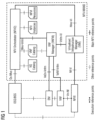
- Fig. 1 illustrates an example NFV MANO architectural framework, in accordance with certain embodiments.
- NM Network Management
- EM Element Management
- NFVO Network Functions Virtualization Orchestrator
- VNFM VNF Manager
- NM or EM initiates the VNF scaling operation (such as an expansion or contraction operation)
- the scaling request is sent to NFVO/VNFM.
- the request may be sent to NFVO/VNFM via "horizontal" reference points Os-Ma-nfvo or Ve-Vnfm, for example.
- NFV ETSI Industry Specification Groups NFV refers to a connection between any two functional blocks (FBs) as a "reference point.”
- FBs functional blocks
- each identified reference point may be uniquely named.
- the "Os-Ma-nfvo" and “Ve-Vnfm” are names of the corresponding reference points (first, a reference point between OSS and NFVO, and, second, a reference point between EM/VNF and VNFM).
- Such reference points may be considered “horizontal,” as the connection lines of the MANO architectural framework diagram are represented as horizontal lines.
- the expansion or contraction operation is intended to be performed in order to achieve a desired target capacity.
- the desired target capacity of the VNF may be indicated in some way so that the NFVO/VNFM may determine/calculate the amount of target (virtual) resource to allocate to the VNF.
- the NM/EM is generally unaware of the amount of (virtualized) resources that is necessary to be allocated in accordance with the target capacity of the VNF.
- Virtualized resources are utilized to implement the concept of virtualization.
- virtualized resources may correspond to "computing" resources (such as a virtualized computer processing unit (CPU) and/or a virtualized memory, for example), “storage” resources, and "network” resources, for example.
- An application that runs in a virtualized environment does not "see” the actual physical resources (as these physical resources may be hidden by a virtualization layer).
- a scale-up/scale-down operation may cause the virtualization layer to change the amount of virtualized resources that are allocated.
- MANO FBs may allocate different amount of virtualized resources to the VNF and may change the allocation over time (e.g., the allocation may be changed based on requests or internal decisions).
- the NM/EM generally only provides an indication of the target capacity in application terms.
- the NFVO/VNFM determines/calculates the amount of target (virtualized) resource to allocate to the VNF, when the scaling operation is executed. If an absolute target capacity is expressed in application terms by the NM/EM to the NFVO/VNFM, the NFVO/VNFM is generally unable to determine an amount of target (virtualized) resources to allocate to achieve the target capacity.
- a conversion mechanism may be needed when conveying the desired target capacity (which is expressed in application terms by the NM/EM) to the NFVO/VNFM. After conversion, the desired target capacity is to be conveyed to the NFVO/VNFM in (virtualized) resource terms.
- certain embodiments of the present invention may enable a target capacity indication to be effectively communicated from the NM/EM to the NFVO/VNFM, in order to enable NM/EM-initiated VNF scaling operations.
- the NM/EM provides a relative target capacity in a VNF scaling request to NFVO/VNFM.
- the relative target capacity can be expressed relative to a current capacity, as described in more detail below.
- the scaling request may be initiated by the NM.
- the NM can initiate the VNF scaling request (such as a request for expansion or contraction) directly to the NFVO. This scenario corresponds to an NM to NFVO scenario.
- the NM can initiate the VNF scaling request to EM, and the EM may then forward the request to VNFM.
- This scenario corresponds to an NM to EM to VNFM scenario.
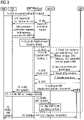
- Fig. 2 illustrates a NM that initiates a VNF expansion/contraction request, and transmits the request to NFVO, in accordance with certain embodiments.
- the resources to be allocated for the expansion request may then be allocated by the VNFM.
- the NM provides a desired relative target capacity of the VNF, where the relative target capacity is expressed (in the scaling request to the NFVO) by using a current capacity as a reference (see flow 1a in Fig. 2 ).
- the target capacity could be expressed as "1.5 times of the current capacity" (for an expansion scaling operation), or as "0.7 times of the current capacity” (for a contraction scaling operation).
- the NFVO may forward the request to VNFM (see flow 1b in Fig. 2 ).
- the VNFM may then determine/calculate the target (virtual) resource allocation amount that is necessary, based on the relative target capacity and a Virtual Network Function Descriptor (VNFD) (see flow 1c in Fig. 2 ).
- VNFD Virtual Network Function Descriptor
- VNFD virtualized mobility management entity
- VNFD may be metadata associated with a particular VNF by a provider (vendor).
- the content and format of the VNFD may be currently standardized by ETSI NFV Interfaces and Architecture workgroup.
- the VNFD may be available at NFVO, VNFM, and OSS/NM.
- the EM is typically provided by the same vendor as VNF. Therefore, the content of VNFD may be known by the EM.
- This calculation/determination may be performed by the VNFM, based on information in the VNFD (such as information from, for example, a mapping table or a formula). In the event that such information is not available in the VNFD, the calculation/determination may then be based on internal logic (for example, information as learned from observing VNF behavior).
- information in the VNFD such as information from, for example, a mapping table or a formula.
- the calculation/determination may then be based on internal logic (for example, information as learned from observing VNF behavior).
- the VNFM may also need to determine whether there are any dependencies upon other virtual network function components' (VNFCs') resources allocation, and if the other VNFCs need to be expanded with more virtual resources.
- the VNFM may determine if other VNFCs need to be expanded with more virtual resources based on a deployment flavor, a virtual resource description, a VNF description, and/or a VNFC description in the VNFD.
- the VNFM may be a functional block that is provided by a different vendor as compared to the VNF.
- the VNFM may not have any knowledge about VNF (for example, knowledge regarding an internal architecture, knowledge regarding a performance profile, etc), aside from the knowledge that is exposed by the VNF provider in the VNFD or the knowledge that is learned by the VNFM (while observing external VNF behavior).
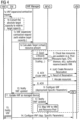
- Fig. 3 illustrates another method where the NM initiates a VNF expansion /contraction request to NFVO, in accordance with certain embodiments.
- the following steps are illustrated in Fig. 3 , and the steps are performed for scaling the VNF.
- the scaling corresponds to an expanding request.
- the NM may provide either an absolute desired target capacity of the VNF or a relative desired target capacity of the VNF (where the relative desired target capacity is expressed using the current capacity as a reference in the scaling request to NFVO) (See flow 1a in Fig. 3 ).
- the absolute target capacity could be expressed as "10000 busy hour call attempts (BHCA)."
- BHCA is an example of an application-specific metric.
- other embodiments may use other types of metrics.
- other useable metrics may include, for example, a number of active sessions, a number of registered users, and/or an overall data volume.
- the utilized metric may be known to (may be interpreted by) the application aware entities (such as VNF, EM, NM). However the utilized metric may be "unknown" to the virtualization aware (MANO) entities. Certain embodiments may illustrate that the application knowledge is not needed in all involved entities, and a clear separation of application management versus virtualization management is possible.
- the relative target capacity could be expressed as "1.5 times of the current capacity" (for an expansion scaling operation), or as "0.7 times of the current capacity” (for a contraction scaling operation).
- the NFVO may forward the request to VNFM (See flow 1b in Fig. 3 ).
- the VNFM may then forward the scaling request (received from NFVO) to the EM for translation.
- the EM compares the specified target capacity with the current VNF capacity and translates the absolute target capacity into a relative target capacity.
- the EM translates the per VNF relative target capacity into a per application scaling dimension (per VNFC).
- the desired target capacity for a specific scaling dimension could be "1.5 times of the current capacity" of a specific VNFC (for expansion), or "0.7 times of the current capacity" of a specific VNFC (for contraction).
- the VNFM calculates the target (virtual) resource allocation amount based on a relative target capacity and VNFD (See flow 1c in Fig. 3 ). For example, if the relative desired target capacity of a vMME is "1.5 times of the current capacity," then the VNFM calculates the additional amount of virtual resources that are to be allocated to the VNFC instances of the vMME, in order to support the expansion to "1.5 times capacity.” Such a calculation may be performed by the VNFM based on information in the VNFD (such as based on, for example, information expressed by a mapping table or a formula).
- the calculation of the needed virtual resources may be based on internal logic (for example, the amount of needed virtual resources may be learned from observing the VNF behavior). Additionally, the VNFM may also need to determine whether there is any dependency upon other VNFCs' resources allocation, and if the other VNFCs need to be expanded with more virtual resources based on a deployment flavor, a virtual resource description, a VNF description, and/or a VNFC description in the VNFD.
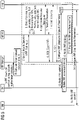
- Fig. 4 illustrates a method where the NM initiates the VNF expansion/contraction request to the EM, in accordance with certain embodiments.
- the following steps, as illustrated in Fig. 4 are performed for scaling (expanding in this example) the VNF.
- the NM provides either a relative desired target capacity (which is expressed relative to the current capacity in the scaling request to the EM (see flow 1a in Fig. 4 )), or the NM provides an absolute desired target capacity to the VNF.
- the target capacity could be expressed as "1.5 times of the current capacity" (for expansion), or as "0.7 times of the current capacity” (for contraction).
- the NM may express the desired target capacity to the EM in application terms (for example, the NM may express the desired target capacity in terms of target BHCA, sessions, and/or users).
- the target capacity could be a total value or a combination of sub-targets, and each sub-target may be a per sub-function of the VNF. For instance, one sub-target may be for the number of subscriber registrations, while the other sub-targets may be for the amount of call/session traffic.
- a VNF may be complex, with several sub-functions spread across several virtual machines (virtualization containers). Each virtual machine may be a separate VNFC. For example, there may be several "call processors," one or more "load balancer,” one or more management components, a database engine, etc.
- XYZ may be an application dimension metric such as, for example, BHCA
- the vendor may decide that 5 call processors are needed with 20000 XYZ capacity each, one load balancer is needed with 5 way capability, one management component is needed, and/or one database with a size of 1000000 records is needed.
- the 20000 XYZ, 5 flows, and 1000000 records would be the individual component capacities.
- the corresponding internals of the VNF may be changed.
- a number of call processors may be increased from 5 to 6
- the load balancers may be increased from 1 (5-way) to 3 (one 2-way and two 3-way)
- a database capacity may need to be increased
- a second management component may be added, etc.
- the individual per-component targets may be called "sub-targets.”
- the EM may forward the scaling request with a relative target capacity to VNFM (See flow 1c in Fig. 4 ). If the NM provided the absolute value, the EM converts the absolute value to a relative value before forwarding the scaling request to VNFM (See flow 1b in Fig. 4 ).
- the EM may also need to map each application sub-target from application sub-function (unknown to the VNFM) to the dimension of the corresponding VNFC.
- application sub-functions for example, the mapping of a "call processor," a "load balancer,” a "database,” and/or a "manager"
- the VNFCs virtualization containers / virtual machines. So, if there are two dimensions, such as intensity (for example, in terms of BHCA) and capacity (for example, in terms of users), the EM would know which VNFCs need to be scaled and by what amount. For example, the EM would know whether the scaling should be applied to only call processors, to only databases, or to both.
- the NFVO may forward the request to VNFM (See flow 1b in Fig. 2 ).
- VNFM calculates the target (virtual) resource allocation amount based on a relative target capacity and VNFD (See flow 1c in Fig. 2 ).
- the VNFM calculates the additional amount of virtual resources that are needed by the VNFC instances of the vMME, in order to support the expansion to "1.5 times capacity.”
- This calculation/determination may be performed by the VNFM based on information in the VNFD (such as based on information from, for example, a mapping table or a formula). In the event that such information is not available in the VNFD, the calculation/determination may then be based on internal logic (for example, as learned from observing the VNF behavior), or with the help of EM.
- the VNFM may also need to determine whether there is any dependency upon other VNFCs' resources allocation, and if the other VNFCs need to be expanded with more virtual resources. As described above, the VNFM may determine if other VNFCs need to be expanded with more virtual resources based on a deployment flavor, a virtual resource description, a VNF description, and/or a VNFC description in the VNFD.
- Fig. 5 illustrates a method where the EM initiates the VNF expansion /contraction request, in accordance with certain embodiments.
- the following steps, as shown in Fig. 5 are performed for scaling (expanding in this example) the VNF.
- the EM may initiate scaling requests.
- the EM provides either: (1) a relative target capacity of the VNF, where the relative target capacity is expressed in the scaling request to VNFM by using a current capacity as a reference (see flow 1a in Fig. 5 ) for the whole VNF, or (2) a relative target capacity of the VNF per application scaling dimension (as translated to a VNFC).
- the desired target capacity for a specific scaling dimension could be "1.5 times of the current capacity" of a specific VNFC (for an expansion scaling operation), or "0.7 times of the current capacity" of a specific VNFC (for a contraction scaling operation).
- the scaling dimension (in application terms) is being translated into a specific set of VNFCs, which may need to be scaled.
- the application level metrics may indicate that VNFCs that handle subscriber registrations may have a need for scaling.
- the VNFCs that handle subscriber registrations may be the Database (DB) VNFC of the VNF, for example.
- DB Database
- session handling is high, the scale operation should request scaling of the session handling VNFC.
- the knowledge relating to the internal application architecture (which reflects, for example, which VNFCs are responsible for which particular application functionalities) is generally not shared with VNFM, and the knowledge is generally known only to the EM of a same vendor as the VNF.
- the NFVO may forward the request to VNFM (see flow 1b in Fig. 2 ).
- the VNFM then calculates the target (virtual) resource allocation amount based on the relative target capacity and VNFD (see flow 1c in Fig. 2 ). For example, if the relative desired target capacity of a vMME is "1.5 times of the current capacity," the VNFM may need to calculate/determine the additional amount of virtual resources that are needed by the VNFC instances of the vMME, in order to support the expansion of "1.5 times capacity.”
- This calculation/determination may be performed by the VNFM based on information in the VNFD (such as based on information from, for example, a mapping table or a formula). In the event that such information is not available in the VFND, the calculation/determination may then be based on internal logic (for example, as learned from observing the VNF behavior).
- the VNFM may also need to determine whether there is any dependency upon other VNFCs' resources allocation, and if the other VNFCs need to be expanded with more virtual resources.
- the VNFM may determine if other VNFCs need to be expanded with more virtual resources based on a deployment flavor, a virtual resource description, a VNF description, and/or a VNFC description in the VNFD.
- the NM/EM provides a direction for target capacity in a VNF scaling request to NFVO/VNFM.
- the communication mechanisms (as described above) are used with one exception: the desired target capacity may not be specified at all. Instead, only the direction of the scaling (such as, up/down or expand/contract) is specified in the request.
- the scaling levels are specified in the VNFD.
- the responsibility of VNFM is to scale the resources that are allocated to the VNF, from one pre-defined level to the next level, in the direction specified in the request.
- NM NM
- EM EM
- NFVO NFVO
- VNFM VNF scaling operation
- the scaling request may be sent to NFVO/VNFM (via "horizontal" reference points such as Os-Ma-nfvo or Ve-Vnfm, for example).
- the desired target capacity of the VNF may be indicated in some way so that the NFVO/VNFM may determine/calculate the amount of target (virtual) resource to allocate to the VNF.
- the NM/EM is generally unaware of the amount of (virtual) resource that corresponds to the target capacity of the VNF.
- the NM/EM generally only provides an indication of the target capacity in application terms.
- the NFVO/VNFM may need to determine/calculate the amount of target (virtual) resource to the VNF, when executing the scaling operation. If the target capacity is expressed in application terms, the NFVO/VNFM does not understand the absolute target capacity value that is expressed in application terms. As described above, certain embodiments of the present invention address these technical difficulties.
- a conversion mechanism may be needed to convey the desired target capacity (which is expressed in application terms by the NM/EM) to the NFVO/VNFM. After conversion, the desired target capacity is to be conveyed to the NFVO/VNFM in (virtual) resource terms. As described above, certain embodiments of the present invention address these technical difficulties.
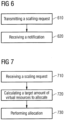
- Fig. 6 illustrates a flowchart of a method in accordance with certain embodiments of the invention.
- the method illustrated in Fig. 6 includes, at 610, transmitting, by a first network node, a scaling request.
- the scaling request comprises a request for virtualized network function expansion or virtualized network function contraction.
- the scaling request is transmitted to a second network node.
- a first domain is directed to application level details.
- a second domain is directed to virtualization level details, and the scaling request includes: (1) a relative target capacity that is generic to both the first domain and the second domain, (2) an absolute target capacity that is specific to the first domain, or (3) a relative target capacity that is specific to virtualized network function level targets.
- the method may also include, at 620, receiving a notification that a virtualization network function has been updated based on the transmitted scaling request.
- Fig. 7 illustrates a flowchart of a method in accordance with certain embodiments of the invention.
- the method illustrated in Fig. 7 includes, at 710, receiving, by a second network node, a scaling request.
- the scaling request comprises a request for virtualized network function expansion or virtualized network function contraction, and the scaling request is received from a first network node.
- a first domain is directed to application level details
- a second domain is directed to virtualization level details
- the scaling request includes: (1) a relative target capacity that is generic to both the first domain and the second domain, (2) an absolute target capacity that is specific to the first domain, or (3) a relative target capacity that is specific to virtualized network function level targets.
- the method may also include, at 720, calculating a target amount of virtual resources to allocate.
- the method may also include, at 730, performing allocation of the target amount of virtual resources.
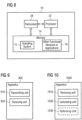
- Fig. 8 illustrates an apparatus in accordance with certain embodiments of the invention.
- the apparatus can be a network node configured to be an NM, EM, VNF Manager, and/or NFVO, for example.
- the apparatus can be a network node.
- Apparatus 10 can include a processor 22 for processing information and executing instructions or operations.
- Processor 22 can be any type of general or specific purpose processor. While a single processor 22 is shown in Fig. 8 , multiple processors can be utilized according to other embodiments.
- Processor 22 can also include one or more of general-purpose computers, special purpose computers, microprocessors, digital signal processors (DSPs), field-programmable gate arrays (FPGAs), application-specific integrated circuits (ASICs), and processors based on a multi-core processor architecture, as examples.
- DSPs digital signal processors
- FPGAs field-programmable gate arrays
- ASICs application-specific integrated circuits
- Apparatus 10 can further include a memory 14, coupled to processor 22, for storing information and instructions that can be executed by processor 22.
- Memory 14 can be one or more memories and of any type suitable to the local application environment, and can be implemented using any suitable volatile or nonvolatile data storage technology such as a semiconductor-based memory device, a magnetic memory device and system, an optical memory device and system, fixed memory, and removable memory.
- memory 14 include any combination of random access memory (RAM), read only memory (ROM), static storage such as a magnetic or optical disk, or any other type of non-transitory machine or computer readable media.
- the instructions stored in memory 14 can include program instructions or computer program code that, when executed by processor 22, enable the apparatus 10 to perform tasks as described herein.
- Apparatus 10 can also include one or more antennas (not shown) for transmitting and receiving signals and/or data to and from apparatus 10.
- Apparatus 10 can further include a transceiver 28 that modulates information on to a carrier waveform for transmission by the antenna(s) and demodulates information received via the antenna(s) for further processing by other elements of apparatus 10.
- transceiver 28 can be capable of transmitting and receiving signals or data directly.
- Processor 22 can perform functions associated with the operation of apparatus 10 including, without limitation, precoding of antenna gain/phase parameters, encoding and decoding of individual bits forming a communication message, formatting of information, and overall control of the apparatus 10, including processes related to management of communication resources.
- memory 14 can store software modules that provide functionality when executed by processor 22.
- the modules can include an operating system 15 that provides operating system functionality for apparatus 10.
- the memory can also store one or more functional modules 18, such as an application or program, to provide additional functionality for apparatus 10.
- the components of apparatus 10 can be implemented in hardware, or as any suitable combination of hardware and software.
- Apparatus 900 can be a network element/entity such as a network node that is configured to perform as an EM and/or an NM, for example.
- Apparatus 900 can include a transmitting unit 910 that transmits a scaling request.
- the scaling request comprises a request for virtualized network function expansion or virtualized network function contraction.
- the scaling request is transmitted to a network node.
- a first domain is directed to application level details
- a second domain is directed to virtualization level details.
- the scaling request includes: (1) a relative target capacity that is generic to both the first domain and the second domain, (2) an absolute target capacity that is specific to the first domain, or (3) a relative target capacity that is specific to virtualized network function level targets.
- Apparatus 900 may also include a receiving unit 920 that receives a notification that a virtualization network function has been updated based on the received scaling request.
- Apparatus 1000 can be a network element/entity such as a network node that is configured to perform as a VNF Manager and/or an NFVO, for example, for example.
- Apparatus 1000 can include a receiving unit 1010 that receives a scaling request.
- the scaling request comprises a request for virtualized network function expansion or virtualized network function contraction.
- the scaling request is received from a network node.
- a first domain is directed to application level details
- a second domain is directed to virtualization level details
- the scaling request comprises: (1) a relative target capacity that is generic to both the first domain and the second domain, (2) an absolute target capacity that is specific to the first domain, or (3) a relative target capacity that is specific to virtualized network function level targets.
- Apparatus 1000 can also include a calculating unit 1020 that calculates a target amount of virtual resources to allocate.
- Apparatus 1000 may also include a performing unit 1030 that performs allocation of the target amount of virtual resources.
Landscapes
- Engineering & Computer Science (AREA)
- Software Systems (AREA)
- Theoretical Computer Science (AREA)
- Computer Networks & Wireless Communication (AREA)
- Signal Processing (AREA)
- Physics & Mathematics (AREA)
- General Engineering & Computer Science (AREA)
- General Physics & Mathematics (AREA)
- Data Exchanges In Wide-Area Networks (AREA)
Claims (15)
- Verfahren, das Folgendes umfasst:Übertragen einer Skalierungsanforderung durch einen ersten Netzwerkknoten, wobei die Skalierungsanforderung eine Anforderung zur Erweiterung einer virtualisierten Netzwerkfunktion oder einer Kontrahierung einer virtualisierten Netzwerkfunktion umfasst, die durchzuführen sind, um eine gewünschte Zielkapazität zu erreichen, die Skalierungsanforderung zu einem zweiten Netzwerkknoten übertragen wird, eine erste Domäne auf gewünschte Zielkapazitäten gerichtet ist, die mit Bezug auf Anwendungen ausgedrückt sind, eine zweite Domäne auf gewünschte Zielkapazitäten gerichtet ist, die mit Bezug auf virtualisierte Ressourcen ausgedrückt sind, und die Skalierungsanforderung Folgendes umfasst: (1) eine relative Zielkapazität, die sowohl für die erste Domäne als auch für die zweite Domäne generisch ist, (2) eine absolute Zielkapazität, die für die erste Domäne spezifisch ist, oder (3) eine relative Zielkapazität, die für Niveauziele von virtualisierten Netzwerkfunktionen spezifisch ist; undEmpfangen einer Benachrichtigung, dass eine Virtualisierungsnetzwerkfunktion auf Basis der übertragenen Skalierungsanforderung aktualisiert wurde.
- Verfahren nach Anspruch 1, wobei der erste Netzwerkknoten eine Netzwerkverwaltungsentität umfasst, die Netzwerkverwaltungsentität die Skalierungsanforderung initiiert, undwenn die Skalierungsanforderung eine relative Zielkapazität umfasst, die sowohl für die erste Domäne als auch die zweite Domäne generisch ist, die Skalierungsanforderung entlang eines ersten Pfades von der Netzwerkverwaltungsentität zu einem Netzwerkfunktionsvirtualisierungorchestrator, zu einem virtualisierten Netzwerkfunktionsverwalter übertragen wird,wenn die Skalierungsanforderung eine absolute Zielkapazität umfasst, die für die erste Domäne spezifisch ist, die Skalierungsanforderung entlang eines zweiten Pfades zum Umsetzen in eine relative Zielkapazität zu einer Elementverwaltung übertragen wird, undwenn die Skalierungsanforderung eine relative Zielkapazität umfasst, die für Niveauziele für virtualisierte Netzwerkfunktionen spezifisch ist, die Skalierungsanforderung entlang eines zweiten Pfades zum Umsetzen in eine relative Zielkapazität, die für virtualisierte Netzwerkfunktionskomponenten spezifisch ist, zur Elementverwaltung übertragen wird.
- Vorrichtung, die Folgendes umfasst:mindestens einen Prozessor; undmindestens einen Speicher, der einen Computerprogrammcode beinhaltet,wobei der mindestens eine Speicher und der Computerprogrammcode dazu ausgelegt sind, die Vorrichtung mit dem mindestens einen Prozessor mindestens zu Folgendem zu veranlassenÜbertragen einer Skalierungsanforderung, wobei die Skalierungsanforderung eine Anforderung zur Erweiterung einer virtualisierten Netzwerkfunktion oder einer Kontrahierung einer virtualisierten Netzwerkfunktion umfasst, die durchzuführen sind, um eine gewünschte Zielkapazität zu erreichen, die Skalierungsanforderung zu einem zweiten Netzwerkknoten übertragen wird, eine erste Domäne auf gewünschte Zielkapazitäten gerichtet ist, die mit Bezug auf Anwendungen ausgedrückt sind, eine zweite Domäne auf gewünschte Zielkapazitäten gerichtet ist, die mit Bezug auf virtualisierte Ressourcen ausgedrückt sind, und die Skalierungsanforderung Folgendes umfasst: (1) eine relative Zielkapazität, die sowohl für die erste Domäne als auch für die zweite Domäne generisch ist, (2) eine absolute Zielkapazität, die für die erste Domäne spezifisch ist, oder (3) eine relative Zielkapazität, die für Niveauziele von virtualisierten Netzwerkfunktionen spezifisch ist; undEmpfangen einer Benachrichtigung, dass eine Virtualisierungsnetzwerkfunktion auf Basis der übertragenen Skalierungsanforderung aktualisiert wurde.
- Vorrichtung nach Anspruch 3, wobei die Vorrichtung eine Netzwerkverwaltungsentität umfasst, die Netzwerkverwaltungsentität die Skalierungsanforderung initiiert, undwenn die Skalierungsanforderung eine relative Zielkapazität umfasst, die sowohl für die erste Domäne als auch die zweite Domäne generisch ist, die Skalierungsanforderung entlang eines ersten Pfades von der Netzwerkverwaltungsentität zu einem Netzwerkfunktionsvirtualisierungorchestrator, zu einem virtualisierten Netzwerkfunktionsverwalter übertragen wird,wenn die Skalierungsanforderung eine absolute Zielkapazität umfasst, die für die erste Domäne spezifisch ist, die Skalierungsanforderung entlang eines zweiten Pfades zum Umsetzen in eine relative Zielkapazität zu einer Elementverwaltung übertragen wird, undwenn die Skalierungsanforderung eine relative Zielkapazität umfasst, die für Niveauziele für virtualisierte Netzwerkfunktionen spezifisch ist, die Skalierungsanforderung entlang eines zweiten Pfades zum Umsetzen in eine relative Zielkapazität, die für virtualisierte Netzwerkfunktionskomponenten spezifisch ist, zur Elementverwaltung übertragen wird.
- Vorrichtung nach Anspruch 3, wobei die Vorrichtung eine Elementverwaltungsentität umfasst und der Netzwerkknoten mindestens eines des Netzwerkfunktionsvirtualisierungorchestrators und des virtualisierten Netzwerkfunktionsverwalters umfasst.
- Vorrichtung nach Anspruch 4, wobei das Übertragen der Skalierungsanforderung entlang des zweiten Pfades das Übertragen der Skalierungsanforderung von der Netzwerkverwaltungsentität zum Netzwerkfunktionsvirtualisierungorchestrator, zum virtuellen Netzwerkfunktionsverwalter, zur Elementverwaltung und zurück zum virtuellen Netzwerkfunktionsverwalter umfasst.
- Vorrichtung nach Anspruch 3, wobei die relative Zielkapazität mit Bezug auf eine aktuelle Kapazität ausgedrückt wird.
- Computerprogrammprodukt, das auf einem nichttransitorischen computerlesbaren Medium enthalten ist, wobei das Computerprogrammprodukt dazu ausgelegt ist, einen Prozessor zu steuern, um ein Verfahren nach einem der Ansprüche 1-2 durchzuführen.
- Verfahren, das Folgendes umfasst:Empfangen einer Skalierungsanforderung durch einen zweiten Netzwerkknoten, wobei die Skalierungsanforderung eine Anforderung zur Erweiterung einer virtualisierten Netzwerkfunktion oder einer Kontrahierung einer virtualisierten Netzwerkfunktion umfasst, die durchzuführen sind, um eine gewünschte Zielkapazität zu erreichen, die Skalierungsanforderung von einem ersten Netzwerkknoten empfangen wird, eine erste Domäne auf gewünschte Zielkapazitäten gerichtet ist, die mit Bezug auf Anwendungen ausgedrückt sind, eine zweite Domäne auf gewünschte Zielkapazitäten gerichtet ist, die mit Bezug auf virtualisierte Ressourcen ausgedrückt sind, und die Skalierungsanforderung Folgendes umfasst: (1) eine relative Zielkapazität, die sowohl für die erste Domäne als auch für die zweite Domäne generisch ist, (2) eine absolute Zielkapazität, die für die erste Domäne spezifisch ist, oder (3) eine relative Zielkapazität, die für Niveauziele von virtualisierten Netzwerkfunktionen spezifisch ist;Berechnen einer Zielmenge von zuzuteilenden virtuellen Ressourcen; undDurchführen einer Zuteilung der Zielmenge von virtuellen Ressourcen.
- Verfahren nach Anspruch 9, wobei der zweite Netzwerkknoten einen Netzwerkfunktionsvirtualisierungorchestrator umfasst und der erste Netzwerkknoten mindestens eines von einer Netzwerkverwaltungsentität und einer Elementverwaltungsentität umfasst.
- Vorrichtung, die Folgendes umfasst:mindestens einen Prozessor; undmindestens einen Speicher, der einen Computerprogrammcode beinhaltet,wobei der mindestens eine Speicher und der Computerprogrammcode dazu ausgelegt sind, die Vorrichtung mit dem mindestens einen Prozessor mindestens zu Folgendem zu veranlassenEmpfangen einer Skalierungsanforderung, wobei die Skalierungsanforderung eine Anforderung zur Erweiterung einer virtualisierten Netzwerkfunktion oder einer Kontrahierung einer virtualisierten Netzwerkfunktion umfasst, die durchzuführen sind, um eine gewünschte Zielkapazität zu erreichen, die Skalierungsanforderung von einem Netzwerkknoten empfangen wird, eine erste Domäne auf gewünschte Zielkapazitäten gerichtet ist, die mit Bezug auf Anwendungen ausgedrückt sind, eine zweite Domäne auf gewünschte Zielkapazitäten gerichtet ist, die mit Bezug auf virtualisierte Ressourcen ausgedrückt sind, und die Skalierungsanforderung Folgendes umfasst: (1) eine relative Zielkapazität, die sowohl für die erste Domäne als auch für die zweite Domäne generisch ist, (2) eine absolute Zielkapazität, die für die erste Domäne spezifisch ist, oder (3) eine relative Zielkapazität, die für Niveauziele von virtualisierten Netzwerkfunktionen spezifisch ist;Berechnen einer Zielmenge von zuzuteilenden virtuellen Ressourcen; undDurchführen einer Zuteilung der Zielmenge von virtuellen Ressourcen.
- Vorrichtung nach Anspruch 11, wobei die Vorrichtung einen Netzwerkfunktionsvirtualisierungorchestrator umfasst und der Netzwerkknoten mindestens eines von einer Netzwerkverwaltungsentität und einer Elementverwaltungsentität umfasst.
- Vorrichtung nach Anspruch 11, wobei die Vorrichtung einen virtualisierten Netzwerkfunktionsverwalter umfasst und der Netzwerkknoten mindestens eines von einer Netzwerkverwaltungsentität und einer Elementverwaltungsentität umfasst.
- Vorrichtung nach Anspruch 11, wobei die relative Zielkapazität mit Bezug auf eine aktuelle Kapazität ausgedrückt wird.
- Computerprogrammprodukt, das auf einem nichttransitorischen computerlesbaren Medium enthalten ist, wobei das Computerprogrammprodukt dazu ausgelegt ist, einen Prozessor zu steuern, um ein Verfahren nach einem der Ansprüche 9-10 durchzuführen.
Applications Claiming Priority (2)
| Application Number | Priority Date | Filing Date | Title |
|---|---|---|---|
| US201562205204P | 2015-08-14 | 2015-08-14 | |
| PCT/EP2016/068065 WO2017029097A1 (en) | 2015-08-14 | 2016-07-28 | Method and apparatus for virtualized network function scaling that is initiated by network management and/or element management |
Publications (2)
| Publication Number | Publication Date |
|---|---|
| EP3335375A1 EP3335375A1 (de) | 2018-06-20 |
| EP3335375B1 true EP3335375B1 (de) | 2023-02-15 |
Family
ID=56609859
Family Applications (1)
| Application Number | Title | Priority Date | Filing Date |
|---|---|---|---|
| EP16747881.7A Active EP3335375B1 (de) | 2015-08-14 | 2016-07-28 | Verfahren und vorrichtung für durch netzwerkverwaltung und/oder elementverwaltung ausgelöste skalierung virtualisierter netzwerkfunktionen |
Country Status (3)
| Country | Link |
|---|---|
| US (1) | US11018944B2 (de) |
| EP (1) | EP3335375B1 (de) |
| WO (1) | WO2017029097A1 (de) |
Families Citing this family (13)
| Publication number | Priority date | Publication date | Assignee | Title |
|---|---|---|---|---|
| EP3349397B1 (de) * | 2015-09-30 | 2020-07-29 | Huawei Technologies Co., Ltd. | Verfahren, vorrichtung und system zur ausskalierung |
| US11025515B2 (en) * | 2015-09-30 | 2021-06-01 | Apple Inc. | Devices and methods of using network function virtualization and virtualized resources performance data to improve performance |
| CN108370341B (zh) * | 2016-03-02 | 2020-05-08 | 华为技术有限公司 | 资源配置方法、虚拟网络功能管理器和网元管理系统 |
| US11171905B1 (en) | 2016-10-17 | 2021-11-09 | Open Invention Network Llc | Request and delivery of additional data |
| CN108632049B (zh) * | 2017-03-15 | 2020-08-25 | 华为机器有限公司 | 用于虚拟网络功能扩容的方法和装置 |
| US10200463B2 (en) * | 2017-05-22 | 2019-02-05 | At&T Intellectual Property I, L.P. | Systems and methods to improve the performance of a network by more efficient virtual network resource allocation |
| US11010205B2 (en) * | 2017-05-30 | 2021-05-18 | Hewlett Packard Enterprise Development Lp | Virtual network function resource allocation |
| US11003516B2 (en) * | 2017-07-24 | 2021-05-11 | At&T Intellectual Property I, L.P. | Geographical redundancy and dynamic scaling for virtual network functions |
| CN109391482B (zh) * | 2017-08-02 | 2021-01-29 | 华为技术有限公司 | 网络功能的升级方法及升级管理实体 |
| CN109992353B (zh) * | 2018-01-02 | 2021-11-02 | 中国移动通信有限公司研究院 | 一种扩缩容方法、装置、设备及计算机可读存储介质 |
| US11240135B1 (en) * | 2018-05-23 | 2022-02-01 | Open Invention Network Llc | Monitoring VNFCs that are composed of independently manageable software modules |
| CN111443985A (zh) * | 2019-01-17 | 2020-07-24 | 华为技术有限公司 | 实例化虚拟网络功能的方法及设备 |
| CN112153700B (zh) * | 2019-06-26 | 2022-03-29 | 华为技术有限公司 | 一种网络切片资源管理方法及设备 |
Family Cites Families (4)
| Publication number | Priority date | Publication date | Assignee | Title |
|---|---|---|---|---|
| JP4124331B2 (ja) * | 2002-09-17 | 2008-07-23 | 株式会社日立製作所 | Dbms向け仮想ボリューム作成・管理方法 |
| JP5986692B2 (ja) | 2013-01-11 | 2016-09-06 | 華為技術有限公司Huawei Technologies Co.,Ltd. | ネットワークデバイスのためのネットワーク機能仮想化 |
| US9973375B2 (en) | 2013-04-22 | 2018-05-15 | Cisco Technology, Inc. | App store portal providing point-and-click deployment of third-party virtualized network functions |
| US9647889B1 (en) * | 2014-11-12 | 2017-05-09 | Amazon Technologies, Inc. | Standby instances for auto-scaling groups |
-
2016
- 2016-07-28 EP EP16747881.7A patent/EP3335375B1/de active Active
- 2016-07-28 US US15/752,698 patent/US11018944B2/en active Active
- 2016-07-28 WO PCT/EP2016/068065 patent/WO2017029097A1/en not_active Ceased
Also Published As
| Publication number | Publication date |
|---|---|
| US11018944B2 (en) | 2021-05-25 |
| WO2017029097A1 (en) | 2017-02-23 |
| US20180241630A1 (en) | 2018-08-23 |
| EP3335375A1 (de) | 2018-06-20 |
Similar Documents
| Publication | Publication Date | Title |
|---|---|---|
| EP3335375B1 (de) | Verfahren und vorrichtung für durch netzwerkverwaltung und/oder elementverwaltung ausgelöste skalierung virtualisierter netzwerkfunktionen | |
| US10764132B2 (en) | Scale-out association method and apparatus, and system | |
| EP4213023B1 (de) | Ausführungsverteiler für funktion-als-service (faas) | |
| CN107360010B (zh) | 一种网站灰度发布方法及装置 | |
| EP3664372B1 (de) | Netzwerkverwaltungsverfahren und zugehörige vorrichtung | |
| US9628290B2 (en) | Traffic migration acceleration for overlay virtual environments | |
| US20170346676A1 (en) | Alarm correlation in network function virtualization environment | |
| KR102455127B1 (ko) | 핸드오버 방법 및 시스템, 및 디바이스 | |
| CN111290828A (zh) | 使用容器编排服务进行动态路由 | |
| EP3313023A1 (de) | Verfahren und vorrichtung zur lebenszyklusverwaltung | |
| WO2020052605A1 (zh) | 一种网络切片的选择方法及装置 | |
| EP3531749B1 (de) | Verwaltungsverfahren, verwaltungseinheit und system für netzwerkfunktion | |
| US20180191859A1 (en) | Network resource schedulers and scheduling methods for cloud deployment | |
| US9537932B2 (en) | Emulating test distributed application on server | |
| US20210144515A1 (en) | Systems and methods for multi-access edge computing node selection | |
| US20160345283A1 (en) | Method and apparatus for adjacent node registration, and method and system for cross-node registration | |
| WO2016184037A1 (zh) | 一种业务可用性管理方法、装置及其网络功能虚拟化架构 | |
| US20210345066A1 (en) | Information transmission method and apparatus | |
| EP3319270B1 (de) | Dienstregistrierungsverfahren, verwendungsverfahren und zugehörige vorrichtung | |
| US11036535B2 (en) | Data storage method and apparatus | |
| WO2017114219A1 (zh) | 部署网络服务的方法和装置 | |
| US9354940B2 (en) | Provisioning tenants to multi-tenant capable services | |
| US20140222896A1 (en) | Distributed processing system and management method of distributed processing system | |
| CN110858821A (zh) | 容器通信方法及装置 | |
| US20170279738A1 (en) | Method, apparatus, and system for transmitting data |
Legal Events
| Date | Code | Title | Description |
|---|---|---|---|
| STAA | Information on the status of an ep patent application or granted ep patent |
Free format text: STATUS: THE INTERNATIONAL PUBLICATION HAS BEEN MADE |
|
| PUAI | Public reference made under article 153(3) epc to a published international application that has entered the european phase |
Free format text: ORIGINAL CODE: 0009012 |
|
| STAA | Information on the status of an ep patent application or granted ep patent |
Free format text: STATUS: REQUEST FOR EXAMINATION WAS MADE |
|
| 17P | Request for examination filed |
Effective date: 20180314 |
|
| AK | Designated contracting states |
Kind code of ref document: A1 Designated state(s): AL AT BE BG CH CY CZ DE DK EE ES FI FR GB GR HR HU IE IS IT LI LT LU LV MC MK MT NL NO PL PT RO RS SE SI SK SM TR |
|
| AX | Request for extension of the european patent |
Extension state: BA ME |
|
| DAV | Request for validation of the european patent (deleted) | ||
| DAX | Request for extension of the european patent (deleted) | ||
| RAP1 | Party data changed (applicant data changed or rights of an application transferred) |
Owner name: NOKIA SOLUTIONS AND NETWORKS OY |
|
| STAA | Information on the status of an ep patent application or granted ep patent |
Free format text: STATUS: EXAMINATION IS IN PROGRESS |
|
| 17Q | First examination report despatched |
Effective date: 20210128 |
|
| REG | Reference to a national code |
Ref country code: DE Ref legal event code: R079 Ref document number: 602016077826 Country of ref document: DE Free format text: PREVIOUS MAIN CLASS: H04L0012240000 Ipc: H04L0041089600 |
|
| GRAP | Despatch of communication of intention to grant a patent |
Free format text: ORIGINAL CODE: EPIDOSNIGR1 |
|
| STAA | Information on the status of an ep patent application or granted ep patent |
Free format text: STATUS: GRANT OF PATENT IS INTENDED |
|
| RIC1 | Information provided on ipc code assigned before grant |
Ipc: H04L 41/0896 20220101AFI20220810BHEP |
|
| INTG | Intention to grant announced |
Effective date: 20220909 |
|
| GRAS | Grant fee paid |
Free format text: ORIGINAL CODE: EPIDOSNIGR3 |
|
| GRAA | (expected) grant |
Free format text: ORIGINAL CODE: 0009210 |
|
| STAA | Information on the status of an ep patent application or granted ep patent |
Free format text: STATUS: THE PATENT HAS BEEN GRANTED |
|
| AK | Designated contracting states |
Kind code of ref document: B1 Designated state(s): AL AT BE BG CH CY CZ DE DK EE ES FI FR GB GR HR HU IE IS IT LI LT LU LV MC MK MT NL NO PL PT RO RS SE SI SK SM TR |
|
| REG | Reference to a national code |
Ref country code: CH Ref legal event code: EP Ref country code: GB Ref legal event code: FG4D |
|
| REG | Reference to a national code |
Ref country code: DE Ref legal event code: R096 Ref document number: 602016077826 Country of ref document: DE |
|
| REG | Reference to a national code |
Ref country code: AT Ref legal event code: REF Ref document number: 1548835 Country of ref document: AT Kind code of ref document: T Effective date: 20230315 Ref country code: IE Ref legal event code: FG4D |
|
| REG | Reference to a national code |
Ref country code: LT Ref legal event code: MG9D |
|
| REG | Reference to a national code |
Ref country code: NL Ref legal event code: MP Effective date: 20230215 |
|
| REG | Reference to a national code |
Ref country code: AT Ref legal event code: MK05 Ref document number: 1548835 Country of ref document: AT Kind code of ref document: T Effective date: 20230215 |
|
| PG25 | Lapsed in a contracting state [announced via postgrant information from national office to epo] |
Ref country code: RS Free format text: LAPSE BECAUSE OF FAILURE TO SUBMIT A TRANSLATION OF THE DESCRIPTION OR TO PAY THE FEE WITHIN THE PRESCRIBED TIME-LIMIT Effective date: 20230215 Ref country code: PT Free format text: LAPSE BECAUSE OF FAILURE TO SUBMIT A TRANSLATION OF THE DESCRIPTION OR TO PAY THE FEE WITHIN THE PRESCRIBED TIME-LIMIT Effective date: 20230615 Ref country code: NO Free format text: LAPSE BECAUSE OF FAILURE TO SUBMIT A TRANSLATION OF THE DESCRIPTION OR TO PAY THE FEE WITHIN THE PRESCRIBED TIME-LIMIT Effective date: 20230515 Ref country code: NL Free format text: LAPSE BECAUSE OF FAILURE TO SUBMIT A TRANSLATION OF THE DESCRIPTION OR TO PAY THE FEE WITHIN THE PRESCRIBED TIME-LIMIT Effective date: 20230215 Ref country code: LV Free format text: LAPSE BECAUSE OF FAILURE TO SUBMIT A TRANSLATION OF THE DESCRIPTION OR TO PAY THE FEE WITHIN THE PRESCRIBED TIME-LIMIT Effective date: 20230215 Ref country code: LT Free format text: LAPSE BECAUSE OF FAILURE TO SUBMIT A TRANSLATION OF THE DESCRIPTION OR TO PAY THE FEE WITHIN THE PRESCRIBED TIME-LIMIT Effective date: 20230215 Ref country code: HR Free format text: LAPSE BECAUSE OF FAILURE TO SUBMIT A TRANSLATION OF THE DESCRIPTION OR TO PAY THE FEE WITHIN THE PRESCRIBED TIME-LIMIT Effective date: 20230215 Ref country code: ES Free format text: LAPSE BECAUSE OF FAILURE TO SUBMIT A TRANSLATION OF THE DESCRIPTION OR TO PAY THE FEE WITHIN THE PRESCRIBED TIME-LIMIT Effective date: 20230215 Ref country code: AT Free format text: LAPSE BECAUSE OF FAILURE TO SUBMIT A TRANSLATION OF THE DESCRIPTION OR TO PAY THE FEE WITHIN THE PRESCRIBED TIME-LIMIT Effective date: 20230215 |
|
| PG25 | Lapsed in a contracting state [announced via postgrant information from national office to epo] |
Ref country code: SE Free format text: LAPSE BECAUSE OF FAILURE TO SUBMIT A TRANSLATION OF THE DESCRIPTION OR TO PAY THE FEE WITHIN THE PRESCRIBED TIME-LIMIT Effective date: 20230215 Ref country code: PL Free format text: LAPSE BECAUSE OF FAILURE TO SUBMIT A TRANSLATION OF THE DESCRIPTION OR TO PAY THE FEE WITHIN THE PRESCRIBED TIME-LIMIT Effective date: 20230215 Ref country code: IS Free format text: LAPSE BECAUSE OF FAILURE TO SUBMIT A TRANSLATION OF THE DESCRIPTION OR TO PAY THE FEE WITHIN THE PRESCRIBED TIME-LIMIT Effective date: 20230615 Ref country code: GR Free format text: LAPSE BECAUSE OF FAILURE TO SUBMIT A TRANSLATION OF THE DESCRIPTION OR TO PAY THE FEE WITHIN THE PRESCRIBED TIME-LIMIT Effective date: 20230516 Ref country code: FI Free format text: LAPSE BECAUSE OF FAILURE TO SUBMIT A TRANSLATION OF THE DESCRIPTION OR TO PAY THE FEE WITHIN THE PRESCRIBED TIME-LIMIT Effective date: 20230215 |
|
| PG25 | Lapsed in a contracting state [announced via postgrant information from national office to epo] |
Ref country code: SM Free format text: LAPSE BECAUSE OF FAILURE TO SUBMIT A TRANSLATION OF THE DESCRIPTION OR TO PAY THE FEE WITHIN THE PRESCRIBED TIME-LIMIT Effective date: 20230215 Ref country code: RO Free format text: LAPSE BECAUSE OF FAILURE TO SUBMIT A TRANSLATION OF THE DESCRIPTION OR TO PAY THE FEE WITHIN THE PRESCRIBED TIME-LIMIT Effective date: 20230215 Ref country code: EE Free format text: LAPSE BECAUSE OF FAILURE TO SUBMIT A TRANSLATION OF THE DESCRIPTION OR TO PAY THE FEE WITHIN THE PRESCRIBED TIME-LIMIT Effective date: 20230215 Ref country code: DK Free format text: LAPSE BECAUSE OF FAILURE TO SUBMIT A TRANSLATION OF THE DESCRIPTION OR TO PAY THE FEE WITHIN THE PRESCRIBED TIME-LIMIT Effective date: 20230215 Ref country code: CZ Free format text: LAPSE BECAUSE OF FAILURE TO SUBMIT A TRANSLATION OF THE DESCRIPTION OR TO PAY THE FEE WITHIN THE PRESCRIBED TIME-LIMIT Effective date: 20230215 |
|
| REG | Reference to a national code |
Ref country code: DE Ref legal event code: R097 Ref document number: 602016077826 Country of ref document: DE |
|
| PG25 | Lapsed in a contracting state [announced via postgrant information from national office to epo] |
Ref country code: SK Free format text: LAPSE BECAUSE OF FAILURE TO SUBMIT A TRANSLATION OF THE DESCRIPTION OR TO PAY THE FEE WITHIN THE PRESCRIBED TIME-LIMIT Effective date: 20230215 |
|
| PLBE | No opposition filed within time limit |
Free format text: ORIGINAL CODE: 0009261 |
|
| STAA | Information on the status of an ep patent application or granted ep patent |
Free format text: STATUS: NO OPPOSITION FILED WITHIN TIME LIMIT |
|
| 26N | No opposition filed |
Effective date: 20231116 |
|
| PG25 | Lapsed in a contracting state [announced via postgrant information from national office to epo] |
Ref country code: SI Free format text: LAPSE BECAUSE OF FAILURE TO SUBMIT A TRANSLATION OF THE DESCRIPTION OR TO PAY THE FEE WITHIN THE PRESCRIBED TIME-LIMIT Effective date: 20230215 |
|
| PG25 | Lapsed in a contracting state [announced via postgrant information from national office to epo] |
Ref country code: MC Free format text: LAPSE BECAUSE OF FAILURE TO SUBMIT A TRANSLATION OF THE DESCRIPTION OR TO PAY THE FEE WITHIN THE PRESCRIBED TIME-LIMIT Effective date: 20230215 |
|
| PG25 | Lapsed in a contracting state [announced via postgrant information from national office to epo] |
Ref country code: MC Free format text: LAPSE BECAUSE OF FAILURE TO SUBMIT A TRANSLATION OF THE DESCRIPTION OR TO PAY THE FEE WITHIN THE PRESCRIBED TIME-LIMIT Effective date: 20230215 |
|
| REG | Reference to a national code |
Ref country code: CH Ref legal event code: PL |
|
| REG | Reference to a national code |
Ref country code: BE Ref legal event code: MM Effective date: 20230731 |
|
| PG25 | Lapsed in a contracting state [announced via postgrant information from national office to epo] |
Ref country code: LU Free format text: LAPSE BECAUSE OF NON-PAYMENT OF DUE FEES Effective date: 20230728 |
|
| GBPC | Gb: european patent ceased through non-payment of renewal fee |
Effective date: 20230728 |
|
| PG25 | Lapsed in a contracting state [announced via postgrant information from national office to epo] |
Ref country code: LU Free format text: LAPSE BECAUSE OF NON-PAYMENT OF DUE FEES Effective date: 20230728 |
|
| REG | Reference to a national code |
Ref country code: IE Ref legal event code: MM4A |
|
| PG25 | Lapsed in a contracting state [announced via postgrant information from national office to epo] |
Ref country code: CH Free format text: LAPSE BECAUSE OF NON-PAYMENT OF DUE FEES Effective date: 20230731 Ref country code: GB Free format text: LAPSE BECAUSE OF NON-PAYMENT OF DUE FEES Effective date: 20230728 |
|
| PG25 | Lapsed in a contracting state [announced via postgrant information from national office to epo] |
Ref country code: IT Free format text: LAPSE BECAUSE OF FAILURE TO SUBMIT A TRANSLATION OF THE DESCRIPTION OR TO PAY THE FEE WITHIN THE PRESCRIBED TIME-LIMIT Effective date: 20230215 Ref country code: BE Free format text: LAPSE BECAUSE OF NON-PAYMENT OF DUE FEES Effective date: 20230731 |
|
| PG25 | Lapsed in a contracting state [announced via postgrant information from national office to epo] |
Ref country code: IE Free format text: LAPSE BECAUSE OF NON-PAYMENT OF DUE FEES Effective date: 20230728 |
|
| PG25 | Lapsed in a contracting state [announced via postgrant information from national office to epo] |
Ref country code: IE Free format text: LAPSE BECAUSE OF NON-PAYMENT OF DUE FEES Effective date: 20230728 |
|
| PG25 | Lapsed in a contracting state [announced via postgrant information from national office to epo] |
Ref country code: BG Free format text: LAPSE BECAUSE OF FAILURE TO SUBMIT A TRANSLATION OF THE DESCRIPTION OR TO PAY THE FEE WITHIN THE PRESCRIBED TIME-LIMIT Effective date: 20230215 |
|
| PG25 | Lapsed in a contracting state [announced via postgrant information from national office to epo] |
Ref country code: BG Free format text: LAPSE BECAUSE OF FAILURE TO SUBMIT A TRANSLATION OF THE DESCRIPTION OR TO PAY THE FEE WITHIN THE PRESCRIBED TIME-LIMIT Effective date: 20230215 |
|
| PGFP | Annual fee paid to national office [announced via postgrant information from national office to epo] |
Ref country code: FR Payment date: 20250610 Year of fee payment: 10 |
|
| PG25 | Lapsed in a contracting state [announced via postgrant information from national office to epo] |
Ref country code: CY Free format text: LAPSE BECAUSE OF FAILURE TO SUBMIT A TRANSLATION OF THE DESCRIPTION OR TO PAY THE FEE WITHIN THE PRESCRIBED TIME-LIMIT; INVALID AB INITIO Effective date: 20160728 |
|
| PG25 | Lapsed in a contracting state [announced via postgrant information from national office to epo] |
Ref country code: HU Free format text: LAPSE BECAUSE OF FAILURE TO SUBMIT A TRANSLATION OF THE DESCRIPTION OR TO PAY THE FEE WITHIN THE PRESCRIBED TIME-LIMIT; INVALID AB INITIO Effective date: 20160728 |
|
| PGFP | Annual fee paid to national office [announced via postgrant information from national office to epo] |
Ref country code: DE Payment date: 20250604 Year of fee payment: 10 |