EP3333246A1 - Processing liquid food - Google Patents
Processing liquid food Download PDFInfo
- Publication number
- EP3333246A1 EP3333246A1 EP17203191.6A EP17203191A EP3333246A1 EP 3333246 A1 EP3333246 A1 EP 3333246A1 EP 17203191 A EP17203191 A EP 17203191A EP 3333246 A1 EP3333246 A1 EP 3333246A1
- Authority
- EP
- European Patent Office
- Prior art keywords
- liquid food
- heat treated
- filter
- components
- heat
- Prior art date
- Legal status (The legal status is an assumption and is not a legal conclusion. Google has not performed a legal analysis and makes no representation as to the accuracy of the status listed.)
- Ceased
Links
Images


Classifications
-
- C—CHEMISTRY; METALLURGY
- C12—BIOCHEMISTRY; BEER; SPIRITS; WINE; VINEGAR; MICROBIOLOGY; ENZYMOLOGY; MUTATION OR GENETIC ENGINEERING
- C12H—PASTEURISATION, STERILISATION, PRESERVATION, PURIFICATION, CLARIFICATION OR AGEING OF ALCOHOLIC BEVERAGES; METHODS FOR ALTERING THE ALCOHOL CONTENT OF FERMENTED SOLUTIONS OR ALCOHOLIC BEVERAGES
- C12H1/00—Pasteurisation, sterilisation, preservation, purification, clarification, or ageing of alcoholic beverages
- C12H1/02—Pasteurisation, sterilisation, preservation, purification, clarification, or ageing of alcoholic beverages combined with removal of precipitate or added materials, e.g. adsorption material
- C12H1/06—Precipitation by physical means, e.g. by irradiation, vibrations
- C12H1/063—Separation by filtration
-
- A—HUMAN NECESSITIES
- A23—FOODS OR FOODSTUFFS; TREATMENT THEREOF, NOT COVERED BY OTHER CLASSES
- A23B—PRESERVATION OF FOODS, FOODSTUFFS OR NON-ALCOHOLIC BEVERAGES; CHEMICAL RIPENING OF FRUIT OR VEGETABLES
- A23B2/00—Preservation of foods or foodstuffs, in general
- A23B2/40—Preservation of foods or foodstuffs, in general by heating loose unpacked materials
- A23B2/42—Preservation of foods or foodstuffs, in general by heating loose unpacked materials while they are progressively transported through the apparatus
- A23B2/46—Preservation of foods or foodstuffs, in general by heating loose unpacked materials while they are progressively transported through the apparatus with transport through tubes
-
- A—HUMAN NECESSITIES
- A23—FOODS OR FOODSTUFFS; TREATMENT THEREOF, NOT COVERED BY OTHER CLASSES
- A23B—PRESERVATION OF FOODS, FOODSTUFFS OR NON-ALCOHOLIC BEVERAGES; CHEMICAL RIPENING OF FRUIT OR VEGETABLES
- A23B2/00—Preservation of foods or foodstuffs, in general
- A23B2/90—Preservation of foods or foodstuffs, in general by drying or kilning; Subsequent reconstitution
- A23B2/93—Spray drying
-
- A—HUMAN NECESSITIES
- A23—FOODS OR FOODSTUFFS; TREATMENT THEREOF, NOT COVERED BY OTHER CLASSES
- A23B—PRESERVATION OF FOODS, FOODSTUFFS OR NON-ALCOHOLIC BEVERAGES; CHEMICAL RIPENING OF FRUIT OR VEGETABLES
- A23B70/00—Preservation of non-alcoholic beverages
- A23B70/30—Preservation of non-alcoholic beverages by heating
-
- A—HUMAN NECESSITIES
- A23—FOODS OR FOODSTUFFS; TREATMENT THEREOF, NOT COVERED BY OTHER CLASSES
- A23L—FOODS, FOODSTUFFS OR NON-ALCOHOLIC BEVERAGES, NOT OTHERWISE PROVIDED FOR; PREPARATION OR TREATMENT THEREOF
- A23L2/00—Non-alcoholic beverages; Dry compositions or concentrates therefor; Preparation or treatment thereof
- A23L2/70—Clarifying or fining of non-alcoholic beverages; Removing unwanted matter
- A23L2/72—Clarifying or fining of non-alcoholic beverages; Removing unwanted matter by filtration
-
- B—PERFORMING OPERATIONS; TRANSPORTING
- B01—PHYSICAL OR CHEMICAL PROCESSES OR APPARATUS IN GENERAL
- B01D—SEPARATION
- B01D46/00—Filters or filtering processes specially modified for separating dispersed particles from gases or vapours
- B01D46/0002—Casings; Housings; Frame constructions
- B01D46/0012—In-line filters
-
- C—CHEMISTRY; METALLURGY
- C12—BIOCHEMISTRY; BEER; SPIRITS; WINE; VINEGAR; MICROBIOLOGY; ENZYMOLOGY; MUTATION OR GENETIC ENGINEERING
- C12H—PASTEURISATION, STERILISATION, PRESERVATION, PURIFICATION, CLARIFICATION OR AGEING OF ALCOHOLIC BEVERAGES; METHODS FOR ALTERING THE ALCOHOL CONTENT OF FERMENTED SOLUTIONS OR ALCOHOLIC BEVERAGES
- C12H1/00—Pasteurisation, sterilisation, preservation, purification, clarification, or ageing of alcoholic beverages
- C12H1/02—Pasteurisation, sterilisation, preservation, purification, clarification, or ageing of alcoholic beverages combined with removal of precipitate or added materials, e.g. adsorption material
- C12H1/06—Precipitation by physical means, e.g. by irradiation, vibrations
- C12H1/08—Precipitation by physical means, e.g. by irradiation, vibrations by heating
-
- B—PERFORMING OPERATIONS; TRANSPORTING
- B65—CONVEYING; PACKING; STORING; HANDLING THIN OR FILAMENTARY MATERIAL
- B65B—MACHINES, APPARATUS OR DEVICES FOR, OR METHODS OF, PACKAGING ARTICLES OR MATERIALS; UNPACKING
- B65B3/00—Packaging plastic material, semiliquids, liquids or mixed solids and liquids, in individual containers or receptacles, e.g. bags, sacks, boxes, cartons, cans, or jars
- B65B3/04—Methods of, or means for, filling the material into the containers or receptacles
Definitions
- the invention relates to processing liquid food by transferring the liquid food from a balance tank through a heat exchanger to a packaging device.
- Processing of liquid food is often performed in a processing system that comprises a balance tank, a heat treating unit and a packaging device.
- Liquid food is transferred, by use of various components such as pumps and tubing, through the heat treatment unit and obtains heat from a heating medium whereby the temperature of the liquid food reaches a desired temperature that provides heat treatment of the liquid food.
- the liquid food may be provided to the packaging device that creates packages of heat treated liquid food for subsequent distribution to consumers.
- particles may be released due to wear and tear, typically if maintenance routines are not properly followed. Also, particles may be released if worn equipment parts are replaced by new parts that do not fulfill quality requirements prescribed by the manufacturer of the processing system. As a result, small particles may be released from equipment, and in some circumstances a larger amount/volume of particles can be released, for example at installation, service and in connection with failures of, e.g., gaskets.
- Accelerated degradation of gaskets in tubing or in other processing equipment may also be caused by the combination of the chosen material of the gasket (typically if the material is not of a type recommended by the manufacturer of the processing system), the cleaning method used and the product, i.e. the type of liquid food that is being processed.
- Released particles e.g. from degraded gaskets, in a microbiologically contaminated environment, e.g. at a point before heat treatment, may cause subsequent microbiological contamination after heat treatment. That is, the impact on the quality of the liquid food is dependent on the type and size of any particle and the microbiology environment.
- a system for processing liquid food comprising a balance tank configured to provide the liquid food and a heat treatment unit.
- the heat treating unit is configured to receive and heat treat the liquid food to provide heat treated liquid food.
- the system further comprises a filter that is configured to receive and filter the heat treated liquid food to provide filtered, heat treated liquid food.
- the system also comprises a packaging device that is configured to receive and package the filtered heat treated liquid food.
- the filter may be configured to remove particles having a size greater than 73 micrometer from the liquid food.
- the system may comprise tubing that is configured to convey the liquid food from the balance tank to the heat treatment unit, from the heat treatment unit to the filter and from the filter to the packaging device.
- a plurality of components such as any of a pump, a valve, a deaerator, are typically arranged along the tubing between the balance tank and the packaging device.
- the plurality of components may be arranged such that a first number of components are arranged between the balance tank and the filter and a second number of components are arranged between the filter and the packaging device, where the second number of components is lower than the first number of components.
- the second number of components may be zero. That is, in such embodiments, no component is present between the filter and the packaging device.
- component does not include conventional pipes and tubing which purpose merely lies in conveying the liquid food from the filter and the packaging device.
- the probability of filtering away foreign and potentially harmful particles emanating from the system is further enhanced and even minimized, with associated maximization of the quality of the processed liquid food.
- the filter may comprise at least one clamp and at least one support ring.
- the at least one clamp and the at least one support ring may be configured to operate at a sterilization temperature and during a predetermined sterilization time. The sterilization is typically performed when the processing systems is cleaned.
- the at least one support ring may be made of polytetrafluoroethylene (PTFE).
- the object of the present disclosure is also achieved as disclosed herein in a second aspect by a method for processing liquid food.
- the method comprises providing the liquid food from a balance tank to a heat treating unit, heat treating the liquid food to provide heat treated liquid food to a filter.
- the heat treated liquid food is filtered to provide filtered heat treated liquid food to a packaging device and the filtered heat treated liquid food is then packaged.
- Such a method and various embodiments of such a method have technical effects and advantages that correspond to the technical effects and advantages of the system of the first aspect as summarized above.
- the method may include any feature described in connection the system, and vice versa.
- the system 100 comprises a balance tank 104.
- the balance tank 104 is configured to provide the liquid food 102.
- the system 100 further comprises a heat treatment unit 106 that is configured to receive and heat treat the liquid food 102 to provide heat treated liquid food 102a.
- a filter 108 follows the heat treatment unit 106, i.e. downstream, is a filter 108 that is configured to receive and filter the heat treated liquid food 102a to provide filtered, heat treated liquid food 102b.
- the system further comprises a packaging device 110 that is configured to receive and package the filtered, heat treated liquid food 102b.
- Each of the balance tank 104, the heat treatment unit 106 and the packaging device 110 are conventional units that are commonly used for processing liquid food that is heat treated and aseptically packed by the packaging device 110.
- the system 100 is divided into a non-heat treated side and a heat treated side.
- the non-heat treated side comprises the balance tank 104 and the heat treating unit 106.
- the heat treated side comprises the filter 108 and the packaging device 110.
- the heat treated side may be an aseptic side.
- non-heat treated side refers to the part of the system inside which the liquid food is considered to be not fully heat treated.
- heat treated side refers to the part of the system inside which the liquid food is considered to be fully heat treated.
- Heat treated food refers to food in which the microorganisms in the liquid food have, due to the heat treatment, been killed or at least reduced to an extent where the number of viable pathogens is so low that that they are unlikely to cause disease, as long as the liquid food is stored as prescribed and is consumed before its expiration date.
- the system 100 comprises tubing 112 that is configured to convey the liquid food 102, 102a, 102b from the balance tank 104 to the heat treatment unit 106, from the heat treatment unit 106 to the filter 108 and from the filter 108 to the packaging device 110.
- a plurality of components 114 such as a pump, a valve, a deaerator etc., are arranged along the tubing 112 between the balance tank 104 and the packaging device 110.
- tubing 112 there is a distinction between the tubing 112 and the components 114 in that none of the components 114 has a function that only involves conveying the liquid food, whereas the function of the tubing 112 lies solely in conveying the liquid food 102, 102a, 102b.
- the plurality of components 114 are arranged such that a first number of components are arranged between the balance tank 104 and the filter 108. As Fig. 1b exemplifies, this first number is five due to the fact that three components 114 are arranged between the balance tank 104 and the heat treatment unit 106 and two components 114 are arranged between the heat treatment unit 106 and the filter 108. A second number of components are arranged between the filter 108 and the packaging device 110. The second number of components is lower than the first number of components. As exemplified by the embodiment in Fig. 1b , this second number of components 114 may be a single one and, as exemplified by the embodiment in Fig. 1c , this second number of components 114 may be zero, i.e. there is no component between the filter 108 and the packaging device 110.
- the filter may comprise an inlet 211 and an outlet 213 that connect to the tubing 112. Schematically illustrated particles 120 that, e.g., have been released from a gasket 113 due to wear located upstream in relation to the filter 108 are about to enter the inlet 211 of the filter 108.
- the filter 108 may comprise at least one clamp 207 and at least one support ring 209.
- the at least one clamp 207 may be configured to clamp together a body 201 and a top 205 of the filter, noting also that the body 201 is hollow and accommodates a fine mesh strainer 203.
- the at least one clamp 207 and the at least one support ring 209 are configured to operate at a sterilization temperature and during a predetermined sterilization time.
- the sterilization temperature may be 130 °C and the predetermined sterilization time may be 30 minutes.
- the at least one support ring 209 may be made of polytetrafluoroethylene (PTFE).
- the filter 108 may be configured to remove particles 120 having a size greater than 73 micrometer from the liquid food 102.
- the fine mesh strainer may have a mesh size of 73 micrometer.
- a method for processing liquid food 102 is illustrated in terms of a number of steps.
- the liquid food 102 is provided 301 from the balance tank 104 to the heat treating unit 106.
- the liquid food 102 is heat treated 303 to provide heat treated liquid food 102a to the filter 108.
- the heat treated liquid food 102a is filtered 305 to provide filtered heat treated liquid food 102b to the packaging device 110.
- This filtering 305 of the heat treated liquid food 102a may comprise a step of trapping 315 particles 120 that have been released from gaskets 113 or components 114 that are located along tubing 112, the tubing 112 being configured to convey the liquid food 102, 102a, 102b from the balance tank 104, via the heat treatment unit 106, and to the filter 108.
- the filtered heat treated liquid food 102b is packaged 309.
- the method may involve further steps that specify that the filtered heat treated liquid food 102b is subject to no active change of properties subsequent to the filtering 305. This may involve, after the filtering 305 and until the packaging 309, maintaining 306 a temperature of the filtered heat treated liquid food 102b within a range of ⁇ 5 °C. This means that no heat treatment of the liquid food is done after the filtering 305. Such steps may also or alternatively involve, after the filtering 305 and until the packaging 309, maintaining 308 a pressure of the filtered heat treated liquid food 102b within a range of ⁇ 0,5 bar. This means that no pumping of the liquid food is done after the filtering 309.
Landscapes
- Engineering & Computer Science (AREA)
- Life Sciences & Earth Sciences (AREA)
- Chemical & Material Sciences (AREA)
- Food Science & Technology (AREA)
- Polymers & Plastics (AREA)
- Health & Medical Sciences (AREA)
- Zoology (AREA)
- Wood Science & Technology (AREA)
- Organic Chemistry (AREA)
- Nutrition Science (AREA)
- Toxicology (AREA)
- General Engineering & Computer Science (AREA)
- General Health & Medical Sciences (AREA)
- Genetics & Genomics (AREA)
- Bioinformatics & Cheminformatics (AREA)
- Biochemistry (AREA)
- Chemical Kinetics & Catalysis (AREA)
- Food Preservation Except Freezing, Refrigeration, And Drying (AREA)
- Separation Using Semi-Permeable Membranes (AREA)
Abstract
Description
- The invention relates to processing liquid food by transferring the liquid food from a balance tank through a heat exchanger to a packaging device.
- Processing of liquid food is often performed in a processing system that comprises a balance tank, a heat treating unit and a packaging device. Liquid food is transferred, by use of various components such as pumps and tubing, through the heat treatment unit and obtains heat from a heating medium whereby the temperature of the liquid food reaches a desired temperature that provides heat treatment of the liquid food.
- Having passed through the heat treatment unit, the liquid food may be provided to the packaging device that creates packages of heat treated liquid food for subsequent distribution to consumers.
- Needless to say, it is important to ensure that the packages of liquid food that are distributed to consumers are free of contamination, e.g. contamination in form of solid particles. Different type of particles may be released in the processing system with its components. For example, particles may be released due to wear and tear, typically if maintenance routines are not properly followed. Also, particles may be released if worn equipment parts are replaced by new parts that do not fulfill quality requirements prescribed by the manufacturer of the processing system. As a result, small particles may be released from equipment, and in some circumstances a larger amount/volume of particles can be released, for example at installation, service and in connection with failures of, e.g., gaskets.
- Accelerated degradation of gaskets in tubing or in other processing equipment may also be caused by the combination of the chosen material of the gasket (typically if the material is not of a type recommended by the manufacturer of the processing system), the cleaning method used and the product, i.e. the type of liquid food that is being processed.
- Released particles, e.g. from degraded gaskets, in a microbiologically contaminated environment, e.g. at a point before heat treatment, may cause subsequent microbiological contamination after heat treatment. That is, the impact on the quality of the liquid food is dependent on the type and size of any particle and the microbiology environment.
- This problem has either not been fully recognized or it has not been addressed satisfactorily in the prior art.
- It is an object of the invention to at least partly overcome one or more of the above-identified limitations of the prior art related to particle contamination in a system for processing liquid food.
- Such an object is achieved as disclosed herein in a first aspect by a system for processing liquid food. The system comprises a balance tank configured to provide the liquid food and a heat treatment unit. The heat treating unit is configured to receive and heat treat the liquid food to provide heat treated liquid food. The system further comprises a filter that is configured to receive and filter the heat treated liquid food to provide filtered, heat treated liquid food. The system also comprises a packaging device that is configured to receive and package the filtered heat treated liquid food.
- For example, the filter may be configured to remove particles having a size greater than 73 micrometer from the liquid food.
- In such a system, filtering of the liquid food takes place on the heat treated side, as close as possible to the packaging device where the heat treated food is typically packed into sealed packages. In case the heat treatment provides sterilization, then the filtered liquid food is filtered in the aseptic part of the system. By filtering as far downstream as possible in the system, the probability of filtering away foreign and potentially harmful particles emanating from the system is at least enhanced. This has an advantage in that it maximizes the quality of the produced liquid food.
- The system may comprise tubing that is configured to convey the liquid food from the balance tank to the heat treatment unit, from the heat treatment unit to the filter and from the filter to the packaging device. A plurality of components, such as any of a pump, a valve, a deaerator, are typically arranged along the tubing between the balance tank and the packaging device. The plurality of components may be arranged such that a first number of components are arranged between the balance tank and the filter and a second number of components are arranged between the filter and the packaging device, where the second number of components is lower than the first number of components. For example, the second number of components may be zero. That is, in such embodiments, no component is present between the filter and the packaging device. In this context, "component" does not include conventional pipes and tubing which purpose merely lies in conveying the liquid food from the filter and the packaging device.
- That is, by minimizing the number of components through which the liquid food must pass, the probability of filtering away foreign and potentially harmful particles emanating from the system is further enhanced and even minimized, with associated maximization of the quality of the processed liquid food.
- The filter may comprise at least one clamp and at least one support ring. The at least one clamp and the at least one support ring may be configured to operate at a sterilization temperature and during a predetermined sterilization time. The sterilization is typically performed when the processing systems is cleaned. The at least one support ring may be made of polytetrafluoroethylene (PTFE).
- The object of the present disclosure is also achieved as disclosed herein in a second aspect by a method for processing liquid food. The method comprises providing the liquid food from a balance tank to a heat treating unit, heat treating the liquid food to provide heat treated liquid food to a filter. The heat treated liquid food is filtered to provide filtered heat treated liquid food to a packaging device and the filtered heat treated liquid food is then packaged.
- Such a method and various embodiments of such a method have technical effects and advantages that correspond to the technical effects and advantages of the system of the first aspect as summarized above. The method may include any feature described in connection the system, and vice versa.
- Still other objectives, features, aspects and advantages of the invention will appear from the following detailed description as well as from the drawings.
- Embodiments of the invention will now be described, by way of example, with reference to the accompanying schematic drawings, in which
-
Fig. 1a-c are schematically illustrated block diagrams of embodiments of a system for processing liquid food, -
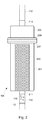
Fig. 2 schematically illustrates a filter that is used in the system ofFig. 1 , and -
Fig. 3 is a flowchart of embodiments of a method for processing liquid food. - With reference to
Fig. 1a , asystem 100 for processingliquid food 102 is illustrated. Thesystem 100 comprises abalance tank 104. Thebalance tank 104 is configured to provide theliquid food 102. Thesystem 100 further comprises aheat treatment unit 106 that is configured to receive and heat treat theliquid food 102 to provide heat treatedliquid food 102a. Following theheat treatment unit 106, i.e. downstream, is afilter 108 that is configured to receive and filter the heat treatedliquid food 102a to provide filtered, heat treatedliquid food 102b. The system further comprises apackaging device 110 that is configured to receive and package the filtered, heat treatedliquid food 102b. - Each of the
balance tank 104, theheat treatment unit 106 and thepackaging device 110 are conventional units that are commonly used for processing liquid food that is heat treated and aseptically packed by thepackaging device 110. - As indicated in
Fig. 1a , thesystem 100 is divided into a non-heat treated side and a heat treated side. The non-heat treated side comprises thebalance tank 104 and theheat treating unit 106. The heat treated side comprises thefilter 108 and thepackaging device 110. Depending on how long time period theliquid food 102 spends in theheat treating device 106 and to which temperature theliquid food 102 is heated in theheat treating device 106, the heat treated side may be an aseptic side. - From above follows that "non-heat treated side" refers to the part of the system inside which the liquid food is considered to be not fully heat treated. "heat treated side" refers to the part of the system inside which the liquid food is considered to be fully heat treated. Heat treated food refers to food in which the microorganisms in the liquid food have, due to the heat treatment, been killed or at least reduced to an extent where the number of viable pathogens is so low that that they are unlikely to cause disease, as long as the liquid food is stored as prescribed and is consumed before its expiration date.
- With reference to
Fig. 1b and Fig. 1c , various embodiments of thesystem 100 will be described. InFig. 1b , thesystem 100 comprisestubing 112 that is configured to convey theliquid food balance tank 104 to theheat treatment unit 106, from theheat treatment unit 106 to thefilter 108 and from thefilter 108 to thepackaging device 110. A plurality ofcomponents 114, such as a pump, a valve, a deaerator etc., are arranged along thetubing 112 between thebalance tank 104 and thepackaging device 110. - It is to be noted that there is a distinction between the
tubing 112 and thecomponents 114 in that none of thecomponents 114 has a function that only involves conveying the liquid food, whereas the function of thetubing 112 lies solely in conveying theliquid food - The plurality of
components 114 are arranged such that a first number of components are arranged between thebalance tank 104 and thefilter 108. AsFig. 1b exemplifies, this first number is five due to the fact that threecomponents 114 are arranged between thebalance tank 104 and theheat treatment unit 106 and twocomponents 114 are arranged between theheat treatment unit 106 and thefilter 108. A second number of components are arranged between thefilter 108 and thepackaging device 110. The second number of components is lower than the first number of components. As exemplified by the embodiment inFig. 1b , this second number ofcomponents 114 may be a single one and, as exemplified by the embodiment inFig. 1c , this second number ofcomponents 114 may be zero, i.e. there is no component between thefilter 108 and thepackaging device 110. - Turning now to
Fig. 2 , embodiments of thefilter 108 will be described in more detail. The filter may comprise aninlet 211 and anoutlet 213 that connect to thetubing 112. Schematically illustratedparticles 120 that, e.g., have been released from agasket 113 due to wear located upstream in relation to thefilter 108 are about to enter theinlet 211 of thefilter 108. - As illustrated, the
filter 108 may comprise at least oneclamp 207 and at least onesupport ring 209. The at least oneclamp 207 may be configured to clamp together abody 201 and a top 205 of the filter, noting also that thebody 201 is hollow and accommodates afine mesh strainer 203. The at least oneclamp 207 and the at least onesupport ring 209 are configured to operate at a sterilization temperature and during a predetermined sterilization time. For example, the sterilization temperature may be 130 °C and the predetermined sterilization time may be 30 minutes. - The at least one
support ring 209 may be made of polytetrafluoroethylene (PTFE). Thefilter 108 may be configured to removeparticles 120 having a size greater than 73 micrometer from theliquid food 102. For example, the fine mesh strainer may have a mesh size of 73 micrometer. - Turning now to
Fig. 3 , and with continued reference toFig. 1a-c andFig. 2 , a method for processingliquid food 102 is illustrated in terms of a number of steps. - In a first step the
liquid food 102 is provided 301 from thebalance tank 104 to theheat treating unit 106. Next, theliquid food 102 is heat treated 303 to provide heat treatedliquid food 102a to thefilter 108. The heat treatedliquid food 102a is filtered 305 to provide filtered heat treatedliquid food 102b to thepackaging device 110. Thisfiltering 305 of the heat treatedliquid food 102a may comprise a step of trapping 315particles 120 that have been released fromgaskets 113 orcomponents 114 that are located alongtubing 112, thetubing 112 being configured to convey theliquid food balance tank 104, via theheat treatment unit 106, and to thefilter 108. Finally the filtered heat treatedliquid food 102b is packaged 309. - The method may involve further steps that specify that the filtered heat treated
liquid food 102b is subject to no active change of properties subsequent to thefiltering 305. This may involve, after thefiltering 305 and until thepackaging 309, maintaining 306 a temperature of the filtered heat treatedliquid food 102b within a range of ±5 °C. This means that no heat treatment of the liquid food is done after thefiltering 305. Such steps may also or alternatively involve, after thefiltering 305 and until thepackaging 309, maintaining 308 a pressure of the filtered heat treatedliquid food 102b within a range of ±0,5 bar. This means that no pumping of the liquid food is done after thefiltering 309. - From the description above follows that, although various embodiments of the invention have been described and shown, the invention is not restricted thereto, but may also be embodied in other ways within the scope of the subject-matter defined in the following claims.
Claims (11)
- A system (100) for processing liquid food (102), comprising:- a balance tank (104) configured to provide the liquid food (102),- a heat treatment unit (106) configured to receive and heat treat the liquid food (102) to provide heat treated liquid food (102a),- a filter (108) configured to receive and filter the heat treated liquid food (102a) to provide filtered, heat treated liquid food (102b), and- a packaging device (110) configured to receive and package the filtered heat treated liquid food (102b).
- The system (100) of claim 1, comprising:- tubing (112) configured to convey the liquid food (102, 102a, 102b) from the balance tank (104) to the heat treatment unit (106), from the heat treatment unit (106) to the filter (108) and from the filter (108) to the packaging device (110),- a plurality of components (114) arranged along the tubing (112) between the balance tank (104) and the packaging device (110), where the plurality of components (114) are arranged such that a first number of components are arranged between the balance tank (104) and the filter (108) and a second number of components are arranged between the filter (108) and the packaging device (110), where the second number of components is lower than the first number of components.
- The system (100) of claim 2, where the second number of components is zero.
- The system (100) of claim 2 or claim 3, where the components comprise any of a pump, a valve, a deaerator.
- The system (100) of any of claims 2 to 4, where the filter (108) comprises at least one clamp (207) and at least one support ring (209), where the at least one clamp (207) and the at least one support ring (209) are configured to operate at a sterilization temperature and during a predetermined sterilization time.
- The system (100) of claim 5, where the at least one support ring (209) is made of polytetrafluoroethylene, PTFE.
- The system (100) of any of claims 1 to 6, where the filter (108) is configured to remove particles (120) having a size greater than 73 micrometer from the liquid food (102).
- A method for processing liquid food (102), comprising:- providing (301) the liquid food (102) from a balance tank (104) to a heat treating unit (106),- heat treating (303) the liquid food (102) to provide heat treated liquid food (102a) to a filter (108),- filtering (305) the heat treated liquid food (102a) to provide filtered heat treated liquid food (102b) to a packaging device (110), and- packaging (309) the filtered heat treated liquid food (102b).
- The method of claim 8, wherein the filtering (305) of the heat treated liquid food (102a) comprises:- trapping (315) particles (120) that have been released from gaskets (113) or components (114) that are located along tubing (112), said tubing (112) being configured to convey the liquid food (102, 102a, 102b) from the balance tank (104), via the heat treatment unit (106), and to the filter (108).
- The method of claim 8 or 9, comprising, between the filtering (305) and the packaging (309):- maintaining (306) a temperature of the filtered heat treated liquid food (102b) within a range of ±5 °C.
- The method of any of claims 8 to 10, comprising, between the filtering (305) and the packaging (309):- maintaining (308) a pressure of the filtered heat treated liquid food (102b) within a range of ±0,5 bar.
Applications Claiming Priority (1)
| Application Number | Priority Date | Filing Date | Title |
|---|---|---|---|
| EP16203402 | 2016-12-12 |
Publications (1)
| Publication Number | Publication Date |
|---|---|
| EP3333246A1 true EP3333246A1 (en) | 2018-06-13 |
Family
ID=57714354
Family Applications (1)
| Application Number | Title | Priority Date | Filing Date |
|---|---|---|---|
| EP17203191.6A Ceased EP3333246A1 (en) | 2016-12-12 | 2017-11-23 | Processing liquid food |
Country Status (4)
| Country | Link |
|---|---|
| US (1) | US20190343154A1 (en) |
| EP (1) | EP3333246A1 (en) |
| CN (1) | CN110072987A (en) |
| WO (1) | WO2018108473A1 (en) |
Citations (11)
| Publication number | Priority date | Publication date | Assignee | Title |
|---|---|---|---|---|
| US1190841A (en) * | 1915-06-07 | 1916-07-11 | Alexander Almasy | Beer-strainer. |
| US3794180A (en) * | 1973-01-22 | 1974-02-26 | W Blocker | Flared cone filter |
| US5628964A (en) * | 1995-09-18 | 1997-05-13 | Tassitano; Henry | Mastitis detecting device |
| WO1997032483A1 (en) * | 1996-03-06 | 1997-09-12 | I. Belloch Corporation | Method for treating liquid materials |
| US6329006B1 (en) * | 2000-01-18 | 2001-12-11 | Herbert W. Fiss | One-site fruit processing and packaging facility |
| WO2009137332A2 (en) * | 2008-05-07 | 2009-11-12 | Mott's Llp | Method and apparatus for manufacturing protein beverages |
| CN101589751A (en) * | 2008-05-28 | 2009-12-02 | 北京健健康康生物技术有限公司 | Watermelon plant water rose tea |
| US20100055290A1 (en) * | 2008-09-02 | 2010-03-04 | Kraft Foods Global Brands Llc | Heat Stable Concentrated Dairy Liquid And Cream Product |
| KR20150098306A (en) * | 2014-02-20 | 2015-08-28 | 장준기 | Production of the jujube juice using maple sap |
| CN105767810A (en) * | 2016-04-12 | 2016-07-20 | 宜兴恒盛农业发展有限公司 | NFC bayberry juice processing technology |
| GB2535538A (en) * | 2015-02-23 | 2016-08-24 | Arla Foods Ltd | Composition and process |
Family Cites Families (1)
| Publication number | Priority date | Publication date | Assignee | Title |
|---|---|---|---|---|
| JP2879153B2 (en) * | 1989-09-26 | 1999-04-05 | 株式会社日阪製作所 | Liquid food sterilizer |
-
2017
- 2017-11-23 US US16/467,006 patent/US20190343154A1/en not_active Abandoned
- 2017-11-23 CN CN201780076403.6A patent/CN110072987A/en active Pending
- 2017-11-23 EP EP17203191.6A patent/EP3333246A1/en not_active Ceased
- 2017-11-23 WO PCT/EP2017/080140 patent/WO2018108473A1/en not_active Ceased
Patent Citations (11)
| Publication number | Priority date | Publication date | Assignee | Title |
|---|---|---|---|---|
| US1190841A (en) * | 1915-06-07 | 1916-07-11 | Alexander Almasy | Beer-strainer. |
| US3794180A (en) * | 1973-01-22 | 1974-02-26 | W Blocker | Flared cone filter |
| US5628964A (en) * | 1995-09-18 | 1997-05-13 | Tassitano; Henry | Mastitis detecting device |
| WO1997032483A1 (en) * | 1996-03-06 | 1997-09-12 | I. Belloch Corporation | Method for treating liquid materials |
| US6329006B1 (en) * | 2000-01-18 | 2001-12-11 | Herbert W. Fiss | One-site fruit processing and packaging facility |
| WO2009137332A2 (en) * | 2008-05-07 | 2009-11-12 | Mott's Llp | Method and apparatus for manufacturing protein beverages |
| CN101589751A (en) * | 2008-05-28 | 2009-12-02 | 北京健健康康生物技术有限公司 | Watermelon plant water rose tea |
| US20100055290A1 (en) * | 2008-09-02 | 2010-03-04 | Kraft Foods Global Brands Llc | Heat Stable Concentrated Dairy Liquid And Cream Product |
| KR20150098306A (en) * | 2014-02-20 | 2015-08-28 | 장준기 | Production of the jujube juice using maple sap |
| GB2535538A (en) * | 2015-02-23 | 2016-08-24 | Arla Foods Ltd | Composition and process |
| CN105767810A (en) * | 2016-04-12 | 2016-07-20 | 宜兴恒盛农业发展有限公司 | NFC bayberry juice processing technology |
Also Published As
| Publication number | Publication date |
|---|---|
| US20190343154A1 (en) | 2019-11-14 |
| WO2018108473A1 (en) | 2018-06-21 |
| CN110072987A (en) | 2019-07-30 |
Similar Documents
| Publication | Publication Date | Title |
|---|---|---|
| US20240035259A1 (en) | Method for recycling water and a water recycling device | |
| PH12016502314A1 (en) | System and method for cleaning and sterilizing a water flow | |
| MX2017014546A (en) | Apparatus and methods for intravenous gas elimination. | |
| CN112754283A (en) | Aseptic carbonic acid beverage preparation device | |
| CN103608298A (en) | System and method for purifying water with automatic cleaning | |
| EP3450874A1 (en) | Hvac fluid chemical treatment system | |
| JP5047676B2 (en) | Bag sterilization and liquid filling device | |
| US20190343154A1 (en) | Processing liquid food | |
| JP6914448B2 (en) | Plugs, machines and methods for high pressure processing | |
| KR101708118B1 (en) | UV lamp type fresh water germicidal device for marine structures | |
| EP3534720A1 (en) | Food processing and/or packaging device and method for cleaning such device | |
| EP1875818B1 (en) | System for creating a sterile barrier and lubricating and/or cooling moving parts in UHT sterilization plants | |
| CN117926220A (en) | Apparatus and method for removing post-deposition residual precursor in gas line | |
| CN215383209U (en) | Aseptic carbonic acid beverage preparation device | |
| CA2712646C (en) | Device and method for aseptic pressure relief | |
| KR101334651B1 (en) | Apparatus for water purification without water storage tank and method for water purification using the same | |
| AU2011203220B2 (en) | Heat recovery in biowaste sterilization | |
| EP3393964B1 (en) | Product loss reduction by using shortened purge for aseptic tank | |
| CN105084673A (en) | Ultrapure water treating equipment | |
| US11002392B2 (en) | Pipeline system with automatically closing port | |
| Berry | Enhancing Food Safety Management by Understanding the Role of Filtration | |
| JP2018071706A (en) | Liquid feed system | |
| US20160016822A1 (en) | Method and device for processing cip media | |
| CN104587547B (en) | A kind of hemodialysis water making device Emergency water supply conveyer device | |
| DE202015008363U1 (en) | Pressure Relief Expansion Tank with Water Trap or Intermediate Diaphragm for Safety Equipment with Biosafety Level (BSL) 1-2-3 and 4 sections |
Legal Events
| Date | Code | Title | Description |
|---|---|---|---|
| PUAI | Public reference made under article 153(3) epc to a published international application that has entered the european phase |
Free format text: ORIGINAL CODE: 0009012 |
|
| STAA | Information on the status of an ep patent application or granted ep patent |
Free format text: STATUS: THE APPLICATION HAS BEEN PUBLISHED |
|
| AK | Designated contracting states |
Kind code of ref document: A1 Designated state(s): AL AT BE BG CH CY CZ DE DK EE ES FI FR GB GR HR HU IE IS IT LI LT LU LV MC MK MT NL NO PL PT RO RS SE SI SK SM TR |
|
| AX | Request for extension of the european patent |
Extension state: BA ME |
|
| STAA | Information on the status of an ep patent application or granted ep patent |
Free format text: STATUS: REQUEST FOR EXAMINATION WAS MADE |
|
| 17P | Request for examination filed |
Effective date: 20181213 |
|
| RBV | Designated contracting states (corrected) |
Designated state(s): AL AT BE BG CH CY CZ DE DK EE ES FI FR GB GR HR HU IE IS IT LI LT LU LV MC MK MT NL NO PL PT RO RS SE SI SK SM TR |
|
| STAA | Information on the status of an ep patent application or granted ep patent |
Free format text: STATUS: EXAMINATION IS IN PROGRESS |
|
| 17Q | First examination report despatched |
Effective date: 20191002 |
|
| STAA | Information on the status of an ep patent application or granted ep patent |
Free format text: STATUS: THE APPLICATION HAS BEEN REFUSED |
|
| 18R | Application refused |
Effective date: 20210430 |