EP3330869B1 - Schreibzugriffssteuerung in einer datenbank - Google Patents
Schreibzugriffssteuerung in einer datenbank Download PDFInfo
- Publication number
- EP3330869B1 EP3330869B1 EP17001369.2A EP17001369A EP3330869B1 EP 3330869 B1 EP3330869 B1 EP 3330869B1 EP 17001369 A EP17001369 A EP 17001369A EP 3330869 B1 EP3330869 B1 EP 3330869B1
- Authority
- EP
- European Patent Office
- Prior art keywords
- database
- transaction
- connection
- query
- data
- Prior art date
- Legal status (The legal status is an assumption and is not a legal conclusion. Google has not performed a legal analysis and makes no representation as to the accuracy of the status listed.)
- Active
Links
Images


Classifications
-
- G—PHYSICS
- G06—COMPUTING OR CALCULATING; COUNTING
- G06F—ELECTRIC DIGITAL DATA PROCESSING
- G06F16/00—Information retrieval; Database structures therefor; File system structures therefor
- G06F16/20—Information retrieval; Database structures therefor; File system structures therefor of structured data, e.g. relational data
- G06F16/23—Updating
- G06F16/2379—Updates performed during online database operations; commit processing
-
- G—PHYSICS
- G06—COMPUTING OR CALCULATING; COUNTING
- G06F—ELECTRIC DIGITAL DATA PROCESSING
- G06F16/00—Information retrieval; Database structures therefor; File system structures therefor
- G06F16/20—Information retrieval; Database structures therefor; File system structures therefor of structured data, e.g. relational data
- G06F16/27—Replication, distribution or synchronisation of data between databases or within a distributed database system; Distributed database system architectures therefor
-
- G—PHYSICS
- G06—COMPUTING OR CALCULATING; COUNTING
- G06F—ELECTRIC DIGITAL DATA PROCESSING
- G06F16/00—Information retrieval; Database structures therefor; File system structures therefor
- G06F16/20—Information retrieval; Database structures therefor; File system structures therefor of structured data, e.g. relational data
- G06F16/23—Updating
- G06F16/2308—Concurrency control
- G06F16/2315—Optimistic concurrency control
- G06F16/2322—Optimistic concurrency control using timestamps
-
- G—PHYSICS
- G06—COMPUTING OR CALCULATING; COUNTING
- G06F—ELECTRIC DIGITAL DATA PROCESSING
- G06F16/00—Information retrieval; Database structures therefor; File system structures therefor
- G06F16/20—Information retrieval; Database structures therefor; File system structures therefor of structured data, e.g. relational data
- G06F16/23—Updating
- G06F16/235—Update request formulation
-
- G—PHYSICS
- G06—COMPUTING OR CALCULATING; COUNTING
- G06F—ELECTRIC DIGITAL DATA PROCESSING
- G06F16/00—Information retrieval; Database structures therefor; File system structures therefor
- G06F16/20—Information retrieval; Database structures therefor; File system structures therefor of structured data, e.g. relational data
- G06F16/23—Updating
- G06F16/2358—Change logging, detection, and notification
-
- G—PHYSICS
- G06—COMPUTING OR CALCULATING; COUNTING
- G06F—ELECTRIC DIGITAL DATA PROCESSING
- G06F16/00—Information retrieval; Database structures therefor; File system structures therefor
- G06F16/20—Information retrieval; Database structures therefor; File system structures therefor of structured data, e.g. relational data
- G06F16/24—Querying
- G06F16/245—Query processing
- G06F16/2455—Query execution
-
- G—PHYSICS
- G06—COMPUTING OR CALCULATING; COUNTING
- G06F—ELECTRIC DIGITAL DATA PROCESSING
- G06F16/00—Information retrieval; Database structures therefor; File system structures therefor
- G06F16/90—Details of database functions independent of the retrieved data types
- G06F16/903—Querying
Definitions
- US 2005/055445 A1 relates to a database system having a primary server side and a secondary server side, where a high availability data replicator transfers log entries from the primary side to the secondary side and replays the transferred log entries to synchronize the secondary side with the primary side.
- the streaming cluster 140 allows for various types of data streams (i.e., data feeds, etc.) to be utilized by the database system 105.
- the streaming cluster 140 allows for both consumption of data streams and for complex event processing.
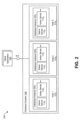
- the distributed database system 105 can be installed on more than one host 210 1-3 .
- Each host 210 1-3 is a machine that can comprise at least one data processor (e.g., a CPU, etc.), memory, storage, a network interface, and an operation system and which executes part of the database system 105.
- Each host 210 1-3 can execute a database instance 220 1-3 which comprises the set of components of the distributed database system 105 that are installed on one host 210 1-3 .
- FIG. 2 shows a distributed system with three hosts, which each run a name server 115 1-3 , index server 110 1-3 , and so on (other components are omitted to simplify the illustration).
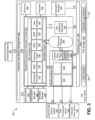
- Requests from the client applications 150 can be processed and executed by way of a request processing and execution control component 310.
- the database system 105 offers rich programming capabilities for running application-specific calculations inside the database system.
- the database system 105 can provide different programming languages for different use cases. SQLScript can be used to write database procedures and user defined functions that can be used in SQL statements.
- the L language is an imperative language, which can be used to implement operator logic that can be called by SQLScript procedures and for writing user-defined functions.
- client applications 150 typically use SQL statements to communicate with the index server 110 which can be handled by a SQL processor 312 within the request processing and execution control component 310.
- Analytical applications can use the multidimensional query language MDX (MultiDimensional expressions) via an MDX processor 322.
- MDX MultiDimensional expressions
- GEM Graph Query and Manipulation
- SQL statements and MDX queries can be sent over the same connection with the client application 150 using the same network communication protocol.
- GEM statements can be sent using a built-in SQL system procedure.
- Incoming SQL requests from the client applications 150 can be e received by the SQL processor 312.
- Data manipulation statements can be executed by the SQL processor 312 itself.
- Other types of requests can be delegated to the respective components.
- Data definition statements can be dispatched to a metadata manager 306, transaction control statements can be forwarded to the transaction manager 344, planning commands can be routed to a planning engine 318, and task related commands can forwarded to a task manager 324 (which can be part of a larger task framework)
- Incoming MDX requests can be delegated to the MDX processor 322.
- Procedure calls can be forwarded to the procedure processor 314, which further dispatches the calls, for example to a calculation engine 326, the GEM processor 316, a repository 300, or a DDI proxy 328.
- the index server 110 can also include a planning engine 318 that allows planning applications, for instance for financial planning, to execute basic planning operations in the database layer.
- a planning engine 318 that allows planning applications, for instance for financial planning, to execute basic planning operations in the database layer.
- One such basic operation is to create a new version of a data set as a copy of an existing one while applying filters and transformations.
- planning data for a new year can be created as a copy of the data from the previous year.
- Another example for a planning operation is the disaggregation operation that distributes target values from higher to lower aggregation levels based on a distribution function.
- the calculation engine 326 can provide a common infrastructure that implements various features such as SQLScript, MDX, GEM, tasks, and planning operations.
- the SQLScript processor 312, the MDX processor 322, the planning engine 318, the task manager 324, and the GEM processor 316 can translate the different programming languages, query languages, and models into a common representation that is optimized and executed by the calculation engine 326.
- the calculation engine 326 can implement those features using temporary results 340 which can be based, in part, on data within the relational stores 332.
- Metadata can be accessed via the metadata manager component 308.
- Metadata in this context, can comprise a variety of objects, such as definitions of relational tables, columns, views, indexes and procedures. Metadata of all these types can be stored in one common database catalog for all stores.
- the database catalog can be stored in tables in a row store 336 forming part of a group of relational stores 332.
- Other aspects of the database system 105 including, for example, support and multi-version concurrency control can also be used for metadata management.
- central metadata is shared across servers and the metadata manager 308 can coordinate or otherwise manage such sharing.
- the federation component 334 can be viewed as a virtual relational data store.
- the federation component 334 can provide access to remote data in external data source system(s) 354 through virtual tables, which can be used in SQL queries in a fashion similar to normal tables.
- the database system 105 can include an integration of a non-relational data store 342 into the index server 110.
- the non-relational data store 342 can have data represented as networks of C++ objects, which can be persisted to disk.
- the non-relational data store 342 can be used, for example, for optimization and planning tasks that operate on large networks of data objects, for example in supply chain management.
- the non-relational data store 342 does not use relational tables; rather, objects can be directly stored in containers provided by the persistence layer 346. Fixed size entry containers can be used to store objects of one class. Persisted objects can be loaded via their persisted object IDs, which can also be used to persist references between objects.
- An extended store is another relational store that can be used or otherwise form part of the database system 105.
- the extended store can, for example, be a disk-based column store optimized for managing very big tables, which ones do not want to keep in memory (as with the relational stores 332).
- the extended store can run in an extended store server 125 separate from the index server 110.
- the index server 110 can use the federation component 334 to send SQL statements to the extended store server 125.
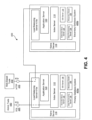
- Each of the primary system 405a and secondary system 405b may include a load balancing functionality.
- load balancing functionality may for example be contained within a distinct load balancing server 470a or 470b. But, such load balancing functionality may be managed by any suitable processing system.
- the application server 120 of the primary system may also manage the load balancing of requests issued to the application server of the primary system 405a, sending requests to the secondary system 405b as necessary to maintain a well distributed workload.
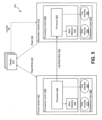
- each of primary system 505 and secondary system 510 may comprise less, more or all the functionality ascribed to index server 110, 300, name server 115, application server 120, extended store server 125, DDI server 130, data provisioning server 135, and stream cluster 140.
- HA/DR system 500 has been simplified to highlight certain functionality by merely distinguishing between processing control 555, 560 and a persistence layer 565, 570 of each respective system 505, 510.
- Primary system 505 may include an in-memory database in which substantially all actively used data may be kept and maintained in main memory 535 so that operations can be executed without disk I/O, which requires accessing disk storage.
- Primary system 505 may be the primary operational system for providing the various functionality necessary to support 24/7 operations for an organization.
- Secondary system 510 is a hot-standby, ready to come online with minimal recovery time so as to minimize downtime.
- Secondary system 510 is an identical physical system as primary system 505, and may be configured in a substantially identical manner in order to enable the secondary system 510 to provide all the same functionality as primary system 505.
- processing control 560 may include all the same applications and functionality as processing control 555
- persistence layer 570 may include data volumes 580 and log volumes 590 that are configured in an identical manner as data volumes 575 and log volumes 585 respectively.
- Secondary system 510 may also include an in-memory database kept and maintained primarily in main memory 540.
- Primary system 505 and secondary system 510 differ in that all requests, from client 515 or otherwise, that require a write transaction are executed typically in primary system 505. Primary system 505 and secondary system 510 further differ in that some write transactions are prohibited by the secondary system 510.
- processor 545 In order to propagate changes to the data or the underlying schema from the primary system 505 to the secondary system 510, processor 545 also replicates 530 transaction logs directly to the process control 560 of the secondary system 510.
- Process control 560 includes one or more applications that cause processor 550 to then continuously replay the transaction logs replicated from the primary system 505, thereby replaying the transactions at the secondary system 510. As transaction logs are continuously replayed, the various transactions executed at the primary system become reflected in the secondary system 510.
- secondary system 510 may be kept in a state substantially close to the same state as the primary system 505 such that the workload required by many operations can be supported by the secondary 510.
- a secondary, or backup, database system serves the purpose of HA/DR functionality
- an apparatus, system, technique or article that utilizes a secondary, backup database system to increase throughput of a workload on a primary database system should not interfere with the HA/DR functionality of the backup system.
- the use of the backup database system to increase throughput should also maintain the backup database in substantially the same state as the primary database.
- the backup database can assume the role of the primary database in as little time as possible. Therefore, transactions executed on a secondary database as part of such a load balancing scheme are prohibited from causing any changes to the backup database system, or at most they may have a minimal impact on the secondary database system. But, in some cases it is desirable to have the ability to execute certain write transactions on such a backup database, and so methods and systems of enabling writing to a backup database without interfering with the HA/DR functionality of the backup database are desired.
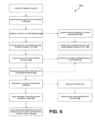
- FIG. 6 is a flow chart 600 depicting exemplary operation of a system or method for write access control in a secondary database for use in connection with the current subject matter.
- the method may be performed by a secondary database system, for example 405b or 510.
- the database system initializes a first database image.
- the first database image is an image held in main memory 540.
- the first database image is an image of a database, such that the image held in main memory may be an in-memory database.
- the database system initializes the first database image based on one or more images held in a persistent layer, for example persistence layer 570.
- the first database image may be initialized based on data from a data image, which may be maintained in a persistent data volume, for example data volume 580.
- the first database image may further be initialized based on one or more log records maintained in a persistent log volume, for example log volume 590.
- the backup system In order to perform its HA/DR, and to be useful for critical operations, the backup system should be in a near current state with regard to the primary system, meaning that transactions executed and committed to the primary database should be reflected in the secondary database as soon as possible. But, in one or more embodiments it is operationally sufficient that the backup database be substantially close to the current state of the primary database, so long as the backup system remains in a consistent state.
- a consistent state is one in which a query on the secondary system will not return partial results from a transaction executed on the primary system. In other words, if part of a transaction is visible to a query made by a write transaction, then all other changes caused by that transaction should be visible to the query - this is referred to as visibility atomicity.
- a consistent state is also one in which when the results of a transaction are initially visible to a query, the same transaction results will be visible to the query until the query finishes. Likewise, once a query could not read a transaction's results, those results should remain invisible to the query until the query finishes - this is referred to as visibility stability.
- Replay replication at the backup may, however, be done in parallel without controlling the order in which the transactions are replicated to the IMDB of the backup system. As a result, there may be little or no control over the order in which such transaction logs are replayed in operation 620.
- a database system employs one or more techniques for guaranteeing consistency by maintaining a timestamp record, a GCT, indicating the most recent consistent view available to a client query received at process 640.
- the query received at process 640 is then issued a snapshot ID based upon the GCT.
- the GCT of a backup system may be somewhat delayed from the current associated primary system state, techniques may be employed to ensure that all transactions that began before the global commit timestamp have also been committed in all affected records as of the GCT, ensuring that the query does not return inconsistent results.
- a second query may be received and assigned a Snapshop ID based on the then current GCT, which may be before or after the Snapshot ID assigned to the first query received in process 640.
- the query is executed upon the backup database, e.g. secondary system 510.
- the query executes and all consistent records relevant to the query as of the Snapshot ID assigned to the query are executed.
- the query received via the second connection at process 635 is also a read query, it will similarly receive a snapshot ID at process 645, and it will also undergo similar checks, e.g. similar to processes 650, 660, and will be executed in a similar manner as in process 670.
- the write transactions are executed upon one or more local temporary tables within the secondary database.
- connection may be disconnected from the backup database system, in which case all tables associated with the disconnected connection are deleted, or dropped, or destroyed, at process 685. It will be appreciated that this process 675 and associated process 685 may occur at anytime during the course of the sequences of process depicted in FIG. 6 .
- process 675 is depicted as occurring after process 670 to highlight that temporary tables may be created in connection with a connection, and upon disconnection of the connection, the temporary tables associated with that connection are dropped.
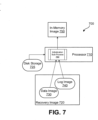
- the initialization sub-process begins initializing the in-memory image 750 of an in-memory database. This initialization is based on one or more data images residing in data volume 730.
- Data volume 730 is stored in a persistent data volume as part of a persistence layer or recovery image 720 of a database system such as data volume 580 in persistence layer 570 of secondary system 510.
- Data volume 730 may include at least the most recent data captured from or stored by a database system's in-memory database during runtime.
- a savepoint may be generated and stored in a persistent form during database runtime in the normal course of operations. Data stored in a persistent form, or simply persisted, is stored in a form that can survive a system crash, disaster or system restart.
- a savepoint may be created on a regular basis, for example every five minutes, during normal runtime operations. Alternatively, generation of a savepoint may be initiated by the replay of a savepoint log, by a backup system performing transaction log replay, for example during process 620.
- initialization sub-process relies on one or more logs, for example stored in a log volume recovery image 720. That is, based on the persisted data, and persisted transaction logs contained in a recovery image, the in-memory image 750 at the time of a crash is recovered by initialization sub-process 760 executing on processor 710. It will also be appreciated that recovery image 720 may alternatively be separate data images and log images, and may be stored in disparate locations or may be stored locally to processor 710.
- a savepoint is created by capturing the in-memory image of the database in a persistent form, such that it will be available upon recovery from a restart or a system crash.
- a savepoint may, for example, be an on-disk representation, or image, of the in-memory image of the database. Because an IMDB maintains a large portion of the most actively accessed data in memory, most modifications to the IMDB, such as by update or insert statements, or the creation of tables, are often first carried out and committed to memory. These changes may not be reflected in a persistent, non-transient, store at the time of execution and at commit time.
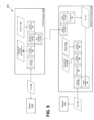
- Generate redo logs sub-process 866 generates new transaction logs and then modifies the recovery image 820, for example by storing the new transactions logs in log volume 840.
- generate redo logs sub-process 866 copies the received transaction logs 870 into log volume 840, while in other embodiments generate redo logs sub-process 866 generates new redo logs based on the replay of received transaction logs 870.
- a savepoint log entry this may for example initiate execution of another sub-process, replay savepoint log sub-process 865.
- Replay savepoint log sub-process 865 may cause the in-memory image 850 to be captured in an on-disk image, for example data image 830. In this way, replay savepoint log sub-process 865 modifies the recovery image 820.
- Prepare transaction sub-process 940 also receives, or generates, a transaction ID 980 to associate with the one or more versions, which may be associated in a transaction control block associated with the transaction ID 980.
- transaction ID 980 is selected from a range of numbers from which a portion of the range is reserved for secondary local temporary table transactions.
- generate transaction logs sub-process 950 may cause the processor to generate one or more transaction logs such as pre-commit logs, redo logs, or any other necessary logs.
- commit transaction sub-process 970 may commit the transaction to the in-memory database and assign the transaction a commit ID, which may be derived from timestamp 990.
- Commit transaction sub-process 970 may also cause generate transaction logs sub-process 950 to generate a commit log. As transaction logs are generated by sub-process 950, ship transaction logs sub-process 960 sends the transaction logs to the second database system, and second processor 912 may execute one or more sub-processes for replaying transaction logs.
- Replay transaction logs sub-process 967 may cause processor 912 to replicate the transaction initiated by query 920. In such a way the backup database is populated by the same transactions executed on the primary database.
- replay transaction logs 967 replays a commit log, it causes update GCT sub-process 965 to update the GCT to the most recent commit log entry commit timestamp.
- Second processor 912 receives a query 925 from a client 916.
- Query 925 includes a write transaction and optionally includes a read transition.
- interpret query sub-process 930 causes second processor 912 to prepare one or more SQL statements, and may also obtain a snapshot ID from assign snapshot ID sub-process 935, which may derive the snapshot ID from the current GCT 967.
- Check query sub-process 945 performs a check on the prepared SQL statements to ensure that the transactions will not cause one or more prohibited action on the secondary database. Such prohibited actions include any transactions that will modify the IMDB, generate a transaction log, or modify the recovery image. These prohibited transactions would not be reflected in the primary system.
- Prepare transactions sub-process 945 then prepares a new transaction control block comprising one or more new versions of database records, and assigns a transaction ID from the reserved ranges 985, where the reserved range 985 includes the reserved portion of the range of transaction IDs utilized in the primary system.
- the read transaction executed in response to query 925 will return all relevant records from the secondary database having a commit timestamp less than the snapshot ID assigned to the query by sub-process 935, where each record's commit timestamp is taken from the commit log entry as generated by the primary database system, and as replayed by replay transaction logs sub-process 967.
- the write transaction includes one or more transactions executed upon one or more temporary tables, and may be for example create table commands, update table commands, insert data commands, or modify data commands. Because write transactions are restricted to local temporary tables at the backup database system, the reserved range need only be a relatively small set of numbers when compared with the range utilized by the primary database system.
- the uniqueness of a transaction ID on a temporary table is only necessary during the life of the client connection, because (1) temporary tables are only visible to their associated connections, and (2) temporary tables are destroyed, or dropped, upon disconnection of the connection.
- Each such transaction having an assigned transaction ID when committed by commit transactions sub-process 975 will be committed to one or more temporary tables, which may be held in memory but logically distinct from the IMDB in-memory image of the backup database.
- Commit transaction sub-process 975 will further assign the transaction a commit ID 995, which may be a predetermine value that indicates a transaction is "always visible" or may be generated. Making the transaction always visible is accomplished by assigning a commit ID that is relatively small, where the relatively small commit ID is guaranteed to be less than GCT 967.
- GCT is a value representing an epoch time such as 1479269465, a value representing 11:11:05 PM on 11/15/2016.
- a relatively small value guaranteeing that a particular associated transaction is always visible is 0000000002, or 0079269465, in a system that assigns commit IDs in epoch time.
- the subject matter described herein may be implemented on a computer having a display device (e.g., a CRT (cathode ray tube) or LCD (liquid crystal display) monitor) for displaying information to the user and a keyboard and a pointing device (e.g., a mouse or a trackball) and/or a touch screen by which the user may provide input to the computer.
- a display device e.g., a CRT (cathode ray tube) or LCD (liquid crystal display) monitor
- a keyboard and a pointing device e.g., a mouse or a trackball
- Other kinds of devices may be used to provide for interaction with a user as well; for example, feedback provided to the user may be any form of sensory feedback (e.g., visual feedback, auditory feedback, or tactile feedback); and input from the user may be received in any form, including acoustic, speech, or tactile input.
- phrases “at least one of A, B, and C;” “one or more of A, B, and C;” and “A, B, and/or C” are each intended to mean “A alone, B alone, C alone, A and B together, A and C together, B and C together, or A and B and C together.”
- use of the term “based on,” above and in the claims is intended to mean, “based at least in part on,” such that an unrecited feature or element is also permissible.
Landscapes
- Engineering & Computer Science (AREA)
- Theoretical Computer Science (AREA)
- Databases & Information Systems (AREA)
- Physics & Mathematics (AREA)
- Data Mining & Analysis (AREA)
- General Engineering & Computer Science (AREA)
- General Physics & Mathematics (AREA)
- Computational Linguistics (AREA)
- Computing Systems (AREA)
- Mathematical Physics (AREA)
- Information Retrieval, Db Structures And Fs Structures Therefor (AREA)
Claims (12)
- Computerimplementiertes Verfahren, das innerhalb eines Hochverfügbarkeits- und Notfallwiederherstellungssystem (500) erfolgt, das ein primäres Datenbanksystem (405a; 505) und ein sekundäres Datenbanksystem (405b; 510) aufweist, wobei das sekundäre Datenbanksystem (510) im Hot Standby ist und ein physikalisches System ist, das mit dem primären Datenbanksystem (505) identisch ist, wobei das Verfahren umfasst:Initialisieren (610) eines ersten Datenbankabbilds (540; 750; 850) einer ersten Datenbank, die das sekundäre Datenbanksystem (510) ist, aus einem Wiederherstellungsabbild (720; 820), wobei das erste Datenbankabbild (540; 750; 850) ein Abbild einer Datenbank ist, das in einem Hauptspeicher gehalten wird;Modifizieren des ersten Datenbankabbilds (540; 750; 850) der ersten Datenbank (510) durch Wiedergeben (620) von Transaktionsprotokollen (530) einer zweiten Datenbank, die das primäre Datenbanksystem (505) ist;Herstellen (630) einer Verbindung (525; 528) mit einem Client (515; 916), wobei der Client (515) eine Lese-/Schreibverbindung mit sowohl dem Primärsystem (505) als auch dem Sekundärsystem (510) unterhält;Empfangen (640) einer Abfrage (925) über die Verbindung (525; 528), wobei die Abfrage (925) eine Transaktion umfasst, die an der ersten Datenbank (510) auszuführen ist, und eine Schreibtransaktion umfasst; undAblehnen (665) der Abfrage, wenn die Abfrage eine verbotene Transaktion beinhaltet,wobei eine Transaktion verboten ist, wenn die Transaktion bewirken würde:Aktualisieren des ersten Datenbankabbilds (540; 750; 850) der ersten Datenbank (510);Erzeugen eines neuen Transaktionsprotokolls; undModifizieren des Wiederherstellungsabbilds 820);Ausführen (670) der Abfrage an der ersten Datenbank (510), wenn die Abfrage (925) keine verbotenen Transaktionen erfordert;wobei das Verfahren ferner umfasst, wenn die Abfrage nicht abgelehnt wird:Ausführen der Abfrage, wobei wenn die Abfrage die Schreibtransaktion umfasst, Ausführen (670) der Abfrage bewirkt:Erstellen einer oder mehrerer temporärer Tabellen in der ersten Datenbank (51), die der Verbindung (528) zugeordnet sind;Modifizieren einer oder mehrerer temporärer Tabellen der ersten Datenbank (510), die der Verbindung (528) zugeordnet sind; undModifizieren der Daten, die in einer oder mehreren temporären Tabellen der ersten Datenbank (510) enthalten sind; undZuweisen (690), wenn die Schreibtransaktion an einer oder mehreren temporären Tabellen ausgeführt wird, eines kleinen Werts zu dem Transaktionsvalidierungszeitstempel, welcher der Schreibtransaktion zugeordnet ist, wobei die kleine Zahl garantiert kleiner ist als ein globaler Validierungszeitstempel,wobei die Sichtbarkeit der Schreibtransaktion für eine später ausgeführte Abfrage in der ersten Datenbank (510) zumindest teilweise dadurch bestimmt wird, ob der der Schreibtransaktion zugeordnete Transaktionsvalidierungszeitstempel kleiner ist als ein globaler Validierungszeitstempel der ersten Datenbank (510).
- Computerimplementiertes Verfahren nach Anspruch 1, ferner umfassend Herstellen einer zweiten Verbindung mit einem zweiten Client, wobei die temporären Tabellen der ersten Datenbank (510), die der Verbindung zugeordnet sind, für Abfragen, die der zweiten Verbindung zugeordnet sind, nicht sichtbar sind.
- Computerimplementiertes Verfahren nach Anspruch 2, ferner umfassend Löschen (685) aller temporären Tabellen der ersten Datenbank, die der Verbindung zugeordnet sind, wenn die Verbindung getrennt wird.
- Computerimplementiertes Verfahren nach Anspruch 3, wobei die temporären Tabellen der ersten Datenbank (510), die der Verbindung zugeordnet sind, bis zu einem Zeitpunkt beibehalten werden, der im Wesentlichen mit dem Trennen der Verbindung (528) zusammenfällt, ferner wobei sich die temporären Tabellen logisch von dem ersten Datenbankabbild (540; 750; 850) der ersten Datenbank (510) unterscheiden, ferner wobei Transaktionen, die an irgendeiner temporären Tabelle ausgeführt werden, die irgendeiner Verbindung zugeordnet ist, daran gehindert werden, irgendeine Modifikation an irgendeinem Wiederherstellungsabbild (720; 820) zu bewirken, das der ersten Datenbank (510) zugeordnet ist.
- Computerimplementiertes Verfahren nach einem der vorhergehenden Ansprüche, wobei das Wiederherstellungsabbild (720; 820) während der Laufzeit als Reaktion auf das Wiedergeben eines Sicherungspunktprotokolls beim Wiedergeben (620) von Transaktionsprotokollen der zweiten Datenbank (506) aktualisiert wird, wobei das Wiederherstellungsabbild (720; 820) ein oder mehrere Datenabbilder und ein oder mehrere Protokollabbilder umfasst, ferner wobei das eine oder die mehreren Datenabbilder während der Laufzeit der Datenbank basierend auf dem ersten Datenbankabbild (540; 750; 850) der ersten Datenbank (510) aktualisiert werden und das eine oder die mehreren Protokollabbilder aktualisiert werden, wenn neue Transaktionsprotokolle von der zweiten Datenbank (505) empfangen werden.
- Computerimplementiertes Verfahren nach einem der vorhergehenden Ansprüche, wobei Wiedergeben (620) von Transaktionsprotokollen (530) der zweiten Datenbank (505) Replizieren von in der zweiten Datenbank (505) ausgeführten Transaktionen umfasst, wobei jede replizierte Transaktion eine zugeordnete Transaktionsidentifikationsnummer aufweist, die durch die zweite Datenbank (505) aus einem Nummernbereich zugewiesen wird, wobei das Verfahren ferner umfasst:Reservieren eines Teils des Nummernbereichs (980), um als temporäre Tabellentransaktions-Identifikationsnummern in der ersten Datenbank (510) zu dienen; undZuweisen (680) einer reservierten Transaktionsidentifikationsnummer (985), die aus dem Teil des Nummernbereichs (980) ausgewählt ist, zu einer Schreibtransaktion, die an einer oder mehreren temporären Tabellen ausgeführt wird, die der Verbindung (528) zugeordnet sind;Löschen (685) der einen oder mehreren temporären Tabellen der ersten Datenbank (510), die der Verbindung (528) zugeordnet sind, wenn die Verbindung (528) getrennt wird; undZuweisen der Transaktionsidentifikationsnummer, die für eine zweite Transaktion reserviert ist, die einer zweiten Verbindung zugeordnet ist, nach Löschen der einen oder mehreren temporären Tabellen der ersten Datenbank (510), die der Verbindung (528) zugeordnet sind.
- System, aufweisend:mindestens einen Prozessor; undein nichtflüchtiges computerlesbares Medium, auf dem computerausführbare Anweisungen gespeichert sind, die, wenn sie durch den Prozessor ausgeführt werden, das System veranlassen, Vorgänge gemäß einem Verfahren nach einem der Ansprüche 1 bis 4 durchzuführen.
- System nach Anspruch 7, wobei das Wiederherstellungsabbild (720: 820) während der Laufzeit aktualisiert wird, wenn ein Sicherungspunktprotokoll durch das Wiedergeben (620) von Transaktionsprotokollen der zweiten Datenbank (505) wiedergegeben wird, wobei das Wiederherstellungsabbild (720: 820) ein oder mehrere Datenabbilder und ein oder mehrere Protokollabbilder umfasst, ferner wobei das eine oder die mehreren Datenabbilder während der Laufzeit der Datenbank basierend auf dem ersten Datenbankabbild (540; 750; 850) der ersten Datenbank (510) aktualisiert werden und das eine oder die mehreren Protokollabbilder basierend auf neuen Transaktionsprotokollen aktualisiert werden, die durch Wiedergeben (620) von Transaktionsprotokollen der zweiten Datenbank (505) erzeugt wurden.
- System nach Anspruch 7 oder 8, wobei Wiedergeben (620) von Transaktionsprotokollen der zweiten Datenbank (505) Replizieren von in der zweiten Datenbank (505) ausgeführten Transaktionen umfasst, wobei jede replizierte Transaktion eine zugeordnete Transaktionsidentifikationsnummer aufweist, die durch die zweite Datenbank (505) aus einem Nummernbereich ausgewählt wird, wobei die Vorgänge ferner umfassen:Reservieren eines Teils des Nummernbereichs in der zweiten Datenbank (505), um als Identifikationsnummern für temporäre Tabellentransaktionen in der ersten Datenbank (510) zu dienen; undZuweisen (680) einer reservierten Transaktionsidentifikationsnummer, die aus dem Teil des Nummernbereichs ausgewählt ist, zu einer Schreibtransaktion, die an einer oder mehreren temporären Tabellen ausgeführt wird, die einer Verbindung (528) zugeordnet sind; undLöschen (685) der einen oder mehreren temporären Tabellen der ersten Datenbank (510), die der Verbindung zugeordnet sind, wenn die Verbindung getrennt wird; undZuweisen der Transaktionsidentifikationsnummer, die für eine zweite Transaktion reserviert ist, die einer zweiten Verbindung zugeordnet ist, nach Löschen (685) der einen oder mehreren temporären Tabellen der ersten Datenbank, die der Verbindung zugeordnet sind.
- Nichtflüchtiges computerlesbares Speichermedium, das Programmieranweisungen zur Durchführung eines Verfahrens nach einem der Ansprüche 1 bis 4 beinhaltet.
- Nichtflüchtiges computerlesbares Speichermedium nach Anspruch 10, wobei das Wiederherstellungsabbild (720; 820) während der Laufzeit aktualisiert wird, wenn ein Sicherungspunktprotokoll durch das Wiedergeben (620) von Transaktionsprotokollen der zweiten Datenbank wiedergegeben wird, wobei das Wiederherstellungsabbild (720; 820) ein oder mehrere Datenabbilder und ein oder mehrere Protokollabbilder umfasst, ferner wobei das eine oder die mehreren Datenabbilder während der Laufzeit der Datenbank basierend auf dem ersten Datenbankabbild (540; 750; 850) der ersten Datenbank (510) aktualisiert werden und das eine oder die mehreren Protokollabbilder basierend auf neuen Transaktionsprotokollen aktualisiert werden, die durch Wiedergeben (620) von Transaktionsprotokollen der zweiten Datenbank (505) erzeugt wurden.
- Nichtflüchtiges computerlesbares Speichermedium nach Anspruch 10 oder 11, wobei Wiedergeben (620) von Transaktionsprotokollen der zweiten Datenbank (505) Replizieren von in der zweiten Datenbank ausgeführten Transaktionen umfasst, wobei jede replizierte Transaktion eine zugeordnete Transaktionsidentifikationsnummer aufweist, die durch die zweite Datenbank aus einem Nummernbereich ausgewählt wird, wobei das Verfahren ferner umfasst:Reservieren eines Teils des Nummernbereichs in der zweiten Datenbank (505), um als Identifikationsnummern für temporäre Tabellentransaktionen in der ersten Datenbank (510) zu dienen; undZuweisen (680) einer reservierten Transaktionsidentifikationsnummer, die aus dem Teil des Nummernbereichs ausgewählt ist, zu einer Schreibtransaktion, die an einer oder mehreren temporären Tabellen ausgeführt wird, die einer Verbindung zugeordnet sind; undLöschen (685) der einen oder mehreren temporären Tabellen der ersten Datenbank, die der Verbindung zugeordnet sind, wenn die Verbindung getrennt wird; undZuweisen der Transaktionsidentifikationsnummer, die für eine zweite Transaktion reserviert ist, die einer zweiten Verbindung zugeordnet ist, nach Löschen (685) der einen oder mehreren temporären Tabellen der ersten Datenbank, die der Verbindung zugeordnet sind.
Applications Claiming Priority (1)
| Application Number | Priority Date | Filing Date | Title |
|---|---|---|---|
| US15/364,649 US10275401B2 (en) | 2016-11-30 | 2016-11-30 | Write access control in a database |
Publications (2)
| Publication Number | Publication Date |
|---|---|
| EP3330869A1 EP3330869A1 (de) | 2018-06-06 |
| EP3330869B1 true EP3330869B1 (de) | 2023-10-04 |
Family
ID=59592798
Family Applications (1)
| Application Number | Title | Priority Date | Filing Date |
|---|---|---|---|
| EP17001369.2A Active EP3330869B1 (de) | 2016-11-30 | 2017-08-10 | Schreibzugriffssteuerung in einer datenbank |
Country Status (2)
| Country | Link |
|---|---|
| US (1) | US10275401B2 (de) |
| EP (1) | EP3330869B1 (de) |
Families Citing this family (16)
| Publication number | Priority date | Publication date | Assignee | Title |
|---|---|---|---|---|
| US10289322B2 (en) * | 2017-06-01 | 2019-05-14 | International Business Machines Corporation | Delayed consistent point-in-time copy from a secondary volume of a consistent asynchronous mirror copy |
| US10229180B2 (en) | 2017-06-01 | 2019-03-12 | International Business Machines Corporation | Consistent point-in-time copy of a consistent asynchronous mirror target without pausing a consistent asynchronous mirror copy |
| CN109783578B (zh) * | 2019-01-09 | 2022-10-21 | 腾讯科技(深圳)有限公司 | 数据读取方法、装置、电子设备以及存储介质 |
| US11347705B2 (en) | 2019-04-02 | 2022-05-31 | Sap Se | Supporting scalable distributed secondary index using replication engine for high-performance distributed database systems |
| US11403280B2 (en) * | 2019-09-25 | 2022-08-02 | Salesforce.Com, Inc. | Master data management technologies |
| US11531600B2 (en) * | 2020-04-29 | 2022-12-20 | Memverge, Inc. | Persistent memory image capture |
| CN112000684B (zh) * | 2020-08-25 | 2023-12-26 | 浪潮云信息技术股份公司 | 一种基于trxid实现回环控制的数据库双向同步的方法及工具 |
| US11341165B2 (en) * | 2020-09-15 | 2022-05-24 | Nice Ltd. | Staging tables for data ingestion of micro-batched data records |
| US11797570B2 (en) * | 2021-03-19 | 2023-10-24 | International Business Machines Corporation | Asynchronous persistency of replicated data changes in a database accelerator |
| US11500733B2 (en) | 2021-03-19 | 2022-11-15 | International Business Machines Corporation | Volatile database caching in a database accelerator |
| DE112022000492T5 (de) * | 2021-03-19 | 2023-12-14 | International Business Machines Corporation | Nicht permanente datenbank-zwischenspeicherung in einem datenbankbeschleuniger |
| CN113032346B (zh) * | 2021-04-12 | 2023-05-02 | 曙光信息产业股份有限公司 | 文件系统冻结方法、管理方法、装置、设备及存储介质 |
| CN113476853B (zh) * | 2021-07-26 | 2023-10-03 | 北京达佳互联信息技术有限公司 | 交互任务的数据处理方法、装置、电子设备、存储介质 |
| CN118733552A (zh) * | 2023-03-31 | 2024-10-01 | 华为云计算技术有限公司 | 数据库系统及其数据管理方法 |
| CN117271587B (zh) * | 2023-09-19 | 2025-09-09 | 中国联合网络通信集团有限公司 | 一种基于关系型数据库的数据处理方法、装置及存储介质 |
| CN118885487A (zh) * | 2024-09-27 | 2024-11-01 | 恒生电子股份有限公司 | 请求处理方法及请求处理系统 |
Citations (2)
| Publication number | Priority date | Publication date | Assignee | Title |
|---|---|---|---|---|
| US20050055445A1 (en) * | 2003-09-10 | 2005-03-10 | International Business Machines Corporation | High availability data replication of an R-tree index |
| US20070239798A1 (en) * | 2005-10-14 | 2007-10-11 | Oracle International Corporation | Long-lived data transactions |
Family Cites Families (4)
| Publication number | Priority date | Publication date | Assignee | Title |
|---|---|---|---|---|
| US5930795A (en) * | 1997-01-21 | 1999-07-27 | International Business Machines Corporation | Supporting dynamic tables in SQL query compilers |
| US7783601B2 (en) | 2007-11-08 | 2010-08-24 | Oracle International Corporation | Replicating and sharing data between heterogeneous data systems |
| US20090240608A1 (en) | 2008-03-21 | 2009-09-24 | Ncr Corporation | Methods of an auditor querying an audit log for a database which contains records of image-based check deposit transactions |
| US9778991B2 (en) * | 2014-11-25 | 2017-10-03 | Sap Se | Exporting and importing database tables in a multi-user database environment |
-
2016
- 2016-11-30 US US15/364,649 patent/US10275401B2/en active Active
-
2017
- 2017-08-10 EP EP17001369.2A patent/EP3330869B1/de active Active
Patent Citations (2)
| Publication number | Priority date | Publication date | Assignee | Title |
|---|---|---|---|---|
| US20050055445A1 (en) * | 2003-09-10 | 2005-03-10 | International Business Machines Corporation | High availability data replication of an R-tree index |
| US20070239798A1 (en) * | 2005-10-14 | 2007-10-11 | Oracle International Corporation | Long-lived data transactions |
Also Published As
| Publication number | Publication date |
|---|---|
| EP3330869A1 (de) | 2018-06-06 |
| US10275401B2 (en) | 2019-04-30 |
| US20180150504A1 (en) | 2018-05-31 |
Similar Documents
| Publication | Publication Date | Title |
|---|---|---|
| US10275401B2 (en) | Write access control in a database | |
| US11200221B2 (en) | Delayed snapshot isolation for read service at a database | |
| US10162710B2 (en) | Version space reconstruction during database initialization | |
| US10762107B2 (en) | Synchronization mechanism for serialized data log replay in database systems | |
| US10698921B2 (en) | Persistence and initialization of synchronization state for serialized data log replay in database systems | |
| US11416349B2 (en) | Asynchronous garbage collection in database redo log replay | |
| US11170023B2 (en) | Replay of redo log records in persistency or main memory of database systems | |
| US10769040B2 (en) | Logical equivalent replication with snapshot based fallback of database systems | |
| US10884796B2 (en) | Job execution using system critical threads | |
| US10360111B2 (en) | Self-adaptive parallel database page flusher | |
| EP3327586B1 (de) | Physiologische protokollierung reihenausgerichtetes datenbanksystem im speicher | |
| US10387398B2 (en) | Continuous database page flusher | |
| US10642823B2 (en) | Common runtime and recovery framework for manipulating data in main memory of database systems | |
| US11106653B2 (en) | Optimization of exclusive access database consistent change locks | |
| US10558530B2 (en) | Database savepoint with shortened critical phase time | |
| US10310946B2 (en) | Parallel database page flusher | |
| US10409695B2 (en) | Self-adaptive continuous flushing of pages to disk | |
| US11789971B1 (en) | Adding replicas to a multi-leader replica group for a data set | |
| US11216440B2 (en) | Optimization of non-exclusive access database consistent change | |
| US11042527B2 (en) | Savepoint critical phase lock job inhibitor | |
| US10474541B2 (en) | Optimized savepoint during database recovery | |
| US10402389B2 (en) | Automatic adaptation of parameters controlling database savepoints | |
| US11544180B2 (en) | In-memory database page allocation | |
| US20190354470A1 (en) | Reduced Database Backup Memory Usage |
Legal Events
| Date | Code | Title | Description |
|---|---|---|---|
| PUAI | Public reference made under article 153(3) epc to a published international application that has entered the european phase |
Free format text: ORIGINAL CODE: 0009012 |
|
| STAA | Information on the status of an ep patent application or granted ep patent |
Free format text: STATUS: THE APPLICATION HAS BEEN PUBLISHED |
|
| AK | Designated contracting states |
Kind code of ref document: A1 Designated state(s): AL AT BE BG CH CY CZ DE DK EE ES FI FR GB GR HR HU IE IS IT LI LT LU LV MC MK MT NL NO PL PT RO RS SE SI SK SM TR |
|
| AX | Request for extension of the european patent |
Extension state: BA ME |
|
| STAA | Information on the status of an ep patent application or granted ep patent |
Free format text: STATUS: REQUEST FOR EXAMINATION WAS MADE |
|
| 17P | Request for examination filed |
Effective date: 20181122 |
|
| RBV | Designated contracting states (corrected) |
Designated state(s): AL AT BE BG CH CY CZ DE DK EE ES FI FR GB GR HR HU IE IS IT LI LT LU LV MC MK MT NL NO PL PT RO RS SE SI SK SM TR |
|
| STAA | Information on the status of an ep patent application or granted ep patent |
Free format text: STATUS: EXAMINATION IS IN PROGRESS |
|
| 17Q | First examination report despatched |
Effective date: 20210520 |
|
| REG | Reference to a national code |
Ref country code: DE Ref legal event code: R079 Free format text: PREVIOUS MAIN CLASS: G06F0017300000 Ipc: G06F0016270000 Ref country code: DE Ref legal event code: R079 Ref document number: 602017074836 Country of ref document: DE Free format text: PREVIOUS MAIN CLASS: G06F0017300000 Ipc: G06F0016270000 |
|
| GRAP | Despatch of communication of intention to grant a patent |
Free format text: ORIGINAL CODE: EPIDOSNIGR1 |
|
| STAA | Information on the status of an ep patent application or granted ep patent |
Free format text: STATUS: GRANT OF PATENT IS INTENDED |
|
| RIC1 | Information provided on ipc code assigned before grant |
Ipc: G06F 16/23 20190101ALI20230227BHEP Ipc: G06F 16/27 20190101AFI20230227BHEP |
|
| INTG | Intention to grant announced |
Effective date: 20230327 |
|
| GRAS | Grant fee paid |
Free format text: ORIGINAL CODE: EPIDOSNIGR3 |
|
| GRAA | (expected) grant |
Free format text: ORIGINAL CODE: 0009210 |
|
| STAA | Information on the status of an ep patent application or granted ep patent |
Free format text: STATUS: THE PATENT HAS BEEN GRANTED |
|
| AK | Designated contracting states |
Kind code of ref document: B1 Designated state(s): AL AT BE BG CH CY CZ DE DK EE ES FI FR GB GR HR HU IE IS IT LI LT LU LV MC MK MT NL NO PL PT RO RS SE SI SK SM TR |
|
| REG | Reference to a national code |
Ref country code: GB Ref legal event code: FG4D |
|
| REG | Reference to a national code |
Ref country code: CH Ref legal event code: EP |
|
| REG | Reference to a national code |
Ref country code: IE Ref legal event code: FG4D |
|
| REG | Reference to a national code |
Ref country code: DE Ref legal event code: R096 Ref document number: 602017074836 Country of ref document: DE |
|
| REG | Reference to a national code |
Ref country code: LT Ref legal event code: MG9D |
|
| REG | Reference to a national code |
Ref country code: NL Ref legal event code: MP Effective date: 20231004 |
|
| REG | Reference to a national code |
Ref country code: AT Ref legal event code: MK05 Ref document number: 1618470 Country of ref document: AT Kind code of ref document: T Effective date: 20231004 |
|
| PG25 | Lapsed in a contracting state [announced via postgrant information from national office to epo] |
Ref country code: NL Free format text: LAPSE BECAUSE OF FAILURE TO SUBMIT A TRANSLATION OF THE DESCRIPTION OR TO PAY THE FEE WITHIN THE PRESCRIBED TIME-LIMIT Effective date: 20231004 |
|
| PG25 | Lapsed in a contracting state [announced via postgrant information from national office to epo] |
Ref country code: GR Free format text: LAPSE BECAUSE OF FAILURE TO SUBMIT A TRANSLATION OF THE DESCRIPTION OR TO PAY THE FEE WITHIN THE PRESCRIBED TIME-LIMIT Effective date: 20240105 |
|
| PG25 | Lapsed in a contracting state [announced via postgrant information from national office to epo] |
Ref country code: IS Free format text: LAPSE BECAUSE OF FAILURE TO SUBMIT A TRANSLATION OF THE DESCRIPTION OR TO PAY THE FEE WITHIN THE PRESCRIBED TIME-LIMIT Effective date: 20240204 |
|
| PG25 | Lapsed in a contracting state [announced via postgrant information from national office to epo] |
Ref country code: LT Free format text: LAPSE BECAUSE OF FAILURE TO SUBMIT A TRANSLATION OF THE DESCRIPTION OR TO PAY THE FEE WITHIN THE PRESCRIBED TIME-LIMIT Effective date: 20231004 |
|
| PG25 | Lapsed in a contracting state [announced via postgrant information from national office to epo] |
Ref country code: AT Free format text: LAPSE BECAUSE OF FAILURE TO SUBMIT A TRANSLATION OF THE DESCRIPTION OR TO PAY THE FEE WITHIN THE PRESCRIBED TIME-LIMIT Effective date: 20231004 |
|
| PG25 | Lapsed in a contracting state [announced via postgrant information from national office to epo] |
Ref country code: ES Free format text: LAPSE BECAUSE OF FAILURE TO SUBMIT A TRANSLATION OF THE DESCRIPTION OR TO PAY THE FEE WITHIN THE PRESCRIBED TIME-LIMIT Effective date: 20231004 |
|
| PG25 | Lapsed in a contracting state [announced via postgrant information from national office to epo] |
Ref country code: LT Free format text: LAPSE BECAUSE OF FAILURE TO SUBMIT A TRANSLATION OF THE DESCRIPTION OR TO PAY THE FEE WITHIN THE PRESCRIBED TIME-LIMIT Effective date: 20231004 Ref country code: IS Free format text: LAPSE BECAUSE OF FAILURE TO SUBMIT A TRANSLATION OF THE DESCRIPTION OR TO PAY THE FEE WITHIN THE PRESCRIBED TIME-LIMIT Effective date: 20240204 Ref country code: GR Free format text: LAPSE BECAUSE OF FAILURE TO SUBMIT A TRANSLATION OF THE DESCRIPTION OR TO PAY THE FEE WITHIN THE PRESCRIBED TIME-LIMIT Effective date: 20240105 Ref country code: ES Free format text: LAPSE BECAUSE OF FAILURE TO SUBMIT A TRANSLATION OF THE DESCRIPTION OR TO PAY THE FEE WITHIN THE PRESCRIBED TIME-LIMIT Effective date: 20231004 Ref country code: BG Free format text: LAPSE BECAUSE OF FAILURE TO SUBMIT A TRANSLATION OF THE DESCRIPTION OR TO PAY THE FEE WITHIN THE PRESCRIBED TIME-LIMIT Effective date: 20240104 Ref country code: AT Free format text: LAPSE BECAUSE OF FAILURE TO SUBMIT A TRANSLATION OF THE DESCRIPTION OR TO PAY THE FEE WITHIN THE PRESCRIBED TIME-LIMIT Effective date: 20231004 Ref country code: PT Free format text: LAPSE BECAUSE OF FAILURE TO SUBMIT A TRANSLATION OF THE DESCRIPTION OR TO PAY THE FEE WITHIN THE PRESCRIBED TIME-LIMIT Effective date: 20240205 |
|
| PG25 | Lapsed in a contracting state [announced via postgrant information from national office to epo] |
Ref country code: SE Free format text: LAPSE BECAUSE OF FAILURE TO SUBMIT A TRANSLATION OF THE DESCRIPTION OR TO PAY THE FEE WITHIN THE PRESCRIBED TIME-LIMIT Effective date: 20231004 Ref country code: RS Free format text: LAPSE BECAUSE OF FAILURE TO SUBMIT A TRANSLATION OF THE DESCRIPTION OR TO PAY THE FEE WITHIN THE PRESCRIBED TIME-LIMIT Effective date: 20231004 Ref country code: PL Free format text: LAPSE BECAUSE OF FAILURE TO SUBMIT A TRANSLATION OF THE DESCRIPTION OR TO PAY THE FEE WITHIN THE PRESCRIBED TIME-LIMIT Effective date: 20231004 Ref country code: NO Free format text: LAPSE BECAUSE OF FAILURE TO SUBMIT A TRANSLATION OF THE DESCRIPTION OR TO PAY THE FEE WITHIN THE PRESCRIBED TIME-LIMIT Effective date: 20240104 Ref country code: LV Free format text: LAPSE BECAUSE OF FAILURE TO SUBMIT A TRANSLATION OF THE DESCRIPTION OR TO PAY THE FEE WITHIN THE PRESCRIBED TIME-LIMIT Effective date: 20231004 Ref country code: HR Free format text: LAPSE BECAUSE OF FAILURE TO SUBMIT A TRANSLATION OF THE DESCRIPTION OR TO PAY THE FEE WITHIN THE PRESCRIBED TIME-LIMIT Effective date: 20231004 |
|
| REG | Reference to a national code |
Ref country code: DE Ref legal event code: R097 Ref document number: 602017074836 Country of ref document: DE |
|
| PG25 | Lapsed in a contracting state [announced via postgrant information from national office to epo] |
Ref country code: DK Free format text: LAPSE BECAUSE OF FAILURE TO SUBMIT A TRANSLATION OF THE DESCRIPTION OR TO PAY THE FEE WITHIN THE PRESCRIBED TIME-LIMIT Effective date: 20231004 |
|
| PG25 | Lapsed in a contracting state [announced via postgrant information from national office to epo] |
Ref country code: CZ Free format text: LAPSE BECAUSE OF FAILURE TO SUBMIT A TRANSLATION OF THE DESCRIPTION OR TO PAY THE FEE WITHIN THE PRESCRIBED TIME-LIMIT Effective date: 20231004 |
|
| PG25 | Lapsed in a contracting state [announced via postgrant information from national office to epo] |
Ref country code: SK Free format text: LAPSE BECAUSE OF FAILURE TO SUBMIT A TRANSLATION OF THE DESCRIPTION OR TO PAY THE FEE WITHIN THE PRESCRIBED TIME-LIMIT Effective date: 20231004 |
|
| PG25 | Lapsed in a contracting state [announced via postgrant information from national office to epo] |
Ref country code: SM Free format text: LAPSE BECAUSE OF FAILURE TO SUBMIT A TRANSLATION OF THE DESCRIPTION OR TO PAY THE FEE WITHIN THE PRESCRIBED TIME-LIMIT Effective date: 20231004 Ref country code: SK Free format text: LAPSE BECAUSE OF FAILURE TO SUBMIT A TRANSLATION OF THE DESCRIPTION OR TO PAY THE FEE WITHIN THE PRESCRIBED TIME-LIMIT Effective date: 20231004 Ref country code: RO Free format text: LAPSE BECAUSE OF FAILURE TO SUBMIT A TRANSLATION OF THE DESCRIPTION OR TO PAY THE FEE WITHIN THE PRESCRIBED TIME-LIMIT Effective date: 20231004 Ref country code: IT Free format text: LAPSE BECAUSE OF FAILURE TO SUBMIT A TRANSLATION OF THE DESCRIPTION OR TO PAY THE FEE WITHIN THE PRESCRIBED TIME-LIMIT Effective date: 20231004 Ref country code: EE Free format text: LAPSE BECAUSE OF FAILURE TO SUBMIT A TRANSLATION OF THE DESCRIPTION OR TO PAY THE FEE WITHIN THE PRESCRIBED TIME-LIMIT Effective date: 20231004 Ref country code: DK Free format text: LAPSE BECAUSE OF FAILURE TO SUBMIT A TRANSLATION OF THE DESCRIPTION OR TO PAY THE FEE WITHIN THE PRESCRIBED TIME-LIMIT Effective date: 20231004 Ref country code: CZ Free format text: LAPSE BECAUSE OF FAILURE TO SUBMIT A TRANSLATION OF THE DESCRIPTION OR TO PAY THE FEE WITHIN THE PRESCRIBED TIME-LIMIT Effective date: 20231004 |
|
| PLBE | No opposition filed within time limit |
Free format text: ORIGINAL CODE: 0009261 |
|
| STAA | Information on the status of an ep patent application or granted ep patent |
Free format text: STATUS: NO OPPOSITION FILED WITHIN TIME LIMIT |
|
| 26N | No opposition filed |
Effective date: 20240705 |
|
| PG25 | Lapsed in a contracting state [announced via postgrant information from national office to epo] |
Ref country code: SI Free format text: LAPSE BECAUSE OF FAILURE TO SUBMIT A TRANSLATION OF THE DESCRIPTION OR TO PAY THE FEE WITHIN THE PRESCRIBED TIME-LIMIT Effective date: 20231004 |
|
| PG25 | Lapsed in a contracting state [announced via postgrant information from national office to epo] |
Ref country code: SI Free format text: LAPSE BECAUSE OF FAILURE TO SUBMIT A TRANSLATION OF THE DESCRIPTION OR TO PAY THE FEE WITHIN THE PRESCRIBED TIME-LIMIT Effective date: 20231004 |
|
| REG | Reference to a national code |
Ref country code: CH Ref legal event code: PL |
|
| PG25 | Lapsed in a contracting state [announced via postgrant information from national office to epo] |
Ref country code: LU Free format text: LAPSE BECAUSE OF NON-PAYMENT OF DUE FEES Effective date: 20240810 |
|
| PG25 | Lapsed in a contracting state [announced via postgrant information from national office to epo] |
Ref country code: MC Free format text: LAPSE BECAUSE OF FAILURE TO SUBMIT A TRANSLATION OF THE DESCRIPTION OR TO PAY THE FEE WITHIN THE PRESCRIBED TIME-LIMIT Effective date: 20231004 Ref country code: CH Free format text: LAPSE BECAUSE OF NON-PAYMENT OF DUE FEES Effective date: 20240831 |
|
| REG | Reference to a national code |
Ref country code: BE Ref legal event code: MM Effective date: 20240831 |
|
| PG25 | Lapsed in a contracting state [announced via postgrant information from national office to epo] |
Ref country code: BE Free format text: LAPSE BECAUSE OF NON-PAYMENT OF DUE FEES Effective date: 20240831 |
|
| PG25 | Lapsed in a contracting state [announced via postgrant information from national office to epo] |
Ref country code: IE Free format text: LAPSE BECAUSE OF NON-PAYMENT OF DUE FEES Effective date: 20240810 |
|
| PG25 | Lapsed in a contracting state [announced via postgrant information from national office to epo] |
Ref country code: FI Free format text: LAPSE BECAUSE OF FAILURE TO SUBMIT A TRANSLATION OF THE DESCRIPTION OR TO PAY THE FEE WITHIN THE PRESCRIBED TIME-LIMIT Effective date: 20231004 |
|
| PGFP | Annual fee paid to national office [announced via postgrant information from national office to epo] |
Ref country code: DE Payment date: 20250820 Year of fee payment: 9 |
|
| PGFP | Annual fee paid to national office [announced via postgrant information from national office to epo] |
Ref country code: GB Payment date: 20250821 Year of fee payment: 9 |
|
| PGFP | Annual fee paid to national office [announced via postgrant information from national office to epo] |
Ref country code: FR Payment date: 20250828 Year of fee payment: 9 |
|
| PG25 | Lapsed in a contracting state [announced via postgrant information from national office to epo] |
Ref country code: CY Free format text: LAPSE BECAUSE OF FAILURE TO SUBMIT A TRANSLATION OF THE DESCRIPTION OR TO PAY THE FEE WITHIN THE PRESCRIBED TIME-LIMIT; INVALID AB INITIO Effective date: 20170810 |
|
| PG25 | Lapsed in a contracting state [announced via postgrant information from national office to epo] |
Ref country code: HU Free format text: LAPSE BECAUSE OF FAILURE TO SUBMIT A TRANSLATION OF THE DESCRIPTION OR TO PAY THE FEE WITHIN THE PRESCRIBED TIME-LIMIT; INVALID AB INITIO Effective date: 20170810 |