EP3329653B1 - Token-umfang-reduktion - Google Patents
Token-umfang-reduktion Download PDFInfo
- Publication number
- EP3329653B1 EP3329653B1 EP16748225.6A EP16748225A EP3329653B1 EP 3329653 B1 EP3329653 B1 EP 3329653B1 EP 16748225 A EP16748225 A EP 16748225A EP 3329653 B1 EP3329653 B1 EP 3329653B1
- Authority
- EP
- European Patent Office
- Prior art keywords
- access token
- reduced
- scope
- authorization
- access
- Prior art date
- Legal status (The legal status is an assumption and is not a legal conclusion. Google has not performed a legal analysis and makes no representation as to the accuracy of the status listed.)
- Active
Links
Images




Classifications
-
- H—ELECTRICITY
- H04—ELECTRIC COMMUNICATION TECHNIQUE
- H04L—TRANSMISSION OF DIGITAL INFORMATION, e.g. TELEGRAPHIC COMMUNICATION
- H04L63/00—Network architectures or network communication protocols for network security
- H04L63/10—Network architectures or network communication protocols for network security for controlling access to devices or network resources
-
- H—ELECTRICITY
- H04—ELECTRIC COMMUNICATION TECHNIQUE
- H04L—TRANSMISSION OF DIGITAL INFORMATION, e.g. TELEGRAPHIC COMMUNICATION
- H04L63/00—Network architectures or network communication protocols for network security
- H04L63/08—Network architectures or network communication protocols for network security for authentication of entities
-
- H—ELECTRICITY
- H04—ELECTRIC COMMUNICATION TECHNIQUE
- H04L—TRANSMISSION OF DIGITAL INFORMATION, e.g. TELEGRAPHIC COMMUNICATION
- H04L63/00—Network architectures or network communication protocols for network security
- H04L63/08—Network architectures or network communication protocols for network security for authentication of entities
- H04L63/0815—Network architectures or network communication protocols for network security for authentication of entities providing single-sign-on or federations
-
- G—PHYSICS
- G06—COMPUTING OR CALCULATING; COUNTING
- G06F—ELECTRIC DIGITAL DATA PROCESSING
- G06F21/00—Security arrangements for protecting computers, components thereof, programs or data against unauthorised activity
- G06F21/30—Authentication, i.e. establishing the identity or authorisation of security principals
- G06F21/31—User authentication
- G06F21/33—User authentication using certificates
-
- H—ELECTRICITY
- H04—ELECTRIC COMMUNICATION TECHNIQUE
- H04L—TRANSMISSION OF DIGITAL INFORMATION, e.g. TELEGRAPHIC COMMUNICATION
- H04L63/00—Network architectures or network communication protocols for network security
- H04L63/08—Network architectures or network communication protocols for network security for authentication of entities
- H04L63/0807—Network architectures or network communication protocols for network security for authentication of entities using tickets, e.g. Kerberos
Definitions
- the present disclosure relates to authorizing a client to access different security domains.
- the OAuth2 authorization model permits a client to engage in a one-time authentication. From this authentication, an access token associated with a set of specifically requested authorization scopes may be obtained.
- an access token associated with a set of specifically requested authorization scopes may be obtained.
- a client's use of a single access token for all requests would effectively expose authorization credentials across the boundaries of those security domains. That is, security is potentially compromised when the client delivers to a resource service in security domain A, an access token that could be used to make a request on a resource service in security domain B.
- the OAuth2 specification does not provide for a means to request multiple access tokens from a single authentication. Rather, since the authorization code and implicit grant flows require authentication for each access token, a client must authenticate multiple times, likely with direct user interaction, in order to obtain an access token for each security domain it intends to engage with. This is both inefficient and has a significant negative impact on user experience, as the user must authorize a second token request and may need to enter their credentials multiple times.
- a plurality of reduced-scope access tokens from an existing access token, with each reduced-scope access token providing access to a subset of the authorization scopes provided by the existing access token.
- an access token is received from an authentication server after authenticating the client device, wherein the access token provides access to resource services distributed across a plurality of security domains.
- a first subset of authorization scopes of the access token is derived, wherein the first subset is limited to a first security domain of the plurality of security domains.
- a first reduced-scope access token is received from the authentication server, wherein the first reduced-scope access token provides access to at least one resource service in the first security domain.
- the first reduced-scope access token is utilized to access the at least one resource service in the first security domain.
- an access token is generated in response to a request from a client, wherein the access token provides access to resource services distributed across a plurality of security domains.
- the access token is sent to the client.
- a request from the client is received for a first reduced-scope access token, wherein an authorization scope of the first reduced-scope access token is limited to a first subset of authorization scopes of the access token.
- the first reduced-scope access token is generated based on the first subset of authorization scopes, wherein the first reduced-scope access token provides access to at least one resource service in a first security domain of the plurality of security domains.
- the first reduced-scope access token is sent to the client.
- the embodiments presented herein enable generation of reduced-scope access tokens from an existing or access token, with each reduced-scope access token having a subset of the authorization scopes of the access token, e.g., limited to a security domain.
- This approach allows a client to perform a single authorization grant flow to obtain an access token having an authorization scope corresponding to any number of security domains, and then derive from the access token, one or more reduced-scope access tokens with authorization scopes reduced or limited to distinct security domains.
- FIG. 1 illustrates a computing/network environment in which the access token scope reduction techniques presented herein may be employed.
- FIG. 1 shows a client seeking to access resource services distributed across different security domains.
- client 100 is seeking to access a first resource service 110 in a first security domain 115 and a second resource service 120 in a second security domain 125.
- Resource services may be provided by one or more resource servers in each security domain.
- the first resource service 110 may be provided by a first resource server in the first security domain 115
- the second resource service 120 may be provided by a second resource server in the second security domain 125.
- client 100 communicates with authorization server 135 in order to obtain access tokens and reduced-scope access tokens, as further described below with regard to the authorization grant flows in connection with FIGs. 2A-2C .
- Network 130 may include any number of any suitable communications media (e.g., wide area network (WAN), local area network (LAN), Intranet, as well as wireless networks).
- WAN wide area network
- LAN local area network
- Intranet as well as wireless networks.
- Authorization server 135 generates access tokens as well as one or more reduced-scope access tokens, with each reduced-scope access token having a corresponding authorization scope that is limited to a respective security domain.
- An access token generally refers to a token granted by an authorization server comprising a set of scopes which designate access to resource services in one or more security domains.
- a reduced-scope access token generally refers to an access token having a subset of the scopes of the access token granted by the authorization server, e.g., limited to a particular security domain.
- Authorization server 135 may utilize an OAuth2 authorization model which permits the association of one or more authorization scopes with an access token, allowing for the access token to be generated and used when establishing authorization to access any number of resource services, e.g., when consuming the application programming interfaces (APIs) of any number of resource services across any number of security domains.
- OAuth2 authorization model which permits the association of one or more authorization scopes with an access token, allowing for the access token to be generated and used when establishing authorization to access any number of resource services, e.g., when consuming the application programming interfaces (APIs) of any number of resource services across any number of security domains.
- APIs application programming interfaces
- the authentication server 135 may grant access to particular resource services, based on specified authorization scopes, thereby limiting access to particular resource services. For example, by specifying a subset of authorization scopes, reduced-scope access tokens may be supplied to the client, which reduced-scope access tokens provide access to that specified subset of authorization scopes. Scopes enable access to particular resource services, such as user data, email, profile information, login information, etc., that may be distributed across one or more security domains. Scopes may also be specified to the authentication server 135 by a client, when requesting access tokens or reduced-scope access tokens.
- the techniques presented herein allow for a new extension of the authorization code grant flow to the existing OAuth2 protocol, supporting a grant type allowing authorization scope reduction.
- the authorization server 135 recognizes this grant type and performs a reduced-scope authorization scheme as described herein. This enables the authorization server to issue a reduced-scope access token from an access token supplied by a client, wherein the reduced-scope access token has a restricted set of authorization scopes corresponding to a subset of the authorization scopes of the access token.
- Authorization server 135 may generate or derive one or more reduced-scope access tokens from the access token.
- client 100 may perform a single authorization grant flow to obtain an "uber" access token for all authorization scopes, and then derive from that any number of reduced-scope access tokens with authorization scopes reduced to distinct security domains.
- Each reduced-scope access token is logically interchangeable with the access token, e.g., the reduced-scope access token may have the same principal and expiration time as the access token, but with an authorization scope limited to a subset of the authorization scopes of the access token.
- resource services may be accessed without exposing authorization credentials across the security domain.
- client 100 may obtain a reduced-scope access token (e.g., a reduced-scope OAuth2 access token) for each security domain that it wishes to access.
- a reduced-scope access token e.g., a reduced-scope OAuth2 access token
- a first reduced-scope access token with an authorization scope limited to the first security domain 115 and a second reduced-scope access token with an authorization scope limited to the second security domain 125 may be generated and issued by authorization server 135 upon receiving a corresponding request from the client 100. Accordingly, a first reduced-scope access token allowing access to the first security domain would be denied access to the second security domain and vice-versa.
- Multiple resource services may be available in each security domain, but for simplicity, only one resource service is shown in each security domain in FIG. 1 .
- the available resource services may vary depending on a particular application of these techniques.
- Client 100 may be an application running on an endpoint device, such as a desktop computer, laptop computer, tablet computer, Smartphone, or an application running in a datacenter or cloud computing environment.
- an endpoint device such as a desktop computer, laptop computer, tablet computer, Smartphone, or an application running in a datacenter or cloud computing environment.
- Each reduced-scope access token includes a refresh token when the access token includes a refresh token.
- Refresh tokens are issued alongside reduced-scope access tokens, allowing the reduced-scope access token to be refreshed or reactivated to provide long term access to resource services without going through another round of authentication. For example, when a reduced-scope access token expires, a refresh token is used to obtain another reduced-scope access token without progressing through another authorization code grant flow or implicit grant flow.
- a client 100 may authenticate once for a set of authorization scopes that spans several security domains, and then obtain or derive a set of reduced-scope access tokens, wherein each reduced-scope access token grants authorization to the client to access resources within a single security domain.
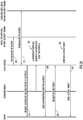
- FIG. 2A shows establishment of authorization scopes, along with a single authorization code grant flow to obtain an access token having an authorization scope permitting access of resource services in each of the security domains.
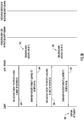
- FIGs. 2B and 2C are sequence diagrams showing how the authorization scopes provided by the access token may be used to derive a plurality of reduced-scope access tokens with authorization scopes reduced or limited to particular security domains.
- the authorization server may communicate with a domain controller in each security domain in order to establish authorization scopes that allow access to the resource services in each security domain.
- the authentication server 135 may communicate with a first domain controller in the first security domain 115 to establish a set of authorization scopes needed for accessing resource services in the first security domain.
- the authentication server 135 may communicate with a second domain controller in the second security domain 125 to establish a set of authorization scopes needed for accessing resource services in the second security domain.
- the authorization server 135 stores data indicating the authorization scopes permissible for each of the resource services.
- Operations 215-235 show a single authorization code grant flow to obtain an access token.
- client 100 may wish to obtain access to a resource service in one or more service domains.
- An example of such a request is:
- an authorization code for scopes S is generated.
- the authorization code for scopes S is provided to the client, e.g., returned in a redirect communication from the authorization server 135 to the client 100.
- the client uses the authorization code for scopes S to request an access token from the authorization server.
- An example of such a request is:
- the authorization server 135 generates an access token 'T'.
- the client receives the access token T for scopes S from the authorization server 135.
- An example of the access token T is shown below.
- FIGs. 2B and 2C a sequence flow diagram is shown for deriving reduced-scope access tokens from the access token received at operation 235.
- the user/resource owner does not have to login and provide authorization for the reduced-scope access tokens to be generated and provided to the client 100. Access tokens may be revoked at any time.
- the authorization server upon receiving the request from the client for a scope-reduction grant flow specifying the set of scopes S1, the authorization server generates a first reduced-scope access token T1.
- the authorization server also stores information mapping reduced-scope access token T1 to access token T, and information indicating that token T1 is to be associated with a subset S1 of scopes S.
- token T1 is logically identical to token T but limited to scopes S1.
- the client receives the reduced-scope access token T1.
- reduced-scope access token T1 is provided as follows:
- scopes S2 may be represented as:
- the authorization server upon receiving the request from the client for a scope-reduction grant flow specifying the subset of scopes S2, the authorization server generates a second reduced-scope access token T2.
- the authorization server stores information mapping reduced-scope token T2 to token T, and information indicating that token T2 is to be associated with subset S2 of scopes S. Again, token T2 is logically identical to token T but limited to scopes S2.
- the client receives the reduced-scope access token T2.
- An example of access token T2 is provided as follows:
- the client (optionally) disposes of token T.
- the client 100 uses reduced-scope access token T1 to access resource services in the first security domain 115 which requires scopes in S1.
- the client 100 sends token T1 to a resource service in the first security domain.
- the client may send a token T1 to a domain controller, in order to gain access to the first resource service.
- a resource service in the first security domain In response to receiving the reduced-scope access token T1, at operation 270, a resource service in the first security domain sends a request to the authorization server 135 for the scopes associated with token T1. At operation 275, the authorization server sends a response back to the resource service in the first security domain, indicating the authorization scopes S1 associated with token T1. Thereafter, the resource service in the first security domain can begin to permit the client to have access according to the authorization scopes S1.
- the client uses the reduced-scope access token T2 to access resource services in the second security domain which require scopes in S2.
- the client sends token T2 to a resource service in the second security domain.
- the client may send token T2 to a domain controller, in order to gain access to the second resource service.
- the resource service in the second security domain In response to receiving the reduced-scope access token T2, at operation 285, the resource service in the second security domain sends a request to the authorization server 135 for the authorization scopes associated with token T2. At operation 290, the authorization server sends a response back to the second resource service, indicating the authorization scopes S2 associated with token T2. Thereafter, the resource service in the second security domain can begin to permit the client 100 to have access according to the authorization scopes S2.
- a resource service can directly validate the token and determine the scopes it represents. Such can happen when using signed semantic tokens (e.g., Security Assertion Markup Language (SAML), JavaScript Object Notation (JSON) Web Token (JWT), etc.) where the scoping can be embedded within the token itself, so that there is no need to consult the authorization server each time.
- signed semantic tokens e.g., Security Assertion Markup Language (SAML), JavaScript Object Notation (JSON) Web Token (JWT), etc.
- policies may be implemented for accessing resource services such that reduced-scope access tokens with authorization scopes outside of their own security domain are rejected. Reporting of this information to the authentication server 135 or any other equivalent provides an effective means for catching errors and discouraging unsecure practices by the client 100.
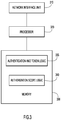
- FIG. 3 illustrates a block diagram of an authorization server 135 configured to perform the operations described herein.
- the authorization server includes a network interface unit 310, a processor 320 and memory 330.
- the network interface unit 310 is, for example, an Ethernet card (or multiple instances of such devices), and enables network connectivity to communicate over network 130.
- the processor 320 is one or more microprocessors or microcontrollers.
- the memory stores instructions that are executed by the processor, including instructions for authentication and token logic 335 and authorization scope logic 340, which when executed, cause the processor 320 to perform operations for the authorization server 135 as described above in connection with FIGs. 2A-2C .
- authentication and token logic 335 includes instructions to authenticate a user and generate a corresponding authorization code for a set of scopes and a corresponding access token.
- Authorization scope logic 340 includes instructions to generate reduced-scope access tokens based on subsets of scopes, with each reduced-scope access token providing access to a particular security domain of a plurality of security domains.
- the memory 330 may include read only memory (ROM), random access memory (RAM), magnetic disk storage media devices, optical storage media devices, flash memory devices, electrical, optical, or other physical/tangible memory storage devices.
- ROM read only memory
- RAM random access memory
- magnetic disk storage media devices e.g., magnetic disks
- optical storage media devices e.g., magnetic disks
- flash memory devices e.g., electrical, optical, or other physical/tangible memory storage devices.
- the memory may comprise one or more tangible (non-transitory) computer readable storage media (e.g., a memory device) encoded with software comprising computer executable instructions and when the software is executed (by the controller) it is operable to perform the operations described herein.
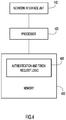
- FIG. 4 illustrates a block diagram of a client 100 configured to participate the operations described herein.
- the client includes a network interface unit 410, a processor 420 and memory 430.
- the network interface unit 410 is, for example, an Ethernet card (or multiple instances of such devices), and enables network connectivity to communicate over network 130.
- the processor 420 is one or more microprocessors or microcontrollers.
- the memory 430 stores instructions that are executed by the processor 420, including instructions for authentication and token request logic 435, which when executed, cause the processor 420 to perform operations for the client 100 as described above in connection with FIGs. 2A-2C .
- authentication and token request logic 435 includes instructions to request an authorization code from an authentication server 135 for a set of scopes and an access token.
- the memory 430 may include read only memory (ROM), random access memory (RAM), magnetic disk storage media devices, optical storage media devices, flash memory devices, electrical, optical, or other physical/tangible memory storage devices.
- ROM read only memory
- RAM random access memory
- magnetic disk storage media devices e.g., magnetic disks
- optical storage media devices e.g., magnetic disks
- flash memory devices e.g., electrical, optical, or other physical/tangible memory storage devices.
- the memory may comprise one or more tangible (non-transitory) computer readable storage media (e.g., a memory device) encoded with software comprising computer executable instructions and when the software is executed (by the controller) it is operable to perform the operations described herein.
- FIG. 5 is a flow diagram depicting operations for a method 500 executed by a client, e.g., client 100, according to the techniques disclosed herein.
- a client e.g., client 100
- an access token is received at a client device from an authentication server after authenticating the client device, wherein the access token provides access to resource services distributed across a plurality of security domains.
- the client derives a first subset of authorization scopes of the access token, wherein the first subset is limited to a first security domain of the plurality of security domains.
- a first reduced-scope access token is received from the authentication server, wherein the first reduced-scope access token provides access to at least one resource service in the first security domain.
- the first reduced-scope access token is utilized to access the at least one resource service in the first security domain.
- FIG. 6 is a flow diagram depicting operations for a method 600 performed by an authentication server, e.g., authentication server 135, according to the techniques disclosed herein.
- an access token is generated at an authorization server in response to a request from a client, wherein the access token provides access to resource services distributed across a plurality of security domains.
- the access token is sent to the client.
- a request from the client for a first reduced-scope access token is received, wherein an authorization scope of the first reduced-scope access token is limited to a first subset of authorization scopes of the access token.
- the first reduced-scope access token is generated based on the first subset of authorization scopes, wherein the first reduced-scope access token provides access to at least one resource service in a first security domain of the plurality of security domains.
- the first reduced-scope access token is sent to the client.
- the standard OAuth2 framework presumes all resource services, including resource services in different security domains, may be equally trusted and provides for a single authorization grant flow to provide access for each requested resource service.
- the techniques presented herein allow resources services that do not trust one another and/or for which a user does not trust, to access the other on their behalf and to be serviced by an OAuth2 authorization service without exposing credentials across security boundaries and without burdening the user with having to log in to the same identity provider multiple times.
- a computer-implemented method for receiving at a client device, an access token from an authentication server after authenticating the client device, wherein the access token provides access to resource services distributed across a plurality of security domains.
- a first subset of authorization scopes of the access token is derived, wherein the first subset is limited to a first security domain of the plurality of security domains.
- Responsive to providing the first subset and the access token to the authentication server Responsive to providing the first subset and the access token to the authentication server, a first reduced-scope access token is received, wherein the first reduced-scope access token provides access to at least one resource service in the first security domain.
- the first reduced-scope access token is utilized to access the at least one resource service in the first security domain.
- a computer-implemented method for generating an access token, at an authorization server and in response to a request from a client, wherein the access token provides access to resource services distributed across a plurality of security domains.
- the access token is sent to the client.
- a request from the client for a first reduced-scope access token is received, wherein an authorization scope of the first reduced-scope access token is limited to a first subset of authorization scopes of the access token.
- the first reduced-scope access token is generated based on the first subset of authorization scopes, wherein the first reduced-scope access token provides access to at least one resource service in a first security domain of the plurality of security domains.
- the first reduced-scope access token is sent to the client.
- an apparatus comprising a network interface unit configured to enable communications over a network, and at least one processor configured to receive an access token from an authentication server after authenticating the client device, wherein the access token provides access to resource services distributed across a plurality of security domains.
- a first subset of authorization scopes of the access token is derived, wherein the first subset is limited to a first security domain of the plurality of security domains.
- Responsive to providing the first subset and the access token to the authentication server a first reduced-scope access token is received, wherein the first reduced-scope access token provides access to at least one resource service in the first security domain.
- the first reduced-scope access token is utilized to access the at least one resource service in the first security domain.
- an apparatus comprising a network interface unit configured to enable communications over a network, and at least one processor configured to generate an access token, in response to a request from a client, wherein the access token provides access to resource services distributed across a plurality of security domains.
- the access token is sent to the client.
- a request from the client for a first reduced-scope access token is received, wherein an authorization scope of the first reduced-scope access token is limited to a first subset of authorization scopes of the access token.
- the first reduced-scope access token is generated based on the first subset of authorization scopes, wherein the first reduced-scope access token provides access to at least one resource service in a first security domain of the plurality of security domains, and the first reduced-scope access token is sent to the client.
- a non-transitory computer readable storage media stores instructions that, when executed by a processor of a network or computing device, cause the processor to receive an access token from an authentication server after authenticating the client device, wherein the access token provides access to resource services distributed across a plurality of security domains.
- a first subset of authorization scopes of the access token is derived, wherein the first subset is limited to a first security domain of the plurality of security domains.
- Responsive to providing the first subset and the access token to the authentication server a first reduced-scope access token is received, wherein the first reduced-scope access token provides access to at least one resource service in the first security domain.
- the first reduced-scope access token is utilized to access the at least one resource service in the first security domain.
- a non-transitory computer readable storage media stores instructions that, when executed by a processor of a network or computing device, cause the processor to generate an access token, in response to a request from a client, wherein the access token provides access to resource services distributed across a plurality of security domains.
- the access token is sent to the client.
- a request from the client for a first reduced-scope access token is received, wherein an authorization scope of the first reduced-scope access token is limited to a first subset of authorization scopes of the access token.
- the first reduced-scope access token is generated based on the first subset of authorization scopes, wherein the first reduced-scope access token provides access to at least one resource service in a first security domain of the plurality of security domains, and the first reduced-scope access token is sent to the client.
Landscapes
- Engineering & Computer Science (AREA)
- Computer Hardware Design (AREA)
- Computer Security & Cryptography (AREA)
- Computing Systems (AREA)
- General Engineering & Computer Science (AREA)
- Computer Networks & Wireless Communication (AREA)
- Signal Processing (AREA)
- Information Transfer Between Computers (AREA)
- Data Exchanges In Wide-Area Networks (AREA)
Claims (12)
- Computerimplementiertes Verfahren, das Folgendes beinhaltet:Anfordern (215), durch ein Client-Gerät (100), eines Autorisierungscodes von einem Authentifizierungsserver (135), wobei die Anforderung einen Satz von mehreren Autorisierungsumfängen (S) spezifiziert, wobei der Satz von Autorisierungsumfängen Autorisierungsumfänge für mehrere Sicherheitsdomänen (115, 125) beinhaltet;Empfangen (225), am Client-Gerät, des Autorisierungscodes vom Authentifizierungsserver nach dem Authentifizieren des Client-Geräts;Senden (230) einer Anforderung für ein Zugriffstoken zum Authentifizierungsserver, wobei die Anforderung den Autorisierungscode enthält;Empfangen (235) des Zugriffstokens am Client-Gerät vom Authentifizierungsserver, wobei das Zugriffstoken Zugang zu Ressourcendiensten bereitstellt, die über die mehreren Sicherheitsdomänen verteilt sind;Ableiten, am Client-Gerät, einer ersten Teilmenge der mehreren Autorisierungsumfänge des Zugriffstokens, wobei die erste Teilmenge auf eine erste Sicherheitsdomäne der mehreren Sicherheitsdomänen beschränkt ist;Empfangen (245), am Client-Gerät, als Reaktion auf das Bereitstellen (240) der ersten Teilmenge und des Zugriffstokens dem Authentifizierungsserver durch das Client-Gerät, eines ersten Zugriffstokens mit reduziertem Umfang, wobei das erste Zugriffstoken mit reduziertem Umfang Zugang zu mindestens einem Ressourcendienst in der ersten Sicherheitsdomäne bietet und ein Auffrischungstoken enthält;Verwenden (265), durch das Client-Gerät, des ersten Zugriffstokens mit reduziertem Umfang, um auf den mindestens einen Ressourcendienst in der ersten Sicherheitsdomäne zuzugreifen; undBenutzen, durch das Client-Gerät, als Reaktion auf den Ablauf des Zugriffstokens mit reduziertem Umfang, des Auffrischungstokens, um ein weiteres Zugriffstoken mit reduziertem Umfang zu erhalten.
- Computerimplementiertes Verfahren nach Anspruch 1, das Folgendes beinhaltet:Ableiten einer zweiten Teilmenge von Autorisierungsumfängen des Zugriffstokens, wobei die zweite Teilmenge auf eine zweite Sicherheitsdomäne der mehreren Sicherheitsdomänen beschränkt ist;Empfangen, als Reaktion auf das Bereitstellen der zweiten Teilmenge und des Zugriffstokens dem Authentifizierungsserver, eines zweiten Zugriffstokens mit reduziertem Umfang, wobei das zweite Zugriffstoken mit reduziertem Umfang Zugang zu mindestens einem Ressourcendienst in der zweiten Sicherheitsdomäne bietet; undBenutzen des zweiten Zugriffstokens mit reduziertem Umfang, um auf den mindestens einen Ressourcendienst in der zweiten Sicherheitsdomäne zuzugreifen.
- Computerimplementiertes Verfahren nach Anspruch 1, dabei:Empfangen des Zugriffstokens als Reaktion auf die Benutzerauthentifizierung; undEmpfangen des ersten Zugriffstokens mit reduziertem Umfang ohne zusätzliche Benutzerauthentifizierung.
- Computerimplementiertes Verfahren nach Anspruch 1, wobei das erste Zugriffstoken mit reduziertem Umfang dieselbe Haupt- und Ablaufzeit hat wie das Zugriffstoken.
- Computerimplementiertes Verfahren nach Anspruch 1, das ferner Folgendes beinhaltet:
Verwerfen, durch das Client-Gerät, des Zugriffstokens, wenn ein oder mehrere angeforderte Zugriffstoken mit reduziertem Umfang empfangen wurden. - Computerimplementiertes Verfahren, das Folgendes beinhaltet:Empfangen (215), an einem Autorisierungsserver (135) von einem Client (100), einer Anforderung für einen Autorisierungscode, der einen Satz von mehreren Autorisierungsumfängen spezifiziert, wobei der Satz von Autorisierungsumfängen Autorisierungsumfänge für mehrere Sicherheitsdomänen beinhaltet;Senden (225) des Autorisierungscodes zum Client nach dem Authentifizieren des Client;Empfangen (230), am Autorisierungsserver vom Client, einer Anforderung für ein Zugriffstoken, wobei die Anforderung den Autorisierungscode enthält;Erzeugen des Zugriffstokens am Autorisierungsserver als Reaktion auf die Anforderung, wobei das Zugriffstoken Zugriff auf Ressourcendienste bereitstellt, die über die mehreren Sicherheitsdomänen verteilt sind;Senden (235) des Zugriffstokens zum Client;Empfangen (240), am Autorisierungsserver, einer Anforderung vom Client für ein erstes Zugriffstoken mit reduziertem Umfang, wobei ein Autorisierungsumfang des ersten Zugriffstokens mit reduziertem Umfang auf eine erste Teilmenge der mehreren Autorisierungsumfänge des Zugriffstokens beschränkt ist;Erzeugen, durch den Autorisierungsserver, des ersten Zugriffstokens mit reduziertem Umfang auf der Basis der ersten Teilmenge von Autorisierungsumfängen, wobei das erste Zugriffstoken mit reduziertem Umfang Zugang zu mindestens einem Ressourcendienst in einer ersten Sicherheitsdomäne der mehreren Sicherheitsdomänen bietet; undSenden (245) des ersten Zugriffstokens mit reduziertem Umfang zum Client;wobei das erste Zugriffstoken mit reduziertem Umfang ein Auffrischungstoken zur Verwendung beim Erlangen eines weiteren Zugriffstokens mit reduziertem Umfang nach Ablauf des Zugriffstokens mit reduziertem Umfang enthält.
- Computerimplementiertes Verfahren nach Anspruch 6, das ferner Folgendes beinhaltet:Empfangen einer weiteren Anforderung vom Client für ein zweites Zugriffstoken mit reduziertem Umfang, wobei der Authorisierungsumfang des zweiten Zugriffstokens mit reduziertem Umfang auf eine zweite Teilmenge der Authorisierungsumfänge des Zugriffstokens beschränkt ist;Erzeugen des zweiten Zugriffstokens mit reduziertem Umfang auf der Basis der zweiten Teilmenge der Autorisierungsumfänge, wobei das zweite Zugriffstoken mit reduziertem Umfang Zugang zu mindestens einem Ressourcendienst in einer zweiten Sicherheitsdomäne der mehreren Sicherheitsdomänen bietet; undSenden des zweiten Zugriffstokens mit reduziertem Umfang zum Client.
- Computerimplementiertes Verfahren nach Anspruch 6, das ferner Folgendes beinhaltet:Erzeugen des Zugriffstokens als Reaktion auf die Benutzerauthentifizierung; undErzeugen des ersten Zugriffstokens mit reduziertem Umfang auf der Basis des Zugriffstokens ohne zusätzliche Benutzerauthentifizierung.
- Computerimplementiertes Verfahren nach Anspruch 6, wobei das erste Zugriffstoken mit reduziertem Umfang dieselbe Haupt- und Ablaufzeit hat wie das Zugriffstoken.
- Computerimplementiertes Verfahren nach Anspruch 6, das ferner Folgendes beinhaltet:Empfangen einer Anforderung für die erste Teilmenge der Autorisierungsumfänge für das erste Zugriffstoken mit reduziertem Umfang von einem Ressourcen-Server; undSenden der ersten Teilmenge der Autorisierungsumfänge zum Ressourcenserver.
- Vorrichtung, die Folgendes umfasst:eine Netzwerkschnittstelleneinheit, die zum Ermöglichen von Kommunikationen über ein Netzwerk konfiguriert ist; undmindestens einen Prozessor, der zum Durchführen eines Verfahrens nach einem vorherigen Anspruch konfiguriert ist.
- Computerlesbares Medium, das computerausführbare Befehle enthält, die bei Ausführung die Durchführung eines Verfahrens nach einem der Ansprüche 1 bis 10 bewirken.
Applications Claiming Priority (3)
| Application Number | Priority Date | Filing Date | Title |
|---|---|---|---|
| US201562198785P | 2015-07-30 | 2015-07-30 | |
| US14/942,195 US10104084B2 (en) | 2015-07-30 | 2015-11-16 | Token scope reduction |
| PCT/US2016/044015 WO2017019670A1 (en) | 2015-07-30 | 2016-07-26 | Token scope reduction |
Publications (2)
| Publication Number | Publication Date |
|---|---|
| EP3329653A1 EP3329653A1 (de) | 2018-06-06 |
| EP3329653B1 true EP3329653B1 (de) | 2021-09-29 |
Family
ID=57883133
Family Applications (1)
| Application Number | Title | Priority Date | Filing Date |
|---|---|---|---|
| EP16748225.6A Active EP3329653B1 (de) | 2015-07-30 | 2016-07-26 | Token-umfang-reduktion |
Country Status (3)
| Country | Link |
|---|---|
| US (1) | US10104084B2 (de) |
| EP (1) | EP3329653B1 (de) |
| WO (1) | WO2017019670A1 (de) |
Families Citing this family (26)
| Publication number | Priority date | Publication date | Assignee | Title |
|---|---|---|---|---|
| SG10202012073XA (en) * | 2015-12-04 | 2021-01-28 | Visa Int Service Ass | Secure token distribution |
| JP6677496B2 (ja) | 2015-12-08 | 2020-04-08 | キヤノン株式会社 | 認証連携システム及び認証連携方法、認可サーバー、アプリケーションサーバー及びプログラム |
| JP6682254B2 (ja) * | 2015-12-08 | 2020-04-15 | キヤノン株式会社 | 認証連携システム及び認証連携方法、認可サーバー及びプログラム |
| US10846792B1 (en) * | 2016-01-11 | 2020-11-24 | Uipco, Llc | On-line loan process and system |
| JP6720606B2 (ja) * | 2016-03-18 | 2020-07-08 | 富士ゼロックス株式会社 | 情報処理システム |
| US10223541B2 (en) * | 2017-01-24 | 2019-03-05 | Salesforce.Com, Inc. | Adaptive permission token |
| US10387498B2 (en) | 2017-02-15 | 2019-08-20 | Ca, Inc. | Polymorphic configuration management for shared authorization or authentication protocols |
| JP6857065B2 (ja) * | 2017-03-27 | 2021-04-14 | キヤノン株式会社 | 認証認可サーバー、リソースサーバー、認証認可システム、認証方法及びプログラム |
| US10623410B2 (en) * | 2017-04-24 | 2020-04-14 | Microsoft Technology Licensing, Llc | Multi-level, distributed access control between services and applications |
| US10547594B2 (en) * | 2017-08-17 | 2020-01-28 | Domanicom Corporation | Systems and methods for implementing data communication with security tokens |
| US10887301B1 (en) | 2017-12-12 | 2021-01-05 | United Services Automobile Association (Usaa) | Client registration for authorization |
| US10742646B2 (en) * | 2018-05-10 | 2020-08-11 | Visa International Service Association | Provisioning transferable access tokens |
| US11122035B2 (en) * | 2018-05-24 | 2021-09-14 | International Business Machines Corporation | Secure delegation of a refresh token for long-running operations |
| US11146543B2 (en) * | 2018-07-12 | 2021-10-12 | Vmware, Inc. | Contact consolidation across multiple services |
| US20200120083A1 (en) * | 2018-10-12 | 2020-04-16 | Ca, Inc. | Time-based detail degradation for authorization scopes |
| US11277267B2 (en) * | 2019-05-07 | 2022-03-15 | International Business Machines Corporation | Fine-grained token based access control |
| CN110572258B (zh) * | 2019-07-24 | 2021-12-14 | 中国科学院数据与通信保护研究教育中心 | 一种云密码计算平台及计算服务方法 |
| JP7294158B2 (ja) * | 2020-01-17 | 2023-06-20 | 富士通株式会社 | 情報処理システム、情報処理装置、情報処理方法及び情報処理プログラム |
| US11716325B2 (en) * | 2021-01-20 | 2023-08-01 | International Business Machines Corporation | Limiting scopes in token-based authorization systems |
| US11620363B1 (en) | 2021-03-15 | 2023-04-04 | SHAYRE, Inc. | Systems and methods for authentication and authorization for software license management |
| US11632362B1 (en) | 2021-04-14 | 2023-04-18 | SHAYRE, Inc. | Systems and methods for using JWTs for information security |
| US20240241932A1 (en) * | 2021-06-08 | 2024-07-18 | Nippon Telegraph And Telephone Corporation | Information processing system, resource management apparatus, resource management method and program |
| US11621830B1 (en) | 2021-06-28 | 2023-04-04 | SHAYRE, Inc. | Systems and methods for facilitating asynchronous secured point-to-point communications |
| US12132720B2 (en) | 2022-03-13 | 2024-10-29 | Kyocera Document Solutions Inc. | Enhanced security for device authorization for browserless or input-constrained devices |
| US20250139211A1 (en) * | 2023-10-25 | 2025-05-01 | Musarubra Us Llc | Methods and apparatus for aliasing scopes in access tokens |
| US12513139B1 (en) * | 2025-07-30 | 2025-12-30 | Cloudflare, Inc. | Access control of external capabilities exposed by a resource server for artificial intelligence models |
Family Cites Families (29)
| Publication number | Priority date | Publication date | Assignee | Title |
|---|---|---|---|---|
| US6308274B1 (en) * | 1998-06-12 | 2001-10-23 | Microsoft Corporation | Least privilege via restricted tokens |
| US6279111B1 (en) * | 1998-06-12 | 2001-08-21 | Microsoft Corporation | Security model using restricted tokens |
| US6339423B1 (en) * | 1999-08-23 | 2002-01-15 | Entrust, Inc. | Multi-domain access control |
| FI120021B (fi) * | 2003-08-27 | 2009-05-29 | Nokia Corp | Valtuustiedon hankkiminen |
| US9053299B2 (en) * | 2003-11-03 | 2015-06-09 | James W. Wieder | Adaptive personalized playback or presentation using rating |
| WO2006006704A2 (en) * | 2004-07-09 | 2006-01-19 | Matsushita Electric Industrial Co., Ltd. | System and method for managing user authentication and service authorization to achieve single-sign-on to access multiple network interfaces |
| US8793509B1 (en) | 2008-02-12 | 2014-07-29 | Google Inc. | Web authorization with reduced user interaction |
| EP2547857B1 (de) * | 2010-03-19 | 2018-09-12 | Noetic Technologies Inc. | Werkzeug zur verwaltung der füllung eines gehäuses mit flüssigkeit |
| US8533796B1 (en) * | 2011-03-16 | 2013-09-10 | Google Inc. | Providing application programs with access to secured resources |
| WO2013019519A1 (en) * | 2011-08-02 | 2013-02-07 | Rights Over Ip, Llc | Rights-based system |
| US9043886B2 (en) * | 2011-09-29 | 2015-05-26 | Oracle International Corporation | Relying party platform/framework for access management infrastructures |
| US9197623B2 (en) * | 2011-09-29 | 2015-11-24 | Oracle International Corporation | Multiple resource servers interacting with single OAuth server |
| CN103166783A (zh) * | 2011-12-14 | 2013-06-19 | 华为技术有限公司 | 资源的控制方法及装置 |
| US9148429B2 (en) * | 2012-04-23 | 2015-09-29 | Google Inc. | Controlling access by web applications to resources on servers |
| JP6006533B2 (ja) * | 2012-05-25 | 2016-10-12 | キヤノン株式会社 | 認可サーバー及びクライアント装置、サーバー連携システム、トークン管理方法 |
| US9009787B2 (en) * | 2012-07-25 | 2015-04-14 | Oracle International Corporation | System and method of mapping and protecting communication services with OAuth |
| US8539567B1 (en) * | 2012-09-22 | 2013-09-17 | Nest Labs, Inc. | Multi-tiered authentication methods for facilitating communications amongst smart home devices and cloud-based servers |
| JP6025480B2 (ja) | 2012-09-27 | 2016-11-16 | キヤノン株式会社 | 認可サーバーシステム、権限移譲システム、その制御方法、およびプログラム |
| US9088564B1 (en) * | 2013-02-07 | 2015-07-21 | Intuit Inc. | Transitioning a logged-in state from a native application to any associated web resource |
| US8613055B1 (en) * | 2013-02-22 | 2013-12-17 | Ping Identity Corporation | Methods and apparatus for selecting an authentication mode at time of issuance of an access token |
| EP3047626B1 (de) * | 2013-09-20 | 2017-10-25 | Oracle International Corporation | Multiressourcenserver mit einem einzigen, flexiblen, steckbaren oauth-server und oauth-geschützter restful-oauth-zustimmung-verwaltungsdienst sowie single-sign-on-oauth-dienst für mobile anwendung |
| GB2523989B (en) * | 2014-01-30 | 2020-07-29 | Insulet Netherlands B V | Therapeutic product delivery system and method of pairing |
| US9306939B2 (en) * | 2014-05-30 | 2016-04-05 | Oracle International Corporation | Authorization token cache system and method |
| US9419962B2 (en) * | 2014-06-16 | 2016-08-16 | Adobe Systems Incorporated | Method and apparatus for sharing server resources using a local group |
| US20160239825A1 (en) * | 2015-02-17 | 2016-08-18 | Gopal Nandakumar | System and Method for Determining a Secured Resource Account Number |
| US20160277413A1 (en) * | 2015-03-20 | 2016-09-22 | Kabushiki Kaisha Toshiba | Access Permission Device, Access Permission Method, Program, and Communicating System |
| US10484385B2 (en) * | 2015-06-04 | 2019-11-19 | Sap Se | Accessing an application through application clients and web browsers |
| US10270753B2 (en) * | 2015-08-14 | 2019-04-23 | Salesforce.Com, Inc. | Background authentication refresh |
| US9621355B1 (en) * | 2015-10-01 | 2017-04-11 | Cisco Technology, Inc. | Securely authorizing client applications on devices to hosted services |
-
2015
- 2015-11-16 US US14/942,195 patent/US10104084B2/en active Active
-
2016
- 2016-07-26 EP EP16748225.6A patent/EP3329653B1/de active Active
- 2016-07-26 WO PCT/US2016/044015 patent/WO2017019670A1/en not_active Ceased
Also Published As
| Publication number | Publication date |
|---|---|
| WO2017019670A1 (en) | 2017-02-02 |
| US10104084B2 (en) | 2018-10-16 |
| EP3329653A1 (de) | 2018-06-06 |
| US20170034172A1 (en) | 2017-02-02 |
Similar Documents
| Publication | Publication Date | Title |
|---|---|---|
| US10104084B2 (en) | Token scope reduction | |
| CN106209749B (zh) | 单点登录方法及装置、相关设备和应用的处理方法及装置 | |
| US10673861B2 (en) | Identity proxy to provide access control and single sign on | |
| US10250609B2 (en) | Privileged access to target services | |
| EP3723341B1 (de) | Einmalige anmeldung für unverwaltete mobilvorrichtungen | |
| US8763102B2 (en) | Single sign on infrastructure | |
| US9419962B2 (en) | Method and apparatus for sharing server resources using a local group | |
| US11870766B2 (en) | Integration of legacy authentication with cloud-based authentication | |
| US9584615B2 (en) | Redirecting access requests to an authorized server system for a cloud service | |
| US9736126B2 (en) | Authenticating mobile applications using policy files | |
| US20190173871A1 (en) | Using application level authentication for network login | |
| US11201778B2 (en) | Authorization processing method, device, and system | |
| US12041173B2 (en) | Whitelisting clients accessing resources via a secure web gateway with time-based one time passwords for authentication | |
| US20150381625A1 (en) | Secure mobile client with assertions for access to service provider applications | |
| US20160366119A1 (en) | Single sign-on for unmanaged mobile devices | |
| CN105991614B (zh) | 一种开放授权、资源访问的方法及装置、服务器 | |
| CN106330813A (zh) | 一种处理授权的方法、设备和系统 | |
| US9590972B2 (en) | Application authentication using network authentication information | |
| EP3507735B1 (de) | Kombinierte benutzerauthentifizierung und vorrichtungs-/anwendungsintegritätsprüfung | |
| CN105049427A (zh) | 应用系统登录账号的管理方法及装置 | |
| KR101824562B1 (ko) | 인증 게이트웨이 및 인증 게이트웨이의 인증 방법 | |
| US20190182242A1 (en) | Authentication in integrated system environment | |
| US20260039642A1 (en) | Multi-application single-sign on via device session establishment | |
| Teraiya et al. | Survey on Security Framework for Single Sign On in cloud for SaaS application |
Legal Events
| Date | Code | Title | Description |
|---|---|---|---|
| STAA | Information on the status of an ep patent application or granted ep patent |
Free format text: STATUS: THE INTERNATIONAL PUBLICATION HAS BEEN MADE |
|
| PUAI | Public reference made under article 153(3) epc to a published international application that has entered the european phase |
Free format text: ORIGINAL CODE: 0009012 |
|
| STAA | Information on the status of an ep patent application or granted ep patent |
Free format text: STATUS: REQUEST FOR EXAMINATION WAS MADE |
|
| 17P | Request for examination filed |
Effective date: 20180130 |
|
| AK | Designated contracting states |
Kind code of ref document: A1 Designated state(s): AL AT BE BG CH CY CZ DE DK EE ES FI FR GB GR HR HU IE IS IT LI LT LU LV MC MK MT NL NO PL PT RO RS SE SI SK SM TR |
|
| AX | Request for extension of the european patent |
Extension state: BA ME |
|
| DAV | Request for validation of the european patent (deleted) | ||
| DAX | Request for extension of the european patent (deleted) | ||
| STAA | Information on the status of an ep patent application or granted ep patent |
Free format text: STATUS: EXAMINATION IS IN PROGRESS |
|
| 17Q | First examination report despatched |
Effective date: 20190717 |
|
| GRAP | Despatch of communication of intention to grant a patent |
Free format text: ORIGINAL CODE: EPIDOSNIGR1 |
|
| STAA | Information on the status of an ep patent application or granted ep patent |
Free format text: STATUS: GRANT OF PATENT IS INTENDED |
|
| INTG | Intention to grant announced |
Effective date: 20210429 |
|
| GRAS | Grant fee paid |
Free format text: ORIGINAL CODE: EPIDOSNIGR3 |
|
| GRAA | (expected) grant |
Free format text: ORIGINAL CODE: 0009210 |
|
| STAA | Information on the status of an ep patent application or granted ep patent |
Free format text: STATUS: THE PATENT HAS BEEN GRANTED |
|
| AK | Designated contracting states |
Kind code of ref document: B1 Designated state(s): AL AT BE BG CH CY CZ DE DK EE ES FI FR GB GR HR HU IE IS IT LI LT LU LV MC MK MT NL NO PL PT RO RS SE SI SK SM TR |
|
| REG | Reference to a national code |
Ref country code: GB Ref legal event code: FG4D |
|
| REG | Reference to a national code |
Ref country code: CH Ref legal event code: EP Ref country code: AT Ref legal event code: REF Ref document number: 1435232 Country of ref document: AT Kind code of ref document: T Effective date: 20211015 |
|
| REG | Reference to a national code |
Ref country code: DE Ref legal event code: R096 Ref document number: 602016064316 Country of ref document: DE |
|
| REG | Reference to a national code |
Ref country code: IE Ref legal event code: FG4D |
|
| REG | Reference to a national code |
Ref country code: DE Ref legal event code: R079 Ref document number: 602016064316 Country of ref document: DE Free format text: PREVIOUS MAIN CLASS: H04L0029060000 Ipc: H04L0065000000 |
|
| REG | Reference to a national code |
Ref country code: LT Ref legal event code: MG9D |
|
| PG25 | Lapsed in a contracting state [announced via postgrant information from national office to epo] |
Ref country code: LT Free format text: LAPSE BECAUSE OF FAILURE TO SUBMIT A TRANSLATION OF THE DESCRIPTION OR TO PAY THE FEE WITHIN THE PRESCRIBED TIME-LIMIT Effective date: 20210929 Ref country code: BG Free format text: LAPSE BECAUSE OF FAILURE TO SUBMIT A TRANSLATION OF THE DESCRIPTION OR TO PAY THE FEE WITHIN THE PRESCRIBED TIME-LIMIT Effective date: 20211229 Ref country code: HR Free format text: LAPSE BECAUSE OF FAILURE TO SUBMIT A TRANSLATION OF THE DESCRIPTION OR TO PAY THE FEE WITHIN THE PRESCRIBED TIME-LIMIT Effective date: 20210929 Ref country code: FI Free format text: LAPSE BECAUSE OF FAILURE TO SUBMIT A TRANSLATION OF THE DESCRIPTION OR TO PAY THE FEE WITHIN THE PRESCRIBED TIME-LIMIT Effective date: 20210929 Ref country code: NO Free format text: LAPSE BECAUSE OF FAILURE TO SUBMIT A TRANSLATION OF THE DESCRIPTION OR TO PAY THE FEE WITHIN THE PRESCRIBED TIME-LIMIT Effective date: 20211229 Ref country code: SE Free format text: LAPSE BECAUSE OF FAILURE TO SUBMIT A TRANSLATION OF THE DESCRIPTION OR TO PAY THE FEE WITHIN THE PRESCRIBED TIME-LIMIT Effective date: 20210929 Ref country code: RS Free format text: LAPSE BECAUSE OF FAILURE TO SUBMIT A TRANSLATION OF THE DESCRIPTION OR TO PAY THE FEE WITHIN THE PRESCRIBED TIME-LIMIT Effective date: 20210929 |
|
| REG | Reference to a national code |
Ref country code: NL Ref legal event code: MP Effective date: 20210929 |
|
| REG | Reference to a national code |
Ref country code: AT Ref legal event code: MK05 Ref document number: 1435232 Country of ref document: AT Kind code of ref document: T Effective date: 20210929 |
|
| PG25 | Lapsed in a contracting state [announced via postgrant information from national office to epo] |
Ref country code: LV Free format text: LAPSE BECAUSE OF FAILURE TO SUBMIT A TRANSLATION OF THE DESCRIPTION OR TO PAY THE FEE WITHIN THE PRESCRIBED TIME-LIMIT Effective date: 20210929 Ref country code: GR Free format text: LAPSE BECAUSE OF FAILURE TO SUBMIT A TRANSLATION OF THE DESCRIPTION OR TO PAY THE FEE WITHIN THE PRESCRIBED TIME-LIMIT Effective date: 20211230 |
|
| PG25 | Lapsed in a contracting state [announced via postgrant information from national office to epo] |
Ref country code: AT Free format text: LAPSE BECAUSE OF FAILURE TO SUBMIT A TRANSLATION OF THE DESCRIPTION OR TO PAY THE FEE WITHIN THE PRESCRIBED TIME-LIMIT Effective date: 20210929 |
|
| PG25 | Lapsed in a contracting state [announced via postgrant information from national office to epo] |
Ref country code: IS Free format text: LAPSE BECAUSE OF FAILURE TO SUBMIT A TRANSLATION OF THE DESCRIPTION OR TO PAY THE FEE WITHIN THE PRESCRIBED TIME-LIMIT Effective date: 20220129 Ref country code: SK Free format text: LAPSE BECAUSE OF FAILURE TO SUBMIT A TRANSLATION OF THE DESCRIPTION OR TO PAY THE FEE WITHIN THE PRESCRIBED TIME-LIMIT Effective date: 20210929 Ref country code: RO Free format text: LAPSE BECAUSE OF FAILURE TO SUBMIT A TRANSLATION OF THE DESCRIPTION OR TO PAY THE FEE WITHIN THE PRESCRIBED TIME-LIMIT Effective date: 20210929 Ref country code: PT Free format text: LAPSE BECAUSE OF FAILURE TO SUBMIT A TRANSLATION OF THE DESCRIPTION OR TO PAY THE FEE WITHIN THE PRESCRIBED TIME-LIMIT Effective date: 20220131 Ref country code: PL Free format text: LAPSE BECAUSE OF FAILURE TO SUBMIT A TRANSLATION OF THE DESCRIPTION OR TO PAY THE FEE WITHIN THE PRESCRIBED TIME-LIMIT Effective date: 20210929 Ref country code: NL Free format text: LAPSE BECAUSE OF FAILURE TO SUBMIT A TRANSLATION OF THE DESCRIPTION OR TO PAY THE FEE WITHIN THE PRESCRIBED TIME-LIMIT Effective date: 20210929 Ref country code: ES Free format text: LAPSE BECAUSE OF FAILURE TO SUBMIT A TRANSLATION OF THE DESCRIPTION OR TO PAY THE FEE WITHIN THE PRESCRIBED TIME-LIMIT Effective date: 20210929 Ref country code: EE Free format text: LAPSE BECAUSE OF FAILURE TO SUBMIT A TRANSLATION OF THE DESCRIPTION OR TO PAY THE FEE WITHIN THE PRESCRIBED TIME-LIMIT Effective date: 20210929 Ref country code: CZ Free format text: LAPSE BECAUSE OF FAILURE TO SUBMIT A TRANSLATION OF THE DESCRIPTION OR TO PAY THE FEE WITHIN THE PRESCRIBED TIME-LIMIT Effective date: 20210929 Ref country code: AL Free format text: LAPSE BECAUSE OF FAILURE TO SUBMIT A TRANSLATION OF THE DESCRIPTION OR TO PAY THE FEE WITHIN THE PRESCRIBED TIME-LIMIT Effective date: 20210929 |
|
| REG | Reference to a national code |
Ref country code: DE Ref legal event code: R097 Ref document number: 602016064316 Country of ref document: DE |
|
| PG25 | Lapsed in a contracting state [announced via postgrant information from national office to epo] |
Ref country code: DK Free format text: LAPSE BECAUSE OF FAILURE TO SUBMIT A TRANSLATION OF THE DESCRIPTION OR TO PAY THE FEE WITHIN THE PRESCRIBED TIME-LIMIT Effective date: 20210929 |
|
| PLBE | No opposition filed within time limit |
Free format text: ORIGINAL CODE: 0009261 |
|
| STAA | Information on the status of an ep patent application or granted ep patent |
Free format text: STATUS: NO OPPOSITION FILED WITHIN TIME LIMIT |
|
| 26N | No opposition filed |
Effective date: 20220630 |
|
| PG25 | Lapsed in a contracting state [announced via postgrant information from national office to epo] |
Ref country code: SI Free format text: LAPSE BECAUSE OF FAILURE TO SUBMIT A TRANSLATION OF THE DESCRIPTION OR TO PAY THE FEE WITHIN THE PRESCRIBED TIME-LIMIT Effective date: 20210929 |
|
| PG25 | Lapsed in a contracting state [announced via postgrant information from national office to epo] |
Ref country code: IT Free format text: LAPSE BECAUSE OF FAILURE TO SUBMIT A TRANSLATION OF THE DESCRIPTION OR TO PAY THE FEE WITHIN THE PRESCRIBED TIME-LIMIT Effective date: 20210929 |
|
| PG25 | Lapsed in a contracting state [announced via postgrant information from national office to epo] |
Ref country code: MC Free format text: LAPSE BECAUSE OF FAILURE TO SUBMIT A TRANSLATION OF THE DESCRIPTION OR TO PAY THE FEE WITHIN THE PRESCRIBED TIME-LIMIT Effective date: 20210929 |
|
| REG | Reference to a national code |
Ref country code: CH Ref legal event code: PL |
|
| REG | Reference to a national code |
Ref country code: BE Ref legal event code: MM Effective date: 20220731 |
|
| PG25 | Lapsed in a contracting state [announced via postgrant information from national office to epo] |
Ref country code: LU Free format text: LAPSE BECAUSE OF NON-PAYMENT OF DUE FEES Effective date: 20220726 Ref country code: LI Free format text: LAPSE BECAUSE OF NON-PAYMENT OF DUE FEES Effective date: 20220731 Ref country code: CH Free format text: LAPSE BECAUSE OF NON-PAYMENT OF DUE FEES Effective date: 20220731 |
|
| PG25 | Lapsed in a contracting state [announced via postgrant information from national office to epo] |
Ref country code: BE Free format text: LAPSE BECAUSE OF NON-PAYMENT OF DUE FEES Effective date: 20220731 |
|
| P01 | Opt-out of the competence of the unified patent court (upc) registered |
Effective date: 20230525 |
|
| PG25 | Lapsed in a contracting state [announced via postgrant information from national office to epo] |
Ref country code: IE Free format text: LAPSE BECAUSE OF NON-PAYMENT OF DUE FEES Effective date: 20220726 |
|
| PG25 | Lapsed in a contracting state [announced via postgrant information from national office to epo] |
Ref country code: HU Free format text: LAPSE BECAUSE OF FAILURE TO SUBMIT A TRANSLATION OF THE DESCRIPTION OR TO PAY THE FEE WITHIN THE PRESCRIBED TIME-LIMIT; INVALID AB INITIO Effective date: 20160726 |
|
| PG25 | Lapsed in a contracting state [announced via postgrant information from national office to epo] |
Ref country code: SM Free format text: LAPSE BECAUSE OF FAILURE TO SUBMIT A TRANSLATION OF THE DESCRIPTION OR TO PAY THE FEE WITHIN THE PRESCRIBED TIME-LIMIT Effective date: 20210929 Ref country code: MK Free format text: LAPSE BECAUSE OF FAILURE TO SUBMIT A TRANSLATION OF THE DESCRIPTION OR TO PAY THE FEE WITHIN THE PRESCRIBED TIME-LIMIT Effective date: 20210929 Ref country code: CY Free format text: LAPSE BECAUSE OF FAILURE TO SUBMIT A TRANSLATION OF THE DESCRIPTION OR TO PAY THE FEE WITHIN THE PRESCRIBED TIME-LIMIT Effective date: 20210929 |
|
| PG25 | Lapsed in a contracting state [announced via postgrant information from national office to epo] |
Ref country code: MT Free format text: LAPSE BECAUSE OF FAILURE TO SUBMIT A TRANSLATION OF THE DESCRIPTION OR TO PAY THE FEE WITHIN THE PRESCRIBED TIME-LIMIT Effective date: 20210929 |
|
| PGFP | Annual fee paid to national office [announced via postgrant information from national office to epo] |
Ref country code: FR Payment date: 20240722 Year of fee payment: 9 |
|
| PGFP | Annual fee paid to national office [announced via postgrant information from national office to epo] |
Ref country code: DE Payment date: 20250618 Year of fee payment: 10 |
|
| PGFP | Annual fee paid to national office [announced via postgrant information from national office to epo] |
Ref country code: GB Payment date: 20250715 Year of fee payment: 10 |
|
| PG25 | Lapsed in a contracting state [announced via postgrant information from national office to epo] |
Ref country code: TR Free format text: LAPSE BECAUSE OF FAILURE TO SUBMIT A TRANSLATION OF THE DESCRIPTION OR TO PAY THE FEE WITHIN THE PRESCRIBED TIME-LIMIT Effective date: 20210929 |
|
| PG25 | Lapsed in a contracting state [announced via postgrant information from national office to epo] |
Ref country code: FR Free format text: LAPSE BECAUSE OF NON-PAYMENT OF DUE FEES Effective date: 20250731 |