EP3326862A1 - Apparatus for automatically dealing with a glare situation caused by oncoming traffic - Google Patents
Apparatus for automatically dealing with a glare situation caused by oncoming traffic Download PDFInfo
- Publication number
- EP3326862A1 EP3326862A1 EP16465557.3A EP16465557A EP3326862A1 EP 3326862 A1 EP3326862 A1 EP 3326862A1 EP 16465557 A EP16465557 A EP 16465557A EP 3326862 A1 EP3326862 A1 EP 3326862A1
- Authority
- EP
- European Patent Office
- Prior art keywords
- image
- vehicle
- glare situation
- processing unit
- headlamp
- Prior art date
- Legal status (The legal status is an assumption and is not a legal conclusion. Google has not performed a legal analysis and makes no representation as to the accuracy of the status listed.)
- Withdrawn
Links
Images
Classifications
-
- B—PERFORMING OPERATIONS; TRANSPORTING
- B60—VEHICLES IN GENERAL
- B60Q—ARRANGEMENT OF SIGNALLING OR LIGHTING DEVICES, THE MOUNTING OR SUPPORTING THEREOF OR CIRCUITS THEREFOR, FOR VEHICLES IN GENERAL
- B60Q1/00—Arrangement of optical signalling or lighting devices, the mounting or supporting thereof or circuits therefor
- B60Q1/26—Arrangement of optical signalling or lighting devices, the mounting or supporting thereof or circuits therefor the devices being primarily intended to indicate the vehicle, or parts thereof, or to give signals, to other traffic
- B60Q1/46—Arrangement of optical signalling or lighting devices, the mounting or supporting thereof or circuits therefor the devices being primarily intended to indicate the vehicle, or parts thereof, or to give signals, to other traffic for giving flashing caution signals during drive, other than signalling change of direction, e.g. flashing the headlights or hazard lights
-
- B—PERFORMING OPERATIONS; TRANSPORTING
- B60—VEHICLES IN GENERAL
- B60Q—ARRANGEMENT OF SIGNALLING OR LIGHTING DEVICES, THE MOUNTING OR SUPPORTING THEREOF OR CIRCUITS THEREFOR, FOR VEHICLES IN GENERAL
- B60Q1/00—Arrangement of optical signalling or lighting devices, the mounting or supporting thereof or circuits therefor
- B60Q1/02—Arrangement of optical signalling or lighting devices, the mounting or supporting thereof or circuits therefor the devices being primarily intended to illuminate the way ahead or to illuminate other areas of way or environments
- B60Q1/04—Arrangement of optical signalling or lighting devices, the mounting or supporting thereof or circuits therefor the devices being primarily intended to illuminate the way ahead or to illuminate other areas of way or environments the devices being headlights
- B60Q1/14—Arrangement of optical signalling or lighting devices, the mounting or supporting thereof or circuits therefor the devices being primarily intended to illuminate the way ahead or to illuminate other areas of way or environments the devices being headlights having dimming means
- B60Q1/1415—Dimming circuits
- B60Q1/1423—Automatic dimming circuits, i.e. switching between high beam and low beam due to change of ambient light or light level in road traffic
- B60Q1/143—Automatic dimming circuits, i.e. switching between high beam and low beam due to change of ambient light or light level in road traffic combined with another condition, e.g. using vehicle recognition from camera images or activation of wipers
-
- B—PERFORMING OPERATIONS; TRANSPORTING
- B60—VEHICLES IN GENERAL
- B60Q—ARRANGEMENT OF SIGNALLING OR LIGHTING DEVICES, THE MOUNTING OR SUPPORTING THEREOF OR CIRCUITS THEREFOR, FOR VEHICLES IN GENERAL
- B60Q1/00—Arrangement of optical signalling or lighting devices, the mounting or supporting thereof or circuits therefor
- B60Q1/26—Arrangement of optical signalling or lighting devices, the mounting or supporting thereof or circuits therefor the devices being primarily intended to indicate the vehicle, or parts thereof, or to give signals, to other traffic
- B60Q1/50—Arrangement of optical signalling or lighting devices, the mounting or supporting thereof or circuits therefor the devices being primarily intended to indicate the vehicle, or parts thereof, or to give signals, to other traffic for indicating other intentions or conditions, e.g. request for waiting or overtaking
- B60Q1/547—Arrangement of optical signalling or lighting devices, the mounting or supporting thereof or circuits therefor the devices being primarily intended to indicate the vehicle, or parts thereof, or to give signals, to other traffic for indicating other intentions or conditions, e.g. request for waiting or overtaking for issuing requests to other traffic participants; for confirming to other traffic participants they can proceed, e.g. they can overtake
-
- G—PHYSICS
- G06—COMPUTING OR CALCULATING; COUNTING
- G06V—IMAGE OR VIDEO RECOGNITION OR UNDERSTANDING
- G06V20/00—Scenes; Scene-specific elements
- G06V20/50—Context or environment of the image
- G06V20/56—Context or environment of the image exterior to a vehicle by using sensors mounted on the vehicle
-
- G—PHYSICS
- G06—COMPUTING OR CALCULATING; COUNTING
- G06V—IMAGE OR VIDEO RECOGNITION OR UNDERSTANDING
- G06V20/00—Scenes; Scene-specific elements
- G06V20/60—Type of objects
- G06V20/64—Three-dimensional [3D] objects
-
- B—PERFORMING OPERATIONS; TRANSPORTING
- B60—VEHICLES IN GENERAL
- B60Q—ARRANGEMENT OF SIGNALLING OR LIGHTING DEVICES, THE MOUNTING OR SUPPORTING THEREOF OR CIRCUITS THEREFOR, FOR VEHICLES IN GENERAL
- B60Q2300/00—Indexing codes for automatically adjustable headlamps or automatically dimmable headlamps
- B60Q2300/20—Indexing codes relating to the driver or the passengers
-
- B—PERFORMING OPERATIONS; TRANSPORTING
- B60—VEHICLES IN GENERAL
- B60Q—ARRANGEMENT OF SIGNALLING OR LIGHTING DEVICES, THE MOUNTING OR SUPPORTING THEREOF OR CIRCUITS THEREFOR, FOR VEHICLES IN GENERAL
- B60Q2300/00—Indexing codes for automatically adjustable headlamps or automatically dimmable headlamps
- B60Q2300/40—Indexing codes relating to other road users or special conditions
- B60Q2300/42—Indexing codes relating to other road users or special conditions oncoming vehicle
Definitions
- the present invention relates to an apparatus for automatically dealing with a glare situation caused by oncoming traffic, to a system for automatically dealing with a glare situation caused by oncoming traffic, to a method for automatically dealing with a glare situation caused by oncoming traffic, as well as to a computer program element.
- the general background of this invention is the field of driving warning and information provision systems.
- an apparatus for automatically dealing with a glare situation caused by oncoming traffic comprising:
- the input unit is configured to provide the processing unit with at least one image, the at least one image relating to a scene external to a vehicle.
- the processing unit is configured to determine that a glare situation exists, comprising a determination that at least one intensity level within the at least one image exceeds a threshold intensity level.
- the output unit is configured to output information indicating that the glare situation exists, wherein the output information is useable to activate a high beam mode of at least one headlamp of the vehicle.
- the apparatus when an intensity light level is determined to be above a threshold, the apparatus enables the automatic flashing of the headlamps to warn the oncoming vehicle that their light are on full beam (high beam). Therefore, the situation when a driver faces oncoming traffic when a driver has forgotten to put their lights into the dipped setting (low beam) is automatically dealt with. Normally, a driver will manually flash their headlights to the oncoming vehicle in the universally accepted way to indicate that their lights are on full beam. However, when being dazzled by oncoming lights some drivers may start to panic or forget that they could flash their headlights to warn the other driver that their vehicle is a causing potentially hazardous situation.
- the processing unit is configured to determine a distance to a source of light in the at least one image.
- the threshold intensity level can take into account the distance to an oncoming car that is causing the glare situation, and can be adjusted to account for that distance.
- the adjustment with distance scales with the square of distance, such that the threshold level in two situations where in one an approaching car can be twice as far away as another car, the threshold level in one situation can be one quarter of that for the other. Not only does this mitigate incorrect operation of the headlamps flashing for cars that are close in front, but also enables cars at quite a considerable distance to be determined to have their headlamps on full beam, thus enabling automatic flashing of the headlamps to indicate to the other driver to turn their headlamps to the dipped position.
- the output information is useable to de-activate the high beam mode of the at least one headlamp of the vehicle.
- the headlights can flash on and off, mimicking the manual flashing that a driver will undertake when faced with an oncoming driver whose vehicle headlights are on main beam (high beam).
- the input unit is configured to provide the processing unit with a status of at least one headlamp of the vehicle.
- the status can indicate if the at least one headlamp is in a high beam mode or has in the prior couple of seconds been in the high beam mode.
- the output information is not useable to activate or de-activate the at least one headlamp of the vehicle.
- the apparatus then holds off putting the head lamps to main beam to warn the oncoming driver.
- the at least one image was acquired by at least one camera of the vehicle.
- a normal camera of a vehicle that forms for example a part of an Advanced Driver Assistance System (ADAS) can be used to determine if a glare situation caused by the head lamps of an oncoming vehicle being on high beam, enabling the vehicle to automatically operate its own headlamps in response.
- ADAS Advanced Driver Assistance System
- the determination that a glare situation exists comprises a determination of at least one position in the at least one image where the at least one intensity level exceeds the threshold intensity value.
- glare from for example the sun or streetlamps can be determined not to be associated with oncoming traffic, because the determined position is not consistent with that for an oncoming vehicle.
- the output information reflects this situation, and the vehicles own headlamps will not automatically flash.
- the output information can be used to flash the headlamps.
- the determination that a glare situation exists comprises a determination of at least one position in the at least one image associated with a vehicular object.
- the processing unit analyses the acquired imagery to determine if a vehicular object is present and if so, what its position is. In this way, it can be better determined if the glare situation is being caused by an oncoming vehicle.
- the determination that a glare situation exists comprises a correlation of the at least one position in the at least one image where the at least one intensity level exceeds the threshold intensity value with the at least one position in the at least one image associated with the vehicular object.
- a system for automatically dealing with a glare situation caused by oncoming traffic comprising:
- the at least one camera is configured to be located on or within a vehicle and the at least one camera is configured to acquire the at least one image relating to a scene external to the vehicle.
- a method for automatically dealing with a glare situation caused by oncoming traffic comprising:
- a computer program element controlling apparatus as previously described which, in the computer program element is executed by processing unit, is adapted to perform the method steps as previously described.
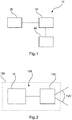
- Fig. 1 shows an example of apparatus 10 for automatically dealing with a glare situation caused by oncoming traffic.
- the apparatus comprises an input unit 20, a processing unit 30, and an output unit 40.
- the input unit 20 is configured to provide the processing unit 30 with at least one image via wired or wireless communication.
- the at least one image relates to a scene external to a vehicle.
- the processing unit 30 is configured to determine that a glare situation exists, comprising a determination that at least one intensity level within the at least one image exceeds a threshold intensity level.
- the output unit 40 is configured to output information indicating that the glare situation exists. The output information is useable to activate a high beam mode of at least one headlamp of the vehicle.
- the output information can be passed to a headlamp control unit that processes it and uses it to control the headlamps, or in another example the output information is directly useable to control the headlamps.
- the threshold intensity level is determined from the intensity level associated with a vehicle operating its headlamps in low beam or on dipped beam. Thus this forms a baseline level, where a light level above this intensity can indicate that the oncoming vehicle's headlamps are on full or main (high) beam.
- the processing unit is configured to determine a distance to a source of light in the at least one image.
- the at least one image comprises two images acquired at different spatial positions, with the distance to the oncoming car being determined from these images using normal stereoscopic techniques.
- the processing unit is using the at least one image in the form of two images to determine a distance to the source of light.
- the distance to the source of light is determined on the basis of radar and/or lidar data (distance relevant data), that can be alternative to or in addition to stereoscopic image data.
- the input unit is configured to provide processing unit with the distance relevant data, and the processing unit determines or extracts the distance to the source of light using the distance relevant data and the at least one image.
- an appropriate image processing algorithm is used as part of the distance determination.
- the output information is useable to de-activate the high beam mode of the at least one headlamp of the vehicle.
- the input unit is configured to provide the processing unit with a status of at least one headlamp of the vehicle.
- the status can indicate if the at least one headlamp is in a high beam mode or has in the prior couple of seconds been in the high beam mode.
- the output information is not useable to activate or de-activate the at least one headlamp of the vehicle.
- the apparatus can output information that will cause the headlamps to go to main beam, and in an example flash.
- the at least one image was acquired by at least one camera of the vehicle.
- the determination that a glare situation exists comprises a determination of at least one position in the at least one image where the at least one intensity level exceeds the threshold intensity value.
- an appropriate image processing algorithm is used in this determination.
- the processing unit is configured to determine a position of the road. In this way, if the position of the source of light is at a position consistent with an oncoming car being on the road, the output information can be used to flash the headlamps. In an example, an appropriate image processing algorithm is used in this determination.
- the determination that a glare situation exists comprises a determination of at least one position in the at least one image associated with a vehicular object.
- an appropriate image processing algorithm is used in this determination, which can utilize vehicle recognition algorithms.
- the determination that a glare situation exists comprises a correlation of the at least one position in the at least one image where the at least one intensity level exceeds the threshold intensity value with the at least one position in the at least one image associated with the vehicular object.
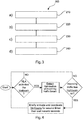
- Fig. 2 shows an example of a system 100 for automatically dealing with a glare situation caused by oncoming traffic.
- the system 100 comprises at least one camera 110, an apparatus 10 for automatically dealing with a glare situation caused by oncoming traffic as described with respect to Fig. 1 .
- the at least one camera 110 is configured to be located on or within a vehicle 120.
- the at least one camera 110 is configured to acquire the at least one image relating to a scene external to the vehicle.
- the at least one camera 110 is the input unit 20.
- Fig. 3 shows a method 200 for automatically dealing with a glare situation caused by oncoming traffic in its basic steps.
- the method 200 comprises:
- step b) comprises determining a distance to a source of light in the at least one image.
- step a) the providing is from an input unit 20 to the processing unit 30.
- step c) the outputting is by an output unit 40.
- the method comprises using the output information to de-activate the high beam mode of the at least one headlamp of the vehicle.
- step a) comprises providing the processing unit with a status of at least one headlamp of the vehicle, the status indicating if the at least one headlamp is in a high beam mode or has in the prior couple of seconds been in the high beam mode.
- the method comprises determining if the at least one headlamp is in the high beam mode or has in the prior couple of seconds been in the high beam mode, and wherein the output information is not used to activate or de-activate the at least one headlamp of the vehicle.
- the at least one image was acquired by at least one camera of the vehicle.
- step b) comprises determining at least one position in the at least one image where the at least one intensity level exceeds the threshold intensity value.
- step b) comprises determining at least one position in the at least one image associated with a vehicular object.
- step b) comprises correlating the at least one position in the at least one image where the at least one intensity level exceeds the threshold intensity value with the at least one position in the at least one image associated with the vehicular object.
- Fig. 4 shows a detailed work flow for determining a glare situation caused by oncoming traffic, and how that glare situation can be acted upon by automatically flashing the headlamps one or several times to the high beam.
- This Head Lamp Assist (HLA) system uses and builds on the features discussed above in relation to Figs. 1-3 . This mimics the normal way an experienced driver will try to indicate to the approaching driver that their headlamps are in the main beam position, and try to get them to switch the headlamps to the low beam or dipped configuration. The glare situation if unaddressed can be dangerous, where the driver has difficulty maintaining clear visibility.
- Fig. 4 it is first determined if the headlamps of the vehicle being driven are already in the high beam configuration. If they are a period of time is allowed to elapse until the headlamps are in the low beam configuration. If the headlamps were originally in the low beam configuration, or have just entered the low beam configuration, imagery acquired by one or more forward looking cameras is analyzed using image processing algorithms to detect the illumination of oncoming traffic. From knowledge of the expected intensity of light acquired for oncoming traffic that is operating with lights in the low (dipped) beam configuration, a threshold level of intensity is set. This can account for how far away the oncoming car is determined to be. If the detected illumination is above this threshold the main beams of the vehicle are briefly activated and deactivated several times in order to flash the headlamps. Several seconds are allowed to elapse, before the process iterates in order that the headlamps do not continuously flash.
- a computer program or computer program element is provided that is characterized by being configured to execute the method steps of the method according to one of the preceding embodiments, on an appropriate system.
- the computer program element might therefore be stored on a computer unit, which might also be part of an embodiment.
- This computing unit may be configured to perform or induce performing of the steps of the method described above. Moreover, it may be configured to operate the components of the above described apparatus and/or system.
- the computing unit can be configured to operate automatically and/or to execute the orders of a user.
- a computer program may be loaded into a working memory of a data processor. The data processor may thus be equipped to carry out the method according to one of the preceding embodiments.
- a computer readable medium such as a CD-ROM
- the computer readable medium has a computer program element stored on it which computer program element is described by the preceding section.
Landscapes
- Engineering & Computer Science (AREA)
- Mechanical Engineering (AREA)
- Physics & Mathematics (AREA)
- General Physics & Mathematics (AREA)
- Multimedia (AREA)
- Theoretical Computer Science (AREA)
- Lighting Device Outwards From Vehicle And Optical Signal (AREA)
Abstract
The present apparatus relates to an apparatus (10) for automatically dealing with a glare situation caused by oncoming traffic. It is described to provide (210) a processing unit (30) with at least one image, the at least one image relating to a scene external to a vehicle. The processing unit determines (220) that a glare situation exists, comprising a determination that at least one intensity level within the at least one image exceeds a threshold intensity level. Information indicating that the glare situation exists is output (230). The output information is used (240) to activate a high beam mode of at least one headlamp of the vehicle.
Description
- The present invention relates to an apparatus for automatically dealing with a glare situation caused by oncoming traffic, to a system for automatically dealing with a glare situation caused by oncoming traffic, to a method for automatically dealing with a glare situation caused by oncoming traffic, as well as to a computer program element.
- The general background of this invention is the field of driving warning and information provision systems.
- Drivers are frequently faced with the situation when night driving, when a driver coming in the opposite direction has left their lights on in the high beam or main (full) beam mode. This can lead to a glare situation that can be dangerous.
- There is a need to address such a glare situation.
- It would be advantageous to have improved apparatus for determining and dealing with a glare situation.
- The object of the present invention is solved with the subject matter of the independent claims, wherein further embodiments are incorporated in the dependent claims. It should be noted that the following described aspects and examples of the invention apply also for the apparatus for automatically dealing with a glare situation caused by oncoming traffic, the system for automatically dealing with a glare situation caused by oncoming traffic, the method for automatically dealing with a glare situation caused by oncoming traffic, and for the computer program element.
- In a first aspect, there is provided an apparatus for automatically dealing with a glare situation caused by oncoming traffic, comprising:
- an input unit;
- a processing unit; and
- an output unit.
- The input unit is configured to provide the processing unit with at least one image, the at least one image relating to a scene external to a vehicle. The processing unit is configured to determine that a glare situation exists, comprising a determination that at least one intensity level within the at least one image exceeds a threshold intensity level. The output unit is configured to output information indicating that the glare situation exists, wherein the output information is useable to activate a high beam mode of at least one headlamp of the vehicle.
- In other words, when an intensity light level is determined to be above a threshold, the apparatus enables the automatic flashing of the headlamps to warn the oncoming vehicle that their light are on full beam (high beam). Therefore, the situation when a driver faces oncoming traffic when a driver has forgotten to put their lights into the dipped setting (low beam) is automatically dealt with. Normally, a driver will manually flash their headlights to the oncoming vehicle in the universally accepted way to indicate that their lights are on full beam. However, when being dazzled by oncoming lights some drivers may start to panic or forget that they could flash their headlights to warn the other driver that their vehicle is a causing potentially hazardous situation.
- In this way, automation of one potential reaction to a frequent inconvenient situation a driver can face in during night-time scenarios is enabled. This leads to a reduction of distractions for the driver, and improves the driver's visibility due to lower glaring time due to high beam incoming traffic. Thus increased safety is provided.
- In an example, the processing unit is configured to determine a distance to a source of light in the at least one image.
- This enables the intensity level to take into account the fall off in intensity with the square of the distance.
- In this manner, the threshold intensity level can take into account the distance to an oncoming car that is causing the glare situation, and can be adjusted to account for that distance. In example the adjustment with distance scales with the square of distance, such that the threshold level in two situations where in one an approaching car can be twice as far away as another car, the threshold level in one situation can be one quarter of that for the other. Not only does this mitigate incorrect operation of the headlamps flashing for cars that are close in front, but also enables cars at quite a considerable distance to be determined to have their headlamps on full beam, thus enabling automatic flashing of the headlamps to indicate to the other driver to turn their headlamps to the dipped position.
- In an example, the output information is useable to de-activate the high beam mode of the at least one headlamp of the vehicle.
- In other words, the headlights can flash on and off, mimicking the manual flashing that a driver will undertake when faced with an oncoming driver whose vehicle headlights are on main beam (high beam).
- In an example, the input unit is configured to provide the processing unit with a status of at least one headlamp of the vehicle. The status can indicate if the at least one headlamp is in a high beam mode or has in the prior couple of seconds been in the high beam mode.
- In an example, if the at least one headlamp is in the high beam mode or has in the prior couple of seconds been in the high beam mode, the output information is not useable to activate or de-activate the at least one headlamp of the vehicle.
- Thus, if the driver of the vehicle has put the headlights onto main beam of has just taken them off main beam, this could indicate that the driver has themselves manually flashed the headlights to warn the oncoming car, or is in the process of doing so. The apparatus then holds off putting the head lamps to main beam to warn the oncoming driver.
- In an example, the at least one image was acquired by at least one camera of the vehicle.
- Thus a normal camera of a vehicle that forms for example a part of an Advanced Driver Assistance System (ADAS) can be used to determine if a glare situation caused by the head lamps of an oncoming vehicle being on high beam, enabling the vehicle to automatically operate its own headlamps in response.
- In an example, the determination that a glare situation exists comprises a determination of at least one position in the at least one image where the at least one intensity level exceeds the threshold intensity value.
- Thus, glare from for example the sun or streetlamps, can be determined not to be associated with oncoming traffic, because the determined position is not consistent with that for an oncoming vehicle. In such a case, the output information reflects this situation, and the vehicles own headlamps will not automatically flash. However, if the source of light is consistent with it coming from an oncoming vehicle then the output information can be used to flash the headlamps.
- In an example, the determination that a glare situation exists comprises a determination of at least one position in the at least one image associated with a vehicular object.
- In other words, the processing unit analyses the acquired imagery to determine if a vehicular object is present and if so, what its position is. In this way, it can be better determined if the glare situation is being caused by an oncoming vehicle.
- In an example, the determination that a glare situation exists comprises a correlation of the at least one position in the at least one image where the at least one intensity level exceeds the threshold intensity value with the at least one position in the at least one image associated with the vehicular object.
- In other words, it is determined if the source of light associated with the glare situation is at the position of a car in the field of view, leading to a very high level of confidence that that car's headlamps are causing the glare situation, and the vehicles' own headlights can be flashed in response.
- In a second aspect, there is provided a system for automatically dealing with a glare situation caused by oncoming traffic, comprising:
- at least one camera;
- an apparatus for automatically dealing with a glare situation caused by oncoming traffic according to the first aspect.
- The at least one camera is configured to be located on or within a vehicle and the at least one camera is configured to acquire the at least one image relating to a scene external to the vehicle.
- In a third aspect, there is provided a method for automatically dealing with a glare situation caused by oncoming traffic, comprising:
- a) providing a processing unit with at least one image, the at least one image relating to a scene external to a vehicle;
- b) determining by the processing unit that a glare situation exists, comprising a determination that at least one intensity level within the at least one image exceeds a threshold intensity level;
- c) outputting information indicating that the glare situation exists; and
- d) using the output information to activate a high beam mode of at least one headlamp of the vehicle.
- According to another aspect, there is provided a computer program element controlling apparatus as previously described which, in the computer program element is executed by processing unit, is adapted to perform the method steps as previously described.
- There is also provided a computer readable medium having stored the computer element as previously described.
- Advantageously, the benefits provided by any of the above aspects equally apply to all of the other aspects and vice versa.
- The above aspects and examples will become apparent from and be elucidated with reference to the embodiments described hereinafter.
- Exemplary embodiments will be described in the following with reference to the following drawings:
-
Fig. 1 shows a schematic set up of an example of an apparatus for automatically dealing with a glare situation caused by oncoming traffic; -
Fig. 2 shows a schematic set up of an example of a system for automatically dealing with a glare situation caused by oncoming traffic; -
Fig. 3 shows a method for automatically dealing with a glare situation caused by oncoming traffic; and -
Fig. 4 shows an example of a detailed workflow for a Head Lamp Assist (HLA) system for automatically dealing with a glare situation caused by oncoming traffic. -
Fig. 1 shows an example ofapparatus 10 for automatically dealing with a glare situation caused by oncoming traffic. The apparatus comprises aninput unit 20, aprocessing unit 30, and anoutput unit 40. Theinput unit 20 is configured to provide theprocessing unit 30 with at least one image via wired or wireless communication. The at least one image relates to a scene external to a vehicle. Theprocessing unit 30 is configured to determine that a glare situation exists, comprising a determination that at least one intensity level within the at least one image exceeds a threshold intensity level. Theoutput unit 40 is configured to output information indicating that the glare situation exists. The output information is useable to activate a high beam mode of at least one headlamp of the vehicle. - Thus in an example the output information can be passed to a headlamp control unit that processes it and uses it to control the headlamps, or in another example the output information is directly useable to control the headlamps.
- In an example, the threshold intensity level is determined from the intensity level associated with a vehicle operating its headlamps in low beam or on dipped beam. Thus this forms a baseline level, where a light level above this intensity can indicate that the oncoming vehicle's headlamps are on full or main (high) beam.
- According to an example, the processing unit is configured to determine a distance to a source of light in the at least one image.
- In an example, the at least one image comprises two images acquired at different spatial positions, with the distance to the oncoming car being determined from these images using normal stereoscopic techniques. In other words, the processing unit is using the at least one image in the form of two images to determine a distance to the source of light.
- In an example, the distance to the source of light is determined on the basis of radar and/or lidar data (distance relevant data), that can be alternative to or in addition to stereoscopic image data. Thus, in these examples the input unit is configured to provide processing unit with the distance relevant data, and the processing unit determines or extracts the distance to the source of light using the distance relevant data and the at least one image.
- In an example, an appropriate image processing algorithm is used as part of the distance determination.
- According to an example, the output information is useable to de-activate the high beam mode of the at least one headlamp of the vehicle.
- According to an example, the input unit is configured to provide the processing unit with a status of at least one headlamp of the vehicle. The status can indicate if the at least one headlamp is in a high beam mode or has in the prior couple of seconds been in the high beam mode.
- According to an example, if the at least one headlamp is in the high beam mode or has in the prior couple of seconds been in the high beam mode, the output information is not useable to activate or de-activate the at least one headlamp of the vehicle.
- In an example after a short time period of one or several seconds, if the glare situation is determined to continue to exist then the apparatus can output information that will cause the headlamps to go to main beam, and in an example flash.
- According to an example, the at least one image was acquired by at least one camera of the vehicle.
- According to an example, the determination that a glare situation exists comprises a determination of at least one position in the at least one image where the at least one intensity level exceeds the threshold intensity value. In an example, an appropriate image processing algorithm is used in this determination.
- In an example, the processing unit is configured to determine a position of the road. In this way, if the position of the source of light is at a position consistent with an oncoming car being on the road, the output information can be used to flash the headlamps. In an example, an appropriate image processing algorithm is used in this determination.
- According to an example, the determination that a glare situation exists comprises a determination of at least one position in the at least one image associated with a vehicular object. In an example, an appropriate image processing algorithm is used in this determination, which can utilize vehicle recognition algorithms.
- According to an example the determination that a glare situation exists comprises a correlation of the at least one position in the at least one image where the at least one intensity level exceeds the threshold intensity value with the at least one position in the at least one image associated with the vehicular object.
-
Fig. 2 shows an example of asystem 100 for automatically dealing with a glare situation caused by oncoming traffic. Thesystem 100 comprises at least onecamera 110, anapparatus 10 for automatically dealing with a glare situation caused by oncoming traffic as described with respect toFig. 1 . The at least onecamera 110 is configured to be located on or within avehicle 120. The at least onecamera 110 is configured to acquire the at least one image relating to a scene external to the vehicle. - In an example, the at least one
camera 110 is theinput unit 20. -
Fig. 3 shows amethod 200 for automatically dealing with a glare situation caused by oncoming traffic in its basic steps. Themethod 200 comprises: - in a providing
step 210, also referred to as step a), providing aprocessing unit 30 with at least one image, the at least one image relating to a scene external to a vehicle; - in a determining
step 220, also referred to as step b), determining by the processing unit that a glare situation exists, comprising a determination that at least one intensity level within the at least one image exceeds a threshold intensity level; - in an outputting
step 230, also referred to as step c), outputting information indicating that the glare situation exists; and - in a using
step 240, also referred to as step d), using the output information to activate a high beam mode of at least one headlamp of the vehicle. - In an example, step b) comprises determining a distance to a source of light in the at least one image.
- In an example, in step a) the providing is from an
input unit 20 to theprocessing unit 30. - In an example, in step c) the outputting is by an
output unit 40. - In an example, the method comprises using the output information to de-activate the high beam mode of the at least one headlamp of the vehicle.
- In an example, step a) comprises providing the processing unit with a status of at least one headlamp of the vehicle, the status indicating if the at least one headlamp is in a high beam mode or has in the prior couple of seconds been in the high beam mode.
- In an example, the method comprises determining if the at least one headlamp is in the high beam mode or has in the prior couple of seconds been in the high beam mode, and wherein the output information is not used to activate or de-activate the at least one headlamp of the vehicle.
- In an example, the at least one image was acquired by at least one camera of the vehicle.
- In an example, step b) comprises determining at least one position in the at least one image where the at least one intensity level exceeds the threshold intensity value.
- In an example, step b) comprises determining at least one position in the at least one image associated with a vehicular object.
- In an example, step b) comprises correlating the at least one position in the at least one image where the at least one intensity level exceeds the threshold intensity value with the at least one position in the at least one image associated with the vehicular object.
- The apparatus, system and method are now described in further detail with respect to
Fig. 4 . -
Fig. 4 shows a detailed work flow for determining a glare situation caused by oncoming traffic, and how that glare situation can be acted upon by automatically flashing the headlamps one or several times to the high beam. This Head Lamp Assist (HLA) system uses and builds on the features discussed above in relation toFigs. 1-3 . This mimics the normal way an experienced driver will try to indicate to the approaching driver that their headlamps are in the main beam position, and try to get them to switch the headlamps to the low beam or dipped configuration. The glare situation if unaddressed can be dangerous, where the driver has difficulty maintaining clear visibility. Even experienced drivers can find it difficult to manually flash the headlamps in such a situation, and/or indeed they might be in the process of adjusting another console control. This situation can be exacerbated for inexperienced or elderly drivers who might panic when faced with such a glare situation. The presently described apparatus, system and method address these issues by automatically flashing the headlights to notify the approaching driver that they need to take remedial action. - Continuing with
Fig. 4 , it is first determined if the headlamps of the vehicle being driven are already in the high beam configuration. If they are a period of time is allowed to elapse until the headlamps are in the low beam configuration. If the headlamps were originally in the low beam configuration, or have just entered the low beam configuration, imagery acquired by one or more forward looking cameras is analyzed using image processing algorithms to detect the illumination of oncoming traffic. From knowledge of the expected intensity of light acquired for oncoming traffic that is operating with lights in the low (dipped) beam configuration, a threshold level of intensity is set. This can account for how far away the oncoming car is determined to be. If the detected illumination is above this threshold the main beams of the vehicle are briefly activated and deactivated several times in order to flash the headlamps. Several seconds are allowed to elapse, before the process iterates in order that the headlamps do not continuously flash. - In another exemplary embodiment, a computer program or computer program element is provided that is characterized by being configured to execute the method steps of the method according to one of the preceding embodiments, on an appropriate system.
- The computer program element might therefore be stored on a computer unit, which might also be part of an embodiment. This computing unit may be configured to perform or induce performing of the steps of the method described above. Moreover, it may be configured to operate the components of the above described apparatus and/or system. The computing unit can be configured to operate automatically and/or to execute the orders of a user. A computer program may be loaded into a working memory of a data processor. The data processor may thus be equipped to carry out the method according to one of the preceding embodiments.
- According to a further exemplary embodiment of the present invention, a computer readable medium, such as a CD-ROM, is presented wherein the computer readable medium has a computer program element stored on it which computer program element is described by the preceding section.
- It has to be noted that embodiments of the invention are described with reference to different subject matters. In particular, some embodiments are described with reference to method type claims whereas other embodiments are described with reference to the device type claims. However, a person skilled in the art will gather from the above and the following description that, unless otherwise notified, in addition to any combination of features belonging to one type of subject matter also any combination between features relating to different subject matters is considered to be disclosed with this application. However, all features can be combined providing synergetic effects that are more than the simple summation of the features.
- While the invention has been illustrated and described in detail in the drawings and foregoing description, such illustration and description are to be considered illustrative or exemplary and not restrictive. The invention is not limited to the disclosed embodiments. Other variations to the disclosed embodiments can be understood and effected by those skilled in the art in practicing a claimed invention, from a study of the drawings, the disclosure, and the dependent claims.
- In the claims, the word "comprising" does not exclude other elements or steps, and the indefinite article "a" or "an" does not exclude a plurality. A single processor or other unit may fulfill the functions of several items re-cited in the claims. The mere fact that certain measures are re-cited in mutually different dependent claims does not indicate that a combination of these measures cannot be used to advantage. Any reference signs in the claims should not be construed as limiting the scope.
Claims (12)
- Apparatus (10) for automatically dealing with a glare situation caused by oncoming traffic, comprising:- an input unit (20);- a processing unit (30); and- an output unit (40);wherein, the input unit is configured to provide the processing unit with at least one image, the at least one image relating to a scene external to a vehicle;wherein, the processing unit is configured to determine that a glare situation exists, comprising a determination that at least one intensity level within the at least one image exceeds a threshold intensity level; andwherein, the output unit is configured to output information indicating that the glare situation exists, wherein the output information is useable to activate a high beam mode of at least one headlamp of the vehicle.
- Apparatus according to claim 1, wherein the processing unit is configured to determine a distance to a source of light in the at least one image.
- Apparatus according to any of claims 1-2, wherein the output information is useable to de-activate the high beam mode of the at least one headlamp of the vehicle.
- Apparatus according to any of claims 1-3, wherein the input unit is configured to provide the processing unit with a status of at least one headlamp of the vehicle, the status indicating if the at least one headlamp is in a high beam mode or has in the prior couple of seconds been in the high beam mode.
- Apparatus according to claim 4, wherein if the at least one headlamp is in the high beam mode or has in the prior couple of seconds been in the high beam mode, the output information is not useable to activate or de-activate the at least one headlamp of the vehicle.
- Apparatus according to any of claims 1-5, wherein the at least one image was acquired by at least one camera of the vehicle.
- Apparatus according to any of claims 1-6, wherein the determination that a glare situation exists comprises a determination of at least one position in the at least one image where the at least one intensity level exceeds the threshold intensity value.
- Apparatus according to any of claims 1-7, wherein the determination that a glare situation exists comprises a determination of at least one position in the at least one image associated with a vehicular object.
- Apparatus according to claims 7 and 8, wherein the determination that a glare situation exists comprises a correlation of the at least one position in the at least one image where the at least one intensity level exceeds the threshold intensity value with the at least one position in the at least one image associated with the vehicular object.
- A system (100) for automatically dealing with a glare situation caused by oncoming traffic, comprising:- at least one camera (110);- an apparatus (10) for automatically dealing with a glare situation caused by oncoming traffic according to any of claims 1-8;wherein, the at least one camera is configured to be located on or within a vehicle (120) and the at least one camera is configured to acquire the at least one image relating to a scene external to the vehicle.
- A method (200) for automatically dealing with a glare situation caused by oncoming traffic, comprising:a) providing (210) a processing unit (30) with at least one image, the at least one image relating to a scene external to a vehicle;b) determining (220) by the processing unit that a glare situation exists, comprising a determination that at least one intensity level within the at least one image exceeds a threshold intensity level;c) outputting (230) information indicating that the glare situation exists; andd) using (240) the output information to activate a high beam mode of at least one headlamp of the vehicle.
- A computer program element for controlling an apparatus according to any one of claims 1 to 9 and/or a system according to claim 10, which when executed by a processor is configured to carry out the method of claim 11.
Priority Applications (1)
| Application Number | Priority Date | Filing Date | Title |
|---|---|---|---|
| EP16465557.3A EP3326862A1 (en) | 2016-11-29 | 2016-11-29 | Apparatus for automatically dealing with a glare situation caused by oncoming traffic |
Applications Claiming Priority (1)
| Application Number | Priority Date | Filing Date | Title |
|---|---|---|---|
| EP16465557.3A EP3326862A1 (en) | 2016-11-29 | 2016-11-29 | Apparatus for automatically dealing with a glare situation caused by oncoming traffic |
Publications (1)
| Publication Number | Publication Date |
|---|---|
| EP3326862A1 true EP3326862A1 (en) | 2018-05-30 |
Family
ID=57614317
Family Applications (1)
| Application Number | Title | Priority Date | Filing Date |
|---|---|---|---|
| EP16465557.3A Withdrawn EP3326862A1 (en) | 2016-11-29 | 2016-11-29 | Apparatus for automatically dealing with a glare situation caused by oncoming traffic |
Country Status (1)
| Country | Link |
|---|---|
| EP (1) | EP3326862A1 (en) |
Citations (5)
| Publication number | Priority date | Publication date | Assignee | Title |
|---|---|---|---|---|
| US20070262882A1 (en) * | 2006-05-09 | 2007-11-15 | Denso Corporation | Vehicle light control apparatus, system and method |
| US20120116632A1 (en) * | 1997-04-02 | 2012-05-10 | Bechtel Jon H | System for controlling vehicle equipment |
| EP2525302A1 (en) * | 2011-05-18 | 2012-11-21 | Koito Manufacturing Co., Ltd. | Image processing system |
| WO2013021795A1 (en) * | 2011-08-09 | 2013-02-14 | 株式会社デンソー | In-vehicle control device |
| DE102012024148A1 (en) * | 2012-12-11 | 2014-06-12 | Valeo Schalter Und Sensoren Gmbh | Method for generating e.g. headlight flasher by motor car for farther vehicle in traffic conditions, involves generating signal for farther vehicle by control device when light intensity is in outside of given range of values |
-
2016
- 2016-11-29 EP EP16465557.3A patent/EP3326862A1/en not_active Withdrawn
Patent Citations (5)
| Publication number | Priority date | Publication date | Assignee | Title |
|---|---|---|---|---|
| US20120116632A1 (en) * | 1997-04-02 | 2012-05-10 | Bechtel Jon H | System for controlling vehicle equipment |
| US20070262882A1 (en) * | 2006-05-09 | 2007-11-15 | Denso Corporation | Vehicle light control apparatus, system and method |
| EP2525302A1 (en) * | 2011-05-18 | 2012-11-21 | Koito Manufacturing Co., Ltd. | Image processing system |
| WO2013021795A1 (en) * | 2011-08-09 | 2013-02-14 | 株式会社デンソー | In-vehicle control device |
| DE102012024148A1 (en) * | 2012-12-11 | 2014-06-12 | Valeo Schalter Und Sensoren Gmbh | Method for generating e.g. headlight flasher by motor car for farther vehicle in traffic conditions, involves generating signal for farther vehicle by control device when light intensity is in outside of given range of values |
Similar Documents
| Publication | Publication Date | Title |
|---|---|---|
| JP7096150B2 (en) | Brake light detection of vehicles traveling in front to adapt the activation of active safety mechanisms | |
| US10286834B2 (en) | Vehicle exterior environment recognition apparatus | |
| US10442343B2 (en) | Vehicle exterior environment recognition apparatus | |
| US10635896B2 (en) | Method for identifying an object in a surrounding region of a motor vehicle, driver assistance system and motor vehicle | |
| US9663023B2 (en) | Method for automatically adapting vehicle lighting to a surrounding area of a vehicle, lighting apparatus and vehicle having lighting | |
| JP6650250B2 (en) | Method and system for predictive driver assistance using transmission and vehicles equipped with such a system | |
| CN103373299B (en) | Vehicle safety illumination arrangement and method | |
| CN102806867B (en) | Image processing apparatus and light distribution control method | |
| CN109311416B (en) | Imaging system with adaptive high beam control | |
| CN103874604B (en) | Method and control device for adapting the luminous intensity of at least one headlight of a vehicle | |
| US20150120160A1 (en) | Method and device for detecting a braking situation | |
| EP3036130B1 (en) | Vehicle imaging system and method for distinguishing between vehicle tail lights and flashing red stop lights | |
| CN107415809A (en) | Vehicular illumination system | |
| CN103213540A (en) | Vehicle driving environment recognition apparatus | |
| JP6723290B2 (en) | Headlamp system for vehicle and control method thereof | |
| CN115151955A (en) | System for monitoring the environment of a motor vehicle | |
| CN110087946A (en) | Vehicle lighting systems and vehicles | |
| CN104210417B (en) | Driver information device | |
| CN112533794B (en) | Headlight control method and headlight control device | |
| WO2017141395A1 (en) | Light distribution control device, light distribution control method, and light distribution control program | |
| KR20130112116A (en) | Control system of head lamp on the vehicle and control method thereof | |
| CN109823344B (en) | Driving prompt method and system | |
| EP3326862A1 (en) | Apparatus for automatically dealing with a glare situation caused by oncoming traffic | |
| JP6549974B2 (en) | Outside environment recognition device | |
| KR20180061993A (en) | Method and apparatus for processing image of vehicle |
Legal Events
| Date | Code | Title | Description |
|---|---|---|---|
| PUAI | Public reference made under article 153(3) epc to a published international application that has entered the european phase |
Free format text: ORIGINAL CODE: 0009012 |
|
| AK | Designated contracting states |
Kind code of ref document: A1 Designated state(s): AL AT BE BG CH CY CZ DE DK EE ES FI FR GB GR HR HU IE IS IT LI LT LU LV MC MK MT NL NO PL PT RO RS SE SI SK SM TR |
|
| AX | Request for extension of the european patent |
Extension state: BA ME |
|
| STAA | Information on the status of an ep patent application or granted ep patent |
Free format text: STATUS: THE APPLICATION IS DEEMED TO BE WITHDRAWN |
|
| 18D | Application deemed to be withdrawn |
Effective date: 20181201 |