EP3326740A1 - Method for producing silver particles, silver particles and silver paste - Google Patents
Method for producing silver particles, silver particles and silver paste Download PDFInfo
- Publication number
- EP3326740A1 EP3326740A1 EP16830464.0A EP16830464A EP3326740A1 EP 3326740 A1 EP3326740 A1 EP 3326740A1 EP 16830464 A EP16830464 A EP 16830464A EP 3326740 A1 EP3326740 A1 EP 3326740A1
- Authority
- EP
- European Patent Office
- Prior art keywords
- silver
- silver particles
- sheet
- particles
- particle
- Prior art date
- Legal status (The legal status is an assumption and is not a legal conclusion. Google has not performed a legal analysis and makes no representation as to the accuracy of the status listed.)
- Granted
Links
Images





Classifications
-
- B—PERFORMING OPERATIONS; TRANSPORTING
- B22—CASTING; POWDER METALLURGY
- B22F—WORKING METALLIC POWDER; MANUFACTURE OF ARTICLES FROM METALLIC POWDER; MAKING METALLIC POWDER; APPARATUS OR DEVICES SPECIALLY ADAPTED FOR METALLIC POWDER
- B22F9/00—Making metallic powder or suspensions thereof
- B22F9/16—Making metallic powder or suspensions thereof using chemical processes
- B22F9/18—Making metallic powder or suspensions thereof using chemical processes with reduction of metal compounds
- B22F9/24—Making metallic powder or suspensions thereof using chemical processes with reduction of metal compounds starting from liquid metal compounds, e.g. solutions
-
- B—PERFORMING OPERATIONS; TRANSPORTING
- B22—CASTING; POWDER METALLURGY
- B22F—WORKING METALLIC POWDER; MANUFACTURE OF ARTICLES FROM METALLIC POWDER; MAKING METALLIC POWDER; APPARATUS OR DEVICES SPECIALLY ADAPTED FOR METALLIC POWDER
- B22F1/00—Metallic powder; Treatment of metallic powder, e.g. to facilitate working or to improve properties
- B22F1/05—Metallic powder characterised by the size or surface area of the particles
- B22F1/054—Nanosized particles
- B22F1/0545—Dispersions or suspensions of nanosized particles
-
- B—PERFORMING OPERATIONS; TRANSPORTING
- B22—CASTING; POWDER METALLURGY
- B22F—WORKING METALLIC POWDER; MANUFACTURE OF ARTICLES FROM METALLIC POWDER; MAKING METALLIC POWDER; APPARATUS OR DEVICES SPECIALLY ADAPTED FOR METALLIC POWDER
- B22F1/00—Metallic powder; Treatment of metallic powder, e.g. to facilitate working or to improve properties
- B22F1/05—Metallic powder characterised by the size or surface area of the particles
- B22F1/054—Nanosized particles
- B22F1/0551—Flake form nanoparticles
-
- B—PERFORMING OPERATIONS; TRANSPORTING
- B22—CASTING; POWDER METALLURGY
- B22F—WORKING METALLIC POWDER; MANUFACTURE OF ARTICLES FROM METALLIC POWDER; MAKING METALLIC POWDER; APPARATUS OR DEVICES SPECIALLY ADAPTED FOR METALLIC POWDER
- B22F1/00—Metallic powder; Treatment of metallic powder, e.g. to facilitate working or to improve properties
- B22F1/05—Metallic powder characterised by the size or surface area of the particles
- B22F1/054—Nanosized particles
- B22F1/0553—Complex form nanoparticles, e.g. prism, pyramid, octahedron
-
- B—PERFORMING OPERATIONS; TRANSPORTING
- B22—CASTING; POWDER METALLURGY
- B22F—WORKING METALLIC POWDER; MANUFACTURE OF ARTICLES FROM METALLIC POWDER; MAKING METALLIC POWDER; APPARATUS OR DEVICES SPECIALLY ADAPTED FOR METALLIC POWDER
- B22F1/00—Metallic powder; Treatment of metallic powder, e.g. to facilitate working or to improve properties
- B22F1/05—Metallic powder characterised by the size or surface area of the particles
- B22F1/054—Nanosized particles
- B22F1/056—Submicron particles having a size above 100 nm up to 300 nm
-
- B—PERFORMING OPERATIONS; TRANSPORTING
- B22—CASTING; POWDER METALLURGY
- B22F—WORKING METALLIC POWDER; MANUFACTURE OF ARTICLES FROM METALLIC POWDER; MAKING METALLIC POWDER; APPARATUS OR DEVICES SPECIALLY ADAPTED FOR METALLIC POWDER
- B22F1/00—Metallic powder; Treatment of metallic powder, e.g. to facilitate working or to improve properties
- B22F1/06—Metallic powder characterised by the shape of the particles
- B22F1/065—Spherical particles
-
- B—PERFORMING OPERATIONS; TRANSPORTING
- B22—CASTING; POWDER METALLURGY
- B22F—WORKING METALLIC POWDER; MANUFACTURE OF ARTICLES FROM METALLIC POWDER; MAKING METALLIC POWDER; APPARATUS OR DEVICES SPECIALLY ADAPTED FOR METALLIC POWDER
- B22F1/00—Metallic powder; Treatment of metallic powder, e.g. to facilitate working or to improve properties
- B22F1/07—Metallic powder characterised by particles having a nanoscale microstructure
-
- B—PERFORMING OPERATIONS; TRANSPORTING
- B82—NANOTECHNOLOGY
- B82Y—SPECIFIC USES OR APPLICATIONS OF NANOSTRUCTURES; MEASUREMENT OR ANALYSIS OF NANOSTRUCTURES; MANUFACTURE OR TREATMENT OF NANOSTRUCTURES
- B82Y30/00—Nanotechnology for materials or surface science, e.g. nanocomposites
-
- B—PERFORMING OPERATIONS; TRANSPORTING
- B82—NANOTECHNOLOGY
- B82Y—SPECIFIC USES OR APPLICATIONS OF NANOSTRUCTURES; MEASUREMENT OR ANALYSIS OF NANOSTRUCTURES; MANUFACTURE OR TREATMENT OF NANOSTRUCTURES
- B82Y40/00—Manufacture or treatment of nanostructures
-
- C—CHEMISTRY; METALLURGY
- C09—DYES; PAINTS; POLISHES; NATURAL RESINS; ADHESIVES; COMPOSITIONS NOT OTHERWISE PROVIDED FOR; APPLICATIONS OF MATERIALS NOT OTHERWISE PROVIDED FOR
- C09J—ADHESIVES; NON-MECHANICAL ASPECTS OF ADHESIVE PROCESSES IN GENERAL; ADHESIVE PROCESSES NOT PROVIDED FOR ELSEWHERE; USE OF MATERIALS AS ADHESIVES
- C09J1/00—Adhesives based on inorganic constituents
-
- C—CHEMISTRY; METALLURGY
- C09—DYES; PAINTS; POLISHES; NATURAL RESINS; ADHESIVES; COMPOSITIONS NOT OTHERWISE PROVIDED FOR; APPLICATIONS OF MATERIALS NOT OTHERWISE PROVIDED FOR
- C09J—ADHESIVES; NON-MECHANICAL ASPECTS OF ADHESIVE PROCESSES IN GENERAL; ADHESIVE PROCESSES NOT PROVIDED FOR ELSEWHERE; USE OF MATERIALS AS ADHESIVES
- C09J9/00—Adhesives characterised by their physical nature or the effects produced, e.g. glue sticks
- C09J9/02—Electrically-conducting adhesives
-
- H—ELECTRICITY
- H01—ELECTRIC ELEMENTS
- H01B—CABLES; CONDUCTORS; INSULATORS; SELECTION OF MATERIALS FOR THEIR CONDUCTIVE, INSULATING OR DIELECTRIC PROPERTIES
- H01B1/00—Conductors or conductive bodies characterised by the conductive materials; Selection of materials as conductors
- H01B1/02—Conductors or conductive bodies characterised by the conductive materials; Selection of materials as conductors mainly consisting of metals or alloys
-
- H—ELECTRICITY
- H01—ELECTRIC ELEMENTS
- H01B—CABLES; CONDUCTORS; INSULATORS; SELECTION OF MATERIALS FOR THEIR CONDUCTIVE, INSULATING OR DIELECTRIC PROPERTIES
- H01B1/00—Conductors or conductive bodies characterised by the conductive materials; Selection of materials as conductors
- H01B1/20—Conductive material dispersed in non-conductive organic material
- H01B1/22—Conductive material dispersed in non-conductive organic material the conductive material comprising metals or alloys
-
- H—ELECTRICITY
- H01—ELECTRIC ELEMENTS
- H01B—CABLES; CONDUCTORS; INSULATORS; SELECTION OF MATERIALS FOR THEIR CONDUCTIVE, INSULATING OR DIELECTRIC PROPERTIES
- H01B13/00—Apparatus or processes specially adapted for manufacturing conductors or cables
-
- H—ELECTRICITY
- H01—ELECTRIC ELEMENTS
- H01B—CABLES; CONDUCTORS; INSULATORS; SELECTION OF MATERIALS FOR THEIR CONDUCTIVE, INSULATING OR DIELECTRIC PROPERTIES
- H01B5/00—Non-insulated conductors or conductive bodies characterised by their form
-
- B—PERFORMING OPERATIONS; TRANSPORTING
- B22—CASTING; POWDER METALLURGY
- B22F—WORKING METALLIC POWDER; MANUFACTURE OF ARTICLES FROM METALLIC POWDER; MAKING METALLIC POWDER; APPARATUS OR DEVICES SPECIALLY ADAPTED FOR METALLIC POWDER
- B22F1/00—Metallic powder; Treatment of metallic powder, e.g. to facilitate working or to improve properties
- B22F1/05—Metallic powder characterised by the size or surface area of the particles
- B22F1/054—Nanosized particles
-
- B—PERFORMING OPERATIONS; TRANSPORTING
- B22—CASTING; POWDER METALLURGY
- B22F—WORKING METALLIC POWDER; MANUFACTURE OF ARTICLES FROM METALLIC POWDER; MAKING METALLIC POWDER; APPARATUS OR DEVICES SPECIALLY ADAPTED FOR METALLIC POWDER
- B22F2301/00—Metallic composition of the powder or its coating
- B22F2301/25—Noble metals, i.e. Ag Au, Ir, Os, Pd, Pt, Rh, Ru
- B22F2301/255—Silver or gold
Definitions
- the present invention relates to a silver particle producing method, silver particles, and a silver paste.
- a silver paste produced by dispersing silver microparticles (silver particles having particle diameters of micrometer order) in an organic solvent is practically used.
- the silver microparticles function as a conductive material in the silver paste.
- the organic solvent is typically an alcohol.
- a high temperature not lower than 250°C and a pressure (pressure application) are required for sintering (baking) the silver paste that contains the silver microparticles only. Therefore, the silver paste that contains the silver microparticles cannot be used for electronic components and a wiring board that have low heat resistance.
- silver nanoparticles (silver particles having particle diameters of nanometer order) that permit sintering at low temperatures have been recently used instead of the silver microparticles.
- a method for producing the silver nanoparticles is disclosed in Patent Literature 1 for example.
- Patent Literature 1 Japanese Patent Application Laid-Open Publication No. 2010-265543
- packability of spherical silver nanoparticles (packing density of the silver particles) is insufficient. Therefore, bonding strength achieved by the use of a silver paste that contains the spherical silver nanoparticles only is low.
- the present invention was made in view of the above-described problems, and it is a first object of the present invention to provide a silver particle producing method that permits production of silver particles packability of which can be improved easily. Also, a second object of the present invention is to provide the silver particles packability of which can be improved easily, and a third object of the present invention is to provide a silver paste that contains the silver particles packability of which can be improved easily.
- a silver particle producing method of the present invention includes: obtaining a liquid mixture by mixing at least a silver compound, a reductant, and a dispersant; and heating the liquid mixture to cause reaction between the silver compound and the reductant and generate first silver particles and second silver particles, the first silver particles each having a sheet-like or plate-like shape, and the second silver particles each having a spherical shape or a shape closer to a sphere than the first silver particles and a particle diameter smaller than a maximum value of a length of a side of each of the first silver particles.
- the reaction between the silver compound and the reductant is caused under conditions where the liquid mixture maintains a liquid phase.
- the reductant is N,N-dimethylformamide.
- the liquid mixture further contains pure water.
- the reaction between the silver compound and the reductant is caused under atmospheric pressure.
- Silver particles of the present invention include first silver particles each having a sheet-like or plate-like shape of a polygonal contour and second silver particles each having a spherical shape or a shape closer to a sphere than the first silver particles and a particle diameter smaller than a maximum value of a length of a side of each of the first silver particles.
- An average value of the lengths of the sides of the first silver particles is at least 100 nm and no greater than 800 nm.
- An average value of the particle diameters of the second silver particles is at least 10 nm and no greater than 100 nm.
- the length of the side of each of the first silver particles is at least 10 nm and no greater than 800 nm.
- the first silver particles each have a triangular or hexagonal contour.
- a maximum value of a length of a side of each of the first silver particles having the triangular contour is at least 50 nm.
- a maximum value of a length of a side of each of the first silver particles having the hexagonal contour is at least 30 nm.
- the particle diameter of each of the second silver particles is at least 20 nm and no greater than 300 nm.
- the particle diameter of each of the second silver particles is no greater than 150 nm.
- a thickness of each of the first silver particles is at least 10 nm and no greater than 100 nm.
- the thickness of each of the first silver particles is no greater than 30 nm.
- a silver paste of the present invention contains silver particles produced by the above-described method or the above-described silver particles.
- the silver particle producing method of the present invention it is possible to produce silver particles packability of which can be improved easily. Also, according to the silver particles of the present invention, packability of the silver particles can be improved easily. Also, according to the silver paste of the present invention, the silver paste can contain silver particles packability of which can be improved easily.
- FIG. 1 is a flowchart illustrating the silver particle producing method according to the present embodiment.
- the silver particle producing method according to the present embodiment includes a mixing treatment process S1 and a heating treatment process S2.
- a liquid mixture M is prepared by mixing pure water W, a silver compound C, a reductant R, and a dispersant D.
- the liquid mixture M is prepared by mixing the silver compound C, the reductant R, and the dispersant D.
- a reductant R that can serve as a solvent is used.
- the components of the liquid mixture M may be added in any order.
- the heating treatment process S2 is preferably performed after mixing the components of the liquid mixture M appropriately by stirring the liquid mixture M in order to facilitate reaction between the silver compound C and the reductant R.
- the liquid mixture M is heated to cause the reaction (liquid phase reduction) between the silver compound C and the reductant R.
- a reaction temperature is preferably set to a temperature at which the liquid mixture M can maintain a liquid phase in the heating treatment process S2.
- heating treatment is preferably performed while stirring the liquid mixture M at a specific rotational speed [rpm] in order to facilitate the reaction between the silver compound C and the reductant R. Note that the rotational speed [rpm] may be determined to be any value.
- Silver particles P are generated (precipitated) through the heating treatment process S2.
- the silver particles P include silver particles P1 (first silver particles) having a sheet-like or plate-like shape and silver particles P2 (second silver particles) having a spherical shape.
- sheet-like or plate-like will be described as "sheet-like”.
- the silver particles P2 (hereinafter may be referred to as spherical silver particles P2) having the spherical shape each have a spherical shape or a shape closer to a sphere than the silver particles P1 (hereinafter may be referred to as sheet-like silver particles P1) having the sheet-like shape.
- the spherical silver particles P2 each have a particle diameter smaller than a maximum value of the length of a side of each sheet-like silver particle P1.
- the silver particle producing method permits production of the silver particles (the sheet-like silver particles P1) each having the sheet-like shape and the silver particles (the spherical silver particles P2) each having the spherical shape and a particle diameter smaller than a maximum value of the length of a side of each sheet-like silver particle. Therefore, the silver particles P having improved packability can be produced. Packability is improved by the combination of the silver particles (the sheet-like silver particles P1) each having the sheet-like shape and the silver particles (the spherical silver particles P2) each having the spherical shape and a particle diameter smaller than a maximum value of the length of a side of each sheet-like silver particle, since the spherical silver particles fill gaps between the sheet-like silver particles.
- the amount (rate) of the pure water W in the reaction system may be determined in advance in accordance with set conditions, since an optimal amount changes depending on the conditions such as amounts of the other components of the liquid mixture M and a reaction temperature.
- Use of the pure water W permits generation of the sheet-like silver particles P1 of an adequate size at a reaction temperature lower than that required when the pure water W is not used.
- the amount of the pure water W is preferably for example at least 40 parts by weight and smaller than 100 parts by weight relative to 100 parts by weight of the liquid mixture M in the reaction system, and more preferably at least 60 parts by weight and no greater than 80 parts by weight.
- the silver compound C is not particularly limited, and representative examples of the silver compound include silver nitrate, silver acetate, and silver carboxylate. Two or more silver compounds may be used in combination.
- the amount (rate) of the silver compound C in the reaction system may also be determined in advance in accordance with set conditions, since an optimal amount changes depending on the conditions such as amounts of the other components of the liquid mixture M and the reaction temperature.
- the amount of the silver compound is preferably at least 0.1 parts by weight and no greater than 20 parts by weight relative to 100 parts by weight of the liquid mixture M in the reaction system, and more preferably at least 0.5 parts by weight and no greater than 10 parts by weight.
- the reductant R is not particularly limited as long as the reductant can reduce the silver compound C.
- Representative examples of the reductant include N,N-dimethylformamide (DMF), ethylene glycol, propylene glycol, 1,3-propanediol, 1,4-butanediol, glycerin, ethanol, glucose, ascorbic acid, NaBH 4 , and hydrazine.
- DMF N,N-dimethylformamide
- ethylene glycol propylene glycol
- 1,3-propanediol 1,4-butanediol
- glycerin glycerin
- ethanol glucose
- ascorbic acid NaBH 4
- hydrazine ethanol
- two or more reductants may be used in combination as the reductant R.
- the amount (rate) of the reductant R in the reaction system may also be determined in advance in accordance with set conditions, since an optimal amount changes depending on the conditions such as amounts of the other components of the liquid mixture M and the reaction temperature.
- the amount of the reductant is preferably at least 10 parts by weight and smaller than 100 parts by weight relative to 100 parts by weight of the liquid mixture M in the reaction system, and more preferably at least 20 parts by weight and no greater than 80 parts by weight.
- the dispersant D is also not particularly limited.
- Representative examples of the dispersant include polyvinylpyrrolidone (PVP), polyethylene glycol (PEG), and cetyltrimethylammonium bromide (CTAB).
- PVP polyvinylpyrrolidone
- PEG polyethylene glycol
- CTAB cetyltrimethylammonium bromide
- Two or more dispersants may be used in combination as the dispersant D.
- the amount (rate) of the dispersant D in the reaction system may also be determined in advance in accordance with set conditions, since an optimal amount changes depending on the conditions such as amounts of the other components of the liquid mixture M and the reaction temperature. Typically, the larger the amount (rate) of the dispersant D is, the higher a production yield of the silver particles P is and the smaller the size of the sheet-like silver particles P1 is.
- the amount of the dispersant D is preferably for example at least 0.1 parts by weight and no greater than 20 parts by weight relative to 100 parts by weight of the liquid mixture M in the reaction system, and more preferably at least 0.5 parts by weight and no greater than 10 parts by weight.
- the silver particle producing method according to the present embodiment is performed in an environment that is not particularly limited, and can be performed for example in an atmosphere at atmospheric pressure and room temperature.
- the reaction temperature may also be determined in advance in accordance with set conditions, since an optimal temperature changes depending on the conditions such as amounts (rates) of the components of the liquid mixture M and the environment.
- the higher the reaction temperature is the higher the production yield of the silver particles P tends to be and the larger the thickness of the sheet-like silver particles P1 and the particle diameter of the spherical silver particles P2 tend to be.
- the reaction temperature is preferably 100°C or higher.
- a reaction temperature lower than 100°C may result in failure to generate the sheet-like silver particles P1 having a desired size depending on the amounts (rates) of the components of the liquid mixture M and a time (hereinafter may be referred to as a reaction time) of heating the liquid mixture M.
- the reaction temperature is preferably lower than 150°C. This is because the sheet-like silver particles P1 may be uncontrollable to the desired size depending on the amounts (rates) of the components of the liquid mixture M and the reaction time.
- a reaction temperature of 150°C or higher may result in failure to generate the sheet-like silver particles P1 or generation of only a small amount of the sheet-like silver particles P1 depending on the amounts (rates) of the components of the liquid mixture M and the reaction time.
- the reaction temperature is typically set to a temperature higher than that employed when the liquid mixture M contains the pure water W. This is because it may be impossible to generate the sheet-like silver particles P1 depending on the amounts (rates) of the components of the liquid mixture M and the reaction time.
- the reaction temperature can be set to be 150°C or higher for example.
- the reaction time is also not particularly limited, and can be set to any value in accordance with the amounts (rates) of the components of the liquid mixture M, the reaction temperature, and the like.
- the reaction time is preferably for example not longer than three hours since an excessively long reaction time results in a decrease in production efficiency.
- the silver particles P (the sheet-like silver particles P1 and the spherical silver particles P2) produced by the silver particle producing method according to the present embodiment can be observed using a scanning electron microscope (SEM) for example.
- FIG. 2 shows an example of an SEM image of the produced silver particles P (the sheet-like silver particles P1 and the spherical silver particles P2).
- the produced silver particles P include the sheet-like silver particles P1 and the spherical silver particles P2 each having a particle diameter smaller than a maximum value of the length of a side of each sheet-like silver particle P1.
- the spherical silver particles P2 each have a spherical shape or a shape closer to a sphere than the sheet-like silver particles P1.
- most of the sheet-like silver particles P1 have a triangular or hexagonal contour. Note that the triangular or hexagonal contour includes shapes resembling a triangle or a hexagon. For example, each side may be arced (curved) rather than straight.
- a ratio between the sheet-like silver particles P1 having a triangular contour and the sheet-like silver particles P1 having a hexagonal contour is controllable by adjusting an amount of addition of the dispersant D. Specifically, the rate of the sheet-like silver particles P1 having the triangular contour increases along with an increase in the amount of addition of the dispersant D, and the rate of the sheet-like silver particles P1 having the hexagonal contour increases along with a decrease in the amount of addition of the dispersant D.
- the length of a side of each sheet-like silver particle P1 (when the side is arced, the length of a straight line connecting opposite ends of the side) is controllable by adjusting the amounts (rates) of the components of the liquid mixture M and the reaction temperature.
- the higher the reaction temperature is, the larger the length of a side of each sheet-like silver particle P1 tends to be.
- the length of a side of each sheet-like silver particle P1 is at least 10 nm and no greater than 800 nm.
- a maximum value of the length of a side of each sheet-like silver particle P1 having the triangular contour is preferably at least 50 nm, and further preferably at least 300 nm. Also, a maximum value of the length of a side of each sheet-like silver particle P1 having the hexagonal contour is preferably at least 30 nm, and further preferably at least 100 nm. Also, an average value of the lengths of sides of the sheet-like silver particles P1 is preferably at least 100 nm and no greater than 800 nm.
- an average value of the lengths of sides of the sheet-like silver particles P1 having the triangular contour is preferably at least 100 nm and no greater than 600 nm
- an average value of the lengths of sides of the sheet-like silver particles P1 having the hexagonal contour is preferably at least 100 nm and no greater than 300 nm.
- each sheet-like silver particle P1 is also controllable by adjusting the amounts (rates) of the components of the liquid mixture M and the reaction temperature. For example, the higher the reaction temperature is, the larger the thickness of each sheet-like silver particle P1 tends to be.
- the thickness of each sheet-like silver particle P1 is preferably at least 10 nm and no greater than 100 nm, and more preferably at least 10 nm and no greater than 30 nm.
- the sheet-like silver particles P1 having smaller thicknesses are easier to bake (sinter). Therefore, a baking temperature (sintering temperature) of a silver paste containing the silver particles P can be decreased along with a decrease in the thickness of each sheet-like silver particle P1.
- the particle diameter of each spherical silver particle P2 is also controllable by adjusting the amounts (rates) of the components of the liquid mixture M and the reaction temperature. For example, the higher the reaction temperature is, the larger the particle diameter of each spherical silver particle P2 is.
- the particle diameter of each spherical silver particle P2 is preferably at least 20 nm and no greater than 300 nm, and more preferably at least 20 nm and no greater than 150 nm. Also, an average value of the particle diameters of the spherical silver particles P2 is preferably at least 10 nm and no greater than 100 nm.
- the spherical silver particles P2 having smaller particle diameters are also easier to bake (sinter). Therefore, the baking temperature (sintering temperature) of the silver paste containing the silver particles P can be decreased along with a decrease in the particle diameter of each spherical silver particle P2.
- the shape and the production yield of the silver particles P to be produced are controllable by adjusting the amounts (rates) of the pure water W, the silver compound C, the reductant R, and the dispersant D, or the amounts (rates) of the silver compound C, the reductant R, and the dispersant D.
- the shape and the production yield of the silver particles P to be produced are controllable by adjusting the reaction temperature. Specifically, it is possible to produce the silver particles (the sheet-like silver particles P1) each having the sheet-like shape and the silver particles (the spherical silver particles P2) each having the spherical shape and a particle diameter smaller than a maximum value of the length of a side of each sheet-like silver particle. Therefore, it is possible to produce the silver particles P packability of which can be improved easily.
- the length of a side of each sheet-like silver particle P1 and the particle diameter of each spherical silver particle P2 are controllable by adjusting the amounts (rates) of the components of the liquid mixture M and the reaction temperature.
- the size of the sheet-like silver particles P1 and the size of the spherical silver particles P2 are controllable. Therefore, it is possible to improve packability of the silver particles to be produced.
- the silver particles P including the sheet-like silver particles P1 and the spherical silver particles P2 can be produced without application of a pressure. Therefore, the silver particles P including the sheet-like silver particles P1 and the spherical silver particles P2 can be produced easily.
- the silver particles P including the sheet-like silver particles P1 and the spherical silver particles P2 can be produced at a relatively low reaction temperature of not higher than 150°C. Therefore, the silver particles P including the sheet-like silver particles P1 and the spherical silver particles P2 can be produced easily.
- the silver particles P can be produced in an atmosphere at atmospheric pressure and room temperature. Therefore, the silver particles P including the sheet-like silver particles P1 and the spherical silver particles P2 can be produced easily.
- the sheet-like silver particles P1 and the spherical silver particles P2 can be precipitated (synthesized) in single reaction treatment (heating treatment). That is, the sheet-like silver particles P1 and the spherical silver particles P2 can be precipitated in a single container. Therefore, the silver particles P having excellent dispersibility of the sheet-like silver particles P1 and the spherical silver particles P2 can be obtained.
- the liquid mixture M preferably contains the pure water W. This is because when the liquid mixture M contains the pure water W, the production yield of the silver particles P is improved as compared with that achieved when the liquid mixture M does not contain the pure water W. Further, when the liquid mixture M contains the pure water W, the length of a side of each sheet-like silver particle P1 can be adequately increased at a reaction temperature lower than that required when the liquid mixture M does not contain the pure water W. In other words, the sheet-like silver particles P1 of an adequate size can be generated at a low reaction temperature (for example, approximately 100°C).
- the length of a side of each sheet-like silver particle P1 i.e., the size of the sheet-like silver particles P1
- the size of the sheet-like silver particles P1 can be controlled easily.
- the silver particles P having improved packability can be produced. Therefore, a silver paste that can be baked at a low baking temperature (sintering temperature) can be obtained using the silver particles P according to the present embodiment. Further, a silver paste that has a low resistivity after baking (sintering) can be obtained using the silver particles P having improved packability. Specifically, a volume resistivity not greater than 10 -5 ⁇ CM order can be attained.
- bonding strength of a silver paste used as a bonding material can be increased using the silver particles P having improved packability. Therefore, the silver particles P according to the present embodiment can be used for a silver paste for die attachment as well as a silver paste for wiring.
- the silver paste producing method according to the present embodiment further includes a process of mixing the silver particles P and an organic solvent subsequently to the treatment in the silver particle producing method described above.
- the silver particles P precipitated through the silver particle producing method described above are isolated using a centrifugal separator, and then washed using water or ethanol three or four times. The washed silver particles P are then dispersed in an organic solvent (for example, an alcohol such as ethanol).
- An organic solvent for example, an alcohol such as ethanol.
- a silver paste can be produced through the procedure as described above.
- the produced silver paste can be used for example as a wiring material or a bonding material.
- a ratio (silver particles P : alcohol) between the silver particles P and the alcohol contained in the silver paste is for example 4:1 to 16:1 in terms of parts by weight, preferably 6:1 to 12:1, and more preferably 8:1 to 10:1.
- the alcohol is preferably a lower alcohol or a lower alcohol having at least one substituent selected from the group consisting of a lower alkoxy group, an amino group, and a halogen atom.
- lower alcohols include lower alcohols having an alkyl group having a carbon number of 1 to 6 and one to three, preferably, one or two hydroxyl groups.
- lower alkyl groups include straight chain or branched chain alkyl groups such as methyl group, ethyl group, n-propyl group, i-propyl group, n-butyl group, i-butyl group, sec-butyl group, t-butyl group, n-pentyl group, i-pentyl group, sec-pentyl group, t-pentyl group, 2-methylbutyl group, n-hexyl group, 1-methylpentyl group, 2-methylpentyl group, 3-methylpentyl group, 4-methylpentyl group, 1-ethylbutyl group, 2-ethylbutyl group, 1,1-dimethylbutyl group, 2,2-dimethylbutyl group, 3,3-dimethylbutyl group, and 1-ethyl-1-methylpropyl group.
- Examples of lower alcohols having an alkyl group having a carbon number of 1 to 6 and one to three hydroxyl groups include methanol, ethanol, ethylene glycol, n-propanol, i-propanol, triethylene glycol, n-butanol, i-butanol, sec-butanol, t-butanol, n-pentanol, i-pentanol, sec-pentanol, t-pentanol, 2-methylbutanol, n-hexanol, 1-methylpentanol, 2-methylpentanol, 3-methylpentanol, 4-methylpentanol, 1-ethylbutanol, 2-ethylbutanol, 1,1-dimethylbutanol, 2,2-dimethylbutanol, 3,3-dimethylbutanol, and 1-ethyl-1-methylpropanol.
- the substituent is as follows.
- An example of the lower alkoxy group is a lower alkyl group substituted with -O-.
- Examples of the lower alkoxy group include methoxy group, ethoxy group, n-propoxy group, i-propoxy group, n-butoxy group, i-butoxy group, sec-butoxy group, t-butoxy group, and n-pentyloxy group.
- Examples of the halogen atom include fluorine atom, bromine atom, chlorine atom, and iodine atom.
- Examples of the lower alcohol having at least one substituent selected from the group consisting of a lower alkoxy group, an amino group, and a halogen atom include methoxymethanol, 2-methoxyethanol, 2-ethoxyethanol, 2-chloroethanol, and ethanolamine.
- a liquid mixture M was prepared by charging a container with 0.05 g of PVP, a specific amount (including 0 g) of pure water, 0.2 g of silver nitrate, and a specific amount of DMF as indicated in Table 1. Subsequently, the liquid mixture M was heated to a reaction temperature of 100°C, and thereafter reaction was caused for two hours while stirring the liquid mixture at a rotational speed of 400 rpm. After the reaction, the liquid mixture was cooled to room temperature, and precipitate was isolated using a centrifugal separator. Then, the isolated precipitate was washed using water three or four times to obtain silver particles.
- Example 1 Example 2 Example 3 Comparative example 1 PVP 0.05 g 0.05 g 0.05 g 0.05 g 0.05 g Pure water 20 g 30 g 40 g 0 g Silver nitrate 0.2 g 0.2 g 0.2 g 0.2 g DMF 30 g 20 g 10 g 30 g Temperature 100°C 100°C 100°C rpm 400 400 400 400 400 Time 2 h 2 h 2 h 2 h Particle diameter 20-100 nm 50-150 nm 50-150 nm 20-100 nm Length of side of sheet 10-500 nm 100-800 nm 100-800 nm - Length of side of hexagonal sheet 10-50 nm 100-300 nm 100-300 nm - Length of side of triangular sheet 150-500 nm 500-800 nm 500-800 nm - Thickness of sheet 20-30 nm 20-30 nm 20-30 nm 20-30 nm - -
- Table 1 also indicates results of measurement of the size of the resultant silver particles. Note that in each of Tables 1 to 6, “particle diameter” indicates the particle diameter of each spherical silver particle, “length of side of sheet” indicates the length of a side of each sheet-like silver particle, “length of side of hexagonal sheet” indicates the length of a side of each sheet-like silver particle having a hexagonal contour, “length of side of triangular sheet” indicates the length of a side of each sheet-like silver particle having a triangular contour, and “thickness of sheet” indicates the thickness of each sheet-like silver particle. The “particle diameter” and the "length of side of sheet” were measured using SEM images. The “thickness of sheet” was measured using an SEM.
- FIGS. 2 to 5 show SEM images of the resultant silver particles.
- FIG. 2 shows an SEM image according to example 1.
- FIG. 3 shows an SEM image according to example 2.
- FIG. 4 shows an SEM image according to example 3.
- FIG. 5 shows an SEM image according to comparative example 1.
- the examples 1 to 3 were performed under the same conditions except that the rates (amounts) of the pure water and DMF were changed.
- FIGS. 2 to 4 the examples 1 to 3
- sheet-like silver particles could be obtained as well as spherical silver particles under the reaction temperature of 100°C.
- FIG. 5 the comparative example 1
- the pure water was not used, only spherical silver particles were precipitated under the reaction temperature of 100°C, and sheet-like silver particles could not be obtained.
- the results show that the particle diameter of each spherical silver particle and the length of a side of each sheet-like silver particle are controllable by adjusting the rate (amount) of the pure water. Specifically, it was found that the particle diameter of each spherical silver particle and the length of a side of each sheet-like silver particle tend to increase along with an increase in the rate of the pure water. By contrast, the thickness of each sheet-like silver particle was not influenced by changes in the rates (amounts) of the pure water and DMF.
- Examples 4 and 5 were performed under the same conditions as the examples 2 and 3 except that the amount of PVP was changed. Specifically, as indicated in Table 2, 0.2 g of PVP was contained in the liquid mixture M. Table 2 also indicates results of measurement of the size of the resultant silver particles. Also, SEM images of the resultant silver particles are shown in FIGS. 6 and 7. FIG. 6 shows an SEM image according to the example 4, and FIG. 7 shows an SEM image according to the example 5.
- Example 4 PVP 0.2 g 0.2 g Pure water 30 g 40 g Silver nitrate 0.2 g 0.2 g DMF 20 g 10 g Temperature 100°C 100°C rpm 400 400 Time 2 h 2 h Particle diameter 50-150 nm 50-150 nm Length of side of sheet 50-500 nm 100-300 nm Length of side of hexagonal sheet 50-100 nm 100-200 nm Length of side of triangular sheet 300-500 nm 100-300 nm Thickness of sheet 20-30 nm 20-30 nm
- spherical silver particles and sheet-like silver particles could be obtained also when the amount of PVP was increased.
- Tables 1 and 2 the results show that the length of a side of each sheet-like silver particle is controllable by adjusting the amount of PVP. Specifically, it was found that the length of a side of each sheet-like silver particle tends to decrease along with an increase in the amount of PVP. By contrast, the particle diameter of each spherical silver particle and the thickness of each sheet-like silver particle were not influenced by a change in the amount of PVP.
- a liquid mixture M was prepared by charging a container with a specific amount of PVP, 0.2 g of silver nitrate, and 30 g of DMF as indicated in Table 3 without using pure water. Subsequently, the liquid mixture M was heated to a reaction temperature of 150°C. Subsequent treatment was performed similarly to the examples 1 to 3. Table 3 also indicates results of measurement of the size of the resultant silver particles. Also, SEM images of the resultant silver particles are shown in FIGS. 8 and 9. FIG. 8 shows an SEM image according to example 6, and FIG. 9 shows an SEM image according to comparative example 2.
- Example 6 Comparative example 2 PVP 0.2 g 0.05 g Pure water 0 g 0 g Silver nitrate 0.2 g 0.2 g DMF 30 g 30 g Temperature 150°C 150°C rpm 400 400 Time 2 h 2 h Particle diameter 20-100 nm 20-100 nm Length of side of sheet 10-300 nm 10-300 nm Length of side of hexagonal sheet 10-100 nm 10-50 nm Length of side of triangular sheet 50-300 nm 50-300 nm Thickness of sheet 30-100 nm 30-200 nm
- the results show that the contour of the sheet-like silver particles is controllable by adjusting the amount of PVP.
- the amount of PVP was large (the example 6)
- sheet-like silver particles having a triangular contour were precipitated more than sheet-like silver particles having a hexagonal contour, as shown in FIG. 8 .
- the amount of PVP was small (the comparative example 2)
- sheet-like silver particles having a hexagonal contour were precipitated more than sheet-like silver particles having a triangular contour, as shown in FIG. 9 .
- the particle diameter of each spherical silver particle and the length of a side of each sheet-like silver particle having a triangular contour were not influenced by a change in the amount of PVP.
- the length of a side of each sheet-like silver particle having a hexagonal contour tends to decrease along with a decrease in the amount of PVP.
- the thickness of each sheet-like silver particle tends to increase along with a decrease in the amount of PVP. Note that in the comparative example 2, a maximum value of the thickness of each sheet-like silver particle was larger than a maximum value of the particle diameter of each spherical silver particle.
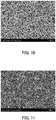
- Example 7 was performed under the same conditions as the example 3 except that the reaction temperature was changed. Specifically, as indicated in Table 4, the reaction was performed under a reaction temperature of 150°C. Table 4 also indicates results of measurement of the size of the resultant silver particles. Also, an SEM image of the resultant silver particles is shown in FIG. 10 .
- Example 7 PVP 0.05 g Pure water 40 g Silver nitrate 0.2 g DMF 10 g Temperature 150°C rpm 400 Time 2 h Particle diameter 50-300 nm Length of side of sheet 100-800 nm Length of side of hexagonal sheet 100-300 nm Length of side of triangular sheet 300-800 nm Thickness of sheet 50-100 nm
- the results show that the particle diameter of each spherical silver particle and the thickness of each sheet-like silver particle are controllable by controlling the reaction temperature. Specifically, it was found that the particle diameter of each spherical silver particle and the thickness of each sheet-like silver particle tend to increase along with an increase in the reaction temperature.
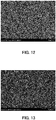
- a liquid mixture M was prepared by charging a container with 0.2 g of PVP, 20 g of pure water, 0.2 g of silver nitrate, and 30 g of DMF as indicated in Table 5. Subsequently, the liquid mixture M was heated to a specific reaction temperature. Subsequent treatment was performed similarly to the examples 1 to 3. Table 5 also indicates results of measurement of the size of the resultant silver particles. Also, SEM images of the resultant silver particles are shown in FIGS. 11 to 13 .
- FIG. 11 shows an SEM image according to example 8.
- FIG. 12 shows an SEM image according to example 9.
- FIG. 13 shows an SEM image according to comparative example 3.
- Example 8 Comparative example 3 PVP 0.2 g 0.2 g 0.2 g Pure water 20 g 20 g 20 g Silver nitrate 0.2 g 0.2 g 0.2 g DMF 30 g 30 g 30 g Temperature 120°C 150°C 80°C rpm 400 400 400 Time 2 h 2 h 2 h Particle diameter 20-100 nm 50-150 nm 20-100 nm Length of side of sheet 50-300 nm 50-500 nm 10-100 nm Length of side of hexagonal sheet 50-300 nm 50-200 nm 10-50 nm Length of side of triangular sheet 50-300 nm 100-500 nm 50-100 nm Thickness of sheet 30-100 nm 30-100 nm 30-100 nm 30-100 nm 30-100 nm 30-100 nm 30-100 nm 30-100 nm 30-100 nm 30-100 nm 30-100 nm 30-100 nm 30-100 n
- the examples 8 and 9 and the comparative example 3 were performed under the same conditions except that the reaction temperature was changed. As shown in FIGS. 11 to 13 , spherical silver particles and sheet-like silver particles could be obtained under each reaction temperature.
- the results show that the particle diameter of each spherical silver particle and the length of a side of each sheet-like silver particle are controllable by adjusting the reaction temperature. Specifically, it was found that the length of a side of each sheet-like silver particle and the particle diameter of each spherical silver particle tend to increase along with an increase in the reaction temperature. However, as for the sheet-like silver particles having a hexagonal contour, a maximum value of the length of a side was larger when the reaction temperature was 120°C than when the reaction temperature was 150°C.
- a liquid mixture M was prepared by charging a container with 0.25 g of PVP, a specific amount of pure water, 1.1 g of silver nitrate, and a specific amount of DMF as indicated in Table 6. Subsequently, the liquid mixture M was heated to a reaction temperature of 100°C. Subsequent treatment was performed similarly to the examples 1 to 3. Table 6 also indicates results of measurement of the size of the resultant silver particles. Also, SEM images of the resultant silver particles are shown in FIGS. 14 and 15. FIG. 14 shows an SEM image according to example 10, and FIG. 15 shows an SEM image according to example 11.
- Example 10 PVP 0.25 g 0.25 g Pure water 100 g 150 g Silver nitrate 1.1 g 1.1 g DMF 150 g 100 g Temperature 100°C 100°C rpm 400 400 Time 2 h 2 h Particle diameter 20-100 nm 50-150 nm Length of side of sheet 100-500 nm 100-800 nm Length of side of hexagonal sheet 100-300 nm 100-500 nm Length of side of triangular sheet 150-500 nm 500-800 nm Thickness of sheet 20-30 nm 20-30 nm 20-30 nm
- the amount of silver nitrate was increased in the examples 10 and 11 as compared with the other examples 1 to 9. Also, the amount of PVP and the like were increased as appropriate along with the increase in the amount of silver nitrate. As shown in FIGS. 14 and 15 , sheet-like silver particles could be obtained as well as spherical silver particles also when the amount of silver nitrate was increased. Also, as a result of the increase in the amount of silver nitrate, a large amount of silver particles (the sheet-like silver particles and the spherical silver particles) were synthesized at a time.
- a liquid mixture M was prepared by charging a container with 0.25 g of PVP, 100 g of pure water, 1.1 g of silver nitrate, and 150 g of DMF as indicated in Table 7. Subsequently, the liquid mixture M was heated to a reaction temperature of 100°C, and thereafter reaction was caused for two hours while stirring the liquid mixture at a rotational speed of 400 rpm. After the reaction, the liquid mixture was cooled to room temperature, and precipitate was isolated using a centrifugal separator. Then, the isolated precipitate was washed using water three or four times, and thereafter dispersed in ethanol to obtain a silver paste. The resultant silver paste was baked for 30 minutes at a specific baking temperature indicated in Table 8, and thereafter a volume resistivity was measured.
- FIG. 16A shows an SEM image (example 14) of a silver paste baked at a baking temperature of 150°C.
- FIG. 16B shows a part of FIG. 16A in an enlarged scale.
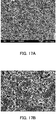
- FIG. 17A shows an SEM image (example 15) of a silver paste backed at a baking temperature of 180°C
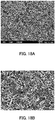
- FIG. 18A shows an SEM image (example 16) of a silver paste backed at a baking temperature of 200°C.
- FIG. 17B shows a part of FIG. 17A in an enlarged scale
- FIG. 18B shows a part of FIG. 18A in an enlarged scale.
- a sufficiently low resistivity (volume resistivity of 10 -5 ⁇ cm order) could be attained even when baking was performed at a temperature as low as 150°C. It is supposed that this is because silver particles contained in the silver paste had excellent packability as shown in FIGS. 16 to 18 . Also, the volume resistivity decreased along with an increase in the baking temperature. In particular, a volume resistivity of 10 -6 ⁇ cm order could be attained when the baking temperature was 200°C.
- a liquid mixture M was prepared by charging a container with 0.25 g of PVP, 150 g of pure water, 1.1 g of silver nitrate, and 100 g of DMF as indicated in Table 9. Subsequently, the liquid mixture M was heated to a reaction temperature of 100°C, and thereafter reaction was caused for two hours while stirring the liquid mixture at a rotational speed of 400 rpm. After the reaction, the liquid mixture was cooled to room temperature, and precipitate was isolated using a centrifugal separator. Then, the isolated precipitate was washed using water three or four times, and thereafter dispersed in ethanol to obtain a silver paste. Then, a shear strength test of the resultant silver paste was performed to determine bonding strength of the silver paste. [Table 9] Example 17 PVP 0.25 g Pure water 150 g Silver nitrate 1.1 g DMF 100 g Temperature 100°C rpm 400 Time 2 h
- FIG. 19 is a schematic illustration of a bonding sample 1 used in the shear strength test of example 17.
- the bonding sample 1 includes a silver-plated copper substrate 2, a silver-plated copper substrate 3, and a silver paste 4.
- the silver paste 4 bonds the copper substrate 2 and the copper substrate 3 together.
- the silver paste 4 was printed on the copper substrate 2 of 8 mm x 8 mm using a mask of 0.1 ⁇ m, and thereafter the copper substrate 3 of 4 mm x 4 mm was placed on the printed silver paste 4.
- the copper substrates 2 and 3 were heated at a temperature of 200°C for 60 minutes in an atmosphere at atmospheric pressure to bake (sinter) the silver paste 4, thereby bonding the copper substrates 2 and 3 together.
- shear force was applied to the copper substrates 2 and 3 bonded together and the shear strength was measured. As a result of the measurement, it was found that the shear strength was 20.1 MPa.
- FIG. 20 shows an image of the copper substrates 2 and 3 after the measurement of the shear strength (after the shear strength test), which image was taken from a side coated with the silver paste 4.
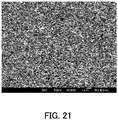
- FIG. 21 shows an SEM image of the silver paste after the measurement of the shear strength. As shown in FIG. 21 , silver particles contained in the silver paste 4 were formed into a dense film through the baking. It is supposed that this is because the silver particles contained in the silver paste 4 before the backing had excellent packability. Also, it is supposed that the shear strength of not lower than 15 MPa could be attained as a result of the silver particles formed into the dense film.
- the present invention is applicable to for example a material of a wiring printed on a wiring board or a bonding material for die attachment.
Landscapes
- Chemical & Material Sciences (AREA)
- Engineering & Computer Science (AREA)
- Nanotechnology (AREA)
- Inorganic Chemistry (AREA)
- Dispersion Chemistry (AREA)
- Physics & Mathematics (AREA)
- Chemical Kinetics & Catalysis (AREA)
- General Chemical & Material Sciences (AREA)
- Crystallography & Structural Chemistry (AREA)
- Organic Chemistry (AREA)
- Spectroscopy & Molecular Physics (AREA)
- Manufacturing & Machinery (AREA)
- General Physics & Mathematics (AREA)
- Condensed Matter Physics & Semiconductors (AREA)
- Materials Engineering (AREA)
- Composite Materials (AREA)
- Manufacture Of Metal Powder And Suspensions Thereof (AREA)
- Powder Metallurgy (AREA)
- Conductive Materials (AREA)
- Non-Insulated Conductors (AREA)
Abstract
Description
- The present invention relates to a silver particle producing method, silver particles, and a silver paste.
- As a bonding material for electronic components and a material of a print wiring, a silver paste produced by dispersing silver microparticles (silver particles having particle diameters of micrometer order) in an organic solvent is practically used. The silver microparticles function as a conductive material in the silver paste. The organic solvent is typically an alcohol. However, a high temperature not lower than 250°C and a pressure (pressure application) are required for sintering (baking) the silver paste that contains the silver microparticles only. Therefore, the silver paste that contains the silver microparticles cannot be used for electronic components and a wiring board that have low heat resistance. Under the above circumstances, silver nanoparticles (silver particles having particle diameters of nanometer order) that permit sintering at low temperatures have been recently used instead of the silver microparticles. A method for producing the silver nanoparticles is disclosed in
Patent Literature 1 for example. - [Patent Literature 1]
Japanese Patent Application Laid-Open Publication No.2010-265543 - However, packability of spherical silver nanoparticles (packing density of the silver particles) is insufficient. Therefore, bonding strength achieved by the use of a silver paste that contains the spherical silver nanoparticles only is low.
- The present invention was made in view of the above-described problems, and it is a first object of the present invention to provide a silver particle producing method that permits production of silver particles packability of which can be improved easily. Also, a second object of the present invention is to provide the silver particles packability of which can be improved easily, and a third object of the present invention is to provide a silver paste that contains the silver particles packability of which can be improved easily.
- A silver particle producing method of the present invention includes: obtaining a liquid mixture by mixing at least a silver compound, a reductant, and a dispersant; and heating the liquid mixture to cause reaction between the silver compound and the reductant and generate first silver particles and second silver particles, the first silver particles each having a sheet-like or plate-like shape, and the second silver particles each having a spherical shape or a shape closer to a sphere than the first silver particles and a particle diameter smaller than a maximum value of a length of a side of each of the first silver particles.
- In an embodiment, the reaction between the silver compound and the reductant is caused under conditions where the liquid mixture maintains a liquid phase.
- In an embodiment, the reductant is N,N-dimethylformamide.
- In an embodiment, the liquid mixture further contains pure water.
- In an embodiment, the reaction between the silver compound and the reductant is caused under atmospheric pressure.
- Silver particles of the present invention include first silver particles each having a sheet-like or plate-like shape of a polygonal contour and second silver particles each having a spherical shape or a shape closer to a sphere than the first silver particles and a particle diameter smaller than a maximum value of a length of a side of each of the first silver particles. An average value of the lengths of the sides of the first silver particles is at least 100 nm and no greater than 800 nm. An average value of the particle diameters of the second silver particles is at least 10 nm and no greater than 100 nm.
- In an embodiment, the length of the side of each of the first silver particles is at least 10 nm and no greater than 800 nm.
- In an embodiment, the first silver particles each have a triangular or hexagonal contour.
- In an embodiment, a maximum value of a length of a side of each of the first silver particles having the triangular contour is at least 50 nm.
- In an embodiment, a maximum value of a length of a side of each of the first silver particles having the hexagonal contour is at least 30 nm.
- In an embodiment, the particle diameter of each of the second silver particles is at least 20 nm and no greater than 300 nm.
- In an embodiment, the particle diameter of each of the second silver particles is no greater than 150 nm.
- In an embodiment, a thickness of each of the first silver particles is at least 10 nm and no greater than 100 nm.
- In an embodiment, the thickness of each of the first silver particles is no greater than 30 nm.
- A silver paste of the present invention contains silver particles produced by the above-described method or the above-described silver particles.
- According to the silver particle producing method of the present invention, it is possible to produce silver particles packability of which can be improved easily. Also, according to the silver particles of the present invention, packability of the silver particles can be improved easily. Also, according to the silver paste of the present invention, the silver paste can contain silver particles packability of which can be improved easily.
-
- [
FIG. 1 ]
FIG. 1 is a flowchart illustrating a silver particle producing method according to an embodiment of the present invention. - [
FIG. 2 ]
FIG. 2 is a photograph showing an SEM image according to example 1 of the present invention. - [
FIG. 3 ]
FIG. 3 is a photograph showing an SEM image according to example 2 of the present invention. - [
FIG. 4 ]
FIG. 4 is a photograph showing an SEM image according to example 3 of the present invention. - [
FIG. 5 ]
FIG. 5 is a photograph showing an SEM image according to comparative example 1 of the present invention. - [
FIG. 6 ]
FIG. 6 is a photograph showing an SEM image according to example 4 of the present invention. - [
FIG. 7 ]
FIG. 7 is a photograph showing an SEM image according to example 5 of the present invention. - [
FIG. 8 ]
FIG. 8 is a photograph showing an SEM image according to example 6 of the present invention. - [
FIG. 9 ]
FIG. 9 is a photograph showing an SEM image according to comparative example 2 of the present invention. - [
FIG. 10 ]
FIG. 10 is a photograph showing an SEM image according to example 7 of the present invention. - [
FIG. 11 ]
FIG. 11 is a photograph showing an SEM image according to example 8 of the present invention. - [
FIG. 12 ]
FIG. 12 is a photograph showing an SEM image according to example 9 of the present invention. - [
FIG. 13 ]
FIG. 13 is a photograph showing an SEM image according to comparative example 3 of the present invention. - [
FIG. 14 ]
FIG. 14 is a photograph showing an SEM image according to example 10 of the present invention. - [
FIG. 15 ]
FIG. 15 is a photograph showing an SEM image according to example 11 of the present invention. - [
FIGS. 16A and 16B ]
FIG. 16A is a photograph showing an SEM image according to example 14 of the present invention, andFIG. 16B is a photograph showing a part ofFIG. 16A in an enlarged scale. - [
FIGS. 17A and 17B ]
FIG. 17A is a photograph showing an SEM image according to example 15 of the present invention, andFIG. 17B is a photograph showing a part ofFIG. 17A in an enlarged scale. - [
FIGS. 18A and 18B ]
FIG. 18A is a photograph showing an SEM image according to example 16 of the present invention, andFIG. 18B is a photograph showing a part ofFIG. 18A in an enlarged scale. - [
FIG. 19 ]
FIG. 19 is a schematic illustration of a bonding sample used in a shear strength test according to example 17 of the present invention. - [
FIG. 20 ]
FIG. 20 is a photograph showing an image of copper substrates after measurement of shear strength, which image was taken from a side coated with a silver paste. - [
FIG. 21 ]
FIG. 21 is a photograph showing an SEM image of the silver paste after the measurement of the shear strength. - The following describes an embodiment of the present invention with reference to the drawings. However, the present invention is not limited to the embodiment described below, and is practicable in various manners within a scope not departing from the gist of the present invention. Note that some overlapping explanations may be appropriately omitted.
- First, a silver particle producing method and silver particles according to the present embodiment will be described with reference to
FIG. 1. FIG. 1 is a flowchart illustrating the silver particle producing method according to the present embodiment. As illustrated inFIG. 1 , the silver particle producing method according to the present embodiment includes a mixing treatment process S1 and a heating treatment process S2. - In the mixing treatment process S1, a liquid mixture M is prepared by mixing pure water W, a silver compound C, a reductant R, and a dispersant D. Alternatively, the liquid mixture M is prepared by mixing the silver compound C, the reductant R, and the dispersant D. When the pure water W is not used, a reductant R that can serve as a solvent is used. Note that the components of the liquid mixture M may be added in any order. Also, the heating treatment process S2 is preferably performed after mixing the components of the liquid mixture M appropriately by stirring the liquid mixture M in order to facilitate reaction between the silver compound C and the reductant R.
- In the heating treatment process S2, the liquid mixture M is heated to cause the reaction (liquid phase reduction) between the silver compound C and the reductant R. A reaction temperature is preferably set to a temperature at which the liquid mixture M can maintain a liquid phase in the heating treatment process S2. Also, heating treatment is preferably performed while stirring the liquid mixture M at a specific rotational speed [rpm] in order to facilitate the reaction between the silver compound C and the reductant R. Note that the rotational speed [rpm] may be determined to be any value.
- Silver particles P are generated (precipitated) through the heating treatment process S2. The silver particles P include silver particles P1 (first silver particles) having a sheet-like or plate-like shape and silver particles P2 (second silver particles) having a spherical shape. Hereinafter, "sheet-like or plate-like" will be described as "sheet-like". The silver particles P2 (hereinafter may be referred to as spherical silver particles P2) having the spherical shape each have a spherical shape or a shape closer to a sphere than the silver particles P1 (hereinafter may be referred to as sheet-like silver particles P1) having the sheet-like shape. Also, the spherical silver particles P2 each have a particle diameter smaller than a maximum value of the length of a side of each sheet-like silver particle P1.
- The silver particle producing method according to the present embodiment permits production of the silver particles (the sheet-like silver particles P1) each having the sheet-like shape and the silver particles (the spherical silver particles P2) each having the spherical shape and a particle diameter smaller than a maximum value of the length of a side of each sheet-like silver particle. Therefore, the silver particles P having improved packability can be produced. Packability is improved by the combination of the silver particles (the sheet-like silver particles P1) each having the sheet-like shape and the silver particles (the spherical silver particles P2) each having the spherical shape and a particle diameter smaller than a maximum value of the length of a side of each sheet-like silver particle, since the spherical silver particles fill gaps between the sheet-like silver particles.
- When the pure water W is used, the amount (rate) of the pure water W in the reaction system may be determined in advance in accordance with set conditions, since an optimal amount changes depending on the conditions such as amounts of the other components of the liquid mixture M and a reaction temperature. Use of the pure water W permits generation of the sheet-like silver particles P1 of an adequate size at a reaction temperature lower than that required when the pure water W is not used. Typically, the smaller the amount (rate) of the pure water W is, the smaller the size of the sheet-like silver particles P1 tends to be. Therefore, in order that the sheet-like silver particles P1 have an adequate size, the amount of the pure water W is preferably for example at least 40 parts by weight and smaller than 100 parts by weight relative to 100 parts by weight of the liquid mixture M in the reaction system, and more preferably at least 60 parts by weight and no greater than 80 parts by weight.
- The silver compound C is not particularly limited, and representative examples of the silver compound include silver nitrate, silver acetate, and silver carboxylate. Two or more silver compounds may be used in combination. The amount (rate) of the silver compound C in the reaction system may also be determined in advance in accordance with set conditions, since an optimal amount changes depending on the conditions such as amounts of the other components of the liquid mixture M and the reaction temperature. Typically, the amount of the silver compound is preferably at least 0.1 parts by weight and no greater than 20 parts by weight relative to 100 parts by weight of the liquid mixture M in the reaction system, and more preferably at least 0.5 parts by weight and no greater than 10 parts by weight.
- The reductant R is not particularly limited as long as the reductant can reduce the silver compound C. Representative examples of the reductant include N,N-dimethylformamide (DMF), ethylene glycol, propylene glycol, 1,3-propanediol, 1,4-butanediol, glycerin, ethanol, glucose, ascorbic acid, NaBH4, and hydrazine. Alternatively, two or more reductants may be used in combination as the reductant R.
- The amount (rate) of the reductant R in the reaction system may also be determined in advance in accordance with set conditions, since an optimal amount changes depending on the conditions such as amounts of the other components of the liquid mixture M and the reaction temperature. Typically, the amount of the reductant is preferably at least 10 parts by weight and smaller than 100 parts by weight relative to 100 parts by weight of the liquid mixture M in the reaction system, and more preferably at least 20 parts by weight and no greater than 80 parts by weight.
- The dispersant D is also not particularly limited. Representative examples of the dispersant include polyvinylpyrrolidone (PVP), polyethylene glycol (PEG), and cetyltrimethylammonium bromide (CTAB). Two or more dispersants may be used in combination as the dispersant D. The amount (rate) of the dispersant D in the reaction system may also be determined in advance in accordance with set conditions, since an optimal amount changes depending on the conditions such as amounts of the other components of the liquid mixture M and the reaction temperature. Typically, the larger the amount (rate) of the dispersant D is, the higher a production yield of the silver particles P is and the smaller the size of the sheet-like silver particles P1 is. Therefore, in order that the sheet-like silver particles P1 have an adequate size, the amount of the dispersant D is preferably for example at least 0.1 parts by weight and no greater than 20 parts by weight relative to 100 parts by weight of the liquid mixture M in the reaction system, and more preferably at least 0.5 parts by weight and no greater than 10 parts by weight.
- The silver particle producing method according to the present embodiment is performed in an environment that is not particularly limited, and can be performed for example in an atmosphere at atmospheric pressure and room temperature. Also, the reaction temperature may also be determined in advance in accordance with set conditions, since an optimal temperature changes depending on the conditions such as amounts (rates) of the components of the liquid mixture M and the environment. Typically, the higher the reaction temperature is, the higher the production yield of the silver particles P tends to be and the larger the thickness of the sheet-like silver particles P1 and the particle diameter of the spherical silver particles P2 tend to be.
- For example, when the pure water W is used, the reaction temperature is preferably 100°C or higher. A reaction temperature lower than 100°C may result in failure to generate the sheet-like silver particles P1 having a desired size depending on the amounts (rates) of the components of the liquid mixture M and a time (hereinafter may be referred to as a reaction time) of heating the liquid mixture M. Also, when the pure water W is used, the reaction temperature is preferably lower than 150°C. This is because the sheet-like silver particles P1 may be uncontrollable to the desired size depending on the amounts (rates) of the components of the liquid mixture M and the reaction time. Further, a reaction temperature of 150°C or higher may result in failure to generate the sheet-like silver particles P1 or generation of only a small amount of the sheet-like silver particles P1 depending on the amounts (rates) of the components of the liquid mixture M and the reaction time. By contrast, when the pure water W is not used, the reaction temperature is typically set to a temperature higher than that employed when the liquid mixture M contains the pure water W. This is because it may be impossible to generate the sheet-like silver particles P1 depending on the amounts (rates) of the components of the liquid mixture M and the reaction time. When the pure water W is not used, the reaction temperature can be set to be 150°C or higher for example.
- The reaction time is also not particularly limited, and can be set to any value in accordance with the amounts (rates) of the components of the liquid mixture M, the reaction temperature, and the like. However, the reaction time is preferably for example not longer than three hours since an excessively long reaction time results in a decrease in production efficiency.
- The silver particles P (the sheet-like silver particles P1 and the spherical silver particles P2) produced by the silver particle producing method according to the present embodiment can be observed using a scanning electron microscope (SEM) for example.
FIG. 2 shows an example of an SEM image of the produced silver particles P (the sheet-like silver particles P1 and the spherical silver particles P2). - As shown in
FIG. 2 , the produced silver particles P include the sheet-like silver particles P1 and the spherical silver particles P2 each having a particle diameter smaller than a maximum value of the length of a side of each sheet-like silver particle P1. The spherical silver particles P2 each have a spherical shape or a shape closer to a sphere than the sheet-like silver particles P1. By contrast, most of the sheet-like silver particles P1 have a triangular or hexagonal contour. Note that the triangular or hexagonal contour includes shapes resembling a triangle or a hexagon. For example, each side may be arced (curved) rather than straight. Also, an intersection of sides (i.e., a so-called vertex) may be rounded (curved). A ratio between the sheet-like silver particles P1 having a triangular contour and the sheet-like silver particles P1 having a hexagonal contour is controllable by adjusting an amount of addition of the dispersant D. Specifically, the rate of the sheet-like silver particles P1 having the triangular contour increases along with an increase in the amount of addition of the dispersant D, and the rate of the sheet-like silver particles P1 having the hexagonal contour increases along with a decrease in the amount of addition of the dispersant D. - The length of a side of each sheet-like silver particle P1 (when the side is arced, the length of a straight line connecting opposite ends of the side) is controllable by adjusting the amounts (rates) of the components of the liquid mixture M and the reaction temperature. For example, the larger the amount (rate) of the pure water W is, the larger the length of a side of each sheet-like silver particle P1 tends to be. Also, the higher the reaction temperature is, the larger the length of a side of each sheet-like silver particle P1 tends to be. In the present embodiment, the length of a side of each sheet-like silver particle P1 is at least 10 nm and no greater than 800 nm.
- In order to improve packability of the silver particles P, a maximum value of the length of a side of each sheet-like silver particle P1 having the triangular contour is preferably at least 50 nm, and further preferably at least 300 nm. Also, a maximum value of the length of a side of each sheet-like silver particle P1 having the hexagonal contour is preferably at least 30 nm, and further preferably at least 100 nm. Also, an average value of the lengths of sides of the sheet-like silver particles P1 is preferably at least 100 nm and no greater than 800 nm. Specifically, an average value of the lengths of sides of the sheet-like silver particles P1 having the triangular contour is preferably at least 100 nm and no greater than 600 nm, and an average value of the lengths of sides of the sheet-like silver particles P1 having the hexagonal contour is preferably at least 100 nm and no greater than 300 nm.
- The thickness of each sheet-like silver particle P1 is also controllable by adjusting the amounts (rates) of the components of the liquid mixture M and the reaction temperature. For example, the higher the reaction temperature is, the larger the thickness of each sheet-like silver particle P1 tends to be. In order to improve packability of the silver particles P, the thickness of each sheet-like silver particle P1 is preferably at least 10 nm and no greater than 100 nm, and more preferably at least 10 nm and no greater than 30 nm. Also, the sheet-like silver particles P1 having smaller thicknesses are easier to bake (sinter). Therefore, a baking temperature (sintering temperature) of a silver paste containing the silver particles P can be decreased along with a decrease in the thickness of each sheet-like silver particle P1.
- The particle diameter of each spherical silver particle P2 is also controllable by adjusting the amounts (rates) of the components of the liquid mixture M and the reaction temperature. For example, the higher the reaction temperature is, the larger the particle diameter of each spherical silver particle P2 is. In order to improve packability of the silver particles P, the particle diameter of each spherical silver particle P2 is preferably at least 20 nm and no greater than 300 nm, and more preferably at least 20 nm and no greater than 150 nm. Also, an average value of the particle diameters of the spherical silver particles P2 is preferably at least 10 nm and no greater than 100 nm. The spherical silver particles P2 having smaller particle diameters are also easier to bake (sinter). Therefore, the baking temperature (sintering temperature) of the silver paste containing the silver particles P can be decreased along with a decrease in the particle diameter of each spherical silver particle P2.
- According to the silver particle producing method of the present embodiment, the shape and the production yield of the silver particles P to be produced are controllable by adjusting the amounts (rates) of the pure water W, the silver compound C, the reductant R, and the dispersant D, or the amounts (rates) of the silver compound C, the reductant R, and the dispersant D. Also, the shape and the production yield of the silver particles P to be produced are controllable by adjusting the reaction temperature. Specifically, it is possible to produce the silver particles (the sheet-like silver particles P1) each having the sheet-like shape and the silver particles (the spherical silver particles P2) each having the spherical shape and a particle diameter smaller than a maximum value of the length of a side of each sheet-like silver particle. Therefore, it is possible to produce the silver particles P packability of which can be improved easily.
- Also, according to the silver particle producing method of the present embodiment, the length of a side of each sheet-like silver particle P1 and the particle diameter of each spherical silver particle P2 are controllable by adjusting the amounts (rates) of the components of the liquid mixture M and the reaction temperature. In other words, the size of the sheet-like silver particles P1 and the size of the spherical silver particles P2 are controllable. Therefore, it is possible to improve packability of the silver particles to be produced.
- Also, according to the silver particle producing method of the present embodiment, the silver particles P including the sheet-like silver particles P1 and the spherical silver particles P2 can be produced without application of a pressure. Therefore, the silver particles P including the sheet-like silver particles P1 and the spherical silver particles P2 can be produced easily.
- Also, according to the silver particle producing method of the present embodiment, the silver particles P including the sheet-like silver particles P1 and the spherical silver particles P2 can be produced at a relatively low reaction temperature of not higher than 150°C. Therefore, the silver particles P including the sheet-like silver particles P1 and the spherical silver particles P2 can be produced easily.
- Also, according to the silver particle producing method of the present embodiment, the silver particles P can be produced in an atmosphere at atmospheric pressure and room temperature. Therefore, the silver particles P including the sheet-like silver particles P1 and the spherical silver particles P2 can be produced easily.
- Also, according to the silver particle producing method of the present embodiment, the sheet-like silver particles P1 and the spherical silver particles P2 can be precipitated (synthesized) in single reaction treatment (heating treatment). That is, the sheet-like silver particles P1 and the spherical silver particles P2 can be precipitated in a single container. Therefore, the silver particles P having excellent dispersibility of the sheet-like silver particles P1 and the spherical silver particles P2 can be obtained.
- Also, in the silver particle producing method of the present embodiment, the liquid mixture M preferably contains the pure water W. This is because when the liquid mixture M contains the pure water W, the production yield of the silver particles P is improved as compared with that achieved when the liquid mixture M does not contain the pure water W. Further, when the liquid mixture M contains the pure water W, the length of a side of each sheet-like silver particle P1 can be adequately increased at a reaction temperature lower than that required when the liquid mixture M does not contain the pure water W. In other words, the sheet-like silver particles P1 of an adequate size can be generated at a low reaction temperature (for example, approximately 100°C). Also, when the pure water W is used, the length of a side of each sheet-like silver particle P1 (i.e., the size of the sheet-like silver particles P1) is controllable by adjusting the amount of the pure water W. Therefore, the size of the sheet-like silver particles P1 can be controlled easily.
- Also, according to the silver particle producing method of the present embodiment, the silver particles P having improved packability can be produced. Therefore, a silver paste that can be baked at a low baking temperature (sintering temperature) can be obtained using the silver particles P according to the present embodiment. Further, a silver paste that has a low resistivity after baking (sintering) can be obtained using the silver particles P having improved packability. Specifically, a volume resistivity not greater than 10-5Ω·CM order can be attained.
- Also, bonding strength of a silver paste used as a bonding material can be increased using the silver particles P having improved packability. Therefore, the silver particles P according to the present embodiment can be used for a silver paste for die attachment as well as a silver paste for wiring.
- Next, the following describes a silver paste producing method and a silver paste according to the present embodiment. The silver paste producing method according to the present embodiment further includes a process of mixing the silver particles P and an organic solvent subsequently to the treatment in the silver particle producing method described above. For example, the silver particles P precipitated through the silver particle producing method described above are isolated using a centrifugal separator, and then washed using water or ethanol three or four times. The washed silver particles P are then dispersed in an organic solvent (for example, an alcohol such as ethanol). A silver paste can be produced through the procedure as described above. The produced silver paste can be used for example as a wiring material or a bonding material.
- When an alcohol is used as the organic solvent, a ratio (silver particles P : alcohol) between the silver particles P and the alcohol contained in the silver paste is for example 4:1 to 16:1 in terms of parts by weight, preferably 6:1 to 12:1, and more preferably 8:1 to 10:1.
- The alcohol is preferably a lower alcohol or a lower alcohol having at least one substituent selected from the group consisting of a lower alkoxy group, an amino group, and a halogen atom. Examples of lower alcohols include lower alcohols having an alkyl group having a carbon number of 1 to 6 and one to three, preferably, one or two hydroxyl groups. Examples of lower alkyl groups include straight chain or branched chain alkyl groups such as methyl group, ethyl group, n-propyl group, i-propyl group, n-butyl group, i-butyl group, sec-butyl group, t-butyl group, n-pentyl group, i-pentyl group, sec-pentyl group, t-pentyl group, 2-methylbutyl group, n-hexyl group, 1-methylpentyl group, 2-methylpentyl group, 3-methylpentyl group, 4-methylpentyl group, 1-ethylbutyl group, 2-ethylbutyl group, 1,1-dimethylbutyl group, 2,2-dimethylbutyl group, 3,3-dimethylbutyl group, and 1-ethyl-1-methylpropyl group. Examples of lower alcohols having an alkyl group having a carbon number of 1 to 6 and one to three hydroxyl groups include methanol, ethanol, ethylene glycol, n-propanol, i-propanol, triethylene glycol, n-butanol, i-butanol, sec-butanol, t-butanol, n-pentanol, i-pentanol, sec-pentanol, t-pentanol, 2-methylbutanol, n-hexanol, 1-methylpentanol, 2-methylpentanol, 3-methylpentanol, 4-methylpentanol, 1-ethylbutanol, 2-ethylbutanol, 1,1-dimethylbutanol, 2,2-dimethylbutanol, 3,3-dimethylbutanol, and 1-ethyl-1-methylpropanol.
- In the lower alcohol having at least one substituent selected from the group consisting of a lower alkoxy group, an amino group, and a halogen atom, the substituent is as follows. An example of the lower alkoxy group is a lower alkyl group substituted with -O-. Examples of the lower alkoxy group include methoxy group, ethoxy group, n-propoxy group, i-propoxy group, n-butoxy group, i-butoxy group, sec-butoxy group, t-butoxy group, and n-pentyloxy group. Examples of the halogen atom include fluorine atom, bromine atom, chlorine atom, and iodine atom.
- Examples of the lower alcohol having at least one substituent selected from the group consisting of a lower alkoxy group, an amino group, and a halogen atom include methoxymethanol, 2-methoxyethanol, 2-ethoxyethanol, 2-chloroethanol, and ethanolamine.
- The following describes the present invention more specifically using examples. Note that the present invention is by no means limited to the scope of the examples. Each example and each comparative example described below were performed in an atmosphere at atmospheric pressure and room temperature.
- A liquid mixture M was prepared by charging a container with 0.05 g of PVP, a specific amount (including 0 g) of pure water, 0.2 g of silver nitrate, and a specific amount of DMF as indicated in Table 1. Subsequently, the liquid mixture M was heated to a reaction temperature of 100°C, and thereafter reaction was caused for two hours while stirring the liquid mixture at a rotational speed of 400 rpm. After the reaction, the liquid mixture was cooled to room temperature, and precipitate was isolated using a centrifugal separator. Then, the isolated precipitate was washed using water three or four times to obtain silver particles.
[Table 1] Example 1 Example 2 Example 3 Comparative example 1 PVP 0.05 g 0.05 g 0.05 g 0.05 g Pure water 20 g 30 g 40 g 0 g Silver nitrate 0.2 g 0.2 g 0.2 g 0.2 g DMF 30 g 20 g 10 g 30 g Temperature 100°C 100°C 100°C 100°C rpm 400 400 400 400 Time 2 h 2 h 2 h 2 h Particle diameter 20-100 nm 50-150 nm 50-150 nm 20-100 nm Length of side of sheet 10-500 nm 100-800 nm 100-800 nm - Length of side of hexagonal sheet 10-50 nm 100-300 nm 100-300 nm - Length of side of triangular sheet 150-500 nm 500-800 nm 500-800 nm - Thickness of sheet 20-30 nm 20-30 nm 20-30 nm - - Table 1 also indicates results of measurement of the size of the resultant silver particles. Note that in each of Tables 1 to 6, "particle diameter" indicates the particle diameter of each spherical silver particle, "length of side of sheet" indicates the length of a side of each sheet-like silver particle, "length of side of hexagonal sheet" indicates the length of a side of each sheet-like silver particle having a hexagonal contour, "length of side of triangular sheet" indicates the length of a side of each sheet-like silver particle having a triangular contour, and "thickness of sheet" indicates the thickness of each sheet-like silver particle. The "particle diameter" and the "length of side of sheet" were measured using SEM images. The "thickness of sheet" was measured using an SEM.
- Also, SEM images of the resultant silver particles are shown in
FIGS. 2 to 5 .FIG. 2 shows an SEM image according to example 1.FIG. 3 shows an SEM image according to example 2.FIG. 4 shows an SEM image according to example 3.FIG. 5 shows an SEM image according to comparative example 1. - As indicated in Table 1, the examples 1 to 3 were performed under the same conditions except that the rates (amounts) of the pure water and DMF were changed. As shown in
FIGS. 2 to 4 (the examples 1 to 3), when the pure water was used, sheet-like silver particles could be obtained as well as spherical silver particles under the reaction temperature of 100°C. By contrast, as shown inFIG. 5 (the comparative example 1), when the pure water was not used, only spherical silver particles were precipitated under the reaction temperature of 100°C, and sheet-like silver particles could not be obtained. - Also, as indicated in Table 1, the results show that the particle diameter of each spherical silver particle and the length of a side of each sheet-like silver particle are controllable by adjusting the rate (amount) of the pure water. Specifically, it was found that the particle diameter of each spherical silver particle and the length of a side of each sheet-like silver particle tend to increase along with an increase in the rate of the pure water. By contrast, the thickness of each sheet-like silver particle was not influenced by changes in the rates (amounts) of the pure water and DMF.
- Examples 4 and 5 were performed under the same conditions as the examples 2 and 3 except that the amount of PVP was changed. Specifically, as indicated in Table 2, 0.2 g of PVP was contained in the liquid mixture M. Table 2 also indicates results of measurement of the size of the resultant silver particles. Also, SEM images of the resultant silver particles are shown in
FIGS. 6 and 7. FIG. 6 shows an SEM image according to the example 4, andFIG. 7 shows an SEM image according to the example 5.[Table 2] Example 4 Example 5 PVP 0.2 g 0.2 g Pure water 30 g 40 g Silver nitrate 0.2 g 0.2 g DMF 20 g 10 g Temperature 100°C 100°C rpm 400 400 Time 2 h 2 h Particle diameter 50-150 nm 50-150 nm Length of side of sheet 50-500 nm 100-300 nm Length of side of hexagonal sheet 50-100 nm 100-200 nm Length of side of triangular sheet 300-500 nm 100-300 nm Thickness of sheet 20-30 nm 20-30 nm - As shown in
FIGS. 6 and 7 , spherical silver particles and sheet-like silver particles could be obtained also when the amount of PVP was increased. Meanwhile, as indicated in Tables 1 and 2, the results show that the length of a side of each sheet-like silver particle is controllable by adjusting the amount of PVP. Specifically, it was found that the length of a side of each sheet-like silver particle tends to decrease along with an increase in the amount of PVP. By contrast, the particle diameter of each spherical silver particle and the thickness of each sheet-like silver particle were not influenced by a change in the amount of PVP. - A liquid mixture M was prepared by charging a container with a specific amount of PVP, 0.2 g of silver nitrate, and 30 g of DMF as indicated in Table 3 without using pure water. Subsequently, the liquid mixture M was heated to a reaction temperature of 150°C. Subsequent treatment was performed similarly to the examples 1 to 3. Table 3 also indicates results of measurement of the size of the resultant silver particles. Also, SEM images of the resultant silver particles are shown in
FIGS. 8 and 9. FIG. 8 shows an SEM image according to example 6, andFIG. 9 shows an SEM image according to comparative example 2.[Table 3] Example 6 Comparative example 2 PVP 0.2 g 0.05 g Pure water 0 g 0 g Silver nitrate 0.2 g 0.2 g DMF 30 g 30 g Temperature 150°C 150°C rpm 400 400 Time 2 h 2 h Particle diameter 20-100 nm 20-100 nm Length of side of sheet 10-300 nm 10-300 nm Length of side of hexagonal sheet 10-100 nm 10-50 nm Length of side of triangular sheet 50-300 nm 50-300 nm Thickness of sheet 30-100 nm 30-200 nm - As shown in
FIGS. 8 and 9 , when the reaction temperature was 150°C, spherical silver particles and sheet-like silver particles could be obtained although pure water was not used. - Also, the results show that the contour of the sheet-like silver particles is controllable by adjusting the amount of PVP. Specifically, when the amount of PVP was large (the example 6), sheet-like silver particles having a triangular contour were precipitated more than sheet-like silver particles having a hexagonal contour, as shown in
FIG. 8 . By contrast, when the amount of PVP was small (the comparative example 2), sheet-like silver particles having a hexagonal contour were precipitated more than sheet-like silver particles having a triangular contour, as shown inFIG. 9 . Note that when pure water was not used, the particle diameter of each spherical silver particle and the length of a side of each sheet-like silver particle having a triangular contour were not influenced by a change in the amount of PVP. By contrast, it was found that the length of a side of each sheet-like silver particle having a hexagonal contour tends to decrease along with a decrease in the amount of PVP. Also, it was found that the thickness of each sheet-like silver particle tends to increase along with a decrease in the amount of PVP. Note that in the comparative example 2, a maximum value of the thickness of each sheet-like silver particle was larger than a maximum value of the particle diameter of each spherical silver particle. - Example 7 was performed under the same conditions as the example 3 except that the reaction temperature was changed. Specifically, as indicated in Table 4, the reaction was performed under a reaction temperature of 150°C. Table 4 also indicates results of measurement of the size of the resultant silver particles. Also, an SEM image of the resultant silver particles is shown in
FIG. 10 .[Table 4] Example 7 PVP 0.05 g Pure water 40 g Silver nitrate 0.2 g DMF 10 g Temperature 150°C rpm 400 Time 2 h Particle diameter 50-300 nm Length of side of sheet 100-800 nm Length of side of hexagonal sheet 100-300 nm Length of side of triangular sheet 300-800 nm Thickness of sheet 50-100 nm - As shown in
FIGS. 4 and10 and Tables 1 and 4, the results show that the particle diameter of each spherical silver particle and the thickness of each sheet-like silver particle are controllable by controlling the reaction temperature. Specifically, it was found that the particle diameter of each spherical silver particle and the thickness of each sheet-like silver particle tend to increase along with an increase in the reaction temperature. - A liquid mixture M was prepared by charging a container with 0.2 g of PVP, 20 g of pure water, 0.2 g of silver nitrate, and 30 g of DMF as indicated in Table 5. Subsequently, the liquid mixture M was heated to a specific reaction temperature. Subsequent treatment was performed similarly to the examples 1 to 3. Table 5 also indicates results of measurement of the size of the resultant silver particles. Also, SEM images of the resultant silver particles are shown in
FIGS. 11 to 13 .FIG. 11 shows an SEM image according to example 8.FIG. 12 shows an SEM image according to example 9.FIG. 13 shows an SEM image according to comparative example 3.[Table 5] Example 8 Example 9 Comparative example 3 PVP 0.2 g 0.2 g 0.2 g Pure water 20 g 20 g 20 g Silver nitrate 0.2 g 0.2 g 0.2 g DMF 30 g 30 g 30 g Temperature 120°C 150°C 80°C rpm 400 400 400 Time 2 h 2 h 2 h Particle diameter 20-100 nm 50-150 nm 20-100 nm Length of side of sheet 50-300 nm 50-500 nm 10-100 nm Length of side of hexagonal sheet 50-300 nm 50-200 nm 10-50 nm Length of side of triangular sheet 50-300 nm 100-500 nm 50-100 nm Thickness of sheet 30-100 nm 30-100 nm 30-100 nm - As indicated in Table 5, the examples 8 and 9 and the comparative example 3 were performed under the same conditions except that the reaction temperature was changed. As shown in
FIGS. 11 to 13 , spherical silver particles and sheet-like silver particles could be obtained under each reaction temperature. - Also, as indicated in Table 5, the results show that the particle diameter of each spherical silver particle and the length of a side of each sheet-like silver particle are controllable by adjusting the reaction temperature. Specifically, it was found that the length of a side of each sheet-like silver particle and the particle diameter of each spherical silver particle tend to increase along with an increase in the reaction temperature. However, as for the sheet-like silver particles having a hexagonal contour, a maximum value of the length of a side was larger when the reaction temperature was 120°C than when the reaction temperature was 150°C. Note that in the comparative example 3 performed under a reaction temperature of 80°C, which is lower than 100°C, a maximum value of the length of a side of each sheet-like silver particle was 100 nm, which was the same as a maximum value of the particle diameter of each spherical silver particle.
- A liquid mixture M was prepared by charging a container with 0.25 g of PVP, a specific amount of pure water, 1.1 g of silver nitrate, and a specific amount of DMF as indicated in Table 6. Subsequently, the liquid mixture M was heated to a reaction temperature of 100°C. Subsequent treatment was performed similarly to the examples 1 to 3. Table 6 also indicates results of measurement of the size of the resultant silver particles. Also, SEM images of the resultant silver particles are shown in
FIGS. 14 and 15. FIG. 14 shows an SEM image according to example 10, andFIG. 15 shows an SEM image according to example 11.[Table 6] Example 10 Example 11 PVP 0.25 g 0.25 g Pure water 100 g 150 g Silver nitrate 1.1 g 1.1 g DMF 150 g 100 g Temperature 100°C 100°C rpm 400 400 Time 2 h 2 h Particle diameter 20-100 nm 50-150 nm Length of side of sheet 100-500 nm 100-800 nm Length of side of hexagonal sheet 100-300 nm 100-500 nm Length of side of triangular sheet 150-500 nm 500-800 nm Thickness of sheet 20-30 nm 20-30 nm - As indicated in Table 6, the amount of silver nitrate was increased in the examples 10 and 11 as compared with the other examples 1 to 9. Also, the amount of PVP and the like were increased as appropriate along with the increase in the amount of silver nitrate. As shown in
FIGS. 14 and 15 , sheet-like silver particles could be obtained as well as spherical silver particles also when the amount of silver nitrate was increased. Also, as a result of the increase in the amount of silver nitrate, a large amount of silver particles (the sheet-like silver particles and the spherical silver particles) were synthesized at a time. - A liquid mixture M was prepared by charging a container with 0.25 g of PVP, 100 g of pure water, 1.1 g of silver nitrate, and 150 g of DMF as indicated in Table 7. Subsequently, the liquid mixture M was heated to a reaction temperature of 100°C, and thereafter reaction was caused for two hours while stirring the liquid mixture at a rotational speed of 400 rpm. After the reaction, the liquid mixture was cooled to room temperature, and precipitate was isolated using a centrifugal separator. Then, the isolated precipitate was washed using water three or four times, and thereafter dispersed in ethanol to obtain a silver paste. The resultant silver paste was baked for 30 minutes at a specific baking temperature indicated in Table 8, and thereafter a volume resistivity was measured. Table 8 also indicates results of the measurement. Also,
FIG. 16A shows an SEM image (example 14) of a silver paste baked at a baking temperature of 150°C.FIG. 16B shows a part ofFIG. 16A in an enlarged scale. Similarly,FIG. 17A shows an SEM image (example 15) of a silver paste backed at a baking temperature of 180°C, andFIG. 18A shows an SEM image (example 16) of a silver paste backed at a baking temperature of 200°C.FIG. 17B shows a part ofFIG. 17A in an enlarged scale, andFIG. 18B shows a part ofFIG. 18A in an enlarged scale.[Table 7] Examples 12-16 PVP 0.25 g Pure water 100 g Silver nitrate 1.1 g DMF 150 g Temperature 100°C rpm 400 Time 2 h [Table 8] Example 12 Example 13 Example 14 Example 15 Example 16 Baking temperature 100°C 130°C 150°C 180°C 200°C Resistivity (µΩ·cm) 84 71 29 17 8 - As indicated in Table 8, a sufficiently low resistivity (volume resistivity of 10-5 Ω·cm order) could be attained even when baking was performed at a temperature as low as 150°C. It is supposed that this is because silver particles contained in the silver paste had excellent packability as shown in
FIGS. 16 to 18 . Also, the volume resistivity decreased along with an increase in the baking temperature. In particular, a volume resistivity of 10-6 Ω·cm order could be attained when the baking temperature was 200°C. - A liquid mixture M was prepared by charging a container with 0.25 g of PVP, 150 g of pure water, 1.1 g of silver nitrate, and 100 g of DMF as indicated in Table 9. Subsequently, the liquid mixture M was heated to a reaction temperature of 100°C, and thereafter reaction was caused for two hours while stirring the liquid mixture at a rotational speed of 400 rpm. After the reaction, the liquid mixture was cooled to room temperature, and precipitate was isolated using a centrifugal separator. Then, the isolated precipitate was washed using water three or four times, and thereafter dispersed in ethanol to obtain a silver paste. Then, a shear strength test of the resultant silver paste was performed to determine bonding strength of the silver paste.
[Table 9] Example 17 PVP 0.25 g Pure water 150 g Silver nitrate 1.1 g DMF 100 g Temperature 100°C rpm 400 Time 2 h -
FIG. 19 is a schematic illustration of abonding sample 1 used in the shear strength test of example 17. As illustrated inFIG. 19 , thebonding sample 1 includes a silver-platedcopper substrate 2, a silver-platedcopper substrate 3, and asilver paste 4. Thesilver paste 4 bonds thecopper substrate 2 and thecopper substrate 3 together. Specifically, thesilver paste 4 was printed on thecopper substrate 2 of 8 mm x 8 mm using a mask of 0.1 µm, and thereafter thecopper substrate 3 of 4 mm x 4 mm was placed on the printedsilver paste 4. Subsequently, thecopper substrates silver paste 4, thereby bonding thecopper substrates copper substrates -
FIG. 20 shows an image of thecopper substrates silver paste 4.FIG. 21 shows an SEM image of the silver paste after the measurement of the shear strength. As shown inFIG. 21 , silver particles contained in thesilver paste 4 were formed into a dense film through the baking. It is supposed that this is because the silver particles contained in thesilver paste 4 before the backing had excellent packability. Also, it is supposed that the shear strength of not lower than 15 MPa could be attained as a result of the silver particles formed into the dense film. - The present invention is applicable to for example a material of a wiring printed on a wiring board or a bonding material for die attachment.
-
- 1
- Bonding sample
- 2
- Copper substrate
- 3
- Copper substrate
- 4
- Silver paste
Claims (15)
- A silver particle producing method comprising:obtaining a liquid mixture by mixing at least a silver compound, a reductant, and a dispersant; andheating the liquid mixture to cause reaction between the silver compound and the reductant and generate first silver particles and second silver particles, the first silver particles each having a sheet-like or plate-like shape, and the second silver particles each having a spherical shape or a shape closer to a sphere than the first silver particles and a particle diameter smaller than a maximum value of a length of a side of each of the first silver particles.
- The silver particle producing method according to claim 1, wherein
the reaction between the silver compound and the reductant is caused under conditions where the liquid mixture maintains a liquid phase. - The silver particle producing method according to claim 1 or 2, wherein
the reductant is N,N-dimethylformamide. - The silver particle producing method according to any one of claims 1 to 3, wherein
the liquid mixture further contains pure water. - The silver particle producing method according to any one of claims 1 to 4, wherein
the reaction between the silver compound and the reductant is caused under atmospheric pressure. - Silver particles comprising:first silver particles each having a sheet-like or plate-like shape of a polygonal contour; andsecond silver particles each having a spherical shape or a shape closer to a sphere than the first silver particles and a particle diameter smaller than a maximum value of a length of a side of each of the first silver particles, whereinan average value of the lengths of the sides of the first silver particles is at least 100 nm and no greater than 800 nm, andan average value of the particle diameters of the second silver particles is at least 10 nm and no greater than 100 nm.
- The silver particles according to claim 6, wherein
the length of the side of each of the first silver particles is at least 10 nm and no greater than 800 nm. - The silver particles according to claim 6 or 7, wherein
the first silver particles each have a triangular or hexagonal contour. - The silver particles according to claim 8, wherein
a maximum value of a length of a side of each of the first silver particles having the triangular contour is at least 50 nm. - The silver particles according to claim 8 or 9, wherein
a maximum value of a length of a side of each of the first silver particles having the hexagonal contour is at least 30 nm. - The silver particles according to any one of claims 6 to 10, wherein
the particle diameter of each of the second silver particles is at least 20 nm and no greater than 300 nm. - The silver particles according to claim 11, wherein
the particle diameter of each of the second silver particles is no greater than 150 nm. - The silver particles according to any one of claims 6 to 12, wherein
a thickness of each of the first silver particles is at least 10 nm and no greater than 100 nm. - The silver particles according to claim 13, wherein
the thickness of each of the first silver particles is no greater than 30 nm. - A silver paste comprising
silver particles produced by the method according to any one of claims 1 to 5, or the silver particles according to any one of claims 6 to 14.
Applications Claiming Priority (2)
| Application Number | Priority Date | Filing Date | Title |
|---|---|---|---|
| JP2015146958A JP6628351B2 (en) | 2015-07-24 | 2015-07-24 | Silver particle production method |
| PCT/JP2016/071627 WO2017018359A1 (en) | 2015-07-24 | 2016-07-22 | Method for producing silver particles, silver particles and silver paste |
Publications (3)
| Publication Number | Publication Date |
|---|---|
| EP3326740A1 true EP3326740A1 (en) | 2018-05-30 |
| EP3326740A4 EP3326740A4 (en) | 2019-04-10 |
| EP3326740B1 EP3326740B1 (en) | 2023-10-11 |
Family
ID=57884349
Family Applications (1)
| Application Number | Title | Priority Date | Filing Date |
|---|---|---|---|
| EP16830464.0A Active EP3326740B1 (en) | 2015-07-24 | 2016-07-22 | Method for producing silver particles and method for producing silver paste |
Country Status (6)
| Country | Link |
|---|---|
| US (1) | US10875097B2 (en) |
| EP (1) | EP3326740B1 (en) |
| JP (1) | JP6628351B2 (en) |
| KR (1) | KR20180032614A (en) |
| CN (1) | CN107848037B (en) |
| WO (1) | WO2017018359A1 (en) |
Families Citing this family (7)
| Publication number | Priority date | Publication date | Assignee | Title |
|---|---|---|---|---|
| CN111403078B (en) * | 2020-03-26 | 2021-08-24 | 湖南省国银新材料有限公司 | Conductive silver paste for filter, preparation method and sintering method thereof |
| CN111843287A (en) * | 2020-07-27 | 2020-10-30 | 中国科学院深圳先进技术研究院 | Nano silver solder paste and preparation method and application thereof |
| CN112475662A (en) * | 2020-11-18 | 2021-03-12 | 中国科学院深圳先进技术研究院 | Nano-silver solder paste, preparation method thereof and application of nano-silver solder paste in chip packaging interconnection structure |
| CN112658529B (en) * | 2020-12-25 | 2022-11-15 | 深圳先进电子材料国际创新研究院 | Soldering paste and application thereof |
| CN113972025B (en) * | 2021-10-27 | 2024-04-16 | 广东工业大学 | Preparation and interconnection process of multi-size micro-nano mixed silver paste |
| CN115502394B (en) * | 2022-09-23 | 2024-06-28 | 昆明贵研新材料科技有限公司 | Preparation method of silver-plated copper micrometer sheet |
| CN117324632B (en) * | 2023-09-25 | 2024-08-27 | 深圳市哈深智材科技有限公司 | Flake and spherical mixed silver powder and preparation method and application thereof |
Family Cites Families (17)
| Publication number | Priority date | Publication date | Assignee | Title |
|---|---|---|---|---|
| JPH06172822A (en) * | 1992-12-07 | 1994-06-21 | Sumitomo Metal Mining Co Ltd | Production of fine silver powder |
| JP4144856B2 (en) * | 2002-11-29 | 2008-09-03 | 三井金属鉱業株式会社 | Method for producing silver powder comprising ultrathin plate-like silver particles |
| JP2005105376A (en) | 2003-09-30 | 2005-04-21 | Sumitomo Osaka Cement Co Ltd | Silver fine particle and its production method |
| KR20060132076A (en) * | 2005-06-17 | 2006-12-21 | 한국과학기술연구원 | Method for preparing nano powder using chemical precipitation method |
| JP2007138249A (en) * | 2005-11-18 | 2007-06-07 | Mitsubishi Materials Corp | Method for producing silver particle, silver particle-containing composition containing the obtained silver particle, and use thereof |
| JP5059317B2 (en) * | 2005-11-18 | 2012-10-24 | 三菱マテリアル株式会社 | Method for producing silver particles |
| JP5207728B2 (en) * | 2006-12-21 | 2013-06-12 | 富士フイルム株式会社 | Conductive film and manufacturing method thereof |
| JP2009144188A (en) * | 2007-12-12 | 2009-07-02 | Fujifilm Corp | Flat metal particles, production method thereof, flat metal particle-containing composition, and infrared absorbing material |
| JP5207281B2 (en) | 2008-01-17 | 2013-06-12 | 国立大学法人大阪大学 | Conductive paste |
| CN101497135B (en) * | 2009-03-12 | 2010-09-22 | 宁波大学 | A kind of preparation method of spherical silver nanoparticles |
| JP5574761B2 (en) | 2009-04-17 | 2014-08-20 | 国立大学法人山形大学 | Coated silver ultrafine particles and method for producing the same |
| JP5297344B2 (en) * | 2009-11-04 | 2013-09-25 | 京都エレックス株式会社 | Heat curable conductive paste composition |
| JP4870223B1 (en) * | 2010-09-02 | 2012-02-08 | ニホンハンダ株式会社 | Pasty silver particle composition, method for producing metal member assembly, and metal member assembly |
| JP5969988B2 (en) * | 2011-04-28 | 2016-08-17 | Dowaエレクトロニクス株式会社 | Flat silver fine particles, method for producing the same, paste using the same, and method for producing a printed circuit using the paste |
| US20130202909A1 (en) * | 2012-02-06 | 2013-08-08 | Lg Chem, Ltd. | Method of producing metal nanoparticles |
| CN104174864B (en) * | 2013-05-21 | 2016-06-01 | 中国科学院理化技术研究所 | Preparation method of nano or submicron silver particle powder |
| CN103639419B (en) * | 2013-11-25 | 2015-09-09 | 景德镇陶瓷学院 | A kind of preparation method of monodisperse hexagonal silver nanoparticles |
-
2015
- 2015-07-24 JP JP2015146958A patent/JP6628351B2/en active Active
-
2016
- 2016-07-22 KR KR1020187004988A patent/KR20180032614A/en not_active Withdrawn
- 2016-07-22 EP EP16830464.0A patent/EP3326740B1/en active Active
- 2016-07-22 CN CN201680043197.4A patent/CN107848037B/en active Active
- 2016-07-22 US US15/746,902 patent/US10875097B2/en active Active
- 2016-07-22 WO PCT/JP2016/071627 patent/WO2017018359A1/en not_active Ceased
Also Published As
| Publication number | Publication date |
|---|---|
| EP3326740B1 (en) | 2023-10-11 |
| US10875097B2 (en) | 2020-12-29 |
| CN107848037A (en) | 2018-03-27 |
| EP3326740A4 (en) | 2019-04-10 |
| WO2017018359A1 (en) | 2017-02-02 |
| JP2017025391A (en) | 2017-02-02 |
| JP6628351B2 (en) | 2020-01-08 |
| CN107848037B (en) | 2021-05-28 |
| US20200086391A1 (en) | 2020-03-19 |
| KR20180032614A (en) | 2018-03-30 |
Similar Documents
| Publication | Publication Date | Title |
|---|---|---|
| EP3326740B1 (en) | Method for producing silver particles and method for producing silver paste | |
| TWI716639B (en) | Bonding material and bonding method using same | |
| EP3156157B1 (en) | Method for synthesizing silver particles, and method for manufacturing electroconductive paste | |
| CN102510783B (en) | Low-temperature sinterable silver nanoparticle composition and electronic component formed using that composition | |
| KR101886263B1 (en) | Copper nanoparticles and production method for same, copper nanoparticle fluid dispersion, copper nanoink, copper nanoparticle preservation method, and copper nanoparticle sintering method | |
| KR101729885B1 (en) | Flake-like silver powder, conductive paste, and method for producing flake-like silver powder | |
| EP2998050A1 (en) | Composition for metal bonding | |
| EP3239099A1 (en) | Carbon nanotube film and method for producing same | |
| JP7480947B2 (en) | Method for producing silver nanoparticles having a wide particle size distribution and silver nanoparticles | |
| CN110621424A (en) | Copper particle mixture and method for producing same, copper particle mixture dispersion, ink containing copper particle mixture, method for storing copper particle mixture, and method for sintering copper particle mixture | |
| WO2015087943A1 (en) | Silver fine particle dispersion liquid | |
| EP3689498A1 (en) | Silver powder mixture, method for producing same, and conductive paste | |
| WO2013187608A1 (en) | Conductive paste composition | |
| KR101643516B1 (en) | Silver particle-containing composition, dispersion liquid, paste, and production method for each | |
| KR20210055037A (en) | Silver nanoparticles | |
| KR20190048316A (en) | Surface-treated silver powder and method for producing the same | |
| JPWO2019035246A1 (en) | Method for producing silver nanoparticles having a broad particle size distribution and silver nanoparticles | |
| TWI758588B (en) | Metal particle agglomerate and method for producing the same, and paste-like metal particle agglomerate composition and method for producing a bonded body using the same | |
| EP4700823A1 (en) | Silver oxide particles, silver oxide powder, bonding composition, silver oxide paste, method for producing semiconductor device using said bonding composition or said silver oxide paste, and method for producing silver oxide particles or silver oxide powder | |
| JP2009068053A (en) | Method for manufacturing silver particle, and silver particle dispersion liquid | |
| JPWO2018198810A1 (en) | Method for producing silver nanoparticles having a broad particle size distribution and silver nanoparticles | |
| EP3872143A1 (en) | Conductive ink, use thereof, and method for producing electronic circuit using the same | |
| TW202610942A (en) | Silver oxide paste and method for manufacturing semiconductor devices using the silver oxide paste. | |
| CN118513548A (en) | Ordered single crystal nano silver and preparation method thereof | |
| CN121373444A (en) | A silver powder, its preparation method and application |
Legal Events
| Date | Code | Title | Description |
|---|---|---|---|
| STAA | Information on the status of an ep patent application or granted ep patent |
Free format text: STATUS: THE INTERNATIONAL PUBLICATION HAS BEEN MADE |
|
| PUAI | Public reference made under article 153(3) epc to a published international application that has entered the european phase |
Free format text: ORIGINAL CODE: 0009012 |
|
| STAA | Information on the status of an ep patent application or granted ep patent |
Free format text: STATUS: REQUEST FOR EXAMINATION WAS MADE |
|
| 17P | Request for examination filed |
Effective date: 20180124 |
|
| AK | Designated contracting states |
Kind code of ref document: A1 Designated state(s): AL AT BE BG CH CY CZ DE DK EE ES FI FR GB GR HR HU IE IS IT LI LT LU LV MC MK MT NL NO PL PT RO RS SE SI SK SM TR |
|
| AX | Request for extension of the european patent |
Extension state: BA ME |
|
| DAV | Request for validation of the european patent (deleted) | ||
| DAX | Request for extension of the european patent (deleted) | ||
| A4 | Supplementary search report drawn up and despatched |
Effective date: 20190314 |
|
| RIC1 | Information provided on ipc code assigned before grant |
Ipc: B82Y 40/00 20110101ALI20190307BHEP Ipc: H01B 5/00 20060101ALI20190307BHEP Ipc: H01B 1/22 20060101ALI20190307BHEP Ipc: B82Y 30/00 20110101ALI20190307BHEP Ipc: H01B 1/00 20060101ALI20190307BHEP Ipc: B22F 9/24 20060101AFI20190307BHEP Ipc: B22F 1/00 20060101ALI20190307BHEP Ipc: H01B 13/00 20060101ALI20190307BHEP |
|
| STAA | Information on the status of an ep patent application or granted ep patent |
Free format text: STATUS: EXAMINATION IS IN PROGRESS |
|
| 17Q | First examination report despatched |
Effective date: 20210525 |
|
| GRAP | Despatch of communication of intention to grant a patent |
Free format text: ORIGINAL CODE: EPIDOSNIGR1 |
|
| STAA | Information on the status of an ep patent application or granted ep patent |
Free format text: STATUS: GRANT OF PATENT IS INTENDED |
|
| RIC1 | Information provided on ipc code assigned before grant |
Ipc: B22F 1/065 20220101ALI20230615BHEP Ipc: B22F 1/054 20220101ALI20230615BHEP Ipc: B22F 1/0545 20220101ALI20230615BHEP Ipc: H01B 1/02 20060101ALI20230615BHEP Ipc: B22F 1/00 20060101ALI20230615BHEP Ipc: B82Y 30/00 20110101ALI20230615BHEP Ipc: B82Y 40/00 20110101ALI20230615BHEP Ipc: H01B 1/00 20060101ALI20230615BHEP Ipc: H01B 1/22 20060101ALI20230615BHEP Ipc: H01B 5/00 20060101ALI20230615BHEP Ipc: H01B 13/00 20060101ALI20230615BHEP Ipc: B22F 9/24 20060101AFI20230615BHEP |
|
| INTG | Intention to grant announced |
Effective date: 20230706 |
|
| RIN1 | Information on inventor provided before grant (corrected) |
Inventor name: JIU, JINTING Inventor name: SUGANUMA, KATSUAKI |
|
| GRAS | Grant fee paid |
Free format text: ORIGINAL CODE: EPIDOSNIGR3 |
|
| GRAA | (expected) grant |
Free format text: ORIGINAL CODE: 0009210 |
|
| STAA | Information on the status of an ep patent application or granted ep patent |
Free format text: STATUS: THE PATENT HAS BEEN GRANTED |
|
| P01 | Opt-out of the competence of the unified patent court (upc) registered |
Effective date: 20230811 |
|
| AK | Designated contracting states |
Kind code of ref document: B1 Designated state(s): AL AT BE BG CH CY CZ DE DK EE ES FI FR GB GR HR HU IE IS IT LI LT LU LV MC MK MT NL NO PL PT RO RS SE SI SK SM TR |
|
| REG | Reference to a national code |
Ref country code: GB Ref legal event code: FG4D |
|
| REG | Reference to a national code |
Ref country code: CH Ref legal event code: EP |
|
| REG | Reference to a national code |
Ref country code: DE Ref legal event code: R096 Ref document number: 602016083411 Country of ref document: DE |
|
| REG | Reference to a national code |
Ref country code: IE Ref legal event code: FG4D |
|
| REG | Reference to a national code |
Ref country code: LT Ref legal event code: MG9D |
|
| REG | Reference to a national code |
Ref country code: NL Ref legal event code: MP Effective date: 20231011 |
|
| REG | Reference to a national code |
Ref country code: AT Ref legal event code: MK05 Ref document number: 1619701 Country of ref document: AT Kind code of ref document: T Effective date: 20231011 |
|
| PG25 | Lapsed in a contracting state [announced via postgrant information from national office to epo] |
Ref country code: NL Free format text: LAPSE BECAUSE OF FAILURE TO SUBMIT A TRANSLATION OF THE DESCRIPTION OR TO PAY THE FEE WITHIN THE PRESCRIBED TIME-LIMIT Effective date: 20231011 |
|
| PG25 | Lapsed in a contracting state [announced via postgrant information from national office to epo] |
Ref country code: GR Free format text: LAPSE BECAUSE OF FAILURE TO SUBMIT A TRANSLATION OF THE DESCRIPTION OR TO PAY THE FEE WITHIN THE PRESCRIBED TIME-LIMIT Effective date: 20240112 |
|
| PG25 | Lapsed in a contracting state [announced via postgrant information from national office to epo] |
Ref country code: IS Free format text: LAPSE BECAUSE OF FAILURE TO SUBMIT A TRANSLATION OF THE DESCRIPTION OR TO PAY THE FEE WITHIN THE PRESCRIBED TIME-LIMIT Effective date: 20240211 |
|
| PG25 | Lapsed in a contracting state [announced via postgrant information from national office to epo] |
Ref country code: LT Free format text: LAPSE BECAUSE OF FAILURE TO SUBMIT A TRANSLATION OF THE DESCRIPTION OR TO PAY THE FEE WITHIN THE PRESCRIBED TIME-LIMIT Effective date: 20231011 |
|
| PG25 | Lapsed in a contracting state [announced via postgrant information from national office to epo] |
Ref country code: AT Free format text: LAPSE BECAUSE OF FAILURE TO SUBMIT A TRANSLATION OF THE DESCRIPTION OR TO PAY THE FEE WITHIN THE PRESCRIBED TIME-LIMIT Effective date: 20231011 |
|
| PG25 | Lapsed in a contracting state [announced via postgrant information from national office to epo] |
Ref country code: ES Free format text: LAPSE BECAUSE OF FAILURE TO SUBMIT A TRANSLATION OF THE DESCRIPTION OR TO PAY THE FEE WITHIN THE PRESCRIBED TIME-LIMIT Effective date: 20231011 |
|
| PG25 | Lapsed in a contracting state [announced via postgrant information from national office to epo] |
Ref country code: LT Free format text: LAPSE BECAUSE OF FAILURE TO SUBMIT A TRANSLATION OF THE DESCRIPTION OR TO PAY THE FEE WITHIN THE PRESCRIBED TIME-LIMIT Effective date: 20231011 Ref country code: IS Free format text: LAPSE BECAUSE OF FAILURE TO SUBMIT A TRANSLATION OF THE DESCRIPTION OR TO PAY THE FEE WITHIN THE PRESCRIBED TIME-LIMIT Effective date: 20240211 Ref country code: GR Free format text: LAPSE BECAUSE OF FAILURE TO SUBMIT A TRANSLATION OF THE DESCRIPTION OR TO PAY THE FEE WITHIN THE PRESCRIBED TIME-LIMIT Effective date: 20240112 Ref country code: ES Free format text: LAPSE BECAUSE OF FAILURE TO SUBMIT A TRANSLATION OF THE DESCRIPTION OR TO PAY THE FEE WITHIN THE PRESCRIBED TIME-LIMIT Effective date: 20231011 Ref country code: BG Free format text: LAPSE BECAUSE OF FAILURE TO SUBMIT A TRANSLATION OF THE DESCRIPTION OR TO PAY THE FEE WITHIN THE PRESCRIBED TIME-LIMIT Effective date: 20240111 Ref country code: AT Free format text: LAPSE BECAUSE OF FAILURE TO SUBMIT A TRANSLATION OF THE DESCRIPTION OR TO PAY THE FEE WITHIN THE PRESCRIBED TIME-LIMIT Effective date: 20231011 Ref country code: PT Free format text: LAPSE BECAUSE OF FAILURE TO SUBMIT A TRANSLATION OF THE DESCRIPTION OR TO PAY THE FEE WITHIN THE PRESCRIBED TIME-LIMIT Effective date: 20240212 |
|
| PG25 | Lapsed in a contracting state [announced via postgrant information from national office to epo] |
Ref country code: SE Free format text: LAPSE BECAUSE OF FAILURE TO SUBMIT A TRANSLATION OF THE DESCRIPTION OR TO PAY THE FEE WITHIN THE PRESCRIBED TIME-LIMIT Effective date: 20231011 Ref country code: RS Free format text: LAPSE BECAUSE OF FAILURE TO SUBMIT A TRANSLATION OF THE DESCRIPTION OR TO PAY THE FEE WITHIN THE PRESCRIBED TIME-LIMIT Effective date: 20231011 Ref country code: PL Free format text: LAPSE BECAUSE OF FAILURE TO SUBMIT A TRANSLATION OF THE DESCRIPTION OR TO PAY THE FEE WITHIN THE PRESCRIBED TIME-LIMIT Effective date: 20231011 Ref country code: NO Free format text: LAPSE BECAUSE OF FAILURE TO SUBMIT A TRANSLATION OF THE DESCRIPTION OR TO PAY THE FEE WITHIN THE PRESCRIBED TIME-LIMIT Effective date: 20240111 Ref country code: LV Free format text: LAPSE BECAUSE OF FAILURE TO SUBMIT A TRANSLATION OF THE DESCRIPTION OR TO PAY THE FEE WITHIN THE PRESCRIBED TIME-LIMIT Effective date: 20231011 Ref country code: HR Free format text: LAPSE BECAUSE OF FAILURE TO SUBMIT A TRANSLATION OF THE DESCRIPTION OR TO PAY THE FEE WITHIN THE PRESCRIBED TIME-LIMIT Effective date: 20231011 |
|
| PG25 | Lapsed in a contracting state [announced via postgrant information from national office to epo] |
Ref country code: DK Free format text: LAPSE BECAUSE OF FAILURE TO SUBMIT A TRANSLATION OF THE DESCRIPTION OR TO PAY THE FEE WITHIN THE PRESCRIBED TIME-LIMIT Effective date: 20231011 |
|
| REG | Reference to a national code |
Ref country code: DE Ref legal event code: R097 Ref document number: 602016083411 Country of ref document: DE |
|
| PG25 | Lapsed in a contracting state [announced via postgrant information from national office to epo] |
Ref country code: CZ Free format text: LAPSE BECAUSE OF FAILURE TO SUBMIT A TRANSLATION OF THE DESCRIPTION OR TO PAY THE FEE WITHIN THE PRESCRIBED TIME-LIMIT Effective date: 20231011 |
|
| PG25 | Lapsed in a contracting state [announced via postgrant information from national office to epo] |
Ref country code: SK Free format text: LAPSE BECAUSE OF FAILURE TO SUBMIT A TRANSLATION OF THE DESCRIPTION OR TO PAY THE FEE WITHIN THE PRESCRIBED TIME-LIMIT Effective date: 20231011 |
|
| PG25 | Lapsed in a contracting state [announced via postgrant information from national office to epo] |
Ref country code: SM Free format text: LAPSE BECAUSE OF FAILURE TO SUBMIT A TRANSLATION OF THE DESCRIPTION OR TO PAY THE FEE WITHIN THE PRESCRIBED TIME-LIMIT Effective date: 20231011 Ref country code: SK Free format text: LAPSE BECAUSE OF FAILURE TO SUBMIT A TRANSLATION OF THE DESCRIPTION OR TO PAY THE FEE WITHIN THE PRESCRIBED TIME-LIMIT Effective date: 20231011 Ref country code: RO Free format text: LAPSE BECAUSE OF FAILURE TO SUBMIT A TRANSLATION OF THE DESCRIPTION OR TO PAY THE FEE WITHIN THE PRESCRIBED TIME-LIMIT Effective date: 20231011 Ref country code: EE Free format text: LAPSE BECAUSE OF FAILURE TO SUBMIT A TRANSLATION OF THE DESCRIPTION OR TO PAY THE FEE WITHIN THE PRESCRIBED TIME-LIMIT Effective date: 20231011 Ref country code: DK Free format text: LAPSE BECAUSE OF FAILURE TO SUBMIT A TRANSLATION OF THE DESCRIPTION OR TO PAY THE FEE WITHIN THE PRESCRIBED TIME-LIMIT Effective date: 20231011 Ref country code: CZ Free format text: LAPSE BECAUSE OF FAILURE TO SUBMIT A TRANSLATION OF THE DESCRIPTION OR TO PAY THE FEE WITHIN THE PRESCRIBED TIME-LIMIT Effective date: 20231011 |
|
| PLBE | No opposition filed within time limit |
Free format text: ORIGINAL CODE: 0009261 |
|
| STAA | Information on the status of an ep patent application or granted ep patent |
Free format text: STATUS: NO OPPOSITION FILED WITHIN TIME LIMIT |
|
| 26N | No opposition filed |
Effective date: 20240712 |
|
| PG25 | Lapsed in a contracting state [announced via postgrant information from national office to epo] |
Ref country code: SI Free format text: LAPSE BECAUSE OF FAILURE TO SUBMIT A TRANSLATION OF THE DESCRIPTION OR TO PAY THE FEE WITHIN THE PRESCRIBED TIME-LIMIT Effective date: 20231011 |
|
| PG25 | Lapsed in a contracting state [announced via postgrant information from national office to epo] |
Ref country code: SI Free format text: LAPSE BECAUSE OF FAILURE TO SUBMIT A TRANSLATION OF THE DESCRIPTION OR TO PAY THE FEE WITHIN THE PRESCRIBED TIME-LIMIT Effective date: 20231011 |
|
| PG25 | Lapsed in a contracting state [announced via postgrant information from national office to epo] |
Ref country code: MC Free format text: LAPSE BECAUSE OF FAILURE TO SUBMIT A TRANSLATION OF THE DESCRIPTION OR TO PAY THE FEE WITHIN THE PRESCRIBED TIME-LIMIT Effective date: 20231011 |
|
| REG | Reference to a national code |
Ref country code: CH Ref legal event code: PL |
|
| PG25 | Lapsed in a contracting state [announced via postgrant information from national office to epo] |
Ref country code: LU Free format text: LAPSE BECAUSE OF NON-PAYMENT OF DUE FEES Effective date: 20240722 |
|
| PG25 | Lapsed in a contracting state [announced via postgrant information from national office to epo] |
Ref country code: LU Free format text: LAPSE BECAUSE OF NON-PAYMENT OF DUE FEES Effective date: 20240722 |
|
| PG25 | Lapsed in a contracting state [announced via postgrant information from national office to epo] |
Ref country code: CH Free format text: LAPSE BECAUSE OF NON-PAYMENT OF DUE FEES Effective date: 20240731 Ref country code: BE Free format text: LAPSE BECAUSE OF NON-PAYMENT OF DUE FEES Effective date: 20240731 |
|
| REG | Reference to a national code |
Ref country code: BE Ref legal event code: MM Effective date: 20240731 |
|
| PG25 | Lapsed in a contracting state [announced via postgrant information from national office to epo] |
Ref country code: IE Free format text: LAPSE BECAUSE OF NON-PAYMENT OF DUE FEES Effective date: 20240722 |
|
| PG25 | Lapsed in a contracting state [announced via postgrant information from national office to epo] |
Ref country code: FI Free format text: LAPSE BECAUSE OF FAILURE TO SUBMIT A TRANSLATION OF THE DESCRIPTION OR TO PAY THE FEE WITHIN THE PRESCRIBED TIME-LIMIT Effective date: 20231011 |
|
| PGFP | Annual fee paid to national office [announced via postgrant information from national office to epo] |
Ref country code: DE Payment date: 20250722 Year of fee payment: 10 |
|
| PGFP | Annual fee paid to national office [announced via postgrant information from national office to epo] |
Ref country code: IT Payment date: 20250724 Year of fee payment: 10 |
|
| PGFP | Annual fee paid to national office [announced via postgrant information from national office to epo] |
Ref country code: GB Payment date: 20250722 Year of fee payment: 10 |
|
| PGFP | Annual fee paid to national office [announced via postgrant information from national office to epo] |
Ref country code: FR Payment date: 20250725 Year of fee payment: 10 |
|
| PG25 | Lapsed in a contracting state [announced via postgrant information from national office to epo] |
Ref country code: CY Free format text: LAPSE BECAUSE OF FAILURE TO SUBMIT A TRANSLATION OF THE DESCRIPTION OR TO PAY THE FEE WITHIN THE PRESCRIBED TIME-LIMIT; INVALID AB INITIO Effective date: 20160722 |
|
| PG25 | Lapsed in a contracting state [announced via postgrant information from national office to epo] |
Ref country code: HU Free format text: LAPSE BECAUSE OF FAILURE TO SUBMIT A TRANSLATION OF THE DESCRIPTION OR TO PAY THE FEE WITHIN THE PRESCRIBED TIME-LIMIT; INVALID AB INITIO Effective date: 20160722 |