EP3326345B1 - Systeme und verfahren zur ausführung vertraulicher programme auf unsicheren computern - Google Patents
Systeme und verfahren zur ausführung vertraulicher programme auf unsicheren computern Download PDFInfo
- Publication number
- EP3326345B1 EP3326345B1 EP16828463.6A EP16828463A EP3326345B1 EP 3326345 B1 EP3326345 B1 EP 3326345B1 EP 16828463 A EP16828463 A EP 16828463A EP 3326345 B1 EP3326345 B1 EP 3326345B1
- Authority
- EP
- European Patent Office
- Prior art keywords
- computer
- driver
- sending
- trusted
- program
- Prior art date
- Legal status (The legal status is an assumption and is not a legal conclusion. Google has not performed a legal analysis and makes no representation as to the accuracy of the status listed.)
- Active
Links
Images







Classifications
-
- H—ELECTRICITY
- H04—ELECTRIC COMMUNICATION TECHNIQUE
- H04L—TRANSMISSION OF DIGITAL INFORMATION, e.g. TELEGRAPHIC COMMUNICATION
- H04L63/00—Network architectures or network communication protocols for network security
- H04L63/04—Network architectures or network communication protocols for network security for providing a confidential data exchange among entities communicating through data packet networks
- H04L63/0407—Network architectures or network communication protocols for network security for providing a confidential data exchange among entities communicating through data packet networks wherein the identity of one or more communicating identities is hidden
-
- G—PHYSICS
- G06—COMPUTING OR CALCULATING; COUNTING
- G06F—ELECTRIC DIGITAL DATA PROCESSING
- G06F21/00—Security arrangements for protecting computers, components thereof, programs or data against unauthorised activity
- G06F21/10—Protecting distributed programs or content, e.g. vending or licensing of copyrighted material ; Digital rights management [DRM]
- G06F21/12—Protecting executable software
- G06F21/14—Protecting executable software against software analysis or reverse engineering, e.g. by obfuscation
-
- H—ELECTRICITY
- H04—ELECTRIC COMMUNICATION TECHNIQUE
- H04L—TRANSMISSION OF DIGITAL INFORMATION, e.g. TELEGRAPHIC COMMUNICATION
- H04L63/00—Network architectures or network communication protocols for network security
- H04L63/04—Network architectures or network communication protocols for network security for providing a confidential data exchange among entities communicating through data packet networks
- H04L63/0428—Network architectures or network communication protocols for network security for providing a confidential data exchange among entities communicating through data packet networks wherein the data content is protected, e.g. by encrypting or encapsulating the payload
-
- H—ELECTRICITY
- H04—ELECTRIC COMMUNICATION TECHNIQUE
- H04L—TRANSMISSION OF DIGITAL INFORMATION, e.g. TELEGRAPHIC COMMUNICATION
- H04L63/00—Network architectures or network communication protocols for network security
- H04L63/18—Network architectures or network communication protocols for network security using different networks or channels, e.g. using out of band channels
-
- H—ELECTRICITY
- H04—ELECTRIC COMMUNICATION TECHNIQUE
- H04L—TRANSMISSION OF DIGITAL INFORMATION, e.g. TELEGRAPHIC COMMUNICATION
- H04L67/00—Network arrangements or protocols for supporting network services or applications
- H04L67/01—Protocols
- H04L67/10—Protocols in which an application is distributed across nodes in the network
- H04L67/104—Peer-to-peer [P2P] networks
-
- H—ELECTRICITY
- H04—ELECTRIC COMMUNICATION TECHNIQUE
- H04L—TRANSMISSION OF DIGITAL INFORMATION, e.g. TELEGRAPHIC COMMUNICATION
- H04L9/00—Cryptographic mechanisms or cryptographic arrangements for secret or secure communications; Network security protocols
- H04L9/008—Cryptographic mechanisms or cryptographic arrangements for secret or secure communications; Network security protocols involving homomorphic encryption
-
- H—ELECTRICITY
- H04—ELECTRIC COMMUNICATION TECHNIQUE
- H04L—TRANSMISSION OF DIGITAL INFORMATION, e.g. TELEGRAPHIC COMMUNICATION
- H04L2209/00—Additional information or applications relating to cryptographic mechanisms or cryptographic arrangements for secret or secure communication H04L9/00
- H04L2209/04—Masking or blinding
- H04L2209/046—Masking or blinding of operations, operands or results of the operations
-
- H—ELECTRICITY
- H04—ELECTRIC COMMUNICATION TECHNIQUE
- H04L—TRANSMISSION OF DIGITAL INFORMATION, e.g. TELEGRAPHIC COMMUNICATION
- H04L2209/00—Additional information or applications relating to cryptographic mechanisms or cryptographic arrangements for secret or secure communication H04L9/00
- H04L2209/12—Details relating to cryptographic hardware or logic circuitry
-
- H—ELECTRICITY
- H04—ELECTRIC COMMUNICATION TECHNIQUE
- H04L—TRANSMISSION OF DIGITAL INFORMATION, e.g. TELEGRAPHIC COMMUNICATION
- H04L2209/00—Additional information or applications relating to cryptographic mechanisms or cryptographic arrangements for secret or secure communication H04L9/00
- H04L2209/16—Obfuscation or hiding, e.g. involving white box
Definitions
- the disclosed invention is in the field of computing security.
- the present invention provides a method and a system as specified in the claims.
- the solution disclosed herein includes a method for executing a computer program on a trusted computer networked to at least one other computer and a system capable of performing that method.
- the method includes: dividing the computer program into a series of operations; sending each operation of the series of operations to the at least one other computer, each operation having accompanying instructions that tell the respective computer that received the operation to calculate the operation and then forward the result of that calculation to another computer; and receiving the outcome of the computer program at the trusted computer. Encryption and obfuscation may be used for added security with the method.
- a trusted computer is a computer known to be uncompromised by an attacker, and the at least one other computer may be needed to provide computational or other resources.
- the at least one other computer may be trusted or untrusted, part of an enterprise network, part of a cloud, a mobile device, generally part of a plurality of computers, or any other computer or set of computers communicatively connected to the trusted computer, but not including the trusted computer.
- the at least one other computer may be randomly selected from a plurality of computers.
- the cloud may be trusted or untrusted, span multiple administrative domains, span multiple commercially distinct infrastructures, or be in any combination or other context known in the art.
- Computers may be networked together with a wired connection (electrically or optically), wireless connection, and/or any type of connection allowing the computers to communicate data.
- a computer may also comprise a virtual machine or group of virtual machines.
- Dividing the computer program into a series of operations and sending each operation of the series of operations to the at least one computer with accompanying instructions may be referred to as "shredding," with each operation called a “shred.”
- the shredding process transforms the program into a collection of shreds, where each shred executes a part of the program on the at least one computer and communicates with other shreds such that the ensemble of shreds execute the complete program.
- the shredding process places the shreds on networked computers using a random selection of computers such that each computer performs the partial computation specified in its shred and then forwards the rest of the computation to the next computer.
- Each computer only knows where it received a shred from, what it is supposed to compute within a shred, and where to forward the results of its shred to. If the number of networked computers is large enough, a possible attacker will not be able to monitor all computers simultaneously to piece together the shredded computation.
- FIG. 1 shows an example program being executed on trusted computers and cloud computers using an embodiment of the shredding process.
- the program 100 contains four parts: an input, a function 'f', a function 'g', and an output.
- the shredder program that executes on a trusted computer analyzes the binary executable for this program to discover the four parts, and accordingly produces four shreds, which are also in binary executable form.
- the input and output operations are executed on Trusted Computer 1 (TC1) 110 and Trusted Computer 4 (TC4) 140, respectively.
- TC1 110 and TC4 140 are chosen by the shredder because they are connected to the required input and output devices.
- CC2 120 and CC3 130 were randomly chosen by the shredder from the pool of available machines.
- TC1 110 receives input and assigns the input to variable 'x', which it then forwards to CC2 120.
- CC2 120 receives variable 'x' and computes function "f(x)", assigning the result to variable 'y', which it then forwards to CC3 130.
- CC3 130 receives variable 'y' and computes function "g(x)", assigning the result to variable 'z', which it then forwards to TC4 140.
- TC4 140 receives variable 'z' and outputs it.
- some of the series of operations may require an input and/or output (I/O) interaction from a trusted computer.
- I/O input and/or output
- special "split" device drivers may be implemented on a computer executing a shred.
- a split device driver is actually two drivers, one on each computer, wherein each driver performs half the work of a normal device driver. Because both halves of the driver execute as user processes, they require no modification of the operating systems on both the computer executing a shred and the trusted computer.
- the following are example embodiments illustrating how a split device driver may be implemented and used.
- the certain computer may: generate an input request at a program driver on the certain computer; pass the input request from the program driver to a network driver; send the input request to the first trusted computer via the network driver; receive a response of the device at the network driver from the first trusted computer; and pass the response from the network driver to the program driver for use in the computation.
- the received response may be encrypted for added security.
- the first trusted computer may: receive from the certain computer, at a network driver on the first trusted computer, a request for input from the device; pass the request from the network driver to an input driver for the device; pass a response from the device from the input driver to the network driver; and send the response to the certain computer via the network driver.
- the first trusted computer may encrypt the response from the device before passing the response from the input driver to the network driver for added security.
- the certain computer may: generate an output request at a program driver on the certain computer; pass the output request from the program driver to a network driver; send the output request to the first trusted computer via the network driver; receive a status of the device at the network driver from the first trusted computer; and pass the status from the network driver to the program driver for use in the computation.
- the output request may include encrypted data.
- the first trusted computer may: receive from the certain computer, at a network driver on the first trusted computer, a request for output to the device; pass the request from the network driver to an output driver for the device; pass a status from the device from the output driver to the network driver; and send the status to the certain computer via the network driver.
- the request may include encrypted data, and the first trusted computer may need to decrypt that data before passing the request from the network driver to the output driver.
- the method to gather that input may include: generating an input request at a program driver on the certain computer; passing the input request from the program driver to a first network driver; sending the input request to the first trusted computer via the first network driver; receiving from the certain computer, at a second network driver on the first trusted computer, the input request; passing the input request from the second network driver to an input driver for the device; passing a response from the device from the input driver to the second network driver; sending the response to the certain computer via the second network driver; receiving the response of the device at the first network driver from the first trusted computer; and passing the response from the first network driver to the program driver for use in the computation.
- the method may further include encrypting the response from the device before passing the response from the input driver to the second network driver. Therefore, the received response from the first trusted computer may be encrypted.
- the method to perform that output may include: generating an output request at a program driver on the certain computer; passing the output request from the program driver to a first network driver; sending the output request to the first trusted computer via the first network driver; receiving from the certain computer, at a second network driver on the first trusted computer, the output request; passing the output request from the second network driver to an output driver for the device; passing a status from the device from the output driver to the second network driver; sending the status to the certain computer via the second network driver; receiving the status at the first network driver from the first trusted computer; and passing the status from the first network driver to the program driver for use in the computation.
- the output request may include encrypted data, which would then need to be decrypted before passing the output request from the second network driver to the output driver.
- Encryption may be used on several levels for added security. All network connections between the trusted computer and the at least one other computer may be encrypted. Such network encryption may be implemented by using, for example, Transport Layer Security (TLS) or any other suitable encryption scheme.
- TLS Transport Layer Security
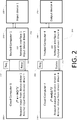
- FIG. 2 shows a high-level embodiment of split device drivers' implementation and operation, which, though not explicitly shown, may involve TLS encryption for network communications.
- the split device driver on Cloud Computer 1 (CC1) 200 contains two parts: the driver that interfaces with the program, and the driver that interfaces with the network.
- the split device driver on Trusted Computer 1 (TC1) 210 contains two parts: the driver that interfaces with the network, Network Interface 1 212, and the driver that interfaces with the input device, Input Device Driver 1 214.
- This input request 202 is passed to the driver that interfaces with the network for TLS encryption and transmission to TC1 210.
- Network Interface 1 212 receives the request and passes it to Input Device Driver 1 214.
- Input Device 1 220 When a response is received from the input device, Input Device 1 220, the response is passed by Input Device Driver 1 214 to Network Interface 1 212.
- Network Interface 1 212 encrypts the response using TLS and transmits the response 222 to CC1 200.
- the network driver on CC1 200 forwards the TLS decrypted response 222 to the program interface driver, which in turn forwards it to the waiting program.
- the program assigns the received input to the variable 'x' and continues execution. Also shown in FIG.
- CC4 Cloud Computer 4
- TC4 Trusted Computer 4
- the operation of the split device drivers for output is similar to the input operation except that instead of receiving input from the device, the computers receive a status message 252.
- Each operation of the series of operations, or each shred may be encrypted.
- Each shred may be encrypted using a symmetric-key encryption scheme such as Advanced Encryption Standard (AES) Galois Counter Mode (GCM) or any other suitable scheme.
- a symmetric-key encryption uses the shared key(s) of the at least one other computer such that each shred is encrypted using a different key.
- Such a scheme permits decryption of a shred only on the other computer for which the shred is intended, but hides the rest of the program from any other computers.
- Each data value of each operation of the series of operations may be encrypted. Encrypting the data values may be performed using a symmetric-key scheme, such as AES GCM, a public-key scheme, such as RSA, or any other suitable scheme. Such an encryption is performed on both the trusted computer and the at least one other computer. If a symmetric-key scheme is used, the secret key used is the shared key of the link between the sender and receiver of the data. If a public-key scheme is used, the sender uses the public key of the receiver for encryption, and the receiver uses its private key for decryption. Such schemes enable the at least one other computer to decrypt the data that it needs for computation, but hides all other data from it.
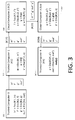
- FIG. 3 shows an embodiment of symmetric-key encryption and decryption operations for the shreds of the code and data in the example program of FIG. 1 .
- FIG. 3 like FIG. 2 , does not explicitly show the TLS encryption and decryption of the communication packets.
- the shredded program code is encrypted on TC0 300 during the shredding operation using shared keys K1, K2, K3, and K4.
- TC1 310 is not able to decrypt any other part of the encrypted program because TC1 310 only knows key K1, and attempting to decrypt some other portion of the code using key K1 would not produce valid code. This encrypting and decrypting process is repeated for all shreds using the keys of each computer sent a shred for computation, allowing each computer access to only the shred it is meant to compute.
- the communication links between the computers also have shared keys that are known only to the sender and receiver of data.
- the shared keys for the communication links are K12, K23, and K34.
- shared key K12 is used by TC1 310 to encrypt input 'x' to ciphertext 'x"
- x' is decrypted using key K12 on CC2 320 to yield 'x'. This process is used from computer to computer to ensure an attacker cannot intercept plaintext over the network.
- Obfuscation should be used for additional security and may comprise data obfuscation, code obfuscation, or both. Obfuscation may involve modifying the code and/or data within each shred to hide the original code and data from an attacker at an other computer. Code obfuscation uses obfuscating transformations to hide the logic of the original program from an attacker that has complete visibility of a shred's code as well as the instructions and data during shred execution. Data obfuscation transforms the data so that shredded code executes on obfuscated data values such that it is difficult for an attacker to recover the unobfuscated data value; blinding is a type of data obfuscation.
- Obfuscation with shredding involves obfuscating each operation of the series of operations before sending each operation to a respective other computer and unobfuscating the received computed outcome of the computer program.
- the method of obfuscation differs depending on the level of shredding, and shredding may be performed on at least four different levels: gate level, hardware-unit level, instruction level, encryption-scheme level, and any other scheme allowing the program to be broken into units.
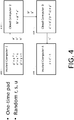
- the aim of obfuscation is to hide the values of inputs 'a', 'x', and 'y' and output 'z' from attackers at Cloud Computer 2 (CC2) 410 and Cloud Computer 3 (CC3) 420.
- Trusted Computer 1 (TC1) 400 introduces three random values, 'r', 's', and 't', that are used as one-time pads for obfuscating the values of inputs 'a', 'x', and 'y', respectively. The operation used for obfuscation depends on the use of the variable.
- variables 'a' and 'x' are multiplied, so the obfuscation operation multiplies 'a' and 'x' by their pad values 'r' and 's', whereas variable 'y' is an addend, so the obfuscation operation adds one-time pad 't'.
- CC2 410 and CC3 420 perform computation using obfuscated values 'a", 'x", and 'y" to compute 'b" and 'c", respectively.
- CC3 420 performs the unobfuscation of 'b" by dividing by 'r' and 's'
- Trusted Computer 4 (TC4) 430 performs the unobfuscation of the value 'c" by subtracting the pad 't'.
- Gate-level shredding is the finest level of shredding and offers perfect secrecy because it is impossible for an attacker who observes a single other computer to understand the calculation or recover the original inputs or outputs of the calculation. However, it is the slowest level of shredding and does not offer the ability to perform I/O operations on other computers.
- the program is divided into a circuit consisting of AND, OR, NAND, NOR, and NOT gates, and the NOT gates may be converted to NAND gates with equal input to ensure each gate operation has two operands.
- the series of operations the program has been divided into are circuit gate operations, with each circuit gate operation having an operator, a first operand, and a second operand.
- each gate in the circuit of gate operations is obfuscated and shredded across two other computers.
- the process involves the trusted computer obfuscating the first operand with a first random value and obfuscating the second operand with a second random value.
- the obfuscated operands are sent to a first computer with instructions for the first computer to compute a plurality of results of a plurality of operations using the obfuscated operands and send the plurality of results to a second computer.
- the trusted computer sends the second computer instructions: to choose a result of the plurality of results based upon the operator, the first random value, and the second random value; to obfuscate the chosen result with a third random value; and to send the chosen result to a different computer, which may be a trusted computer or another computer.
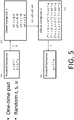
- FIG. 5 shows an example embodiment of shredding a gate computation across two other computers, namely Cloud Computer 1 (CC1) 510 and Cloud Computer 2 (CC2) 520.
- this embodiment uses one-time pads, but with random values 'r', 's', and 'u'.
- TC 500 then sends 'c' and 'd' to CC1 510.
- CC1 510 then sends ⁇ e1, e2, e3, e4 ⁇ to CC2 520.
- CC2 520 then sends f to TC 500.
- TC 500 computes three XOR operations for obfuscating the data while CC1 510 and CC2 520 perform the computations. Neither CC1 510 nor CC2 520 knows the input data, output data, or computation because CC1 510 performs four generic operations and CC2 520 selects the correct operation. Although it appears that the computation of AND or the result of the computation is revealed at CC2 520, careful examination shows that both the computation and the data are hidden.
- !d; e1 c
- a NAND or NOR operation may be computed by adding an additional NOT operation at CC2 520.
- a NOT operation of a single bit can use a NAND operation with equal inputs.
- a similar method using a random bit 'r' to hide input and another random bit 'u' to hide output may be used to obfuscate a sequential circuit that stores a single bit.
- any circuit can be obfuscated by introducing a one-time pad (consisting of all the random values of the bits used to hide inputs and outputs) on the TC 500 and generating two shreds to execute the circuit under that one-time pad. This scheme is secure as long as the two shreds are not simultaneously visible to an attacker.
- the one-time pad method illustrated in FIGs. 5-6 is not secure if the circuit is used multiple times because (1) values ⁇ e1, e2, e3, e4 ⁇ that are visible at CC2 (520, 620) have a specific pattern for the four combinations of input variables 'c' and 'd' at CC1 (510, 610) and (2) the pattern of values ⁇ e1, e2, e3, e4 ⁇ for an AND operation is different from the pattern of values ⁇ e1, e2, e3, e4 ⁇ for an OR operation.
- An attacker at CC2 (520, 620) who collects and analyzes the four values ⁇ e1, e2, e3, e4 ⁇ can determine the operation.
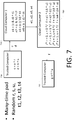
- FIG. 7 illustrates the computation using these new bits.
- FIG. 7 is identical to FIG. 5 , but uses ⁇ t1, t2, t3, t4 ⁇ for added obfuscation.
- Trusted Computer (TC) 700 obfuscates 'c' and 'd' and sends them to Cloud Computer 1 (CC1) 710, which computes ⁇ e1, e2, e3, e4 ⁇ identically to FIGs. 5-6 .
- CC1 Cloud Computer 1
- e1 is now XORed with t1, e2 XORed with t2, e3 XORed with t3, and e4 XORed with t4 to obfuscate the values of ⁇ e1, e2, e3, e4 ⁇ .
- Cloud Computer 2 (CC2) 720 or the computer processing the second shred, is either a pass-through or negation of a specific 'e' value, dependent on the operation being computed as well as the values of random bits 'r', 's', 'u', 't1', 't2', 't3', and 't4', as shown in the following table. Table 1.
- This scheme for obfuscating an AND, NAND, OR, or NOR operation of two input bits uses a random key containing seven bits (r, s, t1, t2, t3, t4, u) to generate two shreds.
- the first shred always performs the same boolean operations, the second shred selects the correct operation, and the communication of the intermediate values between the two shreds is obfuscated.
- FIG. 8 Each rectangle in FIG. 8 represents a computer.
- the initial input is sent from a computer 800, labeled "Send Input”, to a first computer 810, labeled "Compute 1", where a first shred calculates the operations and sends the operations to a second computer 820, labeled "Select 1", where a second shred selects the correct operation.
- the process continues (for example, at computers 830 and 840, labeled “Compute 2" and “Select 2" respectively, and then back to Compute 1 810 or another selected computer) until the result of the circuit is computed and sent to the computer 850 labeled "Receive Output".
- Hardware-unit-level shredding offers less privacy than gate-level shredding, but executes at a faster speed.
- This level of shredding divides the program into a circuit comprising operations of hardware units that perform specific functions. Examples include integer addition, integer multiplication, integer comparison, and floating point multiplication, which are standard hardware units in a generic computer.
- the series of operations are mathematical operations, with each mathematical operation having an operator, a first operand, and a second operand.
- An attacker at an other computer can see the type of operation being performed, but cannot guess the precise operation. For example, an attacker may see that an integer addition is being performed, but cannot see the plain values of the operands or the result.
- hardware-unit-level shredding does not offer the ability to perform I/O operations on other computers.
- Instruction-level shredding divides the program into instructions such that each shred executes a subset of the instructions. Examples of instructions include x86 machine instructions and Java Virtual Machine (JVM) bytecodes. Like hardware-unit-level shredding, these instructions involve mathematical operations. However, unlike hardware-unit-level shredding, instruction-level shredding accommodates programs that perform I/O operations by using the aforementioned split device drivers.
- JVM Java Virtual Machine
- each mathematical operation of the series of operations the program has been divided into is obfuscated and shredded across two computers.
- the process involves the trusted computer obfuscating the first operand with a first random value and obfuscating the second operand with a second random value.
- the obfuscated operands are sent to a first computer with instructions for the first computer to compute a first result of an operation using the operator, the first obfuscated operand, and the second obfuscated operand.
- the first computer also receives a value from a second computer, computes a second result of an operation using the operator, the first result, and the value, and sends the second result to a different computer, which may be a trusted computer or another computer.
- the second computer knows the random values used to obfuscate the operands and final result and uses this knowledge to calculate the value sent to the first computer.
- the received value is a third random value minus the sum of the first random value and second random value.
- FIG. 12 illustrated below, illustrates one such embodiment.
- the received value is a third random value divided by the product of the first random value and second random value.
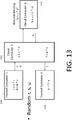
- FIG. 13 described below, illustrates one such embodiment.
- FIG. 18 illustrates an embodiment transitioning from a multiplicative obfuscation scheme to an additive obfuscation scheme
- FIG. 19 illustrates an embodiment transitioning from an additive obfuscation scheme to a multiplicative obfuscation scheme.
- Random values needed for obfuscation may be generated by the following method.
- the cycles of execution of the program are numbered so that a variable defined by an instruction executed at cycle 'i' is blinded by function "Key(i)".
- the function "Key(i)” generates a random floating point value that is not “too big or too small” in order to limit round-off error during floating point calculations.
- the random floating point value is also non-zero to prevent any division by zero during computation.
- the "Key” function is implemented using a fast stream cipher, such as Salsa20, that generates a random value for a nonce 'i'.
- Two secret seeds are used for the stream cipher: one seed for generating the additive blinding values, and a different seed for generating the multiplicative blinding values. Because each instruction in the program is an addition or a multiplication, but not both, the result of the execution is blinded using one of the two seeds. If the result of an instruction that is blinded in one scheme is used in an operation of the opposite scheme, a conversion operation is used to change schemes.
- the TCs (1200, 1230, 1300, and 1330) and CC3 (1220 and 1320) would know both seeds and CC2 (1210 and 1310) would not know any seed.
- the TCs (1800, 1840, 1900, and 1940) and CC3 (1820 and 1920) would know both seeds, CC2 (1810 and 1910) would not know any seed, and CC4 (1830 and 1930) would know only the multiplicative seed.
- Shredding performed at the encryption-scheme level encrypts each data value of each operation of the series of operations using homomorphic encryption schemes that depend on the operations that are performed on the data.
- Addition operations are encrypted using an Additive Homomorphic Encryption (AHE) scheme, such as Paillier, and multiplication operations are encrypted using a Multiplicative Homomorphic Encryption (MHE) scheme, such as El Gamal.
- AHE Additive Homomorphic Encryption
- MHE Multiplicative Homomorphic Encryption
- transition encryption functions may be used to convert AHE data values to MHE data values and convert MHE data values to AHE data values.
- transition functions may be shredded for added security by dividing a transition encryption function into a series of operations and sending each operation of the transition encryption function with accompanying instructions to at least one other computer, the accompanying instructions operative to compute a result of the respective operation and forward the result to another computer.
- FIG. 14 shows an embodiment of a shredded transition encryption function from Paillier to El Gamal
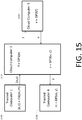
- FIG. 15 shows an embodiment of a shredded transition encryption function from El Gamal to Paillier. It is also possible to compare two encrypted integers.
- FIG. 16 shows an embodiment of a shredded comparison function using Paillier encryption
- FIG. 17 also described below, shows an embodiment of a shredded comparison function using El Gamal encryption.
- Trusted Computer 1 (TC1) 900 encrypts the 'a' and 'x' values using El Gamal and the 'b' value using Paillier.
- the "EG()" function refers to encrypting with El Gamal
- the "EP()" functions refers to encrypting with Paillier.
- Cloud Computer 2 (CC2) 910 computes the multiplication "a * x" on the MHE-encrypted values to produce an MHE-encrypted value of 'y".
- CC2 910 then uses the shredded transition functions "GP1()", “GP2()", and “GP30" with Cloud Computer 3 (CC3) 920 to convert the El Gamal-encrypted value of 'y” to a Paillier-encrypted value, 'y''', and adds "b + y" by multiplying the AHE-encrypted values.
- Trusted Computer 4 (TC4) 930 then receives the Paillier-encrypted value of 'z' and decrypts it, using the decrypt Paillier function "DP()", for the solution.
- Shredded transition functions "GP1()", “GP2()", and “GP3()" are described more fully in respect to FIG. 15 , below.
- split device drivers enable input and output operations in shreds executing on other computers.
- shreds it is preferable to allow shreds to only operate on encrypted data from I/O devices so that only trusted computers may see plain data from I/O devices.
- FIG. 10 shows an example operation of a normal device driver interaction operating on a single computer, while, in contrast, FIG. 11 shows a detailed example operation of a split device driver interaction between a trusted computer and a cloud computer.
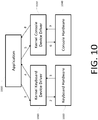
- FIG. 10 shows an example operation of a normal device driver interaction operating on a single computer.
- the example application, Application 1000 shown in FIG. 10 requests input from a keyboard, Keyboard Hardware 1020, and outputs that input to a console or screen, Console Hardware 1040.
- the process requires the eight steps labeled in FIG. 10 .
- the application requests a character from Kernel Keyboard Device Driver (KK) 1010 in the computer's kernel.
- KK 1010 requests a character from Keyboard Hardware 1020.
- Keyboard Hardware 1020 has received input and responds to KK 1010 with a character.
- KK 1010 passes the character to the application to complete the input operation.
- the application starts the output operation and sends the character to Kernel Console Device Driver (KC) 1030 in the computer's kernel.
- KC 1030 sends the character to Console Hardware 1040.
- Console Hardware 1040 prints the character and sends a status to KC 1030.
- KC 1030 passes the status to Application 1000.
- the output operation is now complete, and Application 1000 is aware of the status of the output, e.g., if it printed to the console screen, error, etc.
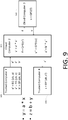
- FIG. 11 shows operation of an embodiment of a split device driver between Trusted Computer (TC) 1102 and Cloud Computer (CC) 1104 performing the same functions as FIG. 10 : Executing Shred 1100 requires input from Keyboard Hardware 1160 (steps 1-12) and then outputs that input to Console Hardware 1162 (steps 13-24). Because CC 1104 must get input from a trusted computer and output to a trusted computer for security purposes (here, that is TC 1102), the device drivers are split between CC 1104 and TC 1102.
- TC Trusted Computer
- CC Cloud Computer
- the input portion of FIG. 11 is as follows.
- Executing Shred 1100 requests a character from the split keyboard device driver in user mode, User Mode Keyboard Device Driver (CCUMK) 1110.
- CCUMK 1110 uses Kernel Network Device Driver (CCKN) 1120 to request the character.
- CCKN 1120 communicates with Kernel Network Device Driver on TC (TCKN) 1130.
- TCKN 1130 requests a character from User Mode Keyboard Device Driver (TCUMK) 1140.
- TCUMK 1140 requests a character from Kernel Keyboard Device Driver (TCKK) 1150.
- TCKK 1150 requests a character from Keyboard Hardware 1160.
- Keyboard Hardware 1160 has received input and responds to TCKK 1150 with a character.
- TCKK 1150 sends the character to TCUMK 1140.
- TCUMK 1140 encrypts the received character and sends it to TCKN 1130.
- TCKN 1130 sends the encrypted character to CCKN 1120.
- CCKN 1120 sends the encrypted character to CCUMK 1110.
- CCUMK 1110 passes the encrypted character to Executing Shred 1100 to complete the input operation.
- Executing Shred 1100 has received the encrypted character from the process of steps 1-12.
- Executing Shred 1100 begins the output operation and sends the encrypted character to the split console device driver in user mode, User Mode Console Device Driver (CCUMC) 1112.
- CCUMC 1112 uses CCKN 1120 to send the encrypted character.
- CCKN 1120 communicates with TCKN 1130.
- TCKN 1130 sends the encrypted character to User Mode Console Device Driver (TCUMC) 1142.
- TCUMC 1142 decrypts the character and sends the plain character to Kernel Console Device Driver (TCKC) 1152.
- TCKC 1152 sends the plain character to Console Hardware 1162.
- Console Hardware 1162 prints the character and sends a status to TCKC 1152.
- TCKC 1152 sends the status to TCUMC 1142.
- TCUMC 1142 sends a status to TCKN 1130.
- TCKN 1130 sends the status to CCKN 1120.
- CCKN 1120 sends the status to CCUMC 1112.
- CCUMC 1112 sends the status to Executing Shred 1100.
- the output operation is now complete, and Executing Shred 1100 is aware of the status of the output, e.g., if it printed to the console screen, error, etc.
- an additional difference between Application 1000 in FIG. 10 and Executing Shred 1100 in FIG. 11 is that Executing Shred 1100 operates on encrypted data, and hence can execute on a computer that is observed by an attacker, here CC 1104.
- the key for encrypting and decrypting the data is only available on TC 1102, which uses the key in TCUMK 1140 and TCUMC 1142.
- code obfuscation may be used to hide the logic of the original program and may be used in conjunction with data obfuscation.
- Data obfuscation may be better understood using FIGs. 12-13 , and code obfuscation may include, but is not limited to, opcode substitution, function merging, control flow flattening, and decoy code, including opaque predicates.
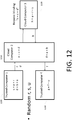
- Trusted Computer 1 (TC1) 1200 selects two random numbers, 'r' and 's', to obfuscate 'a' and 'b', respectively.
- TC1 1200 computes "a + r" and "b + s” and assigns the results to variables 'c' and 'd', respectively.
- TC1 1200 then sends (c, d) to Cloud Computer 2 (CC2) 1210.
- CC3 1220 is given knowledge of random values 'r' and 's' and also a third random value, 'u', used to blind the final result.
- CC3 1220 computes the value of "u - r - s" and assigns it to variable 'h', which it sends to CC2 1210.
- CC2 1210 receives the value 'h' from CC3 1220, computes "e + h", and assigns the result to variable 'f', which it sends to Trusted Computer 4 (TC4) 1230.
- TC4 1230 then unblinds the result by computing "f - u", completing the operation.
- the TCs 1200 and 1230 use three random numbers, 'r', 's', and 'u', as keys for obfuscating the input data ('a' and 'b') and output data ('g') while the two cloud computers 1210 and 1220 compute the actual sum. No cloud computer knows the input or output data.
- Trusted Computer 1 (TC1) 1300 selects two random numbers, 'r' and 's', to obfuscate 'a' and 'b', respectively.
- TC1 1300 computes "a * r" and "b * s” and assigns the results to variables 'c' and 'd', respectively.
- TC1 1300 then sends (c, d) to Cloud Computer 2 (CC2) 1310.
- CC3 1320 is given knowledge of random values 'r' and 's' and also a third random value, 'u', used to blind the final result.
- CC3 1320 computes the value of "u / (r * s)" and assigns it to variable 'h', which it sends to CC2 1310.
- CC2 1310 receives the value 'h' from CC3 1320, computes "e * h", and assigns the result to variable 'f', which it sends to Trusted Computer 4 (TC4) 1330.
- TC4 1330 then unblinds the result by computing "f / u", completing the operation.
- the TCs 1300 and 1330 use three random numbers, 'r', 's', and 'u', as keys for obfuscating the input data ('a' and 'b') and output data ('g') while the two cloud computers 1310 and 1320 compute the actual product. No cloud computer knows the input or output data.
- Opcode substitution involves substituting random opcodes for the real opcodes, thwarting static disassembly of a shred.
- a substitution map may be created that maps the program opcodes to a random permutation of opcodes.
- the substitution map may then be used to transform the series of opcodes into the random permutation of opcodes and sent to a remote computer for use in unobfuscating by the respective other computers.
- Unobfuscation may be performed by receiving, at the remote computer holding the substitution map, from an other computer, an index corresponding to a portion of the substitution map and sending, from the remote computer to the other computer, the portion of the substitution map. It may be seen symmetrically that an other computer may send, to the remote computer, an index corresponding to a portion of the substitution map, receive, from the remote computer, the portion of the substitution map, and transform, using the substitution map, the random permutation of opcodes into the original series of opcodes.
- opcode substitution with a substitution map may be used with a Java program.
- Java bytecodes have 256 opcodes, of which 51 opcodes (range 203-253) are not defined.
- a substitution map is introduced to map the original 256 opcodes to a random permutation of the opcodes.
- the substitution map is known to the computer that produces a shred as well as to a remote computer, but it is not known to the other computer that executes the shred using the permutated opcodes.
- the unused opcode 253 is used by the obfuscated programs as a GET MAP instruction.
- the GET MAP instruction takes a 32-bit index as an operand, which is sent by the other computer executing a shred to the remote computer.
- the remote computer returns a 256-byte result containing the substitution map to be used for that particular shred.
- the GET MAP instruction is inserted at the beginning of a shred as well as a user specified number of times within a shred. For security, there should be a large number of GET MAP instructions to thwart statistical analysis of a large section of code that uses the same map. For performance optimization, there should be a small number of GET MAP instructions within loops.
- Function merging combines unrelated functions into a single function.
- the unrelated functions each have parameters and retain their respective behaviors inside the single function.
- the single function takes all of the unrelated functions' parameters plus an additional parameter to select which behavior to perform. If the number of unrelated functions is large, groups of somewhat-related functions may be merged so that there is a single merged function per group.
- Control flow flattening also known as chenxification
- a switch statement is added that performs behavior identical to that of the original function.
- Decoy code is used to increase the amount of code that an attacker would need to analyze. This may be done by inserting decoy code into the computer program.
- the decoy code may comprise original code of the computer program with a number of minor mutations. The minor mutations create statically undetectable errors, and the number of minor mutations may be user-specified.
- the decoy code may be part of an opaque predicate scheme. Such a scheme thwarts static analysis of a function by making the target statement dependent on an opaque predicate, which is a predicate that is easy to setup and execute, but difficult to analyze.
- Opaque predicates may exploit array aliasing, of which there are three types of predicates: always true, always false, and sometimes true.
- FIGs. 14-17 illustrate embodiments using Paillier and El Gamal encryption.
- FIG. 14 shows an embodiment of a shredded transition encryption function from Paillier encryption to El Gamal encryption.
- Decrypt ciphertext 'c' from Paillier and encrypt into El Gamal is defined as:
- Function "PG(c)” may be shredded into “PG1(c)", “PG2(a, c)", and "PG3(w)” using the following process.
- the functions are defined as follows: Combining the functions yields function "PG_shred(c)":
- Trusted Computer 1 (TC1) 1400 encrypts message 'm' with public key 'pk' into Paillier ciphertext 'c', which it then sends to Cloud Computer 2 (CC2) 1410.
- CC2 1410 calculates "PG1(c)” and assigns the result to 'a', and then sends 'a' and 'c' to Cloud Computer 3 (CC3) 1420.
- CC3 1420 calculates "PG2(a, c)" and assigns the result to (v, w), which it sends back to CC2 1410.
- CC2 1410 calculates "PG3(w)" and assigns the result to 'z', and then sends (v, z) to Trusted Computer 4 (TC4) 1430.
- TC4 1430 receives ciphertext (v, z), now in El Gamal encryption, and decrypts it with secret key 'sk' to reveal message 'm'.
- TC2 1410 nor CC3 1420 know all randomly selected values 'b1', 'b2', 'u1' and 'u2'.
- the public key 'pk' is meant to substitute for 'n'
- the secret key 'sk' is meant to substitute for 'x'.
- FIG. 15 shows an embodiment of a shredded transition encryption function from El Gamal to Paillier.
- Decrypt ciphertext (e, c) from El Gamal and encrypt into Paillier is defined as:
- Function "GP(e,c)” may be shredded into "GP1(e)", “GP2(f)", and "GP3(v, c)” using the following process.
- the functions are defined as follows: Combining the functions yields function "GP_shred(e, c)":
- Trusted Computer 1 (TC1) 1500 encrypts message 'm' with public key 'pk' into El Gamal ciphertext (e,c), which it then sends to Cloud Computer 2 (CC2) 1510.
- CC2 1510 calculates "GP1(e)” and assigns the result to 'f', and then sends 'f' to Cloud Computer 3 (CC3) 1520.
- CC3 1520 calculates "GP2(f)” and assigns the result to 'v', which it sends back to CC2 1510.
- CC2 1510 calculates "GP3(v, c)” and assigns the result to 'z', and then sends 'z' to Trusted Computer 4 (TC4) 1530.
- TC4 1530 receives ciphertext 'z', now in Paillier encryption, and decrypts it with secret key 'sk' to reveal message 'm'.
- CC2 1510 nor CC3 1520 know both randomly selected values 'xl' and 'x2'.
- the public key 'pk' is meant to substitute for (n, g, q, h), and the secret key 'sk' is meant to substitute for (b, u).
- Function "CP(c 1 , c 2 )" may be shredded into “CP1(c 1 , c 2 )", “CP2(a, c)", and "CP3(b)” using the following process.
- the functions are defined as follows: Combining the functions yields function "CP_shred(c 1 , c 2 )": In FIG.
- Trusted Computer 1 (TC1) 1600 encrypts message 'm1' with public key 'pk' into Paillier ciphertext 'c1' and message 'm2' with public key 'pk' into Paillier ciphertext 'c2'.
- TC1 1600 then sends (c 1 , c 2 ) to Cloud Computer 2 (CC2) 1610.
- CC2 1610 calculates "CP1(c 1 , c 2 )" and assigns the result to (a, c), and then sends (a, c) to Cloud Computer 3 (CC3) 1620.
- CC3 1620 calculates "CP2(a, c)" and assigns the result to 'b', which it sends to Cloud Computer 4 (CC4) 1630.
- CC4 1630 calculates "CP3(b)” and assigns the result to 'z', and then sends 'z' to CC2 1610.
- CC2 1610 receives 'z', and performs the conditionals to determine "EQ", "GT”, or "LT”, which may then be used for further calculations.
- No cloud computer knows all randomly selected values 'b1', 'b2', 'u1' and 'u2'. In FIG. 16 , the public key 'pk', is meant to substitute for 'n'.
- FIG. 17 shows an embodiment of a shredded comparison function using El Gamal encryption. If two integers (both less than n/2, where n is the public key) are encrypted in the El Gamal scheme, order comparison between them may be defined as follows: where "GP()" is the El Gamal-to-Paillier transition function defined in FIG. 15 and "CP()" is the Paillier comparison function defined in FIG. 16 .
- Function "CG((e 1 , c 1 ), (e 2 , c 2 ))” may be shredded as follows: In FIG.
- Trusted Computer 1 (TC1) 1700 encrypts message 'm1' with public key 'pk' into El Gamal ciphertext (e1, c1) and message 'm2' with public key 'pk' into El Gamal ciphertext (e2, c2).
- TC1 1700 then sends (e1, c1) and (e2, c2) to Cloud Computer 2 (CC2) 1710.
- CC2 1710 calculates "GP1(e1)” and assigns the result to 'f1' and "GP1(e2)” and assigns the result to 'f2', and then sends 'f1' and 'f2' to Cloud Computer 3 (CC3) 1720.
- CC3 1720 calculates "GP2(f1)” and assigns the result to 'v1' and "GP2(f2)” and assigns the result to 'v2', and then sends 'v1' and 'v2' back to CC2 1710.
- CC2 1710 calculates "GP3(v1, c1)” and assigns the result to 'p1' and "GP3(v2, c2)” and assigns the result to 'p2'.
- CC2 1710 calculates "CP1(p1, p2)” and assigns the result to (a, c), and then sends (a, c) to Cloud Computer 3 (CC3) 1720.
- CC3 1720 calculates "CP2(a, c)" and assigns the result to 'b', which it sends to Cloud Computer 4 (CC4) 1730.
- CC4 1730 calculates "CP3(b)” and assigns the result to 'z', and then sends 'z' to CC2 1710.
- CC2 1710 receives 'z', and performs the conditionals to determine "EQ", "GT”, or "LT”, which may then be used for further calculations.
- No cloud computer knows all randomly selected values.
- the public key 'pk' is meant to substitute for (n, g, q, h).
- FIGs. 18-19 illustrate two example embodiments of these transition functions.
- FIG. 18 illustrates an embodiment transitioning from a multiplicative obfuscation scheme to an additive obfuscation scheme.
- the program performs multiplicative blinding of 'a' with a random number 'r', but needs the additive blinding of 'a' with a random number 's'.
- the transition process is shredded for security.
- Trusted Computer 1 (TC1) 1800 and Trusted Computer 5 (TC5) 1840 select two random numbers, 'r' and 's', to blind 'a'.
- TC1 1800 computes "a * r" and assigns the result to variable 'c', which it then sends to Cloud Computer 2 (CC2) 1810.
- CC2 1810 requests multiplicative to additive blinding from Cloud Computer 3 (CC3) 1820.
- CC3 1820 is given knowledge of random values 'r' and 's', and computes "r * s", assigns the product to variable 'h', and sends 'h' to CC2 1810.
- CC2 1810 receives the value 'h' from CC3 1820, computes "c + h", and assigns the result to variable 'e', which it sends to Cloud Computer 4 (CC4) 1830.
- CC4 1830 then unblinds the product by computing "e / r", which it assigns to variable 'f', and sends 'f' to TC5 1840.
- TC5 1840 receives the additively-blinded value of a, which equals "a + s".
- the variable 'a' may be recovered by subtracting 's' from 'f'.
- FIG. 19 illustrates an embodiment transitioning from an additive obfuscation scheme to a multiplicative obfuscation scheme.
- the process is essentially the reverse process of that illustrated in FIG. 18 .
- the arrows follow a reverse path from that of FIG. 18 .
- TCs 1800, 1840, 1900, and 1940
- CC3 1820 and 1920
- CC2 1810 and 1910
- CC4 1830 and 1930
- the program performs additive blinding of 'a' with a random number 's', but needs the multiplicative blinding of 'a' with a random number 'r'.
- the transition process is shredded for security.
- Trusted Computer 1 (TC1) 1900 and Trusted Computer 5 (TC5) 1940 select two random numbers, 'r' and 's', to blind 'a'.
- TC5 1940 computes "a + s" and assigns the result to variable 'c', which it then sends to Cloud Computer 4 (CC4) 1930.
- CC4 1930 then blinds the sum by computing "c * r", which it assigns to variable 'e', and sends 'e' to Cloud Computer 2 (CC2) 1910.
- CC2 1910 requests additive to multiplicative blinding from Cloud Computer 3 (CC3) 1920.
- CC3 1920 is given knowledge of random values 'r' and 's', and computes "r * s", assigns the product to variable 'h', and sends 'h' to CC2 1910.
- CC2 1910 receives the value 'h' from CC3 1920, computes "e - h", and assigns the result to variable 'f', which it sends to TC1 1900.
- TC1 1900 receives the multiplicatively-blinded value of a, which equals "a * r".
- the variable 'a' may be recovered by computing "f / r".
- Shredding of the conversion from one blinding scheme to another is used so that the plain value of 'a' cannot be computed by an attacker controlling any single cloud computer.
- the multiplicative key 'r' is exposed to CC4 (1830 and 1930), but an attacker at this computer only sees the additively blinded value of 'a'.
- an attacker at CC2 (1810 and 1910) sees the multiplicatively blinded value of 'a', the lack of access to the multiplicative blinding key 'r' prevents computation of 'a'.
- Method I are effective against attackers with root access to a single other computer that record and analyze the executed programs, the in-memory data, and the files on disk to observe private information (Threat Level I).
- Method I may not be effective against an attacker that can modify the executing programs, memory, and files on the single other computer to disrupt execution (Threat Level II).
- Method II may be extended so that every shred is executed on multiple other computers (Method II). The intermediate data results from the multiple other computers would be checked for consistency, and computation is aborted if an inconsistency is detected.
- Method II is able to thwart attacks from an attacker at Threat Level II.
- Threat Level III neither Method I nor Method II is effective against an attacker that controls all of the other computers in a network (Threat Level III).
- Method II may be extended so that the other computers chosen for executing a single program span multiple administrative domains or multiple commercially distinct infrastructures (Method III).
- the other computers may be chosen from different public cloud providers such as Google, Amazon, and/or Microsoft.
- Method III is able to thwart attacks from an attacker at Threat Level III.
Landscapes
- Engineering & Computer Science (AREA)
- Computer Security & Cryptography (AREA)
- Computer Networks & Wireless Communication (AREA)
- Signal Processing (AREA)
- General Engineering & Computer Science (AREA)
- Computer Hardware Design (AREA)
- Computing Systems (AREA)
- Software Systems (AREA)
- Theoretical Computer Science (AREA)
- Multimedia (AREA)
- Technology Law (AREA)
- Physics & Mathematics (AREA)
- General Physics & Mathematics (AREA)
- Storage Device Security (AREA)
- Computer And Data Communications (AREA)
Claims (34)
- Verfahren zum Ausführen eines Computerprogramms, das Folgendes umfasst:Unterteilen eines Computerprogramms in eine Reihe von Operationen, wobei sich das Computerprogramm auf einem vertrauenswürdigen Computer befindet, der mit mindestens einem weiteren Computer verbunden ist;Verschleiern durch den vertrauenswürdigen Computer jeder Operation der Reihe von Operationen vor einem Senden jeder Operation zu einem jeweiligen weiteren Computer;Senden jeder Operation der Reihe von Operationen mit begleitenden Befehlen zu dem mindestens einen weiteren Computer, wobei die begleitenden Befehle betreibbar sind zum Berechnen eines Ergebnisses der jeweiligen Operation und Weiterleiten des Ergebnisses zu einem weiteren Computer;Empfangen bei dem vertrauenswürdigen Computer eines berechneten Ergebnisses des Computerprogramms undEntschleiern durch den vertrauenswürdigen Computer des empfangenen berechneten Ergebnisses des Computerprogramms.
- Verfahren nach Anspruch 1, wobei die Reihe von Operationen Schaltungsgatteroperationen sind und jede Schaltungsgatteroperation einen Operator, einen ersten Operanden und einen zweiten Operanden besitzt;wobei das Verschleiern jeder Operation der Reihe von Operationen wahlweise Folgendes umfasst:Verschleiern des ersten Operanden mit einem ersten Zufallswert undVerschleiern des zweiten Operanden mit einem zweiten Zufallswert; undwobei das Senden jeder Operation der Reihe von Operationen mit begleitenden Befehlen zum mindestens einen weiteren Computer wahlweise Folgendes umfasst:Senden der verschleierten Operanden zu einem ersten Computer mit Befehlen, die Folgendes umfassen:Berechnen mehrerer Ergebnisse mehrerer Operationen unter Verwendung der verschleierten Operanden undSenden der mehreren Ergebnisse zu einem zweiten Computer; undSenden von Befehlen zum zweiten Computer, die Folgendes umfassen:Wählen eines Ergebnisses der mehreren Ergebnisse auf der Grundlage des Operators, des ersten Zufallswerts und des zweiten Zufallswerts;Verschleiern des gewählten Ergebnisses mit einem dritten Zufallswert undSenden des gewählten Ergebnisses zu einem anderen Computer.
- Verfahren nach Anspruch 1, wobei die Reihe von Operationen mathematische Computeroperationen sind und jede mathematische Computeroperation einen Operator, einen ersten Operanden und einen zweiten Operanden besitzt.
- Verfahren nach Anspruch 3, wobei das Verschleiern jeder Operation der Reihe von Operationen vor dem Senden Folgendes umfasst:Verschleiern des ersten Operanden mit einem ersten Zufallswert undVerschleiern des zweiten Operanden mit einem zweiten Zufallswert.
- Verfahren nach Anspruch 4, wobei das Senden jeder Operation der Reihe von Operationen mit begleitenden Befehlen zu dem mindestens einen weiteren Computer Folgendes umfasst:
Senden des Operators und der verschleierten Operanden zu einem ersten Computer mit Befehlen, die Folgendes umfassen:Berechnen eines ersten Ergebnisses einer Operation unter Verwendung des Operators, des ersten verschleierten Operanden und des zweiten verschleierten Operanden;Empfangen eines Werts von einem zweiten Computer;Berechnen eines zweiten Ergebnisses einer Operation unter Verwendung des Operators, des ersten Ergebnisses und des Werts undSenden des zweiten Ergebnisses zu einem anderen Computer. - Verfahren nach Anspruch 4, wobei das Verschleierungsschema des ersten Operanden nicht mit dem Verschleierungsschema des zweiten Operanden übereinstimmt.
- Verfahren nach Anspruch 6, wobei eine Übergangsverschleierungsfunktion verwendet wird, um unter Verwendung eines dritten Zufallswerts das Verschleierungsschema des ersten Operanden zum Verschleierungsschema des zweiten Operanden umzuwandeln.
- Verfahren nach Anspruch 7, das ferner Folgendes umfasst:Unterteilen der Übergangsverschleierungsfunktion in eine Reihe von Operationen undSenden jeder Operation der Übergangsverschleierungsfunktion mit begleitenden Befehlen zu mindestens einem weiteren Computer, wobei die begleitenden Befehle betreibbar sind zum Berechnen eines Ergebnisses der jeweiligen Operation und Weiterleiten des Ergebnisses zu einem weiteren Computer.
- Verfahren nach Anspruch 8, wobei das Senden jeder Operation der Übergangsverschleierungsfunktion mit begleitenden Befehlen zu mindestens einem weiteren Computer Folgendes umfasst:
dann, wenn der erste Operand multiplikativ verschleiert ist:Senden des verschleierten Operanden zu einem ersten Computer mit Befehlen, die Folgendes umfassen:Empfangen eines Werts von einem zweiten Computer;Berechnen einer Summe des ersten verschleierten Operanden und des Werts undSenden der Summe zu einem dritten Computer;Senden von Befehlen zu einem dritten Computer, die Folgendes umfassen:
Berechnen des Quotienten der Summe und des ersten Zufallswerts undSenden des Quotienten zu einem anderen Computer; unddann, wenn der erste Operand additiv verschleiert ist:Senden des verschleierten Operanden zu einem dritten Computer mit Befehlen, die Folgendes umfassen:Berechnen eines Produkts des ersten verschleierten Operanden und des dritten Zufallswerts undSenden des Produkts zu einem ersten Computer; undSenden von Befehlen zum ersten Computer, die Folgendes umfassen:Empfangen eines Werts von einem zweiten Computer;Berechnen einer Differenz zwischen dem Produkt und dem Wert undSenden der Differenz zu einem anderen Computer. - Verfahren nach Anspruch 9, wobei der Wert, der vom zweiten Computer empfangen wird, das Produkt des ersten Zufallswerts und des dritten Zufallswerts ist.
- Verfahren nach Anspruch 1, wobei das Verschleiern eine Codeverschleierung und/oder eine Datenverschleierung umfasst.
- Verfahren nach Anspruch 11, wobei die Codeverschleierung Folgendes umfasst:
dann, wenn die Reihe von Operationen Programmbefehlscodes umfasst:Erzeugen einer Ersetzungsabbildung, die die Programmbefehlscodes auf eine zufällige Permutation von Befehlscodes abbildet;Umwandeln der Reihe von Befehlscodes in die zufällige Permutation von Befehlscodes mittels der Ersetzungsabbildung undSenden der Ersetzungsabbildung zu einem entfernten Computer zur Verwendung beim Entschleiern durch die jeweiligen weiteren Computer. - Verfahren nach Anspruch 12, wobei das Entschleiern Folgendes umfasst:Empfangen beim entfernten Computer von einem weiteren Computer eines Index, der einem Abschnitt der Ersetzungsabbildung entspricht; undSenden vom entfernten Computer zum weiteren Computer des Abschnitts der Ersetzungsabbildung.
- Verfahren nach Anspruch 12, wobei das Entschleiern Folgendes umfasst:Senden von einem weiteren Computer zum entfernten Computer eines Index, der einem Abschnitt der Ersetzungsabbildung entspricht;Empfangen beim weiteren Computer vom entfernten Computer des Abschnitts der Ersetzungsabbildung undUmwandeln der zufälligen Permutation von Befehlscodes in der Reihe von Befehlscodes mittels des Abschnitts der Ersetzungsabbildung.
- Verfahren nach Anspruch 12, wobei dann, wenn die Reihe von Operationen Programmbefehlscodes umfasst, die Codeverschleierung ferner Folgendes umfasst:Kombinieren nicht in Beziehung stehender Funktionen in eine einzelne Funktion; wobeiwahlweise die nicht in Beziehung stehenden Funktionen Parameter besitzen und ihre jeweiligen Verhalten behalten und die einzelne Funktion die Parameter und einen zusätzlichen Parameter aufnimmt, um zu wählen, welches Verhalten durchgeführt werden soll.
- Verfahren nach Anspruch 12, wobei dann, wenn die Reihe von Operationen Programmbefehlscodes umfasst, die Codeverschleierung ferner Folgendes umfasst:
Umwandeln einer Funktion in eine Endlosschleife, wobei die Endlosschleife eine Schaltanweisung enthält und ein Verhalten durchführt, das mit dem der Funktion identisch ist. - Verfahren nach Anspruch 12, wobei dann, wenn die Reihe von Operationen Programmbefehlscodes umfasst, die Codeverschleierung ferner Folgendes umfasst:
Einsetzen von Täuschcode in das Computerprogramm. - Verfahren nach Anspruch 17, wobei der Täuschcode Teil eines undurchsichtigen Prädikatenschemas ist.
- Verfahren nach Anspruch 17, wobei der Täuschcode ursprünglichen Code des Computerprogramms mit mehreren geringfügigen Veränderungen umfasst, wobei wahlweise die Anzahl von geringfügigen Veränderungen vom Anwender festgelegt wird.
- Verfahren nach Anspruch 1, das ferner Folgendes umfasst:
Verschlüsseln von Verbindungen zwischen dem vertrauenswürdigen Computer und dem mindestens einen weiteren Computer. - Verfahren nach Anspruch 1, das ferner Folgendes umfasst:Verschlüsseln jedes Datenwerts jeder Operation der Reihe von Operationen; wobeidas Verschlüsseln jedes Datenwerts jeder Operation wahlweise mit einem additiven homomorphen Verschlüsselungsschema für Additionsoperationen und einem multiplikativen homomorphen Verschlüsselungsschema für Multiplikationsoperationen durchgeführt wird;wahlweise Übergangsverschlüsselungsfunktionen verwendet werden, um additiv homomorph verschlüsselte Datenwerte zu multiplikativ homomorph verschlüsselten Datenwerten umzuwandeln und multiplikativ homomorph verschlüsselte Datenwerte zu additiv homomorph verschlüsselten Datenwerten umzuwandeln; unddas Verfahren wahlweise ferner Folgendes umfasst:Unterteilen einer Übergangsverschlüsselungsfunktion in eine Reihe von Operationen undSenden jeder Operation der Übergangsverschlüsselungsfunktion mit begleitenden Befehlen zu mindestens einem weiteren Computer, wobei die begleitenden Befehle betreibbar sind zum Berechnen eines Ergebnisses der jeweiligen Operation und Weiterleiten des Ergebnisses zu einem weiteren Computer.
- Verfahren nach Anspruch 1, das ferner Folgendes umfasst:
Verschlüsseln jeder Operation der Reihe von Operationen. - Verfahren nach Anspruch 1, das ferner Folgendes umfasst:
dann, wenn während der Berechnung eines Ergebnisses einer Operation in einem bestimmten Computer die Operation eine Eingabe von einer Vorrichtung, die mit einem ersten vertrauenswürdigen Computer verbunden ist, erfordert:Erzeugen einer Eingabeanforderung bei einem Programmtreiber im bestimmten Computer;Weiterleiten der Eingabeanforderung vom Programmtreiber zu einem Netztreiber;Senden der Eingabeanforderung zum ersten vertrauenswürdigen Computer mittels des Netztreibers;Empfangen einer Antwort der Vorrichtung beim Netztreiber vom ersten vertrauenswürdigen Computer undWeiterleiten der Antwort vom Netztreiber zum Programmtreiber zur Verwendung in der Berechnung; wobeidie empfangene Antwort wahlweise verschlüsselt wird. - Verfahren nach Anspruch 1, das ferner Folgendes umfasst:
dann, wenn während der Berechnung eines Ergebnisses einer Operation in einem bestimmten Computer die Operation eine Eingabe von einer Vorrichtung, die mit einem ersten vertrauenswürdigen Computer verbunden ist, erfordert:Empfangen vom bestimmten Computer bei einem Netztreiber im ersten vertrauenswürdigen Computer einer Anforderung einer Eingabe von der Vorrichtung;Weiterleiten der Anforderung vom Netztreiber zu einem Eingabetreiber für die Vorrichtung;Weiterleiten einer Antwort von der Vorrichtung vom Eingabetreiber zum Netztreiber undSenden der Antwort zum bestimmten Computer mittels des Netztreibers; wobeidas Verfahren wahlweise ferner ein Verschlüsseln der Antwort der Vorrichtung vor dem Weiterleiten der Antwort vom Eingabetreiber zum Netztreiber umfasst. - Verfahren nach Anspruch 1, das ferner Folgendes umfasst:
dann, wenn während der Berechnung eines Ergebnisses einer Operation in einem bestimmten Computer die Operation eine Ausgabe von einer Vorrichtung, die mit einem ersten vertrauenswürdigen Computer verbunden ist, erfordert:Erzeugen einer Ausgabeanforderung bei einem Programmtreiber im bestimmten Computer;Weiterleiten der Ausgabeanforderung vom Programmtreiber zu einem Netztreiber;Senden der Ausgabeanforderung zum ersten vertrauenswürdigen Computer mittels des Netztreibers;Empfangen eines Status der Vorrichtung beim Netztreiber vom ersten vertrauenswürdigen Computer undWeiterleiten des Status vom Netztreiber zum Programmtreiber zur Verwendung in der Berechnung; wobeidie Ausgabeanforderung wahlweise verschlüsselte Daten enthält. - Verfahren nach Anspruch 1, das ferner Folgendes umfasst:
dann, wenn während der Berechnung eines Ergebnisses einer Operation in einem bestimmten Computer die Operation eine Ausgabe von einer Vorrichtung, die mit einem ersten vertrauenswürdigen Computer verbunden ist, erfordert:Empfangen von dem bestimmten Computer bei einem Netztreiber im ersten vertrauenswürdigen Computer einer Anforderung einer Ausgabe zur Vorrichtung;Weiterleiten der Anforderung vom Netztreiber zu einem Ausgabetreiber für die Vorrichtung;Weiterleiten eines Status von der Vorrichtung vom Ausgabetreiber zum Netztreiber undSenden des Status zu dem bestimmten Computer mittels des Netztreibers; wobeidie Anforderung wahlweise verschlüsselte Daten enthält; unddas Verfahren wahlweise ferner Folgendes umfasst:
Entschlüsseln der verschlüsselten Daten vor dem Weiterleiten der Anforderung vom Netztreiber zum Ausgabetreiber. - Verfahren nach Anspruch 1, das ferner Folgendes umfasst:
dann, wenn während der Berechnung eines Ergebnisses einer Operation in einem bestimmten Computer die Operation eine Eingabe von einer Vorrichtung, die mit einem ersten vertrauenswürdigen Computer verbunden ist, erfordert:Erzeugen einer Eingabeanforderung bei einem Programmtreiber im bestimmten Computer;Weiterleiten der Eingabeanforderung vom Programmtreiber zu einem ersten Netztreiber;Senden der Eingabeanforderung zum ersten vertrauenswürdigen Computer mittels des ersten Netztreibers;Empfangen vom bestimmten Computer bei einem zweiten Netztreiber im ersten vertrauenswürdigen Computer der Eingabeanforderung;Weiterleiten der Eingabeanforderung vom zweiten Netztreiber zu einem Eingabetreiber für die Vorrichtung;Weiterleiten einer Antwort von der Vorrichtung vom Eingabetreiber zum zweiten Netztreiber;Senden der Antwort zum bestimmten Computer mittels des zweiten Netztreibers;Empfangen der Antwort der Vorrichtung beim ersten Netztreiber vom ersten vertrauenswürdigen Computer undWeiterleiten der Antwort vom ersten Netztreiber zum Programmtreiber zur Verwendung in der Berechnung; wobeidas Verfahren wahlweise ferner Folgendes umfasst:Verschlüsseln der Antwort von der Vorrichtung vor dem Weiterleiten der Antwort vom Eingabetreiber zum zweiten Netztreiber; wobeiwahlweise die empfangene Antwort vom ersten vertrauenswürdigen Computer verschlüsselt wird. - Verfahren nach Anspruch 1, das ferner Folgendes umfasst:
dann, wenn während der Berechnung eines Ergebnisses einer Operation in einem bestimmten Computer die Operation eine Ausgabe von einer Vorrichtung, die mit einem ersten vertrauenswürdigen Computer verbunden ist, erfordert:Erzeugen einer Ausgabeanforderung bei einem Programmtreiber im bestimmten Computer;Weiterleiten der Ausgabeanforderung vom Programmtreiber zu einem ersten Netztreiber;Senden der Ausgabeanforderung zum ersten vertrauenswürdigen Computer mittels des ersten Netztreibers;Empfangen vom bestimmten Computer bei einem zweiten Netztreiber im ersten vertrauenswürdigen Computer der Ausgabeanforderung;Weiterleiten der Ausgabeanforderung vom zweiten Netztreiber zu einem Ausgabetreiber für die Vorrichtung;Weiterleiten eines Status der Vorrichtung vom Ausgabetreiber zum zweiten Netztreiber;Senden des Status zum bestimmten Computer mittels des zweiten Netztreibers;Empfangen des Status beim ersten Netztreiber vom ersten vertrauenswürdigen Computer undWeiterleiten des Status vom ersten Netztreiber zum Programmtreiber zur Verwendung in der Berechnung; wobeidie Ausgabeanforderung wahlweise verschlüsselte Daten enthält unddas Verfahren wahlweise ferner Folgendes umfasst:
Entschlüsseln der verschlüsselten Daten vor dem Weiterleiten der Ausgabeanforderung vom zweiten Netztreiber zum Ausgabetreiber. - Verfahren nach Anspruch 1, wobei der mindestens eine weitere Computer Teil einer Cloud ist und wahlweise: die Cloud nicht vertrauenswürdig ist, die Cloud mehrere administrative Domänen umfasst oder die Cloud mehrere kommerziell verschiedene Infrastrukturen umfasst.
- Verfahren nach Anspruch 1, wobei der mindestens eine weitere Computer Teil eines Unternehmensnetzes ist.
- Verfahren nach Anspruch 1, wobei der mindestens eine weitere Computer aus mehreren Computern zufällig gewählt ist und wahlweise jeder Computer der mehreren Computer nicht vertrauenswürdig ist.
- Verfahren nach Anspruch 1, wobei der mindestens eine weitere Computer nicht vertrauenswürdig ist oder der mindestens eine weitere Computer nicht der vertrauenswürdige Computer ist.
- Verfahren nach Anspruch 1, wobei das Senden jeder Operation der Reihe von Operationen mit begleitenden Befehlen zum mindestens einen weiteren Computer ein Senden jeder Operation zu mehreren Computern zur Berechnung umfasst.
- System, das mindestens einen vertrauenswürdigen Computer und mindestens einen weiteren Computer umfasst, wobei in einem ersten vertrauenswürdigen Computer des mindestens einen vertrauenswürdigen Computers Computerbefehle gespeichert sind, die während einer Ausführung den ersten vertrauenswürdigen Computer veranlassen, das Verfahren nach einem beliebigen vorhergehenden Anspruch durchzuführen.
Applications Claiming Priority (2)
| Application Number | Priority Date | Filing Date | Title |
|---|---|---|---|
| US14/804,713 US10110566B2 (en) | 2015-07-21 | 2015-07-21 | Systems and processes for executing private programs on untrusted computers |
| PCT/US2016/043117 WO2017015357A1 (en) | 2015-07-21 | 2016-07-20 | Systems and processes for executing private programs on untrusted computers |
Publications (3)
| Publication Number | Publication Date |
|---|---|
| EP3326345A1 EP3326345A1 (de) | 2018-05-30 |
| EP3326345A4 EP3326345A4 (de) | 2019-03-27 |
| EP3326345B1 true EP3326345B1 (de) | 2021-10-06 |
Family
ID=57834671
Family Applications (1)
| Application Number | Title | Priority Date | Filing Date |
|---|---|---|---|
| EP16828463.6A Active EP3326345B1 (de) | 2015-07-21 | 2016-07-20 | Systeme und verfahren zur ausführung vertraulicher programme auf unsicheren computern |
Country Status (10)
| Country | Link |
|---|---|
| US (2) | US10110566B2 (de) |
| EP (1) | EP3326345B1 (de) |
| JP (1) | JP6880017B2 (de) |
| KR (1) | KR102315831B1 (de) |
| CN (1) | CN108476198B (de) |
| AU (1) | AU2016297559B2 (de) |
| CA (1) | CA2998323C (de) |
| DK (1) | DK3326345T3 (de) |
| IL (1) | IL257040B (de) |
| WO (1) | WO2017015357A1 (de) |
Families Citing this family (18)
| Publication number | Priority date | Publication date | Assignee | Title |
|---|---|---|---|---|
| US10348503B2 (en) * | 2016-12-12 | 2019-07-09 | Sap Portals Israel Ltd. | Client side actions validation |
| CN111801670B (zh) * | 2017-12-18 | 2024-12-13 | 中佛罗里达大学研究基金会有限公司 | 操作在公共计算机上加密数据的代码的安全执行技术 |
| US11232224B2 (en) | 2018-03-15 | 2022-01-25 | Servicenow, Inc. | Database encryption |
| CN109446828B (zh) * | 2018-11-07 | 2020-10-13 | 北京邮电大学 | 一种安全多方计算方法及装置 |
| US11042634B2 (en) * | 2018-12-21 | 2021-06-22 | Fujitsu Limited | Determining information leakage of computer-readable programs |
| WO2020151964A1 (en) * | 2019-01-23 | 2020-07-30 | Koninklijke Philips N.V. | Machine learning model validation and authentication |
| WO2020240246A1 (en) * | 2019-05-29 | 2020-12-03 | Commissariat A L 'energie Atomique Et Aux Energies Alternatives | A computer-implemented method for obfuscating a program code |
| US11456855B2 (en) * | 2019-10-17 | 2022-09-27 | Arm Limited | Obfuscating data at-transit |
| US11973743B2 (en) | 2019-12-13 | 2024-04-30 | TripleBlind, Inc. | Systems and methods for providing a systemic error in artificial intelligence algorithms |
| US12026219B2 (en) | 2019-12-13 | 2024-07-02 | TripleBlind, Inc. | Systems and methods for efficient computations on split data and split algorithms |
| US12149510B1 (en) | 2019-12-13 | 2024-11-19 | Tripleblind Holdings, Inc. | Systems and methods for providing a private multi-modal artificial intelligence platform |
| US11431688B2 (en) | 2019-12-13 | 2022-08-30 | TripleBlind, Inc. | Systems and methods for providing a modified loss function in federated-split learning |
| US11853793B2 (en) | 2020-10-09 | 2023-12-26 | Samsung Electronics Co., Ltd. | Methods and system for on-device AI model parameter run-time protection |
| EP4050471A1 (de) | 2021-02-26 | 2022-08-31 | Zama SAS | Verschlüsselte skalare multiplikation |
| WO2023007633A1 (ja) * | 2021-07-28 | 2023-02-02 | 富士通株式会社 | 制御方法、制御プログラム、ノード、およびシステム |
| US12288157B2 (en) | 2022-02-03 | 2025-04-29 | Selfiee Corporation | Systems and methods for quantifying data leakage from a split layer |
| US12086246B2 (en) * | 2022-07-01 | 2024-09-10 | Nxp B.V. | Method for protecting a machine learning model from a side channel attack |
| KR20240087103A (ko) * | 2022-12-12 | 2024-06-19 | 삼성전자주식회사 | 스토리지 장치 및 이를 포함하는 스토리지 시스템 |
Family Cites Families (79)
| Publication number | Priority date | Publication date | Assignee | Title |
|---|---|---|---|---|
| US6067620A (en) * | 1996-07-30 | 2000-05-23 | Holden; James M. | Stand alone security device for computer networks |
| US6477648B1 (en) * | 1997-03-23 | 2002-11-05 | Novell, Inc. | Trusted workstation in a networked client/server computing system |
| US6957341B2 (en) * | 1998-05-14 | 2005-10-18 | Purdue Research Foundation | Method and system for secure computational outsourcing and disguise |
| US7430670B1 (en) | 1999-07-29 | 2008-09-30 | Intertrust Technologies Corp. | Software self-defense systems and methods |
| US20010037450A1 (en) * | 2000-03-02 | 2001-11-01 | Metlitski Evgueny A. | System and method for process protection |
| US7398398B2 (en) * | 2002-03-16 | 2008-07-08 | Trustedflow Systems, Inc. | Authenticated and metered flow control method |
| US8220058B2 (en) * | 2003-09-25 | 2012-07-10 | Oracle America, Inc. | Rendering and encryption engine for application program obfuscation |
| US20050069138A1 (en) * | 2003-09-25 | 2005-03-31 | Sun Microsystems, Inc., A Delaware Corporation | Application program obfuscation |
| US7353499B2 (en) * | 2003-09-25 | 2008-04-01 | Sun Microsystems, Inc. | Multiple instruction dispatch tables for application program obfuscation |
| US7363620B2 (en) * | 2003-09-25 | 2008-04-22 | Sun Microsystems, Inc. | Non-linear execution of application program instructions for application program obfuscation |
| US7415618B2 (en) * | 2003-09-25 | 2008-08-19 | Sun Microsystems, Inc. | Permutation of opcode values for application program obfuscation |
| DE102005021749A1 (de) * | 2005-05-11 | 2006-11-16 | Fachhochschule Dortmund | Verfahren und Vorrichtung zur programmgesteuerten Informationsverarbeitung |
| JP5113169B2 (ja) * | 2006-07-12 | 2013-01-09 | イルデト・コーポレート・ビー・ヴイ | 暗号関数を難読化する方法およびシステム |
| US20090249492A1 (en) * | 2006-09-21 | 2009-10-01 | Hans Martin Boesgaard Sorensen | Fabrication of computer executable program files from source code |
| US9411976B2 (en) * | 2006-12-01 | 2016-08-09 | Maidsafe Foundation | Communication system and method |
| US9124650B2 (en) | 2006-12-13 | 2015-09-01 | Quickplay Media Inc. | Digital rights management in a mobile environment |
| US8538012B2 (en) * | 2007-03-14 | 2013-09-17 | Intel Corporation | Performing AES encryption or decryption in multiple modes with a single instruction |
| US8312518B1 (en) * | 2007-09-27 | 2012-11-13 | Avaya Inc. | Island of trust in a service-oriented environment |
| US8762736B1 (en) * | 2008-04-04 | 2014-06-24 | Massachusetts Institute Of Technology | One-time programs |
| US8209744B2 (en) * | 2008-05-16 | 2012-06-26 | Microsoft Corporation | Mobile device assisted secure computer network communication |
| US8171306B2 (en) * | 2008-11-05 | 2012-05-01 | Microsoft Corporation | Universal secure token for obfuscation and tamper resistance |
| WO2011037665A2 (en) * | 2009-08-04 | 2011-03-31 | Carnegie Mellon University | Methods and apparatuses for user-verifiable trusted path in the presence of malware |
| US8347398B1 (en) * | 2009-09-23 | 2013-01-01 | Savvystuff Property Trust | Selected text obfuscation and encryption in a local, network and cloud computing environment |
| US20110202765A1 (en) * | 2010-02-17 | 2011-08-18 | Microsoft Corporation | Securely move virtual machines between host servers |
| US9703586B2 (en) * | 2010-02-17 | 2017-07-11 | Microsoft Technology Licensing, Llc | Distribution control and tracking mechanism of virtual machine appliances |
| US8862895B2 (en) * | 2010-04-27 | 2014-10-14 | Fuji Xerox Co., Ltd. | Systems and methods for communication, storage, retrieval, and computation of simple statistics and logical operations on encrypted data |
| CA2800809A1 (en) * | 2010-05-28 | 2011-12-01 | Lawrence A. Laurich | Accelerator system for use with secure data storage |
| US20110296164A1 (en) * | 2010-05-28 | 2011-12-01 | Mcafee, Inc. | System and method for providing secure network services |
| CN103270516B (zh) * | 2010-08-18 | 2016-10-12 | 安全第一公司 | 用于安全保护虚拟机计算环境的系统和方法 |
| US8681973B2 (en) * | 2010-09-15 | 2014-03-25 | At&T Intellectual Property I, L.P. | Methods, systems, and computer program products for performing homomorphic encryption and decryption on individual operations |
| US20120084562A1 (en) * | 2010-10-04 | 2012-04-05 | Ralph Rabert Farina | Methods and systems for updating a secure boot device using cryptographically secured communications across unsecured networks |
| US8762964B2 (en) | 2010-12-17 | 2014-06-24 | Cisco Technology, Inc. | Optimizing symbol manipulation language-based executable applications for distributed execution |
| US8700906B2 (en) * | 2011-01-14 | 2014-04-15 | Microsoft Corporation | Secure computing in multi-tenant data centers |
| US20120278487A1 (en) | 2011-04-27 | 2012-11-01 | Woelfel John Harold | System and method of handling requests in a multi-homed reverse proxy |
| US9077525B2 (en) * | 2011-06-24 | 2015-07-07 | Microsoft Technology Licensing, Llc | User-controlled data encryption with obfuscated policy |
| US9203621B2 (en) * | 2011-07-11 | 2015-12-01 | Hewlett-Packard Development Company, L.P. | Policy-based data management |
| US20130019092A1 (en) * | 2011-07-14 | 2013-01-17 | Barracuda Inc. | System to Embed Enhanced Security / Privacy Functions Into a User Client |
| GB2497070B (en) * | 2011-11-17 | 2015-11-25 | Advanced Risc Mach Ltd | Cryptographic support instructions |
| US9380036B2 (en) * | 2011-11-28 | 2016-06-28 | Porticor Ltd. | Methods and devices for securing keys for a nonsecured, distributed environment with applications to virtualization and cloud-computing security and management |
| US9208319B2 (en) * | 2011-12-15 | 2015-12-08 | Microsoft Technology Licensing, Llc | Code base partitioning system |
| US8615656B2 (en) * | 2012-01-09 | 2013-12-24 | The Mitre Corporation | Secure remote peripheral encryption tunnel |
| JP6078555B2 (ja) * | 2012-01-09 | 2017-02-08 | コーニンクレッカ フィリップス エヌ ヴェKoninklijke Philips N.V. | 鍵駆動の難読化を用いる仮想マシンデバイス及び方法 |
| EP2831800B1 (de) * | 2012-03-26 | 2020-05-06 | Irdeto B.V. | Verfahren zum schutz von daten |
| EP2645618A1 (de) * | 2012-03-30 | 2013-10-02 | British Telecommunications Public Limited Company | Verfahren und System für den Netzwerkdatenzugriff |
| EP2672673B1 (de) * | 2012-06-07 | 2016-05-25 | Alcatel Lucent | Vorrichtung und Verfahren für sichere Datenverarbeitung |
| EP2672672A1 (de) * | 2012-06-07 | 2013-12-11 | Alcatel-Lucent | Sichere Datenverarbeitung |
| US8656482B1 (en) * | 2012-08-20 | 2014-02-18 | Bitdefender IPR Management Ltd. | Secure communication using a trusted virtual machine |
| US20140195804A1 (en) * | 2012-10-12 | 2014-07-10 | Safelylocked, Llc | Techniques for secure data exchange |
| US9176838B2 (en) * | 2012-10-19 | 2015-11-03 | Intel Corporation | Encrypted data inspection in a network environment |
| GB2508894A (en) * | 2012-12-14 | 2014-06-18 | Ibm | Preventing a trusted boot device from being booted in a virtual machine |
| US9535715B2 (en) * | 2012-12-14 | 2017-01-03 | Microsoft Technology Licensing, Llc | Booting from a trusted network image |
| US8909967B1 (en) * | 2012-12-31 | 2014-12-09 | Emc Corporation | Technique for secure computation |
| US10063380B2 (en) * | 2013-01-22 | 2018-08-28 | Amazon Technologies, Inc. | Secure interface for invoking privileged operations |
| US9503268B2 (en) * | 2013-01-22 | 2016-11-22 | Amazon Technologies, Inc. | Securing results of privileged computing operations |
| US9055038B1 (en) * | 2013-02-04 | 2015-06-09 | Stealth Software Technologies, Inc. | Apparatus, system, and method to garble programs |
| US9141823B2 (en) * | 2013-03-15 | 2015-09-22 | Veridicom, Sa De Cv | Abstraction layer for default encryption with orthogonal encryption logic session object; and automated authentication, with a method for online litigation |
| US9104862B2 (en) * | 2013-04-01 | 2015-08-11 | Uniquesoft, Llc | Secure computing device using new software versions |
| US9361456B2 (en) * | 2013-04-01 | 2016-06-07 | Uniquesoft, Llc | Secure computing device using a library of programs |
| US10275593B2 (en) * | 2013-04-01 | 2019-04-30 | Uniquesoft, Llc | Secure computing device using different central processing resources |
| US9424421B2 (en) | 2013-05-03 | 2016-08-23 | Visa International Service Association | Security engine for a secure operating environment |
| US9530009B2 (en) * | 2013-06-27 | 2016-12-27 | Visa International Service Association | Secure execution and update of application module code |
| EP3036680B1 (de) * | 2013-08-21 | 2018-07-18 | Intel Corporation | Private datenverarbeitung in einer cloud |
| CN103559458B (zh) * | 2013-10-09 | 2016-08-17 | 广州华迅网络科技有限公司 | 数据散列获取方法及其系统 |
| US9235692B2 (en) * | 2013-12-13 | 2016-01-12 | International Business Machines Corporation | Secure application debugging |
| AU2015277000C1 (en) * | 2014-06-18 | 2019-11-28 | Visa International Service Association | Efficient methods for authenticated communication |
| US9813245B2 (en) * | 2014-08-29 | 2017-11-07 | Visa International Service Association | Methods for secure cryptogram generation |
| US9584517B1 (en) * | 2014-09-03 | 2017-02-28 | Amazon Technologies, Inc. | Transforms within secure execution environments |
| CN104243166A (zh) * | 2014-09-05 | 2014-12-24 | 深圳市中兴移动通信有限公司 | 录音加密方法和装置 |
| US9735968B2 (en) * | 2014-10-20 | 2017-08-15 | Microsoft Technology Licensing, Llc | Trust service for a client device |
| AU2015364751A1 (en) * | 2014-12-16 | 2017-06-29 | Ramsey, Martin Shafer | Method and apparatus for randomizing computer instruction sets, memory registers and pointers |
| EP3257227B1 (de) * | 2015-02-13 | 2021-03-31 | Visa International Service Association | Verwaltung von vertraulicher kommunikation |
| US9596263B1 (en) * | 2015-02-23 | 2017-03-14 | Amazon Technolgies, Inc. | Obfuscation and de-obfuscation of identifiers |
| US10484168B2 (en) * | 2015-03-02 | 2019-11-19 | Dell Products L.P. | Methods and systems for obfuscating data and computations defined in a secure distributed transaction ledger |
| US9712503B1 (en) * | 2015-03-23 | 2017-07-18 | Amazon Technologies, Inc. | Computing instance migration |
| US20160294794A1 (en) * | 2015-04-04 | 2016-10-06 | Aleksandar Mancic | Security System For Data Communications Including Key Management And Privacy |
| US10614216B2 (en) * | 2015-04-14 | 2020-04-07 | Gigavation, Inc. | Paravirtualized security threat protection of a computer-driven system with networked devices |
| SG11201804478VA (en) * | 2015-05-19 | 2018-06-28 | Cryptomove Inc | Security via data concealment |
| US20180089415A1 (en) * | 2015-06-11 | 2018-03-29 | International Business Machines Corporation | User trusted device for detecting a virtualized environment |
| US9667606B2 (en) * | 2015-07-01 | 2017-05-30 | Cyphermatrix, Inc. | Systems, methods and computer readable medium to implement secured computational infrastructure for cloud and data center environments |
-
2015
- 2015-07-21 US US14/804,713 patent/US10110566B2/en active Active
-
2016
- 2016-07-20 AU AU2016297559A patent/AU2016297559B2/en active Active
- 2016-07-20 JP JP2018523361A patent/JP6880017B2/ja active Active
- 2016-07-20 EP EP16828463.6A patent/EP3326345B1/de active Active
- 2016-07-20 CA CA2998323A patent/CA2998323C/en active Active
- 2016-07-20 WO PCT/US2016/043117 patent/WO2017015357A1/en not_active Ceased
- 2016-07-20 CN CN201680054703.XA patent/CN108476198B/zh active Active
- 2016-07-20 KR KR1020187005125A patent/KR102315831B1/ko active Active
- 2016-07-20 DK DK16828463.6T patent/DK3326345T3/da active
-
2018
- 2018-01-21 IL IL257040A patent/IL257040B/en active IP Right Grant
- 2018-09-28 US US16/146,212 patent/US10652216B2/en active Active
Non-Patent Citations (1)
| Title |
|---|
| None * |
Also Published As
| Publication number | Publication date |
|---|---|
| AU2016297559A1 (en) | 2018-03-15 |
| US10110566B2 (en) | 2018-10-23 |
| EP3326345A1 (de) | 2018-05-30 |
| AU2016297559B2 (en) | 2020-09-03 |
| JP6880017B2 (ja) | 2021-06-02 |
| CA2998323A1 (en) | 2017-01-26 |
| CN108476198A (zh) | 2018-08-31 |
| DK3326345T3 (da) | 2021-10-11 |
| IL257040B (en) | 2020-02-27 |
| KR102315831B1 (ko) | 2021-10-22 |
| WO2017015357A1 (en) | 2017-01-26 |
| US20190044915A1 (en) | 2019-02-07 |
| CN108476198B (zh) | 2020-09-22 |
| IL257040A (en) | 2018-03-29 |
| US10652216B2 (en) | 2020-05-12 |
| US20170026342A1 (en) | 2017-01-26 |
| EP3326345A4 (de) | 2019-03-27 |
| CA2998323C (en) | 2022-06-07 |
| JP2018522291A (ja) | 2018-08-09 |
| KR20180084732A (ko) | 2018-07-25 |
Similar Documents
| Publication | Publication Date | Title |
|---|---|---|
| US10652216B2 (en) | Systems and processes for executing private programs on untrusted computers | |
| CN110995409B (zh) | 基于部分同态加密算法的拟态防御裁决方法和系统 | |
| US9819657B2 (en) | Protection of memory interface | |
| WO2018017421A1 (en) | Modular exponentiation with side channel attack countermeasures | |
| US20150215117A1 (en) | White box encryption apparatus and method | |
| Kounavis et al. | Encrypting the internet | |
| IL287688B1 (en) | System and method for adding and comparing integers encrypted with quasigroup operations in aes counter mode encryption | |
| US8000473B2 (en) | Method and apparatus for generating cryptographic sets of instructions automatically and code generator | |
| EP3698262B1 (de) | Schutz der modularen inversionsoperation vor externen überwachungsangriffen | |
| US20230239144A1 (en) | Deterministic chaos-based quantum computer resistant data encryption for large scale wide area network solutions | |
| Iqbal et al. | An efficient grayscale image encryption scheme based on variable length row-column swapping operations | |
| EP4307155A1 (de) | Verfahren und schaltung zum schutz einer elektronischen vorrichtung vor einem seitenkanalangriff | |
| Lee et al. | Systematization of shuffling countermeasures: With an application to crystals-dilithium | |
| Fu et al. | Medical image protection using hyperchaos-based encryption | |
| Pal et al. | MORSA: An Innovative Modified and Optimized RSA Framework Using Parallel Computing Environment. | |
| Gupta et al. | An enhanced python based approach of secret sharing scheme with encryption | |
| Ismail | Enhanced Data Encryption and Decryption Parallel Algorithm for Secured Data Transmission in Cloud Computing System | |
| Karstens | Deniable Encryption | |
| Kariapper | Cryptography in the Cloud: Securing Data in Cloud with Encryption |
Legal Events
| Date | Code | Title | Description |
|---|---|---|---|
| STAA | Information on the status of an ep patent application or granted ep patent |
Free format text: STATUS: THE INTERNATIONAL PUBLICATION HAS BEEN MADE |
|
| PUAI | Public reference made under article 153(3) epc to a published international application that has entered the european phase |
Free format text: ORIGINAL CODE: 0009012 |
|
| STAA | Information on the status of an ep patent application or granted ep patent |
Free format text: STATUS: REQUEST FOR EXAMINATION WAS MADE |
|
| 17P | Request for examination filed |
Effective date: 20180221 |
|
| AK | Designated contracting states |
Kind code of ref document: A1 Designated state(s): AL AT BE BG CH CY CZ DE DK EE ES FI FR GB GR HR HU IE IS IT LI LT LU LV MC MK MT NL NO PL PT RO RS SE SI SK SM TR |
|
| AX | Request for extension of the european patent |
Extension state: BA ME |
|
| DAV | Request for validation of the european patent (deleted) | ||
| DAX | Request for extension of the european patent (deleted) | ||
| A4 | Supplementary search report drawn up and despatched |
Effective date: 20190225 |
|
| RIC1 | Information provided on ipc code assigned before grant |
Ipc: H04L 9/00 20060101ALI20190219BHEP Ipc: G06F 21/14 20130101ALI20190219BHEP Ipc: H04L 29/06 20060101AFI20190219BHEP |
|
| STAA | Information on the status of an ep patent application or granted ep patent |
Free format text: STATUS: EXAMINATION IS IN PROGRESS |
|
| 17Q | First examination report despatched |
Effective date: 20191106 |
|
| GRAP | Despatch of communication of intention to grant a patent |
Free format text: ORIGINAL CODE: EPIDOSNIGR1 |
|
| STAA | Information on the status of an ep patent application or granted ep patent |
Free format text: STATUS: GRANT OF PATENT IS INTENDED |
|
| INTG | Intention to grant announced |
Effective date: 20200622 |
|
| GRAJ | Information related to disapproval of communication of intention to grant by the applicant or resumption of examination proceedings by the epo deleted |
Free format text: ORIGINAL CODE: EPIDOSDIGR1 |
|
| STAA | Information on the status of an ep patent application or granted ep patent |
Free format text: STATUS: EXAMINATION IS IN PROGRESS |
|
| GRAP | Despatch of communication of intention to grant a patent |
Free format text: ORIGINAL CODE: EPIDOSNIGR1 |
|
| STAA | Information on the status of an ep patent application or granted ep patent |
Free format text: STATUS: GRANT OF PATENT IS INTENDED |
|
| INTC | Intention to grant announced (deleted) | ||
| INTG | Intention to grant announced |
Effective date: 20201130 |
|
| GRAJ | Information related to disapproval of communication of intention to grant by the applicant or resumption of examination proceedings by the epo deleted |
Free format text: ORIGINAL CODE: EPIDOSDIGR1 |
|
| STAA | Information on the status of an ep patent application or granted ep patent |
Free format text: STATUS: EXAMINATION IS IN PROGRESS |
|
| GRAP | Despatch of communication of intention to grant a patent |
Free format text: ORIGINAL CODE: EPIDOSNIGR1 |
|
| STAA | Information on the status of an ep patent application or granted ep patent |
Free format text: STATUS: GRANT OF PATENT IS INTENDED |
|
| INTC | Intention to grant announced (deleted) | ||
| INTG | Intention to grant announced |
Effective date: 20210429 |
|
| GRAS | Grant fee paid |
Free format text: ORIGINAL CODE: EPIDOSNIGR3 |
|
| GRAA | (expected) grant |
Free format text: ORIGINAL CODE: 0009210 |
|
| STAA | Information on the status of an ep patent application or granted ep patent |
Free format text: STATUS: THE PATENT HAS BEEN GRANTED |
|
| AK | Designated contracting states |
Kind code of ref document: B1 Designated state(s): AL AT BE BG CH CY CZ DE DK EE ES FI FR GB GR HR HU IE IS IT LI LT LU LV MC MK MT NL NO PL PT RO RS SE SI SK SM TR |
|
| REG | Reference to a national code |
Ref country code: GB Ref legal event code: FG4D |
|
| REG | Reference to a national code |
Ref country code: DK Ref legal event code: T3 Effective date: 20211007 |
|
| REG | Reference to a national code |
Ref country code: CH Ref legal event code: EP Ref country code: AT Ref legal event code: REF Ref document number: 1437210 Country of ref document: AT Kind code of ref document: T Effective date: 20211015 |
|
| REG | Reference to a national code |
Ref country code: DE Ref legal event code: R096 Ref document number: 602016064703 Country of ref document: DE |
|
| REG | Reference to a national code |
Ref country code: IE Ref legal event code: FG4D |
|
| REG | Reference to a national code |
Ref country code: DE Ref legal event code: R079 Ref document number: 602016064703 Country of ref document: DE Free format text: PREVIOUS MAIN CLASS: H04L0029060000 Ipc: H04L0065000000 |
|
| REG | Reference to a national code |
Ref country code: EE Ref legal event code: FG4A Ref document number: E021588 Country of ref document: EE Effective date: 20211006 |
|
| REG | Reference to a national code |
Ref country code: LT Ref legal event code: MG9D |
|
| REG | Reference to a national code |
Ref country code: NL Ref legal event code: MP Effective date: 20211006 |
|
| REG | Reference to a national code |
Ref country code: AT Ref legal event code: MK05 Ref document number: 1437210 Country of ref document: AT Kind code of ref document: T Effective date: 20211006 |
|
| PG25 | Lapsed in a contracting state [announced via postgrant information from national office to epo] |
Ref country code: RS Free format text: LAPSE BECAUSE OF FAILURE TO SUBMIT A TRANSLATION OF THE DESCRIPTION OR TO PAY THE FEE WITHIN THE PRESCRIBED TIME-LIMIT Effective date: 20211006 Ref country code: LT Free format text: LAPSE BECAUSE OF FAILURE TO SUBMIT A TRANSLATION OF THE DESCRIPTION OR TO PAY THE FEE WITHIN THE PRESCRIBED TIME-LIMIT Effective date: 20211006 Ref country code: FI Free format text: LAPSE BECAUSE OF FAILURE TO SUBMIT A TRANSLATION OF THE DESCRIPTION OR TO PAY THE FEE WITHIN THE PRESCRIBED TIME-LIMIT Effective date: 20211006 Ref country code: BG Free format text: LAPSE BECAUSE OF FAILURE TO SUBMIT A TRANSLATION OF THE DESCRIPTION OR TO PAY THE FEE WITHIN THE PRESCRIBED TIME-LIMIT Effective date: 20220106 Ref country code: AT Free format text: LAPSE BECAUSE OF FAILURE TO SUBMIT A TRANSLATION OF THE DESCRIPTION OR TO PAY THE FEE WITHIN THE PRESCRIBED TIME-LIMIT Effective date: 20211006 |
|
| PG25 | Lapsed in a contracting state [announced via postgrant information from national office to epo] |
Ref country code: IS Free format text: LAPSE BECAUSE OF FAILURE TO SUBMIT A TRANSLATION OF THE DESCRIPTION OR TO PAY THE FEE WITHIN THE PRESCRIBED TIME-LIMIT Effective date: 20220206 Ref country code: SE Free format text: LAPSE BECAUSE OF FAILURE TO SUBMIT A TRANSLATION OF THE DESCRIPTION OR TO PAY THE FEE WITHIN THE PRESCRIBED TIME-LIMIT Effective date: 20211006 Ref country code: PT Free format text: LAPSE BECAUSE OF FAILURE TO SUBMIT A TRANSLATION OF THE DESCRIPTION OR TO PAY THE FEE WITHIN THE PRESCRIBED TIME-LIMIT Effective date: 20220207 Ref country code: PL Free format text: LAPSE BECAUSE OF FAILURE TO SUBMIT A TRANSLATION OF THE DESCRIPTION OR TO PAY THE FEE WITHIN THE PRESCRIBED TIME-LIMIT Effective date: 20211006 Ref country code: NO Free format text: LAPSE BECAUSE OF FAILURE TO SUBMIT A TRANSLATION OF THE DESCRIPTION OR TO PAY THE FEE WITHIN THE PRESCRIBED TIME-LIMIT Effective date: 20220106 Ref country code: NL Free format text: LAPSE BECAUSE OF FAILURE TO SUBMIT A TRANSLATION OF THE DESCRIPTION OR TO PAY THE FEE WITHIN THE PRESCRIBED TIME-LIMIT Effective date: 20211006 Ref country code: LV Free format text: LAPSE BECAUSE OF FAILURE TO SUBMIT A TRANSLATION OF THE DESCRIPTION OR TO PAY THE FEE WITHIN THE PRESCRIBED TIME-LIMIT Effective date: 20211006 Ref country code: HR Free format text: LAPSE BECAUSE OF FAILURE TO SUBMIT A TRANSLATION OF THE DESCRIPTION OR TO PAY THE FEE WITHIN THE PRESCRIBED TIME-LIMIT Effective date: 20211006 Ref country code: GR Free format text: LAPSE BECAUSE OF FAILURE TO SUBMIT A TRANSLATION OF THE DESCRIPTION OR TO PAY THE FEE WITHIN THE PRESCRIBED TIME-LIMIT Effective date: 20220107 Ref country code: ES Free format text: LAPSE BECAUSE OF FAILURE TO SUBMIT A TRANSLATION OF THE DESCRIPTION OR TO PAY THE FEE WITHIN THE PRESCRIBED TIME-LIMIT Effective date: 20211006 |
|
| REG | Reference to a national code |
Ref country code: DE Ref legal event code: R097 Ref document number: 602016064703 Country of ref document: DE |
|
| PG25 | Lapsed in a contracting state [announced via postgrant information from national office to epo] |
Ref country code: SM Free format text: LAPSE BECAUSE OF FAILURE TO SUBMIT A TRANSLATION OF THE DESCRIPTION OR TO PAY THE FEE WITHIN THE PRESCRIBED TIME-LIMIT Effective date: 20211006 Ref country code: SK Free format text: LAPSE BECAUSE OF FAILURE TO SUBMIT A TRANSLATION OF THE DESCRIPTION OR TO PAY THE FEE WITHIN THE PRESCRIBED TIME-LIMIT Effective date: 20211006 Ref country code: RO Free format text: LAPSE BECAUSE OF FAILURE TO SUBMIT A TRANSLATION OF THE DESCRIPTION OR TO PAY THE FEE WITHIN THE PRESCRIBED TIME-LIMIT Effective date: 20211006 Ref country code: CZ Free format text: LAPSE BECAUSE OF FAILURE TO SUBMIT A TRANSLATION OF THE DESCRIPTION OR TO PAY THE FEE WITHIN THE PRESCRIBED TIME-LIMIT Effective date: 20211006 |
|
| PLBE | No opposition filed within time limit |
Free format text: ORIGINAL CODE: 0009261 |
|
| STAA | Information on the status of an ep patent application or granted ep patent |
Free format text: STATUS: NO OPPOSITION FILED WITHIN TIME LIMIT |
|
| 26N | No opposition filed |
Effective date: 20220707 |
|
| PG25 | Lapsed in a contracting state [announced via postgrant information from national office to epo] |
Ref country code: AL Free format text: LAPSE BECAUSE OF FAILURE TO SUBMIT A TRANSLATION OF THE DESCRIPTION OR TO PAY THE FEE WITHIN THE PRESCRIBED TIME-LIMIT Effective date: 20211006 |
|
| PG25 | Lapsed in a contracting state [announced via postgrant information from national office to epo] |
Ref country code: SI Free format text: LAPSE BECAUSE OF FAILURE TO SUBMIT A TRANSLATION OF THE DESCRIPTION OR TO PAY THE FEE WITHIN THE PRESCRIBED TIME-LIMIT Effective date: 20211006 |
|
| PG25 | Lapsed in a contracting state [announced via postgrant information from national office to epo] |
Ref country code: MC Free format text: LAPSE BECAUSE OF FAILURE TO SUBMIT A TRANSLATION OF THE DESCRIPTION OR TO PAY THE FEE WITHIN THE PRESCRIBED TIME-LIMIT Effective date: 20211006 |
|
| PG25 | Lapsed in a contracting state [announced via postgrant information from national office to epo] |
Ref country code: LU Free format text: LAPSE BECAUSE OF NON-PAYMENT OF DUE FEES Effective date: 20220720 |
|
| PG25 | Lapsed in a contracting state [announced via postgrant information from national office to epo] |
Ref country code: IT Free format text: LAPSE BECAUSE OF FAILURE TO SUBMIT A TRANSLATION OF THE DESCRIPTION OR TO PAY THE FEE WITHIN THE PRESCRIBED TIME-LIMIT Effective date: 20211006 |
|
| PG25 | Lapsed in a contracting state [announced via postgrant information from national office to epo] |
Ref country code: IE Free format text: LAPSE BECAUSE OF NON-PAYMENT OF DUE FEES Effective date: 20220720 |
|
| PG25 | Lapsed in a contracting state [announced via postgrant information from national office to epo] |
Ref country code: HU Free format text: LAPSE BECAUSE OF FAILURE TO SUBMIT A TRANSLATION OF THE DESCRIPTION OR TO PAY THE FEE WITHIN THE PRESCRIBED TIME-LIMIT; INVALID AB INITIO Effective date: 20160720 |
|
| PG25 | Lapsed in a contracting state [announced via postgrant information from national office to epo] |
Ref country code: MK Free format text: LAPSE BECAUSE OF FAILURE TO SUBMIT A TRANSLATION OF THE DESCRIPTION OR TO PAY THE FEE WITHIN THE PRESCRIBED TIME-LIMIT Effective date: 20211006 Ref country code: CY Free format text: LAPSE BECAUSE OF FAILURE TO SUBMIT A TRANSLATION OF THE DESCRIPTION OR TO PAY THE FEE WITHIN THE PRESCRIBED TIME-LIMIT Effective date: 20211006 |
|
| PG25 | Lapsed in a contracting state [announced via postgrant information from national office to epo] |
Ref country code: TR Free format text: LAPSE BECAUSE OF FAILURE TO SUBMIT A TRANSLATION OF THE DESCRIPTION OR TO PAY THE FEE WITHIN THE PRESCRIBED TIME-LIMIT Effective date: 20211006 |
|
| PG25 | Lapsed in a contracting state [announced via postgrant information from national office to epo] |
Ref country code: MT Free format text: LAPSE BECAUSE OF FAILURE TO SUBMIT A TRANSLATION OF THE DESCRIPTION OR TO PAY THE FEE WITHIN THE PRESCRIBED TIME-LIMIT Effective date: 20211006 |
|
| REG | Reference to a national code |
Ref country code: CH Ref legal event code: U11 Free format text: ST27 STATUS EVENT CODE: U-0-0-U10-U11 (AS PROVIDED BY THE NATIONAL OFFICE) Effective date: 20251218 |
|
| PGFP | Annual fee paid to national office [announced via postgrant information from national office to epo] |
Ref country code: DE Payment date: 20251217 Year of fee payment: 10 |
|
| PGFP | Annual fee paid to national office [announced via postgrant information from national office to epo] |
Ref country code: GB Payment date: 20251220 Year of fee payment: 10 |
|
| PGFP | Annual fee paid to national office [announced via postgrant information from national office to epo] |
Ref country code: DK Payment date: 20251203 Year of fee payment: 10 |
|
| PGFP | Annual fee paid to national office [announced via postgrant information from national office to epo] |
Ref country code: FR Payment date: 20251217 Year of fee payment: 10 |
|
| PGFP | Annual fee paid to national office [announced via postgrant information from national office to epo] |
Ref country code: BE Payment date: 20251211 Year of fee payment: 10 |
|
| PGFP | Annual fee paid to national office [announced via postgrant information from national office to epo] |
Ref country code: CH Payment date: 20251218 Year of fee payment: 10 |
|
| PGFP | Annual fee paid to national office [announced via postgrant information from national office to epo] |
Ref country code: EE Payment date: 20251222 Year of fee payment: 10 |