EP3324535B1 - Electronically commutated fan system - Google Patents
Electronically commutated fan system Download PDFInfo
- Publication number
- EP3324535B1 EP3324535B1 EP16204487.9A EP16204487A EP3324535B1 EP 3324535 B1 EP3324535 B1 EP 3324535B1 EP 16204487 A EP16204487 A EP 16204487A EP 3324535 B1 EP3324535 B1 EP 3324535B1
- Authority
- EP
- European Patent Office
- Prior art keywords
- current
- alternating
- power source
- direct
- unit
- Prior art date
- Legal status (The legal status is an assumption and is not a legal conclusion. Google has not performed a legal analysis and makes no representation as to the accuracy of the status listed.)
- Active
Links
Images



Classifications
-
- H—ELECTRICITY
- H02—GENERATION; CONVERSION OR DISTRIBUTION OF ELECTRIC POWER
- H02M—APPARATUS FOR CONVERSION BETWEEN AC AND AC, BETWEEN AC AND DC, OR BETWEEN DC AND DC, AND FOR USE WITH MAINS OR SIMILAR POWER SUPPLY SYSTEMS; CONVERSION OF DC OR AC INPUT POWER INTO SURGE OUTPUT POWER; CONTROL OR REGULATION THEREOF
- H02M1/00—Details of apparatus for conversion
- H02M1/32—Means for protecting converters other than automatic disconnection
-
- F—MECHANICAL ENGINEERING; LIGHTING; HEATING; WEAPONS; BLASTING
- F04—POSITIVE - DISPLACEMENT MACHINES FOR LIQUIDS; PUMPS FOR LIQUIDS OR ELASTIC FLUIDS
- F04D—NON-POSITIVE-DISPLACEMENT PUMPS
- F04D25/00—Pumping installations or systems
- F04D25/02—Units comprising pumps and their driving means
- F04D25/08—Units comprising pumps and their driving means the working fluid being air, e.g. for ventilation
-
- F—MECHANICAL ENGINEERING; LIGHTING; HEATING; WEAPONS; BLASTING
- F04—POSITIVE - DISPLACEMENT MACHINES FOR LIQUIDS; PUMPS FOR LIQUIDS OR ELASTIC FLUIDS
- F04D—NON-POSITIVE-DISPLACEMENT PUMPS
- F04D27/00—Control, e.g. regulation, of pumps, pumping installations or pumping systems specially adapted for elastic fluids
- F04D27/004—Control, e.g. regulation, of pumps, pumping installations or pumping systems specially adapted for elastic fluids by varying driving speed
-
- F—MECHANICAL ENGINEERING; LIGHTING; HEATING; WEAPONS; BLASTING
- F04—POSITIVE - DISPLACEMENT MACHINES FOR LIQUIDS; PUMPS FOR LIQUIDS OR ELASTIC FLUIDS
- F04D—NON-POSITIVE-DISPLACEMENT PUMPS
- F04D27/00—Control, e.g. regulation, of pumps, pumping installations or pumping systems specially adapted for elastic fluids
- F04D27/008—Stop safety or alarm devices, e.g. stop-and-go control; Disposition of check-valves
-
- H—ELECTRICITY
- H02—GENERATION; CONVERSION OR DISTRIBUTION OF ELECTRIC POWER
- H02P—CONTROL OR REGULATION OF ELECTRIC MOTORS, ELECTRIC GENERATORS OR DYNAMO-ELECTRIC CONVERTERS; CONTROLLING TRANSFORMERS, REACTORS OR CHOKE COILS
- H02P23/00—Arrangements or methods for the control of AC motors characterised by a control method other than vector control
- H02P23/26—Power factor control [PFC]
-
- H—ELECTRICITY
- H02—GENERATION; CONVERSION OR DISTRIBUTION OF ELECTRIC POWER
- H02P—CONTROL OR REGULATION OF ELECTRIC MOTORS, ELECTRIC GENERATORS OR DYNAMO-ELECTRIC CONVERTERS; CONTROLLING TRANSFORMERS, REACTORS OR CHOKE COILS
- H02P25/00—Arrangements or methods for the control of AC motors characterised by the kind of AC motor or by structural details
- H02P25/02—Arrangements or methods for the control of AC motors characterised by the kind of AC motor or by structural details characterised by the kind of motor
- H02P25/10—Commutator motors, e.g. repulsion motors
-
- H—ELECTRICITY
- H02—GENERATION; CONVERSION OR DISTRIBUTION OF ELECTRIC POWER
- H02P—CONTROL OR REGULATION OF ELECTRIC MOTORS, ELECTRIC GENERATORS OR DYNAMO-ELECTRIC CONVERTERS; CONTROLLING TRANSFORMERS, REACTORS OR CHOKE COILS
- H02P27/00—Arrangements or methods for the control of AC motors characterised by the kind of supply voltage
- H02P27/04—Arrangements or methods for the control of AC motors characterised by the kind of supply voltage using variable-frequency supply voltage, e.g. inverter or converter supply voltage
- H02P27/06—Arrangements or methods for the control of AC motors characterised by the kind of supply voltage using variable-frequency supply voltage, e.g. inverter or converter supply voltage using DC to AC converters or inverters
-
- H—ELECTRICITY
- H02—GENERATION; CONVERSION OR DISTRIBUTION OF ELECTRIC POWER
- H02P—CONTROL OR REGULATION OF ELECTRIC MOTORS, ELECTRIC GENERATORS OR DYNAMO-ELECTRIC CONVERTERS; CONTROLLING TRANSFORMERS, REACTORS OR CHOKE COILS
- H02P29/00—Arrangements for regulating or controlling electric motors, appropriate for both AC and DC motors
- H02P29/10—Arrangements for regulating or controlling electric motors, appropriate for both AC and DC motors for preventing overspeed or under speed
-
- H—ELECTRICITY
- H02—GENERATION; CONVERSION OR DISTRIBUTION OF ELECTRIC POWER
- H02P—CONTROL OR REGULATION OF ELECTRIC MOTORS, ELECTRIC GENERATORS OR DYNAMO-ELECTRIC CONVERTERS; CONTROLLING TRANSFORMERS, REACTORS OR CHOKE COILS
- H02P6/00—Arrangements for controlling synchronous motors or other dynamo-electric motors using electronic commutation dependent on the rotor position; Electronic commutators therefor
- H02P6/08—Arrangements for controlling the speed or torque of a single motor
- H02P6/085—Arrangements for controlling the speed or torque of a single motor in a bridge configuration
-
- H—ELECTRICITY
- H02—GENERATION; CONVERSION OR DISTRIBUTION OF ELECTRIC POWER
- H02P—CONTROL OR REGULATION OF ELECTRIC MOTORS, ELECTRIC GENERATORS OR DYNAMO-ELECTRIC CONVERTERS; CONTROLLING TRANSFORMERS, REACTORS OR CHOKE COILS
- H02P6/00—Arrangements for controlling synchronous motors or other dynamo-electric motors using electronic commutation dependent on the rotor position; Electronic commutators therefor
- H02P6/14—Electronic commutators
-
- H—ELECTRICITY
- H02—GENERATION; CONVERSION OR DISTRIBUTION OF ELECTRIC POWER
- H02P—CONTROL OR REGULATION OF ELECTRIC MOTORS, ELECTRIC GENERATORS OR DYNAMO-ELECTRIC CONVERTERS; CONTROLLING TRANSFORMERS, REACTORS OR CHOKE COILS
- H02P6/00—Arrangements for controlling synchronous motors or other dynamo-electric motors using electronic commutation dependent on the rotor position; Electronic commutators therefor
- H02P6/28—Arrangements for controlling current
-
- H—ELECTRICITY
- H02—GENERATION; CONVERSION OR DISTRIBUTION OF ELECTRIC POWER
- H02M—APPARATUS FOR CONVERSION BETWEEN AC AND AC, BETWEEN AC AND DC, OR BETWEEN DC AND DC, AND FOR USE WITH MAINS OR SIMILAR POWER SUPPLY SYSTEMS; CONVERSION OF DC OR AC INPUT POWER INTO SURGE OUTPUT POWER; CONTROL OR REGULATION THEREOF
- H02M1/00—Details of apparatus for conversion
- H02M1/0003—Details of control, feedback or regulation circuits
- H02M1/0016—Control circuits providing compensation of output voltage deviations using feedforward of disturbance parameters
- H02M1/0022—Control circuits providing compensation of output voltage deviations using feedforward of disturbance parameters the disturbance parameters being input voltage fluctuations
-
- H—ELECTRICITY
- H02—GENERATION; CONVERSION OR DISTRIBUTION OF ELECTRIC POWER
- H02M—APPARATUS FOR CONVERSION BETWEEN AC AND AC, BETWEEN AC AND DC, OR BETWEEN DC AND DC, AND FOR USE WITH MAINS OR SIMILAR POWER SUPPLY SYSTEMS; CONVERSION OF DC OR AC INPUT POWER INTO SURGE OUTPUT POWER; CONTROL OR REGULATION THEREOF
- H02M1/00—Details of apparatus for conversion
- H02M1/32—Means for protecting converters other than automatic disconnection
- H02M1/325—Means for protecting converters other than automatic disconnection with means for allowing continuous operation despite a fault, i.e. fault tolerant converters
-
- H—ELECTRICITY
- H02—GENERATION; CONVERSION OR DISTRIBUTION OF ELECTRIC POWER
- H02M—APPARATUS FOR CONVERSION BETWEEN AC AND AC, BETWEEN AC AND DC, OR BETWEEN DC AND DC, AND FOR USE WITH MAINS OR SIMILAR POWER SUPPLY SYSTEMS; CONVERSION OF DC OR AC INPUT POWER INTO SURGE OUTPUT POWER; CONTROL OR REGULATION THEREOF
- H02M1/00—Details of apparatus for conversion
- H02M1/42—Circuits or arrangements for compensating for or adjusting power factor in converters or inverters
- H02M1/4208—Arrangements for improving power factor of AC input
- H02M1/4225—Arrangements for improving power factor of AC input using a non-isolated boost converter
-
- H—ELECTRICITY
- H02—GENERATION; CONVERSION OR DISTRIBUTION OF ELECTRIC POWER
- H02M—APPARATUS FOR CONVERSION BETWEEN AC AND AC, BETWEEN AC AND DC, OR BETWEEN DC AND DC, AND FOR USE WITH MAINS OR SIMILAR POWER SUPPLY SYSTEMS; CONVERSION OF DC OR AC INPUT POWER INTO SURGE OUTPUT POWER; CONTROL OR REGULATION THEREOF
- H02M1/00—Details of apparatus for conversion
- H02M1/42—Circuits or arrangements for compensating for or adjusting power factor in converters or inverters
- H02M1/4208—Arrangements for improving power factor of AC input
- H02M1/4291—Arrangements for improving power factor of AC input by using a Buck converter to switch the input current
-
- H—ELECTRICITY
- H02—GENERATION; CONVERSION OR DISTRIBUTION OF ELECTRIC POWER
- H02P—CONTROL OR REGULATION OF ELECTRIC MOTORS, ELECTRIC GENERATORS OR DYNAMO-ELECTRIC CONVERTERS; CONTROLLING TRANSFORMERS, REACTORS OR CHOKE COILS
- H02P2201/00—Indexing scheme relating to controlling arrangements characterised by the converter used
- H02P2201/07—DC-DC step-up or step-down converter inserted between the power supply and the inverter supplying the motor, e.g. to control voltage source fluctuations, to vary the motor speed
-
- Y—GENERAL TAGGING OF NEW TECHNOLOGICAL DEVELOPMENTS; GENERAL TAGGING OF CROSS-SECTIONAL TECHNOLOGIES SPANNING OVER SEVERAL SECTIONS OF THE IPC; TECHNICAL SUBJECTS COVERED BY FORMER USPC CROSS-REFERENCE ART COLLECTIONS [XRACs] AND DIGESTS
- Y02—TECHNOLOGIES OR APPLICATIONS FOR MITIGATION OR ADAPTATION AGAINST CLIMATE CHANGE
- Y02B—CLIMATE CHANGE MITIGATION TECHNOLOGIES RELATED TO BUILDINGS, e.g. HOUSING, HOUSE APPLIANCES OR RELATED END-USER APPLICATIONS
- Y02B70/00—Technologies for an efficient end-user side electric power management and consumption
- Y02B70/10—Technologies improving the efficiency by using switched-mode power supplies [SMPS], i.e. efficient power electronics conversion e.g. power factor correction or reduction of losses in power supplies or efficient standby modes
-
- Y—GENERAL TAGGING OF NEW TECHNOLOGICAL DEVELOPMENTS; GENERAL TAGGING OF CROSS-SECTIONAL TECHNOLOGIES SPANNING OVER SEVERAL SECTIONS OF THE IPC; TECHNICAL SUBJECTS COVERED BY FORMER USPC CROSS-REFERENCE ART COLLECTIONS [XRACs] AND DIGESTS
- Y02—TECHNOLOGIES OR APPLICATIONS FOR MITIGATION OR ADAPTATION AGAINST CLIMATE CHANGE
- Y02P—CLIMATE CHANGE MITIGATION TECHNOLOGIES IN THE PRODUCTION OR PROCESSING OF GOODS
- Y02P80/00—Climate change mitigation technologies for sector-wide applications
- Y02P80/10—Efficient use of energy, e.g. using compressed air or pressurized fluid as energy carrier
Definitions
- the present invention relates to an electronically commutated fan system, and especially relates to an electronically commutated fan system with a wide input voltage range of a three-phase and single-phase power source compatible application.
- Such systems are e.g. known from KR 2016 0065618 A , US 2014/139164 A1 , US 2016/268950 A1 , US 2014/268953 A1 and US 4 027 204 A .
- the electronically commutated fan Comparing with the conventional alternating-current fan (AC Fan), the electronically commutated fan (EC Fan) has the advantages of high efficiency, controllable rotational speed, applicable communication interfaces and multiple protection mechanisms. According to the basic principles of the motor, the rotational speed of the motor is dependent upon the input power source. Therefore, when the alternating-current input power source changes, the duty cycle is adjusted by the electronically commutated fan to maintain the stabilization of the rotational speed of the motor.
- the rotational speed of the motor is still changed due to the variation of the alternating-current input power source, so that the rotational speed predetermined by the system cannot be achieved.
- the voltage of the motor is deviated from the voltage of the original motor design which has the peak efficiency due to the variation of the alternating-current input power source, so that the efficiency of the motor is decreasing.
- Fig. 1A shows a Y connection diagram of the related art motor.
- Fig. 1B shows a triangle ( ⁇ ) connection diagram of the related art motor.
- the related art three-phase electronically commutated fan has to have the differentiated design according to different alternating-current input power source due to the reasons mentioned above.
- different motor winding design according to different voltage, or changing to different connection for the same motor.
- the alternating-current input voltage is 3 ⁇ 220V
- the triangle ( ⁇ ) connection shown in Fig. 1B is adopted.
- the alternating-current input voltage is 3 ⁇ 380V
- the Y connection shown in Fig. 1A is adopted.
- the methods mentioned above have different designs according to different three-phase input voltage (220V or 380V), so that the electronically commutated fan system mentioned above has following disadvantages:
- the inventors of the present invention would like to solve the problems mentioned above and would like to design an electronically commutated fan system which has the wide alternating-current input power source range, and which can maintain the stabilization of the rotational speed of the fan, and which can provide the three-phase and single-phase input compatible application.
- the present invention provides an electronically commutated fan system to overcome the problems of the related art according to claims 1 and 12.
- Preferred embodiments are defined in dependent claims.
- the invention is set out in the appended set of claims.
- the embodiments and/or examples of the following description which are not covered by the appended claims are considered as not being part of the present invention.
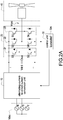
- FIG. 2A shows a circuit block diagram of the first embodiment of the electronically commutated fan system of the present invention.
- An electronically commutated fan system 100 includes an alternating-current-to-direct-current conversion unit 10, an inverter unit 20 and a control unit 30.
- the alternating-current-to-direct-current conversion unit 10 receives an alternating-current input power source Viac and converts the alternating-current input power source Viac into a first direct-current power source Vdcl.
- the inverter unit 20 is electrically connected between the alternating-current-to-direct-current conversion unit 10 and a fan 40.
- the inverter unit 20 converts the first direct-current power source Vdcl into an alternating-current output power source Voac and provides the alternating-current output power source Voac to the fan 40 to rotate.
- the control unit 30 is electrically connected to the alternating-current-to-direct-current conversion unit 10 and the inverter unit 20. By detecting feedback signals (not shown in Fig. 2A , for example but not limited, detecting a detected point of the related art or prior art) of the alternating-current-to-direct-current conversion unit 10 and the inverter unit 20, the control unit 30 controls the alternating-current-to-direct-current conversion unit 10 and the inverter unit 20 to adjust a rotational speed of the fan 40.
- the electronically commutated fan system 100 further comprises a bus capacitor Cbus electrically connected between the alternating-current-to-direct-current conversion unit 10 and the inverter unit 20.
- the bus capacitor Cbus stores and stabilizes the first direct-current power source Vdcl.
- the alternating-current input power source Viac received by the electronically commutated fan system 100 can be a three-phase alternating-current power source or a single-phase alternating-current power source.
- a range of a power variation of the alternating-current input power source Viac is between 220 volts and 480 volts.
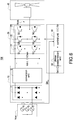
- Fig. 2B shows a circuit block diagram of the second embodiment of the electronically commutated fan system of the present invention.
- the control unit 30 comprises one controller or a plurality of controllers (namely, a controller 30A and a controller 30B). If the control unit 30 comprises one controller (namely, the controller 30A) as shown in Fig. 2A , the controller 30A controls the alternating-current-to-direct-current conversion unit 10 and the inverter unit 20 at the same time (namely, simultaneously). Namely, the controller 30A controls both the alternating-current-to-direct-current conversion unit 10 and the inverter unit 20. If the control unit 30 comprises a plurality of controllers (namely, the controller 30A and the controller 30B) as shown in Fig.
- the controller 30A and the controller 30B are electrically connected to the alternating-current-to-direct-current conversion unit 10 and the inverter unit 20 respectively.
- the controller 30A and the controller 30B control the alternating-current-to-direct-current conversion unit 10 and the inverter unit 20 respectively.
- the inverter unit 20 comprises a first bridge arm 21, a second bridge arm 22 and a third bridge arm 23.
- the first bridge arm 21 comprises a first upper bridge arm S1 and a first lower bridge arm S2.
- the first upper bridge arm S1 is connected to the first lower bridge arm S2 in series.
- One side (namely the side U, as shown in Fig. 1A or Fig. 1B ) of the sides of the fan 40 is electrically connected between the first upper bridge arm S1 and the first lower bridge arm S2.
- the second bridge arm 22 comprises a second upper bridge arm S3 and a second lower bridge arm S4.
- the second upper bridge arm S3 is connected to the second lower bridge arm S4 in series.
- One side namely the side V, as shown in Fig.
- the third bridge arm 23 comprises a third upper bridge arm S5 and a third lower bridge arm S6.
- the third upper bridge arm S5 is connected to the third lower bridge arm S6 in series.
- One side (namely the side W, as shown in Fig. 1A or Fig. 1B ) of the sides of the fan 40 is electrically connected between the third upper bridge arm S5 and the third lower bridge arm S6.
- the bus capacitor Cbus is connected to the first bridge arm 21, the second bridge arm 22 and the third bridge arm 23 in parallel.
- the control unit 30 turns on and off the upper bridge arms (S1, S3, S5) and the lower bridge arms (S2, S4, S6) of the inverter unit 20 to convert the first direct-current power source Vdcl (of the bus capacitor Cbus) into the alternating-current output power source Voac to provide the alternating-current output power source Voac to the fan 40 to rotate.
- the alternating-current output power source Voac is a three-phase alternating-current output power source.
- the motor of the fan 40 is a permanent-magnet synchronous motor (PMSM).
- Fig. 3A shows a circuit block diagram of the first embodiment of the alternating-current-to-direct-current conversion unit of the present invention. Please refer to Fig. 2A and Fig. 2B again.
- the alternating-current-to-direct-current conversion unit 10 comprises a rectifying unit 11 and a conversion unit 12.
- the rectifying unit 11 is a three-phase bridge rectifying circuit and converts the alternating-current input power source Viac into a second direct-current power source Vdc2.
- the three-phase bridge rectifying circuit comprises three bridge arms, wherein each of the bridge arms comprises two diodes that the anode of the upper diode is connected to the cathode of the lower diode, and a connection point between the anode and the cathode is electrically connected to a power source of one of the phases of the alternating-current input power source Viac.
- the conversion unit 12 is electrically connected to the rectifying unit 11 and the inverter unit 20.
- the conversion unit 12 converts the second direct-current power source Vdc2 into the first direct-current power source Vdc1, and the first direct-current power source Vdc1 is stored through the bus capacitor Cbus.
- the alternating-current-to-direct-current conversion unit 10 can be a boost alternating-current-to-direct-current converter to stabilize the first direct-current power source Vdcl. If the peak voltage of the alternating-current input power source Viac is higher than the voltage of the first direct-current power source Vdcl of the bus capacitor Cbus, the alternating-current-to-direct-current conversion unit 10 can be a buck alternating-current-to-direct-current converter to stabilize the first direct-current power source Vdcl.
- Fig. 3B shows a circuit diagram of the first embodiment of the conversion unit of the present invention. Please refer to Figs. 2A ⁇ 3A again.
- the conversion unit 12 is a boost converter.
- the conversion unit 12 comprises an inductor 121, a switch unit 122 and a diode 123.
- One side of the inductor 121 is electrically connected to the rectifying unit 11.
- the other side of the inductor 121 is connected to one side of the switch unit 122 and an anode of the diode 123.
- a cathode of the diode 123 is connected to one side of the bus capacitor Cbus.
- the control unit 30 controls an on-off status of the switch unit 122 to stabilize the first direct-current power source Vdcl of the bus capacitor Cbus.
- the conversion unit 12 is a buck converter.
- the conversion unit 12 comprises an inductor 121, a switch unit 122 and a diode 123.
- One side of the switch unit 122 is electrically connected to the rectifying unit 11.
- the other side of the switch unit 122 is connected to one side of the inductor 121 and a cathode of the diode 123.
- the other side of the inductor 121 is connected to one side of the bus capacitor Cbus.
- the control unit 30 controls an on-off status of the switch unit 122 to stabilize the first direct-current power source Vdc1 of the bus capacitor Cbus.
- Fig. 4 shows a circuit diagram of the second embodiment of the alternating-current-to-direct-current conversion unit of the present invention. Please refer to Figs. 2A ⁇ 3C again.
- the alternating-current-to-direct-current conversion unit 10 is a boost alternating-current-to-direct-current converter.
- the alternating-current-to-direct-current conversion unit 10 comprises an inductor group 111, a rectifying unit 11, a switch unit 122 and a diode 123.
- the inductor group 111 comprises three boost inductors, and the three boost inductors receive a power source of one of the phases of the three-phase alternating-current input power source Viac respectively (namely, each of the three boost inductors receives a power source of one of the phases of the three-phase alternating-current input power source Viac).
- the rectifying unit 11 is a three-phase bridge rectifying circuit.
- the three-phase bridge rectifying circuit comprises three bridge arms, wherein each of the bridge arms comprises two diodes that the anode of the upper diode is connected to the cathode of the lower diode, and a connection point between the anode and the cathode is electrically connected to one of the boost inductors of the inductor group 111.
- the switch unit 122 is connected to the rectifying unit 11 in parallel. One side of the switch unit 122 is connected to the anode of the diode 123. The cathode of the diode 123 is electrically connected to the inverter unit 20.
- the control unit 30 controls the on-off status of the switch unit 122 to convert the alternating-current input power source Viac into the first direct-current power source Vdc1, and the first direct-current power source Vdc1 is stored through the bus capacitor Cbus (namely, the bus capacitor Cbus stores the first direct-current power source Vdc1).
- the alternating-current-to-direct-current conversion unit 10 is an active type power factor corrector (hereinafter, or an active type power factor convertor).
- the active type power factor corrector can adjust the input current of the load to improve the power factor of the power electronic system.
- the main purpose of the active type power factor corrector is to make the input current approach the current of the pure resistive load. In the ideal status, its voltage phase is the same with its current phase, and the reactive power generated or consumed by it is zero, so that the power output side can transmit the energy to the load with the highest efficiency.
- the active type power factor corrector In the status that the input current and voltage have the same phase and the frequency is the same, the active type power factor corrector will try to maintain its output as a constant direct-current voltage. Therefore, the active type power factor corrector can convert the alternating-current input power source Viac into the first direct-current power source Vdcl, and can stabilize the first direct-current power source Vdcl, so that the voltage value of the first direct-current power source Vdc1 is not influenced by the variation of the alternating-current input power source Viac.
- the control unit 30 When the control unit 30 detects the power variation of the alternating-current input power source Viac, the control unit 30 adjusts the duty cycle of the switch unit 122 inside the alternating-current-to-direct-current conversion unit 10 to maintain the first direct-current power source Vdcl outputted by the alternating-current-to-direct-current conversion unit 10 within a second error range Re2. Moreover, the first direct-current power source Vdcl is always maintained within the second error range Re2, so that the control unit 30 can control and maintain the rotational speed of the fan 40 within a first error range Re1. As shown in Figs.
- the alternating-current-to-direct-current conversion unit 10 maintains the voltage value of the first direct-current power source Vdcl within the second error range Re2.
- the best is that the second error range Re2 is 97% ⁇ 103% of the first direct-current power source Vdcl.
- the second error range Re2 is the best that an upper limitation of the second error range Re2 is the first direct-current power source Vdcl plus 3% of the first direct-current power source Vdcl and a lower limitation of the second error range Re2 is the first direct-current power source Vdcl minus 3% of the first direct-current power source Vdcl.
- the alternating-current-to-direct-current conversion unit 10 actively controls and provides the first direct-current power source Vdcl to the inverter unit 20 on the back-end, wherein the first direct-current power source Vdcl is stable and is not influenced by the voltage value (or the power variation) of the alternating-current input power source Viac.
- the alternating-current-to-direct-current conversion unit 10 further has the function of the power factor correction for the alternating-current input.
- the inverter unit 20 obtains the first direct-current power source Vdc1 to drive the motor to drive the fan blades.
- the inverter unit 20 receives control commands from the control unit 30 to adjust the rotational speed of the fan 40.
- the motor can avoid the problem that the rotational speed of the motor cannot reach the predetermined rotational speed because the variation of the voltage value (or the power variation) of the alternating-current input power source Viac is too large.
- the first direct-current power source Vdc1 is maintained at the voltage which is pre-set by the original motor design that has the peak efficiency, so that the motor steadily works in the high efficiency area and is not influenced by the alternating-current input power source Viac. Therefore, when the power variation of the alternating-current input power source Viac changes, the rotational speed of the fan 40 can be maintained within the first error range Re1. The best is that the first error range Re1 is 97% ⁇ 103% of the rotational speed of the fan 40.
- the first error range Re1 is the best that an upper limitation of the first error range Re1 is the rotational speed of the fan 40 plus 3% of the rotational speed of the fan 40 and a lower limitation of the first error range Re1 is the rotational speed of the fan 40 minus 3% of the rotational speed of the fan 40.
- Fig. 5 shows a phase application diagram of the alternating-current input power source of the present invention. Please refer to Fig. 3A again.
- the rectifying unit 11 with the three-phase bridge type obtains any two phases powers as the single-phase alternating-current input power source Viac, and just like the related art single-phase bridge rectifier, the rectifying unit 11 fully-wave rectifies the alternating-current input power source Viac to output the second direct-current power source Vdc2. Therefore, no circuit modification is required.
- the rectifying unit 11 rectifies the single-phase alternating-current input power source Viac to output the second direct-current power source Vdc2.
- the second direct-current power source Vdc2 is provided to the conversion unit 12, and then the conversion unit 12 converts the second direct-current power source Vdc2 into the first direct-current power source Vdcl which is required by the inverter unit 20 on the back-end. Therefore, the circuit structures of the present invention not only can be applied to the three-phase alternating-current input power source, but also can be compatible with the application of the single-phase alternating-current input power source directly.
- Fig. 6 shows a circuit block diagram of the electronically commutated fan system applied to the phase predetermination unit of the present invention.
- the electronically commutated fan system 100 can receive the single-phase or three-phase alternating-current input power source Viac. However, if the three-phase alternating-current input power source Viac is out-phase, the three-phase alternating-current input power source Viac forms (namely, becomes) the single-phase alternating-current input power source Viac, so that when the three-phase alternating-current input power source Viac is out-phase, the features of the three-phase alternating-current input power source Viac is the same with the features of the single-phase alternating-current input power source Viac.
- the electronically commutated fan system 100 cannot identify (namely, cannot verify) whether the current state is three-phase-but-out-phase or single-phase, so that an alarm signal Sa which is used to alarm that the three-phase power is out-phase cannot be sent out to alarm that the three-phase power is abnormal. Therefore, the electronically commutated fan system 100 further comprises a phase predetermination unit 50 electrically connected to the control unit 30.
- the control unit 30 detects an input signal Sin of the alternating-current input power source Viac.
- the control unit 30 verifies whether there is the input voltage on the three paths of the alternating-current input power source Viac or not by detecting the input signal Sin.
- the user sends a phase selection signal Ss to the phase predetermination unit 50 to select the input power type that the user expects. Then, the control unit 30 compares the input signal Sin with the phase selection signal Ss to verify whether the alternating-current input power source Viac is three-phase-but-out-phase or single-phase. According to the two functions mentioned above, when the power type is selected as the three-phase alternating-current input power source Viac, if the control unit 30 interprets (namely, verifies or identifies) that the input signal Sin is single-phase, the control unit 30 starts an out-phase mechanism to output the alarm signal Sa.
- the control unit 30 interprets (namely, verifies or identifies) that the input signal Sin is single-phase, because the power type selected (namely, set) by the phase predetermination unit 50 is the single-phase alternating-current input power source Viac, the control unit 30 does not start the out-phase mechanism and does not output the alarm signal Sa.
- the electronically commutated fan system 100 can accurately determine (namely, verify or identify) whether the input power is three-phase-but-out-phase or single-phase by the function of selecting the power type.
- the alarm signal Sa is used to inform or alarm that the alternating-current input power source Viac is abnormal.
- the expression of the alarm signal Sa is not limited.
- the alarm signal Sa is a sound-light type alarm signal or a display type alarm signal.
- the selecting power type function of the phase predetermination unit 50 can be achieved by the voltage or current electrical signal difference set by the user, so that the phase predetermination unit 50 determines different input power type.
- the selecting power type function of the phase predetermination unit 50 can be achieved by the contacts change (on/off) of the mechanical contacts (for example, the relay, jumper etc.) as well.
- the present invention comprises following advantages:
Landscapes
- Engineering & Computer Science (AREA)
- Power Engineering (AREA)
- Mechanical Engineering (AREA)
- General Engineering & Computer Science (AREA)
- Inverter Devices (AREA)
- Control Of Motors That Do Not Use Commutators (AREA)
- Control Of Positive-Displacement Air Blowers (AREA)
Description
- The present invention relates to an electronically commutated fan system, and especially relates to an electronically commutated fan system with a wide input voltage range of a three-phase and single-phase power source compatible application. Such systems are e.g. known from
KR 2016 0065618 A US 2014/139164 A1 ,US 2016/268950 A1 ,US 2014/268953 A1 andUS 4 027 204 A . - Comparing with the conventional alternating-current fan (AC Fan), the electronically commutated fan (EC Fan) has the advantages of high efficiency, controllable rotational speed, applicable communication interfaces and multiple protection mechanisms. According to the basic principles of the motor, the rotational speed of the motor is dependent upon the input power source. Therefore, when the alternating-current input power source changes, the duty cycle is adjusted by the electronically commutated fan to maintain the stabilization of the rotational speed of the motor. However, if the variation of the alternating-current input power source is too large (for example, the voltage variation is over 100 volts) thus exceeding the range of steadily adjusting the rotational speed by adjusting the duty cycle, the rotational speed of the motor is still changed due to the variation of the alternating-current input power source, so that the rotational speed predetermined by the system cannot be achieved. Moreover, the voltage of the motor is deviated from the voltage of the original motor design which has the peak efficiency due to the variation of the alternating-current input power source, so that the efficiency of the motor is decreasing.
-
Fig. 1A shows a Y connection diagram of the related art motor.Fig. 1B shows a triangle (Δ) connection diagram of the related art motor. The related art three-phase electronically commutated fan has to have the differentiated design according to different alternating-current input power source due to the reasons mentioned above. Usually there are two methods: different motor winding design according to different voltage, or changing to different connection for the same motor. When the alternating-current input voltage is 3ψ220V, the triangle (Δ) connection shown inFig. 1B is adopted. When the alternating-current input voltage is 3ψ380V, the Y connection shown inFig. 1A is adopted. The methods mentioned above have different designs according to different three-phase input voltage (220V or 380V), so that the electronically commutated fan system mentioned above has following disadvantages: - 1. A single three-phase electronically commutated fan system which is applicable to the voltage range of the wide input power source cannot be achieved. The related art electronically commutated fan has different motor winding design according to different voltage, or changes to different connection for the same motor, so that the three-phase electronically commutated fan with the wide input power source cannot be achieved.
- 2. The rotational speed of the electronically commutated fan system cannot achieve the predetermined rotational speed required by the cooling system. If the same fan is applied to the three-phase or single-phase power source, because the variation of the alternating-current input power source is too large thus exceeding the range of steadily adjusting the rotational speed by adjusting the duty cycle, the predetermined rotational speed cannot be achieved, so that the efficiency of the motor is decreasing.
- 3. The three-phase and single-phase power source compatible application cannot be provided. The related art electronically commutated fan does not have the three-phase and single-phase power source compatible application, so that the design of the cooling system or module lacks of the flexibility for the application of the power source.
- Therefore, the inventors of the present invention would like to solve the problems mentioned above and would like to design an electronically commutated fan system which has the wide alternating-current input power source range, and which can maintain the stabilization of the rotational speed of the fan, and which can provide the three-phase and single-phase input compatible application.
- In order to solve the above-mentioned problems, the present invention provides an electronically commutated fan system to overcome the problems of the related art according to
claims 1 and 12. Preferred embodiments are defined in dependent claims. The invention is set out in the appended set of claims. The embodiments and/or examples of the following description which are not covered by the appended claims are considered as not being part of the present invention. - Please refer to the detailed descriptions and figures of the present invention mentioned below for further understanding the technology, method and effect disclosed by the present invention to achieve the predetermined purpose of the present invention. The purpose, features and characteristics of the present invention can be understood well and in details. However, the figures are only for references and descriptions, but the present invention is not limited by the figures.
-
-
Fig. 1A shows a Y connection diagram of the related art motor. -
Fig. 1B shows a triangle (Δ) connection diagram of the related art motor. -
Fig. 2A shows a circuit block diagram of the first embodiment of the electronically commutated fan system of the present invention. -
Fig. 2B shows a circuit block diagram of the second embodiment of the electronically commutated fan system of the present invention. -
Fig. 3A shows a circuit block diagram of the first embodiment of the alternating-current-to-direct-current conversion unit of the present invention. -
Fig. 3B shows a circuit diagram of the first embodiment of the conversion unit of the present invention. -
Fig. 3C shows a circuit diagram of the second embodiment of the conversion unit of the present invention. -
Fig. 4 shows a circuit diagram of the second embodiment of the alternating-current-to-direct-current conversion unit of the present invention. -
Fig. 5 shows a phase application diagram of the alternating-current input power source of the present invention. -
Fig. 6 shows a circuit block diagram of the electronically commutated fan system applied to the phase predetermination unit of the present invention. - Please refer to following detailed description and figures for the technical content of the present invention.
-
Fig. 2A shows a circuit block diagram of the first embodiment of the electronically commutated fan system of the present invention. An electronicallycommutated fan system 100 includes an alternating-current-to-direct-current conversion unit 10, aninverter unit 20 and acontrol unit 30. The alternating-current-to-direct-current conversion unit 10 receives an alternating-current input power source Viac and converts the alternating-current input power source Viac into a first direct-current power source Vdcl. Theinverter unit 20 is electrically connected between the alternating-current-to-direct-current conversion unit 10 and afan 40. Theinverter unit 20 converts the first direct-current power source Vdcl into an alternating-current output power source Voac and provides the alternating-current output power source Voac to thefan 40 to rotate. Thecontrol unit 30 is electrically connected to the alternating-current-to-direct-current conversion unit 10 and theinverter unit 20. By detecting feedback signals (not shown inFig. 2A , for example but not limited, detecting a detected point of the related art or prior art) of the alternating-current-to-direct-current conversion unit 10 and theinverter unit 20, thecontrol unit 30 controls the alternating-current-to-direct-current conversion unit 10 and theinverter unit 20 to adjust a rotational speed of thefan 40. The electronically commutatedfan system 100 further comprises a bus capacitor Cbus electrically connected between the alternating-current-to-direct-current conversion unit 10 and theinverter unit 20. The bus capacitor Cbus stores and stabilizes the first direct-current power source Vdcl. Moreover, the alternating-current input power source Viac received by the electronically commutatedfan system 100 can be a three-phase alternating-current power source or a single-phase alternating-current power source. A range of a power variation of the alternating-current input power source Viac is between 220 volts and 480 volts.Fig. 2B shows a circuit block diagram of the second embodiment of the electronically commutated fan system of the present invention. In this embodiment and other embodiments, thecontrol unit 30 comprises one controller or a plurality of controllers (namely, acontroller 30A and acontroller 30B). If thecontrol unit 30 comprises one controller (namely, thecontroller 30A) as shown inFig. 2A , thecontroller 30A controls the alternating-current-to-direct-current conversion unit 10 and theinverter unit 20 at the same time (namely, simultaneously). Namely, thecontroller 30A controls both the alternating-current-to-direct-current conversion unit 10 and theinverter unit 20. If thecontrol unit 30 comprises a plurality of controllers (namely, thecontroller 30A and thecontroller 30B) as shown inFig. 2B , thecontroller 30A and thecontroller 30B are electrically connected to the alternating-current-to-direct-current conversion unit 10 and theinverter unit 20 respectively. Thecontroller 30A and thecontroller 30B control the alternating-current-to-direct-current conversion unit 10 and theinverter unit 20 respectively. - As shown in
Fig. 2A , theinverter unit 20 comprises afirst bridge arm 21, asecond bridge arm 22 and athird bridge arm 23. Thefirst bridge arm 21 comprises a first upper bridge arm S1 and a first lower bridge arm S2. The first upper bridge arm S1 is connected to the first lower bridge arm S2 in series. One side (namely the side U, as shown inFig. 1A or Fig. 1B ) of the sides of thefan 40 is electrically connected between the first upper bridge arm S1 and the first lower bridge arm S2. Thesecond bridge arm 22 comprises a second upper bridge arm S3 and a second lower bridge arm S4. The second upper bridge arm S3 is connected to the second lower bridge arm S4 in series. One side (namely the side V, as shown inFig. 1A or Fig. 1B ) of the sides of thefan 40 is electrically connected between the second upper bridge arm S3 and the second lower bridge arm S4. Thethird bridge arm 23 comprises a third upper bridge arm S5 and a third lower bridge arm S6. The third upper bridge arm S5 is connected to the third lower bridge arm S6 in series. One side (namely the side W, as shown inFig. 1A or Fig. 1B ) of the sides of thefan 40 is electrically connected between the third upper bridge arm S5 and the third lower bridge arm S6. The bus capacitor Cbus is connected to thefirst bridge arm 21, thesecond bridge arm 22 and thethird bridge arm 23 in parallel. Thecontrol unit 30 turns on and off the upper bridge arms (S1, S3, S5) and the lower bridge arms (S2, S4, S6) of theinverter unit 20 to convert the first direct-current power source Vdcl (of the bus capacitor Cbus) into the alternating-current output power source Voac to provide the alternating-current output power source Voac to thefan 40 to rotate. Moreover, the alternating-current output power source Voac is a three-phase alternating-current output power source. The motor of thefan 40 is a permanent-magnet synchronous motor (PMSM). -
Fig. 3A shows a circuit block diagram of the first embodiment of the alternating-current-to-direct-current conversion unit of the present invention. Please refer toFig. 2A andFig. 2B again. The alternating-current-to-direct-current conversion unit 10 comprises a rectifyingunit 11 and aconversion unit 12. The rectifyingunit 11 is a three-phase bridge rectifying circuit and converts the alternating-current input power source Viac into a second direct-current power source Vdc2. The three-phase bridge rectifying circuit comprises three bridge arms, wherein each of the bridge arms comprises two diodes that the anode of the upper diode is connected to the cathode of the lower diode, and a connection point between the anode and the cathode is electrically connected to a power source of one of the phases of the alternating-current input power source Viac. Theconversion unit 12 is electrically connected to the rectifyingunit 11 and theinverter unit 20. Theconversion unit 12 converts the second direct-current power source Vdc2 into the first direct-current power source Vdc1, and the first direct-current power source Vdc1 is stored through the bus capacitor Cbus. Moreover, if a peak voltage of the alternating-current input power source Viac is lower than a voltage of the first direct-current power source Vdcl of the bus capacitor Cbus, the alternating-current-to-direct-current conversion unit 10 can be a boost alternating-current-to-direct-current converter to stabilize the first direct-current power source Vdcl. If the peak voltage of the alternating-current input power source Viac is higher than the voltage of the first direct-current power source Vdcl of the bus capacitor Cbus, the alternating-current-to-direct-current conversion unit 10 can be a buck alternating-current-to-direct-current converter to stabilize the first direct-current power source Vdcl. -
Fig. 3B shows a circuit diagram of the first embodiment of the conversion unit of the present invention. Please refer toFigs. 2A∼3A again. Theconversion unit 12 is a boost converter. Theconversion unit 12 comprises aninductor 121, aswitch unit 122 and adiode 123. One side of theinductor 121 is electrically connected to the rectifyingunit 11. The other side of theinductor 121 is connected to one side of theswitch unit 122 and an anode of thediode 123. A cathode of thediode 123 is connected to one side of the bus capacitor Cbus. Thecontrol unit 30 controls an on-off status of theswitch unit 122 to stabilize the first direct-current power source Vdcl of the bus capacitor Cbus.Fig. 3C shows a circuit diagram of the second embodiment of the conversion unit of the present invention. Please refer toFigs. 2A∼3A again. Theconversion unit 12 is a buck converter. Theconversion unit 12 comprises aninductor 121, aswitch unit 122 and adiode 123. One side of theswitch unit 122 is electrically connected to the rectifyingunit 11. The other side of theswitch unit 122 is connected to one side of theinductor 121 and a cathode of thediode 123. The other side of theinductor 121 is connected to one side of the bus capacitor Cbus. Thecontrol unit 30 controls an on-off status of theswitch unit 122 to stabilize the first direct-current power source Vdc1 of the bus capacitor Cbus. -
Fig. 4 shows a circuit diagram of the second embodiment of the alternating-current-to-direct-current conversion unit of the present invention. Please refer toFigs. 2A∼3C again. The alternating-current-to-direct-current conversion unit 10 is a boost alternating-current-to-direct-current converter. The alternating-current-to-direct-current conversion unit 10 comprises aninductor group 111, a rectifyingunit 11, aswitch unit 122 and adiode 123. Theinductor group 111 comprises three boost inductors, and the three boost inductors receive a power source of one of the phases of the three-phase alternating-current input power source Viac respectively (namely, each of the three boost inductors receives a power source of one of the phases of the three-phase alternating-current input power source Viac). The rectifyingunit 11 is a three-phase bridge rectifying circuit. The three-phase bridge rectifying circuit comprises three bridge arms, wherein each of the bridge arms comprises two diodes that the anode of the upper diode is connected to the cathode of the lower diode, and a connection point between the anode and the cathode is electrically connected to one of the boost inductors of theinductor group 111. Theswitch unit 122 is connected to the rectifyingunit 11 in parallel. One side of theswitch unit 122 is connected to the anode of thediode 123. The cathode of thediode 123 is electrically connected to theinverter unit 20. Thecontrol unit 30 controls the on-off status of theswitch unit 122 to convert the alternating-current input power source Viac into the first direct-current power source Vdc1, and the first direct-current power source Vdc1 is stored through the bus capacitor Cbus (namely, the bus capacitor Cbus stores the first direct-current power source Vdc1). - Please refer to
Fig. 2A again and please refer toFigs. 3A∼4 . The alternating-current-to-direct-current conversion unit 10 is an active type power factor corrector (hereinafter, or an active type power factor convertor). The active type power factor corrector can adjust the input current of the load to improve the power factor of the power electronic system. The main purpose of the active type power factor corrector is to make the input current approach the current of the pure resistive load. In the ideal status, its voltage phase is the same with its current phase, and the reactive power generated or consumed by it is zero, so that the power output side can transmit the energy to the load with the highest efficiency. In the status that the input current and voltage have the same phase and the frequency is the same, the active type power factor corrector will try to maintain its output as a constant direct-current voltage. Therefore, the active type power factor corrector can convert the alternating-current input power source Viac into the first direct-current power source Vdcl, and can stabilize the first direct-current power source Vdcl, so that the voltage value of the first direct-current power source Vdc1 is not influenced by the variation of the alternating-current input power source Viac. When thecontrol unit 30 detects the power variation of the alternating-current input power source Viac, thecontrol unit 30 adjusts the duty cycle of theswitch unit 122 inside the alternating-current-to-direct-current conversion unit 10 to maintain the first direct-current power source Vdcl outputted by the alternating-current-to-direct-current conversion unit 10 within a second error range Re2. Moreover, the first direct-current power source Vdcl is always maintained within the second error range Re2, so that thecontrol unit 30 can control and maintain the rotational speed of thefan 40 within a first error range Re1. As shown inFigs. 2A∼3C , when the alternating-current input power source Viac is between 220 volts and 480 volts, the alternating-current-to-direct-current conversion unit 10 maintains the voltage value of the first direct-current power source Vdcl within the second error range Re2. The best is that the second error range Re2 is 97%∼103% of the first direct-current power source Vdcl. Namely, the second error range Re2 is the best that an upper limitation of the second error range Re2 is the first direct-current power source Vdcl plus 3% of the first direct-current power source Vdcl and a lower limitation of the second error range Re2 is the first direct-current power source Vdcl minus 3% of the first direct-current power source Vdcl. The alternating-current-to-direct-current conversion unit 10 actively controls and provides the first direct-current power source Vdcl to theinverter unit 20 on the back-end, wherein the first direct-current power source Vdcl is stable and is not influenced by the voltage value (or the power variation) of the alternating-current input power source Viac. The alternating-current-to-direct-current conversion unit 10 further has the function of the power factor correction for the alternating-current input. Finally, theinverter unit 20 obtains the first direct-current power source Vdc1 to drive the motor to drive the fan blades. Theinverter unit 20 receives control commands from thecontrol unit 30 to adjust the rotational speed of thefan 40. Therefore, the motor can avoid the problem that the rotational speed of the motor cannot reach the predetermined rotational speed because the variation of the voltage value (or the power variation) of the alternating-current input power source Viac is too large. The first direct-current power source Vdc1 is maintained at the voltage which is pre-set by the original motor design that has the peak efficiency, so that the motor steadily works in the high efficiency area and is not influenced by the alternating-current input power source Viac. Therefore, when the power variation of the alternating-current input power source Viac changes, the rotational speed of thefan 40 can be maintained within the first error range Re1. The best is that the first error range Re1 is 97%∼103% of the rotational speed of thefan 40. Namely, the first error range Re1 is the best that an upper limitation of the first error range Re1 is the rotational speed of thefan 40 plus 3% of the rotational speed of thefan 40 and a lower limitation of the first error range Re1 is the rotational speed of thefan 40 minus 3% of the rotational speed of thefan 40. -
Fig. 5 shows a phase application diagram of the alternating-current input power source of the present invention. Please refer toFig. 3A again. Besides that the present invention can be applied to the three-phase 220V∼480V power sources, the rectifyingunit 11 with the three-phase bridge type obtains any two phases powers as the single-phase alternating-current input power source Viac, and just like the related art single-phase bridge rectifier, the rectifyingunit 11 fully-wave rectifies the alternating-current input power source Viac to output the second direct-current power source Vdc2. Therefore, no circuit modification is required. When the single-phase alternating-current input power source Viac is received, just like the three-phase alternating-current input power source Viac, the rectifyingunit 11 rectifies the single-phase alternating-current input power source Viac to output the second direct-current power source Vdc2. The second direct-current power source Vdc2 is provided to theconversion unit 12, and then theconversion unit 12 converts the second direct-current power source Vdc2 into the first direct-current power source Vdcl which is required by theinverter unit 20 on the back-end. Therefore, the circuit structures of the present invention not only can be applied to the three-phase alternating-current input power source, but also can be compatible with the application of the single-phase alternating-current input power source directly. -
Fig. 6 shows a circuit block diagram of the electronically commutated fan system applied to the phase predetermination unit of the present invention. The electronically commutatedfan system 100 can receive the single-phase or three-phase alternating-current input power source Viac. However, if the three-phase alternating-current input power source Viac is out-phase, the three-phase alternating-current input power source Viac forms (namely, becomes) the single-phase alternating-current input power source Viac, so that when the three-phase alternating-current input power source Viac is out-phase, the features of the three-phase alternating-current input power source Viac is the same with the features of the single-phase alternating-current input power source Viac. Therefore, the electronically commutatedfan system 100 cannot identify (namely, cannot verify) whether the current state is three-phase-but-out-phase or single-phase, so that an alarm signal Sa which is used to alarm that the three-phase power is out-phase cannot be sent out to alarm that the three-phase power is abnormal. Therefore, the electronically commutatedfan system 100 further comprises aphase predetermination unit 50 electrically connected to thecontrol unit 30. Thecontrol unit 30 detects an input signal Sin of the alternating-current input power source Viac. Thecontrol unit 30 verifies whether there is the input voltage on the three paths of the alternating-current input power source Viac or not by detecting the input signal Sin. The user sends a phase selection signal Ss to thephase predetermination unit 50 to select the input power type that the user expects. Then, thecontrol unit 30 compares the input signal Sin with the phase selection signal Ss to verify whether the alternating-current input power source Viac is three-phase-but-out-phase or single-phase. According to the two functions mentioned above, when the power type is selected as the three-phase alternating-current input power source Viac, if thecontrol unit 30 interprets (namely, verifies or identifies) that the input signal Sin is single-phase, thecontrol unit 30 starts an out-phase mechanism to output the alarm signal Sa. If the power type is selected (namely, set) as the single-phase alternating-current input power source Viac, when thecontrol unit 30 interprets (namely, verifies or identifies) that the input signal Sin is single-phase, because the power type selected (namely, set) by thephase predetermination unit 50 is the single-phase alternating-current input power source Viac, thecontrol unit 30 does not start the out-phase mechanism and does not output the alarm signal Sa. According to the description mentioned above, the electronically commutatedfan system 100 can accurately determine (namely, verify or identify) whether the input power is three-phase-but-out-phase or single-phase by the function of selecting the power type. Moreover, the alarm signal Sa is used to inform or alarm that the alternating-current input power source Viac is abnormal. Therefore, in this embodiment, the expression of the alarm signal Sa is not limited. For example but not limited to, the alarm signal Sa is a sound-light type alarm signal or a display type alarm signal. Moreover, the selecting power type function of thephase predetermination unit 50 can be achieved by the voltage or current electrical signal difference set by the user, so that thephase predetermination unit 50 determines different input power type. The selecting power type function of thephase predetermination unit 50 can be achieved by the contacts change (on/off) of the mechanical contacts (for example, the relay, jumper etc.) as well. - In conclusion, the present invention comprises following advantages:
- 1. A single three-phase electronically commutated fan system can be applied to the voltage range of wide input power. Because the input of the electronically commutated
fan system 100 can be three-phase or single-phase and the voltage variation range is 220V∼480V, the electronically commutatedfan system 100 can be compatible with most input voltages, so that the efficiency of providing the flexibility of the power application for the cooling system or module design can be achieved. - 2. The rotational speed of the electronically commutated fan system is not changed by the variation of the alternating-current input power source Viac. The alternating-current-to-direct-
current conversion unit 10 stabilizes the first direct-current power source Vdc1 of the bus capacitor Cbus, so that theinverter unit 20 does not exceed the range of stably adjusting the rotational speed by adjusting the duty cycle, wherein theinverter unit 20 will exceed the range of stably adjusting the rotational speed by adjusting the duty cycle because the variation of the alternating-current input power source Viac is too large. Therefore, the effect of stabilizing the rotational speed of thefan 40 and the efficiency can be achieved.
Claims (14)
- An electronically commutated fan system (100) comprising:an alternating-current-to-direct-current conversion unit (10) receiving an alternating-current input power source (Viac) and converting the alternating-current input power source (Viac) into a first direct-current power source (Vdc1);an inverter unit (20) electrically connected between the alternating-current-to-direct-current conversion unit (10) and a fan (40), the inverter unit (20) converting the first direct-current power source (Vdc1) into an alternating-current output power source (Voac) and providing the alternating-current output power source (Voac) to the fan (40) to rotate;a control unit (30) electrically connected to the alternating-current-to-direct-current conversion unit (10) and the inverter unit (20), the control unit (30) controlling the alternating-current-to-direct-current conversion unit (10) and the inverter unit (20) to adjust a rotational speed of the fan (40),characterized by a phase predetermination unit (50) electrically connected to the control unit (30) and receiving a phase selection signal (Ss);wherein when the control unit (30) detects a power variation of the alternating-current input power source (Viac), the control unit (30) controls the rotational speed of the fan (40) to be maintained within a first error range (Re1);wherein the phase predetermination unit (50) predetermines the alternating-current input power source (Viac) to a three-phase alternating-current power source or a single-phase alternating-current power source according to the phase selection signal (Ss); the control unit (30) receives an input signal (Sin) of the alternating-current input power source (Viac), and the control unit (30) compares the input signal (Sin) and the phase selection signal (Ss) to determine that the alternating-current input power source (Viac) is three-phase-but-out-phase or single-phase;when the phase predetermination unit (50) predetermines the alternating-current input power source (Viac) as the three-phase alternating-current power source and the control unit (30) detects that the alternating-current input power source (Viac) is single-phase, an alarm signal is generated; when the phase predetermination unit (50) predetermines the alternating-current input power source (Viac) as the single-phase alternating-current power source and the control unit (30) detects that the alternating-current input power source (Viac) is single-phase, the alarm signal is not generated.
- The electronically commutated fan system (100) in claim 1 further comprising:a bus capacitor (Cbus) electrically connected between the alternating-current-to-direct-current conversion unit (10) and the inverter unit (20), the bus capacitor (Cbus) storing and stabilizing the first direct-current power source (Vdc1),wherein a voltage crossing the bus capacitor (Cbus) is the first direct-current power source (Vdc1); when the control unit (30) detects the power variation of the alternating-current input power source (Viac), the first direct-current power source (Vdc1) outputted from the alternating-current-to-direct-current conversion unit (10) is controlled and maintained within a second error range (Re2), so that the rotational speed of the fan (40) is maintained within the first error range (Re1).
- The electronically commutated fan system (100) in claim 2, wherein a range of the power variation of the alternating-current input power source (Viac) is between 220 volts and 480 volts, the best is that the second error range (Re2) is 97%∼103% of the first direct-current power source (Vdcl) and the first error range (Re1) is 97%∼103% of the rotational speed of the fan (40).
- The electronically commutated fan system (100) in claim 1, wherein the phase predetermination unit (50) is mechanical-connection-predetermining or electrical-signal-difference-predetermining.
- The electronically commutated fan system (100) in claim 1, wherein the alternating-current-to-direct-current conversion unit (10) is an active type power factor corrector.
- The electronically commutated fan system (100) in claim 2, wherein the alternating-current-to-direct-current conversion unit (10) comprises:a rectifying unit (11) receiving the alternating-current input power source (Viac) and rectifying the alternating-current input power source (Viac) to obtain a second direct-current power source (Vdc2); anda conversion unit (12) electrically connected between the rectifying unit (11) and the inverter unit (20), the conversion unit (12) converting the second direct-current power source (Vdc2) into the first direct-current power source (Vdc1).
- The electronically commutated fan system (100) in claim 6, wherein the conversion unit (12) is a boost converter; the conversion unit (12) comprises an inductor (121), a switch unit (122) and a diode (123); one side of the inductor (121) is electrically connected to the rectifying unit (11); the other side of the inductor (121) is connected to one side of the switch unit (122) and an anode of the diode (123); a cathode of the diode (123) is connected to one side of the bus capacitor (Cbus); the control unit (30) controls an on-off status of the switch unit (122) to stabilize the first direct-current power source (Vdc1) of the bus capacitor (Cbus).
- The electronically commutated fan system (100) in claim 6, wherein the conversion unit (12) is a buck converter; the conversion unit (12) comprises an inductor (121), a switch unit (122) and a diode (123); one side of the switch unit (122) is electrically connected to the rectifying unit (11); the other side of the switch unit (122) is connected to one side of the inductor (121) and a cathode of the diode (123); the other side of the inductor (121) is connected to one side of the bus capacitor (Cbus); the control unit (30) controls an on-off status of the switch unit (122) to stabilize the first direct-current power source (Vdc1) of the bus capacitor (Cbus).
- The electronically commutated fan system (100) in claim 1, wherein the alternating-current-to-direct-current conversion unit (10) comprises:an inductor group (111) receiving the alternating-current input power source (Viac);a rectifying unit (11) electrically connected to the inductor group (111);a switch unit (122) connected to the rectifying unit (11) in parallel; anda diode (123) electrically connected between the switch unit (122) and the inverter unit (20),wherein the alternating-current-to-direct-current conversion unit (10) converts the alternating-current input power source (Viac) into the first direct-current power source (Vdc1).
- The electronically commutated fan system (100) in claim 1, wherein if a peak voltage of the alternating-current input power source (Viac) is lower than a voltage of the first direct-current power source (Vdc1), the alternating-current-to-direct-current conversion unit (10) is a boost alternating-current-to-direct-current converter; if the peak voltage of the alternating-current input power source (Viac) is higher than the voltage of the first direct-current power source (Vdc1), the alternating-current-to-direct-current conversion unit (10) is a buck alternating-current-to-direct-current converter.
- The electronically commutated fan system (100) in claim 1, wherein the control unit (30) comprises a controller (30A); the controller (30A) controls the alternating-current-to-direct-current conversion unit (10) and the inverter unit (20) simultaneously.
- An electronically commutated fan system (100) comprising:an alternating-current-to-direct-current conversion unit (10) receiving an alternating-current input power source (Viac) and converting the alternating-current input power source (Viac) into a first direct-current power source (Vdc1);an inverter unit (20) electrically connected between the alternating-current-to-direct-current conversion unit (10) and a fan (40), the inverter unit (20) converting the first direct-current power source (Vdc1) into an alternating-current output power source (Voac) and providing the alternating-current output power source (Voac) to the fan (40) to rotate;a control unit (30) comprising two controllers (30A, 30B) electrically connected to the alternating-current-to-direct-current conversion unit (10) and the inverter unit (20) respectively, the two controllers (30A, 30B) controlling the alternating-current-to-direct-current conversion unit (10) and the inverter unit (20) respectively to adjust a rotational speed of the fan (40),characterized by and a phase predetermination unit (50) electrically connected to the control unit (30) and receiving a phase selection signal (Ss);wherein when the control unit (30) detects a power variation of the alternating-current input power source (Viac), the control unit (30) controls the rotational speed of the fan (40) to be maintained within a first error range (Re1);wherein the phase predetermination unit (50) predetermines the alternating-current input power source (Viac) to a three-phase alternating-current power source or a single-phase alternating-current power source according to the phase selection signal (Ss); the control unit (30) receives an input signal (Sin) of the alternating-current input power source (Viac), and the control unit (30) compares the input signal (Sin) and the phase selection signal (Ss) to determine that the alternating-current input power source (Viac) is three-phase-but-out-phase or single-phase;when the phase predetermination unit (50) predetermines the alternating-current input power source (Viac) as the three-phase alternating-current power source and the control unit (30) detects that the alternating-current input power source (Viac) is single-phase, an alarm signal is generated; when the phase predetermination unit (50) predetermines the alternating-current input power source (Viac) as the single-phase alternating-current power source and the control unit (30) detects that the alternating-current input power source (Viac) is single-phase, the alarm signal is not generated.
- The electronically commutated fan system (100) in claim 12 further comprising:a bus capacitor (Cbus) electrically connected between the alternating-current-to-direct-current conversion unit (10) and the inverter unit (20), the bus capacitor (Cbus) storing and stabilizing the first direct-current power source (Vdc1),wherein a voltage crossing the bus capacitor (Cbus) is the first direct-current power source (Vdc1); when the control unit (30) detects the power variation of the alternating-current input power source (Viac), the first direct-current power source (Vdc1) outputted from the alternating-current-to-direct-current conversion unit (10) is controlled and maintained within a second error range (Re2), so that the rotational speed of the fan (40) is maintained within the first error range (Re1).
- The electronically commutated fan system (100) in claim 13, wherein a range of the power variation of the alternating-current input power source (Viac) is between 220 volts and 480 volts; when the range of the power variation of the alternating-current input power source is between 220 volts and 480 volts, the best is that the second error range (Re2) is 97%∼103% of the first direct-current power source (Vdc1) and the first error range (Re1) is 97%∼103% of the rotational speed of the fan (40).
Applications Claiming Priority (1)
| Application Number | Priority Date | Filing Date | Title |
|---|---|---|---|
| CN201611013201.0A CN108071600B (en) | 2016-11-17 | 2016-11-17 | Electronically commutated fan system |
Publications (2)
| Publication Number | Publication Date |
|---|---|
| EP3324535A1 EP3324535A1 (en) | 2018-05-23 |
| EP3324535B1 true EP3324535B1 (en) | 2019-02-20 |
Family
ID=57609695
Family Applications (2)
| Application Number | Title | Priority Date | Filing Date |
|---|---|---|---|
| EP16204487.9A Active EP3324535B1 (en) | 2016-11-17 | 2016-12-15 | Electronically commutated fan system |
| EP17199088.0A Active EP3324536B1 (en) | 2016-11-17 | 2017-10-30 | Electronically commutated fan system capable of being supplied by ac and dc power sources |
Family Applications After (1)
| Application Number | Title | Priority Date | Filing Date |
|---|---|---|---|
| EP17199088.0A Active EP3324536B1 (en) | 2016-11-17 | 2017-10-30 | Electronically commutated fan system capable of being supplied by ac and dc power sources |
Country Status (3)
| Country | Link |
|---|---|
| US (1) | US10153721B2 (en) |
| EP (2) | EP3324535B1 (en) |
| CN (1) | CN108071600B (en) |
Cited By (1)
| Publication number | Priority date | Publication date | Assignee | Title |
|---|---|---|---|---|
| EP3826159A1 (en) | 2019-11-21 | 2021-05-26 | ebm-papst Mulfingen GmbH & Co. KG | Device for efficient network-independent intermediate circuit processing |
Families Citing this family (9)
| Publication number | Priority date | Publication date | Assignee | Title |
|---|---|---|---|---|
| US11498147B2 (en) * | 2018-05-01 | 2022-11-15 | Illinois Tool Works Inc. | Single phase input detection and power source protection |
| HUE056429T2 (en) | 2018-10-12 | 2022-02-28 | Dallan Spa | Apparatus for laser or plasma cutting of pieces of laminar material |
| CN110535402B (en) * | 2019-02-18 | 2022-06-14 | 北京北方华创微电子装备有限公司 | Method for controlling rotating electric machine |
| CN110541838B (en) * | 2019-10-10 | 2024-06-18 | 淮北矿业股份有限公司 | Intelligent fan control device |
| DE102020105961B4 (en) * | 2020-03-05 | 2021-09-30 | Danfoss Power Electronics A/S | Air-cooled motor controller for controlling at least one electric motor and method for controlling a fan of a corresponding motor controller |
| CN112421944B (en) * | 2020-11-04 | 2022-04-12 | 浙江富特科技股份有限公司 | Power converter compatible with single-phase alternating current and three-phase alternating current and control method thereof |
| CN113090568A (en) * | 2021-04-30 | 2021-07-09 | 无锡市灵鸿电子有限公司 | Ceiling fan control system |
| US11870339B2 (en) | 2022-04-14 | 2024-01-09 | DRP Holdings LLC | Power factor correction circuit |
| CN115219737B (en) * | 2022-06-20 | 2023-09-29 | 成都飞机工业(集团)有限责任公司 | Device and method for calibrating rotation speed dial indicator by taking single-phase function generator as source |
Family Cites Families (16)
| Publication number | Priority date | Publication date | Assignee | Title |
|---|---|---|---|---|
| US3815009A (en) * | 1973-06-11 | 1974-06-04 | Pioneer Magnetics Inc | Power inverter circuit |
| US4027204A (en) | 1976-01-28 | 1977-05-31 | Borg-Warner Corporation | Phase failure detection circuit for multi-phase systems |
| JP3396126B2 (en) * | 1996-04-24 | 2003-04-14 | 富士ゼロックス株式会社 | Control device for power converter |
| KR100659364B1 (en) | 2004-06-19 | 2006-12-19 | (주)에스피에스 | AC and DC power supply |
| CN100502198C (en) * | 2007-01-22 | 2009-06-17 | 广东志成冠军集团有限公司 | A multi-standard UPS power supply and its realization method |
| US7701081B2 (en) * | 2007-12-31 | 2010-04-20 | Advanced Energy Industries, Inc. | System, method and apparatus for providing direct current |
| TWI397252B (en) * | 2009-10-26 | 2013-05-21 | Metal Ind Res & Dev Ct | Single-stage zero-current switching driving circuit for ultrasonic motor |
| JP5118167B2 (en) * | 2010-03-24 | 2013-01-16 | ファナック株式会社 | Motor drive device for detecting power supply side abnormalities |
| CN103001511B (en) * | 2011-09-13 | 2015-06-24 | 阳光电源股份有限公司 | Voltage converter and operating method thereof |
| CN202679054U (en) * | 2012-05-18 | 2013-01-16 | 深圳市健网科技有限公司 | A dual power supply system used for three-phase rectification |
| JP5421434B2 (en) * | 2012-06-25 | 2014-02-19 | ファナック株式会社 | Motor controller that reduces power consumption during power outages |
| KR101397888B1 (en) * | 2012-11-19 | 2014-05-20 | 삼성전기주식회사 | Apparatus and method for motor driving control and motor using the same |
| US9461559B2 (en) * | 2013-03-15 | 2016-10-04 | Rockwell Automation Technologies, Inc. | Active front end power converter with boost mode derating to protect filter inductor |
| KR102350484B1 (en) | 2014-12-01 | 2022-01-17 | 삼성전자주식회사 | Moter driving apparatus, airconditioner having the same and control method thereof |
| KR102431991B1 (en) | 2015-03-13 | 2022-08-16 | 삼성전자주식회사 | Motor driving apparatus |
| US9966840B2 (en) * | 2015-05-01 | 2018-05-08 | Champion Microelectronic Corporation | Switching power supply and improvements thereof |
-
2016
- 2016-11-17 CN CN201611013201.0A patent/CN108071600B/en active Active
- 2016-12-06 US US15/370,345 patent/US10153721B2/en active Active
- 2016-12-15 EP EP16204487.9A patent/EP3324535B1/en active Active
-
2017
- 2017-10-30 EP EP17199088.0A patent/EP3324536B1/en active Active
Non-Patent Citations (1)
| Title |
|---|
| None * |
Cited By (1)
| Publication number | Priority date | Publication date | Assignee | Title |
|---|---|---|---|---|
| EP3826159A1 (en) | 2019-11-21 | 2021-05-26 | ebm-papst Mulfingen GmbH & Co. KG | Device for efficient network-independent intermediate circuit processing |
Also Published As
| Publication number | Publication date |
|---|---|
| US20180138853A1 (en) | 2018-05-17 |
| EP3324536A8 (en) | 2018-06-27 |
| EP3324536B1 (en) | 2019-08-28 |
| US10153721B2 (en) | 2018-12-11 |
| EP3324535A1 (en) | 2018-05-23 |
| CN108071600A (en) | 2018-05-25 |
| CN108071600B (en) | 2019-11-05 |
| EP3324536A1 (en) | 2018-05-23 |
Similar Documents
| Publication | Publication Date | Title |
|---|---|---|
| EP3324535B1 (en) | Electronically commutated fan system | |
| EP2950443B1 (en) | Variable frequency speed control system and method of the same | |
| CN103429454B (en) | Battery charger for electric vehicle | |
| US8638074B2 (en) | Controllable universal supply with reactive power management | |
| EP1835607B1 (en) | Apparatus and method for supplying DC power source | |
| EP3063854B1 (en) | Power supply control | |
| US8847534B2 (en) | Converter, motor driving module, and refrigerating apparatus | |
| JP2013021861A (en) | Power-supply device and method of controlling the same | |
| JP2009261212A (en) | Inverter apparatus and inverter system | |
| US20160344236A1 (en) | Contactless power transmission device and power transfer system | |
| US20170373532A1 (en) | Uninterruptible power system, control apparatus of the same and method of controlling the same | |
| CN103872913A (en) | Multi-output power supply apparatus | |
| JP2010124557A (en) | Uninterruptible power supply device | |
| KR100550650B1 (en) | Inverter control type generator | |
| KR102416374B1 (en) | Apparatus for controlling dc link voltage in power cell of medium voltage inverter | |
| KR102295930B1 (en) | Apparatus for controlling inverter | |
| US9450498B2 (en) | Multi-output power supply | |
| KR101827042B1 (en) | Apparatus for controlling inverter | |
| JP2006060953A (en) | Power supply unit | |
| EP1739819A1 (en) | Power supply apparatus | |
| JP2000217398A (en) | Generator | |
| KR102336239B1 (en) | Motor driving apparatus and controlling method thereof | |
| CN106549483A (en) | Double-output power supplier and its backup method | |
| JP6799502B2 (en) | Power conversion device for photovoltaic power generation and control method of power converter for photovoltaic power generation | |
| KR101936564B1 (en) | Apparatus for controlling multilevel inverter |
Legal Events
| Date | Code | Title | Description |
|---|---|---|---|
| PUAI | Public reference made under article 153(3) epc to a published international application that has entered the european phase |
Free format text: ORIGINAL CODE: 0009012 |
|
| STAA | Information on the status of an ep patent application or granted ep patent |
Free format text: STATUS: THE APPLICATION HAS BEEN PUBLISHED |
|
| AK | Designated contracting states |
Kind code of ref document: A1 Designated state(s): AL AT BE BG CH CY CZ DE DK EE ES FI FR GB GR HR HU IE IS IT LI LT LU LV MC MK MT NL NO PL PT RO RS SE SI SK SM TR |
|
| AX | Request for extension of the european patent |
Extension state: BA ME |
|
| STAA | Information on the status of an ep patent application or granted ep patent |
Free format text: STATUS: REQUEST FOR EXAMINATION WAS MADE |
|
| 17P | Request for examination filed |
Effective date: 20180618 |
|
| RBV | Designated contracting states (corrected) |
Designated state(s): AL AT BE BG CH CY CZ DE DK EE ES FI FR GB GR HR HU IE IS IT LI LT LU LV MC MK MT NL NO PL PT RO RS SE SI SK SM TR |
|
| GRAP | Despatch of communication of intention to grant a patent |
Free format text: ORIGINAL CODE: EPIDOSNIGR1 |
|
| STAA | Information on the status of an ep patent application or granted ep patent |
Free format text: STATUS: GRANT OF PATENT IS INTENDED |
|
| RIC1 | Information provided on ipc code assigned before grant |
Ipc: H02P 29/10 20160101ALI20180724BHEP Ipc: H02M 1/42 20070101ALI20180724BHEP Ipc: H02M 7/217 20060101ALI20180724BHEP Ipc: H02P 6/28 20160101ALI20180724BHEP Ipc: H02P 27/06 20060101AFI20180724BHEP Ipc: H02M 1/32 20070101ALI20180724BHEP Ipc: H02P 6/14 20160101ALI20180724BHEP Ipc: H02M 1/00 20060101ALI20180724BHEP |
|
| INTG | Intention to grant announced |
Effective date: 20180820 |
|
| GRAJ | Information related to disapproval of communication of intention to grant by the applicant or resumption of examination proceedings by the epo deleted |
Free format text: ORIGINAL CODE: EPIDOSDIGR1 |
|
| STAA | Information on the status of an ep patent application or granted ep patent |
Free format text: STATUS: REQUEST FOR EXAMINATION WAS MADE |
|
| REG | Reference to a national code |
Ref country code: DE Ref legal event code: R079 Ref document number: 602016010092 Country of ref document: DE Free format text: PREVIOUS MAIN CLASS: H02P0027060000 Ipc: H02P0006080000 |
|
| GRAS | Grant fee paid |
Free format text: ORIGINAL CODE: EPIDOSNIGR3 |
|
| STAA | Information on the status of an ep patent application or granted ep patent |
Free format text: STATUS: GRANT OF PATENT IS INTENDED |
|
| GRAP | Despatch of communication of intention to grant a patent |
Free format text: ORIGINAL CODE: EPIDOSNIGR1 |
|
| GRAJ | Information related to disapproval of communication of intention to grant by the applicant or resumption of examination proceedings by the epo deleted |
Free format text: ORIGINAL CODE: EPIDOSDIGR1 |
|
| GRAR | Information related to intention to grant a patent recorded |
Free format text: ORIGINAL CODE: EPIDOSNIGR71 |
|
| GRAS | Grant fee paid |
Free format text: ORIGINAL CODE: EPIDOSNIGR3 |
|
| INTC | Intention to grant announced (deleted) | ||
| RIC1 | Information provided on ipc code assigned before grant |
Ipc: H02M 1/00 20060101ALI20181119BHEP Ipc: H02M 1/42 20070101ALI20181119BHEP Ipc: H02P 23/26 20160101ALI20181119BHEP Ipc: H02P 6/08 20160101AFI20181119BHEP Ipc: H02M 1/32 20070101ALI20181119BHEP |
|
| INTG | Intention to grant announced |
Effective date: 20181207 |
|
| INTG | Intention to grant announced |
Effective date: 20181210 |
|
| GRAA | (expected) grant |
Free format text: ORIGINAL CODE: 0009210 |
|
| STAA | Information on the status of an ep patent application or granted ep patent |
Free format text: STATUS: THE PATENT HAS BEEN GRANTED |
|
| AK | Designated contracting states |
Kind code of ref document: B1 Designated state(s): AL AT BE BG CH CY CZ DE DK EE ES FI FR GB GR HR HU IE IS IT LI LT LU LV MC MK MT NL NO PL PT RO RS SE SI SK SM TR |
|
| REG | Reference to a national code |
Ref country code: GB Ref legal event code: FG4D |
|
| REG | Reference to a national code |
Ref country code: CH Ref legal event code: EP |
|
| REG | Reference to a national code |
Ref country code: DE Ref legal event code: R096 Ref document number: 602016010092 Country of ref document: DE |
|
| REG | Reference to a national code |
Ref country code: AT Ref legal event code: REF Ref document number: 1099492 Country of ref document: AT Kind code of ref document: T Effective date: 20190315 |
|
| REG | Reference to a national code |
Ref country code: IE Ref legal event code: FG4D |
|
| REG | Reference to a national code |
Ref country code: NL Ref legal event code: FP |
|
| REG | Reference to a national code |
Ref country code: LT Ref legal event code: MG4D |
|
| PG25 | Lapsed in a contracting state [announced via postgrant information from national office to epo] |
Ref country code: PT Free format text: LAPSE BECAUSE OF FAILURE TO SUBMIT A TRANSLATION OF THE DESCRIPTION OR TO PAY THE FEE WITHIN THE PRESCRIBED TIME-LIMIT Effective date: 20190620 Ref country code: NO Free format text: LAPSE BECAUSE OF FAILURE TO SUBMIT A TRANSLATION OF THE DESCRIPTION OR TO PAY THE FEE WITHIN THE PRESCRIBED TIME-LIMIT Effective date: 20190520 Ref country code: LT Free format text: LAPSE BECAUSE OF FAILURE TO SUBMIT A TRANSLATION OF THE DESCRIPTION OR TO PAY THE FEE WITHIN THE PRESCRIBED TIME-LIMIT Effective date: 20190220 Ref country code: FI Free format text: LAPSE BECAUSE OF FAILURE TO SUBMIT A TRANSLATION OF THE DESCRIPTION OR TO PAY THE FEE WITHIN THE PRESCRIBED TIME-LIMIT Effective date: 20190220 Ref country code: SE Free format text: LAPSE BECAUSE OF FAILURE TO SUBMIT A TRANSLATION OF THE DESCRIPTION OR TO PAY THE FEE WITHIN THE PRESCRIBED TIME-LIMIT Effective date: 20190220 |
|
| PG25 | Lapsed in a contracting state [announced via postgrant information from national office to epo] |
Ref country code: BG Free format text: LAPSE BECAUSE OF FAILURE TO SUBMIT A TRANSLATION OF THE DESCRIPTION OR TO PAY THE FEE WITHIN THE PRESCRIBED TIME-LIMIT Effective date: 20190520 Ref country code: HR Free format text: LAPSE BECAUSE OF FAILURE TO SUBMIT A TRANSLATION OF THE DESCRIPTION OR TO PAY THE FEE WITHIN THE PRESCRIBED TIME-LIMIT Effective date: 20190220 Ref country code: LV Free format text: LAPSE BECAUSE OF FAILURE TO SUBMIT A TRANSLATION OF THE DESCRIPTION OR TO PAY THE FEE WITHIN THE PRESCRIBED TIME-LIMIT Effective date: 20190220 Ref country code: IS Free format text: LAPSE BECAUSE OF FAILURE TO SUBMIT A TRANSLATION OF THE DESCRIPTION OR TO PAY THE FEE WITHIN THE PRESCRIBED TIME-LIMIT Effective date: 20190620 Ref country code: GR Free format text: LAPSE BECAUSE OF FAILURE TO SUBMIT A TRANSLATION OF THE DESCRIPTION OR TO PAY THE FEE WITHIN THE PRESCRIBED TIME-LIMIT Effective date: 20190521 Ref country code: RS Free format text: LAPSE BECAUSE OF FAILURE TO SUBMIT A TRANSLATION OF THE DESCRIPTION OR TO PAY THE FEE WITHIN THE PRESCRIBED TIME-LIMIT Effective date: 20190220 |
|
| REG | Reference to a national code |
Ref country code: AT Ref legal event code: MK05 Ref document number: 1099492 Country of ref document: AT Kind code of ref document: T Effective date: 20190220 |
|
| PG25 | Lapsed in a contracting state [announced via postgrant information from national office to epo] |
Ref country code: RO Free format text: LAPSE BECAUSE OF FAILURE TO SUBMIT A TRANSLATION OF THE DESCRIPTION OR TO PAY THE FEE WITHIN THE PRESCRIBED TIME-LIMIT Effective date: 20190220 Ref country code: SK Free format text: LAPSE BECAUSE OF FAILURE TO SUBMIT A TRANSLATION OF THE DESCRIPTION OR TO PAY THE FEE WITHIN THE PRESCRIBED TIME-LIMIT Effective date: 20190220 Ref country code: CZ Free format text: LAPSE BECAUSE OF FAILURE TO SUBMIT A TRANSLATION OF THE DESCRIPTION OR TO PAY THE FEE WITHIN THE PRESCRIBED TIME-LIMIT Effective date: 20190220 Ref country code: ES Free format text: LAPSE BECAUSE OF FAILURE TO SUBMIT A TRANSLATION OF THE DESCRIPTION OR TO PAY THE FEE WITHIN THE PRESCRIBED TIME-LIMIT Effective date: 20190220 Ref country code: DK Free format text: LAPSE BECAUSE OF FAILURE TO SUBMIT A TRANSLATION OF THE DESCRIPTION OR TO PAY THE FEE WITHIN THE PRESCRIBED TIME-LIMIT Effective date: 20190220 Ref country code: EE Free format text: LAPSE BECAUSE OF FAILURE TO SUBMIT A TRANSLATION OF THE DESCRIPTION OR TO PAY THE FEE WITHIN THE PRESCRIBED TIME-LIMIT Effective date: 20190220 Ref country code: AL Free format text: LAPSE BECAUSE OF FAILURE TO SUBMIT A TRANSLATION OF THE DESCRIPTION OR TO PAY THE FEE WITHIN THE PRESCRIBED TIME-LIMIT Effective date: 20190220 |
|
| REG | Reference to a national code |
Ref country code: DE Ref legal event code: R097 Ref document number: 602016010092 Country of ref document: DE |
|
| PG25 | Lapsed in a contracting state [announced via postgrant information from national office to epo] |
Ref country code: SM Free format text: LAPSE BECAUSE OF FAILURE TO SUBMIT A TRANSLATION OF THE DESCRIPTION OR TO PAY THE FEE WITHIN THE PRESCRIBED TIME-LIMIT Effective date: 20190220 Ref country code: PL Free format text: LAPSE BECAUSE OF FAILURE TO SUBMIT A TRANSLATION OF THE DESCRIPTION OR TO PAY THE FEE WITHIN THE PRESCRIBED TIME-LIMIT Effective date: 20190220 |
|
| PLBE | No opposition filed within time limit |
Free format text: ORIGINAL CODE: 0009261 |
|
| STAA | Information on the status of an ep patent application or granted ep patent |
Free format text: STATUS: NO OPPOSITION FILED WITHIN TIME LIMIT |
|
| PG25 | Lapsed in a contracting state [announced via postgrant information from national office to epo] |
Ref country code: AT Free format text: LAPSE BECAUSE OF FAILURE TO SUBMIT A TRANSLATION OF THE DESCRIPTION OR TO PAY THE FEE WITHIN THE PRESCRIBED TIME-LIMIT Effective date: 20190220 |
|
| 26N | No opposition filed |
Effective date: 20191121 |
|
| PG25 | Lapsed in a contracting state [announced via postgrant information from national office to epo] |
Ref country code: TR Free format text: LAPSE BECAUSE OF FAILURE TO SUBMIT A TRANSLATION OF THE DESCRIPTION OR TO PAY THE FEE WITHIN THE PRESCRIBED TIME-LIMIT Effective date: 20190220 |
|
| REG | Reference to a national code |
Ref country code: CH Ref legal event code: PL |
|
| REG | Reference to a national code |
Ref country code: BE Ref legal event code: MM Effective date: 20191231 |
|
| PG25 | Lapsed in a contracting state [announced via postgrant information from national office to epo] |
Ref country code: MC Free format text: LAPSE BECAUSE OF FAILURE TO SUBMIT A TRANSLATION OF THE DESCRIPTION OR TO PAY THE FEE WITHIN THE PRESCRIBED TIME-LIMIT Effective date: 20190220 |
|
| PG25 | Lapsed in a contracting state [announced via postgrant information from national office to epo] |
Ref country code: LU Free format text: LAPSE BECAUSE OF NON-PAYMENT OF DUE FEES Effective date: 20191215 Ref country code: IE Free format text: LAPSE BECAUSE OF NON-PAYMENT OF DUE FEES Effective date: 20191215 |
|
| PG25 | Lapsed in a contracting state [announced via postgrant information from national office to epo] |
Ref country code: BE Free format text: LAPSE BECAUSE OF NON-PAYMENT OF DUE FEES Effective date: 20191231 Ref country code: CH Free format text: LAPSE BECAUSE OF NON-PAYMENT OF DUE FEES Effective date: 20191231 Ref country code: LI Free format text: LAPSE BECAUSE OF NON-PAYMENT OF DUE FEES Effective date: 20191231 |
|
| PG25 | Lapsed in a contracting state [announced via postgrant information from national office to epo] |
Ref country code: CY Free format text: LAPSE BECAUSE OF FAILURE TO SUBMIT A TRANSLATION OF THE DESCRIPTION OR TO PAY THE FEE WITHIN THE PRESCRIBED TIME-LIMIT Effective date: 20190220 |
|
| PG25 | Lapsed in a contracting state [announced via postgrant information from national office to epo] |
Ref country code: MT Free format text: LAPSE BECAUSE OF FAILURE TO SUBMIT A TRANSLATION OF THE DESCRIPTION OR TO PAY THE FEE WITHIN THE PRESCRIBED TIME-LIMIT Effective date: 20190220 Ref country code: HU Free format text: LAPSE BECAUSE OF FAILURE TO SUBMIT A TRANSLATION OF THE DESCRIPTION OR TO PAY THE FEE WITHIN THE PRESCRIBED TIME-LIMIT; INVALID AB INITIO Effective date: 20161215 |
|
| PG25 | Lapsed in a contracting state [announced via postgrant information from national office to epo] |
Ref country code: SI Free format text: LAPSE BECAUSE OF FAILURE TO SUBMIT A TRANSLATION OF THE DESCRIPTION OR TO PAY THE FEE WITHIN THE PRESCRIBED TIME-LIMIT Effective date: 20190220 |
|
| PG25 | Lapsed in a contracting state [announced via postgrant information from national office to epo] |
Ref country code: MK Free format text: LAPSE BECAUSE OF FAILURE TO SUBMIT A TRANSLATION OF THE DESCRIPTION OR TO PAY THE FEE WITHIN THE PRESCRIBED TIME-LIMIT Effective date: 20190220 |
|
| PGFP | Annual fee paid to national office [announced via postgrant information from national office to epo] |
Ref country code: GB Payment date: 20251229 Year of fee payment: 10 |
|
| PGFP | Annual fee paid to national office [announced via postgrant information from national office to epo] |
Ref country code: IT Payment date: 20251219 Year of fee payment: 10 |
|
| PGFP | Annual fee paid to national office [announced via postgrant information from national office to epo] |
Ref country code: NL Payment date: 20251226 Year of fee payment: 10 Ref country code: FR Payment date: 20251226 Year of fee payment: 10 |
|
| PGFP | Annual fee paid to national office [announced via postgrant information from national office to epo] |
Ref country code: DE Payment date: 20251229 Year of fee payment: 10 |