EP3324466A1 - Negative electrode and method for manufacturing same - Google Patents
Negative electrode and method for manufacturing same Download PDFInfo
- Publication number
- EP3324466A1 EP3324466A1 EP17770672.8A EP17770672A EP3324466A1 EP 3324466 A1 EP3324466 A1 EP 3324466A1 EP 17770672 A EP17770672 A EP 17770672A EP 3324466 A1 EP3324466 A1 EP 3324466A1
- Authority
- EP
- European Patent Office
- Prior art keywords
- active material
- negative electrode
- material layer
- lithium
- carbon
- Prior art date
- Legal status (The legal status is an assumption and is not a legal conclusion. Google has not performed a legal analysis and makes no representation as to the accuracy of the status listed.)
- Granted
Links
Images
Classifications
-
- H—ELECTRICITY
- H01—ELECTRIC ELEMENTS
- H01M—PROCESSES OR MEANS, e.g. BATTERIES, FOR THE DIRECT CONVERSION OF CHEMICAL ENERGY INTO ELECTRICAL ENERGY
- H01M4/00—Electrodes
- H01M4/02—Electrodes composed of, or comprising, active material
- H01M4/36—Selection of substances as active materials, active masses, active liquids
- H01M4/362—Composites
- H01M4/366—Composites as layered products
-
- B—PERFORMING OPERATIONS; TRANSPORTING
- B60—VEHICLES IN GENERAL
- B60L—PROPULSION OF ELECTRICALLY-PROPELLED VEHICLES; SUPPLYING ELECTRIC POWER FOR AUXILIARY EQUIPMENT OF ELECTRICALLY-PROPELLED VEHICLES; ELECTRODYNAMIC BRAKE SYSTEMS FOR VEHICLES IN GENERAL; MAGNETIC SUSPENSION OR LEVITATION FOR VEHICLES; MONITORING OPERATING VARIABLES OF ELECTRICALLY-PROPELLED VEHICLES; ELECTRIC SAFETY DEVICES FOR ELECTRICALLY-PROPELLED VEHICLES
- B60L50/00—Electric propulsion with power supplied within the vehicle
- B60L50/50—Electric propulsion with power supplied within the vehicle using propulsion power supplied by batteries or fuel cells
-
- B—PERFORMING OPERATIONS; TRANSPORTING
- B60—VEHICLES IN GENERAL
- B60L—PROPULSION OF ELECTRICALLY-PROPELLED VEHICLES; SUPPLYING ELECTRIC POWER FOR AUXILIARY EQUIPMENT OF ELECTRICALLY-PROPELLED VEHICLES; ELECTRODYNAMIC BRAKE SYSTEMS FOR VEHICLES IN GENERAL; MAGNETIC SUSPENSION OR LEVITATION FOR VEHICLES; MONITORING OPERATING VARIABLES OF ELECTRICALLY-PROPELLED VEHICLES; ELECTRIC SAFETY DEVICES FOR ELECTRICALLY-PROPELLED VEHICLES
- B60L50/00—Electric propulsion with power supplied within the vehicle
- B60L50/50—Electric propulsion with power supplied within the vehicle using propulsion power supplied by batteries or fuel cells
- B60L50/60—Electric propulsion with power supplied within the vehicle using propulsion power supplied by batteries or fuel cells using power supplied by batteries
- B60L50/64—Constructional details of batteries specially adapted for electric vehicles
-
- H—ELECTRICITY
- H01—ELECTRIC ELEMENTS
- H01M—PROCESSES OR MEANS, e.g. BATTERIES, FOR THE DIRECT CONVERSION OF CHEMICAL ENERGY INTO ELECTRICAL ENERGY
- H01M10/00—Secondary cells; Manufacture thereof
- H01M10/05—Accumulators with non-aqueous electrolyte
- H01M10/052—Li-accumulators
- H01M10/0525—Rocking-chair batteries, i.e. batteries with lithium insertion or intercalation in both electrodes; Lithium-ion batteries
-
- H—ELECTRICITY
- H01—ELECTRIC ELEMENTS
- H01M—PROCESSES OR MEANS, e.g. BATTERIES, FOR THE DIRECT CONVERSION OF CHEMICAL ENERGY INTO ELECTRICAL ENERGY
- H01M4/00—Electrodes
- H01M4/02—Electrodes composed of, or comprising, active material
- H01M4/04—Processes of manufacture in general
- H01M4/0402—Methods of deposition of the material
- H01M4/0404—Methods of deposition of the material by coating on electrode collectors
-
- H—ELECTRICITY
- H01—ELECTRIC ELEMENTS
- H01M—PROCESSES OR MEANS, e.g. BATTERIES, FOR THE DIRECT CONVERSION OF CHEMICAL ENERGY INTO ELECTRICAL ENERGY
- H01M4/00—Electrodes
- H01M4/02—Electrodes composed of, or comprising, active material
- H01M4/04—Processes of manufacture in general
- H01M4/0402—Methods of deposition of the material
- H01M4/0421—Methods of deposition of the material involving vapour deposition
- H01M4/0428—Chemical vapour deposition
-
- H—ELECTRICITY
- H01—ELECTRIC ELEMENTS
- H01M—PROCESSES OR MEANS, e.g. BATTERIES, FOR THE DIRECT CONVERSION OF CHEMICAL ENERGY INTO ELECTRICAL ENERGY
- H01M4/00—Electrodes
- H01M4/02—Electrodes composed of, or comprising, active material
- H01M4/13—Electrodes for accumulators with non-aqueous electrolyte, e.g. for lithium-accumulators; Processes of manufacture thereof
- H01M4/133—Electrodes based on carbonaceous material, e.g. graphite-intercalation compounds or CFx
-
- H—ELECTRICITY
- H01—ELECTRIC ELEMENTS
- H01M—PROCESSES OR MEANS, e.g. BATTERIES, FOR THE DIRECT CONVERSION OF CHEMICAL ENERGY INTO ELECTRICAL ENERGY
- H01M4/00—Electrodes
- H01M4/02—Electrodes composed of, or comprising, active material
- H01M4/13—Electrodes for accumulators with non-aqueous electrolyte, e.g. for lithium-accumulators; Processes of manufacture thereof
- H01M4/134—Electrodes based on metals, Si or alloys
-
- H—ELECTRICITY
- H01—ELECTRIC ELEMENTS
- H01M—PROCESSES OR MEANS, e.g. BATTERIES, FOR THE DIRECT CONVERSION OF CHEMICAL ENERGY INTO ELECTRICAL ENERGY
- H01M4/00—Electrodes
- H01M4/02—Electrodes composed of, or comprising, active material
- H01M4/13—Electrodes for accumulators with non-aqueous electrolyte, e.g. for lithium-accumulators; Processes of manufacture thereof
- H01M4/139—Processes of manufacture
- H01M4/1393—Processes of manufacture of electrodes based on carbonaceous material, e.g. graphite-intercalation compounds or CFx
-
- H—ELECTRICITY
- H01—ELECTRIC ELEMENTS
- H01M—PROCESSES OR MEANS, e.g. BATTERIES, FOR THE DIRECT CONVERSION OF CHEMICAL ENERGY INTO ELECTRICAL ENERGY
- H01M4/00—Electrodes
- H01M4/02—Electrodes composed of, or comprising, active material
- H01M4/13—Electrodes for accumulators with non-aqueous electrolyte, e.g. for lithium-accumulators; Processes of manufacture thereof
- H01M4/139—Processes of manufacture
- H01M4/1395—Processes of manufacture of electrodes based on metals, Si or alloys
-
- H—ELECTRICITY
- H01—ELECTRIC ELEMENTS
- H01M—PROCESSES OR MEANS, e.g. BATTERIES, FOR THE DIRECT CONVERSION OF CHEMICAL ENERGY INTO ELECTRICAL ENERGY
- H01M4/00—Electrodes
- H01M4/02—Electrodes composed of, or comprising, active material
- H01M4/36—Selection of substances as active materials, active masses, active liquids
- H01M4/38—Selection of substances as active materials, active masses, active liquids of elements or alloys
- H01M4/386—Silicon or alloys based on silicon
-
- H—ELECTRICITY
- H01—ELECTRIC ELEMENTS
- H01M—PROCESSES OR MEANS, e.g. BATTERIES, FOR THE DIRECT CONVERSION OF CHEMICAL ENERGY INTO ELECTRICAL ENERGY
- H01M4/00—Electrodes
- H01M4/02—Electrodes composed of, or comprising, active material
- H01M4/36—Selection of substances as active materials, active masses, active liquids
- H01M4/58—Selection of substances as active materials, active masses, active liquids of inorganic compounds other than oxides or hydroxides, e.g. sulfides, selenides, tellurides, halogenides or LiCoFy; of polyanionic structures, e.g. phosphates, silicates or borates
- H01M4/583—Carbonaceous material, e.g. graphite-intercalation compounds or CFx
-
- H—ELECTRICITY
- H01—ELECTRIC ELEMENTS
- H01M—PROCESSES OR MEANS, e.g. BATTERIES, FOR THE DIRECT CONVERSION OF CHEMICAL ENERGY INTO ELECTRICAL ENERGY
- H01M4/00—Electrodes
- H01M4/02—Electrodes composed of, or comprising, active material
- H01M4/36—Selection of substances as active materials, active masses, active liquids
- H01M4/58—Selection of substances as active materials, active masses, active liquids of inorganic compounds other than oxides or hydroxides, e.g. sulfides, selenides, tellurides, halogenides or LiCoFy; of polyanionic structures, e.g. phosphates, silicates or borates
- H01M4/583—Carbonaceous material, e.g. graphite-intercalation compounds or CFx
- H01M4/587—Carbonaceous material, e.g. graphite-intercalation compounds or CFx for inserting or intercalating light metals
-
- H—ELECTRICITY
- H01—ELECTRIC ELEMENTS
- H01M—PROCESSES OR MEANS, e.g. BATTERIES, FOR THE DIRECT CONVERSION OF CHEMICAL ENERGY INTO ELECTRICAL ENERGY
- H01M4/00—Electrodes
- H01M4/02—Electrodes composed of, or comprising, active material
- H01M4/62—Selection of inactive substances as ingredients for active masses, e.g. binders, fillers
-
- H—ELECTRICITY
- H01—ELECTRIC ELEMENTS
- H01M—PROCESSES OR MEANS, e.g. BATTERIES, FOR THE DIRECT CONVERSION OF CHEMICAL ENERGY INTO ELECTRICAL ENERGY
- H01M4/00—Electrodes
- H01M4/02—Electrodes composed of, or comprising, active material
- H01M4/62—Selection of inactive substances as ingredients for active masses, e.g. binders, fillers
- H01M4/621—Binders
- H01M4/622—Binders being polymers
- H01M4/623—Binders being polymers fluorinated polymers
-
- H—ELECTRICITY
- H01—ELECTRIC ELEMENTS
- H01M—PROCESSES OR MEANS, e.g. BATTERIES, FOR THE DIRECT CONVERSION OF CHEMICAL ENERGY INTO ELECTRICAL ENERGY
- H01M50/00—Constructional details or processes of manufacture of the non-active parts of electrochemical cells other than fuel cells, e.g. hybrid cells
- H01M50/20—Mountings; Secondary casings or frames; Racks, modules or packs; Suspension devices; Shock absorbers; Transport or carrying devices; Holders
- H01M50/204—Racks, modules or packs for multiple batteries or multiple cells
-
- H—ELECTRICITY
- H01—ELECTRIC ELEMENTS
- H01M—PROCESSES OR MEANS, e.g. BATTERIES, FOR THE DIRECT CONVERSION OF CHEMICAL ENERGY INTO ELECTRICAL ENERGY
- H01M50/00—Constructional details or processes of manufacture of the non-active parts of electrochemical cells other than fuel cells, e.g. hybrid cells
- H01M50/20—Mountings; Secondary casings or frames; Racks, modules or packs; Suspension devices; Shock absorbers; Transport or carrying devices; Holders
- H01M50/249—Mountings; Secondary casings or frames; Racks, modules or packs; Suspension devices; Shock absorbers; Transport or carrying devices; Holders specially adapted for aircraft or vehicles, e.g. cars or trains
-
- H—ELECTRICITY
- H01—ELECTRIC ELEMENTS
- H01M—PROCESSES OR MEANS, e.g. BATTERIES, FOR THE DIRECT CONVERSION OF CHEMICAL ENERGY INTO ELECTRICAL ENERGY
- H01M50/00—Constructional details or processes of manufacture of the non-active parts of electrochemical cells other than fuel cells, e.g. hybrid cells
- H01M50/20—Mountings; Secondary casings or frames; Racks, modules or packs; Suspension devices; Shock absorbers; Transport or carrying devices; Holders
- H01M50/251—Mountings; Secondary casings or frames; Racks, modules or packs; Suspension devices; Shock absorbers; Transport or carrying devices; Holders specially adapted for stationary devices, e.g. power plant buffering or backup power supplies
-
- H—ELECTRICITY
- H01—ELECTRIC ELEMENTS
- H01M—PROCESSES OR MEANS, e.g. BATTERIES, FOR THE DIRECT CONVERSION OF CHEMICAL ENERGY INTO ELECTRICAL ENERGY
- H01M50/00—Constructional details or processes of manufacture of the non-active parts of electrochemical cells other than fuel cells, e.g. hybrid cells
- H01M50/20—Mountings; Secondary casings or frames; Racks, modules or packs; Suspension devices; Shock absorbers; Transport or carrying devices; Holders
- H01M50/258—Modular batteries; Casings provided with means for assembling
-
- H—ELECTRICITY
- H01—ELECTRIC ELEMENTS
- H01M—PROCESSES OR MEANS, e.g. BATTERIES, FOR THE DIRECT CONVERSION OF CHEMICAL ENERGY INTO ELECTRICAL ENERGY
- H01M10/00—Secondary cells; Manufacture thereof
- H01M10/05—Accumulators with non-aqueous electrolyte
- H01M10/052—Li-accumulators
-
- H—ELECTRICITY
- H01—ELECTRIC ELEMENTS
- H01M—PROCESSES OR MEANS, e.g. BATTERIES, FOR THE DIRECT CONVERSION OF CHEMICAL ENERGY INTO ELECTRICAL ENERGY
- H01M4/00—Electrodes
- H01M4/02—Electrodes composed of, or comprising, active material
- H01M2004/021—Physical characteristics, e.g. porosity, surface area
-
- H—ELECTRICITY
- H01—ELECTRIC ELEMENTS
- H01M—PROCESSES OR MEANS, e.g. BATTERIES, FOR THE DIRECT CONVERSION OF CHEMICAL ENERGY INTO ELECTRICAL ENERGY
- H01M4/00—Electrodes
- H01M4/02—Electrodes composed of, or comprising, active material
- H01M2004/026—Electrodes composed of, or comprising, active material characterised by the polarity
- H01M2004/027—Negative electrodes
-
- H—ELECTRICITY
- H01—ELECTRIC ELEMENTS
- H01M—PROCESSES OR MEANS, e.g. BATTERIES, FOR THE DIRECT CONVERSION OF CHEMICAL ENERGY INTO ELECTRICAL ENERGY
- H01M2220/00—Batteries for particular applications
- H01M2220/10—Batteries in stationary systems, e.g. emergency power source in plant
-
- H—ELECTRICITY
- H01—ELECTRIC ELEMENTS
- H01M—PROCESSES OR MEANS, e.g. BATTERIES, FOR THE DIRECT CONVERSION OF CHEMICAL ENERGY INTO ELECTRICAL ENERGY
- H01M2220/00—Batteries for particular applications
- H01M2220/20—Batteries in motive systems, e.g. vehicle, ship, plane
-
- Y—GENERAL TAGGING OF NEW TECHNOLOGICAL DEVELOPMENTS; GENERAL TAGGING OF CROSS-SECTIONAL TECHNOLOGIES SPANNING OVER SEVERAL SECTIONS OF THE IPC; TECHNICAL SUBJECTS COVERED BY FORMER USPC CROSS-REFERENCE ART COLLECTIONS [XRACs] AND DIGESTS
- Y02—TECHNOLOGIES OR APPLICATIONS FOR MITIGATION OR ADAPTATION AGAINST CLIMATE CHANGE
- Y02E—REDUCTION OF GREENHOUSE GAS [GHG] EMISSIONS, RELATED TO ENERGY GENERATION, TRANSMISSION OR DISTRIBUTION
- Y02E60/00—Enabling technologies; Technologies with a potential or indirect contribution to GHG emissions mitigation
- Y02E60/10—Energy storage using batteries
-
- Y—GENERAL TAGGING OF NEW TECHNOLOGICAL DEVELOPMENTS; GENERAL TAGGING OF CROSS-SECTIONAL TECHNOLOGIES SPANNING OVER SEVERAL SECTIONS OF THE IPC; TECHNICAL SUBJECTS COVERED BY FORMER USPC CROSS-REFERENCE ART COLLECTIONS [XRACs] AND DIGESTS
- Y02—TECHNOLOGIES OR APPLICATIONS FOR MITIGATION OR ADAPTATION AGAINST CLIMATE CHANGE
- Y02T—CLIMATE CHANGE MITIGATION TECHNOLOGIES RELATED TO TRANSPORTATION
- Y02T10/00—Road transport of goods or passengers
- Y02T10/60—Other road transportation technologies with climate change mitigation effect
- Y02T10/70—Energy storage systems for electromobility, e.g. batteries
Definitions
- the present invention relates to a negative electrode and a method of manufacturing the same.
- lithium secondary batteries As a representative example of electrochemical devices using such electrochemical energy, secondary batteries are currently used and an application area thereof has gradually been increased. Recently, with an increase in development of technology and demand for portable devices, such as portable computers, mobile phones, cameras, and the like, demand for secondary batteries as energy sources is rapidly increasing. Among such secondary batteries, much research on lithium secondary batteries, which have high energy density, high operating voltage, a long cycle lifespan, and a low self-discharge rate, has been conducted, and such lithium secondary batteries are commercially available and widely used.
- a secondary battery consists of a positive electrode, a negative electrode, and an electrolyte.
- lithium ions released from a positive electrode active material are intercalated into a negative electrode active material such as carbon particles through 1 st charging and the lithium ions are deintercalated through discharging.
- a negative electrode active material such as carbon particles
- the lithium ions are deintercalated through discharging.
- the lithium secondary battery has a structure in which a lithium electrolyte is impregnated into an electrode assembly consisting of a positive electrode including a lithium transition metal oxide as an electrode active material, a negative electrode including a carbon-based active material, and a porous separator.
- the positive electrode is manufactured by coating an aluminum foil with a positive electrode mixture including a lithium transition metal oxide
- the negative electrode is manufactured by coating a copper foil with a negative electrode mixture including a carbon-based active material.
- lithium is precipitated in a negative electrode including a negative electrode active material such as natural graphite during charging, and thus battery performance may be degraded.
- a negative electrode active material such as natural graphite during charging
- capacity is high, but battery performance may be degraded due to repetition of expansion and contraction caused by charging and discharging.
- Patent Document 1 Korean Unexamined Patent Publication No. 10-2010-0121874
- a negative electrode which includes a current collector; a first active material layer formed on the current collector; and a second active material layer formed on the first active material layer, wherein the first active material layer includes carbon-based negative electrode active material particles, and the second active material layer includes silicon nitride.
- a method of manufacturing the negative electrode which includes forming a first active material layer on a current collector by using a negative electrode slurry including carbon-based negative electrode active material particles, a conductive material, and a binder (Step 1); and forming a silicon nitride layer on the first active material layer through a plasma-enhanced chemical vapor deposition process (Step 2).
- a negative electrode according to the present invention includes a second active material layer including silicon nitride on a first active material layer so that nitrogen in the silicon nitride can react with lithium ions to form lithium nitride. Therefore, in an electrode using a carbon-based negative electrode active material, a problem in that lithium is precipitated on a surface of a negative electrode due to unreacted lithium ions can be resolved by forming the second active material layer.
- the silicon nitride layer contains silicon (Si) nanoparticles so that high capacity can be exhibited, and high output characteristics can also be exhibited due to excellent ionic conductivity while suppressing the swelling of Si nanoparticles due to lithium nitride.
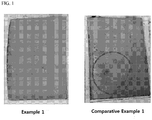
- FIG. 1 shows images of results obtained by observing whether or not lithium is precipitated in secondary batteries according to Example 1 and Comparative Example 1 with the naked eye.
- a negative electrode according to an embodiment of the present invention may include a current collector; a first active material layer formed on the current collector; and a second active material layer formed on the first active material layer, wherein the first active material layer may include carbon-based negative electrode active material particles, and the second active material layer may include silicon nitride.
- the silicon nitride (SiN x ) in the second active material layer may consist of nitrogen and silicon (Si) elements, and some of the nitrogen and Si elements may be covalently bonded to each other. In this case, some of the Si elements which are not covalently bonded with nitrogen elements may be present in the form of Si nanoparticles. Therefore, an active material in the second active material layer may include Si nanoparticles.
- the nitrogen elements may actively react with lithium ions in an electrolyte to form lithium nitride (Li 3 N), and the lithium nitride may surround Si nanoparticles in the second active material layer. Therefore, a problem in that a lithium metal is precipitated on a surface of a negative electrode due to lithium ions which are not occluded in active material particles in an electrode including only a carbon-based active material layer may be resolved. That is, lithium ions, which are not occluded in carbon-based negative electrode active material particles, among lithium ions transferred to the first active material layer may react with nitrogen in the second active material layer to prevent lithium from being precipitated on a surface of a negative electrode.
- the silicon nitride in the second active material layer includes Si nanoparticles so that capacity is high, and the Si nanoparticles are surrounded with the lithium nitride so that the lithium nitride serves as a buffer layer, thereby volume expansion caused by the occlusion and release of lithium ions from silicon may be minimized. Also, since the lithium nitride has high ionic conductivity, lithium ions are easily transferred to Si nanoparticles, thereby output characteristics may be improved.
- the current collector is not particularly limited as long as it does not cause a chemical change in a secondary battery and has conductivity.
- copper, stainless steel, aluminum, nickel, titanium, calcined carbon, aluminum or stainless steel whose surface is treated with carbon, nickel, titanium, silver, or the like may be used as the current collector.
- copper may be used as the current collector, and the current collector may have a thickness of 6 to 25 ⁇ m.
- the first active material layer is formed on the current collector and may include carbon-based negative electrode active material particles.
- lithium ions released from a positive electrode during charging are intercalated into the negative electrode active material particles, and deintercalated during discharging, thereby current may flow.
- a carbon material capable of commonly occluding and releasing lithium ions for example, graphite such as natural graphite, artificial graphite or the like; a carbon-based material such as carbon black, acetylene black, Ketjen black, channel black, furnace black, lamp black, thermal black or the like; a conductive fiber such as carbon fiber, metallic fiber or the like; a conductive tube such as carbon nanotubes or the like; or a fluorocarbon may be used.
- the carbon-based negative electrode active material particles natural graphite, artificial graphite, and a mixed material of natural graphite and artificial graphite may be used.
- the materials may have a problem in that it is difficult for lithium to uniformly react due to low output characteristics even though high capacity is exhibited when a high level of the active material is loaded.
- the first active material layer may further include a conductive material and a binder.
- the carbon-based negative electrode active material particles, the conductive material, and the binder may be included in a weight ratio of 93 to 97:1 to 3:2 to 4.
- the proportion of carbon-based negative electrode active material particles is greater than 97, lithium may be precipitated on a surface of a negative electrode, and if less than 93, battery capacity may be degraded.
- the second active material layer may include silicon nitride.
- the silicon nitride may be represented by SiN x , wherein x may satisfy 0.73 ⁇ x ⁇ 0.90.
- x is less than 0.73, lithium may be precipitated on a surface of a negative electrode due to an insufficient amount of nitrogen elements capable of reacting with lithium ions, and an effect of mitigating volume expansion caused by silicon may be degraded due to an insufficient amount of lithium nitride serving as a buffer.
- x is greater than 0.90, an effect of increasing capacity caused by silicon in the second active material layer may be insignificant.
- composition of silicon nitride in the second active material layer may be measured through X-ray photoelectron spectroscopy (XPS).
- the second active material layer may have a thickness of less than 1 ⁇ m, particularly, less than 0.5 ⁇ m.
- a thickness of the second active material layer is significantly changed by charging and discharging Si nanoparticles in the second active material layer, thereby lifespan characteristics may be degraded.
- a thickness ratio of the first active material layer and the second active material layer may be 70:1 to 500:1.
- a thickness of the second active material layer is significantly changed by charging and discharging Si nanoparticles in the second active material layer, thereby lifespan characteristics may be degraded.
- the thickness ratio is greater than 500:1, an amount of nitrogen elements in the second active material layer is not sufficient to combine with unreacted lithium ions, thereby lithium may be precipitated on a surface of a negative electrode.
- the second active material layer may contain a Si nanocrystal.
- the silicon nitride may be represented by SiN x , wherein x may satisfy 0.73 ⁇ x ⁇ 0.90. Si which is not combined with nitrogen may be present in the form of a nanocrystal.
- the SiN x -derived nitrogen after at least one cycle of charging and discharging, may be combined with lithium ions which are not occluded in the carbon-based negative electrode active material of the first active material layer or the Si nanocrystal of the second active material layer to form lithium nitride (Li 3 N), and may surround the Si nanocrystal to form first byproduct particles including the Si nanocrystal as a core and the lithium nitride as a shell.
- lithium nitride Li 3 N
- the Si nanocrystal in the first byproduct particles is a negative electrode active material capable of occluding and releasing lithium and may occlude lithium particles to form lithium silicide (Li x Si).
- x may satisfy 0 ⁇ x ⁇ 3.75. Consequently, second byproduct particles including the lithium silicide as a core and the lithium nitride as a shell may be formed.
- the lithium nitride may serve as a buffer layer with respect to the swelling of the Si nanocrystal, and may rapidly transfer ions into the Si nanocrystal due to high ionic conductivity to help in improving output characteristics.
- the Si nanocrystal in the first byproduct particles may have an average diameter (D 50 ) of 4 nm to 7 nm
- the lithium silicide in the second byproduct particles may have an average diameter (D 50 ) of 5 nm to 10 nm
- the lithium nitride shells in the first byproduct particles and second byproduct particles may have a thickness of 8 nm to 15 nm.
- the presence and contents of the Si nanocrystal, the lithium silicide, and lithium nitride may be measured through a transmission electron microscope (TEM).
- TEM transmission electron microscope
- a method of manufacturing the negative electrode according to an embodiment of the present invention may include forming a first active material layer on a current collector by using a negative electrode slurry including carbon-based negative electrode active material particles, a conductive material, and a binder (Step 1); and forming a silicon nitride layer on the first active material layer through a plasma-enhanced chemical vapor deposition process (Step 2).
- a first active material layer is formed on a current collector by using a negative electrode slurry including carbon-based negative electrode active material particles, a conductive material, and a binder.
- a slurry prepared by mixing a negative electrode mixture including carbon-based negative electrode active material particles, a conductive material, and a binder with a solvent may be applied on a current collector, dried, and rolled to form the first active material layer.
- the carbon-based negative electrode active material particles, the conductive material, and the binder may be included in a weight ratio of 93 to 97:1 to 3:2 to 4.
- a carbon material capable of commonly occluding and releasing lithium ions for example, graphite such as natural graphite, artificial graphite or the like; a carbon-based material such as carbon black, acetylene black, Ketjen black, channel black, furnace black, lamp black, thermal black or the like; a conductive fiber such as carbon fiber, metallic fiber or the like; a conductive tube such as carbon nanotubes or the like; or a fluorocarbon may be used.
- any of various types of binder polymers such as a polyvinylidene fluoride-hexafluoropropylene copolymer (PVDF-co-HFP), polyvinylidene fluoride, polyacrylonitrile, polymethyl methacrylate, polyvinyl alcohol, carboxymethyl cellulose (CMC), starches, hydroxypropyl cellulose, regenerated cellulose, polyvinyl pyrrolidone, tetrafluoroethylene, polyethylene, polypropylene, polyacrylic acid, an ethylene-propylene-diene monomer (EPDM), a sulfonated EPDM, styrene-butadiene rubber (SBR), fluororubber, polyacrylic acid, a polymer in which hydrogen atoms of the above polymers are substituted with Li, Na, Ca or the like, various copolymers, and the like may be used.
- PVDF-co-HFP polyvinylidene fluoride-hexafluoro
- the solvent may be an organic or aqueous solvent generally used in the art, and one or a mixture of two or more of dimethylformamide (DMF), dimethyl sulfoxide (DMSO), isopropyl alcohol, N-methylpyrrolidone (NMP), acetone, water, and the like may be used as the solvent.
- DMF dimethylformamide
- DMSO dimethyl sulfoxide
- NMP N-methylpyrrolidone
- acetone water, and the like
- step 2 of the method of manufacturing the negative electrode according to the present invention a silicon nitride layer is formed on the first active material layer through a plasma-enhanced chemical vapor deposition process.
- step 2 nitrogen gas diluted with silane gas is used as a raw material to form a silicon nitride layer.
- a flow rate of the nitrogen gas diluted with silane gas may be 30 sccm to 70 sccm, particularly 50 sccm, a molar ratio of the nitrogen gas and silane gas may be 97:3 to 99:1, particularly 98:2, and conditions for the plasma-enhanced chemical vapor deposition process may be set at a plasma power of 25 watts to 100 watts, a deposition time of 0.5 hour to 2 hours, and a temperature of 100 °C to 300 °C.
- a silicon nitride (SiN x (0.73 ⁇ x ⁇ 0.90)) thin film with a thickness of less than 1 ⁇ m may be prepared.
- a secondary battery according to an embodiment of the present invention may include the negative electrode, a positive electrode, a separator interposed between the negative electrode and the positive electrode, and an electrolyte.
- the secondary battery includes the negative electrode including the silicon nitride thin film, and thus may exhibit high capacity and longer lifespan characteristics.
- the positive electrode may be manufactured by applying a slurry prepared by mixing a positive electrode mixture including positive electrode active material particles, a conductive material, and a binder with an organic solvent on a positive electrode current collector, followed by drying and rolling.
- the positive electrode active material is not particularly limited, but, particularly, a lithium transition metal oxide may be used.
- a lithium transition metal oxide for example, one or a mixture of two or more of a Li ⁇ Co-based composite oxide such as LiCoO 2 or the like, a Li ⁇ Ni ⁇ Co ⁇ Mn-based composite oxide such as LiNi x Co y Mn z O 2 or the like, a Li ⁇ Ni-based composite oxide such as LiNiO 2 or the like, and a Li ⁇ Mn-based composite oxide such as LiMn 2 O 4 or the like may be used.
- a common porous polymer film conventionally used as a separator for example, a porous polymer film made of a polyolefin-based polymer such as an ethylene homopolymer, a propylene homopolymer, an ethylene/butene copolymer, an ethylene/hexene copolymer, an ethylene/methacrylate copolymer or the like, or a stacked structure having two or more layers made thereof may be used.
- a common porous non-woven fabric for example, a non-woven fabric made of high-melting point glass fiber, polyethylene terephthalate fiber or the like may be used, but the present invention is not limited thereto.
- the electrolyte may include a non-aqueous organic solvent and a metal salt.
- an aprotic organic solvent such as N-methyl-2-pyrrolidinone, propylene carbonate, ethylene carbonate, butylene carbonate, dimethyl carbonate, diethyl carbonate, ⁇ -butyrolactone, 1,2-dimethoxyethane, tetrahydroxy Franc, 2-methyltetrahydrofuran, dimethyl sulfoxide, 1,3-dioxolane, formamide, dimethylformamide, dioxolane, acetonitrile, nitromethane, methyl formate, methyl acetate, a phosphoric acid triester, trimethoxymethane, a dioxolane derivative, sulfolane, methylsulfolane, 1,3-dimethyl-2-imidazolidinone, a propylene carbonate derivative, a tetrahydrofuran derivative, an ether, methyl propionate, ethyl propionate, or the like
- a lithium salt may be used.
- a material readily soluble in the non-aqueous electrolyte for example, LiCl, LiBr, LiI, LiClO 4 , LiBF 4 , LiB 10 Cl 10 , LiPF 6 , LiCF 3 SO 3 , LiCF 3 CO 2 , LiAsF 6 , LiSbF 6 , LiAlCl 4 , CH 3 SO 3 Li, CF 3 SO 3 Li, (CF 3 SO 2 ) 2 NLi, chloroborane lithium, lower aliphatic carboxylic acid lithium, lithium tetraphenylborate, an imide or the like may be used.
- a battery module including the secondary battery as a unit cell and a battery pack including the same.
- the battery module and the battery pack include the secondary battery having high capacity and longer lifespan characteristics, and thus may be used as a power source for medium- to large-sized devices selected from the group consisting of an electric vehicle, a hybrid electric vehicle, a plug-in hybrid electric vehicle, and a power storage system.
- Step 1 Formation of first active material layer
- Natural graphite as a negative electrode active material styrene-butadiene rubber (SBR) as a binder, carbon black as a conductive material were added at 96 wt%, 3 wt%, and 1 wt%, respectively, to distilled water as a solvent to prepare a negative electrode slurry.
- the negative electrode slurry was applied on a copper (Cu) thin film with a thickness of 20 ⁇ m, which is a negative electrode current collector, dried to manufacture a negative electrode, and then roll-pressed to form a first active material layer with a thickness of 80 ⁇ m on a current collector.
- Cu copper
- Step 2 Formation of second active material layer
- the current collector on which the first active material layer is formed was placed in a reaction chamber.
- Step 3 Manufacture of positive electrode and secondary battery
- 96 wt% of a lithium cobalt composite oxide as a positive electrode active material, 2 wt% of carbon black as a conductive material, and 2 wt% of polyvinylidene fluoride (PVDF) as a binder were added to N-methyl-2-pyrrolidone (NMP) to prepare a positive electrode slurry.
- NMP N-methyl-2-pyrrolidone
- the positive electrode slurry was applied on an aluminum (Al) thin film with a thickness of 20 ⁇ m, which is a positive electrode current collector, dried, and roll-pressed to manufacture a positive electrode.
- lithium hexafluorophosphate (1M LiPF 6
- Natural graphite as a negative electrode active material styrene-butadiene rubber (SBR) as a binder, carbon black as a conductive material were added at 96 wt%, 3 wt%, and 1 wt%, respectively, to distilled water as a solvent to prepare a negative electrode slurry.
- the negative electrode slurry was applied on a copper (Cu) thin film with a thickness of 20 ⁇ m, which is a negative electrode current collector, dried to manufacture a negative electrode, and then roll-pressed to form a first active material layer with a thickness of 80.5 ⁇ m on a current collector, thereby a negative electrode was manufactured.
- Cu copper
- a secondary battery was manufactured in the same manner as in step 3 of Example 1.
- each secondary battery was subjected to ten cycles of charging and discharging at 1.5 C, and the secondary battery was then decomposed under a dry atmosphere. Then, a surface of a separator in a direction of a negative electrode surface was observed with the naked eye to identify whether or not lithium is precipitated, the result of which is shown in FIG. 1 .
- Example 1 in which a negative electrode consisted of a current collector, a first active material layer, and a second active material layer which included silicon nitride, exhibited an effect of preventing lithium from being precipitated on a surface of a negative electrode by forming lithium nitride through a reaction of a nitride and a lithium ion.
Landscapes
- Chemical & Material Sciences (AREA)
- Chemical Kinetics & Catalysis (AREA)
- Electrochemistry (AREA)
- General Chemical & Material Sciences (AREA)
- Engineering & Computer Science (AREA)
- Manufacturing & Machinery (AREA)
- Materials Engineering (AREA)
- Composite Materials (AREA)
- Inorganic Chemistry (AREA)
- Life Sciences & Earth Sciences (AREA)
- Sustainable Energy (AREA)
- Power Engineering (AREA)
- Transportation (AREA)
- Mechanical Engineering (AREA)
- Sustainable Development (AREA)
- Aviation & Aerospace Engineering (AREA)
- Battery Electrode And Active Subsutance (AREA)
Abstract
Description
- This application claims priority to and the benefit of Korean Patent Application No.
10-2016-0035120, filed on March 24, 2016 - The present invention relates to a negative electrode and a method of manufacturing the same.
- With a rapid increase in the use of fossil fuels, there is an increasing demand for use of alternative energy or clean energy. The field of electricity generation and accumulation using an electrochemical reaction has been most actively studied to meet the increasing demand.
- As a representative example of electrochemical devices using such electrochemical energy, secondary batteries are currently used and an application area thereof has gradually been increased. Recently, with an increase in development of technology and demand for portable devices, such as portable computers, mobile phones, cameras, and the like, demand for secondary batteries as energy sources is rapidly increasing. Among such secondary batteries, much research on lithium secondary batteries, which have high energy density, high operating voltage, a long cycle lifespan, and a low self-discharge rate, has been conducted, and such lithium secondary batteries are commercially available and widely used.
- Generally, a secondary battery consists of a positive electrode, a negative electrode, and an electrolyte. In the secondary battery, lithium ions released from a positive electrode active material are intercalated into a negative electrode active material such as carbon particles through 1st charging and the lithium ions are deintercalated through discharging. As lithium ions reciprocate between opposite electrodes as such, they transfer energy. Therefore, the secondary battery can be charged and discharged.
- For example, the lithium secondary battery has a structure in which a lithium electrolyte is impregnated into an electrode assembly consisting of a positive electrode including a lithium transition metal oxide as an electrode active material, a negative electrode including a carbon-based active material, and a porous separator. The positive electrode is manufactured by coating an aluminum foil with a positive electrode mixture including a lithium transition metal oxide, and the negative electrode is manufactured by coating a copper foil with a negative electrode mixture including a carbon-based active material.
- Meanwhile, lithium is precipitated in a negative electrode including a negative electrode active material such as natural graphite during charging, and thus battery performance may be degraded. Also, when silicon is used as a negative electrode active material, capacity is high, but battery performance may be degraded due to repetition of expansion and contraction caused by charging and discharging.
- Therefore, a negative electrode for a secondary battery, which has high capacity and longer lifespan characteristics, is required.
- (Patent Document 1) Korean Unexamined Patent Publication No.
10-2010-0121874 - It is an aspect of the present invention to provide a negative electrode having high capacity and a longer lifespan by additionally providing a silicon nitride layer on an active material layer.
- It is another aspect of the present invention to provide a secondary battery, a battery module, and a battery pack including the negative electrode.
- In order to accomplish the above objectives, according to an embodiment of the present invention, there is provided a negative electrode which includes a current collector; a first active material layer formed on the current collector; and a second active material layer formed on the first active material layer, wherein the first active material layer includes carbon-based negative electrode active material particles, and the second active material layer includes silicon nitride.
- In addition, according to another embodiment of the present invention, there is provided a method of manufacturing the negative electrode, which includes forming a first active material layer on a current collector by using a negative electrode slurry including carbon-based negative electrode active material particles, a conductive material, and a binder (Step 1); and forming a silicon nitride layer on the first active material layer through a plasma-enhanced chemical vapor deposition process (Step 2).
- A negative electrode according to the present invention includes a second active material layer including silicon nitride on a first active material layer so that nitrogen in the silicon nitride can react with lithium ions to form lithium nitride. Therefore, in an electrode using a carbon-based negative electrode active material, a problem in that lithium is precipitated on a surface of a negative electrode due to unreacted lithium ions can be resolved by forming the second active material layer.
- In addition, the silicon nitride layer contains silicon (Si) nanoparticles so that high capacity can be exhibited, and high output characteristics can also be exhibited due to excellent ionic conductivity while suppressing the swelling of Si nanoparticles due to lithium nitride.
-
FIG. 1 shows images of results obtained by observing whether or not lithium is precipitated in secondary batteries according to Example 1 and Comparative Example 1 with the naked eye. - Hereinafter, the present invention will be described in more detail for promoting an understanding of the present invention.
- Terms and words used in this specification and claims should not be interpreted as limited to commonly used meanings or meanings in dictionaries and should be interpreted with meanings and concepts which are consistent with the technological scope of the invention based on the principle that the inventors have appropriately defined concepts of terms in order to describe the invention in the best way.
- The terminology provided herein is merely used for the purpose of describing particular embodiments, and is not intended to be limiting of the present invention. The singular forms "a," "an," and "the" are intended to include the plural forms as well, unless the context clearly indicates otherwise.
- It should be understood that the terms "comprises," "comprising," "includes," "including," "has," and/or "having," when used herein, specify the presence of stated features, integers, steps, operations, elements, components and/or combinations thereof, but do not preclude the presence or addition of one or more other features, integers, steps, operations, elements, components and/or combinations thereof.
- A negative electrode according to an embodiment of the present invention may include a current collector; a first active material layer formed on the current collector; and a second active material layer formed on the first active material layer, wherein the first active material layer may include carbon-based negative electrode active material particles, and the second active material layer may include silicon nitride.
- The silicon nitride (SiNx) in the second active material layer may consist of nitrogen and silicon (Si) elements, and some of the nitrogen and Si elements may be covalently bonded to each other. In this case, some of the Si elements which are not covalently bonded with nitrogen elements may be present in the form of Si nanoparticles. Therefore, an active material in the second active material layer may include Si nanoparticles.
- The nitrogen elements may actively react with lithium ions in an electrolyte to form lithium nitride (Li3N), and the lithium nitride may surround Si nanoparticles in the second active material layer. Therefore, a problem in that a lithium metal is precipitated on a surface of a negative electrode due to lithium ions which are not occluded in active material particles in an electrode including only a carbon-based active material layer may be resolved. That is, lithium ions, which are not occluded in carbon-based negative electrode active material particles, among lithium ions transferred to the first active material layer may react with nitrogen in the second active material layer to prevent lithium from being precipitated on a surface of a negative electrode.
- Further, the silicon nitride in the second active material layer includes Si nanoparticles so that capacity is high, and the Si nanoparticles are surrounded with the lithium nitride so that the lithium nitride serves as a buffer layer, thereby volume expansion caused by the occlusion and release of lithium ions from silicon may be minimized. Also, since the lithium nitride has high ionic conductivity, lithium ions are easily transferred to Si nanoparticles, thereby output characteristics may be improved.
- Meanwhile, the current collector is not particularly limited as long as it does not cause a chemical change in a secondary battery and has conductivity. For example, copper, stainless steel, aluminum, nickel, titanium, calcined carbon, aluminum or stainless steel whose surface is treated with carbon, nickel, titanium, silver, or the like may be used as the current collector. Specifically, copper may be used as the current collector, and the current collector may have a thickness of 6 to 25 µm.
- The first active material layer is formed on the current collector and may include carbon-based negative electrode active material particles. In the first active material layer, lithium ions released from a positive electrode during charging are intercalated into the negative electrode active material particles, and deintercalated during discharging, thereby current may flow.
- As the carbon-based negative electrode active material particles, a carbon material capable of commonly occluding and releasing lithium ions, for example, graphite such as natural graphite, artificial graphite or the like; a carbon-based material such as carbon black, acetylene black, Ketjen black, channel black, furnace black, lamp black, thermal black or the like; a conductive fiber such as carbon fiber, metallic fiber or the like; a conductive tube such as carbon nanotubes or the like; or a fluorocarbon may be used.
- Specifically, as the carbon-based negative electrode active material particles, natural graphite, artificial graphite, and a mixed material of natural graphite and artificial graphite may be used. The materials may have a problem in that it is difficult for lithium to uniformly react due to low output characteristics even though high capacity is exhibited when a high level of the active material is loaded.
- The first active material layer may further include a conductive material and a binder. In this case, the carbon-based negative electrode active material particles, the conductive material, and the binder may be included in a weight ratio of 93 to 97:1 to 3:2 to 4. When outside the above range, if the proportion of carbon-based negative electrode active material particles is greater than 97, lithium may be precipitated on a surface of a negative electrode, and if less than 93, battery capacity may be degraded.
- The second active material layer may include silicon nitride. The silicon nitride may be represented by SiNx, wherein x may satisfy 0.73≤x≤0.90. When x is less than 0.73, lithium may be precipitated on a surface of a negative electrode due to an insufficient amount of nitrogen elements capable of reacting with lithium ions, and an effect of mitigating volume expansion caused by silicon may be degraded due to an insufficient amount of lithium nitride serving as a buffer. On the other hand, when x is greater than 0.90, an effect of increasing capacity caused by silicon in the second active material layer may be insignificant.
- The composition of silicon nitride in the second active material layer may be measured through X-ray photoelectron spectroscopy (XPS).
- The second active material layer may have a thickness of less than 1 µm, particularly, less than 0.5 µm. When the second active material layer has a thickness of greater than 1 µm, a thickness of the second active material layer is significantly changed by charging and discharging Si nanoparticles in the second active material layer, thereby lifespan characteristics may be degraded.
- A thickness ratio of the first active material layer and the second active material layer may be 70:1 to 500:1. When the thickness ratio is less than 70:1, a thickness of the second active material layer is significantly changed by charging and discharging Si nanoparticles in the second active material layer, thereby lifespan characteristics may be degraded. On the other hand, when the thickness ratio is greater than 500:1, an amount of nitrogen elements in the second active material layer is not sufficient to combine with unreacted lithium ions, thereby lithium may be precipitated on a surface of a negative electrode.
- The second active material layer may contain a Si nanocrystal. The silicon nitride may be represented by SiNx, wherein x may satisfy 0.73≤x≤0.90. Si which is not combined with nitrogen may be present in the form of a nanocrystal.
- In this case, the SiNx-derived nitrogen, after at least one cycle of charging and discharging, may be combined with lithium ions which are not occluded in the carbon-based negative electrode active material of the first active material layer or the Si nanocrystal of the second active material layer to form lithium nitride (Li3N), and may surround the Si nanocrystal to form first byproduct particles including the Si nanocrystal as a core and the lithium nitride as a shell.
- The Si nanocrystal in the first byproduct particles is a negative electrode active material capable of occluding and releasing lithium and may occlude lithium particles to form lithium silicide (LixSi). Here, x may satisfy 0<x≤3.75. Consequently, second byproduct particles including the lithium silicide as a core and the lithium nitride as a shell may be formed.
- The lithium nitride may serve as a buffer layer with respect to the swelling of the Si nanocrystal, and may rapidly transfer ions into the Si nanocrystal due to high ionic conductivity to help in improving output characteristics.
- The Si nanocrystal in the first byproduct particles may have an average diameter (D50) of 4 nm to 7 nm, and the lithium silicide in the second byproduct particles may have an average diameter (D50) of 5 nm to 10 nm. Also, the lithium nitride shells in the first byproduct particles and second byproduct particles may have a thickness of 8 nm to 15 nm.
- The presence and contents of the Si nanocrystal, the lithium silicide, and lithium nitride may be measured through a transmission electron microscope (TEM).
- A method of manufacturing the negative electrode according to an embodiment of the present invention may include forming a first active material layer on a current collector by using a negative electrode slurry including carbon-based negative electrode active material particles, a conductive material, and a binder (Step 1); and forming a silicon nitride layer on the first active material layer through a plasma-enhanced chemical vapor deposition process (Step 2).
- Hereinafter, the method of manufacturing the negative electrode according to the present invention will be described in detail for each step.
- In
step 1 of the method of manufacturing the negative electrode according to the present invention, a first active material layer is formed on a current collector by using a negative electrode slurry including carbon-based negative electrode active material particles, a conductive material, and a binder. - Specifically, a slurry prepared by mixing a negative electrode mixture including carbon-based negative electrode active material particles, a conductive material, and a binder with a solvent may be applied on a current collector, dried, and rolled to form the first active material layer.
- In this case, the carbon-based negative electrode active material particles, the conductive material, and the binder may be included in a weight ratio of 93 to 97:1 to 3:2 to 4.
- As the carbon-based negative electrode active material particles, a carbon material capable of commonly occluding and releasing lithium ions, for example, graphite such as natural graphite, artificial graphite or the like; a carbon-based material such as carbon black, acetylene black, Ketjen black, channel black, furnace black, lamp black, thermal black or the like; a conductive fiber such as carbon fiber, metallic fiber or the like; a conductive tube such as carbon nanotubes or the like; or a fluorocarbon may be used. As the binder, any of various types of binder polymers such as a polyvinylidene fluoride-hexafluoropropylene copolymer (PVDF-co-HFP), polyvinylidene fluoride, polyacrylonitrile, polymethyl methacrylate, polyvinyl alcohol, carboxymethyl cellulose (CMC), starches, hydroxypropyl cellulose, regenerated cellulose, polyvinyl pyrrolidone, tetrafluoroethylene, polyethylene, polypropylene, polyacrylic acid, an ethylene-propylene-diene monomer (EPDM), a sulfonated EPDM, styrene-butadiene rubber (SBR), fluororubber, polyacrylic acid, a polymer in which hydrogen atoms of the above polymers are substituted with Li, Na, Ca or the like, various copolymers, and the like may be used.
- The solvent may be an organic or aqueous solvent generally used in the art, and one or a mixture of two or more of dimethylformamide (DMF), dimethyl sulfoxide (DMSO), isopropyl alcohol, N-methylpyrrolidone (NMP), acetone, water, and the like may be used as the solvent.
- In step 2 of the method of manufacturing the negative electrode according to the present invention, a silicon nitride layer is formed on the first active material layer through a plasma-enhanced chemical vapor deposition process.
- Specifically, in step 2, nitrogen gas diluted with silane gas is used as a raw material to form a silicon nitride layer.
- In this case, a flow rate of the nitrogen gas diluted with silane gas may be 30 sccm to 70 sccm, particularly 50 sccm, a molar ratio of the nitrogen gas and silane gas may be 97:3 to 99:1, particularly 98:2, and conditions for the plasma-enhanced chemical vapor deposition process may be set at a plasma power of 25 watts to 100 watts, a deposition time of 0.5 hour to 2 hours, and a temperature of 100 °C to 300 °C. When the plasma-enhanced chemical vapor deposition process is performed under the above conditions, a silicon nitride (SiNx (0.73≤x≤0.90)) thin film with a thickness of less than 1 µm may be prepared.
- A secondary battery according to an embodiment of the present invention may include the negative electrode, a positive electrode, a separator interposed between the negative electrode and the positive electrode, and an electrolyte.
- The secondary battery includes the negative electrode including the silicon nitride thin film, and thus may exhibit high capacity and longer lifespan characteristics.
- The positive electrode may be manufactured by applying a slurry prepared by mixing a positive electrode mixture including positive electrode active material particles, a conductive material, and a binder with an organic solvent on a positive electrode current collector, followed by drying and rolling.
- The positive electrode active material is not particularly limited, but, particularly, a lithium transition metal oxide may be used. As the lithium transition metal oxide, for example, one or a mixture of two or more of a Li · Co-based composite oxide such as LiCoO2 or the like, a Li · Ni · Co · Mn-based composite oxide such as LiNixCoyMnzO2 or the like, a Li · Ni-based composite oxide such as LiNiO2 or the like, and a Li · Mn-based composite oxide such as LiMn2O4 or the like may be used.
- As the separator, a common porous polymer film conventionally used as a separator, for example, a porous polymer film made of a polyolefin-based polymer such as an ethylene homopolymer, a propylene homopolymer, an ethylene/butene copolymer, an ethylene/hexene copolymer, an ethylene/methacrylate copolymer or the like, or a stacked structure having two or more layers made thereof may be used. Alternatively, a common porous non-woven fabric, for example, a non-woven fabric made of high-melting point glass fiber, polyethylene terephthalate fiber or the like may be used, but the present invention is not limited thereto.
- The electrolyte may include a non-aqueous organic solvent and a metal salt.
- As the non-aqueous organic solvent, for example, an aprotic organic solvent such as N-methyl-2-pyrrolidinone, propylene carbonate, ethylene carbonate, butylene carbonate, dimethyl carbonate, diethyl carbonate, γ-butyrolactone, 1,2-dimethoxyethane, tetrahydroxy Franc, 2-methyltetrahydrofuran, dimethyl sulfoxide, 1,3-dioxolane, formamide, dimethylformamide, dioxolane, acetonitrile, nitromethane, methyl formate, methyl acetate, a phosphoric acid triester, trimethoxymethane, a dioxolane derivative, sulfolane, methylsulfolane, 1,3-dimethyl-2-imidazolidinone, a propylene carbonate derivative, a tetrahydrofuran derivative, an ether, methyl propionate, ethyl propionate, or the like may be used.
- As the metal salt, a lithium salt may be used. As the lithium salt, a material readily soluble in the non-aqueous electrolyte, for example, LiCl, LiBr, LiI, LiClO4, LiBF4, LiB10Cl10, LiPF6, LiCF3SO3, LiCF3CO2, LiAsF6, LiSbF6, LiAlCl4, CH3SO3Li, CF3SO3Li, (CF3SO2)2NLi, chloroborane lithium, lower aliphatic carboxylic acid lithium, lithium tetraphenylborate, an imide or the like may be used.
- According to another embodiment of the present invention, there are provided a battery module including the secondary battery as a unit cell and a battery pack including the same. The battery module and the battery pack include the secondary battery having high capacity and longer lifespan characteristics, and thus may be used as a power source for medium- to large-sized devices selected from the group consisting of an electric vehicle, a hybrid electric vehicle, a plug-in hybrid electric vehicle, and a power storage system.
- Hereinafter, exemplary embodiments of the present invention will be described in detail so that those of ordinary skill in the art can carry out the present invention. However, it should be understood that the present invention can be implemented in various forms, and is not intended to limit the exemplary embodiments of the present invention.
- Natural graphite as a negative electrode active material, styrene-butadiene rubber (SBR) as a binder, carbon black as a conductive material were added at 96 wt%, 3 wt%, and 1 wt%, respectively, to distilled water as a solvent to prepare a negative electrode slurry. The negative electrode slurry was applied on a copper (Cu) thin film with a thickness of 20 µm, which is a negative electrode current collector, dried to manufacture a negative electrode, and then roll-pressed to form a first active material layer with a thickness of 80 µm on a current collector.
- The current collector on which the first active material layer is formed was placed in a reaction chamber.
- In the reaction chamber, nitrogen gas diluted with silane gas (a molar ratio of N2:SiH4=98:2) was introduced at a flow rate of 50 sccm while a power of 25 watts was applied to form plasma, and reacted at 100 °C for 30 minutes to form a silicon nitride layer with a thickness of 0.5 µm (thickness of first active material layer:thickness of second active material layer= 160:1) on the first active material layer, thereby a negative electrode was manufactured. In this case, a composition of the silicon nitride measured through X-ray photoelectron spectroscopy (XPS) was SiNx (x=0.73).
- 96 wt% of a lithium cobalt composite oxide as a positive electrode active material, 2 wt% of carbon black as a conductive material, and 2 wt% of polyvinylidene fluoride (PVDF) as a binder were added to N-methyl-2-pyrrolidone (NMP) to prepare a positive electrode slurry. The positive electrode slurry was applied on an aluminum (Al) thin film with a thickness of 20 µm, which is a positive electrode current collector, dried, and roll-pressed to manufacture a positive electrode.
- The negative electrode manufactured in step 2, the positive electrode, and a porous polyethylene separator were assembled using a stacking method, and an electrolyte (ethylene carbonate (EC)/ethyl methyl carbonate (EMC)=3/7 (volume ratio)) and lithium hexafluorophosphate (1M LiPF6) were injected into the battery thus assembled to manufacture a lithium secondary battery.
- Natural graphite as a negative electrode active material, styrene-butadiene rubber (SBR) as a binder, carbon black as a conductive material were added at 96 wt%, 3 wt%, and 1 wt%, respectively, to distilled water as a solvent to prepare a negative electrode slurry. The negative electrode slurry was applied on a copper (Cu) thin film with a thickness of 20 µm, which is a negative electrode current collector, dried to manufacture a negative electrode, and then roll-pressed to form a first active material layer with a thickness of 80.5 µm on a current collector, thereby a negative electrode was manufactured.
- A secondary battery was manufactured in the same manner as in step 3 of Example 1.
- In order to evaluate lifespan characteristics of the secondary batteries according to Example 1 and Comparative Example 1, an experiment was performed as follows.
- Each lithium secondary battery was charged and discharged at 0.1C in a first cycle and at 1C in subsequent cycles. A ratio of discharge capacity after a 49th cycle to initial discharge capacity was measured, the result of which is shown in Table 1.
[Table 1] Initial discharge capacity (mAh/g) Lifespan characteristics (%) Example 1 351 98 Comparative Example 1 340 95 -Lifespan characteristic: (discharge capacity after 49th cycle/initial discharge capacity)×100 - In order to identify whether or not lithium is precipitated in the secondary batteries according to Example 1 and Comparative Example 1, each secondary battery was subjected to ten cycles of charging and discharging at 1.5 C, and the secondary battery was then decomposed under a dry atmosphere. Then, a surface of a separator in a direction of a negative electrode surface was observed with the naked eye to identify whether or not lithium is precipitated, the result of which is shown in
FIG. 1 . - As shown in
FIG. 1 , it can be confirmed that a dark brown precipitate was observed on a surface of a separator according to Comparative Example 1, but no precipitate was observed on a surface of a separator according to Example 1. - From this result, it can be seen that Example 1, in which a negative electrode consisted of a current collector, a first active material layer, and a second active material layer which included silicon nitride, exhibited an effect of preventing lithium from being precipitated on a surface of a negative electrode by forming lithium nitride through a reaction of a nitride and a lithium ion.
- While exemplary embodiments have been described above in detail, the scope of the present invention is not limited thereto, but encompasses several modifications and improvements by those skilled in the art using basic concepts of embodiments of the present invention defined by the appended claims.
Claims (18)
- A negative electrode comprising:a current collector;a first active material layer formed on the current collector; anda second active material layer formed on the first active material layer,wherein the first active material layer includes carbon-based negative electrode active material particles, and the second active material layer includes silicon nitride.
- The negative electrode of claim 1, wherein the second active material layer has a thickness of less than 1 µm.
- The negative electrode of claim 1, wherein a thickness ratio of the first active material layer and the second active material layer is 70:1 to 500:1.
- The negative electrode of claim 1, wherein the silicon nitride is represented by SiNx where x satisfies 0.73≤x≤0.90.
- The negative electrode of claim 1, wherein the second active material layer contains a silicon (Si) nanocrystal.
- The negative electrode of claim 1, wherein the second active material layer includes first byproduct particles including a Si nanocrystal core and a lithium nitride (Li3N) shell surrounding the Si nanocrystal core after at least one cycle of charging and discharging.
- The negative electrode of claim 1, wherein the second active material layer includes second byproduct particles including a lithium silicide core and a lithium nitride (Li3N) shell surrounding the lithium silicide core after at least one cycle of charging and discharging.
- The negative electrode of claim 7, wherein the lithium silicide is represented by LixSi where x satisfies 0<x≤3.75.
- The negative electrode of claim 1, wherein the carbon-based negative electrode active material particles of the first active material layer is natural graphite.
- The negative electrode of claim 1, wherein the first active material layer further includes a conductive material and a binder.
- A method of manufacturing the negative electrode of claim 1, comprising:forming a first active material layer on a current collector by using a negative electrode slurry including carbon-based negative electrode active material particles, a conductive material, and a binder (Step 1); andforming a silicon nitride layer on the first active material layer through a plasma-enhanced chemical vapor deposition process (Step 2).
- The method of claim 11, wherein, in the plasma-enhanced chemical vapor deposition process in step 2, nitrogen gas diluted with silane gas is used as a raw material, a flow rate of nitrogen gas diluted with silane gas is 30 sccm to 70 sccm, and a molar ratio of the nitrogen gas and silane gas is 97:3 to 99:1.
- The method of claim 11, wherein the plasma-enhanced chemical vapor deposition process in step 2 is performed at a plasma power of 25 watts to 100 watts and a deposition time of 0.5 hour to 2 hours.
- The method of claim 11, wherein the plasma-enhanced chemical vapor deposition process in step 2 is performed at a temperature of 100 °C to 300 °C.
- A secondary battery comprising the negative electrode of claim 1, a positive electrode, a separator interposed between the negative electrode and the positive electrode, and an electrolyte.
- A battery module comprising the secondary battery of claim 1 as a unit cell.
- A battery pack comprising the battery module of claim 16 and used as a power source for medium- to large-sized devices.
- The battery pack of claim 17, wherein the medium- to large-sized device is selected from the group consisting of an electric vehicle, a hybrid electric vehicle, a plug-in hybrid electric vehicle, and a power storage system.
Applications Claiming Priority (2)
| Application Number | Priority Date | Filing Date | Title |
|---|---|---|---|
| KR1020160035120A KR101991845B1 (en) | 2016-03-24 | 2016-03-24 | Negative electrode and method for manufacturing the same |
| PCT/KR2017/003221 WO2017164702A1 (en) | 2016-03-24 | 2017-03-24 | Negative electrode and method for manufacturing same |
Publications (3)
| Publication Number | Publication Date |
|---|---|
| EP3324466A1 true EP3324466A1 (en) | 2018-05-23 |
| EP3324466A4 EP3324466A4 (en) | 2018-07-04 |
| EP3324466B1 EP3324466B1 (en) | 2025-12-31 |
Family
ID=59900501
Family Applications (1)
| Application Number | Title | Priority Date | Filing Date |
|---|---|---|---|
| EP17770672.8A Active EP3324466B1 (en) | 2016-03-24 | 2017-03-24 | Negative Electrode and Method for its Production |
Country Status (7)
| Country | Link |
|---|---|
| US (1) | US10700346B2 (en) |
| EP (1) | EP3324466B1 (en) |
| KR (1) | KR101991845B1 (en) |
| CN (1) | CN107851777B (en) |
| ES (1) | ES3062960T3 (en) |
| PL (1) | PL3324466T3 (en) |
| WO (1) | WO2017164702A1 (en) |
Families Citing this family (20)
| Publication number | Priority date | Publication date | Assignee | Title |
|---|---|---|---|---|
| NO344185B1 (en) * | 2016-05-31 | 2019-09-30 | Inst Energiteknik | Electrode and Battery comprising a powder of Silicon Nitride particles |
| CN107946576B (en) * | 2017-11-21 | 2020-05-19 | 中航锂电(洛阳)有限公司 | High-rate graphite negative electrode material, preparation method thereof and lithium ion battery |
| KR102364480B1 (en) * | 2018-05-15 | 2022-02-18 | 주식회사 엘지에너지솔루션 | Negative electrode active material, negative electrode comprising the negative electrode active material, and lithium secondarty battery comprising the negative electrode |
| KR102530195B1 (en) * | 2019-01-18 | 2023-05-10 | 주식회사 엘지에너지솔루션 | Method for manufacturing negative electrode for secondary battery |
| US12176526B2 (en) | 2019-02-22 | 2024-12-24 | Amprius Technologies, Inc. | Compositionally modified silicon coatings for use in a lithium ion battery anode |
| KR102859318B1 (en) * | 2019-07-08 | 2025-09-11 | 주식회사 엘지에너지솔루션 | Method for manufacturing negative electrode |
| CN110993891A (en) * | 2019-11-11 | 2020-04-10 | 珠海冠宇电池有限公司 | Silicon-containing negative plate, preparation method thereof and lithium ion battery |
| KR102926460B1 (en) | 2019-12-27 | 2026-02-12 | 주식회사 엘지에너지솔루션 | Binder composition for negative electrode, negative electrode and secondary battery |
| KR20210109692A (en) | 2020-02-27 | 2021-09-07 | 주식회사 엘피엔 | A new composite anode active material, lithium battery including the same, and method for preparing the material |
| CN113809330B (en) * | 2020-06-12 | 2023-08-08 | 比亚迪股份有限公司 | Silicon-based composite negative electrode material and preparation method thereof, all-solid lithium battery |
| CN113809309B (en) * | 2020-06-12 | 2023-08-08 | 比亚迪股份有限公司 | Silicon-based composite anode material, preparation method thereof and all-solid-state lithium battery |
| CN113809285B (en) * | 2020-06-12 | 2023-08-08 | 比亚迪股份有限公司 | Silicon-based composite negative electrode material and preparation method thereof, all-solid lithium battery |
| CN115132967B (en) * | 2021-03-25 | 2026-01-16 | 宁德新能源科技有限公司 | Negative electrode plate, electrochemical device and electronic device |
| KR102450634B1 (en) | 2021-06-09 | 2022-10-06 | 주식회사 엘피엔 | A new composite anode active material, lithium battery including the same, and method for preparing the material |
| US20230009297A1 (en) * | 2021-07-08 | 2023-01-12 | Samsung Electronics Co., Ltd. | All-solid secondary battery and method of manufacturing all-solid secondary battery |
| US20230057285A1 (en) * | 2021-08-13 | 2023-02-23 | Global Graphene Group, Inc. | Prelithiated Anode, Lithium-Ion Battery Containing Same, and Method of Producing Same |
| KR20230090829A (en) * | 2021-12-15 | 2023-06-22 | 에스케이온 주식회사 | Anode for secondary battery, method of fabricating the same and lithium secondary battery including the same |
| CN115832237A (en) * | 2022-05-10 | 2023-03-21 | 江苏时代新能源科技有限公司 | Negative active material, preparation method thereof, negative pole piece, battery and electric equipment |
| KR20240088002A (en) | 2022-12-13 | 2024-06-20 | 주식회사 엘피엔 | Manufacturing method of metal nitride carbon composite negative electrode active material for lithium secondary battery |
| CN121839567A (en) * | 2024-10-09 | 2026-04-10 | 宁德时代新能源科技股份有限公司 | Negative electrode plate, solid-state battery cell, battery device, electricity utilization device, silicon active material and preparation method thereof |
Family Cites Families (11)
| Publication number | Priority date | Publication date | Assignee | Title |
|---|---|---|---|---|
| JP4383554B2 (en) | 1998-05-28 | 2009-12-16 | パナソニック株式会社 | Negative electrode material for nonaqueous electrolyte secondary battery, method for producing the negative electrode material, and nonaqueous electrolyte secondary battery using the negative electrode material |
| JP3664252B2 (en) | 2002-11-19 | 2005-06-22 | ソニー株式会社 | Negative electrode and battery using the same |
| US7086918B2 (en) * | 2002-12-11 | 2006-08-08 | Applied Materials, Inc. | Low temperature process for passivation applications |
| JP4802570B2 (en) | 2005-06-24 | 2011-10-26 | パナソニック株式会社 | Negative electrode for lithium ion secondary battery, method for producing the same, and lithium ion secondary battery using the same |
| KR20100121874A (en) | 2009-05-11 | 2010-11-19 | 주식회사 이아이지 | Negative electrode active material for lithium rechargeable battery, lithium rechargeable battery, battery pack and vehicle using the same |
| KR101073619B1 (en) * | 2009-06-01 | 2011-10-14 | 재단법인 구미전자정보기술원 | Organic/inorganic composite separator for electrochemical cell and electrochemical cell including the same |
| US20120264020A1 (en) | 2010-10-07 | 2012-10-18 | Applied Sciences, Inc. | Method of depositing silicon on carbon nanomaterials |
| EP2727175A4 (en) * | 2011-07-01 | 2015-07-01 | Amprius Inc | MATRIX ELECTRODE STRUCTURES HAVING IMPROVED ADHESION CHARACTERISTICS |
| EP2712009B1 (en) * | 2012-07-13 | 2019-09-11 | LG Chem, Ltd. | Bimodal-type anode active material and lithium secondary battery including same |
| GB2507535B (en) * | 2012-11-02 | 2015-07-15 | Nexeon Ltd | Multilayer electrode |
| WO2014204278A1 (en) * | 2013-06-20 | 2014-12-24 | 주식회사 엘지화학 | High-capacity electrode active material for lithium secondary battery and lithium secondary battery using same |
-
2016
- 2016-03-24 KR KR1020160035120A patent/KR101991845B1/en active Active
-
2017
- 2017-03-24 CN CN201780002714.8A patent/CN107851777B/en active Active
- 2017-03-24 ES ES17770672T patent/ES3062960T3/en active Active
- 2017-03-24 EP EP17770672.8A patent/EP3324466B1/en active Active
- 2017-03-24 WO PCT/KR2017/003221 patent/WO2017164702A1/en not_active Ceased
- 2017-03-24 PL PL17770672.8T patent/PL3324466T3/en unknown
- 2017-03-24 US US15/750,057 patent/US10700346B2/en active Active
Also Published As
| Publication number | Publication date |
|---|---|
| CN107851777A (en) | 2018-03-27 |
| KR20170110840A (en) | 2017-10-12 |
| ES3062960T3 (en) | 2026-04-14 |
| PL3324466T3 (en) | 2026-03-23 |
| EP3324466A4 (en) | 2018-07-04 |
| EP3324466B1 (en) | 2025-12-31 |
| WO2017164702A1 (en) | 2017-09-28 |
| CN107851777B (en) | 2021-05-07 |
| US20180226641A1 (en) | 2018-08-09 |
| US10700346B2 (en) | 2020-06-30 |
| KR101991845B1 (en) | 2019-06-24 |
Similar Documents
| Publication | Publication Date | Title |
|---|---|---|
| US10700346B2 (en) | Negative electrode and method for manufacturing same | |
| US11322734B2 (en) | Negative electrode active material, negative electrode comprising the negative electrode active material, and secondary battery comprising the negative electrode | |
| US12009515B2 (en) | Negative electrode active material for lithium secondary battery and preparation method thereof | |
| CN111133613B (en) | Negative electrode active material, negative electrode including the same, and secondary battery including the negative electrode | |
| EP3490040B1 (en) | Negative electrode active material, negative electrode including the same, and secondary battery including the negative electrode | |
| US10693140B2 (en) | Negative electrode, and secondary battery, battery module, and battery pack including the same | |
| US11437611B2 (en) | Negative electrode active material, negative electrode including the same, secondary battery including the negative electrode, and preparation method of the negative electrode active material | |
| US20200099052A1 (en) | Negative electrode active material, negative electrode including negative electrode active material, and secondary battery including negative electrode | |
| EP3301743B1 (en) | Method of manufacturing negative electrode | |
| US10249874B2 (en) | Composite negative active material, negative electrode including composite negative active material, and lithium secondary battery including negative electrode | |
| US11984587B2 (en) | Negative electrode active material, negative electrode including the negative electrode active material, and secondary battery including the negative electrode | |
| CN117976821A (en) | Multilayer anode containing silicon-based compound and lithium secondary battery including the multilayer anode | |
| CN114555529B (en) | Positive electrode active material, positive electrode and lithium secondary battery containing the same | |
| KR20170111288A (en) | Negative electrode and secondary battery comprising the same | |
| CN117397054A (en) | Lithium secondary battery | |
| US20240347700A1 (en) | Anode composition, anode comprising same for lithium secondary battery, lithium secondary battery comprising anode, and method for preparing anode composition | |
| US11515515B2 (en) | Method of preparing negative electrode active material | |
| EP4439704A1 (en) | Lithium secondary battery anode, method for manufacturing lithium secondary battery anode, and lithium secondary battery comprising anode | |
| US20250070146A1 (en) | Negative electrode for lithium secondary battery, and lithium secondary battery comprising negative electrode | |
| KR20250011081A (en) | Negative electrode active material, negative electrode composition, negative electrode for lithium secondary battery comprising same, and lithium secondary battery comprising negative electrode | |
| CN119365992A (en) | Lithium secondary battery | |
| CN118661288A (en) | Negative electrode active material, negative electrode including the same, secondary battery including the same, and method of preparing negative electrode active material |
Legal Events
| Date | Code | Title | Description |
|---|---|---|---|
| STAA | Information on the status of an ep patent application or granted ep patent |
Free format text: STATUS: THE INTERNATIONAL PUBLICATION HAS BEEN MADE |
|
| PUAI | Public reference made under article 153(3) epc to a published international application that has entered the european phase |
Free format text: ORIGINAL CODE: 0009012 |
|
| STAA | Information on the status of an ep patent application or granted ep patent |
Free format text: STATUS: REQUEST FOR EXAMINATION WAS MADE |
|
| 17P | Request for examination filed |
Effective date: 20180130 |
|
| AK | Designated contracting states |
Kind code of ref document: A1 Designated state(s): AL AT BE BG CH CY CZ DE DK EE ES FI FR GB GR HR HU IE IS IT LI LT LU LV MC MK MT NL NO PL PT RO RS SE SI SK SM TR |
|
| AX | Request for extension of the european patent |
Extension state: BA ME |
|
| RIC1 | Information provided on ipc code assigned before grant |
Ipc: H01M 4/1393 20100101ALI20180524BHEP Ipc: H01M 10/0525 20100101ALN20180524BHEP Ipc: H01M 4/1395 20100101ALI20180524BHEP Ipc: H01M 4/133 20100101ALI20180524BHEP Ipc: H01M 4/04 20060101ALI20180524BHEP Ipc: H01M 4/583 20100101ALI20180524BHEP Ipc: H01M 4/134 20100101ALI20180524BHEP Ipc: H01M 4/36 20060101AFI20180524BHEP |
|
| A4 | Supplementary search report drawn up and despatched |
Effective date: 20180604 |
|
| DAV | Request for validation of the european patent (deleted) | ||
| DAX | Request for extension of the european patent (deleted) | ||
| STAA | Information on the status of an ep patent application or granted ep patent |
Free format text: STATUS: EXAMINATION IS IN PROGRESS |
|
| 17Q | First examination report despatched |
Effective date: 20201014 |
|
| RAP1 | Party data changed (applicant data changed or rights of an application transferred) |
Owner name: LG ENERGY SOLUTION LTD. |
|
| RAP3 | Party data changed (applicant data changed or rights of an application transferred) |
Owner name: LG ENERGY SOLUTION, LTD. |
|
| GRAP | Despatch of communication of intention to grant a patent |
Free format text: ORIGINAL CODE: EPIDOSNIGR1 |
|
| STAA | Information on the status of an ep patent application or granted ep patent |
Free format text: STATUS: GRANT OF PATENT IS INTENDED |
|
| RIC1 | Information provided on ipc code assigned before grant |
Ipc: H01M 4/133 20100101AFI20250710BHEP Ipc: H01M 4/134 20100101ALI20250710BHEP Ipc: H01M 4/36 20060101ALI20250710BHEP Ipc: H01M 4/04 20060101ALI20250710BHEP Ipc: H01M 4/1393 20100101ALI20250710BHEP Ipc: H01M 4/1395 20100101ALI20250710BHEP Ipc: H01M 4/38 20060101ALI20250710BHEP Ipc: H01M 4/587 20100101ALI20250710BHEP Ipc: H01M 4/62 20060101ALI20250710BHEP Ipc: B60L 50/64 20190101ALI20250710BHEP Ipc: H01M 10/052 20100101ALN20250710BHEP Ipc: H01M 4/02 20060101ALN20250710BHEP |
|
| INTG | Intention to grant announced |
Effective date: 20250806 |
|
| GRAS | Grant fee paid |
Free format text: ORIGINAL CODE: EPIDOSNIGR3 |
|
| GRAA | (expected) grant |
Free format text: ORIGINAL CODE: 0009210 |
|
| STAA | Information on the status of an ep patent application or granted ep patent |
Free format text: STATUS: THE PATENT HAS BEEN GRANTED |
|
| P01 | Opt-out of the competence of the unified patent court (upc) registered |
Free format text: CASE NUMBER: UPC_APP_0013216_3324466/2025 Effective date: 20251113 |
|
| AK | Designated contracting states |
Kind code of ref document: B1 Designated state(s): AL AT BE BG CH CY CZ DE DK EE ES FI FR GB GR HR HU IE IS IT LI LT LU LV MC MK MT NL NO PL PT RO RS SE SI SK SM TR |
|
| REG | Reference to a national code |
Ref country code: CH Ref legal event code: F10 Free format text: ST27 STATUS EVENT CODE: U-0-0-F10-F00 (AS PROVIDED BY THE NATIONAL OFFICE) Effective date: 20251231 Ref country code: GB Ref legal event code: FG4D |
|
| REG | Reference to a national code |
Ref country code: DE Ref legal event code: R096 Ref document number: 602017093350 Country of ref document: DE |
|
| REG | Reference to a national code |
Ref country code: IE Ref legal event code: FG4D |
|
| REG | Reference to a national code |
Ref country code: NL Ref legal event code: FP |
|
| PGFP | Annual fee paid to national office [announced via postgrant information from national office to epo] |
Ref country code: NL Payment date: 20260220 Year of fee payment: 10 |
|
| PGFP | Annual fee paid to national office [announced via postgrant information from national office to epo] |
Ref country code: SE Payment date: 20260223 Year of fee payment: 10 |
|
| PGFP | Annual fee paid to national office [announced via postgrant information from national office to epo] |
Ref country code: GB Payment date: 20260224 Year of fee payment: 10 |
|
| REG | Reference to a national code |
Ref country code: LT Ref legal event code: MG9D |
|
| PG25 | Lapsed in a contracting state [announced via postgrant information from national office to epo] |
Ref country code: NO Free format text: LAPSE BECAUSE OF FAILURE TO SUBMIT A TRANSLATION OF THE DESCRIPTION OR TO PAY THE FEE WITHIN THE PRESCRIBED TIME-LIMIT Effective date: 20260331 |
|
| PGFP | Annual fee paid to national office [announced via postgrant information from national office to epo] |
Ref country code: DE Payment date: 20260220 Year of fee payment: 10 |
|
| PG25 | Lapsed in a contracting state [announced via postgrant information from national office to epo] |
Ref country code: HR Free format text: LAPSE BECAUSE OF FAILURE TO SUBMIT A TRANSLATION OF THE DESCRIPTION OR TO PAY THE FEE WITHIN THE PRESCRIBED TIME-LIMIT Effective date: 20251231 Ref country code: FI Free format text: LAPSE BECAUSE OF FAILURE TO SUBMIT A TRANSLATION OF THE DESCRIPTION OR TO PAY THE FEE WITHIN THE PRESCRIBED TIME-LIMIT Effective date: 20251231 |
|
| REG | Reference to a national code |
Ref country code: ES Ref legal event code: FG2A Ref document number: 3062960 Country of ref document: ES Kind code of ref document: T3 Effective date: 20260414 |
|
| PGFP | Annual fee paid to national office [announced via postgrant information from national office to epo] |
Ref country code: BE Payment date: 20260220 Year of fee payment: 10 Ref country code: IT Payment date: 20260223 Year of fee payment: 10 |
|
| PGFP | Annual fee paid to national office [announced via postgrant information from national office to epo] |
Ref country code: HU Payment date: 20260310 Year of fee payment: 10 |
|
| PG25 | Lapsed in a contracting state [announced via postgrant information from national office to epo] |
Ref country code: RS Free format text: LAPSE BECAUSE OF FAILURE TO SUBMIT A TRANSLATION OF THE DESCRIPTION OR TO PAY THE FEE WITHIN THE PRESCRIBED TIME-LIMIT Effective date: 20260331 |
|
| PGFP | Annual fee paid to national office [announced via postgrant information from national office to epo] |
Ref country code: FR Payment date: 20260224 Year of fee payment: 10 |
|
| PGFP | Annual fee paid to national office [announced via postgrant information from national office to epo] |
Ref country code: TR Payment date: 20260226 Year of fee payment: 10 |
|
| PGFP | Annual fee paid to national office [announced via postgrant information from national office to epo] |
Ref country code: PL Payment date: 20260223 Year of fee payment: 10 |
|
| PG25 | Lapsed in a contracting state [announced via postgrant information from national office to epo] |
Ref country code: LV Free format text: LAPSE BECAUSE OF FAILURE TO SUBMIT A TRANSLATION OF THE DESCRIPTION OR TO PAY THE FEE WITHIN THE PRESCRIBED TIME-LIMIT Effective date: 20251231 |