EP3321119A1 - Vehicle power supply system - Google Patents
Vehicle power supply system Download PDFInfo
- Publication number
- EP3321119A1 EP3321119A1 EP17196133.7A EP17196133A EP3321119A1 EP 3321119 A1 EP3321119 A1 EP 3321119A1 EP 17196133 A EP17196133 A EP 17196133A EP 3321119 A1 EP3321119 A1 EP 3321119A1
- Authority
- EP
- European Patent Office
- Prior art keywords
- auxiliary machine
- diode
- voltage converter
- power line
- power
- Prior art date
- Legal status (The legal status is an assumption and is not a legal conclusion. Google has not performed a legal analysis and makes no representation as to the accuracy of the status listed.)
- Granted
Links
Images


Classifications
-
- B—PERFORMING OPERATIONS; TRANSPORTING
- B60—VEHICLES IN GENERAL
- B60L—PROPULSION OF ELECTRICALLY-PROPELLED VEHICLES; SUPPLYING ELECTRIC POWER FOR AUXILIARY EQUIPMENT OF ELECTRICALLY-PROPELLED VEHICLES; ELECTRODYNAMIC BRAKE SYSTEMS FOR VEHICLES IN GENERAL; MAGNETIC SUSPENSION OR LEVITATION FOR VEHICLES; MONITORING OPERATING VARIABLES OF ELECTRICALLY-PROPELLED VEHICLES; ELECTRIC SAFETY DEVICES FOR ELECTRICALLY-PROPELLED VEHICLES
- B60L1/00—Supplying electric power to auxiliary equipment of vehicles
- B60L1/003—Supplying electric power to auxiliary equipment of vehicles to auxiliary motors, e.g. for pumps, compressors
-
- B—PERFORMING OPERATIONS; TRANSPORTING
- B60—VEHICLES IN GENERAL
- B60L—PROPULSION OF ELECTRICALLY-PROPELLED VEHICLES; SUPPLYING ELECTRIC POWER FOR AUXILIARY EQUIPMENT OF ELECTRICALLY-PROPELLED VEHICLES; ELECTRODYNAMIC BRAKE SYSTEMS FOR VEHICLES IN GENERAL; MAGNETIC SUSPENSION OR LEVITATION FOR VEHICLES; MONITORING OPERATING VARIABLES OF ELECTRICALLY-PROPELLED VEHICLES; ELECTRIC SAFETY DEVICES FOR ELECTRICALLY-PROPELLED VEHICLES
- B60L58/00—Methods or circuit arrangements for monitoring or controlling batteries or fuel cells, specially adapted for electric vehicles
- B60L58/10—Methods or circuit arrangements for monitoring or controlling batteries or fuel cells, specially adapted for electric vehicles for monitoring or controlling batteries
-
- B—PERFORMING OPERATIONS; TRANSPORTING
- B60—VEHICLES IN GENERAL
- B60L—PROPULSION OF ELECTRICALLY-PROPELLED VEHICLES; SUPPLYING ELECTRIC POWER FOR AUXILIARY EQUIPMENT OF ELECTRICALLY-PROPELLED VEHICLES; ELECTRODYNAMIC BRAKE SYSTEMS FOR VEHICLES IN GENERAL; MAGNETIC SUSPENSION OR LEVITATION FOR VEHICLES; MONITORING OPERATING VARIABLES OF ELECTRICALLY-PROPELLED VEHICLES; ELECTRIC SAFETY DEVICES FOR ELECTRICALLY-PROPELLED VEHICLES
- B60L50/00—Electric propulsion with power supplied within the vehicle
- B60L50/40—Electric propulsion with power supplied within the vehicle using propulsion power supplied by capacitors
-
- B—PERFORMING OPERATIONS; TRANSPORTING
- B60—VEHICLES IN GENERAL
- B60L—PROPULSION OF ELECTRICALLY-PROPELLED VEHICLES; SUPPLYING ELECTRIC POWER FOR AUXILIARY EQUIPMENT OF ELECTRICALLY-PROPELLED VEHICLES; ELECTRODYNAMIC BRAKE SYSTEMS FOR VEHICLES IN GENERAL; MAGNETIC SUSPENSION OR LEVITATION FOR VEHICLES; MONITORING OPERATING VARIABLES OF ELECTRICALLY-PROPELLED VEHICLES; ELECTRIC SAFETY DEVICES FOR ELECTRICALLY-PROPELLED VEHICLES
- B60L1/00—Supplying electric power to auxiliary equipment of vehicles
-
- B—PERFORMING OPERATIONS; TRANSPORTING
- B60—VEHICLES IN GENERAL
- B60L—PROPULSION OF ELECTRICALLY-PROPELLED VEHICLES; SUPPLYING ELECTRIC POWER FOR AUXILIARY EQUIPMENT OF ELECTRICALLY-PROPELLED VEHICLES; ELECTRODYNAMIC BRAKE SYSTEMS FOR VEHICLES IN GENERAL; MAGNETIC SUSPENSION OR LEVITATION FOR VEHICLES; MONITORING OPERATING VARIABLES OF ELECTRICALLY-PROPELLED VEHICLES; ELECTRIC SAFETY DEVICES FOR ELECTRICALLY-PROPELLED VEHICLES
- B60L1/00—Supplying electric power to auxiliary equipment of vehicles
- B60L1/20—Energy regeneration from auxiliary equipment
-
- B—PERFORMING OPERATIONS; TRANSPORTING
- B60—VEHICLES IN GENERAL
- B60L—PROPULSION OF ELECTRICALLY-PROPELLED VEHICLES; SUPPLYING ELECTRIC POWER FOR AUXILIARY EQUIPMENT OF ELECTRICALLY-PROPELLED VEHICLES; ELECTRODYNAMIC BRAKE SYSTEMS FOR VEHICLES IN GENERAL; MAGNETIC SUSPENSION OR LEVITATION FOR VEHICLES; MONITORING OPERATING VARIABLES OF ELECTRICALLY-PROPELLED VEHICLES; ELECTRIC SAFETY DEVICES FOR ELECTRICALLY-PROPELLED VEHICLES
- B60L3/00—Electric devices on electrically-propelled vehicles for safety purposes; Monitoring operating variables, e.g. speed, deceleration or energy consumption
- B60L3/0023—Detecting, eliminating, remedying or compensating for drive train abnormalities, e.g. failures within the drive train
- B60L3/0038—Detecting, eliminating, remedying or compensating for drive train abnormalities, e.g. failures within the drive train relating to sensors
-
- B—PERFORMING OPERATIONS; TRANSPORTING
- B60—VEHICLES IN GENERAL
- B60L—PROPULSION OF ELECTRICALLY-PROPELLED VEHICLES; SUPPLYING ELECTRIC POWER FOR AUXILIARY EQUIPMENT OF ELECTRICALLY-PROPELLED VEHICLES; ELECTRODYNAMIC BRAKE SYSTEMS FOR VEHICLES IN GENERAL; MAGNETIC SUSPENSION OR LEVITATION FOR VEHICLES; MONITORING OPERATING VARIABLES OF ELECTRICALLY-PROPELLED VEHICLES; ELECTRIC SAFETY DEVICES FOR ELECTRICALLY-PROPELLED VEHICLES
- B60L3/00—Electric devices on electrically-propelled vehicles for safety purposes; Monitoring operating variables, e.g. speed, deceleration or energy consumption
- B60L3/0023—Detecting, eliminating, remedying or compensating for drive train abnormalities, e.g. failures within the drive train
- B60L3/0046—Detecting, eliminating, remedying or compensating for drive train abnormalities, e.g. failures within the drive train relating to electric energy storage systems, e.g. batteries or capacitors
-
- B—PERFORMING OPERATIONS; TRANSPORTING
- B60—VEHICLES IN GENERAL
- B60L—PROPULSION OF ELECTRICALLY-PROPELLED VEHICLES; SUPPLYING ELECTRIC POWER FOR AUXILIARY EQUIPMENT OF ELECTRICALLY-PROPELLED VEHICLES; ELECTRODYNAMIC BRAKE SYSTEMS FOR VEHICLES IN GENERAL; MAGNETIC SUSPENSION OR LEVITATION FOR VEHICLES; MONITORING OPERATING VARIABLES OF ELECTRICALLY-PROPELLED VEHICLES; ELECTRIC SAFETY DEVICES FOR ELECTRICALLY-PROPELLED VEHICLES
- B60L3/00—Electric devices on electrically-propelled vehicles for safety purposes; Monitoring operating variables, e.g. speed, deceleration or energy consumption
- B60L3/0023—Detecting, eliminating, remedying or compensating for drive train abnormalities, e.g. failures within the drive train
- B60L3/0053—Detecting, eliminating, remedying or compensating for drive train abnormalities, e.g. failures within the drive train relating to fuel cells
-
- B—PERFORMING OPERATIONS; TRANSPORTING
- B60—VEHICLES IN GENERAL
- B60L—PROPULSION OF ELECTRICALLY-PROPELLED VEHICLES; SUPPLYING ELECTRIC POWER FOR AUXILIARY EQUIPMENT OF ELECTRICALLY-PROPELLED VEHICLES; ELECTRODYNAMIC BRAKE SYSTEMS FOR VEHICLES IN GENERAL; MAGNETIC SUSPENSION OR LEVITATION FOR VEHICLES; MONITORING OPERATING VARIABLES OF ELECTRICALLY-PROPELLED VEHICLES; ELECTRIC SAFETY DEVICES FOR ELECTRICALLY-PROPELLED VEHICLES
- B60L3/00—Electric devices on electrically-propelled vehicles for safety purposes; Monitoring operating variables, e.g. speed, deceleration or energy consumption
- B60L3/0023—Detecting, eliminating, remedying or compensating for drive train abnormalities, e.g. failures within the drive train
- B60L3/0069—Detecting, eliminating, remedying or compensating for drive train abnormalities, e.g. failures within the drive train relating to the isolation, e.g. ground fault or leak current
-
- B—PERFORMING OPERATIONS; TRANSPORTING
- B60—VEHICLES IN GENERAL
- B60L—PROPULSION OF ELECTRICALLY-PROPELLED VEHICLES; SUPPLYING ELECTRIC POWER FOR AUXILIARY EQUIPMENT OF ELECTRICALLY-PROPELLED VEHICLES; ELECTRODYNAMIC BRAKE SYSTEMS FOR VEHICLES IN GENERAL; MAGNETIC SUSPENSION OR LEVITATION FOR VEHICLES; MONITORING OPERATING VARIABLES OF ELECTRICALLY-PROPELLED VEHICLES; ELECTRIC SAFETY DEVICES FOR ELECTRICALLY-PROPELLED VEHICLES
- B60L3/00—Electric devices on electrically-propelled vehicles for safety purposes; Monitoring operating variables, e.g. speed, deceleration or energy consumption
- B60L3/0023—Detecting, eliminating, remedying or compensating for drive train abnormalities, e.g. failures within the drive train
- B60L3/0084—Detecting, eliminating, remedying or compensating for drive train abnormalities, e.g. failures within the drive train relating to control modules
-
- B—PERFORMING OPERATIONS; TRANSPORTING
- B60—VEHICLES IN GENERAL
- B60L—PROPULSION OF ELECTRICALLY-PROPELLED VEHICLES; SUPPLYING ELECTRIC POWER FOR AUXILIARY EQUIPMENT OF ELECTRICALLY-PROPELLED VEHICLES; ELECTRODYNAMIC BRAKE SYSTEMS FOR VEHICLES IN GENERAL; MAGNETIC SUSPENSION OR LEVITATION FOR VEHICLES; MONITORING OPERATING VARIABLES OF ELECTRICALLY-PROPELLED VEHICLES; ELECTRIC SAFETY DEVICES FOR ELECTRICALLY-PROPELLED VEHICLES
- B60L50/00—Electric propulsion with power supplied within the vehicle
- B60L50/50—Electric propulsion with power supplied within the vehicle using propulsion power supplied by batteries or fuel cells
- B60L50/70—Electric propulsion with power supplied within the vehicle using propulsion power supplied by batteries or fuel cells using power supplied by fuel cells
- B60L50/71—Arrangement of fuel cells within vehicles specially adapted for electric vehicles
-
- H—ELECTRICITY
- H02—GENERATION; CONVERSION OR DISTRIBUTION OF ELECTRIC POWER
- H02J—ELECTRIC POWER NETWORKS; CIRCUIT ARRANGEMENTS OR SYSTEMS FOR SUPPLYING OR DISTRIBUTING ELECTRIC POWER; SYSTEMS FOR STORING ELECTRIC ENERGY
- H02J9/00—Circuit arrangements for emergency or stand-by power supply, e.g. for emergency lighting
- H02J9/04—Circuit arrangements for emergency or stand-by power supply, e.g. for emergency lighting in which the distribution system is disconnected from the normal source and connected to a standby source
-
- H—ELECTRICITY
- H02—GENERATION; CONVERSION OR DISTRIBUTION OF ELECTRIC POWER
- H02M—APPARATUS FOR CONVERSION BETWEEN AC AND AC, BETWEEN AC AND DC, OR BETWEEN DC AND DC, AND FOR USE WITH MAINS OR SIMILAR POWER SUPPLY SYSTEMS; CONVERSION OF DC OR AC INPUT POWER INTO SURGE OUTPUT POWER; CONTROL OR REGULATION THEREOF
- H02M3/00—Conversion of DC power input into DC power output
- H02M3/22—Conversion of DC power input into DC power output with intermediate conversion into AC
- H02M3/24—Conversion of DC power input into DC power output with intermediate conversion into AC by static converters
- H02M3/28—Conversion of DC power input into DC power output with intermediate conversion into AC by static converters using discharge tubes with control electrode or semiconductor devices with control electrode to produce the intermediate AC
- H02M3/325—Conversion of DC power input into DC power output with intermediate conversion into AC by static converters using discharge tubes with control electrode or semiconductor devices with control electrode to produce the intermediate AC using devices of a triode or a transistor type requiring continuous application of a control signal
- H02M3/335—Conversion of DC power input into DC power output with intermediate conversion into AC by static converters using discharge tubes with control electrode or semiconductor devices with control electrode to produce the intermediate AC using devices of a triode or a transistor type requiring continuous application of a control signal using semiconductor devices only
- H02M3/33507—Conversion of DC power input into DC power output with intermediate conversion into AC by static converters using discharge tubes with control electrode or semiconductor devices with control electrode to produce the intermediate AC using devices of a triode or a transistor type requiring continuous application of a control signal using semiconductor devices only with automatic control of the output voltage or current, e.g. flyback converters
-
- H—ELECTRICITY
- H02—GENERATION; CONVERSION OR DISTRIBUTION OF ELECTRIC POWER
- H02M—APPARATUS FOR CONVERSION BETWEEN AC AND AC, BETWEEN AC AND DC, OR BETWEEN DC AND DC, AND FOR USE WITH MAINS OR SIMILAR POWER SUPPLY SYSTEMS; CONVERSION OF DC OR AC INPUT POWER INTO SURGE OUTPUT POWER; CONTROL OR REGULATION THEREOF
- H02M3/00—Conversion of DC power input into DC power output
- H02M3/22—Conversion of DC power input into DC power output with intermediate conversion into AC
- H02M3/24—Conversion of DC power input into DC power output with intermediate conversion into AC by static converters
- H02M3/28—Conversion of DC power input into DC power output with intermediate conversion into AC by static converters using discharge tubes with control electrode or semiconductor devices with control electrode to produce the intermediate AC
- H02M3/325—Conversion of DC power input into DC power output with intermediate conversion into AC by static converters using discharge tubes with control electrode or semiconductor devices with control electrode to produce the intermediate AC using devices of a triode or a transistor type requiring continuous application of a control signal
- H02M3/335—Conversion of DC power input into DC power output with intermediate conversion into AC by static converters using discharge tubes with control electrode or semiconductor devices with control electrode to produce the intermediate AC using devices of a triode or a transistor type requiring continuous application of a control signal using semiconductor devices only
- H02M3/33569—Conversion of DC power input into DC power output with intermediate conversion into AC by static converters using discharge tubes with control electrode or semiconductor devices with control electrode to produce the intermediate AC using devices of a triode or a transistor type requiring continuous application of a control signal using semiconductor devices only having several active switching elements
- H02M3/33576—Conversion of DC power input into DC power output with intermediate conversion into AC by static converters using discharge tubes with control electrode or semiconductor devices with control electrode to produce the intermediate AC using devices of a triode or a transistor type requiring continuous application of a control signal using semiconductor devices only having several active switching elements having at least one active switching element at the secondary side of an isolation transformer
- H02M3/33584—Bidirectional converters
-
- B—PERFORMING OPERATIONS; TRANSPORTING
- B60—VEHICLES IN GENERAL
- B60L—PROPULSION OF ELECTRICALLY-PROPELLED VEHICLES; SUPPLYING ELECTRIC POWER FOR AUXILIARY EQUIPMENT OF ELECTRICALLY-PROPELLED VEHICLES; ELECTRODYNAMIC BRAKE SYSTEMS FOR VEHICLES IN GENERAL; MAGNETIC SUSPENSION OR LEVITATION FOR VEHICLES; MONITORING OPERATING VARIABLES OF ELECTRICALLY-PROPELLED VEHICLES; ELECTRIC SAFETY DEVICES FOR ELECTRICALLY-PROPELLED VEHICLES
- B60L2210/00—Converter types
- B60L2210/10—DC to DC converters
- B60L2210/12—Buck converters
-
- B—PERFORMING OPERATIONS; TRANSPORTING
- B60—VEHICLES IN GENERAL
- B60L—PROPULSION OF ELECTRICALLY-PROPELLED VEHICLES; SUPPLYING ELECTRIC POWER FOR AUXILIARY EQUIPMENT OF ELECTRICALLY-PROPELLED VEHICLES; ELECTRODYNAMIC BRAKE SYSTEMS FOR VEHICLES IN GENERAL; MAGNETIC SUSPENSION OR LEVITATION FOR VEHICLES; MONITORING OPERATING VARIABLES OF ELECTRICALLY-PROPELLED VEHICLES; ELECTRIC SAFETY DEVICES FOR ELECTRICALLY-PROPELLED VEHICLES
- B60L2210/00—Converter types
- B60L2210/10—DC to DC converters
- B60L2210/14—Boost converters
-
- B—PERFORMING OPERATIONS; TRANSPORTING
- B60—VEHICLES IN GENERAL
- B60Y—INDEXING SCHEME RELATING TO ASPECTS CROSS-CUTTING VEHICLE TECHNOLOGY
- B60Y2200/00—Type of vehicle
- B60Y2200/90—Vehicles comprising electric prime movers
- B60Y2200/91—Electric vehicles
-
- B—PERFORMING OPERATIONS; TRANSPORTING
- B60—VEHICLES IN GENERAL
- B60Y—INDEXING SCHEME RELATING TO ASPECTS CROSS-CUTTING VEHICLE TECHNOLOGY
- B60Y2200/00—Type of vehicle
- B60Y2200/90—Vehicles comprising electric prime movers
- B60Y2200/92—Hybrid vehicles
-
- Y—GENERAL TAGGING OF NEW TECHNOLOGICAL DEVELOPMENTS; GENERAL TAGGING OF CROSS-SECTIONAL TECHNOLOGIES SPANNING OVER SEVERAL SECTIONS OF THE IPC; TECHNICAL SUBJECTS COVERED BY FORMER USPC CROSS-REFERENCE ART COLLECTIONS [XRACs] AND DIGESTS
- Y02—TECHNOLOGIES OR APPLICATIONS FOR MITIGATION OR ADAPTATION AGAINST CLIMATE CHANGE
- Y02T—CLIMATE CHANGE MITIGATION TECHNOLOGIES RELATED TO TRANSPORTATION
- Y02T10/00—Road transport of goods or passengers
- Y02T10/60—Other road transportation technologies with climate change mitigation effect
- Y02T10/70—Energy storage systems for electromobility, e.g. batteries
-
- Y—GENERAL TAGGING OF NEW TECHNOLOGICAL DEVELOPMENTS; GENERAL TAGGING OF CROSS-SECTIONAL TECHNOLOGIES SPANNING OVER SEVERAL SECTIONS OF THE IPC; TECHNICAL SUBJECTS COVERED BY FORMER USPC CROSS-REFERENCE ART COLLECTIONS [XRACs] AND DIGESTS
- Y02—TECHNOLOGIES OR APPLICATIONS FOR MITIGATION OR ADAPTATION AGAINST CLIMATE CHANGE
- Y02T—CLIMATE CHANGE MITIGATION TECHNOLOGIES RELATED TO TRANSPORTATION
- Y02T90/00—Enabling technologies or technologies with a potential or indirect contribution to GHG emissions mitigation
- Y02T90/40—Application of hydrogen technology to transportation, e.g. using fuel cells
Definitions
- a vehicle in the present invention includes a hybrid vehicle including both a motor and an engine and a vehicle including a fuel cell as a main battery for a motor.
- An electric vehicle travels by driving a motor using electric power of a main battery.
- Japanese Patent Application Publication No. 2010-078093 JP 2010-078093 A
- Japanese Patent Application Publication No. 2013-099134 JP 2013-099134 A
- Japanese Patent Application Publication No. 2016-101057 JP 2016-101057 A
- a hybrid vehicle travels with a driving torque of at least one of a motor and an engine.
- the electric vehicle includes a group of various low-voltage devices that operate with a voltage lower than an output voltage of a main battery (that is, driving power of a motor for traveling). Such a low-voltage device group is referred to as auxiliary machines.
- the electric vehicle includes an auxiliary machine battery in addition to the main battery, and an output voltage of the auxiliary machine battery is the same as a driving voltage of the auxiliary machines.
- the electric vehicle further includes a voltage converter that steps down a voltage of the main battery and supplies the stepped-down voltage to the auxiliary machine battery.
- the auxiliary machines can be classified into critical devices involved in a driving system of a vehicle and devices not involved in the driving system.
- the critical devices include a shift-by-wire device, and examples of the devices not involved in the driving system include an audio device.
- an electric vehicle include backup means of the auxiliary machine battery so that supply of power to the critical devices involved in the driving system is not stopped when the auxiliary machine battery is out of order.
- a voltage of the main battery is stepped down by a voltage converter and the stepped-down voltage is supplied to critical auxiliary machines. That is, the main battery and the voltage converter serve as power backup means for the critical auxiliary machines.
- the electric vehicle disclosed in JP 2013-099134 A includes a secondary battery such as a lithium ion battery and a capacitor as a backup power supply.
- an electric vehicle in general, includes a system main relay between a main battery and a power converter.
- the power converter converts output power of the main battery into driving power of a motor.
- the system main relay electrically connects or disconnects the main battery and the power converter.
- a main switch of a vehicle When a main switch of a vehicle is turned off, the system main relay isolates the main battery and the power converter from each other.
- the main switch of the vehicle When the main switch of the vehicle is turned on, the system main relay connects the main battery and the power converter to each other and thus the vehicle can travel.
- the electric vehicle disclosed in JP 2016-101057 A includes two voltage converters that step down an output voltage of the main battery to a voltage of the auxiliary machine battery.
- the first voltage converter is connected to the auxiliary machine battery via the system main relay, and the second voltage converter is connected to the auxiliary machine battery without passing through the system main relay.
- the auxiliary machine battery is charged using the second voltage converter.
- the second voltage converter is unavailable, the auxiliary machine battery is charged using the first voltage converter.
- the second voltage converter corresponds to the power backup means for the auxiliary machines.
- the auxiliary machine battery which is out of order can be isolated from the auxiliary machines, but when the auxiliary machine battery is short-circuited, a power input terminal of a critical auxiliary machine is maintained at zero volts and thus electric power cannot be supplied from power backup means for the auxiliary machines.
- the invention enables power to be continuously supplied to critical auxiliary machines even when an auxiliary machine battery is short-circuited.
- the vehicle includes a motor for traveling the vehicle, a main power supply, a power converter, a system main relay, a first auxiliary machine, an auxiliary machine battery, a first voltage converter, a second voltage converter, a first power line, a second power line, a third power line, a first diode, and a second diode.
- the main power supply is configured to store electric power which is supplied to the motor.
- the power converter is configured to convert electric power of the main power supply into driving power of the motor.
- the system main relay is configured to connect and disconnect the main power supply and the power converter.
- the first auxiliary machine is configured to operate with electric power lower than an output voltage of the main power supply.
- the auxiliary machine battery is configured to output the same voltage as a driving voltage of the first auxiliary machine.
- the first voltage converter is connected to the main power supply via the system main relay.
- the first voltage converter is configured to step down the output voltage of the main power supply to the driving voltage of the first auxiliary machine.
- the second voltage converter is connected to the main power supply without passing through the system main relay.
- the second voltage converter is configured to step down the output voltage of the main power supply to the driving voltage of the first auxiliary machine.
- the first power line connects an output terminal of the first voltage converter with the auxiliary machine battery.
- the second power line connects an output terminal of the second voltage converter with the first auxiliary machine.
- the third power line connects the auxiliary machine battery with the first auxiliary machine.
- the first diode is disposed in the third power line.
- An anode side of the first diode is connected to the auxiliary machine battery and a cathode side of the first diode is connected to the first auxiliary machine.
- the second diode is disposed in the second power line.
- An anode side of the second diode is connected to the second voltage converter and a cathode side of the second diode is connected to the first auxiliary machine.
- the first diode prevents a reverse flow of a current and electric power can be continuously supplied to the first auxiliary machine by the second voltage converter.
- the main power supply and the second voltage converter correspond to backup means for the auxiliary machine battery. According to this configuration, even when the output terminal of the second voltage converter is short-circuited, electric power can be continuously supplied to the first auxiliary machine by the auxiliary machine battery and the first voltage converter.
- the vehicle may further include: a fourth power line; a first switch; a short circuit detector; and an electronic control unit.
- the fourth power line may connect the anode side of the first diode with the anode side of the second diode.
- the first switch may be disposed in the fourth power line.
- the first switch may be configured to cut off the anode side of the first diode and the anode side of the second diode from each other.
- the short circuit detector may be configured to detect a short circuit of the auxiliary machine battery.
- the electronic control unit may be configured to open the first switch to cut off the anode side of the first diode and the second diode from each other when the short circuit detector detects the short circuit of the auxiliary machine battery.
- the auxiliary machine battery can be charged using both the first voltage converter and the second voltage converter.
- electric power can be continuously supplied to the first auxiliary machine by the second voltage converter by turning off the switch.
- the vehicle may further include a bypass power line.
- the bypass power line may connect the electronic control unit with a high-potential terminal of the capacitor.
- the electronic control unit may be configured to operate with electric power lower than the output voltage of the main power supply.
- the first voltage converter may include a capacitor and a third diode.
- the low-potential terminal of the capacitor may be connected to the ground.
- An anode side of the third diode may be connected to an output terminal of the first voltage converter, and a cathode side of the third diode may be connected to the high-potential terminal of the capacitor. With this configuration, the capacitor is charged with the output of the first voltage converter.
- the electric power of the capacitor is supplied to the electronic control unit.
- the electronic control unit can be continuously supplied with electric power even at the moment at which the auxiliary machine battery is short-circuited.
- the electronic control unit may be the above-mentioned critical auxiliary machine involved in a driving system of the vehicle.
- the vehicle may further include a non-critical auxiliary machine and a second switch.
- the non-critical auxiliary machine may be connected to the third power line.
- the non-critical auxiliary machine may be configured not to be involved in the driving system of the vehicle.
- the second switch may be configured to cut off the non-critical auxiliary machine from the third power line.
- the vehicle according to the first embodiment is a hybrid vehicle 2 including a motor 6 and an engine 91 which generate driving torques for traveling.
- An output shaft of the motor 6 and an output shaft of the engine 91 are connected to a transmission 92.
- the driving torque of the motor 6 and the driving torque of the engine 91 are combined by the transmission 92 and are transmitted to an axle 93.
- the transmission 92 can split the driving torque of the engine 91 to the motor 6 and the axle 93.
- the hybrid vehicle 2 travels using a part of the driving torque of the engine 91 and generates electric power by driving the motor 6 reversely using the remaining part of the driving torque.
- the electric power acquired by the generation of electric power is stored in a main battery 3 which will be described later.
- the motor 6 When a driver depresses a brake pedal, the motor 6 generates electric power using kinetic energy of the vehicle.
- the motor 6 is driven with electric power of the main battery 3.
- An output voltage of the main battery 3 is, for example, 300 volts.
- the motor 6 is a three-phase AC electric motor and a driving voltage thereof is, for example, 600 volts.
- a power converter 5 steps up a voltage of DC power of the main battery 3 and converts the DC power into AC power which is suitable for driving of the motor 6. When the motor 6 generates electric power, the power converter 5 converts AC power output from the motor 6 into DC power and then steps down the DC power to the output voltage of the main battery 3.
- the main battery 3 and the power converter 5 are connected to a main power line 28.
- a system main relay 4 is connected to the middle of the main power line 28.
- Close a relay means that both ends of the relay (both ends of the switch) are electrically connected to each other.
- the expression close a relay (close a switch) may be expressed by turn on the relay (turn on the switch).
- open a relay open a switch means that both ends of the relay (both ends of the switch) are electrically disconnected from each other.
- open a relay (open a switch) may be expressed by turn off the relay (turn off the switch).
- the system controller is supplied with electric power from an auxiliary machine battery which will be described later, and can operate even when the system main relay 4 is opened.
- the system controller opens the system main relay 4, and the main battery 3 and the power converter 5 are electrically isolated from each other.
- the hybrid vehicle 2 includes a group of auxiliary machines which operate with a voltage lower than the output voltage of the main battery 3 in addition to the motor 6 which operates with the output voltage of the main battery 3.
- An auxiliary machine group can be sorted into two types of critical auxiliary machines which are critical devices involved in traveling of the vehicle and which are required not to stop during traveling and non-critical auxiliary machines which are not involved in traveling of the vehicle.
- Examples of the critical auxiliary machine include a shift-by-wire system 8 and a system controller 29.
- Examples of the non-critical auxiliary machine include an audio device 31.
- some critical auxiliary machines are provided in addition to the shift-by-wire system 8 and the system controller 29, and various non-critical auxiliary machines are provided in addition to the audio device 31.
- the shift-by-wire system 8 and the system controller 29 are representative examples of the critical auxiliary machine
- the audio device 31 is a representative example of the non-critical auxiliary machine.
- the hybrid vehicle 2 further includes an auxiliary machine battery 7, a first voltage converter 11, a second voltage converter 12, a first diode 9a, and a second diode 9b.
- the first voltage converter 11 and the second voltage converter 12 are converters that step down the output voltage of the main battery 3 to a driving voltage of an auxiliary machine.
- An input terminal 11a of the first voltage converter 11 is connected to the main battery 3 via the system main relay 4.
- An output terminal 11b of the first voltage converter 11 is connected to a positive electrode of the auxiliary machine battery 7 via a first power line 21.
- a negative electrode of the auxiliary machine battery 7 is connected to the ground G.
- the shift-by-wire system 8, the system controller 29, the audio device 31, and the negative electrode auxiliary machine battery 7 are connected to the ground G.
- the ground G is a conductive body of the vehicle.
- An input terminal 12a of the second voltage converter 12 is connected to the main battery 3 without passing through the system main relay 4.
- An output terminal 12b of the second voltage converter 12 is connected to a power input terminal 8a of the shift-by-wire system 8 and a power input terminal 29a of the system controller 29 via the second power line 22.
- the power input terminal 8a of the shift-by-wire system 8 and the power input terminal 29a of the system controller 29 are connected to a positive electrode of the auxiliary machine battery 7 via a third power line 23.
- the auxiliary machine battery 7 is connected to the audio device 31 via the third power line 23.
- the auxiliary machine battery 7 is a battery for supplying electric power to an auxiliary machine group including the shift-by-wire system 8, the system controller 29, and the audio device 31 and an output voltage thereof is, for example, 12 volts.
- the output voltage of the auxiliary machine battery 7 is the same as the driving voltage of the shift-by-wire system 8, the system controller 29, and the audio device 31.
- the first diode 9a is connected to the third power line 23.
- An anode of the first diode 9a is connected to a side of the auxiliary machine battery 7 and a cathode thereof is connected to sides of the shift-by-wire system 8 and the system controller 29.
- the first diode 9a is provided to prevent a reverse flow of a current from the shift-by-wire system 8 or the system controller 29 to the auxiliary machine battery 7.
- the second diode 9b is connected to a second power line 22.
- An anode of the second diode 9b is connected to the second voltage converter 12 and a cathode thereof is connected to the shift-by-wire system 8 and the system controller 29.
- the second diode 9b is provided to prevent a reverse flow of a current from the shift-by-wire system 8 or the system controller 29 to the second voltage converter 12.
- the shift-by-wire system 8 and the system controller 29 are devices required for driving the hybrid vehicle 2 (devices involved in a driving system) and preferably operate continuously even when the auxiliary machine battery 7 is short-circuited.
- the shift-by-wire system 8 and the system controller 29 can be supplied with electric power from the auxiliary machine battery 7 and can also be directly supplied with electric power from the main battery 3 via the second voltage converter 12.
- the first diode 9a for prevention of a reverse flow of a current is disposed in the third power line 23 which connects the positive electrode of the auxiliary machine battery 7 and the power input terminals 8a and 29a of the auxiliary machines (the shift-by-wire system 8 and the system controller 29).
- the second diode 9b for prevention of a reverse flow of a current is also disposed in the second power line 22 which connects the output terminal 12b of the second voltage converter 12 and the power input terminals 8a and 29a of the auxiliary machines (the shift-by-wire system 8 and the system controller 29). Even when the output terminal 12b of the second voltage converter 12 is short-circuited, a current does not flow reversely from the shift-by-wire system 8 or the system controller 29 to the second voltage converter 12, and the shift-by-wire system 8 and the system controller 29 can be supplied with electric power from the auxiliary machine battery 7 and can operate continuously.
- the system controller 29 opens the system main relay 4 to isolate the first voltage converter 11 and the power converter 5 from the main battery 3.
- the hybrid vehicle 2 can charge the auxiliary machine battery 7 with regenerative power (electric power acquired through power generation of the motor 6) using the power converter 5 and the first voltage converter 11.
- the shift-by-wire system 8 and the system controller 29 can be supplied with electric power from the auxiliary machine battery 7 and can operate continuously.
- the system controller 29 opens the system main relay 4 to isolate the main battery 3 from the power converter 5 and the first voltage converter 11.
- the second voltage converter 12 steps down the output power of the main battery 3 and can supply the stepped-down power to the shift-by-wire system 8 and the system controller 29.
- the system controller 29 includes the capacitor as a backup power supply and thus can operate continuously even when supply of electric power is temporarily stopped.
- the system controller 29 continuously sends a command to the first voltage converter 11. This is because when the input terminal 11a or the output terminal 11b of the first voltage converter 11 is short-circuited, the first voltage converter 11 does not actually operate in spite of reception of the command. Similarly, even when a short circuit is generated close to the input terminal 12a or the output terminal 12b of the second voltage converter 12, the system controller 29 continuously sends a command to the second voltage converter 12. In this case, the second voltage converter 12 does not actually operate in spite of reception of the command.
- the vehicle according to the second embodiment is a hybrid vehicle 2a.
- the hybrid vehicle 2a includes a fourth power line 24, a bypass power line 25, a first switch 32, a second switch 33, and a fourth diode 9d in addition to the configuration of the hybrid vehicle 2 illustrated in FIG. 1 .
- a third diode 9c is disposed in a first voltage converter 110 and will be described later.
- the first voltage converter 110 of the hybrid vehicle 2a includes a second output terminal 11c, unlike the first voltage converter 11 of the hybrid vehicle 2 according to the first embodiment.
- a system controller 30 is connected to the third power line 23 and the bypass power line 25.
- a dotted arrow denotes a signal line.
- a solid line denotes a power line.
- SMR in FIG. 2 denotes a system main relay. Elements described above with reference to FIG. 1 will not be described again.
- the first voltage converter 110 includes two output terminals (the first output terminal 11b and the second output terminal 11c).
- the first output terminal 11b is the same as the output terminal 11b of the first voltage converter 11 illustrated in FIG. 1 .
- the first voltage converter 110 steps down a voltage applied to the input terminal 11 a to the output voltage of the auxiliary machine battery 7 and outputs the stepped-down voltage to the first output terminal 11b and the second output terminal 11c.
- the second output terminal 11c is different from the first output terminal 11b in that a diode (the third diode 9c) is disposed between the second output terminal and a main conversion circuit that converts electric power in the first voltage converter 110. This will be described later with reference to FIG. 3 .
- the system controller 30 is supplied with electric power from the auxiliary machine battery 7 via the third power line 23 and is supplied with electric power from the first voltage converter 110 via the bypass power line 25.
- the fourth diode 9d that prevents a reverse flow of a current from the system controller 30 to the auxiliary machine battery 7 is connected to the third power line 23.
- the system controller 30 and the second output terminal 11c of the first voltage converter 110 are connected to each other via the bypass power line 25.
- the system controller 30 controls the system main relay 4.
- the system controller 30 also controls the first switch 32 and the second switch 33.
- the first switch 32 is included in the fourth power line 24 that connects the anode side of the first diode 9a and the anode side of the second diode 9b.
- the first switch 32 can electrically isolate the anode side of the first diode 9a and the anode side of the second diode 9b from each other.
- the second switch 33 is connected between the third power line 23 and the audio device 31. The second switch 33 can electrically isolate the audio device 31 and the third power line 23 from each other.
- the system controller 30 closes the first switch 32 when neither the first power line 21 (the auxiliary machine battery 7) nor the second power line 22 is short-circuited.
- the auxiliary machine battery 7 can be charged via the second voltage converter 12 in addition to the first voltage converter 110. Accordingly, it is possible to reduce a load of the first voltage converter 110 at the time of charging the auxiliary machine battery 7.
- the system controller 30 opens the first switch 32 to isolate the second voltage converter 12 from the auxiliary machine battery 7. Accordingly, electric power can be continuously supplied to the shift-by-wire system 8 via the second voltage converter 12. That is, even when the auxiliary machine battery 7 is short-circuited, the shift-by-wire system 8 can operate continuously. Even when the first power line 21 is short-circuited, a reverse flow of a current from the shift-by-wire system 8 to the auxiliary machine battery 7 is prevented by the first diode 9a for prevention of a reverse flow of a current.
- the system controller 30 is connected to the auxiliary machine battery 7 via the third power line 23.
- the third power line 23 includes the fourth diode 9d for prevention of a reverse flow of a current, no current flows from the system controller 30 to the auxiliary machine battery 7 when the auxiliary machine battery 7 is short-circuited.
- the system controller 30 can be continuously supplied with electric power from the first voltage converter 110 via the bypass power line 25 so as to operate continuously.
- the system controller 30 opens the second switch 33 to isolate the audio device 31 from the auxiliary machine battery 7. Accordingly, it is possible to prevent the auxiliary machine battery 7 from being short-circuited and to continuously supply electric power from the auxiliary machine battery 7 to other auxiliary machines (the system controller 30 and the shift-by-wire system 8).
- FIG. 3 is a diagram illustrating the circuit configuration of the first voltage converter 110.
- the first voltage converter 110 includes a main conversion circuit 112 including a power transistor, a control circuit 113 that controls the power transistor of the main conversion circuit 112, a third diode 9c, and a capacitor 115.
- the main conversion circuit 112 steps down a voltage of the electric power of the main battery 3 input to the input terminal 11a and outputs the stepped-down voltage to the first output terminal 11b and the second output terminal 11c.
- a negative output terminal of the main conversion circuit 112 is connected to the ground G.
- the third diode 9c is connected between the positive output terminal 112a of the main conversion circuit 112 and the second output terminal 11c.
- the first output terminal 11b of the first voltage converter 110 is connected to the auxiliary machine battery 7 via the first power line 21, and the second output terminal 11c is connected to the system controller 30 via the bypass power line 25.
- the first output terminal 11b of the first voltage converter 110 is also short-circuited.
- the third diode 9c permits a flow of a current from the positive output terminal 112a of the main conversion circuit 112 to the second output terminal 11c but prohibits a reverse flow of a current.
- the third diode 9c prevents a reverse flow of a current from the system controller 30 to the auxiliary machine battery 7 via the bypass power line 25 and the first power line 21 when the first output terminal 11b is short-circuited.
- a high-potential terminal of the capacitor 115 and the control circuit 113 are connected to the cathode side of the third diode 9c for prevention of a reverse flow of a current.
- a low-potential terminal of the capacitor 115 is grounded.
- the control circuit 113 is supplied with electric power from the auxiliary machine battery 7 via the third power line 23. Before the third power line 23 is short-circuited, the control circuit 113 operates with electric power supplied from the auxiliary machine battery 7 via the third power line 23. At this time, the capacitor 115 is charged.
- Another diode for prevention of a reverse flow of a current from the control circuit 113 to the third power line 23 is connected between the control circuit 113 and the third power line 23. Accordingly, when the auxiliary machine battery 7 is short-circuited, a current does not flow reversely from the control circuit 113 to the auxiliary machine battery 7 via the third power line 23.
- the high-potential terminal of the capacitor 115 is connected to the cathode side of the third diode 9c. Accordingly, even when the first output terminal 11b is short-circuited, a current does not flow reversely from the capacitor 115 to the side of the first output terminal 11b.
- the capacitor 115 stores electric power before the auxiliary machine battery 7 is short-circuited. For example, when the audio device 31 is short-circuited, the third power line 23 is short-circuited, the auxiliary machine battery 7 is also short-circuited, and the voltage of the first output terminal 11b (and the positive output terminal 112a of the main conversion circuit 112) decreases to zero volts.
- the first voltage converter 110 includes the capacitor 115 and the third diode 9c.
- the anode of the third diode 9c is connected to the positive output terminal 112a (that is, the output terminal 11b of the first voltage converter 110).
- the cathode of the third diode 9c is connected to the high-potential terminal of the capacitor 115.
- the low-potential terminal of the capacitor 115 is grounded.
- the high-potential terminal of the capacitor 115 is connected to the power input terminal of the system controller 30 via the bypass power line 25.
- the system controller 30 opens the second switch 33.
- the short-circuited state of the first output terminal 11b (and the positive output terminal 112a of the main conversion circuit 112) is released. Then, supply of electric power from the auxiliary machine battery 7 to the shift-by-wire system 8 and the system controller 30 via the third power line 23 is restarted.
- the system controller 30 includes a short circuit detector 39 that detects a short circuit of the third power line 23, that is, a short circuit of the auxiliary machine battery 7.
- the short circuit detector 39 monitors a current or a voltage of the third power line 23.
- the short circuit detector 39 detects that the third power line 23 is short-circuited, for example, when supply of electric power via the third power line 23 is cut off.
- the short circuit detector 39 may be connected to a voltage sensor (not illustrated) that measures a voltage of the third power line 23, and may detect a short circuit of the third power line 23 (the auxiliary machine battery 7) when the measured value of the voltage sensor is 0.
- the short circuit detector 39 may be connected to a current sensor (not illustrated) that measures a current flowing in the third power line 23 and may determine that a short-circuit has been generated in the third power line 23 (the auxiliary machine battery 7) when an overcurrent is detected by the current sensor.
- the system controller 30 turns on a warning lamp that notifies of occurrence of an abnormality in one of the following three cases: (1) a case in which a short circuit of the third power line 23 (a short circuit of the auxiliary machine battery 7) is detected by the short circuit detector 39; (2) a case in which a short circuit of the main battery side of the system main relay 4 is detected; and (3) a case in which a short circuit of the power converter side of the system main relay 4 is detected.
- the hybrid vehicle 2a can allow the shift-by-wire system 8 and the system controller 30 to operate continuously even when the short circuit is generated. Accordingly, the hybrid vehicle can transition to a special traveling mode at the time of occurrence of an abnormality (a saving traveling mode) to travel continuously, in which the vehicle stops the motor 6 and travels using only the engine 91.
- the second switch 33 has another function.
- the second switch 33 isolates a non-critical auxiliary machine, which is not involved in the driving system of the vehicle, from the third power line 23. Accordingly, when it is intended to minimize consumption of the auxiliary machine battery due to a certain factor or it is intended to minimize output power of the first voltage converter 110 and the second voltage converter 12, it is possible to minimize power consumption by the non-critical auxiliary machine not involved in the driving system by opening the second switch 33.
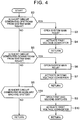
- FIG. 4 is a flowchart illustrating a routine which is performed by the system controller 30.
- the routine illustrated in FIG. 4 is periodically performed by the system controller 30.
- the system controller 30 opens the system main relay 4 (S3) and activates the first voltage converter 110 to supply electric power to the third power line 23 (S4).
- regenerative power in this case serves as electric power which is supplied to the first voltage converter 110.
- the system controller 30 checks whether a short circuit is generated downstream from the system main relay 4 (S5).
- the downstream side of the system main relay 4 is between the system main relay 4 and the power converter 5 or between the system main relay 4 and the first voltage converter 110.
- the system controller 30 opens the system main relay 4 (S6) and activates the second voltage converter 12 to supply electric power to the shift-by-wire system 8 and the third power line 23 (S7).
- the second voltage converter 12 steps down the voltage of the main battery 3 and supplies electric power to the shift-by-wire system 8 and the third power line 23.
- the first switch 32 is closed, and electric power is supplied from the second voltage converter 12 to the third power line 23 via the fourth power line 24.
- the system controller 30 checks whether a short circuit is generated in an auxiliary machine system (S8).
- a short circuit is generated in the auxiliary machine system (YES in S8)
- the system controller 30 opens the first switch 32 and the second switch 33 to isolate the audio device 31 and the second voltage converter 12 from the first voltage converter 110 (S9).
- the short-circuit of the auxiliary machine system refers to a short circuit of the second power line 22.
- the short-circuited second power line 22 can be isolated from the first power line 21 by opening the first switch 32.
- the system controller 30 activates the first voltage converter 110 (S10). Electric power is continuously supplied to the shift-by-wire system 8 and the system controller 30 by the process of Step S10. Accordingly, the hybrid vehicle 2a can travel continuously. At this time, since the audio device 31 is isolated from the third power line 23, the output of the first voltage converter 110 is not necessarily used for the auxiliary machine (the audio device 31) which is not involved in the driving system.
- the main battery 3 in the embodiments is an example of the main power supply in the SUMMARY OF THE INVENTION.
- the main power supply may be a fuel cell.
- the shift-by-wire system 8 and the system controller 29 in the embodiments are an example of the first auxiliary machine in the SUMMARY OF THE INVENTION.
- the first diode 9a in the embodiments is an example of the first diode in the SUMMARY OF THE INVENTION
- the second diode 9b in the embodiments is an example of the second diode in the SUMMARY OF THE INVENTION.
- the system controller 30 in the second embodiment is an example of the electronic control unit in the SUMMARY OF THE INVENTION.
- the third diode 9c in the second embodiment is an example of the third diode in the SUMMARY OF THE INVENTION.
- the audio device 31 in the second embodiment is an example of the non-critical auxiliary machine in the SUMMARY OF THE INVENTION.
- the shift-by-wire system 8 and the system controllers 29 and 30 in the embodiments are examples of the critical auxiliary machine involved in the driving system.
- the critical auxiliary machine involved in the driving system is not limited to these units.
- a cruise control device is a critical auxiliary machine involved in the driving system.
- the audio device 31 is an example of a non-critical auxiliary machine not involved in the driving system.
- a room lamp and a cigarette lighter port are non-critical auxiliary machines not involved in the driving system.
- the technology disclosed in the invention may be applied to an electric vehicle not including an engine.
Landscapes
- Engineering & Computer Science (AREA)
- Power Engineering (AREA)
- Life Sciences & Earth Sciences (AREA)
- Sustainable Energy (AREA)
- Mechanical Engineering (AREA)
- Transportation (AREA)
- Sustainable Development (AREA)
- Business, Economics & Management (AREA)
- Emergency Management (AREA)
- Electric Propulsion And Braking For Vehicles (AREA)
- Charge And Discharge Circuits For Batteries Or The Like (AREA)
- Direct Current Feeding And Distribution (AREA)
- Chemical & Material Sciences (AREA)
- Combustion & Propulsion (AREA)
- Automation & Control Theory (AREA)
Abstract
Description
- The present invention relates to a vehicle. A vehicle in the present invention includes a hybrid vehicle including both a motor and an engine and a vehicle including a fuel cell as a main battery for a motor.
- An electric vehicle travels by driving a motor using electric power of a main battery. Japanese Patent Application Publication No.
2010-078093 JP 2010-078093 A 2013-099134 JP 2013-099134 A 2016-101057 JP 2016-101057 A - The auxiliary machines can be classified into critical devices involved in a driving system of a vehicle and devices not involved in the driving system. Examples of the critical devices include a shift-by-wire device, and examples of the devices not involved in the driving system include an audio device. It is preferable that an electric vehicle include backup means of the auxiliary machine battery so that supply of power to the critical devices involved in the driving system is not stopped when the auxiliary machine battery is out of order. In the electric vehicle disclosed in
JP 2010-078093 A JP 2013-099134 A - In general, an electric vehicle includes a system main relay between a main battery and a power converter. The power converter converts output power of the main battery into driving power of a motor. The system main relay electrically connects or disconnects the main battery and the power converter. When a main switch of a vehicle is turned off, the system main relay isolates the main battery and the power converter from each other. When the main switch of the vehicle is turned on, the system main relay connects the main battery and the power converter to each other and thus the vehicle can travel. The electric vehicle disclosed in
JP 2016-101057 A - In the techniques disclosed in
JP 2010-078093 A JP 2013-099134 A JP 2016-101057 A - The invention enables power to be continuously supplied to critical auxiliary machines even when an auxiliary machine battery is short-circuited.
- One aspect of the invention provides a vehicle. The vehicle includes a motor for traveling the vehicle, a main power supply, a power converter, a system main relay, a first auxiliary machine, an auxiliary machine battery, a first voltage converter, a second voltage converter, a first power line, a second power line, a third power line, a first diode, and a second diode. The main power supply is configured to store electric power which is supplied to the motor. The power converter is configured to convert electric power of the main power supply into driving power of the motor. The system main relay is configured to connect and disconnect the main power supply and the power converter. The first auxiliary machine is configured to operate with electric power lower than an output voltage of the main power supply. The auxiliary machine battery is configured to output the same voltage as a driving voltage of the first auxiliary machine. The first voltage converter is connected to the main power supply via the system main relay. The first voltage converter is configured to step down the output voltage of the main power supply to the driving voltage of the first auxiliary machine. The second voltage converter is connected to the main power supply without passing through the system main relay. The second voltage converter is configured to step down the output voltage of the main power supply to the driving voltage of the first auxiliary machine. The first power line connects an output terminal of the first voltage converter with the auxiliary machine battery. The second power line connects an output terminal of the second voltage converter with the first auxiliary machine. The third power line connects the auxiliary machine battery with the first auxiliary machine. The first diode is disposed in the third power line. An anode side of the first diode is connected to the auxiliary machine battery and a cathode side of the first diode is connected to the first auxiliary machine. The second diode is disposed in the second power line. An anode side of the second diode is connected to the second voltage converter and a cathode side of the second diode is connected to the first auxiliary machine.
- With this configuration, even when the auxiliary machine battery is short-circuited, the first diode prevents a reverse flow of a current and electric power can be continuously supplied to the first auxiliary machine by the second voltage converter. The main power supply and the second voltage converter correspond to backup means for the auxiliary machine battery. According to this configuration, even when the output terminal of the second voltage converter is short-circuited, electric power can be continuously supplied to the first auxiliary machine by the auxiliary machine battery and the first voltage converter.
- The vehicle may further include: a fourth power line; a first switch; a short circuit detector; and an electronic control unit. The fourth power line may connect the anode side of the first diode with the anode side of the second diode. The first switch may be disposed in the fourth power line. The first switch may be configured to cut off the anode side of the first diode and the anode side of the second diode from each other. The short circuit detector may be configured to detect a short circuit of the auxiliary machine battery. The electronic control unit may be configured to open the first switch to cut off the anode side of the first diode and the second diode from each other when the short circuit detector detects the short circuit of the auxiliary machine battery. With this configuration, since the fourth power line is provided, the auxiliary machine battery can be charged using both the first voltage converter and the second voltage converter. When a short circuit of the auxiliary machine battery is detected, electric power can be continuously supplied to the first auxiliary machine by the second voltage converter by turning off the switch.
- The vehicle may further include a bypass power line. The bypass power line may connect the electronic control unit with a high-potential terminal of the capacitor. The electronic control unit may be configured to operate with electric power lower than the output voltage of the main power supply. The first voltage converter may include a capacitor and a third diode. The low-potential terminal of the capacitor may be connected to the ground. An anode side of the third diode may be connected to an output terminal of the first voltage converter, and a cathode side of the third diode may be connected to the high-potential terminal of the capacitor. With this configuration, the capacitor is charged with the output of the first voltage converter. When the auxiliary machine battery is short-circuited, the voltage of the output terminal of the first voltage converter is zero, but the electric power of the capacitor is maintained due to the third diode. The electric power of the capacitor is supplied to the electronic control unit. The electronic control unit can be continuously supplied with electric power even at the moment at which the auxiliary machine battery is short-circuited. The electronic control unit may be the above-mentioned critical auxiliary machine involved in a driving system of the vehicle.
- The vehicle may further include a non-critical auxiliary machine and a second switch. The non-critical auxiliary machine may be connected to the third power line. The non-critical auxiliary machine may be configured not to be involved in the driving system of the vehicle. The second switch may be configured to cut off the non-critical auxiliary machine from the third power line. With this configuration, when one of the first voltage converter and the second voltage converter is abnormal and the other functions as a backup power supply, the non-critical auxiliary machine is cut off from the third power line by the second switch. Then, when the vehicle is traveling with the backup power supply, it is possible to suppress extra power supply. Alternatively, when it is intended to decrease the outputs of the first voltage converter and the second voltage converter due to a certain abnormality, it is possible to reduce total power consumption of an auxiliary machine system by cutting off the non-critical auxiliary machine from the third power line.
- Features, advantages, and technical and industrial significance of exemplary embodiments of the invention will be described below with reference to the accompanying drawings, in which like numerals denote like elements, and wherein:
-
FIG. 1 is a block diagram of a power system of a vehicle according to a first embodiment; -
FIG. 2 is a block diagram of a power system of a vehicle according to a second embodiment; -
FIG. 3 is a diagram illustrating a circuit configuration of a first voltage converter according to the second embodiment; and -
FIG. 4 is a flowchart illustrating a routine which is performed by a system controller. - A vehicle according to a first embodiment will be described below with reference to
FIG. 1 . The vehicle according to the first embodiment is ahybrid vehicle 2 including amotor 6 and anengine 91 which generate driving torques for traveling. An output shaft of themotor 6 and an output shaft of theengine 91 are connected to atransmission 92. The driving torque of themotor 6 and the driving torque of theengine 91 are combined by thetransmission 92 and are transmitted to anaxle 93. Thetransmission 92 can split the driving torque of theengine 91 to themotor 6 and theaxle 93. In this case, thehybrid vehicle 2 travels using a part of the driving torque of theengine 91 and generates electric power by driving themotor 6 reversely using the remaining part of the driving torque. The electric power acquired by the generation of electric power is stored in amain battery 3 which will be described later. When a driver depresses a brake pedal, themotor 6 generates electric power using kinetic energy of the vehicle. - The
motor 6 is driven with electric power of themain battery 3. An output voltage of themain battery 3 is, for example, 300 volts. Themotor 6 is a three-phase AC electric motor and a driving voltage thereof is, for example, 600 volts. Apower converter 5 steps up a voltage of DC power of themain battery 3 and converts the DC power into AC power which is suitable for driving of themotor 6. When themotor 6 generates electric power, thepower converter 5 converts AC power output from themotor 6 into DC power and then steps down the DC power to the output voltage of themain battery 3. - The
main battery 3 and thepower converter 5 are connected to amain power line 28. A system main relay 4 is connected to the middle of themain power line 28. When a main switch of the vehicle is turned on, the system main relay 4 is closed by a system controller which is not illustrated, and themain battery 3 and thepower converter 5 are electrically connected to each other. Close a relay (close a switch) means that both ends of the relay (both ends of the switch) are electrically connected to each other. The expression close a relay (close a switch) may be expressed by turn on the relay (turn on the switch). On the other hand, open a relay (open a switch) means that both ends of the relay (both ends of the switch) are electrically disconnected from each other. The expression open a relay (open a switch) may be expressed by turn off the relay (turn off the switch). - The system controller is supplied with electric power from an auxiliary machine battery which will be described later, and can operate even when the system main relay 4 is opened. When the main switch of the vehicle is turned off, the system controller opens the system main relay 4, and the
main battery 3 and thepower converter 5 are electrically isolated from each other. - The
hybrid vehicle 2 includes a group of auxiliary machines which operate with a voltage lower than the output voltage of themain battery 3 in addition to themotor 6 which operates with the output voltage of themain battery 3. An auxiliary machine group can be sorted into two types of critical auxiliary machines which are critical devices involved in traveling of the vehicle and which are required not to stop during traveling and non-critical auxiliary machines which are not involved in traveling of the vehicle. Examples of the critical auxiliary machine include a shift-by-wire system 8 and asystem controller 29. Examples of the non-critical auxiliary machine include anaudio device 31. Although not illustrated, some critical auxiliary machines are provided in addition to the shift-by-wire system 8 and thesystem controller 29, and various non-critical auxiliary machines are provided in addition to theaudio device 31. In this embodiment, the shift-by-wire system 8 and thesystem controller 29 are representative examples of the critical auxiliary machine, and theaudio device 31 is a representative example of the non-critical auxiliary machine. - The
hybrid vehicle 2 further includes anauxiliary machine battery 7, afirst voltage converter 11, asecond voltage converter 12, afirst diode 9a, and asecond diode 9b. - The
first voltage converter 11 and thesecond voltage converter 12 are converters that step down the output voltage of themain battery 3 to a driving voltage of an auxiliary machine. Aninput terminal 11a of thefirst voltage converter 11 is connected to themain battery 3 via the system main relay 4. Anoutput terminal 11b of thefirst voltage converter 11 is connected to a positive electrode of theauxiliary machine battery 7 via afirst power line 21. A negative electrode of theauxiliary machine battery 7 is connected to the ground G. The shift-by-wire system 8, thesystem controller 29, theaudio device 31, and the negative electrodeauxiliary machine battery 7 are connected to the ground G. The ground G is a conductive body of the vehicle. - An
input terminal 12a of thesecond voltage converter 12 is connected to themain battery 3 without passing through the system main relay 4. Anoutput terminal 12b of thesecond voltage converter 12 is connected to apower input terminal 8a of the shift-by-wire system 8 and apower input terminal 29a of thesystem controller 29 via thesecond power line 22. Thepower input terminal 8a of the shift-by-wire system 8 and thepower input terminal 29a of thesystem controller 29 are connected to a positive electrode of theauxiliary machine battery 7 via athird power line 23. Theauxiliary machine battery 7 is connected to theaudio device 31 via thethird power line 23. - The
auxiliary machine battery 7 is a battery for supplying electric power to an auxiliary machine group including the shift-by-wire system 8, thesystem controller 29, and theaudio device 31 and an output voltage thereof is, for example, 12 volts. The output voltage of theauxiliary machine battery 7 is the same as the driving voltage of the shift-by-wire system 8, thesystem controller 29, and theaudio device 31. - The
first diode 9a is connected to thethird power line 23. An anode of thefirst diode 9a is connected to a side of theauxiliary machine battery 7 and a cathode thereof is connected to sides of the shift-by-wire system 8 and thesystem controller 29. Thefirst diode 9a is provided to prevent a reverse flow of a current from the shift-by-wire system 8 or thesystem controller 29 to theauxiliary machine battery 7. Thesecond diode 9b is connected to asecond power line 22. An anode of thesecond diode 9b is connected to thesecond voltage converter 12 and a cathode thereof is connected to the shift-by-wire system 8 and thesystem controller 29. Thesecond diode 9b is provided to prevent a reverse flow of a current from the shift-by-wire system 8 or thesystem controller 29 to thesecond voltage converter 12. - The shift-by-
wire system 8 and thesystem controller 29 are devices required for driving the hybrid vehicle 2 (devices involved in a driving system) and preferably operate continuously even when theauxiliary machine battery 7 is short-circuited. The shift-by-wire system 8 and thesystem controller 29 can be supplied with electric power from theauxiliary machine battery 7 and can also be directly supplied with electric power from themain battery 3 via thesecond voltage converter 12. Thefirst diode 9a for prevention of a reverse flow of a current is disposed in thethird power line 23 which connects the positive electrode of theauxiliary machine battery 7 and thepower input terminals wire system 8 and the system controller 29). Accordingly, even when theauxiliary machine battery 7 is short-circuited, a current does not flow reversely from the shift-by-wire system 8 and thesystem controller 29 to theauxiliary machine battery 7, and the shift-by-wire system 8 and thesystem controller 29 can be supplied with electric power from themain battery 3 and can operate continuously. - The
second diode 9b for prevention of a reverse flow of a current is also disposed in thesecond power line 22 which connects theoutput terminal 12b of thesecond voltage converter 12 and thepower input terminals wire system 8 and the system controller 29). Even when theoutput terminal 12b of thesecond voltage converter 12 is short-circuited, a current does not flow reversely from the shift-by-wire system 8 or thesystem controller 29 to thesecond voltage converter 12, and the shift-by-wire system 8 and thesystem controller 29 can be supplied with electric power from theauxiliary machine battery 7 and can operate continuously. - When a short circuit is generated closer to the
main battery 3 than the system main relay 4, thesystem controller 29 opens the system main relay 4 to isolate thefirst voltage converter 11 and thepower converter 5 from themain battery 3. In this case, thehybrid vehicle 2 can charge theauxiliary machine battery 7 with regenerative power (electric power acquired through power generation of the motor 6) using thepower converter 5 and thefirst voltage converter 11. The shift-by-wire system 8 and thesystem controller 29 can be supplied with electric power from theauxiliary machine battery 7 and can operate continuously. When a short circuit is generated closer to thepower converter 5 than the system main relay 4, thesystem controller 29 opens the system main relay 4 to isolate themain battery 3 from thepower converter 5 and thefirst voltage converter 11. In this case, thesecond voltage converter 12 steps down the output power of themain battery 3 and can supply the stepped-down power to the shift-by-wire system 8 and thesystem controller 29. Thesystem controller 29 includes the capacitor as a backup power supply and thus can operate continuously even when supply of electric power is temporarily stopped. - Even when a short circuit is generated close to the
input terminal 11a or theoutput terminal 11b of thefirst voltage converter 11, thesystem controller 29 continuously sends a command to thefirst voltage converter 11. This is because when theinput terminal 11a or theoutput terminal 11b of thefirst voltage converter 11 is short-circuited, thefirst voltage converter 11 does not actually operate in spite of reception of the command. Similarly, even when a short circuit is generated close to theinput terminal 12a or theoutput terminal 12b of thesecond voltage converter 12, thesystem controller 29 continuously sends a command to thesecond voltage converter 12. In this case, thesecond voltage converter 12 does not actually operate in spite of reception of the command. - A vehicle according to a second embodiment will be described below with reference to
FIG. 2 . The vehicle according to the second embodiment is ahybrid vehicle 2a. Thehybrid vehicle 2a includes afourth power line 24, abypass power line 25, afirst switch 32, asecond switch 33, and afourth diode 9d in addition to the configuration of thehybrid vehicle 2 illustrated inFIG. 1 . Athird diode 9c is disposed in afirst voltage converter 110 and will be described later. Thefirst voltage converter 110 of thehybrid vehicle 2a includes asecond output terminal 11c, unlike thefirst voltage converter 11 of thehybrid vehicle 2 according to the first embodiment. InFIG. 2 , asystem controller 30 is connected to thethird power line 23 and thebypass power line 25. InFIG. 2 , a dotted arrow denotes a signal line. A solid line denotes a power line. SMR inFIG. 2 denotes a system main relay. Elements described above with reference toFIG. 1 will not be described again. - The
first voltage converter 110 includes two output terminals (thefirst output terminal 11b and thesecond output terminal 11c). Thefirst output terminal 11b is the same as theoutput terminal 11b of thefirst voltage converter 11 illustrated inFIG. 1 . Thefirst voltage converter 110 steps down a voltage applied to theinput terminal 11 a to the output voltage of theauxiliary machine battery 7 and outputs the stepped-down voltage to thefirst output terminal 11b and thesecond output terminal 11c. Thesecond output terminal 11c is different from thefirst output terminal 11b in that a diode (thethird diode 9c) is disposed between the second output terminal and a main conversion circuit that converts electric power in thefirst voltage converter 110. This will be described later with reference toFIG. 3 . - The
system controller 30 is supplied with electric power from theauxiliary machine battery 7 via thethird power line 23 and is supplied with electric power from thefirst voltage converter 110 via thebypass power line 25. Thefourth diode 9d that prevents a reverse flow of a current from thesystem controller 30 to theauxiliary machine battery 7 is connected to thethird power line 23. Thesystem controller 30 and thesecond output terminal 11c of thefirst voltage converter 110 are connected to each other via thebypass power line 25. As described above, thesystem controller 30 controls the system main relay 4. Thesystem controller 30 also controls thefirst switch 32 and thesecond switch 33. - The
first switch 32 is included in thefourth power line 24 that connects the anode side of thefirst diode 9a and the anode side of thesecond diode 9b. Thefirst switch 32 can electrically isolate the anode side of thefirst diode 9a and the anode side of thesecond diode 9b from each other. Thesecond switch 33 is connected between thethird power line 23 and theaudio device 31. Thesecond switch 33 can electrically isolate theaudio device 31 and thethird power line 23 from each other. - The
system controller 30 closes thefirst switch 32 when neither the first power line 21 (the auxiliary machine battery 7) nor thesecond power line 22 is short-circuited. By closing thefirst switch 32, theauxiliary machine battery 7 can be charged via thesecond voltage converter 12 in addition to thefirst voltage converter 110. Accordingly, it is possible to reduce a load of thefirst voltage converter 110 at the time of charging theauxiliary machine battery 7. - When the first power line 21 (the auxiliary machine battery 7) is short-circuited, the
system controller 30 opens thefirst switch 32 to isolate thesecond voltage converter 12 from theauxiliary machine battery 7. Accordingly, electric power can be continuously supplied to the shift-by-wire system 8 via thesecond voltage converter 12. That is, even when theauxiliary machine battery 7 is short-circuited, the shift-by-wire system 8 can operate continuously. Even when thefirst power line 21 is short-circuited, a reverse flow of a current from the shift-by-wire system 8 to theauxiliary machine battery 7 is prevented by thefirst diode 9a for prevention of a reverse flow of a current. - The
system controller 30 is connected to theauxiliary machine battery 7 via thethird power line 23. However, since thethird power line 23 includes thefourth diode 9d for prevention of a reverse flow of a current, no current flows from thesystem controller 30 to theauxiliary machine battery 7 when theauxiliary machine battery 7 is short-circuited. When theauxiliary machine battery 7 is short-circuited, thesystem controller 30 can be continuously supplied with electric power from thefirst voltage converter 110 via thebypass power line 25 so as to operate continuously. - When a short circuit is generated in the
audio device 31, thesystem controller 30 opens thesecond switch 33 to isolate theaudio device 31 from theauxiliary machine battery 7. Accordingly, it is possible to prevent theauxiliary machine battery 7 from being short-circuited and to continuously supply electric power from theauxiliary machine battery 7 to other auxiliary machines (thesystem controller 30 and the shift-by-wire system 8). - A circuit configuration of the
first voltage converter 110 will be described below with reference toFIG. 3. FIG. 3 is a diagram illustrating the circuit configuration of thefirst voltage converter 110. Thefirst voltage converter 110 includes amain conversion circuit 112 including a power transistor, acontrol circuit 113 that controls the power transistor of themain conversion circuit 112, athird diode 9c, and acapacitor 115. Themain conversion circuit 112 steps down a voltage of the electric power of themain battery 3 input to theinput terminal 11a and outputs the stepped-down voltage to thefirst output terminal 11b and thesecond output terminal 11c. A negative output terminal of themain conversion circuit 112 is connected to the ground G. Thethird diode 9c is connected between thepositive output terminal 112a of themain conversion circuit 112 and thesecond output terminal 11c. As illustrated inFIG. 2 , thefirst output terminal 11b of thefirst voltage converter 110 is connected to theauxiliary machine battery 7 via thefirst power line 21, and thesecond output terminal 11c is connected to thesystem controller 30 via thebypass power line 25. When theauxiliary machine battery 7 is short-circuited, thefirst output terminal 11b of thefirst voltage converter 110 is also short-circuited. Thethird diode 9c permits a flow of a current from thepositive output terminal 112a of themain conversion circuit 112 to thesecond output terminal 11c but prohibits a reverse flow of a current. Thethird diode 9c prevents a reverse flow of a current from thesystem controller 30 to theauxiliary machine battery 7 via thebypass power line 25 and thefirst power line 21 when thefirst output terminal 11b is short-circuited. - A high-potential terminal of the
capacitor 115 and thecontrol circuit 113 are connected to the cathode side of thethird diode 9c for prevention of a reverse flow of a current. A low-potential terminal of thecapacitor 115 is grounded. Although not illustrated, thecontrol circuit 113 is supplied with electric power from theauxiliary machine battery 7 via thethird power line 23. Before thethird power line 23 is short-circuited, thecontrol circuit 113 operates with electric power supplied from theauxiliary machine battery 7 via thethird power line 23. At this time, thecapacitor 115 is charged. Another diode for prevention of a reverse flow of a current from thecontrol circuit 113 to thethird power line 23 is connected between thecontrol circuit 113 and thethird power line 23. Accordingly, when theauxiliary machine battery 7 is short-circuited, a current does not flow reversely from thecontrol circuit 113 to theauxiliary machine battery 7 via thethird power line 23. - The high-potential terminal of the
capacitor 115 is connected to the cathode side of thethird diode 9c. Accordingly, even when thefirst output terminal 11b is short-circuited, a current does not flow reversely from thecapacitor 115 to the side of thefirst output terminal 11b. Thecapacitor 115 stores electric power before theauxiliary machine battery 7 is short-circuited. For example, when theaudio device 31 is short-circuited, thethird power line 23 is short-circuited, theauxiliary machine battery 7 is also short-circuited, and the voltage of thefirst output terminal 11b (and thepositive output terminal 112a of the main conversion circuit 112) decreases to zero volts. At this time, a reverse flow of a current from thecapacitor 115 to the side of thefirst output terminal 11b is prevented by thethird diode 9c. Electric power is supplied to thecontrol circuit 113 from thecapacitor 115. Thesecond output terminal 11c is connected to thesystem controller 30 via thebypass power line 25. When the audio device 31 (the third power line 23) is short-circuited and the voltage of thefirst output terminal 11b (and thepositive output terminal 112a of the main conversion circuit 112) decreases to zero volts, electric power is supplied to thesystem controller 30 from thecapacitor 115. Even when the audio device 31 (the third power line 23) is short-circuited, thesystem controller 30 can operate continuously. The connection relationship between thethird diode 9c and thecapacitor 115 can be summarized as follows. Thefirst voltage converter 110 includes thecapacitor 115 and thethird diode 9c. The anode of thethird diode 9c is connected to thepositive output terminal 112a (that is, theoutput terminal 11b of the first voltage converter 110). The cathode of thethird diode 9c is connected to the high-potential terminal of thecapacitor 115. The low-potential terminal of thecapacitor 115 is grounded. The high-potential terminal of thecapacitor 115 is connected to the power input terminal of thesystem controller 30 via thebypass power line 25. - When it is detected that the
audio device 31 is short-circuited, thesystem controller 30 opens thesecond switch 33. When thesecond switch 33 is opened, the short-circuited state of thefirst output terminal 11b (and thepositive output terminal 112a of the main conversion circuit 112) is released. Then, supply of electric power from theauxiliary machine battery 7 to the shift-by-wire system 8 and thesystem controller 30 via thethird power line 23 is restarted. - The
system controller 30 includes ashort circuit detector 39 that detects a short circuit of thethird power line 23, that is, a short circuit of theauxiliary machine battery 7. Theshort circuit detector 39 monitors a current or a voltage of thethird power line 23. Theshort circuit detector 39 detects that thethird power line 23 is short-circuited, for example, when supply of electric power via thethird power line 23 is cut off. Alternatively, theshort circuit detector 39 may be connected to a voltage sensor (not illustrated) that measures a voltage of thethird power line 23, and may detect a short circuit of the third power line 23 (the auxiliary machine battery 7) when the measured value of the voltage sensor is 0. Theshort circuit detector 39 may be connected to a current sensor (not illustrated) that measures a current flowing in thethird power line 23 and may determine that a short-circuit has been generated in the third power line 23 (the auxiliary machine battery 7) when an overcurrent is detected by the current sensor. - The
system controller 30 turns on a warning lamp that notifies of occurrence of an abnormality in one of the following three cases: (1) a case in which a short circuit of the third power line 23 (a short circuit of the auxiliary machine battery 7) is detected by theshort circuit detector 39; (2) a case in which a short circuit of the main battery side of the system main relay 4 is detected; and (3) a case in which a short circuit of the power converter side of the system main relay 4 is detected. Thehybrid vehicle 2a can allow the shift-by-wire system 8 and thesystem controller 30 to operate continuously even when the short circuit is generated. Accordingly, the hybrid vehicle can transition to a special traveling mode at the time of occurrence of an abnormality (a saving traveling mode) to travel continuously, in which the vehicle stops themotor 6 and travels using only theengine 91. - The
second switch 33 has another function. Thesecond switch 33 isolates a non-critical auxiliary machine, which is not involved in the driving system of the vehicle, from thethird power line 23. Accordingly, when it is intended to minimize consumption of the auxiliary machine battery due to a certain factor or it is intended to minimize output power of thefirst voltage converter 110 and thesecond voltage converter 12, it is possible to minimize power consumption by the non-critical auxiliary machine not involved in the driving system by opening thesecond switch 33. -
FIG. 4 is a flowchart illustrating a routine which is performed by thesystem controller 30. The routine illustrated inFIG. 4 is periodically performed by thesystem controller 30. When a short circuit is generated upstream from the system main relay 4, that is, in themain battery 3 or between themain battery 3 and the system main relay 4 (YES in S2), thesystem controller 30 opens the system main relay 4 (S3) and activates thefirst voltage converter 110 to supply electric power to the third power line 23 (S4). As described above, regenerative power in this case serves as electric power which is supplied to thefirst voltage converter 110. - When a short circuit is not generated upstream from the system main relay 4 (NO in S2), the
system controller 30 checks whether a short circuit is generated downstream from the system main relay 4 (S5). The downstream side of the system main relay 4 is between the system main relay 4 and thepower converter 5 or between the system main relay 4 and thefirst voltage converter 110. When a short circuit is generated downstream from the system main relay 4 (YES in S5), thesystem controller 30 opens the system main relay 4 (S6) and activates thesecond voltage converter 12 to supply electric power to the shift-by-wire system 8 and the third power line 23 (S7). Thesecond voltage converter 12 steps down the voltage of themain battery 3 and supplies electric power to the shift-by-wire system 8 and thethird power line 23. At this time, thefirst switch 32 is closed, and electric power is supplied from thesecond voltage converter 12 to thethird power line 23 via thefourth power line 24. - When a short circuit is not generated downstream from the system main relay 4 (NO in S5), the
system controller 30 checks whether a short circuit is generated in an auxiliary machine system (S8). When a short circuit is generated in the auxiliary machine system (YES in S8), thesystem controller 30 opens thefirst switch 32 and thesecond switch 33 to isolate theaudio device 31 and thesecond voltage converter 12 from the first voltage converter 110 (S9). Here, the short-circuit of the auxiliary machine system refers to a short circuit of thesecond power line 22. The short-circuitedsecond power line 22 can be isolated from thefirst power line 21 by opening thefirst switch 32. - Then, the
system controller 30 activates the first voltage converter 110 (S10). Electric power is continuously supplied to the shift-by-wire system 8 and thesystem controller 30 by the process of Step S10. Accordingly, thehybrid vehicle 2a can travel continuously. At this time, since theaudio device 31 is isolated from thethird power line 23, the output of thefirst voltage converter 110 is not necessarily used for the auxiliary machine (the audio device 31) which is not involved in the driving system. - Points to remember in the technology described in the embodiments will be described below. The
main battery 3 in the embodiments is an example of the main power supply in the SUMMARY OF THE INVENTION. The main power supply may be a fuel cell. The shift-by-wire system 8 and thesystem controller 29 in the embodiments are an example of the first auxiliary machine in the SUMMARY OF THE INVENTION. Thefirst diode 9a in the embodiments is an example of the first diode in the SUMMARY OF THE INVENTION, and thesecond diode 9b in the embodiments is an example of the second diode in the SUMMARY OF THE INVENTION. Thesystem controller 30 in the second embodiment is an example of the electronic control unit in the SUMMARY OF THE INVENTION. Thethird diode 9c in the second embodiment is an example of the third diode in the SUMMARY OF THE INVENTION. Theaudio device 31 in the second embodiment is an example of the non-critical auxiliary machine in the SUMMARY OF THE INVENTION. - The shift-by-
wire system 8 and thesystem controllers audio device 31 is an example of a non-critical auxiliary machine not involved in the driving system. A room lamp and a cigarette lighter port are non-critical auxiliary machines not involved in the driving system. - The technology disclosed in the invention may be applied to an electric vehicle not including an engine.
- While specific examples of the invention have been described above in detail, the specific examples are only exemplary and do not limit the appended claims. The techniques described in the claims include various modifications and changes of the above-mentioned specific examples. Technical elements described or illustrated in the specification or the drawings exhibit technical usability alone or in combination and are not limited to combinations described in the claims at the time of filing of the invention. The techniques described or illustrated in the specification or the drawings can simultaneously achieve two or more objects and have technical usability by achieving one object thereof.
Claims (4)
- A vehicle (2; 2a) comprising:a motor (6) for traveling the vehicle (2; 2a);a main power supply (3) configured to store electric power that is supplied to the motor (6);a power converter (5) configured to convert electric power of the main power supply (3) into driving power of the motor (6);a system main relay (4) configured to connect and disconnect the main power supply (3) with the power converter (5);a first auxiliary machine (8, 29) configured to operate with electric power lower than an output voltage of the main power supply (3);an auxiliary machine battery (7) configured to output the same voltage as a driving voltage of the first auxiliary machine (8, 29);a first voltage converter (11; 110) connected to the main power supply (3) via the system main relay (4), the first voltage converter (11; 110) being configured to step down the output voltage of the main power supply (3) to the driving voltage of the first auxiliary machine (8, 29);a second voltage converter (12) connected to the main power supply (3) without passing through the system main relay (4), the second voltage converter (12) being configured to step down the output voltage of the main power supply (3) to the driving voltage of the first auxiliary machine (8, 29);a first power line (21) connecting an output terminal of the first voltage converter (11; 110) with the auxiliary machine battery (7);a second power line (22) connecting an output terminal of the second voltage converter (12) with the first auxiliary machine (8, 29);a third power line (23) connecting the auxiliary machine battery (7) with the first auxiliary machine (8, 29);a first diode (9a) disposed in the third power line (23), an anode side of the first diode (9a) being connected to the auxiliary machine battery (7) and a cathode side of the first diode (9a) being connected to the first auxiliary machine (8, 29); anda second diode (9b) disposed in the second power line (22), an anode side of the second diode (9b) being connected to the second voltage converter (12) and a cathode side of the second diode (9b) being connected to the first auxiliary machine (8, 29).
- The vehicle (2a) according to claim 1, further comprising:a fourth power line (24) connecting the anode side of the first diode (9a) with the anode side of the second diode (9b);a first switch (32) disposed in the fourth power line (24), the first switch (32) being configured to cut off the anode side of the first diode (9a) and the anode side of the second diode (b) from each other;a short circuit detector (39) configured to detect a short circuit of the auxiliary machine battery (7); andan electronic control unit (30) configured to open the first switch (32) to cut off the anode side of the first diode (9a) and the anode side of the second diode (9b) from each other when the short circuit detector (39) detects the short circuit of the auxiliary machine battery (7).
- The vehicle (2a) according to claim 1 or 2, further comprising:a bypass power line (25) connecting the electronic control unit (30) with a high-potential terminal of capacitor (115),wherein the electronic control unit (30) is configured to operate with electric power lower than the output voltage of the main power supply (3), andthe first voltage converter (110) includes the capacitor (115) and a third diode (9c),a low-potential terminal of the capacitor (115) is connected to the ground,an anode side of the third diode (9c) is connected to the output terminal of the first voltage converter (11), and a cathode side of the third diode (9c) is connected to the high-potential terminal of the capacitor (115).
- The vehicle (2a) according to any one of claims 1 to 3, further comprising:a non-critical auxiliary machine (31) connected to the third power line (23), the non-critical auxiliary machine (31) being configured not to be involved in a driving system of the vehicle (2a); anda second switch (33) configured to cut off the non-critical auxiliary machine (31) from the third power line (23).
Applications Claiming Priority (1)
| Application Number | Priority Date | Filing Date | Title |
|---|---|---|---|
| JP2016219885A JP6493363B2 (en) | 2016-11-10 | 2016-11-10 | Electric car |
Publications (2)
| Publication Number | Publication Date |
|---|---|
| EP3321119A1 true EP3321119A1 (en) | 2018-05-16 |
| EP3321119B1 EP3321119B1 (en) | 2020-04-22 |
Family
ID=60083808
Family Applications (1)
| Application Number | Title | Priority Date | Filing Date |
|---|---|---|---|
| EP17196133.7A Active EP3321119B1 (en) | 2016-11-10 | 2017-10-12 | Vehicle power supply system |
Country Status (6)
| Country | Link |
|---|---|
| US (1) | US10195959B2 (en) |
| EP (1) | EP3321119B1 (en) |
| JP (1) | JP6493363B2 (en) |
| KR (1) | KR101997347B1 (en) |
| CN (1) | CN108068624B (en) |
| RU (1) | RU2667019C1 (en) |
Cited By (2)
| Publication number | Priority date | Publication date | Assignee | Title |
|---|---|---|---|---|
| EP3575119A1 (en) * | 2018-05-31 | 2019-12-04 | Yazaki Corporation | Power supply unit |
| WO2025132070A1 (en) * | 2023-12-21 | 2025-06-26 | Voith Patent Gmbh | High-voltage on-board electrical system and circuit device |
Families Citing this family (20)
| Publication number | Priority date | Publication date | Assignee | Title |
|---|---|---|---|---|
| JP6876992B2 (en) * | 2017-03-09 | 2021-05-26 | パナソニックIpマネジメント株式会社 | Vehicle power supply |
| JP6844365B2 (en) * | 2017-03-24 | 2021-03-17 | 株式会社デンソー | Power converter, control system |
| US10112487B1 (en) * | 2017-04-18 | 2018-10-30 | Ford Global Technologies, Llc | System and method of maintaining high voltage battery charging with detected auxiliary battery fault |
| JP6888511B2 (en) * | 2017-10-13 | 2021-06-16 | トヨタ自動車株式会社 | Hybrid car |
| JP7287017B2 (en) * | 2019-03-14 | 2023-06-06 | 株式会社デンソー | Mobile power supply system |
| JP7290965B2 (en) * | 2019-03-22 | 2023-06-14 | 株式会社Subaru | Electric vehicle power supply system |
| CN110293876B (en) * | 2019-06-05 | 2022-10-18 | 东北电力大学 | On-line cutting-off/replacing circuit for fault battery/battery module of battery pack |
| US11615923B2 (en) | 2019-06-07 | 2023-03-28 | Anthony Macaluso | Methods, systems and apparatus for powering a vehicle |
| US11641572B2 (en) | 2019-06-07 | 2023-05-02 | Anthony Macaluso | Systems and methods for managing a vehicle's energy via a wireless network |
| US11685276B2 (en) * | 2019-06-07 | 2023-06-27 | Anthony Macaluso | Methods and apparatus for powering a vehicle |
| US11289974B2 (en) | 2019-06-07 | 2022-03-29 | Anthony Macaluso | Power generation from vehicle wheel rotation |
| US11222750B1 (en) | 2021-03-22 | 2022-01-11 | Anthony Macaluso | Hypercapacitor apparatus for storing and providing energy |
| CN112078366B (en) * | 2019-06-12 | 2022-01-21 | 广州汽车集团股份有限公司 | Electric vehicle and dual-power control system thereof |
| JP7589624B2 (en) * | 2021-03-31 | 2024-11-26 | 株式会社アイシン | Power System |
| US11472306B1 (en) | 2022-03-09 | 2022-10-18 | Anthony Macaluso | Electric vehicle charging station |
| US11577606B1 (en) | 2022-03-09 | 2023-02-14 | Anthony Macaluso | Flexible arm generator |
| JP7592760B2 (en) | 2023-01-06 | 2024-12-02 | 本田技研工業株式会社 | Power supply device, control method, and control program |
| US12160132B2 (en) | 2023-01-30 | 2024-12-03 | Anthony Macaluso | Matable energy storage devices |
| US12407219B2 (en) | 2023-02-28 | 2025-09-02 | Anthony Macaluso | Vehicle energy generation system |
| US12412430B2 (en) | 2023-12-22 | 2025-09-09 | Anthony Macaluso | Systems and methods for managing a vehicle's energy via a wireless network |
Citations (6)
| Publication number | Priority date | Publication date | Assignee | Title |
|---|---|---|---|---|
| JP2010078093A (en) | 2008-09-26 | 2010-04-08 | Toyota Motor Corp | Controller and control method for vehicle |
| JP2012249384A (en) * | 2011-05-26 | 2012-12-13 | Toyota Motor Corp | Vehicle |
| JP2013099134A (en) | 2011-11-01 | 2013-05-20 | Toyota Industries Corp | Auxiliary battery charging device |
| WO2015104750A1 (en) * | 2014-01-10 | 2015-07-16 | Toyota Jidosha Kabushiki Kaisha | Hybrid vehicle with means for disconnection of a depleted auxiliary battery in order to allow for more rapid main battery charging |
| US20160090052A1 (en) * | 2013-09-17 | 2016-03-31 | Mitsubishi Electric Corporation | On-vehicle electrical storage apparatus |
| JP2016101057A (en) | 2014-11-26 | 2016-05-30 | トヨタ自動車株式会社 | Electric automobile |
Family Cites Families (18)
| Publication number | Priority date | Publication date | Assignee | Title |
|---|---|---|---|---|
| US3440398A (en) * | 1967-01-30 | 1969-04-22 | Ford Motor Co | Control circuit for an electric heating system used in automotive vehicles |
| US4508999A (en) * | 1983-01-05 | 1985-04-02 | Towmotor Corporation | Short circuit protection apparatus |
| JP2661819B2 (en) * | 1991-08-30 | 1997-10-08 | 矢崎総業株式会社 | Power supply structure for vehicle control equipment |
| US5488283A (en) * | 1993-09-28 | 1996-01-30 | Globe-Union, Inc. | Vehicle battery system providing battery back-up and opportunity charging |
| US6023137A (en) * | 1997-10-01 | 2000-02-08 | General Electric Company | Use of traction inverter for supplying power for non-traction applications |
| US6608396B2 (en) * | 2001-12-06 | 2003-08-19 | General Motors Corporation | Electrical motor power management system |
| CN100373741C (en) * | 2005-02-02 | 2008-03-05 | 中国科学院上海微系统与信息技术研究所 | A protection system, construction method and application for beam source furnace power failure or misoperation |
| JP4978082B2 (en) * | 2006-03-31 | 2012-07-18 | トヨタ自動車株式会社 | Power supply system and vehicle equipped with the same |
| WO2008041418A1 (en) * | 2006-09-29 | 2008-04-10 | Toyota Jidosha Kabushiki Kaisha | Power supply and vehicle having same |
| JP4274257B2 (en) * | 2007-02-20 | 2009-06-03 | トヨタ自動車株式会社 | Hybrid vehicle |
| US7719138B2 (en) * | 2007-09-11 | 2010-05-18 | Gm Global Technology Operations, Inc. | Two-source series inverter |
| RU2405686C1 (en) * | 2009-07-03 | 2010-12-10 | Закрытое Акционерное Общество Научно-Производственное Предприятие "Инкар-М" | Electrically drive transport facility |
| JP2011205840A (en) * | 2010-03-26 | 2011-10-13 | Toyota Motor Corp | Charger for vehicle |
| RU2421349C1 (en) * | 2010-05-13 | 2011-06-20 | Открытое акционерное общество Научно-исследовательский и конструкторско-технологический институт подвижного состава (ОАО "ВНИКТИ") | Traction motor drive for transport facility |
| CN102858585B (en) * | 2010-06-04 | 2015-01-28 | 本田技研工业株式会社 | Control apparatus for vehicle |
| JP5865013B2 (en) * | 2011-10-27 | 2016-02-17 | 三洋電機株式会社 | Power supply device for vehicle and vehicle provided with this power supply device |
| JP5987850B2 (en) * | 2014-02-07 | 2016-09-07 | 株式会社デンソー | Power converter |
| JP2016181943A (en) * | 2015-03-23 | 2016-10-13 | トヨタ自動車株式会社 | Power system |
-
2016
- 2016-11-10 JP JP2016219885A patent/JP6493363B2/en active Active
-
2017
- 2017-10-05 RU RU2017135514A patent/RU2667019C1/en active
- 2017-10-06 US US15/726,601 patent/US10195959B2/en active Active
- 2017-10-12 EP EP17196133.7A patent/EP3321119B1/en active Active
- 2017-10-23 KR KR1020170137163A patent/KR101997347B1/en active Active
- 2017-11-08 CN CN201711089965.2A patent/CN108068624B/en active Active
Patent Citations (6)
| Publication number | Priority date | Publication date | Assignee | Title |
|---|---|---|---|---|
| JP2010078093A (en) | 2008-09-26 | 2010-04-08 | Toyota Motor Corp | Controller and control method for vehicle |
| JP2012249384A (en) * | 2011-05-26 | 2012-12-13 | Toyota Motor Corp | Vehicle |
| JP2013099134A (en) | 2011-11-01 | 2013-05-20 | Toyota Industries Corp | Auxiliary battery charging device |
| US20160090052A1 (en) * | 2013-09-17 | 2016-03-31 | Mitsubishi Electric Corporation | On-vehicle electrical storage apparatus |
| WO2015104750A1 (en) * | 2014-01-10 | 2015-07-16 | Toyota Jidosha Kabushiki Kaisha | Hybrid vehicle with means for disconnection of a depleted auxiliary battery in order to allow for more rapid main battery charging |
| JP2016101057A (en) | 2014-11-26 | 2016-05-30 | トヨタ自動車株式会社 | Electric automobile |
Cited By (4)
| Publication number | Priority date | Publication date | Assignee | Title |
|---|---|---|---|---|
| EP3575119A1 (en) * | 2018-05-31 | 2019-12-04 | Yazaki Corporation | Power supply unit |
| CN110549853A (en) * | 2018-05-31 | 2019-12-10 | 矢崎总业株式会社 | Power supply unit |
| CN110549853B (en) * | 2018-05-31 | 2022-11-11 | 矢崎总业株式会社 | Power supply unit |
| WO2025132070A1 (en) * | 2023-12-21 | 2025-06-26 | Voith Patent Gmbh | High-voltage on-board electrical system and circuit device |
Also Published As
| Publication number | Publication date |
|---|---|
| KR20180052525A (en) | 2018-05-18 |
| US20180126866A1 (en) | 2018-05-10 |
| CN108068624A (en) | 2018-05-25 |
| KR101997347B1 (en) | 2019-07-05 |
| JP2018078752A (en) | 2018-05-17 |
| JP6493363B2 (en) | 2019-04-03 |
| EP3321119B1 (en) | 2020-04-22 |
| US10195959B2 (en) | 2019-02-05 |
| BR102017021363A2 (en) | 2018-06-12 |
| RU2667019C1 (en) | 2018-09-13 |
| CN108068624B (en) | 2021-01-15 |
Similar Documents
| Publication | Publication Date | Title |
|---|---|---|
| EP3321119B1 (en) | Vehicle power supply system | |
| US11485234B2 (en) | Power supply system | |
| JP5865013B2 (en) | Power supply device for vehicle and vehicle provided with this power supply device | |
| US8963457B2 (en) | Electric storage system and control method of electric storage system | |
| CN109639137B (en) | power supply unit | |
| JP5255086B2 (en) | Power supply device and control method thereof | |
| CN104487280A (en) | Vehicle, power source system, and control method of power source system | |
| JP6343599B2 (en) | Drive device | |
| US10752127B1 (en) | Battery controller and method of battery control | |
| US11831193B2 (en) | Power supply system | |
| KR101878023B1 (en) | System of managing power for vehicle | |
| JP5949436B2 (en) | Vehicle, power supply system, and control method for power supply system | |
| US20130020972A1 (en) | Load drive apparatus | |
| JP5577367B2 (en) | Control device for electric vehicle | |
| CN111746279A (en) | Power Systems | |
| JP2013150525A (en) | Electric car | |
| US20220185116A1 (en) | Power supply system | |
| JP2020048343A (en) | Vehicle control device | |
| JP2018121397A (en) | Electric car | |
| JP6834911B2 (en) | Vehicle power supply system | |
| US20230010979A1 (en) | Method and a master control unit for controlling an electrical system of an electric vehicle | |
| JP2013198288A (en) | Power supply system | |
| US12537376B2 (en) | Electrical power supply system and method of controlling electrical power supply system | |
| CN119636409B (en) | A vehicle-mounted power supply device and powertrain | |
| JP2014073022A (en) | Charging control device for vehicles |
Legal Events
| Date | Code | Title | Description |
|---|---|---|---|
| PUAI | Public reference made under article 153(3) epc to a published international application that has entered the european phase |
Free format text: ORIGINAL CODE: 0009012 |
|
| STAA | Information on the status of an ep patent application or granted ep patent |
Free format text: STATUS: REQUEST FOR EXAMINATION WAS MADE |
|
| 17P | Request for examination filed |
Effective date: 20171012 |
|
| AK | Designated contracting states |
Kind code of ref document: A1 Designated state(s): AL AT BE BG CH CY CZ DE DK EE ES FI FR GB GR HR HU IE IS IT LI LT LU LV MC MK MT NL NO PL PT RO RS SE SI SK SM TR |
|
| AX | Request for extension of the european patent |
Extension state: BA ME |
|
| STAA | Information on the status of an ep patent application or granted ep patent |
Free format text: STATUS: EXAMINATION IS IN PROGRESS |
|
| 17Q | First examination report despatched |
Effective date: 20181213 |
|
| REG | Reference to a national code |
Ref country code: DE Ref legal event code: R079 Ref document number: 602017015102 Country of ref document: DE Free format text: PREVIOUS MAIN CLASS: B60L0001000000 Ipc: B60L0003000000 |
|
| RIC1 | Information provided on ipc code assigned before grant |
Ipc: B60L 50/71 20190101ALI20190913BHEP Ipc: B60L 50/40 20190101ALI20190913BHEP Ipc: B60L 3/00 20190101AFI20190913BHEP Ipc: B60L 1/00 20060101ALI20190913BHEP |
|
| GRAP | Despatch of communication of intention to grant a patent |
Free format text: ORIGINAL CODE: EPIDOSNIGR1 |
|
| STAA | Information on the status of an ep patent application or granted ep patent |
Free format text: STATUS: GRANT OF PATENT IS INTENDED |
|
| INTG | Intention to grant announced |
Effective date: 20191122 |
|
| GRAS | Grant fee paid |
Free format text: ORIGINAL CODE: EPIDOSNIGR3 |
|
| GRAA | (expected) grant |
Free format text: ORIGINAL CODE: 0009210 |
|
| STAA | Information on the status of an ep patent application or granted ep patent |
Free format text: STATUS: THE PATENT HAS BEEN GRANTED |
|
| AK | Designated contracting states |
Kind code of ref document: B1 Designated state(s): AL AT BE BG CH CY CZ DE DK EE ES FI FR GB GR HR HU IE IS IT LI LT LU LV MC MK MT NL NO PL PT RO RS SE SI SK SM TR |
|
| REG | Reference to a national code |
Ref country code: CH Ref legal event code: EP |
|
| REG | Reference to a national code |
Ref country code: IE Ref legal event code: FG4D |
|
| REG | Reference to a national code |
Ref country code: DE Ref legal event code: R096 Ref document number: 602017015102 Country of ref document: DE |
|
| REG | Reference to a national code |
Ref country code: AT Ref legal event code: REF Ref document number: 1259643 Country of ref document: AT Kind code of ref document: T Effective date: 20200515 |
|
| REG | Reference to a national code |
Ref country code: LT Ref legal event code: MG4D |
|
| REG | Reference to a national code |
Ref country code: NL Ref legal event code: MP Effective date: 20200422 |
|
| PG25 | Lapsed in a contracting state [announced via postgrant information from national office to epo] |
Ref country code: LT Free format text: LAPSE BECAUSE OF FAILURE TO SUBMIT A TRANSLATION OF THE DESCRIPTION OR TO PAY THE FEE WITHIN THE PRESCRIBED TIME-LIMIT Effective date: 20200422 Ref country code: NL Free format text: LAPSE BECAUSE OF FAILURE TO SUBMIT A TRANSLATION OF THE DESCRIPTION OR TO PAY THE FEE WITHIN THE PRESCRIBED TIME-LIMIT Effective date: 20200422 Ref country code: PT Free format text: LAPSE BECAUSE OF FAILURE TO SUBMIT A TRANSLATION OF THE DESCRIPTION OR TO PAY THE FEE WITHIN THE PRESCRIBED TIME-LIMIT Effective date: 20200824 Ref country code: FI Free format text: LAPSE BECAUSE OF FAILURE TO SUBMIT A TRANSLATION OF THE DESCRIPTION OR TO PAY THE FEE WITHIN THE PRESCRIBED TIME-LIMIT Effective date: 20200422 Ref country code: GR Free format text: LAPSE BECAUSE OF FAILURE TO SUBMIT A TRANSLATION OF THE DESCRIPTION OR TO PAY THE FEE WITHIN THE PRESCRIBED TIME-LIMIT Effective date: 20200723 Ref country code: SE Free format text: LAPSE BECAUSE OF FAILURE TO SUBMIT A TRANSLATION OF THE DESCRIPTION OR TO PAY THE FEE WITHIN THE PRESCRIBED TIME-LIMIT Effective date: 20200422 Ref country code: IS Free format text: LAPSE BECAUSE OF FAILURE TO SUBMIT A TRANSLATION OF THE DESCRIPTION OR TO PAY THE FEE WITHIN THE PRESCRIBED TIME-LIMIT Effective date: 20200822 Ref country code: NO Free format text: LAPSE BECAUSE OF FAILURE TO SUBMIT A TRANSLATION OF THE DESCRIPTION OR TO PAY THE FEE WITHIN THE PRESCRIBED TIME-LIMIT Effective date: 20200722 |
|
| REG | Reference to a national code |
Ref country code: AT Ref legal event code: MK05 Ref document number: 1259643 Country of ref document: AT Kind code of ref document: T Effective date: 20200422 |
|
| PG25 | Lapsed in a contracting state [announced via postgrant information from national office to epo] |
Ref country code: HR Free format text: LAPSE BECAUSE OF FAILURE TO SUBMIT A TRANSLATION OF THE DESCRIPTION OR TO PAY THE FEE WITHIN THE PRESCRIBED TIME-LIMIT Effective date: 20200422 Ref country code: RS Free format text: LAPSE BECAUSE OF FAILURE TO SUBMIT A TRANSLATION OF THE DESCRIPTION OR TO PAY THE FEE WITHIN THE PRESCRIBED TIME-LIMIT Effective date: 20200422 Ref country code: BG Free format text: LAPSE BECAUSE OF FAILURE TO SUBMIT A TRANSLATION OF THE DESCRIPTION OR TO PAY THE FEE WITHIN THE PRESCRIBED TIME-LIMIT Effective date: 20200722 Ref country code: LV Free format text: LAPSE BECAUSE OF FAILURE TO SUBMIT A TRANSLATION OF THE DESCRIPTION OR TO PAY THE FEE WITHIN THE PRESCRIBED TIME-LIMIT Effective date: 20200422 |
|
| PG25 | Lapsed in a contracting state [announced via postgrant information from national office to epo] |
Ref country code: AL Free format text: LAPSE BECAUSE OF FAILURE TO SUBMIT A TRANSLATION OF THE DESCRIPTION OR TO PAY THE FEE WITHIN THE PRESCRIBED TIME-LIMIT Effective date: 20200422 |
|
| REG | Reference to a national code |
Ref country code: DE Ref legal event code: R097 Ref document number: 602017015102 Country of ref document: DE |
|
| PG25 | Lapsed in a contracting state [announced via postgrant information from national office to epo] |
Ref country code: CZ Free format text: LAPSE BECAUSE OF FAILURE TO SUBMIT A TRANSLATION OF THE DESCRIPTION OR TO PAY THE FEE WITHIN THE PRESCRIBED TIME-LIMIT Effective date: 20200422 Ref country code: IT Free format text: LAPSE BECAUSE OF FAILURE TO SUBMIT A TRANSLATION OF THE DESCRIPTION OR TO PAY THE FEE WITHIN THE PRESCRIBED TIME-LIMIT Effective date: 20200422 Ref country code: ES Free format text: LAPSE BECAUSE OF FAILURE TO SUBMIT A TRANSLATION OF THE DESCRIPTION OR TO PAY THE FEE WITHIN THE PRESCRIBED TIME-LIMIT Effective date: 20200422 Ref country code: RO Free format text: LAPSE BECAUSE OF FAILURE TO SUBMIT A TRANSLATION OF THE DESCRIPTION OR TO PAY THE FEE WITHIN THE PRESCRIBED TIME-LIMIT Effective date: 20200422 Ref country code: EE Free format text: LAPSE BECAUSE OF FAILURE TO SUBMIT A TRANSLATION OF THE DESCRIPTION OR TO PAY THE FEE WITHIN THE PRESCRIBED TIME-LIMIT Effective date: 20200422 Ref country code: SM Free format text: LAPSE BECAUSE OF FAILURE TO SUBMIT A TRANSLATION OF THE DESCRIPTION OR TO PAY THE FEE WITHIN THE PRESCRIBED TIME-LIMIT Effective date: 20200422 Ref country code: AT Free format text: LAPSE BECAUSE OF FAILURE TO SUBMIT A TRANSLATION OF THE DESCRIPTION OR TO PAY THE FEE WITHIN THE PRESCRIBED TIME-LIMIT Effective date: 20200422 Ref country code: DK Free format text: LAPSE BECAUSE OF FAILURE TO SUBMIT A TRANSLATION OF THE DESCRIPTION OR TO PAY THE FEE WITHIN THE PRESCRIBED TIME-LIMIT Effective date: 20200422 |
|
| PG25 | Lapsed in a contracting state [announced via postgrant information from national office to epo] |
Ref country code: SK Free format text: LAPSE BECAUSE OF FAILURE TO SUBMIT A TRANSLATION OF THE DESCRIPTION OR TO PAY THE FEE WITHIN THE PRESCRIBED TIME-LIMIT Effective date: 20200422 Ref country code: PL Free format text: LAPSE BECAUSE OF FAILURE TO SUBMIT A TRANSLATION OF THE DESCRIPTION OR TO PAY THE FEE WITHIN THE PRESCRIBED TIME-LIMIT Effective date: 20200422 |
|
| PLBE | No opposition filed within time limit |
Free format text: ORIGINAL CODE: 0009261 |
|
| STAA | Information on the status of an ep patent application or granted ep patent |
Free format text: STATUS: NO OPPOSITION FILED WITHIN TIME LIMIT |
|
| 26N | No opposition filed |
Effective date: 20210125 |
|
| PG25 | Lapsed in a contracting state [announced via postgrant information from national office to epo] |
Ref country code: SI Free format text: LAPSE BECAUSE OF FAILURE TO SUBMIT A TRANSLATION OF THE DESCRIPTION OR TO PAY THE FEE WITHIN THE PRESCRIBED TIME-LIMIT Effective date: 20200422 |
|
| REG | Reference to a national code |
Ref country code: CH Ref legal event code: PL |
|
| PG25 | Lapsed in a contracting state [announced via postgrant information from national office to epo] |
Ref country code: MC Free format text: LAPSE BECAUSE OF FAILURE TO SUBMIT A TRANSLATION OF THE DESCRIPTION OR TO PAY THE FEE WITHIN THE PRESCRIBED TIME-LIMIT Effective date: 20200422 Ref country code: LU Free format text: LAPSE BECAUSE OF NON-PAYMENT OF DUE FEES Effective date: 20201012 |
|
| REG | Reference to a national code |
Ref country code: BE Ref legal event code: MM Effective date: 20201031 |
|
| PG25 | Lapsed in a contracting state [announced via postgrant information from national office to epo] |
Ref country code: FR Free format text: LAPSE BECAUSE OF NON-PAYMENT OF DUE FEES Effective date: 20201031 |
|
| PG25 | Lapsed in a contracting state [announced via postgrant information from national office to epo] |
Ref country code: LI Free format text: LAPSE BECAUSE OF NON-PAYMENT OF DUE FEES Effective date: 20201031 Ref country code: CH Free format text: LAPSE BECAUSE OF NON-PAYMENT OF DUE FEES Effective date: 20201031 Ref country code: BE Free format text: LAPSE BECAUSE OF NON-PAYMENT OF DUE FEES Effective date: 20201031 |
|
| PG25 | Lapsed in a contracting state [announced via postgrant information from national office to epo] |
Ref country code: IE Free format text: LAPSE BECAUSE OF NON-PAYMENT OF DUE FEES Effective date: 20201012 |
|
| PG25 | Lapsed in a contracting state [announced via postgrant information from national office to epo] |
Ref country code: TR Free format text: LAPSE BECAUSE OF FAILURE TO SUBMIT A TRANSLATION OF THE DESCRIPTION OR TO PAY THE FEE WITHIN THE PRESCRIBED TIME-LIMIT Effective date: 20200422 Ref country code: MT Free format text: LAPSE BECAUSE OF FAILURE TO SUBMIT A TRANSLATION OF THE DESCRIPTION OR TO PAY THE FEE WITHIN THE PRESCRIBED TIME-LIMIT Effective date: 20200422 Ref country code: CY Free format text: LAPSE BECAUSE OF FAILURE TO SUBMIT A TRANSLATION OF THE DESCRIPTION OR TO PAY THE FEE WITHIN THE PRESCRIBED TIME-LIMIT Effective date: 20200422 |
|
| GBPC | Gb: european patent ceased through non-payment of renewal fee |
Effective date: 20211012 |
|
| PG25 | Lapsed in a contracting state [announced via postgrant information from national office to epo] |
Ref country code: MK Free format text: LAPSE BECAUSE OF FAILURE TO SUBMIT A TRANSLATION OF THE DESCRIPTION OR TO PAY THE FEE WITHIN THE PRESCRIBED TIME-LIMIT Effective date: 20200422 |
|
| PG25 | Lapsed in a contracting state [announced via postgrant information from national office to epo] |
Ref country code: GB Free format text: LAPSE BECAUSE OF NON-PAYMENT OF DUE FEES Effective date: 20211012 |
|
| REG | Reference to a national code |
Ref country code: DE Ref legal event code: R084 Ref document number: 602017015102 Country of ref document: DE |
|
| P01 | Opt-out of the competence of the unified patent court (upc) registered |
Effective date: 20230427 |
|
| PGFP | Annual fee paid to national office [announced via postgrant information from national office to epo] |
Ref country code: DE Payment date: 20250902 Year of fee payment: 9 |