EP3315505B1 - Deuterated thienopiperidine derivatives, manufacturing method, and application thereof - Google Patents
Deuterated thienopiperidine derivatives, manufacturing method, and application thereof Download PDFInfo
- Publication number
- EP3315505B1 EP3315505B1 EP16813692.7A EP16813692A EP3315505B1 EP 3315505 B1 EP3315505 B1 EP 3315505B1 EP 16813692 A EP16813692 A EP 16813692A EP 3315505 B1 EP3315505 B1 EP 3315505B1
- Authority
- EP
- European Patent Office
- Prior art keywords
- acid
- pharmaceutically acceptable
- acceptable salt
- deuterated
- derivatives
- Prior art date
- Legal status (The legal status is an assumption and is not a legal conclusion. Google has not performed a legal analysis and makes no representation as to the accuracy of the status listed.)
- Active
Links
- 0 *C([C@](c1ccccc1Cl)N(CC1)Cc2c1[s]c(O)c2)=O Chemical compound *C([C@](c1ccccc1Cl)N(CC1)Cc2c1[s]c(O)c2)=O 0.000 description 7
Images

Classifications
-
- A—HUMAN NECESSITIES
- A61—MEDICAL OR VETERINARY SCIENCE; HYGIENE
- A61K—PREPARATIONS FOR MEDICAL, DENTAL OR TOILETRY PURPOSES
- A61K31/00—Medicinal preparations containing organic active ingredients
- A61K31/33—Heterocyclic compounds
- A61K31/395—Heterocyclic compounds having nitrogen as a ring hetero atom, e.g. guanethidine or rifamycins
- A61K31/435—Heterocyclic compounds having nitrogen as a ring hetero atom, e.g. guanethidine or rifamycins having six-membered rings with one nitrogen as the only ring hetero atom
- A61K31/44—Non condensed pyridines; Hydrogenated derivatives thereof
- A61K31/445—Non condensed piperidines, e.g. piperocaine
- A61K31/4523—Non condensed piperidines, e.g. piperocaine containing further heterocyclic ring systems
- A61K31/4535—Non condensed piperidines, e.g. piperocaine containing further heterocyclic ring systems containing a heterocyclic ring having sulfur as a ring hetero atom, e.g. pizotifen
-
- A—HUMAN NECESSITIES
- A61—MEDICAL OR VETERINARY SCIENCE; HYGIENE
- A61K—PREPARATIONS FOR MEDICAL, DENTAL OR TOILETRY PURPOSES
- A61K31/00—Medicinal preparations containing organic active ingredients
- A61K31/66—Phosphorus compounds
- A61K31/675—Phosphorus compounds having nitrogen as a ring hetero atom, e.g. pyridoxal phosphate
-
- A—HUMAN NECESSITIES
- A61—MEDICAL OR VETERINARY SCIENCE; HYGIENE
- A61P—SPECIFIC THERAPEUTIC ACTIVITY OF CHEMICAL COMPOUNDS OR MEDICINAL PREPARATIONS
- A61P7/00—Drugs for disorders of the blood or the extracellular fluid
- A61P7/02—Antithrombotic agents; Anticoagulants; Platelet aggregation inhibitors
-
- A—HUMAN NECESSITIES
- A61—MEDICAL OR VETERINARY SCIENCE; HYGIENE
- A61P—SPECIFIC THERAPEUTIC ACTIVITY OF CHEMICAL COMPOUNDS OR MEDICINAL PREPARATIONS
- A61P9/00—Drugs for disorders of the cardiovascular system
-
- A—HUMAN NECESSITIES
- A61—MEDICAL OR VETERINARY SCIENCE; HYGIENE
- A61P—SPECIFIC THERAPEUTIC ACTIVITY OF CHEMICAL COMPOUNDS OR MEDICINAL PREPARATIONS
- A61P9/00—Drugs for disorders of the cardiovascular system
- A61P9/04—Inotropic agents, i.e. stimulants of cardiac contraction; Drugs for heart failure
-
- A—HUMAN NECESSITIES
- A61—MEDICAL OR VETERINARY SCIENCE; HYGIENE
- A61P—SPECIFIC THERAPEUTIC ACTIVITY OF CHEMICAL COMPOUNDS OR MEDICINAL PREPARATIONS
- A61P9/00—Drugs for disorders of the cardiovascular system
- A61P9/10—Drugs for disorders of the cardiovascular system for treating ischaemic or atherosclerotic diseases, e.g. antianginal drugs, coronary vasodilators, drugs for myocardial infarction, retinopathy, cerebrovascula insufficiency, renal arteriosclerosis
-
- C—CHEMISTRY; METALLURGY
- C07—ORGANIC CHEMISTRY
- C07D—HETEROCYCLIC COMPOUNDS
- C07D495/00—Heterocyclic compounds containing in the condensed system at least one hetero ring having sulfur atoms as the only ring hetero atoms
- C07D495/02—Heterocyclic compounds containing in the condensed system at least one hetero ring having sulfur atoms as the only ring hetero atoms in which the condensed system contains two hetero rings
- C07D495/04—Ortho-condensed systems
-
- C—CHEMISTRY; METALLURGY
- C07—ORGANIC CHEMISTRY
- C07F—ACYCLIC, CARBOCYCLIC OR HETEROCYCLIC COMPOUNDS CONTAINING ELEMENTS OTHER THAN CARBON, HYDROGEN, HALOGEN, OXYGEN, NITROGEN, SULFUR, SELENIUM OR TELLURIUM
- C07F9/00—Compounds containing elements of Groups 5 or 15 of the Periodic Table
- C07F9/02—Phosphorus compounds
- C07F9/547—Heterocyclic compounds, e.g. containing phosphorus as a ring hetero atom
- C07F9/6561—Heterocyclic compounds, e.g. containing phosphorus as a ring hetero atom containing systems of two or more relevant hetero rings condensed among themselves or condensed with a common carbocyclic ring or ring system, with or without other non-condensed hetero rings
-
- C—CHEMISTRY; METALLURGY
- C07—ORGANIC CHEMISTRY
- C07B—GENERAL METHODS OF ORGANIC CHEMISTRY; APPARATUS THEREFOR
- C07B2200/00—Indexing scheme relating to specific properties of organic compounds
- C07B2200/05—Isotopically modified compounds, e.g. labelled
-
- C—CHEMISTRY; METALLURGY
- C07—ORGANIC CHEMISTRY
- C07B—GENERAL METHODS OF ORGANIC CHEMISTRY; APPARATUS THEREFOR
- C07B2200/00—Indexing scheme relating to specific properties of organic compounds
- C07B2200/07—Optical isomers
Definitions
- the present invention relates to the field of organic chemistry and medicinal chemistry. Particularly, the present invention relates to deuterated thienopiperidine derivatives; the present invention also relates to the pharmaceutically acceptable salts of deuterated thienopiperidine derivatives, a manufacturing method thereof, and an application thereof in the manufacturing of a drug for treating and preventing cardiovascular and cerebrovascular diseases.
- Clopidogrel a thienopyridine drug
- PCI percutaneous coronary intervention
- Clopidogrel is a pro-drug without activity, and needs to be converted to the active metabolite by the liver cytochrome P450 (CYP450), the metabolic process is present as follow:
- This metabolite binds the adenosine diphosphate (ADP) receptor P2Y12 on the surface of the platelet membrane to play the role of blocking the binding between ADP and the platelet receptor and secondarily activating the ADPmediated glycoprotein GPIIbPIIIa complex, and thereby to inhibit the platelet aggregation ( Arterio-sclerThromb Vase Biol, 1999, 19 (8): 2002-2011 ).
- Clopidogrel can substantially reduce the incidence of the formation of the subacute stent thrombosis, reducing the occurrence of death and cardiovascular events such as recurrent heart infarction.
- CN104447867 discloses the thienopiperidine derivative with the following structure, which is a pro-drug of the 2-oxy-clopidogrel (metabolite of the clopidogrel), to improve the "clopidogrel resistance”.
- this series of compounds still have the disadvantages such as low inhibition rate of the platelet aggregation and high hydrolysis rate.
- the present invention has developed a series of new deuterated thienopiperidine derivatives, a manufacturing method and an application thereof based on CN104447867 .
- the technical problem to be solved by the present invention is to overcome disadvantages described above, design and synthesize new optically active deuterated thienopiperidine derivatives, thereby to develop an anti-platelet aggregation drug with good therapeutic effect and low side effect.
- one objective of the present invention is to provide optically active deuterated thienopiperidine derivatives or the pharmaceutically acceptable salt, solvate, polymorph, enantiomer or racemic mixture thereof.
- Another objective of the present invention is to provide a manufacturing method for optically active deuterated thienopiperidine derivatives or the pharmaceutically acceptable salt, solvate, polymorph, enantiomer or racemic mixture or the pharmaceutical composition thereof.
- Another objective of the present invention is to provide a pharmaceutical composition with optically active deuterated thienopiperidine derivatives or the pharmaceutically acceptable salt, solvate, polymorph, enantiomer or racemic mixture or the pharmaceutical composition thereof as the active component.
- Still another objective of the present invention is to provide a use of optically active deuterated thienopiperidine derivatives or the pharmaceutically acceptable salt, solvate, polymorph, enantiomer or racemic mixture or the pharmaceutical composition thereof in the manufacturing drugs.
- One more objective of the present invention is to provide a method for treating related diseases with optically active deuterated thienopiperidine derivatives or the pharmaceutically acceptable salt, solvate, polymorph, enantiomer or racemic mixture or the pharmaceutical composition thereof or by using the pharmaceutical composition.
- the present invention provides optically active deuterated thienopiperidine derivatives of formula (I) or the pharmaceutically acceptable salt, solvate, polymorph, enantiomer or racemic mixture thereof: Formula (I)
- R 1 is selected from hydrogen, CH 3 -, CH 3 CH 2 -, isopropyl, CCl 3 CH 2 -, and phenyl
- R 2 is selected from hydrogen, CH 3 -, CH 3 CH 2 -, isopropyl, CCl 3 CH 2 -, and phenyl.
- R 1 is selected from hydrogen, CH 3 -, CH 3 CH 2 -, isopropyl, CCl 3 CH 2 -, tert-butyl, and phenyl
- R 2 is selected from hydrogen, CH 3 -, CH 3 CH 2 -, isopropyl, CCl 3 CH 2 -, tert-butyl, and phenyl.
- R 1 is selected from hydrogen, CH 3 -, CH 3 CH 2 -, isopropyl, CCl 3 CH 2 -, tert-butyl, and phenyl; R 2 is unsubstituted, and X and O form a double bond.
- Deuterated thienopiperidine derivatives of the present invention are preferably the following compounds:
- the present invention also comprises the pharmaceutically acceptable salt of deuterated thienopiperidine derivatives, wherein the salt can be a salt formed by deuterated thienopiperidine derivatives with sulfuric acid, hydrochloric acid, hydrobromic acid, phosphoric acid, tartaric acid, fumaric acid, maleic acid, citric acid, acetic acid, formic acid, methanesulfonic acid, p-toluenesulfonic acid, oxalic acid or succinic acid.
- the salt can be a salt formed by deuterated thienopiperidine derivatives with sulfuric acid, hydrochloric acid, hydrobromic acid, phosphoric acid, tartaric acid, fumaric acid, maleic acid, citric acid, acetic acid, formic acid, methanesulfonic acid, p-toluenesulfonic acid, oxalic acid or succinic acid.
- the present invention also provides a pharmaceutical composition, which comprises deuterated thienopiperidine derivatives or the pharmaceutically acceptable salt thereof described by the present invention.
- the pharmaceutical composition can also comprise a pharmaceutically acceptable carrier as desired.
- the pharmaceutically acceptable inert carrier can be in the solid state or liquid state. Powders, tablets, dispersible powders, capsules, suppositories and ointment-like solid or semi-solid pharmaceutical formulations can be prepared, and in that case a solid carrier is usually used.
- the solid carrier which may be used is preferably one or more substances selected from diluents, flavouring agents, solubilizers, lubricants, suspending agents, binders, and swelling agents etc., or may be an encapsulating material.
- the carrier contains 5%-70% of the micronized active ingredient.
- appropriate solid carriers include magnesium carbonate, magnesium stearate, talc, sucrose, lactose, pectin, dextrin, starch, gelatine, tragacanth gum, methyl cellulose, carboxymethyl cellulose sodium, low boiling wax, and cocoa butter, etc. Due to easy administration, tablets, powders, and capsules represent the oral solid formulations which are most advantageous for absorption.
- the liquid formulation includes solution, suspension and emulsion.
- the injectable formulation for parenteral administration can use water or mixed solution of water and propylene glycol, and its physiological conditions such as isotonic degrees and pH suitable for the living body are adjusted.
- the liquid formulation can also be formulated into the an aqueous polyethylene glycol solution.
- An oral aqueous solution can be prepared by dissolving the active ingredient in the water, followed by addition of appropriate colorants, flavouring agents, stabilizers and thickening agents.
- the micronized active ingredient can be dispersed in a viscous material, such as natural or synthetic rubber, methyl cellulose, sodium carboxymethyl cellulose and other known suspending agents, to prepare an oral aqueous suspension.
- the unit dosage form of a formulation refers to the physically detachable unit suitable as a single dose, with each unit containing a predetermined amount of the active ingredient calculated to give the desired therapeutic effect.
- This unit dosage form can be a packaged form, for example, tablets, capsules, powders packaged in a tubule or vial, or ointments, gels or creams packaged in a tube or bottle.
- the quantity of the active ingredient in the unit dosage form may vary, it is usually adjusted to be in the range of 1-1000 mg depending on the efficacy of the selected active ingredient.
- the initial treatment dose is lower than the optimal dose of the active ingredient, and then the dose of administration is increased gradually, until the optimal therapeutic effect is accomplished.
- the total daily dose can be divided into several portions and administered for several times.
- deuterated thienopiperidine derivatives of the present invention or the pharmaceutically acceptable salt thereof is present in manufacturing drugs for treating and preventing cardiovascular and cerebrovascular diseases such as heart failure, stroke, and unstable angina, especially the application in manufacturing the anti-platelet aggregation drugs.
- the present invention also provides a manufacturing method for deuterated thienopiperidine derivatives of the present invention or the pharmaceutically acceptable salt, solvate, polymorph, enantiomer or racemic mixture thereof, the manufacturing method comprising the following reaction steps: wherein the substituents are described previously.
- compound TSD-9 of the present invention can be prepared in the following manner: wherein, R is chlorine or hydroxyl.
- the aqueous phase was extracted for three times with 150 mL of methylene chloride and dried with anhydrous sodium sulfate after combining the organic phases.
- the methylene chloride was dried out under reduced pressure after removing the desiccant by filtration to obtain 20.9 g of oily crude product in dark red.
- the resultant substance was recrystallized with methanol to give 15.8 g of solid product (11-1), with a yield of 81.3%.
- Deuterated 2-oxo-clopidogrel intermediate II (200 mg, 0.6 mmol) was dissolved in 5 mL of anhydrous tetrahydrofuran, cooled to -20 °C, into which lithium diisopropylamide (2.0 M, 0.5 mL, 1 mmol) was added and stirred for 20 minutes.
- Compound IIIa (104 mg, 0.72 mmol) was added into the reaction solution, to react for 12 hours under self-heating process. The reaction was quenched with 4% hydrochloric acid, into which 50 mL of ethyl acetate was added, and the organic layer was washed with sodium bicarbonate and brine respectively, dried with anhydrous sodium sulfate, filtered and concentrated.
- Deuterated 2-oxo-clopidogrel intermediate II (500 mg, 1.5 mmol) was dissolved in 10 mL of anhydrous tetrahydrofuran and cooled to -20 °C, into which lithium diisopropylamide (2.0 M, 1.25 mL, 2.5 mmol) was added, stirred for 30 minutes.
- Compound IIIb (311 mg, 1.8 mmol) was added into the reaction solution to react for 12 hours under self-heating process. The reaction was quenched with 4% hydrochloric acid, into which 100 mL of ethyl acetate was added, and the organic layer was washed with sodium bicarbonate and brine respectively, dried with anhydrous sodium sulfate, filtered and concentrated.
- TSD-2 (500 mg, 1.04 mmol) was dissolved in 10 mL of dry methylene chloride, into which TMSBr (1.7 mL, 13 mmol) was added to react at room temperature for 12 h, the reaction was stopped, and the solvent was pumped out under reduced pressure, then 10 mL of methanol was added in and stirred for 1 h.
- Deuterated 2-oxo-clopidogrel intermediate II (500 mg, 1.5 mmol) was dissolved in 5 mL of anhydrous tetrahydrofuran and cooled to -20°C, into which lithium diisopropylamide (2.0 M, 1.25 mL, 2.5 mmol) was added and stirred for 20 minutes.
- Compound IIIe (466 mg, 1.8 mmol) was added into the reaction solution to react for 12 hours under self-heating process. The reaction was quenched with 4% hydrochloric acid, into which 100 mL of ethyl acetate was added, and the organic layer was washed with sodium bicarbonate and brine respectively, dried with anhydrous sodium sulfate, filtered and concentrated.
- Deuterated 2-oxo-clopidogrel intermediate II (150 mg, 0.45 mmol) was dissolved in 5 ml of anhydrous tetrahydrofuran and cooled to -20°C, into which lithium diisopropylamide (2.0M, 0.4 mL, 0.8 mmol) was added and stirred for 20 minutes.
- Compound IIIc (108 mg, 0.54 mmol) was added into the reaction solution to react for 12 hours under self-heating process. The reaction was quenched with 4% hydrochloric acid, into which 50 mL of ethyl acetate was added, and the organic layer was washed with sodium bicarbonate and brine respectively, dried with anhydrous sodium sulfate, filtered and concentrated.
- Deuterated 2-oxo-clopidogrel intermediate II (500 mg, 1.5 mmol) was dissolved in 5 mL of anhydrous tetrahydrofuran and cooled to -20°C, into which lithium diisopropylamide (2.0 M, 1.25 mL, 2.5 mmol) was added and stirred for 20 minutes.
- Compound IV was added into the reaction solution to react for 12 hours under self-heating process.
- the reaction was quenched with 4% hydrochloric acid, into which 100 mL of ethyl acetate was added, the organic layer was washed with sodium bicarbonate and brine respectively, dried with anhydrous sodium sulfate, filtered and concentrated.
- Test samples 16 test samples were provided by the Tasly Group; referred to China patent application 201310428052.4 for manufacturing method of TSC-1 ⁇ 4 and TSC-6-9.
- test samples were suspended with 0.25% CMC, administered 3 mg/kg weight, volume of administration: 2 mL.
- Table 1 Effects of the compounds of the present invention on the maximum aggregation rate of the ADP induced platelet aggregation Group Dose of Administration mg/kg n
- each of the test samples had the significant effect of inhibiting the rat platelet aggregation, and could reverse the second phase platelet aggregation, leading to disaggregation.
- the effects of inhibiting the platelet aggregation of the series of deuterated thienopiperidine derivatives of the present invention (TSD-1 ⁇ 4, 6-9) were much better than those of the series of non-deuterated thienopiperidine derivatives (TSC-1-TSC-4, TSC-6-TSC-9).
- hydrolysis rates of formula TSD-8 and clopidogrel bisulfate in the rat whole blood were determined by employing the in vitro incubation method.
- test tubes were shocked at a constant temperature of 37 °C, 100 ⁇ L of the mixture was taken out at fixed time points of 10 min, 20 min, 30 min, 40 min, 50 min, 60 min, 70 min, 80 min, 90 min, 100 min, 110 min, and 120 min, into which 900 ⁇ L of methanol was added to stop the reaction immediately, then 100 ⁇ L methanol/water (1:1, v/v) and 100 ⁇ L internal standard (diazepam, 100 ng/mL) were added sequentially. The mixture was centrifuged at 13000 rpm at low temperature for 10 min, the supernatant was transferred into another EP tube, and 20 ⁇ L of the supernatant was taken for sample injection.
- Test animals 24 male SD rats, 6-7 weeks old, animal weighing 240-290 g, were purchased from Shanghai Slac Laboratory Animal Co., Ltd., with animal certificate number of 2015000514648 . Before the test, the animal should be fed for at least 3 days to adapt to the environment. The animals of the intravenous injection (IV) group were not fasted; the animals of the oral gavage (PO) group were fasted overnight before administration and fed 4 hours after administration; the animals were allowed to drink water freely throughout the test.
- IV intravenous injection
- PO oral gavage
- Test drugs clopidogrel bisulphate (Clopidogrel), TSC-6, I-1 and TSD-6, provided by Tasly.
- the animal administration and blood sampling scheme Group Test Sample n Dose of Administration (mg/kg) volume of Administration (ml/kg) Administration Route Sampling Time Group 1 Clopidogrel 3 3 1 intravenous injection Intravenous injection: the plasma was collected at pre-dose, and 5 min, 15 min, 30 min, 1 hr, 2 hr, 4 hr, 8 hr, and 24 hr after administration Group 2 Clopidogrel 3 15 10 oral gavage Group 3 TSC-6 3 3 1 intravenous injection Group 4 TSC-6 3 15 10 oral gavage respectively, 9 time points overall.
- Oral gavage the plasma was collected at pre-dose and 15 min, 30 min, 1 hr, 2 hr, 4 hr, 8 hr, and 24 hr after the administration respectively, 8 time points overall.
- Group 5 I-1 3 3 1 intravenous injection
- Group 6 I-1 3 15 10 oral gavage
- Group 7 TSD-6 3 3 1 intravenous injection
- Group 8 TSD-6 3 15 10 oral gavage
- Sample collection and storage According to the predetermined time points, the corresponding animals were fixed, about 80 ⁇ L of blood was sampled via the tail vein, the blood sample was anticoagulated with sodium heparin and placed on the wet ice. 60 ⁇ L of the blood sample was taken immediately and added into 600 ⁇ L of internal standard solution (40 ng/mL diclofenac acetonitrile solution, with 0.1% formic acid), and the mixture was vortexed for 0.5 min and centrifuged at 12000 rpm at 4°Cfor 5 min to obtain a supernatant. The supernatant sample was firstly placed in the dry ice for frozen storage, and then transferred into a refrigerator at -70°C for long-term storage until being analyzed.
- internal standard solution 40 ng/mL diclofenac acetonitrile solution, with 0.1% formic acid
- Test samples, control drug and preparation method compounds TSC-6, I-1, TSD-6 and clopidogrel were dissolved in 5 mL 0.25% CMC, ultrasonic treated at 37 °C for 20 min, and stirred into a suspension with a stirrer.
- Administration route oral gavage.
- the anticoagulant effects of compounds were evaluated by comparing the tail bleeding time in the rat tail bleeding model between TSC-6, I-1, TSD-6 and clopidogrel. It could be seen that the anticoagulant effect of the deuterated compound TSD-6 developed by inventors was much better than that of the non-deuterated compound TSC-6 and analog I-10f the same kind, demonstrating the unique anticoagulant activity of TSD-6.
- Thrombus (mg/kg) 1 Vehicle - 52.2 2 TSC-6 1.0 31.4* 3 I-1 1.0 25.6 4 TSD-6 1.0 18.4* 5 Clopidogrel 10 20.1** *P ⁇ 0.01, **P ⁇ 0.01 vs Vehicle
- the anticoagulant effects of the compounds were evaluated by comparing different weights of the thrombus formed by TSC-6, I-1, TSD-6 and clopidogrel in the rat arteriovenous thrombus loop model. It could be seen that the weight of the thrombus formed by the deuterated compound TSD-6 developed by inventors was much lower than that of the non-deuterated compound TSC-6 and analog I-1 of the same kind, demonstrating the unique anticoagulant activity of TSD-6.
Landscapes
- Health & Medical Sciences (AREA)
- Chemical & Material Sciences (AREA)
- Organic Chemistry (AREA)
- Life Sciences & Earth Sciences (AREA)
- General Health & Medical Sciences (AREA)
- Medicinal Chemistry (AREA)
- Pharmacology & Pharmacy (AREA)
- Animal Behavior & Ethology (AREA)
- Public Health (AREA)
- Veterinary Medicine (AREA)
- Epidemiology (AREA)
- Bioinformatics & Cheminformatics (AREA)
- Engineering & Computer Science (AREA)
- Biochemistry (AREA)
- Molecular Biology (AREA)
- Nuclear Medicine, Radiotherapy & Molecular Imaging (AREA)
- Cardiology (AREA)
- Chemical Kinetics & Catalysis (AREA)
- General Chemical & Material Sciences (AREA)
- Heart & Thoracic Surgery (AREA)
- Hospice & Palliative Care (AREA)
- Diabetes (AREA)
- Hematology (AREA)
- Urology & Nephrology (AREA)
- Vascular Medicine (AREA)
- Pharmaceuticals Containing Other Organic And Inorganic Compounds (AREA)
- Heterocyclic Carbon Compounds Containing A Hetero Ring Having Oxygen Or Sulfur (AREA)
- Organic Low-Molecular-Weight Compounds And Preparation Thereof (AREA)
Description
- The present invention relates to the field of organic chemistry and medicinal chemistry. Particularly, the present invention relates to deuterated thienopiperidine derivatives; the present invention also relates to the pharmaceutically acceptable salts of deuterated thienopiperidine derivatives, a manufacturing method thereof, and an application thereof in the manufacturing of a drug for treating and preventing cardiovascular and cerebrovascular diseases.
- Clopidogrel, a thienopyridine drug, can inhibit the platelet activity with high efficiency and is currently an anti-platelet drug that is widely used for acute coronary syndrome and treating patients receiving percutaneous coronary intervention (PCI). Its structural formula is present as follow:

- Clopidogrel is a pro-drug without activity, and needs to be converted to the active metabolite by the liver cytochrome P450 (CYP450), the metabolic process is present as follow:

- This metabolite binds the adenosine diphosphate (ADP) receptor P2Y12 on the surface of the platelet membrane to play the role of blocking the binding between ADP and the platelet receptor and secondarily activating the ADPmediated glycoprotein GPIIbPIIIa complex, and thereby to inhibit the platelet aggregation (Arterio-sclerThromb Vase Biol, 1999, 19 (8): 2002-2011). Clopidogrel can substantially reduce the incidence of the formation of the subacute stent thrombosis, reducing the occurrence of death and cardiovascular events such as recurrent heart infarction. However, recent studies found that about 11%∼44% (AmHeart J, 2009, 157 (2): 375-382.) patients showed low response or even no response to clopidogrel, and this phenomenon has been also called the "clopidogrel resistance".
CN104447867 discloses the thienopiperidine derivative with the following structure, which is a pro-drug of the 2-oxy-clopidogrel (metabolite of the clopidogrel), to improve the "clopidogrel resistance".
- However, this series of compounds still have the disadvantages such as low inhibition rate of the platelet aggregation and high hydrolysis rate. In order to solve the disadvantages described above, develop new anti-platelet aggregation drugs with quick clinical onset, good therapeutic effect, and ability to avoid clopidogrel resistance, and find compounds which are advantageous to be formulated into a formulation so as to improve the bioavailability, reduce the side effects, and facilitate the dissolution, absorption, and administration, the present invention has developed a series of new deuterated thienopiperidine derivatives, a manufacturing method and an application thereof based on
CN104447867 . - Certain deuterated clopidogrel derivatives are disclosed in
CN103554132 . - The technical problem to be solved by the present invention is to overcome disadvantages described above, design and synthesize new optically active deuterated thienopiperidine derivatives, thereby to develop an anti-platelet aggregation drug with good therapeutic effect and low side effect.
- Specifically, one objective of the present invention is to provide optically active deuterated thienopiperidine derivatives or the pharmaceutically acceptable salt, solvate, polymorph, enantiomer or racemic mixture thereof.
- Another objective of the present invention is to provide a manufacturing method for optically active deuterated thienopiperidine derivatives or the pharmaceutically acceptable salt, solvate, polymorph, enantiomer or racemic mixture or the pharmaceutical composition thereof.
- Another objective of the present invention is to provide a pharmaceutical composition with optically active deuterated thienopiperidine derivatives or the pharmaceutically acceptable salt, solvate, polymorph, enantiomer or racemic mixture or the pharmaceutical composition thereof as the active component.
- Still another objective of the present invention is to provide a use of optically active deuterated thienopiperidine derivatives or the pharmaceutically acceptable salt, solvate, polymorph, enantiomer or racemic mixture or the pharmaceutical composition thereof in the manufacturing drugs.
- One more objective of the present invention is to provide a method for treating related diseases with optically active deuterated thienopiperidine derivatives or the pharmaceutically acceptable salt, solvate, polymorph, enantiomer or racemic mixture or the pharmaceutical composition thereof or by using the pharmaceutical composition.
- To accomplish the above objectives, the technical solutions employed by the present invention are present as follow:
The present invention provides optically active deuterated thienopiperidine derivatives of formula (I) or the pharmaceutically acceptable salt, solvate, polymorph, enantiomer or racemic mixture thereof:
- wherein, D in CD3 is deuterium, which is a stable isotope of hydrogen, also called as heavy hydrogen;
- X is P or S; m is 0 or 1; n is 0 or 1; R1 is selected from hydrogen, C1-C4 linear or branched alkyl which is unsubstituted or substituted with halogen, and phenyl; R2 is absent or is selected from hydrogen, C1-C4 linear or branched alkyl which is unsubstituted or substituted with halogen, and phenyl, wherein when R2 is absent, X and O form a double bond.
- Preferably, wherein X is P, m is 0, n is 0, R1 is selected from hydrogen, CH3-, CH3CH2-, isopropyl, CCl3CH2-, and phenyl; R2 is selected from hydrogen, CH3-, CH3CH2-, isopropyl, CCl3CH2-, and phenyl.
- Or, wherein X is P, m is 1, n is 1, R1 is selected from hydrogen, CH3-, CH3CH2-, isopropyl, CCl3CH2-, tert-butyl, and phenyl; R2 is selected from hydrogen, CH3-, CH3CH2-, isopropyl, CCl3CH2-, tert-butyl, and phenyl.
- Or, wherein X is S, m is 0, n is 0, R1 is selected from hydrogen, CH3-, CH3CH2-, isopropyl, CCl3CH2-, tert-butyl, and phenyl; R2 is unsubstituted, and X and O form a double bond.
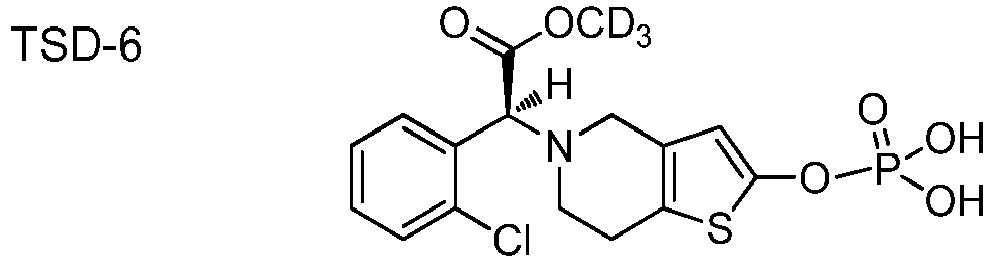
- Deuterated thienopiperidine derivatives of the present invention are preferably the following compounds:




- The present invention also comprises the pharmaceutically acceptable salt of deuterated thienopiperidine derivatives, wherein the salt can be a salt formed by deuterated thienopiperidine derivatives with sulfuric acid, hydrochloric acid, hydrobromic acid, phosphoric acid, tartaric acid, fumaric acid, maleic acid, citric acid, acetic acid, formic acid, methanesulfonic acid, p-toluenesulfonic acid, oxalic acid or succinic acid.
- The present invention also provides a pharmaceutical composition, which comprises deuterated thienopiperidine derivatives or the pharmaceutically acceptable salt thereof described by the present invention. The pharmaceutical composition can also comprise a pharmaceutically acceptable carrier as desired. The pharmaceutically acceptable inert carrier can be in the solid state or liquid state. Powders, tablets, dispersible powders, capsules, suppositories and ointment-like solid or semi-solid pharmaceutical formulations can be prepared, and in that case a solid carrier is usually used. The solid carrier which may be used is preferably one or more substances selected from diluents, flavouring agents, solubilizers, lubricants, suspending agents, binders, and swelling agents etc., or may be an encapsulating material. In the powdered formulation, the carrier contains 5%-70% of the micronized active ingredient. Specific examples of appropriate solid carriers include magnesium carbonate, magnesium stearate, talc, sucrose, lactose, pectin, dextrin, starch, gelatine, tragacanth gum, methyl cellulose, carboxymethyl cellulose sodium, low boiling wax, and cocoa butter, etc. Due to easy administration, tablets, powders, and capsules represent the oral solid formulations which are most advantageous for absorption.
- The liquid formulation includes solution, suspension and emulsion. For example, the injectable formulation for parenteral administration can use water or mixed solution of water and propylene glycol, and its physiological conditions such as isotonic degrees and pH suitable for the living body are adjusted. The liquid formulation can also be formulated into the an aqueous polyethylene glycol solution. An oral aqueous solution can be prepared by dissolving the active ingredient in the water, followed by addition of appropriate colorants, flavouring agents, stabilizers and thickening agents. The micronized active ingredient can be dispersed in a viscous material, such as natural or synthetic rubber, methyl cellulose, sodium carboxymethyl cellulose and other known suspending agents, to prepare an oral aqueous suspension.
- For the easy administration and dose evenness, it is particularly advantageous for the above pharmaceutical formulation to be formulated into unit dosage form. The unit dosage form of a formulation refers to the physically detachable unit suitable as a single dose, with each unit containing a predetermined amount of the active ingredient calculated to give the desired therapeutic effect. This unit dosage form can be a packaged form, for example, tablets, capsules, powders packaged in a tubule or vial, or ointments, gels or creams packaged in a tube or bottle.
- Although the quantity of the active ingredient in the unit dosage form may vary, it is usually adjusted to be in the range of 1-1000 mg depending on the efficacy of the selected active ingredient.
- Those skilled in the art can determine a preferred dose suitable for a certain instance according to conventional method. In general, the initial treatment dose is lower than the optimal dose of the active ingredient, and then the dose of administration is increased gradually, until the optimal therapeutic effect is accomplished. For convenience, the total daily dose can be divided into several portions and administered for several times.
- The application of deuterated thienopiperidine derivatives of the present invention or the pharmaceutically acceptable salt thereof is present in manufacturing drugs for treating and preventing cardiovascular and cerebrovascular diseases such as heart failure, stroke, and unstable angina, especially the application in manufacturing the anti-platelet aggregation drugs.
- In another aspect, the present invention also provides a manufacturing method for deuterated thienopiperidine derivatives of the present invention or the pharmaceutically acceptable salt, solvate, polymorph, enantiomer or racemic mixture thereof, the manufacturing method comprising the following reaction steps:

- According to the detailed embodiments of the present invention, compound TSD-9 of the present invention can be prepared in the following manner:

-
-
Figure 1 is a diagram of the esterase hydrolysis rates of TSD-8 and clopidogrel. -
Figure 2 is a diagram of the esterase hydrolysis rates of TSD-6 and clopidogrel. - The embodiments were used to further illustrate the present invention, but not intended to be limit.
-

- 9.4 g of (R)-o-chloromandelic acid was dissolved in 36 mL of deuterated methanol, into which 1 mL of HCl/dioxane solution (4 M) was added, reflux heated for 5 hours, and the solvent was removed by evaporation under reduced pressure after cooling. The residue was dissolved with methylene chloride, and the resultant solution was washed sequentially with 5% aqueous potassium carbonate solution and water, and the methylene chloride solution was dried with anhydrous sodium sulfate. After removing the desiccant by filtration, the solution was evaporated to dryness to obtain 9.2 g of colorless transparent oily product methyl-d3 (R)-o-chloromandelate, with a yield of 89.7%.
-

- 10.2 g of methyl-d3 (R)-o-chloromandelate was dissolved in 50 mL of anhydrous methylene chloride, into which 65.6 g of triethylamine and catalytic amount of DMAP was added, stirred, and cooled to 0°C. 50 mL anhydrous methylene chloride solution of 12.2 g p-nitrobenzenesulfonyl chloride was dropwise added at the same temperature to react for 4 hours at a constant temperature. 100 mL of water was added into the reaction solution, stirred, allowed to stand still to separate the liquid. The aqueous phase was extracted for three times with 150 mL of methylene chloride and dried with anhydrous sodium sulfate after combining the organic phases. The methylene chloride was dried out under reduced pressure after removing the desiccant by filtration to obtain 20.9 g of oily crude product in dark red. The resultant substance was recrystallized with methanol to give 15.8 g of solid product (11-1), with a yield of 81.3%.
-
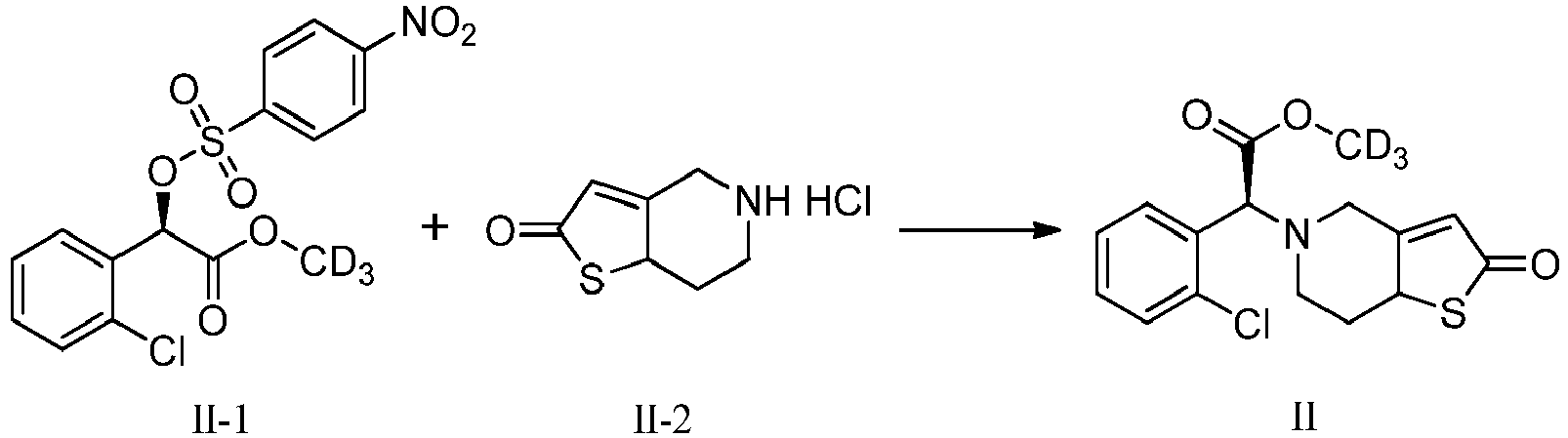
- 58.1 g (0.15mol) of methyl-d3(R)-2-(2-chlorophenyl)-2-(4-nitrophenylsulfonyloxy)-acetate (11-1), 32.3 g (0.17 mol) of 5,6,7,7a-tetrahydrothieno[3.2-c]pyridin-2(4H)-hydrochloride(IV-1) and 37.8 g (0.38 mol) of potassium bicarbonate were combined into 500 mL acetonitrile, to react by stirring at room temperature for 26 hours with a system under protecting with nitrogen.. The insoluble substances were filtered out from the reaction solution after standing still to obtain dark red mother liquor. The solvent was dried out under reduced pressure, passed through a flash chromatography (petroleum ether: ethyl acetate = 4:1) to obtain 35.4 g of oily product with a yield of 70%.
-

- Deuterated 2-oxo-clopidogrel intermediate II (200 mg, 0.6 mmol) was dissolved in 5 mL of anhydrous tetrahydrofuran, cooled to -20 °C, into which lithium diisopropylamide (2.0 M, 0.5 mL, 1 mmol) was added and stirred for 20 minutes. Compound IIIa (104 mg, 0.72 mmol) was added into the reaction solution, to react for 12 hours under self-heating process. The reaction was quenched with 4% hydrochloric acid, into which 50 mL of ethyl acetate was added, and the organic layer was washed with sodium bicarbonate and brine respectively, dried with anhydrous sodium sulfate, filtered and concentrated. Silica gel column chromatography (PE: EA = 4:1) was purified to obtain compound TSD-1 (245 mg, yield: 92%).
1H NMR (400 MHz, CDCl3): δ 7.67-7.65 (m, 1H), 7.42-7.40 (m, 1H), 7.31-7.26 (m, 2H), 6.25 (d, 1H), 4.91 (s, 1H), 3.87 (s, 3H), 3.64-3.60 (m, 1H), 3.51-3.48 (m, 1H), 2.89-2.87 (m, 2H), 2.75-2.73 (m, 2H), MS: m/z 449 [M+1]+. -

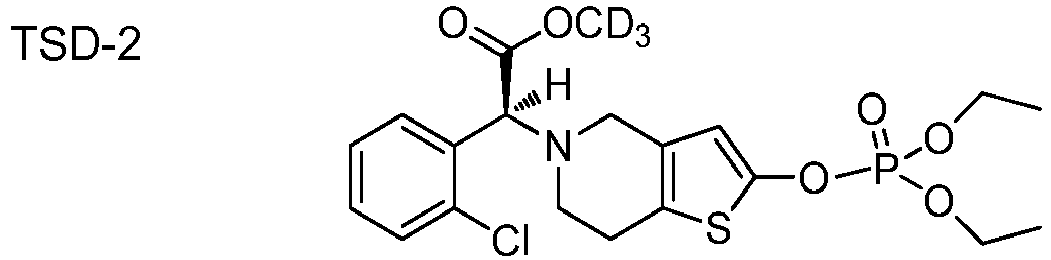
- Deuterated 2-oxo-clopidogrel intermediate II (500 mg, 1.5 mmol) was dissolved in 10 mL of anhydrous tetrahydrofuran and cooled to -20 °C, into which lithium diisopropylamide (2.0 M, 1.25 mL, 2.5 mmol) was added, stirred for 30 minutes. Compound IIIb (311 mg, 1.8 mmol) was added into the reaction solution to react for 12 hours under self-heating process. The reaction was quenched with 4% hydrochloric acid, into which 100 mL of ethyl acetate was added, and the organic layer was washed with sodium bicarbonate and brine respectively, dried with anhydrous sodium sulfate, filtered and concentrated. Silica gel column chromatography (PE: EA = 4:1) was purified to obtain compound TSD-2 (660 mg, yield: 93%).
1H NMR (400 MHz, CDCl3): δ 7.69-7.66 (m, 1H), 7.43-7.41 (m, 1H), 7.33-7.28 (m, 2H), 6.27 (d, 1H), 4.91 (s, 1H), 4.27-4.18 (m, 4H), 3.65-3.61 (m, 1H), 3.52-3.49 (m, 1H), 2.90-2.87 (m, 2H), 2.76-2.74 (m, 2H), 1.39-1.36 (dt, 6H). MS: m/z 477 [M+1]+. -

- Deuterated 2-oxo-clopidogrel intermediate II (100 mg, 0.3 mmol) was dissolved in 5 mL of anhydrous tetrahydrofuran and cooled to -20 °C, into which lithium diisopropylamide (2.0 M, 0.25 mL, 0.5 mmol) was added, stirred for 20 minutes. Compound IIId (97 mg, 0.36 mmol) was added into the reaction solution to react for 12 hours under self-heating process. The reaction was quenched with 4% hydrochloric acid, into which 50 mL of ethyl acetate was added, and the organic layer was washed with sodium bicarbonate and brine respectively, dried with anhydrous sodium sulfate, filtered and concentrated. Silica gel column chromatography (PE: EA = 2:1) was purified to obtain compound TSD-4 (162 mg, yield: 95%).
1H NMR (400 MHz, CDCl3): δ 7.71-7.68 (m, 1H), 7.47-7.42 (m, 5H), 7.35-7.24 (m, 10H), 6.28 (d, 1H), 4.92 (s, 1H), 2.89-2.87 (m, 2H), 2.75-2.73 (m, 2H), MS: m/z 573 [M+1]+. -

- TSD-2 (500 mg, 1.04 mmol) was dissolved in 10 mL of dry methylene chloride, into which TMSBr (1.7 mL, 13 mmol) was added to react at room temperature for 12 h, the reaction was stopped, and the solvent was pumped out under reduced pressure, then 10 mL of methanol was added in and stirred for 1 h. The reaction solution was concentrated directly, silica gel column chromatography (n-butanol: formic acid: water = 5:5:1) was purified to obtain compound TSD-6 (390 mg, yield: 90%).
1H NMR (400 MHz, DMSO): δ 7.60 (d, 1H), 7.53 (d, 1H), 7.41-7.40 (m, 2H), 6.24 (s, 1H), 4.91 (s, 1H), 3.56 (s, 2H), 2.85 (brs, 2H), 2.66 (brs, 2H), MS: m/z 421 [M+1]+. -

- Deuterated 2-oxo-clopidogrel intermediate II (500 mg, 1.5 mmol) was dissolved in 5 mL of anhydrous tetrahydrofuran and cooled to -20°C, into which lithium diisopropylamide (2.0 M, 1.25 mL, 2.5 mmol) was added and stirred for 20 minutes. Compound IIIe (466 mg, 1.8 mmol) was added into the reaction solution to react for 12 hours under self-heating process. The reaction was quenched with 4% hydrochloric acid, into which 100 mL of ethyl acetate was added, and the organic layer was washed with sodium bicarbonate and brine respectively, dried with anhydrous sodium sulfate, filtered and concentrated. Silica gel column chromatography (PE: EA = 2:1) was purified to obtain compound TSD-7 (269 mg, yield: 32%).
1H NMR (400 MHz, CDCl3): δ 7.69-7.65 (m, 1H), 7.42-7.40 (m, 1H), 7.31-7.24 (m, 2H), 6.17 (s, 1H), 5.46 (s, 1H), 5.43 (s, 1H), 4.91 (s, 1H), 3.64-3.60 (m, 1H), 3.50-3.47 (m, 1H), 2.91-2.88 (m, 2H), 2.75-2.72 (m, 2H), 1.50 (s, 18H). MS: m/z 560 [M+1]+. -

- TSD-6 (500 mg, 0.89 mmol) was dissolved in 10 mL of methylene chloride, into which trifluoroacetic acid (2 mL) was added, stirred at room temperature for 1 h and concentrated under reduced pressure. Silica gel column chromatography (n-butanol: formic acid: water = 5:5:1) was purified to obtain compound TSD-8 (140 mg, yield: 35%).
1H NMR (400 MHz, DMSO): δ 7.62-7.60 (m, 1H), 7.54-7.41 (m, 3H), 6.18 (s, 1H), 5.84 (s, 1H), 5.37-5.32 (d, 2H), 4.26-3.98 (m, 2H), 3.74-3.66 (m, 2H), 3.15-3.00 (m, 2H), MS: m/z 451 [M+1]+. -

- Deuterated 2-oxo-clopidogrel intermediate II (150 mg, 0.45 mmol) was dissolved in 5 ml of anhydrous tetrahydrofuran and cooled to -20°C, into which lithium diisopropylamide (2.0M, 0.4 mL, 0.8 mmol) was added and stirred for 20 minutes. Compound IIIc (108 mg, 0.54 mmol) was added into the reaction solution to react for 12 hours under self-heating process. The reaction was quenched with 4% hydrochloric acid, into which 50 mL of ethyl acetate was added, and the organic layer was washed with sodium bicarbonate and brine respectively, dried with anhydrous sodium sulfate, filtered and concentrated. Silica gel column chromatography (PE: EA = 2:1) was purified to obtain compound TSD-3 (192 mg, yield: 85%).
1H NMR (400 MHz, CDCl3): δ 7.68-7.67 (m, 1H), 7.41-7.39 (m, 1H), 7.34-7.28 (m, 2H), 6.28 (d, 1H), 4.92 (s, 1H), 4.74 (m, 2H), 4.26-4.17 (m, 4H), 3.64-3.61 (m, 1H), 3.53-3.49 (m, 1H),1.28 (d, 12H). MS: m/z 505 [M+1]+. -

- Deuterated 2-oxo-clopidogrel intermediate II (500 mg, 1.5 mmol) was dissolved in 5 mL of anhydrous tetrahydrofuran and cooled to -20°C, into which lithium diisopropylamide (2.0 M, 1.25 mL, 2.5 mmol) was added and stirred for 20 minutes. Compound IV was added into the reaction solution to react for 12 hours under self-heating process. The reaction was quenched with 4% hydrochloric acid, into which 100 mL of ethyl acetate was added, the organic layer was washed with sodium bicarbonate and brine respectively, dried with anhydrous sodium sulfate, filtered and concentrated. Silica gel column chromatography (PE: EA = 2:1) was purified to obtain compound TSD-9 (269 mg, yield: 32%).
1H NMR (400 MHz, CDCl3): δ 7.69-7.65 (m, 1H), 7.42-7.40 (m, 1H), 7.31-7.24 (m, 2H), 6.17 (s, 1H), 5.46 (s, 1H), 5.43 (s, 1H), 4.91 (s, 1H), 3.64-3.60 (m, 1H), 3.50-3.47 (m, 1H), 2.91-2.88 (m, 2H), 2.75-2.72 (m, 2H), 1.50 (s, 18H). MS: m/z 563 [M+1]+. - Addition of small dose of ADP (concentration less than 0.9 µmol/L) into the platelet suspension could lead to rapid platelet aggregation, followed by quick disaggregation; if moderate dose of ADP (about 1.0 µmol/L) was added, then the second irreversible aggregation phase appeared not long after the end of the first aggregation phase and the disaggregation. The maximum aggregation rate of the irreversible aggregation phase was used to evaluate the effect of the test samples on the function of blood coagulation. The present experiment used the semi-automatic Platelet Aggregation Analyzer Model NJ4 from Precil to observe the inhibitive effect of the test samples provided by the Tasly Group on the platelet aggregation.
- Animals: Wistar male rats, weighing 230-250 g, were purchased from Vital River Laboratory Animal Technology Co., Ltd.
- Reagent: ADP, Sigma Corporation.
- Test samples: 16 test samples were provided by the Tasly Group; referred to China patent application
201310428052.4 - Dose of administration: the test samples were suspended with 0.25% CMC, administered 3 mg/kg weight, volume of administration: 2 mL.
- 2 Hours after administration, the rats were anesthetized with pentobarbital sodium, and blood was drawn from the abdominal aorta, anticoagulated with sodium citrate with a ratio of 1:9, and centrifuged to obtain the platelet-rich plasma and platelet-poor plasma, with the mixed ratio of the platelet-poor plasma to platelet-rich plasma =3: 1.
-
Table 1 Effects of the compounds of the present invention on the maximum aggregation rate of the ADP induced platelet aggregation Group Dose of Administration mg/kg n Maximum Platelet Aggregation Rate control -- 5 61.22±4.73 clopidogrel 3 5 46.77±8.28* prasugrel 3 5 20.72±8.84* TSC-1 3 2 45.8±3.55* TSC-2 3 3 41.7±7.43* TSC-3 3 3 38.7±4.27* TSC-4 3 3 46.5±8.16* TSC-6 3 3 29.6±5.33* TSC-7 3 3 39.2±6.16* TSC-8 3 5 30.6±4.22* TSC-9 3 3 25.7±3.25* TSD-1 3 5 35.6±3.35* TSD-2 3 5 32.7±5.33* TSD-3 3 5 28.4±3.27* TSD-4 3 5 36.2±4.16* TSD-6 3 5 17.4±5.13* TSD-7 3 5 27.1±6.21* TSD-8 3 5 16.3±4.16* TSD-9 3 5 18.7±4.12* *P<0.001 compared with the normal group. - In the ADP induced platelet aggregation experiment, each of the test samples had the significant effect of inhibiting the rat platelet aggregation, and could reverse the second phase platelet aggregation, leading to disaggregation. Moreover, the effects of inhibiting the platelet aggregation of the series of deuterated thienopiperidine derivatives of the present invention (TSD-1∼4, 6-9) were much better than those of the series of non-deuterated thienopiperidine derivatives (TSC-1-TSC-4, TSC-6-TSC-9).
- Comparison test of the esterase hydrolysis rates of the compound of formula TSD-8 and clopidogrel
- The hydrolysis rates of formula TSD-8 and clopidogrel bisulfate in the rat whole blood were determined by employing the in vitro incubation method.
- 3 mL of rat fresh whole blood was taken and placed in a glass test tube. 30 µg/mL of TSD-8 and clopidogrel bisulfate (prepared with saline) were added, with 3 parallel tests for each group. The test tubes were shocked at a constant temperature of 37 °C, 100 µL of the mixture was taken out at fixed time points of 10 min, 20 min, 30 min, 40 min, 50 min, 60 min, 70 min, 80 min, 90 min, 100 min, 110 min, and 120 min, 900 µL of methanol was added to stop the reaction immediately, then 100 µL methanol/water (1:1, v/v) and 100 µL internal standard (diazepam, 100 ng/mL) were added sequentially. The mixture was centrifuged at 13000 rpm at low temperature for 10 min, the supernatant was transferred into another EP tube, and 20 µL of the supernatant was taken for sample injection.


- It could be seen from
figure 1 that the concentration of TSD-8 at each time point was greater than that of clopidogrel, the hydrolysis rate of TSD-8 in the rat whole blood was therefore slower than that of clopidogrel, and at around 50 min the concentration of clopidogrel bisulfate in the whole blood was already lower than the quantitative lower limit, while that of the compound of formula TSD-8 could still be detected. - Comparison test of the esterase hydrolysis rates of the compound of formula TSD-6 and clopidogrel
The hydrolysis rates of formula TSD-6 and clopidogrel bisulfate in the rat whole blood were determined by employing the in vitro incubation method. - 3 mL of the rat fresh whole blood was taken and placed in a glass test tube. 30 µg/mL of formula TSD-6 and clopidogrel bisulfate (prepared with saline) were added, with 3 parallel tests for each group. The test tubes were shocked at a constant temperature of 37 °C, 100 µL of the mixture was taken out at fixed time points of 10 min, 20 min, 30 min, 40 min, 50 min, 60 min, 70 min, 80 min, 90 min, 100 min, 110 min, and 120 min, into which 900 µL of methanol was added to stop the reaction immediately, then 100 µL methanol/water (1:1, v/v) and 100 µL internal standard (diazepam, 100 ng/mL) were added sequentially. The mixture was centrifuged at 13000 rpm at low temperature for 10 min, the supernatant was transferred into another EP tube, and 20 µL of the supernatant was taken for sample injection.
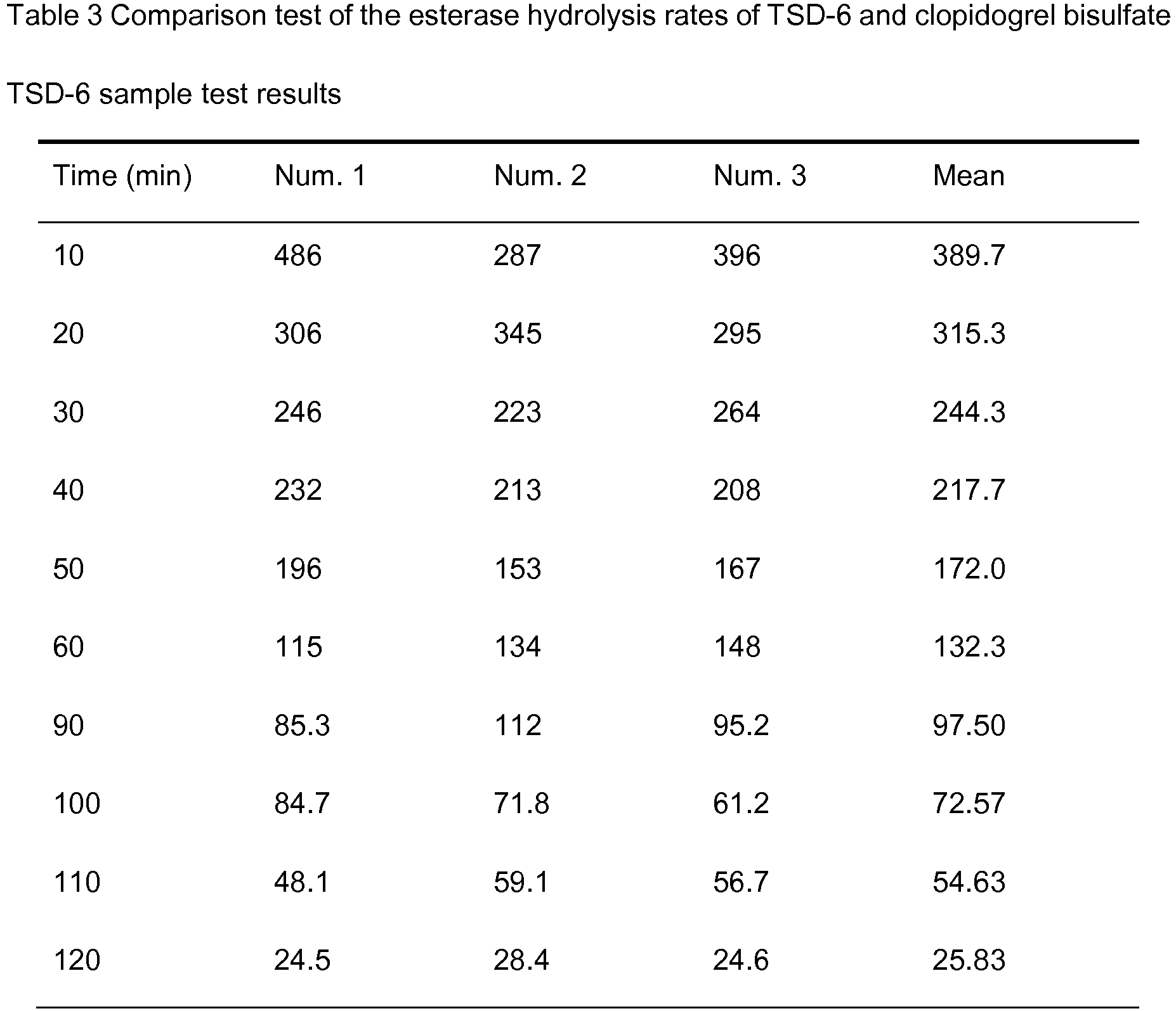
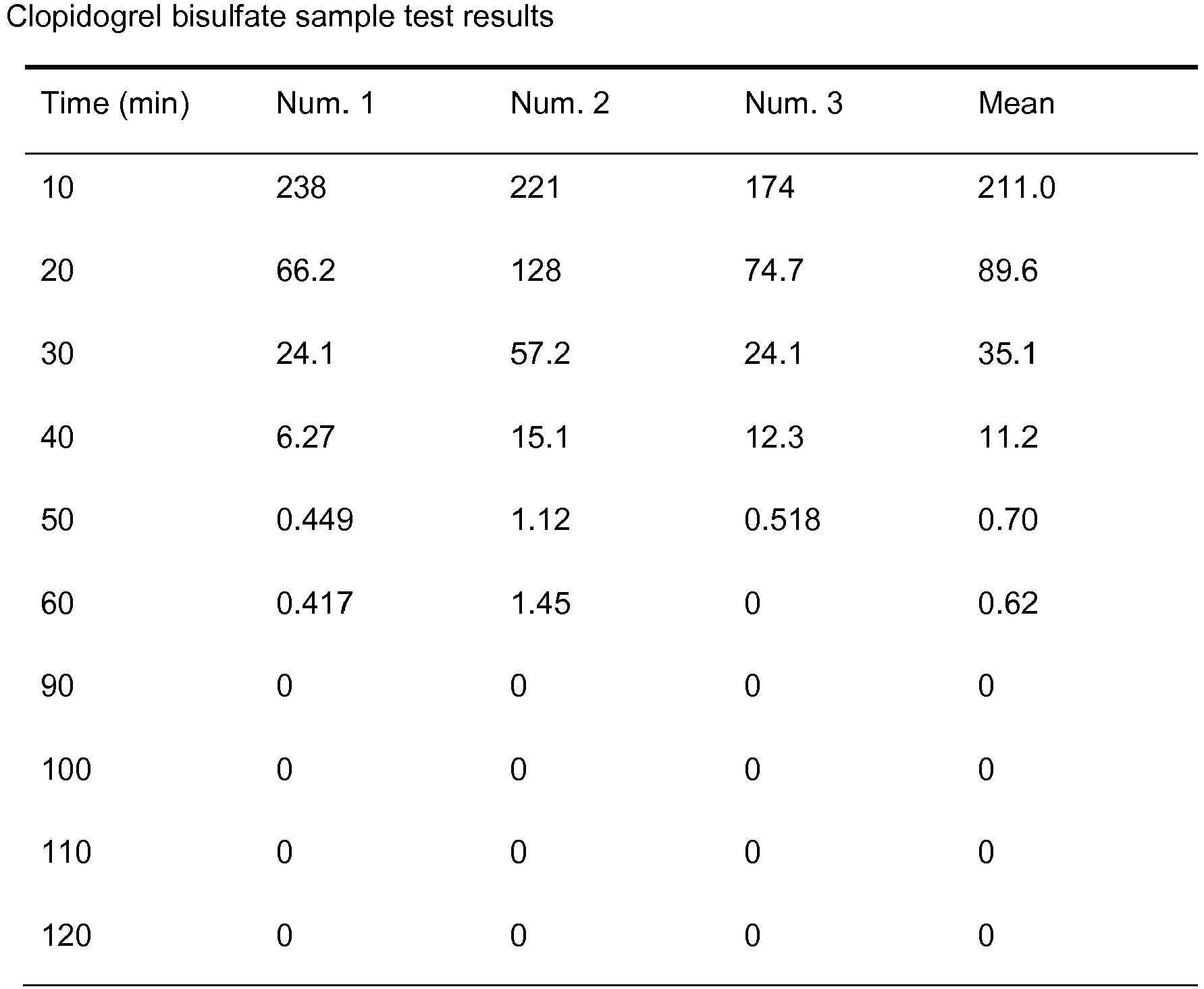
- It could be seen from
figure 2 that the concentration of TSD-6 at each time point was greater than that of clopidogrel, the hydrolysis rate of TSD-6 in the rat whole blood was significantly slower than that of clopidogrel, and at around 50 min the concentration of clopidogrel bisulfate in the whole blood was already lower than the quantitative lower limit, while that of the compound of formula TSD-6 could still be detected. - Comparison of the pharmacokinetics of formula TSD-6, TSC-6, I-1 and clopidogrel for the in-vivo metabolization into 2-oxo-clopidogrel in rats; the compound structures are present as shown in the following figure:

- Test animals: 24 male SD rats, 6-7 weeks old, animal weighing 240-290 g, were purchased from Shanghai Slac Laboratory Animal Co., Ltd., with animal certificate number of
2015000514648 - Test drugs: clopidogrel bisulphate (Clopidogrel), TSC-6, I-1 and TSD-6, provided by Tasly.
- Grouping of animals and the sampling time points: 24 SD rats were divided into 8 groups, 3 for each group, the animals of the intravenous injection group were administered with 3 mg/kg of the test drugs through the dorsal venous of foot, and the animals of the oral gavage group were administered with 15 mg/kg of the test drugs through gavage. See table 4 for the administration scheme.
Table 4. The animal administration and blood sampling scheme Group Test Sample n Dose of Administration (mg/kg) volume of Administration (ml/kg) Administration Route Sampling Time Group 1 Clopidogrel 3 3 1 intravenous injection Intravenous injection: the plasma was collected at pre-dose, and 5 min, 15 min, 30 min, 1 hr, 2 hr, 4 hr, 8 hr, and 24 hr after administration Group 2 Clopidogrel 3 15 10 oral gavage Group 3 TSC-6 3 3 1 intravenous injection Group 4 TSC-6 3 15 10 oral gavage respectively, 9 time points overall. Oral gavage: the plasma was collected at pre-dose and 15 min, 30 min, 1 hr, 2 hr, 4 hr, 8 hr, and 24 hr after the administration respectively, 8 time points overall. Group 5 I-1 3 3 1 intravenous injection Group 6 I-1 3 15 10 oral gavage Group 7 TSD-6 3 3 1 intravenous injection Group 8 TSD-6 3 15 10 oral gavage - Sample collection and storage: According to the predetermined time points, the corresponding animals were fixed, about 80 µL of blood was sampled via the tail vein, the blood sample was anticoagulated with sodium heparin and placed on the wet ice. 60 µL of the blood sample was taken immediately and added into 600 µL of internal standard solution (40 ng/mL diclofenac acetonitrile solution, with 0.1% formic acid), and the mixture was vortexed for 0.5 min and centrifuged at 12000 rpm at 4°Cfor 5 min to obtain a supernatant. The supernatant sample was firstly placed in the dry ice for frozen storage, and then transferred into a refrigerator at -70°C for long-term storage until being analyzed.
-
Clopidogrel TSC-6 I-1 TSD-6 PK parameters Unit IV PO IV PO IV PO IV PO Tmax hr 0.083 0.5 0.083 0.333 0.083 0.333 0.083 0.333 Cmax ng/mL 19.1 2.23 150 15.4 120 10.9 307 27.7 Auc(0-t) hr*ng/mL 18 7.74 73 27.2 75 14.6 116 46.4 Terminalt1/2 hr 0.525 NA 0.683 0.622 0.541 0.614 0.787 0.76 - It could be seen from the comparison study of the pharmacokinetics of the key metabolite 2-oxo-clopidogrel that the exposure amount of the key metabolic intermediate of the deuterated compound TSD-6 developed was evidently higher than that of the non-deuterated compound TSC-6 and similar compound I-1 of the same kind for both oral and intravenous injection administrations. The pharmacokinetic data exhibited a better unique metabolic characteristic of TSD-6, which will be advantageous to improve the drug effect and overcome the disadvantages of the prior compounds.
- Comparison study on the drug effects of formula TSC-6, I-1, TSD-6 and clopidogrel in the rat tail bleeding model
Animals and feeding: genus, strain: SD rat,
Provider: Slac
Weight: 250-350 g
Sex: male
Animal number: 30
Feeding condition: fed in the animal room of clean grade, temperature 20.5-22.5°C, humidity 50-65%, light 150-250 Lx, 12 hours of day and night's alteration (6:00-18:00 as the day.) - Test samples, control drug and preparation method: compounds TSC-6, I-1, TSD-6 and clopidogrel were dissolved in 5 mL 0.25% CMC, ultrasonic treated at 37 °C for 20 min, and stirred into a suspension with a stirrer.
- Dose setting and its reason: dose for the test compounds TSC-6, I-1, TSD-6 was 1 mg/kg. Dose of administration for the positive compound clopidogrel was 10 mg/kg, determined on the basis of references and the test results of the present laboratory.
- Administration route: oral gavage.
-
- The animals were allowed adapt to the environment after arrival for 1 week and fasted for 16 hours prior to the experiment.
- The tail bleeding time started to be recorded 2 h after oral administration of the test compounds and 4 h after oral administration of clopidogrel.
- The rats were anesthetized with pentobarbital sodium (50 mg/kg, ip) 10 min prior to the recording of the tail bleeding time, after the rat was completely anesthetized and reaching the detection time, the tail was cut at 1.3 mm from the rat tail-tip with a scissor and perpendicularly immerged into a saline at 37°C. Timing recording was not started until the blood flow appeared.
- The timing recording was stopped when the bleeding time interval was longer than 20 seconds. The maximum observation time for the blood flow was set for 40 minutes. If it was longer than 40 minutes, the timing recording was stopped and the time was recorded as 40 minutes.
-
Entry Compound Dose (mg/kg) Tail Bleeding Time (s) 1 Vehicle - 158 2 TSC-6 1.0 635 3 I-1 1.0 950 4 TSD-6 1.0 1331* 5 Clopidogrel 10 1896*** *P<0.05, ***P<0.001 vs Vehicle - The anticoagulant effects of compounds were evaluated by comparing the tail bleeding time in the rat tail bleeding model between TSC-6, I-1, TSD-6 and clopidogrel. It could be seen that the anticoagulant effect of the deuterated compound TSD-6 developed by inventors was much better than that of the non-deuterated compound TSC-6 and analog I-10f the same kind, demonstrating the unique anticoagulant activity of TSD-6.
- Comparison study on the drug effects of TSC-6, I-1, TSD-6 and clopidogrel in the rat arteriovenous thrombus loop model
Animals and feeding: genus, strain: SD rat,
Provider: Slac
Weight: 250-350 g
Sex: male
Animal number: 30
Feeding condition: fed in the animal room of clean grade, temperature 20.5-22.5°C, humidity 50-65%, light 150-250 Lx, 12 hours of day and night's alteration (6:00-18:00 as the day.)
Test samples, control drug and preparation method: compounds TSC-6, I-1, TSD-6 and clopidogrel were dissolved in 5 mL of 0.25% CMC, ultrasonic treated at 37 °C for 20 min, and stirred into a suspension with a stirrer. - Dose setting and its reason: dose for the test compounds TSC-6, I-1, and TSD-6 was 1 mg/kg. Dose of administration for the positive compound clopidogrel was 10 mg/kg, determined on the basis of references and the test results of the present laboratory.
- Administration route: oral gavage.
Apparatus and materials - Swab, dry tampon, alcohol pad, anerdian tampon.
- Surgical scissor, ophthalmic forceps, hemostatic forceps, microsurgical scissor, microsurgical forceps, artery clamps.
- 3-0 surgical suture, thick PE tube (I.D.∗O.D. = 1.14 mm ∗ 1.63 mm, 8 cm long), think PE tube (I.D.*O.D. = 0.72 mm∗1.22 mm, 6 cm long).
- Surgical board, binding rope, timer, precise electronic balance, weighing paper.
- Syringe, normal saline.
-
- After arrival, the animals were let adapt to the environment for 1 week and fasted for 16 hours prior to the test.
- The arteriovenous blood loop circulation was started 2 h after oral administration of the test compounds and 4 h after oral administration of clopidogrel.
- The rats were anesthetized with pentobarbital sodium (50 mg/kg, ip) 15 min before the arteriovenous blood loop circulation was started.
- The left external jugular vein and the right carotid artery were separated and inserted with thin PE tubes respectively.
- Two PE tubes were connected with another thick PE tube with a length of 8 cm to form a circulation passage. There's a 6 cm surgical suture (3-0) in the thick PE tube.
- 15 min after the circulation passage was opened, the blood flow was blocked, the filament was taken out and weighed after the blood was sucked out. The thrombus weight was obtained after subtraction of the weight of the filament itself.
-
Entry Compound Dose (mg/kg) Thrombus (mg) 1 Vehicle - 52.2 2 TSC-6 1.0 31.4* 3 I-1 1.0 25.6 4 TSD-6 1.0 18.4* 5 Clopidogrel 10 20.1** *P<0.01, **P<0.01 vs Vehicle - The anticoagulant effects of the compounds were evaluated by comparing different weights of the thrombus formed by TSC-6, I-1, TSD-6 and clopidogrel in the rat arteriovenous thrombus loop model. It could be seen that the weight of the thrombus formed by the deuterated compound TSD-6 developed by inventors was much lower than that of the non-deuterated compound TSC-6 and analog I-1 of the same kind, demonstrating the unique anticoagulant activity of TSD-6.
Claims (11)
- Deuterated thienopiperidine derivatives of a structure of formula (I) or a pharmaceutically acceptable salt thereof,

wherein,X is P or S;m is 0 or 1;n is 0 or 1;R1 is selected from hydrogen, C1-C4 linear or branched alkyl which is unsubstituted or substituted with halogen, and phenyl; andR2 is absent or is selected from hydrogen, C1-C4 linear or branched alkyl which is unsubstituted or substituted with halogen, and phenyl, wherein when R2 is absent, X and O form a double bond. - The deuterated thienopiperidine derivatives or the pharmaceutically acceptable salt thereof according to claim 1, wherein X is P, m is 0, n is 0, R1 is selected from hydrogen, CH3-, CH3CH2-, isopropyl, CCl3CH2-, and phenyl; R2 is selected from hydrogen, CH3-, CH3CH2-, isopropyl, CCl3CH2-, and phenyl.
- The deuterated thienopiperidine derivatives or the pharmaceutically acceptable salt thereof according to claim 1, wherein X is P, m is 1, n is 1, R1 is selected from hydrogen, CH3-, CH3CH2-, isopropyl, CCL3CH2-, tert-butyl, and phenyl; R2 is selected from hydrogen, CH3-, CH3CH2-, isopropyl, CCl3CH2-, tert-butyl, and phenyl.
- The deuterated thienopiperidine derivatives or the pharmaceutically acceptable salt thereof according to claim 1, wherein X is S, m is 0, n is 0, R1 is selected from hydrogen, CH3-, CH3CH2-, isopropyl, CCl3CH2-, tert-butyl, and phenyl; R2 is unsubstituted, and X and O form a double bond.
- The deuterated thienopiperidine derivatives or the pharmaceutically acceptable salt thereof according to claim 1, wherein the deuterated thienopiperidine derivative is one of:



- The deuterated thienopiperidine phosphate derivatives or the pharmaceutically acceptable salt thereof according to claim 1, wherein the salt is a salt formed by the deuterated thienopiperidine phosphate derivative with sulfuric acid, hydrochloric acid, hydrobromic acid, phosphoric acid, tartaric acid, fumaric acid, maleic acid, citric acid, acetic acid, formic acid, methanesulfonic acid, p-toluenesulfonic acid, oxalic acid or succinic acid.
- A pharmaceutical composition, characterized in that the pharmaceutical composition comprises the deuterated thienopiperidine phosphate derivatives or the pharmaceutically acceptable salt thereof according to claim 1.
- The pharmaceutical composition according to claim 7, characterized in that the pharmaceutical composition also comprises a pharmaceutically acceptable carrier.
- A deuterated thienopiperidine phosphate derivative or the pharmaceutically acceptable salt thereof according to claims 1-6 for use as a medicament.
- A deuterated thienopiperidine phosphate derivative or the pharmaceutically acceptable salt thereof according to claims 1-6 for use in treatment or prevention of cardiovascular and cerebrovascular diseases.
- The deuterated thienopiperidine phosphate derivative or the pharmaceutically acceptable salt thereof according to claim 10, wherein the disease is one of heart failure, stroke and unstable angina.
Applications Claiming Priority (2)
| Application Number | Priority Date | Filing Date | Title |
|---|---|---|---|
| CN201510352739 | 2015-06-23 | ||
| PCT/CN2016/086538 WO2016206576A1 (en) | 2015-06-23 | 2016-06-21 | Deuterated thienopiperidine derivatives, manufacturing method, and application thereof |
Publications (3)
| Publication Number | Publication Date |
|---|---|
| EP3315505A1 EP3315505A1 (en) | 2018-05-02 |
| EP3315505A4 EP3315505A4 (en) | 2019-02-27 |
| EP3315505B1 true EP3315505B1 (en) | 2020-03-25 |
Family
ID=57584702
Family Applications (1)
| Application Number | Title | Priority Date | Filing Date |
|---|---|---|---|
| EP16813692.7A Active EP3315505B1 (en) | 2015-06-23 | 2016-06-21 | Deuterated thienopiperidine derivatives, manufacturing method, and application thereof |
Country Status (10)
| Country | Link |
|---|---|
| US (1) | US11130766B2 (en) |
| EP (1) | EP3315505B1 (en) |
| JP (1) | JP6695361B2 (en) |
| KR (1) | KR20180020223A (en) |
| CN (2) | CN107698620A (en) |
| AU (1) | AU2016282124B2 (en) |
| CA (1) | CA2990734A1 (en) |
| RU (1) | RU2716141C2 (en) |
| WO (1) | WO2016206576A1 (en) |
| ZA (1) | ZA201800493B (en) |
Families Citing this family (3)
| Publication number | Priority date | Publication date | Assignee | Title |
|---|---|---|---|---|
| CN105983016B (en) | 2015-03-23 | 2023-08-11 | 天士力医药集团股份有限公司 | A drug combination containing silibinin |
| CN107698620A (en) * | 2015-06-23 | 2018-02-16 | 江苏天士力帝益药业有限公司 | A kind of deuterated thieno piperidine derivative, preparation method and applications |
| CN115165949B (en) * | 2021-04-07 | 2025-02-18 | 江苏天士力帝益药业有限公司 | A method for determining the content of non-deuterated TSL-0202 in TSL-0202 |
Family Cites Families (29)
| Publication number | Priority date | Publication date | Assignee | Title |
|---|---|---|---|---|
| FR2530247B1 (en) | 1982-07-13 | 1986-05-16 | Sanofi Sa | NOVEL THIENO (3, 2-C) PYRIDINE DERIVATIVES, PROCESS FOR THEIR PREPARATION AND THERAPEUTIC APPLICATION |
| FR2576901B1 (en) | 1985-01-31 | 1987-03-20 | Sanofi Sa | NOVEL DERIVATIVES OF A- (OXO-2 HEXAHYDRO-2,4,5,6,7,7A THIENO (3,2-C) PYRIDYL-5) ACETIC PHENYL, THEIR PREPARATION PROCESS AND THEIR THERAPEUTIC APPLICATION |
| FR2623810B2 (en) | 1987-02-17 | 1992-01-24 | Sanofi Sa | ALPHA SALTS- (TETRAHYDRO-4,5,6,7 THIENO (3,2-C) PYRIDYL-5) (2-CHLORO-PHENYL) -THETHYL ACETATE DEXTROGYRE AND PHARMACEUTICAL COMPOSITIONS CONTAINING THE SAME |
| FR2652579B1 (en) | 1989-10-02 | 1992-01-24 | Sanofi Sa | DERIVATIVES OF 2-HYDROXY THIOPHENE AND FURANNE CONDENSED WITH A NITROGEN CYCLE, ON THE PREPARATION PROCESS AND THEIR THERAPEUTIC APPLICATION. |
| US6221335B1 (en) * | 1994-03-25 | 2001-04-24 | Isotechnika, Inc. | Method of using deuterated calcium channel blockers |
| FR2744918B1 (en) | 1996-02-19 | 1998-05-07 | Sanofi Sa | NEW COMBINATIONS OF ACTIVE INGREDIENTS CONTAINING THIENO (3,2-C) PYRIDINE DERIVATIVE AND AN ANTITHROMBOTIC |
| AU3191597A (en) | 1996-06-26 | 1998-01-14 | Sankyo Company Limited | Novel medicinal compositions of hydropyridines |
| JPH10310586A (en) | 1996-06-26 | 1998-11-24 | Sankyo Co Ltd | New pharmaceutical uses of hydropyridines |
| FR2779726B1 (en) | 1998-06-15 | 2001-05-18 | Sanofi Sa | POLYMORPHIC FORM OF CLOPIDOGREL HYDROGENOSULFATE |
| US6440710B1 (en) * | 1998-12-10 | 2002-08-27 | The Scripps Research Institute | Antibody-catalyzed deuteration, tritiation, dedeuteration or detritiation of carbonyl compounds |
| DK1104760T3 (en) * | 1999-12-03 | 2003-06-30 | Pfizer Prod Inc | Sulfamoyl heteroarylpyrazole compounds as anti-inflammatory / analgesic agents |
| TW200413273A (en) * | 2002-11-15 | 2004-08-01 | Wako Pure Chem Ind Ltd | Heavy hydrogenation method of heterocyclic rings |
| CN101309917B (en) * | 2005-10-06 | 2013-09-11 | 奥斯拜客斯制药有限公司 | Deuterated inhibitor of gastric H+, K+-ATPase with enhanced therapeutic properties |
| US7750168B2 (en) * | 2006-02-10 | 2010-07-06 | Sigma-Aldrich Co. | Stabilized deuteroborane-tetrahydrofuran complex |
| TWI392681B (en) | 2006-04-06 | 2013-04-11 | Daiichi Sankyo Co Ltd | Prasugrel with high purity and a method for preparing its acid addition salt |
| US20080319004A1 (en) * | 2007-06-19 | 2008-12-25 | Protia, Llc | Deuterium-enriched clopidogrel |
| CN101591344B (en) | 2008-05-27 | 2012-12-05 | 连云港恒邦医药科技有限公司 | Antithrombotic compound as well as preparation method and application thereof |
| WO2010009243A1 (en) | 2008-07-15 | 2010-01-21 | Theracos, Inc. | Deuterated benzylbenzene derivatives and methods of use |
| CN101885730B (en) | 2009-05-13 | 2012-07-04 | 连云港恒邦医药科技有限公司 | Compound for resisting thrombus |
| WO2011079407A1 (en) | 2009-12-28 | 2011-07-07 | 北京益君康医药技术有限公司 | New compounds having potency to inhibit blood clotting |
| CN102863457B (en) | 2010-02-02 | 2013-10-09 | 江苏威凯尔医药科技有限公司 | Optically-active 2- hydroxyltetrathienopyridine derivative, preparation method thereof and application of optically-active 2- hydroxyltetrathienopyridine derivative to pharmacy |
| EP2537517A1 (en) * | 2011-06-22 | 2012-12-26 | Active Biotech AB | Deuterium-enriched 4-hydroxy-5-methoxy-n,1-dimethyl-2-oxo-n-[(4-trifluoro-methyl)phenyl]-1,2-dihydroquinoline-3-carboxamide |
| BR112013033464A2 (en) | 2011-06-27 | 2017-01-24 | Ipca Lab Ltd | compound, acetate, pharmaceutical composition, pharmaceutical combination, method and improved method |
| WO2014043895A1 (en) * | 2012-09-21 | 2014-03-27 | 北京普禄德医药科技有限公司 | 2-hydroxyl tetrahydro thienopyridine derivative with optical activity and preparation method and use thereof |
| CN103665042B (en) * | 2012-09-21 | 2016-03-16 | 北京普禄德医药科技有限公司 | Optically active 2-hydroxy tetrahydro thienopyridine derivative and its production and use |
| CN104418891B (en) * | 2013-08-28 | 2018-04-06 | 江苏威凯尔医药科技有限公司 | The preparation of water-soluble 2 hydroxy tetrahydro thienopyridine derivatives and its medical usage |
| CN104447867B (en) * | 2013-09-17 | 2017-12-26 | 江苏天士力帝益药业有限公司 | A kind of thieno piperidine derivative, preparation method and applications |
| CN103554132B (en) * | 2013-10-31 | 2016-01-27 | 李纪宁 | Deuterated derivative of tetrahydrothieno pyridines and preparation method thereof and pharmaceutical use |
| CN107698620A (en) * | 2015-06-23 | 2018-02-16 | 江苏天士力帝益药业有限公司 | A kind of deuterated thieno piperidine derivative, preparation method and applications |
-
2016
- 2016-06-20 CN CN201610446961.4A patent/CN107698620A/en active Pending
- 2016-06-21 RU RU2018100116A patent/RU2716141C2/en active
- 2016-06-21 CA CA2990734A patent/CA2990734A1/en active Pending
- 2016-06-21 JP JP2017564689A patent/JP6695361B2/en not_active Expired - Fee Related
- 2016-06-21 CN CN201680036795.9A patent/CN107922448B/en active Active
- 2016-06-21 US US15/739,337 patent/US11130766B2/en not_active Expired - Fee Related
- 2016-06-21 AU AU2016282124A patent/AU2016282124B2/en not_active Ceased
- 2016-06-21 KR KR1020187001571A patent/KR20180020223A/en not_active Ceased
- 2016-06-21 WO PCT/CN2016/086538 patent/WO2016206576A1/en not_active Ceased
- 2016-06-21 EP EP16813692.7A patent/EP3315505B1/en active Active
-
2018
- 2018-01-23 ZA ZA2018/00493A patent/ZA201800493B/en unknown
Non-Patent Citations (1)
| Title |
|---|
| None * |
Also Published As
| Publication number | Publication date |
|---|---|
| EP3315505A1 (en) | 2018-05-02 |
| AU2016282124A1 (en) | 2018-01-18 |
| RU2716141C2 (en) | 2020-03-06 |
| RU2018100116A (en) | 2019-07-23 |
| RU2018100116A3 (en) | 2019-09-30 |
| US11130766B2 (en) | 2021-09-28 |
| ZA201800493B (en) | 2020-05-27 |
| CN107698620A (en) | 2018-02-16 |
| JP2018520128A (en) | 2018-07-26 |
| EP3315505A4 (en) | 2019-02-27 |
| CN107922448A (en) | 2018-04-17 |
| AU2016282124B2 (en) | 2020-11-05 |
| US20180179222A1 (en) | 2018-06-28 |
| CA2990734A1 (en) | 2016-12-29 |
| JP6695361B2 (en) | 2020-05-20 |
| WO2016206576A1 (en) | 2016-12-29 |
| CN107922448B (en) | 2020-06-12 |
| KR20180020223A (en) | 2018-02-27 |
Similar Documents
| Publication | Publication Date | Title |
|---|---|---|
| RU2367660C2 (en) | Himbacine "нор секопроизводные" with inhibitory action with respect to thrombin receptors | |
| CN104447867B (en) | A kind of thieno piperidine derivative, preparation method and applications | |
| CA3111725C (en) | 2,6-diamino pyridine compounds | |
| JP5575979B2 (en) | Thienopyridine ester derivatives containing cyano groups, their preparation, use and compositions | |
| WO2016192560A1 (en) | Tenofovir monobenzyl ester phosphamide prodrug, preparation method and use thereof | |
| EP4592294A1 (en) | Novel carbamate compound and use thereof | |
| CN116621856A (en) | A novel carbamate compound and its use | |
| JPH0428269B2 (en) | ||
| EP3315505A1 (en) | Deuterated thienopiperidine derivatives, manufacturing method, and application thereof | |
| CN116621857A (en) | A novel carbamate compound and its use | |
| CN109503548B (en) | A kind of butylphthalide derivative and its preparation method and application | |
| JP2005527518A (en) | Novel chalcone derivatives and their use | |
| CA2434829C (en) | New benzoylguanidine salt | |
| KR20140000717A (en) | Novel anti-platelet compound addition salt | |
| JP7052043B2 (en) | Thienopyridine derivative containing unsaturated aliphatic olefinic bond, its preparation method and use | |
| JP3049284B2 (en) | Hydantoin derivatives and preventive and therapeutic agents for diabetic complications and cardiovascular diseases using the same as active ingredients | |
| CN102796093B (en) | Thiomorpholine-containing pyrrole derivatives and their preparation method and use | |
| JP3571114B2 (en) | Narcotic antagonists | |
| US4644004A (en) | Pyridynecarboxylic esters of dopamine and of its N-alkyl derivatives | |
| JP2756941B2 (en) | Use of 2-chloro-3-arylamino-1,4-naphthoquinone derivatives as platelet aggregation inhibitors | |
| JP3000288B2 (en) | New diazocin derivatives | |
| IE57182B1 (en) | 1,4-dihydropyridine derivatives | |
| CN112778371A (en) | Thienopyridine derivative and preparation method and application thereof | |
| CS228943B2 (en) | Production of substituted 1,4-dihydropyridine derivative | |
| JPWO1996015117A1 (en) | optically active compound |
Legal Events
| Date | Code | Title | Description |
|---|---|---|---|
| STAA | Information on the status of an ep patent application or granted ep patent |
Free format text: STATUS: THE INTERNATIONAL PUBLICATION HAS BEEN MADE |
|
| PUAI | Public reference made under article 153(3) epc to a published international application that has entered the european phase |
Free format text: ORIGINAL CODE: 0009012 |
|
| STAA | Information on the status of an ep patent application or granted ep patent |
Free format text: STATUS: REQUEST FOR EXAMINATION WAS MADE |
|
| 17P | Request for examination filed |
Effective date: 20171229 |
|
| AK | Designated contracting states |
Kind code of ref document: A1 Designated state(s): AL AT BE BG CH CY CZ DE DK EE ES FI FR GB GR HR HU IE IS IT LI LT LU LV MC MK MT NL NO PL PT RO RS SE SI SK SM TR |
|
| AX | Request for extension of the european patent |
Extension state: BA ME |
|
| DAV | Request for validation of the european patent (deleted) | ||
| DAX | Request for extension of the european patent (deleted) | ||
| A4 | Supplementary search report drawn up and despatched |
Effective date: 20190125 |
|
| RIC1 | Information provided on ipc code assigned before grant |
Ipc: A61P 9/00 20060101ALI20190121BHEP Ipc: C07F 9/6561 20060101AFI20190121BHEP Ipc: A61P 9/04 20060101ALI20190121BHEP Ipc: A61P 9/10 20060101ALI20190121BHEP Ipc: A61P 7/02 20060101ALI20190121BHEP Ipc: A61K 31/675 20060101ALI20190121BHEP Ipc: C07D 495/04 20060101ALI20190121BHEP Ipc: A61K 31/4535 20060101ALI20190121BHEP |
|
| RIC1 | Information provided on ipc code assigned before grant |
Ipc: A61P 9/10 20060101ALI20190924BHEP Ipc: C07D 495/04 20060101ALI20190924BHEP Ipc: A61K 31/4535 20060101ALI20190924BHEP Ipc: A61P 9/04 20060101ALI20190924BHEP Ipc: A61K 31/675 20060101ALI20190924BHEP Ipc: C07F 9/6561 20060101AFI20190924BHEP Ipc: A61P 7/02 20060101ALI20190924BHEP Ipc: A61P 9/00 20060101ALI20190924BHEP |
|
| GRAP | Despatch of communication of intention to grant a patent |
Free format text: ORIGINAL CODE: EPIDOSNIGR1 |
|
| STAA | Information on the status of an ep patent application or granted ep patent |
Free format text: STATUS: GRANT OF PATENT IS INTENDED |
|
| INTG | Intention to grant announced |
Effective date: 20191114 |
|
| GRAS | Grant fee paid |
Free format text: ORIGINAL CODE: EPIDOSNIGR3 |
|
| GRAA | (expected) grant |
Free format text: ORIGINAL CODE: 0009210 |
|
| STAA | Information on the status of an ep patent application or granted ep patent |
Free format text: STATUS: THE PATENT HAS BEEN GRANTED |
|
| AK | Designated contracting states |
Kind code of ref document: B1 Designated state(s): AL AT BE BG CH CY CZ DE DK EE ES FI FR GB GR HR HU IE IS IT LI LT LU LV MC MK MT NL NO PL PT RO RS SE SI SK SM TR |
|
| REG | Reference to a national code |
Ref country code: GB Ref legal event code: FG4D |
|
| REG | Reference to a national code |
Ref country code: AT Ref legal event code: REF Ref document number: 1248424 Country of ref document: AT Kind code of ref document: T Effective date: 20200415 Ref country code: IE Ref legal event code: FG4D |
|
| REG | Reference to a national code |
Ref country code: DE Ref legal event code: R096 Ref document number: 602016032675 Country of ref document: DE |
|
| REG | Reference to a national code |
Ref country code: CH Ref legal event code: NV Representative=s name: PATENTANWAELTE SCHAAD, BALASS, MENZL AND PARTN, CH |
|
| PG25 | Lapsed in a contracting state [announced via postgrant information from national office to epo] |
Ref country code: NO Free format text: LAPSE BECAUSE OF FAILURE TO SUBMIT A TRANSLATION OF THE DESCRIPTION OR TO PAY THE FEE WITHIN THE PRESCRIBED TIME-LIMIT Effective date: 20200625 Ref country code: FI Free format text: LAPSE BECAUSE OF FAILURE TO SUBMIT A TRANSLATION OF THE DESCRIPTION OR TO PAY THE FEE WITHIN THE PRESCRIBED TIME-LIMIT Effective date: 20200325 Ref country code: RS Free format text: LAPSE BECAUSE OF FAILURE TO SUBMIT A TRANSLATION OF THE DESCRIPTION OR TO PAY THE FEE WITHIN THE PRESCRIBED TIME-LIMIT Effective date: 20200325 |
|
| PG25 | Lapsed in a contracting state [announced via postgrant information from national office to epo] |
Ref country code: LV Free format text: LAPSE BECAUSE OF FAILURE TO SUBMIT A TRANSLATION OF THE DESCRIPTION OR TO PAY THE FEE WITHIN THE PRESCRIBED TIME-LIMIT Effective date: 20200325 Ref country code: SE Free format text: LAPSE BECAUSE OF FAILURE TO SUBMIT A TRANSLATION OF THE DESCRIPTION OR TO PAY THE FEE WITHIN THE PRESCRIBED TIME-LIMIT Effective date: 20200325 Ref country code: HR Free format text: LAPSE BECAUSE OF FAILURE TO SUBMIT A TRANSLATION OF THE DESCRIPTION OR TO PAY THE FEE WITHIN THE PRESCRIBED TIME-LIMIT Effective date: 20200325 Ref country code: GR Free format text: LAPSE BECAUSE OF FAILURE TO SUBMIT A TRANSLATION OF THE DESCRIPTION OR TO PAY THE FEE WITHIN THE PRESCRIBED TIME-LIMIT Effective date: 20200626 Ref country code: BG Free format text: LAPSE BECAUSE OF FAILURE TO SUBMIT A TRANSLATION OF THE DESCRIPTION OR TO PAY THE FEE WITHIN THE PRESCRIBED TIME-LIMIT Effective date: 20200625 |
|
| REG | Reference to a national code |
Ref country code: NL Ref legal event code: MP Effective date: 20200325 |
|
| REG | Reference to a national code |
Ref country code: LT Ref legal event code: MG4D |
|
| PG25 | Lapsed in a contracting state [announced via postgrant information from national office to epo] |
Ref country code: NL Free format text: LAPSE BECAUSE OF FAILURE TO SUBMIT A TRANSLATION OF THE DESCRIPTION OR TO PAY THE FEE WITHIN THE PRESCRIBED TIME-LIMIT Effective date: 20200325 |
|
| PG25 | Lapsed in a contracting state [announced via postgrant information from national office to epo] |
Ref country code: RO Free format text: LAPSE BECAUSE OF FAILURE TO SUBMIT A TRANSLATION OF THE DESCRIPTION OR TO PAY THE FEE WITHIN THE PRESCRIBED TIME-LIMIT Effective date: 20200325 Ref country code: PT Free format text: LAPSE BECAUSE OF FAILURE TO SUBMIT A TRANSLATION OF THE DESCRIPTION OR TO PAY THE FEE WITHIN THE PRESCRIBED TIME-LIMIT Effective date: 20200818 Ref country code: CZ Free format text: LAPSE BECAUSE OF FAILURE TO SUBMIT A TRANSLATION OF THE DESCRIPTION OR TO PAY THE FEE WITHIN THE PRESCRIBED TIME-LIMIT Effective date: 20200325 Ref country code: EE Free format text: LAPSE BECAUSE OF FAILURE TO SUBMIT A TRANSLATION OF THE DESCRIPTION OR TO PAY THE FEE WITHIN THE PRESCRIBED TIME-LIMIT Effective date: 20200325 Ref country code: LT Free format text: LAPSE BECAUSE OF FAILURE TO SUBMIT A TRANSLATION OF THE DESCRIPTION OR TO PAY THE FEE WITHIN THE PRESCRIBED TIME-LIMIT Effective date: 20200325 Ref country code: SM Free format text: LAPSE BECAUSE OF FAILURE TO SUBMIT A TRANSLATION OF THE DESCRIPTION OR TO PAY THE FEE WITHIN THE PRESCRIBED TIME-LIMIT Effective date: 20200325 Ref country code: IS Free format text: LAPSE BECAUSE OF FAILURE TO SUBMIT A TRANSLATION OF THE DESCRIPTION OR TO PAY THE FEE WITHIN THE PRESCRIBED TIME-LIMIT Effective date: 20200725 Ref country code: SK Free format text: LAPSE BECAUSE OF FAILURE TO SUBMIT A TRANSLATION OF THE DESCRIPTION OR TO PAY THE FEE WITHIN THE PRESCRIBED TIME-LIMIT Effective date: 20200325 |
|
| REG | Reference to a national code |
Ref country code: AT Ref legal event code: MK05 Ref document number: 1248424 Country of ref document: AT Kind code of ref document: T Effective date: 20200325 |
|
| REG | Reference to a national code |
Ref country code: DE Ref legal event code: R097 Ref document number: 602016032675 Country of ref document: DE |
|
| PG25 | Lapsed in a contracting state [announced via postgrant information from national office to epo] |
Ref country code: AT Free format text: LAPSE BECAUSE OF FAILURE TO SUBMIT A TRANSLATION OF THE DESCRIPTION OR TO PAY THE FEE WITHIN THE PRESCRIBED TIME-LIMIT Effective date: 20200325 Ref country code: ES Free format text: LAPSE BECAUSE OF FAILURE TO SUBMIT A TRANSLATION OF THE DESCRIPTION OR TO PAY THE FEE WITHIN THE PRESCRIBED TIME-LIMIT Effective date: 20200325 Ref country code: MC Free format text: LAPSE BECAUSE OF FAILURE TO SUBMIT A TRANSLATION OF THE DESCRIPTION OR TO PAY THE FEE WITHIN THE PRESCRIBED TIME-LIMIT Effective date: 20200325 Ref country code: DK Free format text: LAPSE BECAUSE OF FAILURE TO SUBMIT A TRANSLATION OF THE DESCRIPTION OR TO PAY THE FEE WITHIN THE PRESCRIBED TIME-LIMIT Effective date: 20200325 |
|
| PLBE | No opposition filed within time limit |
Free format text: ORIGINAL CODE: 0009261 |
|
| STAA | Information on the status of an ep patent application or granted ep patent |
Free format text: STATUS: NO OPPOSITION FILED WITHIN TIME LIMIT |
|
| PG25 | Lapsed in a contracting state [announced via postgrant information from national office to epo] |
Ref country code: PL Free format text: LAPSE BECAUSE OF FAILURE TO SUBMIT A TRANSLATION OF THE DESCRIPTION OR TO PAY THE FEE WITHIN THE PRESCRIBED TIME-LIMIT Effective date: 20200325 |
|
| 26N | No opposition filed |
Effective date: 20210112 |
|
| PG25 | Lapsed in a contracting state [announced via postgrant information from national office to epo] |
Ref country code: LU Free format text: LAPSE BECAUSE OF NON-PAYMENT OF DUE FEES Effective date: 20200621 |
|
| REG | Reference to a national code |
Ref country code: BE Ref legal event code: MM Effective date: 20200630 |
|
| PG25 | Lapsed in a contracting state [announced via postgrant information from national office to epo] |
Ref country code: IE Free format text: LAPSE BECAUSE OF NON-PAYMENT OF DUE FEES Effective date: 20200621 |
|
| PG25 | Lapsed in a contracting state [announced via postgrant information from national office to epo] |
Ref country code: BE Free format text: LAPSE BECAUSE OF NON-PAYMENT OF DUE FEES Effective date: 20200630 Ref country code: SI Free format text: LAPSE BECAUSE OF FAILURE TO SUBMIT A TRANSLATION OF THE DESCRIPTION OR TO PAY THE FEE WITHIN THE PRESCRIBED TIME-LIMIT Effective date: 20200325 |
|
| PG25 | Lapsed in a contracting state [announced via postgrant information from national office to epo] |
Ref country code: TR Free format text: LAPSE BECAUSE OF FAILURE TO SUBMIT A TRANSLATION OF THE DESCRIPTION OR TO PAY THE FEE WITHIN THE PRESCRIBED TIME-LIMIT Effective date: 20200325 Ref country code: MT Free format text: LAPSE BECAUSE OF FAILURE TO SUBMIT A TRANSLATION OF THE DESCRIPTION OR TO PAY THE FEE WITHIN THE PRESCRIBED TIME-LIMIT Effective date: 20200325 Ref country code: CY Free format text: LAPSE BECAUSE OF FAILURE TO SUBMIT A TRANSLATION OF THE DESCRIPTION OR TO PAY THE FEE WITHIN THE PRESCRIBED TIME-LIMIT Effective date: 20200325 |
|
| PG25 | Lapsed in a contracting state [announced via postgrant information from national office to epo] |
Ref country code: MK Free format text: LAPSE BECAUSE OF FAILURE TO SUBMIT A TRANSLATION OF THE DESCRIPTION OR TO PAY THE FEE WITHIN THE PRESCRIBED TIME-LIMIT Effective date: 20200325 Ref country code: AL Free format text: LAPSE BECAUSE OF FAILURE TO SUBMIT A TRANSLATION OF THE DESCRIPTION OR TO PAY THE FEE WITHIN THE PRESCRIBED TIME-LIMIT Effective date: 20200325 |
|
| PGFP | Annual fee paid to national office [announced via postgrant information from national office to epo] |
Ref country code: GB Payment date: 20220623 Year of fee payment: 7 Ref country code: DE Payment date: 20220525 Year of fee payment: 7 |
|
| PGFP | Annual fee paid to national office [announced via postgrant information from national office to epo] |
Ref country code: CH Payment date: 20220629 Year of fee payment: 7 |
|
| PGFP | Annual fee paid to national office [announced via postgrant information from national office to epo] |
Ref country code: FR Payment date: 20220621 Year of fee payment: 7 |
|
| PGFP | Annual fee paid to national office [announced via postgrant information from national office to epo] |
Ref country code: IT Payment date: 20220630 Year of fee payment: 7 |
|
| REG | Reference to a national code |
Ref country code: DE Ref legal event code: R119 Ref document number: 602016032675 Country of ref document: DE |
|
| REG | Reference to a national code |
Ref country code: CH Ref legal event code: PL |
|
| GBPC | Gb: european patent ceased through non-payment of renewal fee |
Effective date: 20230621 |
|
| PG25 | Lapsed in a contracting state [announced via postgrant information from national office to epo] |
Ref country code: DE Free format text: LAPSE BECAUSE OF NON-PAYMENT OF DUE FEES Effective date: 20240103 Ref country code: CH Free format text: LAPSE BECAUSE OF NON-PAYMENT OF DUE FEES Effective date: 20230630 Ref country code: GB Free format text: LAPSE BECAUSE OF NON-PAYMENT OF DUE FEES Effective date: 20230621 |
|
| PG25 | Lapsed in a contracting state [announced via postgrant information from national office to epo] |
Ref country code: FR Free format text: LAPSE BECAUSE OF NON-PAYMENT OF DUE FEES Effective date: 20230630 |
|
| PG25 | Lapsed in a contracting state [announced via postgrant information from national office to epo] |
Ref country code: IT Free format text: LAPSE BECAUSE OF NON-PAYMENT OF DUE FEES Effective date: 20230621 |