EP3315128A1 - Dosing regimen of therapeutic agent for ataxia associated with spinocerebellar degeneration - Google Patents
Dosing regimen of therapeutic agent for ataxia associated with spinocerebellar degeneration Download PDFInfo
- Publication number
- EP3315128A1 EP3315128A1 EP15896367.8A EP15896367A EP3315128A1 EP 3315128 A1 EP3315128 A1 EP 3315128A1 EP 15896367 A EP15896367 A EP 15896367A EP 3315128 A1 EP3315128 A1 EP 3315128A1
- Authority
- EP
- European Patent Office
- Prior art keywords
- rovatirelin
- ataxia
- scd
- trihydrate
- group
- Prior art date
- Legal status (The legal status is an assumption and is not a legal conclusion. Google has not performed a legal analysis and makes no representation as to the accuracy of the status listed.)
- Granted
Links
Images

Classifications
-
- A—HUMAN NECESSITIES
- A61—MEDICAL OR VETERINARY SCIENCE; HYGIENE
- A61K—PREPARATIONS FOR MEDICAL, DENTAL OR TOILETRY PURPOSES
- A61K31/00—Medicinal preparations containing organic active ingredients
- A61K31/33—Heterocyclic compounds
- A61K31/395—Heterocyclic compounds having nitrogen as a ring hetero atom, e.g. guanethidine or rifamycins
- A61K31/41—Heterocyclic compounds having nitrogen as a ring hetero atom, e.g. guanethidine or rifamycins having five-membered rings with two or more ring hetero atoms, at least one of which being nitrogen, e.g. tetrazole
- A61K31/425—Thiazoles
- A61K31/427—Thiazoles not condensed and containing further heterocyclic rings
-
- A—HUMAN NECESSITIES
- A61—MEDICAL OR VETERINARY SCIENCE; HYGIENE
- A61P—SPECIFIC THERAPEUTIC ACTIVITY OF CHEMICAL COMPOUNDS OR MEDICINAL PREPARATIONS
- A61P25/00—Drugs for disorders of the nervous system
- A61P25/14—Drugs for disorders of the nervous system for treating abnormal movements, e.g. chorea, dyskinesia
Definitions
- the present invention relates to pharmaceutical agents with which the risk of side effects caused by elevation of thyroid hormone levels is reduced and exhibit excellent effects in improving ataxia in spinocerebellar degeneration when administered according to particular dosage and administration.
- the present invention relates to pharmaceutical compositions for the treatment of ataxia in spinocerebellar degeneration including, as an active ingredient, a daily dose of 1.6 mg to 3.2 mg of rovatirelin or 1.6 mg to 3.2 mg of pharmacologically acceptable salt of rovatirelin as being calculated as a free form, wherein the pharmaceutical composition is administered once daily.
- SCD Spinocerebellar degeneration
- SCD is one of the neurodegenerative diseases that has lesions primarily in cerebellum, spinal cord nuclei and/or conduction pathways and is mainly characterized by progressive cerebellar ataxia.
- SCD is a disease that occurs at a wide range of ages from young to old. For example, in Japan, SCD is designated as an incurable disease in the nervous system and muscles, and it is estimated that there are approximately 38,000 SCD patients (including those with multiple system atrophy).
- SCD includes various types, which are generally classified into sporadic and hereditary.
- Sporadic SCD includes multiple system atrophy (MSA).
- both sporadic and hereditary SCD include two types: one caused by atrophy of the cerebellum alone, which exhibit symptoms of cerebellar ataxia (pure cerebellar SCD), and the other accompanied by atrophy of the brainstem and spinal cord, which exhibit extrapyramidal symptoms and peripheral nerve symptoms in addition to the symptoms of cerebellar ataxia (non-pure cerebellar SCD).
- Thyrotropin-releasing hormone (TRH) agent is known as a therapeutic agent for ataxia in SCD. Since the TRH agent has a short duration of action in vivo and is made as an injection formulation, its administration requires frequent outpatient visits or inpatient stays. Furthermore, TRH is known to have central actions such as spontaneous hyperactivity and excitation of spinal motor neurons and also have hormonal action that promotes the secretion of thyroid stimulating hormone (TSH) and prolactin (PRL) from the pituitary gland. Therefore, when using a TRH agent, side effects caused by the hormonal action of TRH should be especially noted.
- TSH thyroid stimulating hormone
- PRL prolactin
- Taltirelin hydrate a TRH analogue
- Taltirelin hydrate is also known as a therapeutic agent for ataxia in SCD.
- Taltirelin hydrate is an orally administrable drug and is known to have a longer duration of action than TRH agents (NPL 1).
- NPL 1 the safety and pharmacokinetics of taltirelin hydrate during its continuous oral administration has been reported (NPL 2).
- TSH values, T 3 values, and T 4 values hormone values
- SARA Scale for the Assessment and Rating of Ataxia
- TRH analogues Azetirelin, DN-1417, JTP-2942, MK-771, montirelin, posatirelin, and RX-77368, all of which are TRH analogues, were evaluated in clinical trials for indications such as the improvement of symptoms of a cerebrovascular disorder, improvement of a persistent vegetative state, and the treatment of Alzheimer's disease. All of these clinical developments were, however, discontinued. Although TRH analogues attracted attention for their TRH-like actions and clinical developments were performed for various indications, most clinical developments of TRH analogues were extremely challenging. Accordingly, the quest for finding the dosage and administration of TRH analogues which could be both effective and safe was considered challenging.
- PTL 2 also describes that rovatirelin has a high bioavailability (BA) and exhibited excellent effects in improving ataxia, which was at least 30 times higher than those of taltirelin in animal models. It is, however, anticipated that such an increase in efficacy and BA would also lead to the enhancement of hormonal effects of the TRH analogue. Therefore, it is not easy to establish dosage and administration of rovatirelin for reducing the risk of side effects caused by elevation of thyroid hormone levels and exhibiting excellent effects in improving ataxia in spinocerebellar degeneration.
- taltirelin hydrate which is the only known therapeutic agent for ataxia in SCD among the TRH analogues have been determined to a twice daily oral dose of 5 mg according to the safety tests, dose response exploratory study and the like, which were described in NPL 2.
- NPL 2 shows that influences on TSH, T 3 , and T 4 are often lower when administered twice daily than when administered once daily. Therefore, it was suggested that it would be better to administer a TRH analogue in multiple divided doses, considering the risk of incidence of side effects caused by elevation of thyroid hormone levels.
- the present inventors unexpectedly found that using rovatirelin for the treatment of ataxia in SCD reduces influences of elevations in thyroid hormone levels when administered once daily than when administered two times or more daily.
- the present invention relates to the following [1] to [7] and the like.
- compositions of the present invention have excellent effects in improving ataxia in SCD.
- rovatirelin refers to, as described above, the compound represented by the formula (I) ((4S,5S)-5-methyl-N- ⁇ (2S)-1-[(2R)-2-methylpyrrolidin-1-yl]-1-oxo-3-(1,3-thiazol-4-yl)propan-2-yl ⁇ -2-oxo-1,3-oxazolidine-4-carboxamide).
- Rovatirelin trihydrate is listed as "rovatirelin hydrate” in Japanese Accepted Names for Pharmaceuticals (JAN).
- rovatirelin can be converted to a pharmacologically acceptable salt thereof according to a routine method, if necessary.
- salts include salts of rovatirelin with an alkali metal (e.g., lithium, sodium or potassium), an alkaline earth metal (e.g., magnesium or calcium), ammonium, an organic base, and an amino acid as well as salts of rovatirelin with an inorganic acid (e.g., hydrochloric acid, hydrobromic acid, phosphoric acid, or sulfuric acid), and an organic acid (e.g., acetic acid, citric acid, maleic acid, fumaric acid, benzenesulfonic acid or p-toluenesulfonic acid).
- an alkali metal e.g., lithium, sodium or potassium
- an alkaline earth metal e.g., magnesium or calcium
- ammonium an organic base
- an amino acid e.g., amino acid
- an organic acid e.g.
- the term "pharmacologically acceptable salt of rovatirelin” also includes solvates of rovatirelin with a pharmaceutically acceptable solvent such as water and ethanol.
- a pharmaceutically acceptable solvent such as water and ethanol.
- rovatirelin monohydrate or rovatirelin trihydrate is preferable, and rovatirelin trihydrate is particularly preferable.
- the term "calculated as a free form" indicates the value as rovatirelin.
- Rovatirelin and pharmacologically acceptable salts thereof used in the present invention can be produced using a known method.
- rovatirelin and rovatirelin trihydrate according to the present invention can be produced by the method described in WO2006/028277 (Published Japanese Translation No. 2008-512344 ) or a method based on it.
- dosage forms can be used for the pharmaceutical compositions of the present invention depending on modes of administration.
- dosage forms include tablets, granules, fine granules, dry syrups, and capsules, which are orally administered.
- Each pharmaceutical composition of the present invention is prepared using rovatirelin or a pharmacologically acceptable salt thereof and at least one pharmaceutical additive.
- These pharmaceutical compositions may be formulated by appropriately mixing, diluting, or dissolving them with or in a pharmaceutical additive such as an appropriate excipient, disintegrant, binder, lubricant, diluent, buffer, tonicity agent, preservative, wetting agent, emulsifying agent, dispersing agent, stabilizing agent, and solubilizing agent using a method that is known in the pharmacological field, depending on the dosage form of the preparations.
- the term "ataxia in SCD” includes cerebellar ataxia in SCD and the like, and does not include secondary ataxia without SCD (e.g., ataxia accompanied by cerebrovascular disorder, brain tumor and the like).
- the term "pure cerebellar SCD” refers to types caused by atrophy of the cerebellum alone which exhibit symptoms of cerebellar ataxia.
- Autosomal dominant pure cerebellar SCD is also referred to as autosomal dominant cerebellar ataxia (ADCA) type III, according to Harding's classification.
- the pure cerebellar SCD includes SCA6, SCA31 and the like, which are genetic SCD, and also includes sporadic cortical cerebellar atrophy (CCA) and the like.
- non-pure cerebellar SCD refers to types accompanied by atrophy of the brainstem and spinal cord which exhibit symptoms of extrapyramidal symptoms, peripheral nerve symptoms and other symptoms in addition to symptoms of cerebellar ataxia.
- Autosomal dominant non-pure cerebellar SCD is also referred to as ADCA type I, and may be referred to as ADCA type II or ADCA type IV, according to Harding's classification.
- the term "cerebellar ataxia in SCD” refers to ataxia caused by the damage of the cerebellum due to SCD and includes, for example, gait disturbance and stance disturbance (unsteady movement) in cerebellar ataxia.
- compositions of the present invention exhibit effects in improving ataxia in SCD, and preferably, exhibit excellent effects in improving cerebellar ataxia in SCD.
- a pharmaceutical composition of the present invention exhibits excellent effects in improving gait and stance disturbances in ataxia of SCD, and preferably, exhibits excellent effects in improving one or more disorders selected from the group consisting of gait and stance disturbances in ataxia of SCD.
- Effects of the pharmaceutical compositions of the present invention in improving ataxia in SCD can be evaluated using, for example, SARA (Scale for the assessment and rating of ataxia) composed of eight test items (i.e., gait, stance, sitting, speech disturbance, finger chase, nose-finger test, fast alternating hand movements, and heel-shin slide) (see, for example, Neurology 2006, 66(11), p.1717-1720 ).
- SARA Scale for the assessment and rating of ataxia
- test items i.e., gait, stance, sitting, speech disturbance, finger chase, nose-finger test, fast alternating hand movements, and heel-shin slide
- the test items of SARA the effects in improving gait and stance disturbances, which are important for the treatment of SCD, can be evaluated.
- the dosage of the active ingredient of the present invention is appropriately determined depending on, for example, the age, sex, body weight, extent of disease, genetic background, and/or the occurrence of side effects of the patient.
- the daily dose for adults can be determined in a range of 1.6 mg to 3.2 mg (calculated as a free form) for oral administration.
- 2.4 mg (calculated as a free form) of rovatirelin trihydrate can be orally administered, which can be increased or decreased appropriately to the range of 1.6 mg to 3.2 mg of rovatirelin trihydrate based on a physician's judgment during the treatment period.
- the daily dose for adults can be increased appropriately to 2.4 mg or 3.2 mg (calculated as a free form) or can be determined in the range of 1.6 mg to 3.2 mg (calculated as a free form), depending on the conditions, the presence or absence of side effects, and the like.
- rovatirelin or a pharmacologically acceptable salt thereof can be administered at a once daily dose of 1.6 mg to 3.2 mg (calculated as a free form).
- rovatirelin trihydrate can be orally administered at a once daily dose of 2.4 mg as being calculated as a free form, which can be increased or decreased appropriately to the range of 1.6 mg to 3.2 mg (calculated as a free form) of rovatirelin trihydrate.
- rovatirelin trihydrate can be orally administered at a once daily dose of 3.2 mg as being calculated as a free form, which can be decreased appropriately to the range of 1.6 mg to 2.4 mg (calculated as a free form) of rovatirelin trihydrate.
- rovatirelin trihydrate can be orally administered at a once daily dose of 1.6 mg as being calculated as a free form, which can be increased appropriately to the range of 2.4 mg to 3.2 mg (calculated as a free form) of rovatirelin trihydrate.
- side effects caused by elevation of thyroid hormone levels include direct or indirect side effects caused by elevations above the reference limit in levels of thyroid hormones (triiodothyronine (T 3 ) and thyroxine (T 4 )).
- Specific events associated with side effects caused by elevation of thyroid hormone levels are, for example, an increase in blood pressure, an increase in heart rate, and a weight loss.
- the risk of side effects caused by elevation of thyroid hormone levels can be estimated by measuring serum concentrations of thyroid stimulating hormone (TSH), free T 3 (FT 3 ), free T 4 (FT 4 ) or the like, although responsiveness varies from patient to patient.
- a reference range for FT 3 is 2.3-4.3 pg/mL and a reference range for FT 4 is 0.9-1.7 ng/dL.
- FT 3 and FT 4 are not consistently above their reference ranges.
- each dosage (dose) of rovatirelin trihydrate in the examples is expressed by being calculated as its free form unless otherwise specified.
- Healthy adult males and SCD patients in the examples are Japanese unless otherwise specified and do not include those who exhibit ataxia secondarily (e.g., patients with cerebrovascular disorders, brain tumor and other diseases).
- rovatirelin trihydrate (0.25, 0.5 or 1.0 mg) or placebo was orally administered once daily or rovatirelin trihydrate (0.25 or 0.5 mg) or placebo was orally administered twice daily after breakfast and after dinner, for 9 consecutive days.
- Serum concentrations (mean) of FT 3 , FT 4 , TSH, and prolactin (PRL), and adverse events and the like were evaluated.
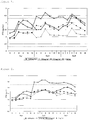
- Figs. 1 and 2 show the transitions of serum concentrations (mean) of FT 3 and FT 4 , respectively, on Day 1, Day 5, and Day 9 in each group.
- Rovatirelin trihydrate (0.1, 0.3, 1, 2.5, 5 or 10 mg) or placebo was administered to 48 healthy adult males (6 individuals per group and 12 on placebo) as a single dose on an empty stomach.
- Rovatirelin trihydrate (0.4, 0.8, 1.6 or 3.2 mg) or placebo was orally administered to 225 SCD patients once daily after breakfast for 24 weeks (double-blind).
- the efficacy endpoint was the amount of change in the SARA total score calculated by, as an example, the SARA total score at the final assessment in the treatment period (the final observed value in the treatment period) minus that at the end of the pre-observation period as an example.
- the safety endpoints were, as an example, the occurrence of adverse events and side effects, physiological examinations (e.g., blood pressure and pulses), and endocrinologic examinations (e.g., FT 3 and FT 4 ).
- the SARA total score was calculated by a sum of the SARA scores for each item ((i.e., gait (score 0-8), stance (score 0-6), sitting (score 0-4), speech disturbance (score 0-6), finger chase (score 0-4), nose-finger test (score 0-4), fast alternating hand movements (score 0-4), and heel-shin slide (score 0-4) (the score 0 is normal for all items)).
- Rovatirelin trihydrate at a dose of 1.6 or 2.4 mg or placebo was orally administered to patients with pure cerebellar SCD (SCA6, SCA31 or cortical cerebellar atrophy (CCA)) with ataxia once daily after breakfast for 28 weeks (double-blind; 124 patients in the 1.6 mg group, 122 patients in the 2.4 mg group, and 123 patients in the placebo group).
- pure cerebellar SCD SCA6, SCA31 or cortical cerebellar atrophy (CCA)
- SCD is a disease that automatically becomes worse; therefore it is important in the treatment to retard the deterioration. Accordingly, patients with a decrease in their SARA score compared with the time in week 0 were defined as deteriorated patients, and deterioration rates (i.e., the number of deteriorated patients/total number of patients) in the SARA total score and SARA scores for each item were calculated.
- the 2.4 mg group showed improvements in the SARA total score compared with the pre-dose score (amount of change in the SARA total score; -1.22).
- the analysis of the SARA scores for each item indicated that rovatirelin exhibited effects in improving particularly gait and stance disturbances (unsteady movements) ( Fig. 3 ).
- These improvement effects were more remarkable in the elderly aged ⁇ 65 years with reduced muscular strength and less responsive to a placebo (amount of changes in the SARA total, gait, and stance scores; - 1.39, -0.19, and -0.54, respectively).
- the deterioration rate of the SARA total score was 30.9% in the placebo group, whereas it was 23.8% for the 2.4 mg group.
- the 1.6 mg group also showed improvements in the SARA total score compared with the pre-dose score (amount of change in the SARA total score; -0.75), no improvement was observed in the SARA total score compared with the placebo group. Furthermore, no improvement was observed in the SARA gait and stance scores for the 1.6 mg group compared with the placebo group ( Fig. 3 ).
- rovatirelin trihydrate was administered at 1.6 or 2.4 mg once daily for 52 weeks (open-label parallel-group comparative study).
- Example 4 The same items as those listed in Example 4 were used as efficacy and safety endpoints, and deterioration rates (i.e., the number of deteriorated patients/total number of patients) in the SARA total score and SARA scores for each items were calculated in a similar manner.
- Improvement effects in ataxia were analyzed on patients in the 2.4 mg group in Example 4 (phase III study) continuing on rovatirelin trihydrate at 2.4 mg (administration period: a total of 52-week).
- the amount of change in the SARA total score was -1.41 at 52 weeks in the 81 patients who completed the 52-week administration, indicating a long-term effect of the 2.4 mg dose of rovatirelin trihydrate in improving ataxia.
- the deterioration rate of the SARA total score at 52 weeks in the same group was 21.0% and that for items (gait) at 52 weeks was 9.9%.
- a 4-week pre-observation period was set prior to the start of the treatment period.
- the medication was continued until the end of the pre-observation period without changing its dosage and administration.
- SCD is designated as an incurable disease of the nervous system and muscles. Since TRH formulations and taltirelin were the only agents for the treatment of SCD, a new therapeutic agent for SCD was desired.
- Example 6 suggests that rovatirelin has a greater effect than taltirelin as a therapeutic agent for improving ataxia in SCD.
- compositions of the present invention are particularly useful as therapeutic agents for ataxia in SCD.
Landscapes
- Health & Medical Sciences (AREA)
- Veterinary Medicine (AREA)
- Chemical & Material Sciences (AREA)
- Medicinal Chemistry (AREA)
- Pharmacology & Pharmacy (AREA)
- Life Sciences & Earth Sciences (AREA)
- Animal Behavior & Ethology (AREA)
- General Health & Medical Sciences (AREA)
- Public Health (AREA)
- Psychology (AREA)
- Epidemiology (AREA)
- Engineering & Computer Science (AREA)
- Bioinformatics & Cheminformatics (AREA)
- Biomedical Technology (AREA)
- Neurology (AREA)
- Neurosurgery (AREA)
- Chemical Kinetics & Catalysis (AREA)
- General Chemical & Material Sciences (AREA)
- Nuclear Medicine, Radiotherapy & Molecular Imaging (AREA)
- Organic Chemistry (AREA)
- Pharmaceuticals Containing Other Organic And Inorganic Compounds (AREA)
Abstract
Description
- The present invention relates to pharmaceutical agents with which the risk of side effects caused by elevation of thyroid hormone levels is reduced and exhibit excellent effects in improving ataxia in spinocerebellar degeneration when administered according to particular dosage and administration.
- More specifically, the present invention relates to pharmaceutical compositions for the treatment of ataxia in spinocerebellar degeneration including, as an active ingredient, a daily dose of 1.6 mg to 3.2 mg of rovatirelin or 1.6 mg to 3.2 mg of pharmacologically acceptable salt of rovatirelin as being calculated as a free form, wherein the pharmaceutical composition is administered once daily.
- Spinocerebellar degeneration (SCD) is one of the neurodegenerative diseases that has lesions primarily in cerebellum, spinal cord nuclei and/or conduction pathways and is mainly characterized by progressive cerebellar ataxia. SCD is a disease that occurs at a wide range of ages from young to old. For example, in Japan, SCD is designated as an incurable disease in the nervous system and muscles, and it is estimated that there are approximately 38,000 SCD patients (including those with multiple system atrophy). SCD includes various types, which are generally classified into sporadic and hereditary. Sporadic SCD includes multiple system atrophy (MSA). From the clinical and pathological perspectives, both sporadic and hereditary SCD include two types: one caused by atrophy of the cerebellum alone, which exhibit symptoms of cerebellar ataxia (pure cerebellar SCD), and the other accompanied by atrophy of the brainstem and spinal cord, which exhibit extrapyramidal symptoms and peripheral nerve symptoms in addition to the symptoms of cerebellar ataxia (non-pure cerebellar SCD).
- Thyrotropin-releasing hormone (TRH) agent is known as a therapeutic agent for ataxia in SCD. Since the TRH agent has a short duration of action in vivo and is made as an injection formulation, its administration requires frequent outpatient visits or inpatient stays. Furthermore, TRH is known to have central actions such as spontaneous hyperactivity and excitation of spinal motor neurons and also have hormonal action that promotes the secretion of thyroid stimulating hormone (TSH) and prolactin (PRL) from the pituitary gland. Therefore, when using a TRH agent, side effects caused by the hormonal action of TRH should be especially noted.
- Taltirelin hydrate, a TRH analogue, is also known as a therapeutic agent for ataxia in SCD. Taltirelin hydrate is an orally administrable drug and is known to have a longer duration of action than TRH agents (NPL 1). In addition, the safety and pharmacokinetics of taltirelin hydrate during its continuous oral administration has been reported (NPL 2). In this document, reported was an influence of taltirelin hydrate on hormone values (TSH values, T3 values, and T4 values) and the like when it was administered at different doses-2.5 mg twice daily and 5 mg once daily. In a phase III double-blind comparative study, observed was a significant difference in the total improvement level according to a subjective assessment of a physician after 28 weeks between taltirelin hydrate and placebo treatment for ataxia in SCD; however, no significant improvement was observed for individual symptoms (symptom of ataxia) (NPL 3) .
- The effect in improving ataxia in SCD can be assessed by the Scale for the Assessment and Rating of Ataxia (SARA). The SARA is a scale published in 2006 for the assessment of ataxia, and is acknowledged to be a valid and reliable scale for the assessment of ataxia. No pharmaceutical agent, however, was found to have an effect in improving ataxia in SCD in clinical trials that used SARA.
- Therefore, a novel pharmaceutical agent with which the risk of side effects caused by elevation of thyroid hormone levels was reduced, and which was far more effective in improving ataxia in SCD, was desired.
- Azetirelin, DN-1417, JTP-2942, MK-771, montirelin, posatirelin, and RX-77368, all of which are TRH analogues, were evaluated in clinical trials for indications such as the improvement of symptoms of a cerebrovascular disorder, improvement of a persistent vegetative state, and the treatment of Alzheimer's disease. All of these clinical developments were, however, discontinued. Although TRH analogues attracted attention for their TRH-like actions and clinical developments were performed for various indications, most clinical developments of TRH analogues were extremely challenging. Accordingly, the quest for finding the dosage and administration of TRH analogues which could be both effective and safe was considered challenging.
- (4S,5S)-5-methyl-N-{(2S)-1-[(2R)-2-methylpyrrolidin-1-yl]-1-oxo-3-(1,3-thiazol-4-yl)propan-2-yl}-2-oxo-1,3-oxazolidine-4-carboxamide (generic name: rovatirelin) represented by the formula (I) is described as a TRH analogue (PTL 1). In addition, rovatirelin is known as a therapeutic agent for SCD (PTL 2).
PTL 2 also describes that rovatirelin has a high bioavailability (BA) and exhibited excellent effects in improving ataxia, which was at least 30 times higher than those of taltirelin in animal models. It is, however, anticipated that such an increase in efficacy and BA would also lead to the enhancement of hormonal effects of the TRH analogue. Therefore, it is not easy to establish dosage and administration of rovatirelin for reducing the risk of side effects caused by elevation of thyroid hormone levels and exhibiting excellent effects in improving ataxia in spinocerebellar degeneration.

-
- PTL 1:
WO99/53941 - PTL 2:
JP2008-512344 -
- NPL 1: Keizo Hirayama, et al., Journal of Clinical Therapeutics & Medicine, 1997, 13(16), p. 4133-4167
- NPL 2: Hajime Kainuma et al., Journal of Clinical Therapeutics & Medicine, 1997, 13(10), p. 2517-2532
- NPL 3: Ichiro Kanazawa et al., Journal of Clinical Therapeutics & Medicine, 1997, 13(16), p.4169-4224
- It is an object of the present invention to provide an excellent pharmaceutical composition for the treatment of ataxia in SCD, with which the risk of incidence of side effects caused by elevation of thyroid hormone levels is reduced.
- As described above, the dosage and administration of taltirelin hydrate which is the only known therapeutic agent for ataxia in SCD among the TRH analogues have been determined to a twice daily oral dose of 5 mg according to the safety tests, dose response exploratory study and the like, which were described in
NPL 2.NPL 2 shows that influences on TSH, T3, and T4 are often lower when administered twice daily than when administered once daily. Therefore, it was suggested that it would be better to administer a TRH analogue in multiple divided doses, considering the risk of incidence of side effects caused by elevation of thyroid hormone levels. However, after extensive studies conducted to solve the problems mentioned above, the present inventors unexpectedly found that using rovatirelin for the treatment of ataxia in SCD reduces influences of elevations in thyroid hormone levels when administered once daily than when administered two times or more daily. - Specifically, the present invention relates to the following [1] to [7] and the like.
- [1] A pharmaceutical composition for treatment of ataxia in spinocerebellar degeneration including, as an active ingredient, a daily dose of 1.6 mg to 3.2 mg of rovatirelin or 1.6 mg to 3.2 mg of pharmacologically acceptable salt of rovatirelin as being calculated as a free form, wherein the pharmaceutical composition is administered once daily.
- [2] The pharmaceutical composition described in the above [1], wherein 1.6 mg to 3.2 mg of rovatirelin trihydrate as being calculated as a free form is included as the active ingredient.
- [3] The pharmaceutical composition described in the above [1], wherein a daily dose of 2.4 mg of rovatirelin or 2.4 mg of pharmacologically acceptable salt of rovatirelin as being calculated as a free form is included as the active ingredient.
- [4] The pharmaceutical composition described in the above [3], wherein 2.4 mg of rovatirelin trihydrate as being calculated as a free form is included as the active ingredient.
- [5] The pharmaceutical composition described in any one of the above [1] to [4], wherein the ataxia in spinocerebellar degeneration is cerebellar ataxia in spinocerebellar degeneration.
- [6] The pharmaceutical composition described in any one of the above [1] to [5], wherein the pharmaceutical composition is an oral agent including rovatirelin or a pharmacologically acceptable salt thereof, and at least one pharmaceutical additive.
- [7] The pharmaceutical composition described in the above [1], wherein a daily dose of 1.6 mg, 2.4 mg, or 3.2 mg of rovatirelin or 1.6 mg, 2.4 mg, or 3.2 mg of pharmacologically acceptable salt of rovatirelin as being calculated as a free form is included as the active ingredient in a single formulation.
- The pharmaceutical compositions of the present invention have excellent effects in improving ataxia in SCD.
- Doses of rovatirelin trihydrate in the brief description of the drawings represent values calculated as a free form unless otherwise specified.
-
- [
Fig. 1] Fig. 1 shows the transition of FT3 serum concentrations in each group (i.e., mean values in 8 patients per group). The horizontal axis represents the time frame of the measurement. "Day 1," "Day 5," and "Day 9" indicate the 1st, 5th, and 9th days, respectively, from the beginning of the administration of the investigational drug. Numerals from 0-16 indicate time in hours from the administration after breakfast. The vertical axis represents FT3 values (pg/mL). In the figure, solid squares (on a dashed line) represent values for the treatment group that received 0.25 mg twice daily (0.25 mg/bid), open circles (on a dashed line) represent values for the treatment group that received 0.5 mg once daily (0.5 mg/qd), open squares (on a solid line) represent values for the treatment group that received 0.5 mg twice daily (0.5 mg/bid), and solid circles (on a solid line) represent values for the treatment group that received 1 mg once daily (1 mg/qd). Dotted lines represent reference limits (2.3 and 4.3 pg/mL). - [
Fig. 2] Fig. 2 shows the transition of FT4 serum concentrations in each group (i.e., mean values in 8 patients per group). The horizontal axis represents the time frame of the measurement as inFig. 1 . The vertical axis represents FT4 values (ng/dL). In the figure, solid squares (on a dashed line) represent values for the treatment group that received 0.25 mg twice daily (0.25 mg/bid), open circles (on a dashed line) represent values for the treatment group that received 0.5 mg once daily (0.5 mg/qd), open squares (on a solid line) represent values for the treatment group that received 0.5 mg twice daily (0.5 mg/bid), and solid circles (on a solid line) represent values for the treatment group that received 1 mg once daily (1 mg/qd). Dotted lines represent reference limits (0.9 and 1.7 ng/dL). - [
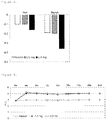
Fig. 3] Fig. 3 shows the amounts of change in SARA gait scores and SARA stance scores for SCD patients (i.e., mean scores in 122-124 patients per group). The bars in the graph represent, from the left, SARA gait scores (Gait) for the placebo group (Placebo), the treatment group that received 1.6 mg of rovatirelin trihydrate (1.6 mg), and the treatment group that received 2.4 mg of rovatirelin trihydrate (2.4 mg), and SARA stance scores (Stance) for the placebo group (Placebo), the treatment group that received 1.6 mg of rovatirelin trihydrate (1.6 mg), and the treatment group that received 2.4 mg of rovatirelin trihydrate (2.4 mg). The vertical axis represents amount of change in the SARA gait scores or the SARA stance scores. - [
Fig. 4] Fig. 4 shows the transition of FT3 serum concentrations in each group (i.e., mean values in 123-126 patients per group). The horizontal axis represents the time frame of the measurement. "4W" to "28W" represent 4 to 28 weeks from the beginning of the administration of the investigational drug, respectively. "End" represents the time of final assessment. The vertical axis represents FT3 values (pg/mL). In the figure, solid circles (on a solid line) represent values for the treatment group that received 1.6 mg of rovatirelin trihydrate (1.6 mg), open triangles (on a solid line) represent values for the treatment group that received 2.4 mg of rovatirelin trihydrate (2.4 mg), and open circles (on a dashed line) represent values for the placebo group (Placebo). - [
Fig. 5] Fig. 5 shows the transition of FT4 serum concentrations in each group (i.e., mean values in 123-126 patients per group). The horizontal axis represents the time frame of the measurement. "4W" to "28W" represent 4 to 28 weeks from the beginning of the administration of the investigational drug, respectively. "End" represents the time of final assessment. The vertical axis represents FT4 values (ng/dL). In the figure, solid circles (on a solid line) represent values for the treatment group that received 1.6 mg of rovatirelin trihydrate (1.6 mg), open triangles (on a solid line) represent values for the treatment group that received 2.4 mg of rovatirelin trihydrate (2.4 mg), and open circles (on a dashed line) represent values for the placebo group (Placebo). - [
Fig. 6] Fig. 6 shows the transition of SARA total scores for SCD patients who switched from taltirelin to rovatirelin trihydrate (i.e., mean scores in 19 or 23 patients per group). The horizontal axis represents the time frame of the measurement. "-4W" represents four weeks prior to the beginning of the administration of the investigational drug. "4W" to "24W" represent 4 to 24 weeks from the beginning of the administration of the investigational drug, respectively. "End" represents the time of final assessment. The vertical axis represents SARA total scores. In the figure, solid circles (on a solid line) represent values for the treatment group that received 1.6 mg of rovatirelin trihydrate (1.6 mg), and open triangles (on a solid line) represent values for the treatment group that received 2.4 mg of rovatirelin trihydrate (2.4 mg). - Hereinafter, embodiments of the present invention are described in more detail.
- In the present invention, each term has the following meaning unless otherwise specified.
- The term "rovatirelin" refers to, as described above, the compound represented by the formula (I) ((4S,5S)-5-methyl-N-{(2S)-1-[(2R)-2-methylpyrrolidin-1-yl]-1-oxo-3-(1,3-thiazol-4-yl)propan-2-yl}-2-oxo-1,3-oxazolidine-4-carboxamide). Rovatirelin trihydrate is listed as "rovatirelin hydrate" in Japanese Accepted Names for Pharmaceuticals (JAN).
- In the present invention, rovatirelin can be converted to a pharmacologically acceptable salt thereof according to a routine method, if necessary. Examples of such salts include salts of rovatirelin with an alkali metal (e.g., lithium, sodium or potassium), an alkaline earth metal (e.g., magnesium or calcium), ammonium, an organic base, and an amino acid as well as salts of rovatirelin with an inorganic acid (e.g., hydrochloric acid, hydrobromic acid, phosphoric acid, or sulfuric acid), and an organic acid (e.g., acetic acid, citric acid, maleic acid, fumaric acid, benzenesulfonic acid or p-toluenesulfonic acid).
- In the present invention, the term "pharmacologically acceptable salt of rovatirelin" also includes solvates of rovatirelin with a pharmaceutically acceptable solvent such as water and ethanol. Among the hydrates included in the pharmacologically acceptable salt of rovatirelin, rovatirelin monohydrate or rovatirelin trihydrate is preferable, and rovatirelin trihydrate is particularly preferable. In the present invention, as used in conjunction with the dose of the pharmacologically acceptable salt of rovatirelin, the term "calculated as a free form" indicates the value as rovatirelin.
- Rovatirelin and pharmacologically acceptable salts thereof used in the present invention can be produced using a known method. For example, rovatirelin and rovatirelin trihydrate according to the present invention can be produced by the method described in
WO2006/028277 (Published Japanese Translation No.2008-512344 - Various dosage forms can be used for the pharmaceutical compositions of the present invention depending on modes of administration. Examples of such dosage forms include tablets, granules, fine granules, dry syrups, and capsules, which are orally administered.
- Each pharmaceutical composition of the present invention is prepared using rovatirelin or a pharmacologically acceptable salt thereof and at least one pharmaceutical additive. These pharmaceutical compositions may be formulated by appropriately mixing, diluting, or dissolving them with or in a pharmaceutical additive such as an appropriate excipient, disintegrant, binder, lubricant, diluent, buffer, tonicity agent, preservative, wetting agent, emulsifying agent, dispersing agent, stabilizing agent, and solubilizing agent using a method that is known in the pharmacological field, depending on the dosage form of the preparations.
- In the present invention, the term "ataxia in SCD" includes cerebellar ataxia in SCD and the like, and does not include secondary ataxia without SCD (e.g., ataxia accompanied by cerebrovascular disorder, brain tumor and the like).
- In the present invention, the term "pure cerebellar SCD" refers to types caused by atrophy of the cerebellum alone which exhibit symptoms of cerebellar ataxia. Autosomal dominant pure cerebellar SCD is also referred to as autosomal dominant cerebellar ataxia (ADCA) type III, according to Harding's classification. The pure cerebellar SCD includes SCA6, SCA31 and the like, which are genetic SCD, and also includes sporadic cortical cerebellar atrophy (CCA) and the like.
- In the present invention, the term "non-pure cerebellar SCD" refers to types accompanied by atrophy of the brainstem and spinal cord which exhibit symptoms of extrapyramidal symptoms, peripheral nerve symptoms and other symptoms in addition to symptoms of cerebellar ataxia. Autosomal dominant non-pure cerebellar SCD is also referred to as ADCA type I, and may be referred to as ADCA type II or ADCA type IV, according to Harding's classification.
- In the present invention, the term "cerebellar ataxia in SCD" refers to ataxia caused by the damage of the cerebellum due to SCD and includes, for example, gait disturbance and stance disturbance (unsteady movement) in cerebellar ataxia.
- The pharmaceutical compositions of the present invention exhibit effects in improving ataxia in SCD, and preferably, exhibit excellent effects in improving cerebellar ataxia in SCD. In one embodiment, a pharmaceutical composition of the present invention exhibits excellent effects in improving gait and stance disturbances in ataxia of SCD, and preferably, exhibits excellent effects in improving one or more disorders selected from the group consisting of gait and stance disturbances in ataxia of SCD.
- Effects of the pharmaceutical compositions of the present invention in improving ataxia in SCD can be evaluated using, for example, SARA (Scale for the assessment and rating of ataxia) composed of eight test items (i.e., gait, stance, sitting, speech disturbance, finger chase, nose-finger test, fast alternating hand movements, and heel-shin slide) (see, for example, Neurology 2006, 66(11), p.1717-1720). Alternatively, by analyzing an effect in improving each of "gait" and "stance," the test items of SARA, the effects in improving gait and stance disturbances, which are important for the treatment of SCD, can be evaluated.
- The dosage of the active ingredient of the present invention is appropriately determined depending on, for example, the age, sex, body weight, extent of disease, genetic background, and/or the occurrence of side effects of the patient. The daily dose for adults can be determined in a range of 1.6 mg to 3.2 mg (calculated as a free form) for oral administration. For example, for adults, with an initial dose of 2.4 mg (calculated as a free form) of rovatirelin trihydrate, 2.4 mg (calculated as a free form) of rovatirelin trihydrate can be orally administered, which can be increased or decreased appropriately to the range of 1.6 mg to 3.2 mg of rovatirelin trihydrate based on a physician's judgment during the treatment period.
- In one embodiment, when the initial dose is 1.6 mg (calculated as a free form), the daily dose for adults can be increased appropriately to 2.4 mg or 3.2 mg (calculated as a free form) or can be determined in the range of 1.6 mg to 3.2 mg (calculated as a free form), depending on the conditions, the presence or absence of side effects, and the like.
- With regard to dosage and administration of the pharmaceutical compositions of the present invention, rovatirelin or a pharmacologically acceptable salt thereof can be administered at a once daily dose of 1.6 mg to 3.2 mg (calculated as a free form). For example, rovatirelin trihydrate can be orally administered at a once daily dose of 2.4 mg as being calculated as a free form, which can be increased or decreased appropriately to the range of 1.6 mg to 3.2 mg (calculated as a free form) of rovatirelin trihydrate.
- In one embodiment, for example, rovatirelin trihydrate can be orally administered at a once daily dose of 3.2 mg as being calculated as a free form, which can be decreased appropriately to the range of 1.6 mg to 2.4 mg (calculated as a free form) of rovatirelin trihydrate.
- Furthermore, in one embodiment, for example, rovatirelin trihydrate can be orally administered at a once daily dose of 1.6 mg as being calculated as a free form, which can be increased appropriately to the range of 2.4 mg to 3.2 mg (calculated as a free form) of rovatirelin trihydrate.
- In the present invention, "side effects caused by elevation of thyroid hormone levels" include direct or indirect side effects caused by elevations above the reference limit in levels of thyroid hormones (triiodothyronine (T3) and thyroxine (T4)). Specific events associated with side effects caused by elevation of thyroid hormone levels are, for example, an increase in blood pressure, an increase in heart rate, and a weight loss. In general, the risk of side effects caused by elevation of thyroid hormone levels can be estimated by measuring serum concentrations of thyroid stimulating hormone (TSH), free T3 (FT3), free T4 (FT4) or the like, although responsiveness varies from patient to patient. Typically, a reference range for FT3 is 2.3-4.3 pg/mL and a reference range for FT4 is 0.9-1.7 ng/dL. In order to reduce the risk of side effects caused by elevation of thyroid hormone levels, it is preferable that the FT3 and FT4 are not consistently above their reference ranges.
- Hereinafter, the present invention is described in more detail based on examples, but the present invention is not limited to the contents thereof. Each dosage (dose) of rovatirelin trihydrate in the examples is expressed by being calculated as its free form unless otherwise specified. Healthy adult males and SCD patients in the examples are Japanese unless otherwise specified and do not include those who exhibit ataxia secondarily (e.g., patients with cerebrovascular disorders, brain tumor and other diseases).
- To 50 healthy adult males (8 individuals per group and 10 on placebo), rovatirelin trihydrate (0.25, 0.5 or 1.0 mg) or placebo was orally administered once daily or rovatirelin trihydrate (0.25 or 0.5 mg) or placebo was orally administered twice daily after breakfast and after dinner, for 9 consecutive days.
- Serum concentrations (mean) of FT3, FT4, TSH, and prolactin (PRL), and adverse events and the like were evaluated.
-
Figs. 1 and 2 show the transitions of serum concentrations (mean) of FT3 and FT4, respectively, onDay 1,Day 5, and Day 9 in each group. - When comparing the transition of FT3 value of the treatment group that received 0.25 mg twice daily (0.25 mg/bid) with that of the treatment group that received 0.5 mg once daily (0.5 mg/qd), the transition for the 0.5 mg/qd group proceeded at lower levels as a whole. When comparing the transition of FT3 value of the treatment group that received 0.5 mg twice daily (0.5 mg/bid) with that of the treatment group that received 1 mg once daily (1 mg/qd), the transition for the 1 mg/qd group proceeded at lower levels as a whole.
- When comparing the transition of FT4 values between the treatment group that received 0.25 mg twice daily (0.25 mg/bid) and the treatment group that received 0.5 mg once daily (0.5 mg/qd), the transitions were comparable for both groups or the transition for the 0.5 mg/qd group proceeded at slightly lower levels. When comparing the transition of FT4 values between the treatment group that received 0.5 mg twice daily (0.5 mg/bid) and the treatment group that received 1 mg once daily (1 mg/qd), the transition for the 1 mg/qd group proceeded at lower levels as a whole, and the treatment group that received 0.5 mg twice daily consistently displayed FT4 concentrations that were above the reference limit on
Day 5 and Day 9. - The above analyses showed that influences of elevations in the thyroid hormone level caused by the repeated dosing of rovatirelin trihydrate can be reduced with a once-daily regimen compared with a twice-daily regimen. Thus, it was indicated that the risk of incidence of side effects, which are caused by elevation of thyroid hormone levels due to repeated dosing of rovatirelin trihydrate, can be reduced by the once-daily regimen.
- Rovatirelin trihydrate (0.1, 0.3, 1, 2.5, 5 or 10 mg) or placebo was administered to 48 healthy adult males (6 individuals per group and 12 on placebo) as a single dose on an empty stomach. Analysis of the pharmacokinetics of intact rovatirelin under this condition indicated linearity of Cmax (maximum plasma concentration), AUC0-∞ (area under the plasma concentration curve vs. time curve from
time 0 to infinity), and Ae0-48 (cumulative amount excreted into urine from time 0-48 hours) of rovatirelin in a dosage range from 0.1-10 mg. - From the results of Examples 1 and 2, with regard to the regimen of rovatirelin or a pharmacologically acceptable salt thereof, it was supposed that the risk of side effects caused by elevation of thyroid hormone levels due to the repeated dosing can be more reduced with the once-daily regimen than with the twice-daily regimen.
- Rovatirelin trihydrate (0.4, 0.8, 1.6 or 3.2 mg) or placebo was orally administered to 225 SCD patients once daily after breakfast for 24 weeks (double-blind).
- The efficacy endpoint was the amount of change in the SARA total score calculated by, as an example, the SARA total score at the final assessment in the treatment period (the final observed value in the treatment period) minus that at the end of the pre-observation period as an example. The safety endpoints were, as an example, the occurrence of adverse events and side effects, physiological examinations (e.g., blood pressure and pulses), and endocrinologic examinations (e.g., FT3 and FT4).
- It is noted that the SARA total score was calculated by a sum of the SARA scores for each item ((i.e., gait (score 0-8), stance (score 0-6), sitting (score 0-4), speech disturbance (score 0-6), finger chase (score 0-4), nose-finger test (score 0-4), fast alternating hand movements (score 0-4), and heel-shin slide (score 0-4) (the
score 0 is normal for all items)). - In amount of change in the SARA total score (mean) for the pure cerebellar SCD patients (23-28 individuals per group; total 126 individuals) from which one patient who had an extreme outlier result is excluded, dose-dependent improvements were observed (Table 1), suggesting that rovatirelin trihydrate at 1.6 mg or more has excellent effects in improving ataxia compared with placebo.
[Table 1] Administered group 0. 4 mg 0. 8 mg 1.6 mg 3. 2 mg placebo amount of change in the SARA total score (score) -1.09 -1.27 -1.58 -1.65 -0.85 - Comparison between active drug and placebo groups using Fisher's exact test indicated that the treatment group that received 3.2 mg of rovatirelin trihydrate significantly differed in the side effect rate (P = 0.002). The treatment group that received 3.2 mg of rovatirelin trihydrate consistently displayed FT3 and FT4 concentrations that were slightly above the upper reference limits. Discontinuation rates were 15.6% in the placebo group, 17.8% in the 1.6 mg group, and 28.9% in the 3.2 mg group.
- Considering the transition of thyroid hormones and incidence of side effects, 3.2 mg was considered to be excessive as an initial (baseline) dose despite some effects in improving ataxia and to be the maximum dose clinically applicable during the treatment period because SCD patients need to take medication over a long period of time. Furthermore, rovatirelin trihydrate at 0.4-0.8 mg was indicated to be safe but to have weak effects in improving ataxia in SCD patients. From these results, the clinically recommended dose in SCD patients was considered to be 1.6 mg.
- Rovatirelin trihydrate at a dose of 1.6 or 2.4 mg or placebo was orally administered to patients with pure cerebellar SCD (SCA6, SCA31 or cortical cerebellar atrophy (CCA)) with ataxia once daily after breakfast for 28 weeks (double-blind; 124 patients in the 1.6 mg group, 122 patients in the 2.4 mg group, and 123 patients in the placebo group).
- To appropriately assess the efficacy of rovatirelin trihydrate on ataxia, this study was performed on pure cerebellar SCD patients with a SARA gait score between 2 and 6 and a SARA total score of ≥6.
- The same items as those listed in Example 3 were used as efficacy and safety endpoints. SCD is a disease that automatically becomes worse; therefore it is important in the treatment to retard the deterioration. Accordingly, patients with a decrease in their SARA score compared with the time in
week 0 were defined as deteriorated patients, and deterioration rates (i.e., the number of deteriorated patients/total number of patients) in the SARA total score and SARA scores for each item were calculated. - The 2.4 mg group showed improvements in the SARA total score compared with the pre-dose score (amount of change in the SARA total score; -1.22). In addition, in the 2.4 mg group, the analysis of the SARA scores for each item indicated that rovatirelin exhibited effects in improving particularly gait and stance disturbances (unsteady movements) (
Fig. 3 ). These improvement effects were more remarkable in the elderly aged ≥65 years with reduced muscular strength and less responsive to a placebo (amount of changes in the SARA total, gait, and stance scores; - 1.39, -0.19, and -0.54, respectively). Furthermore, the deterioration rate of the SARA total score was 30.9% in the placebo group, whereas it was 23.8% for the 2.4 mg group. - Although the 1.6 mg group also showed improvements in the SARA total score compared with the pre-dose score (amount of change in the SARA total score; -0.75), no improvement was observed in the SARA total score compared with the placebo group. Furthermore, no improvement was observed in the SARA gait and stance scores for the 1.6 mg group compared with the placebo group (
Fig. 3 ). - Each of the FT3 and FT4 concentrations reached the upper limit of the normal range in the 1.6 mg and 2.4
mg groups 4 weeks after the start of administration but not further increase was found subsequently (see,Figs. 4 and5 ). Discontinuation rates were 4.9% in the placebo group, 16.0% in the 1.6 mg group, and 19.8% in the 2.4 mg group. - Considering the transition of thyroid hormone and incidence of side effects, no clinically problematic event was observed with 1.6 and 2.4 mg doses of rovatirelin trihydrate, indicating that these doses can be used for long-term medication.
- As a result of the aforementioned phase III study, according to the transition of thyroid hormones and incidence of side effects, it was indicated for the first time that 2.4 mg of rovatirelin trihydrate can be safely taken over a long period of time and can maximize benefits of improvement in ataxia (particularly gait disturbance) in consideration of the risk of side effects.
- On the other hand, although 1.6 mg of rovatirelin trihydrate was found to be safe and some patients in the 1.6 mg group had a sufficient effect in improving ataxia, no sufficient improvement effect was unexpectedly found in improving gait and stance disturbances.
- For patients who completed the phase III study (Example 4), rovatirelin trihydrate was administered at 1.6 or 2.4 mg once daily for 52 weeks (open-label parallel-group comparative study).
- The same items as those listed in Example 4 were used as efficacy and safety endpoints, and deterioration rates (i.e., the number of deteriorated patients/total number of patients) in the SARA total score and SARA scores for each items were calculated in a similar manner.
- Improvement effects in ataxia were analyzed on patients in the 2.4 mg group in Example 4 (phase III study) continuing on rovatirelin trihydrate at 2.4 mg (administration period: a total of 52-week). The amount of change in the SARA total score was -1.41 at 52 weeks in the 81 patients who completed the 52-week administration, indicating a long-term effect of the 2.4 mg dose of rovatirelin trihydrate in improving ataxia. In addition, the deterioration rate of the SARA total score at 52 weeks in the same group was 21.0% and that for items (gait) at 52 weeks was 9.9%.
- Although SCD is an intractable disease that automatically becomes worse, the deterioration rate of the SARA total score at 52 weeks was only 21.0% in patients who received rovatirelin continuously for a long period, suggesting that the administration of rovatirelin can delay the deterioration of ataxia in SCD patients.
- Among SCD patients who had participated in a clinical trial of SCD patients using rovatirelin, those who had a SARA gait score between 2 and 6 and a SARA total score of ≥6 were the subjects in this study. To the patients were orally administered rovatirelin trihydrate at 1.6 or 2.4 mg once daily after breakfast for 24 weeks (randomized, open-label parallel-group comparative study).
- A 4-week pre-observation period was set prior to the start of the treatment period. For patients who received a conventional SCD agent taltirelin or protirelin agent (TRH agent) before the pre-observation period, the medication was continued until the end of the pre-observation period without changing its dosage and administration.
- The same items as those listed in Example 4 were used as efficacy and safety endpoints.
- The efficacy of rovatirelin trihydrate was analyzed in pure cerebellar SCD patients who had taken taltirelin since before the start of the pre-observation period (switch group). Improvement effects of rovatirelin trihydrate were observed after 4 weeks of administration. A significant improvement in the SARA total score was observed for the switch group to which rovatirelin trihydrate was administered at 1.6 or 2.4 mg compared with the scores prior to the administration of rovatirelin trihydrate (treatment period with taltirelin) [amount of change in the SARA total score at an endpoint for the switch group that received 1.6 mg = -1.34 (P < 0.01), and that for the switch group that received 2.4 mg = -1.35 (P < 0.01)] (
Fig. 6 ). - SCD is designated as an incurable disease of the nervous system and muscles. Since TRH formulations and taltirelin were the only agents for the treatment of SCD, a new therapeutic agent for SCD was desired. Example 6 suggests that rovatirelin has a greater effect than taltirelin as a therapeutic agent for improving ataxia in SCD.
- No pharmaceutical agent was found to be effective in improving ataxia in SCD in clinical trials that used SARA which is a scale for the assessment of ataxia. Under such circumstances, rovatirelin was found to be effective in improving ataxia in SCD according to the SARA scales.
- The pharmaceutical compositions of the present invention are particularly useful as therapeutic agents for ataxia in SCD.
Claims (7)
- A pharmaceutical composition for treatment of ataxia in spinocerebellar degeneration comprising, as an active ingredient, a daily dose of 1.6 mg to 3.2 mg of rovatirelin or 1.6 mg to 3.2 mg of pharmacologically acceptable salt of rovatirelin as being calculated as a free form, wherein the pharmaceutical composition is administered once daily.
- The pharmaceutical composition according to Claim 1, wherein 1.6 mg to 3.2 mg of rovatirelin trihydrate as being calculated as a free form is comprised as the active ingredient.
- The pharmaceutical composition according to Claim 1, wherein a daily dose of 2.4 mg of rovatirelin or 2.4 mg of pharmacologically acceptable salt of rovatirelin as being calculated as a free form is comprised as the active ingredient.
- The pharmaceutical composition according to Claim 3, wherein 2.4 mg of rovatirelin trihydrate as being calculated as a free form is comprised as the active ingredient.
- The pharmaceutical composition according to any one of Claims 1 to 4, wherein the ataxia in spinocerebellar degeneration is cerebellar ataxia in spinocerebellar degeneration.
- The pharmaceutical composition according to any one of Claims 1 to 5, wherein the pharmaceutical composition is an oral agent comprising rovatirelin or a pharmacologically acceptable salt thereof, and at least one pharmaceutical additive.
- A pharmaceutical composition for treatment of ataxia in spinocerebellar degeneration comprising, as an active ingredient, a daily dose of 1.6 mg, 2.4 mg, or 3.2 mg of rovatirelin or 1.6 mg, 2.4 mg, or 3.2 mg of pharmacologically acceptable salt of rovatirelin as being calculated as a free form in a single formulation.
Priority Applications (1)
| Application Number | Priority Date | Filing Date | Title |
|---|---|---|---|
| PL15896367T PL3315128T3 (en) | 2015-06-26 | 2015-06-26 | Dosing regimen of rovatirelin for ataxia associated with spinocerebellar degeneration |
Applications Claiming Priority (1)
| Application Number | Priority Date | Filing Date | Title |
|---|---|---|---|
| PCT/JP2015/068438 WO2016208045A1 (en) | 2015-06-26 | 2015-06-26 | Dosing regimen of therapeutic agent for ataxia associated with spinocerebellar degeneration |
Publications (3)
| Publication Number | Publication Date |
|---|---|
| EP3315128A1 true EP3315128A1 (en) | 2018-05-02 |
| EP3315128A4 EP3315128A4 (en) | 2019-02-20 |
| EP3315128B1 EP3315128B1 (en) | 2021-05-19 |
Family
ID=57585246
Family Applications (1)
| Application Number | Title | Priority Date | Filing Date |
|---|---|---|---|
| EP15896367.8A Active EP3315128B1 (en) | 2015-06-26 | 2015-06-26 | Dosing regimen of rovatirelin for ataxia associated with spinocerebellar degeneration |
Country Status (7)
| Country | Link |
|---|---|
| US (1) | US20180147189A1 (en) |
| EP (1) | EP3315128B1 (en) |
| CN (1) | CN107735089A (en) |
| DK (1) | DK3315128T3 (en) |
| ES (1) | ES2880388T3 (en) |
| PL (1) | PL3315128T3 (en) |
| WO (1) | WO2016208045A1 (en) |
Family Cites Families (3)
| Publication number | Priority date | Publication date | Assignee | Title |
|---|---|---|---|---|
| US6319902B1 (en) * | 1997-08-22 | 2001-11-20 | Shionogi & Co., Ltd. | Peptide derivatives having thiazolyl-alanine residue |
| TWI350754B (en) * | 2004-09-09 | 2011-10-21 | Shionogi & Co | A pharmaceutical composition for treating spinocerebellar ataxia |
| ES2727452T3 (en) * | 2004-09-09 | 2019-10-16 | Shionogi & Co | Pharmaceutical composition to treat ataxia, multisystemic atrophy or balance disorders |
-
2015
- 2015-06-26 DK DK15896367.8T patent/DK3315128T3/en active
- 2015-06-26 EP EP15896367.8A patent/EP3315128B1/en active Active
- 2015-06-26 PL PL15896367T patent/PL3315128T3/en unknown
- 2015-06-26 CN CN201580081092.3A patent/CN107735089A/en active Pending
- 2015-06-26 ES ES15896367T patent/ES2880388T3/en active Active
- 2015-06-26 WO PCT/JP2015/068438 patent/WO2016208045A1/en not_active Ceased
- 2015-06-26 US US15/736,400 patent/US20180147189A1/en not_active Abandoned
Also Published As
| Publication number | Publication date |
|---|---|
| CN107735089A (en) | 2018-02-23 |
| EP3315128A4 (en) | 2019-02-20 |
| DK3315128T3 (en) | 2021-07-26 |
| PL3315128T3 (en) | 2021-10-04 |
| US20180147189A1 (en) | 2018-05-31 |
| EP3315128B1 (en) | 2021-05-19 |
| WO2016208045A1 (en) | 2016-12-29 |
| ES2880388T3 (en) | 2021-11-24 |
Similar Documents
| Publication | Publication Date | Title |
|---|---|---|
| US20110009460A1 (en) | Compositions and methods for treating amyotrophic lateral sclerosis | |
| KR20200090204A (en) | Dosage regimen of bidofludimus for use in the prevention or treatment of chronic inflammatory and/or autoimmune diseases | |
| JP7754799B2 (en) | Ganaxolone for use in the treatment of status epilepticus | |
| AU2016319107A1 (en) | Methods of treating neurodegenerative disorders in a particular patient population | |
| KR20140121475A (en) | Prophylactic or therapeutic agent for idiopathic inflammatory myopathies | |
| CN113950328A (en) | Compositions comprising pridopidine and analogs thereof for treating huntington's disease and symptoms thereof | |
| EP4376871A1 (en) | Dose regimen for long-acting glp1/glucagon receptor agonists | |
| EP2808018B1 (en) | Therapeutic agent for diabetes | |
| CN115867289B (en) | Composition containing NR and/or NMN and sesamin | |
| JP2010501626A (en) | Bifeprunox dose to treat schizophrenia | |
| CN110691593A (en) | Preventive or therapeutic agent for spinocerebellar degeneration | |
| EP3315128B1 (en) | Dosing regimen of rovatirelin for ataxia associated with spinocerebellar degeneration | |
| EP3167885A1 (en) | Combinations of solifenacin and pilocarpine for the treatment of overactive bladder | |
| JP6860984B2 (en) | Administration regimen for ataxia in spinocerebellar degeneration | |
| KR102512518B1 (en) | Medicines containing pemafibrate | |
| KR102076137B1 (en) | Decreased contractility accompanying concomitant detrusor muscle overactivity | |
| CN115379843A (en) | Medicine for treating pain | |
| EP4337205A1 (en) | Dosing regimens | |
| US20230338349A1 (en) | Low dose regimen and formulation of a 5-methyl-1,2,4-oxadiazol-3-yl compound | |
| US20080312250A1 (en) | Combination Comprising a Bcrp Inhibitor and 4- (4-Methylpiperazin-1-Ylmethyl)-N-[4-Methyl-3- (4-Pyridin-3-Yl) Pyrimidin-2-Ylamino) Phenyl] -Benzamide | |
| EP4473965A1 (en) | Medical agent for treating or suppressing progression of amyotrophic lateral sclerosis | |
| US12168020B2 (en) | Method for ameliorating, preventing or treating muscular atrophy or sarcopenia by administering composition comprising 2′-fucosyllactose as active ingredient | |
| MX2013013124A (en) | Combinations of trospium and salivary stimulants for the treatment of overactive bladder. | |
| KR20240076352A (en) | Pharmaceutical composition for preventing or treating heart diseases related to sumoylation dysfunction comprising phenol compounds as active ingredients | |
| US7364753B2 (en) | Magnesium-containing compositions and methods for enhancing dehydroepiandrosterone levels |
Legal Events
| Date | Code | Title | Description |
|---|---|---|---|
| STAA | Information on the status of an ep patent application or granted ep patent |
Free format text: STATUS: THE INTERNATIONAL PUBLICATION HAS BEEN MADE |
|
| PUAI | Public reference made under article 153(3) epc to a published international application that has entered the european phase |
Free format text: ORIGINAL CODE: 0009012 |
|
| STAA | Information on the status of an ep patent application or granted ep patent |
Free format text: STATUS: REQUEST FOR EXAMINATION WAS MADE |
|
| 17P | Request for examination filed |
Effective date: 20180110 |
|
| AK | Designated contracting states |
Kind code of ref document: A1 Designated state(s): AL AT BE BG CH CY CZ DE DK EE ES FI FR GB GR HR HU IE IS IT LI LT LU LV MC MK MT NL NO PL PT RO RS SE SI SK SM TR |
|
| AX | Request for extension of the european patent |
Extension state: BA ME |
|
| DAV | Request for validation of the european patent (deleted) | ||
| DAX | Request for extension of the european patent (deleted) | ||
| A4 | Supplementary search report drawn up and despatched |
Effective date: 20190117 |
|
| RIC1 | Information provided on ipc code assigned before grant |
Ipc: A61P 25/00 20060101ALI20190111BHEP Ipc: A61K 31/427 20060101AFI20190111BHEP |
|
| STAA | Information on the status of an ep patent application or granted ep patent |
Free format text: STATUS: EXAMINATION IS IN PROGRESS |
|
| 17Q | First examination report despatched |
Effective date: 20200220 |
|
| GRAP | Despatch of communication of intention to grant a patent |
Free format text: ORIGINAL CODE: EPIDOSNIGR1 |
|
| STAA | Information on the status of an ep patent application or granted ep patent |
Free format text: STATUS: GRANT OF PATENT IS INTENDED |
|
| INTG | Intention to grant announced |
Effective date: 20201202 |
|
| GRAS | Grant fee paid |
Free format text: ORIGINAL CODE: EPIDOSNIGR3 |
|
| GRAA | (expected) grant |
Free format text: ORIGINAL CODE: 0009210 |
|
| STAA | Information on the status of an ep patent application or granted ep patent |
Free format text: STATUS: THE PATENT HAS BEEN GRANTED |
|
| AK | Designated contracting states |
Kind code of ref document: B1 Designated state(s): AL AT BE BG CH CY CZ DE DK EE ES FI FR GB GR HR HU IE IS IT LI LT LU LV MC MK MT NL NO PL PT RO RS SE SI SK SM TR |
|
| RAP1 | Party data changed (applicant data changed or rights of an application transferred) |
Owner name: SHIONOGI & CO., LTD. |
|
| REG | Reference to a national code |
Ref country code: GB Ref legal event code: FG4D |
|
| REG | Reference to a national code |
Ref country code: CH Ref legal event code: EP |
|
| REG | Reference to a national code |
Ref country code: DE Ref legal event code: R096 Ref document number: 602015069593 Country of ref document: DE |
|
| REG | Reference to a national code |
Ref country code: AT Ref legal event code: REF Ref document number: 1393331 Country of ref document: AT Kind code of ref document: T Effective date: 20210615 |
|
| REG | Reference to a national code |
Ref country code: IE Ref legal event code: FG4D |
|
| REG | Reference to a national code |
Ref country code: FI Ref legal event code: FGE |
|
| REG | Reference to a national code |
Ref country code: NL Ref legal event code: FP |
|
| REG | Reference to a national code |
Ref country code: DK Ref legal event code: T3 Effective date: 20210720 |
|
| REG | Reference to a national code |
Ref country code: SE Ref legal event code: TRGR |
|
| REG | Reference to a national code |
Ref country code: LT Ref legal event code: MG9D |
|
| REG | Reference to a national code |
Ref country code: AT Ref legal event code: MK05 Ref document number: 1393331 Country of ref document: AT Kind code of ref document: T Effective date: 20210519 |
|
| PG25 | Lapsed in a contracting state [announced via postgrant information from national office to epo] |
Ref country code: HR Free format text: LAPSE BECAUSE OF FAILURE TO SUBMIT A TRANSLATION OF THE DESCRIPTION OR TO PAY THE FEE WITHIN THE PRESCRIBED TIME-LIMIT Effective date: 20210519 Ref country code: BG Free format text: LAPSE BECAUSE OF FAILURE TO SUBMIT A TRANSLATION OF THE DESCRIPTION OR TO PAY THE FEE WITHIN THE PRESCRIBED TIME-LIMIT Effective date: 20210819 Ref country code: AT Free format text: LAPSE BECAUSE OF FAILURE TO SUBMIT A TRANSLATION OF THE DESCRIPTION OR TO PAY THE FEE WITHIN THE PRESCRIBED TIME-LIMIT Effective date: 20210519 Ref country code: LT Free format text: LAPSE BECAUSE OF FAILURE TO SUBMIT A TRANSLATION OF THE DESCRIPTION OR TO PAY THE FEE WITHIN THE PRESCRIBED TIME-LIMIT Effective date: 20210519 |
|
| REG | Reference to a national code |
Ref country code: ES Ref legal event code: FG2A Ref document number: 2880388 Country of ref document: ES Kind code of ref document: T3 Effective date: 20211124 |
|
| PG25 | Lapsed in a contracting state [announced via postgrant information from national office to epo] |
Ref country code: IS Free format text: LAPSE BECAUSE OF FAILURE TO SUBMIT A TRANSLATION OF THE DESCRIPTION OR TO PAY THE FEE WITHIN THE PRESCRIBED TIME-LIMIT Effective date: 20210919 Ref country code: GR Free format text: LAPSE BECAUSE OF FAILURE TO SUBMIT A TRANSLATION OF THE DESCRIPTION OR TO PAY THE FEE WITHIN THE PRESCRIBED TIME-LIMIT Effective date: 20210820 Ref country code: LV Free format text: LAPSE BECAUSE OF FAILURE TO SUBMIT A TRANSLATION OF THE DESCRIPTION OR TO PAY THE FEE WITHIN THE PRESCRIBED TIME-LIMIT Effective date: 20210519 Ref country code: RS Free format text: LAPSE BECAUSE OF FAILURE TO SUBMIT A TRANSLATION OF THE DESCRIPTION OR TO PAY THE FEE WITHIN THE PRESCRIBED TIME-LIMIT Effective date: 20210519 Ref country code: NO Free format text: LAPSE BECAUSE OF FAILURE TO SUBMIT A TRANSLATION OF THE DESCRIPTION OR TO PAY THE FEE WITHIN THE PRESCRIBED TIME-LIMIT Effective date: 20210819 Ref country code: PT Free format text: LAPSE BECAUSE OF FAILURE TO SUBMIT A TRANSLATION OF THE DESCRIPTION OR TO PAY THE FEE WITHIN THE PRESCRIBED TIME-LIMIT Effective date: 20210920 |
|
| PG25 | Lapsed in a contracting state [announced via postgrant information from national office to epo] |
Ref country code: RO Free format text: LAPSE BECAUSE OF FAILURE TO SUBMIT A TRANSLATION OF THE DESCRIPTION OR TO PAY THE FEE WITHIN THE PRESCRIBED TIME-LIMIT Effective date: 20210519 Ref country code: CZ Free format text: LAPSE BECAUSE OF FAILURE TO SUBMIT A TRANSLATION OF THE DESCRIPTION OR TO PAY THE FEE WITHIN THE PRESCRIBED TIME-LIMIT Effective date: 20210519 Ref country code: EE Free format text: LAPSE BECAUSE OF FAILURE TO SUBMIT A TRANSLATION OF THE DESCRIPTION OR TO PAY THE FEE WITHIN THE PRESCRIBED TIME-LIMIT Effective date: 20210519 Ref country code: SM Free format text: LAPSE BECAUSE OF FAILURE TO SUBMIT A TRANSLATION OF THE DESCRIPTION OR TO PAY THE FEE WITHIN THE PRESCRIBED TIME-LIMIT Effective date: 20210519 Ref country code: SK Free format text: LAPSE BECAUSE OF FAILURE TO SUBMIT A TRANSLATION OF THE DESCRIPTION OR TO PAY THE FEE WITHIN THE PRESCRIBED TIME-LIMIT Effective date: 20210519 |
|
| REG | Reference to a national code |
Ref country code: DE Ref legal event code: R097 Ref document number: 602015069593 Country of ref document: DE |
|
| PLBE | No opposition filed within time limit |
Free format text: ORIGINAL CODE: 0009261 |
|
| STAA | Information on the status of an ep patent application or granted ep patent |
Free format text: STATUS: NO OPPOSITION FILED WITHIN TIME LIMIT |
|
| PG25 | Lapsed in a contracting state [announced via postgrant information from national office to epo] |
Ref country code: MC Free format text: LAPSE BECAUSE OF FAILURE TO SUBMIT A TRANSLATION OF THE DESCRIPTION OR TO PAY THE FEE WITHIN THE PRESCRIBED TIME-LIMIT Effective date: 20210519 Ref country code: LU Free format text: LAPSE BECAUSE OF NON-PAYMENT OF DUE FEES Effective date: 20210626 |
|
| 26N | No opposition filed |
Effective date: 20220222 |
|
| PG25 | Lapsed in a contracting state [announced via postgrant information from national office to epo] |
Ref country code: IS Free format text: LAPSE BECAUSE OF FAILURE TO SUBMIT A TRANSLATION OF THE DESCRIPTION OR TO PAY THE FEE WITHIN THE PRESCRIBED TIME-LIMIT Effective date: 20210919 Ref country code: AL Free format text: LAPSE BECAUSE OF FAILURE TO SUBMIT A TRANSLATION OF THE DESCRIPTION OR TO PAY THE FEE WITHIN THE PRESCRIBED TIME-LIMIT Effective date: 20210519 |
|
| P01 | Opt-out of the competence of the unified patent court (upc) registered |
Effective date: 20230413 |
|
| PG25 | Lapsed in a contracting state [announced via postgrant information from national office to epo] |
Ref country code: CY Free format text: LAPSE BECAUSE OF FAILURE TO SUBMIT A TRANSLATION OF THE DESCRIPTION OR TO PAY THE FEE WITHIN THE PRESCRIBED TIME-LIMIT Effective date: 20210519 |
|
| PG25 | Lapsed in a contracting state [announced via postgrant information from national office to epo] |
Ref country code: HU Free format text: LAPSE BECAUSE OF FAILURE TO SUBMIT A TRANSLATION OF THE DESCRIPTION OR TO PAY THE FEE WITHIN THE PRESCRIBED TIME-LIMIT; INVALID AB INITIO Effective date: 20150626 |
|
| PG25 | Lapsed in a contracting state [announced via postgrant information from national office to epo] |
Ref country code: MK Free format text: LAPSE BECAUSE OF FAILURE TO SUBMIT A TRANSLATION OF THE DESCRIPTION OR TO PAY THE FEE WITHIN THE PRESCRIBED TIME-LIMIT Effective date: 20210519 |
|
| PG25 | Lapsed in a contracting state [announced via postgrant information from national office to epo] |
Ref country code: MT Free format text: LAPSE BECAUSE OF FAILURE TO SUBMIT A TRANSLATION OF THE DESCRIPTION OR TO PAY THE FEE WITHIN THE PRESCRIBED TIME-LIMIT Effective date: 20210519 |
|
| PGFP | Annual fee paid to national office [announced via postgrant information from national office to epo] |
Ref country code: NL Payment date: 20250516 Year of fee payment: 11 |
|
| PGFP | Annual fee paid to national office [announced via postgrant information from national office to epo] |
Ref country code: FI Payment date: 20250620 Year of fee payment: 11 |
|
| PGFP | Annual fee paid to national office [announced via postgrant information from national office to epo] |
Ref country code: PL Payment date: 20250429 Year of fee payment: 11 Ref country code: DE Payment date: 20250429 Year of fee payment: 11 |
|
| PGFP | Annual fee paid to national office [announced via postgrant information from national office to epo] |
Ref country code: GB Payment date: 20250508 Year of fee payment: 11 Ref country code: DK Payment date: 20250618 Year of fee payment: 11 |
|
| PGFP | Annual fee paid to national office [announced via postgrant information from national office to epo] |
Ref country code: BE Payment date: 20250516 Year of fee payment: 11 Ref country code: IT Payment date: 20250522 Year of fee payment: 11 |
|
| PGFP | Annual fee paid to national office [announced via postgrant information from national office to epo] |
Ref country code: FR Payment date: 20250508 Year of fee payment: 11 |
|
| PGFP | Annual fee paid to national office [announced via postgrant information from national office to epo] |
Ref country code: TR Payment date: 20250620 Year of fee payment: 11 |
|
| PGFP | Annual fee paid to national office [announced via postgrant information from national office to epo] |
Ref country code: IE Payment date: 20250509 Year of fee payment: 11 |
|
| PGFP | Annual fee paid to national office [announced via postgrant information from national office to epo] |
Ref country code: SE Payment date: 20250514 Year of fee payment: 11 |
|
| PGFP | Annual fee paid to national office [announced via postgrant information from national office to epo] |
Ref country code: ES Payment date: 20250701 Year of fee payment: 11 |
|
| PGFP | Annual fee paid to national office [announced via postgrant information from national office to epo] |
Ref country code: CH Payment date: 20250701 Year of fee payment: 11 |