EP3314902B1 - Inhaltsschutz - Google Patents
Inhaltsschutz Download PDFInfo
- Publication number
- EP3314902B1 EP3314902B1 EP16734292.2A EP16734292A EP3314902B1 EP 3314902 B1 EP3314902 B1 EP 3314902B1 EP 16734292 A EP16734292 A EP 16734292A EP 3314902 B1 EP3314902 B1 EP 3314902B1
- Authority
- EP
- European Patent Office
- Prior art keywords
- key
- content
- content key
- descrambler
- encrypted
- Prior art date
- Legal status (The legal status is an assumption and is not a legal conclusion. Google has not performed a legal analysis and makes no representation as to the accuracy of the status listed.)
- Active
Links
Images




Classifications
-
- H—ELECTRICITY
- H04—ELECTRIC COMMUNICATION TECHNIQUE
- H04N—PICTORIAL COMMUNICATION, e.g. TELEVISION
- H04N21/00—Selective content distribution, e.g. interactive television or video on demand [VOD]
- H04N21/20—Servers specifically adapted for the distribution of content, e.g. VOD servers; Operations thereof
- H04N21/23—Processing of content or additional data; Elementary server operations; Server middleware
- H04N21/234—Processing of video elementary streams, e.g. splicing of video streams or manipulating encoded video stream scene graphs
- H04N21/2347—Processing of video elementary streams, e.g. splicing of video streams or manipulating encoded video stream scene graphs involving video stream encryption
-
- G—PHYSICS
- G06—COMPUTING OR CALCULATING; COUNTING
- G06F—ELECTRIC DIGITAL DATA PROCESSING
- G06F21/00—Security arrangements for protecting computers, components thereof, programs or data against unauthorised activity
- G06F21/50—Monitoring users, programs or devices to maintain the integrity of platforms, e.g. of processors, firmware or operating systems
- G06F21/57—Certifying or maintaining trusted computer platforms, e.g. secure boots or power-downs, version controls, system software checks, secure updates or assessing vulnerabilities
-
- H—ELECTRICITY
- H04—ELECTRIC COMMUNICATION TECHNIQUE
- H04L—TRANSMISSION OF DIGITAL INFORMATION, e.g. TELEGRAPHIC COMMUNICATION
- H04L9/00—Cryptographic mechanisms or cryptographic arrangements for secret or secure communications; Network security protocols
- H04L9/14—Cryptographic mechanisms or cryptographic arrangements for secret or secure communications; Network security protocols using a plurality of keys or algorithms
- H04L9/16—Cryptographic mechanisms or cryptographic arrangements for secret or secure communications; Network security protocols using a plurality of keys or algorithms the keys or algorithms being changed during operation
-
- H—ELECTRICITY
- H04—ELECTRIC COMMUNICATION TECHNIQUE
- H04L—TRANSMISSION OF DIGITAL INFORMATION, e.g. TELEGRAPHIC COMMUNICATION
- H04L9/00—Cryptographic mechanisms or cryptographic arrangements for secret or secure communications; Network security protocols
- H04L9/32—Cryptographic mechanisms or cryptographic arrangements for secret or secure communications; Network security protocols including means for verifying the identity or authority of a user of the system or for message authentication, e.g. authorization, entity authentication, data integrity or data verification, non-repudiation, key authentication or verification of credentials
- H04L9/321—Cryptographic mechanisms or cryptographic arrangements for secret or secure communications; Network security protocols including means for verifying the identity or authority of a user of the system or for message authentication, e.g. authorization, entity authentication, data integrity or data verification, non-repudiation, key authentication or verification of credentials involving a third party or a trusted authority
- H04L9/3213—Cryptographic mechanisms or cryptographic arrangements for secret or secure communications; Network security protocols including means for verifying the identity or authority of a user of the system or for message authentication, e.g. authorization, entity authentication, data integrity or data verification, non-repudiation, key authentication or verification of credentials involving a third party or a trusted authority using tickets or tokens, e.g. Kerberos
-
- H—ELECTRICITY
- H04—ELECTRIC COMMUNICATION TECHNIQUE
- H04N—PICTORIAL COMMUNICATION, e.g. TELEVISION
- H04N21/00—Selective content distribution, e.g. interactive television or video on demand [VOD]
- H04N21/20—Servers specifically adapted for the distribution of content, e.g. VOD servers; Operations thereof
- H04N21/25—Management operations performed by the server for facilitating the content distribution or administrating data related to end-users or client devices, e.g. end-user or client device authentication, learning user preferences for recommending movies
- H04N21/266—Channel or content management, e.g. generation and management of keys and entitlement messages in a conditional access system, merging a VOD unicast channel into a multicast channel
- H04N21/26606—Channel or content management, e.g. generation and management of keys and entitlement messages in a conditional access system, merging a VOD unicast channel into a multicast channel for generating or managing entitlement messages, e.g. Entitlement Control Message [ECM] or Entitlement Management Message [EMM]
-
- H—ELECTRICITY
- H04—ELECTRIC COMMUNICATION TECHNIQUE
- H04N—PICTORIAL COMMUNICATION, e.g. TELEVISION
- H04N21/00—Selective content distribution, e.g. interactive television or video on demand [VOD]
- H04N21/20—Servers specifically adapted for the distribution of content, e.g. VOD servers; Operations thereof
- H04N21/25—Management operations performed by the server for facilitating the content distribution or administrating data related to end-users or client devices, e.g. end-user or client device authentication, learning user preferences for recommending movies
- H04N21/266—Channel or content management, e.g. generation and management of keys and entitlement messages in a conditional access system, merging a VOD unicast channel into a multicast channel
- H04N21/26613—Channel or content management, e.g. generation and management of keys and entitlement messages in a conditional access system, merging a VOD unicast channel into a multicast channel for generating or managing keys in general
-
- H—ELECTRICITY
- H04—ELECTRIC COMMUNICATION TECHNIQUE
- H04N—PICTORIAL COMMUNICATION, e.g. TELEVISION
- H04N21/00—Selective content distribution, e.g. interactive television or video on demand [VOD]
- H04N21/40—Client devices specifically adapted for the reception of or interaction with content, e.g. set-top-box [STB]; Operations thereof
- H04N21/41—Structure of client; Structure of client peripherals
- H04N21/418—External card to be used in combination with the client device, e.g. for conditional access
- H04N21/4181—External card to be used in combination with the client device, e.g. for conditional access for conditional access
-
- H—ELECTRICITY
- H04—ELECTRIC COMMUNICATION TECHNIQUE
- H04N—PICTORIAL COMMUNICATION, e.g. TELEVISION
- H04N21/00—Selective content distribution, e.g. interactive television or video on demand [VOD]
- H04N21/40—Client devices specifically adapted for the reception of or interaction with content, e.g. set-top-box [STB]; Operations thereof
- H04N21/43—Processing of content or additional data, e.g. demultiplexing additional data from a digital video stream; Elementary client operations, e.g. monitoring of home network or synchronising decoder's clock; Client middleware
- H04N21/44—Processing of video elementary streams, e.g. splicing a video clip retrieved from local storage with an incoming video stream or rendering scenes according to encoded video stream scene graphs
- H04N21/4405—Processing of video elementary streams, e.g. splicing a video clip retrieved from local storage with an incoming video stream or rendering scenes according to encoded video stream scene graphs involving video stream decryption
-
- H—ELECTRICITY
- H04—ELECTRIC COMMUNICATION TECHNIQUE
- H04N—PICTORIAL COMMUNICATION, e.g. TELEVISION
- H04N21/00—Selective content distribution, e.g. interactive television or video on demand [VOD]
- H04N21/40—Client devices specifically adapted for the reception of or interaction with content, e.g. set-top-box [STB]; Operations thereof
- H04N21/45—Management operations performed by the client for facilitating the reception of or the interaction with the content or administrating data related to the end-user or to the client device itself, e.g. learning user preferences for recommending movies, resolving scheduling conflicts
- H04N21/462—Content or additional data management e.g. creating a master electronic programme guide from data received from the Internet and a Head-end or controlling the complexity of a video stream by scaling the resolution or bit-rate based on the client capabilities
- H04N21/4623—Processing of entitlement messages, e.g. ECM [Entitlement Control Message] or EMM [Entitlement Management Message]
-
- H—ELECTRICITY
- H04—ELECTRIC COMMUNICATION TECHNIQUE
- H04N—PICTORIAL COMMUNICATION, e.g. TELEVISION
- H04N7/00—Television systems
- H04N7/16—Analogue secrecy systems; Analogue subscription systems
- H04N7/167—Systems rendering the television signal unintelligible and subsequently intelligible
Definitions
- the present invention relates to content protection devices, more specifically to devices for protecting media content from unauthorised access.
- conditional access to broadcast channels is typically implemented using the DVB standards, which involve scrambling the broadcast content with a key, often referred to as a control word that is changing frequently, for example every 10 seconds, so that any one key is valid only for the period until the next key change.
- the keys are transmitted in encrypted form and their decryption at the receiver is conditional on the positive evaluation by a conditional access module at the receiver of an access condition transmitted together with the key in a message typically referred to as entitlement control message ECM.
- ECM entitlement control message
- the previous key will not decrypt the next chunk, and, therefore, to continue decrypting the content, the evaluation of the ECM for each chunk is enforced. Therefore, if the entitlement changes, the content remains accessible only for a short period of time Examples of media conditional access are provided in WO2015/007549 A1 & US2016/173946 A1 and in EP 1,743,229 B1 .
- embodiments disclosed herein allow the entitlement to use a key to be re-evaluated and enforced at a higher level of temporal granularity. More specifically, some embodiments are configured to regularly re-evaluate access criteria using trusted/authenticated components, whether done in hardware or software. In particular, some embodiments re-valuate access conditions periodically and prevent use of an otherwise still valid key for descrambling if the re-evaluation is negative.
- a first embodiment comprises a device for decrypting encrypted media content, the device comprising a processing environment configured to: receive and store an encrypted content key for decrypting encrypted media content; evaluate an access condition and, if the access condition is met, decrypt the content key and enable a descrambler to use the content key to decrypt the encrypted media content; receive the encrypted media content and decrypt the encrypted media content using the content key; and re-evaluate within an interval whether use of the content key should remain enabled; the processing environment is further configured to: if the re-evaluation is negative, prevent the descrambler from using the content key after the interval has passed in response to the re-evaluation even though the content key remains valid, and in that the access condition comprises a condition that a token indicating that access is authorised has been received before expiry of the interval.
- the device further comprises a device comprising a communication interface for connecting the device to a communications network, wherein the token is received from a remote location over the communications network and the re-evaluating comprises authenticating the token.
- the device further comprises a device, wherein the re-evaluating comprises comparing the received token against an expected token and evaluating the access condition as met only if the received token matches the expected token.
- the device further comprises a device, wherein the processing environment is configured to re-encrypt the decrypted content key with a session key after decrypting it and to store the re-encrypted content key for access by the descrambler, wherein enabling the descrambler to use the content key includes decrypting the content key encrypted with the session key using the session key; and wherein preventing the descrambler from using the decrypted content key comprises changing the session key without re-encrypting the content key.
- the use by the descrambler of the content key comprises storing the content key in a register of the descrambler and preventing the descrambler from using the decrypted content key comprises clearing the decrypted content key from the register and changing the session key in response to storing the decrypted content key in the register.
- the use by the descrambler of the content key comprises storing the content key in a register of the descrambler and preventing the descrambler from using the decrypted content key comprises clearing the decrypted content key from the register.
- the processing environment is configured to detect the expiry of the interval by monitoring at least one of the group of: an amount of data having been decrypted by the descrambler; a change in an initialisation vector received for decrypting the media content in conjunction with the content key; and a clock signal.
- the processing environment comprising a trusted execution environment configure to implement at least one of the evaluating, re-evaluating, preventing, authenticating, comparing, changing, deleting, clearing and detecting, as the case maybe.
- the processing environment being configured to: (a) receive the encrypted media content; (b) receive and store the encrypted content key for decrypting the encrypted media content; (c) evaluate the access condition and, if the access condition is met, decrypt the encrypted content key; (d) store the content key in a key table accessible to a descrambler (e) access the content key in the key table and load the content key to a register of the descrambler to decrypt media content associated with the content key; (f) prevent further loading of the content key from the key table to the register; (g) decrypt a portion of the encrypted media content with the content key in the register using the descrambler, wherein the interval corresponds to the time it takes to decrypt the portion; (h) in response to detecting that the portion has been decrypted, clear the content key from the register; and (i) repeat steps (c) to (h) to decrypt a next portion of the encrypted media content adjacent the portion of the encrypted media content.
- the further loading is prevented in response to
- Reference to an interval includes a regularly recurring interval of equal duration, or intervals may vary from one interval to the next.
- An interval may be defined in terms of an amount of data decrypted or sent, in which case there be a corresponding time period that may vary due to factors such as data rates. Conversely, intervals may be defined in terms of time periods or durations, in which case there may be corresponding amounts of data that may vary from one interval to the next.
- a conditional access server 102 has a processing environment and communications interface and communicates over a communications network 104, for example the Internet, with a number of content consumption client devices 106, which implement conditional access functionality.
- the communication network 104 and conditional access server 102 are not under the control of the same entity. This is commonly referred to as over the top OTT provision of content.
- the communication infrastructure for the communication network 104 and content provision is under the control of the same entity, for example an Internet service provider.
- the communications network is a dedicated broadcast network, for example a satellite or cable network. In those circumstances, the conditional access server 102 is typically provided at the cable or satellite headend. Transmission of the content may be by broadcast, multicast, pointcast or on request.
- the conditional access server 102 provides a content key CK and access condition AC for a given content or stream to the client devices 106.
- the CK and AC may be provided in a variety of different formats but are, typically, provided together in an entitlement control message ECM.
- the CK is provided encrypted with a transport key TK as [CK] TK (generally, the notation [x] y is used herein to indicate clear text x encrypted with key y) and the AC is provided in a form so that it can be authenticated by the client device 106.
- the conditional access server 102 in some embodiments, also provides encrypted media content, for example in the form of an encrypted media stream, to the client devices 106.
- encrypted media content is provided by a separate server, not illustrated in Figure 1A .
- media content provided to the client devices 106 encrypted with a content key CK is referred to as [media content] CK .
- Various digital video transmission standards may be used for transmitting the media content, for example MPEG-DASH.
- the conditional access server 102 has access to a subscriber database containing subscriber information, such as the content a subscriber is authorised to access, the identity and/or number of client devices a subscriber may use to access the content, and so forth. This information is used by the conditional access server to determine content consumption rights for a given user and to generate a CK and AC accordingly, for example in the form of an ECM.
- the conditional access server 102 is configured, by way of a suitably programmed general purpose or dedicated processor, to periodically verify conditions for continued access by a client device 106 to a given content and transmit a token to the client device 106 indicating that continued access is authorised.
- the conditions may include a check whether licensing conditions are complied with, such as the number of client devices 106 associated with a given user consuming the content, a period of time since a transaction authorising access to the content was completed, a period of time since the content was first accessed, and so forth.
- the conditions may also include a check on other feedback signals, such as a tamper alarm providing an alert regarding the likelihood of an attempt at circumventing access control at the client device 106 or a signal indicating a change in an output control status at the client device 106.
- An example of a change in output control status is in the context of a set top box being connected to a TV screen using a HDMI (High-Definition Multimedia Interface) cable, with content being protected in transit over the HDMI cable using the HDCP (High-bandwidth Digital Content Protection) protocol.
- a relevant output status change would, for example, be a change in the status of the HDCP protection, for example HDCP being disabled.
- the periodic verification may take place at predetermined intervals, for example determined by an elapsed time period, by an amount of data transmitted or consumed or by a change in cryptographic information (such as an initialisation vector IV for use in conjunction with the CK to decrypt the content).
- the IV is a random number known to the client device 106, which changes from one data portion (often referred to as a chunk) to the next, for example by adding the size of the previous chunk to the the previous IV value. This change in the IV prevents a compromised device from simply treating the whole content as one portion / chunk and can further be used to trigger periodic verification and/or the periodic rendering unuseable of a stored CK, as described for some embodiments below in detail.
- the client device can, for example, be a set-top-box without a display, an interated receiver decoder, an integrated television, a personal computer, or a mobile device such as a smart phone or tablet.
- the client device 106 comprises a network communication interface 108, a rich execution environment REE 110, which comprises the device normal operating system, a network communications adapter, user interface functionality, graphics and video functionality and, according to some embodiments, a portion of a content processing and descrambling module for processing and outputting decrypted content to the user or to a video/display processor for further processing, in conjunction with content access functionality implemented in a trusted execution environment TEE 112.
- the TEE 112 provides an execution environment that runs alongside and is isolated from the REE 110.
- the TEE 112 is configured to protect its assets from general software attacks and defines rigid safeguards as to data and functions that a program can access from outside the TEE 112.
- a TEE is a secure area that ensures that sensitive data is stored, processed and protected in a trusted environment.
- a TEE's ability to offer safe execution of authorized security software, known as 'trusted applications', enables it to provide end-to-end security by enforcing protection, confidentiality, integrity and data access rights.
- the TEE 112 further implements functionality which provides the CK to a descrambler, evaluates periodically whether access to the content is to be maintained, and prevents the descrambler from using the CK to decrypt the encrypted media content if the evaluation is negative.
- the TEE 112 further comprises a secure element SE 114, which implements those functions requiring the highest degree of security, for example the evaluation and authentication of the AC and the decryption of the CK.
- a SE provides enhanced security using software and tamper resistant hardware. It allows high levels of security and can work together with a TEE.
- the SE may include a platform onto which applications can be installed, personalized and managed. It comprises hardware, software, interfaces, and protocols that enable the secure storage of certificates and execution of applications, such as for access rights evaluation.
- the SE may be implemented in different forms such as a Universal Integrated Circuit Card (UICC), or a device linked by NFC (Near Field Communication).
- UICC Universal Integrated Circuit Card
- NFC Near Field Communication
- the SE may be provided as a separate chip or secure device, which can be inserted into a slot of the client device 106.
- the SE can also be provided embedded in the client device 106.
- the SE may include one or more security domains, each of which includes a collection of data that trust a common entity (i.e., are authenticated or managed using a common or global cryptographic key or token).
- the TEE 112 provides access to the CK for the descrambler by:
- the TEE 112 implements one or more of the following to prevent access of the descrambler to the CK:
- some or all of these functions are implemented in dedicated hardware to further reduce the risk of a successful attack on the conditional access system. Further, in some embodiments, a portion of the described functionality, in particular regarding the maintenance and clearing of the register, may be implemented in the TEE 112, in some embodiments in dedicated hardware.
- the periodic evaluation of whether access is to be maintained or not is done, depending on the embodiment, based on device internal criteria inside the TEE 112, or may be done server side, in which case the periodic evaluation includes testing for the receipt of an authenticated token from the server 102 over the communications network 104 by the communication modules in the REE 110 and evaluation of the token in the TEE 112 or SE 114.
- both approaches are combined.
- the server 102 sends an encrypted content key [CK] TK encrypted with a transport key TK over the communications network 104 to the client 106, together with access condition(s) AC that determine whether the client device 106 may decrypt CK with TK (the latter being already present in the client device 106).
- the server 102 evaluates a server-side continued access condition, for example including one or more of the conditions discussed above, and, at step 206, sends an authenticated token over the network 104 to the client device 106, to enable the client device to benefit from continued access to the continent corresponding to CK. If the evaluation is negative, the token is not sent and the client device 106 will discontinue access, as discussed below.
- a delay 208 is implemented such that steps 204 and 206 are sufficiently synchronised with the expectation of a token at the client device 106 to ensure continued access while evaluation at step 204 is positive.
- the delay may be implemented in terms of a time, an amount of data sent by the server 102 to the client device 106, an estimate of the amount of data decrypted by the client device 106 to present corresponding content, a change in an IV sent to the client device 106 from server 102 or other server for use in decrypting the content in conjunction with CK, or an estimate of when a locally generated IV at the client device 106 may change.
- the client device 106 in some embodiments, regularly requests new data (rather than the data being pushed to the client device as for example in a broadcast context), and this request for data triggers and/or synchronises the sending of the token by the server 102.
- step 302 the received AC is authenticated and evaluated and, in the event of a positive evaluation, access to the CK is enabled for the descrambler at step 302, with the encrypted media content being decrypted by the descrambler using the CK, as described above, at step 304.
- a predetermined interval for example a predetermined period of time determined by a clock signal
- a predetermined amount of data having been decrypted at step 304, a change in an IV received or generated, and so forth, that this at a time t1 the AC is re-evaluated at step 306 and, in case of a positive determination because a token has been received in time for the interval ending at t1, content continues to be decrypted at step 308.
- This re-evaluation is carried out at each interval. If at a re-evaluation at time tn at step 310 the re-evaluation is negative because no token has been received in time for tn, the decryption of the media content fails at step 312.
- the initial in evaluation of the AC may different from subsequent re-evaluations, for example the re-evaluations may only check for the receipt of an authenticated token since the last re-evaluation.
- the re-evaluation may be exclusively, or in part, be based on internal factors inside the client device 106, with or without reliance on receipt of a token.
- the received token In order to allow further access, the received token must match an expected token. While in some embodiments the token is of a fixed value known to both the server 102 and the client device 106, the security of token evaluation can be improved by changing the token from time to time, for example after each evaluation, in a way that can be predicted by the client device 106. For example, a counter increment or timestamp could be used to change the token between evaluations or the token can be generated or derived by any suitable cryptographic method that is synchronised between the server 102 and the client device 106.
- a specific embodiment of a client device 106 is now described. It will be appreciated that this embodiment can be used as a specific implementation of the embodiments described above, to implement the specific methods described above, and in particular to periodically re-evaluate access rights by means of receipt of a token or otherwise. However, the embodiment is more widely applicable in any context in which it is desirable to enforce periodic re-evaluation of access conditions in a conditional access system, in particular in an OTT context.
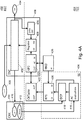
- the client device 106 comprises a REE 402 and a TEE 404.
- the REE is configured to receive encoded content 406 for descrambling by a descrambler 408 and corresponding CK and AC 410, 412 for storage in a conditional access kernel 414.
- CK 410 is encrypted with a transport key TK and AC 412 comprises a flag referred to as a secure stop bit SSB herein, which indicates whether the availability of the CK is subject to periodic enforcement of a re-evaluation of the AC (or part of the AC, for example relating to the periodic receipt of a token) or not. This will be discussed in further detail below.
- the conditional access kernel 414 is configured to request evaluation of the AC and decoding of the CK in coordination with the encoded content 406 being provided to the descrambler 408 by the REE 402, on request from the descrambler 406, periodically triggered by an amount of data having been sent to or been decoded by the descrambler 406, for example in good time for the end of a chunk, or in response to a change in a received or generated IV.
- the REE controls the pushing of a next content chunk to the DSC 408 for descrambling as well as sending the CK and AC to the TEE and synchronises these operations, for example sending the CK and AC in good time for when the next chunk is required and then, at the appropriate time and once the CK is ready in the CKTable 422, pushing the next chunk to the DSC 408 for descrambling.
- the TEE 404 implements an AC evaluation module 416 configured to evaluate an AC passed to it by the conditional access kernel 414 for evaluation and a key decryption module 418 in possession of the TK and configured to decrypt [CK] TK passed to it from the conditional access kernel 414 if cleared to do so by the AC evaluation module 416.
- a first key protection module 420 is configured to receive the decrypted content key CK from the key decryption module 418 and to encrypt it with a session key SK, discussed further below.
- the first key protection module is also configured to encrypt AC with SK in some embodiments.
- a key table 422 is configured to receive the re-encrypted content key [CK] SK and encrypted access condition [AC] SK from the first key protection module 420 and to store [CK] SK and [AC] SK .
- the key table 422 can store CKs that are subject to periodic re-evaluation of access rights and those that are not, since the SSB will indicate to the relevant modules how the CK should be handled.
- the TEE 404 further implements a second key protection module 424 configured to read [CK] SK and [AC] SK from the key table 422.
- a second key protection module 424 configured to read [CK] SK and [AC] SK from the key table 422.
- the SK is changed periodically, so that each new SK needs to be negotiated and synchronised between the key protection modules 422 and 424.
- each key protection module or only one of them as appropriate, can request a new SK from an SK generator 426.
- the SK generator 426 comprises a random or pseudo-random number generator to generate the SK.
- the SK generator 426 communicates the new SK to the key protection modules once it is generated.
- the SK generator 426 is incorporated in one of the key protection module and the key protection modules communicate directly to negotiate each new SK.
- each key protection module has a copy of the same predictable number generator and the key protection modules negotiate when to generate a new SK and then each key protection module generates the next value independently.
- the second key protection module 426 is further configured to decrypt the CK and AC, to extract the SSB from the AC and to store the CK and SSB in a register 428 of the descrambler 408.
- a chunk counter 430 is configured to monitor an amount of data decoded by a decoding unit 432 (in some embodiments implemented in the REE 402).
- the decoding unit 432 is configured to decode the encrypted content 406 to output "clear text" digital video content 434 for downstream processing by a video processor and display to a user of the client device 406) and to clear the register 428 when a predetermined amount of data has been decoded, eg after decoding each chunk.
- a change in IV used in conjunction with the CK is monitored and used to trigger clearing of the register 428.
- a clock signal is used for this purpose. It will be understood that the conditional access kernel 414 is adapted accordingly, so that the AC is re-evaluated to store a new [CK] SK in the key table in time for the key protection module to re-stock the register 428 with the CK.
- the second key protection module 424 is configured to read [CK] SK and [AC] SK from the key table 422 in response to a request from the descrambler when the register 428 needs an AC written or re-written to the register 428.
- the key protection module 424 reads [CK] SK and [AC] SK from the key table 422 in response to them being stored there, for example triggered by a signal from the key protection module 420.
- the CK and SSB are then inserted in the register 428 on detection that the register has been cleared, in response to a signal from the chunk counter 430 indication that the register has been cleared, or in response to a signal from the descrambler 408.
- the key table 422 stores a content identifier for each CK, identifying the corresponding content with which the CK is associated.
- a number of implementations, as illustrated in Figure 4B are then possible to store CKs with differing protection levels:
- AC evaluation module 416 and key decryption module 418 are implemented in a secure element 436.
- the AC for example in the form of an ECM, is provided to the secure element 436 by way of a smart card and corresponding reader and the evaluation of the ECM and decryption of the CK is done in the secure element 436.
- the first key protection module 420 is also implemented in the secure element 436.
- an SK is generated.
- a global SK is generated (and may be used together with a counter, as described above).
- a SK is first generated on boot up of the client device 106 and may then renegotiated periodically, as described above.
- an encrypted media content is received and at step 506 a CK and AC are received and stored by the conditional access kernel 414.
- the conditional access kernel 414 sends the AC to access evaluation module 416 and the CK to the decryption module 418 to trigger and evaluation of the AC and, if the evaluation is positive, the decryption of the CK.
- the decrypted CK is passed to the first key protection module 420 to encrypt the CK with the SK and store the result in the key table 422.
- the CK is read and decrypted by the second key protection module 424 using the session key SK, and the result is stored in the register 428.
- the second key protection module 424 also stores the SSB in the register to indicate that re-evaluation of the AC is being enforced.
- a new SK is negotiated and replaced in the key protection modules 420 and 424 at step 514.
- the second key protection block 424 triggers this re-negotiation in response to reading and/or storing the CK.
- the process of steps 508 to 512 needs to be repeated in order to store CK encrypted with the new SK in the key table 422 to enable it being decrypted and stored in the register 428 by the second key protection module 428.
- a chunk or other predefined portion (predefined amount of data, a portion between two changes of IV) of the encrypted data stream is decrypted by the decryption module 432 using CK in the register 428 and output for processing and display downstream.
- the chunk counter 430 detects that the predetermined portion of content has been decoded and, in response to that clears the CK from the register 428 if the SSB is present in the register 428, thereby preventing further decoding of the content 406 unless the AC is evaluated again and the subsequent steps 508 to 512 are repeated to make [CK] SK encrypted with the new SK available to the second key protection block 424 again. Therefore, in order to continue decoding the content 406, the process loops back to step 508.
- the re-evaluation of the AC (and subsequent decryption of the CK, if successful) is triggered by the conditional access kernel 414 sending [CK] TK and AC to the decryption and access evaluation modules 416, 418, respectively, in response to a request from the descrambler 408 or, for example, in response to the conditional access kernel 414 independently requesting re-evaluation, for example based on monitoring IV changes or an amount of data input to or output from the descrambler 408.
- the register 428 is only cleared at step 518 if an active SSB, eg with value 1, is stored in it, as described above, and otherwise retains the CK until the content changes or the client device 106 is rebooted.
- the functionality of the key table 422 has changed in that it receives and stores the CK and SSB in clear text.
- the functionality of the descrambler 408 has changed in that it reads the CK and SSB directly into the register 428 and triggers the deletion of CK in the key table 422, responsive to that.
- the deletion and/or its trigger are implemented in dedicated hardware for added security and resilience against attacks to circumvent the periodic re-evaluation of AC. Modules 420, 424 and 426 are not present.
- Step 506 is omitted and steps 510 to 514 have been modified and will be referred to as steps 710 to 714, respectively. Specifically, these steps are changed in light of the replacement of renegotiation of a SK with deletion of a clear text CK from the key table 422. Describing, then, the differences in Figure 7 , at step 710 CK is stored in the key table 422 in clear text and read into the register 426 at step 712.
- the CK is deleted from the key table 422 in response to the CK having been read into the register 426. It will be understood that in embodiments that combine the two approaches, the process described above with reference to Figure 5 is modified in that in addition to the steps of that process, enforced deletion of the CK from the key table 422 occurs at some point in the process.
- the specific embodiments described above with reference to Figures 4 to 7 are suitable in any context in which periodic re-evaluation of an AC should be enforced, in particular if the corresponding CK has a prolonged period of validity and is stored persistently in the client device, as is the case in OTT applications.
- the re-evaluation of the AC may be based on conditions local to the client device 106 and/or may rely on the receipt of a token from a conditional access server 102, as discussed above.
- the AC is such that all but the receipt of token condition are evaluated only once at an initial step, with subsequent evaluations only requiring receipt and authentication of the token.
- the conditional access is fully under the control of the server 102 and the AC at the client only requires the continued presence of an authenticated and up to date token at the client device to provide continued access to the CK to the descrambler 408.
- the SSB may be received and/or stored independently and/or separately from the AC, in which case the AC is not stored in the key table in some embodiments.
- the descrambler may be fully implemented in either the TEE or the REE, rather than straddling the two. In fact, all modules described may be implemented in either the TEE or REE depending on level of security required.
- the AC may be stored encrypted or in clear text in the second key protection module, or may be discarded with only the SSB stored in the second key protection module.
- the AC and/or SSB may be stored elsewhere accessible to the second key protection module. More generally, where the location of storage of a particular quantity is referred to above, this is to be understood as a logical connection of accessibility, rather than a physical location, in some embodiments.
- the register of the descrambler holding the CK is periodically cleared. This provides an arbitrary granularity in the enforcement of the re-evaluation of the AC and/or the receipt of a token by setting the periodicity accordingly.
- the register content is only overwritten/changed when the content to be descrambled changes or the device is powered down, in which case re-evaluate of the AC can only be guaranteed on device start-up or when starting to descramble new content.
Landscapes
- Engineering & Computer Science (AREA)
- Signal Processing (AREA)
- Multimedia (AREA)
- Computer Security & Cryptography (AREA)
- Databases & Information Systems (AREA)
- Computer Networks & Wireless Communication (AREA)
- Computer Hardware Design (AREA)
- General Engineering & Computer Science (AREA)
- Software Systems (AREA)
- Theoretical Computer Science (AREA)
- Physics & Mathematics (AREA)
- General Physics & Mathematics (AREA)
- Storage Device Security (AREA)
- Two-Way Televisions, Distribution Of Moving Picture Or The Like (AREA)
Claims (13)
- Vorrichtung (106) zum Entschlüsseln von verschlüsseltem Medieninhalt, wobei die Vorrichtung eine Verarbeitungsumgebung umfasst, die konfiguriert ist zum:Empfangen und Speichern eines verschlüsselten Inhaltsschlüssels zum Entschlüsseln von verschlüsseltem Medieninhalt;Bewerten einer Zugriffsbedingung, und, falls die Zugriffsbedingung erfüllt ist, Entschlüsseln des Inhaltsschlüssels, und Aktivieren eines Decoders, den Inhaltsschlüssel zu verwenden, um den verschlüsselten Medieninhalt zu entschlüsseln;Empfangen des verschlüsselten Medieninhalts und Entschlüsseln des verschlüsselten Medieninhalts unter Verwendung des Inhaltsschlüssels; und444innerhalb eines Intervalls erneut Bewerten, ob die Verwendung des Inhaltsschlüssels aktiviert bleiben sollte, dadurch gekennzeichnet, dass die Verarbeitungsumgebung weiter konfiguriert ist zum:
Verhindern, falls die erneute Bewertung negativ ist, dass der Decoder den Inhaltsschlüssel nach Ablauf des Intervalls als Reaktion auf die erneute Bewertung verwendet, auch wenn der Inhaltsschlüssel gültig bleibt, und dadurch, dass die Zugriffsbedingung eine Bedingung umfasst, dass ein Token, das darauf hinweist, dass ein Zugriff gestattet ist, vor Ablauf des Intervalls empfangen worden ist. - Vorrichtung nach Anspruch 1, wobei die Vorrichtung eine Kommunikationsschnittstelle (108) zum Verbinden der Vorrichtung mit einem Kommunikationsnetzwerk umfasst, wobei das Token von einer entfernten Stelle über das Kommunikationsnetzwerk empfangen wird, und die erneute Bewertung die Authentifizierung des Tokens umfasst.
- Vorrichtung nach Anspruch 1 oder Anspruch 2, wobei die erneute Bewertung den Vergleich des empfangenen Tokens mit einem erwarteten Token, und die Bewertung der Zugriffsbedingung als erfüllt nur dann umfasst, falls das empfangene Token mit dem erwarteten Token übereinstimmt.
- Vorrichtung nach einem der Ansprüche 1 bis 3, wobei die Verarbeitungsumgebung konfiguriert ist, um den entschlüsselten Inhaltsschlüssel mit einem Sitzungsschlüssel nach dessen Entschlüsselung erneut zu verschlüsseln, und den erneut verschlüsselten Inhaltsschlüssel für den Zugriff durch den Decoder zu speichern, wobei
das Aktivieren des Decoders, den Inhaltsschlüssel zu verwenden, das Entschlüsseln des mit dem Sitzungsschlüssel verschlüsselten Inhaltsschlüssels unter Verwendung des Sitzungsschlüssels beinhaltet; und wobei
das Verhindern, dass der Decoder den entschlüsselten Inhaltsschlüssel verwendet, das Ändern des Sitzungsschlüssels ohne erneutes Verschlüsseln des Inhaltsschlüssels umfasst. - Vorrichtung nach Anspruch 4, wobei die Verwendung des Inhaltsschlüssels durch den Decoder das Speichern des Inhaltsschlüssels in einem Verzeichnis des Decoders umfasst, und das Verhindern, dass der Decoder den entschlüsselten Inhaltsschlüssel verwendet, das Löschen des entschlüsselten Inhaltsschlüssels aus dem Verzeichnis, und das Ändern des Sitzungsschlüssels als Reaktion auf das Speichern des entschlüsselten Inhaltsschlüssels in dem Verzeichnis umfasst.
- Vorrichtung nach einem der Ansprüche 1 bis 4, wobei die Verwendung des Inhaltsschlüssels durch den Decoder das Speichern des Inhaltsschlüssels in einem Verzeichnis des Decoders umfasst, und das Verhindern, dass der Decoder den entschlüsselten Inhaltsschlüssel verwendet, das Löschen des entschlüsselten Inhaltsschlüssels aus dem Verzeichnis umfasst.
- Vorrichtung nach einem der Ansprüche 1 bis 6, wobei die Verarbeitungsumgebung konfiguriert ist, um das Ablaufen des Intervalls durch Überwachen von mindestens einem aus der Gruppe zu detektieren, von:einer Menge an Daten, die durch den Decoder entschlüsselt worden sind;einer Änderung eines Initialisierungsvektors, der zum Entschlüsseln des Medieninhalts gemeinsam mit dem Inhaltsschlüssel empfangen wird; undeinem Taktsignal.
- Vorrichtung nach einem der Ansprüche 1 bis 7, wobei die Verarbeitungsumgebung, die eine vertrauenswürdige Ausführungsumgebung umfasst, konfiguriert ist, um gegebenenfalls mindestens eines von der Bewertung, der erneuten Bewertung, der Verhinderung, der Authentifizierung, dem Vergleich, dem Ändern, dem Löschen und dem Detektieren einzubeziehen.
- Vorrichtung nach einem vorstehenden Anspruch, wobei die Verarbeitungsumgebung konfiguriert ist, zum:(a) Empfangen des verschlüsselten Medieninhalts;(b) Empfangen und Speichern des verschlüsselten Inhaltsschlüssels zum Entschlüsseln des verschlüsselten Medieninhalts;(c) Bewerten der Zugriffsbedingung, und, falls die Zugriffsbedingung erfüllt ist, Entschlüsseln des verschlüsselten Inhaltsschlüssels;(d) Speichern des Inhaltsschlüssels in einer Schlüsseltabelle, die für einen Decoder zugänglich ist;(e) Zugreifen auf den Inhaltsschlüssel in der Schlüsseltabelle und Laden des Inhaltsschlüssels in ein Verzeichnis des Decoders, um Medieninhalt zu entschlüsseln, der dem Inhaltsschlüssel zugewiesen ist;(f) Verhindern des weiteren Ladens des Inhaltsschlüssels aus der Schüsseltabelle in das Verzeichnis;(g) Entschlüsseln eines Abschnitts des verschlüsselten Medieninhalts mit dem Inhaltsschlüssel in dem Verzeichnis unter Verwendung des Decoders, wobei das Intervall der Zeit entspricht, die zum Entschlüsseln des Abschnitts in Anspruch genommen wird;(h) als Reaktion auf das Detektieren, dass der Abschnitt entschlüsselt worden ist, Löschen des Inhaltsschlüssels aus dem Verzeichnis; und(i) Wiederholen der Schritte (c) bis (h) zum Entschlüsseln eines nächsten Abschnitts des verschlüsselten Medieninhalts angrenzend an den Abschnitt des verschlüsselten Medieninhalts.
- Vorrichtung nach Anspruch 9, wobei das weitere Laden als Reaktion auf das Laden des gespeicherten Inhaltsschlüssels verhindert wird.
- Vorrichtung nach einem der Ansprüche 9 oder Anspruch 10, wobei die Vorrichtung, die eine vertrauenswürdige Ausführungsumgebung (112, 404) umfasst, konfiguriert ist, um mindestens teilweise Schritte (c) bis (i) in einer hochwertigen Ausführungsumgebung (110, 402) einzubeziehen, die konfiguriert ist, um der vertrauenswürdigen Ausführungsumgebung den verschlüsselten Inhaltsschlüssel rechtzeitig für den nächsten zu entschlüsselnden Abschnitt bereitzustellen.
- Vorrichtung nach einem der Ansprüche 9 bis 11, wobei die Verarbeitungsumgebung konfiguriert ist, um vor dem Schritt (d) einen Sitzungsschlüssel zur Verwendung durch beide, eine Schlüsselverschlüsselungseinheit und durch eine Schlüsselentschlüsselungseinheit zu generieren, und den entschlüsselten Inhaltsschlüssel mit dem Sitzungsschlüssel unter Verwendung der Schlüsselverschlüsselungseinheit erneut zu verschlüsseln, wobei das Speichern des Inhaltsschlüssels in der Schlüsseltabelle das Speichern des Inhaltsschlüssels, der mit dem Sitzungsschlüssel erneut verschlüsselt wird, in der Schlüsseltabelle umfasst,
wobei das Laden des Inhaltsschlüssels in das Verzeichnis das Entschlüsseln des gespeicherten, erneut verschlüsselten Inhaltsschlüssels mit dem Sitzungsschlüssel unter Verwendung der Schlüsselentschlüsselungseinheit, und das Speichern des entschlüsselten Inhaltsschlüssels in dem Verzeichnis umfasst, und
wobei das Verhindern des weiteren Ladens des Inhaltsschlüssels das Ersetzen des Sitzungsschlüssels durch einen neuen Sitzungsschlüssel ohne erneutes Verschlüsseln des Inhaltsschlüssels umfasst, wodurch eine gültige Entschlüsselung des in der Inhaltsschlüsseltabelle gespeicherten Inhaltsschlüssels durch die Schlüsselentschlüsselungseinheit verhindert wird. - Vorrichtung nach einem der Ansprüche 9 bis 12, wobei das Detektieren, dass der Abschnitt entschlüsselt worden ist, eines oder mehr umfasst von:Detektieren, dass eine vorbestimmte Mange an Daten entschlüsselt worden ist;Detektieren einer Änderung eines Initialisierungsvektors, der zum Verwenden mit dem Inhaltsschlüssel zum Entschlüsseln des Medieninhalts empfangen wird; undDetektieren einer vorbestimmten Änderung eines Taktsignals.
Priority Applications (1)
| Application Number | Priority Date | Filing Date | Title |
|---|---|---|---|
| EP21158744.9A EP3849203B1 (de) | 2015-06-29 | 2016-06-29 | Inhaltsschutz |
Applications Claiming Priority (2)
| Application Number | Priority Date | Filing Date | Title |
|---|---|---|---|
| EP15174332.5A EP3113501A1 (de) | 2015-06-29 | 2015-06-29 | Inhaltsschutz |
| PCT/EP2016/065129 WO2017001467A1 (en) | 2015-06-29 | 2016-06-29 | Content protection |
Related Child Applications (1)
| Application Number | Title | Priority Date | Filing Date |
|---|---|---|---|
| EP21158744.9A Division EP3849203B1 (de) | 2015-06-29 | 2016-06-29 | Inhaltsschutz |
Publications (2)
| Publication Number | Publication Date |
|---|---|
| EP3314902A1 EP3314902A1 (de) | 2018-05-02 |
| EP3314902B1 true EP3314902B1 (de) | 2021-03-10 |
Family
ID=53723990
Family Applications (3)
| Application Number | Title | Priority Date | Filing Date |
|---|---|---|---|
| EP15174332.5A Withdrawn EP3113501A1 (de) | 2015-06-29 | 2015-06-29 | Inhaltsschutz |
| EP21158744.9A Active EP3849203B1 (de) | 2015-06-29 | 2016-06-29 | Inhaltsschutz |
| EP16734292.2A Active EP3314902B1 (de) | 2015-06-29 | 2016-06-29 | Inhaltsschutz |
Family Applications Before (2)
| Application Number | Title | Priority Date | Filing Date |
|---|---|---|---|
| EP15174332.5A Withdrawn EP3113501A1 (de) | 2015-06-29 | 2015-06-29 | Inhaltsschutz |
| EP21158744.9A Active EP3849203B1 (de) | 2015-06-29 | 2016-06-29 | Inhaltsschutz |
Country Status (6)
| Country | Link |
|---|---|
| US (5) | US10931983B2 (de) |
| EP (3) | EP3113501A1 (de) |
| CN (1) | CN107925795B (de) |
| ES (1) | ES2862159T3 (de) |
| MX (1) | MX384456B (de) |
| WO (1) | WO2017001467A1 (de) |
Families Citing this family (9)
| Publication number | Priority date | Publication date | Assignee | Title |
|---|---|---|---|---|
| CN108933660A (zh) * | 2017-05-26 | 2018-12-04 | 展讯通信(上海)有限公司 | 基于hdcp的数字内容保护系统 |
| EP3468164A1 (de) * | 2017-10-06 | 2019-04-10 | Nagravision S.A. | Verfahren zur bereitstellung von digitalem inhalt an mindestens eine client-vorrichtung |
| US10872144B1 (en) | 2017-12-07 | 2020-12-22 | Ent. Services Development Corporation Lp | Systems and methods for secure processing of data streams having differing security level classifications |
| US11093604B2 (en) * | 2018-07-27 | 2021-08-17 | BicDroid Inc. | Personalized and cryptographically secure access control in trusted execution environment |
| CN110034924B (zh) * | 2018-12-12 | 2022-05-13 | 创新先进技术有限公司 | 一种数据处理方法和装置 |
| CN109922056B (zh) | 2019-02-26 | 2021-09-10 | 创新先进技术有限公司 | 数据安全处理方法及其终端、服务器 |
| DE102019209887A1 (de) * | 2019-07-04 | 2021-01-07 | BSH Hausgeräte GmbH | System und Verfahren zur Speicherung eines zu schützenden Datensatzes |
| US11436343B2 (en) * | 2019-12-31 | 2022-09-06 | Arm Limited | Device, system, and method of policy enforcement for rich execution environment |
| CN119788436B (zh) * | 2025-03-11 | 2025-07-04 | 浙江大华技术股份有限公司 | 数据保护方法、设备以及存储介质 |
Citations (1)
| Publication number | Priority date | Publication date | Assignee | Title |
|---|---|---|---|---|
| EP1743229B1 (de) * | 2004-05-03 | 2008-10-01 | THOMSON Licensing | Zertifikat-validitätsprüfung |
Family Cites Families (24)
| Publication number | Priority date | Publication date | Assignee | Title |
|---|---|---|---|---|
| US7305548B2 (en) * | 2001-10-22 | 2007-12-04 | Microsoft Corporation | Using atomic messaging to increase the security of transferring data across a network |
| US7200868B2 (en) * | 2002-09-12 | 2007-04-03 | Scientific-Atlanta, Inc. | Apparatus for encryption key management |
| US7724907B2 (en) * | 2002-11-05 | 2010-05-25 | Sony Corporation | Mechanism for protecting the transfer of digital content |
| US20040128259A1 (en) * | 2002-12-31 | 2004-07-01 | Blakeley Douglas Burnette | Method for ensuring privacy in electronic transactions with session key blocks |
| US8023958B2 (en) * | 2003-03-05 | 2011-09-20 | Qualcomm Incorporated | User plane-based location services (LCS) system, method and apparatus |
| US7398544B2 (en) * | 2003-05-12 | 2008-07-08 | Sony Corporation | Configurable cableCARD |
| US7620180B2 (en) * | 2003-11-03 | 2009-11-17 | Sony Corporation | Preparation of content for multiple conditional access methods in video on demand |
| US20050154889A1 (en) * | 2004-01-08 | 2005-07-14 | International Business Machines Corporation | Method and system for a flexible lightweight public-key-based mechanism for the GSS protocol |
| KR20060126599A (ko) | 2004-02-12 | 2006-12-07 | 코닌클리즈케 필립스 일렉트로닉스 엔.브이. | 선택적 데이터 전송 시스템, 송신기, 수신기, 브로드캐스팅시스템, 선택적 데이터 전송 방법 및 시스템 작동 방법 |
| US7602914B2 (en) * | 2004-08-18 | 2009-10-13 | Scientific-Atlanta, Inc. | Utilization of encrypted hard drive content by one DVR set-top box when recorded by another |
| JP2008034891A (ja) * | 2004-11-24 | 2008-02-14 | Matsushita Electric Ind Co Ltd | 暗号化コンテンツ再生装置、暗号化コンテンツ再生方法およびそのプログラムを記録した記録媒体 |
| US8577041B2 (en) * | 2005-02-07 | 2013-11-05 | Arris Enterprises, Inc. | Method for securely distributing configuration information to a device |
| KR20070082405A (ko) * | 2006-02-16 | 2007-08-21 | 삼성전자주식회사 | 암호화 데이터 재생 장치 및 암호화 데이터 재생 시스템 |
| US7840809B2 (en) * | 2006-02-24 | 2010-11-23 | Cisco Technology, Inc. | Method and system for secure transmission of an encrypted media stream across a network |
| US20090199287A1 (en) * | 2007-06-26 | 2009-08-06 | Luc Vantalon | Systems and methods for conditional access and digital rights management |
| US20100161975A1 (en) * | 2008-12-19 | 2010-06-24 | Vixs Systems, Inc. | Processing system with application security and methods for use therewith |
| CN101771533B (zh) * | 2008-12-30 | 2012-10-31 | 上海华虹集成电路有限责任公司 | 基于线性反馈移位寄存器的序列流密码算法硬件实现方法 |
| US8312272B1 (en) * | 2009-06-26 | 2012-11-13 | Symantec Corporation | Secure authentication token management |
| US9043827B1 (en) * | 2009-12-16 | 2015-05-26 | Prime Research Alliance E, Inc. | Method and system for providing conditional access to encrypted content |
| CN102752107B (zh) * | 2011-04-19 | 2015-04-29 | 中国科学院微电子研究所 | 实现rc4加/解密的装置及其方法 |
| US8577334B1 (en) * | 2011-06-16 | 2013-11-05 | Sprint Communications Company L.P. | Restricted testing access for electronic device |
| FR2980607B1 (fr) * | 2011-09-27 | 2014-04-25 | Proton World Int Nv | Procede de derivation de cles dans un circuit integre |
| EP2797335A1 (de) * | 2013-04-26 | 2014-10-29 | Nagravision S.A. | Verfahren zum Wasserzeichnen eines komprimierten verschlüsselten Inhalts durch mindestens einen Inhaltsschlüssel |
| EP2827601A1 (de) * | 2013-07-19 | 2015-01-21 | Nagravision S.A. | Methode und Vorrichtung zum Schutz der Dechiffrierschlüssel eines Decoders |
-
2015
- 2015-06-29 EP EP15174332.5A patent/EP3113501A1/de not_active Withdrawn
-
2016
- 2016-06-29 EP EP21158744.9A patent/EP3849203B1/de active Active
- 2016-06-29 US US16/075,102 patent/US10931983B2/en active Active
- 2016-06-29 CN CN201680050532.3A patent/CN107925795B/zh active Active
- 2016-06-29 EP EP16734292.2A patent/EP3314902B1/de active Active
- 2016-06-29 MX MX2018000268A patent/MX384456B/es unknown
- 2016-06-29 WO PCT/EP2016/065129 patent/WO2017001467A1/en not_active Ceased
- 2016-06-29 ES ES16734292T patent/ES2862159T3/es active Active
-
2021
- 2021-01-12 US US17/147,349 patent/US11671637B2/en active Active
-
2023
- 2023-04-24 US US18/306,085 patent/US11943491B2/en active Active
-
2024
- 2024-02-13 US US18/440,588 patent/US12200279B2/en active Active
- 2024-10-16 US US18/917,668 patent/US12549786B2/en active Active
Patent Citations (1)
| Publication number | Priority date | Publication date | Assignee | Title |
|---|---|---|---|---|
| EP1743229B1 (de) * | 2004-05-03 | 2008-10-01 | THOMSON Licensing | Zertifikat-validitätsprüfung |
Also Published As
| Publication number | Publication date |
|---|---|
| US11671637B2 (en) | 2023-06-06 |
| CN107925795B (zh) | 2021-02-19 |
| EP3314902A1 (de) | 2018-05-02 |
| CN107925795A (zh) | 2018-04-17 |
| US20230353799A1 (en) | 2023-11-02 |
| EP3849203B1 (de) | 2022-06-01 |
| US20210168413A1 (en) | 2021-06-03 |
| EP3849203A1 (de) | 2021-07-14 |
| MX384456B (es) | 2025-03-14 |
| US20250119601A1 (en) | 2025-04-10 |
| WO2017001467A1 (en) | 2017-01-05 |
| US12200279B2 (en) | 2025-01-14 |
| US10931983B2 (en) | 2021-02-23 |
| MX2018000268A (es) | 2018-05-22 |
| EP3113501A1 (de) | 2017-01-04 |
| US12549786B2 (en) | 2026-02-10 |
| ES2862159T3 (es) | 2021-10-07 |
| US20240267575A1 (en) | 2024-08-08 |
| US20190052916A1 (en) | 2019-02-14 |
| US11943491B2 (en) | 2024-03-26 |
| BR112017028545A2 (pt) | 2018-08-28 |
Similar Documents
| Publication | Publication Date | Title |
|---|---|---|
| US12200279B2 (en) | Content protection | |
| EP1562318B1 (de) | System und Verfahren zur Schlüsselübertragung mit einer starken Zuordnung zum Zielgerät | |
| US7400729B2 (en) | Secure delivery of encrypted digital content | |
| CN104303511B (zh) | 具有多个解密模式的tv接收机 | |
| US7933838B2 (en) | Apparatus for secure digital content distribution and methods therefor | |
| US20070300310A1 (en) | Method and system for implementing digital rights management | |
| AU2018262622B2 (en) | Pre-entitlement enforcement | |
| US20080086641A1 (en) | Method and system for preventing revocation denial of service attacks | |
| US20070174621A1 (en) | Processing device revocation and reinvocation | |
| US8417937B2 (en) | System and method for securely transfering content from set-top box to personal media player | |
| US20180019877A1 (en) | Control word protection method for conditional access system | |
| US7650312B2 (en) | Method and system to enable continuous monitoring of integrity and validity of a digital content | |
| EP3317798B1 (de) | Entschlüsselung und decodierung von medienassets über sicheren datenpfad | |
| US7975141B2 (en) | Method of sharing bus key and apparatus therefor | |
| RU2554825C9 (ru) | Способ определения незаконного применения устройства обработки системы безопасности | |
| EP2667315A1 (de) | Player für verschlüsselte digitale Inhalte | |
| BR112017028545B1 (pt) | Dispositivo para desencriptar conteúdo de mídia criptografada |
Legal Events
| Date | Code | Title | Description |
|---|---|---|---|
| STAA | Information on the status of an ep patent application or granted ep patent |
Free format text: STATUS: THE INTERNATIONAL PUBLICATION HAS BEEN MADE |
|
| PUAI | Public reference made under article 153(3) epc to a published international application that has entered the european phase |
Free format text: ORIGINAL CODE: 0009012 |
|
| STAA | Information on the status of an ep patent application or granted ep patent |
Free format text: STATUS: REQUEST FOR EXAMINATION WAS MADE |
|
| 17P | Request for examination filed |
Effective date: 20180112 |
|
| AK | Designated contracting states |
Kind code of ref document: A1 Designated state(s): AL AT BE BG CH CY CZ DE DK EE ES FI FR GB GR HR HU IE IS IT LI LT LU LV MC MK MT NL NO PL PT RO RS SE SI SK SM TR |
|
| AX | Request for extension of the european patent |
Extension state: BA ME |
|
| DAV | Request for validation of the european patent (deleted) | ||
| DAX | Request for extension of the european patent (deleted) | ||
| STAA | Information on the status of an ep patent application or granted ep patent |
Free format text: STATUS: EXAMINATION IS IN PROGRESS |
|
| 17Q | First examination report despatched |
Effective date: 20200129 |
|
| REG | Reference to a national code |
Ref country code: DE Ref legal event code: R079 Ref document number: 602016053997 Country of ref document: DE Free format text: PREVIOUS MAIN CLASS: H04N0021440500 Ipc: H04N0007167000 |
|
| GRAP | Despatch of communication of intention to grant a patent |
Free format text: ORIGINAL CODE: EPIDOSNIGR1 |
|
| STAA | Information on the status of an ep patent application or granted ep patent |
Free format text: STATUS: GRANT OF PATENT IS INTENDED |
|
| RIC1 | Information provided on ipc code assigned before grant |
Ipc: H04N 7/167 20110101AFI20201009BHEP Ipc: H04N 7/16 20110101ALI20201009BHEP Ipc: H04N 21/266 20110101ALI20201009BHEP Ipc: H04N 21/2347 20110101ALI20201009BHEP Ipc: H04N 21/418 20110101ALI20201009BHEP Ipc: H04N 21/4623 20110101ALI20201009BHEP Ipc: H04N 21/4405 20110101ALI20201009BHEP |
|
| INTG | Intention to grant announced |
Effective date: 20201102 |
|
| GRAS | Grant fee paid |
Free format text: ORIGINAL CODE: EPIDOSNIGR3 |
|
| GRAA | (expected) grant |
Free format text: ORIGINAL CODE: 0009210 |
|
| STAA | Information on the status of an ep patent application or granted ep patent |
Free format text: STATUS: THE PATENT HAS BEEN GRANTED |
|
| AK | Designated contracting states |
Kind code of ref document: B1 Designated state(s): AL AT BE BG CH CY CZ DE DK EE ES FI FR GB GR HR HU IE IS IT LI LT LU LV MC MK MT NL NO PL PT RO RS SE SI SK SM TR |
|
| REG | Reference to a national code |
Ref country code: GB Ref legal event code: FG4D |
|
| REG | Reference to a national code |
Ref country code: CH Ref legal event code: EP Ref country code: AT Ref legal event code: REF Ref document number: 1371146 Country of ref document: AT Kind code of ref document: T Effective date: 20210315 |
|
| REG | Reference to a national code |
Ref country code: DE Ref legal event code: R096 Ref document number: 602016053997 Country of ref document: DE |
|
| REG | Reference to a national code |
Ref country code: IE Ref legal event code: FG4D |
|
| REG | Reference to a national code |
Ref country code: NL Ref legal event code: FP |
|
| REG | Reference to a national code |
Ref country code: LT Ref legal event code: MG9D |
|
| PG25 | Lapsed in a contracting state [announced via postgrant information from national office to epo] |
Ref country code: BG Free format text: LAPSE BECAUSE OF FAILURE TO SUBMIT A TRANSLATION OF THE DESCRIPTION OR TO PAY THE FEE WITHIN THE PRESCRIBED TIME-LIMIT Effective date: 20210610 Ref country code: LT Free format text: LAPSE BECAUSE OF FAILURE TO SUBMIT A TRANSLATION OF THE DESCRIPTION OR TO PAY THE FEE WITHIN THE PRESCRIBED TIME-LIMIT Effective date: 20210310 Ref country code: NO Free format text: LAPSE BECAUSE OF FAILURE TO SUBMIT A TRANSLATION OF THE DESCRIPTION OR TO PAY THE FEE WITHIN THE PRESCRIBED TIME-LIMIT Effective date: 20210610 Ref country code: FI Free format text: LAPSE BECAUSE OF FAILURE TO SUBMIT A TRANSLATION OF THE DESCRIPTION OR TO PAY THE FEE WITHIN THE PRESCRIBED TIME-LIMIT Effective date: 20210310 Ref country code: HR Free format text: LAPSE BECAUSE OF FAILURE TO SUBMIT A TRANSLATION OF THE DESCRIPTION OR TO PAY THE FEE WITHIN THE PRESCRIBED TIME-LIMIT Effective date: 20210310 Ref country code: GR Free format text: LAPSE BECAUSE OF FAILURE TO SUBMIT A TRANSLATION OF THE DESCRIPTION OR TO PAY THE FEE WITHIN THE PRESCRIBED TIME-LIMIT Effective date: 20210611 |
|
| REG | Reference to a national code |
Ref country code: AT Ref legal event code: MK05 Ref document number: 1371146 Country of ref document: AT Kind code of ref document: T Effective date: 20210310 |
|
| PG25 | Lapsed in a contracting state [announced via postgrant information from national office to epo] |
Ref country code: SE Free format text: LAPSE BECAUSE OF FAILURE TO SUBMIT A TRANSLATION OF THE DESCRIPTION OR TO PAY THE FEE WITHIN THE PRESCRIBED TIME-LIMIT Effective date: 20210310 Ref country code: LV Free format text: LAPSE BECAUSE OF FAILURE TO SUBMIT A TRANSLATION OF THE DESCRIPTION OR TO PAY THE FEE WITHIN THE PRESCRIBED TIME-LIMIT Effective date: 20210310 Ref country code: RS Free format text: LAPSE BECAUSE OF FAILURE TO SUBMIT A TRANSLATION OF THE DESCRIPTION OR TO PAY THE FEE WITHIN THE PRESCRIBED TIME-LIMIT Effective date: 20210310 |
|
| REG | Reference to a national code |
Ref country code: ES Ref legal event code: FG2A Ref document number: 2862159 Country of ref document: ES Kind code of ref document: T3 Effective date: 20211007 |
|
| PG25 | Lapsed in a contracting state [announced via postgrant information from national office to epo] |
Ref country code: EE Free format text: LAPSE BECAUSE OF FAILURE TO SUBMIT A TRANSLATION OF THE DESCRIPTION OR TO PAY THE FEE WITHIN THE PRESCRIBED TIME-LIMIT Effective date: 20210310 Ref country code: CZ Free format text: LAPSE BECAUSE OF FAILURE TO SUBMIT A TRANSLATION OF THE DESCRIPTION OR TO PAY THE FEE WITHIN THE PRESCRIBED TIME-LIMIT Effective date: 20210310 Ref country code: AT Free format text: LAPSE BECAUSE OF FAILURE TO SUBMIT A TRANSLATION OF THE DESCRIPTION OR TO PAY THE FEE WITHIN THE PRESCRIBED TIME-LIMIT Effective date: 20210310 Ref country code: SM Free format text: LAPSE BECAUSE OF FAILURE TO SUBMIT A TRANSLATION OF THE DESCRIPTION OR TO PAY THE FEE WITHIN THE PRESCRIBED TIME-LIMIT Effective date: 20210310 |
|
| PG25 | Lapsed in a contracting state [announced via postgrant information from national office to epo] |
Ref country code: IS Free format text: LAPSE BECAUSE OF FAILURE TO SUBMIT A TRANSLATION OF THE DESCRIPTION OR TO PAY THE FEE WITHIN THE PRESCRIBED TIME-LIMIT Effective date: 20210710 Ref country code: RO Free format text: LAPSE BECAUSE OF FAILURE TO SUBMIT A TRANSLATION OF THE DESCRIPTION OR TO PAY THE FEE WITHIN THE PRESCRIBED TIME-LIMIT Effective date: 20210310 Ref country code: SK Free format text: LAPSE BECAUSE OF FAILURE TO SUBMIT A TRANSLATION OF THE DESCRIPTION OR TO PAY THE FEE WITHIN THE PRESCRIBED TIME-LIMIT Effective date: 20210310 Ref country code: PT Free format text: LAPSE BECAUSE OF FAILURE TO SUBMIT A TRANSLATION OF THE DESCRIPTION OR TO PAY THE FEE WITHIN THE PRESCRIBED TIME-LIMIT Effective date: 20210712 Ref country code: PL Free format text: LAPSE BECAUSE OF FAILURE TO SUBMIT A TRANSLATION OF THE DESCRIPTION OR TO PAY THE FEE WITHIN THE PRESCRIBED TIME-LIMIT Effective date: 20210310 |
|
| REG | Reference to a national code |
Ref country code: DE Ref legal event code: R097 Ref document number: 602016053997 Country of ref document: DE |
|
| PLBE | No opposition filed within time limit |
Free format text: ORIGINAL CODE: 0009261 |
|
| STAA | Information on the status of an ep patent application or granted ep patent |
Free format text: STATUS: NO OPPOSITION FILED WITHIN TIME LIMIT |
|
| PG25 | Lapsed in a contracting state [announced via postgrant information from national office to epo] |
Ref country code: DK Free format text: LAPSE BECAUSE OF FAILURE TO SUBMIT A TRANSLATION OF THE DESCRIPTION OR TO PAY THE FEE WITHIN THE PRESCRIBED TIME-LIMIT Effective date: 20210310 Ref country code: AL Free format text: LAPSE BECAUSE OF FAILURE TO SUBMIT A TRANSLATION OF THE DESCRIPTION OR TO PAY THE FEE WITHIN THE PRESCRIBED TIME-LIMIT Effective date: 20210310 Ref country code: MC Free format text: LAPSE BECAUSE OF FAILURE TO SUBMIT A TRANSLATION OF THE DESCRIPTION OR TO PAY THE FEE WITHIN THE PRESCRIBED TIME-LIMIT Effective date: 20210310 |
|
| REG | Reference to a national code |
Ref country code: CH Ref legal event code: PL |
|
| 26N | No opposition filed |
Effective date: 20211213 |
|
| PG25 | Lapsed in a contracting state [announced via postgrant information from national office to epo] |
Ref country code: SI Free format text: LAPSE BECAUSE OF FAILURE TO SUBMIT A TRANSLATION OF THE DESCRIPTION OR TO PAY THE FEE WITHIN THE PRESCRIBED TIME-LIMIT Effective date: 20210310 |
|
| REG | Reference to a national code |
Ref country code: BE Ref legal event code: MM Effective date: 20210630 |
|
| PG25 | Lapsed in a contracting state [announced via postgrant information from national office to epo] |
Ref country code: LU Free format text: LAPSE BECAUSE OF NON-PAYMENT OF DUE FEES Effective date: 20210629 |
|
| PG25 | Lapsed in a contracting state [announced via postgrant information from national office to epo] |
Ref country code: LI Free format text: LAPSE BECAUSE OF NON-PAYMENT OF DUE FEES Effective date: 20210630 Ref country code: IE Free format text: LAPSE BECAUSE OF NON-PAYMENT OF DUE FEES Effective date: 20210629 Ref country code: CH Free format text: LAPSE BECAUSE OF NON-PAYMENT OF DUE FEES Effective date: 20210630 |
|
| PG25 | Lapsed in a contracting state [announced via postgrant information from national office to epo] |
Ref country code: IS Free format text: LAPSE BECAUSE OF FAILURE TO SUBMIT A TRANSLATION OF THE DESCRIPTION OR TO PAY THE FEE WITHIN THE PRESCRIBED TIME-LIMIT Effective date: 20210710 |
|
| PG25 | Lapsed in a contracting state [announced via postgrant information from national office to epo] |
Ref country code: BE Free format text: LAPSE BECAUSE OF NON-PAYMENT OF DUE FEES Effective date: 20210630 |
|
| PG25 | Lapsed in a contracting state [announced via postgrant information from national office to epo] |
Ref country code: CY Free format text: LAPSE BECAUSE OF FAILURE TO SUBMIT A TRANSLATION OF THE DESCRIPTION OR TO PAY THE FEE WITHIN THE PRESCRIBED TIME-LIMIT Effective date: 20210310 |
|
| PG25 | Lapsed in a contracting state [announced via postgrant information from national office to epo] |
Ref country code: HU Free format text: LAPSE BECAUSE OF FAILURE TO SUBMIT A TRANSLATION OF THE DESCRIPTION OR TO PAY THE FEE WITHIN THE PRESCRIBED TIME-LIMIT; INVALID AB INITIO Effective date: 20160629 |
|
| PG25 | Lapsed in a contracting state [announced via postgrant information from national office to epo] |
Ref country code: MK Free format text: LAPSE BECAUSE OF FAILURE TO SUBMIT A TRANSLATION OF THE DESCRIPTION OR TO PAY THE FEE WITHIN THE PRESCRIBED TIME-LIMIT Effective date: 20210310 |
|
| PG25 | Lapsed in a contracting state [announced via postgrant information from national office to epo] |
Ref country code: TR Free format text: LAPSE BECAUSE OF FAILURE TO SUBMIT A TRANSLATION OF THE DESCRIPTION OR TO PAY THE FEE WITHIN THE PRESCRIBED TIME-LIMIT Effective date: 20210310 |
|
| PG25 | Lapsed in a contracting state [announced via postgrant information from national office to epo] |
Ref country code: MT Free format text: LAPSE BECAUSE OF FAILURE TO SUBMIT A TRANSLATION OF THE DESCRIPTION OR TO PAY THE FEE WITHIN THE PRESCRIBED TIME-LIMIT Effective date: 20210310 |
|
| PGFP | Annual fee paid to national office [announced via postgrant information from national office to epo] |
Ref country code: NL Payment date: 20250520 Year of fee payment: 10 |
|
| PGFP | Annual fee paid to national office [announced via postgrant information from national office to epo] |
Ref country code: DE Payment date: 20250520 Year of fee payment: 10 |
|
| PGFP | Annual fee paid to national office [announced via postgrant information from national office to epo] |
Ref country code: GB Payment date: 20250520 Year of fee payment: 10 |
|
| PGFP | Annual fee paid to national office [announced via postgrant information from national office to epo] |
Ref country code: IT Payment date: 20250520 Year of fee payment: 10 |
|
| PGFP | Annual fee paid to national office [announced via postgrant information from national office to epo] |
Ref country code: FR Payment date: 20250520 Year of fee payment: 10 |
|
| PGFP | Annual fee paid to national office [announced via postgrant information from national office to epo] |
Ref country code: ES Payment date: 20250701 Year of fee payment: 10 |