EP3312842A2 - Verfahren zum bereitstellen einer expositionsangabe über eine belastung einer person mit luftschadstoffen - Google Patents
Verfahren zum bereitstellen einer expositionsangabe über eine belastung einer person mit luftschadstoffen Download PDFInfo
- Publication number
- EP3312842A2 EP3312842A2 EP17203435.7A EP17203435A EP3312842A2 EP 3312842 A2 EP3312842 A2 EP 3312842A2 EP 17203435 A EP17203435 A EP 17203435A EP 3312842 A2 EP3312842 A2 EP 3312842A2
- Authority
- EP
- European Patent Office
- Prior art keywords
- user
- exposure
- air
- pollutant
- movement profile
- Prior art date
- Legal status (The legal status is an assumption and is not a legal conclusion. Google has not performed a legal analysis and makes no representation as to the accuracy of the status listed.)
- Granted
Links
Images
Classifications
-
- G—PHYSICS
- G16—INFORMATION AND COMMUNICATION TECHNOLOGY [ICT] SPECIALLY ADAPTED FOR SPECIFIC APPLICATION FIELDS
- G16H—HEALTHCARE INFORMATICS, i.e. INFORMATION AND COMMUNICATION TECHNOLOGY [ICT] SPECIALLY ADAPTED FOR THE HANDLING OR PROCESSING OF MEDICAL OR HEALTHCARE DATA
- G16H50/00—ICT specially adapted for medical diagnosis, medical simulation or medical data mining; ICT specially adapted for detecting, monitoring or modelling epidemics or pandemics
- G16H50/80—ICT specially adapted for medical diagnosis, medical simulation or medical data mining; ICT specially adapted for detecting, monitoring or modelling epidemics or pandemics for detecting, monitoring or modelling epidemics or pandemics, e.g. flu
-
- G—PHYSICS
- G01—MEASURING; TESTING
- G01C—MEASURING DISTANCES, LEVELS OR BEARINGS; SURVEYING; NAVIGATION; GYROSCOPIC INSTRUMENTS; PHOTOGRAMMETRY OR VIDEOGRAMMETRY
- G01C21/00—Navigation; Navigational instruments not provided for in groups G01C1/00 - G01C19/00
- G01C21/26—Navigation; Navigational instruments not provided for in groups G01C1/00 - G01C19/00 specially adapted for navigation in a road network
- G01C21/34—Route searching; Route guidance
- G01C21/3453—Special cost functions, i.e. other than distance or default speed limit of road segments
- G01C21/3461—Preferred or disfavoured areas, e.g. dangerous zones, toll or emission zones, intersections, manoeuvre types or segments such as motorways, toll roads or ferries
Definitions
- the invention relates to measures for providing an indication of pollutant exposure of a user by ambient air during a prolonged period and a system for the most complete detection of pollutant exposure of a user by ambient air with varying air quality.
- Measuring stations for detecting the air quality are known from the prior art. Such measuring stations are able to detect the pollution of ambient air with particles of different particle size classes and / or to measure concentrations of volatile pollutants, so-called VOCs (volatile organic compounds), in the air. This information is collected centrally, and it is possible to determine a geographical pollutant concentration distribution for different pollutant categories in a network of distributed measuring stations.
- VOCs volatile organic compounds
- Previous systems thus make it possible to provide the local air quality, so as to be able to give a user information about the harmfulness of the inhaled air.
- inhalation of air of poorer air quality is not directly injurious to health, but essentially depends on the exposure time of the user in the area of reduced air quality.
- Lesser Air quality is present in one or more pollutant categories with a high pollutant concentration relative to a reference value.
- a difficulty is to continuously consider the air quality of the ambient air that the user inhales.
- This object is achieved by the method for determining an exposure of a user with air pollutants for a prolonged period of time according to claim 1 and by the system for determining exposure of a user with air pollutants according to the independent claim.
- One idea of the above method is to gather information about the air quality depending on a user's movement profile and to provide therefrom a continuous cumulative user exposure to air pollutants as an exposure indication. This allows a user to see to what extent the user has been exposed to ambient air of poorer air quality and thereby recognize his load condition. Since the load of the human body is determined from the amount of pollutants in the inhaled ambient air and the respective exposure time, an exposure statement can measure the effects of past loads. The indication of exposure then allows the user to decide to avoid areas of lesser air quality in the future.
- the temporal movement profile corresponds to an indication of the time profile of a geographical position of the user.
- An exposure to air pollutants shall be determined by cumulation of measurements of inspired air pollutants to which the user is exposed.
- the dimensions of the air pollutants can be detected by means of a mobile device which, in a manner known per se, determines a geographical position of the user and retrieves corresponding information / measurements on the local air quality, depending on the geographical position, from a decentralized information source.
- functions may be performed such as providing a warning signal or systems being controlled to reduce the pollutant load of the user concerned.
- the pollutant categories may include pollutant particles of certain size classes and / or volatile pollutants.
- Air quality is determined by the concentration of pollutants that can be classified into different pollutant categories.
- pollutant particles may be assigned according to their size to different pollutant categories, such as e.g. PM1.0, PM2.5 PM10 and the like.
- concentration in e.g. ⁇ g / m3 can be indicated by an appropriate dimension.
- concentration of volatile pollutants such as e.g. the pollutant category of hydrocarbons, in ppm as a measure.
- the measurements provided may be added up for each category of pollutants at appropriate intervals, so as to obtain a timely accumulated exposure indication for each of the pollutant categories for user exposure to air pollutants.
- the retrieval of time-related and location-related air quality information from an information source may be performed regularly, at predetermined times, and / or after establishment of a communication connection with the information source.
- the provision of the temporal movement profile can be carried out by continuously acquiring the geographical positions with the aid of one or more position localization units in a main device and, if appropriate, one or more additional devices.
- the provision of the temporal movement profile can be carried out by plausibility and supplementation of temporal movement profiles detected by a main device and one or more additional devices.
- an additional device which can be fixed in a motor vehicle and makes it possible to record a movement profile of the user independently of the vehicle systems.
- This attachment may communicate with the mobile device through a suitable communication interface, particularly if the mobile device is brought near the attachment.
- the user's movement profile can be completed and the corresponding temporal and spatial progressions of the measurements about the air quality can be called up for the corresponding time profile of the movement profile along a geographical route.
- the auxiliary device thus makes it possible to determine the exposure information as precisely as possible by minimizing the probability of the occurrence of coverage gaps.
- the indication of exposure may contain a sum of several weighted cumulated dimensions.
- the air pollutants can be weighted differently according to their classification as, for example, irritant, hazardous to health or carcinogenic, with heavily polluting air pollutants being weighted higher.
- the Exposure indication can then provide a total burden of air pollutants.
- an additional device can be designed to provide a temporal movement profile and to validate or supplement the temporal movement profile detected by the main device with the temporal movement profile detected by the additional device.
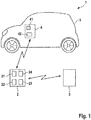
- FIG. 1 shows a system 1 for detecting a pollutant exposure of a user by air pollutants.
- the system 1 comprises a main unit 2, which is preferably frequently worn by the user.
- the main device 2 may be, for example, a mobile device, such as a smartphone or the like, on which a corresponding functionality is implemented by means of a suitable software, a so-called app.
- the main apparatus 2 includes a position locating unit 21 capable of detecting a geographical position of the main apparatus 2 and thus the user.
- the position-localization unit 21 can be embodied, for example, in the form of a GPS receiver or the like, which can determine the geographical position of the main device 2 by means of a satellite-supported locating device or a comparable locating method.
- the location localization unit 21 may also include a communication module and perform a location determination function that executes, for example, the location of the host device 2 by geolocation using an IP address or by triangulation using mobile stations.
- the main unit 2 comprises a microprocessor 22 and a memory unit 23, which is suitable for the execution of software codes and algorithms. Furthermore, a communication unit 24 is provided, which enables the main unit 2 to establish a data connection with an external information source 3 in order to send and receive data.
- the information source 3 is used and is designed to provide depending on a received geographical position and a time stamp of the main unit 2 information about an air quality in the form of measurements for one or more categories of pollutants available, the air quality at the geographical position of the Specify the time stamp specified in the timestamp.
- Air Quality Measurements may indicate concentration data of substances of one or more categories of pollutants at the geographical position and at a particular point in time or time.
- the information source 3 thus enables the retrieval of air quality information for geographical positions and times.
- the pollutant categories for example, pollutants of air particles of different size ranges, such. PM1, PM2.5, etc., as well as categories of volatile pollutants, so-called VOCs (volatile organic compounds), e.g. Hydrocarbons, specify.
- the dimensions are assigned to the pollutant categories and indicate their concentration in a suitable manner, in particular in ppm for volatile pollutants and / or ⁇ g / m3 for particles.
- a mobile attachment 4 may be provided, the z. B. is provided in a motor vehicle 5.
- the attachment 4 may also include a position locating unit 41 for determining the geographical position of the auxiliary device 4 and being capable of providing a communication link via a suitable communication device 42, such as a communication device.
- a suitable communication device 42 such as a communication device.
- the attachment 4 has a control unit 43 and a memory 44.
- the control unit 43 is configured to use the position location unit 41 a movement of the motor vehicle 5 records this time-related (with time stamp) and stores in the memory 44 as a movement profile.
- the main unit 2 can now retrieve the movement profile through the communication link with the auxiliary device 4 and supplement the movement profile recorded in the main unit 2 accordingly. In this way, it is possible, on the one hand, to make the movement profile recorded in the main unit 2 plausible when the user carries the mobile device during a journey, or to supplement the movement profile if the user does not carry the mobile device with him during a journey, because he forgot it, for example. If subsequently a movement profile is received from the main unit 2 which has not been detected by the main unit, the information about the air quality can be retrieved from the information source 3 for the past and the pollutant exposure can be updated accordingly.
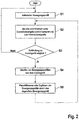
- FIG. 3 is a flow chart illustrating a method of monitoring a user's pollution load using a flowchart.
- step S1 a motion profile is recorded by the main device 2 and, for this purpose, the geographical positions detected by the position location unit 21 are detected together with a corresponding time stamp.
- step S2 air quality information is retrieved from the information source 3 on the basis of the movement profiles, and the corresponding pollutant concentrations of the individual pollutant categories are cumulated with respect to a time increment.
- the time increment may include, for example, 1 hour to 3 hours, 6 hours or one day.
- the retrieval of the time and location-related air quality information can take place at a point in time at which a communication connection with the information source 3 can be established, in particular if there is an Internet connection between the main device 2 and the information source 3.
- step S3 a query is made as to whether a communication connection to an auxiliary device 4 known to the main device 2 can be established. If a connection can be set up (alternative: yes), then the method is continued with step S4, otherwise (alternative: no), the program jumps back to step S1.
- step S4 information about motion profiles of the auxiliary device 4 is retrieved which has been acquired in the same way as in the main device 2 with time stamp.
- step S5 the movement profile is used in the main unit 2 for checking the plausibility of detected movement profiles, or movement profiles located in the main unit 2 are supplemented by the movement profiles detected by the attachment 4. Subsequently, for the newly acquired motion profiles, the corresponding air quality information is retrieved in place and time. For example, a plausibility check may be performed by comparing a last captured geographic location with a current geographic location. If the geographical distance is too large to cover the elapsed time with a vehicle, the result is a negative plausibility result or data is missing for this "coverage gap". The user can subsequently manually close the entry gap himself by receiving a query from the app, which offers the user the option of inserting data from places including time slots. This historical data can also be obtained from external sources.
- the attachment 4 may be fixedly mounted in the motor vehicle 5 or removable.
- it may be in the form of a holder for a mobile phone (main unit), wherein upon insertion of the mobile phone, a communication connection with the attachment 4 is automatically created to transmit the movement profile detected by the attachment 4 to the main unit 2.
Landscapes
- Engineering & Computer Science (AREA)
- Public Health (AREA)
- Remote Sensing (AREA)
- Health & Medical Sciences (AREA)
- Radar, Positioning & Navigation (AREA)
- Medical Informatics (AREA)
- Data Mining & Analysis (AREA)
- Pathology (AREA)
- Epidemiology (AREA)
- General Health & Medical Sciences (AREA)
- Primary Health Care (AREA)
- Databases & Information Systems (AREA)
- Biomedical Technology (AREA)
- Automation & Control Theory (AREA)
- Physics & Mathematics (AREA)
- General Physics & Mathematics (AREA)
- Telephonic Communication Services (AREA)
- Management, Administration, Business Operations System, And Electronic Commerce (AREA)
- Investigating Or Analysing Materials By Optical Means (AREA)
Abstract
Description
- Die Erfindung betrifft Maßnahmen zum Bereitstellen einer Angabe über eine Schadstoffexposition eines Benutzers durch Umgebungsluft während eines längeren Zeitraums sowie eines Systems zur möglichst lückenlosen Erfassung einer Schadstoffexposition eines Benutzers durch Umgebungsluft mit variierender Luftqualität.
- Messstationen zur Erfassung der Luftqualität sind aus dem Stand der Technik bekannt. Derartige Messstationen sind in der Lage, die Verschmutzung von Umgebungsluft mit Partikeln verschiedener Partikelgrößenklassen zu erfassen und/oder Konzentrationen von flüchtigen Schadstoffe, sogenannte VOCs (volatile organic compounds), in der Luft zu messen. Diese Information wird zentral gesammelt, und man kann bei einem Netz aus verteilten Messstationen eine geographische Schadstoffkonzentrationsverteilung für verschiedene Schadstoffkategorien ermitteln.
- Bisherige Systeme ermöglichen somit, die lokale Luftqualität bereitzustellen, um so einem Benutzer Auskunft über die Schädlichkeit der eingeatmeten Luft geben zu können. Üblicherweise ist ein Einatmen von Luft minderer Luftqualität nicht unmittelbar gesundheitsschädlich, sondern hängt im Wesentlichen von der Expositionsdauer des Benutzers im Bereich minderer Luftqualität ab. Mindere Luftqualität liegt bei einer bezogen auf einen Referenzwert hohen Schadstoffkonzentration in einer oder in mehreren Schadstoffkategorien vor. Um eine Auskunft über eine Belastung eines Benutzers angeben zu können, ist es daher notwendig, eine kumulierte Angabe über die Belastung eines Benutzers durch das Atmen von Luft minderer Luftqualität bereitzustellen.
- Hierbei besteht eine Schwierigkeit darin, die Luftqualität der Umgebungsluft, die der Benutzer einatmet, kontinuierlich zu berücksichtigen.
- Es ist Aufgabe der vorliegenden Erfindung, verbesserte Möglichkeiten bereitzustellen, einem Benutzer eine kumulierte Luftschadstoffexposition anzugeben, den dieser durch das Einatmen von Luft unterschiedlicher Luftqualitäten hat.
- Diese Aufgabe wird durch das Verfahren zum Ermitteln einer Exposition eines Benutzers mit Luftschadstoffen während eines längeren Zeitraums gemäß Anspruch 1 sowie durch das System zur Ermittlung einer Exposition eines Benutzers mit Luftschadstoffen gemäß dem nebengeordneten Anspruch gelöst.
- Weitere Ausgestaltungen sind in den abhängigen Ansprüchen angegeben.
- Gemäß einem ersten Aspekt ist ein Verfahren zum Ermitteln einer Exposition eines Benutzers mit Luftschadstoffen während eines längeren Zeitraums vorgesehen, mit folgenden Schritten:
- Bereitstellen eines zeitlichen Bewegungsprofils;
- Abrufen von zeitbezogenen und ortsbezogenen Luftqualitätsinformationen entsprechend/abhängig von dem bereitgestellten Bewegungsprofil, wobei die Luftqualitätsinformationen einen oder mehrere zeitliche Verläufe von Maßangaben für Luftschadstoffe einer oder mehreren Schadstoffkategorien angeben;
- Kumulieren der Maßangaben für die eine oder die mehreren Schadstoffkategorien entsprechend einem Zeitraster und abhängig von dem jeweiligen Ort des Benutzers;
- Bereitstellen der einen oder der mehreren kumulierten Maßangaben als Expositionsangabe eines Benutzers mit Luftschadstoffen.
- Eine Idee des obigen Verfahrens besteht darin, Angaben über die Luftqualität abhängig von einem Bewegungsprofil eines Benutzers zu sammeln und daraus eine kontinuierliche kumulierte Exposition des Benutzers mit Luftschadstoffen als Expositionsangabe bereitzustellen. Dies ermöglicht einem Benutzer, zu erkennen, in welchem Maße der Benutzer Umgebungsluft minderer Luftqualität ausgesetzt war und dadurch seinen Belastungszustand erkennen. Da sich die Belastung des menschlichen Körpers aus der Schadstoffmenge in der eingeatmeten Umgebungsluft und der jeweiligen Einwirkungszeit bestimmt, kann eine Expositionsangabe die Auswirkungen zurückliegender Belastungen bemessen. Die Expositionsangabe ermöglicht dem Benutzer dann, zu entscheiden, Bereiche minderer Luftqualität künftig zu meiden.
- Das zeitliche Bewegungsprofil entspricht einer Angabe über den zeitlichen Verlauf einer geografischen Position des Benutzers.
- Eine Angabe zu einer Exposition mit Luftschadstoffen wird durch eine Kumulierung von Maßangaben eingeatmeter Luftschadstoffe, der der Benutzer ausgesetzt ist, ermittelt. Die Maßangaben der Luftschadstoffe können mithilfe eines Mobilgeräts erfasst werden, das in an sich bekannter Weise eine geographische Position des Benutzers bestimmt und eine entsprechende Information/ Maßangaben über die lokale Luftqualität abhängig von der geographischen Position von einer dezentralen Informationsquelle abruft.
- Basierend auf der so erhaltenen Expositionsangabe können Funktionen ausgeführt werden, wie beispielsweise ein Warnsignal bereitgestellt werden, oder Systeme so angesteuert werden, dass die Schadstoffbelastung des betreffenden Benutzers reduziert wird.
- Weiterhin können die Schadstoffkategorien Schadstoffpartikel bestimmter Größenklassen und/oder flüchtige Schadstoffe umfassen.
- Die Luftqualität bestimmt sich durch die Konzentration von Schadstoffen, die in verschiedenen Schadstoffkategorien eingeteilt werden können. So können Schadstoffpartikel entsprechend ihrer Größe verschiedenen Schadstoffkategorien zugeordnet werden, wie z.B. PM1.0, PM2.5 PM10 und dergleichen. Zu jeder der Schadstoffkategorien kann die Konzentration in z.B. µg/m3 durch eine entsprechende Maßangabe angegeben werden. Gleichermaßen kann die Konzentration von flüchtigen Schadstoffen, wie z.B. der Schadstoffkategorie der Kohlenwasserstoffe, in ppm als Maßangabe angegeben werden.
- Die bereitgestellten Maßangaben können für jede Schadstoffkategorie in geeigneten Zeiträumen aufaddiert werden, um so eine zeitlich kumulierte Expositionsangabe für jede der Schadstoffkategorien zur Exposition des Benutzers mit Luftschadstoffen zu erhalten.
- Gemäß einer Ausführungsform kann das Abrufen von zeitbezogenen und ortsbezogenen Luftqualitätsinformationen von einer Informationsquelle regelmäßig, zu vorbestimmten Zeitpunkten, und/oder nach Aufbau einer Kommunikationsverbindung mit der Informationsquelle durchgeführt werden.
- Weiterhin kann das Bereitstellen des zeitlichen Bewegungsprofils durch kontinuierliches Erfassen der geografischen Positionen mit Hilfe einer oder mehreren Positionslokalisationseinheiten in einem Hauptgerät und ggfs einem oder mehreren Zusatzgeräten durchgeführt werden.
- Alternativ oder zusätzlich kann das Bereitstellen des zeitlichen Bewegungsprofils durch Plausibilisieren und Ergänzen von einem Hauptgerät und einem oder mehreren Zusatzgeräten erfassten zeitlichen Bewegungsprofilen durchgeführt werden.
- Insbesondere im Straßenverkehr ist der Benutzer einer hohen Schadstoffbelastung durch Verkehrsabgase ausgesetzt. Jedoch kommt es gelegentlich vor, dass der Benutzer sein Mobilgerät nicht bei sich trägt und dann eine Ortsbestimmung und/oder eine Bestimmung eines Bewegungsprofils des sich in einer Fahrt befindlichen Benutzers nicht verfügbar ist. Die so entstehende zeitliche Lücke bei der Erfassung der Schadstoffexposition kann erheblich sein und die laufend zu aktualisierende Expositionsangabe verfälschen. Das obige System sieht vor, eine möglichst lückenlose Erfassung der Position des Benutzers zu ermöglichen, auch wenn dieser sein Mobilgerät nicht bei sich trägt.
- Dazu wird vorgeschlagen, ein Zusatzgerät zur Verfügung zu stellen, das in einem Kraftfahrzeug fixierbar ist und eine von den Fahrzeugsystemen unabhängige Aufzeichnung eines Bewegungsprofils des Benutzers ermöglicht. Dieses Zusatzgerät kann durch eine geeignete Kommunikationsschnittstelle mit dem Mobilgerät kommunizieren, insbesondere wenn das Mobilgerät in die Nähe des Zusatzgeräts gebracht wird. Dadurch lässt sich das Bewegungsprofil des Benutzers vervollständigen und die entsprechenden zeitlichen und örtlichen Verläufe der Maßangaben über die Luftqualität zu dem entsprechenden zeitlichen Verlauf des Bewegungsprofils entlang einer geografischen Strecke abrufen. Das Zusatzgerät ermöglicht es so, die Expositionsangabe möglichst präzise zu ermitteln, indem die Wahrscheinlichkeit für das Auftreten von Erfassungslücken minimiert werden.
- Es kann vorgesehen sein, dass ein Überschreiten eines vorgegebenen Grenzwerts durch die kumulierte Maßangabe einer oder mehrerer Schadstoffkategorien signalisiert wird.
- Weiterhin kann die Expositionsangabe eine Summe aus mehreren gewichteten kumulierten Maßangaben enthalten. Somit können bei der Bestimmung der Expositionsangabe die Luftschadstoffe gemäß ihrer Einstufung als z.B. reizend, gesundheitsgefährdend, krebserregend unterschiedlich stark gewichtet werden, wobei stark gesundheitsgefährdende Luftschadstoffe höher gewichtet werden. Die Expositionsangabe kann dann eine Gesamtbelastung mit Luftschadstoffen bereitstellen.
- Gemäß einem weiteren Aspekt ist ein System zur Ermittlung einer Exposition eines Benutzers mit Luftschadstoffen vorgesehen, wobei das System umfasst:
- ein Hauptgerät, das ausgebildet ist, um
- ∘ ein zeitliches Bewegungsprofil bereitzustellen;
- ∘ zeitbezogene und ortsbezogene Luftqualitätsinformationen abhängig von dem bereitgestellten Bewegungsprofil abzurufen, wobei die Luftqualitätsinformationen einen oder mehrere zeitliche Verläufe von Maßangaben für Luftschadstoffe einer oder mehreren Schadstoffkategorien angeben;
- ∘ die Maßangaben für die eine oder die mehreren Schadstoffkategorien entsprechend einem Zeitraster und abhängig von dem jeweiligen Ort des Benutzers zu kumulieren;
- ∘ eine Expositionsangabe eines Benutzers mit Luftschadstoffen abhängig von der einen oder den mehreren kumulierten Maßangaben bereitzustellen.
- Weiterhin kann ein Zusatzgerät ausgebildet sein, um ein zeitliches Bewegungsprofil bereitzustellen und um das durch das Hauptgerät erfasste zeitliche Bewegungsprofil mit dem durch das Zusatzgerät erfasste zeitliche Bewegungsprofil zu plausibilisieren oder zu ergänzen.
- Ausführungsformen werden nachfolgend anhand der beigefügten Zeichnungen näher erläutert. Es zeigen:
- Figur 1
- eine schematische Darstellung eines Systems zur Erfassung einer Schadstoffexposition eines Benutzers durch Luftschadstoffe; und
- Figur 2
- ein Verfahren zum Betreiben eines Mobilgeräts zur Erfassung einer Exposition von Luftschadstoffen.
-
Figur 1 zeigt ein System 1 zur Erfassung einer Schadstoffexposition eines Benutzers durch Luftschadstoffe. Das System 1 umfasst ein Hauptgerät 2, das vorzugweise häufig von dem Benutzer getragen wird. Das Hauptgerät 2 kann beispielsweise ein Mobilgerät, wie beispielsweise ein Smartphone oder dergleichen sein, auf dem eine entsprechende Funktionalität mithilfe einer geeigneten Software, einer sogenannten App, implementiert ist. - Das Hauptgerät 2 umfasst eine Positionslokalisationseinheit 21, die in der Lage ist, eine geographische Position des Hauptgeräts 2 und somit des Benutzers zu erfassen. Die Positionslokalisationseinheit 21 kann beispielsweise in Form eines GPS-Empfängers oder dergleichen ausgebildet sein, die mithilfe einer satellitengestützen Ortung oder einem vergleichbaren Ortungsverfahren die geografische Position des Hauptgeräts 2 bestimmen kann. Alternativ kann die Positionslokalisationseinheit 21 auch ein Kommunikationsmodul umfassen und eine Funktion zur Ortsbestimmung durchführen, die beispielsweise den Ort des Hauptgeräts 2 durch eine Geolokalisierung mithilfe einer IP-Adresse oder durch Triangulation mithilfe von Mobilfunksendeanlagen ausführt.
- Weiterhin umfasst das Hauptgerät 2 einen Mikroprozessor 22 und eine Speichereinheit 23, die zur Ausführung von Softwarecodes und Algorithmen geeignet ist. Weiterhin ist eine Kommunikationseinheit 24 vorgesehen, die es dem Hauptgerät 2 ermöglicht, mit einer externen Informationsquelle 3 eine Datenverbindung aufzubauen, um Daten zu senden und zu empfangen.
- Die Informationsquelle 3 dient dazu und ist dazu ausgelegt, abhängig von einer empfangenen geographischen Position und einem Zeitstempel des Hauptgeräts 2 Angaben über eine Luftqualität in Form von Maßangaben für eine oder mehrere Schadstoffkategorien zur Verfügung zu stellen, die die Luftqualität an der geografischen Position zu dem durch den Zeitstempel angegebenen Zeitpunkt angeben. Die Maßangaben über die Luftqualität können Konzentrationsangaben von Schafstoffen einer oder mehreren Schadstoffkategorien an der geographischen Position und zu einem bestimmten Zeitpunkt bzw. Zeitbereich angeben. Die Informationsquelle 3 ermöglicht also den Abruf von Luftqualitätsinformationen für geographische Positionen und Zeitpunkte. Die Schadstoffkategorien können beispielsweise Schadstoffe von Luftpartikeln verschiedener Größenbereiche, wie z. B. PM1, PM2,5, usw. sowie Kategorien von flüchtigen Schadstoffen, sogenannten VOCs (volatile organic compounds), wie z.B. Kohlenwasserstoffe, angeben. Die Maßangaben sind den Schadstoffkategorien zugeordnet und geben in geeigneter Weise deren Konzentration an, insbesondere in ppm für flüchtige Schadstoffe und/oder µg/m3 für Partikel.
- Weiterhin kann ein mobiles Zusatzgerät 4 vorgesehen sein, das z. B. in einem Kraftfahrzeug 5 vorgesehen ist. Das Zusatzgerät 4 kann ebenfalls eine Positionslokalisationseinheit 41 zur Bestimmung der geographischen Position des Hilfsgeräts 4 aufweisen und in der Lage sein, eine Kommunikationsverbindung über eine geeignete Kommunikationseinrichtung 42, wie z.B. ein Wifi-Modul, Bluetooth-Modul, NFC-Modul oder dergleichen mit dem Hauptgerät 2 aufzubauen.
- Das Zusatzgerät 4 weist eine Steuereinheit 43 und einen Speicher 44 auf. Die Steuereinheit 43 ist ausgebildet, um mithilfe der Positionslokalisationseinheit 41 bei einer Bewegung des Kraftfahrzeugs 5 diese zeitbezogen (mit Zeitstempel) aufzeichnet und in dem Speicher 44 als Bewegungsprofil speichert.
- Das Hauptgerät 2 kann nun durch die Kommunikationsverbindung mit dem Zusatzgerät 4 das Bewegungsprofil abrufen und das in dem Hauptgerät 2 aufgezeichnete Bewegungsprofil entsprechend ergänzen. Auf diese Weise ist es möglich, zum einen das in dem Hauptgerät 2 aufgezeichnete Bewegungsprofil zu plausibilisieren, wenn der Benutzer das Mobilgerät während einer Fahrt mit sich trägt, oder das Bewegungsprofil zu ergänzen, wenn der Benutzer während einer Fahrt das Mobilgerät nicht bei sich trägt, weil dieser es beispielsweise vergessen hat. Wird von dem Hauptgerät 2 nachträglich ein Bewegungsprofil empfangen, das das Hauptgerät nicht erfasst hat, so können für die Vergangenheit die Angaben über die Luftqualität von der Informationsquelle 3 abgerufen werden und die Schadstoffexposition entsprechend aktualisiert werden.
- In
Figur 2 ist ein Flussdiagramm zur Veranschaulichung eines Verfahrens zum Überwachen einer Schadstoffbelastung eines Benutzers anhand eines Flussdiagramms dargestellt. - In Schritt S1 wird durch das Hauptgerät 2 ein Bewegungsprofil aufgezeichnet und dazu die durch die Positionslokalisationseinheit 21 erfassten geographischen Positionen zusammen mit einem entsprechenden Zeitstempel erfasst.
- Kontinuierlich oder zu regelmäßigen oder vorbestimmten Zeitpunkten werden in Schritt S2 anhand der Bewegungsprofile Luftqualitätsinformationen von der Informationsquelle 3 abgerufen und die entsprechenden Schadstoffkonzentrationen der einzelnen Schadstoffkategorien bezüglich eines Zeitinkrements kumuliert. Das Zeitinkrement kann beispielsweise 1 Stunde bis 3 Stunden, 6 Stunden oder einen Tag umfassen. Insbesondere kann der Abruf der zeit- und ortsbezogenen Luftqualitätsinformationen zu einem Zeitpunkt erfolgen, zu dem eine Kommunikationsverbindung mit der Informationsquelle 3 aufgebaut werden kann, insbesondere wenn eine Internetverbindung zwischen dem Hauptgerät 2 und der Informationsquelle 3 besteht.
- In einem nachfolgenden Schritt S3 wird abgefragt, ob eine Kommunikationsverbindung zu einem dem Hauptgerät 2 bekannten Zusatzgerät 4 aufgebaut werden kann. Kann eine Verbindung aufgebaut werden (Alternative: Ja), so wird das Verfahren mit Schritt S4 fortgesetzt, anderenfalls (Alternative: Nein) wird zu Schritt S1 zurückgesprungen.
- In Schritt S4 werden Informationen über Bewegungsprofile des Zusatzgeräts 4 abgefragt die auf gleiche Weise wie in dem Hauptgerät 2 mit Zeitstempel erfasst worden sind.
- In Schritt S5 wird das Bewegungsprofil in dem Hauptgerät 2 zur Plausibilisierung erfasster Bewegungsprofile verwendet, oder im Hauptgerät 2 befindliche Bewegungsprofile werden durch die durch das Zusatzgerät 4 erfassten Bewegungsprofile ergänzt. Anschließend werden für die neu erfassten Bewegungsprofile die entsprechenden Luftqualitätsinformationen orts- und zeitbezogen abgerufen. Eine Plausibilisierung kann beispielsweise erfolgen, indem eine letzte erfasste geografische Position mit einer aktuellen geografischen Position verglichen wird. Ist der geografische Abstand zu groß, um in der verstrichenen Zeit mit einem Fahrzeug zurückgelegt worden zu sein, ergibt sich ein negatives Plausibilisierungsergebnis bzw. es fehlen Daten für diese "Erfassungslücke". Der Benutzer kann die Erfassungslücke nachträglich manuell selbst schließen, indem er von der App eine Abfrage bekommt, welche dem Nutzer die Möglichkeit bietet Daten von Orten inklusive Zeitfenstern einzufügen. Diese historischen Daten können ebenfalls von externen Quellen bezogen werden.
- Das Zusatzgerät 4 kann in dem Kraftfahrzeug 5 fest montiert oder herausnehmbar ausgebildet sein. Insbesondere kann es in Form einer Halterung für ein Mobiltelefon (Hauptgerät) ausgebildet sein, wobei bei Einsetzen des Mobiltelefons automatisch eine Kommunikationsverbindung mit dem Zusatzgerät 4 erstellt wird, um das durch das Zusatzgerät 4 erfasste Bewegungsprofil an das Hauptgerät 2 zu übertragen.
Claims (9)
- Verfahren zum Ermitteln einer Expositionsangabe eines Benutzers mit Luftschadstoffen während eines längeren Zeitraums, mit folgenden Schritten:- Bereitstellen (S1) eines zeitlichen Bewegungsprofils;- Abrufen (S2) von zeitbezogenen und ortsbezogenen Luftqualitätsinformationen abhängig von dem bereitgestellten zeitlichen Bewegungsprofil, wobei die Luftqualitätsinformationen einen oder mehrere zeitliche Verläufe von Maßangaben für Luftschadstoffe einer oder mehreren Schadstoffkategorien für mehrere Orte angeben;- Kumulieren (S2) der Maßangaben für die eine oder die mehreren Schadstoffkategorien entsprechend einem Zeitraster und abhängig von dem jeweiligen Ort des Benutzers; und- Bereitstellen der einen oder der mehreren kumulierten Maßangaben als Expositionsangabe eines Benutzers mit Luftschadstoffen.
- Verfahren nach Anspruch 1, wobei die Schadstoffkategorien Schadstoffpartikel bestimmter Größenklassen und/oder flüchtige Schadstoffe umfassen.
- Verfahren nach Anspruch 1 oder 2, wobei das Abrufen von zeitbezogenen und ortsbezogenen Luftqualitätsinformationen von einer Informationsquelle (3) regelmäßig, zu vorbestimmten Zeitpunkten, und/oder nach Aufbau einer Kommunikationsverbindung mit der Informationsquelle (3) durchgeführt wird.
- Verfahren nach einem der Ansprüche 1 bis 3, wobei das Bereitstellen des zeitlichen Bewegungsprofils durch kontinuierliches Erfassen von geografischen Positionen mit Hilfe einer oder mehrere Positionslokalisationseinheiten (21) in einem Hauptgerät (2) und ggfs einem oder mehreren Zusatzgeräten (4) durchgeführt wird.
- Verfahren nach einem der Ansprüche 1 bis 4, wobei das Bereitstellen des zeitlichen Bewegungsprofils durch Plausibilisieren und Ergänzen von einem Hauptgerät (2) und einem oder mehreren Zusatzgeräten (4) erfassten zeitlichen Bewegungsprofilen durchgeführt wird.
- Verfahren nach einem der Ansprüche 1 bis 5, wobei ein Überschreiten eines vorgegebenen Grenzwerts durch die kumulierte Maßangabe einer oder mehrerer Schadstoffkategorien, insbesondere optisch oder akustisch, signalisiert wird.
- Verfahren nach einem der Ansprüche 1 bis 6, wobei die Expositionsangabe mit einer Summe aus mehreren gewichteten kumulierten Maßangaben bestimmt wird.
- System (1) zur Ermittlung einer Expositionsangabe eines Benutzers mit Luftschadstoffen, wobei das System (1) umfasst:- ein Hauptgerät (2), das ausgebildet ist, um∘ ein zeitliches Bewegungsprofil bereitzustellen;∘ zeitbezogene und ortsbezogene Luftqualitätsinformationen abhängig von dem bereitgestellten zeitlichen Bewegungsprofil abzurufen, wobei die Luftqualitätsinformationen einen oder mehrere zeitliche Verläufe von Maßangaben für Luftschadstoffe einer oder mehreren Schadstoffkategorien angeben;∘ die Maßangaben für die eine oder die mehreren Schadstoffkategorien entsprechend einem Zeitraster und abhängig von dem jeweiligen Ort des Benutzers zu kumulieren;∘ die eine oder die mehreren kumulierten Maßangaben als Expositionsangabe eines Benutzers mit Luftschadstoffen bereitzustellen.
- System (1) nach Anspruch 8, wobei ein Zusatzgerät (4) ausgebildet ist, um ein zeitliches Bewegungsprofil bereitzustellen und um das durch das Hauptgerät (2) erfasste zeitliche Bewegungsprofil mit dem durch das Zusatzgerät (4) erfasste zeitliche Bewegungsprofil zu plausibilisieren oder zu ergänzen.
Priority Applications (1)
| Application Number | Priority Date | Filing Date | Title |
|---|---|---|---|
| EP17203435.7A EP3312842B1 (de) | 2017-11-24 | 2017-11-24 | Verfahren zum bereitstellen einer expositionsangabe über eine belastung einer person mit luftschadstoffen |
Applications Claiming Priority (1)
| Application Number | Priority Date | Filing Date | Title |
|---|---|---|---|
| EP17203435.7A EP3312842B1 (de) | 2017-11-24 | 2017-11-24 | Verfahren zum bereitstellen einer expositionsangabe über eine belastung einer person mit luftschadstoffen |
Publications (3)
| Publication Number | Publication Date |
|---|---|
| EP3312842A2 true EP3312842A2 (de) | 2018-04-25 |
| EP3312842A3 EP3312842A3 (de) | 2018-06-20 |
| EP3312842B1 EP3312842B1 (de) | 2020-02-19 |
Family
ID=60813569
Family Applications (1)
| Application Number | Title | Priority Date | Filing Date |
|---|---|---|---|
| EP17203435.7A Active EP3312842B1 (de) | 2017-11-24 | 2017-11-24 | Verfahren zum bereitstellen einer expositionsangabe über eine belastung einer person mit luftschadstoffen |
Country Status (1)
| Country | Link |
|---|---|
| EP (1) | EP3312842B1 (de) |
Family Cites Families (7)
| Publication number | Priority date | Publication date | Assignee | Title |
|---|---|---|---|---|
| US6754485B1 (en) * | 1998-12-23 | 2004-06-22 | American Calcar Inc. | Technique for effectively providing maintenance and information to vehicles |
| US8744766B2 (en) * | 2011-09-27 | 2014-06-03 | International Business Machines Corporation | Dynamic route recommendation based on pollution data |
| US20130304385A1 (en) * | 2012-05-08 | 2013-11-14 | Logimesh IP, LLC | Holding tank monitoring system |
| US20160117372A1 (en) * | 2014-10-28 | 2016-04-28 | KrafftlT AB | Software application that determines the optimal times for outdoor activities based on outdoor conditions |
| GB2539449A (en) * | 2015-06-16 | 2016-12-21 | The Mustard Concept (Tmc) Ltd | Monitor for air quality |
| US9574964B2 (en) * | 2015-07-07 | 2017-02-21 | Toyota Jidosha Kabushiki Kaisha | Mobile computer atmospheric barometric pressure system |
| JP6425854B1 (ja) * | 2015-12-30 | 2018-11-21 | コーニンクレッカ フィリップス エヌ ヴェKoninklijke Philips N.V. | 大気汚染に対する曝露の監視 |
-
2017
- 2017-11-24 EP EP17203435.7A patent/EP3312842B1/de active Active
Non-Patent Citations (1)
| Title |
|---|
| None |
Also Published As
| Publication number | Publication date |
|---|---|
| EP3312842B1 (de) | 2020-02-19 |
| EP3312842A3 (de) | 2018-06-20 |
Similar Documents
| Publication | Publication Date | Title |
|---|---|---|
| DE102018118934B4 (de) | Digitale Beschilderungseinrichtung, Digitales Beschilderungssteuerverfahren und nichtflüchtiges computerlesbares Aufzeichnungsmedium | |
| DE102017206275A1 (de) | Verfahren zum Betreiben eines Korrekturdienstsystems und Korrekturdienstsystem | |
| EP3921752A1 (de) | Überwachung und korrektur der verschleierung fahrzeugbezogener daten | |
| WO2009030523A1 (de) | Geobroadcast über einen server | |
| EP2813914A1 (de) | Überwachung von technischen Anlagen mit einem unbemannten Flugobjekt | |
| EP2924662A1 (de) | Onboard-Unit und Verfahren zur Funktionsüberwachung in einem Straßenmautsystem | |
| DE102019217187B4 (de) | Verfahren und Vorrichtung zur Ermittlung von Navigationsinformationen | |
| WO2008089988A2 (de) | Avionisches luftfahrtsystem mit bodenstation zur automatischen behebung von auftretenden betriebsstörungen bei flugzeugen, sowie entsprechendes verfahren | |
| DE102014019106B4 (de) | Verfahren zum Betrieb eines Fahrzeugsystems zur Auswahl einer Fahrspur und Kraftfahrzeug | |
| DE102016221557A1 (de) | Bereitstellen einer Information aus einem Verbund mehrerer Kraftfahrzeuge | |
| WO2010139807A1 (de) | Verfahren zur ermittlung der übertragungsqualität der c2x-kommunikation und entsprechende vorrichtung | |
| DE102019127930A1 (de) | Verfahren zur Positionsbestimmung eines nichtmotorisierten Verkehrsteilnehmers und Verkehrseinrichtung | |
| DE102015000379B4 (de) | Verfahren zum Unterstützen eines Fahrerassistenzsystems auf einem nicht vermessbaren Streckenabschnitt | |
| EP2811468B1 (de) | Verfahren und Einrichtung zur Fehlererkennung in einem Mautsystem | |
| EP3312842B1 (de) | Verfahren zum bereitstellen einer expositionsangabe über eine belastung einer person mit luftschadstoffen | |
| DE102021105011A1 (de) | Verfahren und System zur Überwachung wenigstens einer Konzentration eines Gases in einem Überwachungsgebiet | |
| EP3688743B1 (de) | Einrichtung zur unterstützung der mobilität sehbehinderter personen im strassenverkehr | |
| DE102009018741A1 (de) | Geobroadcast über einen Server | |
| EP3625520A1 (de) | Verfahren, vorrichtung und system zum ermitteln eines wettergebiets | |
| DE112015003843T5 (de) | Betätigungsinformationsmessvorrichtung, Programm und Steuerverfahren | |
| WO2020077376A1 (de) | Verfahren zur bestimmung der kontamination oder beeinträchtigung von personen durch schadstoffe | |
| DE112019003144T5 (de) | Positionserkennungssystem | |
| DE102021206233B4 (de) | Verfahren zum Ermitteln eines Komfortwerts für ein betriebenes Kraftfahrzeug | |
| WO2019015997A1 (de) | Korrektur eines gemessenen positionswerts eines schienengebundenen fahrzeugs | |
| DE102018214224B3 (de) | Verfahren zur Steuerung von Erfassungseinrichtungen von Fahrzeugen einer Fahrzeugflotte durch eine zentrale Steuereinheit, um einen Datenbestand an Messdaten zu beschaffen |
Legal Events
| Date | Code | Title | Description |
|---|---|---|---|
| PUAI | Public reference made under article 153(3) epc to a published international application that has entered the european phase |
Free format text: ORIGINAL CODE: 0009012 |
|
| STAA | Information on the status of an ep patent application or granted ep patent |
Free format text: STATUS: THE APPLICATION HAS BEEN PUBLISHED |
|
| AK | Designated contracting states |
Kind code of ref document: A2 Designated state(s): AL AT BE BG CH CY CZ DE DK EE ES FI FR GB GR HR HU IE IS IT LI LT LU LV MC MK MT NL NO PL PT RO RS SE SI SK SM TR |
|
| AX | Request for extension of the european patent |
Extension state: BA ME |
|
| PUAL | Search report despatched |
Free format text: ORIGINAL CODE: 0009013 |
|
| AK | Designated contracting states |
Kind code of ref document: A3 Designated state(s): AL AT BE BG CH CY CZ DE DK EE ES FI FR GB GR HR HU IE IS IT LI LT LU LV MC MK MT NL NO PL PT RO RS SE SI SK SM TR |
|
| AX | Request for extension of the european patent |
Extension state: BA ME |
|
| RIC1 | Information provided on ipc code assigned before grant |
Ipc: G01C 21/34 20060101ALI20180515BHEP Ipc: G16H 50/30 20180101AFI20180515BHEP Ipc: G16H 50/80 20180101ALI20180515BHEP |
|
| STAA | Information on the status of an ep patent application or granted ep patent |
Free format text: STATUS: REQUEST FOR EXAMINATION WAS MADE |
|
| 17P | Request for examination filed |
Effective date: 20181204 |
|
| RBV | Designated contracting states (corrected) |
Designated state(s): AL AT BE BG CH CY CZ DE DK EE ES FI FR GB GR HR HU IE IS IT LI LT LU LV MC MK MT NL NO PL PT RO RS SE SI SK SM TR |
|
| STAA | Information on the status of an ep patent application or granted ep patent |
Free format text: STATUS: EXAMINATION IS IN PROGRESS |
|
| 17Q | First examination report despatched |
Effective date: 20190121 |
|
| GRAP | Despatch of communication of intention to grant a patent |
Free format text: ORIGINAL CODE: EPIDOSNIGR1 |
|
| STAA | Information on the status of an ep patent application or granted ep patent |
Free format text: STATUS: GRANT OF PATENT IS INTENDED |
|
| INTG | Intention to grant announced |
Effective date: 20190913 |
|
| GRAS | Grant fee paid |
Free format text: ORIGINAL CODE: EPIDOSNIGR3 |
|
| GRAA | (expected) grant |
Free format text: ORIGINAL CODE: 0009210 |
|
| STAA | Information on the status of an ep patent application or granted ep patent |
Free format text: STATUS: THE PATENT HAS BEEN GRANTED |
|
| AK | Designated contracting states |
Kind code of ref document: B1 Designated state(s): AL AT BE BG CH CY CZ DE DK EE ES FI FR GB GR HR HU IE IS IT LI LT LU LV MC MK MT NL NO PL PT RO RS SE SI SK SM TR |
|
| REG | Reference to a national code |
Ref country code: CH Ref legal event code: EP |
|
| REG | Reference to a national code |
Ref country code: DE Ref legal event code: R096 Ref document number: 502017003856 Country of ref document: DE |
|
| REG | Reference to a national code |
Ref country code: AT Ref legal event code: REF Ref document number: 1235884 Country of ref document: AT Kind code of ref document: T Effective date: 20200315 |
|
| REG | Reference to a national code |
Ref country code: IE Ref legal event code: FG4D Free format text: LANGUAGE OF EP DOCUMENT: GERMAN |
|
| REG | Reference to a national code |
Ref country code: NL Ref legal event code: MP Effective date: 20200219 |
|
| PG25 | Lapsed in a contracting state [announced via postgrant information from national office to epo] |
Ref country code: FI Free format text: LAPSE BECAUSE OF FAILURE TO SUBMIT A TRANSLATION OF THE DESCRIPTION OR TO PAY THE FEE WITHIN THE PRESCRIBED TIME-LIMIT Effective date: 20200219 Ref country code: NO Free format text: LAPSE BECAUSE OF FAILURE TO SUBMIT A TRANSLATION OF THE DESCRIPTION OR TO PAY THE FEE WITHIN THE PRESCRIBED TIME-LIMIT Effective date: 20200519 Ref country code: RS Free format text: LAPSE BECAUSE OF FAILURE TO SUBMIT A TRANSLATION OF THE DESCRIPTION OR TO PAY THE FEE WITHIN THE PRESCRIBED TIME-LIMIT Effective date: 20200219 |
|
| REG | Reference to a national code |
Ref country code: LT Ref legal event code: MG4D |
|
| PG25 | Lapsed in a contracting state [announced via postgrant information from national office to epo] |
Ref country code: IS Free format text: LAPSE BECAUSE OF FAILURE TO SUBMIT A TRANSLATION OF THE DESCRIPTION OR TO PAY THE FEE WITHIN THE PRESCRIBED TIME-LIMIT Effective date: 20200619 Ref country code: BG Free format text: LAPSE BECAUSE OF FAILURE TO SUBMIT A TRANSLATION OF THE DESCRIPTION OR TO PAY THE FEE WITHIN THE PRESCRIBED TIME-LIMIT Effective date: 20200519 Ref country code: LV Free format text: LAPSE BECAUSE OF FAILURE TO SUBMIT A TRANSLATION OF THE DESCRIPTION OR TO PAY THE FEE WITHIN THE PRESCRIBED TIME-LIMIT Effective date: 20200219 Ref country code: SE Free format text: LAPSE BECAUSE OF FAILURE TO SUBMIT A TRANSLATION OF THE DESCRIPTION OR TO PAY THE FEE WITHIN THE PRESCRIBED TIME-LIMIT Effective date: 20200219 Ref country code: GR Free format text: LAPSE BECAUSE OF FAILURE TO SUBMIT A TRANSLATION OF THE DESCRIPTION OR TO PAY THE FEE WITHIN THE PRESCRIBED TIME-LIMIT Effective date: 20200520 Ref country code: HR Free format text: LAPSE BECAUSE OF FAILURE TO SUBMIT A TRANSLATION OF THE DESCRIPTION OR TO PAY THE FEE WITHIN THE PRESCRIBED TIME-LIMIT Effective date: 20200219 |
|
| PG25 | Lapsed in a contracting state [announced via postgrant information from national office to epo] |
Ref country code: NL Free format text: LAPSE BECAUSE OF FAILURE TO SUBMIT A TRANSLATION OF THE DESCRIPTION OR TO PAY THE FEE WITHIN THE PRESCRIBED TIME-LIMIT Effective date: 20200219 |
|
| PG25 | Lapsed in a contracting state [announced via postgrant information from national office to epo] |
Ref country code: ES Free format text: LAPSE BECAUSE OF FAILURE TO SUBMIT A TRANSLATION OF THE DESCRIPTION OR TO PAY THE FEE WITHIN THE PRESCRIBED TIME-LIMIT Effective date: 20200219 Ref country code: LT Free format text: LAPSE BECAUSE OF FAILURE TO SUBMIT A TRANSLATION OF THE DESCRIPTION OR TO PAY THE FEE WITHIN THE PRESCRIBED TIME-LIMIT Effective date: 20200219 Ref country code: PT Free format text: LAPSE BECAUSE OF FAILURE TO SUBMIT A TRANSLATION OF THE DESCRIPTION OR TO PAY THE FEE WITHIN THE PRESCRIBED TIME-LIMIT Effective date: 20200712 Ref country code: SK Free format text: LAPSE BECAUSE OF FAILURE TO SUBMIT A TRANSLATION OF THE DESCRIPTION OR TO PAY THE FEE WITHIN THE PRESCRIBED TIME-LIMIT Effective date: 20200219 Ref country code: RO Free format text: LAPSE BECAUSE OF FAILURE TO SUBMIT A TRANSLATION OF THE DESCRIPTION OR TO PAY THE FEE WITHIN THE PRESCRIBED TIME-LIMIT Effective date: 20200219 Ref country code: CZ Free format text: LAPSE BECAUSE OF FAILURE TO SUBMIT A TRANSLATION OF THE DESCRIPTION OR TO PAY THE FEE WITHIN THE PRESCRIBED TIME-LIMIT Effective date: 20200219 Ref country code: DK Free format text: LAPSE BECAUSE OF FAILURE TO SUBMIT A TRANSLATION OF THE DESCRIPTION OR TO PAY THE FEE WITHIN THE PRESCRIBED TIME-LIMIT Effective date: 20200219 Ref country code: SM Free format text: LAPSE BECAUSE OF FAILURE TO SUBMIT A TRANSLATION OF THE DESCRIPTION OR TO PAY THE FEE WITHIN THE PRESCRIBED TIME-LIMIT Effective date: 20200219 Ref country code: EE Free format text: LAPSE BECAUSE OF FAILURE TO SUBMIT A TRANSLATION OF THE DESCRIPTION OR TO PAY THE FEE WITHIN THE PRESCRIBED TIME-LIMIT Effective date: 20200219 |
|
| REG | Reference to a national code |
Ref country code: DE Ref legal event code: R097 Ref document number: 502017003856 Country of ref document: DE |
|
| PLBE | No opposition filed within time limit |
Free format text: ORIGINAL CODE: 0009261 |
|
| STAA | Information on the status of an ep patent application or granted ep patent |
Free format text: STATUS: NO OPPOSITION FILED WITHIN TIME LIMIT |
|
| 26N | No opposition filed |
Effective date: 20201120 |
|
| PG25 | Lapsed in a contracting state [announced via postgrant information from national office to epo] |
Ref country code: IT Free format text: LAPSE BECAUSE OF FAILURE TO SUBMIT A TRANSLATION OF THE DESCRIPTION OR TO PAY THE FEE WITHIN THE PRESCRIBED TIME-LIMIT Effective date: 20200219 |
|
| PG25 | Lapsed in a contracting state [announced via postgrant information from national office to epo] |
Ref country code: PL Free format text: LAPSE BECAUSE OF FAILURE TO SUBMIT A TRANSLATION OF THE DESCRIPTION OR TO PAY THE FEE WITHIN THE PRESCRIBED TIME-LIMIT Effective date: 20200219 Ref country code: SI Free format text: LAPSE BECAUSE OF FAILURE TO SUBMIT A TRANSLATION OF THE DESCRIPTION OR TO PAY THE FEE WITHIN THE PRESCRIBED TIME-LIMIT Effective date: 20200219 |
|
| PG25 | Lapsed in a contracting state [announced via postgrant information from national office to epo] |
Ref country code: MC Free format text: LAPSE BECAUSE OF FAILURE TO SUBMIT A TRANSLATION OF THE DESCRIPTION OR TO PAY THE FEE WITHIN THE PRESCRIBED TIME-LIMIT Effective date: 20200219 |
|
| REG | Reference to a national code |
Ref country code: CH Ref legal event code: PL |
|
| PG25 | Lapsed in a contracting state [announced via postgrant information from national office to epo] |
Ref country code: LU Free format text: LAPSE BECAUSE OF NON-PAYMENT OF DUE FEES Effective date: 20201124 |
|
| REG | Reference to a national code |
Ref country code: BE Ref legal event code: MM Effective date: 20201130 |
|
| PG25 | Lapsed in a contracting state [announced via postgrant information from national office to epo] |
Ref country code: CH Free format text: LAPSE BECAUSE OF NON-PAYMENT OF DUE FEES Effective date: 20201130 Ref country code: LI Free format text: LAPSE BECAUSE OF NON-PAYMENT OF DUE FEES Effective date: 20201130 |
|
| PG25 | Lapsed in a contracting state [announced via postgrant information from national office to epo] |
Ref country code: IE Free format text: LAPSE BECAUSE OF NON-PAYMENT OF DUE FEES Effective date: 20201124 Ref country code: FR Free format text: LAPSE BECAUSE OF NON-PAYMENT OF DUE FEES Effective date: 20201130 |
|
| PG25 | Lapsed in a contracting state [announced via postgrant information from national office to epo] |
Ref country code: TR Free format text: LAPSE BECAUSE OF FAILURE TO SUBMIT A TRANSLATION OF THE DESCRIPTION OR TO PAY THE FEE WITHIN THE PRESCRIBED TIME-LIMIT Effective date: 20200219 Ref country code: MT Free format text: LAPSE BECAUSE OF FAILURE TO SUBMIT A TRANSLATION OF THE DESCRIPTION OR TO PAY THE FEE WITHIN THE PRESCRIBED TIME-LIMIT Effective date: 20200219 Ref country code: CY Free format text: LAPSE BECAUSE OF FAILURE TO SUBMIT A TRANSLATION OF THE DESCRIPTION OR TO PAY THE FEE WITHIN THE PRESCRIBED TIME-LIMIT Effective date: 20200219 |
|
| PG25 | Lapsed in a contracting state [announced via postgrant information from national office to epo] |
Ref country code: MK Free format text: LAPSE BECAUSE OF FAILURE TO SUBMIT A TRANSLATION OF THE DESCRIPTION OR TO PAY THE FEE WITHIN THE PRESCRIBED TIME-LIMIT Effective date: 20200219 Ref country code: AL Free format text: LAPSE BECAUSE OF FAILURE TO SUBMIT A TRANSLATION OF THE DESCRIPTION OR TO PAY THE FEE WITHIN THE PRESCRIBED TIME-LIMIT Effective date: 20200219 |
|
| GBPC | Gb: european patent ceased through non-payment of renewal fee |
Effective date: 20211124 |
|
| PG25 | Lapsed in a contracting state [announced via postgrant information from national office to epo] |
Ref country code: BE Free format text: LAPSE BECAUSE OF NON-PAYMENT OF DUE FEES Effective date: 20201130 |
|
| PG25 | Lapsed in a contracting state [announced via postgrant information from national office to epo] |
Ref country code: GB Free format text: LAPSE BECAUSE OF NON-PAYMENT OF DUE FEES Effective date: 20211124 |
|
| P01 | Opt-out of the competence of the unified patent court (upc) registered |
Effective date: 20230503 |
|
| REG | Reference to a national code |
Ref country code: AT Ref legal event code: MM01 Ref document number: 1235884 Country of ref document: AT Kind code of ref document: T Effective date: 20221124 |
|
| PG25 | Lapsed in a contracting state [announced via postgrant information from national office to epo] |
Ref country code: AT Free format text: LAPSE BECAUSE OF NON-PAYMENT OF DUE FEES Effective date: 20221124 |
|
| PGFP | Annual fee paid to national office [announced via postgrant information from national office to epo] |
Ref country code: DE Payment date: 20251126 Year of fee payment: 9 |