EP3312747A1 - Method and terminal for implementing virtual character turning - Google Patents
Method and terminal for implementing virtual character turning Download PDFInfo
- Publication number
- EP3312747A1 EP3312747A1 EP16810734.0A EP16810734A EP3312747A1 EP 3312747 A1 EP3312747 A1 EP 3312747A1 EP 16810734 A EP16810734 A EP 16810734A EP 3312747 A1 EP3312747 A1 EP 3312747A1
- Authority
- EP
- European Patent Office
- Prior art keywords
- turning
- virtual character
- end position
- time
- angle
- Prior art date
- Legal status (The legal status is an assumption and is not a legal conclusion. Google has not performed a legal analysis and makes no representation as to the accuracy of the status listed.)
- Granted
Links
Images



Classifications
-
- G—PHYSICS
- G06—COMPUTING OR CALCULATING; COUNTING
- G06T—IMAGE DATA PROCESSING OR GENERATION, IN GENERAL
- G06T3/00—Geometric image transformations in the plane of the image
- G06T3/60—Rotation of whole images or parts thereof
-
- A—HUMAN NECESSITIES
- A63—SPORTS; GAMES; AMUSEMENTS
- A63F—CARD, BOARD, OR ROULETTE GAMES; INDOOR GAMES USING SMALL MOVING PLAYING BODIES; VIDEO GAMES; GAMES NOT OTHERWISE PROVIDED FOR
- A63F13/00—Video games, i.e. games using an electronically generated display having two or more dimensions
- A63F13/55—Controlling game characters or game objects based on the game progress
- A63F13/56—Computing the motion of game characters with respect to other game characters, game objects or elements of the game scene, e.g. for simulating the behaviour of a group of virtual soldiers or for path finding
-
- A—HUMAN NECESSITIES
- A63—SPORTS; GAMES; AMUSEMENTS
- A63F—CARD, BOARD, OR ROULETTE GAMES; INDOOR GAMES USING SMALL MOVING PLAYING BODIES; VIDEO GAMES; GAMES NOT OTHERWISE PROVIDED FOR
- A63F13/00—Video games, i.e. games using an electronically generated display having two or more dimensions
- A63F13/40—Processing input control signals of video game devices, e.g. signals generated by the player or derived from the environment
- A63F13/44—Processing input control signals of video game devices, e.g. signals generated by the player or derived from the environment involving timing of operations, e.g. performing an action within a time slot
-
- A—HUMAN NECESSITIES
- A63—SPORTS; GAMES; AMUSEMENTS
- A63F—CARD, BOARD, OR ROULETTE GAMES; INDOOR GAMES USING SMALL MOVING PLAYING BODIES; VIDEO GAMES; GAMES NOT OTHERWISE PROVIDED FOR
- A63F13/00—Video games, i.e. games using an electronically generated display having two or more dimensions
- A63F13/55—Controlling game characters or game objects based on the game progress
-
- A—HUMAN NECESSITIES
- A63—SPORTS; GAMES; AMUSEMENTS
- A63F—CARD, BOARD, OR ROULETTE GAMES; INDOOR GAMES USING SMALL MOVING PLAYING BODIES; VIDEO GAMES; GAMES NOT OTHERWISE PROVIDED FOR
- A63F13/00—Video games, i.e. games using an electronically generated display having two or more dimensions
- A63F13/55—Controlling game characters or game objects based on the game progress
- A63F13/58—Controlling game characters or game objects based on the game progress by computing conditions of game characters, e.g. stamina, strength, motivation or energy level
-
- A—HUMAN NECESSITIES
- A63—SPORTS; GAMES; AMUSEMENTS
- A63F—CARD, BOARD, OR ROULETTE GAMES; INDOOR GAMES USING SMALL MOVING PLAYING BODIES; VIDEO GAMES; GAMES NOT OTHERWISE PROVIDED FOR
- A63F13/00—Video games, i.e. games using an electronically generated display having two or more dimensions
- A63F13/70—Game security or game management aspects
-
- G—PHYSICS
- G06—COMPUTING OR CALCULATING; COUNTING
- G06F—ELECTRIC DIGITAL DATA PROCESSING
- G06F3/00—Input arrangements for transferring data to be processed into a form capable of being handled by the computer; Output arrangements for transferring data from processing unit to output unit, e.g. interface arrangements
- G06F3/01—Input arrangements or combined input and output arrangements for interaction between user and computer
-
- A—HUMAN NECESSITIES
- A63—SPORTS; GAMES; AMUSEMENTS
- A63F—CARD, BOARD, OR ROULETTE GAMES; INDOOR GAMES USING SMALL MOVING PLAYING BODIES; VIDEO GAMES; GAMES NOT OTHERWISE PROVIDED FOR
- A63F2300/00—Features of games using an electronically generated display having two or more dimensions, e.g. on a television screen, showing representations related to the game
- A63F2300/60—Methods for processing data by generating or executing the game program
- A63F2300/66—Methods for processing data by generating or executing the game program for rendering three dimensional images
- A63F2300/6607—Methods for processing data by generating or executing the game program for rendering three dimensional images for animating game characters, e.g. skeleton kinematics
Definitions
- the present disclosure relates to the field of data processing, and in particular, to a method and a terminal for implementing turning of a virtual character.
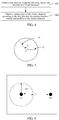
- a fixed turning angle is generally used, and each time a turning movement is generated, the player always turns by the fixed turning angle. As shown in FIG. 1 , a fixed turning angle a is set.
- One aspect of the present disclosure provides a method for implementing turning of a virtual character, including: obtaining a turning angle of a virtual character; obtaining a preset fixed turning time; calculating an average angular velocity of the virtual character according to the turning angle and the preset fixed turning time; and controlling the virtual character to turn at the average angular velocity.
- Another aspect of the present disclosure provides an apparatus for implementing turning of a virtual character, including: an angle obtaining module, configured to obtain a turning angle of a virtual character; a time obtaining module, configured to obtain a preset fixed turning time; a processing module, configured to calculate an average angular velocity of the virtual character according to the turning angle and the preset fixed turning time; and an execution module, configured to control the virtual character to turn at the average angular velocity.
- a turning angle of a virtual character is obtained, a preset fixed turning time is obtained, an average angular velocity is calculated, and the virtual character is controlled to turn at the average angular velocity.
- Turning is performed at a constant speed in a turning process, smooth turning can be implemented, stalling is avoided in the turning process, and picture fluency can be improved.
- the average angular velocity is high, and quick and smooth turning can be implemented; or when the turning angle is small, turning can also be implemented. Therefore, turning is more precise.
- first, second and the like used in the present disclosure may be used to describe various elements in this specification, but the elements are not limited to the terms. The terms are merely used to distinguish a first element with another element.
- a first client may be referred to as a second client, and similarly, a second client may be referred to as a first client. Both the first client and the second client are clients, but are not a same client.
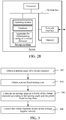
- FIG. 2A is a schematic diagram of an internal structure of a terminal according to an embodiment.
- the terminal includes a processor, a storage medium, a memory, and a network interface, a voice collection apparatus, a display, a speaker, and an input apparatus that are connected by using a system bus.
- the storage medium of the terminal stores an operating system, and further includes an apparatus for implementing turning of a virtual character, and the apparatus for implementing turning of a virtual character is configured to implement a method for implementing turning of a virtual character.
- the processor is configured to provide computing and control capabilities, to support operation of the entire terminal.
- the memory of the terminal provides an environment for operation of the apparatus for implementing turning of a virtual character in the storage medium.
- the network interface is configured to perform network communication with a server, for example, upload data of a virtual character to the server, and receive related data of the virtual character that is returned by the server.
- the display of the terminal may be a liquid crystal display, an E-ink display, or the like.
- the input apparatus may be a touch layer covered on the display, or may be a button, a track ball, or a touchpad disposed on an external housing of the terminal, or may be an externally connected keyboard, touchpad, mouse, or the like.
- the terminal may be a mobile phone, a tablet computer, or a personal digital assistant. A person skilled in the art may understand that FIG.
- the terminal may include more or less components than those shown in the figure, or combine some components, or have different component deployments.
- FIG. 2B is a schematic diagram of an internal structure of a server according to an embodiment.
- the server includes a processor, a storage medium, a memory, and a network interface that are connected by using a system bus.
- the storage medium of the server stores an operating system, a database, and an apparatus for implementing turning of a virtual character
- the database stores game scenario data and data related to a virtual character
- the apparatus for implementing turning of a virtual character is configured to implement a method for implementing turning of a virtual character.
- the processor of the server is configured to provide computing and control capabilities, to support operation of the entire server.
- the memory of the server provides an environment for operation of the apparatus for implementing turning of a virtual character in the storage medium.
- the network interface of the server is configured to perform connection and communication with an external terminal by using a network, for example, receive data of a virtual character that is uploaded by the terminal, and return other data of the virtual character to the terminal.
- the server may be implemented by an independent server or a server cluster formed by multiple servers.
- FIG. 2B is merely one of structural block diagrams related to the solution of this application, and does not constitute a limit to the server to which the solution of this application is applied.
- the server may include more or less components than those shown in the figure, or combine some components, or have various component deployments.
- FIG. 3 is a flowchart of a method for implementing turning of a virtual character according to an embodiment. As shown in FIG. 3 , a method for implementing turning of a virtual character includes the following steps:
- Step 302 Obtaining a turning angle of a virtual character.
- the virtual character refers to a virtual character in a game. Different characters may be selected according to different occupations.
- a game client is started and operated on a terminal. In a standalone game, no registration is needed, and only an entered character needs to be used as a username of a player for this time; in an online game, a server is logged in by using a registered account for a network connection, to perform an interactive operation with other users.
- the terminal may be a desktop computer, a notebook computer, a tablet computer, a smartphone, a personal digital assistant, or the like.
- the turning angle refers to an angle by which a virtual character is controlled to rotate, and for ease of calculation, the turning angle may be a value between 0 degrees and 360 degrees.
- the virtual character rotates when an input device such as a keyboard, a mouse, or a touchscreen enters an instruction. After a rotation angle exceeds 360 degrees, a remaining angle is obtained by subtracting 360 degrees multiplied by an integer multiple from the rotation angle, and the remaining angle is used as the turning angle.
- the obtained turning angle may be, for example, 30 degrees, 40 degrees, or 280 degrees.
- Step 304 Obtaining a preset fixed turning time.
- the preset fixed turning time refers to a fixed turning time set as required, and after the turning time is set, a turning time consumed is the fixed turning time regardless of a value of the turning angle.
- the fixed turning time may be 0.1 second, 0.2 second, or 1 second.
- the preset fixed turning time may be, for example, stored locally in a form of a configuration file.
- Step 306 Calculating an average angular velocity of the virtual character according to the turning angle and the preset fixed turning time.
- the step of calculating an average angular velocity of the virtual character according to the turning angle and the preset fixed turning time includes: dividing the turning angle by the preset fixed turning time to obtain an average angular velocity of the virtual character.
- ⁇ is a turning angle
- t is a preset fixed turning time
- ⁇ is an average angular velocity
- a turning angle is 280 degrees and a preset fixed turning time is 0.1 second, and in this case, an average angular velocity is 280 degrees/0.1 second and is equal to 2800 degrees/second.
- Step 308 Controlling the virtual character to turn at the average angular velocity.
- a virtual character is controlled to turn at a constant speed of the average angular velocity, and when the virtual character turns to an end position, turning is stopped.
- a turning angle of a virtual character is obtained, a preset fixed turning time is obtained, an average angular velocity is calculated, and the virtual character is controlled to turn at the average angular velocity.
- Turning is performed at a constant speed in a turning process, smooth turning can be implemented, stalling is avoided in the turning process, and picture fluency can be improved.
- the average angular velocity is high, and quick and smooth turning can be implemented; or when the turning angle is small, turning can also be implemented. Therefore, turning is more precise.
- FIG. 4 is a flowchart of obtaining a turning angle of a virtual character according to an embodiment. As shown in FIG. 4 , steps of obtaining a turning angle of a virtual character includes the following steps:
- Step 402 Obtaining a start position, a turning direction, and an end position of a virtual character.
- a position of the virtual character is recorded in real time.
- a position at which the virtual character is located at this time is obtained as a turning start position.
- a position at which rotation ends is recorded as the end position, and a rotation direction is recorded as the turning direction.
- the turning direction may be a clockwise direction or a counterclockwise direction.
- Step 404 Obtaining a turning angle of the virtual character according to the start position, the turning direction, and the end position of the virtual character.
- the start position, the turning direction, and the end position of the virtual character are drawn to form the turning angle, and a value of the turning angle is calculated by using an angle calculator or a computation program.
- FIG. 5 is a schematic diagram of forming a turning angle.
- a start position of a virtual character is a line 52
- the virtual character rotates counterclockwise
- a turning direction is counterclockwise
- an end position of the virtual character is a line 54
- the start position, the turning direction, and the end position form a turning angle b.
- a value of the turning angle b is calculated by using an angle calculator or a computation program.
- the obtaining a turning angle of a virtual character includes: obtaining a turning instruction generated by means of touch input, voice input, or gesture input; and obtaining a turning angle of a virtual character according to the turning instruction.
- generating a turning instruction by means of touch input refers to entering and generating a corresponding turning instruction by touching a touchscreen of mobile terminals such as a smartphone, for example, rotating clockwise or rotating counterclockwise on a touchscreen.
- a start position, a turning direction, and an end position of a virtual character may be obtained according to the input instruction generated by touching, and a turning angle of the virtual character may be calculated according to the start position, the turning direction, and the end position of the virtual character.
- Generating a turning instruction by means of voice input refers to receiving voice information of a user, and recognizing the voice information to obtain a corresponding turning instruction.
- voice input a voice instruction recognition library needs to be created first, and the voice instruction recognition library records a correspondence between voice information and an instruction. After voice information of a user is recognized, a corresponding turning instruction is generated according to the voice information and the correspondence between voice information and an instruction. For example, content of voice information is rotating by 90 degrees clockwise.
- Generating a turning instruction by means of gesture input refers to receiving an input gesture, and recognizing the gesture to obtain a corresponding turning instruction.
- a gesture instruction recognition library needs to be created first, and the voice recognition library records a correspondence between voice information and an instruction. After a gesture of a user is recognized, a corresponding turning instruction is generated according to the gesture and the correspondence between a gesture and an instruction. For example, content of gesture information is rotating by 60 degrees clockwise.
- the method for implementing turning of a virtual character further includes: recording and storing each turning time and a corresponding end position of the virtual character.
- a virtual character may be controlled to turn for multiple times, and a turning time and a corresponding end position are recorded for each time, to facilitate follow-up synchronization and update.
- the turning time refers to a time point at which turning is started.
- a recorded turning time is at 1 o'clock 24 minutes 30 seconds, and an end position is represented by map coordinates (x, y) or a longitude and a latitude in the game scenario.
- the method for implementing turning of a virtual character further includes: comparing periodically each turning time and a corresponding end position of the virtual character that are recorded locally with each turning time and a corresponding end position of the virtual character that are recorded in a server, when a network is connected; and uploading each turning time and the corresponding end position of the virtual character that are recorded locally to the server, to update each turning time and the corresponding end position of the virtual character that are recorded in the server, if each turning time and the corresponding end position of the virtual character that are recorded locally are not the same as each turning time and the corresponding end position of the virtual character that are recorded in the server; or skipping update, if each turning time and the corresponding end position of the virtual character that are recorded locally are the same as each turning time and the corresponding end position of the virtual character that are recorded in the server.
- the terminal is connected to the server, a game client on the terminal is connected to a game server, and a user logs in to the game server by using an account.
- Each turning time and a corresponding end position of the virtual character is recorded locally (that is, on the terminal).
- Each turning time and the corresponding end position of the virtual character that are recorded locally may be compared periodically with each turning time and the corresponding end position of the virtual character that are recorded in the server, to compare whether data of the two is the same.
- each turning time and the corresponding end position of the virtual character that are recorded locally may be uploaded to the server, to update each turning time and the corresponding end position of the virtual character that are recorded in the server, and an end position of the virtual character after final turning may be displayed.
- a start position and an average angular velocity of the virtual character may further be recorded.
- the end position of the virtual character after the final turning is displayed on the terminal, and the user cannot sense a periodic comparison process on the terminal.
- a buffering manner is used to ensure consistency of data and avoid stalling.
- the server may calculate the turning angle and the average angular velocity.
- FIG. 6 is a schematic diagram of implementing turning of a virtual character in a standalone game.
- a user enters a game scenario by entering a player name or a player number, and in the game scenario, the user may control a corresponding virtual character 62 by using input devices such as a keyboard, a mouse, or a touchscreen.
- a process of implementing turning of the virtual character 62 includes: obtaining a start position, a turning direction, and an end position of the virtual character according to a turning instruction, after the turning instruction entered by the user is detected, forming a turning angle according to the start position, the turning direction, and the end position of the virtual character, calculating a value of the turning angle, obtaining a preset fixed turning time from a configuration file, dividing the turning angle by the fixed turning time to obtain an average angular velocity, and performing turning at a constant speed of the average angular velocity. Therefore, smooth turning and picture fluency are implemented.
- the virtual character 62 is controlled to turn by 90° from a position 1 to a position 2, that is, directly facing a little monster 64.
- the little monster is a virtual creature in the game scenario.
- FIG. 7 is a sequence diagram of processing for implementing turning of a virtual character in an online game.
- each user logs in to a game server by using a registered account, and enters a game scenario by using a virtual character name corresponding to the registered account, and the user may control a corresponding virtual character by using input devices such as a keyboard, a mouse, or a touchscreen.
- input devices such as a keyboard, a mouse, or a touchscreen.
- a process of implementing turning of a virtual character includes the following steps: (1) detecting, by a first terminal, a turning instruction entered by a first user; (2) obtaining, by the first terminal according to the turning instruction, a start position, a turning direction, and an end position of a first virtual character corresponding to the first user; (3) forming, by the first terminal, a turning angle of the virtual character according to the start position, the turning direction, and the end position of the first virtual character, and calculating a value of the turning angle of the first virtual character; (4) obtaining, by the first terminal, a preset fixed turning time; (5) calculating, by the first terminal, an average angular velocity of the first virtual character according to the value of the turning angle of the first virtual character and the fixed turning time; (6) controlling, by the first terminal, the first virtual character to turn to a corresponding end position at the average angular velocity; (7) recording and storing, by the first terminal, the turning time, the start position, the average turning speed, and the corresponding end position of
- the back of a first virtual character is toward a second virtual character, and after the first virtual character turns by 180 degrees, the first virtual character faces towards the second virtual character.
- the method for implementing turning of a virtual character may be applied to a multiplayer online battle arena games (MOBA) scenario and a mobile game product.
- the mobile game may include a standalone game and an online game.
- a player controls an NPC (a character in the game, that is, a virtual character) to turn.
- NPC a character in the game, that is, a virtual character
- a turning time is preset, and a turning angle is obtained
- an average angular velocity may be obtained by dividing the turning angle by the turning time, and the NPC is controlled to turn at the average angular velocity, to avoid stalling that occurs in a turning process and improve fluency of a turning picture.
- an NPC is controlled to turn by a corresponding angle A at a constant speed within a time t.
- the method for implementing turning of a virtual character may also be applied to a game scenario in which an operation is performed by using a mouse on a personal computer, a corresponding turning angle is obtained by obtaining a start position of a virtual character controlled by a mouse, and an end position after turning, a corresponding average angular velocity is obtained by obtaining a ratio of the turning angle to the time, and the virtual character is controlled to turn at a constant speed of the average angular velocity, so that stalling that occurs in a turning process may be avoided, and fluency of a turning picture may be improved.
- FIG. 9 is a structural block diagram of an apparatus for implementing turning of a virtual character according to an embodiment. As shown in FIG. 9 , the apparatus for implementing turning of a virtual character is operated on a terminal, and includes an angle obtaining module 910, a time obtaining module 920, a processing module 930, and an execution module 940.
- the angle obtaining module 910 is configured to obtain a turning angle of a virtual character.
- the virtual character refers to a virtual character in a game. Different characters may be selected according to different occupations.
- a game client is started and operated on a terminal. In a standalone game, no registration is needed, and only an entered character needs to be used as a username of a player for this time; in an online game, a server is logged in by using a registered account for a network connection, to perform an interactive operation with other users.
- the terminal may be a desktop computer, a notebook computer, a tablet computer, a smartphone, a personal digital assistant, or the like.
- the turning angle refers to an angle by which a virtual character is controlled to rotate, and for ease of calculation, the turning angle may be a value between 0 degrees and 360 degrees.
- the virtual character rotates when an input device such as a keyboard, a mouse, or a touchscreen enters an instruction. After a rotation angle exceeds 360 degrees, a remaining angle is obtained by subtracting 360 degrees multiplied by an integer multiple from the rotation angle, and the remaining angle is used as the turning angle.
- the obtained turning angle may be, for example, 30 degrees, 40 degrees, or 280 degrees.
- the angle obtaining module 910 is further configured to: obtain a start position, a turning direction, and an end position of a virtual character; and obtain a turning angle of the virtual character according to the start position, the turning direction, and the end position of the virtual character.
- a position of the virtual character is recorded in real time. At a time point when the virtual character is controlled to turn, a position at which the virtual character is located at this time is obtained as a turning start position.
- a position at which rotation ends is recorded as the end position, and a rotation direction is recorded as the turning direction.
- the turning direction may be a clockwise direction or a counterclockwise direction.
- the start position, the turning direction, and the end position the virtual character are drawn to form the turning angle, and a value of the turning angle is calculated by using an angle calculator or a computation program. It is convenient to calculate the turning angle of the virtual character by obtaining the start position, the turning direction, and the end position of the virtual character.
- the angle obtaining module 910 is further configured to: obtain a turning instruction generated by means of touch input, voice input, or gesture input; and obtain a turning angle of a virtual character according to the turning instruction.
- generating a turning instruction by means of touch input refers to entering and generating a corresponding turning instruction by touching a touchscreen, for example, rotating clockwise or rotating counterclockwise on a touchscreen.
- a start position, a turning direction, and an end position of a virtual character may be obtained according to the input instruction generated by touching, and a turning angle of the virtual character may be calculated according to the start position, the turning direction, and the end position of the virtual character.
- Generating a turning instruction by means of voice input refers to receiving voice information of a user, and recognizing the voice information to obtain a corresponding turning instruction.
- voice input a voice instruction recognition library needs to be created first, and the voice instruction recognition library records a correspondence between voice information and an instruction. After voice information of a user is recognized, a corresponding turning instruction is generated according to the voice information and the correspondence between voice information and an instruction. For example, content of voice information is rotating by 90 degrees clockwise.
- Generating a turning instruction by means of gesture input refers to receiving an input gesture, and recognizing the gesture to obtain a corresponding turning instruction.
- a gesture instruction recognition library needs to be created first, and the gesture instruction recognition library records a correspondence between gesture information and an instruction. After a gesture of a user is recognized, a corresponding turning instruction is generated according to the correspondence between gesture information and an instruction. For example, content of gesture information is rotating by 60 degrees clockwise.
- the time obtaining module 920 is configured to obtain a preset fixed turning time.
- the preset fixed turning time refers to a fixed turning time set as required, and after the turning time is set, a turning time consumed is the fixed turning time regardless of a value of the turning angle.
- the fixed turning time may be 0.1 second, 0.2 second, or 1 second.
- the preset fixed turning time may be, for example, stored locally in a form of a configuration file.
- the processing module 930 is configured to calculate an average angular velocity of the virtual character according to the turning angle and the preset fixed turning time.
- the step of calculating an average angular velocity of the virtual character according to the turning angle and the preset fixed turning time includes: dividing the turning angle by the preset fixed turning time to obtain an average angular velocity of the virtual character.
- ⁇ is a turning angle
- t is a preset fixed turning time
- ⁇ is an average angular velocity
- a turning angle is 280 degrees and a preset fixed turning time is 0.1 second, and in this case, an average angular velocity is 280 degrees/0.1 second and is equal to 2800 degrees/second.
- the execution module 840 is configured to control the virtual character to turn at the average angular velocity.
- a virtual character is controlled to turn at a constant speed of the average angular velocity, and when the virtual character turns to an end position, turning is stopped.
- a turning angle of a virtual character is obtained, a preset fixed turning time is obtained, an average angular velocity is calculated, and the virtual character is controlled to turn at the average angular velocity.
- Turning is performed at a constant speed in a turning process, smooth turning can be implemented, stalling is avoided in the turning process, and picture fluency can be improved.
- the average angular velocity is high, and quick and smooth turning can be implemented; or when the turning angle is small, turning can also be implemented. Therefore, turning is more precise.
- FIG. 10 is a structural block diagram of an apparatus for implementing turning of a virtual character according to another embodiment.
- the apparatus for implementing turning of a virtual character is operated on a terminal, and in addition to the angle obtaining module 910, the time obtaining module 920, the processing module 930, and the execution module 940, the apparatus further includes a recording and storage module 950, a comparison module 960, and an upload module 970.
- the recording and storage module 950 is configured to record and store each turning time and a corresponding end position of a virtual character.
- a virtual character may be controlled to turn for multiple times, and a turning time and a corresponding end position are recorded for each time, to facilitate follow-up synchronization and update.
- the turning time refers to a time point at which turning is started.
- a recorded turning time is at 1 o'clock 24 minutes 30 seconds
- an end position is represented by map coordinates (x, y) or a longitude and a latitude in the game scenario.
- a start position and an average angular velocity of the virtual character may further be recorded.
- the comparison module 960 is configured to compare periodically each turning time and a corresponding end position of the virtual character that are recorded locally with each turning time and a corresponding end position of the virtual character that are recorded in a server, when a network is connected.
- the upload module 970 is configured to upload each turning time and the corresponding end position of the virtual character that are recorded locally to the server, to update each turning time and the corresponding end position of the virtual character that are recorded in the server, when each turning time and the corresponding end position of the virtual character that are recorded locally are not the same as each turning time and the corresponding end position of the virtual character that are recorded in the server.
- each turning time and the corresponding end position of the virtual character that are recorded locally may be compared periodically with each turning time and the corresponding end position of the virtual character that are recorded in the server, to compare whether data of the two is the same. If the data of the two is not the same, each turning time and the corresponding end position of the virtual character that are recorded locally may be uploaded to the server, to update each turning time and the corresponding end position of the virtual character that are recorded in the server, and an end position of the virtual character after final turning may be displayed.
- the program may be stored in a non-volatile computer readable storage medium.
- the storage medium may be a magnetic disk, an optical disc, a read-only memory (ROM), or the like.
Landscapes
- Engineering & Computer Science (AREA)
- Multimedia (AREA)
- Theoretical Computer Science (AREA)
- Human Computer Interaction (AREA)
- Physics & Mathematics (AREA)
- General Physics & Mathematics (AREA)
- General Engineering & Computer Science (AREA)
- Business, Economics & Management (AREA)
- Computer Security & Cryptography (AREA)
- General Business, Economics & Management (AREA)
- User Interface Of Digital Computer (AREA)
- Processing Or Creating Images (AREA)
Abstract
Description
- This application claims priority to Chinese Patent Application No.
201510334763.4 - The present disclosure relates to the field of data processing, and in particular, to a method and a terminal for implementing turning of a virtual character.
- Rapid development of computer technologies has brought much convenience to people's life and has greatly improved people's life quality. When enjoying convenient life, people also need some entertainments. Therefore, various game products emerge. In a scenario of a conventional game product, when a player controls a virtual character to generate a turning angle by means of displacements, a fixed turning angle is generally used, and each time a turning movement is generated, the player always turns by the fixed turning angle. As shown in
FIG. 1 , a fixed turning angle a is set. Once a virtual character turns, if a turning angle is less than the fixed turning angle a, the virtual character does not turn; or if a turning angle is greater than the fixed turning angle a, the virtual character turns excessively quickly in an obviously reduced time, and consequently, picture non-fluency and stalling occur. - Based on this, to resolve a conventional problem that picture non-fluency and stalling occur when a virtual character turns, it is necessary to provide a method for implementing turning of a virtual character, so that turning can be implemented, stalling can be avoided in a turning process, and picture fluency can be improved.
- In addition, it is also necessary to provide an apparatus for implementing turning of a virtual character, so that turning can be implemented, stalling can be avoided in a turning process, and picture fluency can be improved.
- One aspect of the present disclosure provides a method for implementing turning of a virtual character, including: obtaining a turning angle of a virtual character; obtaining a preset fixed turning time; calculating an average angular velocity of the virtual character according to the turning angle and the preset fixed turning time; and controlling the virtual character to turn at the average angular velocity.
- Another aspect of the present disclosure provides an apparatus for implementing turning of a virtual character, including: an angle obtaining module, configured to obtain a turning angle of a virtual character;
a time obtaining module, configured to obtain a preset fixed turning time;
a processing module, configured to calculate an average angular velocity of the virtual character according to the turning angle and the preset fixed turning time; and
an execution module, configured to control the virtual character to turn at the average angular velocity. - According to the method and the apparatus for implementing turning of a virtual character, a turning angle of a virtual character is obtained, a preset fixed turning time is obtained, an average angular velocity is calculated, and the virtual character is controlled to turn at the average angular velocity. Turning is performed at a constant speed in a turning process, smooth turning can be implemented, stalling is avoided in the turning process, and picture fluency can be improved. When the turning angle is relatively large, the average angular velocity is high, and quick and smooth turning can be implemented; or when the turning angle is small, turning can also be implemented. Therefore, turning is more precise.
- To describe the technical solutions in the embodiments of the present invention or in the existing technologies more clearly, the following briefly describes the accompanying drawings required for describing the embodiments or the existing technologies. Apparently, the accompanying drawings in the following description show merely some embodiments of the present invention, and a person of ordinary skill in the art may still derive other drawings from these accompanying drawings without creative efforts.
-
FIG. 1 is a schematic diagram of a fixed turning angle set in the conventional technology; -
FIG. 2A is a schematic diagram of an internal structure of a terminal according to an embodiment; -
FIG. 2B is a schematic diagram of an internal structure of a server according to an embodiment; -
FIG. 3 is a flowchart of a method for implementing turning of a virtual character according to an embodiment; -
FIG. 4 is a flowchart of obtaining a turning angle of a virtual character according to an embodiment; -
FIG. 5 is a schematic diagram of forming a turning angle; -
FIG. 6 is a schematic diagram of implementing turning of a virtual character in a standalone game; -
FIG. 7 is a sequence diagram of processing for implementing turning of a virtual character in an online game; -
FIG. 8 is a schematic effect diagram showing that an NPC is controlled to turn at a constant speed; -
FIG. 9 is a structural block diagram of an apparatus for implementing turning of a virtual character according to an embodiment; and -
FIG. 10 is a structural block diagram of an apparatus for implementing turning of a virtual character according to another embodiment. - To make the objectives, technical solutions, and advantages of the present disclosure clearer and more comprehensible, the following further describes the present disclosure in detail with reference to the accompanying drawings and embodiments. It should be understood that the specific embodiments described herein are merely used to explain the present disclosure but are not intended to limit the present disclosure.
- It may be understood that terms "first", "second" and the like used in the present disclosure may be used to describe various elements in this specification, but the elements are not limited to the terms. The terms are merely used to distinguish a first element with another element. For example, in a case not departing from the scope of the present disclosure, a first client may be referred to as a second client, and similarly, a second client may be referred to as a first client. Both the first client and the second client are clients, but are not a same client.
-
FIG. 2A is a schematic diagram of an internal structure of a terminal according to an embodiment. As shown inFIG. 2A , the terminal includes a processor, a storage medium, a memory, and a network interface, a voice collection apparatus, a display, a speaker, and an input apparatus that are connected by using a system bus. The storage medium of the terminal stores an operating system, and further includes an apparatus for implementing turning of a virtual character, and the apparatus for implementing turning of a virtual character is configured to implement a method for implementing turning of a virtual character. The processor is configured to provide computing and control capabilities, to support operation of the entire terminal. The memory of the terminal provides an environment for operation of the apparatus for implementing turning of a virtual character in the storage medium. The network interface is configured to perform network communication with a server, for example, upload data of a virtual character to the server, and receive related data of the virtual character that is returned by the server. The display of the terminal may be a liquid crystal display, an E-ink display, or the like. The input apparatus may be a touch layer covered on the display, or may be a button, a track ball, or a touchpad disposed on an external housing of the terminal, or may be an externally connected keyboard, touchpad, mouse, or the like. The terminal may be a mobile phone, a tablet computer, or a personal digital assistant. A person skilled in the art may understand thatFIG. 2A is merely one instance of structural block diagrams related to the solution of this application, and does not constitute a limit to the terminal to which the solution of this application is applied. Specifically, the terminal may include more or less components than those shown in the figure, or combine some components, or have different component deployments. -
FIG. 2B is a schematic diagram of an internal structure of a server according to an embodiment. As shown inFIG. 2B , the server includes a processor, a storage medium, a memory, and a network interface that are connected by using a system bus. The storage medium of the server stores an operating system, a database, and an apparatus for implementing turning of a virtual character, the database stores game scenario data and data related to a virtual character, and the apparatus for implementing turning of a virtual character is configured to implement a method for implementing turning of a virtual character. The processor of the server is configured to provide computing and control capabilities, to support operation of the entire server. The memory of the server provides an environment for operation of the apparatus for implementing turning of a virtual character in the storage medium. The network interface of the server is configured to perform connection and communication with an external terminal by using a network, for example, receive data of a virtual character that is uploaded by the terminal, and return other data of the virtual character to the terminal. The server may be implemented by an independent server or a server cluster formed by multiple servers. A person skilled in the art may understand thatFIG. 2B is merely one of structural block diagrams related to the solution of this application, and does not constitute a limit to the server to which the solution of this application is applied. Specifically, the server may include more or less components than those shown in the figure, or combine some components, or have various component deployments. -
FIG. 3 is a flowchart of a method for implementing turning of a virtual character according to an embodiment. As shown inFIG. 3 , a method for implementing turning of a virtual character includes the following steps: - Step 302: Obtaining a turning angle of a virtual character.
- Specifically, the virtual character refers to a virtual character in a game. Different characters may be selected according to different occupations. A game client is started and operated on a terminal. In a standalone game, no registration is needed, and only an entered character needs to be used as a username of a player for this time; in an online game, a server is logged in by using a registered account for a network connection, to perform an interactive operation with other users.
- The terminal may be a desktop computer, a notebook computer, a tablet computer, a smartphone, a personal digital assistant, or the like.
- The turning angle refers to an angle by which a virtual character is controlled to rotate, and for ease of calculation, the turning angle may be a value between 0 degrees and 360 degrees. The virtual character rotates when an input device such as a keyboard, a mouse, or a touchscreen enters an instruction. After a rotation angle exceeds 360 degrees, a remaining angle is obtained by subtracting 360 degrees multiplied by an integer multiple from the rotation angle, and the remaining angle is used as the turning angle.
- The obtained turning angle may be, for example, 30 degrees, 40 degrees, or 280 degrees.
- Step 304: Obtaining a preset fixed turning time.
- Specifically, the preset fixed turning time refers to a fixed turning time set as required, and after the turning time is set, a turning time consumed is the fixed turning time regardless of a value of the turning angle. The fixed turning time may be 0.1 second, 0.2 second, or 1 second. The preset fixed turning time may be, for example, stored locally in a form of a configuration file.
- Step 306: Calculating an average angular velocity of the virtual character according to the turning angle and the preset fixed turning time.
- Specifically, the step of calculating an average angular velocity of the virtual character according to the turning angle and the preset fixed turning time includes: dividing the turning angle by the preset fixed turning time to obtain an average angular velocity of the virtual character. A calculation formula is the following formula (1):

- In the formula (1), ω is a turning angle, t is a preset fixed turning time, and υ is an average angular velocity.
- For example, a turning angle is 280 degrees and a preset fixed turning time is 0.1 second, and in this case, an average angular velocity is 280 degrees/0.1 second and is equal to 2800 degrees/second.
- Step 308: Controlling the virtual character to turn at the average angular velocity.
- Specifically, in a game scenario, a virtual character is controlled to turn at a constant speed of the average angular velocity, and when the virtual character turns to an end position, turning is stopped.
- According to the method for implementing turning of a virtual character, a turning angle of a virtual character is obtained, a preset fixed turning time is obtained, an average angular velocity is calculated, and the virtual character is controlled to turn at the average angular velocity. Turning is performed at a constant speed in a turning process, smooth turning can be implemented, stalling is avoided in the turning process, and picture fluency can be improved. When the turning angle is relatively large, the average angular velocity is high, and quick and smooth turning can be implemented; or when the turning angle is small, turning can also be implemented. Therefore, turning is more precise.
-
FIG. 4 is a flowchart of obtaining a turning angle of a virtual character according to an embodiment. As shown inFIG. 4 , steps of obtaining a turning angle of a virtual character includes the following steps: - Step 402: Obtaining a start position, a turning direction, and an end position of a virtual character.
- Specifically, a position of the virtual character is recorded in real time. At a time point when the virtual character is controlled to turn, a position at which the virtual character is located at this time is obtained as a turning start position. When a user generates an input instruction by using an input device, to control the virtual character to rotate to a position and stop rotation, a position at which rotation ends is recorded as the end position, and a rotation direction is recorded as the turning direction. The turning direction may be a clockwise direction or a counterclockwise direction.
- Step 404: Obtaining a turning angle of the virtual character according to the start position, the turning direction, and the end position of the virtual character.
- Specifically, the start position, the turning direction, and the end position of the virtual character are drawn to form the turning angle, and a value of the turning angle is calculated by using an angle calculator or a computation program.
- It is convenient to calculate the turning angle of the virtual character by obtaining the start position, the turning angle, and the end position of the virtual character.
-
FIG. 5 is a schematic diagram of forming a turning angle. As shown inFIG. 5 , a start position of a virtual character is aline 52, the virtual character rotates counterclockwise, a turning direction is counterclockwise, an end position of the virtual character is aline 54, and the start position, the turning direction, and the end position form a turning angle b. A value of the turning angle b is calculated by using an angle calculator or a computation program. - In an embodiment, the obtaining a turning angle of a virtual character includes: obtaining a turning instruction generated by means of touch input, voice input, or gesture input; and obtaining a turning angle of a virtual character according to the turning instruction.
- Specifically, generating a turning instruction by means of touch input refers to entering and generating a corresponding turning instruction by touching a touchscreen of mobile terminals such as a smartphone, for example, rotating clockwise or rotating counterclockwise on a touchscreen. A start position, a turning direction, and an end position of a virtual character may be obtained according to the input instruction generated by touching, and a turning angle of the virtual character may be calculated according to the start position, the turning direction, and the end position of the virtual character.
- Generating a turning instruction by means of voice input refers to receiving voice information of a user, and recognizing the voice information to obtain a corresponding turning instruction. In voice input, a voice instruction recognition library needs to be created first, and the voice instruction recognition library records a correspondence between voice information and an instruction. After voice information of a user is recognized, a corresponding turning instruction is generated according to the voice information and the correspondence between voice information and an instruction. For example, content of voice information is rotating by 90 degrees clockwise.
- Generating a turning instruction by means of gesture input refers to receiving an input gesture, and recognizing the gesture to obtain a corresponding turning instruction. In gesture input, a gesture instruction recognition library needs to be created first, and the voice recognition library records a correspondence between voice information and an instruction. After a gesture of a user is recognized, a corresponding turning instruction is generated according to the gesture and the correspondence between a gesture and an instruction. For example, content of gesture information is rotating by 60 degrees clockwise.
- In an embodiment, the method for implementing turning of a virtual character further includes: recording and storing each turning time and a corresponding end position of the virtual character.
- Specifically, in a game scenario, a virtual character may be controlled to turn for multiple times, and a turning time and a corresponding end position are recorded for each time, to facilitate follow-up synchronization and update. The turning time refers to a time point at which turning is started. For example, a recorded turning time is at 1 o'clock 24 minutes 30 seconds, and an end position is represented by map coordinates (x, y) or a longitude and a latitude in the game scenario.
- In an embodiment, the method for implementing turning of a virtual character further includes: comparing periodically each turning time and a corresponding end position of the virtual character that are recorded locally with each turning time and a corresponding end position of the virtual character that are recorded in a server, when a network is connected; and uploading each turning time and the corresponding end position of the virtual character that are recorded locally to the server, to update each turning time and the corresponding end position of the virtual character that are recorded in the server, if each turning time and the corresponding end position of the virtual character that are recorded locally are not the same as each turning time and the corresponding end position of the virtual character that are recorded in the server; or skipping update, if each turning time and the corresponding end position of the virtual character that are recorded locally are the same as each turning time and the corresponding end position of the virtual character that are recorded in the server.
- Specifically, the terminal is connected to the server, a game client on the terminal is connected to a game server, and a user logs in to the game server by using an account. Each turning time and a corresponding end position of the virtual character is recorded locally (that is, on the terminal). Each turning time and the corresponding end position of the virtual character that are recorded locally may be compared periodically with each turning time and the corresponding end position of the virtual character that are recorded in the server, to compare whether data of the two is the same. If the data of the two is not the same, each turning time and the corresponding end position of the virtual character that are recorded locally may be uploaded to the server, to update each turning time and the corresponding end position of the virtual character that are recorded in the server, and an end position of the virtual character after final turning may be displayed.
- In addition, a start position and an average angular velocity of the virtual character may further be recorded.
- The end position of the virtual character after the final turning is displayed on the terminal, and the user cannot sense a periodic comparison process on the terminal. When the server sends end position information of the virtual character on a terminal to another terminal for displaying, a buffering manner is used to ensure consistency of data and avoid stalling.
- It should be noted that data for calculating the turning angle does not need to be uploaded to the server, and calculation processing is performed locally, to save a network resource and reduce a burden on the server. Certainly, alternatively, the server may calculate the turning angle and the average angular velocity.
- To describe more clearly the method for implementing turning of a virtual character, descriptions of processing processes in which the method is applied to a standalone game and an online game are provided below.
-
FIG. 6 is a schematic diagram of implementing turning of a virtual character in a standalone game. In a standalone game, a user enters a game scenario by entering a player name or a player number, and in the game scenario, the user may control a correspondingvirtual character 62 by using input devices such as a keyboard, a mouse, or a touchscreen. A process of implementing turning of thevirtual character 62 includes: obtaining a start position, a turning direction, and an end position of the virtual character according to a turning instruction, after the turning instruction entered by the user is detected, forming a turning angle according to the start position, the turning direction, and the end position of the virtual character, calculating a value of the turning angle, obtaining a preset fixed turning time from a configuration file, dividing the turning angle by the fixed turning time to obtain an average angular velocity, and performing turning at a constant speed of the average angular velocity. Therefore, smooth turning and picture fluency are implemented. InFIG. 6 , thevirtual character 62 is controlled to turn by 90° from aposition 1 to aposition 2, that is, directly facing alittle monster 64. The little monster is a virtual creature in the game scenario. -
FIG. 7 is a sequence diagram of processing for implementing turning of a virtual character in an online game. In an online game, each user logs in to a game server by using a registered account, and enters a game scenario by using a virtual character name corresponding to the registered account, and the user may control a corresponding virtual character by using input devices such as a keyboard, a mouse, or a touchscreen. As shown inFIG. 7 , a process of implementing turning of a virtual character includes the following steps: (1) detecting, by a first terminal, a turning instruction entered by a first user; (2) obtaining, by the first terminal according to the turning instruction, a start position, a turning direction, and an end position of a first virtual character corresponding to the first user; (3) forming, by the first terminal, a turning angle of the virtual character according to the start position, the turning direction, and the end position of the first virtual character, and calculating a value of the turning angle of the first virtual character; (4) obtaining, by the first terminal, a preset fixed turning time; (5) calculating, by the first terminal, an average angular velocity of the first virtual character according to the value of the turning angle of the first virtual character and the fixed turning time; (6) controlling, by the first terminal, the first virtual character to turn to a corresponding end position at the average angular velocity; (7) recording and storing, by the first terminal, the turning time, the start position, the average turning speed, and the corresponding end position of the first virtual character; (8) uploading, by the first terminal, the turning time, the start position, the average turning speed, and the corresponding end position of the first virtual character to a server; (9) receiving, by the server, the start position, the average turning speed, and the end position of the first virtual character, and sending the start position, the average turning speed, and the end position of the first virtual character to a second terminal; and (10) displaying turning of the first virtual character from the start position to the end position on the second terminal. - For example, the back of a first virtual character is toward a second virtual character, and after the first virtual character turns by 180 degrees, the first virtual character faces towards the second virtual character.
- The method for implementing turning of a virtual character may be applied to a multiplayer online battle arena games (MOBA) scenario and a mobile game product. The mobile game may include a standalone game and an online game. In an MOBA scenario or a mobile game, a player controls an NPC (a character in the game, that is, a virtual character) to turn. Because a turning time is preset, and a turning angle is obtained, an average angular velocity may be obtained by dividing the turning angle by the turning time, and the NPC is controlled to turn at the average angular velocity, to avoid stalling that occurs in a turning process and improve fluency of a turning picture. As shown in
FIG. 8 , in a mobile game, an NPC is controlled to turn by a corresponding angle A at a constant speed within a time t. - In addition, the method for implementing turning of a virtual character may also be applied to a game scenario in which an operation is performed by using a mouse on a personal computer, a corresponding turning angle is obtained by obtaining a start position of a virtual character controlled by a mouse, and an end position after turning, a corresponding average angular velocity is obtained by obtaining a ratio of the turning angle to the time, and the virtual character is controlled to turn at a constant speed of the average angular velocity, so that stalling that occurs in a turning process may be avoided, and fluency of a turning picture may be improved.
-
FIG. 9 is a structural block diagram of an apparatus for implementing turning of a virtual character according to an embodiment. As shown inFIG. 9 , the apparatus for implementing turning of a virtual character is operated on a terminal, and includes anangle obtaining module 910, atime obtaining module 920, aprocessing module 930, and anexecution module 940. - The
angle obtaining module 910 is configured to obtain a turning angle of a virtual character. - Specifically, the virtual character refers to a virtual character in a game. Different characters may be selected according to different occupations. A game client is started and operated on a terminal. In a standalone game, no registration is needed, and only an entered character needs to be used as a username of a player for this time; in an online game, a server is logged in by using a registered account for a network connection, to perform an interactive operation with other users.
- The terminal may be a desktop computer, a notebook computer, a tablet computer, a smartphone, a personal digital assistant, or the like.
- The turning angle refers to an angle by which a virtual character is controlled to rotate, and for ease of calculation, the turning angle may be a value between 0 degrees and 360 degrees. The virtual character rotates when an input device such as a keyboard, a mouse, or a touchscreen enters an instruction. After a rotation angle exceeds 360 degrees, a remaining angle is obtained by subtracting 360 degrees multiplied by an integer multiple from the rotation angle, and the remaining angle is used as the turning angle.
- The obtained turning angle may be, for example, 30 degrees, 40 degrees, or 280 degrees.
- In an embodiment, the
angle obtaining module 910 is further configured to: obtain a start position, a turning direction, and an end position of a virtual character; and obtain a turning angle of the virtual character according to the start position, the turning direction, and the end position of the virtual character. - Specifically, a position of the virtual character is recorded in real time. At a time point when the virtual character is controlled to turn, a position at which the virtual character is located at this time is obtained as a turning start position. When a user generates an input instruction by using an input device, to control the virtual character to rotate to a position and stop rotation, a position at which rotation ends is recorded as the end position, and a rotation direction is recorded as the turning direction. The turning direction may be a clockwise direction or a counterclockwise direction. The start position, the turning direction, and the end position the virtual character are drawn to form the turning angle, and a value of the turning angle is calculated by using an angle calculator or a computation program. It is convenient to calculate the turning angle of the virtual character by obtaining the start position, the turning direction, and the end position of the virtual character.
- In an embodiment, the
angle obtaining module 910 is further configured to: obtain a turning instruction generated by means of touch input, voice input, or gesture input; and obtain a turning angle of a virtual character according to the turning instruction. - Specifically, generating a turning instruction by means of touch input refers to entering and generating a corresponding turning instruction by touching a touchscreen, for example, rotating clockwise or rotating counterclockwise on a touchscreen. A start position, a turning direction, and an end position of a virtual character may be obtained according to the input instruction generated by touching, and a turning angle of the virtual character may be calculated according to the start position, the turning direction, and the end position of the virtual character.
- Generating a turning instruction by means of voice input refers to receiving voice information of a user, and recognizing the voice information to obtain a corresponding turning instruction. In voice input, a voice instruction recognition library needs to be created first, and the voice instruction recognition library records a correspondence between voice information and an instruction. After voice information of a user is recognized, a corresponding turning instruction is generated according to the voice information and the correspondence between voice information and an instruction. For example, content of voice information is rotating by 90 degrees clockwise.
- Generating a turning instruction by means of gesture input refers to receiving an input gesture, and recognizing the gesture to obtain a corresponding turning instruction. In gesture input, a gesture instruction recognition library needs to be created first, and the gesture instruction recognition library records a correspondence between gesture information and an instruction. After a gesture of a user is recognized, a corresponding turning instruction is generated according to the correspondence between gesture information and an instruction. For example, content of gesture information is rotating by 60 degrees clockwise.
- The
time obtaining module 920 is configured to obtain a preset fixed turning time. - Specifically, the preset fixed turning time refers to a fixed turning time set as required, and after the turning time is set, a turning time consumed is the fixed turning time regardless of a value of the turning angle. The fixed turning time may be 0.1 second, 0.2 second, or 1 second. The preset fixed turning time may be, for example, stored locally in a form of a configuration file.
- The
processing module 930 is configured to calculate an average angular velocity of the virtual character according to the turning angle and the preset fixed turning time. - Specifically, the step of calculating an average angular velocity of the virtual character according to the turning angle and the preset fixed turning time includes: dividing the turning angle by the preset fixed turning time to obtain an average angular velocity of the virtual character. A calculation formula is the following formula (1):

- In the formula (1), ω is a turning angle, t is a preset fixed turning time, and υ is an average angular velocity.
- For example, a turning angle is 280 degrees and a preset fixed turning time is 0.1 second, and in this case, an average angular velocity is 280 degrees/0.1 second and is equal to 2800 degrees/second.
- The execution module 840 is configured to control the virtual character to turn at the average angular velocity.
- Specifically, in a game scenario, a virtual character is controlled to turn at a constant speed of the average angular velocity, and when the virtual character turns to an end position, turning is stopped.
- According to the apparatus for implementing turning of a virtual character, a turning angle of a virtual character is obtained, a preset fixed turning time is obtained, an average angular velocity is calculated, and the virtual character is controlled to turn at the average angular velocity. Turning is performed at a constant speed in a turning process, smooth turning can be implemented, stalling is avoided in the turning process, and picture fluency can be improved. When the turning angle is relatively large, the average angular velocity is high, and quick and smooth turning can be implemented; or when the turning angle is small, turning can also be implemented. Therefore, turning is more precise.
-
FIG. 10 is a structural block diagram of an apparatus for implementing turning of a virtual character according to another embodiment. As shown inFIG. 10 , the apparatus for implementing turning of a virtual character is operated on a terminal, and in addition to theangle obtaining module 910, thetime obtaining module 920, theprocessing module 930, and theexecution module 940, the apparatus further includes a recording andstorage module 950, acomparison module 960, and an uploadmodule 970. - The recording and
storage module 950 is configured to record and store each turning time and a corresponding end position of a virtual character. - Specifically, in a game scenario, a virtual character may be controlled to turn for multiple times, and a turning time and a corresponding end position are recorded for each time, to facilitate follow-up synchronization and update. The turning time refers to a time point at which turning is started. For example, a recorded turning time is at 1 o'clock 24 minutes 30 seconds, and an end position is represented by map coordinates (x, y) or a longitude and a latitude in the game scenario. In addition, a start position and an average angular velocity of the virtual character may further be recorded.
- The
comparison module 960 is configured to compare periodically each turning time and a corresponding end position of the virtual character that are recorded locally with each turning time and a corresponding end position of the virtual character that are recorded in a server, when a network is connected. - The upload
module 970 is configured to upload each turning time and the corresponding end position of the virtual character that are recorded locally to the server, to update each turning time and the corresponding end position of the virtual character that are recorded in the server, when each turning time and the corresponding end position of the virtual character that are recorded locally are not the same as each turning time and the corresponding end position of the virtual character that are recorded in the server. - Specifically, each turning time and the corresponding end position of the virtual character that are recorded locally may be compared periodically with each turning time and the corresponding end position of the virtual character that are recorded in the server, to compare whether data of the two is the same. If the data of the two is not the same, each turning time and the corresponding end position of the virtual character that are recorded locally may be uploaded to the server, to update each turning time and the corresponding end position of the virtual character that are recorded in the server, and an end position of the virtual character after final turning may be displayed.
- A person of ordinary skill in the art may understand that all or some of the processes of the methods in the foregoing embodiments may be implemented by a computer program instructing relevant hardware. The program may be stored in a non-volatile computer readable storage medium. When the program is executed, processes of the foregoing method embodiments may be performed. The storage medium may be a magnetic disk, an optical disc, a read-only memory (ROM), or the like.
- The foregoing embodiments only describe several implementation manners of the present disclosure, and their description is specific and detailed, but cannot therefore be understood as a limitation to the patent scope of the present disclosure. It should be noted that, a person of ordinary skill in the art may further make some variations and improvements without departing from the concept of the present disclosure, and the variations and improvements belong to the protection scope of the present disclosure. Therefore, the protection scope of the present disclosure should be subject to the protection scope of the appended claims.
Claims (10)
- A method for implementing turning of a virtual character, comprising:obtaining a turning angle of a virtual character;obtaining a preset fixed turning time;calculating an average angular velocity of the virtual character according to the turning angle and the preset fixed turning time; andcontrolling the virtual character to turn at the average angular velocity.
- The method according to claim 1, wherein the obtaining a turning angle of a virtual character comprises:obtaining a start position, a turning direction, and an end position of the virtual character; andobtaining the turning angle of the virtual character according to the start position, the turning direction, and the end position of the virtual character.
- The method according to claim 1, wherein the obtaining a turning angle of a virtual character comprises:obtaining a turning instruction generated by means of touch input, voice input, or gesture input; andobtaining the turning angle of the virtual character according to the turning instruction.
- The method according to claim 2, wherein the method further comprises:recording and storing each turning time and a corresponding end position of the virtual character.
- The method according to claim 4, wherein the method further comprises:comparing periodically each turning time and a corresponding end position of the virtual character that are recorded locally with each turning time and a corresponding end position of the virtual character that are recorded in a server, when a network is connected; and uploading each turning time and the corresponding end position of the virtual character that are recorded locally to the server, to update each turning time and the corresponding end position of the virtual character that are recorded in the server, if each turning time and the corresponding end position of the virtual character that are recorded locally are not the same as each turning time and the corresponding end position of the virtual character that are recorded in the server.
- A terminal, comprising a storage medium and a processor, the storage medium storing an instruction, and when the instruction is executed by the processor, the processor is directed to:obtain a turning angle of a virtual character;obtain a preset fixed turning time;calculate an average angular velocity of the virtual character according to the turning angle and the preset fixed turning time; andcontrol the virtual character to turn at the average angular velocity.
- The terminal according to claim 6, wherein the obtaining a turning angle of a virtual character comprises:obtaining a start position, a turning direction, and an end position of a virtual character; andobtaining the turning angle of the virtual character according to the start position, the turning direction, and the end position of the virtual character.
- The terminal according to claim 6, wherein the obtaining a turning angle of a virtual character comprises:obtaining a turning instruction generated by means of touch input, voice input, or gesture input; andobtaining the turning angle of a virtual character according to the turning instruction.
- The terminal according to claim 8, wherein the processor of the terminal is further configured to:record and store each turning time and a corresponding end position of the virtual character.
- The terminal according to claim 9, wherein the processor of the terminal is further configured to:compare periodically each turning time and a corresponding end position of the virtual character that are recorded locally with each turning time and a corresponding end position of the virtual character that are recorded in a server, when a network is connected; and upload each turning time and the corresponding end position of the virtual character that are recorded locally to the server, to update each turning time and the corresponding end position of the virtual character that are recorded in the server, if each turning time and the corresponding end position of the virtual character that are recorded locally are not the same as each turning time and the corresponding end position of the virtual character that are recorded in the server.
Applications Claiming Priority (2)
| Application Number | Priority Date | Filing Date | Title |
|---|---|---|---|
| CN201510334763.4A CN104915564B (en) | 2015-06-16 | 2015-06-16 | Virtual character turning implementing method and device |
| PCT/CN2016/073060 WO2016201993A1 (en) | 2015-06-16 | 2016-02-01 | Method and terminal for implementing virtual character turning |
Publications (3)
| Publication Number | Publication Date |
|---|---|
| EP3312747A1 true EP3312747A1 (en) | 2018-04-25 |
| EP3312747A4 EP3312747A4 (en) | 2018-04-25 |
| EP3312747B1 EP3312747B1 (en) | 2019-09-25 |
Family
ID=54084625
Family Applications (1)
| Application Number | Title | Priority Date | Filing Date |
|---|---|---|---|
| EP16810734.0A Active EP3312747B1 (en) | 2015-06-16 | 2016-02-01 | Method and terminal for implementing virtual character turning |
Country Status (7)
| Country | Link |
|---|---|
| US (1) | US10204399B2 (en) |
| EP (1) | EP3312747B1 (en) |
| JP (1) | JP6470845B2 (en) |
| KR (1) | KR101954010B1 (en) |
| CN (1) | CN104915564B (en) |
| CA (1) | CA2975004C (en) |
| WO (1) | WO2016201993A1 (en) |
Families Citing this family (7)
| Publication number | Priority date | Publication date | Assignee | Title |
|---|---|---|---|---|
| CN104915564B (en) | 2015-06-16 | 2017-03-22 | 深圳市腾讯计算机系统有限公司 | Virtual character turning implementing method and device |
| CN108579079B (en) * | 2018-04-27 | 2022-02-18 | 网易(杭州)网络有限公司 | Virtual object steering control method and device, electronic equipment and storage medium |
| CN108837508B (en) * | 2018-06-21 | 2022-04-29 | 网易(杭州)网络有限公司 | Method and device for controlling carrier in game |
| CN109091865A (en) * | 2018-08-02 | 2018-12-28 | 苏州蜗牛数字科技股份有限公司 | Virtual role turns to synchronous method, storage equipment and game terminal |
| CN110170167B (en) * | 2019-05-28 | 2023-02-28 | 上海米哈游网络科技股份有限公司 | Picture display method, device, equipment and medium |
| KR102909485B1 (en) * | 2021-05-14 | 2026-01-07 | 텐센트 테크놀로지(센젠) 컴퍼니 리미티드 | Control display method and apparatus, device, medium and program product |
| CN115273515B (en) * | 2022-06-23 | 2024-05-07 | 智道网联科技(北京)有限公司 | Method, device and readable storage medium for displaying navigation images at vehicle turns |
Family Cites Families (15)
| Publication number | Priority date | Publication date | Assignee | Title |
|---|---|---|---|---|
| CN1183494C (en) * | 1997-11-25 | 2005-01-05 | 世嘉股份有限公司 | Image forming apparatus |
| JP3568861B2 (en) * | 2000-01-27 | 2004-09-22 | 株式会社スクウェア・エニックス | Three-dimensional object transformation method and video game apparatus in video game, and computer-readable recording medium on which video game program is recorded |
| JP3780512B2 (en) * | 2002-07-30 | 2006-05-31 | 株式会社光栄 | PROGRAM, RECORDING MEDIUM, AND GAME DEVICE |
| KR100481140B1 (en) * | 2004-05-06 | 2005-04-07 | 엔에이치엔(주) | A method for providing location information of a game character by operating with messenger server and a system thereof |
| JP4388878B2 (en) * | 2004-10-19 | 2009-12-24 | 任天堂株式会社 | Input processing program and input processing apparatus |
| JP2008032591A (en) * | 2006-07-31 | 2008-02-14 | Alpine Electronics Inc | Angular velocity calculating device, offset determination method therefor, and vehicle stop detector |
| JP2009093437A (en) * | 2007-10-09 | 2009-04-30 | Sega Corp | Image display program and image display apparatus |
| JP5745204B2 (en) * | 2008-07-28 | 2015-07-08 | 株式会社バンダイナムコエンターテインメント | Program, information storage medium and game machine |
| CN101751688A (en) * | 2008-11-28 | 2010-06-23 | 康佳集团股份有限公司 | Method and system for realizing set top box menu |
| JP5587800B2 (en) * | 2011-01-12 | 2014-09-10 | 株式会社スクウェア・エニックス | Network game system, game device, server device, and program |
| EP2497547B1 (en) * | 2011-03-08 | 2018-06-27 | Nintendo Co., Ltd. | Information processing program, information processing apparatus, information processing system, and information processing method |
| CN103914067A (en) * | 2013-01-05 | 2014-07-09 | 联想(北京)有限公司 | Control method and electronic equipment |
| US9230368B2 (en) * | 2013-05-23 | 2016-01-05 | Microsoft Technology Licensing, Llc | Hologram anchoring and dynamic positioning |
| CN103760981B (en) * | 2014-01-21 | 2017-01-04 | 北京师范大学 | A kind of magnetic field visualization and exchange method |
| CN104915564B (en) * | 2015-06-16 | 2017-03-22 | 深圳市腾讯计算机系统有限公司 | Virtual character turning implementing method and device |
-
2015
- 2015-06-16 CN CN201510334763.4A patent/CN104915564B/en active Active
-
2016
- 2016-02-01 JP JP2017544610A patent/JP6470845B2/en active Active
- 2016-02-01 CA CA2975004A patent/CA2975004C/en active Active
- 2016-02-01 EP EP16810734.0A patent/EP3312747B1/en active Active
- 2016-02-01 KR KR1020177022693A patent/KR101954010B1/en active Active
- 2016-02-01 WO PCT/CN2016/073060 patent/WO2016201993A1/en not_active Ceased
-
2017
- 2017-07-24 US US15/657,922 patent/US10204399B2/en active Active
Also Published As
| Publication number | Publication date |
|---|---|
| CN104915564B (en) | 2017-03-22 |
| KR101954010B1 (en) | 2019-03-04 |
| WO2016201993A1 (en) | 2016-12-22 |
| CA2975004A1 (en) | 2016-12-22 |
| JP2018512899A (en) | 2018-05-24 |
| JP6470845B2 (en) | 2019-02-13 |
| US10204399B2 (en) | 2019-02-12 |
| KR20170105069A (en) | 2017-09-18 |
| CA2975004C (en) | 2020-07-14 |
| EP3312747B1 (en) | 2019-09-25 |
| EP3312747A4 (en) | 2018-04-25 |
| CN104915564A (en) | 2015-09-16 |
| US20170323428A1 (en) | 2017-11-09 |
Similar Documents
| Publication | Publication Date | Title |
|---|---|---|
| US10204399B2 (en) | Method and terminal for implementing turning of virtual character | |
| CN112601589B (en) | Connecting players to expert help in real time during a game play process of a gaming application | |
| US10063560B2 (en) | Gaze-based authentication | |
| US10068134B2 (en) | Identification of objects in a scene using gaze tracking techniques | |
| US10154191B2 (en) | Emotional/cognitive state-triggered recording | |
| US10762429B2 (en) | Emotional/cognitive state presentation | |
| US10218770B2 (en) | Method and system for sharing speech recognition program profiles for an application | |
| US11210826B2 (en) | Systems and methods to provide artificial intelligence experiences | |
| US10410425B1 (en) | Pressure-based object placement for augmented reality applications | |
| US20260087609A1 (en) | Image visual quality assessment systems and methods | |
| US10102395B2 (en) | System and method for creating and transitioning to multiple facets of a social media object in a social network | |
| WO2017120056A1 (en) | Content navigation control | |
| KR102908001B1 (en) | Method and apparatus for providing content in metaverse space | |
| US20250229179A1 (en) | Method and apparatus for adjusting video progress, computer device and storage medium | |
| US9930489B2 (en) | Distance display method based on social networking application, terminal, and server | |
| CN117376627A (en) | Resource interaction method and device, electronic equipment and storage medium | |
| CN110882537B (en) | Interaction method, device, medium and electronic equipment | |
| KR102211564B1 (en) | Method and aparratus for providing game service | |
| US20140359529A1 (en) | Launch Surface Control | |
| WO2026020490A1 (en) | Method and apparatus for generating media content, and device and storage medium |
Legal Events
| Date | Code | Title | Description |
|---|---|---|---|
| STAA | Information on the status of an ep patent application or granted ep patent |
Free format text: STATUS: THE INTERNATIONAL PUBLICATION HAS BEEN MADE |
|
| PUAI | Public reference made under article 153(3) epc to a published international application that has entered the european phase |
Free format text: ORIGINAL CODE: 0009012 |
|
| STAA | Information on the status of an ep patent application or granted ep patent |
Free format text: STATUS: REQUEST FOR EXAMINATION WAS MADE |
|
| 17P | Request for examination filed |
Effective date: 20170727 |
|
| A4 | Supplementary search report drawn up and despatched |
Effective date: 20180220 |
|
| AK | Designated contracting states |
Kind code of ref document: A1 Designated state(s): AL AT BE BG CH CY CZ DE DK EE ES FI FR GB GR HR HU IE IS IT LI LT LU LV MC MK MT NL NO PL PT RO RS SE SI SK SM TR |
|
| AX | Request for extension of the european patent |
Extension state: BA ME |
|
| DAV | Request for validation of the european patent (deleted) | ||
| DAX | Request for extension of the european patent (deleted) | ||
| STAA | Information on the status of an ep patent application or granted ep patent |
Free format text: STATUS: EXAMINATION IS IN PROGRESS |
|
| 17Q | First examination report despatched |
Effective date: 20190212 |
|
| REG | Reference to a national code |
Ref country code: DE Ref legal event code: R079 Ref document number: 602016021409 Country of ref document: DE Free format text: PREVIOUS MAIN CLASS: G06F0019000000 Ipc: A63F0013440000 |
|
| GRAC | Information related to communication of intention to grant a patent modified |
Free format text: ORIGINAL CODE: EPIDOSCIGR1 |
|
| GRAJ | Information related to disapproval of communication of intention to grant by the applicant or resumption of examination proceedings by the epo deleted |
Free format text: ORIGINAL CODE: EPIDOSDIGR1 |
|
| STAA | Information on the status of an ep patent application or granted ep patent |
Free format text: STATUS: GRANT OF PATENT IS INTENDED |
|
| GRAP | Despatch of communication of intention to grant a patent |
Free format text: ORIGINAL CODE: EPIDOSNIGR1 |
|
| RIC1 | Information provided on ipc code assigned before grant |
Ipc: A63F 13/44 20140101AFI20190502BHEP Ipc: A63F 13/55 20140101ALI20190502BHEP |
|
| INTG | Intention to grant announced |
Effective date: 20190524 |
|
| GRAS | Grant fee paid |
Free format text: ORIGINAL CODE: EPIDOSNIGR3 |
|
| GRAA | (expected) grant |
Free format text: ORIGINAL CODE: 0009210 |
|
| STAA | Information on the status of an ep patent application or granted ep patent |
Free format text: STATUS: THE PATENT HAS BEEN GRANTED |
|
| AK | Designated contracting states |
Kind code of ref document: B1 Designated state(s): AL AT BE BG CH CY CZ DE DK EE ES FI FR GB GR HR HU IE IS IT LI LT LU LV MC MK MT NL NO PL PT RO RS SE SI SK SM TR |
|
| REG | Reference to a national code |
Ref country code: GB Ref legal event code: FG4D |
|
| REG | Reference to a national code |
Ref country code: CH Ref legal event code: EP |
|
| REG | Reference to a national code |
Ref country code: DE Ref legal event code: R096 Ref document number: 602016021409 Country of ref document: DE |
|
| REG | Reference to a national code |
Ref country code: AT Ref legal event code: REF Ref document number: 1183251 Country of ref document: AT Kind code of ref document: T Effective date: 20191015 |
|
| REG | Reference to a national code |
Ref country code: IE Ref legal event code: FG4D |
|
| REG | Reference to a national code |
Ref country code: NL Ref legal event code: MP Effective date: 20190925 |
|
| PG25 | Lapsed in a contracting state [announced via postgrant information from national office to epo] |
Ref country code: HR Free format text: LAPSE BECAUSE OF FAILURE TO SUBMIT A TRANSLATION OF THE DESCRIPTION OR TO PAY THE FEE WITHIN THE PRESCRIBED TIME-LIMIT Effective date: 20190925 Ref country code: LT Free format text: LAPSE BECAUSE OF FAILURE TO SUBMIT A TRANSLATION OF THE DESCRIPTION OR TO PAY THE FEE WITHIN THE PRESCRIBED TIME-LIMIT Effective date: 20190925 Ref country code: BG Free format text: LAPSE BECAUSE OF FAILURE TO SUBMIT A TRANSLATION OF THE DESCRIPTION OR TO PAY THE FEE WITHIN THE PRESCRIBED TIME-LIMIT Effective date: 20191225 Ref country code: NO Free format text: LAPSE BECAUSE OF FAILURE TO SUBMIT A TRANSLATION OF THE DESCRIPTION OR TO PAY THE FEE WITHIN THE PRESCRIBED TIME-LIMIT Effective date: 20191225 Ref country code: SE Free format text: LAPSE BECAUSE OF FAILURE TO SUBMIT A TRANSLATION OF THE DESCRIPTION OR TO PAY THE FEE WITHIN THE PRESCRIBED TIME-LIMIT Effective date: 20190925 Ref country code: FI Free format text: LAPSE BECAUSE OF FAILURE TO SUBMIT A TRANSLATION OF THE DESCRIPTION OR TO PAY THE FEE WITHIN THE PRESCRIBED TIME-LIMIT Effective date: 20190925 |
|
| REG | Reference to a national code |
Ref country code: LT Ref legal event code: MG4D |
|
| PG25 | Lapsed in a contracting state [announced via postgrant information from national office to epo] |
Ref country code: GR Free format text: LAPSE BECAUSE OF FAILURE TO SUBMIT A TRANSLATION OF THE DESCRIPTION OR TO PAY THE FEE WITHIN THE PRESCRIBED TIME-LIMIT Effective date: 20191226 Ref country code: RS Free format text: LAPSE BECAUSE OF FAILURE TO SUBMIT A TRANSLATION OF THE DESCRIPTION OR TO PAY THE FEE WITHIN THE PRESCRIBED TIME-LIMIT Effective date: 20190925 Ref country code: LV Free format text: LAPSE BECAUSE OF FAILURE TO SUBMIT A TRANSLATION OF THE DESCRIPTION OR TO PAY THE FEE WITHIN THE PRESCRIBED TIME-LIMIT Effective date: 20190925 |
|
| REG | Reference to a national code |
Ref country code: AT Ref legal event code: MK05 Ref document number: 1183251 Country of ref document: AT Kind code of ref document: T Effective date: 20190925 |
|
| PG25 | Lapsed in a contracting state [announced via postgrant information from national office to epo] |
Ref country code: NL Free format text: LAPSE BECAUSE OF FAILURE TO SUBMIT A TRANSLATION OF THE DESCRIPTION OR TO PAY THE FEE WITHIN THE PRESCRIBED TIME-LIMIT Effective date: 20190925 Ref country code: RO Free format text: LAPSE BECAUSE OF FAILURE TO SUBMIT A TRANSLATION OF THE DESCRIPTION OR TO PAY THE FEE WITHIN THE PRESCRIBED TIME-LIMIT Effective date: 20190925 Ref country code: IT Free format text: LAPSE BECAUSE OF FAILURE TO SUBMIT A TRANSLATION OF THE DESCRIPTION OR TO PAY THE FEE WITHIN THE PRESCRIBED TIME-LIMIT Effective date: 20190925 Ref country code: EE Free format text: LAPSE BECAUSE OF FAILURE TO SUBMIT A TRANSLATION OF THE DESCRIPTION OR TO PAY THE FEE WITHIN THE PRESCRIBED TIME-LIMIT Effective date: 20190925 Ref country code: AT Free format text: LAPSE BECAUSE OF FAILURE TO SUBMIT A TRANSLATION OF THE DESCRIPTION OR TO PAY THE FEE WITHIN THE PRESCRIBED TIME-LIMIT Effective date: 20190925 Ref country code: PT Free format text: LAPSE BECAUSE OF FAILURE TO SUBMIT A TRANSLATION OF THE DESCRIPTION OR TO PAY THE FEE WITHIN THE PRESCRIBED TIME-LIMIT Effective date: 20200127 Ref country code: ES Free format text: LAPSE BECAUSE OF FAILURE TO SUBMIT A TRANSLATION OF THE DESCRIPTION OR TO PAY THE FEE WITHIN THE PRESCRIBED TIME-LIMIT Effective date: 20190925 Ref country code: AL Free format text: LAPSE BECAUSE OF FAILURE TO SUBMIT A TRANSLATION OF THE DESCRIPTION OR TO PAY THE FEE WITHIN THE PRESCRIBED TIME-LIMIT Effective date: 20190925 Ref country code: PL Free format text: LAPSE BECAUSE OF FAILURE TO SUBMIT A TRANSLATION OF THE DESCRIPTION OR TO PAY THE FEE WITHIN THE PRESCRIBED TIME-LIMIT Effective date: 20190925 |
|
| PG25 | Lapsed in a contracting state [announced via postgrant information from national office to epo] |
Ref country code: SK Free format text: LAPSE BECAUSE OF FAILURE TO SUBMIT A TRANSLATION OF THE DESCRIPTION OR TO PAY THE FEE WITHIN THE PRESCRIBED TIME-LIMIT Effective date: 20190925 Ref country code: IS Free format text: LAPSE BECAUSE OF FAILURE TO SUBMIT A TRANSLATION OF THE DESCRIPTION OR TO PAY THE FEE WITHIN THE PRESCRIBED TIME-LIMIT Effective date: 20200224 Ref country code: SM Free format text: LAPSE BECAUSE OF FAILURE TO SUBMIT A TRANSLATION OF THE DESCRIPTION OR TO PAY THE FEE WITHIN THE PRESCRIBED TIME-LIMIT Effective date: 20190925 Ref country code: CZ Free format text: LAPSE BECAUSE OF FAILURE TO SUBMIT A TRANSLATION OF THE DESCRIPTION OR TO PAY THE FEE WITHIN THE PRESCRIBED TIME-LIMIT Effective date: 20190925 |
|
| REG | Reference to a national code |
Ref country code: DE Ref legal event code: R097 Ref document number: 602016021409 Country of ref document: DE |
|
| PG2D | Information on lapse in contracting state deleted |
Ref country code: IS |
|
| PG25 | Lapsed in a contracting state [announced via postgrant information from national office to epo] |
Ref country code: DK Free format text: LAPSE BECAUSE OF FAILURE TO SUBMIT A TRANSLATION OF THE DESCRIPTION OR TO PAY THE FEE WITHIN THE PRESCRIBED TIME-LIMIT Effective date: 20190925 Ref country code: IS Free format text: LAPSE BECAUSE OF FAILURE TO SUBMIT A TRANSLATION OF THE DESCRIPTION OR TO PAY THE FEE WITHIN THE PRESCRIBED TIME-LIMIT Effective date: 20200126 |
|
| PLBE | No opposition filed within time limit |
Free format text: ORIGINAL CODE: 0009261 |
|
| STAA | Information on the status of an ep patent application or granted ep patent |
Free format text: STATUS: NO OPPOSITION FILED WITHIN TIME LIMIT |
|
| 26N | No opposition filed |
Effective date: 20200626 |
|
| REG | Reference to a national code |
Ref country code: CH Ref legal event code: PL |
|
| REG | Reference to a national code |
Ref country code: BE Ref legal event code: MM Effective date: 20200229 |
|
| PG25 | Lapsed in a contracting state [announced via postgrant information from national office to epo] |
Ref country code: LU Free format text: LAPSE BECAUSE OF NON-PAYMENT OF DUE FEES Effective date: 20200201 Ref country code: MC Free format text: LAPSE BECAUSE OF FAILURE TO SUBMIT A TRANSLATION OF THE DESCRIPTION OR TO PAY THE FEE WITHIN THE PRESCRIBED TIME-LIMIT Effective date: 20190925 |
|
| PG25 | Lapsed in a contracting state [announced via postgrant information from national office to epo] |
Ref country code: LI Free format text: LAPSE BECAUSE OF NON-PAYMENT OF DUE FEES Effective date: 20200229 Ref country code: CH Free format text: LAPSE BECAUSE OF NON-PAYMENT OF DUE FEES Effective date: 20200229 Ref country code: SI Free format text: LAPSE BECAUSE OF FAILURE TO SUBMIT A TRANSLATION OF THE DESCRIPTION OR TO PAY THE FEE WITHIN THE PRESCRIBED TIME-LIMIT Effective date: 20190925 |
|
| PG25 | Lapsed in a contracting state [announced via postgrant information from national office to epo] |
Ref country code: IE Free format text: LAPSE BECAUSE OF NON-PAYMENT OF DUE FEES Effective date: 20200201 |
|
| PG25 | Lapsed in a contracting state [announced via postgrant information from national office to epo] |
Ref country code: BE Free format text: LAPSE BECAUSE OF NON-PAYMENT OF DUE FEES Effective date: 20200229 |
|
| PG25 | Lapsed in a contracting state [announced via postgrant information from national office to epo] |
Ref country code: TR Free format text: LAPSE BECAUSE OF FAILURE TO SUBMIT A TRANSLATION OF THE DESCRIPTION OR TO PAY THE FEE WITHIN THE PRESCRIBED TIME-LIMIT Effective date: 20190925 Ref country code: MT Free format text: LAPSE BECAUSE OF FAILURE TO SUBMIT A TRANSLATION OF THE DESCRIPTION OR TO PAY THE FEE WITHIN THE PRESCRIBED TIME-LIMIT Effective date: 20190925 Ref country code: CY Free format text: LAPSE BECAUSE OF FAILURE TO SUBMIT A TRANSLATION OF THE DESCRIPTION OR TO PAY THE FEE WITHIN THE PRESCRIBED TIME-LIMIT Effective date: 20190925 |
|
| PG25 | Lapsed in a contracting state [announced via postgrant information from national office to epo] |
Ref country code: MK Free format text: LAPSE BECAUSE OF FAILURE TO SUBMIT A TRANSLATION OF THE DESCRIPTION OR TO PAY THE FEE WITHIN THE PRESCRIBED TIME-LIMIT Effective date: 20190925 |
|
| PGFP | Annual fee paid to national office [announced via postgrant information from national office to epo] |
Ref country code: GB Payment date: 20251211 Year of fee payment: 11 |
|
| PGFP | Annual fee paid to national office [announced via postgrant information from national office to epo] |
Ref country code: FR Payment date: 20251128 Year of fee payment: 11 |
|
| PGFP | Annual fee paid to national office [announced via postgrant information from national office to epo] |
Ref country code: DE Payment date: 20251210 Year of fee payment: 11 |