EP3310855B1 - Disintegratable polymer composites for downhole tools - Google Patents
Disintegratable polymer composites for downhole tools Download PDFInfo
- Publication number
- EP3310855B1 EP3310855B1 EP16812100.2A EP16812100A EP3310855B1 EP 3310855 B1 EP3310855 B1 EP 3310855B1 EP 16812100 A EP16812100 A EP 16812100A EP 3310855 B1 EP3310855 B1 EP 3310855B1
- Authority
- EP
- European Patent Office
- Prior art keywords
- plug
- glass
- polymer composite
- dissolvable
- disintegrable
- Prior art date
- Legal status (The legal status is an assumption and is not a legal conclusion. Google has not performed a legal analysis and makes no representation as to the accuracy of the status listed.)
- Not-in-force
Links
Images

Classifications
-
- C—CHEMISTRY; METALLURGY
- C08—ORGANIC MACROMOLECULAR COMPOUNDS; THEIR PREPARATION OR CHEMICAL WORKING-UP; COMPOSITIONS BASED THEREON
- C08K—Use of inorganic or non-macromolecular organic substances as compounding ingredients
- C08K7/00—Use of ingredients characterised by shape
- C08K7/02—Fibres or whiskers
- C08K7/04—Fibres or whiskers inorganic
- C08K7/14—Glass
-
- E—FIXED CONSTRUCTIONS
- E21—EARTH OR ROCK DRILLING; MINING
- E21B—EARTH OR ROCK DRILLING; OBTAINING OIL, GAS, WATER, SOLUBLE OR MELTABLE MATERIALS OR A SLURRY OF MINERALS FROM WELLS
- E21B33/00—Sealing or packing boreholes or wells
- E21B33/10—Sealing or packing boreholes or wells in the borehole
- E21B33/12—Packers; Plugs
-
- C—CHEMISTRY; METALLURGY
- C08—ORGANIC MACROMOLECULAR COMPOUNDS; THEIR PREPARATION OR CHEMICAL WORKING-UP; COMPOSITIONS BASED THEREON
- C08K—Use of inorganic or non-macromolecular organic substances as compounding ingredients
- C08K3/00—Use of inorganic substances as compounding ingredients
- C08K3/40—Glass
-
- C—CHEMISTRY; METALLURGY
- C08—ORGANIC MACROMOLECULAR COMPOUNDS; THEIR PREPARATION OR CHEMICAL WORKING-UP; COMPOSITIONS BASED THEREON
- C08G—MACROMOLECULAR COMPOUNDS OBTAINED OTHERWISE THAN BY REACTIONS ONLY INVOLVING UNSATURATED CARBON-TO-CARBON BONDS
- C08G63/00—Macromolecular compounds obtained by reactions forming a carboxylic ester link in the main chain of the macromolecule
- C08G63/68—Polyesters containing atoms other than carbon, hydrogen and oxygen
- C08G63/685—Polyesters containing atoms other than carbon, hydrogen and oxygen containing nitrogen
-
- C—CHEMISTRY; METALLURGY
- C08—ORGANIC MACROMOLECULAR COMPOUNDS; THEIR PREPARATION OR CHEMICAL WORKING-UP; COMPOSITIONS BASED THEREON
- C08G—MACROMOLECULAR COMPOUNDS OBTAINED OTHERWISE THAN BY REACTIONS ONLY INVOLVING UNSATURATED CARBON-TO-CARBON BONDS
- C08G63/00—Macromolecular compounds obtained by reactions forming a carboxylic ester link in the main chain of the macromolecule
- C08G63/91—Polymers modified by chemical after-treatment
-
- C—CHEMISTRY; METALLURGY
- C08—ORGANIC MACROMOLECULAR COMPOUNDS; THEIR PREPARATION OR CHEMICAL WORKING-UP; COMPOSITIONS BASED THEREON
- C08K—Use of inorganic or non-macromolecular organic substances as compounding ingredients
- C08K3/00—Use of inorganic substances as compounding ingredients
- C08K3/18—Oxygen-containing compounds, e.g. metal carbonyls
- C08K3/20—Oxides; Hydroxides
- C08K3/22—Oxides; Hydroxides of metals
-
- C—CHEMISTRY; METALLURGY
- C08—ORGANIC MACROMOLECULAR COMPOUNDS; THEIR PREPARATION OR CHEMICAL WORKING-UP; COMPOSITIONS BASED THEREON
- C08K—Use of inorganic or non-macromolecular organic substances as compounding ingredients
- C08K5/00—Use of organic ingredients
- C08K5/56—Organo-metallic compounds, i.e. organic compounds containing a metal-to-carbon bond
-
- C—CHEMISTRY; METALLURGY
- C08—ORGANIC MACROMOLECULAR COMPOUNDS; THEIR PREPARATION OR CHEMICAL WORKING-UP; COMPOSITIONS BASED THEREON
- C08K—Use of inorganic or non-macromolecular organic substances as compounding ingredients
- C08K7/00—Use of ingredients characterised by shape
- C08K7/02—Fibres or whiskers
-
- C—CHEMISTRY; METALLURGY
- C08—ORGANIC MACROMOLECULAR COMPOUNDS; THEIR PREPARATION OR CHEMICAL WORKING-UP; COMPOSITIONS BASED THEREON
- C08L—COMPOSITIONS OF MACROMOLECULAR COMPOUNDS
- C08L67/00—Compositions of polyesters obtained by reactions forming a carboxylic ester link in the main chain; Compositions of derivatives of such polymers
-
- C—CHEMISTRY; METALLURGY
- C08—ORGANIC MACROMOLECULAR COMPOUNDS; THEIR PREPARATION OR CHEMICAL WORKING-UP; COMPOSITIONS BASED THEREON
- C08L—COMPOSITIONS OF MACROMOLECULAR COMPOUNDS
- C08L67/00—Compositions of polyesters obtained by reactions forming a carboxylic ester link in the main chain; Compositions of derivatives of such polymers
- C08L67/06—Unsaturated polyesters
-
- C—CHEMISTRY; METALLURGY
- C09—DYES; PAINTS; POLISHES; NATURAL RESINS; ADHESIVES; COMPOSITIONS NOT OTHERWISE PROVIDED FOR; APPLICATIONS OF MATERIALS NOT OTHERWISE PROVIDED FOR
- C09K—MATERIALS FOR MISCELLANEOUS APPLICATIONS, NOT PROVIDED FOR ELSEWHERE
- C09K8/00—Compositions for drilling of boreholes or wells; Compositions for treating boreholes or wells, e.g. for completion or for remedial operations
- C09K8/02—Well-drilling compositions
- C09K8/04—Aqueous well-drilling compositions
- C09K8/06—Clay-free compositions
- C09K8/12—Clay-free compositions containing synthetic organic macromolecular compounds or their precursors
Definitions
- Downhole constructions including oil and natural gas wells, CO 2 sequestration boreholes, etc. often utilize borehole components or tools that, due to their function, are only required to have limited service lives that are considerably less than the service life of the well. After a component or tool service function is complete, it must be removed or disposed of in order to recover the original size of the fluid pathway for uses such as hydrocarbon production and CO 2 sequestration. Disposal of components or tools can be accomplished by milling or drilling the component or by tripping the tool out of the borehole. Each of these is generally time consuming and expensive. The industry would be receptive to new materials, and methods that remove a component or tool from a borehole without such milling and drilling operations.
- Disintegrable articles used in wellbores are known for example from US2012181032 and US2012168152 .
- an article comprising the polymer composite according to the first aspect.
- polymer composites that may be used in a wide variety of applications and application environments, including use in various wellbore environments to make selectively and controllably disposable or degradable downhole tools or other downhole components.
- These polymer composites include a polymer component and a dissolvable glass component, wherein the polymer component comprises one or more of the following: a cured cyanate ester; a crosslinked unsaturated polyester; or a crosslinked vinyl ester resin.
- the polymer composites provide a unique and advantageous combination of high tensile strength, high collapse pressure, and rapid and controlled dissolution in various wellbore fluids such as water, brine, or an alkaline solution at elevated temperatures.
- various wellbore fluids such as water, brine, or an alkaline solution at elevated temperatures.
- dissolvable glass such as dissolvable glass fiber
- the glass dissolves in brine, water, or an alkaline solution at elevated temperatures.
- the dissolution of the glass according to the disclosure increases the pH of the fluid, which accelerates the disintegration or the dissolution of the polymer component.
- the tools or components made from the polymer composites are able to degrade their mechanical strength and eventually break up without any additional mechanical or hydraulic forces.
- the corrosion rate of the polymer composites can be controlled in such a way that the tools or components can maintain their geometry with acceptable but degrading mechanical properties until they are no longer needed, at which time, the tools and components can break and be easily removed.
- dissolvable glass refers to a glass material that has a solubility in water of greater than about 15 grams/100 mL at 25°C. At elevated temperatures, the dissolvable glass can completely dissolve in a short period of time. In an embodiment, the glass as disclosed herein dissolves in 100°C water in about 2 to 4 hours.
- the dissolvable glass comprises about 55 to about 80 wt.% of SiO 2 , 0 to about 35 wt.% of Na 2 O, 0 to about 35 wt.% of K 2 O, 0 to about 20 wt.% of CaO, and 0 to about 10 wt.% of MgO, provided that the sum of the weights of Na 2 O and K 2 O is about 20 wt.% to about 40 wt.%, about 20 wt.% to about 35 wt.%, or about 22 wt.% to about 33 wt.%, wherein each weight percent is based on the total weight of the dissolvable glass.
- the dissolvable glass comprises at least one of sodium silicate or potassium silicate.
- the dissolvable glass comprises sodium silicate having a formula of Na 2 O ⁇ SiO 2 , wherein the weight percent of SiO 2 relative to Na 2 O is about 3.22: 1 to about 1:1, about 3.22:1 to about 2.5:1, specifically about 2:1 to about 1:1.
- Dissolvable glass can be supplied in various forms, for example, continuous glass fiber; chopped glass fiber; a glass fabric; a glass fiber mat; a glass fiber sheet; a glass fiber braid; a glass fiber roving; a glass fiber prepreg product, a glass powder, glass beads, or glass flakes.
- the glass fibers can be woven or non-woven.
- the dissolvable glass comprises glass fibers.
- the dissolvable glass comprises continuous glass fibers.
- Dissolvable glass fibers have a round or flat cross-section.
- the dissolvable glass fibers have an average diameter of about 5 microns to about 500 microns, specifically about 25 microns to about 250 microns, and more specifically about 50 microns to about 200 microns.
- the average diameter refers to the average largest dimension of the cross-section of the glass fibers.
- the dissolvable glass fibers can be used in any suitable length, for example lengths of about 0.8 millimeter to about 6 millimeter in short chopped fibers, 0.6 centimeters to 5 centimeter in long chopped fibers.
- the glass fibers comprise continuous glass fibers in yarn, roving or fabric forms without a discontinuity.
- the dissolvable glass fibers may be made by processes such as steam or air blowing, flame blowing, mechanical pulling or by direct melting of the glass in a furnace followed by feeding through bushings of fine orifices.
- the fibers may be sized or unsized. Sized glass fibers are generally coated on at least a portion of their surfaces with a sizing composition selected for compatibility with the polymer matrix material.
- the sizing composition facilitates wet-out and wet-through of the organic polymer upon the fiber strands and assists in attaining selected physical properties in the composite.
- the glass fibers can be present as glass strands.
- a number of filaments can be formed simultaneously, optionally sized with the coating agent and then bundled into what is called a strand.
- the strand itself can be first formed of filaments and then optionally sized.
- Cyanate esters are compounds generally based on a phenol or a novolac derivative, in which the hydrogen atom of the phenolic OH group is substituted by a cyanide group (-OCN). Suitable cyanate esters include those described in U.S. Patent No. 6,245,841 and EP 0396383 .
- cyanate esters are based on resorcinol, p,p'-dihydroxydiphenyl, o,p'-dihydroxydiphenyl methane, 2,2-bis(4-hydroxyphenyl)propane (bisphenol A), tetramethylbisphenol F, hexafluorobisphenol A, bisphenol E, bisphenol M, dicyclopentadienyl bisphenol, o,p'-dihydroxydiphenyl methane, p,p'-dihydroxydiphenyl propane, p,p'-dihydroxydiphenyl sulfone, p,p'-dihydroxydiphenyl sulfide, p,p'-dihydroxydiphenyl oxide, 4,4'-methylenebis(2,6-dimethyl phenol), p,p',p"-tri-hydroxy triphenyl ethane, dihydroxynaphthalene and novolac resins which contain more than 2 phenol moie
- Cyanate esters can be cured and postcured by heating, either alone, or in the presence of a catalyst. Curing normally occurs via cyclotrimerization (an addition process) of three CN groups to form three- dimensional networks comprising triazine rings.
- the residual cyanate ester content can be determined quantitatively by methods known in the art, for example, by infrared analysis or by "residual heat of reaction" using a differential scanning calorimeter.
- the polymer composites contain a cured cyanate ester.
- a "cured cyanate ester” means that cyanate ester monomers are cured until at least about 70 percent, at least about 80 percent, at least about 85 percent, or at least about 90 percent of the cyanate functional groups are cyclotrimerized.
- the curing reaction can be conducted at about 150°F to about 600°F (about 66°C to about 320°C) or about 200°F to about 500°F (about 93°C to about 260°C). If a catalyst is present, the curing temperature can be lower.
- Suitable curing catalysts include an active-hydrogen catalyst or transition metal complexes of cobalt, copper, manganese and zinc.
- cured cyanate esters are controllably degradable in water or brine at elevated temperatures. Without wishing to be bound by theory, it is believed that the degradation of cured cyanate ester occurs via hydrolysis reactions as illustrated in Scheme 1:
- A is an aromatic moiety.
- the cured cyanate ester (1) undergoes hydrolysis reactions eventually producing ammonia and a bisphenol HO-A-OH.
- the dissolution rate of the cured cyanate ester can be controlled by the temperature of the water, brine, or an alkaline solution.
- an exemplary cured cyanate ester can completely dissolve in 3 % KCl brine at 350°F (180°C) within 3 days, while the same cyanate ester only shows delamination at 300°F (150°C) when exposed to the same brine solution for the same amount of time. And when the same cyanate ester is exposed to the same solution at 250°F (120°C) for three days, no effects are observed.
- Unsaturated polyesters used in the polymer composites are obtained by condensing polyhydric alcohol with at least one polycarboxylic acid and/or anhydride of polycarboxylic acid to form a condensation product, then dissolving the condensation product in a vinyl unsaturated monomer.
- Unsaturated polyesters are known and suitable unsaturated polyesters include those described in U.S. Patent No. 8,877,841 .
- Examples of the unsaturated dicarboxylic acids and/or their anhydrides include maleic acid, maleic anhydride, fumaric acid, itaconic acid, itaconic acid anhydride, and the like.
- Examples of the saturated dicarboxylic acids and/or their anhydrides include phthalic acid, phthalic anhydride, halogenated phthalic anhydride, isophthalic acid, terephthalic acid, tetrahydrophthalic acid, tetrahydrophthalic anhydride, hexahydrophthalic acid, hexahydrophthalic anhydride, hexahydroterephthalic acid, hexahydroisophthalic acid, succinic acid, malonic acid, glutaric acid, adipic acid, sebacic acid, 1,12-dodecanedioic acid, 2,6-naphthalenedicarboxylic acid, 2,7-naphthalenedicarboxylic acid, 2,3-naphthalenedicar
- polyhydric alcohols include ethylene glycol, diethylene glycol, triethylene glycol, polyethylene glycol, propylene glycol, dipropylene glycol, polypropylene glycol, 2-methyl-1,3-propanediol, 1,3-butanediol, neopentyl glycol, hydrogenated bisphenol A, 1,4-butanediol, adducts of bisphenol A with propylene oxide or ethylene oxide, 1,2,3,4-tetrahydroxybutane, glycerin, trimethylolpropane, 1,3-propanediol, 1,2-cyclohexane glycol, 1,3-cyclohexane glycol, 1,4-cyclohexane glycol, 1,4-cyclohexanedimethanol, paraxylene glycol, bicyclohexyl-4,4'-diol, 2,6-decalin glycol, 2,7-decalin glycol, and the like. These may be used
- vinyl monomers examples include styrene, vinyl toluene, chlorostyrene, diallyl phthalate, triallyl cyanurate, methyl methacrylate, and the like. These may be used singly or in a combination of two or more monomers.
- the acid anhydride comprises maleic anhydride, phthalic anhydride, dicyclopentadiene, isophthalic acid or a combination thereof
- the dihydric alcohol comprises propylene glycol
- the vinyl unsaturated monomer comprises styrene.
- the unsaturated polyester can be further crosslinked.
- crosslinking agents include polyfunctional vinyl monomers such as divinylbenzene, and polyfunctional (meth)acrylate, other than the above-described vinyl monomers.
- the crosslinking agent may be used singly or in a combination of two or more crosslinking agents.
- Vinyl ester resins are resins having unsaturated sites only in the terminal position.
- the unsaturated sites can be introduced by reaction of epoxy such as diglycidyl ether of bisphenol-A, epoxies of phenol-novolac type, or epoxies based on tetrabromobrisphenol-A with (meth)acrylic acid or (meth)acrylamide.
- the vinyl ester can be further crosslinked.
- crosslinking agents include polyfunctional vinyl monomers such as divinylbenzene, and polyfunctional (meth)acrylate, other than the above-described vinyl monomers.
- the crosslinking agent may be used singly or in a combination of two or more crosslinking agents.
- the amounts of the polymer component and the dissolvable glass component can be adjusted to balance the disintegration rate and the desirable physical properties.
- polymer composites having a lower polymer/dissolvable glass ratio are likely to have a higher dissolution rate and a higher mechanical strength.
- the presence of large amounts of dissolvable glass can make the composites too brittle to be useful for certain applications.
- the weight ratio of the polymer component relative to the dissolvable glass in the polymer composite is about 10:1 to about 1:2, about 3:1 to about 1:1.5, or about 2:1 to about 1:1.5, or about 2:1 to about 1:1.
- An additive composition can be used, comprising one or more additives selected to achieve desired properties, with the proviso that the additive(s) are also selected so as to not significantly adversely affect a desired property of the polymer composites.
- the additive composition or individual additives can be mixed at a suitable time during the mixing of the components for forming the polymer composites.
- Exemplary additives include one or more of the following: CaO; MgO; Mg; Zn; a formate of sodium or potassium; an octoate of Zn or Mn; a naphthenate of Zn or Mn; aramid fibers; nylon fibers; cellulosic biodegradable fibers; a water soluble or biodegradable polymer different from the polymer component such as a polylactic acid; a polyvinyl alcohol; or a polyglycolic acid.
- the total amount of the additives can be about 0.01 wt% to about 70 wt%, or about 0.1 wt% to about 50 wt.%, or about 0.1 wt% to about 30 wt%, or about 0.1 to about 20 wt.% each based on the total weight of the polymer composites.
- the controlled rate of disintegration can be obtained by varying the loading of the dissolvable glass component. A higher amount of the disintegrable or dissolvable glass can result in a higher dissolution rate.
- the disintegration rate can also be adjusted by tailoring the composition of the dissolvable glass. Generally, the higher the alkali content of the dissolvable glass, the higher the disintegration rate will be. Moreover, glass fibers having smaller diameters also have a higher disintegration rate. Adjusting the temperature, the pressure, and the pH of the selective fluid can further tailor the disintegration rate of the polymer composite or the articles formed therefrom. The composites dissolve faster at higher temperatures, higher pressures, and higher pH values. Using different degradable polymers can also change the dissolution rate.
- Additives can be selected to adjust the dissolution rate.
- the presence of CaO, MgO, Mg, Zn, Ca(OH) 2 , Mg(OH) 2 , a formate of sodium or potassium, an octoate of Zn or Mn or Cu or Co, a naphthenate of Zn or Mn or Cu or Co can increase the dissolution rate of the polymer composites whereas the presence of aramid fibers or nylon fibers can reduce the dissolution rate of the polymer composites.
- the polymer composites are manufactured by compressing a composition comprising the polymer, the dissolvable glass, and the optional additives as disclosed herein at a temperature of about 20°C to about 250°C and a pressure of about 15 psi to about 30,000 psi (about 100 kPa to about 210,000 kPa), about 500 psi to about 30,000 psi (about 3,400 kPa to about 210,000 kPa), or about 1,000 psi to about 5000 psi (about 6,900 kPa to about 34,000 kPa).
- the obtained polymer composites can be further machined or shaped to form a bar, block, tubular, cylindrical billet, or toroid. Machining includes cutting, sawing, ablating, milling, facing, lathing, boring, and the like using, for example, a miller, saw, lathe, router, electric discharge machine, and the like. Alternatively, the polymer composites can be directly molded to the useful shape by choosing the molds having the desired shape.
- the polymeric composition is used to produce articles that can be used as tools or implements, e.g., in a downhole environment.
- the articles include frac balls, shadow frag plugs such as those for perf-and-plug job, dissolvable bridge plugs, dissolvable gas valve plugs, and dissolvable isolation plugs.
- the polymeric compositions can be used to form the entire plug or can be a support tool. In another embodiment, combinations of the articles are used together.
- These cost-effective polymer-based tough tools have strengths to bear load during plug applications and dissolve away to create an unobstructed pathway when treated with selective fluid formulations, making perf-and-plug jobs intervention-less operations.
- the article can be a downhole tool.
- the downhole tool is a single component.
- the downhole tool inhibits flow.
- the downhole tool is pumpable within a downhole environment.
- Exemplary downhole tools include flappers, hold down dogs and springs, screen protectors, seal bore protectors, electric submersible pump space out subs, full bore guns, chemical encapsulations, slips, dogs, springs and collet restraints, liner setting sleeves, timing actuation devices, emergency grapple release, chemical encapsulation containers, screen protectors, beaded screen protectors, whipstock lugs, whipstock coatings, pins, set screws, emergency release tools, gas generators, mandrels, release mechanisms, staging collars, C-rings, components of perforating gun systems, disintegrable whipstock for casing exit tools, shear pins, dissolvable body locking rings, mud motor stators, progressive cavity pump stators, or shear screws.
- Pumpable downhole tools include plugs, direct connect plugs, bridge plugs, wiper plugs, frac plugs, components of frac plugs, drill in sand control beaded screen plugs, inflow control device plugs, polymeric plugs, disappearing wiper plugs, cementing plugs, balls, diverter balls, shifting and setting balls, swabbing element protectors, buoyant recorders, pumpable collets, float shoes, or darts.
- the downhole tools that inhibit flow include seals, high pressure beaded frac screen plugs, screen basepipe plugs, coatings for balls and seats, compression packing elements, expandable packing elements, O-rings, bonded seals, bullet seals, sub-surface safety valve seals, sub-surface safety valve flapper seal, dynamic seals, V-rings, back up rings, drill bit seals, liner port plugs, atmospheric discs, atmospheric chamber discs, debris barriers, drill in stim liner plugs, inflow control device plugs, flappers, seats, ball seats, direct connect disks, drill-in linear disks, gas lift valve plug, fluid loss control flappers, electric submersible pump seals, shear out plugs, flapper valves, gaslift valves, or sleeves.
- a sample of the polymer composite according to an embodiment of the disclosure has a compressive strength of 41.88 ksi (288.8 MPa) measured according to ASTM D 6641, a tensile strength of 15.83 ksi (109.1 MPa) measured according to ASTM D 3039, a tensile modulus of 3.62 Msi (25.0 GPa), measured according to ASTM D 3039, and a strain-to-failure of 0.48%, measured according to ASTM D 3039.
- a polymer composite as disclosed herein has a compressive strength of greater than about 40 ksi (about 280 MPa) measured according to ASTM D 6641.
- the polymer composite can also have a tensile strength of greater than about 15 ksi (about 100 MPa) measured according to ASTM D 3039.
- the polymer composite has a tensile modulus of greater than about 3 Msi (about 20 GPa), measured according to ASTM D 3039.
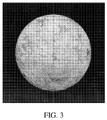
- FIG. 1 illustrates a polymer composite ball having a diameter of 2.625 inches (66.68 mm). The ball is subjected to a pressure test. The test conditions and the results are shown in FIG. 2 . A picture of the polymer composite ball after the pressure test is shown in FIG. 3 . The results indicate that the polymer composite ball can withstand a pressure differential of 10,000 psi (69,000 kPa) at 275°C for 4 hours.
- Methods to disintegrate a polymer composite or an article comprising the polymer composite comprises: exposing the polymer composite or the article to an aqueous fluid at a temperature of about 25°C to about 300°C, about 65°C to about 250°C, or about 65°C to about 150°C or about 175°C to about 250°C.
- the pressure can be about 100 psi (about 690 kPa) to about 15,000 psi (about 100,000 kPa).
- the aqueous fluid includes water, brine, an alkaline solution, or a combination thereof.
- the brine can include NaCl, KCl, NaBr, MgCl 2 , CaCl 2 , CaBr 2 , ZnBr 2 , NH 4 Cl, sodium formate, cesium formate, and the like.
- the alkaline solution can include an alkaline salt of one or more of the following: Na; K; Ca; Mg; Li; or Ce.
- the salts present in the brine or the alkaline solution can be in an amount of from about 0.5 weight percent (wt.%) to about 50 wt.%, specifically about 1 wt.% to about 40 wt.%, and more specifically about 1 wt.% to about 25 wt.%, based on the weight of the brine or the alkaline solution.
Landscapes
- Chemical & Material Sciences (AREA)
- Organic Chemistry (AREA)
- Health & Medical Sciences (AREA)
- Chemical Kinetics & Catalysis (AREA)
- Medicinal Chemistry (AREA)
- Polymers & Plastics (AREA)
- Engineering & Computer Science (AREA)
- Life Sciences & Earth Sciences (AREA)
- Geology (AREA)
- Mining & Mineral Resources (AREA)
- General Life Sciences & Earth Sciences (AREA)
- Physics & Mathematics (AREA)
- Environmental & Geological Engineering (AREA)
- Fluid Mechanics (AREA)
- Geochemistry & Mineralogy (AREA)
- Materials Engineering (AREA)
- General Chemical & Material Sciences (AREA)
- Compositions Of Macromolecular Compounds (AREA)
- Glass Compositions (AREA)
Applications Claiming Priority (2)
| Application Number | Priority Date | Filing Date | Title |
|---|---|---|---|
| US201562180098P | 2015-06-16 | 2015-06-16 | |
| PCT/US2016/031846 WO2016204886A1 (en) | 2015-06-16 | 2016-05-11 | Disintegratable polymer composites for downhole tools |
Publications (3)
| Publication Number | Publication Date |
|---|---|
| EP3310855A1 EP3310855A1 (en) | 2018-04-25 |
| EP3310855A4 EP3310855A4 (en) | 2019-01-16 |
| EP3310855B1 true EP3310855B1 (en) | 2020-10-21 |
Family
ID=57546296
Family Applications (1)
| Application Number | Title | Priority Date | Filing Date |
|---|---|---|---|
| EP16812100.2A Not-in-force EP3310855B1 (en) | 2015-06-16 | 2016-05-11 | Disintegratable polymer composites for downhole tools |
Country Status (8)
| Country | Link |
|---|---|
| US (1) | US10458197B2 (https=) |
| EP (1) | EP3310855B1 (https=) |
| AU (1) | AU2016280455B2 (https=) |
| BR (1) | BR112017026880B1 (https=) |
| CA (1) | CA2989286C (https=) |
| GB (1) | GB2556530B (https=) |
| NO (1) | NO20172067A1 (https=) |
| WO (1) | WO2016204886A1 (https=) |
Families Citing this family (19)
| Publication number | Priority date | Publication date | Assignee | Title |
|---|---|---|---|---|
| GB2539810B (en) * | 2014-04-16 | 2021-01-13 | Halliburton Energy Services Inc | Multi-zone actuation system using wellbore darts |
| US10982078B2 (en) | 2015-09-21 | 2021-04-20 | Schlumberger Technology Corporation | Degradable elastomeric material |
| US10851611B2 (en) * | 2016-04-08 | 2020-12-01 | Baker Hughes, A Ge Company, Llc | Hybrid disintegrable articles |
| US11008832B2 (en) | 2016-05-10 | 2021-05-18 | Board Of Regents, The University Of Texas System | Methods for increasing wellbore strength |
| CN108485535B (zh) * | 2018-03-09 | 2020-12-29 | 中南林业科技大学 | 一种短周期热压无机胶黏剂及其制备方法和应用 |
| CN109295729B (zh) * | 2018-09-28 | 2020-03-17 | 五邑大学 | 一种拆领或拆袖的方法 |
| US10876374B2 (en) | 2018-11-16 | 2020-12-29 | Weatherford Technology Holdings, Llc | Degradable plugs |
| EP3919547A4 (en) | 2019-02-01 | 2022-04-20 | Mitsubishi Gas Chemical Company, Inc. | DEGRADABLE RESIN COMPOSITION, DEGRADABLE CURED ARTICLE, AND DOWN-THE-WAY TOOL FOR DRILLING |
| US10961798B2 (en) * | 2019-05-08 | 2021-03-30 | Baker Hughes Oilfield Operations Llc | Methods of disintegrating downhole tools containing cyanate esters |
| WO2022006035A1 (en) | 2020-06-29 | 2022-01-06 | Baker Hughes Oilfield Operations Llc | Tagging assembly including a sacrificial stop component |
| CN112063120B (zh) * | 2020-08-03 | 2022-06-17 | 中国建筑股份有限公司 | 一种乙烯基树脂轻质复合材料及其制备方法 |
| US11767400B2 (en) * | 2020-08-17 | 2023-09-26 | Baker Hughes Oilfield Operations Llc | Manufacture of degradable polycyanurate bulk molding compositions |
| CN112920786B (zh) * | 2021-02-01 | 2022-07-19 | 成都理工大学 | 一种高渗透率保留率的复合防砂剂 |
| US11466545B2 (en) * | 2021-02-26 | 2022-10-11 | Halliburton Energy Services, Inc. | Guide sub for multilateral junction |
| US12049557B2 (en) | 2021-07-07 | 2024-07-30 | CNPC USA Corp. | Bi-continuos epoxy microstructure for fabrication of degradable thermoset composite used in HTHP downhole conditions |
| CN113549437B (zh) * | 2021-08-19 | 2023-10-13 | 中海石油(中国)有限公司湛江分公司 | 一种适用于深水、超深水钻井液的自降解防漏堵漏聚合物复合材料制备方法及应用 |
| JP7841329B2 (ja) * | 2022-03-31 | 2026-04-07 | 三菱瓦斯化学株式会社 | 樹脂組成物、崩壊性硬化物、掘削用ダウンホールツール、及び坑井掘削方法 |
| US12252645B2 (en) | 2023-07-26 | 2025-03-18 | Cnpc Usa Corporation | Formulation and setup method of in-situ dissolvable plug |
| US20260002422A1 (en) * | 2024-06-28 | 2026-01-01 | Halliburton Energy Services, Inc. | Method of using degradable glass fibers for downhole tools |
Family Cites Families (19)
| Publication number | Priority date | Publication date | Assignee | Title |
|---|---|---|---|---|
| CA1074481A (en) | 1974-04-12 | 1980-03-25 | H. H. Robertson Company | Polymerizable compositions containing unsaturated polyester resins and aqueous alkali metal silicate, method of preparing shaped articles from such compositions and thermoset products thereof |
| US4931545A (en) | 1989-05-03 | 1990-06-05 | Hi-Tek Polymers, Inc. | Flame retardant polycyanate ester blend |
| US5245841A (en) | 1992-11-24 | 1993-09-21 | Scotsman Group, Inc. | Undercounter ice making machine |
| US6245841B1 (en) | 1998-03-23 | 2001-06-12 | General Electric Company | Cyanate ester based thermoset compositions |
| US7093664B2 (en) | 2004-03-18 | 2006-08-22 | Halliburton Energy Services, Inc. | One-time use composite tool formed of fibers and a biodegradable resin |
| US7353879B2 (en) | 2004-03-18 | 2008-04-08 | Halliburton Energy Services, Inc. | Biodegradable downhole tools |
| FR2872155B1 (fr) * | 2004-06-24 | 2006-09-08 | Saint Gobain Vetrotex | Matiere plastique renforcee par des fils de verre resistant a la corrosion |
| JP4784066B2 (ja) * | 2004-10-28 | 2011-09-28 | 三菱瓦斯化学株式会社 | 樹脂組成物及び銅張積層板 |
| KR101415099B1 (ko) | 2008-07-31 | 2014-07-08 | 고쿠리츠 다이가쿠 호진 교토 다이가쿠 | 불포화 폴리에스테르 수지와 마이크로피브릴화 식물 섬유를 함유하는 성형 재료 |
| US7775286B2 (en) | 2008-08-06 | 2010-08-17 | Baker Hughes Incorporated | Convertible downhole devices and method of performing downhole operations using convertible downhole devices |
| US9446983B2 (en) * | 2009-08-03 | 2016-09-20 | Ppg Industries Ohio, Inc. | Glass compositions and fibers made therefrom |
| US8668019B2 (en) | 2010-12-29 | 2014-03-11 | Baker Hughes Incorporated | Dissolvable barrier for downhole use and method thereof |
| US20120181032A1 (en) | 2011-01-14 | 2012-07-19 | Utex Industries, Inc. | Disintegrating ball for sealing frac plug seat |
| WO2013049967A1 (en) | 2011-10-08 | 2013-04-11 | Sabic Innovative Plastics Ip B.V. | Plastic flame housing and method of making the same |
| US20130233546A1 (en) * | 2012-03-07 | 2013-09-12 | Halliburton Energy Services, Inc. | Degradable Fluid Sealing Compositions Having an Adjustable Degradation Rate and Methods for Use Thereof |
| US20130317142A1 (en) | 2012-05-24 | 2013-11-28 | Sabic Innovative Plastics Ip B.V. | Flame retardant thermoplastic compositions, methods of manufacture thereof and articles comprising the same |
| EP2730618B1 (en) | 2012-11-07 | 2016-10-12 | SABIC Global Technologies B.V. | Process for producing polycarbonate compositions |
| WO2014189766A2 (en) | 2013-05-21 | 2014-11-27 | Halliburton Energy Services, Inc. | Syntactic foam frac ball and methods of using same |
| US20160145486A1 (en) | 2013-07-31 | 2016-05-26 | Halliburton Energy Services, Inc. | Wellbore servicing compositions and methods of making and using same |
-
2016
- 2016-05-09 US US15/149,237 patent/US10458197B2/en active Active
- 2016-05-11 EP EP16812100.2A patent/EP3310855B1/en not_active Not-in-force
- 2016-05-11 BR BR112017026880-9A patent/BR112017026880B1/pt active IP Right Grant
- 2016-05-11 WO PCT/US2016/031846 patent/WO2016204886A1/en not_active Ceased
- 2016-05-11 GB GB1800465.5A patent/GB2556530B/en active Active
- 2016-05-11 AU AU2016280455A patent/AU2016280455B2/en active Active
- 2016-05-11 CA CA2989286A patent/CA2989286C/en active Active
-
2017
- 2017-12-29 NO NO20172067A patent/NO20172067A1/en unknown
Non-Patent Citations (1)
| Title |
|---|
| None * |
Also Published As
| Publication number | Publication date |
|---|---|
| US20160369083A1 (en) | 2016-12-22 |
| NO20172067A1 (en) | 2017-12-29 |
| AU2016280455A1 (en) | 2018-01-25 |
| BR112017026880A2 (https=) | 2018-08-21 |
| GB2556530A (en) | 2018-05-30 |
| AU2016280455B2 (en) | 2021-03-25 |
| EP3310855A4 (en) | 2019-01-16 |
| EP3310855A1 (en) | 2018-04-25 |
| CA2989286C (en) | 2023-04-25 |
| WO2016204886A1 (en) | 2016-12-22 |
| GB2556530B (en) | 2021-07-28 |
| GB201800465D0 (en) | 2018-02-28 |
| CA2989286A1 (en) | 2016-12-22 |
| US10458197B2 (en) | 2019-10-29 |
| BR112017026880B1 (pt) | 2022-02-22 |
Similar Documents
| Publication | Publication Date | Title |
|---|---|---|
| EP3310855B1 (en) | Disintegratable polymer composites for downhole tools | |
| US11136461B2 (en) | Degradable composite structures | |
| US10329407B2 (en) | Degradable extrusion resistant compositions and articles of manufacture | |
| US10851611B2 (en) | Hybrid disintegrable articles | |
| US11643904B1 (en) | Degradable downhole tools and components for high salinity applications | |
| CA2495841A1 (en) | Drilling fluid containing microspheres and use thereof | |
| US10227471B2 (en) | Degradable extrusion resistant compositions and articles of manufacture | |
| US10669808B1 (en) | Degradable downhole tools and components | |
| US10767439B1 (en) | Downhole tool having a sealing element constructed from a polyvinyl alcohol compound | |
| US10961812B2 (en) | Disintegratable bismaleimide composites for downhole tool applications | |
| US11851967B2 (en) | Disintegrable downhole tools and method of use | |
| CA3139701C (en) | METHODS FOR DISINTEGRATING DOWNHOLE TOOLS CONTAINING CYANATE ESTERS | |
| CN112334632B (zh) | 井下工具 | |
| US12565821B1 (en) | Multicycle valve system and method | |
| AU2024276210A1 (en) | Liner hanger system and method |
Legal Events
| Date | Code | Title | Description |
|---|---|---|---|
| STAA | Information on the status of an ep patent application or granted ep patent |
Free format text: STATUS: THE INTERNATIONAL PUBLICATION HAS BEEN MADE |
|
| PUAI | Public reference made under article 153(3) epc to a published international application that has entered the european phase |
Free format text: ORIGINAL CODE: 0009012 |
|
| STAA | Information on the status of an ep patent application or granted ep patent |
Free format text: STATUS: REQUEST FOR EXAMINATION WAS MADE |
|
| 17P | Request for examination filed |
Effective date: 20180110 |
|
| AK | Designated contracting states |
Kind code of ref document: A1 Designated state(s): AL AT BE BG CH CY CZ DE DK EE ES FI FR GB GR HR HU IE IS IT LI LT LU LV MC MK MT NL NO PL PT RO RS SE SI SK SM TR |
|
| AX | Request for extension of the european patent |
Extension state: BA ME |
|
| RIN1 | Information on inventor provided before grant (corrected) |
Inventor name: SADANA, ANIL Inventor name: YUAN, YUSHENG Inventor name: KHATIWADA, SUMAN |
|
| DAV | Request for validation of the european patent (deleted) | ||
| DAX | Request for extension of the european patent (deleted) | ||
| A4 | Supplementary search report drawn up and despatched |
Effective date: 20181213 |
|
| RIC1 | Information provided on ipc code assigned before grant |
Ipc: C08G 63/685 20060101ALI20181207BHEP Ipc: C08K 3/22 20060101ALI20181207BHEP Ipc: C08L 67/06 20060101ALI20181207BHEP Ipc: C08L 67/00 20060101ALI20181207BHEP Ipc: C08G 63/91 20060101ALI20181207BHEP Ipc: C08K 7/02 20060101ALI20181207BHEP Ipc: C08K 5/56 20060101ALI20181207BHEP Ipc: C09K 8/12 20060101ALI20181207BHEP Ipc: C08K 7/14 20060101AFI20181207BHEP |
|
| REG | Reference to a national code |
Ref country code: DE Ref legal event code: R079 Ref document number: 602016046364 Country of ref document: DE Free format text: PREVIOUS MAIN CLASS: C08K0007140000 Ipc: C08K0003400000 |
|
| GRAP | Despatch of communication of intention to grant a patent |
Free format text: ORIGINAL CODE: EPIDOSNIGR1 |
|
| STAA | Information on the status of an ep patent application or granted ep patent |
Free format text: STATUS: GRANT OF PATENT IS INTENDED |
|
| RIC1 | Information provided on ipc code assigned before grant |
Ipc: C08L 67/06 20060101ALN20200417BHEP Ipc: C08K 3/40 20060101AFI20200417BHEP Ipc: C08L 63/10 20060101ALN20200417BHEP Ipc: C08L 79/04 20060101ALN20200417BHEP |
|
| INTG | Intention to grant announced |
Effective date: 20200518 |
|
| RAP1 | Party data changed (applicant data changed or rights of an application transferred) |
Owner name: BAKER HUGHES HOLDINGS LLC |
|
| GRAS | Grant fee paid |
Free format text: ORIGINAL CODE: EPIDOSNIGR3 |
|
| GRAA | (expected) grant |
Free format text: ORIGINAL CODE: 0009210 |
|
| STAA | Information on the status of an ep patent application or granted ep patent |
Free format text: STATUS: THE PATENT HAS BEEN GRANTED |
|
| AK | Designated contracting states |
Kind code of ref document: B1 Designated state(s): AL AT BE BG CH CY CZ DE DK EE ES FI FR GB GR HR HU IE IS IT LI LT LU LV MC MK MT NL NO PL PT RO RS SE SI SK SM TR |
|
| REG | Reference to a national code |
Ref country code: GB Ref legal event code: FG4D |
|
| REG | Reference to a national code |
Ref country code: CH Ref legal event code: EP |
|
| REG | Reference to a national code |
Ref country code: IE Ref legal event code: FG4D |
|
| REG | Reference to a national code |
Ref country code: DE Ref legal event code: R096 Ref document number: 602016046364 Country of ref document: DE |
|
| REG | Reference to a national code |
Ref country code: AT Ref legal event code: REF Ref document number: 1325824 Country of ref document: AT Kind code of ref document: T Effective date: 20201115 |
|
| REG | Reference to a national code |
Ref country code: AT Ref legal event code: MK05 Ref document number: 1325824 Country of ref document: AT Kind code of ref document: T Effective date: 20201021 |
|
| REG | Reference to a national code |
Ref country code: NL Ref legal event code: MP Effective date: 20201021 |
|
| PG25 | Lapsed in a contracting state [announced via postgrant information from national office to epo] |
Ref country code: NO Free format text: LAPSE BECAUSE OF FAILURE TO SUBMIT A TRANSLATION OF THE DESCRIPTION OR TO PAY THE FEE WITHIN THE PRESCRIBED TIME-LIMIT Effective date: 20210121 Ref country code: PT Free format text: LAPSE BECAUSE OF FAILURE TO SUBMIT A TRANSLATION OF THE DESCRIPTION OR TO PAY THE FEE WITHIN THE PRESCRIBED TIME-LIMIT Effective date: 20210222 Ref country code: RS Free format text: LAPSE BECAUSE OF FAILURE TO SUBMIT A TRANSLATION OF THE DESCRIPTION OR TO PAY THE FEE WITHIN THE PRESCRIBED TIME-LIMIT Effective date: 20201021 Ref country code: FI Free format text: LAPSE BECAUSE OF FAILURE TO SUBMIT A TRANSLATION OF THE DESCRIPTION OR TO PAY THE FEE WITHIN THE PRESCRIBED TIME-LIMIT Effective date: 20201021 Ref country code: GR Free format text: LAPSE BECAUSE OF FAILURE TO SUBMIT A TRANSLATION OF THE DESCRIPTION OR TO PAY THE FEE WITHIN THE PRESCRIBED TIME-LIMIT Effective date: 20210122 |
|
| REG | Reference to a national code |
Ref country code: LT Ref legal event code: MG4D |
|
| PG25 | Lapsed in a contracting state [announced via postgrant information from national office to epo] |
Ref country code: BG Free format text: LAPSE BECAUSE OF FAILURE TO SUBMIT A TRANSLATION OF THE DESCRIPTION OR TO PAY THE FEE WITHIN THE PRESCRIBED TIME-LIMIT Effective date: 20210121 Ref country code: LV Free format text: LAPSE BECAUSE OF FAILURE TO SUBMIT A TRANSLATION OF THE DESCRIPTION OR TO PAY THE FEE WITHIN THE PRESCRIBED TIME-LIMIT Effective date: 20201021 Ref country code: IS Free format text: LAPSE BECAUSE OF FAILURE TO SUBMIT A TRANSLATION OF THE DESCRIPTION OR TO PAY THE FEE WITHIN THE PRESCRIBED TIME-LIMIT Effective date: 20210221 Ref country code: PL Free format text: LAPSE BECAUSE OF FAILURE TO SUBMIT A TRANSLATION OF THE DESCRIPTION OR TO PAY THE FEE WITHIN THE PRESCRIBED TIME-LIMIT Effective date: 20201021 Ref country code: ES Free format text: LAPSE BECAUSE OF FAILURE TO SUBMIT A TRANSLATION OF THE DESCRIPTION OR TO PAY THE FEE WITHIN THE PRESCRIBED TIME-LIMIT Effective date: 20201021 Ref country code: AT Free format text: LAPSE BECAUSE OF FAILURE TO SUBMIT A TRANSLATION OF THE DESCRIPTION OR TO PAY THE FEE WITHIN THE PRESCRIBED TIME-LIMIT Effective date: 20201021 Ref country code: SE Free format text: LAPSE BECAUSE OF FAILURE TO SUBMIT A TRANSLATION OF THE DESCRIPTION OR TO PAY THE FEE WITHIN THE PRESCRIBED TIME-LIMIT Effective date: 20201021 |
|
| PG25 | Lapsed in a contracting state [announced via postgrant information from national office to epo] |
Ref country code: HR Free format text: LAPSE BECAUSE OF FAILURE TO SUBMIT A TRANSLATION OF THE DESCRIPTION OR TO PAY THE FEE WITHIN THE PRESCRIBED TIME-LIMIT Effective date: 20201021 Ref country code: NL Free format text: LAPSE BECAUSE OF FAILURE TO SUBMIT A TRANSLATION OF THE DESCRIPTION OR TO PAY THE FEE WITHIN THE PRESCRIBED TIME-LIMIT Effective date: 20201021 |
|
| REG | Reference to a national code |
Ref country code: DE Ref legal event code: R097 Ref document number: 602016046364 Country of ref document: DE |
|
| PG25 | Lapsed in a contracting state [announced via postgrant information from national office to epo] |
Ref country code: SK Free format text: LAPSE BECAUSE OF FAILURE TO SUBMIT A TRANSLATION OF THE DESCRIPTION OR TO PAY THE FEE WITHIN THE PRESCRIBED TIME-LIMIT Effective date: 20201021 Ref country code: RO Free format text: LAPSE BECAUSE OF FAILURE TO SUBMIT A TRANSLATION OF THE DESCRIPTION OR TO PAY THE FEE WITHIN THE PRESCRIBED TIME-LIMIT Effective date: 20201021 Ref country code: SM Free format text: LAPSE BECAUSE OF FAILURE TO SUBMIT A TRANSLATION OF THE DESCRIPTION OR TO PAY THE FEE WITHIN THE PRESCRIBED TIME-LIMIT Effective date: 20201021 Ref country code: LT Free format text: LAPSE BECAUSE OF FAILURE TO SUBMIT A TRANSLATION OF THE DESCRIPTION OR TO PAY THE FEE WITHIN THE PRESCRIBED TIME-LIMIT Effective date: 20201021 Ref country code: CZ Free format text: LAPSE BECAUSE OF FAILURE TO SUBMIT A TRANSLATION OF THE DESCRIPTION OR TO PAY THE FEE WITHIN THE PRESCRIBED TIME-LIMIT Effective date: 20201021 Ref country code: EE Free format text: LAPSE BECAUSE OF FAILURE TO SUBMIT A TRANSLATION OF THE DESCRIPTION OR TO PAY THE FEE WITHIN THE PRESCRIBED TIME-LIMIT Effective date: 20201021 |
|
| PLBE | No opposition filed within time limit |
Free format text: ORIGINAL CODE: 0009261 |
|
| STAA | Information on the status of an ep patent application or granted ep patent |
Free format text: STATUS: NO OPPOSITION FILED WITHIN TIME LIMIT |
|
| PG25 | Lapsed in a contracting state [announced via postgrant information from national office to epo] |
Ref country code: DK Free format text: LAPSE BECAUSE OF FAILURE TO SUBMIT A TRANSLATION OF THE DESCRIPTION OR TO PAY THE FEE WITHIN THE PRESCRIBED TIME-LIMIT Effective date: 20201021 |
|
| 26N | No opposition filed |
Effective date: 20210722 |
|
| PG25 | Lapsed in a contracting state [announced via postgrant information from national office to epo] |
Ref country code: AL Free format text: LAPSE BECAUSE OF FAILURE TO SUBMIT A TRANSLATION OF THE DESCRIPTION OR TO PAY THE FEE WITHIN THE PRESCRIBED TIME-LIMIT Effective date: 20201021 Ref country code: IT Free format text: LAPSE BECAUSE OF FAILURE TO SUBMIT A TRANSLATION OF THE DESCRIPTION OR TO PAY THE FEE WITHIN THE PRESCRIBED TIME-LIMIT Effective date: 20201021 |
|
| PG25 | Lapsed in a contracting state [announced via postgrant information from national office to epo] |
Ref country code: SI Free format text: LAPSE BECAUSE OF FAILURE TO SUBMIT A TRANSLATION OF THE DESCRIPTION OR TO PAY THE FEE WITHIN THE PRESCRIBED TIME-LIMIT Effective date: 20201021 |
|
| REG | Reference to a national code |
Ref country code: DE Ref legal event code: R119 Ref document number: 602016046364 Country of ref document: DE |
|
| REG | Reference to a national code |
Ref country code: CH Ref legal event code: PL |
|
| GBPC | Gb: european patent ceased through non-payment of renewal fee |
Effective date: 20210511 |
|
| PG25 | Lapsed in a contracting state [announced via postgrant information from national office to epo] |
Ref country code: LU Free format text: LAPSE BECAUSE OF NON-PAYMENT OF DUE FEES Effective date: 20210511 Ref country code: MC Free format text: LAPSE BECAUSE OF FAILURE TO SUBMIT A TRANSLATION OF THE DESCRIPTION OR TO PAY THE FEE WITHIN THE PRESCRIBED TIME-LIMIT Effective date: 20201021 Ref country code: LI Free format text: LAPSE BECAUSE OF NON-PAYMENT OF DUE FEES Effective date: 20210531 Ref country code: CH Free format text: LAPSE BECAUSE OF NON-PAYMENT OF DUE FEES Effective date: 20210531 |
|
| REG | Reference to a national code |
Ref country code: BE Ref legal event code: MM Effective date: 20210531 |
|
| PG25 | Lapsed in a contracting state [announced via postgrant information from national office to epo] |
Ref country code: IE Free format text: LAPSE BECAUSE OF NON-PAYMENT OF DUE FEES Effective date: 20210511 Ref country code: GB Free format text: LAPSE BECAUSE OF NON-PAYMENT OF DUE FEES Effective date: 20210511 Ref country code: DE Free format text: LAPSE BECAUSE OF NON-PAYMENT OF DUE FEES Effective date: 20211201 |
|
| PG25 | Lapsed in a contracting state [announced via postgrant information from national office to epo] |
Ref country code: IS Free format text: LAPSE BECAUSE OF FAILURE TO SUBMIT A TRANSLATION OF THE DESCRIPTION OR TO PAY THE FEE WITHIN THE PRESCRIBED TIME-LIMIT Effective date: 20210221 Ref country code: FR Free format text: LAPSE BECAUSE OF NON-PAYMENT OF DUE FEES Effective date: 20210531 |
|
| PG25 | Lapsed in a contracting state [announced via postgrant information from national office to epo] |
Ref country code: BE Free format text: LAPSE BECAUSE OF NON-PAYMENT OF DUE FEES Effective date: 20210531 |
|
| PG25 | Lapsed in a contracting state [announced via postgrant information from national office to epo] |
Ref country code: CY Free format text: LAPSE BECAUSE OF FAILURE TO SUBMIT A TRANSLATION OF THE DESCRIPTION OR TO PAY THE FEE WITHIN THE PRESCRIBED TIME-LIMIT Effective date: 20201021 |
|
| P01 | Opt-out of the competence of the unified patent court (upc) registered |
Effective date: 20230526 |
|
| PG25 | Lapsed in a contracting state [announced via postgrant information from national office to epo] |
Ref country code: HU Free format text: LAPSE BECAUSE OF FAILURE TO SUBMIT A TRANSLATION OF THE DESCRIPTION OR TO PAY THE FEE WITHIN THE PRESCRIBED TIME-LIMIT; INVALID AB INITIO Effective date: 20160511 |
|
| PG25 | Lapsed in a contracting state [announced via postgrant information from national office to epo] |
Ref country code: MK Free format text: LAPSE BECAUSE OF FAILURE TO SUBMIT A TRANSLATION OF THE DESCRIPTION OR TO PAY THE FEE WITHIN THE PRESCRIBED TIME-LIMIT Effective date: 20201021 |
|
| PG25 | Lapsed in a contracting state [announced via postgrant information from national office to epo] |
Ref country code: MT Free format text: LAPSE BECAUSE OF FAILURE TO SUBMIT A TRANSLATION OF THE DESCRIPTION OR TO PAY THE FEE WITHIN THE PRESCRIBED TIME-LIMIT Effective date: 20201021 |
|
| PG25 | Lapsed in a contracting state [announced via postgrant information from national office to epo] |
Ref country code: TR Free format text: LAPSE BECAUSE OF FAILURE TO SUBMIT A TRANSLATION OF THE DESCRIPTION OR TO PAY THE FEE WITHIN THE PRESCRIBED TIME-LIMIT Effective date: 20201021 |