EP3309689B1 - Systeme und verfahren zur auswahl optimaler variablen unter verwendung eines suchoptimierungsverfahrens auf basis von modifiziertem lehren-lernen - Google Patents
Systeme und verfahren zur auswahl optimaler variablen unter verwendung eines suchoptimierungsverfahrens auf basis von modifiziertem lehren-lernen Download PDFInfo
- Publication number
- EP3309689B1 EP3309689B1 EP17163520.4A EP17163520A EP3309689B1 EP 3309689 B1 EP3309689 B1 EP 3309689B1 EP 17163520 A EP17163520 A EP 17163520A EP 3309689 B1 EP3309689 B1 EP 3309689B1
- Authority
- EP
- European Patent Office
- Prior art keywords
- variables
- trainee
- unique
- trainees
- subset
- Prior art date
- Legal status (The legal status is an assumption and is not a legal conclusion. Google has not performed a legal analysis and makes no representation as to the accuracy of the status listed.)
- Active
Links
Images

Classifications
-
- G—PHYSICS
- G06—COMPUTING OR CALCULATING; COUNTING
- G06F—ELECTRIC DIGITAL DATA PROCESSING
- G06F17/00—Digital computing or data processing equipment or methods, specially adapted for specific functions
- G06F17/10—Complex mathematical operations
- G06F17/18—Complex mathematical operations for evaluating statistical data, e.g. average values, frequency distributions, probability functions, regression analysis
-
- G—PHYSICS
- G06—COMPUTING OR CALCULATING; COUNTING
- G06N—COMPUTING ARRANGEMENTS BASED ON SPECIFIC COMPUTATIONAL MODELS
- G06N3/00—Computing arrangements based on biological models
- G06N3/004—Artificial life, i.e. computing arrangements simulating life
- G06N3/006—Artificial life, i.e. computing arrangements simulating life based on simulated virtual individual or collective life forms, e.g. social simulations or particle swarm optimisation [PSO]
-
- G—PHYSICS
- G06—COMPUTING OR CALCULATING; COUNTING
- G06N—COMPUTING ARRANGEMENTS BASED ON SPECIFIC COMPUTATIONAL MODELS
- G06N5/00—Computing arrangements using knowledge-based models
- G06N5/01—Dynamic search techniques; Heuristics; Dynamic trees; Branch-and-bound
-
- G—PHYSICS
- G06—COMPUTING OR CALCULATING; COUNTING
- G06N—COMPUTING ARRANGEMENTS BASED ON SPECIFIC COMPUTATIONAL MODELS
- G06N5/00—Computing arrangements using knowledge-based models
- G06N5/04—Inference or reasoning models
-
- G—PHYSICS
- G09—EDUCATION; CRYPTOGRAPHY; DISPLAY; ADVERTISING; SEALS
- G09B—EDUCATIONAL OR DEMONSTRATION APPLIANCES; APPLIANCES FOR TEACHING, OR COMMUNICATING WITH, THE BLIND, DEAF OR MUTE; MODELS; PLANETARIA; GLOBES; MAPS; DIAGRAMS
- G09B5/00—Electrically-operated educational appliances
Definitions
- the disclosure herein generally relates to teaching learning based search optimization techniques, and, more particularly, to systems and methods for selecting optimal variables using modified teaching learning based search optimization technique and generation of predictive models based on the selected variables.
- Variable selection methods are one such data analytics approach that is applied to the selection of a sub set of variables(X) from a large pool of variables based on various statistics measures.
- the selected variables can be used for the development of prediction models for a dependent variable(Y), when used with modelling techniques such as multiple linear regression, nonlinear regression etc. or for the generation new rules/alerts.
- the variables selection can be accomplished using a random or exhaustive search technique.
- the exhaustive search approach which evaluates each possible combination, is a computationally hard problem and hence, can be used only for smaller subsets.
- the most alternate approach is the use of heuristic methods such as ant colony, particle swarm optimization, genetic algorithm, and the like.
- these methods cannot guarantee an optimal solution as they fail to explore the complete problem (variable) space.
- TLBO Teaching Learning Based Optimization
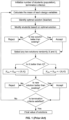
- FIG. 1 illustrates the workflow of the above technique for an optimization problem.
- the population, students, of the classroom is initialized and a stopping criterion and objective function to maximize or minimize is defined.
- the objective function of the population is calculated to determine the best student, who will act as the teacher for the following session.
- each student X i in the teaching phase, improvises his or her solution based on the following expression:
- X new X iold + r X teacher ⁇ T ⁇ Mean
- the teaching factor, T f is taken as either 1 or 2 and r is a random number between 0 and 1.
- the termination criteria can be a fixed number of iterations, a threshold of objective function needed, a minimum allowed error, etc.
- the TLBO is also applied to feature/ variable/ descriptor selection by Rajeev et al. titled “A novel methodology for feature subset selection using TLBO algorithm ", wherein more than one teacher were introduced for each session and by Suresh et al. titled “Rough set and TLBO technique for optimal feature selection ", wherein the same were employed along with rough set approach. Further, various works have also proposed several modifications of the basic technique such as replacing worst student with other elite solutions, eliminating duplicates randomly, and introducing learning through tutorial or self-motivation. It is worth mentioning that majority of the applications of the TLBO method is focused on optimization solutions in engineering domain and its applications are not well established in the case of other domains such as life sciences, education etc.
- the present invention relates to a method, a system and non-transitory machine readable information storage mediums as claimed in the independent claims. Preferred embodiments are subject to the dependent claims. Embodiments of the present disclosure present technological improvements as solutions to one or more of the above-mentioned technical problems recognized by the inventors in conventional systems. For example, in one aspect, a processor implemented method is provided.
- the method comprising: (a) defining, by one or more processors (i) a population size pertaining to a trainees population comprising one or more trainees, wherein the one or more trainees from the trainees population are associated with a set of unique variables, (ii) number of iterations, (iii) a subset size, correlation coefficient ' r ', and termination criteria comprising (iv) maximum allowed interrelation coefficient of independent variables R int , (v) an objective function to be satisfied by the one or more trainees r min 2 , and (vi) number of additional unique variables introduced in a teaching phase and a learning phase Num rand ; (b) initializing, by the one or more processors, the trainees population with a value defined for an objective function above a threshold value; (c) calculating an objective function of the trainees population and identifying an optimal trainer from the trainees population based on the calculated objective functions; performing in the teaching phase: (d) creating, for each trainee from the trainees population, a teaching pool using
- the teaching pool is created in the teaching phase by combining the set of unique variables of the optimal trainer with that of the one or more trainees.
- the learning pool is created in the learning phase by combining the set of unique variables of the at least one selected trainee with that of the one or more trainees.
- the set of unique variables associated with the optimal trainer is updated. In an embodiment, when the objective functions of the 'm' subset of variables is minimum or maximum than the one or more objective functions of the set of unique variables associated with the optimal trainer, the set of unique variables associated with the optimal trainer is updated. In an embodiment, when the objective functions of the 'm' subset of variables is minimum or maximum than the one or more objective functions than the set of unique variables associated with each trainee, the set of unique variables associated with each trainee is updated.
- the method further comprises generating one or more predictive models based on the optimal subset of variables.
- a system comprising a memory storing instructions; one or more communication interfaces; and one or more hardware processors coupled to the memory via the one or more communication interfaces, wherein the one or more hardware processors are configured by the instructions to: (a) define (i) a population size pertaining to a trainees population comprising one or more trainees, wherein the one or more trainees from the trainees population are associated with a set of unique variables, (ii) number of iterations, (iii) a subset size, correlation co-efficient ' r ', and termination criteria comprising (iv) maximum allowed interrelation coefficient of independent variables R int , (v) an objective function to be satisfied by the one or more trainees r min 2 , and (vi) number of additional unique variables introduced in a teaching phase and a learning phase Num rand , (b) initialize the trainees population with a value defined for an objective function above a threshold value, (c) calculate an objective function of the trainees population and identifying
- the one or more hardware processors are further configured by the instructions to generate one or more predictive models based on the selected optimal subset of variables.
- the set of unique variables associated with the optimal trainer is updated.
- the set of unique variables associated with each trainee is updated.
- the set of unique variables associated with the at least one selected trainee is updated. In an embodiment, when the objective functions of 'n' subset of variables is minimum or maximum than the one or more objective functions of the set of unique variables associated with the at least one selected trainee, the set of unique variables associated with the at least one selected trainee is updated. In an embodiment, when the objective functions of 'n' subset of variables is minimum or maximum than the one or more objective functions of the set of unique variables associated with each of the trainee, the set of unique variables associated with each of the trainee is updated.
- one or more non-transitory machine readable information storage mediums comprising one or more instructions.
- the one or more instructions which when executed by one or more hardware processors causes defining, (i) a population size pertaining to a trainees population comprising one or more trainees, wherein the one or more trainees from the trainees population are associated with a set of unique variables, (ii) number of iterations, (iii) a subset size, correlation co-efficient ' r ', and termination criteria comprising (iv) maximum allowed interrelation coefficient of independent variables R int , (v) an objective function to be satisfied by the one or more trainees r min 2 , and (vi) number of additional unique variables introduced in a teaching phase and a learning phase Num rand ; (b) initializing, by the one or more processors, the trainees population with a value defined for an objective function above a threshold value; (c) calculating an objective function of the trainees population and identifying an optimal trainer from the trainees population
- the instructions which when executed by the one or more hardware processors further cause generating one or more predictive models based on the optimal subset of variables.
- the embodiments of the present disclosure provides systems and methods for selecting optimal variables using modified teaching learning based search optimization technique.
- the method was chosen to build Quantitative structure-activity relationship (QSAR) models using structural variables/descriptors of an input data (e.g. Structural variables derived from chemical structures of drug and drug like compounds).
- QSAR Quantitative structure-activity relationship
- an input data e.g. Structural variables derived from chemical structures of drug and drug like compounds.
- an exemplary dataset with drug and drug like 84 compounds and 326 descriptors, with an objective of maximizing the correlation coefficient of multiple linear regression (MLR) model was used to evaluate the performance of TLBO.
- MLR multiple linear regression
- each of the column number in the subset 'r' depicts each student's mark in a particular subject.
- Table 1 Subset Size Optimal Result Reproducibility
- Table 1 Subset Size Optimal Result Reproducibility
- MLR r 2 3 159, 307, 311 0.7239 7/10 4 33, 108, 265, 307 0.7511 1/10 5 88, 155, 165, 307, 311 0.7613 1/10 6 130, 155, 164, 175, 307, 311 0.7771 1/10
- the basic TLBO technique has its own demerits as and when it applied to a feature selection, for example, it suffers from treating the subset or independent variables as numbers that have valuable information of their relation to the end point (dependent variable Y) i.e., the column number holds information about the quality of the descriptor/independent variables it is representing. These numbers are a mere representation or can be treated as identifiers/names and cannot be used to carry valuable information of the entity but to represent them.
- the subsets/ students are treated as just representations and the steps of the basic traditional TLBO technique of FIG. 1 are changed to consider all the possible combinations of subset size 'r' from the variables of student and teacher or co-student combined. For example, for a subset size of 3, if a student subset is (3, 115, 312) and teacher subset is (19, 159, 258) modified step checks all 3 subset combinations of (3, 19, 115, 159, 258, 312). This step is a move towards exhaustive/ deterministic approach, which guarantees to find the best solution with time constraints.
- Table 2 Subset Size Optimal Solution Reproducibility
- TLBO technique can be further integrated with another aspect of the social set up of choosing optimal students to achieve better results.
- an initial criteria is defined to select a subset as student of the population as minimum value of objective function that is to be met. Therefore, while initializing the student population, each student is verified to have a minimum value of objective function i.e., a minimum r 2 , correlation coefficient of MLR, e.g., 0.6.
- Table 3 Subset Size Optimal Solution Reproducibility
- Subset MLR r 2 3 159, 307, 311 0.723931 10/10 4 108, 157, 307, 311 0.755437 10/10 5 92, 159, 166, 307, 311 0.799594 10/10 6 88, 159, 166, 283, 307, 311 0.833168 8/10 7 977, 155, 178, 262, 263, 283, 311 0.8607539 9/10
- FIG. 2 through 3 where similar reference characters denote corresponding features consistently throughout the figures, there are shown preferred embodiments and these embodiments are described in the context of the following exemplary system and/or method.
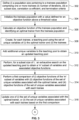
- FIG. 2 illustrates an exemplary block diagram of a system 200 for selecting optimal variables using a modified teaching learning based search optimization (MTLBSO) technique according to an embodiment of the present disclosure.
- the system 200 includes one or more processors 204, communication interface device(s) or input/output (I/O) interface(s) 206, and one or more data storage devices or memory 202 operatively coupled to the one or more processors 204.
- the one or more processors 204 that are hardware processors can be implemented as one or more microprocessors, microcomputers, microcontrollers, digital signal processors, central processing units, state machines, logic circuitries, and/or any devices that manipulate signals based on operational instructions.
- the processor(s) is configured to fetch and execute computer-readable instructions stored in the memory.
- the system 200 can be implemented in a variety of computing systems, such as laptop computers, notebooks, hand-held devices, workstations, mainframe computers, servers, a network cloud and the like.
- the I/O interface device(s) 206 can include a variety of software and hardware interfaces, for example, a web interface, a graphical user interface, and the like and can facilitate multiple communications within a wide variety of networks N/W and protocol types, including wired networks, for example, LAN, cable, etc., and wireless networks, such as WLAN, cellular, or satellite.
- the I/O interface device(s) can include one or more ports for connecting a number of devices to one another or to another server.
- the memory 202 may include any computer-readable medium known in the art including, for example, volatile memory, such as static random access memory (SRAM) and dynamic random access memory (DRAM), and/or non-volatile memory, such as read only memory (ROM), erasable programmable ROM, flash memories, hard disks, optical disks, and magnetic tapes.
- volatile memory such as static random access memory (SRAM) and dynamic random access memory (DRAM)
- non-volatile memory such as read only memory (ROM), erasable programmable ROM, flash memories, hard disks, optical disks, and magnetic tapes.
- ROM read only memory
- erasable programmable ROM erasable programmable ROM
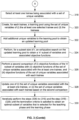
- FIG. 3 illustrates an exemplary flow diagram of a processor implemented method for selecting optimal variables using a modified teaching learning based search (MTLBSO) technique according to an embodiment of the present disclosure.
- the system 200 comprises one or more data storage devices or the memory 202 operatively coupled to the one or more hardware processors 204 and is configured to store instructions for execution of steps of the method by the one or more processors 204.
- the steps of the method of the present disclosure will now be explained with reference to the components of the system 200 as depicted in FIG. 2 , and the flow diagram.
- the one or more processors 204 define (i) a population size pertaining to a trainees population comprising one or more trainees, wherein the one or more trainees from the trainees population are associated with a set of unique variables, (ii) number of iterations, (iii) a subset size, correlation co-efficient ' r ', and termination criteria comprising (iv) maximum allowed interrelation coefficient of independent variables R int , (v) an objective function to be satisfied by the one or more trainees r min 2 , and (vi) number of additional unique variables introduced in a teaching phase and a learning phase Num r ⁇ nd .
- the one or more processors 204 initialize the trainees population with a value defined for an objective function above threshold. For example, the system 200 initializes the trainees population with r 2 > r min 2 .
- the one or more processors 204 calculate an objective function of the trainees population and identify an optimal trainer from the trainees population based on the calculated objective function. In an embodiment of the present disclosure, the one or more processors 204, perform steps 308 till 314 in a teaching phase. At step 308, the one or more processors 204, create, for each trainee from the trainees population, a teaching pool using the set of unique variables of (i) the optimal trainer and (ii) the one or more trainees.
- the term variable may be referred to as feature, or attribute variable subset, and may be interchangeably used herein.
- the one or more processors 204 adds additional unique (independent) variables to the teaching pool to obtain an updated teaching pool.
- the one or more processors 204 perform, for a subset size of 'r', an exhaustive search on the updated teaching pool to obtain a 'm' subset of variables and associated objective functions.
- the one or more processors 204 performs a first comparison of (i) one or more objective functions of the 'm' subset of variables with (ii) one or more objective functions of the set of unique variables associated with the optimal trainer, and (iii) one or more objective functions of the set of unique variables associated with each trainee.
- the one or more processors 204 updates one of (i) the set of unique variables associated with the optimal trainer, or (ii) the set of unique variables associated with each trainee based on the first comparison.
- the objective functions of 'm' subset of variables when the objective functions of 'm' subset of variables is minimum or maximum than the objective functions of the set of unique variables associated with the optimal trainer, the objective functions of the set of unique variables associated with the optimal trainer is updated. In another example embodiment, when the objective functions of the 'm' subset of variables is minimum or maximum than the objective functions of the set of unique variables associated with each trainee, the set of unique variables associated with each trainee is updated.
- the one or more processors 204 perform steps 318 till 326 in a learning phase.
- the one or more processors 204 select at least one trainee being associated with a set of unique variables, each of a variable from the set of unique variables of the selected trainee is associated with an objective function.
- the one or more processors 204 create, for each trainee from the trainees population, a learning pool using the set of unique variables of (i) the at least one selected trainee and (ii) the one or more trainees.
- the one or more processors 204 adds (or introduces) additional unique (independent) variables to the learning pool to obtain an updated learning pool.
- the one or more processors 204 perform, for a subset size of 'r', an exhaustive search on the updated learning pool upon the additional variable being added to obtain a 'n' subset of variables and associated objection functions.
- the size of the 'm' subset of variables and the 'n' subset of variables may be identical.
- the size of the 'm' subset of variables and the 'n' subset of variables may be different from each other.
- the one or more processors 204 perform a second comparison of (i) one or more objective functions of the 'n' subset of variables with (ii) one or more objective functions of the set of unique variables associated with the at least one selected trainee, and (iii) one or more objective functions of the set of unique variables associated with each trainee.
- the one or more processors 204 update one of (i) the set of unique variables associated with the at least one selected trainee, or (ii) the set of unique variables associated with each trainee based on the second comparison.
- the set of unique variables associated with the at least one selected trainee is updated.
- the set of unique variables associated with each of the trainee is updated.
- the one or more processors 204 iteratively perform the steps 306 till 316 and the step 318 - 328 until the termination criteria is satisfied to obtain an optimal subset of variables that is selected for the teaching phase and the learning phase.
- the one or more processors 204 generate one or more predictive models based on the selected optimal subset of variables.
- one or more predictive models may comprise, but are not limited to, one or more linear regression models, one or more non-linear regression models, and the like.
- a unique variable for example, ⁇ Polarizability ⁇ is added to the above set to obtain an updated set of variables as illustrated below: ⁇ Molecular Weight, Solubility, Surface Area, Atomic type, Polarizability ⁇ An exhaustive search is performed for a subset of 2 from the above set of 5 to obtain an optimal set of variables that is selected for the teaching phase and the learning phase.
- the additional unique variables can be selected for addition in following ways that are illustrated by way of examples:
- the diversity of the solutions is also maintained in the proposed method of the present disclosure by not allowing any duplicates in the student population, and by (fairly) introducing, with equal probability, each and every variable, as explained in the section "Modification 3", to the teaching and learning phase.
- the embodiments of the present disclosure provide systems and methods for selecting optimal variables using modified teaching learning based search optimization (MTLBSO) technique.
- MTLBSO modified teaching learning based search optimization
- the proposed technique performs exhaustive search of the variables of trainer (teacher) and trainee (student) or cotrainee (co-student) combined, and eliminates the dependency on random number and teaching factor. This ensures that the proposed MTLBSO technique provides a deterministic step, which guarantees optimal solution for the given input i.e., variables of (trainee) student and teacher (trainer) or co-learner.
- the proposed MTLBO does not rely on teaching factor and random number.
- the proposed MTBLSO technique initializes the population with defined criteria such as minimum objective function value and non-correlated variables in subset without any duplicate entries in the population. This ensures more combinations are explored and also higher quality of results when compared to the other scenarios.
- Traditional TLBO (as seen in FIG. 1 ) adds self-learning term in the equation (1), (2) and (3), whereas the proposed MTLBSO technique introduces additional unique variables in each of the teaching and learning phase before performing exhaustive search which minimizes the occurrence of local optimization and stagnation of results.
- the hardware device can be any kind of device which can be programmed including e.g. any kind of computer like a server or a personal computer, or the like, or any combination thereof.
- the device may also include means which could be e.g. hardware means like e.g. an application-specific integrated circuit (ASIC), a field-programmable gate array (FPGA), or a combination of hardware and software means, e.g.
- ASIC application-specific integrated circuit
- FPGA field-programmable gate array
- the means can include both hardware means and software means.
- the method embodiments described herein could be implemented in hardware and software.
- the device may also include software means.
- the embodiments may be implemented on different hardware devices, e.g. using a plurality of CPUs.
- the embodiments herein can comprise hardware and software elements.
- the embodiments that are implemented in software include but are not limited to, firmware, resident software, microcode, etc.
- the functions performed by various modules described herein may be implemented in other modules or combinations of other modules.
- a computerusable or computer readable medium can be any apparatus that can comprise, store, communicate, propagate, or transport the program for use by or in connection with the instruction execution system, apparatus, or device.
- a computer-readable storage medium refers to any type of physical memory on which information or data readable by a processor may be stored.
- a computer-readable storage medium may store instructions for execution by one or more processors, including instructions for causing the processor(s) to perform steps or stages consistent with the embodiments described herein.
- the term "computer-readable medium” should be understood to include tangible items and exclude carrier waves and transient signals, i.e., be non-transitory. Examples include random access memory (RAM), read-only memory (ROM), volatile memory, nonvolatile memory, hard drives, CD ROMs, DVDs, BLU-RAYs, flash drives, disks, and any other known physical storage media.
Landscapes
- Engineering & Computer Science (AREA)
- Physics & Mathematics (AREA)
- Theoretical Computer Science (AREA)
- General Physics & Mathematics (AREA)
- Data Mining & Analysis (AREA)
- Mathematical Physics (AREA)
- Software Systems (AREA)
- General Engineering & Computer Science (AREA)
- Evolutionary Computation (AREA)
- Computing Systems (AREA)
- Computational Linguistics (AREA)
- Artificial Intelligence (AREA)
- Mathematical Analysis (AREA)
- Life Sciences & Earth Sciences (AREA)
- Pure & Applied Mathematics (AREA)
- Mathematical Optimization (AREA)
- Computational Mathematics (AREA)
- Evolutionary Biology (AREA)
- Bioinformatics & Computational Biology (AREA)
- Operations Research (AREA)
- Probability & Statistics with Applications (AREA)
- Bioinformatics & Cheminformatics (AREA)
- Algebra (AREA)
- Databases & Information Systems (AREA)
- Health & Medical Sciences (AREA)
- Biomedical Technology (AREA)
- Biophysics (AREA)
- General Health & Medical Sciences (AREA)
- Molecular Biology (AREA)
- Business, Economics & Management (AREA)
- Educational Administration (AREA)
- Educational Technology (AREA)
- Management, Administration, Business Operations System, And Electronic Commerce (AREA)
Claims (4)
- Prozessorimplementiertes Verfahren zum Auswählen einer oder mehrerer optimaler Variablen unter Verwendung einer modifizierten lehrlernbasierten Suchoptimierungstechnik, wobei das prozessorimplementierte Verfahren Folgendes umfasst:(a) Definieren, durch einen oder mehrere Prozessoren:(i) einer Populationsgröße, die sich auf eine Auszubildenden - Population bezieht, die einen oder mehrere Auszubildenden umfasst, wobei der eine oder die mehreren Auszubildenden aus der Auszubildenden -Population mit einem Satz von eindeutigen Variablen assoziiert sind, die mit einer Optimierung eines Merkmalsauswahlproblems assoziiert sind, wobei die Variablen Parameter der Optimierung des Merkmalsauswahlproblems sind, wobei die Variablen Eigenschaften eines Arzneimittels und/oder einer arzneimittelartigen Verbindung umfassen;(ii) Anzahl von Iterationen;(iii) einer Teilsatzgröße, korrelationseffizienten 'r' und Beendigungskriterien, die Folgendes umfassen:(a) maximal zulässiger Wechselbeziehungskoeffizient unabhängiger Variablen Rint;(b) eine Zielfunktion, die von dem einen oder den mehreren Auszubildenden erfüllt werden soll; und(c) Anzahl zusätzlicher eindeutiger Variablen, die in eine Lehrphase und eine Lernphase Numrand eingeführt werden;(b) Initialisieren, durch den einen oder die mehreren Prozessoren, der Auszubildenden-Population mit einem Wert, der für eine Zielfunktion über einem Schwellenwert definiert ist;(c) Berechnen einer Zielfunktion der Auszubildenden-Population und Identifizieren eines optimalen Ausbilders aus der Auszubildenden-Population basierend auf der berechneten Zielfunktion;wobei die Lehrphase Folgendes umfasst:(d) Erstellen, für jeden Auszubildenden aus der Auszubildenden-Population, eines Lehrpools unter Verwendung des Satzes eindeutiger Variablen(i) des optimalen Auszubildenden und(ii) des einen oder der mehreren Auszubildenden, wobei der Lehrpool in der Lehrphase durch Kombinieren des Satzes eindeutiger Variablen des optimalen Auszubildenden mit dem des einen oder der mehreren Auszubildenden erstellt wird;(e) Hinzufügen zusätzlicher eindeutiger Variablen zu dem Lehrpool, um einen aktualisierten Lehrpool zu erhalten;(f) Durchführen, für eine Teilsatzgröße von r, einer erschöpfenden Suche an dem aktualisierten Lehrpool, um einen 'm'-Teilsatz von Variablen und zugehörigen Zielfunktionen zu erhalten;(g) Durchführen eines ersten Vergleichs der(i) Zielfunktionen des 'm'-Teilsatzes von Variablen mit(ii) einer oder mehreren Zielfunktionen des Satzes eindeutiger Variablen, die dem optimalen Ausbilder zugeordnet sind; und(iii) einer oder mehreren Zielfunktionen des Satzes eindeutiger Variablen, die jedem Auszubildenden zugeordnet sind, wobei, wenn die Zielfunktionen des 'm'-Teilsatzes von Variablen minimal oder maximal als die eine oder die mehreren Zielfunktionen des Satzes eindeutiger Variablen sind, die jedem Auszubildenden zugeordnet sind, der Satz eindeutiger Variablen, die jedem Auszubildenden zugeordnet sind, aktualisiert wird;(h) Aktualisieren eines vonwobei die Lernphase Folgendes umfasst:(i) dem Satz eindeutiger Variablen, die dem optimalen Ausbilder zugeordnet sind wobei, wenn die Zielfunktionen des 'm'-Teilsatzes von Variablen minimal oder maximal als die eine oder die mehreren Zielfunktionen des Satzes eindeutiger Variablen sind, die dem optimalen Ausbilder zugeordnet sind, der Satz eindeutiger Variablen, die dem optimalen Ausbilder zugeordnet sind, aktualisiert wird; oder(ii) dem Satz eindeutiger Variablen, die jedem Auszubildenden zugeordnet sind wobei, wenn die Zielfunktionen des 'm'-Teilsatzes von Variablen minimal oder maximal als die eine oder die mehreren Zielfunktionen des Satzes eindeutiger Variablen sind, die jedem Auszubildenden zugeordnet sind, der Satz eindeutiger Variablen, die jedem Auszubildenden zugeordnet sind, basierend auf dem ersten Vergleich aktualisiert wird;(i) Auswählen mindestens eines Auszubildenden, der einem Satz eindeutiger Variablen zugeordnet ist;(j) Erstellen, für jeden Auszubildenden aus der Auszubildenden-Population, eines Lernpools unter Verwendung des Satzes eindeutiger Variablen(i) des mindestens einen ausgewählten Auszubildenden; und(ii) des einen oder der mehreren Auszubildenden, wobei der Lernpool in der Lernphase durch Kombinieren des Satzes eindeutiger Variablen des mindestens einen ausgewählten Auszubildenden mit dem des einen oder der mehreren Auszubildenden erstellt wird;(k) Hinzufügen zusätzlicher Variablen zu dem Lernpool, um einen aktualisierten Lernpool zu erhalten;(l) Durchführen, für eine Teilsatzgröße von r, einer erschöpfenden Suche an dem aktualisierten Lernpool, wenn die zusätzliche Variable hinzugefügt wird, um einen 'n'-Teilsatz von Variablen und zugehörigen Zielfunktionen zu erhalten;(m) Durchführen eines zweiten Vergleichs der(i) Zielfunktionen des 'n'-Teilsatzes von Variablen mit(ii) einer oder mehreren Zielfunktionen des Satzes eindeutiger Variablen, die dem mindestens einen ausgewählten Auszubildenden zugeordnet sind; und(iii) einer oder mehreren Zielfunktionen des Satzes eindeutiger Variablen, die jedem Auszubildenden zugeordnet sind;(n) Aktualisieren eines von(i) dem Satz eindeutiger Variablen, die dem mindestens einen ausgewählten Auszubildenden zugeordnet sind, wobei, wenn die Zielfunktionen des 'n'-Teilsatzes von Variablen minimal oder maximal als die eine oder die mehreren Zielfunktionen des Satzes eindeutiger Variablen sind, die dem mindestens einen ausgewählten Auszubildenden zugeordnet sind, der Satz eindeutiger Variablen, die dem mindestens einen ausgewählten Auszubildenden zugeordnet sind, aktualisiert wird;(ii) dem Satz eindeutiger Variablen, die jedem Auszubildenden zugeordnet sind wobei, wenn die Zielfunktionen des 'n'-Teilsatzes von Variablen minimal oder maximal als die eine oder die mehreren Zielfunktionen des Satzes eindeutiger Variablen sind, die jedem Auszubildenden zugeordnet sind, der Satz eindeutiger Variablen, die jedem Auszubildenden zugeordnet sind, basierend auf dem zweiten Vergleich aktualisiert wird;(o) iteratives Durchführen der Schritte (d) bis (h) und des Schritts (i) bis (n), bis die Beendigungskriterien erfüllt sind, um einen optimalen Teilsatz von Variablen zu erhalten, die für die Lehrphase und die Lernphase ausgewählt sind,Erzeugen eines oder mehrerer prädiktiver Modelle basierend auf dem optimalen Teilsatz von Variablen, wobei während der Lehr- und Lernphasen jede Auszubildenden-Information in Bezug auf die Optimierung des MerkmalsAuswahlproblems aktualisiert wird, wodurch die Optimierungslösung oder die Merkmals-Auswahllösung improvisiert wird, wobei die optimalen Variablen unter Verwendung einer modifizierten lehrlernbasierten Suchoptimierungstechnik ausgewählt werden, die verwendet wird, um quantitative Struktur-Aktivitäts-Beziehungsmodelle QSAR unter Verwendung von strukturellen Deskriptoren aufzubauen, die von chemischen Strukturen von Arzneimittel und arzneimittelähnlichen Verbindungen abgeleitet sind, wobei die Variablen Molekulargewicht, Löslichkeit, Oberflächenbereich, Atomtyp und Polarisierbarkeit umfassen.
- System zum Auswählen einer oder mehrerer optimaler Variablen unter Verwendung einer modifizierten lehrlernbasierten Suchoptimierungstechnik wobei das System Folgendes umfasst:einen Speicher, der Anweisungen speichert;eine oder mehrere Kommunikationsschnittstellen; undeinen oder mehrere Hardwareprozessoren, die über die eine oder die mehreren Kommunikationsschnittstellen mit dem Speicher gekoppelt sind, wobei der eine oder die mehreren Hardwareprozessoren durch die Anweisungen konfiguriert sind zum:in der Lehrphase:(a) Definieren(i) einer Populationsgröße, die sich auf eine Auszubildenden - Population bezieht, die einen oder mehrere Auszubildenden umfasst, wobei der eine oder die mehreren Auszubildenden aus der Auszubildenden-Population mit einem Satz von eindeutigen Variablen assoziiert sind, die mit einer Optimierung eines Merkmalsauswahlproblems assoziiert sind, wobei die Variablen Parameter der Optimierung des Merkmalsauswahlproblems sind, wobei die Variablen Eigenschaften eines Arzneimittels und/oder einer arzneimittelartigen Verbindung umfassen,(ii) Anzahl von Iterationen,(iii) einer Teilsatzgröße, korrelationseffizienten 'r' und Beendigungskriterien, die Folgendes umfassen:(iv) maximal zulässiger Wechselbeziehungskoeffizient unabhängiger Variablen Rint;(v) eine Zielfunktion, die von dem einen oder den mehreren Auszubildenden erfüllt werden soll; und(vi) Anzahl zusätzlicher eindeutiger Variablen, die in eine Lehrphase und eine Lernphase Numrand eingeführt werden;(b) Initialisieren der Auszubildenden-Population mit einem Wert, der für eine Zielfunktion über einem Schwellenwert definiert ist,(c) Berechnen einer Zielfunktion der Auszubildenden-Population und Identifizieren eines optimalen Ausbilders aus der Auszubildenden-Population basierend auf der berechneten Zielfunktion,(d) Erstellen, für jeden Auszubildenden aus der Auszubildenden-Population, eines Lehrpools unter Verwendung des Satzes eindeutiger Variablen(i) des optimalen Ausbilders und(ii) des einen oder der mehreren Auszubildenden, wobei der Lehrpool in der Lehrphase durch Kombinieren des Satzes eindeutiger Variablen des optimalen Ausbilders mit dem des einen oder der mehreren Auszubildenden erstellt wird,(e) Hinzufügen zusätzlicher eindeutiger Variablen zu dem Lehrpool, um einen aktualisierten Lehrpool zu erhalten,(f) Durchführen, für eine Teilsatzgröße von r, einer erschöpfenden Suche an dem aktualisierten Lehrpool, um einen 'm'-Teilsatz von Variablen und zugehörigen Zielfunktionen zu erhalten,(g) Durchführen eines ersten Vergleichs der(i) Zielfunktionen des 'm'-Teilsatzes von Variablen mit(ii) einer oder mehreren Zielfunktionen des Satzes eindeutiger Variablen, die dem optimalen Ausbilder zugeordnet sind, wobei, wenn die Zielfunktionen des 'm'-Teilsatzes von Variablen minimal oder maximal als die eine oder die mehreren Zielfunktionen des Satzes eindeutiger Variablen sind, die dem optimalen Ausbilder zugeordnet sind, der Satz eindeutiger Variablen, die dem optimalen Ausbilder zugeordnet sind, aktualisiert wird; und(iii) einer oder mehreren Zielfunktionen des Satzes eindeutiger Variablen, die jedem Auszubildenden zugeordnet sind, wobei, wenn die Zielfunktionen des 'm'-Teilsatzes von Variablen minimal oder maximal als die eine oder die mehreren Zielfunktionen des Satzes eindeutiger Variablen sind, die jedem Auszubildenden zugeordnet sind, der Satz eindeutiger Variablen, die jedem Auszubildenden zugeordnet sind, aktualisiert wird; und(h) Aktualisieren eines vonin der Lernphase:(i) dem Satz eindeutiger Variablen, die dem optimalen Ausbilder zugeordnet sind, oder(ii) dem Satz eindeutiger Variablen, die jedem Auszubildenden zugeordnet sind basierend auf dem ersten Vergleich,(i) Auswählen mindestens eines Auszubildenden, der einem Satz eindeutiger Variablen zugeordnet ist;(j) Erstellen, für jeden Auszubildenden aus der Auszubildenden-Population, eines Lernpools unter Verwendung des Satzes eindeutiger Variablen(i) des mindestens einen ausgewählten Auszubildenden und(ii) des einen oder der mehreren Auszubildenden, wobei der Lernpool in der Lernphase durch Kombinieren des Satzes eindeutiger Variablen des mindestens einen ausgewählten Auszubildenden mit dem des einen oder der mehreren Auszubildenden erstellt wird,(k) Hinzufügen zusätzlicher Variablen zu dem Lernpool, um einen aktualisierten Lernpool zu erhalten,(l) Durchführen, für eine Teilsatzgröße von r, einer erschöpfenden Suche an dem aktualisierten Lernpool, wenn die zusätzliche Variable hinzugefügt wird, um einen 'n'-Teilsatz von Variablen und zugehörigen Zielfunktionen zu erhalten;(m) Durchführen eines zweiten Vergleichs der(i) Zielfunktionen des 'n'-Teilsatzes von Variablen mit(ii) einer oder mehreren Zielfunktionen des Satzes eindeutiger Variablen, die dem mindestens einen ausgewählten Auszubildenden zugeordnet sind, wobei, wenn die Zielfunktionen des 'n'-Teilsatzes von Variablen minimal oder maximal als die eine oder die mehreren Zielfunktionen des Satzes eindeutiger Variablen sind, die dem mindestens einen ausgewählten Auszubildenden zugeordnet sind, der Satz eindeutiger Variablen, die dem mindestens einen ausgewählten Auszubildenden zugeordnet sind, aktualisiert wird; und(iii) einer oder mehreren Zielfunktionen des Satzes eindeutiger Variablen, die jedem Auszubildenden zugeordnet sind, wobei, wenn die Zielfunktionen des 'n'-Teilsatzes von Variablen minimal oder maximal als die eine oder die mehreren Zielfunktionen des Satzes eindeutiger Variablen sind, die jedem Auszubildenden zugeordnet sind, der Satz eindeutiger Variablen, die jedem Auszubildenden zugeordnet sind, aktualisiert wird; und(n) Aktualisieren eines von(i) dem Satz eindeutiger Variablen, die dem mindestens einen ausgewählten Auszubildenden zugeordnet sind; oder(ii) dem Satz eindeutiger Variablen, die jedem Auszubildenden zugeordnet sind basierend auf dem zweiten Vergleich;iteratives Durchführen der Schritte (d) bis (h) und des Schritts (i) - (n), bis die Beendigungskriterien erfüllt sind, um einen optimalen Teilsatz von Variablen zu erhalten, die für die Lehrphase und die Lernphase ausgewählt sind; undErzeugen eines oder mehrerer prädiktiver Modelle basierend auf dem ausgewählten optimalen Teilsatz von Variablen, wobei während der Lehr- und Lernphasen jede Auszubildenden-Information in Bezug auf die Optimierung des Merkmals-Auswahlproblems aktualisiert wird, wodurch die Optimierungslösung oder die Merkmals-Auswahllösung improvisiert wird, wobei die optimalen Variablen unter Verwendung einer modifizierten lehrlernbasierten Suchoptimierungstechnik ausgewählt werden, um quantitative Struktur-Aktivitäts-Beziehungsmodelle QSAR unter Verwendung von strukturellen Deskriptoren aufzubauen, die von chemischen Strukturen von Arzneimitteln und arzneimittelähnlichen Verbindungen abgeleitet sind, wobei die Merkmale Molekulargewicht, Löslichkeit, Oberflächenbereich, Atomtyp und Polarisierbarkeit umfassen.
- System nach Anspruch 2, wobei das eine oder die mehreren reproduzierbaren prädiktiven Modelle ein oder mehrere lineare Regressionsmodelle oder ein oder mehrere nichtlineare Regressionsmodelle umfassen und die Beendigungskriterien mindestens eines von einer festen Anzahl von Iterationen, einem Schwellenwert der benötigten Zielfunktion oder einem minimal zulässigen Fehler sind.
- Ein oder mehrere nichtflüchtige maschinenlesbare Informationsspeichermedien zum Ausführen eines Verfahrens zum Auswählen einer oder mehrerer optimaler Variablen unter Verwendung einer modifizierten lehrlernbasierten Suchoptimierungstechnik, wobei die maschinenlesbaren Informationsspeichermedien eine oder mehrere Anweisungen umfassen, die bei Ausführung durch einen oder mehrere Hardwareprozessoren Folgendes bewirken:(a) Definieren, durch einen oder mehrere Prozessoren,(i) einer Populationsgröße, die sich auf eine Auszubildenden - Population bezieht, die einen oder mehrere Auszubildenden umfasst, wobei der eine oder die mehreren Auszubildenden aus der Auszubildenden -Population mit einem Satz von eindeutigen Variablen assoziiert sind, die mit einer Optimierung eines Merkmalsauswahlproblems assoziiert sind, wobei die Variablen Parameter der Optimierung des Merkmalsauswahlproblems sind, wobei die Variablen Eigenschaften eines Arzneimittels und/oder einer arzneimittelartigen Verbindung umfassen,(ii) Anzahl von Iterationen,(iii) einer Teilsatzgröße, korrelationseffizienten 'r' und Beendigungskriterien, die Folgendes umfassen:(iv) maximal zulässiger Wechselbeziehungskoeffizient unabhängiger Variablen Rint;(v) eine Zielfunktion, die von dem einen oder den mehreren Auszubildenden erfüllt werden soll; und(vi) Anzahl zusätzlicher eindeutiger Variablen, die in eine Lehrphase und eine Lernphase Numrand ; eingeführt werden;(b) Initialisieren, durch den einen oder die mehreren Prozessoren, der Auszubildenden-Population mit einem Wert, der für eine Zielfunktion über einem Schwellenwert definiert ist;(c) Berechnen einer Zielfunktion der Auszubildenden-Population und Identifizieren eines optimalen Ausbilders aus der Auszubildenden-Population basierend auf der berechneten Zielfunktion;in der Lehrphase:(d) Erstellen, für jeden Auszubildenden aus der Auszubildenden-Population, eines Lehrpools unter Verwendung des Satzes eindeutiger Variablen(i) des optimalen Ausbilders und(ii) des einen oder der mehreren Auszubildenden, wobei der Lehrpool in der Lehrphase durch Kombinieren des Satzes eindeutiger Variablen des optimalen Ausbilders mit dem des einen oder der mehreren Auszubildenden erstellt wird;(e) Hinzufügen zusätzlicher eindeutiger Variablen zu dem Lehrpool, um einen aktualisierten Lehrpool zu erhalten;(f) Durchführen, für eine Teilsatzgröße von r, einer erschöpfenden Suche an dem aktualisierten Lehrpool, um einen 'm'-Teilsatz von Variablen und zugehörigen Zielfunktionen zu erhalten;(g) Durchführen eines ersten Vergleichs der(i) Zielfunktionen des 'm'-Teilsatzes von Variablen mit(ii) einer oder mehreren Zielfunktionen des Satzes eindeutiger Variablen, die dem optimalen Ausbilder zugeordnet sind, wobei, wenn die Zielfunktionen des 'm'-Teilsatzes von Variablen minimal oder maximal als die eine oder die mehreren Zielfunktionen des Satzes eindeutiger Variablen sind, die dem optimalen Ausbilder zugeordnet sind, der Satz eindeutiger Variablen, die dem optimalen Ausbilder zugeordnet sind, aktualisiert wird; und(iii) einer oder mehreren Zielfunktionen des Satzes eindeutiger Variablen, die jedem Auszubildenden zugeordnet sind, wobei, wenn die Zielfunktionen des 'm'-Teilsatzes von Variablen minimal oder maximal als die eine oder die mehreren Zielfunktionen des Satzes eindeutiger Variablen sind, die jedem Auszubildenden zugeordnet sind, der Satz eindeutiger Variablen, die jedem Auszubildenden zugeordnet sind, aktualisiert wird; und(h) Aktualisieren eines vonin der Lernphase:(i) dem Satz eindeutiger Variablen, die der optimalen Ausbilder-Funktion zugeordnet sind, oder(ii) dem Satz eindeutiger Variablen, die jedem Auszubildenden zugeordnet sind basierend auf dem ersten Vergleich;(i) Auswählen mindestens eines Auszubildenden, der einem Satz eindeutiger Variablen zugeordnet ist;(j) Erstellen, für jeden Auszubildenden aus der Auszubildenden-Population, eines Lernpools unter Verwendung des Satzes eindeutiger Variablen(i) des mindestens einen ausgewählten Auszubildenden und(ii) des einen oder der mehreren Auszubildenden , wobei der Lernpool in der Lernphase durch Kombinieren des Satzes eindeutiger Variablen des mindestens einen ausgewählten Auszubildenden mit dem des einen oder der mehreren Auszubildenden erstellt wird;(k) Hinzufügen zusätzlicher Variablen zu dem Lernpool, um einen aktualisierten Lernpool zu erhalten;(l) Durchführen, für eine Teilsatzgröße von r, einer erschöpfenden Suche an dem aktualisierten Lernpool, wenn die zusätzliche Variable hinzugefügt wird, um einen 'n'-Teilsatz von Variablen und zugehörigen Zielfunktionen zu erhalten;(m) Durchführen eines zweiten Vergleichs der(i) Zielfunktionen des 'n'-Teilsatzes von Variablen mit(ii) einer oder mehreren Zielfunktionen des Satzes eindeutiger Variablen, die dem mindestens einen ausgewählten Auszubildenden zugeordnet sind, wobei, wenn die Zielfunktionen des 'n'-Teilsatzes von Variablen minimal oder maximal als die eine oder die mehreren Zielfunktionen des Satzes eindeutiger Variablen sind, die dem mindestens einen ausgewählten Auszubildenden zugeordnet sind, der Satz eindeutiger Variablen, die dem mindestens einen ausgewählten Auszubildenden zugeordnet sind, aktualisiert wird; und(iii) einer oder mehreren Zielfunktionen des Satzes eindeutiger Variablen, die jedem Auszubildenden zugeordnet sind, wobei, wenn die Zielfunktionen des 'n'-Teilsatzes von Variablen minimal oder maximal als die eine oder die mehreren Zielfunktionen des Satzes eindeutiger Variablen sind, die jedem Auszubildenden zugeordnet sind, der Satz eindeutiger Variablen, die jedem Auszubildenden zugeordnet sind, aktualisiert wird; und(n) Aktualisieren eines von(i) dem Satz eindeutiger Variablen, die dem mindestens einen ausgewählten Auszubildenden zugeordnet sind, oder(ii) dem Satz eindeutiger Variablen, die jedem Auszubildenden zugeordnet sind basierend auf dem zweiten Vergleich; und(o) iteratives Durchführen der Schritte (d) bis (h) und des Schritts (i) - (n), bis die Beendingungskriterien erfüllt sind, um einen optimalen Teilsatz von Variablen zu erhalten, die für die Lehrphase und die Lernphase ausgewählt sind, Erzeugen eines oder mehrerer r prädiktiver Modelle basierend auf dem optimalen Teilsatz von Variablen, wobei während der Lehr- und Lernphasen jede Auszubildenden-Information in Bezug auf die Optimierung des MerkmalsAuswahlproblems aktualisiert wird, wodurch die Optimierungslösung oder die Merkmals-Auswahllösung improvisiert wird, wobei die optimalen Variablen unter Verwendung einer modifizierten lehrlernbasierten Suchoptimierungstechnik ausgewählt werden, die verwendet wird, um quantitative Struktur-Aktivitäts-Beziehungsmodelle QSAR unter Verwendung von strukturellen Deskriptoren aufzubauen, die von chemischen Strukturen von Arzneimitteln und arzneimittelähnlichen Verbindungen abgeleitet sind, wobei die Variablen Molekulargewicht, Löslichkeit, Oberflächenbereich, Atomtyp und Polarisierbarkeit umfassen.
Applications Claiming Priority (1)
| Application Number | Priority Date | Filing Date | Title |
|---|---|---|---|
| IN201621035471 | 2016-10-17 |
Publications (3)
| Publication Number | Publication Date |
|---|---|
| EP3309689A1 EP3309689A1 (de) | 2018-04-18 |
| EP3309689B1 true EP3309689B1 (de) | 2024-11-06 |
| EP3309689C0 EP3309689C0 (de) | 2024-11-06 |
Family
ID=58692276
Family Applications (1)
| Application Number | Title | Priority Date | Filing Date |
|---|---|---|---|
| EP17163520.4A Active EP3309689B1 (de) | 2016-10-17 | 2017-03-29 | Systeme und verfahren zur auswahl optimaler variablen unter verwendung eines suchoptimierungsverfahrens auf basis von modifiziertem lehren-lernen |
Country Status (2)
| Country | Link |
|---|---|
| US (1) | US10635964B2 (de) |
| EP (1) | EP3309689B1 (de) |
Families Citing this family (10)
| Publication number | Priority date | Publication date | Assignee | Title |
|---|---|---|---|---|
| US10860760B2 (en) * | 2017-04-21 | 2020-12-08 | Intel Corporation | Systems and methods for implementing learned parameter systems on a programmable integrated circuit |
| US11238409B2 (en) | 2017-09-29 | 2022-02-01 | Oracle International Corporation | Techniques for extraction and valuation of proficiencies for gap detection and remediation |
| JP7714459B2 (ja) | 2018-09-27 | 2025-07-29 | オラクル・インターナショナル・コーポレイション | メトリックのデータ駆動型相関のための技術 |
| US11467803B2 (en) | 2019-09-13 | 2022-10-11 | Oracle International Corporation | Identifying regulator and driver signals in data systems |
| CN109685279B (zh) * | 2018-12-29 | 2021-04-02 | 广东电网有限责任公司清远英德供电局 | 一种基于拓扑降解的复杂配电网pqm优化方法 |
| CN110298109B (zh) * | 2019-06-28 | 2023-07-14 | 中国人民解放军军事科学院国防科技创新研究院 | 一种失效阵元条件下的水听器阵列波束修复方法 |
| CN112668930B (zh) * | 2021-01-12 | 2024-05-17 | 中国科学院微小卫星创新研究院 | 基于改进教学优化方法的多星任务调度规划方法 |
| CN113033100B (zh) * | 2021-03-29 | 2022-11-29 | 重庆大学 | 一种基于混合教学优化算法的云制造服务组合方法 |
| US20230169564A1 (en) * | 2021-11-29 | 2023-06-01 | Taudata Co., Ltd. | Artificial intelligence-based shopping mall purchase prediction device |
| CN120276494B (zh) * | 2025-06-06 | 2025-08-26 | 大连理工大学 | 一种基于自适应搜索教与学算法的无人机群协同任务规划方法 |
Family Cites Families (3)
| Publication number | Priority date | Publication date | Assignee | Title |
|---|---|---|---|---|
| EP1497783A4 (de) * | 2002-01-15 | 2005-08-03 | Suvajit Das | Computerimplementiertes system und verfahren zur messung und verbesserung von herstellungsprozessen und zur maximierung der produktforschungs- und entwicklungsgeschwindigkeit und -effizienz |
| US10699271B2 (en) * | 2015-01-31 | 2020-06-30 | Usa Life Nutrition Llc | Method and apparatus for advancing through a deck of digital flashcards |
| CN106596724B (zh) * | 2016-12-08 | 2019-05-07 | 清华大学 | 一种窄带Lamb波检测数据稀疏压缩优化重建方法 |
-
2017
- 2017-03-29 EP EP17163520.4A patent/EP3309689B1/de active Active
- 2017-03-30 US US15/474,389 patent/US10635964B2/en active Active - Reinstated
Also Published As
| Publication number | Publication date |
|---|---|
| US20180108263A1 (en) | 2018-04-19 |
| US10635964B2 (en) | 2020-04-28 |
| EP3309689C0 (de) | 2024-11-06 |
| EP3309689A1 (de) | 2018-04-18 |
Similar Documents
| Publication | Publication Date | Title |
|---|---|---|
| EP3309689B1 (de) | Systeme und verfahren zur auswahl optimaler variablen unter verwendung eines suchoptimierungsverfahrens auf basis von modifiziertem lehren-lernen | |
| Davies et al. | Advancing mathematics by guiding human intuition with AI | |
| Zoufal et al. | Quantum generative adversarial networks for learning and loading random distributions | |
| US11593660B2 (en) | Subset conditioning using variational autoencoder with a learnable tensor train induced prior | |
| Paparrizos et al. | Machine learned job recommendation | |
| US20190370394A1 (en) | Automated computer text classification and routing using artificial intelligence transfer learning | |
| US20190080225A1 (en) | Bilstm-siamese network based classifier for identifying target class of queries and providing responses thereof | |
| US20240086718A1 (en) | System and method for classification of sensitive data using federated semi-supervised learning | |
| US20220139246A1 (en) | Generating and rating user assessments | |
| CN108140075A (zh) | 将用户行为分类为异常 | |
| EP4303754A1 (de) | Prompte erweiterte generative wiedergabe durch überwachtes kontrastreiches training zur erkennung von lebenslangen absichten | |
| Moral et al. | The alive particle filter and its use in particle Markov chain Monte Carlo | |
| Salter-Townshend et al. | Role analysis in networks using mixtures of exponential random graph models | |
| US12307379B2 (en) | Subset conditioning using variational autoencoder with a learnable tensor train induced prior | |
| CN107357757A (zh) | 一种基于深度增强学习的代数应用题自动求解器 | |
| Guendouz et al. | Existence and compactness results for a system of fractional differential equations | |
| US10732965B2 (en) | Systems and methods for dynamic generation of questionnaires on programming concepts | |
| EP3324346B1 (de) | Parallelisierungsansprüche der modifizierten lehre lernen basierte suche optimierungstechnik für variablenauswahl | |
| Du et al. | Graphmaster: Automated graph synthesis via llm agents in data-limited environments | |
| Hartmann et al. | Can LLMs get help from other LLMs without revealing private information? | |
| US12061650B2 (en) | Systems, methods, computing platforms, and storage media for comparing non-adjacent data subsets | |
| Singh et al. | Reducing the cost of aggregation in crowdsourcing | |
| EP3751500B1 (de) | System und verfahren für technologieempfehlungen | |
| Nagy et al. | Classical and Bayesian Inference Using Type‐II Unified Progressive Hybrid Censored Samples for Pareto Model | |
| Mellon et al. | Undermining and strengthening social networks through network modification |
Legal Events
| Date | Code | Title | Description |
|---|---|---|---|
| PUAI | Public reference made under article 153(3) epc to a published international application that has entered the european phase |
Free format text: ORIGINAL CODE: 0009012 |
|
| STAA | Information on the status of an ep patent application or granted ep patent |
Free format text: STATUS: THE APPLICATION HAS BEEN PUBLISHED |
|
| AK | Designated contracting states |
Kind code of ref document: A1 Designated state(s): AL AT BE BG CH CY CZ DE DK EE ES FI FR GB GR HR HU IE IS IT LI LT LU LV MC MK MT NL NO PL PT RO RS SE SI SK SM TR |
|
| AX | Request for extension of the european patent |
Extension state: BA ME |
|
| STAA | Information on the status of an ep patent application or granted ep patent |
Free format text: STATUS: REQUEST FOR EXAMINATION WAS MADE |
|
| 17P | Request for examination filed |
Effective date: 20181017 |
|
| RBV | Designated contracting states (corrected) |
Designated state(s): AL AT BE BG CH CY CZ DE DK EE ES FI FR GB GR HR HU IE IS IT LI LT LU LV MC MK MT NL NO PL PT RO RS SE SI SK SM TR |
|
| STAA | Information on the status of an ep patent application or granted ep patent |
Free format text: STATUS: EXAMINATION IS IN PROGRESS |
|
| 17Q | First examination report despatched |
Effective date: 20210319 |
|
| REG | Reference to a national code |
Ref legal event code: R079 Ipc: G06N0005010000 Ref country code: DE Ref legal event code: R079 Ref document number: 602017085892 Country of ref document: DE Free format text: PREVIOUS MAIN CLASS: G06F0017180000 Ipc: G06N0005010000 |
|
| GRAP | Despatch of communication of intention to grant a patent |
Free format text: ORIGINAL CODE: EPIDOSNIGR1 |
|
| STAA | Information on the status of an ep patent application or granted ep patent |
Free format text: STATUS: GRANT OF PATENT IS INTENDED |
|
| RIC1 | Information provided on ipc code assigned before grant |
Ipc: G06F 17/18 20060101ALI20240729BHEP Ipc: G06N 3/006 20230101ALI20240729BHEP Ipc: G06N 5/01 20230101AFI20240729BHEP |
|
| INTG | Intention to grant announced |
Effective date: 20240814 |
|
| GRAS | Grant fee paid |
Free format text: ORIGINAL CODE: EPIDOSNIGR3 |
|
| GRAA | (expected) grant |
Free format text: ORIGINAL CODE: 0009210 |
|
| STAA | Information on the status of an ep patent application or granted ep patent |
Free format text: STATUS: THE PATENT HAS BEEN GRANTED |
|
| AK | Designated contracting states |
Kind code of ref document: B1 Designated state(s): AL AT BE BG CH CY CZ DE DK EE ES FI FR GB GR HR HU IE IS IT LI LT LU LV MC MK MT NL NO PL PT RO RS SE SI SK SM TR |
|
| REG | Reference to a national code |
Ref country code: GB Ref legal event code: FG4D |
|
| REG | Reference to a national code |
Ref country code: CH Ref legal event code: EP |
|
| REG | Reference to a national code |
Ref country code: DE Ref legal event code: R096 Ref document number: 602017085892 Country of ref document: DE |
|
| REG | Reference to a national code |
Ref country code: IE Ref legal event code: FG4D |
|
| U01 | Request for unitary effect filed |
Effective date: 20241106 |
|
| U07 | Unitary effect registered |
Designated state(s): AT BE BG DE DK EE FI FR IT LT LU LV MT NL PT RO SE SI Effective date: 20241112 |
|
| PG25 | Lapsed in a contracting state [announced via postgrant information from national office to epo] |
Ref country code: HR Free format text: LAPSE BECAUSE OF FAILURE TO SUBMIT A TRANSLATION OF THE DESCRIPTION OR TO PAY THE FEE WITHIN THE PRESCRIBED TIME-LIMIT Effective date: 20241106 Ref country code: IS Free format text: LAPSE BECAUSE OF FAILURE TO SUBMIT A TRANSLATION OF THE DESCRIPTION OR TO PAY THE FEE WITHIN THE PRESCRIBED TIME-LIMIT Effective date: 20250306 |
|
| PG25 | Lapsed in a contracting state [announced via postgrant information from national office to epo] |
Ref country code: ES Free format text: LAPSE BECAUSE OF FAILURE TO SUBMIT A TRANSLATION OF THE DESCRIPTION OR TO PAY THE FEE WITHIN THE PRESCRIBED TIME-LIMIT Effective date: 20241106 |
|
| PG25 | Lapsed in a contracting state [announced via postgrant information from national office to epo] |
Ref country code: NO Free format text: LAPSE BECAUSE OF FAILURE TO SUBMIT A TRANSLATION OF THE DESCRIPTION OR TO PAY THE FEE WITHIN THE PRESCRIBED TIME-LIMIT Effective date: 20250206 |
|
| PG25 | Lapsed in a contracting state [announced via postgrant information from national office to epo] |
Ref country code: GR Free format text: LAPSE BECAUSE OF FAILURE TO SUBMIT A TRANSLATION OF THE DESCRIPTION OR TO PAY THE FEE WITHIN THE PRESCRIBED TIME-LIMIT Effective date: 20250207 |
|
| PG25 | Lapsed in a contracting state [announced via postgrant information from national office to epo] |
Ref country code: PL Free format text: LAPSE BECAUSE OF FAILURE TO SUBMIT A TRANSLATION OF THE DESCRIPTION OR TO PAY THE FEE WITHIN THE PRESCRIBED TIME-LIMIT Effective date: 20241106 |
|
| PGFP | Annual fee paid to national office [announced via postgrant information from national office to epo] |
Ref country code: GB Payment date: 20250325 Year of fee payment: 9 |
|
| PG25 | Lapsed in a contracting state [announced via postgrant information from national office to epo] |
Ref country code: RS Free format text: LAPSE BECAUSE OF FAILURE TO SUBMIT A TRANSLATION OF THE DESCRIPTION OR TO PAY THE FEE WITHIN THE PRESCRIBED TIME-LIMIT Effective date: 20250206 |
|
| U20 | Renewal fee for the european patent with unitary effect paid |
Year of fee payment: 9 Effective date: 20250325 |
|
| PG25 | Lapsed in a contracting state [announced via postgrant information from national office to epo] |
Ref country code: SM Free format text: LAPSE BECAUSE OF FAILURE TO SUBMIT A TRANSLATION OF THE DESCRIPTION OR TO PAY THE FEE WITHIN THE PRESCRIBED TIME-LIMIT Effective date: 20241106 |
|
| PGFP | Annual fee paid to national office [announced via postgrant information from national office to epo] |
Ref country code: CH Payment date: 20250401 Year of fee payment: 9 |
|
| PG25 | Lapsed in a contracting state [announced via postgrant information from national office to epo] |
Ref country code: SK Free format text: LAPSE BECAUSE OF FAILURE TO SUBMIT A TRANSLATION OF THE DESCRIPTION OR TO PAY THE FEE WITHIN THE PRESCRIBED TIME-LIMIT Effective date: 20241106 |
|
| PG25 | Lapsed in a contracting state [announced via postgrant information from national office to epo] |
Ref country code: CZ Free format text: LAPSE BECAUSE OF FAILURE TO SUBMIT A TRANSLATION OF THE DESCRIPTION OR TO PAY THE FEE WITHIN THE PRESCRIBED TIME-LIMIT Effective date: 20241106 |
|
| PLBE | No opposition filed within time limit |
Free format text: ORIGINAL CODE: 0009261 |
|
| STAA | Information on the status of an ep patent application or granted ep patent |
Free format text: STATUS: NO OPPOSITION FILED WITHIN TIME LIMIT |
|
| PG25 | Lapsed in a contracting state [announced via postgrant information from national office to epo] |
Ref country code: MC Free format text: LAPSE BECAUSE OF FAILURE TO SUBMIT A TRANSLATION OF THE DESCRIPTION OR TO PAY THE FEE WITHIN THE PRESCRIBED TIME-LIMIT Effective date: 20241106 |
|
| 26N | No opposition filed |
Effective date: 20250807 |