EP3306703A1 - Battery pack and electric working machine - Google Patents
Battery pack and electric working machine Download PDFInfo
- Publication number
- EP3306703A1 EP3306703A1 EP17195046.2A EP17195046A EP3306703A1 EP 3306703 A1 EP3306703 A1 EP 3306703A1 EP 17195046 A EP17195046 A EP 17195046A EP 3306703 A1 EP3306703 A1 EP 3306703A1
- Authority
- EP
- European Patent Office
- Prior art keywords
- housing
- electronic component
- battery pack
- specific portion
- radiating member
- Prior art date
- Legal status (The legal status is an assumption and is not a legal conclusion. Google has not performed a legal analysis and makes no representation as to the accuracy of the status listed.)
- Granted
Links
Images


Classifications
-
- H—ELECTRICITY
- H05—ELECTRIC TECHNIQUES NOT OTHERWISE PROVIDED FOR
- H05K—PRINTED CIRCUITS; CASINGS OR CONSTRUCTIONAL DETAILS OF ELECTRIC APPARATUS; MANUFACTURE OF ASSEMBLAGES OF ELECTRICAL COMPONENTS
- H05K7/00—Constructional details common to different types of electric apparatus
- H05K7/20—Modifications to facilitate cooling, ventilating, or heating
- H05K7/2039—Modifications to facilitate cooling, ventilating, or heating characterised by the heat transfer by conduction from the heat generating element to a dissipating body
- H05K7/20436—Inner thermal coupling elements in heat dissipating housings, e.g. protrusions or depressions integrally formed in the housing
- H05K7/20445—Inner thermal coupling elements in heat dissipating housings, e.g. protrusions or depressions integrally formed in the housing the coupling element being an additional piece, e.g. thermal standoff
-
- H—ELECTRICITY
- H01—ELECTRIC ELEMENTS
- H01M—PROCESSES OR MEANS, e.g. BATTERIES, FOR THE DIRECT CONVERSION OF CHEMICAL ENERGY INTO ELECTRICAL ENERGY
- H01M10/00—Secondary cells; Manufacture thereof
- H01M10/60—Heating or cooling; Temperature control
- H01M10/62—Heating or cooling; Temperature control specially adapted for specific applications
- H01M10/623—Portable devices, e.g. mobile telephones, cameras or pacemakers
- H01M10/6235—Power tools
-
- H—ELECTRICITY
- H01—ELECTRIC ELEMENTS
- H01M—PROCESSES OR MEANS, e.g. BATTERIES, FOR THE DIRECT CONVERSION OF CHEMICAL ENERGY INTO ELECTRICAL ENERGY
- H01M10/00—Secondary cells; Manufacture thereof
- H01M10/42—Methods or arrangements for servicing or maintenance of secondary cells or secondary half-cells
- H01M10/425—Structural combination with electronic components, e.g. electronic circuits integrated to the outside of the casing
- H01M10/4257—Smart batteries, e.g. electronic circuits inside the housing of the cells or batteries
-
- H—ELECTRICITY
- H01—ELECTRIC ELEMENTS
- H01M—PROCESSES OR MEANS, e.g. BATTERIES, FOR THE DIRECT CONVERSION OF CHEMICAL ENERGY INTO ELECTRICAL ENERGY
- H01M10/00—Secondary cells; Manufacture thereof
- H01M10/42—Methods or arrangements for servicing or maintenance of secondary cells or secondary half-cells
- H01M10/46—Accumulators structurally combined with charging apparatus
-
- H—ELECTRICITY
- H01—ELECTRIC ELEMENTS
- H01M—PROCESSES OR MEANS, e.g. BATTERIES, FOR THE DIRECT CONVERSION OF CHEMICAL ENERGY INTO ELECTRICAL ENERGY
- H01M10/00—Secondary cells; Manufacture thereof
- H01M10/60—Heating or cooling; Temperature control
- H01M10/61—Types of temperature control
- H01M10/613—Cooling or keeping cold
-
- H—ELECTRICITY
- H01—ELECTRIC ELEMENTS
- H01M—PROCESSES OR MEANS, e.g. BATTERIES, FOR THE DIRECT CONVERSION OF CHEMICAL ENERGY INTO ELECTRICAL ENERGY
- H01M10/00—Secondary cells; Manufacture thereof
- H01M10/60—Heating or cooling; Temperature control
- H01M10/65—Means for temperature control structurally associated with the cells
- H01M10/655—Solid structures for heat exchange or heat conduction
-
- H—ELECTRICITY
- H01—ELECTRIC ELEMENTS
- H01M—PROCESSES OR MEANS, e.g. BATTERIES, FOR THE DIRECT CONVERSION OF CHEMICAL ENERGY INTO ELECTRICAL ENERGY
- H01M10/00—Secondary cells; Manufacture thereof
- H01M10/60—Heating or cooling; Temperature control
- H01M10/65—Means for temperature control structurally associated with the cells
- H01M10/655—Solid structures for heat exchange or heat conduction
- H01M10/6551—Surfaces specially adapted for heat dissipation or radiation, e.g. fins or coatings
-
- H—ELECTRICITY
- H01—ELECTRIC ELEMENTS
- H01M—PROCESSES OR MEANS, e.g. BATTERIES, FOR THE DIRECT CONVERSION OF CHEMICAL ENERGY INTO ELECTRICAL ENERGY
- H01M10/00—Secondary cells; Manufacture thereof
- H01M10/60—Heating or cooling; Temperature control
- H01M10/65—Means for temperature control structurally associated with the cells
- H01M10/655—Solid structures for heat exchange or heat conduction
- H01M10/6554—Rods or plates
-
- H—ELECTRICITY
- H01—ELECTRIC ELEMENTS
- H01M—PROCESSES OR MEANS, e.g. BATTERIES, FOR THE DIRECT CONVERSION OF CHEMICAL ENERGY INTO ELECTRICAL ENERGY
- H01M50/00—Constructional details or processes of manufacture of the non-active parts of electrochemical cells other than fuel cells, e.g. hybrid cells
- H01M50/20—Mountings; Secondary casings or frames; Racks, modules or packs; Suspension devices; Shock absorbers; Transport or carrying devices; Holders
- H01M50/204—Racks, modules or packs for multiple batteries or multiple cells
- H01M50/207—Racks, modules or packs for multiple batteries or multiple cells characterised by their shape
- H01M50/213—Racks, modules or packs for multiple batteries or multiple cells characterised by their shape adapted for cells having curved cross-section, e.g. round or elliptic
-
- H—ELECTRICITY
- H01—ELECTRIC ELEMENTS
- H01M—PROCESSES OR MEANS, e.g. BATTERIES, FOR THE DIRECT CONVERSION OF CHEMICAL ENERGY INTO ELECTRICAL ENERGY
- H01M50/00—Constructional details or processes of manufacture of the non-active parts of electrochemical cells other than fuel cells, e.g. hybrid cells
- H01M50/20—Mountings; Secondary casings or frames; Racks, modules or packs; Suspension devices; Shock absorbers; Transport or carrying devices; Holders
- H01M50/218—Mountings; Secondary casings or frames; Racks, modules or packs; Suspension devices; Shock absorbers; Transport or carrying devices; Holders characterised by the material
- H01M50/22—Mountings; Secondary casings or frames; Racks, modules or packs; Suspension devices; Shock absorbers; Transport or carrying devices; Holders characterised by the material of the casings or racks
- H01M50/222—Inorganic material
- H01M50/224—Metals
-
- H—ELECTRICITY
- H01—ELECTRIC ELEMENTS
- H01M—PROCESSES OR MEANS, e.g. BATTERIES, FOR THE DIRECT CONVERSION OF CHEMICAL ENERGY INTO ELECTRICAL ENERGY
- H01M50/00—Constructional details or processes of manufacture of the non-active parts of electrochemical cells other than fuel cells, e.g. hybrid cells
- H01M50/20—Mountings; Secondary casings or frames; Racks, modules or packs; Suspension devices; Shock absorbers; Transport or carrying devices; Holders
- H01M50/233—Mountings; Secondary casings or frames; Racks, modules or packs; Suspension devices; Shock absorbers; Transport or carrying devices; Holders characterised by physical properties of casings or racks, e.g. dimensions
-
- H—ELECTRICITY
- H01—ELECTRIC ELEMENTS
- H01M—PROCESSES OR MEANS, e.g. BATTERIES, FOR THE DIRECT CONVERSION OF CHEMICAL ENERGY INTO ELECTRICAL ENERGY
- H01M50/00—Constructional details or processes of manufacture of the non-active parts of electrochemical cells other than fuel cells, e.g. hybrid cells
- H01M50/20—Mountings; Secondary casings or frames; Racks, modules or packs; Suspension devices; Shock absorbers; Transport or carrying devices; Holders
- H01M50/244—Secondary casings; Racks; Suspension devices; Carrying devices; Holders characterised by their mounting method
-
- H—ELECTRICITY
- H01—ELECTRIC ELEMENTS
- H01M—PROCESSES OR MEANS, e.g. BATTERIES, FOR THE DIRECT CONVERSION OF CHEMICAL ENERGY INTO ELECTRICAL ENERGY
- H01M50/00—Constructional details or processes of manufacture of the non-active parts of electrochemical cells other than fuel cells, e.g. hybrid cells
- H01M50/20—Mountings; Secondary casings or frames; Racks, modules or packs; Suspension devices; Shock absorbers; Transport or carrying devices; Holders
- H01M50/247—Mountings; Secondary casings or frames; Racks, modules or packs; Suspension devices; Shock absorbers; Transport or carrying devices; Holders specially adapted for portable devices, e.g. mobile phones, computers, hand tools or pacemakers
-
- H—ELECTRICITY
- H05—ELECTRIC TECHNIQUES NOT OTHERWISE PROVIDED FOR
- H05K—PRINTED CIRCUITS; CASINGS OR CONSTRUCTIONAL DETAILS OF ELECTRIC APPARATUS; MANUFACTURE OF ASSEMBLAGES OF ELECTRICAL COMPONENTS
- H05K7/00—Constructional details common to different types of electric apparatus
- H05K7/20—Modifications to facilitate cooling, ventilating, or heating
- H05K7/2039—Modifications to facilitate cooling, ventilating, or heating characterised by the heat transfer by conduction from the heat generating element to a dissipating body
- H05K7/20436—Inner thermal coupling elements in heat dissipating housings, e.g. protrusions or depressions integrally formed in the housing
-
- H—ELECTRICITY
- H05—ELECTRIC TECHNIQUES NOT OTHERWISE PROVIDED FOR
- H05K—PRINTED CIRCUITS; CASINGS OR CONSTRUCTIONAL DETAILS OF ELECTRIC APPARATUS; MANUFACTURE OF ASSEMBLAGES OF ELECTRICAL COMPONENTS
- H05K7/00—Constructional details common to different types of electric apparatus
- H05K7/20—Modifications to facilitate cooling, ventilating, or heating
- H05K7/2089—Modifications to facilitate cooling, ventilating, or heating for power electronics, e.g. for inverters for controlling motor
- H05K7/209—Heat transfer by conduction from internal heat source to heat radiating structure
-
- H—ELECTRICITY
- H10—SEMICONDUCTOR DEVICES; ELECTRIC SOLID-STATE DEVICES NOT OTHERWISE PROVIDED FOR
- H10W—GENERIC PACKAGES, INTERCONNECTIONS, CONNECTORS OR OTHER CONSTRUCTIONAL DETAILS OF DEVICES COVERED BY CLASS H10
- H10W40/00—Arrangements for thermal protection or thermal control
- H10W40/20—Arrangements for cooling
- H10W40/25—Arrangements for cooling characterised by their materials
-
- H—ELECTRICITY
- H01—ELECTRIC ELEMENTS
- H01M—PROCESSES OR MEANS, e.g. BATTERIES, FOR THE DIRECT CONVERSION OF CHEMICAL ENERGY INTO ELECTRICAL ENERGY
- H01M2220/00—Batteries for particular applications
- H01M2220/30—Batteries in portable systems, e.g. mobile phone, laptop
-
- H—ELECTRICITY
- H02—GENERATION; CONVERSION OR DISTRIBUTION OF ELECTRIC POWER
- H02K—DYNAMO-ELECTRIC MACHINES
- H02K11/00—Structural association of dynamo-electric machines with electric components or with devices for shielding, monitoring or protection
- H02K11/30—Structural association with control circuits or drive circuits
- H02K11/33—Drive circuits, e.g. power electronics
-
- Y—GENERAL TAGGING OF NEW TECHNOLOGICAL DEVELOPMENTS; GENERAL TAGGING OF CROSS-SECTIONAL TECHNOLOGIES SPANNING OVER SEVERAL SECTIONS OF THE IPC; TECHNICAL SUBJECTS COVERED BY FORMER USPC CROSS-REFERENCE ART COLLECTIONS [XRACs] AND DIGESTS
- Y02—TECHNOLOGIES OR APPLICATIONS FOR MITIGATION OR ADAPTATION AGAINST CLIMATE CHANGE
- Y02E—REDUCTION OF GREENHOUSE GAS [GHG] EMISSIONS, RELATED TO ENERGY GENERATION, TRANSMISSION OR DISTRIBUTION
- Y02E60/00—Enabling technologies; Technologies with a potential or indirect contribution to GHG emissions mitigation
- Y02E60/10—Energy storage using batteries
Definitions
- the present disclosure relates to a battery pack and an electric working machine, and to the corresponding devices.
- Japanese Patent Publication No. 4547036 discloses a battery pack that is attached to an electric power tool.
- the battery pack includes therein an FET (i.e., field-effect transistor), and a heat sink.
- FET field-effect transistor
- a device includes an electronic component, a metal plate, a housing, and a wavelength selective heat radiating member.
- the metal plate is thermally coupled to the electronic component.
- the housing is configured to house the electronic component and the metal plate.
- the wavelength selective heat radiating member is mounted on a surface of the metal plate, so as to face an inner side surface of a specific portion of the housing.
- the wavelength selective heat radiating member is configured to convert thermal energy from the electronic component into heat radiation having a wavelength that penetrates the specific portion of the housing, and emit the heat radiation toward the inner side surface of the specific portion of the housing.
- the thermal energy from the electronic component is transmitted to the wavelength selective heat radiating member via the metal plate.
- the thermal energy is converted into heat radiation having a wavelength that can penetrate the specific portion of the housing by the wavelength selective heat radiating member, and emitted toward the inner side surface of the specific portion of the housing.
- the thermal energy from the electronic component penetrates the specific portion of the housing in the form of heat radiation, and is released to the outside of the housing.
- the heat from the electronic component built in the device can be efficiently discharged to the outside of the housing.
- Heat from the electronic component is removed from the housing, which improves effect of lowering the temperature of the electronic component.
- the temperature rise in the housing is reduced, the possibility that the temperature rise affects other components in the housing is also reduced.
- a thickness of the specific portion of the housing may be smaller than a thickness of a periphery of the specific portion in the housing. Small thickness improves heat dissipation from the specific portion of the housing. This is because, the smaller the thickness of the specific portion is, the more easily the heat radiation can penetrate the specific portion.
- the device may include a wall portion configured to inhibit air of a periphery of the wavelength selective heat radiating member from moving.
- the wall portion can inhibit the temperature of the wavelength selective heat radiating member from being lowered due to convection in the device. Therefore, it is possible to inhibit a decrease in conversion efficiency of thermal energy into heat radiation by the wavelength selective heat radiating member.
- the heat dissipation from the specific portion of the housing can be enhanced.
- a battery pack for an electric working machine may include an electronic component, a metal plate, a housing, and a selective heat radiating member.
- the metal plate is thermally coupled to the electronic component.
- the housing is configured to house the electronic component and the metal plate.
- the wavelength selective heat radiating member is mounted on a surface of the metal plate, so as to face an inner side surface of a specific portion of the housing.
- the wavelength selective heat radiating member is configured to convert thermal energy from the electronic component to heat radiation having a wavelength that penetrates the specific portion of the housing, and emit the heat radiation toward the inner side surface of the specific portion.
- the housing of the battery pack may include an attachment portion for attachment to the electric working machine.
- An outer side surface of the specific portion of the housing may be a non-attachment portion of an outer side surface of the housing.
- an electric working machine may be provided that includes an electronic component, a metal plate, a housing, and a selective heat radiating member.
- the metal plate is thermally coupled to the electronic component.
- the housing is configured to house the electronic component and the metal plate.
- the wavelength selective heat radiating member is mounted on a surface of the metal plate, so as to face an inner side surface of a specific portion of the housing.
- the wavelength selective heat radiating member is configured to convert thermal energy from the electronic component into heat radiation having a wavelength that penetrates the specific portion of the housing, and emit the heat radiation toward the inner side surface of the specific portion.
- thermal energy from the electronic component is transmitted to the wavelength selective heat radiating member via the metal plate.
- the thermal energy is converted into heat radiation having a wavelength that can penetrate the housing by the wavelength selective heat radiating member, and is emitted toward the inner side of the specific portion of the housing. Therefore, the thermal energy from the electronic component penetrates the specific portion of the housing in the form of heat radiation, and is released to the outside of the housing.
- the heat from the electronic component built in the housing of the electric working machine can be efficiently released to the outside.
- heat from the electronic component is inhibited from staying in the electric working machine, and the effect of lowering the temperature of the electronic component is improved.
- a temperature rise in the electric working machine can be reduced, the possibility that the temperature rise affects other components than the electronic component in the housing is also reduced.
- a thickness of the specific portion of the housing may be smaller than a thickness of a periphery of the specific portion in the housing. According to the thus constructed battery pack and/or the electric working machine, effect of heat dissipation from the specific portion of the housing is improved. This is because the smaller the thickness of the specific portion is, i.e., the thinner the specific portion is, the more easily the heat radiation penetrates that specific portion.
- the battery pack and/or the electric working machine may include a wall portion configured to inhibit air near a periphery of the wavelength selective heat radiating member from moving. According to the thus constructed battery pack and/or the electric working machine, the temperature of the wavelength selective heat radiating member is inhibited from being lowered due to convection in the housing. Therefore, it is possible to inhibit a decrease in conversion efficiency of thermal energy into heat radiation by the wavelength selective heat radiating member. The heat dissipation from the specific portion of the housing can be enhanced.
- the housing of the electric working machine may include a portion to which the battery pack is attached.
- the electric working machine may be configured so that electric power is supplied from the battery pack.
- an outer side surface of the specific portion of the housing may be a portion of an outer side surface of the housing different from the portion where the battery pack is attached.
- FIGS. 1 and 2 show a grinder 1 of the present embodiment.
- the grinder 1 is an electric working machine that can perform processing such as grinding, polishing, cutting, etc. on a workpiece.
- the grinder 1 includes a main body 2 and a battery pack 50.
- the main body 2 includes a main housing 5, a tool bit 6, a cover 7, and an operation switch 8.
- the main housing 5 which is a housing of the main body 2, is made of resin, and at least partially forms an outer side surface of the main body 2. Inside the main housing 5, a motor 11 and a controller 13 shown in FIG. 3 are housed.
- the motor 11 is a power source of the grinder 1.
- the motor 11 is disposed at a front end of the main housing 5 (i.e., right side in FIG. 1 ).
- the motor 11 is an electric motor, and may be, but not limited to, a brushless motor, for example.
- the controller 13 (see FIG. 3 ) is configured to mainly control the motor 11.
- the controller 13 is disposed, for example, at a rear end of the main housing 5 (i.e. left side in FIG. 1 ).
- the rear end of the main housing 5 is provided with a battery attachment portion 9 for attaching the battery pack 50 to the main body 2.
- the battery pack 50 is configured to be attachable to and detachable from the battery attachment portion 9.
- the battery pack 50 houses a plurality of batteries 52. Specifically, the plurality of batteries 52 are housed in a battery housing 51, which is a housing of the battery pack 50. Each of circles shown in FIG. 4 corresponds to one of the batteries 52. Each of the batteries 52 is called a battery cell or simply a cell.
- Electric power from the batteries 52 can be provided to the main body 2 when the battery pack 50 is attached to the main body 2, as shown in FIG. 1 .
- Each electric load such as the motor 11, the controller 13, or the like in the main body 2 is configured to operate by the electric power supplied from the batteries 52.
- the tool bit 6 is a member for machining a workpiece by being in contact with the workpiece.
- the tool bit 6 is rotated and driven by the motor 11.
- Examples of the tool bit 6 include a grinding wheel, a cutting grindstone, a wire brush and the like.
- the cover 7 is used to protect a user from scattering of broken pieces of the workpiece and the tool bit 6 caused during processing of the workpiece by the tool bit 6.
- the cover 7 is formed in a substantially semicircular shape, so as to cover a part of an outer periphery of the tool bit 6.
- the operation switch 8 is a switch for rotating the tool bit 6.
- the motor 11 is driven. Thereby, the tool bit 6 is rotated and driven.
- the controller 13 operates by electric power of the batteries 52 to control driving of the motor 11.
- the controller 13 supplies the electric power to the motor 11 to rotate the motor 11.
- the controller 13 includes a printed circuit board (hereinafter referred to as PCB) 21 and an electronic component 23 mounted on the PCB 21.
- PCB printed circuit board
- the electronic component 23 includes, for example, an electronic component related to driving of the motor 11.
- the electronic component 23 includes, for example, a switching element constituting an inverter that supplies electric power to the motor 11.
- the switching element is, for example, a power MOSFET.
- the switching element may be other types of transistors.
- the electronic component 23 may be an electronic component other than the switching element, with heat generation.
- a metal plate 25 serving as a heat sink is mounted on a surface 23a of the electronic component 23 opposite to the PCB 21.
- the metal plate 25 is thermally coupled to the electronic component 23.
- the PCB 21 and the metal plate 25 are disposed so that the surface 23a of the electronic component 23 and a surface of the metal plate 25 are in contact with each other. Therefore, heat generated in the electronic component 23 is transmitted to the metal plate 25.
- Material of the metal plate 25 is, for example, aluminum, but may be a metal such as iron or copper. Between the electronic component 23 and the metal plate 25, an additional member (not shown) such as an elastic material having thermal conductivity may be provided.
- a sheet-like wavelength selective heat radiating member 27 is mounted on a surface 25a of the metal plate 25 opposite to the electronic component 23.
- the heat radiating member 27 is mounted on the surface 25a of the metal plate 25, for example, by an adhesive having high thermal conductivity. Thus, thermal energy from the electronic component 23 is transmitted to the heat radiating member 27 through the metal plate 25.
- the heat radiating member 27 converts the thermal energy from the electronic component 23 transmitted to the heat radiating member 27 into heat radiation having a wavelength that can penetrate the main housing 5 and emits the heat radiation from a surface 27a opposite to the metal plate 25.
- the heat radiating member 27 is, for example, an aluminum sheet on which a large number of micro-cavities which are two-dimensionally arranged are formed. Such a heat radiating member 27 is also called a metamaterial.
- the heat radiation having a wavelength that can penetrate the main housing 5 is a heat radiation in the infrared wavelength range (i.e., infrared light), but may be a heat radiation in another wavelength range. Examples of such heat radiating member 27 is disclosed in Japanese Unexamined Patent Application Publication No. 2014-33062 .
- the surface 27a of the heat radiating member 27 is arranged so as to face an inner side surface 29a of a specific portion 29 of the main housing 5.
- the heat radiating member 27 is mounted on the surface 25a of the metal plate 25 so as to face the inner side surface 29a of the specific portion 29 of the main housing 5.
- An outer side surface 29b of the specific portion 29 of the main housing 5 is a portion (a non-attachment portion) of an outer side surface of the main housing 5 that is different from a portion (an attachment portion) where the battery pack 50 is attached or may be attached.
- the upper side in FIG. 3 corresponds to the right side in FIG. 1 .
- the specific portion 29 of the main housing 5 is, for example, an upper portion near the rear end of the main housing 5.
- the upper side in FIG. 1 is the upper side when the grinder 1 is horizontally used.
- a thickness t1 of the specific portion 29 as shown in FIG. 3 is smaller than a thickness t2 of the other portion in the main housing 5 including a periphery of the specific portion 29.
- a recess 31 that can house the heat radiating member 27 is formed inside the specific portion 29 of the main housing 5.
- a concave surface of the recess 31 corresponds to the inner side surface 29a facing the heat radiating member 27.
- the metal plate 25 is disposed so as to be brought into contact with an inner side surface 5a of a periphery of the recess 31 in the main housing 5. Therefore, the metal plate 25 is disposed so that the main housing 5 is brought into contact with the portion 25b of the surface 25a of the metal plate 25 of a periphery of the heat radiating member 27. For this reason, the heat radiating member 27 is brought into a substantially sealed state in the recess 31. That is, a wall portion 31a of the recess 31 perpendicular to the surface 25a of the metal plate 25 functions to hinder air of the periphery of the heat radiating member 27 from moving. There may be a slight gap between the portion 25b of the surface 25a of the metal plate 25 and the inner side surface 5a of the periphery of the recess 31 in the main housing 5.
- a distance L1 between the heat radiating member 27 and the inner side surface 29a is configured to be as small as possible.
- the distance L1 corresponds to a tolerance range required for assembling, which is 0.5 mm or less.
- the battery housing 51 As shown in FIG. 4 , in the battery housing 51, the above-described plurality of batteries 52 are housed. Furthermore, a monitoring control circuit 53 is also housed in the battery housing 51.
- the battery housing 51 is made of resin. The battery housing 51 at least partially forms an outer side surface of the battery pack 50.
- an upper surface of the battery housing 51 is a surface facing the main body 2 when the battery housing 51 is attached to the main body 2 of the grinder 1. Therefore, the upper side in FIG. 4 corresponds to the right side in FIG. 1 .
- the left side in FIG. 4 corresponds to the upper side in FIG. 1 , for example.
- Terms “up”, “down”, “left”, and “right” used in the description related to the battery pack 50 below correspond to directions shown in FIG 4 .
- the monitoring control circuit 53 operates by electric power of the batteries 52.
- the monitoring control circuit 53 is configured, for example, to monitor electric current into and out of the batteries 52 (i.e., charging and discharging current), and/or a voltage of the batteries 52.
- the monitoring control circuit 53 when abnormality occurs in the electric current and/or voltage to be monitored, notifies the controller 13 of the grinder 1 of the occurrence of abnormality, and/or, disconnects a charge and discharge path of the batteries 52.
- the monitoring control circuit 53 includes a PCB 61, and an electronic component 63 mounted on the PCB 61.
- the electronic component 63 may include, for example, an electronic component associated with power supply.
- the electronic component 63 for example, includes a switching element provided in the charge and discharge path of the batteries 52 to switch between connection and disconnection of the charge and discharge path.
- the switching element is, for example, a power MOSFET. However, the switching element may be other types of transistors.
- the electronic component 63 may be an electronic component other than the switching element.
- the electronic component 63 for example, may be a current detection resistor provided in the charge and discharge path of the batteries 52. Heat is generated from the electronic component 63.
- the PCB 61 of the monitoring control circuit 53 is provided on an upper side of the batteries 52 in the battery housing 51.
- the electronic component 63 is mounted on an upper surface of the PCB 61, namely, a surface 61a of the PCB 61 opposite to the batteries 52.
- a metal plate 65 serving as a heat sink is mounted on the surface 63a of the electronic component 63 opposite to the PCB 61. Specifically, in the battery housing 51, the PCB 61 and the metal plate 65 are fixed so that the surface 63a of the electronic component 63 and a surface of the metal plate 65 are brought into contact with each other. Therefore, the metal plate 65 is thermally coupled to the electronic component 63. Thus, heat generated in the electronic component 63 is transmitted to the metal plate 65.
- Material of the metal plate 65 is, for example, aluminum, but may be a metal such as iron or copper. Between the electronic component 63 and the metal plate 65, an additional member (not shown) such as an elastic material having thermal conductivity may be provided.
- the metal plate 65 is formed by bending a flat metal plate at a substantially right angle.
- the metal plate 65 includes a first flat plate portion 66, and a second flat plate portion 67.
- the first flat plate portion 66 is a flat plate-shaped portion of the metal plate 65 which extends in parallel to the PCB 61.
- the first flat plate portion 66 is in contact with the electronic component 63.
- the second flat plate portion 67 is a plate-like portion of the metal plate 65 which extends downward from a left end of the first flat plate portion 66.
- the second flat plate portion 67 is disposed substantially parallel to a specific portion 69 which is a part of a left side wall of the battery housing 51.
- the metal plate 65 is fixed to the PCB 61 through the electronic component 63 so that the first flat plate portion 66 of the metal plate 65 contacts the electronic component 63 and the second flat plate portion 67 of the metal plate 65 is substantially parallel to the specific portion 69 of the battery housing 51.
- a heat radiating member 70 similar to the heat radiating member 27 is attached to a surface 67a of the second flat plate portion 67 on the side of the specific portion 69, i.e., a surface facing an inner side surface 69a of the specific portion 69.
- the heat radiating member 70 is mounted on the surface 67a of the metal plate 65 so as to face the inner side surface 69a of the specific portion 69 in the battery housing 51.
- Thermal energy from the electronic component 63 is transmitted to the heat radiating member 70 via the metal plate 65.
- the heat radiating member 70 converts the thermal energy transmitted from the electronic component 63 via the metal plate 65 into heat radiation having a wavelength that can penetrate the battery housing 51 and emits the heat radiation toward the inner side surface 69a of the specific portion 69 in the battery housing 51.
- the heat radiation is a heat radiation in the infrared wavelength range (i.e., infrared light), but may be a heat radiation in another wavelength range.
- the heat radiating member 70 may be mounted on the surface 67a of the metal plate 65, for example, by an adhesive having high thermal conductivity.
- An outer side surface 69b of the specific portion 69 of the battery housing 51 is a portion of an outer side surface of the battery housing 51 different from the portion attached to the main body 2 of the grinder 1.
- a thickness t3 of the specific portion 69 that faces the heat radiating member 70 in the battery housing 51 is smaller than a thickness t4 of the other portion including a periphery of the specific portion 69 of the battery housing 51.
- a recess 71 having an area larger than the heat radiating member 70 is formed inside the specific portion 69.
- a concave surface of the recess 71 is the inner side surface 69a facing the heat radiating member 70.
- a surface 70a of the heat radiating member 70 facing the specific portion 69 is on the same plane as the inner side surface 51a of a periphery of the recess 71 of the battery housing 51. In other words, this is a substantially "co-planar arrangement.”
- a wall portion 71a of the recess 71 perpendicular to the surface 67a of the second flat plate portion 67 of the metal plate 65 functions to hinder air of a periphery of the heat radiating member 70 from moving.
- the surface 70a of the heat radiating member 70 may not be on the same plane as the inner side surface 51a of the battery housing 51. In other words, a part in the thickness direction of the heat radiating member 70 may enter the recess 71, creating a "penetrating arrangement.”
- a portion 67b of the surface 67a of the second flat plate portion 67 of the periphery of the heat radiating member 70 may be in contact with the inner side surface 51a of the battery housing 51, creating a "peripheral contact arrangement.”
- the heat radiating member 70 and the inner side surface 69a are configured so that a distance L2 between the heat radiating member 70 and the inner side surface 69a is as small as possible.
- the distance L2 is a tolerance range required for assembling, which is specifically 1 mm or less.
- the present disclosure can be applied to various electric working machines such as an electric hammer, an electric hammer drill, an electric drill, an electric driver, an electric wrench, an electric reciprocating saw, an electric jigsaw, an electric cutter, an electric chainsaw, an electric plane, an electric circular saw, an electric nailer including an electric tacker, an electric hedge trimmer, an electric lawn mower, an electric lawn trimmer, electric grass cutter, an electric cleaner, an electric blower and the like.
- various electric working machines such as an electric hammer, an electric hammer drill, an electric drill, an electric driver, an electric wrench, an electric reciprocating saw, an electric jigsaw, an electric cutter, an electric chainsaw, an electric plane, an electric circular saw, an electric nailer including an electric tacker, an electric hedge trimmer, an electric lawn mower, an electric lawn trimmer, electric grass cutter, an electric cleaner, an electric blower and the like.
- a plurality of function of a single component in the above embodiment may be implemented by a plurality of components, and one of the function of a single component may be implemented by a plurality of components.
- a plurality of functions of a plurality of components may be implemented by a single component, and one of the functions implemented by a plurality of components may be implemented by a single component.
- part of the configuration of the above embodiment may be omitted. Any aspect included in the technical idea specified from the language as set forth in the appended claims is an embodiment of the present disclosure.
- the present disclosure can also be implemented in various forms such as a heat dissipation method of a battery pack, a heat dissipation method of an electric working machine, or the like.
Landscapes
- Chemical & Material Sciences (AREA)
- Chemical Kinetics & Catalysis (AREA)
- Electrochemistry (AREA)
- General Chemical & Material Sciences (AREA)
- Engineering & Computer Science (AREA)
- Manufacturing & Machinery (AREA)
- Microelectronics & Electronic Packaging (AREA)
- Life Sciences & Earth Sciences (AREA)
- Biophysics (AREA)
- Thermal Sciences (AREA)
- Physics & Mathematics (AREA)
- Inorganic Chemistry (AREA)
- Computer Hardware Design (AREA)
- Battery Mounting, Suspending (AREA)
- Secondary Cells (AREA)
- Portable Power Tools In General (AREA)
Abstract
Description
- The present disclosure relates to a battery pack and an electric working machine, and to the corresponding devices.
- Japanese Patent Publication No.
4547036 - However, in the above-described battery pack, heat from the FET is discharged to the inside of the battery pack through the heat sink. Therefore, heat from the FET will stay in the battery pack, and the heat sink cannot effectively lower the temperature of the FET. It is also possible that poor dissipation of heat increases the temperature in the battery pack. This temperature rise may adversely affect components other than the FET (e.g., other electronic components, battery cells, etc.) in the battery pack. Further, such disadvantages resulting from the poor dissipation of heat can also occur in an electric working machine as well.
- In the present disclosure, for example, it is desirable to efficiently release heat from a built-in electronic component to the outside of a housing of a device such as a battery pack, an electric working machine or the like.
- A device according to one aspect of the present disclosure includes an electronic component, a metal plate, a housing, and a wavelength selective heat radiating member. The metal plate is thermally coupled to the electronic component. The housing is configured to house the electronic component and the metal plate.
- The wavelength selective heat radiating member is mounted on a surface of the metal plate, so as to face an inner side surface of a specific portion of the housing. The wavelength selective heat radiating member is configured to convert thermal energy from the electronic component into heat radiation having a wavelength that penetrates the specific portion of the housing, and emit the heat radiation toward the inner side surface of the specific portion of the housing.
- In such a device, the thermal energy from the electronic component is transmitted to the wavelength selective heat radiating member via the metal plate. The thermal energy is converted into heat radiation having a wavelength that can penetrate the specific portion of the housing by the wavelength selective heat radiating member, and emitted toward the inner side surface of the specific portion of the housing. Thus, the thermal energy from the electronic component penetrates the specific portion of the housing in the form of heat radiation, and is released to the outside of the housing.
- Therefore, the heat from the electronic component built in the device can be efficiently discharged to the outside of the housing. Heat from the electronic component is removed from the housing, which improves effect of lowering the temperature of the electronic component. Furthermore, since the temperature rise in the housing is reduced, the possibility that the temperature rise affects other components in the housing is also reduced.
- A thickness of the specific portion of the housing may be smaller than a thickness of a periphery of the specific portion in the housing. Small thickness improves heat dissipation from the specific portion of the housing. This is because, the smaller the thickness of the specific portion is, the more easily the heat radiation can penetrate the specific portion.
- The device may include a wall portion configured to inhibit air of a periphery of the wavelength selective heat radiating member from moving. The wall portion can inhibit the temperature of the wavelength selective heat radiating member from being lowered due to convection in the device. Therefore, it is possible to inhibit a decrease in conversion efficiency of thermal energy into heat radiation by the wavelength selective heat radiating member. The heat dissipation from the specific portion of the housing can be enhanced.
- According to one aspect of the present disclosure, a battery pack for an electric working machine may include an electronic component, a metal plate, a housing, and a selective heat radiating member.
- In this battery pack, the metal plate is thermally coupled to the electronic component. The housing is configured to house the electronic component and the metal plate. The wavelength selective heat radiating member is mounted on a surface of the metal plate, so as to face an inner side surface of a specific portion of the housing. The wavelength selective heat radiating member is configured to convert thermal energy from the electronic component to heat radiation having a wavelength that penetrates the specific portion of the housing, and emit the heat radiation toward the inner side surface of the specific portion.
- According to one aspect of the present disclosure, the housing of the battery pack may include an attachment portion for attachment to the electric working machine. An outer side surface of the specific portion of the housing may be a non-attachment portion of an outer side surface of the housing. According to this battery pack, effect of releasing thermal energy to the outside from the housing (i.e., heat dissipation effect) can be enhanced. This is because the release of thermal energy from the housing is not blocked by the main body of the electric working machine.
- According to one aspect of the present disclosure, an electric working machine may be provided that includes an electronic component, a metal plate, a housing, and a selective heat radiating member.
- In the electric working machine, the metal plate is thermally coupled to the electronic component. The housing is configured to house the electronic component and the metal plate. The wavelength selective heat radiating member is mounted on a surface of the metal plate, so as to face an inner side surface of a specific portion of the housing. The wavelength selective heat radiating member is configured to convert thermal energy from the electronic component into heat radiation having a wavelength that penetrates the specific portion of the housing, and emit the heat radiation toward the inner side surface of the specific portion.
- In such an electric working machine, thermal energy from the electronic component is transmitted to the wavelength selective heat radiating member via the metal plate. The thermal energy is converted into heat radiation having a wavelength that can penetrate the housing by the wavelength selective heat radiating member, and is emitted toward the inner side of the specific portion of the housing. Therefore, the thermal energy from the electronic component penetrates the specific portion of the housing in the form of heat radiation, and is released to the outside of the housing.
- Therefore, the heat from the electronic component built in the housing of the electric working machine can be efficiently released to the outside. In other words, heat from the electronic component is inhibited from staying in the electric working machine, and the effect of lowering the temperature of the electronic component is improved. Furthermore, since a temperature rise in the electric working machine can be reduced, the possibility that the temperature rise affects other components than the electronic component in the housing is also reduced.
- In the battery pack and/or the electric working machine, a thickness of the specific portion of the housing may be smaller than a thickness of a periphery of the specific portion in the housing. According to the thus constructed battery pack and/or the electric working machine, effect of heat dissipation from the specific portion of the housing is improved. This is because the smaller the thickness of the specific portion is, i.e., the thinner the specific portion is, the more easily the heat radiation penetrates that specific portion.
- The battery pack and/or the electric working machine may include a wall portion configured to inhibit air near a periphery of the wavelength selective heat radiating member from moving. According to the thus constructed battery pack and/or the electric working machine, the temperature of the wavelength selective heat radiating member is inhibited from being lowered due to convection in the housing. Therefore, it is possible to inhibit a decrease in conversion efficiency of thermal energy into heat radiation by the wavelength selective heat radiating member. The heat dissipation from the specific portion of the housing can be enhanced.
- The housing of the electric working machine may include a portion to which the battery pack is attached. The electric working machine may be configured so that electric power is supplied from the battery pack. In this case, an outer side surface of the specific portion of the housing may be a portion of an outer side surface of the housing different from the portion where the battery pack is attached. According to the electric working machine configured as described above, the effect of releasing thermal energy from the specific portion of the housing to the outside can be enhanced. This is because the release of thermal energy from the housing is not blocked by the battery pack.
- An example embodiment of the present disclosure will be described hereinafter by way of example with reference to the accompanying drawings, in which:
-
FIG. 1 is a perspective view of a grinder in a state where a battery pack is attached; -
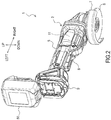
FIG. 2 is a perspective view of the grinder in a state where the battery pack is removed; -
FIG. 3 is a schematic diagram for illustrating a heat dissipation structure of a housing of the grinder; and -
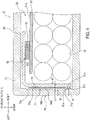
FIG. 4 is a schematic diagram for illustrating a heat dissipation structure of the battery pack. - As an example of an electric working machine,
FIGS. 1 and2 show a grinder 1 of the present embodiment. The grinder 1 is an electric working machine that can perform processing such as grinding, polishing, cutting, etc. on a workpiece. - As shown in
FIGS. 1 and2 , the grinder 1 includes amain body 2 and abattery pack 50. Themain body 2 includes amain housing 5, atool bit 6, a cover 7, and anoperation switch 8. - The
main housing 5, which is a housing of themain body 2, is made of resin, and at least partially forms an outer side surface of themain body 2. Inside themain housing 5, amotor 11 and acontroller 13 shown inFIG. 3 are housed. - The
motor 11 is a power source of the grinder 1. Themotor 11 is disposed at a front end of the main housing 5 (i.e., right side inFIG. 1 ). Themotor 11 is an electric motor, and may be, but not limited to, a brushless motor, for example. - The controller 13 (see
FIG. 3 ) is configured to mainly control themotor 11. Thecontroller 13 is disposed, for example, at a rear end of the main housing 5 (i.e. left side inFIG. 1 ). - The rear end of the
main housing 5 is provided with abattery attachment portion 9 for attaching thebattery pack 50 to themain body 2. Thebattery pack 50 is configured to be attachable to and detachable from thebattery attachment portion 9. - As shown in
FIG. 4 , thebattery pack 50 houses a plurality ofbatteries 52. Specifically, the plurality ofbatteries 52 are housed in abattery housing 51, which is a housing of thebattery pack 50. Each of circles shown inFIG. 4 corresponds to one of thebatteries 52. Each of thebatteries 52 is called a battery cell or simply a cell. - Electric power from the
batteries 52 can be provided to themain body 2 when thebattery pack 50 is attached to themain body 2, as shown inFIG. 1 . Each electric load such as themotor 11, thecontroller 13, or the like in themain body 2 is configured to operate by the electric power supplied from thebatteries 52. - The
tool bit 6 is a member for machining a workpiece by being in contact with the workpiece. Thetool bit 6 is rotated and driven by themotor 11. Examples of thetool bit 6 include a grinding wheel, a cutting grindstone, a wire brush and the like. - The cover 7 is used to protect a user from scattering of broken pieces of the workpiece and the
tool bit 6 caused during processing of the workpiece by thetool bit 6. The cover 7 is formed in a substantially semicircular shape, so as to cover a part of an outer periphery of thetool bit 6. - The
operation switch 8 is a switch for rotating thetool bit 6. When the user presses theoperating switch 8, themotor 11 is driven. Thereby, thetool bit 6 is rotated and driven. - The
controller 13 operates by electric power of thebatteries 52 to control driving of themotor 11. When theoperation switch 8 is pressed by the user, thecontroller 13 supplies the electric power to themotor 11 to rotate themotor 11. - As shown in
FIG. 3 , thecontroller 13 includes a printed circuit board (hereinafter referred to as PCB) 21 and anelectronic component 23 mounted on thePCB 21. - Heat is generated from the
electronic component 23. Therefore, measures to dissipate heat from theelectronic component 23 are necessary. Theelectronic component 23 includes, for example, an electronic component related to driving of themotor 11. Theelectronic component 23 includes, for example, a switching element constituting an inverter that supplies electric power to themotor 11. The switching element is, for example, a power MOSFET. The switching element may be other types of transistors. Theelectronic component 23 may be an electronic component other than the switching element, with heat generation. - A
metal plate 25 serving as a heat sink is mounted on asurface 23a of theelectronic component 23 opposite to thePCB 21. Themetal plate 25 is thermally coupled to theelectronic component 23. Specifically, thePCB 21 and themetal plate 25 are disposed so that thesurface 23a of theelectronic component 23 and a surface of themetal plate 25 are in contact with each other. Therefore, heat generated in theelectronic component 23 is transmitted to themetal plate 25. Material of themetal plate 25 is, for example, aluminum, but may be a metal such as iron or copper. Between theelectronic component 23 and themetal plate 25, an additional member (not shown) such as an elastic material having thermal conductivity may be provided. - A sheet-like wavelength selective
heat radiating member 27 is mounted on asurface 25a of themetal plate 25 opposite to theelectronic component 23. Theheat radiating member 27 is mounted on thesurface 25a of themetal plate 25, for example, by an adhesive having high thermal conductivity. Thus, thermal energy from theelectronic component 23 is transmitted to theheat radiating member 27 through themetal plate 25. - The
heat radiating member 27 converts the thermal energy from theelectronic component 23 transmitted to theheat radiating member 27 into heat radiation having a wavelength that can penetrate themain housing 5 and emits the heat radiation from asurface 27a opposite to themetal plate 25. Theheat radiating member 27 is, for example, an aluminum sheet on which a large number of micro-cavities which are two-dimensionally arranged are formed. Such aheat radiating member 27 is also called a metamaterial. In the present embodiment, the heat radiation having a wavelength that can penetrate themain housing 5 is a heat radiation in the infrared wavelength range (i.e., infrared light), but may be a heat radiation in another wavelength range. Examples of suchheat radiating member 27 is disclosed in Japanese Unexamined Patent Application Publication No.2014-33062 - The
surface 27a of theheat radiating member 27 is arranged so as to face aninner side surface 29a of aspecific portion 29 of themain housing 5. Thus, theheat radiating member 27 is mounted on thesurface 25a of themetal plate 25 so as to face theinner side surface 29a of thespecific portion 29 of themain housing 5. - An
outer side surface 29b of thespecific portion 29 of themain housing 5 is a portion (a non-attachment portion) of an outer side surface of themain housing 5 that is different from a portion (an attachment portion) where thebattery pack 50 is attached or may be attached. For example, the upper side inFIG. 3 corresponds to the right side inFIG. 1 . As shown inFIG. 1 , thespecific portion 29 of themain housing 5 is, for example, an upper portion near the rear end of themain housing 5. The upper side inFIG. 1 is the upper side when the grinder 1 is horizontally used. - A thickness t1 of the
specific portion 29 as shown inFIG. 3 is smaller than a thickness t2 of the other portion in themain housing 5 including a periphery of thespecific portion 29. Specifically, arecess 31 that can house theheat radiating member 27 is formed inside thespecific portion 29 of themain housing 5. A concave surface of therecess 31 corresponds to theinner side surface 29a facing theheat radiating member 27. - The
metal plate 25 is disposed so as to be brought into contact with aninner side surface 5a of a periphery of therecess 31 in themain housing 5. Therefore, themetal plate 25 is disposed so that themain housing 5 is brought into contact with theportion 25b of thesurface 25a of themetal plate 25 of a periphery of theheat radiating member 27. For this reason, theheat radiating member 27 is brought into a substantially sealed state in therecess 31. That is, awall portion 31a of therecess 31 perpendicular to thesurface 25a of themetal plate 25 functions to hinder air of the periphery of theheat radiating member 27 from moving. There may be a slight gap between theportion 25b of thesurface 25a of themetal plate 25 and theinner side surface 5a of the periphery of therecess 31 in themain housing 5. - A distance L1 between the
heat radiating member 27 and theinner side surface 29a is configured to be as small as possible. For example, the distance L1 corresponds to a tolerance range required for assembling, which is 0.5 mm or less. - According to the heat dissipation structure of the
main housing 5 as described above, the following effects are achieved. - (3a) The thermal energy from the
electronic component 23 is transmitted to theheat radiating member 27 via themetal plate 25. The thermal energy is converted into heat radiation having a wavelength that can penetrate themain housing 5 by theheat radiating member 27 and is emitted toward theinner side surface 29a of thespecific portion 29 of themain housing 5. Therefore, the thermal energy from theelectronic component 23 penetrates thespecific portion 29 of themain housing 5 in the form of heat radiation, and is released to the outside of themain housing 5.
Therefore, the heat from theelectronic component 23 built in themain housing 5 can be efficiently released to the outside of themain housing 5. Therefore, the heat from theelectronic component 23 is removed from the grinder 1. Accordingly, effect of lowering the temperature of theelectronic component 23 can be improved. Furthermore, temperature rise in the grinder 1 is inhibited. Therefore, the possibility that the temperature rise affects other components than theelectronic component 23 is also reduced. - (3b) The thickness t1 of the
specific portion 29 of themain housing 5 is smaller than the thickness t2 of the portion other than thespecific portion 29 of themain housing 5. Therefore, effect of releasing the thermal energy from thespecific portion 29 of themain housing 5 to the outside (i.e., heat dissipation effect) can be enhanced. This is because the smaller the thickness t1 of thespecific portion 29 is, the more easily the heat radiation penetrates thespecific portion 29. - (3c) The
wall portion 31a of themain housing 5 hinders the air of the periphery of theheat radiating member 27 from moving. Therefore, the temperature of theheat radiating member 27 can be inhibited from being lowered due to convection in the grinder 1 (i.e., in the main housing 5). As a result, it is possible to inhibit a decrease in conversion efficiency of thermal energy into heat radiation by theheat radiating member 27. High conversion efficiency improves the heat dissipation from thespecific portion 29 of themain housing 5. - (3d) The
outer side surface 29b of thespecific portion 29 of themain housing 5 is a portion (a non-attachment portion) of the outer side surface of themain housing 5 that is different from the portion (the attachment portion) where thebattery pack 50 is attached or may be attached. Therefore, release of thermal energy from themain housing 5 is not blocked by thebattery pack 50. Such a heat dissipation structure can enhance the heat dissipation from thespecific portion 29 of themain housing 5. In themain housing 5, thespecific portion 29 facing theheat radiating member 27 is not limited to the portion of the wall of themain housing 5 indicated by a reference numeral "29" inFIG. 1 . - (3e) The distance L1 between the
heat radiating member 27 and thespecific portion 29 of themain housing 5 is made as small as possible. The small distance L1 improves the heat dissipation from thespecific portion 29. - As shown in
FIG. 4 , in thebattery housing 51, the above-described plurality ofbatteries 52 are housed. Furthermore, amonitoring control circuit 53 is also housed in thebattery housing 51. Thebattery housing 51 is made of resin. Thebattery housing 51 at least partially forms an outer side surface of thebattery pack 50. - In
FIG. 4 , an upper surface of thebattery housing 51 is a surface facing themain body 2 when thebattery housing 51 is attached to themain body 2 of the grinder 1. Therefore, the upper side inFIG. 4 corresponds to the right side inFIG. 1 . The left side inFIG. 4 corresponds to the upper side inFIG. 1 , for example. Terms "up", "down", "left", and "right" used in the description related to thebattery pack 50 below correspond to directions shown inFIG 4 . - The
monitoring control circuit 53 operates by electric power of thebatteries 52. Themonitoring control circuit 53 is configured, for example, to monitor electric current into and out of the batteries 52 (i.e., charging and discharging current), and/or a voltage of thebatteries 52. Themonitoring control circuit 53, when abnormality occurs in the electric current and/or voltage to be monitored, notifies thecontroller 13 of the grinder 1 of the occurrence of abnormality, and/or, disconnects a charge and discharge path of thebatteries 52. Themonitoring control circuit 53 includes aPCB 61, and anelectronic component 63 mounted on thePCB 61. - The
electronic component 63 may include, for example, an electronic component associated with power supply. Theelectronic component 63, for example, includes a switching element provided in the charge and discharge path of thebatteries 52 to switch between connection and disconnection of the charge and discharge path. The switching element is, for example, a power MOSFET. However, the switching element may be other types of transistors. Theelectronic component 63 may be an electronic component other than the switching element. Theelectronic component 63, for example, may be a current detection resistor provided in the charge and discharge path of thebatteries 52. Heat is generated from theelectronic component 63. - As shown in
FIG. 4 , thePCB 61 of themonitoring control circuit 53 is provided on an upper side of thebatteries 52 in thebattery housing 51. Theelectronic component 63 is mounted on an upper surface of thePCB 61, namely, asurface 61a of thePCB 61 opposite to thebatteries 52. - A
metal plate 65 serving as a heat sink is mounted on thesurface 63a of theelectronic component 63 opposite to thePCB 61. Specifically, in thebattery housing 51, thePCB 61 and themetal plate 65 are fixed so that thesurface 63a of theelectronic component 63 and a surface of themetal plate 65 are brought into contact with each other. Therefore, themetal plate 65 is thermally coupled to theelectronic component 63. Thus, heat generated in theelectronic component 63 is transmitted to themetal plate 65. Material of themetal plate 65 is, for example, aluminum, but may be a metal such as iron or copper. Between theelectronic component 63 and themetal plate 65, an additional member (not shown) such as an elastic material having thermal conductivity may be provided. - The
metal plate 65 is formed by bending a flat metal plate at a substantially right angle. Themetal plate 65 includes a firstflat plate portion 66, and a secondflat plate portion 67. The firstflat plate portion 66 is a flat plate-shaped portion of themetal plate 65 which extends in parallel to thePCB 61. The firstflat plate portion 66 is in contact with theelectronic component 63. The secondflat plate portion 67 is a plate-like portion of themetal plate 65 which extends downward from a left end of the firstflat plate portion 66. The secondflat plate portion 67 is disposed substantially parallel to aspecific portion 69 which is a part of a left side wall of thebattery housing 51. - In other words, in the
battery housing 51, themetal plate 65 is fixed to thePCB 61 through theelectronic component 63 so that the firstflat plate portion 66 of themetal plate 65 contacts theelectronic component 63 and the secondflat plate portion 67 of themetal plate 65 is substantially parallel to thespecific portion 69 of thebattery housing 51. - A
heat radiating member 70 similar to theheat radiating member 27 is attached to asurface 67a of the secondflat plate portion 67 on the side of thespecific portion 69, i.e., a surface facing aninner side surface 69a of thespecific portion 69. In other words, in thebattery pack 50, theheat radiating member 70 is mounted on thesurface 67a of themetal plate 65 so as to face theinner side surface 69a of thespecific portion 69 in thebattery housing 51. - Thermal energy from the
electronic component 63 is transmitted to theheat radiating member 70 via themetal plate 65. Theheat radiating member 70 converts the thermal energy transmitted from theelectronic component 63 via themetal plate 65 into heat radiation having a wavelength that can penetrate thebattery housing 51 and emits the heat radiation toward theinner side surface 69a of thespecific portion 69 in thebattery housing 51. The heat radiation is a heat radiation in the infrared wavelength range (i.e., infrared light), but may be a heat radiation in another wavelength range. Theheat radiating member 70 may be mounted on thesurface 67a of themetal plate 65, for example, by an adhesive having high thermal conductivity. - An
outer side surface 69b of thespecific portion 69 of thebattery housing 51 is a portion of an outer side surface of thebattery housing 51 different from the portion attached to themain body 2 of the grinder 1. - Further, a thickness t3 of the
specific portion 69 that faces theheat radiating member 70 in thebattery housing 51 is smaller than a thickness t4 of the other portion including a periphery of thespecific portion 69 of thebattery housing 51. - Specifically, in the
battery housing 51, arecess 71 having an area larger than theheat radiating member 70 is formed inside thespecific portion 69. A concave surface of therecess 71 is theinner side surface 69a facing theheat radiating member 70. - Further, a
surface 70a of theheat radiating member 70 facing thespecific portion 69 is on the same plane as theinner side surface 51a of a periphery of therecess 71 of thebattery housing 51. In other words, this is a substantially "co-planar arrangement." - Therefore, a
wall portion 71a of therecess 71 perpendicular to thesurface 67a of the secondflat plate portion 67 of themetal plate 65 functions to hinder air of a periphery of theheat radiating member 70 from moving. However, thesurface 70a of theheat radiating member 70 may not be on the same plane as theinner side surface 51a of thebattery housing 51. In other words, a part in the thickness direction of theheat radiating member 70 may enter therecess 71, creating a "penetrating arrangement." Aportion 67b of thesurface 67a of the secondflat plate portion 67 of the periphery of theheat radiating member 70 may be in contact with theinner side surface 51a of thebattery housing 51, creating a "peripheral contact arrangement." - The
heat radiating member 70 and theinner side surface 69a are configured so that a distance L2 between theheat radiating member 70 and theinner side surface 69a is as small as possible. For example, the distance L2 is a tolerance range required for assembling, which is specifically 1 mm or less. - According to the heat dissipation structure of the
battery pack 50 as described above, the following effects are achieved. - (5a) The thermal energy from the
electronic component 63 is transmitted to theheat radiating member 70 through themetal plate 65. The thermal energy is converted to heat radiation having a wavelength that can penetrate thebattery housing 51 by theheat radiating member 70, and emitted toward theinner side surface 69a of thespecific portion 69 of thebattery housing 51. Therefore, the thermal energy, in the form of heat radiation, penetrates thespecific portion 69 of thebattery housing 51, and is discharged to the outside of thebattery housing 51.
Therefore, the heat from theelectronic component 63 built in thebattery housing 51 can be efficiently discharged to the outside of thebattery housing 51. Thus, the heat from theelectronic component 63 is inhibited from staying in thebattery pack 50. The effect of lowering the temperature of theelectronic component 63 is improved. Furthermore, temperature rise in thebattery pack 50 is inhibited. Therefore, the possibility that the temperature rise affects other components than theelectronic component 63 is also reduced. - (5b) The thickness t3 of the
specific portion 69 of thebattery housing 51 is smaller than the thickness t4 of the other portion of thebattery housing 51. Therefore, the effect of releasing the thermal energy to the outside from thespecific portion 69 of the battery housing 51 (i.e., heat dissipation effect) can be enhanced. This is because the smaller the thickness t3 of thespecific portion 69 is, the more easily the heat radiation penetrates thespecific portion 69. - (5c) The
wall portion 71a of thebattery housing 51 hinders the air of the periphery of theheat radiating member 70 from moving. Therefore, the temperature of theheat radiating member 70 can be inhibited from being lowered by convection inside the battery pack 50 (i.e., inside the battery housing 51). As a result, it is possible to maintain a high conversion efficiency of thermal energy to heat radiation by theheat radiating member 70. High conversion efficiency improves the heat dissipation from thespecific portion 69 of thebattery housing 51. - (5d) The
outer side surface 69b of thespecific portion 69 of thebattery housing 51 is a portion of the outer side surface of thebattery housing 51 different from the portion attached to themain body 2 of the grinder 1. Therefore, release of thermal energy from thebattery housing 51 is not blocked by themain body 2. Such a heat dissipation structure can enhance the heat dissipation from thespecific portion 69 of thebattery housing 51. In thebattery housing 51, thespecific portion 69 that faces theheat radiating member 70 may be a part of a lower wall or a part of a right wall of thebattery housing 51 inFIG. 4 . - (5e) The distance L2 between the
heat radiating member 70 and thespecific portions 69 of thebattery housing 51 is made as small as possible. Small distance L2 improves the heat dissipation from thespecific portion 69. - An embodiment of the present disclosure has been described in the above, but the present disclosure is not limited to the above embodiment and can be modified in various ways.
- For example, the present disclosure can be applied to various electric working machines such as an electric hammer, an electric hammer drill, an electric drill, an electric driver, an electric wrench, an electric reciprocating saw, an electric jigsaw, an electric cutter, an electric chainsaw, an electric plane, an electric circular saw, an electric nailer including an electric tacker, an electric hedge trimmer, an electric lawn mower, an electric lawn trimmer, electric grass cutter, an electric cleaner, an electric blower and the like.
- Further, a plurality of function of a single component in the above embodiment may be implemented by a plurality of components, and one of the function of a single component may be implemented by a plurality of components. Further, a plurality of functions of a plurality of components may be implemented by a single component, and one of the functions implemented by a plurality of components may be implemented by a single component. Also, part of the configuration of the above embodiment may be omitted. Any aspect included in the technical idea specified from the language as set forth in the appended claims is an embodiment of the present disclosure. The present disclosure can also be implemented in various forms such as a heat dissipation method of a battery pack, a heat dissipation method of an electric working machine, or the like.
- It is explicitly stated that all features disclosed in the description and/or the claims are intended to be disclosed separately and independently from each other for the purpose of original disclosure as well as for the purpose of restricting the claimed invention independent of the composition of the features in the embodiments and/or the claims. It is explicitly stated that all value ranges or indications of groups of entities disclose every possible intermediate value or intermediate entity for the purpose of original disclosure as well as for the purpose of restricting the claimed invention, in particular as limits of value ranges.
Claims (14)
- A device (2; 50) for an electric working machine, the device (2; 50) comprising:an electronic component (23; 63);a metal plate (25; 65) thermally coupled to the electronic component (23; 63);a housing (5; 51) configured to house the electronic component (23; 63) and the metal plate (25; 65); anda wavelength selective heat radiating member (27; 70) mounted on a surface of the metal plate (25; 65) so as to face an inner side surface (29a; 69a) of a specific portion (29; 69) of the housing (5; 51), and configured to convert thermal energy from the electronic component (23; 63) into heat radiation having a wavelength that penetrates the specific portion (29; 69) of the housing (5; 51), and to emit the heat radiation toward the inner side surface (29a; 69a) of the specific portion (29; 69) of the housing (5; 51).
- The device (2; 50) according to claim 1,
wherein a thickness of the specific portion (29; 69) of the housing (5; 51) is smaller than a thickness of a periphery of the specific portion (29; 69) in the housing (5; 51). - The device (2; 50) according to claim 1 or 2, further comprising
a wall portion (31a; 71a) configured to inhibit air near a periphery of the wavelength selective heat radiating member (27; 70) from moving. - The device (2; 50) according to claim 1, 2 or 3,
wherein the housing (5; 51) includes a recess (31; 71) facing the wavelength selective heat radiating member (27; 70) at the specific portion (29; 69), the recess (31; 71) being configured to inhibit air between the specific portion (29; 69) and the wavelength selective heat radiating member (27; 70) from moving. - A device (2; 50) according to any one of claims 1 to 4,
wherein the metal plate (65) includes a first flat plate portion (66), and a second flat plate portion (67) extending from the first plate portion (66), the second flat plate portion (67) having an angle with respect to the first flat plate portion (66),
wherein the electronic component (63) is in contact with the first flat plate portion (66), and the wavelength selective heat radiating member (70) is in contact with the second flat plate portion (67). - The device (2; 50) according to any one of claims 1 to 5,
wherein the electronic component (23; 63) includes a field effect transistor such as a power MOSFET. - A battery pack (50) for an electric working machine, the battery pack (50) comprising a device (50) according to any one of claims 1 to 6.
- The battery pack (50) according to claim 7,
wherein an outer side surface of the housing (51) at least partially forms an outer side surface of the battery pack (50). - The battery pack (50) according to claim 7 or 8,
wherein the electronic component (63) includes an electronic component associated with a power supply, in particular a switching element configured to connect and disconnect a charge and/or discharge path. - The battery pack (50) according to any one of claims 7 to 9,
wherein the housing (51) includes an attachment portion for attachment to the electric working machine (2), and
an outer side surface of the specific portion (69) of the housing (51) is a non-attachment portion of an outer side surface of the housing (51). - An electric working machine (2) comprising:a device (2) according to any one of claims 1 to 6.
- The electric working machine (2) according to claim 11,
wherein an outer side surface of the housing (5) at least partially forms an outer side surface of the electric working machine (2). - The electric working machine (2) according to claim 11 or 12, further comprising
a motor (11),
wherein the electronic component (23) includes an electronic component, such as an inverter, associated with driving of the motor (11). - The electric working machine (2) according to any one of claims 11 to 13,
wherein the housing (5) includes a portion (9) where a battery pack (50) is attached,
wherein the electric working machine (2) is configured to receive electric power from the battery pack (50), and
wherein an outer side surface (29b) of the specific portion (29) of the housing (5) is a portion of an outer side surface of the housing (5) different from the portion (9) where the battery pack (50) is attached.
Applications Claiming Priority (1)
| Application Number | Priority Date | Filing Date | Title |
|---|---|---|---|
| JP2016199188A JP6777912B2 (en) | 2016-10-07 | 2016-10-07 | Battery pack and electric work machine |
Publications (2)
| Publication Number | Publication Date |
|---|---|
| EP3306703A1 true EP3306703A1 (en) | 2018-04-11 |
| EP3306703B1 EP3306703B1 (en) | 2019-06-19 |
Family
ID=60022025
Family Applications (1)
| Application Number | Title | Priority Date | Filing Date |
|---|---|---|---|
| EP17195046.2A Active EP3306703B1 (en) | 2016-10-07 | 2017-10-05 | Battery pack and electric working machine |
Country Status (4)
| Country | Link |
|---|---|
| US (1) | US10673106B2 (en) |
| EP (1) | EP3306703B1 (en) |
| JP (1) | JP6777912B2 (en) |
| CN (1) | CN107920453B (en) |
Cited By (1)
| Publication number | Priority date | Publication date | Assignee | Title |
|---|---|---|---|---|
| CN112005401A (en) * | 2018-04-25 | 2020-11-27 | 三洋电机株式会社 | Power supply device |
Families Citing this family (3)
| Publication number | Priority date | Publication date | Assignee | Title |
|---|---|---|---|---|
| US20210013653A1 (en) * | 2018-05-08 | 2021-01-14 | Samtec, Inc. | Connectors with metamaterials |
| US11411278B2 (en) | 2019-03-01 | 2022-08-09 | Milwaukee Electric Tool Corporation | Power tool and battery pack for use with the same |
| FR3148678B1 (en) * | 2023-05-09 | 2025-04-18 | Accumulateurs Fixes | Battery power distribution unit and associated battery |
Citations (6)
| Publication number | Priority date | Publication date | Assignee | Title |
|---|---|---|---|---|
| EP1274137A1 (en) * | 2000-04-14 | 2003-01-08 | Matsushita Electric Industrial Co., Ltd. | Battery pack |
| US20090284230A1 (en) * | 2007-11-30 | 2009-11-19 | Murata Manufacturing Co., Ltd. | Battery module and charging module |
| JP2010027831A (en) * | 2008-07-18 | 2010-02-04 | Tohoku Univ | Method of improving heat radiation efficiency of electronic equipment whose heat generating source is covered with resin material, and wavelength selective heat radiation material and method of manufacturing the same |
| JP4547036B2 (en) | 2003-11-19 | 2010-09-22 | ミルウォーキー・エレクトリック・トゥール・コーポレーション | Battery pack |
| JP2014033062A (en) | 2012-08-03 | 2014-02-20 | Tohoku Univ | Production method of wavelength selective heat radiation material composed of aluminum sheet by nanoimprint method |
| US20160260649A1 (en) * | 2014-06-13 | 2016-09-08 | Tokyo Metropolitan University | Wavelength selective heat radiation material selectively radiating heat radiation light corresponding to infrared ray transmission wavelength region of resin member and method for manufacturing the same |
Family Cites Families (21)
| Publication number | Priority date | Publication date | Assignee | Title |
|---|---|---|---|---|
| JP3569152B2 (en) * | 1998-10-15 | 2004-09-22 | 株式会社マキタ | battery pack |
| US7425816B2 (en) | 2002-11-22 | 2008-09-16 | Milwaukee Electric Tool Corporation | Method and system for pulse charging of a lithium-based battery |
| US7253585B2 (en) | 2002-11-22 | 2007-08-07 | Milwaukee Electric Tool Corporation | Battery pack |
| US7589500B2 (en) | 2002-11-22 | 2009-09-15 | Milwaukee Electric Tool Corporation | Method and system for battery protection |
| US7714538B2 (en) | 2002-11-22 | 2010-05-11 | Milwaukee Electric Tool Corporation | Battery pack |
| US8228036B2 (en) | 2002-11-22 | 2012-07-24 | Milwaukee Electric Tool Corporation | Method and system for determining battery cell voltage |
| US8471532B2 (en) | 2002-11-22 | 2013-06-25 | Milwaukee Electric Tool Corporation | Battery pack |
| US7157882B2 (en) | 2002-11-22 | 2007-01-02 | Milwaukee Electric Tool Corporation | Method and system for battery protection employing a selectively-actuated switch |
| US7176654B2 (en) | 2002-11-22 | 2007-02-13 | Milwaukee Electric Tool Corporation | Method and system of charging multi-cell lithium-based batteries |
| US20060117580A1 (en) | 2004-10-16 | 2006-06-08 | Serdynski David P | Power tool and method of operating the same |
| JP4498419B2 (en) | 2005-09-06 | 2010-07-07 | 富士通株式会社 | Electronics |
| JP4473923B2 (en) * | 2008-10-22 | 2010-06-02 | 株式会社東芝 | Electronics |
| CN101500398A (en) * | 2008-11-05 | 2009-08-05 | 北京华凯汇信息科技有限公司 | Heat radiation structure for motor driver |
| CN201824332U (en) * | 2010-09-03 | 2011-05-11 | 南京德朔实业有限公司 | Electric tool |
| JP5537497B2 (en) * | 2011-05-26 | 2014-07-02 | 株式会社日立製作所 | Battery module |
| CN202310428U (en) * | 2011-10-25 | 2012-07-04 | 吴哲元 | Heat-resistant shell cooling structure |
| CN103959926A (en) * | 2011-12-01 | 2014-07-30 | 日本电气株式会社 | Electronic board containing device and electronic apparatus |
| CN202603124U (en) | 2012-04-18 | 2012-12-12 | 吴哲元 | Composite heat conduction structure in the electronic casing |
| JP2016021278A (en) * | 2013-02-12 | 2016-02-04 | 日立工機株式会社 | Back load type power supply |
| JP2014170635A (en) * | 2013-03-01 | 2014-09-18 | Hitachi Koki Co Ltd | Battery pack and electric device |
| JP2016119143A (en) * | 2014-12-18 | 2016-06-30 | 株式会社マキタ | Battery pack for power tool |
-
2016
- 2016-10-07 JP JP2016199188A patent/JP6777912B2/en active Active
-
2017
- 2017-09-30 CN CN201710940551.XA patent/CN107920453B/en active Active
- 2017-10-04 US US15/724,660 patent/US10673106B2/en active Active
- 2017-10-05 EP EP17195046.2A patent/EP3306703B1/en active Active
Patent Citations (6)
| Publication number | Priority date | Publication date | Assignee | Title |
|---|---|---|---|---|
| EP1274137A1 (en) * | 2000-04-14 | 2003-01-08 | Matsushita Electric Industrial Co., Ltd. | Battery pack |
| JP4547036B2 (en) | 2003-11-19 | 2010-09-22 | ミルウォーキー・エレクトリック・トゥール・コーポレーション | Battery pack |
| US20090284230A1 (en) * | 2007-11-30 | 2009-11-19 | Murata Manufacturing Co., Ltd. | Battery module and charging module |
| JP2010027831A (en) * | 2008-07-18 | 2010-02-04 | Tohoku Univ | Method of improving heat radiation efficiency of electronic equipment whose heat generating source is covered with resin material, and wavelength selective heat radiation material and method of manufacturing the same |
| JP2014033062A (en) | 2012-08-03 | 2014-02-20 | Tohoku Univ | Production method of wavelength selective heat radiation material composed of aluminum sheet by nanoimprint method |
| US20160260649A1 (en) * | 2014-06-13 | 2016-09-08 | Tokyo Metropolitan University | Wavelength selective heat radiation material selectively radiating heat radiation light corresponding to infrared ray transmission wavelength region of resin member and method for manufacturing the same |
Cited By (4)
| Publication number | Priority date | Publication date | Assignee | Title |
|---|---|---|---|---|
| CN112005401A (en) * | 2018-04-25 | 2020-11-27 | 三洋电机株式会社 | Power supply device |
| EP3787061A4 (en) * | 2018-04-25 | 2021-07-14 | SANYO Electric Co., Ltd. | ELECTRICAL POWER SUPPLY |
| CN112005401B (en) * | 2018-04-25 | 2022-12-06 | 三洋电机株式会社 | power supply unit |
| US12159982B2 (en) | 2018-04-25 | 2024-12-03 | Panasonic Energy Co., Ltd. | Power supply device |
Also Published As
| Publication number | Publication date |
|---|---|
| US20180102575A1 (en) | 2018-04-12 |
| JP6777912B2 (en) | 2020-10-28 |
| CN107920453B (en) | 2021-02-26 |
| JP2018060747A (en) | 2018-04-12 |
| US10673106B2 (en) | 2020-06-02 |
| EP3306703B1 (en) | 2019-06-19 |
| CN107920453A (en) | 2018-04-17 |
Similar Documents
| Publication | Publication Date | Title |
|---|---|---|
| EP3306703B1 (en) | Battery pack and electric working machine | |
| US10326337B2 (en) | Power tool having a heat radiation member for a controller | |
| JP6730418B2 (en) | Electric work machine | |
| JP6238064B2 (en) | Electric plane | |
| US20180370014A1 (en) | Hand-held power tool | |
| EP3503355B1 (en) | Electric motor assembly with heat sink | |
| US20140248519A1 (en) | Battery pack and electric device | |
| US9919411B2 (en) | Active cooling for power tool gripping surfaces | |
| JP6749169B2 (en) | Electric work machine | |
| US10873062B2 (en) | Rechargeable battery | |
| CN114051686B (en) | Electric work machine | |
| GB2387019A (en) | Energy storage module and electrical device | |
| JPWO2020066901A1 (en) | Battery pack and electrical equipment | |
| JP2015226941A (en) | Battery cooling adapter and electric tool | |
| JPWO2009098854A1 (en) | Electrical equipment | |
| US20200198114A1 (en) | Electric working machine | |
| JP2014072020A (en) | Battery pack and electric apparatus | |
| JP2018187702A (en) | Electric tool | |
| US12614955B2 (en) | Electric work machine | |
| CN221615586U (en) | Cutting assembly and mowing robot | |
| CN119910607A (en) | Power tools, lighting devices, battery packs and chargers | |
| JP2021094673A (en) | Power supply device |
Legal Events
| Date | Code | Title | Description |
|---|---|---|---|
| PUAI | Public reference made under article 153(3) epc to a published international application that has entered the european phase |
Free format text: ORIGINAL CODE: 0009012 |
|
| STAA | Information on the status of an ep patent application or granted ep patent |
Free format text: STATUS: THE APPLICATION HAS BEEN PUBLISHED |
|
| AK | Designated contracting states |
Kind code of ref document: A1 Designated state(s): AL AT BE BG CH CY CZ DE DK EE ES FI FR GB GR HR HU IE IS IT LI LT LU LV MC MK MT NL NO PL PT RO RS SE SI SK SM TR |
|
| AX | Request for extension of the european patent |
Extension state: BA ME |
|
| STAA | Information on the status of an ep patent application or granted ep patent |
Free format text: STATUS: REQUEST FOR EXAMINATION WAS MADE |
|
| 17P | Request for examination filed |
Effective date: 20180806 |
|
| RBV | Designated contracting states (corrected) |
Designated state(s): AL AT BE BG CH CY CZ DE DK EE ES FI FR GB GR HR HU IE IS IT LI LT LU LV MC MK MT NL NO PL PT RO RS SE SI SK SM TR |
|
| GRAP | Despatch of communication of intention to grant a patent |
Free format text: ORIGINAL CODE: EPIDOSNIGR1 |
|
| STAA | Information on the status of an ep patent application or granted ep patent |
Free format text: STATUS: GRANT OF PATENT IS INTENDED |
|
| RIC1 | Information provided on ipc code assigned before grant |
Ipc: H01M 10/613 20140101ALI20190213BHEP Ipc: H01M 10/46 20060101ALI20190213BHEP Ipc: H01M 10/6554 20140101ALI20190213BHEP Ipc: H01M 10/6235 20140101ALI20190213BHEP Ipc: H01M 2/10 20060101AFI20190213BHEP Ipc: H01M 10/6551 20140101ALI20190213BHEP Ipc: H01M 10/42 20060101ALI20190213BHEP Ipc: H01L 23/373 20060101ALN20190213BHEP |
|
| INTG | Intention to grant announced |
Effective date: 20190301 |
|
| GRAS | Grant fee paid |
Free format text: ORIGINAL CODE: EPIDOSNIGR3 |
|
| GRAA | (expected) grant |
Free format text: ORIGINAL CODE: 0009210 |
|
| STAA | Information on the status of an ep patent application or granted ep patent |
Free format text: STATUS: THE PATENT HAS BEEN GRANTED |
|
| AK | Designated contracting states |
Kind code of ref document: B1 Designated state(s): AL AT BE BG CH CY CZ DE DK EE ES FI FR GB GR HR HU IE IS IT LI LT LU LV MC MK MT NL NO PL PT RO RS SE SI SK SM TR |
|
| REG | Reference to a national code |
Ref country code: GB Ref legal event code: FG4D |
|
| REG | Reference to a national code |
Ref country code: CH Ref legal event code: EP |
|
| REG | Reference to a national code |
Ref country code: IE Ref legal event code: FG4D |
|
| REG | Reference to a national code |
Ref country code: AT Ref legal event code: REF Ref document number: 1146641 Country of ref document: AT Kind code of ref document: T Effective date: 20190715 |
|
| REG | Reference to a national code |
Ref country code: DE Ref legal event code: R096 Ref document number: 602017004642 Country of ref document: DE |
|
| REG | Reference to a national code |
Ref country code: NL Ref legal event code: MP Effective date: 20190619 |
|
| PG25 | Lapsed in a contracting state [announced via postgrant information from national office to epo] |
Ref country code: AL Free format text: LAPSE BECAUSE OF FAILURE TO SUBMIT A TRANSLATION OF THE DESCRIPTION OR TO PAY THE FEE WITHIN THE PRESCRIBED TIME-LIMIT Effective date: 20190619 Ref country code: HR Free format text: LAPSE BECAUSE OF FAILURE TO SUBMIT A TRANSLATION OF THE DESCRIPTION OR TO PAY THE FEE WITHIN THE PRESCRIBED TIME-LIMIT Effective date: 20190619 Ref country code: LT Free format text: LAPSE BECAUSE OF FAILURE TO SUBMIT A TRANSLATION OF THE DESCRIPTION OR TO PAY THE FEE WITHIN THE PRESCRIBED TIME-LIMIT Effective date: 20190619 Ref country code: SE Free format text: LAPSE BECAUSE OF FAILURE TO SUBMIT A TRANSLATION OF THE DESCRIPTION OR TO PAY THE FEE WITHIN THE PRESCRIBED TIME-LIMIT Effective date: 20190619 Ref country code: NO Free format text: LAPSE BECAUSE OF FAILURE TO SUBMIT A TRANSLATION OF THE DESCRIPTION OR TO PAY THE FEE WITHIN THE PRESCRIBED TIME-LIMIT Effective date: 20190919 Ref country code: FI Free format text: LAPSE BECAUSE OF FAILURE TO SUBMIT A TRANSLATION OF THE DESCRIPTION OR TO PAY THE FEE WITHIN THE PRESCRIBED TIME-LIMIT Effective date: 20190619 |
|
| REG | Reference to a national code |
Ref country code: LT Ref legal event code: MG4D |
|
| PG25 | Lapsed in a contracting state [announced via postgrant information from national office to epo] |
Ref country code: RS Free format text: LAPSE BECAUSE OF FAILURE TO SUBMIT A TRANSLATION OF THE DESCRIPTION OR TO PAY THE FEE WITHIN THE PRESCRIBED TIME-LIMIT Effective date: 20190619 Ref country code: LV Free format text: LAPSE BECAUSE OF FAILURE TO SUBMIT A TRANSLATION OF THE DESCRIPTION OR TO PAY THE FEE WITHIN THE PRESCRIBED TIME-LIMIT Effective date: 20190619 Ref country code: BG Free format text: LAPSE BECAUSE OF FAILURE TO SUBMIT A TRANSLATION OF THE DESCRIPTION OR TO PAY THE FEE WITHIN THE PRESCRIBED TIME-LIMIT Effective date: 20190919 Ref country code: GR Free format text: LAPSE BECAUSE OF FAILURE TO SUBMIT A TRANSLATION OF THE DESCRIPTION OR TO PAY THE FEE WITHIN THE PRESCRIBED TIME-LIMIT Effective date: 20190920 |
|
| REG | Reference to a national code |
Ref country code: AT Ref legal event code: MK05 Ref document number: 1146641 Country of ref document: AT Kind code of ref document: T Effective date: 20190619 |
|
| PG25 | Lapsed in a contracting state [announced via postgrant information from national office to epo] |
Ref country code: CZ Free format text: LAPSE BECAUSE OF FAILURE TO SUBMIT A TRANSLATION OF THE DESCRIPTION OR TO PAY THE FEE WITHIN THE PRESCRIBED TIME-LIMIT Effective date: 20190619 Ref country code: SK Free format text: LAPSE BECAUSE OF FAILURE TO SUBMIT A TRANSLATION OF THE DESCRIPTION OR TO PAY THE FEE WITHIN THE PRESCRIBED TIME-LIMIT Effective date: 20190619 Ref country code: PT Free format text: LAPSE BECAUSE OF FAILURE TO SUBMIT A TRANSLATION OF THE DESCRIPTION OR TO PAY THE FEE WITHIN THE PRESCRIBED TIME-LIMIT Effective date: 20191021 Ref country code: RO Free format text: LAPSE BECAUSE OF FAILURE TO SUBMIT A TRANSLATION OF THE DESCRIPTION OR TO PAY THE FEE WITHIN THE PRESCRIBED TIME-LIMIT Effective date: 20190619 Ref country code: NL Free format text: LAPSE BECAUSE OF FAILURE TO SUBMIT A TRANSLATION OF THE DESCRIPTION OR TO PAY THE FEE WITHIN THE PRESCRIBED TIME-LIMIT Effective date: 20190619 Ref country code: EE Free format text: LAPSE BECAUSE OF FAILURE TO SUBMIT A TRANSLATION OF THE DESCRIPTION OR TO PAY THE FEE WITHIN THE PRESCRIBED TIME-LIMIT Effective date: 20190619 Ref country code: AT Free format text: LAPSE BECAUSE OF FAILURE TO SUBMIT A TRANSLATION OF THE DESCRIPTION OR TO PAY THE FEE WITHIN THE PRESCRIBED TIME-LIMIT Effective date: 20190619 |
|
| PG25 | Lapsed in a contracting state [announced via postgrant information from national office to epo] |
Ref country code: ES Free format text: LAPSE BECAUSE OF FAILURE TO SUBMIT A TRANSLATION OF THE DESCRIPTION OR TO PAY THE FEE WITHIN THE PRESCRIBED TIME-LIMIT Effective date: 20190619 Ref country code: IS Free format text: LAPSE BECAUSE OF FAILURE TO SUBMIT A TRANSLATION OF THE DESCRIPTION OR TO PAY THE FEE WITHIN THE PRESCRIBED TIME-LIMIT Effective date: 20191019 Ref country code: SM Free format text: LAPSE BECAUSE OF FAILURE TO SUBMIT A TRANSLATION OF THE DESCRIPTION OR TO PAY THE FEE WITHIN THE PRESCRIBED TIME-LIMIT Effective date: 20190619 Ref country code: IT Free format text: LAPSE BECAUSE OF FAILURE TO SUBMIT A TRANSLATION OF THE DESCRIPTION OR TO PAY THE FEE WITHIN THE PRESCRIBED TIME-LIMIT Effective date: 20190619 |
|
| PG25 | Lapsed in a contracting state [announced via postgrant information from national office to epo] |
Ref country code: TR Free format text: LAPSE BECAUSE OF FAILURE TO SUBMIT A TRANSLATION OF THE DESCRIPTION OR TO PAY THE FEE WITHIN THE PRESCRIBED TIME-LIMIT Effective date: 20190619 |
|
| PG25 | Lapsed in a contracting state [announced via postgrant information from national office to epo] |
Ref country code: DK Free format text: LAPSE BECAUSE OF FAILURE TO SUBMIT A TRANSLATION OF THE DESCRIPTION OR TO PAY THE FEE WITHIN THE PRESCRIBED TIME-LIMIT Effective date: 20190619 Ref country code: PL Free format text: LAPSE BECAUSE OF FAILURE TO SUBMIT A TRANSLATION OF THE DESCRIPTION OR TO PAY THE FEE WITHIN THE PRESCRIBED TIME-LIMIT Effective date: 20190619 |
|
| PG25 | Lapsed in a contracting state [announced via postgrant information from national office to epo] |
Ref country code: MC Free format text: LAPSE BECAUSE OF FAILURE TO SUBMIT A TRANSLATION OF THE DESCRIPTION OR TO PAY THE FEE WITHIN THE PRESCRIBED TIME-LIMIT Effective date: 20190619 Ref country code: IS Free format text: LAPSE BECAUSE OF FAILURE TO SUBMIT A TRANSLATION OF THE DESCRIPTION OR TO PAY THE FEE WITHIN THE PRESCRIBED TIME-LIMIT Effective date: 20200224 |
|
| REG | Reference to a national code |
Ref country code: DE Ref legal event code: R097 Ref document number: 602017004642 Country of ref document: DE |
|
| PLBE | No opposition filed within time limit |
Free format text: ORIGINAL CODE: 0009261 |
|
| STAA | Information on the status of an ep patent application or granted ep patent |
Free format text: STATUS: NO OPPOSITION FILED WITHIN TIME LIMIT |
|
| PG2D | Information on lapse in contracting state deleted |
Ref country code: IS |
|
| PG25 | Lapsed in a contracting state [announced via postgrant information from national office to epo] |
Ref country code: LU Free format text: LAPSE BECAUSE OF NON-PAYMENT OF DUE FEES Effective date: 20191005 |
|
| 26N | No opposition filed |
Effective date: 20200603 |
|
| REG | Reference to a national code |
Ref country code: BE Ref legal event code: MM Effective date: 20191031 |
|
| PG25 | Lapsed in a contracting state [announced via postgrant information from national office to epo] |
Ref country code: SI Free format text: LAPSE BECAUSE OF FAILURE TO SUBMIT A TRANSLATION OF THE DESCRIPTION OR TO PAY THE FEE WITHIN THE PRESCRIBED TIME-LIMIT Effective date: 20190619 Ref country code: BE Free format text: LAPSE BECAUSE OF NON-PAYMENT OF DUE FEES Effective date: 20191031 |
|
| PG25 | Lapsed in a contracting state [announced via postgrant information from national office to epo] |
Ref country code: IE Free format text: LAPSE BECAUSE OF NON-PAYMENT OF DUE FEES Effective date: 20191005 |
|
| REG | Reference to a national code |
Ref country code: DE Ref legal event code: R079 Ref document number: 602017004642 Country of ref document: DE Free format text: PREVIOUS MAIN CLASS: H01M0002100000 Ipc: H01M0050200000 |
|
| PG25 | Lapsed in a contracting state [announced via postgrant information from national office to epo] |
Ref country code: CY Free format text: LAPSE BECAUSE OF FAILURE TO SUBMIT A TRANSLATION OF THE DESCRIPTION OR TO PAY THE FEE WITHIN THE PRESCRIBED TIME-LIMIT Effective date: 20190619 |
|
| REG | Reference to a national code |
Ref country code: CH Ref legal event code: PL |
|
| PG25 | Lapsed in a contracting state [announced via postgrant information from national office to epo] |
Ref country code: LI Free format text: LAPSE BECAUSE OF FAILURE TO SUBMIT A TRANSLATION OF THE DESCRIPTION OR TO PAY THE FEE WITHIN THE PRESCRIBED TIME-LIMIT Effective date: 20201031 Ref country code: CH Free format text: LAPSE BECAUSE OF FAILURE TO SUBMIT A TRANSLATION OF THE DESCRIPTION OR TO PAY THE FEE WITHIN THE PRESCRIBED TIME-LIMIT Effective date: 20201031 |
|
| PG25 | Lapsed in a contracting state [announced via postgrant information from national office to epo] |
Ref country code: MT Free format text: LAPSE BECAUSE OF FAILURE TO SUBMIT A TRANSLATION OF THE DESCRIPTION OR TO PAY THE FEE WITHIN THE PRESCRIBED TIME-LIMIT Effective date: 20190619 Ref country code: HU Free format text: LAPSE BECAUSE OF FAILURE TO SUBMIT A TRANSLATION OF THE DESCRIPTION OR TO PAY THE FEE WITHIN THE PRESCRIBED TIME-LIMIT; INVALID AB INITIO Effective date: 20171005 |
|
| PG25 | Lapsed in a contracting state [announced via postgrant information from national office to epo] |
Ref country code: MK Free format text: LAPSE BECAUSE OF FAILURE TO SUBMIT A TRANSLATION OF THE DESCRIPTION OR TO PAY THE FEE WITHIN THE PRESCRIBED TIME-LIMIT Effective date: 20190619 |
|
| PGFP | Annual fee paid to national office [announced via postgrant information from national office to epo] |
Ref country code: DE Payment date: 20251020 Year of fee payment: 9 |
|
| PGFP | Annual fee paid to national office [announced via postgrant information from national office to epo] |
Ref country code: GB Payment date: 20251024 Year of fee payment: 9 |
|
| PGFP | Annual fee paid to national office [announced via postgrant information from national office to epo] |
Ref country code: FR Payment date: 20251024 Year of fee payment: 9 |