EP3306608B1 - Schätzung der vernehmbarkeit von tonproben - Google Patents
Schätzung der vernehmbarkeit von tonproben Download PDFInfo
- Publication number
- EP3306608B1 EP3306608B1 EP16192913.8A EP16192913A EP3306608B1 EP 3306608 B1 EP3306608 B1 EP 3306608B1 EP 16192913 A EP16192913 A EP 16192913A EP 3306608 B1 EP3306608 B1 EP 3306608B1
- Authority
- EP
- European Patent Office
- Prior art keywords
- audio
- audibility
- matrix
- mix
- time
- Prior art date
- Legal status (The legal status is an assumption and is not a legal conclusion. Google has not performed a legal analysis and makes no representation as to the accuracy of the status listed.)
- Active
Links
Images



Classifications
-
- G—PHYSICS
- G10—MUSICAL INSTRUMENTS; ACOUSTICS
- G10L—SPEECH ANALYSIS TECHNIQUES OR SPEECH SYNTHESIS; SPEECH RECOGNITION; SPEECH OR VOICE PROCESSING TECHNIQUES; SPEECH OR AUDIO CODING OR DECODING
- G10L25/00—Speech or voice analysis techniques not restricted to a single one of groups G10L15/00 - G10L21/00
- G10L25/03—Speech or voice analysis techniques not restricted to a single one of groups G10L15/00 - G10L21/00 characterised by the type of extracted parameters
- G10L25/18—Speech or voice analysis techniques not restricted to a single one of groups G10L15/00 - G10L21/00 characterised by the type of extracted parameters the extracted parameters being spectral information of each sub-band
-
- G—PHYSICS
- G10—MUSICAL INSTRUMENTS; ACOUSTICS
- G10L—SPEECH ANALYSIS TECHNIQUES OR SPEECH SYNTHESIS; SPEECH RECOGNITION; SPEECH OR VOICE PROCESSING TECHNIQUES; SPEECH OR AUDIO CODING OR DECODING
- G10L25/00—Speech or voice analysis techniques not restricted to a single one of groups G10L15/00 - G10L21/00
- G10L25/48—Speech or voice analysis techniques not restricted to a single one of groups G10L15/00 - G10L21/00 specially adapted for particular use
- G10L25/69—Speech or voice analysis techniques not restricted to a single one of groups G10L15/00 - G10L21/00 specially adapted for particular use for evaluating synthetic or decoded voice signals
-
- H—ELECTRICITY
- H03—ELECTRONIC CIRCUITRY
- H03G—CONTROL OF AMPLIFICATION
- H03G5/00—Tone control or bandwidth control in amplifiers
- H03G5/005—Tone control or bandwidth control in amplifiers of digital signals
Definitions
- the present disclosure relates to methods for estimating audibility of audio samples in broadcasting media programs.
- audio samples especially samples of music
- types of audio e.g. music
- audio might be barely perceivable because it has very low volume or it may be masked by other sounds (e.g. speech).
- music might not be audible enough to be taken into account for copyright purposes.
- a rough time-frequency representation e.g. a filter banks output
- a broadcast media program that may comprise one or more audio mixes
- a time aligned e.g. a time aligned
- gain adjusted audio sample The audio sample needs to be time-aligned with the audio mix, and the power of the aligned audio sample needs to fit the power of the music within the audio mix.
- One way to achieve this alignment may be to annotate time-alignment and power information in production stage, where tracks are not mixed yet; however, this is not usual in real-world scenarios.
- difference matrix typically has low magnitude in the time-frequency regions that have no overlapping sounds on top of the audio sample.
- the difference matrix may then be processed using the absolute power of the audio sample in order to identify regions where it is not audible due to its low power (even if it is not masked).
- the result of this last process is an audibility matrix.
- This audibility matrix may then be processed in time intervals, of e.g. 0.5s, to generate an average curve indicating the audibility of music along time.
- a method to estimate the audibility of an audio sample in an audio mix of a broadcast media program comprises providing a representation matrix of an audio mix, the audio mix comprising the audio sample and additional audio; providing a representation matrix of the audio sample; subtracting the representation matrix of the audio sample from the representation matrix of the audio mix to generate a difference matrix; applying an audibility model to the difference matrix to generate an audibility matrix; determining an audibility level for each element of the audibility matrix; and averaging the determined audibility levels of the matrix to estimate the audibility of the audio sample.
- the method may further comprise time alignment and gain adjustment between the representation matrix of the audio sample and the representation matrix of the audio mix.
- Aligning in time may comprise aligning in time using spectral peaks. The use of spectral peaks allows for simple, noise-robust and efficient audio matching, since it does not need to process the whole audio information, but only a few hundreds of peaks.
- the gain adjustment may also be computed using spectral peaks, since they provide enough information to relate the power of the peaks in audio sample, and the power of the peaks in the mix.
- the representation matrix may be a low resolution time-frequency representation matrix (e.g. a filter banks output). This allows reducing the amount information to be processed, and to avoid imperceptible high resolution details to affect the final result.
- the audibility model may be an equal-loudness contour model, such as a Fletcher-Munson model. This allows for determining absolute audibility thresholds more precisely, since it takes into account psychoacoustics factors.
- the method may further comprise applying a psychoacoustic masking model to the audio mix to generate the representation matrix of the audio mix. This allows producing a more precise audibility value, since it takes into account masking effects that might reduce the actual audibility of certain frequencies.
- averaging may be carried out in time intervals to estimate the audibility of the audio sample in the audio mix at each time interval. This allows for determining portions of an audio sample that may be more audible and portions of the audio sample that may be less audible. Based on the determination, a percentage of copyright attribution may then take place for each time interval.
- the method may further comprise quantizing the estimated audibility to a predetermined number of audibility levels. For example, four audibility levels may be established and the audio sample or portions of the audio sample may be attributed to one of the four levels.
- the audio sample may be music and the additional audio may be speech. This is a typical scenario in broadcast media programs, such as talk shows or news programs, where music is played in the background of a discussion or presentation.
- the method may further comprise providing a broadcast media program and providing a cue sheet.
- the broadcast media program may comprise the audio mix and the cue sheet may comprise an indication of the start time and end time of the audio sample in the broadcast media program. This may be provided in post-production stage.
- the use of cue sheets allows automatizing the audio trimming to estimate the audibility of each individual audio sample.
- the audio mix may comprise a plurality of audio samples and additional audio.
- the method may then further comprise trimming the audio mix to isolate the part of the audio mix corresponding to one single audio sample. This may allow processing and estimating the audibility of each audio sample of the audio mix.
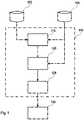
- Figure 1 schematically illustrates a flow chart of a method of estimating the audibility of an audio sample in an audio mix of a broadcast media program according to an example.
- a time-frequency matrix representation of an audio mix may be provided in block 105.
- An aligned time-frequency matrix representation of an audio sample may be provided in block 110.
- the audio sample may be music or a song. It may be assumed that the audio mix comprises a copy of the audio sample along with other additional audio, e.g. speech. Then audibility estimation 100 may be performed.
- the representation matrix of the audio sample may be subtracted from the representation matrix of the audio mix to generate a difference matrix.
- the information provided by the difference matrix may be used to avoid very low power regions (even if unmasked) to be considered as inaudible.
- an audibility model e.g. Fletcher-Munson curves, which are based on psychoacoustic experiments, may be applied in block 120 to determine an absolute audibility threshold. It may provide an audibility matrix as output. Then in block 125 the various potentially audible time-frequency regions may be identified, thus providing an audibility curve 130.
- Figure 2A schematically illustrates an audio signal with signal portions of varying audibility.
- a first and a fourth regions A and D, respectively, may be characterised as a low audibility regions, a second region B as a medium audibility region and a third and a fifth regions C and E, respectively, as not audible.
- Fig. 2B schematically illustrates an audibility curve. The horizontal axis represents time and the vertical axis the percentage of audibility from 0% to 100%.
- the average audibility may be computed by averaging the audibility curve. This average may then be quantized into e.g. four categories:
- Fig. 3 schematically illustrates a flow chart of a method of estimating the audibility of an audio sample in an audio mix of a broadcast media program according to another example.
- a psychoacoustic masking model may be used to process the time-frequency representation of the audio mix before the subtraction.
- a time-frequency matrix representation of an audio mix may be provided in block 305.
- audibility estimation 300 may be performed.
- a psychoacoustic masking model may be used to process the time-frequency representation of the audio mix.
- the masking model may identify the tonal and non-tonal components of the audio signal, and applies a masking function around each of them.
- the sum of all masking functions may determine the masking threshold, which may be concatenated frame-by-frame in order to create the time-frequency masking threshold in matrix form as specified, e.g. in the standard ISO/IEC 11172-3:1993.
- the result may be a time-frequency representation of the masking threshold. Any sound below this threshold may be considered to be masked, and therefore it may be considered inaudible.
- the representation matrix of the audio mix is replaced by the time-frequency representation of the masking threshold of the mix. In this way, the audibility estimation may be improved for the cases where auditory masking is noticeable.
- an aligned time-frequency matrix representation of an audio sample may be provided.
- the audio sample may be music or a song.
- the representation matrix of the audio sample may be subtracted from the time-frequency masking threshold matrix of the audio mix to generate a difference matrix.
- an audibility model may be applied in block 320 to determine an absolute audibility threshold. It may provide an audibility matrix as output.
- the various potentially audible time-frequency regions may be identified in the audibility matrix.
- an audibility curve 330 may be generated.
- Fig. 4 schematically illustrates a flow chart of a method of estimating the audibility of an audio sample in an audio mix of a broadcast media program according to yet another example.
- the spectral peaks also called landmarks
- Such techniques are commonly applied in audio fingerprinting, and they allow finding the optimal match of a set of points between a query (i.e. the audio mix) and a reference (i.e. the audio sample).
- Any set of spectral peaks, or landmarks, able to summarize the original audio content may be used.
- the spectral peaks may be local maxima in the time-frequency representation (e.g.
- This information may then be used to align in time, and to adjust the gain of the sample in order to sound like it sounds in the mix.
- the audio mix is provided in block 405 and the audio sample in block 410. Then estimation of time alignment and relative power of the audio sample in the audio mix may be performed in block 400.
- the two signals are time aligned using spectral peaks.
- Block 415 may provide the exact time position of the audio sample in the audio mix and the power of the audio sample in the mix.
- the vector of the audio sample signal, the exact time position of the audio sample in the audio mix and the power of the audio sample in the mix are provided to block 420 where a time shifted and gain adjusted vector audio signal is generated.
- a time-frequency matrix representation 430 of the audio signal vector is generated. This is already time aligned from block 415.
- a time-frequency matrix representation 440 of the audio mix signal vector is generated.
- the two matrices are then provided to block 450 where audibility estimation may take place according to the examples provided herein and an audibility curve 460 may then be provided.
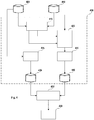
- Fig. 5 schematically illustrates an automatic process of broadcast cue-sheets to estimate audibility of various audio samples according to an example.
- the audio file of a broadcast media program may be provided as a long audio signal vector.
- the audio files of the audio samples that may be present in the broadcast media program may be provided as an audio signal vector.
- the cue-sheet may be provided.
- the vectors may be trimmed with the use of the cue-sheet in block 520. Trimming may generate a first set of audio mix signal vectors 522n and a second set of audio sample vectors 524n. The members of the sets may correspond to each other.
- the process may continue in block 525 with the estimation of time alignment and relative power of the audio sample in the audio mix. Then in blocks 530 and 535 a time frequency representation matrix of the audio mix and of the audio sample, respectively, may be generated. Finally, in block 540 audibility estimation may take place using methods as disclosed herein to generate audibility curve 550.
Landscapes
- Engineering & Computer Science (AREA)
- Physics & Mathematics (AREA)
- Computational Linguistics (AREA)
- Signal Processing (AREA)
- Health & Medical Sciences (AREA)
- Audiology, Speech & Language Pathology (AREA)
- Human Computer Interaction (AREA)
- Acoustics & Sound (AREA)
- Multimedia (AREA)
- Spectroscopy & Molecular Physics (AREA)
- Two-Way Televisions, Distribution Of Moving Picture Or The Like (AREA)
- Circuits Of Receivers In General (AREA)
Claims (15)
- Ein Verfahren zum Abschätzen der Vernehmbarkeit von einer Tonprobe in einer Tonmischung eines Rundfunkmedienprogramms, umfassend:bereitstellen von einer Darstellungsmatrix einer Tonmischung, wobei die Tonmischung die Tonprobe und eine zusätzliche Tonaufnahme umfasst;bereitstellen von einer Darstellungsmatrix der Tonprobe;subtrahieren der Darstellungsmatrix der Tonprobe von der Darstellungsmatrix der Tonmischung, um eine Differenzmatrix zu erzeugen;anwenden von einem Vernehmbarkeitsmodell auf die Differenzmatrix, um eine Vernehmbarkeitsmatrix zu erzeugen;feststellen von einem Vernehmbarkeitsniveau für jedes Element der Vernehmbarkeitsmatrix;berechnen des Durchschnitts der festgestellten Vernehmbarkeitsniveaus der Matrix, um die Vernehmbarkeit der Tonprobe abzuschätzen.
- Das Verfahren nach Anspruch 1, weiterhin umfassend die Laufzeitanpassung zwischen der Darstellungsmatrix der Tonprobe und der Darstellungsmatrix der Tonmischung.
- Das Verfahren nach Anspruch 2, wobei die Laufzeitanpassung das Anpassen der Laufzeit mittels Spektralpeaks umfasst.
- Das Verfahren nach einem der Ansprüche 1 bis 3, weiterhin umfassend die Verstärkungsanpassung zwischen der Darstellungsmatrix der Tonprobe und der Darstellungsmatrix der Tonmischung.
- Das Verfahren nach einem der Ansprüche 1 bis 4, wobei die Darstellungsmatrix eine Zeit-Frequenz-Darstellungsmatrix niedriger Auflösung ist.
- Das Verfahren nach einem der Ansprüche 1 bis 5, wobei das Vernehmbarkeitsmodell ein auf gehörrichtiger Lautstärke beruhendes Modell ist.
- Das Verfahren nach einem der Ansprüche 1 bis 6, wobei das Vernehmbarkeitsmodell ein Fletcher-Munson-Modell ist.
- Das Verfahren nach einem der Ansprüche 1 bis 7, weiterhin umfassend das Anwenden von einem auf psychoakustischer Maskierung beruhendes Modell auf die Tonmischung, um die Darstellungsmatrix der Tonmischung zu erzeugen.
- Das Verfahren nach einem der Ansprüche 1 bis 8, wobei das Berechnen des Durchschnitts das berechnen des Durchschnitts in Zeitabständen umfasst, um die Vernehmbarkeit der Tonprobe in der Tonmischung in jedem Zeitabstand abzuschätzen.
- Das Verfahren nach einem der Ansprüche 1 bis 9, weiterhin umfassend das Quantisieren der abgeschätzten Vernehmbarkeit auf eine vorbestimmte Anzahl von Vernehmbarkeitsniveaus.
- Das Verfahren nach einem der Ansprüche 1 bis 8, wobei die Tonprobe Musik ist und die zusätzliche Tonaufnahme eine Sprachaufnahme ist.
- Das Verfahren nach einem der Ansprüche 1 bis 11, weiterhin umfassendbereitstellen von einem Rundfunkmedienprogramm, wobei das Rundfunkmedienprogramm die Tonmischung umfasst,bereitstellen von einem Cuesheet, wobei das Cuesheet einen Hinweis auf die Anfangszeit und die Endzeit der Tonprobe im Rundfunkmedienprogramm umfasst.
- Das Verfahren nach Anspruch 12, wobei die Tonmischung eine Vielzahl von Tonproben und eine zusätzliche Tonaufnahme umfasst.
- Das Verfahren nach Anspruch 13, weiterhin umfassend das Trimmen der Tonmischung, um jede Tonprobe zu isolieren.
- Das Verfahren nach Anspruch 14, weiterhin umfassend das Abschätzen der Vernehmbarkeit von jeder Tonprobe des Rundfunkprogramms.
Priority Applications (2)
| Application Number | Priority Date | Filing Date | Title |
|---|---|---|---|
| EP16192913.8A EP3306608B1 (de) | 2016-10-07 | 2016-10-07 | Schätzung der vernehmbarkeit von tonproben |
| ES16192913T ES2730697T3 (es) | 2016-10-07 | 2016-10-07 | Estimación de audibilidad de muestras de audio |
Applications Claiming Priority (1)
| Application Number | Priority Date | Filing Date | Title |
|---|---|---|---|
| EP16192913.8A EP3306608B1 (de) | 2016-10-07 | 2016-10-07 | Schätzung der vernehmbarkeit von tonproben |
Publications (2)
| Publication Number | Publication Date |
|---|---|
| EP3306608A1 EP3306608A1 (de) | 2018-04-11 |
| EP3306608B1 true EP3306608B1 (de) | 2019-03-13 |
Family
ID=57113213
Family Applications (1)
| Application Number | Title | Priority Date | Filing Date |
|---|---|---|---|
| EP16192913.8A Active EP3306608B1 (de) | 2016-10-07 | 2016-10-07 | Schätzung der vernehmbarkeit von tonproben |
Country Status (2)
| Country | Link |
|---|---|
| EP (1) | EP3306608B1 (de) |
| ES (1) | ES2730697T3 (de) |
Families Citing this family (1)
| Publication number | Priority date | Publication date | Assignee | Title |
|---|---|---|---|---|
| CN115265635B (zh) * | 2022-09-29 | 2023-04-07 | 浙江中科凯泽科技有限公司 | 一种基于数据分析的工业机器视觉检测管理系统 |
Family Cites Families (2)
| Publication number | Priority date | Publication date | Assignee | Title |
|---|---|---|---|---|
| US8849432B2 (en) * | 2007-05-31 | 2014-09-30 | Adobe Systems Incorporated | Acoustic pattern identification using spectral characteristics to synchronize audio and/or video |
| US9589550B2 (en) * | 2011-09-30 | 2017-03-07 | Harman International Industries, Inc. | Methods and systems for measuring and reporting an energy level of a sound component within a sound mix |
-
2016
- 2016-10-07 ES ES16192913T patent/ES2730697T3/es active Active
- 2016-10-07 EP EP16192913.8A patent/EP3306608B1/de active Active
Non-Patent Citations (1)
| Title |
|---|
| None * |
Also Published As
| Publication number | Publication date |
|---|---|
| ES2730697T3 (es) | 2019-11-12 |
| EP3306608A1 (de) | 2018-04-11 |
Similar Documents
| Publication | Publication Date | Title |
|---|---|---|
| US9344825B2 (en) | At least one of intelligibility or loudness of an audio program | |
| CN110379434B (zh) | 用于参数化多声道编码的方法 | |
| EP3236586B1 (de) | System zur kombination von lautstärkenmessungen in einem einzelwiedergabemodus | |
| EP2941771B1 (de) | Dekodierer, kodierer und verfahren für informierte lautstärkenschätzung in objektbasierten audiocodierungssystemen | |
| US7564978B2 (en) | Advanced processing based on a complex-exponential-modulated filterbank and adaptive time signalling methods | |
| KR101161703B1 (ko) | 청각 장면 분석을 사용한 오디오 신호의 결합 | |
| CN1748247B (zh) | 音频编码 | |
| US8612237B2 (en) | Method and apparatus for determining audio spatial quality | |
| KR102340151B1 (ko) | 신호 품질-기반 압축 오디오 신호 향상 및 보상 | |
| US9743215B2 (en) | Apparatus and method for center signal scaling and stereophonic enhancement based on a signal-to-downmix ratio | |
| KR20140036173A (ko) | 분해기를 이용하여 출력 신호를 생성하는 장치 및 방법 | |
| EP4165633A1 (de) | Verfahren, vorrichtung und systeme zur erkennung und extraktion von räumlich identifizierbaren subband-audioquellen | |
| EP3306608A1 (de) | Schätzung der vernehmbarkeit von tonproben | |
| Lopatka et al. | Improving listeners' experience for movie playback through enhancing dialogue clarity in soundtracks | |
| EP1522210A1 (de) | Audio verarbeitung | |
| Lopatka et al. | Novel 5.1 downmix algorithm with improved dialogue intelligibility | |
| US9893698B2 (en) | Method and apparatus for processing audio signals to adjust psychoacoustic loudness | |
| JP3299543B2 (ja) | ステレオオーディオ信号の保存の評価方法およびジョイントコード化されたステレオオーディオ信号の同定方法 | |
| JP6231762B2 (ja) | 受信装置及びプログラム | |
| US10129659B2 (en) | Dialog enhancement complemented with frequency transposition | |
| US9792952B1 (en) | Automated television program editing | |
| HK40131514A (en) | System for combining loudness measurements in a single playback mode | |
| HK40120218A (en) | System for combining loudness measurements in a single playback mode | |
| CN118338189A (zh) | 音频信号处理方法、系统、音频处理芯片和电子设备 | |
| CN116665683B (zh) | 用于参数化多声道编码的方法 |
Legal Events
| Date | Code | Title | Description |
|---|---|---|---|
| PUAI | Public reference made under article 153(3) epc to a published international application that has entered the european phase |
Free format text: ORIGINAL CODE: 0009012 |
|
| STAA | Information on the status of an ep patent application or granted ep patent |
Free format text: STATUS: THE APPLICATION HAS BEEN PUBLISHED |
|
| AK | Designated contracting states |
Kind code of ref document: A1 Designated state(s): AL AT BE BG CH CY CZ DE DK EE ES FI FR GB GR HR HU IE IS IT LI LT LU LV MC MK MT NL NO PL PT RO RS SE SI SK SM TR |
|
| AX | Request for extension of the european patent |
Extension state: BA ME |
|
| STAA | Information on the status of an ep patent application or granted ep patent |
Free format text: STATUS: REQUEST FOR EXAMINATION WAS MADE |
|
| 17P | Request for examination filed |
Effective date: 20180814 |
|
| RBV | Designated contracting states (corrected) |
Designated state(s): AL AT BE BG CH CY CZ DE DK EE ES FI FR GB GR HR HU IE IS IT LI LT LU LV MC MK MT NL NO PL PT RO RS SE SI SK SM TR |
|
| GRAP | Despatch of communication of intention to grant a patent |
Free format text: ORIGINAL CODE: EPIDOSNIGR1 |
|
| STAA | Information on the status of an ep patent application or granted ep patent |
Free format text: STATUS: GRANT OF PATENT IS INTENDED |
|
| RIC1 | Information provided on ipc code assigned before grant |
Ipc: G10L 25/18 20130101ALI20180910BHEP Ipc: H03G 5/00 20060101ALI20180910BHEP Ipc: G10L 25/69 20130101AFI20180910BHEP |
|
| INTG | Intention to grant announced |
Effective date: 20180925 |
|
| GRAS | Grant fee paid |
Free format text: ORIGINAL CODE: EPIDOSNIGR3 |
|
| GRAA | (expected) grant |
Free format text: ORIGINAL CODE: 0009210 |
|
| STAA | Information on the status of an ep patent application or granted ep patent |
Free format text: STATUS: THE PATENT HAS BEEN GRANTED |
|
| AK | Designated contracting states |
Kind code of ref document: B1 Designated state(s): AL AT BE BG CH CY CZ DE DK EE ES FI FR GB GR HR HU IE IS IT LI LT LU LV MC MK MT NL NO PL PT RO RS SE SI SK SM TR |
|
| REG | Reference to a national code |
Ref country code: GB Ref legal event code: FG4D |
|
| REG | Reference to a national code |
Ref country code: CH Ref legal event code: EP Ref country code: AT Ref legal event code: REF Ref document number: 1108805 Country of ref document: AT Kind code of ref document: T Effective date: 20190315 |
|
| REG | Reference to a national code |
Ref country code: IE Ref legal event code: FG4D |
|
| REG | Reference to a national code |
Ref country code: DE Ref legal event code: R096 Ref document number: 602016010953 Country of ref document: DE |
|
| REG | Reference to a national code |
Ref country code: NL Ref legal event code: MP Effective date: 20190313 |
|
| REG | Reference to a national code |
Ref country code: LT Ref legal event code: MG4D |
|
| PG25 | Lapsed in a contracting state [announced via postgrant information from national office to epo] |
Ref country code: SE Free format text: LAPSE BECAUSE OF FAILURE TO SUBMIT A TRANSLATION OF THE DESCRIPTION OR TO PAY THE FEE WITHIN THE PRESCRIBED TIME-LIMIT Effective date: 20190313 Ref country code: FI Free format text: LAPSE BECAUSE OF FAILURE TO SUBMIT A TRANSLATION OF THE DESCRIPTION OR TO PAY THE FEE WITHIN THE PRESCRIBED TIME-LIMIT Effective date: 20190313 Ref country code: NO Free format text: LAPSE BECAUSE OF FAILURE TO SUBMIT A TRANSLATION OF THE DESCRIPTION OR TO PAY THE FEE WITHIN THE PRESCRIBED TIME-LIMIT Effective date: 20190613 Ref country code: LT Free format text: LAPSE BECAUSE OF FAILURE TO SUBMIT A TRANSLATION OF THE DESCRIPTION OR TO PAY THE FEE WITHIN THE PRESCRIBED TIME-LIMIT Effective date: 20190313 |
|
| PG25 | Lapsed in a contracting state [announced via postgrant information from national office to epo] |
Ref country code: GR Free format text: LAPSE BECAUSE OF FAILURE TO SUBMIT A TRANSLATION OF THE DESCRIPTION OR TO PAY THE FEE WITHIN THE PRESCRIBED TIME-LIMIT Effective date: 20190614 Ref country code: NL Free format text: LAPSE BECAUSE OF FAILURE TO SUBMIT A TRANSLATION OF THE DESCRIPTION OR TO PAY THE FEE WITHIN THE PRESCRIBED TIME-LIMIT Effective date: 20190313 Ref country code: HR Free format text: LAPSE BECAUSE OF FAILURE TO SUBMIT A TRANSLATION OF THE DESCRIPTION OR TO PAY THE FEE WITHIN THE PRESCRIBED TIME-LIMIT Effective date: 20190313 Ref country code: LV Free format text: LAPSE BECAUSE OF FAILURE TO SUBMIT A TRANSLATION OF THE DESCRIPTION OR TO PAY THE FEE WITHIN THE PRESCRIBED TIME-LIMIT Effective date: 20190313 Ref country code: RS Free format text: LAPSE BECAUSE OF FAILURE TO SUBMIT A TRANSLATION OF THE DESCRIPTION OR TO PAY THE FEE WITHIN THE PRESCRIBED TIME-LIMIT Effective date: 20190313 Ref country code: BG Free format text: LAPSE BECAUSE OF FAILURE TO SUBMIT A TRANSLATION OF THE DESCRIPTION OR TO PAY THE FEE WITHIN THE PRESCRIBED TIME-LIMIT Effective date: 20190613 |
|
| REG | Reference to a national code |
Ref country code: AT Ref legal event code: MK05 Ref document number: 1108805 Country of ref document: AT Kind code of ref document: T Effective date: 20190313 |
|
| PG25 | Lapsed in a contracting state [announced via postgrant information from national office to epo] |
Ref country code: SK Free format text: LAPSE BECAUSE OF FAILURE TO SUBMIT A TRANSLATION OF THE DESCRIPTION OR TO PAY THE FEE WITHIN THE PRESCRIBED TIME-LIMIT Effective date: 20190313 Ref country code: RO Free format text: LAPSE BECAUSE OF FAILURE TO SUBMIT A TRANSLATION OF THE DESCRIPTION OR TO PAY THE FEE WITHIN THE PRESCRIBED TIME-LIMIT Effective date: 20190313 Ref country code: IT Free format text: LAPSE BECAUSE OF FAILURE TO SUBMIT A TRANSLATION OF THE DESCRIPTION OR TO PAY THE FEE WITHIN THE PRESCRIBED TIME-LIMIT Effective date: 20190313 Ref country code: EE Free format text: LAPSE BECAUSE OF FAILURE TO SUBMIT A TRANSLATION OF THE DESCRIPTION OR TO PAY THE FEE WITHIN THE PRESCRIBED TIME-LIMIT Effective date: 20190313 Ref country code: CZ Free format text: LAPSE BECAUSE OF FAILURE TO SUBMIT A TRANSLATION OF THE DESCRIPTION OR TO PAY THE FEE WITHIN THE PRESCRIBED TIME-LIMIT Effective date: 20190313 Ref country code: PT Free format text: LAPSE BECAUSE OF FAILURE TO SUBMIT A TRANSLATION OF THE DESCRIPTION OR TO PAY THE FEE WITHIN THE PRESCRIBED TIME-LIMIT Effective date: 20190713 Ref country code: AL Free format text: LAPSE BECAUSE OF FAILURE TO SUBMIT A TRANSLATION OF THE DESCRIPTION OR TO PAY THE FEE WITHIN THE PRESCRIBED TIME-LIMIT Effective date: 20190313 |
|
| REG | Reference to a national code |
Ref country code: ES Ref legal event code: FG2A Ref document number: 2730697 Country of ref document: ES Kind code of ref document: T3 Effective date: 20191112 |
|
| PG25 | Lapsed in a contracting state [announced via postgrant information from national office to epo] |
Ref country code: PL Free format text: LAPSE BECAUSE OF FAILURE TO SUBMIT A TRANSLATION OF THE DESCRIPTION OR TO PAY THE FEE WITHIN THE PRESCRIBED TIME-LIMIT Effective date: 20190313 Ref country code: SM Free format text: LAPSE BECAUSE OF FAILURE TO SUBMIT A TRANSLATION OF THE DESCRIPTION OR TO PAY THE FEE WITHIN THE PRESCRIBED TIME-LIMIT Effective date: 20190313 |
|
| REG | Reference to a national code |
Ref country code: DE Ref legal event code: R097 Ref document number: 602016010953 Country of ref document: DE |
|
| PG25 | Lapsed in a contracting state [announced via postgrant information from national office to epo] |
Ref country code: AT Free format text: LAPSE BECAUSE OF FAILURE TO SUBMIT A TRANSLATION OF THE DESCRIPTION OR TO PAY THE FEE WITHIN THE PRESCRIBED TIME-LIMIT Effective date: 20190313 Ref country code: IS Free format text: LAPSE BECAUSE OF FAILURE TO SUBMIT A TRANSLATION OF THE DESCRIPTION OR TO PAY THE FEE WITHIN THE PRESCRIBED TIME-LIMIT Effective date: 20190713 |
|
| PLBE | No opposition filed within time limit |
Free format text: ORIGINAL CODE: 0009261 |
|
| STAA | Information on the status of an ep patent application or granted ep patent |
Free format text: STATUS: NO OPPOSITION FILED WITHIN TIME LIMIT |
|
| PG25 | Lapsed in a contracting state [announced via postgrant information from national office to epo] |
Ref country code: DK Free format text: LAPSE BECAUSE OF FAILURE TO SUBMIT A TRANSLATION OF THE DESCRIPTION OR TO PAY THE FEE WITHIN THE PRESCRIBED TIME-LIMIT Effective date: 20190313 |
|
| 26N | No opposition filed |
Effective date: 20191216 |
|
| PG25 | Lapsed in a contracting state [announced via postgrant information from national office to epo] |
Ref country code: SI Free format text: LAPSE BECAUSE OF FAILURE TO SUBMIT A TRANSLATION OF THE DESCRIPTION OR TO PAY THE FEE WITHIN THE PRESCRIBED TIME-LIMIT Effective date: 20190313 |
|
| PG25 | Lapsed in a contracting state [announced via postgrant information from national office to epo] |
Ref country code: TR Free format text: LAPSE BECAUSE OF FAILURE TO SUBMIT A TRANSLATION OF THE DESCRIPTION OR TO PAY THE FEE WITHIN THE PRESCRIBED TIME-LIMIT Effective date: 20190313 |
|
| PG25 | Lapsed in a contracting state [announced via postgrant information from national office to epo] |
Ref country code: MC Free format text: LAPSE BECAUSE OF FAILURE TO SUBMIT A TRANSLATION OF THE DESCRIPTION OR TO PAY THE FEE WITHIN THE PRESCRIBED TIME-LIMIT Effective date: 20190313 |
|
| REG | Reference to a national code |
Ref country code: CH Ref legal event code: PL |
|
| PG25 | Lapsed in a contracting state [announced via postgrant information from national office to epo] |
Ref country code: LU Free format text: LAPSE BECAUSE OF NON-PAYMENT OF DUE FEES Effective date: 20191007 Ref country code: CH Free format text: LAPSE BECAUSE OF NON-PAYMENT OF DUE FEES Effective date: 20191031 Ref country code: LI Free format text: LAPSE BECAUSE OF NON-PAYMENT OF DUE FEES Effective date: 20191031 |
|
| REG | Reference to a national code |
Ref country code: BE Ref legal event code: MM Effective date: 20191031 |
|
| PG25 | Lapsed in a contracting state [announced via postgrant information from national office to epo] |
Ref country code: BE Free format text: LAPSE BECAUSE OF NON-PAYMENT OF DUE FEES Effective date: 20191031 |
|
| PG25 | Lapsed in a contracting state [announced via postgrant information from national office to epo] |
Ref country code: IE Free format text: LAPSE BECAUSE OF NON-PAYMENT OF DUE FEES Effective date: 20191007 |
|
| PG25 | Lapsed in a contracting state [announced via postgrant information from national office to epo] |
Ref country code: CY Free format text: LAPSE BECAUSE OF FAILURE TO SUBMIT A TRANSLATION OF THE DESCRIPTION OR TO PAY THE FEE WITHIN THE PRESCRIBED TIME-LIMIT Effective date: 20190313 |
|
| PG25 | Lapsed in a contracting state [announced via postgrant information from national office to epo] |
Ref country code: MT Free format text: LAPSE BECAUSE OF FAILURE TO SUBMIT A TRANSLATION OF THE DESCRIPTION OR TO PAY THE FEE WITHIN THE PRESCRIBED TIME-LIMIT Effective date: 20190313 Ref country code: HU Free format text: LAPSE BECAUSE OF FAILURE TO SUBMIT A TRANSLATION OF THE DESCRIPTION OR TO PAY THE FEE WITHIN THE PRESCRIBED TIME-LIMIT; INVALID AB INITIO Effective date: 20161007 |
|
| PG25 | Lapsed in a contracting state [announced via postgrant information from national office to epo] |
Ref country code: MK Free format text: LAPSE BECAUSE OF FAILURE TO SUBMIT A TRANSLATION OF THE DESCRIPTION OR TO PAY THE FEE WITHIN THE PRESCRIBED TIME-LIMIT Effective date: 20190313 |
|
| PGFP | Annual fee paid to national office [announced via postgrant information from national office to epo] |
Ref country code: DE Payment date: 20251029 Year of fee payment: 10 |
|
| PGFP | Annual fee paid to national office [announced via postgrant information from national office to epo] |
Ref country code: GB Payment date: 20251027 Year of fee payment: 10 |
|
| PGFP | Annual fee paid to national office [announced via postgrant information from national office to epo] |
Ref country code: FR Payment date: 20251027 Year of fee payment: 10 |
|
| PGFP | Annual fee paid to national office [announced via postgrant information from national office to epo] |
Ref country code: ES Payment date: 20251101 Year of fee payment: 10 |