EP3305767A2 - Novel tlr2 antagonists - Google Patents
Novel tlr2 antagonists Download PDFInfo
- Publication number
- EP3305767A2 EP3305767A2 EP15894366.2A EP15894366A EP3305767A2 EP 3305767 A2 EP3305767 A2 EP 3305767A2 EP 15894366 A EP15894366 A EP 15894366A EP 3305767 A2 EP3305767 A2 EP 3305767A2
- Authority
- EP
- European Patent Office
- Prior art keywords
- tlr2
- receptor
- present disclosure
- compounds
- ligand
- Prior art date
- Legal status (The legal status is an assumption and is not a legal conclusion. Google has not performed a legal analysis and makes no representation as to the accuracy of the status listed.)
- Granted
Links
Images





Classifications
-
- C—CHEMISTRY; METALLURGY
- C07—ORGANIC CHEMISTRY
- C07D—HETEROCYCLIC COMPOUNDS
- C07D487/00—Heterocyclic compounds containing nitrogen atoms as the only ring hetero atoms in the condensed system, not provided for by groups C07D451/00 - C07D477/00
- C07D487/02—Heterocyclic compounds containing nitrogen atoms as the only ring hetero atoms in the condensed system, not provided for by groups C07D451/00 - C07D477/00 in which the condensed system contains two hetero rings
- C07D487/04—Ortho-condensed systems
-
- A—HUMAN NECESSITIES
- A61—MEDICAL OR VETERINARY SCIENCE; HYGIENE
- A61K—PREPARATIONS FOR MEDICAL, DENTAL OR TOILETRY PURPOSES
- A61K31/00—Medicinal preparations containing organic active ingredients
- A61K31/33—Heterocyclic compounds
- A61K31/395—Heterocyclic compounds having nitrogen as a ring hetero atom, e.g. guanethidine or rifamycins
- A61K31/41—Heterocyclic compounds having nitrogen as a ring hetero atom, e.g. guanethidine or rifamycins having five-membered rings with two or more ring hetero atoms, at least one of which being nitrogen, e.g. tetrazole
- A61K31/4164—1,3-Diazoles
- A61K31/4178—1,3-Diazoles not condensed 1,3-diazoles and containing further heterocyclic rings, e.g. pilocarpine, nitrofurantoin
-
- A—HUMAN NECESSITIES
- A61—MEDICAL OR VETERINARY SCIENCE; HYGIENE
- A61K—PREPARATIONS FOR MEDICAL, DENTAL OR TOILETRY PURPOSES
- A61K31/00—Medicinal preparations containing organic active ingredients
- A61K31/33—Heterocyclic compounds
- A61K31/395—Heterocyclic compounds having nitrogen as a ring hetero atom, e.g. guanethidine or rifamycins
- A61K31/435—Heterocyclic compounds having nitrogen as a ring hetero atom, e.g. guanethidine or rifamycins having six-membered rings with one nitrogen as the only ring hetero atom
- A61K31/44—Non condensed pyridines; Hydrogenated derivatives thereof
- A61K31/445—Non condensed piperidines, e.g. piperocaine
- A61K31/4453—Non condensed piperidines, e.g. piperocaine only substituted in position 1, e.g. propipocaine, diperodon
-
- A—HUMAN NECESSITIES
- A61—MEDICAL OR VETERINARY SCIENCE; HYGIENE
- A61K—PREPARATIONS FOR MEDICAL, DENTAL OR TOILETRY PURPOSES
- A61K31/00—Medicinal preparations containing organic active ingredients
- A61K31/33—Heterocyclic compounds
- A61K31/395—Heterocyclic compounds having nitrogen as a ring hetero atom, e.g. guanethidine or rifamycins
- A61K31/495—Heterocyclic compounds having nitrogen as a ring hetero atom, e.g. guanethidine or rifamycins having six-membered rings with two or more nitrogen atoms as the only ring heteroatoms, e.g. piperazine or tetrazines
- A61K31/496—Non-condensed piperazines containing further heterocyclic rings, e.g. rifampin, thiothixene or sparfloxacin
-
- A—HUMAN NECESSITIES
- A61—MEDICAL OR VETERINARY SCIENCE; HYGIENE
- A61K—PREPARATIONS FOR MEDICAL, DENTAL OR TOILETRY PURPOSES
- A61K31/00—Medicinal preparations containing organic active ingredients
- A61K31/33—Heterocyclic compounds
- A61K31/395—Heterocyclic compounds having nitrogen as a ring hetero atom, e.g. guanethidine or rifamycins
- A61K31/495—Heterocyclic compounds having nitrogen as a ring hetero atom, e.g. guanethidine or rifamycins having six-membered rings with two or more nitrogen atoms as the only ring heteroatoms, e.g. piperazine or tetrazines
- A61K31/505—Pyrimidines; Hydrogenated pyrimidines, e.g. trimethoprim
- A61K31/506—Pyrimidines; Hydrogenated pyrimidines, e.g. trimethoprim not condensed and containing further heterocyclic rings
-
- A—HUMAN NECESSITIES
- A61—MEDICAL OR VETERINARY SCIENCE; HYGIENE
- A61K—PREPARATIONS FOR MEDICAL, DENTAL OR TOILETRY PURPOSES
- A61K31/00—Medicinal preparations containing organic active ingredients
- A61K31/33—Heterocyclic compounds
- A61K31/395—Heterocyclic compounds having nitrogen as a ring hetero atom, e.g. guanethidine or rifamycins
- A61K31/535—Heterocyclic compounds having nitrogen as a ring hetero atom, e.g. guanethidine or rifamycins having six-membered rings with at least one nitrogen and one oxygen as the ring hetero atoms, e.g. 1,2-oxazines
- A61K31/5375—1,4-Oxazines, e.g. morpholine
- A61K31/5377—1,4-Oxazines, e.g. morpholine not condensed and containing further heterocyclic rings, e.g. timolol
-
- A—HUMAN NECESSITIES
- A61—MEDICAL OR VETERINARY SCIENCE; HYGIENE
- A61K—PREPARATIONS FOR MEDICAL, DENTAL OR TOILETRY PURPOSES
- A61K31/00—Medicinal preparations containing organic active ingredients
- A61K31/33—Heterocyclic compounds
- A61K31/395—Heterocyclic compounds having nitrogen as a ring hetero atom, e.g. guanethidine or rifamycins
- A61K31/55—Heterocyclic compounds having nitrogen as a ring hetero atom, e.g. guanethidine or rifamycins having seven-membered rings, e.g. azelastine, pentylenetetrazole
- A61K31/551—Heterocyclic compounds having nitrogen as a ring hetero atom, e.g. guanethidine or rifamycins having seven-membered rings, e.g. azelastine, pentylenetetrazole having two nitrogen atoms, e.g. dilazep
-
- A—HUMAN NECESSITIES
- A61—MEDICAL OR VETERINARY SCIENCE; HYGIENE
- A61K—PREPARATIONS FOR MEDICAL, DENTAL OR TOILETRY PURPOSES
- A61K9/00—Medicinal preparations characterised by special physical form
- A61K9/0012—Galenical forms characterised by the site of application
- A61K9/0053—Mouth and digestive tract, i.e. intraoral and peroral administration
-
- A—HUMAN NECESSITIES
- A61—MEDICAL OR VETERINARY SCIENCE; HYGIENE
- A61P—SPECIFIC THERAPEUTIC ACTIVITY OF CHEMICAL COMPOUNDS OR MEDICINAL PREPARATIONS
- A61P1/00—Drugs for disorders of the alimentary tract or the digestive system
-
- A—HUMAN NECESSITIES
- A61—MEDICAL OR VETERINARY SCIENCE; HYGIENE
- A61P—SPECIFIC THERAPEUTIC ACTIVITY OF CHEMICAL COMPOUNDS OR MEDICINAL PREPARATIONS
- A61P1/00—Drugs for disorders of the alimentary tract or the digestive system
- A61P1/02—Stomatological preparations, e.g. drugs for caries, aphtae, periodontitis
-
- A—HUMAN NECESSITIES
- A61—MEDICAL OR VETERINARY SCIENCE; HYGIENE
- A61P—SPECIFIC THERAPEUTIC ACTIVITY OF CHEMICAL COMPOUNDS OR MEDICINAL PREPARATIONS
- A61P1/00—Drugs for disorders of the alimentary tract or the digestive system
- A61P1/04—Drugs for disorders of the alimentary tract or the digestive system for ulcers, gastritis or reflux esophagitis, e.g. antacids, inhibitors of acid secretion, mucosal protectants
-
- A—HUMAN NECESSITIES
- A61—MEDICAL OR VETERINARY SCIENCE; HYGIENE
- A61P—SPECIFIC THERAPEUTIC ACTIVITY OF CHEMICAL COMPOUNDS OR MEDICINAL PREPARATIONS
- A61P11/00—Drugs for disorders of the respiratory system
-
- A—HUMAN NECESSITIES
- A61—MEDICAL OR VETERINARY SCIENCE; HYGIENE
- A61P—SPECIFIC THERAPEUTIC ACTIVITY OF CHEMICAL COMPOUNDS OR MEDICINAL PREPARATIONS
- A61P11/00—Drugs for disorders of the respiratory system
- A61P11/06—Antiasthmatics
-
- A—HUMAN NECESSITIES
- A61—MEDICAL OR VETERINARY SCIENCE; HYGIENE
- A61P—SPECIFIC THERAPEUTIC ACTIVITY OF CHEMICAL COMPOUNDS OR MEDICINAL PREPARATIONS
- A61P13/00—Drugs for disorders of the urinary system
- A61P13/12—Drugs for disorders of the urinary system of the kidneys
-
- A—HUMAN NECESSITIES
- A61—MEDICAL OR VETERINARY SCIENCE; HYGIENE
- A61P—SPECIFIC THERAPEUTIC ACTIVITY OF CHEMICAL COMPOUNDS OR MEDICINAL PREPARATIONS
- A61P17/00—Drugs for dermatological disorders
-
- A—HUMAN NECESSITIES
- A61—MEDICAL OR VETERINARY SCIENCE; HYGIENE
- A61P—SPECIFIC THERAPEUTIC ACTIVITY OF CHEMICAL COMPOUNDS OR MEDICINAL PREPARATIONS
- A61P19/00—Drugs for skeletal disorders
- A61P19/02—Drugs for skeletal disorders for joint disorders, e.g. arthritis, arthrosis
-
- A—HUMAN NECESSITIES
- A61—MEDICAL OR VETERINARY SCIENCE; HYGIENE
- A61P—SPECIFIC THERAPEUTIC ACTIVITY OF CHEMICAL COMPOUNDS OR MEDICINAL PREPARATIONS
- A61P19/00—Drugs for skeletal disorders
- A61P19/06—Antigout agents, e.g. antihyperuricemic or uricosuric agents
-
- A—HUMAN NECESSITIES
- A61—MEDICAL OR VETERINARY SCIENCE; HYGIENE
- A61P—SPECIFIC THERAPEUTIC ACTIVITY OF CHEMICAL COMPOUNDS OR MEDICINAL PREPARATIONS
- A61P25/00—Drugs for disorders of the nervous system
- A61P25/28—Drugs for disorders of the nervous system for treating neurodegenerative disorders of the central nervous system, e.g. nootropic agents, cognition enhancers, drugs for treating Alzheimer's disease or other forms of dementia
-
- A—HUMAN NECESSITIES
- A61—MEDICAL OR VETERINARY SCIENCE; HYGIENE
- A61P—SPECIFIC THERAPEUTIC ACTIVITY OF CHEMICAL COMPOUNDS OR MEDICINAL PREPARATIONS
- A61P27/00—Drugs for disorders of the senses
-
- A—HUMAN NECESSITIES
- A61—MEDICAL OR VETERINARY SCIENCE; HYGIENE
- A61P—SPECIFIC THERAPEUTIC ACTIVITY OF CHEMICAL COMPOUNDS OR MEDICINAL PREPARATIONS
- A61P27/00—Drugs for disorders of the senses
- A61P27/02—Ophthalmic agents
-
- A—HUMAN NECESSITIES
- A61—MEDICAL OR VETERINARY SCIENCE; HYGIENE
- A61P—SPECIFIC THERAPEUTIC ACTIVITY OF CHEMICAL COMPOUNDS OR MEDICINAL PREPARATIONS
- A61P27/00—Drugs for disorders of the senses
- A61P27/16—Otologicals
-
- A—HUMAN NECESSITIES
- A61—MEDICAL OR VETERINARY SCIENCE; HYGIENE
- A61P—SPECIFIC THERAPEUTIC ACTIVITY OF CHEMICAL COMPOUNDS OR MEDICINAL PREPARATIONS
- A61P29/00—Non-central analgesic, antipyretic or antiinflammatory agents, e.g. antirheumatic agents; Non-steroidal antiinflammatory drugs [NSAID]
-
- A—HUMAN NECESSITIES
- A61—MEDICAL OR VETERINARY SCIENCE; HYGIENE
- A61P—SPECIFIC THERAPEUTIC ACTIVITY OF CHEMICAL COMPOUNDS OR MEDICINAL PREPARATIONS
- A61P31/00—Antiinfectives, i.e. antibiotics, antiseptics, chemotherapeutics
- A61P31/12—Antivirals
-
- A—HUMAN NECESSITIES
- A61—MEDICAL OR VETERINARY SCIENCE; HYGIENE
- A61P—SPECIFIC THERAPEUTIC ACTIVITY OF CHEMICAL COMPOUNDS OR MEDICINAL PREPARATIONS
- A61P37/00—Drugs for immunological or allergic disorders
- A61P37/08—Antiallergic agents
-
- A—HUMAN NECESSITIES
- A61—MEDICAL OR VETERINARY SCIENCE; HYGIENE
- A61P—SPECIFIC THERAPEUTIC ACTIVITY OF CHEMICAL COMPOUNDS OR MEDICINAL PREPARATIONS
- A61P7/00—Drugs for disorders of the blood or the extracellular fluid
-
- C—CHEMISTRY; METALLURGY
- C07—ORGANIC CHEMISTRY
- C07C—ACYCLIC OR CARBOCYCLIC COMPOUNDS
- C07C251/00—Compounds containing nitrogen atoms doubly-bound to a carbon skeleton
- C07C251/02—Compounds containing nitrogen atoms doubly-bound to a carbon skeleton containing imino groups
- C07C251/24—Compounds containing nitrogen atoms doubly-bound to a carbon skeleton containing imino groups having carbon atoms of imino groups bound to carbon atoms of six-membered aromatic rings
-
- C—CHEMISTRY; METALLURGY
- C07—ORGANIC CHEMISTRY
- C07D—HETEROCYCLIC COMPOUNDS
- C07D207/00—Heterocyclic compounds containing five-membered rings not condensed with other rings, with one nitrogen atom as the only ring hetero atom
- C07D207/02—Heterocyclic compounds containing five-membered rings not condensed with other rings, with one nitrogen atom as the only ring hetero atom with only hydrogen or carbon atoms directly attached to the ring nitrogen atom
- C07D207/18—Heterocyclic compounds containing five-membered rings not condensed with other rings, with one nitrogen atom as the only ring hetero atom with only hydrogen or carbon atoms directly attached to the ring nitrogen atom having one double bond between ring members or between a ring member and a non-ring member
- C07D207/22—Heterocyclic compounds containing five-membered rings not condensed with other rings, with one nitrogen atom as the only ring hetero atom with only hydrogen or carbon atoms directly attached to the ring nitrogen atom having one double bond between ring members or between a ring member and a non-ring member with hetero atoms or with carbon atoms having three bonds to hetero atoms with at the most one bond to halogen, e.g. ester or nitrile radicals, directly attached to ring carbon atoms
- C07D207/24—Oxygen or sulfur atoms
- C07D207/26—2-Pyrrolidones
- C07D207/273—2-Pyrrolidones with hetero atoms or with carbon atoms having three bonds to hetero atoms with at the most one bond to halogen, e.g. ester or nitrile radicals, directly attached to other ring carbon atoms
- C07D207/277—Carbon atoms having three bonds to hetero atoms with at the most one bond to halogen, e.g. ester or nitrile radicals
-
- C—CHEMISTRY; METALLURGY
- C07—ORGANIC CHEMISTRY
- C07D—HETEROCYCLIC COMPOUNDS
- C07D211/00—Heterocyclic compounds containing hydrogenated pyridine rings, not condensed with other rings
- C07D211/04—Heterocyclic compounds containing hydrogenated pyridine rings, not condensed with other rings with only hydrogen or carbon atoms directly attached to the ring nitrogen atom
- C07D211/06—Heterocyclic compounds containing hydrogenated pyridine rings, not condensed with other rings with only hydrogen or carbon atoms directly attached to the ring nitrogen atom having no double bonds between ring members or between ring members and non-ring members
- C07D211/08—Heterocyclic compounds containing hydrogenated pyridine rings, not condensed with other rings with only hydrogen or carbon atoms directly attached to the ring nitrogen atom having no double bonds between ring members or between ring members and non-ring members with hydrocarbon or substituted hydrocarbon radicals directly attached to ring carbon atoms
- C07D211/18—Heterocyclic compounds containing hydrogenated pyridine rings, not condensed with other rings with only hydrogen or carbon atoms directly attached to the ring nitrogen atom having no double bonds between ring members or between ring members and non-ring members with hydrocarbon or substituted hydrocarbon radicals directly attached to ring carbon atoms with substituted hydrocarbon radicals attached to ring carbon atoms
- C07D211/26—Heterocyclic compounds containing hydrogenated pyridine rings, not condensed with other rings with only hydrogen or carbon atoms directly attached to the ring nitrogen atom having no double bonds between ring members or between ring members and non-ring members with hydrocarbon or substituted hydrocarbon radicals directly attached to ring carbon atoms with substituted hydrocarbon radicals attached to ring carbon atoms with hydrocarbon radicals, substituted by nitrogen atoms
-
- C—CHEMISTRY; METALLURGY
- C07—ORGANIC CHEMISTRY
- C07D—HETEROCYCLIC COMPOUNDS
- C07D211/00—Heterocyclic compounds containing hydrogenated pyridine rings, not condensed with other rings
- C07D211/04—Heterocyclic compounds containing hydrogenated pyridine rings, not condensed with other rings with only hydrogen or carbon atoms directly attached to the ring nitrogen atom
- C07D211/06—Heterocyclic compounds containing hydrogenated pyridine rings, not condensed with other rings with only hydrogen or carbon atoms directly attached to the ring nitrogen atom having no double bonds between ring members or between ring members and non-ring members
- C07D211/08—Heterocyclic compounds containing hydrogenated pyridine rings, not condensed with other rings with only hydrogen or carbon atoms directly attached to the ring nitrogen atom having no double bonds between ring members or between ring members and non-ring members with hydrocarbon or substituted hydrocarbon radicals directly attached to ring carbon atoms
- C07D211/18—Heterocyclic compounds containing hydrogenated pyridine rings, not condensed with other rings with only hydrogen or carbon atoms directly attached to the ring nitrogen atom having no double bonds between ring members or between ring members and non-ring members with hydrocarbon or substituted hydrocarbon radicals directly attached to ring carbon atoms with substituted hydrocarbon radicals attached to ring carbon atoms
- C07D211/34—Heterocyclic compounds containing hydrogenated pyridine rings, not condensed with other rings with only hydrogen or carbon atoms directly attached to the ring nitrogen atom having no double bonds between ring members or between ring members and non-ring members with hydrocarbon or substituted hydrocarbon radicals directly attached to ring carbon atoms with substituted hydrocarbon radicals attached to ring carbon atoms with hydrocarbon radicals, substituted by carbon atoms having three bonds to hetero atoms with at the most one bond to halogen, e.g. ester or nitrile radicals
-
- C—CHEMISTRY; METALLURGY
- C07—ORGANIC CHEMISTRY
- C07D—HETEROCYCLIC COMPOUNDS
- C07D243/00—Heterocyclic compounds containing seven-membered rings having two nitrogen atoms as the only ring hetero atoms
- C07D243/06—Heterocyclic compounds containing seven-membered rings having two nitrogen atoms as the only ring hetero atoms having the nitrogen atoms in positions 1 and 4
- C07D243/08—Heterocyclic compounds containing seven-membered rings having two nitrogen atoms as the only ring hetero atoms having the nitrogen atoms in positions 1 and 4 not condensed with other rings
-
- C—CHEMISTRY; METALLURGY
- C07—ORGANIC CHEMISTRY
- C07D—HETEROCYCLIC COMPOUNDS
- C07D265/00—Heterocyclic compounds containing six-membered rings having one nitrogen atom and one oxygen atom as the only ring hetero atoms
- C07D265/28—1,4-Oxazines; Hydrogenated 1,4-oxazines
- C07D265/30—1,4-Oxazines; Hydrogenated 1,4-oxazines not condensed with other rings
-
- C—CHEMISTRY; METALLURGY
- C07—ORGANIC CHEMISTRY
- C07D—HETEROCYCLIC COMPOUNDS
- C07D333/00—Heterocyclic compounds containing five-membered rings having one sulfur atom as the only ring hetero atom
- C07D333/50—Heterocyclic compounds containing five-membered rings having one sulfur atom as the only ring hetero atom condensed with carbocyclic rings or ring systems
- C07D333/78—Heterocyclic compounds containing five-membered rings having one sulfur atom as the only ring hetero atom condensed with carbocyclic rings or ring systems condensed with rings other than six-membered or with ring systems containing such rings
-
- C—CHEMISTRY; METALLURGY
- C07—ORGANIC CHEMISTRY
- C07D—HETEROCYCLIC COMPOUNDS
- C07D401/00—Heterocyclic compounds containing two or more hetero rings, having nitrogen atoms as the only ring hetero atoms, at least one ring being a six-membered ring with only one nitrogen atom
- C07D401/02—Heterocyclic compounds containing two or more hetero rings, having nitrogen atoms as the only ring hetero atoms, at least one ring being a six-membered ring with only one nitrogen atom containing two hetero rings
- C07D401/06—Heterocyclic compounds containing two or more hetero rings, having nitrogen atoms as the only ring hetero atoms, at least one ring being a six-membered ring with only one nitrogen atom containing two hetero rings linked by a carbon chain containing only aliphatic carbon atoms
-
- C—CHEMISTRY; METALLURGY
- C07—ORGANIC CHEMISTRY
- C07D—HETEROCYCLIC COMPOUNDS
- C07D401/00—Heterocyclic compounds containing two or more hetero rings, having nitrogen atoms as the only ring hetero atoms, at least one ring being a six-membered ring with only one nitrogen atom
- C07D401/02—Heterocyclic compounds containing two or more hetero rings, having nitrogen atoms as the only ring hetero atoms, at least one ring being a six-membered ring with only one nitrogen atom containing two hetero rings
- C07D401/12—Heterocyclic compounds containing two or more hetero rings, having nitrogen atoms as the only ring hetero atoms, at least one ring being a six-membered ring with only one nitrogen atom containing two hetero rings linked by a chain containing hetero atoms as chain links
-
- C—CHEMISTRY; METALLURGY
- C07—ORGANIC CHEMISTRY
- C07D—HETEROCYCLIC COMPOUNDS
- C07D401/00—Heterocyclic compounds containing two or more hetero rings, having nitrogen atoms as the only ring hetero atoms, at least one ring being a six-membered ring with only one nitrogen atom
- C07D401/14—Heterocyclic compounds containing two or more hetero rings, having nitrogen atoms as the only ring hetero atoms, at least one ring being a six-membered ring with only one nitrogen atom containing three or more hetero rings
-
- C—CHEMISTRY; METALLURGY
- C07—ORGANIC CHEMISTRY
- C07D—HETEROCYCLIC COMPOUNDS
- C07D403/00—Heterocyclic compounds containing two or more hetero rings, having nitrogen atoms as the only ring hetero atoms, not provided for by group C07D401/00
- C07D403/02—Heterocyclic compounds containing two or more hetero rings, having nitrogen atoms as the only ring hetero atoms, not provided for by group C07D401/00 containing two hetero rings
- C07D403/06—Heterocyclic compounds containing two or more hetero rings, having nitrogen atoms as the only ring hetero atoms, not provided for by group C07D401/00 containing two hetero rings linked by a carbon chain containing only aliphatic carbon atoms
-
- C—CHEMISTRY; METALLURGY
- C07—ORGANIC CHEMISTRY
- C07D—HETEROCYCLIC COMPOUNDS
- C07D403/00—Heterocyclic compounds containing two or more hetero rings, having nitrogen atoms as the only ring hetero atoms, not provided for by group C07D401/00
- C07D403/02—Heterocyclic compounds containing two or more hetero rings, having nitrogen atoms as the only ring hetero atoms, not provided for by group C07D401/00 containing two hetero rings
- C07D403/12—Heterocyclic compounds containing two or more hetero rings, having nitrogen atoms as the only ring hetero atoms, not provided for by group C07D401/00 containing two hetero rings linked by a chain containing hetero atoms as chain links
-
- C—CHEMISTRY; METALLURGY
- C07—ORGANIC CHEMISTRY
- C07D—HETEROCYCLIC COMPOUNDS
- C07D409/00—Heterocyclic compounds containing two or more hetero rings, at least one ring having sulfur atoms as the only ring hetero atoms
- C07D409/02—Heterocyclic compounds containing two or more hetero rings, at least one ring having sulfur atoms as the only ring hetero atoms containing two hetero rings
- C07D409/12—Heterocyclic compounds containing two or more hetero rings, at least one ring having sulfur atoms as the only ring hetero atoms containing two hetero rings linked by a chain containing hetero atoms as chain links
-
- C—CHEMISTRY; METALLURGY
- C07—ORGANIC CHEMISTRY
- C07D—HETEROCYCLIC COMPOUNDS
- C07D471/00—Heterocyclic compounds containing nitrogen atoms as the only ring hetero atoms in the condensed system, at least one ring being a six-membered ring with one nitrogen atom, not provided for by groups C07D451/00 - C07D463/00
- C07D471/02—Heterocyclic compounds containing nitrogen atoms as the only ring hetero atoms in the condensed system, at least one ring being a six-membered ring with one nitrogen atom, not provided for by groups C07D451/00 - C07D463/00 in which the condensed system contains two hetero rings
- C07D471/04—Ortho-condensed systems
-
- C—CHEMISTRY; METALLURGY
- C07—ORGANIC CHEMISTRY
- C07D—HETEROCYCLIC COMPOUNDS
- C07D471/00—Heterocyclic compounds containing nitrogen atoms as the only ring hetero atoms in the condensed system, at least one ring being a six-membered ring with one nitrogen atom, not provided for by groups C07D451/00 - C07D463/00
- C07D471/02—Heterocyclic compounds containing nitrogen atoms as the only ring hetero atoms in the condensed system, at least one ring being a six-membered ring with one nitrogen atom, not provided for by groups C07D451/00 - C07D463/00 in which the condensed system contains two hetero rings
- C07D471/10—Spiro-condensed systems
Definitions
- the present disclosure relates to a novel small molecule TLR2 antagonist, and particularly, to 19 novel TLR2 antagonists, a pharmaceutical composition, including the antagonists, for preventing or treating inflammatory diseases, and a TLR4 regulator.
- Virtual screening is an in silico approach method capable of rapidly anticipating the binding of a molecule from a compound library to a target receptor and effectively prioritizing molecules with related biological activities for further validation experiments.
- HTS experimental high-throughput screening
- a large amount of compound library requires selective downsizing into a small set that can include a specific target drug.
- virtual screening has been increasingly applied in drug discovery projects prior to the experimental HTS.
- the application of various virtual screening techniques can significantly increase the efficiency of research in the field of drug discovery.
- One of the widely applied techniques in virtual screening is to compare two-dimensional (2D) properties between the experimentally determined ligands and the molecules of a compound library.
- the structural characteristics of molecules are expressed by the kind of constituent atoms and their bond levels.
- Another technique is to use the three-dimensional structural properties of molecules to compare similarities between molecules.
- Three-dimensional structure-based virtual screening approach methods are classified mainly into an approach method based on ligand coordinates and an approach method based on receptor coordinates.
- the ligand-based approach method searches for molecules similar to the experimentally determined active ligand by comparing the three-dimensional structure properties between the molecules.
- This approach method is typically applied where only limited information about a target receptor is available.
- the ligand-based method essentially includes a comparative analysis process of structural properties, and accordingly, the application thereof necessarily requires information acquisition of the known active ligand.
- ROCS Rapid Overlay of Chemical Structures
- ROCS uses an overlapping method for large form-based comparisons.
- ROCS adopts a method of comparing the structural similarities between two molecules based on the three-dimensional form.
- the three-dimensional form of the parameterized specifically expressed molecule uses Gaussian-based overlap to obtain the optimal alignment of the largest volume overlapping between two molecules. Since the similarity of chemical properties as well as the morphological similarity of molecules is a crucial factor in biological activity, the overlap between the functional groups that a compound has is additionally calculated using a color force field.
- the conformational flexibility of molecules can be considered by precomputing conformers ensembles in advance and sequentially comparing each of them. The excellence of the ROCS method has been reported through a number of research literature.
- molecular docking is a common method of selection in virtual screening. Docking is used to quantify the binding affinity between molecules and receptors from a compound library by computer operation and to predict the binding potential between them. In essence, this method does not necessarily require information about a compound that is active for a drug target, but it can increase performance by incorporating the binding properties of a known active material into a docking process.
- TLR2 (Toll-like receptor 2) is present in the plasma membrane or endosome and belongs to the first line of defense of host defense in the inflammatory response. Signaling associated with TLR2 has been reported to have an association with cancer, tuberculosis, anemia, atopic dermatitis, and atherosclerosis. In particular, antagonists of TLR2 have become a major pharmacological target due to its inhibitory effect on inflammatory diseases. Accordingly, there is a need to screen for antagonists of novel TRL2 that can be used pharmacologically. In particular, research for screening antagonists that are small molecules is needed.
- the present inventors selected a novel small molecule TLR2 antagonist which can be used for the prevention or treatment of inflammatory diseases, and completed the present disclosure.
- Another object of the present disclosure is to provide a pharmaceutical composition for the prevention or treatment of an inflammatory disease including the TLR2 antagonists, an oral administration agent, and a TLR4 regulator including the antagonists.
- novel TLR2 antagonist according to the present disclosure has a low molecular weight and a high oral bioavailability, it can be effectively used as an oral administration agent, effectively inhibits IL-8 secretion and does not cause toxicity in vivo, and thus can be usefully used as a pharmaceutical composition for preventing or treating inflammatory diseases.
- novel TLR2 antagonists according to the invention can also be used as regulators of TLR4.
- TLR2 Toll-like receptor 2
- Table 1 Compound names Compound structures S02546436 S02276077 S06696686 S06690562 S06713271 S02396152 S01525559 S06542401 S01739292 S01688300 S06570841 S06570001 S06568641 S06572801 S01577528 S01382085 S01442577 S01414289 S01292238
- TLR2 Toll-like receptor 2
- the "TLR2 (Toll-like receptor 2)" of the present disclosure means a substance which is located on the cell surface of monocytes, macrophages, neutrophils, and the like, and functions as receptors for bacterial components (lipid polysaccharides, peptide glycans, adipocyte proteins, mycobacterial glycolipids, and heat shock proteins (hsp)).
- TLR2 When TLR2 is stimulated, the cells are activated to stimulate the production of inflammatory cytokines and inflammatory mediators (TNF, IL-1, IL-6, IL-8, NO, etc.).
- the term "antagonist” means a substance which binds to a receptor of a drug or some agonist which serves to attenuate some or all of its action by the combination of a drug with another drug, but does not exhibit physiological action through its receptor. Accordingly, the TLR2 antagonist has a strong binding ability to TLR2, so that it can partially inhibit TLR2-related signaling at the micro-molecular level but not completely abolish it.
- the "TLR2 antagonist" of the present disclosure includes 19 compounds of Table 1 and preferably 6 compounds (S02546436, S02276077, S06696686, S06690562, S01688300, S01382085), more preferably three compounds (S06690562, S01688300, S01382085).
- the TLR2 antagonists of the present disclosure may also include, without limitation, the 19 compounds of Table 1 as well as analogs thereof having the same, similar activity.
- Some of the compounds, such as S06690562, are tautomeric molecules and may exist in the enol or keto form by tautomerization according to pH.
- the TLR2 antagonist of the present disclosure is characterized by being a small molecule because it has no fatty acyl residues. Since such molecular weight reduction is advantageous in pharmacokinetics, the antagonists and their analogs of the present disclosure can be usefully used to design drugs as an active ingredient of pharmaceutical compositions.
- the "small molecule” means an organic compound having a molecular weight of preferably 900 Da or less, but not limited thereto.
- TLR2 antagonists of the present disclosure have a different core structure from those previously presented as antagonists of TLR2.
- the 19 compounds illustrated in Table 1 have each different structure.
- the 19 TLR2 antagonists of the present disclosure include all substances that are purchased and used or synthesized by methods known in the pertinent field.
- the present disclosure also provides a pharmaceutical composition for the prevention or treatment of inflammatory diseases including the TLR2 (Toll-like receptor 2) antagonist.
- TLR2 Toll-like receptor 2
- inflammatory disease includes, but not limited to, edema, dermatitis, allergies, atopy, asthma, conjunctivitis, periodontitis, rhinitis, otitis, sore throat, tonsillitis, pneumonia, gastric ulcer, gastritis, Crohn's disease, colitis, hemorrhoids, gout, ankylosing spondylitis, rheumatic fever, lupus, fibromyalgia, psoriatic arthritis, osteoarthritis, rheumatoid arthritis, periarthritis of shoulder, tendinitis, peritenonitis, myositis, hepatitis, cystitis, nephritis, sjogren's syndrome, and multiple sclerosis.
- prevention means any action that inhibits or slows the progression of an inflammatory disease upon administration of the composition of the present disclosure.
- treatment means any action which improves or beneficially changes an inflammatory disease by administration of a composition of the present disclosure.
- compositions of the present disclosure include a pharmaceutically acceptable carrier.
- the carrier which is included and allowed in the pharmaceutical composition of the present disclosure is usually used in the preparation, and includes lactose, dextrose, sucrose, sorbitol, mannitol, starch, acacia rubber, calcium phosphate, alginate, gelatin, calcium silicate, microcrystalline cellulose, polyvinylpyrrolidone, cellulose, water, syrup, methylcellulose, methylhydroxybenzoate, propylhydroxybenzoate, talc, magnesium stearate, mineral oil, saline solution, PBS (phosphate buffered saline), or a medium, etc., but is not limited thereto.
- the pharmaceutical composition of the present disclosure may further include a lubricant, a wetting agent, a sweetening agent, a flavoring agent, an emulsifying agent, a suspending agent, a preservative, etc. in addition to the above components.
- a lubricant e.g., a talc, a kaolin, a kaolin, a kaolin, a kaolin, a kaolin, kaolin, kaolin, etc.
- composition of the present disclosure can also be used together, simultaneously, and sequentially, including additional components that can be used to prevent or treat inflammatory diseases associated with TLR2.
- the appropriate dosage of the pharmaceutical composition of the present disclosure may be prescribed in various ways depending on factors such as the preparation method, administration method, age, body weight, sex, pathological condition, food, administration time, route of administration, excretion speed and response susceptibility of a patient.
- the present disclosure provides an oral administration agent for the prevention or treatment of inflammatory diseases including the TLR2 (Toll-like receptor 2) antagonist.
- TLR2 Toll-like receptor 2
- the TLR2 antagonist of the present disclosure is characterized by being a small molecule, it has a good oral bioavailability.
- the bioavailability refers to a fraction of the amount of drug administered that falls within the subcategories of absorption of the drug and reaches the systemic circulation. Accordingly, when the oral administration agent for the prevention or treatment of inflammatory diseases including the TLR2 antagonist of the present disclosure is orally administered, there is an effect in that the drug reaches the systemic circulation at a high rate.
- Oral administration agents according to the present disclosure may be administered as a formulation selected from solid pharmaceutical preparations such as tablets, pills, capsules, powders and granules, or pharmaceutically acceptable aqueous solutions, suspensions and emulsions, syrups, pharmaceutical preparations dissolved in use and elixir oral liquid pharmaceutical preparations.
- solid pharmaceutical preparations such as tablets, pills, capsules, powders and granules
- pharmaceutically acceptable aqueous solutions, suspensions and emulsions, syrups pharmaceutical preparations dissolved in use and elixir oral liquid pharmaceutical preparations.
- the present disclosure provides a method for screening a TLR2 (toll-like receptor 2) antagonist, including: (a) constructing a receptor-ligand-based pharmacophore model; (b) constructing a ligand-based pharmacophore model; (c) screening the results of (a) and (b); and (d) performing a biological experiment with the result of (c) for screening.
- TLR2 toll-like receptor 2
- pharmacophore in the present disclosure means a characteristic of a molecule required for molecular recognition of a ligand.
- the "pharmacophore model” describes how various ligands can bind to a common receptor site and can be used for the virtual screening of novel ligands that bind to the same receptor.
- a method for constructing "receptor-ligand-based pharmacophore models” includes a technique of inducing In Silico Alanine Scanning Mutagenesis including a process in which the residues of the binding site between Pam 3 CSK 4 and TLR2-TLR1 in the TLR2-TLR1-Pam 3 CSK 4 complex are mutated to alanine and a technique of targeting the binding site of TLR2-TLR1-Pam 3 CSK 4 by using a Receptor-ligand Pharmacophore Generation protocol to confirm the major residues that play an important role in binding. If a technique of using a computer is used, there is an effect of time saving and cost saving.
- the "Pam 3 CSK 4" of the present disclosure is an agonist of TLR2 and TLR1
- the method for constructing a "ligand-based Pharmacophore model" in the present disclosure includes identifying the characteristics of a pharmacophore model using an antagonist of a known small molecule TLR2.
- the screening the identified results from the pharmacophore model constructed in the present disclosure includes screening a fit value, molecular similarity, drug-like compounds, molecular docking and scoring, and rescoring docking complex.
- a candidate compound of an antagonist of TLR2 which is a small molecule having drug similarity due to its excellent binding ability to TLR2, can be obtained.
- the “biological experiments” in the present disclosure include analysis of IL-8 secretion, cell viability. It can be confirmed whether the candidate compound of the TLR2 antagonist selected through the biological experiments serves as a TLR2 antagonist, and whether toxicity is shown.
- the present disclosure provides at least one TLR4 (Toll-like receptor 4) regulator selected from the group consisting of the compounds of Table 1 above.
- TLR4 Toll-like receptor 4
- regulatory refers to a substance that increases or decreases levels of a molecule to a measurable extent, including, but not limited to, inhibitors, antagonists, effectors, and the like.
- the TLR4 of the present disclosure is characterized by having structural and functional similarity with TLR2, and a compound screened with an antagonist of TLR2 may have regulator activity of TLR4. Accordingly, 19 compounds of the present disclosure, TLR2 antagonists, can be utilized as regulators of TLR4.
- the alanine scanning mutagenesis technique was used.
- the residues of the binding site of Pam 3 CSK 4 and TLR2-TLR1 were mutated to alanine, and the mutation energy was calculated based on the difference of the mutation and the wild-type binding free energy.
- the calculation was performed by using Calculate Mutation Energy (Binding) in Accelrys Discovery Studio (DS) 4.0 and residues with mutation energies greater than 0.5 kcal/mol are believed to affect binding of the receptor-ligand complexes because they make the binding unstable.
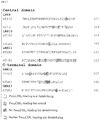
- the major residues affecting binding are illustrated in FIG. 2 .
- the TLR2-TLR1-Pam 3 CSK 4 complex was used to identify the characteristic of a ligand that allows binding with the receptor.
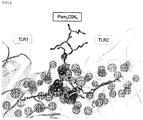
- the crystal structure of the complex is illustrated in FIG. 3 .
- the Receptor- ligand Pharmacophore Generation protocol was used to target the lipopeptide binding site of the TLR2-TLR1-Pam 3 CSK 4 complex together with the default parameters. As a result, all the characteristics of the pharmacophore based on the interaction of the TLR2-TLR1-Pam 3 SK 4 complex were confirmed and are illustrated in FIG. 4 .
- the ligand capable of binding with the protein had two hydrogen bond acceptors (HBA), one hydrogen bond doner (HBD), and two hydrophobic features (HBY).
- the five characteristics identified above are again classified into four sub-models, as illustrated in FIG. 7 .
- Compound A was used as a query molecule in constructing the ligand-based pharmacophore model 1. From the various characteristics of Compound A, ten pharmacophore models were constructed, of which three HBAs and two HBYs were constructed as ligand-based pharmacophore model 1. Based thereon, an active molecule was mapped and the result is illustrated in FIG. 9 .
- Compound B was used as a query molecule in constructing a ligand-based pharmacophore model 2.
- the characteristics of the pharmacophore confirmed from Compound B were confirmed to be one HBD, two HBAs, and two HBYs, and mapping results based thereon are illustrated in FIG. 10 .
- Example 2 Four sub-receptor-ligand-based pharmacophore models constructed in Example 2 above were used to screen TLR2 antagonist candidate materials from a commercially available library of approximately 7 million molecules.
- the Search 3D Database of DS 4.0 was used and each of the above four models was set as an input.
- the Best Search method was used to calculate the fit value of the ligand to the pharmacophore model. Based on this value, 500 molecules (hits) that were ideally mapped to each model were obtained. As a result, 2000 hit molecules were selected from a total of four models.
- TLR2 antagonist candidate materials from a commercially available library of about 7 million molecules
- 2,312,604 hit molecules were selected from the ligand-based pharmacophore model 1 with Compound A as an input
- 1,651,005 hit molecules were selected from the ligand-based pharmacophore model 2 with Compound B as an input.
- the scoring function of ROCS_tanimoto-Combo according to the shape and atomic type similarity of the query and hit molecules was used.
- Compound A was used as a query molecule for comparison with 2,312,604 hit molecules obtained from the ligand-based pharmacophore model 1
- Compounds B and C were used as a query molecule for comparison with 1,651,005 hit molecules obtained from the ligand-based pharmacophore model 2.
- a total of 1,500 hit molecules were selected from the ligand-based pharmacophore model.
- the Lipinski and Veber rules were used as a filter for screening compounds with better oral bioavailability.
- the characteristics of ADMET (absorption, distribution, metabolism, excretion, toxicity) were used to identify good absorption, adequate solubility, low blood-brain penetrability, cytochrome P450 2D6 non-inhibition, non-hepatocellular toxicity, and non-plasma protein binding ability.
- 1,126 molecules selected as drug-like compounds from a total of 3,500 hit molecules were confirmed.
- the drug-like characteristics of the candidate compounds were calculated and selected to exclude molecules that were not available at the drug development stage.
- the molecular docking of the TLR2-TLR1 dimer was used to select the optimal docking pose and screen ligand for ligand-receptor binding.
- the ligand was prepared with the Prepare Ligand module of DS 4.0.
- the binding site of the lipopeptide was selected as the docking site.
- the screening was performed using two programs: CDocker (using CD, CHARMM force field) and AutoDock (AD) Vina.
- the 1,126 drug-like compounds obtained in Example 6 above were docked to four Pam 3 CSK 4 sites using CD.
- spheres having a radius of 13 ⁇ , which mostly cover the sites B and C, were used.
- the CD interaction energy was calculated, and as a result, the top 100 poses of about 60 compounds were screened.
- the 100 poses were re-docked using AD Vina. At this time, the dock_runscreening protocol was applied. As a result, the top 26 poses with excellent docking were screened based on the AD affinity energy value.
- the 26 docking complexes obtained in Example 7 above were aligned again in accordance with the molecular dynamics (MD) according to the calculation of Poisson-Boltzmann surface area (MM/PBSA) binding free energy.
- MD molecular dynamics
- MM/PBSA Poisson-Boltzmann surface area
- MM/PBSA binding free energy was calculated by the following Equation 1.
- ⁇ G bind ⁇ G complex ⁇ ⁇ G protein + ⁇ G ligand
- G bind is the average binding free energy
- G complex is the binding free energy of the TRL2-TLR1 complex
- G protein is the binding free energy of the protein (receptor)
- G ligand is the binding free energy of the ligand.
- Three compounds (S06690562, S01688300, S01382085) were selected based on the average MM/PBSA value obtained by the above calculation, the AD binding energy value of Example 7 above, and the CD binding energy value.
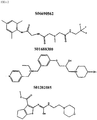
- two compounds from the receptor-ligand-based model and one compound selected from the ligand-based model were confirmed and their two-dimensional structure is illustrated in FIG. 12 .
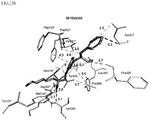
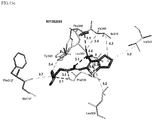
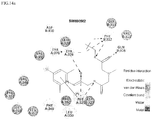
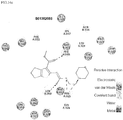
- the molecular docking results thereof are illustrated in FIGS. 13A to 13C and FIGS. 14A to 14C .
- HEK293-TLR2 (expressed at endogenous levels of TLR1) and HEK293-Null cell lines were cultured in 96-well tissue culture plates (BD Biosciences) at a density of 1 ⁇ 10 4 cells/wells, 37°C, 95% air and 5% CO 2 for 24 hours.
- a cell stimulation was achieved by treatment with 50 ⁇ M of compound and 50 nM of Pam 3 CSK 4 (Invivogen, San Diego, CA., USA).
- the antagonist activity cells were treated with various concentrations of compound for 1 hour and then co-treated with 50 nM of Pam 3 CSK 4 .
- IL-8 secretion was quantified by human IL-8 ELISA Ready-SET-Go!® (Second generation) kit (eBioscience, San Diego, CA., USA) according to the method of the manufacturer's guide, and the quantified results are illustrated in FIG. 15 .
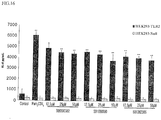
- the secretion of IL-8 was significantly reduced when the compound was treated at a high concentration of 50 ⁇ M as compared with the case where all three compounds were treated at a low concentration. Accordingly, it was confirmed that the three compounds are substances that decrease the secretion of IL-8 in a dose-dependent manner.
- HEK293-TLR2 and HEK293-Null cell lines were cultured with 10% heat-inactivated FBS (fetal bovine serum, Thermo Fisher Scientific Inc.), 50 IU/mL penicillin, 50 ⁇ g/mL streptomycin (Thermo Fisher Scientific Inc.), and Dulbecco's modified Eagle's medium (Thermo Fisher Scientific Inc., MA., USA) supplemented with NormocinTM 100 mg/mL (Invivogen., San Diego, CA., USA).
- FBS fetal bovine serum
- penicillin 50 IU/mL
- streptomycin Thermo Fisher Scientific Inc.
- Dulbecco's modified Eagle's medium Thermo Fisher Scientific Inc., MA., USA
- NormocinTM 100 mg/mL
- Example 8 In order to confirm the cytotoxicity of the three compounds screened in Example 8 above (S06690562, S01688300, S01382085), the MTS technique was performed in HEK293-TLR2, and the results are illustrated in FIG. 7 .
- cell activity was measured using the CellTiter 96® AQueous One Solution Cell Proliferation Assay (MTS assay; Promega, Madison, WI., USA) according to the manufacturer's guidelines.
- MTS assay Cells were cultured in 96-well plates at a concentration of 5 ⁇ 10 3 cells/mL and maintained overnight at 37°C in a humidified atmosphere containing 5% CO 2 .
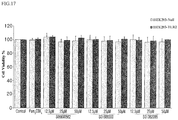
- the cultured cells were treated with three concentration conditions (12.5 ⁇ M, 25 ⁇ M, and 50 ⁇ M) of three screened compounds (S06690562, S01688300, S01382085).
- the MTS solution was treated in wells and the absorbance was measured at 490 nm with a microplate spectrophotometer system (Molecular Devices Inc.). The results are illustrated in FIG. 17 .
- novel TLR2 antagonist according to the present disclosure effectively inhibits IL-8 secretion and does not cause toxicity in vivo, and thus can be usefully used in pharmaceutical compositions for the prevention or treatment of inflammatory diseases. Since the TLR2 antagonist has a small molecular weight and a high oral bioavailability, it can be effectively used as an oral administration agent and can also be used as a regulator of TLR4.
Landscapes
- Health & Medical Sciences (AREA)
- Chemical & Material Sciences (AREA)
- Organic Chemistry (AREA)
- Life Sciences & Earth Sciences (AREA)
- General Health & Medical Sciences (AREA)
- Veterinary Medicine (AREA)
- Public Health (AREA)
- Medicinal Chemistry (AREA)
- Animal Behavior & Ethology (AREA)
- Pharmacology & Pharmacy (AREA)
- Nuclear Medicine, Radiotherapy & Molecular Imaging (AREA)
- General Chemical & Material Sciences (AREA)
- Chemical Kinetics & Catalysis (AREA)
- Bioinformatics & Cheminformatics (AREA)
- Engineering & Computer Science (AREA)
- Epidemiology (AREA)
- Pulmonology (AREA)
- Rheumatology (AREA)
- Pain & Pain Management (AREA)
- Physical Education & Sports Medicine (AREA)
- Immunology (AREA)
- Neurosurgery (AREA)
- Neurology (AREA)
- Biomedical Technology (AREA)
- Nutrition Science (AREA)
- Physiology (AREA)
- Communicable Diseases (AREA)
- Ophthalmology & Optometry (AREA)
- Virology (AREA)
- Urology & Nephrology (AREA)
- Hematology (AREA)
- Hospice & Palliative Care (AREA)
- Diabetes (AREA)
- Oncology (AREA)
- Psychiatry (AREA)
- Orthopedic Medicine & Surgery (AREA)
- Dermatology (AREA)
- Pharmaceuticals Containing Other Organic And Inorganic Compounds (AREA)
Abstract
Description
- The present disclosure relates to a novel small molecule TLR2 antagonist, and particularly, to 19 novel TLR2 antagonists, a pharmaceutical composition, including the antagonists, for preventing or treating inflammatory diseases, and a TLR4 regulator.
- Virtual screening is an in silico approach method capable of rapidly anticipating the binding of a molecule from a compound library to a target receptor and effectively prioritizing molecules with related biological activities for further validation experiments. In order to overcome a high cost problem of the disadvantage of an experimental high-throughput screening (HTS) method, a large amount of compound library requires selective downsizing into a small set that can include a specific target drug. To this end, virtual screening has been increasingly applied in drug discovery projects prior to the experimental HTS. The application of various virtual screening techniques can significantly increase the efficiency of research in the field of drug discovery. One of the widely applied techniques in virtual screening is to compare two-dimensional (2D) properties between the experimentally determined ligands and the molecules of a compound library. In this approach method, the structural characteristics of molecules are expressed by the kind of constituent atoms and their bond levels. Another technique is to use the three-dimensional structural properties of molecules to compare similarities between molecules. Three-dimensional structure-based virtual screening approach methods are classified mainly into an approach method based on ligand coordinates and an approach method based on receptor coordinates. Like a two-dimensional (2D) method, the ligand-based approach method searches for molecules similar to the experimentally determined active ligand by comparing the three-dimensional structure properties between the molecules. This approach method is typically applied where only limited information about a target receptor is available. The ligand-based method essentially includes a comparative analysis process of structural properties, and accordingly, the application thereof necessarily requires information acquisition of the known active ligand. One of the available programs, Rapid Overlay of Chemical Structures (ROCS), uses an overlapping method for large form-based comparisons. ROCS adopts a method of comparing the structural similarities between two molecules based on the three-dimensional form. The three-dimensional form of the parameterized specifically expressed molecule uses Gaussian-based overlap to obtain the optimal alignment of the largest volume overlapping between two molecules. Since the similarity of chemical properties as well as the morphological similarity of molecules is a crucial factor in biological activity, the overlap between the functional groups that a compound has is additionally calculated using a color force field. The conformational flexibility of molecules can be considered by precomputing conformers ensembles in advance and sequentially comparing each of them. The excellence of the ROCS method has been reported through a number of research literature. When high-resolution coordinates of a target receptor are available, molecular docking is a common method of selection in virtual screening. Docking is used to quantify the binding affinity between molecules and receptors from a compound library by computer operation and to predict the binding potential between them. In essence, this method does not necessarily require information about a compound that is active for a drug target, but it can increase performance by incorporating the binding properties of a known active material into a docking process.
- An antagonist, on the other hand, is a substance that binds to a receptor of a certain agonist but does not exhibit the physiological action through the receptor. TLR2 (Toll-like receptor 2) is present in the plasma membrane or endosome and belongs to the first line of defense of host defense in the inflammatory response. Signaling associated with TLR2 has been reported to have an association with cancer, tuberculosis, anemia, atopic dermatitis, and atherosclerosis. In particular, antagonists of TLR2 have become a major pharmacological target due to its inhibitory effect on inflammatory diseases. Accordingly, there is a need to screen for antagonists of novel TRL2 that can be used pharmacologically. In particular, research for screening antagonists that are small molecules is needed.
- As a result of screening using a computer on the basis of a pharmacophore model targeted on about 7 million compounds, the present inventors selected a novel small molecule TLR2 antagonist which can be used for the prevention or treatment of inflammatory diseases, and completed the present disclosure.
- It is an object of the present disclosure to provide a novel TLR2 antagonist.
- Another object of the present disclosure is to provide a pharmaceutical composition for the prevention or treatment of an inflammatory disease including the TLR2 antagonists, an oral administration agent, and a TLR4 regulator including the antagonists.
- Since the novel TLR2 antagonist according to the present disclosure has a low molecular weight and a high oral bioavailability, it can be effectively used as an oral administration agent, effectively inhibits IL-8 secretion and does not cause toxicity in vivo, and thus can be usefully used as a pharmaceutical composition for preventing or treating inflammatory diseases. The novel TLR2 antagonists according to the invention can also be used as regulators of TLR4.
-
-
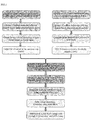
FIG. 1 is a diagram briefly illustrating the overall steps for identifying TLR2 antagonists. -
FIG. 2 is a diagram illustrating the results of confirming the major residues that affect binding based on the calculated free energy as a result of In Silico Alanine Scanning Mutagenesis. -
FIG. 3 is a diagram illustrating the crystal structure of a TLR2-TLR1-Pam3CSK4 complex used to construct a receptor-ligand-based pharmacophore model. -
FIG. 4 is a diagram illustrating all pharmacophore characteristics obtained from Pam3CSK4 bound to TLR2-TLR1. -
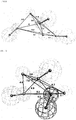
FIG. 5 is a diagram illustrating the characteristics of five selected pharmacophore characteristics in a receptor-ligand-based pharmacophore model and the surrounding of residues labeling the characteristics (asterisks: TLR1 residue, green spheres: HBA, purple spheres: HBD, blue spheres: HBY, gray spheres: space occupied by proteins). -
FIG. 6 is a diagram illustrating the major characteristics of a receptor-ligand-based pharmacophore model. -
FIG. 7 is a diagram illustrating the results of constructing five characteristics selected from a receptor-ligand-based pharmacophore model into four sub-models. -
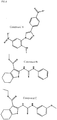
FIG. 8 is a diagram illustrating the structures of compounds A, B, and C used to construct a receptor-ligand-based pharmacophore model. -
FIG. 9 is a diagram illustrating active molecules mapped from a ligand-based pharmacophore model 1 constructed from compound A. -
FIG. 10 is a diagram illustrating active molecules mapped from a ligand-based pharmacophore model 2 constructed from compounds B and C. -
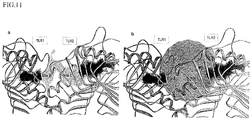
FIG. 11 is a diagram illustrating molecular docking using CDocker. -
FIG. 12 is a diagram illustrating the two-dimensional structure of three screened compounds (S06690562, S01688300, S01382085). -
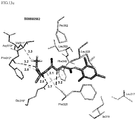
FIG. 13A is a diagram illustrating the results of the docking of the screened compound S06690562. -
FIG. 13B is a diagram illustrating the results of the docking of the screened compound S01688300. -
FIG. 13C is a diagram illustrating the results of the docking of the screened compound S01382085. -
FIG. 14A is a diagram illustrating the results of the docking of the screened compound S06690562. -
FIG. 14B is a diagram illustrating the results of the docking of the screened compound S01688300. -
FIG. 14C is a diagram illustrating the results of the docking of the screened compound S01382085. -
FIG. 15 is a diagram confirming the secretion of IL-8 by treating 19 compounds with cells (* P < 0.05, ** P < 0.01). -
FIG. 16 is a diagram illustrating the results of inhibition of concentration-dependent IL-8 secretion of three screened compounds (S06690562, S01688300, S01382085) (*P < 0.05, **P < 0.01). -
FIG. 17 is a diagram confirming the cytotoxicity of three screened compounds (S06690562, S01688300, S01382085). - Hereinafter, the present disclosure will be described in detail.
- The present disclosure provides at least one TLR2 (Toll-like receptor 2) antagonist selected from the group consisting of the compounds illustrated in Table 1 below.
[Table 1] Compound names Compound structures S02546436 
S02276077 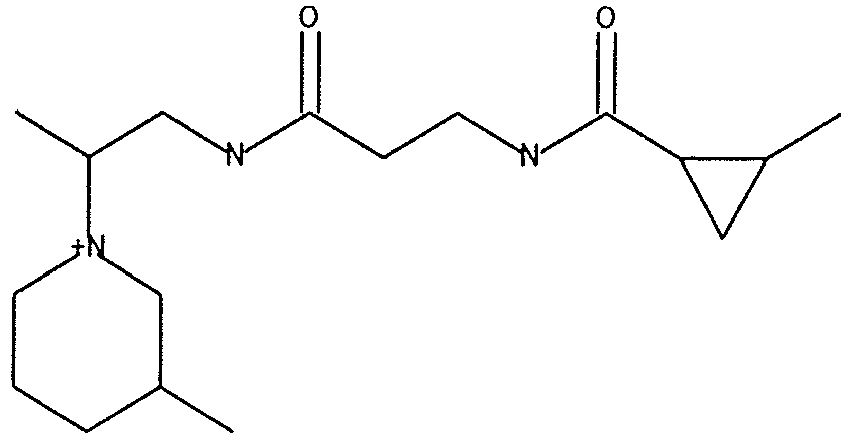
S06696686 
S06690562 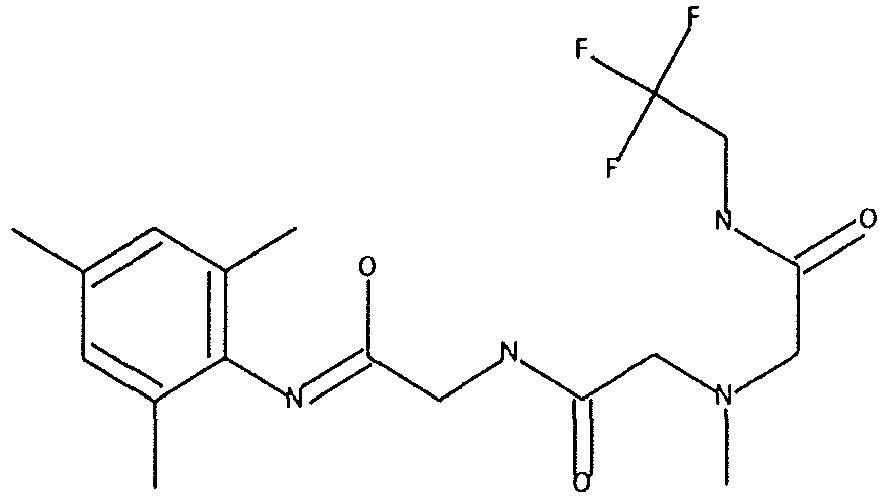
S06713271 
S02396152 
S01525559 
S06542401 
S01739292 
S01688300 
S06570841 
S06570001 
S06568641 
S06572801 
S01577528 
S01382085 
S01442577 
S01414289 
S01292238 
- The "TLR2 (Toll-like receptor 2)" of the present disclosure means a substance which is located on the cell surface of monocytes, macrophages, neutrophils, and the like, and functions as receptors for bacterial components (lipid polysaccharides, peptide glycans, adipocyte proteins, mycobacterial glycolipids, and heat shock proteins (hsp)). When TLR2 is stimulated, the cells are activated to stimulate the production of inflammatory cytokines and inflammatory mediators (TNF, IL-1, IL-6, IL-8, NO, etc.).
- In the present disclosure, the term "antagonist" means a substance which binds to a receptor of a drug or some agonist which serves to attenuate some or all of its action by the combination of a drug with another drug, but does not exhibit physiological action through its receptor. Accordingly, the TLR2 antagonist has a strong binding ability to TLR2, so that it can partially inhibit TLR2-related signaling at the micro-molecular level but not completely abolish it.
- The "TLR2 antagonist" of the present disclosure includes 19 compounds of Table 1 and preferably 6 compounds (S02546436, S02276077, S06696686, S06690562, S01688300, S01382085), more preferably three compounds (S06690562, S01688300, S01382085). The TLR2 antagonists of the present disclosure may also include, without limitation, the 19 compounds of Table 1 as well as analogs thereof having the same, similar activity.
- Some of the compounds, such as S06690562, are tautomeric molecules and may exist in the enol or keto form by tautomerization according to pH.
- The TLR2 antagonist of the present disclosure is characterized by being a small molecule because it has no fatty acyl residues. Since such molecular weight reduction is advantageous in pharmacokinetics, the antagonists and their analogs of the present disclosure can be usefully used to design drugs as an active ingredient of pharmaceutical compositions.
- The "small molecule" means an organic compound having a molecular weight of preferably 900 Da or less, but not limited thereto.
- The TLR2 antagonists of the present disclosure have a different core structure from those previously presented as antagonists of TLR2. In addition, the 19 compounds illustrated in Table 1 have each different structure.
- The 19 TLR2 antagonists of the present disclosure include all substances that are purchased and used or synthesized by methods known in the pertinent field.
- In addition, the present disclosure also provides a pharmaceutical composition for the prevention or treatment of inflammatory diseases including the TLR2 (Toll-like receptor 2) antagonist.
- The term "inflammatory disease" as used herein includes, but not limited to, edema, dermatitis, allergies, atopy, asthma, conjunctivitis, periodontitis, rhinitis, otitis, sore throat, tonsillitis, pneumonia, gastric ulcer, gastritis, Crohn's disease, colitis, hemorrhoids, gout, ankylosing spondylitis, rheumatic fever, lupus, fibromyalgia, psoriatic arthritis, osteoarthritis, rheumatoid arthritis, periarthritis of shoulder, tendinitis, peritenonitis, myositis, hepatitis, cystitis, nephritis, sjogren's syndrome, and multiple sclerosis.
- As used herein, the term "prevention" means any action that inhibits or slows the progression of an inflammatory disease upon administration of the composition of the present disclosure.
- As used herein, the term "treatment" means any action which improves or beneficially changes an inflammatory disease by administration of a composition of the present disclosure.
- The compositions of the present disclosure include a pharmaceutically acceptable carrier. The carrier which is included and allowed in the pharmaceutical composition of the present disclosure is usually used in the preparation, and includes lactose, dextrose, sucrose, sorbitol, mannitol, starch, acacia rubber, calcium phosphate, alginate, gelatin, calcium silicate, microcrystalline cellulose, polyvinylpyrrolidone, cellulose, water, syrup, methylcellulose, methylhydroxybenzoate, propylhydroxybenzoate, talc, magnesium stearate, mineral oil, saline solution, PBS (phosphate buffered saline), or a medium, etc., but is not limited thereto.
- The pharmaceutical composition of the present disclosure may further include a lubricant, a wetting agent, a sweetening agent, a flavoring agent, an emulsifying agent, a suspending agent, a preservative, etc. in addition to the above components. Suitable pharmaceutically acceptable carriers and preparations are described in detail in Remington's Pharmaceutical Sciences (19th ed., 1995).
- The pharmaceutical composition of the present disclosure can also be used together, simultaneously, and sequentially, including additional components that can be used to prevent or treat inflammatory diseases associated with TLR2.
- The appropriate dosage of the pharmaceutical composition of the present disclosure may be prescribed in various ways depending on factors such as the preparation method, administration method, age, body weight, sex, pathological condition, food, administration time, route of administration, excretion speed and response susceptibility of a patient.
- In addition, the present disclosure provides an oral administration agent for the prevention or treatment of inflammatory diseases including the TLR2 (Toll-like receptor 2) antagonist.
- Since the TLR2 antagonist of the present disclosure is characterized by being a small molecule, it has a good oral bioavailability. In the present disclosure, the bioavailability refers to a fraction of the amount of drug administered that falls within the subcategories of absorption of the drug and reaches the systemic circulation. Accordingly, when the oral administration agent for the prevention or treatment of inflammatory diseases including the TLR2 antagonist of the present disclosure is orally administered, there is an effect in that the drug reaches the systemic circulation at a high rate.
- Oral administration agents according to the present disclosure may be administered as a formulation selected from solid pharmaceutical preparations such as tablets, pills, capsules, powders and granules, or pharmaceutically acceptable aqueous solutions, suspensions and emulsions, syrups, pharmaceutical preparations dissolved in use and elixir oral liquid pharmaceutical preparations.
- In addition, the present disclosure provides a method for screening a TLR2 (toll-like receptor 2) antagonist, including: (a) constructing a receptor-ligand-based pharmacophore model; (b) constructing a ligand-based pharmacophore model; (c) screening the results of (a) and (b); and (d) performing a biological experiment with the result of (c) for screening.
- The term "pharmacophore" in the present disclosure means a characteristic of a molecule required for molecular recognition of a ligand. The "pharmacophore model" describes how various ligands can bind to a common receptor site and can be used for the virtual screening of novel ligands that bind to the same receptor.
- In the present disclosure, a method for constructing "receptor-ligand-based pharmacophore models" includes a technique of inducing In Silico Alanine Scanning Mutagenesis including a process in which the residues of the binding site between Pam3CSK4 and TLR2-TLR1 in the TLR2-TLR1-Pam3CSK4 complex are mutated to alanine and a technique of targeting the binding site of TLR2-TLR1-Pam3CSK4 by using a Receptor-ligand Pharmacophore Generation protocol to confirm the major residues that play an important role in binding. If a technique of using a computer is used, there is an effect of time saving and cost saving.
- The "Pam3CSK4" of the present disclosure is an agonist of TLR2 and TLR1
- The method for constructing a "ligand-based Pharmacophore model" in the present disclosure includes identifying the characteristics of a pharmacophore model using an antagonist of a known small molecule TLR2.
- The screening the identified results from the pharmacophore model constructed in the present disclosure includes screening a fit value, molecular similarity, drug-like compounds, molecular docking and scoring, and rescoring docking complex. Through the screening process, a candidate compound of an antagonist of TLR2, which is a small molecule having drug similarity due to its excellent binding ability to TLR2, can be obtained.
- The "biological experiments" in the present disclosure include analysis of IL-8 secretion, cell viability. It can be confirmed whether the candidate compound of the TLR2 antagonist selected through the biological experiments serves as a TLR2 antagonist, and whether toxicity is shown.
- In addition, the present disclosure provides at least one TLR4 (Toll-like receptor 4) regulator selected from the group consisting of the compounds of Table 1 above.
- As used herein, the term "regulator" refers to a substance that increases or decreases levels of a molecule to a measurable extent, including, but not limited to, inhibitors, antagonists, effectors, and the like.
- The TLR4 of the present disclosure is characterized by having structural and functional similarity with TLR2, and a compound screened with an antagonist of TLR2 may have regulator activity of TLR4. Accordingly, 19 compounds of the present disclosure, TLR2 antagonists, can be utilized as regulators of TLR4.
- Terms not otherwise defined herein have meanings as commonly used in the art to which the present disclosure pertains.
- Hereinafter, the present disclosure will be described in more detail with reference to examples. However, these examples are for illustrative purposes only, and the scope of the present disclosure is not limited to these examples.
- Statistical analysis shown in the following examples was performed by defining, as statistical significance level, P value (less than or equal to 0.05 or 0.01) as one-dimensional variant analysis using SigmaPlot software version 12.0 (Systat Software Inc., San Jose, CA, USA) for the data obtained from three independent experiments.
- For the analysis of the major residues required to construct a pharmacophore model, the alanine scanning mutagenesis technique was used. In the TLR2-TLR1-Pam3CSK4 complex, the residues of the binding site of Pam3CSK4 and TLR2-TLR1 were mutated to alanine, and the mutation energy was calculated based on the difference of the mutation and the wild-type binding free energy. The calculation was performed by using Calculate Mutation Energy (Binding) in Accelrys Discovery Studio (DS) 4.0 and residues with mutation energies greater than 0.5 kcal/mol are believed to affect binding of the receptor-ligand complexes because they make the binding unstable. The major residues affecting binding are illustrated in
FIG. 2 . - The values of the top ten unstable residues are illustrated in Table 2, and the values of all other residues are illustrated in Table 3.
[Table 2] Mutation to alanine Mutation energy (kcal/mol) Van der Waals term Electrostatic term Entropy term Non-polar term Phe349 4.55 8.1 0.17 0.52 0 Tyr376 3.77 8.04 -0.71 0.13 0 Phe322 3.35 5.31 -0.1 0.93 0 Phe325 2.62 4.09 0.47 0.42 0 Leu328 2.05 3.83 -0.14 0.26 0 Gln316* 2.05 3.53 0.51 0.04 0 Arg337* 1.93 6.44 0.59 -1.98 0 Tyr326 1.8 4.63 -0.12 -0.57 0 Leu312 1.79 2.96 -0.07 0.43 0 Leu350 1.73 2.86 0.28 0.2 0 * Residues of TLR1 [Table 3] Mutation to alanine Mutation energy (kcal/mol) van der Waals term Electrostatic term Entropy term Non-polar term Leu324 1.53 3.68 -0.11 -0.32 0 Lys347 1.27 4.41 -0.62 -0.78 0 Ile314 1.23 1.83 -0.29 0.57 0 Phe284 1.21 1.15 0.28 0.62 0 Leu266 1.17 1,64 -0.06 0.48 0 Tyr320* 1.17 1.26 0.44 0.4 0 Ile341 1.15 1.84 -0.08 0.34 0 Leu355 1.15 1.65 -0.03 0.42 0 Asp327 1.13 2.54 0.14 -0.26 0 Val339* 1.13 2.18 -0.1 0.11 0 Phe295 1.05 1.49 0.06 0.34 0 Val343 1.02 1.84 0.08 0.08 0 Pro352 0.98 1.48 0.3 0.11 0 Leu334 0.96 1.54 0.02 0.23 0 Val351 0.83 1.37 0.1 0.12 0 Ile319 0.81 1.28 0.19 0.09 0 Leu317 0.79 1.01 0.11 0.29 0 Leu282 0.75 1.18 0.2 0.07 0 Val311* 0.72 2.21 -0.06 -0.44 0 Val348 0.7 1.23 0.13 0.02 0 Phe312* 0.63 0.47 -0.04 0.52 0 Val309 0.56 0.91 0.01 0.13 0 Val338 0.49 0.93 -0.02 0.04 0 Asn294 0.37 1.07 0.22 -0.34 0 Trp258* 0.36 0.13 0.15 0.27 0 Met270 0.33 0.61 -0.18 0.14 0 Leu289 0.31 0.6 -0.13 0.09 0 Pro315* 0.28 0.5 0.09 -0.02 0 Phe323* 0.24 0.03 -0.01 0.29 0 Ile319* 0.16 0.06 0.07 0.12 0 Phe314* 0.14 0.1 0.17 0.01 0 Tyr318* 0.13 0.2 -0.11 0.1 0 Ile304* 0.1 0.01 0.03 0.1 0 Phe261* 0.08 0.01 -0.04 0.12 0 Ile322* 0.01 0.02 0.01 0 0 Val333* 0.01 0.02 -0,04 0.02 0 Leu265* 0.01 0 0.01 0 0 Ser346 0.01 -0.07 0.09 0 0 Val307* -0.04 0.01 -0.21 0.07 0 Leu283* -0.07 -0.01 -0.17 0.02 0 Gly313* -0.07 -0.27 -0.06 0.12 0 Met338* -0.13 0.08 -0.38 0.03 0 Thr336* -0.27 0.08 -0.64 0.01 0 * Residues of TLR1 - The residues, which were calculated in Table 2 above and determined to affect binding capacity, were Phe325 and Phe349 of TLR2 and Gln316 of TLR1, confirming that they were identical to the major residues found in previous studies in biological experiments.
- Accordingly, the three residues were found to play an important role in the process of forming protein-ligand complexes and were used to construct the following receptor-ligand-based pharmacophore models.
- In order to construct a receptor-ligand-based pharmacophore model, the TLR2-TLR1-Pam3CSK4 complex was used to identify the characteristic of a ligand that allows binding with the receptor. The crystal structure of the complex is illustrated in
FIG. 3 . - The Receptor-ligand Pharmacophore Generation protocol was used to target the lipopeptide binding site of the TLR2-TLR1-Pam3CSK4 complex together with the default parameters. As a result, all the characteristics of the pharmacophore based on the interaction of the TLR2-TLR1-Pam3SK4 complex were confirmed and are illustrated in
FIG. 4 . - All the above characteristics are selected with five characteristics and are illustrated in
FIG. 5 . The major characteristics were confirmed to be present in the active site around the major residues identified in Example 1 (Phe325 and Phe349 of TLR2 and Gln316 of TLR1), and the results are illustrated inFIG. 6 . - As illustrated in
FIG. 5 andFIG. 6 , it was confirmed that the ligand capable of binding with the protein had two hydrogen bond acceptors (HBA), one hydrogen bond doner (HBD), and two hydrophobic features (HBY). - The five characteristics identified above are again classified into four sub-models, as illustrated in
FIG. 7 . - In order to construct a ligand-based pharmacophore model, compounds A, B, and C, which were known antagonists of small molecule TLR2, were used and their structures are illustrated in
FIG. 8 . Their two-dimensional structures were drawn using ChemBioDraw Ultra (CambridgeSoft). The characteristics of HBD, HBA, and HBY confirmed in Example 2 were also examined using the Common Feature Pharmacophore Generation protocol. - Compound A was used as a query molecule in constructing the ligand-based pharmacophore model 1. From the various characteristics of Compound A, ten pharmacophore models were constructed, of which three HBAs and two HBYs were constructed as ligand-based pharmacophore model 1. Based thereon, an active molecule was mapped and the result is illustrated in
FIG. 9 . - Compound B was used as a query molecule in constructing a ligand-based pharmacophore model 2. The characteristics of the pharmacophore confirmed from Compound B were confirmed to be one HBD, two HBAs, and two HBYs, and mapping results based thereon are illustrated in
FIG. 10 . - In addition, it was confirmed that the result of mapping the characteristics confirmed from Compound C is the same as in
FIG. 10 because of the structural similarity between the Compound C and Compound B. - Four sub-receptor-ligand-based pharmacophore models constructed in Example 2 above were used to screen TLR2 antagonist candidate materials from a commercially available library of approximately 7 million molecules. The Search 3D Database of DS 4.0 was used and each of the above four models was set as an input. The Best Search method was used to calculate the fit value of the ligand to the pharmacophore model. Based on this value, 500 molecules (hits) that were ideally mapped to each model were obtained. As a result, 2000 hit molecules were selected from a total of four models.
- In order to select TLR2 antagonist candidate materials from a commercially available library of about 7 million molecules, in accordance with the same method as in Example 4 above, 2,312,604 hit molecules were selected from the ligand-based pharmacophore model 1 with Compound A as an input and 1,651,005 hit molecules were selected from the ligand-based pharmacophore model 2 with Compound B as an input.
- In order to further select the 3,963,609 hit molecules selected from the two models, the scoring function of ROCS_tanimoto-Combo according to the shape and atomic type similarity of the query and hit molecules was used. Compound A was used as a query molecule for comparison with 2,312,604 hit molecules obtained from the ligand-based pharmacophore model 1, and Compounds B and C were used as a query molecule for comparison with 1,651,005 hit molecules obtained from the ligand-based pharmacophore model 2. As a result of the scoring, a total of 1,500 hit molecules were selected from the ligand-based pharmacophore model.
- In order to further screen drug-like compounds required for the development of new drugs among the 2,000 hit molecules obtained in Example 4 above and 1,500 hit molecules obtained in Example 5 above, that is, a total of 3,500 hit molecules, Lipinski and Veber rule and ADMET (absorption, distribution, metabolism, excretion, toxicity) characteristics were used.
- Specifically, the Lipinski and Veber rules were used as a filter for screening compounds with better oral bioavailability. The characteristics of ADMET (absorption, distribution, metabolism, excretion, toxicity) were used to identify good absorption, adequate solubility, low blood-brain penetrability, cytochrome P450 2D6 non-inhibition, non-hepatocellular toxicity, and non-plasma protein binding ability.
- As a result, 1,126 molecules selected as drug-like compounds from a total of 3,500 hit molecules were confirmed. The drug-like characteristics of the candidate compounds were calculated and selected to exclude molecules that were not available at the drug development stage.
- The molecular docking of the TLR2-TLR1 dimer was used to select the optimal docking pose and screen ligand for ligand-receptor binding. The ligand was prepared with the Prepare Ligand module of DS 4.0. The binding site of the lipopeptide was selected as the docking site. For optimal screening, the screening was performed using two programs: CDocker (using CD, CHARMM force field) and AutoDock (AD) Vina.
- More specifically, the 1,126 drug-like compounds obtained in Example 6 above were docked to four Pam3CSK4 sites using CD. At this time, as illustrated in
FIG. 11 , spheres having a radius of 13Å, which mostly cover the sites B and C, were used. The CD interaction energy was calculated, and as a result, the top 100 poses of about 60 compounds were screened. - The 100 poses were re-docked using AD Vina. At this time, the dock_runscreening protocol was applied. As a result, the top 26 poses with excellent docking were screened based on the AD affinity energy value.
- Docking complex scoring was performed using binding free energy to determine the driving force of protein-ligand interaction.
- Specifically, to quantify the thermodynamic interactions of the TRL2-TLR1 complex with the ligand, the 26 docking complexes obtained in Example 7 above were aligned again in accordance with the molecular dynamics (MD) according to the calculation of Poisson-Boltzmann surface area (MM/PBSA) binding free energy. The MD simulation was performed using the g_mmpbsa tool, and the average binding energy and its standard deviation/error were calculated as MnPbSaSatat.pyscript.
- The MM/PBSA binding free energy was calculated by the following Equation 1.

- Gbind is the average binding free energy, Gcomplex is the binding free energy of the TRL2-TLR1 complex, Gprotein is the binding free energy of the protein (receptor), and Gligand is the binding free energy of the ligand.
- Three compounds (S06690562, S01688300, S01382085) were selected based on the average MM/PBSA value obtained by the above calculation, the AD binding energy value of Example 7 above, and the CD binding energy value. As a result, two compounds from the receptor-ligand-based model and one compound selected from the ligand-based model were confirmed and their two-dimensional structure is illustrated in
FIG. 12 . The molecular docking results thereof are illustrated inFIGS. 13A to 13C andFIGS. 14A to 14C . - Among the 26 compounds screened in Example 7 above, 19 compounds (S02546436, S02276077, S06696686, S06690562, S06713271, S02396152, S01525559, S06542401, S01739292, S01688300, S06570841, S06570001, S06568641, S06572801, S01577528, S01382085, S01442577, S01414289, S01292238) were treated to confirm whether they exhibit biological activity as an antagonist of TLR2, and the secretion change of IL-8, a cytokine induced by TLR2, was confirmed.
- HEK293-TLR2 (expressed at endogenous levels of TLR1) and HEK293-Null cell lines were cultured in 96-well tissue culture plates (BD Biosciences) at a density of 1 × 10⁴ cells/wells, 37°C, 95% air and 5% CO2 for 24 hours. In order to determine the agonist activity, a cell stimulation was achieved by treatment with 50 µM of compound and 50 nM of Pam3CSK4 (Invivogen, San Diego, CA., USA). In order to determine the antagonist activity, cells were treated with various concentrations of compound for 1 hour and then co-treated with 50 nM of Pam3CSK4. The next day, IL-8 secretion was quantified by human IL-8 ELISA Ready-SET-Go!® (Second generation) kit (eBioscience, San Diego, CA., USA) according to the method of the manufacturer's guide, and the quantified results are illustrated in
FIG. 15 . - As illustrated in
FIG. 15 , it was confirmed that all 19 compounds reduced the secretion of IL-8, and in particular, Pam3CSK4-induced IL-8 secretion amount was greatly reduced when 6 compounds (S02546436, S02276077, S06696686, S06690562, S01688300, S01382085) were treated. Accordingly, it was confirmed that the above six compounds act as antagonists of TLR2 and significantly reduce the secretion of IL-8. - For the dose-dependent analysis of the top three compounds (S06690562, S01688300, S01382085) among the six compounds, the concentrations of the three compounds were varied to 12.5, 25, and 50 µM, and the secretion amount of IL-8 was analyzed as the above method. The results are illustrated in
FIG. 16 . - As illustrated in
FIG. 16 , the secretion of IL-8 was significantly reduced when the compound was treated at a high concentration of 50 µM as compared with the case where all three compounds were treated at a low concentration. Accordingly, it was confirmed that the three compounds are substances that decrease the secretion of IL-8 in a dose-dependent manner. - HEK293-TLR2 and HEK293-Null cell lines (Invivogen, San Diego, CA., USA) were cultured with 10% heat-inactivated FBS (fetal bovine serum, Thermo Fisher Scientific Inc.), 50 IU/mL penicillin, 50 µg/mL streptomycin (Thermo Fisher Scientific Inc.), and Dulbecco's modified Eagle's medium (Thermo Fisher Scientific Inc., MA., USA) supplemented with
Normocin™ 100 mg/mL (Invivogen., San Diego, CA., USA). The compounds were dissolved in dimethyl sulfoxide (Sigma-Aldrich, St. Louis, MO., USA) in brown tubes and stored at a concentration of 10 mM. - In order to confirm the cytotoxicity of the three compounds screened in Example 8 above (S06690562, S01688300, S01382085), the MTS technique was performed in HEK293-TLR2, and the results are illustrated in
FIG. 7 . - Specifically, cell activity was measured using the CellTiter 96® AQueous One Solution Cell Proliferation Assay (MTS assay; Promega, Madison, WI., USA) according to the manufacturer's guidelines. Cells were cultured in 96-well plates at a concentration of 5 × 10³ cells/mL and maintained overnight at 37°C in a humidified atmosphere containing 5% CO2. The next day, the cultured cells were treated with three concentration conditions (12.5 µM, 25 µM, and 50 µM) of three screened compounds (S06690562, S01688300, S01382085). After 24 hours, the MTS solution was treated in wells and the absorbance was measured at 490 nm with a microplate spectrophotometer system (Molecular Devices Inc.). The results are illustrated in
FIG. 17 . - As illustrated in
FIG. 17 , it was confirmed that all of the above three compounds showed no cytotoxicity at a concentration of 12.5 µM, 25 µM, and 50 µM, and thus they are safe materials and can be used as drugs. - The novel TLR2 antagonist according to the present disclosure effectively inhibits IL-8 secretion and does not cause toxicity in vivo, and thus can be usefully used in pharmaceutical compositions for the prevention or treatment of inflammatory diseases. Since the TLR2 antagonist has a small molecular weight and a high oral bioavailability, it can be effectively used as an oral administration agent and can also be used as a regulator of TLR4.
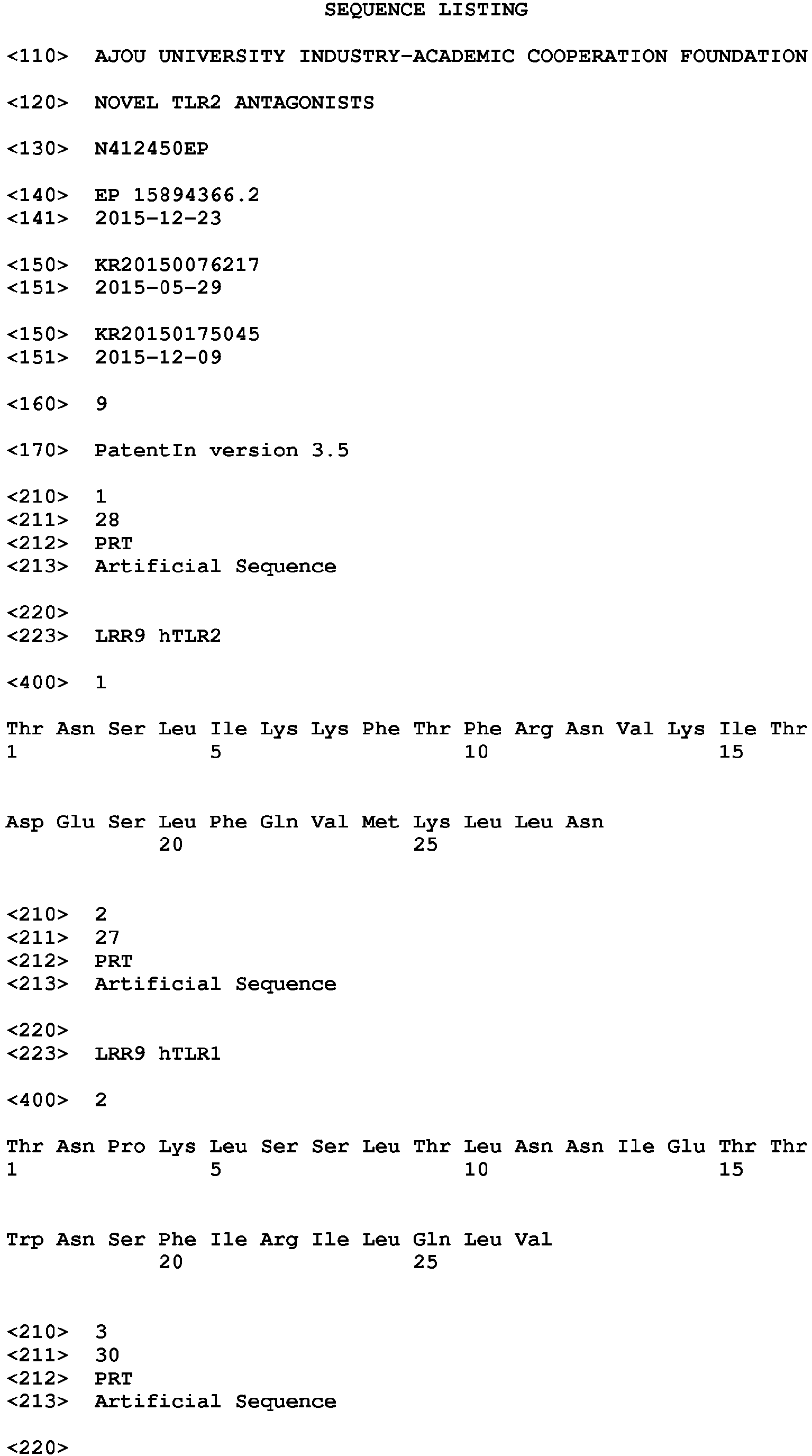


Claims (6)
- One or more TLR2 (Toll-like receptor 2) antagonists selected from the group consisting of compounds of Table 1.
[Table 1] Compound names Compound structures S02546436 
S02276077 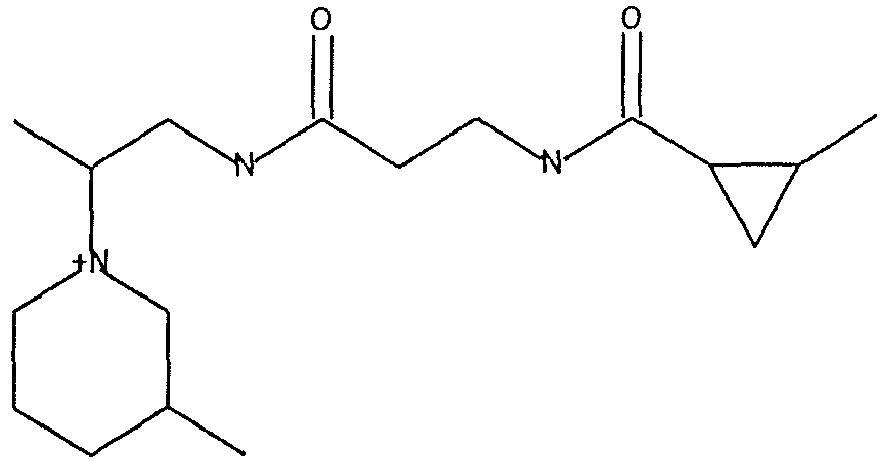
S06696686 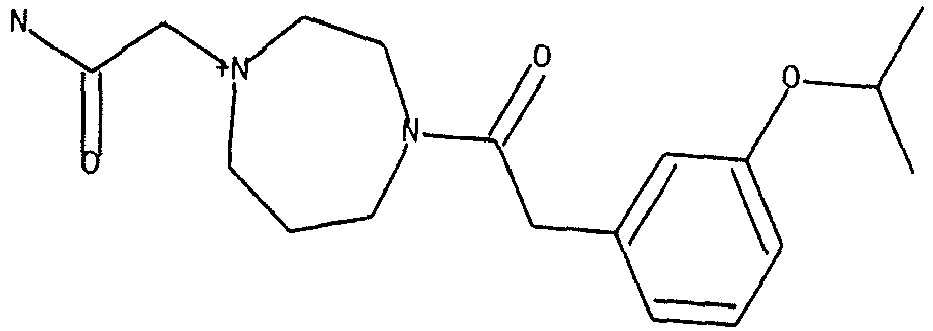
S06690562 
S06713271 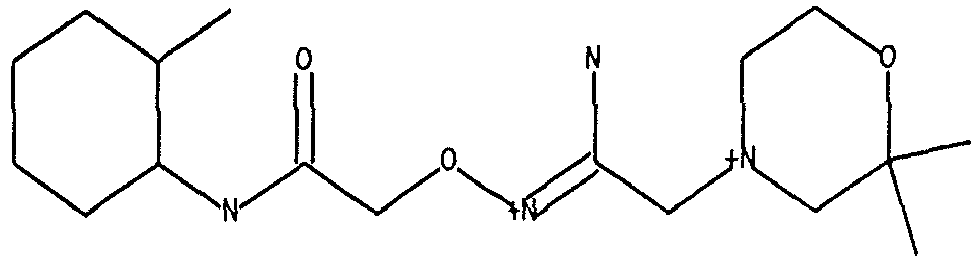
S02396152 
S01525559 
S06542401 
S01739292 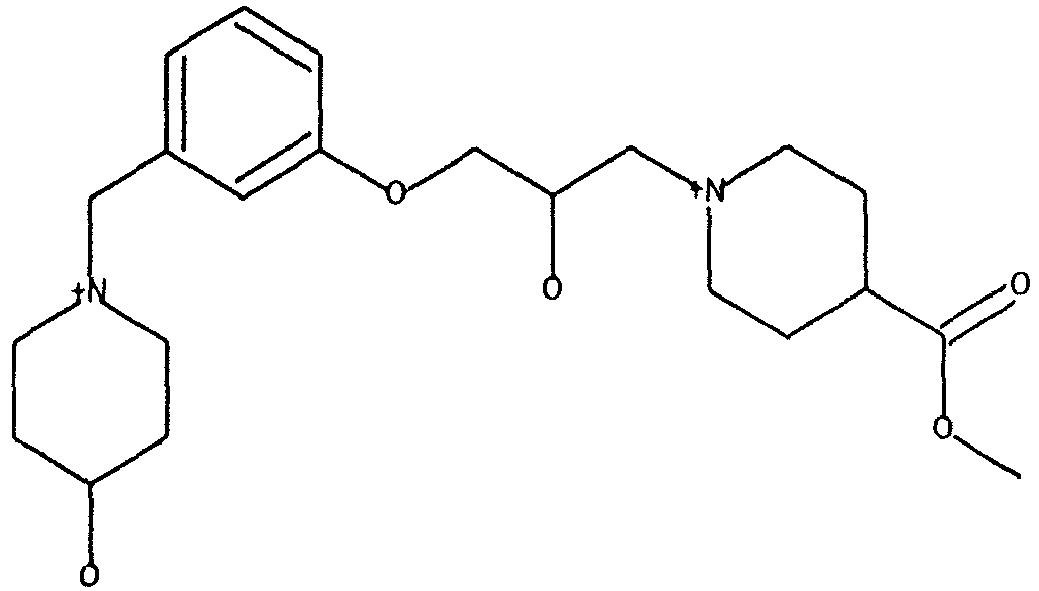
S01688300 
S06570841 
S06570001 
S06568641 
S06572801 
S01577528 
S01382085 
S01442577 
S01414289 
S01292238 
- The TLR2 antagonist according to claim 1, wherein the TLR2 antagonist is at least one selected from the group consisting of S06690562, S01688300, and S01382085 in Table 1.
- A pharmaceutical composition for preventing or treating an inflammatory disease including the TLR2 (Toll-like receptor 2) antagonist of claim 1.
- The pharmaceutical composition for preventing or treating an inflammatory disease according to claim 3, wherein the inflammatory disease is at least one selected from the group consisting of edema, dermatitis, allergies, atopy, asthma, conjunctivitis, periodontitis, rhinitis, otitis, sore throat, tonsillitis, pneumonia, gastric ulcer, gastritis, Crohn's disease, colitis, hemorrhoids, gout, ankylosing spondylitis, rheumatic fever, lupus, fibromyalgia, psoriatic arthritis, osteoarthritis, rheumatoid arthritis, periarthritis of shoulder, tendinitis, peritenonitis, myositis, hepatitis, cystitis, nephritis, sjogren's syndrome, and multiple sclerosis.
- An oral administration agent for preventing or treating an inflammatory disease including the TLR2 (Toll-like receptor 2) antagonist of claim 1.
- One or more TLR4 (Toll-like receptor 4) regulators selected from the group consisting of compounds of Table 1.
[Table 1] Compound names Compound structures S02546436 
S02276077 
S06696686 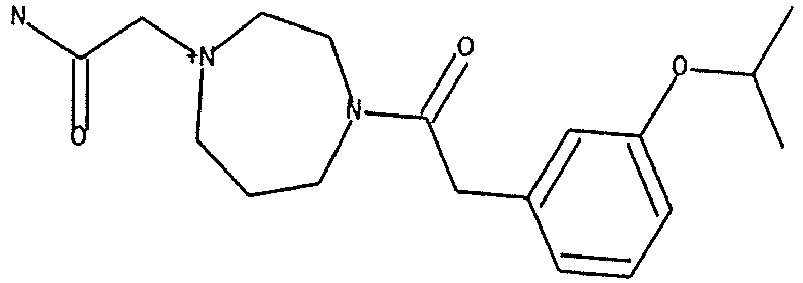
S06690562 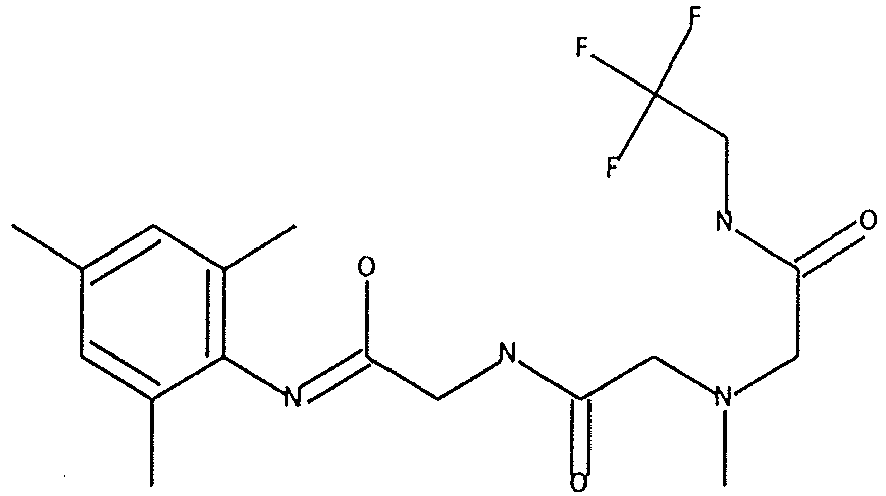
S06713271 
S02396152 
S01525559 
S06542401 
S01739292 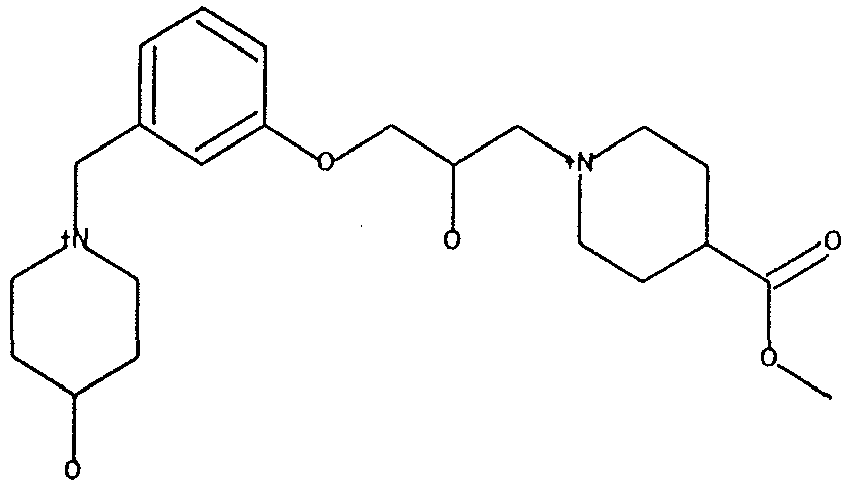
S01688300 
S06570841 
S06570001 
S06568641 
S06572801 
S01577528 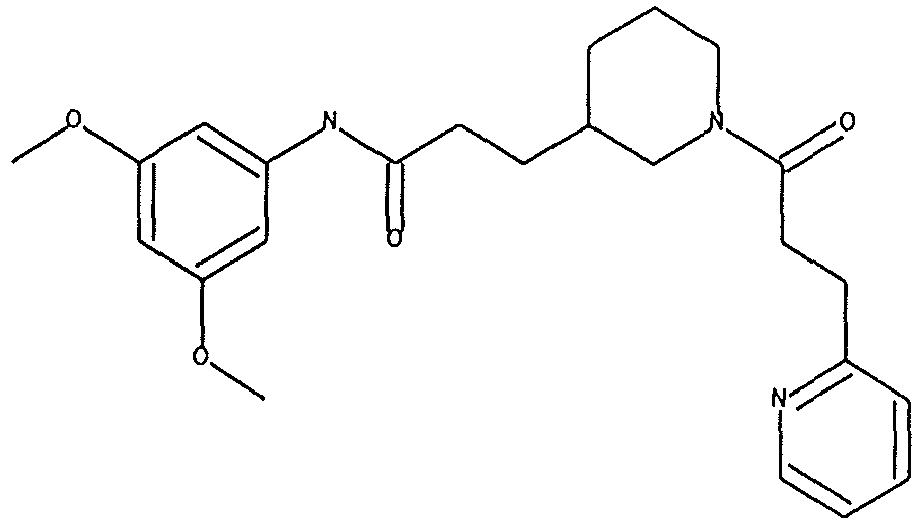
S01382085 
S01442577 
S01414289 
S01292238 
Applications Claiming Priority (3)
| Application Number | Priority Date | Filing Date | Title |
|---|---|---|---|
| KR20150076217 | 2015-05-29 | ||
| KR1020150175045A KR101745524B1 (en) | 2015-05-29 | 2015-12-09 | Novel TLR2 antagonists |
| PCT/KR2015/014202 WO2016195194A2 (en) | 2015-05-29 | 2015-12-23 | Novel tlr2 antagonists |
Publications (3)
| Publication Number | Publication Date |
|---|---|
| EP3305767A2 true EP3305767A2 (en) | 2018-04-11 |
| EP3305767A4 EP3305767A4 (en) | 2019-01-23 |
| EP3305767B1 EP3305767B1 (en) | 2020-09-09 |
Family
ID=57573801
Family Applications (1)
| Application Number | Title | Priority Date | Filing Date |
|---|---|---|---|
| EP15894366.2A Active EP3305767B1 (en) | 2015-05-29 | 2015-12-23 | Novel tlr2 antagonists for treating inflammatory diseases |
Country Status (3)
| Country | Link |
|---|---|
| US (1) | US10308655B2 (en) |
| EP (1) | EP3305767B1 (en) |
| KR (1) | KR101745524B1 (en) |
Cited By (2)
| Publication number | Priority date | Publication date | Assignee | Title |
|---|---|---|---|---|
| CN108976195A (en) * | 2018-09-14 | 2018-12-11 | 南方医科大学 | 2- ghiourea group (urea groups) thiophene -3- formate ester derivative and application thereof |
| EP3797100A4 (en) * | 2018-05-23 | 2022-06-15 | Mor Research Applications Ltd. | TOLL-LIKE RECEPTOR 4 (TLR4) INHIBITORS AND THEIR USE |
Families Citing this family (1)
| Publication number | Priority date | Publication date | Assignee | Title |
|---|---|---|---|---|
| US10689360B1 (en) * | 2019-01-30 | 2020-06-23 | Insilico Medicine Ip Limited | TLR inhibitors |
Family Cites Families (5)
| Publication number | Priority date | Publication date | Assignee | Title |
|---|---|---|---|---|
| EP1697389A4 (en) | 2003-10-24 | 2008-12-24 | Eisai R&D Man Co Ltd | Compounds and methods for treating toll-like receptor 2-related diseases and conditions |
| US8734788B2 (en) | 2007-08-03 | 2014-05-27 | Opsona Therapeutics Ltd | Composition and method for treatment of reperfusion injury and tissue damage |
| CA2727847C (en) | 2008-06-13 | 2014-08-05 | Case Western Reserve University | Compositions and methods for treating corneal inflammation |
| AU2009302468A1 (en) | 2008-10-06 | 2010-04-15 | Idera Pharmaceuticals, Inc. | Use of inhibitors of toll-like receptors in the prevention and treatment of hypercholesterolemia and hyperlipidemia and diseases related thereto |
| CA2742596A1 (en) | 2008-11-04 | 2010-05-14 | Idera Pharmaceuticals, Inc. | Modulation of toll-like receptor 2 expression by antisense oligonucleotides |
-
2015
- 2015-12-09 KR KR1020150175045A patent/KR101745524B1/en active Active
- 2015-12-23 US US15/578,086 patent/US10308655B2/en active Active
- 2015-12-23 EP EP15894366.2A patent/EP3305767B1/en active Active
Cited By (2)
| Publication number | Priority date | Publication date | Assignee | Title |
|---|---|---|---|---|
| EP3797100A4 (en) * | 2018-05-23 | 2022-06-15 | Mor Research Applications Ltd. | TOLL-LIKE RECEPTOR 4 (TLR4) INHIBITORS AND THEIR USE |
| CN108976195A (en) * | 2018-09-14 | 2018-12-11 | 南方医科大学 | 2- ghiourea group (urea groups) thiophene -3- formate ester derivative and application thereof |
Also Published As
| Publication number | Publication date |
|---|---|
| EP3305767B1 (en) | 2020-09-09 |
| US10308655B2 (en) | 2019-06-04 |
| KR101745524B1 (en) | 2017-06-12 |
| KR20160140325A (en) | 2016-12-07 |
| EP3305767A4 (en) | 2019-01-23 |
| US20180148455A1 (en) | 2018-05-31 |
Similar Documents
| Publication | Publication Date | Title |
|---|---|---|
| Meyer-Almes | Repurposing approved drugs as potential inhibitors of 3CL-protease of SARS-CoV-2: Virtual screening and structure based drug design | |
| Kore et al. | Computer-aided drug design: an innovative tool for modeling | |
| EP3305767B1 (en) | Novel tlr2 antagonists for treating inflammatory diseases | |
| Gadhe et al. | Insights into the binding modes of CC chemokine receptor 4 (CCR4) inhibitors: a combined approach involving homology modelling, docking, and molecular dynamics simulation studies | |
| Abduljalil et al. | Computational identification of drug-like marine natural products as potential RNA polymerase inhibitors against Nipah virus | |
| Asgaonkar et al. | Use of pharmacophore modeling, 3D-atom-based QSAR, ADMET, docking, and molecular dynamics studies for the development of psoralen-based derivatives as antifungal agents | |
| Wang et al. | Molecular modeling study of CP-690550 derivatives as JAK3 kinase inhibitors through combined 3D-QSAR, molecular docking, and dynamics simulation techniques | |
| Wang et al. | Combining bioinformatics techniques to study the anti-inflammatory activity of two novel peptides from yak milk cheese | |
| Rahman et al. | Insight into novel inhibitors from Sterculia urens against Cholera via pharmacoinformatics and molecular dynamics simulation approaches | |
| Liang et al. | In silico characterisation of olive phenolic compounds as potential cyclooxygenase modulators. Part 1 | |
| Yasir et al. | Discovery of novel TACE inhibitors using graph convolutional network, molecular docking, molecular dynamics simulation, and Biological evaluation | |
| Chi et al. | Discovery and characterization of novel FAK inhibitors for breast cancer therapy via hybrid virtual screening, biological evaluation and molecular dynamics simulations | |
| Sardar et al. | Interface inhibitory action on Interleukin-1β using selected anti-inflammatory compounds to mitigate the depression: A computational investigation | |
| Edwin et al. | In silico evaluation of Acalypha indica phytochemicals as potential antifungal agents targeting Saccharomyces cerevisiae lanosterol 14-alpha demethylase | |
| Istifli et al. | Interactions of flavonoid and coumarin derivative compounds with transforming growth factor-beta receptor 1 (TGF-βR1): integrating virtual screening, molecular dynamics, maximum common substructure, and ADMET approaches in the treatment of idiopathic pulmonary fibrosis | |
| Sanapalli et al. | Identification of novel protein kinase C-βII inhibitors: virtual screening, molecular docking and molecular dynamics simulation studies | |
| Baig et al. | Interaction of glucagon G‐protein coupled receptor with known natural antidiabetic compounds: Multiscoring in silico approach | |
| Rao et al. | Ceftriaxone induces glial EAAT‐2 promotor region via NF‐kB conformational changes: An interaction analysis using HADDOCK | |
| Vaseghi et al. | Drug repurposing against angiotensin-converting enzyme-related carboxypeptidase (ACE2) through computational approach | |
| Wang et al. | Explanation of the potential mechanism of Sophora flavescens Ait and processed products treating ulcerative colitis based on the analysis method of “chemical composition characterization-target prediction” | |
| Gu et al. | Integrating network pharmacology, molecular docking and dynamics simulation to decipher the antipyretic mechanisms of Xiaochaihu granules | |
| Kumar et al. | Targeting the HIV-1 Tat and Human Tat Protein Complex through Natural Products: An In Silico Docking and Molecular Dynamics Simulation Approach | |
| Berinyuy et al. | Identification of novel potential GP120 of HIV-1 antagonist using per-residue energy contribution-based pharmacophore modelling | |
| Tian et al. | Structure-affinity driven repurposing of natural compounds and herbal prescriptions for ulcerative colitis and psoriasis | |
| Sahoo et al. | c-di-AMP analogs as allosteric inhibitors against tuberculosis: A 500 ns molecular dynamics study |
Legal Events
| Date | Code | Title | Description |
|---|---|---|---|
| STAA | Information on the status of an ep patent application or granted ep patent |
Free format text: STATUS: THE INTERNATIONAL PUBLICATION HAS BEEN MADE |
|
| PUAI | Public reference made under article 153(3) epc to a published international application that has entered the european phase |
Free format text: ORIGINAL CODE: 0009012 |
|
| STAA | Information on the status of an ep patent application or granted ep patent |
Free format text: STATUS: REQUEST FOR EXAMINATION WAS MADE |
|
| 17P | Request for examination filed |
Effective date: 20171205 |
|
| AK | Designated contracting states |
Kind code of ref document: A2 Designated state(s): AL AT BE BG CH CY CZ DE DK EE ES FI FR GB GR HR HU IE IS IT LI LT LU LV MC MK MT NL NO PL PT RO RS SE SI SK SM TR |
|
| AX | Request for extension of the european patent |
Extension state: BA ME |
|
| DAV | Request for validation of the european patent (deleted) | ||
| DAX | Request for extension of the european patent (deleted) | ||
| A4 | Supplementary search report drawn up and despatched |
Effective date: 20190103 |
|
| RIC1 | Information provided on ipc code assigned before grant |
Ipc: A61K 31/496 20060101ALI20181219BHEP Ipc: A61K 31/551 20060101ALI20181219BHEP Ipc: C07D 211/00 20060101AFI20181219BHEP Ipc: A61P 29/00 20060101ALI20181219BHEP Ipc: A61K 31/5377 20060101ALI20181219BHEP Ipc: A61K 31/40 20060101ALI20181219BHEP Ipc: A61K 31/4453 20060101ALI20181219BHEP Ipc: A61K 31/4178 20060101ALI20181219BHEP Ipc: A61K 9/00 20060101ALI20181219BHEP Ipc: A61K 31/4436 20060101ALI20181219BHEP Ipc: A61K 31/506 20060101ALI20181219BHEP Ipc: A61K 31/38 20060101ALI20181219BHEP Ipc: A61P 17/00 20060101ALI20181219BHEP |
|
| GRAP | Despatch of communication of intention to grant a patent |
Free format text: ORIGINAL CODE: EPIDOSNIGR1 |
|
| STAA | Information on the status of an ep patent application or granted ep patent |
Free format text: STATUS: GRANT OF PATENT IS INTENDED |
|
| INTG | Intention to grant announced |
Effective date: 20200604 |
|
| GRAS | Grant fee paid |
Free format text: ORIGINAL CODE: EPIDOSNIGR3 |
|
| RAP1 | Party data changed (applicant data changed or rights of an application transferred) |
Owner name: AJOU UNIVERSITY INDUSTRY-ACADEMIC COOPERATION FOUNDATION |
|
| GRAA | (expected) grant |
Free format text: ORIGINAL CODE: 0009210 |
|
| STAA | Information on the status of an ep patent application or granted ep patent |
Free format text: STATUS: THE PATENT HAS BEEN GRANTED |
|
| AK | Designated contracting states |
Kind code of ref document: B1 Designated state(s): AL AT BE BG CH CY CZ DE DK EE ES FI FR GB GR HR HU IE IS IT LI LT LU LV MC MK MT NL NO PL PT RO RS SE SI SK SM TR |
|
| REG | Reference to a national code |
Ref country code: GB Ref legal event code: FG4D |
|
| REG | Reference to a national code |
Ref country code: AT Ref legal event code: REF Ref document number: 1311397 Country of ref document: AT Kind code of ref document: T Effective date: 20200915 Ref country code: CH Ref legal event code: EP |
|
| REG | Reference to a national code |
Ref country code: IE Ref legal event code: FG4D |
|
| REG | Reference to a national code |
Ref country code: DE Ref legal event code: R096 Ref document number: 602015059010 Country of ref document: DE |
|
| REG | Reference to a national code |
Ref country code: LT Ref legal event code: MG4D |
|
| PG25 | Lapsed in a contracting state [announced via postgrant information from national office to epo] |
Ref country code: HR Free format text: LAPSE BECAUSE OF FAILURE TO SUBMIT A TRANSLATION OF THE DESCRIPTION OR TO PAY THE FEE WITHIN THE PRESCRIBED TIME-LIMIT Effective date: 20200909 Ref country code: SE Free format text: LAPSE BECAUSE OF FAILURE TO SUBMIT A TRANSLATION OF THE DESCRIPTION OR TO PAY THE FEE WITHIN THE PRESCRIBED TIME-LIMIT Effective date: 20200909 Ref country code: BG Free format text: LAPSE BECAUSE OF FAILURE TO SUBMIT A TRANSLATION OF THE DESCRIPTION OR TO PAY THE FEE WITHIN THE PRESCRIBED TIME-LIMIT Effective date: 20201209 Ref country code: NO Free format text: LAPSE BECAUSE OF FAILURE TO SUBMIT A TRANSLATION OF THE DESCRIPTION OR TO PAY THE FEE WITHIN THE PRESCRIBED TIME-LIMIT Effective date: 20201209 Ref country code: FI Free format text: LAPSE BECAUSE OF FAILURE TO SUBMIT A TRANSLATION OF THE DESCRIPTION OR TO PAY THE FEE WITHIN THE PRESCRIBED TIME-LIMIT Effective date: 20200909 Ref country code: LT Free format text: LAPSE BECAUSE OF FAILURE TO SUBMIT A TRANSLATION OF THE DESCRIPTION OR TO PAY THE FEE WITHIN THE PRESCRIBED TIME-LIMIT Effective date: 20200909 Ref country code: GR Free format text: LAPSE BECAUSE OF FAILURE TO SUBMIT A TRANSLATION OF THE DESCRIPTION OR TO PAY THE FEE WITHIN THE PRESCRIBED TIME-LIMIT Effective date: 20201210 |
|
| REG | Reference to a national code |
Ref country code: AT Ref legal event code: MK05 Ref document number: 1311397 Country of ref document: AT Kind code of ref document: T Effective date: 20200909 |
|
| REG | Reference to a national code |
Ref country code: NL Ref legal event code: MP Effective date: 20200909 |
|
| PG25 | Lapsed in a contracting state [announced via postgrant information from national office to epo] |
Ref country code: LV Free format text: LAPSE BECAUSE OF FAILURE TO SUBMIT A TRANSLATION OF THE DESCRIPTION OR TO PAY THE FEE WITHIN THE PRESCRIBED TIME-LIMIT Effective date: 20200909 Ref country code: RS Free format text: LAPSE BECAUSE OF FAILURE TO SUBMIT A TRANSLATION OF THE DESCRIPTION OR TO PAY THE FEE WITHIN THE PRESCRIBED TIME-LIMIT Effective date: 20200909 Ref country code: PL Free format text: LAPSE BECAUSE OF FAILURE TO SUBMIT A TRANSLATION OF THE DESCRIPTION OR TO PAY THE FEE WITHIN THE PRESCRIBED TIME-LIMIT Effective date: 20200909 |
|
| PG25 | Lapsed in a contracting state [announced via postgrant information from national office to epo] |
Ref country code: EE Free format text: LAPSE BECAUSE OF FAILURE TO SUBMIT A TRANSLATION OF THE DESCRIPTION OR TO PAY THE FEE WITHIN THE PRESCRIBED TIME-LIMIT Effective date: 20200909 Ref country code: PT Free format text: LAPSE BECAUSE OF FAILURE TO SUBMIT A TRANSLATION OF THE DESCRIPTION OR TO PAY THE FEE WITHIN THE PRESCRIBED TIME-LIMIT Effective date: 20210111 Ref country code: RO Free format text: LAPSE BECAUSE OF FAILURE TO SUBMIT A TRANSLATION OF THE DESCRIPTION OR TO PAY THE FEE WITHIN THE PRESCRIBED TIME-LIMIT Effective date: 20200909 Ref country code: SM Free format text: LAPSE BECAUSE OF FAILURE TO SUBMIT A TRANSLATION OF THE DESCRIPTION OR TO PAY THE FEE WITHIN THE PRESCRIBED TIME-LIMIT Effective date: 20200909 Ref country code: CZ Free format text: LAPSE BECAUSE OF FAILURE TO SUBMIT A TRANSLATION OF THE DESCRIPTION OR TO PAY THE FEE WITHIN THE PRESCRIBED TIME-LIMIT Effective date: 20200909 |
|
| PG25 | Lapsed in a contracting state [announced via postgrant information from national office to epo] |
Ref country code: IS Free format text: LAPSE BECAUSE OF FAILURE TO SUBMIT A TRANSLATION OF THE DESCRIPTION OR TO PAY THE FEE WITHIN THE PRESCRIBED TIME-LIMIT Effective date: 20210109 Ref country code: ES Free format text: LAPSE BECAUSE OF FAILURE TO SUBMIT A TRANSLATION OF THE DESCRIPTION OR TO PAY THE FEE WITHIN THE PRESCRIBED TIME-LIMIT Effective date: 20200909 Ref country code: AT Free format text: LAPSE BECAUSE OF FAILURE TO SUBMIT A TRANSLATION OF THE DESCRIPTION OR TO PAY THE FEE WITHIN THE PRESCRIBED TIME-LIMIT Effective date: 20200909 Ref country code: AL Free format text: LAPSE BECAUSE OF FAILURE TO SUBMIT A TRANSLATION OF THE DESCRIPTION OR TO PAY THE FEE WITHIN THE PRESCRIBED TIME-LIMIT Effective date: 20200909 |
|
| REG | Reference to a national code |
Ref country code: DE Ref legal event code: R097 Ref document number: 602015059010 Country of ref document: DE |
|
| PG25 | Lapsed in a contracting state [announced via postgrant information from national office to epo] |
Ref country code: SK Free format text: LAPSE BECAUSE OF FAILURE TO SUBMIT A TRANSLATION OF THE DESCRIPTION OR TO PAY THE FEE WITHIN THE PRESCRIBED TIME-LIMIT Effective date: 20200909 |
|
| REG | Reference to a national code |
Ref country code: DE Ref legal event code: R119 Ref document number: 602015059010 Country of ref document: DE |
|
| PLBE | No opposition filed within time limit |
Free format text: ORIGINAL CODE: 0009261 |
|
| STAA | Information on the status of an ep patent application or granted ep patent |
Free format text: STATUS: NO OPPOSITION FILED WITHIN TIME LIMIT |
|
| REG | Reference to a national code |
Ref country code: CH Ref legal event code: PL |
|
| 26N | No opposition filed |
Effective date: 20210610 |
|
| PG25 | Lapsed in a contracting state [announced via postgrant information from national office to epo] |
Ref country code: MC Free format text: LAPSE BECAUSE OF FAILURE TO SUBMIT A TRANSLATION OF THE DESCRIPTION OR TO PAY THE FEE WITHIN THE PRESCRIBED TIME-LIMIT Effective date: 20200909 Ref country code: DK Free format text: LAPSE BECAUSE OF FAILURE TO SUBMIT A TRANSLATION OF THE DESCRIPTION OR TO PAY THE FEE WITHIN THE PRESCRIBED TIME-LIMIT Effective date: 20200909 Ref country code: SI Free format text: LAPSE BECAUSE OF FAILURE TO SUBMIT A TRANSLATION OF THE DESCRIPTION OR TO PAY THE FEE WITHIN THE PRESCRIBED TIME-LIMIT Effective date: 20200909 |
|
| REG | Reference to a national code |
Ref country code: BE Ref legal event code: MM Effective date: 20201231 |
|
| PG25 | Lapsed in a contracting state [announced via postgrant information from national office to epo] |
Ref country code: LU Free format text: LAPSE BECAUSE OF NON-PAYMENT OF DUE FEES Effective date: 20201223 Ref country code: FR Free format text: LAPSE BECAUSE OF NON-PAYMENT OF DUE FEES Effective date: 20201231 Ref country code: IE Free format text: LAPSE BECAUSE OF NON-PAYMENT OF DUE FEES Effective date: 20201223 Ref country code: IT Free format text: LAPSE BECAUSE OF FAILURE TO SUBMIT A TRANSLATION OF THE DESCRIPTION OR TO PAY THE FEE WITHIN THE PRESCRIBED TIME-LIMIT Effective date: 20200909 |
|
| PG25 | Lapsed in a contracting state [announced via postgrant information from national office to epo] |
Ref country code: CH Free format text: LAPSE BECAUSE OF NON-PAYMENT OF DUE FEES Effective date: 20201231 Ref country code: DE Free format text: LAPSE BECAUSE OF NON-PAYMENT OF DUE FEES Effective date: 20210701 Ref country code: LI Free format text: LAPSE BECAUSE OF NON-PAYMENT OF DUE FEES Effective date: 20201231 |
|
| PG25 | Lapsed in a contracting state [announced via postgrant information from national office to epo] |
Ref country code: TR Free format text: LAPSE BECAUSE OF FAILURE TO SUBMIT A TRANSLATION OF THE DESCRIPTION OR TO PAY THE FEE WITHIN THE PRESCRIBED TIME-LIMIT Effective date: 20200909 Ref country code: MT Free format text: LAPSE BECAUSE OF FAILURE TO SUBMIT A TRANSLATION OF THE DESCRIPTION OR TO PAY THE FEE WITHIN THE PRESCRIBED TIME-LIMIT Effective date: 20200909 Ref country code: CY Free format text: LAPSE BECAUSE OF FAILURE TO SUBMIT A TRANSLATION OF THE DESCRIPTION OR TO PAY THE FEE WITHIN THE PRESCRIBED TIME-LIMIT Effective date: 20200909 |
|
| PG25 | Lapsed in a contracting state [announced via postgrant information from national office to epo] |
Ref country code: MK Free format text: LAPSE BECAUSE OF FAILURE TO SUBMIT A TRANSLATION OF THE DESCRIPTION OR TO PAY THE FEE WITHIN THE PRESCRIBED TIME-LIMIT Effective date: 20200909 |
|
| PG25 | Lapsed in a contracting state [announced via postgrant information from national office to epo] |
Ref country code: BE Free format text: LAPSE BECAUSE OF NON-PAYMENT OF DUE FEES Effective date: 20201231 |
|
| PG25 | Lapsed in a contracting state [announced via postgrant information from national office to epo] |
Ref country code: NL Free format text: LAPSE BECAUSE OF NON-PAYMENT OF DUE FEES Effective date: 20200923 |
|
| PGFP | Annual fee paid to national office [announced via postgrant information from national office to epo] |
Ref country code: GB Payment date: 20241007 Year of fee payment: 10 |
|
| GBPC | Gb: european patent ceased through non-payment of renewal fee |
Effective date: 20251223 |