EP3301742A1 - Electrode - Google Patents
Electrode Download PDFInfo
- Publication number
- EP3301742A1 EP3301742A1 EP17193492.0A EP17193492A EP3301742A1 EP 3301742 A1 EP3301742 A1 EP 3301742A1 EP 17193492 A EP17193492 A EP 17193492A EP 3301742 A1 EP3301742 A1 EP 3301742A1
- Authority
- EP
- European Patent Office
- Prior art keywords
- electrode
- network structure
- active material
- foaming
- disposed
- Prior art date
- Legal status (The legal status is an assumption and is not a legal conclusion. Google has not performed a legal analysis and makes no representation as to the accuracy of the status listed.)
- Granted
Links
Images




Classifications
-
- H—ELECTRICITY
- H01—ELECTRIC ELEMENTS
- H01M—PROCESSES OR MEANS, e.g. BATTERIES, FOR THE DIRECT CONVERSION OF CHEMICAL ENERGY INTO ELECTRICAL ENERGY
- H01M4/00—Electrodes
- H01M4/02—Electrodes composed of, or comprising, active material
- H01M4/13—Electrodes for accumulators with non-aqueous electrolyte, e.g. for lithium-accumulators; Processes of manufacture thereof
- H01M4/133—Electrodes based on carbonaceous material, e.g. graphite-intercalation compounds or CFx
-
- H—ELECTRICITY
- H01—ELECTRIC ELEMENTS
- H01M—PROCESSES OR MEANS, e.g. BATTERIES, FOR THE DIRECT CONVERSION OF CHEMICAL ENERGY INTO ELECTRICAL ENERGY
- H01M4/00—Electrodes
- H01M4/02—Electrodes composed of, or comprising, active material
- H01M4/64—Carriers or collectors
- H01M4/70—Carriers or collectors characterised by shape or form
- H01M4/80—Porous plates, e.g. sintered carriers
- H01M4/808—Foamed, spongy materials
-
- H—ELECTRICITY
- H01—ELECTRIC ELEMENTS
- H01G—CAPACITORS; CAPACITORS, RECTIFIERS, DETECTORS, SWITCHING DEVICES, LIGHT-SENSITIVE OR TEMPERATURE-SENSITIVE DEVICES OF THE ELECTROLYTIC TYPE
- H01G11/00—Hybrid capacitors, i.e. capacitors having different positive and negative electrodes; Electric double-layer [EDL] capacitors; Processes for the manufacture thereof or of parts thereof
- H01G11/22—Electrodes
- H01G11/30—Electrodes characterised by their material
- H01G11/32—Carbon-based
-
- H—ELECTRICITY
- H01—ELECTRIC ELEMENTS
- H01G—CAPACITORS; CAPACITORS, RECTIFIERS, DETECTORS, SWITCHING DEVICES, LIGHT-SENSITIVE OR TEMPERATURE-SENSITIVE DEVICES OF THE ELECTROLYTIC TYPE
- H01G11/00—Hybrid capacitors, i.e. capacitors having different positive and negative electrodes; Electric double-layer [EDL] capacitors; Processes for the manufacture thereof or of parts thereof
- H01G11/66—Current collectors
- H01G11/70—Current collectors characterised by their structure
-
- H—ELECTRICITY
- H01—ELECTRIC ELEMENTS
- H01M—PROCESSES OR MEANS, e.g. BATTERIES, FOR THE DIRECT CONVERSION OF CHEMICAL ENERGY INTO ELECTRICAL ENERGY
- H01M10/00—Secondary cells; Manufacture thereof
- H01M10/05—Accumulators with non-aqueous electrolyte
-
- H—ELECTRICITY
- H01—ELECTRIC ELEMENTS
- H01M—PROCESSES OR MEANS, e.g. BATTERIES, FOR THE DIRECT CONVERSION OF CHEMICAL ENERGY INTO ELECTRICAL ENERGY
- H01M10/00—Secondary cells; Manufacture thereof
- H01M10/05—Accumulators with non-aqueous electrolyte
- H01M10/054—Accumulators with insertion or intercalation of metals other than lithium, e.g. with magnesium or aluminium
-
- H—ELECTRICITY
- H01—ELECTRIC ELEMENTS
- H01M—PROCESSES OR MEANS, e.g. BATTERIES, FOR THE DIRECT CONVERSION OF CHEMICAL ENERGY INTO ELECTRICAL ENERGY
- H01M10/00—Secondary cells; Manufacture thereof
- H01M10/05—Accumulators with non-aqueous electrolyte
- H01M10/056—Accumulators with non-aqueous electrolyte characterised by the materials used as electrolytes, e.g. mixed inorganic/organic electrolytes
-
- H—ELECTRICITY
- H01—ELECTRIC ELEMENTS
- H01M—PROCESSES OR MEANS, e.g. BATTERIES, FOR THE DIRECT CONVERSION OF CHEMICAL ENERGY INTO ELECTRICAL ENERGY
- H01M4/00—Electrodes
- H01M4/02—Electrodes composed of, or comprising, active material
- H01M4/04—Processes of manufacture in general
- H01M4/0402—Methods of deposition of the material
- H01M4/0404—Methods of deposition of the material by coating on electrode collectors
-
- H—ELECTRICITY
- H01—ELECTRIC ELEMENTS
- H01M—PROCESSES OR MEANS, e.g. BATTERIES, FOR THE DIRECT CONVERSION OF CHEMICAL ENERGY INTO ELECTRICAL ENERGY
- H01M4/00—Electrodes
- H01M4/02—Electrodes composed of, or comprising, active material
- H01M4/04—Processes of manufacture in general
- H01M4/0402—Methods of deposition of the material
- H01M4/0421—Methods of deposition of the material involving vapour deposition
- H01M4/0423—Physical vapour deposition
-
- H—ELECTRICITY
- H01—ELECTRIC ELEMENTS
- H01M—PROCESSES OR MEANS, e.g. BATTERIES, FOR THE DIRECT CONVERSION OF CHEMICAL ENERGY INTO ELECTRICAL ENERGY
- H01M4/00—Electrodes
- H01M4/02—Electrodes composed of, or comprising, active material
- H01M4/04—Processes of manufacture in general
- H01M4/043—Processes of manufacture in general involving compressing or compaction
-
- H—ELECTRICITY
- H01—ELECTRIC ELEMENTS
- H01M—PROCESSES OR MEANS, e.g. BATTERIES, FOR THE DIRECT CONVERSION OF CHEMICAL ENERGY INTO ELECTRICAL ENERGY
- H01M4/00—Electrodes
- H01M4/02—Electrodes composed of, or comprising, active material
- H01M4/13—Electrodes for accumulators with non-aqueous electrolyte, e.g. for lithium-accumulators; Processes of manufacture thereof
- H01M4/139—Processes of manufacture
- H01M4/1393—Processes of manufacture of electrodes based on carbonaceous material, e.g. graphite-intercalation compounds or CFx
-
- H—ELECTRICITY
- H01—ELECTRIC ELEMENTS
- H01M—PROCESSES OR MEANS, e.g. BATTERIES, FOR THE DIRECT CONVERSION OF CHEMICAL ENERGY INTO ELECTRICAL ENERGY
- H01M4/00—Electrodes
- H01M4/02—Electrodes composed of, or comprising, active material
- H01M4/36—Selection of substances as active materials, active masses, active liquids
- H01M4/58—Selection of substances as active materials, active masses, active liquids of inorganic compounds other than oxides or hydroxides, e.g. sulfides, selenides, tellurides, halogenides or LiCoFy; of polyanionic structures, e.g. phosphates, silicates or borates
- H01M4/583—Carbonaceous material, e.g. graphite-intercalation compounds or CFx
-
- H—ELECTRICITY
- H01—ELECTRIC ELEMENTS
- H01M—PROCESSES OR MEANS, e.g. BATTERIES, FOR THE DIRECT CONVERSION OF CHEMICAL ENERGY INTO ELECTRICAL ENERGY
- H01M4/00—Electrodes
- H01M4/02—Electrodes composed of, or comprising, active material
- H01M4/36—Selection of substances as active materials, active masses, active liquids
- H01M4/58—Selection of substances as active materials, active masses, active liquids of inorganic compounds other than oxides or hydroxides, e.g. sulfides, selenides, tellurides, halogenides or LiCoFy; of polyanionic structures, e.g. phosphates, silicates or borates
- H01M4/583—Carbonaceous material, e.g. graphite-intercalation compounds or CFx
- H01M4/587—Carbonaceous material, e.g. graphite-intercalation compounds or CFx for inserting or intercalating light metals
-
- H—ELECTRICITY
- H01—ELECTRIC ELEMENTS
- H01M—PROCESSES OR MEANS, e.g. BATTERIES, FOR THE DIRECT CONVERSION OF CHEMICAL ENERGY INTO ELECTRICAL ENERGY
- H01M4/00—Electrodes
- H01M4/02—Electrodes composed of, or comprising, active material
- H01M4/64—Carriers or collectors
- H01M4/66—Selection of materials
- H01M4/661—Metal or alloys, e.g. alloy coatings
-
- H—ELECTRICITY
- H01—ELECTRIC ELEMENTS
- H01M—PROCESSES OR MEANS, e.g. BATTERIES, FOR THE DIRECT CONVERSION OF CHEMICAL ENERGY INTO ELECTRICAL ENERGY
- H01M4/00—Electrodes
- H01M4/02—Electrodes composed of, or comprising, active material
- H01M4/64—Carriers or collectors
- H01M4/70—Carriers or collectors characterised by shape or form
-
- H—ELECTRICITY
- H01—ELECTRIC ELEMENTS
- H01M—PROCESSES OR MEANS, e.g. BATTERIES, FOR THE DIRECT CONVERSION OF CHEMICAL ENERGY INTO ELECTRICAL ENERGY
- H01M4/00—Electrodes
- H01M4/02—Electrodes composed of, or comprising, active material
- H01M4/64—Carriers or collectors
- H01M4/70—Carriers or collectors characterised by shape or form
- H01M4/76—Containers for holding the active material, e.g. tubes, capsules
- H01M4/762—Porous or perforated metallic containers
-
- H—ELECTRICITY
- H01—ELECTRIC ELEMENTS
- H01M—PROCESSES OR MEANS, e.g. BATTERIES, FOR THE DIRECT CONVERSION OF CHEMICAL ENERGY INTO ELECTRICAL ENERGY
- H01M2300/00—Electrolytes
- H01M2300/0017—Non-aqueous electrolytes
- H01M2300/0025—Organic electrolyte
- H01M2300/0045—Room temperature molten salts comprising at least one organic ion
-
- Y—GENERAL TAGGING OF NEW TECHNOLOGICAL DEVELOPMENTS; GENERAL TAGGING OF CROSS-SECTIONAL TECHNOLOGIES SPANNING OVER SEVERAL SECTIONS OF THE IPC; TECHNICAL SUBJECTS COVERED BY FORMER USPC CROSS-REFERENCE ART COLLECTIONS [XRACs] AND DIGESTS
- Y02—TECHNOLOGIES OR APPLICATIONS FOR MITIGATION OR ADAPTATION AGAINST CLIMATE CHANGE
- Y02E—REDUCTION OF GREENHOUSE GAS [GHG] EMISSIONS, RELATED TO ENERGY GENERATION, TRANSMISSION OR DISTRIBUTION
- Y02E60/00—Enabling technologies; Technologies with a potential or indirect contribution to GHG emissions mitigation
- Y02E60/10—Energy storage using batteries
-
- Y—GENERAL TAGGING OF NEW TECHNOLOGICAL DEVELOPMENTS; GENERAL TAGGING OF CROSS-SECTIONAL TECHNOLOGIES SPANNING OVER SEVERAL SECTIONS OF THE IPC; TECHNICAL SUBJECTS COVERED BY FORMER USPC CROSS-REFERENCE ART COLLECTIONS [XRACs] AND DIGESTS
- Y02—TECHNOLOGIES OR APPLICATIONS FOR MITIGATION OR ADAPTATION AGAINST CLIMATE CHANGE
- Y02E—REDUCTION OF GREENHOUSE GAS [GHG] EMISSIONS, RELATED TO ENERGY GENERATION, TRANSMISSION OR DISTRIBUTION
- Y02E60/00—Enabling technologies; Technologies with a potential or indirect contribution to GHG emissions mitigation
- Y02E60/13—Energy storage using capacitors
Definitions
- the technical field relates to an electrode and a device employing the same.
- Aluminum is the most abundant metal on earth and the third most abundant element in the earth's crust.
- An aluminum-based redox couple which involves three electron transfers during electrochemical charge and discharge reactions, provides storage capacity that is competitive with that of a single-electron lithium-ion battery. Additionally, because of its lower reactivity and flammability in comparison with lithium, such an aluminum-ion battery might offer significant safety improvements.
- aluminum-ion battery constructions are desirable in that they may feasibly and reliably provide enhanced battery performance, such as enhanced capacity and discharge voltage.
- the capacity of an aluminum-ion battery is proportional to the amount of graphite in the aluminum-ion battery.
- the positive electrode of a conventional aluminum-ion battery includes a current-collecting substrate and a graphite material bonded on the current-collecting substrate via an adhesive agent.
- the adhesive agent not only reduces the electrical conductivity between the current-collecting substrate and the active material but also lengthens the processing time of the positive electrode. Furthermore, due to the adhesive agent, the graphite material located in the deeper position near the current-collecting substrate will not be infiltrated by the electrolyte.
- the disclosure provides an electrode.
- the electrode can include a main body and an active material.
- the main body comprises a cavity, and the main body is made of a conductive network structure.
- the active material is disposed in the cavity, wherein the length of the longest side of the particle of the active material is greater than the length of the longest side of the pore of the conductive network structure.
- the disclosure provides a device.
- the device includes a first electrode, a first separator, and a second electrode, wherein the first electrode is the aforementioned electrode, and wherein the first separator is disposed between the first electrode and the second electrode.
- the disclosure provides an electrode (such as a positive electrode of the metal-ion battery) and a device (such as a metal-ion battery) employing the same.
- the electrode includes a main body and an active material.
- the main body having a cavity, is made of a conductive network structure, and the active material is disposed in the cavity. Since the length of the longest side of the particle of the active material is greater than the length of the longest side of the pore of the conductive network structure and the Van der Waals force exists between the active materials, the active material may be confined in the cavity surrounded by the conductive material having a network structure, thereby forming an electrode having a tea bag-like sealed structure.
- the active material of the disclosure can be bonded in the conductive network structure in the absence of an adhesive agent. Therefore, the performance of the battery of the disclosure would not be deteriorated by an adhesive agent, and the complexity of the process for fabricating the electrode can be reduced. Since the active material of the electrode is encapsulated by the conductive network structure, the active material disposed in the cavity is apt to be infiltrated by the electrolyte, thereby increasing the utilization rate of the active material and increasing the storage capacity and the total capacity generation of the device employing the electrode. On the other hand, an active layer can be further disposed on the surface of the conductive network structure to cover the surface of the conductive network structure. As a result, the loading amount of the active material of the electrode can be increased.
- the conductive material has a network structure that can combine closely with the active material, thereby enhancing current conduction of the electrode and increasing the specific capacity of the device employing the electrode during charging and discharging at high current density.
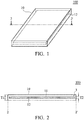
- FIG. 1 is a perspective view of the electrode 100 according to an embodiment of the disclosure.
- the electrode 100 includes a main body 10 (such as a plate-shaped main body or a sheet-shaped main body) and an active material 12.
- FIG. 2 is a cross-sectional view along line 2-2' of the electrode 100 shown in FIG. 1 .
- the main body 10 includes a cavity 11, and the active material 12 is disposed in the cavity 11.
- the active material 12 is encapsulated in the main body 10.
- the active material 112 can be present at a level that is equal to or greater than 50% of the cavity by volume, such as between 50% and 99% of the cavity by volume.
- the main body 10 can be a conductive network structure. Therefore, the active material is encapsulated by the conductive network structure (such as a conductive material having a network structure). As a result, the electrolyte can freely pass through the conductive network structure, and thus the active material in the cavity can be infiltrated more conveniently.
- the main body 10 can have a thickness T1 from about 50nm to 10mm, such as from about 100nm to 5mm, from about 200nm to 4mm, or from about 500nm to 1mm.
- the cavity can have a thickness T2 from about 10nm to 8mm, such as from about 20nm to 5mm. Furthermore, the thickness T2 of the cavity can be adjusted to meet practical requirements.
- suitable materials for the conductive network structure can be a foaming metal material 14.
- FIG. 3 is an enlarged view of the region 3 of the electrode shown in FIG. 2 .
- the main body 10 can be made of a foaming metal material 14 (such as foaming nickel, foaming iron, foaming copper, foaming cobalt, foaming titanium, or a foaming alloy thereof (such as a foaming alloy including nickel, iron, copper, cobalt, and/or titanium).
- the foaming metal material 14 can include a plurality of pores 13, and the pores 13 are distributed three-dimensionally within the metal foaming material 14.
- the pores 13 may be interconnected with each other to form an irregular-geometric-shaped and slender pore, and the metal foaming material 14 can have a sponge-like configuration.
- the length of the longest side of the particle of the active material is greater than the length of the longest side of the pore of the conductive network structure.
- the length of the longest side of the pore of the conductive network structure can be from about 1nm to 1mm. Therefore, the active material 12 cannot be detached from the cavity 11 via the pore 13 of the metal foaming material 14.
- a porosity of the foaming metal material can be greater than about 50%, such as from about 50% to 99%.
- the porosity may be the quotient of the volume of the pores over the total volume of the pores and the metal foaming material.
- the conductive network structure can be metal net 16.
- FIG. 4 is an enlarged view of the region 3 of the electrode 100 shown in FIG. 2 according to other embodiments.
- the main body 10 can be made of a metal net 16, such as a nickel net, iron net, copper net, titanium net, cobalt net, or an alloy net thereof.
- the metal net 16 has a plurality of pores 15, and each pore 15 can be polygonal, circular, elliptic, irregular geometric, or a combination thereof.
- the plurality of pores 15 can be separate from each other.
- the active material 12 does not pass through the metal net via the pores 15 of the metal net 16. Namely, the length of the longest side of the particle of the active material is greater than the length of the longest side of the pore 15 of the metal net 16.
- the length of the longest side of the pore of the metal net 16 is from about 1nm to 1mm. Therefore, the active material 12 cannot be detached from the cavity 11 via the pore 15 of the metal net 16, and the active material 12 is completely confined in the cavity 11 of the main body 10.
- a porosity of the metal net can be greater than about 50%, such as from about 50% to 99%. The porosity may be the quotient of the volume of the pores over the total volume of the pores and the metal net.
- the active material includes a layered active layer or an agglomeration of a layered active layer.
- the active material can be an intercalated carbon material, such as graphite (including natural graphite, artificial graphite, mesophase carbon microbeads, pyrolytic graphite, foaming graphite, flake graphite, or expanded graphite), multilayer graphene, graphene, carbon nanotube or a combination thereof.
- the active material can be layered double hydroxide), layered oxide, layered chalcogenide or a combination thereof.
- the active material (such as powder, sheet, or strip), which does not pass through the pore of the conductive network structure, is selected, in order to ensure that the active material is confined in the cavity of the main body.
- the active material can be disposed in a bowl-shaped carrier made of the conductive network structure in advance, and then the active material disposed in the bowl-shaped carrier is subjected to a vibration for a period of time (such as 1-100hr) to observe whether the active material passes through the pore of the conductive network structure. If there is no active material which is detached from the bowl-shaped carrier, it means that the active material cannot pass through the pore of a main body made of the conductive network structure.
- FIG. 5 is a cross-sectional view of the electrode according to another embodiment.
- a first active layer 18 can be further disposed on an inner surface of the cavity 11.
- the first active layer 18 can be a graphite.
- the first active layer 18 can be formed on the conductive material having a network structure by chemical vapor deposition, and then the active material 12 is encapsulated in the conductive material.
- FIG. 6 is a cross-sectional view of the electrode according to other embodiments. As shown in FIG.
- a second active layer 20 can be further disposed on an outer surface of the main body 10 (i.e. the conductive material having a network structure).
- the second active layer 20 can also be a graphite.
- the second active layer 20 can be formed on the main body 10 during the formation of the first active layer 18. Namely, the first active layer 18 and the second active layer 20 can be made of the same material and formed in the same process. In addition, the diameter of the pore of the conductive material having a network structure can be shrunk after the deposition of the first active layer and the second active layer.
- the electrode of the disclosure can be formed in the following steps. First, a sheet made of the conductive network structure is provided. Next, the sheet is folded, and the active material is disposed in the spatial area of the folding sheet. According to embodiments of the disclosure, before folding the sheet, the sheet can be subjected to a deposition to form an active layer on the surface of the sheet. Next, the folding sheet having the active material is subjected to a lamination or a spot welding process to form a main body having a cavity, in order to encapsulate the active material in the cavity.
- the folding sheet having the active material can be subjected to a rolling compaction, in order to force the active material to be distributed among the spatial area of the folding sheet and closely combine the active material with the conductive material (i.e. the conductive network structure).
- the electrode of the disclosure can be formed in the following steps. First, a first sheet and a second sheet made of the conductive network structure are provided, wherein the first sheet and the second sheet are the same size. The active material is disposed on the first sheet, and then the second sheet is covered on the first sheet, obtaining a stack of sheets. Next, the stack of sheets is subjected to a lamination or a spot welding process to form a main body having a cavity. Thus, the active material is encapsulated in the cavity.
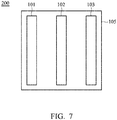
- FIG. 7 is a cross-sectional view of the device 200 according to some embodiments.
- the device 200 includes a first electrode 101, a first separator 102, and a second electrode 103, wherein the first electrode 101 is the aforementioned electrode of the disclosure, and the first separator 102 is disposed between the first electrode 101 and the second electrode 103.
- the device 200 can include an electrolyte 105, wherein the electrolyte 105 is disposed between the first electrode 101 and the second electrode 103.
- the device 200 can be a rechargeable secondary battery, although primary batteries also are encompassed by the disclosure.
- the device of the disclosure can further include a third electrode and a second separator, wherein the first electrode is disposed between the second electrode and the third electrode, and the second separator is disposed between the first electrode and the third electrode.
- the electrolyte can be disposed between the first electrode and the third electrode.
- the device 200 can be an aluminum-ion battery.
- the battery 100 is an aluminum-ion battery, although other types of metal-ion batteries are encompassed by the disclosure.
- the second electrode 103 includes aluminum, such as a non-alloyed form of aluminum or an aluminum alloy.
- a suitable material of the second electrode 103 can include one or more of an alkali metal (e.g., lithium, potassium, sodium, and so forth), an alkaline earth metal (e.g., magnesium, calcium, and so forth), a transition metal (e.g., zinc, iron, nickel, cobalt, and so forth), a main group metal or metalloid (e.g., aluminum, silicon, tin, and so forth), or a metal alloy of two or more of the foregoing elements (e.g., an aluminum alloy).
- an alkali metal e.g., lithium, potassium, sodium, and so forth
- an alkaline earth metal e.g., magnesium, calcium, and so forth
- a transition metal e.g., zinc, iron, nickel, cobalt, and so forth
- a main group metal or metalloid e.g., aluminum, silicon, tin, and so forth
- a metal alloy of two or more of the foregoing elements e.g., an aluminum alloy.
- the first separator 102 can mitigate against electrical shorting of the first electrode 101 and the second electrode 103, and the electrolyte 105 can support reversible deposition and dissolution (or stripping) of the first electrode 101, and reversible intercalation and de-intercalation of anions at the first electrode 101.
- the electrolyte 105 can include an ionic liquid, which can support reversible redox reaction of a metal or a metal alloy included in the second electrode 103.
- the electrolyte 105 can correspond to, or can include, a mixture of a metal halide (which is not an alkali halide) (such as aluminum halide) and an ionic liquid, and a molar ratio of the metal halide and the ionic liquid is at least or greater than about 1.1 or at least or greater than about 1.2, and is up to about 1.5, up to about 1.8, or more, such as where the aluminum halide is AlCl 3 , the ionic liquid is 1-ethyl- 3-methylimidazolium chloride, and the molar ratio of the aluminum chloride to 1-ethyl-3-methylimidazolium chloride is at least or greater than about 1.2, such as between 1.2 and 1.8.
- a metal halide which is not an alkali halide
- an ionic liquid such as aluminum halide
- a molar ratio of the metal halide and the ionic liquid is at least or greater than about 1.1 or at least or greater
- the electrolyte 105 can be a mixture of a metal halide (such as aluminum halide) and a solvent, wherein the solvent is urea, N-methylurea, dimethyl sulfoxide, methylsulfonylmethane, or a mixture thereof.
- a metal halide such as aluminum halide
- the solvent is urea, N-methylurea, dimethyl sulfoxide, methylsulfonylmethane, or a mixture thereof.
- the molar ratio of the aluminum chloride to the solvent is greater than or equal to about 1.2, such as between 1.2 and 1.8.
- An ionic liquid electrolyte can be doped (or have additives added) to increase electrical conductivity and lower viscosity, or can be otherwise altered to yield compositions that favor the reversible electrodeposition of metals.
- a foaming nickel sheet (having a size of 70mm ⁇ 70mm, a thickness of 0.2mm, a porosity of 90%, and a pore diameter of about 200 ⁇ m) was provided.
- the foaming nickel sheet was folded, and 125mg of expanded graphite (the length of the longest side of the expanded graphite was 400-500 ⁇ m) was uniformly distributed on the spatial area of the folding sheet.
- the folding sheet was subjected to a welding process to close the opening along the edge of the folding sheet in order to encapsulate the active material in the cavity of the foaming nickel sheet.
- the folding nickel sheet was subjected to lamination by a calender mill, thereby closely combining the foaming nickel with the expanded graphite.
- the expanded graphite was agglomerated into an agglomeration due to the Van der Waals force. Therefore, a graphite electrode (having a size of 35mm x70mm) was formed, as shown in FIG. 8 .
- an aluminum foil (with a thickness of 0.03mm, manufactured by Alfa Aesar) was cut to obtain aluminum electrodes (having a size of 35mm ⁇ 70mm).
- separators two layers of 8 ⁇ 9 cm 2 with trade No. Whatman) were provided.
- the aluminum electrode, the separator, the graphite electrode, the separator, and the aluminum electrode were placed in sequence and sealed within an aluminum plastic pouch.
- an electrolyte including aluminum chloride (AlCl 3 ) and 1-ethyl-3-methylimidazolium chloride ([EMIm]Cl), wherein the molar ratio between AlCl 3 and [EMIm]Cl was about 1.4 : 1) was injected into the aluminum plastic pouch, obtaining the aluminum-ion battery (1).
- AlCl 3 aluminum chloride
- [EMIm]Cl 1-ethyl-3-methylimidazolium chloride
- Example 1 the aluminum-ion battery (1) of Example 1 was charged (to about 2.45V) and discharged (to about 1V) at a current density of about 1000 mA/g by a NEWARE battery analyzer to analyze the performance thereof, and the results are shown in FIG. 9 and Table 1.
- Example 2 was performed in the same manner as Example 1 except that the amount of the expanded graphite was increased from 125mg to 140mg. Thus, an aluminum-ion battery (2) was obtained.
- the aluminum-ion battery (2) of Example 1 was charged (to about 2.45V) and discharged (to about 1V) at a current density of about 1000 mA/g by a NEWARE battery analyzer to analyze the performance thereof, and the results are shown in FIG. 10 and Table 1.
- a foaming nickel sheet (having a size of 35mm ⁇ 70mm, a thickness of 0.2mm, a porosity of 90%, and a pore diameter of about 200 ⁇ m) was provided.
- a coating of a composition was formed on the surface of the foaming nickel sheet by coating.
- the composition included 200mg of expanded graphite powder, 22mg of adhesive (polyacrylic acid), and a solvent (N-methyl-2-pyrrolidone).
- the foaming nickel sheet was baked in a vacuum furnace at 100°C. After baking for 2 days, a graphite electrode was obtained.
- an aluminum foil (with a thickness of 0.03mm, manufactured by Alfa Aesar) was cut to obtain aluminum electrodes (having a size of 35mm ⁇ 70mm).
- separators two layers of 8 ⁇ 9 cm 2 with trade No. Whatman) were provided.
- the aluminum electrode, the separator, the graphite electrode, the separator, and the aluminum electrode were placed in sequence and sealed within an aluminum plastic pouch.
- an electrolyte including aluminum chloride (AlCl 3 ) and 1-ethyl-3-methylimidazolium chloride ([EMIm]Cl), wherein the molar ratio between AlCl 3 and [EMIm]Cl was about 1.4 : 1) was injected into the aluminum plastic pouch, obtaining the aluminum-ion battery (3).
- AlCl 3 aluminum chloride
- [EMIm]Cl 1-ethyl-3-methylimidazolium chloride
- Example 1 the aluminum-ion battery (3) of Example 1 was charged (to about 2.45V) and discharged (to about 1V) at a current density of about 1000 mA/g by a NEWARE battery analyzer to analyze the performance thereof, and the results are shown in FIG. 11 and Table 1.
- a carbon paper having a size of 35mm ⁇ 70mm
- a composition including 121mg, of expanded graphite powder, 13.4mg of adhesive (polyacrylic acid), and a solvent (N-methyl-2-pyrrolidone) was provided.
- a coating of the composition was formed on the surface of the carbon paper by blade coating.
- the carbon paper was baked in a vacuum furnace at 100°C. After baking for 2 days, a graphite electrode was obtained.
- an aluminum foil (with a thickness of 0.03mm, manufactured by Alfa Aesar) was cut to obtain aluminum electrodes (having a size of 35mm ⁇ 70mm).
- separators two layers of 8 ⁇ 9 cm 2 with trade No. Whatman) were provided.
- the aluminum electrode, the separator, the graphite electrode, the separator, and the aluminum electrode were placed in sequence and sealed within an aluminum plastic pouch.
- an electrolyte including aluminum chloride (AlCl 3 ) and 1-ethyl-3-methylimidazolium chloride ([EMIm]Cl), wherein the molar ratio between AlCl 3 and [EMIm]Cl was about 1.4 : 1) was injected into the aluminum plastic pouch, obtaining the aluminum-ion battery (4).
- AlCl 3 aluminum chloride
- [EMIm]Cl 1-ethyl-3-methylimidazolium chloride
- Example 1 the aluminum-ion battery (4) of Example 1 was charged (to about 2.45V) and discharged (to about 1V) at a current density of about 1000 mA/g by a NEWARE battery analyzer to analyze the performance thereof, and the results are shown in FIG. 12 and Table 1.
- Table 1 graphite load of the graphite electrode (mg) specific capacity (mAh/g)
- Example 1 125 ⁇ 62 Example 2 140 ⁇ 62 Comparative Example 1 200 ⁇ 37 Comparative Example 2 121 ⁇ 29.4
- the graphite electrodes of Examples 1 and 2 included the expanded graphite powder encapsulated in the conductive material having a network structure (foaming nickel), and no adhesive agent exists in the graphite electrodes. Therefore, the electrolyte of the battery can freely pass through the conductive network structure, and thus the expanded graphite in the cavity can be more conveniently infiltrated by the electrolyte. As a result, the specific capacity of the aluminum-ion battery (2) was maintained even when the graphite load was increased (from 125mg to 140mg). In addition, the aluminum-ion batteries (3) and (4), having high graphite load of the graphite electrode, as disclosed in Comparative Examples 1 and 2, exhibit low specific capacity due to the use of the adhesive agent.
- a foaming nickel sheet (having a size of 70mm ⁇ 70mm, a thickness of 0.2mm, a porosity of 90%, and a pore diameter of about 200 ⁇ m) was provided.
- the foaming nickel sheet was disposed in a vacuum furnace, and a vapor deposition was performed in the presence of methane (as reaction source gas) and hydrogen and argon (as carrier gas) at 900-1100°C to form a graphite layer (40mg) covering on the surface of the foaming nickel sheet.
- the foaming nickel sheet was folded, and 51mg of expanded graphite (the length of the longest side of the expanded graphite was 400-500 ⁇ m) was uniformly distributed on the spatial area of the folding sheet.
- the folding sheet was subjected to a welding process to close the opening along the edge of the folding sheet in order to encapsulate the active material in the cavity of the foaming nickel sheet.
- the folding nickel sheet was subjected to a lamination by a calender mill, thereby closely combining the foaming nickel sheet with the expanded graphite.
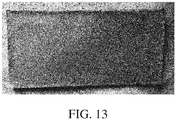
- the expanded graphite was agglomerated into an agglomeration due to the Van der Waals force. Therefore, a graphite electrode (having a size of 35mm x70mm) was formed, as shown in FIG. 13 .
- an aluminum foil (with a thickness of 0.03mm, manufactured by Alfa Aesar) was cut to obtain aluminum electrodes (having a size of 35mm ⁇ 70mm).
- separators two layers of 8 ⁇ 9 cm 2 with trade No. Whatman) were provided.
- the aluminum electrode, the separator, the graphite electrode, the separator, and the aluminum electrode were placed in sequence and sealed within an aluminum plastic pouch.
- an electrolyte including aluminum chloride (AlCl 3 ) and 1-ethyl-3-methylimidazolium chloride ([EMIm]Cl), wherein the molar ratio between AlCl 3 and [EMIm]Cl was about 1.4
- AlCl 3 aluminum chloride
- [EMIm]Cl 1-ethyl-3-methylimidazolium chloride
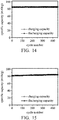
- Example 3 the aluminum-ion battery (5) of Example 3 was charged (to about 2.45V) and discharged (to about 1V) at a current density of about 1000 mA/g by a NEWARE battery analyzer to analyze the performance thereof, and the results are shown in FIG. 14 and Table 2.
- Example 4 was performed in the same manner as Example 3 except that the amount of the graphite layer was increased from 40mg to 51mg, and the amount of the graphite was increased from 51mg to 96mg. Thus, an aluminum-ion battery (6) was obtained.
- Example 4 the aluminum-ion battery (6) of Example 4 was charged (to about 2.45V) and discharged (to about 1V) at a current density of about 1000 mA/g by a NEWARE battery analyzer to analyze the performance thereof, and the results are shown in FIG. 15 and Table 2.
- Table 2 graphite load of the graphite electrode (mg) specific capacity (mAh/g)
- Example 3 91 ⁇ 83
- Example 4 147 ⁇ 83
- the graphite electrodes of the aluminum-ion batteries (5) and (6) as disclosed in Examples 3 and 4 further include a graphite layer deposited and covered on the surface of the nickel foaming.
- the active material loading amount of the electrode is increased, and the foaming nickel sheet is closely combined with the expanded graphite due to the Van der Waals force between the graphite layer and the expanded graphite encapsulated in the foaming nickel.
- the current conduction of the electrode is enhanced, and the specific capacity (83mAh/g) of the aluminum-ion batteries (5) and (6) employing the electrode is increased during charging and discharging at high current density.
- the graphite electrodes of Examples 3 and 4 included the expanded graphite powder encapsulated in the conductive material having a network structure (foaming nickel having a graphite layer), and no adhesive agent exists in the graphite electrodes. Therefore, the electrolyte of the battery can freely pass through the conductive network structure, and thus the expanded graphite in the cavity can be more conveniently infiltrated by the electrolyte. As a result, the specific capacity of the aluminum-ion battery (6) was maintained even when the graphite load was increased (from 91mg to 147mg), and thus the total capacity of the aluminum-ion battery is increased. Conversely, the electrolyte would not infiltrate the active material when the conductive material does not have a network structure. Therefore, the capacity would not be increased even though the graphite load increases.
Landscapes
- Chemical & Material Sciences (AREA)
- Engineering & Computer Science (AREA)
- Chemical Kinetics & Catalysis (AREA)
- Electrochemistry (AREA)
- General Chemical & Material Sciences (AREA)
- Manufacturing & Machinery (AREA)
- Materials Engineering (AREA)
- Inorganic Chemistry (AREA)
- Power Engineering (AREA)
- Microelectronics & Electronic Packaging (AREA)
- Battery Electrode And Active Subsutance (AREA)
- Cell Electrode Carriers And Collectors (AREA)
Abstract
Description
- The technical field relates to an electrode and a device employing the same.
- Aluminum is the most abundant metal on earth and the third most abundant element in the earth's crust. An aluminum-based redox couple, which involves three electron transfers during electrochemical charge and discharge reactions, provides storage capacity that is competitive with that of a single-electron lithium-ion battery. Additionally, because of its lower reactivity and flammability in comparison with lithium, such an aluminum-ion battery might offer significant safety improvements.
- Given the foregoing enhanced theoretical capacity of an aluminum-ion battery, aluminum-ion battery constructions are desirable in that they may feasibly and reliably provide enhanced battery performance, such as enhanced capacity and discharge voltage.
- The capacity of an aluminum-ion battery is proportional to the amount of graphite in the aluminum-ion battery. The positive electrode of a conventional aluminum-ion battery includes a current-collecting substrate and a graphite material bonded on the current-collecting substrate via an adhesive agent. The adhesive agent, however, not only reduces the electrical conductivity between the current-collecting substrate and the active material but also lengthens the processing time of the positive electrode. Furthermore, due to the adhesive agent, the graphite material located in the deeper position near the current-collecting substrate will not be infiltrated by the electrolyte.
- Hence, it is against this background that a need arose to develop embodiments of this disclosure.
- According to embodiments of the disclosure, the disclosure provides an electrode. The electrode can include a main body and an active material. The main body comprises a cavity, and the main body is made of a conductive network structure. The active material is disposed in the cavity, wherein the length of the longest side of the particle of the active material is greater than the length of the longest side of the pore of the conductive network structure.
- According to other embodiments of the disclosure, the disclosure provides a device. The device includes a first electrode, a first separator, and a second electrode, wherein the first electrode is the aforementioned electrode, and wherein the first separator is disposed between the first electrode and the second electrode.
- A detailed description is given in the following embodiments with reference to the accompanying drawings.
-
-
FIG. 1 is a perspective view of the electrode according to an embodiment of the disclosure; -
FIG. 2 is a cross-sectional view along line 2-2' of the electrode shown inFIG. 1 ; -
FIG. 3 is an enlarged view of theregion 3 of the electrode shown inFIG. 2 ; -
FIG. 4 is an enlarged view of theregion 3 of the electrode shown inFIG. 2 according to other embodiments; -
FIG. 5 is a cross-sectional view of the electrode according to another embodiment; -
FIG. 6 is a cross-sectional view of the electrode according to other embodiments; -
FIG. 7 is a cross-sectional view of the device according to some embodiments; -
FIG. 8 is a photograph showing the appearance of the graphite electrode of Example 1; -
FIGs. 9-12 are graphs showing the results of cycling stability tests of the aluminum-ion batteries according to Examples 1 and 2, and Comparative Example 2. -
FIG. 13 is a photograph showing the appearance of the graphite electrode of Example 3; and -
FIGs. 14-15 are graphs showing the results of cycling stability tests of the aluminum-ion batteries according to Examples 3 and 4. - In the following detailed description, for the purposes of explanation, numerous specific details are set forth in order to provide a thorough understanding of the disclosed embodiments. It will be apparent, however, that one or more embodiments may be practiced without these specific details. In other instances, well-known structures and devices are shown schematically in order to simplify the drawing.
- The disclosure provides an electrode (such as a positive electrode of the metal-ion battery) and a device (such as a metal-ion battery) employing the same. The electrode includes a main body and an active material. The main body, having a cavity, is made of a conductive network structure, and the active material is disposed in the cavity. Since the length of the longest side of the particle of the active material is greater than the length of the longest side of the pore of the conductive network structure and the Van der Waals force exists between the active materials, the active material may be confined in the cavity surrounded by the conductive material having a network structure, thereby forming an electrode having a tea bag-like sealed structure. As a result, the active material of the disclosure can be bonded in the conductive network structure in the absence of an adhesive agent. Therefore, the performance of the battery of the disclosure would not be deteriorated by an adhesive agent, and the complexity of the process for fabricating the electrode can be reduced. Since the active material of the electrode is encapsulated by the conductive network structure, the active material disposed in the cavity is apt to be infiltrated by the electrolyte, thereby increasing the utilization rate of the active material and increasing the storage capacity and the total capacity generation of the device employing the electrode. On the other hand, an active layer can be further disposed on the surface of the conductive network structure to cover the surface of the conductive network structure. As a result, the loading amount of the active material of the electrode can be increased. Furthermore, due to the Van der Waals force between the active layer disposed on the sidewall of the cavity and the active material disposed in the cavity, the conductive material has a network structure that can combine closely with the active material, thereby enhancing current conduction of the electrode and increasing the specific capacity of the device employing the electrode during charging and discharging at high current density.
-
FIG. 1 is a perspective view of theelectrode 100 according to an embodiment of the disclosure. As shown inFIG. 1 , theelectrode 100 includes a main body 10 (such as a plate-shaped main body or a sheet-shaped main body) and anactive material 12.FIG. 2 is a cross-sectional view along line 2-2' of theelectrode 100 shown inFIG. 1 . As shown inFIG. 2 , themain body 10 includes acavity 11, and theactive material 12 is disposed in thecavity 11. Namely, theactive material 12 is encapsulated in themain body 10. According to embodiments of the disclosure, the active material 112 can be present at a level that is equal to or greater than 50% of the cavity by volume, such as between 50% and 99% of the cavity by volume. Themain body 10 can be a conductive network structure. Therefore, the active material is encapsulated by the conductive network structure (such as a conductive material having a network structure). As a result, the electrolyte can freely pass through the conductive network structure, and thus the active material in the cavity can be infiltrated more conveniently. As shown inFIG. 2 , themain body 10 can have a thickness T1 from about 50nm to 10mm, such as from about 100nm to 5mm, from about 200nm to 4mm, or from about 500nm to 1mm. The cavity can have a thickness T2 from about 10nm to 8mm, such as from about 20nm to 5mm. Furthermore, the thickness T2 of the cavity can be adjusted to meet practical requirements. - According to embodiments of the disclosure, suitable materials for the conductive network structure can be a
foaming metal material 14.FIG. 3 is an enlarged view of theregion 3 of the electrode shown inFIG. 2 . As shown inFIG. 3 , themain body 10 can be made of a foaming metal material 14 (such as foaming nickel, foaming iron, foaming copper, foaming cobalt, foaming titanium, or a foaming alloy thereof (such as a foaming alloy including nickel, iron, copper, cobalt, and/or titanium). Thefoaming metal material 14 can include a plurality ofpores 13, and thepores 13 are distributed three-dimensionally within themetal foaming material 14. Therefore, thepores 13 may be interconnected with each other to form an irregular-geometric-shaped and slender pore, and themetal foaming material 14 can have a sponge-like configuration. In order to encapsulate theactive material 12 with ametal foaming material 14, the length of the longest side of the particle of the active material is greater than the length of the longest side of the pore of the conductive network structure. For example, the length of the longest side of the pore of the conductive network structure can be from about 1nm to 1mm. Therefore, theactive material 12 cannot be detached from thecavity 11 via thepore 13 of themetal foaming material 14. Namely, the particle of theactive material 12 cannot pass through themetal foaming material 14 via thepore 13, and theactive material 12 is completely confined in thecavity 11 of themain body 10. A porosity of the foaming metal material can be greater than about 50%, such as from about 50% to 99%. The porosity may be the quotient of the volume of the pores over the total volume of the pores and the metal foaming material. - According to embodiments of the disclosure, the conductive network structure can be metal net 16.
FIG. 4 is an enlarged view of theregion 3 of theelectrode 100 shown inFIG. 2 according to other embodiments. As shown inFIG. 4 , themain body 10 can be made of a metal net 16, such as a nickel net, iron net, copper net, titanium net, cobalt net, or an alloy net thereof. The metal net 16 has a plurality ofpores 15, and each pore 15 can be polygonal, circular, elliptic, irregular geometric, or a combination thereof. - The plurality of
pores 15 can be separate from each other. Theactive material 12 does not pass through the metal net via thepores 15 of the metal net 16. Namely, the length of the longest side of the particle of the active material is greater than the length of the longest side of thepore 15 of the metal net 16. For example, the length of the longest side of the pore of the metal net 16 is from about 1nm to 1mm. Therefore, theactive material 12 cannot be detached from thecavity 11 via thepore 15 of the metal net 16, and theactive material 12 is completely confined in thecavity 11 of themain body 10. A porosity of the metal net can be greater than about 50%, such as from about 50% to 99%. The porosity may be the quotient of the volume of the pores over the total volume of the pores and the metal net. - According to embodiments of the disclosure, the active material includes a layered active layer or an agglomeration of a layered active layer. According to embodiments of the disclosure, the active material can be an intercalated carbon material, such as graphite (including natural graphite, artificial graphite, mesophase carbon microbeads, pyrolytic graphite, foaming graphite, flake graphite, or expanded graphite), multilayer graphene, graphene, carbon nanotube or a combination thereof. According to embodiments of the disclosure, the active material can be layered double hydroxide), layered oxide, layered chalcogenide or a combination thereof. The active material (such as powder, sheet, or strip), which does not pass through the pore of the conductive network structure, is selected, in order to ensure that the active material is confined in the cavity of the main body. In the selection of the active material, the active material can be disposed in a bowl-shaped carrier made of the conductive network structure in advance, and then the active material disposed in the bowl-shaped carrier is subjected to a vibration for a period of time (such as 1-100hr) to observe whether the active material passes through the pore of the conductive network structure. If there is no active material which is detached from the bowl-shaped carrier, it means that the active material cannot pass through the pore of a main body made of the conductive network structure.
-
FIG. 5 is a cross-sectional view of the electrode according to another embodiment. As shown inFIG. 5 , a firstactive layer 18 can be further disposed on an inner surface of thecavity 11. Thus, a Van der Waals force between the firstactive layer 18 and theactive material 12 disposed in thecavity 11 is generated, thereby facilitating the main body 10 (i.e. the conductive material having a network structure) to combine closely with theactive material 12. The firstactive layer 18 can be a graphite. The firstactive layer 18 can be formed on the conductive material having a network structure by chemical vapor deposition, and then theactive material 12 is encapsulated in the conductive material. In addition,FIG. 6 is a cross-sectional view of the electrode according to other embodiments. As shown inFIG. 6 , a secondactive layer 20 can be further disposed on an outer surface of the main body 10 (i.e. the conductive material having a network structure). The secondactive layer 20 can also be a graphite. The secondactive layer 20 can be formed on themain body 10 during the formation of the firstactive layer 18. Namely, the firstactive layer 18 and the secondactive layer 20 can be made of the same material and formed in the same process. In addition, the diameter of the pore of the conductive material having a network structure can be shrunk after the deposition of the first active layer and the second active layer. - The electrode of the disclosure can be formed in the following steps. First, a sheet made of the conductive network structure is provided. Next, the sheet is folded, and the active material is disposed in the spatial area of the folding sheet. According to embodiments of the disclosure, before folding the sheet, the sheet can be subjected to a deposition to form an active layer on the surface of the sheet. Next, the folding sheet having the active material is subjected to a lamination or a spot welding process to form a main body having a cavity, in order to encapsulate the active material in the cavity. After the lamination or a spot welding process, the folding sheet having the active material can be subjected to a rolling compaction, in order to force the active material to be distributed among the spatial area of the folding sheet and closely combine the active material with the conductive material (i.e. the conductive network structure). In addition, according to other embodiments of the disclosure, the electrode of the disclosure can be formed in the following steps. First, a first sheet and a second sheet made of the conductive network structure are provided, wherein the first sheet and the second sheet are the same size. The active material is disposed on the first sheet, and then the second sheet is covered on the first sheet, obtaining a stack of sheets. Next, the stack of sheets is subjected to a lamination or a spot welding process to form a main body having a cavity. Thus, the active material is encapsulated in the cavity.
- According to embodiments of the disclosure, the disclosure also provides a device, such as a metal-ion battery, or a capacitor.
FIG. 7 is a cross-sectional view of thedevice 200 according to some embodiments. As shown inFIG. 7 , thedevice 200 includes afirst electrode 101, afirst separator 102, and asecond electrode 103, wherein thefirst electrode 101 is the aforementioned electrode of the disclosure, and thefirst separator 102 is disposed between thefirst electrode 101 and thesecond electrode 103. Thedevice 200 can include anelectrolyte 105, wherein theelectrolyte 105 is disposed between thefirst electrode 101 and thesecond electrode 103. Thedevice 200 can be a rechargeable secondary battery, although primary batteries also are encompassed by the disclosure. - According to embodiments of the disclosure, the device of the disclosure can further include a third electrode and a second separator, wherein the first electrode is disposed between the second electrode and the third electrode, and the second separator is disposed between the first electrode and the third electrode. The electrolyte can be disposed between the first electrode and the third electrode.
- According to embodiments of the disclosure, the
device 200 can be an aluminum-ion battery. In an embodiment of the disclosure, thebattery 100 is an aluminum-ion battery, although other types of metal-ion batteries are encompassed by the disclosure. Thesecond electrode 103 includes aluminum, such as a non-alloyed form of aluminum or an aluminum alloy. More generally, a suitable material of thesecond electrode 103 can include one or more of an alkali metal (e.g., lithium, potassium, sodium, and so forth), an alkaline earth metal (e.g., magnesium, calcium, and so forth), a transition metal (e.g., zinc, iron, nickel, cobalt, and so forth), a main group metal or metalloid (e.g., aluminum, silicon, tin, and so forth), or a metal alloy of two or more of the foregoing elements (e.g., an aluminum alloy). - The
first separator 102 can mitigate against electrical shorting of thefirst electrode 101 and thesecond electrode 103, and theelectrolyte 105 can support reversible deposition and dissolution (or stripping) of thefirst electrode 101, and reversible intercalation and de-intercalation of anions at thefirst electrode 101. Theelectrolyte 105 can include an ionic liquid, which can support reversible redox reaction of a metal or a metal alloy included in thesecond electrode 103. For example, theelectrolyte 105 can correspond to, or can include, a mixture of a metal halide (which is not an alkali halide) (such as aluminum halide) and an ionic liquid, and a molar ratio of the metal halide and the ionic liquid is at least or greater than about 1.1 or at least or greater than about 1.2, and is up to about 1.5, up to about 1.8, or more, such as where the aluminum halide is AlCl3, the ionic liquid is 1-ethyl- 3-methylimidazolium chloride, and the molar ratio of the aluminum chloride to 1-ethyl-3-methylimidazolium chloride is at least or greater than about 1.2, such as between 1.2 and 1.8. Examples of ionic liquids include choline chloride, alkali halide, alkylimidazolium salt, alkylpyridinium salt, alkylfluoropyrazolium salt, alkyltriazolium salt, aralkylammonium salt, alkylalkoxyammonium salt, aralkylphosphonium salt, aralkylsulfonium salt, or a combination thereof. According to embodiments of the disclosure, theelectrolyte 105 can be a mixture of a metal halide (such as aluminum halide) and a solvent, wherein the solvent is urea, N-methylurea, dimethyl sulfoxide, methylsulfonylmethane, or a mixture thereof. The molar ratio of the aluminum chloride to the solvent is greater than or equal to about 1.2, such as between 1.2 and 1.8. An ionic liquid electrolyte can be doped (or have additives added) to increase electrical conductivity and lower viscosity, or can be otherwise altered to yield compositions that favor the reversible electrodeposition of metals. - Below, exemplary embodiments will be described in detail with reference to the accompanying drawings so as to be easily realized by a person having ordinary knowledge in the art. The inventive concept may be embodied in various forms without being limited to the exemplary embodiments set forth herein. Descriptions of well-known parts are omitted for clarity, and like reference numerals refer to like elements throughout.
- First, a foaming nickel sheet (having a size of 70mm × 70mm, a thickness of 0.2mm, a porosity of 90%, and a pore diameter of about 200µm) was provided. Next, the foaming nickel sheet was folded, and 125mg of expanded graphite (the length of the longest side of the expanded graphite was 400-500µm) was uniformly distributed on the spatial area of the folding sheet. Next, the folding sheet was subjected to a welding process to close the opening along the edge of the folding sheet in order to encapsulate the active material in the cavity of the foaming nickel sheet. Next, the folding nickel sheet was subjected to lamination by a calender mill, thereby closely combining the foaming nickel with the expanded graphite. Herein, the expanded graphite was agglomerated into an agglomeration due to the Van der Waals force. Therefore, a graphite electrode (having a size of 35mm x70mm) was formed, as shown in
FIG. 8 . - Next, an aluminum foil (with a thickness of 0.03mm, manufactured by Alfa Aesar) was cut to obtain aluminum electrodes (having a size of 35mm × 70mm). Next, separators (two layers of 8×9 cm2 with trade No. Whatman) were provided. Next, the aluminum electrode, the separator, the graphite electrode, the separator, and the aluminum electrode were placed in sequence and sealed within an aluminum plastic pouch. Next, an electrolyte (including aluminum chloride (AlCl3) and 1-ethyl-3-methylimidazolium chloride ([EMIm]Cl), wherein the molar ratio between AlCl3 and [EMIm]Cl was about 1.4 : 1) was injected into the aluminum plastic pouch, obtaining the aluminum-ion battery (1).
- Next, the aluminum-ion battery (1) of Example 1 was charged (to about 2.45V) and discharged (to about 1V) at a current density of about 1000 mA/g by a NEWARE battery analyzer to analyze the performance thereof, and the results are shown in
FIG. 9 and Table 1. - Example 2 was performed in the same manner as Example 1 except that the amount of the expanded graphite was increased from 125mg to 140mg. Thus, an aluminum-ion battery (2) was obtained.
- Next, the aluminum-ion battery (2) of Example 1 was charged (to about 2.45V) and discharged (to about 1V) at a current density of about 1000 mA/g by a NEWARE battery analyzer to analyze the performance thereof, and the results are shown in
FIG. 10 and Table 1. - First, a foaming nickel sheet (having a size of 35mm × 70mm, a thickness of 0.2mm, a porosity of 90%, and a pore diameter of about 200µm) was provided. Next, a coating of a composition was formed on the surface of the foaming nickel sheet by coating. The composition included 200mg of expanded graphite powder, 22mg of adhesive (polyacrylic acid), and a solvent (N-methyl-2-pyrrolidone). Next, the foaming nickel sheet was baked in a vacuum furnace at 100°C. After baking for 2 days, a graphite electrode was obtained.
- Next, an aluminum foil (with a thickness of 0.03mm, manufactured by Alfa Aesar) was cut to obtain aluminum electrodes (having a size of 35mm × 70mm). Next, separators (two layers of 8×9 cm2 with trade No. Whatman) were provided. Next, the aluminum electrode, the separator, the graphite electrode, the separator, and the aluminum electrode were placed in sequence and sealed within an aluminum plastic pouch. Next, an electrolyte (including aluminum chloride (AlCl3) and 1-ethyl-3-methylimidazolium chloride ([EMIm]Cl), wherein the molar ratio between AlCl3 and [EMIm]Cl was about 1.4 : 1) was injected into the aluminum plastic pouch, obtaining the aluminum-ion battery (3).
- Next, the aluminum-ion battery (3) of Example 1 was charged (to about 2.45V) and discharged (to about 1V) at a current density of about 1000 mA/g by a NEWARE battery analyzer to analyze the performance thereof, and the results are shown in
FIG. 11 and Table 1. - First, a carbon paper (having a size of 35mm × 70mm) was provided. Next, a composition including 121mg, of expanded graphite powder, 13.4mg of adhesive (polyacrylic acid), and a solvent (N-methyl-2-pyrrolidone) was provided. Next, a coating of the composition was formed on the surface of the carbon paper by blade coating. Next, the carbon paper was baked in a vacuum furnace at 100°C. After baking for 2 days, a graphite electrode was obtained.
- Next, an aluminum foil (with a thickness of 0.03mm, manufactured by Alfa Aesar) was cut to obtain aluminum electrodes (having a size of 35mm × 70mm). Next, separators (two layers of 8×9 cm2 with trade No. Whatman) were provided. Next, the aluminum electrode, the separator, the graphite electrode, the separator, and the aluminum electrode were placed in sequence and sealed within an aluminum plastic pouch. Next, an electrolyte (including aluminum chloride (AlCl3) and 1-ethyl-3-methylimidazolium chloride ([EMIm]Cl), wherein the molar ratio between AlCl3 and [EMIm]Cl was about 1.4 : 1) was injected into the aluminum plastic pouch, obtaining the aluminum-ion battery (4).
- Next, the aluminum-ion battery (4) of Example 1 was charged (to about 2.45V) and discharged (to about 1V) at a current density of about 1000 mA/g by a NEWARE battery analyzer to analyze the performance thereof, and the results are shown in
FIG. 12 and Table 1.Table 1 graphite load of the graphite electrode (mg) specific capacity (mAh/g) Example 1 125 ∼62 Example 2 140 ∼62 Comparative Example 1 200 ∼37 Comparative Example 2 121 ∼29.4 - As shown in Table 1, the graphite electrodes of Examples 1 and 2 included the expanded graphite powder encapsulated in the conductive material having a network structure (foaming nickel), and no adhesive agent exists in the graphite electrodes. Therefore, the electrolyte of the battery can freely pass through the conductive network structure, and thus the expanded graphite in the cavity can be more conveniently infiltrated by the electrolyte. As a result, the specific capacity of the aluminum-ion battery (2) was maintained even when the graphite load was increased (from 125mg to 140mg). In addition, the aluminum-ion batteries (3) and (4), having high graphite load of the graphite electrode, as disclosed in Comparative Examples 1 and 2, exhibit low specific capacity due to the use of the adhesive agent. Therefore, compared with Comparative Examples 1 and 2 employing the adhesive agent, the complexity of the process for fabricating the electrode disclosed in Examples 1 and 2 is reduced since the baking process for removing the solvent of the coating composition has been omitted, and the performance of the battery disclosed in Examples 1 and 2 is not deteriorated by the adhesive agent.
- First, a foaming nickel sheet (having a size of 70mm × 70mm, a thickness of 0.2mm, a porosity of 90%, and a pore diameter of about 200µm) was provided. Next, the foaming nickel sheet was disposed in a vacuum furnace, and a vapor deposition was performed in the presence of methane (as reaction source gas) and hydrogen and argon (as carrier gas) at 900-1100°C to form a graphite layer (40mg) covering on the surface of the foaming nickel sheet.
- Next, the foaming nickel sheet was folded, and 51mg of expanded graphite (the length of the longest side of the expanded graphite was 400-500µm) was uniformly distributed on the spatial area of the folding sheet. Next, the folding sheet was subjected to a welding process to close the opening along the edge of the folding sheet in order to encapsulate the active material in the cavity of the foaming nickel sheet. Next, the folding nickel sheet was subjected to a lamination by a calender mill, thereby closely combining the foaming nickel sheet with the expanded graphite. Herein, the expanded graphite was agglomerated into an agglomeration due to the Van der Waals force. Therefore, a graphite electrode (having a size of 35mm x70mm) was formed, as shown in
FIG. 13 . - Next, an aluminum foil (with a thickness of 0.03mm, manufactured by Alfa Aesar) was cut to obtain aluminum electrodes (having a size of 35mm × 70mm). Next, separators (two layers of 8×9 cm2 with trade No. Whatman) were provided. Next, the aluminum electrode, the separator, the graphite electrode, the separator, and the aluminum electrode were placed in sequence and sealed within an aluminum plastic pouch. Next, an electrolyte (including aluminum chloride (AlCl3) and 1-ethyl-3-methylimidazolium chloride ([EMIm]Cl), wherein the molar ratio between AlCl3 and [EMIm]Cl was about 1.4) was injected into the aluminum plastic pouch, obtaining the aluminum-ion battery (5).
- Next, the aluminum-ion battery (5) of Example 3 was charged (to about 2.45V) and discharged (to about 1V) at a current density of about 1000 mA/g by a NEWARE battery analyzer to analyze the performance thereof, and the results are shown in
FIG. 14 and Table 2. - Example 4 was performed in the same manner as Example 3 except that the amount of the graphite layer was increased from 40mg to 51mg, and the amount of the graphite was increased from 51mg to 96mg. Thus, an aluminum-ion battery (6) was obtained.
- Next, the aluminum-ion battery (6) of Example 4 was charged (to about 2.45V) and discharged (to about 1V) at a current density of about 1000 mA/g by a NEWARE battery analyzer to analyze the performance thereof, and the results are shown in
FIG. 15 and Table 2.Table 2 graphite load of the graphite electrode (mg) specific capacity (mAh/g) Example 3 91 ∼83 Example 4 147 ∼83 - The graphite electrodes of the aluminum-ion batteries (5) and (6) as disclosed in Examples 3 and 4 further include a graphite layer deposited and covered on the surface of the nickel foaming. As a result, the active material loading amount of the electrode is increased, and the foaming nickel sheet is closely combined with the expanded graphite due to the Van der Waals force between the graphite layer and the expanded graphite encapsulated in the foaming nickel. Thus, the current conduction of the electrode is enhanced, and the specific capacity (83mAh/g) of the aluminum-ion batteries (5) and (6) employing the electrode is increased during charging and discharging at high current density. In addition, the graphite electrodes of Examples 3 and 4 included the expanded graphite powder encapsulated in the conductive material having a network structure (foaming nickel having a graphite layer), and no adhesive agent exists in the graphite electrodes. Therefore, the electrolyte of the battery can freely pass through the conductive network structure, and thus the expanded graphite in the cavity can be more conveniently infiltrated by the electrolyte. As a result, the specific capacity of the aluminum-ion battery (6) was maintained even when the graphite load was increased (from 91mg to 147mg), and thus the total capacity of the aluminum-ion battery is increased. Conversely, the electrolyte would not infiltrate the active material when the conductive material does not have a network structure. Therefore, the capacity would not be increased even though the graphite load increases.
- It will be clear that various modifications and variations can be made to the disclosed methods and materials. It is intended that the specification and examples be considered as exemplary only, with the true scope of the disclosure being indicated by the following claims and their equivalents.
Claims (15)
- An electrode, comprising:a main body 10, wherein the main body 10 comprises a cavity 11, and the main body 10 is made of a conductive network structure; andan active material 12 disposed in the cavity, wherein the length of the longest side of the particle of the active material 12 is greater than the length of the longest side of the pore of the conductive network structure, such that the active material 12 is confined in the conductive network structure.
- The electrode as claimed in claim 1, wherein the conductive network structure comprises a metal three-dimensional foaming network structure, or a metal network structure.
- The electrode as claimed in claim 2, wherein a material of the metal three-dimensional foaming network structure is foaming nickel, foaming iron, foaming copper, foaming titanium, foaming cobalt, or a foaming alloy thereof.
- The electrode as claimed in claim 2, wherein a material of the metal network structure is nickel net, iron net, copper net, titanium net, cobalt net, or an alloy net thereof.
- The electrode as claimed in any of claims 1 to 4, wherein the active material 12 comprises a layered active layer or an agglomeration of a layered active layer.
- The electrode as claimed in any of claims 1 to 5, wherein the active material 12 is graphite, carbon nanotube, graphene, or a combination thereof.
- The electrode as claimed in any of claims 1 to 6, wherein the conductive network structure has a porosity from 50% to 99%.
- The electrode as claimed in any of claims 1 to 7, wherein the length of the longest side of the pore of the conductive network structure is from 1nm to 1mm.
- The electrode as claimed in any of claims 1 to 8, wherein the active material 12 is present at a level that is equal to or greater than 50% of the cavity by volume.
- The electrode as claimed in any of claims 1 to 9, further comprising:a first active layer 18 disposed on an inner surface of the conductive network structure.
- The electrode as claimed in claim 10, further comprising:a second active layer 20 disposed on an outer surface of the conductive network structure.
- A device, comprising:a first electrode 101, wherein the first electrode is the electrode as claimed in claim 1;a first separator 102;a second electrode 103, wherein the first separator disposed between the first electrode and the second electrode; andan electrolyte 105 disposed between the first electrode 101 and the second electrode 103.
- The device as claimed in claim 12, further comprising:a third electrode, wherein the first electrode is disposed between the second electrode and the third electrode; anda second separator, wherein the second separator is disposed between the first electrode and the third electrode, and wherein the electrolyte 105 is disposed between the second electrode 103 and the third electrode.
- The device as claimed in Claims 12 or 13, wherein the electrolyte 105 comprises an ionic liquid and a metal halide, and wherein the ionic liquid is choline chloride, alkali halide, alkylimidazolium salt, alkylpyridinium salt, alkylfluoropyrazolium salt, alkyltriazolium salt, aralkylammonium salt, alkylalkoxyammonium salt, aralkylphosphonium salt, aralkylsulfonium salt, or a combination thereof.
- The device as claimed in Claims 12 or 13, wherein the electrolyte 105 comprises a solvent and a metal halide, and wherein the solvent is urea, N-methylurea, dimethyl sulfoxide, methylsulfonylmethane, or a mixture thereof.
Applications Claiming Priority (1)
| Application Number | Priority Date | Filing Date | Title |
|---|---|---|---|
| TW105131870A TWI627786B (en) | 2016-10-03 | 2016-10-03 | Electrode and device employing the same |
Publications (2)
| Publication Number | Publication Date |
|---|---|
| EP3301742A1 true EP3301742A1 (en) | 2018-04-04 |
| EP3301742B1 EP3301742B1 (en) | 2020-01-29 |
Family
ID=59974241
Family Applications (1)
| Application Number | Title | Priority Date | Filing Date |
|---|---|---|---|
| EP17193492.0A Active EP3301742B1 (en) | 2016-10-03 | 2017-09-27 | Electrode |
Country Status (4)
| Country | Link |
|---|---|
| US (1) | US10804541B2 (en) |
| EP (1) | EP3301742B1 (en) |
| CN (1) | CN107895774B (en) |
| TW (1) | TWI627786B (en) |
Cited By (1)
| Publication number | Priority date | Publication date | Assignee | Title |
|---|---|---|---|---|
| EP3462520A1 (en) * | 2017-09-27 | 2019-04-03 | Industrial Technology Research Institute | Electrode and device employing the same |
Citations (7)
| Publication number | Priority date | Publication date | Assignee | Title |
|---|---|---|---|---|
| KR20040096381A (en) * | 2003-05-09 | 2004-11-16 | 한국과학기술연구원 | An electrode and lithium battery comprising a porous three-dimensional current collector and fabrication method thereof |
| US20090162736A1 (en) * | 2007-12-20 | 2009-06-25 | General Electric Company | Energy storage device and method |
| WO2015068143A1 (en) * | 2013-11-11 | 2015-05-14 | Manz Italy S.R.L. | Laminating method |
| US20150228978A1 (en) * | 2014-02-11 | 2015-08-13 | Corning Incorporated | Lithium ion batteries including stabilized lithium composite particles |
| US20150303000A1 (en) * | 2011-10-12 | 2015-10-22 | Sumitomo Electric Industries, Ltd. | Lithium ion capacitor, power storage device, power storage system |
| DE102015108488A1 (en) * | 2014-06-20 | 2015-12-24 | Suzuki Motor Corporation | Anode and anode composite material for a lithium-air battery and lithium-air battery |
| US20160049661A1 (en) * | 2010-05-31 | 2016-02-18 | Sumitomo Electric Industries, Ltd. | Three-dimensional net-like aluminum porous body, electrode using the aluminum porous body, nonaqueous electrolyte battery using the electrode, and nonaqueous electrolyte capacitor using the electrode |
Family Cites Families (15)
| Publication number | Priority date | Publication date | Assignee | Title |
|---|---|---|---|---|
| US6309532B1 (en) | 1994-05-20 | 2001-10-30 | Regents Of The University Of California | Method and apparatus for capacitive deionization and electrochemical purification and regeneration of electrodes |
| JP3262704B2 (en) | 1995-04-24 | 2002-03-04 | シャープ株式会社 | Carbon electrode for non-aqueous secondary battery, method for producing the same, and non-aqueous secondary battery using the same |
| JP2000357519A (en) | 1999-06-15 | 2000-12-26 | Katayama Tokushu Kogyo Kk | Porous metal body, battery electrode plate made of the body, and battery having the electrode plate |
| JP4411691B2 (en) * | 1999-06-30 | 2010-02-10 | パナソニック株式会社 | Non-aqueous electrolyte secondary battery, non-aqueous electrolyte secondary battery charge control system, and equipment using the same |
| SG178806A1 (en) * | 2008-09-08 | 2012-03-29 | Univ Nanyang Tech | Electrode materials for metal-air batteries, fuel cells and supercapacitors |
| JP4911155B2 (en) | 2008-10-08 | 2012-04-04 | トヨタ自動車株式会社 | Battery electrode manufacturing method |
| EP2360772A1 (en) | 2010-02-12 | 2011-08-24 | Fortu Intellectual Property AG | Rechargeable and electrochemical cell |
| JP2012186141A (en) * | 2011-02-18 | 2012-09-27 | Sumitomo Electric Ind Ltd | Electrochemical device |
| US8790814B2 (en) | 2012-02-16 | 2014-07-29 | Nanotek Instruments, Inc. | Inorganic nano sheet-enabled lithium-exchanging surface-mediated cells |
| WO2013139370A1 (en) | 2012-03-19 | 2013-09-26 | Toyota Motor Europe Nv/Sa | Three-dimensional carbon foam-supported electrode for metal-air batteries |
| US9478806B2 (en) * | 2013-02-01 | 2016-10-25 | Encell Technology, Inc. | Iron electrode employing a polyvinyl alcohol binder |
| US9559384B2 (en) * | 2013-05-15 | 2017-01-31 | Semiconductor Energy Laboratory Co., Ltd. | Secondary battery and method for restoring capacity of secondary battery |
| US9843070B2 (en) * | 2014-02-28 | 2017-12-12 | The Board Of Trustees Of The Leland Stanford Junior University | Ultra-fast rechargeable metal-ion battery |
| CN104078679B (en) * | 2014-05-23 | 2015-08-12 | 南京中储新能源有限公司 | A kind of carbon nanotube conducting sulfide polymer positive pole and secondary aluminium cell |
| US10276856B2 (en) * | 2015-10-08 | 2019-04-30 | Nanotek Instruments, Inc. | Continuous process for producing electrodes and alkali metal batteries having ultra-high energy densities |
-
2016
- 2016-10-03 TW TW105131870A patent/TWI627786B/en active
-
2017
- 2017-07-25 US US15/659,434 patent/US10804541B2/en active Active
- 2017-07-25 CN CN201710609460.8A patent/CN107895774B/en active Active
- 2017-09-27 EP EP17193492.0A patent/EP3301742B1/en active Active
Patent Citations (7)
| Publication number | Priority date | Publication date | Assignee | Title |
|---|---|---|---|---|
| KR20040096381A (en) * | 2003-05-09 | 2004-11-16 | 한국과학기술연구원 | An electrode and lithium battery comprising a porous three-dimensional current collector and fabrication method thereof |
| US20090162736A1 (en) * | 2007-12-20 | 2009-06-25 | General Electric Company | Energy storage device and method |
| US20160049661A1 (en) * | 2010-05-31 | 2016-02-18 | Sumitomo Electric Industries, Ltd. | Three-dimensional net-like aluminum porous body, electrode using the aluminum porous body, nonaqueous electrolyte battery using the electrode, and nonaqueous electrolyte capacitor using the electrode |
| US20150303000A1 (en) * | 2011-10-12 | 2015-10-22 | Sumitomo Electric Industries, Ltd. | Lithium ion capacitor, power storage device, power storage system |
| WO2015068143A1 (en) * | 2013-11-11 | 2015-05-14 | Manz Italy S.R.L. | Laminating method |
| US20150228978A1 (en) * | 2014-02-11 | 2015-08-13 | Corning Incorporated | Lithium ion batteries including stabilized lithium composite particles |
| DE102015108488A1 (en) * | 2014-06-20 | 2015-12-24 | Suzuki Motor Corporation | Anode and anode composite material for a lithium-air battery and lithium-air battery |
Cited By (1)
| Publication number | Priority date | Publication date | Assignee | Title |
|---|---|---|---|---|
| EP3462520A1 (en) * | 2017-09-27 | 2019-04-03 | Industrial Technology Research Institute | Electrode and device employing the same |
Also Published As
| Publication number | Publication date |
|---|---|
| TW201814939A (en) | 2018-04-16 |
| US20180097236A1 (en) | 2018-04-05 |
| CN107895774A (en) | 2018-04-10 |
| US10804541B2 (en) | 2020-10-13 |
| EP3301742B1 (en) | 2020-01-29 |
| TWI627786B (en) | 2018-06-21 |
| CN107895774B (en) | 2020-11-24 |
Similar Documents
| Publication | Publication Date | Title |
|---|---|---|
| US8277974B2 (en) | High energy lithium ion batteries with particular negative electrode compositions | |
| KR102816194B1 (en) | Electrode with silicon oxide active material for lithium ion batteries achieving high capacity, high energy density and long cycle life performance | |
| US9666862B2 (en) | Secondary battery of improved lithium ion mobility and cell capacity | |
| US10553899B2 (en) | Battery including a polyether-based organic solid electrolyte | |
| US9012073B2 (en) | Composite compositions, negative electrodes with composite compositions and corresponding batteries | |
| EP3375031B1 (en) | All-solid-state lithium rechargeable cells | |
| US7267908B2 (en) | In cycling stability of Li-ion battery with molten salt electrolyte | |
| CN102742049A (en) | Rechargeable electrochemical cell | |
| WO2003085756A1 (en) | Nonaqueous electrolyte cell | |
| TW200810182A (en) | Non-aqueous electrolyte secondary battery | |
| CN104221190B (en) | Non-aqueous electrolyte secondary battery | |
| CN110556513B (en) | Alkali metal composite electrode material, preparation and application thereof | |
| JP7565624B2 (en) | Lithium secondary battery | |
| CN101320794A (en) | Negative electrode and secondary battery | |
| JP2008501214A (en) | Battery with tin-based negative electrode material | |
| CN111293353A (en) | Protective layer for lithium metal anode of solid state battery | |
| US20220344638A1 (en) | Solid electrolyte-secondary particle composites | |
| JP4288592B2 (en) | battery | |
| US10873079B2 (en) | Low resistance, multivalent metal anodes | |
| Yuan et al. | Enhanced lithium storage performance in three-dimensional porous SnO2-Fe2O3 composite anode films | |
| EP3300146A1 (en) | Metal-ion secondary battery | |
| CN111699575A (en) | Negative electrode for lithium secondary battery and lithium secondary battery comprising same | |
| JP7738926B2 (en) | Lithium secondary battery | |
| US10804541B2 (en) | Electrode and device employing the same | |
| JP2002319432A (en) | Lithium secondary cell |
Legal Events
| Date | Code | Title | Description |
|---|---|---|---|
| PUAI | Public reference made under article 153(3) epc to a published international application that has entered the european phase |
Free format text: ORIGINAL CODE: 0009012 |
|
| STAA | Information on the status of an ep patent application or granted ep patent |
Free format text: STATUS: THE APPLICATION HAS BEEN PUBLISHED |
|
| AK | Designated contracting states |
Kind code of ref document: A1 Designated state(s): AL AT BE BG CH CY CZ DE DK EE ES FI FR GB GR HR HU IE IS IT LI LT LU LV MC MK MT NL NO PL PT RO RS SE SI SK SM TR |
|
| AX | Request for extension of the european patent |
Extension state: BA ME |
|
| STAA | Information on the status of an ep patent application or granted ep patent |
Free format text: STATUS: REQUEST FOR EXAMINATION WAS MADE |
|
| 17P | Request for examination filed |
Effective date: 20180905 |
|
| RBV | Designated contracting states (corrected) |
Designated state(s): AL AT BE BG CH CY CZ DE DK EE ES FI FR GB GR HR HU IE IS IT LI LT LU LV MC MK MT NL NO PL PT RO RS SE SI SK SM TR |
|
| STAA | Information on the status of an ep patent application or granted ep patent |
Free format text: STATUS: EXAMINATION IS IN PROGRESS |
|
| 17Q | First examination report despatched |
Effective date: 20190507 |
|
| GRAP | Despatch of communication of intention to grant a patent |
Free format text: ORIGINAL CODE: EPIDOSNIGR1 |
|
| STAA | Information on the status of an ep patent application or granted ep patent |
Free format text: STATUS: GRANT OF PATENT IS INTENDED |
|
| INTG | Intention to grant announced |
Effective date: 20191010 |
|
| GRAS | Grant fee paid |
Free format text: ORIGINAL CODE: EPIDOSNIGR3 |
|
| GRAA | (expected) grant |
Free format text: ORIGINAL CODE: 0009210 |
|
| STAA | Information on the status of an ep patent application or granted ep patent |
Free format text: STATUS: THE PATENT HAS BEEN GRANTED |
|
| AK | Designated contracting states |
Kind code of ref document: B1 Designated state(s): AL AT BE BG CH CY CZ DE DK EE ES FI FR GB GR HR HU IE IS IT LI LT LU LV MC MK MT NL NO PL PT RO RS SE SI SK SM TR |
|
| REG | Reference to a national code |
Ref country code: GB Ref legal event code: FG4D |
|
| REG | Reference to a national code |
Ref country code: CH Ref legal event code: EP |
|
| REG | Reference to a national code |
Ref country code: AT Ref legal event code: REF Ref document number: 1229073 Country of ref document: AT Kind code of ref document: T Effective date: 20200215 |
|
| REG | Reference to a national code |
Ref country code: IE Ref legal event code: FG4D |
|
| REG | Reference to a national code |
Ref country code: DE Ref legal event code: R096 Ref document number: 602017011132 Country of ref document: DE |
|
| REG | Reference to a national code |
Ref country code: NL Ref legal event code: MP Effective date: 20200129 |
|
| PG25 | Lapsed in a contracting state [announced via postgrant information from national office to epo] |
Ref country code: FI Free format text: LAPSE BECAUSE OF FAILURE TO SUBMIT A TRANSLATION OF THE DESCRIPTION OR TO PAY THE FEE WITHIN THE PRESCRIBED TIME-LIMIT Effective date: 20200129 Ref country code: PT Free format text: LAPSE BECAUSE OF FAILURE TO SUBMIT A TRANSLATION OF THE DESCRIPTION OR TO PAY THE FEE WITHIN THE PRESCRIBED TIME-LIMIT Effective date: 20200621 Ref country code: NO Free format text: LAPSE BECAUSE OF FAILURE TO SUBMIT A TRANSLATION OF THE DESCRIPTION OR TO PAY THE FEE WITHIN THE PRESCRIBED TIME-LIMIT Effective date: 20200429 Ref country code: RS Free format text: LAPSE BECAUSE OF FAILURE TO SUBMIT A TRANSLATION OF THE DESCRIPTION OR TO PAY THE FEE WITHIN THE PRESCRIBED TIME-LIMIT Effective date: 20200129 |
|
| REG | Reference to a national code |
Ref country code: LT Ref legal event code: MG4D |
|
| PG25 | Lapsed in a contracting state [announced via postgrant information from national office to epo] |
Ref country code: BG Free format text: LAPSE BECAUSE OF FAILURE TO SUBMIT A TRANSLATION OF THE DESCRIPTION OR TO PAY THE FEE WITHIN THE PRESCRIBED TIME-LIMIT Effective date: 20200429 Ref country code: HR Free format text: LAPSE BECAUSE OF FAILURE TO SUBMIT A TRANSLATION OF THE DESCRIPTION OR TO PAY THE FEE WITHIN THE PRESCRIBED TIME-LIMIT Effective date: 20200129 Ref country code: SE Free format text: LAPSE BECAUSE OF FAILURE TO SUBMIT A TRANSLATION OF THE DESCRIPTION OR TO PAY THE FEE WITHIN THE PRESCRIBED TIME-LIMIT Effective date: 20200129 Ref country code: IS Free format text: LAPSE BECAUSE OF FAILURE TO SUBMIT A TRANSLATION OF THE DESCRIPTION OR TO PAY THE FEE WITHIN THE PRESCRIBED TIME-LIMIT Effective date: 20200529 Ref country code: LV Free format text: LAPSE BECAUSE OF FAILURE TO SUBMIT A TRANSLATION OF THE DESCRIPTION OR TO PAY THE FEE WITHIN THE PRESCRIBED TIME-LIMIT Effective date: 20200129 Ref country code: GR Free format text: LAPSE BECAUSE OF FAILURE TO SUBMIT A TRANSLATION OF THE DESCRIPTION OR TO PAY THE FEE WITHIN THE PRESCRIBED TIME-LIMIT Effective date: 20200430 |
|
| PG25 | Lapsed in a contracting state [announced via postgrant information from national office to epo] |
Ref country code: NL Free format text: LAPSE BECAUSE OF FAILURE TO SUBMIT A TRANSLATION OF THE DESCRIPTION OR TO PAY THE FEE WITHIN THE PRESCRIBED TIME-LIMIT Effective date: 20200129 |
|
| PG25 | Lapsed in a contracting state [announced via postgrant information from national office to epo] |
Ref country code: ES Free format text: LAPSE BECAUSE OF FAILURE TO SUBMIT A TRANSLATION OF THE DESCRIPTION OR TO PAY THE FEE WITHIN THE PRESCRIBED TIME-LIMIT Effective date: 20200129 Ref country code: CZ Free format text: LAPSE BECAUSE OF FAILURE TO SUBMIT A TRANSLATION OF THE DESCRIPTION OR TO PAY THE FEE WITHIN THE PRESCRIBED TIME-LIMIT Effective date: 20200129 Ref country code: SM Free format text: LAPSE BECAUSE OF FAILURE TO SUBMIT A TRANSLATION OF THE DESCRIPTION OR TO PAY THE FEE WITHIN THE PRESCRIBED TIME-LIMIT Effective date: 20200129 Ref country code: EE Free format text: LAPSE BECAUSE OF FAILURE TO SUBMIT A TRANSLATION OF THE DESCRIPTION OR TO PAY THE FEE WITHIN THE PRESCRIBED TIME-LIMIT Effective date: 20200129 Ref country code: LT Free format text: LAPSE BECAUSE OF FAILURE TO SUBMIT A TRANSLATION OF THE DESCRIPTION OR TO PAY THE FEE WITHIN THE PRESCRIBED TIME-LIMIT Effective date: 20200129 Ref country code: SK Free format text: LAPSE BECAUSE OF FAILURE TO SUBMIT A TRANSLATION OF THE DESCRIPTION OR TO PAY THE FEE WITHIN THE PRESCRIBED TIME-LIMIT Effective date: 20200129 Ref country code: RO Free format text: LAPSE BECAUSE OF FAILURE TO SUBMIT A TRANSLATION OF THE DESCRIPTION OR TO PAY THE FEE WITHIN THE PRESCRIBED TIME-LIMIT Effective date: 20200129 Ref country code: DK Free format text: LAPSE BECAUSE OF FAILURE TO SUBMIT A TRANSLATION OF THE DESCRIPTION OR TO PAY THE FEE WITHIN THE PRESCRIBED TIME-LIMIT Effective date: 20200129 |
|
| REG | Reference to a national code |
Ref country code: DE Ref legal event code: R097 Ref document number: 602017011132 Country of ref document: DE |
|
| REG | Reference to a national code |
Ref country code: AT Ref legal event code: MK05 Ref document number: 1229073 Country of ref document: AT Kind code of ref document: T Effective date: 20200129 |
|
| PLBE | No opposition filed within time limit |
Free format text: ORIGINAL CODE: 0009261 |
|
| STAA | Information on the status of an ep patent application or granted ep patent |
Free format text: STATUS: NO OPPOSITION FILED WITHIN TIME LIMIT |
|
| 26N | No opposition filed |
Effective date: 20201030 |
|
| PG25 | Lapsed in a contracting state [announced via postgrant information from national office to epo] |
Ref country code: IT Free format text: LAPSE BECAUSE OF FAILURE TO SUBMIT A TRANSLATION OF THE DESCRIPTION OR TO PAY THE FEE WITHIN THE PRESCRIBED TIME-LIMIT Effective date: 20200129 Ref country code: AT Free format text: LAPSE BECAUSE OF FAILURE TO SUBMIT A TRANSLATION OF THE DESCRIPTION OR TO PAY THE FEE WITHIN THE PRESCRIBED TIME-LIMIT Effective date: 20200129 |
|
| PG25 | Lapsed in a contracting state [announced via postgrant information from national office to epo] |
Ref country code: PL Free format text: LAPSE BECAUSE OF FAILURE TO SUBMIT A TRANSLATION OF THE DESCRIPTION OR TO PAY THE FEE WITHIN THE PRESCRIBED TIME-LIMIT Effective date: 20200129 Ref country code: SI Free format text: LAPSE BECAUSE OF FAILURE TO SUBMIT A TRANSLATION OF THE DESCRIPTION OR TO PAY THE FEE WITHIN THE PRESCRIBED TIME-LIMIT Effective date: 20200129 |
|
| REG | Reference to a national code |
Ref country code: CH Ref legal event code: PL |
|
| REG | Reference to a national code |
Ref country code: BE Ref legal event code: MM Effective date: 20200930 |
|
| PG25 | Lapsed in a contracting state [announced via postgrant information from national office to epo] |
Ref country code: LU Free format text: LAPSE BECAUSE OF NON-PAYMENT OF DUE FEES Effective date: 20200927 |
|
| PG25 | Lapsed in a contracting state [announced via postgrant information from national office to epo] |
Ref country code: FR Free format text: LAPSE BECAUSE OF NON-PAYMENT OF DUE FEES Effective date: 20200930 |
|
| PG25 | Lapsed in a contracting state [announced via postgrant information from national office to epo] |
Ref country code: LI Free format text: LAPSE BECAUSE OF NON-PAYMENT OF DUE FEES Effective date: 20200930 Ref country code: IE Free format text: LAPSE BECAUSE OF NON-PAYMENT OF DUE FEES Effective date: 20200927 Ref country code: CH Free format text: LAPSE BECAUSE OF NON-PAYMENT OF DUE FEES Effective date: 20200930 Ref country code: BE Free format text: LAPSE BECAUSE OF NON-PAYMENT OF DUE FEES Effective date: 20200930 |
|
| PG25 | Lapsed in a contracting state [announced via postgrant information from national office to epo] |
Ref country code: TR Free format text: LAPSE BECAUSE OF FAILURE TO SUBMIT A TRANSLATION OF THE DESCRIPTION OR TO PAY THE FEE WITHIN THE PRESCRIBED TIME-LIMIT Effective date: 20200129 Ref country code: MT Free format text: LAPSE BECAUSE OF FAILURE TO SUBMIT A TRANSLATION OF THE DESCRIPTION OR TO PAY THE FEE WITHIN THE PRESCRIBED TIME-LIMIT Effective date: 20200129 Ref country code: CY Free format text: LAPSE BECAUSE OF FAILURE TO SUBMIT A TRANSLATION OF THE DESCRIPTION OR TO PAY THE FEE WITHIN THE PRESCRIBED TIME-LIMIT Effective date: 20200129 |
|
| PG25 | Lapsed in a contracting state [announced via postgrant information from national office to epo] |
Ref country code: MK Free format text: LAPSE BECAUSE OF FAILURE TO SUBMIT A TRANSLATION OF THE DESCRIPTION OR TO PAY THE FEE WITHIN THE PRESCRIBED TIME-LIMIT Effective date: 20200129 Ref country code: MC Free format text: LAPSE BECAUSE OF FAILURE TO SUBMIT A TRANSLATION OF THE DESCRIPTION OR TO PAY THE FEE WITHIN THE PRESCRIBED TIME-LIMIT Effective date: 20200129 Ref country code: AL Free format text: LAPSE BECAUSE OF FAILURE TO SUBMIT A TRANSLATION OF THE DESCRIPTION OR TO PAY THE FEE WITHIN THE PRESCRIBED TIME-LIMIT Effective date: 20200129 |
|
| PGFP | Annual fee paid to national office [announced via postgrant information from national office to epo] |
Ref country code: DE Payment date: 20250929 Year of fee payment: 9 |
|
| PGFP | Annual fee paid to national office [announced via postgrant information from national office to epo] |
Ref country code: GB Payment date: 20250929 Year of fee payment: 9 |