EP3301588A1 - Method and apparatus for supplementing an article with contextually-relevant health data - Google Patents
Method and apparatus for supplementing an article with contextually-relevant health data Download PDFInfo
- Publication number
- EP3301588A1 EP3301588A1 EP16191678.8A EP16191678A EP3301588A1 EP 3301588 A1 EP3301588 A1 EP 3301588A1 EP 16191678 A EP16191678 A EP 16191678A EP 3301588 A1 EP3301588 A1 EP 3301588A1
- Authority
- EP
- European Patent Office
- Prior art keywords
- article
- user
- health
- data
- health data
- Prior art date
- Legal status (The legal status is an assumption and is not a legal conclusion. Google has not performed a legal analysis and makes no representation as to the accuracy of the status listed.)
- Ceased
Links
Images



Classifications
-
- G—PHYSICS
- G09—EDUCATION; CRYPTOGRAPHY; DISPLAY; ADVERTISING; SEALS
- G09B—EDUCATIONAL OR DEMONSTRATION APPLIANCES; APPLIANCES FOR TEACHING, OR COMMUNICATING WITH, THE BLIND, DEAF OR MUTE; MODELS; PLANETARIA; GLOBES; MAPS; DIAGRAMS
- G09B23/00—Models for scientific, medical, or mathematical purposes, e.g. full-sized devices for demonstration purposes
- G09B23/28—Models for scientific, medical, or mathematical purposes, e.g. full-sized devices for demonstration purposes for medicine
-
- G—PHYSICS
- G06—COMPUTING OR CALCULATING; COUNTING
- G06F—ELECTRIC DIGITAL DATA PROCESSING
- G06F16/00—Information retrieval; Database structures therefor; File system structures therefor
- G06F16/90—Details of database functions independent of the retrieved data types
- G06F16/95—Retrieval from the web
- G06F16/953—Querying, e.g. by the use of web search engines
- G06F16/9535—Search customisation based on user profiles and personalisation
-
- G—PHYSICS
- G06—COMPUTING OR CALCULATING; COUNTING
- G06F—ELECTRIC DIGITAL DATA PROCESSING
- G06F3/00—Input arrangements for transferring data to be processed into a form capable of being handled by the computer; Output arrangements for transferring data from processing unit to output unit, e.g. interface arrangements
- G06F3/12—Digital output to print unit, e.g. line printer, chain printer
- G06F3/1201—Dedicated interfaces to print systems
- G06F3/1223—Dedicated interfaces to print systems specifically adapted to use a particular technique
- G06F3/1237—Print job management
- G06F3/1244—Job translation or job parsing, e.g. page banding
- G06F3/1246—Job translation or job parsing, e.g. page banding by handling markup languages, e.g. XSL, XML, HTML
-
- G—PHYSICS
- G16—INFORMATION AND COMMUNICATION TECHNOLOGY [ICT] SPECIALLY ADAPTED FOR SPECIFIC APPLICATION FIELDS
- G16H—HEALTHCARE INFORMATICS, i.e. INFORMATION AND COMMUNICATION TECHNOLOGY [ICT] SPECIALLY ADAPTED FOR THE HANDLING OR PROCESSING OF MEDICAL OR HEALTHCARE DATA
- G16H10/00—ICT specially adapted for the handling or processing of patient-related medical or healthcare data
- G16H10/60—ICT specially adapted for the handling or processing of patient-related medical or healthcare data for patient-specific data, e.g. for electronic patient records
-
- G—PHYSICS
- G16—INFORMATION AND COMMUNICATION TECHNOLOGY [ICT] SPECIALLY ADAPTED FOR SPECIFIC APPLICATION FIELDS
- G16H—HEALTHCARE INFORMATICS, i.e. INFORMATION AND COMMUNICATION TECHNOLOGY [ICT] SPECIALLY ADAPTED FOR THE HANDLING OR PROCESSING OF MEDICAL OR HEALTHCARE DATA
- G16H15/00—ICT specially adapted for medical reports, e.g. generation or transmission thereof
-
- G—PHYSICS
- G16—INFORMATION AND COMMUNICATION TECHNOLOGY [ICT] SPECIALLY ADAPTED FOR SPECIFIC APPLICATION FIELDS
- G16H—HEALTHCARE INFORMATICS, i.e. INFORMATION AND COMMUNICATION TECHNOLOGY [ICT] SPECIALLY ADAPTED FOR THE HANDLING OR PROCESSING OF MEDICAL OR HEALTHCARE DATA
- G16H40/00—ICT specially adapted for the management or administration of healthcare resources or facilities; ICT specially adapted for the management or operation of medical equipment or devices
- G16H40/60—ICT specially adapted for the management or administration of healthcare resources or facilities; ICT specially adapted for the management or operation of medical equipment or devices for the operation of medical equipment or devices
- G16H40/63—ICT specially adapted for the management or administration of healthcare resources or facilities; ICT specially adapted for the management or operation of medical equipment or devices for the operation of medical equipment or devices for local operation
-
- G—PHYSICS
- G16—INFORMATION AND COMMUNICATION TECHNOLOGY [ICT] SPECIALLY ADAPTED FOR SPECIFIC APPLICATION FIELDS
- G16H—HEALTHCARE INFORMATICS, i.e. INFORMATION AND COMMUNICATION TECHNOLOGY [ICT] SPECIALLY ADAPTED FOR THE HANDLING OR PROCESSING OF MEDICAL OR HEALTHCARE DATA
- G16H70/00—ICT specially adapted for the handling or processing of medical references
Definitions
- An example embodiment relates generally to the provision of health-related information and, more particularly, to the supplementation of an article that provides health-related information with contextually-relevant health data of a user.
- the article may provide information regarding the desired range of various health-related parameters, but the reader may be unaware of their own corresponding health-related parameters and, as such, be unable to place the health-related information in the context of their own health condition.
- people may have access to and review health data regarding their health condition. For example, people may review their blood sugar readings or other similar health-related parameters that are collected over the course of time. While this health data provides information regarding the health condition of a person, the person may be unable to conveniently compare their own health data to comparable health data of other people in order to place their own health data in context.
- a method, apparatus and computer program product are provided in accordance with an example embodiment in order to provide increased context for the health data of a user.
- the method, apparatus and computer program product of an example embodiment may be configured to supplement an article with contextually-relevant health data of the user such that the resulting article, as supplemented, places the health data in context and better informs the user.
- the method, apparatus and computer program product of an example embodiment address technical problems related to the efficient and timely identification of contextually-relevant health data in light of the health-related information provided by an article and then supplementing the article with the contextually-related health data.
- a method in an example embodiment, includes identifying an article providing health-related information and identifying health data of a user that is associated with the health-related information of the article. The method also includes supplementing the article with the health data of the user and causing the article supplemented with the health data of the user to be provided to the user.
- the method of an example embodiment identifies the health data by identifying the health data of the user based upon data associated with the article that at least partially defines the context of the article.
- the data associated with the article may include metadata associated with the article.
- the method may identify the health data of the user based upon data associated with the article by scraping the article to identify data within the article that at least partially defines a context of the article.
- the method of an example embodiment identifies health data by identifying the health data of the user in the response to execution of an instruction included within the article.
- the method of an example embodiment also includes receiving health data from the user from a device worn by the user and causing the health data of the user to be stored.
- the method of an example embodiment also includes additionally supplementing the article with empirical data associated with the health-related information of the article.
- the supplementation of the article with the health data of the user and the empirical data may include providing a comparison between the health data of the user and the empirical data within the article.
- the method also includes obtaining the empirical data from the article.
- the method of an example embodiment identifies an article by analyzing the health data of the user in order to detect a health issue of the user and identifying the article based upon the health issue of the user such that the article provides health-related information relevant to the health issue.
- the method of an example embodiment also includes supplementing the article with the health data of the user by creating space within the article in which the health data is inserted without eliminating any content associated with the article.
- an apparatus in another example embodiment, includes at least one processor and at least one memory including computer program code with the at least one memory and the computer code configured to, with the processor, cause the apparatus to at least identify an article providing health-related information.
- the at least one memory and the computer program code are also configured to, with the processor, cause the apparatus to identify health data of a user that is associated with the health-related information of the article and to supplement the article with the health data of the user.
- the at least one memory and the computer program code are further configured to, with the processor, cause the apparatus to cause the article as supplemented with the health data of the user to be provided to the user.
- the at least one memory and the computer program code are configured to, with the processor, cause the apparatus of an example embodiment to identify health data by identifying health data of the user based upon data associated with the article that at least partially defines the context of the article.
- the data associated the article may include metadata associated with the article.
- the at least one memory and the computer program code are configured to, with the processor, cause the apparatus to identify health data of the user based upon data associated with the article by scraping the article to identify data within the article that at least partially defines the context of the article.
- the at least one memory and the computer program code are configured to, with the processor, cause the apparatus of an example embodiment to identify health data by identifying the health data of the user in response to execution of an instruction included within the article.
- the at least one memory and the computer program code are configured to, with the processor, cause the apparatus of an example embodiment to receive health data of the user from the device worn by the user and to cause the health data of the user to be stored.
- the at least one memory and the computer program code are configured to, with the processor, cause the apparatus of an example embodiment to additionally supplement the article with empirical data associated with the health-related information of the article.
- the supplementation of an article with the health data of the user may include the provision of a comparison between the health data of the user and the empirical data within the article.
- the empirical data may be obtained in an example embodiment from the article.
- the at least one memory and the computer program code are configured to, with the processor, cause the apparatus of an example embodiment to identify an article by analyzing the health data of the user in order to detect a health issue of the user and identifying the article based upon the health issue of the user such that the article provides health-related information relevant to the health issue.
- the at least one memory and the computer program code are configured to, with the processor, cause the apparatus of an example embodiment to supplement the article with health data of the user by creating space within the article in which the health data is inserted without eliminating any content associated with the article.
- a computer program product includes at least one non-transitory computer-readable storage medium having computer-executable program code instructions stored therein with the computer-executable program code instructions including program code instructions to at least identify an article providing health-related information.
- the computer-executable program code instructions also include program code instructions to identify health data of a user that is associated with the health-related information of the article and program code instructions to supplement the article with the health data of the user.
- the computer-executable program code instructions further include program code instructions to cause the article as supplemented with the health data of the user to be provided to the user.
- the program code instructions to identify health data include program code instructions to identify health data of the user based upon data associated with the article that at least partially defines a context of the article.
- the data associated with the article may include metadata associated with the article.
- the program code instructions to identify health data of the user based upon data associated with the article may include program code instructions to scrape the article to identify data within the article that at least partially defines a context of the article.
- the program code instructions to identify health data may include, in an example embodiment, program code instructions to identify the health data of the user in response to execution of an instruction included within the article.
- the computer-executable program code instructions of an example embodiment also include program code instructions to receive health data of the user from a device worn by the user and program code instructions to cause the health data of the user to be stored.
- the computer-executable program code instructions of an example embodiment also include program code instructions to additionally supplement the article with empirical data associated with the health-related information of the article.
- the program code instructions to supplement the article with the health data of the user and with empirical data may include program code instructions to provide a comparison between the health data of the user and the empirical data within the article.
- the computer-executable program code instructions also include program code instructions to obtain the empirical data from the article.
- the program code instructions to identify the article may include program code instructions to analyze the health data of the user in order to detect a health issue of the user and program code instructions to identify the article based upon the health issue of the user such that the article provides health-related information relevant to the health issue.
- the program code instructions to supplement the article with the health data of the user may include program code instructions to create space within the article in which the health data is inserted without eliminating any content associated with the article.
- an apparatus in yet another example embodiment, includes means for identifying an article providing health-related information and means for identifying health data of a user that is associated with the health-related information of the article.
- the apparatus of this example embodiment also includes means for supplementing the article with the health data of the user and means for causing the article as supplemented with the health data of the user to be provided to the user.
- circuitry refers to (a) hardware-only circuit implementations (e.g., implementations in analog circuitry and/or digital circuitry); (b) combinations of circuits and computer program product(s) comprising software and/or firmware instructions stored on one or more computer readable memories that work together to cause an apparatus to perform one or more functions described herein; and (c) circuits, such as, for example, a microprocessor(s) or a portion of a microprocessor(s), that require software or firmware for operation even if the software or firmware is not physically present.
- This definition of 'circuitry' applies to all uses of this term herein, including in any claims.
- the term 'circuitry' also includes an implementation comprising one or more processors and/or portion(s) thereof and accompanying software and/or firmware.
- the term 'circuitry' as used herein also includes, for example, a baseband integrated circuit or applications processor integrated circuit for a mobile phone or a similar integrated circuit in a server, a cellular network device, other network device, and/or other computing device.
- a method, apparatus and computer program product are provided in accordance with an example embodiment in order to provide contextually relevant health-related information to a user.
- the method, apparatus and computer program product of an example embodiment may identify an article providing health-related information, such as an article that provides health-related information relevant to a health issue of the user, and may supplement the article with health data of the user, thereby placing the health data of a user in context relative to the health-related information provided by the article.
- the present disclosure may provide a technical effect of increasing contextually relevant data in view of biometric health data of a particular user. More specifically, devices configured to gather personal health data may become more useful when the gathered data is presented in contextually relevant media.
- Figure 1 depicts an article 10 providing health-related information.
- the article is entitled "Millennials Do Not Get Enough Sleep” and, as such, provides the results of a sleep study of millennials who, on average, sleep less than the recommended daily amount.
- this article 10 may have been selected as a result of a health issue of the user, such as chronic fatigue, insomnia or a more general pattern of sleeping less than is desired.
- the article 10 is supplemented with health data 12 of the user which may, for example, provide an indication of an average length of the user's sleep at night. As a result, the user is able to view the health-related information provided by the article 10 in context relative to their own sleep patterns.
- the article 10 may, in some embodiments, be also supplemented with empirical data 14 associated with the health-related information of the article, such as by providing health data regarding the average amount that a millennial sleeps at night, such as in comparison to the average amount that the user sleeps at night, so as to provide additional context to the health data 12 of the user.
- empirical data 14 associated with the health-related information of the article, such as by providing health data regarding the average amount that a millennial sleeps at night, such as in comparison to the average amount that the user sleeps at night, so as to provide additional context to the health data 12 of the user.
- the article 10 not only serves an educational purpose with respect to the health-related information, but also facilitates conclusions drawn by the user regarding their own health data 12 in the context of the health-related information provided by the article and, in some embodiments, in the further context provided by empirical data 14.
- the user may be better informed and may choose to make changes to their lifestyle or otherwise address the health issues with which the health data 12 of the user relates once the user has considered their own health data in the context of the health-related information provided by the article 10 and, in some embodiments, in further comparison with empirical data 14.
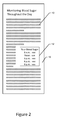
- FIG. 2 Another example of an article 10 providing health-related information is depicted in Figure 2 .
- the article 10 is entitled "Monitoring Blood Sugar Throughout the Day" and may have been selected as a result of the user suffering from diabetes or another health condition in which blood sugar monitoring is of importance.
- the article 10 is supplemented with health data 12 of the user which may, for example, provide an indication of the average blood sugar of the users at different times.
- the user is able to place the health-related information provided by the article 10 in context relative to their own blood sugar readings.
- the health data 12 of the user is not compared to empirical data in graphical form, but nonetheless is presented in the context of the health-related information provided by the article.
- an apparatus 20 is provided in order to identify an article 10 providing health-related information and to supplement the article with health data 12 of the user.
- the apparatus 20 may be embodied by or otherwise associated with a variety of different computing devices including, for example, a mobile terminal, such as a portable digital assistant (PDA), mobile telephone, smartphone, pager, mobile television, gaming device, laptop computer, camera, tablet computer, touch surface, video recorder, radio, electronic book, or any combination of the aforementioned, and other types of voice and text communications systems.
- the computing device may be a fixed computing device, such as a personal computer, a computer workstation, a server or the like.
- the apparatus 20 may be embodied by a single computing device, the apparatus of some example embodiments may be embodied in a distributed manner with some components of the apparatus embodied by different computing devices.
- the apparatus 20 may include or, as shown in the embodiment of Figure 3 , be in communication with a database 22.
- the database 22 may store the health data 12 of the user and, in some embodiments, empirical data 14.
- the empirical data 14 includes health data from other people, such as the health data of a larger population, which may or may not include the user.
- the database 22 may also include articles 10 that provide health-related information.
- the database may be configured in various manners, such as a cloud-based database, a server, a government database, a peer review database, a private database, such as maintained by a health organization, e.g., an insurance company or a health care provider, or the like.
- the health data 12 of the user may be stored by the database 22.
- the apparatus 20 may access the health data 12 of the user in other manners.
- the user may wear, carry or otherwise utilize one or more health data collection devices 24.
- the health data collection devices 24 collect health data 12 of the user and provide the health data to the apparatus 20, either directly as shown in the embodiment of Figure 3 or indirectly by initially storing the health data, such as in the database 22 or in another memory device for subsequent access by the apparatus.
- a variety of different health data collection devices 24 may be utilized depending upon the health issues of the user or about which the user and/or a health care provider of the user are interested.
- the health data collection device 24 may include a blood glucose monitor for providing health data indicative of the blood glucose level of the user at different points in time. Additionally or alternatively, the health data collection device 24 may be a heart monitor for monitoring the heart rate and/or the heart rate variability of the user during various periods of time. As another example, the health data collection device 24 may be a blood pressure cuff for providing health data indicative of the blood pressure of the user at one or more points in time. In some examples, the health data collection device 24, may be a wearable computing device configured to gather biometric information such as heart rate, respiration rate, glucose measurements, eye movements, sleep related data, and the like.
- the health data collection device may be any of a wide variety of devices configured to collect health data 12 of the user, such as temperature, movement, heart rate, respiration rate, cortisol levels, etc., for analysis as described herein.
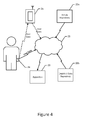
- Figure 4 depicts an embodiment in which a user wears a health data collection device 24.
- the health data collection device 24 is shown as a watch, but the health data collection device may be differently embodied as, for example, other wearable devices configured to collect health data 12 of the user and to provide the health data to the apparatus 20, the database 22 or the like.
- the health data collection device 24 may, at least temporarily, store the health data 12 of the user locally.
- the health data collection device 24 is configured to provide the user data to a cloud-based database 23.
- the health data collection device 24 may be configured to provide the health data 12 of the user to a mobile terminal 25, such as a portable digital assistant (PDA), mobile telephone, smartphone, laptop computer, tablet computer or the like, of the user, such as via a local area network or other proximity-based communication technique.
- the mobile terminal 25 may be configured to store the user data locally and to provide the user data (or a representation or summary thereof) to a database, such as the cloud-based database 23 in the embodiment of Figure 4 .
- the cloud-based database 23 of the embodiment of Figure 4 may also receive other types of information, such as articles 10 from an article repository 22a and/or empirical data 14 from an empirical data repository 22b.
- the cloud-based database 23 may, in turn, provide an article 10 and the related health data 12 of the user (and optionally related empirical data 14) to the apparatus 20 for presentation to the user.
- the embodiment of Figure 4 depicts the collection of the articles 10, the health data 12 of the user and the empirical data 14 by the cloud-based database 23 and the subsequent provision to the apparatus 20, some or all of the articles, the health data of the user and the empirical data may, instead, be provided directly to the apparatus without collection by the cloud-based database.
- the apparatus 20 may be embodied by any of a wide variety of different types of computing devices. Regardless of the type of computing device, the apparatus 20 of an example embodiment depicted in Figure 5 is configured to include or otherwise be in communication with a processor 30, a memory device 32 and a user interface 34 and optionally a communication interface 36. In some embodiments, the processor 30 (and/or co-processors or any other processing circuitry assisting or otherwise associated with the processor) may be in communication with the memory device 32 via a bus for passing information among components of the apparatus 20.
- the memory device 32 may be non-transitory and may include, for example, one or more volatile and/or non-volatile memories.
- the memory device 32 may be an electronic storage device (e.g., a computer readable storage medium) comprising gates configured to store data (e.g., bits) that may be retrievable by a machine (e.g., a computing device like the processor).
- the memory device 32 may be configured to store information, data, content, applications, instructions, or the like for enabling the apparatus 20 to carry out various functions in accordance with an example embodiment of the present innovation.
- the memory device 32 could be configured to buffer input data for processing by the processor 30. Additionally or alternatively, the memory device 32 could be configured to store instructions for execution by the processor 30.
- the apparatus 20 may be embodied by a computing device. However, in some embodiments, the apparatus 20 may be embodied as a chip or chip set. In other words, the apparatus 20 may comprise one or more physical packages (e.g., chips) including materials, components and/or wires on a structural assembly (e.g., a baseboard). The structural assembly may provide physical strength, conservation of size, and/or limitation of electrical interaction for component circuitry included thereon. The apparatus 20 may therefore, in some cases, be configured to implement an embodiment of the present innovation on a single chip or as a single "system on a chip.” As such, in some cases, a chip or chipset may constitute means for performing one or more operations for providing the functionalities described herein.
- a chip or chipset may constitute means for performing one or more operations for providing the functionalities described herein.
- the processor 30 may be embodied in a number of different ways.
- the processor 30 may be embodied as one or more of various hardware processing means such as a coprocessor, a microprocessor, a controller, a digital signal processor (DSP), a processing element with or without an accompanying DSP, or various other processing circuitry including integrated circuits such as, for example, an ASIC (application specific integrated circuit), an FPGA (field programmable gate array), a microcontroller unit (MCU), a hardware accelerator, a special-purpose computer chip, or the like.
- the processor 30 may include one or more processing cores configured to perform independently.
- a multi-core processor 30 may enable multiprocessing within a single physical package.
- the processor 30 may include one or more processors configured in tandem via the bus to enable independent execution of instructions, pipelining and/or multithreading.
- the processor 30 may be configured to execute instructions stored in the memory device 32 or otherwise accessible to the processor. Alternatively or additionally, the processor 30 may be configured to execute hard coded functionality. As such, whether configured by hardware or software methods, or by a combination thereof, the processor 30 may represent an entity (e.g., physically embodied in circuitry) capable of performing operations according to an embodiment of the present innovation while configured accordingly. Thus, for example, when the processor 30 is embodied as an ASIC, FPGA or the like, the processor may be specifically configured hardware for conducting the operations described herein. Alternatively, as another example, when the processor 30 is embodied as an executor of software instructions, the instructions may specifically configure the processor to perform the algorithms and/or operations described herein when the instructions are executed.
- the processor 30 may be a processor of a specific device (e.g., an electronic book or a mobile terminal) configured to employ an embodiment of the present innovation by further configuration of the processor by instructions for performing the algorithms and/or operations described herein.
- the processor 30 may include, among other things, a clock, an arithmetic logic unit (ALU) and logic gates configured to support operation of the processor.
- ALU arithmetic logic unit
- the apparatus 20 may include a user interface 34 that may, in turn, be in communication with the processor 30 to provide output to the user and to receive an indication of a user input.
- the user interface 34 may include a display and, in some embodiments, may also include a keyboard, a mouse, a joystick, a touch screen, touch areas, soft keys, a microphone, a speaker, or other input/output mechanisms.
- the processor 30 may comprise user interface circuitry configured to control at least some functions of one or more user interface elements such as a display and, in some embodiments, a speaker, ringer, microphone and/or the like.
- the processor 30 and/or user interface circuitry comprising the processor may be configured to control one or more functions of one or more user interface elements through computer program instructions (e.g., software and/or firmware) stored on a memory accessible to the processor (e.g., memory device 32, and/or the like).
- computer program instructions e.g., software and/or firmware
- the apparatus 20 may optionally also include the communication interface 36, such as for communication with the database 22 or one or more health data collection devices 24.
- the communication interface 36 may be any means such as a device or circuitry embodied in either hardware or a combination of hardware and software that is configured to receive and/or transmit data from/to a network and/or any other device or module in communication with the apparatus 20.
- the communication interface 36 may include, for example, an antenna (or multiple antennas) and supporting hardware and/or software for enabling communications with a wireless communication network.
- the communication interface 36 may include the circuitry for interacting with the antenna(s) to cause transmission of signals via the antenna(s) or to handle receipt of signals received via the antenna(s).
- the communication interface 36 may alternatively or also support wired communication.
- the communication interface 36 may include a communication modem and/or other hardware/software for supporting communication via cable, digital subscriber line (DSL), universal serial bus (USB) or other mechanisms.
- DSL digital subscriber line
- USB universal serial bus
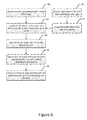
- the apparatus 20 includes means, such as the processor 30 or the like, for identifying an article 10 providing health-related information. See block 40 of Figure 6 with respect to the identification of an article 10.
- the health-related information may include any of a wide variety of information that effects the health of a person, either directly or indirectly.
- the article 10 can include any of a variety of different types of content, such as textual information, graphical information or the like.
- the article 10 may be available electronically, such as by being stored in a database from which the article is searchable and retrievable.
- the article 10 may be stored by the database 22, such as the article repository 22a of the embodiment of Figure 6 , with which the apparatus 20 may in communication, such as via the communication interface 36.
- the article 10 may be available on line and may be identifiable by the apparatus 20 and accessible via the communication interface 36.
- the articles 10 may be stored locally, such as by memory 32 in some example embodiments.
- the article 10 may include any form of media including audio, video, virtual reality environments, etc. that is contextually relevant to the user and in which the health data 12 of the user may be presented.
- the article 10 is identified to provide health-related information that is relevant to a health issue of the user or with which the user, a health care provider of the user, an insurance company associated with the user or the like is interested.
- the apparatus 20 includes means, such as the processor 30 or the like, for analyzing the health data 12of the user in order to detect a health issue of the user.
- components of the apparatus 20, such as the processor 30, may be configured to analyze the health data collected by health data collection devices 24 and to identify a potential health issue, such as based upon a comparison of the health data 12 collected with respect to the user relative to predefined thresholds for comparable types of health data.
- the health data that is analyzed in order to detect a health issue of the user may include information provided by the user, a health care provider of the user, an insurance company associated with the user or the like that particularly identifies one or more health issues of the user or about which the user is interested. While a wide range of health issues may be detected based upon the health data 12 of the user, examples of health issues include diabetes, insomnia, lack of exercise or the like.
- the apparatus 20 of this example embodiment also includes means, such as the processor 30 or the like, for identifying the article 10 based upon the health issue of the user such that the article provides health-related information relevant to the health issue.
- the apparatus 20, such as the processor 30, may review the articles that are available in order to identify one or more articles 10 that are relevant to the particular health issue.
- the apparatus 20, such as the processor 30, may be configured to review the articles and to identify the relevant articles 10 in various manners, such as by a comparison of key words associated with the articles, such as may be maintained by metadata or otherwise embedded within the header of an article or within the article itself, which identify the topics with which the article is related to the health issues relevant to the user in order to identify articles that are related to the same health issue.
- the apparatus 20, such as the processor 30, may review the content of the articles, such as by conducting a text search of the articles or by scraping the article, to identify the context of the article and may thereafter compare the context of the article and the health issues of the user to determine if the article 10 is related to the health issues that are relevant to the user.
- the analysis discussed above relates to a component of the apparatus 20, such as the processor 30, performing the analysis, any combination of the analysis methods may be performed at a remote computing device and communicated to the apparatus 20.
- the apparatus 20 of this example embodiment also includes means, such as the processor 30 or the like, for identifying health data 12 of the user that is associated with the health-related information of the article 10. See block 42 of Figure 6 .
- the apparatus 20, such as the processor 30, of this example embodiment may identify health data 12 of the user that is associated with the health-related information of the article by identifying the health data of the user that is related to the health issue that provided the context from which the article was identified.
- the apparatus 20, such as the processor 30, is configured to identify the health data by identifying the health data 12 of the user based upon data associated with the article 10 that at least partially defines the context of the article.
- the data associated with the article 10 may include metadata associated with the article that defines the context of the article, such as by identifying one or more topics with which the article relates.
- the data associated with the article 10 that defines the context of the article may be identified by a review of the article, such as a text search of the article.
- the apparatus 20 of this example embodiment includes means, such as the processor 30 or the like, for scraping the article 10 to identify data within the article that at least partially defines the context of the article.
- the apparatus 20, such as the processor 30, may be configured to identify the health data 12 of the user that relates to or is otherwise relevant to the context of the article.
- the article 10 may relate to the sleep patterns of millennials as illustrated in Figure 1 and the apparatus 20, such as the processor 30, may identify the health data 12 of the user that relates to the average amount of sleep that the user enjoys each day.
- the article 10 may relate to diseases or other conditions that are exacerbated by a lack of exercise with the health data 12 of the user that relates to the exercise patterns of the user being identified as a result of its correlation to the context of the article.
- the apparatus 20, such as the processor 30, may be configured to identify health data 12 of a user that is associated with the health-related information of the article 10 in response to the identification of the article.
- the article 10 itself may include an indication that health data 12 of the user and/or empirical data 14 is to be accessed for presentation, for example, with the article.
- the indication may be in the form of instructions, such as an application programming interface (API).
- API application programming interface
- the apparatus 20, such as the processor 30, may be configured to execute the instructions included within the article which, in turn, causes the health data 12 of the user to be identified.
- the execution of the instruction may create an API call that, in turn, identifies the health data 12 of the user that is relevant to the health-related information of the article 10.
- the article 10 may include tags 60, such as metadata tags, that serve as indications that health data 12 of the user and/or empirical data 14 is to be accessed.
- the apparatus 20, such as the processor 30, may recognize the tags 60 and, in turn, identify the health data 12 of the user and/or empirical data 14 that is to be presented within the article 10 at the location identified by the tag.
- API calls and metadata tags 60 are described herein, the article 10 may include other forms of indication that cause the apparatus 20, such as the processor 30, to identify the health data 12 of the user and/or empirical data 14 that is to be presented within the article.
- the health data 12, such as biometric data, of the user may be provided in various manners and may be stored, for example, in memory 32 or in database 22.
- the apparatus 20 includes means, such as the processor 30, the user interface 34, the communication interface 36 or the like, for receiving health data 12 of the user from a health data collection device 24 worn by the user. See block 50 of Figure 6 .
- the apparatus 20 also includes means, such as the processor 30, the memory 32 or the like, for causing the health data 12 of the user to be stored as shown in block 52.
- the apparatus 20, such as the processor 30, of this example embodiment identifies the health data 12 of the user that is associated with the health-related information of an article 10 by reviewing the health data of the user that is received from the health data collection device 24.
- the apparatus 20 of an example embodiment also includes means, such as the processor 30 or the like, for supplementing the article 10 with the health data 12 of the user. See block 44 of Figure 6 .
- the health data itself may be incorporated within the article and then provided, e.g., presented, in association with the article.
- a representation of the health data 12 may be provided so as to supplement the article 10, such as by providing an average of the health data or representation that characterizes the health data within or in association with the article.
- health data 12 of the user that is relevant to the health-related information of the article 10 may be included or embedded within the article.
- the health data 12 with which the article 10 is supplemented may be presented in various manners including numerically, textually or graphically, such as the bar graph of Figure 1 which illustrates the average night's sleep of the user.
- the apparatus 20 of an example embodiment include means, such as the processor 30 or the like, for creating space within the article in which the health data is inserted without eliminating or replacing, partially replacing, wholly replacing, providng in a separate window, or any combination thereof any content otherwise provided by the article.
- a space 16 may be created in the article 10 in which to insert the graphical representation of the health data 12 of the user, thereby repositioning, but not replacing any of the content of the article.
- the apparatus 20 of an example embodiment also includes means, such as the processor 30, the user interface 34 or the like, for causing the article 10 as supplemented with the health data 12 of the user to be provided to the user. See block 48 of Figure 6 .
- the article 10 may be provided for display, such as via the user interface 34 in a manner that facilitates the user's review of both the content of the article and the relevant health data 12 of the user. See, for example, Figures 1 and 2 .
- the article 10 may provide an educational benefit to the user in relation to the health-related information conveyed thereby.
- the interest of the user in the article may be enhanced and the user may be able to view their own health data in context to the health-related information that is otherwise described in a related sense by the article. Thereafter, the user may be more informed and, in some instances, may make behavioral or other lifestyle-related changes in order to address the health issues with which the health data 12 of the user is related, such as in instances in which the health data of the user fails to satisfy the norms or the recommended behavior defined by the health-related information provided by the article 10.
- the apparatus 20 of an example embodiment also includes means, such as the processor 30 or the like, for additionally supplementing the article with empirical data 14 associated with the health-related information of the article. See block 46 of Figure 6 .
- the empirical data 14 may be any of a wide variety of data related to the health-related information of the article 10. In an example embodiment, however, the empirical data 14 is data of the same type as the health data 12 of the user, but collected from a larger population.
- the empirical data 14 may also relate to blood glucose readings collected from a larger population sample and presented, for example, in the aggregate, such as an average.
- the empirical data 14 may also relate to an average amount of sleep for a larger sample of the population.
- the empirical data 14 may be obtained in various manners.
- the empirical data 14 may be obtained, such as by the processor 30, from the article 10.
- the empirical data 10 may be obtained from the database 22, such as a government database, a peer review database, a private database, such as a database maintained by a health care provider or an insurance company, or other empirical data repository 22b as shown in Figure 6 .
- the empirical data 14 may be presented in various manners including numerically, textually or graphically.
- the apparatus 20, such as the processor 30, may be configured to supplement the article with the health data 12 of the user and with empirical data by providing a comparison between the health data of the user and the empirical data within the article.
- the article 10 may be supplemented with both health data of the user 12 and empirical data 14 that are presented graphically, such as a bar graph.
- the health data 12 of the user and the empirical data 14 a user may be able to view their own health data in better context, such as in terms of the context provided by the health-related information of the article and relative to the empirical data with which the article supplemented.
- the user may make better informed choices going forward in order to address the health issue with which the health data 12 is related based upon the user's review of their health data in context.
- the apparatus 20, method and computer program product of an example embodiment provide numerous technical advantages.
- the apparatus 20, method and computer program product of an example embodiment identify the context of an article 10 and then identify contextually-relevant health data 12 of a user and/or empirical data 14 in an efficient manner for presentation in an integrated manner to the user.
- the apparatus 20, method and computer program product of an example embodiment provide useful information to the user while conserving processing resources and reducing power consumption, particularly relative to a system that is responsive to searches generated by a user in an effort to identify their health data and/or empirical data that is relevant to an article read by the user.
- Figure 6 illustrates a flowchart of an apparatus 20, method, and computer program product according to example embodiments of the innovation. It will be understood that each block of the flowchart, and combinations of blocks in the flowchart, may be implemented by various means, such as hardware, firmware, processor, circuitry, and/or other devices associated with execution of software including one or more computer program instructions. For example, one or more of the procedures described above may be embodied by computer program instructions. In this regard, the computer program instructions which embody the procedures described above may be stored by the memory device 32 of an apparatus 20 employing an embodiment of the present innovation and executed by the processor 30 of the apparatus.
- any such computer program instructions may be loaded onto a computer or other programmable apparatus (e.g., hardware) to produce a machine, such that the resulting computer or other programmable apparatus implements the functions specified in the flowchart blocks.
- These computer program instructions may also be stored in a computer-readable memory that may direct a computer or other programmable apparatus to function in a particular manner, such that the instructions stored in the computer-readable memory produce an article of manufacture the execution of which implements the function specified in the flowchart blocks.
- the computer program instructions may also be loaded onto a computer or other programmable apparatus to cause a series of operations to be performed on the computer or other programmable apparatus to produce a computer-implemented process such that the instructions which execute on the computer or other programmable apparatus provide operations for implementing the functions specified in the flowchart blocks.
- blocks of the flowchart support combinations of means for performing the specified functions and combinations of operations for performing the specified functions for performing the specified functions. It will also be understood that one or more blocks of the flowchart, and combinations of blocks in the flowchart, can be implemented by special purpose hardware-based computer systems which perform the specified functions, or combinations of special purpose hardware and computer instructions.
- certain ones of the operations above may be modified or further amplified. Furthermore, in some embodiments, additional optional operations may be included. Modifications, additions, or amplifications to the operations above may be performed in any order and in any combination.
Landscapes
- Engineering & Computer Science (AREA)
- Health & Medical Sciences (AREA)
- Theoretical Computer Science (AREA)
- General Health & Medical Sciences (AREA)
- Medical Informatics (AREA)
- Epidemiology (AREA)
- Primary Health Care (AREA)
- Public Health (AREA)
- Databases & Information Systems (AREA)
- Physics & Mathematics (AREA)
- General Physics & Mathematics (AREA)
- Biomedical Technology (AREA)
- Business, Economics & Management (AREA)
- General Engineering & Computer Science (AREA)
- Data Mining & Analysis (AREA)
- General Business, Economics & Management (AREA)
- Mathematical Optimization (AREA)
- Medicinal Chemistry (AREA)
- Algebra (AREA)
- Computational Mathematics (AREA)
- Mathematical Analysis (AREA)
- Chemical & Material Sciences (AREA)
- Mathematical Physics (AREA)
- Pure & Applied Mathematics (AREA)
- Educational Administration (AREA)
- Educational Technology (AREA)
- Human Computer Interaction (AREA)
- Medical Treatment And Welfare Office Work (AREA)
- Information Retrieval, Db Structures And Fs Structures Therefor (AREA)
Abstract
Description
- An example embodiment relates generally to the provision of health-related information and, more particularly, to the supplementation of an article that provides health-related information with contextually-relevant health data of a user.
- People are consuming increasing amounts of health-related information. People may consume health-related information for various reasons. Some people may simply have an interest in health-related topics, while other people may consume health-related information in an effort to inform their behavior so as to improve their health. Other people may consume health-related information that is pushed by a healthcare provider, a pharmacist or the like for educational, promotional or other purposes.
- Although people may read a number of articles that provide health-related information, people may struggle to appreciate the relationship of their health condition to the health-related information conveyed by the article. For example, the article may provide information regarding the desired range of various health-related parameters, but the reader may be unaware of their own corresponding health-related parameters and, as such, be unable to place the health-related information in the context of their own health condition.
- In some instances, people may have access to and review health data regarding their health condition. For example, people may review their blood sugar readings or other similar health-related parameters that are collected over the course of time. While this health data provides information regarding the health condition of a person, the person may be unable to conveniently compare their own health data to comparable health data of other people in order to place their own health data in context.
- Thus, while the consumption of health-related information is increasing, people may not be readily able to put their own health data in the context of more general health-related information. As such, people may not be as fully informed by the health-related information that they consume as would be desirable.
- A method, apparatus and computer program product are provided in accordance with an example embodiment in order to provide increased context for the health data of a user. In this regard, the method, apparatus and computer program product of an example embodiment may be configured to supplement an article with contextually-relevant health data of the user such that the resulting article, as supplemented, places the health data in context and better informs the user. Thus, the method, apparatus and computer program product of an example embodiment address technical problems related to the efficient and timely identification of contextually-relevant health data in light of the health-related information provided by an article and then supplementing the article with the contextually-related health data.
- In an example embodiment, a method is provided that includes identifying an article providing health-related information and identifying health data of a user that is associated with the health-related information of the article. The method also includes supplementing the article with the health data of the user and causing the article supplemented with the health data of the user to be provided to the user.
- The method of an example embodiment identifies the health data by identifying the health data of the user based upon data associated with the article that at least partially defines the context of the article. For example, the data associated with the article may include metadata associated with the article. Additionally or alternatively, the method may identify the health data of the user based upon data associated with the article by scraping the article to identify data within the article that at least partially defines a context of the article.
- The method of an example embodiment identifies health data by identifying the health data of the user in the response to execution of an instruction included within the article. The method of an example embodiment also includes receiving health data from the user from a device worn by the user and causing the health data of the user to be stored. The method of an example embodiment also includes additionally supplementing the article with empirical data associated with the health-related information of the article. In this regard, the supplementation of the article with the health data of the user and the empirical data may include providing a comparison between the health data of the user and the empirical data within the article. In an example embodiment, the method also includes obtaining the empirical data from the article. The method of an example embodiment identifies an article by analyzing the health data of the user in order to detect a health issue of the user and identifying the article based upon the health issue of the user such that the article provides health-related information relevant to the health issue. The method of an example embodiment also includes supplementing the article with the health data of the user by creating space within the article in which the health data is inserted without eliminating any content associated with the article.
- In another example embodiment, an apparatus is provided that includes at least one processor and at least one memory including computer program code with the at least one memory and the computer code configured to, with the processor, cause the apparatus to at least identify an article providing health-related information. The at least one memory and the computer program code are also configured to, with the processor, cause the apparatus to identify health data of a user that is associated with the health-related information of the article and to supplement the article with the health data of the user. The at least one memory and the computer program code are further configured to, with the processor, cause the apparatus to cause the article as supplemented with the health data of the user to be provided to the user.
- The at least one memory and the computer program code are configured to, with the processor, cause the apparatus of an example embodiment to identify health data by identifying health data of the user based upon data associated with the article that at least partially defines the context of the article. For example, the data associated the article may include metadata associated with the article. In an example embodiment, the at least one memory and the computer program code are configured to, with the processor, cause the apparatus to identify health data of the user based upon data associated with the article by scraping the article to identify data within the article that at least partially defines the context of the article.
- The at least one memory and the computer program code are configured to, with the processor, cause the apparatus of an example embodiment to identify health data by identifying the health data of the user in response to execution of an instruction included within the article. The at least one memory and the computer program code are configured to, with the processor, cause the apparatus of an example embodiment to receive health data of the user from the device worn by the user and to cause the health data of the user to be stored. The at least one memory and the computer program code are configured to, with the processor, cause the apparatus of an example embodiment to additionally supplement the article with empirical data associated with the health-related information of the article. For example, the supplementation of an article with the health data of the user may include the provision of a comparison between the health data of the user and the empirical data within the article. In this regard, the empirical data may be obtained in an example embodiment from the article. The at least one memory and the computer program code are configured to, with the processor, cause the apparatus of an example embodiment to identify an article by analyzing the health data of the user in order to detect a health issue of the user and identifying the article based upon the health issue of the user such that the article provides health-related information relevant to the health issue. The at least one memory and the computer program code are configured to, with the processor, cause the apparatus of an example embodiment to supplement the article with health data of the user by creating space within the article in which the health data is inserted without eliminating any content associated with the article.
- In a further example embodiment, a computer program product is provided that includes at least one non-transitory computer-readable storage medium having computer-executable program code instructions stored therein with the computer-executable program code instructions including program code instructions to at least identify an article providing health-related information. The computer-executable program code instructions also include program code instructions to identify health data of a user that is associated with the health-related information of the article and program code instructions to supplement the article with the health data of the user. The computer-executable program code instructions further include program code instructions to cause the article as supplemented with the health data of the user to be provided to the user.
- In an example embodiment, the program code instructions to identify health data include program code instructions to identify health data of the user based upon data associated with the article that at least partially defines a context of the article. For example, the data associated with the article may include metadata associated with the article. In an example embodiment, the program code instructions to identify health data of the user based upon data associated with the article may include program code instructions to scrape the article to identify data within the article that at least partially defines a context of the article. The program code instructions to identify health data may include, in an example embodiment, program code instructions to identify the health data of the user in response to execution of an instruction included within the article.
- The computer-executable program code instructions of an example embodiment also include program code instructions to receive health data of the user from a device worn by the user and program code instructions to cause the health data of the user to be stored. The computer-executable program code instructions of an example embodiment also include program code instructions to additionally supplement the article with empirical data associated with the health-related information of the article. The program code instructions to supplement the article with the health data of the user and with empirical data may include program code instructions to provide a comparison between the health data of the user and the empirical data within the article. In this example embodiment, the computer-executable program code instructions also include program code instructions to obtain the empirical data from the article. The program code instructions to identify the article may include program code instructions to analyze the health data of the user in order to detect a health issue of the user and program code instructions to identify the article based upon the health issue of the user such that the article provides health-related information relevant to the health issue. The program code instructions to supplement the article with the health data of the user may include program code instructions to create space within the article in which the health data is inserted without eliminating any content associated with the article.
- In yet another example embodiment, an apparatus is provided that includes means for identifying an article providing health-related information and means for identifying health data of a user that is associated with the health-related information of the article. The apparatus of this example embodiment also includes means for supplementing the article with the health data of the user and means for causing the article as supplemented with the health data of the user to be provided to the user.
- Having thus described certain example embodiments of the present disclosure in general terms, reference will hereinafter be made to the accompanying drawings, which are not necessarily drawn to scale, and wherein:
-
Figure 1 is a representation of an article as supplemented with the health data of a user and as may be presented upon a display in accordance with an example embodiment of the present innovation; -
Figure 2 is a representation of another article as supplemented with the health data of a user and as may be presented upon a display in accordance with another example embodiment of the present innovation; -
Figure 3 is a block diagram of a system that may support the supplementation of an article with the health data of a user in accordance with an example embodiment of the present innovation; -
Figure 4 is a schematic representation of a system that may support the supplementation of an article with the health data of a user in accordance with an example embodiment of the present innovation; -
Figure 5 is a block diagram of an apparatus that may be specifically configured in accordance with an example embodiment of the present innovation; -
Figure 6 is a flow chart illustrating operations performed, such as by the apparatus ofFigure 5 , in accordance with an example embodiment of the present innovation in order to supplement an article with the health data of a user; and -
Figure 7 is a representation of an article illustrating indications in the form of tags indicating that health data of the user and/or empirical data should be identified for presentation along with the article in accordance with an example embodiment of the present innovation. - Some embodiments will now be described more fully hereinafter with reference to the accompanying drawings, in which some, but not all, embodiments of the innovation are shown. Indeed, various embodiments of the innovation may be embodied in many different forms and should not be construed as limited to the embodiments set forth herein; rather, these embodiments are provided so that this disclosure will satisfy applicable legal requirements. Like reference numerals refer to like elements throughout. As used herein, the terms "data," "content," "information," and similar terms may be used interchangeably to refer to data capable of being transmitted, received and/or stored in accordance with embodiments of the present innovation. Thus, use of any such terms should not be taken to limit the spirit and scope of embodiments of the present innovation.
- Additionally, as used herein, the term 'circuitry' refers to (a) hardware-only circuit implementations (e.g., implementations in analog circuitry and/or digital circuitry); (b) combinations of circuits and computer program product(s) comprising software and/or firmware instructions stored on one or more computer readable memories that work together to cause an apparatus to perform one or more functions described herein; and (c) circuits, such as, for example, a microprocessor(s) or a portion of a microprocessor(s), that require software or firmware for operation even if the software or firmware is not physically present. This definition of 'circuitry' applies to all uses of this term herein, including in any claims. As a further example, as used herein, the term 'circuitry' also includes an implementation comprising one or more processors and/or portion(s) thereof and accompanying software and/or firmware. As another example, the term 'circuitry' as used herein also includes, for example, a baseband integrated circuit or applications processor integrated circuit for a mobile phone or a similar integrated circuit in a server, a cellular network device, other network device, and/or other computing device.
- As defined herein, a "computer-readable storage medium," which refers to a non-transitory physical storage medium (e.g., volatile or non-volatile memory device), can be differentiated from a "computer-readable transmission medium," which refers to an electromagnetic signal.
- A method, apparatus and computer program product are provided in accordance with an example embodiment in order to provide contextually relevant health-related information to a user. In this regard, the method, apparatus and computer program product of an example embodiment may identify an article providing health-related information, such as an article that provides health-related information relevant to a health issue of the user, and may supplement the article with health data of the user, thereby placing the health data of a user in context relative to the health-related information provided by the article. The present disclosure may provide a technical effect of increasing contextually relevant data in view of biometric health data of a particular user. More specifically, devices configured to gather personal health data may become more useful when the gathered data is presented in contextually relevant media.
- By way of example,
Figure 1 depicts anarticle 10 providing health-related information. In this example, the article is entitled "Millennials Do Not Get Enough Sleep" and, as such, provides the results of a sleep study of millennials who, on average, sleep less than the recommended daily amount. As described below, thisarticle 10 may have been selected as a result of a health issue of the user, such as chronic fatigue, insomnia or a more general pattern of sleeping less than is desired. In accordance with an example embodiment, thearticle 10 is supplemented withhealth data 12 of the user which may, for example, provide an indication of an average length of the user's sleep at night. As a result, the user is able to view the health-related information provided by thearticle 10 in context relative to their own sleep patterns. Furthermore, thearticle 10 may, in some embodiments, be also supplemented withempirical data 14 associated with the health-related information of the article, such as by providing health data regarding the average amount that a millennial sleeps at night, such as in comparison to the average amount that the user sleeps at night, so as to provide additional context to thehealth data 12 of the user. As such, thearticle 10 not only serves an educational purpose with respect to the health-related information, but also facilitates conclusions drawn by the user regarding theirown health data 12 in the context of the health-related information provided by the article and, in some embodiments, in the further context provided byempirical data 14. Thus, the user may be better informed and may choose to make changes to their lifestyle or otherwise address the health issues with which thehealth data 12 of the user relates once the user has considered their own health data in the context of the health-related information provided by thearticle 10 and, in some embodiments, in further comparison withempirical data 14. - Another example of an
article 10 providing health-related information is depicted inFigure 2 . Thearticle 10 is entitled "Monitoring Blood Sugar Throughout the Day" and may have been selected as a result of the user suffering from diabetes or another health condition in which blood sugar monitoring is of importance. In accordance with an example embodiment, thearticle 10 is supplemented withhealth data 12 of the user which may, for example, provide an indication of the average blood sugar of the users at different times. As a result, the user is able to place the health-related information provided by thearticle 10 in context relative to their own blood sugar readings. Unlike thearticle 10 ofFigure 1 , thehealth data 12 of the user is not compared to empirical data in graphical form, but nonetheless is presented in the context of the health-related information provided by the article. - In an example embodiment depicted in
Figure 3 , anapparatus 20 is provided in order to identify anarticle 10 providing health-related information and to supplement the article withhealth data 12 of the user. Theapparatus 20 may be embodied by or otherwise associated with a variety of different computing devices including, for example, a mobile terminal, such as a portable digital assistant (PDA), mobile telephone, smartphone, pager, mobile television, gaming device, laptop computer, camera, tablet computer, touch surface, video recorder, radio, electronic book, or any combination of the aforementioned, and other types of voice and text communications systems. Alternatively, the computing device may be a fixed computing device, such as a personal computer, a computer workstation, a server or the like. While theapparatus 20 may be embodied by a single computing device, the apparatus of some example embodiments may be embodied in a distributed manner with some components of the apparatus embodied by different computing devices. - The
apparatus 20 may include or, as shown in the embodiment ofFigure 3 , be in communication with adatabase 22. Thedatabase 22 may store thehealth data 12 of the user and, in some embodiments,empirical data 14. In this regard, theempirical data 14 includes health data from other people, such as the health data of a larger population, which may or may not include the user. In some instances, thedatabase 22 may also includearticles 10 that provide health-related information. In an example embodiment in which theapparatus 20 is in communication with thedatabase 22, the database may be configured in various manners, such as a cloud-based database, a server, a government database, a peer review database, a private database, such as maintained by a health organization, e.g., an insurance company or a health care provider, or the like. - As noted above, the
health data 12 of the user may be stored by thedatabase 22. Alternatively, theapparatus 20 may access thehealth data 12 of the user in other manners. For example, the user may wear, carry or otherwise utilize one or more healthdata collection devices 24. The healthdata collection devices 24collect health data 12 of the user and provide the health data to theapparatus 20, either directly as shown in the embodiment ofFigure 3 or indirectly by initially storing the health data, such as in thedatabase 22 or in another memory device for subsequent access by the apparatus. A variety of different healthdata collection devices 24 may be utilized depending upon the health issues of the user or about which the user and/or a health care provider of the user are interested. For example, the healthdata collection device 24 may include a blood glucose monitor for providing health data indicative of the blood glucose level of the user at different points in time. Additionally or alternatively, the healthdata collection device 24 may be a heart monitor for monitoring the heart rate and/or the heart rate variability of the user during various periods of time. As another example, the healthdata collection device 24 may be a blood pressure cuff for providing health data indicative of the blood pressure of the user at one or more points in time. In some examples, the healthdata collection device 24, may be a wearable computing device configured to gather biometric information such as heart rate, respiration rate, glucose measurements, eye movements, sleep related data, and the like. The foregoing examples are intended to illustrate several types of healthdata collection devices 24 and to evidence that the health data collection device may be any of a wide variety of devices configured to collecthealth data 12 of the user, such as temperature, movement, heart rate, respiration rate, cortisol levels, etc., for analysis as described herein. - By way of another example,
Figure 4 depicts an embodiment in which a user wears a healthdata collection device 24. InFigure 4 , the healthdata collection device 24 is shown as a watch, but the health data collection device may be differently embodied as, for example, other wearable devices configured to collecthealth data 12 of the user and to provide the health data to theapparatus 20, thedatabase 22 or the like. The healthdata collection device 24 may, at least temporarily, store thehealth data 12 of the user locally. In the embodiment ofFigure 4 , the healthdata collection device 24 is configured to provide the user data to a cloud-baseddatabase 23. Additionally or alternatively (and as shown in dashed lines inFigure 4 ), the healthdata collection device 24 may be configured to provide thehealth data 12 of the user to amobile terminal 25, such as a portable digital assistant (PDA), mobile telephone, smartphone, laptop computer, tablet computer or the like, of the user, such as via a local area network or other proximity-based communication technique. Themobile terminal 25 may be configured to store the user data locally and to provide the user data (or a representation or summary thereof) to a database, such as the cloud-baseddatabase 23 in the embodiment ofFigure 4 . The cloud-baseddatabase 23 of the embodiment ofFigure 4 may also receive other types of information, such asarticles 10 from anarticle repository 22a and/orempirical data 14 from anempirical data repository 22b. The cloud-baseddatabase 23 may, in turn, provide anarticle 10 and therelated health data 12 of the user (and optionally related empirical data 14) to theapparatus 20 for presentation to the user. Although the embodiment ofFigure 4 depicts the collection of thearticles 10, thehealth data 12 of the user and theempirical data 14 by the cloud-baseddatabase 23 and the subsequent provision to theapparatus 20, some or all of the articles, the health data of the user and the empirical data may, instead, be provided directly to the apparatus without collection by the cloud-based database. - As noted above, the
apparatus 20 may be embodied by any of a wide variety of different types of computing devices. Regardless of the type of computing device, theapparatus 20 of an example embodiment depicted inFigure 5 is configured to include or otherwise be in communication with aprocessor 30, amemory device 32 and auser interface 34 and optionally acommunication interface 36. In some embodiments, the processor 30 (and/or co-processors or any other processing circuitry assisting or otherwise associated with the processor) may be in communication with thememory device 32 via a bus for passing information among components of theapparatus 20. Thememory device 32 may be non-transitory and may include, for example, one or more volatile and/or non-volatile memories. In other words, for example, thememory device 32 may be an electronic storage device (e.g., a computer readable storage medium) comprising gates configured to store data (e.g., bits) that may be retrievable by a machine (e.g., a computing device like the processor). Thememory device 32 may be configured to store information, data, content, applications, instructions, or the like for enabling theapparatus 20 to carry out various functions in accordance with an example embodiment of the present innovation. For example, thememory device 32 could be configured to buffer input data for processing by theprocessor 30. Additionally or alternatively, thememory device 32 could be configured to store instructions for execution by theprocessor 30. - As described above, the
apparatus 20 may be embodied by a computing device. However, in some embodiments, theapparatus 20 may be embodied as a chip or chip set. In other words, theapparatus 20 may comprise one or more physical packages (e.g., chips) including materials, components and/or wires on a structural assembly (e.g., a baseboard). The structural assembly may provide physical strength, conservation of size, and/or limitation of electrical interaction for component circuitry included thereon. Theapparatus 20 may therefore, in some cases, be configured to implement an embodiment of the present innovation on a single chip or as a single "system on a chip." As such, in some cases, a chip or chipset may constitute means for performing one or more operations for providing the functionalities described herein. - The
processor 30 may be embodied in a number of different ways. For example, theprocessor 30 may be embodied as one or more of various hardware processing means such as a coprocessor, a microprocessor, a controller, a digital signal processor (DSP), a processing element with or without an accompanying DSP, or various other processing circuitry including integrated circuits such as, for example, an ASIC (application specific integrated circuit), an FPGA (field programmable gate array), a microcontroller unit (MCU), a hardware accelerator, a special-purpose computer chip, or the like. As such, in some embodiments, theprocessor 30 may include one or more processing cores configured to perform independently. Amulti-core processor 30 may enable multiprocessing within a single physical package. Additionally or alternatively, theprocessor 30 may include one or more processors configured in tandem via the bus to enable independent execution of instructions, pipelining and/or multithreading. - In an example embodiment, the
processor 30 may be configured to execute instructions stored in thememory device 32 or otherwise accessible to the processor. Alternatively or additionally, theprocessor 30 may be configured to execute hard coded functionality. As such, whether configured by hardware or software methods, or by a combination thereof, theprocessor 30 may represent an entity (e.g., physically embodied in circuitry) capable of performing operations according to an embodiment of the present innovation while configured accordingly. Thus, for example, when theprocessor 30 is embodied as an ASIC, FPGA or the like, the processor may be specifically configured hardware for conducting the operations described herein. Alternatively, as another example, when theprocessor 30 is embodied as an executor of software instructions, the instructions may specifically configure the processor to perform the algorithms and/or operations described herein when the instructions are executed. However, in some cases, theprocessor 30 may be a processor of a specific device (e.g., an electronic book or a mobile terminal) configured to employ an embodiment of the present innovation by further configuration of the processor by instructions for performing the algorithms and/or operations described herein. Theprocessor 30 may include, among other things, a clock, an arithmetic logic unit (ALU) and logic gates configured to support operation of the processor. - In some embodiments, the
apparatus 20 may include auser interface 34 that may, in turn, be in communication with theprocessor 30 to provide output to the user and to receive an indication of a user input. As such, theuser interface 34 may include a display and, in some embodiments, may also include a keyboard, a mouse, a joystick, a touch screen, touch areas, soft keys, a microphone, a speaker, or other input/output mechanisms. Alternatively or additionally, theprocessor 30 may comprise user interface circuitry configured to control at least some functions of one or more user interface elements such as a display and, in some embodiments, a speaker, ringer, microphone and/or the like. Theprocessor 30 and/or user interface circuitry comprising the processor may be configured to control one or more functions of one or more user interface elements through computer program instructions (e.g., software and/or firmware) stored on a memory accessible to the processor (e.g.,memory device 32, and/or the like). - The
apparatus 20 may optionally also include thecommunication interface 36, such as for communication with thedatabase 22 or one or more healthdata collection devices 24. Thecommunication interface 36 may be any means such as a device or circuitry embodied in either hardware or a combination of hardware and software that is configured to receive and/or transmit data from/to a network and/or any other device or module in communication with theapparatus 20. In this regard, thecommunication interface 36 may include, for example, an antenna (or multiple antennas) and supporting hardware and/or software for enabling communications with a wireless communication network. Additionally or alternatively, thecommunication interface 36 may include the circuitry for interacting with the antenna(s) to cause transmission of signals via the antenna(s) or to handle receipt of signals received via the antenna(s). In some environments, thecommunication interface 36 may alternatively or also support wired communication. As such, for example, thecommunication interface 36 may include a communication modem and/or other hardware/software for supporting communication via cable, digital subscriber line (DSL), universal serial bus (USB) or other mechanisms. - Referring now to
Figure 6 , the operations performed, such as by theapparatus 20 of an example embodiment, are depicted. Theapparatus 20 includes means, such as theprocessor 30 or the like, for identifying anarticle 10 providing health-related information. Seeblock 40 ofFigure 6 with respect to the identification of anarticle 10. The health-related information may include any of a wide variety of information that effects the health of a person, either directly or indirectly. Additionally, thearticle 10 can include any of a variety of different types of content, such as textual information, graphical information or the like. Thearticle 10 may be available electronically, such as by being stored in a database from which the article is searchable and retrievable. For example, thearticle 10 may be stored by thedatabase 22, such as thearticle repository 22a of the embodiment ofFigure 6 , with which theapparatus 20 may in communication, such as via thecommunication interface 36. Alternatively, thearticle 10 may be available on line and may be identifiable by theapparatus 20 and accessible via thecommunication interface 36. Still further, thearticles 10 may be stored locally, such as bymemory 32 in some example embodiments. Thearticle 10 may include any form of media including audio, video, virtual reality environments, etc. that is contextually relevant to the user and in which thehealth data 12 of the user may be presented. - In an example embodiment, the
article 10 is identified to provide health-related information that is relevant to a health issue of the user or with which the user, a health care provider of the user, an insurance company associated with the user or the like is interested. In this example embodiment, theapparatus 20 includes means, such as theprocessor 30 or the like, for analyzing the health data 12of the user in order to detect a health issue of the user. In this regard, components of theapparatus 20, such as theprocessor 30, may be configured to analyze the health data collected by healthdata collection devices 24 and to identify a potential health issue, such as based upon a comparison of thehealth data 12 collected with respect to the user relative to predefined thresholds for comparable types of health data. Additionally or alternatively, the health data that is analyzed in order to detect a health issue of the user may include information provided by the user, a health care provider of the user, an insurance company associated with the user or the like that particularly identifies one or more health issues of the user or about which the user is interested. While a wide range of health issues may be detected based upon thehealth data 12 of the user, examples of health issues include diabetes, insomnia, lack of exercise or the like. - The
apparatus 20 of this example embodiment also includes means, such as theprocessor 30 or the like, for identifying thearticle 10 based upon the health issue of the user such that the article provides health-related information relevant to the health issue. Thus, once a health issue of the user has been identified, theapparatus 20, such as theprocessor 30, may review the articles that are available in order to identify one ormore articles 10 that are relevant to the particular health issue. Theapparatus 20, such as theprocessor 30, may be configured to review the articles and to identify therelevant articles 10 in various manners, such as by a comparison of key words associated with the articles, such as may be maintained by metadata or otherwise embedded within the header of an article or within the article itself, which identify the topics with which the article is related to the health issues relevant to the user in order to identify articles that are related to the same health issue. Alternatively, theapparatus 20, such as theprocessor 30, may review the content of the articles, such as by conducting a text search of the articles or by scraping the article, to identify the context of the article and may thereafter compare the context of the article and the health issues of the user to determine if thearticle 10 is related to the health issues that are relevant to the user. Although the analysis discussed above relates to a component of theapparatus 20, such as theprocessor 30, performing the analysis, any combination of the analysis methods may be performed at a remote computing device and communicated to theapparatus 20. - The
apparatus 20 of this example embodiment also includes means, such as theprocessor 30 or the like, for identifyinghealth data 12 of the user that is associated with the health-related information of thearticle 10. Seeblock 42 ofFigure 6 . In embodiments such as those described above in which thearticle 10 was identified in the first instance so as to be related to a health issue of the user, theapparatus 20, such as theprocessor 30, of this example embodiment may identifyhealth data 12 of the user that is associated with the health-related information of the article by identifying the health data of the user that is related to the health issue that provided the context from which the article was identified. - In another embodiment, however, the
apparatus 20, such as theprocessor 30, is configured to identify the health data by identifying thehealth data 12 of the user based upon data associated with thearticle 10 that at least partially defines the context of the article. For example, the data associated with thearticle 10 may include metadata associated with the article that defines the context of the article, such as by identifying one or more topics with which the article relates. Alternatively, the data associated with thearticle 10 that defines the context of the article may be identified by a review of the article, such as a text search of the article. In an example embodiment, theapparatus 20 of this example embodiment includes means, such as theprocessor 30 or the like, for scraping thearticle 10 to identify data within the article that at least partially defines the context of the article. Based upon the context of thearticle 10 as defined by the data associated with the article, theapparatus 20, such as theprocessor 30, may be configured to identify thehealth data 12 of the user that relates to or is otherwise relevant to the context of the article. For example, thearticle 10 may relate to the sleep patterns of millennials as illustrated inFigure 1 and theapparatus 20, such as theprocessor 30, may identify thehealth data 12 of the user that relates to the average amount of sleep that the user enjoys each day. Alternatively, thearticle 10 may relate to diseases or other conditions that are exacerbated by a lack of exercise with thehealth data 12 of the user that relates to the exercise patterns of the user being identified as a result of its correlation to the context of the article. - The
apparatus 20, such as theprocessor 30, may be configured to identifyhealth data 12 of a user that is associated with the health-related information of thearticle 10 in response to the identification of the article. However, in an example embodiment, thearticle 10 itself may include an indication thathealth data 12 of the user and/orempirical data 14 is to be accessed for presentation, for example, with the article. In one embodiment, the indication may be in the form of instructions, such as an application programming interface (API). In this example embodiment, once thearticle 10 has been identified, theapparatus 20, such as theprocessor 30, may be configured to execute the instructions included within the article which, in turn, causes thehealth data 12 of the user to be identified. For example, the execution of the instruction may create an API call that, in turn, identifies thehealth data 12 of the user that is relevant to the health-related information of thearticle 10. Additionally or alternatively, as shown inFigure 7 , thearticle 10 may includetags 60, such as metadata tags, that serve as indications thathealth data 12 of the user and/orempirical data 14 is to be accessed. As such, theapparatus 20, such as theprocessor 30, may recognize thetags 60 and, in turn, identify thehealth data 12 of the user and/orempirical data 14 that is to be presented within thearticle 10 at the location identified by the tag. While API calls andmetadata tags 60 are described herein, thearticle 10 may include other forms of indication that cause theapparatus 20, such as theprocessor 30, to identify thehealth data 12 of the user and/orempirical data 14 that is to be presented within the article. - As described above, the
health data 12, such as biometric data, of the user may be provided in various manners and may be stored, for example, inmemory 32 or indatabase 22. In an example embodiment, however, theapparatus 20 includes means, such as theprocessor 30, theuser interface 34, thecommunication interface 36 or the like, for receivinghealth data 12 of the user from a healthdata collection device 24 worn by the user. Seeblock 50 ofFigure 6 . In this example embodiment, theapparatus 20 also includes means, such as theprocessor 30, thememory 32 or the like, for causing thehealth data 12 of the user to be stored as shown inblock 52. As such, theapparatus 20, such as theprocessor 30, of this example embodiment identifies thehealth data 12 of the user that is associated with the health-related information of anarticle 10 by reviewing the health data of the user that is received from the healthdata collection device 24. - The
apparatus 20 of an example embodiment also includes means, such as theprocessor 30 or the like, for supplementing thearticle 10 with thehealth data 12 of the user. Seeblock 44 ofFigure 6 . In relation to supplementation of thearticle 10 with thehealth data 12 of the user, the health data itself may be incorporated within the article and then provided, e.g., presented, in association with the article. Alternatively, a representation of thehealth data 12 may be provided so as to supplement thearticle 10, such as by providing an average of the health data or representation that characterizes the health data within or in association with the article. As shown inFigure 1 , for example,health data 12 of the user that is relevant to the health-related information of thearticle 10 may be included or embedded within the article. Thehealth data 12 with which thearticle 10 is supplemented may be presented in various manners including numerically, textually or graphically, such as the bar graph ofFigure 1 which illustrates the average night's sleep of the user. In order to supplement thearticle 10 with thehealth data 12 of the user, theapparatus 20 of an example embodiment include means, such as theprocessor 30 or the like, for creating space within the article in which the health data is inserted without eliminating or replacing, partially replacing, wholly replacing, providng in a separate window, or any combination thereof any content otherwise provided by the article. As shown inFigure 1 , for example, aspace 16 may be created in thearticle 10 in which to insert the graphical representation of thehealth data 12 of the user, thereby repositioning, but not replacing any of the content of the article. - The
apparatus 20 of an example embodiment also includes means, such as theprocessor 30, theuser interface 34 or the like, for causing thearticle 10 as supplemented with thehealth data 12 of the user to be provided to the user. Seeblock 48 ofFigure 6 . In this regard, thearticle 10 may be provided for display, such as via theuser interface 34 in a manner that facilitates the user's review of both the content of the article and therelevant health data 12 of the user. See, for example,Figures 1 and2 . As such, thearticle 10 may provide an educational benefit to the user in relation to the health-related information conveyed thereby. By including theactual health data 12 of the user that is relevant to the health-related information of thearticle 10, the interest of the user in the article may be enhanced and the user may be able to view their own health data in context to the health-related information that is otherwise described in a related sense by the article. Thereafter, the user may be more informed and, in some instances, may make behavioral or other lifestyle-related changes in order to address the health issues with which thehealth data 12 of the user is related, such as in instances in which the health data of the user fails to satisfy the norms or the recommended behavior defined by the health-related information provided by thearticle 10. - In order to provide additional information to the user related to the health-related information of the
article 10, theapparatus 20 of an example embodiment also includes means, such as theprocessor 30 or the like, for additionally supplementing the article withempirical data 14 associated with the health-related information of the article. Seeblock 46 ofFigure 6 . Theempirical data 14 may be any of a wide variety of data related to the health-related information of thearticle 10. In an example embodiment, however, theempirical data 14 is data of the same type as thehealth data 12 of the user, but collected from a larger population. For example, in instances in which thearticle 10 relates to diabetes and thehealth data 12 of the user relates to blood glucose readings of the user, theempirical data 14 may also relate to blood glucose readings collected from a larger population sample and presented, for example, in the aggregate, such as an average. As another example in which thearticle 10 relates to average amounts of sleep and thehealth data 12 of the user relates to the user's average amounts of sleep, theempirical data 14 may also relate to an average amount of sleep for a larger sample of the population. - The
empirical data 14 may be obtained in various manners. For example, theempirical data 14 may be obtained, such as by theprocessor 30, from thearticle 10. Alternatively, theempirical data 10 may be obtained from thedatabase 22, such as a government database, a peer review database, a private database, such as a database maintained by a health care provider or an insurance company, or otherempirical data repository 22b as shown inFigure 6 . As with thehealth data 12, theempirical data 14 may be presented in various manners including numerically, textually or graphically. In an example embodiment in which thearticle 10 is also supplemented withempirical data 14, theapparatus 20, such as theprocessor 30, may be configured to supplement the article with thehealth data 12 of the user and with empirical data by providing a comparison between the health data of the user and the empirical data within the article. As shown inFigure 1 , thearticle 10 may be supplemented with both health data of theuser 12 andempirical data 14 that are presented graphically, such as a bar graph. Based upon the review of thearticle 10, thehealth data 12 of the user and theempirical data 14, a user may be able to view their own health data in better context, such as in terms of the context provided by the health-related information of the article and relative to the empirical data with which the article supplemented. Thus, the user may make better informed choices going forward in order to address the health issue with which thehealth data 12 is related based upon the user's review of their health data in context. - The
apparatus 20, method and computer program product of an example embodiment provide numerous technical advantages. For example, theapparatus 20, method and computer program product of an example embodiment identify the context of anarticle 10 and then identify contextually-relevant health data 12 of a user and/orempirical data 14 in an efficient manner for presentation in an integrated manner to the user. By identifying the context of anarticle 10 and then identifying contextually-relevant health data 12 of a user and/orempirical data 14 in an efficient manner, theapparatus 20, method and computer program product of an example embodiment provide useful information to the user while conserving processing resources and reducing power consumption, particularly relative to a system that is responsive to searches generated by a user in an effort to identify their health data and/or empirical data that is relevant to an article read by the user. - As described above,
Figure 6 illustrates a flowchart of anapparatus 20, method, and computer program product according to example embodiments of the innovation. It will be understood that each block of the flowchart, and combinations of blocks in the flowchart, may be implemented by various means, such as hardware, firmware, processor, circuitry, and/or other devices associated with execution of software including one or more computer program instructions. For example, one or more of the procedures described above may be embodied by computer program instructions. In this regard, the computer program instructions which embody the procedures described above may be stored by thememory device 32 of anapparatus 20 employing an embodiment of the present innovation and executed by theprocessor 30 of the apparatus. As will be appreciated, any such computer program instructions may be loaded onto a computer or other programmable apparatus (e.g., hardware) to produce a machine, such that the resulting computer or other programmable apparatus implements the functions specified in the flowchart blocks. These computer program instructions may also be stored in a computer-readable memory that may direct a computer or other programmable apparatus to function in a particular manner, such that the instructions stored in the computer-readable memory produce an article of manufacture the execution of which implements the function specified in the flowchart blocks. The computer program instructions may also be loaded onto a computer or other programmable apparatus to cause a series of operations to be performed on the computer or other programmable apparatus to produce a computer-implemented process such that the instructions which execute on the computer or other programmable apparatus provide operations for implementing the functions specified in the flowchart blocks. - Accordingly, blocks of the flowchart support combinations of means for performing the specified functions and combinations of operations for performing the specified functions for performing the specified functions. It will also be understood that one or more blocks of the flowchart, and combinations of blocks in the flowchart, can be implemented by special purpose hardware-based computer systems which perform the specified functions, or combinations of special purpose hardware and computer instructions.
- In some embodiments, certain ones of the operations above may be modified or further amplified. Furthermore, in some embodiments, additional optional operations may be included. Modifications, additions, or amplifications to the operations above may be performed in any order and in any combination.
- Many modifications and other embodiments of the innovations set forth herein will come to mind to one skilled in the art to which these innovations pertain having the benefit of the teachings presented in the foregoing descriptions and the associated drawings. Therefore, it is to be understood that the innovations are not to be limited to the specific embodiments disclosed and that modifications and other embodiments are intended to be included within the scope of the appended claims. Moreover, although the foregoing descriptions and the associated drawings describe example embodiments in the context of certain example combinations of elements and/or functions, it should be appreciated that different combinations of elements and/or functions may be provided by alternative embodiments without departing from the scope of the appended claims. In this regard, for example, different combinations of elements and/or functions than those explicitly described above are also contemplated as may be set forth in some of the appended claims. Although specific terms are employed herein, they are used in a generic and descriptive sense only and not for purposes of limitation.
Claims (15)
- A method comprising:identifying an article providing health-related information;identifying health data of a user that is associated with the health-related information of the article;supplementing the article with the health data of the user; andcausing the article as supplemented with the health data of the user to be provided to the user.
- A method according to Claim 1 wherein identifying health data comprises identifying health data of the user based upon data associated with the article that at least partially defines a context of the article.
- A method according to Claim 2 wherein the data associated with the article comprises metadata associated with the article.
- A method according to Claim 2 wherein identifying health data of the user based upon data associated with the article comprises scraping the article to identify data within the article that at least partially defines a context of the article.
- A method according to any one of Claims 1 to 4 wherein identifying health data comprises identifying the health data of the user in response to execution of an instruction included within the article.
- A method according to any one of Claims 1 to 5 further comprising:receiving health data of the user from a device worn by the user; andcausing the health data of the user to be stored.
- A method according to any one of Claims 1 to 6 further comprising additionally supplementing the article with empirical data associated with the health-related information of the article.
- A method according to Claim 7 wherein supplementing the article with the health data of the user and with empirical data comprises providing a comparison between the health data of the user and the empirical data within the article.
- A method according to Claim 7 further comprising obtaining the empirical data from the article.
- A method according to any one of Claims 1 to 9 wherein identifying an article comprises:analyzing the health data of the user in order to detect a health issue of the user; andidentifying the article based upon the health issue of the user such that the article provides health-related information relevant to the health issue.
- A method according to any one of Claims 1 to 10 wherein supplementing the article with the health data of the user comprises creating space within the article in which the health data is inserted without eliminating any content associated with the article.
- An apparatus comprising at least one processor and at least one memory including computer program code, the at least one memory and the computer program code configured to, with the processor, cause the apparatus to at least:identify an article providing health-related information;identify health data of a user that is associated with the health-related information of the article;supplement the article with the health data of the user; andcause the article as supplemented with the health data of the user to be provided to the user.
- The apparatus according to claim 12, wherein the at least one memory and the computer program code are further configured to cause the apparatus to perform the method of any of Claims 1 to 11.
- A computer program product comprising at least one non-transitory computer-readable storage medium having computer-executable program code instructions stored therein, the computer-executable program code instructions comprising program code instructions to at least:identify an article providing health-related information;identify health data of a user that is associated with the health-related information of the article;supplement the article with the health data of the user; andcause the article as supplemented with the health data of the user to be provided to the user.
- The computer program product according to claim 14, wherein the computer-executable program code instructions further comprise program code instructions to perform the method of any of Claims 1 to 11.
Priority Applications (4)
| Application Number | Priority Date | Filing Date | Title |
|---|---|---|---|
| EP16191678.8A EP3301588A1 (en) | 2016-09-30 | 2016-09-30 | Method and apparatus for supplementing an article with contextually-relevant health data |
| US15/704,438 US20180096633A1 (en) | 2016-09-30 | 2017-09-14 | Method and apparatus for supplementing an article with contextually-relevant health data |
| JP2017187832A JP6691086B2 (en) | 2016-09-30 | 2017-09-28 | Method and apparatus for supplementing articles with contextually relevant health data |
| MX2017012576A MX2017012576A (en) | 2016-09-30 | 2017-09-29 | Method and apparatus for supplementing an article with contextually-relevant health data. |
Applications Claiming Priority (1)
| Application Number | Priority Date | Filing Date | Title |
|---|---|---|---|
| EP16191678.8A EP3301588A1 (en) | 2016-09-30 | 2016-09-30 | Method and apparatus for supplementing an article with contextually-relevant health data |
Publications (1)
| Publication Number | Publication Date |
|---|---|
| EP3301588A1 true EP3301588A1 (en) | 2018-04-04 |
Family
ID=57083166
Family Applications (1)
| Application Number | Title | Priority Date | Filing Date |
|---|---|---|---|
| EP16191678.8A Ceased EP3301588A1 (en) | 2016-09-30 | 2016-09-30 | Method and apparatus for supplementing an article with contextually-relevant health data |
Country Status (4)
| Country | Link |
|---|---|
| US (1) | US20180096633A1 (en) |
| EP (1) | EP3301588A1 (en) |
| JP (1) | JP6691086B2 (en) |
| MX (1) | MX2017012576A (en) |
Citations (2)
| Publication number | Priority date | Publication date | Assignee | Title |
|---|---|---|---|---|
| US20140221791A1 (en) * | 2000-06-16 | 2014-08-07 | Bodymedia, Inc. | System for monitoring and presenting health, wellness and fitness data with feedback and coaching engine |
| US20150025997A1 (en) * | 2013-07-16 | 2015-01-22 | Stephanie Tilenius | Social coaching system |
Family Cites Families (4)
| Publication number | Priority date | Publication date | Assignee | Title |
|---|---|---|---|---|
| JP2005316661A (en) * | 2004-04-28 | 2005-11-10 | Yunekusu:Kk | Health-related information provision device using IT |
| JP5860681B2 (en) * | 2011-11-22 | 2016-02-16 | 国立大学法人広島大学 | Health management support system and method using SNS |
| JP2015049715A (en) * | 2013-09-02 | 2015-03-16 | 日本電信電話株式会社 | Information presentation system, information presentation method, and information presentation apparatus |
| JP2016134132A (en) * | 2015-01-22 | 2016-07-25 | セイコーエプソン株式会社 | Information processing system and program |
-
2016
- 2016-09-30 EP EP16191678.8A patent/EP3301588A1/en not_active Ceased
-
2017
- 2017-09-14 US US15/704,438 patent/US20180096633A1/en not_active Abandoned
- 2017-09-28 JP JP2017187832A patent/JP6691086B2/en active Active
- 2017-09-29 MX MX2017012576A patent/MX2017012576A/en unknown
Patent Citations (2)
| Publication number | Priority date | Publication date | Assignee | Title |
|---|---|---|---|---|
| US20140221791A1 (en) * | 2000-06-16 | 2014-08-07 | Bodymedia, Inc. | System for monitoring and presenting health, wellness and fitness data with feedback and coaching engine |
| US20150025997A1 (en) * | 2013-07-16 | 2015-01-22 | Stephanie Tilenius | Social coaching system |
Non-Patent Citations (3)
| Title |
|---|
| EGON L WILLIGHAGEN ET AL: "Userscripts for the Life Sciences", BMC BIOINFORMATICS, vol. 8, no. 1, 21 December 2007 (2007-12-21), GB, pages 1 - 12, XP055340536, ISSN: 1471-2105, DOI: 10.1186/1471-2105-8-487 * |
| GOOD BENJAMIN M ET AL: "iHOPerator: user-scripting a personalized bioinformatics Web, starting with the iHOP website", BMC BIOINFORMATICS, BIOMED CENTRAL, LONDON, GB, vol. 7, no. 1, 15 December 2006 (2006-12-15), pages 534, XP021021674, ISSN: 1471-2105, DOI: 10.1186/1471-2105-7-534 * |
| JAKUB CECH: "Loading and displaying data on websites", KENTICO 9 DOCUMENTATION, 11 July 2014 (2014-07-11), pages 1 - 2, XP055339083, Retrieved from the Internet <URL:https://docs.kentico.com/k9/developing-websites/loading-and-displaying-data-on-websites> [retrieved on 20170126] * |
Also Published As
| Publication number | Publication date |
|---|---|
| US20180096633A1 (en) | 2018-04-05 |
| JP6691086B2 (en) | 2020-04-28 |
| JP2018060536A (en) | 2018-04-12 |
| MX2017012576A (en) | 2018-09-26 |
Similar Documents
| Publication | Publication Date | Title |
|---|---|---|
| US11798663B2 (en) | Maintaining context of clinically relevant information when displayed | |
| US10534635B2 (en) | Personal digital assistant | |
| US9204836B2 (en) | Sporadic collection of mobile affect data | |
| CN109829375A (en) | A machine learning method, device, equipment and system | |
| US20170188980A1 (en) | Wearable sensor based body modeling | |
| JP2016506562A5 (en) | ||
| US11651842B2 (en) | Server, portable terminal device, electronic device, and control method therefor | |
| CN104376039A (en) | Network content pushing method, device and system | |
| JP2017521756A (en) | Operating system with color-based health theme | |
| US11816750B2 (en) | System and method for enhanced curation of health applications | |
| KR102343990B1 (en) | Device For Controlling Respectively Multiple Areas of Display and Method thereof | |
| KR102708258B1 (en) | Electronic apparatus and method for displaying screen thereof | |
| JP2017041218A (en) | System for estimating weight based on face image | |
| US11609242B1 (en) | Efficient gait data management in mobile | |
| KR20180007232A (en) | Method and apparatus for providing service associated with health care | |
| US20190005841A1 (en) | Representation of group emotional response | |
| Beans | Wearable tech meets tattoo art in a bid to revolutionize both | |
| CN104331405B (en) | Data report processing method and device | |
| Della Mea et al. | A feasibility study on smartphone accelerometer-based recognition of household activities and influence of smartphone position | |
| Gadey et al. | Technologies for monitoring activities of daily living in older adults: a systematic review | |
| US20170206337A1 (en) | System for disease management through recommendations based on influencer concepts for behavior change | |
| EP3301588A1 (en) | Method and apparatus for supplementing an article with contextually-relevant health data | |
| CN106844509A (en) | A kind of retrieving image method and terminal | |
| CN110874644A (en) | Method and device for assisting user in exploring data set and data table | |
| KR20230101511A (en) | User termainal and smart reading desk |
Legal Events
| Date | Code | Title | Description |
|---|---|---|---|
| PUAI | Public reference made under article 153(3) epc to a published international application that has entered the european phase |
Free format text: ORIGINAL CODE: 0009012 |
|
| AK | Designated contracting states |
Kind code of ref document: A1 Designated state(s): AL AT BE BG CH CY CZ DE DK EE ES FI FR GB GR HR HU IE IS IT LI LT LU LV MC MK MT NL NO PL PT RO RS SE SI SK SM TR |
|
| AX | Request for extension of the european patent |
Extension state: BA ME |
|
| 17P | Request for examination filed |
Effective date: 20180821 |
|
| RBV | Designated contracting states (corrected) |
Designated state(s): AL AT BE BG CH CY CZ DE DK EE ES FI FR GB GR HR HU IE IS IT LI LT LU LV MC MK MT NL NO PL PT RO RS SE SI SK SM TR |
|
| 17Q | First examination report despatched |
Effective date: 20190116 |
|
| RAP1 | Party data changed (applicant data changed or rights of an application transferred) |
Owner name: NOKIA TECHNOLOGIES OY |
|
| STAA | Information on the status of an ep patent application or granted ep patent |
Free format text: STATUS: THE APPLICATION HAS BEEN REFUSED |
|
| 18R | Application refused |
Effective date: 20200701 |