EP3296943A1 - Method of processing exchanged data and device utilizing same - Google Patents
Method of processing exchanged data and device utilizing same Download PDFInfo
- Publication number
- EP3296943A1 EP3296943A1 EP16792117.0A EP16792117A EP3296943A1 EP 3296943 A1 EP3296943 A1 EP 3296943A1 EP 16792117 A EP16792117 A EP 16792117A EP 3296943 A1 EP3296943 A1 EP 3296943A1
- Authority
- EP
- European Patent Office
- Prior art keywords
- user
- interaction data
- service interaction
- data
- preset dimension
- Prior art date
- Legal status (The legal status is an assumption and is not a legal conclusion. Google has not performed a legal analysis and makes no representation as to the accuracy of the status listed.)
- Withdrawn
Links
Images


Classifications
-
- G—PHYSICS
- G06—COMPUTING OR CALCULATING; COUNTING
- G06F—ELECTRIC DIGITAL DATA PROCESSING
- G06F21/00—Security arrangements for protecting computers, components thereof, programs or data against unauthorised activity
- G06F21/50—Monitoring users, programs or devices to maintain the integrity of platforms, e.g. of processors, firmware or operating systems
- G06F21/57—Certifying or maintaining trusted computer platforms, e.g. secure boots or power-downs, version controls, system software checks, secure updates or assessing vulnerabilities
-
- G—PHYSICS
- G06—COMPUTING OR CALCULATING; COUNTING
- G06Q—INFORMATION AND COMMUNICATION TECHNOLOGY [ICT] SPECIALLY ADAPTED FOR ADMINISTRATIVE, COMMERCIAL, FINANCIAL, MANAGERIAL OR SUPERVISORY PURPOSES; SYSTEMS OR METHODS SPECIALLY ADAPTED FOR ADMINISTRATIVE, COMMERCIAL, FINANCIAL, MANAGERIAL OR SUPERVISORY PURPOSES, NOT OTHERWISE PROVIDED FOR
- G06Q10/00—Administration; Management
- G06Q10/06—Resources, workflows, human or project management; Enterprise or organisation planning; Enterprise or organisation modelling
- G06Q10/063—Operations research, analysis or management
- G06Q10/0635—Risk analysis of enterprise or organisation activities
-
- G—PHYSICS
- G06—COMPUTING OR CALCULATING; COUNTING
- G06F—ELECTRIC DIGITAL DATA PROCESSING
- G06F21/00—Security arrangements for protecting computers, components thereof, programs or data against unauthorised activity
- G06F21/30—Authentication, i.e. establishing the identity or authorisation of security principals
- G06F21/31—User authentication
- G06F21/316—User authentication by observing the pattern of computer usage, e.g. typical user behaviour
-
- G—PHYSICS
- G06—COMPUTING OR CALCULATING; COUNTING
- G06Q—INFORMATION AND COMMUNICATION TECHNOLOGY [ICT] SPECIALLY ADAPTED FOR ADMINISTRATIVE, COMMERCIAL, FINANCIAL, MANAGERIAL OR SUPERVISORY PURPOSES; SYSTEMS OR METHODS SPECIALLY ADAPTED FOR ADMINISTRATIVE, COMMERCIAL, FINANCIAL, MANAGERIAL OR SUPERVISORY PURPOSES, NOT OTHERWISE PROVIDED FOR
- G06Q20/00—Payment architectures, schemes or protocols
- G06Q20/38—Payment protocols; Details thereof
- G06Q20/40—Authorisation, e.g. identification of payer or payee, verification of customer or shop credentials; Review and approval of payers, e.g. check credit lines or negative lists
- G06Q20/401—Transaction verification
- G06Q20/4016—Transaction verification involving fraud or risk level assessment in transaction processing
-
- G—PHYSICS
- G06—COMPUTING OR CALCULATING; COUNTING
- G06Q—INFORMATION AND COMMUNICATION TECHNOLOGY [ICT] SPECIALLY ADAPTED FOR ADMINISTRATIVE, COMMERCIAL, FINANCIAL, MANAGERIAL OR SUPERVISORY PURPOSES; SYSTEMS OR METHODS SPECIALLY ADAPTED FOR ADMINISTRATIVE, COMMERCIAL, FINANCIAL, MANAGERIAL OR SUPERVISORY PURPOSES, NOT OTHERWISE PROVIDED FOR
- G06Q30/00—Commerce
- G06Q30/02—Marketing; Price estimation or determination; Fundraising
-
- G—PHYSICS
- G06—COMPUTING OR CALCULATING; COUNTING
- G06Q—INFORMATION AND COMMUNICATION TECHNOLOGY [ICT] SPECIALLY ADAPTED FOR ADMINISTRATIVE, COMMERCIAL, FINANCIAL, MANAGERIAL OR SUPERVISORY PURPOSES; SYSTEMS OR METHODS SPECIALLY ADAPTED FOR ADMINISTRATIVE, COMMERCIAL, FINANCIAL, MANAGERIAL OR SUPERVISORY PURPOSES, NOT OTHERWISE PROVIDED FOR
- G06Q20/00—Payment architectures, schemes or protocols
- G06Q20/38—Payment protocols; Details thereof
- G06Q20/40—Authorisation, e.g. identification of payer or payee, verification of customer or shop credentials; Review and approval of payers, e.g. check credit lines or negative lists
Definitions
- the present application relates to the field of computer, and in particular, to an interaction data processing method and apparatus.
- the existing approach is to judge the safety of currently initiated interaction data through collecting device information of a user terminal device, and/or information of an environment where the user is located (e.g., a geographic location, an IP address, and so on), for example, to judge whether the interaction data is initiated by the user himself/herself.
- the existing technology will not be able to judge the safety of the currently initiated interaction data, and can only issue identity validation information to the user, which will seriously bother the user.
- the objectives of the present application are to provide an interaction data processing method and apparatus for enhancing the safety of interaction data and reducing the degree of bothering the user.
- an embodiment of the present application provides an interaction data processing method, which includes:
- the method further includes building the risk model, which specifically includes:
- the substituting a value of a user behavior corresponding to the service interaction data in at least one preset dimension into a risk model specifically includes:
- the preset dimension is associated with an instant message interaction behavior between the user and the third party involved in the service interaction data.
- the preset user behavior includes:
- the judging whether the user behavior data in the preset dimension is in a safety threshold range defined by the risk model specifically includes:
- an interaction data processing apparatus which includes:
- the apparatus further includes a model building module configured to:
- the apparatus further includes an adapter module configured to:
- the preset dimension is associated with an instant message interaction behavior between the user and the third party involved in the service interaction data.
- the preset user behavior includes:
- the processing module is specifically configured to:
- the technical effect of the present application lies in: building a risk model of service interaction data via a historical behavior of a user before initiation of the service interaction data, to judge safety of the current service interaction data via the risk model, thereby reducing the degree of bothering the user and improving network communication efficiency.
- the interaction data processing method includes:
- the service interaction data of a network transaction service is taken as an example for describing the technical solution of the present application in detail.
- the service interaction data may be not limited to the service interaction data of a network transaction service, and persons skilled in the art may apply the technical solution of the present application to other services through a common technical means. Details are not described herein again.
- a real-time transaction initiated by a user may generate the service transaction data, and after the service transaction data is generated, a transaction system/server may receive the service transaction data. At this time, in order to avoid the situation where another person pretends to be the user to initiate a real-time transaction, and ensure the capital safety of the user, it is necessary to evaluate the service transaction data in the transaction system/server to judge whether it is safe.
- whether the service transaction data is safe is judged through a risk model corresponding to the user (for example, a risk model corresponding to the user is determined through an ID thereof), as well as user behavior data corresponding to the service transaction data in a preset dimension.
- the preset dimension is associated with an interaction behavior between the user and a third party involved in the service interaction data.
- the risk model in order to decrease the computational burden of the transaction system/server, may be a risk model updated for the user historical behavior corresponding to the historical service interaction data within 24 hours before the initiation time of the current network transaction service in the preset dimension.
- the step of substituting a value of a user behavior corresponding to the service interaction data in at least one preset dimension into a risk model specifically includes:
- the service interaction data does not contain the corresponding user behavior in the preset dimension.
- a user A does not have an interaction behavior with a third party involved in the service interaction data when performing the present network transaction service.
- the safety of the present service interaction data can be judged through a relatively conventional technical solution. For example, device information of a user terminal device and/or information of an environment where the user is located (for example, a geographical position, an IP address, and so on) are/is collected to judge the safety of the currently initiated interaction data.
- the safety of the present service interaction data may be judged by substituting the user behavior data in the preset dimension into the risk model.
- the safety of the present service interaction data cannot be judged by substituting the user behavior data in the preset dimension into the risk model.
- the safety of the present service interaction data can be judged through a relatively conventional technical solution. For example, device information of a user terminal device and/or information of an environment where the user is located (for example, a geographical position, an IP address, and so on) are/is collected to judge the safety of the currently initiated interaction data.
- the preset dimension is associated with an instant message interaction behavior between the user and a third party involved in the service interaction data.
- the user behavior data in the preset dimension includes: a communication duration of instant message interaction between the user and the third party involved in the service interaction data, a data size of the instant message interaction between the user and the third party involved in the service interaction data, and an interval time from completion of the instant message interaction between the user and the third party involved in the service interaction data to initiation of the service interaction data.
- the user Upon analysis on big data, the user, during the network transaction, is accustomed to communicating with a seller (the third party) about details of commodities, whether to have desired styles, and whether to provide free delivery.
- a seller the third party
- Different users have their respective behavior habits in terms of a duration of the communication with the seller, a data size of records of the communication with the seller, and an interval time from completion of the communication with the seller to initiation of payment.
- Whether the current user is the user himself/herself and whether the current service interaction data is safe can be identified by means of these behavior habits of the user, such that a preferred protective effect on the safety of buyer's payment during the user's shopping is achieved.
- the step of judging whether the user behavior data in the preset dimension is in a safety threshold range defined by the risk model specifically includes: judging whether the communication duration of the instant message interaction between the user and the third party involved in the service interaction data, the data size of the instant message interaction between the user and the third party involved in the service interaction data, and the interval time from completion of the instant message interaction between the user and the third party involved in the service interaction data to initiation of the service interaction data all fall within the corresponding safety threshold range; i.e., only when the three dimensions all fall within the corresponding safety threshold range, it indicates that the service interaction data is safe.
- the method further includes building a risk model, which specifically includes:
- users whose network transaction services satisfy a certain condition for example, the number of the network transaction services is greater than or equal to a preset number
- a certain condition for example, the number of the network transaction services is greater than or equal to a preset number
- a mean value or variance of the durations of the communication with the sellers a mean value or variance of the data sizes of records of the communication with the sellers, and a mean value or variance of the interval times from completion of the communication with the sellers to initiation of payment may be obtained. That is, the historical behavior data of the communication between the user and the sellers before the initiation of the service interaction data (before the transaction payment) can be obtained.
- sample behavior data can be obtained.
- the sample behavior data can also be calculated before or at the same time as the historical behavior data is being calculated.
- the risk model may be built by means of a decision tree according to the above historical behavior data and sample behavior data.
- an absolute value of a deviation between the sample behavior data and corresponding data in the above historical behavior data may be calculated first, then the risk model is built by means of the decision tree according to the absolute value.
- the risk model may define a safety threshold range corresponding to each preset dimension (a duration of communication between the user and a seller, a data size of records of the communication with the seller, and an interval time from completion of the communication with the seller to initiation of payment).
- the interaction data processing apparatus includes:
- the service interaction data of a network transaction service is taken as an example for describing the technical solution of the present application in detail.
- the service interaction data may be not limited to the service interaction data of a network transaction service, and persons skilled in the art may apply the technical solution of the present application to other services through a common technical means. Details are not described herein again.
- a real-time transaction initiated by a user may generate the service transaction data, and after the service transaction data is generated, a transaction system/server may receive the service transaction data. At this time, in order to avoid the situation where another person pretends to be the user to initiate a real-time transaction, and ensure the capital safety of the user, it is necessary to evaluate the service transaction data in the transaction system/server to judge whether it is safe.
- whether the service transaction data is safe is judged through the risk model 400 corresponding to the user (for example, the risk model 400 corresponding to the user is determined through an ID thereof), as well as user behavior data corresponding to the service transaction data in a preset dimension.
- the preset dimension is associated with an interaction behavior between the user and a third party involved in the service interaction data.
- the risk model 400 may be a risk model updated for the user historical behavior corresponding to the historical service interaction data within 24 hours before the initiation time of the current network transaction service in the preset dimension.
- the apparatus further includes an adapter module 500 configured to judge whether the user behavior data corresponding to the service interaction data in the preset dimension exists; if yes, a value of a user behavior corresponding to the service interaction data in at least one preset dimension is substituted into the risk model 400 by the processing module 200.
- the service interaction data does not contain the corresponding user behavior in the preset dimension.
- a user A does not have an interaction behavior with a third party involved in the service interaction data when performing the present network transaction service.
- the safety of the present service interaction data can be judged through a relatively conventional technical solution. For example, device information of a user terminal device and/or information of an environment where the user is located (for example, a geographical position, an IP address, and so on) are/is collected to judge the safety of the currently initiated interaction data.
- the safety of the present service interaction data can be judged by substituting the user behavior data in the preset dimension into the risk model 400.
- the safety of the present service interaction data cannot be judged by substituting the user behavior data in the preset dimension into the risk model.
- the safety of the present service interaction data can be judged through a relatively conventional technical solution. For example, device information of a user terminal device and/or information of an environment where the user is located (for example, a geographical position, an IP address, and so on) are/is collected to judge the safety of the currently initiated interaction data.
- the preset dimension is associated with an instant message interaction behavior between the user and a third party involved in the service interaction data.
- the user behavior data in the preset dimension includes: a communication duration of instant message interaction between the user and the third party involved in the service interaction data, a data size of the instant message interaction between the user and the third party involved in the service interaction data, and an interval time from completion of the instant message interaction between the user and the third party involved in the service interaction data to initiation of the service interaction data.
- the user Upon analysis on big data, the user, during the network transaction, is accustomed to communicating with a seller (the third party) about details of commodities, whether to have desired styles, and whether to provide free delivery.
- a seller the third party
- Different users have their respective behavior habits in terms of a duration of the communication with the seller, a data size of records of the communication with the seller, and an interval time from completion of the communication with the seller to initiation of payment.
- Whether the current user is the user himself/herself and whether the current service interaction data is safe can be identified by means of these behavior habits of the user, such that a preferred protective effect on the safety of buyer's payment during the user's shopping is achieved.
- the processing module 200 is specifically configured to: judge whether the communication duration of the instant message interaction between the user and the third party involved in the service interaction data, the data size of the instant message interaction between the user and the third party involved in the service interaction data, and the interval time from completion of the instant message interaction between the user and the third party involved in the service interaction data to initiation of the service interaction data all fall within the corresponding safety threshold range; i.e., only when the three dimensions all fall within the corresponding safety threshold range, it indicates that the service interaction data is safe.
- the apparatus further includes a model building module 300 configured to:
- users whose network transaction services satisfy a certain condition for example, the number of the network transaction services is greater than or equal to a preset number
- a certain condition for example, the number of the network transaction services is greater than or equal to a preset number
- a mean value or variance of the durations of the communication between the user and the sellers a mean value or variance of the data sizes of records of the communication with the sellers, and a mean value or variance of the interval times from completion of the communication with the sellers to initiation of payment can be obtained. That is, the historical behavior data of the communication between the user and the sellers before the initiation of the service interaction data (before the transaction payment) can be obtained.
- sample behavior data can be obtained.
- the sample behavior data can also be calculated before or at the same time as the historical behavior data is being calculated.
- the risk model 400 may be built by means of a decision tree according to the above historical behavior data and the sample behavior data.
- an absolute value of a deviation between the sample behavior data and corresponding data in the above historical behavior data may be calculated first, then the risk model 400 is built by means of the decision tree according to the absolute value.
- the risk model 400 may define a safety threshold range corresponding to each preset dimension (a duration of communication between the user and a seller, a data size of records of the communication with the seller, and an interval time from completion of the communication with the seller to initiation of payment).
- a risk model of service interaction data is built via a historical behavior of a user before initiation of the service interaction data, and safety of the current service interaction data is judged via the risk model, thereby reducing the degree of bothering the user and improving network communication efficiency.
- the disclosed apparatus, apparatus and method may be implemented in other manners.
- the apparatus embodiment described in the foregoing is merely schematic, for example, the division of modules is merely division of logic functions, and in fact, there may be other division manners during implementation, for example, multiple modules or components may be combined or may be integrated into another apparatus, or some features may be omitted or not be executed.
- the displayed or discussed coupling or direct coupling or communication connection between them may be indirect coupling or communication connection between apparatuses or modules through some interfaces, and may be in the form of electrical, mechanical or other forms.
- Modules described as separated parts may be or may not be physically separated, parts displayed as units may be or may not be physical units, and they may be located at the same place, or be distributed to multiple network units.
- the objective of the solution of this embodiment may be implemented by selecting a part of or all modules thereof according to actual requirements.
- each functional module of each embodiment of the present application may be integrated within a processing module, or these modules may be physically present in a separated manner, or two or more modules may also be integrated within a module.
- the integrated modules may be implemented in a form of hardware or in a form of hardware and software functional modules.
- the integrated unit implemented in the form of software functional modules may be stored in a computer readable storage medium.
- the software function modules are stored in a storage medium, and include several instructions used to enable a computer device (which may be a personal computer, a server, a network device, and the like) or a processor to execute a part of steps of the method described in each embodiment of the present application.
- the storage medium includes: a USB flash disk, a mobile hard disk, a Read-Only Memory (ROM), a Random Access Memory (RAM), a magnetic disk, an optical disc, or other mediums that can store program codes.
Landscapes
- Engineering & Computer Science (AREA)
- Business, Economics & Management (AREA)
- Theoretical Computer Science (AREA)
- Strategic Management (AREA)
- Accounting & Taxation (AREA)
- Physics & Mathematics (AREA)
- General Physics & Mathematics (AREA)
- Human Resources & Organizations (AREA)
- Computer Security & Cryptography (AREA)
- General Business, Economics & Management (AREA)
- Finance (AREA)
- Economics (AREA)
- Entrepreneurship & Innovation (AREA)
- Development Economics (AREA)
- General Engineering & Computer Science (AREA)
- Computer Hardware Design (AREA)
- Marketing (AREA)
- Game Theory and Decision Science (AREA)
- Software Systems (AREA)
- Tourism & Hospitality (AREA)
- Quality & Reliability (AREA)
- Operations Research (AREA)
- Educational Administration (AREA)
- Health & Medical Sciences (AREA)
- General Health & Medical Sciences (AREA)
- Social Psychology (AREA)
- Management, Administration, Business Operations System, And Electronic Commerce (AREA)
- Information Transfer Between Computers (AREA)
- Input From Keyboards Or The Like (AREA)
Abstract
Description
- The present application claims priority to Chinese Patent Application No.
201510244028.4 filed on May 13, 2015 - The present application relates to the field of computer, and in particular, to an interaction data processing method and apparatus.
- In order to avoid a situation where another person pretends to be a user to conduct data interaction (especially data involving funds, transaction, etc.) on the Internet, the existing approach is to judge the safety of currently initiated interaction data through collecting device information of a user terminal device, and/or information of an environment where the user is located (e.g., a geographic location, an IP address, and so on), for example, to judge whether the interaction data is initiated by the user himself/herself.
- However, once the user replaces the terminal device or changes the environment, or the device information and environment information of the user terminal device are not collected, the existing technology will not be able to judge the safety of the currently initiated interaction data, and can only issue identity validation information to the user, which will seriously bother the user.
- The objectives of the present application are to provide an interaction data processing method and apparatus for enhancing the safety of interaction data and reducing the degree of bothering the user.
- In order to achieve one of the above objectives of the present application, an embodiment of the present application provides an interaction data processing method, which includes:
- receiving service interaction data initiated by a user;
- substituting user behavior data corresponding to the service interaction data in at least one preset dimension into a risk model corresponding to the user, wherein the preset dimension is associated with an interaction behavior between the user and a third party involved in the service interaction data; and
- judging whether the user behavior data in the preset dimension is in a safety threshold range defined by the risk model; if yes, approving the service interaction data; and if no, rejecting the service interaction data.
- As a further improvement to an embodiment of the present application, the method further includes building the risk model, which specifically includes:
- acquiring a value of a user historical behavior of the user corresponding to each piece of historical service interaction data in the at least one preset dimension within a first time interval;
- calculating a first mean value or a first variance of the user historical behaviors corresponding to all pieces of historical service interaction data in the preset dimension within the first time interval;
- acquiring a value of the user historical behavior of the user corresponding to each piece of historical service interaction data in the at least one preset dimension within a second time interval;
- calculating a second mean value or a second variance of the user historical behaviors corresponding to all pieces of historical service interaction data in the preset dimension within the second time interval; and
- calculating a safety threshold range corresponding to each preset dimension by using a decision tree through the first mean value or the first variance and the second mean value or the second variance or through a difference between the first mean value and the second mean value, and building the risk model corresponding to the user, wherein the length of the first time interval is greater than that of the second time interval.
- As a further improvement to an embodiment of the present application, the substituting a value of a user behavior corresponding to the service interaction data in at least one preset dimension into a risk model specifically includes:
- judging whether the user behavior data corresponding to the service interaction data in the preset dimension exists; and
- if yes, substituting the value of the user behavior corresponding to the service interaction data in at least one preset dimension into the risk model.
- As a further improvement to an embodiment of the present application, the preset dimension is associated with an instant message interaction behavior between the user and the third party involved in the service interaction data.
- As a further improvement to an embodiment of the present application, the preset user behavior includes:
- a communication duration of instant message interaction between the user and the third party involved in the service interaction data, a data size of the instant message interaction between the user and the third party involved in the service interaction data, and an interval time from completion of the instant message interaction between the user and the third party involved in the service interaction data to initiation of the service interaction data.
- As a further improvement to an embodiment of the present application, the judging whether the user behavior data in the preset dimension is in a safety threshold range defined by the risk model specifically includes:
- judging whether the communication duration of the instant message interaction between the user and the third party involved in the service interaction data, the data size of the instant message interaction between the user and the third party involved in the service interaction data, and the interval time from completion of the instant message interaction between the user and the third party involved in the service interaction data to initiation of the service interaction data all fall within the corresponding safety threshold range.
- In order to achieve one of the objectives of the above application, an embodiment of the present application provides an interaction data processing apparatus, which includes:
- an interaction module configured to receive service interaction data initiated by a user;
- a processing module configured to substitute user behavior data corresponding to the service interaction data in at least one preset dimension into a risk model corresponding to the user, wherein the preset dimension is associated with an interaction behavior between the user and a third party involved in the service interaction data; and
- judge whether the user behavior data in the preset dimension is in a safety threshold range defined by the risk model; if yes, approve the service interaction data; and if no, reject the service interaction data.
- As a further improvement to an embodiment of the present application, the apparatus further includes a model building module configured to:
- acquire a value of a user historical behavior of the user corresponding to each piece of historical service interaction data in the at least one preset dimension within a first time interval;
- calculate a first mean value or a first variance of the user historical behaviors corresponding to all pieces of historical service interaction data in the preset dimension within the first time interval;
- acquire a value of the user historical behavior of the user corresponding to each piece of historical service interaction data in the at least one preset dimension within a second time interval;
- calculate a second mean value or a second variance of the user historical behaviors corresponding to all pieces of historical service interaction data in the preset dimension within the second time interval;
- calculate a safety threshold range corresponding to each preset dimension by using a decision tree through the first mean value or the first variance and the second mean value or the second variance or through a difference between the first mean value and the second mean value, and build the risk model corresponding to the user, wherein the length of the first time interval is greater than that of the second time interval.
- As a further improvement to an embodiment of the present application, the apparatus further includes an adapter module configured to:
- judge whether the user behavior data corresponding to the service interaction data in the preset dimension exists.
- As a further improvement to an embodiment of the present application, the preset dimension is associated with an instant message interaction behavior between the user and the third party involved in the service interaction data.
- As a further improvement to an embodiment of the present application, the preset user behavior includes:
- a communication duration of instant message interaction between the user and the third party involved in the service interaction data, a data size of the instant message interaction between the user and the third party involved in the service interaction data, and an interval time from completion of the instant message interaction between the user and the third party involved in the service interaction data to initiation of the service interaction data.
- As a further improvement to an embodiment of the present application, the processing module is specifically configured to:
- judge whether the communication duration of the instant message interaction between the user and the third party involved in the service interaction data, the data size of the instant message interaction between the user and the third party involved in the service interaction data, and the interval time from completion of the instant message interaction between the user and the third party involved in the service interaction data to initiation of the service interaction data all fall within the corresponding safety threshold range.
- As compared with the prior art, the technical effect of the present application lies in: building a risk model of service interaction data via a historical behavior of a user before initiation of the service interaction data, to judge safety of the current service interaction data via the risk model, thereby reducing the degree of bothering the user and improving network communication efficiency.
-
-
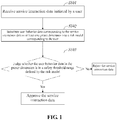
FIG. 1 is a flowchart of an interaction data processing method according to an embodiment of the present application; -
FIG. 2 is a flowchart of building a risk model according to an embodiment of the present application; and -
FIG. 3 is a module diagram of an interaction data processing apparatus according to an embodiment of the present application. - The present application will be described below in detail with reference to the detailed embodiments shown in the drawings. However, these embodiments do not limit the present application, and changes in structures, methods, or functions made by those of ordinary skill in the art according to these embodiments are all covered in the protection scope of the present application.
- As shown in
FIG. 1 , in an embodiment of the present application, the interaction data processing method includes: - S101. Service interaction data initiated by a user is received.
- S102. User behavior data corresponding to the service interaction data in at least one preset dimension is substituted into a risk model corresponding to the user.
- S103. It is judged whether the user behavior data in the preset dimension is in a safety threshold range defined by the risk model; if yes, the service interaction data is approved; and if no, the service interaction data is rejected.
- In this embodiment, the service interaction data of a network transaction service is taken as an example for describing the technical solution of the present application in detail. Of course, the service interaction data may be not limited to the service interaction data of a network transaction service, and persons skilled in the art may apply the technical solution of the present application to other services through a common technical means. Details are not described herein again.
- When the service interaction data of the network transaction service is taken as an example, a real-time transaction initiated by a user may generate the service transaction data, and after the service transaction data is generated, a transaction system/server may receive the service transaction data. At this time, in order to avoid the situation where another person pretends to be the user to initiate a real-time transaction, and ensure the capital safety of the user, it is necessary to evaluate the service transaction data in the transaction system/server to judge whether it is safe.
- In this embodiment, whether the service transaction data is safe is judged through a risk model corresponding to the user (for example, a risk model corresponding to the user is determined through an ID thereof), as well as user behavior data corresponding to the service transaction data in a preset dimension. The preset dimension is associated with an interaction behavior between the user and a third party involved in the service interaction data.
- In addition, in this embodiment, in order to decrease the computational burden of the transaction system/server, the risk model may be a risk model updated for the user historical behavior corresponding to the historical service interaction data within 24 hours before the initiation time of the current network transaction service in the preset dimension.
- Further, the step of substituting a value of a user behavior corresponding to the service interaction data in at least one preset dimension into a risk model specifically includes:
- judging whether the user behavior data corresponding to the service interaction data in the preset dimension exists; and
- if yes, substituting the value of the user behavior corresponding to the service interaction data in at least one preset dimension into the risk model.
- In some cases, the service interaction data does not contain the corresponding user behavior in the preset dimension. For example, a user A does not have an interaction behavior with a third party involved in the service interaction data when performing the present network transaction service. As can be understood, in this case, it is impossible to judge the safety of the present service interaction data by substituting the user behavior data in the preset dimension into the risk model. At this time, the safety of the present service interaction data can be judged through a relatively conventional technical solution. For example, device information of a user terminal device and/or information of an environment where the user is located (for example, a geographical position, an IP address, and so on) are/is collected to judge the safety of the currently initiated interaction data.
- Moreover, when the present service interaction data contains the corresponding user behavior data in the preset dimension, the safety of the present service interaction data may be judged by substituting the user behavior data in the preset dimension into the risk model.
- Of course, in another case where, for example, there are less network transaction services of the user A, or the service interaction data of the network transaction service of the user A contains less corresponding user behaviors in a preset dimension, which is insufficient to form a risk model corresponding to the user A, i.e., the risk model corresponding to the user A is not built in the transaction system/server. As can be understood, in this case, the safety of the present service interaction data cannot be judged by substituting the user behavior data in the preset dimension into the risk model. At this time, the safety of the present service interaction data can be judged through a relatively conventional technical solution. For example, device information of a user terminal device and/or information of an environment where the user is located (for example, a geographical position, an IP address, and so on) are/is collected to judge the safety of the currently initiated interaction data.
- Further, in this embodiment, the preset dimension is associated with an instant message interaction behavior between the user and a third party involved in the service interaction data.
- The user behavior data in the preset dimension includes: a communication duration of instant message interaction between the user and the third party involved in the service interaction data, a data size of the instant message interaction between the user and the third party involved in the service interaction data, and an interval time from completion of the instant message interaction between the user and the third party involved in the service interaction data to initiation of the service interaction data.
- Upon analysis on big data, the user, during the network transaction, is accustomed to communicating with a seller (the third party) about details of commodities, whether to have desired styles, and whether to provide free delivery. Different users have their respective behavior habits in terms of a duration of the communication with the seller, a data size of records of the communication with the seller, and an interval time from completion of the communication with the seller to initiation of payment. Whether the current user is the user himself/herself and whether the current service interaction data is safe can be identified by means of these behavior habits of the user, such that a preferred protective effect on the safety of buyer's payment during the user's shopping is achieved.
- Further, in this embodiment, the step of judging whether the user behavior data in the preset dimension is in a safety threshold range defined by the risk model specifically includes: judging whether the communication duration of the instant message interaction between the user and the third party involved in the service interaction data, the data size of the instant message interaction between the user and the third party involved in the service interaction data, and the interval time from completion of the instant message interaction between the user and the third party involved in the service interaction data to initiation of the service interaction data all fall within the corresponding safety threshold range; i.e., only when the three dimensions all fall within the corresponding safety threshold range, it indicates that the service interaction data is safe.
- As shown in
FIG. 2 , in an embodiment of the present application, the method further includes building a risk model, which specifically includes: - S201. A value of a user historical behavior of the user corresponding to each piece of historical service interaction data in the at least one preset dimension within a first time interval is acquired.
- S202. A first mean value or a first variance of the user historical behaviors corresponding to all pieces of historical service interaction data in the preset dimension within the first time interval is calculated.
- S203. A value of the user historical behavior of the user corresponding to each piece of historical service interaction data in the at least one preset dimension within a second time interval is acquired.
- S204. A second mean value or a second variance of the user historical behaviors corresponding to all pieces of historical service interaction data in the preset dimension within the second time interval is calculated;
- S205. A safety threshold range corresponding to each preset dimension is calculated by using a decision tree through the first mean value or the first variance and the second mean value or the second variance or through a difference between the first mean value and the second mean value, and the risk model corresponding to the user is built, wherein the length of the first time interval is greater than that of the second time interval.
- Hereinafter, one specific example is illustrated as an example:
- First, a user ID is taken as a primary key to acquire records of chatting between the user and sellers before transactions on all or specified platforms within one year, which include: durations of the communication between the user and the sellers, data sizes of records of the communication with the sellers, and interval times from completion of the communication with the sellers to initiation of payment.
- Next, users whose network transaction services satisfy a certain condition (for example, the number of the network transaction services is greater than or equal to a preset number) in the past are selected. Then, for each of the selected users, the durations of the communication with the sellers, the data sizes of records of the communication with the sellers, and the interval times from completion of the communication with the sellers to initiation of payment are aggregated respectively.
- In this way, for each of the selected users, a mean value or variance of the durations of the communication with the sellers, a mean value or variance of the data sizes of records of the communication with the sellers, and a mean value or variance of the interval times from completion of the communication with the sellers to initiation of payment may be obtained. That is, the historical behavior data of the communication between the user and the sellers before the initiation of the service interaction data (before the transaction payment) can be obtained.
- Afterwards, new records of chatting with sellers within a duration (such as one month) before transaction are selected as a sample, to obtain, according to the above manner, a mean value or variance of durations of the communication with the sellers, a mean value or variance of data sizes of records of the communication with the sellers, and a mean value or variance of the interval times from completion of the communication with the sellers to initiation of payment of each of the selected users. That is, sample behavior data can be obtained. Of course, the sample behavior data can also be calculated before or at the same time as the historical behavior data is being calculated.
- In this way, the risk model may be built by means of a decision tree according to the above historical behavior data and sample behavior data. Definitely, an absolute value of a deviation between the sample behavior data and corresponding data in the above historical behavior data may be calculated first, then the risk model is built by means of the decision tree according to the absolute value. The risk model may define a safety threshold range corresponding to each preset dimension (a duration of communication between the user and a seller, a data size of records of the communication with the seller, and an interval time from completion of the communication with the seller to initiation of payment).
- As shown in
FIG. 3 , in an embodiment of the present application, the interaction data processing apparatus includes: - an
interaction module 100 configured to receive service interaction data initiated by a user; - a
processing module 200 configured to substitute user behavior data corresponding to the service interaction data in at least one preset dimension into arisk model 400 corresponding to the user; and - judge whether the user behavior data in the preset dimension is in a safety threshold range defined by the
risk model 400; if yes, approve the service interaction data; and if no, reject the service interaction data. - In this embodiment, the service interaction data of a network transaction service is taken as an example for describing the technical solution of the present application in detail. Of course, the service interaction data may be not limited to the service interaction data of a network transaction service, and persons skilled in the art may apply the technical solution of the present application to other services through a common technical means. Details are not described herein again.
- When the service interaction data of the network transaction service is taken as an example, a real-time transaction initiated by a user may generate the service transaction data, and after the service transaction data is generated, a transaction system/server may receive the service transaction data. At this time, in order to avoid the situation where another person pretends to be the user to initiate a real-time transaction, and ensure the capital safety of the user, it is necessary to evaluate the service transaction data in the transaction system/server to judge whether it is safe.
- In this embodiment, whether the service transaction data is safe is judged through the
risk model 400 corresponding to the user (for example, therisk model 400 corresponding to the user is determined through an ID thereof), as well as user behavior data corresponding to the service transaction data in a preset dimension. The preset dimension is associated with an interaction behavior between the user and a third party involved in the service interaction data. - In addition, in this embodiment, in order to decrease the computational burden of the transaction system/server, the
risk model 400 may be a risk model updated for the user historical behavior corresponding to the historical service interaction data within 24 hours before the initiation time of the current network transaction service in the preset dimension. - Further, the apparatus further includes an
adapter module 500 configured to judge whether the user behavior data corresponding to the service interaction data in the preset dimension exists;
if yes, a value of a user behavior corresponding to the service interaction data in at least one preset dimension is substituted into therisk model 400 by theprocessing module 200. - In some cases, the service interaction data does not contain the corresponding user behavior in the preset dimension. For example, a user A does not have an interaction behavior with a third party involved in the service interaction data when performing the present network transaction service. As can be understood, in this case, it is impossible to judge the safety of the present service interaction data by substituting the user behavior data in the preset dimension into the
risk model 400. At this time, the safety of the present service interaction data can be judged through a relatively conventional technical solution. For example, device information of a user terminal device and/or information of an environment where the user is located (for example, a geographical position, an IP address, and so on) are/is collected to judge the safety of the currently initiated interaction data. - Moreover, when the present service interaction data contains the corresponding user behavior data in the preset dimension, the safety of the present service interaction data can be judged by substituting the user behavior data in the preset dimension into the
risk model 400. - Of course, in another case where, for example, there are less network transaction services of the user A, or the service interaction data of the network transaction service of the user A contains less corresponding user behaviors in a preset dimension, which is insufficient to form a risk model corresponding to the user A, i.e., the risk model corresponding to the user A is not built in the transaction system/server. As can be understood, in this case, the safety of the present service interaction data cannot be judged by substituting the user behavior data in the preset dimension into the risk model. At this time, the safety of the present service interaction data can be judged through a relatively conventional technical solution. For example, device information of a user terminal device and/or information of an environment where the user is located (for example, a geographical position, an IP address, and so on) are/is collected to judge the safety of the currently initiated interaction data.
- Further, in this embodiment, the preset dimension is associated with an instant message interaction behavior between the user and a third party involved in the service interaction data.
- The user behavior data in the preset dimension includes: a communication duration of instant message interaction between the user and the third party involved in the service interaction data, a data size of the instant message interaction between the user and the third party involved in the service interaction data, and an interval time from completion of the instant message interaction between the user and the third party involved in the service interaction data to initiation of the service interaction data.
- Upon analysis on big data, the user, during the network transaction, is accustomed to communicating with a seller (the third party) about details of commodities, whether to have desired styles, and whether to provide free delivery. Different users have their respective behavior habits in terms of a duration of the communication with the seller, a data size of records of the communication with the seller, and an interval time from completion of the communication with the seller to initiation of payment. Whether the current user is the user himself/herself and whether the current service interaction data is safe can be identified by means of these behavior habits of the user, such that a preferred protective effect on the safety of buyer's payment during the user's shopping is achieved.
- Further, in this embodiment, the
processing module 200 is specifically configured to: judge whether the communication duration of the instant message interaction between the user and the third party involved in the service interaction data, the data size of the instant message interaction between the user and the third party involved in the service interaction data, and the interval time from completion of the instant message interaction between the user and the third party involved in the service interaction data to initiation of the service interaction data all fall within the corresponding safety threshold range; i.e., only when the three dimensions all fall within the corresponding safety threshold range, it indicates that the service interaction data is safe. - As shown in
FIG. 3 , in an embodiment of the present application, the apparatus further includes amodel building module 300 configured to: - acquire a value of a user historical behavior of the user corresponding to each piece of historical service interaction data in the at least one preset dimension within a first time interval;
- calculate a first mean value or a first variance of the user historical behaviors corresponding to all pieces of historical service interaction data in the preset dimension within the first time interval;
- acquire a value of the user historical behavior of the user corresponding to each piece of historical service interaction data in the at least one preset dimension within a second time interval;
- calculate a second mean value or a second variance of the user historical behaviors corresponding to all pieces of historical service interaction data in the preset dimension within the second time interval;
- calculate a safety threshold range corresponding to each preset dimension by using a decision tree through the first mean value or the first variance and the second mean value or the second variance or through a difference between the first mean value and the second mean value, and build the
risk model 400 corresponding to the user, wherein the length of the first time interval is greater than that of the second time interval. - Hereinafter, one specific example is illustrated as an example:
- First, a user ID is taken as a primary key to acquire records of chatting between the user and sellers before transactions on all or specified platforms within one year, which include: durations of the communication between the user and the sellers, data sizes of records of the communication with the sellers, and interval times from completion of the communication with the sellers to initiation of payment.
- Next, users whose network transaction services satisfy a certain condition (for example, the number of the network transaction services is greater than or equal to a preset number) in the past are selected. Then, for each of the selected users, the durations of the communication between the user and the sellers, the data sizes of records of the communication with the sellers, and the interval times from completion of the communication with the sellers to initiation of payment are aggregated respectively.
- In this way, for each of the selected users, a mean value or variance of the durations of the communication between the user and the sellers, a mean value or variance of the data sizes of records of the communication with the sellers, and a mean value or variance of the interval times from completion of the communication with the sellers to initiation of payment can be obtained. That is, the historical behavior data of the communication between the user and the sellers before the initiation of the service interaction data (before the transaction payment) can be obtained.
- Afterwards, new records of chatting with sellers within a duration (such as one month) before transaction are selected as a sample, to obtain, according to the above manner, a mean value or variance of durations of the communication with the sellers, a mean value or variance of data sizes of records of the communication with the sellers, and a mean value or variance of the interval times from completion of the communication with the sellers to initiation of payment of each of the selected users. That is, sample behavior data can be obtained. Of course, the sample behavior data can also be calculated before or at the same time as the historical behavior data is being calculated.
- In this way, the
risk model 400 may be built by means of a decision tree according to the above historical behavior data and the sample behavior data. Definitely, an absolute value of a deviation between the sample behavior data and corresponding data in the above historical behavior data may be calculated first, then therisk model 400 is built by means of the decision tree according to the absolute value. Therisk model 400 may define a safety threshold range corresponding to each preset dimension (a duration of communication between the user and a seller, a data size of records of the communication with the seller, and an interval time from completion of the communication with the seller to initiation of payment). - Based on the above, in the present application, a risk model of service interaction data is built via a historical behavior of a user before initiation of the service interaction data, and safety of the current service interaction data is judged via the risk model, thereby reducing the degree of bothering the user and improving network communication efficiency.
- Persons skilled in the art can clearly know that, for ease and clarity of descriptions, specific working processes of the apparatus, apparatus and modules described in the above may be obtained with reference to corresponding processes in the foregoing method embodiments, and are not repeated herein.
- In the several embodiments provided in the present application, it should be understood that, the disclosed apparatus, apparatus and method may be implemented in other manners. For example, the apparatus embodiment described in the foregoing is merely schematic, for example, the division of modules is merely division of logic functions, and in fact, there may be other division manners during implementation, for example, multiple modules or components may be combined or may be integrated into another apparatus, or some features may be omitted or not be executed. On the other hand, the displayed or discussed coupling or direct coupling or communication connection between them may be indirect coupling or communication connection between apparatuses or modules through some interfaces, and may be in the form of electrical, mechanical or other forms.
- Modules described as separated parts may be or may not be physically separated, parts displayed as units may be or may not be physical units, and they may be located at the same place, or be distributed to multiple network units. The objective of the solution of this embodiment may be implemented by selecting a part of or all modules thereof according to actual requirements.
- In addition, each functional module of each embodiment of the present application may be integrated within a processing module, or these modules may be physically present in a separated manner, or two or more modules may also be integrated within a module. The integrated modules may be implemented in a form of hardware or in a form of hardware and software functional modules.
- The integrated unit implemented in the form of software functional modules may be stored in a computer readable storage medium. The software function modules are stored in a storage medium, and include several instructions used to enable a computer device (which may be a personal computer, a server, a network device, and the like) or a processor to execute a part of steps of the method described in each embodiment of the present application. The storage medium includes: a USB flash disk, a mobile hard disk, a Read-Only Memory (ROM), a Random Access Memory (RAM), a magnetic disk, an optical disc, or other mediums that can store program codes.
- Finally, it should be noted that, the above embodiments are merely used for describing the technical solution of the present application, instead of limiting the present application. Although the present application is described in detail with reference to the foregoing embodiments, those of ordinary skill in the art should understand that they can still make amendments to the technical solution recorded in the above embodiments, or perform equivalent replacements on a part of technical features thereof. These modifications or replacements are not intended to make the essences of the corresponding technical solutions depart from the spirit and scope of the technical solutions of all the embodiments of the present application.
Claims (12)
- An interaction data processing method, comprising:receiving service interaction data initiated by a user;substituting user behavior data corresponding to the service interaction data in at least one preset dimension into a risk model corresponding to the user, wherein the preset dimension is associated with an interaction behavior between the user and a third party involved in the service interaction data; andjudging whether the user behavior data in the preset dimension is in a safety threshold range defined by the risk model; if yes, approving the service interaction data; and if no, rejecting the service interaction data.
- The interaction data processing method of claim 1, further comprising building the risk model, which specifically comprises:acquiring a value of a user historical behavior of the user corresponding to each piece of historical service interaction data in at least one preset dimension within a first time interval;calculating a first mean value or a first variance of the user historical behaviors corresponding to all pieces of historical service interaction data in the preset dimension within the first time interval;acquiring a value of the user historical behavior of the user corresponding to each piece of historical service interaction data in at least one preset dimension within a second time interval;calculating a second mean value or a second variance of the user historical behaviors corresponding to all pieces of historical service interaction data in the preset dimension within the second time interval; andcalculating a safety threshold range corresponding to each preset dimension by using a decision tree through the first mean value or the first variance and the second mean value or the second variance or through a difference between the first mean value and the second mean value, and building the risk model corresponding to the user, wherein the length of the first time interval is greater than that of the second time interval.
- The interaction data processing method of claim 1, wherein the substituting a value of a user behavior corresponding to the service interaction data in at least one preset dimension into a risk model specifically comprises:judging whether the user behavior data corresponding to the service interaction data in the preset dimension exists; andif yes, substituting the value of the user behavior corresponding to the service interaction data in at least one preset dimension into the risk model.
- The interaction data processing method of any of claims 1 to 3, wherein the preset dimension is associated with an instant message interaction behavior between the user and the third party involved in the service interaction data.
- The interaction data processing method of claim 4, wherein the preset user behavior comprises:a communication duration of instant message interaction between the user and the third party involved in the service interaction data, a data size of the instant message interaction between the user and the third party involved in the service interaction data, and an interval time from completion of the instant message interaction between the user and the third party involved in the service interaction data to initiation of the service interaction data.
- The interaction data processing method of claim 5, wherein the judging whether the user behavior data in the preset dimension is in a safety threshold range defined by the risk model specifically comprises:judging whether the communication duration of the instant message interaction between the user and the third party involved in the service interaction data, the data size of the instant message interaction between the user and the third party involved in the service interaction data, and the interval time from completion of the instant message interaction between the user and the third party involved in the service interaction data to initiation of the service interaction data all fall within the corresponding safety threshold range.
- An interaction data processing apparatus, comprising:an interaction module configured to receive service interaction data initiated by a user;a processing module configured to substitute user behavior data corresponding to the service interaction data in at least one preset dimension into a risk model corresponding to the user, wherein the preset dimension is associated with an interaction behavior between the user and a third party involved in the service interaction data; andjudge whether the user behavior data in the preset dimension is in a safety threshold range defined by the risk model; if yes, approve the service interaction data; and if no, reject the service interaction data.
- The interaction data processing apparatus of claim 7, further comprising a model building module configured to:acquire a value of a user historical behavior of the user corresponding to each piece of historical service interaction data in the at least one preset dimension within a first time interval;calculate a first mean value or a first variance of the user historical behaviors corresponding to all pieces of historical service interaction data in the preset dimension within the first time interval;acquire a value of the user historical behavior of the user corresponding to each piece of historical service interaction data in the at least one preset dimension within a second time interval;calculate a second mean value or a first variance of the user historical behaviors corresponding to all pieces of historical service interaction data in the preset dimension within the second time interval;calculate a safety threshold range corresponding to each preset dimension by using a decision tree through the first mean value or the first variance and the second mean value or the second variance or through a difference between the first mean value and the second mean value, and build the risk model corresponding to the user, wherein the length of the first time interval is greater than that of the second time interval.
- The interaction data processing apparatus of claim 7, further comprising an adapter module configured to:judge whether the user behavior data corresponding to the service interaction data in the preset dimension exists.
- The interaction data processing apparatus of any of claims 7 to 9, wherein the preset dimension is associated with an instant message interaction behavior between the user and the third party involved in the service interaction data.
- The interaction data processing apparatus of claim 10, wherein the preset user behavior comprises:a communication duration of instant message interaction between the user and the third party involved in the service interaction data, a data size of the instant message interaction between the user and the third party involved in the service interaction data, and an interval time from completion of the instant message interaction between the user and the third party involved in the service interaction data to initiation of the service interaction data.
- The interaction data processing apparatus of claim 11, wherein the processing module is specifically configured to:judge whether the communication duration of the instant message interaction between the user and the third party involved in the service interaction data, the data size of the instant message interaction between the user and the third party involved in the service interaction data, and the interval time from completion of the instant message interaction between the user and the third party involved in the service interaction data to initiation of the service interaction data all fall within the corresponding safety threshold range.
Applications Claiming Priority (2)
| Application Number | Priority Date | Filing Date | Title |
|---|---|---|---|
| CN201510244028.4A CN106296406A (en) | 2015-05-13 | 2015-05-13 | The processing method and processing device of interaction data |
| PCT/CN2016/081089 WO2016180267A1 (en) | 2015-05-13 | 2016-05-05 | Method of processing exchanged data and device utilizing same |
Publications (2)
| Publication Number | Publication Date |
|---|---|
| EP3296943A1 true EP3296943A1 (en) | 2018-03-21 |
| EP3296943A4 EP3296943A4 (en) | 2018-10-10 |
Family
ID=57248651
Family Applications (1)
| Application Number | Title | Priority Date | Filing Date |
|---|---|---|---|
| EP16792117.0A Withdrawn EP3296943A4 (en) | 2015-05-13 | 2016-05-05 | Method of processing exchanged data and device utilizing same |
Country Status (7)
| Country | Link |
|---|---|
| US (1) | US10956847B2 (en) |
| EP (1) | EP3296943A4 (en) |
| JP (1) | JP6745818B2 (en) |
| KR (1) | KR102127039B1 (en) |
| CN (1) | CN106296406A (en) |
| SG (2) | SG11201709271SA (en) |
| WO (1) | WO2016180267A1 (en) |
Cited By (1)
| Publication number | Priority date | Publication date | Assignee | Title |
|---|---|---|---|---|
| CN111913859A (en) * | 2020-07-13 | 2020-11-10 | 北京天空卫士网络安全技术有限公司 | Abnormal behavior detection method and device |
Families Citing this family (26)
| Publication number | Priority date | Publication date | Assignee | Title |
|---|---|---|---|---|
| US10021120B1 (en) | 2015-11-09 | 2018-07-10 | 8X8, Inc. | Delayed replication for protection of replicated databases |
| WO2019104350A1 (en) * | 2017-11-27 | 2019-05-31 | ArmorBlox, Inc. | User model-based data loss prevention |
| CN110020861A (en) * | 2018-01-08 | 2019-07-16 | 阿里巴巴集团控股有限公司 | Transaction risk score value processing method, device, server and storage medium |
| CN108449313B (en) * | 2018-02-01 | 2021-02-19 | 平安科技(深圳)有限公司 | Electronic device, Internet service system risk early warning method and storage medium |
| CN110390445A (en) * | 2018-04-16 | 2019-10-29 | 阿里巴巴集团控股有限公司 | The recognition methods of operational risk, device and system |
| CN108880879B (en) * | 2018-06-11 | 2021-11-23 | 北京五八信息技术有限公司 | User identity identification method, device, equipment and computer readable storage medium |
| CN110046779B (en) * | 2018-11-01 | 2023-05-02 | 创新先进技术有限公司 | A data processing method and device, a computing device and a storage medium |
| US11176556B2 (en) * | 2018-11-13 | 2021-11-16 | Visa International Service Association | Techniques for utilizing a predictive model to cache processing data |
| CN109815533A (en) * | 2018-12-14 | 2019-05-28 | 南京河海南自水电自动化有限公司 | It is a kind of difference operating condition under hydroelectric machine group parts Operational Data Analysis method and system |
| CN110059984A (en) * | 2019-04-30 | 2019-07-26 | 深信服科技股份有限公司 | Security risk recognition methods, device, equipment and storage medium |
| CN110516418A (en) * | 2019-08-21 | 2019-11-29 | 阿里巴巴集团控股有限公司 | A kind of operation user identification method, device and equipment |
| US10885160B1 (en) | 2019-08-21 | 2021-01-05 | Advanced New Technologies Co., Ltd. | User classification |
| CN110648052B (en) * | 2019-09-02 | 2022-07-01 | 浙江大搜车软件技术有限公司 | Wind control decision method and device, computer equipment and storage medium |
| CN111612499B (en) * | 2020-04-03 | 2023-07-28 | 浙江口碑网络技术有限公司 | Information pushing method and device, storage medium and terminal |
| CN111581191B (en) * | 2020-04-10 | 2023-10-13 | 岭东核电有限公司 | Nuclear safety data verification methods, devices, computer equipment and storage media |
| CN111598622A (en) * | 2020-05-21 | 2020-08-28 | 深圳市元征科技股份有限公司 | Method, device, equipment and storage medium for generating qualification right data |
| CN111639318A (en) * | 2020-05-26 | 2020-09-08 | 深圳壹账通智能科技有限公司 | Wind control method based on gesture monitoring on mobile terminal and related device |
| CN112085609A (en) * | 2020-08-28 | 2020-12-15 | 车主邦(北京)科技有限公司 | A kind of insurance service data processing method and device |
| CN112529481A (en) * | 2021-02-08 | 2021-03-19 | 北京淇瑀信息科技有限公司 | User fishing-back method and device and electronic equipment |
| US12266022B2 (en) * | 2021-03-22 | 2025-04-01 | Ncr Voyix Corporation | Data-driven valuable media balance optimization processing |
| CN113420941A (en) * | 2021-07-16 | 2021-09-21 | 湖南快乐阳光互动娱乐传媒有限公司 | Risk prediction method and device for user behavior |
| CA3170650A1 (en) * | 2021-08-17 | 2023-02-17 | The Toronto-Dominion Bank | Targeted, criteria-specific provisioning of digital content based on structured messaging data |
| CN114219324B (en) * | 2021-12-17 | 2024-12-24 | 中国建设银行股份有限公司 | A risk control method and related device for service orders |
| WO2023128865A2 (en) * | 2021-12-29 | 2023-07-06 | Gp Network Asia Pte. Ltd. | A communications server, a method, a user device, and system |
| CN115034914A (en) * | 2022-06-17 | 2022-09-09 | 中国银行股份有限公司 | Processing method and device for providing night service for intelligent counter of bank |
| US20250150511A1 (en) * | 2023-11-02 | 2025-05-08 | International Business Machines Corporation | Article provisioning |
Family Cites Families (27)
| Publication number | Priority date | Publication date | Assignee | Title |
|---|---|---|---|---|
| US7403922B1 (en) | 1997-07-28 | 2008-07-22 | Cybersource Corporation | Method and apparatus for evaluating fraud risk in an electronic commerce transaction |
| JPH11338924A (en) * | 1998-05-25 | 1999-12-10 | Omron Corp | Card payment system |
| WO2007041709A1 (en) | 2005-10-04 | 2007-04-12 | Basepoint Analytics Llc | System and method of detecting fraud |
| EP1816595A1 (en) * | 2006-02-06 | 2007-08-08 | MediaKey Ltd. | A method and a system for identifying potentially fraudulent customers in relation to network based commerce activities, in particular involving payment, and a computer program for performing said method |
| JP2008158683A (en) * | 2006-12-21 | 2008-07-10 | Hitachi Software Eng Co Ltd | Authentication system |
| US20090307049A1 (en) * | 2008-06-05 | 2009-12-10 | Fair Isaac Corporation | Soft Co-Clustering of Data |
| EP2288987A4 (en) | 2008-06-12 | 2015-04-01 | Guardian Analytics Inc | Modeling users for fraud detection and analysis |
| JP5142883B2 (en) * | 2008-08-14 | 2013-02-13 | 株式会社東芝 | Identification device |
| US20100161399A1 (en) * | 2008-11-14 | 2010-06-24 | Nicholas David Posner | Instant payout incentive system |
| US10242540B2 (en) * | 2009-09-02 | 2019-03-26 | Fair Isaac Corporation | Visualization for payment card transaction fraud analysis |
| JP2011059837A (en) * | 2009-09-08 | 2011-03-24 | Hitachi Ltd | Personal identification system and method utilizing behavior history information |
| US8412605B2 (en) | 2009-12-01 | 2013-04-02 | Bank Of America Corporation | Comprehensive suspicious activity monitoring and alert system |
| US20110307381A1 (en) * | 2010-06-10 | 2011-12-15 | Paul Kim | Methods and systems for third party authentication and fraud detection for a payment transaction |
| US20120109821A1 (en) | 2010-10-29 | 2012-05-03 | Jesse Barbour | System, method and computer program product for real-time online transaction risk and fraud analytics and management |
| US9117074B2 (en) * | 2011-05-18 | 2015-08-25 | Microsoft Technology Licensing, Llc | Detecting a compromised online user account |
| JP2013008232A (en) * | 2011-06-24 | 2013-01-10 | Sony Corp | Information processing apparatus, server, information processing system, information processing method, and program |
| US20130054433A1 (en) * | 2011-08-25 | 2013-02-28 | T-Mobile Usa, Inc. | Multi-Factor Identity Fingerprinting with User Behavior |
| WO2013086048A1 (en) | 2011-12-05 | 2013-06-13 | Visa International Service Association | Dynamic network analytic system |
| JP5246823B1 (en) | 2012-06-29 | 2013-07-24 | サミー株式会社 | Bullet ball machine |
| JP6003586B2 (en) * | 2012-11-29 | 2016-10-05 | 富士通株式会社 | Clustering program, clustering method, and clustering apparatus |
| US20140201120A1 (en) | 2013-01-17 | 2014-07-17 | Apple Inc. | Generating notifications based on user behavior |
| CN104469805B (en) | 2013-09-13 | 2018-04-27 | 同济大学 | Instant messaging service traffics generation method based on user behavior analysis |
| CN103793484B (en) * | 2014-01-17 | 2017-03-15 | 五八同城信息技术有限公司 | The fraud identifying system based on machine learning in classification information website |
| CN103853841A (en) * | 2014-03-19 | 2014-06-11 | 北京邮电大学 | Method for analyzing abnormal behavior of user in social networking site |
| US20150032589A1 (en) | 2014-08-08 | 2015-01-29 | Brighterion, Inc. | Artificial intelligence fraud management solution |
| CN104318138B (en) * | 2014-09-30 | 2018-05-08 | 杭州同盾科技有限公司 | A kind of method and apparatus for verifying user identity |
| CN105516071B (en) | 2014-10-13 | 2019-01-18 | 阿里巴巴集团控股有限公司 | Method, device, terminal and server for verifying business operation security |
-
2015
- 2015-05-13 CN CN201510244028.4A patent/CN106296406A/en active Pending
-
2016
- 2016-05-05 SG SG11201709271SA patent/SG11201709271SA/en unknown
- 2016-05-05 EP EP16792117.0A patent/EP3296943A4/en not_active Withdrawn
- 2016-05-05 WO PCT/CN2016/081089 patent/WO2016180267A1/en not_active Ceased
- 2016-05-05 KR KR1020177035795A patent/KR102127039B1/en active Active
- 2016-05-05 SG SG10201907626TA patent/SG10201907626TA/en unknown
- 2016-05-05 JP JP2017559441A patent/JP6745818B2/en active Active
-
2017
- 2017-11-10 US US15/809,799 patent/US10956847B2/en active Active
Cited By (2)
| Publication number | Priority date | Publication date | Assignee | Title |
|---|---|---|---|---|
| CN111913859A (en) * | 2020-07-13 | 2020-11-10 | 北京天空卫士网络安全技术有限公司 | Abnormal behavior detection method and device |
| CN111913859B (en) * | 2020-07-13 | 2023-11-14 | 北京天空卫士网络安全技术有限公司 | Abnormal behavior detection method and device |
Also Published As
| Publication number | Publication date |
|---|---|
| JP6745818B2 (en) | 2020-08-26 |
| EP3296943A4 (en) | 2018-10-10 |
| CN106296406A (en) | 2017-01-04 |
| JP2018517976A (en) | 2018-07-05 |
| US20180082229A1 (en) | 2018-03-22 |
| SG10201907626TA (en) | 2019-09-27 |
| SG11201709271SA (en) | 2017-12-28 |
| WO2016180267A1 (en) | 2016-11-17 |
| US10956847B2 (en) | 2021-03-23 |
| KR20180006955A (en) | 2018-01-19 |
| KR102127039B1 (en) | 2020-06-26 |
Similar Documents
| Publication | Publication Date | Title |
|---|---|---|
| EP3296943A1 (en) | Method of processing exchanged data and device utilizing same | |
| EP3373543B1 (en) | Service processing method and apparatus | |
| US11989728B2 (en) | Systems and methods for securely transmitting credit card payments | |
| US11238528B2 (en) | Systems and methods for custom ranking objectives for machine learning models applicable to fraud and credit risk assessments | |
| CN107230008B (en) | Risk information output and risk information construction method and device | |
| EP3474210B1 (en) | User account controls for online transactions | |
| CN108038687B (en) | Transaction method based on voice recognition, server and computer-readable storage medium | |
| CN106469276B (en) | Type identification method and device of data sample | |
| JP2018517976A5 (en) | ||
| US10607196B2 (en) | Service request messaging | |
| JP2018523188A (en) | Comparison between extracted user name and stored user data | |
| CN108876105B (en) | Transaction risk control method and device | |
| CN104361487A (en) | Method and device of inter-bank automatic repayment of credit card | |
| CN110503564B (en) | Security case processing method, system, equipment and storage medium based on big data | |
| CN111611559A (en) | An identity verification method and device | |
| US20230050176A1 (en) | Method of processing a transaction request | |
| CN107169851B (en) | Order generation method based on consultation service | |
| CN113888054A (en) | Business model construction method and device, storage medium and processor | |
| US11238455B1 (en) | System and method for location-based fraud prevention | |
| EP3273399A1 (en) | Point exchange system and point exchange method | |
| CN111080233A (en) | Method, device and storage medium for generating subscription information | |
| CN115270984A (en) | Anti-fraud model construction method and device, electronic equipment and storage medium | |
| CN119831717B (en) | User determination method, device, equipment and medium for financial class card to be upgraded | |
| WO2020180594A1 (en) | Method and system for providing performance assessment of terminal devices | |
| US11361267B1 (en) | System and method for determining loss resulting from data privacy and security breach |
Legal Events
| Date | Code | Title | Description |
|---|---|---|---|
| PUAI | Public reference made under article 153(3) epc to a published international application that has entered the european phase |
Free format text: ORIGINAL CODE: 0009012 |
|
| 17P | Request for examination filed |
Effective date: 20171212 |
|
| AK | Designated contracting states |
Kind code of ref document: A1 Designated state(s): AL AT BE BG CH CY CZ DE DK EE ES FI FR GB GR HR HU IE IS IT LI LT LU LV MC MK MT NL NO PL PT RO RS SE SI SK SM TR |
|
| AX | Request for extension of the european patent |
Extension state: BA ME |
|
| DAV | Request for validation of the european patent (deleted) | ||
| DAX | Request for extension of the european patent (deleted) | ||
| A4 | Supplementary search report drawn up and despatched |
Effective date: 20180910 |
|
| RIC1 | Information provided on ipc code assigned before grant |
Ipc: G06Q 30/02 20120101AFI20180904BHEP Ipc: G06Q 20/40 20120101ALI20180904BHEP |
|
| STAA | Information on the status of an ep patent application or granted ep patent |
Free format text: STATUS: THE APPLICATION IS DEEMED TO BE WITHDRAWN |
|
| 18D | Application deemed to be withdrawn |
Effective date: 20190409 |