EP3296084A1 - Filament for material extrusion-type three-dimensional printers, wound body composed of said filament, cartridge containing said filament, and method for producing resin molded article using said filament - Google Patents
Filament for material extrusion-type three-dimensional printers, wound body composed of said filament, cartridge containing said filament, and method for producing resin molded article using said filament Download PDFInfo
- Publication number
- EP3296084A1 EP3296084A1 EP16792720.1A EP16792720A EP3296084A1 EP 3296084 A1 EP3296084 A1 EP 3296084A1 EP 16792720 A EP16792720 A EP 16792720A EP 3296084 A1 EP3296084 A1 EP 3296084A1
- Authority
- EP
- European Patent Office
- Prior art keywords
- filament
- type
- material extrusion
- polyester resin
- aromatic polyester
- Prior art date
- Legal status (The legal status is an assumption and is not a legal conclusion. Google has not performed a legal analysis and makes no representation as to the accuracy of the status listed.)
- Granted
Links
Images
Classifications
-
- B—PERFORMING OPERATIONS; TRANSPORTING
- B29—WORKING OF PLASTICS; WORKING OF SUBSTANCES IN A PLASTIC STATE IN GENERAL
- B29C—SHAPING OR JOINING OF PLASTICS; SHAPING OF MATERIAL IN A PLASTIC STATE, NOT OTHERWISE PROVIDED FOR; AFTER-TREATMENT OF THE SHAPED PRODUCTS, e.g. REPAIRING
- B29C64/00—Additive manufacturing, i.e. manufacturing of three-dimensional [3D] objects by additive deposition, additive agglomeration or additive layering, e.g. by 3D printing, stereolithography or selective laser sintering
- B29C64/10—Processes of additive manufacturing
- B29C64/106—Processes of additive manufacturing using only liquids or viscous materials, e.g. depositing a continuous bead of viscous material
- B29C64/118—Processes of additive manufacturing using only liquids or viscous materials, e.g. depositing a continuous bead of viscous material using filamentary material being melted, e.g. fused deposition modelling [FDM]
-
- B—PERFORMING OPERATIONS; TRANSPORTING
- B29—WORKING OF PLASTICS; WORKING OF SUBSTANCES IN A PLASTIC STATE IN GENERAL
- B29C—SHAPING OR JOINING OF PLASTICS; SHAPING OF MATERIAL IN A PLASTIC STATE, NOT OTHERWISE PROVIDED FOR; AFTER-TREATMENT OF THE SHAPED PRODUCTS, e.g. REPAIRING
- B29C64/00—Additive manufacturing, i.e. manufacturing of three-dimensional [3D] objects by additive deposition, additive agglomeration or additive layering, e.g. by 3D printing, stereolithography or selective laser sintering
- B29C64/30—Auxiliary operations or equipment
- B29C64/307—Handling of material to be used in additive manufacturing
- B29C64/321—Feeding
-
- B—PERFORMING OPERATIONS; TRANSPORTING
- B33—ADDITIVE MANUFACTURING TECHNOLOGY
- B33Y—ADDITIVE MANUFACTURING, i.e. MANUFACTURING OF THREE-DIMENSIONAL [3D] OBJECTS BY ADDITIVE DEPOSITION, ADDITIVE AGGLOMERATION OR ADDITIVE LAYERING, e.g. BY 3D PRINTING, STEREOLITHOGRAPHY OR SELECTIVE LASER SINTERING
- B33Y10/00—Processes of additive manufacturing
-
- B—PERFORMING OPERATIONS; TRANSPORTING
- B33—ADDITIVE MANUFACTURING TECHNOLOGY
- B33Y—ADDITIVE MANUFACTURING, i.e. MANUFACTURING OF THREE-DIMENSIONAL [3D] OBJECTS BY ADDITIVE DEPOSITION, ADDITIVE AGGLOMERATION OR ADDITIVE LAYERING, e.g. BY 3D PRINTING, STEREOLITHOGRAPHY OR SELECTIVE LASER SINTERING
- B33Y70/00—Materials specially adapted for additive manufacturing
-
- C—CHEMISTRY; METALLURGY
- C08—ORGANIC MACROMOLECULAR COMPOUNDS; THEIR PREPARATION OR CHEMICAL WORKING-UP; COMPOSITIONS BASED THEREON
- C08G—MACROMOLECULAR COMPOUNDS OBTAINED OTHERWISE THAN BY REACTIONS ONLY INVOLVING UNSATURATED CARBON-TO-CARBON BONDS
- C08G63/00—Macromolecular compounds obtained by reactions forming a carboxylic ester link in the main chain of the macromolecule
- C08G63/02—Polyesters derived from hydroxycarboxylic acids or from polycarboxylic acids and polyhydroxy compounds
- C08G63/12—Polyesters derived from hydroxycarboxylic acids or from polycarboxylic acids and polyhydroxy compounds derived from polycarboxylic acids and polyhydroxy compounds
- C08G63/123—Polyesters derived from hydroxycarboxylic acids or from polycarboxylic acids and polyhydroxy compounds derived from polycarboxylic acids and polyhydroxy compounds the acids or hydroxy compounds containing carbocyclic rings
- C08G63/127—Acids containing aromatic rings
-
- C—CHEMISTRY; METALLURGY
- C08—ORGANIC MACROMOLECULAR COMPOUNDS; THEIR PREPARATION OR CHEMICAL WORKING-UP; COMPOSITIONS BASED THEREON
- C08G—MACROMOLECULAR COMPOUNDS OBTAINED OTHERWISE THAN BY REACTIONS ONLY INVOLVING UNSATURATED CARBON-TO-CARBON BONDS
- C08G63/00—Macromolecular compounds obtained by reactions forming a carboxylic ester link in the main chain of the macromolecule
- C08G63/02—Polyesters derived from hydroxycarboxylic acids or from polycarboxylic acids and polyhydroxy compounds
- C08G63/12—Polyesters derived from hydroxycarboxylic acids or from polycarboxylic acids and polyhydroxy compounds derived from polycarboxylic acids and polyhydroxy compounds
- C08G63/16—Dicarboxylic acids and dihydroxy compounds
- C08G63/18—Dicarboxylic acids and dihydroxy compounds the acids or hydroxy compounds containing carbocyclic rings
- C08G63/181—Acids containing aromatic rings
- C08G63/183—Terephthalic acids
-
- D—TEXTILES; PAPER
- D01—NATURAL OR MAN-MADE THREADS OR FIBRES; SPINNING
- D01F—CHEMICAL FEATURES IN THE MANUFACTURE OF ARTIFICIAL FILAMENTS, THREADS, FIBRES, BRISTLES OR RIBBONS; APPARATUS SPECIALLY ADAPTED FOR THE MANUFACTURE OF CARBON FILAMENTS
- D01F6/00—Monocomponent artificial filaments or the like of synthetic polymers; Manufacture thereof
- D01F6/78—Monocomponent artificial filaments or the like of synthetic polymers; Manufacture thereof from copolycondensation products
- D01F6/84—Monocomponent artificial filaments or the like of synthetic polymers; Manufacture thereof from copolycondensation products from copolyesters
-
- B—PERFORMING OPERATIONS; TRANSPORTING
- B29—WORKING OF PLASTICS; WORKING OF SUBSTANCES IN A PLASTIC STATE IN GENERAL
- B29K—INDEXING SCHEME ASSOCIATED WITH SUBCLASSES B29B, B29C OR B29D, RELATING TO MOULDING MATERIALS OR TO MATERIALS FOR MOULDS, REINFORCEMENTS, FILLERS OR PREFORMED PARTS, e.g. INSERTS
- B29K2067/00—Use of polyesters or derivatives thereof, as moulding material
-
- B—PERFORMING OPERATIONS; TRANSPORTING
- B29—WORKING OF PLASTICS; WORKING OF SUBSTANCES IN A PLASTIC STATE IN GENERAL
- B29K—INDEXING SCHEME ASSOCIATED WITH SUBCLASSES B29B, B29C OR B29D, RELATING TO MOULDING MATERIALS OR TO MATERIALS FOR MOULDS, REINFORCEMENTS, FILLERS OR PREFORMED PARTS, e.g. INSERTS
- B29K2105/00—Condition, form or state of moulded material or of the material to be shaped
- B29K2105/0005—Condition, form or state of moulded material or of the material to be shaped containing compounding ingredients
- B29K2105/0032—Pigments, colouring agents or opacifiyng agents
-
- B—PERFORMING OPERATIONS; TRANSPORTING
- B29—WORKING OF PLASTICS; WORKING OF SUBSTANCES IN A PLASTIC STATE IN GENERAL
- B29K—INDEXING SCHEME ASSOCIATED WITH SUBCLASSES B29B, B29C OR B29D, RELATING TO MOULDING MATERIALS OR TO MATERIALS FOR MOULDS, REINFORCEMENTS, FILLERS OR PREFORMED PARTS, e.g. INSERTS
- B29K2995/00—Properties of moulding materials, reinforcements, fillers, preformed parts or moulds
- B29K2995/0018—Properties of moulding materials, reinforcements, fillers, preformed parts or moulds having particular optical properties, e.g. fluorescent or phosphorescent
- B29K2995/0026—Transparent
-
- B—PERFORMING OPERATIONS; TRANSPORTING
- B29—WORKING OF PLASTICS; WORKING OF SUBSTANCES IN A PLASTIC STATE IN GENERAL
- B29L—INDEXING SCHEME ASSOCIATED WITH SUBCLASS B29C, RELATING TO PARTICULAR ARTICLES
- B29L2031/00—Other particular articles
- B29L2031/731—Filamentary material, i.e. comprised of a single element, e.g. filaments, strands, threads, fibres
-
- B—PERFORMING OPERATIONS; TRANSPORTING
- B65—CONVEYING; PACKING; STORING; HANDLING THIN OR FILAMENTARY MATERIAL
- B65H—HANDLING THIN OR FILAMENTARY MATERIAL, e.g. SHEETS, WEBS, CABLES
- B65H2701/00—Handled material; Storage means
- B65H2701/30—Handled filamentary material
- B65H2701/31—Textiles threads or artificial strands of filaments
- B65H2701/313—Synthetic polymer threads
- B65H2701/3132—Synthetic polymer threads extruded from spinnerets
Definitions
- the present invention relates to a filament for a material extrusion-type three-dimensional printer. More specifically, the present invention relates to: a filament for a material extrusion-type three-dimensional printer, which filament contains a specific aromatic polyester resin, and which is used for producing a resin molded article by a material extrusion-type three-dimensional printer; a roll of the filament; a cartridge including the filament; a resin molded article produced using the filament for a material extrusion-type three-dimensional printer; and a method of producing the same.
- Three-dimensional printers (hereinafter, sometimes referred to as "3D printers") based on various types of additive manufacturing technologies (such as binder injection technology, material extrusion technology, vat photopolymerization technology, and the like) are commercially available today.
- 3D printers based on various types of additive manufacturing technologies (such as binder injection technology, material extrusion technology, vat photopolymerization technology, and the like) are commercially available today.
- a Material Extrusion-type 3D printer system (such as a system provided by Stratasys Incorporated in United States) is used for constructing a three-dimensional object in layers, by extruding a raw material having fluidity through a nozzle portion provided at an extrusion head, based on a computer aided design (CAD) model.
- CAD computer aided design
- FDM method Fused Deposition Modeling method
- a filament composed of a thermoplastic resin as a raw material is inserted into an extrusion head, and while being heat melted, the filament is continuously extruded onto a X-Y plane of a substrate included in a chamber, through a nozzle portion provided at the extrusion head; then the extruded resin is allowed to deposit on the already-deposited resin laminate so as to be fusion bonded therewith; and the resultant is solidified as an integrated object as it cools.
- the above mentioned extrusion step is repeated while elevating the position of the nozzle relative to the substrate in the direction of Z axis, which is perpendicular to the X-Y plane, thereby constructing a three-dimensional object which resembles a CAD model (Patent Document 1).
- ABS resin an acrylonitrile-butadiene-styrene resin
- 3D printers are gaining popularity not only in industrial applications, but also among individual consumers, and are more easily usable. Accordingly, a 3D printer is demanded to have a capability to produce a resin molded article not only with a high forming accuracy, but also with high design properties and the like.
- a filament for a material extrusion-type 3D printer which is composed of an ABS resin and used in a conventional common 3D printer has problems such as follows: the filament is opaque due to containing a rubber component, and thus, it is unable to impart an intended color to the filament by incorporating a coloring agent; an odor occurs when heat melting the filament; heating during the extrusion causes an increase in the viscosity of the resin, making the nozzle susceptible to occlusion; and the like. Improvements in these problems are demanded.
- PET polyethylene terephthalate
- An object of the present invention is to provide a filament for a material extrusion-type 3D printer, which filament has an excellent transparency, which is capable of being imparted with an intended color vividly by incorporating a coloring agent, and which can be used at a wide range of forming temperatures and forming speeds.
- the present inventors have found out that it is possible to solve the above mentioned problems by using an aromatic polyester resin containing specific structural units in a filament for a material extrusion-type three-dimensional printer, thereby completing the present invention.
- the gist of the present invention may be the following [1] to [11].
- the filament for a material extrusion-type 3D printer according to the present invention has the following excellent characteristics:
- the present invention allows for providing a filament for a material extrusion-type 3D printer, which filament has a further improved transparency due to the effects of amorphousness and slow crystallization properties, provided by incorporating a specified amount isophthalic acid units, and which is capable of being extrusion molded at a low temperature due to the material resin having a lower melting point, and thus has an excellent convenience.
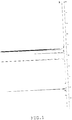
- FIG. 1 shows a 1 H-NMR spectrum chart of a filament obtained in Example 2.
- the filament for a material extrusion-type 3D printer according to the present embodiment includes an aromatic polyester resin containing 50mol% or more of aromatic dicarboxylic acid units, and 3mol% or more of isophthalic acid units, with respect to the total amount of dicarboxylic acid units.
- the filament for a material extrusion-type 3D printer includes an aromatic polyester resin containing terephthalic acid units and isophthalic acid units as dicarboxylic acid units.
- a polyester resin is a polymer or a copolymer obtained by a condensation reaction of: a dicarboxylic acid component comprising a dicarboxylic acid or a reactive derivative thereof; and a diol component comprising a diol or an ester derivative thereof, as main components.
- the aromatic polyester resin (hereinafter, sometimes referred to as the "aromatic polyester resin according to the present embodiment) contains 50mol% or more of aromatic dicarboxylic acid units, and 3mol% or more of isophthalic acid units, with respect to the total amount of dicarboxylic acid units included in the resin.
- the contents of aromatic dicarboxylic acid units and isophthalic acid units in the aromatic polyester resin are values measured by 1 H-NMR spectroscopy as described below. Further, the contents of terephthalic acid units, ethylene glycol units and the like, in the aromatic polyester resin are also values measured by 1 H-NMR spectroscopy as described below.
- the resultant is then transferred to an NMR test tube having an outer diameter of 5 mm.
- the 1 H-NMR spectrum of the resulting solution was measured, using AVANCE 400 spectrometer manufactured by Bruker Corporation.
- the measurement was carried out under the following conditions: a resonance frequency of 400.1 MHz, a flip angle of 45°, a data acquiring time of four seconds, a pulse repeating time of 10 seconds, a cumulative number of 64 times, and a temperature of room temperature.
- TMS signal at 0.00 ppm was used as a standard for chemical shift. From the integral values thereby obtained, the amounts of aromatic carboxylic acids such as isophthalic acid and terephthalic acid are calculated.
- the amounts of diols, such as ethylene glycol and cyclohexanedimethanol to be described later, can also be measured in the same manner.
- the aromatic polyester resin can be obtained, for example, by using as dicarboxylic acids and/or reactive derivatives thereof which are raw materials of the aromatic polyester resin, 50mol% or more of aromatic dicarboxylic acids and/or reactive derivatives thereof, and 3mol% or more of isophthalic acid and/or a reactive derivative thereof, with respect to the total dicarboxylic acid component in the raw materials.
- the "dicarboxylic acid units" as used herein refer to structural units which are derived from a dicarboxylic acid(s) and/or a derivative(s) thereof used in the production of the aromatic polyester resin, and which are introduced into the aromatic polyester resin.
- diol units structural units which are derived from a diol(s) or an ester derivative(s) thereof used in the production of the aromatic polyester resin, and which are introduced into the aromatic polyester resin, are referred to as "diol units".
- diol units structural units which are derived from isophthalic acid, terephthalic acid and the like, which are types of dicarboxylic acids, and units derived from ethylene glycol, butylene glycol and the like, which are types of diols, are referred to as “isophthalic acid units” and the like, respectively, in the same manner.
- aromatic dicarboxylic acids which can be used as raw materials for the aromatic polyester resin include: terephthalic acid, isophthalic acid, orthophthalic acid, 1,5-naphthalenedicarboxylic acid, 2,6-naphthalenedicarboxylic acid, 4,4'-biphenyldicarboxylic acid, 4,4'-biphenyletherdicarboxylic acid, 4,4'-biphenylmethanedicarboxylic acid, 4,4'-biphenylsulfonedicarboxylic acid, 4,4'-biphenylisopropylidenedicarboxylic acid, 1,2-bis(phenoxy)ethane-4,4'-dicarboxylic acid, 2,5-anthracenedicarboxylic acid, 2,6-anthracenedicarboxylic acid, 4,4'-p-terphenylenedicarboxylic acid, 2,5-pyridinedicarboxylic acid, and the like.
- Substitution compounds for example, alkyl-substitution compounds such as 5-methylisophthalic acid
- reactive derivatives for example, alkyl ester derivatives such as dimethyl terephthalate and diethyl terephthalate
- the aromatic polyester resin needs to contain isophthalic acid and/or a reactive derivative thereof as an essential component(s), among the above described aromatic dicarboxylic acids, and may further contain one of the above singly, or two or more of these as a mixture.
- aromatic dicarboxylic acids preferred as aromatic dicarboxylic acids and/or reactive derivatives thereof other than isophthalic acid and/or a reactive derivative thereof, which can be used as raw materials for the aromatic polyester resin, are terephthalic acid, 2,6-naphthalenedicarboxylic acid and alkyl ester derivatives thereof, and particularly preferred are terephthalic acid and an alkyl ester derivative thereof.
- a reactive derivative of isophthalic acid an alkyl ester derivative of isophthalic acid is preferred.
- the aromatic polyester resin contain 3mol% or more of isophthalic acid units with respect to the total amount of dicarboxylic acid units, and further contain terephthalic acid units and/or naphthalenedicarboxylic acid units in such an amount(s) that the total amount of the isophthalic acid units and the terephthalic acid units and/or naphthalenedicarboxylic acid units is 50mol% or more with respect to the total amount of dicarboxylic acid units.
- the aromatic polyester resin contain the above amount of isophthalic acid units, and further contain terephthalic acid units in such an amount that the total amount of the isophthalic acid units and the terephthalic acid units is 50mol% or more with respect to the total amount of dicarboxylic acid units.
- the content of aromatic dicarboxylic acid units in the dicarboxylic acid units is preferably 50mol% or more, and the upper limit thereof is not particularly limited, but usually 100mol% or less.
- the content of isophthalic acid units in the dicarboxylic acid units is preferably 10mol% or more, and the upper limit thereof is not particularly limited, but usually 50mol% or less.
- the aromatic polyester resin is preferably a copolymerized aromatic polyester resin which contains terephthalic acid in an amount of from 50 to 90mol%, particularly from 60 to 90mol%, and isophthalic acid units in an amount of from 10 to 50mol%, particularly from 10 to 40mol%, with respect to the total amount of dicarboxylic acid units.
- the aromatic polyester resin may contain any of other types of dicarboxylic acid units other than the above described aromatic dicarboxylic acid units, to the extent that the object of the present invention is not impaired.
- the other type(s) of dicarboxylic acid units may be, for example, one or more types of: aliphatic dicarboxylic acid units such as adipic acid, azelaic acid, sebacic acid, and dodecane dioic acid; and alicyclic dicarboxylic acid units such as cyclohexane dicarboxylic acid.
- Substitution compounds thereof can also be used.
- ethylene glycol, 1,4-butanediol, and 1,4-cyclohexanedimethanol are preferred, and ethylene glycol is more preferred, in terms of heat resistance, dimensional stability and the like. These may be used singly, or in combination of two or more kinds.
- the diol component one or more of long chain diols having a molecular weight of from 400 to 6,000, namely, polyethylene glycol, poly-1,3-propylene glycol, polytetramethylene glycol and the like, can be used in combination with the above described diols, to be copolymerized.
- the aromatic polyester resin preferably contains 50mol% or more of ethylene glycol units, with respect to the total amount of diol units.
- the content of ethylene glycol is preferably from 50 to 100mol%, and particularly preferably from 80 to 100mol%.
- the method of producing the aromatic polyester resin is not particularly limited, and is produced according to an ordinary method.
- the aromatic polyester resin can be produced by reacting the dicarboxylic acid component and the diol component as raw materials while heating, in the presence of a polycondensation catalyst containing titanium, germanium, antimony or the like, and by discharging by-produced water or a lower alcohol out of the system.
- a batch polymerization method or a continuous polymerization method can be used. It is also possible to use a solid phase polymerization method to increase the degree of polymerization.
- the aromatic polyester resin preferably has a melt flow rate (MFR), as measured at a temperature of 230°C and a load of 2.16 kgf, of 7 g/10 min or more.
- MFR melt flow rate
- the MFR of the aromatic polyester resin is more preferably 10 g/10 min or more, and still more preferably 12 g/10 min or more.
- the upper limit of the MFR is usually 200 g/10 min or less, and preferably 100 g/10 min or less.
- the MFR of the aromatic polyester resin can be controlled by adjusting the introduction ratio of isophthalic acid units as a copolymerization component, the intrinsic viscosity of the resin, and the like.
- the molecular weight of the aromatic polyester resin can be expressed by the intrinsic viscosity (IV) of the resin, and the intrinsic viscosity is preferably 0.80 dL/g or less, more preferably 0.76 dL/g or less, and particularly preferably 0.74 dL/g or less.
- the aromatic polyester resin preferably has an intrinsic viscosity of 0.60 dL/g or more, more preferably 0.62 dL/g or more, and still more preferably 0.64 dL/g or more. This is because, although the lower limit of the intrinsic viscosity is not particularly limited, too low an intrinsic viscosity tends to result in an insufficiency in the mechanical strength, such as impact resistance, of the resulting molded article.
- the intrinsic viscosity of the aromatic polyester resin can be controlled by adjusting the polymerization conditions and the like during the production.
- the MFR and the intrinsic viscosity of the aromatic polyester resin are measured by the methods described in Examples to be described later.
- the aromatic polyester resin contains, as dicarboxylic acid units, terephthalic acid units and isophthalic acid units.
- the contents of terephthalic acid units and isophthalic acid units included in the aromatic polyester resin are not particularly limited.
- the aromatic polyester resin contains terephthalic acid units usually in an amount of 50mol% or more, and preferably 60mol% or more, and at the same time, usually in an amount of 100mol% or less, and preferably 97mol% or less, with respect to the total amount of dicarboxylic acid units.
- the aromatic polyester resin contains isophthalic acid units usually in an amount of 3mol% or more, and preferably 10mol% or more, and at the same time, usually in an amount of 50mol% or less, and preferably 40mol% or less, with respect to the total amount of dicarboxylic acid units.
- the aromatic polyester resin in this embodiment can be obtained by using terephthalic acid and isophthalic acid as raw material dicarboxylic acids. Note that, for the details regarding the aromatic polyester resin in this embodiment, the description of the aromatic polyester resin in the previously described embodiment can be referred to.
- the filament for a material extrusion-type 3D printer according to the present embodiment contains the above described aromatic polyester resin.
- the filament may contain any of other resins other than the above described aromatic polyester resin, and other additives, to the extent that the object of the present invention is not impaired.
- the filament for a material extrusion-type 3D printer may contain only one kind of the above described aromatic polyester resin, or may contain two or more kinds thereof varying in copolymerization composition or physical properties.
- the other resins include polyolefin resins, polyester resins other than the above described aromatic polyester resin, polyamide resins, styrene resins, acrylic resins, polycarbonate resins, polyvinyl chloride resins, various types of elastomers, and the like. These resins may be used singly, or in combination of two or more kinds thereof.
- the amount of the other resin(s) to be incorporated is usually 50mass% or less, and preferably 30mass% or less, with respect to the total amount of components.
- additives examples include antioxidants, acidic compounds and derivatives thereof, lubricants, UV absorbers, photostabilizers, nucleating agents, flame retardants, impact modifiers, foaming agents, coloring agents, organic peroxides, inorganic additives for increasing the frictional resistance, spreading agents, pressure sensitive adhesives, and the like. These additives may be used singly, or in combination of two or more kinds thereof.
- fillers include: inorganic fillers such as talc, calcium carbonate, zinc carbonate, wollastonite, silica, alumina, magnesium oxide, calcium silicate, sodium aluminate, calcium aluminate, sodium aluminosilicate, magnesium silicate, glass balloons, cut glass fibers, milled glass fibers, glass flakes, glass powders, silicon carbide, silicon nitride, gypsum, gypsum whiskers, calcined kaolin, carbon black, zinc oxide, antimony trioxide, zeolite, hydrotalcite, metal fibers, metal whiskers, metal powders, ceramic whiskers, potassium titanate, boron nitride, graphite, and carbon fibers; organic fillers including naturally derived polymers, such as starch, cellulose microparticles, wood flour, soybean curd refuse, rice husks and wheat brans, and modified products thereof; and the like. These fillers may be used singly, or in combination of two or more fill
- the filament for a material extrusion-type 3D printer is produced by using an aromatic polyester resin composition obtained by melt blending the above described aromatic polyester resin, and any of the other resins and additives incorporated as necessary.
- the method of producing the filament for a material extrusion-type 3D printer is not particularly limited.
- the filament can be obtained by a method in which the above described aromatic polyester resin or the aromatic polyester resin composition is formed into a filament by a known forming method such as extrusion molding, or by a method in which the resin composition is directly formed into a filament during the production of the resin composition.
- the formation is carried out usually at a temperature of from 80 to 250°C, and preferably from 100 to 240°C.
- the diameter of the filament varies depending on the performance of the system used.
- the filament preferably has a diameter of from 1.0 to 5.0 mm, and more preferably from 1.3 to 3.5 mm. Further, regarding the accuracy of the diameter of the filament, it is preferred that the error at an arbitrary measurement point be within the range of ⁇ 5%, in terms of stably feeding the raw material.
- the filament for a material extrusion-type 3D printer is preferably formed into a roll wound about a bobbin and stored in a sealed package, so as to allow for a long-term storage, stable delivery, protection against environmental factors such as humidity, protection against twisting, and the like.
- the filament for a material extrusion-type 3D printer or a roll of the filament is preferably housed within a container such as a cartridge.
- the container such as a cartridge may be, for example, a container which is capable of housing the filament or a roll of the filament wound about a bobbin, which is provided with a moistureproof material or a moisture absorbing material in the interior thereof, and which has a sealed structure except for an orifice portion through which the filament is delivered.
- a roll of filament obtained by winding the filament for a material extrusion-type 3D printer about a bobbin, or a cartridge including the filament or the roll of the filament is usually disposed inside or periphery of a material extrusion-type 3D printer, and the filament is continuously fed to the material extrusion-type 3D printer, during the formation of a resin molded article.
- a resin molded article is produced by a material extrusion-type 3D printer, using the filament for a material extrusion-type 3D printer according to the present embodiment.
- Specific examples of the extrusion molding-type 3D printer include the above described FDM-based 3D printers.
- a FDM-based 3D printer generally includes a chamber; and further includes within the chamber: a heatable substrate, an extrusion head disposed on a gantry structure, a heat melting device, and a raw material feeding unit including a filament guide, a filament cartridge mounting portion, and the like.
- the extrusion head and the heat melting device are provided integrally.
- the extrusion head By disposing the extrusion head on the gantry structure, the extrusion head can be moved to an arbitrary position on the X-Y plane of the substrate.
- the substrate is a platform for constructing thereon a three-dimensional object of interest, a supporting material, and the like.
- the substrate is preferably configured such that it can be heated and kept heated to obtain adhesion to a laminated product in close contact, and that the dimensional stability of the resulting resin molded article can be improved to obtain a desired three-dimensional object.
- the extrusion head and the substrate are usually configured such that at least one of them is movable in the direction of Z axis, which is perpendicular to the X-Y plane.
- the filament for a material extrusion-type 3D printer is delivered from the raw material feeding unit, and transferred to the extrusion head by an opposed pair of rollers or gears.
- the filament is then heat melted at the extrusion head, to be extruded through a tip nozzle.
- the extrusion head supplies the raw material on the substrate while moving its position, to continuously deposit the raw material on the substrate in layers. After the completion of this step, the resulting layered deposit is removed from the substrate, followed by peeling of the support material or the like and ablation of unnecessary portions, as necessary, thereby obtaining a resin molded article, as a desired three-dimensional object.
- Examples of means for continuously feeding the raw material to the extrusion head include: a method of delivering and feeding a filament; a method of feeding a powder or a liquid from a tank or the like via a weigh feeder; a method of feeding an extrudate obtained by plasticizing pellets or granules by an extruder or the like followed by extruding the resultant; and the like.
- the method of delivering and feeding a filament namely, the method of delivering and feeding the above described filament for a material extrusion-type 3D printer is most preferred.
- the filament When the filament is fed to a material extrusion-type 3D printer, the filament is usually allowed to engage with drive rolls, such as nip rolls or gear rolls, to be delivered and fed to the extrusion head at the same time. At this time, it is also preferred that the surface of the filament be provided with minute irregularities transferred thereon, in order to stabilize the feeding of the raw material by enhancing the gripping of the filament due to the engagement between the drive rolls and the filament. Furthermore, it is also preferred that an inorganic additive, a spreading agent, a pressure sensitive adhesive, a rubber or the like be incorporated into the filament, in order to increase the frictional resistance against the engaging portion.
- the aromatic polyester resin in the present embodiment is able to provide fluidity suitable for extrusion, usually at a temperature of about from 190 to 240°C, which is a temperature to which a common material extrusion-type 3D printer can be adjusted to.
- the temperature of the heat-extrusion head is preferably set to 200 to 230°C, and the temperature of the substrate may be set at room temperature, but usually set at 80°C or lower, and preferably from 10 to 70°C, to stably produce a resin molded article.
- the temperature of the molten resin discharged from the extrusion head is preferably 180°C or higher, and more preferably 190°C or higher; and on the other hand, the temperature is preferably 250°C or lower, more preferably 240°C or lower, and still more preferably 220°C or lower.
- the temperature of the molten resin is preferably equal to or higher than the above mentioned lower limit value, in terms of extruding a resin having a high heat resistance, and also in terms of preventing the deterioration of appearance due to so-called cobwebbing, a phenomenon in which finely stretched strands of molten resin remain in the resulting molded product.
- the temperature of the molten resin is preferably equal to or lower than the above mentioned upper limit value, because the occurrence of problems such as thermal decomposition or burning of the resin, smoke emission, odor, and stickiness can be easily prevented, and in addition, the resin can be discharged at a high velocity, thereby tends to improve the forming efficiency.
- a material extrusion-type 3D printer is preferably operated at a higher printing speed, and the printing speed is preferably 20 mm/sec or more, more preferably 30 mm/sec or more, and still more preferably 50 mm/sec or more.
- the upper limit of the printing speed is usually 200 mm/sec, because too high a printing speed may cause deterioration in the formability or the transparency of the resulting resin molded article.
- the molten resin discharged from the extrusion head is preferably discharged in the form of a strand having diameter of from 0.01 to 1.0 mm, and more preferably from 0.02 to 0.8 mm.
- the reproducibility of a CAD model tends to be improved, and therefore preferred.
- a resin molded article produced by a material extrusion-type 3D printer, using the filament for a material extrusion-type 3D printer according to the present embodiment has a high transparency, is capable of being imparted with high design properties by coloring with a coloring agent(s), and has excellent surface characteristics and appearance. Therefore, the filament can be suitably used in applications such as: stationeries; toys; covers for mobile phones and smartphones and the like; parts such as grips; teaching materials for use in schools, consumer electronics, repair parts for office automation equipment, various types of parts for automobiles, motorcycles, bicycles and the like; materials for electric and electronic devices, farming materials, horticultural materials, fishing materials, civil engineering and construction materials, medical supplies and the like.
- an aromatic polyester resin which includes terephthalic acid units and isophthalic acid units as dicarboxylic acid units was produced, and the evaluation thereof was carried out.
- the ratio of the amount of isophthalic acid units with respect to the total amount of dicarboxylic acid units is referred to as the "isophthalic acid composition”. Note that it has been confirmed that the ratio of the amount of isophthalic acid with respect to the amount of the dicarboxylic acid component in the raw materials charged, is roughly the same as the isophthalic acid composition in the resulting aromatic polyester resin, by analyzing the composition of the aromatic polyester resin obtained in Example 2 to be described later, by 1 H-NMR spectroscopy.
- composition, the MFR, and the intrinsic viscosity (IV) of each aromatic polyester resin are measured according to the following methods.
- the resultant is then transferred to an NMR test tube having an outer diameter of 5 mm.
- the 1 H-NMR spectrum of the resulting solution was measured, using AVANCE 400 spectrometer manufactured by Bruker Corporation.
- the measurement was carried out under the following conditions: a resonance frequency of 400.1 MHz, a flip angle of 45°, a data acquiring time of four seconds, a pulse repeating time of 10 seconds, a cumulative number of 64 times, and a temperature of room temperature.
- TMS signal at 0.00 ppm was used as a standard for chemical shift. From the integral values thereby obtained, the amounts of isophthalic acid, terephthalic acid, diethylene glycol, and dicyclohexanedimethanol were calculated.
- the measurement of MFR was carried out in accordance with JIS K7210 (1999), at a measurement temperature of 230°C, and a measurement load of 2.16 kgf.
- ⁇ sp ⁇ / ⁇ 0-1
- ⁇ indicates the period of time (in seconds) required to fall of the sample solution
- ⁇ 0 indicates that of the solvent alone
- C indicates the concentration (g/dL) of the sample solution
- K H indicates the Huggins' constant. A value of 0.33 was used as K H . Note that the sample was dissolved at a temperature of 110°C for 30 minutes.
- the spinnability in the production of a filament for a material extrusion-type 3D printer from the aromatic polyester resin; the formability in the production of a resin molded article from the filament for a material extrusion-type 3D printer, by a material extrusion-type 3D printer; and the transparency of the resulting resin molded article; were evaluated as follows.
- the formability was evaluated as " ⁇ "; when it was unable to form a resin molded article having an intended shape, the formability was evaluated as " ⁇ "; and when it was unable to form a resin molded article having an intended shape, and it was impossible to avoid interrupting the formation, the formability was evaluated as " ⁇ ".
- terephthalic acid (90.7 g, 0.55 mol) and isophthalic acid (hereinafter, referred to as "IPA") (38.8 g, 0.23 mol) as the dicarboxylic acid component
- EG ethylene glycol
- the isophthalic acid composition in the raw materials charged is 30mol%, and the molar ratio of the diol component to the dicarboxylic acid component is 1.2.
- Diantimony trioxide in amount of 200 ppm by mass with respect to the amount of polyester to be obtained was added to the resultant as an EG solution, and the esterification reaction was allowed to proceed at a temperature of 250°C and a pressure of 200 kPaG (G indicates that kPa is a relative pressure with respect to the atmospheric pressure), for a reaction time of three hours.
- 200 ppm by mass of diantimony trioxide and 58 ppm by mass of orthophosphoric acid, with respect to the amount of polyester to be obtained were added to the resultant, each as an EG solution.
- the temperature of the resultant was gradually increased from 250°C to 280°C, and at the same time, the pressure was gradually reduced from normal pressure to 66 PaA (A indicates that kPa is an absolute pressure). Under a reduced pressure of 66 PaA, a polycondensation reaction was allowed to proceed for five hours, and the resultant was discharged in the form of strands, followed by cutting with a cutter while cooling with water, to be formed into pellets.
- the aromatic polyester resin obtained as described above was introduced into a twin screw kneading extruder with a screw diameter of 15 mm, to produce a filament.
- the twin screw kneading extruder was set at a temperature of 240°C and a discharge amount of 1.0 kg/hr, and the aromatic polyester resin was extruded through a die with a diameter of 3 mm.
- the extruded resin was allowed to pass through a water tank controlled at 65°C, and then taken up by a take-up device at a rate of 5 m/min.
- the diameter of the cross section of the resulting filament was about from 1.70 to 1.80 mm.
- terephthalic acid 111.4 g, 0.67 mol
- IPA 1, 8 g, 0.11 mol
- EG 1, 8 g, 0.94 mol
- the isophthalic acid composition in the raw materials charged is 14mol%, and the molar ratio of the diol component to the dicarboxylic acid component is 1.2.
- the esterification reaction was allowed to proceed without using any catalyst, at a temperature of 250°C and a pressure of 200 kPaG, for a reaction time of three hours.
- the resulting aromatic polyester resin was pre-crystallized at 100°C for eight hours under a nitrogen atmosphere, and then subjected to a solid phase polymerization in an inert oven (INERT OVEN IPHH 201, manufactured by TABAL ESPEC Corp.) under a nitrogen stream at 180°C for four hours, to obtain an aromatic polyester resin.
- a filament and resin molded articles were produced in the same manner as in Example 1, and the evaluation results thereof are shown in Table 1.
- Example 2 Further, the filament obtained in Example 2 was analyzed by 1 H-NMR spectroscopy. The thus obtained 1 H-NMR spectrum chart is shown in FIG. 1 and the composition of the aromatic polyester resin is shown in Table 2.
- Intrinsic viscosity (IV) (dL/q) 0.7 3 0.7 2 0.8 9 0.8 1 0.7 4
- IV Intrinsic viscosity
- FDM-based 3D printer Three-dimensio nal Molded article production conditions object Printing speed (mm/sec) Discharg e speed (°C)
- Formabil ity Blade-1 Box-shaped test pattern 60 215 ⁇ ⁇ ⁇ ⁇ ⁇ *1 Helical ⁇ ⁇ ⁇ ⁇ *1 Vase ⁇ ⁇ ⁇ ⁇ *1 Idea Werk Rose ⁇ ⁇ ⁇ ⁇ *1 Transparency 1 5 5 5 3 *1
- the filament for a material extrusion-type 3D printer according to the present embodiment allows for stably producing a transparent resin molded article having an intended shape, using a FDM-based 3D printer, with a good formability.
- the aromatic polyester resins prepared in Examples 3 and 4 have a low MFR, and in cases where the formation of a resin molded article is carried out at a discharge temperature of 215°C and a printing speed of 60 mm/sec, the formability is deteriorated, and there are cases where a resin molded article cannot be formed depending on the shape of the three-dimensional object to be formed. However, in cases where the formation is carried out at a discharge temperature of 230°C and a printing speed of 40 mm/sec, or at a discharge temperature of 230°C and a printing speed of 60 mm/sec, it is possible to stably produce a transparent resin molded article having an intended shape.
Landscapes
- Chemical & Material Sciences (AREA)
- Engineering & Computer Science (AREA)
- Materials Engineering (AREA)
- Manufacturing & Machinery (AREA)
- Chemical Kinetics & Catalysis (AREA)
- Physics & Mathematics (AREA)
- Mechanical Engineering (AREA)
- Optics & Photonics (AREA)
- Health & Medical Sciences (AREA)
- Medicinal Chemistry (AREA)
- Polymers & Plastics (AREA)
- Organic Chemistry (AREA)
- Textile Engineering (AREA)
- General Chemical & Material Sciences (AREA)
- Polyesters Or Polycarbonates (AREA)
Abstract
Description
- The present invention relates to a filament for a material extrusion-type three-dimensional printer. More specifically, the present invention relates to: a filament for a material extrusion-type three-dimensional printer, which filament contains a specific aromatic polyester resin, and which is used for producing a resin molded article by a material extrusion-type three-dimensional printer; a roll of the filament; a cartridge including the filament; a resin molded article produced using the filament for a material extrusion-type three-dimensional printer; and a method of producing the same.
- Three-dimensional printers (hereinafter, sometimes referred to as "3D printers") based on various types of additive manufacturing technologies (such as binder injection technology, material extrusion technology, vat photopolymerization technology, and the like) are commercially available today. Among these, a Material Extrusion-type 3D printer system (such as a system provided by Stratasys Incorporated in United States) is used for constructing a three-dimensional object in layers, by extruding a raw material having fluidity through a nozzle portion provided at an extrusion head, based on a computer aided design (CAD) model.
- The above described system (sometimes referred to as "Fused Deposition Modeling method" or "FDM method") is a simple system, and thus has been widely used. Specifically, in the FDM method: a filament composed of a thermoplastic resin as a raw material is inserted into an extrusion head, and while being heat melted, the filament is continuously extruded onto a X-Y plane of a substrate included in a chamber, through a nozzle portion provided at the extrusion head; then the extruded resin is allowed to deposit on the already-deposited resin laminate so as to be fusion bonded therewith; and the resultant is solidified as an integrated object as it cools. In the FDM method, in general, the above mentioned extrusion step is repeated while elevating the position of the nozzle relative to the substrate in the direction of Z axis, which is perpendicular to the X-Y plane, thereby constructing a three-dimensional object which resembles a CAD model (Patent Document 1).
- Conventionally, an acrylonitrile-butadiene-styrene resin (hereinafter, sometimes referred to as "ABS resin") has generally been used, as a raw material for use in the FDM method, in terms of extrudability and the like (Patent Document 2).
-
- Patent Document 1:
-
JP 2003-502184 A - Patent Document 2:
-
JP 2010-521339 A - In recent years, 3D printers are gaining popularity not only in industrial applications, but also among individual consumers, and are more easily usable. Accordingly, a 3D printer is demanded to have a capability to produce a resin molded article not only with a high forming accuracy, but also with high design properties and the like.
- However, a filament for a material extrusion-type 3D printer which is composed of an ABS resin and used in a conventional common 3D printer has problems such as follows: the filament is opaque due to containing a rubber component, and thus, it is unable to impart an intended color to the filament by incorporating a coloring agent; an odor occurs when heat melting the filament; heating during the extrusion causes an increase in the viscosity of the resin, making the nozzle susceptible to occlusion; and the like. Improvements in these problems are demanded.
- In order to solve the problems associated with the above described filament for a material extrusion-type 3D printer, which is composed of an ABS resin, the use of polyethylene terephthalate (PET) can be considered. However, when the intrinsic viscosity of PET is decreased in order to secure its fluidity, PET becomes more susceptible to crystallization, making it difficult to obtain a transparent laminated product. Thus, PET is considered to be unusable as a resin for preparing a filament for a material extrusion-type 3D printer.
- An object of the present invention is to provide a filament for a material extrusion-type 3D printer, which filament has an excellent transparency, which is capable of being imparted with an intended color vividly by incorporating a coloring agent, and which can be used at a wide range of forming temperatures and forming speeds.
- The present inventors have found out that it is possible to solve the above mentioned problems by using an aromatic polyester resin containing specific structural units in a filament for a material extrusion-type three-dimensional printer, thereby completing the present invention. The gist of the present invention may be the following [1] to [11].
- [1] A filament for a material extrusion-type three-dimensional printer, the filament comprising an aromatic polyester resin containing 50mol% or more of aromatic dicarboxylic acid units, and 3mol% or more of isophthalic acid units, with respect to the total amount of dicarboxylic acid units.
- [2] The filament for a material extrusion-type three-dimensional printer according to [1], wherein the aromatic polyester resin comprises 50mol% or more of ethylene glycol units with respect to the total amount of diol units.
- [3] The filament for a material extrusion-type three-dimensional printer according to [1] or [2], wherein the aromatic polyester resin comprises 3mol% or more and 50mol% or less of isophthalic acid units with respect to the total amount of dicarboxylic acid units.
- [4] The filament for a material extrusion-type three-dimensional printer according to any one of [1] to [3], wherein the aromatic polyester resin has a melt flow rate (230°C, 2.16 kgf) of 7 g/10 min or more and 100 g/10 min or less.
- [5] The filament for a material extrusion-type three-dimensional printer according to any one of [1] to [4], wherein the aromatic polyester resin has an intrinsic viscosity of 0.80 dL/g or less.
- [6] The filament for a material extrusion-type three-dimensional printer according to any one of [1] to [5], wherein the filament has a diameter of 1.0 mm or more and 5.0 mm or less.
- [7] A roll of filament obtainable by winding the filament for a material extrusion-type three-dimensional printer according to any one of [1] to [6].
- [8] A cartridge for a material extrusion-type three-dimensional printer, the cartridge comprising: a container; and the filament for a material extrusion-type three-dimensional printer according to any one of [1] to [6] or the roll of filament according to [7] housed within the container.
- [9] A method of producing a resin molded article, wherein the resin molded article is produced by a material extrusion-type three-dimensional printer, using the filament for a material extrusion-type three-dimensional printer according to any one of [1] to [6].
- [10] A filament for a material extrusion-type three-dimensional printer, the filament comprising an aromatic polyester resin containing terephthalic acid units and isophthalic acid units as dicarboxylic acid units.
- [11] The filament for a material extrusion-type three-dimensional printer according to [10], wherein the aromatic polyester resin comprises ethylene glycol units as diol units.
Further, the gist of the present invention may also be the following [12] and [13], or [14] and [15]. - [12] A method of producing a resin molded article, the method comprising the steps of:
- preparing an aromatic polyester resin containing 50mol% or more of aromatic dicarboxylic acid units, and 3mol% or more of isophthalic acid units, with respect to the total amount of dicarboxylic acid units; and
- forming a resin molded article by a material extrusion-type three-dimensional printer, using the aromatic polyester resin as a raw material.
- [13] A method of producing a resin molded article, the method comprising the steps of:
- preparing an aromatic polyester resin containing terephthalic acid units and isophthalic acid units as dicarboxylic acid units; and
- forming a resin molded article by a material extrusion-type three-dimensional printer, using the aromatic polyester resin as a raw material.
- [14] Use of an aromatic polyester resin containing 50mol% or more of aromatic dicarboxylic acid units, and 3mol% or more of isophthalic acid units, with respect to the total amount of dicarboxylic acid units, as a filament for a material extrusion-type three-dimensional printer.
- [15] Use of an aromatic polyester resin containing terephthalic acid units and isophthalic acid units as dicarboxylic acid units, as a filament for a material extrusion-type three-dimensional printer.
- The filament for a material extrusion-type 3D printer according to the present invention has the following excellent characteristics:
- (1) The filament has an excellent transparency, and can be imparted with an intended color vividly by incorporating a coloring agent;
- (2) The filament can be used at a wide range of forming temperatures and forming speeds; and
- (3) The filament is less likely to cause an occlusion of a nozzle, since heating during the extrusion does not cause an increase in the viscosity.
- In particular, the present invention allows for providing a filament for a material extrusion-type 3D printer, which filament has a further improved transparency due to the effects of amorphousness and slow crystallization properties, provided by incorporating a specified amount isophthalic acid units, and which is capable of being extrusion molded at a low temperature due to the material resin having a lower melting point, and thus has an excellent convenience.
-
FIG. 1 shows a 1H-NMR spectrum chart of a filament obtained in Example 2. - Embodiments of the present invention will be described below in detail. The present invention is not limited to the following description, and modifications can be made arbitrarily, without departing from the gist of the present invention. Note that, in the present specification, an expression of a range including the phrase "from * to *", with numerical values or physical property values provided before and after the "to", is used to mean that the values before and after the "to" are included in the range.
- The filament for a material extrusion-type 3D printer according to the present embodiment includes an aromatic polyester resin containing 50mol% or more of aromatic dicarboxylic acid units, and 3mol% or more of isophthalic acid units, with respect to the total amount of dicarboxylic acid units.
- Further, the filament for a material extrusion-type 3D printer according to another embodiment includes an aromatic polyester resin containing terephthalic acid units and isophthalic acid units as dicarboxylic acid units.
- A polyester resin is a polymer or a copolymer obtained by a condensation reaction of: a dicarboxylic acid component comprising a dicarboxylic acid or a reactive derivative thereof; and a diol component comprising a diol or an ester derivative thereof, as main components.
- In one embodiment, the aromatic polyester resin (hereinafter, sometimes referred to as the "aromatic polyester resin according to the present embodiment) contains 50mol% or more of aromatic dicarboxylic acid units, and 3mol% or more of isophthalic acid units, with respect to the total amount of dicarboxylic acid units included in the resin.
- Note that the contents of aromatic dicarboxylic acid units and isophthalic acid units in the aromatic polyester resin are values measured by 1H-NMR spectroscopy as described below. Further, the contents of terephthalic acid units, ethylene glycol units and the like, in the aromatic polyester resin are also values measured by 1H-NMR spectroscopy as described below.
- A quantity of from 13 to 25 mg of aromatic polyester resin pellets is weighed, and dissolved in 1 ml of a solution of CDCl3 (deuterated chloroform) /HFIP (hexafluoroisopropanol) = 7/3 (v/v), followed by adding thereto 25 µL of deuterated pyridine. The resultant is then transferred to an NMR test tube having an outer diameter of 5 mm. The 1H-NMR spectrum of the resulting solution was measured, using AVANCE 400 spectrometer manufactured by Bruker Corporation. The measurement was carried out under the following conditions: a resonance frequency of 400.1 MHz, a flip angle of 45°, a data acquiring time of four seconds, a pulse repeating time of 10 seconds, a cumulative number of 64 times, and a temperature of room temperature. TMS signal at 0.00 ppm was used as a standard for chemical shift. From the integral values thereby obtained, the amounts of aromatic carboxylic acids such as isophthalic acid and terephthalic acid are calculated. The amounts of diols, such as ethylene glycol and cyclohexanedimethanol to be described later, can also be measured in the same manner.
- The aromatic polyester resin can be obtained, for example, by using as dicarboxylic acids and/or reactive derivatives thereof which are raw materials of the aromatic polyester resin, 50mol% or more of aromatic dicarboxylic acids and/or reactive derivatives thereof, and 3mol% or more of isophthalic acid and/or a reactive derivative thereof, with respect to the total dicarboxylic acid component in the raw materials. The "dicarboxylic acid units" as used herein refer to structural units which are derived from a dicarboxylic acid(s) and/or a derivative(s) thereof used in the production of the aromatic polyester resin, and which are introduced into the aromatic polyester resin. Likewise, structural units which are derived from a diol(s) or an ester derivative(s) thereof used in the production of the aromatic polyester resin, and which are introduced into the aromatic polyester resin, are referred to as "diol units". Further, units derived from isophthalic acid, terephthalic acid and the like, which are types of dicarboxylic acids, and units derived from ethylene glycol, butylene glycol and the like, which are types of diols, are referred to as "isophthalic acid units" and the like, respectively, in the same manner.
- Examples of aromatic dicarboxylic acids which can be used as raw materials for the aromatic polyester resin include: terephthalic acid, isophthalic acid, orthophthalic acid, 1,5-naphthalenedicarboxylic acid, 2,6-naphthalenedicarboxylic acid, 4,4'-biphenyldicarboxylic acid, 4,4'-biphenyletherdicarboxylic acid, 4,4'-biphenylmethanedicarboxylic acid, 4,4'-biphenylsulfonedicarboxylic acid, 4,4'-biphenylisopropylidenedicarboxylic acid, 1,2-bis(phenoxy)ethane-4,4'-dicarboxylic acid, 2,5-anthracenedicarboxylic acid, 2,6-anthracenedicarboxylic acid, 4,4'-p-terphenylenedicarboxylic acid, 2,5-pyridinedicarboxylic acid, and the like. Substitution compounds (for example, alkyl-substitution compounds such as 5-methylisophthalic acid), reactive derivatives (for example, alkyl ester derivatives such as dimethyl terephthalate and diethyl terephthalate), and the like of the above described dicarboxylic acids can also be used. The aromatic polyester resin needs to contain isophthalic acid and/or a reactive derivative thereof as an essential component(s), among the above described aromatic dicarboxylic acids, and may further contain one of the above singly, or two or more of these as a mixture.
- Among the above described aromatic dicarboxylic acids, preferred as aromatic dicarboxylic acids and/or reactive derivatives thereof other than isophthalic acid and/or a reactive derivative thereof, which can be used as raw materials for the aromatic polyester resin, are terephthalic acid, 2,6-naphthalenedicarboxylic acid and alkyl ester derivatives thereof, and particularly preferred are terephthalic acid and an alkyl ester derivative thereof. Further, as a reactive derivative of isophthalic acid, an alkyl ester derivative of isophthalic acid is preferred.
- It is preferred that the aromatic polyester resin contain 3mol% or more of isophthalic acid units with respect to the total amount of dicarboxylic acid units, and further contain terephthalic acid units and/or naphthalenedicarboxylic acid units in such an amount(s) that the total amount of the isophthalic acid units and the terephthalic acid units and/or naphthalenedicarboxylic acid units is 50mol% or more with respect to the total amount of dicarboxylic acid units. In particular, it is preferred that the aromatic polyester resin contain the above amount of isophthalic acid units, and further contain terephthalic acid units in such an amount that the total amount of the isophthalic acid units and the terephthalic acid units is 50mol% or more with respect to the total amount of dicarboxylic acid units.
- The content of aromatic dicarboxylic acid units in the dicarboxylic acid units is preferably 50mol% or more, and the upper limit thereof is not particularly limited, but usually 100mol% or less.
- Further, the content of isophthalic acid units in the dicarboxylic acid units is preferably 10mol% or more, and the upper limit thereof is not particularly limited, but usually 50mol% or less.
- In terms of transparency and fluidity, the aromatic polyester resin is preferably a copolymerized aromatic polyester resin which contains terephthalic acid in an amount of from 50 to 90mol%, particularly from 60 to 90mol%, and isophthalic acid units in an amount of from 10 to 50mol%, particularly from 10 to 40mol%, with respect to the total amount of dicarboxylic acid units.
- When the content of the isophthalic acid units in the aromatic polyester resin is less than the above described lower limit, a sufficient effect of improving the transparency and the fluidity cannot be obtained. When the content exceeds the above described upper limit, on the other hand, formability by a material extrusion-type 3D printer tends to decrease.
- The aromatic polyester resin may contain any of other types of dicarboxylic acid units other than the above described aromatic dicarboxylic acid units, to the extent that the object of the present invention is not impaired. In such a case, the other type(s) of dicarboxylic acid units may be, for example, one or more types of: aliphatic dicarboxylic acid units such as adipic acid, azelaic acid, sebacic acid, and dodecane dioic acid; and alicyclic dicarboxylic acid units such as cyclohexane dicarboxylic acid.
- Examples of diols which can be used as raw materials for the aromatic polyester resin include: aliphatic diols such as ethylene glycol, diethylene glycol, 1,2-propylene glycol, 1,3-propanediol, triethylene glycol, 1,4-butanediol, neopentyl glycol, 1,5-pentanediol, 1,6-hexanediol, decamethylene glycol, and 2,2-dimethyl-1,3-propanediol; alicyclic diols such as 1,4-cyclohexanedimethanol, 1,3-cyclohexanedimethanol, cyclohexanediol, and trans- and cis-2,2,4,4-tetramethyl-1,3-cyclobutanediol; aromatic diols such as p-xylenediol, bisphenol A, tetrabromobisphenol A, and tetrabromobisphenol A-bis(2-hydroxyethylether); and the like. Substitution compounds thereof can also be used. Among these, ethylene glycol, 1,4-butanediol, and 1,4-cyclohexanedimethanol are preferred, and ethylene glycol is more preferred, in terms of heat resistance, dimensional stability and the like. These may be used singly, or in combination of two or more kinds. In addition, as the diol component, one or more of long chain diols having a molecular weight of from 400 to 6,000, namely, polyethylene glycol, poly-1,3-propylene glycol, polytetramethylene glycol and the like, can be used in combination with the above described diols, to be copolymerized.
- In terms of transparency, heat resistance, and dimensional stability, the aromatic polyester resin preferably contains 50mol% or more of ethylene glycol units, with respect to the total amount of diol units. In particular, the content of ethylene glycol is preferably from 50 to 100mol%, and particularly preferably from 80 to 100mol%.
- The method of producing the aromatic polyester resin is not particularly limited, and is produced according to an ordinary method. Specifically, the aromatic polyester resin can be produced by reacting the dicarboxylic acid component and the diol component as raw materials while heating, in the presence of a polycondensation catalyst containing titanium, germanium, antimony or the like, and by discharging by-produced water or a lower alcohol out of the system. In the production, either a batch polymerization method or a continuous polymerization method can be used. It is also possible to use a solid phase polymerization method to increase the degree of polymerization.
- The aromatic polyester resin preferably has a melt flow rate (MFR), as measured at a temperature of 230°C and a load of 2.16 kgf, of 7 g/10 min or more. When the MFR as described above is 7 g/10 min or more, the resulting resin will have a sufficient fluidity, and thus a good formability, in the production of a resin molded article by a material extrusion-type 3D printer. In terms of the formability by a material extrusion-type 3D printer, the MFR of the aromatic polyester resin is more preferably 10 g/10 min or more, and still more preferably 12 g/10 min or more. On the other hand, in terms of the stability of the diameter of the extruded strand, the upper limit of the MFR is usually 200 g/10 min or less, and preferably 100 g/10 min or less.
- The MFR of the aromatic polyester resin can be controlled by adjusting the introduction ratio of isophthalic acid units as a copolymerization component, the intrinsic viscosity of the resin, and the like.
- The molecular weight of the aromatic polyester resin can be expressed by the intrinsic viscosity (IV) of the resin, and the intrinsic viscosity is preferably 0.80 dL/g or less, more preferably 0.76 dL/g or less, and particularly preferably 0.74 dL/g or less. When the intrinsic viscosity is within the above range, the resulting resin will have a sufficient fluidity, and a good formability by a material extrusion-type 3D printer. On the other hand, the aromatic polyester resin preferably has an intrinsic viscosity of 0.60 dL/g or more, more preferably 0.62 dL/g or more, and still more preferably 0.64 dL/g or more. This is because, although the lower limit of the intrinsic viscosity is not particularly limited, too low an intrinsic viscosity tends to result in an insufficiency in the mechanical strength, such as impact resistance, of the resulting molded article.
- The intrinsic viscosity of the aromatic polyester resin can be controlled by adjusting the polymerization conditions and the like during the production.
- The MFR and the intrinsic viscosity of the aromatic polyester resin are measured by the methods described in Examples to be described later.
- In another embodiment, the aromatic polyester resin contains, as dicarboxylic acid units, terephthalic acid units and isophthalic acid units. In this embodiment, the contents of terephthalic acid units and isophthalic acid units included in the aromatic polyester resin are not particularly limited.
- The aromatic polyester resin contains terephthalic acid units usually in an amount of 50mol% or more, and preferably 60mol% or more, and at the same time, usually in an amount of 100mol% or less, and preferably 97mol% or less, with respect to the total amount of dicarboxylic acid units.
- The aromatic polyester resin contains isophthalic acid units usually in an amount of 3mol% or more, and preferably 10mol% or more, and at the same time, usually in an amount of 50mol% or less, and preferably 40mol% or less, with respect to the total amount of dicarboxylic acid units.
- The aromatic polyester resin in this embodiment can be obtained by using terephthalic acid and isophthalic acid as raw material dicarboxylic acids. Note that, for the details regarding the aromatic polyester resin in this embodiment, the description of the aromatic polyester resin in the previously described embodiment can be referred to.
- The filament for a material extrusion-type 3D printer according to the present embodiment contains the above described aromatic polyester resin. However, the filament may contain any of other resins other than the above described aromatic polyester resin, and other additives, to the extent that the object of the present invention is not impaired. Further, the filament for a material extrusion-type 3D printer may contain only one kind of the above described aromatic polyester resin, or may contain two or more kinds thereof varying in copolymerization composition or physical properties.
- Examples of the other resins include polyolefin resins, polyester resins other than the above described aromatic polyester resin, polyamide resins, styrene resins, acrylic resins, polycarbonate resins, polyvinyl chloride resins, various types of elastomers, and the like. These resins may be used singly, or in combination of two or more kinds thereof. The amount of the other resin(s) to be incorporated is usually 50mass% or less, and preferably 30mass% or less, with respect to the total amount of components.
- Examples of the additives include antioxidants, acidic compounds and derivatives thereof, lubricants, UV absorbers, photostabilizers, nucleating agents, flame retardants, impact modifiers, foaming agents, coloring agents, organic peroxides, inorganic additives for increasing the frictional resistance, spreading agents, pressure sensitive adhesives, and the like. These additives may be used singly, or in combination of two or more kinds thereof.
- Examples of fillers include: inorganic fillers such as talc, calcium carbonate, zinc carbonate, wollastonite, silica, alumina, magnesium oxide, calcium silicate, sodium aluminate, calcium aluminate, sodium aluminosilicate, magnesium silicate, glass balloons, cut glass fibers, milled glass fibers, glass flakes, glass powders, silicon carbide, silicon nitride, gypsum, gypsum whiskers, calcined kaolin, carbon black, zinc oxide, antimony trioxide, zeolite, hydrotalcite, metal fibers, metal whiskers, metal powders, ceramic whiskers, potassium titanate, boron nitride, graphite, and carbon fibers; organic fillers including naturally derived polymers, such as starch, cellulose microparticles, wood flour, soybean curd refuse, rice husks and wheat brans, and modified products thereof; and the like. These fillers may be used singly, or in combination of two or more kinds thereof. The amount of the filler(s) to be incorporated is usually 50mass% or less, and preferably 30mass% or less, with respect to the total amount of components.
- The filament for a material extrusion-type 3D printer is produced by using an aromatic polyester resin composition obtained by melt blending the above described aromatic polyester resin, and any of the other resins and additives incorporated as necessary.
- The method of producing the filament for a material extrusion-type 3D printer is not particularly limited. In general, the filament can be obtained by a method in which the above described aromatic polyester resin or the aromatic polyester resin composition is formed into a filament by a known forming method such as extrusion molding, or by a method in which the resin composition is directly formed into a filament during the production of the resin composition. For example, in cases where the filament is formed by extrusion molding, the formation is carried out usually at a temperature of from 80 to 250°C, and preferably from 100 to 240°C.
- The diameter of the filament varies depending on the performance of the system used. However, the filament preferably has a diameter of from 1.0 to 5.0 mm, and more preferably from 1.3 to 3.5 mm. Further, regarding the accuracy of the diameter of the filament, it is preferred that the error at an arbitrary measurement point be within the range of ±5%, in terms of stably feeding the raw material.
- When a resin molded article is produced by a material extrusion-type 3D printer, using the filament for a material extrusion-type 3D printer according to the present embodiment, it is required that the filament for a material extrusion-type 3D printer can be stably stored, and the filament for a material extrusion-type 3D printer can be stably fed to a material extrusion-type 3D printer. In order to satisfy the above described requirements, the filament for a material extrusion-type 3D printer is preferably formed into a roll wound about a bobbin and stored in a sealed package, so as to allow for a long-term storage, stable delivery, protection against environmental factors such as humidity, protection against twisting, and the like. Alternatively, the filament for a material extrusion-type 3D printer or a roll of the filament is preferably housed within a container such as a cartridge. The container such as a cartridge may be, for example, a container which is capable of housing the filament or a roll of the filament wound about a bobbin, which is provided with a moistureproof material or a moisture absorbing material in the interior thereof, and which has a sealed structure except for an orifice portion through which the filament is delivered.
- A roll of filament obtained by winding the filament for a material extrusion-type 3D printer about a bobbin, or a cartridge including the filament or the roll of the filament, is usually disposed inside or periphery of a material extrusion-type 3D printer, and the filament is continuously fed to the material extrusion-type 3D printer, during the formation of a resin molded article.
- A resin molded article is produced by a material extrusion-type 3D printer, using the filament for a material extrusion-type 3D printer according to the present embodiment. Specific examples of the extrusion molding-type 3D printer include the above described FDM-based 3D printers.
- A FDM-based 3D printer generally includes a chamber; and further includes within the chamber: a heatable substrate, an extrusion head disposed on a gantry structure, a heat melting device, and a raw material feeding unit including a filament guide, a filament cartridge mounting portion, and the like. In some of the FDM-based 3D printers, the extrusion head and the heat melting device are provided integrally.
- By disposing the extrusion head on the gantry structure, the extrusion head can be moved to an arbitrary position on the X-Y plane of the substrate. The substrate is a platform for constructing thereon a three-dimensional object of interest, a supporting material, and the like. The substrate is preferably configured such that it can be heated and kept heated to obtain adhesion to a laminated product in close contact, and that the dimensional stability of the resulting resin molded article can be improved to obtain a desired three-dimensional object. The extrusion head and the substrate are usually configured such that at least one of them is movable in the direction of Z axis, which is perpendicular to the X-Y plane.
- The filament for a material extrusion-type 3D printer according to the present embodiment is delivered from the raw material feeding unit, and transferred to the extrusion head by an opposed pair of rollers or gears. The filament is then heat melted at the extrusion head, to be extruded through a tip nozzle. According to the signals generated based on a CAD model, the extrusion head supplies the raw material on the substrate while moving its position, to continuously deposit the raw material on the substrate in layers. After the completion of this step, the resulting layered deposit is removed from the substrate, followed by peeling of the support material or the like and ablation of unnecessary portions, as necessary, thereby obtaining a resin molded article, as a desired three-dimensional object.
- Examples of means for continuously feeding the raw material to the extrusion head include: a method of delivering and feeding a filament; a method of feeding a powder or a liquid from a tank or the like via a weigh feeder; a method of feeding an extrudate obtained by plasticizing pellets or granules by an extruder or the like followed by extruding the resultant; and the like. In terms of the ease of step and the feeding stability, the method of delivering and feeding a filament, namely, the method of delivering and feeding the above described filament for a material extrusion-type 3D printer is most preferred.
- When the filament is fed to a material extrusion-type 3D printer, the filament is usually allowed to engage with drive rolls, such as nip rolls or gear rolls, to be delivered and fed to the extrusion head at the same time. At this time, it is also preferred that the surface of the filament be provided with minute irregularities transferred thereon, in order to stabilize the feeding of the raw material by enhancing the gripping of the filament due to the engagement between the drive rolls and the filament. Furthermore, it is also preferred that an inorganic additive, a spreading agent, a pressure sensitive adhesive, a rubber or the like be incorporated into the filament, in order to increase the frictional resistance against the engaging portion.
- The aromatic polyester resin in the present embodiment is able to provide fluidity suitable for extrusion, usually at a temperature of about from 190 to 240°C, which is a temperature to which a common material extrusion-type 3D printer can be adjusted to. In the method of producing a resin molded article, the temperature of the heat-extrusion head is preferably set to 200 to 230°C, and the temperature of the substrate may be set at room temperature, but usually set at 80°C or lower, and preferably from 10 to 70°C, to stably produce a resin molded article.
- The temperature of the molten resin discharged from the extrusion head (discharge temperature) is preferably 180°C or higher, and more preferably 190°C or higher; and on the other hand, the temperature is preferably 250°C or lower, more preferably 240°C or lower, and still more preferably 220°C or lower. The temperature of the molten resin is preferably equal to or higher than the above mentioned lower limit value, in terms of extruding a resin having a high heat resistance, and also in terms of preventing the deterioration of appearance due to so-called cobwebbing, a phenomenon in which finely stretched strands of molten resin remain in the resulting molded product. On the other hand, the temperature of the molten resin is preferably equal to or lower than the above mentioned upper limit value, because the occurrence of problems such as thermal decomposition or burning of the resin, smoke emission, odor, and stickiness can be easily prevented, and in addition, the resin can be discharged at a high velocity, thereby tends to improve the forming efficiency.
- In order to shorten the time required for producing a resin molded article, a material extrusion-type 3D printer is preferably operated at a higher printing speed, and the printing speed is preferably 20 mm/sec or more, more preferably 30 mm/sec or more, and still more preferably 50 mm/sec or more. However, the upper limit of the printing speed is usually 200 mm/sec, because too high a printing speed may cause deterioration in the formability or the transparency of the resulting resin molded article.
- The molten resin discharged from the extrusion head is preferably discharged in the form of a strand having diameter of from 0.01 to 1.0 mm, and more preferably from 0.02 to 0.8 mm. When the molten resin is discharged in such a shape, the reproducibility of a CAD model tends to be improved, and therefore preferred.
- When the resin discharged from the extrusion head of a material extrusion-type 3D printer, in the form of a strand, is laminated to form a resin molded article, there are cases where the viscosity of the molten resin is increased to cause occlusion at the nozzle portion of the extrusion head, and thereby failing to stably extrude the resin. However, since an increase in the viscosity due to heat melting does not occur in the aromatic polyester resin in the present embodiment, it is possible to stably produce a resin molded article, without the occurrence of such a problem.
- A resin molded article produced by a material extrusion-type 3D printer, using the filament for a material extrusion-type 3D printer according to the present embodiment, has a high transparency, is capable of being imparted with high design properties by coloring with a coloring agent(s), and has excellent surface characteristics and appearance. Therefore, the filament can be suitably used in applications such as: stationeries; toys; covers for mobile phones and smartphones and the like; parts such as grips; teaching materials for use in schools, consumer electronics, repair parts for office automation equipment, various types of parts for automobiles, motorcycles, bicycles and the like; materials for electric and electronic devices, farming materials, horticultural materials, fishing materials, civil engineering and construction materials, medical supplies and the like.
- The present invention will now be described in further details, with reference to Examples and Comparative Example. However, the following Examples and Comparative Example are provided for a detailed description of the present invention, and the present invention is not limited by the following Examples, unless it contradicts the gist of the invention.
- In each of the following Examples and Comparative Example, an aromatic polyester resin which includes terephthalic acid units and isophthalic acid units as dicarboxylic acid units was produced, and the evaluation thereof was carried out. In the following description, the ratio of the amount of isophthalic acid units with respect to the total amount of dicarboxylic acid units is referred to as the "isophthalic acid composition". Note that it has been confirmed that the ratio of the amount of isophthalic acid with respect to the amount of the dicarboxylic acid component in the raw materials charged, is roughly the same as the isophthalic acid composition in the resulting aromatic polyester resin, by analyzing the composition of the aromatic polyester resin obtained in Example 2 to be described later, by 1H-NMR spectroscopy.
- The composition, the MFR, and the intrinsic viscosity (IV) of each aromatic polyester resin are measured according to the following methods.
- A quantity of from 13 to 25 mg of aromatic polyester resin pellets is weighed, and dissolved in 1 ml of a solution of CDCl3 (deuterated chloroform) /HFIP (hexafluoroisopropanol) = 7/3 (v/v), followed by adding thereto 25 µL of deuterated pyridine. The resultant is then transferred to an NMR test tube having an outer diameter of 5 mm. The 1H-NMR spectrum of the resulting solution was measured, using AVANCE 400 spectrometer manufactured by Bruker Corporation. The measurement was carried out under the following conditions: a resonance frequency of 400.1 MHz, a flip angle of 45°, a data acquiring time of four seconds, a pulse repeating time of 10 seconds, a cumulative number of 64 times, and a temperature of room temperature. TMS signal at 0.00 ppm was used as a standard for chemical shift. From the integral values thereby obtained, the amounts of isophthalic acid, terephthalic acid, diethylene glycol, and dicyclohexanedimethanol were calculated.
- The measurement of MFR was carried out in accordance with JIS K7210 (1999), at a measurement temperature of 230°C, and a measurement load of 2.16 kgf.
- A sample of the aromatic polyester resin in an amount of about 0.25g was dissolved in about 25 mL of mixed liquid of phenol/ 1,1,2,2-tetrachloroethane (mass ratio: 1/1) to a concentration of 1.00 g/dL, then the resultant was cooled to 30°C, and maintained at this temperature. Thereafter, the period of time (in seconds) required to fall was measured for each of the resulting sample solution and the solvent alone, using a fully-automated solution viscometer ("2CH-type, DT504"; manufactured by Chuorika Co., Ltd.). The intrinsic viscosity was calculated based on the following equation:

- In the above equation, ηsp = η/η0-1, and η indicates the period of time (in seconds) required to fall of the sample solution, η0 indicates that of the solvent alone, and C indicates the concentration (g/dL) of the sample solution, and KH indicates the Huggins' constant. A value of 0.33 was used as KH. Note that the sample was dissolved at a temperature of 110°C for 30 minutes.
- The spinnability in the production of a filament for a material extrusion-type 3D printer from the aromatic polyester resin; the formability in the production of a resin molded article from the filament for a material extrusion-type 3D printer, by a material extrusion-type 3D printer; and the transparency of the resulting resin molded article; were evaluated as follows.
- When it was possible to stably extrude the aromatic polyester resin from a twin screw kneading extruder, to continuously produce a filament with a small variation in diameter (error within the range of ± 5%), the spinnability was evaluated as good: "○"; whereas when the produced filament had a large variation in diameter, and it was unable to continuously produce the filament, the spinnability was evaluated as poor: "×".
- When it was possible to form a resin molded article having an intended shape, by a material extrusion-type 3D printer, the formability was evaluated as "○"; when it was unable to form a resin molded article having an intended shape, the formability was evaluated as "Δ"; and when it was unable to form a resin molded article having an intended shape, and it was impossible to avoid interrupting the formation, the formability was evaluated as "×".
- In the formation of a test pattern, a 10 mm-thick plate-like portion of the resulting resin molded article was placed on a paper (paper for copying) on which 10-point letters had been printed in black. Then, it was visually observed if the letters could be read through the plate-like portion, and the transparency was evaluated in the following five stages.
- When the letters could be read very clearly, the transparency was evaluated as good: "5", when the letters could not be read at all, the transparency was evaluated as poor: "1", and the results therebetween were evaluated as "4", "3", and "2" depending on the clarity of the letters.
- Into a 0.5 L cylindrical glass container, terephthalic acid (90.7 g, 0.55 mol) and isophthalic acid (hereinafter, referred to as "IPA") (38.8 g, 0.23 mol) as the dicarboxylic acid component, and ethylene glycol (hereinafter, referred to as "EG") (58.1 g, 0.94 mol) as the diol component were charged, and an esterification reaction was allowed to proceed. The isophthalic acid composition in the raw materials charged is 30mol%, and the molar ratio of the diol component to the dicarboxylic acid component is 1.2. Diantimony trioxide in amount of 200 ppm by mass with respect to the amount of polyester to be obtained, was added to the resultant as an EG solution, and the esterification reaction was allowed to proceed at a temperature of 250°C and a pressure of 200 kPaG (G indicates that kPa is a relative pressure with respect to the atmospheric pressure), for a reaction time of three hours. After the completion of the esterification reaction, 200 ppm by mass of diantimony trioxide and 58 ppm by mass of orthophosphoric acid, with respect to the amount of polyester to be obtained, were added to the resultant, each as an EG solution. The temperature of the resultant was gradually increased from 250°C to 280°C, and at the same time, the pressure was gradually reduced from normal pressure to 66 PaA (A indicates that kPa is an absolute pressure). Under a reduced pressure of 66 PaA, a polycondensation reaction was allowed to proceed for five hours, and the resultant was discharged in the form of strands, followed by cutting with a cutter while cooling with water, to be formed into pellets.
- The MFR and the intrinsic viscosity (IV) of the resulting aromatic polyester resin were measured, and the results are shown in Table 1.
- The aromatic polyester resin obtained as described above was introduced into a twin screw kneading extruder with a screw diameter of 15 mm, to produce a filament.
- The twin screw kneading extruder was set at a temperature of 240°C and a discharge amount of 1.0 kg/hr, and the aromatic polyester resin was extruded through a die with a diameter of 3 mm. The extruded resin was allowed to pass through a water tank controlled at 65°C, and then taken up by a take-up device at a rate of 5 m/min.
- The diameter of the cross section of the resulting filament was about from 1.70 to 1.80 mm.
- The evaluation result of the spinnability is shown in Table 1.
- Using "Blade-1" manufactured by Hotproceed or "Idea Werk" manufactured by Shenzhen Weistek Co., Ltd., as a FDM-based material extrusion-type three-dimensional printer, resin molded articles having shapes as shown in Table 1 were formed as three-dimensional objects. The production was carried out at standard mode, a printing speed of 60 mm/sec or 40 mm/sec, a substrate temperature of room temperature, and a discharge temperature of 215°C or 230°C. The molten resin was discharged from the extrusion head in the shape of a strand having a diameter of 0.4 mm. The evaluation results of the formability at this time and the transparency of the resulting resin molded articles are shown in Table 1.
- Into a 0.5 L cylindrical glass container, terephthalic acid (111.4 g, 0.67 mol) and IPA (18.1 g, 0.11 mol) as the dicarboxylic acid component, and EG (58.1 g, 0.94 mol) as the diol component were charged, and an esterification reaction was allowed to proceed. The isophthalic acid composition in the raw materials charged is 14mol%, and the molar ratio of the diol component to the dicarboxylic acid component is 1.2. The esterification reaction was allowed to proceed without using any catalyst, at a temperature of 250°C and a pressure of 200 kPaG, for a reaction time of three hours. After the completion of the esterification reaction, 130 ppm by mass of germanium dioxide and 140 ppm by mass of orthophosphoric acid, with respect to the amount of polyester to be obtained, were added to the resultant, each as an EG solution. The temperature of the resulting solution was gradually increased from 250°C to 280°C, and at the same time, the pressure was gradually reduced from normal pressure to 66 PaA. Under a reduced pressure of 66 PaA, a polycondensation reaction was allowed to proceed for five hours, and the resultant was discharged in the form of strands, followed by cutting with a cutter while cooling with water, to be formed into pellets. The resulting aromatic polyester resin was pre-crystallized at 100°C for eight hours under a nitrogen atmosphere, and then subjected to a solid phase polymerization in an inert oven (INERT OVEN IPHH 201, manufactured by TABAL ESPEC Corp.) under a nitrogen stream at 180°C for four hours, to obtain an aromatic polyester resin. A filament and resin molded articles were produced in the same manner as in Example 1, and the evaluation results thereof are shown in Table 1.
- Further, the filament obtained in Example 2 was analyzed by 1H-NMR spectroscopy. The thus obtained 1H-NMR spectrum chart is shown in
FIG. 1 and the composition of the aromatic polyester resin is shown in Table 2. - The production of an aromatic polyester resin, the production of a filament and resin molded articles were carried out in the same manner as in Example 2, except that the solid phase polymerization was carried out for 16 hours. The evaluation results are shown in Table 1.
- The production of an aromatic polyester resin, the production of a filament and resin molded articles were carried out in the same manner as in Example 2, except that, in the production of the aromatic polyester resin, the isophthalic acid composition in the raw materials charged was adjusted to 12mol%, and the solid phase polymerization was carried out for 20 hours. The evaluation results are shown in Table 1.
- The production of an aromatic polyester resin, the production of a filament and resin molded articles were carried out in the same manner as in Example 2, except that, in the production of the aromatic polyester resin, the isophthalic acid composition in the raw materials charged was adjusted to 5.4mol%, and the solid phase polymerization was not carried out. The evaluation results are shown in Table 1.
- The production of resin molded articles was carried out in the same manner as in Example 1, except that t-glase (made of a PET resin) manufactured by Taulman 3D was used as a filament. The evaluation results are shown in Table 1.
- Further, the filament used in Comparative Example was analyzed by 1H-NMR spectroscopy. As a result, in the filament used in Comparative Example, terephthalic acid alone was detected as the dicarboxylic acid component, and isophthalic acid was not detected.
[Table 1] Cable 1Examples Comparati ve Example 1 2 3 4 5 Aromatic polyester resin Isophthalic acid composition (mol%) 30 14 14 12 5.4 Taulman t-glase Filament MFR (g/10 min) 20 15 5 6 N.T . Intrinsic viscosity (IV) (dL/q) 0.7 3 0.7 2 0.8 9 0.8 1 0.7 4 Spinnability ○ ○ ○ ○ ○ FDM-based 3D printer Three-dimensio nal Molded article production conditions object Printing speed (mm/sec) Discharg e speed (°C) Formabil ity Blade-1 Box-shaped test pattern 60 215 ○ ○ ○ ○ ○ *1 Helical ○ ○ ○ × ○ *1 Vase ○ ○ ○ ○ ○ *1 Idea Werk Rose ○ ○ × × ○ *1 Transparency 1 5 5 5 3 *1 Formabil ity Blade-1 Box-shaped test pattern 60 230 ○ ○ ○ ○ ○ × Helical ○ ○ ○ ○ ○ × Vase ○ ○ ○ ○ ○ × Idea Werk Rose ○ ○ ○ ○ ○ × Transparency 1 4 4 4 3 3 Formabil ity Blade-1 Box-shaped test pattern 40 230 ○ ○ ○ ○ ○ Δ Helical ○ ○ ○ ○ ○ Δ Vase ○ ○ ○ ○ ○ Δ Idea Werk Rose ○ ○ ○ ○ ○ Δ Transparency 1 4 4 4 3 3 *1: Unable to produce a resin molded article, since the filament does not melt at 215°C. N.T. : Not Tested [Table 2] Table 2 unit: mol% Ratio of the amount of terephthalic acid units with respect to the total amount of carboxylic acid units Ratio of the amount of isophthalic acid units with respect to the total amount of carboxylic acid units Ratio of the amount of ethylene glycol units with respect to the total amount of diol units Ratio of the amount of diethylene glycol units with respect to the total amount of diol units Ratio of the amount of cyclohexan edimethano 1 units with respect to the total amount of diol units Analysis of filament of Example 2 85.8 14.2 96.9 3.1 n.d. n.d.: not detected - It can be seen from the results shown in Table 1 that the filament for a material extrusion-type 3D printer according to the present embodiment allows for stably producing a transparent resin molded article having an intended shape, using a FDM-based 3D printer, with a good formability.
- The aromatic polyester resins prepared in Examples 3 and 4 have a low MFR, and in cases where the formation of a resin molded article is carried out at a discharge temperature of 215°C and a printing speed of 60 mm/sec, the formability is deteriorated, and there are cases where a resin molded article cannot be formed depending on the shape of the three-dimensional object to be formed. However, in cases where the formation is carried out at a discharge temperature of 230°C and a printing speed of 40 mm/sec, or at a discharge temperature of 230°C and a printing speed of 60 mm/sec, it is possible to stably produce a transparent resin molded article having an intended shape.
- In contrast, in cases where a filament composed of an aromatic polyester resin containing no isophthalic acid unit is used to produce a resin molded article by a FDM-based 3D printer, the formability is deteriorated.
Claims (11)
- A filament for a material extrusion-type three-dimensional printer, the filament comprising an aromatic polyester resin containing 50mol% or more of aromatic dicarboxylic acid units, and 3mol% or more of isophthalic acid units, with respect to the total amount of dicarboxylic acid units.
- The filament for a material extrusion-type three-dimensional printer according to claim 1, wherein the aromatic polyester resin comprises 50mol% or more of ethylene glycol units with respect to the total amount of diol units.
- The filament for a material extrusion-type three-dimensional printer according to claim 1 or 2, wherein the aromatic polyester resin comprises 3mol% or more and 50mol% or less of isophthalic acid units with respect to the total amount of dicarboxylic acid units.
- The filament for a material extrusion-type three-dimensional printer according to any one of claims 1 to 3, wherein the aromatic polyester resin has a melt flow rate (230°C, 2.16 kgf) of 7 g/10 min or more and 100 g/10 min or less.
- The filament for a material extrusion-type three-dimensional printer according to any one of claims 1 to 4, wherein the aromatic polyester resin has an intrinsic viscosity of 0.80 dL/g or less.
- The filament for a material extrusion-type three-dimensional printer according to any one of claims 1 to 5, wherein the filament has a diameter of 1.0 mm or more and 5.0 mm or less.
- A roll of filament obtainable by winding the filament for a material extrusion-type three-dimensional printer according to any one of claims 1 to 6.
- A cartridge for a material extrusion-type three-dimensional printer, the cartridge comprising: a container; and the filament for a material extrusion-type three-dimensional printer according to any one of claims 1 to 6 or the roll of filament according to claim 7 housed within the container.
- A method of producing a resin molded article, wherein the resin molded article is produced by a material extrusion-type three-dimensional printer, using the filament for a material extrusion-type three-dimensional printer according to any one of claims 1 to 6.
- A filament for a material extrusion-type three-dimensional printer, the filament comprising an aromatic polyester resin containing terephthalic acid units and isophthalic acid units as dicarboxylic acid units.
- The filament for a material extrusion-type three-dimensional printer according to claim 10, wherein the aromatic polyester resin comprises ethylene glycol units as diol units.
Applications Claiming Priority (2)
| Application Number | Priority Date | Filing Date | Title |
|---|---|---|---|
| JP2015098368A JP6481496B2 (en) | 2015-05-13 | 2015-05-13 | Resin for filament for material extrusion type 3D printer |
| PCT/JP2016/064017 WO2016181995A1 (en) | 2015-05-13 | 2016-05-11 | Filament for material extrusion-type three-dimensional printers, wound body composed of said filament, cartridge containing said filament, and method for producing resin molded article using said filament |
Publications (3)
| Publication Number | Publication Date |
|---|---|
| EP3296084A1 true EP3296084A1 (en) | 2018-03-21 |
| EP3296084A4 EP3296084A4 (en) | 2018-05-02 |
| EP3296084B1 EP3296084B1 (en) | 2019-10-09 |
Family
ID=57249165
Family Applications (1)
| Application Number | Title | Priority Date | Filing Date |
|---|---|---|---|
| EP16792720.1A Active EP3296084B1 (en) | 2015-05-13 | 2016-05-11 | Filament for material extrusion-type three-dimensional printers, wound body composed of said filament, cartridge containing said filament, and method for producing resin molded article using said filament |
Country Status (5)
| Country | Link |
|---|---|
| US (1) | US10899070B2 (en) |
| EP (1) | EP3296084B1 (en) |
| JP (1) | JP6481496B2 (en) |
| CN (1) | CN107530957A (en) |
| WO (1) | WO2016181995A1 (en) |
Families Citing this family (12)
| Publication number | Priority date | Publication date | Assignee | Title |
|---|---|---|---|---|
| US20170066873A1 (en) | 2015-09-09 | 2017-03-09 | Eastman Chemical Company | Compositions for the production of objects using additive manufacturing |
| WO2018012539A1 (en) * | 2016-07-15 | 2018-01-18 | ユニチカ株式会社 | Three-dimensional molding method and molding material for use with same |
| JP3212628U (en) * | 2017-07-11 | 2017-09-21 | 株式会社ナノマテックス | Manufacturing system |
| US20210002478A1 (en) | 2018-03-27 | 2021-01-07 | Unitika Ltd. | Resin composition and filament-like molded body formed from same |
| WO2020196839A1 (en) * | 2019-03-28 | 2020-10-01 | 三菱ケミカル株式会社 | Filament for 3d modeling, roll, and cartridge for 3d printer |
| JP7674258B2 (en) * | 2019-03-29 | 2025-05-09 | アルケマ フランス | 3D printing of internally transparent objects |
| EP3818994A1 (en) * | 2019-11-08 | 2021-05-12 | Septodont ou Septodont SAS ou Specialites Septodont | Non-breaking filament for shaping bone and dental substitutes |
| WO2021095769A1 (en) * | 2019-11-12 | 2021-05-20 | 三菱ケミカル株式会社 | 3d printing filament |
| EP3988691B1 (en) * | 2019-12-02 | 2024-12-25 | Kao Corporation | Melt spinning resin composition, manufacturing method for same, and fiber manufacturing method |
| WO2021126743A1 (en) * | 2019-12-17 | 2021-06-24 | Ticona Llc | Three-dimensional printing system employing a thermotropic liquid crystalline polymer |
| US12234364B2 (en) * | 2019-12-17 | 2025-02-25 | Ticona Llc | Three-dimensional printing system employing a thermally conductive polymer composition |
| JP7247433B2 (en) * | 2020-10-09 | 2023-03-29 | ユニチカ株式会社 | Recycled polyester resin and method for producing recycled polyester resin |
Family Cites Families (24)
| Publication number | Priority date | Publication date | Assignee | Title |
|---|---|---|---|---|
| BE633371A (en) * | 1962-06-07 | |||
| DE3415530A1 (en) | 1984-04-26 | 1985-10-31 | Bayer Ag, 5090 Leverkusen | THERMOTROPE AROMATIC POLYESTER OF HIGH STIFFNESS AND TOUGHNESS, METHOD FOR THE PRODUCTION THEREOF AND THEIR USE FOR THE PRODUCTION OF MOLDED BODIES, FILAMENTS, FIBERS AND FILMS |
| JPH0617315A (en) * | 1992-06-26 | 1994-01-25 | Gunze Ltd | Heat-shrinkable modified polyester filament |
| TW307780B (en) * | 1995-01-31 | 1997-06-11 | Kuraray Co | |
| US5968429A (en) | 1997-03-20 | 1999-10-19 | Eastman Chemical Company | Apparatus and method for molding of polyester articles directly from a melt |
| US6722872B1 (en) | 1999-06-23 | 2004-04-20 | Stratasys, Inc. | High temperature modeling apparatus |
| JP3995933B2 (en) | 1999-06-23 | 2007-10-24 | ストラタシス・インコーポレイテッド | High temperature model production equipment |
| EP1286787A1 (en) | 2000-05-19 | 2003-03-05 | Nederlandse Organisatie voor toegepast-natuurwetenschappelijk Onderzoek TNO | Dispensing head and method for dispensing solidifying material |
| JP2002020470A (en) * | 2000-07-05 | 2002-01-23 | Mitsubishi Chemicals Corp | Copolyester resin |
| JP2003129332A (en) * | 2001-10-23 | 2003-05-08 | Unitica Fibers Ltd | Polyester monofilament |
| US20040101642A1 (en) | 2002-11-26 | 2004-05-27 | Quillen Donna Rice | Glassy carbon thermoplastic compositions |
| US6960248B2 (en) * | 2003-05-22 | 2005-11-01 | Arizona Chemical Company | Cyclic bisamides useful in formulating inks for phase-change printing |
| JP4705797B2 (en) | 2005-04-01 | 2011-06-22 | Kbセーレン株式会社 | Method for producing heat fusion split fiber parent yarn |
| JP2007084648A (en) * | 2005-09-21 | 2007-04-05 | Teijin Fibers Ltd | Stabilized polyetherester elastomer and elastic fiber |
| US20090295032A1 (en) | 2007-03-14 | 2009-12-03 | Stratasys, Inc. | Method of building three-dimensional object with modified ABS materials |
| JP2012180433A (en) | 2011-03-01 | 2012-09-20 | Unitika Ltd | Heat-bondable sheet |
| CN103717673B (en) * | 2011-08-01 | 2016-03-23 | 三井化学株式会社 | Reflecting material thermoplastic resin composition, reflector and light-emitting diode |
| JP2014201660A (en) * | 2013-04-04 | 2014-10-27 | 三菱瓦斯化学株式会社 | Polyester resin composition |
| BR112016002263B1 (en) * | 2013-08-09 | 2022-01-25 | Kimberly Clark Co | Printer cartridge system and method of forming a three-dimensional object |
| CN105555867B (en) * | 2013-09-11 | 2018-08-24 | 东丽株式会社 | Heat fusing laminated type three-dimensional modeling raw material and heat fusing laminated type 3D printing equipment filiform |
| KR101391293B1 (en) | 2013-11-04 | 2014-05-02 | 화인케미칼 주식회사 | Composition for three-dimensional printer filament |
| CN103980672B (en) * | 2014-04-30 | 2016-07-06 | 中国科学院化学研究所 | A kind of 3D prints aromatic polyester material and preparation method thereof |
| EP3254836B1 (en) * | 2015-02-06 | 2020-06-10 | Kao Corporation | Three-dimensional-modeling soluble material |
| CN104629272B (en) * | 2015-02-11 | 2016-06-01 | 北京燕山石化高科技术有限责任公司 | The not softening 3D printed material of a kind of novel complete molten property |
-
2015
- 2015-05-13 JP JP2015098368A patent/JP6481496B2/en active Active
-
2016
- 2016-05-11 EP EP16792720.1A patent/EP3296084B1/en active Active
- 2016-05-11 CN CN201680027305.9A patent/CN107530957A/en active Pending
- 2016-05-11 WO PCT/JP2016/064017 patent/WO2016181995A1/en not_active Ceased
-
2017
- 2017-11-10 US US15/809,630 patent/US10899070B2/en active Active
Also Published As
| Publication number | Publication date |
|---|---|
| CN107530957A (en) | 2018-01-02 |
| EP3296084B1 (en) | 2019-10-09 |
| WO2016181995A1 (en) | 2016-11-17 |
| JP6481496B2 (en) | 2019-03-13 |
| US20180065294A1 (en) | 2018-03-08 |
| US10899070B2 (en) | 2021-01-26 |
| EP3296084A4 (en) | 2018-05-02 |
| JP2016210947A (en) | 2016-12-15 |
Similar Documents
| Publication | Publication Date | Title |
|---|---|---|
| EP3296084B1 (en) | Filament for material extrusion-type three-dimensional printers, wound body composed of said filament, cartridge containing said filament, and method for producing resin molded article using said filament | |
| EP3347202B1 (en) | Compositions for the production of objects using additive manufacturing | |
| EP3189959B1 (en) | Filament for 3d printing and method for producing crystalline soft resin molded article | |
| US8080191B2 (en) | Extrudable polyethylene terephthalate blend | |
| JP7184079B2 (en) | Materials for polyamide-based 3D printers | |
| KR20150040673A (en) | Biodegradable resin compound and packaging material including the same | |
| JP2009512756A (en) | PET polymer with improved properties | |
| EP4059697A1 (en) | 3d printing filament | |
| US8231937B2 (en) | Compartmentalized chips with similar polymers of different viscosities for improved processability | |
| EP3812130B1 (en) | 3d printer material | |
| EP1918327B1 (en) | Extrudable polyethylene terephthalate blend | |
| CN112159588A (en) | Low-warpage 3D printing PA/PPO alloy consumable and preparation method thereof | |
| CN111087780B (en) | Modified polycarbonate/aliphatic aromatic copolyester composition, preparation method and application | |
| JP6985698B2 (en) | Polyester resin and blow molded products | |
| JP5859852B2 (en) | Polyester resin composition and direct blow molded article comprising the same | |
| JP5121141B2 (en) | Polytrimethylene terephthalate composition and method for producing the same | |
| JP2024070634A (en) | Material for 3D printer and method for manufacturing resin molded body using the same | |
| JP2014133781A (en) | Polyester resin composition and direct blow molded article comprising the same | |
| KR20230078410A (en) | PET Resin Composition | |
| KR20240076093A (en) | Method for preparing pellet comprising polyhydroxyalkanoate and pellet prepared therefrom | |
| JP2002080702A (en) | Reclaimed polyester resin material and its injection molded product | |
| JP2011001510A (en) | Polyester composition | |
| JP2013023553A (en) | Method of producing resin molded article and method for determining production condition of resin molded article | |
| JP2014139275A (en) | Polyester resin composition and direct blow-molded article comprising the same | |
| KR20070034513A (en) | Polyester resin for compression molding, a method for producing the same, and a method for producing a preform |
Legal Events
| Date | Code | Title | Description |
|---|---|---|---|
| STAA | Information on the status of an ep patent application or granted ep patent |
Free format text: STATUS: THE INTERNATIONAL PUBLICATION HAS BEEN MADE |
|
| PUAI | Public reference made under article 153(3) epc to a published international application that has entered the european phase |
Free format text: ORIGINAL CODE: 0009012 |
|
| STAA | Information on the status of an ep patent application or granted ep patent |
Free format text: STATUS: REQUEST FOR EXAMINATION WAS MADE |
|
| 17P | Request for examination filed |
Effective date: 20171213 |
|
| AK | Designated contracting states |
Kind code of ref document: A1 Designated state(s): AL AT BE BG CH CY CZ DE DK EE ES FI FR GB GR HR HU IE IS IT LI LT LU LV MC MK MT NL NO PL PT RO RS SE SI SK SM TR |
|
| AX | Request for extension of the european patent |
Extension state: BA ME |
|
| RIC1 | Information provided on ipc code assigned before grant |
Ipc: B29C 67/00 20170101AFI20180322BHEP Ipc: B33Y 70/00 20150101ALI20180322BHEP Ipc: B33Y 10/00 20150101ALI20180322BHEP Ipc: C08G 63/127 20060101ALI20180322BHEP |
|
| A4 | Supplementary search report drawn up and despatched |
Effective date: 20180403 |
|
| DAV | Request for validation of the european patent (deleted) | ||
| DAX | Request for extension of the european patent (deleted) | ||
| REG | Reference to a national code |
Ref country code: DE Ref legal event code: R079 Ref document number: 602016022255 Country of ref document: DE Free format text: PREVIOUS MAIN CLASS: B29C0067000000 Ipc: D01F0006840000 |
|
| RIC1 | Information provided on ipc code assigned before grant |
Ipc: D01F 6/84 20060101AFI20190308BHEP Ipc: B29C 64/118 20170101ALI20190308BHEP Ipc: B33Y 70/00 20150101ALI20190308BHEP |
|
| RAP1 | Party data changed (applicant data changed or rights of an application transferred) |
Owner name: MITSUBISHI CHEMICAL CORPORATION |
|
| GRAP | Despatch of communication of intention to grant a patent |
Free format text: ORIGINAL CODE: EPIDOSNIGR1 |
|
| STAA | Information on the status of an ep patent application or granted ep patent |
Free format text: STATUS: GRANT OF PATENT IS INTENDED |
|
| INTG | Intention to grant announced |
Effective date: 20190426 |
|
| GRAS | Grant fee paid |
Free format text: ORIGINAL CODE: EPIDOSNIGR3 |
|
| GRAA | (expected) grant |
Free format text: ORIGINAL CODE: 0009210 |
|
| STAA | Information on the status of an ep patent application or granted ep patent |
Free format text: STATUS: THE PATENT HAS BEEN GRANTED |
|
| AK | Designated contracting states |
Kind code of ref document: B1 Designated state(s): AL AT BE BG CH CY CZ DE DK EE ES FI FR GB GR HR HU IE IS IT LI LT LU LV MC MK MT NL NO PL PT RO RS SE SI SK SM TR |
|
| REG | Reference to a national code |
Ref country code: GB Ref legal event code: FG4D |
|
| REG | Reference to a national code |
Ref country code: CH Ref legal event code: EP |
|
| REG | Reference to a national code |
Ref country code: DE Ref legal event code: R096 Ref document number: 602016022255 Country of ref document: DE |
|
| REG | Reference to a national code |
Ref country code: IE Ref legal event code: FG4D |
|
| REG | Reference to a national code |
Ref country code: AT Ref legal event code: REF Ref document number: 1188924 Country of ref document: AT Kind code of ref document: T Effective date: 20191115 |
|
| REG | Reference to a national code |
Ref country code: NL Ref legal event code: FP |
|
| REG | Reference to a national code |
Ref country code: LT Ref legal event code: MG4D |
|
| REG | Reference to a national code |
Ref country code: AT Ref legal event code: MK05 Ref document number: 1188924 Country of ref document: AT Kind code of ref document: T Effective date: 20191009 |
|
| PG25 | Lapsed in a contracting state [announced via postgrant information from national office to epo] |
Ref country code: GR Free format text: LAPSE BECAUSE OF FAILURE TO SUBMIT A TRANSLATION OF THE DESCRIPTION OR TO PAY THE FEE WITHIN THE PRESCRIBED TIME-LIMIT Effective date: 20200110 Ref country code: LT Free format text: LAPSE BECAUSE OF FAILURE TO SUBMIT A TRANSLATION OF THE DESCRIPTION OR TO PAY THE FEE WITHIN THE PRESCRIBED TIME-LIMIT Effective date: 20191009 Ref country code: ES Free format text: LAPSE BECAUSE OF FAILURE TO SUBMIT A TRANSLATION OF THE DESCRIPTION OR TO PAY THE FEE WITHIN THE PRESCRIBED TIME-LIMIT Effective date: 20191009 Ref country code: PT Free format text: LAPSE BECAUSE OF FAILURE TO SUBMIT A TRANSLATION OF THE DESCRIPTION OR TO PAY THE FEE WITHIN THE PRESCRIBED TIME-LIMIT Effective date: 20200210 Ref country code: SE Free format text: LAPSE BECAUSE OF FAILURE TO SUBMIT A TRANSLATION OF THE DESCRIPTION OR TO PAY THE FEE WITHIN THE PRESCRIBED TIME-LIMIT Effective date: 20191009 Ref country code: AT Free format text: LAPSE BECAUSE OF FAILURE TO SUBMIT A TRANSLATION OF THE DESCRIPTION OR TO PAY THE FEE WITHIN THE PRESCRIBED TIME-LIMIT Effective date: 20191009 Ref country code: LV Free format text: LAPSE BECAUSE OF FAILURE TO SUBMIT A TRANSLATION OF THE DESCRIPTION OR TO PAY THE FEE WITHIN THE PRESCRIBED TIME-LIMIT Effective date: 20191009 Ref country code: PL Free format text: LAPSE BECAUSE OF FAILURE TO SUBMIT A TRANSLATION OF THE DESCRIPTION OR TO PAY THE FEE WITHIN THE PRESCRIBED TIME-LIMIT Effective date: 20191009 Ref country code: NO Free format text: LAPSE BECAUSE OF FAILURE TO SUBMIT A TRANSLATION OF THE DESCRIPTION OR TO PAY THE FEE WITHIN THE PRESCRIBED TIME-LIMIT Effective date: 20200109 Ref country code: BG Free format text: LAPSE BECAUSE OF FAILURE TO SUBMIT A TRANSLATION OF THE DESCRIPTION OR TO PAY THE FEE WITHIN THE PRESCRIBED TIME-LIMIT Effective date: 20200109 Ref country code: FI Free format text: LAPSE BECAUSE OF FAILURE TO SUBMIT A TRANSLATION OF THE DESCRIPTION OR TO PAY THE FEE WITHIN THE PRESCRIBED TIME-LIMIT Effective date: 20191009 |
|
| PG25 | Lapsed in a contracting state [announced via postgrant information from national office to epo] |
Ref country code: RS Free format text: LAPSE BECAUSE OF FAILURE TO SUBMIT A TRANSLATION OF THE DESCRIPTION OR TO PAY THE FEE WITHIN THE PRESCRIBED TIME-LIMIT Effective date: 20191009 Ref country code: HR Free format text: LAPSE BECAUSE OF FAILURE TO SUBMIT A TRANSLATION OF THE DESCRIPTION OR TO PAY THE FEE WITHIN THE PRESCRIBED TIME-LIMIT Effective date: 20191009 Ref country code: IS Free format text: LAPSE BECAUSE OF FAILURE TO SUBMIT A TRANSLATION OF THE DESCRIPTION OR TO PAY THE FEE WITHIN THE PRESCRIBED TIME-LIMIT Effective date: 20200224 |
|
| PG25 | Lapsed in a contracting state [announced via postgrant information from national office to epo] |
Ref country code: AL Free format text: LAPSE BECAUSE OF FAILURE TO SUBMIT A TRANSLATION OF THE DESCRIPTION OR TO PAY THE FEE WITHIN THE PRESCRIBED TIME-LIMIT Effective date: 20191009 |
|
| REG | Reference to a national code |
Ref country code: DE Ref legal event code: R097 Ref document number: 602016022255 Country of ref document: DE |
|
| PG2D | Information on lapse in contracting state deleted |
Ref country code: IS |
|
| PG25 | Lapsed in a contracting state [announced via postgrant information from national office to epo] |
Ref country code: DK Free format text: LAPSE BECAUSE OF FAILURE TO SUBMIT A TRANSLATION OF THE DESCRIPTION OR TO PAY THE FEE WITHIN THE PRESCRIBED TIME-LIMIT Effective date: 20191009 Ref country code: CZ Free format text: LAPSE BECAUSE OF FAILURE TO SUBMIT A TRANSLATION OF THE DESCRIPTION OR TO PAY THE FEE WITHIN THE PRESCRIBED TIME-LIMIT Effective date: 20191009 Ref country code: RO Free format text: LAPSE BECAUSE OF FAILURE TO SUBMIT A TRANSLATION OF THE DESCRIPTION OR TO PAY THE FEE WITHIN THE PRESCRIBED TIME-LIMIT Effective date: 20191009 Ref country code: EE Free format text: LAPSE BECAUSE OF FAILURE TO SUBMIT A TRANSLATION OF THE DESCRIPTION OR TO PAY THE FEE WITHIN THE PRESCRIBED TIME-LIMIT Effective date: 20191009 Ref country code: IS Free format text: LAPSE BECAUSE OF FAILURE TO SUBMIT A TRANSLATION OF THE DESCRIPTION OR TO PAY THE FEE WITHIN THE PRESCRIBED TIME-LIMIT Effective date: 20200209 |
|
| PLBE | No opposition filed within time limit |
Free format text: ORIGINAL CODE: 0009261 |
|
| STAA | Information on the status of an ep patent application or granted ep patent |
Free format text: STATUS: NO OPPOSITION FILED WITHIN TIME LIMIT |
|
| PG25 | Lapsed in a contracting state [announced via postgrant information from national office to epo] |
Ref country code: SK Free format text: LAPSE BECAUSE OF FAILURE TO SUBMIT A TRANSLATION OF THE DESCRIPTION OR TO PAY THE FEE WITHIN THE PRESCRIBED TIME-LIMIT Effective date: 20191009 Ref country code: IT Free format text: LAPSE BECAUSE OF FAILURE TO SUBMIT A TRANSLATION OF THE DESCRIPTION OR TO PAY THE FEE WITHIN THE PRESCRIBED TIME-LIMIT Effective date: 20191009 Ref country code: SM Free format text: LAPSE BECAUSE OF FAILURE TO SUBMIT A TRANSLATION OF THE DESCRIPTION OR TO PAY THE FEE WITHIN THE PRESCRIBED TIME-LIMIT Effective date: 20191009 |
|
| 26N | No opposition filed |
Effective date: 20200710 |
|
| PG25 | Lapsed in a contracting state [announced via postgrant information from national office to epo] |
Ref country code: SI Free format text: LAPSE BECAUSE OF FAILURE TO SUBMIT A TRANSLATION OF THE DESCRIPTION OR TO PAY THE FEE WITHIN THE PRESCRIBED TIME-LIMIT Effective date: 20191009 |
|
| PG25 | Lapsed in a contracting state [announced via postgrant information from national office to epo] |
Ref country code: MC Free format text: LAPSE BECAUSE OF FAILURE TO SUBMIT A TRANSLATION OF THE DESCRIPTION OR TO PAY THE FEE WITHIN THE PRESCRIBED TIME-LIMIT Effective date: 20191009 Ref country code: LI Free format text: LAPSE BECAUSE OF NON-PAYMENT OF DUE FEES Effective date: 20200531 Ref country code: CH Free format text: LAPSE BECAUSE OF NON-PAYMENT OF DUE FEES Effective date: 20200531 |
|
| REG | Reference to a national code |
Ref country code: BE Ref legal event code: MM Effective date: 20200531 |
|
| GBPC | Gb: european patent ceased through non-payment of renewal fee |
Effective date: 20200511 |
|
| PG25 | Lapsed in a contracting state [announced via postgrant information from national office to epo] |
Ref country code: LU Free format text: LAPSE BECAUSE OF NON-PAYMENT OF DUE FEES Effective date: 20200511 |
|
| PG25 | Lapsed in a contracting state [announced via postgrant information from national office to epo] |
Ref country code: FR Free format text: LAPSE BECAUSE OF NON-PAYMENT OF DUE FEES Effective date: 20200531 Ref country code: IE Free format text: LAPSE BECAUSE OF NON-PAYMENT OF DUE FEES Effective date: 20200511 Ref country code: GB Free format text: LAPSE BECAUSE OF NON-PAYMENT OF DUE FEES Effective date: 20200511 |
|
| PG25 | Lapsed in a contracting state [announced via postgrant information from national office to epo] |
Ref country code: BE Free format text: LAPSE BECAUSE OF NON-PAYMENT OF DUE FEES Effective date: 20200531 |
|
| PG25 | Lapsed in a contracting state [announced via postgrant information from national office to epo] |
Ref country code: TR Free format text: LAPSE BECAUSE OF FAILURE TO SUBMIT A TRANSLATION OF THE DESCRIPTION OR TO PAY THE FEE WITHIN THE PRESCRIBED TIME-LIMIT Effective date: 20191009 Ref country code: MT Free format text: LAPSE BECAUSE OF FAILURE TO SUBMIT A TRANSLATION OF THE DESCRIPTION OR TO PAY THE FEE WITHIN THE PRESCRIBED TIME-LIMIT Effective date: 20191009 Ref country code: CY Free format text: LAPSE BECAUSE OF FAILURE TO SUBMIT A TRANSLATION OF THE DESCRIPTION OR TO PAY THE FEE WITHIN THE PRESCRIBED TIME-LIMIT Effective date: 20191009 |
|
| PG25 | Lapsed in a contracting state [announced via postgrant information from national office to epo] |
Ref country code: MK Free format text: LAPSE BECAUSE OF FAILURE TO SUBMIT A TRANSLATION OF THE DESCRIPTION OR TO PAY THE FEE WITHIN THE PRESCRIBED TIME-LIMIT Effective date: 20191009 |
|
| P01 | Opt-out of the competence of the unified patent court (upc) registered |
Effective date: 20230522 |
|
| PGFP | Annual fee paid to national office [announced via postgrant information from national office to epo] |
Ref country code: NL Payment date: 20260421 Year of fee payment: 11 |
|
| PGFP | Annual fee paid to national office [announced via postgrant information from national office to epo] |
Ref country code: DE Payment date: 20260421 Year of fee payment: 11 |