EP3292442B1 - Apparatus for decorating an article with a colored decoration or image of ceramic toner printed with a digital color printer and corresponding process and article thus decorated - Google Patents
Apparatus for decorating an article with a colored decoration or image of ceramic toner printed with a digital color printer and corresponding process and article thus decorated Download PDFInfo
- Publication number
- EP3292442B1 EP3292442B1 EP16745193.9A EP16745193A EP3292442B1 EP 3292442 B1 EP3292442 B1 EP 3292442B1 EP 16745193 A EP16745193 A EP 16745193A EP 3292442 B1 EP3292442 B1 EP 3292442B1
- Authority
- EP
- European Patent Office
- Prior art keywords
- ceramic
- printing
- decoration
- image
- digital color
- Prior art date
- Legal status (The legal status is an assumption and is not a legal conclusion. Google has not performed a legal analysis and makes no representation as to the accuracy of the status listed.)
- Active
Links
Images



Classifications
-
- G—PHYSICS
- G03—PHOTOGRAPHY; CINEMATOGRAPHY; ANALOGOUS TECHNIQUES USING WAVES OTHER THAN OPTICAL WAVES; ELECTROGRAPHY; HOLOGRAPHY
- G03G—ELECTROGRAPHY; ELECTROPHOTOGRAPHY; MAGNETOGRAPHY
- G03G15/00—Apparatus for electrographic processes using a charge pattern
- G03G15/65—Apparatus which relate to the handling of copy material
- G03G15/6582—Special processing for irreversibly adding or changing the sheet copy material characteristics or its appearance, e.g. stamping, annotation printing, punching
- G03G15/6585—Special processing for irreversibly adding or changing the sheet copy material characteristics or its appearance, e.g. stamping, annotation printing, punching by using non-standard toners, e.g. transparent toner, gloss adding devices
-
- B—PERFORMING OPERATIONS; TRANSPORTING
- B28—WORKING CEMENT, CLAY, OR STONE
- B28B—SHAPING CLAY OR OTHER CERAMIC COMPOSITIONS; SHAPING SLAG; SHAPING MIXTURES CONTAINING CEMENTITIOUS MATERIAL, e.g. PLASTER
- B28B11/00—Apparatus or processes for treating or working the shaped or preshaped articles
- B28B11/001—Applying decorations on shaped articles, e.g. by painting
-
- B—PERFORMING OPERATIONS; TRANSPORTING
- B41—PRINTING; LINING MACHINES; TYPEWRITERS; STAMPS
- B41M—PRINTING, DUPLICATING, MARKING, OR COPYING PROCESSES; COLOUR PRINTING
- B41M3/00—Printing processes to produce particular kinds of printed work, e.g. patterns
- B41M3/12—Transfer pictures or the like, e.g. decalcomanias
-
- B—PERFORMING OPERATIONS; TRANSPORTING
- B44—DECORATIVE ARTS
- B44C—PRODUCING DECORATIVE EFFECTS; MOSAICS; TARSIA WORK; PAPERHANGING
- B44C1/00—Processes, not specifically provided for elsewhere, for producing decorative surface effects
- B44C1/16—Processes, not specifically provided for elsewhere, for producing decorative surface effects for applying transfer pictures or the like
- B44C1/165—Processes, not specifically provided for elsewhere, for producing decorative surface effects for applying transfer pictures or the like for decalcomanias; sheet material therefor
- B44C1/175—Transfer using solvent
- B44C1/1758—Decalcomanias applied under pressure only, e.g. provided with a pressure sensitive layer
-
- G—PHYSICS
- G03—PHOTOGRAPHY; CINEMATOGRAPHY; ANALOGOUS TECHNIQUES USING WAVES OTHER THAN OPTICAL WAVES; ELECTROGRAPHY; HOLOGRAPHY
- G03G—ELECTROGRAPHY; ELECTROPHOTOGRAPHY; MAGNETOGRAPHY
- G03G2215/00—Apparatus for electrophotographic processes
- G03G2215/00362—Apparatus for electrophotographic processes relating to the copy medium handling
- G03G2215/00789—Adding properties or qualities to the copy medium
- G03G2215/00801—Coating device
Definitions
- the present invention relates in general to the field of decoration of articles, and more particularly relates to a new and useful apparatus for the decoration of a ceramic article with a colored decoration of ceramic toner, wherein the apparatus comprises a digital color printer which is used to print on a printing support sheet, by means of a plurality of colored ceramic toners, i.e. toners containing colored ceramic pigments, the decoration or image to be applied and fixed on the article, so as to decorate it.
- the apparatus comprises a digital color printer which is used to print on a printing support sheet, by means of a plurality of colored ceramic toners, i.e. toners containing colored ceramic pigments, the decoration or image to be applied and fixed on the article, so as to decorate it.
- the present invention also relates to a corresponding process for decorating an article of ceramic material with an image, formed by a colored ceramic toner, which image is preliminarily printed, by means of a digital color printer, on a printing support sheet, and then is applied on the article in order to decorate it, and to a decorated article obtained with this process.
- Fig. 5 schematically illustrates justly one of these known decoration processes, indicated by 100, referable for example to European patent application EP 2546218 A1 , which exhibits features and aspects in common with the processes of decoration based on silk-screen printing and decal.
- the known process 100 involves the use of a paper sheet F for decals, i.e. a paper sheet which is properly treated on its surface so as to be suitable to the formation of decals; and an initial printing step, shown schematically in section (a') of Fig. 5 , for printing on the paper sheet F, by means of a digital color printer P, an image or decoration I, consisting of ceramic toner.
- a paper sheet F for decals i.e. a paper sheet which is properly treated on its surface so as to be suitable to the formation of decals
- an initial printing step shown schematically in section (a') of Fig. 5 , for printing on the paper sheet F, by means of a digital color printer P, an image or decoration I, consisting of ceramic toner.
- the digital color printer P used in this step, can be a usual digital color printer, of known characteristics, corresponding to a model of printer which is offered and available in the market and in particular is constituted by a digital color printer, of the electrostatic transfer type by a laser beam, also simply called laser printer, which uses ceramic toners of different colors, also of known composition and characteristics, to print and form the image on the paper sheet F.
- the colored ceramic toners used by the digital colored printer P to print the image I, are four, to obtain the various colors according to the classical four-colors model or quadrichromy CMYK, based on the color subtractive synthesis, whereby these ceramic toners are indicated with C (Cyan), M (Magenta), Y (Yellow), K (Black) and each correspond to a printing unit, respectively U-1, U-2, U-3, U-4, integrated in the digital color printer P, as schematically shown in Fig. 5 .
- These colored ceramic toners C, M, Y, K, as said of known characteristics, used for printing the colored image I, are contained in and fed by cartridges which are housed in the respective printing units U-1, U-2, U-3, U-4, and that, once exhausted, are removed from the digital printer P and replaced with new cartridges filled with toner.
- the digital printer P can integrate, in addition to the four printing units U-1, U-2, U-3, U-4 which receive and house the cartridges of the four colored toner C, M, Y, K, used in the quadrichromy, also a fifth printing unit, indicated with U-5 and represented with a dot-and-dash line in Fig. 5 , wherein this fifth printing unit U-5 is adapted to house an additional fifth cartridge containing a substance, such as for example a polishing or a transparent substance, used in printing the image I on the support sheet F, in particular in order to improve the characteristics and appearance of the printed image I.
- a substance such as for example a polishing or a transparent substance
- the process 100 includes, at a later stage shown schematically in section (b') of Fig. 5 , the application, for example by spraying through a spray device B, of a colloidal substance or collodion C, which can for example contain crystalline substances such as a glass-based ceramic fondant, on the colored image I printed on the paper sheet F for decals.
- a spray device B for example by spraying through a spray device B, of a colloidal substance or collodion C, which can for example contain crystalline substances such as a glass-based ceramic fondant, on the colored image I printed on the paper sheet F for decals.
- the colloidal substance C may be sprayed only on the surface of the colored image I or on the whole surface of the paper sheet F.
- the colloidal substance C can be applied on the colored image I, printed on the paper sheet F, also by coating, for example by means of a silk-screen device RS, on which a spreader roller R is made to run, yet as shown in Fig. 5 .
- the sheet F is immersed, in a phase corresponding to the section (c') of Fig. 5 , in a bath BA of water, where the decal D, with the image I being held together by collodion C, is made manually to slide, as shown schematically by an arrow X, so as to be detached and come off from the sheet F.
- the decal D is applied on a ceramic article M, to be decorated, as shown in section (d') of Fig. 5 and indicated by an arrow X'.
- the article M is baked at a suitable temperature in a baking furnace FC, so as to fix the image I on the surface of the article M and thus obtain the final article A decorated with the image I.
- this known method is such as to produce a halo, clearly perceptible by an observer, that is formed around the decoration which decorates the final article A, wherein this halo is essentially due to the glass-based ceramic fondant that is contained in the colloidal substance which is sprayed or applied in some ways on the colored image I, of ceramic toner, that is printed on the paper sheet F.
- the photographic image of Fig. 5A shows a typical example of a sheet of paper, already printed with the image I and therefore ready to be introduced in the water bath to separate the decal D, which was produced according to the conventional decoration procedure before described, i.e. by spraying through a spray device the colloidal substance, containing crystalline substances such as a transparent or white ceramic fondant, on the colored image, of ceramic toner, after the image was printed with the digital color printer.
- the colored image I of ceramic toner, that is printed on the paper sheet F, exhibits already, around the same image, a halo, clearly perceptible to the eye, indicated with AL and highlighted in Fig. 5A , with this halo AL, around the printed image, being produced by the colloidal substance sprayed on the image I and being then reflected in the halo around the image that decorates the final article.
- patent document US 2015/072280 A1 which describes an apparatus, for the formation of colored images, that includes five separate image formation units, of which four units contain a colored toner, respectively a yellow, magenta, cyan and black toner, and a fifth unit contains a developer material or transparent toner.
- the four colored toners are used to form a plurality of corresponding layers overlapping each other so as to form the colored image in accordance with the four-colors or quadrichromy model, while the transparent toner, contained in the fifth unit, in turn is used to form a corresponding transparent layer that, by overlapping the other layers formed with the colored toners, is such as to confer glossiness and/or shine to the image that is formed.
- this apparatus does not closely concerns the field of decoration of ceramic articles, in which the formation of the decoration or image is obtained by baking the ceramic article in a furnace at a suitable temperature, for example between 600 and 1,200°C, but is limited to describe the formation of colored images on a usual sheet of paper or a similar printing support, whereby the use of this apparatus known from US 2015/072280 is that typical of an office machine, such as a usual printer, a copier, a facsimile, or the like.
- this apparatus does not contemplate the formation of images and decorations on ceramic articles, and thereby the use of colored ceramic toners to decorate them, but at the most, as before stated, comprises the use of toners, colored and also transparent, but non-ceramic, or similar substances, in order to obtain images printed on a paper sheet that are glossy and shiny, for example for the realization of catalogues, or to allow the printing of glossy images on special types of paper.
- the present invention concerning typically the field of decoration and the formation of colored images on ceramic articles, specifically involves the use of colored ceramic toners, and also of a ceramic fondant, transparent or white, that must be baked in a furnace at a suitable temperature to form the colored image on the article.
- a primary object that the present invention aims to achieve is to propose a new and useful apparatus for decorating ceramic articles with colored images, i.e. formed by a plurality of colored ceramic toners, which images are preliminarily printed on a printing support sheet by means of a digital color printer and then applied as a decal on the article to be decorated, wherein this apparatus does not imply the problems and defects, such as unwanted halos and the so-called stamp-effect around the images decorating the final article, of the conventional decoration techniques currently in use.
- a further object, also important, of the present invention is to propose for the trade an article, of ceramic material, decorated with a colored image formed by using more colored ceramic toners, which exhibits a high quality, and in particular does not exhibit any unwanted halos around the colored images that decorate the article.
- an apparatus, according to the present invention, to decorate a product or article, in particular of ceramic material, is indicated as a whole with 10.
- Fig. 1 shows both the essential parts of which the decorating apparatus 10 is composed and the manner in which these essential parts operate and interface each other to obtain the decorated final article.
- the apparatus 10 comprises:
- the printing support sheet F that feeds the digital color printer 11 can be, for example, a generic or usual sheet of paper, or a paper sheet, suitably treated, so as to exhibit a respective printing surface F' suitable to the formation of decals, therefore such as to fully meet the requirements of the apparatus 10 of the invention, as it will be clear from the following description.
- the digital color printer 11 exhibits substantially known characteristics, since being constituted by a model of printer currently available and offered in the market, and in particular is constituted by a color printer, of the type with dry electrostatic transfer by laser beam and for this reason also called simply color laser printer, which printer uses ceramic toners of different colors, also of known composition and characteristics, to print and form a colored decoration or image on the printing support sheet F.
- the colored ceramic toners, used by the digital printer 11 to print the image I are basically four, so as to obtain the various colors according to the classical model of quadrichromy CMYK, i.e. by subtractive synthesis, and are therefore indicated with C (Cyan), M (Magenta), Y (Yellow), K (black), with each toner corresponding to a printing unit, respectively, 11-1, 11-2, 11-3, 11-4, integrated in the digital color printer 11, as shown schematically in Fig. 1 .
- These colored ceramic toners C, M, Y, K, as said of known characteristics, used for printing the colored image I, are contained in and supplied, during printing, by respective cartridges C1, C2, C3, C4 which are housed in the respective printing units 11-1, 11-2, 11-3, 11-4, and that, once exhausted, are removed from the digital printer 11 and replaced with new cartridges filled with toner.
- the digital printer 11 integrates, in addition to the four printing units 11-1, 11-2, 11-3, 11-4 which receive and house the cartridges of the four colored toners C, M, Y, K, provided for use in four-color printing mode, also a fifth printing unit, indicated with U-5, which is suitable for receiving and housing a further fifth C5 cartridge that, in the context of the present invention, exhibits new and innovative features compared to the technique known and is correspondingly used in an innovative way, as will now be described.
- the digital color printer 11, included in the more general decoration apparatus 10, in addition to being configured to print, using the colored ceramic toners C, M, Y, K contained in the cartridges C1, C2, C3, C4 housed in the respective four printing units 11-1, 11-2, 11-3, 11-4, the colored decoration or image I on the surface F' of the printing support sheet F, is also configured to apply, using the fifth C5 cartridge housed in the fifth printing unit 11-5, a further layer of ceramic fondant FO on the colored image I printed on the printing support sheet F with the four colored ceramic toners C, M, Y, K.
- the digital color printer 11, included in the decoration apparatus 10 is characterized by the fact of housing in the respective fifth printing unit 11-5 and thereby using a special cartridge C5 containing specifically a ceramic fondant FO.
- a digital color printer similar to the digital printer 11, accommodates and uses in the corresponding fifth printing unit a conventional cartridge which contains a very different material from a ceramic fondant, and typically a polishing agent or a transparent toner, as already explained above.
- the ceramic fondant also sometimes called in the art ceramic flux, contained in the cartridge C5 housed in the fifth printing unit 11-5 of the digital color printer 11, can be in various forms and compositions, in accordance with the prior art.
- the ceramic fondant FO can be a glass-based transparent ceramic fondant, also called fondant from glass, when the colored decoration or image is formed directly on the surface, which serves as background, of the article to be decorated, and therefore the ceramic fondant must not add any color.
- the ceramic fondant FO can be a white ceramic fondant, also sometimes called white ceramic, when it is desired that the colored decoration or image of toner, formed on the final article, be associated with and exhibited on a white background.
- Substantially the ceramic FO fondant is nothing more than a finely ground frit, and for this reason sometimes referred to in the art also with the term glass frit, wherein this frit is composed of raw materials that are fused in a high temperature furnace between 1,200 and 1,600 °C, whereby after fusion they are in a glassy state, and then are finely ground.
- the raw material of this frit can be composed of silica sand by 20-40%, feldspars by 15-35%, and red lead or litharge by 30-50%.
- the ceramic fondant FO contained in the cartridge housed in the fifth printing unit 11-5, can be part of a composition containing additional substances and materials in addition to the ceramic fondant FO.
- composition of the substance contained in this cartridge C5 housed in the fifth printing unit 11-5 may be the following:
- composition of this substance contained in the cartridge C5 can also include directors of charge or excipients in the extent of 1-5% by weight, as well as fluidizing additives to an extent of 1-3% by weight.
- the substance, with the ceramic fondant or flux, contained in the cartridge C5 can contain a percentage by weight of resin comprised between 25 and 40%.
- the percentages by weight of components of the substance contained in the cartridge C5 may be the following:
- This specific composition may also contain additives in an amount by weight equal to 0.75% of the total.
- the digital color printer 11, part of the wider decorating apparatus 10 is constituted by a printer model available in the market and, for example, by the laser printer color pattern C1+ manufactured by CANON company, adapted to print colored images in quadrichromy CMYK using four cartridges of colored toners, respectively of cyan C, magenta M, yellow Y, black K toners.
- This commercial model C1+ of printer 11, manufactured and traded by CANON includes, in addition to the four printing units 11-1, 11-2, 11-3, 11-4 fed by the four cartridges of colored toner C, M, Y, K, also a fifth printing unit 11-5 that, in the conventional use of the printer 11 to print on sheets of paper, houses a cartridge containing a polishing agent or a transparent toner, i.e. a substance directed to improve the print quality, as indicated in the technical specifications of this commercial model C1+ CANON, and that, instead, in the context of the apparatus 10 of the present invention, houses, as already said, a cartridge containing a ceramic fondant FO.
- a polishing agent or a transparent toner i.e. a substance directed to improve the print quality
- FIGs. 3A and 3B show this digital color printer model of Canon C1+ and the respective printing units 11-1, 11-2, 11-3, 11-4, 11-5.
- Fig. 3A shows the digital printer 11 with all its five printing units 11-12, 11-2, 11-3 11-4, 11-5 accommodating the respective cartridges C1, C2, C3, C4, C5, while Fig. 3B shows the digital printer 11 in a configuration in which four printing units 11-12, 11-2, 11-3, 11-4 accommodate the respective cartridges C1, C2, C3, C4 with the quadrichromy colors CMYK, and the fifth printing unit 11-5 is free, that is it does not house the respective cartridge C5, containing the ceramic FO fondant, which is arranged next to the same printing unit 11-5.
- Fig. 3C in turn shows for clarity in the foreground the special cartridge C5, containing the ceramic fondant FO, isolated from the respective printing unit 11-5 of the digital color printer 11.
- the separation bath 12 is configured to receive the paper printing support sheet F printed by the digital color printer 11 and to separate from such paper support sheet F the decal D constituted by the decoration or image I of ceramic toner and the layer of ceramic fondant FO applied on it.
- the furnace 13 in turn is suitable to bake an article M, on which it has been applied on the decal D, so as to stably fix the decoration or image I on the surface of the article M, and then decorate it, as described hereinafter.
- the digital color printer 11 is initially prepared and set up, in a step corresponding to the block 20 of Fig. 2 , by housing in the printing unit 11-5 the respective special C5 cartridge containing the ceramic fondant FO.
- the digital color printer 11 is fed with the printing support sheet F, as indicated by an arrow X, and is operated to print on the printing surface F' of the sheet F the colored image I of ceramic toner using, in quadrichromy or four-color way, the four colored ceramic toners C, M, Y, K contained in the cartridges housed in the four printing units 11-1, 11-2, 11 -3, 11-4.
- the digital printer 11 uses the special C5 cartridge housed in the fifth printing units 11-5 to apply, in a step corresponding to the block 22 of Fig. 2 , a thin layer of ceramic fondant FO on the image of toner printed in quadrichromy on the printing support sheet F.
- the layer of ceramic fondant FO may be applied by the digital printer 11 so as to cover the entire surface F' of the printing support sheet F or only the area of the colored image I.
- the decoration or image I of ceramic toner is easily separated and detached, in the form of a decal D, from the support sheet F, in particular by making the image I to slide on the support sheet F, as also shown schematically by an arrow Y, and represented with a dot-dash line in section (c) of Fig. 1 .
- the decal D which is separated in this way from the printing support sheet F is formed both by the decoration or image I of ceramic toner, formed in the four-color way, and by the layer of ceramic fondant FO covering the decoration or image I.
- the decoration i.e. the decal D of ceramic toner and ceramic fondant FO, is applied by pressure and in a known manner on a raw article M to be decorated, typically of ceramic material, as indicated by an arrow Y'.
- the article M is baked in a known manner, for example at a temperature ranging from 400 to 850 °C depending on the case, so as to fix the decoration or the image I on the surface of the article M and thus obtain the final article A decorated, as indicated by the block 26.
- the decoration formed on the final article obtained and decorated with such apparatus is of excellent quality and in particular is devoid of any halo and/or stamp-effect around the decoration.
- Figs. 4A and 4B show some support sheets F bearing the colored decoration or image I, of ceramic toner, printed with the digital printer 11 included in the decoration apparatus 10 of the invention.
- these printed sheets do not show any halos or defects, as well as the stamp-effect, in the area, indicated by arrows, around the image colored I, unlike the sheet F, shown in Fig. 5A , printed as part of a conventional process of decoration, which instead has a halo AL around the colored image I.
- the present invention fully achieves the objects to which it was intended, and in particular offers both a new apparatus and a corresponding process for the color decoration of ceramic articles, based on the use of a digital color printer, which involve significant advantages, such as in particular the absence of any halo and/or stamp-effect around the decoration of the decorated article with respect to the conventional equipments and processes.
- the apparatus and the corresponding process of the invention can be advantageously applied for the color decoration of articles typically of glass and of enamelled metal or non metal sheet.
Landscapes
- Engineering & Computer Science (AREA)
- Structural Engineering (AREA)
- Chemical & Material Sciences (AREA)
- Ceramic Engineering (AREA)
- Mechanical Engineering (AREA)
- Physics & Mathematics (AREA)
- General Physics & Mathematics (AREA)
- Printing Methods (AREA)
- Developing Agents For Electrophotography (AREA)
- Decoration By Transfer Pictures (AREA)
- Color Electrophotography (AREA)
Description
- The present invention relates in general to the field of decoration of articles, and more particularly relates to a new and useful apparatus for the decoration of a ceramic article with a colored decoration of ceramic toner, wherein the apparatus comprises a digital color printer which is used to print on a printing support sheet, by means of a plurality of colored ceramic toners, i.e. toners containing colored ceramic pigments, the decoration or image to be applied and fixed on the article, so as to decorate it.
- The present invention also relates to a corresponding process for decorating an article of ceramic material with an image, formed by a colored ceramic toner, which image is preliminarily printed, by means of a digital color printer, on a printing support sheet, and then is applied on the article in order to decorate it, and to a decorated article obtained with this process.
- It is known from a long time in the art to decorate a ceramic article by a process which includes initially a phase of printing, with digital modes and techniques, a colored image, formed by ceramic toner, on a suitable support sheet, for example via a reprographic digital color printer, of the laser type, which uses more colored ceramic toners; the subsequent application of the support sheet, bearing the printed image of colored ceramic toner, onto a product or article to be decorated; and finally a phase of baking in a furnace the article in order to consolidate and fix on its surface the colored image and therefore decorate the article.
- There are also known processes, for decorating a ceramic article, which are based or at least share steps and operations that are typical of the silk-screen printing technique, and more specifically of the silk-screen printing by decal.
-
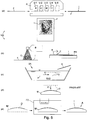
Fig. 5 schematically illustrates justly one of these known decoration processes, indicated by 100, referable for example to European patent applicationEP 2546218 A1 , which exhibits features and aspects in common with the processes of decoration based on silk-screen printing and decal. - In particular, the known
process 100 involves the use of a paper sheet F for decals, i.e. a paper sheet which is properly treated on its surface so as to be suitable to the formation of decals; and an initial printing step, shown schematically in section (a') ofFig. 5 , for printing on the paper sheet F, by means of a digital color printer P, an image or decoration I, consisting of ceramic toner. - The digital color printer P, used in this step, can be a usual digital color printer, of known characteristics, corresponding to a model of printer which is offered and available in the market and in particular is constituted by a digital color printer, of the electrostatic transfer type by a laser beam, also simply called laser printer, which uses ceramic toners of different colors, also of known composition and characteristics, to print and form the image on the paper sheet F.
- Typically the colored ceramic toners, used by the digital colored printer P to print the image I, are four, to obtain the various colors according to the classical four-colors model or quadrichromy CMYK, based on the color subtractive synthesis, whereby these ceramic toners are indicated with C (Cyan), M (Magenta), Y (Yellow), K (Black) and each correspond to a printing unit, respectively U-1, U-2, U-3, U-4, integrated in the digital color printer P, as schematically shown in
Fig. 5 . - These colored ceramic toners C, M, Y, K, as said of known characteristics, used for printing the colored image I, are contained in and fed by cartridges which are housed in the respective printing units U-1, U-2, U-3, U-4, and that, once exhausted, are removed from the digital printer P and replaced with new cartridges filled with toner.
- The digital printer P, of known characteristics and conforming to a model already available in the market, can integrate, in addition to the four printing units U-1, U-2, U-3, U-4 which receive and house the cartridges of the four colored toner C, M, Y, K, used in the quadrichromy, also a fifth printing unit, indicated with U-5 and represented with a dot-and-dash line in
Fig. 5 , wherein this fifth printing unit U-5 is adapted to house an additional fifth cartridge containing a substance, such as for example a polishing or a transparent substance, used in printing the image I on the support sheet F, in particular in order to improve the characteristics and appearance of the printed image I. - In this way there is obtained the paper sheet F that bears on its surface the printed colored image I, of ceramic toner, as shown in
Fig. 5 . - Then the
process 100 includes, at a later stage shown schematically in section (b') ofFig. 5 , the application, for example by spraying through a spray device B, of a colloidal substance or collodion C, which can for example contain crystalline substances such as a glass-based ceramic fondant, on the colored image I printed on the paper sheet F for decals. - The colloidal substance C may be sprayed only on the surface of the colored image I or on the whole surface of the paper sheet F.
- As an alternative to spraying by a spray device, the colloidal substance C can be applied on the colored image I, printed on the paper sheet F, also by coating, for example by means of a silk-screen device RS, on which a spreader roller R is made to run, yet as shown in
Fig. 5 . - In this way the image I, of ceramic toner, printed on the sheet F is fixed and held together by the colloidal substance C, so as to form a decal D.
- Later, after a drying step to allow the colloidal substance C to dry, the sheet F is immersed, in a phase corresponding to the section (c') of
Fig. 5 , in a bath BA of water, where the decal D, with the image I being held together by collodion C, is made manually to slide, as shown schematically by an arrow X, so as to be detached and come off from the sheet F. - Subsequently, after the separation of the decal D from the paper sheet F, the decal D is applied on a ceramic article M, to be decorated, as shown in section (d') of
Fig. 5 and indicated by an arrow X'. - Finally, as shown in section (e') of
Fig. 5 , the article M is baked at a suitable temperature in a baking furnace FC, so as to fix the image I on the surface of the article M and thus obtain the final article A decorated with the image I. - However this known decoration method, in which the step of applying the colloidal substance over the image I printed on the paper sheet F is carried out by spraying through a spray device or with a silk-screen, is not free from limitations and problems.
- For example it was observed that this known method is such as to produce a halo, clearly perceptible by an observer, that is formed around the decoration which decorates the final article A, wherein this halo is essentially due to the glass-based ceramic fondant that is contained in the colloidal substance which is sprayed or applied in some ways on the colored image I, of ceramic toner, that is printed on the paper sheet F.
- Therefore this halo, which often is called in the jargon stamp-effect, since being clearly visible in the final decorated article, is such as to impact negatively on the quality of the same final decorated article.
- For completeness, the photographic image of
Fig. 5A shows a typical example of a sheet of paper, already printed with the image I and therefore ready to be introduced in the water bath to separate the decal D, which was produced according to the conventional decoration procedure before described, i.e. by spraying through a spray device the colloidal substance, containing crystalline substances such as a transparent or white ceramic fondant, on the colored image, of ceramic toner, after the image was printed with the digital color printer. - As can be seen by observing this
Fig. 5A , the colored image I, of ceramic toner, that is printed on the paper sheet F, exhibits already, around the same image, a halo, clearly perceptible to the eye, indicated with AL and highlighted inFig. 5A , with this halo AL, around the printed image, being produced by the colloidal substance sprayed on the image I and being then reflected in the halo around the image that decorates the final article. - For completeness of information, there is also cited patent document
US 2015/072280 A1 which describes an apparatus, for the formation of colored images, that includes five separate image formation units, of which four units contain a colored toner, respectively a yellow, magenta, cyan and black toner, and a fifth unit contains a developer material or transparent toner. - In particular the four colored toners are used to form a plurality of corresponding layers overlapping each other so as to form the colored image in accordance with the four-colors or quadrichromy model, while the transparent toner, contained in the fifth unit, in turn is used to form a corresponding transparent layer that, by overlapping the other layers formed with the colored toners, is such as to confer glossiness and/or shine to the image that is formed.
- However this apparatus does not closely concerns the field of decoration of ceramic articles, in which the formation of the decoration or image is obtained by baking the ceramic article in a furnace at a suitable temperature, for example between 600 and 1,200°C, but is limited to describe the formation of colored images on a usual sheet of paper or a similar printing support, whereby the use of this apparatus known from
US 2015/072280 is that typical of an office machine, such as a usual printer, a copier, a facsimile, or the like. - It follows also that this apparatus known from
US 2015/072280 A1 does not contemplate the formation of images and decorations on ceramic articles, and thereby the use of colored ceramic toners to decorate them, but at the most, as before stated, comprises the use of toners, colored and also transparent, but non-ceramic, or similar substances, in order to obtain images printed on a paper sheet that are glossy and shiny, for example for the realization of catalogues, or to allow the printing of glossy images on special types of paper. - Instead, by contrast, as it will clearly appear from the following description, the present invention, concerning typically the field of decoration and the formation of colored images on ceramic articles, specifically involves the use of colored ceramic toners, and also of a ceramic fondant, transparent or white, that must be baked in a furnace at a suitable temperature to form the colored image on the article.
- Therefore, a primary object that the present invention aims to achieve is to propose a new and useful apparatus for decorating ceramic articles with colored images, i.e. formed by a plurality of colored ceramic toners, which images are preliminarily printed on a printing support sheet by means of a digital color printer and then applied as a decal on the article to be decorated, wherein this apparatus does not imply the problems and defects, such as unwanted halos and the so-called stamp-effect around the images decorating the final article, of the conventional decoration techniques currently in use.
- A further object, also important, of the present invention, is to propose for the trade an article, of ceramic material, decorated with a colored image formed by using more colored ceramic toners, which exhibits a high quality, and in particular does not exhibit any unwanted halos around the colored images that decorate the article.
- The above objects can be considered as fully achieved by the apparatus for decorating articles, in particular ceramic articles, and the corresponding decoration process having the characteristics defined respectively by the first
independent claim 1 and independent claim 8. - Particular embodiments of the apparatus for decoration of articles, in particular ceramic articles, and of the corresponding process of decoration, according to the present invention, are defined by the dependent claims.
- Numerous and important are the benefits that are associated with this apparatus and the corresponding decoration process, in part already anticipated, such as those indicatively mentioned below:
- high quality of the decoration that is formed on the final decorated product or article;
- absence of defects, such as halos and the stamp effect, in the area around the image or decoration formed on the final decorated product;
- reduced cost of the decoration apparatus, since the latter being composed of elements and parts already available in the market that thereby do not require specific modifications and/or adaptations;
- a relatively low cost for the decoration of the article of ceramic material.
- These and other objects, features and advantages of the present invention will appear clear and evident from the following description of a preferred form of embodiment, given purely by way of example with reference to the accompanying drawings, in which:
-
Fig. 1 , divided in sections (a)-(e), is a scheme showing the essential parts, and the way in which these essential parts operate and interface with each other, of an apparatus, conforming to the present invention, for the color decoration of an article of ceramic material with an image, formed by more colored ceramic toners, printed on a printing support sheet by means of a digital color printer; -
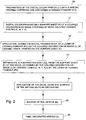
Fig. 2 is a flow chart with blocks that show the various steps of a process, according to the present invention, for the color decoration of an article of ceramic material by means of the decoration apparatus schematized inFig. 1 ; -
Figs. 3A and 3B are photographic images of a color laser digital printer, available in the market, included in the apparatus, according to the invention, schematically shown inFig. 1 ; -
Fig. 3C is a photographic image of a special print cartridge, containing a ceramic fondant, provided to be housed in a corresponding one of the printing units of the color digital printer ofFigs. 3A-3B ; -
Figs. 4A and 4B are photographic images showing some paper sheets, with printed thereon a colored image of ceramic toner, which are obtained by the apparatus ofFig. 1 and the corresponding process ofFig. 2 , in accordance with the present invention, for the color decoration of an article of ceramic material; -
Fig. 5 is a diagram illustrating a process, in conformity with the known technique, and the means used to implement such a process, for color decoration of an article of ceramic material with an image formed by ceramic toner; and -
Figs. 5A is a photographic image showing a sheet of paper, with printed thereon a colored image of ceramic toner, which is printed through the conventional process ofFig. 5 corresponding to the known decoration technique. - With reference to the drawings and in particular to the scheme of
Fig. 1 , an apparatus, according to the present invention, to decorate a product or article, in particular of ceramic material, is indicated as a whole with 10. - The scheme of
Fig. 1 shows both the essential parts of which thedecorating apparatus 10 is composed and the manner in which these essential parts operate and interface each other to obtain the decorated final article. - In detail, the
apparatus 10 comprises: - a
digital color printer 11, of the type utilizing for printing a plurality of colored ceramic toners, adapted to be fed with and receive a printing support sheet F; - a
separation bath 12; and - a
baking furnace 13. - The printing support sheet F that feeds the
digital color printer 11 can be, for example, a generic or usual sheet of paper, or a paper sheet, suitably treated, so as to exhibit a respective printing surface F' suitable to the formation of decals, therefore such as to fully meet the requirements of theapparatus 10 of the invention, as it will be clear from the following description. - The
digital color printer 11 exhibits substantially known characteristics, since being constituted by a model of printer currently available and offered in the market, and in particular is constituted by a color printer, of the type with dry electrostatic transfer by laser beam and for this reason also called simply color laser printer, which printer uses ceramic toners of different colors, also of known composition and characteristics, to print and form a colored decoration or image on the printing support sheet F. - The colored ceramic toners, used by the
digital printer 11 to print the image I, are basically four, so as to obtain the various colors according to the classical model of quadrichromy CMYK, i.e. by subtractive synthesis, and are therefore indicated with C (Cyan), M (Magenta), Y (Yellow), K (black), with each toner corresponding to a printing unit, respectively, 11-1, 11-2, 11-3, 11-4, integrated in thedigital color printer 11, as shown schematically inFig. 1 . - These colored ceramic toners C, M, Y, K, as said of known characteristics, used for printing the colored image I, are contained in and supplied, during printing, by respective cartridges C1, C2, C3, C4 which are housed in the respective printing units 11-1, 11-2, 11-3, 11-4, and that, once exhausted, are removed from the
digital printer 11 and replaced with new cartridges filled with toner. - Furthermore, the
digital printer 11, of known characteristics, integrates, in addition to the four printing units 11-1, 11-2, 11-3, 11-4 which receive and house the cartridges of the four colored toners C, M, Y, K, provided for use in four-color printing mode, also a fifth printing unit, indicated with U-5, which is suitable for receiving and housing a further fifth C5 cartridge that, in the context of the present invention, exhibits new and innovative features compared to the technique known and is correspondingly used in an innovative way, as will now be described. - According to an essential feature of the present invention, the
digital color printer 11, included in the moregeneral decoration apparatus 10, in addition to being configured to print, using the colored ceramic toners C, M, Y, K contained in the cartridges C1, C2, C3, C4 housed in the respective four printing units 11-1, 11-2, 11-3, 11-4, the colored decoration or image I on the surface F' of the printing support sheet F, is also configured to apply, using the fifth C5 cartridge housed in the fifth printing unit 11-5, a further layer of ceramic fondant FO on the colored image I printed on the printing support sheet F with the four colored ceramic toners C, M, Y, K. - Therefore, the
digital color printer 11, included in thedecoration apparatus 10, is characterized by the fact of housing in the respective fifth printing unit 11-5 and thereby using a special cartridge C5 containing specifically a ceramic fondant FO. - Instead, in the known art, a digital color printer, similar to the
digital printer 11, accommodates and uses in the corresponding fifth printing unit a conventional cartridge which contains a very different material from a ceramic fondant, and typically a polishing agent or a transparent toner, as already explained above. - The ceramic fondant, also sometimes called in the art ceramic flux, contained in the cartridge C5 housed in the fifth printing unit 11-5 of the
digital color printer 11, can be in various forms and compositions, in accordance with the prior art. - For example, the ceramic fondant FO can be a glass-based transparent ceramic fondant, also called fondant from glass, when the colored decoration or image is formed directly on the surface, which serves as background, of the article to be decorated, and therefore the ceramic fondant must not add any color.
- Otherwise the ceramic fondant FO can be a white ceramic fondant, also sometimes called white ceramic, when it is desired that the colored decoration or image of toner, formed on the final article, be associated with and exhibited on a white background.
- Substantially the ceramic FO fondant is nothing more than a finely ground frit, and for this reason sometimes referred to in the art also with the term glass frit, wherein this frit is composed of raw materials that are fused in a high temperature furnace between 1,200 and 1,600 °C, whereby after fusion they are in a glassy state, and then are finely ground.
- For example the raw material of this frit can be composed of silica sand by 20-40%, feldspars by 15-35%, and red lead or litharge by 30-50%.
- Of course the ceramic fondant FO, contained in the cartridge housed in the fifth printing unit 11-5, can be part of a composition containing additional substances and materials in addition to the ceramic fondant FO.
- For example, according to a non-limiting example, the composition of the substance contained in this cartridge C5 housed in the fifth printing unit 11-5 may be the following:
- 20-70% by weight of resin,
- 30-70% by weight of the ceramic flux.
- The composition of this substance contained in the cartridge C5 can also include directors of charge or excipients in the extent of 1-5% by weight, as well as fluidizing additives to an extent of 1-3% by weight.
- Furthermore, according to a further non-limiting example, the substance, with the ceramic fondant or flux, contained in the cartridge C5 can contain a percentage by weight of resin comprised between 25 and 40%.
- Still, according to a more specific example of composition, the percentages by weight of components of the substance contained in the cartridge C5 may be the following:
- 35.5% resin;
- ceramic fondant 60%;
- charge directors 2.5%;
-
wax 2%. - This specific composition may also contain additives in an amount by weight equal to 0.75% of the total.
- As before mentioned, the
digital color printer 11, part of thewider decorating apparatus 10, is constituted by a printer model available in the market and, for example, by the laser printer color pattern C1+ manufactured by CANON company, adapted to print colored images in quadrichromy CMYK using four cartridges of colored toners, respectively of cyan C, magenta M, yellow Y, black K toners. - This commercial model C1+ of
printer 11, manufactured and traded by CANON, includes, in addition to the four printing units 11-1, 11-2, 11-3, 11-4 fed by the four cartridges of colored toner C, M, Y, K, also a fifth printing unit 11-5 that, in the conventional use of theprinter 11 to print on sheets of paper, houses a cartridge containing a polishing agent or a transparent toner, i.e. a substance directed to improve the print quality, as indicated in the technical specifications of this commercial model C1+ CANON, and that, instead, in the context of theapparatus 10 of the present invention, houses, as already said, a cartridge containing a ceramic fondant FO. - For clarity,
Figs. 3A and 3B show this digital color printer model of Canon C1+ and the respective printing units 11-1, 11-2, 11-3, 11-4, 11-5. - In particular,
Fig. 3A shows thedigital printer 11 with all its five printing units 11-12, 11-2, 11-3 11-4, 11-5 accommodating the respective cartridges C1, C2, C3, C4, C5, whileFig. 3B shows thedigital printer 11 in a configuration in which four printing units 11-12, 11-2, 11-3, 11-4 accommodate the respective cartridges C1, C2, C3, C4 with the quadrichromy colors CMYK, and the fifth printing unit 11-5 is free, that is it does not house the respective cartridge C5, containing the ceramic FO fondant, which is arranged next to the same printing unit 11-5. -
Fig. 3C in turn shows for clarity in the foreground the special cartridge C5, containing the ceramic fondant FO, isolated from the respective printing unit 11-5 of thedigital color printer 11. - The
separation bath 12 is configured to receive the paper printing support sheet F printed by thedigital color printer 11 and to separate from such paper support sheet F the decal D constituted by the decoration or image I of ceramic toner and the layer of ceramic fondant FO applied on it. - The
furnace 13 in turn is suitable to bake an article M, on which it has been applied on the decal D, so as to stably fix the decoration or image I on the surface of the article M, and then decorate it, as described hereinafter. - In the use of the apparatus of
decoration 10 of the invention, as schematically shown inFig. 1 and illustrated in the block operational diagram ofFig. 2 , thedigital color printer 11 is initially prepared and set up, in a step corresponding to theblock 20 ofFig. 2 , by housing in the printing unit 11-5 the respective special C5 cartridge containing the ceramic fondant FO. - Then, in a step corresponding to section (a) of
Fig. 1 and to theblock 21 ofFig. 2 , thedigital color printer 11 is fed with the printing support sheet F, as indicated by an arrow X, and is operated to print on the printing surface F' of the sheet F the colored image I of ceramic toner using, in quadrichromy or four-color way, the four colored ceramic toners C, M, Y, K contained in the cartridges housed in the four printing units 11-1, 11-2, 11 -3, 11-4. - Moreover, jointly with four color printing of the image I, the
digital printer 11 uses the special C5 cartridge housed in the fifth printing units 11-5 to apply, in a step corresponding to theblock 22 ofFig. 2 , a thin layer of ceramic fondant FO on the image of toner printed in quadrichromy on the printing support sheet F. - In this way there is obtained the support sheet F, bearing printed on its surface F' the colored decoration or image I, as shown in section (b) of
Fig. 1 , wherein this colored decoration or image I is covered by a thin layer of ceramic fondant FO. - The layer of ceramic fondant FO may be applied by the
digital printer 11 so as to cover the entire surface F' of the printing support sheet F or only the area of the colored image I. - Subsequently, as shown schematically in section (c) of
Fig. 1 , the support sheet F, bearing the printed image I, is immersed in the separation water-basedbath 12. - In this
separation bath 12, at a step corresponding to theblock 23 ofFig. 2 , the decoration or image I of ceramic toner is easily separated and detached, in the form of a decal D, from the support sheet F, in particular by making the image I to slide on the support sheet F, as also shown schematically by an arrow Y, and represented with a dot-dash line in section (c) ofFig. 1 . - Therefore the decal D which is separated in this way from the printing support sheet F is formed both by the decoration or image I of ceramic toner, formed in the four-color way, and by the layer of ceramic fondant FO covering the decoration or image I.
- Then, as schematically shown in section (d) of
Fig. 1 , in turn corresponding to theblock 24 ofFig. 2 , the decoration, i.e. the decal D of ceramic toner and ceramic fondant FO, is applied by pressure and in a known manner on a raw article M to be decorated, typically of ceramic material, as indicated by an arrow Y'. - Finally, in a
final step 25, shown schematically in section (e) ofFig. 1 , the article M is baked in a known manner, for example at a temperature ranging from 400 to 850 °C depending on the case, so as to fix the decoration or the image I on the surface of the article M and thus obtain the final article A decorated, as indicated by theblock 26. - As it has been verified by numerous trials and tests on various prototypes of the apparatus of the invention, the decoration formed on the final article obtained and decorated with such apparatus is of excellent quality and in particular is devoid of any halo and/or stamp-effect around the decoration.
- For completeness, the images of
Figs. 4A and 4B show some support sheets F bearing the colored decoration or image I, of ceramic toner, printed with thedigital printer 11 included in thedecoration apparatus 10 of the invention. - As it can be seen, these printed sheets, shown in
Figs. 4A and 4B do not show any halos or defects, as well as the stamp-effect, in the area, indicated by arrows, around the image colored I, unlike the sheet F, shown inFig. 5A , printed as part of a conventional process of decoration, which instead has a halo AL around the colored image I. - It is therefore clear, from the description made, that the present invention fully achieves the objects to which it was intended, and in particular offers both a new apparatus and a corresponding process for the color decoration of ceramic articles, based on the use of a digital color printer, which involve significant advantages, such as in particular the absence of any halo and/or stamp-effect around the decoration of the decorated article with respect to the conventional equipments and processes.
- It is also clear that the apparatus and the corresponding process for the decoration of ceramic articles, as before described, comprising the use of a digital color printer, can be applied in a plurality of circumstances and be object of developments, changes and improvements, without for this departing from the scope of the present invention, as defined in the appended claims.
- For example the apparatus and the corresponding process of the invention can be advantageously applied for the color decoration of articles typically of glass and of enamelled metal or non metal sheet.
Claims (10)
- Apparatus (10) for color decoration of articles, in particular ceramic articles, comprising:- a digital color printer (11), in particular of the laser type;- a separating bath (12); and- a baking furnace (13),wherein said digital color printer (11) is configured to print a colored decoration or image (I) of ceramic toner (C, M, Y, K) on a printing support sheet (F) by using a plurality of colored ceramic toners (C, M, Y, K) contained in corresponding printing cartridges (C1, C2, C3, C4) in turn housed in respective printing units (11-1, 11-2, 11-3, 11-4) of the digital color printer (11);
wherein said separating bath (13) is provided for receiving the printing support sheet (F), as printed by said digital color printer (11), and to be used to separate from said printing support sheet (F) a decal (D) comprising the colored decoration or image (I) ceramic toner (C, M, Y, K,) printed on the printing support sheet (F); and
wherein said baking furnace (13) is provided for baking an article (M), in particular of ceramic material, on which said decal (D) has been applied, so as to stably fix said colored decoration or image (I) of ceramic toner (C, M, Y, K) on the surface of the article and therefore obtain the final decorated article (A),
the apparatus (10) being characterized in that said digital color printer (11) is also specifically configured to apply a layer of ceramic fondant (FO), consisting of a glass-based transparent fondant or white ceramic, on the colored decoration or image (I) of ceramic toner (C, M, Y, K) printed on the printing support sheet (F) by the same digital color printer (11),
wherein the ceramic fondant (FO) used to make said layer is contained in a special printing cartridge (C5) housed in a respective printing unit (11-5) of the digital color printer (11). - Apparatus (10) for color decoration of articles according to claim 1, wherein said digital color printer is adapted to operate in a four-colors process to print with the ceramic toners (C, M, Y, K) the colored decoration or image (I) of ceramic toner on the printing support sheet (F).
- Apparatus (10) for color decoration of articles according to claim 1 or 2, wherein the ceramic fondant (FO), contained in said special cartridge (C5) housed in the respective printing unit (11-5) of the digital color printer (11), is part of a composition together with other substances, such as for example a resin, one or more fluidifying additives, excipients, others.
- Apparatus (10) for color decoration of articles according to any one of the preceding claims, wherein said digital color printer (11) is configured to apply the layer of ceramic fondant (FO) on the entire surface of the printing support sheet (F), or only a limited part of it, corresponding to the area of the colored decoration or image (I).
- Apparatus (10) for color decoration of articles according to any one of the preceding claims, wherein the printing support sheet (F), which feeds said digital color printer (11), exhibits a respective printing surface (F') suitable for forming decals.
- Printing cartridge (C5) configured to be mounted in a digital color printer (11), available in the market, to print a printing support sheet (F) bearing a colored decoration or image (I) of ceramic toner to be applied on the surface of a ceramic article (M) in order to decorate it,
said printing cartridge (C5) being characterized in that it is adapted to be accommodated in a respective printing unit (11-5) of said digital color printer (11), available in the market, and in that it contains a glass-based ceramic fondant (FO) and/or a ceramic white,
wherein said printing cartridge (C5) is provided for being used in said digital color printer (11), in the framework of a more general system or apparatus for color decoration of ceramic articles, to directly apply a layer of said glass-based ceramic fondant (FO) on the colored decoration or image (I) of ceramic toner (C, M, Y, K) printed by the same digital color printing (11) on the printing support sheet (F). - Printing cartridge (C5) according to claim 6, wherein the ceramic fondant (FO) contained in said toner kit or cartridge (C5) is part of a composition together with other substances, such as for example a resin, one or more fluidifying additives, excipients, others.
- Process for decorating an article by means of a digital color printer (11) adapted to be fed with a plurality of colored toners (C, M, Y, K), comprising the following steps:- preparing (20) a digital color printer (11), of a type available in the market, with a special and specific printing cartridge (C5) housed in a respective printing unit (11-5) of the same digital color printer (11) and containing a ceramic fondant (FO);- printing (21), by means of said digital color printer (11) and the use of a plurality of colored ceramic toners (C,M,Y,K) contained in respective printing units (11-1, 11-2, 11-3, 11-4) of the same digital color printing (11), a colored decoration or image (I) of ceramic toner on the printing surface (F') of a printing support sheet (F);- applying (22), by using said special printing cartridge (C5), a layer of ceramic fondant (FO), for example consisting of transparent glass ceramic fondant or ceramic white, on the colored decoration or image (I) of ceramic toner printed on said printing surface (F');- separating (23), in a liquid bath (16) and from said printing support sheet (F), the decal (D) constituted by the colored decoration or image (I) of ceramic toner and the layer of ceramic fondant (FO);- applying (24) said decal (D) on an article (M) to be decorated; and- baking (25) said article (M) so as to fix firmly said decoration (I) on the surface of the same article and thus obtain the final decorated article (A).
- Process for decorating an article according to claim 8, wherein the layer of ceramic fondant (FO) is applied by said digital color printer (11) over the entire surface of the printing support sheet (F), or only a limited part of it, corresponding to the area of the colored decoration or image (I).
- Use of a commercial printer already available in the market comprising printing cartridges containing colored ceramic toners and a specific additional cartridge containing a ceramic fondant, consisting of a glass-based transparent fondant, for applying a layer of said fondant on a colored image previously printed, by means of the same printer, on a paper support sheet suitable for the formation of decal, in the framework of a process or apparatus for decorating a ceramic article.
Applications Claiming Priority (2)
| Application Number | Priority Date | Filing Date | Title |
|---|---|---|---|
| ITBI2015A000002A ITBI20150002A1 (en) | 2015-05-06 | 2015-05-06 | NEW EQUIPMENT TO DECORATE AN ARTIFACT WITH A DECORATION OR COLORED IMAGE OF CERAMIC TONER PRINTED WITH A COLOR DIGITAL PRINTER AND CORRESPONDING PROCESS AND ARTIFACT SO DECORATED |
| PCT/IT2016/000117 WO2016178259A1 (en) | 2015-05-06 | 2016-05-05 | Apparatus for decorating an article with a colored decoration or image of ceramic toner printed with a digital color printer and corresponding process and article thus decorated |
Publications (2)
| Publication Number | Publication Date |
|---|---|
| EP3292442A1 EP3292442A1 (en) | 2018-03-14 |
| EP3292442B1 true EP3292442B1 (en) | 2019-09-04 |
Family
ID=53836627
Family Applications (1)
| Application Number | Title | Priority Date | Filing Date |
|---|---|---|---|
| EP16745193.9A Active EP3292442B1 (en) | 2015-05-06 | 2016-05-05 | Apparatus for decorating an article with a colored decoration or image of ceramic toner printed with a digital color printer and corresponding process and article thus decorated |
Country Status (3)
| Country | Link |
|---|---|
| EP (1) | EP3292442B1 (en) |
| IT (1) | ITBI20150002A1 (en) |
| WO (1) | WO2016178259A1 (en) |
Families Citing this family (3)
| Publication number | Priority date | Publication date | Assignee | Title |
|---|---|---|---|---|
| EP3109705A1 (en) * | 2015-06-24 | 2016-12-28 | Kabushiki Kaisha Toshiba | Image forming apparatus and image forming method including decorative toner |
| GB2615301B (en) * | 2022-01-27 | 2024-02-07 | Paul Evans Robert | A decal bath |
| GB2617084A (en) * | 2022-03-28 | 2023-10-04 | Ball Kevin | Printing method |
Family Cites Families (2)
| Publication number | Priority date | Publication date | Assignee | Title |
|---|---|---|---|---|
| ITBI20110005U1 (en) * | 2011-07-13 | 2013-01-14 | Baltea D C Srl | NEW PROCESS IMPROVED TO DISPOSE AND DECORATE A MANUFACTURE WITH A DECORATION OF CERAMIC TONER PREVIOUSLY PRINTED IN A DIGITAL WAY ON A SUPPORT SHEET. |
| JP2015055734A (en) * | 2013-09-11 | 2015-03-23 | 株式会社沖データ | Transparent developer, developer container, developing device, and image forming apparatus |
-
2015
- 2015-05-06 IT ITBI2015A000002A patent/ITBI20150002A1/en unknown
-
2016
- 2016-05-05 WO PCT/IT2016/000117 patent/WO2016178259A1/en not_active Ceased
- 2016-05-05 EP EP16745193.9A patent/EP3292442B1/en active Active
Non-Patent Citations (1)
| Title |
|---|
| None * |
Also Published As
| Publication number | Publication date |
|---|---|
| EP3292442A1 (en) | 2018-03-14 |
| ITBI20150002A1 (en) | 2016-11-06 |
| WO2016178259A1 (en) | 2016-11-10 |
| WO2016178259A8 (en) | 2018-01-18 |
Similar Documents
| Publication | Publication Date | Title |
|---|---|---|
| US20080043087A1 (en) | Digital transfer method for printing on a target surface | |
| US10611176B2 (en) | Method of inkjet printing decorations on substrates | |
| JP3460084B2 (en) | Apparatus for applying decoration and / or text to glass, glass ceramic and ceramic products | |
| EP3292442A1 (en) | Apparatus for decorating an article with a colored decoration or image of ceramic toner printed with a digital color printer and corresponding process and article thus decorated | |
| US20090079791A1 (en) | Printing system | |
| CN103753990A (en) | Ceramic transfer paper screen printing technology | |
| CN112456988B (en) | Preparation method of luxury stone glazed brick and product thereof | |
| JPH02236571A (en) | Lamination of multi-color image | |
| CN102824998B (en) | Bamboo flute painting method | |
| DE4041358C2 (en) | ||
| JPH0811496A (en) | Toner and transfer sheet for painting ceramic products and method for painting ceramic products | |
| US5086695A (en) | Composition for the four-color enamelling by serigraphy of glass objects | |
| US20170144189A9 (en) | Process for applying a powder coating | |
| CN111634134A (en) | Four-color frosted stained paper and preparation method and application thereof | |
| EP1753701B1 (en) | Procedure for reproduction of a photographic picture in an article of glass | |
| EP0734880A1 (en) | Method of thermally transferring printing onto a metal substrate and article manufactured thereby | |
| KR101468695B1 (en) | Ceramics surface pattern forming method using laser beam and cover coat | |
| EP2734377B1 (en) | Materials and process for making decalcomanias | |
| US10636332B2 (en) | Digital color chip method | |
| Tyagi et al. | Enabling expanded color gamut and in-line coating processes | |
| PL316938A1 (en) | Method of making printed transfer papers | |
| Majnarić et al. | Comparative analysis of electrophotographic prints with the standard magenta and cyan in relation to the prints in which light magenta and light cyan are added | |
| US20070092295A1 (en) | Multi-color laser-etched images | |
| JPH09123700A (en) | Decorative plate manufacturing method and decorative plate | |
| EP3480663A1 (en) | Method for converting a toner cartridge printer to a sublimation toner printer |
Legal Events
| Date | Code | Title | Description |
|---|---|---|---|
| STAA | Information on the status of an ep patent application or granted ep patent |
Free format text: STATUS: THE INTERNATIONAL PUBLICATION HAS BEEN MADE |
|
| PUAI | Public reference made under article 153(3) epc to a published international application that has entered the european phase |
Free format text: ORIGINAL CODE: 0009012 |
|
| STAA | Information on the status of an ep patent application or granted ep patent |
Free format text: STATUS: REQUEST FOR EXAMINATION WAS MADE |
|
| 17P | Request for examination filed |
Effective date: 20171122 |
|
| AK | Designated contracting states |
Kind code of ref document: A1 Designated state(s): AL AT BE BG CH CY CZ DE DK EE ES FI FR GB GR HR HU IE IS IT LI LT LU LV MC MK MT NL NO PL PT RO RS SE SI SK SM TR |
|
| AX | Request for extension of the european patent |
Extension state: BA ME |
|
| RAP1 | Party data changed (applicant data changed or rights of an application transferred) |
Owner name: MARTA, MAURIZIO Owner name: CARBONE, VINCENZO Owner name: BALTEA D.C. SRL |
|
| DAV | Request for validation of the european patent (deleted) | ||
| DAX | Request for extension of the european patent (deleted) | ||
| GRAP | Despatch of communication of intention to grant a patent |
Free format text: ORIGINAL CODE: EPIDOSNIGR1 |
|
| STAA | Information on the status of an ep patent application or granted ep patent |
Free format text: STATUS: GRANT OF PATENT IS INTENDED |
|
| INTG | Intention to grant announced |
Effective date: 20181120 |
|
| GRAS | Grant fee paid |
Free format text: ORIGINAL CODE: EPIDOSNIGR3 |
|
| GRAJ | Information related to disapproval of communication of intention to grant by the applicant or resumption of examination proceedings by the epo deleted |
Free format text: ORIGINAL CODE: EPIDOSDIGR1 |
|
| GRAL | Information related to payment of fee for publishing/printing deleted |
Free format text: ORIGINAL CODE: EPIDOSDIGR3 |
|
| STAA | Information on the status of an ep patent application or granted ep patent |
Free format text: STATUS: REQUEST FOR EXAMINATION WAS MADE |
|
| GRAJ | Information related to disapproval of communication of intention to grant by the applicant or resumption of examination proceedings by the epo deleted |
Free format text: ORIGINAL CODE: EPIDOSDIGR1 |
|
| STAA | Information on the status of an ep patent application or granted ep patent |
Free format text: STATUS: GRANT OF PATENT IS INTENDED |
|
| INTC | Intention to grant announced (deleted) | ||
| GRAP | Despatch of communication of intention to grant a patent |
Free format text: ORIGINAL CODE: EPIDOSNIGR1 |
|
| INTG | Intention to grant announced |
Effective date: 20190506 |
|
| GRAA | (expected) grant |
Free format text: ORIGINAL CODE: 0009210 |
|
| STAA | Information on the status of an ep patent application or granted ep patent |
Free format text: STATUS: THE PATENT HAS BEEN GRANTED |
|
| AK | Designated contracting states |
Kind code of ref document: B1 Designated state(s): AL AT BE BG CH CY CZ DE DK EE ES FI FR GB GR HR HU IE IS IT LI LT LU LV MC MK MT NL NO PL PT RO RS SE SI SK SM TR |
|
| REG | Reference to a national code |
Ref country code: GB Ref legal event code: FG4D |
|
| REG | Reference to a national code |
Ref country code: CH Ref legal event code: EP |
|
| REG | Reference to a national code |
Ref country code: AT Ref legal event code: REF Ref document number: 1176206 Country of ref document: AT Kind code of ref document: T Effective date: 20190915 |
|
| REG | Reference to a national code |
Ref country code: DE Ref legal event code: R096 Ref document number: 602016019989 Country of ref document: DE |
|
| REG | Reference to a national code |
Ref country code: IE Ref legal event code: FG4D |
|
| REG | Reference to a national code |
Ref country code: NL Ref legal event code: MP Effective date: 20190904 |
|
| REG | Reference to a national code |
Ref country code: LT Ref legal event code: MG4D |
|
| PG25 | Lapsed in a contracting state [announced via postgrant information from national office to epo] |
Ref country code: LT Free format text: LAPSE BECAUSE OF FAILURE TO SUBMIT A TRANSLATION OF THE DESCRIPTION OR TO PAY THE FEE WITHIN THE PRESCRIBED TIME-LIMIT Effective date: 20190904 Ref country code: BG Free format text: LAPSE BECAUSE OF FAILURE TO SUBMIT A TRANSLATION OF THE DESCRIPTION OR TO PAY THE FEE WITHIN THE PRESCRIBED TIME-LIMIT Effective date: 20191204 Ref country code: HR Free format text: LAPSE BECAUSE OF FAILURE TO SUBMIT A TRANSLATION OF THE DESCRIPTION OR TO PAY THE FEE WITHIN THE PRESCRIBED TIME-LIMIT Effective date: 20190904 Ref country code: SE Free format text: LAPSE BECAUSE OF FAILURE TO SUBMIT A TRANSLATION OF THE DESCRIPTION OR TO PAY THE FEE WITHIN THE PRESCRIBED TIME-LIMIT Effective date: 20190904 Ref country code: FI Free format text: LAPSE BECAUSE OF FAILURE TO SUBMIT A TRANSLATION OF THE DESCRIPTION OR TO PAY THE FEE WITHIN THE PRESCRIBED TIME-LIMIT Effective date: 20190904 Ref country code: NO Free format text: LAPSE BECAUSE OF FAILURE TO SUBMIT A TRANSLATION OF THE DESCRIPTION OR TO PAY THE FEE WITHIN THE PRESCRIBED TIME-LIMIT Effective date: 20191204 |
|
| PG25 | Lapsed in a contracting state [announced via postgrant information from national office to epo] |
Ref country code: ES Free format text: LAPSE BECAUSE OF FAILURE TO SUBMIT A TRANSLATION OF THE DESCRIPTION OR TO PAY THE FEE WITHIN THE PRESCRIBED TIME-LIMIT Effective date: 20190904 Ref country code: RS Free format text: LAPSE BECAUSE OF FAILURE TO SUBMIT A TRANSLATION OF THE DESCRIPTION OR TO PAY THE FEE WITHIN THE PRESCRIBED TIME-LIMIT Effective date: 20190904 Ref country code: GR Free format text: LAPSE BECAUSE OF FAILURE TO SUBMIT A TRANSLATION OF THE DESCRIPTION OR TO PAY THE FEE WITHIN THE PRESCRIBED TIME-LIMIT Effective date: 20191205 Ref country code: AL Free format text: LAPSE BECAUSE OF FAILURE TO SUBMIT A TRANSLATION OF THE DESCRIPTION OR TO PAY THE FEE WITHIN THE PRESCRIBED TIME-LIMIT Effective date: 20190904 Ref country code: LV Free format text: LAPSE BECAUSE OF FAILURE TO SUBMIT A TRANSLATION OF THE DESCRIPTION OR TO PAY THE FEE WITHIN THE PRESCRIBED TIME-LIMIT Effective date: 20190904 |
|
| REG | Reference to a national code |
Ref country code: CH Ref legal event code: NV Representative=s name: VALIPAT S.A. C/O BOVARD SA NEUCHATEL, CH |
|
| REG | Reference to a national code |
Ref country code: AT Ref legal event code: MK05 Ref document number: 1176206 Country of ref document: AT Kind code of ref document: T Effective date: 20190904 |
|
| PG25 | Lapsed in a contracting state [announced via postgrant information from national office to epo] |
Ref country code: IT Free format text: LAPSE BECAUSE OF FAILURE TO SUBMIT A TRANSLATION OF THE DESCRIPTION OR TO PAY THE FEE WITHIN THE PRESCRIBED TIME-LIMIT Effective date: 20190904 Ref country code: RO Free format text: LAPSE BECAUSE OF FAILURE TO SUBMIT A TRANSLATION OF THE DESCRIPTION OR TO PAY THE FEE WITHIN THE PRESCRIBED TIME-LIMIT Effective date: 20190904 Ref country code: EE Free format text: LAPSE BECAUSE OF FAILURE TO SUBMIT A TRANSLATION OF THE DESCRIPTION OR TO PAY THE FEE WITHIN THE PRESCRIBED TIME-LIMIT Effective date: 20190904 Ref country code: AT Free format text: LAPSE BECAUSE OF FAILURE TO SUBMIT A TRANSLATION OF THE DESCRIPTION OR TO PAY THE FEE WITHIN THE PRESCRIBED TIME-LIMIT Effective date: 20190904 Ref country code: NL Free format text: LAPSE BECAUSE OF FAILURE TO SUBMIT A TRANSLATION OF THE DESCRIPTION OR TO PAY THE FEE WITHIN THE PRESCRIBED TIME-LIMIT Effective date: 20190904 Ref country code: PL Free format text: LAPSE BECAUSE OF FAILURE TO SUBMIT A TRANSLATION OF THE DESCRIPTION OR TO PAY THE FEE WITHIN THE PRESCRIBED TIME-LIMIT Effective date: 20190904 Ref country code: PT Free format text: LAPSE BECAUSE OF FAILURE TO SUBMIT A TRANSLATION OF THE DESCRIPTION OR TO PAY THE FEE WITHIN THE PRESCRIBED TIME-LIMIT Effective date: 20200106 |
|
| PG25 | Lapsed in a contracting state [announced via postgrant information from national office to epo] |
Ref country code: CZ Free format text: LAPSE BECAUSE OF FAILURE TO SUBMIT A TRANSLATION OF THE DESCRIPTION OR TO PAY THE FEE WITHIN THE PRESCRIBED TIME-LIMIT Effective date: 20190904 Ref country code: SK Free format text: LAPSE BECAUSE OF FAILURE TO SUBMIT A TRANSLATION OF THE DESCRIPTION OR TO PAY THE FEE WITHIN THE PRESCRIBED TIME-LIMIT Effective date: 20190904 Ref country code: SM Free format text: LAPSE BECAUSE OF FAILURE TO SUBMIT A TRANSLATION OF THE DESCRIPTION OR TO PAY THE FEE WITHIN THE PRESCRIBED TIME-LIMIT Effective date: 20190904 Ref country code: IS Free format text: LAPSE BECAUSE OF FAILURE TO SUBMIT A TRANSLATION OF THE DESCRIPTION OR TO PAY THE FEE WITHIN THE PRESCRIBED TIME-LIMIT Effective date: 20200224 |
|
| REG | Reference to a national code |
Ref country code: DE Ref legal event code: R097 Ref document number: 602016019989 Country of ref document: DE |
|
| PLBE | No opposition filed within time limit |
Free format text: ORIGINAL CODE: 0009261 |
|
| STAA | Information on the status of an ep patent application or granted ep patent |
Free format text: STATUS: NO OPPOSITION FILED WITHIN TIME LIMIT |
|
| PG2D | Information on lapse in contracting state deleted |
Ref country code: IS |
|
| PG25 | Lapsed in a contracting state [announced via postgrant information from national office to epo] |
Ref country code: DK Free format text: LAPSE BECAUSE OF FAILURE TO SUBMIT A TRANSLATION OF THE DESCRIPTION OR TO PAY THE FEE WITHIN THE PRESCRIBED TIME-LIMIT Effective date: 20190904 Ref country code: IS Free format text: LAPSE BECAUSE OF FAILURE TO SUBMIT A TRANSLATION OF THE DESCRIPTION OR TO PAY THE FEE WITHIN THE PRESCRIBED TIME-LIMIT Effective date: 20200105 |
|
| 26N | No opposition filed |
Effective date: 20200605 |
|
| PG25 | Lapsed in a contracting state [announced via postgrant information from national office to epo] |
Ref country code: SI Free format text: LAPSE BECAUSE OF FAILURE TO SUBMIT A TRANSLATION OF THE DESCRIPTION OR TO PAY THE FEE WITHIN THE PRESCRIBED TIME-LIMIT Effective date: 20190904 |
|
| REG | Reference to a national code |
Ref country code: DE Ref legal event code: R119 Ref document number: 602016019989 Country of ref document: DE |
|
| PG25 | Lapsed in a contracting state [announced via postgrant information from national office to epo] |
Ref country code: MC Free format text: LAPSE BECAUSE OF FAILURE TO SUBMIT A TRANSLATION OF THE DESCRIPTION OR TO PAY THE FEE WITHIN THE PRESCRIBED TIME-LIMIT Effective date: 20190904 Ref country code: CH Free format text: LAPSE BECAUSE OF NON-PAYMENT OF DUE FEES Effective date: 20200531 Ref country code: LI Free format text: LAPSE BECAUSE OF NON-PAYMENT OF DUE FEES Effective date: 20200531 |
|
| REG | Reference to a national code |
Ref country code: BE Ref legal event code: MM Effective date: 20200531 |
|
| GBPC | Gb: european patent ceased through non-payment of renewal fee |
Effective date: 20200505 |
|
| PG25 | Lapsed in a contracting state [announced via postgrant information from national office to epo] |
Ref country code: LU Free format text: LAPSE BECAUSE OF NON-PAYMENT OF DUE FEES Effective date: 20200505 |
|
| PG25 | Lapsed in a contracting state [announced via postgrant information from national office to epo] |
Ref country code: IE Free format text: LAPSE BECAUSE OF NON-PAYMENT OF DUE FEES Effective date: 20200505 Ref country code: GB Free format text: LAPSE BECAUSE OF NON-PAYMENT OF DUE FEES Effective date: 20200505 Ref country code: FR Free format text: LAPSE BECAUSE OF NON-PAYMENT OF DUE FEES Effective date: 20200531 |
|
| PG25 | Lapsed in a contracting state [announced via postgrant information from national office to epo] |
Ref country code: DE Free format text: LAPSE BECAUSE OF NON-PAYMENT OF DUE FEES Effective date: 20201201 Ref country code: BE Free format text: LAPSE BECAUSE OF NON-PAYMENT OF DUE FEES Effective date: 20200531 |
|
| PG25 | Lapsed in a contracting state [announced via postgrant information from national office to epo] |
Ref country code: TR Free format text: LAPSE BECAUSE OF FAILURE TO SUBMIT A TRANSLATION OF THE DESCRIPTION OR TO PAY THE FEE WITHIN THE PRESCRIBED TIME-LIMIT Effective date: 20190904 Ref country code: MT Free format text: LAPSE BECAUSE OF FAILURE TO SUBMIT A TRANSLATION OF THE DESCRIPTION OR TO PAY THE FEE WITHIN THE PRESCRIBED TIME-LIMIT Effective date: 20190904 Ref country code: CY Free format text: LAPSE BECAUSE OF FAILURE TO SUBMIT A TRANSLATION OF THE DESCRIPTION OR TO PAY THE FEE WITHIN THE PRESCRIBED TIME-LIMIT Effective date: 20190904 |
|
| PG25 | Lapsed in a contracting state [announced via postgrant information from national office to epo] |
Ref country code: MK Free format text: LAPSE BECAUSE OF FAILURE TO SUBMIT A TRANSLATION OF THE DESCRIPTION OR TO PAY THE FEE WITHIN THE PRESCRIBED TIME-LIMIT Effective date: 20190904 |